EP3525591B1 - Herbizide zubereitungen enthaltend glyphosat - Google Patents
Herbizide zubereitungen enthaltend glyphosat Download PDFInfo
- Publication number
- EP3525591B1 EP3525591B1 EP17787560.6A EP17787560A EP3525591B1 EP 3525591 B1 EP3525591 B1 EP 3525591B1 EP 17787560 A EP17787560 A EP 17787560A EP 3525591 B1 EP3525591 B1 EP 3525591B1
- Authority
- EP
- European Patent Office
- Prior art keywords
- glyphosate
- shikimate
- phosphate
- weeds
- shikimic acid
- Prior art date
- Legal status (The legal status is an assumption and is not a legal conclusion. Google has not performed a legal analysis and makes no representation as to the accuracy of the status listed.)
- Active
Links
Images




Classifications
-
- A—HUMAN NECESSITIES
- A01—AGRICULTURE; FORESTRY; ANIMAL HUSBANDRY; HUNTING; TRAPPING; FISHING
- A01N—PRESERVATION OF BODIES OF HUMANS OR ANIMALS OR PLANTS OR PARTS THEREOF; BIOCIDES, e.g. AS DISINFECTANTS, AS PESTICIDES OR AS HERBICIDES; PEST REPELLANTS OR ATTRACTANTS; PLANT GROWTH REGULATORS
- A01N57/00—Biocides, pest repellants or attractants, or plant growth regulators containing organic phosphorus compounds
- A01N57/18—Biocides, pest repellants or attractants, or plant growth regulators containing organic phosphorus compounds having phosphorus-to-carbon bonds
- A01N57/20—Biocides, pest repellants or attractants, or plant growth regulators containing organic phosphorus compounds having phosphorus-to-carbon bonds containing acyclic or cycloaliphatic radicals
Definitions
- the present invention relates to herbicidal compositions which comprise glyphosate or related compounds together with a further agent which is designed to enhance the effects of glyphosate or related compounds and/or reduce the amount of glyphosate or related compounds which is required for herbicidal effect.
- a method of treating plants with a herbicidal composition according to the present invention is also provided.
- Glyphosate N-[phosphonomethyl] glycine
- Waltz, 2010 made its commercial debut on the agrochemicals market in 1974 (Waltz, 2010) for use as a broad-spectrum non-selective pre-planting burndown herbicide or for targeted application in crops (Owen and Zelaya 2005).
- Glyphosate is a potent inhibitor of the shikimate pathway, competitively binding to and inhibiting 5-enolpyruvyl-shikimate-3-phosphate synthase (EPSPS) (EC 2.5.1.19) (Steinschreiben and Amrhein, 1980). Phosphoenolpyruvate and shikimate-3-phosphate are converted to 5-enoylpyruvyl-shikimate-3-phosphate in a reaction catalysed by EPSPS.
- EPSPS 5-enolpyruvyl-shikimate-3-phosphate synthase
- the shikimate pathway is an important primary metabolic pathway whose terminal product chorismate is the major intermediate branch point metabolite serving as a precursor for synthesis of aromatic amino acids (tyrosine, tryptophan, phenylalanine) and various secondary metabolites, including quinones and indoles. Phenylalanine enters the phenylpropanoid pathway for synthesis of further secondary metabolites, such as flavonoids and lignins.
- the shikimate pathway is devisated by the condensation reaction of phosphoenolpyruvate and erythrose 4-phosphate, which are derived from glycolysis and the pentose phosphate pathway, respectively ( Fig. 1 ). It is suspected that deprivation of aromatic amino acids is central to glyphosate phytotoxicity.
- the present invention is based on studies carried out by the inventors into the molecular responses to glyphosate.
- the obtained data enables: (i) a reduction of the amount of active ingredient used in glyphosate formulations and/or (ii) control glyphosate-resistant weeds.
- a herbicidal composition or a combination comprising glyphosate or a suitable salt or salts thereof and at least one metabolite or metabolites of the shikimate pathway or the pentose phosphate and/or glycolysis pathways.
- the metabolite(s) of the shikimate pathway are found upstream of where 5-enolpyruvylshikimate 3-phosphate synthase (EPSP synthase) acts (see Figure 1 ) and is shikimate 3-phosphate, shikimate, 3-dehydroquinate, 3-deoxy-D-arabino-heptulosonate 7-phosphate (DAHP) from the shikimate pathway or gluconic acid from the pentose phosphate pathway.
- the metabolite is shikimate 3-phosphate.
- the shikimate pathway (or upstream pathway) metabolites may be obtained from a variety of sources. It is possible to synthesise the metabolites chemically; extract them from plant sources; over express the genes and/or pathway in microorganisms and isolate the metabolites; and obtain the metabolites by enzymic conversion of chemical precursors.
- the herbicidal compositions of the present invention may be used to control unwanted plants or weeds.
- the herbicidal compositions may be selective in terms of controlling unwanted plants or weeds, whilst not harming a desired crop plant.
- the crop plant may be naturally resistant to the herbicidal composition or may be genetically engineered so as to be resistant to the herbicidal composition.
- Crop plants genetically transformed or selected to tolerate glyphosate include those whose seeds are sold by Monsanto Company or under license from Monsanto Company bearing the Roundup Ready® trademark. These include varieties of wheat, turfgrass, and corn. Other glyphosate resistant crops have been developed by Pioneer and Bayer Crop science, for example.
- Glyphosate N-phosphonomethylglycine
- glyphosate is well known in the art and is a widely used herbicide for post-emergence, nonselective weed control.
- Most herbicides, including glyphosate, are applied in a water carrier, such as by a spray mixture.
- the herbicidal composition typically as a spray mixture must be retained on a weed leaf surface; the herbicide active ingredient must be absorbed by the plant; and the herbicide must be translocated to the site of action.
- Glyphosate competitively blocks the shikimate pathway, by binding EPSP synthase, which is common to virtually all plants, but which is absent in animals.
- EPSP synthase which is common to virtually all plants, but which is absent in animals.
- glyphosate is very effective in killing or controlling the growth of unwanted plants, the uptake (i.e., absorption) of glyphosate by the plant foliar tissue and translocation of glyphosate throughout the plant is relatively slow. Visual symptoms that a plant has been treated with glyphosate may not appear until one week or more after treatment.
- Glyphosate is relatively insoluble in water (1.16% by weight at 25° C.). For this reason it is typically formulated as a water-soluble salt.
- Glyphosate potassium salt has a molecular weight of 207. This salt is disclosed, for example, by Franz in U.S. Pat. No. 4,405,531 , as one of the "alkali metal" salts of glyphosate useful as herbicides, with potassium being specifically disclosed as one of the alkali metals, along with lithium, sodium, cesium and rubidium.
- alkali metal salts of glyphosate include the isopropylamine, di-ammonium, ammonium, monoethanolamine, n-propylamine, methylamine, ethylamine, hexamethylenediamine, dimethylamine or trimethylsulfonium salts.
- Single salt forms of glyphosate or mixtures of salt forms may be provided in accordance with the present invention.
- Suitable salt forms of glyphosate are as identified above.
- the various salts should be chosen so as not to adversely affect the viscosity, cloud point, non-crystallization and/or other stability properties of the composition.
- the herbicidal compositions prepared according to the present invention are highly effective as a herbicide composition against a variety of weeds.
- the compositions of the present invention can be used as is or combined with other components including other agriculturally acceptable additives commonly used in formulated agricultural products, such as antifoam agents, compatibilizing agents, sequestering agents, neutralizing agents and buffers, corrosion inhibitors, dyes, odorants, penetration aids, wetting agents, spreading agents, drift control agents, dispersing agents, thickening agents, freeze point depressants, antimicrobial agents, crop oil, other biologically and/or agriculturally active components and the like.
- the concentrated agricultural compositions are typically diluted in water and then applied by conventional means well known to those in the art.
- the formulations of the present invention may further comprise an adjuvant, such as a surfactant and/or ammonium sulfate.
- an adjuvant such as a surfactant and/or ammonium sulfate. This may be included directly in the formulation and/or added prior to application. Even if present in the formulation, additional surfactant and/or ammonium sulfate often are recommended. In practice, the additional surfactant and/or ammonium sulfate and herbicide are added separately to the sprayer tank during spray mixture preparation.
- ammonium sulphate acts synergistically on the biological effect of glyphosate.
- the patent literature contains many examples of combinations of glyphosate and ammonium sulphate, and in practice the farmer usually adds supplementary ammonium sulphate when diluting the glyphosate for use.
- Ammonium sulphate may be added in an amount of 4 - 8kg per 400-500L of tank mix
- Convenient surfactants include cationic surfactants, anionic surfactants, non-ionic surfactants, ionic surfactants, and amphoteric surfactants.
- the surfactant can be any surfactant or combination of two or more surfactants useful to facilitate dissolution of the herbicide compounds within the formulation.
- preferred surfactants include cationic, non-ionic, and anionic surfactants. Of these, some even more specific types of preferred surfactants include non-ionic linear or branched alcohol ethoxylate surfactants, anionic phosphoric acid ester surfactants (sometimes referred to as "phosphate ester” surfactants), and cationic ethoxylated tallow amine surfactants.
- Additional surfactants may be selected from the group consisting of secondary or tertiary amines, dialkoxylated quaternary ammonium salts, monoalkoxylated quaternary ammonium salts, quaternary ammonium salts, ether amines, amine oxides, dialkoxylated amines, aminated alkoxylated alcohols, alkyl alkoxylated phosphates and alkylpolyglycosides. Further details of surfactants are disclosed in US20060019828 to which the skilled reader is directed.
- An adjuvant may be used as a tank mixture, where the adjuvant is added to a sprayer tank as a separate product along with water and herbicide composition.
- the amount of adjuvant added to the sprayer tank may be adjusted independent of the herbicide rate to take into account water hardness, weed species, spray volume, and environmental conditions for example.
- the adjuvant may be mixed with the herbicidal composition to form a complete herbicide-adjuvant composition.
- the present invention provides a method for controlling weeds and/or undesirable vegetation by applying a post-emergence herbicidal spray composition or tank mixture according to the present invention to weeds and/or other undesired vegetation.
- the herbicidal spray composition or tank mixture may be applied to weed populations which are sensitive to glyphosate such that less glyphosate may be required, or to weed populations which have developed a resistance to glyphosate, whereby such weeds which are resistant to glyphosate alone, become sensitive to glyphosate or sensitive to lower concentrations of glyphosate as applied alone.
- compositions, tank mix and/or mixtures of the present invention are to be applied post-emergence, that is after the weeds and/or undesirable vegetation have emerged from the ground and leaves are visible.
- a tank-mixture composition comprises water as a spray vehicle, in an amount suitable for application to a plant and/or soil surface by spraying, more particularly in an amount suitable for delivery of the herbicide compositions to, for example weeds, that are to be killed or controlled.
- the herbicidal compositions of the present invention may further comprise one or more additional herbicides, such as 2,4-dichlorophenoxyacetic acid (2,4-D), 4-(2,4-dichlorophenoxy)butanoic acid (2,4-DB), dichloroprop, (4-chloro-2-methylphenoxy)acetic acid (MCPA), 4-(4-chloro-2-methylphenoxy)butanoic acid (MCPB), mecoprop, dicamba, picloram, quinclorac, agriculturally acceptable salts or esters of any of these herbicides, and mixtures thereof.
- additional herbicides such as 2,4-dichlorophenoxyacetic acid (2,4-D), 4-(2,4-dichlorophenoxy)butanoic acid (2,4-DB), dichloroprop, (4-chloro-2-methylphenoxy)acetic acid (MCPA), 4-(4-chloro-2-methylphenoxy)butanoic acid (MCPB), mecoprop, dicamba, picloram,
- the herbicide compositions of the invention may include glyphosate at 5 g ae./L (grams acid equivalent per liter) to 600 g glyphosate ae./L, preferably from 65 to about 600, from about 75 to about 600, from about 100 to about 600, from about 150 to about 600, from about 200 to about 600, from about 250 to about 600, glyphosate g ae./L.
- the herbicide composition may be in a concentrated form which require dilution prior to application.
- the herbicide compositions of the invention may include glyphosate at about 100 to about 600, from about 150 to about 600, from about 200 to about 600, from about 250 to about 600, glyphosate g ae./L.
- a common concentration of glyphosate is 360 g ae/L, but higher concentrations, such as 450, 480, 500 and 540g ae/L are also available.
- Prior to use the herbicide composition may be diluted such that the glyphosate may be applied in a more diluted form.
- the molar ratio of glyphosate to shikimate pathway, or pentose phosphate pathway metabolite as defined, such as shikimate 3-phospate is about 1:7.5 - 1:100, such as 1:8 - 1:75, or 1:10 - 1:50.
- the weight ratio of glyphosate to additional herbicide is about 10:1 to about 200:1, about 20:1 to about 200:1; more preferably, about 40:1 to about 100:1; particularly, about 50:1 to about 100:1.
- shikimate pathway metabolite such as shikimic acid permits a reduction in the amount of glyphosate which may be required to be effective.
- glyphosate which may be required to be effective.
- a plant treatment composition is preferably dilute enough to be readily sprayed using standard agricultural spray equipment. Amounts of water are usually expressed in terms of "spray volume", i. e. , the volume of spray solution (which is mostly water, making up the balance after accounting for the herbicide compositions and other optional additives as described herein) to be applied to a unit land area. Spray volume can be expressed in any suitable units such as liters/hectare (I/ha) or gallons/acre. Most commonly, spray volumes useful for tank-mix compositions of the present invention will be selected in a range of about 10 to about 1,000 I/ha, for example about 25 to about 500 I/ha.
- the herbicidal compositions of the present invention are storage stable.
- storage-stable in the context of the present invention, is meant not exhibiting phase separation on exposure to temperatures up to about 50° C., and preferably not forming crystals of glyphosate or salt thereof on exposure to a temperature of about 0° C. for a period of up to about 7 days (i.e., the composition must have a crystallization point of 0° C. or lower).
- high temperature storage stability is often indicated by a cloud point of about 50° C. or more. Cloud point of a composition is normally determined by heating the composition until the solution becomes cloudy and then allowing the composition to cool, with agitation, while its temperature is continuously monitored.
- a temperature reading taken when the solution clears is a measure of cloud point.
- a cloud point of 50° C. or more is normally considered acceptable for most commercial purposes for a glyphosate SL formulation.
- the cloud point should be 60° C. or more, and the composition should withstand temperatures as low as about -10° C., preferably as low as about -20° C., more preferably as low as about -30° C., for up to about 7 days without phase separation (i.e., without separation of frozen water or solid insoluble surfactant or other components from the composition) and without crystal growth(even in the presence of seed crystals of the glyphosate salt).
- Plant material - Arabidopsis thaliana ecotype Columbia-0 was used in all experiments that utilised Arabidopsis.
- many seeds were sown in compost inside pots with a base area of 36 m 2 .
- the plants were treated with herbicide formulations by spraying when they were 2-3 weeks old.
- To obtain leaf discs individual plants were sown in single pots and grown for 4 weeks.
- Leaf discs of 1-cm diameter were cored from fully expanded leaves.
- Glyphosate-resistant and susceptible biotypes of Conyza sumatrensis [(Retz.) E. Walker] were obtained from an olive grove in Italy.
- For spraying experiments many plants were sown in compost inside pots with a base area of 81 cm 2 .
- Plants were spray-treated at 2 weeks from sowing. For leaf disc experiments, individual plants were sown in single pots and grown for 8 weeks before coring 1-cm diameter leaf discs from fully expanded leaves. All plants were grown in a 16 h photoperiod (-200 ⁇ mol.m -2 .s -1 ) at 22 °C.
- Leaf discs of 1 cm-diameter were cored from plants and floated on 10 mL solutions inside Petri dishes. A minimum of 5 replicate discs per treatment arising from 5 independent plants were used. For dark incubation, the Petri dishes were wrapped in aluminium foil to exclude light. Leaf discs were harvested at time-points indicated in the Figure legends for photographing or for shikimic acid analysis.
- glyphosate was formulated in 3 mL with enough Gallup® to achieve the desired rate on a surface area of 36 cm 2 or 81 cm 2 pots.
- a commercial herbicide enhancer oil Activator-GTM was added as an adjuvant to spray at a final rate of 1 L/ha.
- Shikimate-3-phosphate was added to a final concentration of 500 ⁇ M in the 3 mL. Control plants were sprayed with water containing Activator-G only. Photographs of sprayed plants were taken and time-points indicated in the Figure legends.
- Shikimic acid analysis Leaf discs floating on treatment solutions were blotted dry, added to microfuge tubes containing 125 ⁇ L of 0.25 N HCL before snap-freezing in liquid nitrogen and storing at -20 °C. Samples were thawed at room temperature, vortexed for 5 min, and then incubated at 60 °C for 15 min. Aliquots of 25 ⁇ L were withdrawn and mixed with 100 ⁇ L of 0.25% (w/v) periodic acid/0.25% m-periodate in fresh microfuge tubes. After 30 min incubation at 37 °C, 100 ⁇ L of 0.6 N NaOH/0.22 M Na 2 SO 3 were added and the volume made up to 1 mL with distilled water.
- the shikimic acid in the samples was determined by spectrophotometric measurements at 382 nm against a reagent only blank and using a calibration curve of shikimic acid standards.
- the shikimic acid accumulating in response to glyphosate treatment was calculated as the difference between the reading from mock-treated control leaf discs and the glyphosate-treated discs. Values were expressed as ⁇ g/mL shikimic acid.
- Each 20 ⁇ L reaction contained 10 ⁇ L SensiFast reagent, 5 ⁇ L cDNA template that had been diluted 1:8, and 8 pmoles each primer (forward and reverse primers). Cycling conditions used were as follows: denaturation at 95 °C for 2 mins followed by 40 cycles of 95 °C for 10 sec, annealing at 56 °C for 15 sec, and extension at 72 °C for 25 sec. Data analysis was performed using REST2009 (Qiagen, Crawley, UK) using ACTIN2 (At3g18780) and EIF4 (At3g13920) as reference control genes. The primers used for analysis are given in Table 2. Triplicate samples per treatment per time-point were analysed in order to calculate a mean and standard deviation.
- the shikimic acid accumulation results can be accounted for by at least two possibilities; (i) that in darkness glyphosate fails to block the shikimate pathway or (ii) that flux through the shikimate pathway is far much lower in darkness than in light. Since glyphosate is a substrate (phosphoenolpyruvate) mimic and a competitive inhibitor of EPSPS (Boocock and Coggins, 1983), the existence of EPSPS post-translational modification(s) that reduce its affinity for glyphosate while maintaining substrate affinity is inconceivable. This makes the first point highly improbable. However, shutdown of the shikimate pathway in the dark is a more likely explanation for at least three reasons.
- shikimate pathway genes are differentially expressed between darkness and light (Henstrand et al., 1992; Reinbothe et al., 1994) and there is evidence that light also stimulates enzyme activity (Weaver and Herrmann, 1994). Accordingly, the enzyme catalysing the shikimate pathway commitment step (3-deoxy-D-arabino-heptulosonate 7-phosphate synthase) is stimulated by light via the chloroplast ferredoxin/thioredoxin system (Entus et al., 2002). Second, there is also evidence suggesting reduced flux through the shikimate pathway in the dark in comparison to flux through the pathway in light.
- Phenylalanine is synthesised from chorismate, the metabolite at which the shikimate pathway branches. Inhibition of phenylalanine ammonia-lyase (PAL), which catalyses conversion of phenylalanine to cinnamic acid, results in accumulation of phenylalanine - a proxy for shikimate pathway flux. Buckwheat PAL inhibition using L- ⁇ -aminooxy- ⁇ -phenylpropionic acid is attended by threefold higher phenylalanine accumulation in light than in the dark (Holsley et al., 1979). Third, a previous study demonstrated that light directly stimulates production of shikimic acid (Amrhein et al., 1980). Therefore, the reduced flux of the shikimate pathway in the dark most probably accounts for the low shikimic acid accumulation in dark-incubated glyphosate-treated tissues.
- PAL phenylalanine ammonia-lyase
- shikimic acid as an additive to glyphosate formulations bypasses the genetic mechanisms evolved in the weeds.
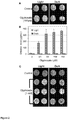
- shikimic acid on its own did not cause any phytotoxicity, even when we increased it to 15 mM, the physiological concentration we found accumulating in the susceptible biotype after exposure to glyphosate.
- concentrations in the range of 1-5 mM being able to break glyphosate resistance within 7 days of application and lower concentrations being unable to ( Fig. 4B ).
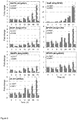
- glyphosate-induced significant changes in the expression of genes encoding enzymes for the commitment step of the shikimate pathway DAHPS
- shikimate kinase SK
- EPSPS glyphosate target protein 5-enoylpyruvyl shikimate-3-phosphate synthase
- CS chorismate synthase
- AtSK1, AtSK2, AtSKL1, and AtSKL2 proteins have a chloroplast-targeting sequence
- At2g16790 does not have a distinctive chloroplast-targeting peptide and is likely to have a different cellular location, though this will require experimental verification.
- Amino acid residues of bacterial shikimate kinase enzymes involved in binding shikimate, ATP or ATP analogues, and Mg 2+ have been identified and they are all conserved in the AtSK1 and AtSK2 sequences (Fucile et al., 2008). In the protein sequence of At2g16790, 11 out of 16 of these residues are conserved, with the entire ATP-binding P-loop intact, as are residues for binding Mg 2+ ions.
- At2g16790 potentially binds ATP, Mg 2+ and shikimate, but it most probably has no shikimate kinase activity. In fact, At2g16790 has been classified as a gluconate kinase (GntK; EC 2.7.1.12), which functions in the pentose phosphate pathway (Fucile et al., 2008).
- Erythrose-4-phosphate one of two substrates for the first shikimate pathway reaction, comes from the pentose phosphate pathway.
- Activation of its gene after exposure to glyphosate in both light and dark conditions highlights the possibility that pentose phosphate pathway intermediates could also build up in the presence of glyphosate and possibly be siphoned away to produce as yet uncharacterised metabolites that may account for glyphosate toxicity. This lends further support to the strategy of spiking glyphosate formulations with appropriate upstream intermediate metabolites as a way to break glyphosate resistance.
- shikimate-3-phosphate is a critical component required for glyphosate to be phytotoxic and that glyphosate-susceptible plants attempt to block its formation in order to avoid death.
- shikimate-3-phosphate may also enhance glyphosate potency by directly making more EPSPS enzyme molecules available for inhibition by glyphosate. This is because glyphosate only binds to an EPSPS:Shikimate-3-phosphate complex (Boocock and Coggins, 1983).
Landscapes
- Life Sciences & Earth Sciences (AREA)
- Agronomy & Crop Science (AREA)
- Pest Control & Pesticides (AREA)
- Plant Pathology (AREA)
- Health & Medical Sciences (AREA)
- Engineering & Computer Science (AREA)
- Dentistry (AREA)
- General Health & Medical Sciences (AREA)
- Wood Science & Technology (AREA)
- Zoology (AREA)
- Environmental Sciences (AREA)
- Agricultural Chemicals And Associated Chemicals (AREA)
Claims (14)
- Herbizide Zusammensetzung umfassend Glyphosat oder ein geeignetes Salz oder Salze davon und mindestens eines von Shikimat-3-phosphat, Shikimat oder Shikimsäure, 3-Dehydrochinat oder 3-Deoxy-D-arabinoheptulosonat-7-phosphat (DAHP) oder Gluconsäure.
- Herbizide Zusammensetzung nach Anspruch 1, umfassend Glyphosat oder ein geeignetes Salz oder Salze davon und mindestens eines von Shikimat-3-phosphat, Shikimat oder Shikimsäure, 3-Dehydrochinat oder 3-Deoxy-D-arabinoheptulosonat-7-phosphat (DAHP).
- Herbizide Zusammensetzung nach einem der vorhergehenden Ansprüche, wobei der Metabolit Shikimat-3-phosphat ist.
- Herbizide Zusammensetzung nach einem der vorhergehenden Ansprchë, ferner ein oder mehrere landwirtschaftlich akzeptable Zusatzmittel oder Hilfsmittel umfassend.
- Herbizide Zusammensetzung nach Anspruch 6, wobei das Hilfsmittel ein Tensid und/oder Ammoniumsulfat ist.
- Herbizide Zusammensetzung nach einem der vorhergehenden Ansprüche, ferner ein oder mehrere zusätzliche herbizide Mittel umfassend.
- Herbizide Zusammensetzung nach einem der vorhergehenden Ansprüche, wobei das Molverhältnis von Glyphosat zu Shikimat/Shikimsäure, Shikimat-3-phosphat, 3-Dehydrochinat, 3-Deoxy-D-arabinoheptulosonat-7-phosphate (DAHP) oder Gluconsäure 1:7,5 - 1:100, 1:8 -1:75 oder 1:10 -1:50 beträgt.
- Herbizide Zusammensetzung nach einem der vorhergehenden Ansprüche in einer konzentrierten oder Tankmischform.
- Verfahren zum Bekämpfen von Unkräutern durch Aufbringen einer herbiziden Sprühmittelzusammensetzung oder Tankmischung nach einem der vorhergehenden Ansprüche, nach dem Keimen, auf Unkräuter und/oder andere unerwünschte Vegetation.
- Verwendung einer herbiziden Zusammensetzung nach einem der Ansprüche 1-8 zum Bekämpfen von Unkräutern und/oder anderer unerwünschter Vegetation.
- Verfahren zur Verwendung nach den Ansprüchen 9 oder 10 zur Verwendung zum Behandeln von Unkräutern und/oder Vegetation, die gegen Glyphosat resistent geworden sind/ist.
- Verfahren oder Verwendung nach den Ansprüchen 9-12, wobei die Menge an Glyphosat, die zum Bekämpfen der Unkräuter und/oder anderer unerwünschter Vegetation erforderlich ist, mindestens 10 %, 15 %, 25 %, 50 %, 60 % oder mehr weniger Glyphosat beträgt als zum Bekämpfen der Unkräuter und/oder anderer unerwünschter Vegetation in Abwesenheit des Shikimats oder von Metaboliten des Pentosephosphatwegs erforderlich wäre.
- Verwendung von mindestens Shikimat-3-phosphat, Shikimat oder Shikimsäure, 3-Dehydrochinat oder 3-Deoxy-D-arabinoheptulosonat-7-phosphat (DAHP) oder Gluconsäure zum Verbessern der Glyphosataktivität und/oder Reduzieren einer Menge von Glyphosat, die zum Bekämpfen von Unkräutern erforderlich ist.
- Verfahren zum Verbessern der Glyphosataktivität und/oder Reduzieren einer Menge von Glyphosat, die zum Bekämpfen von Unkräutern erforderlich ist, wobei das Verfahren das Einschließen von mindestens einem von Shikimat-3-phosphat, Shikimat oder Shikimsäure, 3-Dehydrochinat oder 3-Deoxy-D-arabinoheptulosonat-7-phosphat (DAHP) oder Gluconsäure bei einem Verfahren zum Bekämpfen von Unkräutern unter Anwendung von Glyphosat umfasst.
Applications Claiming Priority (2)
| Application Number | Priority Date | Filing Date | Title |
|---|---|---|---|
| GBGB1617420.3A GB201617420D0 (en) | 2016-10-14 | 2016-10-14 | Herbicidal compositions |
| PCT/GB2017/053082 WO2018069709A1 (en) | 2016-10-14 | 2017-10-12 | Herbicidal compositions comprising glyphosate |
Publications (2)
| Publication Number | Publication Date |
|---|---|
| EP3525591A1 EP3525591A1 (de) | 2019-08-21 |
| EP3525591B1 true EP3525591B1 (de) | 2021-09-15 |
Family
ID=57680741
Family Applications (1)
| Application Number | Title | Priority Date | Filing Date |
|---|---|---|---|
| EP17787560.6A Active EP3525591B1 (de) | 2016-10-14 | 2017-10-12 | Herbizide zubereitungen enthaltend glyphosat |
Country Status (5)
| Country | Link |
|---|---|
| US (1) | US11266149B2 (de) |
| EP (1) | EP3525591B1 (de) |
| ES (1) | ES2893201T3 (de) |
| GB (1) | GB201617420D0 (de) |
| WO (1) | WO2018069709A1 (de) |
Family Cites Families (6)
| Publication number | Priority date | Publication date | Assignee | Title |
|---|---|---|---|---|
| US4405531A (en) * | 1975-11-10 | 1983-09-20 | Monsanto Company | Salts of N-phosphonomethylglycine |
| FR2736926B1 (fr) * | 1995-07-19 | 1997-08-22 | Rhone Poulenc Agrochimie | 5-enol pyruvylshikimate-3-phosphate synthase mutee, gene codant pour cette proteine et plantes transformees contenant ce gene |
| US6432878B1 (en) * | 1999-01-15 | 2002-08-13 | Cognis Corporation | Adjuvant composition |
| US7771736B2 (en) | 2002-08-30 | 2010-08-10 | Monsanto Technology Llc | Glyphosate formulations and their use for the inhibition of 5-enolpyruvylshikimate-3-phosphate synthase |
| WO2009033605A2 (en) * | 2007-09-13 | 2009-03-19 | Syngenta Participations Ag | Herbicidal composition and method of use thereof |
| CA2932138A1 (en) | 2013-12-20 | 2015-06-25 | Dow Agrosciences Llc | Synergistic herbicidal weed control and improved crop tolerance from combinations of 2,4-d-choline, glyphosate, and glufosinate in 2,4-d-, glyphosate- and glufosinate-tolerant soybeans, corn, cotton and other crop areas |
-
2016
- 2016-10-14 GB GBGB1617420.3A patent/GB201617420D0/en not_active Ceased
-
2017
- 2017-10-12 ES ES17787560T patent/ES2893201T3/es active Active
- 2017-10-12 WO PCT/GB2017/053082 patent/WO2018069709A1/en not_active Ceased
- 2017-10-12 EP EP17787560.6A patent/EP3525591B1/de active Active
- 2017-10-12 US US16/342,185 patent/US11266149B2/en active Active
Also Published As
| Publication number | Publication date |
|---|---|
| US20190269137A1 (en) | 2019-09-05 |
| EP3525591A1 (de) | 2019-08-21 |
| US11266149B2 (en) | 2022-03-08 |
| ES2893201T3 (es) | 2022-02-08 |
| WO2018069709A1 (en) | 2018-04-19 |
| GB201617420D0 (en) | 2016-11-30 |
Similar Documents
| Publication | Publication Date | Title |
|---|---|---|
| Takano et al. | Glufosinate‐ammonium: a review of the current state of knowledge | |
| Takano et al. | Reactive oxygen species trigger the fast action of glufosinate | |
| Perez-Jones et al. | Investigating the mechanisms of glyphosate resistance in Lolium multiflorum | |
| Székács et al. | Forty years with glyphosate | |
| Pline et al. | Effects of temperature and chemical additives on the response of transgenic herbicide-resistant soybeans to glufosinate and glyphosate applications | |
| González-Torralva et al. | Differential susceptibility to glyphosate among the Conyza weed species in Spain | |
| Fernández-Escalada et al. | Characterization of the Amaranthus palmeri physiological response to glyphosate in susceptible and resistant populations | |
| Ghanizadeh et al. | Mechanisms of glyphosate resistance in two perennial ryegrass (Lolium perenne) populations | |
| Gronwald et al. | Effect of ammonium sulfate on absorption of imazethapyr by quackgrass (Elytrigia repens) and maize (Zea mays) cell suspension cultures | |
| Kutman et al. | Foliar nickel application alleviates detrimental effects of glyphosate drift on yield and seed quality of wheat | |
| Manogaran et al. | Environmental fate and degradation of glyphosate in soil | |
| US11266149B2 (en) | Herbicidal compositions | |
| JP4806518B2 (ja) | 強化された除草剤組成物 | |
| US20160227783A1 (en) | Agrochemical formulation aid for micronutrient uptake in plants, plant health benefits and herbicide performance | |
| Nandula et al. | Effect of new auxin herbicide formulations on control of herbicide resistant weeds and on microbial activities in the rhizosphere | |
| de Carvalho et al. | Efficacy and interaction of dicamba-haloxyfop tank mixtures | |
| CA3092846A1 (en) | High-load glyphosate herbicidal composition, ready-to-use formulation obtained from the composition and method to control various weed species in agricultural crops | |
| Castner | Crop response to low-dose dicamba | |
| Yu et al. | The problem of controlling segetal vegetation in agrophytocenoses in the context of biodiversity conservation | |
| Duenk | Optimization of weed control in E3 soybean [Glycine max (L.) Merr.] | |
| Anderson | The effect of anionic surfactants on herbicide mixtures and solutions | |
| AU2002361832B8 (en) | Enhanced herbicide composition | |
| RU2812197C1 (ru) | Гербицидные композиции с низкой летучестью | |
| Browne | Stewardship of Synthetic Auxins in 2, 4-D and Dicamba–resistant Crops and Mitigation of Off-target Movement | |
| US12022827B2 (en) | Compositions and methods to reduce dicamba volatility and provide plant essential nutrients |
Legal Events
| Date | Code | Title | Description |
|---|---|---|---|
| STAA | Information on the status of an ep patent application or granted ep patent |
Free format text: STATUS: UNKNOWN |
|
| STAA | Information on the status of an ep patent application or granted ep patent |
Free format text: STATUS: THE INTERNATIONAL PUBLICATION HAS BEEN MADE |
|
| PUAI | Public reference made under article 153(3) epc to a published international application that has entered the european phase |
Free format text: ORIGINAL CODE: 0009012 |
|
| STAA | Information on the status of an ep patent application or granted ep patent |
Free format text: STATUS: REQUEST FOR EXAMINATION WAS MADE |
|
| 17P | Request for examination filed |
Effective date: 20190510 |
|
| AK | Designated contracting states |
Kind code of ref document: A1 Designated state(s): AL AT BE BG CH CY CZ DE DK EE ES FI FR GB GR HR HU IE IS IT LI LT LU LV MC MK MT NL NO PL PT RO RS SE SI SK SM TR |
|
| AX | Request for extension of the european patent |
Extension state: BA ME |
|
| DAV | Request for validation of the european patent (deleted) | ||
| DAX | Request for extension of the european patent (deleted) | ||
| STAA | Information on the status of an ep patent application or granted ep patent |
Free format text: STATUS: EXAMINATION IS IN PROGRESS |
|
| 17Q | First examination report despatched |
Effective date: 20200814 |
|
| GRAP | Despatch of communication of intention to grant a patent |
Free format text: ORIGINAL CODE: EPIDOSNIGR1 |
|
| STAA | Information on the status of an ep patent application or granted ep patent |
Free format text: STATUS: GRANT OF PATENT IS INTENDED |
|
| INTG | Intention to grant announced |
Effective date: 20210406 |
|
| GRAS | Grant fee paid |
Free format text: ORIGINAL CODE: EPIDOSNIGR3 |
|
| GRAA | (expected) grant |
Free format text: ORIGINAL CODE: 0009210 |
|
| STAA | Information on the status of an ep patent application or granted ep patent |
Free format text: STATUS: THE PATENT HAS BEEN GRANTED |
|
| AK | Designated contracting states |
Kind code of ref document: B1 Designated state(s): AL AT BE BG CH CY CZ DE DK EE ES FI FR GB GR HR HU IE IS IT LI LT LU LV MC MK MT NL NO PL PT RO RS SE SI SK SM TR |
|
| REG | Reference to a national code |
Ref country code: CH Ref legal event code: EP |
|
| REG | Reference to a national code |
Ref country code: DE Ref legal event code: R096 Ref document number: 602017046112 Country of ref document: DE |
|
| REG | Reference to a national code |
Ref country code: IE Ref legal event code: FG4D |
|
| REG | Reference to a national code |
Ref country code: AT Ref legal event code: REF Ref document number: 1429799 Country of ref document: AT Kind code of ref document: T Effective date: 20211015 |
|
| REG | Reference to a national code |
Ref country code: LT Ref legal event code: MG9D |
|
| REG | Reference to a national code |
Ref country code: NL Ref legal event code: MP Effective date: 20210915 |
|
| PG25 | Lapsed in a contracting state [announced via postgrant information from national office to epo] |
Ref country code: LT Free format text: LAPSE BECAUSE OF FAILURE TO SUBMIT A TRANSLATION OF THE DESCRIPTION OR TO PAY THE FEE WITHIN THE PRESCRIBED TIME-LIMIT Effective date: 20210915 Ref country code: BG Free format text: LAPSE BECAUSE OF FAILURE TO SUBMIT A TRANSLATION OF THE DESCRIPTION OR TO PAY THE FEE WITHIN THE PRESCRIBED TIME-LIMIT Effective date: 20211215 Ref country code: NO Free format text: LAPSE BECAUSE OF FAILURE TO SUBMIT A TRANSLATION OF THE DESCRIPTION OR TO PAY THE FEE WITHIN THE PRESCRIBED TIME-LIMIT Effective date: 20211215 Ref country code: FI Free format text: LAPSE BECAUSE OF FAILURE TO SUBMIT A TRANSLATION OF THE DESCRIPTION OR TO PAY THE FEE WITHIN THE PRESCRIBED TIME-LIMIT Effective date: 20210915 Ref country code: SE Free format text: LAPSE BECAUSE OF FAILURE TO SUBMIT A TRANSLATION OF THE DESCRIPTION OR TO PAY THE FEE WITHIN THE PRESCRIBED TIME-LIMIT Effective date: 20210915 Ref country code: RS Free format text: LAPSE BECAUSE OF FAILURE TO SUBMIT A TRANSLATION OF THE DESCRIPTION OR TO PAY THE FEE WITHIN THE PRESCRIBED TIME-LIMIT Effective date: 20210915 Ref country code: HR Free format text: LAPSE BECAUSE OF FAILURE TO SUBMIT A TRANSLATION OF THE DESCRIPTION OR TO PAY THE FEE WITHIN THE PRESCRIBED TIME-LIMIT Effective date: 20210915 |
|
| REG | Reference to a national code |
Ref country code: ES Ref legal event code: FG2A Ref document number: 2893201 Country of ref document: ES Kind code of ref document: T3 Effective date: 20220208 |
|
| REG | Reference to a national code |
Ref country code: AT Ref legal event code: MK05 Ref document number: 1429799 Country of ref document: AT Kind code of ref document: T Effective date: 20210915 |
|
| PG25 | Lapsed in a contracting state [announced via postgrant information from national office to epo] |
Ref country code: LV Free format text: LAPSE BECAUSE OF FAILURE TO SUBMIT A TRANSLATION OF THE DESCRIPTION OR TO PAY THE FEE WITHIN THE PRESCRIBED TIME-LIMIT Effective date: 20210915 Ref country code: GR Free format text: LAPSE BECAUSE OF FAILURE TO SUBMIT A TRANSLATION OF THE DESCRIPTION OR TO PAY THE FEE WITHIN THE PRESCRIBED TIME-LIMIT Effective date: 20211216 |
|
| PG25 | Lapsed in a contracting state [announced via postgrant information from national office to epo] |
Ref country code: AT Free format text: LAPSE BECAUSE OF FAILURE TO SUBMIT A TRANSLATION OF THE DESCRIPTION OR TO PAY THE FEE WITHIN THE PRESCRIBED TIME-LIMIT Effective date: 20210915 |
|
| REG | Reference to a national code |
Ref country code: CH Ref legal event code: PL |
|
| PG25 | Lapsed in a contracting state [announced via postgrant information from national office to epo] |
Ref country code: IS Free format text: LAPSE BECAUSE OF FAILURE TO SUBMIT A TRANSLATION OF THE DESCRIPTION OR TO PAY THE FEE WITHIN THE PRESCRIBED TIME-LIMIT Effective date: 20220115 Ref country code: SM Free format text: LAPSE BECAUSE OF FAILURE TO SUBMIT A TRANSLATION OF THE DESCRIPTION OR TO PAY THE FEE WITHIN THE PRESCRIBED TIME-LIMIT Effective date: 20210915 Ref country code: SK Free format text: LAPSE BECAUSE OF FAILURE TO SUBMIT A TRANSLATION OF THE DESCRIPTION OR TO PAY THE FEE WITHIN THE PRESCRIBED TIME-LIMIT Effective date: 20210915 Ref country code: RO Free format text: LAPSE BECAUSE OF FAILURE TO SUBMIT A TRANSLATION OF THE DESCRIPTION OR TO PAY THE FEE WITHIN THE PRESCRIBED TIME-LIMIT Effective date: 20210915 Ref country code: PT Free format text: LAPSE BECAUSE OF FAILURE TO SUBMIT A TRANSLATION OF THE DESCRIPTION OR TO PAY THE FEE WITHIN THE PRESCRIBED TIME-LIMIT Effective date: 20220117 Ref country code: PL Free format text: LAPSE BECAUSE OF FAILURE TO SUBMIT A TRANSLATION OF THE DESCRIPTION OR TO PAY THE FEE WITHIN THE PRESCRIBED TIME-LIMIT Effective date: 20210915 Ref country code: NL Free format text: LAPSE BECAUSE OF FAILURE TO SUBMIT A TRANSLATION OF THE DESCRIPTION OR TO PAY THE FEE WITHIN THE PRESCRIBED TIME-LIMIT Effective date: 20210915 Ref country code: EE Free format text: LAPSE BECAUSE OF FAILURE TO SUBMIT A TRANSLATION OF THE DESCRIPTION OR TO PAY THE FEE WITHIN THE PRESCRIBED TIME-LIMIT Effective date: 20210915 Ref country code: CZ Free format text: LAPSE BECAUSE OF FAILURE TO SUBMIT A TRANSLATION OF THE DESCRIPTION OR TO PAY THE FEE WITHIN THE PRESCRIBED TIME-LIMIT Effective date: 20210915 Ref country code: AL Free format text: LAPSE BECAUSE OF FAILURE TO SUBMIT A TRANSLATION OF THE DESCRIPTION OR TO PAY THE FEE WITHIN THE PRESCRIBED TIME-LIMIT Effective date: 20210915 |
|
| REG | Reference to a national code |
Ref country code: DE Ref legal event code: R097 Ref document number: 602017046112 Country of ref document: DE |
|
| REG | Reference to a national code |
Ref country code: BE Ref legal event code: MM Effective date: 20211031 |
|
| PG25 | Lapsed in a contracting state [announced via postgrant information from national office to epo] |
Ref country code: MC Free format text: LAPSE BECAUSE OF FAILURE TO SUBMIT A TRANSLATION OF THE DESCRIPTION OR TO PAY THE FEE WITHIN THE PRESCRIBED TIME-LIMIT Effective date: 20210915 |
|
| PLBE | No opposition filed within time limit |
Free format text: ORIGINAL CODE: 0009261 |
|
| STAA | Information on the status of an ep patent application or granted ep patent |
Free format text: STATUS: NO OPPOSITION FILED WITHIN TIME LIMIT |
|
| PG25 | Lapsed in a contracting state [announced via postgrant information from national office to epo] |
Ref country code: LU Free format text: LAPSE BECAUSE OF NON-PAYMENT OF DUE FEES Effective date: 20211012 Ref country code: DK Free format text: LAPSE BECAUSE OF FAILURE TO SUBMIT A TRANSLATION OF THE DESCRIPTION OR TO PAY THE FEE WITHIN THE PRESCRIBED TIME-LIMIT Effective date: 20210915 Ref country code: BE Free format text: LAPSE BECAUSE OF NON-PAYMENT OF DUE FEES Effective date: 20211031 |
|
| 26N | No opposition filed |
Effective date: 20220616 |
|
| PG25 | Lapsed in a contracting state [announced via postgrant information from national office to epo] |
Ref country code: SI Free format text: LAPSE BECAUSE OF FAILURE TO SUBMIT A TRANSLATION OF THE DESCRIPTION OR TO PAY THE FEE WITHIN THE PRESCRIBED TIME-LIMIT Effective date: 20210915 Ref country code: LI Free format text: LAPSE BECAUSE OF NON-PAYMENT OF DUE FEES Effective date: 20211031 Ref country code: CH Free format text: LAPSE BECAUSE OF NON-PAYMENT OF DUE FEES Effective date: 20211031 |
|
| PG25 | Lapsed in a contracting state [announced via postgrant information from national office to epo] |
Ref country code: IE Free format text: LAPSE BECAUSE OF NON-PAYMENT OF DUE FEES Effective date: 20211012 |
|
| P01 | Opt-out of the competence of the unified patent court (upc) registered |
Effective date: 20230504 |
|
| PG25 | Lapsed in a contracting state [announced via postgrant information from national office to epo] |
Ref country code: CY Free format text: LAPSE BECAUSE OF FAILURE TO SUBMIT A TRANSLATION OF THE DESCRIPTION OR TO PAY THE FEE WITHIN THE PRESCRIBED TIME-LIMIT Effective date: 20210915 |
|
| PG25 | Lapsed in a contracting state [announced via postgrant information from national office to epo] |
Ref country code: HU Free format text: LAPSE BECAUSE OF FAILURE TO SUBMIT A TRANSLATION OF THE DESCRIPTION OR TO PAY THE FEE WITHIN THE PRESCRIBED TIME-LIMIT; INVALID AB INITIO Effective date: 20171012 |
|
| PG25 | Lapsed in a contracting state [announced via postgrant information from national office to epo] |
Ref country code: MK Free format text: LAPSE BECAUSE OF FAILURE TO SUBMIT A TRANSLATION OF THE DESCRIPTION OR TO PAY THE FEE WITHIN THE PRESCRIBED TIME-LIMIT Effective date: 20210915 |
|
| PG25 | Lapsed in a contracting state [announced via postgrant information from national office to epo] |
Ref country code: MT Free format text: LAPSE BECAUSE OF FAILURE TO SUBMIT A TRANSLATION OF THE DESCRIPTION OR TO PAY THE FEE WITHIN THE PRESCRIBED TIME-LIMIT Effective date: 20210915 |
|
| PG25 | Lapsed in a contracting state [announced via postgrant information from national office to epo] |
Ref country code: TR Free format text: LAPSE BECAUSE OF FAILURE TO SUBMIT A TRANSLATION OF THE DESCRIPTION OR TO PAY THE FEE WITHIN THE PRESCRIBED TIME-LIMIT Effective date: 20210915 |
|
| PGFP | Annual fee paid to national office [announced via postgrant information from national office to epo] |
Ref country code: DE Payment date: 20251028 Year of fee payment: 9 |
|
| PGFP | Annual fee paid to national office [announced via postgrant information from national office to epo] |
Ref country code: GB Payment date: 20251030 Year of fee payment: 9 |
|
| PGFP | Annual fee paid to national office [announced via postgrant information from national office to epo] |
Ref country code: IT Payment date: 20251029 Year of fee payment: 9 |
|
| PGFP | Annual fee paid to national office [announced via postgrant information from national office to epo] |
Ref country code: FR Payment date: 20251027 Year of fee payment: 9 |
|
| PGFP | Annual fee paid to national office [announced via postgrant information from national office to epo] |
Ref country code: ES Payment date: 20251209 Year of fee payment: 9 |