EP3522464B1 - Signalisierungsüberbelegungsstatus - Google Patents
Signalisierungsüberbelegungsstatus Download PDFInfo
- Publication number
- EP3522464B1 EP3522464B1 EP19154694.4A EP19154694A EP3522464B1 EP 3522464 B1 EP3522464 B1 EP 3522464B1 EP 19154694 A EP19154694 A EP 19154694A EP 3522464 B1 EP3522464 B1 EP 3522464B1
- Authority
- EP
- European Patent Office
- Prior art keywords
- congestion
- server
- uplink data
- packet
- packets
- Prior art date
- Legal status (The legal status is an assumption and is not a legal conclusion. Google has not performed a legal analysis and makes no representation as to the accuracy of the status listed.)
- Active
Links
Images



Classifications
-
- H—ELECTRICITY
- H04—ELECTRIC COMMUNICATION TECHNIQUE
- H04L—TRANSMISSION OF DIGITAL INFORMATION, e.g. TELEGRAPHIC COMMUNICATION
- H04L47/00—Traffic control in data switching networks
- H04L47/10—Flow control; Congestion control
- H04L47/11—Identifying congestion
- H04L47/115—Identifying congestion using a dedicated packet
-
- H—ELECTRICITY
- H04—ELECTRIC COMMUNICATION TECHNIQUE
- H04L—TRANSMISSION OF DIGITAL INFORMATION, e.g. TELEGRAPHIC COMMUNICATION
- H04L47/00—Traffic control in data switching networks
- H04L47/10—Flow control; Congestion control
- H04L47/11—Identifying congestion
-
- H—ELECTRICITY
- H04—ELECTRIC COMMUNICATION TECHNIQUE
- H04L—TRANSMISSION OF DIGITAL INFORMATION, e.g. TELEGRAPHIC COMMUNICATION
- H04L47/00—Traffic control in data switching networks
- H04L47/10—Flow control; Congestion control
- H04L47/12—Avoiding congestion; Recovering from congestion
-
- H—ELECTRICITY
- H04—ELECTRIC COMMUNICATION TECHNIQUE
- H04L—TRANSMISSION OF DIGITAL INFORMATION, e.g. TELEGRAPHIC COMMUNICATION
- H04L47/00—Traffic control in data switching networks
- H04L47/10—Flow control; Congestion control
- H04L47/31—Flow control; Congestion control by tagging of packets, e.g. using discard eligibility [DE] bits
-
- H—ELECTRICITY
- H04—ELECTRIC COMMUNICATION TECHNIQUE
- H04L—TRANSMISSION OF DIGITAL INFORMATION, e.g. TELEGRAPHIC COMMUNICATION
- H04L47/00—Traffic control in data switching networks
- H04L47/10—Flow control; Congestion control
- H04L47/33—Flow control; Congestion control using forward notification
-
- H—ELECTRICITY
- H04—ELECTRIC COMMUNICATION TECHNIQUE
- H04W—WIRELESS COMMUNICATION NETWORKS
- H04W28/00—Network traffic management; Network resource management
- H04W28/02—Traffic management, e.g. flow control or congestion control
- H04W28/0284—Traffic management, e.g. flow control or congestion control detecting congestion or overload during communication
-
- H—ELECTRICITY
- H04—ELECTRIC COMMUNICATION TECHNIQUE
- H04W—WIRELESS COMMUNICATION NETWORKS
- H04W28/00—Network traffic management; Network resource management
- H04W28/02—Traffic management, e.g. flow control or congestion control
- H04W28/0289—Congestion control
-
- H—ELECTRICITY
- H04—ELECTRIC COMMUNICATION TECHNIQUE
- H04W—WIRELESS COMMUNICATION NETWORKS
- H04W28/00—Network traffic management; Network resource management
- H04W28/02—Traffic management, e.g. flow control or congestion control
- H04W28/10—Flow control between communication endpoints
-
- H—ELECTRICITY
- H04—ELECTRIC COMMUNICATION TECHNIQUE
- H04L—TRANSMISSION OF DIGITAL INFORMATION, e.g. TELEGRAPHIC COMMUNICATION
- H04L47/00—Traffic control in data switching networks
- H04L47/10—Flow control; Congestion control
- H04L47/24—Traffic characterised by specific attributes, e.g. priority or QoS
- H04L47/2441—Traffic characterised by specific attributes, e.g. priority or QoS relying on flow classification, e.g. using integrated services [IntServ]
-
- H—ELECTRICITY
- H04—ELECTRIC COMMUNICATION TECHNIQUE
- H04L—TRANSMISSION OF DIGITAL INFORMATION, e.g. TELEGRAPHIC COMMUNICATION
- H04L47/00—Traffic control in data switching networks
- H04L47/10—Flow control; Congestion control
- H04L47/25—Flow control; Congestion control with rate being modified by the source upon detecting a change of network conditions
-
- H—ELECTRICITY
- H04—ELECTRIC COMMUNICATION TECHNIQUE
- H04W—WIRELESS COMMUNICATION NETWORKS
- H04W24/00—Supervisory, monitoring or testing arrangements
- H04W24/08—Testing, supervising or monitoring using real traffic
-
- H—ELECTRICITY
- H04—ELECTRIC COMMUNICATION TECHNIQUE
- H04W—WIRELESS COMMUNICATION NETWORKS
- H04W8/00—Network data management
- H04W8/02—Processing of mobility data, e.g. registration information at HLR [Home Location Register] or VLR [Visitor Location Register]; Transfer of mobility data, e.g. between HLR, VLR or external networks
- H04W8/04—Registration at HLR or HSS [Home Subscriber Server]
Definitions
- the present invention relates to signalling a change in congestion status in a network.
- the present application relates to signalling a change in congestion status between a base station and a gateway element in a cellular network.
- Network elements such as switches and routers, in a TCP/IP based network may respond to network congestion by dropping TCP/IP packets in a packet flow to signal the occurrence of network congestion to a sending device.
- the sending device may respond to the dropped packets by reducing its packet transmission rate to alleviate or relieve the network congestion.
- this method of congestion notification and management is associated with several disadvantages, including the need to retransmit dropped packets and inefficient utilization of network bandwidth.
- ECN Explicit Congestion Notification
- TCP/IP Transmission Control Protocol
- ECN provides an alternative to packet drop based congestion control by facilitating end-to-end notification of network congestion between sending and receiving endpoints of a packet flow in the TCP/IP based network.
- ECN provides a means to signal network congestion by "marking" packets in the packet flow to signal network congestion.
- the endpoints for the packet flow and all network elements in the path between the endpoints must be ECN enabled.
- the network element may "mark" packets in the packet flow to indicate that the packets have experienced congestion.
- ECN utilises the two least significant bits in the differentiated services (DiffServ) field in the IPv4 or IPv6 header of the packets to indicate whether or not the associated packet has encountered congestion.
- DiffServ differentiated services
- the two "ECN bits" in the DiffServ field may be used to encode the following states for the associated packet: 00 Non-ECT: endpoints are not ENC-capable; 01 ECT(1): endpoints are ECN-capable; 10 ECT(0): endpoints are ECN-capable; and 11 CE: package has experience congestion
- bit codes 01 and 10 both of which indicate that the endpoints associated with the packet are capable of implementing ECN.
- the receiving endpoint When the receiving endpoint receives a packet that has been marked to indicate that it has experienced congestion, the receiving endpoint may "echo" a congestion indicator to the sending endpoint by sending a packet marked to indicate congestion to the sending endpoint. In response to receipt of the congestion indicator from the receiving endpoint, the sending endpoint may reduce its transmission rate to alleviate the congestion. In this manner, ECN may be used to signal congestion within the network and thus avoid the inefficiencies associated with packet dropping and packet retransmission.
- US 2015/003280 A1 relates to reporting congestion in access networks to the core network.
- US 2014/233390 discloses a method and system for congestion avoidance in mobile communication networks.
- the base station can efficiently signal a server in the core network that is processing one or more dataflows that are being delivered to and/or sent from the mobile device in an ongoing data session to changes in the radio network congestion status of the cell or cell sector that is serving the mobile device.
- the server is kept informed of current radio congestion levels associated with the cell or cell sector serving the mobile device and can declare, in response to the one or more predetermined criteria associated with the count being met, that a congestion level of the data session of the mobile device is at a given one of the possible radio congestion levels.
- the monitoring of radio congestion status at the cell or cell sector level is used by the server as an input for monitoring of the congestion status of an individual mobile device at that device's data session level.
- a computer program comprising a set of instructions, which, when executed by a processing system at a base station in a radio access network causes the system to implement the method of the third aspect of the invention.
- a computer program comprising a set of instructions, which, when executed by a processing system at a server in a core network connected to a radio access network causes the system to implement the method of the fourth aspect of the invention.
- FIG. 1 depicts a network 100 in accordance with an embodiment.
- the network 100 comprises a radio access network 102 which provides wireless data access to a plurality of user devices or user equipment, such as user device 104.
- the radio access network 102 typically comprises a plurality of base stations such as the base station 106 that facilitates a wireless link between the user device 104 and a core network 108 within a geographical area 106a often referred to as a cell.
- the core network 108 provides connectivity between the radio access network 102 and a wide area network 110, such as the Internet.
- the core network 108 comprises one of more network elements, such as one or more router elements 112, and a gateway element 114 which provides the user device 104 with data access to the wide area network 110.
- the gateway element 114 includes functionality for IP address allocation, account billing, packet filtering and policy based management of packet flows associated with the user device 104.
- the gateway element 114 may be connected to the wide area network by a router 116.
- the network 100 may be a cellular network in accordance with the 3rd Generation Partnership Project (3GPP) Long Term Evolution (LTE) standards.
- the base station 106 may be an eNodeB in an LTE radio access network.
- the gateway element 114 may take the form of is a Packet Data Network Gateway (PDN-GW) and the user device 104 may be a cellular telephone which is compliant with the LTE standards.
- the PDN-GW is located in the IP user-plane between the eNodeB and the wide area network 110 and has access to the IP headers for packet flows associated with the user device 104.
- the user device 104 may request content from one or more sources located in the wide area network 110, such as one or more origin servers 110a, 110b. In order to request and receive this content, the user device 104 will send and send and receive packet data over the radio access network 102 and the core network 108 via the base station 106 and the gateway element 114.
- sources located in the wide area network 110 such as one or more origin servers 110a, 110b.
- the user device 104 will send and send and receive packet data over the radio access network 102 and the core network 108 via the base station 106 and the gateway element 114.
- a data flow is associated with an 'end-to-end' exchange of data between the user device 104 and a given origin server 110a, 110b.
- This exchange of data is typically performed using an Application Layer (Layer 7) protocol, for example the Hypertext Transfer Protocol (HTTP) or HTTP secure (HTTPs) and a Transport Layer Protocol (Layer 4), for example, the Transmission Control Protocol (TCP) or the User Datgram Protocol (UDP).
- Layer 7 Application Layer
- HTTP Hypertext Transfer Protocol
- HTTPs HTTP secure
- Transport Layer Protocol Layer 4
- TCP Transmission Control Protocol
- UDP User Datgram Protocol
- a data flow is defined as the flow of data between a client side endpoint (not shown) at the user device 104 and a server side end-point (not shown) at a given origin server 101a, 101b over a Transport Layer connection, typically, a TCP connection.
- a Transport Layer connection typically, a TCP connection.
- the TCP Connection may be so called 'split' TCP connection comprising a first TCP connection between the user device 104 and the gateway element 114 and a second TCP connection between the gateway element 114 and the given origin server 101a, 101b.
- the client side end point in this connection is a client socket, typically, a TCP socket defined by a client IP address and client port number and likewise the server side end point in the connection is TCP socket defined by a server IP address and server port number.
- a given data flow is thus identifiable by virtue of a 4-tuple comprising: client IP address, client port number, origin server IP address, origin server port number contained in the headers of packets of the data flow. Accordingly, the base station 104 and the gateway element 114 can use such 4-tuples (or one or more of their elements) to identify and monitor the individual data flows.
- each Layer 7 request for example, a HTTP request
- each corresponding Layer 7 response HTTP response is transported over a Transport Layer connection such as a TCP connection in one or more TCP segments with each TCP segment itself being transported in one or more IP packets.
- a first group of one or more data flows may exist between a first application (not shown) running on the user device 104, for example, a Web Browser app and one or more of the origin servers 110a, 110b in order to download a Web Page to the user device 104.
- a second group of one or more data flows may exist between a second application running on the user device 104, for example a video playing app and one or more of the origin servers 110a, 110b in order to download video content to the user device 104.
- a second application running on the user device 104
- the origin servers 110a, 110b in order to download video content to the user device 104.
- new data flows may be set up and existing data flows closed down in consequence of delivering to the user device 104 content requested by a user of the user device 104 using the various apps running on the user device 104.
- one or more uplink data flows from the user device 104 are represented as 118 and one or more downlink data flows to the user device 104 are represented as 120.
- the one or more downlink data flows 120 and the one or more uplink data flows 118 transfer data of an ongoing data session of the user device 104.
- the base station 106 comprises a congestion monitoring component 124 which is configured to monitor a radio connection congestion status of the cell 106a or a sector of the cell 106a of the base station 106 that is serving the user device 104 in order to detect a change in the radio network congestion status.
- a plurality of different possible radio congestion levels are pre-defined in the radio access network 102 and the change is a change to a given one of those radio congestion levels.
- any number of different possible radio congestion levels are definable in the radio access network 10 and in an example described herein there are four levels, namely, ⁇ No Congestion', ⁇ Low Congestion', 'Medium Congestion' and ⁇ High Congestion'.
- the radio connection congestion status is a congestion status of the cell 106a (or cell sector) downlink traffic, that is to say, the congestion status of the current total downlink traffic being provided by the base station 106 to user devices such as the user device 104 in the cell 106a (or cell sector) of the base station 106.
- the radio connection congestion status is a congestion status of the cell 106a (or cell sector) uplink traffic, that is to say, the congestion status of the current total uplink traffic being provided by user devices such as the user device 104 in the cell 106a (or cell sector) to the base station 106.
- the radio connection congestion status is a congestion status of the cell 106a (or cell sector) total traffic, that is to say, the congestion status of the combined total uplink traffic and total downlink traffic in the cell 106a (or cell sector).
- the congestion monitoring component 124 may be configured to monitor the congestion status of the cell, or cell sector, downlink traffic, uplink traffic or combination thereof using any suitable technique.
- known suitable techniques include monitoring the total throughput of downlink traffic and/or uplink traffic being transmitted by and/or received by the base station 106 in that cell 106a (or cell sector); monitoring the average delay at the base station 106 of packets in the downlink direction prior to be being transmitted to the user devices in the cell 106a (or cell sector) and/or the average delay at the base station 106 of packets received from the user devices in the cell 106a (or cell sector) in the uplink direction prior to being transmitted onwards into the core network; or monitoring downlink and/or uplink resource utilization, for example, Physical Resource Blocks (PRB) in the case of a LTE base station.
- PRB Physical Resource Blocks
- the congestion monitoring component 124 in response to detecting a change in the radio connection congestion status the congestion monitoring component 124 starts a packet modification process in respect of one or more packets in each of the one or more uplink data flows 118 from the user device 104 to signal the change in congestion status to a given one of a plurality of possible radio congestion levels.
- one or more network elements upstream of the base station 106 may be informed of the change of congestion status detected by the congestion monitoring component 124 and, as will be explained in more detail below, take appropriate action in respect of one or more of the downlink data flows 120 to the user device 104 and/or one or more of the uplink data flows 120 from the user device 104 in a current data session.
- IP data packets of the one or more uplink flows 118 and the data packets of the one or more downlink flows 120 may be tunnelled between the base station 106 and the gateway element 114 in accordance with a General Packet Radio Service (GPRS) tunnelling protocol.
- GPRS General Packet Radio Service
- the gateway element 114 comprises a traffic management component 122 which is configured to inspect packets in the one or more uplink data flows 118 and detect packets which have been modified by the congestion monitoring component 124 of the base station 106 to indicate the change of congestion status.
- the traffic management component 122 is arranged to count, in at least a first time period, for each of the plurality of possible radio congestion levels, the number of the one or more uplink data flows 118 from the user device 104 that indicate that radio congestion level.
- the traffic management component 122 is arranged to declare that a data session congestion level that is specific to the user device 104 is at a given one of the possible radio congestion levels.
- traffic management component122 may implement one or more countermeasures to alleviate or relieve congestion in the one or more downlink data flows 120 to the user device 104 and/or the one or more uplink data flows 118 from the user device 104.
- the traffic management component 122 may implement one or more of an optimisation process, a compression processes, and/or a traffic shaping process in respect of the one or more downlink data flows 120 and/or the one or more uplink data flows 118 in an effort to alleviate or reduce congestion.
- the traffic management component 122 may modify one or more packets in one or more of the downlink data flows 120 to the user device 104 to signal an acknowledgement of the change of congestion status signalled by modified packets in the one or more uplink data flows 118.
- the congestion monitoring component 124 is configured to monitor or inspect packets in the one or more downlink data flows 120 to detect the packets which have been modified by the traffic management component 122 to indicate the acknowledgement of the change of congestion status. Upon detecting one or more such packets signalling the acknowledgement of the change of congestion status, the congestion monitoring component 124 stops the packet modification process of the one or more uplink data flows 118. In this manner, the congestion monitoring component 124 need only implement the package modification process until acknowledgement of the change of congestion status has been acknowledged by the traffic management component 122, thereby reducing computational overhead.
- the congestion monitoring component 124 may continue to monitor the radio connection congestion status of the cell 106a (or cell sector) of the base station 106 to detect a subsequent change of congestion status i.e. either to a lower level of congestion or a higher level of congestion than the current level of congestion. In response to detecting a subsequent change of congestion status, the congestion monitoring component 124 may restart the packet modification process to signal the subsequent change of congestion status to the traffic management component 122.
- the traffic management component 122 may stop or reduce the one or more countermeasures (e.g. in the case where the subsequent change of congestion status indicates that the congestion has been cleared or is lower) or implement further or increased countermeasures (e.g. in the case where the congestion status has increased) as required.
- the signalling of changes of congestion status from the congestion monitoring component 124 to the traffic management component 122 and the reciprocal acknowledgement from the traffic management component 122 to the congestion monitoring component 124 acts as a "two-way handshake" in respect of changes of the congestion status.
- This two-way handshake enables changes of congestion status to be notified with reduced overhead (i.e. continuous signalling of congestion status is not required) whilst ensuring that the traffic management component 122 is notified of changes of congestion status in real-time. In turn, this ensures that the traffic management component 122 only employs countermeasures in respect of the data session when congestion is detected by the congestion monitoring component 124.
- the volume of data carried over the network 100 as a whole may be maximised, which may be advantageous in scenarios where the revenue received by an operator is at least in part dependent on the volume of data carried over the network 100.
- signalling between the congestion monitoring component 124 and the traffic management component 122 may utilise one or more bits in the headers of packets in the one or more uplink data flows 118 and the one or more downlink data flow 120.
- the congestion monitoring component 124 and the traffic management component 122 may utilise the two least significant bits in the differentiated services (DiffServ) field of the IPv4 or IPv6 header of the packets.
- DiffServ differentiated services
- the congestion monitoring component 124 utilises the two bits in the DiffServ field of packets in the one more uplink data flows 118 to signal changes in absolute congestion states as detected by the congestion monitoring component 124, as follows:
- the traffic management component 122 may utilise these two bits in the DiffServ field of packets in the one more downlink data flows 120 to signal the acknowledgment of the change in congestion state.
- the number of congestion states which can be signalled between the congestion monitoring component 124 and the traffic management component 122 is dependent on the number of bits in the header available for encoding of the congestion states.
- some embodiments may utilise additional bits in the IPv4 or IPv6 header to increase the number of congestion states that can be signalled by the congestion monitoring component 124 to the traffic management component 122.
- increasing the number of bits in the header used to encode the congestion status enables the congestion monitoring component 124 to report the congestion status of the downlink data flow 120 to the traffic management component 122 with increased granularity.
- congestion monitoring component 124 may further utilise bits in the header to encode whether the congestion status relates to congestion in the downlink direction or congestion in the uplink direction.
- FIG 2 is a schematic diagram showing the gateway element 114 comprising the traffic management component 122 of Figure 1 in further detail.
- the gateway element 114 comprises a first network interface 126 which is configured to send and receive packet data to and from the user device 104 via the base station 106, and a second network interface 128 which is configured to send and receive packet data to and from the wide area network 110 via the router 116.
- the first network interface 126 and the second network interface 128 act to proxy packets in the one or more uplink data flows 118 and the one or more downlink data flows 120. This enables the gateway element 114 to inspect and modify packets in the one or more uplink data flows 118 and the one or more downlink data flows 120, as discussed below in further detail.
- the traffic management component 122 comprises a congestion control function 130, a congestion avoidance function 132 and a policy management function 134.
- the congestion control function 130 is configured to inspect data packets in the one or more uplink data flows 118 to detect one or more packets modified by the congestion monitoring component 124 of the base station 106 to signal a change of congestion status. To facilitate this inspection, the congestion control function 130 may be provided with access to one or more buffers 136 which temporarily store or hold packet data associated with the one or more uplink data flows 118 and the one or more downlink data flows 120.
- the congestion control function 130 is arranged to count, in at least a first time period, for each of the plurality of possible radio congestion levels, the number of the one or more uplink data flows 118 from the user device 104 that indicate that particular radio congestion level.
- the traffic management component 122 is arranged to declare that a data session congestion level of the user device 104 is at a given one of the possible radio congestion levels.
- the congestion control function 130 runs an aggregated moving window operation 500, in which, for each of the, possible congestion states (Con States), the congestion control function 130 counts in each of the time intervals (T1 to T5) that together define the length of the moving window operation 500, the number of the one or more uplink data flows 118 that are indicated as having that radio congestion level in that time period.
- the congestion control function 130 aggregates, for each of the possible congestion states, the counts of the time intervals (T1 to T5) that together define the length of the moving window operation 500 to generate an aggregated count for each possible congestion states C.
- the congestion control function 130 may then, for example, select the radio congestion state having the highest aggregated count (which is Con State High in the example of Figure 3 ) and if one or more predetermined criteria are met, for example, if the selected highest aggregated count (which is 30 in the example of Figure 3 ) is greater than a pre-determined threshold value, declare that the data session congestion level is at this radio congestion level.
- the congestion control function 130 may modify one or more packets in one or more of the downlink data flow 120 to signal an acknowledgement of the change of congestion status to the congestion monitoring component 124 of the base station 106, as discussed above.
- the congestion control function 130 may instruct the congestion avoidance function 132 to initiate, modify or stop an appropriate congestion avoidance process to reduce congestion in one or more of downlink data flows 120 to the user device 104 and/or one or more of the uplink data flows 118 from the user device 104.
- the congestion avoidance process may comprise modifying one or more characteristics of the one or more downlink data flows 120 and/or modifying one or more characteristics of the one or more uplink data flows 118 to alleviate the congestion detected by the congestion monitoring component 124 of the base station 106.
- the congestion avoidance process may comprise one or more of an optimisation process, a compression processes, and/or a traffic shaping process in respect of packets of the one or more downlink data flows 120 and/or the one or more uplink data flows 118.
- the congestion avoidance function 132 may be provided with access to the one or more buffers 136 which temporarily store the packet data associated with the one or more uplink data flows 118 and the one or more downlink data flows 120.
- the congestion control function 130 may instruct the congestion avoidance function 132 to initiate the congestion avoidance process in accordance with one or more policies managed by the policy management function 134.
- the congestion control function 130 may retrieve one or more policies specific and applicable to the user device 104 in response to a change in congestion status signalled by the congestion monitoring component 124 of the base station 106.
- the congestion control function 130 may retrieve the one or more policies applicable to the user device 104 during an initial negotiation process between the congestion monitoring component 124 and the traffic management component 122 in respect of the user device 104.
- the policy management function 134 may be provided by an element which is remote from the gateway element 114, such as a remote server.
- a different congestion avoidance process may be used in respect of different ones of the user devices even if those devices are in the same cell or sell sector dependent upon the one or more policies specific to those devices.
- a policy specific to one user device may specify that video data to that device in a data session that has been declared to be of High Congestion should be compressed relatively heavily whereas a policy specific to a different user device may specify that video data to that device in a data session that has been declared to be of High Congestion should be compressed but relatively lightly.
- policies will be set according to the level of service that the network subscribers of the user devices subscribe to.
- Figure 4 is a signalling diagram showing a method 300 for monitoring congestion in accordance with an embodiment with reference to the gateway element shown in Figure 2 .
- the signalling diagram of Figure 4 shows data flow between the congestion control component 130, the congestion avoidance function 132 and the policy management function 134 of the traffic management component 122, and the congestion monitoring component 124 of the base station 106.
- the congestion monitoring component 124 signals an initial radio congestion status for the for the user device 104 to the congestion control function 130 of the traffic management component 122 (step 302). This may be performed in response to a particular event, such as the user device 104 successfully attaching to the base station 106 or the user device 104 initiating a data session with an origin server 110a, 110b located in the wide area network 110 or detecting a first packet from the user device 104.
- the congestion control function 130 communicates with the policy management function 134 to retrieve one of more policies applicable to the user device 104 (step 304).
- the congestion control function 130 may subsequently store the one or more policies in memory for use in controlling the congestion avoidance function 132 based on changes to congestion status as signalled by the congestion monitoring component 124 of the base station 106.
- the congestion control function 130 may signal acknowledgement of the initial congestion status to the congestion monitoring component 124 of the base station 106 by modifying one or more packets in the one or more downlink data flows 118 to the user device 104, as discussed above in relation to Figure 1 (step 306).
- the congestion control function 130 proceeds to monitor packets in the one or more uplink data flows 118 to identify any packets which have been modified by the congestion monitoring component 124 to signal a change in the radio congestion status (step 308).
- the congestion monitoring component 124 Upon detection of a change of congestion status, (step 310), the congestion monitoring component 124 initiates the packet modification process to modify one or more packets in the one or more uplink data flows 118 (step 312).
- the congestion control function 130 detects (step 312), the one or more modified packets in the one or more uplink data flows 118.
- the congestion control function 130 declares that a data session congestion level of the user device 104 is at a given one of the possible radio congestion levels (step 314).
- the congestion control function 130 modifies one or more packets in the one or more downlink data flows 120 to the user device 104 to signal an acknowledgement of the change in congestion status signalled by the congestion monitoring component 124 (step 316).
- the congestion monitoring component 124 may stop the packet modification process to avoid unnecessary overhead (not shown).
- the congestion control function 130 then instructs the congestion avoidance function 132 to initiate a congestion avoidance process (step 318).
- the congestion avoidance process acts (step 320) to modify one or more characteristics of one or more of the downlink data flows 120 (step 322) and/or of the one or more uplink data flows 118 (step 324) to alleviate or reduce congestion as discussed above with reference to Figures 1 & 2 .
- the congestion monitoring component 124 may detect a further change in the radio congestion status. For example, the congestion monitoring component 124 may detect that the radio congestion status has changed to a No Congestion or Low Congestion level (step 326). In response to this detection, the congestion monitoring component 124 initiates the packet modification process to modify one or more packets in the one or more uplink data flows 118 to signal the change in congestion status (step 328). The congestion control function 130 detects (step 328) the one or more modified packets in the one or more uplink data flows 118. Next, again in accordance with the procedure described above, the congestion control function 130 declares that a data session congestion level of the user device 104 is now at the No or Low Congestion level (step 330).
- the congestion control function 130 modifies one or more packets in the one or more downlink data flows to signal an acknowledgement of the change in congestion status signalled by the congestion monitoring component 124 (step 332). Upon receipt of the acknowledgement from the congestion control function 130, the congestion monitoring component 124 may stop the packet modification process (not shown).
- the congestion control function 130 instructs the congestion avoidance function 132 to stop the congestion avoidance process (step 334), following which the data packets in the one or more uplink data flows (step 336) and the one or more downlink data flows (step 338) traverse the traffic management component without modification by the congestion avoidance function 132.
- Figure 5 shows a method of signalling congestion status performed by a base station in a radio access network.
- the base station detects a change in a radio network congestion status of a cell or cell sector of the base station that is being used to serve a mobile device, the change being a change to a given one of a plurality of possible radio congestion levels.
- the base station starts a packet modification process to modify one or more packets in each of one or more uplink data flows from the mobile device to a core network of the radio access network, the one or more packets in each of the one or more uplink data flows being modified by the packet modification process to signal the change in congestion status to the given one of a plurality of possible radio congestion levels to a server in the core network.
- the base station detects, in a downlink data flow from the core network to the mobile device, at least one packet which has been modified by the server to indicate an acknowledgement of the change in congestion status signalled by the one or more packets modified by the packet modification process.
- the base station stops the packet modification process in response to detecting the packet which has been modified by the server to indicate acknowledgement of the change in congestion status.
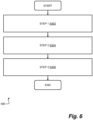
- Figure 6 shows a method of controlling congestion performed by a server in a core network.
- the server detects one or more modified packets in each of one or more uplink data flows from a mobile device to the core network, the one or more uplink data flows being associated with a data session of the mobile device, the modified packets being modified by a base station of a cell or cell sector serving the mobile device to indicate a current radio congestion level, as determined by the base station, of the cell or cell sector, wherein a plurality of different radio congestion levels are possible.
- the server counts, in at least a first time period, for each of the plurality of possible radio congestion levels, the number of the one or more uplink data flows that indicate that radio congestion level.
- the server based at least in part on the count, declares that a data session congestion level is at a given one of the possible radio congestion levels if one or more predetermined criteria are met.
- the congestion monitoring component 124 monitors a single congestion status, that is, the congestion status of the downlink direction of the cell 106a (or cell sector).
- the congestion monitoring component 124 may independently monitor a plurality of different types of congestion statuses, for example, the congestion status of the downlink direction of the cell 106a (or cell sector) and the congestion status of the uplink direction of the cell 106a (or cell sector) and, in a similar manner as in the examples described above, independently signal changes in the congestion status of each to the traffic management component 122.
- the traffic management component 122 may, in a similar manner as in the examples described above, independently monitor for, declare and acknowledge changes in the congestion status of the downlink direction and the uplink direction.
- the traffic management component 122 may implement different countermeasures one or more downlink 120 dataflows as compared to those implemented on one or more uplink 118 dataflows dependent upon the respective indicated congestion statuses of the downlink direction and the uplink direction.
- the congestion monitoring component 124 and the traffic management component 122 may be implemented by a computer system executing computer readable instructions.
- Figure 7 shows an example of a suitable computer system900.
- the computer system 900 includes a processor 902, memory 904, and a communications interface 906.
- the processor may include a multifunction processor and/or an application-specific processor. Examples of processors include, without limitation, the PowerPC TM family of processors by IBM and the x86 family of processors by Intel.
- the memory within the computer may include, for example, storage medium such as read only memory (ROM), flash memory, RAM, and a large capacity permanent storage device such as a hard disk drive.
- the communications interface enables communications with other computers via, for example, the Internet Protocol (IP).
- IP Internet Protocol
- the computer executes computer readable instructions stored in the storage medium to implement various tasks as described above.
Landscapes
- Engineering & Computer Science (AREA)
- Computer Networks & Wireless Communication (AREA)
- Signal Processing (AREA)
- Mobile Radio Communication Systems (AREA)
Claims (15)
- Einrichtung (124) für eine Basisstation (106) für ein Funkzugangsnetz (102), wobei die Einrichtung (124) konfiguriert ist zum:Erfassen einer Änderung eines Funknetzüberlastungsstatus, der dem Downlink-Verkehr einer Zelle oder eines Zellensektors (106a) der Basisstation (106) zugeordnet ist, die/der verwendet wird, um eine Mobilvorrichtung (104) zu bedienen, wobei die Änderung eine Änderung einer gegebenen einen von einer Vielzahl von möglichen Funküberlastungsgraden ist;Starten eines Paketmodifikationsprozesses, um ein oder mehrere Pakete in jedem von einem oder mehreren Uplink-Datenflüssen (118) zu modifizieren, die von der Mobilvorrichtung (104) zu einem Kernnetz (108) fließen, das mit dem Funkzugangsnetz (102) verbunden ist, wobei jeder Uplink-Datenfluss ein Datenfluss von einem Client-Socket an der Mobilvorrichtung (104) zu einem Server-Socket an einem Ursprungsserver (110a, 100b) über eine Transportschichtverbindung ist, wobei der Client-Socket durch eine Client-IP-Adresse und eine Client-Anschlussnummer definiert ist und der Server-Socket durch eine Server-IP-Adresse und eine Server-Anschlussnummer definiert ist, und wobei für jeden Uplink-Datenfluss ein jeweiliger Downlink-Datenfluss von dem Server-Socket an dem Ursprungsserver zu dem Client-Socket an der Mobilvorrichtung über die Transportschichtverbindung besteht, wobei das eine oder die mehreren Pakete in jedem des einen oder der mehreren Uplink-Datenflüsse (118) durch den Paketmodifikationsprozess modifiziert wird, um zu einer Verkehrsverwaltungskomponente (122) in dem Kernnetz (108) die Änderung eines Überlastungsstatus zu der gegebenen einen der Vielzahl von möglichen Funküberlastungsgraden zu signalisieren, wobei der Paketmodifikationsprozess durch die Einrichtung (106) durchgeführt wird, und wobei die Einrichtung (124) konfiguriert ist, um das eine oder die mehreren Pakete in jedem des einen oder der mehreren Uplink-Datenflüsse (118) durch Aktualisieren eines Felds in einem IP-Paketkopf jedes des einen oder der mehreren Pakete zu modifizieren, um in jedem Paket die Änderung des Überlastungsstatus zu signalisieren;wobei die Einrichtung (124) ferner konfiguriert ist zum:Erfassen, in jedem des einen oder der mehreren Downlink-Datenflüsse (120), die von dem Kernnetz (108) zu der Mobilvorrichtung (120) fließen, mindestens eines Pakets, das durch die Verkehrsverwaltungskomponente (122) modifiziert wurde, um eine Bestätigung der signalisierten Änderung des Überlastungsstatus anzuzeigen; undStoppen des Paketmodifikationsprozesses als Reaktion auf das Erfassen der Bestätigung der Änderung des Überlastungsstatus.
- Einrichtung (124) nach Anspruch 1, wobei das Feld ein Feld differenzierter Dienste in dem Paketkopf jedes des einen oder der mehreren Pakete in dem einen oder den mehreren Uplink-Datenflüssen (118) ist.
- Einrichtung (124) nach Anspruch 2, wobei die Einrichtung (124) konfiguriert ist, um ein oder mehrere Bits in dem Feld differenzierter Dienste in dem Paketkopf jedes des einen oder der mehreren Pakete in dem einen oder den mehreren Uplink-Datenflüssen (118) zu modifizieren, um die Änderung eines Überlastungsstatus zu codieren.
- Einrichtung (124) nach einem der vorstehenden Ansprüche, wobei die Einrichtung (124) konfiguriert ist, um Paketköpfe von Paketen in dem einen oder den mehreren Downlink-Datenflüssen (120) zu inspizieren, um das eine oder die mehreren Pakete zu erfassen, die durch den Server (122) modifiziert wurden, um eine Bestätigung der Änderung des Überlastungsstatus anzuzeigen.
- Verkehrsverwaltungskomponente (122) für ein Kernnetz (108), das mit einem Funkzugangsnetz (102) verbunden ist, wobei die Verkehrsverwaltungskomponente (122) konfiguriert ist zum:Erfassen eines oder mehrerer modifizierter Pakete in jedem von einem oder mehreren Uplink-Datenflüssen (118), die von einer Mobilvorrichtung (104) zu dem Kernnetz (108) fließen, wobei der eine oder die mehreren Uplink-Datenflüsse (118) einer Datensitzung der Mobilvorrichtung (104) zugeordnet sind, und wobei jeder Uplink-Datenfluss ein Datenfluss von einem Client-Socket an der Mobilvorrichtung zu einem Server-Socket an einem Ursprungsserver ist, wobei der Client-Socket durch eine Client-IP-Adresse und eine Client-Anschlussnummer definiert ist, wobei der Server-Socket durch eine Server-IP-Adresse und eine Server-Anschlussnummer definiert ist, und wobei für jeden Uplink-Datenfluss ein jeweiliger Downlink-Datenfluss von dem Server-Socket an dem Ursprungsserver zu dem Client-Socket an der Mobilvorrichtung über die Transportschichtverbindung besteht, wobei das eine oder die mehreren modifizierten Pakete in jedem der einen oder mehreren Uplink-Datenflüsse (118) durch eine Basisstation (106) einer Zelle oder eines Zellensektors (106a) modifiziert wird, die/der die Mobilvorrichtung (104) bedienen, um ein Feld in einem IP-Paketkopf jedes des einen oder der mehreren Pakete zu aktualisieren, um in jedem Paket einen aktuellen Funküberlastungsgrad anzuzeigen, der dem Downlink-Verkehr der Zelle oder des Zellensektors (106a) zugeordnet ist, wie durch die Basisstation (106) bestimmt, wobei eine Vielzahl von unterschiedlichen Funküberlastungsgraden möglich ist;Zählen, in mindestens einem ersten Zeitraum, für jede der Vielzahl von möglichen Funküberlastungsgraden, der Anzahl des einen oder der mehreren Uplink-Datenflüsse (118), die diesen Funküberlastungsgrad anzeigt; undAngeben, als Reaktion auf ein oder mehrere zuvor bestimmte Kriterien, die dem Zählwert zugeordnet sind, der erfüllt wird, dass ein Überlastungsgrad der Datensitzung bei einem gegebenen einen der möglichen Funküberlastungsgrade liegt.
- Verkehrsverwaltungskomponente (122) nach Anspruch 5, wobei die Verkehrsverwaltungskomponente (122) konfiguriert ist zum:Zählen, in jedem einer Vielzahl von aufeinanderfolgenden Zeiträumen, für jede der Vielzahl von möglichen Funküberlastungsgraden, der Anzahl des einen oder der mehreren Uplink-Datenflüsse (118), die anzeigen, dass der Funküberlastungsgrad in diesem Zeitraum ist; undAngeben, als Reaktion auf ein oder mehrere zuvor bestimmte Kriterien, die dem Zählwert zugeordnet sind, der erfüllt wird, dass ein Datensitzungsüberlastungsgrad bei einem gegebenen einen der möglichen Funküberlastungsgrade liegt.
- Verkehrsverwaltungskomponente (122) nach Anspruch 6, wobei die Vielzahl von aufeinanderfolgenden Zeiträumen zusammen ein sich bewegendes Zeitfenster definiert.
- Verkehrsverwaltungskomponente (122) nach einem der Ansprüche 5 bis 7, wobei die Einrichtung konfiguriert ist zum:
Starten eines Überlastungsvermeidungsprozesses, um mindestens eine Eigenschaft eines oder mehrerer Downlink- (120) oder eines oder mehrerer Uplink-Datenflüsse (118) zu modifizieren, die der Datensitzung der Mobilvorrichtung zugeordnet sind. - Verkehrsverwaltungskomponente (122) nach Anspruch 8, wobei die Einrichtung konfiguriert ist zum:
Bestimmen des Überlastungsvermeidungsprozesses basierend auf einer Richtlinie, die für die Mobilvorrichtung (104) spezifisch ist. - Verkehrsverwaltungskomponente (122) nach einem der Ansprüche 5 bis 9, wobei die Einrichtung (122) konfiguriert ist zum:
Modifizieren eines Pakets in jedem von einem oder mehreren Downlink-Datenflüssen (120) von dem Kernnetz (108) zu der Mobilvorrichtung (104) und der Datensitzung zugeordnet, um an die Basisstation (106) eine Bestätigung einer Änderung des Überlastungsstatus an die gegebene eine der möglichen Funküberlastungsgrade zu signalisieren. - Verkehrsverwaltungskomponente (122) nach Anspruch 10, wobei die Verkehrsverwaltungskomponente (122) konfiguriert ist, um das Paket in jedem der einen oder mehreren der Downlink-Datenflüsse (120) durch Aktualisieren eines Felds in einem Paketkopf des Pakets zu modifizieren, um die Bestätigung der Änderung des Überlastungsstatus zu signalisieren, und optional, das Feld ein Feld differenzierter Dienste in dem Paketkopf des Pakets ist.
- Verfahren zum Betreiben einer Basisstation (106) in einem Funkzugangsnetz (102), wobei das Verfahren durch eine Einrichtung (124) durchgeführt wird, das Verfahren umfassend:Erfassen einer Änderung eines Funknetzüberlastungsstatus, der einer Zelle oder einem Zellensektor (106a) der Basisstation (106) zugeordnet ist, der verwendet wird, um eine Mobilvorrichtung (104) zu bedienen, wobei die Änderung eine Änderung einer gegebenen einen von einer Vielzahl von möglichen Funküberlastungsgraden ist;Starten eines Paketmodifikationsprozesses, um ein oder mehrere Pakete in jedem von einem oder mehreren Uplink-Datenflüssen (118) zu modifizieren, die von der Mobilvorrichtung (104) zu einem Kernnetz (108) fließen, das mit dem Funkzugangsnetz (102) verbunden ist, wobei jeder Uplink-Datenfluss ein Datenfluss von einem Client-Socket an der Mobilvorrichtung zu einem Server-Socket an einem Ursprungsserver ist, wobei der Client-Socket durch eine Client-IP-Adresse und eine Client-Anschlussnummer definiert ist, wobei der Server-Socket durch eine Server-IP-Adresse und eine Server-Anschlussnummer definiert ist, und wobei für jeden Uplink-Datenfluss ein jeweiliger Downlink-Datenfluss von dem Server-Socket an dem Ursprungsserver zu dem Client-Socket an der Mobilvorrichtung über die Transportschichtverbindung besteht, wobei das eine oder die mehreren Pakete in jedem der einen oder mehreren Uplink-Datenflüsse durch den Paketmodifikationsprozess modifiziert werden, um zu einer Verkehrsverwaltungskomponente (122) in dem Kernnetz (108) die Änderung des Überlastungsstatus zu der gegebenen einen von der Vielzahl von möglichen Funküberlastungsgraden zu signalisieren, wobei der Paketmodifikationsprozess durch die Basisstation (106) durchgeführt wird, und wobei das eine oder die mehreren Pakete in jedem der einen oder mehreren Uplink-Datenflüsse (118) durch Aktualisieren eines Felds in einem IP-Paketkopf von jedem des einen oder der mehreren Pakete modifiziert werden, um in jedem Paket die Änderung des Überlastungsstatus zu signalisieren;Erfassen, in jedem von einem oder mehreren Downlink-Datenflüssen (120) von dem Kernnetz (108) zu der Mobilvorrichtung (104), mindestens eines Pakets, das durch die Verkehrsverwaltungskomponente (122) modifiziert wurde, um eine Bestätigung der signalisierten Änderung des Überlastungsstatus anzuzeigen; undStoppen des Paketmodifikationsprozesses als Reaktion auf das Erfassen der Bestätigung der Änderung des Überlastungsstatus.
- Verfahren zum Betreiben einer Verkehrsverwaltungskomponente (122) in einem Kernnetz (108), das mit einem Funkzugangsnetz (102) verbunden ist, das Verfahren umfassend:Erfassen eines oder mehrerer modifizierter Pakete in jedem von einem oder mehreren Uplink-Datenflüssen (118), die von einer Mobilvorrichtung (104) zu dem Kernnetz (108) fließen, wobei der eine oder die mehreren Uplink-Datenflüsse einer Datensitzung der Mobilvorrichtung (104) zugeordnet sind, und wobei jeder Uplink-Datenfluss ein Datenfluss von einem Client-Socket an der Mobilvorrichtung zu einem Server-Socket an einem Ursprungsserver ist, wobei der Client-Socket durch eine Client-IP-Adresse und eine Client-Anschlussnummer definiert ist, wobei der Server-Socket durch eine Server-IP-Adresse und eine Server-Anschlussnummer definiert ist, und wobei für jeden Uplink-Datenfluss ein jeweiliger Downlink-Datenfluss von dem Server-Socket an dem Ursprungsserver zu dem Client-Socket an der Mobilvorrichtung über die Transportschichtverbindung besteht, wobei das eine oder die mehreren modifizierten Pakete in jedem der einen oder mehreren Uplink-Datenflüsse durch eine Basisstation (106) einer Zelle oder eines Zellensektors (106a) modifiziert wird, die/der die Mobilvorrichtung (104) bedienen, um ein Feld in einem IP-Paketkopf jedes des einen oder der mehreren Pakete zu aktualisieren, um in jedem Paket einen aktuellen Funküberlastungsgrad anzuzeigen, der dem Downlink-Verkehr der Zelle oder des Zellensektors (106a) zugeordnet ist, wie durch die Basisstation (106) bestimmt, wobei eine Vielzahl von unterschiedlichen Funküberlastungsgraden möglich ist;Zählen, in mindestens einem ersten Zeitraum, für jede der Vielzahl von möglichen Funküberlastungsgraden, die Anzahl des einen oder der mehreren Uplink-Datenflüsse (118), die diesen Funküberlastungsstatus anzeigen; undAngeben, als Reaktion auf ein oder mehrere zuvor bestimmte Kriterien, die dem Zählwert zugeordnet sind, der erfüllt wird, dass ein Überlastungsgrad der Datensitzung bei einem gegebenen einen der möglichen Funküberlastungsgrade liegt.
- Computerprogramm, umfassend einen Satz von Anweisungen, der, wenn er durch ein Verarbeitungssystem an einer Basisstation in einem Funkzugangsnetz ausgeführt wird, das System veranlasst, das Verarbeitungssystem zu implementieren, um das Verfahren nach Anspruch 12 zu implementieren.
- Computerprogramm, umfassend einen Satz von Anweisungen, der, wenn er durch ein Verarbeitungssystem an einem Server in einem Kernnetz ausgeführt wird, das mit einem Funkzugangsnetz verbunden ist, das Verarbeitungssystem veranlasst, das Verfahren nach Anspruch 13 zu implementieren.
Applications Claiming Priority (1)
| Application Number | Priority Date | Filing Date | Title |
|---|---|---|---|
| GB1801658.4A GB2570676B (en) | 2018-02-01 | 2018-02-01 | Signalling congestion status |
Publications (3)
| Publication Number | Publication Date |
|---|---|
| EP3522464A1 EP3522464A1 (de) | 2019-08-07 |
| EP3522464C0 EP3522464C0 (de) | 2024-03-06 |
| EP3522464B1 true EP3522464B1 (de) | 2024-03-06 |
Family
ID=61730817
Family Applications (1)
| Application Number | Title | Priority Date | Filing Date |
|---|---|---|---|
| EP19154694.4A Active EP3522464B1 (de) | 2018-02-01 | 2019-01-31 | Signalisierungsüberbelegungsstatus |
Country Status (3)
| Country | Link |
|---|---|
| US (1) | US11412407B2 (de) |
| EP (1) | EP3522464B1 (de) |
| GB (1) | GB2570676B (de) |
Families Citing this family (2)
| Publication number | Priority date | Publication date | Assignee | Title |
|---|---|---|---|---|
| CN110839256B (zh) * | 2019-09-26 | 2020-11-10 | 西安交通大学 | 一种蜂窝网络数据异常检测方法 |
| US11924112B2 (en) * | 2021-03-30 | 2024-03-05 | Cisco Technology, Inc. | Real-time data transaction configuration of network devices |
Citations (1)
| Publication number | Priority date | Publication date | Assignee | Title |
|---|---|---|---|---|
| US20140233390A1 (en) * | 2011-09-06 | 2014-08-21 | Nec Europe Ltd. | Method and system for congestion avoidance in mobile communication networks |
Family Cites Families (18)
| Publication number | Priority date | Publication date | Assignee | Title |
|---|---|---|---|---|
| GB8724164D0 (en) * | 1987-10-15 | 1987-11-18 | Moon A | Door stays |
| US9414255B2 (en) | 2002-09-13 | 2016-08-09 | Alcatel Lucent | Packet flow control in a wireless communications network based on an indication contained in a packet |
| US8339963B2 (en) * | 2003-08-27 | 2012-12-25 | Rockstar Consortium Us Lp | Technique for end-to-end admission control of real-time packet flows |
| US7859996B2 (en) * | 2004-10-29 | 2010-12-28 | Broadcom Corporation | Intelligent congestion feedback apparatus and method |
| US7916642B2 (en) * | 2005-08-11 | 2011-03-29 | Starent Networks Llc | System and method for congestion control signaling |
| WO2008055534A1 (en) * | 2006-11-10 | 2008-05-15 | Telefonaktiebolaget Lm Ericsson (Publ) | Edge node for a network domain |
| US8553554B2 (en) * | 2008-05-16 | 2013-10-08 | Alcatel Lucent | Method and apparatus for providing congestion control in radio access networks |
| EP2219343A1 (de) * | 2009-02-12 | 2010-08-18 | BRITISH TELECOMMUNICATIONS public limited company | Änderung der Expliziten Staunotifikation (ECN) durch Auslassen von Ereignissen von Stauerfahrung (CE) |
| EP2282458A1 (de) * | 2009-07-17 | 2011-02-09 | BRITISH TELECOMMUNICATIONS public limited company | Verwendungsüberwachung in Datennetzwerken |
| US8982694B2 (en) * | 2010-09-01 | 2015-03-17 | Telefonaktiebolaget L M Ericsson (Publ) | Localized congestion exposure |
| CN103262605B (zh) * | 2010-12-17 | 2016-08-17 | 瑞典爱立信有限公司 | 移动通信网络中的性能监控 |
| WO2012175117A1 (en) | 2011-06-21 | 2012-12-27 | Telefonaktiebolaget L M Ericsson (Publ) | Managing communications within a wireless communications network |
| US9654399B2 (en) * | 2011-12-28 | 2017-05-16 | Telefonaktiebolaget Lm Ericsson (Publ) | Methods and devices in an IP network for congestion control |
| US9722929B2 (en) * | 2013-04-08 | 2017-08-01 | Telefonaktiebolaget Lm Ericsson (Publ) | Congestion aware throughput targets |
| WO2014210294A1 (en) * | 2013-06-26 | 2014-12-31 | Wi-Lan Labs, Inc. | Reporting congestion in access networks to the core network |
| US9391903B2 (en) * | 2013-07-15 | 2016-07-12 | Calix, Inc. | Methods and apparatuses for distributed packet flow control |
| JP6363201B2 (ja) | 2014-03-20 | 2018-07-25 | テレフオンアクチーボラゲット エルエム エリクソン(パブル) | トンネル輻輳量ポリシング |
| US9648591B2 (en) * | 2014-08-12 | 2017-05-09 | Amazon Technologies, Inc. | Avoiding radio access network congestion |
-
2018
- 2018-02-01 GB GB1801658.4A patent/GB2570676B/en active Active
-
2019
- 2019-01-31 EP EP19154694.4A patent/EP3522464B1/de active Active
- 2019-02-01 US US16/265,805 patent/US11412407B2/en active Active
Patent Citations (1)
| Publication number | Priority date | Publication date | Assignee | Title |
|---|---|---|---|---|
| US20140233390A1 (en) * | 2011-09-06 | 2014-08-21 | Nec Europe Ltd. | Method and system for congestion avoidance in mobile communication networks |
Also Published As
| Publication number | Publication date |
|---|---|
| GB2570676A (en) | 2019-08-07 |
| EP3522464C0 (de) | 2024-03-06 |
| EP3522464A1 (de) | 2019-08-07 |
| GB2570676B (en) | 2021-04-21 |
| GB201801658D0 (en) | 2018-03-21 |
| US11412407B2 (en) | 2022-08-09 |
| US20190239115A1 (en) | 2019-08-01 |
Similar Documents
| Publication | Publication Date | Title |
|---|---|---|
| US10033653B2 (en) | Controlling a transmission control protocol congestion window size | |
| EP3075110B1 (de) | Steuerung der fenstergrösse eines übertragungssteuerungsprotokolls | |
| RU2649298C1 (ru) | Устройство шлюза и способ управления им | |
| EP1568180B1 (de) | Verfahren zur verbesserung der qualität einer medienstromübertragung | |
| CN102143078B (zh) | 一种报文处理方法、转发设备及系统 | |
| EP2667655B1 (de) | Verfahren und Vorrichtung zur Steuerung der Überlastung in einem drahtlosen Kommunikationssystem | |
| EP2962433B1 (de) | Verfahren und knoten zur handhabung von überlastung in backhaul-netzwerken | |
| US10721151B2 (en) | Method for locating a bottleneck in a radio communication network | |
| US9641447B2 (en) | Adaptive relative bitrate manager for TCP depending flow control | |
| EP3471458B1 (de) | Verfahren und vorrichtung zur steuerung der datenübertragungsgeschwindigkeit in einem drahtloskommunikationssystem | |
| US20160135079A1 (en) | IP Media Rate Adaptation | |
| CN111131179B (zh) | 业务处理方法、装置、网络设备及存储介质 | |
| EP3522464B1 (de) | Signalisierungsüberbelegungsstatus | |
| KR20180096760A (ko) | 데이터 전송 방법 및 네트워크 장치 | |
| CN110876160A (zh) | 基于多模基站下的资源传输控制方法及装置 | |
| GB2590857A (en) | Signalling congestion status | |
| US20260113272A1 (en) | L4s congestion control algorithm for ap | |
| US8908515B1 (en) | Managing congestion in a wireless communication network |
Legal Events
| Date | Code | Title | Description |
|---|---|---|---|
| PUAI | Public reference made under article 153(3) epc to a published international application that has entered the european phase |
Free format text: ORIGINAL CODE: 0009012 |
|
| STAA | Information on the status of an ep patent application or granted ep patent |
Free format text: STATUS: THE APPLICATION HAS BEEN PUBLISHED |
|
| AK | Designated contracting states |
Kind code of ref document: A1 Designated state(s): AL AT BE BG CH CY CZ DE DK EE ES FI FR GB GR HR HU IE IS IT LI LT LU LV MC MK MT NL NO PL PT RO RS SE SI SK SM TR |
|
| AX | Request for extension of the european patent |
Extension state: BA ME |
|
| STAA | Information on the status of an ep patent application or granted ep patent |
Free format text: STATUS: REQUEST FOR EXAMINATION WAS MADE |
|
| 17P | Request for examination filed |
Effective date: 20200207 |
|
| RBV | Designated contracting states (corrected) |
Designated state(s): AL AT BE BG CH CY CZ DE DK EE ES FI FR GB GR HR HU IE IS IT LI LT LU LV MC MK MT NL NO PL PT RO RS SE SI SK SM TR |
|
| STAA | Information on the status of an ep patent application or granted ep patent |
Free format text: STATUS: EXAMINATION IS IN PROGRESS |
|
| 17Q | First examination report despatched |
Effective date: 20210128 |
|
| REG | Reference to a national code |
Ref country code: DE Ref legal event code: R079 Free format text: PREVIOUS MAIN CLASS: H04L0012801000 Ipc: H04L0047330000 Ref country code: DE Ref legal event code: R079 Ref document number: 602019047616 Country of ref document: DE Free format text: PREVIOUS MAIN CLASS: H04L0012801000 Ipc: H04L0047330000 |
|
| RIC1 | Information provided on ipc code assigned before grant |
Ipc: H04L 47/11 20220101ALI20230725BHEP Ipc: H04L 47/12 20220101ALI20230725BHEP Ipc: H04L 47/31 20220101ALI20230725BHEP Ipc: H04L 47/33 20220101AFI20230725BHEP |
|
| GRAP | Despatch of communication of intention to grant a patent |
Free format text: ORIGINAL CODE: EPIDOSNIGR1 |
|
| STAA | Information on the status of an ep patent application or granted ep patent |
Free format text: STATUS: GRANT OF PATENT IS INTENDED |
|
| INTG | Intention to grant announced |
Effective date: 20230914 |
|
| GRAS | Grant fee paid |
Free format text: ORIGINAL CODE: EPIDOSNIGR3 |
|
| GRAA | (expected) grant |
Free format text: ORIGINAL CODE: 0009210 |
|
| STAA | Information on the status of an ep patent application or granted ep patent |
Free format text: STATUS: THE PATENT HAS BEEN GRANTED |
|
| AK | Designated contracting states |
Kind code of ref document: B1 Designated state(s): AL AT BE BG CH CY CZ DE DK EE ES FI FR GB GR HR HU IE IS IT LI LT LU LV MC MK MT NL NO PL PT RO RS SE SI SK SM TR |
|
| REG | Reference to a national code |
Ref country code: GB Ref legal event code: FG4D |
|
| REG | Reference to a national code |
Ref country code: CH Ref legal event code: EP |
|
| REG | Reference to a national code |
Ref country code: DE Ref legal event code: R096 Ref document number: 602019047616 Country of ref document: DE |
|
| REG | Reference to a national code |
Ref country code: IE Ref legal event code: FG4D |
|
| U01 | Request for unitary effect filed |
Effective date: 20240404 |
|
| U07 | Unitary effect registered |
Designated state(s): AT BE BG DE DK EE FI FR IT LT LU LV MT NL PT SE SI Effective date: 20240412 |
|
| PG25 | Lapsed in a contracting state [announced via postgrant information from national office to epo] |
Ref country code: GR Free format text: LAPSE BECAUSE OF FAILURE TO SUBMIT A TRANSLATION OF THE DESCRIPTION OR TO PAY THE FEE WITHIN THE PRESCRIBED TIME-LIMIT Effective date: 20240607 |
|
| PG25 | Lapsed in a contracting state [announced via postgrant information from national office to epo] |
Ref country code: RS Free format text: LAPSE BECAUSE OF FAILURE TO SUBMIT A TRANSLATION OF THE DESCRIPTION OR TO PAY THE FEE WITHIN THE PRESCRIBED TIME-LIMIT Effective date: 20240606 Ref country code: HR Free format text: LAPSE BECAUSE OF FAILURE TO SUBMIT A TRANSLATION OF THE DESCRIPTION OR TO PAY THE FEE WITHIN THE PRESCRIBED TIME-LIMIT Effective date: 20240306 |
|
| PG25 | Lapsed in a contracting state [announced via postgrant information from national office to epo] |
Ref country code: ES Free format text: LAPSE BECAUSE OF FAILURE TO SUBMIT A TRANSLATION OF THE DESCRIPTION OR TO PAY THE FEE WITHIN THE PRESCRIBED TIME-LIMIT Effective date: 20240306 |
|
| PG25 | Lapsed in a contracting state [announced via postgrant information from national office to epo] |
Ref country code: RS Free format text: LAPSE BECAUSE OF FAILURE TO SUBMIT A TRANSLATION OF THE DESCRIPTION OR TO PAY THE FEE WITHIN THE PRESCRIBED TIME-LIMIT Effective date: 20240606 Ref country code: NO Free format text: LAPSE BECAUSE OF FAILURE TO SUBMIT A TRANSLATION OF THE DESCRIPTION OR TO PAY THE FEE WITHIN THE PRESCRIBED TIME-LIMIT Effective date: 20240606 Ref country code: HR Free format text: LAPSE BECAUSE OF FAILURE TO SUBMIT A TRANSLATION OF THE DESCRIPTION OR TO PAY THE FEE WITHIN THE PRESCRIBED TIME-LIMIT Effective date: 20240306 Ref country code: GR Free format text: LAPSE BECAUSE OF FAILURE TO SUBMIT A TRANSLATION OF THE DESCRIPTION OR TO PAY THE FEE WITHIN THE PRESCRIBED TIME-LIMIT Effective date: 20240607 Ref country code: ES Free format text: LAPSE BECAUSE OF FAILURE TO SUBMIT A TRANSLATION OF THE DESCRIPTION OR TO PAY THE FEE WITHIN THE PRESCRIBED TIME-LIMIT Effective date: 20240306 |
|
| PG25 | Lapsed in a contracting state [announced via postgrant information from national office to epo] |
Ref country code: IS Free format text: LAPSE BECAUSE OF FAILURE TO SUBMIT A TRANSLATION OF THE DESCRIPTION OR TO PAY THE FEE WITHIN THE PRESCRIBED TIME-LIMIT Effective date: 20240706 |
|
| PG25 | Lapsed in a contracting state [announced via postgrant information from national office to epo] |
Ref country code: SM Free format text: LAPSE BECAUSE OF FAILURE TO SUBMIT A TRANSLATION OF THE DESCRIPTION OR TO PAY THE FEE WITHIN THE PRESCRIBED TIME-LIMIT Effective date: 20240306 |
|
| PG25 | Lapsed in a contracting state [announced via postgrant information from national office to epo] |
Ref country code: CZ Free format text: LAPSE BECAUSE OF FAILURE TO SUBMIT A TRANSLATION OF THE DESCRIPTION OR TO PAY THE FEE WITHIN THE PRESCRIBED TIME-LIMIT Effective date: 20240306 |
|
| PG25 | Lapsed in a contracting state [announced via postgrant information from national office to epo] |
Ref country code: PL Free format text: LAPSE BECAUSE OF FAILURE TO SUBMIT A TRANSLATION OF THE DESCRIPTION OR TO PAY THE FEE WITHIN THE PRESCRIBED TIME-LIMIT Effective date: 20240306 |
|
| PG25 | Lapsed in a contracting state [announced via postgrant information from national office to epo] |
Ref country code: SK Free format text: LAPSE BECAUSE OF FAILURE TO SUBMIT A TRANSLATION OF THE DESCRIPTION OR TO PAY THE FEE WITHIN THE PRESCRIBED TIME-LIMIT Effective date: 20240306 |
|
| PG25 | Lapsed in a contracting state [announced via postgrant information from national office to epo] |
Ref country code: SM Free format text: LAPSE BECAUSE OF FAILURE TO SUBMIT A TRANSLATION OF THE DESCRIPTION OR TO PAY THE FEE WITHIN THE PRESCRIBED TIME-LIMIT Effective date: 20240306 Ref country code: SK Free format text: LAPSE BECAUSE OF FAILURE TO SUBMIT A TRANSLATION OF THE DESCRIPTION OR TO PAY THE FEE WITHIN THE PRESCRIBED TIME-LIMIT Effective date: 20240306 Ref country code: RO Free format text: LAPSE BECAUSE OF FAILURE TO SUBMIT A TRANSLATION OF THE DESCRIPTION OR TO PAY THE FEE WITHIN THE PRESCRIBED TIME-LIMIT Effective date: 20240306 Ref country code: PL Free format text: LAPSE BECAUSE OF FAILURE TO SUBMIT A TRANSLATION OF THE DESCRIPTION OR TO PAY THE FEE WITHIN THE PRESCRIBED TIME-LIMIT Effective date: 20240306 Ref country code: IS Free format text: LAPSE BECAUSE OF FAILURE TO SUBMIT A TRANSLATION OF THE DESCRIPTION OR TO PAY THE FEE WITHIN THE PRESCRIBED TIME-LIMIT Effective date: 20240706 Ref country code: CZ Free format text: LAPSE BECAUSE OF FAILURE TO SUBMIT A TRANSLATION OF THE DESCRIPTION OR TO PAY THE FEE WITHIN THE PRESCRIBED TIME-LIMIT Effective date: 20240306 |
|
| REG | Reference to a national code |
Ref country code: DE Ref legal event code: R097 Ref document number: 602019047616 Country of ref document: DE |
|
| PLBE | No opposition filed within time limit |
Free format text: ORIGINAL CODE: 0009261 |
|
| STAA | Information on the status of an ep patent application or granted ep patent |
Free format text: STATUS: NO OPPOSITION FILED WITHIN TIME LIMIT |
|
| 26N | No opposition filed |
Effective date: 20241209 |
|
| U20 | Renewal fee for the european patent with unitary effect paid |
Year of fee payment: 7 Effective date: 20250127 |
|
| REG | Reference to a national code |
Ref country code: CH Ref legal event code: PL |
|
| PG25 | Lapsed in a contracting state [announced via postgrant information from national office to epo] |
Ref country code: MC Free format text: LAPSE BECAUSE OF FAILURE TO SUBMIT A TRANSLATION OF THE DESCRIPTION OR TO PAY THE FEE WITHIN THE PRESCRIBED TIME-LIMIT Effective date: 20240306 |
|
| PG25 | Lapsed in a contracting state [announced via postgrant information from national office to epo] |
Ref country code: CH Free format text: LAPSE BECAUSE OF NON-PAYMENT OF DUE FEES Effective date: 20250131 |
|
| PG25 | Lapsed in a contracting state [announced via postgrant information from national office to epo] |
Ref country code: IE Free format text: LAPSE BECAUSE OF NON-PAYMENT OF DUE FEES Effective date: 20250131 |
|
| U20 | Renewal fee for the european patent with unitary effect paid |
Year of fee payment: 8 Effective date: 20260126 |
|
| PGFP | Annual fee paid to national office [announced via postgrant information from national office to epo] |
Ref country code: GB Payment date: 20260126 Year of fee payment: 8 |