EP3522397A1 - Detektionsverfahren und -vorrichtung - Google Patents
Detektionsverfahren und -vorrichtung Download PDFInfo
- Publication number
- EP3522397A1 EP3522397A1 EP19153323.1A EP19153323A EP3522397A1 EP 3522397 A1 EP3522397 A1 EP 3522397A1 EP 19153323 A EP19153323 A EP 19153323A EP 3522397 A1 EP3522397 A1 EP 3522397A1
- Authority
- EP
- European Patent Office
- Prior art keywords
- onu
- acceptance
- determining
- mobile terminal
- light
- Prior art date
- Legal status (The legal status is an assumption and is not a legal conclusion. Google has not performed a legal analysis and makes no representation as to the accuracy of the status listed.)
- Granted
Links
Images



Classifications
-
- H—ELECTRICITY
- H04—ELECTRIC COMMUNICATION TECHNIQUE
- H04B—TRANSMISSION
- H04B10/00—Transmission systems employing electromagnetic waves other than radio-waves, e.g. infrared, visible or ultraviolet light, or employing corpuscular radiation, e.g. quantum communication
- H04B10/07—Arrangements for monitoring or testing transmission systems; Arrangements for fault measurement of transmission systems
- H04B10/071—Arrangements for monitoring or testing transmission systems; Arrangements for fault measurement of transmission systems using a reflected signal, e.g. using optical time domain reflectometers [OTDR]
-
- H—ELECTRICITY
- H04—ELECTRIC COMMUNICATION TECHNIQUE
- H04B—TRANSMISSION
- H04B10/00—Transmission systems employing electromagnetic waves other than radio-waves, e.g. infrared, visible or ultraviolet light, or employing corpuscular radiation, e.g. quantum communication
- H04B10/07—Arrangements for monitoring or testing transmission systems; Arrangements for fault measurement of transmission systems
- H04B10/075—Arrangements for monitoring or testing transmission systems; Arrangements for fault measurement of transmission systems using an in-service signal
- H04B10/077—Arrangements for monitoring or testing transmission systems; Arrangements for fault measurement of transmission systems using an in-service signal using a supervisory or additional signal
- H04B10/0771—Fault location on the transmission path
-
- H—ELECTRICITY
- H04—ELECTRIC COMMUNICATION TECHNIQUE
- H04B—TRANSMISSION
- H04B10/00—Transmission systems employing electromagnetic waves other than radio-waves, e.g. infrared, visible or ultraviolet light, or employing corpuscular radiation, e.g. quantum communication
- H04B10/27—Arrangements for networking
- H04B10/272—Star-type networks or tree-type networks
-
- H—ELECTRICITY
- H04—ELECTRIC COMMUNICATION TECHNIQUE
- H04Q—SELECTING
- H04Q11/00—Selecting arrangements for multiplex systems
- H04Q11/0001—Selecting arrangements for multiplex systems using optical switching
- H04Q11/0062—Network aspects
- H04Q11/0067—Provisions for optical access or distribution networks, e.g. Gigabit Ethernet Passive Optical Network (GE-PON), ATM-based Passive Optical Network (A-PON), PON-Ring
Definitions
- This application relates to the communications field, and in particular, to a detection method and apparatus.
- an operator assigns installation and maintenance engineers in a unified manner to install and accept an optical distribution network (optical distribution network, ODN) part (an outside plant (outside plant, OSP) and an inside plant (inside plant, ISP)), including an optical network unit (optical network unit, ONU).
- ODN optical distribution network
- OSP optical distribution network part
- ISP inside plant
- ONU optical network unit
- the inside plant (inside plant, ISP) part involves fiber to the home, a user needs to make a reservation for installation and drill a hole in a wall because a fiber needs to pass through the wall, and there are different requirements for indoor cable routing, resulting in high fiber to the home costs.
- ISP inside plant
- the installation and maintenance engineers of the operator install a drop fiber and the ONU in a home, measure an optical power of the drop fiber by using a specialized optical power meter to check whether the optical power meets a requirement, and when a problem occurs, perform diagnosis to determine whether the drop fiber is faulty. After the ONU is powered on, the installation and maintenance engineers further need to check whether a service is normal.
- the prior art has the following disadvantage: A specialized optical power meter needs to be carried, so that when an ODN encounters a problem, problem diagnosis may be performed to find out whether a drop fiber is faulty, or a distribution fiber or another ODN component of the operator is faulty. That is, the ONU has difficulty in locating a fault when the drop fiber is being installed.
- Embodiments of this application provide a detection method, so that an ONU performs acceptance on a drop fiber, thereby eliminating a need of performing detection by specialized installation and maintenance engineers, saving human resources, and reducing costs.
- a first aspect of the embodiments of this application provides a detection method.
- the method is applied to an optical network unit ONU, a light source and an optical power meter are disposed in the ONU, and the method may include: obtaining, by the ONU, a first acceptance request, where it should be noted that the first acceptance request may be generated by a mobile terminal in response to an operation of a user, or may be generated by a termial in response to an operation of a user, and no limitation is specifically imposed; starting, by the ONU according to the first acceptance request, the light source to emit first light that meets a preset condition; receiving, by the ONU, second light, where the second light is light obtained after the first light is reflected by a reflector; determining, by the ONU, a loss according to the first light and the second light by using the optical power meter; and determining, if the loss falls within a preset range, that acceptance succeeds; or determining, if the loss falls beyond the preset range, that acceptance fails.
- the ONU may perform acceptance on drop fiber installation. Before performing acceptance, the ONU needs to emit the light and receive the light obtained through reflection to determine the loss. The loss may be used by the ONU for the acceptance, or may be used by the mobile terminal for the acceptance. Detection does not need to be performed by specialized installation and maintenance engineers, and a problem is diagnosed easily and efficiently, thereby saving human resources and reducing costs. A user may be allowed to self-install the drop fiber and the ONU and perform installation acceptance, so as to reduce home installation costs for an operator. When an ODN encounters a problem, the operator can perform remote troubleshooting by using NB-IoT, thereby reducing costs of performing home corrective maintenance by an operation and maintenance engineer of the operator.
- the determining, if the loss falls within a preset range, that acceptance succeeds may include: determining, if the ONU determines that the loss falls within the preset range, that acceptance performed by the ONU succeeds; and the determining, if the loss falls beyond a preset range, that acceptance fails may include: determining, if the ONU determines that the loss falls beyond the preset range, that acceptance performed by the ONU fails.
- the ONU may determine, according to determining performed on the loss, whether the loss falls within the preset range.
- the preset range herein may be an empirical value and may be flexibly adjusted according to an actual case.
- the ONU determines that the acceptance on the drop fiber installation succeeds, and may display the loss.
- the ONU determines that the acceptance on the drop fiber installation fails, and may prompt a repair suggestion.
- the user may learn of, directly from the ONU, whether the acceptance succeeds, and does not need to rely on the mobile terminal or a terminal operation and maintenance system to learn an acceptance result, thereby improving user experience.
- the method may further include: sending, by the ONU, the loss to the mobile terminal, where the loss is used by the mobile terminal for processing. That is, after determining the loss, the ONU may also send the loss to the mobile terminal, and the mobile terminal processes the loss and determines whether the acceptance succeeds. In this way, loss data is processed more flexibly and can be visually displayed on the mobile terminal, thereby helping the user check an acceptance result of the drop fiber installation.
- the method may further include: sending, by the ONU, the loss to the terminal operation and maintenance system, where the loss is used by the terminal operation and maintenance system for processing. That is, after determining the loss, the ONU may also send the loss to the terminal operation and maintenance system, and the terminal operation and maintenance system processes the loss and determines whether the acceptance succeeds. In this way, loss data is processed more flexibly and can be visually displayed on the terminal operation and maintenance system, thereby helping the user check an acceptance result of the drop fiber installation.
- the method may further include: obtaining, by the ONU, a second acceptance request, where it should be noted that the second acceptance request may be generated by the mobile terminal in response to an operation of the user, or may be generated by the actual operation and maintenance system in response to an operation of the user, and no limitation is specifically imposed; detecting, by the ONU, a working status of the ONU according to the second acceptance request; and determining, if detection fails, that acceptance performed by the ONU fails; or determining, if detection succeeds, that acceptance performed by the ONU succeeds.
- the ONU may perform acceptance not only on the drop fiber but also on the working status of the ONU.
- a user may be allowed to self-install the drop fiber and the ONU and perform installation acceptance, so as to reduce home installation costs for an operator.
- the operator can perform remote troubleshooting by using NB-IoT, thereby reducing costs of performing home corrective maintenance by an operation and maintenance engineer of the operator.
- the detecting, by the ONU, a working status of the ONU according to the second acceptance request may include: detecting, by the ONU, a hardware function, a registration status, a service status, or a management status of the ONU according to the second acceptance request.
- the working status of the ONU includes but is not limited to the hardware function, the registration status, the service status, and the management status of the ONU. Detection of the working status of the ONU is further specified, making the technical solutions of this application more specific.
- the detecting, by the ONU, a working status includes but is not limited to the following several implementations:
- the obtaining, by the ONU, a first acceptance request may include: obtaining, by the ONU, the first acceptance request sent by the mobile terminal; or obtaining, by the ONU, the first acceptance request sent by the terminal operation and maintenance system.
- the first acceptance request may be generated by the mobile terminal in response to an operation of a user and sent to the ONU, or may be generated by the actual operation and maintenance system in response to an operation of a user and sent to the ONU, or may be generated by the ONU in response to an operation of a user, and no limitation is specifically imposed.
- a second aspect of the embodiments of this application provides an optical network unit.
- the optical network unit has the following functions: being used by the ONU to perform acceptance on drop fiber installation, eliminating a need of performing detection by specialized installation and maintenance engineers, saving human resources, and reducing costs.
- the functions may be implemented by hardware, or may be implemented by executing corresponding software by hardware.
- the hardware or software includes one or more modules corresponding to the foregoing functions.
- a light source and an optical power meter are disposed in the optical network unit, and the optical network unit may further include:
- the optical network unit may further include:
- the detection module is specifically configured to detect a hardware function, a registration status, a service status, or a management status of the ONU according to the second acceptance request.
- the detection module is specifically configured to: detect a central processing unit, a memory, or an optical module; and determine, if detection fails, that acceptance performed by the ONU fails; or determine, if detection succeeds, that acceptance performed by the ONU succeeds; or, the detection module is specifically configured to: detect whether the ONU normally registers with and gets online on an optical line terminal; and determine, if the ONU normally gets online, that acceptance performed by the ONU succeeds; or determine, if the ONU fails to get online, that acceptance performed by the ONU fails; or, the detection module is specifically configured to: detect whether dynamic host control protocol dialing or Point-to-Point Protocol over Ethernet dialing of the ONU is normal; and determine, if the Internet Protocol is successfully obtained, that acceptance performed by the ONU succeeds; or determine, if the Internet Protocol fails to be obtained, that acceptance performed by the ONU fails; or, the detection module is specifically configured to: detect whether a status of a connection between the ONU and a terminal operation and maintenance system is
- the obtaining module is specifically configured to obtain the first acceptance request sent by a mobile terminal; or, the obtaining module is specifically configured to obtain the first acceptance request sent by the terminal operation and maintenance system.
- a third aspect of the embodiments of this application provides an optical network unit ONU.
- a light source and an optical power meter are disposed in the ONU, and the ONU includes:
- a fourth aspect of the embodiments of this application provides a detection method.
- the method may include: generating, by a mobile terminal, an acceptance request; sending, by the mobile terminal, the acceptance request to an optical network unit ONU, where the acceptance request is used by the ONU for acceptance; receiving, by the mobile terminal, a loss sent by the ONU; and determining, if the mobile terminal determines that the loss falls within a preset range, that acceptance succeeds; or determining, if the mobile terminal determines that the loss falls beyond the preset range, that acceptance fails.
- the mobile terminal may respond to an operation of a user and generate the acceptance request, and then send the acceptance request to the ONU.
- the ONU may trigger an acceptance operation according to the acceptance request.
- the mobile terminal may further receive the loss sent by the ONU and perform determining on the loss.
- a result of processing loss data by the mobile terminal can be visually displayed on the mobile terminal, thereby helping the user check an acceptance result of drop fiber installation.
- the mobile terminal when determining that the loss falls within the preset range, the mobile terminal indicates that the acceptance succeeds, and may display the loss, or display prompt information indicating that the acceptance succeeds, or the like.
- the mobile terminal indicates that the acceptance fails, and may correspondingly display the repair suggestion, or a customer service phone number, or the like, thereby improving user experience.
- the sending, by the mobile terminal, the acceptance request to an optical network unit ONU may include: sending, by the mobile terminal, the acceptance request to the ONU through Wireless Fidelity Wi-Fi, Bluetooth, or infrared; and the receiving, by the mobile terminal, a loss sent by the ONU may include: receiving, by the mobile terminal through the Wi-Fi, the Bluetooth, or the infrared, the loss sent by the ONU.
- communication between the mobile terminal and the ONU may be implemented by using a wireless connection mode such as Wi-Fi, Bluetooth, or infrared, or may be implemented by using a wired connection mode, and no limitation is specifically imposed.
- a fifth aspect of the embodiments of this application provides a mobile terminal.
- the mobile terminal may include:
- the determining module is specifically configured to: display the loss if the mobile terminal determines that the loss falls within the preset range; or prompt, by the mobile terminal, a repair suggestion if the mobile terminal determines that the loss falls beyond the preset range.
- the sending module is specifically configured to send the acceptance request to the ONU through Wireless Fidelity Wi-Fi, Bluetooth, or infrared; and the receiving module is specifically configured to receive, through the Wi-Fi, the Bluetooth, or the infrared, the loss sent by the ONU.
- a sixth aspect of the embodiments of this application provides a mobile terminal.
- the mobile terminal may include:
- a seventh aspect of the embodiments of this application provides a detection method.
- the method may include: generating, by a terminal operation and maintenance system, an acceptance request; sending, by the terminal operation and maintenance system, the acceptance request to an optical network unit ONU, where the acceptance request is used by the ONU for acceptance; receiving, by the terminal operation and maintenance system, a loss sent by the ONU; and determining, if the terminal operation and maintenance system determines that the loss falls within a preset range, that acceptance succeeds; or determining, if the terminal operation and maintenance system determines that the loss falls beyond the preset range, that acceptance fails.
- the terminal operation and maintenance system may respond to an operation of a user and generate the acceptance request, and then send the acceptance request to the ONU.
- the ONU may trigger an acceptance operation according to the acceptance request.
- the terminal operation and maintenance system may further receive the loss sent by the ONU and perform determining on the loss.
- a result of processing loss data by the terminal operation and maintenance system can be displayed on the terminal operation and maintenance system, thereby helping the user check an acceptance result of drop fiber installation.
- the terminal operation and maintenance system when determining that the loss falls within the preset range, indicates that the acceptance succeeds, and may display the loss, or display prompt information indicating that the acceptance succeeds, or the like.
- the terminal operation and maintenance system when determining that the loss falls beyond the preset range, indicates that the acceptance fails, and may correspondingly display the repair suggestion, or a customer service phone number, or the like, thereby improving user experience.
- the sending, by the terminal operation and maintenance system, the acceptance request to an optical network unit ONU may include: sending, by the terminal operation and maintenance system, the acceptance request to the ONU through Wireless Fidelity Wi-Fi, Bluetooth, or infrared; and the receiving, by the terminal operation and maintenance system, a loss sent by the ONU may include: receiving, by the terminal operation and maintenance system through the Wi-Fi, the Bluetooth, or the infrared, the loss sent by the ONU.
- communication between the terminal operation and maintenance system and the ONU may be implemented by using a wireless connection mode such as Wi-Fi, Bluetooth, or infrared, or may be implemented by using a wired connection mode, and no limitation is specifically imposed.
- the terminal operation and maintenance system may include:
- the determining module is specifically configured to: display the loss if the terminal operation and maintenance system determines that the loss falls within the preset range; or prompt, by the terminal operation and maintenance system, a repair suggestion if the terminal operation and maintenance system determines that the loss falls beyond the preset range.
- the sending module is specifically configured to send, by the terminal operation and maintenance system, the acceptance request to the ONU through Wireless Fidelity Wi-Fi, Bluetooth, or infrared; and the receiving module is specifically configured to receive, through the Wi-Fi, the Bluetooth, or the infrared, the loss sent by the ONU.
- a ninth aspect of the embodiments of this application provides a terminal operation and maintenance system.
- the terminal operation and maintenance system may include:
- a tenth aspect of the embodiments of this application provides an acceptance system.
- the acceptance system may include an optical network unit ONU and a mobile terminal.
- the ONU is an ONU that executes the method in any one of the first aspect or the optional implementations of the first aspect.
- the mobile terminal is a mobile terminal that executes the method in any one of the fourth aspect or the optional implementations of the fourth aspect.
- An eleventh aspect of the embodiments of this application provides an acceptance system.
- the acceptance system may include an optical network unit ONU and a terminal operation and maintenance system.
- the ONU is an ONU that executes the method in any one of the first aspect or the optional implementations of the first aspect.
- the terminal operation and maintenance system is a terminal operation and maintenance system that executes the method in any one of the seventh aspect or the optional implementations of the seventh aspect.
- a twelfth aspect of the embodiments of this application provides an acceptance system.
- the acceptance system may include an optical network unit ONU, a mobile terminal, and a terminal operation and maintenance system.
- the ONU is an ONU that executes the method in any one of the first aspect or the optional implementations of the first aspect.
- the mobile terminal is a mobile terminal that executes the method in any one of the fourth aspect or the optional implementations of the fourth aspect.
- the terminal operation and maintenance system is a terminal operation and maintenance system that executes the method in any one of the seventh aspect or the optional implementations of the seventh aspect.
- a thirteenth aspect of the embodiments of this application provides a storage medium. It should be noted that the technical solutions of essentially, or the part contributing to the prior art, or all or some of the technical solutions may be implemented in a form of a software product.
- the computer software product is stored in a storage medium.
- the storage medium is configured to store a computer software instruction for use by the foregoing optical network unit.
- the computer software product includes a program designed for the optical network unit to execute the first aspect, a program designed for the mobile terminal to execute the fourth aspect, or a program designed for the terminal operation and maintenance system to execute the seventh aspect.
- the storage medium includes: any medium that can store program code, such as a USB flash drive, a removable hard disk, a read-only memory (ROM, read-only memory), a random access memory (RAM, random access memory), a magnetic disk, or an optical disc.
- program code such as a USB flash drive, a removable hard disk, a read-only memory (ROM, read-only memory), a random access memory (RAM, random access memory), a magnetic disk, or an optical disc.
- a fourteenth aspect of the embodiments of this application provides a computer program product including an instruction.
- the optical network unit executes the method according to any one of the first aspect or the optional implementations of the first aspect of this application.
- the computer program product runs on a mobile terminal
- the mobile terminal executes the method according to any one of the fourth aspect or the optional implementations of the fourth aspect of this application.
- the terminal operation and maintenance system executes the method according to any one of the seventh aspect or the optional implementations of the seventh aspect of this application.
- the method is applied to the optical network unit ONU, the light source and the optical power meter are disposed in the ONU, and the method includes: obtaining, by the ONU, the first acceptance request; starting, by the ONU according to the first acceptance request, the light source to emit the first light that meets the preset condition; receiving, by the ONU, the second light, where the second light is the light obtained after the first light is reflected by the reflector; determining, by the ONU, the loss according to the first light and the second light by using the optical power meter; and determining, if the loss falls within the preset range, that the acceptance succeeds; or determining, if the loss falls beyond the preset range, that the acceptance fails. That is, the ONU may perform acceptance on drop fiber installation, and detection or problem diagnosis does not need to be performed by specialized installation and maintenance engineers, thereby saving human resources and reducing costs.
- Embodiments of this application provide a detection method, so that an ONU performs acceptance on drop fiber installation, thereby eliminating a need of performing detection by specialized installation and maintenance engineers, saving human resources, and reducing costs.
- Fiber to the home is a fiber communication transmission method.
- FTTH a fiber is directly connected to a home of a user, that is, a place required by the user.
- an optical network unit optical network unit, ONU
- FTTH is an optical access network application type in which a fiber is closest to the user, except fiber to the desktop (fiber to the desktop, FTTD).
- FTTH FTTH is capable of providing a higher bandwidth, enhancing transparency of a data format, a rate, a wavelength, and a protocol on a network, lowering requirements for an environmental condition, power supply, and the like, and simplifying maintenance and installation.
- FTTH is suitable for introduction of various new services, is a relatively ideal service-transparent network, and is a development direction of an access network.
- Fiber to the home is a relatively good solution for resolving a bottleneck problem of a "last mile" from an Internet backbone network to a user desktop.
- a passive optical network is a network that is applied to the access network and in which a central office device and a plurality of user end devices are connected by using an optical distribution network (optical distribution network, ODN) that includes a passive optical cable, a passive optical splitter/combiner, and the like.
- the central office device is, for example, an optical line terminal (optical line terminal, OLT).
- the user end device is, for example, an optical network unit (optical network unit, ONU), or an optical network terminal (optical network terminal, ONT). It should be noted that the ONU may include the ONT. Outdoors, the user end device may be referred to as the ONU. Indoors, the user end device may be referred to as the ONT.
- a key point of “passive” is that the ODN between the OLT and the ONU is an optical access network without any active electronic device. Because of this "passive" feature, the PON, a pure medium network, can avoid electromagnetic interference from an external device and lightning impact, thereby reducing a line failure rate and an external device failure rate, improving system reliability, and also reducing maintenance costs.
- an ONU or ONT detection method is provided, and may be used to detect ONU installation by a user and to address difficulty with fault diagnosis (for example, professional installation and maintenance engineers and a specialized optical component are required for diagnosis and acceptance).
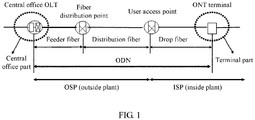
- FIG. 1 is a diagram of a system architecture applied to an embodiment of this application.
- an operator deploys an FTTH service, installs an optical line terminal (optical line terminal, OLT), lays an ODN network, installs a reflector in a junction box at a user access point, and provides a fiber interface.
- OLT optical line terminal
- ODN optical network
- a reflector installed in a junction box at a user access point
- a fiber interface When a user applies for service provisioning online, accessories such as an ONT and a drop fiber may be mailed to the user.
- the user receives accessories such as an ONT and a drop fiber in the business office.
- the reflector is pre-disposed at the user access point (user access point).
- the reflector may reflect light of a particular wavelength without affecting light of a normal service wavelength.
- a light source and an optical power meter are disposed in the ONT.
- a cellular-based Narrowband Internet of Things (Narrowband Internet of Things, NB-IoT) chip, a Wireless Fidelity (Wireless Fidelity, Wi-Fi) chip, an infrared chip, a Bluetooth chip, or the like may be further disposed in the ONT.
- the user installs the drop fiber by inserting one end of the drop fiber into an optical fiber connector at the user access point and connecting the other end of the drop fiber to the ONT. After connecting the drop fiber, the user powers on the ONT.
- the ONT registers online information with a terminal operation and maintenance system by using the NB-IoT chip.
- the user access point usually includes a fiber access terminal (fiber access terminal, FAT), to implement functions such as connecting a distribution fiber to the drop fiber, fiber division, and fiber distribution.
- FAT fiber access terminal
- the splitter fiber access terminal is mainly a FAT in which an optical splitter may be configured.
- the FAT is also sometimes referred to as an FDH (fiber distribution hub), a floor box, an FD (floor distributor), or an ODP (optical distribution box) according to habits of different regions or operators.
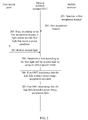
- FIG. 2 is a schematic diagram of an embodiment of a detection method according to an embodiment of this application. The method includes the following steps.
- a mobile terminal generates a first acceptance request.
- an optical network unit is described by using an optical network terminal ONT as an example.
- the mobile terminal may be a device such as a mobile phone, a tablet computer, a desktop computer, a laptop computer, a notebook computer, an ultra-mobile personal computer (ultra-mobile personal computer, UMPC), a handheld computer, a netbook, a personal digital assistant (personal digital assistant, PDA), a wearable electronic device, or a smartwatch.
- UMPC ultra-mobile personal computer
- PDA personal digital assistant
- FIG. 3 shows a schematic diagram of a scenario applied to the embodiment shown in FIG. 2 .
- the mobile terminal responds to an operation of a user, generates the first acceptance request, and sends the first acceptance request to the ONT.
- the first acceptance request may also be referred to as a detection request, a check request, or the like, and no limitation is specifically imposed.
- the first acceptance request is used to detect a drop fiber installed for the ONT.
- a user downloads a mobile phone APP of ONT self-service operation and maintenance by using a mobile phone browser application (application, APP), or by scanning a quick response code on a shell of the ONT by using another APP that has a function of implementing network downloading through quick response code scanning, and installs the mobile phone self-service operation and maintenance APP.
- the mobile phone self-service operation and maintenance APP is connected to the ONT through Wi-Fi.
- an ONT login interface is displayed, and the user inputs an initial user name and an initial password.
- the user may start an installation acceptance process.
- the user may perform one-touch installation acceptance, including but not limited to acceptance on one or more items such as drop fiber installation quality, an ONT hardware self-test, a registration status, a service status, a management status, or Wi-Fi quality.
- a manner in which the mobile terminal generates the first acceptance request may further include but is not limited to the following several implementations: generating the first acceptance request in a scenario in which the user performs an operation such as pressing, double-clicking, sliding, or rotating on a specific icon of the mobile terminal; or generating, by the mobile terminal, the first acceptance request in a scenario in which the user shakes the mobile terminal or places the terminal at a specific angle.
- the mobile terminal sends the first acceptance request to an ONT.
- the mobile terminal sends the first acceptance request to the ONT, and the ONT obtains the first acceptance request sent by the mobile terminal.
- the ONT starts, according to the first acceptance request, a light source to emit first light that meets a preset condition.
- the ONT may start, according to the first acceptance request, the light source to emit the first light that meets the preset condition.
- the preset condition may be a preset wavelength and a preset power.
- the light source and an optical power meter are disposed in the ONT, and an NB-IoT chip, a Wi-Fi chip, a Bluetooth chip, or the like may be further disposed in the ONT. No limitation is specifically imposed herein.
- the light source is used by the ONT to emit the first light.
- the optical power meter may be used by the ONT to determine a loss according to the emitted first light and received second light that is obtained after the first light is reflected.
- the preset wavelength and the preset power herein are empirical values and may be flexibly adjusted according to an actual requirement. No limitation is specifically imposed herein.
- a user access point reflects second light.
- a reflector is pre-disposed at the user access point.
- the reflector may reflect light of a particular wavelength without affecting light of a normal service wavelength. That is, the user access point reflects the second light.
- the second light is light obtained after the first light is reflected by the reflector at the user access point.
- the ONT determines a loss according to the first light and the second light by using an optical power meter.
- Drop fiber acceptance and detection are performed as follows:
- the ONT determines, according to the second light obtained through reflection and the previously emitted first light and by using the optical power meter disposed in the ONT, whether the loss falls within a preset range.
- the ONT may further display the loss.
- the ONT determines that the loss falls beyond a preset range, acceptance performed by the ONT fails, and the ONT prompts a repair suggestion.
- the ONT may prompt the repair suggestion, that is, prompt the user to check whether the drop fiber is broken or whether an optical fiber connector is tightly inserted, or may prompt a customer service phone number, or the like.
- the ONT may send the loss to the mobile terminal, and the mobile terminal receives the loss sent by the ONT. If the mobile terminal determines that the loss falls within the preset range, acceptance succeeds. If the mobile terminal determines that the loss falls beyond the preset range, acceptance fails.
- the mobile terminal generates a second acceptance request.
- the mobile terminal responds to an operation of the user and generates the second acceptance request.
- the second acceptance request is used by the ONT to detect a working status. It should be noted that in actual application, the first acceptance request and the second acceptance request may be a same acceptance request, or may be different acceptance requests.
- the mobile terminal sends the second acceptance request to the ONT.
- the mobile terminal sends the second acceptance request to the ONT. After the determining, if the ONT determines that the loss falls within a preset range, that acceptance performed by the ONT succeeds, the ONT obtains the second acceptance request sent by the mobile terminal. It can be understood that if the first acceptance request and the second acceptance request are the same acceptance request, the ONT may continue to perform acceptance on the working status after the acceptance performed by the ONT on the drop fiber succeeds; or if the first acceptance request and the second acceptance request are different acceptance requests, the ONT may perform acceptance on the drop fiber according to the first acceptance request and may perform acceptance on the working status according to the second acceptance request. It should be noted that for a manner in which the mobile terminal generates the second acceptance request, reference may be made to the foregoing specific description of the manner in which the first acceptance request is generated, and details are not described herein again.
- the ONT detects a working status of the ONT according to the second acceptance request.
- the detecting, by the ONT, a working status of the ONT according to the second acceptance request may include: detecting, by the ONT, a hardware function, a registration status, a service status, or a management status of the ONT according to the second acceptance request.
- a mobile phone operation and maintenance assistant APP supports one-touch acceptance of the foregoing functions and also supports separate acceptance and detection of each acceptance item.
- the ONT may perform acceptance on drop fiber installation, and further, may perform acceptance on the working status of the ONT. Therefore, detection or problem diagnosis does not need to be performed by specialized installation and maintenance engineers, thereby saving human resources and reducing costs.
- the user may be allowed to self-install the drop fiber and the ONT and perform installation acceptance, so as to reduce home installation costs for an operator.
- the operator can perform remote troubleshooting by using NB-IoT, thereby reducing costs of performing home corrective maintenance by an operation and maintenance engineer of the operator.
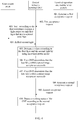
- FIG. 4 is a schematic diagram of an embodiment of a detection method according to an embodiment of this application. The method includes the following steps.
- a terminal operation and maintenance system generates a first acceptance request.
- FIG. 5 shows a schematic diagram of a scenario applied to the embodiment shown in FIG. 4 .
- the acceptance request that triggers an ONT to perform an acceptance operation is generated by the terminal operation and maintenance system.
- the first acceptance request may also be referred to as a detection request, a check request, or the like, and no limitation is specifically imposed.
- the first acceptance request is used to detect a drop fiber installed for the ONT.
- ONT management channels there may be two ONT management channels between the terminal operation and maintenance system and the ONT.
- One is a fiber channel, and the other is an NB-IoT channel.
- the NB-IoT channel is used for remote ONT acceptance and diagnosis only when the ONT cannot be managed by using the fiber channel.
- the terminal operation and maintenance system sends the first acceptance request to an ONT.
- the terminal operation and maintenance system sends the first acceptance request to the ONT, and the ONT obtains the first acceptance request sent by the terminal operation and maintenance system.
- the ONT starts, according to the first acceptance request, a light source to emit first light that meets a preset condition.
- the ONT may start, according to the first acceptance request, the light source to emit the first light that meets the preset condition.
- the preset condition may be a preset wavelength and a preset power.
- the light source and an optical power meter are disposed in the ONT, and an NB-IoT chip and a Wi-Fi chip may be further disposed in the ONT.
- the light source is used by the ONT to emit the first light.
- the optical power meter may be used by the ONT to determine a loss according to the emitted first light and received second light that is obtained after the first light is reflected.
- the preset wavelength and the preset power herein are empirical values and may be flexibly adjusted according to an actual requirement. No limitation is specifically imposed herein.
- a user access point reflects second light.
- a reflector is pre-disposed at the user access point.
- the reflector may reflect light of a particular wavelength without affecting light of a normal service wavelength. That is, the user access point reflects the second light.
- the second light is light obtained after the first light is reflected by the reflector at the user access point.
- the ONT determines a loss according to the first light and the second light by using an optical power meter.
- Drop fiber acceptance and detection are performed as follows:
- the ONT determines, according to the second light obtained through reflection and the previously emitted first light and by using the optical power meter disposed in the ONT, whether the loss falls within a preset range.
- the ONT may further display the loss.
- the ONT may prompt the repair suggestion, that is, prompt the user to check whether the drop fiber is broken or whether an optical fiber connector is tightly inserted, or may prompt a customer service phone number, or the like.
- the ONT may also send the loss to the terminal operation and maintenance system, and the terminal operation and maintenance system receives the loss sent by the ONT. If the terminal operation and maintenance system determines that the loss falls within the preset range, acceptance succeeds. If the terminal operation and maintenance system determines that the loss falls beyond the preset range, acceptance fails.
- the terminal operation and maintenance system generates a second acceptance request.
- the terminal operation and maintenance system responds to an operation of the user and generates the second acceptance request.
- the second acceptance request is used by the ONT to detect a working status.
- the first acceptance request and the second acceptance request may be a same acceptance request, or may be different acceptance requests.
- the terminal operation and maintenance system sends the second acceptance request to the ONT.
- the terminal operation and maintenance system sends the second acceptance request to the ONT. After the determining, if the ONT determines that the loss falls within a preset range, that acceptance performed by the ONT succeeds, the ONT obtains the second acceptance request sent by the terminal operation and maintenance system. It can be understood that if the first acceptance request and the second acceptance request are the same acceptance request, the ONT may continue to perform acceptance on the working status after the acceptance performed by the ONT on the drop fiber succeeds; or if the first acceptance request and the second acceptance request are different acceptance requests, the ONT may perform acceptance on the drop fiber according to the first acceptance request and may perform acceptance on the working status according to the second acceptance request.
- the ONT detects a working status of the ONT according to the second acceptance request.
- the detecting, by the ONT, a working status of the ONT according to the second acceptance request may include: detecting, by the ONT, a hardware function, a registration status, a service status, or a management status of the ONT according to the second acceptance request.
- step 408 to step 410 are optional steps.
- the ONT may perform acceptance on drop fiber installation, and further, may perform acceptance on the working status of the ONT. Therefore, detection or problem diagnosis does not need to be performed by specialized installation and maintenance engineers, thereby saving human resources and reducing costs.
- the user may be allowed to self-install the drop fiber and the ONT and perform installation acceptance, so as to reduce home installation costs for the operator.
- the operator can perform remote troubleshooting by using NB-IoT, thereby reducing costs of performing home corrective maintenance by an operation and maintenance engineer of the operator.
- FIG. 6A is a schematic diagram of an embodiment of an optical network unit according to an embodiment of this application.
- a light source and an optical power meter are disposed in the optical network unit, and the optical network unit may further include:
- FIG. 6B is a schematic diagram of another embodiment of an optical network unit according to an embodiment of this application.
- the optical network unit includes:
- the detection module 605 is specifically configured to detect a hardware function, a registration status, a service status, or a management status of the ONU according to the second acceptance request.
- the detection module 605 is specifically configured to: detect a central processing unit, a memory, or an optical module; and determine, if detection fails, that acceptance performed by the ONU fails; or determine, if detection succeeds, that acceptance performed by the ONU succeeds; or, the detection module 605 is specifically configured to: detect whether the ONU normally registers with and gets online on an optical line terminal; and determine, if the ONU normally gets online, that acceptance performed by the ONU succeeds; or determine, if the ONU fails to get online, that acceptance performed by the ONU fails; or, the detection module 605 is specifically configured to: detect whether dynamic host control protocol dialing or Point-to-Point Protocol over Ethernet dialing of the ONU is normal; and determine, if the Internet Protocol is successfully obtained, that acceptance performed by the ONU succeeds; or determine, if the Internet Protocol fails to be obtained, that acceptance performed by the ONU fails; or, the detection module 605 is specifically configured to: detect whether a status of a connection between the ONU and
- the obtaining module 601 is specifically configured to obtain the first acceptance request sent by a mobile terminal; or, the obtaining module 601 is specifically configured to obtain the first acceptance request sent by the terminal operation and maintenance system.
- the optical network unit is presented in a form in which functional modules are divided according to functions, or the optical network unit is presented in a form in which functional modules are divided in an integrated manner.
- the "module” herein may be an application-specific integrated circuit (application-specific integrated circuit, ASIC), a circuit, an optical component, a processor and a storage that execute one or more software or firmware programs, an integrated logic circuit, and/or another component that can provide the foregoing function, or a combination thereof.
- the optical network unit provided in this embodiment of this application may be used to execute the foregoing detection method. Therefore, for technical effects that can be achieved by the optical network unit, refer to the foregoing method embodiments, and details are not described herein again.
- FIG. 7 is a schematic diagram of another embodiment of an optical network unit according to an embodiment of this application.
- the optical network unit may generate a relatively large difference due to a configuration or performance difference, and may include a light source 711, an optical power meter 712, one or more central processing units (central processing unit, CPU) 722 (for example, one or more processors), a storage 732, and one or more storage media 730 (for example, one or more massive storage devices) that store an application 742 or data 744.
- the storage 732 and the storage medium 730 may implement temporary or persistent storage.
- a program stored in the storage medium 730 may include one or more modules (not marked in the figure). Each module may include a series of instruction operations that are executed on the optical network unit. Further, the central processing unit 722 may be set to communicate bidirectionally with the storage medium 730, to execute, on the optical network unit, the series of instruction operations in the storage medium 730.
- the optical network unit may further include one or more power supplies 726, one or more wired or wireless network interfaces 750, one or more input and output interfaces 758, and/or one or more operating systems 741, for example, Windows Server TM, Mac OS XTM, Unix TM, Linux TM, or FreeBSDTM.
- one or more power supplies 726 for example, Windows Server TM, Mac OS XTM, Unix TM, Linux TM, or FreeBSDTM.
- Steps performed by the optical network unit in the foregoing embodiment may be based on a structure of the optical network unit shown in FIG. 7 .
- the optical network unit in FIG. 6A may be implemented in a form shown in FIG. 7 .
- the obtaining module 601, the starting module 602, the receiving module 603, and the determining module 604 in FIG. 6A may be implemented by using the light source 711, the optical power meter 712, the processor 722, the storage 732, and the storage medium 730 in FIG. 7 .
- the starting module 602, the determining module 604, and the detection module 605 may be implemented by using the processor 722 to invoke application code stored in the storage. This is not limited in this embodiment of this application.
- the processor 722 included in the optical network unit may perform related steps in the embodiment in FIG. 2 or FIG. 4 , and details are not described herein again.
- FIG. 8 is a schematic diagram of an embodiment of a mobile terminal according to an embodiment of this application.
- the mobile terminal includes:
- the determining module 804 is specifically configured to: display, by the mobile terminal, the loss if the mobile terminal determines that the loss falls within the preset range; or prompt, by the mobile terminal, a repair suggestion if the mobile terminal determines that the loss falls beyond the preset range.
- the sending module 802 is specifically configured to send, by the mobile terminal, the acceptance request to the ONU through Wireless Fidelity Wi-Fi, Bluetooth, or infrared; and the receiving module 803 is specifically configured to receive, through the Wi-Fi, the Bluetooth, or the infrared, the loss sent by the ONU.
- the mobile terminal is presented in a form in which functional modules are divided according to functions, or the mobile terminal is presented in a form in which functional modules are divided in an integrated manner.
- the "module” herein may be an application-specific integrated circuit (application-specific integrated circuit, ASIC), a circuit, an optical component, a processor and a storage that execute one or more software or firmware programs, an integrated logic circuit, and/or another component that can provide the foregoing function, or a combination thereof.
- the mobile terminal provided in this embodiment of this application may be used to execute the foregoing detection method. Therefore, for technical effects that can be achieved by the mobile terminal, refer to the foregoing method embodiments, and details are not described herein again.
- FIG. 9 is a schematic diagram of another embodiment of a mobile terminal according to an embodiment of this application.
- the mobile terminal may be described by using a mobile phone as an example, and may include: components such as a radio frequency (Radio Frequency, RF) circuit 910, a storage 920, an input unit 930, a display unit 940, a sensor 950, an audio frequency circuit 960, a Wireless Fidelity (Wireless Fidelity, Wi-Fi) module 970, a processor 980, and a power supply 990.
- RF Radio Frequency
- the RF circuit 910 may be configured to send or receive information, or send or receive a signal in a call process.
- the RF circuit 910 receives downlink information from a base station and sends the information to the processor 980 for processing, and sends uplink data to the base station.
- the RF circuit 910 includes but is not limited to an antenna, at least one amplifier, a transceiver, a coupler, a low noise amplifier (low noise amplifier, LNA), and a duplexer.
- the RF circuit 910 may further communicate bidirectionally with a network and another device through wireless communication.
- Any communications standard or protocol may be used for the wireless communication, including but not limited to Global System for Mobile Communications (Global System for Mobile Communications, GSM), General Packet Radio Service (General Packet Radio Service, GPRS), Code Division Multiple Access (Code Division Multiple Access, CDMA), Wideband Code Division Multiple Access (Wideband Code Division Multiple Access, WCDMA), Long Term Evolution (Long Term Evolution, LTE), an email, and a short message service (short message service, SMS).
- GSM Global System for Mobile Communications
- GSM Global System for Mobile Communications
- GPRS General Packet Radio Service
- Code Division Multiple Access Code Division Multiple Access
- CDMA Code Division Multiple Access
- Wideband Code Division Multiple Access Wideband Code Division Multiple Access
- WCDMA Wideband Code Division Multiple Access
- LTE Long Term Evolution
- SMS short message service
- the storage 920 may be configured to store a software program and a module.
- the processor 980 runs the software program and the module that are stored in the storage 920, so as to execute various function applications of the mobile phone and perform data processing.
- the storage 920 may mainly include a program storage area and a data storage area.
- the program storage area may store an operating system, an application required by at least one function (such as an audio play function and an image play function), and the like.
- the data storage area may store data (such as audio data and a phone book) that is created according to use of the mobile phone, and the like.
- the storage 920 may include a high-speed random access memory, and may further include a nonvolatile memory, for example, at least one disk storage device, a flash memory device, or another nonvolatile solid-state storage device.
- the input unit 930 may be configured to receive entered numeral or character information, and generate a key signal input related to a user setting and function control of the mobile phone.
- the input unit 930 may include a touch panel 931 and another input device 932.
- the touch panel 931 is also referred to as a touchscreen, and may collect a touch operation performed by a user on or near the touch panel 931 (for example, an operation performed by the user on or near the touch panel 931 by using any proper object or accessory such as a finger or a stylus), and drive a corresponding connecting apparatus according to a preset program.
- the touch panel 931 may include two parts: a touch detection apparatus and a touch controller.
- the touch detection apparatus detects a touch orientation of the user, detects a signal brought by a touch operation, and transmits the signal to the touch controller.
- the touch controller receives touch information from the touch detection apparatus, converts the touch information into contact coordinates, and sends the contact coordinates to the processor 980, and can receive and execute a command sent by the processor 980.
- the touch panel 931 may be implemented by using a plurality of types, such as a resistive type, a capacitive type, an infrared type, and a surface acoustic wave type.
- the input unit 930 may further include the another input device 932.
- the another input device 932 may include but is not limited to one or more of a physical keyboard, a function key (such as a volume control key or an on/off key), a trackball, a mouse, and a joystick.
- the display unit 940 may be configured to display information entered by a user or information provided for a user and various menus of the mobile phone.
- the display unit 940 may include a display panel 941.
- the display panel 941 may be configured in a form such as a liquid crystal display (Liquid Crystal Display, LCD) or an organic light-emitting diode (Organic Light-Emitting Diode, OLED).
- the touch panel 931 may cover the display panel 941. When the touch panel 931 detects a touch operation on or near the touch panel 931, the touch panel 931 transmits the touch operation to the processor 980 to determine a type of a touch event.
- the processor 980 provides a corresponding visual output on the display panel 941 according to the type of the touch event.
- the touch panel 931 and the display panel 941 are configured as two independent components to implement input and output functions of the mobile phone.
- the touch panel 931 and the display panel 941 may be integrated to implement the input and output functions of the mobile phone.
- the mobile phone may further include at least one sensor 950, such as a light sensor, a motion sensor, or another sensor.
- the light sensor may include an ambient light sensor and a proximity sensor.
- the ambient light sensor may adjust luminance of the display panel 941 according to brightness of ambient light.
- the proximity sensor may turn off the display panel 941 and/or backlight when the mobile phone moves near an ear.
- an accelerometer sensor may detect acceleration magnitudes in all directions (usually in three axes), may detect a magnitude and a direction of gravity when the accelerometer sensor is stationary, and may be configured to recognize a posture application of the mobile phone (such as switching between a landscape mode and a portrait mode, related games, and magnetometer posture calibration), a vibration related function (such as a pedometer and stroke), and the like.
- a posture application of the mobile phone such as switching between a landscape mode and a portrait mode, related games, and magnetometer posture calibration
- a vibration related function such as a pedometer and stroke
- other sensors that may be further configured for the mobile phone, such as a gyroscope, a barometer, a hygrometer, a thermometer, and an infrared sensor, details are not described herein.
- the audio frequency circuit 960, a speaker 961, and a microphone 962 may provide an audio interface between the user and the mobile phone.
- the audio frequency circuit 960 may transmit, to the speaker 961, an electrical signal that is obtained after conversion of received audio data, and the speaker 961 converts the electrical signal into a sound signal and outputs the sound signal.
- the microphone 962 converts a collected sound signal into an electrical signal.
- the audio frequency circuit 960 receives the electrical signal, converts the electrical signal into audio data, and outputs the audio data to the processor 980 for processing. Then, the audio data is sent to, for example, another mobile phone, by using the RF circuit 910, or the audio data is output to the storage 920 for further processing.
- Wi-Fi is a short-range wireless transmission technology.
- the mobile phone may help, by using the Wi-Fi module 970, the user to send and receive e-mails, browse web pages, access streaming media, and the like.
- Wi-Fi provides wireless broadband Internet access for the user.
- FIG. 9 shows the Wi-Fi module 970, it may be understood that, the Wi-Fi module 970 is not a mandatory component of the mobile phone, and may be completely omitted according to a requirement without changing the essence of the present invention.
- the processor 980 is a control center of the mobile phone and is connected to each part of the entire mobile phone by using various interfaces and lines, and performs, by running or executing the software program and/or module that is stored in the storage 920 and invoking data stored in the storage 920, various functions of the mobile phone and data processing, so as to perform overall monitoring on the mobile phone.
- the processor 980 may include one or more processing units.
- An application processor and a modem processor may be integrated in the processor 980.
- the application processor mainly processes an operating system, a user interface, an application, and the like.
- the modem processor mainly processes wireless communication. It may be understood that the foregoing modem processor may alternatively not be integrated in the processor 980.
- the mobile phone further includes the power supply 990 (such as a battery) that supplies power to each component.
- the power supply may be logically connected to the processor 980 by using a power supply management system, so that functions such as management of charging, discharging, and power consumption are implemented by using the power supply management system.
- the mobile phone may further include a camera, a Bluetooth module, and the like, although they are not shown. Details are not described herein.
- the mobile terminal in FIG. 8 may be implemented in a form shown in FIG. 9 .
- the sending module 802 and the receiving module 803 in FIG. 8 may be implemented by using the RF circuit 910 in FIG. 9 .
- the generation module 801 and the determining module 804 may be implemented by using the processor 980 to invoke application code stored in the storage. This is not limited in this embodiment of this application.
- the processor 980 included in the mobile terminal may perform related steps in the embodiment in FIG. 2 or FIG. 4 , and details are not described herein again.
- All or some of the foregoing embodiments may be implemented by using software, hardware, firmware, or any combination thereof.
- software is used to implement the embodiments, all or some of the embodiments may be implemented in a form of a computer program product.
- the computer program product includes one or more computer instructions.
- the computer may be a general-purpose computer, a dedicated computer, a computer network, or another programmable apparatus.
- the computer instructions may be stored in a computer-readable storage medium or may be transmitted from a computer-readable storage medium to another computer-readable storage medium.
- the computer instructions may be transmitted from a website, computer, server, or data center to another website, computer, server, or data center in a wired (for example, a coaxial cable, an optical fiber, or a digital subscriber line (DSL)) or wireless (for example, infrared, radio, or microwave) manner.
- the computer-readable storage medium may be any usable medium accessible to a computer, or a data storage device, such as a server or a data center, integrating one or more usable media.
- the usable medium may be a magnetic medium (for example, a floppy disk, a hard disk, or a magnetic tape), an optical medium (for example, a DVD), a semiconductor medium (for example, a solid state disk (solid state disk, SSD)), or the like.
- a magnetic medium for example, a floppy disk, a hard disk, or a magnetic tape
- an optical medium for example, a DVD
- a semiconductor medium for example, a solid state disk (solid state disk, SSD)
- the disclosed system, apparatus, and method may be implemented in other manners.
- the described apparatus embodiment is merely an example.
- the unit division is merely logical function division and may be other division in actual implementation.
- a plurality of units or components may be combined or integrated into another system, or some features may be ignored or not performed.
- the shown or discussed mutual couplings or direct couplings or communication connections may be implemented by using some interfaces.
- the indirect couplings or communication connections between the apparatuses or units may be implemented in electrical, mechanical, or other forms.
- the units described as separate parts may or may not be physically separated, and parts shown as units may or may not be physical units, may be located in one position, or may be distributed on a plurality of network units. Some or all of the units may be selected according to actual requirements to achieve the objectives of the solutions of the embodiments.
- functional units in the embodiments of this application may be integrated into one processing unit, or each of the units may exist alone physically, or two or more units are integrated into one unit.
- the integrated unit may be implemented in a form of hardware, or may be implemented in a form of a software functional unit.
- the integrated unit When the integrated unit is implemented in the form of a software functional unit and sold or used as an independent product, the integrated unit may be stored in a computer-readable storage medium.
- the software product is stored in a storage medium and includes several instructions for instructing a computer device (which may be a personal computer, a server, a network device, or the like) to perform all or some of the steps of the methods described in the embodiments of this application.
- the storage medium includes: any medium that can store program code, such as a USB flash drive, a removable hard disk, a read-only memory (ROM, read-only memory), a random access memory (RAM, random access memory), a magnetic disk, or an optical disc.
Landscapes
- Engineering & Computer Science (AREA)
- Computer Networks & Wireless Communication (AREA)
- Physics & Mathematics (AREA)
- Electromagnetism (AREA)
- Signal Processing (AREA)
- Computing Systems (AREA)
- Telephonic Communication Services (AREA)
- Computer And Data Communications (AREA)
- Mobile Radio Communication Systems (AREA)
Applications Claiming Priority (1)
| Application Number | Priority Date | Filing Date | Title |
|---|---|---|---|
| CN201810069378.5A CN110071761B (zh) | 2018-01-24 | 2018-01-24 | 一种检测的方法及装置 |
Publications (2)
| Publication Number | Publication Date |
|---|---|
| EP3522397A1 true EP3522397A1 (de) | 2019-08-07 |
| EP3522397B1 EP3522397B1 (de) | 2026-05-20 |
Family
ID=65408857
Family Applications (1)
| Application Number | Title | Priority Date | Filing Date |
|---|---|---|---|
| EP19153323.1A Active EP3522397B1 (de) | 2018-01-24 | 2019-01-23 | Detektionsverfahren und -vorrichtung |
Country Status (3)
| Country | Link |
|---|---|
| EP (1) | EP3522397B1 (de) |
| CN (1) | CN110071761B (de) |
| WO (1) | WO2019144723A1 (de) |
Cited By (1)
| Publication number | Priority date | Publication date | Assignee | Title |
|---|---|---|---|---|
| US11658740B2 (en) | 2020-05-27 | 2023-05-23 | Telia Company Ab | Monitor of optical fiber |
Families Citing this family (2)
| Publication number | Priority date | Publication date | Assignee | Title |
|---|---|---|---|---|
| CN113747272B (zh) * | 2020-05-28 | 2022-12-06 | 华为技术有限公司 | 检测光分配网络故障的方法和装置 |
| CN113938768B (zh) * | 2020-06-29 | 2023-04-11 | 华为技术有限公司 | 光网络运行信息监控方法及相关设备 |
Citations (4)
| Publication number | Priority date | Publication date | Assignee | Title |
|---|---|---|---|---|
| US20060029390A1 (en) * | 2004-08-05 | 2006-02-09 | Alcatel | Optical distribution network monitoring method and system |
| EP2141832A1 (de) * | 2008-07-03 | 2010-01-06 | Nokia Siemens Networks OY | Automatische Topologie-Erkennung für passive optische Netzwerke |
| US20130188947A1 (en) * | 2012-01-20 | 2013-07-25 | Electronics And Telecommunications Research Institute | Apparatus and method for monitoring optical line |
| EP3101826A1 (de) * | 2015-06-04 | 2016-12-07 | Fluke Corporation | System und verfahren zur zertifizierung von physischen parametern von kommunikationsverbindungen |
Family Cites Families (9)
| Publication number | Priority date | Publication date | Assignee | Title |
|---|---|---|---|---|
| CN100536381C (zh) * | 2005-12-23 | 2009-09-02 | 华为技术有限公司 | 一种无源光网络维护方法和光线路终端 |
| CN101217313A (zh) * | 2008-01-11 | 2008-07-09 | 北京邮电大学 | 一种使用otdr的无源光网络光纤故障诊断方法 |
| CN101790111B (zh) * | 2009-01-23 | 2014-09-17 | 华为技术有限公司 | 一种光分布网检测方法、装置及系统 |
| CN102055523A (zh) * | 2009-11-09 | 2011-05-11 | 中国移动通信集团江苏有限公司 | 一种诊断无源光网络故障的方法、设备及系统 |
| CN101729146B (zh) * | 2009-12-17 | 2012-09-05 | 上海交通大学 | 无源光网络中自激励多波长动态调度的光网络单元 |
| CN102142893A (zh) * | 2011-01-24 | 2011-08-03 | 华为技术有限公司 | 光分配网络的反射异常检测方法、系统及装置 |
| JP6044311B2 (ja) * | 2012-12-07 | 2016-12-14 | 富士通株式会社 | 増幅装置および通信システム |
| CN104426603A (zh) * | 2013-08-30 | 2015-03-18 | 华为技术有限公司 | 光网络检测方法、装置、设备、系统及分光器 |
| WO2017139781A1 (en) * | 2016-02-12 | 2017-08-17 | Arris Enterprises Llc | Full duplex bidirectional transmission on coaxial cable in catv network |
-
2018
- 2018-01-24 CN CN201810069378.5A patent/CN110071761B/zh active Active
- 2018-12-13 WO PCT/CN2018/120884 patent/WO2019144723A1/zh not_active Ceased
-
2019
- 2019-01-23 EP EP19153323.1A patent/EP3522397B1/de active Active
Patent Citations (4)
| Publication number | Priority date | Publication date | Assignee | Title |
|---|---|---|---|---|
| US20060029390A1 (en) * | 2004-08-05 | 2006-02-09 | Alcatel | Optical distribution network monitoring method and system |
| EP2141832A1 (de) * | 2008-07-03 | 2010-01-06 | Nokia Siemens Networks OY | Automatische Topologie-Erkennung für passive optische Netzwerke |
| US20130188947A1 (en) * | 2012-01-20 | 2013-07-25 | Electronics And Telecommunications Research Institute | Apparatus and method for monitoring optical line |
| EP3101826A1 (de) * | 2015-06-04 | 2016-12-07 | Fluke Corporation | System und verfahren zur zertifizierung von physischen parametern von kommunikationsverbindungen |
Cited By (1)
| Publication number | Priority date | Publication date | Assignee | Title |
|---|---|---|---|---|
| US11658740B2 (en) | 2020-05-27 | 2023-05-23 | Telia Company Ab | Monitor of optical fiber |
Also Published As
| Publication number | Publication date |
|---|---|
| EP3522397B1 (de) | 2026-05-20 |
| WO2019144723A1 (zh) | 2019-08-01 |
| CN110071761B (zh) | 2022-10-11 |
| CN110071761A (zh) | 2019-07-30 |
Similar Documents
| Publication | Publication Date | Title |
|---|---|---|
| US11669342B2 (en) | Profile transmission method, related device, and storage medium | |
| CN107094294B (zh) | 网络连接方法及装置 | |
| US20210255746A1 (en) | Application control method and electronic device | |
| US11546768B2 (en) | Application download monitoring method and device | |
| WO2018077041A1 (zh) | 应用运行的方法及装置 | |
| US9897693B2 (en) | Method and apparatus using light amount values and determined weight value for controlling gesture sensor | |
| CN108089928B (zh) | 终端控制方法及装置 | |
| CN113032361A (zh) | 一种数据库配置的变更方法、装置、电子设备及存储介质 | |
| CN105389259A (zh) | 一种进行应用程序测试的方法、装置及系统 | |
| CN110071761B (zh) | 一种检测的方法及装置 | |
| CN112749074B (zh) | 一种测试用例推荐方法以及装置 | |
| WO2022183552A1 (zh) | 通信设备测试方法、装置、存储介质、终端及测试系统 | |
| CN109408080A (zh) | 一种应用升级的方法及终端 | |
| CN114189436B (zh) | 一种多集群配置部署方法、装置、电子设备和存储介质 | |
| CN108777627B (zh) | 一种供电方法和装置 | |
| CN106406921B (zh) | 一种安装补丁的方法及装置 | |
| CN111359210B (zh) | 一种数据处理方法、装置、电子设备以及存储介质 | |
| CN115913999B (zh) | 网络服务搭建方法、装置、电子设备及存储介质 | |
| CN112667868B (zh) | 一种数据检测方法以及装置 | |
| CN114968275B (zh) | 一种组件部署方法、装置和电子设备 | |
| CN113568602A (zh) | 任务管理方法、装置、存储介质及电子设备 | |
| CN117170961A (zh) | 监控数据采集方法、系统及计算机可读存储介质 | |
| CN113254090B (zh) | 一种应用管理方法、装置及投影设备 | |
| CN113961380A (zh) | 一种跨应用修复的方法、装置、设备及存储介质 | |
| CN119292852B (zh) | 一种srb总线测试方法和相关装置 |
Legal Events
| Date | Code | Title | Description |
|---|---|---|---|
| PUAI | Public reference made under article 153(3) epc to a published international application that has entered the european phase |
Free format text: ORIGINAL CODE: 0009012 |
|
| STAA | Information on the status of an ep patent application or granted ep patent |
Free format text: STATUS: REQUEST FOR EXAMINATION WAS MADE |
|
| 17P | Request for examination filed |
Effective date: 20190123 |
|
| AK | Designated contracting states |
Kind code of ref document: A1 Designated state(s): AL AT BE BG CH CY CZ DE DK EE ES FI FR GB GR HR HU IE IS IT LI LT LU LV MC MK MT NL NO PL PT RO RS SE SI SK SM TR |
|
| AX | Request for extension of the european patent |
Extension state: BA ME |
|
| STAA | Information on the status of an ep patent application or granted ep patent |
Free format text: STATUS: EXAMINATION IS IN PROGRESS |
|
| 17Q | First examination report despatched |
Effective date: 20210701 |
|
| GRAP | Despatch of communication of intention to grant a patent |
Free format text: ORIGINAL CODE: EPIDOSNIGR1 |
|
| STAA | Information on the status of an ep patent application or granted ep patent |
Free format text: STATUS: GRANT OF PATENT IS INTENDED |
|
| INTG | Intention to grant announced |
Effective date: 20250808 |
|
| GRAJ | Information related to disapproval of communication of intention to grant by the applicant or resumption of examination proceedings by the epo deleted |
Free format text: ORIGINAL CODE: EPIDOSDIGR1 |
|
| STAA | Information on the status of an ep patent application or granted ep patent |
Free format text: STATUS: EXAMINATION IS IN PROGRESS |
|
| GRAP | Despatch of communication of intention to grant a patent |
Free format text: ORIGINAL CODE: EPIDOSNIGR1 |
|
| STAA | Information on the status of an ep patent application or granted ep patent |
Free format text: STATUS: GRANT OF PATENT IS INTENDED |
|
| INTC | Intention to grant announced (deleted) | ||
| INTG | Intention to grant announced |
Effective date: 20251211 |
|
| GRAS | Grant fee paid |
Free format text: ORIGINAL CODE: EPIDOSNIGR3 |
|
| GRAA | (expected) grant |
Free format text: ORIGINAL CODE: 0009210 |
|
| STAA | Information on the status of an ep patent application or granted ep patent |
Free format text: STATUS: THE PATENT HAS BEEN GRANTED |