EP3520105B1 - Method of editing audio signals using separated objects and associated apparatus - Google Patents
Method of editing audio signals using separated objects and associated apparatus Download PDFInfo
- Publication number
- EP3520105B1 EP3520105B1 EP17857892.8A EP17857892A EP3520105B1 EP 3520105 B1 EP3520105 B1 EP 3520105B1 EP 17857892 A EP17857892 A EP 17857892A EP 3520105 B1 EP3520105 B1 EP 3520105B1
- Authority
- EP
- European Patent Office
- Prior art keywords
- audio
- file
- tracks
- separated
- audio tracks
- Prior art date
- Legal status (The legal status is an assumption and is not a legal conclusion. Google has not performed a legal analysis and makes no representation as to the accuracy of the status listed.)
- Active
Links
Images



Classifications
-
- H—ELECTRICITY
- H04—ELECTRIC COMMUNICATION TECHNIQUE
- H04S—STEREOPHONIC SYSTEMS
- H04S3/00—Systems employing more than two channels, e.g. quadraphonic
- H04S3/008—Systems employing more than two channels, e.g. quadraphonic in which the audio signals are in digital form, i.e. employing more than two discrete digital channels
-
- G—PHYSICS
- G10—MUSICAL INSTRUMENTS; ACOUSTICS
- G10H—ELECTROPHONIC MUSICAL INSTRUMENTS; INSTRUMENTS IN WHICH THE TONES ARE GENERATED BY ELECTROMECHANICAL MEANS OR ELECTRONIC GENERATORS, OR IN WHICH THE TONES ARE SYNTHESISED FROM A DATA STORE
- G10H1/00—Details of electrophonic musical instruments
- G10H1/46—Volume control
-
- G—PHYSICS
- G11—INFORMATION STORAGE
- G11B—INFORMATION STORAGE BASED ON RELATIVE MOVEMENT BETWEEN RECORD CARRIER AND TRANSDUCER
- G11B27/00—Editing; Indexing; Addressing; Timing or synchronising; Monitoring; Measuring tape travel
- G11B27/02—Editing, e.g. varying the order of information signals recorded on, or reproduced from, record carriers
- G11B27/031—Electronic editing of digitised analogue information signals, e.g. audio or video signals
-
- H—ELECTRICITY
- H04—ELECTRIC COMMUNICATION TECHNIQUE
- H04H—BROADCAST COMMUNICATION
- H04H60/00—Arrangements for broadcast applications with a direct linking to broadcast information or broadcast space-time; Broadcast-related systems
- H04H60/02—Arrangements for generating broadcast information; Arrangements for generating broadcast-related information with a direct linking to broadcast information or to broadcast space-time; Arrangements for simultaneous generation of broadcast information and broadcast-related information
- H04H60/04—Studio equipment; Interconnection of studios
-
- H—ELECTRICITY
- H04—ELECTRIC COMMUNICATION TECHNIQUE
- H04H—BROADCAST COMMUNICATION
- H04H60/00—Arrangements for broadcast applications with a direct linking to broadcast information or broadcast space-time; Broadcast-related systems
- H04H60/68—Systems specially adapted for using specific information, e.g. geographical or meteorological information
- H04H60/73—Systems specially adapted for using specific information, e.g. geographical or meteorological information using meta-information
-
- H—ELECTRICITY
- H04—ELECTRIC COMMUNICATION TECHNIQUE
- H04S—STEREOPHONIC SYSTEMS
- H04S7/00—Indicating arrangements; Control arrangements, e.g. balance control
- H04S7/30—Control circuits for electronic adaptation of the sound field
-
- G—PHYSICS
- G10—MUSICAL INSTRUMENTS; ACOUSTICS
- G10H—ELECTROPHONIC MUSICAL INSTRUMENTS; INSTRUMENTS IN WHICH THE TONES ARE GENERATED BY ELECTROMECHANICAL MEANS OR ELECTRONIC GENERATORS, OR IN WHICH THE TONES ARE SYNTHESISED FROM A DATA STORE
- G10H2210/00—Aspects or methods of musical processing having intrinsic musical character, i.e. involving musical theory or musical parameters or relying on musical knowledge, as applied in electrophonic musical tools or instruments
- G10H2210/101—Music Composition or musical creation; Tools or processes therefor
- G10H2210/105—Composing aid, e.g. for supporting creation, edition or modification of a piece of music
-
- G—PHYSICS
- G10—MUSICAL INSTRUMENTS; ACOUSTICS
- G10H—ELECTROPHONIC MUSICAL INSTRUMENTS; INSTRUMENTS IN WHICH THE TONES ARE GENERATED BY ELECTROMECHANICAL MEANS OR ELECTRONIC GENERATORS, OR IN WHICH THE TONES ARE SYNTHESISED FROM A DATA STORE
- G10H2210/00—Aspects or methods of musical processing having intrinsic musical character, i.e. involving musical theory or musical parameters or relying on musical knowledge, as applied in electrophonic musical tools or instruments
- G10H2210/101—Music Composition or musical creation; Tools or processes therefor
- G10H2210/131—Morphing, i.e. transformation of a musical piece into a new different one, e.g. remix
-
- G—PHYSICS
- G10—MUSICAL INSTRUMENTS; ACOUSTICS
- G10H—ELECTROPHONIC MUSICAL INSTRUMENTS; INSTRUMENTS IN WHICH THE TONES ARE GENERATED BY ELECTROMECHANICAL MEANS OR ELECTRONIC GENERATORS, OR IN WHICH THE TONES ARE SYNTHESISED FROM A DATA STORE
- G10H2210/00—Aspects or methods of musical processing having intrinsic musical character, i.e. involving musical theory or musical parameters or relying on musical knowledge, as applied in electrophonic musical tools or instruments
- G10H2210/155—Musical effects
-
- G—PHYSICS
- G10—MUSICAL INSTRUMENTS; ACOUSTICS
- G10H—ELECTROPHONIC MUSICAL INSTRUMENTS; INSTRUMENTS IN WHICH THE TONES ARE GENERATED BY ELECTROMECHANICAL MEANS OR ELECTRONIC GENERATORS, OR IN WHICH THE TONES ARE SYNTHESISED FROM A DATA STORE
- G10H2220/00—Input/output interfacing specifically adapted for electrophonic musical tools or instruments
- G10H2220/091—Graphical user interface [GUI] specifically adapted for electrophonic musical instruments, e.g. interactive musical displays, musical instrument icons or menus; Details of user interactions therewith
- G10H2220/101—Graphical user interface [GUI] specifically adapted for electrophonic musical instruments, e.g. interactive musical displays, musical instrument icons or menus; Details of user interactions therewith for graphical creation, edition or control of musical data or parameters
- G10H2220/106—Graphical user interface [GUI] specifically adapted for electrophonic musical instruments, e.g. interactive musical displays, musical instrument icons or menus; Details of user interactions therewith for graphical creation, edition or control of musical data or parameters using icons, e.g. selecting, moving or linking icons, on-screen symbols, screen regions or segments representing musical elements or parameters
-
- G—PHYSICS
- G10—MUSICAL INSTRUMENTS; ACOUSTICS
- G10H—ELECTROPHONIC MUSICAL INSTRUMENTS; INSTRUMENTS IN WHICH THE TONES ARE GENERATED BY ELECTROMECHANICAL MEANS OR ELECTRONIC GENERATORS, OR IN WHICH THE TONES ARE SYNTHESISED FROM A DATA STORE
- G10H2240/00—Data organisation or data communication aspects, specifically adapted for electrophonic musical tools or instruments
- G10H2240/091—Info, i.e. juxtaposition of unrelated auxiliary information or commercial messages with or between music files
-
- H—ELECTRICITY
- H04—ELECTRIC COMMUNICATION TECHNIQUE
- H04S—STEREOPHONIC SYSTEMS
- H04S2400/00—Details of stereophonic systems covered by H04S but not provided for in its groups
- H04S2400/11—Positioning of individual sound objects, e.g. moving airplane, within a sound field
Definitions
- the exemplary and non-limiting embodiments described herein relate generally to audio technologies and, more particularly, to methods of controlling separate audio objects in a mixed sound production and apparatuses for such methods.
- Avendano. C Frequency-Domain Source Identification and Manipulation in Stereo Mixes for Enhancement, Suppression and Re-Panning Applications describes a frequency-domain framework for source identification, separation and manipulation in stereo music recordings. Based on a simplified model of the stereo mix, this paper described how a similarity measure between the Short-Time Fourier Transforms (STFT) of the input signals is used to identify time-frequency regions occupied by each source based on the panning coefficient assigned to it during the mix.
- STFT Short-Time Fourier Transforms
- a method comprises: providing an audio file comprising two or more discrete tracks; separating the two or more discrete tracks; setting a limit on an amount at least one of the two or more discrete tracks may be altered; and outputting the separated and limited discrete tracks as a file for use by an end user.
- a method comprises: receiving an audio file comprising two or more discrete tracks; analyzing the two or more discrete tracks to determine a set limit on possible remixing for at least one of the two or more discrete tracks; editing at least one of the two or more discrete tracks; and remixing the two or more discrete tracks based on the determined set limit on possible remixing for the at least one of the two or more discrete tracks.
- an apparatus comprises: at least one processor; and at least one non-transitory memory including computer program code configured to, with the at least one processor, cause the apparatus at least to: receive an audio file comprising two or more discrete tracks; separate the two or more discrete tracks from each other; analyze the two or more discrete tracks to determine a set limit on possible remixing for at least one of the two or more discrete tracks; and allow a user to remix the two or more discrete tracks based on the determined set limit on possible remixing for the at least one of the two or more discrete tracks.
- examples of methods of allowing an end user to alter, within defined limits, a mix of instrument and voice tracks are disclosed herein.
- apparatuses for carrying out such methods are disclosed herein.
- Some technologies e.g., CD, MP3, and the like
- do not allow the end user to alter a mix of tracks more recent technologies do make such allowances.
- Such altering may be via the use of technology formats such as DOLBY ATMOS, blind signal separation (BSS), and MPEG Spatial Audio Object Coding (SAOC).
- DOLBY ATMOS allows a completely free editing of instrument and voice tracks.
- BSS provides a slightly less free editing ability due to little or no user-available information about the source signals or mixing processes used therefor. Editing using BSS may also result in products that suffer from separation artefacts.
- MPEG SAOC free editing is allowed, but audio quality may suffer due to changes in the object separation that are too drastic relative to the source track.
- music recordings may be recognized using any suitable method for the automatic identification of sound recordings.
- Some music files may be separated into instrument and voice tracks using any suitable algorithm (e.g., DUET BSS algorithm). Additionally, the instrument in each track may be recognized by any suitable automatic musical instrument recognition algorithm.
- a dominant instrument in a song can also be recognized by analyzing the music for a dominant tag.
- the end user may have a tendency to excessively modify music or other audio to their liking. For example, a guitar player may want to better hear the guitar track in a song in order to learn the notes or chords, a vocalist may want to understand lyrics, a person viewing a movie may want to hear the explosions louder or to filter out background noise in order to hear what a character is saying, or a person may want to simply hear only a voice track without hearing music, a laugh track, or other background sound in an effort to keep the overall volume at a minimum.
- audio- or music producers generally do not want to allow end users complete control for one or more reasons.
- artists and producers want to limit the ability of an end user to completely single out instruments into separate tracks because such separated tracks may be used for unauthorized projects.
- Drastic changes to a song can also make that song sound bad, and when such versions of that song are widely disseminated (e.g., over the Internet), the original artist may incur negative reviews and/or bad publicity.
- removing a laugh track from a comedy show often eliminates or reduces any comic effect.
- music artists and music producers may desire to curtail the ability of an end user to modify a song (or other work product) by setting limits (either automatically or manually) regarding the extent to which the end user can remix audio files (for example, combine, pan, add reverberation, add autotuning ability, alter levels (e.g., levels of amplification relative to other levels), and the like).
- limits may include separating audio sources based on their location (e.g., direction of sound propagation) and playback of the separated audio sources.
- Other limits may be imposed by manipulation of playback options based on metadata associated with the audio.
- the examples disclosed herein are directed to imposing limits on the separation of instrument tracks (which is different from separation based on direction of sound propagation) as well as limiting the separation quality in playback.
- the examples disclosed herein are directed to methods and tools for music producers to limit an end user's manipulation (using a user interface (UI)) of an audio mix of a song after instrument tracks have been separated.
- the manipulation may have either automatic limits or limits that can be set by the music producers.
- the examples described herein take into account the quality of the separation system when deciding the limits.
- a music producer can take into account the quality of the separated instrument tracks.
- the end user may be able to exceed the limits and listen to the result, but they may be prevented from saving or publishing (where license is given) remixes that exceed the limits.
- the examples disclosed herein may be used to enable inexperienced end users to remix their own recorded content with the help of BSS while limiting the risk of compromising the quality of the recorded content due to over remixing.
- Method 100 is capable of working with traditional audio files, e.g., with a final mix by the producers only.
- a producer manually sets the limits to which the end user may alter the final producer mix.
- Method 100 is initiated with a music production step 110, a first separation step 120, and a limit setting step 130.
- a music producer uses discrete tracks of instruments and vocals (e.g., one instrument per track, one vocal per track, etc.) to make a preferred mix of a song.
- the music producer may then output and/or save the preferred mix in a particular format (e.g., mono, stereo, 5.1, or the like).
- the limits are stored as metadata alongside the actual song audio.
- the song audio is stored in MPEG SAOC format, and the metadata is added to the free metadata field in the SAOC format.
- the song audio is stored in MPEG SAOC format and the metadata is added to an MP4 container.
- the song audio is stored as AAC (advanced audio coding), and the metadata is added to the free metadata field in the AAC format.
- AAC advanced audio coding
- the tracks of the preferred mix may need to be separated into discrete tracks before modification, as indicated in the first separation step 120.
- An audio object separation system is used both in the music production end and at the user end. The separation system may need to be the same so that the metadata that the music producers decide on is applicable also at the user end.
- the preferred mix may be separated into instrument tracks using BSS. If SAOC is used, however, the separation is built in . In any case, however, although the tracks are considered to be discrete, the separation thereof may not be perfect due to limitations in the production (e.g., particularly with regard to AAC and SAOC).
- the music producer listens to the separated tracks with different remixes and determines allowed limits of user remixing. In this way, the music producer ensures that the determined limits are suitable for the used separation quality.
- the producers can also consider aspects other than separation quality when deciding the limits. Such aspects may include artistic views and the like.
- the producers may also set limits such as, for example, "Vocal track cannot be attenuated” (so the limit may be zero, i.e., no alteration of the track is allowed), "Background singing track must always be at least 3 dB less than lead vocal track," and the like.
- the limits may be determined using a computer program.
- the separated/limited audio and metadata are outputted as an output file 140.
- the output file 140 may be a finished production of an audio file by the music producer for the end user and may comprise instrument and/or vocal tracks.
- the output file 140 may be encrypted so that only an approved version of a player program may decrypt it. In this way it can be made so that the end user cannot use other player programs to remix the songs excessively.
- a digital rights management (DRM) scheme may estimate the degree of change (as defined by the allowed limits for editing or remixing) before allowing saving, copying, or sharing of the content.
- the output file 140 is then stored, streamed, and/or sent to the player program in a sending step 150.
- the player program When the player program receives the output file 140 from the sending step 150, the player program checks for the existence of metadata and allows the end user to remix the song accordingly. As shown in a second separation step 160, the audio file of the preferred mix may be separated into instrument and/or voice tracks using BSS. If, on the other hand, the separation in the second separation step 160 is via SAOC, the separation is built in. In examples in which DOLBY ATMOS is used in the second separation step 160, at least some of the tracks may already be discrete because DOLBY ATMOS generally maintains the separation of tracks through the sending step 150.
- a remix step 170 the metadata is received, an analysis of the metadata is made to ascertain limits as to how much the end user may remix the tracks, and the end user listens to the audio and may remix it to the extent allowable using a UI. In doing so, the end user may not exceed the limits set in the metadata by the producers in the limit setting step 130.
- the end user may be permitted to exceed the set limits in a limit exceeding step 180.
- the limit exceeding step 180 the end user may exceed the set limits temporarily, but the result may not be stored.
- the end user may be allowed to exceed the set limits only when the end user is constantly manipulating a control (e.g., holding a finger on a control button).
- method 200 another example of a method of setting limits on the ability to alter a final mix is designated generally by the reference number 200 and is hereinafter referred to as "method 200."
- method 200 the original tracks are supplied in addition to final preferred mix by the producers.
- limits are automatically set with the assistance of the original track information.
- Method 200 is initiated with a music production step 210, a first separation step 220, a quality estimation step 225, and a limit setting step 230.
- original instrument tracks are available from the music production.
- a music producer makes a preferred mix of a song and outputs and/or saves it in a particular format (e.g., mono, stereo, 5.1, or the like).
- the preferred mix is separated into instrument tracks.
- the separated instrument tracks may be slightly different from the original instrument tracks because the separation may not be perfect.
- the separation can be done using BSS for traditional music files and SAOC for SAOC files.
- the quality of the separation is estimated using different criteria.
- the file format is considered in the quality evaluation.
- SAOC files are considered to have high quality, whereas BSS files are considered to have lower quality.
- Different metrics of the files may also be calculated, for example, the system may calculate cross correlation between the original instrument tracks and the separated tracks. Higher correlation generally corresponds to higher quality.
- limits may be set for how the end user can remix the files. Typically, higher quality files can be edited more, and lower quality files less. The limits may be written into metadata.
- the player program may analyze different characteristics of the tracks of the song.
- the analysis may include recognizing instruments using automatic instrument recognition algorithms, recognizing the dominant instrument of the song, recognizing the tempo of the song, recognizing frequency- or time-domain characteristics such as impulses, zero-crossing rate, spectral tilt, overall spectrum, transient or sinusoidal nature of the song, and the like.
- the analysis can be performed for the whole song or only for parts of the song.
- the end user may remix the song using a UI.
- the player program software sets limits for end user remixing based on the analysis.
- the limits may be, for example, "The dominant instrument cannot be attenuated,” “Vocal tracks cannot be attenuated,” “Songs with tempo > 180 bpm cannot be sped up,” and the like. Also, limits can be used in combination with music analysis (e.g., "The dominant instrument cannot be attenuated more than 2 dB,” “Vocal tracks cannot be attenuated,” and the like). These limits may also be written into the metadata.
- the separated/estimated/limited audio and metadata are then outputted as an output file 240 as instrument tracks.
- the output file 240 is then stored, streamed, and/or sent to the end user in a sending step 250.
- the player program When the player program receives the output file 240 from the sending step 250, the player program receives a music song file with metadata that describes the limits for editing.
- the player program separates the song into audio object tracks in a second separation step 260.
- the audio file may be separated using BSS or SAOC (with the separation built in).
- the end user may remix the song using a UI.
- the end user may not remix the song so that the remix would exceed the limits set in the metadata.
- the limits may be, for example, "An instrument may be set louder or quieter but not more than described in the metadata.”
- the metadata may contain limits, e.g., in Decibels. Such limits may be, for example, "The level of Track 3 can by modified by the user from - 3 dB to +3 dB" if the separation quality is low, and "The level of Track 3 can by modified by the user from -12 dB to +12 dB" if the separation quality is high.
- the end user may exceed the set limits in a limit exceeding step 280.
- the limit exceeding step 280 the end user may exceed the set limits temporarily, but the result may not be stored.
- the end user may be allowed to exceed the set limits only when the end user is constantly manipulating a control (e.g., holding a finger on a control button).
- Method 300 operates with traditional audio files, e.g., with the final mix by the producers only.
- Method 300 comprises a music production step 310 in which one or more original instrument tracks are available from the music production.
- a music producer makes a preferred mix of a song and outputs and/or saves it in a particular format (e.g., mono, stereo, 5.1, or the like).
- the preferred mix is outputted as an output file 340 of instrument tracks and stored, streamed, and/or sent to the end user in a sending step 350.
- a player program receives a music song file with no metadata.
- the player program separates the preferred mix into instrument tracks.
- the separation can be done using BSS for traditional music files and SAOC for SAOC files.
- Quality of the separation may then be estimated in an end user quality estimation step 365.
- the end user quality estimation step 365 may employ different criteria. In some examples only the file format is considered in the quality evaluation. SAOC files are considered to have high quality, whereas BSS files are considered to have lower quality. Different metrics of the files may also be calculated, for example, the system may calculate cross correlation between the separated tracks. If the tracks have low correlation, then the separation may be considered to have a high success rating. However, if the tracks have high correlation, then the separation may be considered to have a lower success rating.
- limits are set with regard to how the end user may remix the files.
- higher quality files can be edited more, and lower quality files can be edited less.
- Such limits may be, for example, "The level of Track 3 can by modified by the user from -3 dB to +3 dB” if the separation quality is low, and "The level of Track 3 can by modified by the user from -12 dB to +12 dB” if the separation quality is high.
- the player program may analyze different characteristics of the tracks of the song.
- the analysis may include recognizing instruments using automatic instrument recognition algorithms, recognizing the dominant instrument of the song, recognizing the tempo of the song, recognizing frequency- or time-domain characteristics such as impulses, zero-crossing rate, spectral tilt, overall spectrum, transient or sinusoidal nature of the song, and the like.
- the analysis can be performed for the whole song or only for parts of the song.
- the user may remix the song using a UI.
- the player program software sets limits for user remixing based on the analysis.
- the limits may be, for example, "The dominant instrument cannot be attenuated,” “Vocal tracks cannot be attenuated,” “Songs with tempo > 180 bpm cannot be sped up,” and the like. Also, limits can be used in combination with music analysis (e.g., "The dominant instrument cannot be attenuated more than 2 dB,” “Vocal tracks cannot be attenuated,” and the like).
- the end user may remix the song using a UI.
- the end user may not remix the song so that the remix would exceed the limits set.
- the end user may exceed the set limits in a limit exceeding step 380.
- the end user may exceed the set limits temporarily, but the result may not be stored.
- the end user may be allowed to exceed the set limits only when the end user is constantly manipulating a control (e.g., holding a finger on a control button).
- UI 400 may be a user interface (UI) designated by the reference number 400 and hereinafter referred to as "UI 400."
- UI 400 comprises a controller 410 and a display 420.
- the controller 410 may include a processor 430 and a memory 440, with software 450 being located in the memory 440.
- the instrument tracks may be music files 460.
- the UI 400 may comprise a simple slider-based control on the display 420 where each slider 500 represents a track in a song. The end user may change each track by manipulating its corresponding slider 500.
- the UI 400 may be a graphical user interface (GUI) that displays images 600, 610, 620 of the artists of a band and allows the end user to manipulate the images 600, 610, 620 so as to simultaneously manipulate the audio mix of the artists.
- GUI graphical user interface
- the GUI may render use of the UI 400 more intuitive as compared to a UI incorporating a slider.
- the images 600, 610, 620 may be, for example, album cover art. Each image 600, 610, 620 may have different colors or visual effect to indicate whether the instrument associated with the image can or cannot be edited.
- the music files 460 may include visual files where visual objects of the visual files have been mapped to instruments and/or voices, i.e., music objects in the music files 460. The end user may then manipulate the visual objects and at the same time automatically manipulate the music objects. Manipulation of the music objects includes, but is not limited to, selecting a band member visual object to increase their track volume, and the like. As shown in Figure 7 , an image 600 of a band member, as a visual object, may be pinched bigger to increase their track volume.
- Manipulation may also include moving a band member visual object to move the auditory spatial position of their track, e.g., moving the band member's associated track from a left speaker to a right speaker and vice versa.
- audio effects like autotune 800, bass/treble 810, balance between speakers 820, reverb, equalization, etc. may appear as visual objects. The end user may then control the amount of these effects by manipulating the visual object.
- Each track may have its own effects.
- the UI 400 may use any suitable method for recognizing a song in a music file.
- the UI 400 may access an online (or other) database 900, which the UI 400 may use to search for the artists recorded in the music file.
- the UI 400 may further search online images of the artists and/or their instruments.
- the UI 400 may further divide the music file into instrument/voice tracks (using, for example, the DUET BSS algorithm) and may also recognize the instrument in each track (using, for example, any suitable automatic musical instrument recognition algorithm).
- the UI 400 may map each track to an artist based on the knowledge of the artist's instrument. Images of the artists or their instruments may be displayed, and the end user may manipulate individual tracks based on such. Furthermore, if there are several players with the same instrument, the UI 400 may sum those tracks together instead of an artist image showing an instrument image or a group or composite image of the artists.
- UI 400 may include displaying different pictures on the display 420 at different parts of songs when players change or are silent.
- a record label associated with the song may provide several example mixes with associated pictures where band member visual objects match the mix.
- Such a system may automatically choose an end user-preferred mix based on either user settings or the end user's previous habits. For example, if the end user always mixes the bass player louder, a mix may be selected where the bass player is loudest of all the players. The end user may be supplied with a visual confirmation of the mix because the system shows him or her an image where the bass player visual object is larger than others.
- Remixing by the end user on the UI 400 may also be channel-based so that the end user amplifies/attenuates an instrument differently in different channels in multichannel audio. In this way, the end user may control the perceived spatial location of the instrument.
- the differing amount of amplification may also be limited in metadata or by automatic analysis, e.g., higher quality files associated with the spatial location can be changed more than lower quality files.
- the end user may exceed the limits set by the music producers. In the UI 400, this may be visible, for example, on a touch display device so that the control moves slower after the limit has been exceeded and the end user has to swipe many times to move the control.
- the control may be a slider as shown in Figure 5 or an icon. The end user may listen to the song with limits that exceed the remixing, but the remixed version may be refused saving and/or transmitting by the UI 400.
- the exceeded limits may be noted on the display 420 by being made visible, for example, on a touch display device so that the remix exceeds limits only if the user holds his finger on the slider and keeps it above the slider maximum value. When the user releases his finger the slider returns to the maximum value.
- the examples described herein are applicable for audio broadcasts, teleconferencing, movie audio, audio books, and the like.
- the examples described herein may also be used with an end user's own recorded content because allowing end users to remix their own content is a beneficial feature (but traditional remix with BSS may require some expertise, which may cause the end-result to sound less than desirable, thereby possibly causing end users to stop using it).
- BSS can be used by inexperienced end users with less of a risk of them detracting from the overall quality of their own content.
- limits for remixing may be set individually for each instrument; artists can set instrument-wise limits even if audio is sent using backwards-compatible audio formats such as AAC or MP3 using audio object separation and metadata; in some examples the limits for remixing may be set automatically; in some examples automatic instrument-wise limits may be used even without metadata; and an intuitive way for end users to create personal music mixes is realized.
- any of the foregoing examples may be implemented in software, hardware, application logic, or a combination of software, hardware, and application logic.
- the software, application logic, and/or hardware may reside in the UI 400 to remix audio. If desired, all or part of the software, application logic, and/or hardware may reside at any other suitable location.
- the application logic, software, or an instruction set is maintained on any one of various computer-readable media.
- a "computer-readable medium” may be any media or means that can contain, store, communicate, propagate, or transport instructions for use by or in connection with an instruction execution system, apparatus, or device, such as a computer.
- a computer-readable medium may comprise a computer-readable storage medium that may be any media or means that can contain or store the instructions for use by or in connection with an instruction execution system, apparatus, or device, such as a computer.
Landscapes
- Engineering & Computer Science (AREA)
- Signal Processing (AREA)
- Multimedia (AREA)
- Physics & Mathematics (AREA)
- Acoustics & Sound (AREA)
- Management Or Editing Of Information On Record Carriers (AREA)
- Signal Processing For Digital Recording And Reproducing (AREA)
Description
- The exemplary and non-limiting embodiments described herein relate generally to audio technologies and, more particularly, to methods of controlling separate audio objects in a mixed sound production and apparatuses for such methods.
- Various technologies allow end users to separate audio tracks or objects after formal productions of music or other audio has been mixed. Such technologies include DOLBY ATMOS, blind signal separation (BSS), and MPEG Spatial Audio Object Coding (SAOC). Music producers generally want to limit an end user's ability to apply these technologies in efforts to maintain the integrity of the originally-produced music.
- Jang et. al. "The MPEG Interactive Music Application Format Standard (Standards in a Nutshell)", IEEE Signal Processing Magazine vol. 28, no. 1, describes a standard for integrating multiple audio tracks with appropriate additional information, enabling users to experience various preset mixes and to make their own mixes complying with interactivity rules imposed by the music composers.
- Gorlow et. al "On the Informed Source Separation Approach for Interactive Remixing in Stereo" presents a comparison between two informed source separation (ISS) systems and relates the ISS approach in various configurations with conventional coding of separate tracks for interactive remixing in stereo. The compared systems are Undetermined Source Signal Recovery (USSR) and Enhanced Audio Object Separation (EAOS).
- Avendano. C "Frequency-Domain Source Identification and Manipulation in Stereo Mixes for Enhancement, Suppression and Re-Panning Applications" describes a frequency-domain framework for source identification, separation and manipulation in stereo music recordings. Based on a simplified model of the stereo mix, this paper described how a similarity measure between the Short-Time Fourier Transforms (STFT) of the input signals is used to identify time-frequency regions occupied by each source based on the panning coefficient assigned to it during the mix.
- The invention is set out in the appended independent claims. The following summary is merely intended to be exemplary. The summary is not intended to limit the scope of the claims.
- In one exemplary aspect, a method comprises: providing an audio file comprising two or more discrete tracks; separating the two or more discrete tracks; setting a limit on an amount at least one of the two or more discrete tracks may be altered; and outputting the separated and limited discrete tracks as a file for use by an end user.
- In accordance with another exemplary aspect, a method comprises: receiving an audio file comprising two or more discrete tracks; analyzing the two or more discrete tracks to determine a set limit on possible remixing for at least one of the two or more discrete tracks; editing at least one of the two or more discrete tracks; and remixing the two or more discrete tracks based on the determined set limit on possible remixing for the at least one of the two or more discrete tracks.
- In accordance with another exemplary aspect, an apparatus comprises: at least one processor; and at least one non-transitory memory including computer program code configured to, with the at least one processor, cause the apparatus at least to: receive an audio file comprising two or more discrete tracks; separate the two or more discrete tracks from each other; analyze the two or more discrete tracks to determine a set limit on possible remixing for at least one of the two or more discrete tracks; and allow a user to remix the two or more discrete tracks based on the determined set limit on possible remixing for the at least one of the two or more discrete tracks.
- The foregoing aspects and other features are explained in the following description, taken in connection with the accompanying drawings, wherein:
-
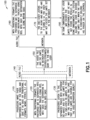
Figure 1 is a flow diagram of a method of setting limits on an end user's ability to alter a final mix of music by a music producer, not falling within the scope of the claims; -
Figure 2 is a flow diagram of another exemplary embodiment of a method of setting limits on an end user's ability to alter a final mix of music by a music producer; -
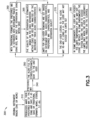
Figure 3 is a flow diagram of another exemplary embodiment of a method of automatically setting limits on an end user's ability to alter a final mix of music by a music producer; -
Figure 4 is a block diagram of a user interface receiving music files; -
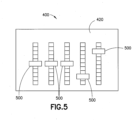
Figure 5 is a schematic diagram of a user interface having slider-based controls on a display thereof; -
Figure 6 is a schematic diagram of a user interface showing displays of manipulable images of the artists of a band; -
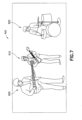
Figure 7 is a schematic diagram of the user interface ofFigure 6 showing one of the manipulable images being enlarged; -
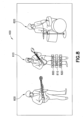
Figure 8 is a schematic diagram of the user interface ofFigure 6 showing visual objects associated with one of the manipulable images; and -
Figure 9 is a block diagram of a user interface in communication with a database. - Referring to the Figures, examples of methods of allowing an end user to alter, within defined limits, a mix of instrument and voice tracks are disclosed herein. Also disclosed herein are examples of apparatuses for carrying out such methods. Although some technologies (e.g., CD, MP3, and the like) do not allow the end user to alter a mix of tracks, more recent technologies do make such allowances. Such altering may be via the use of technology formats such as DOLBY ATMOS, blind signal separation (BSS), and MPEG Spatial Audio Object Coding (SAOC). For example, DOLBY ATMOS allows a completely free editing of instrument and voice tracks. BSS, however, provides a slightly less free editing ability due to little or no user-available information about the source signals or mixing processes used therefor. Editing using BSS may also result in products that suffer from separation artefacts. Similarly, in using MPEG SAOC, free editing is allowed, but audio quality may suffer due to changes in the object separation that are too drastic relative to the source track.
- In any editing technology, music recordings may be recognized using any suitable method for the automatic identification of sound recordings. Some music files may be separated into instrument and voice tracks using any suitable algorithm (e.g., DUET BSS algorithm). Additionally, the instrument in each track may be recognized by any suitable automatic musical instrument recognition algorithm. A dominant instrument in a song can also be recognized by analyzing the music for a dominant tag.
- In using any of the foregoing technologies to separate audio tracks, the end user may have a tendency to excessively modify music or other audio to their liking. For example, a guitar player may want to better hear the guitar track in a song in order to learn the notes or chords, a vocalist may want to understand lyrics, a person viewing a movie may want to hear the explosions louder or to filter out background noise in order to hear what a character is saying, or a person may want to simply hear only a voice track without hearing music, a laugh track, or other background sound in an effort to keep the overall volume at a minimum.
- However, audio- or music producers generally do not want to allow end users complete control for one or more reasons. In particular, for reasons related to copyright, artists and producers want to limit the ability of an end user to completely single out instruments into separate tracks because such separated tracks may be used for unauthorized projects. Drastic changes to a song can also make that song sound bad, and when such versions of that song are widely disseminated (e.g., over the Internet), the original artist may incur negative reviews and/or bad publicity. Furthermore, it is well-noted that removing a laugh track from a comedy show often eliminates or reduces any comic effect.
- Accordingly, both artists and producers generally dislike having their work products excessively modified by end users. To address issues of excessive modification of produced audio, music artists and music producers may desire to curtail the ability of an end user to modify a song (or other work product) by setting limits (either automatically or manually) regarding the extent to which the end user can remix audio files (for example, combine, pan, add reverberation, add autotuning ability, alter levels (e.g., levels of amplification relative to other levels), and the like). Such limits may include separating audio sources based on their location (e.g., direction of sound propagation) and playback of the separated audio sources. Other limits may be imposed by manipulation of playback options based on metadata associated with the audio. The examples disclosed herein are directed to imposing limits on the separation of instrument tracks (which is different from separation based on direction of sound propagation) as well as limiting the separation quality in playback.
- The examples disclosed herein are directed to methods and tools for music producers to limit an end user's manipulation (using a user interface (UI)) of an audio mix of a song after instrument tracks have been separated. The manipulation may have either automatic limits or limits that can be set by the music producers. The examples described herein take into account the quality of the separation system when deciding the limits. In the alternative, a music producer can take into account the quality of the separated instrument tracks. Furthermore, the end user may be able to exceed the limits and listen to the result, but they may be prevented from saving or publishing (where license is given) remixes that exceed the limits. In addition, the examples disclosed herein may be used to enable inexperienced end users to remix their own recorded content with the help of BSS while limiting the risk of compromising the quality of the recorded content due to over remixing.
- Referring to
Figure 1 , one example of a method of setting limits on the ability to alter a final mix, not encompassed by the wording of the independent claims, is designated generally by thereference number 100 and is hereinafter referred to as "method 100."Method 100 is capable of working with traditional audio files, e.g., with a final mix by the producers only. Inmethod 100, a producer manually sets the limits to which the end user may alter the final producer mix. -
Method 100 is initiated with amusic production step 110, afirst separation step 120, and alimit setting step 130. In themusic production step 110, a music producer uses discrete tracks of instruments and vocals (e.g., one instrument per track, one vocal per track, etc.) to make a preferred mix of a song. The music producer may then output and/or save the preferred mix in a particular format (e.g., mono, stereo, 5.1, or the like). The limits are stored as metadata alongside the actual song audio. In some examples, the song audio is stored in MPEG SAOC format, and the metadata is added to the free metadata field in the SAOC format. In some other examples, the song audio is stored in MPEG SAOC format and the metadata is added to an MP4 container. In some other examples, the song audio is stored as AAC (advanced audio coding), and the metadata is added to the free metadata field in the AAC format. With MPEG SAOC the tracks are stored within the format, and modifying the stored tracks is easy. - With AAC the tracks of the preferred mix may need to be separated into discrete tracks before modification, as indicated in the
first separation step 120. An audio object separation system is used both in the music production end and at the user end. The separation system may need to be the same so that the metadata that the music producers decide on is applicable also at the user end. With some formats, the preferred mix may be separated into instrument tracks using BSS. If SAOC is used, however, the separation is built in. In any case, however, although the tracks are considered to be discrete, the separation thereof may not be perfect due to limitations in the production (e.g., particularly with regard to AAC and SAOC). - In the
limit setting step 130, the music producer listens to the separated tracks with different remixes and determines allowed limits of user remixing. In this way, the music producer ensures that the determined limits are suitable for the used separation quality. Naturally, the producers can also consider aspects other than separation quality when deciding the limits. Such aspects may include artistic views and the like. The producers may also set limits such as, for example, "Vocal track cannot be attenuated" (so the limit may be zero, i.e., no alteration of the track is allowed), "Background singing track must always be at least 3 dB less than lead vocal track," and the like. In some examples, the limits may be determined using a computer program. - After the
music production step 110, thefirst separation step 120, and/or thelimit setting step 130, the separated/limited audio and metadata are outputted as anoutput file 140. In various examples, theoutput file 140 may be a finished production of an audio file by the music producer for the end user and may comprise instrument and/or vocal tracks. - If desired, the
output file 140 may be encrypted so that only an approved version of a player program may decrypt it. In this way it can be made so that the end user cannot use other player programs to remix the songs excessively. In other words, a digital rights management (DRM) scheme may estimate the degree of change (as defined by the allowed limits for editing or remixing) before allowing saving, copying, or sharing of the content. Theoutput file 140 is then stored, streamed, and/or sent to the player program in a sendingstep 150. - When the player program receives the
output file 140 from the sendingstep 150, the player program checks for the existence of metadata and allows the end user to remix the song accordingly. As shown in asecond separation step 160, the audio file of the preferred mix may be separated into instrument and/or voice tracks using BSS. If, on the other hand, the separation in thesecond separation step 160 is via SAOC, the separation is built in. In examples in which DOLBY ATMOS is used in thesecond separation step 160, at least some of the tracks may already be discrete because DOLBY ATMOS generally maintains the separation of tracks through the sendingstep 150. As shown in aremix step 170, the metadata is received, an analysis of the metadata is made to ascertain limits as to how much the end user may remix the tracks, and the end user listens to the audio and may remix it to the extent allowable using a UI. In doing so, the end user may not exceed the limits set in the metadata by the producers in thelimit setting step 130. - In some examples, however, the end user may be permitted to exceed the set limits in a
limit exceeding step 180. In thelimit exceeding step 180, the end user may exceed the set limits temporarily, but the result may not be stored. In some other examples, the end user may be allowed to exceed the set limits only when the end user is constantly manipulating a control (e.g., holding a finger on a control button). - Referring to
Figure 2 , another example of a method of setting limits on the ability to alter a final mix is designated generally by thereference number 200 and is hereinafter referred to as "method 200." Inmethod 200, the original tracks are supplied in addition to final preferred mix by the producers. In the system ofmethod 200, limits are automatically set with the assistance of the original track information. -
Method 200 is initiated with amusic production step 210, afirst separation step 220, aquality estimation step 225, and alimit setting step 230. In themusic production step 210, original instrument tracks are available from the music production. A music producer makes a preferred mix of a song and outputs and/or saves it in a particular format (e.g., mono, stereo, 5.1, or the like). - As shown in the
first separation step 220, the preferred mix is separated into instrument tracks. The separated instrument tracks may be slightly different from the original instrument tracks because the separation may not be perfect. The separation can be done using BSS for traditional music files and SAOC for SAOC files. - In the
quality estimation step 225, the quality of the separation is estimated using different criteria. In some examples only the file format is considered in the quality evaluation. SAOC files are considered to have high quality, whereas BSS files are considered to have lower quality. Different metrics of the files may also be calculated, for example, the system may calculate cross correlation between the original instrument tracks and the separated tracks. Higher correlation generally corresponds to higher quality. - In the
limit setting step 230, limits may be set for how the end user can remix the files. Typically, higher quality files can be edited more, and lower quality files less. The limits may be written into metadata. - In addition to separation quality related limits, there may be other limits. The player program may analyze different characteristics of the tracks of the song. The analysis may include recognizing instruments using automatic instrument recognition algorithms, recognizing the dominant instrument of the song, recognizing the tempo of the song, recognizing frequency- or time-domain characteristics such as impulses, zero-crossing rate, spectral tilt, overall spectrum, transient or sinusoidal nature of the song, and the like. The analysis can be performed for the whole song or only for parts of the song. The end user may remix the song using a UI. The player program software sets limits for end user remixing based on the analysis. The limits may be, for example, "The dominant instrument cannot be attenuated," "Vocal tracks cannot be attenuated," "Songs with tempo > 180 bpm cannot be sped up," and the like. Also, limits can be used in combination with music analysis (e.g., "The dominant instrument cannot be attenuated more than 2 dB," "Vocal tracks cannot be attenuated," and the like). These limits may also be written into the metadata.
- The separated/estimated/limited audio and metadata are then outputted as an
output file 240 as instrument tracks. Theoutput file 240 is then stored, streamed, and/or sent to the end user in a sendingstep 250. - When the player program receives the
output file 240 from the sendingstep 250, the player program receives a music song file with metadata that describes the limits for editing. The player program separates the song into audio object tracks in asecond separation step 260. In thesecond separation step 260, the audio file may be separated using BSS or SAOC (with the separation built in). - As shown in a
remix step 270, the end user may remix the song using a UI. The end user may not remix the song so that the remix would exceed the limits set in the metadata. The limits may be, for example, "An instrument may be set louder or quieter but not more than described in the metadata." For each track the metadata may contain limits, e.g., in Decibels. Such limits may be, for example, "The level of Track 3 can by modified by the user from - 3 dB to +3 dB" if the separation quality is low, and "The level of Track 3 can by modified by the user from -12 dB to +12 dB" if the separation quality is high. - In some examples of method 200 (as with method 100), the end user may exceed the set limits in a
limit exceeding step 280. In thelimit exceeding step 280, the end user may exceed the set limits temporarily, but the result may not be stored. In some other examples, the end user may be allowed to exceed the set limits only when the end user is constantly manipulating a control (e.g., holding a finger on a control button). - Referring to
Figure 3 , another example of a method of automatically setting limits without information pertaining to the original instrument tracks is designated generally by thereference number 300 and is hereinafter referred to as "method 300."Method 300 operates with traditional audio files, e.g., with the final mix by the producers only. -
Method 300 comprises amusic production step 310 in which one or more original instrument tracks are available from the music production. A music producer makes a preferred mix of a song and outputs and/or saves it in a particular format (e.g., mono, stereo, 5.1, or the like). After themusic production step 310, the preferred mix is outputted as anoutput file 340 of instrument tracks and stored, streamed, and/or sent to the end user in a sending step 350. - In a
separation step 360, a player program receives a music song file with no metadata. The player program separates the preferred mix into instrument tracks. The separation can be done using BSS for traditional music files and SAOC for SAOC files. - Quality of the separation may then be estimated in an end user
quality estimation step 365. The end userquality estimation step 365 may employ different criteria. In some examples only the file format is considered in the quality evaluation. SAOC files are considered to have high quality, whereas BSS files are considered to have lower quality. Different metrics of the files may also be calculated, for example, the system may calculate cross correlation between the separated tracks. If the tracks have low correlation, then the separation may be considered to have a high success rating. However, if the tracks have high correlation, then the separation may be considered to have a lower success rating. - As shown in a
limit setting step 367, limits are set with regard to how the end user may remix the files. In such a step, higher quality files can be edited more, and lower quality files can be edited less. Such limits may be, for example, "The level of Track 3 can by modified by the user from -3 dB to +3 dB" if the separation quality is low, and "The level of Track 3 can by modified by the user from -12 dB to +12 dB" if the separation quality is high. - In addition to separation quality related limits there may be other limits. For example, the player program may analyze different characteristics of the tracks of the song. The analysis may include recognizing instruments using automatic instrument recognition algorithms, recognizing the dominant instrument of the song, recognizing the tempo of the song, recognizing frequency- or time-domain characteristics such as impulses, zero-crossing rate, spectral tilt, overall spectrum, transient or sinusoidal nature of the song, and the like. The analysis can be performed for the whole song or only for parts of the song. The user may remix the song using a UI. The player program software sets limits for user remixing based on the analysis. The limits may be, for example, "The dominant instrument cannot be attenuated," "Vocal tracks cannot be attenuated," "Songs with tempo > 180 bpm cannot be sped up," and the like. Also, limits can be used in combination with music analysis (e.g., "The dominant instrument cannot be attenuated more than 2 dB," "Vocal tracks cannot be attenuated," and the like).
- As shown in a
remix step 370, the end user may remix the song using a UI. The end user may not remix the song so that the remix would exceed the limits set. - The end user may exceed the set limits in a
limit exceeding step 380. In thelimit exceeding step 380, the end user may exceed the set limits temporarily, but the result may not be stored. In some other examples, the end user may be allowed to exceed the set limits only when the end user is constantly manipulating a control (e.g., holding a finger on a control button). - Referring to
Figure 4 , the instrument tracks from any of the foregoing examples may be received into an apparatus or electronic device for use by the end user. The apparatus or electronic device may be a user interface (UI) designated by thereference number 400 and hereinafter referred to as "UI 400."UI 400 comprises acontroller 410 and adisplay 420. Thecontroller 410 may include aprocessor 430 and amemory 440, withsoftware 450 being located in thememory 440. The instrument tracks may be music files 460. - Referring to
Figure 5 , theUI 400 may comprise a simple slider-based control on thedisplay 420 where eachslider 500 represents a track in a song. The end user may change each track by manipulating itscorresponding slider 500. - Referring to
Figure 6 , theUI 400 may be a graphical user interface (GUI) that displaysimages images UI 400 more intuitive as compared to a UI incorporating a slider. Theimages image - Particularly in examples in which the
UI 400 is graphical, the music files 460 may include visual files where visual objects of the visual files have been mapped to instruments and/or voices, i.e., music objects in the music files 460. The end user may then manipulate the visual objects and at the same time automatically manipulate the music objects. Manipulation of the music objects includes, but is not limited to, selecting a band member visual object to increase their track volume, and the like. As shown inFigure 7 , animage 600 of a band member, as a visual object, may be pinched bigger to increase their track volume. Manipulation may also include moving a band member visual object to move the auditory spatial position of their track, e.g., moving the band member's associated track from a left speaker to a right speaker and vice versa. As shown inFigure 8 , audio effects likeautotune 800, bass/treble 810, balance betweenspeakers 820, reverb, equalization, etc. may appear as visual objects. The end user may then control the amount of these effects by manipulating the visual object. Each track may have its own effects. - Referring to
Figure 9 , theUI 400 may use any suitable method for recognizing a song in a music file. For example, theUI 400 may access an online (or other)database 900, which theUI 400 may use to search for the artists recorded in the music file. TheUI 400 may further search online images of the artists and/or their instruments. TheUI 400 may further divide the music file into instrument/voice tracks (using, for example, the DUET BSS algorithm) and may also recognize the instrument in each track (using, for example, any suitable automatic musical instrument recognition algorithm). TheUI 400 may map each track to an artist based on the knowledge of the artist's instrument. Images of the artists or their instruments may be displayed, and the end user may manipulate individual tracks based on such. Furthermore, if there are several players with the same instrument, theUI 400 may sum those tracks together instead of an artist image showing an instrument image or a group or composite image of the artists. - Other aspects of the
UI 400 may include displaying different pictures on thedisplay 420 at different parts of songs when players change or are silent. Additionally, a record label associated with the song may provide several example mixes with associated pictures where band member visual objects match the mix. Such a system may automatically choose an end user-preferred mix based on either user settings or the end user's previous habits. For example, if the end user always mixes the bass player louder, a mix may be selected where the bass player is loudest of all the players. The end user may be supplied with a visual confirmation of the mix because the system shows him or her an image where the bass player visual object is larger than others. - Remixing by the end user on the
UI 400 may also be channel-based so that the end user amplifies/attenuates an instrument differently in different channels in multichannel audio. In this way, the end user may control the perceived spatial location of the instrument. The differing amount of amplification may also be limited in metadata or by automatic analysis, e.g., higher quality files associated with the spatial location can be changed more than lower quality files. - In any example of the
UI 400, the end user may exceed the limits set by the music producers. In theUI 400, this may be visible, for example, on a touch display device so that the control moves slower after the limit has been exceeded and the end user has to swipe many times to move the control. The control may be a slider as shown inFigure 5 or an icon. The end user may listen to the song with limits that exceed the remixing, but the remixed version may be refused saving and/or transmitting by theUI 400. - In examples of the
UI 400 in which the end user may exceed the limits set by the producers, the exceeded limits may be noted on thedisplay 420 by being made visible, for example, on a touch display device so that the remix exceeds limits only if the user holds his finger on the slider and keeps it above the slider maximum value. When the user releases his finger the slider returns to the maximum value. - In addition to using the examples described herein for music files, the examples described herein are applicable for audio broadcasts, teleconferencing, movie audio, audio books, and the like. The examples described herein may also be used with an end user's own recorded content because allowing end users to remix their own content is a beneficial feature (but traditional remix with BSS may require some expertise, which may cause the end-result to sound less than desirable, thereby possibly causing end users to stop using it). However, with the examples described herein, BSS can be used by inexperienced end users with less of a risk of them detracting from the overall quality of their own content.
- With regard to the examples described herein: limits for remixing may be set individually for each instrument; artists can set instrument-wise limits even if audio is sent using backwards-compatible audio formats such as AAC or MP3 using audio object separation and metadata; in some examples the limits for remixing may be set automatically; in some examples automatic instrument-wise limits may be used even without metadata; and an intuitive way for end users to create personal music mixes is realized.
- Referring now to all of the Figures described herein, any of the foregoing examples may be implemented in software, hardware, application logic, or a combination of software, hardware, and application logic. The software, application logic, and/or hardware may reside in the
UI 400 to remix audio. If desired, all or part of the software, application logic, and/or hardware may reside at any other suitable location. In an example, the application logic, software, or an instruction set is maintained on any one of various computer-readable media. A "computer-readable medium" may be any media or means that can contain, store, communicate, propagate, or transport instructions for use by or in connection with an instruction execution system, apparatus, or device, such as a computer. A computer-readable medium may comprise a computer-readable storage medium that may be any media or means that can contain or store the instructions for use by or in connection with an instruction execution system, apparatus, or device, such as a computer. - It should be understood that the foregoing description is only illustrative. Various alternatives and modifications can be devised by those skilled in the art. For example, features recited in the various dependent claims could be combined with each other in any suitable combination(s). Accordingly, the description is intended to embrace all such alternatives, modifications, and variances which fall within the scope of the appended claims.
Claims (9)
- A computer implemented method (200), comprising:providing (210) an audio file based on two or more discrete audio tracks;separating (220) the audio file into two or more separated audio tracks;estimating a quality of the separation based on a cross-correlation between the discrete audio tracks and the separated audio tracks and/or determining a file format of the audio file;setting (230) a limit on an amount of alteration of a track volume and/or a spatial position and/or an amount of an effect, for at least one of the two or more separated audio tracks, wherein the at least one set limit is based on at least the estimated quality of the separation and/or the file format of the audio file; andoutputting (240) the separated audio tracks as a file and the at least one set limit as metadata of the file for use by a user to alter the track volume and/or the spatial position and/or the amount of the effect.
- The method as claimed in claim 1, further comprising encrypting the outputted file.
- The method as claimed in claim 1 or 2, wherein outputting the separated audio tracks as a file and the at least one set limit as metadata comprises:storing audio in a spatial audio object coding format; andstoring the metadata in an MP4 container.
- A computer implemented method (300), comprising:receiving (350) an audio file based on two or more discrete audio tracks;separating (360)the audio file into two or more separated audio tracks;determining (367) a set limit on an amount of alteration of a track volume and/or a spatial position and/or an amount of an effect, for at least one of the two or more separated audio tracks, wherein the at least one set limit is based on at least an estimated quality of the separation, wherein a quality of the separation is estimated based on a cross-correlation between the two or more separated audio tracks, and/or a file format of the audio file; andremixing (370) the two or more separated audio tracks within the determined set limit on the amount of alteration of the track volume and/or the spatial position and/or the amount of the effect, for the at least one of the two or more separated audio tracks, using a visual object based on manipulating an image on a display, wherein the visual object is mapped to at least one of the two or more separated audio tracks.
- The method as claimed in claim 4, wherein receiving the audio file comprises streaming the audio file.
- The method as claimed in claim 5, wherein determining the at least one set limit based on the file format of the audio file is based on whether the audio file has been separated using blind signal separation or whether the separation is built-in according to a spatial audio object coding format.
- The method as claimed in any of claims 4 to 6, further comprising enabling a user to temporarily exceed (380) the determined set limit on the amount of alteration of the track volume and/or the spatial position and/or the amount of the effect.
- An apparatus configured to:provide (210) an audio file based on two or more discrete audio tracks;separate (220) the audio file into two or more separated audio tracks;estimate a quality of the separation based on a cross-correlation between the discrete audio tracks and the separated audio tracks and/or determine a file format of the audio file;set (230) a limit on an amount of alteration of a track volume and/or a spatial position and/or an amount of an effect, for at least one of the two or more separated audio tracks, wherein the at least one set limit is based on at least the estimated quality of the separation and/or the file format of the audio file; andoutput (240) the separated audio tracks as a file and the at least one set limit as metadata of the file for use by a user to alter the track volume and/or the spatial position and/or the amount of the effect.
- An apparatus (400) configured to:receive (350) an audio file based on two or more discrete audio tracks;separate (360) the audio file into two or more separated audio tracks;determine (367) a set limit on an amount of alteration of a track volume and/or a spatial position and/or an amount of an effect, for at least one of the two or more separated audio tracks, wherein the at least one set limit is based on at least an estimated quality of the separation, wherein a quality of the separation is estimated based on a cross-correlation between the two or more separated audio tracks, and/or a file format of the audio file; andremix (370) the two or more separated audio tracks within the determined set limit on the amount of alteration of a track volume and/or the spatial position and/or the amount of the effect, for the at least one of the two or more separated audio tracks, using a visual object based on manipulating an image on a display, wherein the visual object is mapped to at least one of the two or more separated audio tracks.
Applications Claiming Priority (2)
| Application Number | Priority Date | Filing Date | Title |
|---|---|---|---|
| US15/283,681 US10349196B2 (en) | 2016-10-03 | 2016-10-03 | Method of editing audio signals using separated objects and associated apparatus |
| PCT/FI2017/050679 WO2018065664A1 (en) | 2016-10-03 | 2017-09-27 | Method of editing audio signals using separated objects and associated apparatus |
Publications (3)
| Publication Number | Publication Date |
|---|---|
| EP3520105A1 EP3520105A1 (en) | 2019-08-07 |
| EP3520105A4 EP3520105A4 (en) | 2020-05-20 |
| EP3520105B1 true EP3520105B1 (en) | 2025-01-22 |
Family
ID=61757183
Family Applications (1)
| Application Number | Title | Priority Date | Filing Date |
|---|---|---|---|
| EP17857892.8A Active EP3520105B1 (en) | 2016-10-03 | 2017-09-27 | Method of editing audio signals using separated objects and associated apparatus |
Country Status (5)
| Country | Link |
|---|---|
| US (2) | US10349196B2 (en) |
| EP (1) | EP3520105B1 (en) |
| JP (1) | JP6859431B2 (en) |
| CN (1) | CN109844859B (en) |
| WO (1) | WO2018065664A1 (en) |
Families Citing this family (9)
| Publication number | Priority date | Publication date | Assignee | Title |
|---|---|---|---|---|
| US10349196B2 (en) * | 2016-10-03 | 2019-07-09 | Nokia Technologies Oy | Method of editing audio signals using separated objects and associated apparatus |
| EP3618464A1 (en) * | 2018-08-30 | 2020-03-04 | Nokia Technologies Oy | Reproduction of parametric spatial audio using a soundbar |
| US11625216B2 (en) * | 2018-09-17 | 2023-04-11 | Apple Inc. | Techniques for analyzing multi-track audio files |
| JP2020136746A (en) * | 2019-02-14 | 2020-08-31 | 紀文 近藤 | Sound output device and method |
| GB2594265A (en) * | 2020-04-20 | 2021-10-27 | Nokia Technologies Oy | Apparatus, methods and computer programs for enabling rendering of spatial audio signals |
| CN112562712A (en) * | 2020-12-24 | 2021-03-26 | 上海明略人工智能(集团)有限公司 | Recording data processing method and system, electronic equipment and storage medium |
| CN114267318B (en) * | 2021-12-31 | 2025-04-29 | 腾讯音乐娱乐科技(深圳)有限公司 | Midi music file generation method, storage medium and terminal |
| US20240233694A9 (en) * | 2022-10-20 | 2024-07-11 | Tuttii Inc. | System and method for enhanced audio data transmission and digital audio mashup automation |
| CN117475360B (en) * | 2023-12-27 | 2024-03-26 | 南京纳实医学科技有限公司 | Biological feature extraction and analysis method based on audio and video characteristics of improved MLSTM-FCN |
Family Cites Families (102)
| Publication number | Priority date | Publication date | Assignee | Title |
|---|---|---|---|---|
| US3797037A (en) * | 1972-06-06 | 1974-03-12 | Ibm | Sentence oriented dictation system featuring random accessing of information in a preferred sequence under control of stored codes |
| US6490359B1 (en) * | 1992-04-27 | 2002-12-03 | David A. Gibson | Method and apparatus for using visual images to mix sound |
| JP3816572B2 (en) * | 1996-03-15 | 2006-08-30 | パイオニア株式会社 | Information recording apparatus, information recording method, information reproducing apparatus, and information reproducing method |
| US5728960A (en) * | 1996-07-10 | 1998-03-17 | Sitrick; David H. | Multi-dimensional transformation systems and display communication architecture for musical compositions |
| US6959220B1 (en) * | 1997-11-07 | 2005-10-25 | Microsoft Corporation | Digital audio signal filtering mechanism and method |
| US6311155B1 (en) | 2000-02-04 | 2001-10-30 | Hearing Enhancement Company Llc | Use of voice-to-remaining audio (VRA) in consumer applications |
| GB9918611D0 (en) * | 1999-08-07 | 1999-10-13 | Sibelius Software Ltd | Music database searching |
| US20010015917A1 (en) * | 1999-12-31 | 2001-08-23 | Heo Jung-Kwon | Recording medium having data recorded in data structure capable of editing additional data related to audio data, method and apparatus of recording and/or reproducing thereof |
| US6560577B1 (en) * | 2000-03-21 | 2003-05-06 | Intel Corporation | Process for encoding audio from an analog medium into a compressed digital format using attribute information and silence detection |
| JP2002074850A (en) * | 2000-08-29 | 2002-03-15 | Toshiba Corp | Audio information recording apparatus and method, audio information reproducing apparatus and method, audio information recording medium |
| US7050376B2 (en) * | 2000-09-19 | 2006-05-23 | Lg Electronics Inc. | Optical disc player and method for reproducing thereof |
| US6614729B2 (en) * | 2000-09-26 | 2003-09-02 | David D. Griner | System and method of creating digital recordings of live performances |
| JP2002124022A (en) * | 2000-10-18 | 2002-04-26 | Yamaha Corp | Audio data recording and reproducing device |
| US7103261B2 (en) * | 2001-06-04 | 2006-09-05 | William Grecia | Consumer friendly error correcting formating method for white book 2.0 video compact disc with CD-DA red book audio tracks |
| KR20040024870A (en) | 2001-07-20 | 2004-03-22 | 그레이스노트 아이엔씨 | Automatic identification of sound recordings |
| US20050013583A1 (en) * | 2001-11-20 | 2005-01-20 | Masanori Itoh | Audio/video information recording/reproducing apparatus and method, and recording medium in which information is recorded by using the audio/video information recording/reproducing apparatus and method |
| KR100542129B1 (en) * | 2002-10-28 | 2006-01-11 | 한국전자통신연구원 | Object-based 3D Audio System and Its Control Method |
| JP2004336576A (en) * | 2003-05-09 | 2004-11-25 | Sony Corp | Content distribution system, content distribution device, content recording / reproducing device, content recording / reproducing method, and computer program |
| US7343210B2 (en) * | 2003-07-02 | 2008-03-11 | James Devito | Interactive digital medium and system |
| US7689394B2 (en) * | 2003-08-26 | 2010-03-30 | Siemens Industry, Inc. | System and method for remotely analyzing machine performance |
| US8019449B2 (en) * | 2003-11-03 | 2011-09-13 | At&T Intellectual Property Ii, Lp | Systems, methods, and devices for processing audio signals |
| WO2006010951A1 (en) | 2004-07-30 | 2006-02-02 | U-Myx Limited | Multi-channel audio data distribution format, method and system |
| US20060028951A1 (en) * | 2004-08-03 | 2006-02-09 | Ned Tozun | Method of customizing audio tracks |
| JP2006084749A (en) * | 2004-09-16 | 2006-03-30 | Sony Corp | Content generation apparatus and content generation method |
| KR100754385B1 (en) * | 2004-09-30 | 2007-08-31 | 삼성전자주식회사 | Positioning, tracking, and separating device using audio / video sensor and its method |
| US7519832B2 (en) | 2004-11-29 | 2009-04-14 | Magix Ag | System and method of creating secure encrypted digital media files from a base media work for additional defined processing |
| US20060209652A1 (en) * | 2005-03-16 | 2006-09-21 | Toms Mona L | Accessing a mixed-mode storage medium |
| DE602005011581D1 (en) * | 2005-05-12 | 2009-01-22 | Tcl & Alcatel Mobile Phones | Method for synchronizing at least one multimedia peripheral device of a portable communication device and associated communication device |
| US7935881B2 (en) * | 2005-08-03 | 2011-05-03 | Massachusetts Institute Of Technology | User controls for synthetic drum sound generator that convolves recorded drum sounds with drum stick impact sensor output |
| US7450705B1 (en) * | 2005-08-31 | 2008-11-11 | At&T Corp. | Method to test and compare voice teleconference systems |
| US7697947B2 (en) | 2005-10-05 | 2010-04-13 | Sony Ericsson Mobile Communications Ab | Method of combining audio signals in a wireless communication device |
| KR100733965B1 (en) * | 2005-11-01 | 2007-06-29 | 한국전자통신연구원 | Object-based audio transmitting/receiving system and method |
| US8705747B2 (en) * | 2005-12-08 | 2014-04-22 | Electronics And Telecommunications Research Institute | Object-based 3-dimensional audio service system using preset audio scenes |
| JP2007156300A (en) * | 2005-12-08 | 2007-06-21 | Kobe Steel Ltd | Device, program, and method for sound source separation |
| JP4496186B2 (en) * | 2006-01-23 | 2010-07-07 | 株式会社神戸製鋼所 | Sound source separation device, sound source separation program, and sound source separation method |
| EP1853092B1 (en) * | 2006-05-04 | 2011-10-05 | LG Electronics, Inc. | Enhancing stereo audio with remix capability |
| KR100868475B1 (en) * | 2007-02-16 | 2008-11-12 | 한국전자통신연구원 | How to create, edit, and play multi-object audio content files for object-based audio services, and how to create audio presets |
| JP4897519B2 (en) * | 2007-03-05 | 2012-03-14 | 株式会社神戸製鋼所 | Sound source separation device, sound source separation program, and sound source separation method |
| JP2009054222A (en) * | 2007-08-24 | 2009-03-12 | Toshiba Corp | Optical disc apparatus and optical disc processing method |
| US20090106429A1 (en) * | 2007-10-22 | 2009-04-23 | Matthew L Siegal | Collaborative music network |
| US8173883B2 (en) | 2007-10-24 | 2012-05-08 | Funk Machine Inc. | Personalized music remixing |
| US9330720B2 (en) * | 2008-01-03 | 2016-05-03 | Apple Inc. | Methods and apparatus for altering audio output signals |
| JP4483959B2 (en) * | 2008-03-12 | 2010-06-16 | ソニー株式会社 | Content transmission device, program, viewing restriction determination method, and content transmission system |
| KR20090110242A (en) * | 2008-04-17 | 2009-10-21 | 삼성전자주식회사 | Method and apparatus for processing audio signals |
| EP2146522A1 (en) | 2008-07-17 | 2010-01-20 | Fraunhofer-Gesellschaft zur Förderung der angewandten Forschung e.V. | Apparatus and method for generating audio output signals using object based metadata |
| US8085269B1 (en) * | 2008-07-18 | 2011-12-27 | Adobe Systems Incorporated | Representing and editing audio properties |
| US8392004B2 (en) * | 2009-04-30 | 2013-03-05 | Apple Inc. | Automatic audio adjustment |
| US9310959B2 (en) | 2009-06-01 | 2016-04-12 | Zya, Inc. | System and method for enhancing audio |
| JP5182226B2 (en) | 2009-06-01 | 2013-04-17 | ヤマハ株式会社 | Sound equipment |
| BRPI1014092A2 (en) | 2009-06-01 | 2019-07-02 | Music Mastermind Inc | apparatus for creating a musical composition, and apparatus for enhancing audio |
| US9251776B2 (en) * | 2009-06-01 | 2016-02-02 | Zya, Inc. | System and method creating harmonizing tracks for an audio input |
| KR101473035B1 (en) * | 2009-06-19 | 2014-12-16 | 한국전자통신연구원 | Object-based audio system, object-based audio providing method and object-based audio play system using preset |
| WO2011002933A2 (en) | 2009-06-30 | 2011-01-06 | Museami, Inc. | Vocal and instrumental audio effects |
| US9076264B1 (en) | 2009-08-06 | 2015-07-07 | iZotope, Inc. | Sound sequencing system and method |
| KR101600354B1 (en) * | 2009-08-18 | 2016-03-07 | 삼성전자주식회사 | Method and apparatus for separating object in sound |
| JP2011071683A (en) * | 2009-09-25 | 2011-04-07 | Nec Corp | Video object detection apparatus, video object detection method and program |
| US8439752B2 (en) * | 2009-11-12 | 2013-05-14 | Wms Gaming Inc. | Bonus trigger sounds building into a song |
| EP2511908A4 (en) * | 2009-12-11 | 2013-07-31 | Korea Electronics Telecomm | AUDIO CREATING APPARATUS AND AUDIO PLAYING APPARATUS FOR AUDIO BASED OBJECT BASED SERVICE, AND AUDIO CREATING METHOD AND AUDIO PLAYING METHOD USING THE SAME |
| KR101405976B1 (en) * | 2010-01-06 | 2014-06-12 | 엘지전자 주식회사 | An apparatus for processing an audio signal and method thereof |
| WO2011087460A1 (en) | 2010-01-15 | 2011-07-21 | Agency For Science, Technology And Research | A method and a device for generating at least one audio file, and a method and a device for playing at least one audio file |
| US8541676B1 (en) * | 2010-03-06 | 2013-09-24 | Alexander Waldman | Method for extracting individual instrumental parts from an audio recording and optionally outputting sheet music |
| US9024166B2 (en) * | 2010-09-09 | 2015-05-05 | Harmonix Music Systems, Inc. | Preventing subtractive track separation |
| KR101740436B1 (en) * | 2010-12-08 | 2017-05-26 | 엘지전자 주식회사 | Mobile terminal and method for controlling thereof |
| US8798777B2 (en) * | 2011-03-08 | 2014-08-05 | Packetvideo Corporation | System and method for using a list of audio media to create a list of audiovisual media |
| FI20115401A (en) * | 2011-04-26 | 2012-10-27 | Ovelin Oy | System and procedure for teaching playing a musical instrument |
| EP2727383B1 (en) * | 2011-07-01 | 2021-04-28 | Dolby Laboratories Licensing Corporation | System and method for adaptive audio signal generation, coding and rendering |
| MX2014000503A (en) | 2011-07-14 | 2014-06-04 | Sirius Xm Radio Inc | Individual song libraries and personalized channels in broadcast satellite systems. |
| DK2566424T4 (en) * | 2011-07-28 | 2019-10-07 | My Tinnitus Has Gone Ag | Generating a custom audio file |
| KR101796580B1 (en) * | 2011-11-28 | 2017-11-14 | 한국전자통신연구원 | Apparatus and method for extracting highlight section of music |
| EP2795931B1 (en) | 2011-12-21 | 2018-10-31 | Nokia Technologies Oy | An audio lens |
| US10154361B2 (en) | 2011-12-22 | 2018-12-11 | Nokia Technologies Oy | Spatial audio processing apparatus |
| KR101744361B1 (en) * | 2012-01-04 | 2017-06-09 | 한국전자통신연구원 | Apparatus and method for editing the multi-channel audio signal |
| EP2831873B1 (en) | 2012-03-29 | 2020-10-14 | Nokia Technologies Oy | A method, an apparatus and a computer program for modification of a composite audio signal |
| US8939056B1 (en) * | 2012-04-20 | 2015-01-27 | Barron Associates, Inc. | Systems, devices, and/or methods for managing targeted payload descent |
| US20140115468A1 (en) | 2012-10-24 | 2014-04-24 | Benjamin Guerrero | Graphical user interface for mixing audio using spatial and temporal organization |
| PL2936480T3 (en) * | 2012-12-21 | 2019-04-30 | Jamhub Corp | Multi tracks analog audio hub with digital vector output for collaborative music post processing . |
| US9654757B2 (en) | 2013-03-01 | 2017-05-16 | Nokia Technologies Oy | Method, apparatus, and computer program product for including device playback preferences in multimedia metadata |
| US9595932B2 (en) | 2013-03-05 | 2017-03-14 | Nike, Inc. | Adaptive music playback system |
| IES86526B2 (en) * | 2013-04-09 | 2015-04-08 | Score Music Interactive Ltd | A system and method for generating an audio file |
| DK2808870T3 (en) * | 2013-05-30 | 2016-04-18 | Spotify Ab | Crowdsourcing remix rules for streamed music |
| GB2516056B (en) | 2013-07-09 | 2021-06-30 | Nokia Technologies Oy | Audio processing apparatus |
| EP2830046A1 (en) * | 2013-07-22 | 2015-01-28 | Fraunhofer-Gesellschaft zur Förderung der angewandten Forschung e.V. | Apparatus and method for decoding an encoded audio signal to obtain modified output signals |
| EP2830334A1 (en) * | 2013-07-22 | 2015-01-28 | Fraunhofer-Gesellschaft zur Förderung der angewandten Forschung e.V. | Multi-channel audio decoder, multi-channel audio encoder, methods, computer program and encoded audio representation using a decorrelation of rendered audio signals |
| EP2830050A1 (en) * | 2013-07-22 | 2015-01-28 | Fraunhofer-Gesellschaft zur Förderung der angewandten Forschung e.V. | Apparatus and method for enhanced spatial audio object coding |
| CA2887124C (en) * | 2013-08-28 | 2015-09-29 | Mixgenius Inc. | System and method for performing automatic audio production using semantic data |
| US9619029B2 (en) * | 2013-11-14 | 2017-04-11 | Immersion Corporation | Haptic trigger control system |
| CN104683933A (en) * | 2013-11-29 | 2015-06-03 | 杜比实验室特许公司 | Audio Object Extraction |
| US9721202B2 (en) * | 2014-02-21 | 2017-08-01 | Adobe Systems Incorporated | Non-negative matrix factorization regularized by recurrent neural networks for audio processing |
| US20150243325A1 (en) * | 2014-02-24 | 2015-08-27 | Lyve Minds, Inc. | Automatic generation of compilation videos |
| WO2015150066A1 (en) * | 2014-03-31 | 2015-10-08 | Sony Corporation | Method and apparatus for generating audio content |
| WO2015154159A1 (en) | 2014-04-10 | 2015-10-15 | Vesprini Mark | Systems and methods for musical analysis and determining compatibility in audio production |
| US20150317655A1 (en) * | 2014-05-01 | 2015-11-05 | newsbloom, Inc. | Crowdsourced news end-to-end system |
| US9715279B2 (en) * | 2014-06-09 | 2017-07-25 | Immersion Corporation | Haptic devices and methods for providing haptic effects via audio tracks |
| EP2960899A1 (en) * | 2014-06-25 | 2015-12-30 | Thomson Licensing | Method of singing voice separation from an audio mixture and corresponding apparatus |
| KR102292877B1 (en) * | 2014-08-06 | 2021-08-25 | 삼성전자주식회사 | Method for reproducing contents and an electronic device thereof |
| US10275207B2 (en) * | 2014-09-01 | 2019-04-30 | Samsung Electronics Co., Ltd. | Method and apparatus for playing audio files |
| WO2016102737A1 (en) | 2014-12-22 | 2016-06-30 | Nokia Technologies Oy | Tagging audio data |
| CN105989852A (en) * | 2015-02-16 | 2016-10-05 | 杜比实验室特许公司 | Method for separating sources from audios |
| CN113220259B (en) * | 2015-10-27 | 2024-10-29 | 超级保真有限公司 | System and method for audio content production, audio ordering and audio mixing |
| US10002596B2 (en) * | 2016-06-30 | 2018-06-19 | Nokia Technologies Oy | Intelligent crossfade with separated instrument tracks |
| US10014841B2 (en) * | 2016-09-19 | 2018-07-03 | Nokia Technologies Oy | Method and apparatus for controlling audio playback based upon the instrument |
| US10349196B2 (en) * | 2016-10-03 | 2019-07-09 | Nokia Technologies Oy | Method of editing audio signals using separated objects and associated apparatus |
-
2016
- 2016-10-03 US US15/283,681 patent/US10349196B2/en active Active
-
2017
- 2017-09-27 EP EP17857892.8A patent/EP3520105B1/en active Active
- 2017-09-27 WO PCT/FI2017/050679 patent/WO2018065664A1/en not_active Ceased
- 2017-09-27 CN CN201780061303.6A patent/CN109844859B/en active Active
- 2017-09-27 JP JP2019517915A patent/JP6859431B2/en active Active
-
2019
- 2019-05-01 US US16/400,130 patent/US10623879B2/en active Active
Also Published As
| Publication number | Publication date |
|---|---|
| EP3520105A4 (en) | 2020-05-20 |
| CN109844859A (en) | 2019-06-04 |
| US20190261121A1 (en) | 2019-08-22 |
| WO2018065664A1 (en) | 2018-04-12 |
| EP3520105A1 (en) | 2019-08-07 |
| JP6859431B2 (en) | 2021-04-14 |
| US20180096705A1 (en) | 2018-04-05 |
| US10623879B2 (en) | 2020-04-14 |
| JP2019533195A (en) | 2019-11-14 |
| CN109844859B (en) | 2021-07-27 |
| US10349196B2 (en) | 2019-07-09 |
Similar Documents
| Publication | Publication Date | Title |
|---|---|---|
| EP3520105B1 (en) | Method of editing audio signals using separated objects and associated apparatus | |
| CN103597543B (en) | Semantic Track Mixer | |
| EP2659483B1 (en) | Song transition effects for browsing | |
| US9530396B2 (en) | Visually-assisted mixing of audio using a spectral analyzer | |
| De Man et al. | Intelligent music production | |
| JP5973058B2 (en) | Method and apparatus for 3D audio playback independent of layout and format | |
| US10433089B2 (en) | Digital audio supplementation | |
| JP7036014B2 (en) | Speech processing equipment and methods | |
| CN101361123A (en) | Sound processing device and sound processing method | |
| CN111512648A (en) | Enables rendering of spatial audio content for consumption by the user | |
| EP2523472A1 (en) | Apparatus and method and computer program for generating a stereo output signal for providing additional output channels | |
| US20250106577A1 (en) | Upmixing systems and methods for extending stereo signals to multi-channel formats | |
| Wilson | Evaluation and modelling of perceived audio quality in popular music, towards intelligent music production | |
| CN105979468A (en) | Audio frequency processing method and device | |
| WO2016197471A1 (en) | Multimedia content sending, generating, transmitting and playing method, and corresponding device | |
| JP4392040B2 (en) | Acoustic signal processing apparatus, acoustic signal processing method, acoustic signal processing program, and computer-readable recording medium | |
| JP6905411B2 (en) | Channel number converter and program | |
| Subhash | All About Audio | |
| Hsu | A Study of Innovative Strategies for Popular Music Incorporating Reality Technology: Cases Study of Music in Spatial Audio | |
| Exarchos et al. | Audio processing | |
| KR20230091455A (en) | How to set the sound effect effect | |
| HK1220803B (en) | Adaptive audio content generation | |
| HK1220803A1 (en) | Adaptive audio content generation |
Legal Events
| Date | Code | Title | Description |
|---|---|---|---|
| STAA | Information on the status of an ep patent application or granted ep patent |
Free format text: STATUS: THE INTERNATIONAL PUBLICATION HAS BEEN MADE |
|
| PUAI | Public reference made under article 153(3) epc to a published international application that has entered the european phase |
Free format text: ORIGINAL CODE: 0009012 |
|
| STAA | Information on the status of an ep patent application or granted ep patent |
Free format text: STATUS: REQUEST FOR EXAMINATION WAS MADE |
|
| 17P | Request for examination filed |
Effective date: 20190409 |
|
| AK | Designated contracting states |
Kind code of ref document: A1 Designated state(s): AL AT BE BG CH CY CZ DE DK EE ES FI FR GB GR HR HU IE IS IT LI LT LU LV MC MK MT NL NO PL PT RO RS SE SI SK SM TR |
|
| AX | Request for extension of the european patent |
Extension state: BA ME |
|
| RAP1 | Party data changed (applicant data changed or rights of an application transferred) |
Owner name: NOKIA TECHNOLOGIES OY |
|
| DAV | Request for validation of the european patent (deleted) | ||
| DAX | Request for extension of the european patent (deleted) | ||
| A4 | Supplementary search report drawn up and despatched |
Effective date: 20200422 |
|
| RIC1 | Information provided on ipc code assigned before grant |
Ipc: G11B 27/031 20060101ALI20200416BHEP Ipc: G10H 1/00 20060101ALI20200416BHEP Ipc: H03G 5/00 20060101ALI20200416BHEP Ipc: H04S 7/00 20060101ALI20200416BHEP Ipc: G11B 20/00 20060101AFI20200416BHEP Ipc: G06F 21/10 20130101ALI20200416BHEP |
|
| STAA | Information on the status of an ep patent application or granted ep patent |
Free format text: STATUS: EXAMINATION IS IN PROGRESS |
|
| 17Q | First examination report despatched |
Effective date: 20211112 |
|
| GRAP | Despatch of communication of intention to grant a patent |
Free format text: ORIGINAL CODE: EPIDOSNIGR1 |
|
| STAA | Information on the status of an ep patent application or granted ep patent |
Free format text: STATUS: GRANT OF PATENT IS INTENDED |
|
| INTG | Intention to grant announced |
Effective date: 20240321 |
|
| GRAJ | Information related to disapproval of communication of intention to grant by the applicant or resumption of examination proceedings by the epo deleted |
Free format text: ORIGINAL CODE: EPIDOSDIGR1 |
|
| STAA | Information on the status of an ep patent application or granted ep patent |
Free format text: STATUS: EXAMINATION IS IN PROGRESS |
|
| INTC | Intention to grant announced (deleted) | ||
| GRAP | Despatch of communication of intention to grant a patent |
Free format text: ORIGINAL CODE: EPIDOSNIGR1 |
|
| STAA | Information on the status of an ep patent application or granted ep patent |
Free format text: STATUS: GRANT OF PATENT IS INTENDED |
|
| INTG | Intention to grant announced |
Effective date: 20240902 |
|
| GRAS | Grant fee paid |
Free format text: ORIGINAL CODE: EPIDOSNIGR3 |
|
| GRAA | (expected) grant |
Free format text: ORIGINAL CODE: 0009210 |
|
| STAA | Information on the status of an ep patent application or granted ep patent |
Free format text: STATUS: THE PATENT HAS BEEN GRANTED |
|
| AK | Designated contracting states |
Kind code of ref document: B1 Designated state(s): AL AT BE BG CH CY CZ DE DK EE ES FI FR GB GR HR HU IE IS IT LI LT LU LV MC MK MT NL NO PL PT RO RS SE SI SK SM TR |
|
| REG | Reference to a national code |
Ref country code: GB Ref legal event code: FG4D |
|
| REG | Reference to a national code |
Ref country code: CH Ref legal event code: EP |
|
| REG | Reference to a national code |
Ref country code: IE Ref legal event code: FG4D |
|
| REG | Reference to a national code |
Ref country code: DE Ref legal event code: R096 Ref document number: 602017087475 Country of ref document: DE |
|
| REG | Reference to a national code |
Ref country code: NL Ref legal event code: MP Effective date: 20250122 |
|
| PG25 | Lapsed in a contracting state [announced via postgrant information from national office to epo] |
Ref country code: NL Free format text: LAPSE BECAUSE OF FAILURE TO SUBMIT A TRANSLATION OF THE DESCRIPTION OR TO PAY THE FEE WITHIN THE PRESCRIBED TIME-LIMIT Effective date: 20250122 |
|
| PG25 | Lapsed in a contracting state [announced via postgrant information from national office to epo] |
Ref country code: RS Free format text: LAPSE BECAUSE OF FAILURE TO SUBMIT A TRANSLATION OF THE DESCRIPTION OR TO PAY THE FEE WITHIN THE PRESCRIBED TIME-LIMIT Effective date: 20250422 |
|
| PG25 | Lapsed in a contracting state [announced via postgrant information from national office to epo] |
Ref country code: FI Free format text: LAPSE BECAUSE OF FAILURE TO SUBMIT A TRANSLATION OF THE DESCRIPTION OR TO PAY THE FEE WITHIN THE PRESCRIBED TIME-LIMIT Effective date: 20250122 |
|
| PG25 | Lapsed in a contracting state [announced via postgrant information from national office to epo] |
Ref country code: PL Free format text: LAPSE BECAUSE OF FAILURE TO SUBMIT A TRANSLATION OF THE DESCRIPTION OR TO PAY THE FEE WITHIN THE PRESCRIBED TIME-LIMIT Effective date: 20250122 |
|
| PG25 | Lapsed in a contracting state [announced via postgrant information from national office to epo] |
Ref country code: ES Free format text: LAPSE BECAUSE OF FAILURE TO SUBMIT A TRANSLATION OF THE DESCRIPTION OR TO PAY THE FEE WITHIN THE PRESCRIBED TIME-LIMIT Effective date: 20250122 |
|
| REG | Reference to a national code |
Ref country code: LT Ref legal event code: MG9D |
|
| PG25 | Lapsed in a contracting state [announced via postgrant information from national office to epo] |
Ref country code: IS Free format text: LAPSE BECAUSE OF FAILURE TO SUBMIT A TRANSLATION OF THE DESCRIPTION OR TO PAY THE FEE WITHIN THE PRESCRIBED TIME-LIMIT Effective date: 20250522 Ref country code: NO Free format text: LAPSE BECAUSE OF FAILURE TO SUBMIT A TRANSLATION OF THE DESCRIPTION OR TO PAY THE FEE WITHIN THE PRESCRIBED TIME-LIMIT Effective date: 20250422 |
|
| REG | Reference to a national code |
Ref country code: AT Ref legal event code: MK05 Ref document number: 1762076 Country of ref document: AT Kind code of ref document: T Effective date: 20250122 |
|
| PG25 | Lapsed in a contracting state [announced via postgrant information from national office to epo] |
Ref country code: HR Free format text: LAPSE BECAUSE OF FAILURE TO SUBMIT A TRANSLATION OF THE DESCRIPTION OR TO PAY THE FEE WITHIN THE PRESCRIBED TIME-LIMIT Effective date: 20250122 |
|
| PG25 | Lapsed in a contracting state [announced via postgrant information from national office to epo] |
Ref country code: LV Free format text: LAPSE BECAUSE OF FAILURE TO SUBMIT A TRANSLATION OF THE DESCRIPTION OR TO PAY THE FEE WITHIN THE PRESCRIBED TIME-LIMIT Effective date: 20250122 Ref country code: PT Free format text: LAPSE BECAUSE OF FAILURE TO SUBMIT A TRANSLATION OF THE DESCRIPTION OR TO PAY THE FEE WITHIN THE PRESCRIBED TIME-LIMIT Effective date: 20250522 |
|
| PG25 | Lapsed in a contracting state [announced via postgrant information from national office to epo] |
Ref country code: GR Free format text: LAPSE BECAUSE OF FAILURE TO SUBMIT A TRANSLATION OF THE DESCRIPTION OR TO PAY THE FEE WITHIN THE PRESCRIBED TIME-LIMIT Effective date: 20250423 Ref country code: BG Free format text: LAPSE BECAUSE OF FAILURE TO SUBMIT A TRANSLATION OF THE DESCRIPTION OR TO PAY THE FEE WITHIN THE PRESCRIBED TIME-LIMIT Effective date: 20250122 |
|
| PG25 | Lapsed in a contracting state [announced via postgrant information from national office to epo] |
Ref country code: AT Free format text: LAPSE BECAUSE OF FAILURE TO SUBMIT A TRANSLATION OF THE DESCRIPTION OR TO PAY THE FEE WITHIN THE PRESCRIBED TIME-LIMIT Effective date: 20250122 |
|
| PG25 | Lapsed in a contracting state [announced via postgrant information from national office to epo] |
Ref country code: SE Free format text: LAPSE BECAUSE OF FAILURE TO SUBMIT A TRANSLATION OF THE DESCRIPTION OR TO PAY THE FEE WITHIN THE PRESCRIBED TIME-LIMIT Effective date: 20250122 |
|
| PG25 | Lapsed in a contracting state [announced via postgrant information from national office to epo] |
Ref country code: SM Free format text: LAPSE BECAUSE OF FAILURE TO SUBMIT A TRANSLATION OF THE DESCRIPTION OR TO PAY THE FEE WITHIN THE PRESCRIBED TIME-LIMIT Effective date: 20250122 |
|
| PG25 | Lapsed in a contracting state [announced via postgrant information from national office to epo] |
Ref country code: DK Free format text: LAPSE BECAUSE OF FAILURE TO SUBMIT A TRANSLATION OF THE DESCRIPTION OR TO PAY THE FEE WITHIN THE PRESCRIBED TIME-LIMIT Effective date: 20250122 |
|
| PGFP | Annual fee paid to national office [announced via postgrant information from national office to epo] |
Ref country code: DE Payment date: 20250805 Year of fee payment: 9 |
|
| PG25 | Lapsed in a contracting state [announced via postgrant information from national office to epo] |
Ref country code: IT Free format text: LAPSE BECAUSE OF FAILURE TO SUBMIT A TRANSLATION OF THE DESCRIPTION OR TO PAY THE FEE WITHIN THE PRESCRIBED TIME-LIMIT Effective date: 20250122 |
|
| PGFP | Annual fee paid to national office [announced via postgrant information from national office to epo] |
Ref country code: GB Payment date: 20250807 Year of fee payment: 9 |
|
| PG25 | Lapsed in a contracting state [announced via postgrant information from national office to epo] |
Ref country code: EE Free format text: LAPSE BECAUSE OF FAILURE TO SUBMIT A TRANSLATION OF THE DESCRIPTION OR TO PAY THE FEE WITHIN THE PRESCRIBED TIME-LIMIT Effective date: 20250122 Ref country code: CZ Free format text: LAPSE BECAUSE OF FAILURE TO SUBMIT A TRANSLATION OF THE DESCRIPTION OR TO PAY THE FEE WITHIN THE PRESCRIBED TIME-LIMIT Effective date: 20250122 |
|
| REG | Reference to a national code |
Ref country code: DE Ref legal event code: R097 Ref document number: 602017087475 Country of ref document: DE |
|
| PG25 | Lapsed in a contracting state [announced via postgrant information from national office to epo] |
Ref country code: RO Free format text: LAPSE BECAUSE OF FAILURE TO SUBMIT A TRANSLATION OF THE DESCRIPTION OR TO PAY THE FEE WITHIN THE PRESCRIBED TIME-LIMIT Effective date: 20250122 |
|
| PG25 | Lapsed in a contracting state [announced via postgrant information from national office to epo] |
Ref country code: SK Free format text: LAPSE BECAUSE OF FAILURE TO SUBMIT A TRANSLATION OF THE DESCRIPTION OR TO PAY THE FEE WITHIN THE PRESCRIBED TIME-LIMIT Effective date: 20250122 |
|
| PLBE | No opposition filed within time limit |
Free format text: ORIGINAL CODE: 0009261 |
|
| STAA | Information on the status of an ep patent application or granted ep patent |
Free format text: STATUS: NO OPPOSITION FILED WITHIN TIME LIMIT |
|
| 26N | No opposition filed |
Effective date: 20251023 |