EP3516902B1 - Verfahren, vorrichtungen und drahtloses mesh-netzwerk zur herstellung einer route zwischen einem mesh-knoten eines routenoriginators, ro, und mesh-knoten einer routendestination, rd, in einem mesh-netzwerk - Google Patents
Verfahren, vorrichtungen und drahtloses mesh-netzwerk zur herstellung einer route zwischen einem mesh-knoten eines routenoriginators, ro, und mesh-knoten einer routendestination, rd, in einem mesh-netzwerk Download PDFInfo
- Publication number
- EP3516902B1 EP3516902B1 EP16774471.3A EP16774471A EP3516902B1 EP 3516902 B1 EP3516902 B1 EP 3516902B1 EP 16774471 A EP16774471 A EP 16774471A EP 3516902 B1 EP3516902 B1 EP 3516902B1
- Authority
- EP
- European Patent Office
- Prior art keywords
- mesh node
- mesh
- rsn
- route
- node
- Prior art date
- Legal status (The legal status is an assumption and is not a legal conclusion. Google has not performed a legal analysis and makes no representation as to the accuracy of the status listed.)
- Active
Links
Images

Classifications
-
- H—ELECTRICITY
- H04—ELECTRIC COMMUNICATION TECHNIQUE
- H04L—TRANSMISSION OF DIGITAL INFORMATION, e.g. TELEGRAPHIC COMMUNICATION
- H04L47/00—Traffic control in data switching networks
- H04L47/10—Flow control; Congestion control
- H04L47/34—Flow control; Congestion control ensuring sequence integrity, e.g. using sequence numbers
-
- H—ELECTRICITY
- H04—ELECTRIC COMMUNICATION TECHNIQUE
- H04L—TRANSMISSION OF DIGITAL INFORMATION, e.g. TELEGRAPHIC COMMUNICATION
- H04L45/00—Routing or path finding of packets in data switching networks
- H04L45/26—Route discovery packet
-
- H—ELECTRICITY
- H04—ELECTRIC COMMUNICATION TECHNIQUE
- H04W—WIRELESS COMMUNICATION NETWORKS
- H04W4/00—Services specially adapted for wireless communication networks; Facilities therefor
- H04W4/80—Services using short range communication, e.g. near-field communication [NFC], radio-frequency identification [RFID] or low energy communication
-
- H—ELECTRICITY
- H04—ELECTRIC COMMUNICATION TECHNIQUE
- H04W—WIRELESS COMMUNICATION NETWORKS
- H04W40/00—Communication routing or communication path finding
- H04W40/24—Connectivity information management, e.g. connectivity discovery or connectivity update
- H04W40/246—Connectivity information discovery
-
- H—ELECTRICITY
- H04—ELECTRIC COMMUNICATION TECHNIQUE
- H04W—WIRELESS COMMUNICATION NETWORKS
- H04W40/00—Communication routing or communication path finding
- H04W40/24—Connectivity information management, e.g. connectivity discovery or connectivity update
- H04W40/28—Connectivity information management, e.g. connectivity discovery or connectivity update for reactive routing
-
- H—ELECTRICITY
- H04—ELECTRIC COMMUNICATION TECHNIQUE
- H04W—WIRELESS COMMUNICATION NETWORKS
- H04W40/00—Communication routing or communication path finding
- H04W40/24—Connectivity information management, e.g. connectivity discovery or connectivity update
- H04W40/248—Connectivity information update
-
- H—ELECTRICITY
- H04—ELECTRIC COMMUNICATION TECHNIQUE
- H04W—WIRELESS COMMUNICATION NETWORKS
- H04W84/00—Network topologies
- H04W84/18—Self-organising networks, e.g. ad-hoc networks or sensor networks
Definitions
- a method, devices and a wireless mesh network for establishing a route between a Route Originator, RO, mesh node and a Route Destination, RD, mesh node in a mesh network are described in detail below.
- the present invention is generally related to wireless mesh networks, more specifically to methods for establishing a route between two mesh nodes of the mesh network.
- a wireless mesh network comprises a plurality of mesh nodes organized in a mesh topology.
- each mesh node is also some sort of provider by forwarding data to the next mesh node.
- the network infrastructure is decentralized and simplified because each mesh node only needs to be able to transmit to a neighbouring mesh node.
- Such wireless mesh networks could allow people living in remote areas and small businesses operating in rural neighbourhoods to connect their networks together for affordable internet connections.
- Wireless mesh network can self form and self heal. These networks can be implemented with various wireless technologies including 802.11, 802.15, 802.16, cellular technologies and do not need to be restricted to a particular technology or protocol.
- Mesh version 1.1 is in its early stage of being standardized.
- the current proposal is to introduce a distributed routing algorithm.
- the task of the routing algorithm is to create a route through the intermediate mesh nodes between the message originator and the message destination, and then to send data messages along this route.
- the message format and the forwarding methods are the same as for flooding. However, intermediate mesh nodes that do not belong to the route will ignore these data messages and will not forward them.
- a Route Originator, RO, mesh node intend to create a route to a Route Destination, RD, mesh node.
- the RO mesh node broadcasts a Route Request, RREQ, message, comprising the addresses of the RO mesh node and the RD mesh node.
- RREQ Route Request
- Each intermediate mesh node re-broadcasts this RREQ message, while keeping information about this RREQ in a Route Discovery Table, RDT.
- the RD replies to the RREQ message with a Route Reply, RREP, message.
- the RREP message is not broadcasted, but is unicasted to the intermediate mesh node that directly delivered the RREQ message to the RD mesh node.
- an intermediate mesh node receives an RREP message, it forwards the message to the selected intermediate mesh node towards the RO mesh node. Again, the RREP message is forwarded using unicast.
- each intermediate mesh node that receives the RREP message adds an entry to its Routing Table, containing information about the RO mesh node and the RD mesh node. As a results, the intermediate mesh node is considered as part of the route.
- the RO mesh node considers the route to be successfully created.
- Each RO mesh node associates a sequence number to each RREQ message it originates.
- the sequence number is increased by one every time a new RREQ message is issued.
- the sequence number is then included in the RREQ message as an "Originator Sequence Number", OSN, field.
- the sequence number is used for a number of purposes.
- An RO mesh node can send several RREQ messages in parallel, even to the same RD mesh node.
- the OSN together with the address of the RO mesh node, are used to distinguish the different RREQ messages.
- the routing algorithms require that an intermediate mesh node updates its RDT entry for this particular route if an RREQ message arrives with the same RO mesh node and the same RD mesh node, but with an updated OSN. If this happens, the information of the previous RREQ message is overwritten in the RDT.
- the OSN has, in practice, a limited size. As an example, it is likely that the OSN has an 8-bit value, and can therefore take on 256 different values. When the OSN reaches 255, it will wrap back to 0 again.
- OSN values need to be compared in order to determine if one value is "newer” or "older” than another value.
- sequence number is incremented for each new RREQ message that a node originates. Since in many applications an RO mesh node establishes routes with many other mesh nodes, the sequence number update frequency scales with the number of destinations. This will deplete the number space, i.e. the 256 different values, quickly, and the OSN will wrap frequently. The intermediate mesh nodes that receive the RREQ message will compare the received sequence number with previously received sequence numbers from the same RO mesh node will be affected.
- the intermediate mesh nodes will consider the received RREQ message as an "old" message while in fact it is an updated message.
- a method of establishing a route between a Route Originator, RO, mesh node and a Route Destination, RD, mesh node in a mesh network said mesh network comprising a plurality of mesh nodes.
- the method comprises the step of assembling, by said RO mesh node, a Route Request, RREQ, message, wherein said RREQ message is related to said route between said RO mesh node and said RD mesh node.
- the step of assembling comprises introducing, in said RREQ message, an address of said RO mesh node and an address of said RD mesh node, retrieving a Route Sequence Number, RSN, said RSN being a unique number specific for said pair of said RO mesh node and said RD mesh node, and updating said retrieved RSN, and introducing said updated RSN into said RREQ message.
- the method comprises the step of broadcasting, by said RO mesh node, said assembled RREQ message in said mesh network.
- the RREQ message is then received by one or more intermediate mesh nodes.
- Each mesh node will then broadcast the received message again to make sure that the RREQ message will be delivered to the RD mesh node.
- each intermediate mesh node may check whether the RSN in the RREQ message is newer than the one it has on file, i.e. for example the one present in a Route Discovery Table, RDT.
- the intermediate mesh node may check whether the RSN for that specific pair of RO mesh and RD mesh node in the RREQ message is newer compared to the RSN for that specific pair of nodes in the Route Discovery Table. If that's the case, the RREQ message may be broadcasted by the intermediate mesh node. Typical details for the RDT are explained further on in this disclosure.
- the method comprises receiving, by said RD mesh node, via any of said plurality of mesh nodes, said RREQ message.
- the method comprises the step of determining, by said RD mesh node, that said RREQ message is to be taken into account.
- the method comprises the steps of transmitting, by said RD mesh node, in reply to said received RREQ message and to said determination that said RREQ message is to be taken into account, a Route Reply, RREP, message towards said RO mesh node, via said mesh network, and receiving, by said RO mesh node, via any of said plurality of mesh nodes, said RREP message thereby establishing said route between said RO mesh node and said RD mesh node.
- the RD mesh nodes typically transmits the RREP message towards the intermediate mesh node from which the RD mesh node had first received the RREQ message. That intermediate mesh node then transmits the received RREP message towards the mesh node from which it first received the RREQ message, and so on. Finally, the RO mesh node is reached and the route between the RO mesh node and the RD mesh node is established. As such, the RREP message follows the path of the "least cost" back to the RO mesh node.
- the method is at least based on the insight that Route Sequence Numbers should be defined between two nodes, i.e. the RO mesh node and the RD mesh node.
- there is not just one sequence number generator applicable for all routes from a certain RO but there are a plurality of sequence number generators, each applicable for a single route between a particular RO mesh node and a particular RD mesh node. So, a particular RSN is only applicable for a specific route from one RO mesh node to one RD mesh node only.
- the advantage hereof is that the routing algorithm is made more resilient to errors in cases where a large number of RREQs are being sent over a time smaller than the expiry time of the Route Discovery Table entries.
- the wrap problem is significantly reduced compared to the conventional Route Sequence Number, RSN.
- the method increases the accuracy, and reliability, of the sequence number value comparison.
- the step of retrieving a RSN related to the RREQ message assumes that a route had already been established, at least once, between the RO mesh node and the RD mesh node. It is however also conceivable that no route had been established before. In such a case the RSN is set to an initial value, for example "1".
- said step of determining, by said RD mesh node, that said RREQ message is to be taken into account comprises at least one of:
- the RD mesh node as well as all the intermediate mesh nodes in the network, comprise a Route Discovery Table, RDT.
- the RDT is used for temporarily storing an RSN. Once a predetermined period, for example a lifetime period, has expired, the temporarily stored RSN is removed from the RDT. So, an entry of an RSN specific for a pair of RO mesh node and RD mesh node exists in cases when two, or more, RREQ messages are sent, by the same RO mesh node to the same RD mesh node, within a short period of time.
- the intermediate nodes, or the RD mesh node may update the entry in the RDT with information from the newer RREQ message, thereby effectively abandoning the "older" entry and keeping the new entry.
- a mesh node does not keep track of RSN's between pairs of RO mesh nodes and RD mesh nodes, wherein said mesh node is not acting as the RO mesh node. As such, it is assumed that each mesh node trusts the other mesh nodes in the network.
- said step of retrieving said RSN comprises:
- the RO mesh nodes communicates with a Route Sequence Number Table and the intermediate mesh nodes as well as the RD mesh node communicates with a Route Discovery Table.
- Each intermediate node, or even the RD mesh node, may also operate as an RO mesh node. In such a case, these nodes communicate to the RSNT as well.
- the RSNT is responsible for maintaining the correct RSN for a specific pair of RO mesh node and RD mesh node. So, the RSNT may contain a plurality of entries, wherein each entry is directed to the same RO mesh node, i.e. the mesh node comprising the RSNT, and wherein each entry is directed to a different mesh node in the wireless mesh network.
- the step of updating said retrieved RSN comprises of incrementing said retrieved RSN, or of decrementing said retrieved RSN.
- each mesh node may maintain its own Route Sequence Number Table, RSNT.
- the RSNT is used by ROs to keep track of the last RSN send from itself to a RD.
- Each entry of the RSNT comprises its own address, an address of one of the mesh node in the wireless mesh network acting as an RD mesh node, and an RSN related to that specific pair of mesh nodes.
- a mesh node acting as an RO mesh node does not have to maintain a single number valid for all pairs of nodes in which it acts as an RO mesh node, within the network, but needs to maintain RSN's for a plurality of pairs of mesh nodes within the network, wherein it acts as an RO mesh node.
- a method of enabling a route to be established between a Route Originator, RO, mesh node and a Route Destination, RD, mesh node in a mesh network said mesh network comprising a plurality of mesh nodes.
- the method comprises the step of assembling, by said RO mesh node, a Route Request, RREQ, message, wherein said RREQ message is related to said route between said RO mesh node and said RD mesh node, wherein said step of assembling comprises introducing, in said RREQ message, an address of said RO mesh node and an address of said RD mesh node, and retrieving a Route Sequence Number, RSN, , said RSN being a unique number specific for said pair of said RO mesh node and said RD mesh node, and updating said retrieved RSN, and introducing said updated RSN into said RREQ message.
- the method comprises the step of broadcasting, by said RO mesh node, said assembled RREQ message in said mesh network.
- the RO mesh node may be any mesh node present in the network, as each mesh node may operate as an originator of a message, an intermediate node receiving and forwarding the message, and an intended destination node for a message.
- the above described retrieving step may entail that the mesh node looks up a specific entry in a Route Sequence Number Table, RSNT, wherein said entry corresponds to the RO mesh node and the RD mesh node.
- the RSN of that looked up entry is then updated, i.e. incremented or decremented, and is introduced in the RREQ message.
- the updated RSN may then also be stored again in the RSNT for subsequent references.
- said method further comprises the step of:
- said step of updating said retrieved RSN comprises one of:
- the network is a Bluetooth Mesh type network.
- the above described example is directed to the RD mesh node, being the intended recipient for the RO mesh node.
- a wireless mesh network comprising a Route Originator, RO, mesh node a Route Destination, RD, mesh node, and a plurality of mesh nodes, said wireless mesh network arranged to support of establishing a route between said RO mesh node and said RD mesh node,
- RO mesh node for operation in a wireless mesh network, said RO mesh node comprising:
- the RD mesh node comprises:
- non-transitory computer-readable storage medium comprising instructions which, when executed on at least one processor, cause the at least one processor to carry out the method according to any of the method examples as disclosed above.
- RD mesh node arranged for operation in a wireless mesh network, said RD mesh node comprising:
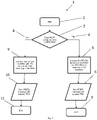
- FIG. 1 is a schematic flow chart 1 illustrating a basic aspect of the present disclosure.
- the flow chart 1 is initiated with a start terminal 2.
- the start is characterized by the decision of a Route Originator, RO, mesh node that it wants to establish, or refresh, a route between itself and a Route Destination, RD, mesh node in a mesh network.
- RO Route Originator
- RD Route Destination
- the mesh network comprises a plurality of mesh nodes, each capable of receiving messages, and forwarding received messages to a further mesh node. In such a way, the range of a particular mesh node is extended, as the messages may be forwarded via the intermediate mesh nodes to the final destination node.
- the mesh network may consist of only two mesh nodes, the RO and the RD, or just a couple of mesh nodes, for example 5 - 10 mesh nodes, but may also comprise thousands of mesh nodes all together. The present disclosure is not limited to any size of the mesh network.
- the RO mesh node is to make a decision 3 once the flow chart 1 has started. That is, the RO mesh node will determine whether its Route Sequence Number Table, RSNT, already contains an entry specifically for the particular pair of RO mesh node and RD mesh node. The RO mesh node thus checks whether an RSN already exists for the combination of the RO mesh node with the RD mesh node.
- RSNT Route Sequence Number Table
- the RSNT may be a table comprised in a memory of the RO mesh node.
- the table is regularly updated with new pairs of mesh nodes, and their corresponding RSN's as well as with updated RSN's for pairs of mesh nodes that are already present in the table. It is noted that, typically, the RSNT is arranged in such a way that it only comprises pair of mesh nodes in which the node comprising the RSNT is acting as the RO mesh node. The RSNT does not need to maintain, or track, RSNs for pair of mesh nodes in which it does not act as an RO mesh node.
- a Route Request, RREQ, message is established having the updated RSN, and the RREQ message is then send 6, by the RO mesh node, into the mesh network. More specifically, the RREQ message is broadcasted to any of the mesh nodes of the mesh network. Finally, the flow chart 1 comes to an end 7.
- a Route Request, RREQ, message is established having the newly created RSN, and the RREQ message is then broadcasted 10, by the RO mesh node, into the mesh network. Finally, the flow chart 1 comes to an end 11.
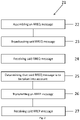
- Figure 2 is a flow chart 21 illustrating a method according to the present disclosure.
- the method 21 starts with a decision of the RO mesh node that it wants to establish, or refresh, a route between itself and a so called RD mesh node.
- the RD mesh node may be any mesh node in the same mesh network.
- a Route Request, RREQ, message is to be assembled 22 by the RO mesh node.
- the RREQ message may contain several bits of information, like the source address, the destination address, the lifespan, i.e. "lifetime", of the message and a Route Sequence Number which serves as a unique identification
- the assembling step 22 comprises several sub steps which are explained hereafter.
- an address of the RO mesh node and an address of the RD mesh node is introduced in the RREQ message.
- the address may be an Internet Protocol, IP, address, a Bluetooth Mesh address or any other type address that is able to uniquely point to the intended mesh node.
- the RO mesh node retrieves the Route Sequence Number, RSN, wherein the RSN being a unique number specific for the pair of the RO mesh node and the RD mesh node.
- the RSN is, for example, retrieved from a Route Sequence Number Table, RSNT, maintained by the RO mesh node itself.
- the RSN is updated, for example incremented or decremented, and the updated RSN is introduced in the RREQ message.
- the updated RSN may also be stored again in the RSNT for future reference.
- the RREQ message is broadcasted 23, by the RO mesh node, into the mesh network.
- the RREQ message is received by any intermediate mesh node in the mesh network, and the intermediate mesh nodes are arranged to broadcast the RREQ message to further mesh nodes until the message has received its intended mesh node.
- an intermediate mesh node has two choices. One, if they already know a particular route to the RD mesh node then they can send a Route Reply, RREP, message back to the RO mesh node. As such, that particular node is acting as the RD mesh node itself. Two, In case the intermediate mesh node is not aware of a route to the RD mesh node, it may rebroadcast the received RREQ message until its lifetime is up.
- the intermediate mesh node can send a Route Reply, RREP, message back to the RO mesh node.
- the intermediate mesh node may first determine whether the known route is still likely to be valid. That is, if the intermediate mesh node had detected that one or more mesh nodes in that particular route are no longer available, or if the intermediate mesh node had detected that the known route is relatively "old', i.e. exceeding a predetermined validity time, than it could override its decision and reply with the RREP message. In such a case, it may decide that the known route is likely not to be valid anymore and go for choice 2. That is, is may rebroadcast the received RREQ message until its lifetime is up.
- the RO mesh node Typically, if the RO mesh node does not receive a reply in a predetermined set amount of time, it will rebroadcast the request except this time the RREQ message will have a longer lifespan and an updated RSN. All of the intermediate mesh nodes use the RSN in the RREQ message to ensure that they do not rebroadcast a RREQ message that is outdated by a later RREQ with a newer RSN.
- the RREQ message will be received 24, by the RD mesh node, via any of the plurality of mesh nodes in the mesh network.
- the RD mesh node needs to determine that the RREQ message is to be taken into account 25.
- the RD mesh node may decide to transmit a Route Reply, RREP, message towards the RO mesh node, via the mesh network.
- the RREP message is typically not broadcast, but unicast, as the route between the RO mesh node and the RD mesh node is then already known.
- the RD mesh nodes sends the RREP message to an intermediate mesh node from which it had received the RREQ message. That particular intermediate mesh node then receives the RREP message, and sends that RREP message to an intermediate mesh node from which it had received the RREQ message, etc. This principle is known as following the path of the "least cost" back to the RO mesh node
- the RREP message will be sent, by an intermediate mesh node, to the RO mesh node.
- the RO mesh node will thus receive 27, via any of the plurality of mesh nodes, the RREP message and, as such, the route between the RO mesh node and the RD mesh node is established.
- the mesh network In its simplest from, the mesh network consists of only two nodes, In this case, there are no intermediate nodes, and the communication takes place between the RO and the RD only.
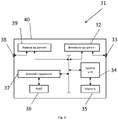
- Figure 3 is a schematic diagram illustrating an embodiment of a Route Originator mesh node 31.
- the RO mesh node 31 is arranged for operation in a wireless mesh network.
- the RO mesh node may be any mesh node in the network. It is specifically called an RO mesh node 31 as in the present case it operates as the intended originator of the RREQ message.
- the RO mesh node 31 comprises a housing 40, in which said housing several components are integrated.
- assemble equipment 37 is provided for assembling a Route Request, RREQ, message, wherein the RREQ message is related to the route between the RO mesh node and the RD mesh node.
- the assembling process entails that an address of the RO mesh node and an address of the RD mesh node is introduced in the RREQ message.
- the assemble equipment 37 will retrieve a Route Sequence Number, RSN, wherein the RSN is a unique number specific for the pair of the RO mesh node and the RD mesh node.
- the RO mesh node 31 comprises an RSNT 36, which RSNT is used for maintaining a plurality of entries, each entry directed to a specific pair of RO mesh node and RD mesh node as well as an RSN related thereto.
- each entry of the RSNT comprises the address of the node itself, being the node acting as the RO mesh node, and an address of a different RD mesh node in the wireless mesh network.
- the assemble equipment looks in the RSN table to find an entry having the RO mesh node and the RD mesh node, and retrieves the RSN that corresponds thereto.
- the retrieved RSN is updated, and introduced in the RREQ message that is being assembled, as well as fed back into the RSN table.
- the updating process may follow any predetermined flow.
- the RSN may be incremented by "1", or may be decremented by "1". This will work especially well as long as all the mesh nodes in the wireless mesh network follow the same principle.
- Broadcast equipment 32 is provided in the RO mesh node 32, which broadcast equipment 32 is arranged for broadcasting the assembled RREQ message in the wireless mesh network.
- Receive equipment 39 is also provided in the RO mesh node 32, which receive equipment 39 is arranged for receiving, originating from said RD mesh node, via any of said plurality of mesh nodes, a RREP message thereby establishing said route between said RO mesh node and said RD mesh node.
- incoming data packets, or messages pass through the input terminal 38 before the receive equipment 39, or receiving module.
- Outgoing data packets or messages pass or are sent by the broadcast equipment 32, or broadcast module, via the output terminal 33.
- the RO mesh node 31 further comprises a control unit 34 and a memory 35, which control unit 34 is connected to the receive equipment 39, the broadcast equipment 32 and the assemble equipment 37 via a bus connection or the like.
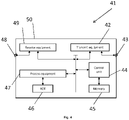
- Figure 4 is a schematic diagram illustrating an embodiment of a Route Destination mesh node 41.
- the RD mesh node 41 is arranged for operation in a wireless mesh network.
- the RD mesh node 41 may be any wireless mesh node in the wireless mesh network. It is specifically called an RD mesh node as it is the intended recipient of the RREQ message.
- the RD mesh node 41 comprises a housing 50 in which a plurality of components are integrated. For example, receive equipment is provided for receiving via any of said plurality of mesh nodes, said RREQ message, wherein said RREQ message is related to said route between said RO mesh node and said RD mesh node.
- the RD mesh node 41 may comprise a Route Discovery Table, RDT 46.
- the RDT is used for temporarily storing an RSN. Once a predetermined period, for example a lifetime period, has expired, the temporarily stored RSN is removed from the RDT. So, an entry of an RSN specific for a pair of RO mesh node and RD mesh node exists in cases when two, or more, RREQ messages are sent, by the same RO mesh node to the same RD mesh node 41, within a short period of time. In such a case, the intermediate nodes, or the RD mesh node, may update then entry in the RDT with information from the newer RREQ message, thereby effectively abandoning the "older" entry and keeping the new entry.
- process equipment 47 are provided arranged for determining that said RREQ message is to be taken into account, by retrieving a current RSN for said route between said RO mesh node and said RD mesh node, retrieving, from said received RREQ message, said RSN and determining that said RSN in said RREQ message is newer than said current RSN.
- transmit equipment are provided for transmitting in reply to said received RREQ message and to said determination that said RREQ message is to be taken into account, a Route Reply, RREP, message towards said RO mesh node, via said mesh network.
- incoming data packets, or messages pass through the input terminal 48 before they receive the receive equipment 49, or receiving module.
- Outgoing data packets or messages pass or are sent by the transmit equipment 42, or transmit module, via the output terminal 43.
- the RD mesh node 41 further comprises a control unit 44 and a memory 45, which control unit 44 is connected to the receive equipment 49, the broadcast equipment 42 and the process equipment 47 via a bus connection or the like.
- FIG. 5 is a schematic diagram illustrating an embodiment of a wireless mesh network 51.
- the wireless mesh network 51 comprising a Route Originator, RO, mesh node 31 a Route Destination, RD, mesh node 41, and a plurality of mesh nodes 53, i.e. intermediate mesh node, said wireless mesh network arranged to support of establishing a route 52 between said RO mesh node 31 and said RD mesh node 41.
- One of the advantages of the present disclosure is that the method is made more resilient to errors in cases where there is a large number of RREQs being sent over a time smaller than the expiry time of the entries in a Route Sequence Number Table, RSNT.
- the method further improves the accuracy of sequence number value comparison, as in the presented method the "wrapping" case, i.e. the situation in which the number gets increased from its maximum value, for example value "255", to the initial value, for example value "0".
Landscapes
- Engineering & Computer Science (AREA)
- Computer Networks & Wireless Communication (AREA)
- Signal Processing (AREA)
- Computer Security & Cryptography (AREA)
- Mobile Radio Communication Systems (AREA)
- Data Exchanges In Wide-Area Networks (AREA)
Claims (14)
- Verfahren zum Herstellen einer Route zwischen einem vermaschten Routenoriginator-, RO, Knoten und einem vermaschten Routenziel-, RD, Knoten in einem vermaschten Netzwerk, wobei das vermaschte Netzwerk eine Vielzahl von vermaschten Knoten umfasst, wobei das Verfahren folgende Schritte umfasst:- Zusammenstellen durch den vermaschten RO-Knoten einer Routenanfrage-, RREQ, Nachricht, wobei die RREQ Nachricht die Route zwischen dem vermaschten RO-Knoten und dem vermaschten RD-Knoten betrifft, wobei der Schritt des Zusammenstellens umfasst:- Einsetzen einer Adresse des vermaschten RO-Knotens und einer Adresse des vermaschten RD-Knotens in die RREQ-Nachricht,- Abrufen einer Routensequenznummer, RSN, aus einer Routensequenznummerntabelle, RSNT, wobei die RSNT in dem vermaschten RO-Knoten enthalten ist und zum Pflegen einer Vielzahl von Einträgen verwendet wird, die jeweils auf ein spezifisches Paar aus einem vermaschten RO-Knoten und einem vermaschten RD-Knoten und eine diesbezügliche RSN gerichtet sind, wobei die RSN durch das Paar aus dem vermaschten RO-Knoten und dem vermaschten RD-Knoten statt durch den vermaschten RO-Knoten inkrementierbar oder dekrementierbar ist,- Aktualisieren der abgerufenen RSN durch Inkrementieren der abgerufenen RSN oder Dekrementieren der abgerufenen RSN, und Einsetzen der aktualisierten RSN in die RREQ-Nachricht;- Rundsenden durch den vermaschten RO-Knoten der zusammengestellten RREQ-Nachricht in dem vermaschten Netzwerk;- Empfangen der RREQ-Nachricht durch den vermaschten RD-Knoten über einen der Vielzahl von vermaschten Knoten;- Bestimmen durch den vermaschten RD-Knoten, dass die RREQ-Nachricht zu berücksichtigen ist;- Senden durch den vermaschten RD-Knoten als Antwort auf die empfangene RREQ-Nachricht und auf die Bestimmung, dass die RREQ-Nachricht zu berücksichtigen ist, einer Routenantwort-, RREP, Nachricht an den vermaschten RO-Knoten über das vermaschte Netzwerk;- Empfangen der RREP-Nachricht durch den vermaschten RO-Knoten über einen der Vielzahl von Mesh-Knoten, wodurch die Route zwischen dem vermaschten RO-Knoten und dem vermaschten RD-Knoten hergestellt wird.
- Verfahren nach Anspruch 1, wobei der Schritt des Bestimmens durch den vermaschten RD-Knoten, dass die RREQ-Nachricht zu berücksichtigen ist, eines umfasst von:- Vergleichen der RSN in der RREQ-Nachricht mit einer RSN in einer Routenentdeckungstabelle, RDT, die für den vermaschten RO-Knoten und den vermaschten RD-Knoten spezifisch ist, wobei die RDT in dem vermaschten RD-Knoten enthalten ist, und Bestimmen, dass die RSN in der RREQ-Nachricht neuer als die RSN in der RDT ist;- Bestimmen, dass die RDT keinen Eintrag aufweist, der eine RSN aufweist, die für den vermaschten RO-Knoten und den vermaschten RD-Knoten spezifisch ist, wodurch bestimmt wird, dass die RREQ-Nachricht zu berücksichtigen ist.
- Verfahren nach einem der vorhergehenden Ansprüche, wobei der Schritt des Aktualisierens der abgerufenen RSN umfasst:- Speichern der aktualisierten RSN in der RSNT.
- Verfahren nach einem der vorhergehenden Ansprüche, wobei der Schritt des Aktualisierens der abgerufenen RSN eines umfasst von:- Inkrementieren der abgerufenen RSN;- Dekrementieren der abgerufenen RSN.
- Verfahren zum Ermöglichen des Herstellens einer Route zwischen einem vermaschten Routenoriginator-, RO, Knoten und einem vermaschten Routenziel-, RD, Knoten in einem vermaschten Netzwerk, wobei das vermaschte Netzwerk eine Vielzahl von vermaschten Knoten umfasst, wobei das Verfahren folgende Schritte umfasst:- Zusammenstellen, durch den vermaschten RO-Knoten, einer Routenanfrage-, RREQ, Nachricht, wobei die RREQ-Nachricht die Route zwischen dem vermaschten RO-Knoten und dem vermaschten RD-Knoten betrifft, wobei der Schritt des Zusammenstellens umfasst:- Einsetzen einer Adresse des vermaschten RO-Knotens und einer Adresse des vermaschten RD-Knotens in die RREQ-Nachricht,- Abrufen einer Routensequenznummer, RSN, aus einer Routensequenznummerntabelle, RSNT, wobei die RSNT in dem vermaschten RO-Knoten enthalten ist und zum Pflegen einer Vielzahl von Einträgen verwendet wird, die jeweils auf ein spezifisches Paar aus einem vermaschten RO-Knoten und einem vermaschten RD-Knoten und eine diesbezügliche RSN gerichtet sind, wobei die RSN durch das Paar aus dem vermaschten RO-Knoten und dem vermaschten RD-Knoten statt durch den vermaschten RO-Knoten inkrementierbar oder dekrementierbar ist,- Aktualisieren der abgerufenen RSN durch Inkrementieren der abgerufenen RSN oder Dekrementieren der abgerufenen RSN, und Einsetzen der aktualisierten RSN in die RREQ-Nachricht;- Rundsenden durch den vermaschten RO-Knoten der zusammengestellten RREQ-Nachricht in dem vermaschten Netzwerk.
- Verfahren nach Anspruch 5, wobei das Verfahren ferner folgenden Schritt umfasst:- Empfangen, ausgehend von dem vermaschten RD-Knoten, durch den vermaschten RO-Knoten, über einen der Vielzahl von vermaschten Knoten, einer Routenantwort-, RREP, Nachricht, wodurch die Route zwischen dem vermaschten RO-Knoten und dem vermaschten RD-Knoten hergestellt wird.
- Verfahren nach einem der Ansprüche 5 bis 6, wobei der Schritt des Aktualisierens der abgerufenen RSN umfasst:- Speichern der aktualisierten RSN in der RSNT.
- Verfahren nach einem der Ansprüche 5 bis 7, wobei der Schritt des Aktualisierens der abgerufenen RSN eines umfasst von:- Inkrementieren der abgerufenen RSN;- Dekrementieren der abgerufenen RSN.
- Verfahren nach einem der vorhergehenden Ansprüche, wobei das Netzwerk ein Bluetooth-Mesh-Netzwerk ist.
- Verfahren zum Ermöglichen des Herstellens einer Route zwischen einem vermaschten Routenoriginator-, RO, Knoten und einem vermaschten Routenziel-, RD, Knoten in einem vermaschten Netzwerk, wobei das vermaschte Netzwerk eine Vielzahl von vermaschten Knoten umfasst, wobei das Verfahren folgende Schritte umfasst:- Empfangen durch den vermaschten RD-Knoten über einen der Vielzahl von vermaschten Knoten einer RREQ-Nachricht, wobei die RREQ-Nachricht die Route zwischen dem vermaschten RO-Knoten und dem vermaschten RD-Knoten betrifft, wobei die RREQ-Nachricht eine Adresse des vermaschten RO-Knotens und eine Adresse des vermaschten RD-Knotens und eine Routensequenznummer, RSN, umfasst, wobei die RSN durch das Paar aus dem vermaschten RO-Knoten und dem vermaschten RD-Knoten statt durch den vermaschten RO-Knoten inkrementierbar oder dekrementierbar ist,- Bestimmen durch den vermaschten RD-Knoten, dass die RREQ-Nachricht zu berücksichtigen ist, durch eines von- Vergleichen der RSN in der RREQ-Nachricht mit einer RSN in einer Routenentdeckungstabelle, RDT, die für den vermaschten RO-Knoten und den vermaschten RD-Knoten spezifisch ist, wobei die RDT in dem vermaschten RD-Knoten enthalten ist, und Bestimmen, dass die RSN in der RREQ-Nachricht neuer als die RSN in der RDT ist;- Bestimmen, dass die RDT keinen Eintrag aufweist, der eine RSN aufweist, die für den vermaschten RO-Knoten und den vermaschten RD-Knoten spezifisch ist, wodurch bestimmt wird, dass die RREQ-Nachricht zu berücksichtigen ist;- Senden durch den vermaschten RD-Knoten, als Antwort auf die empfangene RREQ-Nachricht und auf die Bestimmung, dass die RREQ-Nachricht zu berücksichtigen ist, einer Routenantwort-, RREP, Nachricht an den vermaschten RO-Knoten über das vermaschte Netzwerk.
- Drahtloses vermaschtes Netzwerk, umfassend einen vermaschten Routenoriginator-, RO, Knoten, einen vermaschten Routenziel-, RD, Knoten und eine Vielzahl von vermaschten Knoten, wobei das drahtlose vermaschte Netzwerk ausgelegt ist, um das Herstellen einer Route zwischen dem vermaschten RO-Knoten und dem vermaschten RD-Knoten zu unterstützen,wobei der vermaschte RO-Knoten umfasst:- eine Zusammenstellungseinrichtung, die zum Zusammenstellen einer Routenanfrage-, RREQ, Nachricht ausgelegt ist, wobei die RREQ-Nachricht die Route zwischen dem vermaschten RO-Knoten und dem vermaschten RD-Knoten betrifft, wobei das Zusammenstellen umfasst:- Einsetzen einer Adresse des vermaschten RO-Knotens und einer Adresse des vermaschten RD-Knotens in die RREQ-Nachricht,- Abrufen einer Routensequenznummer, RSN, aus einer Routensequenznummerntabelle, RSNT, wobei die RSNT in dem vermaschten RO-Knoten enthalten ist und zum Pflegen einer Vielzahl von Einträgen verwendet wird, die jeweils auf ein spezifisches Paar aus einem vermaschten RO-Knoten und einem vermaschten RD-Knoten und eine diesbezügliche RSN gerichtet sind, wobei die RSN durch das Paar aus dem vermaschten RO-Knoten und dem vermaschten RD-Knoten statt durch den vermaschten RO-Knoten inkrementierbar oder dekrementierbar ist,- Aktualisieren der abgerufenen RSN durch Inkrementieren der abgerufenen RSN oder Dekrementieren der abgerufenen RSN, und Einsetzen der aktualisierten RSN in die RREQ-Nachricht;- eine Rundsendeeinrichtung, die zum Rundsenden der zusammengestellten RREQ-Nachricht in dem vermaschten Netzwerk ausgelegt ist,wobei der vermaschte RD-Knoten umfasst:- eine Empfangseinrichtung, die zum Empfangen der RREQ-Nachricht über einen der Vielzahl von vermaschten Knoten ausgelegt ist, wobei die RREQ-Nachricht die Route zwischen dem vermaschten RO-Knoten und dem vermaschten RD-Knoten betrifft;- eine Prozesseinrichtung, die zum Bestimmen, dass die RREQ-Nachricht zu berücksichtigen ist, ausgelegt ist durch eines von- Vergleichen der RSN in der RREQ-Nachricht mit einer RSN in einer Routenentdeckungstabelle, RDT, die für den vermaschten RO-Knoten und den vermaschten RD-Knoten spezifisch ist, wobei die RDT in dem vermaschten RD-Knoten enthalten ist, und Bestimmen, dass die RSN in der RREQ-Nachricht neuer als die RSN in der RDT ist;- Bestimmen, dass die RDT keinen Eintrag aufweist, der eine RSN aufweist, die für den vermaschten RO-Knoten und den vermaschten RD-Knoten spezifisch ist, wodurch bestimmt wird, dass die RREQ-Nachricht zu berücksichtigen ist;- eine Sendeeinrichtung, die zum Senden als Antwort auf die empfangene RREQ-Nachricht und auf die Bestimmung, dass die RREQ-Nachricht zu berücksichtigen ist, einer Routenantwort-, RREP, Nachricht an den vermaschten RO-Knoten über das vermaschte Netzwerk ausgelegt ist,wobei der vermaschte RO-Knoten ferner umfasst- eine Empfangseinrichtung, die zum Empfangen, ausgehend von dem vermaschten RD-Knoten, über einen der Vielzahl von vermaschten Knoten, einer RREP-Nachricht ausgelegt ist, wodurch die Route zwischen dem vermaschten RO-Knoten und dem vermaschten RD-Knoten hergestellt wird.
- Vermaschter Routenoriginator-, RO, Knoten zum Betrieb in einem drahtlosen vermaschten Netzwerk nach Anspruch 11, wobei der vermaschte RO-Knoten umfasst:- eine Zusammenstellungseinrichtung, die zum Zusammenstellen einer Routenanfrage-, RREQ, Nachricht ausgelegt ist, wobei die RREQ-Nachricht die Route zwischen dem vermaschten RO-Knoten und dem vermaschten RD-Knoten betrifft, wobei das Zusammenstellen umfasst:- Einsetzen einer Adresse des vermaschten RO-Knotens und einer Adresse des vermaschten RD-Knotens in die RREQ-Nachricht,- Abrufen einer Routensequenznummer, RSN, aus einer Routensequenznummerntabelle, RSNT, wobei die RSNT in dem vermaschten RO-Knoten enthalten ist und zum Pflegen einer Vielzahl von Einträgen verwendet wird, die jeweils auf ein spezifisches Paar aus einem vermaschten RO-Knoten und einem vermaschten RD-Knoten und eine diesbezügliche RSN gerichtet sind, wobei die RSN durch das Paar aus dem vermaschten RO-Knoten und dem vermaschten RD-Knoten statt durch den vermaschten RO-Knoten inkrementierbar oder dekrementierbar ist,- Aktualisieren der abgerufenen RSN durch Inkrementieren der abgerufenen RSN oder Dekrementieren der abgerufenen RSN, und Einsetzen der aktualisierten RSN in die RREQ-Nachricht;- eine Rundsendeeinrichtung, die zum Rundsenden der zusammengestellten RREQ-Nachricht in dem vermaschten Netzwerk ausgelegt ist;- eine Empfangseinrichtung, die zum Empfangen, ausgehend von dem vermaschten RD-Knoten, über einen der Vielzahl von vermaschten Knoten, einer RREP-Nachricht ausgelegt ist, wodurch die Route zwischen dem vermaschten RO-Knoten und dem vermaschten RD-Knoten hergestellt wird.
- Vermaschter Routenziel-, RD, Knoten, der zum Betrieb in einem drahtlosen vermaschten Netzwerk nach Anspruch 11 ausgelegt ist, wobei der vermaschte RD-Knoten umfasst:- eine Empfangseinrichtung, die zum Empfangen der RREQ-Nachricht über einen der Vielzahl von vermaschten Knoten ausgelegt ist, wobei die RREQ-Nachricht die Route zwischen dem vermaschten RO-Knoten und dem vermaschten RD-Knoten betrifft, wobei die RREQ-Nachricht eine Adresse des vermaschten RO-Knotens und eine Adresse des vermaschten RD-Knotens und eine Routensequenznummer, RSN, umfasst, wobei die RSN durch das Paar aus dem vermaschten RO-Knoten und dem vermaschten RD-Knoten statt durch den vermaschten RO-Knoten inkrementierbar oder dekrementierbar ist;- eine Verarbeitungseinrichtung, die zum Bestimmen ausgelegt ist, dass die RREQ-Nachricht zu berücksichtigen ist durch eines von- Vergleichen der RSN in der RREQ-Nachricht mit einer RSN in einer Routenentdeckungstabelle, RDT, die für den vermaschten RO-Knoten und den vermaschten RD-Knoten spezifisch ist, wobei die RDT in dem vermaschten RD-Knoten enthalten ist, und Bestimmen, dass die RSN in der RREQ-Nachricht neuer als die RSN in der RDT ist;- Bestimmen, dass die RDT keinen Eintrag aufweist, der eine RSN aufweist, die für den vermaschten RO-Knoten und den vermaschten RD-Knoten spezifisch ist, wodurch bestimmt wird, dass die RREQ-Nachricht zu berücksichtigen ist;- eine Sendeeinrichtung, die zum Senden als Antwort auf die empfangene RREQ-Nachricht und auf die Bestimmung, dass die RREQ-Nachricht zu berücksichtigen ist, einer Routenantwort-, RREP, Nachricht an den vermaschten RO-Knoten über das vermaschte Netzwerk ausgelegt ist.
- Nicht vorübergehendes computerlesbares Speichermedium, das Anweisungen umfasst, die, wenn sie auf mindestens einem Prozessor ausgeführt werden, bewirken, dass der mindestens eine Prozessor das Verfahren nach einem der Ansprüche 1 bis 10 durchführt.
Applications Claiming Priority (1)
| Application Number | Priority Date | Filing Date | Title |
|---|---|---|---|
| PCT/EP2016/072563 WO2018054468A1 (en) | 2016-09-22 | 2016-09-22 | A method, devices and a wireless mesh network for establishing a route between a route originator, ro, mesh node and a route destination, rd, mesh node in a mesh network |
Publications (2)
| Publication Number | Publication Date |
|---|---|
| EP3516902A1 EP3516902A1 (de) | 2019-07-31 |
| EP3516902B1 true EP3516902B1 (de) | 2022-08-10 |
Family
ID=57018126
Family Applications (1)
| Application Number | Title | Priority Date | Filing Date |
|---|---|---|---|
| EP16774471.3A Active EP3516902B1 (de) | 2016-09-22 | 2016-09-22 | Verfahren, vorrichtungen und drahtloses mesh-netzwerk zur herstellung einer route zwischen einem mesh-knoten eines routenoriginators, ro, und mesh-knoten einer routendestination, rd, in einem mesh-netzwerk |
Country Status (3)
| Country | Link |
|---|---|
| US (1) | US10944682B2 (de) |
| EP (1) | EP3516902B1 (de) |
| WO (1) | WO2018054468A1 (de) |
Families Citing this family (1)
| Publication number | Priority date | Publication date | Assignee | Title |
|---|---|---|---|---|
| DE102019127893A1 (de) | 2019-10-16 | 2021-04-22 | Siempelkamp Maschinen- Und Anlagenbau Gmbh | Vorrichtung zum Zerkleinern von schüttfähigem Aufgabegut |
Citations (2)
| Publication number | Priority date | Publication date | Assignee | Title |
|---|---|---|---|---|
| US20080316997A1 (en) * | 2007-06-20 | 2008-12-25 | Motorola, Inc. | Multi-radio node with a single routing module which manages routing for multiple different radio modules |
| US20090316668A1 (en) * | 2006-07-14 | 2009-12-24 | Michael Bahr | Method for generating extented route message, method for generating an extended route reply message, extended route request message, extended route reply message and first and second nodes |
Family Cites Families (3)
| Publication number | Priority date | Publication date | Assignee | Title |
|---|---|---|---|---|
| US7570628B2 (en) | 2005-05-06 | 2009-08-04 | Intel Corporation | Methods and apparatus for providing a dynamic on-demand routing protocol |
| CA2817659C (en) | 2005-11-09 | 2018-12-04 | Thomson Licensing | Route selection in wireless networks |
| US20080317047A1 (en) * | 2007-06-20 | 2008-12-25 | Motorola, Inc. | Method for discovering a route to a peer node in a multi-hop wireless mesh network |
-
2016
- 2016-09-22 EP EP16774471.3A patent/EP3516902B1/de active Active
- 2016-09-22 US US16/335,338 patent/US10944682B2/en active Active
- 2016-09-22 WO PCT/EP2016/072563 patent/WO2018054468A1/en not_active Ceased
Patent Citations (2)
| Publication number | Priority date | Publication date | Assignee | Title |
|---|---|---|---|---|
| US20090316668A1 (en) * | 2006-07-14 | 2009-12-24 | Michael Bahr | Method for generating extented route message, method for generating an extended route reply message, extended route request message, extended route reply message and first and second nodes |
| US20080316997A1 (en) * | 2007-06-20 | 2008-12-25 | Motorola, Inc. | Multi-radio node with a single routing module which manages routing for multiple different radio modules |
Also Published As
| Publication number | Publication date |
|---|---|
| WO2018054468A1 (en) | 2018-03-29 |
| US10944682B2 (en) | 2021-03-09 |
| US20190280984A1 (en) | 2019-09-12 |
| EP3516902A1 (de) | 2019-07-31 |
Similar Documents
| Publication | Publication Date | Title |
|---|---|---|
| USRE42712E1 (en) | Ad-hoc network for routing extension to support internet protocol version 6(IPV6) and method thereof | |
| US8064416B2 (en) | Route selection in wireless networks | |
| CN101507206B (zh) | 对通信网中的数据分组进行路由的方法和网络节点 | |
| US20110002226A1 (en) | Method for Discovering Routes in Wireless Communications Networks | |
| KR100693320B1 (ko) | 소스 어드레스 선택시스템, 라우터장치, 라우터장치로서 컴퓨터를 기능시키기 위한 프로그램을 기록한 컴퓨터 독출가능한 기록매체, 통신노드 및 소스 어드레스 선택방법 | |
| JPWO2009078427A1 (ja) | 経路制御方法およびノード | |
| WO2010002440A4 (en) | Network utilities in wireless mesh communications networks | |
| WO2012133521A1 (ja) | 通信方法および通信装置 | |
| CN111711571B (zh) | 支持ip透传的自组网按需路由方法、装置和计算机设备 | |
| CN112383478B (zh) | 报文广播方法及设备 | |
| US9197510B2 (en) | Efficient network data dissemination | |
| CN102415114A (zh) | 基于IPv6任播的负荷平衡和对于PMIPv6的重定向功能 | |
| US8861367B2 (en) | Deletion of routes of routing tables of a wireless mesh network | |
| KR101203463B1 (ko) | IPv6 기반 모바일 시스템에서 이웃 탐색을 제공하는장치 및 방법 | |
| CN101491011B (zh) | 用于为路由发现过程生成扩展的路由请求消息和扩展的路由应答消息的方法 | |
| EP3445008B1 (de) | Dynamischer tunnelaufbau in einem mesh-netzwerk | |
| US8982908B1 (en) | Extension of path reply message to encode multiple route information in a mesh network | |
| US10944682B2 (en) | Method, devices and a wireless mesh network for establishing a route between a route originator, RO, mesh node and a route destination, RD, mesh node in a mesh network | |
| CN101356782A (zh) | 无线数据通信系统 | |
| JP2019121923A (ja) | 優先方路決定方法および優先方路決定装置 | |
| JP4772019B2 (ja) | 無線通信装置および無線通信システム | |
| KR100462028B1 (ko) | Ad―hoc 네트워크의 인터넷 게이트웨이 탐색방법 | |
| EP3972206A1 (de) | Verfahren, netzwerkvorrichtung und system zur verarbeitung eines bier-pakets | |
| JP2007181056A (ja) | 経路選択方法 | |
| US20080059652A1 (en) | Routing for Detection of Servers Within a Communication Network |
Legal Events
| Date | Code | Title | Description |
|---|---|---|---|
| STAA | Information on the status of an ep patent application or granted ep patent |
Free format text: STATUS: THE INTERNATIONAL PUBLICATION HAS BEEN MADE |
|
| PUAI | Public reference made under article 153(3) epc to a published international application that has entered the european phase |
Free format text: ORIGINAL CODE: 0009012 |
|
| STAA | Information on the status of an ep patent application or granted ep patent |
Free format text: STATUS: REQUEST FOR EXAMINATION WAS MADE |
|
| 17P | Request for examination filed |
Effective date: 20190419 |
|
| AK | Designated contracting states |
Kind code of ref document: A1 Designated state(s): AL AT BE BG CH CY CZ DE DK EE ES FI FR GB GR HR HU IE IS IT LI LT LU LV MC MK MT NL NO PL PT RO RS SE SI SK SM TR |
|
| AX | Request for extension of the european patent |
Extension state: BA ME |
|
| DAV | Request for validation of the european patent (deleted) | ||
| DAX | Request for extension of the european patent (deleted) | ||
| STAA | Information on the status of an ep patent application or granted ep patent |
Free format text: STATUS: EXAMINATION IS IN PROGRESS |
|
| 17Q | First examination report despatched |
Effective date: 20201215 |
|
| REG | Reference to a national code |
Ref country code: DE Ref legal event code: R079 Ref document number: 602016074157 Country of ref document: DE Free format text: PREVIOUS MAIN CLASS: H04W0040260000 Ipc: H04L0045000000 |
|
| GRAP | Despatch of communication of intention to grant a patent |
Free format text: ORIGINAL CODE: EPIDOSNIGR1 |
|
| STAA | Information on the status of an ep patent application or granted ep patent |
Free format text: STATUS: GRANT OF PATENT IS INTENDED |
|
| RIC1 | Information provided on ipc code assigned before grant |
Ipc: H04W 84/18 20090101ALN20220430BHEP Ipc: H04W 40/28 20090101ALN20220430BHEP Ipc: H04W 40/24 20090101ALN20220430BHEP Ipc: H04L 45/00 20220101AFI20220430BHEP |
|
| INTG | Intention to grant announced |
Effective date: 20220520 |
|
| RAP3 | Party data changed (applicant data changed or rights of an application transferred) |
Owner name: TELEFONAKTIEBOLAGET LM ERICSSON (PUBL) |
|
| GRAS | Grant fee paid |
Free format text: ORIGINAL CODE: EPIDOSNIGR3 |
|
| GRAA | (expected) grant |
Free format text: ORIGINAL CODE: 0009210 |
|
| STAA | Information on the status of an ep patent application or granted ep patent |
Free format text: STATUS: THE PATENT HAS BEEN GRANTED |
|
| AK | Designated contracting states |
Kind code of ref document: B1 Designated state(s): AL AT BE BG CH CY CZ DE DK EE ES FI FR GB GR HR HU IE IS IT LI LT LU LV MC MK MT NL NO PL PT RO RS SE SI SK SM TR |
|
| REG | Reference to a national code |
Ref country code: AT Ref legal event code: REF Ref document number: 1511397 Country of ref document: AT Kind code of ref document: T Effective date: 20220815 Ref country code: CH Ref legal event code: EP |
|
| REG | Reference to a national code |
Ref country code: IE Ref legal event code: FG4D |
|
| REG | Reference to a national code |
Ref country code: DE Ref legal event code: R096 Ref document number: 602016074157 Country of ref document: DE |
|
| REG | Reference to a national code |
Ref country code: NL Ref legal event code: FP |
|
| REG | Reference to a national code |
Ref country code: LT Ref legal event code: MG9D |
|
| PG25 | Lapsed in a contracting state [announced via postgrant information from national office to epo] |
Ref country code: SE Free format text: LAPSE BECAUSE OF FAILURE TO SUBMIT A TRANSLATION OF THE DESCRIPTION OR TO PAY THE FEE WITHIN THE PRESCRIBED TIME-LIMIT Effective date: 20220810 Ref country code: RS Free format text: LAPSE BECAUSE OF FAILURE TO SUBMIT A TRANSLATION OF THE DESCRIPTION OR TO PAY THE FEE WITHIN THE PRESCRIBED TIME-LIMIT Effective date: 20220810 Ref country code: PT Free format text: LAPSE BECAUSE OF FAILURE TO SUBMIT A TRANSLATION OF THE DESCRIPTION OR TO PAY THE FEE WITHIN THE PRESCRIBED TIME-LIMIT Effective date: 20221212 Ref country code: NO Free format text: LAPSE BECAUSE OF FAILURE TO SUBMIT A TRANSLATION OF THE DESCRIPTION OR TO PAY THE FEE WITHIN THE PRESCRIBED TIME-LIMIT Effective date: 20221110 Ref country code: LV Free format text: LAPSE BECAUSE OF FAILURE TO SUBMIT A TRANSLATION OF THE DESCRIPTION OR TO PAY THE FEE WITHIN THE PRESCRIBED TIME-LIMIT Effective date: 20220810 Ref country code: LT Free format text: LAPSE BECAUSE OF FAILURE TO SUBMIT A TRANSLATION OF THE DESCRIPTION OR TO PAY THE FEE WITHIN THE PRESCRIBED TIME-LIMIT Effective date: 20220810 Ref country code: FI Free format text: LAPSE BECAUSE OF FAILURE TO SUBMIT A TRANSLATION OF THE DESCRIPTION OR TO PAY THE FEE WITHIN THE PRESCRIBED TIME-LIMIT Effective date: 20220810 |
|
| REG | Reference to a national code |
Ref country code: AT Ref legal event code: MK05 Ref document number: 1511397 Country of ref document: AT Kind code of ref document: T Effective date: 20220810 |
|
| PG25 | Lapsed in a contracting state [announced via postgrant information from national office to epo] |
Ref country code: PL Free format text: LAPSE BECAUSE OF FAILURE TO SUBMIT A TRANSLATION OF THE DESCRIPTION OR TO PAY THE FEE WITHIN THE PRESCRIBED TIME-LIMIT Effective date: 20220810 Ref country code: IS Free format text: LAPSE BECAUSE OF FAILURE TO SUBMIT A TRANSLATION OF THE DESCRIPTION OR TO PAY THE FEE WITHIN THE PRESCRIBED TIME-LIMIT Effective date: 20221210 Ref country code: HR Free format text: LAPSE BECAUSE OF FAILURE TO SUBMIT A TRANSLATION OF THE DESCRIPTION OR TO PAY THE FEE WITHIN THE PRESCRIBED TIME-LIMIT Effective date: 20220810 Ref country code: GR Free format text: LAPSE BECAUSE OF FAILURE TO SUBMIT A TRANSLATION OF THE DESCRIPTION OR TO PAY THE FEE WITHIN THE PRESCRIBED TIME-LIMIT Effective date: 20221111 |
|
| PG25 | Lapsed in a contracting state [announced via postgrant information from national office to epo] |
Ref country code: SM Free format text: LAPSE BECAUSE OF FAILURE TO SUBMIT A TRANSLATION OF THE DESCRIPTION OR TO PAY THE FEE WITHIN THE PRESCRIBED TIME-LIMIT Effective date: 20220810 Ref country code: RO Free format text: LAPSE BECAUSE OF FAILURE TO SUBMIT A TRANSLATION OF THE DESCRIPTION OR TO PAY THE FEE WITHIN THE PRESCRIBED TIME-LIMIT Effective date: 20220810 Ref country code: ES Free format text: LAPSE BECAUSE OF FAILURE TO SUBMIT A TRANSLATION OF THE DESCRIPTION OR TO PAY THE FEE WITHIN THE PRESCRIBED TIME-LIMIT Effective date: 20220810 Ref country code: DK Free format text: LAPSE BECAUSE OF FAILURE TO SUBMIT A TRANSLATION OF THE DESCRIPTION OR TO PAY THE FEE WITHIN THE PRESCRIBED TIME-LIMIT Effective date: 20220810 Ref country code: CZ Free format text: LAPSE BECAUSE OF FAILURE TO SUBMIT A TRANSLATION OF THE DESCRIPTION OR TO PAY THE FEE WITHIN THE PRESCRIBED TIME-LIMIT Effective date: 20220810 Ref country code: AT Free format text: LAPSE BECAUSE OF FAILURE TO SUBMIT A TRANSLATION OF THE DESCRIPTION OR TO PAY THE FEE WITHIN THE PRESCRIBED TIME-LIMIT Effective date: 20220810 |
|
| REG | Reference to a national code |
Ref country code: CH Ref legal event code: PL |
|
| REG | Reference to a national code |
Ref country code: DE Ref legal event code: R097 Ref document number: 602016074157 Country of ref document: DE |
|
| REG | Reference to a national code |
Ref country code: BE Ref legal event code: MM Effective date: 20220930 |
|
| PG25 | Lapsed in a contracting state [announced via postgrant information from national office to epo] |
Ref country code: SK Free format text: LAPSE BECAUSE OF FAILURE TO SUBMIT A TRANSLATION OF THE DESCRIPTION OR TO PAY THE FEE WITHIN THE PRESCRIBED TIME-LIMIT Effective date: 20220810 Ref country code: MC Free format text: LAPSE BECAUSE OF FAILURE TO SUBMIT A TRANSLATION OF THE DESCRIPTION OR TO PAY THE FEE WITHIN THE PRESCRIBED TIME-LIMIT Effective date: 20220810 Ref country code: EE Free format text: LAPSE BECAUSE OF FAILURE TO SUBMIT A TRANSLATION OF THE DESCRIPTION OR TO PAY THE FEE WITHIN THE PRESCRIBED TIME-LIMIT Effective date: 20220810 |
|
| PLBE | No opposition filed within time limit |
Free format text: ORIGINAL CODE: 0009261 |
|
| STAA | Information on the status of an ep patent application or granted ep patent |
Free format text: STATUS: NO OPPOSITION FILED WITHIN TIME LIMIT |
|
| P01 | Opt-out of the competence of the unified patent court (upc) registered |
Effective date: 20230524 |
|
| PG25 | Lapsed in a contracting state [announced via postgrant information from national office to epo] |
Ref country code: LU Free format text: LAPSE BECAUSE OF NON-PAYMENT OF DUE FEES Effective date: 20220922 Ref country code: AL Free format text: LAPSE BECAUSE OF FAILURE TO SUBMIT A TRANSLATION OF THE DESCRIPTION OR TO PAY THE FEE WITHIN THE PRESCRIBED TIME-LIMIT Effective date: 20220810 |
|
| 26N | No opposition filed |
Effective date: 20230511 |
|
| PG25 | Lapsed in a contracting state [announced via postgrant information from national office to epo] |
Ref country code: LI Free format text: LAPSE BECAUSE OF NON-PAYMENT OF DUE FEES Effective date: 20220930 Ref country code: IE Free format text: LAPSE BECAUSE OF NON-PAYMENT OF DUE FEES Effective date: 20220922 Ref country code: FR Free format text: LAPSE BECAUSE OF NON-PAYMENT OF DUE FEES Effective date: 20221010 Ref country code: CH Free format text: LAPSE BECAUSE OF NON-PAYMENT OF DUE FEES Effective date: 20220930 |
|
| PG25 | Lapsed in a contracting state [announced via postgrant information from national office to epo] |
Ref country code: SI Free format text: LAPSE BECAUSE OF FAILURE TO SUBMIT A TRANSLATION OF THE DESCRIPTION OR TO PAY THE FEE WITHIN THE PRESCRIBED TIME-LIMIT Effective date: 20220810 |
|
| PG25 | Lapsed in a contracting state [announced via postgrant information from national office to epo] |
Ref country code: BE Free format text: LAPSE BECAUSE OF NON-PAYMENT OF DUE FEES Effective date: 20220930 |
|
| PG25 | Lapsed in a contracting state [announced via postgrant information from national office to epo] |
Ref country code: HU Free format text: LAPSE BECAUSE OF FAILURE TO SUBMIT A TRANSLATION OF THE DESCRIPTION OR TO PAY THE FEE WITHIN THE PRESCRIBED TIME-LIMIT; INVALID AB INITIO Effective date: 20160922 |
|
| PG25 | Lapsed in a contracting state [announced via postgrant information from national office to epo] |
Ref country code: CY Free format text: LAPSE BECAUSE OF FAILURE TO SUBMIT A TRANSLATION OF THE DESCRIPTION OR TO PAY THE FEE WITHIN THE PRESCRIBED TIME-LIMIT Effective date: 20220810 |
|
| PG25 | Lapsed in a contracting state [announced via postgrant information from national office to epo] |
Ref country code: MK Free format text: LAPSE BECAUSE OF FAILURE TO SUBMIT A TRANSLATION OF THE DESCRIPTION OR TO PAY THE FEE WITHIN THE PRESCRIBED TIME-LIMIT Effective date: 20220810 Ref country code: IT Free format text: LAPSE BECAUSE OF FAILURE TO SUBMIT A TRANSLATION OF THE DESCRIPTION OR TO PAY THE FEE WITHIN THE PRESCRIBED TIME-LIMIT Effective date: 20220810 |
|
| PG25 | Lapsed in a contracting state [announced via postgrant information from national office to epo] |
Ref country code: BG Free format text: LAPSE BECAUSE OF FAILURE TO SUBMIT A TRANSLATION OF THE DESCRIPTION OR TO PAY THE FEE WITHIN THE PRESCRIBED TIME-LIMIT Effective date: 20220810 |
|
| PG25 | Lapsed in a contracting state [announced via postgrant information from national office to epo] |
Ref country code: MT Free format text: LAPSE BECAUSE OF FAILURE TO SUBMIT A TRANSLATION OF THE DESCRIPTION OR TO PAY THE FEE WITHIN THE PRESCRIBED TIME-LIMIT Effective date: 20220810 |
|
| PGFP | Annual fee paid to national office [announced via postgrant information from national office to epo] |
Ref country code: DE Payment date: 20250929 Year of fee payment: 10 |
|
| PGFP | Annual fee paid to national office [announced via postgrant information from national office to epo] |
Ref country code: NL Payment date: 20250926 Year of fee payment: 10 |
|
| PGFP | Annual fee paid to national office [announced via postgrant information from national office to epo] |
Ref country code: GB Payment date: 20250929 Year of fee payment: 10 |
|
| PG25 | Lapsed in a contracting state [announced via postgrant information from national office to epo] |
Ref country code: TR Free format text: LAPSE BECAUSE OF FAILURE TO SUBMIT A TRANSLATION OF THE DESCRIPTION OR TO PAY THE FEE WITHIN THE PRESCRIBED TIME-LIMIT Effective date: 20220810 |