EP3512937B1 - Blut-hirn-schranke mit manipulierten endothelzellen - Google Patents
Blut-hirn-schranke mit manipulierten endothelzellen Download PDFInfo
- Publication number
- EP3512937B1 EP3512937B1 EP17851425.3A EP17851425A EP3512937B1 EP 3512937 B1 EP3512937 B1 EP 3512937B1 EP 17851425 A EP17851425 A EP 17851425A EP 3512937 B1 EP3512937 B1 EP 3512937B1
- Authority
- EP
- European Patent Office
- Prior art keywords
- endothelial cells
- candidate agent
- bbb
- permeability
- cells
- Prior art date
- Legal status (The legal status is an assumption and is not a legal conclusion. Google has not performed a legal analysis and makes no representation as to the accuracy of the status listed.)
- Active
Links
Images


Classifications
-
- A—HUMAN NECESSITIES
- A61—MEDICAL OR VETERINARY SCIENCE; HYGIENE
- A61K—PREPARATIONS FOR MEDICAL, DENTAL OR TOILETRY PURPOSES
- A61K35/00—Medicinal preparations containing materials or reaction products thereof with undetermined constitution
- A61K35/12—Materials from mammals; Compositions comprising non-specified tissues or cells; Compositions comprising non-embryonic stem cells; Genetically modified cells
- A61K35/13—Tumour cells, irrespective of tissue of origin
-
- A—HUMAN NECESSITIES
- A61—MEDICAL OR VETERINARY SCIENCE; HYGIENE
- A61K—PREPARATIONS FOR MEDICAL, DENTAL OR TOILETRY PURPOSES
- A61K35/00—Medicinal preparations containing materials or reaction products thereof with undetermined constitution
- A61K35/12—Materials from mammals; Compositions comprising non-specified tissues or cells; Compositions comprising non-embryonic stem cells; Genetically modified cells
- A61K35/30—Nerves; Brain; Eyes; Corneal cells; Cerebrospinal fluid; Neuronal stem cells; Neuronal precursor cells; Glial cells; Oligodendrocytes; Schwann cells; Astroglia; Astrocytes; Choroid plexus; Spinal cord tissue
-
- A—HUMAN NECESSITIES
- A61—MEDICAL OR VETERINARY SCIENCE; HYGIENE
- A61K—PREPARATIONS FOR MEDICAL, DENTAL OR TOILETRY PURPOSES
- A61K35/00—Medicinal preparations containing materials or reaction products thereof with undetermined constitution
- A61K35/12—Materials from mammals; Compositions comprising non-specified tissues or cells; Compositions comprising non-embryonic stem cells; Genetically modified cells
- A61K35/44—Vessels; Vascular smooth muscle cells; Endothelial cells; Endothelial progenitor cells
-
- A—HUMAN NECESSITIES
- A61—MEDICAL OR VETERINARY SCIENCE; HYGIENE
- A61L—METHODS OR APPARATUS FOR STERILISING MATERIALS OR OBJECTS IN GENERAL; DISINFECTION, STERILISATION OR DEODORISATION OF AIR; CHEMICAL ASPECTS OF BANDAGES, DRESSINGS, ABSORBENT PADS OR SURGICAL ARTICLES; MATERIALS FOR BANDAGES, DRESSINGS, ABSORBENT PADS OR SURGICAL ARTICLES
- A61L27/00—Materials for grafts or prostheses or for coating grafts or prostheses
- A61L27/36—Materials for grafts or prostheses or for coating grafts or prostheses containing ingredients of undetermined constitution or reaction products thereof, e.g. transplant tissue, natural bone, extracellular matrix
- A61L27/38—Materials for grafts or prostheses or for coating grafts or prostheses containing ingredients of undetermined constitution or reaction products thereof, e.g. transplant tissue, natural bone, extracellular matrix containing added animal cells
- A61L27/3804—Materials for grafts or prostheses or for coating grafts or prostheses containing ingredients of undetermined constitution or reaction products thereof, e.g. transplant tissue, natural bone, extracellular matrix containing added animal cells characterised by specific cells or progenitors thereof, e.g. fibroblasts, connective tissue cells, kidney cells
- A61L27/3808—Endothelial cells
-
- A—HUMAN NECESSITIES
- A61—MEDICAL OR VETERINARY SCIENCE; HYGIENE
- A61L—METHODS OR APPARATUS FOR STERILISING MATERIALS OR OBJECTS IN GENERAL; DISINFECTION, STERILISATION OR DEODORISATION OF AIR; CHEMICAL ASPECTS OF BANDAGES, DRESSINGS, ABSORBENT PADS OR SURGICAL ARTICLES; MATERIALS FOR BANDAGES, DRESSINGS, ABSORBENT PADS OR SURGICAL ARTICLES
- A61L27/00—Materials for grafts or prostheses or for coating grafts or prostheses
- A61L27/36—Materials for grafts or prostheses or for coating grafts or prostheses containing ingredients of undetermined constitution or reaction products thereof, e.g. transplant tissue, natural bone, extracellular matrix
- A61L27/38—Materials for grafts or prostheses or for coating grafts or prostheses containing ingredients of undetermined constitution or reaction products thereof, e.g. transplant tissue, natural bone, extracellular matrix containing added animal cells
- A61L27/3839—Materials for grafts or prostheses or for coating grafts or prostheses containing ingredients of undetermined constitution or reaction products thereof, e.g. transplant tissue, natural bone, extracellular matrix containing added animal cells characterised by the site of application in the body
- A61L27/3878—Nerve tissue, brain, spinal cord, nerves, dura mater
-
- A—HUMAN NECESSITIES
- A61—MEDICAL OR VETERINARY SCIENCE; HYGIENE
- A61L—METHODS OR APPARATUS FOR STERILISING MATERIALS OR OBJECTS IN GENERAL; DISINFECTION, STERILISATION OR DEODORISATION OF AIR; CHEMICAL ASPECTS OF BANDAGES, DRESSINGS, ABSORBENT PADS OR SURGICAL ARTICLES; MATERIALS FOR BANDAGES, DRESSINGS, ABSORBENT PADS OR SURGICAL ARTICLES
- A61L27/00—Materials for grafts or prostheses or for coating grafts or prostheses
- A61L27/36—Materials for grafts or prostheses or for coating grafts or prostheses containing ingredients of undetermined constitution or reaction products thereof, e.g. transplant tissue, natural bone, extracellular matrix
- A61L27/38—Materials for grafts or prostheses or for coating grafts or prostheses containing ingredients of undetermined constitution or reaction products thereof, e.g. transplant tissue, natural bone, extracellular matrix containing added animal cells
- A61L27/3886—Materials for grafts or prostheses or for coating grafts or prostheses containing ingredients of undetermined constitution or reaction products thereof, e.g. transplant tissue, natural bone, extracellular matrix containing added animal cells comprising two or more cell types
-
- A—HUMAN NECESSITIES
- A61—MEDICAL OR VETERINARY SCIENCE; HYGIENE
- A61P—SPECIFIC THERAPEUTIC ACTIVITY OF CHEMICAL COMPOUNDS OR MEDICINAL PREPARATIONS
- A61P25/00—Drugs for disorders of the nervous system
-
- A—HUMAN NECESSITIES
- A61—MEDICAL OR VETERINARY SCIENCE; HYGIENE
- A61P—SPECIFIC THERAPEUTIC ACTIVITY OF CHEMICAL COMPOUNDS OR MEDICINAL PREPARATIONS
- A61P43/00—Drugs for specific purposes, not provided for in groups A61P1/00-A61P41/00
-
- A—HUMAN NECESSITIES
- A61—MEDICAL OR VETERINARY SCIENCE; HYGIENE
- A61P—SPECIFIC THERAPEUTIC ACTIVITY OF CHEMICAL COMPOUNDS OR MEDICINAL PREPARATIONS
- A61P9/00—Drugs for disorders of the cardiovascular system
-
- C—CHEMISTRY; METALLURGY
- C07—ORGANIC CHEMISTRY
- C07K—PEPTIDES
- C07K14/00—Peptides having more than 20 amino acids; Gastrins; Somatostatins; Melanotropins; Derivatives thereof
- C07K14/005—Peptides having more than 20 amino acids; Gastrins; Somatostatins; Melanotropins; Derivatives thereof from viruses
-
- C—CHEMISTRY; METALLURGY
- C12—BIOCHEMISTRY; BEER; SPIRITS; WINE; VINEGAR; MICROBIOLOGY; ENZYMOLOGY; MUTATION OR GENETIC ENGINEERING
- C12M—APPARATUS FOR ENZYMOLOGY OR MICROBIOLOGY; APPARATUS FOR CULTURING MICROORGANISMS FOR PRODUCING BIOMASS, FOR GROWING CELLS OR FOR OBTAINING FERMENTATION OR METABOLIC PRODUCTS, i.e. BIOREACTORS OR FERMENTERS
- C12M25/00—Means for supporting, enclosing or fixing the microorganisms, e.g. immunocoatings
- C12M25/02—Membranes; Filters
-
- C—CHEMISTRY; METALLURGY
- C12—BIOCHEMISTRY; BEER; SPIRITS; WINE; VINEGAR; MICROBIOLOGY; ENZYMOLOGY; MUTATION OR GENETIC ENGINEERING
- C12N—MICROORGANISMS OR ENZYMES; COMPOSITIONS THEREOF; PROPAGATING, PRESERVING, OR MAINTAINING MICROORGANISMS; MUTATION OR GENETIC ENGINEERING; CULTURE MEDIA
- C12N15/00—Mutation or genetic engineering; DNA or RNA concerning genetic engineering, vectors, e.g. plasmids, or their isolation, preparation or purification; Use of hosts therefor
- C12N15/09—Recombinant DNA-technology
- C12N15/63—Introduction of foreign genetic material using vectors; Vectors; Use of hosts therefor; Regulation of expression
- C12N15/79—Vectors or expression systems specially adapted for eukaryotic hosts
- C12N15/85—Vectors or expression systems specially adapted for eukaryotic hosts for animal cells
- C12N15/86—Viral vectors
-
- C—CHEMISTRY; METALLURGY
- C12—BIOCHEMISTRY; BEER; SPIRITS; WINE; VINEGAR; MICROBIOLOGY; ENZYMOLOGY; MUTATION OR GENETIC ENGINEERING
- C12N—MICROORGANISMS OR ENZYMES; COMPOSITIONS THEREOF; PROPAGATING, PRESERVING, OR MAINTAINING MICROORGANISMS; MUTATION OR GENETIC ENGINEERING; CULTURE MEDIA
- C12N5/00—Undifferentiated human, animal or plant cells, e.g. cell lines; Tissues; Cultivation or maintenance thereof; Culture media therefor
- C12N5/06—Animal cells or tissues; Human cells or tissues
- C12N5/0602—Vertebrate cells
- C12N5/0618—Cells of the nervous system
- C12N5/0622—Glial cells, e.g. astrocytes, oligodendrocytes; Schwann cells
-
- C—CHEMISTRY; METALLURGY
- C12—BIOCHEMISTRY; BEER; SPIRITS; WINE; VINEGAR; MICROBIOLOGY; ENZYMOLOGY; MUTATION OR GENETIC ENGINEERING
- C12N—MICROORGANISMS OR ENZYMES; COMPOSITIONS THEREOF; PROPAGATING, PRESERVING, OR MAINTAINING MICROORGANISMS; MUTATION OR GENETIC ENGINEERING; CULTURE MEDIA
- C12N5/00—Undifferentiated human, animal or plant cells, e.g. cell lines; Tissues; Cultivation or maintenance thereof; Culture media therefor
- C12N5/06—Animal cells or tissues; Human cells or tissues
- C12N5/0602—Vertebrate cells
- C12N5/069—Vascular Endothelial cells
-
- C—CHEMISTRY; METALLURGY
- C12—BIOCHEMISTRY; BEER; SPIRITS; WINE; VINEGAR; MICROBIOLOGY; ENZYMOLOGY; MUTATION OR GENETIC ENGINEERING
- C12N—MICROORGANISMS OR ENZYMES; COMPOSITIONS THEREOF; PROPAGATING, PRESERVING, OR MAINTAINING MICROORGANISMS; MUTATION OR GENETIC ENGINEERING; CULTURE MEDIA
- C12N5/00—Undifferentiated human, animal or plant cells, e.g. cell lines; Tissues; Cultivation or maintenance thereof; Culture media therefor
- C12N5/06—Animal cells or tissues; Human cells or tissues
- C12N5/0602—Vertebrate cells
- C12N5/0693—Tumour cells; Cancer cells
-
- C—CHEMISTRY; METALLURGY
- C12—BIOCHEMISTRY; BEER; SPIRITS; WINE; VINEGAR; MICROBIOLOGY; ENZYMOLOGY; MUTATION OR GENETIC ENGINEERING
- C12N—MICROORGANISMS OR ENZYMES; COMPOSITIONS THEREOF; PROPAGATING, PRESERVING, OR MAINTAINING MICROORGANISMS; MUTATION OR GENETIC ENGINEERING; CULTURE MEDIA
- C12N5/00—Undifferentiated human, animal or plant cells, e.g. cell lines; Tissues; Cultivation or maintenance thereof; Culture media therefor
- C12N5/06—Animal cells or tissues; Human cells or tissues
- C12N5/0697—Artificial constructs associating cells of different lineages, e.g. tissue equivalents
-
- G—PHYSICS
- G01—MEASURING; TESTING
- G01N—INVESTIGATING OR ANALYSING MATERIALS BY DETERMINING THEIR CHEMICAL OR PHYSICAL PROPERTIES
- G01N33/00—Investigating or analysing materials by specific methods not covered by groups G01N1/00 - G01N31/00
- G01N33/48—Biological material, e.g. blood, urine; Haemocytometers
- G01N33/50—Chemical analysis of biological material, e.g. blood, urine; Testing involving biospecific ligand binding methods; Immunological testing
- G01N33/5005—Chemical analysis of biological material, e.g. blood, urine; Testing involving biospecific ligand binding methods; Immunological testing involving human or animal cells
- G01N33/5008—Chemical analysis of biological material, e.g. blood, urine; Testing involving biospecific ligand binding methods; Immunological testing involving human or animal cells for testing or evaluating the effect of chemical or biological compounds, e.g. drugs, cosmetics
- G01N33/5082—Supracellular entities, e.g. tissue, organisms
-
- C—CHEMISTRY; METALLURGY
- C12—BIOCHEMISTRY; BEER; SPIRITS; WINE; VINEGAR; MICROBIOLOGY; ENZYMOLOGY; MUTATION OR GENETIC ENGINEERING
- C12N—MICROORGANISMS OR ENZYMES; COMPOSITIONS THEREOF; PROPAGATING, PRESERVING, OR MAINTAINING MICROORGANISMS; MUTATION OR GENETIC ENGINEERING; CULTURE MEDIA
- C12N2502/00—Coculture with; Conditioned medium produced by
- C12N2502/08—Coculture with; Conditioned medium produced by cells of the nervous system
- C12N2502/086—Coculture with; Conditioned medium produced by cells of the nervous system glial cells
-
- C—CHEMISTRY; METALLURGY
- C12—BIOCHEMISTRY; BEER; SPIRITS; WINE; VINEGAR; MICROBIOLOGY; ENZYMOLOGY; MUTATION OR GENETIC ENGINEERING
- C12N—MICROORGANISMS OR ENZYMES; COMPOSITIONS THEREOF; PROPAGATING, PRESERVING, OR MAINTAINING MICROORGANISMS; MUTATION OR GENETIC ENGINEERING; CULTURE MEDIA
- C12N2502/00—Coculture with; Conditioned medium produced by
- C12N2502/08—Coculture with; Conditioned medium produced by cells of the nervous system
- C12N2502/088—Coculture with; Conditioned medium produced by cells of the nervous system neural stem cells
-
- C—CHEMISTRY; METALLURGY
- C12—BIOCHEMISTRY; BEER; SPIRITS; WINE; VINEGAR; MICROBIOLOGY; ENZYMOLOGY; MUTATION OR GENETIC ENGINEERING
- C12N—MICROORGANISMS OR ENZYMES; COMPOSITIONS THEREOF; PROPAGATING, PRESERVING, OR MAINTAINING MICROORGANISMS; MUTATION OR GENETIC ENGINEERING; CULTURE MEDIA
- C12N2502/00—Coculture with; Conditioned medium produced by
- C12N2502/28—Vascular endothelial cells
-
- C—CHEMISTRY; METALLURGY
- C12—BIOCHEMISTRY; BEER; SPIRITS; WINE; VINEGAR; MICROBIOLOGY; ENZYMOLOGY; MUTATION OR GENETIC ENGINEERING
- C12N—MICROORGANISMS OR ENZYMES; COMPOSITIONS THEREOF; PROPAGATING, PRESERVING, OR MAINTAINING MICROORGANISMS; MUTATION OR GENETIC ENGINEERING; CULTURE MEDIA
- C12N2502/00—Coculture with; Conditioned medium produced by
- C12N2502/30—Coculture with; Conditioned medium produced by tumour cells
-
- C—CHEMISTRY; METALLURGY
- C12—BIOCHEMISTRY; BEER; SPIRITS; WINE; VINEGAR; MICROBIOLOGY; ENZYMOLOGY; MUTATION OR GENETIC ENGINEERING
- C12N—MICROORGANISMS OR ENZYMES; COMPOSITIONS THEREOF; PROPAGATING, PRESERVING, OR MAINTAINING MICROORGANISMS; MUTATION OR GENETIC ENGINEERING; CULTURE MEDIA
- C12N2510/00—Genetically modified cells
-
- C—CHEMISTRY; METALLURGY
- C12—BIOCHEMISTRY; BEER; SPIRITS; WINE; VINEGAR; MICROBIOLOGY; ENZYMOLOGY; MUTATION OR GENETIC ENGINEERING
- C12N—MICROORGANISMS OR ENZYMES; COMPOSITIONS THEREOF; PROPAGATING, PRESERVING, OR MAINTAINING MICROORGANISMS; MUTATION OR GENETIC ENGINEERING; CULTURE MEDIA
- C12N2533/00—Supports or coatings for cell culture, characterised by material
- C12N2533/30—Synthetic polymers
-
- C—CHEMISTRY; METALLURGY
- C12—BIOCHEMISTRY; BEER; SPIRITS; WINE; VINEGAR; MICROBIOLOGY; ENZYMOLOGY; MUTATION OR GENETIC ENGINEERING
- C12N—MICROORGANISMS OR ENZYMES; COMPOSITIONS THEREOF; PROPAGATING, PRESERVING, OR MAINTAINING MICROORGANISMS; MUTATION OR GENETIC ENGINEERING; CULTURE MEDIA
- C12N2533/00—Supports or coatings for cell culture, characterised by material
- C12N2533/70—Polysaccharides
- C12N2533/78—Cellulose
-
- C—CHEMISTRY; METALLURGY
- C12—BIOCHEMISTRY; BEER; SPIRITS; WINE; VINEGAR; MICROBIOLOGY; ENZYMOLOGY; MUTATION OR GENETIC ENGINEERING
- C12N—MICROORGANISMS OR ENZYMES; COMPOSITIONS THEREOF; PROPAGATING, PRESERVING, OR MAINTAINING MICROORGANISMS; MUTATION OR GENETIC ENGINEERING; CULTURE MEDIA
- C12N2533/00—Supports or coatings for cell culture, characterised by material
- C12N2533/90—Substrates of biological origin, e.g. extracellular matrix, decellularised tissue
-
- C—CHEMISTRY; METALLURGY
- C12—BIOCHEMISTRY; BEER; SPIRITS; WINE; VINEGAR; MICROBIOLOGY; ENZYMOLOGY; MUTATION OR GENETIC ENGINEERING
- C12N—MICROORGANISMS OR ENZYMES; COMPOSITIONS THEREOF; PROPAGATING, PRESERVING, OR MAINTAINING MICROORGANISMS; MUTATION OR GENETIC ENGINEERING; CULTURE MEDIA
- C12N2710/00—MICROORGANISMS OR ENZYMES; COMPOSITIONS THEREOF; PROPAGATING, PRESERVING, OR MAINTAINING MICROORGANISMS; MUTATION OR GENETIC ENGINEERING; CULTURE MEDIA dsDNA viruses
- C12N2710/00011—Details
- C12N2710/10011—Adenoviridae
-
- C—CHEMISTRY; METALLURGY
- C12—BIOCHEMISTRY; BEER; SPIRITS; WINE; VINEGAR; MICROBIOLOGY; ENZYMOLOGY; MUTATION OR GENETIC ENGINEERING
- C12N—MICROORGANISMS OR ENZYMES; COMPOSITIONS THEREOF; PROPAGATING, PRESERVING, OR MAINTAINING MICROORGANISMS; MUTATION OR GENETIC ENGINEERING; CULTURE MEDIA
- C12N2710/00—MICROORGANISMS OR ENZYMES; COMPOSITIONS THEREOF; PROPAGATING, PRESERVING, OR MAINTAINING MICROORGANISMS; MUTATION OR GENETIC ENGINEERING; CULTURE MEDIA dsDNA viruses
- C12N2710/00011—Details
- C12N2710/10011—Adenoviridae
- C12N2710/10311—Mastadenovirus, e.g. human or simian adenoviruses
- C12N2710/10322—New viral proteins or individual genes, new structural or functional aspects of known viral proteins or genes
Definitions
- the blood-brain barrier separates circulating blood from the extracellular fluid and cells of the central nervous system (CNS).
- the BBB is formed by brain endothelial cells connected to one another by tight junctions, a basement membrane, and astrocytes - a type of glial cell.
- the BBB has a high electrical resistance and functions to restrict access of certain molecules and microorganisms (such as bacteria) to the CNS while allowing water, some gases, and some essential molecules (such as glucose and amino acids) to enter the CNS either by passive diffusion or by selective active transport.
- barrier function of the BBB provides an essential safety mechanism in vivo - protecting the brain and spinal cord tissues - that same barrier function can pose a challenge to the development of therapeutic agents for treatment of the CNS - where the ability of drugs to cross the BBB would be beneficial.
- drugs that might have adverse effects on CNS tissues it can be desirable to develop agents that are not able to cross the BBB.
- model systems that can be used to study the ability of therapeutic agents to cross the BBB, and to screen for agents that have the desired BBB permeability, as well as to study other biological properties of the BBB in both normal and disease situations.
- the present invention is aimed at addressing all of these needs.
- the present invention is based, in part, upon the surprising discovery that endothelial cells that have been engineered to express an adenovirus E4ORF1 protein can be used to generate a blood-brain barrier-like tissue that not only faithfully replicates many of the important characteristics of BBBs in vivo, but that, importantly, is superior in several important respects to BBB systems that utilize naive (i.e. non-E4ORF1-expressing) endothelial cells.
- engineered E4ORF1+ endothelial cells can be used to generate a BBB-like tissue that has significantly improved barrier function (increased trans-endothelial electrical resistance (“TEER”) and decreased permeability co-efficient) as compared to a BBB system comprising naive ECs. While it was known previously that E4ORF1 expression improves EC cell survival in culture ( see U.S. Patent No. 8,465,732 . See also Seandel et al. (2008), PNAS, 105(49): 19288-93 ), this effect of E4ORF1 on endothelial barrier function was unexpected.
- TEER trans-endothelial electrical resistance
- engineered E4ORF1+ ECs can be maintained long-term in direct contact with astrocytes (i.e. with no physical barrier between the two cell types) and that the barrier function of the engineered E4ORF1+ ECs is significantly improved when the cells are co-cultured with astrocytes in this way. Again, this effect of E4ORF1 on the endothelial-astrocyte interaction was unexpected.
- a further benefit of the use of engineered E4ORF1+ ECs instead of naive ECs in the generation of BBB-like tissues or systems is that, unlike naive ECs - which require serum and/or growth factors (such as VEGF) for long-term survival in culture - engineered E4ORF1+ ECs can be maintained in long-term culture (e.g. more than 1-month) even in the absence of serum and growth factors.
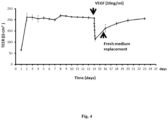
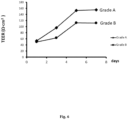
- This provides a particularly important benefit in the case of a BBB tissue/system because serum and growth factors (such as VEGF) are known to cause undesirable leakiness (i.e. reduced resistance/increased permeability) of the BBB - as confirmed in Figure 4 of the present application.
- the present invention provides several new and improved BBB systems, compositions, and methods.
- the present invention provides in vitro blood-brain barrier (BBB) systems that can be useful, for example, in drug testing/screening and in studying BBB permeability and BBB function in certain disease states (e.g. cancer) or in response to injury.
- BBB blood-brain barrier
- the present invention provides an in vitro blood-brain barrier (BBB) system as defined in claim 1.
- the endothelial cells are mouse endothelial cells.
- the endothelial cells are human endothelial cells.
- the endothelial cells are brain endothelial cells.
- the in vitro BBB system also comprises a permeable solid support, which the endothelial cells will typically be disposed upon.
- the present invention provides screening methods for drug testing/screening and/or for studying BBB permeability and BBB function in certain disease states (e.g. cancer) or in response to injury, as defined in claims 8 to 14.
- culturing refers to the propagation of cells on or in media of various kinds.
- Co-culturing refers to the propagation of two or more distinct types of cells on or in media of various kinds, for instance, in some embodiments, endothelial cells and astrocytes may be co-cultured.
- the term "effective amount” refers to an amount of a specified agent or cell population (e.g. an E4ORF1 polypeptide, a nucleic acid molecule encoding an E4ORF1 polypeptide, or a population of E4ORF1+ engineered endothelial cells), as described herein, that is sufficient to achieve a detectable effect on one or more of the outcomes described herein.
- a specified agent or cell population e.g. an E4ORF1 polypeptide, a nucleic acid molecule encoding an E4ORF1 polypeptide, or a population of E4ORF1+ engineered endothelial cells
- an effective amount of a nucleic acid molecule e.g.
- endothelial cell barrier function in a BBB model as compared to that of any suitable control (e.g. E4ORF1 - endothelial cells).
- an effective amount may be one that results in a detectable improvement of one or more desired biological or therapeutic indicators, (such as, for example, improved BBB function), as compared to that of any suitable control (e.g. E4ORF1 - endothelial cells).
- An appropriate "effective amount” in any individual case may be determined empirically, for example using standard techniques known in the art, such as dose escalation studies, and may be determined taking into account such factors as the planned use, the planned mode of delivery/administration, desired frequency of delivery/administration, etc.
- an "effective amount” may be determined using assays such as those described in the Examples section of this patent disclosure to assess effects on BBB function.
- engineered when used in relation to cells herein refers to cells that have been engineered by man to result in the recited phenotype (e.g. E4ORF1 + ), or to express a recited nucleic acid molecule or polypeptide.
- engineered cells is not intended to encompass naturally occurring cells, but is, instead, intended to encompass, for example, cells that comprise a recombinant nucleic acid molecule, or cells that have otherwise been altered artificially (e.g. by genetic modification), for example so that they express a polypeptide that they would not otherwise express, or so that they express a polypeptide at substantially higher levels than that observed in non-engineered endothelial cells.
- isolated refers to a product, compound, or composition which is separated from at least one other product, compound, or composition with which it is associated in its naturally occurring state, whether in nature or as made synthetically.
- recombinant refers to nucleic acid molecules that are generated by man (including by a machine) using methods of molecular biology and genetic engineering (such as molecular cloning), and that comprise nucleotide sequences that would not otherwise exist in nature.
- recombinant nucleic acid molecules are to be distinguished from nucleic acid molecules that exist in nature - for example in the genome of an organism.
- a nucleic acid molecule that comprises a complementary DNA or "cDNA" copy of an mRNA sequence, without any intervening intronic sequences such as would be found in the corresponding genomic DNA sequence, would thus be considered a recombinant nucleic acid molecule.
- a recombinant E4ORF1 nucleic acid molecule might comprise an E4ORF1 coding sequence operatively linked to a promoter and/or other genetic elements with which that coding sequence is not ordinarily associated in a naturally-occurring adenovirus genome.
- subject and “patient” are used herein interchangeably and refer to, except where indicated, mammals such as humans and non-human primates, as well as rabbits, rats, mice, goats, pigs, and other mammalian species.
- substantially pure refers to a population of cells of a specified type (e.g. as determined by expression of one or more specified cell markers, morphological characteristics, or functional characteristics), or of specified types (plural) in embodiments where two or more different cell types are used together, that is at least about 50%, preferably at least about 75-80%, more preferably at least about 85-90%, and most preferably at least about 95% of the cells making up the total cell population.
- a “substantially pure cell population” refers to a population of cells that contain fewer than about 50%, preferably fewer than about 20-25%, more preferably fewer than about 10-15%, and most preferably fewer than about 5% of cells that are not of the specified type or types.
- the present invention described herein involves engineered endothelial cells that are E4ORF1+.
- E4ORF1+ cells express an adenovirus E4ORF1 polypeptide, which is encoded by an E4ORF1 nucleic acid molecule.
- the present invention involves E4ORF1 polypeptides and/or nucleic acid molecules that encode an adenovirus E4ORF1 polypeptide.
- polypeptides of the invention and the nucleic acid molecules of the invention may have amino acid sequences or nucleotide sequences that are specified herein or known in the art, or may have amino acid or nucleotide sequences that are variants, derivatives, mutants, or fragments of such amino acid or nucleotide sequences - provided that such a variants, derivatives, mutants, or fragments have, or encode a polypeptide that has, one or more of the functional properties described herein (which include, but are not limited to, those associated with BBB function).
- the polypeptide sequence used may be from any suitable adenovirus type or strain, such as human adenovirus type 2, 3, 5, 7, 9, 11, 12, 14, 34, 35, 46, 50, or 52. In some preferred embodiments the polypeptide sequence used is from human adenovirus type 5. Amino acid sequences of such adenovirus polypeptides, and nucleic acid sequences that encode such polypeptides, are well known in the art and available in well-known publicly available databases, such as the Genbank database. For example, suitable sequences include the following: human adenovirus 9 (Genbank Accession No. CAI05991), human adenovirus 7 (Genbank Accession No.
- human adenovirus 46 (Genbank Accession No. AAX70946), human adenovirus 52 (Genbank Accession No. ABK35065), human adenovirus 34 (Genbank Accession No. AAW33508), human adenovirus 14 (Genbank Accession No. AAW33146), human adenovirus 50 (Genbank Accession No. AAW33554), human adenovirus 2 (Genbank Accession No. AP.sub.--000196), human adenovirus 12 (Genbank Accession No. AP.sub.-000141), human adenovirus 35 (Genbank Accession No. AP.sub.--000607), human adenovirus 7 (Genbank Accession No.
- human adenovirus 1 Genbank Accession No. AP.sub.--000533
- human adenovirus 11 Genbank Accession No. AP.sub.-000474
- human adenovirus 3 Genbank Accession No. ABB 17792
- human adenovirus type 5 Genbank accession number D12587.
- polypeptides and nucleic acid molecules of the invention have the same amino acid or nucleotide sequences as those specifically recited herein or known in the art (for example in public sequence databases, such as the Genbank database).
- polypeptides and nucleic acid molecules of the invention may have amino acid or nucleotide sequences that are variants, derivatives, mutants, or fragments of such sequences, for example variants, derivatives, mutants, or fragments having greater than 85% sequence identity to such sequences.
- the variants, derivatives, mutants, or fragments have about an 85% identity to the known sequence, or about an 88%, 89%, 90%, 91%, 92%, 93%, 94%, 95%, 96%, 97%, 98%, or 99% sequence identity to the known sequence.
- a variant, derivative, mutant, or fragment of a known nucleotide sequence is used that varies in length by about 50 nucleotides, or about 45 nucleotides, or about 40 nucleotides, or about 35 nucleotides, or about 30 nucleotides, or about 28 nucleotides, 26 nucleotides, 24 nucleotides, 22 nucleotides, 20 nucleotides, 18 nucleotides, 16 nucleotides, 14 nucleotides, 12 nucleotides, 10 nucleotides, 9 nucleotides, 8 nucleotides, 7 nucleotides, 6 nucleotides, 5 nucleotides, 4 nucleotides, 3 nucleotides, 2 nucleotides, or 1 nucleotide relative to the known nucleotide sequence.
- a variant, derivative, mutant, or fragment of a known amino sequence is used that varies in length about 50 amino acids, or about 45 amino acids, or about 40 amino acids, or about 35 amino acids, or about 30 amino acids, or about 28 amino acids, 26 amino acids, 24 amino acids, 22 amino acids, 20 amino acids, 18 amino acids, 16 amino acids, 14 amino acids, 12 amino acids, 10 amino acids, 9 amino acids, 8 amino acids, 7 amino acids, 6 amino acids, 5 amino acids, 4 amino acids, 3 amino acids, 2 amino acids, or 1 amino acid relative to the known amino acid sequence.
- E4ORF1 nucleic acid or amino acid sequence in some embodiments are used without other sequences from the adenovirus E4 region - for example not in the context of the nucleotide sequence of the entire E4 region or not together with other polypeptides encoded by the E4 region. However, in some other embodiments such sequences may be used in conjunction with one or more other nucleic acid or amino acid sequences from the E4 region, such as E4ORF2, E4ORF3, E4ORF4, E4ORF5 or E4ORF6 sequences, or variants, mutants or fragments thereof.
- E4ORF1 sequences can be used in constructs (such as a viral vectors) that contain other sequences, genes, or coding regions (such as promoters, marker genes, antibiotic resistance genes, and the like), in certain embodiments, the E4ORF1 sequences are used in constructs that do not contain the entire E4 region, or that do not contain other ORFs from the entire E4 region, such as E4ORF2, E4ORF3, E4ORF4, E4ORF5 and/or E4ORF6.
- nucleic acid molecules of the invention can be used in constructs that contain various other nucleic acid sequences, genes, or coding regions, depending on the desired use, for example, antibiotic resistance genes, reporter genes or expression tags (such as, for example nucleotides sequences encoding GFP), or any other nucleotide sequences or genes that might be desirable.
- the polypeptides of the invention can be expressed alone or as part of fusion proteins.
- nucleic acid molecules of the invention can be under the control of one or more promoters to allow for expression.
- Any promoter able to drive expression of the nucleic acid sequences in the desired cell type can be used.
- suitable promoters include, but are not limited to, the CMV, SV40, RSV, HIV-Ltr, and MML promoters.
- the promoter can also be a promoter from the adenovirus genome, or a variant thereof.
- the promoter can be the promoter used to drive expression of corresponding genes in an adenovirus.
- nucleic acid molecules of the invention can be placed under the control of an inducible promoter, so that expression of the nucleic acid sequences can be turned on or off as desired.
- Any suitable inducible expression system can be used, such as, for example, a tetracycline inducible expression system, or a hormone inducible expression system.
- the nucleic acid molecules of the invention can be expressed while they are needed and then switched off when the desired outcome has been achieved, for example when there has been sufficient growth or proliferation of the endothelial cells. The ability to turn on or turn off expression could be particularly useful for in vivo applications.
- the nucleic acid molecules of the invention may comprise naturally occurring nucleotides, synthetic nucleotides, or a combination thereof.
- the nucleic acid molecules of the invention can comprise RNA, such as synthetic modified RNA that is stable within cells and can be used to direct protein expression/production directly within cells.
- the nucleic acid molecules of the invention can comprise DNA.
- the DNA sequences may be operably linked to one or more suitable promoters and/or regulatory elements to allow (and/or facilitate, enhance, or regulate) expression within cells, and may be present in one or more suitable vectors or constructs.
- the nucleic acid molecules of the invention can be introduced into endothelial cells in the same nucleic acid construct or they can be introduced in separate nucleic acid constructs.
- the nucleic acid molecules of the invention can be introduced into endothelial cells using any suitable system known in the art, including, but not limited to, transfection techniques and viral-mediated transduction techniques.
- Transfection methods that can be used in accordance with the present invention include, but are not limited to, liposome-mediated transfection, polybrene-mediated transfection, DEAE dextran-mediated transfection, electroporation, calcium phosphate precipitation, microinjection, and microparticle bombardment.
- Viral-mediated transduction methods that can be used include, but are not limited to, lentivirus-mediated transduction, adenovirus-mediated transduction, retrovirus-mediated transduction, adeno-associated virus-mediated transduction and herpesvirus-mediated transduction.
- the present disclosure also provides vectors, including expression vectors that contain nucleic acid molecules of the invention.
- the present disclosure provides an expression vector comprising a nucleotide sequence encoding an E4ORF1 polypeptide.
- the expression vector is a lentivirus vector.
- a peptidomimetic may be used.
- a peptidomimetic is a small protein-like chain designed to mimic a polypeptide. Such a molecule could be designed to mimic any of the polypeptides of the invention (e.g. an E4ORF1 polypeptide).
- E4ORF1 polypeptide e.g. an E4ORF1 polypeptide.
- Various different ways of modifying a peptide to create a peptidomimetic or otherwise designing a peptidomimetic are known in the art and can be used to create a peptidomimetic of one of the polypeptides of the invention.
- the handling, manipulation, and expression of the polypeptides and nucleic acid molecules of the invention may be performed using conventional techniques of molecular biology and cell biology. Such techniques are well known in the art. For example, one may refer to the teachings of Sambrook, Fritsch and Maniatis eds., "Molecular Cloning A Laboratory Manual, 2nd Ed., Cold Springs Harbor Laboratory Press, 1989 ); the series Methods of Enzymology (Academic Press, Inc. ), or any other standard texts for guidance on suitable techniques to use in handling, manipulating, and expressing nucleotide and/or amino acid sequences. Additional aspects relevant to the handling or expression of E4ORF1 sequences are described in U.S. Patent No. 8,465,732 .
- the engineered endothelial cells can be derived from any suitable source of endothelial cells known in the art.
- the endothelial cells are vascular endothelial cells.
- the endothelial cells are primary endothelial cells.
- the engineered endothelial cells are mammalian cells, such as human or non-human primate cells, or rabbit, rat, mouse, goat, pig, or other mammalian cells.
- the endothelial cells are primary human endothelial cells.
- the endothelial cells are umbilical vein endothelial cells (UVECs), such as human umbilical vein endothelial cells (HUVECs).
- UVECs umbilical vein endothelial cells
- HUVECs human umbilical vein endothelial cells
- Other suitable endothelial cells that can be used include those described previously as being suitable for E4ORF1-expression in U.S. Patent No. 8,465,732 .
- the endothelial cells are brain endothelial cells, such as brain microvascular endothelial cells.
- the engineered endothelial cells are gene-modified such that they comprise one or more genetic modifications in addition to and apart from the expression of the specific recited molecules (e.g. E4ORF1).
- such cells may comprise a corrected version of a gene known to be involved in, or suspected of being involved in, a disease or disorder that affects endothelial cells or that affects BBB function, or any other gene, such as a therapeutically useful gene, that it may be desired to provide in endothelial cells or administer or deliver using engineered endothelial cells.
- the engineered endothelial cells of the invention may exist in, or be provided in, various forms.
- the engineered endothelial cells may comprise a population of cells, such as an isolated population of cells.
- the engineered endothelial cells may comprise a population of cells in vitro.
- the engineered endothelial cells may comprise a substantially pure population of cells. For example, in some embodiments at least about 50%, preferably at least about 75-80%, more preferably at least about 85-90%, and most preferably at least about 95% of the cells making up a total cell population will be engineered endothelial cells of the invention.
- the engineered endothelial cells may be provided in the form of a composition containing the engineered cells and one or more additional components.
- the present invention may provide a composition comprising a population of engineered endothelial cells as described herein together with a carrier solution, such as a physiological saline solution, cell suspension medium, cell culture medium, or the like.
- a carrier solution such as a physiological saline solution, cell suspension medium, cell culture medium, or the like.
- such compositions may be therapeutic compositions - comprising a population of engineered endothelial cells and a carrier solution that is suitable for administration to a subject, such as a human subject.
- Other therapeutically acceptable agents can be included if desired.
- the engineered endothelial cells of the invention may be provided in the form of a composition (e.g. a therapeutic composition) that contains the engineered endothelial cells of the invention and one or more additional cell types.
- additional cell types may be, for example, cell types that can be maintained, cultured, or expanded in the presence of the engineered endothelial cells (e.g. using the engineered endothelial cells of the invention as "feeder" cells), or any other cell type for which it may be desired to use together with the engineered endothelial cells of the invention - for example for use in an in vitro model system or for use in co-administration to a subject.
- the engineered endothelial cells of the invention may be provided in a composition (e.g. a therapeutic composition) that contains both the engineered endothelial cells of the invention and astrocytes.
- the present invention involves astrocytes. Any suitable astrocytes can be used.
- the astrocytes are mouse astrocytes. In some embodiments they are human astrocytes.
- the astrocytes may be primary astrocytes (e.g. isolated from CNS tissue) or they may be cultured astrocyte lines. Methods for obtaining and culturing astrocytes are known in the art and any such methods can be used in conjunction with the present invention.
- the present invention provides BBB model systems, compositions and kits useful in such systems, and screening methods that utilize such BBB model systems.
- BBB model systems for drug screening and/or for biological research is known in the art, and the novel BBB model systems of the present invention can be utilized in the same or similar ways to those systems that are known in the art.
- E4ORF1+ endothelial cells can be used in place of the naive (non-E4ORF1+) endothelial cells typically used in other BBB model systems.
- such systems will comprise a confluent endothelial cell monolayer grown on a solid permeable support such that the endothelial cells form a barrier that physically separates two chambers on either side of the endothelial cell layer. In this way, one can study the ability of agents to cross from one physical compartment to the other physical compartment through the endothelial cell barrier.
- the present invention provides methods for assessing the blood-brain barrier permeability of a candidate agent, where such methods comprise contacting E4ORF1+ endothelial cells in a BBB model system with one or more candidate agents.
- the present invention provides methods for assessing the effect of one or more candidate agents on the permeability of the blood-brain barrier, where such methods comprise contacting E4ORF1+ endothelial cells in a BBB model system with one or more candidate agents.
- the present invention provides methods for assessing effect of one or more test cell types on the permeability of the blood-brain barrier, where such methods comprise including one or more test cell types in an E4ORF1+ endothelial cell-containing BBB model system as described herein and testing the effects of that test cell type on BBB barrier function and permeability. Additional details of each of such screening/testing methods (including suitable assays for assessing BBB barrier function and permeability) are described elsewhere in this patent application - including in the Examples and Claims.
- the present disclosure provides various therapeutic methods, such as methods for treating subjects in need thereof by administering to such subjects an effective amount of the engineered endothelial cells of the invention (or of a composition comprising such engineered endothelial cells).
- the cells can be administered to subjects using any suitable means known in the art.
- the cells can be administered by injection or infusion into the blood stream or tissue at a desired location.
- engineered cells according to the present invention may be administered directly into, or in the vicinity of, the affected areas of the brain or spinal cord.
- the engineered endothelial cells may be administered together with one or more additional cell types.
- Such additional cell types may be, for example, astrocytes.
- the engineered endothelial cells can be administered in a single dose or in multiple doses. The skilled artisan will be able to select a suitable method of administration according and a suitable dosing regimen depending on the desired use.
- engineered endothelial cells of the present invention can be created in vivo, for example for research purposes or for therapeutic applications.
- the present invention provides various therapeutic methods, such as methods for treating subjects in need thereof, which comprise administering to such subjects an effective amount of a nucleic acid molecule that encodes an E4ORF1 polypeptide (for example in a suitable vector, and/or under the control of a suitable promoter) such that endothelial cells in the subject are transfected or transduced with such nucleic acid molecules and become engineered endothelial cells in vivo.
- the nucleotide molecules can be administered to subjects using any suitable means known in the art.
- the nucleotide molecules (for example in a suitable vector) can be administered by injection or infusion into the blood stream or tissue at a desired location.
- the nucleic acid molecules can be administered in a single dose or in multiple doses.
- the skilled artisan will be able to select a suitable method of administration according and a suitable dosing regimen depending on the desired use.
- the engineered endothelial cells of the invention are mitotically inactivated prior to use (e.g. therapeutic use) such that they cannot replicate. This can be achieved, for example, by using a chemical agent such as mitomycon C or by irradiating the engineered endothelial cells.
- the engineered endothelial cells of the invention can be cultured using methods known to be useful for culturing other endothelial cells, or, methods known to be useful for culturing E4ORF1-expressing endothelial cells, for example as described in U.S. Patent No. 8,465,732 .
- the engineered endothelial cells of the invention can be cultured in the absence of serum, or in the absence of exogenous growth factors, or in the absence of both serum and exogenous growth factors.
- the engineered endothelial cells of the invention can also be cryopreserved.
- Various methods for cell culture and cell cryopreservation are known to those skilled in the art, such as the methods described in Culture of Animal Cells: A Manual of Basic Technique, 4th Edition (2000) by R. Ian Freshney ("Freshney").
- the present invention provides co-culture methods, for example involving co-culture of E4ORF1+ endothelial cells and astrocytes.
- Such co-culture methods may comprise culturing E4ORF1+ endothelial cells and astrocytes together in the same culture vessel.
- the E4ORF1+ endothelial cells and the astrocytes may be in direct cell-to-cell contact (without any barrier e.g. membrane separating the E4ORF1+ endothelial cells from the astrocytes).
- the engineered endothelial cells may form a confluent monolayer on a surface of a culture vessel or some other solid but permeable substrate, and the astrocytes may be placed on the endothelial cell monolayer.
- kits for making the BBB model systems of the invention and/or for making, using, or performing any of the compositions or methods described herein may contain any of the components described herein, including, but not limited to, nucleotide sequences (for example in a vector), engineered endothelial cells, astrocytes, media or compositions useful for maintaining or expanding the engineered endothelial cells or astrocytes, solid permeable supports for culture of endothelial cell monolayers, or any combination thereof. All such kits may optionally comprise instructions for use, containers, culture vessels and the like.
- a label may accompany the kit and may include any writing or recorded material, which may be electronic or computer readable form (e.g., disk, optical disc, memory chip, or tape) providing instructions or other information for use of the kit contents.
- mice Five to eight three-week old mice were sacrificed, and the brains were isolated into dissection medium. The two cerebral hemispheres were tweezed apart and the meninges and the olfactory bulbs were carefully removed. Fine scissors were used to mince the tissues into small pieces (about 0.5mm diameter). The small tissue pieces were collected and transferred with the dissection medium into a 15 ml conical tube. The tissue pieces were allowed to settle for approximately 1-2 minutes, and were then removed from the dissection medium carefully. 6-8 ml of TrypLE was added to the conical tube and the cap closed tightly. The tube was flipped up and down 3 times followed by placing the tube in a water bath at 37°C for 15 minutes, while swirling the tube occasionally.
- mice endothelia medium http://angiocrinebioscience.com/wp-content/uploadsNeraVec-Mouse-Brain-Instruction-Sheet.pdf
- DNAse was added for 1 minute while agitating the tube by frequent tapping.
- the tissue pieces were then rinsed with mouse endothelia medium 3 times.
- the tissue pieces were then triturated in approximately 1ml of mouse endothelia medium by passing the tissue pieces and medium up and down 10 times, followed by triturating the tissue and medium once using a flame polished glass pipette.
- the triturated cell suspension was then centrifuged for 5 minutes at 400g and the supernatant was then removed.
- the cell pellet was re-suspended with complete mouse endothelial medium and plated into T75 flasks coated with fibronectin. The medium was replaced with fresh mouse endothelial medium every other day until the culture reached confluence.
- CD31 antibody was used to purify the brain microvascular endothelial cells by fluorescence activated cell sorting (FACS). Cells obtained following sorting were replated on fibronectin coated wells (6-well plate), with approximately 400,000 cells per well. The next day, the cells were transduced with E4ORF1 lentivirus (40-50 ⁇ l concentrated virus) using polybrene (8 ⁇ g/ml, medium without antibiotics). After 24 hours the infection medium was replaced with regular mouse endothelial medium. The cells were passaged upon reaching confluence.
- Human brain tissue was obtained by surgical removal from patients with epilepsy, or from patients with glioblastoma (GBM). The human tissue was then processed and cultured as described above for mouse tissue.
- endothelial cells were plated into transwell inserts (Corning Inc., 353180) that fit 12-well plates. The cells reached confluence by the following day (approximately 200,000-400,000 cells/insert). Daily measurements of trans-endothelial electrical resistance (“TEER”) commenced on day 1. The medium was replaced with "TEER booster” medium containing hydrocortisone, cAMP, PKA, phosphodiesterase inhibitor, retinoic acid, insulin, transferrin, and sodium selenite.
- TEER trans-endothelial electrical resistance
- astrocytes were added to the transwell inserts at a density of 50,000 cells per insert such that the astrocytes were in direct contact with the endothelial cells.
- GBM cells were added to the bottom of the wells holding the transwell inserts (with EC monolayers) on day 4.
- lucifer yellow (LY) based permeability assays For lucifer yellow (LY) based permeability assays, the following protocol was was performed. On day 1 cells were plated into inserts that fit 12-well plates such that they reached confluence by the next day. ( ⁇ 200,000-400,000 cells/insert). On day 2 the medium was replaced with "TEER booster” medium containing hydrocortisone, cAMP, PKA, phosphodiesterase inhibitor, retinoic acid, insulin, transferrin, and sodium selenite. On day 3 the medium was replaced with serum free "TEER booster” medium (Neural progenitor medium with N2 and B27). On day 4 TEER measurements were made prior to performing the LY-based permeability assay.
- the LY assay was performed using a commercially available assay essentially as per the manufacturer's instructions (http://ebiotrade.com/buyf/productsf/BD%20Falcon/insert_protocol_lucifer_yellow_permeab ility_assay.pdf). The LY assay was used as per the manufacturer's instructions to determine the permeability coefficient or "Pc" (cm/second).
- the Pc (V/(AxCi))x(Cf/T), where V is the volume of the basal chamber (mL), A is the area of the membrane insert (cm 2 ), Ci is the initial concentration of LY, Cf is the final concentration of LY, and T is the assay time in seconds (T was 1 hour (3600 seconds) and/or 4 hours).
- the Pc value calculated using this system provides a quantitative measure of barrier integrity and function. In general, a Pc ⁇ 2.5 ⁇ 10 -6 cm/s in a Lucifer yellow-based assay indicates a BBB-quality barrier function.
- E4ORF1+mouse brain endothelial cells were fixed with 4% paraformaldehyde before performing immunohistochemistry using antibodies specific for Claudin 5 and MFSD2A.
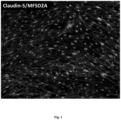
- E4ORF1+ mouse brain endothelial cell monolayers were found to express both the tight junction marker Claudin 5 and the CNS-specific EC MFSD2A (see Fig. 1 ).
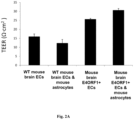
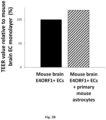
- E4ORF1 in mouse brain endothelial cells was found to increase TEER values as compared to those observed in naive (not E4ORF1+) mouse brain ECs, and co-culture of the E4ORF1+mouse brain endothelial cells with astrocytes increased TEER values /barrier function still further (see Fig. 2 A and 2B - TEER measurements on day 3 of culture).
- Astrocytes were able to form a monolayer in direct contact with the E4ORF1+ ECs, while when naive (non-E4ORF1+) ECs were used the astrocytes formed "islands" of astrocytes in a "sea" of ECs (as opposed to forming the multilayered astrocyte/EC structure observed when E4ORF1+ ECs were used) and TEER values (indicative of barrier function) were lower when astrocytes were cultured with naive (non-E4ORF1+) ECs as opposed to E4ORF1+ ECs (see Fig. 2A ).
- human brain E4ORF1+ endothelial cells manifested a uniquely high TEER value ( ⁇ 200 ⁇ cm2 on day 2) as compared to E4ORF1+ ECs derived from human umbilical cord, lung, kidney or heart ( ⁇ 25 ⁇ cm2).
- TEER values of the human brain E4ORF1+ brain endothelial cell monolayers remained high (around 200 ⁇ cm2) for 6 weeks.
- permeability of the human brain E4ORF1+ brain endothelial cell monolayers was shown to be responsive to extracellular stimuli known affect BBB permeability - such as VEGF (see Fig. 4 ).
- Fig. 5 shows the results of an experiment in which human E4ORF1+ brain endothelial cells were compared to naive (non-E4ORF1-expressing) human brain endothelial cells, human E4ORF1+ kidney endothelial cells, human 293T cells, and empty trans-wells (i.e. with no cells) in assays to measure TEER values and determine permeability coefficents (Pc).
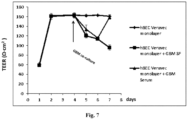
- Fig. 7 shows the results of an experiment in which human E4ORF1+ brain endothelial cells derived from patients with epilepsy were co-cultured with human GBM tumor cells.
- TEER values dropped upon GBM tumor cell co-culture.
- the co-culture was performed the absence of serum the TEER values dropped to about 50% of the value observed when the E4ORF1+ brain endothelial cells were cultured alone - without GBM tumor cells.
- FBS fetal bovine serum
- model system of the present invention exhibits many of the key functional properties of the BBB - including, but not limited to, providing a high-resistance barrier the permeability of which is responsive to a variety of environmental cues.
Landscapes
- Health & Medical Sciences (AREA)
- Life Sciences & Earth Sciences (AREA)
- Engineering & Computer Science (AREA)
- Biomedical Technology (AREA)
- Chemical & Material Sciences (AREA)
- Cell Biology (AREA)
- Zoology (AREA)
- General Health & Medical Sciences (AREA)
- Organic Chemistry (AREA)
- Biotechnology (AREA)
- Bioinformatics & Cheminformatics (AREA)
- Genetics & Genomics (AREA)
- Medicinal Chemistry (AREA)
- Wood Science & Technology (AREA)
- Public Health (AREA)
- Veterinary Medicine (AREA)
- Animal Behavior & Ethology (AREA)
- Epidemiology (AREA)
- Biochemistry (AREA)
- Immunology (AREA)
- Virology (AREA)
- Chemical Kinetics & Catalysis (AREA)
- Microbiology (AREA)
- General Engineering & Computer Science (AREA)
- Pharmacology & Pharmacy (AREA)
- Developmental Biology & Embryology (AREA)
- Neurology (AREA)
- Neurosurgery (AREA)
- Oral & Maxillofacial Surgery (AREA)
- Dermatology (AREA)
- Botany (AREA)
- Transplantation (AREA)
- Molecular Biology (AREA)
- Vascular Medicine (AREA)
- Urology & Nephrology (AREA)
- Biophysics (AREA)
- Nuclear Medicine, Radiotherapy & Molecular Imaging (AREA)
- General Chemical & Material Sciences (AREA)
- Hematology (AREA)
- Gastroenterology & Hepatology (AREA)
Claims (14)
- In-vitro-Blut-Hirn-Schranken (BBB)-System, umfassend: (a) eine konfluente Monoschicht aus Endothelzellen, die ein Adenovirus-E4ORF1-Polypeptid exprimieren, und (b) Astrozyten in direktem Kontakt mit der Monoschicht aus Endothelzellen.
- System nach Anspruch 1, wobei (a) die Endothelzellen Maus-Endothelzellen oder menschliche Endothelzellen oder Gehirn-Endothelzellen oder mikrovaskuläre Endothelzellen des Gehirns sind oder aus einem Gehirntumor stammen oder aus einem Gliom stammen oder aus einem Glioblastom (GBM) stammen und (b) die Astrozyten Maus-Astrozyten oder menschliche Astrozyten sind.
- System nach Anspruch 1, wobei die Endothelzellen auf einem permeablen festen Träger abgeschieden sind.
- System nach Anspruch 3, wobei der permeable feste Träger: (a) eine Membran oder ein Filter ist, oder (b) Polyester, Polycarbonat, Nitrozellulose, Zellulose oder Glasfaserkunststoff (Fiberglas) umfasst, oder (c) mit einer oder mehreren Komponenten der extrazellulären Matrix beschichtet ist, oder (d) mit extrazellulärer Matrix von Astrozyten, Laminin, Vitronektin, Fibronektin, Kollagen oder Matrigel beschichtet ist.
- System nach Anspruch 1, das ferner einen zusätzlichen Zelltyp umfasst, der aus der Gruppe bestehend aus Perizyten und neuralen Stamm/Vorläuferzellen (NSPCs) ausgewählt wird.
- System gemäß Anspruch 1, wobei die Endothelzellmonoschicht einen transendothelialen elektrischen Widerstand (TEER) von mehr als etwa 25 Ω·cm2 oder mehr als etwa 50 Ω·cm2 oder mehr als etwa 75 Ω·cm2 oder mehr als etwa 100 Ω·cm2 oder mehr als etwa 125 Ω·cm2 oder mehr als etwa 150 Ω·cm2 oder mehr als etwa 175 Ω·cm2 oder mehr als etwa 200 Ω·cm2 aufweist.
- System gemäß Anspruch 1, wobei die Endothelzellmonoschicht einen Lucifer-Yellow-Permeabilitätskoeffizienten (Pc) von weniger als etwa 2,5 × 10⁻⁶ cm/s aufweist.
- Verwendung eines Systems gemäß Anspruch 1 in einem Verfahren zur Beurteilung der Blut-Hirn-Schranken-Permeabilität eines Kandidatenwirkstoffs.
- Verfahren zur Beurteilung der Blut-Hirn-Schranken-Permeabilität eines Kandidatenwirkstoffs, wobei das Verfahren das Inkontaktbringen der Endothelzellen im System nach Anspruch 1 mit einem Kandidatenwirkstoff umfasst.
- Verfahren zur Beurteilung der Blut-Hirn-Schranken-Permeabilität eines Kandidatenwirkstoffs, wobei das Verfahren umfasst: (a) Inkontaktbringen einer Seite einer Endothelzellmonoschicht in einem BBB-System gemäß Anspruch 1 mit einem Kandidatenwirkstoff und (b) Bestimmen, ob der Kandidatenwirkstoff auf der anderen Seite der Endothelzellmonoschicht vorhanden ist, wobei, wenn der Kandidatenwirkstoff auf der anderen Seite der Endothelzellmonoschicht vorhanden ist, der Wirkstoff Blut-Hirn-Schranken-Permeabilität aufweist, und wobei, wenn der Kandidatenwirkstoff nicht auf der anderen Seite der Endothelzellmonoschicht vorhanden ist, der Wirkstoff keine Blut-Hirn-Schranken-Permeabilität aufweist.
- Verwendung eines Systems gemäß Anspruch 1 in einem Verfahren zur Beurteilung des Effekts eines Wirkstoffs auf die Permeabilität der Blut-Hirn-Schranke.
- Verfahren zur Beurteilung des Effekts eines Wirkstoffs auf die Permeabilität der Blut-Hirn-Schranke, wobei das Verfahren umfasst: Inkontaktbringen der Endothelzellen in einem System gemäß Anspruch 1 mit einem Kandidatenwirkstoff.
- Verfahren zur Beurteilung des Effekts eines Wirkstoffs auf die Permeabilität der Blut-Hirn-Schranke, wobei das Verfahren umfasst: (a) Inkontaktbringen der Endothelzellen in einem BBB-System gemäß Anspruch 1 mit einem Kandidatenwirkstoff und (b) Bestimmen des transendothelialen elektrischen Widerstands (TEER) des BBB-Systems, wobei dann, wenn der Kandidatenwirkstoff den TEER-Wert des BBB-Systems im Vergleich zum TEER-Wert in Abwesenheit des Kandidatenwirkstoffs verringert, der Kandidatenwirkstoff die Permeabilität der BBB erhöht, und dann, wenn der Kandidatenwirkstoff den TEER-Wert des BBB-Systems im Vergleich zum TEER-Wert in Abwesenheit des Kandidatenwirkstoffs erhöht, der Kandidatenwirkstoff die Permeabilität der BBB verringert.
- Verfahren zur Beurteilung des Effekts eines Wirkstoffs auf die Permeabilität der Blut-Hirn-Schranke, wobei das Verfahren umfasst: Inkontaktbringen der Endothelzellen in einem BBB-System gemäß Anspruch 1 mit einem Kandidatenwirkstoff und Bestimmen des Permeabilitätskoeffizienten (Pc) des BBB-Systems, wobei dann, wenn der Kandidatenwirkstoff den Pc-Wert des BBB-Systems im Vergleich zum Pc-Wert in Abwesenheit des Kandidatenwirkstoffs verringert, der Kandidatenwirkstoff die Permeabilität der BBB verringert, und dann, wenn der Kandidatenwirkstoff den Pc-Wert des BBB-Systems im Vergleich zum Pc-Wert in Abwesenheit des Kandidatenwirkstoffs erhöht, der Kandidatenwirkstoff die Permeabilität der BBB erhöht.
Applications Claiming Priority (2)
| Application Number | Priority Date | Filing Date | Title |
|---|---|---|---|
| US201662393774P | 2016-09-13 | 2016-09-13 | |
| PCT/US2017/051285 WO2018052948A1 (en) | 2016-09-13 | 2017-09-13 | Blood-brain barrier comprising engineered endothelial cells |
Publications (4)
| Publication Number | Publication Date |
|---|---|
| EP3512937A1 EP3512937A1 (de) | 2019-07-24 |
| EP3512937A4 EP3512937A4 (de) | 2020-04-15 |
| EP3512937B1 true EP3512937B1 (de) | 2024-10-09 |
| EP3512937C0 EP3512937C0 (de) | 2024-10-09 |
Family
ID=61618953
Family Applications (1)
| Application Number | Title | Priority Date | Filing Date |
|---|---|---|---|
| EP17851425.3A Active EP3512937B1 (de) | 2016-09-13 | 2017-09-13 | Blut-hirn-schranke mit manipulierten endothelzellen |
Country Status (10)
| Country | Link |
|---|---|
| US (1) | US11786559B2 (de) |
| EP (1) | EP3512937B1 (de) |
| JP (1) | JP7037201B2 (de) |
| KR (1) | KR102458639B1 (de) |
| CN (1) | CN110121555B (de) |
| AU (1) | AU2017326174B2 (de) |
| CA (1) | CA3036838A1 (de) |
| IL (1) | IL265352B2 (de) |
| RU (1) | RU2753441C2 (de) |
| WO (1) | WO2018052948A1 (de) |
Families Citing this family (3)
| Publication number | Priority date | Publication date | Assignee | Title |
|---|---|---|---|---|
| US20220226391A1 (en) * | 2019-05-28 | 2022-07-21 | Angiocrine Bioscience, Inc. | Compositions and methods for thymic regeneration and t-cell reconstitution |
| KR20230042525A (ko) * | 2020-08-10 | 2023-03-28 | 앤지오크린 바이오사이언스 인코포레이티드 | 냉동보존된 내피 세포 조성물 |
| CN114276983A (zh) * | 2021-12-31 | 2022-04-05 | 广州市第一人民医院(广州消化疾病中心、广州医科大学附属市一人民医院、华南理工大学附属第二医院) | 一种3d共培养4种细胞体外建立人血脑屏障模型的方法 |
Family Cites Families (28)
| Publication number | Priority date | Publication date | Assignee | Title |
|---|---|---|---|---|
| US5260210A (en) | 1989-09-27 | 1993-11-09 | Rubin Lee L | Blood-brain barrier model |
| CA2311729A1 (en) | 1998-01-23 | 1999-07-29 | Imclone Systems Incorporated | Purified populations of stem cells |
| US6093553A (en) | 1998-11-25 | 2000-07-25 | Boehringer Ingelheim Pharmaceuticals, Inc. | Immortalized brain endothelial cells |
| JP2001238681A (ja) * | 2000-03-03 | 2001-09-04 | Japan Science & Technology Corp | 共培養による血液脳関門再構築モデル |
| US7396680B2 (en) | 2003-10-31 | 2008-07-08 | Cornell Research Foundation, Inc. | Stem cell-specific promoters and their use |
| US20050148512A1 (en) * | 2003-11-10 | 2005-07-07 | Angiotech International Ag | Medical implants and fibrosis-inducing agents |
| WO2006056879A1 (en) | 2004-11-29 | 2006-06-01 | Institut National De La Sante Et De La Recherche Medicale (Inserm) | Human blood brain barrier model |
| JP5113332B2 (ja) * | 2005-12-19 | 2013-01-09 | 正美 丹羽 | 血液脳関門インヴィトロ・モデル、病態血液脳関門インヴィトロ・モデル、及びこれを用いた薬物スクリーニング方法、病態血液脳関門機能解析方法、病因解析方法 |
| US20080044847A1 (en) | 2006-06-23 | 2008-02-21 | Shusta Eric V | Blood-Brain Barrier Model |
| WO2008089448A2 (en) | 2007-01-19 | 2008-07-24 | Cornell Presearch Foundation, Inc. | Methods and compositions for promoting survival & proliferation of endothelial cells & stimulating angiogenesis |
| FR2959229B1 (fr) * | 2010-04-21 | 2013-01-18 | Vect Horus | Derives peptidiques, leur preparation et leurs utilisations |
| US9902940B2 (en) * | 2010-06-17 | 2018-02-27 | Wisconsin Alumni Research Foundation | Human blood-brain barrier endothelial cells derived from pluripotent stem cells and blood-brain barrier model thereof |
| ES2788300T3 (es) | 2010-11-09 | 2020-10-21 | Univ Cornell | Regeneración hepática |
| CA2834736A1 (en) | 2011-04-11 | 2012-10-18 | Allied Motion Technologies Inc. | Flexible winding for an electric motor and method of producing |
| BR112014008885B1 (pt) * | 2011-10-11 | 2021-02-17 | Vaccinex, Inc | uso de um anticorpo isolado ou fragmento de ligação ao antígeno do mesmo que se liga especificamente à semaforina-4d para diminuir permeabilidade da barreira hematoencefálica (bbb) em um indivíduo com permeabilidade da bbb aumentada e um transtorno neuroinflamatório |
| CA2874764C (en) | 2012-05-30 | 2022-11-01 | Cornell University | Generation of functional and durable endothelial cells from human amniotic fluid-derived cells |
| JP6581906B2 (ja) | 2013-01-15 | 2019-09-25 | コーネル ユニヴァーシティー | 確定因子によるヒト内皮の造血性多系列前駆細胞へのリプログラミング |
| WO2014186782A2 (en) * | 2013-05-17 | 2014-11-20 | The Regents Of The University Of California | Scalable organotypic models of tumor dormancy |
| AU2015279552B2 (en) * | 2014-06-27 | 2021-01-21 | Angiocrine Bioscience, Inc. | Neural cells expressing adenovirus E4ORF1, and methods of making and using the same |
| KR101675123B1 (ko) | 2014-06-27 | 2016-11-14 | 연세대학교 산학협력단 | Psa-ncam-양성 신경전구세포를 유효성분으로 포함하는 허혈성 질환 또는 신경염증 질환 치료용 조성물 |
| EP2995949A1 (de) | 2014-09-09 | 2016-03-16 | Institut Pasteur | Neues In-vitro-Blut-Gehirn-Schrankenmodell |
| KR102571649B1 (ko) * | 2014-12-19 | 2023-08-25 | 앤지오크린 바이오사이언스 인코포레이티드 | 조작된 내피 세포를 포함하는 생체적합성 임플란트 |
| CN108291196B (zh) | 2015-07-20 | 2021-08-27 | 安吉克莱茵生物科学有限公司 | 表达ets转录因子的工程化的内皮细胞 |
| EP4202036A1 (de) | 2015-07-20 | 2023-06-28 | Angiocrine Bioscience, Inc. | Verfahren und zusammensetzungen zur stammzelltransplantation |
| EP3442544B1 (de) | 2016-04-15 | 2024-05-29 | Angiocrine Bioscience, Inc. | Verbesserte genfreisetzungsverfahren |
| US10877026B2 (en) * | 2016-09-07 | 2020-12-29 | Purdue Research Foundation | Blood brain barrier models and methods to generate and use the same |
| CN111886016A (zh) | 2018-01-22 | 2020-11-03 | 安吉克莱茵生物科学有限公司 | 治疗脊髓损伤的组合物和方法 |
| US20220226391A1 (en) | 2019-05-28 | 2022-07-21 | Angiocrine Bioscience, Inc. | Compositions and methods for thymic regeneration and t-cell reconstitution |
-
2017
- 2017-09-13 EP EP17851425.3A patent/EP3512937B1/de active Active
- 2017-09-13 US US16/332,634 patent/US11786559B2/en active Active
- 2017-09-13 IL IL265352A patent/IL265352B2/en unknown
- 2017-09-13 RU RU2019110742A patent/RU2753441C2/ru active
- 2017-09-13 JP JP2019513948A patent/JP7037201B2/ja active Active
- 2017-09-13 KR KR1020197010040A patent/KR102458639B1/ko active Active
- 2017-09-13 WO PCT/US2017/051285 patent/WO2018052948A1/en not_active Ceased
- 2017-09-13 CN CN201780067778.6A patent/CN110121555B/zh active Active
- 2017-09-13 AU AU2017326174A patent/AU2017326174B2/en not_active Ceased
- 2017-09-13 CA CA3036838A patent/CA3036838A1/en active Pending
Also Published As
| Publication number | Publication date |
|---|---|
| IL265352B2 (en) | 2024-05-01 |
| JP2019532626A (ja) | 2019-11-14 |
| US20210283188A1 (en) | 2021-09-16 |
| CA3036838A1 (en) | 2018-03-22 |
| JP7037201B2 (ja) | 2022-03-16 |
| IL265352B1 (en) | 2024-01-01 |
| KR20190046983A (ko) | 2019-05-07 |
| IL265352A (en) | 2019-05-30 |
| US11786559B2 (en) | 2023-10-17 |
| RU2019110742A3 (de) | 2021-01-26 |
| CN110121555A (zh) | 2019-08-13 |
| WO2018052948A1 (en) | 2018-03-22 |
| AU2017326174B2 (en) | 2024-02-22 |
| CN110121555B (zh) | 2023-10-20 |
| EP3512937A1 (de) | 2019-07-24 |
| AU2017326174A1 (en) | 2019-05-02 |
| EP3512937C0 (de) | 2024-10-09 |
| KR102458639B1 (ko) | 2022-10-25 |
| RU2019110742A (ru) | 2020-10-15 |
| RU2753441C2 (ru) | 2021-08-16 |
| EP3512937A4 (de) | 2020-04-15 |
Similar Documents
| Publication | Publication Date | Title |
|---|---|---|
| US20220204924A1 (en) | Engineered endothelial cells expressing an ets transcription factor | |
| US20250115931A1 (en) | Enhanced gene delivery methods | |
| RU2745300C2 (ru) | Клетки нервной системы, экспрессирующие e4orf1 аденовируса, и способы их получения и применения | |
| Zhang et al. | Modelling myocardial ischemia/reperfusion injury with inflammatory response in human ventricular cardiac organoids | |
| EP3512937B1 (de) | Blut-hirn-schranke mit manipulierten endothelzellen | |
| CN119497750A (zh) | 产生小胶质细胞的方法和组合物 | |
| HK40012172A (en) | Neural cells expressing adenovirus e4orf1, and methods of making and using the same | |
| CN119082248A (zh) | 应激颗粒诱导剂在制备脐带间充质干细胞衰老抑制剂中的应用 | |
| HK1236993A1 (en) | Neural cells expressing adenovirus e4orf1, and methods of making and using the same | |
| HK1236993B (en) | Neural cells expressing adenovirus e4orf1, and methods of making and using the same |
Legal Events
| Date | Code | Title | Description |
|---|---|---|---|
| STAA | Information on the status of an ep patent application or granted ep patent |
Free format text: STATUS: THE INTERNATIONAL PUBLICATION HAS BEEN MADE |
|
| PUAI | Public reference made under article 153(3) epc to a published international application that has entered the european phase |
Free format text: ORIGINAL CODE: 0009012 |
|
| STAA | Information on the status of an ep patent application or granted ep patent |
Free format text: STATUS: REQUEST FOR EXAMINATION WAS MADE |
|
| 17P | Request for examination filed |
Effective date: 20190408 |
|
| AK | Designated contracting states |
Kind code of ref document: A1 Designated state(s): AL AT BE BG CH CY CZ DE DK EE ES FI FR GB GR HR HU IE IS IT LI LT LU LV MC MK MT NL NO PL PT RO RS SE SI SK SM TR |
|
| AX | Request for extension of the european patent |
Extension state: BA ME |
|
| DAV | Request for validation of the european patent (deleted) | ||
| DAX | Request for extension of the european patent (deleted) | ||
| A4 | Supplementary search report drawn up and despatched |
Effective date: 20200313 |
|
| RIC1 | Information provided on ipc code assigned before grant |
Ipc: C07K 14/075 20060101ALI20200309BHEP Ipc: A61K 48/00 20060101ALI20200309BHEP Ipc: C12N 15/09 20060101ALI20200309BHEP Ipc: C12N 5/0797 20100101ALI20200309BHEP Ipc: A61K 35/13 20150101ALI20200309BHEP Ipc: C12N 5/079 20100101AFI20200309BHEP Ipc: C07K 14/005 20060101ALI20200309BHEP Ipc: A61K 35/30 20150101ALI20200309BHEP Ipc: C12N 15/861 20060101ALI20200309BHEP |
|
| REG | Reference to a national code |
Ref country code: HK Ref legal event code: DE Ref document number: 40005436 Country of ref document: HK |
|
| STAA | Information on the status of an ep patent application or granted ep patent |
Free format text: STATUS: EXAMINATION IS IN PROGRESS |
|
| 17Q | First examination report despatched |
Effective date: 20210311 |
|
| GRAP | Despatch of communication of intention to grant a patent |
Free format text: ORIGINAL CODE: EPIDOSNIGR1 |
|
| STAA | Information on the status of an ep patent application or granted ep patent |
Free format text: STATUS: GRANT OF PATENT IS INTENDED |
|
| INTG | Intention to grant announced |
Effective date: 20240503 |
|
| GRAS | Grant fee paid |
Free format text: ORIGINAL CODE: EPIDOSNIGR3 |
|
| GRAA | (expected) grant |
Free format text: ORIGINAL CODE: 0009210 |
|
| STAA | Information on the status of an ep patent application or granted ep patent |
Free format text: STATUS: THE PATENT HAS BEEN GRANTED |
|
| AK | Designated contracting states |
Kind code of ref document: B1 Designated state(s): AL AT BE BG CH CY CZ DE DK EE ES FI FR GB GR HR HU IE IS IT LI LT LU LV MC MK MT NL NO PL PT RO RS SE SI SK SM TR |
|
| REG | Reference to a national code |
Ref country code: CH Ref legal event code: EP |
|
| REG | Reference to a national code |
Ref country code: DE Ref legal event code: R096 Ref document number: 602017085430 Country of ref document: DE |
|
| REG | Reference to a national code |
Ref country code: IE Ref legal event code: FG4D |
|
| U01 | Request for unitary effect filed |
Effective date: 20241107 |
|
| U07 | Unitary effect registered |
Designated state(s): AT BE BG DE DK EE FI FR IT LT LU LV MT NL PT RO SE SI Effective date: 20241115 |
|
| RAP4 | Party data changed (patent owner data changed or rights of a patent transferred) |
Owner name: ANGIOCRINE BIOSCIENCE, INC. |
|
| U1H | Name or address of the proprietor changed after the registration of the unitary effect |
Owner name: ANGIOCRINE BIOSCIENCE, INC.; US |
|
| PG25 | Lapsed in a contracting state [announced via postgrant information from national office to epo] |
Ref country code: HR Free format text: LAPSE BECAUSE OF FAILURE TO SUBMIT A TRANSLATION OF THE DESCRIPTION OR TO PAY THE FEE WITHIN THE PRESCRIBED TIME-LIMIT Effective date: 20241009 Ref country code: IS Free format text: LAPSE BECAUSE OF FAILURE TO SUBMIT A TRANSLATION OF THE DESCRIPTION OR TO PAY THE FEE WITHIN THE PRESCRIBED TIME-LIMIT Effective date: 20250209 |
|
| PG25 | Lapsed in a contracting state [announced via postgrant information from national office to epo] |
Ref country code: ES Free format text: LAPSE BECAUSE OF FAILURE TO SUBMIT A TRANSLATION OF THE DESCRIPTION OR TO PAY THE FEE WITHIN THE PRESCRIBED TIME-LIMIT Effective date: 20241009 |
|
| PG25 | Lapsed in a contracting state [announced via postgrant information from national office to epo] |
Ref country code: NO Free format text: LAPSE BECAUSE OF FAILURE TO SUBMIT A TRANSLATION OF THE DESCRIPTION OR TO PAY THE FEE WITHIN THE PRESCRIBED TIME-LIMIT Effective date: 20250109 |
|
| PG25 | Lapsed in a contracting state [announced via postgrant information from national office to epo] |
Ref country code: GR Free format text: LAPSE BECAUSE OF FAILURE TO SUBMIT A TRANSLATION OF THE DESCRIPTION OR TO PAY THE FEE WITHIN THE PRESCRIBED TIME-LIMIT Effective date: 20250110 |
|
| PG25 | Lapsed in a contracting state [announced via postgrant information from national office to epo] |
Ref country code: PL Free format text: LAPSE BECAUSE OF FAILURE TO SUBMIT A TRANSLATION OF THE DESCRIPTION OR TO PAY THE FEE WITHIN THE PRESCRIBED TIME-LIMIT Effective date: 20241009 |
|
| PG25 | Lapsed in a contracting state [announced via postgrant information from national office to epo] |
Ref country code: RS Free format text: LAPSE BECAUSE OF FAILURE TO SUBMIT A TRANSLATION OF THE DESCRIPTION OR TO PAY THE FEE WITHIN THE PRESCRIBED TIME-LIMIT Effective date: 20250109 |
|
| PG25 | Lapsed in a contracting state [announced via postgrant information from national office to epo] |
Ref country code: SM Free format text: LAPSE BECAUSE OF FAILURE TO SUBMIT A TRANSLATION OF THE DESCRIPTION OR TO PAY THE FEE WITHIN THE PRESCRIBED TIME-LIMIT Effective date: 20241009 |
|
| PG25 | Lapsed in a contracting state [announced via postgrant information from national office to epo] |
Ref country code: SK Free format text: LAPSE BECAUSE OF FAILURE TO SUBMIT A TRANSLATION OF THE DESCRIPTION OR TO PAY THE FEE WITHIN THE PRESCRIBED TIME-LIMIT Effective date: 20241009 |
|
| PG25 | Lapsed in a contracting state [announced via postgrant information from national office to epo] |
Ref country code: CZ Free format text: LAPSE BECAUSE OF FAILURE TO SUBMIT A TRANSLATION OF THE DESCRIPTION OR TO PAY THE FEE WITHIN THE PRESCRIBED TIME-LIMIT Effective date: 20241009 |
|
| PLBE | No opposition filed within time limit |
Free format text: ORIGINAL CODE: 0009261 |
|
| STAA | Information on the status of an ep patent application or granted ep patent |
Free format text: STATUS: NO OPPOSITION FILED WITHIN TIME LIMIT |
|
| 26N | No opposition filed |
Effective date: 20250710 |
|
| PGFP | Annual fee paid to national office [announced via postgrant information from national office to epo] |
Ref country code: GB Payment date: 20250930 Year of fee payment: 9 |
|
| U20 | Renewal fee for the european patent with unitary effect paid |
Year of fee payment: 9 Effective date: 20250930 |
|
| REG | Reference to a national code |
Ref country code: HK Ref legal event code: WD Ref document number: 40005436 Country of ref document: HK |