EP3512016A1 - A power generation system and a method for operating the same - Google Patents
A power generation system and a method for operating the same Download PDFInfo
- Publication number
- EP3512016A1 EP3512016A1 EP19150692.2A EP19150692A EP3512016A1 EP 3512016 A1 EP3512016 A1 EP 3512016A1 EP 19150692 A EP19150692 A EP 19150692A EP 3512016 A1 EP3512016 A1 EP 3512016A1
- Authority
- EP
- European Patent Office
- Prior art keywords
- fuel
- subsystem
- cell
- power
- heated
- Prior art date
- Legal status (The legal status is an assumption and is not a legal conclusion. Google has not performed a legal analysis and makes no representation as to the accuracy of the status listed.)
- Granted
Links
Images



Classifications
-
- H—ELECTRICITY
- H01—ELECTRIC ELEMENTS
- H01M—PROCESSES OR MEANS, e.g. BATTERIES, FOR THE DIRECT CONVERSION OF CHEMICAL ENERGY INTO ELECTRICAL ENERGY
- H01M8/00—Fuel cells; Manufacture thereof
- H01M8/04—Auxiliary arrangements, e.g. for control of pressure or for circulation of fluids
- H01M8/04082—Arrangements for control of reactant parameters, e.g. pressure or concentration
- H01M8/04201—Reactant storage and supply, e.g. means for feeding, pipes
-
- H—ELECTRICITY
- H01—ELECTRIC ELEMENTS
- H01M—PROCESSES OR MEANS, e.g. BATTERIES, FOR THE DIRECT CONVERSION OF CHEMICAL ENERGY INTO ELECTRICAL ENERGY
- H01M8/00—Fuel cells; Manufacture thereof
- H01M8/04—Auxiliary arrangements, e.g. for control of pressure or for circulation of fluids
- H01M8/04007—Auxiliary arrangements, e.g. for control of pressure or for circulation of fluids related to heat exchange
-
- H—ELECTRICITY
- H01—ELECTRIC ELEMENTS
- H01M—PROCESSES OR MEANS, e.g. BATTERIES, FOR THE DIRECT CONVERSION OF CHEMICAL ENERGY INTO ELECTRICAL ENERGY
- H01M8/00—Fuel cells; Manufacture thereof
- H01M8/04—Auxiliary arrangements, e.g. for control of pressure or for circulation of fluids
- H01M8/04007—Auxiliary arrangements, e.g. for control of pressure or for circulation of fluids related to heat exchange
- H01M8/04059—Evaporative processes for the cooling of a fuel cell
-
- H—ELECTRICITY
- H01—ELECTRIC ELEMENTS
- H01M—PROCESSES OR MEANS, e.g. BATTERIES, FOR THE DIRECT CONVERSION OF CHEMICAL ENERGY INTO ELECTRICAL ENERGY
- H01M8/00—Fuel cells; Manufacture thereof
- H01M8/04—Auxiliary arrangements, e.g. for control of pressure or for circulation of fluids
- H01M8/04007—Auxiliary arrangements, e.g. for control of pressure or for circulation of fluids related to heat exchange
- H01M8/04014—Heat exchange using gaseous fluids; Heat exchange by combustion of reactants
-
- C—CHEMISTRY; METALLURGY
- C01—INORGANIC CHEMISTRY
- C01B—NON-METALLIC ELEMENTS; COMPOUNDS THEREOF; METALLOIDS OR COMPOUNDS THEREOF NOT COVERED BY SUBCLASS C01C
- C01B3/00—Hydrogen; Gaseous mixtures containing hydrogen; Separation of hydrogen from mixtures containing it; Purification of hydrogen; Reversible storage of hydrogen
- C01B3/02—Production of hydrogen; Production of gaseous mixtures containing hydrogen
-
- H—ELECTRICITY
- H01—ELECTRIC ELEMENTS
- H01M—PROCESSES OR MEANS, e.g. BATTERIES, FOR THE DIRECT CONVERSION OF CHEMICAL ENERGY INTO ELECTRICAL ENERGY
- H01M8/00—Fuel cells; Manufacture thereof
- H01M8/04—Auxiliary arrangements, e.g. for control of pressure or for circulation of fluids
- H01M8/04007—Auxiliary arrangements, e.g. for control of pressure or for circulation of fluids related to heat exchange
- H01M8/04029—Heat exchange using liquids
-
- H—ELECTRICITY
- H01—ELECTRIC ELEMENTS
- H01M—PROCESSES OR MEANS, e.g. BATTERIES, FOR THE DIRECT CONVERSION OF CHEMICAL ENERGY INTO ELECTRICAL ENERGY
- H01M8/00—Fuel cells; Manufacture thereof
- H01M8/04—Auxiliary arrangements, e.g. for control of pressure or for circulation of fluids
- H01M8/04007—Auxiliary arrangements, e.g. for control of pressure or for circulation of fluids related to heat exchange
- H01M8/04067—Heat exchange or temperature measuring elements, thermal insulation, e.g. heat pipes, heat pumps, fins
- H01M8/04074—Heat exchange unit structures specially adapted for fuel cell
-
- H—ELECTRICITY
- H01—ELECTRIC ELEMENTS
- H01M—PROCESSES OR MEANS, e.g. BATTERIES, FOR THE DIRECT CONVERSION OF CHEMICAL ENERGY INTO ELECTRICAL ENERGY
- H01M8/00—Fuel cells; Manufacture thereof
- H01M8/04—Auxiliary arrangements, e.g. for control of pressure or for circulation of fluids
- H01M8/04082—Arrangements for control of reactant parameters, e.g. pressure or concentration
- H01M8/04089—Arrangements for control of reactant parameters, e.g. pressure or concentration of gaseous reactants
-
- H—ELECTRICITY
- H01—ELECTRIC ELEMENTS
- H01M—PROCESSES OR MEANS, e.g. BATTERIES, FOR THE DIRECT CONVERSION OF CHEMICAL ENERGY INTO ELECTRICAL ENERGY
- H01M8/00—Fuel cells; Manufacture thereof
- H01M8/04—Auxiliary arrangements, e.g. for control of pressure or for circulation of fluids
- H01M8/04082—Arrangements for control of reactant parameters, e.g. pressure or concentration
- H01M8/04089—Arrangements for control of reactant parameters, e.g. pressure or concentration of gaseous reactants
- H01M8/04119—Arrangements for control of reactant parameters, e.g. pressure or concentration of gaseous reactants with simultaneous supply or evacuation of electrolyte; Humidifying or dehumidifying
- H01M8/04156—Arrangements for control of reactant parameters, e.g. pressure or concentration of gaseous reactants with simultaneous supply or evacuation of electrolyte; Humidifying or dehumidifying with product water removal
- H01M8/04164—Arrangements for control of reactant parameters, e.g. pressure or concentration of gaseous reactants with simultaneous supply or evacuation of electrolyte; Humidifying or dehumidifying with product water removal by condensers, gas-liquid separators or filters
-
- H—ELECTRICITY
- H01—ELECTRIC ELEMENTS
- H01M—PROCESSES OR MEANS, e.g. BATTERIES, FOR THE DIRECT CONVERSION OF CHEMICAL ENERGY INTO ELECTRICAL ENERGY
- H01M8/00—Fuel cells; Manufacture thereof
- H01M8/04—Auxiliary arrangements, e.g. for control of pressure or for circulation of fluids
- H01M8/04223—Auxiliary arrangements, e.g. for control of pressure or for circulation of fluids during start-up or shut-down; Depolarisation or activation, e.g. purging; Means for short-circuiting defective fuel cells
- H01M8/04268—Heating of fuel cells during the start-up of the fuel cells
-
- H—ELECTRICITY
- H01—ELECTRIC ELEMENTS
- H01M—PROCESSES OR MEANS, e.g. BATTERIES, FOR THE DIRECT CONVERSION OF CHEMICAL ENERGY INTO ELECTRICAL ENERGY
- H01M8/00—Fuel cells; Manufacture thereof
- H01M8/04—Auxiliary arrangements, e.g. for control of pressure or for circulation of fluids
- H01M8/04298—Processes for controlling fuel cells or fuel cell systems
- H01M8/04313—Processes for controlling fuel cells or fuel cell systems characterised by the detection or assessment of variables; characterised by the detection or assessment of failure or abnormal function
- H01M8/0438—Pressure; Ambient pressure; Flow
-
- H—ELECTRICITY
- H01—ELECTRIC ELEMENTS
- H01M—PROCESSES OR MEANS, e.g. BATTERIES, FOR THE DIRECT CONVERSION OF CHEMICAL ENERGY INTO ELECTRICAL ENERGY
- H01M8/00—Fuel cells; Manufacture thereof
- H01M8/04—Auxiliary arrangements, e.g. for control of pressure or for circulation of fluids
- H01M8/04298—Processes for controlling fuel cells or fuel cell systems
- H01M8/04694—Processes for controlling fuel cells or fuel cell systems characterised by variables to be controlled
- H01M8/04701—Temperature
- H01M8/04708—Temperature of fuel cell reactants
-
- H—ELECTRICITY
- H01—ELECTRIC ELEMENTS
- H01M—PROCESSES OR MEANS, e.g. BATTERIES, FOR THE DIRECT CONVERSION OF CHEMICAL ENERGY INTO ELECTRICAL ENERGY
- H01M8/00—Fuel cells; Manufacture thereof
- H01M8/04—Auxiliary arrangements, e.g. for control of pressure or for circulation of fluids
- H01M8/04298—Processes for controlling fuel cells or fuel cell systems
- H01M8/04694—Processes for controlling fuel cells or fuel cell systems characterised by variables to be controlled
- H01M8/04746—Pressure; Flow
- H01M8/04768—Pressure; Flow of the coolant
-
- H—ELECTRICITY
- H01—ELECTRIC ELEMENTS
- H01M—PROCESSES OR MEANS, e.g. BATTERIES, FOR THE DIRECT CONVERSION OF CHEMICAL ENERGY INTO ELECTRICAL ENERGY
- H01M8/00—Fuel cells; Manufacture thereof
- H01M8/04—Auxiliary arrangements, e.g. for control of pressure or for circulation of fluids
- H01M8/04298—Processes for controlling fuel cells or fuel cell systems
- H01M8/04694—Processes for controlling fuel cells or fuel cell systems characterised by variables to be controlled
- H01M8/04746—Pressure; Flow
- H01M8/04776—Pressure; Flow at auxiliary devices, e.g. reformer, compressor, burner
-
- H—ELECTRICITY
- H01—ELECTRIC ELEMENTS
- H01M—PROCESSES OR MEANS, e.g. BATTERIES, FOR THE DIRECT CONVERSION OF CHEMICAL ENERGY INTO ELECTRICAL ENERGY
- H01M8/00—Fuel cells; Manufacture thereof
- H01M8/04—Auxiliary arrangements, e.g. for control of pressure or for circulation of fluids
- H01M8/04298—Processes for controlling fuel cells or fuel cell systems
- H01M8/04694—Processes for controlling fuel cells or fuel cell systems characterised by variables to be controlled
- H01M8/04858—Electric variables
- H01M8/04925—Power, energy, capacity or load
-
- H—ELECTRICITY
- H01—ELECTRIC ELEMENTS
- H01M—PROCESSES OR MEANS, e.g. BATTERIES, FOR THE DIRECT CONVERSION OF CHEMICAL ENERGY INTO ELECTRICAL ENERGY
- H01M8/00—Fuel cells; Manufacture thereof
- H01M8/06—Combination of fuel cells with means for production of reactants or for treatment of residues
- H01M8/0606—Combination of fuel cells with means for production of reactants or for treatment of residues with means for production of gaseous reactants
- H01M8/0612—Combination of fuel cells with means for production of reactants or for treatment of residues with means for production of gaseous reactants from carbon-containing material
- H01M8/0618—Reforming processes, e.g. autothermal, partial oxidation or steam reforming
-
- H—ELECTRICITY
- H02—GENERATION; CONVERSION OR DISTRIBUTION OF ELECTRIC POWER
- H02J—ELECTRIC POWER NETWORKS; CIRCUIT ARRANGEMENTS OR SYSTEMS FOR SUPPLYING OR DISTRIBUTING ELECTRIC POWER; SYSTEMS FOR STORING ELECTRIC ENERGY
- H02J1/00—Circuit arrangements for DC mains or DC distribution networks
-
- F—MECHANICAL ENGINEERING; LIGHTING; HEATING; WEAPONS; BLASTING
- F28—HEAT EXCHANGE IN GENERAL
- F28D—HEAT-EXCHANGE APPARATUS, NOT PROVIDED FOR IN ANOTHER SUBCLASS, IN WHICH THE HEAT-EXCHANGE MEDIA DO NOT COME INTO DIRECT CONTACT
- F28D21/00—Heat-exchange apparatus not covered by any of the groups F28D1/00 - F28D20/00
- F28D2021/0019—Other heat exchangers for particular applications; Heat exchange systems not otherwise provided for
- F28D2021/0043—Other heat exchangers for particular applications; Heat exchange systems not otherwise provided for for fuel cells
-
- H—ELECTRICITY
- H01—ELECTRIC ELEMENTS
- H01M—PROCESSES OR MEANS, e.g. BATTERIES, FOR THE DIRECT CONVERSION OF CHEMICAL ENERGY INTO ELECTRICAL ENERGY
- H01M8/00—Fuel cells; Manufacture thereof
- H01M8/10—Fuel cells with solid electrolytes
- H01M8/12—Fuel cells with solid electrolytes operating at high temperature, e.g. with stabilised ZrO2 electrolyte
- H01M2008/1293—Fuel cells with solid oxide electrolytes
-
- H—ELECTRICITY
- H01—ELECTRIC ELEMENTS
- H01M—PROCESSES OR MEANS, e.g. BATTERIES, FOR THE DIRECT CONVERSION OF CHEMICAL ENERGY INTO ELECTRICAL ENERGY
- H01M2250/00—Fuel cells for particular applications; Specific features of fuel cell system
-
- H—ELECTRICITY
- H01—ELECTRIC ELEMENTS
- H01M—PROCESSES OR MEANS, e.g. BATTERIES, FOR THE DIRECT CONVERSION OF CHEMICAL ENERGY INTO ELECTRICAL ENERGY
- H01M8/00—Fuel cells; Manufacture thereof
- H01M8/04—Auxiliary arrangements, e.g. for control of pressure or for circulation of fluids
- H01M8/04007—Auxiliary arrangements, e.g. for control of pressure or for circulation of fluids related to heat exchange
- H01M8/04037—Electrical heating
-
- H—ELECTRICITY
- H01—ELECTRIC ELEMENTS
- H01M—PROCESSES OR MEANS, e.g. BATTERIES, FOR THE DIRECT CONVERSION OF CHEMICAL ENERGY INTO ELECTRICAL ENERGY
- H01M8/00—Fuel cells; Manufacture thereof
- H01M8/04—Auxiliary arrangements, e.g. for control of pressure or for circulation of fluids
- H01M8/04007—Auxiliary arrangements, e.g. for control of pressure or for circulation of fluids related to heat exchange
- H01M8/04067—Heat exchange or temperature measuring elements, thermal insulation, e.g. heat pipes, heat pumps, fins
-
- H—ELECTRICITY
- H02—GENERATION; CONVERSION OR DISTRIBUTION OF ELECTRIC POWER
- H02J—ELECTRIC POWER NETWORKS; CIRCUIT ARRANGEMENTS OR SYSTEMS FOR SUPPLYING OR DISTRIBUTING ELECTRIC POWER; SYSTEMS FOR STORING ELECTRIC ENERGY
- H02J2101/00—Supply or distribution of decentralised, dispersed or local electric power generation
- H02J2101/20—Dispersed power generation using renewable energy sources
- H02J2101/30—Fuel cells
-
- Y—GENERAL TAGGING OF NEW TECHNOLOGICAL DEVELOPMENTS; GENERAL TAGGING OF CROSS-SECTIONAL TECHNOLOGIES SPANNING OVER SEVERAL SECTIONS OF THE IPC; TECHNICAL SUBJECTS COVERED BY FORMER USPC CROSS-REFERENCE ART COLLECTIONS [XRACs] AND DIGESTS
- Y02—TECHNOLOGIES OR APPLICATIONS FOR MITIGATION OR ADAPTATION AGAINST CLIMATE CHANGE
- Y02E—REDUCTION OF GREENHOUSE GAS [GHG] EMISSIONS, RELATED TO ENERGY GENERATION, TRANSMISSION OR DISTRIBUTION
- Y02E60/00—Enabling technologies; Technologies with a potential or indirect contribution to GHG emissions mitigation
- Y02E60/30—Hydrogen technology
- Y02E60/50—Fuel cells
Definitions
- Embodiments of the present specification relate to a power generation system and, more particularly to a fuel-cell-based power generation system and a method for operating such a power generation system.
- a fuel-cell is an electrochemical energy conversion device that has demonstrated a potential in terms of higher efficiency and lower pollution in comparison to that of coal and/or diesel based power generation systems.
- Common types of fuel-cells include a polymer electrolyte membrane fuel-cell, a direct methanol fuel-cell, an alkaline fuel-cell, a phosphoric acid fuel-cell, a molten carbonate fuel-cell, or a solid oxide fuel-cell (SOFC).
- Fuel-cells, such as SOFCs may operate in large-scale power generation systems to satisfy industrial and municipal needs.
- the fuel-cell typically generates a direct current (DC) electrical power.
- the generated DC electrical power may be converted to an alternating current (AC) electrical power using a power converter, for example, an inverter.
- AC alternating current
- the power generation systems include subsystems for facilitating cooling of the heated inverter.
- Some power generation systems include dedicated liquid or air cooling subsystems to dissipate the heat generated by the inverter.
- the dedicated liquid or air cooling subsystems require additional components including, but not limited to, one or more fans, a network of pipelines for facilitating a circulation of a coolant, and one or more pumps to effect the circulation of the coolant through the network of pipelines. Consequently, such dedicated cooling subsystems may increase the overall size, cost, and complexity of the power generation system.
- a power generation system in accordance with one embodiment of the present specification, includes a fuel-cell subsystem having a fuel-cell configured to generate an electrical power.
- the power generation system further includes a power electronics subsystem electrically coupled to the fuel-cell subsystem and configured to process at least a portion of the electrical power generated by the fuel-cell subsystem.
- the power generation system includes a first conduit fluidly coupled to the power electronics subsystem and configured to supply at least a portion of a fuel stream to the power electronics subsystem, where the power electronics subsystem is configured to heat the portion of the fuel stream to form a pre-heated fuel stream.
- power generation system includes a second conduit fluidly coupled to the power electronics subsystem and the fuel-cell subsystem and configured to supply the pre-heated fuel stream to the fuel-cell subsystem.
- the fuel-cell is configured to generate the electrical power using the pre-heated fuel stream.
- a power generation system in accordance with another embodiment of the present specification, includes a fuel-cell subsystem having a solid oxide fuel-cell (SOFC) configured to generate a direct current (DC) electrical power.
- the power generation system further includes an inverter electrically coupled to the fuel-cell subsystem and configured to convert the DC electrical power generated by the SOFC to an alternating current (AC) electrical power.
- the power generation system includes a first conduit fluidly coupled to the inverter and configured to supply at least a portion of a fuel stream to the inverter, where the inverter is configured to heat the portion of the fuel stream to form a pre-heated fuel stream.
- power generation system includes a second conduit fluidly coupled to the inverter and the fuel-cell subsystem and configured to supply the pre-heated fuel stream to the fuel-cell subsystem.
- the SOFC is configured to generate the DC electrical power using the pre-heated fuel stream.
- the power generation system includes a fuel-cell subsystem having a fuel-cell configured to generate an electrical power and a power electronics subsystem electrically coupled to the fuel-cell subsystem.
- the method includes receiving, by the power electronics subsystem, at least a portion of a fuel stream.
- the method further includes heating, by the power electronics subsystem, at least the portion of a fuel stream to form a pre-heated fuel stream.
- the method includes supplying, by the power electronics subsystem, the pre-heated fuel stream to the fuel-cell subsystem.
- the method also includes generating, by the fuel-cell, the electrical power using the pre-heated fuel stream.
- the method includes processing, by the power electronics subsystem, at least a portion of the electrical power generated by the fuel-cell subsystem.
- the terms “may” and “may be” indicate a possibility of an occurrence within a set of circumstances; a possession of a specified property, characteristic or function; and/or qualify another verb by expressing one or more of an ability, capability, or possibility associated with the qualified verb. Accordingly, usage of "may” and “may be” indicates that a modified term is apparently appropriate, capable, or suitable for an indicated capacity, function, or usage, while taking into account that in some circumstances, the modified term may sometimes not be appropriate, capable, or suitable.
- fluid as used herein includes any medium or material that flows, including, but not limited to, gas, liquid, or a combination thereof.
- fluidly coupled or “fluidly coupling”, as used herein, refer to an arrangement or a connection between two components that facilitates flow of fluid from one component to another component, or vice-versa.
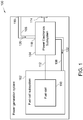
- FIG. 1 is a block diagram of a power generation system 100, in accordance with one embodiment of the present specification.
- the power generation system 100 may include a fuel-cell subsystem 102, a power electronics subsystem 104, a first conduit 106, and a second conduit 108.
- the fuel-cell subsystem 102 includes a fuel-cell 110 configured to generate an electrical power.
- the power electronics subsystem 104 is electrically coupled to the fuel-cell subsystem 102 and configured to process at least a portion of the electrical power generated by the fuel-cell subsystem 102.
- the first conduit 106 is fluidly coupled to the power electronics subsystem 104 to supply at least a portion 120 of a fuel stream to the power electronics subsystem 104, where the power electronics subsystem 104 is configured to heat the portion 120 of the fuel stream to form a pre-heated fuel stream 122.
- the second conduit 108 is fluidly coupled to the power electronics subsystem 104 and the fuel-cell subsystem 102 to supply the pre-heated fuel stream 122 to the fuel-cell subsystem 102.
- the fuel-cell 110 receives the pre-heated fuel stream 122 from the power electronics subsystem 104 via the second conduit 108 and is configured to generate the electrical power using the pre-heated fuel stream 122.
- the fuel stream may include a hydrocarbon gas.
- the hydrocarbon gas includes a natural gas.
- Other fuels including, but not limited to, any gas or liquid may also be used in the fuel stream, without limiting the scope of the present specification.
- Non-limiting examples of other fuels may include methane, ethane, propane, biogas, syngas, diesel, kerosene, gasoline, jet fuel such as Jet Propellant-8 (JP-8), or combinations thereof.
- JP-8 Jet Propellant-8
- the fuel-cell 110 may generate the electrical power based on a chemical reaction between hydrogen and oxygen, in some embodiments. In some other embodiments, the fuel-cell 110 may generate the electrical power based on a chemical reaction between hydrogen, oxygen, and carbon monoxide (CO).
- the hydrogen may be obtained from the pre-heated fuel stream 122 and water vapor/steam received by the fuel-cell 110.
- the fuel-cell 110 may include a reformer (not shown) that facilitates a chemical reaction between the pre-heated fuel stream 122 and the steam.
- SOFC solid-oxide fuel-cell
- the fuel-cell 110 typically includes an anode (not shown), a cathode (not shown), and an electrolyte (not shown) disposed between the anode and the cathode.
- the hydrogen may be provided at the anode and the oxygen may be provided at the cathode.
- the anode facilitates oxidation reactions to generate positively charged hydrogen ions and electrons from the hydrogen supplied at the anode.
- the positively charged hydrogen ions may travel from the anode to the cathode via the electrolyte.
- the electrons may travel from the anode to cathode via a separate electrical path. Such a flow of the electrons constitutes a direct current (DC) electrical power.
- DC direct current
- the positively charged hydrogen ions may be chemically reacted with the oxygen at the cathode which results in formation of water as an exhaust from the fuel-cell 110.
- the fuel-cell 110 may include a polymer electrolyte membrane fuel-cell, a direct methanol fuel-cell, an alkaline fuel-cell, a phosphoric acid fuel-cell, a molten carbonate fuel-cell, an SOFC, or a reversible fuel-cell.
- the DC electrical power generated by the fuel-cell 110 of the fuel-cell subsystem 102 may be provided to the power electronics subsystem 104 via an electrical link 112.
- the electrical link 112 may be a DC-link which typically includes two conductors or terminals - one maintained at a positive potential and another maintained at a negative potential.
- Other types of electrical links employing more than two conductors/terminals may also be used without limiting the scope of the present specification.
- the power electronics subsystem 104 may be implemented as a power converter such as an inverter ( see FIG. 4 ).
- power electronics subsystem 104 may be configured to convert the DC electrical power received from the fuel-cell subsystem 102 to an alternating current (AC) electrical power.
- This AC electrical power may be supplied to an external load (not shown) via an output power port 114.
- the output power port 114 may be representative of an arrangement (e.g., a power socket) to provide an access the AC electrical power generated by the power generation system 100.
- the external load may be connected to the power generation system 100 via the output power port 114.
- the power electronics subsystem 104 may include power processing units for providing electrical power to auxiliary units, for example, fans, heat exchangers, and the like, of the power generation system 100. In some embodiments, the power electronics subsystem 104 may include both the inverter and power processing units for providing electrical power to the auxiliary units. Additional details of the power electronics subsystem 104 will be described in conjunction with FIGs. 2 and 3 .
- the first conduit 106 and the second conduit 108 may represent any suitable mediums such as pipes, flexible or rigid, to allow passage of the portion 120 of the fuel stream therethrough.
- the first conduit 106 may facilitate a flow of the portion 120 of the fuel stream from outside the power generation system 100 to the power electronics subsystem 104.
- an end 116 of the first conduit 106 may be fluidly coupled to a pipeline (not shown) or a storage unit/reservoir (not shown) of the fuel to receive the portion 120 of the fuel stream.
- the other end 118 of the first conduit 106 may be fluidly coupled to the power electronics subsystem 104 to supply at least the portion 120 of the fuel stream to the power electronics subsystem 104. The received at least the portion 120 of the fuel stream passes though the power electronics subsystem 104.
- the power electronics subsystem 104 may generate heat. In accordance with some embodiments, such heat generated by the power electronics subsystem 104 is transferred to the portion 120 of the fuel stream passing though the power electronics subsystem 104, thereby heating the portion 120 of the fuel stream to generate the pre-heated fuel stream 122. This pre-heated fuel stream 122 is supplied to the fuel-cell subsystem 102 via the second conduit 108.
- Table-1 represents a non-limiting example of an amount of heat removal using a fuel stream in a 1 megawatt (MW) power generation system that is operated at different loads and supplied with a fuel such as a natural gas (NG) via the first conduit 106 at various flow rate and temperatures.
- MW 1 megawatt
- NG natural gas
- Table-1 Heat removal example using the natural gas as a fuel stream Parameters Unit Case 1 Case 2 Case 3 Case 4 Case 5 Case 6 Load % 100% 100% 130% 130% 80% 80% Cp NG kJ/kg/C 2.2 2.2 2.2 2.2 2.2 2.2 2.2 NG mass flow rate ( m NG ) kg/second 0.036 0.036 0.047 0.047 0.029 0.029 T in-NG °C 0 30 0 30 0 30 T out-NG °C 70 70 70 70 70 70 Heat removal by NG ( Q NG ) kW 5.5 3.2 7.2 4.1 4.4 2.5
- T in-NG represents the temperature of the NG prior to reaching the power electronics subsystem 104 (e.g., in the first conduit 106)
- T out-NG represents the temperature of the NG after exiting from the power electronics subsystem 104 (e.g., in the second conduit 108)
- Cp NG represents heat capacity of the NG.
- the abbreviations kJ and kg are respectively used to refer to kilojoules and kilograms.
- the configuration of the power generation system 100 advantageously utilizes the heat generated by the power electronics subsystem 104, which, otherwise, would have been dissipated in the surroundings of the power electronics subsystem 104, to pre-heat the portion 120 of the fuel stream.
- This pre-heating of the portion 120 of the fuel stream prior to being supplied to the fuel-cell subsystem 102 requires reduced heating of the pre-heated fuel stream 122 within the fuel-cell subsystem 102. Accordingly, the size, cost, and complexity of the fuel-cell subsystem 102 may be reduced in comparison to traditional fuel-cell subsystems.
- the transfer of the heat from the power electronics subsystem 104 to the portion 120 of the fuel stream passing though the power electronics subsystem 104 aids in cooling the power electronics subsystem 104.
- This cooling of the power electronics subsystem 104 effected by the transfer of the heat to the portion 120 of the fuel stream obviates or minimizes need for additional cooling subsystems thereby reducing the overall size, cost, and complexity of the power generation system 100.
- FIG. 2 is a block diagram of a power generation system 200, in accordance with another embodiment of the present specification.
- the power generation system 200 may include a fuel-cell subsystem 202 and a power electronics subsystem 204.
- the power generation system 200 may also include a plurality of conduits such as a first conduit 206, a second conduit 208, a third conduit 210, and/or a fourth conduit 212.
- the power generation system 200 may be coupled to a fuel source 214 and a water source 216.
- the fuel source 214 and/or the water source 216 may be representative of tanks, containers, or pipelines containing fuel and water, respectively.
- the first conduit 206 may be fluidly coupled to the power electronics subsystem 204 to supply at least a portion 203 of a fuel stream 201 from the fuel source 214 to the power electronics subsystem 204, where the power electronics subsystem 204 is configured to heat the portion 203 of the fuel stream 201 to form a pre-heated fuel stream 205.
- the second conduit 208 is fluidly coupled to the power electronics subsystem 204 and the fuel-cell subsystem 202 to supply the pre-heated fuel stream 205 to the fuel-cell subsystem 202.
- the fuel stream 201 may include hydrocarbon gas.
- the hydrocarbon gas may include a natural gas.
- Other non-limiting examples of the fuel stream 201 may include methane, ethane, propane, biogas, syngas, diesel, kerosene, gasoline, jet fuel such as JP-8, or combinations thereof.
- the third conduit 210 is fluidly coupled to the water source 216 and the power electronics subsystem 204 to supply at least a portion of a water stream 238 from the water source 216 to the power electronics subsystem 204, where the power electronics subsystem 204 is configured to heat the water stream 238 to form a pre-heated water stream 240.
- the fourth conduit 212 is fluidly coupled to the power electronics subsystem 204 and the fuel-cell subsystem 202 to supply the pre-heated water stream 240 to the fuel-cell subsystem 202.
- the fuel-cell subsystem 202 may be representative of one embodiment of the fuel-cell subsystem 102 of FIG. 1 .
- the fuel-cell subsystem 202 may include a plurality of heat exchangers, such as a first heat exchanger 218, a second heat exchanger 220, and a third heat exchanger 222.
- the first heat exchanger 218, the second heat exchanger 220, and the third heat exchanger 222 are hereinafter collectively referred to as heat exchangers 218-222.
- the fuel-cell subsystem 202 may also include an SOFC 224 coupled to the heat exchangers 218-222.
- the SOFC 224 is configured to generate a DC electrical power using at least the pre-heated fuel stream 205.
- the heat exchangers 218-222 may include one or more heating elements configured to heat the fluid passing therethrough.
- the first heat exchanger 218 may be configured to receive a heat transfer fluid 242 via an inlet 226.
- the heat transfer fluid 242 may be air, for example, ambient air.
- the first heat exchanger 218 is configured to heat the received heat transfer fluid 242 to generate a heated heat transfer fluid 244 and supply the heated heat transfer fluid 244 to the SOFC 224.
- the second heat exchanger 220 may be configured to receive the pre-heated fuel stream 205 from the power electronics subsystem 204 via the second conduit 208 and heat the received pre-heated fuel stream 205 to generate a heated fuel stream 246.
- the second heat exchanger 220 may be configured to supply the heated fuel stream 246 to the SOFC 224.
- water may also be supplied to the fuel-cell subsystem 202.
- a pre-heated water stream 240 may be supplied to the fuel-cell subsystem 202 via the fourth conduit 212.
- the third heat exchanger 222 may be configured to receive the pre-heated water stream 240 from the fourth conduit 212. Further, the third heat exchanger 222 may be configured to heat the received pre-heated water stream 240 to generate steam 248 and supply the steam 248 to the SOFC 224.
- the third heat exchanger 222 and the second heat exchanger 220 may be combined as one heat exchanger by receiving the mixture of pre-heated fuel stream 205 and steam.
- the SOFC 224 includes an anode (not shown), a cathode (not shown), and an electrolyte (not shown).
- the SOFC 224 uses a ceramic compound as the electrolyte.
- the SOFC 224 may receive the heated heat transfer fluid 244, the heated fuel stream 246, and the steam 248 from the first heat exchanger 218, the second heat exchanger 220, and the third heat exchanger 222, respectively.
- the SOFC 224 may be configured to generate hydrogen from the heated fuel stream 246 and generate a DC electrical power using at least the hydrogen thus generated.
- the generated DC electrical power may be supplied to the power electronics subsystem 204.
- the power electronics subsystem 204 is electrically coupled to the fuel-cell subsystem 202 via an electrical link 223.
- the electrical link 223 may be similar to the electrical link 112 of FIG. 1 .
- the power electronics subsystem 204 maybe representative of one embodiment of the power electronics subsystem 104 of FIG. 1 and configured to process at least a portion of the electrical power generated by the fuel-cell subsystem 202.
- the power electronics subsystem 204 may be implemented as an inverter ( see FIG. 4 ). In such a configuration of the power electronics subsystem 204, a processed electrical power (i.e., output electrical power) may be provided to an output power port 225 of the power generation system 200.
- the output power port 225 of the power generation system 200 may be similar to the output power port 114 the power generation system 100 of FIG. 1 .
- the power electronics subsystem 204 may be implemented as an auxiliary power electronics circuit. In such a configuration of the power electronics subsystem 204, the processed electrical power generated by the power electronics subsystem 204 may be provided to some auxiliary units, for example, fans (not shown), heat exchangers 218-222, and the like, of the power generation system 200.
- the power electronics subsystem 204 may include a power processing unit 228, which in turn includes at least one power module 230 and a thermally conductive medium 232 disposed in thermal contact with the at least one power module 230.
- the power module 230 may include one or more switches, for example, semiconductor switches.
- Non-limiting examples of the semiconductor switches employed in the power module 230 may include transistors, gate commutated thyristors, field effect transistors (FET), insulated gate bipolar transistors (IGBT), gate turn-off thyristors (GTO), static induction transistors, static induction thyristors, or combinations thereof.
- materials used to form the semiconductor switches may include, but are not limited to, silicon (Si), silicon carbide (SiC), gallium nitride (GaN), or combinations thereof.
- the semiconductor switches of the power module 230 may be arranged to form a DC-AC power converter ( see FIG. 5 ).
- the power processing unit 228 may include one or more power modules 230 based on a requirement of switches for a given configuration of the power processing unit 228. Accordingly, a desired number of power modules 230 having a determined number of corresponding switches may be used in the in the power processing unit 228.
- the power processing unit 228 of FIG. 2 is shown as including a single power module 230. In some embodiments, the power processing unit 228 may also include two ( see FIG. 6 ) or more power modules 230.
- the thermally conductive medium 232 may be a plate or a sheet of a thermally conductive material.
- the thermally conductive materials used to form the thermally conductive medium 232 may include copper, a copper alloy, aluminium, an aluminium alloy, diamond, a diamond powder, composite materials such as copper-tungsten pseudo-alloy, silicon carbide in aluminium matrix (AlSiC), diamond in copper-silver alloy matrix (Dymalloy), and beryllium oxide in beryllium matrix (E-Material), or combinations thereof.
- the power processing unit 228 may include a thermally conductive medium 232 corresponding to each of the two or more power modules 230.
- the power processing unit 228 may include a single common thermally conductive medium 232, where each of the power modules 230 may be disposed in thermal contact with the single common thermally conductive medium 232.
- the power processing unit 228 may also include one or both of a first cooling channel 234 and a second cooling channel 236.
- the first cooling channel 234 and/or the second cooling channel 236 may represent conduits for allowing passage of the portion 203 of the fuel stream 201 and the water stream 238, respectively, through the power electronics subsystem 204.
- the first cooling channel 234 is fluidly coupled to the first conduit 206 to receive the portion 203 of the fuel stream 201 from the first conduit 206.
- the first cooling channel 234 is also fluidly coupled to second conduit 208 to supply the pre-heated fuel stream 205 to the second heat exchanger 220.
- the pre-heated fuel stream 205 is formed by heat transfer to the portion 203 of the fuel stream from the thermally conductive medium 232 via the first cooling channel 234.
- the second cooling channel 236 is fluidly coupled to the third conduit 210 to receive the water stream 238 from the third conduit 210.
- the second cooling channel 236 is also fluidly coupled to fourth conduit 212 to supply the pre-heated water stream 240 to the third heat exchanger 222.
- the pre-heated water stream 240 is formed by heat transfer to the portion of the water stream 238 from the thermally conductive medium 232 via the second cooling channel 236.
- first cooling channel 234 and/or the second cooling channel 236 are formed integral to the thermally conductive medium 232 ( see FIG. 3 ). Also, in certain embodiments, the first cooling channel 234 and/or the second cooling channel 236 are disposed in contact with the thermally conductive medium 232. The first cooling channel 234 and/or the second cooling channel 236 may be formed of the thermally conductive material.
- Non-limiting examples of the thermally conductive materials used to form the first cooling channel 234 and/or the second cooling channel 236 may include copper, a copper alloy, aluminium, an aluminium alloy, diamond, a diamond powder, composite materials such as copper-tungsten pseudo-alloy, silicon carbide in aluminium matrix (AlSiC), diamond in copper-silver alloy matrix (Dymalloy), and beryllium oxide in beryllium matrix (E-Material), or combinations thereof.
- the thermally conductive medium 232 may include one or more cooling channels such as a cooling channel 302 formed integral to the thermally conductive medium 232.
- a cooling channel 302 may represent the first cooling channel 234 of FIG. 2 .
- the cooling channel 302 may represent the second cooling channel 236 of FIG. 2 .
- the cooling channel 302 may also include a plurality of fins 304 protruding radially inwardly into a cavity 306 of the cooling channel 302.
- Such fins 304 provide increased surface contact between an internal surface of the first cooling channel 234 and the portion 203 of the fuel stream in one embodiment or the water stream 238 in another embodiment passing therethrough.
- a size of the thermally conductive medium 232 may be selected based on a size and a number of the power modules 230, and a size of the fins 304.
- a flow of the portion 203 of the fuel stream or both the portion 203 of the fuel stream and the water stream 238 via the power electronics subsystem 204 may be controlled depending on various parameters including, but not limited to, an operating state of the fuel-cell subsystem 202, a load on the power generation system 200, a temperature of the thermally conductive medium 232, a flow rate of the portion 203 of the fuel stream through the first cooling channel 234, a pressure of the portion 203 of the fuel stream in the first cooling channel 234, or combinations thereof.
- only the portion 203 of the fuel stream 201 may be passed through the power electronics subsystem 204.
- both the portion 203 of the fuel stream and the water stream 238 may be passed through the power electronics subsystem 204. Additional details of controlling the flow of the portion 203 of the fuel stream or both the portion 203 of the fuel stream and the water stream 238 will be described with reference to FIGs. 6 and 7 .
- the power electronics subsystem 204 may generate heat.
- the heat generated by the power electronics subsystem 204 is transferred to the portion 203 of the fuel stream or both the portion 203 of the fuel stream and the water stream 238 passing though the power electronics subsystem 204 thereby heating the portion 203 of the fuel stream or both the portion 203 of the fuel stream and the water stream 238 to respectively generate the pre-heated fuel stream 205 and the pre-heated water stream 240.
- the pre-heated fuel stream 205 is supplied to the fuel-cell subsystem 202 via the second conduit 208.
- the pre-heated fuel stream 205 and the pre-heated water stream 240 are supplied to the fuel-cell subsystem 202 respectively via the second conduit 208 and the fourth conduit 212.
- Table-2 represents non-limiting example of an amount heat removal in a one-megawatt (MW) power generation system using a fuel such as a natural gas (NG) supplied via the first conduit 206 and water supplied via the third conduit 210.
- NG natural gas
- the NG and water are supplied at various flow rates and temperatures as listed in Table-2.
- T in-W represents the temperature of the water stream 238 prior to reaching the power electronics subsystem 204 (e.g., in the first conduit 206), and T out-W represents the temperature of the the pre-heated water stream 240, and Cp W represents heat capacity of the water.
- the configuration of the power generation system 200 utilizes the heat generated by the power electronics subsystem 204, which otherwise would have been dissipated in the surroundings of the power electronics subsystem 204, to pre-heat the portion 203 of the fuel stream or both the water stream 238 and the portion 203 of the fuel stream.
- This pre-heating of the portion 203 of the fuel stream or in some embodiments, additionally the pre-heating of the water stream 238 prior to being supplied to the fuel-cell subsystem 202, reduces the heating requirement of the pre-heated fuel stream 205 or both the pre-heated fuel stream 205 and the pre-heated water stream 240 within the fuel-cell subsystem 202.
- a size, cost, and complexity of the fuel-cell subsystem 202 may be reduced in comparison to traditional fuel-cell subsystems.
- the transfer of the heat from the power electronics subsystem 204 to the portion 203 of the fuel stream or both the portion 203 of the fuel stream and the water stream 238 passing though the power electronics subsystem 204 aids in cooling the power electronics subsystem 204.
- This cooling of the power electronics subsystem 204 effected by the transfer of the heat to the portion 203 of the fuel stream or both the portion 203 of the fuel stream and the water stream 238 obviates or minimizes need for additional cooling subsystems, thereby reducing the overall size, cost, and complexity of the power generation system 200 in comparison to the traditional power generation systems.
- FIG. 4 a block diagram of an inverter 400 for use in the power generation systems 100, 200 of FIG. 1 and 2 as the respective power electronics subsystem 104, 204, in accordance with one embodiment of the present specification, is presented.
- the inverter 400 is shown as including certain components such as the power processing unit 402, the thermally conductive medium 404, the first cooling channel 406 and/or the second cooling channel 408 that are similar to corresponding elements of FIG. 2 .
- the inverter 400 includes a DC-AC power converter 410.
- one or more switches of the one or more power modules 230 may be arranged to form the DC-AC power converter 410 ( see FIG. 5 ).
- the DC-AC power converter 410 may represent an electronic circuit formed by arranging the one or more semiconductors switches of the one or more power modules 230.
- the DC-AC power converter 410 may be electrically coupled to the fuel-cell subsystem 102, 202 to receive the DC electrical power and convert the DC electrical power to the AC electrical power.
- the DC-AC power converter 410 will be described in greater detail in conjunction with FIG. 5 .
- FIG. 5 a schematic diagram 500 of the DC-AC power converter 410 used in the inverter 400 of FIG. 4 , in accordance with one embodiment of the present specification, 4 is presented.
- the DC-AC power converter 410 is configured to convert the DC electrical power to the AC electrical power.
- the DC-AC power converter 410 represents a three-phase DC-AC power converter. Use of a single phase or multi-phase DC-AC power converter is also envisioned within the scope of the present specification.
- the DC-AC power converter 410 may include a switching unit 502, a gate drive unit 504, an input port 506, and an output port 508.
- the input port 506 of the DC-AC power converter 410 may be connected to the fuel-cell subsystem 202 of FIG. 2 to receive the DC electrical power generated by the fuel-cell subsystem 202.
- the output port 508 of the DC-AC power converter 410 may be connected to the output power port 225 of the power generation system 200 of FIG. 5 to supply the AC electrical power thereto.
- the switching unit 502 of the DC-AC power converter 410 may include an arrangement of one or more semiconductor switches corresponding to one or more power modules 230.
- the switching unit 502 may be implemented using the one or more power modules 230 of FIG. 2 .
- the switching unit 502 may include semiconductor switches 510, 512, 514, 516, 518, and 520 that are arranged as shown in FIG. 5 .
- the semiconductor switches 510, 512, 514, 516, 518, and 520 are hereinafter collectively referred to as semiconductor switches 510-520.
- Non-limiting examples of the semiconductor switches 510-520 may include transistors, gate commutated thyristors, field effect transistors, insulated gate bipolar transistors, gate turn-off thyristors, static induction transistors, static induction thyristors, or combinations thereof.
- materials used to form the semiconductor switches 510-520 may include, but are not limited to, silicon (Si), silicon carbide (SiC), gallium nitride (GaN), or combinations thereof.
- the switching unit 502 is shown as including six (6) semiconductor switches 510-520, use of a switching unit employing fewer or greater than six semiconductor switches is also envisioned.
- the DC-AC power converter 410 may be implemented using one or more power modules 230.
- a number of power modules 230 that are required to implement the DC-AC power converter 410 may be determined based on a required number of switches to form the DC-AC power converter 410 and a number of switches corresponding to each of the power module 230. For example, if the power module 230 includes 6 semiconductor switches, the DC-AC power converter 410 may be implemented using a single power module 230. However, if the power module 230 includes only two (2) semiconductor switches, three power modules 230 may be needed to implement the DC-AC power converter 410.
- the semiconductor switches 510-520 are shown as N-channel field effect transistors (FETs). These FETs 510-520 may include a drain terminal, a source terminal, and a control terminal (e.g., a gate terminal). As depicted in FIG. 5 , the drain terminals of the semiconductor switches 510, 514, and 518 are coupled to a DC conductor 522 and the source terminals of the semiconductor switches 512, 516, and 520 are coupled to a DC conductor 524. The DC conductor 522 may be maintained at a positive potential while the DC conductor 524 may be maintained at a negative potential.
- FETs field effect transistors
- the source terminals of the semiconductor switches 510, 514, and 518 maybe respectively coupled to the drain terminals of the semiconductor switches 512, 516, and 520. Also, the source terminals of the semiconductor switches 510, 514, and 518 and the drain terminals of the semiconductor switches 512, 516, and 520 may be coupled to output phase lines 526, 528, and 530. Additionally, the control terminals of the semiconductor switches 510-520 are coupled to the gate drive unit 504 to receive respective control signals. More particularly, the control terminals of the semiconductor switches 510, 512, 514, 516, 518, and 520 are respectively coupled to the output terminals 532, 534, 536, 538, 540, and 542 of the gate drive unit 504.
- the gate drive unit 504 is used to control switching of the semiconductor switches 510-520 by selectively supplying control signals to the control terminals of the semiconductor switches 510-520.
- the gate drive unit 504 may include electronics (hardware and/or software) capable of generating a plurality of control signals.
- the gate drive unit 504 may include logic gates, transistors, a microcontroller, a microprocessor, memory, or combinations thereof.
- FIG. 6 is a block diagram of another embodiment of a power generation system 600, in accordance with yet another embodiment the present specification.
- the power generation system 600 may include one or more of the fuel-cell subsystem 602, a power electronics subsystem 604, a control subsystem 606, the first conduit 608, the second conduit 610, the third conduit 612, and the fourth conduit 614.
- the power generation system 600 may also include a bypass conduit 616.
- the power generation system 600 may be coupled to a fuel source (not shown) similar to the fuel source 214 and a water source (not shown) similar to the water source 216 of FIG. 2 .
- the fuel-cell subsystem 602, a power electronics subsystem 604, the first conduit 608, the second conduit 610, the third conduit 612, and the fourth conduit 614 may be respectively representative of one embodiment of fuel-cell subsystem 202, a power electronics subsystem 204, the first conduit 206, the second conduit 208, the third conduit 210, and the fourth conduit 212 of FIG. 2 .
- the power electronics subsystem 604 includes a power processing unit 618.
- the power processing unit 618 includes two power modules 620a and 620b and corresponding thermally conductive mediums 622a, 622b.
- the power processing unit 618 may include a common thermally conductive medium for both power modules 620a and 620b.
- the power modules 620a, 620b may be similar to the power module 230 of FIG. 2 .
- the thermally conductive mediums 622a, 622b may be similar to the thermally conductive medium 232 of FIG. 2 .
- the power electronics subsystem 604 may be electrically coupled to an output power port 624 of the power generation system 600 to supply an AC electrical power thereto.
- the control subsystem 606 is fluidly coupled to the power electronics subsystem 604.
- the control subsystem 606 is configured to control flow of a portion (not shown in FIG. 6 ) of a fuel stream and a water stream (not shown in FIG. 6 ) to the power electronics subsystem 604.
- the control subsystem 606 may include at least one fuel control valve (FCV), such as FCVs 626, 628 fluidly coupled to a first cooling channel (not shown in FIG. 6 ).
- FCV fuel control valve
- FCVs 626 may be fluidly coupled between the first conduit 608 and the first cooling channel corresponding to the power module 620a.
- the FCV 628 may be fluidly coupled between the first conduit 608 and the first cooling channel corresponding to the power module 620b.
- the control subsystem 606 may also include at least one water control valve (WCV), such as WCVs 630, 632 fluidly coupled to a second cooling channel (not shown in FIG. 6 ).
- WCV water control valve
- the WCV 630 may be fluidly coupled between the third conduit 612 and the second cooling channel corresponding to the power module 620a.
- the WCV 632 may be fluidly coupled between the third conduit 612 and the second cooling channel corresponding to the power module 620b.
- the FCVs 626, 628 and the WCVs 630, 632 maybe typical ON/OFF valves.
- the FCVs 626, 628 and the WCVs 630, 632 may be electronically controllable. To minimize the complexity of the representation of the power generation system 600 in FIG. 6 , the first cooling channel and the second cooling channel are not depicted.
- control subsystem 606 may also include a controller 634 operatively coupled to the FCVs 626, 628 and the WCVs 630, 632 to selectively control supply of a pre-heated fuel stream 636 and a pre-heated water stream 638 to the fuel-cell subsystem 602.
- the controller 634 may selectively control one or more of the FCVs 626, 628 and the WCVs 630, 632 to control supply of the pre-heated fuel stream 636 and the pre-heated water stream 638 to the fuel-cell subsystem 602 based on an operating state of the fuel-cell subsystem 602, a load on the power generation system 600, a temperature of the thermally conductive mediums 622a, 622b (or the single common thermally conductive medium), a flow rate of the portion of the fuel stream through the first cooling channel, a pressure of the portion of the fuel stream in the first cooling channel, or combinations thereof.
- the controller 634 may include a specially programmed general-purpose computer, an electronic processor such as a microprocessor, a digital signal processor, and/or a microcontroller. Further, the controller 634 may include input/output ports, and a storage medium, such as an electronic memory.
- a microprocessor include, but are not limited to, a reduced instruction set computing (RISC) architecture type microprocessor or a complex instruction set computing (CISC) architecture type microprocessor. Further, the microprocessor maybe a single-core type or multi-core type.
- the controller 634 may be implemented as hardware elements such as circuit boards with processors or as software running on a processor such as a personal computer (PC), or a microcontroller.
- the fuel-cell subsystem 602 may include an SOFC 640, a first heat exchanger 642, a second heat exchanger 644, and a third heat exchanger 646 that are respectively similar to the SOFC 224, the first heat exchanger 218, the second heat exchanger 220, and a third heat exchanger 222 of the fuel-cell subsystem 202 of FIG. 2 .
- the first heat exchanger 642, the second heat exchanger 644, and the third heat exchanger 646 respectively receive a heat transfer fluid 648, a pre-heated fuel stream 636, and a pre-heated water stream 638.
- the heat transfer fluid 648 may be received by the first heat exchanger 642 via an inlet 650.
- first heat exchanger 642, the second heat exchanger 644, and the third heat exchanger 646 respectively supply a heated heat transfer fluid 652, a heated fuel stream 654, and steam 656 to the SOFC 640.
- the SOFC 640 may in-turn generate an electrical power using the heated heat transfer fluid 652, the heated fuel stream 654, and the steam 656.
- the fuel-cell subsystem 602 is electrically coupled to the power electronics subsystem 604 via an electrical link 658.
- the electrical link 658 may be similar to the electrical link 223 of FIG. 2 .
- the electrical power generated by the SOFC 640 may be supplied to the power electronics subsystem 604 via the electrical link 658.
- the control subsystem 606 may be fluidly coupled to the fuel-cell subsystem 602.
- the control subsystem 606 may include a bypass valve 660 fluidly coupled between the first conduit 608 and the fuel-cell subsystem 602.
- the bypass valve 660 may be disposed along the bypass conduit 616, as shown in FIG. 6 .
- the bypass valve 660 may also be operatively coupled to the controller 634.
- the controller 634 may be configured to selectively control the bypass valve 660 to supply an additional fuel to the fuel-cell subsystem 602.
- the additional fuel may be supplied to the fuel-cell subsystem 602 via the bypass valve 660.
- the controller 634 may be configured to operate the bypass valve 660 in an ON condition. In the ON condition, the bypass valve 660 allows flow of the fuel therethrough.
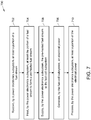
- FIG. 7 is a flow diagram 700 of a method for operating a power generation system, in accordance with one embodiment of the present specification. Although, the flow diagram 700 is described with reference to FIG. 1 for ease of illustration, the steps of flow diagram 700 may also be applicable to the power generation systems 200 and 600 of FIG. 2 and FIG. 6 , respectively.
- At step 702 at least a portion 120 of a fuel stream may be received by the power electronics subsystem 104.
- the portion 120 of the fuel stream may be received by the power electronics subsystem 104 via the first conduit 106.
- at least the portion of the fuel stream may be heated by the power electronics subsystem 104 to form a pre-heated fuel stream.
- internal components of the power electronics subsystem 104 may generate heat. This heat generated by the power electronics subsystem 104 may be transferred to the portion 120 of the fuel stream passing through the power electronics subsystem 104. Accordingly, the portion 120 of the fuel stream passing through the power electronics subsystem 104 is heated, thereby generating the pre-heated fuel stream 122.
- the pre-heated fuel stream 122 may be supplied to the fuel-cell subsystem 102 by the power electronics subsystem 104.
- the pre-heated fuel stream 122 may be supplied to the fuel-cell subsystem 102 from the power electronics subsystem 104 via the second conduit 108.
- the fuel-cell subsystem 102 may generate an electrical power using the pre-heated fuel stream 122 supplied from the power electronics subsystem 104, as described with respect to FIGs. 1 and 2 .
- the fuel-cell 110 of the fuel-cell subsystem 102 may generate a DC electrical power.
- the electrical power generated by the fuel-cell subsystem 102 may be supplied to the power electronics subsystem 104 via the electrical link 112.
- the processing of the electrical power by the power electronics subsystem 104 may include converting the DC electrical power in the AC electrical power.
- the processing of the electrical power by the power electronics subsystem 104 may include increasing or decreasing a magnitude of the electrical power received from the fuel-cell subsystem 102.
- the power electronics subsystem 104 may supply electrical power, hereinafter referred to as a processed electrical power, to the output power port 114 of the power generation system 100. Accordingly, the processed electrical power may be available for use by any external load connected to the output power port 114. In certain embodiments, the processed electrical power may be available for use by the auxiliary units of the power generation system 100.
- FIG. 8 is a detailed flow diagram 800 of another method for operating a power generation system, in accordance with another embodiment of the present specification. Although, the flow diagram 800 is described with reference to FIGs. 2 and 6 for ease of illustration, the steps of flow diagram 800 may also be applicable to the power generation system 100 of FIG. 1 .
- a heat transfer fluid 242, 648 may be received by the first heat exchanger 218, 642.
- the heat transfer fluid 242, 648 such as ambient air may be received by the first heat exchanger 218, 642 via the inlet 226, 650.
- the received heat transfer fluid 242, 648 may be heated by the first heat exchanger 218, 642 to generate a heated heat transfer fluid 244, 652.
- the heated heat transfer fluid 244, 652 may be supplied to the fuel-cell such as the SOFC 224, 640 by the first heat exchanger 218, 642.
- a portion 203 of the fuel stream may be supplied to the power electronics subsystem 204, 604.
- a flow of the portion 203 of the fuel stream may be controlled by the controller 634 via the FCVs 626, 628.
- the controller 634 may be configured to operate the FCVs 626, 628 in an ON condition so that the portion 203 of the fuel stream is passed through the FCVs 626, 628.
- the portion 203 of the fuel stream may be received by the power electronics subsystem 204, 604 via the first conduit 206, 608.
- At least the portion 203 of the fuel stream may be heated by the power electronics subsystem 204, 604 to form a pre-heated fuel stream 205, 636, as indicated by step 812.
- the pre-heated fuel stream 205, 636 maybe supplied to the fuel-cell subsystem 202, 602 by the power electronics subsystem 204, 604 via the second conduit 208, 610. It may be noted that steps 810, 812, and 814 are similar to steps 702, 704, and 706, respectively, of FIG. 7 .
- the pre-heated fuel stream 205, 636 maybe received by the second heat exchanger 220, 644.
- the pre-heated fuel stream 205, 636 maybe received by the second heat exchanger 220, 644 from the power electronics subsystem 204, 604 via the second conduit 208, 610.
- the received pre-heated fuel stream 205, 636 may be heated by the second heat exchanger 220, 644 to generate a heated fuel stream 246, 654.
- the heated fuel stream 246, 654 may be supplied to a fuel-cell such as the SOFC 224, 640 from the second heat exchanger 220, 644.
- a check may be performed to determine whether there exists a need to supply water to the fuel-cell subsystem 202, 602.
- the controller 634 may perform the check at step 822 based on various parameters including, but not limited to, an operating state of the fuel-cell subsystem 202, 602, a load on the power generation system 200, 600, a temperature of the thermally conductive medium 232, 622a, 622b, a flow rate of the portion 203 of the fuel stream in the first cooling channel 234, a pressure of the portion 203 of the fuel stream in the first cooling channel 234, or combinations thereof.
- the operating state of the fuel-cell subsystem 202, 602 may include a start-up state and a nominal operating state.
- the start-up state may be representative of a state of the fuel-cell subsystem 202, 602 when the fuel-cell subsystem 202, 602 warms-up and no electrical power is generated by the fuel-cell subsystem 202, 602.
- the nominal operating state maybe representative of a state of the fuel-cell subsystem 202, 602 when the fuel-cell subsystem 202, 602 generates electrical power.
- the controller 634 may determine that there exists a need to supply water to the fuel-cell subsystem 202, 602 during the start-up state the fuel-cell subsystem 202, 602.
- the load on the power generation system 200, 600 may also be utilized by the controller 634 to determine whether there exists a need to supply water to the fuel-cell subsystem 202, 602. For example, if the power generation system 200, 600 operates in a part load condition, the controller 634, at step 822, may determine that there exists a need to supply water to the fuel-cell subsystem 202, 602 to maintain a predefined steam to carbon ratio.
- the part load condition may be defined as an operation of the power generation system 200, 600 at a load value lower than a predefined threshold load.
- the predefined threshold load may be a value in a range from about 1% to about 60% of a rated load of the power generation system 200, 600.
- the predefined threshold load may be about 60% of the rated load of the power generation system 200, 600.
- the controller 634 may determine that there exists a need to supply water to the fuel-cell subsystem 202, 602. In some other embodiments, if the flow rate of the portion 203 of the fuel stream in the first cooling channel 234 has reached a maximum flow rate and a desired cooling of the power electronics subsystem 204, 604 is not achieved, the controller 634, at step 822, may determine that there exists a need to supply water to the fuel-cell subsystem 202, 602.
- the controller 634 may determine that there exists a need to supply water to the fuel-cell subsystem 202, 602.
- the values of the predefined threshold load, the predefined threshold temperature, the maximum flow rate, and the predefined threshold pressure may be stored/preconfigured in the controller 634.
- the values of the predefined threshold load, the predefined threshold temperature, the maximum flow rate, and the predefined threshold pressure may be customizable.
- a water stream 238 may be supplied to the power electronics subsystem 204, 604.
- the water stream 238 may be supplied to the power electronics subsystem 204, 604 via the third conduit 210, 612.
- a flow of the water stream 238 may be controlled by the controller 634 via the WCVs 630, 632.
- the controller 634 may be configured to operate the WCVs 630, 632 in an ON condition so that the water stream 238 is passed through the WCVs 630, 632.
- the water stream 238 may be received by the power electronics subsystem 204, 604.
- the water stream 238 may be received by the power electronics subsystem 204, 604 via the third conduit 210, 612.
- the water stream 238 may be heated by the power electronics subsystem 204, 604 to form a pre-heated water stream 240, 638.
- the pre-heated water stream 240, 638 may be formed due to the heat transferred to the water stream 238 passing through the power electronics subsystem 204, 604 via the second cooling channel 236.
- the pre-heated water stream 240, 638 maybe supplied to the fuel-cell subsystem 202, 602 by the power electronics subsystem 204, 604.
- the pre-heated water stream 240, 638 may be supplied to the fuel-cell subsystem 202, 602 from the power electronics subsystem 204, 604 via the fourth conduit 212, 614.
- the pre-heated water stream 240, 638 maybe received by the third heat exchanger 222, 646.
- the pre-heated water stream 240, 638 maybe received by the third heat exchanger 222, 646 from the power electronics subsystem 204, 604 via the fourth conduit 212, 614.
- the received pre-heated water stream 240, 638 may be heated by the third heat exchanger 222, 646 to generate steam 248, 656.
- the steam 248, 656 may be supplied to the fuel-cell such as the SOFC 224, 640 by the third heat exchanger 222, 646.
- a first set including steps 802-806, a second set including steps 808-820, and a third set including steps 822-836 may be performed in parallel with one another.
- method steps within each of the first, second, and third sets of the steps 802-806, 808-820, and 822-836 may be performed in series or parallel.
- the electrical power may be generated by the fuel-cell such as the SOFC 224, 640 of the fuel-cell subsystem 202, 602.
- the electrical power for example, the DC electrical power, may be generated by the fuel-cell such as the SOFC 224, 640 based on a chemical reaction between the heated heat transfer fluid 244, 652 (generated at step 806), the heated fuel stream 246, 654 (supplied at step 820), and the steam 248, 656 (supplied at step 836).
- at step 840 at least a portion of the electrical power generated by the SOFC 224, 640 may be processed by the power electronics subsystem 204, 604.
- the power electronics subsystem 204, 604 may supply the processed electrical power to the output power port 225, 624 of the power generation system 200, 600. Accordingly, the processed electrical power may be available for use by any external load connected to the output power port 225, 624. In certain embodiments, the processed electrical power may be available for use by auxiliary units of the power generation system 200, 600.
- configurations of the power generation system 100, 200, 600 exhibit certain advantages over traditional fuel-cell based power generation systems.
- the power generation system 100, 200, 600 utilizes the heat generated by the respective power electronics subsystem 104, 204, 604, which otherwise, would have been dissipated in the surroundings of the power electronics subsystem 104, 204, 604 to pre-heat the portion 120, 203 of the fuel stream or both the portion 120, 203 of the fuel stream and the water stream 238.
- This pre-heating of the portion 120, 203 of the fuel stream and the water stream 238 prior to being supplied to the respective fuel-cell subsystem 102, 202, 602 aids in reducing the requirement for heating the pre-heated fuel stream 122, 205, 636 or both the pre-heated fuel stream 122, 205, 636 and the pre-heated water stream 240, 638 within the fuel-cell subsystem 102, 202, 602. Accordingly, the size, cost, and complexity of the fuel-cell subsystem 102, 202, 602 may be reduced in comparison to traditional fuel-cell subsystems.
- the transfer of the heat from the power electronics subsystem 104, 204, 604 to the portion 120, 203 of the fuel stream or both the portion 120, 203 of the fuel stream and the water stream 238 passing though the power electronics subsystem 104, 204, 604 aids in cooling the power electronics subsystem 104, 204, 604.
- This cooling of the power electronics subsystem 104, 204, 604 effected by the transfer of the heat to the portion 120, 203 of the fuel stream or both the portion 120, 203 of the fuel stream and the water stream 238 obviates or minimizes need for additional cooling subsystems thereby reducing overall size, cost, and complexity of the power generation system 100, 200, 600 in comparison to a traditional power generation system.
- the efficiency of the power generation system 100, 200, 600 is also improved in comparison to the efficiency of the traditional power generation system.
Landscapes
- Chemical & Material Sciences (AREA)
- Engineering & Computer Science (AREA)
- Chemical Kinetics & Catalysis (AREA)
- Sustainable Development (AREA)
- Sustainable Energy (AREA)
- Manufacturing & Machinery (AREA)
- Life Sciences & Earth Sciences (AREA)
- Electrochemistry (AREA)
- General Chemical & Material Sciences (AREA)
- Organic Chemistry (AREA)
- Combustion & Propulsion (AREA)
- Inorganic Chemistry (AREA)
- Fuel Cell (AREA)
- Power Engineering (AREA)
- Inverter Devices (AREA)
Abstract
Description
- Embodiments of the present specification relate to a power generation system and, more particularly to a fuel-cell-based power generation system and a method for operating such a power generation system.
- A fuel-cell is an electrochemical energy conversion device that has demonstrated a potential in terms of higher efficiency and lower pollution in comparison to that of coal and/or diesel based power generation systems. Common types of fuel-cells include a polymer electrolyte membrane fuel-cell, a direct methanol fuel-cell, an alkaline fuel-cell, a phosphoric acid fuel-cell, a molten carbonate fuel-cell, or a solid oxide fuel-cell (SOFC). Fuel-cells, such as SOFCs, may operate in large-scale power generation systems to satisfy industrial and municipal needs.
- Typically, in a power generation system employing the fuel-cell, the fuel-cell generates a direct current (DC) electrical power. The generated DC electrical power may be converted to an alternating current (AC) electrical power using a power converter, for example, an inverter. During operation of such power generation systems, the inverter generates heat. Therefore, the power generation systems include subsystems for facilitating cooling of the heated inverter. Some power generation systems include dedicated liquid or air cooling subsystems to dissipate the heat generated by the inverter. By way of example, the dedicated liquid or air cooling subsystems require additional components including, but not limited to, one or more fans, a network of pipelines for facilitating a circulation of a coolant, and one or more pumps to effect the circulation of the coolant through the network of pipelines. Consequently, such dedicated cooling subsystems may increase the overall size, cost, and complexity of the power generation system.
- In accordance with one embodiment of the present specification, a power generation system is presented. The power generation system includes a fuel-cell subsystem having a fuel-cell configured to generate an electrical power. The power generation system further includes a power electronics subsystem electrically coupled to the fuel-cell subsystem and configured to process at least a portion of the electrical power generated by the fuel-cell subsystem. Furthermore, the power generation system includes a first conduit fluidly coupled to the power electronics subsystem and configured to supply at least a portion of a fuel stream to the power electronics subsystem, where the power electronics subsystem is configured to heat the portion of the fuel stream to form a pre-heated fuel stream. Moreover, power generation system includes a second conduit fluidly coupled to the power electronics subsystem and the fuel-cell subsystem and configured to supply the pre-heated fuel stream to the fuel-cell subsystem. The fuel-cell is configured to generate the electrical power using the pre-heated fuel stream.
- In accordance with another embodiment of the present specification, a power generation system is presented. The power generation system includes a fuel-cell subsystem having a solid oxide fuel-cell (SOFC) configured to generate a direct current (DC) electrical power. The power generation system further includes an inverter electrically coupled to the fuel-cell subsystem and configured to convert the DC electrical power generated by the SOFC to an alternating current (AC) electrical power. Furthermore, the power generation system includes a first conduit fluidly coupled to the inverter and configured to supply at least a portion of a fuel stream to the inverter, where the inverter is configured to heat the portion of the fuel stream to form a pre-heated fuel stream. Moreover, power generation system includes a second conduit fluidly coupled to the inverter and the fuel-cell subsystem and configured to supply the pre-heated fuel stream to the fuel-cell subsystem. The SOFC is configured to generate the DC electrical power using the pre-heated fuel stream.
- In accordance with yet another embodiment of the present specification, a method for operating a power generation system is presented. The power generation system includes a fuel-cell subsystem having a fuel-cell configured to generate an electrical power and a power electronics subsystem electrically coupled to the fuel-cell subsystem. The method includes receiving, by the power electronics subsystem, at least a portion of a fuel stream. The method further includes heating, by the power electronics subsystem, at least the portion of a fuel stream to form a pre-heated fuel stream. Furthermore, the method includes supplying, by the power electronics subsystem, the pre-heated fuel stream to the fuel-cell subsystem. The method also includes generating, by the fuel-cell, the electrical power using the pre-heated fuel stream. Moreover, the method includes processing, by the power electronics subsystem, at least a portion of the electrical power generated by the fuel-cell subsystem.
- Various features, aspects, and advantages of the present specification will become better understood when the following detailed description is read with reference to the accompanying drawings in which like characters represent like parts throughout the drawings, wherein:
-
FIG. 1 is a block diagram of a power generation system, in accordance with one embodiment of the present specification; -
FIG. 2 is a block diagram of a power generation system, in accordance with another embodiment of the present specification; -
FIG. 3 is a perspective view of a portion of a thermally conductive medium used in the power generation systems ofFIGs. 1 and2 , in accordance with one embodiment of the present specification; -
FIG. 4 is a block diagram of an inverter for use as a power electronics subsystem in the power generation systems ofFIGs. 1 and2 , in accordance with one embodiment of the present specification; -
FIG. 5 is a schematic diagram of a DC-AC power converter used in the inverter ofFIG. 4 , in accordance with one embodiment of the present specification; -
FIG. 6 is a block diagram of a power generation system, in accordance with yet another embodiment of the present specification; -
FIG. 7 is a flow diagram of a method for operating a power generation system, in accordance with one embodiment of the present specification; and -
FIG. 8 is a flow diagram of another method for operating a power generation system, in accordance with one embodiment of the present specification. - Unless defined otherwise, technical and scientific terms used herein have the same meaning as is commonly understood by one of ordinary skill in the art to which this specification belongs. In the following specification and the claims, the singular forms "a", "an" and "the" include plural referents unless the context clearly dictates otherwise. As used herein, the term "or" is not meant to be exclusive and refers to at least one of the referenced components being present and includes instances in which a combination of the referenced components may be present, unless the context clearly dictates otherwise.
- As used herein, the terms "may" and "may be" indicate a possibility of an occurrence within a set of circumstances; a possession of a specified property, characteristic or function; and/or qualify another verb by expressing one or more of an ability, capability, or possibility associated with the qualified verb. Accordingly, usage of "may" and "may be" indicates that a modified term is apparently appropriate, capable, or suitable for an indicated capacity, function, or usage, while taking into account that in some circumstances, the modified term may sometimes not be appropriate, capable, or suitable.
- It is to be noted that the term "fluid" as used herein includes any medium or material that flows, including, but not limited to, gas, liquid, or a combination thereof. Further, the terms "fluidly coupled" or "fluidly coupling", as used herein, refer to an arrangement or a connection between two components that facilitates flow of fluid from one component to another component, or vice-versa.
-
FIG. 1 is a block diagram of apower generation system 100, in accordance with one embodiment of the present specification. Thepower generation system 100 may include a fuel-cell subsystem 102, apower electronics subsystem 104, afirst conduit 106, and asecond conduit 108. The fuel-cell subsystem 102 includes a fuel-cell 110 configured to generate an electrical power. Thepower electronics subsystem 104 is electrically coupled to the fuel-cell subsystem 102 and configured to process at least a portion of the electrical power generated by the fuel-cell subsystem 102. Thefirst conduit 106 is fluidly coupled to thepower electronics subsystem 104 to supply at least aportion 120 of a fuel stream to thepower electronics subsystem 104, where thepower electronics subsystem 104 is configured to heat theportion 120 of the fuel stream to form apre-heated fuel stream 122. Thesecond conduit 108 is fluidly coupled to thepower electronics subsystem 104 and the fuel-cell subsystem 102 to supply thepre-heated fuel stream 122 to the fuel-cell subsystem 102. The fuel-cell 110 receives thepre-heated fuel stream 122 from thepower electronics subsystem 104 via thesecond conduit 108 and is configured to generate the electrical power using thepre-heated fuel stream 122. - In some embodiments, the fuel stream may include a hydrocarbon gas. In a non-limiting example, the hydrocarbon gas includes a natural gas. Other fuels including, but not limited to, any gas or liquid may also be used in the fuel stream, without limiting the scope of the present specification. Non-limiting examples of other fuels may include methane, ethane, propane, biogas, syngas, diesel, kerosene, gasoline, jet fuel such as Jet Propellant-8 (JP-8), or combinations thereof.
- The fuel-
cell 110 may generate the electrical power based on a chemical reaction between hydrogen and oxygen, in some embodiments. In some other embodiments, the fuel-cell 110 may generate the electrical power based on a chemical reaction between hydrogen, oxygen, and carbon monoxide (CO). The hydrogen may be obtained from thepre-heated fuel stream 122 and water vapor/steam received by the fuel-cell 110. To facilitate the generation of the hydrogen, in some embodiments, the fuel-cell 110 may include a reformer (not shown) that facilitates a chemical reaction between thepre-heated fuel stream 122 and the steam. In some embodiments, when the fuel-cell 110 is a solid-oxide fuel-cell (SOFC), a separate reformer may not be required. Also, the fuel-cell 110 typically includes an anode (not shown), a cathode (not shown), and an electrolyte (not shown) disposed between the anode and the cathode. In some embodiments, the hydrogen may be provided at the anode and the oxygen may be provided at the cathode. The anode facilitates oxidation reactions to generate positively charged hydrogen ions and electrons from the hydrogen supplied at the anode. The positively charged hydrogen ions may travel from the anode to the cathode via the electrolyte. At the same time, the electrons may travel from the anode to cathode via a separate electrical path. Such a flow of the electrons constitutes a direct current (DC) electrical power. Moreover, the positively charged hydrogen ions may be chemically reacted with the oxygen at the cathode which results in formation of water as an exhaust from the fuel-cell 110. Non-limiting examples of the fuel-cell 110 may include a polymer electrolyte membrane fuel-cell, a direct methanol fuel-cell, an alkaline fuel-cell, a phosphoric acid fuel-cell, a molten carbonate fuel-cell, an SOFC, or a reversible fuel-cell. - The DC electrical power generated by the fuel-
cell 110 of the fuel-cell subsystem 102 may be provided to thepower electronics subsystem 104 via anelectrical link 112. By way of example, theelectrical link 112 may be a DC-link which typically includes two conductors or terminals - one maintained at a positive potential and another maintained at a negative potential. Other types of electrical links employing more than two conductors/terminals may also be used without limiting the scope of the present specification. - In some embodiments, the
power electronics subsystem 104 may be implemented as a power converter such as an inverter (seeFIG. 4 ). In such a configuration,power electronics subsystem 104 may be configured to convert the DC electrical power received from the fuel-cell subsystem 102 to an alternating current (AC) electrical power. This AC electrical power may be supplied to an external load (not shown) via anoutput power port 114. Theoutput power port 114 may be representative of an arrangement (e.g., a power socket) to provide an access the AC electrical power generated by thepower generation system 100. The external load may be connected to thepower generation system 100 via theoutput power port 114. In some embodiments, thepower electronics subsystem 104 may include power processing units for providing electrical power to auxiliary units, for example, fans, heat exchangers, and the like, of thepower generation system 100. In some embodiments, thepower electronics subsystem 104 may include both the inverter and power processing units for providing electrical power to the auxiliary units. Additional details of thepower electronics subsystem 104 will be described in conjunction withFIGs. 2 and3 . - The
first conduit 106 and thesecond conduit 108 may represent any suitable mediums such as pipes, flexible or rigid, to allow passage of theportion 120 of the fuel stream therethrough. As depicted inFIG. 1 , thefirst conduit 106 may facilitate a flow of theportion 120 of the fuel stream from outside thepower generation system 100 to thepower electronics subsystem 104. By way of example, anend 116 of thefirst conduit 106 may be fluidly coupled to a pipeline (not shown) or a storage unit/reservoir (not shown) of the fuel to receive theportion 120 of the fuel stream. Theother end 118 of thefirst conduit 106 may be fluidly coupled to the power electronics subsystem 104 to supply at least theportion 120 of the fuel stream to thepower electronics subsystem 104. The received at least theportion 120 of the fuel stream passes though thepower electronics subsystem 104. - During operation of the
power generation system 100, while processing the electrical power received from the fuel-cell subsystem 102, thepower electronics subsystem 104 may generate heat. In accordance with some embodiments, such heat generated by thepower electronics subsystem 104 is transferred to theportion 120 of the fuel stream passing though thepower electronics subsystem 104, thereby heating theportion 120 of the fuel stream to generate thepre-heated fuel stream 122. Thispre-heated fuel stream 122 is supplied to the fuel-cell subsystem 102 via thesecond conduit 108. - Table-1 represents a non-limiting example of an amount of heat removal using a fuel stream in a 1 megawatt (MW) power generation system that is operated at different loads and supplied with a fuel such as a natural gas (NG) via the
first conduit 106 at various flow rate and temperatures.Table-1: Heat removal example using the natural gas as a fuel stream Parameters Unit Case 1 Case 2 Case 3 Case 4 Case 5 Case 6 Load % 100% 100% 130% 130% 80% 80% CpNG kJ/kg/C 2.2 2.2 2.2 2.2 2.2 2.2 NG mass flow rate (mNG ) kg/second 0.036 0.036 0.047 0.047 0.029 0.029 Tin-NG °C 0 30 0 30 0 30 Tout-NG °C 70 70 70 70 70 70 Heat removal by NG (QNG ) kW 5.5 3.2 7.2 4.1 4.4 2.5 - In Table-1, Tin-NG represents the temperature of the NG prior to reaching the power electronics subsystem 104 (e.g., in the first conduit 106), Tout-NG represents the temperature of the NG after exiting from the power electronics subsystem 104 (e.g., in the second conduit 108), and CpNG represents heat capacity of the NG. Moreover, the abbreviations kJ and kg are respectively used to refer to kilojoules and kilograms. By way of example, Tin-NG = 0 °C and Tin-NC = 30 °C represents the typical temperatures for the NG in the winter and summer, respectively. In some embodiments, the heat removal value (QNG ) may be determined using following equation:

- In a non-limiting example of case 3 where the
power generation system 100 is operated at 130% load (i.e., 30% more than a rated load), if Tin-NG = 0 °C, Tout-NG = 70 °C, and the NG mass flow rate mNG = 0.047 kilogram/second, 7.5kW of heat maybe recovered due to the heat transferred by the power electronics subsystem 104 to the NG flowing therethrough. It may also be observed from Table-1 that as the temperature Tin-NG of the NG prior to reaching the power electronics subsystem 104 increases, for example Tin-NG = 30 °C, the amount of the heat removed (QNG ) decreases (see cases 2, 4, and 6). Also, for given values of Tin-NG, Tout-NG, and mNG, the load of thepower generation system 100 affects the amount of the heat recovered/removed (QNG ). - In accordance with some embodiments, the configuration of the
power generation system 100 advantageously utilizes the heat generated by thepower electronics subsystem 104, which, otherwise, would have been dissipated in the surroundings of thepower electronics subsystem 104, to pre-heat theportion 120 of the fuel stream. This pre-heating of theportion 120 of the fuel stream prior to being supplied to the fuel-cell subsystem 102 requires reduced heating of thepre-heated fuel stream 122 within the fuel-cell subsystem 102. Accordingly, the size, cost, and complexity of the fuel-cell subsystem 102 may be reduced in comparison to traditional fuel-cell subsystems. Additionally, the transfer of the heat from the power electronics subsystem 104 to theportion 120 of the fuel stream passing though the power electronics subsystem 104 aids in cooling thepower electronics subsystem 104. This cooling of the power electronics subsystem 104 effected by the transfer of the heat to theportion 120 of the fuel stream obviates or minimizes need for additional cooling subsystems thereby reducing the overall size, cost, and complexity of thepower generation system 100. -
FIG. 2 is a block diagram of apower generation system 200, in accordance with another embodiment of the present specification. In some embodiments, thepower generation system 200 may include a fuel-cell subsystem 202 and apower electronics subsystem 204. Thepower generation system 200 may also include a plurality of conduits such as afirst conduit 206, asecond conduit 208, athird conduit 210, and/or afourth conduit 212. Further, thepower generation system 200 may be coupled to afuel source 214 and awater source 216. Thefuel source 214 and/or thewater source 216 may be representative of tanks, containers, or pipelines containing fuel and water, respectively. - In some embodiments, the
first conduit 206 may be fluidly coupled to the power electronics subsystem 204 to supply at least aportion 203 of afuel stream 201 from thefuel source 214 to thepower electronics subsystem 204, where thepower electronics subsystem 204 is configured to heat theportion 203 of thefuel stream 201 to form apre-heated fuel stream 205. Thesecond conduit 208 is fluidly coupled to thepower electronics subsystem 204 and the fuel-cell subsystem 202 to supply thepre-heated fuel stream 205 to the fuel-cell subsystem 202. In some embodiments, thefuel stream 201 may include hydrocarbon gas. In one non-limiting example, the hydrocarbon gas may include a natural gas. Other non-limiting examples of thefuel stream 201 may include methane, ethane, propane, biogas, syngas, diesel, kerosene, gasoline, jet fuel such as JP-8, or combinations thereof. - Moreover, in some embodiments, the
third conduit 210 is fluidly coupled to thewater source 216 and the power electronics subsystem 204 to supply at least a portion of awater stream 238 from thewater source 216 to thepower electronics subsystem 204, where thepower electronics subsystem 204 is configured to heat thewater stream 238 to form apre-heated water stream 240. Additionally, thefourth conduit 212 is fluidly coupled to thepower electronics subsystem 204 and the fuel-cell subsystem 202 to supply thepre-heated water stream 240 to the fuel-cell subsystem 202. - The fuel-
cell subsystem 202 may be representative of one embodiment of the fuel-cell subsystem 102 ofFIG. 1 . The fuel-cell subsystem 202 may include a plurality of heat exchangers, such as afirst heat exchanger 218, asecond heat exchanger 220, and athird heat exchanger 222. Thefirst heat exchanger 218, thesecond heat exchanger 220, and thethird heat exchanger 222 are hereinafter collectively referred to as heat exchangers 218-222. The fuel-cell subsystem 202 may also include anSOFC 224 coupled to the heat exchangers 218-222. TheSOFC 224 is configured to generate a DC electrical power using at least thepre-heated fuel stream 205. The heat exchangers 218-222 may include one or more heating elements configured to heat the fluid passing therethrough. - The
first heat exchanger 218 may be configured to receive aheat transfer fluid 242 via aninlet 226. In some embodiments, theheat transfer fluid 242 may be air, for example, ambient air. Further, thefirst heat exchanger 218 is configured to heat the receivedheat transfer fluid 242 to generate a heatedheat transfer fluid 244 and supply the heatedheat transfer fluid 244 to theSOFC 224. Thesecond heat exchanger 220 may be configured to receive thepre-heated fuel stream 205 from thepower electronics subsystem 204 via thesecond conduit 208 and heat the receivedpre-heated fuel stream 205 to generate aheated fuel stream 246. Moreover, thesecond heat exchanger 220 may be configured to supply theheated fuel stream 246 to theSOFC 224. - In some embodiments, water may also be supplied to the fuel-
cell subsystem 202. In some embodiments, apre-heated water stream 240 may be supplied to the fuel-cell subsystem 202 via thefourth conduit 212. Thethird heat exchanger 222 may be configured to receive thepre-heated water stream 240 from thefourth conduit 212. Further, thethird heat exchanger 222 may be configured to heat the receivedpre-heated water stream 240 to generatesteam 248 and supply thesteam 248 to theSOFC 224. In some embodiments, thethird heat exchanger 222 and thesecond heat exchanger 220 may be combined as one heat exchanger by receiving the mixture ofpre-heated fuel stream 205 and steam. - Typically, the
SOFC 224 includes an anode (not shown), a cathode (not shown), and an electrolyte (not shown). In comparison to other types of fuel-cells, theSOFC 224 uses a ceramic compound as the electrolyte. TheSOFC 224 may receive the heatedheat transfer fluid 244, theheated fuel stream 246, and thesteam 248 from thefirst heat exchanger 218, thesecond heat exchanger 220, and thethird heat exchanger 222, respectively. TheSOFC 224 may be configured to generate hydrogen from theheated fuel stream 246 and generate a DC electrical power using at least the hydrogen thus generated. The generated DC electrical power may be supplied to thepower electronics subsystem 204. - The
power electronics subsystem 204 is electrically coupled to the fuel-cell subsystem 202 via anelectrical link 223. Theelectrical link 223 may be similar to theelectrical link 112 ofFIG. 1 . The power electronics subsystem 204 maybe representative of one embodiment of the power electronics subsystem 104 ofFIG. 1 and configured to process at least a portion of the electrical power generated by the fuel-cell subsystem 202. In some embodiments, thepower electronics subsystem 204 may be implemented as an inverter (seeFIG. 4 ). In such a configuration of thepower electronics subsystem 204, a processed electrical power (i.e., output electrical power) may be provided to anoutput power port 225 of thepower generation system 200. Theoutput power port 225 of thepower generation system 200 may be similar to theoutput power port 114 thepower generation system 100 ofFIG. 1 . In some embodiments, thepower electronics subsystem 204 may be implemented as an auxiliary power electronics circuit. In such a configuration of thepower electronics subsystem 204, the processed electrical power generated by thepower electronics subsystem 204 may be provided to some auxiliary units, for example, fans (not shown), heat exchangers 218-222, and the like, of thepower generation system 200. - In some embodiments, the
power electronics subsystem 204 may include apower processing unit 228, which in turn includes at least onepower module 230 and a thermally conductive medium 232 disposed in thermal contact with the at least onepower module 230. Thepower module 230 may include one or more switches, for example, semiconductor switches. Non-limiting examples of the semiconductor switches employed in thepower module 230 may include transistors, gate commutated thyristors, field effect transistors (FET), insulated gate bipolar transistors (IGBT), gate turn-off thyristors (GTO), static induction transistors, static induction thyristors, or combinations thereof. Moreover, materials used to form the semiconductor switches may include, but are not limited to, silicon (Si), silicon carbide (SiC), gallium nitride (GaN), or combinations thereof. In some embodiments, when thepower electronics subsystem 204 is implemented as the inverter (seeFIG. 4 ), the semiconductor switches of thepower module 230 may be arranged to form a DC-AC power converter (seeFIG. 5 ). - In certain embodiments, the
power processing unit 228 may include one ormore power modules 230 based on a requirement of switches for a given configuration of thepower processing unit 228. Accordingly, a desired number ofpower modules 230 having a determined number of corresponding switches may be used in the in thepower processing unit 228. For ease of illustration, thepower processing unit 228 ofFIG. 2 is shown as including asingle power module 230. In some embodiments, thepower processing unit 228 may also include two (seeFIG. 6 ) ormore power modules 230. - The thermally conductive medium 232 may be a plate or a sheet of a thermally conductive material. Non-limiting examples of the thermally conductive materials used to form the thermally conductive medium 232 may include copper, a copper alloy, aluminium, an aluminium alloy, diamond, a diamond powder, composite materials such as copper-tungsten pseudo-alloy, silicon carbide in aluminium matrix (AlSiC), diamond in copper-silver alloy matrix (Dymalloy), and beryllium oxide in beryllium matrix (E-Material), or combinations thereof. In some embodiments, where the
power processing unit 228 includes two ormore power modules 230, thepower processing unit 228 may include a thermally conductive medium 232 corresponding to each of the two ormore power modules 230. In some other embodiments, where thepower processing unit 228 includes two ormore power modules 230, thepower processing unit 228 may include a single common thermallyconductive medium 232, where each of thepower modules 230 may be disposed in thermal contact with the single common thermallyconductive medium 232. - Moreover, in some embodiments, the
power processing unit 228 may also include one or both of afirst cooling channel 234 and asecond cooling channel 236. Thefirst cooling channel 234 and/or thesecond cooling channel 236 may represent conduits for allowing passage of theportion 203 of thefuel stream 201 and thewater stream 238, respectively, through thepower electronics subsystem 204. Thefirst cooling channel 234 is fluidly coupled to thefirst conduit 206 to receive theportion 203 of thefuel stream 201 from thefirst conduit 206. Thefirst cooling channel 234 is also fluidly coupled tosecond conduit 208 to supply thepre-heated fuel stream 205 to thesecond heat exchanger 220. Thepre-heated fuel stream 205 is formed by heat transfer to theportion 203 of the fuel stream from the thermallyconductive medium 232 via thefirst cooling channel 234. Moreover, thesecond cooling channel 236 is fluidly coupled to thethird conduit 210 to receive thewater stream 238 from thethird conduit 210. Thesecond cooling channel 236 is also fluidly coupled tofourth conduit 212 to supply thepre-heated water stream 240 to thethird heat exchanger 222. Thepre-heated water stream 240 is formed by heat transfer to the portion of thewater stream 238 from the thermallyconductive medium 232 via thesecond cooling channel 236. - In some other embodiments, the
first cooling channel 234 and/or thesecond cooling channel 236 are formed integral to the thermally conductive medium 232 (seeFIG. 3 ). Also, in certain embodiments, thefirst cooling channel 234 and/or thesecond cooling channel 236 are disposed in contact with the thermallyconductive medium 232. Thefirst cooling channel 234 and/or thesecond cooling channel 236 may be formed of the thermally conductive material. Non-limiting examples of the thermally conductive materials used to form thefirst cooling channel 234 and/or thesecond cooling channel 236 may include copper, a copper alloy, aluminium, an aluminium alloy, diamond, a diamond powder, composite materials such as copper-tungsten pseudo-alloy, silicon carbide in aluminium matrix (AlSiC), diamond in copper-silver alloy matrix (Dymalloy), and beryllium oxide in beryllium matrix (E-Material), or combinations thereof. - Referring now to
FIG. 3 , aperspective view 300 of a portion of the thermallyconductive medium 232, in accordance with one embodiment of the present specification, is presented. The thermally conductive medium 232 may include one or more cooling channels such as acooling channel 302 formed integral to the thermallyconductive medium 232. For ease of illustration, only onecooling channel 302 is depicted inFIG. 3 . In one embodiment, the coolingchannel 302 may represent thefirst cooling channel 234 ofFIG. 2 . In another embodiment, the coolingchannel 302 may represent thesecond cooling channel 236 ofFIG. 2 . In some embodiments, the coolingchannel 302 may also include a plurality offins 304 protruding radially inwardly into acavity 306 of thecooling channel 302.Such fins 304 provide increased surface contact between an internal surface of thefirst cooling channel 234 and theportion 203 of the fuel stream in one embodiment or thewater stream 238 in another embodiment passing therethrough. In some embodiments, a size of the thermally conductive medium 232 may be selected based on a size and a number of thepower modules 230, and a size of thefins 304. - With returning reference to
FIG. 2 , during operation of thepower generation system 200, a flow of theportion 203 of the fuel stream or both theportion 203 of the fuel stream and thewater stream 238 via thepower electronics subsystem 204 may be controlled depending on various parameters including, but not limited to, an operating state of the fuel-cell subsystem 202, a load on thepower generation system 200, a temperature of the thermallyconductive medium 232, a flow rate of theportion 203 of the fuel stream through thefirst cooling channel 234, a pressure of theportion 203 of the fuel stream in thefirst cooling channel 234, or combinations thereof. In some embodiments, only theportion 203 of thefuel stream 201 may be passed through thepower electronics subsystem 204. In other embodiments, both theportion 203 of the fuel stream and thewater stream 238 may be passed through thepower electronics subsystem 204. Additional details of controlling the flow of theportion 203 of the fuel stream or both theportion 203 of the fuel stream and thewater stream 238 will be described with reference toFIGs. 6 and7 . - Further, during operation of the
power generation system 200, while processing the electrical power received from the fuel-cell subsystem 202, thepower electronics subsystem 204 may generate heat. In accordance with some embodiments, the heat generated by thepower electronics subsystem 204 is transferred to theportion 203 of the fuel stream or both theportion 203 of the fuel stream and thewater stream 238 passing though thepower electronics subsystem 204 thereby heating theportion 203 of the fuel stream or both theportion 203 of the fuel stream and thewater stream 238 to respectively generate thepre-heated fuel stream 205 and thepre-heated water stream 240. In some embodiments, thepre-heated fuel stream 205 is supplied to the fuel-cell subsystem 202 via thesecond conduit 208. Also, in certain other embodiments, thepre-heated fuel stream 205 and thepre-heated water stream 240 are supplied to the fuel-cell subsystem 202 respectively via thesecond conduit 208 and thefourth conduit 212. - Table-2 represents non-limiting example of an amount heat removal in a one-megawatt (MW) power generation system using a fuel such as a natural gas (NG) supplied via the
first conduit 206 and water supplied via thethird conduit 210. The NG and water are supplied at various flow rates and temperatures as listed in Table-2.Table-2: Heat removal example using both the NG and water Parameters Unit Case 1 Case 2 Case 3 Case 4 Case 5 Case 6 Load % 60% 60% 40% 40% 20% 20% CpNG kJ/kg/C 2.2 2.2 2.2 2.2 2.2 2.2 NG mass flow rate (mNG ) kg/second 0.022 0.022 0.014 0.014 0.007 0.007 Tin-NG °C 0 30 0 30 0 30 Tout-NG °C 70 70 70 70 70 70 Water mass flow rate (mW ) kg/second 0.065 0.065 0.043 0.043 0.022 0.022 Tin-W °C 0 30 0 30 0 30 Tout-W °C 70 70 70 70 70 70 CpW kJ/kg/C 4.184 4.184 4.184 4.184 4.184 4.184 Heat removal by NG (QNG ) kW 3.3 1.9 2.2 1.3 1.1 0.6 Heat removal by water (QW ) kW 19.0 10.8 12.7 7.2 6.3 3.6 Total heat removal (QNG + QW ) kW 22.3 12.7 14.9 8.5 7.4 4.2 - In Table-2, Tin-W represents the temperature of the
water stream 238 prior to reaching the power electronics subsystem 204 (e.g., in the first conduit 206), and Tout-W represents the temperature of the thepre-heated water stream 240, and CpW represents heat capacity of the water. In some embodiments, the heat removal value (QW ) may be determined using following equation:
- In a non-limiting example of case 1 where the
power generation system 200 is operated at 60% load (i.e., part load) and if Tin-NG =Tin-W = 0 °C, Tout-NG =Tout-W = 70 °C, mNG =0.022, and, mW = 0.065 kilogram/second, 19 kW of heat may be recovered by the water due to the heat transferred by the power electronics subsystem 204 to thewater stream 238 flowing therethrough. Since, 3.3 kW of heat is also recovered due to use of the NG, a total 22.3 kW of heat may be recovered using both the NG and water. - Advantageously, in accordance with some embodiments, the configuration of the
power generation system 200 utilizes the heat generated by thepower electronics subsystem 204, which otherwise would have been dissipated in the surroundings of thepower electronics subsystem 204, to pre-heat theportion 203 of the fuel stream or both thewater stream 238 and theportion 203 of the fuel stream. This pre-heating of theportion 203 of the fuel stream, or in some embodiments, additionally the pre-heating of thewater stream 238 prior to being supplied to the fuel-cell subsystem 202, reduces the heating requirement of thepre-heated fuel stream 205 or both thepre-heated fuel stream 205 and thepre-heated water stream 240 within the fuel-cell subsystem 202. Accordingly, a size, cost, and complexity of the fuel-cell subsystem 202 may be reduced in comparison to traditional fuel-cell subsystems. Moreover, the transfer of the heat from the power electronics subsystem 204 to theportion 203 of the fuel stream or both theportion 203 of the fuel stream and thewater stream 238 passing though the power electronics subsystem 204 aids in cooling thepower electronics subsystem 204. This cooling of the power electronics subsystem 204 effected by the transfer of the heat to theportion 203 of the fuel stream or both theportion 203 of the fuel stream and thewater stream 238 obviates or minimizes need for additional cooling subsystems, thereby reducing the overall size, cost, and complexity of thepower generation system 200 in comparison to the traditional power generation systems. - Referring now to
FIG. 4 , a block diagram of aninverter 400 for use in thepower generation systems FIG. 1 and2 as the respectivepower electronics subsystem inverter 400 ofFIG. 4 , theinverter 400 is shown as including certain components such as thepower processing unit 402, the thermallyconductive medium 404, thefirst cooling channel 406 and/or thesecond cooling channel 408 that are similar to corresponding elements ofFIG. 2 . - Additionally, the
inverter 400 includes a DC-AC power converter 410. In some embodiments, one or more switches of the one ormore power modules 230 may be arranged to form the DC-AC power converter 410 (seeFIG. 5 ). Accordingly, the DC-AC power converter 410 may represent an electronic circuit formed by arranging the one or more semiconductors switches of the one ormore power modules 230. The DC-AC power converter 410 may be electrically coupled to the fuel-cell subsystem AC power converter 410 will be described in greater detail in conjunction withFIG. 5 . - Turning now to
FIG. 5 , a schematic diagram 500 of the DC-AC power converter 410 used in theinverter 400 ofFIG. 4 , in accordance with one embodiment of the present specification, 4 is presented. As previously noted, the DC-AC power converter 410 is configured to convert the DC electrical power to the AC electrical power. In a non-limiting example ofFIG. 5 , the DC-AC power converter 410 represents a three-phase DC-AC power converter. Use of a single phase or multi-phase DC-AC power converter is also envisioned within the scope of the present specification. - In some embodiments, the DC-
AC power converter 410 may include aswitching unit 502, agate drive unit 504, aninput port 506, and anoutput port 508. Theinput port 506 of the DC-AC power converter 410 may be connected to the fuel-cell subsystem 202 ofFIG. 2 to receive the DC electrical power generated by the fuel-cell subsystem 202. Theoutput port 508 of the DC-AC power converter 410 may be connected to theoutput power port 225 of thepower generation system 200 ofFIG. 5 to supply the AC electrical power thereto. - Further, in certain embodiments, the
switching unit 502 of the DC-AC power converter 410 may include an arrangement of one or more semiconductor switches corresponding to one ormore power modules 230. Theswitching unit 502 may be implemented using the one ormore power modules 230 ofFIG. 2 . In a non-limiting example, theswitching unit 502 may include semiconductor switches 510, 512, 514, 516, 518, and 520 that are arranged as shown inFIG. 5 . The semiconductor switches 510, 512, 514, 516, 518, and 520 are hereinafter collectively referred to as semiconductor switches 510-520. Non-limiting examples of the semiconductor switches 510-520 may include transistors, gate commutated thyristors, field effect transistors, insulated gate bipolar transistors, gate turn-off thyristors, static induction transistors, static induction thyristors, or combinations thereof. Moreover, materials used to form the semiconductor switches 510-520 may include, but are not limited to, silicon (Si), silicon carbide (SiC), gallium nitride (GaN), or combinations thereof. Although, theswitching unit 502 is shown as including six (6) semiconductor switches 510-520, use of a switching unit employing fewer or greater than six semiconductor switches is also envisioned. The DC-AC power converter 410 may be implemented using one ormore power modules 230. In particular, a number ofpower modules 230 that are required to implement the DC-AC power converter 410 may be determined based on a required number of switches to form the DC-AC power converter 410 and a number of switches corresponding to each of thepower module 230. For example, if thepower module 230 includes 6 semiconductor switches, the DC-AC power converter 410 may be implemented using asingle power module 230. However, if thepower module 230 includes only two (2) semiconductor switches, threepower modules 230 may be needed to implement the DC-AC power converter 410. - Furthermore, in the non-limiting example of
FIG. 5 , the semiconductor switches 510-520 are shown as N-channel field effect transistors (FETs). These FETs 510-520 may include a drain terminal, a source terminal, and a control terminal (e.g., a gate terminal). As depicted inFIG. 5 , the drain terminals of the semiconductor switches 510, 514, and 518 are coupled to aDC conductor 522 and the source terminals of the semiconductor switches 512, 516, and 520 are coupled to aDC conductor 524. TheDC conductor 522 may be maintained at a positive potential while theDC conductor 524 may be maintained at a negative potential. Further, the source terminals of the semiconductor switches 510, 514, and 518 maybe respectively coupled to the drain terminals of the semiconductor switches 512, 516, and 520. Also, the source terminals of the semiconductor switches 510, 514, and 518 and the drain terminals of the semiconductor switches 512, 516, and 520 may be coupled tooutput phase lines gate drive unit 504 to receive respective control signals. More particularly, the control terminals of the semiconductor switches 510, 512, 514, 516, 518, and 520 are respectively coupled to theoutput terminals gate drive unit 504. - The
gate drive unit 504 is used to control switching of the semiconductor switches 510-520 by selectively supplying control signals to the control terminals of the semiconductor switches 510-520. Thegate drive unit 504 may include electronics (hardware and/or software) capable of generating a plurality of control signals. In a non-limiting example, thegate drive unit 504 may include logic gates, transistors, a microcontroller, a microprocessor, memory, or combinations thereof. -
FIG. 6 is a block diagram of another embodiment of apower generation system 600, in accordance with yet another embodiment the present specification. In some embodiments, thepower generation system 600 may include one or more of the fuel-cell subsystem 602, apower electronics subsystem 604, acontrol subsystem 606, thefirst conduit 608, thesecond conduit 610, thethird conduit 612, and thefourth conduit 614. In some embodiments, thepower generation system 600 may also include abypass conduit 616. Thepower generation system 600 may be coupled to a fuel source (not shown) similar to thefuel source 214 and a water source (not shown) similar to thewater source 216 ofFIG. 2 . The fuel-cell subsystem 602, apower electronics subsystem 604, thefirst conduit 608, thesecond conduit 610, thethird conduit 612, and thefourth conduit 614 may be respectively representative of one embodiment of fuel-cell subsystem 202, apower electronics subsystem 204, thefirst conduit 206, thesecond conduit 208, thethird conduit 210, and thefourth conduit 212 ofFIG. 2 . - In the embodiment of
FIG. 6 , thepower electronics subsystem 604 includes apower processing unit 618. Thepower processing unit 618 includes twopower modules conductive mediums power processing unit 618 may include a common thermally conductive medium for bothpower modules power modules power module 230 ofFIG. 2 . The thermallyconductive mediums conductive medium 232 ofFIG. 2 . Moreover, in some embodiments, thepower electronics subsystem 604 may be electrically coupled to anoutput power port 624 of thepower generation system 600 to supply an AC electrical power thereto. - The
control subsystem 606 is fluidly coupled to thepower electronics subsystem 604. Thecontrol subsystem 606 is configured to control flow of a portion (not shown inFIG. 6 ) of a fuel stream and a water stream (not shown inFIG. 6 ) to thepower electronics subsystem 604. Thecontrol subsystem 606 may include at least one fuel control valve (FCV), such asFCVs FIG. 6 ). For example, theFCV 626 may be fluidly coupled between thefirst conduit 608 and the first cooling channel corresponding to thepower module 620a. TheFCV 628 may be fluidly coupled between thefirst conduit 608 and the first cooling channel corresponding to thepower module 620b. - The
control subsystem 606 may also include at least one water control valve (WCV), such asWCVs FIG. 6 ). For example, theWCV 630 may be fluidly coupled between thethird conduit 612 and the second cooling channel corresponding to thepower module 620a. TheWCV 632 may be fluidly coupled between thethird conduit 612 and the second cooling channel corresponding to thepower module 620b. TheFCVs WCVs FCVs WCVs power generation system 600 inFIG. 6 , the first cooling channel and the second cooling channel are not depicted. - Moreover, the
control subsystem 606 may also include acontroller 634 operatively coupled to theFCVs WCVs pre-heated fuel stream 636 and apre-heated water stream 638 to the fuel-cell subsystem 602. In some embodiments, Thecontroller 634 may selectively control one or more of theFCVs WCVs pre-heated fuel stream 636 and thepre-heated water stream 638 to the fuel-cell subsystem 602 based on an operating state of the fuel-cell subsystem 602, a load on thepower generation system 600, a temperature of the thermallyconductive mediums - The
controller 634 may include a specially programmed general-purpose computer, an electronic processor such as a microprocessor, a digital signal processor, and/or a microcontroller. Further, thecontroller 634 may include input/output ports, and a storage medium, such as an electronic memory. Various examples of the microprocessor include, but are not limited to, a reduced instruction set computing (RISC) architecture type microprocessor or a complex instruction set computing (CISC) architecture type microprocessor. Further, the microprocessor maybe a single-core type or multi-core type. Alternatively, thecontroller 634 may be implemented as hardware elements such as circuit boards with processors or as software running on a processor such as a personal computer (PC), or a microcontroller. - Moreover, the fuel-
cell subsystem 602 may include anSOFC 640, afirst heat exchanger 642, asecond heat exchanger 644, and athird heat exchanger 646 that are respectively similar to theSOFC 224, thefirst heat exchanger 218, thesecond heat exchanger 220, and athird heat exchanger 222 of the fuel-cell subsystem 202 ofFIG. 2 . Thefirst heat exchanger 642, thesecond heat exchanger 644, and thethird heat exchanger 646 respectively receive aheat transfer fluid 648, apre-heated fuel stream 636, and apre-heated water stream 638. Theheat transfer fluid 648 may be received by thefirst heat exchanger 642 via aninlet 650. Moreover, thefirst heat exchanger 642, thesecond heat exchanger 644, and thethird heat exchanger 646 respectively supply a heatedheat transfer fluid 652, aheated fuel stream 654, andsteam 656 to theSOFC 640. TheSOFC 640 may in-turn generate an electrical power using the heatedheat transfer fluid 652, theheated fuel stream 654, and thesteam 656. The fuel-cell subsystem 602 is electrically coupled to thepower electronics subsystem 604 via anelectrical link 658. Theelectrical link 658 may be similar to theelectrical link 223 ofFIG. 2 . The electrical power generated by theSOFC 640 may be supplied to thepower electronics subsystem 604 via theelectrical link 658. - In certain instances, the fuel stream supplied via the power electronics subsystem 604 to the fuel-
cell subsystem 602 may be insufficient to achieve a given load demand of thepower generation system 600. Therefore, to meet this given load demand, an additional supply of fuel to the fuel-cell subsystem 602 is desired. To that end, thecontrol subsystem 606 may be fluidly coupled to the fuel-cell subsystem 602. In particular, thecontrol subsystem 606 may include abypass valve 660 fluidly coupled between thefirst conduit 608 and the fuel-cell subsystem 602. Thebypass valve 660 may be disposed along thebypass conduit 616, as shown inFIG. 6 . Thebypass valve 660 may also be operatively coupled to thecontroller 634. Thecontroller 634 may be configured to selectively control thebypass valve 660 to supply an additional fuel to the fuel-cell subsystem 602. By way of example, when the flow rate of the portion of the fuel stream supplied via thepower electronics subsystem 604 is insufficient to achieve a given load demand of thepower generation system 600, the additional fuel may be supplied to the fuel-cell subsystem 602 via thebypass valve 660. To facilitate the supply of the fuel via thebypass valve 660, thecontroller 634 may be configured to operate thebypass valve 660 in an ON condition. In the ON condition, thebypass valve 660 allows flow of the fuel therethrough. -
FIG. 7 is a flow diagram 700 of a method for operating a power generation system, in accordance with one embodiment of the present specification. Although, the flow diagram 700 is described with reference toFIG. 1 for ease of illustration, the steps of flow diagram 700 may also be applicable to thepower generation systems FIG. 2 andFIG. 6 , respectively. - At
step 702, at least aportion 120 of a fuel stream may be received by thepower electronics subsystem 104. Theportion 120 of the fuel stream may be received by thepower electronics subsystem 104 via thefirst conduit 106. Further, atstep 704, at least the portion of the fuel stream may be heated by the power electronics subsystem 104 to form a pre-heated fuel stream. As previously noted, during operation of thepower generation system 100, internal components of thepower electronics subsystem 104 may generate heat. This heat generated by thepower electronics subsystem 104 may be transferred to theportion 120 of the fuel stream passing through thepower electronics subsystem 104. Accordingly, theportion 120 of the fuel stream passing through thepower electronics subsystem 104 is heated, thereby generating thepre-heated fuel stream 122. - Moreover, at
step 706, thepre-heated fuel stream 122 may be supplied to the fuel-cell subsystem 102 by thepower electronics subsystem 104. Thepre-heated fuel stream 122 may be supplied to the fuel-cell subsystem 102 from thepower electronics subsystem 104 via thesecond conduit 108. Furthermore, atstep 708, the fuel-cell subsystem 102 may generate an electrical power using thepre-heated fuel stream 122 supplied from thepower electronics subsystem 104, as described with respect toFIGs. 1 and2 . For example, the fuel-cell 110 of the fuel-cell subsystem 102 may generate a DC electrical power. The electrical power generated by the fuel-cell subsystem 102 may be supplied to thepower electronics subsystem 104 via theelectrical link 112. - Additionally, at
step 710, at least a portion of the electrical power may be processed by thepower electronics subsystem 104. In some embodiments, the processing of the electrical power by thepower electronics subsystem 104 may include converting the DC electrical power in the AC electrical power. In some embodiments, the processing of the electrical power by thepower electronics subsystem 104 may include increasing or decreasing a magnitude of the electrical power received from the fuel-cell subsystem 102. In some embodiments, thepower electronics subsystem 104 may supply electrical power, hereinafter referred to as a processed electrical power, to theoutput power port 114 of thepower generation system 100. Accordingly, the processed electrical power may be available for use by any external load connected to theoutput power port 114. In certain embodiments, the processed electrical power may be available for use by the auxiliary units of thepower generation system 100. -
FIG. 8 is a detailed flow diagram 800 of another method for operating a power generation system, in accordance with another embodiment of the present specification. Although, the flow diagram 800 is described with reference toFIGs. 2 and6 for ease of illustration, the steps of flow diagram 800 may also be applicable to thepower generation system 100 ofFIG. 1 . - At
step 802, aheat transfer fluid first heat exchanger heat transfer fluid first heat exchanger inlet step 804, the receivedheat transfer fluid first heat exchanger heat transfer fluid step 806, the heatedheat transfer fluid SOFC first heat exchanger - Moreover, at
step 808, aportion 203 of the fuel stream may be supplied to thepower electronics subsystem portion 203 of the fuel stream may be controlled by thecontroller 634 via theFCVs portion 203 of the fuel stream to thepower electronics subsystem controller 634 may be configured to operate theFCVs portion 203 of the fuel stream is passed through theFCVs step 810, theportion 203 of the fuel stream may be received by thepower electronics subsystem first conduit portion 203 of the fuel stream may be heated by thepower electronics subsystem pre-heated fuel stream step 812. Also, atstep 814, thepre-heated fuel stream cell subsystem power electronics subsystem second conduit steps steps FIG. 7 . - Further, at
step 816, thepre-heated fuel stream second heat exchanger pre-heated fuel stream second heat exchanger power electronics subsystem second conduit step 818, the receivedpre-heated fuel stream second heat exchanger heated fuel stream step 820, theheated fuel stream SOFC second heat exchanger - In some embodiments, while one or more of the steps 802-820 are being performed, at
step 822, a check may be performed to determine whether there exists a need to supply water to the fuel-cell subsystem controller 634 may perform the check atstep 822 based on various parameters including, but not limited to, an operating state of the fuel-cell subsystem power generation system conductive medium portion 203 of the fuel stream in thefirst cooling channel 234, a pressure of theportion 203 of the fuel stream in thefirst cooling channel 234, or combinations thereof. - The operating state of the fuel-
cell subsystem cell subsystem cell subsystem cell subsystem cell subsystem cell subsystem cell subsystem controller 634, atstep 822, may determine that there exists a need to supply water to the fuel-cell subsystem cell subsystem - In some embodiments, the load on the
power generation system controller 634 to determine whether there exists a need to supply water to the fuel-cell subsystem power generation system controller 634, atstep 822, may determine that there exists a need to supply water to the fuel-cell subsystem power generation system power generation system power generation system - In some embodiments, if the temperature of the thermally
conductive medium controller 634, atstep 822, may determine that there exists a need to supply water to the fuel-cell subsystem portion 203 of the fuel stream in thefirst cooling channel 234 has reached a maximum flow rate and a desired cooling of thepower electronics subsystem controller 634, atstep 822, may determine that there exists a need to supply water to the fuel-cell subsystem portion 203 of the fuel stream in thefirst cooling channel 234 is less than a predefined threshold pressure, thecontroller 634, atstep 822, may determine that there exists a need to supply water to the fuel-cell subsystem controller 634. In certain embodiments, the values of the predefined threshold load, the predefined threshold temperature, the maximum flow rate, and the predefined threshold pressure may be customizable. - At
step 822, if it is determined that the supply of the water is not needed, thecontroller 634 may continue to repeatedly perform the check atstep 822. However, atstep 822, if it is determined that the supply of the water is needed, atstep 824, awater stream 238 may be supplied to thepower electronics subsystem water stream 238 may be supplied to thepower electronics subsystem third conduit water stream 238 may be controlled by thecontroller 634 via theWCVs water stream 238 to thepower electronics subsystem controller 634 may be configured to operate theWCVs water stream 238 is passed through theWCVs - Moreover, at
step 826, thewater stream 238 may be received by thepower electronics subsystem water stream 238 may be received by thepower electronics subsystem third conduit step 828, thewater stream 238 may be heated by thepower electronics subsystem pre-heated water stream pre-heated water stream water stream 238 passing through thepower electronics subsystem second cooling channel 236. Moreover, atstep 830, thepre-heated water stream cell subsystem power electronics subsystem pre-heated water stream cell subsystem power electronics subsystem fourth conduit - Subsequently, at
step 832, thepre-heated water stream third heat exchanger pre-heated water stream third heat exchanger power electronics subsystem fourth conduit step 834, the receivedpre-heated water stream third heat exchanger steam step 836, thesteam SOFC third heat exchanger - In some embodiments, a first set including steps 802-806, a second set including steps 808-820, and a third set including steps 822-836 may be performed in parallel with one another. In certain embodiments, method steps within each of the first, second, and third sets of the steps 802-806, 808-820, and 822-836 may be performed in series or parallel.
- In some embodiments, at
step 838, the electrical power may be generated by the fuel-cell such as theSOFC cell subsystem SOFC heat transfer fluid 244, 652 (generated at step 806), theheated fuel stream 246, 654 (supplied at step 820), and thesteam 248, 656 (supplied at step 836). Moreover, atstep 840, at least a portion of the electrical power generated by theSOFC power electronics subsystem power electronics subsystem output power port power generation system output power port power generation system - In accordance with some aspects of the present specification, configurations of the
power generation system power generation system power electronics subsystem power electronics subsystem portion portion water stream 238. This pre-heating of theportion water stream 238 prior to being supplied to the respective fuel-cell subsystem pre-heated fuel stream pre-heated fuel stream pre-heated water stream cell subsystem cell subsystem - Moreover, the transfer of the heat from the
power electronics subsystem portion portion water stream 238 passing though thepower electronics subsystem power electronics subsystem power electronics subsystem portion portion water stream 238 obviates or minimizes need for additional cooling subsystems thereby reducing overall size, cost, and complexity of thepower generation system portion portion water stream 238, the efficiency of thepower generation system - This written description uses examples to disclose the invention, including the preferred embodiments, and also to enable any person skilled in the art to practice the invention, including making and using any devices or systems and performing any incorporated methods. The patentable scope of the present specification is defined by the claims, and may include other examples that occur to those skilled in the art. Such other examples are intended to be within the scope of the claims if they have structural elements that do not differ from the literal language of the claims, or if they include equivalent structural elements with insubstantial differences from the literal languages of the claims. Aspects from the various embodiments described, as well as other known equivalents for each such aspects, can be mixed and matched by one of ordinary skill in the art to construct additional embodiments and techniques in accordance with principles of this application.
- Various aspects and embodiments of the present invention are defined by the following numbered clauses:
- 1. A power generation system, comprising:
- a fuel-cell subsystem comprising a fuel-cell configured to generate an electrical power;
- a power electronics subsystem electrically coupled to the fuel-cell subsystem and configured to process at least a portion of the electrical power generated by the fuel-cell subsystem;
- a first conduit fluidly coupled to the power electronics subsystem and configured to supply at least a portion of a fuel stream to the power electronics subsystem, wherein the power electronics subsystem is configured to heat the portion of the fuel stream to form a pre-heated fuel stream; and
- a second conduit fluidly coupled to the power electronics subsystem and the fuel-cell subsystem and configured to supply the pre-heated fuel stream to the fuel-cell subsystem,
- wherein the fuel-cell is configured to generate the electrical power using the pre-heated fuel stream.
- 2. The power generation system of clause 1, wherein the fuel-cell is a solid oxide fuel-cell.
- 3. The power generation system of any preceding clause wherein the fuel stream comprises a hydrocarbon gas.
- 4. The power generation system of any preceding clause, wherein the fuel-cell subsystem further comprises a first heat exchanger configured to:
- receive a heat transfer fluid;
- heat the received heat transfer fluid to generate a heated heat transfer fluid; and
- supply the heated heat transfer fluid to the fuel-cell.
- 5. The power generation system of any preceding clause, wherein the fuel-cell subsystem further comprises a second heat exchanger configured to:
- receive the pre-heated fuel stream;
- heat the received pre-heated fuel stream to generate a heated fuel stream; and
- supply the heated fuel stream to the fuel-cell.
- 6. The power generation system of any preceding clause, wherein the power electronics subsystem further comprises:
a power processing unit comprising:- a power module;
- a thermally conductive medium disposed in thermal contact with the power module;
- a first cooling channel disposed in thermal contact with the thermally conductive medium, wherein the first cooling channel is fluidly coupled to:
- the first conduit to receive the portion of the fuel stream, and
- the second conduit to supply the pre-heated fuel stream to the second heat exchanger, wherein the pre-heated fuel stream is formed by heat transfer to the portion of the fuel stream from the thermally conductive medium via the first cooling channel.
- 7. The power generation system of any preceding clause, wherein the power processing unit comprises at least one of a DC-AC power converter and an auxiliary power electronics circuit.
- 8. The power generation system of any preceding clause, wherein the power processing unit further comprises a second cooling channel disposed in thermal contact with the thermally conductive medium, wherein the second cooling channel is fluidly coupled to the fuel-cell subsystem and configured to receive water, and supply a pre-heated water stream to the fuel-cell subsystem, and wherein the pre-heated water stream is formed by heat transfer to water from the thermally conductive medium via the second cooling channel.
- 9. The power generation system of any preceding clause, wherein the fuel-cell subsystem further comprises a third heat exchanger configured to:
- receive the pre-heated water stream and heat the received pre-heated water stream to generate steam; and
- supply the steam to the fuel-cell.
- 10. The power generation system of any preceding clause, further comprising a control subsystem fluidly coupled to the power electronics subsystem and the fuel-cell subsystem, wherein the control subsystem comprises:
- a fuel control valve fluidly coupled to the first cooling channel;
- a water control valve fluidly coupled to the second cooling channel; and
- a controller operatively coupled to the fuel control valve and the water control valve to selectively control supply of the pre-heated water stream and the pre-heated fuel stream to the fuel-cell subsystem.
- 11. The power generation system of any preceding clause, wherein the controller is configured to selectively control one or more of the fuel control valve and the water control valve based on an operating state of the fuel-cell subsystem, a load on the power generation system, a temperature of the thermally conductive medium, a flow rate of the portion of the fuel stream through the first cooling channel, a pressure of the fuel stream in the first cooling channel, or combinations thereof.
- 12. A power generation system, comprising:
- a fuel-cell subsystem comprising a solid oxide fuel-cell (SOFC) configured to generate a direct current (DC) electrical power;
- an inverter electrically coupled to the fuel-cell subsystem and configured to convert the DC electrical power generated by the SOFC to an alternating current (AC) electrical power;
- a first conduit fluidly coupled to the inverter and configured to supply at least a portion of a fuel stream to the inverter, wherein the inverter is configured to heat the portion of the fuel stream to form a pre-heated fuel stream; and
- a second conduit fluidly coupled to the inverter and the fuel-cell subsystem and configured to supply the pre-heated fuel stream to the fuel-cell subsystem,
- wherein the SOFC is configured to generate the DC electrical power using the pre-heated fuel stream.
- 13. The power generation system of any preceding clause, wherein the fuel-cell subsystem further comprises a first heat exchanger configured to:
- receive a heat transfer fluid;
- heat the received heat transfer fluid to generate a heated heat transfer fluid; and
- supply the heated heat transfer fluid to the SOFC.
- 14. The power generation system of any preceding clause, wherein the fuel-cell subsystem further comprises a second heat exchanger configured to:
- receive the pre-heated fuel stream;
- heat the received pre-heated fuel stream to generate a heated fuel stream; and
- supply the heated fuel stream to the SOFC.
- 15. The power generation system of any preceding clause, wherein the inverter further comprises:
a power processing unit comprising:- a DC-AC power converter comprising an arrangement of one or more semiconductor switches corresponding to one or more power modules;
- a thermally conductive medium disposed in thermal contact with the one or more power modules;
- a first cooling channel disposed in thermal contact with the thermally conductive medium, wherein the first cooling channel is fluidly coupled to:
- the first conduit to receive the portion of the fuel stream, and
- the second conduit to supply the pre-heated fuel stream to the second heat exchanger, wherein the pre-heated fuel stream is formed by heat transfer to the portion of the fuel stream from the thermally conductive medium via the first cooling channel.
- 16. The power generation system of any preceding clause, wherein the power processing unit further comprises a second cooling channel disposed in thermal contact with the thermally conductive medium, wherein the second cooling channel is fluidly coupled to the fuel-cell subsystem and configured to receive water, and supply a pre-heated water stream to the fuel-cell subsystem, and wherein the pre-heated water stream is formed by heat transfer to water from the thermally conductive medium via the second cooling channel.
- 17. The power generation system of any preceding clause, further comprising a control subsystem fluidly coupled to the inverter and the fuel-cell subsystem, wherein the control subsystem comprises:
- a fuel control valve fluidly coupled to the first cooling channel;
- a water control valve fluidly coupled to the second cooling channel; and
- a controller operatively coupled to the fuel control valve and the water control valve to selectively control supply of the pre-heated water stream and the pre-heated fuel stream to the fuel-cell subsystem based on an operating state of the fuel-cell subsystem, a load on the power generation system, a temperature of the thermally conductive medium, a flow rate of the portion of the fuel stream through the first cooling channel, a pressure of the fuel stream in the first cooling channel, or combinations thereof.
- 18. A method for operating a power generation system, wherein the power generation system comprises a fuel-cell subsystem comprising a fuel-cell configured to generate an electrical power and a power electronics subsystem electrically coupled to the fuel-cell subsystem, the method comprising:
- receiving, by the power electronics subsystem, at least a portion of a fuel stream;
- heating, by the power electronics subsystem, at least the portion of a fuel stream to form a pre-heated fuel stream;
- supplying, by the power electronics subsystem, the pre-heated fuel stream to the fuel-cell subsystem,
- generating, by the fuel-cell, the electrical power using the pre-heated fuel stream; and
- processing, by the power electronics subsystem, at least a portion of the electrical power generated by the fuel-cell subsystem.
- 19. The method of any preceding clause, further comprising:
- receiving, by a first heat exchanger disposed in the fuel-cell subsystem, a heat transfer fluid;
- heating, by the first heat exchanger, the heat transfer fluid to generate a heated heat transfer fluid; and
- supplying, by the first heat exchanger, the heated heat transfer fluid to the fuel-cell.
- 20. The method of any preceding clause, further comprising:
- receiving, by a second heat exchanger disposed in the fuel-cell subsystem, the pre-heated fuel stream from the power electronics subsystem;
- heating, by the second heat exchanger, the pre-heated fuel stream to generate a heated fuel stream; and
- supplying, by the second heat exchanger, the heated fuel stream to the fuel-cell.
- 21. The method of any preceding clause, further comprising:
- receiving, by a third heat exchanger disposed in the fuel-cell subsystem, a pre-heated water stream from the power electronics subsystem;
- heating, by the third heat exchanger, the pre-heated water stream to generate steam; and
- supplying, by the third heat exchanger, the steam to the fuel-cell.
Claims (15)
- A power generation system (100), comprising:a fuel-cell subsystem (102) comprising a fuel-cell (110) configured to generate an electrical power;a power electronics subsystem (104) electrically coupled to the fuel-cell subsystem (102) and configured to process at least a portion of the electrical power generated by the fuel-cell subsystem;a first conduit (106) fluidly coupled to the power electronics subsystem (104) and configured to supply at least a portion of a fuel stream to the power electronics subsystem, wherein the power electronics subsystem is configured to heat the portion of the fuel stream to form a pre-heated fuel stream (122); anda second conduit (108) fluidly coupled to the power electronics subsystem and the fuel-cell subsystem and configured to supply the pre-heated fuel stream to the fuel-cell subsystem,wherein the fuel-cell (110) is configured to generate the electrical power using the pre-heated fuel stream.
- The power generation system (100) of claim 1, wherein the fuel-cell (110) is a solid oxide fuel-cell.
- The power generation system (100) of any preceding claim, wherein the fuel stream comprises a hydrocarbon gas.
- The power generation system (100) of any preceding claim, wherein the fuel-cell subsystem (102) further comprises a first heat exchanger (218) configured to:receive a heat transfer fluid;heat the received heat transfer fluid to generate a heated heat transfer fluid; and supply the heated heat transfer fluid to the fuel-cell.
- The power generation system (100) of any preceding claim, wherein the fuel-cell subsystem (102) further comprises a second heat exchanger (220) configured to:receive the pre-heated fuel stream;heat the received pre-heated fuel stream to generate a heated fuel stream; andsupply the heated fuel stream to the fuel-cell.
- The power generation system (100) of any preceding claim, wherein the power electronics subsystem (104) further comprises:
a power processing unit (228) comprising:a power module (230);a thermally conductive medium (232) disposed in thermal contact with the power module;a first cooling channel (234) disposed in thermal contact with the thermally conductive medium, wherein the first cooling channel is fluidly coupled to:the first conduit (106) to receive the portion of the fuel stream, andthe second conduit (108) to supply the pre-heated fuel stream to the second heat exchanger, wherein the pre-heated fuel stream is formed by heat transfer to the portion of the fuel stream from the thermally conductive medium via the first cooling channel. - The power generation system (100) of claim 6, wherein the power processing unit (228) comprises at least one of a DC-AC power converter (410) and an auxiliary power electronics circuit.
- The power generation system (100) of claim 6 or 7, wherein the power processing unit (228) further comprises a second cooling channel disposed in thermal contact with the thermally conductive medium, wherein the second cooling channel is fluidly coupled to the fuel-cell subsystem and configured to receive water, and supply a pre-heated water stream to the fuel-cell subsystem, and wherein the pre-heated water stream is formed by heat transfer to water from the thermally conductive medium via the second cooling channel.
- The power generation system (100) of any preceding claim, wherein the fuel-cell subsystem (102) further comprises a third heat exchanger (222) configured to:receive the pre-heated water stream and heat the received pre-heated water stream to generate steam; andsupply the steam to the fuel-cell.
- The power generation system (100) of any preceding claim, further comprising a control subsystem (606) fluidly coupled to the power electronics subsystem and the fuel-cell subsystem, wherein the control subsystem comprises:a fuel control valve (626) fluidly coupled to the first cooling channel;a water control valve (660) fluidly coupled to the second cooling channel; anda controller (634) operatively coupled to the fuel control valve and the water control valve to selectively control supply of the pre-heated water stream and the pre-heated fuel stream to the fuel-cell subsystem.
- The power generation system (100) of claim 10, wherein the controller (634) is configured to selectively control one or more of the fuel control valve and the water control valve based on an operating state of the fuel-cell subsystem, a load on the power generation system, a temperature of the thermally conductive medium, a flow rate of the portion of the fuel stream through the first cooling channel, a pressure of the fuel stream in the first cooling channel, or combinations thereof.
- A power generation system (100), comprising:a fuel-cell subsystem (102) comprising a solid oxide fuel-cell (SOFC) (640) configured to generate a direct current (DC) electrical power;an inverter (400) electrically coupled to the fuel-cell subsystem and configured to convert the DC electrical power generated by the SOFC to an alternating current (AC) electrical power;a first conduit (106) fluidly coupled to the inverter and configured to supply at least a portion of a fuel stream to the inverter, wherein the inverter is configured to heat the portion of the fuel stream to form a pre-heated fuel stream; anda second conduit (108) fluidly coupled to the inverter and the fuel-cell subsystem and configured to supply the pre-heated fuel stream to the fuel-cell subsystem,wherein the SOFC (640) is configured to generate the DC electrical power using the pre-heated fuel stream.
- A method (700) for operating a power generation system, wherein the power generation system comprises a fuel-cell subsystem comprising a fuel-cell configured to generate an electrical power and a power electronics subsystem electrically coupled to the fuel-cell subsystem, the method comprising:receiving (702), by the power electronics subsystem, at least a portion of a fuel stream;heating (704), by the power electronics subsystem, at least the portion of a fuel stream to form a pre-heated fuel stream;supplying (706), by the power electronics subsystem, the pre-heated fuel stream to the fuel-cell subsystem,generating (708), by the fuel-cell, the electrical power using the pre-heated fuel stream; andprocessing (710), by the power electronics subsystem, at least a portion of the electrical power generated by the fuel-cell subsystem.
- The method (700) of claim 13, further comprising:receiving, by a first heat exchanger disposed in the fuel-cell subsystem, a heat transfer fluid;heating, by the first heat exchanger, the heat transfer fluid to generate a heated heat transfer fluid; andsupplying, by the first heat exchanger, the heated heat transfer fluid to the fuel-cell.
- The method (700) of claim 13 or 14, further comprising:receiving, by a second heat exchanger disposed in the fuel-cell subsystem, the pre-heated fuel stream from the power electronics subsystem;heating, by the second heat exchanger, the pre-heated fuel stream to generate a heated fuel stream; andsupplying, by the second heat exchanger, the heated fuel stream to the fuel-cell.
Applications Claiming Priority (1)
| Application Number | Priority Date | Filing Date | Title |
|---|---|---|---|
| US15/866,494 US10804547B2 (en) | 2018-01-10 | 2018-01-10 | Power generation system and a method for operating the same |
Publications (2)
| Publication Number | Publication Date |
|---|---|
| EP3512016A1 true EP3512016A1 (en) | 2019-07-17 |
| EP3512016B1 EP3512016B1 (en) | 2022-03-09 |
Family
ID=65010578
Family Applications (1)
| Application Number | Title | Priority Date | Filing Date |
|---|---|---|---|
| EP19150692.2A Active EP3512016B1 (en) | 2018-01-10 | 2019-01-08 | A power generation system and a method for operating the same |
Country Status (5)
| Country | Link |
|---|---|
| US (1) | US10804547B2 (en) |
| EP (1) | EP3512016B1 (en) |
| JP (1) | JP7034059B2 (en) |
| KR (1) | KR20190085854A (en) |
| CN (2) | CN113903945B (en) |
Families Citing this family (1)
| Publication number | Priority date | Publication date | Assignee | Title |
|---|---|---|---|---|
| DE102022116476A1 (en) * | 2022-07-01 | 2024-01-04 | Ford Global Technologies, Llc | Cooling system for a fuel cell vehicle |
Citations (3)
| Publication number | Priority date | Publication date | Assignee | Title |
|---|---|---|---|---|
| US20030170515A1 (en) * | 2002-03-05 | 2003-09-11 | Guan-Wu Wang | Miniature fuel cell system having integrated fuel processor and electronic devices |
| US20050014040A1 (en) * | 2003-06-27 | 2005-01-20 | Ultracell Corporation | Fuel preheat in fuel cells and portable electronics |
| EP2087547A1 (en) * | 2006-11-01 | 2009-08-12 | Ceres Intellectual Property Company Limited | Fuel cell heat exchange systems and methods |
Family Cites Families (19)
| Publication number | Priority date | Publication date | Assignee | Title |
|---|---|---|---|---|
| JP3700512B2 (en) * | 2000-01-25 | 2005-09-28 | 日産自動車株式会社 | Fuel cell system |
| US6798083B2 (en) | 2000-03-15 | 2004-09-28 | Otward M. Mueller | Cryogenic power conversion for fuel cell systems especially for vehicles |
| US6776809B2 (en) * | 2000-06-08 | 2004-08-17 | Toyota Jidosha Kabushiki Kaisha | Fuel reforming apparatus |
| JP4489380B2 (en) * | 2003-06-25 | 2010-06-23 | 日立オートモティブシステムズ株式会社 | Fail-safe control device for internal combustion engine with variable valve mechanism |
| CN100573971C (en) * | 2003-06-27 | 2009-12-23 | 超电池公司 | micro fuel cell structure |
| CN1645661A (en) * | 2004-01-20 | 2005-07-27 | 布莱特·D·文森特 | Fuel cell system |
| US7548683B2 (en) * | 2004-01-26 | 2009-06-16 | Modine Manufacturing Company | Coolant conditioning system and method for a fuel processing subsystem |
| JP2005353410A (en) | 2004-06-10 | 2005-12-22 | Toyota Motor Corp | Fuel cell cooling device and vehicle equipped with the same |
| JP2006049213A (en) * | 2004-08-06 | 2006-02-16 | Nissan Motor Co Ltd | Power converter for fuel cell system |
| USH2241H1 (en) | 2004-12-03 | 2010-06-01 | Kevin M Colbow | Fuel cell electric power generating system |
| US7210304B2 (en) | 2005-02-09 | 2007-05-01 | General Motors Corporation | Cooling arrangements for integrated electric motor-inverters |
| KR20060095630A (en) | 2005-02-28 | 2006-09-01 | 삼성전자주식회사 | Cooling system using fuel of fuel cell as refrigerant |
| JP2006312422A (en) | 2005-05-09 | 2006-11-16 | Sumitomo Electric Ind Ltd | Hydrogen fuel vehicle |
| AU2007315974B2 (en) * | 2006-11-01 | 2012-06-28 | Ceres Intellectual Property Company Limited | Fuel cell heat exchange systems and methods |
| JP2008218166A (en) | 2007-03-02 | 2008-09-18 | Kawamura Electric Inc | Fuel cell power generation system |
| JP4819071B2 (en) | 2008-02-06 | 2011-11-16 | 本田技研工業株式会社 | Electric vehicle and cooling method for DC / DC converter for vehicle |
| JP5484401B2 (en) * | 2011-06-03 | 2014-05-07 | 株式会社村田製作所 | Fuel cell module |
| KR101326510B1 (en) | 2011-09-09 | 2013-11-08 | 기아자동차주식회사 | Cooling apparatus for fuel cell vehicle |
| JP6611328B2 (en) | 2015-12-25 | 2019-11-27 | 公益財団法人鉄道総合技術研究所 | Fuel cell system |
-
2018
- 2018-01-10 US US15/866,494 patent/US10804547B2/en active Active
- 2018-12-26 JP JP2018242017A patent/JP7034059B2/en active Active
-
2019
- 2019-01-04 KR KR1020190001158A patent/KR20190085854A/en not_active Ceased
- 2019-01-08 EP EP19150692.2A patent/EP3512016B1/en active Active
- 2019-01-10 CN CN202111156274.6A patent/CN113903945B/en active Active
- 2019-01-10 CN CN201910023069.9A patent/CN110021763B/en active Active
Patent Citations (3)
| Publication number | Priority date | Publication date | Assignee | Title |
|---|---|---|---|---|
| US20030170515A1 (en) * | 2002-03-05 | 2003-09-11 | Guan-Wu Wang | Miniature fuel cell system having integrated fuel processor and electronic devices |
| US20050014040A1 (en) * | 2003-06-27 | 2005-01-20 | Ultracell Corporation | Fuel preheat in fuel cells and portable electronics |
| EP2087547A1 (en) * | 2006-11-01 | 2009-08-12 | Ceres Intellectual Property Company Limited | Fuel cell heat exchange systems and methods |
Also Published As
| Publication number | Publication date |
|---|---|
| JP7034059B2 (en) | 2022-03-11 |
| CN113903945B (en) | 2023-03-28 |
| US20190214661A1 (en) | 2019-07-11 |
| CN113903945A (en) | 2022-01-07 |
| US10804547B2 (en) | 2020-10-13 |
| CN110021763A (en) | 2019-07-16 |
| CN110021763B (en) | 2021-10-29 |
| JP2019160783A (en) | 2019-09-19 |
| KR20190085854A (en) | 2019-07-19 |
| EP3512016B1 (en) | 2022-03-09 |
Similar Documents
| Publication | Publication Date | Title |
|---|---|---|
| JP6776201B2 (en) | Multi-stack fuel cell system and heat exchanger assembly | |
| CN114516265B (en) | Thermal management system for fuel cell vehicle | |
| KR102237506B1 (en) | Method and control sub-system for operating a power generation system having a fuel-cell | |
| US9005832B2 (en) | Method and arrangement for improved operability of a high temperature fuel cell system | |
| EP3512016B1 (en) | A power generation system and a method for operating the same | |
| CN103703600B (en) | An offset control arrangement and method for controlling voltage values in a fuel cell system | |
| KR20070120865A (en) | Fuel cell power generation system | |
| JP2008192393A (en) | Fuel cell, fuel cell power generation system and operation method thereof | |
| KR101180796B1 (en) | Fuel cell system | |
| EP2681349B1 (en) | Method and arrangement for improved heating of a high temperature fuel cell system | |
| WO2022212895A2 (en) | Fuel cell power systems | |
| US7172828B2 (en) | Fuel cell system | |
| US20090023025A1 (en) | Passive Coolant Recirculation in Fuel Cells | |
| EP2652829B1 (en) | Method and arrangement for avoiding earth fault currents in fuel cell systems | |
| CN116207292A (en) | System and method for liquid heating of auxiliary equipment components of a fuel cell module |
Legal Events
| Date | Code | Title | Description |
|---|---|---|---|
| PUAI | Public reference made under article 153(3) epc to a published international application that has entered the european phase |
Free format text: ORIGINAL CODE: 0009012 |
|
| STAA | Information on the status of an ep patent application or granted ep patent |
Free format text: STATUS: THE APPLICATION HAS BEEN PUBLISHED |
|
| AK | Designated contracting states |
Kind code of ref document: A1 Designated state(s): AL AT BE BG CH CY CZ DE DK EE ES FI FR GB GR HR HU IE IS IT LI LT LU LV MC MK MT NL NO PL PT RO RS SE SI SK SM TR |
|
| AX | Request for extension of the european patent |
Extension state: BA ME |
|
| RAP1 | Party data changed (applicant data changed or rights of an application transferred) |
Owner name: CUMMINS ENTERPRISE LLC |
|
| STAA | Information on the status of an ep patent application or granted ep patent |
Free format text: STATUS: REQUEST FOR EXAMINATION WAS MADE |
|
| 17P | Request for examination filed |
Effective date: 20200117 |
|
| RBV | Designated contracting states (corrected) |
Designated state(s): AL AT BE BG CH CY CZ DE DK EE ES FI FR GB GR HR HU IE IS IT LI LT LU LV MC MK MT NL NO PL PT RO RS SE SI SK SM TR |
|
| STAA | Information on the status of an ep patent application or granted ep patent |
Free format text: STATUS: EXAMINATION IS IN PROGRESS |
|
| 17Q | First examination report despatched |
Effective date: 20200323 |
|
| GRAP | Despatch of communication of intention to grant a patent |
Free format text: ORIGINAL CODE: EPIDOSNIGR1 |
|
| STAA | Information on the status of an ep patent application or granted ep patent |
Free format text: STATUS: GRANT OF PATENT IS INTENDED |
|
| INTG | Intention to grant announced |
Effective date: 20210916 |
|
| GRAS | Grant fee paid |
Free format text: ORIGINAL CODE: EPIDOSNIGR3 |
|
| GRAA | (expected) grant |
Free format text: ORIGINAL CODE: 0009210 |
|
| STAA | Information on the status of an ep patent application or granted ep patent |
Free format text: STATUS: THE PATENT HAS BEEN GRANTED |
|
| AK | Designated contracting states |
Kind code of ref document: B1 Designated state(s): AL AT BE BG CH CY CZ DE DK EE ES FI FR GB GR HR HU IE IS IT LI LT LU LV MC MK MT NL NO PL PT RO RS SE SI SK SM TR |
|
| REG | Reference to a national code |
Ref country code: CH Ref legal event code: EP Ref country code: AT Ref legal event code: REF Ref document number: 1474887 Country of ref document: AT Kind code of ref document: T Effective date: 20220315 |
|
| REG | Reference to a national code |
Ref country code: DE Ref legal event code: R096 Ref document number: 602019012238 Country of ref document: DE |
|
| REG | Reference to a national code |
Ref country code: IE Ref legal event code: FG4D |
|
| REG | Reference to a national code |
Ref country code: LT Ref legal event code: MG9D |
|
| REG | Reference to a national code |
Ref country code: NL Ref legal event code: MP Effective date: 20220309 |
|
| PG25 | Lapsed in a contracting state [announced via postgrant information from national office to epo] |
Ref country code: SE Free format text: LAPSE BECAUSE OF FAILURE TO SUBMIT A TRANSLATION OF THE DESCRIPTION OR TO PAY THE FEE WITHIN THE PRESCRIBED TIME-LIMIT Effective date: 20220309 Ref country code: RS Free format text: LAPSE BECAUSE OF FAILURE TO SUBMIT A TRANSLATION OF THE DESCRIPTION OR TO PAY THE FEE WITHIN THE PRESCRIBED TIME-LIMIT Effective date: 20220309 Ref country code: NO Free format text: LAPSE BECAUSE OF FAILURE TO SUBMIT A TRANSLATION OF THE DESCRIPTION OR TO PAY THE FEE WITHIN THE PRESCRIBED TIME-LIMIT Effective date: 20220609 Ref country code: LT Free format text: LAPSE BECAUSE OF FAILURE TO SUBMIT A TRANSLATION OF THE DESCRIPTION OR TO PAY THE FEE WITHIN THE PRESCRIBED TIME-LIMIT Effective date: 20220309 Ref country code: HR Free format text: LAPSE BECAUSE OF FAILURE TO SUBMIT A TRANSLATION OF THE DESCRIPTION OR TO PAY THE FEE WITHIN THE PRESCRIBED TIME-LIMIT Effective date: 20220309 Ref country code: BG Free format text: LAPSE BECAUSE OF FAILURE TO SUBMIT A TRANSLATION OF THE DESCRIPTION OR TO PAY THE FEE WITHIN THE PRESCRIBED TIME-LIMIT Effective date: 20220609 |
|
| REG | Reference to a national code |
Ref country code: AT Ref legal event code: MK05 Ref document number: 1474887 Country of ref document: AT Kind code of ref document: T Effective date: 20220309 |
|
| PG25 | Lapsed in a contracting state [announced via postgrant information from national office to epo] |
Ref country code: LV Free format text: LAPSE BECAUSE OF FAILURE TO SUBMIT A TRANSLATION OF THE DESCRIPTION OR TO PAY THE FEE WITHIN THE PRESCRIBED TIME-LIMIT Effective date: 20220309 Ref country code: GR Free format text: LAPSE BECAUSE OF FAILURE TO SUBMIT A TRANSLATION OF THE DESCRIPTION OR TO PAY THE FEE WITHIN THE PRESCRIBED TIME-LIMIT Effective date: 20220610 Ref country code: FI Free format text: LAPSE BECAUSE OF FAILURE TO SUBMIT A TRANSLATION OF THE DESCRIPTION OR TO PAY THE FEE WITHIN THE PRESCRIBED TIME-LIMIT Effective date: 20220309 |
|
| PG25 | Lapsed in a contracting state [announced via postgrant information from national office to epo] |
Ref country code: NL Free format text: LAPSE BECAUSE OF FAILURE TO SUBMIT A TRANSLATION OF THE DESCRIPTION OR TO PAY THE FEE WITHIN THE PRESCRIBED TIME-LIMIT Effective date: 20220309 |
|
| PG25 | Lapsed in a contracting state [announced via postgrant information from national office to epo] |
Ref country code: SM Free format text: LAPSE BECAUSE OF FAILURE TO SUBMIT A TRANSLATION OF THE DESCRIPTION OR TO PAY THE FEE WITHIN THE PRESCRIBED TIME-LIMIT Effective date: 20220309 Ref country code: SK Free format text: LAPSE BECAUSE OF FAILURE TO SUBMIT A TRANSLATION OF THE DESCRIPTION OR TO PAY THE FEE WITHIN THE PRESCRIBED TIME-LIMIT Effective date: 20220309 Ref country code: RO Free format text: LAPSE BECAUSE OF FAILURE TO SUBMIT A TRANSLATION OF THE DESCRIPTION OR TO PAY THE FEE WITHIN THE PRESCRIBED TIME-LIMIT Effective date: 20220309 Ref country code: PT Free format text: LAPSE BECAUSE OF FAILURE TO SUBMIT A TRANSLATION OF THE DESCRIPTION OR TO PAY THE FEE WITHIN THE PRESCRIBED TIME-LIMIT Effective date: 20220711 Ref country code: ES Free format text: LAPSE BECAUSE OF FAILURE TO SUBMIT A TRANSLATION OF THE DESCRIPTION OR TO PAY THE FEE WITHIN THE PRESCRIBED TIME-LIMIT Effective date: 20220309 Ref country code: EE Free format text: LAPSE BECAUSE OF FAILURE TO SUBMIT A TRANSLATION OF THE DESCRIPTION OR TO PAY THE FEE WITHIN THE PRESCRIBED TIME-LIMIT Effective date: 20220309 Ref country code: CZ Free format text: LAPSE BECAUSE OF FAILURE TO SUBMIT A TRANSLATION OF THE DESCRIPTION OR TO PAY THE FEE WITHIN THE PRESCRIBED TIME-LIMIT Effective date: 20220309 Ref country code: AT Free format text: LAPSE BECAUSE OF FAILURE TO SUBMIT A TRANSLATION OF THE DESCRIPTION OR TO PAY THE FEE WITHIN THE PRESCRIBED TIME-LIMIT Effective date: 20220309 |
|
| PG25 | Lapsed in a contracting state [announced via postgrant information from national office to epo] |
Ref country code: PL Free format text: LAPSE BECAUSE OF FAILURE TO SUBMIT A TRANSLATION OF THE DESCRIPTION OR TO PAY THE FEE WITHIN THE PRESCRIBED TIME-LIMIT Effective date: 20220309 Ref country code: IS Free format text: LAPSE BECAUSE OF FAILURE TO SUBMIT A TRANSLATION OF THE DESCRIPTION OR TO PAY THE FEE WITHIN THE PRESCRIBED TIME-LIMIT Effective date: 20220709 Ref country code: AL Free format text: LAPSE BECAUSE OF FAILURE TO SUBMIT A TRANSLATION OF THE DESCRIPTION OR TO PAY THE FEE WITHIN THE PRESCRIBED TIME-LIMIT Effective date: 20220309 |
|
| REG | Reference to a national code |
Ref country code: DE Ref legal event code: R097 Ref document number: 602019012238 Country of ref document: DE |
|
| PLBE | No opposition filed within time limit |
Free format text: ORIGINAL CODE: 0009261 |
|
| STAA | Information on the status of an ep patent application or granted ep patent |
Free format text: STATUS: NO OPPOSITION FILED WITHIN TIME LIMIT |
|
| PG25 | Lapsed in a contracting state [announced via postgrant information from national office to epo] |
Ref country code: DK Free format text: LAPSE BECAUSE OF FAILURE TO SUBMIT A TRANSLATION OF THE DESCRIPTION OR TO PAY THE FEE WITHIN THE PRESCRIBED TIME-LIMIT Effective date: 20220309 |
|
| 26N | No opposition filed |
Effective date: 20221212 |
|
| PG25 | Lapsed in a contracting state [announced via postgrant information from national office to epo] |
Ref country code: SI Free format text: LAPSE BECAUSE OF FAILURE TO SUBMIT A TRANSLATION OF THE DESCRIPTION OR TO PAY THE FEE WITHIN THE PRESCRIBED TIME-LIMIT Effective date: 20220309 |
|
| P01 | Opt-out of the competence of the unified patent court (upc) registered |
Effective date: 20230510 |
|
| REG | Reference to a national code |
Ref country code: CH Ref legal event code: PL |
|
| PG25 | Lapsed in a contracting state [announced via postgrant information from national office to epo] |
Ref country code: LU Free format text: LAPSE BECAUSE OF NON-PAYMENT OF DUE FEES Effective date: 20230108 |
|
| REG | Reference to a national code |
Ref country code: BE Ref legal event code: MM Effective date: 20230131 |
|
| PG25 | Lapsed in a contracting state [announced via postgrant information from national office to epo] |
Ref country code: LI Free format text: LAPSE BECAUSE OF NON-PAYMENT OF DUE FEES Effective date: 20230131 Ref country code: CH Free format text: LAPSE BECAUSE OF NON-PAYMENT OF DUE FEES Effective date: 20230131 |
|
| PG25 | Lapsed in a contracting state [announced via postgrant information from national office to epo] |
Ref country code: FR Free format text: LAPSE BECAUSE OF NON-PAYMENT OF DUE FEES Effective date: 20230131 Ref country code: BE Free format text: LAPSE BECAUSE OF NON-PAYMENT OF DUE FEES Effective date: 20230131 |
|
| PG25 | Lapsed in a contracting state [announced via postgrant information from national office to epo] |
Ref country code: IE Free format text: LAPSE BECAUSE OF NON-PAYMENT OF DUE FEES Effective date: 20230108 |
|
| PG25 | Lapsed in a contracting state [announced via postgrant information from national office to epo] |
Ref country code: MC Free format text: LAPSE BECAUSE OF FAILURE TO SUBMIT A TRANSLATION OF THE DESCRIPTION OR TO PAY THE FEE WITHIN THE PRESCRIBED TIME-LIMIT Effective date: 20220309 |
|
| PG25 | Lapsed in a contracting state [announced via postgrant information from national office to epo] |
Ref country code: MC Free format text: LAPSE BECAUSE OF FAILURE TO SUBMIT A TRANSLATION OF THE DESCRIPTION OR TO PAY THE FEE WITHIN THE PRESCRIBED TIME-LIMIT Effective date: 20220309 |
|
| PGFP | Annual fee paid to national office [announced via postgrant information from national office to epo] |
Ref country code: GB Payment date: 20241223 Year of fee payment: 7 |
|
| PGFP | Annual fee paid to national office [announced via postgrant information from national office to epo] |
Ref country code: DE Payment date: 20241223 Year of fee payment: 7 |
|
| PGFP | Annual fee paid to national office [announced via postgrant information from national office to epo] |
Ref country code: IT Payment date: 20250107 Year of fee payment: 7 |
|
| PG25 | Lapsed in a contracting state [announced via postgrant information from national office to epo] |
Ref country code: CY Free format text: LAPSE BECAUSE OF FAILURE TO SUBMIT A TRANSLATION OF THE DESCRIPTION OR TO PAY THE FEE WITHIN THE PRESCRIBED TIME-LIMIT; INVALID AB INITIO Effective date: 20190108 |
|
| REG | Reference to a national code |
Ref country code: DE Ref legal event code: R081 Ref document number: 602019012238 Country of ref document: DE Owner name: GE VERNOVA INFRASTRUCTURE TECHNOLOGY LLC, US Free format text: FORMER OWNER: CUMMINS ENTERPRISE LLC, INDIANAPOLIS, IN, US |
|
| PG25 | Lapsed in a contracting state [announced via postgrant information from national office to epo] |
Ref country code: HU Free format text: LAPSE BECAUSE OF FAILURE TO SUBMIT A TRANSLATION OF THE DESCRIPTION OR TO PAY THE FEE WITHIN THE PRESCRIBED TIME-LIMIT; INVALID AB INITIO Effective date: 20190108 |
|
| REG | Reference to a national code |
Ref country code: GB Ref legal event code: 732E Free format text: REGISTERED BETWEEN 20250724 AND 20250730 |
|
| PG25 | Lapsed in a contracting state [announced via postgrant information from national office to epo] |
Ref country code: TR Free format text: LAPSE BECAUSE OF FAILURE TO SUBMIT A TRANSLATION OF THE DESCRIPTION OR TO PAY THE FEE WITHIN THE PRESCRIBED TIME-LIMIT Effective date: 20220309 |