EP3512008A1 - Battery module, and battery pack and vehicle including same - Google Patents
Battery module, and battery pack and vehicle including same Download PDFInfo
- Publication number
- EP3512008A1 EP3512008A1 EP18828081.2A EP18828081A EP3512008A1 EP 3512008 A1 EP3512008 A1 EP 3512008A1 EP 18828081 A EP18828081 A EP 18828081A EP 3512008 A1 EP3512008 A1 EP 3512008A1
- Authority
- EP
- European Patent Office
- Prior art keywords
- bus bar
- short
- battery module
- battery
- module according
- Prior art date
- Legal status (The legal status is an assumption and is not a legal conclusion. Google has not performed a legal analysis and makes no representation as to the accuracy of the status listed.)
- Granted
Links
Images


Classifications
-
- H—ELECTRICITY
- H01—ELECTRIC ELEMENTS
- H01M—PROCESSES OR MEANS, e.g. BATTERIES, FOR THE DIRECT CONVERSION OF CHEMICAL ENERGY INTO ELECTRICAL ENERGY
- H01M50/00—Constructional details or processes of manufacture of the non-active parts of electrochemical cells other than fuel cells, e.g. hybrid cells
- H01M50/50—Current conducting connections for cells or batteries
- H01M50/572—Means for preventing undesired use or discharge
- H01M50/574—Devices or arrangements for the interruption of current
- H01M50/578—Devices or arrangements for the interruption of current in response to pressure
-
- B—PERFORMING OPERATIONS; TRANSPORTING
- B60—VEHICLES IN GENERAL
- B60L—PROPULSION OF ELECTRICALLY-PROPELLED VEHICLES; SUPPLYING ELECTRIC POWER FOR AUXILIARY EQUIPMENT OF ELECTRICALLY-PROPELLED VEHICLES; ELECTRODYNAMIC BRAKE SYSTEMS FOR VEHICLES IN GENERAL; MAGNETIC SUSPENSION OR LEVITATION FOR VEHICLES; MONITORING OPERATING VARIABLES OF ELECTRICALLY-PROPELLED VEHICLES; ELECTRIC SAFETY DEVICES FOR ELECTRICALLY-PROPELLED VEHICLES
- B60L58/00—Methods or circuit arrangements for monitoring or controlling batteries or fuel cells, specially adapted for electric vehicles
- B60L58/10—Methods or circuit arrangements for monitoring or controlling batteries or fuel cells, specially adapted for electric vehicles for monitoring or controlling batteries
- B60L58/12—Methods or circuit arrangements for monitoring or controlling batteries or fuel cells, specially adapted for electric vehicles for monitoring or controlling batteries responding to state of charge [SoC]
- B60L58/15—Preventing overcharging
-
- B—PERFORMING OPERATIONS; TRANSPORTING
- B60—VEHICLES IN GENERAL
- B60K—ARRANGEMENT OR MOUNTING OF PROPULSION UNITS OR OF TRANSMISSIONS IN VEHICLES; ARRANGEMENT OR MOUNTING OF PLURAL DIVERSE PRIME-MOVERS IN VEHICLES; AUXILIARY DRIVES FOR VEHICLES; INSTRUMENTATION OR DASHBOARDS FOR VEHICLES; ARRANGEMENTS IN CONNECTION WITH COOLING, AIR INTAKE, GAS EXHAUST OR FUEL SUPPLY OF PROPULSION UNITS IN VEHICLES
- B60K6/00—Arrangement or mounting of plural diverse prime-movers for mutual or common propulsion, e.g. hybrid propulsion systems comprising electric motors and internal combustion engines
- B60K6/20—Arrangement or mounting of plural diverse prime-movers for mutual or common propulsion, e.g. hybrid propulsion systems comprising electric motors and internal combustion engines the prime-movers consisting of electric motors and internal combustion engines, e.g. HEVs
- B60K6/22—Arrangement or mounting of plural diverse prime-movers for mutual or common propulsion, e.g. hybrid propulsion systems comprising electric motors and internal combustion engines the prime-movers consisting of electric motors and internal combustion engines, e.g. HEVs characterised by apparatus, components or means specially adapted for HEVs
- B60K6/28—Arrangement or mounting of plural diverse prime-movers for mutual or common propulsion, e.g. hybrid propulsion systems comprising electric motors and internal combustion engines the prime-movers consisting of electric motors and internal combustion engines, e.g. HEVs characterised by apparatus, components or means specially adapted for HEVs characterised by the electric energy storing means, e.g. batteries or capacitors
-
- B—PERFORMING OPERATIONS; TRANSPORTING
- B60—VEHICLES IN GENERAL
- B60L—PROPULSION OF ELECTRICALLY-PROPELLED VEHICLES; SUPPLYING ELECTRIC POWER FOR AUXILIARY EQUIPMENT OF ELECTRICALLY-PROPELLED VEHICLES; ELECTRODYNAMIC BRAKE SYSTEMS FOR VEHICLES IN GENERAL; MAGNETIC SUSPENSION OR LEVITATION FOR VEHICLES; MONITORING OPERATING VARIABLES OF ELECTRICALLY-PROPELLED VEHICLES; ELECTRIC SAFETY DEVICES FOR ELECTRICALLY-PROPELLED VEHICLES
- B60L50/00—Electric propulsion with power supplied within the vehicle
- B60L50/50—Electric propulsion with power supplied within the vehicle using propulsion power supplied by batteries or fuel cells
- B60L50/60—Electric propulsion with power supplied within the vehicle using propulsion power supplied by batteries or fuel cells using power supplied by batteries
- B60L50/64—Constructional details of batteries specially adapted for electric vehicles
-
- B—PERFORMING OPERATIONS; TRANSPORTING
- B60—VEHICLES IN GENERAL
- B60L—PROPULSION OF ELECTRICALLY-PROPELLED VEHICLES; SUPPLYING ELECTRIC POWER FOR AUXILIARY EQUIPMENT OF ELECTRICALLY-PROPELLED VEHICLES; ELECTRODYNAMIC BRAKE SYSTEMS FOR VEHICLES IN GENERAL; MAGNETIC SUSPENSION OR LEVITATION FOR VEHICLES; MONITORING OPERATING VARIABLES OF ELECTRICALLY-PROPELLED VEHICLES; ELECTRIC SAFETY DEVICES FOR ELECTRICALLY-PROPELLED VEHICLES
- B60L58/00—Methods or circuit arrangements for monitoring or controlling batteries or fuel cells, specially adapted for electric vehicles
- B60L58/10—Methods or circuit arrangements for monitoring or controlling batteries or fuel cells, specially adapted for electric vehicles for monitoring or controlling batteries
- B60L58/18—Methods or circuit arrangements for monitoring or controlling batteries or fuel cells, specially adapted for electric vehicles for monitoring or controlling batteries of two or more battery modules
-
- H—ELECTRICITY
- H01—ELECTRIC ELEMENTS
- H01M—PROCESSES OR MEANS, e.g. BATTERIES, FOR THE DIRECT CONVERSION OF CHEMICAL ENERGY INTO ELECTRICAL ENERGY
- H01M50/00—Constructional details or processes of manufacture of the non-active parts of electrochemical cells other than fuel cells, e.g. hybrid cells
- H01M50/20—Mountings; Secondary casings or frames; Racks, modules or packs; Suspension devices; Shock absorbers; Transport or carrying devices; Holders
-
- H—ELECTRICITY
- H01—ELECTRIC ELEMENTS
- H01M—PROCESSES OR MEANS, e.g. BATTERIES, FOR THE DIRECT CONVERSION OF CHEMICAL ENERGY INTO ELECTRICAL ENERGY
- H01M50/00—Constructional details or processes of manufacture of the non-active parts of electrochemical cells other than fuel cells, e.g. hybrid cells
- H01M50/20—Mountings; Secondary casings or frames; Racks, modules or packs; Suspension devices; Shock absorbers; Transport or carrying devices; Holders
- H01M50/204—Racks, modules or packs for multiple batteries or multiple cells
- H01M50/207—Racks, modules or packs for multiple batteries or multiple cells characterised by their shape
- H01M50/211—Racks, modules or packs for multiple batteries or multiple cells characterised by their shape adapted for pouch cells
-
- H—ELECTRICITY
- H01—ELECTRIC ELEMENTS
- H01M—PROCESSES OR MEANS, e.g. BATTERIES, FOR THE DIRECT CONVERSION OF CHEMICAL ENERGY INTO ELECTRICAL ENERGY
- H01M50/00—Constructional details or processes of manufacture of the non-active parts of electrochemical cells other than fuel cells, e.g. hybrid cells
- H01M50/50—Current conducting connections for cells or batteries
- H01M50/502—Interconnectors for connecting terminals of adjacent batteries; Interconnectors for connecting cells outside a battery casing
-
- H—ELECTRICITY
- H01—ELECTRIC ELEMENTS
- H01M—PROCESSES OR MEANS, e.g. BATTERIES, FOR THE DIRECT CONVERSION OF CHEMICAL ENERGY INTO ELECTRICAL ENERGY
- H01M50/00—Constructional details or processes of manufacture of the non-active parts of electrochemical cells other than fuel cells, e.g. hybrid cells
- H01M50/50—Current conducting connections for cells or batteries
- H01M50/502—Interconnectors for connecting terminals of adjacent batteries; Interconnectors for connecting cells outside a battery casing
- H01M50/507—Interconnectors for connecting terminals of adjacent batteries; Interconnectors for connecting cells outside a battery casing comprising an arrangement of two or more busbars within a container structure, e.g. busbar modules
-
- H—ELECTRICITY
- H01—ELECTRIC ELEMENTS
- H01M—PROCESSES OR MEANS, e.g. BATTERIES, FOR THE DIRECT CONVERSION OF CHEMICAL ENERGY INTO ELECTRICAL ENERGY
- H01M50/00—Constructional details or processes of manufacture of the non-active parts of electrochemical cells other than fuel cells, e.g. hybrid cells
- H01M50/50—Current conducting connections for cells or batteries
- H01M50/502—Interconnectors for connecting terminals of adjacent batteries; Interconnectors for connecting cells outside a battery casing
- H01M50/509—Interconnectors for connecting terminals of adjacent batteries; Interconnectors for connecting cells outside a battery casing characterised by the type of connection, e.g. mixed connections
- H01M50/51—Connection only in series
-
- H—ELECTRICITY
- H01—ELECTRIC ELEMENTS
- H01M—PROCESSES OR MEANS, e.g. BATTERIES, FOR THE DIRECT CONVERSION OF CHEMICAL ENERGY INTO ELECTRICAL ENERGY
- H01M50/00—Constructional details or processes of manufacture of the non-active parts of electrochemical cells other than fuel cells, e.g. hybrid cells
- H01M50/50—Current conducting connections for cells or batteries
- H01M50/543—Terminals
-
- B—PERFORMING OPERATIONS; TRANSPORTING
- B60—VEHICLES IN GENERAL
- B60Y—INDEXING SCHEME RELATING TO ASPECTS CROSS-CUTTING VEHICLE TECHNOLOGY
- B60Y2200/00—Type of vehicle
- B60Y2200/90—Vehicles comprising electric prime movers
- B60Y2200/91—Electric vehicles
-
- B—PERFORMING OPERATIONS; TRANSPORTING
- B60—VEHICLES IN GENERAL
- B60Y—INDEXING SCHEME RELATING TO ASPECTS CROSS-CUTTING VEHICLE TECHNOLOGY
- B60Y2200/00—Type of vehicle
- B60Y2200/90—Vehicles comprising electric prime movers
- B60Y2200/92—Hybrid vehicles
-
- B—PERFORMING OPERATIONS; TRANSPORTING
- B60—VEHICLES IN GENERAL
- B60Y—INDEXING SCHEME RELATING TO ASPECTS CROSS-CUTTING VEHICLE TECHNOLOGY
- B60Y2300/00—Purposes or special features of road vehicle drive control systems
- B60Y2300/92—Battery protection from overload or overcharge
-
- H—ELECTRICITY
- H01—ELECTRIC ELEMENTS
- H01M—PROCESSES OR MEANS, e.g. BATTERIES, FOR THE DIRECT CONVERSION OF CHEMICAL ENERGY INTO ELECTRICAL ENERGY
- H01M2200/00—Safety devices for primary or secondary batteries
- H01M2200/20—Pressure-sensitive devices
-
- H—ELECTRICITY
- H01—ELECTRIC ELEMENTS
- H01M—PROCESSES OR MEANS, e.g. BATTERIES, FOR THE DIRECT CONVERSION OF CHEMICAL ENERGY INTO ELECTRICAL ENERGY
- H01M2220/00—Batteries for particular applications
- H01M2220/20—Batteries in motive systems, e.g. vehicle, ship, plane
-
- H—ELECTRICITY
- H01—ELECTRIC ELEMENTS
- H01M—PROCESSES OR MEANS, e.g. BATTERIES, FOR THE DIRECT CONVERSION OF CHEMICAL ENERGY INTO ELECTRICAL ENERGY
- H01M50/00—Constructional details or processes of manufacture of the non-active parts of electrochemical cells other than fuel cells, e.g. hybrid cells
- H01M50/10—Primary casings; Jackets or wrappings
- H01M50/172—Arrangements of electric connectors penetrating the casing
- H01M50/174—Arrangements of electric connectors penetrating the casing adapted for the shape of the cells
- H01M50/178—Arrangements of electric connectors penetrating the casing adapted for the shape of the cells for pouch or flexible bag cells
-
- H—ELECTRICITY
- H01—ELECTRIC ELEMENTS
- H01M—PROCESSES OR MEANS, e.g. BATTERIES, FOR THE DIRECT CONVERSION OF CHEMICAL ENERGY INTO ELECTRICAL ENERGY
- H01M50/00—Constructional details or processes of manufacture of the non-active parts of electrochemical cells other than fuel cells, e.g. hybrid cells
- H01M50/50—Current conducting connections for cells or batteries
- H01M50/543—Terminals
- H01M50/547—Terminals characterised by the disposition of the terminals on the cells
- H01M50/548—Terminals characterised by the disposition of the terminals on the cells on opposite sides of the cell
-
- H—ELECTRICITY
- H01—ELECTRIC ELEMENTS
- H01M—PROCESSES OR MEANS, e.g. BATTERIES, FOR THE DIRECT CONVERSION OF CHEMICAL ENERGY INTO ELECTRICAL ENERGY
- H01M50/00—Constructional details or processes of manufacture of the non-active parts of electrochemical cells other than fuel cells, e.g. hybrid cells
- H01M50/50—Current conducting connections for cells or batteries
- H01M50/543—Terminals
- H01M50/552—Terminals characterised by their shape
- H01M50/553—Terminals adapted for prismatic, pouch or rectangular cells
-
- Y—GENERAL TAGGING OF NEW TECHNOLOGICAL DEVELOPMENTS; GENERAL TAGGING OF CROSS-SECTIONAL TECHNOLOGIES SPANNING OVER SEVERAL SECTIONS OF THE IPC; TECHNICAL SUBJECTS COVERED BY FORMER USPC CROSS-REFERENCE ART COLLECTIONS [XRACs] AND DIGESTS
- Y02—TECHNOLOGIES OR APPLICATIONS FOR MITIGATION OR ADAPTATION AGAINST CLIMATE CHANGE
- Y02E—REDUCTION OF GREENHOUSE GAS [GHG] EMISSIONS, RELATED TO ENERGY GENERATION, TRANSMISSION OR DISTRIBUTION
- Y02E60/00—Enabling technologies; Technologies with a potential or indirect contribution to GHG emissions mitigation
- Y02E60/10—Energy storage using batteries
-
- Y—GENERAL TAGGING OF NEW TECHNOLOGICAL DEVELOPMENTS; GENERAL TAGGING OF CROSS-SECTIONAL TECHNOLOGIES SPANNING OVER SEVERAL SECTIONS OF THE IPC; TECHNICAL SUBJECTS COVERED BY FORMER USPC CROSS-REFERENCE ART COLLECTIONS [XRACs] AND DIGESTS
- Y02—TECHNOLOGIES OR APPLICATIONS FOR MITIGATION OR ADAPTATION AGAINST CLIMATE CHANGE
- Y02T—CLIMATE CHANGE MITIGATION TECHNOLOGIES RELATED TO TRANSPORTATION
- Y02T10/00—Road transport of goods or passengers
- Y02T10/60—Other road transportation technologies with climate change mitigation effect
- Y02T10/70—Energy storage systems for electromobility, e.g. batteries
Definitions
- the present disclosure relates to a battery module, and a battery pack and a vehicle including the same, and more particularly, to a battery module having improved stability by preventing overcharge of the battery module, and a battery pack and a vehicle including the same.
- Secondary batteries commercially available at the present include nickel-cadmium batteries, nickel hydrogen batteries, nickel-zinc batteries, lithium secondary batteries and the like.
- the lithium secondary batteries are in the limelight since they have almost no memory effect compared to nickel-based secondary batteries and also have very low self-discharging rate and high energy density.
- the lithium secondary battery mainly uses lithium-based oxide and carbonaceous material as a positive electrode active material and a negative electrode active material, respectively.
- the lithium secondary battery includes an electrode assembly in which a positive electrode plate and a negative electrode plate respectively coated with a positive electrode active material and a negative electrode active material are disposed with a separator being interposed therebetween, and an exterior, namely a battery case, in which the electrode assembly is accommodated and sealed together with an electrolyte.
- a lithium secondary battery may be classified into a can-type secondary battery in which an electrode assembly is included in a metal can and a pouch-type secondary battery in which an electrode assembly is included in a pouch made of aluminum laminate sheets, depending on the shape of an exterior.
- the battery pack of the hybrid electric vehicle or electric vehicle includes a plurality of secondary batteries, and the plurality of secondary batteries are connected in series and in parallel to improve capacity and power.
- the secondary battery has excellent electrical characteristics, but in the abnormal operating conditions such as overcharge, overdischarge, exposure to high temperature and electrical short circuit, the decomposition reaction of an active material, an electrolyte and the like of the battery is caused to generate heat and gas, thereby resulting in a so-called swelling phenomenon where the secondary battery swells.
- the swelling phenomenon accelerates the decomposition reaction, which may cause explosion and ignition of the secondary battery due to thermal runaway.
- the secondary battery includes a safety system such as a protection circuit for cutting a current at overcharge, overdischarge or overcurrent, a positive temperature coefficient (PTC) element for cutting a current by greatly increasing resistance when temperature rises, a safety vent for cutting a current or venting a gas when pressure increases due to gas generation.
- a safety system such as a protection circuit for cutting a current at overcharge, overdischarge or overcurrent, a positive temperature coefficient (PTC) element for cutting a current by greatly increasing resistance when temperature rises, a safety vent for cutting a current or venting a gas when pressure increases due to gas generation.
- PTC positive temperature coefficient
- the secondary battery repeats expansion and contraction even when it is in a normal operating state, not in an abnormal operating state, and thus the current of the secondary battery may be cut even in a normal operation range, which may deteriorate the operation reliability.
- the present disclosure is designed to solve the problems of the related art, and therefore the present disclosure is directed to providing a battery module which may prevent overcharge by electrically connecting a first bus bar and a second bus bar having different polarities by an expanding force applied due to a volume increase of battery cells when an overcharge situation occurs, thereby generating a short circuit so that a breaking portion formed in at least one of the pair of bus bars is broken to stop charging, and a battery pack and a vehicle including the battery module.
- a battery module comprising: a cell stack having a first battery cell and a second battery cell; a first bus bar connected to the cell stack and having a first polarity; a second bus bar connected to the cell stack and having a second polarity opposite to the first polarity; a short-circuit unit configured to move toward the first bus bar and the second bus bar by receiving an expanding force caused by a volume increase of the first battery cell and the second battery cell so that the first bus bar and the second bus bar are electrically connected to generate a short circuit; and a cartridge configured to at least partially accommodate the first bus bar, the second bus bar and the short-circuit unit.
- the short-circuit unit may include an elastic member having one end supported to an inner side of the cartridge and configured to store an elastic energy by being compressed in a direction away from the bus bar; and a short-circuit terminal configured to move toward the bus bar when the elastic member is restored so that the first bus bar and the second bus bar are electrically connected.
- the short-circuit terminal may be provided at one side end of the slide bar and made of a conductive material.
- a stopper may be provided at the other side end of the slide bar and be caught by and fixed to the cartridge so that the elastic member keeps a compressed state and thus the slide bar keeps a state spaced apart from the first bus bar and the second bus bar.
- the stopper may release the caught state by receiving the expanding force caused by swelling of the battery cell so that the slide bar moves toward the first bus bar and the second bus bar.
- the cartridge may have an accommodation space formed therein with a shape corresponding to an appearance of the short-circuit unit to accommodate the short-circuit unit therein.
- the accommodation space may be formed corresponding to size and shape of the short-circuit unit according to a restoration state of the elastic member.
- a least one of the first bus bar and the second bus bar may have a breaking portion that is broken when the short circuit occurs to block the short-circuit current.
- a battery pack including the battery module
- a vehicle including the battery module according to an embodiment of the present disclosure.
- an expanding force is applied by a volume increase of battery cells so that a first bus bar and a second bus bar having different polarities are electrically connected to generate a short circuit and thus break a breaking portion formed in at least one of the pair of bus bars to stop charging, thereby preventing overcharge of a battery module. In this way, it is possible to improve safety of the battery module.
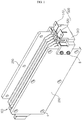
- FIG. 1 is a perspective view showing a battery module according to an embodiment of the present disclosure
- FIG. 2 is a perspective view showing a cell stack employed in the present disclosure
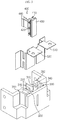
- FIG. 3 is an exploded perspective view showing a cartridge and a short-circuit unit employed in the present disclosure.
- the battery module may include a cell stack 100, a pair of end plates 200, a cartridge 300, a short-circuit unit 400 and a bus bar 500.
- the cell stack 100 includes at least two battery cells 110, and the plurality of battery cells 110 are stacked so that their broad surfaces face each other.
- the battery cell 110 is a pouch-type cell and may be configured so that an electrode assembly prepared by laminating a positive electrode plate, a separator and a negative electrode plate at least once is accommodated in a pouch case made of a pouch film, and rim regions of upper and lower pouch cases are sealed by thermal fusing.
- a pair of electrode leads 111, 112 are respectively connected to uncoated portions of the positive electrode plate and the negative electrode plate of the electrode assembly and are drawn out through the sealing region of the pouch case.
- the pair of electrode leads 111, 112 have different polarities, and the pair of electrode leads 111, 112 may extend in opposite directions.
- the battery cells 110 of the cell stack 100 may be arranged such that neighboring electrode leads have polarities opposite to each other. In this case, the battery cells 110 may be connected in series with each other.
- a pair of battery cells 110 disposed at the outermost side of the cell stack 100 respectively include electrode leads 111, 112 extending in the same direction and having different polarities.
- the electrode lead 111 provided in the battery cell 110 disposed at one outermost side of the cell stack 100 and extending toward the cartridge 300 and the electrode lead 112 provided in the battery cell 110 disposed at the other outermost side of the cell stack 100 and extending toward the cartridge 300 have different polarities.
- the electrode leads 111, 112 having different polarities may be in contact to each other to form a single lead aggregate 113.
- the electrode leads 111, 112 and the lead aggregate 113 are inserted and fixed in accommodation grooves formed in the cartridge 300 as described above, respectively, and this will be described in detail later.
- the pair of end plates 200 are disposed at both sides of the cell stack 100 to cover broad surfaces of the battery cells 110 disposed at the outermost sides.
- the pair of end plates 200 may be fastened to each other through a plurality of coupling holes H formed in peripheral regions thereof to fix and press the cell stack 100.
- the pair of end plates 200 may be fastened through the coupling holes H by applying various known fastening structures such as a bolting assembly or a bolt and nut fastening structure.
- the cartridge 300 is positioned at one side of the cell stack 100, in a direction along which the electrode leads 111, 112 and the lead aggregate 113 provided at the cell stack 100 are extended, so that one side of the cartridge 300 is fixed to one end plate 200 and the other side thereof is fixed to the other end plate 200.
- the cartridge 300 and the end plates 200 may be fixed using a bolt B.
- the cartridge 300 has an accommodation space 310 with a shape corresponding to the short-circuit unit 400, explained later, and also has a support portion 320 formed so that a stopper 440 of the short-circuit unit 400 may be caught and fixed.
- the cartridge 300 includes a first accommodation groove 330, a second accommodation groove 340 and a third accommodation groove 350 in which bus bars 510, 520, the lead aggregate 113 and the electrode leads 111, 112 are inserted and fixed, respectively.
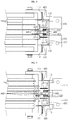
- FIG. 4 is a partial plane view showing the battery module according to an embodiment of the present disclosure, to illustrate a state before swelling occurs
- FIG. 5 is a partial plane view showing the battery module according to an embodiment of the present disclosure, to illustrate a state after swelling occurs.
- the short-circuit unit 400 is a component for electrically connecting the first bus bar 510 and the second bus bar 520 by using the expanding force of the battery cells 110 caused by swelling, so that a short circuit is generated.
- the short-circuit unit 400 may include a slide bar 410, an elastic member 420, a short-circuit terminal 430, and a pair of stoppers 440.
- the slide bar 410 is disposed in the accommodation space 310 of the cartridge 300 and moves from the battery cell 110 toward the bus bars 510, 520 when an expanding force is applied to the short-circuit unit 400 due to swelling.
- the slide bar 410 may be moved toward the bus bars 510, 520 by the force generated when the elastic member 420 such as a spring is compressed and then restored.
- the slide short-circuit unit 400 includes a short-circuit terminal 430 formed at one side end of the slide bar 410 and made of a conductive material.
- the short-circuit unit 400 includes the stopper 440 formed at one side end of the slide bar 410 so that the elastic member 420 may maintain a compressed state.
- the stopper 440 has, for example, a hook shape and may be caught by the support portion 320 of the cartridge 300.
- the stopper 440 keeps caught by the support portion 320, and thus the elastic member 420 stores the elastic energy in a compressed state.
- the short-circuit unit 400 if swelling occurs in the battery cells 110 to apply an expanding force of the battery cell 110 to the stopper 440, the caught and fixed state between the stopper 440 and the support portion 320 is released, and the slide bar 410 is moved toward the bus bars 510, 520 due to the restoration force of the elastic member 420 to electrically connect the pair of bus bars 510, 520 having different polarities to each other, thereby generating a short circuit.
- bus bar 500 employed at the present disclosure will be described in detail with reference to FIG. 6 along with FIGS. 3 to 5 .
- FIG. 6 is a perspective view showing a bus bar employed at the battery module according to an embodiment of the present disclosure.
- the bus bars 510, 520 employed at the present disclosure are accommodated and fixed in the first accommodation groove 330 formed in the cartridge 300, and their one ends are in contact with the electrode leads 111, 112 of the battery cells 110 disposed at the outermost sides of the cell stack 100 inside the third accommodation groove 350 of the cartridge 300.
- the pair of bus bars 510, 520 may be electrically connected to the cell stack 100 to have a first polarity and a second polarity opposite to the first polarity, respectively, and function as an external terminal of the battery module. Accordingly, the pair of bus bars 510, 520 may be respectively connected to a positive electrode and a negative electrode of an external device such as charging device or an electronic device driven by an electric energy to supply or receive a charging current.
- an external device such as charging device or an electronic device driven by an electric energy to supply or receive a charging current.
- At least one of the pair of bus bars 510, 520 may include breaking portions 511, 521 to break quickly and thus entirely block the current flow when overcurrent is generated due to a short circuit.
- the breaking portions 511, 521 may be shaped to have a smaller cross-sectional area becomes as compared with the peripheral regions by forming a notch thereto.
- the breaking portions 511, 521 may be prepared without any limitation as long as they may function as a fuse, for example by applying a metal with a lower melting point than the peripheral regions, in addition to the notch.
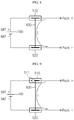
- FIG. 7 is a circuit diagram showing a state before a short circuit occurs at the battery module according to an embodiment of the present disclosure
- FIG. 8 is a circuit diagram showing a state after a short circuit occurs at the battery module according to an embodiment of the present disclosure
- FIG. 9 is a circuit diagram showing a state where the bus bar is broken due to a short circuit generated at the battery module according to an embodiment of the present disclosure.
- the short-circuit unit 400 may receive an expanding force of the battery cell 110 to electrically connect the first bus bar 510 and the second bus bar 520 so that a short circuit is generated on the circuit, and thus an abnormal high current may flow on the circuit.
- the breaking portion 511, 521 formed in at least one of the bus bars is broken due to heat generation caused by the high current, thereby blocking a current flow supplied from an external voltage source to the battery module or a current flow supplied from the battery module to an external electronic device. In this way, it is possible to prevent the battery module from being exploded or ignited in advance.
- a battery pack according to the present disclosure includes at least one battery module as described above. Also, in addition to the battery module according to an embodiment of the present disclosure, the battery pack may further include a case for accommodating the battery module, and various devices for controlling charge/discharge of the battery module such as a battery management system (BMS), a current sensor and a fuse.
- BMS battery management system
- the battery pack may include the first bus bar, the second bus bar, the short-circuit unit and the cartridge at each battery module provided at the battery pack to cut off the power supplied from the external voltage source by fracturing the first bus bar when the battery cell abnormally expands, so that overcharge is prevented for each battery module.
- the battery module according to the present disclosure may be applied to a vehicle such as an electric vehicle and a hybrid vehicle. That is, the vehicle according to the present disclosure may include the battery module of the present disclosure.
Landscapes
- Engineering & Computer Science (AREA)
- Chemical & Material Sciences (AREA)
- General Chemical & Material Sciences (AREA)
- Electrochemistry (AREA)
- Chemical Kinetics & Catalysis (AREA)
- Mechanical Engineering (AREA)
- Transportation (AREA)
- Life Sciences & Earth Sciences (AREA)
- Power Engineering (AREA)
- Sustainable Energy (AREA)
- Sustainable Development (AREA)
- Combustion & Propulsion (AREA)
- Battery Mounting, Suspending (AREA)
- Connection Of Batteries Or Terminals (AREA)
Abstract
Description
- The present disclosure relates to a battery module, and a battery pack and a vehicle including the same, and more particularly, to a battery module having improved stability by preventing overcharge of the battery module, and a battery pack and a vehicle including the same.
- The present application claims priority to Korean Patent Application No.
10-2017-0085993 filed on July 6, 2017 - Recently, the demand for portable electronic products such as notebook computers, video cameras and portable telephones has increased sharply, and electric vehicles, energy storage batteries, robots, satellites and the like have been developed in earnest. Accordingly, high-performance secondary batteries allowing repeated charging and discharging are being actively studied.
- Secondary batteries commercially available at the present include nickel-cadmium batteries, nickel hydrogen batteries, nickel-zinc batteries, lithium secondary batteries and the like. Among them, the lithium secondary batteries are in the limelight since they have almost no memory effect compared to nickel-based secondary batteries and also have very low self-discharging rate and high energy density.
- The lithium secondary battery mainly uses lithium-based oxide and carbonaceous material as a positive electrode active material and a negative electrode active material, respectively. The lithium secondary battery includes an electrode assembly in which a positive electrode plate and a negative electrode plate respectively coated with a positive electrode active material and a negative electrode active material are disposed with a separator being interposed therebetween, and an exterior, namely a battery case, in which the electrode assembly is accommodated and sealed together with an electrolyte.
- Generally, a lithium secondary battery may be classified into a can-type secondary battery in which an electrode assembly is included in a metal can and a pouch-type secondary battery in which an electrode assembly is included in a pouch made of aluminum laminate sheets, depending on the shape of an exterior.
- In recent years, secondary batteries have been widely used not only in small-sized devices such as portable electronic devices but also in medium-sized and large-sized devices such as vehicles and power storage devices. In particular, as carbon energy is getting depleted and the interest in the environment is increasing, the attention is focused on hybrid electric vehicles and electric vehicles around the world including the US, Europe, Japan and Korea. The most important component of the hybrid electric vehicles and electric vehicles is a battery pack that gives a drive power to a vehicle motor. Since the hybrid electric vehicle or electric vehicle is able to obtain a driving force of the vehicle through charging and discharging of the battery pack, the fuel efficiency is higher than that of a vehicle using only an engine, and pollutants may be reduced or substantially eliminated. For these reasons, the hybrid electric vehicles and electric vehicles are used more and more. In addition, the battery pack of the hybrid electric vehicle or electric vehicle includes a plurality of secondary batteries, and the plurality of secondary batteries are connected in series and in parallel to improve capacity and power.
- The secondary battery has excellent electrical characteristics, but in the abnormal operating conditions such as overcharge, overdischarge, exposure to high temperature and electrical short circuit, the decomposition reaction of an active material, an electrolyte and the like of the battery is caused to generate heat and gas, thereby resulting in a so-called swelling phenomenon where the secondary battery swells. The swelling phenomenon accelerates the decomposition reaction, which may cause explosion and ignition of the secondary battery due to thermal runaway.
- Thus, the secondary battery includes a safety system such as a protection circuit for cutting a current at overcharge, overdischarge or overcurrent, a positive temperature coefficient (PTC) element for cutting a current by greatly increasing resistance when temperature rises, a safety vent for cutting a current or venting a gas when pressure increases due to gas generation.
- In particular, in the conventional art, in order to ensure the safety of the battery pack even if a swelling phenomenon occurs, an electrical connecting member that is cut off by a physical change when the volume of secondary batteries expands has been studied.
- However, even if the electrical connecting member is used, it is difficult to surely cut the current of the secondary battery when the secondary batteries are expanded over a certain volume.
- In addition, the secondary battery repeats expansion and contraction even when it is in a normal operating state, not in an abnormal operating state, and thus the current of the secondary battery may be cut even in a normal operation range, which may deteriorate the operation reliability.
- The present disclosure is designed to solve the problems of the related art, and therefore the present disclosure is directed to providing a battery module which may prevent overcharge by electrically connecting a first bus bar and a second bus bar having different polarities by an expanding force applied due to a volume increase of battery cells when an overcharge situation occurs, thereby generating a short circuit so that a breaking portion formed in at least one of the pair of bus bars is broken to stop charging, and a battery pack and a vehicle including the battery module.
- These and other objects and advantages of the present disclosure may be understood from the following detailed description and will become more fully apparent from the exemplary embodiments of the present disclosure. Also, it will be easily understood that the objects and advantages of the present disclosure may be realized by the means shown in the appended claims and combinations thereof.
- In one aspect of the present disclosure, there is provided a battery module, comprising: a cell stack having a first battery cell and a second battery cell; a first bus bar connected to the cell stack and having a first polarity; a second bus bar connected to the cell stack and having a second polarity opposite to the first polarity; a short-circuit unit configured to move toward the first bus bar and the second bus bar by receiving an expanding force caused by a volume increase of the first battery cell and the second battery cell so that the first bus bar and the second bus bar are electrically connected to generate a short circuit; and a cartridge configured to at least partially accommodate the first bus bar, the second bus bar and the short-circuit unit.
- The short-circuit unit may include an elastic member having one end supported to an inner side of the cartridge and configured to store an elastic energy by being compressed in a direction away from the bus bar; and a short-circuit terminal configured to move toward the bus bar when the elastic member is restored so that the first bus bar and the second bus bar are electrically connected.
- The short-circuit terminal may be provided at one side end of the slide bar and made of a conductive material.
- A stopper may be provided at the other side end of the slide bar and be caught by and fixed to the cartridge so that the elastic member keeps a compressed state and thus the slide bar keeps a state spaced apart from the first bus bar and the second bus bar.
- The stopper may release the caught state by receiving the expanding force caused by swelling of the battery cell so that the slide bar moves toward the first bus bar and the second bus bar.
- The cartridge may have an accommodation space formed therein with a shape corresponding to an appearance of the short-circuit unit to accommodate the short-circuit unit therein.
- The accommodation space may be formed corresponding to size and shape of the short-circuit unit according to a restoration state of the elastic member.
- A least one of the first bus bar and the second bus bar may have a breaking portion that is broken when the short circuit occurs to block the short-circuit current.
- Meanwhile, in another aspect of the present disclosure, there is also provided a battery pack including the battery module, and there is also provided a vehicle including the battery module according to an embodiment of the present disclosure.
- According to the present disclosure, when an overcharge situation occurs, an expanding force is applied by a volume increase of battery cells so that a first bus bar and a second bus bar having different polarities are electrically connected to generate a short circuit and thus break a breaking portion formed in at least one of the pair of bus bars to stop charging, thereby preventing overcharge of a battery module. In this way, it is possible to improve safety of the battery module.
- The accompanying drawings illustrate a preferred embodiment of the present disclosure and together with the foregoing disclosure, serve to provide further understanding of the technical features of the present disclosure, and thus, the present disclosure is not construed as being limited to the drawing.
-
FIG. 1 is a perspective view showing a battery module according to an embodiment of the present disclosure. -
FIG. 2 is a perspective view showing a cell stack employed in the present disclosure. -
FIG. 3 is an exploded perspective view showing a cartridge and a short-circuit unit employed in the present disclosure. -
FIG. 4 is a partial plane view showing the battery module according to an embodiment of the present disclosure, to illustrate a state before swelling occurs. -
FIG. 5 is a partial plane view showing the battery module according to an embodiment of the present disclosure, to illustrate a state after swelling occurs. -
FIG. 6 is a perspective view showing a bus bar employed at the battery module according to an embodiment of the present disclosure. -
FIG. 7 is a circuit diagram showing a state before a short circuit occurs at the battery module according to an embodiment of the present disclosure. -
FIG. 8 is a circuit diagram showing a state after a short circuit occurs at the battery module according to an embodiment of the present disclosure. -
FIG. 9 is a circuit diagram showing a state where the bus bar is broken due to a short circuit generated at the battery module according to an embodiment of the present disclosure. - Hereinafter, preferred embodiments of the present disclosure will be described in detail with reference to the accompanying drawings. Prior to the description, it should be understood that the terms used in the specification and the appended claims should not be construed as limited to general and dictionary meanings, but interpreted based on the meanings and concepts corresponding to technical aspects of the present disclosure on the basis of the principle that the inventor is allowed to define terms appropriately for the best explanation. Therefore, the description proposed herein is just a preferable example for the purpose of illustrations only, not intended to limit the scope of the disclosure, so it should be understood that other equivalents and modifications could be made thereto without departing from the scope of the disclosure.
- First, a battery module according to an embodiment of the present disclosure will be described with reference to
FIGS. 1 to 3 . -
FIG. 1 is a perspective view showing a battery module according to an embodiment of the present disclosure,FIG. 2 is a perspective view showing a cell stack employed in the present disclosure, andFIG. 3 is an exploded perspective view showing a cartridge and a short-circuit unit employed in the present disclosure. - Referring to
FIGS. 1 to 3 , the battery module according to an embodiment of the present disclosure may include acell stack 100, a pair ofend plates 200, acartridge 300, a short-circuit unit 400 and abus bar 500. - Referring to
FIG. 2 , thecell stack 100 includes at least twobattery cells 110, and the plurality ofbattery cells 110 are stacked so that their broad surfaces face each other. - The
battery cell 110 is a pouch-type cell and may be configured so that an electrode assembly prepared by laminating a positive electrode plate, a separator and a negative electrode plate at least once is accommodated in a pouch case made of a pouch film, and rim regions of upper and lower pouch cases are sealed by thermal fusing. - Here, a pair of electrode leads 111, 112 are respectively connected to uncoated portions of the positive electrode plate and the negative electrode plate of the electrode assembly and are drawn out through the sealing region of the pouch case.
- The pair of electrode leads 111, 112 have different polarities, and the pair of electrode leads 111, 112 may extend in opposite directions. The
battery cells 110 of thecell stack 100 may be arranged such that neighboring electrode leads have polarities opposite to each other. In this case, thebattery cells 110 may be connected in series with each other. - If the
battery cells 110 of thecell stack 100 are connected to each other in series as described above, a pair ofbattery cells 110 disposed at the outermost side of thecell stack 100 respectively include electrode leads 111, 112 extending in the same direction and having different polarities. - That is, the
electrode lead 111 provided in thebattery cell 110 disposed at one outermost side of thecell stack 100 and extending toward thecartridge 300 and theelectrode lead 112 provided in thebattery cell 110 disposed at the other outermost side of thecell stack 100 and extending toward thecartridge 300 have different polarities. - In addition, if a battery cell(s) 110 is further disposed between the pair of
battery cells 110 disposed at the outermost side, in order to connect thebattery cells 110 in series, the electrode leads 111, 112 having different polarities may be in contact to each other to form a singlelead aggregate 113. - The electrode leads 111, 112 and the
lead aggregate 113 are inserted and fixed in accommodation grooves formed in thecartridge 300 as described above, respectively, and this will be described in detail later. - Next, referring to
FIG. 1 , the pair ofend plates 200 are disposed at both sides of thecell stack 100 to cover broad surfaces of thebattery cells 110 disposed at the outermost sides. The pair ofend plates 200 may be fastened to each other through a plurality of coupling holes H formed in peripheral regions thereof to fix and press thecell stack 100. - Though not shown in the figures, the pair of
end plates 200 may be fastened through the coupling holes H by applying various known fastening structures such as a bolting assembly or a bolt and nut fastening structure. - In this way, even though swelling occurs at the
battery cells 110, the movement of thecell stack 100 is restricted in a direction parallel to the stacking direction by applying the pair ofend plates 200. Thus, even though swelling occurs at thebattery cells 110, the volume of thebattery cells 110 is hardly expanded along the stacking direction of thebattery cells 110, and thebattery cells 110 are mainly expanded along a direction perpendicular to the stacking direction. - Next, referring to
FIG. 3 , where thecartridge 300 is positioned at one side of thecell stack 100, in a direction along which the electrode leads 111, 112 and thelead aggregate 113 provided at thecell stack 100 are extended, so that one side of thecartridge 300 is fixed to oneend plate 200 and the other side thereof is fixed to theother end plate 200. Thecartridge 300 and theend plates 200 may be fixed using a bolt B. - The
cartridge 300 has anaccommodation space 310 with a shape corresponding to the short-circuit unit 400, explained later, and also has asupport portion 320 formed so that astopper 440 of the short-circuit unit 400 may be caught and fixed. In addition, thecartridge 300 includes afirst accommodation groove 330, asecond accommodation groove 340 and athird accommodation groove 350 in which bus bars 510, 520, thelead aggregate 113 and the electrode leads 111, 112 are inserted and fixed, respectively. - Next, the short-
circuit unit 400 employed at the present disclosure will be described in detail with reference toFIGS. 4 and 5 along withFIG. 3 . -
FIG. 4 is a partial plane view showing the battery module according to an embodiment of the present disclosure, to illustrate a state before swelling occurs, andFIG. 5 is a partial plane view showing the battery module according to an embodiment of the present disclosure, to illustrate a state after swelling occurs. - Referring to
FIGS. 3 to 5 , the short-circuit unit 400 is a component for electrically connecting thefirst bus bar 510 and thesecond bus bar 520 by using the expanding force of thebattery cells 110 caused by swelling, so that a short circuit is generated. - The short-
circuit unit 400 may include aslide bar 410, anelastic member 420, a short-circuit terminal 430, and a pair ofstoppers 440. - The
slide bar 410 is disposed in theaccommodation space 310 of thecartridge 300 and moves from thebattery cell 110 toward the bus bars 510, 520 when an expanding force is applied to the short-circuit unit 400 due to swelling. - The
slide bar 410 may be moved toward the bus bars 510, 520 by the force generated when theelastic member 420 such as a spring is compressed and then restored. In order to electrically connect the pair ofbus bars slide bar 410 is moved, the slide short-circuit unit 400 includes a short-circuit terminal 430 formed at one side end of theslide bar 410 and made of a conductive material. - In addition, the short-
circuit unit 400 includes thestopper 440 formed at one side end of theslide bar 410 so that theelastic member 420 may maintain a compressed state. Thestopper 440 has, for example, a hook shape and may be caught by thesupport portion 320 of thecartridge 300. - As described above, in the short-
circuit unit 400, in a situation where swelling is not generated, thestopper 440 keeps caught by thesupport portion 320, and thus theelastic member 420 stores the elastic energy in a compressed state. - Meanwhile, in the short-
circuit unit 400, if swelling occurs in thebattery cells 110 to apply an expanding force of thebattery cell 110 to thestopper 440, the caught and fixed state between thestopper 440 and thesupport portion 320 is released, and theslide bar 410 is moved toward the bus bars 510, 520 due to the restoration force of theelastic member 420 to electrically connect the pair ofbus bars - Next, the configuration of the
bus bar 500 employed at the present disclosure will be described in detail with reference toFIG. 6 along withFIGS. 3 to 5 . -
FIG. 6 is a perspective view showing a bus bar employed at the battery module according to an embodiment of the present disclosure. - Referring to
FIG. 6 , the bus bars 510, 520 employed at the present disclosure are accommodated and fixed in thefirst accommodation groove 330 formed in thecartridge 300, and their one ends are in contact with the electrode leads 111, 112 of thebattery cells 110 disposed at the outermost sides of thecell stack 100 inside thethird accommodation groove 350 of thecartridge 300. - That is, the pair of
bus bars cell stack 100 to have a first polarity and a second polarity opposite to the first polarity, respectively, and function as an external terminal of the battery module. Accordingly, the pair ofbus bars - Meanwhile, at least one of the pair of
bus bars portions - As shown in
FIG. 6 , the breakingportions portions - Next, the circuit configurations before and after a swelling phenomenon occurs due to overcharge or the like at the battery module according to an embodiment of the present disclosure will be described with reference to
FIGS. 7 to 9 . -
FIG. 7 is a circuit diagram showing a state before a short circuit occurs at the battery module according to an embodiment of the present disclosure,FIG. 8 is a circuit diagram showing a state after a short circuit occurs at the battery module according to an embodiment of the present disclosure, andFIG. 9 is a circuit diagram showing a state where the bus bar is broken due to a short circuit generated at the battery module according to an embodiment of the present disclosure. - First, referring to
FIG. 7 , if swelling due to overcharge or the like does not occur at the battery module according to the present disclosure, the volume of thebattery cell 110 does not increase, and thus a short circuit is not generated on the circuit. - However, as shown in
FIG. 8 , if swelling due to overcharge occurs at the battery module according to the present disclosure, the short-circuit unit 400 may receive an expanding force of thebattery cell 110 to electrically connect thefirst bus bar 510 and thesecond bus bar 520 so that a short circuit is generated on the circuit, and thus an abnormal high current may flow on the circuit. - After that, the breaking
portion - Meanwhile, a battery pack according to the present disclosure includes at least one battery module as described above. Also, in addition to the battery module according to an embodiment of the present disclosure, the battery pack may further include a case for accommodating the battery module, and various devices for controlling charge/discharge of the battery module such as a battery management system (BMS), a current sensor and a fuse.
- In particular, the battery pack according to an embodiment of the present disclosure may include the first bus bar, the second bus bar, the short-circuit unit and the cartridge at each battery module provided at the battery pack to cut off the power supplied from the external voltage source by fracturing the first bus bar when the battery cell abnormally expands, so that overcharge is prevented for each battery module.
- The battery module according to the present disclosure may be applied to a vehicle such as an electric vehicle and a hybrid vehicle. That is, the vehicle according to the present disclosure may include the battery module of the present disclosure.
- The present disclosure has been described in detail. However, it should be understood that the detailed description and specific examples, while indicating preferred embodiments of the disclosure, are given by way of illustration only, since various changes and modifications within the scope of the disclosure will become apparent to those skilled in the art from this detailed description.
Claims (10)
- A battery module, comprising:a cell stack having a first battery cell and a second battery cell;a first bus bar connected to the cell stack and having a first polarity;a second bus bar connected to the cell stack and having a second polarity opposite to the first polarity;a short-circuit unit configured to move toward the first bus bar and the second bus bar by receiving an expanding force caused by a volume increase of the first battery cell and the second battery cell so that the first bus bar and the second bus bar are electrically connected to generate a short circuit; anda cartridge configured to at least partially accommodate the first bus bar, the second bus bar and the short-circuit unit.
- The battery module according to claim 1,
wherein the short-circuit unit includes:an elastic member having one end supported to an inner side of the cartridge and configured to store an elastic energy by being compressed in a direction away from the bus bar; anda short-circuit terminal configured to move toward the bus bar when the elastic member is restored so that the first bus bar and the second bus bar are electrically connected. - The battery module according to claim 2,
wherein the short-circuit terminal is provided at one side end of the slide bar and made of a conductive material. - The battery module according to claim 3,
wherein a stopper is provided at the other side end of the slide bar and is caught by and fixed to the cartridge so that the elastic member keeps a compressed state and thus the slide bar keeps a state spaced apart from the first bus bar and the second bus bar. - The battery module according to claim 4,
wherein the stopper releases the caught state by receiving the expanding force caused by swelling of the battery cell so that the slide bar moves toward the first bus bar and the second bus bar. - The battery module according to claim 1,
wherein the cartridge has an accommodation space formed therein with a shape corresponding to an appearance of the short-circuit unit to accommodate the short-circuit unit therein. - The battery module according to claim 6,
wherein the accommodation space is formed corresponding to size and shape of the short-circuit unit according to a restoration state of the elastic member. - The battery module according to claim 1,
wherein at least one of the first bus bar and the second bus bar has a breaking portion that is broken when the short circuit occurs to block the short-circuit current. - A battery pack, comprising a battery module defined in any one of claims 1 to 8.
- A vehicle, comprising a battery module defined in any one of claims 1 to 8.
Applications Claiming Priority (2)
| Application Number | Priority Date | Filing Date | Title |
|---|---|---|---|
| KR1020170085993A KR102201342B1 (en) | 2017-07-06 | 2017-07-06 | Battery module, battery pack including the same, and vehicle including the same |
| PCT/KR2018/007594 WO2019009625A1 (en) | 2017-07-06 | 2018-07-04 | Battery module, and battery pack and vehicle including same |
Publications (3)
| Publication Number | Publication Date |
|---|---|
| EP3512008A1 true EP3512008A1 (en) | 2019-07-17 |
| EP3512008A4 EP3512008A4 (en) | 2019-10-02 |
| EP3512008B1 EP3512008B1 (en) | 2023-01-11 |
Family
ID=64951061
Family Applications (1)
| Application Number | Title | Priority Date | Filing Date |
|---|---|---|---|
| EP18828081.2A Active EP3512008B1 (en) | 2017-07-06 | 2018-07-04 | Battery module, and battery pack and vehicle including the same |
Country Status (6)
| Country | Link |
|---|---|
| US (1) | US11046206B2 (en) |
| EP (1) | EP3512008B1 (en) |
| JP (1) | JP6780100B2 (en) |
| KR (1) | KR102201342B1 (en) |
| CN (1) | CN109844996B (en) |
| WO (1) | WO2019009625A1 (en) |
Cited By (1)
| Publication number | Priority date | Publication date | Assignee | Title |
|---|---|---|---|---|
| EP3540818A4 (en) * | 2017-06-27 | 2020-01-15 | LG Chem, Ltd. | BATTERY MODULE, AND BATTERY PACK AND VEHICLE COMPRISING SAID MODULE |
Families Citing this family (18)
| Publication number | Priority date | Publication date | Assignee | Title |
|---|---|---|---|---|
| KR102327877B1 (en) * | 2019-01-23 | 2021-11-18 | 주식회사 와이제이테크놀로지 | Apparatus preventing thermal runaway for energy storage system |
| CN110299574B (en) * | 2019-05-21 | 2021-11-12 | 重庆交通大学 | Battery overcharge protection device |
| KR102464824B1 (en) * | 2019-06-25 | 2022-11-07 | 주식회사 엘지에너지솔루션 | Battery module and battery pack including the same |
| KR102583650B1 (en) * | 2019-07-01 | 2023-09-26 | 주식회사 엘지에너지솔루션 | Battery module and battery pack including the same |
| KR102802980B1 (en) * | 2019-11-26 | 2025-04-30 | 주식회사 엘지에너지솔루션 | Battery module and battery pack including the same |
| KR102862762B1 (en) * | 2020-02-13 | 2025-09-19 | 주식회사 엘지에너지솔루션 | Battery module, battery pack and vehicle comprising the battery module |
| KR102901874B1 (en) * | 2020-02-25 | 2025-12-17 | 한화에어로스페이스 주식회사 | Battery apparatus for high capacity energy storage system on the ground |
| CN111477828A (en) * | 2020-04-30 | 2020-07-31 | 昆山宝创新能源科技有限公司 | Battery module and battery module and automobile having the same |
| CN111477800A (en) * | 2020-04-30 | 2020-07-31 | 昆山宝创新能源科技有限公司 | Battery Modules, Battery Packs and Vehicles |
| DE102020214550A1 (en) * | 2020-11-18 | 2022-05-19 | Volkswagen Aktiengesellschaft | Battery arrangement with electrically non-conductive protective plate |
| US20250129055A1 (en) * | 2020-11-19 | 2025-04-24 | Beijing Increase Innovative Drug Co., Ltd. | Glucoside derivative, and preparation method therefor and application thereof |
| PL4044353T3 (en) | 2021-02-11 | 2023-10-02 | Samsung Sdi Co., Ltd. | Assembly set for assembling a carrier framework for a stack of battery cell blocks |
| CN113097665A (en) * | 2021-03-30 | 2021-07-09 | 东莞新能安科技有限公司 | Battery module and electric device |
| CN114374060B (en) * | 2022-03-22 | 2022-06-14 | 深圳市青之鸟科技有限公司 | Be applied to plant protection unmanned aerial vehicle's group battery |
| CN114614202A (en) * | 2022-03-29 | 2022-06-10 | 东莞新能安科技有限公司 | Battery packs and electrical equipment |
| CN118575360A (en) * | 2022-09-15 | 2024-08-30 | 宁德时代新能源科技股份有限公司 | Battery, power utilization device and preparation method of battery |
| KR20240054010A (en) * | 2022-10-18 | 2024-04-25 | 주식회사 엘지에너지솔루션 | Battery pack having blocking part for electrical connection |
| CN116315504A (en) * | 2023-03-31 | 2023-06-23 | 厦门新能达科技有限公司 | Cell modules, battery packs and electrical equipment |
Family Cites Families (38)
| Publication number | Priority date | Publication date | Assignee | Title |
|---|---|---|---|---|
| JPH10294097A (en) | 1997-02-24 | 1998-11-04 | Mitsubishi Electric Corp | Thin battery |
| US5800937A (en) | 1997-05-02 | 1998-09-01 | Motorola, Inc. | Current interrupt device for secondary batteries |
| WO2005114811A2 (en) * | 2004-05-17 | 2005-12-01 | Railpower Technologies Corp. | Design of a large battery pack for a hybrid locomotive |
| KR100579377B1 (en) * | 2004-10-28 | 2006-05-12 | 삼성에스디아이 주식회사 | Secondary battery |
| BRPI0519197A2 (en) * | 2004-12-23 | 2008-12-30 | Siemens Ag | process and device for the safe operation of a switchgear |
| KR101046192B1 (en) | 2007-10-30 | 2011-07-05 | 에스케이이노베이션 주식회사 | Overcharge safety device for secondary battery |
| EP2212941B1 (en) * | 2007-11-21 | 2015-01-14 | LG Chem, Ltd. | Battery module of improved safety and middle or large-sized battery pack containing the same |
| CN102820438B (en) * | 2007-11-23 | 2015-12-02 | 株式会社Lg化学 | Secondary battery pack with excellent productivity and structural stability |
| KR101128423B1 (en) * | 2008-04-28 | 2012-03-23 | 에스케이이노베이션 주식회사 | Safety switch of secondary battery for electric vehicle and charge / discharge system of secondary battery for electric vehicle using same |
| KR101041153B1 (en) | 2009-03-04 | 2011-06-13 | 에스비리모티브 주식회사 | Secondary Battery and Its Module |
| US8323813B2 (en) * | 2009-05-14 | 2012-12-04 | Sb Limotive Co., Ltd. | Rechargeable battery including an extensible member |
| JP5355281B2 (en) * | 2009-07-30 | 2013-11-27 | 日清紡ホールディングス株式会社 | Electric double layer capacitor |
| KR101072955B1 (en) * | 2009-08-14 | 2011-10-12 | 에스비리모티브 주식회사 | Battery module |
| US8877361B2 (en) * | 2009-09-01 | 2014-11-04 | Samsung Sdi Co., Ltd. | Rechargeable battery |
| KR101281744B1 (en) | 2010-11-18 | 2013-07-04 | 주식회사 엘지화학 | Battery Module Having Member for Improved Stability Disposed between Battery Cells |
| KR101546545B1 (en) | 2010-12-09 | 2015-08-24 | 주식회사 엘지화학 | Pouch type lithium secondary battery |
| CN102738434B (en) | 2011-03-31 | 2014-03-05 | 松下蓄电池(沈阳)有限公司 | lead battery |
| KR101359310B1 (en) | 2011-07-25 | 2014-02-07 | 주식회사 엘지화학 | Battery Pack of Improved Safety |
| KR101294168B1 (en) | 2011-09-26 | 2013-08-08 | 기아자동차주식회사 | Apparatus for preventing overcharge battery |
| KR101433199B1 (en) | 2011-11-28 | 2014-08-26 | 주식회사 엘지화학 | Battery module and Busbar applied for battery module |
| KR101404712B1 (en) * | 2012-01-26 | 2014-06-09 | 주식회사 엘지화학 | Battery Pack of Improved Safety |
| JP5727090B2 (en) * | 2012-03-15 | 2015-06-03 | 株式会社東芝 | Lithium ion secondary battery |
| JP5735170B2 (en) * | 2012-03-15 | 2015-06-17 | 株式会社東芝 | Lithium ion secondary battery |
| KR101965398B1 (en) * | 2012-10-26 | 2019-04-03 | 에스케이이노베이션 주식회사 | Cell tap cutting device of Lithium Secondary Battery and Battery Pack having the device |
| KR101389227B1 (en) | 2012-12-27 | 2014-04-29 | 에이치엘그린파워 주식회사 | Lithium-ion battery for preventing overcharge of battery cell |
| KR102018693B1 (en) * | 2013-02-06 | 2019-09-05 | 삼성에스디아이 주식회사 | Rechargeable battery pack |
| KR101449306B1 (en) * | 2013-06-28 | 2014-10-08 | 현대자동차주식회사 | Safety unit for overcharge of battery |
| KR101500101B1 (en) | 2013-07-10 | 2015-03-06 | 현대자동차주식회사 | Apparatus for Battery Overcharge Protection |
| US9831482B2 (en) | 2013-09-06 | 2017-11-28 | Johnson Controls Technology Company | Battery module lid system and method |
| KR20150053597A (en) * | 2013-11-08 | 2015-05-18 | 삼성에스디아이 주식회사 | Battery Module |
| KR102046125B1 (en) * | 2013-11-13 | 2019-11-18 | 에스케이이노베이션 주식회사 | Detachable voltage sensing module for Secondary-battery and Battery device having the same |
| KR101846418B1 (en) * | 2013-12-17 | 2018-04-06 | 지멘스 악티엔게젤샤프트 | A protective electronic module for an hvdc convertor |
| KR20160026469A (en) * | 2014-09-01 | 2016-03-09 | 에스케이이노베이션 주식회사 | battery module having bus bar integrated with low-voltage sensing module |
| KR20160030688A (en) | 2014-09-11 | 2016-03-21 | 주식회사 루트제이드 | Secondary battery having overcurrent shut-off means |
| KR102032503B1 (en) * | 2015-11-05 | 2019-10-15 | 주식회사 엘지화학 | Battery module, battery pack comprising the battery module and vehicle comprising the battery pack |
| CN205790140U (en) * | 2016-07-11 | 2016-12-07 | 宁德时代新能源科技股份有限公司 | The side plate of electrokinetic cell module and electrokinetic cell module |
| KR102201344B1 (en) | 2017-05-26 | 2021-01-08 | 주식회사 엘지화학 | Battery module, battery pack including the same, and vehicle including the same |
| KR102163656B1 (en) | 2017-06-27 | 2020-10-08 | 주식회사 엘지화학 | Battery module, battery pack including the same, and vehicle including the same |
-
2017
- 2017-07-06 KR KR1020170085993A patent/KR102201342B1/en active Active
-
2018
- 2018-07-04 JP JP2019517888A patent/JP6780100B2/en active Active
- 2018-07-04 EP EP18828081.2A patent/EP3512008B1/en active Active
- 2018-07-04 WO PCT/KR2018/007594 patent/WO2019009625A1/en not_active Ceased
- 2018-07-04 CN CN201880004012.8A patent/CN109844996B/en active Active
- 2018-07-04 US US16/332,836 patent/US11046206B2/en active Active
Cited By (2)
| Publication number | Priority date | Publication date | Assignee | Title |
|---|---|---|---|---|
| EP3540818A4 (en) * | 2017-06-27 | 2020-01-15 | LG Chem, Ltd. | BATTERY MODULE, AND BATTERY PACK AND VEHICLE COMPRISING SAID MODULE |
| US10892468B2 (en) | 2017-06-27 | 2021-01-12 | Lg Chem, Ltd. | Battery module with short-circuit unit, and battery pack and vehicle including the same |
Also Published As
| Publication number | Publication date |
|---|---|
| KR20190005403A (en) | 2019-01-16 |
| US20190366875A1 (en) | 2019-12-05 |
| EP3512008A4 (en) | 2019-10-02 |
| CN109844996A (en) | 2019-06-04 |
| KR102201342B1 (en) | 2021-01-08 |
| CN109844996B (en) | 2021-11-09 |
| JP2019530186A (en) | 2019-10-17 |
| WO2019009625A1 (en) | 2019-01-10 |
| EP3512008B1 (en) | 2023-01-11 |
| JP6780100B2 (en) | 2020-11-04 |
| US11046206B2 (en) | 2021-06-29 |
Similar Documents
| Publication | Publication Date | Title |
|---|---|---|
| US11046206B2 (en) | Battery module with short-circuit unit, and battery pack and vehicle including the same | |
| EP3540818B1 (en) | Battery module, and battery pack and vehicle including the same | |
| KR100914839B1 (en) | Battery Module of Improved Safety and Middle or Large-sized Battery Pack Containing the Same | |
| JP5575761B2 (en) | Medium or large battery pack with improved safety | |
| EP3540823B1 (en) | Battery module, and battery pack and vehicle including same | |
| JP7034405B2 (en) | Battery module, battery pack including it and automobile | |
| KR102308168B1 (en) | Battery module, battery pack including the same, and vehicle including the same | |
| KR100881641B1 (en) | Medium to large battery packs with safety system | |
| US11881597B2 (en) | Battery module with improved safety, battery pack comprising battery module, and vehicle comprising battery pack | |
| KR102249457B1 (en) | Battery module, battery pack including the same, and vehicle including the same | |
| KR102267056B1 (en) | Battery module, battery pack including the same, and vehicle including the same |
Legal Events
| Date | Code | Title | Description |
|---|---|---|---|
| STAA | Information on the status of an ep patent application or granted ep patent |
Free format text: STATUS: THE INTERNATIONAL PUBLICATION HAS BEEN MADE |
|
| PUAI | Public reference made under article 153(3) epc to a published international application that has entered the european phase |
Free format text: ORIGINAL CODE: 0009012 |
|
| STAA | Information on the status of an ep patent application or granted ep patent |
Free format text: STATUS: REQUEST FOR EXAMINATION WAS MADE |
|
| 17P | Request for examination filed |
Effective date: 20190410 |
|
| AK | Designated contracting states |
Kind code of ref document: A1 Designated state(s): AL AT BE BG CH CY CZ DE DK EE ES FI FR GB GR HR HU IE IS IT LI LT LU LV MC MK MT NL NO PL PT RO RS SE SI SK SM TR |
|
| AX | Request for extension of the european patent |
Extension state: BA ME |
|
| A4 | Supplementary search report drawn up and despatched |
Effective date: 20190902 |
|
| RIC1 | Information provided on ipc code assigned before grant |
Ipc: H01M 2/10 20060101ALI20190827BHEP Ipc: B60K 6/28 20071001ALI20190827BHEP Ipc: H01M 2/30 20060101ALI20190827BHEP Ipc: H01M 2/20 20060101ALI20190827BHEP Ipc: H01M 2/34 20060101AFI20190827BHEP |
|
| STAA | Information on the status of an ep patent application or granted ep patent |
Free format text: STATUS: EXAMINATION IS IN PROGRESS |
|
| 17Q | First examination report despatched |
Effective date: 20200416 |
|
| DAV | Request for validation of the european patent (deleted) | ||
| DAX | Request for extension of the european patent (deleted) | ||
| RAP1 | Party data changed (applicant data changed or rights of an application transferred) |
Owner name: LG ENERGY SOLUTION LTD. |
|
| RAP3 | Party data changed (applicant data changed or rights of an application transferred) |
Owner name: LG ENERGY SOLUTION, LTD. |
|
| REG | Reference to a national code |
Ref country code: DE Ref legal event code: R079 Ref document number: 602018045371 Country of ref document: DE Free format text: PREVIOUS MAIN CLASS: H01M0002340000 Ipc: B60K0006280000 |
|
| RIC1 | Information provided on ipc code assigned before grant |
Ipc: H01M 50/553 20210101ALN20220823BHEP Ipc: H01M 50/548 20210101ALN20220823BHEP Ipc: H01M 50/178 20210101ALN20220823BHEP Ipc: H01M 50/578 20210101ALI20220823BHEP Ipc: H01M 50/51 20210101ALI20220823BHEP Ipc: H01M 50/507 20210101ALI20220823BHEP Ipc: H01M 50/211 20210101ALI20220823BHEP Ipc: B60K 6/28 20071001AFI20220823BHEP |
|
| GRAP | Despatch of communication of intention to grant a patent |
Free format text: ORIGINAL CODE: EPIDOSNIGR1 |
|
| STAA | Information on the status of an ep patent application or granted ep patent |
Free format text: STATUS: GRANT OF PATENT IS INTENDED |
|
| INTG | Intention to grant announced |
Effective date: 20221010 |
|
| GRAS | Grant fee paid |
Free format text: ORIGINAL CODE: EPIDOSNIGR3 |
|
| GRAA | (expected) grant |
Free format text: ORIGINAL CODE: 0009210 |
|
| STAA | Information on the status of an ep patent application or granted ep patent |
Free format text: STATUS: THE PATENT HAS BEEN GRANTED |
|
| AK | Designated contracting states |
Kind code of ref document: B1 Designated state(s): AL AT BE BG CH CY CZ DE DK EE ES FI FR GB GR HR HU IE IS IT LI LT LU LV MC MK MT NL NO PL PT RO RS SE SI SK SM TR |
|
| REG | Reference to a national code |
Ref country code: GB Ref legal event code: FG4D |
|
| REG | Reference to a national code |
Ref country code: CH Ref legal event code: EP |
|
| REG | Reference to a national code |
Ref country code: DE Ref legal event code: R096 Ref document number: 602018045371 Country of ref document: DE |
|
| REG | Reference to a national code |
Ref country code: IE Ref legal event code: FG4D |
|
| REG | Reference to a national code |
Ref country code: AT Ref legal event code: REF Ref document number: 1543217 Country of ref document: AT Kind code of ref document: T Effective date: 20230215 |
|
| REG | Reference to a national code |
Ref country code: LT Ref legal event code: MG9D |
|
| REG | Reference to a national code |
Ref country code: NL Ref legal event code: MP Effective date: 20230111 |
|
| REG | Reference to a national code |
Ref country code: AT Ref legal event code: MK05 Ref document number: 1543217 Country of ref document: AT Kind code of ref document: T Effective date: 20230111 |
|
| P01 | Opt-out of the competence of the unified patent court (upc) registered |
Effective date: 20230512 |
|
| PG25 | Lapsed in a contracting state [announced via postgrant information from national office to epo] |
Ref country code: NL Free format text: LAPSE BECAUSE OF FAILURE TO SUBMIT A TRANSLATION OF THE DESCRIPTION OR TO PAY THE FEE WITHIN THE PRESCRIBED TIME-LIMIT Effective date: 20230111 |
|
| PG25 | Lapsed in a contracting state [announced via postgrant information from national office to epo] |
Ref country code: RS Free format text: LAPSE BECAUSE OF FAILURE TO SUBMIT A TRANSLATION OF THE DESCRIPTION OR TO PAY THE FEE WITHIN THE PRESCRIBED TIME-LIMIT Effective date: 20230111 Ref country code: PT Free format text: LAPSE BECAUSE OF FAILURE TO SUBMIT A TRANSLATION OF THE DESCRIPTION OR TO PAY THE FEE WITHIN THE PRESCRIBED TIME-LIMIT Effective date: 20230511 Ref country code: NO Free format text: LAPSE BECAUSE OF FAILURE TO SUBMIT A TRANSLATION OF THE DESCRIPTION OR TO PAY THE FEE WITHIN THE PRESCRIBED TIME-LIMIT Effective date: 20230411 Ref country code: LV Free format text: LAPSE BECAUSE OF FAILURE TO SUBMIT A TRANSLATION OF THE DESCRIPTION OR TO PAY THE FEE WITHIN THE PRESCRIBED TIME-LIMIT Effective date: 20230111 Ref country code: LT Free format text: LAPSE BECAUSE OF FAILURE TO SUBMIT A TRANSLATION OF THE DESCRIPTION OR TO PAY THE FEE WITHIN THE PRESCRIBED TIME-LIMIT Effective date: 20230111 Ref country code: HR Free format text: LAPSE BECAUSE OF FAILURE TO SUBMIT A TRANSLATION OF THE DESCRIPTION OR TO PAY THE FEE WITHIN THE PRESCRIBED TIME-LIMIT Effective date: 20230111 Ref country code: ES Free format text: LAPSE BECAUSE OF FAILURE TO SUBMIT A TRANSLATION OF THE DESCRIPTION OR TO PAY THE FEE WITHIN THE PRESCRIBED TIME-LIMIT Effective date: 20230111 Ref country code: AT Free format text: LAPSE BECAUSE OF FAILURE TO SUBMIT A TRANSLATION OF THE DESCRIPTION OR TO PAY THE FEE WITHIN THE PRESCRIBED TIME-LIMIT Effective date: 20230111 |
|
| PG25 | Lapsed in a contracting state [announced via postgrant information from national office to epo] |
Ref country code: SE Free format text: LAPSE BECAUSE OF FAILURE TO SUBMIT A TRANSLATION OF THE DESCRIPTION OR TO PAY THE FEE WITHIN THE PRESCRIBED TIME-LIMIT Effective date: 20230111 Ref country code: PL Free format text: LAPSE BECAUSE OF FAILURE TO SUBMIT A TRANSLATION OF THE DESCRIPTION OR TO PAY THE FEE WITHIN THE PRESCRIBED TIME-LIMIT Effective date: 20230111 Ref country code: IS Free format text: LAPSE BECAUSE OF FAILURE TO SUBMIT A TRANSLATION OF THE DESCRIPTION OR TO PAY THE FEE WITHIN THE PRESCRIBED TIME-LIMIT Effective date: 20230511 Ref country code: GR Free format text: LAPSE BECAUSE OF FAILURE TO SUBMIT A TRANSLATION OF THE DESCRIPTION OR TO PAY THE FEE WITHIN THE PRESCRIBED TIME-LIMIT Effective date: 20230412 Ref country code: FI Free format text: LAPSE BECAUSE OF FAILURE TO SUBMIT A TRANSLATION OF THE DESCRIPTION OR TO PAY THE FEE WITHIN THE PRESCRIBED TIME-LIMIT Effective date: 20230111 |
|
| REG | Reference to a national code |
Ref country code: DE Ref legal event code: R097 Ref document number: 602018045371 Country of ref document: DE |
|
| PG25 | Lapsed in a contracting state [announced via postgrant information from national office to epo] |
Ref country code: SM Free format text: LAPSE BECAUSE OF FAILURE TO SUBMIT A TRANSLATION OF THE DESCRIPTION OR TO PAY THE FEE WITHIN THE PRESCRIBED TIME-LIMIT Effective date: 20230111 Ref country code: RO Free format text: LAPSE BECAUSE OF FAILURE TO SUBMIT A TRANSLATION OF THE DESCRIPTION OR TO PAY THE FEE WITHIN THE PRESCRIBED TIME-LIMIT Effective date: 20230111 Ref country code: EE Free format text: LAPSE BECAUSE OF FAILURE TO SUBMIT A TRANSLATION OF THE DESCRIPTION OR TO PAY THE FEE WITHIN THE PRESCRIBED TIME-LIMIT Effective date: 20230111 Ref country code: DK Free format text: LAPSE BECAUSE OF FAILURE TO SUBMIT A TRANSLATION OF THE DESCRIPTION OR TO PAY THE FEE WITHIN THE PRESCRIBED TIME-LIMIT Effective date: 20230111 Ref country code: CZ Free format text: LAPSE BECAUSE OF FAILURE TO SUBMIT A TRANSLATION OF THE DESCRIPTION OR TO PAY THE FEE WITHIN THE PRESCRIBED TIME-LIMIT Effective date: 20230111 |
|
| PLBE | No opposition filed within time limit |
Free format text: ORIGINAL CODE: 0009261 |
|
| STAA | Information on the status of an ep patent application or granted ep patent |
Free format text: STATUS: NO OPPOSITION FILED WITHIN TIME LIMIT |
|
| PG25 | Lapsed in a contracting state [announced via postgrant information from national office to epo] |
Ref country code: SK Free format text: LAPSE BECAUSE OF FAILURE TO SUBMIT A TRANSLATION OF THE DESCRIPTION OR TO PAY THE FEE WITHIN THE PRESCRIBED TIME-LIMIT Effective date: 20230111 |
|
| 26N | No opposition filed |
Effective date: 20231012 |
|
| PG25 | Lapsed in a contracting state [announced via postgrant information from national office to epo] |
Ref country code: SI Free format text: LAPSE BECAUSE OF FAILURE TO SUBMIT A TRANSLATION OF THE DESCRIPTION OR TO PAY THE FEE WITHIN THE PRESCRIBED TIME-LIMIT Effective date: 20230111 |
|
| PG25 | Lapsed in a contracting state [announced via postgrant information from national office to epo] |
Ref country code: MC Free format text: LAPSE BECAUSE OF FAILURE TO SUBMIT A TRANSLATION OF THE DESCRIPTION OR TO PAY THE FEE WITHIN THE PRESCRIBED TIME-LIMIT Effective date: 20230111 |
|
| PG25 | Lapsed in a contracting state [announced via postgrant information from national office to epo] |
Ref country code: MC Free format text: LAPSE BECAUSE OF FAILURE TO SUBMIT A TRANSLATION OF THE DESCRIPTION OR TO PAY THE FEE WITHIN THE PRESCRIBED TIME-LIMIT Effective date: 20230111 |
|
| REG | Reference to a national code |
Ref country code: CH Ref legal event code: PL |
|
| REG | Reference to a national code |
Ref country code: BE Ref legal event code: MM Effective date: 20230731 |
|
| PG25 | Lapsed in a contracting state [announced via postgrant information from national office to epo] |
Ref country code: LU Free format text: LAPSE BECAUSE OF NON-PAYMENT OF DUE FEES Effective date: 20230704 |
|
| PG25 | Lapsed in a contracting state [announced via postgrant information from national office to epo] |
Ref country code: LU Free format text: LAPSE BECAUSE OF NON-PAYMENT OF DUE FEES Effective date: 20230704 |
|
| REG | Reference to a national code |
Ref country code: IE Ref legal event code: MM4A |
|
| PG25 | Lapsed in a contracting state [announced via postgrant information from national office to epo] |
Ref country code: CH Free format text: LAPSE BECAUSE OF NON-PAYMENT OF DUE FEES Effective date: 20230731 |
|
| PG25 | Lapsed in a contracting state [announced via postgrant information from national office to epo] |
Ref country code: IT Free format text: LAPSE BECAUSE OF FAILURE TO SUBMIT A TRANSLATION OF THE DESCRIPTION OR TO PAY THE FEE WITHIN THE PRESCRIBED TIME-LIMIT Effective date: 20230111 Ref country code: BE Free format text: LAPSE BECAUSE OF NON-PAYMENT OF DUE FEES Effective date: 20230731 |
|
| PG25 | Lapsed in a contracting state [announced via postgrant information from national office to epo] |
Ref country code: IE Free format text: LAPSE BECAUSE OF NON-PAYMENT OF DUE FEES Effective date: 20230704 |
|
| PG25 | Lapsed in a contracting state [announced via postgrant information from national office to epo] |
Ref country code: IE Free format text: LAPSE BECAUSE OF NON-PAYMENT OF DUE FEES Effective date: 20230704 |
|
| PG25 | Lapsed in a contracting state [announced via postgrant information from national office to epo] |
Ref country code: BG Free format text: LAPSE BECAUSE OF FAILURE TO SUBMIT A TRANSLATION OF THE DESCRIPTION OR TO PAY THE FEE WITHIN THE PRESCRIBED TIME-LIMIT Effective date: 20230111 |
|
| PG25 | Lapsed in a contracting state [announced via postgrant information from national office to epo] |
Ref country code: BG Free format text: LAPSE BECAUSE OF FAILURE TO SUBMIT A TRANSLATION OF THE DESCRIPTION OR TO PAY THE FEE WITHIN THE PRESCRIBED TIME-LIMIT Effective date: 20230111 |
|
| PGFP | Annual fee paid to national office [announced via postgrant information from national office to epo] |
Ref country code: GB Payment date: 20250624 Year of fee payment: 8 |
|
| PGFP | Annual fee paid to national office [announced via postgrant information from national office to epo] |
Ref country code: FR Payment date: 20250624 Year of fee payment: 8 |
|
| PG25 | Lapsed in a contracting state [announced via postgrant information from national office to epo] |
Ref country code: CY Free format text: LAPSE BECAUSE OF FAILURE TO SUBMIT A TRANSLATION OF THE DESCRIPTION OR TO PAY THE FEE WITHIN THE PRESCRIBED TIME-LIMIT; INVALID AB INITIO Effective date: 20180704 |
|
| PG25 | Lapsed in a contracting state [announced via postgrant information from national office to epo] |
Ref country code: HU Free format text: LAPSE BECAUSE OF FAILURE TO SUBMIT A TRANSLATION OF THE DESCRIPTION OR TO PAY THE FEE WITHIN THE PRESCRIBED TIME-LIMIT; INVALID AB INITIO Effective date: 20180704 |
|
| PGFP | Annual fee paid to national office [announced via postgrant information from national office to epo] |
Ref country code: DE Payment date: 20250624 Year of fee payment: 8 |
|
| PG25 | Lapsed in a contracting state [announced via postgrant information from national office to epo] |
Ref country code: TR Free format text: LAPSE BECAUSE OF FAILURE TO SUBMIT A TRANSLATION OF THE DESCRIPTION OR TO PAY THE FEE WITHIN THE PRESCRIBED TIME-LIMIT Effective date: 20230111 |