EP3511768A1 - Nouveau verre oculaire réalisé en un matériau composite à usage optique, ainsi que son procédé d'obtention - Google Patents
Nouveau verre oculaire réalisé en un matériau composite à usage optique, ainsi que son procédé d'obtention Download PDFInfo
- Publication number
- EP3511768A1 EP3511768A1 EP19290001.7A EP19290001A EP3511768A1 EP 3511768 A1 EP3511768 A1 EP 3511768A1 EP 19290001 A EP19290001 A EP 19290001A EP 3511768 A1 EP3511768 A1 EP 3511768A1
- Authority
- EP
- European Patent Office
- Prior art keywords
- layer
- layers
- metal
- substrate
- eyeglass
- Prior art date
- Legal status (The legal status is an assumption and is not a legal conclusion. Google has not performed a legal analysis and makes no representation as to the accuracy of the status listed.)
- Withdrawn
Links
- 238000000034 method Methods 0.000 title claims abstract description 9
- 239000002131 composite material Substances 0.000 title abstract description 3
- 230000003287 optical effect Effects 0.000 title abstract description 3
- 229910052751 metal Inorganic materials 0.000 claims abstract description 30
- 239000002184 metal Substances 0.000 claims abstract description 30
- 239000010970 precious metal Substances 0.000 claims abstract description 30
- 239000011521 glass Substances 0.000 claims abstract description 27
- 239000000758 substrate Substances 0.000 claims abstract description 22
- 239000002966 varnish Substances 0.000 claims abstract description 19
- 229910044991 metal oxide Inorganic materials 0.000 claims abstract description 8
- 150000004706 metal oxides Chemical class 0.000 claims abstract description 8
- PCHJSUWPFVWCPO-UHFFFAOYSA-N gold Chemical compound [Au] PCHJSUWPFVWCPO-UHFFFAOYSA-N 0.000 claims description 8
- 229910052737 gold Inorganic materials 0.000 claims description 8
- 239000010931 gold Substances 0.000 claims description 8
- 150000002739 metals Chemical class 0.000 claims description 8
- BASFCYQUMIYNBI-UHFFFAOYSA-N platinum Chemical compound [Pt] BASFCYQUMIYNBI-UHFFFAOYSA-N 0.000 claims description 6
- 239000011248 coating agent Substances 0.000 claims description 5
- 238000000576 coating method Methods 0.000 claims description 5
- VYZAMTAEIAYCRO-UHFFFAOYSA-N Chromium Chemical compound [Cr] VYZAMTAEIAYCRO-UHFFFAOYSA-N 0.000 claims description 4
- XEEYBQQBJWHFJM-UHFFFAOYSA-N Iron Chemical compound [Fe] XEEYBQQBJWHFJM-UHFFFAOYSA-N 0.000 claims description 4
- PXHVJJICTQNCMI-UHFFFAOYSA-N Nickel Chemical compound [Ni] PXHVJJICTQNCMI-UHFFFAOYSA-N 0.000 claims description 4
- KDLHZDBZIXYQEI-UHFFFAOYSA-N Palladium Chemical compound [Pd] KDLHZDBZIXYQEI-UHFFFAOYSA-N 0.000 claims description 4
- 239000000956 alloy Substances 0.000 claims description 4
- 229910045601 alloy Inorganic materials 0.000 claims description 4
- 229910052804 chromium Inorganic materials 0.000 claims description 4
- 239000011651 chromium Substances 0.000 claims description 4
- 229910052715 tantalum Inorganic materials 0.000 claims description 4
- GUVRBAGPIYLISA-UHFFFAOYSA-N tantalum atom Chemical compound [Ta] GUVRBAGPIYLISA-UHFFFAOYSA-N 0.000 claims description 4
- RTAQQCXQSZGOHL-UHFFFAOYSA-N Titanium Chemical compound [Ti] RTAQQCXQSZGOHL-UHFFFAOYSA-N 0.000 claims description 3
- 229910052697 platinum Inorganic materials 0.000 claims description 3
- 229910052719 titanium Inorganic materials 0.000 claims description 3
- 239000010936 titanium Substances 0.000 claims description 3
- KJTLSVCANCCWHF-UHFFFAOYSA-N Ruthenium Chemical compound [Ru] KJTLSVCANCCWHF-UHFFFAOYSA-N 0.000 claims description 2
- VYPSYNLAJGMNEJ-UHFFFAOYSA-N Silicium dioxide Chemical compound O=[Si]=O VYPSYNLAJGMNEJ-UHFFFAOYSA-N 0.000 claims description 2
- BQCADISMDOOEFD-UHFFFAOYSA-N Silver Chemical compound [Ag] BQCADISMDOOEFD-UHFFFAOYSA-N 0.000 claims description 2
- ATJFFYVFTNAWJD-UHFFFAOYSA-N Tin Chemical compound [Sn] ATJFFYVFTNAWJD-UHFFFAOYSA-N 0.000 claims description 2
- GWEVSGVZZGPLCZ-UHFFFAOYSA-N Titan oxide Chemical compound O=[Ti]=O GWEVSGVZZGPLCZ-UHFFFAOYSA-N 0.000 claims description 2
- HCHKCACWOHOZIP-UHFFFAOYSA-N Zinc Chemical compound [Zn] HCHKCACWOHOZIP-UHFFFAOYSA-N 0.000 claims description 2
- 229910052782 aluminium Inorganic materials 0.000 claims description 2
- XAGFODPZIPBFFR-UHFFFAOYSA-N aluminium Chemical compound [Al] XAGFODPZIPBFFR-UHFFFAOYSA-N 0.000 claims description 2
- 238000007598 dipping method Methods 0.000 claims description 2
- 229910052742 iron Inorganic materials 0.000 claims description 2
- 229910052759 nickel Inorganic materials 0.000 claims description 2
- 229910052763 palladium Inorganic materials 0.000 claims description 2
- 229910052703 rhodium Inorganic materials 0.000 claims description 2
- 239000010948 rhodium Substances 0.000 claims description 2
- MHOVAHRLVXNVSD-UHFFFAOYSA-N rhodium atom Chemical compound [Rh] MHOVAHRLVXNVSD-UHFFFAOYSA-N 0.000 claims description 2
- 229910052707 ruthenium Inorganic materials 0.000 claims description 2
- 229910052706 scandium Inorganic materials 0.000 claims description 2
- SIXSYDAISGFNSX-UHFFFAOYSA-N scandium atom Chemical compound [Sc] SIXSYDAISGFNSX-UHFFFAOYSA-N 0.000 claims description 2
- 229910052814 silicon oxide Inorganic materials 0.000 claims description 2
- 229910052709 silver Inorganic materials 0.000 claims description 2
- 239000004332 silver Substances 0.000 claims description 2
- 229910052718 tin Inorganic materials 0.000 claims description 2
- OGIDPMRJRNCKJF-UHFFFAOYSA-N titanium oxide Inorganic materials [Ti]=O OGIDPMRJRNCKJF-UHFFFAOYSA-N 0.000 claims description 2
- WFKWXMTUELFFGS-UHFFFAOYSA-N tungsten Chemical compound [W] WFKWXMTUELFFGS-UHFFFAOYSA-N 0.000 claims description 2
- 229910052721 tungsten Inorganic materials 0.000 claims description 2
- 239000010937 tungsten Substances 0.000 claims description 2
- 229910052725 zinc Inorganic materials 0.000 claims description 2
- 239000011701 zinc Substances 0.000 claims description 2
- 230000008020 evaporation Effects 0.000 claims 1
- 238000001704 evaporation Methods 0.000 claims 1
- ILNKLXHFYKXPKY-UHFFFAOYSA-N iridium osmium Chemical compound [Os].[Ir] ILNKLXHFYKXPKY-UHFFFAOYSA-N 0.000 claims 1
- BPUBBGLMJRNUCC-UHFFFAOYSA-N oxygen(2-);tantalum(5+) Chemical compound [O-2].[O-2].[O-2].[O-2].[O-2].[Ta+5].[Ta+5] BPUBBGLMJRNUCC-UHFFFAOYSA-N 0.000 claims 1
- RVTZCBVAJQQJTK-UHFFFAOYSA-N oxygen(2-);zirconium(4+) Chemical compound [O-2].[O-2].[Zr+4] RVTZCBVAJQQJTK-UHFFFAOYSA-N 0.000 claims 1
- 229910001936 tantalum oxide Inorganic materials 0.000 claims 1
- 229910001928 zirconium oxide Inorganic materials 0.000 claims 1
- 239000000463 material Substances 0.000 abstract description 4
- 238000004519 manufacturing process Methods 0.000 abstract description 2
- 239000010410 layer Substances 0.000 description 67
- FAPWRFPIFSIZLT-UHFFFAOYSA-M Sodium chloride Chemical compound [Na+].[Cl-] FAPWRFPIFSIZLT-UHFFFAOYSA-M 0.000 description 6
- 241001639412 Verres Species 0.000 description 5
- 239000011780 sodium chloride Substances 0.000 description 3
- QCWXUUIWCKQGHC-UHFFFAOYSA-N Zirconium Chemical compound [Zr] QCWXUUIWCKQGHC-UHFFFAOYSA-N 0.000 description 2
- 238000007654 immersion Methods 0.000 description 2
- 230000001681 protective effect Effects 0.000 description 2
- 239000011241 protective layer Substances 0.000 description 2
- 230000003678 scratch resistant effect Effects 0.000 description 2
- 239000007921 spray Substances 0.000 description 2
- XLYOFNOQVPJJNP-UHFFFAOYSA-N water Substances O XLYOFNOQVPJJNP-UHFFFAOYSA-N 0.000 description 2
- 229910052726 zirconium Inorganic materials 0.000 description 2
- 206010001488 Aggression Diseases 0.000 description 1
- 229920001634 Copolyester Polymers 0.000 description 1
- 239000004952 Polyamide Substances 0.000 description 1
- XUIMIQQOPSSXEZ-UHFFFAOYSA-N Silicon Chemical compound [Si] XUIMIQQOPSSXEZ-UHFFFAOYSA-N 0.000 description 1
- 238000005299 abrasion Methods 0.000 description 1
- 230000016571 aggressive behavior Effects 0.000 description 1
- 238000005119 centrifugation Methods 0.000 description 1
- 239000011247 coating layer Substances 0.000 description 1
- 239000002537 cosmetic Substances 0.000 description 1
- 239000003989 dielectric material Substances 0.000 description 1
- ROOXNTSGLYPIHX-UHFFFAOYSA-N dimethyl benzene-1,4-dicarboxylate;[4-(hydroxymethyl)cyclohexyl]methanol;2,2,4,4-tetramethylcyclobutane-1,3-diol Chemical compound CC1(C)C(O)C(C)(C)C1O.OCC1CCC(CO)CC1.COC(=O)C1=CC=C(C(=O)OC)C=C1 ROOXNTSGLYPIHX-UHFFFAOYSA-N 0.000 description 1
- 230000000694 effects Effects 0.000 description 1
- 210000000887 face Anatomy 0.000 description 1
- 229910052500 inorganic mineral Inorganic materials 0.000 description 1
- 229910052741 iridium Inorganic materials 0.000 description 1
- GKOZUEZYRPOHIO-UHFFFAOYSA-N iridium atom Chemical compound [Ir] GKOZUEZYRPOHIO-UHFFFAOYSA-N 0.000 description 1
- 239000007769 metal material Substances 0.000 description 1
- 239000011707 mineral Substances 0.000 description 1
- 239000000178 monomer Substances 0.000 description 1
- 239000011368 organic material Substances 0.000 description 1
- 229910052762 osmium Inorganic materials 0.000 description 1
- SYQBFIAQOQZEGI-UHFFFAOYSA-N osmium atom Chemical compound [Os] SYQBFIAQOQZEGI-UHFFFAOYSA-N 0.000 description 1
- 229920002647 polyamide Polymers 0.000 description 1
- 229920000515 polycarbonate Polymers 0.000 description 1
- 239000004417 polycarbonate Substances 0.000 description 1
- 229920000642 polymer Polymers 0.000 description 1
- 238000009877 rendering Methods 0.000 description 1
- 230000011218 segmentation Effects 0.000 description 1
- 229910052710 silicon Inorganic materials 0.000 description 1
- 239000010703 silicon Substances 0.000 description 1
- 238000004528 spin coating Methods 0.000 description 1
- 239000000126 substance Substances 0.000 description 1
- 230000001629 suppression Effects 0.000 description 1
- 229920001187 thermosetting polymer Polymers 0.000 description 1
- 239000004634 thermosetting polymer Substances 0.000 description 1
- 238000007738 vacuum evaporation Methods 0.000 description 1
Images
Classifications
-
- G—PHYSICS
- G02—OPTICS
- G02C—SPECTACLES; SUNGLASSES OR GOGGLES INSOFAR AS THEY HAVE THE SAME FEATURES AS SPECTACLES; CONTACT LENSES
- G02C7/00—Optical parts
- G02C7/10—Filters, e.g. for facilitating adaptation of the eyes to the dark; Sunglasses
-
- G—PHYSICS
- G02—OPTICS
- G02B—OPTICAL ELEMENTS, SYSTEMS OR APPARATUS
- G02B1/00—Optical elements characterised by the material of which they are made; Optical coatings for optical elements
- G02B1/10—Optical coatings produced by application to, or surface treatment of, optical elements
- G02B1/11—Anti-reflection coatings
- G02B1/113—Anti-reflection coatings using inorganic layer materials only
- G02B1/115—Multilayers
-
- G—PHYSICS
- G02—OPTICS
- G02B—OPTICAL ELEMENTS, SYSTEMS OR APPARATUS
- G02B1/00—Optical elements characterised by the material of which they are made; Optical coatings for optical elements
- G02B1/10—Optical coatings produced by application to, or surface treatment of, optical elements
- G02B1/14—Protective coatings, e.g. hard coatings
-
- G—PHYSICS
- G02—OPTICS
- G02C—SPECTACLES; SUNGLASSES OR GOGGLES INSOFAR AS THEY HAVE THE SAME FEATURES AS SPECTACLES; CONTACT LENSES
- G02C7/00—Optical parts
- G02C7/10—Filters, e.g. for facilitating adaptation of the eyes to the dark; Sunglasses
- G02C7/108—Colouring materials
-
- G—PHYSICS
- G02—OPTICS
- G02C—SPECTACLES; SUNGLASSES OR GOGGLES INSOFAR AS THEY HAVE THE SAME FEATURES AS SPECTACLES; CONTACT LENSES
- G02C2202/00—Generic optical aspects applicable to one or more of the subgroups of G02C7/00
- G02C2202/16—Laminated or compound lenses
-
- G—PHYSICS
- G02—OPTICS
- G02C—SPECTACLES; SUNGLASSES OR GOGGLES INSOFAR AS THEY HAVE THE SAME FEATURES AS SPECTACLES; CONTACT LENSES
- G02C7/00—Optical parts
- G02C7/02—Lenses; Lens systems ; Methods of designing lenses
-
- G—PHYSICS
- G02—OPTICS
- G02C—SPECTACLES; SUNGLASSES OR GOGGLES INSOFAR AS THEY HAVE THE SAME FEATURES AS SPECTACLES; CONTACT LENSES
- G02C7/00—Optical parts
- G02C7/16—Shades; shields; Obturators, e.g. with pinhole, with slot
Definitions
- the present invention relates to a new ocular lens made of a composite material for optical use, as well as its method of production.
- the glasses obtained from the material according to the present invention have a layer of a precious metal such as gold, or other precious metals which will be mentioned in the present description.
- the layer of precious metal does not have a protective technical role, protective, but fulfills a cosmetic role, where the goal is the appearance of the precious metal on the surface of the glass (seen by the observers of the glass), and to limit the reflection on the internal face to make the glass comfortable for the users.
- the European patent EP 2 274 648 filed on behalf of Christian Dalloz Sunoptics discloses a spectacle lens of the type comprising several layers, one of said layers being a transparent substrate, another layer, located on the side of the observer of said glass, being made of precious metal, a layer antireflection being further disposed between said transparent substrate and said layer of precious metal.
- the patent US 6,793,339 discloses an eyeglass having a substrate having a concave face, on the side of the glass wearer, and a convex face, on the observer's side, said faces being coated with an anti-scratch varnish; a plurality of layers being furthermore disposed indifferently on the convex side, in the middle or on the concave side of the eyeglass; these layers consist of alternating dielectric materials and metallic materials. The choice of these materials and their thickness determine the color of the glass perceived by the observer.
- the ocular lens according to the present invention overcomes these disadvantages and has advantages which will be further specified in the present description.
- the glass according to the present invention further comprises a layer of a metal film sandwiched between two metal oxide layers.
- this sandwich layer of a metal film / metal oxide layer is located under the sandwich layer of precious metal / layers of metal film.
- the ocular lens according to the invention comprises a substrate (1) transparent.
- This substrate (1) may be made of a mineral or organic material such as polycarbonate or any other material used in spectacle lenses such as polyamide, CR39 or NXT polymer, or a copolyester based on monomers: dimethyl terephthalate-1,4-cyclohexanedimethanol-2,2,4,4-tetramethylcyclobutane-1,3-diol.
- a layer of scratch-resistant varnish (2) On the convex face of the substrate (1) is disposed a layer of scratch-resistant varnish (2), while on the concave portion of said substrate (1) is also disposed a layer of scratch-resistant varnish (3).
- Each of these layers (2), (3) has a thickness of between 1 and 10 microns.
- the role of the layer (2) is to protect the substrate (1) against abrasion, that of the layer (3) is to allow better adhesion of the layer (4) to the substrate (1).
- the layer (4) consists of a metal film made of a metal, preferably chromium but which can also be made of another metal such as nickel, iron, titanium, aluminum, zinc, lead , tin, tantalum, tungsten or an alloy of these metals with each other or with chromium.
- This layer has been inserted between the layer (3) of anti-scratch varnish and the layer (5) of precious metal to obtain a better adhesion of the layer (5) of precious metal.
- the layer (5) is made of precious metal selected from the following metals: gold, silver, platinum, palladium, rhodium, ruthenium, scandium, osmium or iridium and in one of the alloys obtained from these metals. It is this layer which will confer on the glass according to the invention the desired aesthetic effect, namely the appearance of the precious metal in question.
- the arrangement of the layers (4), (5), (6) allows both the suppression of the interference fringes appearing under certain conditions with regard to the ocular glass which is the subject of the European patent EP 2 274 648 ; it also allows the precious metal constituting the layer (5) to be perfectly protected from physical and / or chemical aggressions.
- the layer (6) consists of a metal film, the chosen metal being one of the metals likely to constitute the layer (4).
- the layer (7) consists of a metal oxide layer, such as silicon oxide, but it could also consist of titanium oxide, tantalum or zirconium.
- the layer (8) consists of a metal film, the metal being chosen from those enumerated to produce the layers (4) or (6).
- the layer (9), namely that which will be closest to the eye of the glass carrier according to the invention, will be made of a metal oxide, the metal being selected from the following metals: silicon, titanium, tantalum, zirconium .
- the desired aspect of the "precious metal” is the result of the rendering of all layers (3), (4), (5), (6), (7), (8) and (9).
- the advantage of this assembly is that the layer (5) of precious metal is sandwiched between two layers (4) and (6). Therefore, as previously stated, the layer (5) of precious metal is naturally protected, unlike the assembly described in the patent EP 2 274 648 mentioned above where the precious metal layer is outside and must therefore be protected by a protective layer.
- the purpose of all the layers (6), (7), (8) and (9) is to limit the reflection on the concave face of the glass, whether it is the reflection for the wearer compared to the first one. sandwich (4), (5), (6), or by the metal film (8) and thus enhance the appearance "precious metal" on the surface of the glass. It should be noted that the layer (6) is both an anti-scratch varnish, but also allows better adhesion of the second sandwich (7), (8), (9).
- the substrate (1) has a convex portion facing the observer and a concave face located on the side of the wearer's eye of said lens, the layer (2) being disposed on the convex portion of the substrate (1), while the layers (3), (4), (5), (6), (7), (8) and (9) are arranged on the concave portion of said substrate (1).
- the eyeglass according to the invention will be used in the form of glasses or headbands, solar or ophthalmic.
- the anti-scratch coating layers (2) and (3) are applied by dipping the substrate (1) in a varnish bath or by any other application technique.
- coating / coating by centrifugation known in this technical field under the name of "flow coating”
- they can also be applied by the method of varnishing / coating by controlled flow, known in this technical field under the name of "spin coating”, widely used on glasses whose substrate is made of thermosetting polymer CR39 or else by the process Spray / spray used for bands / shields.
- the layers (4), (5), (6), (7), (8) and (9) are deposited one by one by vacuum evaporation.
Landscapes
- Physics & Mathematics (AREA)
- General Physics & Mathematics (AREA)
- Optics & Photonics (AREA)
- Health & Medical Sciences (AREA)
- Ophthalmology & Optometry (AREA)
- General Health & Medical Sciences (AREA)
- Chemical & Material Sciences (AREA)
- Inorganic Chemistry (AREA)
- Eyeglasses (AREA)
- Surface Treatment Of Optical Elements (AREA)
- Surface Treatment Of Glass (AREA)
- Optical Filters (AREA)
- Laminated Bodies (AREA)
Abstract
Description
- La présente invention concerne un nouveau verre oculaire réalisé en un matériau composite à usage optique, ainsi que son procédé d'obtention.
- De façon plus précise, les verres obtenus à partir du matériau selon la présente invention présentent une couche d'un métal précieux tel que l'or, ou d'autres métaux précieux qui seront mentionnés dans la présente description.
- Certains métaux précieux sont déjà utilisés sur des verres pour apporter des propriétés techniques spécifiques par exemple : « or » sur les casques de pompier pour filtrer les infrarouges, également sur certains casques de pilotes de chasse, et le but recherché est alors la protection des yeux du porteur de tels verres.
- Dans le cas des verres oculaires selon l'invention, la couche de métal précieux n'a pas un rôle technique de protection, protecteur, mais remplit un rôle cosmétique, où le but recherché est l'aspect du métal précieux à la surface du verre (vu par les observateurs du verre), et de limiter la réflexion sur la face interne pour rendre le verre confortable pour les utilisateurs.
- Le brevet européen
EP 2 274 648 , déposé au nom de la société Christian Dalloz Sunoptics décrit un verre de lunettes du type comprenant plusieurs couches, une desdites couches étant un substrat transparent, une autre couche, située du côté de l'observateur dudit verre, étant en métal précieux, une couche antireflet étant par ailleurs disposée entre ledit substrat transparent et ladite couche de métal précieux. - Dans le type de verre décrit dans le brevet européen précité, l'aspect « métal précieux » est aperçu principalement par la réflexion de la dernière couche du métal précieux. Si ce dernier n'est pas résistant comme dans le cas de l'or ou du platine, il est nécessaire de le protéger en mettant une couche de protection. Il y a alors la nécessité de recouvrir la couche de métal précieux par un vernis « top coat » (avec une caractéristique d'adhérence sur le métal précieux et présentant en outre une caractéristique anti-rayure) ; il en résulte des interférences constructives « visibles » dues :
- à l'écart important entre l'indice de réfraction du vernis et celui du métal précieux ;
- à la faible épaisseur du vernis déposé en « top coat » sur la couche d'or.
- Le brevet
US 6 793 339 décrit un verre oculaire comportant un substrat présentant une face concave, du côté du porteur du verre, et une face convexe, du côté de l'observateur, lesdites faces étant recouvertes d'un vernis anti-rayure ; une pluralité de couches étant en outre disposée indifféremment, du côté convexe, au milieu ou du côté concave du verre oculaire ; ces couches consistent en une alternance de matériaux diélectriques et de matériaux métalliques. Le choix de ces matériaux et leur épaisseur déterminent la couleur du verre perçue par l'observateur. - Le verre oculaire selon la présente invention pallie ces inconvénients et présente des avantages qui seront précisés plus avant dans la présente description.
- De façon plus précise, le verre oculaire selon la présente invention, du type comportant un substrat présentant une face convexe tournée vers l'observateur et une face concave tournée vers l'oeil du porteur dudit verre, comprend :
- une première couche de vernis anti-rayure sur la face convexe dudit substrat,
- une deuxième couche de vernis anti-rayure disposée sur la face concave dudit substrat,
- une pluralité de couches, dont une couche réalisée en un métal précieux, disposée sur ladite deuxième couche de vernis anti-rayure, du côté de l'oeil du porteur dudit verre, ladite couche de métal précieux étant prise en sandwich entre deux films métalliques disposé sous ladite deuxième couche de vernis anti-rayure.
- Plus préférentiellement, le verre selon la présente invention comprend en outre une couche d'un film métallique pris en sandwich entre deux couches d'oxyde métallique.
- Avantageusement, ce sandwich couche d'un film métallique/couches d'oxyde métallique est situé sous le sandwich couche de métal précieux/couches de film métallique.
- D'autres avantages et caractéristiques apparaîtront mieux à la lecture de la description qui va suivre, faite en regard de la
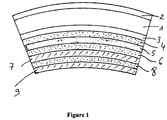
Figure 1 illustrant de façon schématique les différentes couches constituant un mode de réalisation préférentiel du verre oculaire selon l'invention. - Selon la
Figure 1 , le verre oculaire selon l'invention comprend un substrat (1) transparent. Ce substrat (1) peut être réalisé en un matériau minéral ou organique tel que le polycarbonate ou tout autre matériau utilisé dans les verres de lunettes tel que du polyamide, du polymère CR39 ou NXT, ou bien un copolyester basé sur des monomères : « dimethyl terephtalate-1,4-cyclohexanedimethanol-2,2,4,4-tetramethylcyclobutane-1,3-diol ». - Sur la face convexe du substrat (1) est disposée une couche de vernis anti-rayure (2), alors que sur la partie concave dudit substrat (1) est disposée également une couche de vernis anti-rayure (3). Chacune de ces couches (2), (3) a une épaisseur comprise entre 1 et 10 µm. Le rôle de la couche (2) est de protéger le substrat (1) contre toute abrasion, celui de la couche (3) est de permettre une meilleure adhérence de la couche (4) au substrat (1).
- La couche (4) est constituée d'un film métallique réalisé en un métal, préférentiellement le chrome mais qui peut être aussi réalisé en un autre métal tel que le nickel, le fer, le titane, l'aluminium, le zinc, le plomb, l'étain, le tantale, le tungstène ou bien en un alliage de ces métaux entre eux ou avec le chrome. Cette couche a été insérée entre la couche (3) de vernis anti-rayure et la couche (5) de métal précieux permettant d'obtenir une meilleure adhérence de la couche (5) de métal précieux.
- La couche (5) est réalisée en métal précieux choisi parmi les métaux suivants : or, argent, platine, palladium, rhodium, ruthénium, scandium, osmium ou iridium ainsi que dans l'un des alliages obtenus à partir de ces métaux. C'est cette couche qui va conférer au verre selon l'invention l'effet esthétique recherché, à savoir l'apparence du métal précieux en question. L'agencement des couches (4), (5), (6) permet à la fois la suppression des franges d'interférences apparaissant dans certaines conditions s'agissant du verre oculaire faisant l'objet du brevet européen
EP 2 274 648 ; il permet également au métal précieux constituant la couche (5) d'être parfaitement protégé des agressions physiques et/ou chimiques. - La couche (6) consiste en un film métallique, le métal choisi étant l'un des métaux susceptibles de constituer la couche (4).
- La couche (7) est constituée d'une couche d'oxyde métallique, comme par exemple l'oxyde de silicium, mais elle pourrait également être constituée d'oxyde de titane, de tantale ou de zirconium.
- La couche (8) consiste en un film métallique, le métal étant choisi parmi ceux énumérés pour réaliser les couches (4) ou (6).
- La couche (9), à savoir celle qui sera la plus proche de l'oeil du porteur du verre selon l'invention, sera réalisée en un oxyde métallique, le métal étant choisi parmi les métaux suivants : silicium, titane, tantale, zirconium.
- L'aspect recherché du « métal précieux » est le résultat du rendu de l'ensemble des couches (3), (4), (5), (6), (7), (8) et (9). L'avantage de cet assemblage est que la couche (5) de métal précieux est prise en sandwich entre deux couches (4) et (6). De ce fait, comme cela a été précisé précédemment, la couche (5) de métal précieux est protégée naturellement, contrairement à l'ensemble décrit dans le brevet
EP 2 274 648 précité où la couche de métal précieux est à l'extérieur et doit donc être protégée par une couche de protection. - L'ensemble des couches (6), (7), (8) et (9) a pour but de limiter la réflexion sur la face concave du verre, qu'il s'agisse de la réflexion pour le porteur par rapport au premier sandwich (4), (5), (6), ou par le film métallique (8) et ainsi renforcer l'aspect « métal précieux » à la surface du verre. Il convient d'ailleurs de noter que la couche (6) est à la fois un vernis anti-rayure, mais permet également une meilleure adhérence du deuxième sandwich (7), (8), (9).
- Dans le cas où le métal précieux est l'or, les valeurs préférentielles de ces couches sont les suivantes :
- couche (4) : entre 1 et 50 nm
- couche (5) : entre 1 et 200 nm
- couche (6) : entre 1 et 200 nm
- couche (7) : entre 20 et 300 nm
- couche (8) : entre 1 et 100 nm
- couche (9) : entre 20 et 300 nm
- Bien entendu, pour des raisons de clarté, les épaisseurs relatives des différentes couches ne sont pas respectées. Pour mémoire, le substrat (1) présente une partie convexe tournée vers l'observateur et une face concave située du côté de l'oeil du porteur dudit verre, la couche (2) étant disposée sur la partie convexe du substrat (1), alors que les couches (3), (4), (5), (6), (7), (8) et (9) sont disposées sur la partie concave dudit substrat (1).
- Différents tests ont été conduits afin d'établir que le verre oculaire selon l'invention résiste à des conditions extrêmes :
- résistance à la chaleur : le verre oculaire est maintenu dans un four à 90°C pendant 60 minutes.
- résistance au froid : le verre oculaire est maintenu à - 20°C pendant deux heures.
- Test de l'eau chaude : le verre oculaire est immergé dans de l'eau portée à 80°C pendant 10 minutes.
- Test à l'immersion dans l'eau salée : le verre oculaire est plongé dans une solution saline à 3% en NaCl pendant 24 heures.
- A l'issue de ces tests et malgré la combinaison de griffures profondes + test au scotch (test normatif), pratiquées sur le verre oculaire ayant subi chacun desdits tests, aucun décollement ou segmentation des couches n'est observé.
- Le verre oculaire selon l'invention sera utilisé sous forme de lunettes ou de bandeaux, solaires ou ophtalmiques.
- Selon un mode préférentiel de réalisation du verre oculaire selon l'invention, les couches de vernis anti-rayure (2) et (3) sont appliquées par trempage du substrat (1) dans un bain de vernis ou par toute autre technique d'application telle que le vernissage/enduction par centrifugation, connue dans ce domaine technique sous le nom de « flow coating » ; elles peuvent également être appliquées par la méthode du vernissage/enduction par débit contrôlé, connue dans ce domaine technique sous le nom de « spin coating », très utilisée sur les verres dont le substrat est réalisé en polymère thermodurcissable CR39 ou bien encore par le procédé de pulvérisation/spray très utilisée pour les bandeaux/shields. Les couches (4), (5), (6), (7), (8) et (9) sont déposées une par une par évaporation sous vide.
Claims (12)
- Verre oculaire, du type comportant un substrat (1) présentant une face convexe tournée vers l'observateur et une face concave tournée vers l'oeil du porteur dudit verre, du type comprenant :• une première couche (2) de vernis anti-rayure disposée sur la face convexe dudit substrat (1),• une deuxième couche (3) de vernis anti-rayure disposée sur la face concave dudit substrat (1),• une pluralité de couches, dont une couche (5) réalisée en un métal précieux, choisi dans le groupe composé par l'or, l'argent, le platine, le palladium, le rhodium, le ruthénium, le scandium, l'osmium, l'iridium, ou un alliage obtenu à partir de ces métaux, disposée sur ladite deuxième couche (3) de vernis anti-rayure, du côté de l'oeil du porteur dudit verre, caractérisé en ce que ladite couche (5) de métal précieux est prise en sandwich entre deux couches (4) et (6) d'un film métallique.
- Verre oculaire selon la revendication 1, caractérisé en ce que le métal précieux de la couche (5) est l'or.
- Verre oculaire selon l'une des revendications 1 ou 2, caractérisé en ce que sous le sandwich formé par les couches (4), (5) et (6) est disposée une couche constituée d'un film métallique (8), lui-même pris en sandwich entre deux couches (7) et (9) d'oxyde métallique.
- Verre oculaire selon la revendication 3, caractérisé en ce que les couches (4), (6) et (8) sont réalisées en un film métallique, le métal étant le chrome.
- Verre oculaire selon la revendication 3, caractérisé en ce que les couches (4), (6) et (8) sont réalisées en un film métallique, le métal étant choisi dans le groupe suivant de métaux : nickel, fer, titane, aluminium, zinc, plomb, étain, tantale, tungstène ou bien en un alliage de ces métaux entre eux ou avec le chrome.
- Verre oculaire selon l'une quelconque des revendications 3 à 5, caractérisé en ce que les couches (7) et (9) sont constituées d'oxyde de silicium.
- Verre oculaire selon l'une quelconque des revendications 3 à 5, caractérisé en ce que les couches (7) et (9) sont constituées d'un oxyde métallique choisi parmi les oxydes suivants : oxyde de titane, oxyde de tantale ou oxyde de zirconium.
- Verre oculaire selon l'une quelconque des revendications 1 à 7, caractérisé en ce que l'épaisseur des couches (2) et (3) est comprise entre 1 et 10 µm.
- Verre oculaire selon l'une quelconque des revendications 3 à 8, caractérisé en ce que l'épaisseur des couches est la suivante :• couche (4) : entre 1 et 50 nm• couche (5) : entre 1 et 200 nm• couche (6) : entre 1 et 200 nm• couche (7) : entre 20 et 300 nm• couche (8) : entre 1 et 100 nm• couche (9) : entre 20 et 300 nm
- Procédé d'obtention d'un verre oculaire selon l'une quelconque des revendications 1 à 9, caractérisé en ce que les couches (2) et (3) sont appliquées par trempage du substrat (1) dans un bain de vernis ou par la technique du « flow coating ».
- Procédé d'obtention d'un verre oculaire selon l'une quelconque des revendications 3 à 9, caractérisé en ce que les couches (4), (5), (6), (7), (8) et (9) sont déposées une par une par évaporation sous vide.
- Lunettes ou bandeaux, solaires ou ophtalmiques, réalisés en un verre oculaire selon l'une quelconque des revendications 1 à 9.
Applications Claiming Priority (1)
| Application Number | Priority Date | Filing Date | Title |
|---|---|---|---|
| FR1800035A FR3076628B1 (fr) | 2018-01-11 | 2018-01-11 | Nouveau verre oculaire realise en un materiau composite a usage optique, ainsi que son procede d'obtention |
Publications (1)
| Publication Number | Publication Date |
|---|---|
| EP3511768A1 true EP3511768A1 (fr) | 2019-07-17 |
Family
ID=63683924
Family Applications (1)
| Application Number | Title | Priority Date | Filing Date |
|---|---|---|---|
| EP19290001.7A Withdrawn EP3511768A1 (fr) | 2018-01-11 | 2019-01-07 | Nouveau verre oculaire réalisé en un matériau composite à usage optique, ainsi que son procédé d'obtention |
Country Status (5)
| Country | Link |
|---|---|
| US (1) | US20190212474A1 (fr) |
| EP (1) | EP3511768A1 (fr) |
| JP (1) | JP2019124935A (fr) |
| CN (1) | CN110031986A (fr) |
| FR (1) | FR3076628B1 (fr) |
Cited By (2)
| Publication number | Priority date | Publication date | Assignee | Title |
|---|---|---|---|---|
| EP3752868A1 (fr) * | 2018-02-16 | 2020-12-23 | Luxottica S.r.l. | Lentille multicouche pour lunettes |
| WO2023154773A1 (fr) * | 2022-02-10 | 2023-08-17 | Nitto Denko Corporation | Élément ophtalmique à absorption-réflexion de lumière asymétrique |
Families Citing this family (19)
| Publication number | Priority date | Publication date | Assignee | Title |
|---|---|---|---|---|
| US20170031525A1 (en) | 2010-05-14 | 2017-02-02 | Racing Optics, Inc. | Touch screen shield |
| US9295297B2 (en) | 2014-06-17 | 2016-03-29 | Racing Optics, Inc. | Adhesive mountable stack of removable layers |
| WO2020027178A1 (fr) * | 2018-07-31 | 2020-02-06 | ホヤ レンズ タイランド リミテッド | Produit optique et son procédé de fabrication |
| WO2020160492A1 (fr) | 2019-02-01 | 2020-08-06 | Racing Optics, Inc. | Empilement thermoformé pour pare-brise au moyen d'un moule intégré façonnable |
| US11846788B2 (en) | 2019-02-01 | 2023-12-19 | Racing Optics, Inc. | Thermoform windshield stack with integrated formable mold |
| US11364715B2 (en) | 2019-05-21 | 2022-06-21 | Racing Optics, Inc. | Polymer safety glazing for vehicles |
| US11648723B2 (en) | 2019-12-03 | 2023-05-16 | Racing Optics, Inc. | Method and apparatus for reducing non-normal incidence distortion in glazing films |
| US11912001B2 (en) | 2019-12-03 | 2024-02-27 | Ro Technologies, Llc | Method and apparatus for reducing non-normal incidence distortion in glazing films |
| US11548356B2 (en) | 2020-03-10 | 2023-01-10 | Racing Optics, Inc. | Protective barrier for safety glazing |
| US20210285661A1 (en) | 2020-03-10 | 2021-09-16 | Wolf Steel Ltd. | Heating and cooling appliance |
| US11147323B1 (en) * | 2020-04-17 | 2021-10-19 | Racing Optics, Inc. | Protective face shield attachable to headwear |
| US11399581B2 (en) * | 2020-04-17 | 2022-08-02 | Racing Optics, Inc. | Protective face shield attachable to headwear |
| US11490667B1 (en) | 2021-06-08 | 2022-11-08 | Racing Optics, Inc. | Low haze UV blocking removable lens stack |
| US12140781B2 (en) | 2021-07-27 | 2024-11-12 | Laminated Film Llc | Low reflectance removable lens stack |
| US11307329B1 (en) | 2021-07-27 | 2022-04-19 | Racing Optics, Inc. | Low reflectance removable lens stack |
| US11709296B2 (en) | 2021-07-27 | 2023-07-25 | Racing Optics, Inc. | Low reflectance removable lens stack |
| US12162330B2 (en) | 2022-02-08 | 2024-12-10 | Ro Technologies, Llc | Multi-layer windshield film having progressive thickness layers |
| US11933943B2 (en) | 2022-06-06 | 2024-03-19 | Laminated Film Llc | Stack of sterile peelable lenses with low creep |
| US11808952B1 (en) | 2022-09-26 | 2023-11-07 | Racing Optics, Inc. | Low static optical removable lens stack |
Citations (3)
| Publication number | Priority date | Publication date | Assignee | Title |
|---|---|---|---|---|
| DE1911036A1 (de) * | 1968-03-04 | 1969-09-18 | Eastman Kodak Co | Transparentes Augenlichtschutzmaterial |
| US6793339B1 (en) * | 1997-10-21 | 2004-09-21 | Sola-International Holdings, Ltd. | Coated sunglass lens |
| FR2930996A1 (fr) * | 2008-05-07 | 2009-11-13 | Christian Dalloz Sunoptics Sa | Nouveau type de verre pour lunettes et son procede d'obtention |
Family Cites Families (7)
| Publication number | Priority date | Publication date | Assignee | Title |
|---|---|---|---|---|
| JPS5195858A (en) * | 1975-01-14 | 1976-08-23 | ****** *** *ku***chi*se*ku*******ka*****************chi***ne******** | |
| US5729323A (en) * | 1994-07-29 | 1998-03-17 | Baush & Lomb Incorporated | Light-absorbing and anti-reflective coating for sunglasses |
| JPH08234004A (ja) * | 1995-02-27 | 1996-09-13 | Canon Inc | 金属ミラーおよびその製造方法 |
| JP3021072U (ja) * | 1995-07-28 | 1996-02-16 | 二光光学株式会社 | 防眩ミラー |
| ES2425698B1 (es) * | 2012-03-30 | 2014-08-12 | Indo Internacional S.A. | Lente que comprende un substrato polimérico, una capa endurecedora y una capa metálica |
| KR101618721B1 (ko) * | 2014-12-16 | 2016-05-09 | (주) 한일진공 | 안경 렌즈 코팅 방법 및 그 안경 렌즈 |
| CN105425415A (zh) * | 2015-12-31 | 2016-03-23 | 奥特路(漳州)光学科技有限公司 | 一种过滤蓝光防炫耐磨镜片及其制备方法 |
-
2018
- 2018-01-11 FR FR1800035A patent/FR3076628B1/fr active Active
-
2019
- 2019-01-04 CN CN201910008270.XA patent/CN110031986A/zh active Pending
- 2019-01-07 EP EP19290001.7A patent/EP3511768A1/fr not_active Withdrawn
- 2019-01-09 US US16/243,800 patent/US20190212474A1/en not_active Abandoned
- 2019-01-10 JP JP2019002315A patent/JP2019124935A/ja active Pending
Patent Citations (3)
| Publication number | Priority date | Publication date | Assignee | Title |
|---|---|---|---|---|
| DE1911036A1 (de) * | 1968-03-04 | 1969-09-18 | Eastman Kodak Co | Transparentes Augenlichtschutzmaterial |
| US6793339B1 (en) * | 1997-10-21 | 2004-09-21 | Sola-International Holdings, Ltd. | Coated sunglass lens |
| FR2930996A1 (fr) * | 2008-05-07 | 2009-11-13 | Christian Dalloz Sunoptics Sa | Nouveau type de verre pour lunettes et son procede d'obtention |
Cited By (3)
| Publication number | Priority date | Publication date | Assignee | Title |
|---|---|---|---|---|
| EP3752868A1 (fr) * | 2018-02-16 | 2020-12-23 | Luxottica S.r.l. | Lentille multicouche pour lunettes |
| EP3752868B1 (fr) * | 2018-02-16 | 2025-09-24 | Luxottica S.r.l. | Lentille multicouche pour lunettes |
| WO2023154773A1 (fr) * | 2022-02-10 | 2023-08-17 | Nitto Denko Corporation | Élément ophtalmique à absorption-réflexion de lumière asymétrique |
Also Published As
| Publication number | Publication date |
|---|---|
| FR3076628A1 (fr) | 2019-07-12 |
| CN110031986A (zh) | 2019-07-19 |
| US20190212474A1 (en) | 2019-07-11 |
| JP2019124935A (ja) | 2019-07-25 |
| FR3076628B1 (fr) | 2020-07-17 |
Similar Documents
| Publication | Publication Date | Title |
|---|---|---|
| EP3511768A1 (fr) | Nouveau verre oculaire réalisé en un matériau composite à usage optique, ainsi que son procédé d'obtention | |
| EP4163707B1 (fr) | Lentille ophtalmique | |
| EP1697770B1 (fr) | Article d optique revetu d un revetement anti-reflets m ulticouches absorbant dans le visible et procede de fabrication | |
| JP2022509087A (ja) | 耐摩耗性を改善するためのフィルタリング干渉コーティング及び多層系を有する光学レンズ | |
| CN109073785A (zh) | 包括在近红外区(nir)中具有高反射的减反射涂层的光学制品 | |
| EP2906990A1 (fr) | Lentille ophtalmique photochromique | |
| US11474381B2 (en) | Ophthalmic article | |
| CN113167927A (zh) | 具有增强型干涉涂层和用于改善耐磨性的多层系统的光学镜片 | |
| EP2274648B1 (fr) | Verre pour lunettes et son procede d'obtention | |
| WO2019158717A1 (fr) | Verre teinté ophtalmique | |
| FR3039659A1 (fr) | Lentille ophtalmique et procede de fabrication associe | |
| CA2946960C (fr) | Miroir colore | |
| FR2990774A1 (fr) | Lentille ophtalmique | |
| US20240402406A1 (en) | Wire grid polarizer reflection control with colored films | |
| AU2019220323B2 (en) | Multilayer lens for eyeglasses | |
| CN106249428A (zh) | 消光镜片及其制作方法 | |
| CN115552321A (zh) | 配置为呈现出透明状态和可选的黑暗状态的眼科镜片 | |
| FR2864250A1 (fr) | Article d'optique revetu d'un revetement anti-reflets multicouches absorbant dans le visible et procede de fabrication. |
Legal Events
| Date | Code | Title | Description |
|---|---|---|---|
| PUAI | Public reference made under article 153(3) epc to a published international application that has entered the european phase |
Free format text: ORIGINAL CODE: 0009012 |
|
| STAA | Information on the status of an ep patent application or granted ep patent |
Free format text: STATUS: THE APPLICATION HAS BEEN PUBLISHED |
|
| AK | Designated contracting states |
Kind code of ref document: A1 Designated state(s): AL AT BE BG CH CY CZ DE DK EE ES FI FR GB GR HR HU IE IS IT LI LT LU LV MC MK MT NL NO PL PT RO RS SE SI SK SM TR |
|
| AX | Request for extension of the european patent |
Extension state: BA ME |
|
| STAA | Information on the status of an ep patent application or granted ep patent |
Free format text: STATUS: REQUEST FOR EXAMINATION WAS MADE |
|
| 17P | Request for examination filed |
Effective date: 20200115 |
|
| RBV | Designated contracting states (corrected) |
Designated state(s): AL AT BE BG CH CY CZ DE DK EE ES FI FR GB GR HR HU IE IS IT LI LT LU LV MC MK MT NL NO PL PT RO RS SE SI SK SM TR |
|
| STAA | Information on the status of an ep patent application or granted ep patent |
Free format text: STATUS: EXAMINATION IS IN PROGRESS |
|
| 17Q | First examination report despatched |
Effective date: 20220421 |
|
| STAA | Information on the status of an ep patent application or granted ep patent |
Free format text: STATUS: THE APPLICATION IS DEEMED TO BE WITHDRAWN |
|
| 18D | Application deemed to be withdrawn |
Effective date: 20230801 |