EP3505252A2 - Method for extracting nucleic acid and extraction cassette thereof - Google Patents
Method for extracting nucleic acid and extraction cassette thereof Download PDFInfo
- Publication number
- EP3505252A2 EP3505252A2 EP18215506.9A EP18215506A EP3505252A2 EP 3505252 A2 EP3505252 A2 EP 3505252A2 EP 18215506 A EP18215506 A EP 18215506A EP 3505252 A2 EP3505252 A2 EP 3505252A2
- Authority
- EP
- European Patent Office
- Prior art keywords
- compartment
- sample
- detergent
- mixing
- path
- Prior art date
- Legal status (The legal status is an assumption and is not a legal conclusion. Google has not performed a legal analysis and makes no representation as to the accuracy of the status listed.)
- Granted
Links
Images








Classifications
-
- B—PERFORMING OPERATIONS; TRANSPORTING
- B01—PHYSICAL OR CHEMICAL PROCESSES OR APPARATUS IN GENERAL
- B01L—CHEMICAL OR PHYSICAL LABORATORY APPARATUS FOR GENERAL USE
- B01L3/00—Containers or dishes for laboratory use, e.g. laboratory glassware; Droppers
- B01L3/50—Containers for the purpose of retaining a material to be analysed, e.g. test tubes
- B01L3/502—Containers for the purpose of retaining a material to be analysed, e.g. test tubes with fluid transport, e.g. in multi-compartment structures
-
- B—PERFORMING OPERATIONS; TRANSPORTING
- B01—PHYSICAL OR CHEMICAL PROCESSES OR APPARATUS IN GENERAL
- B01L—CHEMICAL OR PHYSICAL LABORATORY APPARATUS FOR GENERAL USE
- B01L3/00—Containers or dishes for laboratory use, e.g. laboratory glassware; Droppers
- B01L3/52—Containers specially adapted for storing or dispensing a reagent
- B01L3/527—Containers specially adapted for storing or dispensing a reagent for a plurality of reagents
-
- B—PERFORMING OPERATIONS; TRANSPORTING
- B01—PHYSICAL OR CHEMICAL PROCESSES OR APPARATUS IN GENERAL
- B01L—CHEMICAL OR PHYSICAL LABORATORY APPARATUS FOR GENERAL USE
- B01L2200/00—Solutions for specific problems relating to chemical or physical laboratory apparatus
- B01L2200/06—Fluid handling related problems
- B01L2200/0631—Purification arrangements, e.g. solid phase extraction [SPE]
-
- B—PERFORMING OPERATIONS; TRANSPORTING
- B01—PHYSICAL OR CHEMICAL PROCESSES OR APPARATUS IN GENERAL
- B01L—CHEMICAL OR PHYSICAL LABORATORY APPARATUS FOR GENERAL USE
- B01L2200/00—Solutions for specific problems relating to chemical or physical laboratory apparatus
- B01L2200/06—Fluid handling related problems
- B01L2200/0689—Sealing
-
- B—PERFORMING OPERATIONS; TRANSPORTING
- B01—PHYSICAL OR CHEMICAL PROCESSES OR APPARATUS IN GENERAL
- B01L—CHEMICAL OR PHYSICAL LABORATORY APPARATUS FOR GENERAL USE
- B01L2200/00—Solutions for specific problems relating to chemical or physical laboratory apparatus
- B01L2200/16—Reagents, handling or storing thereof
-
- B—PERFORMING OPERATIONS; TRANSPORTING
- B01—PHYSICAL OR CHEMICAL PROCESSES OR APPARATUS IN GENERAL
- B01L—CHEMICAL OR PHYSICAL LABORATORY APPARATUS FOR GENERAL USE
- B01L2300/00—Additional constructional details
- B01L2300/02—Identification, exchange or storage of information
- B01L2300/025—Displaying results or values with integrated means
- B01L2300/028—Graduation
-
- B—PERFORMING OPERATIONS; TRANSPORTING
- B01—PHYSICAL OR CHEMICAL PROCESSES OR APPARATUS IN GENERAL
- B01L—CHEMICAL OR PHYSICAL LABORATORY APPARATUS FOR GENERAL USE
- B01L2300/00—Additional constructional details
- B01L2300/04—Closures and closing means
- B01L2300/041—Connecting closures to device or container
- B01L2300/042—Caps; Plugs
Definitions
- the present invention relates to an extraction cassette, and in particular to an extraction cassette with a liquid receiving module.
- the sample compartment typically has a pressure supply opening connected to a pressure source.
- the movement of the liquid inside the sample compartment can be controlled by the pressure supplied via the pressure supply opening.
- the sample often contains viruses, bacteria or other contaminants, and the contaminants can travel to the analyzer or the outer environment via the pressure supply opening. Such contaminants not only cause inaccurate test results, but also endanger the health of the operator.
- an extraction cassette in one embodiment, includes an extraction module and a liquid receiving module.
- the liquid receiving module communicates with the extraction module.
- the liquid receiving module includes a receiving module body, a sample compartment, a sealing member, an alcohol compartment and a first path.
- the receiving module body includes a first side, a second side and a sample feeding hole, wherein the first side is opposite the second side, and the sample feeding hole is formed on the first side.
- the sample compartment is formed on the receiving module body, wherein the sample compartment communicates with the sample feeding hole, the sample compartment includes a first sample compartment connection hole and a second sample compartment connection hole, and the first sample compartment connection hole nears the first side relative to the second side.
- the sealing member is adapted to seal the sample feeding hole.
- the alcohol compartment is formed on the receiving module body. The alcohol compartment communicates with the first sample compartment connection hole of the first sample compartment via the first path, wherein at least one portion of the first path is located between the alcohol compartment and the second side.
- the alcohol compartment includes an alcohol compartment connection hole, the alcohol compartment connection hole nears the second side relative to the first side, and the first path connects the alcohol compartment connection hole to the first sample compartment connection hole.
- the liquid receiving module further includes a first mixing compartment and a second path
- the first mixing compartment is formed on the receiving module body
- the second sample compartment connection hole nears the second side relative to the first side
- the second path connects the second sample compartment connection hole to the first mixing compartment
- the liquid receiving module further includes a second mixing compartment, a third path and a fourth path
- the second mixing compartment is formed on the receiving module body
- the third path connects the first mixing compartment to the second mixing compartment
- the fourth path connects the second mixing compartment to the extraction module
- the fourth path includes a fourth path outlet, the fourth path outlet nears the second side relative to the first mixing compartment and the second mixing compartment.
- the liquid receiving module further includes a first detergent compartment, a second detergent compartment, a fifth path and a sixth path, the first detergent compartment and the second detergent compartment are formed on the receiving module body, the fifth path connects the first detergent compartment to the first mixing compartment, and the sixth path connects the second detergent compartment to the first mixing compartment.
- the liquid receiving module further includes an eluent compartment and a seventh path, the eluent compartment is formed on the receiving module body, and the seventh path connects the eluent compartment to the extraction module.
- a method for extracting nucleic acid includes the following steps. First, an extraction cassette is provided, wherein the extraction cassette includes a liquid receiving module and an extraction module, the extraction module communicates with the liquid receiving module, the liquid receiving module includes a sample compartment, an alcohol compartment, a first mixing compartment, a second mixing compartment, a first detergent compartment, a second detergent compartment and an eluent compartment. Then, an alcohol is filled into the alcohol compartment, a first detergent is filled into the first detergent compartment, a second detergent is filled into the second detergent compartment, and an eluent is filled into the eluent compartment. Next, a sample is filled into the sample compartment. Then, the sample inside the sample compartment is heated.
- the method further includes moving the alcohol from the alcohol compartment to the sample compartment, wherein the sample and the alcohol are mixed into a mixed liquid.
- the method further includes the following steps. First, the mixed liquid is moved into the first mixing compartment. Then, the mixed liquid is moved between the first mixing compartment and the second mixing compartment repeatedly to mix the sample and the alcohol.
- the method further includes the following steps. First, the mixed liquid is moved into the extraction module and the nucleic acid is captured from the mixed liquid by the extraction module. Then, the mixed liquid is moved into a first waste-liquid compartment of the extraction module.
- the method further includes the following steps. First, the first detergent is progressively moved from the first detergent compartment to the first mixing compartment and the second mixing compartment to clean the first mixing compartment and the second mixing compartment. Then, the first detergent is moved to the extraction module to clean the extraction module. Next, the first detergent is moved to the first waste-liquid compartment of the extraction module.
- the method further includes the following steps. First, the second detergent is progressively moved from the second detergent compartment to the first mixing compartment and the second mixing compartment to clean the first mixing compartment and the second mixing compartment. Then, the second detergent is moved to the extraction module to clean the extraction module. Next, at least one portion of the second detergent is moved to a second waste-liquid compartment of the extraction module.
- the method further includes moving the eluent from the eluent compartment to the extraction module to take out the nucleic acid from the extraction module.
- the sample feeding hole of the sample compartment is sealed by the sealing member.
- the mixed liquid inside the sample compartment is moved to the first mixing compartment by the pressure applied to the alcohol compartment. Therefore, the virus, bacteria and other contaminants of the sample in the sample compartment is prevented from leaking from the liquid receiving module. Even if the contaminants of the sample enter the alcohol compartment via the first sample compartment connection hole (above the sample compartment) and the first path, the contaminants are disinfected by the alcohol compartment and are unable to cause pollution.
- the extraction cassette of the embodiment of the present invention can restrict the area polluted by the sample to the environment inside or around the analyzer, improving the accuracy of the analysis result and safeguarding the health of the operator.
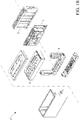
- Fig. 1A is an assembled view of an extraction cassette C of an embodiment of the present invention.
- Fig. 1B is an exploded view of the extraction cassette C of the embodiment of the present invention.
- the extraction cassette C includes an extraction module 1, a liquid receiving module 2, a sampling module 3 and a connection module 4.
- the extraction cassette C is adapted to be disposed into an analyzer.
- the analyzer includes a first pressure supplying module, an analyzing module and a second pressure supplying module.
- the first pressure supplying module and the second pressure supplying module provide pressure toward the extraction cassette C to control the liquid movement inside the extraction cassette C.
- the analyzing module heats and cools the extraction cassette C, and analyzes the sample inside extraction cassette C.
- the liquid receiving module 2 communicates with the extraction module 1 via the connection module 4.
- the compartments of the liquid receiving module 2 communicate with one another via the connection module 4.
- Fig. 2A is a detail of the liquid receiving module 2.
- the liquid receiving module 2 includes a receiving module body 29, a sample compartment 21, a sealing member 211, an alcohol compartment 22 and a first path 221.
- the receiving module body 29 includes a first side 291, a second side 292 and a sample feeding hole 212.
- the first side 291 is opposite the second side 292.
- the sample feeding hole 212 is formed on the first side 291.
- the sample compartment 21 is formed on the receiving module body 29.
- the sample compartment 21 communicates with the sample feeding hole 212.
- the sample compartment 21 includes a first sample compartment connection hole 213 and a second sample compartment connection hole 214.
- the first sample compartment connection hole 213 nears the first side 291 relative to the second side 292.
- the sealing member 211 is adapted to seal the sample feeding hole 212.
- the alcohol compartment 22 is formed on the receiving module body 29.
- the alcohol compartment 22 communicates with the first sample compartment connection hole 213 of the first sample compartment 21 via the first path 221. In one embodiment, wherein at least one portion of the first path 221 is located between the alcohol compartment 22 and the second side 292.
- the alcohol compartment 22 includes an alcohol compartment connection hole 222.
- the alcohol compartment connection hole 222 nears the second side 292 relative to the first side 291.
- the first path 221 connects the alcohol compartment connection hole 222 to the first sample compartment connection hole 213.
- the liquid receiving module 2 further includes a first mixing compartment 23 and a second path 231.
- the first mixing compartment 23 is formed on the receiving module body 29.
- the second sample compartment connection hole 214 nears the second side 292 relative to the first side 291.
- the second path 231 connects the second sample compartment connection hole 214 to the first mixing compartment 23.
- the liquid receiving module 2 further includes a second mixing compartment 24, a third path 241 and a fourth path 242.
- the second mixing compartment 24 is formed on the receiving module body 29.
- the third path 241 connects the first mixing compartment 23 to the second mixing compartment 24.
- the fourth path 242 connects the second mixing compartment 24 to the extraction module 1.
- the third path 241 connects the first mixing compartment 23 to the bottom of the second mixing compartment 24.
- the liquid receiving module 2 further includes a first detergent compartment 25, a second detergent compartment 26, a fifth path 251 and a sixth path 261.
- the first detergent compartment 25 and the second detergent compartment 26 are formed on the receiving module body 29.
- the fifth path 251 connects the first detergent compartment 25 to the first mixing compartment 23.
- the sixth path 261 connects the second detergent compartment 26 to the first mixing compartment 23.
- the liquid receiving module further includes an eluent compartment 27 and a seventh path 271.
- the eluent compartment 27 is formed on the receiving module body 29, and the seventh path 271 connects the eluent compartment 27 to the extraction module 1.
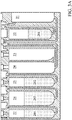
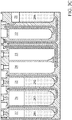
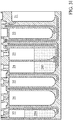
- Figs. 3A ⁇ 3I show the operation of the liquid receiving module 2 of the embodiment of the present invention.
- liquid receiving module 2 receives four liquids, which are the alcohol 281 (in the alcohol compartment 22), the first detergent 282 (in the first detergent compartment 25), the second detergent 283 (in the second detergent compartment 26) and the eluent 284 (in the eluent compartment 27).
- the sample 285 is filled into the sample compartment 21.
- the temperature of the sample 285 in the sample compartment 21 is raised to 60 degrees Celsius (60 °C).
- the alcohol 281 from the alcohol compartment 22 to the sample compartment 21, wherein the sample 285 and the alcohol 281 are mixed into a mixed liquid 286 in the sample compartment 21.
- the mixed liquid 286 with the sample 285 and the alcohol 281 is moved from the sample compartment 21 to the first mixing compartment 23 ( Fig. 3D ).
- the mixed liquid 286 is moved between the first mixing compartment 23 and the second mixing compartment 24 repeatedly to mix the sample 285 and the alcohol 281 ( Fig. 3E ).
- the mixed liquid 286 with the sample 285 and the alcohol 281 is moved into the extraction module 1 and the nucleic acid is captured from the mixed liquid 286 by the extraction module 1. Then, the mixed liquid 286 is moved into a first waste-liquid compartment of the extraction module 1.
- the first detergent 282 is progressively moved from the first detergent compartment 25 to the first mixing compartment 23 and the second mixing compartment 24 to clean the first mixing compartment 23 and the second mixing compartment 24. Then, the first detergent 282 is moved to the extraction module 1 to clean the extraction module 1. Next, the first detergent 282 is moved to the first waste-liquid compartment of the extraction module 1.
- the second detergent 283 is progressively moved from the second detergent compartment 26 to the first mixing compartment 23 and the second mixing compartment 24 to clean the first mixing compartment 23 and the second mixing compartment 24. Then, the second detergent 283 is moved to the extraction module 1 to clean the extraction module 1. Next, at least one portion of the second detergent 283 is moved to a second waste-liquid compartment of the extraction module 1.
- the eluent 284 is from the eluent compartment 27 to the extraction module 1 to take out the nucleic acid from the extraction module 1.
- the eluent 284 with the nucleic acid is then moved to the sampling module 3 to be quantitatively sampled.
- the sample feeding hole 212 of the sample compartment 21 is sealed by the sealing member 211.
- the mixed liquid 286 inside the sample compartment 21 is moved to the first mixing compartment 23 by the pressure applied to the alcohol compartment 22. Therefore, the virus, bacteria and other contaminants of the sample 285 in the sample compartment 21 is prevented from leaking from the liquid receiving module. Even if the contaminants of the sample 285 enter the alcohol compartment 22 via the first sample compartment connection hole (above the sample compartment 21) and the first path 221, the contaminants are disinfected by the alcohol compartment 22 and are unable to cause pollution.
- the extraction cassette of the embodiment of the present invention can restrict the area polluted by the sample 285 to the environment inside or around the analyzer, improving the accuracy of the analysis result and safeguarding the health of the operator.
- the mixed liquid 286 can be moved back and forth between the first mixing chamber 23 and the second mixing chamber 24 via the third path 241.
- the mixed liquid 286 is thoroughly mixed, whereby the effect of sufficiently mixing the mixed liquid 286 can be achieved with a minimum space.
- the fourth path 242 has a fourth path outlet 242A that is higher than the top of the first mixing chamber 23 and the second mixing chamber 24.
- the fourth path outlet 242A is higher than the liquid level of the mixed liquid 286.
- the liquid receiving module 2 can be integrally formed except the sealing member 211.
- Figs. 4A ⁇ 4C show a method for extracting nucleic acid of an embodiment of the present invention.
- the method for extracting nucleic acid of the embodiment of the present invention includes the following steps. First, an extraction cassette is provided, wherein the extraction cassette includes a liquid receiving module and an extraction module, the extraction module communicates with the liquid receiving module, the liquid receiving module includes a sample compartment, an alcohol compartment, a first mixing compartment, a second mixing compartment, a first detergent compartment, a second detergent compartment and an eluent compartment (S11).
- an alcohol is filled into the alcohol compartment, a first detergent is filled into the first detergent compartment, a second detergent is filled into the second detergent compartment, and an eluent is filled into the eluent compartment (S12).
- a sample is filled into the sample compartment (S13). Then, the sample inside the sample compartment is heated (S14).
- the method further includes the following steps.
- the alcohol is moved from the alcohol compartment to the sample compartment, wherein the sample and the alcohol are mixed into a mixed liquid (S15).
- the mixed liquid is moved into the first mixing compartment, and then the mixed liquid is moved between the first mixing compartment and the second mixing compartment repeatedly to mix the sample and the alcohol (S16).
- the mixed liquid is moved into the extraction module and the nucleic acid is captured from the mixed liquid by the extraction module (S17).
- the mixed liquid is moved into a first waste-liquid compartment of the extraction module (S18).
- the method further includes the following steps.
- the first detergent is progressively moved from the first detergent compartment to the first mixing compartment and the second mixing compartment to clean the first mixing compartment and the second mixing compartment (S21).
- the first detergent is moved to the extraction module to clean the extraction module (S22).
- the first detergent is moved to the first waste-liquid compartment of the extraction module (S23).
- the second detergent is progressively moved from the second detergent compartment to the first mixing compartment and the second mixing compartment to clean the first mixing compartment and the second mixing compartment (S24).
- the second detergent is moved to the extraction module to clean the extraction module (S25).
- at least one portion of the second detergent is moved to a second waste-liquid compartment of the extraction module (S26).
- the eluent is moved from the eluent compartment to the extraction module to take out the nucleic acid from the extraction module (S27).
- the applicant used an oral cell preservation solution containing a high concentration of the nucleic acid to be tested (Mh plasmid: 106 copies/mL, CytB plasmid) as a positive sample, and an oral cell preservation solution containing no nucleic acid to be tested as a negative sample, and perform interleaved tests of positive and negative samples. It is desired to confirm that the negative sample test result after the positive sample test result has no nucleic acid detected. It has been experimentally verified that the extraction cassette of the embodiment of the present invention can effectively prevent cross-contamination.
- Test 1 High concentration positive and negative samples are alternatively tested four times (test sequence: positive ⁇ negative ⁇ positive ⁇ negative) Result: no nucleic acid detected in negative samples Samples positive negative positive negative Mh plasmid1 Cq 25.11 N/A 26.48 N/A CytB plasmid Cq 24.54 N/A 28.1 N/A Test 2: Negative sample test after five high consecution positive sample tests (test sequence: positive ⁇ positive ⁇ positive ⁇ positive ⁇ negative) Result: no nucleic acid detected in negative samples Samples positive positive positive positive negative Mh plasmid1 Cq 28.33 27.81 27.18 24.82 26.44 N/A CytB plasmid Cq 26.89 23.51 25.85 24.68 28.58 N/A
Landscapes
- Health & Medical Sciences (AREA)
- Chemical & Material Sciences (AREA)
- Clinical Laboratory Science (AREA)
- Chemical Kinetics & Catalysis (AREA)
- Medicinal Chemistry (AREA)
- Analytical Chemistry (AREA)
- General Health & Medical Sciences (AREA)
- Hematology (AREA)
- Apparatus Associated With Microorganisms And Enzymes (AREA)
Abstract
Description
- This application claims the benefit of
U.S. Provisional Application No. 62/610444 - This application is a Continuation-In-Part of pending
U.S. patent application Ser. No. 15/018,067, filed Feb. 8, 2016 and entitled "Nucleic acid extracting device ". - This Application claims priority of China Patent Application No.
201811532891X, filed on Dec. 14, 2018 - The present invention relates to an extraction cassette, and in particular to an extraction cassette with a liquid receiving module.
- In a conventional liquid receiving module, the sample compartment typically has a pressure supply opening connected to a pressure source. The movement of the liquid inside the sample compartment can be controlled by the pressure supplied via the pressure supply opening. However, the sample often contains viruses, bacteria or other contaminants, and the contaminants can travel to the analyzer or the outer environment via the pressure supply opening. Such contaminants not only cause inaccurate test results, but also endanger the health of the operator.
- It is an object of the present invention to provide an enhanced extraction cassette, particularly for use in a method for extracting nucleic acids, which allows particularly to restrict the area polluted by the sample to the environment inside or around the analyzer, improving the accuracy of the analysis result and/or safeguarding the health of the operator. It is a further object of the present invention to provide a corresponding enhance method for extracting nucleic acid.
- These problems are solved by an extraction cassette as claimed by
claim 1, and by a method for extracting nucleic acids as claimed by claim 7. Further advantageous embodiments are the subject-matter of the dependent claims. - In one embodiment, an extraction cassette is provided. The extraction cassette includes an extraction module and a liquid receiving module. The liquid receiving module communicates with the extraction module. The liquid receiving module includes a receiving module body, a sample compartment, a sealing member, an alcohol compartment and a first path. The receiving module body includes a first side, a second side and a sample feeding hole, wherein the first side is opposite the second side, and the sample feeding hole is formed on the first side. The sample compartment is formed on the receiving module body, wherein the sample compartment communicates with the sample feeding hole, the sample compartment includes a first sample compartment connection hole and a second sample compartment connection hole, and the first sample compartment connection hole nears the first side relative to the second side. The sealing member is adapted to seal the sample feeding hole. The alcohol compartment is formed on the receiving module body. The alcohol compartment communicates with the first sample compartment connection hole of the first sample compartment via the first path, wherein at least one portion of the first path is located between the alcohol compartment and the second side.
- In one embodiment, the alcohol compartment includes an alcohol compartment connection hole, the alcohol compartment connection hole nears the second side relative to the first side, and the first path connects the alcohol compartment connection hole to the first sample compartment connection hole.
- In one embodiment, the liquid receiving module further includes a first mixing compartment and a second path, the first mixing compartment is formed on the receiving module body, the second sample compartment connection hole nears the second side relative to the first side, and the second path connects the second sample compartment connection hole to the first mixing compartment.
- In one embodiment, the liquid receiving module further includes a second mixing compartment, a third path and a fourth path, the second mixing compartment is formed on the receiving module body, the third path connects the first mixing compartment to the second mixing compartment, the fourth path connects the second mixing compartment to the extraction module, the fourth path includes a fourth path outlet, the fourth path outlet nears the second side relative to the first mixing compartment and the second mixing compartment.
- In one embodiment, the liquid receiving module further includes a first detergent compartment, a second detergent compartment, a fifth path and a sixth path, the first detergent compartment and the second detergent compartment are formed on the receiving module body, the fifth path connects the first detergent compartment to the first mixing compartment, and the sixth path connects the second detergent compartment to the first mixing compartment.
- In one embodiment, the liquid receiving module further includes an eluent compartment and a seventh path, the eluent compartment is formed on the receiving module body, and the seventh path connects the eluent compartment to the extraction module.
- In one embodiment, a method for extracting nucleic acid is provided. The method for extracting nucleic acid includes the following steps. First, an extraction cassette is provided, wherein the extraction cassette includes a liquid receiving module and an extraction module, the extraction module communicates with the liquid receiving module, the liquid receiving module includes a sample compartment, an alcohol compartment, a first mixing compartment, a second mixing compartment, a first detergent compartment, a second detergent compartment and an eluent compartment. Then, an alcohol is filled into the alcohol compartment, a first detergent is filled into the first detergent compartment, a second detergent is filled into the second detergent compartment, and an eluent is filled into the eluent compartment. Next, a sample is filled into the sample compartment. Then, the sample inside the sample compartment is heated.
- In one embodiment, the method further includes moving the alcohol from the alcohol compartment to the sample compartment, wherein the sample and the alcohol are mixed into a mixed liquid.
- In one embodiment, the method further includes the following steps. First, the mixed liquid is moved into the first mixing compartment. Then, the mixed liquid is moved between the first mixing compartment and the second mixing compartment repeatedly to mix the sample and the alcohol.
- In one embodiment, the method further includes the following steps. First, the mixed liquid is moved into the extraction module and the nucleic acid is captured from the mixed liquid by the extraction module. Then, the mixed liquid is moved into a first waste-liquid compartment of the extraction module.
- In one embodiment, the method further includes the following steps. First, the first detergent is progressively moved from the first detergent compartment to the first mixing compartment and the second mixing compartment to clean the first mixing compartment and the second mixing compartment. Then, the first detergent is moved to the extraction module to clean the extraction module. Next, the first detergent is moved to the first waste-liquid compartment of the extraction module.
- In one embodiment, the method further includes the following steps. First, the second detergent is progressively moved from the second detergent compartment to the first mixing compartment and the second mixing compartment to clean the first mixing compartment and the second mixing compartment. Then, the second detergent is moved to the extraction module to clean the extraction module. Next, at least one portion of the second detergent is moved to a second waste-liquid compartment of the extraction module.
- In one embodiment, the method further includes moving the eluent from the eluent compartment to the extraction module to take out the nucleic acid from the extraction module.
- Utilizing the extraction cassette of the embodiment of the present invention, the sample feeding hole of the sample compartment is sealed by the sealing member. The mixed liquid inside the sample compartment is moved to the first mixing compartment by the pressure applied to the alcohol compartment. Therefore, the virus, bacteria and other contaminants of the sample in the sample compartment is prevented from leaking from the liquid receiving module. Even if the contaminants of the sample enter the alcohol compartment via the first sample compartment connection hole (above the sample compartment) and the first path, the contaminants are disinfected by the alcohol compartment and are unable to cause pollution. The extraction cassette of the embodiment of the present invention can restrict the area polluted by the sample to the environment inside or around the analyzer, improving the accuracy of the analysis result and safeguarding the health of the operator.
- A detailed description is given in the following embodiments with reference to the accompanying drawings.
- The present invention can be more fully understood by reading the subsequent detailed description and examples with references made to the accompanying drawings, wherein:
-
Fig. 1A is an assembled view of an extraction cassette of an embodiment of the present invention; -
Fig. 1B is an exploded view of the extraction cassette of the embodiment of the present invention; -
Fig. 2A is a detail of the liquid receiving module of the embodiment of the present invention; -
Fig. 2B is a detail of the third path of the embodiment of the present invention; -
Figs. 3A ,3B ,3C ,3D ,3E ,3F ,3G ,3H and3I show the operation of the liquid receiving module of the embodiment of the present invention; and -
Figs. 4A ,4B and4C show a method for extracting nucleic acid of the embodiment of the present invention. - The following description is of the best-contemplated mode of carrying out the present invention. This description is made for the purpose of illustrating the general principles of the present invention and should not be taken in a limiting sense. The scope of the present invention is best determined by reference to the appended claims.
-
Fig. 1A is an assembled view of an extraction cassette C of an embodiment of the present invention.Fig. 1B is an exploded view of the extraction cassette C of the embodiment of the present invention. With reference toFigs. 1A and1B , the extraction cassette C includes anextraction module 1, aliquid receiving module 2, a sampling module 3 and aconnection module 4. The extraction cassette C is adapted to be disposed into an analyzer. The analyzer includes a first pressure supplying module, an analyzing module and a second pressure supplying module. The first pressure supplying module and the second pressure supplying module provide pressure toward the extraction cassette C to control the liquid movement inside the extraction cassette C. The analyzing module heats and cools the extraction cassette C, and analyzes the sample inside extraction cassette C. - With reference to
Fig. 1B , theliquid receiving module 2 communicates with theextraction module 1 via theconnection module 4. The compartments of theliquid receiving module 2 communicate with one another via theconnection module 4.Fig. 2A is a detail of theliquid receiving module 2. With reference toFig. 2A , theliquid receiving module 2 includes a receivingmodule body 29, asample compartment 21, a sealingmember 211, analcohol compartment 22 and afirst path 221. The receivingmodule body 29 includes afirst side 291, asecond side 292 and asample feeding hole 212. Thefirst side 291 is opposite thesecond side 292. Thesample feeding hole 212 is formed on thefirst side 291. Thesample compartment 21 is formed on the receivingmodule body 29. Thesample compartment 21 communicates with thesample feeding hole 212. Thesample compartment 21 includes a first samplecompartment connection hole 213 and a second samplecompartment connection hole 214. The first samplecompartment connection hole 213 nears thefirst side 291 relative to thesecond side 292. The sealingmember 211 is adapted to seal thesample feeding hole 212. Thealcohol compartment 22 is formed on the receivingmodule body 29. Thealcohol compartment 22 communicates with the first samplecompartment connection hole 213 of thefirst sample compartment 21 via thefirst path 221. In one embodiment, wherein at least one portion of thefirst path 221 is located between thealcohol compartment 22 and thesecond side 292. - With reference to
Fig. 2A , in one embodiment, thealcohol compartment 22 includes an alcoholcompartment connection hole 222. The alcoholcompartment connection hole 222 nears thesecond side 292 relative to thefirst side 291. Thefirst path 221 connects the alcoholcompartment connection hole 222 to the first samplecompartment connection hole 213. - With reference to
Fig. 2A , in one embodiment, theliquid receiving module 2 further includes afirst mixing compartment 23 and asecond path 231. Thefirst mixing compartment 23 is formed on the receivingmodule body 29. The second samplecompartment connection hole 214 nears thesecond side 292 relative to thefirst side 291. Thesecond path 231 connects the second samplecompartment connection hole 214 to thefirst mixing compartment 23. - With reference to
Figs. 2A and2B , in one embodiment, theliquid receiving module 2 further includes asecond mixing compartment 24, athird path 241 and afourth path 242. Thesecond mixing compartment 24 is formed on the receivingmodule body 29. Thethird path 241 connects thefirst mixing compartment 23 to thesecond mixing compartment 24. Thefourth path 242 connects thesecond mixing compartment 24 to theextraction module 1. In one embodiment, thethird path 241 connects thefirst mixing compartment 23 to the bottom of thesecond mixing compartment 24. - With reference to
Fig. 2A , in one embodiment, theliquid receiving module 2 further includes afirst detergent compartment 25, asecond detergent compartment 26, afifth path 251 and asixth path 261. Thefirst detergent compartment 25 and thesecond detergent compartment 26 are formed on the receivingmodule body 29. Thefifth path 251 connects thefirst detergent compartment 25 to thefirst mixing compartment 23. Thesixth path 261 connects thesecond detergent compartment 26 to thefirst mixing compartment 23. - With reference to
Fig. 2A , in one embodiment, the liquid receiving module further includes aneluent compartment 27 and aseventh path 271. Theeluent compartment 27 is formed on the receivingmodule body 29, and theseventh path 271 connects theeluent compartment 27 to theextraction module 1. -
Figs. 3A∼3I show the operation of theliquid receiving module 2 of the embodiment of the present invention. With reference toFig. 3A , first,liquid receiving module 2 receives four liquids, which are the alcohol 281 (in the alcohol compartment 22), the first detergent 282 (in the first detergent compartment 25), the second detergent 283 (in the second detergent compartment 26) and the eluent 284 (in the eluent compartment 27). Next, with reference toFig. 3B , thesample 285 is filled into thesample compartment 21. After the extraction cassette C is disposed into the analyzing module of the analyzer, the temperature of thesample 285 in thesample compartment 21 is raised to 60 degrees Celsius (60 °C). Then, with reference toFig. 3C , after the temperature of thesample 285 in thesample compartment 21 is raised to 60 degrees Celsius (60 °C), thealcohol 281 from thealcohol compartment 22 to thesample compartment 21, wherein thesample 285 and thealcohol 281 are mixed into amixed liquid 286 in thesample compartment 21. Next, with reference toFigs. 3D and3E , themixed liquid 286 with thesample 285 and thealcohol 281 is moved from thesample compartment 21 to the first mixing compartment 23 (Fig. 3D ). Then, themixed liquid 286 is moved between thefirst mixing compartment 23 and thesecond mixing compartment 24 repeatedly to mix thesample 285 and the alcohol 281 (Fig. 3E ). - In one embodiment, the
mixed liquid 286 with thesample 285 and thealcohol 281 is moved into theextraction module 1 and the nucleic acid is captured from themixed liquid 286 by theextraction module 1. Then, themixed liquid 286 is moved into a first waste-liquid compartment of theextraction module 1. - With reference to
Figs. 3F and3G , next, thefirst detergent 282 is progressively moved from thefirst detergent compartment 25 to thefirst mixing compartment 23 and thesecond mixing compartment 24 to clean thefirst mixing compartment 23 and thesecond mixing compartment 24. Then, thefirst detergent 282 is moved to theextraction module 1 to clean theextraction module 1. Next, thefirst detergent 282 is moved to the first waste-liquid compartment of theextraction module 1. - Then, with reference to
Figs. 3H and3I , thesecond detergent 283 is progressively moved from thesecond detergent compartment 26 to thefirst mixing compartment 23 and thesecond mixing compartment 24 to clean thefirst mixing compartment 23 and thesecond mixing compartment 24. Then, thesecond detergent 283 is moved to theextraction module 1 to clean theextraction module 1. Next, at least one portion of thesecond detergent 283 is moved to a second waste-liquid compartment of theextraction module 1. - Finally, the
eluent 284 is from theeluent compartment 27 to theextraction module 1 to take out the nucleic acid from theextraction module 1. Theeluent 284 with the nucleic acid is then moved to the sampling module 3 to be quantitatively sampled. - Utilizing the extraction cassette of the embodiment of the present invention, with reference to
Figs. 2A and3B , thesample feeding hole 212 of thesample compartment 21 is sealed by the sealingmember 211. Themixed liquid 286 inside thesample compartment 21 is moved to thefirst mixing compartment 23 by the pressure applied to thealcohol compartment 22. Therefore, the virus, bacteria and other contaminants of thesample 285 in thesample compartment 21 is prevented from leaking from the liquid receiving module. Even if the contaminants of thesample 285 enter thealcohol compartment 22 via the first sample compartment connection hole (above the sample compartment 21) and thefirst path 221, the contaminants are disinfected by thealcohol compartment 22 and are unable to cause pollution. The extraction cassette of the embodiment of the present invention can restrict the area polluted by thesample 285 to the environment inside or around the analyzer, improving the accuracy of the analysis result and safeguarding the health of the operator. - With reference to
Figs. 2A ,3D and3E , utilizing the extraction cassettes of the embodiment of the present invention, themixed liquid 286 can be moved back and forth between thefirst mixing chamber 23 and thesecond mixing chamber 24 via thethird path 241. Themixed liquid 286 is thoroughly mixed, whereby the effect of sufficiently mixing themixed liquid 286 can be achieved with a minimum space. In one embodiment, thefourth path 242 has afourth path outlet 242A that is higher than the top of thefirst mixing chamber 23 and thesecond mixing chamber 24. Thefourth path outlet 242A is higher than the liquid level of themixed liquid 286. Thus, themixed liquid 286 is prevented from entering theextraction module 1 unintentionally through thefourth path outlet 242A. - With reference to
Fig. 2A , theliquid receiving module 2 can be integrally formed except the sealingmember 211. -
Figs. 4A∼4C show a method for extracting nucleic acid of an embodiment of the present invention. With reference toFig. 4A , the method for extracting nucleic acid of the embodiment of the present invention includes the following steps. First, an extraction cassette is provided, wherein the extraction cassette includes a liquid receiving module and an extraction module, the extraction module communicates with the liquid receiving module, the liquid receiving module includes a sample compartment, an alcohol compartment, a first mixing compartment, a second mixing compartment, a first detergent compartment, a second detergent compartment and an eluent compartment (S11). Then, an alcohol is filled into the alcohol compartment, a first detergent is filled into the first detergent compartment, a second detergent is filled into the second detergent compartment, and an eluent is filled into the eluent compartment (S12). Next, a sample is filled into the sample compartment (S13). Then, the sample inside the sample compartment is heated (S14). - With reference to
Fig. 4B , in one embodiment, the method further includes the following steps. The alcohol is moved from the alcohol compartment to the sample compartment, wherein the sample and the alcohol are mixed into a mixed liquid (S15). Next, the mixed liquid is moved into the first mixing compartment, and then the mixed liquid is moved between the first mixing compartment and the second mixing compartment repeatedly to mix the sample and the alcohol (S16). Next, the mixed liquid is moved into the extraction module and the nucleic acid is captured from the mixed liquid by the extraction module (S17). Then, the mixed liquid is moved into a first waste-liquid compartment of the extraction module (S18). - With reference to
Fig. 4C , in one embodiment, the method further includes the following steps. The first detergent is progressively moved from the first detergent compartment to the first mixing compartment and the second mixing compartment to clean the first mixing compartment and the second mixing compartment (S21). Then, the first detergent is moved to the extraction module to clean the extraction module (S22). Next, the first detergent is moved to the first waste-liquid compartment of the extraction module (S23). Then, the second detergent is progressively moved from the second detergent compartment to the first mixing compartment and the second mixing compartment to clean the first mixing compartment and the second mixing compartment (S24). Then, the second detergent is moved to the extraction module to clean the extraction module (S25). Next, at least one portion of the second detergent is moved to a second waste-liquid compartment of the extraction module (S26). Then, the eluent is moved from the eluent compartment to the extraction module to take out the nucleic acid from the extraction module (S27). - In one experiment, the applicant used an oral cell preservation solution containing a high concentration of the nucleic acid to be tested (Mh plasmid: 106 copies/mL, CytB plasmid) as a positive sample, and an oral cell preservation solution containing no nucleic acid to be tested as a negative sample, and perform interleaved tests of positive and negative samples. It is desired to confirm that the negative sample test result after the positive sample test result has no nucleic acid detected. It has been experimentally verified that the extraction cassette of the embodiment of the present invention can effectively prevent cross-contamination.
Test 1: High concentration positive and negative samples are alternatively tested four times (test sequence: positive → negative → positive → negative)
Result: no nucleic acid detected in negative samplesSamples positive negative positive negative Mh plasmid1 Cq 25.11 N/A 26.48 N/A CytB plasmid Cq 24.54 N/A 28.1 N/A
Result: no nucleic acid detected in negative samplesSamples positive positive positive positive positive negative Mh plasmid1 Cq 28.33 27.81 27.18 24.82 26.44 N/A CytB plasmid Cq 26.89 23.51 25.85 24.68 28.58 N/A - Use of ordinal terms such as "first", "second", "third", etc., in the claims to modify a claim element does not by itself connote any priority, precedence, or order of one claim element over another or the temporal order in which acts of a method are performed, but are used merely as labels to distinguish one claim element having a certain name from another element having the same name (but for use of the ordinal term).
- While the present invention has been described by way of example and in terms of the preferred embodiments, it should be understood that the present invention is not limited to the disclosed embodiments. On the contrary, it is intended to cover various modifications and similar arrangements (as would be apparent to those skilled in the art). Therefore, the scope of the appended claims should be accorded the broadest interpretation so as to encompass all such modifications and similar arrangements.
Claims (13)
- An extraction cassette, comprising:an extraction module (1); anda liquid receiving module (2), which communicates with the extraction module, the liquid receiving module (2) comprising:a receiving module body (29), comprising a first side (291), a second side (292) and a sample feeding hole (212), wherein the first side (291) is opposite the second side (292), and the sample feeding hole (212) is formed on the first side (291);a sample compartment (21), formed on the receiving module body, wherein the sample compartment communicates with the sample feeding hole, the sample compartment comprises a first sample compartment connection hole (213) and a second sample compartment connection hole (214), and the first sample compartment connection hole nears the first side relative to the second side;a sealing member (211), adapted to seal the sample feeding hole;an alcohol compartment (22), formed on the receiving module body; anda first path (221), by which the alcohol compartment (22) communicates with the first sample compartment connection hole (213) of the first sample compartment, wherein at least one portion of the first path (221) is located between the alcohol compartment (22) and the second side (292).
- The extraction cassette as claimed in claim 1, wherein the alcohol compartment comprises an alcohol compartment connection hole (222), the alcohol compartment connection hole nears the second side relative to the first side, and the first path connects the alcohol compartment connection hole to the first sample compartment connection hole.
- The extraction cassette as claimed in claim 1 or 2, wherein the liquid receiving module further comprises a first mixing compartment (23) and a second path (231), the first mixing compartment is formed on the receiving module body (29), the second sample compartment connection hole (214) nears the second side (292) relative to the first side, and the second path (231) connects the second sample compartment connection hole (214) to the first mixing compartment (23).
- The extraction cassette as claimed in claim 3, wherein the liquid receiving module further comprises a second mixing compartment (24), a third path (241) and a fourth path (242), the second mixing compartment is formed on the receiving module body (29), the third path connects the first mixing compartment to the second mixing compartment, the fourth path connects the second mixing compartment to the extraction module, the fourth path comprises a fourth path outlet, the fourth path outlet nears the second side relative to the first mixing compartment and the second mixing compartment.
- The extraction cassette as claimed in claim 3 or 4, wherein the liquid receiving module (2) further comprises a first detergent compartment (25), a second detergent compartment (26), a fifth path (251) and a sixth path (261), the first detergent compartment (25) and the second detergent compartment (26) are formed on the receiving module body (29), the fifth path (251) connects the first detergent compartment (25) to the first mixing compartment (23), and the sixth path (261) connects the second detergent compartment (26) to the first mixing compartment (23).
- The extraction cassette as claimed in any of the preceding claims, wherein the liquid receiving module (2) further comprises an eluent compartment (27) and a seventh path (271), the eluent compartment is formed on the receiving module body (29), and the seventh path connects the eluent compartment (28) to the extraction module (1).
- A method for extracting nucleic acid, comprising steps of:providing an extraction cassette, wherein the extraction cassette comprises a liquid receiving module and an extraction module, the extraction module communicates with the liquid receiving module, the liquid receiving module comprises a sample compartment, an alcohol compartment, a first mixing compartment, a second mixing compartment, a first detergent compartment, a second detergent compartment and an eluent compartment;filling an alcohol into the alcohol compartment, filling a first detergent into the first detergent compartment, filling a second detergent into the second detergent compartment, and filling an eluent into the eluent compartment;filling a sample into the sample compartment; andheating the sample inside the sample compartment.
- The method as claimed in claim 7, further comprising a step of:moving the alcohol from the alcohol compartment to the sample compartment, wherein the sample and the alcohol are mixed into a mixed liquid.
- The method as claimed in claim 7 or 8, further comprising steps of:moving the mixed liquid into the first mixing compartment; andmoving the mixed liquid between the first mixing compartment and the second mixing compartment repeatedly to mix the sample and the alcohol.
- The method as claimed in claim 9, further comprising steps of:moving the mixed liquid into the extraction module and the nucleic acid is captured from the mixed liquid by the extraction module; andmoving the mixed liquid into a first waste-liquid compartment of the extraction module.
- The method as claimed in claim 9 or 10, further comprising steps of:progressively moving the first detergent from the first detergent compartment to the first mixing compartment and the second mixing compartment to clean the first mixing compartment and the second mixing compartment;moving the first detergent to the extraction module to clean the extraction module; andmoving the first detergent to the first waste-liquid compartment of the extraction module.
- The method as claimed in any of claims 6 to 11, further comprising steps of:progressively moving the second detergent from the second detergent compartment to the first mixing compartment and the second mixing compartment to clean the first mixing compartment and the second mixing compartment;moving the second detergent to the extraction module to clean the extraction module; andmoving at least one portion of the second detergent to a second waste-liquid compartment of the extraction module.
- The method as claimed in claim 12, further comprising a step of:moving the eluent from the eluent compartment to the extraction module to take out the nucleic acid from the extraction module.
Applications Claiming Priority (2)
| Application Number | Priority Date | Filing Date | Title |
|---|---|---|---|
| US201762610444P | 2017-12-26 | 2017-12-26 | |
| CN201811532891.XA CN109966776B (en) | 2017-12-26 | 2018-12-14 | Nucleic acid extraction method and extraction cassette |
Publications (3)
| Publication Number | Publication Date |
|---|---|
| EP3505252A2 true EP3505252A2 (en) | 2019-07-03 |
| EP3505252A3 EP3505252A3 (en) | 2019-07-17 |
| EP3505252B1 EP3505252B1 (en) | 2021-02-24 |
Family
ID=64900817
Family Applications (1)
| Application Number | Title | Priority Date | Filing Date |
|---|---|---|---|
| EP18215506.9A Active EP3505252B1 (en) | 2017-12-26 | 2018-12-21 | Method for extracting nucleic acid and extraction cassette thereof |
Country Status (1)
| Country | Link |
|---|---|
| EP (1) | EP3505252B1 (en) |
Family Cites Families (4)
| Publication number | Priority date | Publication date | Assignee | Title |
|---|---|---|---|---|
| US8815521B2 (en) * | 2000-05-30 | 2014-08-26 | Cepheid | Apparatus and method for cell disruption |
| WO2005121963A2 (en) * | 2004-06-07 | 2005-12-22 | Iquum, Inc. | Sample multiprocessing |
| US10865440B2 (en) * | 2011-10-21 | 2020-12-15 | IntegenX, Inc. | Sample preparation, processing and analysis systems |
| TWI591182B (en) * | 2015-07-17 | 2017-07-11 | 台達電子工業股份有限公司 | Nucleic acid extracting device |
-
2018
- 2018-12-21 EP EP18215506.9A patent/EP3505252B1/en active Active
Also Published As
| Publication number | Publication date |
|---|---|
| EP3505252A3 (en) | 2019-07-17 |
| EP3505252B1 (en) | 2021-02-24 |
Similar Documents
| Publication | Publication Date | Title |
|---|---|---|
| US12168798B2 (en) | Sample preparation, processing and analysis systems | |
| JP6682611B2 (en) | Nucleic acid extraction method and its extraction cassette | |
| EP2210095B1 (en) | Percutaneous biological fluid sampling and pre shaking devices and methods | |
| JP5033642B2 (en) | Microfluidic device | |
| US20210086187A1 (en) | Sample preparation system and cartridge | |
| JPH0884934A (en) | Dropping tip | |
| US20050014273A1 (en) | Method and device for preparing a sample of biological origin in order to determine at least one constituent contained therein | |
| US10406524B2 (en) | Reagent preparation assembly | |
| WO2013130910A1 (en) | Sample preparation, processing and analysis systems | |
| CN1846856A (en) | Device having a self sealing fluid port | |
| WO2007035414A3 (en) | Methods and systems for fluid delivery | |
| Ryšavá et al. | Dried blood spot self‐sampling with automated capillary electrophoresis processing for clinical analysis | |
| CN107964505A (en) | Multi-functional nucleic acid detection apparatus | |
| US7958793B2 (en) | Sample system for fluid samples | |
| US11491482B2 (en) | Method for extracting nucleic acid and extraction cassette thereof | |
| EP3505252B1 (en) | Method for extracting nucleic acid and extraction cassette thereof | |
| CN104818213A (en) | Sliding type closed pathogen detection card box | |
| US20190118180A1 (en) | Method for extracting nucleic acid and extraction cassette thereof | |
| JP2014142307A (en) | Electrolyte analyzer including double pipe structure sample suction nozzle | |
| JPWO2017203744A1 (en) | Nucleic acid testing equipment | |
| US8839970B2 (en) | Devices for containing materials and methods of using and making same | |
| US9034163B1 (en) | Electrode for capillary electrophoresis | |
| CN101865929B (en) | Automatic sample analyzer and its components | |
| ITBG20020011A1 (en) | AUTOMATIC AND QUICK ANALYZER OF THE ACETALDEHYDE CONTENT IN PET PRODUCTS, PARTICULARLY PREFORMS AND ITS REALIZATION PROCEDURE. | |
| JP3323294B2 (en) | Spotting tip and liquid concentration preventing method using the spotting tip |
Legal Events
| Date | Code | Title | Description |
|---|---|---|---|
| PUAI | Public reference made under article 153(3) epc to a published international application that has entered the european phase |
Free format text: ORIGINAL CODE: 0009012 |
|
| STAA | Information on the status of an ep patent application or granted ep patent |
Free format text: STATUS: THE APPLICATION HAS BEEN PUBLISHED |
|
| PUAL | Search report despatched |
Free format text: ORIGINAL CODE: 0009013 |
|
| AK | Designated contracting states |
Kind code of ref document: A2 Designated state(s): AL AT BE BG CH CY CZ DE DK EE ES FI FR GB GR HR HU IE IS IT LI LT LU LV MC MK MT NL NO PL PT RO RS SE SI SK SM TR |
|
| AX | Request for extension of the european patent |
Extension state: BA ME |
|
| AK | Designated contracting states |
Kind code of ref document: A3 Designated state(s): AL AT BE BG CH CY CZ DE DK EE ES FI FR GB GR HR HU IE IS IT LI LT LU LV MC MK MT NL NO PL PT RO RS SE SI SK SM TR |
|
| AX | Request for extension of the european patent |
Extension state: BA ME |
|
| RIC1 | Information provided on ipc code assigned before grant |
Ipc: B01L 3/00 20060101AFI20190607BHEP Ipc: C12N 15/10 20060101ALI20190607BHEP |
|
| STAA | Information on the status of an ep patent application or granted ep patent |
Free format text: STATUS: REQUEST FOR EXAMINATION WAS MADE |
|
| 17P | Request for examination filed |
Effective date: 20191125 |
|
| RBV | Designated contracting states (corrected) |
Designated state(s): AL AT BE BG CH CY CZ DE DK EE ES FI FR GB GR HR HU IE IS IT LI LT LU LV MC MK MT NL NO PL PT RO RS SE SI SK SM TR |
|
| STAA | Information on the status of an ep patent application or granted ep patent |
Free format text: STATUS: EXAMINATION IS IN PROGRESS |
|
| 17Q | First examination report despatched |
Effective date: 20200228 |
|
| GRAP | Despatch of communication of intention to grant a patent |
Free format text: ORIGINAL CODE: EPIDOSNIGR1 |
|
| STAA | Information on the status of an ep patent application or granted ep patent |
Free format text: STATUS: GRANT OF PATENT IS INTENDED |
|
| INTG | Intention to grant announced |
Effective date: 20200923 |
|
| GRAS | Grant fee paid |
Free format text: ORIGINAL CODE: EPIDOSNIGR3 |
|
| GRAA | (expected) grant |
Free format text: ORIGINAL CODE: 0009210 |
|
| STAA | Information on the status of an ep patent application or granted ep patent |
Free format text: STATUS: THE PATENT HAS BEEN GRANTED |
|
| AK | Designated contracting states |
Kind code of ref document: B1 Designated state(s): AL AT BE BG CH CY CZ DE DK EE ES FI FR GB GR HR HU IE IS IT LI LT LU LV MC MK MT NL NO PL PT RO RS SE SI SK SM TR |
|
| REG | Reference to a national code |
Ref country code: CH Ref legal event code: EP |
|
| REG | Reference to a national code |
Ref country code: DE Ref legal event code: R096 Ref document number: 602018012996 Country of ref document: DE |
|
| REG | Reference to a national code |
Ref country code: AT Ref legal event code: REF Ref document number: 1363772 Country of ref document: AT Kind code of ref document: T Effective date: 20210315 |
|
| REG | Reference to a national code |
Ref country code: IE Ref legal event code: FG4D |
|
| REG | Reference to a national code |
Ref country code: NL Ref legal event code: FP |
|
| REG | Reference to a national code |
Ref country code: LT Ref legal event code: MG9D |
|
| PG25 | Lapsed in a contracting state [announced via postgrant information from national office to epo] |
Ref country code: LT Free format text: LAPSE BECAUSE OF FAILURE TO SUBMIT A TRANSLATION OF THE DESCRIPTION OR TO PAY THE FEE WITHIN THE PRESCRIBED TIME-LIMIT Effective date: 20210224 Ref country code: PT Free format text: LAPSE BECAUSE OF FAILURE TO SUBMIT A TRANSLATION OF THE DESCRIPTION OR TO PAY THE FEE WITHIN THE PRESCRIBED TIME-LIMIT Effective date: 20210624 Ref country code: NO Free format text: LAPSE BECAUSE OF FAILURE TO SUBMIT A TRANSLATION OF THE DESCRIPTION OR TO PAY THE FEE WITHIN THE PRESCRIBED TIME-LIMIT Effective date: 20210524 Ref country code: BG Free format text: LAPSE BECAUSE OF FAILURE TO SUBMIT A TRANSLATION OF THE DESCRIPTION OR TO PAY THE FEE WITHIN THE PRESCRIBED TIME-LIMIT Effective date: 20210524 Ref country code: GR Free format text: LAPSE BECAUSE OF FAILURE TO SUBMIT A TRANSLATION OF THE DESCRIPTION OR TO PAY THE FEE WITHIN THE PRESCRIBED TIME-LIMIT Effective date: 20210525 Ref country code: HR Free format text: LAPSE BECAUSE OF FAILURE TO SUBMIT A TRANSLATION OF THE DESCRIPTION OR TO PAY THE FEE WITHIN THE PRESCRIBED TIME-LIMIT Effective date: 20210224 Ref country code: FI Free format text: LAPSE BECAUSE OF FAILURE TO SUBMIT A TRANSLATION OF THE DESCRIPTION OR TO PAY THE FEE WITHIN THE PRESCRIBED TIME-LIMIT Effective date: 20210224 |
|
| REG | Reference to a national code |
Ref country code: AT Ref legal event code: MK05 Ref document number: 1363772 Country of ref document: AT Kind code of ref document: T Effective date: 20210224 |
|
| PG25 | Lapsed in a contracting state [announced via postgrant information from national office to epo] |
Ref country code: SE Free format text: LAPSE BECAUSE OF FAILURE TO SUBMIT A TRANSLATION OF THE DESCRIPTION OR TO PAY THE FEE WITHIN THE PRESCRIBED TIME-LIMIT Effective date: 20210224 Ref country code: LV Free format text: LAPSE BECAUSE OF FAILURE TO SUBMIT A TRANSLATION OF THE DESCRIPTION OR TO PAY THE FEE WITHIN THE PRESCRIBED TIME-LIMIT Effective date: 20210224 Ref country code: PL Free format text: LAPSE BECAUSE OF FAILURE TO SUBMIT A TRANSLATION OF THE DESCRIPTION OR TO PAY THE FEE WITHIN THE PRESCRIBED TIME-LIMIT Effective date: 20210224 Ref country code: RS Free format text: LAPSE BECAUSE OF FAILURE TO SUBMIT A TRANSLATION OF THE DESCRIPTION OR TO PAY THE FEE WITHIN THE PRESCRIBED TIME-LIMIT Effective date: 20210224 |
|
| PG25 | Lapsed in a contracting state [announced via postgrant information from national office to epo] |
Ref country code: IS Free format text: LAPSE BECAUSE OF FAILURE TO SUBMIT A TRANSLATION OF THE DESCRIPTION OR TO PAY THE FEE WITHIN THE PRESCRIBED TIME-LIMIT Effective date: 20210624 |
|
| REG | Reference to a national code |
Ref country code: ES Ref legal event code: FG2A Ref document number: 2869703 Country of ref document: ES Kind code of ref document: T3 Effective date: 20211025 |
|
| PG25 | Lapsed in a contracting state [announced via postgrant information from national office to epo] |
Ref country code: AT Free format text: LAPSE BECAUSE OF FAILURE TO SUBMIT A TRANSLATION OF THE DESCRIPTION OR TO PAY THE FEE WITHIN THE PRESCRIBED TIME-LIMIT Effective date: 20210224 Ref country code: SM Free format text: LAPSE BECAUSE OF FAILURE TO SUBMIT A TRANSLATION OF THE DESCRIPTION OR TO PAY THE FEE WITHIN THE PRESCRIBED TIME-LIMIT Effective date: 20210224 Ref country code: CZ Free format text: LAPSE BECAUSE OF FAILURE TO SUBMIT A TRANSLATION OF THE DESCRIPTION OR TO PAY THE FEE WITHIN THE PRESCRIBED TIME-LIMIT Effective date: 20210224 Ref country code: EE Free format text: LAPSE BECAUSE OF FAILURE TO SUBMIT A TRANSLATION OF THE DESCRIPTION OR TO PAY THE FEE WITHIN THE PRESCRIBED TIME-LIMIT Effective date: 20210224 |
|
| REG | Reference to a national code |
Ref country code: DE Ref legal event code: R097 Ref document number: 602018012996 Country of ref document: DE |
|
| PG25 | Lapsed in a contracting state [announced via postgrant information from national office to epo] |
Ref country code: DK Free format text: LAPSE BECAUSE OF FAILURE TO SUBMIT A TRANSLATION OF THE DESCRIPTION OR TO PAY THE FEE WITHIN THE PRESCRIBED TIME-LIMIT Effective date: 20210224 Ref country code: SK Free format text: LAPSE BECAUSE OF FAILURE TO SUBMIT A TRANSLATION OF THE DESCRIPTION OR TO PAY THE FEE WITHIN THE PRESCRIBED TIME-LIMIT Effective date: 20210224 Ref country code: RO Free format text: LAPSE BECAUSE OF FAILURE TO SUBMIT A TRANSLATION OF THE DESCRIPTION OR TO PAY THE FEE WITHIN THE PRESCRIBED TIME-LIMIT Effective date: 20210224 |
|
| PLBE | No opposition filed within time limit |
Free format text: ORIGINAL CODE: 0009261 |
|
| STAA | Information on the status of an ep patent application or granted ep patent |
Free format text: STATUS: NO OPPOSITION FILED WITHIN TIME LIMIT |
|
| PG25 | Lapsed in a contracting state [announced via postgrant information from national office to epo] |
Ref country code: AL Free format text: LAPSE BECAUSE OF FAILURE TO SUBMIT A TRANSLATION OF THE DESCRIPTION OR TO PAY THE FEE WITHIN THE PRESCRIBED TIME-LIMIT Effective date: 20210224 |
|
| 26N | No opposition filed |
Effective date: 20211125 |
|
| PG25 | Lapsed in a contracting state [announced via postgrant information from national office to epo] |
Ref country code: SI Free format text: LAPSE BECAUSE OF FAILURE TO SUBMIT A TRANSLATION OF THE DESCRIPTION OR TO PAY THE FEE WITHIN THE PRESCRIBED TIME-LIMIT Effective date: 20210224 |
|
| PG25 | Lapsed in a contracting state [announced via postgrant information from national office to epo] |
Ref country code: IS Free format text: LAPSE BECAUSE OF FAILURE TO SUBMIT A TRANSLATION OF THE DESCRIPTION OR TO PAY THE FEE WITHIN THE PRESCRIBED TIME-LIMIT Effective date: 20210624 |
|
| PG25 | Lapsed in a contracting state [announced via postgrant information from national office to epo] |
Ref country code: MC Free format text: LAPSE BECAUSE OF FAILURE TO SUBMIT A TRANSLATION OF THE DESCRIPTION OR TO PAY THE FEE WITHIN THE PRESCRIBED TIME-LIMIT Effective date: 20210224 |
|
| REG | Reference to a national code |
Ref country code: CH Ref legal event code: PL |
|
| REG | Reference to a national code |
Ref country code: BE Ref legal event code: MM Effective date: 20211231 |
|
| PG25 | Lapsed in a contracting state [announced via postgrant information from national office to epo] |
Ref country code: LU Free format text: LAPSE BECAUSE OF NON-PAYMENT OF DUE FEES Effective date: 20211221 Ref country code: IE Free format text: LAPSE BECAUSE OF NON-PAYMENT OF DUE FEES Effective date: 20211221 |
|
| PG25 | Lapsed in a contracting state [announced via postgrant information from national office to epo] |
Ref country code: BE Free format text: LAPSE BECAUSE OF NON-PAYMENT OF DUE FEES Effective date: 20211231 |
|
| PG25 | Lapsed in a contracting state [announced via postgrant information from national office to epo] |
Ref country code: LI Free format text: LAPSE BECAUSE OF NON-PAYMENT OF DUE FEES Effective date: 20211231 Ref country code: CH Free format text: LAPSE BECAUSE OF NON-PAYMENT OF DUE FEES Effective date: 20211231 |
|
| PG25 | Lapsed in a contracting state [announced via postgrant information from national office to epo] |
Ref country code: CY Free format text: LAPSE BECAUSE OF FAILURE TO SUBMIT A TRANSLATION OF THE DESCRIPTION OR TO PAY THE FEE WITHIN THE PRESCRIBED TIME-LIMIT Effective date: 20210224 |
|
| PG25 | Lapsed in a contracting state [announced via postgrant information from national office to epo] |
Ref country code: HU Free format text: LAPSE BECAUSE OF FAILURE TO SUBMIT A TRANSLATION OF THE DESCRIPTION OR TO PAY THE FEE WITHIN THE PRESCRIBED TIME-LIMIT; INVALID AB INITIO Effective date: 20181221 |
|
| PG25 | Lapsed in a contracting state [announced via postgrant information from national office to epo] |
Ref country code: MK Free format text: LAPSE BECAUSE OF FAILURE TO SUBMIT A TRANSLATION OF THE DESCRIPTION OR TO PAY THE FEE WITHIN THE PRESCRIBED TIME-LIMIT Effective date: 20210224 |
|
| PG25 | Lapsed in a contracting state [announced via postgrant information from national office to epo] |
Ref country code: MT Free format text: LAPSE BECAUSE OF FAILURE TO SUBMIT A TRANSLATION OF THE DESCRIPTION OR TO PAY THE FEE WITHIN THE PRESCRIBED TIME-LIMIT Effective date: 20210224 |
|
| PG25 | Lapsed in a contracting state [announced via postgrant information from national office to epo] |
Ref country code: TR Free format text: LAPSE BECAUSE OF FAILURE TO SUBMIT A TRANSLATION OF THE DESCRIPTION OR TO PAY THE FEE WITHIN THE PRESCRIBED TIME-LIMIT Effective date: 20210224 |
|
| PGFP | Annual fee paid to national office [announced via postgrant information from national office to epo] |
Ref country code: GB Payment date: 20251229 Year of fee payment: 8 |
|
| PGFP | Annual fee paid to national office [announced via postgrant information from national office to epo] |
Ref country code: IT Payment date: 20251219 Year of fee payment: 8 |
|
| PGFP | Annual fee paid to national office [announced via postgrant information from national office to epo] |
Ref country code: FR Payment date: 20251226 Year of fee payment: 8 Ref country code: NL Payment date: 20251226 Year of fee payment: 8 |
|
| PGFP | Annual fee paid to national office [announced via postgrant information from national office to epo] |
Ref country code: ES Payment date: 20260102 Year of fee payment: 8 |
|
| PGFP | Annual fee paid to national office [announced via postgrant information from national office to epo] |
Ref country code: DE Payment date: 20251229 Year of fee payment: 8 |