EP3503069A1 - Big data based bus line schedule collaborative optimization method - Google Patents
Big data based bus line schedule collaborative optimization method Download PDFInfo
- Publication number
- EP3503069A1 EP3503069A1 EP17840784.7A EP17840784A EP3503069A1 EP 3503069 A1 EP3503069 A1 EP 3503069A1 EP 17840784 A EP17840784 A EP 17840784A EP 3503069 A1 EP3503069 A1 EP 3503069A1
- Authority
- EP
- European Patent Office
- Prior art keywords
- bus
- station
- time
- data
- transfer
- Prior art date
- Legal status (The legal status is an assumption and is not a legal conclusion. Google has not performed a legal analysis and makes no representation as to the accuracy of the status listed.)
- Withdrawn
Links
Images



Classifications
-
- G—PHYSICS
- G06—COMPUTING OR CALCULATING; COUNTING
- G06Q—INFORMATION AND COMMUNICATION TECHNOLOGY [ICT] SPECIALLY ADAPTED FOR ADMINISTRATIVE, COMMERCIAL, FINANCIAL, MANAGERIAL OR SUPERVISORY PURPOSES; SYSTEMS OR METHODS SPECIALLY ADAPTED FOR ADMINISTRATIVE, COMMERCIAL, FINANCIAL, MANAGERIAL OR SUPERVISORY PURPOSES, NOT OTHERWISE PROVIDED FOR
- G06Q10/00—Administration; Management
-
- G—PHYSICS
- G06—COMPUTING OR CALCULATING; COUNTING
- G06F—ELECTRIC DIGITAL DATA PROCESSING
- G06F17/00—Digital computing or data processing equipment or methods, specially adapted for specific functions
- G06F17/10—Complex mathematical operations
- G06F17/11—Complex mathematical operations for solving equations, e.g. nonlinear equations, general mathematical optimization problems
-
- G—PHYSICS
- G06—COMPUTING OR CALCULATING; COUNTING
- G06F—ELECTRIC DIGITAL DATA PROCESSING
- G06F18/00—Pattern recognition
- G06F18/20—Analysing
- G06F18/25—Fusion techniques
-
- G—PHYSICS
- G06—COMPUTING OR CALCULATING; COUNTING
- G06Q—INFORMATION AND COMMUNICATION TECHNOLOGY [ICT] SPECIALLY ADAPTED FOR ADMINISTRATIVE, COMMERCIAL, FINANCIAL, MANAGERIAL OR SUPERVISORY PURPOSES; SYSTEMS OR METHODS SPECIALLY ADAPTED FOR ADMINISTRATIVE, COMMERCIAL, FINANCIAL, MANAGERIAL OR SUPERVISORY PURPOSES, NOT OTHERWISE PROVIDED FOR
- G06Q10/00—Administration; Management
- G06Q10/04—Forecasting or optimisation specially adapted for administrative or management purposes, e.g. linear programming or "cutting stock problem"
-
- G—PHYSICS
- G06—COMPUTING OR CALCULATING; COUNTING
- G06Q—INFORMATION AND COMMUNICATION TECHNOLOGY [ICT] SPECIALLY ADAPTED FOR ADMINISTRATIVE, COMMERCIAL, FINANCIAL, MANAGERIAL OR SUPERVISORY PURPOSES; SYSTEMS OR METHODS SPECIALLY ADAPTED FOR ADMINISTRATIVE, COMMERCIAL, FINANCIAL, MANAGERIAL OR SUPERVISORY PURPOSES, NOT OTHERWISE PROVIDED FOR
- G06Q10/00—Administration; Management
- G06Q10/10—Office automation; Time management
- G06Q10/101—Collaborative creation, e.g. joint development of products or services
-
- G—PHYSICS
- G06—COMPUTING OR CALCULATING; COUNTING
- G06Q—INFORMATION AND COMMUNICATION TECHNOLOGY [ICT] SPECIALLY ADAPTED FOR ADMINISTRATIVE, COMMERCIAL, FINANCIAL, MANAGERIAL OR SUPERVISORY PURPOSES; SYSTEMS OR METHODS SPECIALLY ADAPTED FOR ADMINISTRATIVE, COMMERCIAL, FINANCIAL, MANAGERIAL OR SUPERVISORY PURPOSES, NOT OTHERWISE PROVIDED FOR
- G06Q50/00—Information and communication technology [ICT] specially adapted for implementation of business processes of specific business sectors, e.g. utilities or tourism
- G06Q50/40—Business processes related to the transportation industry
-
- G—PHYSICS
- G08—SIGNALLING
- G08G—TRAFFIC CONTROL SYSTEMS
- G08G1/00—Traffic control systems for road vehicles
- G08G1/123—Traffic control systems for road vehicles indicating the position of vehicles, e.g. scheduled vehicles; Managing passenger vehicles circulating according to a fixed timetable, e.g. buses, trains, trams
Definitions
- the present invention relates to a collaborative optimization method for bus timetable based on big data, which belongs to the technical field of urban bus operation and management.
- bus passenger flow data are acquired using multisource data fusion technology, and a model is established by considering the minimum system cost of transfer between buses and rail transit lines as an objective function, thereby optimizing bus timetables.
- a collaborative optimization method for bus timetable based on big data comprising the following steps:
- the bus operation direction is divided into an up direction and a down direction, and buses move in two directions according to the order of scheduling; up and down bus lines respectively possess independent operation lines, bus stops, and operation time periods; bus operation states and passenger flow requirements are also relatively independent, and data are divided into data of two operation directions; there is no attribute field for clearly characterizing operation directions in the bus GPS data, and the angle field (ANGLE) recording a bus operation direction is relatively high in error rate, and may not be used for judging the bus operation direction through analysis. Therefore, there is a need to use a certain judgment rule to acquire information about bus operation directions in the bus GPS data.
- a bus arrival data sheet is established first, including four fields in total, i.e. station ID (S_ID), bus arrival time (S_TIME), bus number (NUMBER), and bus operation direction (DIRECTION); Table 1 Bus Arrival Data Sheet Bus Arrival Data Field Data type S_ID INT S_TIME DATETIME NUMBER VARCHAR DIRECTION VARCHAR
- Bus arrival data in the down direction is obtained in the same manner
- bus travel time data table including five fields, i.e. bus number (NUMBER), operation direction (DIRECTION), origin station arrival time (O_TIME), end station arrival time (E_TIME) and travel time (INTERVAL), the data structure is shown in Table 2.
- Table 2 Bus Travel Time Data Structure Travel Time Data Field Data Type NUMBER INT DIRECTION VARCHAR O_TIME DATETIME E_TIME DATETIME INTERVAL INT
- Bus travel time in the down direction is obtained in the same manner
- Rail transit card data records the passenger inbound and outbound station data. Thus the boarding station and getting-off station can be determined directly;
- Bus IC card data does not record passenger boarding station information. To determine passenger boarding time, we need to match and fuse the card-swiping time and bus number field in the bus IC card data with the bus arrival time and bus number field in the bus arrival data sheet;
- a Mix_IC data sheet is established to store data.
- the Mix_IC data sheet includes ten fields, i.e. IC card record ID (ID), line name (LINE), bus number (NUMBER), line operation direction (DIRECTION), boarding station ID (U_ID), boarding station name (U NAME), boarding time (U TIME), getting-off station ID (D_ID), getting-off station name (D_NAME), and getting-off time (D_TIME). See Table 3 for the data structure, and the boarding station acquisition procedure is shown in Figure 5 .
- Steps of matching and fusing bus arrival data with bus IC card data are as follows:
- the getting-off station where he/she takes the ground bus arrives can be determined according to the travel activity chain;
- the getting-off station is determined using data recorded in the Mix IC data sheet, and the acquired getting-off station data are written into the D_ID field of the Mix IC data sheet; steps of judging passenger getting-off stations are as follows:
- Whether the interval between the previous getting-off time and the latter boarding time exceeds the set upper limit of transfer time is used as a basis for judging whether the two consecutive bus travel is a transfer behavior. Taking into account the line departure interval, road congestion and other factors, 30 minutes are set as the upper limit of transfer time.
- the transfer walking time of a passenger at the transfer station is less than the departure interval between a ground bus and a rail transit, for all s ⁇ S , t BR s ⁇ ⁇ h B h R min
- the departure interval between ground bus and rail transit should not be less than the minimum departure interval, and should not be greater than the maximum departure interval at the same time, then: h B , min ⁇ h B ⁇ h B , max h R , min ⁇ h B ⁇ h B , max
- T B i T B 1 + i ⁇ 1 h B + t B s ⁇
- the walking time for a passenger to transfer from ground bus B i to rail transit R j at transfer station s is t BR s ⁇
- the walking time for a passenger to transfer from rail transit R j to ground bus B i at transfer station s is t RB s ⁇
- the objective function is to minimize total system cost, i.e. min C S ; and the decision variable is the departure interval h B of ground buses.
- passenger flow data are acquired by matching and fusing bus GPS data, IC card data, and geographic data of stations. Transfers between buses and rail transits are fully taken into account and the benefits of passengers and bus enterprises are coordinated by establishing a mathematical optimization model, thereby achieving the maximum total benefit. It is a great innovation breakthrough. By taking up direction of No. 376 bus of Shenzhen as a case for verification and analysis, an optimized result can be obtained finally.
- the invention has the following characteristics:
- the bus line studied in the present invention is the up direction of Bus Route 376 of Shenzhen.
- the origin station is Zhang-shu-bu-cun-zong-zhan station
- the terminal station is Dong-hu station.
- the geographic positions of up direction and stations are as shown in Figure 6 .
- the line of No. 376 bus is engaged with a plurality of rail transit stations of Long-gang Line and Huan-zhong Line (as shown in Figure 7 ), passengers frequently transfer between rail transits and conventional buses, especially at morning and evening rush hours, the transfer proportion of passengers is relatively high. Therefore, there is a need to consider the coordination between bus and rail transit when compiling the bus timetable.
- Arrival data and travel time data of buses obtained from data fusion can be used for analyzing bus operation state.
- Data of the up direction of No. 376 bus of Shenzhen on June 9, 2014 is taken as an example.
- Figure 8 is a time-space operation chart of six consecutive buses within the time period of 6:30-9:00. The horizontal coordinate represents station sequence, and the vertical coordinate represents arrival time. It can be seen from the time-space operation chart of buses that departure intervals of No. 376 buses are larger, and there is no bunching phenomenon substantially, and buses run smoothly.
- the travel time of all buses throughout the day is as shown in Figure 9 . It can be seen from Figure 9 that the travel time of No. 376 bus is relatively long at morning and evening peak period, and the travel time of the first bus and the last bus is the shortest. Because more passengers get on and get down at morning and evening peak period, the time duration for the buses to stay at stations is relatively long. In addition, because traffic jam is easy to occur at morning and evening peak period, Figure 8 conforms to the actual situation.
- Table 6 shows the passenger flow of the up direction of No. 376 bus within the time period of 7:00-7:30
- Table 7 shows the transfer passenger flow between the up direction of No. 376 bus and Long-gang line and Huan-zhong line within the time period of 7:00-7:30.
- Table 6 Passenger Flow of the Up Direction of No.
- bus timetable optimization is conducted on operation time period of the up direction of No. 376 bus of Shenzhen.
- the whole operation time is divided into 8 time periods, and the time periods are shown in Table 8.
- Table 8 Time Period Division Serial Number of Time Periods Time Period Time Period Duration (minute) 1 6:30-7:30 60 2 7:30-9:30 120 3 7:30-9:30 120 4 11:30-13:30 120 5 13:30-16:00 150 6 16:00-17:30 90 7 17:30-19:30 120 8 19:30-22:00 150
- particle swarm optimization is used to solve the current problem.
- Table 9 Setting of Parameters of Particle Swarm Optimization Parameter Symbol Parameter Attribute Parameter Value ⁇ Inertia weight 0.7 c 1 Learning factor 1 2 c 2 Learning factor 2 2 max N Maximum iterations 500 n Particle number 40
- the number of departure of the up direction of No. 376 bus of Shenzhen throughout the day is 78 in total, the minimum departure interval is 8 minutes, and the maximum departure interval is 18 minutes. Because departure intervals are rounded and smoothly processed, there is a need to recalculate the waiting time cost of non-transfer passengers, the waiting time cost of transfer between bus and rail transit, the waiting time cost of transfer between rail transit and bus, the bus operation cost, and the total system cost according to the optimized timetable. Comparison between optimization results and original scheme is as shown in Table 11.
- Table 12 compares the average waiting time of the transferred passengers before and after the optimization. As a whole, regardless of before optimization or after optimization, the average waiting time of transfer from the ground bus to rail transit is generally lower than the average waiting time of transfer from rail transit to ground bus. After optimization, the average waiting time in two transfer directions are all reduced. Among the transfer from ground bus to rail transit, the largest decrease is observed for the transfer waiting time of transfer from the up direction of No. 376 bus to the up direction of Long-gang line, which reaches 13.48%, and the saved average waiting time is 0.60 minute. In morning peak, the passenger flow in the transfer direction is larger, so that the reduction of average waiting time in this direction is of great significance.
Landscapes
- Engineering & Computer Science (AREA)
- Business, Economics & Management (AREA)
- Physics & Mathematics (AREA)
- General Physics & Mathematics (AREA)
- Theoretical Computer Science (AREA)
- Human Resources & Organizations (AREA)
- Strategic Management (AREA)
- Economics (AREA)
- Tourism & Hospitality (AREA)
- Marketing (AREA)
- General Business, Economics & Management (AREA)
- Entrepreneurship & Innovation (AREA)
- Operations Research (AREA)
- Data Mining & Analysis (AREA)
- Quality & Reliability (AREA)
- Mathematical Physics (AREA)
- Radar, Positioning & Navigation (AREA)
- Remote Sensing (AREA)
- Primary Health Care (AREA)
- General Health & Medical Sciences (AREA)
- Health & Medical Sciences (AREA)
- Pure & Applied Mathematics (AREA)
- Computational Mathematics (AREA)
- Mathematical Analysis (AREA)
- Mathematical Optimization (AREA)
- General Engineering & Computer Science (AREA)
- Algebra (AREA)
- Databases & Information Systems (AREA)
- Software Systems (AREA)
- Bioinformatics & Cheminformatics (AREA)
- Artificial Intelligence (AREA)
- Bioinformatics & Computational Biology (AREA)
- Computer Vision & Pattern Recognition (AREA)
- Evolutionary Biology (AREA)
- Evolutionary Computation (AREA)
- Life Sciences & Earth Sciences (AREA)
- Game Theory and Decision Science (AREA)
- Development Economics (AREA)
- Management, Administration, Business Operations System, And Electronic Commerce (AREA)
- Traffic Control Systems (AREA)
Abstract
Description
- The present invention relates to a collaborative optimization method for bus timetable based on big data, which belongs to the technical field of urban bus operation and management.
- In Study on Deadheading in Minimum Time of Public Transfer Under the Condition of ITS, Yang Xiao-guang, a linear programming model is established by taking the minimum time of public transfer as a goal, and the theoretical significance and practical value of the method are demonstrated by a numerical example. In Study on Bus Timetable Optimization Based on Reliability, Liu Huan-yu, by taking the arrival punctuality rate, operation time reliability and service interval reliability as constraints and taking the maximum social welfare as a goal, a bus timetable optimization model based on reliability is established. However, there are three main problems in the existing studies: first, most of the used passenger flow data are obtained by manual survey. As a result, not only a great deal of labor force are consumed, but also the accuracy of data may not be guaranteed; second, the previous studies mainly focus on transfer between buses, but neglect transfer between bus and rail transit; and third, the existing studies use passengers at transfer stations as study objects, but neglect coordination between non-transfer passengers and transfer passengers on the whole line and benefit distribution between passengers and bus operation enterprises. In the present invention, on this basis, bus passenger flow data are acquired using multisource data fusion technology, and a model is established by considering the minimum system cost of transfer between buses and rail transit lines as an objective function, thereby optimizing bus timetables.
- In the present invention, accurate bus operation data and passenger flow data are acquired using multisource data fusion, and an optimization model considering transfer between bus system and rail transit system is proposed for bus timetable optimization.
- A collaborative optimization method for bus timetable based on big data, comprising the following steps:
- I. Acquisition of Bus Operation Data and Passenger Flow Data
- 1. Acquisition of Bus Operation Data
- 1.1 Judgment of Bus Operation Direction
- The bus operation direction is divided into an up direction and a down direction, and buses move in two directions according to the order of scheduling; up and down bus lines respectively possess independent operation lines, bus stops, and operation time periods; bus operation states and passenger flow requirements are also relatively independent, and data are divided into data of two operation directions; there is no attribute field for clearly characterizing operation directions in the bus GPS data, and the angle field (ANGLE) recording a bus operation direction is relatively high in error rate, and may not be used for judging the bus operation direction through analysis. Therefore, there is a need to use a certain judgment rule to acquire information about bus operation directions in the bus GPS data.
- There are many methods for judging bus operation directions, and because of different line directions and data quality, there are differences among validities of various methods. In the present invention, by taking No.376 bus of Shenzhen as an example, when considering that the line approximates to a semi-ring, as shown in
Figure 1 , the bus operation direction is judged using the following steps: - (1) Finding an approximate position of the center of the semi-ring line as a reference point, and recording it as A;
- (2) Recording the position of the origin station in the up direction as O, and recording the latitude and longitude position recorded in the bus GPS data as M;
- (3) Calculating the included angle between a vector
AO and a vectorAM , recording it as α, adding a field N_ANGLE to the bus GPS data, and recording corresponding α value to all data; - (4) Ranking the bus GPS data according to bus number (NUMBER) (license plate number), ranking the same bus number according to a record time field (TIME). Comparing α value variation trends of two adjacent GPS data of the same bus, if the α value increases with time gradually, indicating that the bus operates anticlockwise, i.e. the bus operation direction is up direction; and
- (5) Repeating step (4) until all bus GPS data are traversed.
- For the bus arrival data, there is a need to fuse processed bus GPS data and bus station data. A bus arrival data sheet is established first, including four fields in total, i.e. station ID (S_ID), bus arrival time (S_TIME), bus number (NUMBER), and bus operation direction (DIRECTION);
Table 1 Bus Arrival Data Sheet Bus Arrival Data Field Data type S_ID INT S_TIME DATETIME NUMBER VARCHAR DIRECTION VARCHAR - Data of arriving at station S of all buses in the up direction are recorded in the bus arrival data sheet, including the steps as follows:
- (1) Extracting all data from the bus GPS data in which the buses run in the "up" direction;
- (2) Ranking the bus GPS data extracted in step (1) according to bus numbers first, and then ranking bus numbers of the same bus according to bus arrival time; and in the continuous bus numbers of the same bus, if the previous bus GPS data is matched with a road section L 1, and the latter bus GPS data is matched with a road section L 2, taking a GPS time data intermediate value between L 1 and L 2 as the time when the bus arrives at station S;
- (3) Writing station S ID, the time when bus arrives at station S, bus numbers, and bus operation directions into corresponding bus arrival time data sheet, until all bus GPS data in the up direction are processed, and obtaining a bus arrival data sheet;
- Bus arrival data in the down direction is obtained in the same manner;
- Establishing a bus travel time data table, including five fields, i.e. bus number (NUMBER), operation direction (DIRECTION), origin station arrival time (O_TIME), end station arrival time (E_TIME) and travel time (INTERVAL), the data structure is shown in Table 2.
Table 2 Bus Travel Time Data Structure Travel Time Data Field Data Type NUMBER INT DIRECTION VARCHAR O_TIME DATETIME E_TIME DATETIME INTERVAL INT - By taking an up line as an example, the specific steps of acquiring up line bus travel time are as follows:
- (1) Extracting all data of buses in operation direction "up" from the bus arrival data sheet, ranking the bus GPS data according to bus numbers first, and then further ranking bus number of the same bus according to bus arrival time;
- (2) For each bus arrival time data, if the station ID is consistent with the origin station of the bus operation direction, taking the data as departure data of the origin station, and if the station ID is consistent with the end station of the bus operation direction, taking the data as arrival data of the end station; respectively writing bus number, bus operation direction, origin station arrival time, and end station arrival time into corresponding bus travel time data table;
- (3) Calculating the interval between the origin station arrival time and the end station arrival time, and writing it in the travel time field, until all arrival time data of buses in the up direction are traversed, obtaining a bus travel time data sheet;
- Bus travel time in the down direction is obtained in the same manner;
- Rail transit card data records the passenger inbound and outbound station data. Thus the boarding station and getting-off station can be determined directly;
- Bus IC card data does not record passenger boarding station information. To determine passenger boarding time, we need to match and fuse the card-swiping time and bus number field in the bus IC card data with the bus arrival time and bus number field in the bus arrival data sheet;
- In order to record the fusion result of bus arrival data and bus IC card data, these data can be stored together with the rail transit card data to facilitate to further acquire getting-off station data, a Mix_IC data sheet is established to store data. The Mix_IC data sheet includes ten fields, i.e. IC card record ID (ID), line name (LINE), bus number (NUMBER), line operation direction (DIRECTION), boarding station ID (U_ID), boarding station name (U NAME), boarding time (U TIME), getting-off station ID (D_ID), getting-off station name (D_NAME), and getting-off time (D_TIME). See Table 3 for the data structure, and the boarding station acquisition procedure is shown in
Figure 5 .Table 3 Structure of Mix IC Data Sheet Field Name Attribute Data Type Length ID IC card record ID VARCHAR 10 LINE Line name VARCHAR 10 NUMBER Bus number VARCHAR 5 DIRECTION Line operation direction VARCHAR 2 U_ID Boarding Station ID INT 2 U_NAME Boarding station name VARCHAR 5 U_TIME Boarding time DATETIME 19 D_ID Getting-off station ID INT 2 D_NAME Getting-off station name VARCHAR 5 D_TIME Getting-off time DATETIME 19 - Steps of matching and fusing bus arrival data with bus IC card data are as follows:
- (1) Extracting any bus IC card data, and correspondingly writing data of ID, LINE, and NUMBER in the bus IC card data into the ID, LINE, and NUMBER fields of the Mix_IC data sheet;
- (2) Matching a record indicating that the bus arrival time is closest to the card-swiping time field, which is consistent with the bus IC card data NUMBER field extracted in step (1) in the bus arrival data sheet, and correspondingly writing S_ID and S_TIME fields of this record into the U_ID and U_TIME fields of the Mix_IC data sheet, until all the bus IC card data are traversed;
- Both ground bus and rail transit belong to the public transportation system, and fares of both can be paid by IC cards. Therefore, it is necessary to process the bus card-swiping data and rail transit card-swiping data into the same data sheet, so as to facilitate the following passenger flow origin-destination (OD) data analysis. Different from bus card-swiping data, data of the same rail transit trip are recorded in "boarding station" and "getting-off station" two fields. Therefore, the rail transit card-swiping data need to be processed before being placed in the Mix IC data sheet, the steps are as follows:
- (1) Arranging rail transit card-swiping data according to IC card record IDs first, and then further arranging record time fields of the same IC card record ID;
- (2) Extracting two continuous rail transit card-swiping data of step (1), wherein the ID and LINE fields are identical, the DIRECION field of the previous data is "boarding station", and the DIRECION field of the latter data is "getting-off station"; and correspondingly writing data of the ID and LINE fields into the ID and LINE fields of the Mix_IC data sheet;
- (3) Correspondingly writing station name and card-swiping time for boarding station of the previous data into the U_NAME and U_TIME fields of the Mix IC data sheet, and correspondingly writing station name and card-swiping time for getting-off station of the latter data into the D_NAME and D_TIME fields of the Mix_IC data sheet;
- (4) Matching boarding and getting-off station IDs according to the station ID sheet, station name for the boarding station, and the station name for getting-off station (U_NAME and D_NAME), and writing these data into the U_ID and D_ID fields of the Mix_IC data sheet, until all rail transit card-swiping data are traversed;
- It is found by analyzing the residents travel behavior that the number of home-based bus travelers takes a high proportion in the total number of travelers, i.e. most travelers take home as both starting point and end point in their daily trip, and the travel activity chain forms a closed loop; for a traveler using the bus IC card more than twice in a day, the getting-off station where he/she takes the ground bus arrives can be determined according to the travel activity chain;
- The getting-off station is determined using data recorded in the Mix IC data sheet, and the acquired getting-off station data are written into the D_ID field of the Mix IC data sheet; steps of judging passenger getting-off stations are as follows:
- (1) Extracting data of the same ID from the Mix_IC data sheet, and arranging them according to the U_TIME field;
- (2) Judging whether the previous data and the latter data of the same ID are for the same line: if it is judged that the two data are for the same line, taking the latter card-swiping boarding station as the previous card-swiping getting-off station; and if it is judged that the two data are for different lines, taking a transfer station of the previous card-swiping line nearest to the latter card-swiping boarding station as the getting-off station of the previous data;
- (3) Taking the boarding station of the first card-swiping as the getting-off station of the last card-swiping for the same ID, until all data in the Mix IC data sheet are traversed;
- Whether the interval between the previous getting-off time and the latter boarding time exceeds the set upper limit of transfer time is used as a basis for judging whether the two consecutive bus travel is a transfer behavior. Taking into account the line departure interval, road congestion and other factors, 30 minutes are set as the upper limit of transfer time.
- First, there is a need to match getting-off time of passengers, the steps are as follows:
- (1) Extracting a data from the Mix_IC data sheet, matching the bus number, line operation direction, and getting-off station ID fields in the Mix IC data sheet with the bus number, line operation direction, and station ID fields in the bus arrival data sheet to obtain bus arrival time; Because buses repeatedly operate between the up direction and the down direction in one day, there should be multiple bus arrival time at the same getting-off station in the bus arrival data sheet;
- (2) Selecting bus arrival time, from the boarding time field in the Mix IC data sheet, which is after the boarding time and having the shortest time interval as the getting-off time; and writing the matched getting-off time into the getting-off time field (D_TIME) of the Mix IC data sheet, until all data in the Mix IC data sheet are traversed;
- Judging whether two consecutive card-swiping records of a passenger belong to a transfer, the steps are as follows:
- (1) Arranging the Mix_IC data sheet according to the IC card record IDs first, and then ranking record IDs of the same IC card according to the boarding time field;
- (2) Extracting two consecutive records of the same ID, subtracting the getting-off card-swiping time of the previous data from the boarding card-swiping time of the latter data, and if the time interval is less than 30 minutes, considering it as a transfer; and traversing all data in the Mix IC data sheet.
-
- (1) Up and down directions of both ground buses and rail transits are taken as two different lines, i.e. there is only one operation direction for one line. it is supposed that all buses depart from the origin station according to the timetable strictly, the influence of road traffic condition on bus operation is neglected, and the travel time distribution of buses among all stations is already known; departure intervals of buses at the same time period are identical, the number of buses on the same line is fixed, and models of buses are all identical; buses departure according to the sequence of operation, there is no bunching and delay at station; non-transfer passengers are evenly distributed in the process of arriving at the station, and the arrival rates of passengers at the same time period are identical; the transfer walking time of passengers at the transfer station is already known, and the transfer walking time is less than the departure interval between a ground bus and a rail transit; passengers get on the bus as long as the bus arrives at the station, ignoring the situation of continuing to wait due to traffic jam and other reasons; operation buses on the line are all whole-line buses, ignoring the shuttle bus, station express scheduling scheme.
- (2) Parameter Definitions
- s -Sequence of ground bus stations, s ∈ S;
-
s -Sequence of transfer stations,; - e
s -Number of transfer stations; - Bi -Ground bus departing within the study period and having the serial number of i;
- Rj -Rail transit departing at study time period and having the serial number of j ;
- eB -Departure number of ground buses B within the study period;
- eR -Departure number of rail transit R within the study period;
- α -Duration of study time period, α = Tend - Tstart ;
- hB -Departure interval of ground buses B within the study period;
- hR -Departure interval of rail transit R within the study period;
- h B,min, h B,max -Minimum and maximum departure intervals of ground buses;
- h R,min, h R,max -Minimum and maximum departure intervals of rail transit;
-

-

s from ground bus station to rail transit station; -

s ; -

s ; -

-

-

s from the origin station; -

s from the origin station in the study section; - tB -Travel time of ground bus within the study period;
- tR -Travel time of rail transit in the study section within the study time period;
-

s ; -

s ; - LB -Entire length of ground bus line;
- LR -Length of rail transit line in study section;
- Uc -Time value of unit passenger waiting time (dollar/minute);
- Up -Operation cost of unit departure number of ground bus line (dollar/km);
- CB -Waiting time cost for non-transfer passengers to take a ground bus within the study period;
- CBR -Transfer waiting time cost for passengers to transfer from ground bus to rail transit within the study period;
- CRB -Transfer waiting time cost for passengers to transfer from rail transit to ground bus within the study period;
- CP -Cost of bus operation enterprise within the study period;
- CS -Total system cost within the study period;
- According to model hypothesis, the transfer walking time of a passenger at the transfer station is less than the departure interval between a ground bus and a rail transit, for all
s ∈S ,
- The departure interval between ground bus and rail transit should not be less than the minimum departure interval, and should not be greater than the maximum departure interval at the same time, then:


- The relationship between the departure number of ground buses eB within the study time period and the departure interval hB is:

- The relationship between the departure number of rail transit eR within the study time period and the departure interval is:

- For a passenger who arrives at station s and takes ground bus Bi departing within the study time period and having a serial number of i, the waiting time can be expressed as:

- Then, the waiting time cost of the non-transfer passenger can be expressed as:

- The time

s can be expressed as:

s from the origin station can be calculated using equation 4.6:
- The time when rail transit Rj with a serial number of j arrives at the transfer station
s can be expressed as:

s from the origin station can be calculated using equation 4.8:
- The walking time for a passenger to transfer from ground bus Bi to rail transit Rj at transfer station
s is



- The total number of passengers who take the ground bus departing within the study time period and get down at transfer station
s is
s is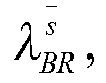
s to transfer to rail transit can be calculated according to equation 4.11:
- If passengers who transfer from the ground bus to rail transit at transfer station
s are equally distributed to all ground buses, the number of passengers who take ground bus Bi and transfer to rail transit at transfer stations can be expressed as:
- By considering the hypothesis that transfer walking time

s is:
- The transfer waiting time cost for passengers to transfer from ground buses to rail transit at all transfer stations within the study time period is:


- The walking time for a passenger to transfer from rail transit Rj to ground bus Bi at transfer station
s is


- The total number of passengers who get on at transfer station
s and take ground bus departing within the study time period is
s is
s and transfer to ground bus departing within the study time period can be calculated according to equation 4.18:
- If passengers who transfer from rail transit to ground buses at transfer station s are equally distributed to all ground buses, the number of passengers who transfer from rail transit to ground bus Bi at transfer station
s can be expressed as:
- By considering the hypothesis that transfer walking time

s within the time period k is:
- The waiting time cost for passengers to transfer from rail transit to ground buses at all transfer stations within the study time period is:


- The bus enterprise operation cost is related to the entire length of the line and the departure number within the study time period, and can be expressed by equation 4.26:

- The total system cost within the study period includes: waiting time cost for non-transfer passenger to take ground buses, waiting time cost for passenger to transfer from ground bus to rail transit, waiting time cost for passenger to transfer from rail transit to ground bus, and bus enterprise operation cost, i.e.:

- The objective function is to minimize total system cost, i.e. min CS ; and the decision variable is the departure interval hB of ground buses.
- In the present invention, passenger flow data are acquired by matching and fusing bus GPS data, IC card data, and geographic data of stations. Transfers between buses and rail transits are fully taken into account and the benefits of passengers and bus enterprises are coordinated by establishing a mathematical optimization model, thereby achieving the maximum total benefit. It is a great innovation breakthrough. By taking up direction of No. 376 bus of Shenzhen as a case for verification and analysis, an optimized result can be obtained finally. The invention has the following characteristics:
- 1. Convenient acquisition of passenger flow data: bus GPS data, IC card data, and geographic data of stations are used, and detailed passenger flow data for IC card users are obtained by matching and fusing these data. Thus, the travel information of each IC card user in a day can be obtained, and a large number of time and energy of manual survey can be saved.
- 2. Classification of waiting time costs: by considering the availability of passenger transfer and the difference of transfer between different travel modes, waiting time costs are classified into three categories, including waiting time cost for non-transfer passenger to take ground bus, waiting time cost for passenger to transfer from ground bus to rail transit, and waiting time cost for passenger to transfer from rail transit to ground bus. In this way, the possibility of various travel modes of passengers is fully taken into account, so that the results are more accurate and scientific.
- 3. Establishment of mathematical model: the bus timetable is optimized by establishing a mathematical model. Both passenger transfer time cost and bus enterprise operation cost are taken into account when establishing the model. Thus, the model can minimize the sum of the two costs and achieve the maximum social benefit. Such method improves the scientific city of compiling the bus timetable.
- 4. Application prospect: the phenomenon of traffic jam in many big cities is becoming more and more serious. Only by developing public transportation can the traffic jam be alleviated effectively. Moreover, it is an important trend to apply big data in the field of transportation.
-
-
Figure 1 is a schematic diagram for judging bus operation direction of the present invention. -
Figure 2 is a schematic diagram for judging a bus arrives at a station of the present invention. -
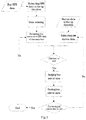
Figure 3 is a flow chart for acquiring bus arrival data of the present invention. -
Figure 4 is a flow chart for acquiring bus travel time data of the present invention. -
Figure 5 is a flow chart for acquiring a boarding station of the present invention. -
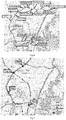
Figure 6 is an up direction chart of No. 376 bus of the present invention. -
Figure 7 is a line chart of a rail transit of the present invention. -
Figure 8 is a time-space operation chart of buses of the present invention. -
Figure 9 is a bus travel time variation diagram of the present invention. - The specific embodiments of the present invention are described below in detail in conjunction with examples, and implementation effects of the present invention are simulated.
- The bus line studied in the present invention is the up direction of Bus Route 376 of Shenzhen. The origin station is Zhang-shu-bu-cun-zong-zhan station, the terminal station is Dong-hu station. There are 17 stations in total along the road, and the total length is about 11.7 km. The geographic positions of up direction and stations are as shown in
Figure 6 . The line of No. 376 bus is engaged with a plurality of rail transit stations of Long-gang Line and Huan-zhong Line (as shown inFigure 7 ), passengers frequently transfer between rail transits and conventional buses, especially at morning and evening rush hours, the transfer proportion of passengers is relatively high. Therefore, there is a need to consider the coordination between bus and rail transit when compiling the bus timetable. - According to the acquired geographic data of up and down directions of No. 376 bus and stations, basic information about the bus line is as shown in Table 4.
Table 4 Information about Stations of Up Direction of No. 376 Bus Serial Number of Stations Station Name Station Distance (m) Transfer Line Transfer Station Average Transfer Walking Time (minute) 1 Zhang-shu-bu-cun-zong-zhan 0 2 Zhang-shu-bu-she-qu 1196 3 Nan-ling-cun 500 4 Nan-wan-jie-dao-ban 402 5 Nan-wan-ren-min-yi-yuan 320 6 Bai-men-qian-gong-ye-qu 210 7 Da-fen-you-hua-cun 384 8 Mu-mian-wan-di-tie-zhan 1050 Long-gang line Mu-mian-wan 2 9 Long-zhu-hua-yuan 515 10 Shen-zhen-dong-zhan 608 Long-gang line, Huan-zhong line Buji 2 11 Rong-chao-hua-yuan 926 12 Bu-ji-lian-jian-zhan 1240 Long-gang line Caopu 2 13 Cui-zhu-bei 2352 14 Jun-yi-hua-fu 329 15 Shi-man-bing-fang-zhi-zhong-xin 437 Huan-zhong line Tai'an 2 16 Bu-xin-hua-yuan 398 17 Dong-hu-ke-yun-zhan 847 - According to the data provided by the bus company, information about the origin station and the terminal station, and the departure time of the first bus and the last bus in the study section of Long-gang line, Huan-zhong line, and No. 376 bus are as shown in Table 5.
Table 5 Departure Information about Up Direction of No. 376 Bus Line Name Operation Direction Name of Origin Station Departure Time of First Bus Departure Time of Last Bus No. 376 Up Zhang-shu-bu-cun-zong-zhan 06:30 22:00 Down Dong-hu-ke-yun-zhan 07:10 22:30 Long-gang line (section) Up Mu-mian-wan 07:03 23:33 Down Caopu 07:02 23:32 Huan-zhong line (section) Up Buji 06:59 23:53 Down Tai'an 06:35 23:07 - Arrival data and travel time data of buses obtained from data fusion can be used for analyzing bus operation state. Data of the up direction of No. 376 bus of Shenzhen on June 9, 2014 is taken as an example.
Figure 8 is a time-space operation chart of six consecutive buses within the time period of 6:30-9:00. The horizontal coordinate represents station sequence, and the vertical coordinate represents arrival time. It can be seen from the time-space operation chart of buses that departure intervals of No. 376 buses are larger, and there is no bunching phenomenon substantially, and buses run smoothly. - The travel time of all buses throughout the day is as shown in
Figure 9 . It can be seen fromFigure 9 that the travel time of No. 376 bus is relatively long at morning and evening peak period, and the travel time of the first bus and the last bus is the shortest. Because more passengers get on and get down at morning and evening peak period, the time duration for the buses to stay at stations is relatively long. In addition, because traffic jam is easy to occur at morning and evening peak period,Figure 8 conforms to the actual situation. - According to the bus GPS data, bus IC card data, and rail transit card-swiping data of Shenzhen on June 9, 2014, the passenger flow at all stations of the up direction of No. 376 bus of Shenzhen and the transfer passenger flow at transfer stations are counted. Table 6 shows the passenger flow of the up direction of No. 376 bus within the time period of 7:00-7:30, and Table 7 shows the transfer passenger flow between the up direction of No. 376 bus and Long-gang line and Huan-zhong line within the time period of 7:00-7:30.
Table 6 Passenger Flow of the Up Direction of No. 376 Bus within Time Period of 7:00-7:30 Serial Number of Stations Station Name Number of Boarding People Number of Getting-off People Cumulative Number of People in Section 1 Zhang-shu-bu-cun-zong-zhan 9 0 9 2 Zhang-shu-bu-she-qu 12 0 21 3 Nan-ling-cun 12 3 30 4 Nan-wan-jie-dao-ban 18 2 46 5 Nan-wan-ren-min-yi-yuan 26 9 63 6 Bai-men-qian-gong-ye-qu 32 11 84 7 Da-fen-you-hua-cun 27 6 105 8 Mu-mian-wan-di-tie-zhan 9 30 84 9 Long-zhu-hua-yuan 26 12 98 10 Shen-zhen-dong-zhan 12 36 74 11 Rong-chao-hua-yuan 11 18 67 12 Bu-ji-lian-jian-zhan 9 27 49 13 Cui-zhu-bei 10 11 48 14 Jun-yi-hua-fu 15 17 46 15 Shi-man-bing-fang-zhi-zhong-xin 7 31 22 16 Bu-xin-hua-yuan 2 21 3 17 Dong-hu-ke-yun-zhan 0 3 0 Table 7 Transfer Passenger Flow between No. 376 Bus and Long-gang Line and Huan-zhong Line within Time Period of 7:00-7:30 Transfer to Rail transit Bus station Rail transit Station Transfer Direction Number of Transfer People Long-gang line (up) Mu-mian-wan-di-tie-zhan Mu-mian-wan Bus-rail transit 13 Rail transit-bus 0 Shen-zhen-dong-zhan Buji Bus-rail transit 13 Rail transit-bus 3 Bu-ji-lian-jian-zhan Caopu Bus-rail transit 11 Rail transit-bus 1 Long-gang line (down) Mu-mian-wan-di-tie-zhan Mu-mian-wan Bus-rail transit 5 Rail transit-bus 0 Shen-zhen-dong-zhan Buji Bus-rail transit 0 Rail transit-bus 0 Bu-ji-lian-jian-zhan Caopu Bus-rail transit 0 Rail transit-bus 0 Huan-zhong line (up) Shen-zhen-dong-zhan Buji Bus-rail transit 9 Rail transit-bus 8 Shi-man-bing-fang-zhi-zhong-xin Tai'an Bus-rail transit 13 Rail transit-bus 0 Huan-zhong line (down) Shen-zhen-dong-zhan Buji Bus-rail transit 8 Rail transit-bus 0 Shi-man-bing-fang-zhi-zhong-xin Tai'an Bus-rail transit 6 Rail transit-bus 2 - In this invention, bus timetable optimization is conducted on operation time period of the up direction of No. 376 bus of Shenzhen. According to the change of passenger flow and the departure interval of rail transit, the whole operation time is divided into 8 time periods, and the time periods are shown in Table 8.
Table 8 Time Period Division Serial Number of Time Periods Time Period Time Period Duration (minute) 1 6:30-7:30 60 2 7:30-9:30 120 3 7:30-9:30 120 4 11:30-13:30 120 5 13:30-16:00 150 6 16:00-17:30 90 7 17:30-19:30 120 8 19:30-22:00 150 - In this invention, particle swarm optimization is used to solve the current problem. In this case, eight time periods are divided in total, so that the particle ID is X = (x 1, x 2, x 3, x 4, x 5, x 6, x 7, x 8), and the objective function of the model is the fitness function of the particles. See Table 9 for the settings of all parameters of particle swarm optimization.
Table 9 Setting of Parameters of Particle Swarm Optimization Parameter Symbol Parameter Attribute Parameter Value ω Inertia weight 0.7 c 1 Learning factor 1 2 c 2 Learning factor 2 2 max N Maximum iterations 500 n Particle number 40 - Optimization is conducted using Microsoft Visual C++2008 software, and an optimal function value is obtained after 500 iterations. The particles obtaining the optimal function value represent the solved departure intervals. Because departure intervals are usually set as integers in minute, the solved departure intervals are rounded, and the departure intervals between adjacent time periods are smoothly processed. The final optimized timetable is as shown in Table 10.
Table 10 Timetable of No. 376 Bus Serial Number of Time Periods Timetable 1 06:30 06:43 06:56 07:09 07:22 2 07:33 07:42 07:51 08:00 08:09 08:18 08:27 08:36 08:45 08:54 09:03 09:12 09:21 09:30 3 09:43 09:58 10:13 10:28 10:43 10:58 11:13 11:28 4 11:41 11:53 12:05 12:17 12:29 12:41 12:53 13:05 13:17 13:29 5 13:43 13:59 14:15 14:31 14:47 15:03 15:19 15:35 15:51 6 16:05 16:17 16:29 16:41 16:53 17:05 17:17 17:29 7 17:39 17:47 17:55 18:03 18:09 18:17 18:26 18:34 18:42 18:50 18:58 19:06 19:14 19:22 19:30 8 19:43 20:01 20:19 20:37 20:55 21:13 21:31 21:49 22:00 - According to the optimized bus scheduling plan, the number of departure of the up direction of No. 376 bus of Shenzhen throughout the day is 78 in total, the minimum departure interval is 8 minutes, and the maximum departure interval is 18 minutes. Because departure intervals are rounded and smoothly processed, there is a need to recalculate the waiting time cost of non-transfer passengers, the waiting time cost of transfer between bus and rail transit, the waiting time cost of transfer between rail transit and bus, the bus operation cost, and the total system cost according to the optimized timetable. Comparison between optimization results and original scheme is as shown in Table 11.
Table 11 Comparison between Optimization Results and Original Scheme Comparison Items Before Optimization After Optimization Reduction Rate Number of departure (number of times) 62 78 - Waiting time cost of non-transfer passengers (dollar) 13686 13054 4.62% Waiting time cost of transfer between bus and rail transit (dollar) 4562 4037 11.51% Waiting time cost of transfer between rail transit and bus (dollar) 3248 2716 16.38% Bus operation cost (dollar) 2901.6 3650.4 -25.8% Total system cost (dollar) 24397.6 23357.4 4.26% - According to the comparison result in Table 11, both the waiting time cost of non-transfer passengers and the waiting time cost of transfer passengers are obviously reduced. The largest decrease is observed for the transfer waiting cost of transfer from rail transit to ground bus, which reaches 16.38%, indicating that the optimized bus timetable greatly facilitates passengers who transfer from rail transit to ground bus. Because the number of departure is increased, the bus operation cost is somewhat increased, but the total system cost is reduced by 4.26%.
- Table 12 compares the average waiting time of the transferred passengers before and after the optimization. As a whole, regardless of before optimization or after optimization, the average waiting time of transfer from the ground bus to rail transit is generally lower than the average waiting time of transfer from rail transit to ground bus. After optimization, the average waiting time in two transfer directions are all reduced. Among the transfer from ground bus to rail transit, the largest decrease is observed for the transfer waiting time of transfer from the up direction of No. 376 bus to the up direction of Long-gang line, which reaches 13.48%, and the saved average waiting time is 0.60 minute. In morning peak, the passenger flow in the transfer direction is larger, so that the reduction of average waiting time in this direction is of great significance. In the transfer direction of transfer from rail transit to ground bus, the transfer waiting time of transfer from the down direction of Long-gang line to the up direction of No. 376 bus has a minimum reduction. However, considering that the passenger flow of this transfer line is relatively small, it may not have great influence on the optimization result of the entire line.
Table 12 Comparison of Average Waiting Time of Transfer Passengers Transfer Direction Rail transit Lines Before Optimization (minute) After Optimization (minute) Reduction Rate Saved Time (minute) Bus-Rail transit Long-gang line 5.06 4.46 13.48% 0.60 Long-gang line (down) 5.17 4.64 10.25% 0.53 Huan-zhong line (up) 5.13 4.72 7.99% 0.41 Huan-zhong line (down) 5.24 4.99 9.75% 0.25 Rail transit-bus Long-gang line (up) 8.83 7.46 15.51% 1.37 Long-gang line (down) 8.95 8.36 6.63% 0.59 Rail transit-bus Huan-zhong line (up) 9.18 7.67 16.45% 1.51 Huan-zhong line (down) 8.45 6.96 17.63% 1.49
Claims (1)
- A collaborative optimization method for bus timetable based on big data, comprising the following steps:I. Acquisition of Bus Operation Data and Passenger Flow Data(1). Acquisition of Bus Operation Data(1.1) Judgment of Bus Operation Direction
The bus operation direction is divided into an up direction and a down direction, and buses move in two directions according to the order of scheduling; up and down bus lines respectively possess independent operation lines, bus stops, and operation time periods; bus operation states and passenger flow requirements are also relatively independent, and data are divided into data of two operation directions;(1.2) Acquisition of Bus Arrival Data
A bus arrival data sheet is established first, including four fields in total in Table 1, i.e. station ID (S_ID), bus arrival time (S_TIME), bus number (NUMBER), and bus operation direction (DIRECTION);Table 1 Bus Arrival Data Sheet Data of arriving at station S of all buses in the up direction are recorded in the bus arrival data sheet, including the steps as follows:Bus Arrival Data Field Data type S_ID INT S_TIME DATETIME NUMBER VARCHAR DIRECTION VARCHAR (1) Extracting all data from the bus GPS data in which the buses run in the "up" direction;(2) Ranking the bus GPS data extracted in step (1) according to bus numbers first, and then ranking bus numbers of the same bus according to bus arrival time; and in the continuous bus numbers of the same bus, if the previous bus GPS data is matched with a road section L 1, and the latter bus GPS data is matched with a road section L 2, taking a GPS time data intermediate value between L 1 and L 2 as the time when the bus arrives at station S;(3) Writing station S ID, the time when bus arrives at station S, bus numbers, and bus operation directions into corresponding bus arrival time data sheet, until all bus GPS data in the up direction are processed, and obtaining a bus arrival data sheet;Bus arrival data in the down direction is obtained in the same manner;(1.3) Acquisition of Bus Travel Time Establishing a bus travel time data table, including five fields, i.e. bus number (NUMBER), operation direction (DIRECTION), origin station arrival time (O_TIME), end station arrival time (E_TIME) and travel time (INTERVAL), the data structure is shown in Table 2.Table 2 Bus Travel Time Data Structure The steps of acquiring up line bus travel time are as follows:Travel Time Data Field Data Type NUMBER INT DIRECTION VARCHAR O_TIME DATETIME E_TIME DATETIME INTERVAL INT (1) Extracting all data of buses in operation direction "up" from the bus arrival data sheet, ranking the bus GPS data according to bus numbers first, and then further ranking bus number of the same bus according to bus arrival time;(2) For each bus arrival time data, if the station ID is consistent with the origin station of the bus operation direction, taking the data as departure data of the origin station, and if the station ID is consistent with the end station of the bus operation direction, taking the data as arrival data of the end station; respectively writing bus number, bus operation direction, origin station arrival time, and end station arrival time into corresponding bus travel time data table;(3) Calculating the interval between the origin station arrival time and the end station arrival time, and writing itin the travel time field, until all arrival time data of buses in the up direction are traversed, obtaining a bus travel time data sheet;Bus travel time in the down direction is obtained in the same manner;(2) Acquisition of Passenger Flow Data(2.1) Acquisition of Passenger Boarding stations
Rail transit card data records the passenger inbound and outbound station data. Thus the boarding station and getting-off station can be determined directly;
Bus IC card data does not record passenger boarding station information. To determine passenger boarding time, we need to match and fuse the card-swiping time and bus number field in the bus IC card data with the bus arrival time and bus number field in the bus arrival data sheet;
AMix_IC data sheet is established to store data. The Mix_IC data sheet includes ten fields, i.e. IC card record ID (ID), line name (LINE), bus number (NUMBER), line operation direction (DIRECTION), boarding station ID (U_ID), boarding station name (U NAME), boarding time (U TIME), getting-off station ID (D_ID), getting-off station name (D_NAME), and getting-off time (D_TIME).See Table 3 for the data structure.Table 3 Structure of Mix_IC Data Sheet Steps of matching and fusing bus arrival data with bus IC card data are as follows:Field Name Attribute Data Type Length ID IC card record ID VARCHAR 10 LINE Line name VARCHAR 10 NUMBER Bus number VARCHAR 5 DIRECTION Line operation direction VARCHAR 2 U_ID Boarding Station ID INT 2 U_NAME Boarding station name VARCHAR 5 U_TIME Boarding time DATETIME 19 D_ID Getting-off station ID INT 2 D_NAME Getting-off station name VARCHAR 5 D_TIME Getting-off time DATETIME 19 (1) Extracting any bus IC card data, and correspondingly writing data of ID, LINE, and NUMBER in the bus IC card data into the ID, LINE, and NUMBER fields of the Mix_IC data sheet;(2) Matching a record indicating that the bus arrival time is closest to the card-swiping time field, which is consistent with the bus IC card data NUMBER field extracted in step (1) in the bus arrival data sheet, and correspondingly writing station ID and bus arrival time fields of this record into the boarding station ID and boarding time fields of the Mix IC data sheet, until all the bus IC card data are traversed;Data of the same rail transit trip are recorded in "boarding station" and "getting-off station "two fields. The rail transit card-swiping data need to be processed before being placed in the Mix_IC data sheet, the steps are as follows:(1) Arranging rail transit card-swiping data according to IC card record IDs first, and then further arranging record time fields of the same IC card record ID;(2) Extracting two continuous rail transit card-swiping data of step (1), wherein the IC card record ID and line name fields are identical, the line operation direction field of the previous data is "boarding station", and the line operation direction field of the latter data is "getting-off station"; and correspondingly writing data of the IC card record ID and line name fields into the IC card record ID and line name fields of the Mix_IC data sheet;(3) Correspondingly writing station name and card-swiping time for boarding station of the previous data into the boarding station name and boarding time fields of the Mix_IC data sheet, and correspondingly writing station name and card-swiping time for getting-off station of the latter data into the getting-off station name and getting-off time fields of the Mix_IC data sheet;(4)Matching boarding and getting-off station IDs according to the station ID sheet, station name for the boarding station, and the station name for getting-off station, and writing these data into the boarding station ID and getting-off station ID fields of the Mix IC data sheet, until all rail transit card-swiping data are traversed;(2.2) Acquisition of Passenger Getting-off Stations
It is found by analyzing the residents travel behavior that the number of home-based bus travelers takes a high proportion in the total number of travelers, i.e. most travelers take home as both starting point and end point in their daily trip, and the travel activity chain forms a closed loop; for a traveler using the bus IC card more than twice in a day, the getting-off station where he/she takes the ground bus arrives can be determined according to the travel activity chain;
The getting-off station is determined using data recorded in the Mix IC data sheet, and the acquired getting-off station data are written into the getting-off station ID field of the Mix IC data sheet; steps of judging passenger getting-off stations are as follows:(1) Extracting data of the same ID from the Mix_IC data sheet, and arranging them according to the boarding time field;(2) Judging whether the previous data and the latter data of the same ID are for the same line: if it is judged that the two data are for the same line, taking the latter card-swiping boarding station as the previous card-swiping getting-off station; and if it is judged that the two data are for different lines, taking a transfer station of the previous card-swiping line nearest to the latter card-swiping boarding station as the getting-off station of the previous data;(3) Taking the boarding station of the first card-swiping as the getting-off station of the last card-swiping for the same ID, until all data in the Mix IC data sheet are traversed;(2.3) Judgment of Passenger Transfer Behavior
Whether the interval between the previous getting-off time and the latter boarding time exceeds the set upper limit of transfer time is used as a basis for judging whether the two consecutive bus travel is a transfer behavior.30 minutes are set as the upper limit of transfer time.
First, there is a need to match getting-off time of passengers, the steps are as follows:(1) Extracting a data from the Mix_IC data sheet, matching the bus number, line operation direction, and getting-off station ID fields in the Mix IC data sheet with the bus number, line operation direction, and station ID fields in the bus arrival data sheet to obtain bus arrival time; Buses repeatedly operate between the up direction and the down direction in one day, there should be multiple bus arrival time at the same getting-off station in the bus arrival data sheet;(2) Selecting bus arrival time, from the boarding time field in the Mix_IC data sheet, which is after the boarding time and having the shortest time interval as the getting-off time; and writing the matched getting-off time into the getting-off time field of the Mix_IC data sheet, until all data in the Mix_IC data sheet are traversed;Judging whether two consecutive card-swiping records of a passenger belong to a transfer, the steps are as follows:(1) Arranging the Mix_IC data sheet according to the IC card record IDs first, and then ranking record IDs of the same IC card according to the boarding time field;(2) Extracting two consecutive records of the same ID, subtracting the getting-off card-swiping time of the previous data from the boarding card-swiping time of the latter data, and if the time interval is less than 30 minutes, considering it as a transfer; and traversing all data in the Mix IC data sheet.II. Establishment of Model2. Model Hypothesis(1) Up and down directions of both ground buses and rail transits are taken as two different lines, i.e. there is only one operation direction for one line. it is supposed that all buses depart from the origin station according to the timetable strictly, the influence of road traffic condition on bus operation is neglected, and the travel time distribution of buses among all stations is already known; departure intervals of buses at the same time period are identical, the number of buses on the same line is fixed, and models of buses are all identical; buses departure according to the sequence of operation, there is no bunching and delay at station; non-transfer passengers are evenly distributed in the process of arriving at the station, and the arrival rates of passengers at the same time period are identical; the transfer walking time of passengers at the transfer station is already known, and the transfer walking time is less than the departure interval between a ground bus and a rail transit; passengers get on the bus as long as the bus arrives at the station, ignoring the situation of continuing to wait due to traffic jam and other reasons; operation buses on the line are all whole-line buses, ignoring the shuttle bus, station express scheduling scheme.(2) Parameter Definitionss -Sequence of ground bus stations, s ∈ S;s -Sequence of transfer stations,;es -Number of transfer stations;Bi -Ground bus departing within the study period and having the serial number of i;Rj -Rail transit departing at study time period and having the serial number of j ;eB -Departure number of ground buses B within the study period;eR -Departure number of rail transit R within the study period;a -Duration of study time period, a = Tend - Tstart ;hB -Departure interval of ground buses B within the study period;hR -Departure interval of rail transit R within the study period;h B,min, h B,max -Minimum and maximum departure intervals of ground buses;h R,min, h R,max -Minimum and maximum departure intervals of rail transit;

s from ground bus station to rail transit station;

s ;


s from the origin station;
s from the origin station in the study section;tB -Travel time of ground bus within the study period;tR -Travel time of rail transit in the study section within the study time period;
s ;
s ;LB -Entire length of ground bus line;LR -Length of rail transit line in study section;Uc -Time value of unit passenger waiting time (dollar/minute);Up -Operation cost of unit departure number of ground bus line (dollar/km);CB -Waiting time cost for non-transfer passengers to take a ground bus within the study period;CBR -Transfer waiting time cost for passengers to transfer from ground bus to rail transit within the study period;CRB -Transfer waiting time cost for passengers to transfer from rail transit to ground bus within the study period;CP -Cost of bus operation enterprise within the study period;CS -Total system cost within the study period;(3)Constraint Conditions
According to model hypothesis, the transfer walking time of a passenger at the transfer station is less than the departure interval between a ground bus and a rail transit, for alls ∈S ,

 (4) Objective FunctionThe relationship between the departure number of rail transit eR within the study time period and the departure interval is:
The relationship between the departure number of ground buses eB within the study time period and the departure interval hB is:
 1) Waiting time cost for non-transfer passenger to take ground bus
For a passenger who arrives at station s and takes ground bus Bi departing within the study time period and having a serial number of i, the waiting time can be expressed as:
 2) Transfer waiting time cost for passenger to transfer from ground bus to rail transit
The time
s can be expressed as:

s from the origin station can be calculated using equation 4.6:
s can be expressed as:

s from the origin station can be calculated using equation 4.8:
s is


s is
s is
s to transfer to rail transit can be calculated according to equation 4.11:
s are equally distributed to all ground buses, the number of passengers who take ground bus Bi and transfer to rail transit at transfer stations can be expressed as:

s is:

 3) Transfer waiting time cost for passenger to transfer from rail transit to ground bus
The walking time for a passenger to transfer from rail transit Rj to ground bus Bi at transfer stations is


s and take ground bus departing within the study time period is
s is

s are equally distributed to all ground buses, the number of passengers who transfer from rail transit to ground bus Bi at transfer stations can be expressed as:

s within the time period k is:

 4) Bus Enterprise Operation Cost
The bus enterprise operation cost is related to the entire length of the line and the departure number within the study time period, and can be expressed by equation 4.26: 5) Total System Cost
The total system cost within the study period includes: waiting time cost for non-transfer passenger to take ground buses, waiting time cost for passenger to transfer from ground bus to rail transit, waiting time cost for passenger to transfer from rail transit to ground bus, and bus enterprise operation cost, i.e.:
Applications Claiming Priority (2)
| Application Number | Priority Date | Filing Date | Title |
|---|---|---|---|
| CN201610695243.0A CN106448233B (en) | 2016-08-19 | 2016-08-19 | Public bus network timetable cooperative optimization method based on big data |
| PCT/CN2017/083609 WO2018032808A1 (en) | 2016-08-19 | 2017-05-09 | Big data based bus line schedule collaborative optimization method |
Publications (2)
| Publication Number | Publication Date |
|---|---|
| EP3503069A1 true EP3503069A1 (en) | 2019-06-26 |
| EP3503069A4 EP3503069A4 (en) | 2019-07-31 |
Family
ID=58181604
Family Applications (1)
| Application Number | Title | Priority Date | Filing Date |
|---|---|---|---|
| EP17840784.7A Withdrawn EP3503069A4 (en) | 2016-08-19 | 2017-05-09 | METHOD FOR COLLABORATIVELY OPTIMIZING BUS LINE TIMES BASED ON BIG DATA |
Country Status (4)
| Country | Link |
|---|---|
| US (1) | US20200027347A1 (en) |
| EP (1) | EP3503069A4 (en) |
| CN (1) | CN106448233B (en) |
| WO (1) | WO2018032808A1 (en) |
Cited By (6)
| Publication number | Priority date | Publication date | Assignee | Title |
|---|---|---|---|---|
| CN110390479A (en) * | 2019-07-16 | 2019-10-29 | 武汉译码当先科技有限公司 | Bus time of departure dispatching method, equipment, storage medium and device |
| CN111105078A (en) * | 2019-11-29 | 2020-05-05 | 同济大学 | Customized public transport network optimization method |
| CN111709562A (en) * | 2020-06-02 | 2020-09-25 | 广州通达汽车电气股份有限公司 | Method and device for generating scheduling schedule of public transport vehicle |
| CN112183904A (en) * | 2020-11-19 | 2021-01-05 | 北京清研宏达信息科技有限公司 | Bus route optimization method based on resident travel OD |
| CN113361885A (en) * | 2021-05-28 | 2021-09-07 | 同济大学 | Dual-target urban public transportation benefit evaluation method based on multi-source data |
| CN115662176A (en) * | 2022-12-13 | 2023-01-31 | 天津市政工程设计研究总院有限公司 | A Flexible Bus Scheduling Optimization Method Based on Robust Optimization |
Families Citing this family (99)
| Publication number | Priority date | Publication date | Assignee | Title |
|---|---|---|---|---|
| CN106448233B (en) * | 2016-08-19 | 2017-12-05 | 大连理工大学 | Public bus network timetable cooperative optimization method based on big data |
| CN107092976B (en) * | 2017-03-28 | 2020-06-02 | 东南大学 | Method for cooperatively optimizing departure intervals of multiple bus routes by multi-objective model |
| CN107016633B (en) * | 2017-03-29 | 2020-06-30 | 东南大学 | Method for generating planned departure time of receiving, transporting and transporting buses of urban rail transit |
| CN106845734A (en) * | 2017-03-29 | 2017-06-13 | 东南大学 | Towards the multi-mode public transport timetable optimization method of last park-and-ride demand |
| CN106935045B (en) * | 2017-04-27 | 2019-04-30 | 南京莱斯信息技术股份有限公司 | A kind of bus signal priority control method based on public transport subway brushing card data |
| CN107403273B (en) * | 2017-07-28 | 2020-11-27 | 中铁程科技有限责任公司 | Information processing method, device and non-transitory computer readable storage medium |
| CN108230724B (en) * | 2018-01-31 | 2020-05-22 | 华南理工大学 | A Method of Repairing Missing Data of Vehicle-mounted Stations in Urban Public Transport System Based on Maximum Probability Estimation |
| WO2020018026A1 (en) | 2018-07-17 | 2020-01-23 | Aselsan Elektroni̇k Sanayi̇ Ve Ti̇caret Anoni̇m Şi̇rketi̇ | Line need determination method |
| CN109522584B (en) * | 2018-08-31 | 2022-11-04 | 南京理工大学 | Tramcar departure timetable design method |
| CN109255972B (en) * | 2018-09-11 | 2019-12-10 | 北京市交通信息中心 | An optimization method for the timetable of ground bus fixed lines based on big data |
| FR3086431B1 (en) * | 2018-09-26 | 2023-07-28 | Cosmo Tech | METHOD FOR REGULATING A MULTIMODAL TRANSPORT NETWORK |
| CN109344529B (en) * | 2018-10-22 | 2023-11-03 | 北京航空航天大学 | A customized bus route design method based on a two-stage heuristic algorithm |
| CN109615178B (en) * | 2018-11-16 | 2024-04-09 | 浩鲸云计算科技股份有限公司 | A method for adjusting the route schedule of a bus transfer to a rail and then to a bus |
| CN109615111A (en) * | 2018-11-16 | 2019-04-12 | 浩鲸云计算科技股份有限公司 | A kind of calculation method of the public transport section volume of the flow of passengers |
| CN109615179A (en) * | 2018-11-16 | 2019-04-12 | 浩鲸云计算科技股份有限公司 | A calculation method for the transfer amount between a single bus line and a track |
| CN109840669A (en) * | 2018-11-16 | 2019-06-04 | 浩鲸云计算科技股份有限公司 | A kind of calculation method of public bus network section ridership |
| CN109493601B (en) * | 2018-11-21 | 2021-02-09 | 青岛大学 | A kind of bus branch line setting method |
| CN109886491B (en) * | 2019-02-26 | 2021-02-26 | 北京工业大学 | Ground bus two-stage optimization scheduling method driven by massive operation data |
| CN114970993B (en) * | 2019-03-21 | 2024-09-06 | 华侨大学 | A method for adjusting conventional bus routes along rail transit lines |
| CN111723963B (en) * | 2019-03-22 | 2022-09-20 | 南京理工大学 | Subway vehicle off-station operation energy optimization method |
| JP7399627B2 (en) * | 2019-04-25 | 2023-12-18 | 株式会社日立製作所 | Diagram creation device, diagram creation method, and automobile control system |
| CN110033634B (en) * | 2019-05-15 | 2021-05-11 | 东南大学 | A method for collaboratively connecting passengers with variable route public transport |
| CN110751830B (en) * | 2019-09-30 | 2021-11-23 | 江苏大学 | Method and system for collecting average waiting time of bus physical stop |
| CN111160686B (en) * | 2019-10-12 | 2021-04-16 | 南京行者易智能交通科技有限公司 | Design method and device of driving plan generation model |
| CN110992726B (en) * | 2019-10-28 | 2021-08-27 | 上海城市交通设计院有限公司 | Method for identifying arrival of bus and dividing up-down movement and shift of bus |
| CN110867090B (en) * | 2019-10-31 | 2022-01-11 | 江苏大学 | Method and system for calculating average travel time between adjacent bus physical stops based on bus-mounted GPS data |
| CN111123298B (en) * | 2019-12-09 | 2022-05-10 | 深圳市市政设计研究院有限公司 | GPS terminal and IC card terminal matching method and device based on machine learning algorithm |
| CN111275241A (en) * | 2020-01-08 | 2020-06-12 | 天津大学 | Inference method of bus passenger drop-off site based on machine learning decision tree |
| CN111311017B (en) * | 2020-03-04 | 2022-10-11 | 广西大学 | Optimization method of urban rail transit train operation timetable and speed operation curve |
| CN111626469B (en) * | 2020-04-10 | 2023-11-14 | 广州地铁集团有限公司 | An optimization method for express and slow train operations oriented towards transportation capacity improvement |
| CN111582691B (en) * | 2020-04-28 | 2022-04-22 | 北京交通大学 | Double-layer planning-based transportation capacity matching method for multiple transportation modes of passenger transport hub |
| CN113723731B (en) * | 2020-05-26 | 2024-05-28 | 中车株洲电力机车研究所有限公司 | Urban rail transit running chart compiling method and system based on passenger flow characteristics |
| CN111619624B (en) * | 2020-06-01 | 2022-06-21 | 北京全路通信信号研究设计院集团有限公司 | Tramcar operation control method and system based on deep reinforcement learning |
| CN111768053B (en) * | 2020-07-08 | 2023-09-22 | 北京交通大学 | A method for optimizing the departure time of the original train in urban rail transit network |
| CN111882856B (en) * | 2020-07-30 | 2022-10-04 | 航天物联网技术有限公司 | Public transportation intelligent scheduling system and method based on fixed scheduling mode |
| CN112214829B (en) * | 2020-08-26 | 2024-01-19 | 北京交通大学 | Optimization modeling method of high-speed railway train connection scheme |
| CN112070298B (en) * | 2020-09-04 | 2022-03-04 | 深圳市规划国土发展研究中心 | An optimization method of the target city railway interconnection operation organization scheme |
| CN112133121B (en) * | 2020-09-23 | 2022-09-02 | 安徽蒂姆自动化科技有限公司 | Intelligent urban bus dispatching system |
| CN112509317B (en) * | 2020-11-09 | 2021-11-09 | 广州交信投科技股份有限公司 | Bus real-time arrival prediction method, device and equipment based on machine learning algorithm |
| CN112434843A (en) * | 2020-11-10 | 2021-03-02 | 华侨大学 | Method and system for predicting bus passenger transfer at newly-built track opening front-edge line |
| CN112926229B (en) * | 2020-11-19 | 2021-11-02 | 西南交通大学 | Simulation system and method for carrying capacity of regional rail transit network based on hierarchical Petri nets |
| CN112487623B (en) * | 2020-11-23 | 2022-08-02 | 华中科技大学 | Collaborative optimization method for multiple targets of OLED device |
| CN112598177B (en) * | 2020-12-22 | 2023-10-24 | 北京市地铁运营有限公司 | Urban rail transit emergency online passenger flow prediction and simulation system |
| CN112784204B (en) * | 2020-12-28 | 2024-06-25 | 北京交通大学 | Robust optimization method for train schedule and passenger flow control under uncertain demand |
| CN113607268B (en) * | 2021-01-26 | 2024-01-09 | 禁核试北京国家数据中心 | Regional infrasound event automatic association method |
| CN112884216B (en) * | 2021-02-04 | 2023-06-23 | 国网湖南省电力有限公司 | Calculation method of the minimum number of vehicles on a single bus line |
| CN114913701A (en) * | 2021-02-09 | 2022-08-16 | 武汉小码联城科技有限公司 | Bus scheduling method, system and related equipment |
| CN113392987B (en) * | 2021-05-07 | 2022-10-14 | 杭州数知梦科技有限公司 | Multi-source data fusion-based bus station position repairing method |
| CN113299064A (en) * | 2021-05-15 | 2021-08-24 | 苏州智能交通信息科技股份有限公司 | Bus accurate station forecasting method, system, device and storage medium |
| CN113408587B (en) * | 2021-05-24 | 2022-06-03 | 支付宝(杭州)信息技术有限公司 | Bus passenger OD matching method and device and electronic equipment |
| CN113408859B (en) * | 2021-05-26 | 2022-05-20 | 上海工程技术大学 | Urban rail transit line passenger flow and train matching method considering passenger flow management and control measures |
| CN113592419B (en) * | 2021-05-31 | 2024-05-14 | 南京理工大学 | Rail transit speed and time table optimization method considering passenger flow and energy conservation |
| CN113538952B (en) * | 2021-06-04 | 2023-02-03 | 深圳市城市交通规划设计研究中心股份有限公司 | Bus interval abnormity identification and early warning system, method, equipment and storage medium |
| CN113379222B (en) * | 2021-06-04 | 2024-02-27 | 大连海事大学 | An urban rail transit passenger flow control method based on real-time demand information |
| CN113269475B (en) * | 2021-06-28 | 2022-01-18 | 浩鲸云计算科技股份有限公司 | Bus scheduling method and system based on genetic algorithm |
| CN113420926A (en) * | 2021-06-29 | 2021-09-21 | 北京交通大学 | Method for compiling multi-traffic mode transportation capacity collaborative optimization scheme between urban hubs |
| CN113822461A (en) * | 2021-07-27 | 2021-12-21 | 深圳技术大学 | A method, system, equipment and storage medium for cross-line operation optimization of rail transit |
| CN113723761B (en) * | 2021-08-01 | 2024-03-22 | 北京工业大学 | Multi-dimensional urban public transportation operation service reliability evaluation method based on operation data |
| CN113657672B (en) * | 2021-08-18 | 2024-06-18 | 北京航空航天大学 | A method for connecting the last train of a comprehensive hub based on dynamic programming |
| CN113442974B (en) * | 2021-08-19 | 2022-08-02 | 湖南中车时代通信信号有限公司 | Train operation diagram compiling method and device based on flat peak conversion algorithm |
| CN113506440B (en) * | 2021-09-08 | 2021-11-30 | 四川国蓝中天环境科技集团有限公司 | Traffic state estimation method for multi-source data fusion under Lagrange coordinate system |
| CN113947286A (en) * | 2021-09-18 | 2022-01-18 | 同济大学 | Comprehensive 'cost-benefit' accounting model construction method based on pivot group connection mode integration |
| WO2023062968A1 (en) * | 2021-10-13 | 2023-04-20 | 株式会社Nttドコモ | Recommendation system |
| CN114579682B (en) * | 2021-11-22 | 2025-09-05 | 重庆设计集团有限公司 | Public transportation coordination evaluation device and system based on travel data and GIS clustering |
| CN114170815B (en) * | 2021-12-08 | 2023-10-27 | 安徽达尔智能控制系统股份有限公司 | An artificial intelligence diagnostic traffic operation and maintenance management and control method and system |
| CN114266310B (en) * | 2021-12-22 | 2024-05-10 | 北京市市政工程设计研究总院有限公司 | Passenger stay time characteristic analysis method and device for passenger transport junction transfer area based on space-time double dimensions |
| CN114202254B (en) * | 2022-02-15 | 2022-05-27 | 中国矿业大学(北京) | A method and system for estimating commuting distribution of urban rail transit |
| CN114898588A (en) * | 2022-03-03 | 2022-08-12 | 北京邮电大学 | Bus departure schedule optimization method |
| CN114331231B (en) * | 2022-03-14 | 2022-06-21 | 北京清研宏达信息科技有限公司 | Method and system for scheduling public transport |
| CN114723111B (en) * | 2022-03-25 | 2024-04-30 | 东南大学 | Optimization method of conventional bus schedule for connecting rail transit considering passenger perception |
| CN114898552B (en) * | 2022-03-29 | 2023-06-27 | 深圳市综合交通与市政工程设计研究总院有限公司 | Bus effective shift calculation method based on positioning data |
| CN114912657B (en) * | 2022-04-12 | 2024-05-28 | 东南大学 | Public transport passenger flow OD deducing method based on multiple charge ticket systems |
| CN114742426B (en) * | 2022-04-20 | 2023-07-25 | 北京化工大学 | Two-stage generation method and program product of vehicle scheduling plan for bus lines |
| CN114781725B (en) * | 2022-04-22 | 2024-05-03 | 东南大学 | Non-motor vehicle passenger flow attraction range judging method for connecting rail transit |
| CN115100897B (en) * | 2022-05-23 | 2023-11-17 | 惠州华阳通用电子有限公司 | Vehicle position determining method and device |
| CN115018281B (en) * | 2022-05-24 | 2025-03-28 | 北京交通大学 | A matching optimization method for online-booked buses and subway combined transport |
| CN114968109B (en) * | 2022-05-31 | 2025-01-21 | 长沙理工大学 | Distributed heterogeneous data matching and storage method of alliance chain for urban public transportation |
| CN114997669A (en) * | 2022-06-10 | 2022-09-02 | 北京拙河科技有限公司 | Airport ground flow load monitoring method and system |
| CN114936959B (en) * | 2022-06-17 | 2023-05-23 | 上海市城乡建设和交通发展研究院 | Method for realizing vehicle matching and identifying passenger getting-on point |
| CN115100880B (en) * | 2022-06-17 | 2024-05-14 | 南京莱斯信息技术股份有限公司 | Bus signal priority control method for realizing balanced distribution of buses |
| CN115169649B (en) * | 2022-06-17 | 2026-04-28 | 武汉理工大学 | Integrated Prediction Method for Truck Transportation Cycle Operations in Underground Mines |
| CN115481777B (en) * | 2022-08-01 | 2025-09-05 | 中南大学 | Collaborative simulation optimization method, equipment and medium for multi-line bus dynamic timetable |
| CN117689126A (en) * | 2022-08-30 | 2024-03-12 | 比亚迪股份有限公司 | Network scheduling method, device, medium and electronic equipment |
| CN115457793B (en) * | 2022-08-31 | 2023-06-23 | 东风悦享科技有限公司 | A method and system for non-uniform dispatch of departure stations in public transport dispatching |
| CN115239030B (en) * | 2022-09-23 | 2023-02-14 | 深圳市城市交通规划设计研究中心股份有限公司 | Urban rail transit traffic schedule optimization method, equipment and storage medium |
| CN115953913A (en) * | 2022-10-10 | 2023-04-11 | 长沙市规划设计院有限责任公司 | An Optimal Method for Travel Routes of Bus Passengers under Uncertain Impedance |
| CN115795861B (en) * | 2022-11-25 | 2025-09-09 | 东风悦享科技有限公司 | Simulation system and method applied to intelligent public road resistance scheduling |
| CN116011888B (en) * | 2023-03-20 | 2023-05-26 | 北京华录高诚科技有限公司 | Method and system for relieving pressure of hub people stream |
| CN116485229A (en) * | 2023-03-21 | 2023-07-25 | 卡斯柯信号(郑州)有限公司 | A method and system for automatic collection of network traffic data and comprehensive inversion of passenger flow |
| CN116166735B (en) * | 2023-04-21 | 2023-07-04 | 民航成都信息技术有限公司 | Aviation data processing method and device, electronic equipment and storage medium |
| CN116702967B (en) * | 2023-05-30 | 2024-08-27 | 苏州大学 | A bus schedule optimization method and system considering multiple objectives and scenarios |
| CN118331073B (en) * | 2024-06-13 | 2024-09-27 | 无锡佳能工程机械有限公司 | Intelligent electrical control system and method based on asphalt heating equipment |
| CN118378760B (en) * | 2024-06-24 | 2024-09-17 | 西北大学 | Bus network optimization method and device based on Q-learning algorithm |
| CN119313086B (en) * | 2024-09-30 | 2025-10-10 | 深圳技术大学 | Timetable adjustment method and device for transfer coordination in multimodal transport network |
| CN120013149B (en) * | 2025-01-17 | 2025-12-26 | 四川大学 | A method and device for determining the station dwell time of public transport vehicles in transfer scenarios. |
| CN119903290B (en) * | 2025-03-31 | 2025-07-22 | 唐智科技湖南发展有限公司 | A multi-dimensional track data association method, device, equipment and medium |
| CN120636190B (en) * | 2025-05-23 | 2026-01-27 | 合肥公交集团有限公司 | Intelligent bus combined dispatching method, intelligent bus combined dispatching device and storage medium |
| CN120599855B (en) * | 2025-08-01 | 2025-10-14 | 中植一客成都汽车有限公司 | Urban bus operation optimization control method and system integrating V2X information |
| CN121072915A (en) * | 2025-09-01 | 2025-12-05 | 安徽格律特智能科技有限公司 | Collaborative operation optimization method for bus and subway integrated network |
Family Cites Families (7)
| Publication number | Priority date | Publication date | Assignee | Title |
|---|---|---|---|---|
| JP5164208B2 (en) * | 2008-06-05 | 2013-03-21 | 株式会社エイブイプランニングセンター | Vehicle operation system |
| CN101630440B (en) * | 2009-06-01 | 2011-03-16 | 北京交通大学 | Operation coordination optimizing method of common public transit connecting with urban rail transit and system thereof |
| CN101799981B (en) * | 2010-02-09 | 2012-02-01 | 华南理工大学 | multi-mode public transport region scheduling control method |
| CN104050555A (en) * | 2014-07-06 | 2014-09-17 | 山东天海科技股份有限公司 | Beidou Internet of Vehicles Logistics Information Service Platform |
| CN104504229B (en) * | 2014-09-19 | 2018-02-16 | 杭州电子科技大学 | A kind of intelligent public transportation dispatching method based on hybrid metaheuristics |
| CN104376716B (en) * | 2014-11-28 | 2017-01-11 | 南通大学 | Method for dynamically generating bus timetables on basis of Bayesian network models |
| CN106448233B (en) * | 2016-08-19 | 2017-12-05 | 大连理工大学 | Public bus network timetable cooperative optimization method based on big data |
-
2016
- 2016-08-19 CN CN201610695243.0A patent/CN106448233B/en active Active
-
2017
- 2017-05-09 EP EP17840784.7A patent/EP3503069A4/en not_active Withdrawn
- 2017-05-09 WO PCT/CN2017/083609 patent/WO2018032808A1/en not_active Ceased
- 2017-05-09 US US16/067,910 patent/US20200027347A1/en not_active Abandoned
Cited By (9)
| Publication number | Priority date | Publication date | Assignee | Title |
|---|---|---|---|---|
| CN110390479A (en) * | 2019-07-16 | 2019-10-29 | 武汉译码当先科技有限公司 | Bus time of departure dispatching method, equipment, storage medium and device |
| CN111105078A (en) * | 2019-11-29 | 2020-05-05 | 同济大学 | Customized public transport network optimization method |
| CN111105078B (en) * | 2019-11-29 | 2023-09-29 | 同济大学 | A customized bus network optimization method |
| CN111709562A (en) * | 2020-06-02 | 2020-09-25 | 广州通达汽车电气股份有限公司 | Method and device for generating scheduling schedule of public transport vehicle |
| CN112183904A (en) * | 2020-11-19 | 2021-01-05 | 北京清研宏达信息科技有限公司 | Bus route optimization method based on resident travel OD |
| CN113361885A (en) * | 2021-05-28 | 2021-09-07 | 同济大学 | Dual-target urban public transportation benefit evaluation method based on multi-source data |
| CN113361885B (en) * | 2021-05-28 | 2022-09-20 | 同济大学 | A dual-objective urban public transport benefit evaluation method based on multi-source data |
| CN115662176A (en) * | 2022-12-13 | 2023-01-31 | 天津市政工程设计研究总院有限公司 | A Flexible Bus Scheduling Optimization Method Based on Robust Optimization |
| CN115662176B (en) * | 2022-12-13 | 2023-05-26 | 天津市政工程设计研究总院有限公司 | Flexible bus dispatching optimization method based on robust optimization |
Also Published As
| Publication number | Publication date |
|---|---|
| CN106448233B (en) | 2017-12-05 |
| EP3503069A4 (en) | 2019-07-31 |
| US20200027347A1 (en) | 2020-01-23 |
| WO2018032808A1 (en) | 2018-02-22 |
| CN106448233A (en) | 2017-02-22 |
Similar Documents
| Publication | Publication Date | Title |
|---|---|---|
| EP3503069A1 (en) | Big data based bus line schedule collaborative optimization method | |
| CN111353639B (en) | Urban rail transit peak current limiting optimization method for coordinating train timetable | |
| Shang et al. | Bus timetabling considering passenger satisfaction: An empirical study in Beijing | |
| CN115081762B (en) | Passenger integrated intelligent travel method and system based on urban rail transit | |
| CN104200286B (en) | A kind of urban track traffic timetable optimisation technique application framework | |
| CN111079875A (en) | Public transport passenger flow monitoring method and device based on multi-source data and storage medium | |
| CN107330547A (en) | A kind of city bus dynamic dispatching optimization method and system | |
| Li et al. | A dynamic simulation model of passenger flow distribution on schedule-based rail transit networks with train delays | |
| CN108922178B (en) | Calculation method of real-time full load rate of public transport vehicles based on multi-source data of public transport | |
| CN112819316B (en) | Hub transportation energy identification method of comprehensive passenger transport hub rail transit system | |
| CN104376624A (en) | Urban rail transit passenger flow analysis method based on AFC (Automatic Fare Collection) passenger ticket data | |
| Wagale et al. | Real-time optimal bus scheduling for a city using a DTR model | |
| CN106897955A (en) | A kind of Public Transport Transfer recognition methods based on public transport OD data | |
| CN108460537A (en) | A method of bicycle demand is shared based on big data and user psychology prediction | |
| Shen et al. | Exploring the effect of the telephone/online booking system on taxi service: Case study of Suzhou City in China | |
| CN112767685A (en) | Public transport passenger flow analysis system based on positioning and card swiping information | |
| Li et al. | Coordination of last train transfers using potential passenger demand from public transport modes | |
| CN104867187A (en) | Taxi sharing charging method for passengers starting from same place, system and server | |
| CN105528890A (en) | A taxi carpooling method suitable for large-scale transportation hubs | |
| Xie et al. | Scheduling preference modeling of rail passengers in the Tokyo Metropolitan Area and evaluation of time-varying fare policy for a congested urban railway line | |
| CN109034482A (en) | Transit trip inducible system and its abductive approach | |
| Alblooshi et al. | Analyzing Ridership Trends in Dubai Metro: A Statistical Approach | |
| Carrasco | Quantifying public transport reliability in Zurich | |
| CN115952941B (en) | A method and system for improving the public transportation sharing rate in a transportation community | |
| Xing et al. | Anylogic simulation-based research on emergency organization of mass passenger flow in subway station after events |
Legal Events
| Date | Code | Title | Description |
|---|---|---|---|
| PUAI | Public reference made under article 153(3) epc to a published international application that has entered the european phase |
Free format text: ORIGINAL CODE: 0009012 |
|
| 17P | Request for examination filed |
Effective date: 20180406 |
|
| AK | Designated contracting states |
Kind code of ref document: A1 Designated state(s): AL AT BE BG CH CY CZ DE DK EE ES FI FR GB GR HR HU IE IS IT LI LT LU LV MC MK MT NL NO PL PT RO RS SE SI SK SM TR |
|
| AX | Request for extension of the european patent |
Extension state: BA ME |
|
| A4 | Supplementary search report drawn up and despatched |
Effective date: 20190703 |
|
| RIC1 | Information provided on ipc code assigned before grant |
Ipc: G06Q 50/30 20120101AFI20190627BHEP |
|
| STAA | Information on the status of an ep patent application or granted ep patent |
Free format text: STATUS: THE APPLICATION HAS BEEN WITHDRAWN |
|
| 18W | Application withdrawn |
Effective date: 20190923 |