EP3501847A1 - Cord reinforced rubberlayer for a tire, method for manufacturing the same, and tire comprising the same - Google Patents
Cord reinforced rubberlayer for a tire, method for manufacturing the same, and tire comprising the same Download PDFInfo
- Publication number
- EP3501847A1 EP3501847A1 EP18206558.1A EP18206558A EP3501847A1 EP 3501847 A1 EP3501847 A1 EP 3501847A1 EP 18206558 A EP18206558 A EP 18206558A EP 3501847 A1 EP3501847 A1 EP 3501847A1
- Authority
- EP
- European Patent Office
- Prior art keywords
- fiber
- value
- weight
- sheet
- rubber
- Prior art date
- Legal status (The legal status is an assumption and is not a legal conclusion. Google has not performed a legal analysis and makes no representation as to the accuracy of the status listed.)
- Granted
Links
Images
Classifications
-
- B—PERFORMING OPERATIONS; TRANSPORTING
- B60—VEHICLES IN GENERAL
- B60C—VEHICLE TYRES; TYRE INFLATION; TYRE CHANGING; CONNECTING VALVES TO INFLATABLE ELASTIC BODIES IN GENERAL; DEVICES OR ARRANGEMENTS RELATED TO TYRES
- B60C19/00—Tyre parts or constructions not otherwise provided for
- B60C19/08—Electric-charge-dissipating arrangements
- B60C19/084—Electric-charge-dissipating arrangements using conductive carcasses
-
- B—PERFORMING OPERATIONS; TRANSPORTING
- B60—VEHICLES IN GENERAL
- B60C—VEHICLE TYRES; TYRE INFLATION; TYRE CHANGING; CONNECTING VALVES TO INFLATABLE ELASTIC BODIES IN GENERAL; DEVICES OR ARRANGEMENTS RELATED TO TYRES
- B60C9/00—Reinforcements or ply arrangement of pneumatic tyres
- B60C9/005—Reinforcements made of different materials, e.g. hybrid or composite cords
-
- B—PERFORMING OPERATIONS; TRANSPORTING
- B29—WORKING OF PLASTICS; WORKING OF SUBSTANCES IN A PLASTIC STATE IN GENERAL
- B29D—PRODUCING PARTICULAR ARTICLES FROM PLASTICS OR FROM SUBSTANCES IN A PLASTIC STATE
- B29D30/00—Producing pneumatic or solid tyres or parts thereof
- B29D30/06—Pneumatic tyres or parts thereof (e.g. produced by casting, moulding, compression moulding, injection moulding, centrifugal casting)
- B29D30/08—Building tyres
-
- B—PERFORMING OPERATIONS; TRANSPORTING
- B29—WORKING OF PLASTICS; WORKING OF SUBSTANCES IN A PLASTIC STATE IN GENERAL
- B29D—PRODUCING PARTICULAR ARTICLES FROM PLASTICS OR FROM SUBSTANCES IN A PLASTIC STATE
- B29D30/00—Producing pneumatic or solid tyres or parts thereof
- B29D30/06—Pneumatic tyres or parts thereof (e.g. produced by casting, moulding, compression moulding, injection moulding, centrifugal casting)
- B29D30/38—Textile inserts, e.g. cord or canvas layers, for tyres; Treatment of inserts prior to building the tyre
-
- B—PERFORMING OPERATIONS; TRANSPORTING
- B60—VEHICLES IN GENERAL
- B60C—VEHICLE TYRES; TYRE INFLATION; TYRE CHANGING; CONNECTING VALVES TO INFLATABLE ELASTIC BODIES IN GENERAL; DEVICES OR ARRANGEMENTS RELATED TO TYRES
- B60C1/00—Tyres characterised by the chemical composition or the physical arrangement or mixture of the composition
- B60C1/0041—Compositions of the carcass layers
-
- B—PERFORMING OPERATIONS; TRANSPORTING
- B60—VEHICLES IN GENERAL
- B60C—VEHICLE TYRES; TYRE INFLATION; TYRE CHANGING; CONNECTING VALVES TO INFLATABLE ELASTIC BODIES IN GENERAL; DEVICES OR ARRANGEMENTS RELATED TO TYRES
- B60C19/00—Tyre parts or constructions not otherwise provided for
- B60C19/08—Electric-charge-dissipating arrangements
-
- B—PERFORMING OPERATIONS; TRANSPORTING
- B60—VEHICLES IN GENERAL
- B60C—VEHICLE TYRES; TYRE INFLATION; TYRE CHANGING; CONNECTING VALVES TO INFLATABLE ELASTIC BODIES IN GENERAL; DEVICES OR ARRANGEMENTS RELATED TO TYRES
- B60C9/00—Reinforcements or ply arrangement of pneumatic tyres
- B60C9/0028—Reinforcements comprising mineral fibres, e.g. glass or carbon fibres
-
- C—CHEMISTRY; METALLURGY
- C08—ORGANIC MACROMOLECULAR COMPOUNDS; THEIR PREPARATION OR CHEMICAL WORKING-UP; COMPOSITIONS BASED THEREON
- C08J—WORKING-UP; GENERAL PROCESSES OF COMPOUNDING; AFTER-TREATMENT NOT COVERED BY SUBCLASSES C08B, C08C, C08F, C08G or C08H
- C08J5/00—Manufacture of articles or shaped materials containing macromolecular substances
- C08J5/12—Bonding of a preformed macromolecular material to the same or other solid material such as metal, glass, leather, e.g. using adhesives
-
- C—CHEMISTRY; METALLURGY
- C08—ORGANIC MACROMOLECULAR COMPOUNDS; THEIR PREPARATION OR CHEMICAL WORKING-UP; COMPOSITIONS BASED THEREON
- C08L—COMPOSITIONS OF MACROMOLECULAR COMPOUNDS
- C08L7/00—Compositions of natural rubber
-
- C—CHEMISTRY; METALLURGY
- C08—ORGANIC MACROMOLECULAR COMPOUNDS; THEIR PREPARATION OR CHEMICAL WORKING-UP; COMPOSITIONS BASED THEREON
- C08L—COMPOSITIONS OF MACROMOLECULAR COMPOUNDS
- C08L9/00—Compositions of homopolymers or copolymers of conjugated diene hydrocarbons
-
- C—CHEMISTRY; METALLURGY
- C08—ORGANIC MACROMOLECULAR COMPOUNDS; THEIR PREPARATION OR CHEMICAL WORKING-UP; COMPOSITIONS BASED THEREON
- C08L—COMPOSITIONS OF MACROMOLECULAR COMPOUNDS
- C08L9/00—Compositions of homopolymers or copolymers of conjugated diene hydrocarbons
- C08L9/06—Copolymers with styrene
-
- B—PERFORMING OPERATIONS; TRANSPORTING
- B60—VEHICLES IN GENERAL
- B60C—VEHICLE TYRES; TYRE INFLATION; TYRE CHANGING; CONNECTING VALVES TO INFLATABLE ELASTIC BODIES IN GENERAL; DEVICES OR ARRANGEMENTS RELATED TO TYRES
- B60C1/00—Tyres characterised by the chemical composition or the physical arrangement or mixture of the composition
- B60C2001/0066—Compositions of the belt layers
-
- B—PERFORMING OPERATIONS; TRANSPORTING
- B60—VEHICLES IN GENERAL
- B60C—VEHICLE TYRES; TYRE INFLATION; TYRE CHANGING; CONNECTING VALVES TO INFLATABLE ELASTIC BODIES IN GENERAL; DEVICES OR ARRANGEMENTS RELATED TO TYRES
- B60C19/00—Tyre parts or constructions not otherwise provided for
- B60C2019/008—Venting means, e.g. for expelling entrapped air
-
- C—CHEMISTRY; METALLURGY
- C08—ORGANIC MACROMOLECULAR COMPOUNDS; THEIR PREPARATION OR CHEMICAL WORKING-UP; COMPOSITIONS BASED THEREON
- C08J—WORKING-UP; GENERAL PROCESSES OF COMPOUNDING; AFTER-TREATMENT NOT COVERED BY SUBCLASSES C08B, C08C, C08F, C08G or C08H
- C08J2307/00—Characterised by the use of natural rubber
-
- C—CHEMISTRY; METALLURGY
- C08—ORGANIC MACROMOLECULAR COMPOUNDS; THEIR PREPARATION OR CHEMICAL WORKING-UP; COMPOSITIONS BASED THEREON
- C08J—WORKING-UP; GENERAL PROCESSES OF COMPOUNDING; AFTER-TREATMENT NOT COVERED BY SUBCLASSES C08B, C08C, C08F, C08G or C08H
- C08J2309/00—Characterised by the use of homopolymers or copolymers of conjugated diene hydrocarbons
- C08J2309/06—Copolymers with styrene
-
- C—CHEMISTRY; METALLURGY
- C08—ORGANIC MACROMOLECULAR COMPOUNDS; THEIR PREPARATION OR CHEMICAL WORKING-UP; COMPOSITIONS BASED THEREON
- C08J—WORKING-UP; GENERAL PROCESSES OF COMPOUNDING; AFTER-TREATMENT NOT COVERED BY SUBCLASSES C08B, C08C, C08F, C08G or C08H
- C08J2407/00—Characterised by the use of natural rubber
-
- C—CHEMISTRY; METALLURGY
- C08—ORGANIC MACROMOLECULAR COMPOUNDS; THEIR PREPARATION OR CHEMICAL WORKING-UP; COMPOSITIONS BASED THEREON
- C08J—WORKING-UP; GENERAL PROCESSES OF COMPOUNDING; AFTER-TREATMENT NOT COVERED BY SUBCLASSES C08B, C08C, C08F, C08G or C08H
- C08J2409/00—Characterised by the use of homopolymers or copolymers of conjugated diene hydrocarbons
- C08J2409/06—Copolymers with styrene
Definitions
- the present invention relates to a sheet, a method of its preparation, and a tire including the sheet, and more specifically, to a sheet which can provide tires, on which a rubber composition with a low electricity-transmitting property and low rolling resistance is applied, with excellent conductivity.
- the natural fiber may be any one selected from the group consisting of a hemp fiber and a cotton fiber.
- the fiber on which a metal is coated may be a fiber, in which a metal is coated on the surface of one selected from the group consisting of a synthetic fiber, a regenerated cellulose fiber, and a natural fiber, by a method selected from the group consisting of electroplating, electroless plating, chemical vapor deposition plating, and physical vapor deposition plating.
- the topping rubber may contain 100 parts by weight of a raw material rubber, which contains 20 to 50 parts by weight of a natural rubber and 50 to 80 parts by weight of a styrene butadiene rubber; and 20 to 60 parts by weight of carbon black, which has a statistical thickness surface area (STSA) value of 29 m 2 /g to 39 m 2 /g, an oil absorption number of compressed sample (COAN) value of 69 cc/100 g to 79 cc/100 g, an oil absorption number of sample (OAN) value of 85 cc/100 g to 95 cc/100 g, and an iodine adsorption value of 31 mg/g to 41 mg/g.
- STSA statistical thickness surface area
- the present invention provides a method for preparing a sheet, which includes: preparing a carbon fiber, or a fiber in which a metal is coated on the surface of at least one fiber selected from the group consisting of a synthetic fiber, a regenerated cellulose fiber, and a natural fiber; processing the fiber in which a metal is coated or the carbon fiber by texturing; preparing a conductive fiber by blending the surface of the texturing-processed fiber on which a metal is coated or carbon fiber with any one fiber selected from the group consisting of a synthetic fiber, a regenerated cellulose fiber, and a natural fiber; and topping the tire cords with a topping rubber and attaching the conductive fiber to the surface of the topping rubber at the time of rolling or cutting.
- the sheet may include tire cords; a topping rubber, which is for topping the tire cords; and a conductive fiber, which is located on the surface of the topping rubber.
- the conductive fiber 30 may be one, in which the fiber on which a metal is coated or the carbon fiber is blended with any one fiber selected from the group consisting of a synthetic fiber, a regenerated cellulose fiber, and a natural fiber.
- the blending ratio between the fiber on which a metal is coated or the carbon fiber and any one fiber selected from the group consisting of a synthetic fiber, a regenerated cellulose fiber, and a natural fiber may be in a weight ratio of 10 : 90 to 90 : 10, and specifically 40 : 60 to 80 : 20.
- the blending ratio of the blended fiber exceeds the weight ratio of 10 : 90, the electric conductivity may be too low, whereas when the blending ratio is below the weight ratio of 90 : 10, the workability may be deteriorated due to high elongation when the fiber substrate on which a metal is coated is acryl or the carbon fiber, and the attachment to the rolling product may be disadvantageous and may be disadvantageous from the cost aspect.
- the sheet 100 may include 1 to 60 conductive fibers 30.
- the conductive fiber 30 is less than 1, at least one conductive fiber 30 cannot be added per tire being manufactured thus not being able to secure electrical conductivity, whereas when the conductive fiber 30 exceeds 60, it is economically inefficient and an excess number of the conductive fibers may cause a problem with respect to tire durability.
- the tire including the sheet 100 may have a resistance value of 0.1 M M ⁇ to 100 M ⁇ at a voltage of 1,000 V.
- a resistance value of less than 0.1 M ⁇ at a voltage of 1,000 V there are many other trade off items.
- LRR rolling resistance
- it may be disadvantageous to rolling resistance (LRR) by further application of an electricity-transmittable compound or excessive use of conductive fibers, whereas when the resistance value exceeds 100 M ⁇ , it may not be possible to release static electricity.
- the sheet 100 can effectively move the static electricity being delivered from a vehicle to the tread part of a tire and thereby deliver it to the ground.
- the electrical conductivity can be imparted to parts other than the composition of the rubber composition, the freedom of development for LRR of the carcass topping rubber composition and sidewall rubber composition can be increased. That is, as the requirement for electrical conductivity with respect to the sidewall rubber composition and the carcass topping rubber composition is reduced, a rubber composition for improving rolling resistance can be applied, and eventually, tires for reducing fuel economy with LRR can be manufactured while resolving the static electricity problem by the application of the conductive fiber 30.
- the topping rubber 20 may be a topping rubber composition with an electricity-transmitting property for further improvement of electrical conductivity of the sheet 100.
- the topping rubber composition with an electricity-transmitting property may have a composition, which contains 10 to 40 parts by weight of a first carbon black, with a relatively large particle size and a relatively less-developed structure, and 20 to 50 parts by weight of a second carbon black, with a relatively small particle size and a relatively well-developed structure, with respect to 100 parts by weight of a raw material rubber, which contains 10 to 40 parts by weight of a synthetic styrene butadiene rubber and 60 to 90 parts by weight of a natural rubber.
- the sidewall rubber a rubber composition having characteristics of a low electricity-transmitting property and a low rolling resistance (LRR) may be applied.
- the sidewall rubber may have a composition, which contains 20 to 70 parts by weight of carbon black, with a large particle size and less-developed structure, with respect to 100 parts by weight of a raw material rubber, which contains 30 to 70 parts by weight of a natural rubber and 30 to 70 parts by weight of a synthetic butadiene rubber.
- a raw material rubber which contains 30 to 70 parts by weight of a natural rubber and 30 to 70 parts by weight of a synthetic butadiene rubber.
- a tire even when it contains the sidewall rubber with the above composition, can have a resistance value of 0.1 M ⁇ to 100 M ⁇ at a voltage of 1,000 V because it contains the sheet 100.
- the carbon black with a large particle size and a less-developed structure may be one which has an STSA value of 29 m 2 /g to 39 m 2 /g, a COAN value of 69 cc/100 g to 79 cc/100 g, an OAN value of 85 cc/100 g to 95 cc/100 g, and an iodine adsorption value of 31 mg/g to 41 mg/g.
- the sidewall rubber 20 may be a topping rubber composition with an electricity-transmitting property for further improvement of electrical conductivity of the tire.
- the sidewall rubber composition with an electricity-transmitting property may have a composition, which contains 10 to 40 parts by weight of a first carbon black, with a relatively large particle size and a relatively less-developed structure, and 10 to 30 parts by weight of a third carbon black, with a relatively small particle size and a relatively very well-developed structure, with respect to 100 parts by weight of a raw material rubber, which contains 30 to 70 parts by weight of a natural rubber and 30 to 70 parts by weight of a synthetic butadiene rubber.
- the first carbon black may be one which has an STSA value of 29 m 2 /g to 39 m 2 /g, a COAN value of 69 cc/100 g to 79 cc/100 g, an OAN value of 85 cc/100 g to 95 cc/100 g, and an iodine adsorption value of 31 mg/g to 41 mg/g.
- a method for preparing the sheet 100 according to another embodiment of the present invention includes: preparing a carbon fiber, or a fiber in which a metal is coated on the surface of at least one fiber selected from the group consisting of a synthetic fiber, a regenerated cellulose fiber, and a natural fiber; processing the fiber in which a metal is coated or the carbon fiber by texturing; preparing a conductive fiber by blending the surface of the texturing-processed fiber on which a metal is coated or carbon fiber with any one fiber selected from the group consisting of a synthetic fiber, a regenerated cellulose fiber, and a natural fiber; and topping the tire cords with a topping rubber and attaching the conductive fiber to the surface of the topping rubber at the time of rolling or cutting.
- the fiber in which a metal is coated may be prepared by immersing any one fiber selected from the group consisting of the synthetic fiber, regenerated cellulose fiber, and natural fiber in an electrolytic solution containing a metal salt followed by electroplating or electroless plating; or a metal may be coated on the surface of the fiber by the physical vapor deposition method or chemical vapor deposition method.
- the carbon fiber or the fiber on which a metal is coated is texturing-processed.
- the reason for the processing of texturing the carbon fiber or the fiber on which a metal is coated is to promote a smooth blending by providing a crimp through the texturing process because a spinning is performed for a blending after the preparation of a sliver through carding and combing, and it is difficult to perform spinning for a long filament fiber with strong linearity even after cutting the fiber to a certain length.
- the processing method for texturing all of the commonly known methods (e.g., false-twist method, stuffer-box method, air-jet texturing method, etc .) may be used.
- the false-twist method may be used as the representative method
- the stuffer-box method may be appropriately used in the case of a thermoplastic fiber.
- the texturing-processed carbon fiber or the fiber on which a metal is coated may be blended with any one fiber selected from the group consisting of a synthetic fiber, a regenerated cellulose fiber, and a natural fiber, after the preparation of a short fiber (staple fiber) by cutting the texturing-processed carbon fiber or the fiber on which a metal is coated to a length of 1 cm to 5 cm.
- a filament-type long fiber is used as the carbon fiber or the fiber on which a metal is coated, instead of the short fiber, there are several disadvantages in that there is a difficulty in mechanical adhesion at the time of attaching the conductive fiber to the surface of the topping rubber and the conductive fiber may be separated during the process.
- a conductive fiber may be prepared by blending the texturing-processed carbon fiber or the fiber on which a metal is coated with any one fiber selected from the group consisting of a synthetic fiber, a regenerated cellulose fiber, and a natural fiber.
- the techniques for blending several kinds of fibers during the manufacture of tire cords are already well known, and thus the above blending can be performed without any difficulty.
- the conductive fiber is attached to the surface of the topping rubber at the time of rolling or cutting.
- the conductive fiber may be attached to the surface of the sheet in any arbitrary part of the process between immediately after the sheet passed through a calendar and a winding process of the rolling product.
- the conductive fiber may be supplied to the surface of the rolled sheet in progress and simultaneously the conductive fiber is pressed using a roller, etc.; the position for the attachment of the conductive fiber is fixed by mounting a fiber guide (yarn guide), and then the conductive fiber is attached according to the movement of the rolled sheet, etc. may be used.
- the facility for the attachment the conventional attachment facility of air bleed yarn may be utilized.
- FIG. 3 is a cross-sectional view schematically illustrating a cross section of the tire.
- the tire 200 includes a tread part 210, a sidewall part 220, a belt part 230, a carcass part 240, and an inner liner part 250, but the structure of the tire 200 is not limited thereto, and all of the conventional tire structures may be applied.
- the tread part 210 which is the part where a tire comes in direct contact with the ground, delivers the driving force and the braking force of a vehicle to the surface of the road and it may include a captread 211 and an undertread 212.
- the sidewall 220 serves as an intermediate position for protecting the carcass part 240 from an external shock and transmitting the movement of the steering wheel to the tread part 210 via beads (not shown).
- the belt part 230 may include a constitution which consists of a belt for controlling the grip road surface forces, handling, etc.; a reinforcement cap fly for preventing separation between the steel belt layers; a belt cushion, etc.
- the carcass part 240 serves as a skeleton for forming the backbone of a tire, and maintains the air pressure together with the inner liner 250 to support an externally applied load.
- the inner liner 250 maintains the air pressure inside of a tire.
- the sheet 100 is applicable to the carcass part 240.
- the tire 200 includes the sheet 100 in the carcass part 240, the static electricity generated in a vehicle is transmitted to the sidewall 220 through the wheels of the vehicle, and released to the ground while passing through the belt part 230, the carcass part 240, and the tread part 210.
- the tire 200 may be preferably a tire for a passenger vehicle, but the tire of the present invention is not limited thereto, and the tire may be a passenger vehicle tire, a light truck tire, a SUVtire, an off-the-road tire, a bias truck tire, a bias bus tire, etc. Additionally, the tire 200 may be a radial tire or bias tire.
- carcasses were prepared using a general cotton material fiber in Examples 1-1 to 1-3, and using a copper-coated conductive fiber in Examples 1-1 and 1-7. In Comparative Examples 1-1 to 1-3 and Examples 1-1 to 1-7, 8 fibers were used per tire.
- Example 1-1 Example 1-2
- Example 1-3 Example 1-4 Standard 225/45R17 225/45R17 225/45R17 225/45R17 225/45R17 225/45R17 225/45R17 Applied carcass carcass carcass carcass Area surface surface surface surface Applied Fiber cotton material 30 's spun yarn copper-electroplated 30 's polyurethane-based spun yarn copper-electroplated 150 denier polyurethane-based filament yarn copper-electroplated 30 's Nylon66 spun yarn copper-electroplated 30 's rayon-based spun yarn Carcass topping Rubber Composit ion 1) general rubber composition (non-electricity-transmittable) general rubber composition (non-electricity-transmittable) general rubber composition (non-electricity-transmittable) general rubber composition (non-electricity-transmittable) Sidewall Rubber Composit ion 2) general rubber composition (electricity-transmittable) general rubber composition (non-electricity-transmittable
- sidewall rubber composition (electricity-transmittable rubber composition): a rubber composition with an excellent electricity-transmitting property comprised of 30 parts by weight of a first carbon black, with a relatively large particle size and a relatively less-developed structure, and 20 parts by weight of a third carbon black, with a relatively small particle size and a relatively well-developed structure, with respect to 100 parts by weight of a raw material rubber, which contains 70 parts by weight of a natural rubber and 30 parts by weight of a synthetic butadiene rubber.
- carcasses were prepared using a general cotton material fiber in Examples 2-1 to 2-3, and using a copper-coated conductive fiber in Examples 2-1 and 2-7. In Comparative Examples 2-1 to 2-3 and Examples 2-1 to 2-7, 8 fibers were used per tire.
- Example 7 The electricity-transmitting ability and durability of the tires prepared in Example 2 were measured and the results are shown in Tables 7 and 8 below.
- Example 2-1 Example 2-1
- Example 2-2 Example 2-3
- Example 2-6 Example 2-7 Electrical Resistance (measured on tire) 29.9 G ⁇ 50 M ⁇ 10 M ⁇ 7.0 M ⁇ 15.1 M ⁇ High Speed Durability 100 min 100 min 100 min 100 min 100 min 100 min 100 min 100 min 100 min 100 min 100 min 100 min 100 min 100 min 100 min 100 min 100 min 100 min
- the sheet of the present invention can provide tires, on which a rubber composition with a low electricity-transmitting property and low rolling resistance is applied, with excellent conductivity.
Landscapes
- Engineering & Computer Science (AREA)
- Chemical & Material Sciences (AREA)
- Mechanical Engineering (AREA)
- Medicinal Chemistry (AREA)
- Polymers & Plastics (AREA)
- Organic Chemistry (AREA)
- Health & Medical Sciences (AREA)
- Chemical Kinetics & Catalysis (AREA)
- Manufacturing & Machinery (AREA)
- Materials Engineering (AREA)
- Textile Engineering (AREA)
- Tires In General (AREA)
- Compositions Of Macromolecular Compounds (AREA)
- Ropes Or Cables (AREA)
- Tyre Moulding (AREA)
Abstract
Description
- The present invention relates to a sheet, a method of its preparation, and a tire including the sheet, and more specifically, to a sheet which can provide tires, on which a rubber composition with a low electricity-transmitting property and low rolling resistance is applied, with excellent conductivity.
- In the past, carbon-based rubber compositions had no serious problems with static electricity. However, the application of a high loading silica rubber composition is increasing with the increase on required performances on traction and reduced fuel economy of vehicles. A rubber composition with a high silica content has a problem in that it releases static electricity to the road surface.
- As a method for discharging static electricity to the road surface from a tire with low rolling resistance (hereinafter, LRR), generally, the development of electrical conductivity LRR sidewall rubber composition or electrical conductivity LRR carcass rubber composition can be considered. However, it is very difficult to develop an LRR rubber composition having a resistance value of 100 MΩ or less at 1,000 V required by automobile manufacturers.
- Additionally, with respect to LRR performance and electrical conductivity, it requires much time and expense to develop a rubber composition that simultaneously meet both LRR performance and electrical conductivity in trade-off relationship. In particular, since the rolling resistance of existing sidewall rubber compositions has a significant effect, when a rubber composition with an LLR property is used while giving up the ability to transmit sidewalls, it is a common practice to use a method of providing a carcass rubber composition with an electricity-transmitting property. However, to provide a carcass rubber composition with an electricity-transmitting property, it is necessary to use carbon black which increases the electricity-transmitting property and in which the structure toward the direction which the hardness or modulus of the rubber is increased is developed. However, such a method has a problem in that the processability is difficult because rubber compositions are disadvantageous to heat during the rolling process, and the use of carbon with a more advanced structure to obtain a desired electricity-transmitting property has a disadvantage in that the processability is deteriorated, and thus it is technically difficult to reconcile both the electricity-transmitting property and low rolling resistance simultaneously in real tires.
- An object of the present invention is to provide a sheet which has a low electricity-transmitting ability and is able to provide tires, on which a rubber composition with a low electricity-transmitting property and low rolling resistance (LRR) is applied, with excellent conductivity.
- Another object of the present invention is to provide a method for preparing the sheet.
- Still another object of the present invention is to provide a tire including the sheet.
- According to an embodiment, the present invention provides a sheet which includes tire cords; a topping rubber, which is for topping the tire cords; and a conductive fiber, which is located on the surface of the topping rubber, in which the conductive fiber contains a carbon fiber, or a fiber in which a metal is coated on the surface of at least one fiber selected from the group consisting of a synthetic fiber, a regenerated cellulose fiber, and a natural fiber.
- The conductive fiber may be one in which any one fiber where the fiber on which a metal is coated or the carbon fiber is blended with any fiber selected from the group consisting of a synthetic fiber, a regenerated cellulose fiber, and a natural fiber.
- The synthetic fiber may be any one selected from the group consisting of a polyester fiber, a polyamide fiber, a polyacrylonitrile fiber, and a polyurethane fiber.
- The natural fiber may be any one selected from the group consisting of a hemp fiber and a cotton fiber.
- The regenerated cellulose fiber may be any one selected from the group consisting of rayon and a regenerated cellulose fiber prepared using N-methylmorpholine N-oxide (NMMO).
- The fiber on which a metal is coated may be a fiber, in which a metal is coated on the surface of one selected from the group consisting of a synthetic fiber, a regenerated cellulose fiber, and a natural fiber, by a method selected from the group consisting of electroplating, electroless plating, chemical vapor deposition plating, and physical vapor deposition plating.
- The fiber on which a metal is coated or the carbon fiber may be blended with any one fiber selected from the group consisting of a synthetic fiber, a regenerated cellulose fiber, and a natural fiber in a weight ratio of 10 : 90 to 90 : 10.
- The diameter of the conductive fiber may be from 0.05 to 0.5 mm, 5'S to 100'S based on spun yarn, and 50 denier to 1,000 denier based on filament yarn.
- The sheet may include 1 to 60 conductive fibers.
- The topping rubber may contain 100 parts by weight of a raw material rubber, which contains 20 to 50 parts by weight of a natural rubber and 50 to 80 parts by weight of a styrene butadiene rubber; and 20 to 60 parts by weight of carbon black, which has a statistical thickness surface area (STSA) value of 29 m2/g to 39 m2/g, an oil absorption number of compressed sample (COAN) value of 69 cc/100 g to 79 cc/100 g, an oil absorption number of sample (OAN) value of 85 cc/100 g to 95 cc/100 g, and an iodine adsorption value of 31 mg/g to 41 mg/g.
- The topping rubber may contain 100 parts by weight of a raw material rubber, which contains 10 to 40 parts by weight of a synthetic styrene butadiene rubber and 60 to 90 parts by weight of a natural rubber; 10 to 40 parts by weight of a first carbon black, which has an STSA value of 29 m2/g to 39 m2/g, a COAN value of 69 cc/100 g to 79 cc/100 g, an OAN value of 85 cc/100 g to 95 cc/100 g, and an iodine adsorption value of 31 mg/g to 41 mg/g; and 20 to 50 parts by weight of a second carbon black, which has an STSA value of 70 m2/g to 80 m2/g, a COAN value of 83 cc/100 g to 93 cc/100 g, an OAN value of 96 cc/100 g to 108 cc/100 g, and an iodine adsorption value of 76 mg/g to 88 mg/g.
- According to another embodiment, the present invention provides a method for preparing a sheet, which includes: preparing a carbon fiber, or a fiber in which a metal is coated on the surface of at least one fiber selected from the group consisting of a synthetic fiber, a regenerated cellulose fiber, and a natural fiber; processing the fiber in which a metal is coated or the carbon fiber by texturing; preparing a conductive fiber by blending the surface of the texturing-processed fiber on which a metal is coated or carbon fiber with any one fiber selected from the group consisting of a synthetic fiber, a regenerated cellulose fiber, and a natural fiber; and topping the tire cords with a topping rubber and attaching the conductive fiber to the surface of the topping rubber at the time of rolling or cutting.
- According to still another embodiment, the present invention provides a tire including the sheet.
-
-
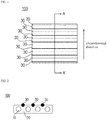
FIG. 1 is a plan view illustrating a case where a sheet according to an embodiment of the present invention is carcass. -
FIG. 2 is a cross-sectional view taken along line A-A 'ofFIG. 1 . -
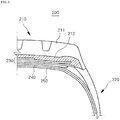
FIG. 3 is a cross-sectional view schematically illustrating a cross section of a tire according to another embodiment of the present invention. - Hereinafter, exemplary embodiments of the present invention will be described in detail so that those skilled in the art can easily carry out the present invention. However, the present invention may, be embodied in many different forms and should not be construed as limited to the exemplary embodiments set forth herein.
- In an embodiment of the present invention, the sheet may include tire cords; a topping rubber, which is for topping the tire cords; and a conductive fiber, which is located on the surface of the topping rubber.
- For example, the sheet may be any one that includes tire cords which are used in tires and on which the topping rubber is applied, for example, carcass, but the present invention is not limited thereto.
-
FIG. 1 is a plan view illustrating a case where a sheet according to an embodiment of the present invention is carcass, andFIG. 2 is a cross-sectional view taken along line A-A 'ofFIG. 1 . Hereinafter, the sheet will be explained with reference toFIGS. 1 and 2 . - Referring to
FIGS. 1 and 2 , asheet 100 includestire cords 10 and a topping rubber 20 which is for topping thetire cords 10. The topping rubber 20 penetrates between thetire cords 10 while encompassing thetire cords 10 so that thesheet 100 is formed. - The
tire cords 10 may be any cord for carcass generally used in tires, and a steel cord, a textile cord, etc. may be used. - Meanwhile, the
sheet 100 includes aconductive fiber 30 disposed on the surface of the topping rubber 20. Thesheet 100 can have conductivity through theconductive fiber 30 and can improve electrostatic performance of tires including the sheet. - In an embodiment, the
conductive fiber 30 may be afiber 30 in which a metal is coated on the surface of any one fiber selected from the group consisting of a synthetic fiber, a regenerated cellulose fiber, and a natural fiber, and in another embodiment, theconductive fiber 30 may be acarbon fiber 30. - The synthetic fiber may be any one selected from the group consisting of a polyester fiber, a polyamide fiber, a polyacrylonitrile fiber, and a polyurethane fiber. The regenerated cellulose fiber may be any one selected from the group consisting of rayon and a regenerated cellulose fiber prepared using N-methylmorpholine N-oxide (NMMO) (e.g., a lyocell fiber). The natural fiber may be any one selected from the group consisting of a hemp fiber and a cotton fiber.
- The metal which is coated on the surface of any one fiber selected from the group consisting of a synthetic fiber, a regenerated cellulose fiber, and a natural fiber may be copper, silver, platinum, etc. with excellent electrical conductivity.
- Meanwhile, the
conductive fiber 30 may be one, in which the fiber on which a metal is coated or the carbon fiber is blended with any one fiber selected from the group consisting of a synthetic fiber, a regenerated cellulose fiber, and a natural fiber. - The
conductive fiber 30, as the fiber on which a metal is coated or the carbon fiber is blended with any one fiber selected from the group consisting of a synthetic fiber, a regenerated cellulose fiber, and a natural fiber, has an advantage in that it has a good adhesion to a rolling product due to many hairs. Additionally, when only the fiber where a metal is coated or the carbon fiber is applied, it is possible to obtain excellent electrical conductivity. However, from the aspects of the cost and the workability that the fiber must be attached to the rolling product, it is desirable that aconductive fiber 30, in which the fiber on which a metal is coated or the carbon fiber is blended with any one fiber selected from the group consisting of a synthetic fiber, a regenerated cellulose fiber, and a natural fiber, be applied. - The any one fiber selected from the group consisting of a synthetic fiber, a regenerated cellulose fiber, and a natural fiber, which is blended with the fiber on which a metal is coated or the carbon fiber, is the same as described above, and thus repeated explanation is omitted here.
- The blending ratio between the fiber on which a metal is coated or the carbon fiber and any one fiber selected from the group consisting of a synthetic fiber, a regenerated cellulose fiber, and a natural fiber may be in a weight ratio of 10 : 90 to 90 : 10, and specifically 40 : 60 to 80 : 20. When the blending ratio of the blended fiber exceeds the weight ratio of 10 : 90, the electric conductivity may be too low, whereas when the blending ratio is below the weight ratio of 90 : 10, the workability may be deteriorated due to high elongation when the fiber substrate on which a metal is coated is acryl or the carbon fiber, and the attachment to the rolling product may be disadvantageous and may be disadvantageous from the cost aspect.
- Considering the easiness of preparation, durability of tires, and conductivity performance, the diameter of the
conductive fiber 30 may be 0.05 mm to 0.5 mm, 5 'S to 100 'S based on spun yarn, and 50 denier to 1,000 denier based on filament yarn. In particular, the 'S has a count of cotton yarn, metrical count, and flax count. The count of cotton yarn is called 1 'S if the yard length is 840 yards (768 m) when the weight of the cotton yarn is 1 pound (453 g). The metrical count is called 1 'S if the yard length is 1 km when the weight of the yarn is 1 kg. The flax count is called 1 'S if the yard length is 300 yards (274 m) when the weight of the yarn is 1 pound (453 g). Additionally, with respect to denier, when the weight of a filament yarn based on the length of 9,000 m is 1 g it is called 1 denier. When the diameter of theconductive fiber 30 is below 0.05 mm, exceeds 100 'S based on spun yarn, below 5 'S based on spun yarn, and below 50 denier based on filament yarn, the workability may be disadvantageous due to insufficient tensile strength, whereas when the diameter of theconductive fiber 30 exceeds 0.5 mm, below 5 'S based on spun yarn, and exceeds 1,000 denier based on filament yarn, the fiber may be too thick and thus it may act as impurities within the tire. - Considering electrostatic performance, it may be desirable to have more
conductive fibers 30, however, since theconductive fiber 30 is expensive, having moreconductive fibers 30 may cause an increase of the manufacturing cost and they may act as impurities inside a tire. Accordingly, theconductive fiber 30 is added to replace the air bleed yarn for removing the air between the plies in the existing tire, and if a minimum electrical conductivity (100 MΩ or less of resistance) can be provided in the tire, it may be considered that the intended purpose is complete. Therefore, considering the electrical conductivity and cost of tires, theconductive fiber 30 may be disposed at intervals of 10 mm to 400 mm, and specifically 50 mm to 300 mm. When the gap between theconductive fibers 30 is less than 10 mm, it will be economically inefficient and may act as impurities in a tire thereby reducing tire durability, whereas when the gap exceeds 400 mm, the desired level of electrical conductivity may not be secured. - The
sheet 100 may include 1 to 60conductive fibers 30. When theconductive fiber 30 is less than 1, at least oneconductive fiber 30 cannot be added per tire being manufactured thus not being able to secure electrical conductivity, whereas when theconductive fiber 30 exceeds 60, it is economically inefficient and an excess number of the conductive fibers may cause a problem with respect to tire durability. - The
conductive fiber 30 may be located on both sides of the topping rubber 20 as well as on one side of the topping rubber 20. When theconductive fiber 30 is located only on one side of the topping rubber 20, theconductive fiber 30 may be located on one side where thesheet 100 faces the inner liner. - The
conductive fiber 30 may be disposed at any angle or direction with respect to thetire cords 10. When thesheet 100 is mounted on the tire, it may also be used as a structure that can improve rigidity and durability of the tire, in addition to thetire cords 10 which are disposed obliquely or vertically with respect to the circumferential direction of the tire and wound in the circumferential direction. Accordingly, the acute angle of the angle formed by thetire cords 10 and theconductive fiber 30 may be 0° to 90°. Additionally, theconductive fiber 30 may be of a straight or wavy shape extending from the surface of the topping rubber 20. - However, the
conductive fiber 30 which extends to both ends of the topping rubber 20 and is exposed at both ends of the topping rubber 20 can further improve electrostatic performance and is thus desirable. - As the
sheet 100 effectively releases static electricity concentrated on a tire to the road surface, the tire including thesheet 100 may have a resistance value of 0.1 M MΩ to 100 MΩ at a voltage of 1,000 V. In order for the tire to have a resistance value of less than 0.1 MΩ at a voltage of 1,000 V, there are many other trade off items. For example, it may be disadvantageous to rolling resistance (LRR) by further application of an electricity-transmittable compound or excessive use of conductive fibers, whereas when the resistance value exceeds 100 MΩ, it may not be possible to release static electricity. - The
sheet 100 can effectively move the static electricity being delivered from a vehicle to the tread part of a tire and thereby deliver it to the ground. As a result, the electrical conductivity can be imparted to parts other than the composition of the rubber composition, the freedom of development for LRR of the carcass topping rubber composition and sidewall rubber composition can be increased. That is, as the requirement for electrical conductivity with respect to the sidewall rubber composition and the carcass topping rubber composition is reduced, a rubber composition for improving rolling resistance can be applied, and eventually, tires for reducing fuel economy with LRR can be manufactured while resolving the static electricity problem by the application of theconductive fiber 30. - Therefore, as the topping rubber 20, any topping rubber for textile cords generally used for dashes may be applicable. However, as the topping rubber 20, the one which has the composition with an excellent LRR property containing 20 to 60 parts by weight of carbon black, with a large particle size and less-developed structure, with respect to 100 parts by weight of a raw material rubber, which contains 20 to 50 parts by weight of a natural rubber and 50 to 80 parts by weight of a styrene butadiene rubber. When the composition of the topping rubber 20 is prepared as described above, it has advantages in that the composition contains a styrene butadiene rubber and is thus effective in adhesion; and as carbon black with a less-developed structure is used, the internal heat generation is reduced thus being useful for rolling resistance; and as the weight parts of the carbon black is less, the heat generation is reduced. A tire, even when it contains the topping rubber 20 with the above composition, can have a resistance value of 0.1 MΩ to 100 MΩ at a voltage of 1,000 V because it contains the
sheet 100. The carbon black with a large particle size and a less-developed structure may be one which has a statistical thickness surface area (STSA) value of 29 m2/g to 39 m2/g, an oil absorption number of compressed sample (COAN) value of 69 cc/100 g to 79 cc/100 g, an oil absorption number of sample (OAN) value of 85 cc/100 g to 95 cc/100 g, and an iodine adsorption value of 31 mg/g to 41 mg/g. - Even then, the topping rubber 20 may be a topping rubber composition with an electricity-transmitting property for further improvement of electrical conductivity of the
sheet 100. The topping rubber composition with an electricity-transmitting property may have a composition, which contains 10 to 40 parts by weight of a first carbon black, with a relatively large particle size and a relatively less-developed structure, and 20 to 50 parts by weight of a second carbon black, with a relatively small particle size and a relatively well-developed structure, with respect to 100 parts by weight of a raw material rubber, which contains 10 to 40 parts by weight of a synthetic styrene butadiene rubber and 60 to 90 parts by weight of a natural rubber. The first carbon black, with a relatively large particle size and a relatively less-developed structure, may be one which has an STSA value of 29 m2/g to 39 m2/g, a COAN value of 69 cc/100 g to 79 cc/100 g, an OAN value of 85 cc/100 g to 95 cc/100 g, and an iodine adsorption value of 31 mg/g to 41 mg/g. The second carbon black, with a relatively small particle size and a relatively well-developed structure, may be one which has an STSA value of 70 m2/g to 80 m2/g, a COAN value of 83 cc/100 g to 93 cc/100 g, an OAN value of 96 cc/100 g to 108 cc/100 g, and an iodine adsorption value of 76 mg/g to 88 mg/g. - Additionally, as the sidewall rubber, a rubber composition having characteristics of a low electricity-transmitting property and a low rolling resistance (LRR) may be applied. The sidewall rubber may have a composition, which contains 20 to 70 parts by weight of carbon black, with a large particle size and less-developed structure, with respect to 100 parts by weight of a raw material rubber, which contains 30 to 70 parts by weight of a natural rubber and 30 to 70 parts by weight of a synthetic butadiene rubber. When the sidewall rubber is formed as described above, heat generation can be reduced and excellent fuel economy can be provided and is thus desirable. A tire, even when it contains the sidewall rubber with the above composition, can have a resistance value of 0.1 MΩ to 100 MΩ at a voltage of 1,000 V because it contains the
sheet 100. The carbon black with a large particle size and a less-developed structure may be one which has an STSA value of 29 m2/g to 39 m2/g, a COAN value of 69 cc/100 g to 79 cc/100 g, an OAN value of 85 cc/100 g to 95 cc/100 g, and an iodine adsorption value of 31 mg/g to 41 mg/g. - Meanwhile, the sidewall rubber 20 may be a topping rubber composition with an electricity-transmitting property for further improvement of electrical conductivity of the tire. The sidewall rubber composition with an electricity-transmitting property may have a composition, which contains 10 to 40 parts by weight of a first carbon black, with a relatively large particle size and a relatively less-developed structure, and 10 to 30 parts by weight of a third carbon black, with a relatively small particle size and a relatively very well-developed structure, with respect to 100 parts by weight of a raw material rubber, which contains 30 to 70 parts by weight of a natural rubber and 30 to 70 parts by weight of a synthetic butadiene rubber. The first carbon black, with a relatively large particle size and a relatively less-developed structure, may be one which has an STSA value of 29 m2/g to 39 m2/g, a COAN value of 69 cc/100 g to 79 cc/100 g, an OAN value of 85 cc/100 g to 95 cc/100 g, and an iodine adsorption value of 31 mg/g to 41 mg/g. The third carbon black, with a relatively small particle size and a relatively very well-developed structure, may be one which has an STSA value of 118 m2/g to 129 m2/g, a COAN value of 91 cc/100 g to 101 cc/100 g, an OAN value of 108 cc/100 g to 118 cc/100 g, and an iodine adsorption value of 150 mg/g to 165 mg/g.
- A method for preparing the
sheet 100 according to another embodiment of the present invention includes: preparing a carbon fiber, or a fiber in which a metal is coated on the surface of at least one fiber selected from the group consisting of a synthetic fiber, a regenerated cellulose fiber, and a natural fiber; processing the fiber in which a metal is coated or the carbon fiber by texturing; preparing a conductive fiber by blending the surface of the texturing-processed fiber on which a metal is coated or carbon fiber with any one fiber selected from the group consisting of a synthetic fiber, a regenerated cellulose fiber, and a natural fiber; and topping the tire cords with a topping rubber and attaching the conductive fiber to the surface of the topping rubber at the time of rolling or cutting. - First, the carbon fiber or the fiber in which a metal is coated is prepared.
- The fiber in which a metal is coated may be prepared by immersing any one fiber selected from the group consisting of the synthetic fiber, regenerated cellulose fiber, and natural fiber in an electrolytic solution containing a metal salt followed by electroplating or electroless plating; or a metal may be coated on the surface of the fiber by the physical vapor deposition method or chemical vapor deposition method.
- In an embodiment, the fiber where copper is coated may be prepared by immersing any one fiber selected from the group consisting of the synthetic fiber, regenerated cellulose fiber, and natural fiber in an electrolytic solution containing a metal salt (copper sulfate, etc.) followed by electroplating or electroless plating; or a metal may be coated on the surface of the fiber by the physical vapor deposition method or chemical vapor deposition method.
- Then, the carbon fiber or the fiber on which a metal is coated is texturing-processed.
- The reason for the processing of texturing the carbon fiber or the fiber on which a metal is coated is to promote a smooth blending by providing a crimp through the texturing process because a spinning is performed for a blending after the preparation of a sliver through carding and combing, and it is difficult to perform spinning for a long filament fiber with strong linearity even after cutting the fiber to a certain length.
- As the processing method for texturing, all of the commonly known methods (e.g., false-twist method, stuffer-box method, air-jet texturing method, etc.) may be used. Among these methods, the false-twist method may be used as the representative method, and the stuffer-box method may be appropriately used in the case of a thermoplastic fiber.
- The texturing-processed carbon fiber or the fiber on which a metal is coated may be blended with any one fiber selected from the group consisting of a synthetic fiber, a regenerated cellulose fiber, and a natural fiber, after the preparation of a short fiber (staple fiber) by cutting the texturing-processed carbon fiber or the fiber on which a metal is coated to a length of 1 cm to 5 cm. If a filament-type long fiber is used as the carbon fiber or the fiber on which a metal is coated, instead of the short fiber, there are several disadvantages in that there is a difficulty in mechanical adhesion at the time of attaching the conductive fiber to the surface of the topping rubber and the conductive fiber may be separated during the process.
- Then, a conductive fiber may be prepared by blending the texturing-processed carbon fiber or the fiber on which a metal is coated with any one fiber selected from the group consisting of a synthetic fiber, a regenerated cellulose fiber, and a natural fiber.
- With respect to the method for blending the carbon fiber or the fiber on which a metal is coated with any one fiber selected from the group consisting of a synthetic fiber, a regenerated cellulose fiber, and a natural fiber, the techniques for blending several kinds of fibers during the manufacture of tire cords are already well known, and thus the above blending can be performed without any difficulty.
- Finally, after the topping of the tire cords with a topping rubber, the conductive fiber is attached to the surface of the topping rubber at the time of rolling or cutting.
- Specifically, the conductive fiber may be attached to the surface of the sheet in any arbitrary part of the process between immediately after the sheet passed through a calendar and a winding process of the rolling product. In particular, as the attachment method, the conductive fiber may be supplied to the surface of the rolled sheet in progress and simultaneously the conductive fiber is pressed using a roller, etc.; the position for the attachment of the conductive fiber is fixed by mounting a fiber guide (yarn guide), and then the conductive fiber is attached according to the movement of the rolled sheet, etc. may be used. As the facility for the attachment, the conventional attachment facility of air bleed yarn may be utilized.
- The tire according to still another embodiment of the present invention includes the
sheet 100.FIG. 3 is a cross-sectional view schematically illustrating a cross section of the tire. - Referring to
FIG. 3 , thetire 200 includes atread part 210, asidewall part 220, abelt part 230, acarcass part 240, and aninner liner part 250, but the structure of thetire 200 is not limited thereto, and all of the conventional tire structures may be applied. - The
tread part 210, which is the part where a tire comes in direct contact with the ground, delivers the driving force and the braking force of a vehicle to the surface of the road and it may include acaptread 211 and anundertread 212. Thesidewall 220 serves as an intermediate position for protecting thecarcass part 240 from an external shock and transmitting the movement of the steering wheel to thetread part 210 via beads (not shown). Thebelt part 230 may include a constitution which consists of a belt for controlling the grip road surface forces, handling, etc.; a reinforcement cap fly for preventing separation between the steel belt layers; a belt cushion, etc. Thecarcass part 240 serves as a skeleton for forming the backbone of a tire, and maintains the air pressure together with theinner liner 250 to support an externally applied load. Theinner liner 250 maintains the air pressure inside of a tire. - In particular, the
sheet 100 is applicable to thecarcass part 240. When thetire 200 includes thesheet 100 in thecarcass part 240, the static electricity generated in a vehicle is transmitted to thesidewall 220 through the wheels of the vehicle, and released to the ground while passing through thebelt part 230, thecarcass part 240, and thetread part 210. - Meanwhile, the
tire 200 may be preferably a tire for a passenger vehicle, but the tire of the present invention is not limited thereto, and the tire may be a passenger vehicle tire, a light truck tire, a SUVtire, an off-the-road tire, a bias truck tire, a bias bus tire, etc. Additionally, thetire 200 may be a radial tire or bias tire. - Hereinafter, exemplary embodiments of the present invention will be described in detail so that those skilled in the art can easily carry out the present invention. However, the present invention may be embodied in many different forms and should not be construed as being limited to the embodiments set forth herein.
- After selecting the tire 225/45R17 standard as shown in Tables 1 and 2 below, carcasses were prepared using a general cotton material fiber in Examples 1-1 to 1-3, and using a copper-coated conductive fiber in Examples 1-1 and 1-7. In Comparative Examples 1-1 to 1-3 and Examples 1-1 to 1-7, 8 fibers were used per tire.
[Table 1] Category Comparative Example 1-1 Example 1-1 Example 1-2 Example 1-3 Example 1-4 Standard 225/45R17 225/45R17 225/45R17 225/45R17 225/45R17 Applied carcass carcass carcass carcass carcass Area surface surface surface surface surface Applied Fiber cotton material 30 's spun yarn copper-electroplated 30 's polyurethane-based spun yarn copper-electroplated 150 denier polyurethane-based filament yarn copper-electroplated 30 's Nylon66 spun yarn copper-electroplated 30 's rayon-based spun yarn Carcass topping Rubber Composit ion1) general rubber composition (non-electricity-transmittable) general rubber composition (non-electricity-transmittable) general rubber composition (non-electricity-transmittable) general rubber composition (non-electricity-transmittable) general rubber composition (non-electricity-transmittable) Sidewall Rubber Composit ion2) general rubber composition (electricity-transmittable) general rubber composition (electricity-transmittable) general rubber composition (electricity-transmittable) general rubber composition (electricity-transmittable) general rubber composition (electricity-transmittable) - 1) carcass topping rubber composition: a general rubber composition with a non-electricity-transmitting property comprised of 70 parts by weight of carbon black with a characteristic of a large particle size and a less-developed structure, with respect to 100 parts by weight of a raw material rubber containing 70 parts by weight of a natural rubber. The carbon black with a large particle size and a less-developed structure is one which has an STSA value of 34 m2/g, a COAN value of 74 cc/100 g, an OAN value of 90 cc/100 g, and an iodine adsorption value of 36 mg/g.
- 2) sidewall rubber composition: a rubber composition with an electricity-transmitting property comprised of 30 parts by weight of a first carbon black, with a relatively large particle size and a relatively less-developed structure, and 20 parts by weight of a third carbon black, with a relatively small particle size and a relatively well-developed structure, with respect to 100 parts by weight of a raw material rubber, which contains 70 parts by weight of a natural rubber and 30 parts by weight of a synthetic butadiene rubber. The first carbon black with a relatively large particle size and a relatively less-developed structure is carbon black which has an STSA value of 34 m2/g, a COAN value of 74 cc/100 g, an OAN value of 90 cc/100 g, and an iodine adsorption value of 36 mg/g. The third carbon black with a relatively small particle size and a relatively well-developed structure is carbon black which has an STSA value of 123 m2/g, a COAN value of 96 cc/100 g, an OAN value of 113 cc/100 g, and an iodine adsorption value of 160 mg/g.
- 1) carcass topping rubber composition (LRR rubber composition): an LRR rubber composition with a characteristic of a large particle size and a less-developed structure, with respect to 100 parts by weight of a raw material rubber containing 70 parts by weight of an emulsion polymerization stadiene rubber and 30 parts by weight of a natural rubber. The carbon black with a large particle size and a less-developed structure is one which has an STSA value of 34 m2/g, a COAN value of 74 cc/100 g, an OAN value of 90 cc/100 g, and an iodine adsorption value of 36 mg/g. The carbon black with a large particle size and a less-developed structure has an STSA value of 34 m2/g, a COAN value of 74 cc/100 g, an OAN value of 90 cc/100 g, and an iodine adsorption value of 36 mg/g.
carcass topping rubber composition (electricity-transmittable LRR rubber composition): An electricity-transmittable topping rubber composition with an-electricity-transmitting property comprised of 30 parts by weight of a first carbon black, with a relatively large particle size and a relatively less-developed structure, and 40 parts by weight of a second carbon black, with a relatively small particle size and a relatively well-developed structure, with respect to 100 parts by weight of a raw material rubber, which contains 30 parts by weight of a synthetic butadiene rubber and 70 parts by weight of a natural rubber. The first carbon black with a relatively large particle size and a relatively less-developed structure is carbon black which has an STSA value of 34 m2/g, a COAN value of 74 cc/100 g, an OAN value of 90 cc/100 g, and an iodine adsorption value of 36 mg/g. The second carbon black with a relatively small particle size and a relatively well-developed structure is carbon black which has an STSA value of 75 m2/g, a COAN value of 88 cc/100 g, an OAN value of 102 cc/100 g, and an iodine adsorption value of 82 mg/g. - 2) sidewall rubber composition (LRR rubber composition): an LRR rubber composition comprised of 50 parts by weight of a carbon black-filling material with a large particle size and a less-developed structure with respect to 100 parts by weight of a raw material rubber, which contains 50 parts by weight of a natural rubber and 50 parts by weight of a synthetic butadiene rubber. The carbon black with a large particle size and a less-developed structure is one which has an STSA value of 34 m2/g, a COAN value of 74 cc/100 g, an OAN value of 90 cc/100 g, and an iodine adsorption value of 36 mg/g.
- sidewall rubber composition (electricity-transmittable rubber composition): a rubber composition with an excellent electricity-transmitting property comprised of 30 parts by weight of a first carbon black, with a relatively large particle size and a relatively less-developed structure, and 20 parts by weight of a third carbon black, with a relatively small particle size and a relatively well-developed structure, with respect to 100 parts by weight of a raw material rubber, which contains 70 parts by weight of a natural rubber and 30 parts by weight of a synthetic butadiene rubber.
- The first carbon black with a relatively large particle size and a relatively less-developed structure is carbon black which has an STSA value of 34 m2/g, a COAN value of 74 cc/100 g, an OAN value of 90 cc/100 g, and an iodine adsorption value of 36 mg/g. The third carbon black with a relatively small particle size and a relatively well-developed structure is carbon black which has an STSA value of 123 m2/g, a COAN value of 96 cc/100 g, an OAN value of 113 cc/100 g, and an iodine adsorption value of 160 mg/g.
- The electricity-transmitting ability and durability of the tires prepared in Example 1 were measured and the results are shown in Tables 3 and 4 below.
[Table 3] Category Comparative Example 1-1 Example 1-1 Example 1-2 Example 1-3 Example 1-4 Electrical Resistance (measured on tire) 90 MΩ 1 MΩ 0.5 MΩ 0.9 MΩ 2.0 MΩ High Speed Durability 100 min 100 min 100 min 100 min 100 min General Durability 60 hr 60 hr 60 hr 60 hr 60 hr Long-term Durability 400 hr 400 hr 400 hr 400 hr 400 hr RRc (Index) 100 100 100 95 95 [Table 4] Category Comparative Example 1-2 Comparative Example 1-3 Example 1-5 Example 1-6 Example 1-7 Electrical Resistance (measured on tire) 29.9 GΩ 60 MΩ 15 MΩ 20 MΩ 21 MΩ High Speed Durability 100 min 100 min 100 min 100 min 100 min General Durability 60 hr 60 hr 60 hr 60 hr 60 hr Long-term Durability 400 hr 400 hr 400 hr 400 hr 400 hr RRc (Index) 95 105 95 95 95 - In Tables 3 and 4 above, the electrical resistance was measured such that a voltage of 1,000 V was applied to the ground contacting part and rim part of tires and thereby the resistance was measured. The high speed durability, general durability, and long-term durability were measured under the conditions of 140%, 80 km/h relative to Load Index. The rolling resistance (RRc) was measured by the ISO 20580 method, and Comparative Example 1-1 was indexed as 100, and a lower value indicates more excellent.
- Referring to Tables 3 and 4 above, the electrical resistance of Examples 1-1 to 1-4 was lower than that of Comparative Example 1-1 thus confirming that the electricity-transmitting ability was improved. Additionally, in the cases of Examples 1-1 to 1-4, there were no changes in durability and rolling resistance (RR) despite the improvement of electricity-transmitting ability.
- Additionally, comparing Comparative Examples 1-2 and 1-3, it was confirmed that when the LRR rubber composition was applied as the carcass topping rubber composition and the sidewall rubber composition, the electricity-transmitting ability was significantly reduced. Meanwhile, in the cases of Examples 1-5 to 1-7, even when the LRR rubber composition was applied as the carcass topping rubber composition and the sidewall rubber composition, the electricity-transmitting ability was improved. Additionally, in the cases of Examples 1-5 to 1-7, there were no changes in durability and rolling resistance (RR) despite the improvement of electricity-transmitting ability.
- After selecting the tire 225/45R17 standard as shown in Tables 5 and 6 below, carcasses were prepared using a general cotton material fiber in Examples 2-1 to 2-3, and using a copper-coated conductive fiber in Examples 2-1 and 2-7. In Comparative Examples 2-1 to 2-3 and Examples 2-1 to 2-7, 8 fibers were used per tire.
[Table 5] Category Comparative Example 2-1 Example 2-1 Example 2-2 Example 2-3 Example 2-4 Standard 225/45R17 225/45R17 225/45R17 225/45R17 225/45R17 Applied carcass carcass carcass carcass carcass Area surface surface surface surface surface Applied Fiber cotton material 30 's spun yarn 20 's fiber where copper-electroplated a polyacrylonit rile fiber and a cotton fiber are blended in a 2:8 weight ratio 20 's fiber where copper-electroplated a polyacrylonit rile fiber and a cotton fiber are blended in a 4:6 weight ratio 20 's fiber where copper-electroplated a polyacrylonitr ile fiber and a cotton fiber are blended in a 6:4 weight ratio 30 's fiber where copper-electroplated a polyacrylonitr ile fiber and a cotton fiber are blended in a 6:4 weight ratio Carcass topping Rubber Composi tion1) general rubber composition (non-electricity-transmittable) general rubber composition (non-electricity-transmittable) general rubber composition (non-electricity-transmittable) general rubber composition (non-electricity-transmittable) general rubber composition (non-electricity-transmittable) Sidewall Rubber Composi tion2) general rubber composition (electricity-transmittable) general rubber composition (electricity-transmittable) general rubber composition (electricity-transmittable) general rubber composition (electricity-transmittable) general rubber composition (electricity-transmittable) - 1) carcass topping rubber composition: a general rubber composition with a non-electricity-transmitting property comprised of 70 parts by weight of carbon black with a characteristic of a large particle size and a less-developed structure, with respect to 100 parts by weight of a raw material rubber containing 70 parts by weight of a natural rubber. The carbon black with a large particle size and a less-developed structure is one which has an STSA value of 34 m2/g, a COAN value of 74 cc/100 g, an OAN value of 90 cc/100 g, and an iodine adsorption value of 36 mg/g.
- 2) sidewall rubber composition: a rubber composition with an electricity-transmitting property comprised of 30 parts by weight of a first carbon black, with a relatively large particle size and a relatively less-developed structure, and 20 parts by weight of a third carbon black, with a relatively small particle size and a relatively well-developed structure, with respect to 100 parts by weight of a raw material rubber, which contains 70 parts by weight of a natural rubber and 30 parts by weight of a synthetic butadiene rubber. The first carbon black with a relatively large particle size and a relatively less-developed structure is carbon black which has an STSA value of 34 m2/g, a COAN value of 74 cc/100 g, an OAN value of 90 cc/100 g, and an iodine adsorption value of 36 mg/g. The third carbon black with a relatively small particle size and a relatively well-developed structure is carbon black which has an STSA value of 123 m2/g, a COAN value of 96 cc/100 g, an OAN value of 113 cc/100 g, and an iodine adsorption value of 160 mg/g.
- 1) carcass topping rubber composition (LRR rubber composition): an LRR rubber composition with a characteristic of a large particle size and a less-developed structure, with respect to 100 parts by weight of a raw material rubber containing 70 parts by weight of an emulsion polymerization stadiene rubber and 30 parts by weight of a natural rubber. The carbon black with a large particle size and a less-developed structure is one which has an STSA value of 34 m2/g, a COAN value of 74 cc/100 g, an OAN value of 90 cc/100 g, and an iodine adsorption value of 36 mg/g. The carbon black with a large particle size and a less-developed structure has an STSA value of 34 m2/g, a COAN value of 74 cc/100 g, an OAN value of 90 cc/100 g, and an iodine adsorption value of 36 mg/g.
carcass topping rubber composition (electricity-transmittable LRR rubber composition): An electricity-transmittable topping rubber composition with an-electricity-transmitting property comprised of 30 parts by weight of a first carbon black, with a relatively large particle size and a relatively less-developed structure, and 40 parts by weight of a second carbon black, with a relatively small particle size and a relatively well-developed structure, with respect to 100 parts by weight of a raw material rubber, which contains 30 parts by weight of a synthetic butadiene rubber and 70 parts by weight of a natural rubber. The first carbon black with a relatively large particle size and a relatively less-developed structure is carbon black which has an STSA value of 34 m2/g, a COAN value of 74 cc/100 g, an OAN value of 90 cc/100 g, and an iodine adsorption value of 36 mg/g. The second carbon black with a relatively small particle size and a relatively well-developed structure is carbon black which has an STSA value of 75 m2/g, a COAN value of 88 cc/100 g, an OAN value of 102 cc/100 g, and an iodine adsorption value of 82 mg/g. - 2) sidewall rubber composition (LRR rubber composition): an LRR rubber composition comprised of 50 parts by weight of a carbon black with a large particle size and a less-developed structure with respect to 100 parts by weight of a raw material rubber, which contains 50 parts by weight of a natural rubber and 50 parts by weight of a synthetic butadiene rubber. The carbon black with a large particle size and a less-developed structure is one which has an STSA value of 34 m2/g, a COAN value of 74 cc/100 g, an OAN value of 90 cc/100 g, and an iodine adsorption value of 36 mg/g.
sidewall rubber composition (electricity-transmittable rubber composition): a rubber composition with an excellent electricity-transmitting property comprised of 30 parts by weight of a first carbon black, with a relatively large particle size and a relatively less-developed structure, and 20 parts by weight of a third carbon black, with a relatively small particle size and a relatively well-developed structure, with respect to 100 parts by weight of a raw material rubber, which contains 70 parts by weight of a natural rubber and 30 parts by weight of a synthetic butadiene rubber. - The first carbon black with a relatively large particle size and a relatively less-developed structure is carbon black which has an STSA value of 34 m2/g, a COAN value of 74 cc/100 g, an OAN value of 90 cc/100 g, and an iodine adsorption value of 36 mg/g. The third carbon black with a relatively small particle size and a relatively well-developed structure is carbon black which has an STSA value of 123 m2/g, a COAN value of 96 cc/100 g, an OAN value of 113 cc/100 g, and an iodine adsorption value of 160 mg/g.
- The electricity-transmitting ability and durability of the tires prepared in Example 2 were measured and the results are shown in Tables 7 and 8 below.
[Table 7] Category Comparative Example 2-1 Example 2-1 Example 2-2 Example 2-3 Example 2-4 Electrical Resistance (measured on tire) 29.9 GΩ 10 MΩ 1 MΩ 0.5 MΩ 2.0 MΩ High Speed Durability 100 min 100 min 100 min 100 min 100 min General Durability 60 hr 60 hr 60 hr 60 hr 60 hr Long-term Durability 400 hr 400 hr 400 hr 400 hr 400 hr RRc (Index) 100 100 100 95 95 [Table 8] Category Comparative Example 2-2 Comparative Example 2-3 Example 2-5 Example 2-6 Example 2-7 Electrical Resistance (measured on tire) 29.9 GΩ 50 MΩ 10 MΩ 7.0 MΩ 15.1 MΩ High Speed Durability 100 min 100 min 100 min 100 min 100 min General Durability 60 hr 60 hr 60 hr 60 hr 60 hr Long-term Durability 400 hr 400 hr 400 hr 400 hr 400 hr RRc (Index) 95 105 95 95 95 - In Tables 7 and 8 above, the electrical resistance was measured such that a voltage of 1,000 V was applied to the ground contacting part and rim part of tires and thereby the resistance was measured. The high speed durability, general durability, and long-term durability were measured under the conditions of 140%, 80 km/h relative to Load Index. The rolling resistance (RRc) was measured by the ISO 20580 method, and Comparative Example 2-1 was indexed as 100, and a lower value indicates more excellent.
- Referring to Tables 7 and 8 above, the electrical resistance of Examples 2-1 to 2-4 was lower than that of Comparative Example 2-1 thus confirming that the electricity-transmitting ability was improved. Additionally, in the cases of Examples 2-1 to 2-4, there were no changes in durability and rolling resistance (RR) despite the improvement of electricity-transmitting ability.
- Additionally, comparing Comparative Examples 2-2 and 2-3, it was confirmed that when the LRR rubber composition was applied as the carcass topping rubber composition and the sidewall rubber composition, the electricity-transmitting ability was significantly reduced. Meanwhile, in the cases of Examples 2-5 to 2-7, even when the LRR rubber composition was applied as the carcass topping rubber composition and the sidewall rubber composition, the electricity-transmitting ability was improved. Additionally, in the cases of Examples 2-5 to 2-7, there were no changes in durability and rolling resistance (RR) despite the improvement of electricity-transmitting ability.
- The sheet of the present invention can provide tires, on which a rubber composition with a low electricity-transmitting property and low rolling resistance is applied, with excellent conductivity.
- While the invention has been described with reference to exemplary embodiments, it will be apparent to those skilled in the art that various modifications may be made without departing from the essential characteristics of the present invention. Accordingly, the Examples disclosed herein are intended to illustrate and not limit the present invention, and the spirit and scope of the present invention are not limited by these Examples. The scope of protection of the present invention should be construed according to the following claims, and all the techniques within the identical scope of the same should be construed as being included in the scope of the present invention.
-
- 100: sheet
- 10: tire cords
- 20: topping rubber
- 30: conductive fiber
- 200: tire
- 210: tread part
- 211: captread 212: undertread
- 220: sidewall part
- 230: belt part
- 240: carcass part
- 250: inner liner part
| Category | Comparative Example 1-2 | Comparative Example 1-3 | Example 1-5 | Example 1-6 | Example 1-7 |
| Standard | 225/45R17 | 225/45R17 | 225/45R17 | 225/45R17 | 225/45R17 |
| Applied | carcass | carcass | carcass | carcass | carcass surface |
| Area | surface | surface | surface | surface | |
| Applied Fiber | cotton material 30 's spun yarn | cotton material 30 's spun yarn | copper-electroplated 30 's polyurethane-based spun yarn | copper-electroplated 30 's Nylon66 spun yarn | copper-electroplated 30 's rayon-based spun yarn |
| Carcass topping Rubber Composi tion1) | LRR rubber composition (non-electricity-transmittable) | rubber composition (electricity-transmittable) | LRR rubber composition (non-electricity-transmittable) | LRR rubber composition (non-electricity-transmittable) | LRR rubber composition (non-electricity-transmittable) |
| Sidewall Rubber Composi tion2) | LRR rubber composition (non-electricity-transmittable) | rubber composition (electricity-transmittable) | LRR rubber composition (non-electricity-transmittable) | LRR rubber composition (non-electricity-transmittable) | LRR rubber composition (non-electricity-transmittable) |
| Category | Comparative Example 2-2 | Comparative Example 2-3 | Example 2-5 | Example 2-6 | Example 2-7 |
| Standard | 225/45R17 | 225/45R17 | 225/45R17 | 225/45R17 | 225/45R17 |
| Applied | carcass | carcass surface | carcass | carcass | carcass |
| Area | surface | surface | surface | surface | |
| Applied Fiber | cotton material 30 's spun yarn | cotton material 30 's spun yarn | 20 's fiber where copper-electroplated a polyacrylonit rile fiber and a cotton fiber are blended in a 4:6 weight ratio | 20 's fiber where copper-electroplated a polyacrylonit rile fiber and a cotton fiber are blended in a 6:4 weight ratio | 30 's fiber where copper-electroplated a polyacrylonit rile fiber and a cotton fiber are blended in a 6:4 weight ratio |
| Carcass topping Rubber Composit ion1) | LRR rubber composition (non-electricity-transmittabl e) | rubber composition (electricity-transmittable) | LRR rubber composition (non-electricity-transmittable) | LRR rubber composition (non-electricity-transmittable) | LRR rubber composition (non-electricity-transmittable) |
| Sidewall Rubber Composit ion2) | LRR rubber composition (non-electricity-transmittable) | rubber composition (electricity-transmittable) | LRR rubber composition (non-electricity-transmittable) | LRR rubber composition (non-electricity-transmittable) | LRR rubber composition (non-electricity-transmittable) |
Claims (13)
- A sheet, comprising:tire cords;a topping rubber, which is for topping the tire cords; anda conductive fiber, which is located on the surface of the topping rubber,wherein the conductive fiber comprises a carbon fiber, or a fiber in which a metal is coated on the surface of at least one fiber selected from the group consisting of a synthetic fiber, a regenerated cellulose fiber, and a natural fiber.
- The sheet of claim 1,
wherein the conductive fiber is one where the fiber on which a metal is coated or the carbon fiber is blended with any fiber selected from the group consisting of a synthetic fiber, a regenerated cellulose fiber, and a natural fiber. - The sheet of claim 1 or 2,
wherein the synthetic fiber is one selected from the group consisting of a polyester fiber, a polyamide fiber, a polyacrylonitrile fiber, and a polyurethane fiber. - The sheet of claim 1 or 2,
wherein the natural fiber is one selected from the group consisting of a hemp fiber and a cotton fiber. - The sheet of claim 1 or 2,
wherein the regenerated cellulose fiber is one selected from the group consisting of rayon and a regenerated cellulose fiber prepared using N-methylmorpholine N-oxide (NMMO). - The sheet of claim 1,
wherein the fiber on which a metal is coated is a fiber, in which a metal is coated on the surface of one selected from the group consisting of a synthetic fiber, a regenerated cellulose fiber, and a natural fiber, by a method selected from the group consisting of electroplating, electroless plating, chemical vapor deposition plating, and physical vapor deposition plating. - The sheet of claim 2,
wherein the fiber on which a metal is coated or the carbon fiber is blended with any one fiber selected from the group consisting of a synthetic fiber, a regenerated cellulose fiber, and a natural fiber in a weight ratio of 10 : 90 to 90 : 10. - The sheet of claim 1,
wherein the diameter of the conductive fiber is from 0.05 mm to 0.5 mm, 5 'S to 100 'S based on spun yarn, and 50 denier to 1,000 denier based on filament yarn. - The sheet of claim 1,
wherein the sheet comprises 1 to 60 conductive fibers. - The sheet of claim 1,
wherein the topping rubber comprises:100 parts by weight of a raw material rubber, which comprises 20 to 50 parts by weight of a natural rubber and 50 to 80 parts by weight of a styrene butadiene rubber; and20 to 60 parts by weight of carbon black, which has a stactical thickness surface area (STSA) value of 29 m2/g to 39 m2/g, an oil absorption number of compressed sample (COAN) value of 69 cc/100 g to 79 cc/100 g, an oil absorption number of sample (OAN) value of 85 cc/100 g to 95 cc/100 g, and an iodine adsorption value of 31 mg/g to 41 mg/g. - The sheet of claim 1,
wherein the topping rubber comprises:100 parts by weight of a raw material rubber, which comprises 10 to 40 parts by weight of a synthetic styrene butadiene rubber and 60 to 90 parts by weight of a natural rubber;10 to 40 parts by weight of a first carbon black, which has an STSA value of 29 m2/g to 39 m2/g, a COAN value of 69 cc/100 g to 79 cc/100 g, an OAN value of 85 cc/100 g to 95 cc/100 g, and an iodine adsorption value of 31 mg/g to 41 mg/g; and20 to 50 parts by weight of a second carbon black, which has an STSA value of 70 m2/g to 80 m2/g, a COAN value of 83 cc/100 g to 93 cc/100 g, an OAN value of 96 cc/100 g to 108 cc/100 g, and an iodine adsorption value of 76 mg/g to 88 mg/g. - A method for preparing a sheet, comprising:preparing a carbon fiber, or a fiber in which a metal is coated on the surface of at least one fiber selected from the group consisting of a synthetic fiber, a regenerated cellulose fiber, and a natural fiber;processing the fiber in which a metal is coated or the carbon fiber by texturing;preparing a conductive fiber by blending the surface of the texturing-processed fiber on which a metal is coated or carbon fiber with any one fiber selected from the group consisting of a synthetic fiber, a regenerated cellulose fiber, and a natural fiber; andtopping the tire cords with a topping rubber and attaching the conductive fiber to the surface of the topping rubber at the time of rolling or cutting.
- The tire comprising the sheet of claim 1.
Applications Claiming Priority (2)
| Application Number | Priority Date | Filing Date | Title |
|---|---|---|---|
| KR1020170177686A KR101999002B1 (en) | 2017-12-22 | 2017-12-22 | Sheet, method for manufacturing the same, and tire comprising the same |
| KR1020170179109A KR101999020B1 (en) | 2017-12-26 | 2017-12-26 | Sheet and tire comprising the same |
Publications (2)
| Publication Number | Publication Date |
|---|---|
| EP3501847A1 true EP3501847A1 (en) | 2019-06-26 |
| EP3501847B1 EP3501847B1 (en) | 2020-11-11 |
Family
ID=64331811
Family Applications (1)
| Application Number | Title | Priority Date | Filing Date |
|---|---|---|---|
| EP18206558.1A Active EP3501847B1 (en) | 2017-12-22 | 2018-11-15 | Cord reinforced rubberlayer for a tire, method for manufacturing the same, and tire comprising the same |
Country Status (4)
| Country | Link |
|---|---|
| US (1) | US11214095B2 (en) |
| EP (1) | EP3501847B1 (en) |
| JP (1) | JP6759315B2 (en) |
| CN (2) | CN109955662A (en) |
Cited By (3)
| Publication number | Priority date | Publication date | Assignee | Title |
|---|---|---|---|---|
| EP3798021A1 (en) * | 2019-09-24 | 2021-03-31 | Hankook Tire & Technology Co., Ltd | Non-pneumatic tire including fiber plated using metal salt |
| IT201900023286A1 (en) * | 2019-12-06 | 2021-06-06 | Iginio Benedetti | TIRE FOR MOTOR VEHICLES SUITABLE FOR CONDUCTING ELECTRICITY AND MOTOR VEHICLES INCLUDING WHEELS WITH SAID TIRE |
| EP3845399A1 (en) * | 2019-12-31 | 2021-07-07 | Nokian Renkaat Oyj | A tire |
Families Citing this family (4)
| Publication number | Priority date | Publication date | Assignee | Title |
|---|---|---|---|---|
| KR102219854B1 (en) * | 2019-08-26 | 2021-02-25 | 넥센타이어 주식회사 | Pneumatic tire and the manufacturing method for the same |
| KR102414422B1 (en) * | 2020-11-04 | 2022-06-28 | 한국타이어앤테크놀로지 주식회사 | Tire comprising a carbon fiber spun yarn and method for manufacturing the same |
| US12583265B2 (en) * | 2020-12-15 | 2026-03-24 | Sumitomo Rubber Industries, Ltd. | Pneumatic tire |
| JP7826678B2 (en) * | 2021-12-16 | 2026-03-10 | 住友ゴム工業株式会社 | tire |
Citations (6)
| Publication number | Priority date | Publication date | Assignee | Title |
|---|---|---|---|---|
| EP1621365A1 (en) * | 2004-07-27 | 2006-02-01 | The Goodyear Tire & Rubber Company | Pneumatic tire with electrically conductive cord extending from its outer wheel-rim mounting surface to its internal tread portion |
| DE102010017443A1 (en) * | 2010-06-18 | 2011-12-22 | Continental Reifen Deutschland Gmbh | Radial pneumatic tire for vehicle i.e. passenger car, has air removal threads and hybrid cord arranged on one of two surface areas of carcass, where some threads are made as electrically conductive or replaced with hybrid cord |
| JP2013193580A (en) * | 2012-03-21 | 2013-09-30 | Sumitomo Rubber Ind Ltd | Pneumatic tire |
| WO2016204952A1 (en) * | 2015-06-15 | 2016-12-22 | Bridgestone Americas Tire Operations, Llc | Tire having a conductivity path |
| US20170197480A1 (en) * | 2016-01-13 | 2017-07-13 | Bridgestone Corporation | Pneumatic tire |
| KR20170083735A (en) * | 2016-01-11 | 2017-07-19 | 한국타이어 주식회사 | Sheet and tire comprising the same |
Family Cites Families (18)
| Publication number | Priority date | Publication date | Assignee | Title |
|---|---|---|---|---|
| KR100538735B1 (en) * | 2004-06-14 | 2005-12-23 | 한국타이어 주식회사 | Tread extruding dies structure for static electricity protection of tire |
| WO2009022564A1 (en) * | 2007-08-10 | 2009-02-19 | Sumitomo Rubber Industries, Ltd. | Pneumatic tire |
| EP2222480B1 (en) * | 2007-10-24 | 2011-07-27 | Pirelli Tyre S.P.A. | Tire having a structural element reinforced with a hybrid yarn |
| JP5092058B1 (en) * | 2011-06-21 | 2012-12-05 | 住友ゴム工業株式会社 | Rubber composition for tire installation and tire using the same |
| JP5570488B2 (en) * | 2011-10-14 | 2014-08-13 | 住友ゴム工業株式会社 | Pneumatic tire |
| JP5512725B2 (en) * | 2012-03-21 | 2014-06-04 | 住友ゴム工業株式会社 | Pneumatic tire |
| JP5512726B2 (en) * | 2012-03-21 | 2014-06-04 | 住友ゴム工業株式会社 | Pneumatic tire |
| CN102690448A (en) * | 2012-06-21 | 2012-09-26 | 三角轮胎股份有限公司 | Fabric rubber composition of semisteel radial tyre polyester cord |
| FR2996807B1 (en) | 2012-10-12 | 2015-01-02 | Michelin & Cie | PNEUMATIC ADAPTABLE FOR FLAT ROLLING INCLUDING HYBRID CARCASS TABLET. |
| CN103012869A (en) * | 2012-12-10 | 2013-04-03 | 固铂成山(山东)轮胎有限公司 | Raw material formula of type-A automobile tire |
| JP5986501B2 (en) * | 2012-12-25 | 2016-09-06 | 東洋ゴム工業株式会社 | Pneumatic tire |
| JP5841551B2 (en) * | 2013-01-09 | 2016-01-13 | 住友ゴム工業株式会社 | Pneumatic tire |
| DE102013104114A1 (en) | 2013-04-24 | 2014-10-30 | Continental Reifen Deutschland Gmbh | Pneumatic vehicle tire and method for producing a pneumatic vehicle tire |
| JP6075285B2 (en) * | 2013-12-26 | 2017-02-08 | 横浜ゴム株式会社 | Pneumatic tire |
| JP2015171848A (en) * | 2014-03-12 | 2015-10-01 | 住友ゴム工業株式会社 | pneumatic tire |
| KR101749931B1 (en) * | 2014-12-31 | 2017-06-22 | 한국타이어 주식회사 | Rubber composition for tire tread and tire manufactured by using the same |
| JP6758046B2 (en) | 2016-01-13 | 2020-09-23 | 株式会社ブリヂストン | Pneumatic tires |
| WO2017122821A1 (en) | 2016-01-13 | 2017-07-20 | 株式会社ブリヂストン | Pneumatic tire |
-
2018
- 2018-11-15 EP EP18206558.1A patent/EP3501847B1/en active Active
- 2018-11-22 CN CN201811397954.5A patent/CN109955662A/en active Pending
- 2018-11-22 CN CN202210532840.7A patent/CN115027184B/en active Active
- 2018-11-27 US US16/201,966 patent/US11214095B2/en active Active
- 2018-12-12 JP JP2018232449A patent/JP6759315B2/en active Active
Patent Citations (6)
| Publication number | Priority date | Publication date | Assignee | Title |
|---|---|---|---|---|
| EP1621365A1 (en) * | 2004-07-27 | 2006-02-01 | The Goodyear Tire & Rubber Company | Pneumatic tire with electrically conductive cord extending from its outer wheel-rim mounting surface to its internal tread portion |
| DE102010017443A1 (en) * | 2010-06-18 | 2011-12-22 | Continental Reifen Deutschland Gmbh | Radial pneumatic tire for vehicle i.e. passenger car, has air removal threads and hybrid cord arranged on one of two surface areas of carcass, where some threads are made as electrically conductive or replaced with hybrid cord |
| JP2013193580A (en) * | 2012-03-21 | 2013-09-30 | Sumitomo Rubber Ind Ltd | Pneumatic tire |
| WO2016204952A1 (en) * | 2015-06-15 | 2016-12-22 | Bridgestone Americas Tire Operations, Llc | Tire having a conductivity path |
| KR20170083735A (en) * | 2016-01-11 | 2017-07-19 | 한국타이어 주식회사 | Sheet and tire comprising the same |
| US20170197480A1 (en) * | 2016-01-13 | 2017-07-13 | Bridgestone Corporation | Pneumatic tire |
Cited By (4)
| Publication number | Priority date | Publication date | Assignee | Title |
|---|---|---|---|---|
| EP3798021A1 (en) * | 2019-09-24 | 2021-03-31 | Hankook Tire & Technology Co., Ltd | Non-pneumatic tire including fiber plated using metal salt |
| IT201900023286A1 (en) * | 2019-12-06 | 2021-06-06 | Iginio Benedetti | TIRE FOR MOTOR VEHICLES SUITABLE FOR CONDUCTING ELECTRICITY AND MOTOR VEHICLES INCLUDING WHEELS WITH SAID TIRE |
| EP3845399A1 (en) * | 2019-12-31 | 2021-07-07 | Nokian Renkaat Oyj | A tire |
| WO2021136649A1 (en) * | 2019-12-31 | 2021-07-08 | Nokian Renkaat Oyj | A tire |
Also Published As
| Publication number | Publication date |
|---|---|
| JP6759315B2 (en) | 2020-09-23 |
| EP3501847B1 (en) | 2020-11-11 |
| CN109955662A (en) | 2019-07-02 |
| CN115027184B (en) | 2024-08-09 |
| US20190193465A1 (en) | 2019-06-27 |
| JP2019112047A (en) | 2019-07-11 |
| CN115027184A (en) | 2022-09-09 |
| US11214095B2 (en) | 2022-01-04 |
Similar Documents
| Publication | Publication Date | Title |
|---|---|---|
| EP3501847B1 (en) | Cord reinforced rubberlayer for a tire, method for manufacturing the same, and tire comprising the same | |
| CN118251316A (en) | Pneumatic tires | |
| US20200331308A1 (en) | Pneumatic tire | |
| JP7128218B2 (en) | Method for manufacturing lightweight rubber reinforcement | |
| EP3643540A1 (en) | Tire cord fabric, method of manufacturing the same, sheet including the same, and tire including such a sheet | |
| JP2011218982A (en) | Pneumatic radial tire | |
| JP2011218980A (en) | Pneumatic radial tire | |
| EP0916521A2 (en) | Pneumatic tire for passenger cars | |
| JP2019107948A (en) | Pneumatic tire | |
| EP4134247A1 (en) | Pneumatic tire | |
| JP3764245B2 (en) | Pneumatic tire | |
| EP3854609A1 (en) | A textile cord and a tire comprising a textile cord reinforcement | |
| KR102044884B1 (en) | Sheet, method for manufacturing the same, and tire comprising the same | |
| KR101999002B1 (en) | Sheet, method for manufacturing the same, and tire comprising the same | |
| JP2017538051A (en) | Cellulose textile cord with at least triple twist | |
| JP7287583B2 (en) | pneumatic tire | |
| KR102326574B1 (en) | Tire improved discharging property of static electricity | |
| KR101999020B1 (en) | Sheet and tire comprising the same | |
| JP2008001163A (en) | Pneumatic radial tire | |
| US20220169078A1 (en) | Hybrid cord and tyre with such cord | |
| EP4696834A1 (en) | Hybrid cord and manufacturing method thereof | |
| JP2008001164A (en) | Pneumatic radial tire | |
| KR102836911B1 (en) | Hybrid cord and method for manufacturing the same | |
| KR20250112941A (en) | Radial tire comprising lightweighted rubber reinforcing material | |
| JP2019107947A (en) | Pneumatic tire |
Legal Events
| Date | Code | Title | Description |
|---|---|---|---|
| PUAI | Public reference made under article 153(3) epc to a published international application that has entered the european phase |
Free format text: ORIGINAL CODE: 0009012 |
|
| STAA | Information on the status of an ep patent application or granted ep patent |
Free format text: STATUS: THE APPLICATION HAS BEEN PUBLISHED |
|
| AK | Designated contracting states |
Kind code of ref document: A1 Designated state(s): AL AT BE BG CH CY CZ DE DK EE ES FI FR GB GR HR HU IE IS IT LI LT LU LV MC MK MT NL NO PL PT RO RS SE SI SK SM TR |
|
| AX | Request for extension of the european patent |
Extension state: BA ME |
|
| STAA | Information on the status of an ep patent application or granted ep patent |
Free format text: STATUS: REQUEST FOR EXAMINATION WAS MADE |
|
| 17P | Request for examination filed |
Effective date: 20190822 |
|
| RBV | Designated contracting states (corrected) |
Designated state(s): AL AT BE BG CH CY CZ DE DK EE ES FI FR GB GR HR HU IE IS IT LI LT LU LV MC MK MT NL NO PL PT RO RS SE SI SK SM TR |
|
| GRAP | Despatch of communication of intention to grant a patent |
Free format text: ORIGINAL CODE: EPIDOSNIGR1 |
|
| STAA | Information on the status of an ep patent application or granted ep patent |
Free format text: STATUS: GRANT OF PATENT IS INTENDED |
|
| INTG | Intention to grant announced |
Effective date: 20200810 |
|
| GRAS | Grant fee paid |
Free format text: ORIGINAL CODE: EPIDOSNIGR3 |
|
| GRAA | (expected) grant |
Free format text: ORIGINAL CODE: 0009210 |
|
| STAA | Information on the status of an ep patent application or granted ep patent |
Free format text: STATUS: THE PATENT HAS BEEN GRANTED |
|
| AK | Designated contracting states |
Kind code of ref document: B1 Designated state(s): AL AT BE BG CH CY CZ DE DK EE ES FI FR GB GR HR HU IE IS IT LI LT LU LV MC MK MT NL NO PL PT RO RS SE SI SK SM TR |
|
| REG | Reference to a national code |
Ref country code: GB Ref legal event code: FG4D |
|
| REG | Reference to a national code |
Ref country code: CH Ref legal event code: EP |
|
| REG | Reference to a national code |
Ref country code: AT Ref legal event code: REF Ref document number: 1333094 Country of ref document: AT Kind code of ref document: T Effective date: 20201115 |
|
| REG | Reference to a national code |
Ref country code: DE Ref legal event code: R096 Ref document number: 602018009608 Country of ref document: DE |
|
| REG | Reference to a national code |
Ref country code: IE Ref legal event code: FG4D |
|
| REG | Reference to a national code |
Ref country code: NL Ref legal event code: MP Effective date: 20201111 |
|
| REG | Reference to a national code |
Ref country code: AT Ref legal event code: MK05 Ref document number: 1333094 Country of ref document: AT Kind code of ref document: T Effective date: 20201111 |
|
| PG25 | Lapsed in a contracting state [announced via postgrant information from national office to epo] |
Ref country code: GR Free format text: LAPSE BECAUSE OF FAILURE TO SUBMIT A TRANSLATION OF THE DESCRIPTION OR TO PAY THE FEE WITHIN THE PRESCRIBED TIME-LIMIT Effective date: 20210212 Ref country code: NO Free format text: LAPSE BECAUSE OF FAILURE TO SUBMIT A TRANSLATION OF THE DESCRIPTION OR TO PAY THE FEE WITHIN THE PRESCRIBED TIME-LIMIT Effective date: 20210211 Ref country code: RS Free format text: LAPSE BECAUSE OF FAILURE TO SUBMIT A TRANSLATION OF THE DESCRIPTION OR TO PAY THE FEE WITHIN THE PRESCRIBED TIME-LIMIT Effective date: 20201111 Ref country code: PT Free format text: LAPSE BECAUSE OF FAILURE TO SUBMIT A TRANSLATION OF THE DESCRIPTION OR TO PAY THE FEE WITHIN THE PRESCRIBED TIME-LIMIT Effective date: 20210311 Ref country code: FI Free format text: LAPSE BECAUSE OF FAILURE TO SUBMIT A TRANSLATION OF THE DESCRIPTION OR TO PAY THE FEE WITHIN THE PRESCRIBED TIME-LIMIT Effective date: 20201111 |
|
| PG25 | Lapsed in a contracting state [announced via postgrant information from national office to epo] |
Ref country code: AT Free format text: LAPSE BECAUSE OF FAILURE TO SUBMIT A TRANSLATION OF THE DESCRIPTION OR TO PAY THE FEE WITHIN THE PRESCRIBED TIME-LIMIT Effective date: 20201111 Ref country code: BG Free format text: LAPSE BECAUSE OF FAILURE TO SUBMIT A TRANSLATION OF THE DESCRIPTION OR TO PAY THE FEE WITHIN THE PRESCRIBED TIME-LIMIT Effective date: 20210211 Ref country code: LV Free format text: LAPSE BECAUSE OF FAILURE TO SUBMIT A TRANSLATION OF THE DESCRIPTION OR TO PAY THE FEE WITHIN THE PRESCRIBED TIME-LIMIT Effective date: 20201111 Ref country code: IS Free format text: LAPSE BECAUSE OF FAILURE TO SUBMIT A TRANSLATION OF THE DESCRIPTION OR TO PAY THE FEE WITHIN THE PRESCRIBED TIME-LIMIT Effective date: 20210311 Ref country code: PL Free format text: LAPSE BECAUSE OF FAILURE TO SUBMIT A TRANSLATION OF THE DESCRIPTION OR TO PAY THE FEE WITHIN THE PRESCRIBED TIME-LIMIT Effective date: 20201111 Ref country code: SE Free format text: LAPSE BECAUSE OF FAILURE TO SUBMIT A TRANSLATION OF THE DESCRIPTION OR TO PAY THE FEE WITHIN THE PRESCRIBED TIME-LIMIT Effective date: 20201111 |
|
| REG | Reference to a national code |
Ref country code: LT Ref legal event code: MG9D |
|
| PG25 | Lapsed in a contracting state [announced via postgrant information from national office to epo] |
Ref country code: HR Free format text: LAPSE BECAUSE OF FAILURE TO SUBMIT A TRANSLATION OF THE DESCRIPTION OR TO PAY THE FEE WITHIN THE PRESCRIBED TIME-LIMIT Effective date: 20201111 |
|
| PG25 | Lapsed in a contracting state [announced via postgrant information from national office to epo] |
Ref country code: EE Free format text: LAPSE BECAUSE OF FAILURE TO SUBMIT A TRANSLATION OF THE DESCRIPTION OR TO PAY THE FEE WITHIN THE PRESCRIBED TIME-LIMIT Effective date: 20201111 Ref country code: CZ Free format text: LAPSE BECAUSE OF FAILURE TO SUBMIT A TRANSLATION OF THE DESCRIPTION OR TO PAY THE FEE WITHIN THE PRESCRIBED TIME-LIMIT Effective date: 20201111 Ref country code: SK Free format text: LAPSE BECAUSE OF FAILURE TO SUBMIT A TRANSLATION OF THE DESCRIPTION OR TO PAY THE FEE WITHIN THE PRESCRIBED TIME-LIMIT Effective date: 20201111 Ref country code: SM Free format text: LAPSE BECAUSE OF FAILURE TO SUBMIT A TRANSLATION OF THE DESCRIPTION OR TO PAY THE FEE WITHIN THE PRESCRIBED TIME-LIMIT Effective date: 20201111 Ref country code: RO Free format text: LAPSE BECAUSE OF FAILURE TO SUBMIT A TRANSLATION OF THE DESCRIPTION OR TO PAY THE FEE WITHIN THE PRESCRIBED TIME-LIMIT Effective date: 20201111 Ref country code: LT Free format text: LAPSE BECAUSE OF FAILURE TO SUBMIT A TRANSLATION OF THE DESCRIPTION OR TO PAY THE FEE WITHIN THE PRESCRIBED TIME-LIMIT Effective date: 20201111 Ref country code: LU Free format text: LAPSE BECAUSE OF NON-PAYMENT OF DUE FEES Effective date: 20201115 |
|
| REG | Reference to a national code |
Ref country code: BE Ref legal event code: MM Effective date: 20201130 |
|
| REG | Reference to a national code |
Ref country code: DE Ref legal event code: R097 Ref document number: 602018009608 Country of ref document: DE |
|
| PG25 | Lapsed in a contracting state [announced via postgrant information from national office to epo] |
Ref country code: MC Free format text: LAPSE BECAUSE OF FAILURE TO SUBMIT A TRANSLATION OF THE DESCRIPTION OR TO PAY THE FEE WITHIN THE PRESCRIBED TIME-LIMIT Effective date: 20201111 Ref country code: DK Free format text: LAPSE BECAUSE OF FAILURE TO SUBMIT A TRANSLATION OF THE DESCRIPTION OR TO PAY THE FEE WITHIN THE PRESCRIBED TIME-LIMIT Effective date: 20201111 |
|
| PLBE | No opposition filed within time limit |
Free format text: ORIGINAL CODE: 0009261 |
|
| STAA | Information on the status of an ep patent application or granted ep patent |
Free format text: STATUS: NO OPPOSITION FILED WITHIN TIME LIMIT |
|
| 26N | No opposition filed |
Effective date: 20210812 |
|
| PG25 | Lapsed in a contracting state [announced via postgrant information from national office to epo] |
Ref country code: NL Free format text: LAPSE BECAUSE OF FAILURE TO SUBMIT A TRANSLATION OF THE DESCRIPTION OR TO PAY THE FEE WITHIN THE PRESCRIBED TIME-LIMIT Effective date: 20201111 Ref country code: AL Free format text: LAPSE BECAUSE OF FAILURE TO SUBMIT A TRANSLATION OF THE DESCRIPTION OR TO PAY THE FEE WITHIN THE PRESCRIBED TIME-LIMIT Effective date: 20201111 Ref country code: IT Free format text: LAPSE BECAUSE OF FAILURE TO SUBMIT A TRANSLATION OF THE DESCRIPTION OR TO PAY THE FEE WITHIN THE PRESCRIBED TIME-LIMIT Effective date: 20201111 Ref country code: IE Free format text: LAPSE BECAUSE OF NON-PAYMENT OF DUE FEES Effective date: 20201115 |
|
| PG25 | Lapsed in a contracting state [announced via postgrant information from national office to epo] |
Ref country code: SI Free format text: LAPSE BECAUSE OF FAILURE TO SUBMIT A TRANSLATION OF THE DESCRIPTION OR TO PAY THE FEE WITHIN THE PRESCRIBED TIME-LIMIT Effective date: 20201111 |
|
| PG25 | Lapsed in a contracting state [announced via postgrant information from national office to epo] |
Ref country code: ES Free format text: LAPSE BECAUSE OF FAILURE TO SUBMIT A TRANSLATION OF THE DESCRIPTION OR TO PAY THE FEE WITHIN THE PRESCRIBED TIME-LIMIT Effective date: 20201111 |
|
| PG25 | Lapsed in a contracting state [announced via postgrant information from national office to epo] |
Ref country code: IS Free format text: LAPSE BECAUSE OF FAILURE TO SUBMIT A TRANSLATION OF THE DESCRIPTION OR TO PAY THE FEE WITHIN THE PRESCRIBED TIME-LIMIT Effective date: 20210311 Ref country code: TR Free format text: LAPSE BECAUSE OF FAILURE TO SUBMIT A TRANSLATION OF THE DESCRIPTION OR TO PAY THE FEE WITHIN THE PRESCRIBED TIME-LIMIT Effective date: 20201111 Ref country code: MT Free format text: LAPSE BECAUSE OF FAILURE TO SUBMIT A TRANSLATION OF THE DESCRIPTION OR TO PAY THE FEE WITHIN THE PRESCRIBED TIME-LIMIT Effective date: 20201111 Ref country code: CY Free format text: LAPSE BECAUSE OF FAILURE TO SUBMIT A TRANSLATION OF THE DESCRIPTION OR TO PAY THE FEE WITHIN THE PRESCRIBED TIME-LIMIT Effective date: 20201111 |
|
| PG25 | Lapsed in a contracting state [announced via postgrant information from national office to epo] |
Ref country code: MK Free format text: LAPSE BECAUSE OF FAILURE TO SUBMIT A TRANSLATION OF THE DESCRIPTION OR TO PAY THE FEE WITHIN THE PRESCRIBED TIME-LIMIT Effective date: 20201111 |
|
| REG | Reference to a national code |
Ref country code: CH Ref legal event code: PL |
|
| PG25 | Lapsed in a contracting state [announced via postgrant information from national office to epo] |
Ref country code: BE Free format text: LAPSE BECAUSE OF NON-PAYMENT OF DUE FEES Effective date: 20201130 |
|
| PG25 | Lapsed in a contracting state [announced via postgrant information from national office to epo] |
Ref country code: LI Free format text: LAPSE BECAUSE OF NON-PAYMENT OF DUE FEES Effective date: 20211130 Ref country code: CH Free format text: LAPSE BECAUSE OF NON-PAYMENT OF DUE FEES Effective date: 20211130 |
|
| GBPC | Gb: european patent ceased through non-payment of renewal fee |
Effective date: 20221115 |
|
| PG25 | Lapsed in a contracting state [announced via postgrant information from national office to epo] |
Ref country code: GB Free format text: LAPSE BECAUSE OF NON-PAYMENT OF DUE FEES Effective date: 20221115 |
|
| P01 | Opt-out of the competence of the unified patent court (upc) registered |
Effective date: 20230926 |
|
| PGFP | Annual fee paid to national office [announced via postgrant information from national office to epo] |
Ref country code: DE Payment date: 20251020 Year of fee payment: 8 |
|
| PGFP | Annual fee paid to national office [announced via postgrant information from national office to epo] |
Ref country code: FR Payment date: 20251021 Year of fee payment: 8 |
|
| REG | Reference to a national code |
Ref country code: DE Ref legal event code: R082 Ref document number: 602018009608 Country of ref document: DE Representative=s name: MAUCHER JENKINS PATENTANWAELTE & RECHTSANWAELT, DE |