EP3500962B1 - System and method for adjusting a basal/bolus ratio in an insulin regimen - Google Patents
System and method for adjusting a basal/bolus ratio in an insulin regimen Download PDFInfo
- Publication number
- EP3500962B1 EP3500962B1 EP17755131.4A EP17755131A EP3500962B1 EP 3500962 B1 EP3500962 B1 EP 3500962B1 EP 17755131 A EP17755131 A EP 17755131A EP 3500962 B1 EP3500962 B1 EP 3500962B1
- Authority
- EP
- European Patent Office
- Prior art keywords
- insulin
- subject
- basal
- bolus
- fasting
- Prior art date
- Legal status (The legal status is an assumption and is not a legal conclusion. Google has not performed a legal analysis and makes no representation as to the accuracy of the status listed.)
- Active
Links
Images




Classifications
-
- G—PHYSICS
- G16—INFORMATION AND COMMUNICATION TECHNOLOGY [ICT] SPECIALLY ADAPTED FOR SPECIFIC APPLICATION FIELDS
- G16H—HEALTHCARE INFORMATICS, i.e. INFORMATION AND COMMUNICATION TECHNOLOGY [ICT] SPECIALLY ADAPTED FOR THE HANDLING OR PROCESSING OF MEDICAL OR HEALTHCARE DATA
- G16H20/00—ICT specially adapted for therapies or health-improving plans, e.g. for handling prescriptions, for steering therapy or for monitoring patient compliance
- G16H20/10—ICT specially adapted for therapies or health-improving plans, e.g. for handling prescriptions, for steering therapy or for monitoring patient compliance relating to drugs or medications, e.g. for ensuring correct administration to patients
- G16H20/17—ICT specially adapted for therapies or health-improving plans, e.g. for handling prescriptions, for steering therapy or for monitoring patient compliance relating to drugs or medications, e.g. for ensuring correct administration to patients delivered via infusion or injection
-
- A—HUMAN NECESSITIES
- A61—MEDICAL OR VETERINARY SCIENCE; HYGIENE
- A61B—DIAGNOSIS; SURGERY; IDENTIFICATION
- A61B5/00—Measuring for diagnostic purposes; Identification of persons
- A61B5/48—Other medical applications
- A61B5/4836—Diagnosis combined with treatment in closed-loop systems or methods
-
- G—PHYSICS
- G16—INFORMATION AND COMMUNICATION TECHNOLOGY [ICT] SPECIALLY ADAPTED FOR SPECIFIC APPLICATION FIELDS
- G16H—HEALTHCARE INFORMATICS, i.e. INFORMATION AND COMMUNICATION TECHNOLOGY [ICT] SPECIALLY ADAPTED FOR THE HANDLING OR PROCESSING OF MEDICAL OR HEALTHCARE DATA
- G16H10/00—ICT specially adapted for the handling or processing of patient-related medical or healthcare data
- G16H10/60—ICT specially adapted for the handling or processing of patient-related medical or healthcare data for patient-specific data, e.g. for electronic patient records
-
- G—PHYSICS
- G16—INFORMATION AND COMMUNICATION TECHNOLOGY [ICT] SPECIALLY ADAPTED FOR SPECIFIC APPLICATION FIELDS
- G16H—HEALTHCARE INFORMATICS, i.e. INFORMATION AND COMMUNICATION TECHNOLOGY [ICT] SPECIALLY ADAPTED FOR THE HANDLING OR PROCESSING OF MEDICAL OR HEALTHCARE DATA
- G16H40/00—ICT specially adapted for the management or administration of healthcare resources or facilities; ICT specially adapted for the management or operation of medical equipment or devices
- G16H40/60—ICT specially adapted for the management or administration of healthcare resources or facilities; ICT specially adapted for the management or operation of medical equipment or devices for the operation of medical equipment or devices
- G16H40/67—ICT specially adapted for the management or administration of healthcare resources or facilities; ICT specially adapted for the management or operation of medical equipment or devices for the operation of medical equipment or devices for remote operation
-
- G—PHYSICS
- G16—INFORMATION AND COMMUNICATION TECHNOLOGY [ICT] SPECIALLY ADAPTED FOR SPECIFIC APPLICATION FIELDS
- G16H—HEALTHCARE INFORMATICS, i.e. INFORMATION AND COMMUNICATION TECHNOLOGY [ICT] SPECIALLY ADAPTED FOR THE HANDLING OR PROCESSING OF MEDICAL OR HEALTHCARE DATA
- G16H50/00—ICT specially adapted for medical diagnosis, medical simulation or medical data mining; ICT specially adapted for detecting, monitoring or modelling epidemics or pandemics
- G16H50/70—ICT specially adapted for medical diagnosis, medical simulation or medical data mining; ICT specially adapted for detecting, monitoring or modelling epidemics or pandemics for mining of medical data, e.g. analysing previous cases of other patients
-
- A—HUMAN NECESSITIES
- A61—MEDICAL OR VETERINARY SCIENCE; HYGIENE
- A61B—DIAGNOSIS; SURGERY; IDENTIFICATION
- A61B5/00—Measuring for diagnostic purposes; Identification of persons
- A61B5/145—Measuring characteristics of blood in vivo, e.g. gas concentration or pH-value ; Measuring characteristics of body fluids or tissues, e.g. interstitial fluid or cerebral tissue
- A61B5/14532—Measuring characteristics of blood in vivo, e.g. gas concentration or pH-value ; Measuring characteristics of body fluids or tissues, e.g. interstitial fluid or cerebral tissue for measuring glucose, e.g. by tissue impedance measurement
-
- A—HUMAN NECESSITIES
- A61—MEDICAL OR VETERINARY SCIENCE; HYGIENE
- A61M—DEVICES FOR INTRODUCING MEDIA INTO, OR ONTO, THE BODY; DEVICES FOR TRANSDUCING BODY MEDIA OR FOR TAKING MEDIA FROM THE BODY; DEVICES FOR PRODUCING OR ENDING SLEEP OR STUPOR
- A61M5/00—Devices for bringing media into the body in a subcutaneous, intra-vascular or intramuscular way; Accessories therefor, e.g. filling or cleaning devices, arm rests
- A61M5/14—Infusion devices, e.g. infusing by gravity; Blood infusion; Accessories therefor
- A61M5/168—Means for controlling media flow to the body or for metering media to the body, e.g. drip meters, counters
- A61M5/172—Means for controlling media flow to the body or for metering media to the body, e.g. drip meters, counters electrical or electronic
- A61M5/1723—Means for controlling media flow to the body or for metering media to the body, e.g. drip meters, counters electrical or electronic using feedback of body parameters, e.g. blood sugar or pressure
-
- G—PHYSICS
- G16—INFORMATION AND COMMUNICATION TECHNOLOGY [ICT] SPECIALLY ADAPTED FOR SPECIFIC APPLICATION FIELDS
- G16H—HEALTHCARE INFORMATICS, i.e. INFORMATION AND COMMUNICATION TECHNOLOGY [ICT] SPECIALLY ADAPTED FOR THE HANDLING OR PROCESSING OF MEDICAL OR HEALTHCARE DATA
- G16H80/00—ICT specially adapted for facilitating communication between medical practitioners or patients, e.g. for collaborative diagnosis, therapy or health monitoring
Definitions
- the present disclosure relates generally to systems and computer-implemented methods for adjusting a basal/bolus ratio in a standing insulin regimen for a subject that comprises daily amounts of basal and bolus insulin medicaments that define an initial basal/bolus ratio in order to optimize the efficacy of the standing insulin regimen.
- Type 2 diabetes mellitus is characterized by progressive disruption of normal physiologic insulin secretion.
- basal insulin secretion by pancreatic ⁇ cells occurs continuously to maintain steady glucose levels for extended periods between meals.
- prandial secretion in which insulin is rapidly released in an initial first-phase spike in response to a meal, followed by prolonged insulin secretion that returns to basal levels after 2-3 hours.
- Insulin is a hormone that binds to insulin receptors to lower blood glucose by facilitating cellular uptake of glucose, amino acids, and fatty acids into skeletal muscle and fat and by inhibiting the output of glucose from the liver.
- physiologic basal and prandial insulin secretions maintain euglycemia, which affects fasting plasma glucose and postprandial plasma glucose concentrations. Basal and prandial insulin secretion is impaired in Type 2 diabetes and early post-meal response is absent.
- subjects with Type 2 diabetes are provided with insulin medicament treatment regimens.
- Subjects with Type 1 diabetes are also provided with insulin medicament treatment regimens. The goal of these insulin medicament treatment regimens is to maintain a desired fasting blood glucose target level that will minimize estimated risk of hypo- and hyper-glycaemia.
- Traditional insulin medicament delivery systems have included the use of pump systems that provide a frequent recurrent dosage of insulin medicament. More recently, additional types of delivery systems have been developed, such as insulin pens, which can be used to self-administer insulin medicament treatment regimens in the form of less frequent insulin medicament injections.
- a common approach to diabetes treatment using such delivery systems is to inject a single short acting insulin medicament (bolus) dosage in accordance with a standing insulin regimen for the subject in response to or in anticipation of a meal event using one insulin pen.
- the subject injects the short acting insulin medicament dosage shortly before or after one or more meals each day to lower glucose levels resulting from such meals.
- the subject injects a long acting insulin medicament (basal) dosage in accordance with the standing insulin regimen, independent of meal events, to maintain glycaemic control independent of meal events.
- the health care professional typically determines a total daily amount of insulin medicament the patient should take, counting both basal insulin medicament and bolus insulin medicament.
- the ratio between the two types of insulin medicament is then determined by "trial and error," starting at 50/50 (e.g. 30 units of fast acting insulin medicament and 30 units of slow acting insulin medicament, giving a total of 60 units) and is adjusted in follow up clinic visits until a desired blood glucose profile is reached.
- 50/50 e.g. 30 units of fast acting insulin medicament and 30 units of slow acting insulin medicament, giving a total of 60 units
- United States Patent Publication No. 20090036753 entitled "Continuous Glucose Monitoring-Directed Adjustments in Basal Insulin Rate and Insulin Bolus Dosing Formulas" to Diabetes Care Center discloses a therapeutic method for the management of diabetes care in insulin-dependent subjects that monitors glucose levels continuously and makes insulin-dose adjustments accordingly.
- Embodiments of the invention provide for the logging and analytical evaluation of daily continuous glucose monitoring (CGM) data, and for the generation of continuous glucose-driven-insulin adjustments (CGIA) that are delivered to the patient's insulin pump to achieve control glucose to a near normal level, without causing hypoglycemia.
- CGM daily continuous glucose monitoring
- CGIA continuous glucose-driven-insulin adjustments
- FIG. 8 showing the glucose level as a function of time, it appears that the patient's basal level of glucose is too high.
- the disclosed analysis begins with the question: "is there a glucose pattern?" A review of the data would note that the pattern is repeated for two days.
- the elevated glucose depicted in FIG. 8 could be due to an inadequate meal insulin bolus or due to an inadequate insulin basal rate. Omitting this meal will allow the isolated evaluation of an inadequate insulin basal rate.
- the patient's diary notes should be checked for any other event that may have taken place during this time.
- the pattern shows glucose elevated to a peak level of 200 mg/dL during the time period 2300 to 0500 hours.
- the basal insulin infusion rate can then be corrected according to a formula for changing the basal rate, and thereby also changing the daily total insulin.
- the 20090036753 does not offer satisfactory teachings on determining and communicating to a subject an optimal basal/bolus insulin medicament ratio for administrating insulin medicaments using insulin pens.
- the 20090036753 does not offer satisfactory teachings on determining and communicating to a subject an optimal basal/bolus insulin medicament ratio for administrating insulin medicaments using insulin pens.
- what is needed in the art are systems and methods for determining and communicating to a subject an optimal basal/bolus insulin medicament ratio for administration of insulin medicaments with insulin pens in order to minimize glycaemic risk.
- the subject has an initial standing insulin regimen that comprises daily amounts of basal and bolus insulin medicaments that define an initial basal/bolus ratio.
- a first data set comprising glucose measurements of the subject is obtained with a respective timestamp for each such measurement over a time course.
- One or more fasting events are identified in the time course.
- a temporal glucose gradient is computed for each fasting event using the glucose measurements in the first data set within the fasting event time period.
- Fasting event glucose gradients are used to determine whether to recommend adjustment to the basal/bolus ratio for the subject without change to the daily total insulin medicament.
- the recommended adjustment to the basal/bolus ratio is communicated when the determination is made to make the recommended adjustment to the basal/bolus ratio for the subject.
- one aspect of the present disclosure provides a device for adjusting a basal/bolus ratio in a standing insulin regimen for a subject.
- the device comprises one or more processors and a memory.
- the memory stores instructions that, when executed by the one or more processors, perform a method of obtaining the standing insulin regimen for the subject.
- the standing insulin regimen for the subject comprises a daily total insulin medicament.
- the daily total insulin medicament is satisfied by a combination of a daily amount of a basal insulin medicament and a daily amount of a bolus insulin medicament specified by the standing insulin regimen for the subject.
- the daily amount of basal insulin medicament and the daily amount of bolus insulin medicament defines an initial basal/bolus ratio between the daily amount of basal insulin medicament and the daily amount of bolus insulin medicament.
- a first data set is obtained.
- the first data set comprises a plurality of glucose measurements of the subject over a time course, and, for each respective glucose measurement in the plurality of glucose measurements, a timestamp representing when the respective measurement was made.
- One or more fasting events in the time course are identified.
- a respective temporal glucose gradient is computed, for each respective fasting event in the one or more fasting events, using the glucose measurements of the subject obtained from the first data set that are in a time period of the respective fasting event.
- the gradient of each fasting event in the one or more fasting events is used to determine whether to make a recommended adjustment to the basal/bolus ratio for the subject without change to the daily total insulin medicament.
- the recommended adjustment to the basal/bolus ratio is communicated, when the determination is made to make the recommended adjustment to the basal/bolus ratio for the subject, to: (i) the subject for manual adjustment of the basal/bolus ratio in the standing insulin regimen, (ii) each insulin pen in one or more insulin pens charged with delivering the standing insulin regimen to the subject, as dosage adjustment instructions, or (iii) a health care practitioner associated with the subject.
- the temporal glucose gradient can be computed by any method of numerical differentiation. For example a line can be numerically fitted to a data set of glucose measurements comprising time stamps and corresponding glucose measurement values. The gradient can be evaluated as the slope of the fitted line by evaluating the difference between the glucose values on the line over the difference between corresponding time values. The recommended adjustment, can be an increase or a decrease in the ratio which will tend to minimize the gradient. The process of bringing the gradient to a minimum can be iterative.
- the standing insulin regimen for the subject further comprises a post-prandial glucose target, and an amount of correction bolus insulin medicament to account for a post-prandial glucose level above the post-prandial glucose target, wherein the correction bolus is specified to be administered by the one or more insulin pens.
- correction bolus insulin medicament accounts for a food related rise in blood glucose levels, if the subject ingests more food than accounted for by the daily amount of bolus medicament, which is a portion of daily total insulin medicament. In other words the amount of medicament originating from correction boluses is not included in the daily amount of bolus medicament, and is therefore not included in the calculation of the daily total insulin medicament.
- Correction bolus is a common component of an insulin regimen for so called replacement therapy, i.e., basal-bolus insulin and bolus correction to account for high blood glucose levels before and after meals.
- the standing insulin regimen for the subject further comprises a lower range glucose target, and a carbohydrate correction to account for a glucose level below the lower range glucose target, wherein the carbohydrate correction can be administered orally, which ensures that the subject can prevent a hypoglycemic event.
- the one or more fasting events is a plurality of fasting events
- the step of using the gradient of each fasting event in the one or more fasting events to determine whether to make a recommended adjustment to the basal/bolus ratio for the subject without change to the daily total insulin medicament comprises taking a first measure of central tendency of the gradient of each fasting event in the plurality of fasting events.
- the standing insulin regimen for the subject is deemed basal deficient when the first measure of central tendency is positive and exceeds a positive threshold.
- the standing insulin regimen for the subject is deemed bolus deficient when the first measure of central tendency is negative and exceeds a negative threshold. Otherwise, the standing insulin regimen for the subject basal/bolus ratio is deemed sufficient.
- the one or more fasting events is a single fasting event
- the steps of using the gradient of each fasting event in the one or more fasting events to determine whether to make a recommended adjustment to the basal/bolus ratio for the subject without change to the daily total insulin medicament comprises: deeming the standing insulin regimen for the subject basal deficient when the gradient of the single fasting event is positive and exceeds a positive threshold, deeming the standing insulin regimen for the subject bolus deficient when the gradient of the single fasting event is negative and exceeds a negative threshold, and otherwise, deeming the standing insulin regimen for the subject basal/bolus ratio sufficient.
- each glucose measurements in the plurality of glucose measurements is autonomously measured and the one or more fasting events are determined using the plurality of glucose measurements of the subject and the respective timestamps in the first data set.
- G i is the i th glucose measurement in a portion of the plurality of glucose measurements
- M is a number of glucose measurements in the plurality of glucose measurements and represents a contiguous predetermined time span
- G is the mean of the glucose measurements selected from the plurality of glucose measurements
- k is within the first time period.
- the first fasting period is then associated with a period of minimum variance min k ⁇ k 2 within the first time period.
- the identifying the one or more fasting events comprises receiving an indication of each fasting event in the one or more fasting events from the subject.
- the standing insulin regimen specifies that the daily amount of bolus insulin medicament is divided between two or more daily bolus injection event types in the set of event types comprising "breakfast,” “lunch,” and “dinner.”
- a determination is made to make the recommended adjustment to the basal/bolus ratio.
- This recommended adjustment to the basal/bolus ratio is a recommended increase in the daily amount of bolus insulin medicament in the standing insulin regimen for the subject and the method further comprises determining which bolus injection event type in the two or more daily bolus injection event types is to be altered to have an increased bolus insulin medicament amount.
- the standing insulin regimen specifies that the daily amount of bolus insulin medicament is divided between two or more daily bolus injection event types in the set of event types comprising "breakfast,” “lunch,” and “dinner” and a determination is made to make the recommended adjustment to the basal/bolus ratio.
- the recommended adjustment to the basal/bolus ratio is a recommended decrease in the daily amount of bolus insulin medicament in the standing insulin regimen for the subject.
- the method further comprises determining which bolus injection event type in the two or more daily bolus injection event types is to be altered to have a decrease in bolus insulin medicament amount by determining a respective minimum post-prandial glucose measurement value associated with each respective bolus injection of each bolus injection event type in the two or more bolus injection events types across the time course. There is computed, for each respective daily bolus injection event type in the two or more daily bolus injection event types, a respective second measure of central tendency of the minimum post-prandial glucose measurement value associated with each respective bolus injection of the respective daily bolus injection event type thereby computing a plurality of second measures of central tendency.
- the daily bolus injection event type in the two or more daily bolus injection event types associated with the lowest second measure of central tendency when the second measure of central tendency is more than a threshold amount lower than a third measure of central tendency of the plurality of second measures of central tendency. Otherwise, the decrease in the bolus insulin medicament amount is distributed across the two or more daily bolus injection event types.
- a third data set is obtained from one or more insulin pens used by the subject to apply the standing insulin regimen.
- the third data set comprises a plurality of insulin medicament records.
- Each insulin medicament record in the plurality of medicament records comprises: (i) a respective insulin medicament injection event including an amount of insulin medicament injected into the subject using a respective insulin pen in the one or more insulin pens, (ii) a corresponding electronic timestamp that is automatically generated by the respective insulin pen upon occurrence of the respective insulin medicament injection event, and (iii) a respective type of insulin medicament injected into the subject from one of (a) the long acting insulin medicament and (b) the short acting insulin medicament.
- the third data set is used to exclude fasting events from the one or more fasting events that do not occur within a first predetermined time interval after a bolus injection event or within a second predetermined time interval after a basal injection event.
- the one or more fasting events are within the last week, within the last two weeks, or within the last month and wherein the method is repeated on a recurring basis over time.
- the device further comprises a wireless receiver and wherein the first data set is obtained wirelessly from a glucose sensor affixed to the subject.
- the basal insulin medicament consists of a single insulin medicament having a duration of action that is between 12 and 24 hours or a mixture of insulin medicaments that collectively have a duration of action that is between 12 and 24 hours
- the bolus insulin medicament consists of a single insulin medicament having a duration of action that is between three to eight hours or a mixture of insulin medicaments that collectively have a duration of action that is between three to eight hours.
- Another aspect of the present disclosure provides a computer-implemented method for adjusting a basal/bolus ratio in a standing insulin regimen for a subject.
- the method occurs at a computer system comprising one or more processors and a memory.
- the standing insulin regimen is obtained for the subject.
- the standing insulin regimen comprises a daily total insulin medicament.
- the daily total insulin medicament is satisfied by a combination of a daily amount of a basal insulin medicament and a daily amount of a bolus insulin medicament specified by the standing insulin regimen for the subject.
- the daily amount of basal insulin medicament and the daily amount of bolus insulin medicament defines an initial basal/bolus ratio between the daily amount of basal insulin medicament and the daily amount of bolus insulin medicament.
- a first data set is obtained.
- the first data set comprises a plurality of glucose measurements of the subject over a time course, and, for each respective glucose measurement in the plurality of glucose measurements, a timestamp representing when the respective measurement was made.
- One or more fasting events in the time course are identified.
- a respective temporal glucose gradient is computed, for each respective fasting event in the one or more fasting events, using the glucose measurements of the subject obtained from the first data set that are in a time period of the respective fasting event.
- the gradient of each fasting event in the one or more fasting events is used to determine whether to make a recommended adjustment to the basal/bolus ratio for the subject without change to the daily total insulin medicament.
- the recommended adjustment to the basal/bolus ratio is communicated, when the determination is made to make the recommended adjustment to the basal/bolus ratio for the subject, to: (i) the subject for manual adjustment of the basal/bolus ratio in the standing insulin regimen, (ii) each insulin pen in one or more insulin pens charged with delivering the standing insulin regimen to the subject, as dosage adjustment instructions, or (iii) a health care practitioner associated with the subject.
- FIG. 1 illustrates an example of an integrated system 502 for adjusting a basal/bolus ratio in a standing insulin regimen for a subject
- Figure 5 provides more details of such a system 502.
- the integrated system 502 includes one or more connected insulin pens 104, one or more glucose monitors 102, memory 506, and a processor (not shown) for adjusting a basal/bolus ratio in a standing insulin regimen for a subject.
- a glucose monitor 102 is a continuous glucose monitor.
- a basal/bolus ratio is adjusted for a standing insulin regimen for a subject, where the standing insulin regimen comprises daily amounts of basal insulin medicament and daily amounts of bolus insulin medicament that define an initial basal/bolus ratio.
- a data set comprising glucose measurements of the subject with a respective timestamp for each such measurement over a time course is obtained.
- One or more fasting events are identified in the time course.
- a temporal glucose gradient is computed for each fasting event using the glucose measurements in the first data set within the fasting event time period.
- Fasting event glucose gradients are used to determine whether to recommend adjustment to the basal/bolus ratio for the subject without change to the daily total insulin medicament.
- the recommended adjustment to the basal/bolus ratio is communicated when the determination is made to make the recommended adjustment to the basal/bolus ratio for the subject.
- first, second, etc. may be used herein to describe various elements, these elements should not be limited by these terms. These terms are only used to distinguish one element from another. For example, a first subject could be termed a second subject, and, similarly, a second subject could be termed a first subject, without departing from the scope of the present disclosure. The first subject and the second subject are both subjects, but they are not the same subject. Furthermore, the terms “subject,” “user,” and “patient” are used interchangeably herein.
- insulin pen is meant an injection device suitable for applying discrete doses of insulin, where the injection device is adapted for logging and communicating dose related data.
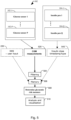
- FIG. 1 A detailed description of a system 48 for adjusting a basal/bolus ratio in a standing insulin regimen for a subject in accordance with the present disclosure is described in conjunction with Figures 1 through 3 .
- Figures 1 through 3 collectively illustrate the topology of the system in accordance with the present disclosure.
- a regimen adjustment device for adjusting a basal/bolus ratio in a standing insulin regimen for a subject (“regimen adjustment device 250") ( Figures 1 , 2 , and 3 )
- data collection device 200 a device for data collection
- glucose sensors 102 associated with the subject
- insulin pens 104 for injecting insulin medicaments into the subject
- the data collection device 200 and the regimen adjustment device 250 will be referenced as separate devices solely for purposes of clarity. That is, the disclosed functionality of the data collection device 200 and the disclosed functionality of the regimen adjustment device 250 are contained in separate devices as illustrated in Figure 1 . However, it will be appreciated that, in fact, in some embodiments, the disclosed functionality of the data collection device 200 and the disclosed functionality of the regimen adjustment device 250 are contained in a single device. In some embodiments, the disclosed functionality of the data collection device 200 and/or the disclosed functionality of the regimen adjustment device 250 are contained in a single device and this single device is a glucose monitor 102 or an insulin pen 104.
- the regimen adjustment device 250 adjust a basal/bolus ratio in a standing insulin regimen for a subject.
- the data collection device 200 which is in electrical communication with the regimen adjustment device 250, receives glucose measurements originating from one or more glucose sensors 102 attached to a subject on an ongoing basis.
- the data collection device 200 also receives insulin medicament injection data from one or more insulin pens 104 used by the subject to inject insulin medicaments.
- the data collection device 200 receives such data directly from the glucose sensor(s) 102 and insulin pens 104 used by the subject. For instance, in some embodiments the data collection device 200 receives this data wirelessly through radio-frequency signals.
- such signals are in accordance with an 802.11 (WiFi), Bluetooth, or ZigBee standard.
- the data collection device 200 receives such data directly, analyzes the data, and passes the analyzed data to the regimen adjustment device 250.
- a glucose sensor 102 and/or insulin pen 104 includes an RFID tag and communicates to the data collection device 200 and/or the regimen adjustment device 250 using RFID communication.
- the data collection device 200 also obtains or receives physiological measurements 234 of the subject (e.g., from wearable physiological measurement devices, from measurement devices within the data collection device 200 such as a magnetometer or a thermostat, etc .).
- the data collection device 200 and/or the regimen adjustment device 250 is not proximate to the subject and/or does not have wireless capabilities or such wireless capabilities are not used for the purpose of acquiring glucose data, insulin medicament injection data, and/or physiological measurement data.
- a communication network 106 may be used to communicate glucose measurements from the glucose sensor 102 to the data collection device 200 and/or the regimen adjustment device 250, insulin medicament injection data from the one or more insulin pens 104 to the data collection device 200 and/or the regimen adjustment device 250, and/or physiological measurement data from one or more physiological measurement devices (not shown) to the data collection device 200 and/or the regimen adjustment device 250.
- networks 106 include, but are not limited to, the World Wide Web (WWW), an intranet and/or a wireless network, such as a cellular telephone network, a wireless local area network (LAN) and/or a metropolitan area network (MAN), and other devices by wireless communication.
- WWW World Wide Web
- LAN wireless local area network
- MAN metropolitan area network
- the wireless communication optionally uses any of a plurality of communications standards, protocols and technologies, including but not limited to Global System for Mobile Communications (GSM), Enhanced Data GSM Environment (EDGE), high-speed downlink packet access (HSDPA), high-speed uplink packet access (HSUPA), Evolution, Data-Only (EV-DO), HSPA, HSPA+, Dual-Cell HSPA (DC-HSPDA), long term evolution (LTE), near field communication (NFC), wideband code division multiple access (W-CDMA), code division multiple access (CDMA), time division multiple access (TDMA), Bluetooth, Wireless Fidelity (Wi-Fi) (e.g., IEEE 802.11a, IEEE 802.11ac, IEEE 802.11ax, IEEE 802.11b, IEEE 802.11g and/or IEEE 802.11n), voice over Internet Protocol (VoIP), Wi-MAX, a protocol for e-mail (e.g., Internet message access protocol (IMAP) and/or post office protocol (POP)), instant messaging (e.g.
- glucose sensor 102 there is a single glucose sensor 102 attached to the subject and the data collection device 200 and/or the regimen adjustment device 250 is part of the glucose sensor 102. That is, in some embodiments, the data collection device 200 and/or the regimen adjustment device 250 and the glucose sensor 102 are a single device.
- the data collection device 200 and/or the regimen adjustment device 250 is part of an insulin pen. That is, in some embodiments, the data collection device 200 and/or the regimen adjustment device 250 and an insulin pen 104 are a single device.
- the one or more glucose sensors 102 and the one or more insulin pens 104 may wirelessly transmit information directly to the data collection device 200 and/or regimen adjustment device 250.
- the data collection device 200 and/or the regimen adjustment device 250 may constitute a portable electronic device, a server computer, or in fact constitute several computers that are linked together in a network or be a virtual machine in a cloud computing context.
- the exemplary topology shown in Figure 1 merely serves to describe the features of an embodiment of the present disclosure in a manner that will be readily understood to one of skill in the art.
- the regimen adjustment device 250 comprises one or more computers.
- the regimen adjustment device 250 is represented as a single computer that includes all of the functionality for adjusting a basal/bolus ratio in a standing insulin regimen for a subject.
- the disclosure is not so limited.
- the functionality for adjusting a basal/bolus ratio in a standing insulin regimen for a subject is spread across any number of networked computers and/or resides on each of several networked computers and/or is hosted on one or more virtual machines at a remote location accessible across the communications network 106.
- One of skill in the art will appreciate that any of a wide array of different computer topologies are used for the application and all such topologies are within the scope of the present disclosure.
- an exemplary regimen adjustment device 250 for adjusting a basal/bolus ratio in a standing insulin regimen for a subject comprises one or more processing units (CPU's) 274, a network or other communications interface 284, a memory 192 (e.g., random access memory), one or more magnetic disk storage and/or persistent devices 290 optionally accessed by one or more controllers 288, one or more communication busses 213 for interconnecting the aforementioned components, a user interface 278, the user interface 278 including a display 282 and input 280 (e.g., keyboard, keypad, touch screen), and a power supply 276 for powering the aforementioned components.
- data in memory 192 is seamlessly shared with non-volatile memory 290 using known computing techniques such as caching.
- memory 192 and/or memory 290 includes mass storage that is remotely located with respect to the central processing unit(s) 274.
- some data stored in memory 192 and/or memory 290 may in fact be hosted on computers that are external to the regimen adjustment device 250 but that can be electronically accessed by the regimen adjustment device 250 over an Internet, intranet, or other form of network or electronic cable (illustrated as element 106 in Figure 2 ) using network interface 284.
- the memory 192 of the regimen adjustment device 250 for adjusting a basal/bolus ratio in a standing insulin regimen for a subject stores:
- the physiological metric measurement 234 is body temperature of the subject. In some embodiments, the physiological metric measurement 234 is a measurement of activity of the subject. In some embodiments, these physiological metric measurements serve as an additional input for identifying fasting events and/or for calculating a basal/bolus ratio. In some embodiments, the optional accelerometer 317, optional GPS 319, and/or magnetometer (not shown) of the regimen adjustment device 250 or such components optionally within the one or more glucose monitors 102 and/or the one or more insulin pens 104 is used to acquire such physiological metric measurements 234.
- the basal/bolus ratio adjustment module 204 is accessible within any browser (phone, tablet, laptop/desktop). In some embodiments, the basal/bolus ratio adjustment module 204 runs on native device frameworks, and is available for download onto the regimen adjustment device 250 running an operating system 202 such as Android or iOS.
- one or more of the above identified data elements or modules of the regimen adjustment device 250 for adjusting a basal/bolus ratio in a standing insulin regimen for a subject are stored in one or more of the previously described memory devices, and correspond to a set of instructions for performing a function described above.
- the above-identified data, modules or programs (e.g., sets of instructions) need not be implemented as separate software programs, procedures or modules, and thus various subsets of these modules may be combined or otherwise re-arranged in various implementations.
- the memory 192 and/or 290 optionally stores a subset of the modules and data structures identified above. Furthermore, in some embodiments, the memory 192 and/or 290 stores additional modules and data structures not described above.
- a regimen adjustment device 250 for adjusting a basal/bolus ratio in a standing insulin regimen for a subject is a smart phone (e.g., an iPHONE), laptop, tablet computer, desktop computer, or other form of electronic device (e.g., a gaming console).
- the regimen adjustment device 250 is not mobile. In some embodiments, the regimen adjustment device 250 is mobile.
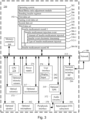
- FIG. 3 provides a further description of a specific embodiment of a regimen adjustment device 250 in accordance with the instant disclosure.
- the regimen adjustment device 250 illustrated in Figure 3 has one or more processing units (CPU's) 274, peripherals interface 370, memory controller 368, a network or other communications interface 284, a memory 192 (e.g., random access memory), a user interface 278, the user interface 278 including a display 282 and input 280 (e.g., keyboard, keypad, touch screen), an optional accelerometer 317, an optional GPS 319, optional audio circuitry 372, an optional speaker 360, an optional microphone 362, one or more optional intensity sensors 364 for detecting intensity of contacts on the regimen adjustment device 250 (e.g., a touch-sensitive surface such as a touch-sensitive display system 282 of the regimen adjustment device 250), an optional input/output (I/O) subsystem 366, one or more optional optical sensors 373, one or more communication busses 213 for interconnecting the aforementioned components, and a power supply 276 for power
- the input 280 is a touch-sensitive display, such as a touch-sensitive surface.
- the user interface 278 includes one or more soft keyboard embodiments.
- the soft keyboard embodiments may include standard (QWERTY) and/or non-standard configurations of symbols on the displayed icons.
- the regimen adjustment device 250 illustrated in Figure 3 optionally includes, in addition to accelerometer(s) 317, a magnetometer (not shown) and a GPS 319 (or GLONASS or other global navigation system) receiver for obtaining information concerning the location and orientation (e.g., portrait or landscape) of the regimen adjustment device 250 and/or for determining an amount of physical exertion by the subject.
- accelerometer(s) 317 e.g., a magnetometer (not shown) and a GPS 319 (or GLONASS or other global navigation system) receiver for obtaining information concerning the location and orientation (e.g., portrait or landscape) of the regimen adjustment device 250 and/or for determining an amount of physical exertion by the subject.
- GPS 319 or GLONASS or other global navigation system
- the regimen adjustment device 250 illustrated in Figure 3 is only one example of a multifunction device that may be used for adjusting a basal/bolus ratio in a standing insulin regimen for a subject, and that the regimen adjustment device 250 optionally has more or fewer components than shown, optionally combines two or more components, or optionally has a different configuration or arrangement of the components.
- the various components shown in Figure 3 are implemented in hardware, software, firmware, or a combination thereof, including one or more signal processing and/or application specific integrated circuits.
- Memory 192 of the regimen adjustment device 250 illustrated in Figure 3 optionally includes high-speed random access memory and optionally also includes non-volatile memory, such as one or more magnetic disk storage devices, flash memory devices, or other non-volatile solid-state memory devices. Access to memory 192 by other components of the regimen adjustment device 250, such as CPU(s) 274 is, optionally, controlled by the memory controller 368.
- the memory 192 of the regimen adjustment device 250 illustrated in Figure 3 optionally includes a third data set 302 comprising a plurality of insulin medicament records over the time course.
- Each insulin medicament record 304 in the plurality of medicament records comprises: (i) a respective insulin medicament injection event 306 including an amount of insulin medicament injected 308 into the subject using a respective insulin pen 104 in the one or more insulin pens, (ii) a corresponding insulin event electronic timestamp 310 that is automatically generated by the respective insulin pen 104 upon occurrence of the respective insulin medicament injection event, and (iii) a respective type of insulin medicament 312 injected into the subject from one of (a) the basal insulin medicament and (b) the bolus insulin medicament.
- the peripherals interface 370 can be used to couple input and output peripherals of the device to CPU(s) 274 and memory 192.
- the one or more processors 274 run or execute various software programs and/or sets of instructions stored in memory 192, such as the basal/bolus ratio adjustment module 204, to perform various functions for the regimen adjustment device 250 and to process data.
- peripherals interface 370, CPU(s) 274, and memory controller 368 are, optionally, implemented on a single chip. In some other embodiments, they are implemented on separate chips.
- RF (radio frequency) circuitry of network interface 284 receives and sends RF signals, also called electromagnetic signals.
- the standing insulin regimen 206, the first data set 218, the second data set 224, the plurality of bins 232, the optional third data set 302, and/or the optional additional data set 310 is received using this RF circuitry from one or more devices such as a glucose sensor 102 associated with a subject, an insulin pen 104 associated with the subject and/or the data collection device 200.
- the RF circuitry 108 converts electrical signals to/from electromagnetic signals and communicates with communications networks and other communications devices, glucose sensors 102, and insulin pens 104 and/or the data collection device 200 via the electromagnetic signals.
- the RF circuitry 284 optionally includes well-known circuitry for performing these functions, including but not limited to an antenna system, an RF transceiver, one or more amplifiers, a tuner, one or more oscillators, a digital signal processor, a CODEC chipset, a subscriber identity module (SIM) card, memory, and so forth.
- RF circuitry 284 optionally communicates with the communication network 106.
- the circuitry 284 does not include RF circuitry and, in fact, is connected to the network 106 through one or more hard wires (e.g., an optical cable, a coaxial cable, or the like).
- the audio circuitry 372, the optional speaker 360, and the optional microphone 362 provide an audio interface between the subject and the adjustment timing device 250.
- the audio circuitry 372 receives audio data from the peripherals interface 370, converts the audio data to electrical signals, and transmits the electrical signals to the speaker 360.
- the speaker 360 converts the electrical signals to human-audible sound waves.
- the audio circuitry 372 also receives electrical signals converted by the microphone 362 from sound waves.
- the audio circuitry 372 converts the electrical signal to audio data and transmits the audio data to peripherals interface 370 for processing. Audio data is, optionally, retrieved from and/or transmitted to the memory 192 and/or the RF circuitry 284 by the peripherals interface 370.
- the power supply 276 optionally includes a power management system, one or more power sources (e.g., battery, alternating current (AC)), a recharging system, a power failure detection circuit, a power converter or inverter, a power status indicator (e.g., a light-emitting diode (LED)) and any other components associated with the generation, management and distribution of power in portable devices.
- a power management system one or more power sources (e.g., battery, alternating current (AC)), a recharging system, a power failure detection circuit, a power converter or inverter, a power status indicator (e.g., a light-emitting diode (LED)) and any other components associated with the generation, management and distribution of power in portable devices.
- power sources e.g., battery, alternating current (AC)
- AC alternating current
- a recharging system e.g., a recharging system
- a power failure detection circuit e.g.
- the regimen adjustment device 250 optionally also includes one or more optical sensors 373.
- the optical sensor(s) 373 optionally include charge-coupled device (CCD) or complementary metal-oxide semiconductor (CMOS) phototransistors.
- CCD charge-coupled device
- CMOS complementary metal-oxide semiconductor
- the optical sensor(s) 373 receive light from the environment, projected through one or more lens, and converts the light to data representing an image.
- the optical sensor(s) 373 optionally capture still images and/or video.
- an optical sensor is located on the back of the regimen adjustment device 250, opposite the display 282 on the front of the regimen adjustment device 250, so that the input 280 is enabled for use as a viewfinder for still and/or video image acquisition.
- another optical sensor 373 is located on the front of the regimen adjustment device 250 so that the subject's image is obtained (e.g., to verify the health or condition of the subject, to determine the physical activity level of the subject, to help diagnose a subject's condition remotely, or to acquire visual physiological measurements 312 of the subject, etc.).
- a regimen adjustment device 250 preferably comprises an operating system 202 that includes procedures for handling various basic system services.
- the operating system 202 e.g., iOS, DARWIN, RTXC, LINUX, UNIX, OS X, WINDOWS, or an embedded operating system such as VxWorks
- the operating system 202 includes various software components and/or drivers for controlling and managing general system tasks (e.g., memory management, storage device control, power management, etc.) and facilitates communication between various hardware and software components.
- the regimen adjustment device 250 is a smart phone. In other embodiments, the regimen adjustment device 250 is not a smart phone but rather is a tablet computer, desktop computer, emergency vehicle computer, or other form or wired or wireless networked device. In some embodiments, the regimen adjustment device 250 has any or all of the circuitry, hardware components, and software components found in the regimen adjustment device 250 depicted in Figures 2 or 3 . In the interest of brevity and clarity, only a few of the possible components of the regimen adjustment device 250 are shown in order to better emphasize the additional software modules that are installed on the adjustment timing device 250.
- system 48 disclosed in Figure 1 can work standalone, in some embodiments it can also be linked with electronic medical records to exchange information in any way.
- a regimen adjustment device 250 comprises one or more processors 274 and a memory 192/290.
- the memory stores instructions that, when executed by the one or more processors, perform a method.
- a standing insulin regimen 206 for the subject is obtained.
- the standing insulin regimen for the subject comprises a daily total insulin medicament.
- the daily total insulin medicament is satisfied by a combination of a daily amount of a basal insulin medicament 210 and a daily amount of a bolus insulin medicament 214 specified by the standing insulin regimen for the subject.
- the daily amount of basal insulin medicament and the daily amount of bolus insulin medicament defines an initial basal/bolus ratio between the daily amount of basal insulin medicament and the daily amount of bolus insulin medicament.
- the basal insulin medicament specified by the basal insulin medicament dosage regimen 208 consists of a single insulin medicament having a duration of action that is between 12 and 24 hours or a mixture of insulin medicaments that collectively have a duration of action that is between 12 and 24 hours.
- basal insulin medicaments include, but are not limited to, Insulin Degludec (developed by NOVO NORDISK under the brand name Tresiba), NPH ( Schmid, 2007, "New options in insulin therapy," J Pediatria (Rio J). 83(Suppl 5): S146-S155 ), Glargine (LANTUS, March 2, 2007 ), Insulin Glargine [rDNA origin] injection ( Dunn et al.
- the bolus insulin medicament specified by the bolus insulin medicament dosage regimen 212 comprises a single insulin medicament having a duration of action that is between three to eight hours or a mixture of insulin medicaments that collectively have a duration of action that is between three to eight hours.
- basal insulin medicaments include, but are not limited, to Lispro (HUMALOG, May 18, 2001, insulin lispro [rDNA origin] injection, Indianapolis, Indiana: Eli Lilly and Company), Aspart (NOVOLOG, July 2011), insulin aspart [rDNA origin] injection, Princeton, New Jersey, NOVO NORDISK Inc., July, 2011), and Glulisine ( Helms Kelley, 2009, “Insulin glulisine: an evaluation of its pharmacodynamic properties and clinical application," Ann Pharmacother 43:658-668 ), and Regular ( Gerich, 2002, “Novel insulins: expanding options in diabetes management," Am J Med. 113:308-316 ).
- the basal insulin medicament dosage regimen 208 specifies two or more doses, such as in instances where a daily basal dose has been split into two daily doses to optimize the treatment regimen.
- the bolus insulin medicament dosage regimen 212 specifies a first bolus insulin medicament dosage for breakfast and a second bolus insulin medicament dosage for lunch.
- the bolus insulin medicament dosage regimen 212 specifies a first bolus insulin medicament dosage for breakfast, a second bolus insulin medicament dosage for lunch, and a third bolus insulin medicament dosage for dinner.
- the bolus insulin medicament dosage regimen 212 specifies a first bolus insulin medicament dosage for a prospective meal event as a function of a number of carbohydrates the subject estimates will be in the prospective meal event. In some embodiments, the bolus insulin medicament dosage regimen 212 specifies a bolus insulin medicament dosage for a prospective meal event as a function of a number of carbohydrates the subject has historically consumed for the prospective meal event in the past. In some such embodiments, the bolus insulin medicament dosage regimen 212 specifies such bolus insulin medicament dosages for prospective meal events while preserving the daily basal/bolus insulin ratio of the standing insulin regime 206.
- a first data set 216 is obtained.
- the first data set 216 comprises a plurality of glucose measurements of the subject taken over a time course.
- the glucose measurements are from one or more glucose sensors 102.
- Figure 2 illustrates. Each such glucose measurement 218 is timestamped with a glucose measurement timestamp 220 to represent when the respective measurement was made.
- the glucose measurements are measured without human intervention. That is, the subject does not manually make the glucose measurements.
- the subject or a health care practitioner manually takes glucose measurements and such manual glucose measurements are used as the glucose measurements 218 in the first data set 216.
- devices such as the FREESTYLE LIBRE CGM by ABBOTT (“LIBRE") may serve as the glucose sensor 102 in order to make the plurality of autonomous glucose measurements of a subject.
- the LIBRE allows calibration-free glucose measurements with an on-skin coin-sized sensor, which can send up to eight hours of data to a reader device (e.g., the data collection device 200 and/or the regimen adjustment device 250) via near field communications, when brought close together.
- the LIBRE can be worn for fourteen days in all daily life activities.
- the glucose measurements 218 are autonomously taken from the subject at an interval rate of 5 minutes or less, 3 minutes or less, or 1 minute or less.
- the glucose measurements 218 are taken from the subject at an interval rate of 5 minutes or less, 3 minutes or less, or 1 minute or less, over a time period of a day or more, two days or more, a week or more, or two weeks or more. In some embodiments, the glucose measurements 218 are autonomously taken (e.g., without human effort, without human intervention, etc.).
- the regimen adjustment device 250 further comprises a wireless receiver and the first data set 216 is obtained wirelessly from a glucose sensor 102 affixed to the subject (e.g., in accordance with an 802.11, Bluetooth, or ZigBee standard).
- Blocks 412-416 Referring to block 412 of Figure 4B , the method continues by identifying one or more fasting events in the time course.
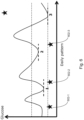
- Figure 6 illustrates the daily glucose pattern for subject in which meals 602 are marked with stars, and in which bolus/basal ratio change is determined based on the lowest postprandial glucose values measured between the meals in accordance with an embodiment of the present disclosure.
- each glucose measurement 218 in the plurality of glucose measurements is autonomously measured and the fasting events 224 are determined using the plurality of glucose measurements of the subject and the respective timestamps in the first data set 216.
- the fasting events are detected autonomously using a fasting detection algorithm and the glucose measurements in the first data set 216.
- a first time period e.g., a period of 24 hours
- the glucose measurements may span several days or weeks, with glucose measurements taken every five minutes.
- a first time period k (e.g., one day) within this overall time span is selected and thus the portion k of the plurality of measurements is examined for a period of minimum variance.
- the first fasting period is deemed to be the period of minimum variance min k ⁇ k 2 within the first time period.
- the process is repeated with portion k of the plurality of glucose measurements by examining the next portion k of the plurality of glucose measurements for another period of minimum variance thereby assigning another fasting period.
- Example 1 illustrates a way in which a determination is made as to whether a fasting event 224 is basal insulin medicament dosage regimen 208 adherent.
- European Patent Application Number EP16177080.5 entitled “Regimen Adherence Measure for Insulin Treatment Base on Glucose Measurement and Insulin Pen Data,” filed June 30, 2016 , discloses techniques for identifying and classifying fasting events as adherent or nonadherent. In some embodiments, only those fasting events that are classified as "basal regimen adherent" in accordance with European Patent Application Number EP16177080.5 are used to adjust a basal/bolus ratio in a standing insulin regimen for a subject.
- the fasting event time period 228 for a given fasting event 224 specifies a time of day. In some embodiments, the fasting event time period 228 for a given fasting event 224 specifies a time span. In some embodiments, this time span is less than five minutes, less than 10 minutes, less than 20 minutes, or less than 30 minutes. In some embodiments this time span is between 5 minutes and 1 hour. In some embodiments this time span is between 30 minutes and 2 hours.
- the identifying the one or more of fasting events comprises receiving an indication of each fasting event 224 in the one or more fasting events from the subject in the form of feed-forward events.
- Each respective feed-forward event represents an instance where the subject has indicated they are fasting or are about to fast.
- both an autonomous fast detection algorithm such as one disclosed in block 416, and the manual (user indicated) fast detection are used for detecting fasting events 224.
- a fasting event 224 that has been autonomously detected is then verified using the feed-forward events.
- a fasting event 224 autonomously detected using an algorithm such as one disclosed in block 416 is matched in time (temporally matched) to a feed-forward event in which the subject indicated they are fasting, the fasting is deemed verified and used in further steps of the present disclosure.
- a fasting event 224 must be verified in this manner and also be deemed basal insulin medicament dosage regimen 208 adherent (e.g., deemed basal insulin medicament dosage regimen 208 adherent as disclosed in Example 1 below).
- the identifying the one or more fasting events comprises receiving a second data set 220 from a wearable device (e.g., from wearable physiological measurement devices, from measurement devices within the data collection device 200 such as a magnetometer or a thermostat, etc.), and the second data set indicates a physiological metric 232 of the user during the time course that is indicative of the one or more fasting events.
- the physiological metric measurement 234 is body temperature of the subject. In some embodiments, the physiological metric measurement 234 is a measurement of activity of the subject.
- the optional accelerometer 317, optional GPS 319, and/or magnetometer (not shown) of the regimen adjustment device 250 or such components optionally within the one or more glucose monitors 102 and/or the one or more insulin pens 104 is used to acquire such physiological metric measurements 234.
- both an autonomous fast detection algorithm such as one disclosed in block
- a fasting event 224 is autonomously detected (e.g., by way of block 416) and verified using the physiological metric measurements 234.
- a fasting event autonomously detected using an algorithm such as one disclosed in block 416 is matched in time (temporally matched) to physiological metric measurements 234 which further indicate that the subject is fasting, the fasting is deemed verified and used in further steps of the present disclosure.
- a fasting event 224 must be verified in this manner and also be deemed basal insulin medicament dosage regimen 208 adherent (e.g., deemed basal insulin medicament dosage regimen 208 adherent as disclosed in Example 1 below).
- the one or more fasting events are within the last week, within the last two weeks, or within the last month.
- the method disclosed in Figures 4A through 4E is repeated over time so that the basal/bolus insulin ratio is updated on a recurring basis based upon updated glucose measurements.
- Block 424 Embodiments in which the additional requirement that fasting events 224 be deemed basal insulin medicament dosage regimen 208 adherent in order to be used to optimize the basal/bolus ratio of the standing insulin regimen 206 have been described above.
- the fasting events 224 must be deemed both basal insulin medicament dosage regimen 208 adherent and bolus insulin medicament dosage regimen 212 adherent in order to be used to optimize the basal/bolus ratio of the standing insulin regimen.
- such fasting events are checked for basal and bolus regimen adherence by obtaining a third data set 302 from one or more insulin pens 104 used by the subject to apply the standing insulin regimen 206.
- the third data set 302 comprises a plurality of insulin medicament records.
- Each insulin medicament record 304 in the plurality of medicament records comprises: (i) a respective insulin medicament injection event 306 including an amount of insulin medicament injected 308 into the subject using a respective insulin pen in the one or more insulin pens, (ii) a corresponding insulin event electronic timestamp 310 that is automatically generated by the respective insulin pen upon occurrence of the respective insulin medicament injection event, and (iii) a respective type of insulin medicament injected 312 into the subject from one of (a) the basal insulin medicament and (b) the bolus insulin medicament.
- the third data set 302 is used to exclude fasting events from the one or more fasting events that do not occur within a first predetermined time interval after a bolus injection event or within a second predetermined time interval after a basal injection event.
- the first predetermined time interval is thirty minutes or less, one hour or less, four hours or less, or eight hours or less.
- the second predetermined time interval is different than the first predetermined time interval and is one hour or less, or four hours or less, eight hours or less, twelve hours or less, sixteen hours or less, twenty hours or less or twenty-four hours or less.
- the first and second predetermined time interval is the same.
- the fasting event time period 228 of each fasting event is compared to the insulin event electronic timestamps 310 in order to determine whether this requirement is satisfied.
- Block 426 Referring to block 426 of Figure 4C , the method continues by computing a respective temporal glucose gradient 226, for each respective fasting event 224 in the one or more fasting events, using the glucose measurements of the subject obtained from the first data set that are in a time period 228 of the respective fasting event.
- Figure 7 illustrates such temporal glucose gradients during fasting events in accordance with an embodiment of the present disclosure.
- the temporal glucose gradient 226-1 for a first fasting event 224-1 is positive and larger than a defined tolerance, hence the daily amount of basal insulin medicament 210 is increased relative to the daily amount of bolus insulin medicament 214.
- the method continues by using the temporal glucose gradient 226 of each fasting event 224 in the one or more fasting events to determine whether to make a recommended adjustment to the basal/bolus ratio for the subject without change to the daily total insulin medicament. That is, the total number of units of insulin medicament is kept the same but the amount of this total number that is prescribed as basal insulin medicament is changed relative to the amount of this total number that is prescribed as bolus insulin medicament. There are a number of ways this can be done and all such ways are encompassed within the present disclosure.
- the one or more fasting events constitute a plurality of fasting events.
- the temporal glucose gradient 226 of each fasting event 224 in the one or more fasting events is used to determine whether to make a recommended adjustment to the basal/bolus ratio for the subject without change to the daily total insulin medicament by taking a first measure of central tendency of the temporal glucose gradient 226 of each fasting event 224 in the plurality of fasting events.
- the measure of central tendency of the temporal glucose gradient 226 of each fasting event 224 in the plurality of fasting events can be, for example, an arithmetic mean, weighted mean, midrange, midhinge, trimean, Winsorized mean, median, or mode of the temporal glucose gradients 226.
- the standing insulin regimen 206 for the subject is deemed to be basal insulin medicament deficient when this first measure of central tendency is positive and exceeds a positive threshold.
- the positive threshold is a value of three percent, a value of four percent, a value of five percent, or a value of ten percent or greater.
- the positive threshold is optimized for each subject based upon characteristics of the subject.
- the measure of central tendency is a simple average and the positive threshold is three percent, this means that on average, the temporal glucose gradient 226 is a positively sloped line of three percent or greater, using the frame of reference of Figure 7 , panel A.
- the standing insulin regimen for the subject is deemed bolus deficient when the first measure of central tendency is negative and exceeds a negative threshold.
- the negative threshold is a value of minus three percent, a value of minus four percent, a value of minus five percent, or a value of minus ten percent or less.
- the negative threshold is optimized for each subject based upon characteristics of the subject.
- the measure of central tendency is a simple average and the negative threshold is minus three percent, this means that on average, the temporal glucose gradient 226 is a negatively sloped line of three percent or less (larger degrees of negative slope), using the frame of reference of Figure 7 , panel B. If the standing insulin regimen for the subject is not deemed basal or bolus deficient, it is deemed basal/bolus ratio sufficient the basal/bolus ratio is not adjusted.
- Block 434 of Figure 4D describes a specific embodiment of the present disclosure.
- the standing insulin regimen 206 specifies that the daily amount of bolus insulin medicament is divided between two or more daily bolus injection event types in the set of event types comprising "breakfast,” “lunch,” and “dinner.” Further, the determination is made to make the recommended adjustment to the basal/bolus ratio (e.g., in accordance with block 428, 430, or 432).
- the recommended adjustment to the basal/bolus ratio is a recommended increase in the daily amount of bolus insulin medicament in the standing insulin regimen 206 for the subject.
- a respective second measure of central tendency of the minimum post-prandial glucose measurement value associated with each respective bolus injection of the respective daily bolus injection event type thereby computing a plurality of second measures of central tendency.
- a measure of central tendency of the minimum post-prandial glucose measurement value associated with each breakfast is taken.
- a measure of central tendency of the minimum post-prandial glucose measurement value associated with each lunch is taken.
- a measure of central tendency of the minimum post-prandial glucose measurement value associated with each dinner is taken.
- This measure of central tendency can be, for example, an arithmetic mean, weighted mean, midrange, midhinge, trimean, Winsorized mean, median, or mode of the minimum post-prandial glucose measurement value associated with a given event type (e.g., breakfast, lunch or dinner).
- a given event type e.g., breakfast, lunch or dinner.
- the third measure of central tendency can be, for example, an arithmetic mean, weighted mean, midrange, midhinge, trimean, Winsorized mean, median, or mode of the second measures of central tendency. If the highest second measure of central tendency is greater than a threshold amount than the third measure of central tendency, the daily bolus injection event type in the two or more daily bolus injection event types associated with the highest second measure of central tendency is selected, for the increased bolus insulin medicament amount.
- the increase in the bolus insulin medicament amount is distributed across the two or more daily bolus injection event types (e.g. proportional to their associated minimum post-prandial glucose measurement values, equally, etc.).
- the requisite threshold amount for the second measure of central tendency is application specific and may be different for each subject.
- the requisite threshold amount the second measure of central tendency must be is ten percent larger, twenty percent or larger, or thirty percent larger than the third measure of central tendency.
- Block 436 of Figure 4E describes another specific embodiment of the present disclosure.
- the standing insulin regimen 206 specifies that the daily amount of bolus insulin medicament is divided between two or more daily bolus injection event types in the set of event types comprising "breakfast,” “lunch,” and “dinner.”
- a determination is made to make the recommended adjustment to the basal/bolus ratio (e.g., in accordance with block 428, 430, or 432).
- the recommended adjustment to the basal/bolus ratio is a recommended decrease in the daily amount of bolus insulin medicament in the standing insulin regimen 206 for the subject.
- the method further comprises determining which bolus injection event type in the two or more daily bolus injection event types is to be altered to have a decrease in bolus insulin medicament amount by determining a respective minimum post-prandial glucose measurement value associated with each respective bolus injection of each bolus injection event type in the two or more bolus injection events types across the time course. For instance, for the particular bolus injection event type "breakfast," the glucose measurements 218 for the period of time after each breakfast (e.g., up to 5 minutes after, up to fifteen minutes after, up to 30 minutes, up to 1 hour after the breakfast) is polled for a minimum post-prandial glucose measurement value associated with each breakfast.
- a respective second measure of central tendency of the minimum post-prandial glucose measurement value associated with each respective bolus injection of the respective daily bolus injection event type thereby computing a plurality of second measures of central tendency.
- a measure of central tendency of the minimum post-prandial glucose measurement value associated with each breakfast in the time course is taken.
- a measure of central tendency of the minimum post-prandial glucose measurement value associated with each lunch is taken.
- a measure of central tendency of the minimum post-prandial glucose measurement value associated with each dinner is taken.
- This measure of central tendency can be, for example, an arithmetic mean, weighted mean, midrange, midhinge, trimean, Winsorized mean, median, or mode of the minimum post-prandial glucose measurement value associated with a given event type (e.g., breakfast, lunch or dinner).
- a given event type e.g., breakfast, lunch or dinner.
- the third measure of central tendency can be, for example, an arithmetic mean, weighted mean, midrange, midhinge, trimean, Winsorized mean, median, or mode of the second measures of central tendency. If the lowest second measure of central tendency is more than a threshold amount lower than the third measure of central tendency, the daily bolus injection event type in the two or more daily bolus injection event types associated with the lowest second measure of central tendency is selected, for the decreased bolus insulin medicament amount.
- the decrease in the bolus insulin medicament amount is distributed across the two or more daily bolus injection event types (e.g. proportional to their associated minimum post-prandial glucose measurement values, equally, etc.).
- the requisite threshold amount for the second measure of central tendency is application specific and may be different for each subject.
- the requisite threshold amount the second measure of central tendency must be is more than ten percent larger, twenty percent or larger, or thirty percent lower than the third measure of central tendency.
- Block 438 the method continues when a determination is made to make the recommended adjustment to the basal/bolus ratio for the subject (e.g., the standing insulin regimen 206 for the subject is deemed basal or bolus deficient).
- the adjustment is between 1 and 5 percent of the initial basal/bolus ratio, between 5 and 10 percent of the initial basal/bolus ratio, or between 10 and 15 percent of the initial basal/bolus ratio.
- the actual administered basal/bolus ratio is computed using the insulin medicament records in the third data set 302.
- the insulin medicament records in the third data set 302 from the past day, the past two days, the past three days, the past week, or the past two weeks is used to compute the actual basal/bolus and then, in block 438, when a determination is made to make the recommended adjustment to the basal/bolus ratio for the subject, the adjustment is between 1 and 5 percent of the initial basal/bolus ratio, between 5 and 10 percent of the initial basal/bolus ratio, or between 10 and 15 percent of the calculated basal/bolus ratio.
- Block 440 the method continues by communicating the recommended adjustment to the basal/bolus ratio, when the determination is made to make the recommended adjustment to the basal/bolus ratio for the subject, to: (i) the subject for manual adjustment of the basal/bolus ratio in the standing insulin regimen 206, (ii) each insulin pen 104 in one or more insulin pens charged with delivering the standing insulin regimen 206 to the subject, as dosage adjustment instructions, or (iii) a health care practitioner associated with the subject.
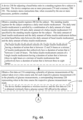
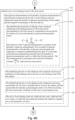
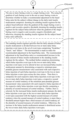
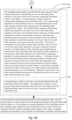
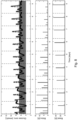
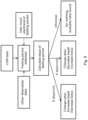
- Figure 9 illustrates an exemplary embodiment of the method disclosed in Figures 4A through 4E while Figure 8 illustrates the administration of basal and bolus insulin medicaments to a subject in accordance with a standing insulin regimen 206 over the time course and the resultant glucose concentration of the subject over this time course.
- Example 1 Use of glucose measurements to determine whether a fasting event is insulin regimen adherent.
- the first data set 216 comprising a plurality of glucose measurements is obtained.
- the glucose measurements are obtained autonomously, for instance by a continuous glucose monitor 102.
- insulin administration events are obtained in the form of insulin medicament injection events 306 from one or more insulin pens 104 used by the subject to apply the standing insulin regimen 206.
- These insulin medicament records 304 may be in any format, and in fact may be spread across multiple files or data structures. As such, in some embodiments, the instant disclosure leverages the recent advances of insulin administration pens, which have become "smart" in the sense that they can remember the timing and the amount of insulin medicament administered in the past.
- insulin pen 104 is the NovoPen 5. Such pens assists patients in logging doses and prevent double dosing. It is contemplated that insulin pens will be able to send and receive insulin medicament dose volume and timing, thus allowing the integration of continuous glucose monitors 102, insulin pens 104 and the algorithms of the present disclosure. As such, insulin medicament records 304 from one or more insulin pens 104 is contemplated, including the wireless acquisition of such data from the one or more insulin pens 104.
- each insulin medicament record 304 comprises: (i) a respective insulin medicament injection event 306 including an amount of insulin medicament injected 308 into the subject using a respective insulin pen 104 in the one or more insulin pens and (ii) a corresponding insulin event electronic timestamp 310 that is automatically generated by the respective insulin pen 104 upon occurrence of the respective insulin medicament injection event 306.
- a fasting event 224 is identified using the glucose measurements 218 of the subject and their associated glucose measurement timestamps 220 in the first data set 216.
- a classification is applied to the fasting event 224. The classification is one of "insulin regimen adherent" and "insulin regimen nonadherent.”
- a fasting event 224 is deemed insulin regimen adherent when the acquired one or more medicament records 304 establish, on a temporal and quantitative basis, adherence with the basal insulin medicament regimen 208 during the fasting event 224.
- a fasting event 224 is deemed insulin regimen nonadherent when the acquired one or more medicament records 304 do not include one or more medicament records that establish, on a temporal and quantitative basis, adherence with the basal insulin medicament dosage regimen 208 during the fasting event 224.
- the basal insulin medicament dosage regimen 208 specifies that a dosage of the basal insulin medicament is to be taken during each respective epoch (e.g., day, twelve hour period) in a plurality of epochs and that a fasting event 224 is deemed insulin regimen nonadherent when there are no insulin medicament records 304 for the epoch associated with the fasting event 224.
- each epoch in the plurality of epochs is two days or less, one day or less, or 12 hours or less.
- the basal insulin medicament dosage regimen 208 specifies to take dosage A of a basal insulin medicament every 24 hours.
- the epoch is one day (24 hours).
- the fasting event 224 is inherently timestamped because it is derived from a period of minimum variance in timestamped glucose measurements, or by other forms of analysis of the timestamped glucose measurements 218.
- the glucose measurement timestamp, or period of fasting (fasting event time period 228), represented by a respective fasting event 224 is used as a starting point for examining whether the fasting event is insulin regimen adherent.
- the fasting event 224 is deemed to be insulin regimen nonadherent.
- the epoch is defined by the basal insulin medicament dosage regimen 208 and, so long as the subject took the amount of basal insulin medicament required by the basal insulin medicament dosage regimen 208 during the epoch (and not more), even if after the fasting event 224, the fasting event will be deemed insulin regimen adherent.
- the basal insulin medicament dosage regimen 208 specifies one or more basal insulin medicament dosages to be taken each day, and further defines a day as beginning and ending at midnight
- the fasting event 224 occurs at noon (e.g., for a 10 minute period centered at noon)
- the fasting event 224 will be deemed insulin regimen adherent provided that the subject takes the basal insulin medicament injections prescribed for the day at some point during the day.
- the present invention can be implemented as a computer program product that comprises a computer program mechanism embedded in a nontransitory computer readable storage medium.
- the computer program product could contain the program modules shown in any combination of Figures 1 , 2 , 3 , 5 and/or described in Figure 4 .
- These program modules can be stored on a CD-ROM, DVD, magnetic disk storage product, USB key, or any other non-transitory computer readable data or program storage product.
Landscapes
- Health & Medical Sciences (AREA)
- Engineering & Computer Science (AREA)
- Medical Informatics (AREA)
- Public Health (AREA)
- General Health & Medical Sciences (AREA)
- Primary Health Care (AREA)
- Epidemiology (AREA)
- Biomedical Technology (AREA)
- Data Mining & Analysis (AREA)
- Life Sciences & Earth Sciences (AREA)
- Pathology (AREA)
- Medicinal Chemistry (AREA)
- Bioinformatics & Cheminformatics (AREA)
- Chemical & Material Sciences (AREA)
- Databases & Information Systems (AREA)
- Physics & Mathematics (AREA)
- Biophysics (AREA)
- Veterinary Medicine (AREA)
- Heart & Thoracic Surgery (AREA)
- Animal Behavior & Ethology (AREA)
- Surgery (AREA)
- Molecular Biology (AREA)
- Business, Economics & Management (AREA)
- General Business, Economics & Management (AREA)
- Infusion, Injection, And Reservoir Apparatuses (AREA)
- Medical Treatment And Welfare Office Work (AREA)
- Medicines That Contain Protein Lipid Enzymes And Other Medicines (AREA)
Applications Claiming Priority (2)
| Application Number | Priority Date | Filing Date | Title |
|---|---|---|---|
| EP16184451 | 2016-08-17 | ||
| PCT/EP2017/070585 WO2018033514A1 (en) | 2016-08-17 | 2017-08-14 | Systems and methods for adjusting a basal/bolus ratio in an insulin regimen |
Publications (2)
| Publication Number | Publication Date |
|---|---|
| EP3500962A1 EP3500962A1 (en) | 2019-06-26 |
| EP3500962B1 true EP3500962B1 (en) | 2024-10-09 |
Family
ID=56740110
Family Applications (1)
| Application Number | Title | Priority Date | Filing Date |
|---|---|---|---|
| EP17755131.4A Active EP3500962B1 (en) | 2016-08-17 | 2017-08-14 | System and method for adjusting a basal/bolus ratio in an insulin regimen |
Country Status (6)
| Country | Link |
|---|---|
| US (1) | US11462313B2 (enExample) |
| EP (1) | EP3500962B1 (enExample) |
| JP (1) | JP6999648B2 (enExample) |
| CN (1) | CN109564776B (enExample) |
| MA (1) | MA45980A (enExample) |
| WO (1) | WO2018033514A1 (enExample) |
Families Citing this family (6)
| Publication number | Priority date | Publication date | Assignee | Title |
|---|---|---|---|---|
| CN111833985B (zh) * | 2019-04-17 | 2023-04-07 | 复旦大学附属中山医院 | 胰岛素剂型选择及剂量调整方法及系统 |
| EP3980095A1 (en) * | 2019-06-05 | 2022-04-13 | Sanofi | Medical devices and methods for administering basal insulin dose and bolus insulin dose |
| MX2022003648A (es) * | 2019-09-25 | 2022-07-12 | Janssen Pharmaceuticals Inc | Sistema de administración de fármaco configurado para determinar un esquema de dosificación de fármaco. |
| WO2022140543A1 (en) * | 2020-12-23 | 2022-06-30 | Dexcom, Inc. | Bolus advisor with correction boluses based on risk, carb-free bolus recommender, and meal acknowledgement |
| CN115804593A (zh) * | 2021-09-15 | 2023-03-17 | 深圳硅基仿生科技股份有限公司 | 针对用餐前后的葡萄糖浓度水平的葡萄糖监测系统 |
| WO2025212748A1 (en) * | 2024-04-04 | 2025-10-09 | Komistek Richard David | Diabetic pump, application, and programming |
Family Cites Families (25)
| Publication number | Priority date | Publication date | Assignee | Title |
|---|---|---|---|---|
| WO2007051139A2 (en) | 2005-10-27 | 2007-05-03 | Insulet Corporation | Diabetes management systems and methods |
| US8380530B2 (en) * | 2007-02-02 | 2013-02-19 | Webmd Llc. | Personalized health records with associative relationships |
| US20080234943A1 (en) | 2007-03-20 | 2008-09-25 | Pinaki Ray | Computer program for diabetes management |
| US20090036753A1 (en) | 2007-07-31 | 2009-02-05 | King Allen B | Continuous glucose monitoring-directed adjustments in basal insulin rate and insulin bolus dosing formulas |
| US10624577B2 (en) * | 2008-04-04 | 2020-04-21 | Hygieia, Inc. | Systems, devices, and methods for alleviating glucotoxicity and restoring pancreatic beta-cell function in advanced diabetes mellitus |
| US9220456B2 (en) * | 2008-04-04 | 2015-12-29 | Hygieia, Inc. | Systems, methods and devices for achieving glycemic balance |
| EP2276405A4 (en) | 2008-05-12 | 2013-10-09 | Us Dept Veterans Affairs | AUTOMATED SYSTEM AND METHOD FOR DIABETES CONTROL |
| EP3881874A1 (en) | 2008-09-15 | 2021-09-22 | DEKA Products Limited Partnership | Systems and methods for fluid delivery |
| US8992464B2 (en) * | 2008-11-11 | 2015-03-31 | Hygieia, Inc. | Apparatus and system for diabetes management |
| WO2010098927A1 (en) * | 2009-02-27 | 2010-09-02 | Lifescan, Inc. | Medical module for drug delivery pen |
| CN102549587B (zh) | 2009-08-10 | 2016-08-03 | 糖尿病工具瑞典股份公司 | 用于处理葡萄糖值的装置和方法 |
| EP2483824B1 (en) * | 2009-09-30 | 2017-08-16 | DreaMed Diabetes Ltd | Monitoring device for management of insulin delivery |
| US9457145B2 (en) * | 2010-01-20 | 2016-10-04 | Roche Diabetes Care, Inc. | Method and device for improving glycemic control |
| US10561785B2 (en) | 2010-06-22 | 2020-02-18 | Medtronic Minimed, Inc. | Method and/or system for closed-loop control of glucose to a treatment range |
| US10010273B2 (en) * | 2011-03-10 | 2018-07-03 | Abbott Diabetes Care, Inc. | Multi-function analyte monitor device and methods of use |
| ES2703610T3 (es) * | 2011-12-15 | 2019-03-11 | Becton Dickinson Co | Enlace de telemetría de campo cercano para pasar un secreto compartido para establecer un enlace de comunicación de radio frecuencia seguro en un sistema de monitorización de la condición fisiológica |
| US9990581B2 (en) * | 2012-07-11 | 2018-06-05 | Roche Diabetes Care, Inc. | Insulin dosage assessment and recommendation system |
| EP2891089A2 (en) | 2012-08-30 | 2015-07-08 | Medtronic MiniMed, Inc. | Safeguarding techniques for a closed-loop insulin infusion system |
| US9898585B2 (en) * | 2014-01-31 | 2018-02-20 | Aseko, Inc. | Method and system for insulin management |
| GB201407896D0 (en) | 2014-05-05 | 2014-06-18 | Joanneum Res Forschungsgmbh | Insulin dosage proposal system |
| WO2015196174A1 (en) * | 2014-06-20 | 2015-12-23 | Greene Howard E | Infusion delivery devices and methods |
| AU2015320803B2 (en) * | 2014-09-22 | 2019-01-03 | Dexcom, Inc. | System and method for mode switching |
| US20160082187A1 (en) * | 2014-09-23 | 2016-03-24 | Animas Corporation | Decisions support for patients with diabetes |
| JP6989262B2 (ja) | 2014-10-27 | 2022-01-05 | アセコー インコーポレイテッド | 皮下外来患者管理 |
| WO2016182200A1 (en) * | 2015-05-12 | 2016-11-17 | Samsung Electronics Co., Ltd. | Blood glucose measurement apparatus and blood glucose measurement method thereof |
-
2017
- 2017-08-14 EP EP17755131.4A patent/EP3500962B1/en active Active
- 2017-08-14 US US16/323,600 patent/US11462313B2/en active Active
- 2017-08-14 MA MA045980A patent/MA45980A/fr unknown
- 2017-08-14 CN CN201780050301.7A patent/CN109564776B/zh active Active
- 2017-08-14 WO PCT/EP2017/070585 patent/WO2018033514A1/en not_active Ceased
- 2017-08-14 JP JP2019508874A patent/JP6999648B2/ja active Active
Also Published As
| Publication number | Publication date |
|---|---|
| US20190164641A1 (en) | 2019-05-30 |
| WO2018033514A1 (en) | 2018-02-22 |
| MA45980A (fr) | 2019-06-26 |
| CN109564776A (zh) | 2019-04-02 |
| US11462313B2 (en) | 2022-10-04 |
| CN109564776B (zh) | 2023-09-26 |
| EP3500962A1 (en) | 2019-06-26 |
| JP2019532391A (ja) | 2019-11-07 |
| JP6999648B2 (ja) | 2022-01-18 |
Similar Documents
| Publication | Publication Date | Title |
|---|---|---|
| US11373746B2 (en) | Basal titration with adaptive target glucose level | |
| US11195607B2 (en) | Starter kit for basal rate titration | |
| EP3482319B1 (en) | Systems and methods for the determination of insulin sensitivity | |
| US11462313B2 (en) | Systems and methods for adjusting a basal/bolus ratio in an insulin regimen | |
| US20190180856A1 (en) | Systems and methods for optimization of a bolus insulin medicament dosage for a meal event | |
| US11631486B2 (en) | Systems and methods for optimization of bolus timing relative to meal events | |
| US11295847B2 (en) | Systems and methods for adjusting basal administration timing | |
| US11562816B2 (en) | Systems and methods for analysis of insulin regimen adherence data | |
| EP3639268B1 (en) | Basal titration with adaptive target glucose level | |
| WO2018099912A1 (en) | Starter kit for basal rate titration | |
| EP3479267B1 (en) | Regimen adherence measure for insulin treatment based on glucose measurements and insulin pen data |
Legal Events
| Date | Code | Title | Description |
|---|---|---|---|
| STAA | Information on the status of an ep patent application or granted ep patent |
Free format text: STATUS: UNKNOWN |
|
| STAA | Information on the status of an ep patent application or granted ep patent |
Free format text: STATUS: THE INTERNATIONAL PUBLICATION HAS BEEN MADE |
|
| 17P | Request for examination filed |
Effective date: 20190318 |
|
| AK | Designated contracting states |
Kind code of ref document: A1 Designated state(s): AL AT BE BG CH CY CZ DE DK EE ES FI FR GB GR HR HU IE IS IT LI LT LU LV MC MK MT NL NO PL PT RO RS SE SI SK SM TR |
|
| AX | Request for extension of the european patent |
Extension state: BA ME |
|
| PUAI | Public reference made under article 153(3) epc to a published international application that has entered the european phase |
Free format text: ORIGINAL CODE: 0009012 |
|
| STAA | Information on the status of an ep patent application or granted ep patent |
Free format text: STATUS: THE APPLICATION HAS BEEN PUBLISHED |
|
| DAX | Request for extension of the european patent (deleted) | ||
| RAV | Requested validation state of the european patent: fee paid |
Extension state: MA Effective date: 20190318 |
|
| STAA | Information on the status of an ep patent application or granted ep patent |
Free format text: STATUS: EXAMINATION IS IN PROGRESS |
|
| 17Q | First examination report despatched |
Effective date: 20210803 |
|
| REG | Reference to a national code |
Ref country code: DE Ref legal event code: R079 Free format text: PREVIOUS MAIN CLASS: G06F0019000000 Ipc: G16H0020170000 Ref country code: DE Ref legal event code: R079 Ref document number: 602017085367 Country of ref document: DE Free format text: PREVIOUS MAIN CLASS: G06F0019000000 Ipc: G16H0020170000 |
|
| GRAP | Despatch of communication of intention to grant a patent |
Free format text: ORIGINAL CODE: EPIDOSNIGR1 |
|
| STAA | Information on the status of an ep patent application or granted ep patent |
Free format text: STATUS: GRANT OF PATENT IS INTENDED |
|
| RIC1 | Information provided on ipc code assigned before grant |
Ipc: G16H 50/70 20180101ALI20240509BHEP Ipc: G16H 40/67 20180101ALI20240509BHEP Ipc: G16H 20/17 20180101AFI20240509BHEP |
|
| INTG | Intention to grant announced |
Effective date: 20240528 |
|
| RIN1 | Information on inventor provided before grant (corrected) |
Inventor name: PEDERSEN, JONAS KILDEGARD Inventor name: BROCKMEIER, PETE Inventor name: BENGTSSON, HENRIK Inventor name: ARADOTTIR, TINNA BJOERK |
|
| GRAS | Grant fee paid |
Free format text: ORIGINAL CODE: EPIDOSNIGR3 |
|
| GRAA | (expected) grant |
Free format text: ORIGINAL CODE: 0009210 |
|
| STAA | Information on the status of an ep patent application or granted ep patent |
Free format text: STATUS: THE PATENT HAS BEEN GRANTED |
|
| AK | Designated contracting states |
Kind code of ref document: B1 Designated state(s): AL AT BE BG CH CY CZ DE DK EE ES FI FR GB GR HR HU IE IS IT LI LT LU LV MC MK MT NL NO PL PT RO RS SE SI SK SM TR |
|
| REG | Reference to a national code |
Ref country code: CH Ref legal event code: EP |
|
| REG | Reference to a national code |
Ref country code: DE Ref legal event code: R096 Ref document number: 602017085367 Country of ref document: DE |
|
| REG | Reference to a national code |
Ref country code: IE Ref legal event code: FG4D |
|
| REG | Reference to a national code |
Ref country code: LT Ref legal event code: MG9D |
|
| REG | Reference to a national code |
Ref country code: NL Ref legal event code: MP Effective date: 20241009 |
|
| REG | Reference to a national code |
Ref country code: AT Ref legal event code: MK05 Ref document number: 1731497 Country of ref document: AT Kind code of ref document: T Effective date: 20241009 |
|
| PG25 | Lapsed in a contracting state [announced via postgrant information from national office to epo] |
Ref country code: NL Free format text: LAPSE BECAUSE OF FAILURE TO SUBMIT A TRANSLATION OF THE DESCRIPTION OR TO PAY THE FEE WITHIN THE PRESCRIBED TIME-LIMIT Effective date: 20241009 |
|
| PG25 | Lapsed in a contracting state [announced via postgrant information from national office to epo] |
Ref country code: NL Free format text: LAPSE BECAUSE OF FAILURE TO SUBMIT A TRANSLATION OF THE DESCRIPTION OR TO PAY THE FEE WITHIN THE PRESCRIBED TIME-LIMIT Effective date: 20241009 |
|
| PG25 | Lapsed in a contracting state [announced via postgrant information from national office to epo] |
Ref country code: IS Free format text: LAPSE BECAUSE OF FAILURE TO SUBMIT A TRANSLATION OF THE DESCRIPTION OR TO PAY THE FEE WITHIN THE PRESCRIBED TIME-LIMIT Effective date: 20250209 Ref country code: PT Free format text: LAPSE BECAUSE OF FAILURE TO SUBMIT A TRANSLATION OF THE DESCRIPTION OR TO PAY THE FEE WITHIN THE PRESCRIBED TIME-LIMIT Effective date: 20250210 Ref country code: HR Free format text: LAPSE BECAUSE OF FAILURE TO SUBMIT A TRANSLATION OF THE DESCRIPTION OR TO PAY THE FEE WITHIN THE PRESCRIBED TIME-LIMIT Effective date: 20241009 |
|
| PG25 | Lapsed in a contracting state [announced via postgrant information from national office to epo] |
Ref country code: FI Free format text: LAPSE BECAUSE OF FAILURE TO SUBMIT A TRANSLATION OF THE DESCRIPTION OR TO PAY THE FEE WITHIN THE PRESCRIBED TIME-LIMIT Effective date: 20241009 |
|
| PG25 | Lapsed in a contracting state [announced via postgrant information from national office to epo] |
Ref country code: BG Free format text: LAPSE BECAUSE OF FAILURE TO SUBMIT A TRANSLATION OF THE DESCRIPTION OR TO PAY THE FEE WITHIN THE PRESCRIBED TIME-LIMIT Effective date: 20241009 |
|
| PG25 | Lapsed in a contracting state [announced via postgrant information from national office to epo] |
Ref country code: ES Free format text: LAPSE BECAUSE OF FAILURE TO SUBMIT A TRANSLATION OF THE DESCRIPTION OR TO PAY THE FEE WITHIN THE PRESCRIBED TIME-LIMIT Effective date: 20241009 |
|
| PG25 | Lapsed in a contracting state [announced via postgrant information from national office to epo] |
Ref country code: NO Free format text: LAPSE BECAUSE OF FAILURE TO SUBMIT A TRANSLATION OF THE DESCRIPTION OR TO PAY THE FEE WITHIN THE PRESCRIBED TIME-LIMIT Effective date: 20250109 |
|
| PG25 | Lapsed in a contracting state [announced via postgrant information from national office to epo] |
Ref country code: LV Free format text: LAPSE BECAUSE OF FAILURE TO SUBMIT A TRANSLATION OF THE DESCRIPTION OR TO PAY THE FEE WITHIN THE PRESCRIBED TIME-LIMIT Effective date: 20241009 Ref country code: GR Free format text: LAPSE BECAUSE OF FAILURE TO SUBMIT A TRANSLATION OF THE DESCRIPTION OR TO PAY THE FEE WITHIN THE PRESCRIBED TIME-LIMIT Effective date: 20250110 Ref country code: AT Free format text: LAPSE BECAUSE OF FAILURE TO SUBMIT A TRANSLATION OF THE DESCRIPTION OR TO PAY THE FEE WITHIN THE PRESCRIBED TIME-LIMIT Effective date: 20241009 |
|
| PG25 | Lapsed in a contracting state [announced via postgrant information from national office to epo] |
Ref country code: PL Free format text: LAPSE BECAUSE OF FAILURE TO SUBMIT A TRANSLATION OF THE DESCRIPTION OR TO PAY THE FEE WITHIN THE PRESCRIBED TIME-LIMIT Effective date: 20241009 |
|
| PG25 | Lapsed in a contracting state [announced via postgrant information from national office to epo] |
Ref country code: RS Free format text: LAPSE BECAUSE OF FAILURE TO SUBMIT A TRANSLATION OF THE DESCRIPTION OR TO PAY THE FEE WITHIN THE PRESCRIBED TIME-LIMIT Effective date: 20250109 |
|
| PG25 | Lapsed in a contracting state [announced via postgrant information from national office to epo] |
Ref country code: SM Free format text: LAPSE BECAUSE OF FAILURE TO SUBMIT A TRANSLATION OF THE DESCRIPTION OR TO PAY THE FEE WITHIN THE PRESCRIBED TIME-LIMIT Effective date: 20241009 |
|
| PG25 | Lapsed in a contracting state [announced via postgrant information from national office to epo] |
Ref country code: DK Free format text: LAPSE BECAUSE OF FAILURE TO SUBMIT A TRANSLATION OF THE DESCRIPTION OR TO PAY THE FEE WITHIN THE PRESCRIBED TIME-LIMIT Effective date: 20241009 |
|
| REG | Reference to a national code |
Ref country code: DE Ref legal event code: R097 Ref document number: 602017085367 Country of ref document: DE |
|
| PG25 | Lapsed in a contracting state [announced via postgrant information from national office to epo] |
Ref country code: EE Free format text: LAPSE BECAUSE OF FAILURE TO SUBMIT A TRANSLATION OF THE DESCRIPTION OR TO PAY THE FEE WITHIN THE PRESCRIBED TIME-LIMIT Effective date: 20241009 |
|
| PG25 | Lapsed in a contracting state [announced via postgrant information from national office to epo] |
Ref country code: RO Free format text: LAPSE BECAUSE OF FAILURE TO SUBMIT A TRANSLATION OF THE DESCRIPTION OR TO PAY THE FEE WITHIN THE PRESCRIBED TIME-LIMIT Effective date: 20241009 |
|
| PG25 | Lapsed in a contracting state [announced via postgrant information from national office to epo] |
Ref country code: SK Free format text: LAPSE BECAUSE OF FAILURE TO SUBMIT A TRANSLATION OF THE DESCRIPTION OR TO PAY THE FEE WITHIN THE PRESCRIBED TIME-LIMIT Effective date: 20241009 |
|
| PG25 | Lapsed in a contracting state [announced via postgrant information from national office to epo] |
Ref country code: CZ Free format text: LAPSE BECAUSE OF FAILURE TO SUBMIT A TRANSLATION OF THE DESCRIPTION OR TO PAY THE FEE WITHIN THE PRESCRIBED TIME-LIMIT Effective date: 20241009 |
|
| PG25 | Lapsed in a contracting state [announced via postgrant information from national office to epo] |
Ref country code: IT Free format text: LAPSE BECAUSE OF FAILURE TO SUBMIT A TRANSLATION OF THE DESCRIPTION OR TO PAY THE FEE WITHIN THE PRESCRIBED TIME-LIMIT Effective date: 20241009 |
|
| PLBE | No opposition filed within time limit |
Free format text: ORIGINAL CODE: 0009261 |
|
| STAA | Information on the status of an ep patent application or granted ep patent |
Free format text: STATUS: NO OPPOSITION FILED WITHIN TIME LIMIT |
|
| PG25 | Lapsed in a contracting state [announced via postgrant information from national office to epo] |
Ref country code: SE Free format text: LAPSE BECAUSE OF FAILURE TO SUBMIT A TRANSLATION OF THE DESCRIPTION OR TO PAY THE FEE WITHIN THE PRESCRIBED TIME-LIMIT Effective date: 20241009 |
|
| 26N | No opposition filed |
Effective date: 20250710 |
|
| PGFP | Annual fee paid to national office [announced via postgrant information from national office to epo] |
Ref country code: DE Payment date: 20250724 Year of fee payment: 9 |
|
| PGFP | Annual fee paid to national office [announced via postgrant information from national office to epo] |
Ref country code: GB Payment date: 20250725 Year of fee payment: 9 |
|
| PGFP | Annual fee paid to national office [announced via postgrant information from national office to epo] |
Ref country code: FR Payment date: 20250725 Year of fee payment: 9 |
|
| PGFP | Annual fee paid to national office [announced via postgrant information from national office to epo] |
Ref country code: CH Payment date: 20250901 Year of fee payment: 9 |
|
| PG25 | Lapsed in a contracting state [announced via postgrant information from national office to epo] |
Ref country code: MC Free format text: LAPSE BECAUSE OF FAILURE TO SUBMIT A TRANSLATION OF THE DESCRIPTION OR TO PAY THE FEE WITHIN THE PRESCRIBED TIME-LIMIT Effective date: 20241009 |
|
| PG25 | Lapsed in a contracting state [announced via postgrant information from national office to epo] |
Ref country code: LU Free format text: LAPSE BECAUSE OF NON-PAYMENT OF DUE FEES Effective date: 20250814 |
|
| VS25 | Lapsed in a validation state [announced via postgrant information from nat. office to epo] |
Ref country code: MA Free format text: LAPSE BECAUSE OF FAILURE TO SUBMIT A TRANSLATION OF THE DESCRIPTION OR TO PAY THE FEE WITHIN THE PRESCRIBED TIME-LIMIT; INVALID AB INITIO Effective date: 20170814 |
|
| REG | Reference to a national code |
Ref country code: BE Ref legal event code: MM Effective date: 20250831 |
|
| PG25 | Lapsed in a contracting state [announced via postgrant information from national office to epo] |
Ref country code: LT Free format text: LAPSE BECAUSE OF FAILURE TO SUBMIT A TRANSLATION OF THE DESCRIPTION OR TO PAY THE FEE WITHIN THE PRESCRIBED TIME-LIMIT Effective date: 20241009 |
|
| VS25 | Lapsed in a validation state [announced via postgrant information from nat. office to epo] |
Ref country code: MA Free format text: LAPSE BECAUSE OF FAILURE TO SUBMIT A TRANSLATION OF THE DESCRIPTION OR TO PAY THE FEE WITHIN THE PRESCRIBED TIME-LIMIT Effective date: 20241009 |
|
| PG25 | Lapsed in a contracting state [announced via postgrant information from national office to epo] |
Ref country code: IE Free format text: LAPSE BECAUSE OF NON-PAYMENT OF DUE FEES Effective date: 20250814 Ref country code: BE Free format text: LAPSE BECAUSE OF NON-PAYMENT OF DUE FEES Effective date: 20250831 |