EP3500858B1 - Assay - Google Patents
Assay Download PDFInfo
- Publication number
- EP3500858B1 EP3500858B1 EP17758261.6A EP17758261A EP3500858B1 EP 3500858 B1 EP3500858 B1 EP 3500858B1 EP 17758261 A EP17758261 A EP 17758261A EP 3500858 B1 EP3500858 B1 EP 3500858B1
- Authority
- EP
- European Patent Office
- Prior art keywords
- thiol
- ligand
- target molecule
- reaction
- ligand candidate
- Prior art date
- Legal status (The legal status is an assumption and is not a legal conclusion. Google has not performed a legal analysis and makes no representation as to the accuracy of the status listed.)
- Active
Links
Images




Classifications
-
- G—PHYSICS
- G01—MEASURING; TESTING
- G01N—INVESTIGATING OR ANALYSING MATERIALS BY DETERMINING THEIR CHEMICAL OR PHYSICAL PROPERTIES
- G01N33/00—Investigating or analysing materials by specific methods not covered by groups G01N1/00 - G01N31/00
- G01N33/48—Biological material, e.g. blood, urine; Haemocytometers
- G01N33/50—Chemical analysis of biological material, e.g. blood, urine; Testing involving biospecific ligand binding methods; Immunological testing
- G01N33/53—Immunoassay; Biospecific binding assay; Materials therefor
- G01N33/557—Immunoassay; Biospecific binding assay; Materials therefor using kinetic measurement, i.e. time rate of progress of an antigen-antibody interaction
-
- G—PHYSICS
- G01—MEASURING; TESTING
- G01N—INVESTIGATING OR ANALYSING MATERIALS BY DETERMINING THEIR CHEMICAL OR PHYSICAL PROPERTIES
- G01N2500/00—Screening for compounds of potential therapeutic value
- G01N2500/04—Screening involving studying the effect of compounds C directly on molecule A (e.g. C are potential ligands for a receptor A, or potential substrates for an enzyme A)
Definitions
- the present invention relates to a method of measuring the rate of reaction between a target molecule and a ligand candidate, ligands of interest identified according to this method and drugs developed from such ligands.
- the present invention also relates to a method of measuring the rate of reaction between a thiol and a molecule capable of reacting with said thiol.
- New drugs are the product of a long development process, the first step of which is often the screening of libraries of ligands candidates which bind, reversibly or irreversibly, to a target molecule.
- huge libraries of compounds were screened against a target molecule using high-throughput screening (HTS) methods in the hope that one or more successful leads would emerge.
- HTS high-throughput screening
- FBDD fragment-based approach to drug discovery
- fragments Due to the small number of interactions made with the target molecule, many fragments have weak intrinsic affinities for their targets. The weak interactions between a fragment and its target molecule can be difficult to detect. Furthermore, screens can be complicated by the necessity of applying fragments in high concentrations, which leads to issues with solubility, compound aggregation, protein denaturation and ligand binding at multiple sites.
- tethering techniques focused on the formation of reversible covalent bonds 1,2,3 .
- a distribution of target molecule-ligand conjugates is produced where the most thermodynamically stable conjugate dominates the mixture.
- Tethering techniques involving the formation of irreversible covalent bonds have been developed in more recent years 4,5 , making use of functional groups such as vinyl sulphonamides, acrylamides and aminomethyl methyl acrylates. With irreversible tethering, the resulting target molecule-ligand conjugate mixture is dominated by the ligand candidate which reacts most quickly with the target molecule.
- conjugates For both reversible and irreversible tethering techniques, mixtures of fragments, typically between 5 and 10, were incubated with the target molecule, with the conjugate dominating the mixture representing the most promising lead. Typically, the conjugates were identified using intact protein mass spectrometry (MS) where, due to the heterogeneity of the reaction mixture, quantification can be difficult.
- MS protein mass spectrometry
- intrinsic fragment reactivity can influence the rate of conjugate formation, such that the dominating conjugate is not necessarily the most promising lead. Therefore, ligand candidates in a particular screening pool must exhibit very similar intrinsic reactivities as well as sufficiently differential molecular weights to facilitate unambiguous hit identification.
- Predetermination of intrinsic fragment reactivity with a model thiol, such as glutathione typically relies on either mass spectrometry or nuclear magnetic resonance (NMR) performed on individual candidates, resulting in low throughput.
- NMR nuclear magnetic resonance
- candidates would have to be selected from within a similar region of chemical space, such that their intrinsic reactivity is similar. This reduces the diversity of the types of ligand candidates that can be screened.
- analysis of tethering by MS requires sequential measurements of fragment pools, significantly reducing throughput.
- Nonoo, R.H. "Kinetic Template-Guided Tethering of Fragments", PhD Thesis, May 2013 (2013-05), pages 1-313 describes incubation of thymidylate synthase with a mixture of both positive and negative ⁇ -alanine-linked acrylamides, leading to the modification of the protein with both ligands over time. Aliquots were taken from the main reaction for mass spectrometry analysis at various time intervals. The formation of protein-acrylamide adducts over time normalised to total protein was plotted on a chart.
- a first aspect of the present invention provides a method of measuring the rate of reaction between a target molecule and a ligand candidate comprising the steps of:
- This method allows the calculation of the rate of reaction between a target molecule and a ligand candidate for each individual ligand candidate screened, providing quantitative information that allows a direct comparison between different ligand candidates.
- the rate of reaction calculated can be used to obtain or approximate a rate constant for the formation of the target molecule-ligand conjugate.
- the target molecule comprises a binding site of interest, namely a site to which a specific ligand binds.
- the molecular interactions between the ligand and the binding site of interest on the target molecule are non-covalent and include hydrogen bonds, van der Waals interactions and electrostatic interactions.
- template capture The formation of this covalent bond following the binding of the ligand candidate with the binding site of interest on the target molecule is termed "templated capture".
- non-templated capture The formation of this covalent bond in the absence of the binding of the ligand candidate with the binding site of interest on the target molecule is termed “non-templated capture”.
- Non-templated capture usually occurs when the ligand candidate has no, or negligible, binding affinity for the binding site of interest.
- Templated capture occurs when the ligand candidate has affinity for the target molecule, and results in an enhancement in the rate of reaction between the ligand candidate and the target molecule.
- the thiol group may be 10 ⁇ or less, for example between 5 and 10 ⁇ , from the binding site of interest.
- the thiol group may be further from the binding site of interest, for example where a linker is included between the ligand candidate and the functional group.
- the thiol group in question must be accessible for covalent bond formation with the functional group once the ligand candidate has bound to the target molecule.
- the thiol group is relatively surface-exposed.
- the target molecule when initially obtained or after modification, may comprise more than one free thiol group accessible for covalent bond formation with the functional group on the ligand candidate.
- the target molecule may comprise more than one surface-exposed cysteine residue.
- the target molecule comprises only a limited number of free thiol groups which may potentially serve as covalent binding sites for a ligand candidate.
- the target molecule may comprise no more than 5 free thiol groups, no more than 4 free thiol groups, no more than 3 free thiol groups, no more than 2 free thiol groups, or only 1 free thiol group.
- the target molecule typically comprises a molecule of interest, for example a potential target effected by a reversible or irreversible inhibitor.
- the target molecule may be a biological target in the context of drug discovery or biochemical investigation.
- the target molecule is selected from the group consisting of a protein or a derivative thereof, for example a polypeptide, a nucleoprotein, a glycopeptide or a phosphoprotein.
- the target molecule may be selected from the group consisting of an enzyme, a hormone, a transcription factor, a receptor, a ligand for a receptor, a growth factor, an immunoglobulin, a steroid receptor, a nuclear protein, a signal transduction component, an allosteric enzyme regulator or the like.
- enzymes include kinase, phosphatase, GTPase, protease, ligase, caspase, glycosyltransferase, glycoside hydrolase, lipid transferase and reductase enzymes.
- a "ligand candidate” is a compound that comprises a functional group which is capable of forming an irreversible covalent bond with the thiol group on the target molecule.
- a ligand candidate may or may not have intrinsic binding affinity for the target molecule. Once it is determined that a ligand candidate also has intrinsic binding affinity for the target molecule i.e. that it can bind to the binding site of interest on the target molecule, the ligand candidate may be termed a "ligand".
- the ligand candidate may comprise a small molecule, which is classified as a molecule with a molecular weight of 900 Da or less. Preferred small molecules have a weight of less than 500 Da.
- the ligand candidate may alternatively comprise a biopolymer-based ligand or any combination of synthetic or endogenous molecules.
- the fragment comprises at least one functionality selected from the group consisting of aliphatic, heteroatom containing, cyclic, aromatic and heteroaromatic moieties.
- a target molecule comprising a binding site of interest and a thiol group within or near the binding site of interest allows the site-directed discovery of low molecular weight fragments that bind weakly to defined protein surfaces.
- the ligand candidate is selected from the group comprising organic molecules or other sequence-specific binding molecules such as peptides, peptidomimetics, complex carbohydrates or other oligomers of individual units or monomers.
- the ligand candidate comprises a functional group which is capable of forming an irreversible covalent bond with the thiol group on the target molecule.
- a functional group may also be termed a “capture group” or "warhead”.
- Suitable electrophiles include acrylamide, acrylate, ⁇ , ⁇ -unsaturated ketone, vinyl sulfonamides, vinylsulfone, vinylsulfonate, ⁇ -halogenated carbonyl derivatives such as ⁇ - chloroketones and ⁇ -chloroacetamides, epoxides, nitrile derivatives (for example A-aminonitriles), S N Ar substrates (for example aromatic rings bearing electron withdrawing groups) and substituted derivatives thereof.
- Preferred electrophiles include Michael acceptors, namely ⁇ , ⁇ -unsaturated carbonyl or nitrile compounds which undergo a 1,4-addition reaction with resonance-stabilized carbon nucleophiles.
- Michael acceptors include acrylamides, methyl acrylates and vinyl sulphonamides.
- the target molecule may be contacted with a ligand candidate under any suitable reactions conditions, which will be known to one of skill in the art.
- the target molecule may be added to the container prior to the addition of the ligand candidate.
- the ligand candidate may be added to the container prior to the addition of the target molecule. In either case, the ligand candidate and the target molecule are combined to create the reaction mixture.
- the quantity of target molecule added may correspond to 1 to 10 ⁇ M of the target molecule, for example approximately 5 ⁇ M of the target molecule.
- the target molecule may be in a suitable buffer, for example a degassed phosphate buffer (pH 8).
- a buffer for example 10pL to 300 ⁇ L, 10pL to 100nL, 10pL to 100pL, 100pL to 100nL, 10 ⁇ L to 300 ⁇ L, 100 ⁇ L to 250 ⁇ L, 150 ⁇ L to 200 ⁇ L, or approximately 150 ⁇ L.
- the target molecule and the ligand candidate are contacted in the presence of a reducing agent.
- a reducing agent may be used, for example tris-(2-carboxyethyl)phosphine (TCEP) or dithiothreitol (DDT).
- Any suitable quantity of reducing agent may be used.
- 2% v/v of immobilised agent may be used, as in the examples below.
- the target molecule may be incubated with the reducing agent prior to the addition of the ligand candidate, in order to ensure that the thiol of the target molecule is fully reduced.
- any reduction in thiol signal during the thiol quantification reaction can be attributed to the reaction with the ligand candidate.
- the target molecule may be incubated with the reducing agent at 4°C for 1 hour, as in the examples below.
- the ligand candidate may be added in a suitable solvent, such as dimethyl sulfoxide (DMSO).
- DMSO dimethyl sulfoxide
- the ligand candidate may be added in any suitable amount.
- the ligand candidate may be provided in a sufficient amount to yield a final concentration of 100 to 1000 ⁇ M of the ligand candidate, for example approximately 500 ⁇ M of the ligand candidate.
- the ligand candidate is added in a much higher concentration than the target molecule.
- the ligand candidate is provided in excess, most preferably in more than 10-fold excess.
- the method according to the first aspect of the present invention involves measuring the rate of reaction between the target molecule and the ligand, in other words the rate of formation of the target molecule-ligand conjugate, using a novel assay.
- This assay might be termed a "kinetic thiol consumption assay" as it relies upon the measurement of the rate of consumption of the thiol group in the target molecule to indicate the rate of formation of the target molecule-ligand conjugate.
- the consumption of the thiol group refers to the chemical modification of the thiol group upon formation of the irreversible covalent bond with the functional group on the ligand candidate.
- the rate of consumption of the thiol group in the target molecule is inferred by measuring the relative amount of "free" (i . e . unreacted) thiol groups in the reaction mixture or an aliquot thereof at a single or a plurality of time points during the reaction, using a quench assay compared to a control. Any decrease in the relative amount of free thiol groups over time is taken to be a result of the consumption of the free thiol groups in the formation of the irreversible covalent bond between the target molecule and the ligand candidate.
- the concentration of quantification conjugate in the reaction mixture or aliquot thereof can be determined from the measurement of the biophysical property, using methods that are well known to the skilled person using an appropriate calibration method and which depend upon the thiol quantification reagent used.
- the biophysical property may be, for example, fluorescence, fluorescence polarisation, fluorescence anisotropy or the absorbance of visible light at a particular wavelength.
- the thiol quantification reagent is a thiol-reactive dye.
- Thiol-reactive reagents include iodoacetamides, maleimides, benzylic halides and bromomethylketones, which react by S-alkylation of thiols to generate stable thioether products.
- Arylating reagents such as NBD halides react with thiols by a similar substitution of the aromatic halide by the nucleophile.
- Disulfide and thiosulphate based dyes allow reversible thiol modification for thiol quantification.
- Maleimides or maleimide derivatives are preferred, for example N-(7-dimethylamino-4-methylcoumarin-3-yl)maleimide (DACM), fluorescein-5-maleimide and particularly 7-diethylamino-3-(4'-maleimidylphenyl)-4-methylcoumarin (CPM).
- DAM N-(7-dimethylamino-4-methylcoumarin-3-yl)maleimide
- CCM 7-diethylamino-3-(4'-maleimidylphenyl)-4-methylcoumarin
- thiol quantification reagents are not appreciably fluorescent until after conjugation with thiols. The thiol is added across the double bond of the maleimide to yield a highly fluorescent thioether.
- Ellman's reagent (5,5'-dithiobis-(2-nitrobenzoic acid) or DTNB) might also be used. Thiols react with this compound, cleaving the disulfide bond to give 2-nitro-5-thiobenzoate (TNB - ), which ionizes to the TNB 2- dianion in water at neutral and alkaline pH. This TNB 2- ion has a yellow color which absorbs visible light at 412nm.
- the entire reaction mixture, a substantial proportion thereof, or just an aliquot thereof may be contacted with a thiol quantification reagent in step d) of the method according to the first aspect.
- aliquots may comprise any suitable volume. Aliquot volumes may be in the range of pL to ⁇ L, for example 1 to 10 ⁇ L, 1 to 8 ⁇ L, 1 to 5 ⁇ L or approximately 3 ⁇ L. Typically, each aliquot comprises 1 to 5% of the total reaction volume.
- the reaction mixture or a substantial proportion thereof is removed from the container in which target molecule is contacted with the ligand candidate, or aliquots are removed from the reaction mixture, in such a manner as to avoid or minimise the risk of transferring any immobilized reducing agent to the quench plate.
- each aliquot is transferred into a separate well of a quench plate.
- each quench plate contains an excess of the thiol quantification reagent.
- the thiol quantification reagent may be in a buffer solution, for example a degassed phosphate buffer solution (pH 7.5).
- the reaction mixture or aliquot thereof is incubated in the quench plate for a suitable time period before the biophysical property is measured.
- the reaction mixture or aliquot thereof may be incubated for 0.1 to 2 hours, for example approximately 1 hour. Incubation may be conducted at any suitable temperature, for example at room temperature.
- the concentration of quantification conjugate in the reaction mixture or aliquot thereof reflects the concentration of "free" thiol groups in the reaction mixture or aliquot thereof at a particular time point, which in turn reflects the concentration of unreacted target molecule (i.e. target molecules that have not reacted with the ligand candidate). From this, the concentration of reacted target molecule (i.e. target molecule-ligand conjugate) at that particular time point can be inferred and hence the rate of reaction between the target molecule and the ligand candidate.
- the rate of reaction between the target molecule and the ligand candidate can be calculated based on a single measurement of the biophysical property or based on multiple measurements, each taken following quenching at a different time point during the course of the reaction.
- the measurements of the biophysical property are used to calculate a rate constant for the formation of the target molecule-ligand conjugate.
- a rate constant for the formation of the target molecule-ligand conjugate.
- the measurements of the biophysical property may first be plotted against time. Rate constants may then be calculated by fitting a first order exponential decay to the data, as illustrated in Figure 4a ). Alternatively, rate constants may be calculated by performing a linear fit to a plot of logarithm of biophysical property against time, as illustrated in 4b).
- the thiol quantification reagent may be added directly to the reaction mixture, for example in the container in which the target molecule was contacted with the ligand candidate. Alternatively, the entire reaction mixture (or substantially all of the reaction mixture) may be transferred into a quench plate comprising the thiol quantification reagent.
- ligand candidates can be screened using only a single measurement of the biophysical property.
- the method according to the first aspect of the present invention may further comprise the step of calculating the rate enhancement for the ligand candidate. This may comprise:
- the method according to the first aspect of the invention may further comprise the step of: j) repeating steps a) to f) with one or more further ligand candidates.
- the present invention provides a method of measuring the dissociation constant between a target molecule and a ligand candidate comprising the steps of:
- the library preferably comprises at least 25 different molecules or fragments, for example at least 100, at least 500, at least 1000, or at least 10,000 different molecules or fragments.
- reaction conditions for screening a library of ligand candidates against the target molecule comprising the thiol group will be dependent upon factors such as the chemical nature of the chosen library and can be determined by the skilled person in an empirical manner.
- the hit ligand may be developed into an irreversible covalent inhibitor.
- the hit ligand may be modified into a non-covalent analogue (for example by removal of the functional group) and developed into a reversible inhibitor.
- the hit ligand comprises a fragment
- this fragment can be elaborated through, for example, fragment linking, fragment growing, combining with other molecules or combining with one another to provide high-affinity drug leads.
- New fragments can be merged with elements from known inhibitors to produce new, high-affinity inhibitors.
- Also disclosed herein is a hit ligand or ligand candidate identified according to the method of the first aspect of the present invention.
- This facet of the disclosure therefore includes any of the ligand candidates set out in Table 1 above, if identified as hit ligands using the method according to the first aspect of the present invention.
- This facet of the disclosure also encompasses derivatives of such ligands.
- Derivatives may include various aromatic or aliphatic substitutions, such as any halogen, any atom except H, any alkyl chain, any cycle, any carbocycle or any heterocycle.
- other electrophilic groups may be used in place of the acrylamide functionality, for example acrylate, ⁇ , ⁇ -unsaturated ketones, vinyl sulfonamides, vinylsulfone, vinylsulfonate, ⁇ -halogenated ketones, epoxides and substituted derivatives thereof.
- Example 1 describes the screening of a library of 120 acrylamides against wild type cyclin-dependent kinase 2 (Cdk2) which contains one endogenous surface exposed cysteine (C177) residue, using glutathione as a model thiol.
- This method identified two "hit ligands"; CA-184 and EL-1071, the structures of which are set out below:
- Example 2 describes the screening of a library of 120 acrylamides against wild type cyclin-dependent kinase 2 (Cdk2) which contains one endogenous surface exposed cysteine (C177) residue.
- Cdk2 wild type cyclin-dependent kinase 2
- mutant Cdk2 C177A, F80C, K278C
- CA-89 and CA-92 the structures of which are set out below:
- CA-184 (Formula A), CA-89 (Formula C) and CA-92 (Formula D), which are novel fragments created by the present inventors and identified as hit ligands using the method according to the first aspect of the present invention.
- This facet of the disclosure also encompasses derivatives of CA-184 (Formula A), CA-89 (Formula C) and CA-92 (Formula D), as defined above.
- This facet of the disclosure therefore includes compounds of the following formulae and derivatives thereof, wherein R comprises any suitable electrophilic group, for example an electrophilic group selected from the group consisting of acrylamide functionalities, acrylate, ⁇ , ⁇ -unsaturated ketones, vinyl sulfonamides, vinylsulfone, vinylsulfonate, ⁇ -halogenated ketones, epoxides and substituted derivatives thereof:
- derivatives of these compounds may include various aromatic or aliphatic substitutions, such as any halogen, any atom except H, any alkyl chain, any cycle, any carbocycle or any heterocycle.
- Also disclosed herein is a drug developed using the method according to the first aspect of the invention.
- This facet of the disclosure therefore includes a drug developed from any of the ligand candidates set out in Table 1 above, if identified as hit ligands using the method according to the first aspect of the present invention, and derivatives thereof.
- this facet of the disclosure comprises a drug developed from any of the "hit ligands" discussed above, such as those of Formula I, Formula II and Formula III, including CA-184 (Formula A), CA-89 (Formula C) or CA-92 (Formula D) or derivatives thereof, as defined above.
- This facet of the disclosure also comprises a drug developed from EL-1071 (Formula B) or derivatives thereof, for example those of Formula IV, wherein R comprises any suitable electrophilic group, for example an electrophilic group selected from the group consisting of acrylamide functionalities, acrylate, ⁇ , ⁇ -unsaturated ketones, vinyl sulfonamides, vinylsulfone, vinylsulfonate, ⁇ -halogenated ketones, epoxides and substituted derivatives thereof:
- derivatives of these compounds may include various aromatic or aliphatic substitutions, such as any halogen, any atom except H, any alkyl chain, any cycle, any carbocycle or any heterocycle.
- a second aspect of the invention therefore provides a method of measuring the rate of reaction between a thiol and a molecule capable of reacting with said thiol comprising the steps of:
- step b) of the second aspect of the invention may comprise contacting an aliquot of the reaction mixture with the thiol quantification reagent, wherein steps b) and c) are repeated one or more further times, and wherein, during each repetition, step b) is carried out at one or more further, different time points during the reaction.
- Step b) of the second aspect of the invention may alternatively comprise contacting the entire reaction mixture or a substantial proportion thereof with the thiol quantification reagent, wherein steps a) to c) are repeated one or more further times, and wherein, during each repetition, step b) is carried out at one or more further, different time points during the reaction.
- step d) may comprise calculating a rate constant for the formation of the reaction product.
- Step b) may alternatively be carried out at a single time point during the reaction and step d) may comprise calculating the conversion of the thiol to the reaction product at that time point. This method may further comprise calculating an approximation of a rate constant for the formation of the reaction product.
- Another preferred embodiment of the method of the second aspect may involve the use of a thiol quantification reagent that engages the thiol irreversibly.
- the meaning of irreversibly binding in this context will be understood by the skilled person, but is intended to mean that once bound to the thiol the thiol quantification reagent does not become unbound under the conditions used in the method.
- Still a further preferred embodiment of the method of the second aspect involves the use of a reducing agent to prevent unwanted thiol oxidation.
- the reducing agent is separated from the thiol prior to thiol quantification, leading to more accurate quantification of the rate of reaction.
- the removal of the reducing agent may be achieved by using an immobilised reducing agent, which may be added in parallel with the molecule capable of reacting with said thiol.
- the immobilised reducing agent can then be separated from the thiol prior to thiol quantification.
- step a) the thiol is contacted with a reducing agent in parallel with the molecule capable of reacting with said thiol, said reducing agent being removed in step b) prior to the reaction mixture or an aliquot thereof being contacted with a thiol quantification reagent.
- Rate constants were calculated using GraphPad software Prism version 6 by fitting a first order exponential decay to the data. The rate constant for each acrylamide with Cdk2 was divided by the rate constant for that fragment with the model thiol to provide the rate enhancement for each ligand candidate.
- Example 1 The model thiol in Example 1 is glutathione (GSH). The results are shown in Table 3, below. Hits were defined as fragments where k Cdk2 /k GSH > 5.8 (empirically determined as 3 standard deviations over the mean).
- the normalised rate distribution graph is shown in Figure 5 .
- two hit fragments were identified, corresponding to CA-184 and EL-1071, the structures of which are set out below:
- the rate constant for the formation of the EL-1071-GSH conjugate (kcsn) was 0.051, while the rate constant for the formation of the EL-1071-Cdk2 conjugate (K Cdk2 ) was 0.433. Dividing the rate constant for the formation of the EL-1071-Cdk2 conjugate (K Cdk2 ) by the rate constant for the formation of the EL-1071-GSH conjugate (kcsn) gives a rate enhancement for EL-1071 of 8.5. This is above the chosen threshold rate enhancement of 5.8 and hence EL-1071 was defined as a hit fragment.
- the rate constant with glutathione (k(GSH)), rate constant with Cdk2 (k(Cdk2)), rate constant with Cdk2[C177A, F80C, K278C] (k(Cdk2_mut)), and the rate enhancements calculated for each ligand candidate screened (k(Cdk2)/k(GSH) and k(Cdk2)/k(Cdk2_mut)) are set out in Table 3, below.
- Mutations were introduced by site-directed mutagenesis and the resulting cDNA was cloned into the pRSETA bacterial expression vector to generate a poly-histidine tagged Cdk2 fusion that was purified from E.coli using standard techniques.
- Table 4 Rate constants for each ligand with each mutant Cdk2 Protein Glutathione Cdk2 Cdk2 Cdk2 Cdk2 Cdk2 Cdk2 Cdk2 Cdk2 Cysteine position NA WT F80C H71C S276C N272C T182C R122C S181C Additional mutations - C177A C177A C177A C177A C177A C177A Ligand name CA-009 0.006985 0.01679 0.003513 0.001981 0.005718 0.009206 0.1507 0.004047 0.003288 CA-012 0.05195 0.09635 0.202 0.01647 0.05118 0.02176 0.3013 0.03583 0.1301 CA-028 0.06113 0.1733 0.07185 0.06327 0.06356 0.04653 0.3207 0.02124 0.03097 CA-029 0.0211 0.008917 0.002607 0.002672
- Example 1 rate enhancements were calculated relative to the control thiol, glutathione.
- the data from Example 3 show that an average of several different thiols may be used as a control.
- Rate constants were calculated as described in the methodology section of Examples 1 and 2. Table 7: Rate constants for various concentrations of CA37 binding to Cdk2(C177A, F80C) [CA37] (mM) k obs (min -1 ) 2 0.005626 1 0.004177 0.5 0.002372 0.35 0.002029 0.2 0.001313 0.1 0.0006704 0.05 0.000271 0.02 0.00007107
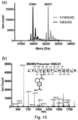
- Mass spectrometry and X-ray crystallography were used to validate the binding of a hit ligand identified by the present method.
Landscapes
- Health & Medical Sciences (AREA)
- Immunology (AREA)
- Life Sciences & Earth Sciences (AREA)
- Engineering & Computer Science (AREA)
- Chemical & Material Sciences (AREA)
- Urology & Nephrology (AREA)
- Hematology (AREA)
- Biomedical Technology (AREA)
- Molecular Biology (AREA)
- Medicinal Chemistry (AREA)
- Analytical Chemistry (AREA)
- Cell Biology (AREA)
- Chemical Kinetics & Catalysis (AREA)
- Food Science & Technology (AREA)
- Biotechnology (AREA)
- Physics & Mathematics (AREA)
- Microbiology (AREA)
- Biochemistry (AREA)
- General Health & Medical Sciences (AREA)
- General Physics & Mathematics (AREA)
- Pathology (AREA)
- Investigating Or Analysing Biological Materials (AREA)
- Enzymes And Modification Thereof (AREA)
- Peptides Or Proteins (AREA)
- Measuring Or Testing Involving Enzymes Or Micro-Organisms (AREA)
Applications Claiming Priority (2)
| Application Number | Priority Date | Filing Date | Title |
|---|---|---|---|
| GBGB1614152.5A GB201614152D0 (en) | 2016-08-18 | 2016-08-18 | Assay |
| PCT/GB2017/052456 WO2018033753A2 (en) | 2016-08-18 | 2017-08-18 | Assay |
Publications (2)
| Publication Number | Publication Date |
|---|---|
| EP3500858A2 EP3500858A2 (en) | 2019-06-26 |
| EP3500858B1 true EP3500858B1 (en) | 2023-12-27 |
Family
ID=57045465
Family Applications (1)
| Application Number | Title | Priority Date | Filing Date |
|---|---|---|---|
| EP17758261.6A Active EP3500858B1 (en) | 2016-08-18 | 2017-08-18 | Assay |
Country Status (6)
| Country | Link |
|---|---|
| US (1) | US11415579B2 (enExample) |
| EP (1) | EP3500858B1 (enExample) |
| JP (1) | JP7008688B2 (enExample) |
| ES (1) | ES2972584T3 (enExample) |
| GB (1) | GB201614152D0 (enExample) |
| WO (1) | WO2018033753A2 (enExample) |
Families Citing this family (4)
| Publication number | Priority date | Publication date | Assignee | Title |
|---|---|---|---|---|
| CN112121052B (zh) * | 2019-06-25 | 2024-10-22 | 复旦大学 | 丙烯酰基苯并氮杂䓬类化合物在制备防治血液肿瘤药物中的用途 |
| CN113387831A (zh) * | 2020-03-11 | 2021-09-14 | 苏州大学 | 酰胺类化合物及其在制备神经炎症抑制剂中的应用 |
| WO2022094029A1 (en) * | 2020-10-28 | 2022-05-05 | Genentech, Inc. | Fluorescent ellman assay for free thiol detection |
| JP7667684B2 (ja) * | 2021-04-06 | 2025-04-23 | 株式会社日立製作所 | 検体の分析前処理方法および検体前処理装置 |
Family Cites Families (5)
| Publication number | Priority date | Publication date | Assignee | Title |
|---|---|---|---|---|
| US6335155B1 (en) | 1998-06-26 | 2002-01-01 | Sunesis Pharmaceuticals, Inc. | Methods for rapidly identifying small organic molecule ligands for binding to biological target molecules |
| AU2573102A (en) | 2000-11-21 | 2002-06-03 | Sunesis Pharmaceuticals Inc | An extended tethering approach for rapid identification of ligands |
| US6887667B2 (en) * | 2000-12-28 | 2005-05-03 | Alfred E. Mann Institute For Biomedical Engineering At The University Of Southern California | Method and apparatus to identify small variations of biomolecules |
| US7672786B2 (en) * | 2003-07-02 | 2010-03-02 | Sergey Krylov | Non-equilibrium capillary electrophoresis of equilibrium mixtures (NECEEM)—based methods for drug and diagnostic development |
| EP1670422A4 (en) | 2003-09-17 | 2007-08-01 | Sunesis Pharmaceuticals Inc | IDENTIFYING KINASE INHIBITORS |
-
2016
- 2016-08-18 GB GBGB1614152.5A patent/GB201614152D0/en not_active Ceased
-
2017
- 2017-08-18 EP EP17758261.6A patent/EP3500858B1/en active Active
- 2017-08-18 ES ES17758261T patent/ES2972584T3/es active Active
- 2017-08-18 JP JP2019508836A patent/JP7008688B2/ja active Active
- 2017-08-18 US US16/326,298 patent/US11415579B2/en active Active
- 2017-08-18 WO PCT/GB2017/052456 patent/WO2018033753A2/en not_active Ceased
Also Published As
| Publication number | Publication date |
|---|---|
| JP2019526792A (ja) | 2019-09-19 |
| JP7008688B2 (ja) | 2022-02-10 |
| US20190293641A1 (en) | 2019-09-26 |
| WO2018033753A2 (en) | 2018-02-22 |
| WO2018033753A3 (en) | 2018-05-24 |
| GB201614152D0 (en) | 2016-10-05 |
| EP3500858A2 (en) | 2019-06-26 |
| US11415579B2 (en) | 2022-08-16 |
| ES2972584T3 (es) | 2024-06-13 |
Similar Documents
| Publication | Publication Date | Title |
|---|---|---|
| Gilbert et al. | Profiling sulfur (VI) fluorides as reactive functionalities for chemical biology tools and expansion of the ligandable proteome | |
| Kirkpatrick et al. | Weighing in on ubiquitin: the expanding role of mass-spectrometry-based proteomics | |
| Chojnacki et al. | Polyubiquitin-photoactivatable crosslinking reagents for mapping ubiquitin interactome identify Rpn1 as a proteasome ubiquitin-associating subunit | |
| Hoofnagle et al. | Recommendations for the generation, quantification, storage, and handling of peptides used for mass spectrometry–based assays | |
| Scott et al. | Quantitative performance of internal standard platforms for absolute protein quantification using multiple reaction monitoring-mass spectrometry | |
| Wiest et al. | Cu-catalyzed azide–alkyne–thiol reaction forms ubiquitous background in chemical proteomic studies | |
| US11415579B2 (en) | Assay for measuring a rate of reaction between a target and a ligand candidate | |
| US20090131675A1 (en) | Methods for structural analysis of proteins | |
| Li et al. | Proteomic strategies for characterizing ubiquitin-like modifications | |
| Tan et al. | Chemical Proteomics Probes: Classification, Applications, and Future Perspectives in Proteome‐Wide Studies | |
| Wu et al. | Research progress in isotope labeling/tags-based protein quantification and metrology technologies | |
| Boehm et al. | Site‐specific degree of phosphorylation in proteins measured by liquid chromatography‐electrospray mass spectrometry | |
| Rutkowska-Wlodarczyk et al. | Structural changes of eIF4E upon binding to the mRNA 5′ monomethylguanosine and trimethylguanosine Cap | |
| US11603352B2 (en) | Mass spectromeiry-cleavable cross-linker | |
| Takechi et al. | Silyl ether enables high coverage chemoproteomic interaction site mapping | |
| US12618779B2 (en) | Fluorescent ellman assay for free thiol detection | |
| Jenmalm Jensen et al. | Affinity‐Based Chemoproteomics for Target Identification | |
| US20250180575A1 (en) | High efficiency labels for biomolecular analysis | |
| Ding et al. | Quantitative phosphoproteome analysis of lysophosphatidic acid induced chemotaxis applying dual-step 18O labeling coupled with immobilized metal-ion affinity chromatography | |
| Thomas et al. | Application of quantitative proteomics to the integrated analysis of the ubiquitylated and global proteomes of xenograft tumor tissues | |
| Degliesposti | Probing protein complexes composition, stoichiometry, and interactions by peptide-based mass spectrometry | |
| Rubiano et al. | Application of a MALDI mass spectrometry assay to identify covalent fragments targeting the methyl-lysine reader protein MPP8 | |
| Bakhtina | Application of Quantitative Cross-Linking Mass Spectrometry Methods to Study Interactome Differences | |
| US20120258481A1 (en) | Cross-linking atp analogs | |
| Jin | Development and Application of Mass Spectrometry-Based Approaches for |
Legal Events
| Date | Code | Title | Description |
|---|---|---|---|
| STAA | Information on the status of an ep patent application or granted ep patent |
Free format text: STATUS: UNKNOWN |
|
| STAA | Information on the status of an ep patent application or granted ep patent |
Free format text: STATUS: THE INTERNATIONAL PUBLICATION HAS BEEN MADE |
|
| PUAI | Public reference made under article 153(3) epc to a published international application that has entered the european phase |
Free format text: ORIGINAL CODE: 0009012 |
|
| STAA | Information on the status of an ep patent application or granted ep patent |
Free format text: STATUS: REQUEST FOR EXAMINATION WAS MADE |
|
| 17P | Request for examination filed |
Effective date: 20190225 |
|
| AK | Designated contracting states |
Kind code of ref document: A2 Designated state(s): AL AT BE BG CH CY CZ DE DK EE ES FI FR GB GR HR HU IE IS IT LI LT LU LV MC MK MT NL NO PL PT RO RS SE SI SK SM TR |
|
| AX | Request for extension of the european patent |
Extension state: BA ME |
|
| DAV | Request for validation of the european patent (deleted) | ||
| DAX | Request for extension of the european patent (deleted) | ||
| STAA | Information on the status of an ep patent application or granted ep patent |
Free format text: STATUS: EXAMINATION IS IN PROGRESS |
|
| 17Q | First examination report despatched |
Effective date: 20220314 |
|
| RAP1 | Party data changed (applicant data changed or rights of an application transferred) |
Owner name: IMPERIAL COLLEGE INNOVATIONS LIMITED |
|
| GRAP | Despatch of communication of intention to grant a patent |
Free format text: ORIGINAL CODE: EPIDOSNIGR1 |
|
| STAA | Information on the status of an ep patent application or granted ep patent |
Free format text: STATUS: GRANT OF PATENT IS INTENDED |
|
| INTG | Intention to grant announced |
Effective date: 20230227 |
|
| GRAJ | Information related to disapproval of communication of intention to grant by the applicant or resumption of examination proceedings by the epo deleted |
Free format text: ORIGINAL CODE: EPIDOSDIGR1 |
|
| STAA | Information on the status of an ep patent application or granted ep patent |
Free format text: STATUS: EXAMINATION IS IN PROGRESS |
|
| INTC | Intention to grant announced (deleted) | ||
| GRAP | Despatch of communication of intention to grant a patent |
Free format text: ORIGINAL CODE: EPIDOSNIGR1 |
|
| STAA | Information on the status of an ep patent application or granted ep patent |
Free format text: STATUS: GRANT OF PATENT IS INTENDED |
|
| P01 | Opt-out of the competence of the unified patent court (upc) registered |
Effective date: 20230612 |
|
| INTG | Intention to grant announced |
Effective date: 20230712 |
|
| GRAS | Grant fee paid |
Free format text: ORIGINAL CODE: EPIDOSNIGR3 |
|
| GRAA | (expected) grant |
Free format text: ORIGINAL CODE: 0009210 |
|
| STAA | Information on the status of an ep patent application or granted ep patent |
Free format text: STATUS: THE PATENT HAS BEEN GRANTED |
|
| AK | Designated contracting states |
Kind code of ref document: B1 Designated state(s): AL AT BE BG CH CY CZ DE DK EE ES FI FR GB GR HR HU IE IS IT LI LT LU LV MC MK MT NL NO PL PT RO RS SE SI SK SM TR |
|
| REG | Reference to a national code |
Ref country code: GB Ref legal event code: FG4D |
|
| REG | Reference to a national code |
Ref country code: CH Ref legal event code: EP |
|
| REG | Reference to a national code |
Ref country code: DE Ref legal event code: R096 Ref document number: 602017077916 Country of ref document: DE |
|
| REG | Reference to a national code |
Ref country code: IE Ref legal event code: FG4D |
|
| PG25 | Lapsed in a contracting state [announced via postgrant information from national office to epo] |
Ref country code: GR Free format text: LAPSE BECAUSE OF FAILURE TO SUBMIT A TRANSLATION OF THE DESCRIPTION OR TO PAY THE FEE WITHIN THE PRESCRIBED TIME-LIMIT Effective date: 20240328 |
|
| REG | Reference to a national code |
Ref country code: LT Ref legal event code: MG9D |
|
| PG25 | Lapsed in a contracting state [announced via postgrant information from national office to epo] |
Ref country code: LT Free format text: LAPSE BECAUSE OF FAILURE TO SUBMIT A TRANSLATION OF THE DESCRIPTION OR TO PAY THE FEE WITHIN THE PRESCRIBED TIME-LIMIT Effective date: 20231227 |
|
| PG25 | Lapsed in a contracting state [announced via postgrant information from national office to epo] |
Ref country code: LT Free format text: LAPSE BECAUSE OF FAILURE TO SUBMIT A TRANSLATION OF THE DESCRIPTION OR TO PAY THE FEE WITHIN THE PRESCRIBED TIME-LIMIT Effective date: 20231227 Ref country code: GR Free format text: LAPSE BECAUSE OF FAILURE TO SUBMIT A TRANSLATION OF THE DESCRIPTION OR TO PAY THE FEE WITHIN THE PRESCRIBED TIME-LIMIT Effective date: 20240328 Ref country code: FI Free format text: LAPSE BECAUSE OF FAILURE TO SUBMIT A TRANSLATION OF THE DESCRIPTION OR TO PAY THE FEE WITHIN THE PRESCRIBED TIME-LIMIT Effective date: 20231227 Ref country code: BG Free format text: LAPSE BECAUSE OF FAILURE TO SUBMIT A TRANSLATION OF THE DESCRIPTION OR TO PAY THE FEE WITHIN THE PRESCRIBED TIME-LIMIT Effective date: 20240327 |
|
| REG | Reference to a national code |
Ref country code: NL Ref legal event code: MP Effective date: 20231227 |
|
| REG | Reference to a national code |
Ref country code: AT Ref legal event code: MK05 Ref document number: 1644998 Country of ref document: AT Kind code of ref document: T Effective date: 20231227 |
|
| PG25 | Lapsed in a contracting state [announced via postgrant information from national office to epo] |
Ref country code: NL Free format text: LAPSE BECAUSE OF FAILURE TO SUBMIT A TRANSLATION OF THE DESCRIPTION OR TO PAY THE FEE WITHIN THE PRESCRIBED TIME-LIMIT Effective date: 20231227 |
|
| PG25 | Lapsed in a contracting state [announced via postgrant information from national office to epo] |
Ref country code: SE Free format text: LAPSE BECAUSE OF FAILURE TO SUBMIT A TRANSLATION OF THE DESCRIPTION OR TO PAY THE FEE WITHIN THE PRESCRIBED TIME-LIMIT Effective date: 20231227 Ref country code: RS Free format text: LAPSE BECAUSE OF FAILURE TO SUBMIT A TRANSLATION OF THE DESCRIPTION OR TO PAY THE FEE WITHIN THE PRESCRIBED TIME-LIMIT Effective date: 20231227 Ref country code: NO Free format text: LAPSE BECAUSE OF FAILURE TO SUBMIT A TRANSLATION OF THE DESCRIPTION OR TO PAY THE FEE WITHIN THE PRESCRIBED TIME-LIMIT Effective date: 20240327 Ref country code: NL Free format text: LAPSE BECAUSE OF FAILURE TO SUBMIT A TRANSLATION OF THE DESCRIPTION OR TO PAY THE FEE WITHIN THE PRESCRIBED TIME-LIMIT Effective date: 20231227 Ref country code: LV Free format text: LAPSE BECAUSE OF FAILURE TO SUBMIT A TRANSLATION OF THE DESCRIPTION OR TO PAY THE FEE WITHIN THE PRESCRIBED TIME-LIMIT Effective date: 20231227 Ref country code: HR Free format text: LAPSE BECAUSE OF FAILURE TO SUBMIT A TRANSLATION OF THE DESCRIPTION OR TO PAY THE FEE WITHIN THE PRESCRIBED TIME-LIMIT Effective date: 20231227 |
|
| REG | Reference to a national code |
Ref country code: ES Ref legal event code: FG2A Ref document number: 2972584 Country of ref document: ES Kind code of ref document: T3 Effective date: 20240613 |
|
| PG25 | Lapsed in a contracting state [announced via postgrant information from national office to epo] |
Ref country code: IS Free format text: LAPSE BECAUSE OF FAILURE TO SUBMIT A TRANSLATION OF THE DESCRIPTION OR TO PAY THE FEE WITHIN THE PRESCRIBED TIME-LIMIT Effective date: 20240427 |
|
| PG25 | Lapsed in a contracting state [announced via postgrant information from national office to epo] |
Ref country code: CZ Free format text: LAPSE BECAUSE OF FAILURE TO SUBMIT A TRANSLATION OF THE DESCRIPTION OR TO PAY THE FEE WITHIN THE PRESCRIBED TIME-LIMIT Effective date: 20231227 Ref country code: AT Free format text: LAPSE BECAUSE OF FAILURE TO SUBMIT A TRANSLATION OF THE DESCRIPTION OR TO PAY THE FEE WITHIN THE PRESCRIBED TIME-LIMIT Effective date: 20231227 |
|
| PG25 | Lapsed in a contracting state [announced via postgrant information from national office to epo] |
Ref country code: SK Free format text: LAPSE BECAUSE OF FAILURE TO SUBMIT A TRANSLATION OF THE DESCRIPTION OR TO PAY THE FEE WITHIN THE PRESCRIBED TIME-LIMIT Effective date: 20231227 |
|
| PG25 | Lapsed in a contracting state [announced via postgrant information from national office to epo] |
Ref country code: SM Free format text: LAPSE BECAUSE OF FAILURE TO SUBMIT A TRANSLATION OF THE DESCRIPTION OR TO PAY THE FEE WITHIN THE PRESCRIBED TIME-LIMIT Effective date: 20231227 Ref country code: SK Free format text: LAPSE BECAUSE OF FAILURE TO SUBMIT A TRANSLATION OF THE DESCRIPTION OR TO PAY THE FEE WITHIN THE PRESCRIBED TIME-LIMIT Effective date: 20231227 Ref country code: RO Free format text: LAPSE BECAUSE OF FAILURE TO SUBMIT A TRANSLATION OF THE DESCRIPTION OR TO PAY THE FEE WITHIN THE PRESCRIBED TIME-LIMIT Effective date: 20231227 Ref country code: IS Free format text: LAPSE BECAUSE OF FAILURE TO SUBMIT A TRANSLATION OF THE DESCRIPTION OR TO PAY THE FEE WITHIN THE PRESCRIBED TIME-LIMIT Effective date: 20240427 Ref country code: EE Free format text: LAPSE BECAUSE OF FAILURE TO SUBMIT A TRANSLATION OF THE DESCRIPTION OR TO PAY THE FEE WITHIN THE PRESCRIBED TIME-LIMIT Effective date: 20231227 Ref country code: CZ Free format text: LAPSE BECAUSE OF FAILURE TO SUBMIT A TRANSLATION OF THE DESCRIPTION OR TO PAY THE FEE WITHIN THE PRESCRIBED TIME-LIMIT Effective date: 20231227 Ref country code: AT Free format text: LAPSE BECAUSE OF FAILURE TO SUBMIT A TRANSLATION OF THE DESCRIPTION OR TO PAY THE FEE WITHIN THE PRESCRIBED TIME-LIMIT Effective date: 20231227 |
|
| PG25 | Lapsed in a contracting state [announced via postgrant information from national office to epo] |
Ref country code: PT Free format text: LAPSE BECAUSE OF FAILURE TO SUBMIT A TRANSLATION OF THE DESCRIPTION OR TO PAY THE FEE WITHIN THE PRESCRIBED TIME-LIMIT Effective date: 20240429 Ref country code: PL Free format text: LAPSE BECAUSE OF FAILURE TO SUBMIT A TRANSLATION OF THE DESCRIPTION OR TO PAY THE FEE WITHIN THE PRESCRIBED TIME-LIMIT Effective date: 20231227 |
|
| PG25 | Lapsed in a contracting state [announced via postgrant information from national office to epo] |
Ref country code: PT Free format text: LAPSE BECAUSE OF FAILURE TO SUBMIT A TRANSLATION OF THE DESCRIPTION OR TO PAY THE FEE WITHIN THE PRESCRIBED TIME-LIMIT Effective date: 20240429 Ref country code: PL Free format text: LAPSE BECAUSE OF FAILURE TO SUBMIT A TRANSLATION OF THE DESCRIPTION OR TO PAY THE FEE WITHIN THE PRESCRIBED TIME-LIMIT Effective date: 20231227 |
|
| REG | Reference to a national code |
Ref country code: DE Ref legal event code: R097 Ref document number: 602017077916 Country of ref document: DE |
|
| PG25 | Lapsed in a contracting state [announced via postgrant information from national office to epo] |
Ref country code: DK Free format text: LAPSE BECAUSE OF FAILURE TO SUBMIT A TRANSLATION OF THE DESCRIPTION OR TO PAY THE FEE WITHIN THE PRESCRIBED TIME-LIMIT Effective date: 20231227 |
|
| PG25 | Lapsed in a contracting state [announced via postgrant information from national office to epo] |
Ref country code: DK Free format text: LAPSE BECAUSE OF FAILURE TO SUBMIT A TRANSLATION OF THE DESCRIPTION OR TO PAY THE FEE WITHIN THE PRESCRIBED TIME-LIMIT Effective date: 20231227 |
|
| PLBE | No opposition filed within time limit |
Free format text: ORIGINAL CODE: 0009261 |
|
| STAA | Information on the status of an ep patent application or granted ep patent |
Free format text: STATUS: NO OPPOSITION FILED WITHIN TIME LIMIT |
|
| 26N | No opposition filed |
Effective date: 20240930 |
|
| REG | Reference to a national code |
Ref country code: CH Ref legal event code: PL |
|
| PG25 | Lapsed in a contracting state [announced via postgrant information from national office to epo] |
Ref country code: LU Free format text: LAPSE BECAUSE OF NON-PAYMENT OF DUE FEES Effective date: 20240818 |
|
| PG25 | Lapsed in a contracting state [announced via postgrant information from national office to epo] |
Ref country code: MC Free format text: LAPSE BECAUSE OF FAILURE TO SUBMIT A TRANSLATION OF THE DESCRIPTION OR TO PAY THE FEE WITHIN THE PRESCRIBED TIME-LIMIT Effective date: 20231227 Ref country code: CH Free format text: LAPSE BECAUSE OF NON-PAYMENT OF DUE FEES Effective date: 20240831 Ref country code: SI Free format text: LAPSE BECAUSE OF FAILURE TO SUBMIT A TRANSLATION OF THE DESCRIPTION OR TO PAY THE FEE WITHIN THE PRESCRIBED TIME-LIMIT Effective date: 20231227 |
|
| REG | Reference to a national code |
Ref country code: BE Ref legal event code: MM Effective date: 20240831 |
|
| PG25 | Lapsed in a contracting state [announced via postgrant information from national office to epo] |
Ref country code: BE Free format text: LAPSE BECAUSE OF NON-PAYMENT OF DUE FEES Effective date: 20240831 |
|
| PG25 | Lapsed in a contracting state [announced via postgrant information from national office to epo] |
Ref country code: IE Free format text: LAPSE BECAUSE OF NON-PAYMENT OF DUE FEES Effective date: 20240818 |
|
| PGFP | Annual fee paid to national office [announced via postgrant information from national office to epo] |
Ref country code: ES Payment date: 20250917 Year of fee payment: 9 |
|
| PGFP | Annual fee paid to national office [announced via postgrant information from national office to epo] |
Ref country code: DE Payment date: 20250819 Year of fee payment: 9 |
|
| PGFP | Annual fee paid to national office [announced via postgrant information from national office to epo] |
Ref country code: IT Payment date: 20250829 Year of fee payment: 9 |
|
| PGFP | Annual fee paid to national office [announced via postgrant information from national office to epo] |
Ref country code: GB Payment date: 20250819 Year of fee payment: 9 |
|
| PGFP | Annual fee paid to national office [announced via postgrant information from national office to epo] |
Ref country code: FR Payment date: 20250821 Year of fee payment: 9 |
|
| PG25 | Lapsed in a contracting state [announced via postgrant information from national office to epo] |
Ref country code: CY Free format text: LAPSE BECAUSE OF FAILURE TO SUBMIT A TRANSLATION OF THE DESCRIPTION OR TO PAY THE FEE WITHIN THE PRESCRIBED TIME-LIMIT; INVALID AB INITIO Effective date: 20170818 |
|
| PG25 | Lapsed in a contracting state [announced via postgrant information from national office to epo] |
Ref country code: HU Free format text: LAPSE BECAUSE OF FAILURE TO SUBMIT A TRANSLATION OF THE DESCRIPTION OR TO PAY THE FEE WITHIN THE PRESCRIBED TIME-LIMIT; INVALID AB INITIO Effective date: 20170818 |
|
| PG25 | Lapsed in a contracting state [announced via postgrant information from national office to epo] |
Ref country code: TR Free format text: LAPSE BECAUSE OF FAILURE TO SUBMIT A TRANSLATION OF THE DESCRIPTION OR TO PAY THE FEE WITHIN THE PRESCRIBED TIME-LIMIT Effective date: 20231227 |