EP3498546A1 - Sound output apparatus, sound output control method, vehicle, and locking and unlocking system - Google Patents
Sound output apparatus, sound output control method, vehicle, and locking and unlocking system Download PDFInfo
- Publication number
- EP3498546A1 EP3498546A1 EP18201759.0A EP18201759A EP3498546A1 EP 3498546 A1 EP3498546 A1 EP 3498546A1 EP 18201759 A EP18201759 A EP 18201759A EP 3498546 A1 EP3498546 A1 EP 3498546A1
- Authority
- EP
- European Patent Office
- Prior art keywords
- authentication information
- door
- vehicle
- sound output
- mobile terminal
- Prior art date
- Legal status (The legal status is an assumption and is not a legal conclusion. Google has not performed a legal analysis and makes no representation as to the accuracy of the status listed.)
- Granted
Links
Images




Classifications
-
- B—PERFORMING OPERATIONS; TRANSPORTING
- B60—VEHICLES IN GENERAL
- B60R—VEHICLES, VEHICLE FITTINGS, OR VEHICLE PARTS, NOT OTHERWISE PROVIDED FOR
- B60R25/00—Fittings or systems for preventing or indicating unauthorised use or theft of vehicles
- B60R25/10—Fittings or systems for preventing or indicating unauthorised use or theft of vehicles actuating a signalling device
- B60R25/1003—Alarm systems characterised by arm or disarm features
-
- B—PERFORMING OPERATIONS; TRANSPORTING
- B60—VEHICLES IN GENERAL
- B60R—VEHICLES, VEHICLE FITTINGS, OR VEHICLE PARTS, NOT OTHERWISE PROVIDED FOR
- B60R25/00—Fittings or systems for preventing or indicating unauthorised use or theft of vehicles
- B60R25/10—Fittings or systems for preventing or indicating unauthorised use or theft of vehicles actuating a signalling device
- B60R25/1004—Alarm systems characterised by the type of sensor, e.g. current sensing means
- B60R25/1009—Sonic sensors; Signal treatment therefor
-
- B—PERFORMING OPERATIONS; TRANSPORTING
- B60—VEHICLES IN GENERAL
- B60R—VEHICLES, VEHICLE FITTINGS, OR VEHICLE PARTS, NOT OTHERWISE PROVIDED FOR
- B60R25/00—Fittings or systems for preventing or indicating unauthorised use or theft of vehicles
- B60R25/20—Means to switch the anti-theft system on or off
-
- G—PHYSICS
- G07—CHECKING-DEVICES
- G07C—TIME OR ATTENDANCE REGISTERS; REGISTERING OR INDICATING THE WORKING OF MACHINES; GENERATING RANDOM NUMBERS; VOTING OR LOTTERY APPARATUS; ARRANGEMENTS, SYSTEMS OR APPARATUS FOR CHECKING NOT PROVIDED FOR ELSEWHERE
- G07C9/00—Individual registration on entry or exit
- G07C9/00174—Electronically operated locks; Circuits therefor; Nonmechanical keys therefor, e.g. passive or active electrical keys or other data carriers without mechanical keys
- G07C9/00571—Electronically operated locks; Circuits therefor; Nonmechanical keys therefor, e.g. passive or active electrical keys or other data carriers without mechanical keys operated by interacting with a central unit
-
- B—PERFORMING OPERATIONS; TRANSPORTING
- B60—VEHICLES IN GENERAL
- B60R—VEHICLES, VEHICLE FITTINGS, OR VEHICLE PARTS, NOT OTHERWISE PROVIDED FOR
- B60R16/00—Electric or fluid circuits specially adapted for vehicles and not otherwise provided for; Arrangement of elements of electric or fluid circuits specially adapted for vehicles and not otherwise provided for
- B60R16/02—Electric or fluid circuits specially adapted for vehicles and not otherwise provided for; Arrangement of elements of electric or fluid circuits specially adapted for vehicles and not otherwise provided for electric constitutive elements
- B60R16/023—Electric or fluid circuits specially adapted for vehicles and not otherwise provided for; Arrangement of elements of electric or fluid circuits specially adapted for vehicles and not otherwise provided for electric constitutive elements for transmission of signals between vehicle parts or subsystems
-
- B—PERFORMING OPERATIONS; TRANSPORTING
- B60—VEHICLES IN GENERAL
- B60R—VEHICLES, VEHICLE FITTINGS, OR VEHICLE PARTS, NOT OTHERWISE PROVIDED FOR
- B60R16/00—Electric or fluid circuits specially adapted for vehicles and not otherwise provided for; Arrangement of elements of electric or fluid circuits specially adapted for vehicles and not otherwise provided for
- B60R16/02—Electric or fluid circuits specially adapted for vehicles and not otherwise provided for; Arrangement of elements of electric or fluid circuits specially adapted for vehicles and not otherwise provided for electric constitutive elements
- B60R16/037—Electric or fluid circuits specially adapted for vehicles and not otherwise provided for; Arrangement of elements of electric or fluid circuits specially adapted for vehicles and not otherwise provided for electric constitutive elements for occupant comfort, e.g. for automatic adjustment of appliances according to personal settings, e.g. seats, mirrors, steering wheel
- B60R16/0373—Voice control
-
- B—PERFORMING OPERATIONS; TRANSPORTING
- B60—VEHICLES IN GENERAL
- B60R—VEHICLES, VEHICLE FITTINGS, OR VEHICLE PARTS, NOT OTHERWISE PROVIDED FOR
- B60R25/00—Fittings or systems for preventing or indicating unauthorised use or theft of vehicles
-
- B—PERFORMING OPERATIONS; TRANSPORTING
- B60—VEHICLES IN GENERAL
- B60R—VEHICLES, VEHICLE FITTINGS, OR VEHICLE PARTS, NOT OTHERWISE PROVIDED FOR
- B60R25/00—Fittings or systems for preventing or indicating unauthorised use or theft of vehicles
- B60R25/10—Fittings or systems for preventing or indicating unauthorised use or theft of vehicles actuating a signalling device
-
- B—PERFORMING OPERATIONS; TRANSPORTING
- B60—VEHICLES IN GENERAL
- B60R—VEHICLES, VEHICLE FITTINGS, OR VEHICLE PARTS, NOT OTHERWISE PROVIDED FOR
- B60R25/00—Fittings or systems for preventing or indicating unauthorised use or theft of vehicles
- B60R25/20—Means to switch the anti-theft system on or off
- B60R25/24—Means to switch the anti-theft system on or off using electronic identifiers containing a code not memorised by the user
-
- B—PERFORMING OPERATIONS; TRANSPORTING
- B60—VEHICLES IN GENERAL
- B60R—VEHICLES, VEHICLE FITTINGS, OR VEHICLE PARTS, NOT OTHERWISE PROVIDED FOR
- B60R25/00—Fittings or systems for preventing or indicating unauthorised use or theft of vehicles
- B60R25/20—Means to switch the anti-theft system on or off
- B60R25/24—Means to switch the anti-theft system on or off using electronic identifiers containing a code not memorised by the user
- B60R25/241—Means to switch the anti-theft system on or off using electronic identifiers containing a code not memorised by the user whereby access privileges are related to the identifiers
-
- B—PERFORMING OPERATIONS; TRANSPORTING
- B60—VEHICLES IN GENERAL
- B60R—VEHICLES, VEHICLE FITTINGS, OR VEHICLE PARTS, NOT OTHERWISE PROVIDED FOR
- B60R25/00—Fittings or systems for preventing or indicating unauthorised use or theft of vehicles
- B60R25/30—Detection related to theft or to other events relevant to anti-theft systems
- B60R25/34—Detection related to theft or to other events relevant to anti-theft systems of conditions of vehicle components, e.g. of windows, door locks or gear selectors
-
- E—FIXED CONSTRUCTIONS
- E05—LOCKS; KEYS; WINDOW OR DOOR FITTINGS; SAFES
- E05B—LOCKS; ACCESSORIES THEREFOR; HANDCUFFS
- E05B17/00—Accessories in connection with locks
- E05B17/0079—Locks with audio features
- E05B17/0083—Sound emitting devices, e.g. loudspeakers
-
- G—PHYSICS
- G07—CHECKING-DEVICES
- G07C—TIME OR ATTENDANCE REGISTERS; REGISTERING OR INDICATING THE WORKING OF MACHINES; GENERATING RANDOM NUMBERS; VOTING OR LOTTERY APPARATUS; ARRANGEMENTS, SYSTEMS OR APPARATUS FOR CHECKING NOT PROVIDED FOR ELSEWHERE
- G07C9/00—Individual registration on entry or exit
-
- G—PHYSICS
- G07—CHECKING-DEVICES
- G07C—TIME OR ATTENDANCE REGISTERS; REGISTERING OR INDICATING THE WORKING OF MACHINES; GENERATING RANDOM NUMBERS; VOTING OR LOTTERY APPARATUS; ARRANGEMENTS, SYSTEMS OR APPARATUS FOR CHECKING NOT PROVIDED FOR ELSEWHERE
- G07C9/00—Individual registration on entry or exit
- G07C9/00174—Electronically operated locks; Circuits therefor; Nonmechanical keys therefor, e.g. passive or active electrical keys or other data carriers without mechanical keys
- G07C9/00182—Electronically operated locks; Circuits therefor; Nonmechanical keys therefor, e.g. passive or active electrical keys or other data carriers without mechanical keys operated with unidirectional data transmission between data carrier and locks
-
- G—PHYSICS
- G07—CHECKING-DEVICES
- G07C—TIME OR ATTENDANCE REGISTERS; REGISTERING OR INDICATING THE WORKING OF MACHINES; GENERATING RANDOM NUMBERS; VOTING OR LOTTERY APPARATUS; ARRANGEMENTS, SYSTEMS OR APPARATUS FOR CHECKING NOT PROVIDED FOR ELSEWHERE
- G07C9/00—Individual registration on entry or exit
- G07C9/00174—Electronically operated locks; Circuits therefor; Nonmechanical keys therefor, e.g. passive or active electrical keys or other data carriers without mechanical keys
- G07C9/00309—Electronically operated locks; Circuits therefor; Nonmechanical keys therefor, e.g. passive or active electrical keys or other data carriers without mechanical keys operated with bidirectional data transmission between data carrier and locks
-
- G—PHYSICS
- G08—SIGNALLING
- G08B—SIGNALLING SYSTEMS, e.g. PERSONAL CALLING SYSTEMS; ORDER TELEGRAPHS; ALARM SYSTEMS
- G08B29/00—Checking or monitoring of signalling or alarm systems; Prevention or correction of operating errors, e.g. preventing unauthorised operation
-
- B—PERFORMING OPERATIONS; TRANSPORTING
- B60—VEHICLES IN GENERAL
- B60R—VEHICLES, VEHICLE FITTINGS, OR VEHICLE PARTS, NOT OTHERWISE PROVIDED FOR
- B60R2325/00—Indexing scheme relating to vehicle anti-theft devices
- B60R2325/10—Communication protocols, communication systems of vehicle anti-theft devices
- B60R2325/101—Bluetooth®
-
- B—PERFORMING OPERATIONS; TRANSPORTING
- B60—VEHICLES IN GENERAL
- B60R—VEHICLES, VEHICLE FITTINGS, OR VEHICLE PARTS, NOT OTHERWISE PROVIDED FOR
- B60R2325/00—Indexing scheme relating to vehicle anti-theft devices
- B60R2325/10—Communication protocols, communication systems of vehicle anti-theft devices
- B60R2325/103—Near field communication [NFC]
-
- B—PERFORMING OPERATIONS; TRANSPORTING
- B60—VEHICLES IN GENERAL
- B60R—VEHICLES, VEHICLE FITTINGS, OR VEHICLE PARTS, NOT OTHERWISE PROVIDED FOR
- B60R2325/00—Indexing scheme relating to vehicle anti-theft devices
- B60R2325/10—Communication protocols, communication systems of vehicle anti-theft devices
- B60R2325/108—Encryption
-
- E—FIXED CONSTRUCTIONS
- E05—LOCKS; KEYS; WINDOW OR DOOR FITTINGS; SAFES
- E05B—LOCKS; ACCESSORIES THEREFOR; HANDCUFFS
- E05B47/00—Operating or controlling locks or other fastening devices by electric or magnetic means
- E05B2047/0094—Mechanical aspects of remotely controlled locks
- E05B2047/0095—Mechanical aspects of locks controlled by telephone signals, e.g. by mobile phones
-
- E—FIXED CONSTRUCTIONS
- E05—LOCKS; KEYS; WINDOW OR DOOR FITTINGS; SAFES
- E05B—LOCKS; ACCESSORIES THEREFOR; HANDCUFFS
- E05B77/00—Vehicle locks characterised by special functions or purposes
- E05B77/44—Burglar prevention, e.g. protecting against opening by unauthorised tools
Definitions
- the present disclosure relates to a sound output apparatus, a sound output control method, a vehicle, and a locking and unlocking system.
- a person who does not look like the owner of a vehicle at a single glance, such as a person in charge of delivery, opens and closes the door of the vehicle, and enters a vehicle cabin of the vehicle. Accordingly, when a person who does not know the system that uses a vehicle to receive a delivery object witnesses the delivery process, it is difficult for the person to distinguish the delivery process from a vehicle theft.
- the present disclosure provides a technique in a system that can unlock a vehicle with a mobile terminal, the technique relating to notifying surrounding people that the vehicle is unlocked by authorized means.
- a sound output apparatus is a sound output apparatus placed in a vehicle having a door lockable and unlockable based on a result of communication with mobile terminals.
- the sound output apparatus includes a sound output controller.
- the sound output controller is configured to output a sound from the speaker, when the door of the vehicle is unlocked based on authentication information received from the mobile terminals for unlocking of the door.
- the sound output controller is configured to output different sounds between when the door is unlocked by a specified mobile terminal and when the door is unlocked by other means.
- the specified mobile terminal is one of the mobile terminals.
- a sound output apparatus is placed in a vehicle having a door lockable and unlockable based on a result of communicating with mobile terminals to acquire authentication information and collating the authentication information.
- the authentication information may be acquired, for example, through short-distance wireless communication.
- the sound output controller outputs a sound from the speaker, when the door is unlocked.
- General vehicles have an answerback function with a sound effect and the like when the door is unlocked.
- the sound output controller outputs different sounds between when the door is unlocked by a specified mobile terminal and when the door is unlocked by other means.
- the specified mobile terminal is a mobile terminal temporarily provided with an unlocking authority by the owner of the vehicle, for example. Such configuration can notify surrounding people that an authorized person is unlocking the vehicle.
- the specified mobile terminal may be a mobile terminal that transmitted the authentication information provided with a validity term.
- the authentication information provided with a validity term signifies that the pertinent mobile terminal is temporarily provided with the unlocking authority. Outputting a sound unique to such a mobile terminal makes it possible to distinguish between the person having permanent unlocking authority and others.
- the sound output controller may be configured to store types of the mobile terminals in association with the sounds to be output.
- the sound output controller may output the sounds corresponding to the mobile terminals that transmitted the authentication information.
- the sound to be output may be changed based on the type of the mobile terminal, for example, based on whether or not the mobile terminal is a possession of the owner of the vehicle.
- Such aspect makes it possible to output the sound different for each unlocking purpose and for each delivery company.
- the sound output when the door is unlocked by the specified mobile terminal may include a sound announcing that the door is unlocked by authorized means.
- Such configuration can clearly notify surrounding people that an authorized person is unlocking the vehicle.
- the sound may include a loop sound that continuously sounds while the door is open.
- More effective notification may be achieved by loop playback of sound while the door is open as well as while the door is unlocked.
- a sound output control method is executed by an sound output controller placed in a vehicle having a door lockable and unlockable based on a result of communication with mobile terminals.
- the sound output control method includes outputting a sound from a speaker when the door of the vehicle is unlocked based on authentication information received from the mobile terminals for unlocking of the door.
- the sound output when the door is unlocked by a specified mobile terminal is different from the sound when the door is unlocked by other means.
- the specified mobile terminal is one of the mobile terminals.
- the sound output control method makes it possible to notify surrounding people that the vehicle is unlocked by authorized means.
- a vehicle is a vehicle communicable with mobile terminals.
- the vehicle includes a door, first communication device, unlocking devices, and a sound output controller.
- the first communication device is configured to receive from the mobile terminals authentication information for unlocking the door.
- the unlocking device is configured to unlock the door based on the authentication information.
- the sound output controller is configured to output a sound, when the door is unlocked.
- the sound output controller is configured to output different sounds between when the door is unlocked by a specified mobile terminal and when the door is unlocked by other means.
- the specified mobile terminal is one of the mobile terminals.
- the vehicle can notify surrounding people that the vehicle is unlocked by authorized means.
- a locking and unlocking system includes mobile terminals, a vehicle, and a server apparatus.
- the mobile terminals each include a short-distance communication unit configured to transmit first authentication information through short-distance wireless communication.
- the vehicle includes a door, first communication device, unlocking devices, and a sound output controller.
- the first communication device is configured to receive the first authentication information from the mobile terminals.
- the first authentication information is information for unlocking the door.
- the unlocking device is configured to unlock the door based on the result of collating the first authentication information and second authentication information.
- the second authentication information is information corresponding to the first authentication information.
- the sound output controller is configured to output a sound when the door is unlocked.
- the sound output controller is configured to store the second authentication information.
- the sound output controller is configured to output different sounds between when the door is unlocked by a specified mobile terminal and when the door is unlocked by other means.
- the specified mobile terminal is one of the mobile terminals.
- the server apparatus includes second communication device. The second communication device is configured to transmit the first authentication information to the mobile terminal and transmit the second authentication information to the vehicle.
- the outline of a delivery system according to the first embodiment will be described with reference to FIG. 1 .
- the delivery system according to the present embodiment is configured by including an on-board device 100, a mobile terminal 200, a delivery management server 300, and a key management server 400.
- the on-board device 100 mounted on a vehicle 10 performs wireless communication with a mobile terminal 200 outside the vehicle, and locks and unlocks the vehicle 10 based on the result of the communication. More specifically, a user of the system can locks and unlocks the vehicle 10 only with the mobile terminal 200, without using a physical key.
- the key management server 400 is a server apparatus that issues information (authentication information) used by the on-board device 100 to authenticate the mobile terminal 200.
- the key management server 400 issues first authentication information to the mobile terminal 200 through the delivery management server 300, and similarly issues second authentication information to the on-board device 100 through the delivery management server 300.
- the on-board device 100 collates the authentication information to authenticate that the mobile terminal 200 is an authorized terminal.
- Such an authorized terminal is an example of "authorized means”.
- the delivery management server 300 is a server apparatus that manages a plurality of mobile terminals 200 possessed by persons in charge of delivery. Although one mobile terminal 200 and one vehicle 10 are illustrated in FIG. 1 , the delivery management server 300 may manage multiple mobile terminals 200. The mobile terminal 200 may access multiple vehicles 10.
- FIG. 2 is a block diagram schematically illustrating one example of the configuration of the on-board device 100, the mobile terminal 200, the delivery management server 300, and the key management server 400 illustrated in FIG. 1 .
- the on-board device 100 is mounted on the vehicle 10 that is a target of locking and unlocking.
- the on-board device 100 is a device for locking and unlocking a door 111 of the vehicle.
- the on-board device 100 locks and unlocks the door 111 of the vehicle 10 in response to a locking signal and an unlocking signal transmitted from an electronic key (mobile device) possessed by a user of the vehicle through an electric wave in radio frequency bands.
- the on-board device 100 has, in addition to the above-stated function, the function of locking and unlocking the door 111 based on the result of communication with the mobile terminal 200.
- the on-board device 100 is configured by including a short-distance communication unit 101, a collation ECU 102, a body ECU 103, a door lock motor 104, and a communication unit 105.
- the on-board device 100 operates with the electric power supplied from an unillustrated auxiliary battery mounted on the vehicle 10. In the present example, illustration of the means for communicating with the electronic key is omitted.
- the short-distance communication unit 101 is a module that communicates with the mobile terminal 200 possessed by the user.
- the short-distance communication unit 101 performs communication in a short distance in conformity to specified wireless communication standards.
- the short distance is a distance short enough to allow communication between the inside and the outside of a vehicle cabin.
- the short-distance communication unit 101 performs data communication in conformity to Bluetooth (registered trademark) low energy standards (hereinafter referred to as BLE).
- BLE Bluetooth (registered trademark) low energy standards
- the BLE standards are low electric power telecommunications standards by Bluetooth, characterized by quick start of communication upon detection of a communication counterpart without the necessity of pairing of devices.
- BLE is presented in the present embodiment, other wireless communication standards are also available.
- wireless communication standards such as a near field communication (NFC), an ultra-wide band (UWB), and WiFi (registered trademark), can also be used.
- the collation ECU 102 performs short-distance wireless communication with the mobile terminal 200 through the short-distance communication unit 101 to control authentication of the mobile terminal 200.
- the collation ECU 102 performs control to lock and unlock the door 111 of the vehicle 10 based on the result of authentication.
- the collation ECU 102 is composed of a microcomputer, for example.
- the collation ECU 102 has a communication processing unit 1021, an authentication unit 1022, a key control unit 1023, and a sound output unit 1024 as functional modules.
- the functional modules may each be implemented when a central processing unit (CPU) (not illustrated) executes programs stored in storage means, such as a read only memory (ROM) (not illustrated).
- CPU central processing unit
- ROM read only memory
- the communication processing unit 1021 processes communication with the mobile terminal 200 performed through the short-distance communication unit 101.
- the communication processing unit 1021 receives a locking request or an unlocking request from the mobile terminal 200, and generates locking and unlocking signals in response to the received requests.
- the locking request and the unlocking request are collectively referred to as locking and unlocking requests.
- the generated locking and unlocking signals are temporarily stored, and are output at the timing when the later-described authentication unit 1022 succeeds in authentication of the mobile terminal 200.
- the authentication unit 1022 authenticates the mobile terminal 200 based on authentication information included in the locking and unlocking requests transmitted from the mobile terminal 200.
- the authentication unit 1022 collates the authentication information stored in the authentication unit 1022 with the authentication information transmitted from the mobile terminal 200. When the authentication information coincide with each other, the authentication unit 1022 determines the authentication successful. When the authentication information do not coincide with each other, the authentication unit 1022 determines the authentication unsuccessful.
- An authentication method performed by the authentication unit 1022 may be a method that simply collates authentication information with each other to verify identity, or may be a method using an asymmetric cipher.
- the term “coincide” may indicate that two pieces of authentication information can be confirmed to correspond to each other, and may not indicate that both the authentication information are identical.
- the authentication information stored in the on-board device 100 is referred to as device authentication information
- the authentication information transmitted from the mobile terminal 200 is referred to as terminal authentication information as needed in description.
- terminal authentication information the authentication information transmitted from the mobile terminal 200
- the information are simply referred to as authentication information.
- the device authentication information is generated in the later-described key management server 400, and is received and stored in the on-board device 100 through a network.
- the key control unit 1023 transmits an unlocking command or a locking command to the later-described body ECU 103 based on the result of authentication performed by the authentication unit 1022.
- the signal of the unlocking command or the locking command is transmitted through an in-vehicle network, such as a controller area network (CAN).
- CAN controller area network
- the sound output unit 1024 identifies the device (the mobile terminal 200 or the electronic key) used for unlocking, and outputs a sound corresponding to the pertinent device through the sound output device, such as a speaker 122.
- the sound output device such as a speaker 122.
- Voice output in the present specification includes operation to play back a recorded sound as well as operation to output a sound (for example, synthetic sound) generated by the device and a sound (for example, a buzzer sound) generated from the device.
- the body ECU 103 is a computer that performs control of a vehicle body.
- the body ECU 103 controls the later-described door lock motor 104 based on a received unlocking command or a locking command so as to perform unlocking and locking of the door 111 of the vehicle.
- the body ECU 103 may further have functions to control components relating to the vehicle body, such as power window control, seat adjustment, theft prevention, seat belt control, and headlight control.
- the door lock motor 104 is an actuator that locks and unlocks the door 111 of the vehicle 10.
- the door 111 includes a trunk besides an entrance door and a rear gate.
- the door lock motor 104 operates based on a signal transmitted from the body ECU 103.
- the communication unit 105 is a communication interface for connecting the on-board device 100 to a network.
- the communication unit 105 can communicate with other devices through the network using mobile communications service, such as 3G and LTE.
- the mobile terminal 200 is a small-size computer, such as a smartphone, a cellular phone, a tablet computer, a personal information terminal, a notebook computer, and a wearable computer (such as a smartwatch).
- the mobile terminal 200 includes a short-distance communication unit 201, a communication unit 202, and a control unit 203.
- the short-distance communication unit 201 is means for communicating with the on-board device 100 in conformity to the telecommunications standards identical to those of the short-distance communication unit 101.
- the communication unit 202 is a communication interface for network connection similar to that of the communication unit 105.
- the control unit 203 manages control of the mobile terminal 200.
- the control unit 203 performs following processes, for example.
- the processes include a process of generating locking and unlocking requests, a process of acquiring the terminal authentication information, and a process of transmitting the locking and unlocking requests and the terminal authentication information to the on-board device 100.
- the control unit 203 is composed of a microcomputer, for example.
- the control unit 203 may implement the functions by causing the CPU (not illustrated) to execute the programs stored in storage means (such as a ROM) (not illustrated).
- the control unit 203 is connected with an input output unit (not illustrated) that interacts with a user.
- the input output unit is composed of, for example, a touch panel, control means for the touch panel, a liquid crystal display, and control means for the liquid crystal display, for example.
- the touch panel and the liquid crystal display are formed from one touch panel display in the present embodiment.
- the control unit 203 displays an operation screen through the input output unit, and generates an unlocking request or a locking request based on operation performed by the user.
- the control unit 203 outputs an icon, such as an icon for unlocking and an icon for locking to the touch panel display, and generates an unlocking request or a locking request based on the operation performed by the user.
- the operation performed by the user is not limited to the operation performed through the touch panel display.
- the operation may be operation performed with a hardware switch and the like.
- the control unit 203 performs a process for acquiring terminal authentication information.
- the terminal authentication information is generated in the later-described key management server 400, and is transmitted to the mobile terminal 200 through the later-described delivery management server 300.
- the locking operation and unlocking operation through the operation screen are not available.
- the terminal authentication information acquired by the mobile terminal 200 may be an invariable key, or may be a onetime key. In any case, the device authentication information corresponding to the terminal authentication information is prestored in the on-board device 100.
- the delivery management server 300 is a server apparatus that manages packages to be delivered and the mobile terminals 200 possessed by a plurality of persons in charge of delivery.
- the delivery management server 300 stores delivery information including distribution places of target packages.
- the delivery management server 300 acquires terminal authentication information for performing locking and unlocking of the vehicle 10 that stores a target package from the key management server 400, and transfers the acquired terminal authentication information to the mobile terminal 200.
- the delivery management server 300 also acquires device authentication information corresponding to the vehicle 10 (on-board device 100) from the key management server 400, and transfers the acquired device authentication information to the on-board device 100. This process is performed by using a request from the mobile terminal 200 possessed by the person in charge of delivery as a starting point.
- the delivery management server 300 includes a communication unit 301 and a control unit 302.
- the communication unit 301 is a communication interface for network connection similar to that of the communication unit 105.
- the control unit 302 is means for managing control of the delivery management server 300.
- the control unit 302 is composed of a CPU, for example.
- the control unit 302 has a delivery management unit 3021 as a functional module.
- the functional module may be implemented when the CPU (not illustrated) executes a program stored in storage means, such as a ROM (not illustrated).
- the delivery management unit 3021 stores and manages the information about a user to be a consignee, the vehicle 10 under management of the user and used as the address for delivery, a package associated with the user, and the like.
- the delivery management unit 3021 identifies the vehicle 10 used as the address for delivery, and requests the key management server 400 to issue the terminal authentication information and the device authentication information for locking and unlocking the vehicle 10.
- the delivery management unit 3021 also transfers the terminal authentication information issued by the key management server 400 to the mobile terminal 200, and transfers the device authentication information to the on-board device 100.
- the key management server 400 In response to a request from the delivery management server 300, the key management server 400 issues terminal authentication information used by the mobile terminal 200 and device authentication information used by the on-board device 100.
- the key management server 400 includes a communication unit 401, a control unit 402, and a storage unit 403.
- the communication unit 401 is a communication interface for network connection similar to that of the communication unit 301.
- the control unit 402 manages control of the key management server 400.
- the control unit 402 is composed of a CPU, for example.
- the control unit 402 has a key issuing unit 4021 as a functional module.
- the functional module may be implemented when the CPU (not illustrated) executes programs stored in storage means, such as a ROM (not illustrated).
- the key issuing unit 4021 issues terminal authentication information and device authentication information in response to a request from the delivery management server 300.
- the terminal authentication information is authentication information used by the mobile terminal 200 to lock and unlock the vehicle 10 through the on-board device 100.
- the device authentication information is authentication information which makes a pair with the terminal authentication information.
- the terminal authentication information and the device authentication information may be acquired as prestored information, or may dynamically be generated. It is possible to generate, for example, authentication information valid only in a specified time period, authentication information having a specified use count, authentication information usable only in the specified mobile terminal 200, and the like.
- authentication information valid only in a specified time period
- authentication information having a specified use count authentication information usable only in the specified mobile terminal 200
- the vehicle 10 has a plurality of independently lockable and unlockable regions, such as a vehicle cabin and a trunk, authentication information that enables any one of the regions to be locked and unlocked may be generated.
- the storage unit 403 is a device that stores information.
- the storage unit 403 is composed of a storage medium, such as a RAM, a magnetic disk, and a flash memory.
- the storage unit 403 stores device authentication information corresponding to the on-board device 100, terminal authentication information which makes a pair with the device authentication information, and various kinds of data for generating these pieces of authentication information.
- the sound output unit 1024 is configured such that a plurality of sounds output at the time of unlocking can be stored in advance, or a plurality of sounds can be generated.
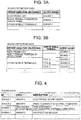
- the sound output unit 1024 stores information (hereinafter referred to as sound definition data) that associates a device used for unlocking and a sound output at the time of unlocking as illustrated in FIG. 3A .
- the example in FIG. 3A defines that a sound 1 is output when the vehicle 10 is unlocked with an electronic key or a mobile terminal possessed by the vehicle owner, and a sound 2 is output when the vehicle 10 is unlocked with "other mobile terminals.”
- the term “other mobile terminals” refers to terminals other than the mobile terminal possessed by the vehicle owner.
- the other terminals include, for example, a mobile terminal possessed by a person in charge of delivery. While the sound definition data may be stored in the sound output unit 1024 in advance (for example, at the time of factory shipments), the data may be updatable by user's operation.
- the key management server 400 may be configured to concurrently distribute the terminal authentication information and the sound definition data to the on-board device 100.
- the sound output unit 1024 also stores sound data as illustrated in FIG. 4 .
- a sound 1 is defined as an electronic sound for answerback, for example.
- a sound 2 is defined as a sound for notifying surrounding people that the vehicle is unlocked with an authenticated mobile terminal.
- the sounds may not be recorded sounds.
- the sounds may be generated by synthesis like a sound 3.
- a sound such as a melody may also be allocated as in the case of a sound 4.
- Such notification sounds may be melodies and sound effects, or may be human voices. It is possible to more clearly notify the people around the vehicle that the vehicle was unlocked by the operation of an authorized person by outputting a speech such as "authentication is normally completed” or "you can open the door.”
- the sound output unit 1024 to identify the sound to output.
- Whether the device used for unlocking is an electronic key or the mobile terminal 200 can be determined by a communication path of a signal transmitted to the on-board device 100 from the device used for unlocking.
- the device used for unlocking can be determined depending on whether or not the signal is transmitted through an electric wave in RF bands or through short-distance wireless communication.
- Whether or not the mobile terminal 200 is possessed by the owner of the vehicle can be determined by referring to the terminal authentication information transmitted from the mobile terminal 200. For example, as illustrated in FIG. 5A , the on-board device 100 determines whether or not the received terminal authentication information is permanent. Here, when the received terminal authentication information is provided with a validity term, or when the terminal authentication information is a onetime key, the on-board device 100 can determine that the vehicle was unlocked with "other mobile terminals.” Thus, when the terminal authentication information is temporary, the on-board device 100 may determine that the vehicle was unlocked with "other mobile terminals.” In addition, as illustrated in FIG. 5B , the terminal authentication information may be transmitted together with an identifier unique to each of the mobile terminal 200, and the on-board device 100 may determine whether or not the received identifier is registered in advance.
- the process can be divided into a phase (first phase) in which the mobile terminal 200 acquires the terminal authentication information, and a phase (second phase) in which the mobile terminal 200 accesses the on-board device 100 with the acquired terminal authentication information, and locks and unlocks the vehicle.
- first phase in which the mobile terminal 200 acquires the terminal authentication information
- second phase in which the mobile terminal 200 accesses the on-board device 100 with the acquired terminal authentication information, and locks and unlocks the vehicle.
- FIG. 6 illustrates the data flow in the first phase
- FIG. 7 illustrates the data flow in the second phase.
- step S11 the mobile terminal 200 requests the delivery management server 300 to issue terminal authentication information.
- step S11 the mobile terminal 200 concurrently transmits information to identify the mobile terminal 200 and information to identify a package as an authentication information request.
- the information to identify a package is hereinafter referred to as package information that is, for example, a slip number.
- step S12 based on the acquired package information and prestored information, the delivery management server 300 (delivery management unit 3021) identifies the vehicle 10 as the address for delivery.
- the delivery management server 300 adds the identifier of the vehicle 10 to the authentication information request, and transmits the authentication information request to the key management server 400 (step S13).
- step S14 the key issuing unit 4021 generates (or acquires) terminal authentication information and device authentication information unique to the mobile terminal 200 and the vehicle 10 (on-board device 100 mounted on the vehicle 10).
- step S15 the key management server 400 transmits the generated terminal authentication information and device authentication information to the delivery management server 300 (step S15).
- the delivery management server 300 transfers the received terminal authentication information to the mobile terminal 200 (step S16).
- the delivery management server 300 also transfers the received device authentication information to the on-board device 100 (step S17). Accordingly, the operation to unlock the vehicle 10 on the mobile terminal 200 becomes executable.
- the terminal authentication information and the device authentication information are transferred through the delivery management server 300 in the present example, the terminal authentication information may directly be transmitted from the key management server 400 to the mobile terminal 200, and the device authentication information may directly be transmitted from the key management server 400 to the on-board device 100.
- steps S11 to S17 is a preparatory process for locking and unlocking, it is preferable to perform the process in advance.
- the process may be executed in a preparatory step of delivery.
- Steps S21 to S23 are the process for unlocking the vehicle 10 with the mobile terminal 200.
- a user i.e., a person in charge of delivery
- the mobile terminal 200 transmits a unlocking request and terminal authentication information to the on-board device 100.
- step S22 the authentication unit 1022 included in the on-board device 100 collates the terminal authentication information transmitted from the mobile terminal 200 and the device authentication information stored in advance to perform an authentication process.
- the key control unit 1023 unlocks the door 111 of the vehicle 10.
- the sound output unit 1024 included in the on-board device 100 determines the type of a communication destination unit based on the stored sound definition data and the terminal authentication information transmitted from the mobile terminal 200, and outputs a corresponding sound.
- the sound to be output may be a loop sound. In the case of the loop sound, the sound may continuously be output while the door 111 is open or while the door 111 is unlocked.
- Steps S31 to S34 are the process for locking the vehicle 10 with the mobile terminal 200.
- the mobile terminal 200 transmits a locking request and terminal authentication information to the on-board device 100 in step S31.
- step S32 the authentication unit 1022 included in the on-board device 100 collates the terminal authentication information transmitted from the mobile terminal 200 and the device authentication information stored in advance to perform the authentication process.
- the key control unit 1023 locks the door 111 of the vehicle 10.
- step S33 the sound output unit 1024 included in the on-board device 100 stops the sound if the sound is being output.
- the communication processing unit 1021 included in the on-board device 100 transmits a notification notifying that locking is completed (locking notification) to the mobile terminal 200 (step S34). Accordingly, the notification notifying that locking is completed is output on the touch panel screen of the mobile terminal 200.
- the terminal authentication information is a onetime key
- the onetime key may be cancelled at the timing of step S34.
- the mobile terminal 200 transmits the locking notification to the delivery management server 300 (step S35).
- the vehicle 10 in the system for unlocking the vehicle 10 with the mobile terminal 200, the vehicle 10 can output different sounds between when unlocking is performed with a specified mobile terminal and when unlocking is performed with other means. Accordingly, it is possible to notify surrounding people that an authorized person is unlocking the vehicle with the sound.
- the mobile terminal 200 used for unlocking the vehicle 10 it is determined whether or not the mobile terminal 200 used for unlocking the vehicle 10 is the mobile terminal possessed by the owner of the vehicle, and a sound different according to the determination result is output.
- the type of the mobile terminal is further subdivided, and a sound different for each of the types is output.
- the sound output unit 1024 stores sound definition data as illustrated in FIG. 3B .
- the type of the mobile terminal 200 is defined into three types A to C in this example.
- the type of the mobile terminal may be allocated for every delivery company, for example.
- the mobile terminal 200 when the mobile terminal 200 transmits an unlocking request (and terminal authentication information) to the on-board device 100 in step S21, the mobile terminal 200 further transmits the type of its own device (for example, information indicative of a type A mobile terminal), and the on-board device 100 determines the sound to be output based on the information as illustrated in FIG. 5C .
- the type of the mobile terminal is defined for every delivery company in this example, the type of the mobile terminal may be defined based on the information other than the information on the delivery companies. For example, the type different for each unlocking purpose may be defined.
- the sound different for each type of the mobile terminal is output in the second embodiment, it is possible to notify information, such as information on the company that the person who unlocked the vehicle belongs to, and information on the purpose of unlocking the vehicle.
- “no sound” may be allocated as a sound defined in the sound definition data.
- the sound is output for notifying people around the vehicle.
- the sound may be output for the user who unlocked the vehicle.
- a voice announcing this information may additionally be output as a sound.
- an announcement such as "store the package within _ minutes and locks the vehicle" may be output.
- the sound to be output may be generated or determined based on the characteristics of the terminal authentication information transmitted from the mobile terminal 200.
- information that identifies the sound to be output may directly be added to the terminal authentication information issued by the key management server 400.
- the information including "output synthetic speech to announce that authentication is normally completed," and "output sound 2" may be added to the terminal authentication information.
- the key management server 400 may generate the information in compliance with specified standards, and transmit the generated information in step S15.
- the on-board device 100 may generate or determine the sound to be output with reference to the information.
- the information about the mobile terminal 200 may be added to the terminal authentication information itself, and the on-board device 100 may extract the information from the received terminal authentication information as illustrated in FIG. 5D .
- the cabin and the trunk of the vehicle are described as the lockable and unlockable regions where packages can be stored in the description of embodiments, the regions are not limited thereto.
- the present disclosure may be applied to other than the vehicle, such as facilities and storage devices, as long as they have regions lockable and unlockable with a mobile terminal.
Landscapes
- Engineering & Computer Science (AREA)
- Mechanical Engineering (AREA)
- Physics & Mathematics (AREA)
- General Physics & Mathematics (AREA)
- Computer Networks & Wireless Communication (AREA)
- Multimedia (AREA)
- Computer Security & Cryptography (AREA)
- Lock And Its Accessories (AREA)
- Burglar Alarm Systems (AREA)
- Emergency Alarm Devices (AREA)
Abstract
Description
- The present disclosure relates to a sound output apparatus, a sound output control method, a vehicle, and a locking and unlocking system.
- There is disclosed a technique of delivering a delivery object in a trunk of a loading vehicle that is specified by a receiver as a delivery destination (see, for example, Japanese Patent Application Publication No.
2006-206225 - In the above system, a person, who does not look like the owner of a vehicle at a single glance, such as a person in charge of delivery, opens and closes the door of the vehicle, and enters a vehicle cabin of the vehicle. Accordingly, when a person who does not know the system that uses a vehicle to receive a delivery object witnesses the delivery process, it is difficult for the person to distinguish the delivery process from a vehicle theft.
- The present disclosure provides a technique in a system that can unlock a vehicle with a mobile terminal, the technique relating to notifying surrounding people that the vehicle is unlocked by authorized means.
- A sound output apparatus according to the present disclosure is a sound output apparatus placed in a vehicle having a door lockable and unlockable based on a result of communication with mobile terminals. The sound output apparatus includes a sound output controller. The sound output controller is configured to output a sound from the speaker, when the door of the vehicle is unlocked based on authentication information received from the mobile terminals for unlocking of the door. The sound output controller is configured to output different sounds between when the door is unlocked by a specified mobile terminal and when the door is unlocked by other means. The specified mobile terminal is one of the mobile terminals.
- A sound output apparatus according to the present disclosure is placed in a vehicle having a door lockable and unlockable based on a result of communicating with mobile terminals to acquire authentication information and collating the authentication information. The authentication information may be acquired, for example, through short-distance wireless communication.
- The sound output controller outputs a sound from the speaker, when the door is unlocked. General vehicles have an answerback function with a sound effect and the like when the door is unlocked. In the present disclosure, the sound output controller outputs different sounds between when the door is unlocked by a specified mobile terminal and when the door is unlocked by other means. The specified mobile terminal is a mobile terminal temporarily provided with an unlocking authority by the owner of the vehicle, for example. Such configuration can notify surrounding people that an authorized person is unlocking the vehicle.
- The specified mobile terminal may be a mobile terminal that transmitted the authentication information provided with a validity term.
- The authentication information provided with a validity term signifies that the pertinent mobile terminal is temporarily provided with the unlocking authority. Outputting a sound unique to such a mobile terminal makes it possible to distinguish between the person having permanent unlocking authority and others.
- The sound output controller may be configured to store types of the mobile terminals in association with the sounds to be output. The sound output controller may output the sounds corresponding to the mobile terminals that transmitted the authentication information.
- Thus, the sound to be output may be changed based on the type of the mobile terminal, for example, based on whether or not the mobile terminal is a possession of the owner of the vehicle. Such aspect makes it possible to output the sound different for each unlocking purpose and for each delivery company.
- The sound output when the door is unlocked by the specified mobile terminal may include a sound announcing that the door is unlocked by authorized means.
- Such configuration can clearly notify surrounding people that an authorized person is unlocking the vehicle.
- The sound may include a loop sound that continuously sounds while the door is open.
- More effective notification may be achieved by loop playback of sound while the door is open as well as while the door is unlocked.
- A sound output control method according to the present disclosure is executed by an sound output controller placed in a vehicle having a door lockable and unlockable based on a result of communication with mobile terminals. The sound output control method includes outputting a sound from a speaker when the door of the vehicle is unlocked based on authentication information received from the mobile terminals for unlocking of the door. The sound output when the door is unlocked by a specified mobile terminal is different from the sound when the door is unlocked by other means. The specified mobile terminal is one of the mobile terminals.
- In the system that can unlock a vehicle with a mobile terminal, the sound output control method makes it possible to notify surrounding people that the vehicle is unlocked by authorized means.
- A vehicle according to the present disclosure is a vehicle communicable with mobile terminals. The vehicle includes a door, first communication device, unlocking devices, and a sound output controller. The first communication device is configured to receive from the mobile terminals authentication information for unlocking the door. The unlocking device is configured to unlock the door based on the authentication information. The sound output controller is configured to output a sound, when the door is unlocked. The sound output controller is configured to output different sounds between when the door is unlocked by a specified mobile terminal and when the door is unlocked by other means. The specified mobile terminal is one of the mobile terminals.
- In the system that can unlock a vehicle with a mobile terminal, the vehicle can notify surrounding people that the vehicle is unlocked by authorized means.
- A locking and unlocking system according to the present disclosure includes mobile terminals, a vehicle, and a server apparatus. The mobile terminals each include a short-distance communication unit configured to transmit first authentication information through short-distance wireless communication. The vehicle includes a door, first communication device, unlocking devices, and a sound output controller. The first communication device is configured to receive the first authentication information from the mobile terminals. The first authentication information is information for unlocking the door. The unlocking device is configured to unlock the door based on the result of collating the first authentication information and second authentication information. The second authentication information is information corresponding to the first authentication information. The sound output controller is configured to output a sound when the door is unlocked. The sound output controller is configured to store the second authentication information. The sound output controller is configured to output different sounds between when the door is unlocked by a specified mobile terminal and when the door is unlocked by other means. The specified mobile terminal is one of the mobile terminals. The server apparatus includes second communication device. The second communication device is configured to transmit the first authentication information to the mobile terminal and transmit the second authentication information to the vehicle.
- According to the present disclosure, in the system that can unlock a vehicle with a mobile terminal, it is possible to notify surrounding people that the vehicle is unlocked by authorized means.
- Features, advantages, and technical and industrial significance of exemplary embodiments of the invention will be described below with reference to the accompanying drawings, in which like numerals denote like elements, and wherein:
-
FIG. 1 is a system configuration chart of a delivery system according to a first embodiment; -
FIG. 2 is a block diagram illustrating component members included in the delivery system according to the first embodiment; -
FIG. 3A illustrates an example of sound definition data stored in an on-board device 100; -
FIG. 3B illustrates an example of sound definition data stored in an on-board device 100; -
FIG. 4 illustrates an example of the sound data stored in the on-board device 100; -
FIG. 5A illustrates an example of data transmitted to the on-board device 100 from amobile terminal 200; -
FIG. 5B illustrates an example of data transmitted to the on-board device 100 from amobile terminal 200; -
FIG. 5C illustrates an example of data transmitted to the on-board device 100 from amobile terminal 200; -
FIG. 5D illustrates an example of data transmitted to the on-board device 100 from amobile terminal 200; -
FIG. 6 is an explanatory view illustrating a data flow in the first embodiment; and -
FIG. 7 is an explanatory view illustrating a data flow in the first embodiment. - The outline of a delivery system according to the first embodiment will be described with reference to
FIG. 1 . The delivery system according to the present embodiment is configured by including an on-board device 100, amobile terminal 200, adelivery management server 300, and akey management server 400. In the delivery system according to the first embodiment, the on-board device 100 mounted on avehicle 10 performs wireless communication with amobile terminal 200 outside the vehicle, and locks and unlocks thevehicle 10 based on the result of the communication. More specifically, a user of the system can locks and unlocks thevehicle 10 only with themobile terminal 200, without using a physical key. - The
key management server 400 is a server apparatus that issues information (authentication information) used by the on-board device 100 to authenticate themobile terminal 200. Thekey management server 400 issues first authentication information to themobile terminal 200 through thedelivery management server 300, and similarly issues second authentication information to the on-board device 100 through thedelivery management server 300. The on-board device 100 collates the authentication information to authenticate that themobile terminal 200 is an authorized terminal. Such an authorized terminal is an example of "authorized means". - The
delivery management server 300 is a server apparatus that manages a plurality ofmobile terminals 200 possessed by persons in charge of delivery. Although onemobile terminal 200 and onevehicle 10 are illustrated inFIG. 1 , thedelivery management server 300 may manage multiplemobile terminals 200. Themobile terminal 200 may accessmultiple vehicles 10. - The component members of the system will be described in detail.
FIG. 2 is a block diagram schematically illustrating one example of the configuration of the on-board device 100, themobile terminal 200, thedelivery management server 300, and thekey management server 400 illustrated inFIG. 1 . Among the component members, the on-board device 100 is mounted on thevehicle 10 that is a target of locking and unlocking. - The on-
board device 100 is a device for locking and unlocking adoor 111 of the vehicle. The on-board device 100 locks and unlocks thedoor 111 of thevehicle 10 in response to a locking signal and an unlocking signal transmitted from an electronic key (mobile device) possessed by a user of the vehicle through an electric wave in radio frequency bands. In the present embodiment, the on-board device 100 has, in addition to the above-stated function, the function of locking and unlocking thedoor 111 based on the result of communication with themobile terminal 200. - The on-
board device 100 is configured by including a short-distance communication unit 101, acollation ECU 102, abody ECU 103, adoor lock motor 104, and acommunication unit 105. The on-board device 100 operates with the electric power supplied from an unillustrated auxiliary battery mounted on thevehicle 10. In the present example, illustration of the means for communicating with the electronic key is omitted. - The short-
distance communication unit 101 is a module that communicates with themobile terminal 200 possessed by the user. The short-distance communication unit 101 performs communication in a short distance in conformity to specified wireless communication standards. The short distance is a distance short enough to allow communication between the inside and the outside of a vehicle cabin. - In the present embodiment, the short-
distance communication unit 101 performs data communication in conformity to Bluetooth (registered trademark) low energy standards (hereinafter referred to as BLE). The BLE standards are low electric power telecommunications standards by Bluetooth, characterized by quick start of communication upon detection of a communication counterpart without the necessity of pairing of devices. Although BLE is presented in the present embodiment, other wireless communication standards are also available. For example, wireless communication standards, such as a near field communication (NFC), an ultra-wide band (UWB), and WiFi (registered trademark), can also be used. - The
collation ECU 102 performs short-distance wireless communication with themobile terminal 200 through the short-distance communication unit 101 to control authentication of themobile terminal 200. Thecollation ECU 102 performs control to lock and unlock thedoor 111 of thevehicle 10 based on the result of authentication. Thecollation ECU 102 is composed of a microcomputer, for example. - The
collation ECU 102 has acommunication processing unit 1021, anauthentication unit 1022, akey control unit 1023, and asound output unit 1024 as functional modules. The functional modules may each be implemented when a central processing unit (CPU) (not illustrated) executes programs stored in storage means, such as a read only memory (ROM) (not illustrated). - The
communication processing unit 1021 processes communication with themobile terminal 200 performed through the short-distance communication unit 101. Thecommunication processing unit 1021 receives a locking request or an unlocking request from themobile terminal 200, and generates locking and unlocking signals in response to the received requests. The locking request and the unlocking request are collectively referred to as locking and unlocking requests. The generated locking and unlocking signals are temporarily stored, and are output at the timing when the later-describedauthentication unit 1022 succeeds in authentication of themobile terminal 200. - The
authentication unit 1022 authenticates themobile terminal 200 based on authentication information included in the locking and unlocking requests transmitted from themobile terminal 200. Theauthentication unit 1022 collates the authentication information stored in theauthentication unit 1022 with the authentication information transmitted from themobile terminal 200. When the authentication information coincide with each other, theauthentication unit 1022 determines the authentication successful. When the authentication information do not coincide with each other, theauthentication unit 1022 determines the authentication unsuccessful. When theauthentication unit 1022 succeeds in authentication of themobile terminal 200, locking and unlocking signals generated by thecommunication processing unit 1021 are transmitted to the later-describedkey control unit 1023. An authentication method performed by theauthentication unit 1022 may be a method that simply collates authentication information with each other to verify identity, or may be a method using an asymmetric cipher. The term "coincide" may indicate that two pieces of authentication information can be confirmed to correspond to each other, and may not indicate that both the authentication information are identical. Hereinafter, the authentication information stored in the on-board device 100 is referred to as device authentication information, and the authentication information transmitted from themobile terminal 200 is referred to as terminal authentication information as needed in description. When it is not necessary to distinguish the information from each other, the information are simply referred to as authentication information. The device authentication information is generated in the later-describedkey management server 400, and is received and stored in the on-board device 100 through a network. - The
key control unit 1023 transmits an unlocking command or a locking command to the later-describedbody ECU 103 based on the result of authentication performed by theauthentication unit 1022. The signal of the unlocking command or the locking command is transmitted through an in-vehicle network, such as a controller area network (CAN). - When the
vehicle 10 is unlocked, thesound output unit 1024 identifies the device (themobile terminal 200 or the electronic key) used for unlocking, and outputs a sound corresponding to the pertinent device through the sound output device, such as aspeaker 122. A specific method will be described later. Voice output in the present specification includes operation to play back a recorded sound as well as operation to output a sound (for example, synthetic sound) generated by the device and a sound (for example, a buzzer sound) generated from the device. - The
body ECU 103 is a computer that performs control of a vehicle body. Thebody ECU 103 controls the later-describeddoor lock motor 104 based on a received unlocking command or a locking command so as to perform unlocking and locking of thedoor 111 of the vehicle. Thebody ECU 103 may further have functions to control components relating to the vehicle body, such as power window control, seat adjustment, theft prevention, seat belt control, and headlight control. - The
door lock motor 104 is an actuator that locks and unlocks thedoor 111 of thevehicle 10. Thedoor 111 includes a trunk besides an entrance door and a rear gate. Thedoor lock motor 104 operates based on a signal transmitted from thebody ECU 103. - The
communication unit 105 is a communication interface for connecting the on-board device 100 to a network. In the present embodiment, thecommunication unit 105 can communicate with other devices through the network using mobile communications service, such as 3G and LTE. - A description is now given of the
mobile terminal 200. Themobile terminal 200 is a small-size computer, such as a smartphone, a cellular phone, a tablet computer, a personal information terminal, a notebook computer, and a wearable computer (such as a smartwatch). Themobile terminal 200 includes a short-distance communication unit 201, acommunication unit 202, and acontrol unit 203. - The short-
distance communication unit 201 is means for communicating with the on-board device 100 in conformity to the telecommunications standards identical to those of the short-distance communication unit 101. Thecommunication unit 202 is a communication interface for network connection similar to that of thecommunication unit 105. - The
control unit 203 manages control of themobile terminal 200. Thecontrol unit 203 performs following processes, for example. The processes include a process of generating locking and unlocking requests, a process of acquiring the terminal authentication information, and a process of transmitting the locking and unlocking requests and the terminal authentication information to the on-board device 100. Thecontrol unit 203 is composed of a microcomputer, for example. Thecontrol unit 203 may implement the functions by causing the CPU (not illustrated) to execute the programs stored in storage means (such as a ROM) (not illustrated). - The
control unit 203 is connected with an input output unit (not illustrated) that interacts with a user. The input output unit is composed of, for example, a touch panel, control means for the touch panel, a liquid crystal display, and control means for the liquid crystal display, for example. The touch panel and the liquid crystal display are formed from one touch panel display in the present embodiment. - The
control unit 203 displays an operation screen through the input output unit, and generates an unlocking request or a locking request based on operation performed by the user. For example, thecontrol unit 203 outputs an icon, such as an icon for unlocking and an icon for locking to the touch panel display, and generates an unlocking request or a locking request based on the operation performed by the user. The operation performed by the user is not limited to the operation performed through the touch panel display. For example, the operation may be operation performed with a hardware switch and the like. - The
control unit 203 performs a process for acquiring terminal authentication information. In the present embodiment, the terminal authentication information is generated in the later-describedkey management server 400, and is transmitted to themobile terminal 200 through the later-describeddelivery management server 300. When themobile terminal 200 does not have terminal authentication information, the locking operation and unlocking operation through the operation screen are not available. - The terminal authentication information acquired by the
mobile terminal 200 may be an invariable key, or may be a onetime key. In any case, the device authentication information corresponding to the terminal authentication information is prestored in the on-board device 100. - A description is now given of the
delivery management server 300. Thedelivery management server 300 is a server apparatus that manages packages to be delivered and themobile terminals 200 possessed by a plurality of persons in charge of delivery. Thedelivery management server 300 stores delivery information including distribution places of target packages. When thevehicle 10 is specified as a distribution place, thedelivery management server 300 acquires terminal authentication information for performing locking and unlocking of thevehicle 10 that stores a target package from thekey management server 400, and transfers the acquired terminal authentication information to themobile terminal 200. Thedelivery management server 300 also acquires device authentication information corresponding to the vehicle 10 (on-board device 100) from thekey management server 400, and transfers the acquired device authentication information to the on-board device 100. This process is performed by using a request from themobile terminal 200 possessed by the person in charge of delivery as a starting point. Thedelivery management server 300 includes acommunication unit 301 and acontrol unit 302. - The
communication unit 301 is a communication interface for network connection similar to that of thecommunication unit 105. Thecontrol unit 302 is means for managing control of thedelivery management server 300. Thecontrol unit 302 is composed of a CPU, for example. Thecontrol unit 302 has adelivery management unit 3021 as a functional module. The functional module may be implemented when the CPU (not illustrated) executes a program stored in storage means, such as a ROM (not illustrated). - The
delivery management unit 3021 stores and manages the information about a user to be a consignee, thevehicle 10 under management of the user and used as the address for delivery, a package associated with the user, and the like. When the information about a package is received from themobile terminal 200, thedelivery management unit 3021 identifies thevehicle 10 used as the address for delivery, and requests thekey management server 400 to issue the terminal authentication information and the device authentication information for locking and unlocking thevehicle 10. Thedelivery management unit 3021 also transfers the terminal authentication information issued by thekey management server 400 to themobile terminal 200, and transfers the device authentication information to the on-board device 100. - A description is now given of the
key management server 400. In response to a request from thedelivery management server 300, thekey management server 400 issues terminal authentication information used by themobile terminal 200 and device authentication information used by the on-board device 100. Thekey management server 400 includes acommunication unit 401, acontrol unit 402, and astorage unit 403. - The
communication unit 401 is a communication interface for network connection similar to that of thecommunication unit 301. - The
control unit 402 manages control of thekey management server 400. Thecontrol unit 402 is composed of a CPU, for example. Thecontrol unit 402 has akey issuing unit 4021 as a functional module. The functional module may be implemented when the CPU (not illustrated) executes programs stored in storage means, such as a ROM (not illustrated). - The
key issuing unit 4021 issues terminal authentication information and device authentication information in response to a request from thedelivery management server 300. As described before, the terminal authentication information is authentication information used by themobile terminal 200 to lock and unlock thevehicle 10 through the on-board device 100. The device authentication information is authentication information which makes a pair with the terminal authentication information. - The terminal authentication information and the device authentication information may be acquired as prestored information, or may dynamically be generated. It is possible to generate, for example, authentication information valid only in a specified time period, authentication information having a specified use count, authentication information usable only in the specified
mobile terminal 200, and the like. When thevehicle 10 has a plurality of independently lockable and unlockable regions, such as a vehicle cabin and a trunk, authentication information that enables any one of the regions to be locked and unlocked may be generated. - The
storage unit 403 is a device that stores information. Thestorage unit 403 is composed of a storage medium, such as a RAM, a magnetic disk, and a flash memory. Thestorage unit 403 stores device authentication information corresponding to the on-board device 100, terminal authentication information which makes a pair with the device authentication information, and various kinds of data for generating these pieces of authentication information. - A description is now given of the information retained by the
sound output unit 1024. Thesound output unit 1024 is configured such that a plurality of sounds output at the time of unlocking can be stored in advance, or a plurality of sounds can be generated. Thesound output unit 1024 stores information (hereinafter referred to as sound definition data) that associates a device used for unlocking and a sound output at the time of unlocking as illustrated inFIG. 3A . The example inFIG. 3A defines that asound 1 is output when thevehicle 10 is unlocked with an electronic key or a mobile terminal possessed by the vehicle owner, and asound 2 is output when thevehicle 10 is unlocked with "other mobile terminals." The term "other mobile terminals" refers to terminals other than the mobile terminal possessed by the vehicle owner. The other terminals include, for example, a mobile terminal possessed by a person in charge of delivery. While the sound definition data may be stored in thesound output unit 1024 in advance (for example, at the time of factory shipments), the data may be updatable by user's operation. Thekey management server 400 may be configured to concurrently distribute the terminal authentication information and the sound definition data to the on-board device 100. - The
sound output unit 1024 also stores sound data as illustrated inFIG. 4 . In the case of this example, asound 1 is defined as an electronic sound for answerback, for example. Asound 2 is defined as a sound for notifying surrounding people that the vehicle is unlocked with an authenticated mobile terminal. The sounds may not be recorded sounds. The sounds may be generated by synthesis like asound 3. A sound such as a melody may also be allocated as in the case of asound 4. - Such notification sounds may be melodies and sound effects, or may be human voices. It is possible to more clearly notify the people around the vehicle that the vehicle was unlocked by the operation of an authorized person by outputting a speech such as "authentication is normally completed" or "you can open the door."
- A description is now given of a method performed by the
sound output unit 1024 to identify the sound to output. Whether the device used for unlocking is an electronic key or themobile terminal 200 can be determined by a communication path of a signal transmitted to the on-board device 100 from the device used for unlocking. For example, the device used for unlocking can be determined depending on whether or not the signal is transmitted through an electric wave in RF bands or through short-distance wireless communication. - Whether or not the
mobile terminal 200 is possessed by the owner of the vehicle can be determined by referring to the terminal authentication information transmitted from themobile terminal 200. For example, as illustrated inFIG. 5A , the on-board device 100 determines whether or not the received terminal authentication information is permanent. Here, when the received terminal authentication information is provided with a validity term, or when the terminal authentication information is a onetime key, the on-board device 100 can determine that the vehicle was unlocked with "other mobile terminals." Thus, when the terminal authentication information is temporary, the on-board device 100 may determine that the vehicle was unlocked with "other mobile terminals." In addition, as illustrated inFIG. 5B , the terminal authentication information may be transmitted together with an identifier unique to each of themobile terminal 200, and the on-board device 100 may determine whether or not the received identifier is registered in advance. - A description is now given of the overall process flow performed by each of the component members. The process can be divided into a phase (first phase) in which the
mobile terminal 200 acquires the terminal authentication information, and a phase (second phase) in which themobile terminal 200 accesses the on-board device 100 with the acquired terminal authentication information, and locks and unlocks the vehicle.FIG. 6 illustrates the data flow in the first phase, andFIG. 7 illustrates the data flow in the second phase. - The first phase will be described with reference to
FIG. 6 . The process of steps S11 to S17 is executed when themobile terminal 200 requests issuance of terminal authentication information. First, in step S11, themobile terminal 200 requests thedelivery management server 300 to issue terminal authentication information. In step S11, themobile terminal 200 concurrently transmits information to identify themobile terminal 200 and information to identify a package as an authentication information request. The information to identify a package is hereinafter referred to as package information that is, for example, a slip number. - In step S12, based on the acquired package information and prestored information, the delivery management server 300 (delivery management unit 3021) identifies the
vehicle 10 as the address for delivery. Next, thedelivery management server 300 adds the identifier of thevehicle 10 to the authentication information request, and transmits the authentication information request to the key management server 400 (step S13). - In step S14, the
key issuing unit 4021 generates (or acquires) terminal authentication information and device authentication information unique to themobile terminal 200 and the vehicle 10 (on-board device 100 mounted on the vehicle 10). - Next, in step S15, the
key management server 400 transmits the generated terminal authentication information and device authentication information to the delivery management server 300 (step S15). Thedelivery management server 300 transfers the received terminal authentication information to the mobile terminal 200 (step S16). Thedelivery management server 300 also transfers the received device authentication information to the on-board device 100 (step S17). Accordingly, the operation to unlock thevehicle 10 on themobile terminal 200 becomes executable. Although the terminal authentication information and the device authentication information are transferred through thedelivery management server 300 in the present example, the terminal authentication information may directly be transmitted from thekey management server 400 to themobile terminal 200, and the device authentication information may directly be transmitted from thekey management server 400 to the on-board device 100. - Since the process of steps S11 to S17 is a preparatory process for locking and unlocking, it is preferable to perform the process in advance. For example, the process may be executed in a preparatory step of delivery.
- The second phase will be described with reference to
FIG. 7 . Steps S21 to S23 are the process for unlocking thevehicle 10 with themobile terminal 200. When a user (i.e., a person in charge of delivery) of themobile terminal 200 performs operation to unlock thevehicle 10 through the input output unit, a link between themobile terminal 200 and the on-board device 100 is established through BLE, and in step S21, themobile terminal 200 transmits a unlocking request and terminal authentication information to the on-board device 100. - In step S22, the
authentication unit 1022 included in the on-board device 100 collates the terminal authentication information transmitted from themobile terminal 200 and the device authentication information stored in advance to perform an authentication process. When authentication is successful, thekey control unit 1023 unlocks thedoor 111 of thevehicle 10. In step S23, thesound output unit 1024 included in the on-board device 100 determines the type of a communication destination unit based on the stored sound definition data and the terminal authentication information transmitted from themobile terminal 200, and outputs a corresponding sound. The sound to be output may be a loop sound. In the case of the loop sound, the sound may continuously be output while thedoor 111 is open or while thedoor 111 is unlocked. - Steps S31 to S34 are the process for locking the
vehicle 10 with themobile terminal 200. When the user of themobile terminal 200 performs operation to lock thevehicle 10 through the input output unit, themobile terminal 200 transmits a locking request and terminal authentication information to the on-board device 100 in step S31. - In step S32, the
authentication unit 1022 included in the on-board device 100 collates the terminal authentication information transmitted from themobile terminal 200 and the device authentication information stored in advance to perform the authentication process. When authentication is successful, thekey control unit 1023 locks thedoor 111 of thevehicle 10. - In step S33, the
sound output unit 1024 included in the on-board device 100 stops the sound if the sound is being output. - After the vehicle is locked, the
communication processing unit 1021 included in the on-board device 100 transmits a notification notifying that locking is completed (locking notification) to the mobile terminal 200 (step S34). Accordingly, the notification notifying that locking is completed is output on the touch panel screen of themobile terminal 200. When the terminal authentication information is a onetime key, the onetime key may be cancelled at the timing of step S34. Finally, themobile terminal 200 transmits the locking notification to the delivery management server 300 (step S35). - As described before, according to the present embodiment, in the system for unlocking the
vehicle 10 with themobile terminal 200, thevehicle 10 can output different sounds between when unlocking is performed with a specified mobile terminal and when unlocking is performed with other means. Accordingly, it is possible to notify surrounding people that an authorized person is unlocking the vehicle with the sound. - In the first embodiment, it is determined whether or not the
mobile terminal 200 used for unlocking thevehicle 10 is the mobile terminal possessed by the owner of the vehicle, and a sound different according to the determination result is output. In a second embodiment, the type of the mobile terminal is further subdivided, and a sound different for each of the types is output. - In the second embodiment, the
sound output unit 1024 stores sound definition data as illustrated inFIG. 3B . As illustrated, the type of themobile terminal 200 is defined into three types A to C in this example. The type of the mobile terminal may be allocated for every delivery company, for example. In the second embodiment, when themobile terminal 200 transmits an unlocking request (and terminal authentication information) to the on-board device 100 in step S21, themobile terminal 200 further transmits the type of its own device (for example, information indicative of a type A mobile terminal), and the on-board device 100 determines the sound to be output based on the information as illustrated inFIG. 5C . - Although the type of the mobile terminal is defined for every delivery company in this example, the type of the mobile terminal may be defined based on the information other than the information on the delivery companies. For example, the type different for each unlocking purpose may be defined.
- Since the sound different for each type of the mobile terminal is output in the second embodiment, it is possible to notify information, such as information on the company that the person who unlocked the vehicle belongs to, and information on the purpose of unlocking the vehicle.
- The aforementioned embodiment is merely one example, and the present disclosure may appropriately be changed without departing from the meaning thereof.
- For example, "no sound" may be allocated as a sound defined in the sound definition data. In each of the embodiments, the sound is output for notifying people around the vehicle. However, the sound may be output for the user who unlocked the vehicle. For example, when the terminal authentication information used for unlocking is a onetime key, or when the terminal authentication information has a validity term, a voice announcing this information may additionally be output as a sound. For example, an announcement such as "store the package within _ minutes and locks the vehicle" may be output. Thus, the sound to be output may be generated or determined based on the characteristics of the terminal authentication information transmitted from the
mobile terminal 200. - Instead of storing the sound definition data illustrated in
FIG. 3A or 3B in the on-board device 100 in advance, information that identifies the sound to be output may directly be added to the terminal authentication information issued by thekey management server 400. For example, the information including "output synthetic speech to announce that authentication is normally completed," and "output sound 2" may be added to the terminal authentication information. In this case, in the process of step S14, thekey management server 400 may generate the information in compliance with specified standards, and transmit the generated information in step S15. When the on-board device 100 authenticates themobile terminal 200 in step S22, the on-board device 100 may generate or determine the sound to be output with reference to the information. - The information about the
mobile terminal 200 may be added to the terminal authentication information itself, and the on-board device 100 may extract the information from the received terminal authentication information as illustrated inFIG. 5D . - Although the cabin and the trunk of the vehicle are described as the lockable and unlockable regions where packages can be stored in the description of embodiments, the regions are not limited thereto. The present disclosure may be applied to other than the vehicle, such as facilities and storage devices, as long as they have regions lockable and unlockable with a mobile terminal.
Claims (8)
- A sound output apparatus placed in a vehicle (10) having a door (111) lockable and unlockable based on a result of communication with mobile terminals (200), the sound output apparatus comprising:a sound output controller (102) configured to output a sound from a speaker (122), when the door (111) of the vehicle (10) is unlocked based on authentication information received from the mobile terminals (200) for unlocking of the door, the sound output controller (102)being configured to output different sounds between when the door (111) is unlocked by a specified mobile terminal (200) and when the door (111) is unlocked by other means, the specified mobile terminal (200) being one of the mobile terminals (200).
- The sound output apparatus according to claim 1, wherein the specified mobile terminal (200) is a mobile terminal that transmitted the authentication information provided with a validity term.
- The sound output apparatus according to claim 1 or 2, wherein
the sound output controller (102) is configured to store types of the mobile terminals (200) in association with the sounds to be output, and
the sound output controller (102) is configured to output the sounds corresponding to the mobile terminals (200) that transmitted the authentication information. - The sound output apparatus according to any one of claims 1 to 3, wherein the sound output when the door (111) is unlocked by the specified mobile terminal (200) includes a sound announcing that the door is unlocked by authorized means.
- The sound output apparatus according to any one of claims 1 to 4, wherein the sound includes a loop sound that continuously sounds while the door (111) is open.
- A sound output control method performed by a sound output controller (102) placed in a vehicle (10) having a door (111) lockable and unlockable based on a result of communication with mobile terminals (200), the sound output control method comprising:outputting a sound from a speaker (122) by the sound output controller (102) when the door (111) of the vehicle is unlocked based on authentication information received from the mobile terminals (200) for unlocking of the door (111), the sound output when the door (111) is unlocked by a specified mobile terminal (200) being different from the sound output when the door (111) is unlocked by other means, the specified mobile terminal (200) being one of the mobile terminals (200).
- A vehicle (10) communicable with mobile terminals (200), the vehicle (10) comprising:a door (111);first communication device (101) configured to receive from the mobile terminals (200) authentication information for unlocking the door (111);unlocking devices (102, 103, 104) configured to unlock the door (111) based on the authentication information; andthe sound output apparatus according to claim 1.
- A locking and unlocking system comprising:the vehicle according to claim 7;mobile terminals (200) each including a short-distance communication unit (201) configured to transmit first authentication information through short-distance wireless communication, the first authentication information being information for unlocking the door (111);a server apparatus (400) including second communication device (401) configured to transmit the first authentication information to the mobile terminal (200) and transmit second authentication information to the vehicle (10), the second authentication information being information corresponding to the first authentication information, whereinthe first communication device (101) is configured to receive the first authentication information from the mobile terminal (200),the unlocking devices (102, 103, 104) of the vehicle (10) is configured to unlock the door (111) based on a result of collating the first authentication information and the second authentication information, andthe sound output controller (102) is configured to store the second authentication information.
Applications Claiming Priority (1)
| Application Number | Priority Date | Filing Date | Title |
|---|---|---|---|
| JP2017239677A JP6984380B2 (en) | 2017-12-14 | 2017-12-14 | Acoustic output control device, acoustic output control method, vehicle, and locking / unlocking system |
Publications (2)
| Publication Number | Publication Date |
|---|---|
| EP3498546A1 true EP3498546A1 (en) | 2019-06-19 |
| EP3498546B1 EP3498546B1 (en) | 2021-10-13 |
Family
ID=63965251
Family Applications (1)
| Application Number | Title | Priority Date | Filing Date |
|---|---|---|---|
| EP18201759.0A Active EP3498546B1 (en) | 2017-12-14 | 2018-10-22 | Sound output apparatus, sound output control method, vehicle, and locking and unlocking system |
Country Status (6)
| Country | Link |
|---|---|
| US (2) | US10766455B2 (en) |
| EP (1) | EP3498546B1 (en) |
| JP (1) | JP6984380B2 (en) |
| KR (1) | KR102211404B1 (en) |
| CN (2) | CN113450480A (en) |
| RU (1) | RU2712482C1 (en) |
Cited By (1)
| Publication number | Priority date | Publication date | Assignee | Title |
|---|---|---|---|---|
| CN113581070A (en) * | 2021-06-11 | 2021-11-02 | 广汽本田汽车有限公司 | Automobile prompt tone setting system, method, operation control device and storage medium |
Families Citing this family (7)
| Publication number | Priority date | Publication date | Assignee | Title |
|---|---|---|---|---|
| JP6984380B2 (en) | 2017-12-14 | 2021-12-17 | トヨタ自動車株式会社 | Acoustic output control device, acoustic output control method, vehicle, and locking / unlocking system |
| WO2020174544A1 (en) * | 2019-02-25 | 2020-09-03 | 本田技研工業株式会社 | Vehicle, vehicle onboard device, and management method |
| CA3075117A1 (en) * | 2019-03-26 | 2020-09-26 | James Kenneth Ivarson | System for receiving delivery items and method therefor |
| CN112744180B (en) * | 2019-10-29 | 2023-04-28 | 现代自动车株式会社 | System and method for connected vehicle control |
| CN112291704A (en) * | 2020-09-30 | 2021-01-29 | 辉创电子科技(苏州)有限公司 | Positioning system based on BLE and UWB technologies |
| JP2023035509A (en) * | 2021-09-01 | 2023-03-13 | 株式会社東海理化電機製作所 | Authentication system, authentication device, computer program, and management device |
| JP2023043752A (en) * | 2021-09-16 | 2023-03-29 | トヨタ自動車株式会社 | On-vehicle device, control method, and program |
Citations (6)
| Publication number | Priority date | Publication date | Assignee | Title |
|---|---|---|---|---|
| DE202005016916U1 (en) * | 2005-10-28 | 2006-04-13 | Höller, Hartmut | Personalized acoustic vehicle recognizing system, has switching input transferring starting signal from electronic component to system to play individual melody/tune, where component steers functions of unlocking and locking sound |
| JP2006206225A (en) | 2005-01-26 | 2006-08-10 | Denso Corp | Delivery receipt system, delivery receipt device for vehicles, and delivery receipt method by vehicle |
| US7564342B2 (en) * | 2003-10-03 | 2009-07-21 | Ridetones, Inc. | Audio signal system for vehicle remote locking mechanism |
| CH699103A2 (en) * | 2008-07-10 | 2010-01-15 | Manfred Tschelak | Locking system for vehicle, has hand-held transmitter and vehicle side receiver assigned to door lock of vehicle, where receiver is assigned memory unit for talking or music information |
| WO2013044353A1 (en) * | 2011-09-26 | 2013-04-04 | Dorland Paul | Vehicle sound signal system and method |
| WO2017019760A1 (en) * | 2015-07-28 | 2017-02-02 | Huf North America Automotive Parts Mfg. Corp. | Vehicle access assembly having piezoelectric transducer for providing tactile feedback and audio generation |
Family Cites Families (40)
| Publication number | Priority date | Publication date | Assignee | Title |
|---|---|---|---|---|
| US4987402A (en) | 1987-01-21 | 1991-01-22 | Electronic Security Products Of California | Alarm system for sensing and vocally warning of an unauthorized approach towards a protected object or zone |
| US5225825A (en) | 1990-04-05 | 1993-07-06 | Meridian Incorporated | Electronic interlock for storage assemblies |
| JP4635390B2 (en) | 2001-07-30 | 2011-02-23 | マツダ株式会社 | Remote unlocking method |
| JP2004003152A (en) * | 2002-05-31 | 2004-01-08 | Fuji Heavy Ind Ltd | Keyless entry device for vehicles |
| JP2004339737A (en) * | 2003-05-14 | 2004-12-02 | Toyota Motor Corp | Vehicle lock operation system |
| JP4422495B2 (en) * | 2004-01-09 | 2010-02-24 | 株式会社東海理化電機製作所 | Building door lock control device |
| US20050258973A1 (en) | 2004-05-21 | 2005-11-24 | Kidsmart Corp. | Smoke detector with fire drill system |
| KR200369593Y1 (en) * | 2004-06-07 | 2004-12-09 | 주식회사 아이레보 | Door Lock Enabling for Identifing User |
| JP4747778B2 (en) * | 2005-10-21 | 2011-08-17 | 日本電気株式会社 | Keyless entry system and method, key information management device, vehicle, key issuing method and vehicle operation control method |
| US7945032B2 (en) | 2007-12-04 | 2011-05-17 | Elbex Video Ltd. | Method and apparatus for connecting and operating lockers for home deliveries via video interphones and remotely via a virtual doorman |
| JP5167791B2 (en) | 2007-12-05 | 2013-03-21 | 日本電気株式会社 | Monitoring device, monitoring method, and monitoring program |
| US20090190735A1 (en) * | 2008-01-24 | 2009-07-30 | General Motors Corporation | Method and system for enhancing telematics services |
| US8146394B2 (en) * | 2009-03-03 | 2012-04-03 | Questek Manufacturing Corporation | Rotary lock actuator |
| CN101519061A (en) * | 2009-04-08 | 2009-09-02 | 李丽丽 | Automotive anti-theft alarming system |
| JP5299688B2 (en) * | 2009-06-03 | 2013-09-25 | アイシン精機株式会社 | Vehicle periphery monitoring method and vehicle periphery monitoring device |
| RU2543492C2 (en) * | 2009-08-05 | 2015-03-10 | Форд Глобал Технолоджис, ЛЛК | System and method of transmitting vehicle information to user communication device |
| KR20110038563A (en) * | 2009-10-08 | 2011-04-14 | 최운호 | Vehicle control method through driver authentication, vehicle terminal, biometric card and system, and method for providing occupant protection tracking function using biometric card and terminal |
| KR101369777B1 (en) | 2009-12-22 | 2014-03-06 | 한국전자통신연구원 | Telematics system using human body communication, portable device having function of telematics using human body communication and method for providing telematics service using human body communication |
| US8755949B2 (en) * | 2009-12-22 | 2014-06-17 | Electronics And Telecommunications Research Institute | Telematics system using human body communication, portable device having telematics function using human body communication, and method for providing telematics service using human body communication |
| KR20120001422A (en) | 2010-06-29 | 2012-01-04 | 조희문 | Electronic door lock that rings the doorbell automatically |
| WO2013177097A1 (en) * | 2012-05-22 | 2013-11-28 | Trw Automotive U.S. Llc | Method and apparatus for hands-free opening of a door |
| EP2932650B1 (en) | 2012-12-13 | 2021-01-27 | Samsung Electronics Co., Ltd. | Apparatus for controlling devices in home network system |
| DE102013200430A1 (en) | 2013-01-14 | 2014-07-17 | Continental Automotive Gmbh | System for the transport of luggage |
| US20150127191A1 (en) * | 2013-11-06 | 2015-05-07 | Saswat Misra | Vehicular network |
| JPWO2015068403A1 (en) * | 2013-11-11 | 2017-03-09 | パナソニックIpマネジメント株式会社 | Smart entry system |
| US20150149190A1 (en) | 2013-11-27 | 2015-05-28 | General Electric Company | Systems and methods to facilitate locking medical exams in a healthcare system |
| US9821768B2 (en) | 2014-10-01 | 2017-11-21 | Continental Intelligent Transportation Systems LLC | Geo-proximity vehicle alert and access system for security and package exchange efficiency |
| GB201420496D0 (en) * | 2014-10-01 | 2014-12-31 | Continental Intelligent Transporation Systems Llc | Package delivery to and pick-up from a vehicle |
| KR101693943B1 (en) * | 2014-12-09 | 2017-01-09 | 현대자동차주식회사 | Passenger safety method for vehicle |
| DE102015108003B4 (en) * | 2015-05-20 | 2025-06-18 | Deutsche Post Ag | Method and device for determining a delivery and/or collection position |
| DE102015107975A1 (en) * | 2015-05-20 | 2016-11-24 | Deutsche Post Ag | Method and device for effecting the unlocking and locking of at least one door of a vehicle for delivery |
| US9842447B2 (en) * | 2015-09-30 | 2017-12-12 | Ford Global Technologies, Llc | System and method for range-boosted key fob |
| US9834175B2 (en) * | 2015-10-22 | 2017-12-05 | U-Shin Ltd. | Door opening and closing device |
| CN205193915U (en) * | 2015-12-04 | 2016-04-27 | 孟磊 | Automatic door opener is confirmed in thing networking district express delivery |
| JP2017214792A (en) | 2016-06-01 | 2017-12-07 | 株式会社Soken | Vehicular authentication system and portable machine |
| CN106476703A (en) * | 2016-11-16 | 2017-03-08 | 周午贤 | A kind of intelligent vehicle boot |
| US10438584B2 (en) | 2017-04-07 | 2019-10-08 | Google Llc | Multi-user virtual assistant for verbal device control |
| CN107230268A (en) * | 2017-05-19 | 2017-10-03 | 胡渐佳 | The intelligent door lock of voice messaging is played based on enabling user interest |
| US10237690B2 (en) | 2017-06-28 | 2019-03-19 | Nissan North America, Inc | Vehicle sensing and access control for on-demand services |
| JP6984380B2 (en) | 2017-12-14 | 2021-12-17 | トヨタ自動車株式会社 | Acoustic output control device, acoustic output control method, vehicle, and locking / unlocking system |
-
2017
- 2017-12-14 JP JP2017239677A patent/JP6984380B2/en active Active
-
2018
- 2018-10-19 US US16/164,932 patent/US10766455B2/en active Active
- 2018-10-22 KR KR1020180125823A patent/KR102211404B1/en active Active
- 2018-10-22 CN CN202110814191.5A patent/CN113450480A/en active Pending
- 2018-10-22 CN CN201811229451.7A patent/CN109961543B/en active Active
- 2018-10-22 EP EP18201759.0A patent/EP3498546B1/en active Active
- 2018-12-12 RU RU2018143930A patent/RU2712482C1/en active
-
2020
- 2020-02-13 US US16/789,952 patent/US10988109B2/en active Active
Patent Citations (6)
| Publication number | Priority date | Publication date | Assignee | Title |
|---|---|---|---|---|
| US7564342B2 (en) * | 2003-10-03 | 2009-07-21 | Ridetones, Inc. | Audio signal system for vehicle remote locking mechanism |
| JP2006206225A (en) | 2005-01-26 | 2006-08-10 | Denso Corp | Delivery receipt system, delivery receipt device for vehicles, and delivery receipt method by vehicle |
| DE202005016916U1 (en) * | 2005-10-28 | 2006-04-13 | Höller, Hartmut | Personalized acoustic vehicle recognizing system, has switching input transferring starting signal from electronic component to system to play individual melody/tune, where component steers functions of unlocking and locking sound |
| CH699103A2 (en) * | 2008-07-10 | 2010-01-15 | Manfred Tschelak | Locking system for vehicle, has hand-held transmitter and vehicle side receiver assigned to door lock of vehicle, where receiver is assigned memory unit for talking or music information |
| WO2013044353A1 (en) * | 2011-09-26 | 2013-04-04 | Dorland Paul | Vehicle sound signal system and method |
| WO2017019760A1 (en) * | 2015-07-28 | 2017-02-02 | Huf North America Automotive Parts Mfg. Corp. | Vehicle access assembly having piezoelectric transducer for providing tactile feedback and audio generation |
Cited By (1)
| Publication number | Priority date | Publication date | Assignee | Title |
|---|---|---|---|---|
| CN113581070A (en) * | 2021-06-11 | 2021-11-02 | 广汽本田汽车有限公司 | Automobile prompt tone setting system, method, operation control device and storage medium |
Also Published As
| Publication number | Publication date |
|---|---|
| CN109961543B (en) | 2021-08-10 |
| JP6984380B2 (en) | 2021-12-17 |
| KR20190071576A (en) | 2019-06-24 |
| CN113450480A (en) | 2021-09-28 |
| US20190184936A1 (en) | 2019-06-20 |
| RU2712482C1 (en) | 2020-01-29 |
| KR102211404B1 (en) | 2021-02-03 |
| CN109961543A (en) | 2019-07-02 |
| US10766455B2 (en) | 2020-09-08 |
| JP2019105119A (en) | 2019-06-27 |
| EP3498546B1 (en) | 2021-10-13 |
| BR102018072089A2 (en) | 2019-08-06 |
| US10988109B2 (en) | 2021-04-27 |
| US20200180557A1 (en) | 2020-06-11 |
Similar Documents
| Publication | Publication Date | Title |
|---|---|---|
| US10988109B2 (en) | Sound output apparatus, sound output control method, vehicle, and locking and unlocking system | |
| JP6419588B2 (en) | Mobile terminal additional registration system | |
| JP6531853B1 (en) | Authentication information issuing device and delivery system | |
| US12134367B2 (en) | Locking and unlocking system for a vehicle based on a valid period of authentication | |
| JP2019071559A (en) | Car sharing system | |
| JP7056370B2 (en) | Authentication information issuing device and delivery system | |
| KR101375946B1 (en) | Smart key genenating system by using mobile and method of thesame | |
| JP2015154283A (en) | Portable terminal registration system | |
| JP2019192256A (en) | Authentication information issuing device and delivery system | |
| WO2020158860A1 (en) | Authentication system and authentication method | |
| JP7074108B2 (en) | Locking / unlocking monitoring method | |
| JP6935732B2 (en) | vehicle | |
| BR102018072089B1 (en) | DELIVERY SYSTEM | |
| JP2015154284A (en) | Portable terminal registration system |
Legal Events
| Date | Code | Title | Description |
|---|---|---|---|
| PUAI | Public reference made under article 153(3) epc to a published international application that has entered the european phase |
Free format text: ORIGINAL CODE: 0009012 |
|
| STAA | Information on the status of an ep patent application or granted ep patent |
Free format text: STATUS: REQUEST FOR EXAMINATION WAS MADE |
|
| 17P | Request for examination filed |
Effective date: 20181022 |
|
| AK | Designated contracting states |
Kind code of ref document: A1 Designated state(s): AL AT BE BG CH CY CZ DE DK EE ES FI FR GB GR HR HU IE IS IT LI LT LU LV MC MK MT NL NO PL PT RO RS SE SI SK SM TR |
|
| AX | Request for extension of the european patent |
Extension state: BA ME |
|
| GRAP | Despatch of communication of intention to grant a patent |
Free format text: ORIGINAL CODE: EPIDOSNIGR1 |
|
| STAA | Information on the status of an ep patent application or granted ep patent |
Free format text: STATUS: GRANT OF PATENT IS INTENDED |
|
| RIC1 | Information provided on ipc code assigned before grant |
Ipc: B60R 25/20 20130101AFI20210507BHEP Ipc: B60R 25/24 20130101ALI20210507BHEP Ipc: E05B 17/00 20060101ALI20210507BHEP Ipc: G07C 9/00 20200101ALI20210507BHEP |
|
| INTG | Intention to grant announced |
Effective date: 20210611 |
|
| RIN1 | Information on inventor provided before grant (corrected) |
Inventor name: UENOYAMA, NAOKI Inventor name: NAKAJIMA, ETSUKO Inventor name: MASUI, JUNYA Inventor name: HOSHINO, AKIRA Inventor name: HASEGAWA, HIDEO Inventor name: NAKANO, KEIKO |
|
| GRAS | Grant fee paid |
Free format text: ORIGINAL CODE: EPIDOSNIGR3 |
|
| GRAA | (expected) grant |
Free format text: ORIGINAL CODE: 0009210 |
|
| STAA | Information on the status of an ep patent application or granted ep patent |
Free format text: STATUS: THE PATENT HAS BEEN GRANTED |
|
| AK | Designated contracting states |
Kind code of ref document: B1 Designated state(s): AL AT BE BG CH CY CZ DE DK EE ES FI FR GB GR HR HU IE IS IT LI LT LU LV MC MK MT NL NO PL PT RO RS SE SI SK SM TR |
|
| REG | Reference to a national code |
Ref country code: GB Ref legal event code: FG4D |
|
| REG | Reference to a national code |
Ref country code: CH Ref legal event code: EP |
|
| REG | Reference to a national code |
Ref country code: DE Ref legal event code: R096 Ref document number: 602018024905 Country of ref document: DE |
|
| REG | Reference to a national code |
Ref country code: IE Ref legal event code: FG4D |
|
| REG | Reference to a national code |
Ref country code: AT Ref legal event code: REF Ref document number: 1437976 Country of ref document: AT Kind code of ref document: T Effective date: 20211115 |
|
| REG | Reference to a national code |
Ref country code: LT Ref legal event code: MG9D |
|
| REG | Reference to a national code |
Ref country code: NL Ref legal event code: MP Effective date: 20211013 |
|
| REG | Reference to a national code |
Ref country code: AT Ref legal event code: MK05 Ref document number: 1437976 Country of ref document: AT Kind code of ref document: T Effective date: 20211013 |
|
| PG25 | Lapsed in a contracting state [announced via postgrant information from national office to epo] |
Ref country code: RS Free format text: LAPSE BECAUSE OF FAILURE TO SUBMIT A TRANSLATION OF THE DESCRIPTION OR TO PAY THE FEE WITHIN THE PRESCRIBED TIME-LIMIT Effective date: 20211013 Ref country code: LT Free format text: LAPSE BECAUSE OF FAILURE TO SUBMIT A TRANSLATION OF THE DESCRIPTION OR TO PAY THE FEE WITHIN THE PRESCRIBED TIME-LIMIT Effective date: 20211013 Ref country code: FI Free format text: LAPSE BECAUSE OF FAILURE TO SUBMIT A TRANSLATION OF THE DESCRIPTION OR TO PAY THE FEE WITHIN THE PRESCRIBED TIME-LIMIT Effective date: 20211013 Ref country code: BG Free format text: LAPSE BECAUSE OF FAILURE TO SUBMIT A TRANSLATION OF THE DESCRIPTION OR TO PAY THE FEE WITHIN THE PRESCRIBED TIME-LIMIT Effective date: 20220113 Ref country code: AT Free format text: LAPSE BECAUSE OF FAILURE TO SUBMIT A TRANSLATION OF THE DESCRIPTION OR TO PAY THE FEE WITHIN THE PRESCRIBED TIME-LIMIT Effective date: 20211013 |
|
| REG | Reference to a national code |
Ref country code: CH Ref legal event code: PL |
|
| PG25 | Lapsed in a contracting state [announced via postgrant information from national office to epo] |
Ref country code: IS Free format text: LAPSE BECAUSE OF FAILURE TO SUBMIT A TRANSLATION OF THE DESCRIPTION OR TO PAY THE FEE WITHIN THE PRESCRIBED TIME-LIMIT Effective date: 20220213 Ref country code: SE Free format text: LAPSE BECAUSE OF FAILURE TO SUBMIT A TRANSLATION OF THE DESCRIPTION OR TO PAY THE FEE WITHIN THE PRESCRIBED TIME-LIMIT Effective date: 20211013 Ref country code: PT Free format text: LAPSE BECAUSE OF FAILURE TO SUBMIT A TRANSLATION OF THE DESCRIPTION OR TO PAY THE FEE WITHIN THE PRESCRIBED TIME-LIMIT Effective date: 20220214 Ref country code: PL Free format text: LAPSE BECAUSE OF FAILURE TO SUBMIT A TRANSLATION OF THE DESCRIPTION OR TO PAY THE FEE WITHIN THE PRESCRIBED TIME-LIMIT Effective date: 20211013 Ref country code: NO Free format text: LAPSE BECAUSE OF FAILURE TO SUBMIT A TRANSLATION OF THE DESCRIPTION OR TO PAY THE FEE WITHIN THE PRESCRIBED TIME-LIMIT Effective date: 20220113 Ref country code: NL Free format text: LAPSE BECAUSE OF FAILURE TO SUBMIT A TRANSLATION OF THE DESCRIPTION OR TO PAY THE FEE WITHIN THE PRESCRIBED TIME-LIMIT Effective date: 20211013 Ref country code: LV Free format text: LAPSE BECAUSE OF FAILURE TO SUBMIT A TRANSLATION OF THE DESCRIPTION OR TO PAY THE FEE WITHIN THE PRESCRIBED TIME-LIMIT Effective date: 20211013 Ref country code: HR Free format text: LAPSE BECAUSE OF FAILURE TO SUBMIT A TRANSLATION OF THE DESCRIPTION OR TO PAY THE FEE WITHIN THE PRESCRIBED TIME-LIMIT Effective date: 20211013 Ref country code: GR Free format text: LAPSE BECAUSE OF FAILURE TO SUBMIT A TRANSLATION OF THE DESCRIPTION OR TO PAY THE FEE WITHIN THE PRESCRIBED TIME-LIMIT Effective date: 20220114 Ref country code: ES Free format text: LAPSE BECAUSE OF FAILURE TO SUBMIT A TRANSLATION OF THE DESCRIPTION OR TO PAY THE FEE WITHIN THE PRESCRIBED TIME-LIMIT Effective date: 20211013 |
|
| REG | Reference to a national code |
Ref country code: BE Ref legal event code: MM Effective date: 20211031 |
|
| REG | Reference to a national code |
Ref country code: DE Ref legal event code: R097 Ref document number: 602018024905 Country of ref document: DE |
|
| PG25 | Lapsed in a contracting state [announced via postgrant information from national office to epo] |
Ref country code: SM Free format text: LAPSE BECAUSE OF FAILURE TO SUBMIT A TRANSLATION OF THE DESCRIPTION OR TO PAY THE FEE WITHIN THE PRESCRIBED TIME-LIMIT Effective date: 20211013 Ref country code: SK Free format text: LAPSE BECAUSE OF FAILURE TO SUBMIT A TRANSLATION OF THE DESCRIPTION OR TO PAY THE FEE WITHIN THE PRESCRIBED TIME-LIMIT Effective date: 20211013 Ref country code: RO Free format text: LAPSE BECAUSE OF FAILURE TO SUBMIT A TRANSLATION OF THE DESCRIPTION OR TO PAY THE FEE WITHIN THE PRESCRIBED TIME-LIMIT Effective date: 20211013 Ref country code: MC Free format text: LAPSE BECAUSE OF FAILURE TO SUBMIT A TRANSLATION OF THE DESCRIPTION OR TO PAY THE FEE WITHIN THE PRESCRIBED TIME-LIMIT Effective date: 20211013 Ref country code: LU Free format text: LAPSE BECAUSE OF NON-PAYMENT OF DUE FEES Effective date: 20211022 Ref country code: EE Free format text: LAPSE BECAUSE OF FAILURE TO SUBMIT A TRANSLATION OF THE DESCRIPTION OR TO PAY THE FEE WITHIN THE PRESCRIBED TIME-LIMIT Effective date: 20211013 Ref country code: DK Free format text: LAPSE BECAUSE OF FAILURE TO SUBMIT A TRANSLATION OF THE DESCRIPTION OR TO PAY THE FEE WITHIN THE PRESCRIBED TIME-LIMIT Effective date: 20211013 Ref country code: CZ Free format text: LAPSE BECAUSE OF FAILURE TO SUBMIT A TRANSLATION OF THE DESCRIPTION OR TO PAY THE FEE WITHIN THE PRESCRIBED TIME-LIMIT Effective date: 20211013 Ref country code: BE Free format text: LAPSE BECAUSE OF NON-PAYMENT OF DUE FEES Effective date: 20211031 |
|
| PLBE | No opposition filed within time limit |
Free format text: ORIGINAL CODE: 0009261 |
|
| STAA | Information on the status of an ep patent application or granted ep patent |
Free format text: STATUS: NO OPPOSITION FILED WITHIN TIME LIMIT |
|
| PG25 | Lapsed in a contracting state [announced via postgrant information from national office to epo] |
Ref country code: LI Free format text: LAPSE BECAUSE OF NON-PAYMENT OF DUE FEES Effective date: 20211031 Ref country code: CH Free format text: LAPSE BECAUSE OF NON-PAYMENT OF DUE FEES Effective date: 20211031 |
|
| 26N | No opposition filed |
Effective date: 20220714 |
|
| PG25 | Lapsed in a contracting state [announced via postgrant information from national office to epo] |
Ref country code: IE Free format text: LAPSE BECAUSE OF NON-PAYMENT OF DUE FEES Effective date: 20211022 Ref country code: AL Free format text: LAPSE BECAUSE OF FAILURE TO SUBMIT A TRANSLATION OF THE DESCRIPTION OR TO PAY THE FEE WITHIN THE PRESCRIBED TIME-LIMIT Effective date: 20211013 |
|
| PG25 | Lapsed in a contracting state [announced via postgrant information from national office to epo] |
Ref country code: SI Free format text: LAPSE BECAUSE OF FAILURE TO SUBMIT A TRANSLATION OF THE DESCRIPTION OR TO PAY THE FEE WITHIN THE PRESCRIBED TIME-LIMIT Effective date: 20211013 |
|
| PG25 | Lapsed in a contracting state [announced via postgrant information from national office to epo] |
Ref country code: IT Free format text: LAPSE BECAUSE OF FAILURE TO SUBMIT A TRANSLATION OF THE DESCRIPTION OR TO PAY THE FEE WITHIN THE PRESCRIBED TIME-LIMIT Effective date: 20211013 |
|
| P01 | Opt-out of the competence of the unified patent court (upc) registered |
Effective date: 20230427 |
|
| REG | Reference to a national code |
Ref country code: DE Ref legal event code: R084 Ref document number: 602018024905 Country of ref document: DE |
|
| PG25 | Lapsed in a contracting state [announced via postgrant information from national office to epo] |
Ref country code: CY Free format text: LAPSE BECAUSE OF FAILURE TO SUBMIT A TRANSLATION OF THE DESCRIPTION OR TO PAY THE FEE WITHIN THE PRESCRIBED TIME-LIMIT Effective date: 20211013 |
|
| PG25 | Lapsed in a contracting state [announced via postgrant information from national office to epo] |
Ref country code: HU Free format text: LAPSE BECAUSE OF FAILURE TO SUBMIT A TRANSLATION OF THE DESCRIPTION OR TO PAY THE FEE WITHIN THE PRESCRIBED TIME-LIMIT; INVALID AB INITIO Effective date: 20181022 |
|
| REG | Reference to a national code |
Ref country code: GB Ref legal event code: 746 Effective date: 20230720 |
|
| PG25 | Lapsed in a contracting state [announced via postgrant information from national office to epo] |
Ref country code: MK Free format text: LAPSE BECAUSE OF FAILURE TO SUBMIT A TRANSLATION OF THE DESCRIPTION OR TO PAY THE FEE WITHIN THE PRESCRIBED TIME-LIMIT Effective date: 20211013 |
|
| PG25 | Lapsed in a contracting state [announced via postgrant information from national office to epo] |
Ref country code: MT Free format text: LAPSE BECAUSE OF FAILURE TO SUBMIT A TRANSLATION OF THE DESCRIPTION OR TO PAY THE FEE WITHIN THE PRESCRIBED TIME-LIMIT Effective date: 20211013 |
|
| PGFP | Annual fee paid to national office [announced via postgrant information from national office to epo] |
Ref country code: GB Payment date: 20250828 Year of fee payment: 8 |
|
| PGFP | Annual fee paid to national office [announced via postgrant information from national office to epo] |
Ref country code: FR Payment date: 20250908 Year of fee payment: 8 |
|
| PG25 | Lapsed in a contracting state [announced via postgrant information from national office to epo] |
Ref country code: TR Free format text: LAPSE BECAUSE OF FAILURE TO SUBMIT A TRANSLATION OF THE DESCRIPTION OR TO PAY THE FEE WITHIN THE PRESCRIBED TIME-LIMIT Effective date: 20211013 |
|
| PGFP | Annual fee paid to national office [announced via postgrant information from national office to epo] |
Ref country code: DE Payment date: 20250902 Year of fee payment: 8 |