EP3496704B1 - Liposomale zusammensetzung enthaltend einen schwach sauren wirkstoff - Google Patents
Liposomale zusammensetzung enthaltend einen schwach sauren wirkstoff Download PDFInfo
- Publication number
- EP3496704B1 EP3496704B1 EP17754572.0A EP17754572A EP3496704B1 EP 3496704 B1 EP3496704 B1 EP 3496704B1 EP 17754572 A EP17754572 A EP 17754572A EP 3496704 B1 EP3496704 B1 EP 3496704B1
- Authority
- EP
- European Patent Office
- Prior art keywords
- pge
- liposome
- acid
- lipid
- liposomal composition
- Prior art date
- Legal status (The legal status is an assumption and is not a legal conclusion. Google has not performed a legal analysis and makes no representation as to the accuracy of the status listed.)
- Active
Links
Images

Classifications
-
- A—HUMAN NECESSITIES
- A61—MEDICAL OR VETERINARY SCIENCE; HYGIENE
- A61K—PREPARATIONS FOR MEDICAL, DENTAL OR TOILETRY PURPOSES
- A61K9/00—Medicinal preparations characterised by special physical form
- A61K9/10—Dispersions; Emulsions
- A61K9/127—Synthetic bilayered vehicles, e.g. liposomes or liposomes with cholesterol as the only non-phosphatidyl surfactant
- A61K9/1271—Non-conventional liposomes, e.g. PEGylated liposomes or liposomes coated or grafted with polymers
-
- A—HUMAN NECESSITIES
- A61—MEDICAL OR VETERINARY SCIENCE; HYGIENE
- A61K—PREPARATIONS FOR MEDICAL, DENTAL OR TOILETRY PURPOSES
- A61K31/00—Medicinal preparations containing organic active ingredients
- A61K31/557—Eicosanoids, e.g. leukotrienes or prostaglandins
- A61K31/5575—Eicosanoids, e.g. leukotrienes or prostaglandins having a cyclopentane, e.g. prostaglandin E2, prostaglandin F2-alpha
-
- A—HUMAN NECESSITIES
- A61—MEDICAL OR VETERINARY SCIENCE; HYGIENE
- A61K—PREPARATIONS FOR MEDICAL, DENTAL OR TOILETRY PURPOSES
- A61K47/00—Medicinal preparations characterised by the non-active ingredients used, e.g. carriers or inert additives; Targeting or modifying agents chemically bound to the active ingredient
- A61K47/06—Organic compounds, e.g. natural or synthetic hydrocarbons, polyolefins, mineral oil, petrolatum or ozokerite
- A61K47/08—Organic compounds, e.g. natural or synthetic hydrocarbons, polyolefins, mineral oil, petrolatum or ozokerite containing oxygen, e.g. ethers, acetals, ketones, quinones, aldehydes, peroxides
- A61K47/12—Carboxylic acids; Salts or anhydrides thereof
-
- A—HUMAN NECESSITIES
- A61—MEDICAL OR VETERINARY SCIENCE; HYGIENE
- A61P—SPECIFIC THERAPEUTIC ACTIVITY OF CHEMICAL COMPOUNDS OR MEDICINAL PREPARATIONS
- A61P1/00—Drugs for disorders of the alimentary tract or the digestive system
- A61P1/04—Drugs for disorders of the alimentary tract or the digestive system for ulcers, gastritis or reflux esophagitis, e.g. antacids, inhibitors of acid secretion, mucosal protectants
-
- A—HUMAN NECESSITIES
- A61—MEDICAL OR VETERINARY SCIENCE; HYGIENE
- A61P—SPECIFIC THERAPEUTIC ACTIVITY OF CHEMICAL COMPOUNDS OR MEDICINAL PREPARATIONS
- A61P11/00—Drugs for disorders of the respiratory system
- A61P11/06—Antiasthmatics
-
- A—HUMAN NECESSITIES
- A61—MEDICAL OR VETERINARY SCIENCE; HYGIENE
- A61P—SPECIFIC THERAPEUTIC ACTIVITY OF CHEMICAL COMPOUNDS OR MEDICINAL PREPARATIONS
- A61P15/00—Drugs for genital or sexual disorders; Contraceptives
- A61P15/04—Drugs for genital or sexual disorders; Contraceptives for inducing labour or abortion; Uterotonics
-
- A—HUMAN NECESSITIES
- A61—MEDICAL OR VETERINARY SCIENCE; HYGIENE
- A61P—SPECIFIC THERAPEUTIC ACTIVITY OF CHEMICAL COMPOUNDS OR MEDICINAL PREPARATIONS
- A61P9/00—Drugs for disorders of the cardiovascular system
- A61P9/08—Vasodilators for multiple indications
-
- A—HUMAN NECESSITIES
- A61—MEDICAL OR VETERINARY SCIENCE; HYGIENE
- A61P—SPECIFIC THERAPEUTIC ACTIVITY OF CHEMICAL COMPOUNDS OR MEDICINAL PREPARATIONS
- A61P9/00—Drugs for disorders of the cardiovascular system
- A61P9/12—Antihypertensives
Definitions
- the present disclosure relates to a delivery vehicle, kit or method for preparing liposomes encapsulating a therapeutic agent, particularly a weak acid drug.
- edex ® is a sterile, pyrogen-free powder containing in alpha-cyclodextrin inclusion complex, also known as an alpha-cyclodextrin form of prostaglandin E 1 (PGE 1 -CD). It is freely soluble in water and practically insoluble in ethanol, ethyl acetate and ether. After reconstitution, the active ingredient, alprostadil, immediately dissociates from the ⁇ -cyclodextrin inclusion complex.
- liposomal formulations are applied to deliver weak acid drugs, such as PG.
- weak acid drugs such as PG.
- U.S. Patent Publication no. US20020182248 disclosed liposomal dispersion by using a specified lipid, sphingolipid.
- this conventional liposomal dispersion is prepared by passive loading with a non-ensured encapsulation efficiency of PG. Unentrapped PG could lead to overdose problems during its administration to a subject.
- the surface of liposome is coated with poly(ethylene glycol)(PEG).
- PEG-derivatized liposomes known as stealth liposomes, that contain entrapped doxorubicin show enhanced therapeutic efficacy in preclinical studies due to increased tumor tissue drug level achieved after treatment with long-circulating liposomes ( U.S. Pat. No. 5,013,556 , U.S. Pat. No. 5,676,971 ).
- U.S. Pat. No. 5,013,556 U.S. Pat. No. 5,676,971
- liposome dispersion having a high efficiency in loading weak acid drugs, particularly PG, into PEG-derivatized liposomes to avoid problems of overdose caused by free drug or of degradation of drug in aqueous dispersion.
- U.S. Patent no. US5,939,096 utilizes a proton shuttle mechanism involving the salt of a chemical entity to generate a higher inside/lower outside pH gradient and to achieve a cation-promoted precipitation or low permeability across the liposome transmembrane barrier.
- US 20150093434 A1 discloses pharmaceutical compositions including a glucocorticoid or glucocorticoid derivative stably encapsulated in a liposome and exemplifies that one preferred liposomal formulation consisting of HSPC/cholesterol/PEG-DSPE at a molar ratio of 55:40:5.
- the glucocorticoid or glucocorticoid derivative is selected from an amphipathic weak base glucocorticoid or glucocorticoid derivative having a pKa equal to or below 11 and a logD at pH 7 in the range between -2.5 and 1.5; or an amphipathic weak acid glucocorticoid or glucocorticoid derivative having a pKa above 3.5 and a logD at pH 7 in the range between -2.5 and 1.5.
- the present disclosure provides a method and a kit for preparing a liposomal composition containing polyethylene glycol-derivatized liposomes adapted for obtaining a higher encapsulation efficiency at an ambient temperature and exerting a desired pharmacokinetics for sustained releasing a weak acid drug, and preferably an enhanced stability in shelf storage to mitigate or obviate the aforementioned problems.
- the present disclosure is based on the discovery that a reduced amount of hydrophilic polymer conjugated lipid in a mixture of lipids for forming liposomes with a gradient of a weak acid salt is useful for loading and retaining an acidic compound in liposomes. Accordingly, the present disclosure provides methods, kits, or compositions for delivering a variety of acidic compounds useful in the diagnosis, prognosis, treatment or prevention of an illness, disease, condition or symptom in a subject.
- a delivery vehicle according to claim 1.
- the hydrophilic polymer conjugated lipid is polyethylene glycol-derived lipid at a molar percentage ranging preferably from 0.5% to 1%.
- the polyprotic acid is a natural acid or a synthetic biocompatible acid.
- the polyprotic acid is an organic tribasic acid.
- the polyprotic acid is selected from the group consisting of citric acid, succinic acid, tartaric acid or a combination thereof.
- a liposomal composition provided by a method according to claim 6.
- the mild acidic agent in accordance with the present disclosure is Prostaglandin E 1 (PGE 1 ) (also known as alprostadil) or its derivative, such as but not limited to 6-keto- Prostaglandin E 1 , 15-keto-Prostaglandin E 1 , 13,14-dihydro-15-keto Prostaglandin E 1 , or 16,16-dimethyl-6-keto prostaglandin E 1 , which is suitable for the treatment for intermittent claudication patients.
- alprostadil can increase their peripheral blood flow and permeability of blood vessel, and inhibit platelet aggregation.
- PGE 1 can relieve patients from pain caused by insufficient blood flow in peripheral circulation.
- the present disclosure provides a delivery vehicle, a kit or a method for preparing a liposomal composition containing prostaglandin, particularly a liposomal PGE 1 formulation wherein PGE 1 is encapsulated within liposomes.
- a liposomal PGE 1 formulation wherein PGE 1 is encapsulated within liposomes.
- One of the benefits for liposomal formulations is to allow PGE 1 gradually released from liposomes in the liposomal composition for treatments in subject diseases or symptoms at extended intervals. Also, since only free form PGE 1 will cause the side effect but not liposomal form, the dosage of liposomal PGE 1 can be increased without gaining serious side effect problem.
- the delivery vehicles, kits and methods according to the present disclosure provide a more friendly and continence product for patient usage.
- One of the objectives of the present disclosure is to establish a ready-to-use liposomal composition containing the mild acidic agent such as PGE 1 in a form of two-vial kit.
- the mild acidic agent such as PGE 1
- the kit should be stable in storage for at least one year in 4°C and show efficacy in animal models. Based on those requirements, the parameters of the subject delivery vehicle, kit and method are modified to achieve the requirements.
- liposome as used herein is usually characterized by having an aqueous interior space sequestered from an outer medium by a membrane of one or more bilayers forming a vesicle.
- Bilayer membranes of liposomes are typically formed by lipids, i.e. amphiphilic molecules of synthetic or natural origin that comprise spatially separated hydrophobic and hydrophilic domains.
- liposomes in the practice of the present disclosure, include small unilamellar liposome (SUV), large unilamellar liposome (LUV), i.e., a unilamellar liposome with a diameter of greater than 50 nm and multilamellar liposomes (MLVs) having more than one lipid bilayer.
- SUV small unilamellar liposome
- LUV large unilamellar liposome
- MLVs multilamellar liposomes
- liposomes are composed of a lipid mixture including one or more lipids.
- lipids includes, but not limited to, (i) neutral lipid, e.g. cholesterol, ceramide, diacylglycerol, acyl(poly ethers) or alkylpoly(ethers); (ii) neutral phospholipid, e.g., diacylphosphatidylcholines, sphingomyelins, and diacylphosphatidylethanolamines, (iii) anionic lipid, e.g., diacylphophatidylserine, diacylphosphatidylglycrol, diacylphosphatidate, cardiolipin, dacylphophatidylinositol, diacylglycerolhemisuccinate, diacylglycerolhemiglutarate, and the like; and (v) cationic lipid, e.g., dimethyldioctadec
- the liposome is composed of a mixture of at least one phospholipid and a neutral lipid, and a hydrophilic polymer conjugated lipid.
- the phospholipid used in the present disclosure include, but are not limited to, phosphatidylcholine (PC), phosphatidylglycerol (PG), phosphatidylethanolamine (PE), phosphatidylserine (PS), phosphatidic acid (PA), phosphatidylinositol (PI), egg phosphatidylcholine (EPC), egg phosphatidylglycerol (EPG), egg phosphatidylethanolamine (EPE), egg phosphatidylserine (EPS), egg phosphatidic acid (EPA), egg phosphatidylinositol (EPI), soy phosphatidylcholine (SPC), soy phosphatidylglycerol (SPG), soy phosphatidylglycerol (SPG), soy phosphat
- hydrophilic polymer conjugated lipid refers to hydrophilic polymer with a long chain of highly hydrated flexible neutral polymer attached to a lipid molecule.
- hydrophilic polymer includes, but not limited to, polyethylene glycol (PEG) with a molecular weight about 2,000 to about 5,000 daltons, methoxy PEG (mPEG), ganglioside GM 1 , polysialic acid, polyglycolic acid, apolyacticpolyglycolic acid, polyvinyl alcohol, polyvinylpyrrolidone, polymethoxazoline, polyethyloxazoline, polyhydroxyethyloxazoline, polyhydroxypropyloxazoline, polyaspartamide, polyhydroxypropyl methacrylamide, polymethacrylamide, polydimethylacrylamide, polyvinylmethylether, polyhydroxyethyl acrylate, derivatized celluloses such as hydroxymethylcellulose or hydroxyethylcellulose and synthetic polymers.
- PEG polyethylene glyco
- lipid molecule includes, but not limited to (i) neutral lipid, e.g. cholesterol, ceramide, diacylglycerol, acyl(poly ethers) or alkylpoly(ethers); (ii) neutral phospholipid, e.g., diacylphosphatidylcholines, sphingomyelins, and diacylphosphatidylethanolamines, (iii) anionic lipid, e.g., diacylphophatidylserine, diacylphosphatidylglycrol, diacylphosphatidate, cardiolipin, dacylphophatidylinositol, diacylglycerolhemisuccinate, diacylglycerolhemiglutarate, and the like; and (v) cationic lipid, e.g., dimethyldioctadecylammonium bormide (DDAB), 1, 2,-diacyl-3-
- the hydrophilic polymer conjugated lipid is the polyethylene glycol-derived lipid, which includes, but not limited to: DSPE-PEG, wherein the molecular weight of PEG is about 2,000 daltons (hereafter DSPE-PEG 2000 ).
- encapsulated or “entrapped” compound, substance or a therapeutic agent refers to a compound, substance or a therapeutic agent is associated with the liposome or sequestered, at least in part, in the internal compartment of liposome.
- encapsulation efficiency refers to the ratio of an amount of the liposomal form of drug to a sum of free form drug and liposomal form of drug. In one group of embodiments, the encapsulation efficiency is calculated based on the amount of the entity encapsulated in the liposome divided by a sum of an amount of the entity not encapsulated in the liposome and the entity encapsulated in the liposome, which is determined using various methods as known in the art.
- weak acid salt refers to the conjugate base of the weak acid.
- weak acid salt refers to both the conjugate base of the weak acid and to any accompanying counterion.
- a weak acid salt for use in the present disclosure is water soluble at high concentrations.
- the counterion or cation should be practically lipid-membrane impermeable (having permeability coefficient, P, of less than about 10 -12 to 10 -11 cm/s).
- the counterion may be monovalent or multivalent.
- Exemplary weak acid for use in the present disclosure include carboxylic acids such as formic acid, acetic acid, propanoic acid, butanoic acid, pentanoic acid, and substituted derivatives thereof.
- Exemplary cation for use in the present disclosure include sodium, potassium, ammonium and calcium.
- calcium is used as cation while prostaglandin is selected as the mild acidic agent in accordance with the present disclosure.
- polyprotic acid refers to weak organic polybasic acid.
- Exemplary polyprotic acid for use in the present disclosure include citric acid, tartaric acid, succinic acid, adipic acid and aconitic acid, typically at 1 to 20 mM concentration.
- a polyprotic acid for use in the present disclosure is citric acid at a concentration less than 3 mM; more preferably, less than 2.5 mM; and most preferably less than 2.3 mM.
- the concentration of citric acid is from 1.5 to 2.5 mM.
- the term "mild acidic agent” as used herein refers to a compound intended for loading into liposomes, and which also contains at least one carboxy group and is amphipathic.
- the pKa of the agent is typically less than about 5. In a particular embodiment, the pKa of the agent is about 4.85.
- the agent may also contain one or more functional groups in addition to the carboxy function, although the presence of such functional group should not significantly alter the acidity of the agent from that of its non-functionalized counterpart.
- the agent refers to both the compound in its protonated form to any salt forms thereof. A salt of the agent may be accompanied by any pharmaceutically acceptable counterion.
- amphipathic is used herein to denote a compound containing both polar and nonpolar domains and thus having the ability to permeate normally nonpermeable membrane under suitable conditions.
- amphipathic is used herein to denote a molecule having both hydrophobic (nonpolar) and hydrophilic (polar) groups, and being characterized by any one of the following: pKa: it has a pKa above 3.0, preferably above 3.5, more preferably, in the range between about 3.5 and about 6.5; Partition coefficient: in an n-octanol/buffer (aqueous phase) system having a pH of 7.0, it has a logD in the range between about -3 and about 2.5.
- lyophilized cake refers to a freeze-drying product containing a mild acidic agent, which prosssses desirable characteristics including maintenance of the characteristics of the original dosage form upon reconstitution, including solution properties; and particle-size distribution of suspensions; and isotonicity upon reconstitution.
- the present disclosure provides a liposome solution having liposomes with a gradient of weak acid salt for loading a mild acidic agent across the gradient.
- General methods for preparing the liposome solution is described as below.
- Liposomes with a weak acid salt entrapped within an aqueous interior space may be prepared by a variety of techniques.
- methods suitable for making liposomes of the present disclosure include solvent injection, reverse phase evaporation, sonication, microfluidisation, detergent dialysis, ether injection, and dehydration/rehydration.
- a lipid mixture is dissolved in ethanol and injected into a hydration buffer containing a weak acid salt, such as sodium or calcium acetate.
- the membrane of the liposome is composed of a lipid mixture, wherein the lipid mixture includes a phospholipid or a mixture of at least one phospholipid and neutral lipid, and a hydrophilic polymer conjugated lipid.
- the lipid mixture is composed of one or more phospholipid and cholesterol and a hydrophilic polymer conjugated lipid, wherein the hydrophilic polymer conjugated lipid is DSPE-mPEG at a molar percentage of less than 3% based on the total amount of the lipid mixture.
- the molar percentage of cholesterol ranges from 10% to 40% based on the total amount of the lipid mixture.
- the phospholipid is selected from DSPC, DMPC, DPPC and DOPC. In another group of embodiments, the amount of phospholipid, cholesterol and DSPE-mPEG is at a molar ratio of 3:2: 0.045.
- the hydration buffer suitable for the present disclosure contains sodium acetate, potassium acetate or calcium acetate.
- the hydration buffer contains sodium acetate and is preferably at a concentration of at least 100 mM; and typically, between 100 mM and 800 mM; preferably between 200 mM and 800mM; and most preferably between 400 mM and 800 mM.
- the hydration buffer contains calcium acetate at a concentration preferably between 200 mM and 400 mM; and more preferably 250 mM and 350 mM.
- the hydration buffer is adjusted by addition of acid or base at a pH between 4.0 and 9.0, preferably between 7.5 and 8.5, and most preferably of 8.2.
- the preferable pH is adjusted to 6.5 and its retained PGE 1 could be relatively maintained after in vitro release assay in comparison to that without the polyprotic acid.
- the hydration buffer is adjusted to contain a polyprotic acid.
- addition of the polyprotic acid into the hydration buffer decrease the pH of the aqueous interior space of the liposomes causes an undesirably reduction in the encapsulation efficiency.
- the hydration buffer contains a polyprotic acid at a concentration less than 50 mM, preferably less than 10 mM, more preferably between 0.01 mM and 5 mM, much more preferably between 0.1 mM and 3 mM, and most preferably between 1.5 mM and 2.5 mM.
- the size of the liposomes can be controlled by controlling the pore size of membranes used for low pressure extrusion or the pressure and number of passes utilized in microfluidisation or any other suitable method.
- the liposomes in accordance with the present disclosure have a mean diameter of about 30 nm to about 200 nm, more preferably about 50 nm to about 150 nm.
- the exterior hydration buffer of the liposomes is processed to form a higher inside concentration gradient of weak acid salt, e.q. sodium acetate.
- weak acid salt e.q. sodium acetate.
- the aqueous medium in a general case, contains a buffer and a solute for maintaining a desired osmolarity and is adjusted pH at a range between 4 and 7, preferably between 4 and 5, and most preferably at 5.5.
- the exemplary buffer is histidine, MES or the like at a pH 4 to 7 at a concentration at a range of 5 to 50 mM, and preferably 20 mM.
- the exemplary solute is salt of a strong acid, to form a saline, or mono- or di-sacchride, such as sucrose, glucose, mannitol, lactose or maltose.
- Lyophilized cake for use in the present disclosure may be prepared by a variety of techniques. Typically, the lyophilization process consists of three stages: freezing, primary drying, and secondary drying. The design of a lyophilized formulation is dependent on the requirements of the active pharmaceutical ingredient (API), herein the mild acidic agent, and intended route of administration.
- a stock solution containing the mild acidic agent is applicable to the present disclosure and consists of: an organic solvent, such as tert -Butyl alcohol (TBA); a cryoprotectant; and the mild acidic agent. The stock solution is subjected to the lyophilization process to obtain said lyophilized cake.
- the exemplary lyophilized cake contains a water content at a range of 1.2% to 1.5% and amounts of the mild acidic agent to cryoprotectant at a ratio of 0.0001: 1.0 to 0.01: 1.5, preferably, 0.005: 1.25, and more preferably, 0.0526: 125 by weight.
- the cryoprotectant is maltose.
- hydrophilic polymer-derived liposomes encapsulating the mild acidic agent are prepared by the method according to the present disclosure.
- a liposomal composition is prepared by contacting a liposome solution in accordance with the present disclosure with a lyophilized cake containing a mild acidic agent at a condition for the mild acidic agent to become encapsulated within the liposome, wherein the condition includes being at an ambient temperature, typically 18°C to 30°C, for a period of time shorter than 20 minutes.
- the liposome containing the mild acidic agent which is encapsulated within the aqueous interior space separated from the aqueous medium by the membrane is thus obtained and ready for use in pharmaceutical or other application.
- the liposomal composition is obtained by contacting the liposome solution and the lyophilized cake at a predetermined drug to lipid ratio.
- the drug to lipid ratio hereby refers to ratio of the amount of the mild acidic agent in the lyophilized cake to the amount of lipids in the liposome solution.
- An exemplary molar ratio of drug to lipid is from 0.001:1 to 0.05:1
- the ratio of PGE 1 : lipid ranges from 20 ⁇ g: 5 ⁇ mol to 10 ⁇ g: 20 ⁇ mol.
- the condition includes, but not limited to a time sufficient for the mild acidic agent to become encapsulated within the liposome at an ambient temperature, the time is a least 5 minutes, for examples, 10 minutes, 60 minutes or 24 hours; and preferably at least 10 minutes. More preferably, the condition includes allowing the mild acidic agent to become encapsulated with the liposome at an ambient temperature, which generally ranges from 18°C to 30°C.
- the resulting liposomal composition has encapsulation efficiency at least 85%; and optionally at least 90%, 95%, or 97%; and preferably 95 to 99%.
- Cryoprotectant was dissolved in hot water (50 ⁇ 60°C) and then cooled to below 40°C to form a cryoprotectant solution.
- Prostaglandin E 1 was dissolved in tert -Butyl alcohol (TBA) being pre-warmed to liquefy the solvent at 40°C and then transferred to and mixed with the cryoprotectant solution to form a prostaglandin solution.
- TSA tert -Butyl alcohol
- the prostaglandin solution was subjected to aseptic filtration and filled into 6R vial, followed by lyophilization to form a lyophilized cake containing PGE 1 (hereby also denoted as alprostadil cake).
- the lyophilization was performed with a shelf lyophilizer under a program with the parameters as listed in the below Table I. Table I The lyophilization parameters for alprostadil cake Freeze Primary drying Secondary drying End temperature (°C) -40 -40 -30 30 4 duration (min) 90 240 3000 720 -
- PGE 1 was used as API in the formulation, a suitable solvent was needed to dissolve water-insoluble PGE 1 .
- PGE 1 is soluble in tert -Butyl alcohol (TBA).
- TBA was selected to dissolve PGE 1 to form the prostaglandin solution.
- PGE 1 undergo dehydration to form prostaglandin A 1 .
- lyophilization was used to reduce the moisture content to a very low level to minimize the degradation. Screening of the candidate formulations were based on results of 40°C accelerated stability test.
- the alprostadil cake with maltose as cryoprotectant showed the slowest degradation rate (Pc036).
- the alprostadil cake with sucrose as cryoprotectant (Pc035) was the worst among all formulations. This indicated species of cryoprotectant could modulate the stability of PGE 1 in the alprostadil cake, resulting from variance of crystal structure among all formulations during lyophilization.
- Pc030 The stability of Pc030 was further evaluated based on the result of 40°C accelerated stability test and only 4% degradation was observed after 6 weeks incubation.
- Formulation Pc030 was selected for its slowest degradation rate of PGE 1 with lactose monohydrate. Lactose monohydrate was selected as the cryoprotectant in the following examples. Accordingly, Pc030 was selected as a suitable formulation for alprostadil cake.
- Table IX Candidate formulation of the alprostadil cake Formulation number Composition per vial: mg (% (w:w)) PGE 1 * TBA lactose monohydrate water Pc030 0.0526 (0.0050) 10.8 (1.02) 125 (11.90) 914.2 (87.07)
- Liposome was composted with HSPC, cholesterol, and optional 1,2-Distearoyl-phosphatidyl ethanolamine-methyl-polyethyleneglycol conjugate (DSPE-mPEG).
- DSPE-mPEG 1,2-Distearoyl-phosphatidyl ethanolamine-methyl-polyethyleneglycol conjugate
- the lipids were mixed and dissolved in ethanol first; and then injected into an hydration buffer, wherein the hydration buffer contains a weak acid salt, such as sodium acetate, at a pH value higher than 7. Due to amphipathic properties of lipid molecule, the liposome particles were spontaneously formed and suspended in the hydration buffer.
- the particle size was manipulated by extrusion, which liposome particles are forced to pass thorough polycarbonate membrane to obtain liposomes with an average diameter at a range of 80 nm to 180 nm. After multiple passing, the liposome particle size was down to sub-micrometer level; and the liposome particles were more stable then initial particles.
- the exterior hydration buffer which liposomes suspending in were replaced by diafiltration using tangent flow filtration (TFF) with an exterior buffer to form an aqueous medium suspending the liposomes; also, some of acetate molecule inside liposomes could penetrate liposome bilayer and be removed during this process. This could generate an acetate/pH gradient across the liposome membrane; and such gradient was essential for PGE 1 active loading (i.e. remote loading).
- the liposome solution for PGE 1 remote loading was prepared.
- the following experiments were designed to investigate suitable formulation parameters, process parameters, and PGE 1 remote loading parameters to achieve high encapsulation efficiency and sustained release of PGE 1 .
- Encapsulation efficiency was determined by a general process comprising the following steps. Liposomal and free form PGE 1 were separated by self-packing resin column: Firstly, a column with Toyopearl HW-55F resin in a Bio-Rad column was prepared. The sample was applied into the conditioned column and eluted by normal saline for collecting fractions of liposomal PGE 1 , followed by eluting the column with water for collecting fractions of free form PGE 1 . Both contents of liposomal and free form PGE 1 were analyzed by HPLC. The encapsulation efficiency was calculated as dividing the amount of the liposomal form PGE 1 with the combined amounts of the liposomal and free form PGE 1 .
- In vitro release assay was performed by a general process comprising the following steps. PGE 1 -loaded liposome was mixed with sodium acetate buffer or human plasma (Example 6A) for triggering and accelerating release of PGE 1 from the liposome. The encapsulation efficiency after the release assay was determined according to the above description as the retained PGE 1 .
- the liposome solutions were prepared according to the process as described in Example 3, including the descriptions of the lipid, the hydration buffer, the aqueous medium and the other parameters in the procedures of PGE 1 loading, such as a step of contacting the liposome solutions with lyophilized cakes, e.g., alprostadil cakes as previously described, to conduct or alprostadil in a form of solution, e.g. PGE 1 solution; and forming liposomal compositions.
- Other parameters including loading durations, drug-to-lipid ratio and final obtained encapsulation efficiency are shown in Table X. Table X.
- pH value of the hydration buffer determined interior pH of liposomes. Though the interior pH could be elevated after diafiltration process by interior acetate penetrating out, the pH of the hydration buffer remained majorly contribute to the gradient across the liposome membrane for PGE 1 loading.
- pH value of the aqueous medium determined exterior pH of liposomes and also contributed to PGE 1 loading by influencing pH gradient across the liposome membrane.
- the influence of pH of the aqueous medium containing histidine at a concentration of 20 mM by adjusting pH to the levels is indicated in Table XII.
- Encapsulation efficiency was assayed under the following loading condition of a drug-to-lipid ratio 10 ⁇ g: 5 ⁇ mol, and 20°C incubation for 30 minutes.
- the pH value of the aqueous medium was determined to be 5.5.
- Table XIII Hydration buffer concentration Formulation Code concentration of NaAc in the hydration buffer (mM) encapsulation efficiency (%) PL141 100 68.1 PL142 200 78.0 PL130 400 86.2 PL143 600 86.5 PL144 800 87.0
- Encapsulation efficiency was assayed under the following loading condition: drug-to-lipid ratio 10 ⁇ g: 5 ⁇ mol, and 25°C incubation for 30 minutes.
- the concentration of the weak acid salt was determined to be 400 mM sodium acetate while it generated enough gradient for PGE 1 loading.
- the properties of the hydration buffer and the aqueous medium were determined using encapsulation approach.
- the hydration buffer containing 400 mM sodium acetate at pH 8.2 and the aqueous medium containing 20 mM histidine at pH 5.5 showed a desired encapsulation efficiency.
- a target liposomal composition according to the present disclosure required a sustained release property to control drug release in human body.
- the following modifications were evaluated by not only encapsulation efficiency but also in vitro release assay to select a desired formulation.
- the retained PGE percentage was determined by the method as described in the previous example.
- Cation of the weak acid salt in the hydration buffer interacted with PGE 1 as an anion after PGE 1 loading. Such interaction might slow down PGE 1 release.
- Different acetate salts were used as the weak acid salts in the hydration buffers and evaluated by encapsulation efficiency assay and in vitro release assay with human plasma.
- Encapsulation efficiency was assayed under the following loading condition: drug-to-lipid ratio 20 ⁇ g: 10umol, 60°C incubation for 5 minutes.
- In vitro release was conducted by mixing an analyte with human plasma at a ratio being 1:1, and then incubated at 37°C for 2 hours.
- Encapsulation efficiency was assayed under the following loading condition: drug-to-lipid ratio 20 ⁇ g: 10 ⁇ mol, 60°C incubation for 5 min.
- In vitro release was performed by mixing an analyte with human plasma at a ratio being 1:1, and then incubated at 37°C for 1 hour.
- potassium acetate showed a desired release profile in plasma release assay, its initial encapsulation efficiency was much less than the group with sodium acetate as the weak acid salt. Thus, sodium acetate was selected as the weak acid salt in the hydration buffer.
- the hydration buffer was determined as 400 mM sodium acetate at pH 8.2.
- high pH might lead to instability of lipid.
- Table XVI Hydration buffers with various citric acid concentrations Formulation addition of citric acid in hydration buffer (mM) hydration buffer pH encapsulation efficiency (%) PL130 0 8.4 87.6 PL153 50 5.1 83.3 PL154 100 4.7 69.2 PL155 200 4.2 26.5
- Encapsulation efficiency was assayed under the following loading condition: drug-to-lipid ratio 10 ⁇ g: 5umol, and 20°C incubation for 30 minutes.
- Encapsulation efficiency was assayed under the following loading condition: drug-to-lipid ratio 10 ⁇ g: 5umol, and 20°C incubation for 30 min. IVR was performed at a ratio of 1:1 to be mixed with 15 mM NaAc with 8.1% sucrose buffer, pH 5.5, and then incubated at 25°C for 30 minutes.
- the aqueous medium was thus determined to be 400 mM of sodium acetate with citric acid at a concentration ranging from 1.5 mM to 2 mM at pH 6.5.
- Liposome solutions prepared according to Table X were respectively contacted with a lyophilized cake containing PGE 1 or a PGE 1 solution at a drug-to-lipid ratio as indicated below in Table XVIII (a) to form corresponding liposomal compositions.
- the PGE 1 solution was prepared by dissolving PGE 1 powder in an appropriate amount of ethanol to obtain a PGE 1 stock solution at a concentration of 5 mg/mL.
- the liposome solution and the PGE 1 stock solution were diluted into 9% sucrose solution to a target concentration; and then incubated at an indicated condition for PGE 1 loading into liposomes.
- the drug-to-lipid ratio was predetermined to be 10 ⁇ g: 5 ⁇ mol.
- drug-to-lipid ratio in PGE 1 loading was modified and results of E.E of PL130, PL156 and PL 157 were summarized as in Table XVIII (b).
- Encapsulation efficiency was assayed under the following loading condition: 25°C incubation for 30 minutes.
- Encapsulation efficiency was assayed under the following loading condition: 25°C incubation for 10 minutes. IVR was performed at a ratio of 1:1 to mix with 15 mM NaAc with 8.1% sucrose buffer, pH 5.5, and then incubated at 25°C for 15 minutes.
- Encapsulation efficiency was assayed under the following loading condition: drug-to-lipid ratio 10 ⁇ g: 10 ⁇ mol, and 25°C incubation for 10 minutes.
- drug-to-lipid ratio 10 ⁇ g: 10 ⁇ mol
- the obtained liposome solution was at a ratio 9:1 (v/v) mixed with 75 mM sodium acetate releasing buffer, and incubated at 37°C for 15 minutes.
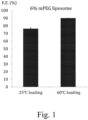
- Such formulation showed high PGE 1 encapsulation efficiency (about 90%) after loading at ambient temperature within a short period of time (10 minutes); and retained more PGE 1 than other formulations in IVR assay.
- Wistar rats were anesthetized by isoflurane and kept body temperature on a heating pad (36.5°C).
- cutaneous microvascular blood flow of toruli digitales on the digitus quintus of right caudal paw was recorded by Laser Doppler Flowmetry (MoorVMS LDF1, Moor Instruments Ltd) 5 minutes before intravenous administration of 3ug/kg of PGE 1 -CD or the liposomal compositions and then continuously recorded for another 20 minutes to monitor the response after dose.
- Raw data of flux value was recorded by software of moorVNS-PCV2.0 and exported to Excel file (Microsoft software) for data processing.
- the blood flow data was normalized and plotted on graphs, and the parameters BF 0 , BF max and AUC % were calculated, wherein BF 0 represents mean blood flow of baseline; BF max represents maximum blood flow post dose; AUC % represents the percentage of area under the curve from 0 to 20 min of blood flow compared to baseline AUC.
- both PL194 and PL157 caused higher BF max /BF 0 and larger AUC ratio in comparison to PGE 1 -CD.
- the liposomal composition according to the present disclosure indeed acquires an improved efficacy in comparison to the conventional prostaglandin composition.
Landscapes
- Health & Medical Sciences (AREA)
- Chemical & Material Sciences (AREA)
- Pharmacology & Pharmacy (AREA)
- Veterinary Medicine (AREA)
- Public Health (AREA)
- General Health & Medical Sciences (AREA)
- Animal Behavior & Ethology (AREA)
- Life Sciences & Earth Sciences (AREA)
- Medicinal Chemistry (AREA)
- General Chemical & Material Sciences (AREA)
- Chemical Kinetics & Catalysis (AREA)
- Engineering & Computer Science (AREA)
- Epidemiology (AREA)
- Nuclear Medicine, Radiotherapy & Molecular Imaging (AREA)
- Bioinformatics & Cheminformatics (AREA)
- Organic Chemistry (AREA)
- Dispersion Chemistry (AREA)
- Pulmonology (AREA)
- Heart & Thoracic Surgery (AREA)
- Cardiology (AREA)
- Oil, Petroleum & Natural Gas (AREA)
- Reproductive Health (AREA)
- Endocrinology (AREA)
- Pregnancy & Childbirth (AREA)
- Gynecology & Obstetrics (AREA)
- Medicinal Preparation (AREA)
- Pharmaceuticals Containing Other Organic And Inorganic Compounds (AREA)
- Manufacturing Of Micro-Capsules (AREA)
Claims (12)
- Verabreichungsvehikel, wobei das Verabreichungsvehikel ein Liposom in einem wässrigen Medium umfasst,wobei das Liposom einen Innenraum aufweist und der Innenraum:1) wässrig ist;2) von dem wässrigen Medium durch eine Membran getrennt ist, die ein Lipidgemisch umfasst, wobei das Lipidgemisch ein oder mehrere Lipide und ein von Polyethylenglykol abgeleitetes Lipid in einem molaren Prozentsatz von 0,5 bis 3 %, bezogen auf die Gesamtmenge des Lipidgemisches, enthält; und3) ein Salz einer schwachen Säure enthält;wobei das Liposom weiterhin eine Polyprotonensäure umfasst, die innerhalb des Liposoms in dem wässrigen Innenraum eingekapselt ist.
- Verabreichungsvehikel nach Anspruch 1, wobei die Polyprotonensäure eine organische dreibasische Säure ist.
- Verabreichungsvehikel nach Anspruch 1, wobei die Polyprotonensäure ausgewählt ist aus der Gruppe, bestehend aus Zitronensäure, Bernsteinsäure, Weinsäure und einer Kombination davon.
- Verabreichungsvehikel nach einem der Ansprüche 1 bis 3, wobei das Salz der schwachen Säure Natriumacetat, Kaliumacetat oder Calciumacetat ist.
- Verabreichungsvehikel nach einem der Ansprüche 1 bis 3, wobei das Salz der schwachen Säure in einer Konzentration von mindestens 100 mM und typischerweise zwischen 100 mM und 800 mM, vorzugsweise zwischen 200 mM und 800 mM und besonders bevorzugt zwischen 400 mM und 800 mM vorliegt.
- Liposomale Zusammensetzung, hergestellt durch ein Verfahren, umfassend:
Inkontaktbringen des Liposoms des Verabreichungsvehikels nach einem der Ansprüche 1 bis 3 mit einem milden sauren Mittel in einem wässrigen Medium für eine Zeit, die ausreicht, damit das milde saure Mittel in dem Liposom eingekapselt wird, um die liposomale Zusammensetzung zu erhalten, die ein Salz einer schwachen Säure und ein mildes saures Mittel enthält. - Liposomale Zusammensetzung nach Anspruch 6, wobei das schwach saure Salz Natriumacetat, Kaliumacetat oder Calciumacetat ist.
- Liposomale Zusammensetzung nach einem der Ansprüche 6 bis 7, wobei das Salz der schwachen Säure in einer Konzentration von mindestens 100 mM; und
typischerweise zwischen 100 mM und 800 mM; vorzugsweise zwischen 200 mM und 800 mM; und besonders bevorzugt zwischen 400 mM und 800 mM vorliegt. - Liposomale Zusammensetzung nach Anspruch 6, wobei die Polyprotonensäure in einer Konzentration von weniger als 50 mM, vorzugsweise weniger als 10 mM, bevorzugter zwischen 0,01 mM und 5 mM, noch bevorzugter zwischen 0,1 mM und 3 mM und besonders bevorzugt zwischen 1,5 mM und 2,5 mM vorliegt.
- Liposomale Zusammensetzung nach Anspruch 6, wobei das molare Verhältnis des milden sauren Mittels zur Menge der Lipide der liposomalen Zusammensetzung mindestens 0,001:1 und vorzugsweise 0,001:1 bis 0,05:1 beträgt.
- Liposomale Zusammensetzung nach Anspruch 6, wobei das milde saure Mittel ein Arachidonsäuremetabolit ist.
- Liposomale Zusammensetzung nach Anspruch 6, wobei das milde saure Mittel ein Prostaglandin ist.
Priority Applications (1)
| Application Number | Priority Date | Filing Date | Title |
|---|---|---|---|
| EP24218572.6A EP4552632A1 (de) | 2016-08-08 | 2017-08-08 | Liposomale zusammensetzung mit einem milden sauren wirkstoff |
Applications Claiming Priority (3)
| Application Number | Priority Date | Filing Date | Title |
|---|---|---|---|
| US201662372096P | 2016-08-08 | 2016-08-08 | |
| US201662375698P | 2016-08-16 | 2016-08-16 | |
| PCT/US2017/045939 WO2018031568A1 (en) | 2016-08-08 | 2017-08-08 | Liposomal composition containing mild acidic active agent |
Related Child Applications (2)
| Application Number | Title | Priority Date | Filing Date |
|---|---|---|---|
| EP24218572.6A Division-Into EP4552632A1 (de) | 2016-08-08 | 2017-08-08 | Liposomale zusammensetzung mit einem milden sauren wirkstoff |
| EP24218572.6A Division EP4552632A1 (de) | 2016-08-08 | 2017-08-08 | Liposomale zusammensetzung mit einem milden sauren wirkstoff |
Publications (2)
| Publication Number | Publication Date |
|---|---|
| EP3496704A1 EP3496704A1 (de) | 2019-06-19 |
| EP3496704B1 true EP3496704B1 (de) | 2025-01-29 |
Family
ID=59656225
Family Applications (2)
| Application Number | Title | Priority Date | Filing Date |
|---|---|---|---|
| EP24218572.6A Pending EP4552632A1 (de) | 2016-08-08 | 2017-08-08 | Liposomale zusammensetzung mit einem milden sauren wirkstoff |
| EP17754572.0A Active EP3496704B1 (de) | 2016-08-08 | 2017-08-08 | Liposomale zusammensetzung enthaltend einen schwach sauren wirkstoff |
Family Applications Before (1)
| Application Number | Title | Priority Date | Filing Date |
|---|---|---|---|
| EP24218572.6A Pending EP4552632A1 (de) | 2016-08-08 | 2017-08-08 | Liposomale zusammensetzung mit einem milden sauren wirkstoff |
Country Status (8)
| Country | Link |
|---|---|
| US (3) | US20190160009A1 (de) |
| EP (2) | EP4552632A1 (de) |
| JP (1) | JP7062639B2 (de) |
| CN (1) | CN109562068B (de) |
| AU (1) | AU2017308827B2 (de) |
| CA (1) | CA3032687C (de) |
| TW (1) | TWI754659B (de) |
| WO (1) | WO2018031568A1 (de) |
Families Citing this family (3)
| Publication number | Priority date | Publication date | Assignee | Title |
|---|---|---|---|---|
| EP3658134A4 (de) | 2017-07-24 | 2021-05-05 | Pharmosa Biopharm Inc. | Liposomzusammensetzungen mit schwachsauren arzneimitteln und verwendungen davon |
| EP3790554B1 (de) * | 2018-05-07 | 2025-10-15 | Pharmosa Biopharm Inc. | Pharmazeutische zusammensetzung zur kontrollierten freisetzung von treprostinil |
| MX2021013842A (es) | 2019-05-14 | 2022-01-18 | Pharmosa Biopharm Inc | Composicion farmaceutica de un farmaco de acido debil y metodos de administracion. |
Family Cites Families (17)
| Publication number | Priority date | Publication date | Assignee | Title |
|---|---|---|---|---|
| JPH0818989B2 (ja) | 1984-01-12 | 1996-02-28 | 株式会社ミドリ十字 | 脂肪乳剤中のプロスタグランジンの安定化方法 |
| FR2591105B1 (fr) * | 1985-12-11 | 1989-03-24 | Moet Hennessy Rech | Composition pharmaceutique, notamment dermatologique, ou cosmetique, a base de phases lamellaires lipidiques hydratees ou de liposomes contenant un retinoide ou un analogue structural dudit retinoide tel qu'un carotenoide. |
| US5925375A (en) * | 1987-05-22 | 1999-07-20 | The Liposome Company, Inc. | Therapeutic use of multilamellar liposomal prostaglandin formulations |
| JPH0720857B2 (ja) | 1988-08-11 | 1995-03-08 | テルモ株式会社 | リポソームおよびその製法 |
| US5013556A (en) | 1989-10-20 | 1991-05-07 | Liposome Technology, Inc. | Liposomes with enhanced circulation time |
| EP0825852B1 (de) * | 1995-04-18 | 2004-07-07 | Yissum Research Development Company Of The Hebrew University Of Jerusalem | Verfahren zur wirkstoffbeladung von lipsomen und zusammensetzung |
| AU2230497A (en) * | 1996-02-26 | 1997-09-10 | Daiichi Pharmaceutical Co., Ltd. | Liposome and liposome dispersion |
| JP3822479B2 (ja) * | 2001-10-10 | 2006-09-20 | 株式会社カネカ | 還元型補酵素q水溶液の安定化組成 |
| CN100350912C (zh) * | 2004-08-27 | 2007-11-28 | 中国科学院生物物理研究所 | 一种新型的聚乙二醇衍生化磷脂包载前列腺素e1的纳米微粒给药系统 |
| US7744920B2 (en) * | 2004-09-09 | 2010-06-29 | Hadasit Medical Research Services & Development Limited | Use of liposomal glucocorticoids for treating inflammatory states |
| CN101108188A (zh) * | 2006-07-17 | 2008-01-23 | 广州瑞济生物技术有限公司 | 一种新型的注射用长循环前列地尔脂质体给药系统及其制备方法 |
| CN101646462A (zh) * | 2007-03-30 | 2010-02-10 | 大塚制药株式会社 | 药物转运控制用经肺给药脂质体 |
| CN102151246A (zh) * | 2010-02-11 | 2011-08-17 | 王汀 | 一种新的脂质体制备方法 |
| US9445993B2 (en) * | 2012-04-16 | 2016-09-20 | Rutgers, The State University Of New Jersey | Nanotechnology approach for inhalation therapies |
| KR102554628B1 (ko) * | 2013-02-01 | 2023-07-12 | 존원 파마, 인코포레이티드 | 리포좀 내로 난수용성 약물의 원격 부하 |
| US10004688B2 (en) * | 2014-04-10 | 2018-06-26 | Yissum Research Development Company Of The Hebrew University Of Jerusalem Ltd. | Liposomal mupirocin |
| WO2016025559A1 (en) * | 2014-08-13 | 2016-02-18 | Zoneone Pharma, Inc. | Pharmaceutical formulations of and methods to prepare chelating agents for efficient metal removal treatment systems |
-
2017
- 2017-08-07 TW TW106126551A patent/TWI754659B/zh active
- 2017-08-08 JP JP2019504846A patent/JP7062639B2/ja active Active
- 2017-08-08 CA CA3032687A patent/CA3032687C/en active Active
- 2017-08-08 EP EP24218572.6A patent/EP4552632A1/de active Pending
- 2017-08-08 WO PCT/US2017/045939 patent/WO2018031568A1/en not_active Ceased
- 2017-08-08 EP EP17754572.0A patent/EP3496704B1/de active Active
- 2017-08-08 CN CN201780047557.2A patent/CN109562068B/zh active Active
- 2017-08-08 AU AU2017308827A patent/AU2017308827B2/en active Active
- 2017-08-08 US US16/320,851 patent/US20190160009A1/en not_active Abandoned
-
2021
- 2021-08-04 US US17/393,949 patent/US12419837B2/en active Active
-
2025
- 2025-08-27 US US19/310,996 patent/US20250387332A1/en active Pending
Also Published As
| Publication number | Publication date |
|---|---|
| CA3032687C (en) | 2025-02-04 |
| US20210393525A1 (en) | 2021-12-23 |
| AU2017308827B2 (en) | 2023-02-02 |
| US20190160009A1 (en) | 2019-05-30 |
| CN109562068B (zh) | 2022-07-22 |
| CN109562068A (zh) | 2019-04-02 |
| CA3032687A1 (en) | 2018-02-15 |
| WO2018031568A1 (en) | 2018-02-15 |
| US20250387332A1 (en) | 2025-12-25 |
| AU2017308827A1 (en) | 2019-02-07 |
| JP2019527692A (ja) | 2019-10-03 |
| US12419837B2 (en) | 2025-09-23 |
| TW201806585A (zh) | 2018-03-01 |
| EP4552632A1 (de) | 2025-05-14 |
| EP3496704A1 (de) | 2019-06-19 |
| JP7062639B2 (ja) | 2022-05-06 |
| TWI754659B (zh) | 2022-02-11 |
Similar Documents
| Publication | Publication Date | Title |
|---|---|---|
| US20250387332A1 (en) | Liposomal composition containing mild acidic active agent | |
| TWI728255B (zh) | 包含弱酸藥物之脂質體組成物及其用途 | |
| US12059499B2 (en) | Liposome loading | |
| US5965156A (en) | Amphotericin B liposome preparation | |
| CN103479578B (zh) | 一种马来酸匹杉琼的脂质体制剂及其制备工艺 | |
| US20170258722A1 (en) | Encapsulating liposomes | |
| EP4209229A1 (de) | Liposomzubereitung mit antibakteriellem wirkstoff | |
| US12403092B2 (en) | Liposomal doxorubicin formulation, method for producing a liposomal doxorubicin formulation and use of a liposomal doxorubicin formulation as a medicament | |
| HK1262624A1 (en) | Liposomal composition containing mild acidic active agent | |
| HK1262624B (en) | Liposomal composition containing mild acidic active agent | |
| TWI850208B (zh) | 緩釋型翠普登組成物及其經皮下或類似途徑使用之方法 | |
| CA3024951C (en) | Liposome loading | |
| WO2025235614A1 (en) | Liposome loading with polyanions | |
| RU2778886C2 (ru) | Липосомальные композиции, содержащие слабокислотные лекарственные средства, и их применение | |
| HK1255538B (en) | Liposome loading | |
| HK40032713A (en) | Liposome compositions comprising weak acid drugs and uses thereof |
Legal Events
| Date | Code | Title | Description |
|---|---|---|---|
| STAA | Information on the status of an ep patent application or granted ep patent |
Free format text: STATUS: UNKNOWN |
|
| STAA | Information on the status of an ep patent application or granted ep patent |
Free format text: STATUS: THE INTERNATIONAL PUBLICATION HAS BEEN MADE |
|
| PUAI | Public reference made under article 153(3) epc to a published international application that has entered the european phase |
Free format text: ORIGINAL CODE: 0009012 |
|
| STAA | Information on the status of an ep patent application or granted ep patent |
Free format text: STATUS: REQUEST FOR EXAMINATION WAS MADE |
|
| 17P | Request for examination filed |
Effective date: 20190311 |
|
| AK | Designated contracting states |
Kind code of ref document: A1 Designated state(s): AL AT BE BG CH CY CZ DE DK EE ES FI FR GB GR HR HU IE IS IT LI LT LU LV MC MK MT NL NO PL PT RO RS SE SI SK SM TR |
|
| AX | Request for extension of the european patent |
Extension state: BA ME |
|
| DAV | Request for validation of the european patent (deleted) | ||
| DAX | Request for extension of the european patent (deleted) | ||
| STAA | Information on the status of an ep patent application or granted ep patent |
Free format text: STATUS: EXAMINATION IS IN PROGRESS |
|
| 17Q | First examination report despatched |
Effective date: 20200423 |
|
| GRAP | Despatch of communication of intention to grant a patent |
Free format text: ORIGINAL CODE: EPIDOSNIGR1 |
|
| STAA | Information on the status of an ep patent application or granted ep patent |
Free format text: STATUS: GRANT OF PATENT IS INTENDED |
|
| INTG | Intention to grant announced |
Effective date: 20240906 |
|
| RAP3 | Party data changed (applicant data changed or rights of an application transferred) |
Owner name: TLC BIOPHARMACEUTICALS, INC. Owner name: TAIWAN LIPOSOME CO., LTD. |
|
| RIN1 | Information on inventor provided before grant (corrected) |
Inventor name: HONG, KEELUNG Inventor name: CHEN, HE-RU Inventor name: HUANG, KE-MING |
|
| RAP3 | Party data changed (applicant data changed or rights of an application transferred) |
Owner name: TLC BIOPHARMACEUTICALS, INC. Owner name: TAIWAN LIPOSOME CO., LTD. |
|
| GRAS | Grant fee paid |
Free format text: ORIGINAL CODE: EPIDOSNIGR3 |
|
| GRAA | (expected) grant |
Free format text: ORIGINAL CODE: 0009210 |
|
| STAA | Information on the status of an ep patent application or granted ep patent |
Free format text: STATUS: THE PATENT HAS BEEN GRANTED |
|
| AK | Designated contracting states |
Kind code of ref document: B1 Designated state(s): AL AT BE BG CH CY CZ DE DK EE ES FI FR GB GR HR HU IE IS IT LI LT LU LV MC MK MT NL NO PL PT RO RS SE SI SK SM TR |
|
| REG | Reference to a national code |
Ref country code: GB Ref legal event code: FG4D |
|
| REG | Reference to a national code |
Ref country code: CH Ref legal event code: EP |
|
| REG | Reference to a national code |
Ref country code: DE Ref legal event code: R096 Ref document number: 602017087547 Country of ref document: DE |
|
| REG | Reference to a national code |
Ref country code: IE Ref legal event code: FG4D |
|
| REG | Reference to a national code |
Ref country code: NL Ref legal event code: MP Effective date: 20250129 |
|
| PG25 | Lapsed in a contracting state [announced via postgrant information from national office to epo] |
Ref country code: NL Free format text: LAPSE BECAUSE OF FAILURE TO SUBMIT A TRANSLATION OF THE DESCRIPTION OR TO PAY THE FEE WITHIN THE PRESCRIBED TIME-LIMIT Effective date: 20250129 |
|
| PG25 | Lapsed in a contracting state [announced via postgrant information from national office to epo] |
Ref country code: RS Free format text: LAPSE BECAUSE OF FAILURE TO SUBMIT A TRANSLATION OF THE DESCRIPTION OR TO PAY THE FEE WITHIN THE PRESCRIBED TIME-LIMIT Effective date: 20250429 |
|
| PG25 | Lapsed in a contracting state [announced via postgrant information from national office to epo] |
Ref country code: FI Free format text: LAPSE BECAUSE OF FAILURE TO SUBMIT A TRANSLATION OF THE DESCRIPTION OR TO PAY THE FEE WITHIN THE PRESCRIBED TIME-LIMIT Effective date: 20250129 |
|
| PG25 | Lapsed in a contracting state [announced via postgrant information from national office to epo] |
Ref country code: PL Free format text: LAPSE BECAUSE OF FAILURE TO SUBMIT A TRANSLATION OF THE DESCRIPTION OR TO PAY THE FEE WITHIN THE PRESCRIBED TIME-LIMIT Effective date: 20250129 |
|
| PG25 | Lapsed in a contracting state [announced via postgrant information from national office to epo] |
Ref country code: ES Free format text: LAPSE BECAUSE OF FAILURE TO SUBMIT A TRANSLATION OF THE DESCRIPTION OR TO PAY THE FEE WITHIN THE PRESCRIBED TIME-LIMIT Effective date: 20250129 |
|
| REG | Reference to a national code |
Ref country code: LT Ref legal event code: MG9D |
|
| PG25 | Lapsed in a contracting state [announced via postgrant information from national office to epo] |
Ref country code: IS Free format text: LAPSE BECAUSE OF FAILURE TO SUBMIT A TRANSLATION OF THE DESCRIPTION OR TO PAY THE FEE WITHIN THE PRESCRIBED TIME-LIMIT Effective date: 20250529 Ref country code: NO Free format text: LAPSE BECAUSE OF FAILURE TO SUBMIT A TRANSLATION OF THE DESCRIPTION OR TO PAY THE FEE WITHIN THE PRESCRIBED TIME-LIMIT Effective date: 20250429 |
|
| REG | Reference to a national code |
Ref country code: AT Ref legal event code: MK05 Ref document number: 1762780 Country of ref document: AT Kind code of ref document: T Effective date: 20250129 |
|
| PG25 | Lapsed in a contracting state [announced via postgrant information from national office to epo] |
Ref country code: HR Free format text: LAPSE BECAUSE OF FAILURE TO SUBMIT A TRANSLATION OF THE DESCRIPTION OR TO PAY THE FEE WITHIN THE PRESCRIBED TIME-LIMIT Effective date: 20250129 |
|
| PG25 | Lapsed in a contracting state [announced via postgrant information from national office to epo] |
Ref country code: LV Free format text: LAPSE BECAUSE OF FAILURE TO SUBMIT A TRANSLATION OF THE DESCRIPTION OR TO PAY THE FEE WITHIN THE PRESCRIBED TIME-LIMIT Effective date: 20250129 Ref country code: PT Free format text: LAPSE BECAUSE OF FAILURE TO SUBMIT A TRANSLATION OF THE DESCRIPTION OR TO PAY THE FEE WITHIN THE PRESCRIBED TIME-LIMIT Effective date: 20250529 |
|
| PG25 | Lapsed in a contracting state [announced via postgrant information from national office to epo] |
Ref country code: BG Free format text: LAPSE BECAUSE OF FAILURE TO SUBMIT A TRANSLATION OF THE DESCRIPTION OR TO PAY THE FEE WITHIN THE PRESCRIBED TIME-LIMIT Effective date: 20250129 Ref country code: GR Free format text: LAPSE BECAUSE OF FAILURE TO SUBMIT A TRANSLATION OF THE DESCRIPTION OR TO PAY THE FEE WITHIN THE PRESCRIBED TIME-LIMIT Effective date: 20250430 |
|
| PG25 | Lapsed in a contracting state [announced via postgrant information from national office to epo] |
Ref country code: AT Free format text: LAPSE BECAUSE OF FAILURE TO SUBMIT A TRANSLATION OF THE DESCRIPTION OR TO PAY THE FEE WITHIN THE PRESCRIBED TIME-LIMIT Effective date: 20250129 |
|
| PG25 | Lapsed in a contracting state [announced via postgrant information from national office to epo] |
Ref country code: SE Free format text: LAPSE BECAUSE OF FAILURE TO SUBMIT A TRANSLATION OF THE DESCRIPTION OR TO PAY THE FEE WITHIN THE PRESCRIBED TIME-LIMIT Effective date: 20250129 |
|
| PG25 | Lapsed in a contracting state [announced via postgrant information from national office to epo] |
Ref country code: SM Free format text: LAPSE BECAUSE OF FAILURE TO SUBMIT A TRANSLATION OF THE DESCRIPTION OR TO PAY THE FEE WITHIN THE PRESCRIBED TIME-LIMIT Effective date: 20250129 |
|
| PG25 | Lapsed in a contracting state [announced via postgrant information from national office to epo] |
Ref country code: DK Free format text: LAPSE BECAUSE OF FAILURE TO SUBMIT A TRANSLATION OF THE DESCRIPTION OR TO PAY THE FEE WITHIN THE PRESCRIBED TIME-LIMIT Effective date: 20250129 |
|
| PG25 | Lapsed in a contracting state [announced via postgrant information from national office to epo] |
Ref country code: IT Free format text: LAPSE BECAUSE OF FAILURE TO SUBMIT A TRANSLATION OF THE DESCRIPTION OR TO PAY THE FEE WITHIN THE PRESCRIBED TIME-LIMIT Effective date: 20250129 |
|
| PG25 | Lapsed in a contracting state [announced via postgrant information from national office to epo] |
Ref country code: CZ Free format text: LAPSE BECAUSE OF FAILURE TO SUBMIT A TRANSLATION OF THE DESCRIPTION OR TO PAY THE FEE WITHIN THE PRESCRIBED TIME-LIMIT Effective date: 20250129 Ref country code: EE Free format text: LAPSE BECAUSE OF FAILURE TO SUBMIT A TRANSLATION OF THE DESCRIPTION OR TO PAY THE FEE WITHIN THE PRESCRIBED TIME-LIMIT Effective date: 20250129 |
|
| PG25 | Lapsed in a contracting state [announced via postgrant information from national office to epo] |
Ref country code: RO Free format text: LAPSE BECAUSE OF FAILURE TO SUBMIT A TRANSLATION OF THE DESCRIPTION OR TO PAY THE FEE WITHIN THE PRESCRIBED TIME-LIMIT Effective date: 20250129 |
|
| PG25 | Lapsed in a contracting state [announced via postgrant information from national office to epo] |
Ref country code: SK Free format text: LAPSE BECAUSE OF FAILURE TO SUBMIT A TRANSLATION OF THE DESCRIPTION OR TO PAY THE FEE WITHIN THE PRESCRIBED TIME-LIMIT Effective date: 20250129 |
|
| REG | Reference to a national code |
Ref country code: DE Ref legal event code: R097 Ref document number: 602017087547 Country of ref document: DE |
|
| PLBE | No opposition filed within time limit |
Free format text: ORIGINAL CODE: 0009261 |
|
| STAA | Information on the status of an ep patent application or granted ep patent |
Free format text: STATUS: NO OPPOSITION FILED WITHIN TIME LIMIT |
|
| REG | Reference to a national code |
Ref country code: CH Ref legal event code: L10 Free format text: ST27 STATUS EVENT CODE: U-0-0-L10-L00 (AS PROVIDED BY THE NATIONAL OFFICE) Effective date: 20251210 |
|
| 26N | No opposition filed |
Effective date: 20251030 |
|
| REG | Reference to a national code |
Ref country code: DE Ref legal event code: R119 Ref document number: 602017087547 Country of ref document: DE |
|
| REG | Reference to a national code |
Ref country code: CH Ref legal event code: H13 Free format text: ST27 STATUS EVENT CODE: U-0-0-H10-H13 (AS PROVIDED BY THE NATIONAL OFFICE) Effective date: 20260324 |
|
| PG25 | Lapsed in a contracting state [announced via postgrant information from national office to epo] |
Ref country code: MC Free format text: LAPSE BECAUSE OF FAILURE TO SUBMIT A TRANSLATION OF THE DESCRIPTION OR TO PAY THE FEE WITHIN THE PRESCRIBED TIME-LIMIT Effective date: 20250129 |
|
| PG25 | Lapsed in a contracting state [announced via postgrant information from national office to epo] |
Ref country code: LU Free format text: LAPSE BECAUSE OF NON-PAYMENT OF DUE FEES Effective date: 20250808 |
|
| PG25 | Lapsed in a contracting state [announced via postgrant information from national office to epo] |
Ref country code: CH Free format text: LAPSE BECAUSE OF NON-PAYMENT OF DUE FEES Effective date: 20250831 |
|
| GBPC | Gb: european patent ceased through non-payment of renewal fee |
Effective date: 20250808 |