EP3492015A1 - Vorrichtung und verfahren zur erkennung von gefühlen - Google Patents
Vorrichtung und verfahren zur erkennung von gefühlen Download PDFInfo
- Publication number
- EP3492015A1 EP3492015A1 EP18208815.3A EP18208815A EP3492015A1 EP 3492015 A1 EP3492015 A1 EP 3492015A1 EP 18208815 A EP18208815 A EP 18208815A EP 3492015 A1 EP3492015 A1 EP 3492015A1
- Authority
- EP
- European Patent Office
- Prior art keywords
- individual
- evaluation
- emotional state
- module
- emotion
- Prior art date
- Legal status (The legal status is an assumption and is not a legal conclusion. Google has not performed a legal analysis and makes no representation as to the accuracy of the status listed.)
- Withdrawn
Links
Images
Classifications
-
- A—HUMAN NECESSITIES
- A61—MEDICAL OR VETERINARY SCIENCE; HYGIENE
- A61B—DIAGNOSIS; SURGERY; IDENTIFICATION
- A61B5/00—Measuring for diagnostic purposes; Identification of persons
- A61B5/16—Devices for psychotechnics; Testing reaction times ; Devices for evaluating the psychological state
- A61B5/18—Devices for psychotechnics; Testing reaction times ; Devices for evaluating the psychological state for vehicle drivers or machine operators
-
- G—PHYSICS
- G06—COMPUTING OR CALCULATING; COUNTING
- G06V—IMAGE OR VIDEO RECOGNITION OR UNDERSTANDING
- G06V20/00—Scenes; Scene-specific elements
- G06V20/50—Context or environment of the image
- G06V20/59—Context or environment of the image inside of a vehicle, e.g. relating to seat occupancy, driver state or inner lighting conditions
- G06V20/597—Recognising the driver's state or behaviour, e.g. attention or drowsiness
Definitions
- the present invention generally relates to the detection of emotion of an individual.
- It relates more particularly to a device and an emotion detection method of an individual.
- the emotional state of an individual can lead to critical behavior changes, or even dangerous if the individual is driving a vehicle.
- motor vehicles include multiple systems that adapt to the driver and improve safety while driving.
- sensors placed on the steering wheel allow, from a measurement of the pressure exerted on the steering wheel, to estimate the state of loosening or crispation of the driver.
- different habits and experiences of drivers can lead to a poor appreciation of the emotional state of the individual.
- a device for detecting the physiological and emotional state of the driver of a motor vehicle comprises one or more cameras adapted to acquire images of the driver from different angles of view.
- a module then makes it possible to generate a three-dimensional model of the driver's face, another to generate a frontal view of the face and a third module makes it possible to detect the emotional state of the driver's driver from the movements of the face identified on a succession of images.
- the driver's emotional state can then be incorporated into any driving instructions.
- this device only allows the detection of extreme emotional states, that is, for which pronounced facial movements can be identified and compared to the movements recorded in the database.
- the present invention proposes to improve the determination of the emotional state of the driver of a motor vehicle.
- a device for emotion detection which comprises a video signal reception unit, a video signal analysis module designed to obtain a first evaluation of the emotional state of the individual, characterized in that it comprises a unit of receiving an audio signal, an audio signal analysis module configured to obtain a second assessment of the emotional state of the individual, and a combination module adapted to combine the first evaluation and the second evaluation to determine an evaluation. final state of the emotional state of the individual.
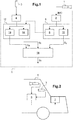
- the figure 1 represents an example of an embedded system comprising an emotion detection device 5, here in a motor vehicle (such as that shown in FIG. figure 2 ).
- the embedded system of the figure 1 comprises a video signal acquisition device 1, an audio signal acquisition device 3 and the aforementioned emotion detection device 5.
- the video signal acquisition device 1 comprises at least one camera, here an infrared camera.
- the video signal acquisition device may further comprise in this case an infrared emitting element (not shown here) irradiating the areas of the passenger compartment referred to by the aforementioned camera (in particular so that the acquisition device can function even in case of night driving).
- Each camera is arranged in the passenger compartment of the vehicle so as not to clutter the field of vision of a seated driver.
- Each camera is arranged to capture images of the driver's face from different angles of view.
- the video signal acquisition device 1 is for example located in the passenger compartment of the vehicle, in a region close to an upper part of the windshield, so as to acquire front images of the driver.
- the device for acquiring the audio signal 3 comprises at least one microphone. Each microphone is arranged in the cockpit closer to the individual so as to clearly capture the sound from said individual.
- the audio signal acquisition device 3 is for example located in a region adjacent to the headrest of the seat of the individual, so as to acquire the voice signal of the individual closest to his head.
- the emotion detection device 5 contains a reception module 2 of the video signal produced by the acquisition device 1. On the basis of the video signal received from the acquisition device 1, the reception module 2 delivers a data stream. representative of the images acquired by the video signal acquisition device 1.
- the emotion detection device 5 also contains a module 4 for receiving the audio signal produced by the acquisition device 3.
- the reception module 4 thus delivers a stream of data representative of the audio signal acquired by the device. acquisition 3.
- the emotion detection device 5 then comprises a video signal analysis module 6.
- This module is designed to receive the data from the video signal reception module 2 and then analyze them in order to obtain a first evaluation of the video signal. emotional state of the individual Sv.
- This module comprises here two elements: a module for detecting the movement of the lips 8 and a module for determining the first evaluation of the emotional state of the individual 10.
- the assessment of the emotional state of the individual can in practice be formed of a plurality of values, for example two values relating to the detected emotion.
- a first value relates to the qualification of the emotional state, for example joy, anger, surprise, etc. and a second value is relative to the intensity of this identified emotion.
- evaluation will group the first value and the second value, without distinguishing them explicitly.
- the module for determining the first assessment of the emotional state of the individual comprises a facial recognition algorithm.
- Said determination module 10 also comprises a tracking algorithm capable, from the video signal represented by the data transmitted by the reception unit of the video signal 2, to establish the aforementioned first evaluation of the emotional state of the individual.
- S V For example, we can refer to the article Michel and El Kaliouby's "Real time facial expression recognition in video using vector support", Proceedings of the 5th International Conference on Multimodal Interfaces, ACM, 2003 , for more details about this.
- the lip motion detection module 8 is in turn designed to identify the region of the driver's lips within the images represented by the data received within the reception module 4 and to detect any movement of its lips (indicative of the the driver speaks).
- the emotion detection device 5 also comprises a module for analyzing the audio signal 12.
- the operation of this module 12 is here engaged when a lip movement has been detected by the detection module 8 mentioned above.
- the analysis module of the audio signal 12 here comprises two elements: a module for analyzing the voice signal of the individual 14 and a semantic analysis module of the voice signal 16 designed to analyze the words contained in the audio signal .
- the semantic analysis module of the voice signal 16 is designed to obtain a second evaluation of the emotional state of an individual S p .
- Word and phrase recognition software identifies the content of the conversation.
- a language processing algorithm implemented in this module 16 then makes it possible to establish a lexical concordance between the words identified in the conversation and those listed in the processing algorithm.
- the processing algorithm then associates probabilities with the different keywords highlighted to characterize the emotional state of the individual.
- the algorithm categorizes and prioritizes the different detected emotions. For that, an algorithm of detection of the emotions contained in the module 16 calculates the weight associated with each emotion according to the detected words (number of words related to the emotion, intensity of the identified words) and makes it possible to classify the detected emotions by level .
- the algorithm then extracts the most relevant estimate that corresponds to the second assessment of the emotional state of the individual S p .
- speech Emotion Recognition by Ingale and Chaudhari, International Journal of Soft Computing and Engineering (IJSCE) 2.1 (2012): 235-238 and "Emotion detection from text” by Shivhare and Khethawat, arXiv preprint arXiv: 1205.4944 (2012) ), for more details on the semantic analysis of the voice signal.
- the module for analyzing the voice signal of the individual 14 is designed to obtain a third evaluation of the emotional state of the individual S t from the analysis of the tone of the voice of said individual.
- the tone of the voice of an individual also transcribes the emotional state of an individual.
- the extraction of the statistical characteristics of the modulation of the voice signal from an algorithm then makes it possible to estimate the third aforementioned evaluation of the emotional state of the individual S t .
- the emotion detection device 5 also comprises a combination module 18 designed to combine the first evaluation S V , the second evaluation S p and the third evaluation S t .
- the module 18 is based on the use of a fusion algorithm that makes it possible to generate, on the basis of the first evaluation S V , the second evaluation S p and the third evaluation S t , a final evaluation of the emotional state of the individual S f .
- the fusion algorithm can be chosen so that the module 18 operates (ie delivers the aforementioned final evaluation) as soon as one of the evaluations at least of the three (S V , S p , S t ) is available.
- the fusion algorithm could for example be based on a support vector machine (SVM), an artificial neural network, a decision tree, a Bayesian network or a statistical method, which correspond to a set of known digital techniques that will not be described in more detail.
- SVM support vector machine
- the merge algorithm will be adapted to directly use the only evaluation available as a final evaluation S f .
- the combination module 18 can generate the final evaluation of the emotional state of the individual S f by means of a weighting of the three evaluations S V , S p and S t .
- Said module 18 is then designed to combine the first evaluation S V by weighting it with a first coefficient ⁇ , the second evaluation S p by weighting it with a second coefficient ⁇ and the third evaluation S t with a third coefficient ⁇ .
- the weighting coefficients ⁇ , ⁇ , ⁇ are determined by taking into account the relative reliability of the first evaluation S V , the second evaluation S p and the third evaluation S t .
- the estimation of the reliability of the evaluations takes into account the general performance of the different evaluation methods as well as an estimation of the quality of each evaluation obtained in view of the input data.
- control module 7 it is possible for the control module 7 to memorize threshold values of the emotional state level beyond which the control module 7 triggers the communication of an alert to the individual and / or issues the commands necessary for driving. safely.
- the control module receives the first value and the second value concerning the detected emotion.
- the alerts sent to the driver are only relevant for certain predefined emotional states, such as anger, which are associated with high intensities.
- the control module 7 if the final evaluation of the emotional state of the individual S f has an intensity between two predetermined values ⁇ 1 and ⁇ 2 for one of the predefined emotional states, the control module 7 generates an automatic message warning the individual.
- the control module 7 activates an autonomous driving mode of the vehicle.
Landscapes
- Engineering & Computer Science (AREA)
- Health & Medical Sciences (AREA)
- Life Sciences & Earth Sciences (AREA)
- Physics & Mathematics (AREA)
- Pathology (AREA)
- Medical Informatics (AREA)
- Psychiatry (AREA)
- Psychology (AREA)
- Social Psychology (AREA)
- Educational Technology (AREA)
- Developmental Disabilities (AREA)
- Biophysics (AREA)
- Child & Adolescent Psychology (AREA)
- Biomedical Technology (AREA)
- Heart & Thoracic Surgery (AREA)
- Hospice & Palliative Care (AREA)
- Molecular Biology (AREA)
- Surgery (AREA)
- Animal Behavior & Ethology (AREA)
- General Health & Medical Sciences (AREA)
- Public Health (AREA)
- Veterinary Medicine (AREA)
- General Physics & Mathematics (AREA)
- Multimedia (AREA)
- Theoretical Computer Science (AREA)
- Measurement Of The Respiration, Hearing Ability, Form, And Blood Characteristics Of Living Organisms (AREA)
Applications Claiming Priority (1)
| Application Number | Priority Date | Filing Date | Title |
|---|---|---|---|
| FR1761351A FR3074336B1 (fr) | 2017-11-29 | 2017-11-29 | Dispositif et procede de detection d'emotion |
Publications (1)
| Publication Number | Publication Date |
|---|---|
| EP3492015A1 true EP3492015A1 (de) | 2019-06-05 |
Family
ID=62091952
Family Applications (1)
| Application Number | Title | Priority Date | Filing Date |
|---|---|---|---|
| EP18208815.3A Withdrawn EP3492015A1 (de) | 2017-11-29 | 2018-11-28 | Vorrichtung und verfahren zur erkennung von gefühlen |
Country Status (2)
| Country | Link |
|---|---|
| EP (1) | EP3492015A1 (de) |
| FR (1) | FR3074336B1 (de) |
Cited By (2)
| Publication number | Priority date | Publication date | Assignee | Title |
|---|---|---|---|---|
| DE102022001264A1 (de) | 2022-04-12 | 2022-06-02 | Mercedes-Benz Group AG | Verfahren zur Ausgabe an Insassen eines Fahrzeuges angepasster Kommunikationsinhalte |
| CN116620299A (zh) * | 2023-06-28 | 2023-08-22 | 中国第一汽车股份有限公司 | 座舱场景切换方法、系统、车辆及存储介质 |
Families Citing this family (1)
| Publication number | Priority date | Publication date | Assignee | Title |
|---|---|---|---|---|
| CN114155882B (zh) * | 2021-11-30 | 2023-08-22 | 浙江大学 | 一种基于语音识别的“路怒”情绪判断方法和装置 |
Citations (3)
| Publication number | Priority date | Publication date | Assignee | Title |
|---|---|---|---|---|
| US20100134302A1 (en) * | 2008-12-01 | 2010-06-03 | Electronics And Telecommunications Research Institute | System and method for controlling emotion of car driver |
| FR3040816A1 (fr) | 2015-09-07 | 2017-03-10 | Peugeot Citroen Automobiles Sa | Dispositif et procede de detection de l’etat emotionnel d’un conducteur |
| WO2017054871A1 (en) * | 2015-09-30 | 2017-04-06 | Centro Studi S.R.L. | Emotional/behavioural/psychological state estimation system |
-
2017
- 2017-11-29 FR FR1761351A patent/FR3074336B1/fr active Active
-
2018
- 2018-11-28 EP EP18208815.3A patent/EP3492015A1/de not_active Withdrawn
Patent Citations (3)
| Publication number | Priority date | Publication date | Assignee | Title |
|---|---|---|---|---|
| US20100134302A1 (en) * | 2008-12-01 | 2010-06-03 | Electronics And Telecommunications Research Institute | System and method for controlling emotion of car driver |
| FR3040816A1 (fr) | 2015-09-07 | 2017-03-10 | Peugeot Citroen Automobiles Sa | Dispositif et procede de detection de l’etat emotionnel d’un conducteur |
| WO2017054871A1 (en) * | 2015-09-30 | 2017-04-06 | Centro Studi S.R.L. | Emotional/behavioural/psychological state estimation system |
Non-Patent Citations (4)
| Title |
|---|
| BUSSO; LEE; NARAYANAN: "Analysis of Emotionally Salient Aspects of Fundamental Frequency for Emotion Détection", IEEE TRANSACTIONS ON AUDIO, SPEECH, AND LANGUAGE PROCESSING, vol. 17, no. 4, May 2009 (2009-05-01), pages 582 - 596, XP011253707, DOI: doi:10.1109/TASL.2008.2009578 |
| INGALE; CHAUDHARI: "Speech émotion récognition", INTERNATIONAL JOURNAL OF SOFT COMPUTING AND ENGINEERING (IJSCE, vol. 2.1, 2012, pages 235 - 238 |
| MICHEL; EL KALIOUBY: "Proceedings of the 5th international conférence on Multimodal interfaces", 2003, ACM, article "Real time facial expression récognition in video using support vector machines" |
| SHIVHARE; KHETHAWAT: "Emotion détection from text", ARXIV PREPRINT ARXIV : 1205.4944, 2012 |
Cited By (2)
| Publication number | Priority date | Publication date | Assignee | Title |
|---|---|---|---|---|
| DE102022001264A1 (de) | 2022-04-12 | 2022-06-02 | Mercedes-Benz Group AG | Verfahren zur Ausgabe an Insassen eines Fahrzeuges angepasster Kommunikationsinhalte |
| CN116620299A (zh) * | 2023-06-28 | 2023-08-22 | 中国第一汽车股份有限公司 | 座舱场景切换方法、系统、车辆及存储介质 |
Also Published As
| Publication number | Publication date |
|---|---|
| FR3074336A1 (fr) | 2019-05-31 |
| FR3074336B1 (fr) | 2020-07-10 |
Similar Documents
| Publication | Publication Date | Title |
|---|---|---|
| EP3755597B1 (de) | Verfahren zur erkennung von notfällen und aggression im strassenverkehr | |
| JP7192222B2 (ja) | 発話システム | |
| CN115205729A (zh) | 基于多模态特征融合的行为识别方法、系统 | |
| EP3492015A1 (de) | Vorrichtung und verfahren zur erkennung von gefühlen | |
| FR3099610A1 (fr) | Dispositif d’evaluation d’emotion | |
| JP2017007652A (ja) | 言語制御のための文脈を認識する方法、言語制御のための言語制御信号を決定する方法、および方法を実施するための装置 | |
| EP3424030A1 (de) | Personalisierte vorrichtung und verfahren zur überwachung eines kraftfahrzeugfahrers | |
| CN112154490B (zh) | 用于估计车辆座舱内部的场景的车内系统 | |
| JP2020091302A (ja) | 感情推定装置、感情推定方法、およびプログラム | |
| EP3259165B1 (de) | Verfahren und vorrichtung zum erkennen einer änderung des verhaltens eines fahrers eines kraftfahrzeugs | |
| EP2772916A1 (de) | Verfahren zur Geräuschdämpfung eines Audiosignals mit Hilfe eines Algorithmus mit variabler Spektralverstärkung mit dynamisch modulierbarer Härte | |
| FR2956701A1 (fr) | Systeme de detection et de localisation de pannes et moteur comportant un tel systeme | |
| WO2017149046A1 (fr) | Dispositif et méthode de surveillance d'un conducteur d'un véhicule de transport | |
| CN111325087B (zh) | 信息处理装置以及计算机可读存储介质 | |
| CN113919386B (zh) | 情绪推断装置、情绪推断方法以及非暂时性存储介质 | |
| CN111267864A (zh) | 信息处理系统、程序和控制方法 | |
| WO2017137612A1 (fr) | Dispositif et méthode anti-collision pour un véhicule automobile | |
| FR3131776A1 (fr) | Détection d’anomalies de mesure par filtre de Kalman appliquée à la navigation | |
| WO2016156678A1 (fr) | Procédé de commande, dispositif de commande, système et véhicule automobile comprenant un tel dispositif de commande | |
| CN117116268B (zh) | 语音识别的方法、装置、电子设备及可读存储介质 | |
| FR3057516A1 (fr) | Dispositif de prevention des situations dangereuses pour un conducteur d'un vehicule de transport et procede associe | |
| FR3057517A1 (fr) | Dispositif de prevention des situations dangereuses pour un conducteur d'un vehicule de transport et procede associe | |
| FR3079652A1 (fr) | Procede d'evaluation d'une distance, systeme d'evaluation associe et systeme de gestion d'un coussin gonflable | |
| EP3218219B1 (de) | Mensch-maschine-schnittstelle und verfahren zur steuerung der funktionen eines fahrzeugs durch detektion von bewegung und/oder ausdruck des fahrers | |
| JPWO2020144857A1 (ja) | 情報処理装置、プログラム及び情報処理方法 |
Legal Events
| Date | Code | Title | Description |
|---|---|---|---|
| PUAI | Public reference made under article 153(3) epc to a published international application that has entered the european phase |
Free format text: ORIGINAL CODE: 0009012 |
|
| STAA | Information on the status of an ep patent application or granted ep patent |
Free format text: STATUS: THE APPLICATION HAS BEEN PUBLISHED |
|
| AK | Designated contracting states |
Kind code of ref document: A1 Designated state(s): AL AT BE BG CH CY CZ DE DK EE ES FI FR GB GR HR HU IE IS IT LI LT LU LV MC MK MT NL NO PL PT RO RS SE SI SK SM TR |
|
| AX | Request for extension of the european patent |
Extension state: BA ME |
|
| STAA | Information on the status of an ep patent application or granted ep patent |
Free format text: STATUS: REQUEST FOR EXAMINATION WAS MADE |
|
| 17P | Request for examination filed |
Effective date: 20191205 |
|
| RBV | Designated contracting states (corrected) |
Designated state(s): AL AT BE BG CH CY CZ DE DK EE ES FI FR GB GR HR HU IE IS IT LI LT LU LV MC MK MT NL NO PL PT RO RS SE SI SK SM TR |
|
| STAA | Information on the status of an ep patent application or granted ep patent |
Free format text: STATUS: EXAMINATION IS IN PROGRESS |
|
| 17Q | First examination report despatched |
Effective date: 20210301 |
|
| STAA | Information on the status of an ep patent application or granted ep patent |
Free format text: STATUS: THE APPLICATION IS DEEMED TO BE WITHDRAWN |
|
| 18D | Application deemed to be withdrawn |
Effective date: 20210713 |