EP3487795B1 - Managing sample exposure to air on an automation system for performing clinical laboratory in-vitro diagnostics - Google Patents
Managing sample exposure to air on an automation system for performing clinical laboratory in-vitro diagnostics Download PDFInfo
- Publication number
- EP3487795B1 EP3487795B1 EP17831811.9A EP17831811A EP3487795B1 EP 3487795 B1 EP3487795 B1 EP 3487795B1 EP 17831811 A EP17831811 A EP 17831811A EP 3487795 B1 EP3487795 B1 EP 3487795B1
- Authority
- EP
- European Patent Office
- Prior art keywords
- sample
- container
- decapped
- air
- exposure
- Prior art date
- Legal status (The legal status is an assumption and is not a legal conclusion. Google has not performed a legal analysis and makes no representation as to the accuracy of the status listed.)
- Active
Links
Images


Classifications
-
- G—PHYSICS
- G01—MEASURING; TESTING
- G01N—INVESTIGATING OR ANALYSING MATERIALS BY DETERMINING THEIR CHEMICAL OR PHYSICAL PROPERTIES
- G01N35/00—Automatic analysis not limited to methods or materials provided for in any single one of groups G01N1/00 - G01N33/00; Handling materials therefor
- G01N35/02—Automatic analysis not limited to methods or materials provided for in any single one of groups G01N1/00 - G01N33/00; Handling materials therefor using a plurality of sample containers moved by a conveyor system past one or more treatment or analysis stations
- G01N35/04—Details of the conveyor system
-
- G—PHYSICS
- G01—MEASURING; TESTING
- G01N—INVESTIGATING OR ANALYSING MATERIALS BY DETERMINING THEIR CHEMICAL OR PHYSICAL PROPERTIES
- G01N35/00—Automatic analysis not limited to methods or materials provided for in any single one of groups G01N1/00 - G01N33/00; Handling materials therefor
- G01N35/00584—Control arrangements for automatic analysers
- G01N35/00722—Communications; Identification
- G01N35/00732—Identification of carriers, materials or components in automatic analysers
-
- G—PHYSICS
- G01—MEASURING; TESTING
- G01N—INVESTIGATING OR ANALYSING MATERIALS BY DETERMINING THEIR CHEMICAL OR PHYSICAL PROPERTIES
- G01N35/00—Automatic analysis not limited to methods or materials provided for in any single one of groups G01N1/00 - G01N33/00; Handling materials therefor
- G01N35/00584—Control arrangements for automatic analysers
- G01N35/0092—Scheduling
- G01N35/0095—Scheduling introducing urgent samples with priority, e.g. Short Turn Around Time Samples [STATS]
-
- G—PHYSICS
- G01—MEASURING; TESTING
- G01N—INVESTIGATING OR ANALYSING MATERIALS BY DETERMINING THEIR CHEMICAL OR PHYSICAL PROPERTIES
- G01N35/00—Automatic analysis not limited to methods or materials provided for in any single one of groups G01N1/00 - G01N33/00; Handling materials therefor
- G01N2035/00178—Special arrangements of analysers
- G01N2035/00277—Special precautions to avoid contamination (e.g. enclosures, glove- boxes, sealed sample carriers, disposal of contaminated material)
- G01N2035/00287—Special precautions to avoid contamination (e.g. enclosures, glove- boxes, sealed sample carriers, disposal of contaminated material) movable lid/cover for sample or reaction tubes
-
- G—PHYSICS
- G01—MEASURING; TESTING
- G01N—INVESTIGATING OR ANALYSING MATERIALS BY DETERMINING THEIR CHEMICAL OR PHYSICAL PROPERTIES
- G01N35/00—Automatic analysis not limited to methods or materials provided for in any single one of groups G01N1/00 - G01N33/00; Handling materials therefor
- G01N35/02—Automatic analysis not limited to methods or materials provided for in any single one of groups G01N1/00 - G01N33/00; Handling materials therefor using a plurality of sample containers moved by a conveyor system past one or more treatment or analysis stations
- G01N35/04—Details of the conveyor system
- G01N2035/0401—Sample carriers, cuvettes or reaction vessels
- G01N2035/0403—Sample carriers with closing or sealing means
- G01N2035/0405—Sample carriers with closing or sealing means manipulating closing or opening means, e.g. stoppers, screw caps, lids or covers
Definitions
- the present invention relates generally to methods, systems, and apparatuses for managing a sample's exposure to air in an automated testing system.
- the technology described herein may be applied to, for example, performing clinical laboratory in-vitro diagnostics in an automated testing environment.
- IVD In-vitro diagnostics
- IVD allows labs to assist in the diagnosis of disease based on assays performed on patient fluid samples.
- IVD includes various types of analytical tests and assays related to patient diagnosis and therapy that can be performed by analysis of a liquid sample taken from a patient's bodily fluids, or abscesses. These assays are typically conducted with automated clinical chemistry analyzers ("analyzers") onto which fluid containers, such as tubes or vials containing patient samples, have been loaded. The analyzer extracts a liquid sample from the vial and combines the sample with various reagents in special reaction cuvettes or tubes (referred to generally as reaction containers). In some IVD systems, a modular approach is used for analyzers.
- a lab automation system can shuttle samples between one sample processing module (module) and another module.
- Modules may include one or more stations, including sample handling stations and testing stations (e.g., a unit that can specialize in certain types of assays or can otherwise provide testing services to the larger analyzer), which may include immunoassay (IA) and clinical chemistry (CC) stations.
- IA immunoassay
- CC clinical chemistry
- Some IVD automation track systems comprise systems that are designed to transport samples from one fully independent module to another standalone module. This allows different types of tests to be specialized in two different stations or allows two redundant stations to be linked to increase the volume of sample throughput available.
- Sample degradation occurs when samples are exposed to air while awaiting processing at individual modules or while being transported between modules. This degradation could compromise the quality of the analytical results for assays performed on the sample. Conventional systems simply decap the sample and process it. Sample custody on the system may be tracked for the purposes of tracking centrifuged samples or whole blood samples against a predetermined time limit. However, that time limit is often just a configurable value based on the specimen type, and not directly based on the specific analysis being performed on the sample.
- EP 2 518 514 A1 discloses a method for operating an automated sample workcell and an automated sample workcell, which is operable to process biological samples.
- Patent document EP0809829 discloses an analyser comprising a primary decapper on a first conveyor line, this primary decapper can be programed to selectively pass over certain containers which are slated for tests which should not be opened to the atmosphere until they have reached a designated testing device.
- a secondary decapper device is placed just ahead of a testing device on a spur line. The container passes through the primary decapper on the first conveyor line without being decapped, shunted to a spur line, moved to the queue lane, and then decapped just before being placed in the control of the test interface device of the target testing device.
- Embodiments of the present invention address and overcome one or more of the above shortcomings and drawbacks by providing methods, systems, and apparatuses related to managing sample exposure to air on an automation system for performing clinical laboratory IVD.
- the techniques described herein provide, among other things, the ability to measure and control the time during which a decapped sample is exposed to air.
- the present invention defines a method to manage sample exposure to air on an automation system for performing clinical laboratory in-vitro diagnostics according to appended claim 1.
- the decapped container if the decapped container is time-critical for exposure to air, the decapped container is prioritized for delivery to the processing queue of the first analytical module ahead of one or more other samples awaiting testing. Conversely, if the decapped container is not time-critical for exposure to air, the decapped container may be entered at the end of the processing queue of the first analytical module.
- a timer is initialized upon decapping the capped container.
- a minimum time threshold associated with the first test request may be used in conjunction with this time to prioritize delivery of the decapped container for aspiration in the first analytical module's processing queue.
- prioritization of the decapped container in the first analytical module's processing queue may be further based on a relative stability value associated with the sample (e.g., as determined using a table of reference data). During the method, if it is determined that the relative stability value of the sample exceeds a predetermined stability threshold, further testing of the sample may be prevented or a stability flag may be associated with the sample that persists throughout all further testing of the sample. If the timer reaches a predetermined limit, the sample may be automatically sealed by the system if sealing capability exists, or an alert may be sent to an operator instructing the operator to manually seal the decapped container as soon as possible.
- a system for managing sample exposure to air on an automation system for performing clinical laboratory in-vitro diagnostics according to appended claim 7.
- the following disclosure describes the present invention according to several embodiments directed at methods, systems, and apparatuses related to managing sample exposure to air on an automation system for performing clinical laboratory IVD.
- Briefly techniques described herein provide the ability to measure and control the exposure time of the decapped sample individually. Thus, for example, the exposure time of each sample to air may be minimized on an individual level based on the availability of test orders. This allows decapping of samples to be delayed until there are test requests that can be processed by the system.
- the techniques described herein also provide the ability to schedule test request processing at an analytical module using a prioritization scheme based on stability of the sample analyte corresponding to each assay type.
- a decapped sample may be released from the analyzer's in-process queue (IPQ) for further processing, even if it is physically blocked by other samples (further optimizing sample processing workflow and minimizing exposure to air for test processing).
- IPQ in-process queue
- FIG. 1 provides an example method 100 for managing sample exposure to air on an automation system for performing clinical laboratory IVD, according to some embodiments.
- This method may be performed using one or more computers included in the automation system in conjunction with other system components such as an automated clinical chemistry analyzer, a transportation system for moving samples to different analytical modules associated with the system, and apparatuses that control and manage the sample during testing. Additional details on these system components are provided below in the discussion of the method 100.
- the sample is identified using one or more techniques generally known in the art. For example, in some embodiments, sample identification may be performed by scanning a linear or matrix barcode placed on the container containing the sample. In other embodiments, radio-frequency identification (RFID) or similar technologies may be employed.
- RFID radio-frequency identification
- the system determines whether the sample is ready to be processed according to two conditions. First, the system determines whether the test requests have been received corresponding to the sample. Second, the system determines whether an analyzer module is ready to process the sample.
- step 110 the system parks the still-capped sample temporarily on a sample handler to delay delivery of the samples into the analyzer's processing queue until the system receives indication that the test requests were received and an analyzer is available. It should be noted that, in other embodiments of the present invention, additional conditions may be added to step 107 to further the test preparation process.
- the system may periodically repeat step 107, checking whether the two conditions are met.
- logic may be available in the system that allows the automatically detect when the conditions are met. For example, the system may check all incoming test requests against a list of requests corresponding to parked samples that are waiting for test requests,
- Step 115 the system reloads the sample from the sample handler (in the event that it is parked) and the proceeds to step 120 and decaps the sample (see decapper 40 in FIG. 2A ), thereby minimizing sample exposure to air.
- Step 115 may be skipped in instances where the two conditions set forth in step 107 are met upon initial receipt of the sample for processing. Thus, the sample can proceed immediately to step 120 for processing.
- the system determines whether the sample is time critical due to its exposure to air.
- the time criticality may be based, for example, on the analytes present in the sample. As a chemistry methods study, the analytes would have been profiled for stability when exposed to air.
- a table of reference data may be provided to the system for lookup. The known relative stability of the sample for each test request can also be used to determine relative priority of scheduling and processing for each test request. This can help to maximize the overall quality of the results produced by the system.
- the system prioritizes delivery of the sample ahead of other samples for delivery to the appropriate analyzer module's processing queue. This may include, for example, dynamically bumping out one or more other lower priority samples in the queue in order to free up a position. If the decapped sample is not time-critical for exposure to air, at step 135 the system performs non-prioritized delivery of the sample to the analyzer's processing queue, for example, by entering the sample at the end of the queue.
- the system includes a sample transport track that has the ability to rapidly transport the sample directly to the appropriate analyzer module for aspiration.
- This sample transport track may be, for example, an enhanced friction-based track or a track which utilizes linear motors to provide motive force to the samples as they are transported to the analyzer.
- sample aspiration is performed at one or more analytical modules. After sample aspiration at each analytical module is finished, the decapped sample is moved out of the analyzers's IPQ.
- the system allows random access to samples in the IPQ. This provides the system with the ability to provide access to any sample in the queue for aspiration, and to move the sample out of the analyzer's IPQ rapidly, even if it is physically blocked by other samples in the IPQ. In turn, this also expedites further processing at other analytical modules.
- the system tracks the amount of time accumulated after each sample has been decapped, and compares that to a minimum time threshold that is determined based on properties of the test requests that are ordered.
- the measured time can be captured and associated with each individual test request aspiration for later data analysis purposes.
- Sample stability thresholds could be represented by, for example, a plurality of levels (e.g., “Good,” “Warning,” “Exceeded”). If the exposure time of the decapped sample reaches a predetermined time limit, the system may send an alert event to the operator to take an action, such as seal the sample and archive it as soon as possible. If the sample exceeds the stability threshold, the sample could either be marked with an error status, preventing further processing or the sample could be flagged so that all further test requests processed to result could carry the sample stability warning flag. Additionally, after testing is complete, the sample stability flag associated with each result is used for forensic purposes for evaluating the accuracy or reliability of the reported test result.
- levels e.g., "Good,” “Warning,” “Exceeded”
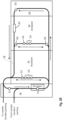
- FIG. 2A is a diagrammatic view of a vessel mover which illustrates how sample transport prioritization can be implemented in some embodiments of the present invention.
- Track 14 is a multi-branching track used by a vessel mover system.
- the Track 14 uses a linear motor system which applies motive force to sample carriers.
- track 14 comprises branches and lengths that are provided to sample carriers 51, 52, 54, and 56, sample carrier queue 53, decapper 40, and analyzer modules of 32 and 34.
- This diagram represents a system configured with two analytical modules; however, the system may be configured with additional analytical modules by appending them to the right.
- additional modules 36, 38, and 40 provide short dedicated track sections that may be connected to the track portions provided by the other modules.
- Track modules 36 and 38 provide powered track segments, without additional hardware related to sample handler modules or analyzer modules.
- Each analyzer includes one or more processors which control its local, internal track segment and one or more additional processors (referred to herein as “vessel mover manager processor") provide global control over the track system.
- analyzer module 32 has a pipetting station in proximity to carrier 52.
- a pipette for analyzer module 32 can aspirate a sample portion for testing.
- the internal track segment of analyzer module 32 can act as a physical queue 53.
- These internal track sections for analyzers can support bidirectional motion.
- physical queue 53 can be moved towards the front or the back of analyzer module 32. This allows queue 53 to act as an independent random access queue by moving an appropriate carrier to the pipetting location without flushing the entire queue around the track (e.g., samples can be moved to the back of position 52 if a sample in the middle of the queue needs to be accessed).
- a local processor within each analyzer module handles the queuing within the physical queue in the inner track segments of each analyzer module.
- a processor within analyzer module 32 can request the access any sample on a carrier within the track segment for queue 53.
- the global processor that manages traffic on track 14 for the entire system can be responsible for adding sample carriers to each local queue and removing carriers there from.
- each queue within an analyzer can be managed as either a first out (FIFO) queue or a random access queue depending on the sample processing workflow.
- Samples 51 within track segment module 36 can utilize module 36 to bypass the sample handler section of the automation track to return for further testing among the analyzer modules.
- queue 54 allows random access for the other analyzer module 34 to the local bidirectional track and any sample contained therein.
- Sample carrier 56 is placed at an interaction point for the local pipettor for analyzer module 34.
- Sample carrier 58 is arriving to join queue 54 from the outer track segment. At this point, custody of the sample in carrier 58 can be handed off from the global vessel mover manager processor to the local processor within analyzer module 34.
- sample carrier 60 has completed its interaction with analyzer module 34 (e.g., analyzer module 34 has completed aspirations from the sample tube being carried) and the vessel mover manager returns carrier 60 to the main loop of track 14.
- Sample 62 is on return track segment module 38. This track segment can be used for samples that are bypassing local analyzer track segments.
- carrier 64 is configured to traverse the track 14 and carry reagents to analyzers, rather than patient sample tubes.
- FIG. 2B shows an alternate configuration of the vessel mover shown in FIG. 2A .
- the decapper is implemented within the system.
- the decapper 40 is implemented as its own queue; however, as shown in FIG. 2B it can alternately be placed on the outside loop of the track.
- the vessel mover system can have more than one decapper in some implementations, such that there is one on the main track and one or more in separate queues.
- the embodiments of the present disclosure may be implemented with any combination of hardware and software.
- the embodiments of the present disclosure may be included in an article of manufacture (e.g., one or more computer program products) having, for example, computer-readable, non-transitory media.
- the media has embodied therein, for instance, computer readable program code for providing and facilitating the mechanisms of the embodiments of the present disclosure.
- the article of manufacture can be included as part of a computer system or sold separately.
- An activity performed automatically is performed in response to one or more executable instructions or device operation without user direct initiation of the activity.
Landscapes
- Physics & Mathematics (AREA)
- Health & Medical Sciences (AREA)
- Life Sciences & Earth Sciences (AREA)
- Chemical & Material Sciences (AREA)
- Analytical Chemistry (AREA)
- Biochemistry (AREA)
- General Health & Medical Sciences (AREA)
- General Physics & Mathematics (AREA)
- Immunology (AREA)
- Pathology (AREA)
- Automatic Analysis And Handling Materials Therefor (AREA)
Description
- This application claims the benefit of
U.S. Provisional Application Serial No. 62/365,206 filed July 21, 2016 - The present invention relates generally to methods, systems, and apparatuses for managing a sample's exposure to air in an automated testing system. The technology described herein may be applied to, for example, performing clinical laboratory in-vitro diagnostics in an automated testing environment.
- In-vitro diagnostics (IVD) allows labs to assist in the diagnosis of disease based on assays performed on patient fluid samples. IVD includes various types of analytical tests and assays related to patient diagnosis and therapy that can be performed by analysis of a liquid sample taken from a patient's bodily fluids, or abscesses. These assays are typically conducted with automated clinical chemistry analyzers ("analyzers") onto which fluid containers, such as tubes or vials containing patient samples, have been loaded. The analyzer extracts a liquid sample from the vial and combines the sample with various reagents in special reaction cuvettes or tubes (referred to generally as reaction containers). In some IVD systems, a modular approach is used for analyzers. A lab automation system can shuttle samples between one sample processing module (module) and another module. Modules may include one or more stations, including sample handling stations and testing stations (e.g., a unit that can specialize in certain types of assays or can otherwise provide testing services to the larger analyzer), which may include immunoassay (IA) and clinical chemistry (CC) stations. Some IVD automation track systems comprise systems that are designed to transport samples from one fully independent module to another standalone module. This allows different types of tests to be specialized in two different stations or allows two redundant stations to be linked to increase the volume of sample throughput available.
- Sample degradation occurs when samples are exposed to air while awaiting processing at individual modules or while being transported between modules. This degradation could compromise the quality of the analytical results for assays performed on the sample. Conventional systems simply decap the sample and process it. Sample custody on the system may be tracked for the purposes of tracking centrifuged samples or whole blood samples against a predetermined time limit. However, that time limit is often just a configurable value based on the specimen type, and not directly based on the specific analysis being performed on the sample.
-
EP 2 518 514 A1 discloses a method for operating an automated sample workcell and an automated sample workcell, which is operable to process biological samples. - Patent document
EP0809829 discloses an analyser comprising a primary decapper on a first conveyor line, this primary decapper can be programed to selectively pass over certain containers which are slated for tests which should not be opened to the atmosphere until they have reached a designated testing device. A secondary decapper device is placed just ahead of a testing device on a spur line. The container passes through the primary decapper on the first conveyor line without being decapped, shunted to a spur line, moved to the queue lane, and then decapped just before being placed in the control of the test interface device of the target testing device. - Embodiments of the present invention address and overcome one or more of the above shortcomings and drawbacks by providing methods, systems, and apparatuses related to managing sample exposure to air on an automation system for performing clinical laboratory IVD. The techniques described herein provide, among other things, the ability to measure and control the time during which a decapped sample is exposed to air.
- The present invention defines a method to manage sample exposure to air on an automation system for performing clinical laboratory in-vitro diagnostics according to appended claim 1.
- According to the present invention, if the decapped container is time-critical for exposure to air, the decapped container is prioritized for delivery to the processing queue of the first analytical module ahead of one or more other samples awaiting testing. Conversely, if the decapped container is not time-critical for exposure to air, the decapped container may be entered at the end of the processing queue of the first analytical module.
- In other embodiments, of the aforementioned method, a timer is initialized upon decapping the capped container. A minimum time threshold associated with the first test request may be used in conjunction with this time to prioritize delivery of the decapped container for aspiration in the first analytical module's processing queue. Additionally, prioritization of the decapped container in the first analytical module's processing queue may be further based on a relative stability value associated with the sample (e.g., as determined using a table of reference data). During the method, if it is determined that the relative stability value of the sample exceeds a predetermined stability threshold, further testing of the sample may be prevented or a stability flag may be associated with the sample that persists throughout all further testing of the sample. If the timer reaches a predetermined limit, the sample may be automatically sealed by the system if sealing capability exists, or an alert may be sent to an operator instructing the operator to manually seal the decapped container as soon as possible.
- According to another aspect of the present invention, a system for managing sample exposure to air on an automation system for performing clinical laboratory in-vitro diagnostics according to appended claim 7.
- Additional features and advantages of the invention will be made apparent from the following detailed description of illustrative embodiments that proceeds with reference to the accompanying drawings.
- The foregoing and other aspects of the present invention are best understood from the following detailed description when read in connection with the accompanying drawing. For the purpose of illustrating the invention, there is shown in the drawing embodiments that are presently preferred, it being understood, however, that the invention is not limited to the specific instrumentalities disclosed. Included in the drawing is the following Figure:
-
FIG. 1 illustrates an example method for managing sample exposure to air on an automation system for performing clinical laboratory IVD, according to some embodiments; -
FIG. 2A is a diagrammatic view of a vessel mover which illustrates how sample transport prioritization can be implemented in some embodiments of the present invention; and -
FIG. 2B shows an alternate configuration of the vessel mover shown inFIG. 2A . - The following disclosure describes the present invention according to several embodiments directed at methods, systems, and apparatuses related to managing sample exposure to air on an automation system for performing clinical laboratory IVD. Briefly techniques described herein provide the ability to measure and control the exposure time of the decapped sample individually. Thus, for example, the exposure time of each sample to air may be minimized on an individual level based on the availability of test orders. This allows decapping of samples to be delayed until there are test requests that can be processed by the system. The techniques described herein also provide the ability to schedule test request processing at an analytical module using a prioritization scheme based on stability of the sample analyte corresponding to each assay type. According to the present invention, a decapped sample may be released from the analyzer's in-process queue (IPQ) for further processing, even if it is physically blocked by other samples (further optimizing sample processing workflow and minimizing exposure to air for test processing).
-
FIG. 1 provides anexample method 100 for managing sample exposure to air on an automation system for performing clinical laboratory IVD, according to some embodiments. This method may be performed using one or more computers included in the automation system in conjunction with other system components such as an automated clinical chemistry analyzer, a transportation system for moving samples to different analytical modules associated with the system, and apparatuses that control and manage the sample during testing. Additional details on these system components are provided below in the discussion of themethod 100. - Starting at
step 105, the sample is identified using one or more techniques generally known in the art. For example, in some embodiments, sample identification may be performed by scanning a linear or matrix barcode placed on the container containing the sample. In other embodiments, radio-frequency identification (RFID) or similar technologies may be employed. After sample identification, atstep 107, the system determines whether the sample is ready to be processed according to two conditions. First, the system determines whether the test requests have been received corresponding to the sample. Second, the system determines whether an analyzer module is ready to process the sample. If one or both of these conditions fails, atstep 110, the system parks the still-capped sample temporarily on a sample handler to delay delivery of the samples into the analyzer's processing queue until the system receives indication that the test requests were received and an analyzer is available. It should be noted that, in other embodiments of the present invention, additional conditions may be added tostep 107 to further the test preparation process. - While at
step 110, the system may periodically repeatstep 107, checking whether the two conditions are met. Alternatively, logic may be available in the system that allows the automatically detect when the conditions are met. For example, the system may check all incoming test requests against a list of requests corresponding to parked samples that are waiting for test requests, - Once the system determines that an analyzer module is available, and containing appropriate inventory to perform the test requests, at
step 115, the system reloads the sample from the sample handler (in the event that it is parked) and the proceeds to step 120 and decaps the sample (seedecapper 40 inFIG. 2A ), thereby minimizing sample exposure to air. Step 115 may be skipped in instances where the two conditions set forth instep 107 are met upon initial receipt of the sample for processing. Thus, the sample can proceed immediately to step 120 for processing. - At
step 125, the system determines whether the sample is time critical due to its exposure to air. The time criticality may be based, for example, on the analytes present in the sample. As a chemistry methods study, the analytes would have been profiled for stability when exposed to air. To support this feature, a table of reference data may be provided to the system for lookup. The known relative stability of the sample for each test request can also be used to determine relative priority of scheduling and processing for each test request. This can help to maximize the overall quality of the results produced by the system. - If the decapped sample is time-critical for exposure to air, at
step 130 the system prioritizes delivery of the sample ahead of other samples for delivery to the appropriate analyzer module's processing queue. This may include, for example, dynamically bumping out one or more other lower priority samples in the queue in order to free up a position. If the decapped sample is not time-critical for exposure to air, atstep 135 the system performs non-prioritized delivery of the sample to the analyzer's processing queue, for example, by entering the sample at the end of the queue. - Aside from the use of prioritization, as described above with reference to steps 125 - 135, one or more additional features of the system may be utilized to minimize the transport time of the decapped sample from the decapper to the analyzer. For example, in some embodiments, the system includes a sample transport track that has the ability to rapidly transport the sample directly to the appropriate analyzer module for aspiration. This sample transport track may be, for example, an enhanced friction-based track or a track which utilizes linear motors to provide motive force to the samples as they are transported to the analyzer.
- Continuing with reference to
FIG. 1 , atstep 140 sample aspiration is performed at one or more analytical modules. After sample aspiration at each analytical module is finished, the decapped sample is moved out of the analyzers's IPQ. In some embodiments, the system allows random access to samples in the IPQ. This provides the system with the ability to provide access to any sample in the queue for aspiration, and to move the sample out of the analyzer's IPQ rapidly, even if it is physically blocked by other samples in the IPQ. In turn, this also expedites further processing at other analytical modules. - In some embodiments, the system tracks the amount of time accumulated after each sample has been decapped, and compares that to a minimum time threshold that is determined based on properties of the test requests that are ordered. The measured time can be captured and associated with each individual test request aspiration for later data analysis purposes.
- Sample stability thresholds could be represented by, for example, a plurality of levels (e.g., "Good," "Warning," "Exceeded"). If the exposure time of the decapped sample reaches a predetermined time limit, the system may send an alert event to the operator to take an action, such as seal the sample and archive it as soon as possible. If the sample exceeds the stability threshold, the sample could either be marked with an error status, preventing further processing or the sample could be flagged so that all further test requests processed to result could carry the sample stability warning flag. Additionally, after testing is complete, the sample stability flag associated with each result is used for forensic purposes for evaluating the accuracy or reliability of the reported test result.
-
FIG. 2A is a diagrammatic view of a vessel mover which illustrates how sample transport prioritization can be implemented in some embodiments of the present invention.Track 14 is a multi-branching track used by a vessel mover system. In some embodiments, theTrack 14 uses a linear motor system which applies motive force to sample carriers. As can be seen, track 14 comprises branches and lengths that are provided to samplecarriers sample carrier queue 53,decapper 40, and analyzer modules of 32 and 34. This diagram represents a system configured with two analytical modules; however, the system may be configured with additional analytical modules by appending them to the right. In addition to the track segments provided by theanalyzer modules additional modules Track modules - In this example, assume that
analyzer module 32 has a pipetting station in proximity tocarrier 52. When a sample is moved into the position ofcarrier 52, a pipette foranalyzer module 32 can aspirate a sample portion for testing. Meanwhile, the internal track segment ofanalyzer module 32 can act as aphysical queue 53. These internal track sections for analyzers can support bidirectional motion. Thus,physical queue 53 can be moved towards the front or the back ofanalyzer module 32. This allowsqueue 53 to act as an independent random access queue by moving an appropriate carrier to the pipetting location without flushing the entire queue around the track (e.g., samples can be moved to the back ofposition 52 if a sample in the middle of the queue needs to be accessed). In some embodiments, a local processor within each analyzer module handles the queuing within the physical queue in the inner track segments of each analyzer module. For example a processor withinanalyzer module 32 can request the access any sample on a carrier within the track segment forqueue 53. Meanwhile the global processor that manages traffic ontrack 14 for the entire system can be responsible for adding sample carriers to each local queue and removing carriers there from. Thus, each queue within an analyzer can be managed as either a first out (FIFO) queue or a random access queue depending on the sample processing workflow.Samples 51 withintrack segment module 36 can utilizemodule 36 to bypass the sample handler section of the automation track to return for further testing among the analyzer modules. - Like
queue 53 inanalyzer module 32,queue 54 allows random access for theother analyzer module 34 to the local bidirectional track and any sample contained therein.Sample carrier 56 is placed at an interaction point for the local pipettor foranalyzer module 34.Sample carrier 58 is arriving to joinqueue 54 from the outer track segment. At this point, custody of the sample incarrier 58 can be handed off from the global vessel mover manager processor to the local processor withinanalyzer module 34. Similarly,sample carrier 60 has completed its interaction with analyzer module 34 (e.g.,analyzer module 34 has completed aspirations from the sample tube being carried) and the vessel mover manager returnscarrier 60 to the main loop oftrack 14.Sample 62 is on returntrack segment module 38. This track segment can be used for samples that are bypassing local analyzer track segments. For example, if the track needs to be flushed for some reason, or if local queues are full, this path can be used to place sample carriers in effectively a holding pattern. Additionally, carriers can use thetrack 14 to transport more than just patient sample tubes. For example, inFIG. 2A ,carrier 64 is configured to traverse thetrack 14 and carry reagents to analyzers, rather than patient sample tubes. -
FIG. 2B shows an alternate configuration of the vessel mover shown inFIG. 2A . The difference between these implementations is where the decapper is implemented within the system. InFIG. 2A , thedecapper 40 is implemented as its own queue; however, as shown inFIG. 2B it can alternately be placed on the outside loop of the track. It should be noted that the vessel mover system can have more than one decapper in some implementations, such that there is one on the main track and one or more in separate queues. - The embodiments of the present disclosure may be implemented with any combination of hardware and software. In addition, the embodiments of the present disclosure may be included in an article of manufacture (e.g., one or more computer program products) having, for example, computer-readable, non-transitory media. The media has embodied therein, for instance, computer readable program code for providing and facilitating the mechanisms of the embodiments of the present disclosure. The article of manufacture can be included as part of a computer system or sold separately.
- The functions and process steps herein may be performed automatically or wholly or partially in response to user command. An activity (including a step) performed automatically is performed in response to one or more executable instructions or device operation without user direct initiation of the activity.
- Although this invention has been described with reference to particular embodiments, it is to be understood that the embodiments and variations shown and described herein are for illustration purposes only. As described herein, the various systems, subsystems, agents, managers, and processes can be implemented using hardware components, software components, and/or combinations thereof.
Claims (7)
- A method for managing sample exposure to air on an automation system for performing clinical laboratory in-vitro diagnostics, the method comprising:receiving a sample in a capped container;loading the capped container onto a sample carrier (51,52,54,56);receiving a plurality of test requests (107) corresponding to the sample, each test request associated with one or more analytical modules (32,34,36) included in an automated in vitro diagnostics (IVD) system;identifying a first analytical module associated with a first test request;in response to determining that the first analytical module is available to perform the first test request, decapping (120) the capped container, thereby yielding a decapped container; and characterised by performing a prioritized delivery of the decapped container to the first analytical module, whereinthe prioritized delivery comprises:determining whether the decapped container is time-critical for exposure to air (125);if the decapped container is time-critical for exposure to air, entering the decapped container in a processing queue (53,54) of the first analytical module ahead of one or more other samples awaiting testing (130); andif the decapped container is not time-critical for exposure to air, entering the decapped container at the end of the processing queue of the first analytical module (135).
- The method of claim 1, further comprising:parking the capped container on a sample handler pending readiness of the IVD system to process the plurality of test requests (110); andprior to decapping the capped container, reloading the capped container from the sample handler (115).
- The method of claim 1, further comprising:Following_a sample aspiration at the first analytical module (140), transporting the decapped container to one or more additional analytical modules ordesignating the plurality of test requests as being complete, wherein preferably transportation of the decapped container to the first analytical module and the one or more additional analytical modules is performed using a linear motor system which applies motive force to a carrier holding the decapped container.
- The method of claim 1, the method further comprising:upon decapping the capped container, initializing a timer;determining a minimum time threshold associated with the first test request; andduring the prioritized delivery of the decapped container to the first analytical module, prioritizing the decapped container in the first analytical module's processing queue based on the timer and the minimum time threshold.
- The method of claim 4, wherein prioritizing the decapped container in the first analytical module's processing queue is further based on a relative stability value associated with the sample,
wherein preferably the relative stability value is based on a predetermined table of reference data and the timer, or further preferably comprising:
in response to determining that the relative stability value of the sample exceeds a predetermined stability threshold, preventing further testing of the sample, or further preferably comprising:
in response to determining that the relative stability value of the sample exceeds a predetermined stability threshold, associating a stability flag with the sample that persists throughout all further testing of the sample. - The method of claim 4, further comprising:
if the timer reaches a predetermined limit, sending an alert to an operator instructing the operator to seal the decapped container or automatically sealing the decapped container. - A system for managing sample exposure to air on an automation system for performing clinical laboratory in-vitro diagnostics, the system for managing sample exposure to air comprising:a track (14) comprising a linear motor system which applies motive force to a plurality of carriers (51, 52, 54, 56, 58) containing a plurality of sample containers; a sample handler andmeans for identifying the sample containers;a decapper (40); andone or more analytical modules (32, 34, 36,) configured to use a section of the track to prioritize processing of the plurality of sample containers after decapping by the decapper (40), based on each sample container's sensitivity to air exposure, wherein the system is configured to perform the following functions in the following order:identify a sample by employing said means to identify sample containers (105),determine whether a test request for said sample has been received and determine if an analytical module is available to process said sample (107),if no analytical module is available to immediately process the test requests, park the capped sample container on said sample handler until an analytical module becomes available (110);if an analytical module is available to immediately process said sample, transport said sample to the decapper and decap the sample container (120);determine if the decapped sample is time-critical for exposure to air (125); andif the decapped container is time-critical for exposure to air, enter (130) the decapped container in a processing queue (53) of the analyzer module ahead of one or more other samples awaiting testing; orif the decapped container is not time-critical for exposure to air, enter (135) the decapped container at the end of the processing queue (53) of the analyzer module.
Applications Claiming Priority (2)
| Application Number | Priority Date | Filing Date | Title |
|---|---|---|---|
| US201662365206P | 2016-07-21 | 2016-07-21 | |
| PCT/US2017/042908 WO2018017745A1 (en) | 2016-07-21 | 2017-07-19 | Managing sample exposure to air on an automation system for performing clinical laboratory in-vitro diagnostics |
Publications (4)
| Publication Number | Publication Date |
|---|---|
| EP3487795A1 EP3487795A1 (en) | 2019-05-29 |
| EP3487795A4 EP3487795A4 (en) | 2019-08-14 |
| EP3487795C0 EP3487795C0 (en) | 2024-08-28 |
| EP3487795B1 true EP3487795B1 (en) | 2024-08-28 |
Family
ID=60992830
Family Applications (1)
| Application Number | Title | Priority Date | Filing Date |
|---|---|---|---|
| EP17831811.9A Active EP3487795B1 (en) | 2016-07-21 | 2017-07-19 | Managing sample exposure to air on an automation system for performing clinical laboratory in-vitro diagnostics |
Country Status (5)
| Country | Link |
|---|---|
| US (1) | US11143666B2 (en) |
| EP (1) | EP3487795B1 (en) |
| JP (1) | JP6901209B2 (en) |
| CN (1) | CN109476427B (en) |
| WO (1) | WO2018017745A1 (en) |
Families Citing this family (6)
| Publication number | Priority date | Publication date | Assignee | Title |
|---|---|---|---|---|
| WO2021015881A1 (en) * | 2019-07-24 | 2021-01-28 | Siemens Healthcare Diagnostics Inc. | Reagent pack load plan optimization methods and systems |
| WO2021050635A1 (en) * | 2019-09-13 | 2021-03-18 | Beckman Coulter, Inc. | Remote sample delivery system |
| CN112782414B (en) * | 2019-11-11 | 2024-01-23 | 深圳迈瑞生物医疗电子股份有限公司 | A sample analysis system and its setting method |
| EP4139691A1 (en) * | 2020-04-23 | 2023-03-01 | Gen-Probe Incorporated | Automated processing of samples carried in sample containers and grouping sample containers according to assays to be performed on samples contained therein |
| CN116508002A (en) | 2020-11-13 | 2023-07-28 | 美国西门子医学诊断股份有限公司 | Computationally efficient load planning system and method for diagnostic laboratories |
| JP7721276B2 (en) * | 2021-01-28 | 2025-08-12 | シスメックス株式会社 | Urine testing method and urine testing system |
Citations (1)
| Publication number | Priority date | Publication date | Assignee | Title |
|---|---|---|---|---|
| EP0809829B1 (en) * | 1995-02-16 | 2013-07-24 | Quest Diagnostics Investments Incorporated | Automated testing apparatus |
Family Cites Families (15)
| Publication number | Priority date | Publication date | Assignee | Title |
|---|---|---|---|---|
| JPH06510233A (en) | 1992-06-29 | 1994-11-17 | デイド、ベーリング、インコーポレイテッド | sample tube carrier |
| US5554127A (en) * | 1994-10-11 | 1996-09-10 | Sherwood Medical Company | Syringe needle thimble cap and method of use thereof |
| US5679309A (en) | 1995-12-14 | 1997-10-21 | Beckman Instruments, Inc. | Automated random access analyzer |
| US5885529A (en) | 1996-06-28 | 1999-03-23 | Dpc Cirrus, Inc. | Automated immunoassay analyzer |
| ES2322859T3 (en) * | 1998-05-01 | 2009-06-30 | Gen-Probe Incorporated | AUTOMATED DIAGNOSTIC ANALYZER. |
| US7322941B2 (en) * | 2005-09-13 | 2008-01-29 | Modalworks Inc. | Arterial syringe safety vent |
| ITMI20072254A1 (en) | 2007-11-30 | 2009-06-01 | Dachi S R L | "PLANT FOR IDENTIFICATION, TRANSPORT AND AUTOMATIC ADDRESSING OF SAMPLES OF BIOLOGICAL MATERIAL" |
| US7963900B2 (en) * | 2008-06-19 | 2011-06-21 | Siemens Healthcare Diagnostics Inc. | Centrifuge loading process within an automated laboratory system |
| AU2011320358B2 (en) | 2010-10-29 | 2015-09-03 | Thermo Fisher Scientific Oy | Automated system for sample preparation and analysis |
| EP2518514B1 (en) * | 2011-04-29 | 2014-06-18 | F. Hoffmann-La Roche AG | A method for operating an automated sample workcell |
| CN103748472B (en) | 2011-09-05 | 2016-08-17 | 株式会社日立高新技术 | Automatic analysis device |
| KR20140092378A (en) * | 2011-11-07 | 2014-07-23 | 베크만 컬터, 인코포레이티드 | System and method for processing samples |
| US9494609B2 (en) | 2012-02-03 | 2016-11-15 | Siemens Healthcare Diagnostics Inc. | Status displaying sample carriers |
| US9182751B1 (en) | 2013-07-16 | 2015-11-10 | Alarm.Com Incorporated | Carbon dioxide monitoring |
| US10150620B2 (en) * | 2013-11-01 | 2018-12-11 | Hitachi High-Technologies Corporation | Sample transfer device and sample processing system |
-
2017
- 2017-07-19 US US16/319,234 patent/US11143666B2/en active Active
- 2017-07-19 EP EP17831811.9A patent/EP3487795B1/en active Active
- 2017-07-19 CN CN201780044648.0A patent/CN109476427B/en active Active
- 2017-07-19 JP JP2019502768A patent/JP6901209B2/en active Active
- 2017-07-19 WO PCT/US2017/042908 patent/WO2018017745A1/en not_active Ceased
Patent Citations (1)
| Publication number | Priority date | Publication date | Assignee | Title |
|---|---|---|---|---|
| EP0809829B1 (en) * | 1995-02-16 | 2013-07-24 | Quest Diagnostics Investments Incorporated | Automated testing apparatus |
Also Published As
| Publication number | Publication date |
|---|---|
| CN109476427A (en) | 2019-03-15 |
| US20190265260A1 (en) | 2019-08-29 |
| JP2019521354A (en) | 2019-07-25 |
| JP6901209B2 (en) | 2021-07-14 |
| EP3487795A1 (en) | 2019-05-29 |
| EP3487795A4 (en) | 2019-08-14 |
| EP3487795C0 (en) | 2024-08-28 |
| WO2018017745A1 (en) | 2018-01-25 |
| CN109476427B (en) | 2021-09-17 |
| US11143666B2 (en) | 2021-10-12 |
Similar Documents
| Publication | Publication Date | Title |
|---|---|---|
| US11143666B2 (en) | Managing sample exposure to air on an automation system for performing clinical laboratory in-vitro diagnostics | |
| JP6715960B2 (en) | Systems and methods for biological sample laboratory screening | |
| CN102759630B (en) | For the method operating automatization's sample workplace | |
| US10101351B2 (en) | Method for processing priority samples that preserves a FIFO processing queue | |
| US10126318B2 (en) | Mother daughter tube carrier for aliquoters | |
| JP4873823B2 (en) | Workstation for integrating automated chemical analyzers | |
| EP2943787B1 (en) | Automation system for use with in vitro diagnostics | |
| JP7555171B2 (en) | Automated Analysis System | |
| JP2010526289A (en) | Programmable random access sample handling device for use in automated laboratory systems | |
| JP2003315348A (en) | Sample processing system and sample test automation system using the same | |
| US20130202486A1 (en) | Sample processing system | |
| EP3696550A1 (en) | Method of operating an analytical laboratory including redetermining the optimal transportation route | |
| WO2016017442A1 (en) | Automated analyzer | |
| WO2020162042A1 (en) | Automatic analysis device | |
| US20160334427A1 (en) | Priority indicator for automation system fluid sample | |
| HK40000281A (en) | Managing sample exposure to air on an automation system for performing clinical laboratory in-vitro diagnostics | |
| JP6234765B2 (en) | Sample analysis automatic analysis system | |
| HK40000281B (en) | Managing sample exposure to air on an automation system for performing clinical laboratory in-vitro diagnostics | |
| US12449432B2 (en) | Add-on and repetition aliquot testing with or without dilutions | |
| EP4310856A1 (en) | Processing of test samples in a laboratory setting | |
| JP2001116759A (en) | Sample transport system | |
| CN112345778A (en) | Cascade sample analysis system and device and quality control project out-of-control processing method |
Legal Events
| Date | Code | Title | Description |
|---|---|---|---|
| STAA | Information on the status of an ep patent application or granted ep patent |
Free format text: STATUS: THE INTERNATIONAL PUBLICATION HAS BEEN MADE |
|
| PUAI | Public reference made under article 153(3) epc to a published international application that has entered the european phase |
Free format text: ORIGINAL CODE: 0009012 |
|
| STAA | Information on the status of an ep patent application or granted ep patent |
Free format text: STATUS: REQUEST FOR EXAMINATION WAS MADE |
|
| 17P | Request for examination filed |
Effective date: 20190220 |
|
| AK | Designated contracting states |
Kind code of ref document: A1 Designated state(s): AL AT BE BG CH CY CZ DE DK EE ES FI FR GB GR HR HU IE IS IT LI LT LU LV MC MK MT NL NO PL PT RO RS SE SI SK SM TR |
|
| AX | Request for extension of the european patent |
Extension state: BA ME |
|
| A4 | Supplementary search report drawn up and despatched |
Effective date: 20190711 |
|
| RIC1 | Information provided on ipc code assigned before grant |
Ipc: G01N 35/04 20060101AFI20190705BHEP Ipc: G01N 35/00 20060101ALI20190705BHEP |
|
| DAV | Request for validation of the european patent (deleted) | ||
| DAX | Request for extension of the european patent (deleted) | ||
| STAA | Information on the status of an ep patent application or granted ep patent |
Free format text: STATUS: EXAMINATION IS IN PROGRESS |
|
| 17Q | First examination report despatched |
Effective date: 20220217 |
|
| GRAP | Despatch of communication of intention to grant a patent |
Free format text: ORIGINAL CODE: EPIDOSNIGR1 |
|
| STAA | Information on the status of an ep patent application or granted ep patent |
Free format text: STATUS: GRANT OF PATENT IS INTENDED |
|
| INTG | Intention to grant announced |
Effective date: 20240307 |
|
| GRAS | Grant fee paid |
Free format text: ORIGINAL CODE: EPIDOSNIGR3 |
|
| GRAA | (expected) grant |
Free format text: ORIGINAL CODE: 0009210 |
|
| STAA | Information on the status of an ep patent application or granted ep patent |
Free format text: STATUS: THE PATENT HAS BEEN GRANTED |
|
| AK | Designated contracting states |
Kind code of ref document: B1 Designated state(s): AL AT BE BG CH CY CZ DE DK EE ES FI FR GB GR HR HU IE IS IT LI LT LU LV MC MK MT NL NO PL PT RO RS SE SI SK SM TR |
|
| REG | Reference to a national code |
Ref country code: GB Ref legal event code: FG4D |
|
| REG | Reference to a national code |
Ref country code: CH Ref legal event code: EP |
|
| REG | Reference to a national code |
Ref country code: DE Ref legal event code: R096 Ref document number: 602017084500 Country of ref document: DE |
|
| REG | Reference to a national code |
Ref country code: IE Ref legal event code: FG4D |
|
| U01 | Request for unitary effect filed |
Effective date: 20240828 |
|
| U07 | Unitary effect registered |
Designated state(s): AT BE BG DE DK EE FI FR IT LT LU LV MT NL PT RO SE SI Effective date: 20240909 |
|
| PG25 | Lapsed in a contracting state [announced via postgrant information from national office to epo] |
Ref country code: NO Free format text: LAPSE BECAUSE OF FAILURE TO SUBMIT A TRANSLATION OF THE DESCRIPTION OR TO PAY THE FEE WITHIN THE PRESCRIBED TIME-LIMIT Effective date: 20241128 |
|
| PG25 | Lapsed in a contracting state [announced via postgrant information from national office to epo] |
Ref country code: GR Free format text: LAPSE BECAUSE OF FAILURE TO SUBMIT A TRANSLATION OF THE DESCRIPTION OR TO PAY THE FEE WITHIN THE PRESCRIBED TIME-LIMIT Effective date: 20241129 Ref country code: PL Free format text: LAPSE BECAUSE OF FAILURE TO SUBMIT A TRANSLATION OF THE DESCRIPTION OR TO PAY THE FEE WITHIN THE PRESCRIBED TIME-LIMIT Effective date: 20240828 |
|
| PG25 | Lapsed in a contracting state [announced via postgrant information from national office to epo] |
Ref country code: IS Free format text: LAPSE BECAUSE OF FAILURE TO SUBMIT A TRANSLATION OF THE DESCRIPTION OR TO PAY THE FEE WITHIN THE PRESCRIBED TIME-LIMIT Effective date: 20241228 |
|
| PG25 | Lapsed in a contracting state [announced via postgrant information from national office to epo] |
Ref country code: HR Free format text: LAPSE BECAUSE OF FAILURE TO SUBMIT A TRANSLATION OF THE DESCRIPTION OR TO PAY THE FEE WITHIN THE PRESCRIBED TIME-LIMIT Effective date: 20240828 |
|
| PG25 | Lapsed in a contracting state [announced via postgrant information from national office to epo] |
Ref country code: RS Free format text: LAPSE BECAUSE OF FAILURE TO SUBMIT A TRANSLATION OF THE DESCRIPTION OR TO PAY THE FEE WITHIN THE PRESCRIBED TIME-LIMIT Effective date: 20241128 Ref country code: ES Free format text: LAPSE BECAUSE OF FAILURE TO SUBMIT A TRANSLATION OF THE DESCRIPTION OR TO PAY THE FEE WITHIN THE PRESCRIBED TIME-LIMIT Effective date: 20240828 |
|
| PG25 | Lapsed in a contracting state [announced via postgrant information from national office to epo] |
Ref country code: RS Free format text: LAPSE BECAUSE OF FAILURE TO SUBMIT A TRANSLATION OF THE DESCRIPTION OR TO PAY THE FEE WITHIN THE PRESCRIBED TIME-LIMIT Effective date: 20241128 Ref country code: PL Free format text: LAPSE BECAUSE OF FAILURE TO SUBMIT A TRANSLATION OF THE DESCRIPTION OR TO PAY THE FEE WITHIN THE PRESCRIBED TIME-LIMIT Effective date: 20240828 Ref country code: NO Free format text: LAPSE BECAUSE OF FAILURE TO SUBMIT A TRANSLATION OF THE DESCRIPTION OR TO PAY THE FEE WITHIN THE PRESCRIBED TIME-LIMIT Effective date: 20241128 Ref country code: IS Free format text: LAPSE BECAUSE OF FAILURE TO SUBMIT A TRANSLATION OF THE DESCRIPTION OR TO PAY THE FEE WITHIN THE PRESCRIBED TIME-LIMIT Effective date: 20241228 Ref country code: HR Free format text: LAPSE BECAUSE OF FAILURE TO SUBMIT A TRANSLATION OF THE DESCRIPTION OR TO PAY THE FEE WITHIN THE PRESCRIBED TIME-LIMIT Effective date: 20240828 Ref country code: GR Free format text: LAPSE BECAUSE OF FAILURE TO SUBMIT A TRANSLATION OF THE DESCRIPTION OR TO PAY THE FEE WITHIN THE PRESCRIBED TIME-LIMIT Effective date: 20241129 Ref country code: ES Free format text: LAPSE BECAUSE OF FAILURE TO SUBMIT A TRANSLATION OF THE DESCRIPTION OR TO PAY THE FEE WITHIN THE PRESCRIBED TIME-LIMIT Effective date: 20240828 |
|
| PG25 | Lapsed in a contracting state [announced via postgrant information from national office to epo] |
Ref country code: SM Free format text: LAPSE BECAUSE OF FAILURE TO SUBMIT A TRANSLATION OF THE DESCRIPTION OR TO PAY THE FEE WITHIN THE PRESCRIBED TIME-LIMIT Effective date: 20240828 |
|
| PG25 | Lapsed in a contracting state [announced via postgrant information from national office to epo] |
Ref country code: CZ Free format text: LAPSE BECAUSE OF FAILURE TO SUBMIT A TRANSLATION OF THE DESCRIPTION OR TO PAY THE FEE WITHIN THE PRESCRIBED TIME-LIMIT Effective date: 20240828 |
|
| PG25 | Lapsed in a contracting state [announced via postgrant information from national office to epo] |
Ref country code: SK Free format text: LAPSE BECAUSE OF FAILURE TO SUBMIT A TRANSLATION OF THE DESCRIPTION OR TO PAY THE FEE WITHIN THE PRESCRIBED TIME-LIMIT Effective date: 20240828 |
|
| PLBE | No opposition filed within time limit |
Free format text: ORIGINAL CODE: 0009261 |
|
| STAA | Information on the status of an ep patent application or granted ep patent |
Free format text: STATUS: NO OPPOSITION FILED WITHIN TIME LIMIT |
|
| 26N | No opposition filed |
Effective date: 20250530 |
|
| U20 | Renewal fee for the european patent with unitary effect paid |
Year of fee payment: 9 Effective date: 20250718 |
|
| PGFP | Annual fee paid to national office [announced via postgrant information from national office to epo] |
Ref country code: GB Payment date: 20250811 Year of fee payment: 9 |
|
| REG | Reference to a national code |
Ref country code: CH Ref legal event code: H13 Free format text: ST27 STATUS EVENT CODE: U-0-0-H10-H13 (AS PROVIDED BY THE NATIONAL OFFICE) Effective date: 20260224 |
|
| PG25 | Lapsed in a contracting state [announced via postgrant information from national office to epo] |
Ref country code: CH Free format text: LAPSE BECAUSE OF NON-PAYMENT OF DUE FEES Effective date: 20250731 |