EP3487191B1 - Gruppenkommunikationssystem zur übertragung von multimediadaten - Google Patents
Gruppenkommunikationssystem zur übertragung von multimediadaten Download PDFInfo
- Publication number
- EP3487191B1 EP3487191B1 EP18207159.7A EP18207159A EP3487191B1 EP 3487191 B1 EP3487191 B1 EP 3487191B1 EP 18207159 A EP18207159 A EP 18207159A EP 3487191 B1 EP3487191 B1 EP 3487191B1
- Authority
- EP
- European Patent Office
- Prior art keywords
- entity
- unicast
- broadcast
- multimedia
- clients
- Prior art date
- Legal status (The legal status is an assumption and is not a legal conclusion. Google has not performed a legal analysis and makes no representation as to the accuracy of the status listed.)
- Active
Links
Images

Classifications
-
- H—ELECTRICITY
- H04—ELECTRIC COMMUNICATION TECHNIQUE
- H04W—WIRELESS COMMUNICATION NETWORKS
- H04W4/00—Services specially adapted for wireless communication networks; Facilities therefor
- H04W4/06—Selective distribution of broadcast services, e.g. multimedia broadcast multicast service [MBMS]; Services to user groups; One-way selective calling services
-
- H—ELECTRICITY
- H04—ELECTRIC COMMUNICATION TECHNIQUE
- H04L—TRANSMISSION OF DIGITAL INFORMATION, e.g. TELEGRAPHIC COMMUNICATION
- H04L5/00—Arrangements affording multiple use of the transmission path
- H04L5/003—Arrangements for allocating sub-channels of the transmission path
- H04L5/0053—Allocation of signalling, i.e. of overhead other than pilot signals
-
- H—ELECTRICITY
- H04—ELECTRIC COMMUNICATION TECHNIQUE
- H04L—TRANSMISSION OF DIGITAL INFORMATION, e.g. TELEGRAPHIC COMMUNICATION
- H04L51/00—User-to-user messaging in packet-switching networks, transmitted according to store-and-forward or real-time protocols, e.g. e-mail
- H04L51/07—User-to-user messaging in packet-switching networks, transmitted according to store-and-forward or real-time protocols, e.g. e-mail characterised by the inclusion of specific contents
- H04L51/10—Multimedia information
-
- H—ELECTRICITY
- H04—ELECTRIC COMMUNICATION TECHNIQUE
- H04L—TRANSMISSION OF DIGITAL INFORMATION, e.g. TELEGRAPHIC COMMUNICATION
- H04L51/00—User-to-user messaging in packet-switching networks, transmitted according to store-and-forward or real-time protocols, e.g. e-mail
- H04L51/21—Monitoring or handling of messages
- H04L51/214—Monitoring or handling of messages using selective forwarding
-
- H—ELECTRICITY
- H04—ELECTRIC COMMUNICATION TECHNIQUE
- H04W—WIRELESS COMMUNICATION NETWORKS
- H04W4/00—Services specially adapted for wireless communication networks; Facilities therefor
- H04W4/02—Services making use of location information
-
- H—ELECTRICITY
- H04—ELECTRIC COMMUNICATION TECHNIQUE
- H04W—WIRELESS COMMUNICATION NETWORKS
- H04W4/00—Services specially adapted for wireless communication networks; Facilities therefor
- H04W4/02—Services making use of location information
- H04W4/029—Location-based management or tracking services
-
- H—ELECTRICITY
- H04—ELECTRIC COMMUNICATION TECHNIQUE
- H04W—WIRELESS COMMUNICATION NETWORKS
- H04W72/00—Local resource management
- H04W72/30—Resource management for broadcast services
-
- H—ELECTRICITY
- H04—ELECTRIC COMMUNICATION TECHNIQUE
- H04W—WIRELESS COMMUNICATION NETWORKS
- H04W4/00—Services specially adapted for wireless communication networks; Facilities therefor
- H04W4/90—Services for handling of emergency or hazardous situations, e.g. earthquake and tsunami warning systems [ETWS]
Definitions
- group communication system denotes communication systems capable of distributing information from an entity - typically a communication server - to targeted client terminals; client terminals - also designated as “client multimedia terminals”, or even “clients” - are targeted insofar as they belong to a previously defined group.
- client terminals To belong to a group, a client terminal must be affiliated with this group, and it then has means for receiving and / or decrypting messages distributed to said group.
- a group can, for example, correspond to an intervention unit, such as firefighters or soldiers.
- the same client terminal can belong to different groups.
- the present invention finds an application in particular in the implementation of the MCPTT (Mission Critical Push To Talk) standard, as well as other standards of the MCS (Mission Critical Services) family. It may be of interest in the implementation of communication standards in which intervene in the same group communication system broadcast type message distribution devices and unicast type distribution devices, to client terminals likely to evolve geographically ..
- MCPTT Mobility Critical Push To Talk
- MCS Mobility Critical Services
- the current standards for managing group communications are for example the TETRA or TETRAPOL standards. They operate in a broadcast distribution mode. With the new communication standards, for example the MCPTT standard, it is however likely to involve the general public communication networks, having national coverage. These communication networks mainly have a unicast mode of distribution, that is to say point to point.
- 3GPP - 24.379 (clauses 13 and 14) and 24.380 (clauses 6.4 and 10) describe the management of communications consisting of exchanges between client terminals and communication functions. participation, hosted on at least one server-type electronic device. These specifications take into account the broadcast distribution mode of the LTE MBMS service but only manage the case where all the participation functions are located in the same geographical area, and where it is not necessary to have exchanges. between these different participation functions to optimally manage distribution to client terminals.
- broadcast distribution participation function also referred to as a "broadcast distribution participation function”, or even as a “broadcast participation function”
- unicast distribution participation function also referred to as a "unicast distribution participation function, or even as a" unicast participation function
- the broadcast participation function because of the wide territory it must cover, is distributed over different broadcast distribution entities, and the unicast participation functions, because of the large number of terminals that the system communication must manage, is also distributed between different unicast distribution entities, these distribution entities corresponding to communication modules integrated in servers, or to the servers themselves.
- client terminals also referred to as “clients”, as well as the possibility for these terminals to join, or no longer to join, a given communication group, leads to situations where optimization distribution resources to terminals is beneficial.
- the communications with the terminals of this group will necessarily be in unicast mode.
- the unicast distribution method initially adopted is no longer optimal in terms of saving resources. radio when the various terminals are found close to each other: a large part of the terminals in this group are now located in the same area, it is wise to switch, for these terminals, to a broadcast distribution mode.
- US 2014/064177 A1 discloses a method of coordinating an eMBMS group call.
- the term “entity” used in the above designates one or more electronic devices, providing a function whose resources can be distributed among these different electronic devices.
- the electronic devices in question are typically a communication module, which can be integrated into a server or which can constitute a server in itself.
- the broadcast entity can designate each of the electronic modules of all the electronic modules contributing to the implementation of the broadcast participation function.
- a participating entity may also be referred to as a “participating entity”.
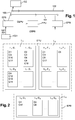
- the figure 1 shows a functional representation of the system according to the invention.
- the different participation functions are distributed over different entities, typically server type devices.
- the flows managed by the signaling participation function being less important than the flows managed by the unicast and broadcast participation functions, the signaling function is advantageously concentrated on a single server, while the broadcast and distribution participation functions.
- unicast will be spread over different entities, EPB and EPU, multiple.
- the functional distribution of the participation functions on different server type devices can be arbitrary.
- a customer C01 for example a mobile terminal of a user, has the ability to join a group G01, by being present in a geographical area Z01, by reporting to the participating EPS signaling entity that controls it.
- Said participating entity of signaling EPS then signals to the control entity EC which controls said group, via a link 103, the membership of the customer C01 to the group G01.
- the controlling entity serves as the focal point for media management in group communications. It receives from each unicast participating entity, in the upward direction, signaling elements for the management of the speech authorization of said entities, and sends back speech authorizations after arbitration between the various participating entities.
- the control entity also returns the media stream of the authorized customer through the corresponding participating entity, and redistributes it to all the participating participating distribution entities in order for them to proceed to the distribution to the customers in unicast mode. or broadcast as appropriate.
- a participating EPS signaling entity is able to send information to one or more participating EPU unicast distribution entities and to one or more participating EPB broadcast distribution entities.
- This information transmitted by a signaling entity is in the form of commands, called CEPU command (intended for a participating unicast EPU entity) and CEPB command (intended for a participating EPB broadcast entity).
- CEPU command intended for a participating unicast EPU entity
- CEPB command intended for a participating EPB broadcast entity.
- These CEPU and CEPB commands are called the context creation command and allow the participating EPB and EPU distribution entities to constitute different lists, which will be detailed in the next section. figure 2 .
- the said orders are listed in a summary table which will be detailed in the margin of the description of the figure 3 .
- the various lists thus formed form what is called a context.
- each of the participating unicast distribution entities is in constant communication with all the participating broadcast distribution entities that serve areas where customers are located that it controls. This can easily be achieved thanks to the existence of a multicast address for each of the zones covered by the system according to the invention, a modification of information relating to a client - for example a change of zone - is taken into consideration by the whole context by updating the lists L1, L2 and L3 by means of the information conveyed on the software bus 102.
- the function of the software bus is to ensure the consistency of the information contained in the different lists L1, L2 and L3, so that the different participating entities, unicast and broadcast, can consistently decide on a unicast or broadcast distribution mode to each customer considered from the system. Such a decision to switch between a unicast and broadcast distribution mode thus does not involve the control entity.
- FIG. 3 there is shown an example of exchanges likely to occur between the various participating entities (signaling, unicast and broadcast) and a client in an example of implementation of the invention within the framework of the MCPTT specification using the service MBMS from LTE.
- a client C01 of MCPTT client type, present in an area Z01, becomes affiliated with a group G01 by sending an affiliation message respecting the MCPTT standard to the participating EPS signaling entity. who controls this client. It thus signals that it wishes to receive messages intended for the G01 group, while indicating its geographical location in a Z01 zone using a SIP PANI (P-Access Network Information) header.
- This affiliation message may or may not be accompanied by a request to open a session.
- the participating EPS signaling entity is able to determine, from the zone information Z01 and the group information G01 respectively to which participating entity broadcast and to which participating unicast entity it must send the affiliation information. of customer C01.
- the participating EPS signaling entity sends the client C01 an affiliation confirmation message, possibly accompanied by the confirmation of the opening of a session using the addresses and ports received from the entity. unicast participant at step 204.
- a context update operation 303 is carried out to update the L1 lists. , L2 and L3. Information exchanges for this purpose are carried out via the software bus 102.
- an EPB broadcast participating entity determines whether, for the geographic area it serves, the number of clients present, for a given group, is greater than a predetermined threshold, called the trigger threshold. This threshold may vary depending on the geographic areas considered, or even the groups considered.
- said participating EPB broadcast entity transmits, in a step 207, to participating unicast EPB entities serving clients located in an area served by said EPB broadcast distribution entity, a message indicating that the service of broadcast distribution is available.
- the message is addressed by the software bus 102 and is thus received by all the unicast distribution entities serving one or more clients in the zone considered Z01 thanks to the junction operation carried out during the operation 301.
- the participating unicast entity EPU then communicates this information to the participating signaling entity EPS which controls it in a step 208-a, and this for each terminal C01 located in the zone considered Z01.
- the participating EPS signaling entity then sends this information for opening a broadcast session in the zone Z01 to the terminal C01 in a step 208-b.
- the participating unicast entity EPU communicates the opening information of a broadcast distribution service in the zone considered Z01 by using the second list L2, and by sending it to all the clients of this second L2 list for the affected zone Z01 via the participating EPS signaling entity.
- the terminal C01 then sends, in a step 209, on receipt of the information message of availability of a broadcast distribution in the zone where it is located, a message indicating its state of reception of said distribution and confirming its presence in the zone. distribution, and therefore its availability to receive the broadcast distribution service in good conditions.
- Group G01 to which client C01 belongs is about to receive messages in broadcast mode for zone Z01 in which the trigger threshold has been exceeded.
- a step 210 then takes place, in which the participating EPB broadcast entity serving said distribution zone sends a message called a switching warning message to the participating unicast EPU entities to inform said unicast entities having clients of the targeted group G01 in the considered zone Z01 that the broadcast mode will be activated for this group G01 in zone Z01. Redundant distribution of messages to these clients will then be avoided. Indeed, the participating unicast entity EPU will stop transmitting to these clients, as long as they are receiving broadcast mode; the participating UPR entity will have been able to identify these clients by the warning message broadcast by the broadcast function in step 210.
- the participating entity broadcast EPB only sends a single copy of the messages intended for the group G01 for the various clients in the zone Z01; messages obtained by the junction operation at the multicast group address during step 302.
- step 211 in which the participating entity broadcast EPB sends to all the clients of the group G01 present in the zone Z01, an information message informing the clients considered that they can switch to broadcast communication mode. This message is distributed to clients using said broadcast communication mode.
- the broadcast communication mode is then effectively adopted, for all the clients of the group G01 in the zone Z01, in a step 212.
- a client for example the client C01, is then likely to send, in a step 213, a so-called unavailability information message to the participating signaling entity which controls it EPS indicating that it does not is no longer able to receive the broadcast distribution in conditions of acceptable quality or that it no longer wishes to do so.
- This scenario can be observed, for example, if the client in question leaves zone Z01 or if the resources allowing broadcast distribution are preempted.
- the updating of the tables L1, L2 and L3 of the context is then carried out in an operation 303, as before, and a distribution in unicast mode is again activated in a step 214 by the participating entity EPU which serves them to each of the customers affected by this change in distribution mode.
- the client having sent an unavailability information message in step 213 is again able to receive the broadcast distribution mode (for example following a return to zone Z01), it transmits again, in a step 215, an availability message intended for the participating EPS signaling entity which controls it.
- the updating of the tables L1, L2 and L3 of the context is carried out in an operation 303, and the broadcast communication mode is again accessible for the client in question, which consequently no longer receives in unicast mode at least. for messages intended for group G01.
- a step 217 called the step of interrupting the broadcast mode for a given group, can occur when the participating entity broadcast EPB interrupts the distribution in broadcast mode for the group in question G01 on the zone Z01.
- a broadcast distribution interruption information message is then communicated to the various participating unicast entities serving clients of the group g01 in the zone Z01 by transmission on the software bus 102 using the multicast address of the zone Z01; a similar message is sent in a step 219 to all the clients concerned in broadcast mode - that is to say to all the clients of the group considered in the broadcast distribution zone.
- Such a scenario may arise, for example, for reasons of limiting the capacity of the participating broadcast entity: the latter may have been designed to distribute in broadcast mode to a maximum number of groups, for example ten.
- a choice must be made to determine which group will not or no longer be distributed in broadcast mode. This choice is made according to predetermined criteria, for example by favoring certain groups over others according to their activity, or by favoring the groups which went first to broadcast mode, or groups for which the number of customers in the broadcast distribution area is the most important.
- the distribution in unicast mode is then resumed in a step 219 to the private clients of the broadcast distribution mode.
- zone by zone it is possible to consider zone by zone, group by group, whether the distribution of the messages from the various participation entities is done in broadcast mode or in unicast mode.
- a given client it is made possible for a given client to simultaneously receive messages in broadcast mode within the framework of its membership in a first group, and in unicast mode within the framework of its membership in a second group.
- a practical case illustrating the interest of such a possibility can consist of a customer consisting of a terminal of a fire chief: if he is located in an intervention zone, his team, who belong to his first communication group , is located in the same geographical area as him. Distribution in broadcast mode can then advantageously be activated according to the method which has just been described for this first communication group. If at the same time this terminal is also affiliated with a second group, for example linked to the municipal council of its city, the unicast mode will be maintained for this second communication group, during its intervention with its team of firefighters.
- broadcast mode expensive to deploy, can advantageously be activated in areas where a high population density is potentially observable.
- the invention is not limited to the use of a broadcast distribution mode of the MBMS type for the LTE standard for which the distribution zones considered are MBSFN zones (MBSFN Area according to the LTE standard). is equally applicable when the distribution mode used is the so-called SC-PTM (Single Cell Point-To-Multipoint) mode, in which case the distribution zones considered are the coverage zones of a single cell.
- SC-PTM Single Cell Point-To-Multipoint
Landscapes
- Engineering & Computer Science (AREA)
- Signal Processing (AREA)
- Computer Networks & Wireless Communication (AREA)
- Multimedia (AREA)
- Mobile Radio Communication Systems (AREA)
- Telephonic Communication Services (AREA)
Claims (7)
- Kommunikationssystem für die Übertragung von Gruppen-Multimediendaten auf eine Gruppe von Multimedien-Clients, wobei jeder Multimedien-Client wenigstens einer Kommunikationsgruppe zugeordnet ist, wobei das genannte Kommunikationssystem umfasst:- wenigstens eine Kontrolleinheit (EC);- wenigstens eine teilnehmende Signalisationseinheit (EPS);- wenigstens eine teilnehmende Einheit, die einen Unicast-Verteilungsdienst, bezeichnet als Unicast-Einheit (EPU) unterstützt;- wenigstens eine teilnehmende Einheit, die einen Broadcast-Verteilungsdienst, bezeichnet als Broadcast-Einheit (EPB) unterstützt;wobei Medien-Sessions für eine oder mehrere Multimedien-Gruppenkommunikation(en) zwischen der wenigstens einen Kontrolleinheit (EC) und der wenigstens einen teilnehmenden Einheit aufgebaut sind, wobei die wenigstens eine teilnehmende Signalisationseinheit (EPS) und die wenigstens eine Unicast-Einheit (EPS) jeweils wenigsten eine Teilgruppe von Multimedien-Clients der Gruppe von Multimedien-Clients unabhängig von der geographischen Lokalisation der genannten Multimedien-Clients ansteuert;wobei die wenigstens eine Broadcast-Einheit (EPB) lokale Multimedien-Clients der Gruppe von Multimedien-Clients in einer bestimmten geographischen Zone (Z1) unabhängig von der teilnehmenden Signalisationseinheit (EPS) ansteuert, die die genannten lokalen Multimedien-Clients ansteuert; wobei das genannte Kommunikationssystem einen Softwarebus (102) umfasst, der die unterschiedlichen teilnehmenden Einheiten zum Übertragen des Informationsnachrichten umfasst, die zwischen den unterschiedlichen teilnehmenden Einheiten ausgetauscht sind, wobei die genannten Informationsnachrichten Aktualisierungsdaten umfassen, um:- jeder Unicast-Einheit (EPU) zu ermöglichen* eine erste Liste (L1) auf dem neuesten Stand zu halten, die für jede Kommunikationsgruppe (G1) der wenigstens ein Multimedien-Client (C1) zugeordnet ist, der von der genannten Unicast-Einheit (EPU) angesteuert ist, die der genannten Gruppe (G1) zugeordneten und von der genannten Unicast-Einheit (EPU) angesteuerten Multimedia-Clients enthält;* eine zweite Liste (L2) auf dem neuesten Stand zu halten, die für jede geographische Zone (Z1), in der sich wenigstens ein Multimedien-Client (C1) befindet, der von der genannten Unicast-Einheit (EPU) angesteuert ist, die Multimedien-Clients, die sich in der genannten geographischen Zone (Z1) befinden und von der genannten Unicast-Einheit (EPU) angesteuert sind, enthält;- jeder Broadcast-Einheit (EPB) zu ermöglichen, eine dritte Liste (L3) auf dem neuesten Stand zu halten, die für jede Kommunikationsgruppe (G1), der wenigstens ein Multimedien-Client (C1) zugeordnet ist, der in der geographischen Zone (Z1) vorhanden ist, die von der genannten Broadcast-Einheit (EPB) angesteuert sind, Multimedien-Clients, aus der genannten Gruppe von Multimedien-Clients enthält, die der genannten Kommunikationsgruppe (G1) zugeordnet sind und die in der genannten geographischen Zone (Z1) vorhanden sind, in dem genannten Kommunikationssystem, das Senden durch einen Multimedien-Client (C1) der Gruppe von Multimedien-Clients einer Zuordnungsnachricht zu einer Kommunikationsgruppe (G1) zu der teilnehmenden Signalisationseinheit (EPS), die den genannten Multimedien-Client (C1) verwaltet, das Senden einer Zuordnungsinformationsnachricht durch die genannte teilnehmende Signalisationseinheit (EPS) hervorruft:- einerseits (202) an eine der Unicast-Einheiten (EPU), wobei die genannte Unicast-Einheit die erste Liste (L1) und die zweite Liste (L2) aktualisiert;- andererseits (203) an eine der Broadcast-Einheiten (EPB), wobei die genannte Broadcast-Einheit die dritte Liste (L3) aktualisiert;
und in dem genannten Kommunikationssystem jede Broadcast-Einheit (EPB) eine Verfügbarkeitsnachricht eines Broadcast-Verteilungsdienstes (207) in einer geographischen Zone (Z1) sendet, die von der genannten Broadcast-Einheit (EPB) angesteuert ist, wobei die Verfügbarkeitsnachricht gesendet ist (207):- wenn eine Anzahl von Multimedien-Clients, bezeichnet als Ziel-Clients, die einer und derselben Gruppe (G1), bezeichnet als entwickelte Gruppe, zugeordnet sind, in der genannten geographischen Zone (Z1) größer ist als ein zuvor bestimmter Grenzwert;- zu einer Gruppe der teilnehmenden Unicast-Einheiten (EPU), die in der genannten geographischen Zone (Z1) lokalisierte Clients ansteuern. - Kommunikationssystem gemäß dem voranstehenden Anspruch, dadurch gekennzeichnet, dass es eine Unicastverteilungs-Beteiligungsfunktion und eine Broastcastverteilung-Beteiligungsfunktion umfasst, die jeweils über eine Vielzahl von teilnehmenden Einheiten, die einen Unicast-Verteilungsdienst (EPU) unterstützen, und über eine Vielzahl von teilnehmenden Einheiten, die einen Broadcast-Verteilungsdienst (EPB) unterstützen, verteilt sind.
- Kommunikationssystem gemäß irgendeinem der voranstehenden Ansprüche, dadurch gekennzeichnet, dass es eine Signalisations-Verteilungsfunktion umfasst, die auf einer einzigen teilnehmenden Signalisationseinheit (EPS) installiert ist.
- Kommunikationssystem gemäß dem voranstehenden Anspruch, dadurch gekennzeichnet, dass jede Broadcast-Einheit (EPB), die die Verfügbarkeitsnachricht (207) sendet, eine Umschalt-Hinweisnachricht im Broadcast-Verteilungsmodus (210) sendet:- nachdem jedes Ziel-Clientterminal eine Nachricht gesendet hat, die seine Verfügbarkeit (2123, 215) zum Empfangen des Broadcast-Verteilungsmodus angibt;- zu den Unicast-Einheiten, die Ziel-Clients der in der betrachteten geographischen Zone entwickelten Gruppe aufweist, wobei die genannten Unicast-Einheiten dann das Senden im Unicast-Verteilungsmodus an die genannten Ziel-Clients einstellen;wobei der Broadcast-Verteilungsmodus dann zu den Ziel-Clients umgesetzt ist.
- Kommunikationssystem gemäß dem voranstehenden Anspruch, dadurch gekennzeichnet, dass der Broadcast-Verteilungsmodus zu jedem Ziel-Client beibehalten ist, solange der betrachtete Ziel-Client keine Informationsnachricht einer Nichtverfügbarkeit eines Broadcast-Empfangs (213) gesendet hat.
- Kommunikationssystem gemäß irgendeinem der voranstehenden Ansprüche, dadurch gekennzeichnet, dass der Broadcast-Verteilungsdienst vom Typ MBMS für den Standard LTE oder vom Typ SC-PTM ist.
- Kommunikationssystem für die Übertragung von Gruppen-Multimediendaten auf eine Gruppe von Multimedien-Clients, wobei das genannte Verfahren in einem System gemäß einem der voranstehenden Ansprüche umgesetzt ist, wobei jeder Multimedien-Client wenigstens einer Kommunikationsgruppe (G1) zugeordnet ist, wobei das genannte Kommunikationsverfahren das Umsetzen umfasst von:- wenigstens einer Kontrolleinheit (EC);- wenigstens einer teilnehmenden Signalisationseinheit (EPS);- wenigstens einer teilnehmenden Einheit, die einen Unicast-Verteilungsdienst, bezeichnet als Unicast-Einheit (EPU), unterstützt;- wenigstens eine teilnehmende Einheit, die einen Broadcast-Verteilungsdienst, bezeichnet als Broadcast-Einheit (EPB), unterstützt;wobei Medien-Sessions für eine oder mehrere Multimedien-Gruppenkommunikation(en) zwischen der wenigstens eine Kontrolleinheit (EC) und der wenigstens einen teilnehmenden Einheit aufgebaut sind, wobei die wenigstens eine teilnehmende Signalisationseinheit (EPS) und die wenigstens eine Unicast-Einheit (EPU) jeweils wenigstens eine Teilgruppe von Multimedien-Clients der Gruppe von Multimedien-Clients unabhängig von der geographischen Lokalisation der genannten Multimedien-Clients ansteuert;wobei die wenigstens eine Broadcast-Einheit (EPB) lokale Multimedien-Clients der Gruppe von Multimedien-Clients in einer bestimmten geographischen Zone (Z1) unabhängig von der teilnehmenden Signalisationseinheit (EPS) ansteuert, die die genannten lokalen Multimedien-Clients ansteuert; wobei das genannte Kommunikationsverfahren die folgenden unterschiedlichen Schritte umfasst:- Verwendung eines Softwarebusses (102), der die unterschiedlichen teilnehmenden Einheiten (EPS, EPU, EPB) verbindet, um Informationsnachrichten zu übertragen, die zwischen den unterschiedlichen teilnehmenden Einheiten (EPS, EPU, EPB) ausgetauscht wurden;- Aktualisierung mittels Aktualisierungsdaten der genannten Informationsnachrichten;--- jeder Unicast-Einheit (EPU) durch Halten auf dem aktuellen Stand:* einer ersten Liste (L1), die für jede Kommunikationsgruppe, der wenigstens ein Multimedien-Client (C1) zugeordnet ist, der von der genannten Unicast-Einheit (EPU) angesteuert ist, Multimedien-Clients enthält, die der genannten Gruppe zugeordnet und von der genannten Unicast-Einheit (EPU) angesteuert sind;* einer zweiten Liste (L2), die für jede geographische Zone (Z1), in der sich wenigstens ein Multimedien-Client (C1) befindet, der von der genannten Unicast-Einheit (EPU) angesteuert ist, die Multimedien-Clients enthält, die sich in der genannten geographischen Zone (Z1) befinden und von der genannten Unicast-Einheit (EPU) angesteuert sind;--- jeder Broadcast-Einheit (EPB) durch Halten auf dem neuesten Stand einer dritten Liste (L3), die für jede Kommunikationsgruppe, der sie zugeordnet ist, wenigstens einen Multimedien-Client (C1) enthält, der in der geographischen Zone (Z1) vorhanden ist, die von der genannten Broadcast-Einheit (EPS) der Multimedien-Clients, aus der die genannten Gruppe von Multimedien-Clients angesteuert ist, vorhanden ist, die der genannten Kommunikationsgruppe (G1) zugeordnet sind und in der genannten geographischen Zone (Z1) vorhanden sind,- Senden einer Zuordnungsnachricht zu einer Kommunikationsgruppe (G1) durch einen Multimedien-Client (C1) der Gruppe von Multimedien-Clients an die teilnehmende Signalisationseinheit (EPS), die den genannten Multimedien-Client (C1) verwaltet, wodurch das Senden einer ZuordnungsInformationsnachricht durch die genannte teilnehmende Signalisationseinheit (EPS) hervorgerufen ist:- einerseits (202) an eine der Unicast-Einheiten (EPU), wobei die genannte Unicast-Einheit die erste Liste (L1) und die zweite Liste (L2) aktualisiert;- andererseits (203) an eine der Broadcast-Einheiten (EPB), wobei die genannte Broadcast-Einheit die dritte Liste (L3) aktualisiert;- und Senden einer Verfügbarkeitsnachricht eines Broadcast-Verteilungsdienstes (207) durch jede Broadcast-Einheit (EPB) in einer geographischen Zone (Z1), die durch die genannte Broadcast-Einheit (EPB) angesteuert ist, wobei die Verfügbarkeitsnachricht (207) gesendet ist:- wenn eine Anzahl von Multimedia-Clients, bezeichnet als Ziel-Clients, die einer und derselben Gruppe (G1), bezeichnet als entwickelte Gruppe, zugeordnet sind, in der genannten geographischen Zone (Z1) größer ist als ein zuvor bestimmter Grenzwert;- an die Gruppe der teilnehmenden Unicast-Einheiten (EPU), die Clients ansteuern, die in der genannten geographischen Zone (Z1) lokalisiert sind.
Applications Claiming Priority (1)
| Application Number | Priority Date | Filing Date | Title |
|---|---|---|---|
| FR1760942A FR3074004B1 (fr) | 2017-11-20 | 2017-11-20 | Systeme de communication de groupe pour la transmission de donnees multimedia |
Publications (2)
| Publication Number | Publication Date |
|---|---|
| EP3487191A1 EP3487191A1 (de) | 2019-05-22 |
| EP3487191B1 true EP3487191B1 (de) | 2021-12-29 |
Family
ID=61258372
Family Applications (1)
| Application Number | Title | Priority Date | Filing Date |
|---|---|---|---|
| EP18207159.7A Active EP3487191B1 (de) | 2017-11-20 | 2018-11-20 | Gruppenkommunikationssystem zur übertragung von multimediadaten |
Country Status (4)
| Country | Link |
|---|---|
| US (1) | US10681504B2 (de) |
| EP (1) | EP3487191B1 (de) |
| ES (1) | ES2906327T3 (de) |
| FR (1) | FR3074004B1 (de) |
Families Citing this family (3)
| Publication number | Priority date | Publication date | Assignee | Title |
|---|---|---|---|---|
| US10447624B2 (en) * | 2016-05-09 | 2019-10-15 | Quazi Shamim Islam | Method for streamlining communications between groups of primary and secondary users, wherein communication capabilities between primary and secondary users are based on whether the user is a primary or secondary user |
| CN109600721B (zh) * | 2017-09-30 | 2021-03-30 | 华为技术有限公司 | 一种通信方法及装置 |
| KR20220083751A (ko) * | 2019-10-25 | 2022-06-20 | 텔레폰악티에볼라겟엘엠에릭슨(펍) | Iops ip 연결 알림 방법 |
Family Cites Families (11)
| Publication number | Priority date | Publication date | Assignee | Title |
|---|---|---|---|---|
| WO2007069988A1 (en) * | 2005-12-14 | 2007-06-21 | Telefonaktiebolaget Lm Ericsson (Publ) | Arrangment and method in a mobile telecommunication system |
| US8676242B2 (en) * | 2007-02-16 | 2014-03-18 | Qualcomm Incorporated | Method and apparatus for registration of location information of wireless devices in a wireless communication network supporting multicast calls |
| US9282354B2 (en) * | 2011-10-28 | 2016-03-08 | Qualcomm Incorporated | Method and apparatus to detect a demand for and to establish demand-based multimedia broadcast multicast service |
| US9820259B2 (en) * | 2012-05-04 | 2017-11-14 | Qualcomm Incorporated | Smooth transition between multimedia broadcast multicast service (MBMS) and unicast service by demand |
| US9294886B2 (en) * | 2012-08-31 | 2016-03-22 | Qualcomm Incorporated | Evolved multimedia broadcast/multicast services (eMBMS) geo-location based group call |
| US9510160B2 (en) * | 2012-10-31 | 2016-11-29 | Motorola Solutions, Inc. | Enhanced network-network interface systems and methods for multimedia broadcast multicast services |
| US9674251B2 (en) * | 2013-06-17 | 2017-06-06 | Qualcomm Incorporated | Mediating content delivery via one or more services |
| US20150079979A1 (en) * | 2013-09-16 | 2015-03-19 | Qualcomm Incorporated | Seamless and resource efficient roaming for group call services on broadcast/multicast networks |
| US10820162B2 (en) * | 2015-12-08 | 2020-10-27 | At&T Intellectual Property I, L.P. | Method and system for mobile user-initiated LTE broadcast |
| CN113163347B (zh) * | 2016-10-01 | 2022-09-09 | 华为技术有限公司 | 一种广播承载管理的方法及其设备 |
| US10542409B2 (en) * | 2016-10-07 | 2020-01-21 | Qualcomm Incorporated | Access for group call services through a broadcast channel |
-
2017
- 2017-11-20 FR FR1760942A patent/FR3074004B1/fr active Active
-
2018
- 2018-11-20 EP EP18207159.7A patent/EP3487191B1/de active Active
- 2018-11-20 US US16/196,748 patent/US10681504B2/en active Active
- 2018-11-20 ES ES18207159T patent/ES2906327T3/es active Active
Non-Patent Citations (1)
| Title |
|---|
| None * |
Also Published As
| Publication number | Publication date |
|---|---|
| FR3074004B1 (fr) | 2019-11-22 |
| FR3074004A1 (fr) | 2019-05-24 |
| EP3487191A1 (de) | 2019-05-22 |
| US20190158986A1 (en) | 2019-05-23 |
| ES2906327T3 (es) | 2022-04-18 |
| US10681504B2 (en) | 2020-06-09 |
Similar Documents
| Publication | Publication Date | Title |
|---|---|---|
| US9787530B2 (en) | Systems and methods for seamless communications recovery and backup using networked communication devices | |
| US9425909B2 (en) | Method and apparatus for transmitting emergency messages | |
| US7706817B2 (en) | Provision of group services in a telecommunications network | |
| US7636339B2 (en) | Method and system for automatic configuration of virtual talk groups based on location of media sources | |
| US7633914B2 (en) | Method and system for providing interoperable communications with location information | |
| US8472418B2 (en) | Method and system for communicating media based on location of media source | |
| KR20020081389A (ko) | 기존 통신 시스템에서 그룹 통신 서비스에 가담하기 위한방법 및 장치 | |
| US8385228B2 (en) | Communication paradigm switching based on link quality information | |
| KR20050057417A (ko) | 그룹 통신 네트워크에서 멀티미디어를 제공하기 위한 통신장치 | |
| CA2604097A1 (en) | Systems and methods for a multimedia communications system | |
| US8452852B2 (en) | System and method for providing an information service to distribute real-time information to users via a presence system | |
| FR3074004B1 (fr) | Systeme de communication de groupe pour la transmission de donnees multimedia | |
| CA2670961A1 (en) | Method and apparatus for managing voicemail in a communication session | |
| EP3731544B1 (de) | Kommunikationsnetzwerk bestehend aus signalisierungsgruppen | |
| US7792899B2 (en) | Automatically providing announcements for a push-to-talk communication session | |
| CA2958215C (en) | Relay-mode and direct-mode operations for push-to-talk-over-cellular (poc) using wifi technologies | |
| EP3731557B1 (de) | Überwachungsverfahren der verbindung zwischen zwei knoten eines kommunikationsnetzes | |
| EP3182671A1 (de) | Verfahren und vorrichtung für einen messaging-dienst | |
| FR2884091A1 (fr) | Procede de fourniture de plusieurs services de communication en groupe, un systeme de services de communication en groupe ainsi qu'une unite de serveur de services de communication en groupe. | |
| EP1692882B1 (de) | Verfahren und server zur koordination von telekommunikationsdiensten | |
| FR2987963A1 (fr) | Procede de selection d'un routeur dans un reseau rpl | |
| EP3100582A1 (de) | Verfahren zur kommunikation zwischen einer batteriebetriebenen endvorrichtung und einer basisstation und zugehöriges kommunikationsnetz | |
| FR2965432A1 (fr) | Procede d'expedition dans un reseau d'acces a sauts multiples | |
| FR2922073A1 (fr) | Procede de fourniture dynamique de flux de services a des terminaux de communication connectes a une zone mbs d'un reseau local de communication sans fil, et station de base et serveur mbs associes. |
Legal Events
| Date | Code | Title | Description |
|---|---|---|---|
| PUAI | Public reference made under article 153(3) epc to a published international application that has entered the european phase |
Free format text: ORIGINAL CODE: 0009012 |
|
| STAA | Information on the status of an ep patent application or granted ep patent |
Free format text: STATUS: THE APPLICATION HAS BEEN PUBLISHED |
|
| AK | Designated contracting states |
Kind code of ref document: A1 Designated state(s): AL AT BE BG CH CY CZ DE DK EE ES FI FR GB GR HR HU IE IS IT LI LT LU LV MC MK MT NL NO PL PT RO RS SE SI SK SM TR |
|
| AX | Request for extension of the european patent |
Extension state: BA ME |
|
| STAA | Information on the status of an ep patent application or granted ep patent |
Free format text: STATUS: REQUEST FOR EXAMINATION WAS MADE |
|
| 17P | Request for examination filed |
Effective date: 20191121 |
|
| RBV | Designated contracting states (corrected) |
Designated state(s): AL AT BE BG CH CY CZ DE DK EE ES FI FR GB GR HR HU IE IS IT LI LT LU LV MC MK MT NL NO PL PT RO RS SE SI SK SM TR |
|
| STAA | Information on the status of an ep patent application or granted ep patent |
Free format text: STATUS: EXAMINATION IS IN PROGRESS |
|
| 17Q | First examination report despatched |
Effective date: 20201002 |
|
| GRAP | Despatch of communication of intention to grant a patent |
Free format text: ORIGINAL CODE: EPIDOSNIGR1 |
|
| STAA | Information on the status of an ep patent application or granted ep patent |
Free format text: STATUS: GRANT OF PATENT IS INTENDED |
|
| INTG | Intention to grant announced |
Effective date: 20210708 |
|
| GRAS | Grant fee paid |
Free format text: ORIGINAL CODE: EPIDOSNIGR3 |
|
| GRAA | (expected) grant |
Free format text: ORIGINAL CODE: 0009210 |
|
| STAA | Information on the status of an ep patent application or granted ep patent |
Free format text: STATUS: THE PATENT HAS BEEN GRANTED |
|
| AK | Designated contracting states |
Kind code of ref document: B1 Designated state(s): AL AT BE BG CH CY CZ DE DK EE ES FI FR GB GR HR HU IE IS IT LI LT LU LV MC MK MT NL NO PL PT RO RS SE SI SK SM TR |
|
| REG | Reference to a national code |
Ref country code: GB Ref legal event code: FG4D Free format text: NOT ENGLISH |
|
| REG | Reference to a national code |
Ref country code: CH Ref legal event code: EP |
|
| REG | Reference to a national code |
Ref country code: AT Ref legal event code: REF Ref document number: 1459591 Country of ref document: AT Kind code of ref document: T Effective date: 20220115 |
|
| REG | Reference to a national code |
Ref country code: IE Ref legal event code: FG4D Free format text: LANGUAGE OF EP DOCUMENT: FRENCH |
|
| REG | Reference to a national code |
Ref country code: DE Ref legal event code: R096 Ref document number: 602018028741 Country of ref document: DE |
|
| REG | Reference to a national code |
Ref country code: LT Ref legal event code: MG9D |
|
| REG | Reference to a national code |
Ref country code: ES Ref legal event code: FG2A Ref document number: 2906327 Country of ref document: ES Kind code of ref document: T3 Effective date: 20220418 |
|
| PG25 | Lapsed in a contracting state [announced via postgrant information from national office to epo] |
Ref country code: RS Free format text: LAPSE BECAUSE OF FAILURE TO SUBMIT A TRANSLATION OF THE DESCRIPTION OR TO PAY THE FEE WITHIN THE PRESCRIBED TIME-LIMIT Effective date: 20211229 Ref country code: LT Free format text: LAPSE BECAUSE OF FAILURE TO SUBMIT A TRANSLATION OF THE DESCRIPTION OR TO PAY THE FEE WITHIN THE PRESCRIBED TIME-LIMIT Effective date: 20211229 Ref country code: FI Free format text: LAPSE BECAUSE OF FAILURE TO SUBMIT A TRANSLATION OF THE DESCRIPTION OR TO PAY THE FEE WITHIN THE PRESCRIBED TIME-LIMIT Effective date: 20211229 Ref country code: BG Free format text: LAPSE BECAUSE OF FAILURE TO SUBMIT A TRANSLATION OF THE DESCRIPTION OR TO PAY THE FEE WITHIN THE PRESCRIBED TIME-LIMIT Effective date: 20220329 |
|
| REG | Reference to a national code |
Ref country code: NL Ref legal event code: MP Effective date: 20211229 |
|
| REG | Reference to a national code |
Ref country code: AT Ref legal event code: MK05 Ref document number: 1459591 Country of ref document: AT Kind code of ref document: T Effective date: 20211229 |
|
| PG25 | Lapsed in a contracting state [announced via postgrant information from national office to epo] |
Ref country code: SE Free format text: LAPSE BECAUSE OF FAILURE TO SUBMIT A TRANSLATION OF THE DESCRIPTION OR TO PAY THE FEE WITHIN THE PRESCRIBED TIME-LIMIT Effective date: 20211229 Ref country code: NO Free format text: LAPSE BECAUSE OF FAILURE TO SUBMIT A TRANSLATION OF THE DESCRIPTION OR TO PAY THE FEE WITHIN THE PRESCRIBED TIME-LIMIT Effective date: 20220329 Ref country code: LV Free format text: LAPSE BECAUSE OF FAILURE TO SUBMIT A TRANSLATION OF THE DESCRIPTION OR TO PAY THE FEE WITHIN THE PRESCRIBED TIME-LIMIT Effective date: 20211229 Ref country code: HR Free format text: LAPSE BECAUSE OF FAILURE TO SUBMIT A TRANSLATION OF THE DESCRIPTION OR TO PAY THE FEE WITHIN THE PRESCRIBED TIME-LIMIT Effective date: 20211229 Ref country code: GR Free format text: LAPSE BECAUSE OF FAILURE TO SUBMIT A TRANSLATION OF THE DESCRIPTION OR TO PAY THE FEE WITHIN THE PRESCRIBED TIME-LIMIT Effective date: 20220330 |
|
| PG25 | Lapsed in a contracting state [announced via postgrant information from national office to epo] |
Ref country code: NL Free format text: LAPSE BECAUSE OF FAILURE TO SUBMIT A TRANSLATION OF THE DESCRIPTION OR TO PAY THE FEE WITHIN THE PRESCRIBED TIME-LIMIT Effective date: 20211229 |
|
| PG25 | Lapsed in a contracting state [announced via postgrant information from national office to epo] |
Ref country code: SM Free format text: LAPSE BECAUSE OF FAILURE TO SUBMIT A TRANSLATION OF THE DESCRIPTION OR TO PAY THE FEE WITHIN THE PRESCRIBED TIME-LIMIT Effective date: 20211229 Ref country code: SK Free format text: LAPSE BECAUSE OF FAILURE TO SUBMIT A TRANSLATION OF THE DESCRIPTION OR TO PAY THE FEE WITHIN THE PRESCRIBED TIME-LIMIT Effective date: 20211229 Ref country code: RO Free format text: LAPSE BECAUSE OF FAILURE TO SUBMIT A TRANSLATION OF THE DESCRIPTION OR TO PAY THE FEE WITHIN THE PRESCRIBED TIME-LIMIT Effective date: 20211229 Ref country code: PT Free format text: LAPSE BECAUSE OF FAILURE TO SUBMIT A TRANSLATION OF THE DESCRIPTION OR TO PAY THE FEE WITHIN THE PRESCRIBED TIME-LIMIT Effective date: 20220429 Ref country code: EE Free format text: LAPSE BECAUSE OF FAILURE TO SUBMIT A TRANSLATION OF THE DESCRIPTION OR TO PAY THE FEE WITHIN THE PRESCRIBED TIME-LIMIT Effective date: 20211229 Ref country code: CZ Free format text: LAPSE BECAUSE OF FAILURE TO SUBMIT A TRANSLATION OF THE DESCRIPTION OR TO PAY THE FEE WITHIN THE PRESCRIBED TIME-LIMIT Effective date: 20211229 |
|
| PG25 | Lapsed in a contracting state [announced via postgrant information from national office to epo] |
Ref country code: PL Free format text: LAPSE BECAUSE OF FAILURE TO SUBMIT A TRANSLATION OF THE DESCRIPTION OR TO PAY THE FEE WITHIN THE PRESCRIBED TIME-LIMIT Effective date: 20211229 Ref country code: AT Free format text: LAPSE BECAUSE OF FAILURE TO SUBMIT A TRANSLATION OF THE DESCRIPTION OR TO PAY THE FEE WITHIN THE PRESCRIBED TIME-LIMIT Effective date: 20211229 |
|
| PG25 | Lapsed in a contracting state [announced via postgrant information from national office to epo] |
Ref country code: IS Free format text: LAPSE BECAUSE OF FAILURE TO SUBMIT A TRANSLATION OF THE DESCRIPTION OR TO PAY THE FEE WITHIN THE PRESCRIBED TIME-LIMIT Effective date: 20220429 |
|
| REG | Reference to a national code |
Ref country code: DE Ref legal event code: R097 Ref document number: 602018028741 Country of ref document: DE |
|
| PG25 | Lapsed in a contracting state [announced via postgrant information from national office to epo] |
Ref country code: DK Free format text: LAPSE BECAUSE OF FAILURE TO SUBMIT A TRANSLATION OF THE DESCRIPTION OR TO PAY THE FEE WITHIN THE PRESCRIBED TIME-LIMIT Effective date: 20211229 Ref country code: AL Free format text: LAPSE BECAUSE OF FAILURE TO SUBMIT A TRANSLATION OF THE DESCRIPTION OR TO PAY THE FEE WITHIN THE PRESCRIBED TIME-LIMIT Effective date: 20211229 |
|
| PLBE | No opposition filed within time limit |
Free format text: ORIGINAL CODE: 0009261 |
|
| STAA | Information on the status of an ep patent application or granted ep patent |
Free format text: STATUS: NO OPPOSITION FILED WITHIN TIME LIMIT |
|
| 26N | No opposition filed |
Effective date: 20220930 |
|
| PG25 | Lapsed in a contracting state [announced via postgrant information from national office to epo] |
Ref country code: SI Free format text: LAPSE BECAUSE OF FAILURE TO SUBMIT A TRANSLATION OF THE DESCRIPTION OR TO PAY THE FEE WITHIN THE PRESCRIBED TIME-LIMIT Effective date: 20211229 |
|
| PG25 | Lapsed in a contracting state [announced via postgrant information from national office to epo] |
Ref country code: IT Free format text: LAPSE BECAUSE OF FAILURE TO SUBMIT A TRANSLATION OF THE DESCRIPTION OR TO PAY THE FEE WITHIN THE PRESCRIBED TIME-LIMIT Effective date: 20211229 |
|
| PG25 | Lapsed in a contracting state [announced via postgrant information from national office to epo] |
Ref country code: MC Free format text: LAPSE BECAUSE OF FAILURE TO SUBMIT A TRANSLATION OF THE DESCRIPTION OR TO PAY THE FEE WITHIN THE PRESCRIBED TIME-LIMIT Effective date: 20211229 |
|
| REG | Reference to a national code |
Ref country code: CH Ref legal event code: PL |
|
| REG | Reference to a national code |
Ref country code: BE Ref legal event code: MM Effective date: 20221130 |
|
| PG25 | Lapsed in a contracting state [announced via postgrant information from national office to epo] |
Ref country code: LI Free format text: LAPSE BECAUSE OF NON-PAYMENT OF DUE FEES Effective date: 20221130 Ref country code: CH Free format text: LAPSE BECAUSE OF NON-PAYMENT OF DUE FEES Effective date: 20221130 |
|
| PG25 | Lapsed in a contracting state [announced via postgrant information from national office to epo] |
Ref country code: LU Free format text: LAPSE BECAUSE OF NON-PAYMENT OF DUE FEES Effective date: 20221120 |
|
| PG25 | Lapsed in a contracting state [announced via postgrant information from national office to epo] |
Ref country code: IE Free format text: LAPSE BECAUSE OF NON-PAYMENT OF DUE FEES Effective date: 20221120 |
|
| PG25 | Lapsed in a contracting state [announced via postgrant information from national office to epo] |
Ref country code: BE Free format text: LAPSE BECAUSE OF NON-PAYMENT OF DUE FEES Effective date: 20221130 |
|
| PG25 | Lapsed in a contracting state [announced via postgrant information from national office to epo] |
Ref country code: HU Free format text: LAPSE BECAUSE OF FAILURE TO SUBMIT A TRANSLATION OF THE DESCRIPTION OR TO PAY THE FEE WITHIN THE PRESCRIBED TIME-LIMIT; INVALID AB INITIO Effective date: 20181120 |
|
| PG25 | Lapsed in a contracting state [announced via postgrant information from national office to epo] |
Ref country code: CY Free format text: LAPSE BECAUSE OF FAILURE TO SUBMIT A TRANSLATION OF THE DESCRIPTION OR TO PAY THE FEE WITHIN THE PRESCRIBED TIME-LIMIT Effective date: 20211229 |
|
| PG25 | Lapsed in a contracting state [announced via postgrant information from national office to epo] |
Ref country code: MK Free format text: LAPSE BECAUSE OF FAILURE TO SUBMIT A TRANSLATION OF THE DESCRIPTION OR TO PAY THE FEE WITHIN THE PRESCRIBED TIME-LIMIT Effective date: 20211229 |
|
| PG25 | Lapsed in a contracting state [announced via postgrant information from national office to epo] |
Ref country code: TR Free format text: LAPSE BECAUSE OF FAILURE TO SUBMIT A TRANSLATION OF THE DESCRIPTION OR TO PAY THE FEE WITHIN THE PRESCRIBED TIME-LIMIT Effective date: 20211229 |
|
| PG25 | Lapsed in a contracting state [announced via postgrant information from national office to epo] |
Ref country code: MT Free format text: LAPSE BECAUSE OF FAILURE TO SUBMIT A TRANSLATION OF THE DESCRIPTION OR TO PAY THE FEE WITHIN THE PRESCRIBED TIME-LIMIT Effective date: 20211229 |
|
| PGFP | Annual fee paid to national office [announced via postgrant information from national office to epo] |
Ref country code: GB Payment date: 20241022 Year of fee payment: 7 |
|
| PGFP | Annual fee paid to national office [announced via postgrant information from national office to epo] |
Ref country code: DE Payment date: 20251022 Year of fee payment: 8 |
|
| PGFP | Annual fee paid to national office [announced via postgrant information from national office to epo] |
Ref country code: FR Payment date: 20251023 Year of fee payment: 8 |
|
| PGFP | Annual fee paid to national office [announced via postgrant information from national office to epo] |
Ref country code: ES Payment date: 20251201 Year of fee payment: 8 |