EP3484098B1 - Datenbankzentrierte computernetzwerksysteme und computerimplementierte verfahren zur kryptographisch gesicherten verteilten datenverwaltung - Google Patents
Datenbankzentrierte computernetzwerksysteme und computerimplementierte verfahren zur kryptographisch gesicherten verteilten datenverwaltung Download PDFInfo
- Publication number
- EP3484098B1 EP3484098B1 EP18169360.7A EP18169360A EP3484098B1 EP 3484098 B1 EP3484098 B1 EP 3484098B1 EP 18169360 A EP18169360 A EP 18169360A EP 3484098 B1 EP3484098 B1 EP 3484098B1
- Authority
- EP
- European Patent Office
- Prior art keywords
- data
- eop
- meeting
- sesc
- distributed database
- Prior art date
- Legal status (The legal status is an assumption and is not a legal conclusion. Google has not performed a legal analysis and makes no representation as to the accuracy of the status listed.)
- Active
Links
Images










Classifications
-
- H—ELECTRICITY
- H04—ELECTRIC COMMUNICATION TECHNIQUE
- H04L—TRANSMISSION OF DIGITAL INFORMATION, e.g. TELEGRAPHIC COMMUNICATION
- H04L63/00—Network architectures or network communication protocols for network security
- H04L63/04—Network architectures or network communication protocols for network security for providing a confidential data exchange among entities communicating through data packet networks
- H04L63/0428—Network architectures or network communication protocols for network security for providing a confidential data exchange among entities communicating through data packet networks wherein the data content is protected, e.g. by encrypting or encapsulating the payload
- H04L63/0435—Network architectures or network communication protocols for network security for providing a confidential data exchange among entities communicating through data packet networks wherein the data content is protected, e.g. by encrypting or encapsulating the payload wherein the sending and receiving network entities apply symmetric encryption, i.e. same key used for encryption and decryption
-
- G—PHYSICS
- G06—COMPUTING OR CALCULATING; COUNTING
- G06F—ELECTRIC DIGITAL DATA PROCESSING
- G06F16/00—Information retrieval; Database structures therefor; File system structures therefor
- G06F16/20—Information retrieval; Database structures therefor; File system structures therefor of structured data, e.g. relational data
- G06F16/25—Integrating or interfacing systems involving database management systems
-
- G—PHYSICS
- G06—COMPUTING OR CALCULATING; COUNTING
- G06F—ELECTRIC DIGITAL DATA PROCESSING
- G06F16/00—Information retrieval; Database structures therefor; File system structures therefor
- G06F16/20—Information retrieval; Database structures therefor; File system structures therefor of structured data, e.g. relational data
- G06F16/27—Replication, distribution or synchronisation of data between databases or within a distributed database system; Distributed database system architectures therefor
-
- G—PHYSICS
- G06—COMPUTING OR CALCULATING; COUNTING
- G06F—ELECTRIC DIGITAL DATA PROCESSING
- G06F21/00—Security arrangements for protecting computers, components thereof, programs or data against unauthorised activity
- G06F21/60—Protecting data
- G06F21/62—Protecting access to data via a platform, e.g. using keys or access control rules
- G06F21/6218—Protecting access to data via a platform, e.g. using keys or access control rules to a system of files or objects, e.g. local or distributed file system or database
- G06F21/6245—Protecting personal data, e.g. for financial or medical purposes
-
- H—ELECTRICITY
- H04—ELECTRIC COMMUNICATION TECHNIQUE
- H04L—TRANSMISSION OF DIGITAL INFORMATION, e.g. TELEGRAPHIC COMMUNICATION
- H04L63/00—Network architectures or network communication protocols for network security
- H04L63/06—Network architectures or network communication protocols for network security for supporting key management in a packet data network
- H04L63/061—Network architectures or network communication protocols for network security for supporting key management in a packet data network for key exchange, e.g. in peer-to-peer networks
-
- H—ELECTRICITY
- H04—ELECTRIC COMMUNICATION TECHNIQUE
- H04L—TRANSMISSION OF DIGITAL INFORMATION, e.g. TELEGRAPHIC COMMUNICATION
- H04L63/00—Network architectures or network communication protocols for network security
- H04L63/10—Network architectures or network communication protocols for network security for controlling access to devices or network resources
-
- H—ELECTRICITY
- H04—ELECTRIC COMMUNICATION TECHNIQUE
- H04L—TRANSMISSION OF DIGITAL INFORMATION, e.g. TELEGRAPHIC COMMUNICATION
- H04L9/00—Cryptographic mechanisms or cryptographic arrangements for secret or secure communications; Network security protocols
- H04L9/32—Cryptographic mechanisms or cryptographic arrangements for secret or secure communications; Network security protocols including means for verifying the identity or authority of a user of the system or for message authentication, e.g. authorization, entity authentication, data integrity or data verification, non-repudiation, key authentication or verification of credentials
- H04L9/3236—Cryptographic mechanisms or cryptographic arrangements for secret or secure communications; Network security protocols including means for verifying the identity or authority of a user of the system or for message authentication, e.g. authorization, entity authentication, data integrity or data verification, non-repudiation, key authentication or verification of credentials using cryptographic hash functions
- H04L9/3239—Cryptographic mechanisms or cryptographic arrangements for secret or secure communications; Network security protocols including means for verifying the identity or authority of a user of the system or for message authentication, e.g. authorization, entity authentication, data integrity or data verification, non-repudiation, key authentication or verification of credentials using cryptographic hash functions involving non-keyed hash functions, e.g. modification detection codes [MDCs], MD5, SHA or RIPEMD
-
- H—ELECTRICITY
- H04—ELECTRIC COMMUNICATION TECHNIQUE
- H04L—TRANSMISSION OF DIGITAL INFORMATION, e.g. TELEGRAPHIC COMMUNICATION
- H04L9/00—Cryptographic mechanisms or cryptographic arrangements for secret or secure communications; Network security protocols
- H04L9/32—Cryptographic mechanisms or cryptographic arrangements for secret or secure communications; Network security protocols including means for verifying the identity or authority of a user of the system or for message authentication, e.g. authorization, entity authentication, data integrity or data verification, non-repudiation, key authentication or verification of credentials
- H04L9/3236—Cryptographic mechanisms or cryptographic arrangements for secret or secure communications; Network security protocols including means for verifying the identity or authority of a user of the system or for message authentication, e.g. authorization, entity authentication, data integrity or data verification, non-repudiation, key authentication or verification of credentials using cryptographic hash functions
- H04L9/3242—Cryptographic mechanisms or cryptographic arrangements for secret or secure communications; Network security protocols including means for verifying the identity or authority of a user of the system or for message authentication, e.g. authorization, entity authentication, data integrity or data verification, non-repudiation, key authentication or verification of credentials using cryptographic hash functions involving keyed hash functions, e.g. message authentication codes [MACs], CBC-MAC or HMAC
-
- H—ELECTRICITY
- H04—ELECTRIC COMMUNICATION TECHNIQUE
- H04L—TRANSMISSION OF DIGITAL INFORMATION, e.g. TELEGRAPHIC COMMUNICATION
- H04L9/00—Cryptographic mechanisms or cryptographic arrangements for secret or secure communications; Network security protocols
- H04L9/32—Cryptographic mechanisms or cryptographic arrangements for secret or secure communications; Network security protocols including means for verifying the identity or authority of a user of the system or for message authentication, e.g. authorization, entity authentication, data integrity or data verification, non-repudiation, key authentication or verification of credentials
- H04L9/3247—Cryptographic mechanisms or cryptographic arrangements for secret or secure communications; Network security protocols including means for verifying the identity or authority of a user of the system or for message authentication, e.g. authorization, entity authentication, data integrity or data verification, non-repudiation, key authentication or verification of credentials involving digital signatures
-
- G—PHYSICS
- G06—COMPUTING OR CALCULATING; COUNTING
- G06F—ELECTRIC DIGITAL DATA PROCESSING
- G06F2221/00—Indexing scheme relating to security arrangements for protecting computers, components thereof, programs or data against unauthorised activity
- G06F2221/21—Indexing scheme relating to G06F21/00 and subgroups addressing additional information or applications relating to security arrangements for protecting computers, components thereof, programs or data against unauthorised activity
- G06F2221/2151—Time stamp
-
- G—PHYSICS
- G06—COMPUTING OR CALCULATING; COUNTING
- G06Q—INFORMATION AND COMMUNICATION TECHNOLOGY [ICT] SPECIALLY ADAPTED FOR ADMINISTRATIVE, COMMERCIAL, FINANCIAL, MANAGERIAL OR SUPERVISORY PURPOSES; SYSTEMS OR METHODS SPECIALLY ADAPTED FOR ADMINISTRATIVE, COMMERCIAL, FINANCIAL, MANAGERIAL OR SUPERVISORY PURPOSES, NOT OTHERWISE PROVIDED FOR
- G06Q40/00—Finance; Insurance; Tax strategies; Processing of corporate or income taxes
- G06Q40/04—Trading; Exchange, e.g. stocks, commodities, derivatives or currency exchange
-
- H—ELECTRICITY
- H04—ELECTRIC COMMUNICATION TECHNIQUE
- H04L—TRANSMISSION OF DIGITAL INFORMATION, e.g. TELEGRAPHIC COMMUNICATION
- H04L2209/00—Additional information or applications relating to cryptographic mechanisms or cryptographic arrangements for secret or secure communication H04L9/00
- H04L2209/56—Financial cryptography, e.g. electronic payment or e-cash
-
- H—ELECTRICITY
- H04—ELECTRIC COMMUNICATION TECHNIQUE
- H04L—TRANSMISSION OF DIGITAL INFORMATION, e.g. TELEGRAPHIC COMMUNICATION
- H04L9/00—Cryptographic mechanisms or cryptographic arrangements for secret or secure communications; Network security protocols
- H04L9/50—Cryptographic mechanisms or cryptographic arrangements for secret or secure communications; Network security protocols using hash chains, e.g. blockchains or hash trees
Definitions
- a computer network system may include a group of computer systems and other computing hardware devices that are linked together through communication channels to facilitate communication and resource-sharing among a wide range of users.
- XP055376148 a Ethereum White Paper published on github.com (https://github.com/ethereum/wiki/wiki/White-Paper/5f59d858bf36d6f2f6650flf30f0b8b015741d73) discusses a Next Generation Smart Contract and Decentralization Platform as a tool of distributed consensus.
- XP011613134 entitled “ Blockchains and Smart Contracts for the Internet of Things", IEEE ACCESS, vol. 4, pages 2292-2303 discusses the suitability of Blockchains for the Internet of Things.
- WO 2017/145007 A1 relates to the computer-implemented control, exchange and processing of assets using smart contracts.
- the present invention provides a computer system according to claim 1.
- each SESC is further configured to generate the at least one SESC state hash based on at least one of the following cryptographic hash functions: SHA-256, Dagger-Hashimoto Hashes, and SHA3.
- the at least one state hash is generated by applying an entropy.
- the inventive electronic systems are associated with electronic mobile devices (e.g., smartphones, etc.) of users and server(s) in the distributed network environment, communicating over a suitable data communication network (e.g., the Internet, etc.) and utilizing at least one suitable data communication protocol (e.g., IPX/SPX, X.25, AX.25, AppleTalk(TM), TCP/IP (e.g., HTTP), etc.).
- a suitable data communication network e.g., the Internet, etc.
- suitable data communication protocol e.g., IPX/SPX, X.25, AX.25, AppleTalk(TM), TCP/IP (e.g., HTTP), etc.
- a machine-readable medium may include any medium and/or mechanism for storing or transmitting information in a form readable by a machine (e.g., a computing device).
- a machine-readable medium may include read only memory (ROM); random access memory (RAM); magnetic disk storage media; optical storage media; flash memory devices; electrical, optical, acoustical or other forms of propagated signals (e.g., carrier waves, infrared signals, digital signals, etc.), and others.
- a multi-processor system may include plurality of photonic components and an off-chip memory.
- the off-chip memory may be shared by more than one of the processor chips.
- the off-chip memory may be directly connected to a single processor chip and shared with other processor chips using a global memory architecture implemented by using a processor-to-processor approach.
- the multi-processor system may also include a cache and a plurality of processor chips each of which includes at least one I/O component which is designed to directly connect to the photonic components to communicate with one or more other processor chips.
- At least one I/O component of at least one of the processor chips may be configured to use a directory-based cache-coherence protocol.
- a cache of at least one of the processor chips may be configured to store directory information.
- the managing authority is an entity that facilitates the functioning of the exemplary inventive cryptographically-secure permissioned distributed database-centered computer system by facilitating the creation of digital identity for EOP- owned participants which may access the exemplary inventive cryptographically-secure permissioned distributed database-centered computer system via any suitable computer venues such as but not limited to, a mobile portal, an on-line/Web portal, and other similar suitable interface(s).
- the exemplary inventive cryptographically-secure permissioned distributed database-centered computer system may be programmed/configured to facilitate in setting up self-contained self-executing software containers (SESCs) representing a state of a particular data.
- SESCs self-executing software containers
- Each SESC may contain the particular data and particular independent software code (ISC) which would be executed on the particular data when particular transaction(s) (e.g., data message(s), etc.) are/is directed to particular SESC(s).
- ISC independent software code
- the exemplary inventive cryptographically-secure permissioned distributed database-centered computer system may be programmed/configured so that data residing in distributed manner across nodes may be read only when a particular relevant ISC is being executed by the exemplary inventive cryptographically-secure permissioned distributed database-centered computer system. For example, a particular ISC may check the identity of the invoker and, then, may retrieve only the data that the invoker is entitled to receive so that to ensure that the data privacy and confidentiality can be maintained.
- an exemplary suitable crypto-secure environment/network that the exemplary inventive cryptographically-secure permissioned distributed database-centered computer system may be programmed/configured to support is the Hyperledger Fabric (The Linux Foundation, San Francisco, CA).
- Hyperledger Fabric The Linux Foundation, San Francisco, CA.
- each SESC is implemented as a chaincode.
- exemplary ISC of an exemplary SESC may be programmed to store various data such as, but not limited to, meeting/agenda, ballot, entitlements, voting and vote confirmation data in the distributed database of the exemplary inventive cryptographically-secure permissioned distributed database-centered computer system.
- the particular SESC may be programmed to be controlled by an EOP member node with a certain address.
- the verification may include utilizing endorsement policies to dictate which specific EOP member nodes should endorse certain transaction type/class.
- the verification may include employing global management SESC(s) to ensure that these endorsement policies are enforced and upheld.
- the EOP member node may employ these global management SESC(s) to make sure that enough endorsements are present, and that they were derived from the appropriate entities.
- the exemplary inventive cryptographically-secure permissioned distributed database-centered computer system may be programmed/configured to perform a versioning check during which all EOP member nodes or at least all relevant EOP member node agree or consented upon the current state of the distributed database before any new data is added to the distributed database.
- the exemplary inventive cryptographically-secure permissioned distributed database-centered computer system may be programmed/configured to perform ongoing identity verifications in all directions of the transaction flow.
- access control lists may be implemented on hierarchal layers of the network (ordering service down to channels), and payloads may be repeatedly signed, verified and/or authenticated as transaction proposals pass through the different architectural components.
- the exemplary inventive cryptographically-secure permissioned distributed database-centered computer system may be programmed/configured to generate a plurality of specialize GUIs based on a type of EOP node participant/member so that the particular EOP node participant/member may invoke particular ISC(s) of particular SESC(s) through one or more specialized GUIs.
- specialize GUIs may be, but not limited to:
- the exemplary inventive cryptographically-secure permissioned distributed database-centered computer system may be programmed/configured to allow EOP node participants/members to have a shared access to the distributed database based on access and entitlement principles such as, but not limited to,:
- the exemplary inventive cryptographically-secure permissioned distributed database-centered computer system may be programmed/configured to allow EOP node participants/members to use public/private key cryptography technique(s) to sign each electronic communication and/or electronic data exchange between electronic compute devices of participants/members and/or the exemplary inventive cryptographically-secure permissioned distributed database-centered computer system so that the exemplary inventive cryptographically-secure permissioned distributed database-centered computer system may be capable of securely validating the identity of a data sender.
- the exemplary inventive cryptographically-secure permissioned distributed database-centered computer system may be programmed/configured to allow each EOP node participant to create and control own private key(s) after such EOP node participant is registered with the exemplary inventive cryptographically-secure permissioned distributed database-centered computer system.
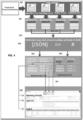
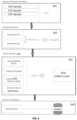
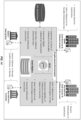
- the exemplary inventive cryptographically-secure permissioned distributed database-centered computer system may be programmed/configured to link the data in the staging database to the corresponding secure hash state(s) of the corresponding ISC(s) of the corresponding SESC(s) in the crypto-secure distributed database environment which stores the hashes of key data elements for the meeting, agenda, entitlement and/or voting information, as shown Fig. 2 .
- the exemplary inventive cryptographically-secure permissioned distributed database-centered computer system may be programmed/configured to include one or more databases (e.g., database(s) identified as "Off-Chain Datastore" in Fig. 2 ) that may store additional details (non-key data elements) for the meeting, voting, agenda, and/or entitlement.
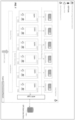
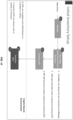
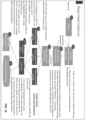
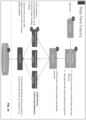
- Figure 4 shows an exemplary workflow that the exemplary inventive cryptographically-secure permissioned distributed database-centered computer system may be programmed/configured to execute for managing the corporate activities/events.
- the exemplary inventive cryptographically-secure permissioned distributed database-centered computer system may be programmed/configured to pull meeting feeds from one or more electronic data sources in an exemplary proxy voting environment and to hold them in a temporary memory (e.g., memory buffer) of at least one application server (App Server).
- App Server application server
- the exemplary inventive cryptographically-secure permissioned distributed database-centered computer system may be programmed/configured to analyze each feed (e.g., agenda, meeting, ballot, sub custodian, etc.) and populate respective data structure(s) (e.g., tables in a SQL DB).
- each feed e.g., agenda, meeting, ballot, sub custodian, etc.
- respective data structure(s) e.g., tables in a SQL DB
- the exemplary inventive cryptographically-secure permissioned distributed database-centered computer system may be programmed/configured to generate a plurality of data objects, such as but not limited to, a plurality of JSON (JavaScript Object Notation) objects which each may contain at least one data array representing, for example, meeting-agenda-proposal-voting details.
- the exemplary inventive cryptographically-secure permissioned distributed database-centered computer system may be programmed/configured to calculate a hash digest of every JSON object which represents a current state of a particular meeting and is associated with the respective JSON object.
- the exemplary inventive cryptographically-secure permissioned distributed database-centered computer system may be programmed/configured to transmit these payloads to the exemplary inventive CSD network via private transaction(s).
- recipient(s) of these transactions may be determined by one or more data access rules as well.
- private transaction(s) may be configured to reach recipient SESC(s) and be then persisted into private data stores (e.g., distributed databases of the exemplary CSD network).
- exemplary meeting SESCs may reside on an exemplary CSD network and run on every node (e.g., EOP node) in the CSD network.
- routines programmed into the exemplary proxy meeting SESCs may be classified into two categories:
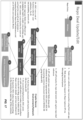
- Figure 14 shows a snapshot of an exemplary diagram of an inventive workflow which the exemplary inventive cryptographically-secure permissioned distributed database-centered computer system may be programmed/configured to support an exemplary SESC which can be programmed to track and execute both legs of a non-cleared repo transaction.
- Figure 15 shows a snapshot of an exemplary diagram of an inventive workflow that a custodian, who controls an exemplary EOP node, can utilize an exemplary Inventory SESC to set-up a new inventory of assets or update an existing inventory.
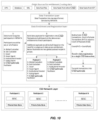
- Figure 16 shows a snapshot of an exemplary diagram of an inventive workflow in accordance with which the exemplary inventive cryptographically-secure permissioned distributed database-centered computer system may be programmed/configured to create a particular SESC for each repo contract.
- the exemplary inventive cryptographically-secure permissioned distributed database-centered computer system may be programmed/configured, for each repo contract, to accept repo details along with collaterals from users, and, then, generate hashes to be stored in the particular SESC and actual data in a separate distributed database (e.g., NOSQL database).
- the particular SESC may be programmed/configured to handle approval and notification process along with checking eligibility rules and inventory balances, amend the data store (e.g., NOSQL database), and regenerate respective hashes.
- Figure 19 shows a snapshot of an exemplary diagram of an inventive workflow in accordance with which the exemplary inventive cryptographically-secure permissioned distributed database-centered computer system may be programmed/configured to allow a particular SESC, which manages a particular repo contract, to respond to an electronic inquiry about such repo contract.
- the exemplary inventive cryptographically-secure permissioned distributed database-centered computer system may be programmed/configured to manage SESCs that may be programmed to track invoice-specific data (e.g., invoice number, debtor, invoice date, amount, etc.) to disallow multiple records with the same invoice details.
- the exemplary inventive cryptographically-secure permissioned distributed database-centered computer system may be programmed/configured to allow an EOP note member to set-up a particular SESC to be responsible for a corresponding A/R purchase transaction.
- each EOP node may store a complete updated instance of an exemplary distributed asset registry database which would contain records of all "perfected" interests.
- SESCs may be programmed/configured to reject incomplete records.
- SESCs may be programmed/configured to update the corresponding record(s) in the exemplary distributed asset registry database of asset registry when a receivable is sold. For example, each time a supplier delivers goods and an invoice is produced, a corresponding SESC may be invoked to update corresponding record(s) in the exemplary distributed asset registry database and to synchronize the instances of the exemplary distributed asset registry database among the EOP member nodes.
- the terms “cloud,” “Internet cloud,” “cloud computing,” “cloud architecture,” and similar terms correspond to at least one of the following utilized by the exemplary inventive computer-programmed systems and the exemplary inventive computer-processing methods of the present invention: (1) a large number of computers connected through a real-time communication network (e.g., Internet); (2) providing the ability to run a program or application on many connected computers (e.g., physical machines, virtual machines (VMs)) at the same time; (3) network-based services, which appear to be provided by real server hardware, and are in fact served up by virtual hardware (e.g., virtual servers), simulated by software running on one or more real machines (e.g., allowing to be moved around and scaled up (or down) on the fly without affecting the end user).
- a real-time communication network e.g., Internet
- VMs virtual machines
- the inventive computer flexible lease basis system offers/manages the cloud computing/architecture as, but not limiting to: infrastructure a service (IaaS), platform as a service (PaaS), and software as a service (SaaS).
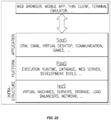
- Figures 21 and 22 illustrate schematics of exemplary implementations of the cloud computing/architecture which the exemplary inventive adaptive self-trained computer engine the present invention is configured/programmed to utilize and/or interface with.
- the present invention provides for an exemplary computer system which includes at least the following components: a network of externally owned presence (EOP) member nodes; i) where each EOP member node is owned by a distinct entity; ii) where the network of externally owned presence (EOP) nodes includes: 1) at least one supervisory EOP member node and 2) a plurality of peer EOP member nodes; iii) where the at least one supervisory EOP member node is configured to generate at least one personalized cryptographic private key for each peer EOP member node; iv) where each personalized cryptographic private key is only known to a corresponding peer EOP member node which controls a secrecy of such personalized cryptographic private key; at least one distributed database, storing a plurality of persistent data objects; and a plurality of self-contained self-executing software containers (SESCs); i) where each SESC includes an independently executable software code which is at least configured to: 1) generate at least one state hash representative of at least one current state of at least one persistent
- the plurality of SESCs includes: a plurality of meeting SESCs, where each meeting SESC is at least configured to: obtain current data related to a particular corporate event of a publicly traded company from at least one electronic source associate with at least one EOP member node; perform the at least one explicit policy criteria check associated with at least one of the at least one electronic source, the at least one EOP member node, and the current data; generate at least one meeting state hash representative of the current data of the particular corporate event; store the at least one meeting state hash and the current data of the particular corporate event in at least one meeting persistent data object in the at least one distributed database; keep the at least one meeting state hash within the meeting SESC; and generate an output representative of a current state of the particular corporate event.
- each SESC is further configured to generate the at least one SESC state hash based on at least one of the following cryptographic hash functions: SHA-256, Dagger-Hashimoto Hashes, and SHA3.
- the present invention provides for acomputer-implemented method that includes at least the following steps administering a network of externally owned presence (EOP) member nodes; i) where each EOP member node is owned by a distinct entity; ii) where the network of externally owned presence (EOP) nodes includes: 1) at least one supervisory EOP member node and 2) a plurality of peer EOP member nodes; iii) where the at least one supervisory EOP member node is configured to generate at least one personalized cryptographic private key for each peer EOP member node; iv) where each personalized cryptographic private key is only known to a corresponding peer EOP member node which controls a secrecy of such personalized cryptographic private key; administering at least one distributed database, storing a plurality of persistent data objects; and programming a plurality of self-contained self-executing software containers (SESCs); i) where each SESC includes an independently executable software code which is at least configured to: 1) generate at least one state hash representative of at least one
- the plurality of SESCs includes: a plurality of meeting SESCs, where each meeting SESC is at least configured to: obtain current data related to a particular corporate event of a publicly traded company from at least one electronic source associate with at least one EOP member node; perform the at least one explicit policy criteria check associated with at least one of the at least one electronic source, the at least one EOP member node, and the current data; generate at least one meeting state hash representative of the current data of the particular corporate event; store the at least one meeting state hash and the current data of the particular corporate event in at least one meeting persistent data object in the at least one distributed database; keep the at least one meeting state hash within the meeting SESC; and generate an output representative of a current state of the particular corporate event.
- the particular corporate event is an annual meeting.
- the current data related to the annual meeting includes agenda data, ballot data, entitlement data, and voting data.
- the at least one explicit policy criteria check is at least one of: i) verifying that a particular investor can access only a vote entitlement related to the particular investor; ii) verifying that a particular custodian can access only the vote entitlement when the particular investor is a client of the particular custodian; and iii) verifying that a particular issuer can access only vote details without accessing related investor data.
Landscapes
- Engineering & Computer Science (AREA)
- Computer Security & Cryptography (AREA)
- Theoretical Computer Science (AREA)
- Databases & Information Systems (AREA)
- Signal Processing (AREA)
- Computer Networks & Wireless Communication (AREA)
- General Engineering & Computer Science (AREA)
- General Physics & Mathematics (AREA)
- Physics & Mathematics (AREA)
- Computing Systems (AREA)
- Computer Hardware Design (AREA)
- Data Mining & Analysis (AREA)
- Health & Medical Sciences (AREA)
- Bioethics (AREA)
- General Health & Medical Sciences (AREA)
- Medical Informatics (AREA)
- Software Systems (AREA)
- Power Engineering (AREA)
- Storage Device Security (AREA)
- Management, Administration, Business Operations System, And Electronic Commerce (AREA)
- Financial Or Insurance-Related Operations Such As Payment And Settlement (AREA)
- Information Retrieval, Db Structures And Fs Structures Therefor (AREA)
- Mobile Radio Communication Systems (AREA)
Claims (6)
- Computersystem, das Folgendes aufweist:- ein Netzwerk von Mitgliedsknoten externer Präsenz (EOP);i) wobei jeder EOP-Mitgliedsknoten im Besitz einer anderen Einheit ist;ii) wobei das Netzwerk externer Präsenzknoten (EOP-) Folgendes aufweist:1) mindestens einen überwachenden EOP-Mitgliedsknoten und2) eine Vielzahl von Peer-EOP-Mitgliedsknoten;iii) wobei der mindestens eine überwachende EOP-Mitgliedsknoten so konfiguriert ist, dass er mindestens einen personalisierten kryptographischen privaten Schlüssel für jeden Peer-EOP-Mitgliedsknoten erzeugt;iv) wobei jeder personalisierte kryptographische private Schlüssel nur einem entsprechenden Peer-EOP-Mitgliedsknoten bekannt ist, der die Geheimhaltung eines solchen personalisierten kryptographischen privaten Schlüssels kontrolliert;- mindestens eine verteilte Datenbank, die eine Vielzahl von dauerhaften Datenobjekten speichert; und- eine Vielzahl von in sich geschlossenen, selbstausführenden Software-Containern (SESCs);i) wobei jeder SESC einen unabhängig ausführbaren Softwarecode aufweist, der zumindest konfiguriert ist um:1) mindestens einen Zustands-Hash zu erzeugen, der für mindestens einen aktuellen Zustand mindestens eines dauerhaften Datenobjekts repräsentativ ist,2) mindestens eine Datenaktion mit dem mindestens einen dauerhaften Datenobjekt durchzuführen; und3) festzustellen, dass ein bestimmter EOP-Mitgliedsknoten die Erlaubnis hat, den SESC zu veranlassen, die mindestens eine Datenaktion mit dem mindestens einen dauerhaften Datenobjekt durchzuführen, zumindest teilweise auf der Grundlage eines bestimmten personalisierten kryptographischen privaten Schlüssels des bestimmten EOP-Mitgliedsknotens und mindestens eines Attributs, das dem bestimmten EOP-Mitgliedsknoten zugeordnet ist; und4) festzustellen, dass die mindestens eine Datenaktion mit dem mindestens einen dauerhaften Datenobjekt zumindest teilweise auf mindestens einer expliziten Richtlinienkriterienprüfung basiert, der zu folgen alle EOP-Mitgliedsknoten zugestimmt haben,wobei die Vielzahl von SESCs eine Vielzahl von Sitzungs-SESCs aufweist,wobei jeder Sitzungs-SESC zumindest konfiguriert ist um:- aktuelle Daten in Bezug auf ein bestimmtes Unternehmensereignis eines börsennotierten Unternehmens von mindestens einer elektronischen Quelle zu erhalten, die mit mindestens einem EOP-Mitgliedsknoten verbunden ist;- die mindestens eine explizite Richtlinienkriterienprüfung durchzuführen, die mindestens einer der mindestens einen elektronischen Quelle, dem mindestens einen EOP-Mitgliedsknoten und den aktuellen Daten zugeordnet ist;- mindestens einen Sitzungszustands-Hash zu erzeugen, der für die aktuellen Daten des bestimmten Unternehmensereignisses repräsentativ ist;- den mindestens einen Sitzungszustands-Hash und die aktuellen Daten des bestimmten Unternehmensereignisses in mindestens einem dauerhaften Sitzungsdatenobjekt in der mindestens einen verteilten Datenbank zu speichern;- den mindestens einen Sitzungszustands-Hash innerhalb des Sitzungs-SESC zu halten; und- eine Ausgabe zu erzeugen, die für einen aktuellen Zustand des bestimmten Unternehmensereignisses repräsentativ ist,wobei das besondere Unternehmensereignis eine Jahresversammlung ist,wobei die aktuellen Daten, die sich auf die Jahresversammlung beziehen, vorzugsweise Tagesordnungsdaten, Abstimmungsdaten, Berechtigungsdaten und Abstimmungsdaten aufweisen, und/oder wobei die mindestens eine explizite Richtlinienkriterienprüfung mindestens eine der folgenden ist:i) Überprüfen, dass ein bestimmter Anleger nur auf eine Stimmberechtigung zugreifen kann, die sich auf den bestimmten Anleger bezieht;ii) Überprüfen, dass eine bestimmte Depotbank nur auf die Stimmberechtigung zugreifen kann, wenn der bestimmte Anleger ein Kunde der bestimmten Depotbank ist; undiii) Überprüfen, ob ein bestimmter Emittent nur auf die Stimmrechtsdaten zugreifen kann, ohne auf damit verbundene Anlegerdaten zuzugreifen.
- Computersystem nach Anspruch 1,
wobei jeder SESC ferner so konfiguriert ist, dass er den mindestens einen Zustands-Hash auf der Grundlage von mindestens einer der folgenden kryptographischen Hash-Funktionen erzeugt: SHA-256, Dagger-Hashimoto-Hashes und SHA3. - Computersystem nach einem der Ansprüche 1 bis 2,
wobei die mindestens eine verteilte Datenbank so konfiguriert ist, dass sie das mindestens eine dauerhafte Datenobjekt und den entsprechenden mindestens einen generierten Hash, der für das mindestens eine dauerhafte Datenobjekt repräsentativ ist, speichert. - Computerimplementiertes Verfahren, das Folgendes aufweist:- Bereitstellen eines Netzwerks von Mitgliedsknoten externer Präsenz (EOP);i) wobei jeder EOP-Mitgliedsknoten im Besitz einer anderen Einheit ist;ii) wobei das Netzwerk externer Präsenzknoten (EOP-) Folgendes aufweist:1) mindestens einen überwachenden EOP-Mitgliedsknoten und2) eine Vielzahl von Peer-EOP-Mitgliedsknoten;iii) wobei der mindestens eine überwachende EOP-Mitgliedsknoten so konfiguriert ist, dass er mindestens einen personalisierten kryptographischen privaten Schlüssel für jeden Peer-EOP-Mitgliedsknoten erzeugt;iv) wobei jeder personalisierte kryptographische private Schlüssel nur einem entsprechenden Peer-EOP-Mitgliedsknoten bekannt ist, der die Geheimhaltung eines solchen personalisierten kryptographischen privaten Schlüssels kontrolliert;- Bereitstellen mindestens einer verteilte Datenbank, die eine Vielzahl von dauerhaften Datenobjekten speichert; und- Bereitstellen einer Vielzahl von in sich geschlossenen, selbstausführenden Software-Containern (SESCs);i) wobei jeder SESC einen unabhängig ausführbaren Softwarecode aufweist, der zumindest konfiguriert ist um:1) mindestens einen Zustands-Hash zu erzeugen, der für mindestens einen aktuellen Zustand mindestens eines dauerhaften Datenobjekts repräsentativ ist,2) mindestens eine Datenaktion mit dem mindestens einen dauerhaften Datenobjekt durchzuführen; und3) festzustellen, dass ein bestimmter EOP-Mitgliedsknoten die Erlaubnis hat, den SESC zu veranlassen, die mindestens eine Datenaktion mit dem mindestens einen dauerhaften Datenobjekt durchzuführen, zumindest teilweise auf der Grundlage eines bestimmten personalisierten kryptographischen privaten Schlüssels des bestimmten EOP-Mitgliedsknotens und mindestens eines Attributs, das dem bestimmten EOP-Mitgliedsknoten zugeordnet ist; und4) festzustellen, dass die mindestens eine Datenaktion mit dem mindestens einen dauerhaften Datenobjekt zumindest teilweise auf mindestens einer expliziten Richtlinienkriterienprüfung basiert, der zu folgen alle EOP-Mitgliedsknoten zugestimmt haben,wobei die Vielzahl von SESCs eine Vielzahl von Sitzungs-SESCs aufweist,wobei jeder Sitzungs-SESC zumindest konfiguriert ist um:- aktuelle Daten in Bezug auf ein bestimmtes Unternehmensereignis eines börsennotierten Unternehmens von mindestens einer elektronischen Quelle zu erhalten, die mit mindestens einem EOP-Mitgliedsknoten verbunden ist;- die mindestens eine explizite Richtlinienkriterienprüfung durchzuführen, die mindestens einer der mindestens einen elektronischen Quelle, dem mindestens einen EOP-Mitgliedsknoten und den aktuellen Daten zugeordnet ist;- mindestens einen Sitzungszustands-Hash zu erzeugen, der für die aktuellen Daten des bestimmten Unternehmensereignisses repräsentativ ist;- den mindestens einen Sitzungszustands-Hash und die aktuellen Daten des bestimmten Unternehmensereignisses in mindestens einem dauerhaften Sitzungsdatenobjekt in der mindestens einen verteilten Datenbank zu speichern;- den mindestens einen Sitzungszustands-Hash innerhalb des Sitzungs-SESC zu halten; und- eine Ausgabe zu erzeugen, die für einen aktuellen Zustand des bestimmten Unternehmensereignisses repräsentativ ist,wobei das besondere Unternehmensereignis eine Jahresversammlung ist,wobei die aktuellen Daten, die sich auf die Jahresversammlung beziehen, vorzugsweise Tagesordnungsdaten, Abstimmungsdaten, Berechtigungsdaten und Abstimmungsdaten aufweisen, und/oderwobei die mindestens eine explizite Richtlinienkriterienprüfung mindestens eine der folgenden ist:i) Überprüfen, dass ein bestimmter Anleger nur auf eine Stimmberechtigung zugreifen kann, die sich auf den bestimmten Anleger bezieht;ii) Überprüfen, dass eine bestimmte Depotbank nur auf die Stimmberechtigung zugreifen kann, wenn der bestimmte Anleger ein Kunde der bestimmten Depotbank ist; undiii) Überprüfen, ob ein bestimmter Emittent nur auf die Stimmrechtsdaten zugreifen kann, ohne auf damit verbundene Anlegerdaten zuzugreifen.
- Computerimplementiertes Verfahren nach Anspruch 4,
wobei jeder SESC ferner so konfiguriert ist, dass er den mindestens einen Zustands-Hash auf der Grundlage von mindestens einer der folgenden kryptographischen Hash-Funktionen erzeugt: SHA-256, Dagger-Hashimoto-Hashes und SHA3. - Computerimplementiertes Verfahren nach Anspruch 4 oder 5,
wobei die mindestens eine verteilte Datenbank so konfiguriert ist, dass sie das mindestens eine dauerhafte Datenobjekt und den entsprechenden mindestens einen generierten Hash, der für das mindestens eine dauerhafte Datenobjekt repräsentativ ist, speichert.
Applications Claiming Priority (1)
| Application Number | Priority Date | Filing Date | Title |
|---|---|---|---|
| US15/808,714 US9967238B1 (en) | 2017-11-09 | 2017-11-09 | Database-centered computer network systems and computer-implemented methods for cryptographically-secured distributed data management |
Publications (2)
| Publication Number | Publication Date |
|---|---|
| EP3484098A1 EP3484098A1 (de) | 2019-05-15 |
| EP3484098B1 true EP3484098B1 (de) | 2024-07-10 |
Family
ID=62045257
Family Applications (1)
| Application Number | Title | Priority Date | Filing Date |
|---|---|---|---|
| EP18169360.7A Active EP3484098B1 (de) | 2017-11-09 | 2018-04-25 | Datenbankzentrierte computernetzwerksysteme und computerimplementierte verfahren zur kryptographisch gesicherten verteilten datenverwaltung |
Country Status (5)
| Country | Link |
|---|---|
| US (6) | US9967238B1 (de) |
| EP (1) | EP3484098B1 (de) |
| JP (2) | JP7150568B2 (de) |
| CN (1) | CN109766375B (de) |
| AU (4) | AU2018203718A1 (de) |
Families Citing this family (12)
| Publication number | Priority date | Publication date | Assignee | Title |
|---|---|---|---|---|
| US10388097B1 (en) | 2018-01-29 | 2019-08-20 | Accenture Global Solutions Limited | Blockchain-based cryptologic ballot verification |
| US11218313B1 (en) * | 2018-12-27 | 2022-01-04 | Equinix, Inc. | Decentralized verification of devices using distributed ledger technology |
| US11283673B2 (en) | 2019-01-07 | 2022-03-22 | International Business Machines Corporation | Blockchain endorsement verification |
| JP7025365B2 (ja) * | 2019-03-25 | 2022-02-24 | 株式会社日立製作所 | データ連携管理方法、データ連携管理システム、およびノード |
| US10719517B1 (en) | 2019-12-18 | 2020-07-21 | Snowflake Inc. | Distributed metadata-based cluster computing |
| US12099997B1 (en) | 2020-01-31 | 2024-09-24 | Steven Mark Hoffberg | Tokenized fungible liabilities |
| CN113765851B (zh) * | 2020-06-03 | 2022-11-08 | 华为技术有限公司 | 一种数据处理方法及其设备 |
| US11611438B2 (en) | 2021-03-26 | 2023-03-21 | Broadridge Financial Solutions, Inc. | Computer network systems for cryptographically-secured, token-based operations and methods of use thereof |
| CN115168495B (zh) * | 2022-07-20 | 2025-04-25 | 成都道客数字科技有限公司 | 一种防阻塞的云原生分布式状态存储数据库读写方法和系统 |
| US20240195635A1 (en) * | 2022-12-12 | 2024-06-13 | Intel Corporation | Roots of trust in intellectual property (ip) blocks in a system on a chip (soc) |
| CN116938597B (zh) * | 2023-09-14 | 2023-12-05 | 北京固加数字科技有限公司 | 一种股票交易数据交互系统 |
| CN116934068A (zh) * | 2023-09-19 | 2023-10-24 | 江铃汽车股份有限公司 | 一种办公流程节点管理方法及系统 |
Family Cites Families (41)
| Publication number | Priority date | Publication date | Assignee | Title |
|---|---|---|---|---|
| US8639625B1 (en) | 1995-02-13 | 2014-01-28 | Intertrust Technologies Corporation | Systems and methods for secure transaction management and electronic rights protection |
| AU6760900A (en) * | 1999-08-09 | 2001-03-05 | Frank W Sudia | Distributed rule enforcement systems |
| GB0013349D0 (en) * | 2000-06-01 | 2000-07-26 | Tao Group Ltd | Pseudo-random number generator |
| WO2002005106A1 (en) * | 2000-07-07 | 2002-01-17 | Consilient, Inc. | Method and apparatus for providing process-container platforms |
| DE10239062A1 (de) * | 2002-08-26 | 2004-04-01 | Siemens Ag | Verfahren zum Übertragen von verschlüsselten Nutzdatenobjekten |
| JP2008026925A (ja) * | 2004-06-29 | 2008-02-07 | Easy Systems Japan Kk | ファイル管理プログラム |
| US8788318B1 (en) * | 2005-01-21 | 2014-07-22 | Broadbridge Investor Communication Solutions, Inc. | Methods and systems for consolidating, distributing and integrating issuer information for a voting entity |
| US7894602B2 (en) * | 2006-03-31 | 2011-02-22 | Sap Ag | System and method for generating pseudo-random numbers |
| US7856437B2 (en) * | 2007-07-31 | 2010-12-21 | Hewlett-Packard Development Company, L.P. | Storing nodes representing respective chunks of files in a data store |
| CA2638893A1 (en) * | 2008-08-19 | 2010-02-19 | Andrew Marks De Chabris | A financial security and a transaction method, system and index relating to the same |
| US20110191233A1 (en) * | 2010-02-02 | 2011-08-04 | Thomas Michael Russo | Auto Substitution Collateral Management System and Method |
| US9299094B2 (en) * | 2010-05-20 | 2016-03-29 | Red Hat Inc. | State-based compliance verification in a disconnected system |
| US8474018B2 (en) * | 2010-09-03 | 2013-06-25 | Ebay Inc. | Role-based attribute based access control (RABAC) |
| US8948382B2 (en) * | 2010-12-16 | 2015-02-03 | Microsoft Corporation | Secure protocol for peer-to-peer network |
| US8489694B2 (en) * | 2011-02-24 | 2013-07-16 | International Business Machines Corporation | Peer-to-peer collaboration of publishers in a publish-subscription environment |
| WO2012142178A2 (en) * | 2011-04-11 | 2012-10-18 | Intertrust Technologies Corporation | Information security systems and methods |
| US8874769B2 (en) * | 2011-06-30 | 2014-10-28 | Qualcomm Incorporated | Facilitating group access control to data objects in peer-to-peer overlay networks |
| KR102233473B1 (ko) * | 2015-01-06 | 2021-03-29 | 한국전자통신연구원 | 피투피 기반 콘텐츠 송수신 정보 수집 방법 |
| US11023968B2 (en) * | 2015-03-05 | 2021-06-01 | Goldman Sachs & Co. LLC | Systems and methods for updating a distributed ledger based on partial validations of transactions |
| US9904544B2 (en) | 2015-06-08 | 2018-02-27 | Ripple Luxembourg S.A. | System and method for determining that results produced from executions of software have not been altered or falsified |
| US20170011460A1 (en) | 2015-07-09 | 2017-01-12 | Ouisa, LLC | Systems and methods for trading, clearing and settling securities transactions using blockchain technology |
| US20170048235A1 (en) | 2015-07-14 | 2017-02-16 | Fmr Llc | Crypto Captcha and Social Aggregating, Fractionally Efficient Transfer Guidance, Conditional Triggered Transaction, Datastructures, Apparatuses, Methods and Systems |
| US20170109735A1 (en) | 2015-07-14 | 2017-04-20 | Fmr Llc | Computationally Efficient Transfer Processing and Auditing Apparatuses, Methods and Systems |
| US20170140408A1 (en) | 2015-11-16 | 2017-05-18 | Bank Of America Corporation | Transparent self-managing rewards program using blockchain and smart contracts |
| US10261782B2 (en) | 2015-12-18 | 2019-04-16 | Amazon Technologies, Inc. | Software container registry service |
| US9849364B2 (en) | 2016-02-02 | 2017-12-26 | Bao Tran | Smart device |
| BR112018016782A2 (pt) | 2016-02-23 | 2018-12-26 | Nchain Holdings Ltd | sistema e método implementado por computador configurado para controlar uma transferência feita através de um blockchain |
| WO2017173399A1 (en) | 2016-03-31 | 2017-10-05 | Clause, Inc. | System and method for creating and executing data-driven legal contracts |
| AU2017240682B2 (en) * | 2016-04-01 | 2022-06-30 | Consensys Software Inc. | Systems and methods for providing data privacy in a private distributed ledger |
| US11010729B2 (en) | 2016-04-14 | 2021-05-18 | Pricewaterhousecoopers Llp | Cryptoconomy solution for administration and governance in a distributed system |
| US20170324711A1 (en) * | 2016-05-03 | 2017-11-09 | The Real Mccoy, Llc Inc. | Method for establishing, securing and transferring computer readable information using peer-to-peer public and private key cryptography |
| WO2018058108A1 (en) | 2016-09-26 | 2018-03-29 | Shapeshift Ag | System and method of providing a multi-asset rebalancing mechanism |
| US10862959B2 (en) * | 2016-11-28 | 2020-12-08 | Keir Finlow-Bates | Consensus system and method for adding data to a blockchain |
| US11128528B2 (en) * | 2016-12-30 | 2021-09-21 | Intel Corporation | Decentralized data storage and processing for IoT devices |
| CN107341702B (zh) | 2017-03-08 | 2020-06-23 | 创新先进技术有限公司 | 一种业务处理的方法及装置 |
| CN107103054B (zh) * | 2017-04-12 | 2019-03-26 | 北京航空航天大学 | 一种私有区块链的智能合约异步执行存储系统与实现方法 |
| US11924322B2 (en) * | 2017-05-16 | 2024-03-05 | Arm Ltd. | Blockchain for securing and/or managing IoT network-type infrastructure |
| US10616324B1 (en) * | 2017-07-20 | 2020-04-07 | Architecture Technology Corporation | Decentralized ledger system and method for enterprises |
| US11816664B2 (en) * | 2018-05-07 | 2023-11-14 | Broadridge Financial Solutions, Inc. | Computer network systems administering cryptographically-secured, token-based substitution management and methods of use thereof |
| US11348081B2 (en) * | 2019-05-15 | 2022-05-31 | Flowency, LLC. | Method of executing conventional purchase transactions using cryptocurrency |
| US11210856B2 (en) * | 2019-08-20 | 2021-12-28 | The Calany Holding S. À R.L. | System and method for interaction-level based telemetry and tracking within digital realities |
-
2017
- 2017-11-09 US US15/808,714 patent/US9967238B1/en active Active
-
2018
- 2018-04-19 US US15/957,610 patent/US10333910B2/en active Active
- 2018-04-25 EP EP18169360.7A patent/EP3484098B1/de active Active
- 2018-05-28 AU AU2018203718A patent/AU2018203718A1/en not_active Abandoned
- 2018-11-07 JP JP2018209652A patent/JP7150568B2/ja active Active
- 2018-11-09 CN CN201811334415.7A patent/CN109766375B/zh active Active
-
2019
- 2019-06-24 US US16/450,633 patent/US10979405B2/en active Active
- 2019-07-09 AU AU2019204923A patent/AU2019204923A1/en not_active Abandoned
-
2021
- 2021-04-12 US US17/228,129 patent/US20210306305A1/en not_active Abandoned
- 2021-08-14 AU AU2021215303A patent/AU2021215303A1/en not_active Abandoned
-
2022
- 2022-09-28 JP JP2022155355A patent/JP7434480B2/ja active Active
-
2023
- 2023-09-13 AU AU2023229525A patent/AU2023229525A1/en not_active Abandoned
-
2024
- 2024-02-13 US US18/440,723 patent/US20240187390A1/en not_active Abandoned
-
2025
- 2025-01-17 US US19/030,538 patent/US20250240280A1/en active Pending
Also Published As
| Publication number | Publication date |
|---|---|
| JP2023016044A (ja) | 2023-02-01 |
| US10333910B2 (en) | 2019-06-25 |
| US9967238B1 (en) | 2018-05-08 |
| US20240187390A1 (en) | 2024-06-06 |
| JP7434480B2 (ja) | 2024-02-20 |
| CN109766375B (zh) | 2024-05-28 |
| US20210306305A1 (en) | 2021-09-30 |
| JP2019134402A (ja) | 2019-08-08 |
| AU2023229525A1 (en) | 2023-09-28 |
| AU2021215303A1 (en) | 2021-09-02 |
| EP3484098A1 (de) | 2019-05-15 |
| US20190141018A1 (en) | 2019-05-09 |
| US20250240280A1 (en) | 2025-07-24 |
| US10979405B2 (en) | 2021-04-13 |
| AU2019204923A1 (en) | 2019-07-25 |
| AU2018203718A1 (en) | 2019-05-23 |
| CN109766375A (zh) | 2019-05-17 |
| JP7150568B2 (ja) | 2022-10-11 |
| US20190312852A1 (en) | 2019-10-10 |
Similar Documents
| Publication | Publication Date | Title |
|---|---|---|
| US20240187390A1 (en) | Database-centered computer network systems and computer-implemented methods for cryptographically-secured distributed data management based on entropy and having a supervisory node | |
| JP7711148B2 (ja) | 暗号学的に保護されたトークンベースの代替管理を行うためのコンピュータネットワークシステム、および当該システムを利用する方法 | |
| US20240380618A1 (en) | Systems and methods for storing and sharing transactional data using distributed computer systems | |
| Swan | Blockchain for business: Next-generation enterprise artificial intelligence systems | |
| EP3465516B1 (de) | Kryptographische anwendungen für ein blockchain-system | |
| US11449476B2 (en) | Extracting data from a blockchain network | |
| AU2018274957A1 (en) | Systems and methods of blockchain transaction recordation | |
| US10783590B1 (en) | Mutual aid network based on smart contract and blockchain | |
| US20220076250A1 (en) | Blockchain enabled smart compliance | |
| US20260065276A1 (en) | System and method for sharing know your customer (kyc) data using a blockchain | |
| Chen et al. | Asteroid X: A Decentralized Finance Platform for Mining Sectors |
Legal Events
| Date | Code | Title | Description |
|---|---|---|---|
| PUAI | Public reference made under article 153(3) epc to a published international application that has entered the european phase |
Free format text: ORIGINAL CODE: 0009012 |
|
| STAA | Information on the status of an ep patent application or granted ep patent |
Free format text: STATUS: THE APPLICATION HAS BEEN PUBLISHED |
|
| AK | Designated contracting states |
Kind code of ref document: A1 Designated state(s): AL AT BE BG CH CY CZ DE DK EE ES FI FR GB GR HR HU IE IS IT LI LT LU LV MC MK MT NL NO PL PT RO RS SE SI SK SM TR |
|
| AX | Request for extension of the european patent |
Extension state: BA ME |
|
| STAA | Information on the status of an ep patent application or granted ep patent |
Free format text: STATUS: REQUEST FOR EXAMINATION WAS MADE |
|
| 17P | Request for examination filed |
Effective date: 20191114 |
|
| RBV | Designated contracting states (corrected) |
Designated state(s): AL AT BE BG CH CY CZ DE DK EE ES FI FR GB GR HR HU IE IS IT LI LT LU LV MC MK MT NL NO PL PT RO RS SE SI SK SM TR |
|
| STAA | Information on the status of an ep patent application or granted ep patent |
Free format text: STATUS: EXAMINATION IS IN PROGRESS |
|
| 17Q | First examination report despatched |
Effective date: 20200318 |
|
| GRAP | Despatch of communication of intention to grant a patent |
Free format text: ORIGINAL CODE: EPIDOSNIGR1 |
|
| STAA | Information on the status of an ep patent application or granted ep patent |
Free format text: STATUS: GRANT OF PATENT IS INTENDED |
|
| INTG | Intention to grant announced |
Effective date: 20240214 |
|
| GRAS | Grant fee paid |
Free format text: ORIGINAL CODE: EPIDOSNIGR3 |
|
| GRAA | (expected) grant |
Free format text: ORIGINAL CODE: 0009210 |
|
| STAA | Information on the status of an ep patent application or granted ep patent |
Free format text: STATUS: THE PATENT HAS BEEN GRANTED |
|
| AK | Designated contracting states |
Kind code of ref document: B1 Designated state(s): AL AT BE BG CH CY CZ DE DK EE ES FI FR GB GR HR HU IE IS IT LI LT LU LV MC MK MT NL NO PL PT RO RS SE SI SK SM TR |
|
| REG | Reference to a national code |
Ref country code: CH Ref legal event code: EP |
|
| REG | Reference to a national code |
Ref country code: DE Ref legal event code: R096 Ref document number: 602018071499 Country of ref document: DE |
|
| REG | Reference to a national code |
Ref country code: LT Ref legal event code: MG9D |
|
| REG | Reference to a national code |
Ref country code: NL Ref legal event code: MP Effective date: 20240710 |
|
| PG25 | Lapsed in a contracting state [announced via postgrant information from national office to epo] |
Ref country code: PT Free format text: LAPSE BECAUSE OF FAILURE TO SUBMIT A TRANSLATION OF THE DESCRIPTION OR TO PAY THE FEE WITHIN THE PRESCRIBED TIME-LIMIT Effective date: 20241111 |
|
| REG | Reference to a national code |
Ref country code: AT Ref legal event code: MK05 Ref document number: 1703004 Country of ref document: AT Kind code of ref document: T Effective date: 20240710 |
|
| PG25 | Lapsed in a contracting state [announced via postgrant information from national office to epo] |
Ref country code: NL Free format text: LAPSE BECAUSE OF FAILURE TO SUBMIT A TRANSLATION OF THE DESCRIPTION OR TO PAY THE FEE WITHIN THE PRESCRIBED TIME-LIMIT Effective date: 20240710 |
|
| PG25 | Lapsed in a contracting state [announced via postgrant information from national office to epo] |
Ref country code: PT Free format text: LAPSE BECAUSE OF FAILURE TO SUBMIT A TRANSLATION OF THE DESCRIPTION OR TO PAY THE FEE WITHIN THE PRESCRIBED TIME-LIMIT Effective date: 20241111 Ref country code: NL Free format text: LAPSE BECAUSE OF FAILURE TO SUBMIT A TRANSLATION OF THE DESCRIPTION OR TO PAY THE FEE WITHIN THE PRESCRIBED TIME-LIMIT Effective date: 20240710 |
|
| PG25 | Lapsed in a contracting state [announced via postgrant information from national office to epo] |
Ref country code: NO Free format text: LAPSE BECAUSE OF FAILURE TO SUBMIT A TRANSLATION OF THE DESCRIPTION OR TO PAY THE FEE WITHIN THE PRESCRIBED TIME-LIMIT Effective date: 20241010 |
|
| PG25 | Lapsed in a contracting state [announced via postgrant information from national office to epo] |
Ref country code: FI Free format text: LAPSE BECAUSE OF FAILURE TO SUBMIT A TRANSLATION OF THE DESCRIPTION OR TO PAY THE FEE WITHIN THE PRESCRIBED TIME-LIMIT Effective date: 20240710 Ref country code: GR Free format text: LAPSE BECAUSE OF FAILURE TO SUBMIT A TRANSLATION OF THE DESCRIPTION OR TO PAY THE FEE WITHIN THE PRESCRIBED TIME-LIMIT Effective date: 20241011 Ref country code: PL Free format text: LAPSE BECAUSE OF FAILURE TO SUBMIT A TRANSLATION OF THE DESCRIPTION OR TO PAY THE FEE WITHIN THE PRESCRIBED TIME-LIMIT Effective date: 20240710 |
|
| PG25 | Lapsed in a contracting state [announced via postgrant information from national office to epo] |
Ref country code: BG Free format text: LAPSE BECAUSE OF FAILURE TO SUBMIT A TRANSLATION OF THE DESCRIPTION OR TO PAY THE FEE WITHIN THE PRESCRIBED TIME-LIMIT Effective date: 20240710 |
|
| PG25 | Lapsed in a contracting state [announced via postgrant information from national office to epo] |
Ref country code: LV Free format text: LAPSE BECAUSE OF FAILURE TO SUBMIT A TRANSLATION OF THE DESCRIPTION OR TO PAY THE FEE WITHIN THE PRESCRIBED TIME-LIMIT Effective date: 20240710 |
|
| PG25 | Lapsed in a contracting state [announced via postgrant information from national office to epo] |
Ref country code: IS Free format text: LAPSE BECAUSE OF FAILURE TO SUBMIT A TRANSLATION OF THE DESCRIPTION OR TO PAY THE FEE WITHIN THE PRESCRIBED TIME-LIMIT Effective date: 20241110 Ref country code: AT Free format text: LAPSE BECAUSE OF FAILURE TO SUBMIT A TRANSLATION OF THE DESCRIPTION OR TO PAY THE FEE WITHIN THE PRESCRIBED TIME-LIMIT Effective date: 20240710 |
|
| PG25 | Lapsed in a contracting state [announced via postgrant information from national office to epo] |
Ref country code: HR Free format text: LAPSE BECAUSE OF FAILURE TO SUBMIT A TRANSLATION OF THE DESCRIPTION OR TO PAY THE FEE WITHIN THE PRESCRIBED TIME-LIMIT Effective date: 20240710 |
|
| PG25 | Lapsed in a contracting state [announced via postgrant information from national office to epo] |
Ref country code: ES Free format text: LAPSE BECAUSE OF FAILURE TO SUBMIT A TRANSLATION OF THE DESCRIPTION OR TO PAY THE FEE WITHIN THE PRESCRIBED TIME-LIMIT Effective date: 20240710 Ref country code: RS Free format text: LAPSE BECAUSE OF FAILURE TO SUBMIT A TRANSLATION OF THE DESCRIPTION OR TO PAY THE FEE WITHIN THE PRESCRIBED TIME-LIMIT Effective date: 20241010 |
|
| PG25 | Lapsed in a contracting state [announced via postgrant information from national office to epo] |
Ref country code: RS Free format text: LAPSE BECAUSE OF FAILURE TO SUBMIT A TRANSLATION OF THE DESCRIPTION OR TO PAY THE FEE WITHIN THE PRESCRIBED TIME-LIMIT Effective date: 20241010 Ref country code: PL Free format text: LAPSE BECAUSE OF FAILURE TO SUBMIT A TRANSLATION OF THE DESCRIPTION OR TO PAY THE FEE WITHIN THE PRESCRIBED TIME-LIMIT Effective date: 20240710 Ref country code: NO Free format text: LAPSE BECAUSE OF FAILURE TO SUBMIT A TRANSLATION OF THE DESCRIPTION OR TO PAY THE FEE WITHIN THE PRESCRIBED TIME-LIMIT Effective date: 20241010 Ref country code: LV Free format text: LAPSE BECAUSE OF FAILURE TO SUBMIT A TRANSLATION OF THE DESCRIPTION OR TO PAY THE FEE WITHIN THE PRESCRIBED TIME-LIMIT Effective date: 20240710 Ref country code: IS Free format text: LAPSE BECAUSE OF FAILURE TO SUBMIT A TRANSLATION OF THE DESCRIPTION OR TO PAY THE FEE WITHIN THE PRESCRIBED TIME-LIMIT Effective date: 20241110 Ref country code: HR Free format text: LAPSE BECAUSE OF FAILURE TO SUBMIT A TRANSLATION OF THE DESCRIPTION OR TO PAY THE FEE WITHIN THE PRESCRIBED TIME-LIMIT Effective date: 20240710 Ref country code: GR Free format text: LAPSE BECAUSE OF FAILURE TO SUBMIT A TRANSLATION OF THE DESCRIPTION OR TO PAY THE FEE WITHIN THE PRESCRIBED TIME-LIMIT Effective date: 20241011 Ref country code: FI Free format text: LAPSE BECAUSE OF FAILURE TO SUBMIT A TRANSLATION OF THE DESCRIPTION OR TO PAY THE FEE WITHIN THE PRESCRIBED TIME-LIMIT Effective date: 20240710 Ref country code: ES Free format text: LAPSE BECAUSE OF FAILURE TO SUBMIT A TRANSLATION OF THE DESCRIPTION OR TO PAY THE FEE WITHIN THE PRESCRIBED TIME-LIMIT Effective date: 20240710 Ref country code: BG Free format text: LAPSE BECAUSE OF FAILURE TO SUBMIT A TRANSLATION OF THE DESCRIPTION OR TO PAY THE FEE WITHIN THE PRESCRIBED TIME-LIMIT Effective date: 20240710 Ref country code: AT Free format text: LAPSE BECAUSE OF FAILURE TO SUBMIT A TRANSLATION OF THE DESCRIPTION OR TO PAY THE FEE WITHIN THE PRESCRIBED TIME-LIMIT Effective date: 20240710 |
|
| REG | Reference to a national code |
Ref country code: DE Ref legal event code: R097 Ref document number: 602018071499 Country of ref document: DE |
|
| PG25 | Lapsed in a contracting state [announced via postgrant information from national office to epo] |
Ref country code: DK Free format text: LAPSE BECAUSE OF FAILURE TO SUBMIT A TRANSLATION OF THE DESCRIPTION OR TO PAY THE FEE WITHIN THE PRESCRIBED TIME-LIMIT Effective date: 20240710 Ref country code: RO Free format text: LAPSE BECAUSE OF FAILURE TO SUBMIT A TRANSLATION OF THE DESCRIPTION OR TO PAY THE FEE WITHIN THE PRESCRIBED TIME-LIMIT Effective date: 20240710 Ref country code: SM Free format text: LAPSE BECAUSE OF FAILURE TO SUBMIT A TRANSLATION OF THE DESCRIPTION OR TO PAY THE FEE WITHIN THE PRESCRIBED TIME-LIMIT Effective date: 20240710 |
|
| PG25 | Lapsed in a contracting state [announced via postgrant information from national office to epo] |
Ref country code: EE Free format text: LAPSE BECAUSE OF FAILURE TO SUBMIT A TRANSLATION OF THE DESCRIPTION OR TO PAY THE FEE WITHIN THE PRESCRIBED TIME-LIMIT Effective date: 20240710 |
|
| PG25 | Lapsed in a contracting state [announced via postgrant information from national office to epo] |
Ref country code: CZ Free format text: LAPSE BECAUSE OF FAILURE TO SUBMIT A TRANSLATION OF THE DESCRIPTION OR TO PAY THE FEE WITHIN THE PRESCRIBED TIME-LIMIT Effective date: 20240710 |
|
| PG25 | Lapsed in a contracting state [announced via postgrant information from national office to epo] |
Ref country code: SK Free format text: LAPSE BECAUSE OF FAILURE TO SUBMIT A TRANSLATION OF THE DESCRIPTION OR TO PAY THE FEE WITHIN THE PRESCRIBED TIME-LIMIT Effective date: 20240710 Ref country code: IT Free format text: LAPSE BECAUSE OF FAILURE TO SUBMIT A TRANSLATION OF THE DESCRIPTION OR TO PAY THE FEE WITHIN THE PRESCRIBED TIME-LIMIT Effective date: 20240710 |
|
| PLBE | No opposition filed within time limit |
Free format text: ORIGINAL CODE: 0009261 |
|
| STAA | Information on the status of an ep patent application or granted ep patent |
Free format text: STATUS: NO OPPOSITION FILED WITHIN TIME LIMIT |
|
| PGFP | Annual fee paid to national office [announced via postgrant information from national office to epo] |
Ref country code: LU Payment date: 20250416 Year of fee payment: 8 |
|
| 26N | No opposition filed |
Effective date: 20250411 |
|
| PGFP | Annual fee paid to national office [announced via postgrant information from national office to epo] |
Ref country code: FI Payment date: 20250421 Year of fee payment: 8 |
|
| PGFP | Annual fee paid to national office [announced via postgrant information from national office to epo] |
Ref country code: DE Payment date: 20250225 Year of fee payment: 8 |
|
| PGFP | Annual fee paid to national office [announced via postgrant information from national office to epo] |
Ref country code: MT Payment date: 20250421 Year of fee payment: 8 |
|
| PGFP | Annual fee paid to national office [announced via postgrant information from national office to epo] |
Ref country code: CH Payment date: 20250501 Year of fee payment: 8 |
|
| PG25 | Lapsed in a contracting state [announced via postgrant information from national office to epo] |
Ref country code: SE Free format text: LAPSE BECAUSE OF FAILURE TO SUBMIT A TRANSLATION OF THE DESCRIPTION OR TO PAY THE FEE WITHIN THE PRESCRIBED TIME-LIMIT Effective date: 20240710 |
|
| PGFP | Annual fee paid to national office [announced via postgrant information from national office to epo] |
Ref country code: SE Payment date: 20260211 Year of fee payment: 9 |
|
| PGFP | Annual fee paid to national office [announced via postgrant information from national office to epo] |
Ref country code: GB Payment date: 20260316 Year of fee payment: 9 |
|
| PGFP | Annual fee paid to national office [announced via postgrant information from national office to epo] |
Ref country code: MC Payment date: 20260325 Year of fee payment: 9 |
|
| PGFP | Annual fee paid to national office [announced via postgrant information from national office to epo] |
Ref country code: IE Payment date: 20260211 Year of fee payment: 9 |
|
| PGFP | Annual fee paid to national office [announced via postgrant information from national office to epo] |
Ref country code: BE Payment date: 20260317 Year of fee payment: 9 |
|
| PGFP | Annual fee paid to national office [announced via postgrant information from national office to epo] |
Ref country code: FR Payment date: 20260309 Year of fee payment: 9 |
|
| REG | Reference to a national code |
Ref country code: CH Ref legal event code: U11 Free format text: ST27 STATUS EVENT CODE: U-0-0-U10-U11 (AS PROVIDED BY THE NATIONAL OFFICE) Effective date: 20260501 |