EP3482550B1 - Bereitstellung des zugriffs auf strukturierte gespeicherte daten - Google Patents
Bereitstellung des zugriffs auf strukturierte gespeicherte daten Download PDFInfo
- Publication number
- EP3482550B1 EP3482550B1 EP17742835.6A EP17742835A EP3482550B1 EP 3482550 B1 EP3482550 B1 EP 3482550B1 EP 17742835 A EP17742835 A EP 17742835A EP 3482550 B1 EP3482550 B1 EP 3482550B1
- Authority
- EP
- European Patent Office
- Prior art keywords
- personal authentication
- data
- authentication information
- information
- data store
- Prior art date
- Legal status (The legal status is an assumption and is not a legal conclusion. Google has not performed a legal analysis and makes no representation as to the accuracy of the status listed.)
- Active
Links
Images





Classifications
-
- H—ELECTRICITY
- H04—ELECTRIC COMMUNICATION TECHNIQUE
- H04L—TRANSMISSION OF DIGITAL INFORMATION, e.g. TELEGRAPHIC COMMUNICATION
- H04L63/00—Network architectures or network communication protocols for network security
- H04L63/10—Network architectures or network communication protocols for network security for controlling access to devices or network resources
- H04L63/105—Multiple levels of security
-
- G—PHYSICS
- G06—COMPUTING OR CALCULATING; COUNTING
- G06F—ELECTRIC DIGITAL DATA PROCESSING
- G06F3/00—Input arrangements for transferring data to be processed into a form capable of being handled by the computer; Output arrangements for transferring data from processing unit to output unit, e.g. interface arrangements
- G06F3/06—Digital input from, or digital output to, record carriers, e.g. RAID, emulated record carriers or networked record carriers
- G06F3/0601—Interfaces specially adapted for storage systems
- G06F3/0602—Interfaces specially adapted for storage systems specifically adapted to achieve a particular effect
- G06F3/062—Securing storage systems
- G06F3/0622—Securing storage systems in relation to access
-
- G—PHYSICS
- G06—COMPUTING OR CALCULATING; COUNTING
- G06F—ELECTRIC DIGITAL DATA PROCESSING
- G06F3/00—Input arrangements for transferring data to be processed into a form capable of being handled by the computer; Output arrangements for transferring data from processing unit to output unit, e.g. interface arrangements
- G06F3/06—Digital input from, or digital output to, record carriers, e.g. RAID, emulated record carriers or networked record carriers
- G06F3/0601—Interfaces specially adapted for storage systems
- G06F3/0628—Interfaces specially adapted for storage systems making use of a particular technique
- G06F3/0629—Configuration or reconfiguration of storage systems
- G06F3/0637—Permissions
-
- G—PHYSICS
- G06—COMPUTING OR CALCULATING; COUNTING
- G06F—ELECTRIC DIGITAL DATA PROCESSING
- G06F3/00—Input arrangements for transferring data to be processed into a form capable of being handled by the computer; Output arrangements for transferring data from processing unit to output unit, e.g. interface arrangements
- G06F3/06—Digital input from, or digital output to, record carriers, e.g. RAID, emulated record carriers or networked record carriers
- G06F3/0601—Interfaces specially adapted for storage systems
- G06F3/0668—Interfaces specially adapted for storage systems adopting a particular infrastructure
- G06F3/0671—In-line storage system
- G06F3/0673—Single storage device
-
- H—ELECTRICITY
- H04—ELECTRIC COMMUNICATION TECHNIQUE
- H04L—TRANSMISSION OF DIGITAL INFORMATION, e.g. TELEGRAPHIC COMMUNICATION
- H04L63/00—Network architectures or network communication protocols for network security
- H04L63/08—Network architectures or network communication protocols for network security for authentication of entities
- H04L63/083—Network architectures or network communication protocols for network security for authentication of entities using passwords
-
- H—ELECTRICITY
- H04—ELECTRIC COMMUNICATION TECHNIQUE
- H04L—TRANSMISSION OF DIGITAL INFORMATION, e.g. TELEGRAPHIC COMMUNICATION
- H04L63/00—Network architectures or network communication protocols for network security
- H04L63/08—Network architectures or network communication protocols for network security for authentication of entities
- H04L63/0861—Network architectures or network communication protocols for network security for authentication of entities using biometrical features, e.g. fingerprint, retina-scan
-
- H—ELECTRICITY
- H04—ELECTRIC COMMUNICATION TECHNIQUE
- H04L—TRANSMISSION OF DIGITAL INFORMATION, e.g. TELEGRAPHIC COMMUNICATION
- H04L63/00—Network architectures or network communication protocols for network security
- H04L63/10—Network architectures or network communication protocols for network security for controlling access to devices or network resources
- H04L63/102—Entity profiles
-
- H—ELECTRICITY
- H04—ELECTRIC COMMUNICATION TECHNIQUE
- H04L—TRANSMISSION OF DIGITAL INFORMATION, e.g. TELEGRAPHIC COMMUNICATION
- H04L63/00—Network architectures or network communication protocols for network security
- H04L63/10—Network architectures or network communication protocols for network security for controlling access to devices or network resources
- H04L63/108—Network architectures or network communication protocols for network security for controlling access to devices or network resources when the policy decisions are valid for a limited amount of time
-
- G—PHYSICS
- G06—COMPUTING OR CALCULATING; COUNTING
- G06F—ELECTRIC DIGITAL DATA PROCESSING
- G06F3/00—Input arrangements for transferring data to be processed into a form capable of being handled by the computer; Output arrangements for transferring data from processing unit to output unit, e.g. interface arrangements
- G06F3/01—Input arrangements or combined input and output arrangements for interaction between user and computer
- G06F3/048—Interaction techniques based on graphical user interfaces [GUI]
- G06F3/0481—Interaction techniques based on graphical user interfaces [GUI] based on specific properties of the displayed interaction object or a metaphor-based environment, e.g. interaction with desktop elements like windows or icons, or assisted by a cursor's changing behaviour or appearance
- G06F3/04817—Interaction techniques based on graphical user interfaces [GUI] based on specific properties of the displayed interaction object or a metaphor-based environment, e.g. interaction with desktop elements like windows or icons, or assisted by a cursor's changing behaviour or appearance using icons
-
- H—ELECTRICITY
- H04—ELECTRIC COMMUNICATION TECHNIQUE
- H04L—TRANSMISSION OF DIGITAL INFORMATION, e.g. TELEGRAPHIC COMMUNICATION
- H04L2463/00—Additional details relating to network architectures or network communication protocols for network security covered by H04L63/00
- H04L2463/082—Additional details relating to network architectures or network communication protocols for network security covered by H04L63/00 applying multi-factor authentication
Definitions
- the present invention is in the field of data access. More particularly, but not exclusively, the present invention relates to authenticating access to data.
- Securing access to sensitive data is a challenge, with cyber crime, including account hacking, fraud, financial crimes, and industrial espionage, increasingly on the rise.
- Thieves and hackers employ various methods to guess usernames and passwords, gaining access to systems and secured data.
- Some online providers have addressed security concerns by requiring that users authenticate using increasingly complicated passwords.
- the complicated passwords are difficult for users to remember, however, because users must remember an ever increasing number of passwords to function in the ecommerce age.
- Multi-factor authentication is more secure than a simple password, but it is still possible for hackers to intercept SMS messages and emails to receive the code.
- the password reset process is often a multi-step process that is frustrating for users.
- the user To reset a password, the user must sometimes respond to password reset questions, respond to questions regarding account numbers or other personal information, call a customer service representative, and/or receive and follow a reset link received via email.
- a password manager One solution to managing and remembering passwords that provide access to secure information is a password manager.
- the information inside a password manager which often includes usernames and passwords, is kept in a single data store that can be accessed upon authenticating with a master password. While keeping information in a single data store may not present a problem when the information being protected is not sensitive, some users may not wish to access their most sensitive information every time they access information that is not sensitive. For example, a user wishing to access information relating to a promo website may not wish to access information relating to their bank and investment accounts at the same time.
- a method of providing access to a plurality of structured data stores based on a plurality of personal authentication information comprising: at a structured data protection system:
- At least an alpha personal authentication information of the plurality of personal authentication information may be a first biometric type data.
- a beta personal authentication information of the plurality of personal authentication information may be a second biometric type data that is different from the first biometric type data.
- a gamma personal authentication information of the plurality of personal authentication may be a third data type, and the third data type may be different from the first data type and the second data type.
- At least one of the plurality of structured data stores may include third party authentication data.
- the third party authentication data may include a password.
- At least one data store of the plurality of structured data stores may include at least one of: a data file, a number, or a text string.
- the plurality of personal authentication information may include at least one of: fingerprint data, a pin code, voice recording information, voice message data, facial image information, iris image information, or retinal image information.
- the method may further include the step of: displaying a data store user interface including secure information from at least one data store of the plurality of data stores.
- the step of displaying the data store user interface may further include displaying one or more icons associated with the secure information included in the selected data store of the plurality of data stores.
- the method may further include: receiving a data store change request for previously stored secure information, the data store change request including a new data store; and associating the previously stored secure information with the new data store.
- the method may further include:
- the registration related information may include at least one of: a website domain, a business name, a user name, a password, a password hint, a password clue, a reset question, an icon, or as reset answer.
- the method may further include:
- At least one of the plurality of personal authentication information may further comprise: receiving the at least one of the plurality of personal authentication information from a client device.
- authenticating the first personal authentication information or authenticating the second personal authentication information may further comprise:
- a system configured to provide a structured data protection system via any method of the first aspect.
- a computer program configured to provide a structured data protection system via any method of the first aspect.
- an electronically readable medium configured for storing a computer program configured to provide a structured data protection system via any method of the first aspect.
- a method further comprising: at the structured data protection system:
- the method may further comprise:
- the method may further comprise:
- an alpha personal authentication information of the plurality of personal authentication information may be a first biometric type data.
- a second personal authentication information of the plurality of personal authentication information may be a second biometric type data that is different from the first biometric type data.
- a gamma personal authentication information of the plurality of personal authentication information may be a third data type, and the third data type may be different from the first data type and the second data type.
- At least one of the plurality of structured data stores may include third party authentication data.
- the third party authentication data may include a password.
- At least one data store of the plurality of structured data stores may include at least one of: a data file, a number, or a text string.
- the plurality of personal authentication information may include at least one of: fingerprint data, a pin code, voice recording information, voice message data, facial image information, iris image information, or retinal image information.
- the method may further comprise:
- receiving at least one of the first personal authentication confirmation information, the second personal authentication confirmation information, or a third personal authentication confirmation information may further comprise:
- the method may further comprise:
- a system configured to configure a structured data protection system via any method of the second aspect.
- an electronically readable medium storing a computer program configured to provide a structured data protection system via any method of the second aspect.
- the present invention provides a method, system, and computer program to configure and provide access to a plurality of structured data stores based on a plurality of personal authentication information.
- System 100 includes client device 102.
- System 100 may further include configuration server 104, third party server 106, Internet 108, biometric device 110, user profile database 114, and structured data stores 116.
- Client device 102 may be operable to configure and provide a user access to a plurality of structured data stores based on a plurality of personal authentication information, as described in relation to Figures 4 to 12 .
- Configuration server 104 may further be operable to facilitate configuring and provide access to a plurality of structured data stores based on a plurality of personal authentication information, as described in relation to Figures 4 to 12 .
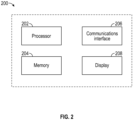
- Each of client device 102, configuration server 104, third party server, 106, and biometric device 110 may include a processing device 200, as depicted in Figure 2 .
- Processing device 200 includes a processor 202, a memory 204, and a communication interface 206.
- processing device 200 may further include a display 208.
- Processor 202 may be configured for executing computer instructions, which, when executed on the system 100, perform a portion or all of the methods described in relation to Figures 4 to 12 .
- processor 202 may include a single, or any multiple number of processors, as will be understood by those of skill in the art.
- Memory 204 may be an electronically readable medium or a computer readable medium configured to store computer program instructions.
- memory 204 may include a non-transitory medium.
- Stored computer program instructions when executed on the processor 202, may perform a portion or all of the methods described in relation to Figures 4 to 12 .
- processor 202 and memory 204 may be incorporated into a custom chipset, such as a system on a chip.
- processor 202 and memory 204 may be incorporated into a custom Qualcomm, Tegra, Mali-400, Cortex, Samsung Exynos, Intel Atom, Apple, or Motorola chip, or any other type of chip known to those of skill in the art.
- portions of the methods described in relation to Figures 4 to 12 may be stored or executed outside of system 100.
- a portion of the methods described in relation to Figures 4 to 12 may be stored or executed on a combination of a server and cloud storage facility via Internet 108.
- Communications interface 206 may be configured to communicate with devices external to client device 102 or configuration server 104.
- communications interface 206 may communicate with any of biometric device 110, user profile database 114, or structured data stores 116.
- communications interface 206 may include wired or wireless interfaces.
- Communications interface 206 may include a short-range or lowpowered wireless standard such as Bluetooth, Bluetooth LE, zigbee, or near field communication (NFC).
- Communications interface 206 may further include WIFI, 3G, 4G, Ethernet, or any other communications known to those of skill in the art.
- processing device 200 may request, send, or receive information, save information, or send or receive messages from a remote device over Internet 108.
- client device 102 may be a hand-held or mobile computing device such as a smart phone, a tablet, a smart watch, or a wearable device.
- client device 102 may be a computing apparatus such as a smart TV, a video game console, a laptop, or desktop computer, or an appenabled piece of household hardware.
- client device 102 may receive inputs from one or more integrated input devices. In further examples, however, client device 102 may be connected to any combination external input devices, including one or more biometric devices 110.
- Client device 102 or biometric device 110 may include any combination of input instruments operable to receive information from a human, an animal, or an environment.
- client device 102 or biometric device 110 may include a finger print scanner such as a capacitive touch device, an ultrasonic, or an optical device.
- client device 102 or biometric device 110 may include a facial scan device, such as an optical imaging, thermal imaging, or 3D scanning device.
- client device 102 or biometric device 110 may include an eye scanner.
- the eye scanner may include an iris scanner or a retinal scanner using a visible, infrared, and/or a near infrared imaging device.
- client device 102 or biometric device 110 may include a voice detector such as a voice recognition device or a phrase recognition device, which may include a microphone device.
- a voice detector such as a voice recognition device or a phrase recognition device, which may include a microphone device.
- client device 102 or biometric device 110 may include any other biometric or biomonitor device capable of authenticating the identity of a user, as will be understood by those of skill in the art.
- Figure 1 includes a configuration server 104.
- Configuration server 104 may be operable to execute instructions, or to retrieve and save data in a database.
- configuration server 104 may include a single server, or multiple servers in a distributed architecture.
- configuration server 104 may support a relational database, a NoSQL database, a distributed database, or any other database known to those of skill.
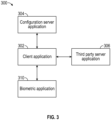
- System 300 may facilitate configuring and providing access to a plurality of structured data stores based on a plurality of personal authentication information.
- System 300 includes client application 302.
- System 300 may further include configuration server application 304, third party server application 306, and biometric application 310.
- Configuration server 304 may be configured to receive input from client application 302 to facilitate configuring and providing access to a plurality of structured data stores based on a plurality of personal authentication information.
- Client application 302 may communicate with third party server application 306.
- Client application 302 may communicate with biometric application 310.
- client application 302, configuration server application 304, third party server application 306, and biometric application 310 may each operate on separate devices.
- client application 302 may operate on client device 102; configuration server application 304 may operate on configuration server 102; third party server application 306 may operate on third party server 106; and biometric application 310 may operate on biometric device 110.
- any one of client application 302, configuration server application 304, third party server application 306, and biometric application 310 may be distributed across additional computing devices.
- configuration server application 304 may operate across a group of distributed servers.
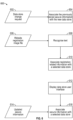
- Figure 4 depicts method 400, an example embodiment that may execute within any combination of client application 302 or configuration server application 304.
- Method 400 may provide access to a plurality of structured data stores based on a plurality of personal authentication information.
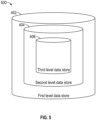
- Figure 5 depicts an example plurality of structured data stores 500.
- a data store is a physical or virtual repository for persistently storing and managing one or more collections of data.
- a data store may be a simple file, a database, or any other repository known to those of skill in the art.
- example plurality of structured data stores 500 includes first level data store 502, second level data store 504, and third level data store 506.
- Third level data store 506 is configured to be accessed after gaining access to second level data store 504, and both third and second data stores 506 and 504 are configured to be accessed after gaining access to first level data store 502.
- a user wishing to access a data store within structured data stores 500 must be authenticated before obtaining access.
- Authenticating is the process of confirming the identity of a user using personal authentication information provided by the user.
- a user wishing to access first data store 402 may be authenticated at a first level.
- personal authentication information may include fingerprint data.
- Fingerprint data may include, data received from a finger print scanner.
- Fingerprint data may include raw data, such as a two-dimensional image file, or processed data, such as feature-extraction information, an image checksum or hashing information.
- personal authentication information may include voice recording information from a voice recognition device.
- Voice recording information may be text independent.
- Voice recording information may include raw data, such as an audio file, or processed data, which may include voice prints or feature-extraction information. The voice recording information may be used to authenticate a user's voice.
- personal authentication information may include voice message data from a phrase recognition device.
- Voice message data is text dependent and may include raw data, such as an audio file, or processed data.
- the voice message data may be used to authenticate a speaker.
- personal authentication information may include facial image information from a facial scan device.
- Facial image information may include raw data, such as an image file, or processed data including feature-extraction information, an image checksum or hashing information.
- the facial image information may be used to authenticate a user based on one or more facial features.
- personal authentication information may include eye image data using an eye scanner.
- personal authentication information may include iris image information or retinal image information.
- Eye image data may include raw data, such as an image data, or processed data including feature-extraction information, an image checksum or hashing information.
- personal authentication information may include password data, or a password.
- personal authentication information may include pin code data.
- personal authentication information may include a passcode or a lock-screen pattern.
- personal authentication information herein are not intended to be limiting. Those of skill in the art will readily understand that any type of information capable of authenticating a user may be used as personal authentication information to provide access to a data store. For example, any type of biometric information that can reasonably be used to identify a user may be used.
- a user When a data store is configured to be accessed after gaining access to another data store, a user must authenticate both data stores before gaining access to the innermost data store. For example, when a second level data store 504 is configured to be accessed after gaining access to first level data store 502, as depicted in Figure 5 , a user must be authenticated at the first level data store 502 and the second level data store 504 before gaining access to the second level data store 504.
- example structured data store 500 includes three structured data stores, this is not intended to be limiting. In examples, structured data stores 500 may include two, three, or any number of data stores.
- a third level data store 506 may not be configured to be accessed after gaining access to second level data store 504.
- third level data store 506 may be configured to be accessed after only gaining access to first level data store 502.
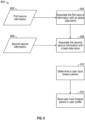
- Method 400 begins with step 402, a first personal authentication information 402 of the plurality of personal authentication information is received.
- received personal authentication information may be received from a biometric device integrated into client device 102, or external to client device 102, such as biometric device 110.
- step 404 upon authenticating the first personal authentication information 402, access is provided to a first level data store of the plurality of structured data stores. For example, access may be provided to first level data store 502.
- Step 400 continues with step 406.
- step 406 a second personal authentication information of the plurality of login data is received.
- step 408 upon authenticating the second personal authentication information, and after authenticating the first personal authentication information, access is provided to a second level data store of the plurality of structured data stores. For example, access may be provided to second level data store 504.
- this may allow a user to set different security levels for information.
- a user may place less sensitive information in first level data store, and information with a higher level of sensitivity in the second level data store.
- the user will not, therefore, also access the more sensitive information in the second level data store.
- method 400 may include further steps. For example, method 400 continues with steps 410 and 412. In step 410, a third personal authentication information of the plurality of login data may be received.
- method 400 may continue with step 412.
- step 412 upon authenticating the third personal authentication information 410, and after authenticating the first personal authentication information 402 and the second personal authentication information 406, access to a third level data store of the plurality of structured data stores may be provided. For example, access may be provided to third level data store 506.
- third level data store 506 When third level data store 506 is configured to be accessed after gaining access to first and second level data stores 502 and 504, all three data store levels must be authenticated for a user to obtain access to third level data store 506. This may provide a user with a higher security data store for information that the user deems too sensitive to be accessed with the information contained in the first and second level data stores 502 and 504. It may also allow the user the ability to access less sensitive data without also accessing the highest sensitivity data.
- a user may protect information according to the user's perceived sensitivity of the data. This may allow a user to feel better in control of his or her information.
- an alpha personal authentication information of the plurality of personal authentication information may be a first biometric type data.
- Biometric type data is data that requires a biometric input from a user.
- biometric type data may include, but is not limited to, fingerprint data, voice data, eye image data, or facial image data.
- biometric type data may allow a user to avoid the difficulty of inventing and remembering a strong password to secure the first level information store. Because a user cannot simply forget his or her biometric information, biometric personal authentication information may provide for reduced need to reset passwords. Biometric type data may be more secure than passwords as well. This may allow a user to consistently and securely access the information in the first data store.
- a beta personal authentication information of a plurality of personal authentication information may be a second biometric type data that is different from the first biometric type data.
- Using a first type of biometric data for the first personal authentication information and a second type of biometric data for the second personal authentication information may allow a user to easily access the second level data store without needing to invent and remember passwords.
- a gamma personal authentication information of the plurality of personal authentication information may be a third data type, and the third data type being different from the first data type and the second data type.
- the third personal authentication information may be a third type of biometric data.
- the first personal authentication information may include fingerprint data or a pin code
- the second personal authentication information may include voice recording information or voice message data
- the third received personal identification information may include facial recognition or eye recognition data.
- At least one of the plurality of structured data stores includes third party authentication data.
- Third party authentication data may identify secure third party repositories or websites, usernames or username hints, passwords or password hints, password recovery questions, answers, or hints, or any other information related to obtaining secure information from a third party server 106.
- the third party authentication data may include a password.
- At least one data store of the plurality of structured data stores may include at least one of: a data file, a number, or a text string.
- the at least one data store of the plurality of structured data stores may include documents including any combination of text, image, video, or audio.
- the at least one data store of the plurality of structured data stores may further include any other type of data, such as a number, or a text string.
- At least one personal authentication information of the plurality of personal authentication information may be received within a user input timeout period.
- the user input timeout period may be set during a configuration step. Later when a user tries to gain access to a data store, the amount of time that it takes to provide the authentication information may be determined and compared to the user input timeout period. If it takes too long to enter the personal authentication information, then the user may not be authenticated.
- the personal authentication information includes a lock-screen pattern for a smart phone, and the user attempting to authenticate takes 5 seconds to enter the pattern, but the user input timeout period is only 2 seconds, this may indicate that the subsequent user trying to gain access to a data store is not the original user.
- this may allow for the incorporation of a skill level into the user authentication process. This may provide for a more robust authentication process.
- method 400 may continue with step 412.
- step 412 a data store user interface including secure information from at least one data store of the plurality of data stores may be displayed.
- displaying the data store user interface may further include displaying one or more icons associated with the secure information included in the selected data store of the plurality of data stores.
- Figures 9 , 10 , and 11 depict example data store user interfaces 900, 1000, and 1100, respectively.
- icons 902 may be displayed representing secure information available in the second level data store.
- the data store user interface Upon selecting a website icon 902, the data store user interface depicts an example display the secure information associated with the selected website icon 902.
- data store user interface 1000 depicts a website, "uefa.com”, a username, alex321@yahoo.com, and a password, "footbal16.”
- Data store user interfaces 900 and 1000 may allow a user to only view the secure information that the user desires to see. This may prevent others from viewing other secure information in public places, for example.
- Data store user interface 1100 includes icons 1102 displayed next to websites, usernames, and passwords. This may allow a user to see all of the information in a data store in a single glance.
- method 400 may further include the steps of method 600.
- Method 600 may include step 602.
- Data store change request 602 may be received for previously stored secure information, the data store change request including a new data store.
- a data store change request 602 is a request to change the data store that previously stored secure information is saved in.
- a data store user interface may provide an easy way for a user to generate a data store change request 602.
- data store user interface 1000 depicts a data store level selector 1002.
- a user may determine that previously stored information relating to a Union of European Football Associations (UEFA) website logon should saved in a new data store, or first level data store 502.
- UEFA Union of European Football Associations
- a user may save by pressing the save button 1004 to generate data store change request 602.
- Method 600 may further include step 604.
- the previously stored secure information may be associated with the new data store.
- Data store change request 602 allows a user to be in control of his or her data. He or she may change the data store, and related authentication required, to access previous stored secure information.
- Method 600 may further include step 606.
- step 606 a website registration image file may be received.
- a website registration image file 606 is an image of a website where a user is registering to receive secure access, or reconfiguring his or her secure access.
- website registration image file 606 may be a screenshot of a user signing up for linked in.
- website registration file 606 may be a screenshot.
- Method 600 may further include step 608.
- text may be recognized in the website registration image file including registration related information.
- text may be recognized using optical character recognition, or any other protocol known to those of skill in the art.
- the secure information may include at least one of: a website domain, a business name, a user name, a password, a password hint, a password clue, a password reset question, an icon, or a password reset answer.
- Method 600 may further include step 610.
- the secure information may be associated with a selected data store of the plurality of data stores to which access has been authorized.
- the selected data store may be determined by the user.
- This may allow a user to input information into a data store without needing to retype it. This may provide for more accurate information to be kept in a data store.
- Method 600 may further include step 612.
- step 612 a data store update user interface including secure information from a selected secure store of the plurality of data stores may be displayed.
- Method 600 may further include step 614.
- updated secure information from the user may be received from the data store update user interface.
- the data store update user interface may allow a user to edit the secure information.
- Method 600 may further include step 616.
- the updated secure information may be associated with the selected data store.
- Steps 612, 614, and 616 may allow a user to update the information kept in a data store.
- steps of methods 400 and 600 may be executed on a client application 302. In further examples, however, steps of methods 400 and 600 may be executed on client application 302 and configuration server 304.
- Figure 12 depicts system 1200.
- System 1200 includes client application 302 and configuration server 304.
- At least one of the plurality of personal authentication information may be received from a client device.
- message 1202 may be sent from client application 302 to configuration server application 304 including personal authentication information received from a user.
- At least one personal authentication information of the plurality of personal authentication information may be sent to a server, and a personal authentication information confirmation may be received from the server.
- a personal authentication information confirmation is a message confirming that the personal authentication information authenticates a user.
- message 1204 may be sent from server application 304 to client application 302.
- Figure 7 depicts a further embodiment method 700 of the application.
- Method 700 may be used to configure access to a structured data store.
- Method 700 begins with step 702.
- step 702 a first personal authentication configuration information is received.
- a first personal authentication configuration information is the information received when a user configures access to a data store. For example, if the first level data store will require fingerprint personal authentication information, first personal authentication configuration information 702 includes initial fingerprint data.
- Method 700 continues with step 704.
- step 704 first saved authentication data based on the first personal authentication configuration information 702 is saved in a user profile. Saved authentication data is what will be used to authenticate later received personal authentication information.
- the first saved authentication data may be the same as the first personal authentication configuration information.
- first saved authentication data may be different from the first personal authentication configuration information.
- first personal authentication configuration information 702 includes an image, such as a fingerprint image
- the first saved authentication data may include one or more features derived from the fingerprint image.
- first personal authentication configuration information 702 may include a hash of the image.
- the user profile includes the saved authentication data, which may be used to authenticate a user.
- Step 700 continues with step 706.
- step 706 a second personal authentication configuration information is received.
- Step 708 second saved authentication data based on the second personal authentication configuration information is saved in the user profile. Authenticating the first personal authentication information of a plurality of authentication information to provide access to a first level data store of the plurality of structured data stores includes using the first saved authentication data, and authenticating a second personal authentication information of the plurality of authentication information to provide access to a second level data store of the plurality of structured data stores includes using the second saved authentication data, after authenticating the first personal authentication information.
- the structured data store 500 By allowing a user to save personal authentication data in a user profile, it is possible to configure the structured data store 500 to have all the same benefits discussed with regards to Figures 4 , 5 , and 6 .
- method 700 may include further steps.
- method 700 may include step 710.
- step 710 a third personal authentication configuration information may be received.
- Method 700 may further include step 712.
- the third personal authentication configuration information may be saved as third saved authentication data may be saved in the user profile.
- Authenticating the third personal authentication information of the plurality of authentication information to provide access to a third level data store of the plurality of structured data stores may include using the third saved authentication data, after authenticating the first personal authentication information and the second personal authentication information.
- method 700 may include further steps.
- method 700 may include any of the steps of method 800.
- method 800 may include steps 802 and 804.
- step 802 a first secure information may be received.
- the first secure information may be associated with an alpha data store of the plurality of data stores.
- the alpha data store may be first level data store 502, second level data store 504, or third level data store 506.
- method 800 may include steps 806 and 808.
- step 806 a second secure information may be received.
- the second secure information may be associated with a beta data store of the plurality of data stores.
- the beta data store may be first level data store 502, second level data store 504, or third level data store 506.
- an alpha personal authentication information of the plurality of personal authentication information may be a first biometric type data.
- a beta personal authentication information of the plurality of personal authentication information may be a second biometric type data that is different from the first biometric type data.
- a gamma of the plurality of personal authentication information may be a third data type, and the third data type may be different from the first data type and the second data type.
- At least one of the plurality of structured data stores may include third party authentication data.
- the third party authentication data may include a password.
- At least one data store of the plurality of structured data stores may include at least one of: a data file, a number, or a text string.
- the plurality of personal authentication information may include at least one of: fingerprint data, a pin code, voice recording information, voice message data, facial image information, iris image information, or retinal image information.
- method 700 may further include steps 606, 608, and 610 of method 600.
- receiving at least one of the first personal authentication confirmation information, the second personal authentication confirmation information, or a third personal authentication confirmation information may further include steps 810 and 812 of method 800.
- a user input timeout period may be determined.
- the user input timeout period may be saved with the user profile.
Landscapes
- Engineering & Computer Science (AREA)
- General Engineering & Computer Science (AREA)
- Computer Security & Cryptography (AREA)
- Computer Networks & Wireless Communication (AREA)
- Signal Processing (AREA)
- Computing Systems (AREA)
- Computer Hardware Design (AREA)
- Theoretical Computer Science (AREA)
- Human Computer Interaction (AREA)
- Physics & Mathematics (AREA)
- General Physics & Mathematics (AREA)
- Health & Medical Sciences (AREA)
- Biomedical Technology (AREA)
- General Health & Medical Sciences (AREA)
- Storage Device Security (AREA)
- Collating Specific Patterns (AREA)
- User Interface Of Digital Computer (AREA)
- Machine Translation (AREA)
Claims (14)
- Verfahren zum Bereitstellen von Zugriff auf mehrere strukturierte Datenspeicher basierend auf mehreren persönlichen Authentifizierungsinformationen, wobei das Verfahren Folgendes umfasst:
in einem System zum Schutz strukturierter Daten:Empfangen einer ersten persönlichen Authentifizierungsinformation der mehreren persönlichen Authentifizierungsinformationen von einem Benutzer;nach Authentifizieren der ersten persönlichen Authentifizierungsinformation, Bereitstellen von Benutzerzugriff auf einen Datenspeicher erster Ebene der mehreren strukturierten Datenspeicher, wobei der Datenspeicher erster Ebene mehrere Benutzername/Passwort-Paare speichert, wobei jedes Paar zum Zugreifen auf einen ersten von mehreren Servern dient;sobald Benutzerzugriff auf den Datenspeicher erster Ebene bereitgestellt ist, Abrufen, durch den Benutzer, eines der Benutzername/Passwort-Paare in dem Datenspeicher erster Ebene und Zugreifen auf den ersten Server unter Verwendung des Benutzername/Passwort-Paares;Empfangen einer zweiten persönlichen Authentifizierungsinformation der mehreren persönlichen Authentifizierungsinformationen von dem Benutzer;nach Authentifizieren der zweiten persönlichen Authentifizierungsinformation und nach Authentifizieren der ersten persönlichen Authentifizierungsinformation,Bereitstellen von Benutzerzugriff auf einen Datenspeicher zweiter Ebene der mehreren strukturierten Datenspeicher, wobei der Datenspeicher zweiter Ebene mehrere Benutzername/Passwort-Paare speichert, wobei jedes Paar zum Zugreifen auf einen zweiten von mehreren Servern dient;sobald Benutzerzugriff auf den Datenspeicher zweiter Ebene bereitgestellt ist, Abrufen, durch den Benutzer, eines der Benutzername/Passwort-Paare in dem Datenspeicher zweiter Ebene und Zugreifen auf den zweiten Server unter Verwendung des Benutzername/Passwort-Paares;Empfangen einer dritten persönlichen Authentifizierungsinformation der mehreren persönlichen Authentifizierungsinformationen von dem Benutzer;nach Authentifizieren der dritten persönlichen Authentifizierungsinformation und nach Authentifizieren der ersten persönlichen Authentifizierungsinformation und der zweiten persönlichen Authentifizierungsinformation, Bereitstellen von Benutzerzugriff auf einen Datenspeicher dritter Ebene der mehreren strukturierten Datenspeicher, wobei der Datenspeicher dritter Ebene mehrere Benutzername/Passwort-Paare speichert, wobei jedes Paar zum Zugreifen auf einen dritten von mehreren Servern dient; undsobald Benutzerzugriff auf den Datenspeicher dritter Ebene bereitgestellt ist, Abrufen, durch den Benutzer, eines der Benutzername/Passwort-Paare in dem Datenspeicher dritter Ebene und Zugreifen auf den dritten Server unter Verwendung des Benutzername/Passwort-Paares;wobei die erste, zweite und dritte persönliche Authentifizierungsinformation von unterschiedlichen Typen zueinander sind, wobei die Datenspeicher erster, zweiter und dritter Ebene verschieden voneinander sind und unterschiedliche Benutzername/Passwort-Paare speichern. - Verfahren nach einem der vorhergehenden Ansprüche, wobei es sich bei einer persönlichen Alpha-Authentifizierungsinformation der mehreren persönlichen Authentifizierungsinformationen um einen ersten biometrischen Datentyp handelt.
- Verfahren nach Anspruch 2, wobei es sich bei einer persönlichen Beta-Authentifizierungsinformation der mehreren persönlichen Authentifizierungsinformationen um einen zweiten biometrischen Datentyp handelt, der sich von dem ersten biometrischen Datentyp unterscheidet.
- Verfahren nach Anspruch 3, wobei es sich bei einer persönlichen Gamma-Authentifizierungsinformation der mehreren persönlichen Authentifizierungsinformationen um einen dritten Datentyp handelt und sich der dritte Datentyp von dem ersten Datentyp und dem zweiten Datentyp unterscheiden.
- Verfahren nach einem der vorhergehenden Ansprüche, wobei mindestens einer der mehreren strukturierten Datenspeicher Drittpartei-Authentifizierungsdaten beinhaltet.
- Verfahren nach Anspruch 5, wobei die Drittpartei-Authentifizierungsdaten ein Passwort beinhalten.
- Verfahren nach einem der vorhergehenden Ansprüche, wobei die mehreren persönlichen Authentifizierungsinformationen mindestens eines der Folgenden beinhalten: Fingerabdruckdaten, einen Pin-Code, Sprachaufzeichnungsinformationen, Sprachnachrichtendaten, Gesichtsbildinformationen, Iris-Bildinformationen oder Netzhaut-Bildinformationen.
- Verfahren nach einem der vorhergehenden Ansprüche, das ferner Folgendes umfasst:
Anzeigen einer Datenspeicher-Benutzeroberfläche einschließlich sicherer Informationen aus mindestens einem Datenspeicher der mehreren Datenspeicher. - Verfahren nach einem der vorhergehenden Ansprüche, wobei das Empfangen mindestens einer der mehreren persönlichen Authentifizierungsinformationen ferner Folgendes umfasst:
Empfangen der mindestens einen der mehreren persönlichen Authentifizierungsinformationen von einer Client-Vorrichtung. - Verfahren nach einem der vorhergehenden Ansprüche, wobei das Authentifizieren der ersten persönlichen Authentifizierungsinformation oder das Authentifizieren der zweiten persönlichen Authentifizierungsinformation ferner Folgendes umfasst:Senden der mindestens einen persönlichen Authentifizierungsinformation der mehreren persönlichen Authentifizierungsinformationen an einen Server; undEmpfangen einer Bestätigung der persönlichen Authentifizierungsinformation von dem Server.
- Verfahren nach einem der vorhergehenden Ansprüche, wobei die Benutzer-Zeitüberschreitungsperiode mit einem Benutzerprofil gespeichert wird.
- Verfahren nach einem der vorhergehenden Ansprüche, wobei eine Zeit zum Eingeben der mindestens einen persönlichen Authentifizierungsinformation mit der Benutzer-Zeitüberschreitungsperiode verglichen wird, um die Authentifizierung zu bestimmen.
- Verfahren nach einem der vorhergehenden Ansprüche, das ferner Folgendes umfasst:
in dem System zum Schutz strukturierter Daten:Empfangen einer ersten persönlichen Authentifizierungskonfigurationsinformation;Speichern von ersten gespeicherten Authentifizierungsdaten basierend auf der ersten persönlichenAuthentifizierungskonfigurationsinformation in einem Benutzerprofil;Empfangen einer zweiten persönlichen Authentifizierungskonfigurationsinformation; undSpeichern von zweiten gespeicherten Authentifizierungsdaten basierend auf der zweiten persönlichenAuthentifizierungskonfigurationsinformation in dem Benutzerprofil;Empfangen einer dritten persönlichen Authentifizierungskonfigurationsinformation; undSpeichern der dritten persönlichen Authentifizierungskonfigurationsinformation als dritte gespeicherten Authentifizierungsdaten in dem Benutzerprofil;wobei die erste persönliche Authentifizierungsinformation unter Verwendung der ersten gespeicherten Authentifizierungsdaten authentifiziert wird, die zweite persönliche Authentifizierungsinformation unter Verwendung der zweiten gespeicherten Authentifizierungsdaten authentifiziert wird und die dritte Authentifizierungsinformation unter Verwendung der dritten gespeicherten Authentifizierungsdaten authentifiziert wird. - System zum Schutz strukturierter Daten, ausgelegt zum Durchführen des Verfahrens nach einem der vorhergehenden Ansprüche.
Applications Claiming Priority (2)
| Application Number | Priority Date | Filing Date | Title |
|---|---|---|---|
| GBGB1612038.8A GB201612038D0 (en) | 2016-07-11 | 2016-07-11 | Providing access to structured stored data |
| PCT/GB2017/052027 WO2018011559A1 (en) | 2016-07-11 | 2017-07-11 | Providing access to structured stored data |
Publications (3)
| Publication Number | Publication Date |
|---|---|
| EP3482550A1 EP3482550A1 (de) | 2019-05-15 |
| EP3482550B1 true EP3482550B1 (de) | 2025-02-19 |
| EP3482550C0 EP3482550C0 (de) | 2025-02-19 |
Family
ID=56891003
Family Applications (1)
| Application Number | Title | Priority Date | Filing Date |
|---|---|---|---|
| EP17742835.6A Active EP3482550B1 (de) | 2016-07-11 | 2017-07-11 | Bereitstellung des zugriffs auf strukturierte gespeicherte daten |
Country Status (10)
| Country | Link |
|---|---|
| US (1) | US11075920B2 (de) |
| EP (1) | EP3482550B1 (de) |
| JP (1) | JP7021790B2 (de) |
| CN (1) | CN109804608B (de) |
| BR (1) | BR112019000495A2 (de) |
| CA (1) | CA3030526A1 (de) |
| ES (1) | ES3023749T3 (de) |
| GB (1) | GB201612038D0 (de) |
| RU (1) | RU2751095C2 (de) |
| WO (1) | WO2018011559A1 (de) |
Families Citing this family (4)
| Publication number | Priority date | Publication date | Assignee | Title |
|---|---|---|---|---|
| CN110866234B (zh) * | 2019-09-29 | 2022-06-07 | 南京大学 | 一种基于多生物特征的身份验证系统 |
| US11665169B2 (en) * | 2021-01-28 | 2023-05-30 | Dell Products, Lp | System and method for securely managing recorded video conference sessions |
| US20240305629A1 (en) * | 2021-02-17 | 2024-09-12 | Nec Corporation | Server device, biometric authentication method, and storage medium |
| WO2024107083A1 (ru) * | 2022-11-15 | 2024-05-23 | Игорь Александрович ТОРОПОВ | Система для проверки зрения |
Family Cites Families (15)
| Publication number | Priority date | Publication date | Assignee | Title |
|---|---|---|---|---|
| JPH11224236A (ja) | 1998-02-05 | 1999-08-17 | Mitsubishi Electric Corp | 遠隔認証システム |
| JP2003131991A (ja) | 2001-10-24 | 2003-05-09 | Ebisumaru:Kk | アドレスデータ蓄積・更新システム、アドレスデータ蓄積・更新方法、アドレスデータ蓄積・更新に供するウェブサーバ及びアドレス情報利用システム、並びにアドレス情報利用に供するウェブサーバ |
| US20070143825A1 (en) * | 2005-12-21 | 2007-06-21 | Goffin Glen P | Apparatus and method of tiered authentication |
| JP2007334707A (ja) | 2006-06-16 | 2007-12-27 | Hitachi Omron Terminal Solutions Corp | 複数の生体情報で認証を行う生体認証装置及びその方法 |
| ITTO20070853A1 (it) * | 2007-11-26 | 2009-05-27 | Csp Innovazione Nelle Ict Scar | Metodo di autenticazione per utenti appartenenti ad organizzazioni diverse senza duplicazione delle credenziali |
| JP5605854B2 (ja) | 2009-11-17 | 2014-10-15 | 株式会社 日立産業制御ソリューションズ | 生体情報を用いた認証システム及び認証装置 |
| US8806599B2 (en) * | 2012-06-11 | 2014-08-12 | Symantec Corporation | Systems and methods for implementing multi-factor authentication |
| US9098687B2 (en) * | 2013-05-03 | 2015-08-04 | Citrix Systems, Inc. | User and device authentication in enterprise systems |
| US9294475B2 (en) * | 2013-05-13 | 2016-03-22 | Hoyos Labs Ip, Ltd. | System and method for generating a biometric identifier |
| US9330513B2 (en) * | 2013-05-31 | 2016-05-03 | Microsoft Technology Licensing, Llc | Resource management based on biometric data |
| US10038726B2 (en) * | 2013-06-12 | 2018-07-31 | Visa International Service Association | Data sensitivity based authentication and authorization |
| FR3013138B1 (fr) * | 2013-11-12 | 2015-10-30 | Morpho | Procede et systeme de controle lors de l'acces ou la sortie d'une zone |
| JP6213405B2 (ja) | 2014-07-11 | 2017-10-18 | 京セラドキュメントソリューションズ株式会社 | 情報処理装置、画像処理装置、外部サービス利用方法 |
| US9519825B2 (en) * | 2015-03-31 | 2016-12-13 | International Business Machines Corporation | Determining access permission |
| US20170124313A1 (en) * | 2015-11-02 | 2017-05-04 | BIOMIDS Inc. | Authentication System and Method |
-
2016
- 2016-07-11 GB GBGB1612038.8A patent/GB201612038D0/en not_active Ceased
-
2017
- 2017-07-11 ES ES17742835T patent/ES3023749T3/es active Active
- 2017-07-11 US US16/316,850 patent/US11075920B2/en active Active
- 2017-07-11 WO PCT/GB2017/052027 patent/WO2018011559A1/en not_active Ceased
- 2017-07-11 BR BR112019000495A patent/BR112019000495A2/pt active IP Right Grant
- 2017-07-11 JP JP2019523192A patent/JP7021790B2/ja active Active
- 2017-07-11 CA CA3030526A patent/CA3030526A1/en not_active Abandoned
- 2017-07-11 CN CN201780048711.8A patent/CN109804608B/zh active Active
- 2017-07-11 EP EP17742835.6A patent/EP3482550B1/de active Active
- 2017-07-11 RU RU2019102254A patent/RU2751095C2/ru active
Also Published As
| Publication number | Publication date |
|---|---|
| BR112019000495A2 (pt) | 2019-04-24 |
| CA3030526A1 (en) | 2018-01-18 |
| GB201612038D0 (en) | 2016-08-24 |
| RU2019102254A3 (de) | 2020-09-18 |
| JP2019526141A (ja) | 2019-09-12 |
| WO2018011559A1 (en) | 2018-01-18 |
| CN109804608A (zh) | 2019-05-24 |
| EP3482550A1 (de) | 2019-05-15 |
| RU2019102254A (ru) | 2020-08-11 |
| EP3482550C0 (de) | 2025-02-19 |
| RU2751095C2 (ru) | 2021-07-08 |
| ES3023749T3 (en) | 2025-06-03 |
| US11075920B2 (en) | 2021-07-27 |
| US20190238552A1 (en) | 2019-08-01 |
| JP7021790B2 (ja) | 2022-02-17 |
| CN109804608B (zh) | 2021-10-19 |
Similar Documents
| Publication | Publication Date | Title |
|---|---|---|
| US20230129693A1 (en) | Transaction authentication and verification using text messages and a distributed ledger | |
| US12250228B2 (en) | Targeted authentication queries based on detected user actions | |
| US10313882B2 (en) | Dynamic unlock mechanisms for mobile devices | |
| EP3824592B1 (de) | Öffentlich-privates schlüsselpaar mit geschütztem passwortmanager | |
| AU2015210877B2 (en) | Use of a biometric image for authorization | |
| US9787689B2 (en) | Network authentication of multiple profile accesses from a single remote device | |
| US20130314208A1 (en) | Systems And Methods For Storing And Accessing Confidential Data | |
| EP3482550B1 (de) | Bereitstellung des zugriffs auf strukturierte gespeicherte daten | |
| Bissada et al. | Mobile multi-factor authentication | |
| US20180241745A1 (en) | Method and system for validating website login and online information processing | |
| US12518059B2 (en) | Device and method to control access to protected functionality of applications | |
| US12003507B2 (en) | System and method for authentication enabling bot | |
| US10491391B1 (en) | Feedback-based data security | |
| Breit et al. | Exploration of the security and usability of the fido2 authentication protocol | |
| WO2025109249A1 (en) | Secure multifactor authentication with user interaction | |
| Blasko et al. | A wristwatch-computer based password-vault | |
| WO2023244374A1 (en) | Event based authentication | |
| Perez | Seamless and Strong Authentication on Mobile Devices Based on User Activity | |
| Hunter | An Analysis of the Alternatives to Traditional Static Alphanumeric Passwords | |
| KR20160067360A (ko) | 일회용 비밀번호 생성 장치, 인증 관리 시스템 및 그의 인증 방법 |
Legal Events
| Date | Code | Title | Description |
|---|---|---|---|
| STAA | Information on the status of an ep patent application or granted ep patent |
Free format text: STATUS: UNKNOWN |
|
| STAA | Information on the status of an ep patent application or granted ep patent |
Free format text: STATUS: THE INTERNATIONAL PUBLICATION HAS BEEN MADE |
|
| PUAI | Public reference made under article 153(3) epc to a published international application that has entered the european phase |
Free format text: ORIGINAL CODE: 0009012 |
|
| STAA | Information on the status of an ep patent application or granted ep patent |
Free format text: STATUS: REQUEST FOR EXAMINATION WAS MADE |
|
| 17P | Request for examination filed |
Effective date: 20190211 |
|
| AK | Designated contracting states |
Kind code of ref document: A1 Designated state(s): AL AT BE BG CH CY CZ DE DK EE ES FI FR GB GR HR HU IE IS IT LI LT LU LV MC MK MT NL NO PL PT RO RS SE SI SK SM TR |
|
| AX | Request for extension of the european patent |
Extension state: BA ME |
|
| DAV | Request for validation of the european patent (deleted) | ||
| DAX | Request for extension of the european patent (deleted) | ||
| STAA | Information on the status of an ep patent application or granted ep patent |
Free format text: STATUS: EXAMINATION IS IN PROGRESS |
|
| 17Q | First examination report despatched |
Effective date: 20191022 |
|
| REG | Reference to a national code |
Ref country code: DE Free format text: PREVIOUS MAIN CLASS: H04L0029060000 Ipc: H04L0009400000 Ref country code: DE Ref legal event code: R079 Ref document number: 602017087846 Country of ref document: DE Free format text: PREVIOUS MAIN CLASS: H04L0029060000 Ipc: H04L0009400000 |
|
| GRAP | Despatch of communication of intention to grant a patent |
Free format text: ORIGINAL CODE: EPIDOSNIGR1 |
|
| STAA | Information on the status of an ep patent application or granted ep patent |
Free format text: STATUS: GRANT OF PATENT IS INTENDED |
|
| RIC1 | Information provided on ipc code assigned before grant |
Ipc: H04L 9/40 20220101AFI20240905BHEP |
|
| INTG | Intention to grant announced |
Effective date: 20240920 |
|
| GRAS | Grant fee paid |
Free format text: ORIGINAL CODE: EPIDOSNIGR3 |
|
| GRAA | (expected) grant |
Free format text: ORIGINAL CODE: 0009210 |
|
| STAA | Information on the status of an ep patent application or granted ep patent |
Free format text: STATUS: THE PATENT HAS BEEN GRANTED |
|
| AK | Designated contracting states |
Kind code of ref document: B1 Designated state(s): AL AT BE BG CH CY CZ DE DK EE ES FI FR GB GR HR HU IE IS IT LI LT LU LV MC MK MT NL NO PL PT RO RS SE SI SK SM TR |
|
| REG | Reference to a national code |
Ref country code: GB Ref legal event code: FG4D |
|
| REG | Reference to a national code |
Ref country code: CH Ref legal event code: EP |
|
| REG | Reference to a national code |
Ref country code: IE Ref legal event code: FG4D |
|
| REG | Reference to a national code |
Ref country code: DE Ref legal event code: R096 Ref document number: 602017087846 Country of ref document: DE |
|
| U01 | Request for unitary effect filed |
Effective date: 20250319 |
|
| U07 | Unitary effect registered |
Designated state(s): AT BE BG DE DK EE FI FR IT LT LU LV MT NL PT RO SE SI Effective date: 20250325 |
|
| REG | Reference to a national code |
Ref country code: ES Ref legal event code: FG2A Ref document number: 3023749 Country of ref document: ES Kind code of ref document: T3 Effective date: 20250603 |
|
| PG25 | Lapsed in a contracting state [announced via postgrant information from national office to epo] |
Ref country code: RS Free format text: LAPSE BECAUSE OF FAILURE TO SUBMIT A TRANSLATION OF THE DESCRIPTION OR TO PAY THE FEE WITHIN THE PRESCRIBED TIME-LIMIT Effective date: 20250519 |
|
| PG25 | Lapsed in a contracting state [announced via postgrant information from national office to epo] |
Ref country code: PL Free format text: LAPSE BECAUSE OF FAILURE TO SUBMIT A TRANSLATION OF THE DESCRIPTION OR TO PAY THE FEE WITHIN THE PRESCRIBED TIME-LIMIT Effective date: 20250219 |
|
| PG25 | Lapsed in a contracting state [announced via postgrant information from national office to epo] |
Ref country code: IS Free format text: LAPSE BECAUSE OF FAILURE TO SUBMIT A TRANSLATION OF THE DESCRIPTION OR TO PAY THE FEE WITHIN THE PRESCRIBED TIME-LIMIT Effective date: 20250619 Ref country code: NO Free format text: LAPSE BECAUSE OF FAILURE TO SUBMIT A TRANSLATION OF THE DESCRIPTION OR TO PAY THE FEE WITHIN THE PRESCRIBED TIME-LIMIT Effective date: 20250519 |
|
| PG25 | Lapsed in a contracting state [announced via postgrant information from national office to epo] |
Ref country code: HR Free format text: LAPSE BECAUSE OF FAILURE TO SUBMIT A TRANSLATION OF THE DESCRIPTION OR TO PAY THE FEE WITHIN THE PRESCRIBED TIME-LIMIT Effective date: 20250219 |
|
| PG25 | Lapsed in a contracting state [announced via postgrant information from national office to epo] |
Ref country code: GR Free format text: LAPSE BECAUSE OF FAILURE TO SUBMIT A TRANSLATION OF THE DESCRIPTION OR TO PAY THE FEE WITHIN THE PRESCRIBED TIME-LIMIT Effective date: 20250520 |
|
| U20 | Renewal fee for the european patent with unitary effect paid |
Year of fee payment: 9 Effective date: 20250707 |
|
| PG25 | Lapsed in a contracting state [announced via postgrant information from national office to epo] |
Ref country code: SM Free format text: LAPSE BECAUSE OF FAILURE TO SUBMIT A TRANSLATION OF THE DESCRIPTION OR TO PAY THE FEE WITHIN THE PRESCRIBED TIME-LIMIT Effective date: 20250219 |
|
| PGFP | Annual fee paid to national office [announced via postgrant information from national office to epo] |
Ref country code: ES Payment date: 20250805 Year of fee payment: 9 |
|
| PGFP | Annual fee paid to national office [announced via postgrant information from national office to epo] |
Ref country code: TR Payment date: 20250711 Year of fee payment: 9 |
|
| PGFP | Annual fee paid to national office [announced via postgrant information from national office to epo] |
Ref country code: GB Payment date: 20250707 Year of fee payment: 9 |
|
| PG25 | Lapsed in a contracting state [announced via postgrant information from national office to epo] |
Ref country code: CZ Free format text: LAPSE BECAUSE OF FAILURE TO SUBMIT A TRANSLATION OF THE DESCRIPTION OR TO PAY THE FEE WITHIN THE PRESCRIBED TIME-LIMIT Effective date: 20250219 |
|
| PG25 | Lapsed in a contracting state [announced via postgrant information from national office to epo] |
Ref country code: SK Free format text: LAPSE BECAUSE OF FAILURE TO SUBMIT A TRANSLATION OF THE DESCRIPTION OR TO PAY THE FEE WITHIN THE PRESCRIBED TIME-LIMIT Effective date: 20250219 |
|
| PLBE | No opposition filed within time limit |
Free format text: ORIGINAL CODE: 0009261 |
|
| STAA | Information on the status of an ep patent application or granted ep patent |
Free format text: STATUS: NO OPPOSITION FILED WITHIN TIME LIMIT |
|
| REG | Reference to a national code |
Ref country code: CH Ref legal event code: L10 Free format text: ST27 STATUS EVENT CODE: U-0-0-L10-L00 (AS PROVIDED BY THE NATIONAL OFFICE) Effective date: 20251231 |
|
| 26N | No opposition filed |
Effective date: 20251120 |
|
| REG | Reference to a national code |
Ref country code: CH Ref legal event code: H13 Free format text: ST27 STATUS EVENT CODE: U-0-0-H10-H13 (AS PROVIDED BY THE NATIONAL OFFICE) Effective date: 20260224 |