EP3480299B1 - Nierenherstellungsverfahren - Google Patents
Nierenherstellungsverfahren Download PDFInfo
- Publication number
- EP3480299B1 EP3480299B1 EP17819817.2A EP17819817A EP3480299B1 EP 3480299 B1 EP3480299 B1 EP 3480299B1 EP 17819817 A EP17819817 A EP 17819817A EP 3480299 B1 EP3480299 B1 EP 3480299B1
- Authority
- EP
- European Patent Office
- Prior art keywords
- kidney
- human animal
- metanephros
- tissue
- derived
- Prior art date
- Legal status (The legal status is an assumption and is not a legal conclusion. Google has not performed a legal analysis and makes no representation as to the accuracy of the status listed.)
- Active
Links
Images



Classifications
-
- A—HUMAN NECESSITIES
- A01—AGRICULTURE; FORESTRY; ANIMAL HUSBANDRY; HUNTING; TRAPPING; FISHING
- A01K—ANIMAL HUSBANDRY; AVICULTURE; APICULTURE; PISCICULTURE; FISHING; REARING OR BREEDING ANIMALS, NOT OTHERWISE PROVIDED FOR; NEW BREEDS OF ANIMALS
- A01K67/00—Rearing or breeding animals, not otherwise provided for; New or modified breeds of animals
- A01K67/027—New or modified breeds of vertebrates
- A01K67/0275—Genetically modified vertebrates, e.g. transgenic
-
- A—HUMAN NECESSITIES
- A61—MEDICAL OR VETERINARY SCIENCE; HYGIENE
- A61K—PREPARATIONS FOR MEDICAL, DENTAL OR TOILETRY PURPOSES
- A61K35/00—Medicinal preparations containing materials or reaction products thereof with undetermined constitution
- A61K35/12—Materials from mammals; Compositions comprising non-specified tissues or cells; Compositions comprising non-embryonic stem cells; Genetically modified cells
- A61K35/22—Urine; Urinary tract, e.g. kidney or bladder; Intraglomerular mesangial cells; Renal mesenchymal cells; Adrenal gland
-
- A—HUMAN NECESSITIES
- A61—MEDICAL OR VETERINARY SCIENCE; HYGIENE
- A61L—METHODS OR APPARATUS FOR STERILISING MATERIALS OR OBJECTS IN GENERAL; DISINFECTION, STERILISATION OR DEODORISATION OF AIR; CHEMICAL ASPECTS OF BANDAGES, DRESSINGS, ABSORBENT PADS OR SURGICAL ARTICLES; MATERIALS FOR BANDAGES, DRESSINGS, ABSORBENT PADS OR SURGICAL ARTICLES
- A61L27/00—Materials for grafts or prostheses or for coating grafts or prostheses
- A61L27/36—Materials for grafts or prostheses or for coating grafts or prostheses containing ingredients of undetermined constitution or reaction products thereof, e.g. transplant tissue, natural bone, extracellular matrix
- A61L27/3604—Materials for grafts or prostheses or for coating grafts or prostheses containing ingredients of undetermined constitution or reaction products thereof, e.g. transplant tissue, natural bone, extracellular matrix characterised by the human or animal origin of the biological material, e.g. hair, fascia, fish scales, silk, shellac, pericardium, pleura, renal tissue, amniotic membrane, parenchymal tissue, fetal tissue, muscle tissue, fat tissue, enamel
-
- A—HUMAN NECESSITIES
- A61—MEDICAL OR VETERINARY SCIENCE; HYGIENE
- A61L—METHODS OR APPARATUS FOR STERILISING MATERIALS OR OBJECTS IN GENERAL; DISINFECTION, STERILISATION OR DEODORISATION OF AIR; CHEMICAL ASPECTS OF BANDAGES, DRESSINGS, ABSORBENT PADS OR SURGICAL ARTICLES; MATERIALS FOR BANDAGES, DRESSINGS, ABSORBENT PADS OR SURGICAL ARTICLES
- A61L27/00—Materials for grafts or prostheses or for coating grafts or prostheses
- A61L27/36—Materials for grafts or prostheses or for coating grafts or prostheses containing ingredients of undetermined constitution or reaction products thereof, e.g. transplant tissue, natural bone, extracellular matrix
- A61L27/38—Materials for grafts or prostheses or for coating grafts or prostheses containing ingredients of undetermined constitution or reaction products thereof, e.g. transplant tissue, natural bone, extracellular matrix containing added animal cells
- A61L27/3804—Materials for grafts or prostheses or for coating grafts or prostheses containing ingredients of undetermined constitution or reaction products thereof, e.g. transplant tissue, natural bone, extracellular matrix containing added animal cells characterised by specific cells or progenitors thereof, e.g. fibroblasts, connective tissue cells, kidney cells
-
- A—HUMAN NECESSITIES
- A61—MEDICAL OR VETERINARY SCIENCE; HYGIENE
- A61P—SPECIFIC THERAPEUTIC ACTIVITY OF CHEMICAL COMPOUNDS OR MEDICINAL PREPARATIONS
- A61P13/00—Drugs for disorders of the urinary system
- A61P13/12—Drugs for disorders of the urinary system of the kidneys
-
- C—CHEMISTRY; METALLURGY
- C12—BIOCHEMISTRY; BEER; SPIRITS; WINE; VINEGAR; MICROBIOLOGY; ENZYMOLOGY; MUTATION OR GENETIC ENGINEERING
- C12N—MICROORGANISMS OR ENZYMES; COMPOSITIONS THEREOF; PROPAGATING, PRESERVING, OR MAINTAINING MICROORGANISMS; MUTATION OR GENETIC ENGINEERING; CULTURE MEDIA
- C12N15/00—Mutation or genetic engineering; DNA or RNA concerning genetic engineering, vectors, e.g. plasmids, or their isolation, preparation or purification; Use of hosts therefor
- C12N15/09—Recombinant DNA-technology
-
- C—CHEMISTRY; METALLURGY
- C12—BIOCHEMISTRY; BEER; SPIRITS; WINE; VINEGAR; MICROBIOLOGY; ENZYMOLOGY; MUTATION OR GENETIC ENGINEERING
- C12N—MICROORGANISMS OR ENZYMES; COMPOSITIONS THEREOF; PROPAGATING, PRESERVING, OR MAINTAINING MICROORGANISMS; MUTATION OR GENETIC ENGINEERING; CULTURE MEDIA
- C12N5/00—Undifferentiated human, animal or plant cells, e.g. cell lines; Tissues; Cultivation or maintenance thereof; Culture media therefor
- C12N5/06—Animal cells or tissues; Human cells or tissues
- C12N5/0602—Vertebrate cells
- C12N5/0684—Cells of the urinary tract or kidneys
- C12N5/0686—Kidney cells
-
- C—CHEMISTRY; METALLURGY
- C12—BIOCHEMISTRY; BEER; SPIRITS; WINE; VINEGAR; MICROBIOLOGY; ENZYMOLOGY; MUTATION OR GENETIC ENGINEERING
- C12N—MICROORGANISMS OR ENZYMES; COMPOSITIONS THEREOF; PROPAGATING, PRESERVING, OR MAINTAINING MICROORGANISMS; MUTATION OR GENETIC ENGINEERING; CULTURE MEDIA
- C12N5/00—Undifferentiated human, animal or plant cells, e.g. cell lines; Tissues; Cultivation or maintenance thereof; Culture media therefor
- C12N5/06—Animal cells or tissues; Human cells or tissues
- C12N5/0697—Artificial constructs associating cells of different lineages, e.g. tissue equivalents
-
- A—HUMAN NECESSITIES
- A01—AGRICULTURE; FORESTRY; ANIMAL HUSBANDRY; HUNTING; TRAPPING; FISHING
- A01K—ANIMAL HUSBANDRY; AVICULTURE; APICULTURE; PISCICULTURE; FISHING; REARING OR BREEDING ANIMALS, NOT OTHERWISE PROVIDED FOR; NEW BREEDS OF ANIMALS
- A01K2217/00—Genetically modified animals
- A01K2217/20—Animal model comprising regulated expression system
- A01K2217/206—Animal model comprising tissue-specific expression system, e.g. tissue specific expression of transgene, of Cre recombinase
-
- A—HUMAN NECESSITIES
- A01—AGRICULTURE; FORESTRY; ANIMAL HUSBANDRY; HUNTING; TRAPPING; FISHING
- A01K—ANIMAL HUSBANDRY; AVICULTURE; APICULTURE; PISCICULTURE; FISHING; REARING OR BREEDING ANIMALS, NOT OTHERWISE PROVIDED FOR; NEW BREEDS OF ANIMALS
- A01K2217/00—Genetically modified animals
- A01K2217/30—Animal model comprising expression system for selective cell killing, e.g. toxins, enzyme dependent prodrug therapy using ganciclovir
-
- A—HUMAN NECESSITIES
- A01—AGRICULTURE; FORESTRY; ANIMAL HUSBANDRY; HUNTING; TRAPPING; FISHING
- A01K—ANIMAL HUSBANDRY; AVICULTURE; APICULTURE; PISCICULTURE; FISHING; REARING OR BREEDING ANIMALS, NOT OTHERWISE PROVIDED FOR; NEW BREEDS OF ANIMALS
- A01K2227/00—Animals characterised by species
- A01K2227/10—Mammal
- A01K2227/105—Murine
-
- A—HUMAN NECESSITIES
- A01—AGRICULTURE; FORESTRY; ANIMAL HUSBANDRY; HUNTING; TRAPPING; FISHING
- A01K—ANIMAL HUSBANDRY; AVICULTURE; APICULTURE; PISCICULTURE; FISHING; REARING OR BREEDING ANIMALS, NOT OTHERWISE PROVIDED FOR; NEW BREEDS OF ANIMALS
- A01K2227/00—Animals characterised by species
- A01K2227/10—Mammal
- A01K2227/108—Swine
-
- A—HUMAN NECESSITIES
- A01—AGRICULTURE; FORESTRY; ANIMAL HUSBANDRY; HUNTING; TRAPPING; FISHING
- A01K—ANIMAL HUSBANDRY; AVICULTURE; APICULTURE; PISCICULTURE; FISHING; REARING OR BREEDING ANIMALS, NOT OTHERWISE PROVIDED FOR; NEW BREEDS OF ANIMALS
- A01K2267/00—Animals characterised by purpose
- A01K2267/02—Animal zootechnically ameliorated
- A01K2267/025—Animal producing cells or organs for transplantation
-
- A—HUMAN NECESSITIES
- A61—MEDICAL OR VETERINARY SCIENCE; HYGIENE
- A61L—METHODS OR APPARATUS FOR STERILISING MATERIALS OR OBJECTS IN GENERAL; DISINFECTION, STERILISATION OR DEODORISATION OF AIR; CHEMICAL ASPECTS OF BANDAGES, DRESSINGS, ABSORBENT PADS OR SURGICAL ARTICLES; MATERIALS FOR BANDAGES, DRESSINGS, ABSORBENT PADS OR SURGICAL ARTICLES
- A61L2430/00—Materials or treatment for tissue regeneration
- A61L2430/26—Materials or treatment for tissue regeneration for kidney reconstruction
Definitions
- the present teaching relates to a kidney production method. More specifically, the present teaching relates to a kidney production method, a kidney, a non-human animal, an organ for transplantation, a kit for kidney production, a medical drug for kidney regeneration, a kidney transplantation method, and a method for treating a kidney disease.
- a kidney production method More specifically, the present teaching relates to a kidney production method, a kidney, a non-human animal, an organ for transplantation, a kit for kidney production, a medical drug for kidney regeneration, a kidney transplantation method, and a method for treating a kidney disease.
- Priority is claimed on Japanese Patent Application No. 2016-129393, filed on June 29, 2016 .
- dialysis patients Due to aging and expansion of an adaptation disease, dialysis patients are increasing rapidly. The lives of these patients can be saved by dialysis medical treatment, but because dialysis does not compensate for all kidney functions, cardiovascular diseases of the patients tend to increase, thereby causing rise in mortality rates. In addition, the dialysis patients are overburdened with time and mental loads, which makes it difficult to return to society in many cases.
- Prior art document WO 2008/151254 describes methods of engineering kidney-like tissues requiring to separate scaffold tissue for kidney production such as ureteric bud from other tissues by physical means.
- WO 2006/074012 and WO 2004/027029 describe general methods for obtaining chimeric organs.
- Kemter et al., 2015 discusses the theoretical option of forming an almost entirely stem cell-derived kidney which can be achieved by injecting murine pluripotent stem cells into mouse blastocysts genetically impaired to develop kidney components.
- this approach appears not feasible when using xenogeneic cells.
- various tissue-specific precursor cells or tissue stem cells can be induced from pluripotent stem cells such as iPS cells and ES cells (refer to, for example, Non-Patent Document 1).
- the kidney is an organ with low self-repairing ability, and therefore the kidney function depends on a complicated structure composed of various kinds of cells. For this reason, current techniques have not yet reached a stage where kidneys having complicated three-dimensional structures can be regenerated from kidney precursor cells.
- Non-Patent Document 1 Takasato M, et al., Directing human embryonic stem cell differentiation towards a renal lineage generates a self-organizing kidney, Nat. Cell Biol., 16 (1), 118-126, 2014 .
- An object of the present invention is to provide a technique for producing a kidney from kidney precursor cells.
- the present invention relates to an in vitro kidney production method, said method comprising:
- the present invention also relates to a kidney production method using a kidney precursor cell, said method comprising:
- the second non-human animal is a cat.
- the present invention also relates to a kidney produced by the aforementioned kidney production method of the invention, the kidney comprising:
- the present invention also relates to a non-human animal comprising the kidney of the invention, wherein the non-human animal is selected from the group consisting of pig, mouse and cat.
- the present invention also relates to an organ suitable for transplantation, comprising:
- the ureter and the bladder are derived from the first non-human animal.
- the present invention also relates to a kit suitable for kidney production, comprising:
- kidney precursor cells it is possible to provide a technique for producing a kidney from kidney precursor cells.
- FIG 1 is a schematic diagram showing a fetus of a mouse at around day 11 of embryonic development.
- a kidney is formed through three stages of pronephros, mesonephros, and metanephros. Among these, the pronephros and mesonephros are degenerated later.
- a kidney functioning in an adult body of mammals is the metanephros.
- the kidney is formed by an interaction between an ureteric bud and a metanephric mesenchyme surrounding the ureteric bud.
- the ureteric bud constitutes from collecting ducts to a ureter, and nephron precursor cells contained in the metanephric mesenchyme are the origin of glomeruli and kidney tubules.
- a kidney development region including the ureteric bud and the metanephric mesenchyme is called a kidney development niche.
- the present teaching is based on an in vitro kidney production method including a step (i) of tissue-specifically removing a metanephric mesenchyme of a metanephros of a non-human animal; a step (ii) of transplanting, into the metanephros, a kidney precursor cell derived from a non-human animal which is allogeneic or xenogeneic to the non-human animal; and a step (iii) of advancing development of the metanephros, which is a step in which the transplanted kidney precursor cell is differentiated and matured to form a part of the kidney.
- transplanted kidney precursor cells can be engrafted with high efficiency.
- the transplanted kidney precursor cells take over a development program of a host and autonomously advance complicated differentiation induction to form a part of the kidney.
- FIG 2 A kidney production method of the present embodiment will be described in more detail with reference to FIG 2.
- (a) to (c) of FIG 2 are schematic diagrams for explaining how a kidney is developed. Among these, (a) of FIG 2 corresponds to the kidney production method of the present embodiment.
- kidney stem cells derived from the host do not exist, that is, a state in which the niche is empty.
- new kidney precursor cells kidney stem cells
- the transplanted kidney precursor cells are fixed and take over the development program of the host to proceed the development of the kidney.
- the kidney is regenerated by the transplanted kidney precursor cells.
- a metanephric mesenchyme of an early kidney of a non-human animal embryo is removed by adding a removing medicine.
- the addition results in a state in which kidney stem cells derived from the host do not exist, that is, a state in which the niche is empty.
- a transplantation of new kidney precursor cells is not carried out. Even if the development of the kidney progresses in this state, the kidney will be degenerated.
- kidney precursor cells are transplanted into the metanephric mesenchyme of the early kidney of the non-human animal embryo while remaining the kidney stem cells derived from the host.
- competition by the existing cells derived from the host which occupies the kidney development niche is strong, and thus the transplanted kidney precursor cells are not fixed. As a result, a kidney composed of the cells derived from the host is formed.
- the metanephric mesenchyme of the non-human animal embryo is tissue-specifically removed.
- the non-human animal is a pig, a cat or a mouse. Pigs are suitable for a transplantation into a human because of a size of organs thereof, and genetic modification techniques have also been established.
- the non-human animal may be a mouse. Mice are easy to use because genetic modification techniques and various experimental systems have been established.
- the non-human animal may be a cat. Cats are one of the most common animals as a pet, but are an animal having a very high incidence of chronic kidney disease.
- kidney transplantation As one of life-prolonging techniques for cats suffering from kidney disease.
- Tissue-specific removal of the metanephric mesenchyme is not particularly limited as long as the metanephric mesenchyme can be tissue-specifically removed, and can be performed by using, for example, a genetic recombination technique.
- a more specific method of tissue-specifically removing the metanephric mesenchyme will be described by using a mouse system as an example.
- Examples of the method of tissue-specific removal of the metanephric mesenchyme include a method in which an iDTR mouse expressing a diphtheria toxin receptor (DTR) in a Cre recombinase activity-dependent manner is crossed with Six2-Cre mouse in which a Cre recombinase gene is introduced into downstream of a promoter of Six2; and the diphtheria toxin is brought into contact with the metanephros tissue of a progeny to be obtained.
- DTR diphtheria toxin receptor
- the iDTR mouse has a transcription termination sequence flanked by two loxP sequences upstream of a gene encoding the diphtheria toxin receptor. For this reason, the diphtheria toxin receptor is not expressed in this state. However, if the transcription termination sequence flanked by the two loxP sequences is removed by the Cre recombinase, the diphtheria toxin receptor is expressed.
- mice do not have the diphtheria toxin receptor, cells of mice are not killed even if the diphtheria toxin is brought into contact with the cells thereof.
- the diphtheria toxin is brought into contact with cells of a mouse expressing the diphtheria toxin receptor, the cells are killed. In the above-described example, this phenomenon is utilized.
- iDTR mouse is crossed with the Six2-Cre mouse specifically expressing the Cre recombinase in the metanephric mesenchyme, a mouse tissue-specifically expressing the diphtheria toxin receptor in the metanephros tissue among progenies to be obtained.
- Six2 is a transcription factor that is specifically expressed in the metanephric mesenchyme.
- the contact with the diphtheria toxin may be carried out by injecting the diphtheria toxin into a parent mouse or a fetus of a mouse.
- the contact may be carried out by extracting the metanephros from a fetus of a mouse, organ-culturing the extracted metanephros, adding the diphtheria toxin to a medium, and the like.
- the contact may be carried out by transplanting the extracted metanephros into a para-aortic region or greater omentum of an affected animal, locally administering the diphtheria toxin into a body of the affected animal, and the like.
- the affected animal include cats, dogs, horses (especially race horses), monkeys, cows, sheep, pigs, goats, rabbits, hamsters, guinea pigs, rats, mice, and the like.
- the above-described method is one of methods of tissue-specifically removing the metanephric mesenchyme, and can be applied to not only mice but also any non-human animal.
- kidney precursor cells derived from a non-human animal which is allogeneic or xenogeneic to the non-human animal are transplanted into the metanephros.
- the step (i) and step (ii) may be carried out in parallel. That is, a time of emptying the niche and a time of transplanting the kidney precursor cells may overlap.
- the addition of the removing medicine and the transplantation of the kidney precursor cells may be carried out at the same time.
- kidney precursor cells examples include kidney precursor cells (kidney stem cells) differentiation-induced from pluripotent stem cells such as mesenchymal stem cells (MSCs), iPS cells, and ES cells derived from mammals.
- the kidney precursor cells may be cells derived from an affected animal or allogeneic cells whose rejection reaction is suppressed in an affected animal.
- the kidney precursor cells be cells derived from an affected animal that is a subject of the transplantation of the kidney after production.
- the kidney precursor cells may be kidney precursor cells differentiation-induced from mesenchymal stem cells sorted from bone marrow, bloodshed, or umbilical cord blood of an affected animal itself.
- a sorting method may be a method according to general surgical medical techniques. It is preferable that the sorted cells be cultivated for 2 to 5 times by selecting optimum conditions. In addition, the cultivation may be carried out by using a medium kit exclusive for human mesenchymal stem cells manufactured by Cambrex BioScience, or the like for the purpose of continuing the cultivation while suppressing the transformation of the mesenchymal stem cells.
- a desired gene may be introduced into the kidney precursor cells using adenovirus, retrovirus, or the like.
- the gene may be introduced so as to express glial cell line-derived neurotrophic factor-GDNF for the purpose of assisting kidney formation. This is because the mesenchymal tissue immediately before the kidney is formed becomes to express GDNF, and the ureteric bud expressing c-ret which is a receptor thereof is drawn, thereby completing a first important step of the kidney development.
- the kidney precursor cells derived from the non-human animal may be injected into the metanephros using an injection needle or the like.
- the number of kidney precursor cells to be transplanted is preferably about 1 ⁇ 10 3 to 1 ⁇ 10 6 , for example. Because the transplantation of the kidney precursor cells can be performed in vitro, skill for the operation is not required, and the operation is easily performed.
- the kidney precursor cells may be cat cells.
- the kidney to be produced is composed of cat cells transplanted into the kidney development niche. This kidney can be transplanted into a cat that is an affected animal so as to function.
- the kidney precursor cells are more preferably cells in which the rejection reaction with cells of the affected animal or the affected animal is suppressed.
- the kidney precursor cells may be cells derived from the non-human animal other than cats.
- non-human animal other than cats include the above-mentioned affected animal.
- the kidney to be produced is composed of cells derived from the non-human animal which are transplanted into the kidney development niche. This kidney can be transplanted into the non-human animal that is the affected animal so as to function.
- the kidney precursor cells are more preferably cells in which the rejection reaction with cells of the affected animal or the affected animal is suppressed.
- the development of the metanephros after transplanting the kidney precursor cells progresses.
- the transplanted kidney precursor cells are differentiated and matured, thereby forming a part of the kidney.
- the progression of the metanephros can be carried out by returning the embryo back to the uterus of the parent animal, performing whole embryo culture, and the like.
- the progression can be carried out by continuing an organ culture of the metanephros.
- the progression can be carried out by growing the metanephros as it is.
- the transplanted kidney precursor cells take over the developmental program of the host, autonomously advance complicated differentiation induction while interacting with the remaining ureteric bud, and thereby forming the glomeruli and kidney tubules.
- the glomeruli and kidney tubules to be regenerated are composed only of cells derived from substantially the transplanted kidney precursor cells.
- substantially means that in a case where the kidney is produced using the kidney development niche of the non-human animal, mixing of cells other than the transplanted kidney precursor cells is not excluded.
- 70% by mass or more of the glomeruli and kidney tubules to be regenerated be composed of the transplanted kidney precursor cells
- 80% by mass or more of the glomerulus and kidney tubules to be regenerated be composed of the transplanted kidney precursor cells
- 90% by mass or more of the glomerulus and kidney tubules to be regenerated be composed of the transplanted kidney precursor cells
- it is still more preferable that 95% by mass or more of the glomerulus and kidney tubules to be regenerated be composed of the transplanted kidney precursor cells it is particularly preferable that 99% by mass or more of the glomerulus and kidney tubules to be regenerated be composed of the transplanted kidney precursor cells.
- the kidney production method of the present embodiment may further include a step (iv) of tissue-specifically removing an ureteric bud of the metanephros; and a step (v) of transplanting, into the metanephros, a kidney precursor cell derived from a non-human animal which is allogeneic or xenogeneic to the non-human animal.
- the steps (iv) and (v) may be performed before the steps (i) to (iii) described above, or may be performed after the steps (i) to (iii) described above.
- the step (iii) may further be carried out after the steps (iv) and (v).
- the ureteric bud of the metanephros of the non-human animal is tissue-specifically removed.
- the tissue-specific removal of the ureteric bud is not particularly limited as long as the ureteric bud can be tissue-specifically removed, and can be performed by using, for example, a genetic recombination technique.
- the ureteric bud-specific promoter include a promoter of cytokeratin 8, a promoter of HoxB7, and the like.
- mice examples include an iDTR mouse having a genotype of Six2-Cre tg/wt cytokeratin 8-Cre-ER tg/wt , an iDTR mouse having a genotype of Six2-Cre tg/wt HoxB7-Cre-ER tg/wt , and the like.
- tg represents that the type is transgenic
- wt represents a wild type.
- the Cre-ER protein is a fusion protein of a Cre recombinase and a mutant estrogen receptor.
- the above-described mouse expresses Cre-ER in a promoter-dependent manner with respect to cytokeratin 8 or HoxB7, which is a marker for the ureteric bud.
- Cre-ER protein is generally present in the cytoplasm, the Cre-ER protein is translocated into the nucleus by binding with tamoxifen, which is an estrogen derivative, and recombines against the loxP sequence.
- tamoxifen which is an estrogen derivative
- Cre-ER may be used instead of Cre-ER.
- the mouse described above expresses the diphtheria toxin receptor specifically in the metanephric mesenchyme.
- the metanephric mesenchyme is removed by bringing the diphtheria toxin into contact with the metanephros of the mouse embryo.
- the kidney precursor cells derived from the non-human animal are transplanted into the metanephros by the above-described method so that the development of the metanephros progresses.
- the metanephric mesenchyme is regenerated by the transplanted kidney precursor cells derived from the non-human animal.
- the diphtheria toxin receptor is expressed specifically in the ureteric bud.
- the ureteric bud can be tissue-specifically removed. That is, the kidney development niche can be emptied.
- the gene encoding the Cre protein is introduced into downstream of the metanephric mesenchyme-specific promoter, and the gene encoding the Cre-ER protein is introduced into downstream of the ureteric bud-specific promoter.
- the gene encoding the Cre-ER protein may be introduced into downstream of the metanephric mesenchyme-specific promoter, and the gene encoding the Cre protein may be introduced into downstream of the ureteric bud-specific promoter.
- Cre-ERT, Cre-ERT2, or the like which is a modified form of Cre-ER, may be used instead of Cre-ER.
- a mouse obtained by further introducing the gene encoding the Cre protein into downstream of the ureteric bud-specific promoter in the mouse obtained by crossing the iDTR mouse with the mouse in which the gene encoding the Cre-ER protein is introduced into downstream of the metanephric mesenchyme-specific promoter may be used.
- mouse More specific examples of the mouse include an iDTR mouse having a genotype of Six2-Cre-ER tg/wt HoxB7-Cre tg/wt , and the like.
- tg and wt have the same meanings as those described above.
- This mouse expresses Cre-ER specifically in the metanephric mesenchyme.
- the diphtheria toxin receptor is specifically expressed in the ureteric bud. Therefore, in the case of using this mouse, the steps (iv) and (v) are carried out before carrying out the steps (i) to (iii). Specifically, by bringing the diphtheria toxin into contact with the metanephros of the mouse embryo, the ureteric bud can be removed.
- the above-described method is one of methods of tissue-specifically removing the ureteric bud, and can be applied to not only mice but also any non-human animal.
- the kidney precursor cells derived from the non-human animal which is allogeneic or xenogeneic to the non-human animal are transplanted into the metanephros so that the development of the ureteric bud progresses.
- the ureteric bud is regenerated by the transplanted human kidney precursor cells.
- the step (iv) and step (v) may be carried out in parallel. That is, a time of emptying the niche and a time of transplanting the kidney precursor cells may overlap. For example, the addition of the removing medicine and the transplantation of the kidney precursor cells may be carried out at the same time.
- step (iii) is carried out so that the development of embryos (metanephros) transplanted with the kidney precursor cells derived from the non-human animal progresses.
- the transplanted kidney precursor cells derived from the non-human animal are differentiated and matured, thereby forming a part of the kidney.
- kidney precursor cells derived from the non-human animal cells that are the same as those described above can be used.
- the kidney precursor cells have the same origin as the kidney precursor cells in the regeneration of the metanephric mesenchyme described above, not only the glomeruli and kidney tubules but also the collecting ducts and ureter are composed of cells of the same origin in the kidney to be produced.
- kidney precursor cells are cells derived from the affected animal or cells in which the rejection reaction with the affected animal is suppressed, it is possible to produce the kidney with less rejection reaction in a case of transplanting these kidney precursor cells into the affected animal.
- the steps (i), (ii), and (iii) described above may be subsequently carried out. That is, when tamoxifen is brought into contact with the metanephros of the mouse whose ureteric bud has been regenerated by transplanted kidney precursor cells derived from the non-human animal, the diphtheria toxin receptor is expressed specifically in the metanephric mesenchyme in this case. Therefore, in this case, by bringing the diphtheria toxin into contact with this metanephros, the metanephric mesenchyme can be tissue-specifically removed in this case. That is, the kidney development niche can be emptied.
- any of the removal of the metanephric mesenchyme and the removal of the ureteric bud may be performed first.
- the above-described Cre-loxP system may be appropriately modified.
- a system for killing cells can be used without particular limitation as long as the system can be applied to a target pig, mouse or cat and can be operated in a tissue-specific manner or in a time-specific manner.
- a configuration in which the cells are killed by a system other than the diphtheria toxin receptor may be adopted.
- a system that expresses a diphteria toxin A subunit (DT-A) at downstream of a tissue-specific promoter in the Cre recombinase activity-dependent manner DT-A
- This system can be applied to non-human animals which are originally sensitive to the diphtheria toxin. Examples of such a non-human animal include a pig.
- examples thereof include a system that expresses a herpes simplex virus-derived thymidine kinase gene (HSV-TK) which induces apoptosis by administration of ganciclovir, at downstream of the tissue-specific promoter.
- HSV-TK herpes simplex virus-derived thymidine kinase gene
- a system that induces apoptosis by dimerizing Caspase-3, Caspase-8, Caspase-9, and the like by administration of AP20187 may be used.
- the kidney production method of the present embodiment is not limited to the method described above as long as the metanephric mesenchyme or the ureteric bud of the metanephros can be tissue-specifically removed, and it is possible to use various genetic recombination systems and a combination of genetic recombination systems.
- the present teaching is based on a kidney produced by the production method described above.
- the kidney of the present embodiment is produced from the kidney precursor cells derived from a desired non-human animal by utilizing the kidney development niche and the developmental program of a host non-human animal. Therefore, the kidney can be transplanted into the affected animal so as to function.
- the kidney of the present embodiment is formed by replacing the metanephric mesenchyme or the ureteric bud, or both thereof with the transplanted kidney precursor cells derived from the non-human animal. For this reason, in particular, in a case of the kidney in which both metanephric mesenchyme and ureteric bud are replaced with the transplanted kidney precursor cells derived from the non-human animal, this kidney is substantially composed only of cells derived from the transplanted kidney precursor cells derived from the non-human animal.
- a kidney is the kidney produced by the above-described production method, or is a kidney of an affected animal from which the transplanted kidney precursor cells derived from the non-human animal had been prepared.
- the kidney includes cells derived from a non-human animal; and cells derived from a non-human animal which is allogeneic or xenogeneic to the non-human animal, in which a proportion of the cells derived from the non-human animal which is allogeneic or xenogeneic to the non-human animal is 70% by mass or more, more preferably 80% by mass or more, even more preferably 90% by mass or more, still more preferably 95% by mass or more, and particularly preferably 99% by mass or more.
- non-human animals examples include pigs, mice, cats, and the like as described above.
- examples of the cells derived from a non-human animal which is allogeneic or xenogeneic to these non-human animals include the cells derived from the affected animal described above, and the like.
- Such a kidney can be produced by the above-described kidney production method.
- the kidney of the present embodiment may be formed by replacing the kidney precursor cells derived from the non-human animal, which are transplanted with the metanephric mesenchyme by the above-described production method, for example.
- the collecting ducts and ureter derived from the ureteric bud are derived from a host non-human animal.
- the kidney of the present embodiment may be formed by replacing the kidney precursor cells derived from the non-human animal, which are transplanted with the ureteric bud by the above-described production method.
- the glomeruli and kidney tubules derived from the metanephric mesenchyme are derived from a host non-human animal.
- the kidney of the present embodiment may be formed by replacing the kidney precursor cells derived from the non-human animal, which are transplanted with both metanephric mesenchyme and ureteric bud by the above-described production method.
- the kidney is a kidney derived from the kidney precursor cells derived from the non-human animal, to which substantially all of the glomeruli, kidney tubules, collecting ducts, and ureter are transplanted.
- cells derived from a host non-human animal may remain in the formed kidney in some cases.
- the present teaching encompasses an organ suitable for transplantation including any of the kidney, ureter, and bladder described above. Thereafter, an organ for transplantation means an organ that is suitable for transplantation.
- the inventors have previously been able to generate urine by transplantation of regenerated kidneys. However, the inventors have found that generated urine could not be excreted, which resulted in hydronephrosis, and therefore kidney functions could not be maintained for a long time. The inventors also have found that, by transplanting a structure including not only the kidney but also the kidney, the ureter, and the bladder, not only generation of urine but also excretion of the generated urine is possible.
- the organ for transplantation of the present embodiment includes the kidney, the ureter, and the bladder, even in a case where this organ is transplanted into an affected animal, not only generation of urine but also excretion of the generated urine is possible, and kidney functions can be maintained for a long time.
- the organ for transplantation of the present embodiment may be transplanted into the para-aortic region or greater omentum of the affected animal, and may be transplanted into, for example, the spleen (around the splenic artery) of the affected animal.
- the bladder constituting the organ for transplantation described above may be connected to the ureter of the affected animal. In this manner, an organ structure in which the kidney, a first ureter, a first bladder, a second ureter, and a second bladder are connected in this order is formed. The second ureter and the second bladder are the ureter and bladder that the affected animal has inherently.
- the ureter (first ureter) and the bladder (first bladder) may be derived from the non-human animal in the kidney production method described above. Because the ureter and bladder generally have low immunogenicity, a problem is less likely to occur even if the ureter and the bladder are derived from an animal xenogeneic to the non-human animal.
- the non-human animal is a host animal which provides the kidney development niche serving as a scaffold in the kidney production method described above. That is, the organ for transplantation of the present embodiment may be composed of the kidney formed by the above-described production method, a ureter, and a bladder.
- the organ for transplantation of the present embodiment can be extracted from a non-human animal, stored, and distributed while being in a state where the kidney, ureter, and bladder are connected to each other.
- the organ for transplantation may be frozen for storage and distribution.
- the organ for transplantation of the present embodiment can be distributed in a form of a non-human animal having the organ for transplantation of the present embodiment.
- the present teaching encompasses a kit for kidney production including a metanephros of a non-human animal; a medicine that tissue-specifically removes a metanephric mesenchyme of the embryo; and a kidney precursor cell derived from a non-human animal which is allogeneic or xenogeneic to the non-human animal.
- the non-human animal is a pig, a mouse or a cat.
- the kidney can be produced.
- the non-human animals include pigs, mice, cats, and the like as described above.
- the metanephros of the non-human animal may be provided in a form of an embryo or may be provided in a form of a parent animal including a fetus.
- the metanephros may be in a state of being connected to a cloaca which later becomes the bladder.
- the metanephros forms the kidney and ureter
- the cloaca forms the bladder, and therefore a state in which these kidneys, ureters, and bladders are connected is formed.
- the produced kidneys are capable of not only generating urine but also excreting the produced urine.
- examples of the medicine that tissue-specifically removes the metanephric mesenchyme include the above-mentioned diphtheria toxin, and the like.
- examples of a non-human animal include a non-human animal that expresses the diphtheria toxin receptor specifically in the metanephric mesenchyme by the Cre-loxP system or the like.
- conditional knockout systems other than those described above can also be used as long as the metanephric mesenchyme can be tissue-specifically removed thereby.
- tissue-specifically removing the metanephric mesenchyme diphtheria toxin (iDTR system), tamoxifen (Cre-ERT2 system), tacrolimus (Mos-iCsp3 system), doxycycline, tetracycline (Tet-On/off system), ganciclovir (herpes virus-derived thymidine kinase gene system), and the like can be used depending on a system to be used.
- conditional knockout systems can be produced using genome editing techniques and the like, and can tissue-specifically remove cells in the kidney development niche of the non-human animal. In addition, a time at which cells are removed can be controlled by administering the medicine. By using these systems, it is possible to spatiotemporal-specifically control the removal of target cells and construct a living scaffold suitable for the kidney regeneration.
- a method for administering the medicine that tissue-specifically removes the metanephric mesenchyme is not particularly limited, and may be appropriately selected according to the medicine to be used. Examples thereof include addition to a medium such as organ culture in vitro, local administration in vivo, intraperitoneal administration, intravenous injection, oral administration, and the like.
- kidney precursor cells derived from a non-human animal which is allogeneic or xenogeneic to the non-human animal include the kidney precursor cells derived from the affected animal described above, and the like.
- kidney precursor cells include kidney precursor cells differentiation-induced from iPS cells, mesenchymal stem cells (MSCs), and the like which are derived from an affected animal; kidney precursor cells differentiation-induced from allogeneic iPS cells or ES cells, in which the rejection reaction in an affected animal is suppressed; and the like.
- the allogeneic iPS cells described above can be obtained from, for example, a cell bank or the like.
- the kidney production may be performed outside the body of the affected animal, and then the kidney may be transplanted into the para-aortic region or greater omentum of the affected animal.
- the kidney production may be performed in the body of the affected animal. More specifically, the kidney may be produced by transplanting the metanephros of the non-human animal into the para-aortic region or greater omentum of the affected animal first, emptying the niche of the metanephros in the body of the affected animal, and transplanting the kidney precursor cells. This method is advantageous in that a vascular system drawn into the regenerated kidney becomes a blood vessel of the affected animal, and that a functional kidney can be constructed.
- the kit of the present embodiment may further include a medicine that tissue-specifically removes the ureteric bud of the metanephros. Accordingly, it is possible to produce a kidney derived from the kidney precursor cells transplanted with not only tissues derived from the metanephric mesenchyme but also tissues derived from the ureteric bud.
- Examples of the medicine that tissue-specifically removes the ureteric bud include a combination of tamoxifen and diphtheria toxin as described above, and the like.
- examples of a non-human animal include a non-human animal that expresses the diphtheria toxin receptor specifically in the metanephric mesenchyme by the Cre-loxP system or the like, and also expresses the diphtheria toxin receptor specifically in the ureteric bud by administration of tamoxifen.
- any of the various conditional knockout systems described above can be used to remove the ureteric bud.
- the medicine that tissue-specifically removes the ureteric bud becomes an appropriate medicine according to an adopted system.
- the metanephric mesenchyme can be tissue-specifically removed by using tacrolimus in a stepwise manner.
- tacrolimus As a result, almost all of the kidney tissues can be tissues derived from the transplanted kidney precursor cells.
- the present teaching encompasses a medical drug for kidney regeneration including a metanephros of a non-human animal; a medicine that tissue-specifically removes a metanephric mesenchyme of the metanephros; and a kidney precursor cell derived from a non-human animal.
- the medical drug of the present embodiment it is possible to perform the regeneration of the kidney within the body of the affected animal as described above.
- the medical drug of the present embodiment can be used as follows. First, the metanephros of a non-human animal is transplanted into the para-aortic region or greater omentum of the affected animal. Examples of the affected animal include those mentioned above. As the metanephros of the non-human animal, the same metanephros as in the above-described kit for kidney production can be used.
- the medicine that tissue-specifically removes the metanephric mesenchyme is administered to the affected animal.
- the medicine the same medicine as in the above-described kit for kidney production can be used. It is preferable that the administration of the medicine be appropriately carried out by local administration, intraperitoneal administration, intravenous injection, oral administration, and the like depending on the medicine to be used.
- kidney precursor cells derived from the non-human animal are transplanted.
- the kidney precursor cells derived from the non-human animal include kidney precursor cells differentiation-induced from iPS cells, mesenchymal stem cells (MSCs), and the like which are derived from an affected animal; kidney precursor cells differentiation-induced from pluripotent stem cells such as allogeneic iPS cells or ES cells, in which the rejection reaction in an affected animal is suppressed; and the like.
- MSCs mesenchymal stem cells
- pluripotent stem cells such as allogeneic iPS cells or ES cells, in which the rejection reaction in an affected animal is suppressed
- the development of the transplanted metanephros progresses, thereby producing (regenerating) the kidney composed of the kidney precursor cells transplanted into the body of the affected animal.
- This medical drug of the present embodiment is advantageous in that a vascular system drawn into the regenerated kidney becomes a blood vessel of the affected animal, and that a functional kidney can be constructed.
- the medical drug for kidney regeneration may further include a medicine that tissue-specifically removesthat is configured to tissue-specifically remove the ureteric bud of the metanephros. Accordingly, it is possible to regenerate a kidney derived from the kidney precursor cells transplanted with not only tissues derived from the metanephric mesenchyme but also tissues derived from the ureteric bud.
- the medicine that tissue-specifically removes the ureteric bud of the metanephros the same medicine as in the above-described kit for kidney production can be used.
- the present teaching encompasses a kidney transplantation method including: a step (a) of transplanting the organ for transplantation which has the kidney, ureter, and bladder described above into a body of an affected animal; and a step (b) of connecting a bladder of the organ for transplantation to a ureter of the affected animal at a predetermined time after the transplantation.
- a kidney transplantation method including: a step (a) of transplanting the organ for transplantation which has the kidney, ureter, and bladder described above into a body of an affected animal; and a step (b) of connecting a bladder of the organ for transplantation to a ureter of the affected animal at a predetermined time after the transplantation.
- the affected animal include the same affected animal as mentioned above.
- the method of the present embodiment can also be said to be a method for treating a kidney disease.
- the organ for transplantation those described above can be used.
- the predetermined period may refer to any period up to the organ for transplantation sufficiently grows, but before occurrence of hydronephrosis.
- the predetermined period may be appropriately adjusted depending on the symptoms and the like of the affected animal, but may be, for example, 1 to 10 weeks.
- the step (b) is performed at a predetermined period of time (after 1 to 10 weeks) after transplantation.
- the bladder of the organ for transplantation and the ureter of the affected animal are connected.
- the ureter of the affected animal is connected to the bladder of the affected animal.
- the urine produced by the organ for transplantation can be excreted to the bladder of the affected animal. More specifically, the urine produced by the kidney of the organ for transplantation is excreted to the bladder of the organ for transplantation through the ureter of the organ for transplantation, and then is excreted to the bladder of the affected animal from the bladder of the organ for transplantation through the ureter of the affected animal.
- the urine produced by the kidney of the organ for transplantation can be excreted to the bladder of the affected animal.
- the present teaching encompasses a method for treating a kidney disease, including a step (a1) of transplanting a metanephros and a cloaca of a non-human animal into a body of an affected animal; a step (a2) of tissue-specifically removing a metanephric mesenchyme of a metanephros; a step (a3) of transplanting a kidney precursor cell to the metanephros, which is a step in which the transplanted kidney precursor cell is differentiated and matured to form a part of kidneys, and the cloaca is differentiated and matured to form a bladder so as to connect the bladder to the kidney via a ureter; and a step (b) of connecting the bladder to a ureter of the affected animal at a predetermined time after the transplantation of the kidney precursor cell.
- the affected animal include those mentioned above.
- the production (regeneration) of the kidney is performed in the body of the affected animal.
- the step (a2) and the step (a3) may be carried out in parallel. That is, a time of emptying the niche and a time of transplanting the kidney precursor cells may overlap.
- the addition of the removing medicine and the transplantation of the kidney precursor cells may be carried out at the same time.
- the kidney precursor cells include the same kidney precursor cells as those for the above-described medical drug for kidney regeneration.
- the predetermined period may refer to any period up to the kidney and bladder sufficiently grow, but before occurrence of hydronephrosis.
- the predetermined period may be appropriately adjusted depending on the symptoms and the like of the affected animal, but may be, for example, 2 to 4 weeks.
- the step (b) is performed at a predetermined period of time (after 2 to 4 weeks) after transplantation.
- the bladder formed by differentiation and maturation of the cloaca is connected to the ureter of the affected animal.
- the ureter of the affected animal is connected to the bladder of the affected animal.
- the treatment method of the present embodiment may further include a step (a2') in which the ureteric bud of the metanephros is tissue-specifically removed.
- a2' a step in which the ureteric bud of the metanephros is tissue-specifically removed.
- any of the step (a2) and the step (a2') may be carried out first, but after carrying out either one step thereof, it is preferable to provide a period of 4 to 7 days before carrying out the other step.
- transplanted kidney precursor cells derived from the non-human animal progress the development program to be differentiated.
- the step (a2) and step (a3), or the step (a2') and step (a3) may be carried out in parallel. That is, a time of emptying the niche and a time of transplanting the kidney precursor cells derived from the non-human animal may overlap. For example, the addition of the removing medicine and the transplantation of the kidney precursor cells derived from the non-human animal may be carried out at the same time.
- the step (a2) and step (a3) may be carried out at the same time first, and after a predetermined period, the step (a2') and step (a3) may be carried out at the same time.
- the step (a2') and step (a3) may be carried out at the same time first, and after a predetermined period, the step (a2) and step (a3) may be carried out at the same time.
- the iDTR mouse expressing the diphtheria toxin receptor (DTR) in the Cre recombinase activity-dependent manner was crossed with the Six2-Cre mouse in which the Cre recombinase gene was introduced into downstream of a promoter of Six2.
- Six2 is a transcription factor that is specifically expressed in the metanephric mesenchyme.
- a mouse that expressed the diphtheria toxin receptor specifically in the metanephric mesenchyme was selected from an Fi mouse on embryonic day 13, and the metanephros was extracted.
- the extracted metanephros was organ-cultured according to a standard method, and diphtheria toxin was added to the medium.
- Six2-positive kidney precursor cells of the metanephric mesenchyme, in which the diphtheria toxin receptor was expressed were killed.
- the metanephric mesenchyme was tissue-specifically removed.
- kidney precursor cells derived from a wild-type mouse were prepared from the metanephros by a standard method and dissociated into single cells using a cell dissociation reagent. Subsequently, 1 ⁇ 10 5 kidney precursor cells were transplanted into metanephros tissue from which the metanephric mesenchyme was tissue-specifically removed, which was prepared in Experimental Example 1. Thereafter, the organ culture of the metanephros tissue was continued.
- the metanephros tissue of Experimental Example 2 was fixed with 4% paraformaldehyde after being cultured for 5 days from the transplantation of the kidney precursor cells, and therefore a tissue section sample was prepared. Subsequently, Six2 which is a marker of the metanephric mesenchyme and cytokeratin 8 which is a marker of the ureteric bud were immunostained, respectively.
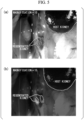
- FIG 3 is a fluorescence microscopy photograph showing the result of immunostaining. The magnification is 100 times.
- Six 2-positive cells are derived from the transplanted kidney precursor cells.
- cytokeratin 8-positive cells are derived from the host animal (Fi mouse of Experimental Example 1).
- kidney precursor cells derived from a transgenic mouse (GFP tg mouse) into which a green fluorescent protein (GFP) gene was introduced were prepared from the metanephros by a standard method and dissociated into single cells using a cell dissociation reagent. Subsequently, 1 ⁇ 10 5 kidney precursor cells were transplanted into metanephros tissue from which the metanephric mesenchyme was tissue-specifically removed, which was prepared in the same manner as in Experimental Example 1. Thereafter, the organ culture of the metanephros tissue was continued.
- GFP green fluorescent protein
- FIG. 4 is a fluorescence microscopy photograph showing the result of immunostaining. The magnification is 200 times.
- GFP-positive cells and WT1-positive cells are derived from the transplanted kidney precursor cells.
- cytokeratin 8-positive cells are derived from the host animal (Fi mouse of Experimental Example 1).
- kidney precursor cells derived from the GFP tg mice formed the glomeruli and kidney tubules. This result shows that it is possible to form functional kidney tissue from the kidney precursor cells by the method described above.
- the cloaca and the metanephros tissue-specifically expressing the diphtheria toxin receptor in the metanephros tissue which are obtained by crossing the iDTR mouse with Six2-Cre mouse, were transplanted.
- the metanephric mesenchyme of the metanephros was removed, and 1 ⁇ 10 5 kidney precursor cells derived from the GFP tg mouse were transplanted. Subsequently, a mouse transplanted with the metanephros was raised for 7 days.
- FIG 5 is a photograph of a region where regenerated kidneys exist. The magnification is 15 times. The upper right shows the kidney of the wild-type mouse (host). The regenerated kidneys exist in a region surrounded by a dotted line near the center.
- FIG 5 is a photograph showing the observation result of the fluorescence of GFP in the same field of view as (a) of FIG 5 .
- the magnification is 15 times.
- fluorescence of GFP derived from transplanted kidney precursor cells was observed. This result indicates that the kidney regeneration was possible in the body of the mouse.
- FIG 6 is an optical micrograph of a tissue section sample prepared by fixing the above regenerated kidneys with 4% paraformaldehyde. The magnification is 400 times. In (a) of FIG 6 , the regenerated glomeruli were observed at a portion indicated by an arrowhead.
- FIG 6 is a fluorescence micrograph showing the observation result of the fluorescence of GFP in the same field of view as (a) of FIG 6 .
- the magnification is 400 times.
- fluorescence of GFP was observed at a portion indicated by an arrowhead. This result indicates that the regenerated glomeruli are derived from the transplanted kidney precursor cells.
- the iDTR mouse having a genotype of Six2-Cre-ER tg/wt HoxB7-Cre tg/wt was used.
- the metanephros was extracted from the mouse embryo and subjected to organ-culture. Subsequently, diphtheria toxin was added to the medium to tissue-specifically remove the ureteric bud.
- tamoxifen and diphtheria toxin were added to the culture medium for organ culture.
- the Six2-expressing cell which is a metanephric mesenchyme-specific marker
- Cre-ER is translocated into the nucleus and recombines to express the diphtheria toxin receptor.
- cells of the metanephric mesenchyme were killed by diphtheria toxin.
- the metanephric mesenchyme was tissue-specifically removed.
- the metanephros after organ culture was fixed with 4% paraformaldehyde, and therefore a tissue section sample was prepared. Subsequently, the metanephros was immunostained with an anti-calbindin antibody for staining the ureteric bud and observed with a fluorescence microscope.
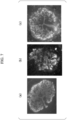
- FIG 7 is a representative photograph of the metanephros of a positive control.
- the diphtheria toxin was not added in the stage of removing the ureteric bud, and the kidney precursor cells were not transplanted. Therefore, in the positive control, tissues derived from the original ureteric bud were maintained.
- FIG 7 is a representative photograph of the metanephros of a negative control.
- the diphtheria toxin was added in the stage of removing the ureteric bud, and the kidney precursor cells were not transplanted. Accordingly, because in the negative control, the ureteric bud was tissue-specifically removed, and the kidney precursor cells were not transplanted, the ureteric bud was lost.
- FIG 7 is a representative photograph of the metanephros of a test group.
- the ureteric bud was tissue-specifically removed, and the kidney precursor cells were transplanted.
- the ureteric bud was replaced by the transplanted kidney precursor cells, and the growth of tissues derived from the ureteric bud was observed.
- Positive control Negative control Test group Number of ureteric bud tips (average value ⁇ standard deviation) 145.2 ⁇ 22.2 73.2 ⁇ 29.2 120.8 ⁇ 23.8
- kidney precursor cells it is possible to provide a technique for producing a kidney from kidney precursor cells.
Landscapes
- Health & Medical Sciences (AREA)
- Life Sciences & Earth Sciences (AREA)
- Engineering & Computer Science (AREA)
- Biomedical Technology (AREA)
- Chemical & Material Sciences (AREA)
- Zoology (AREA)
- General Health & Medical Sciences (AREA)
- Biotechnology (AREA)
- Urology & Nephrology (AREA)
- Bioinformatics & Cheminformatics (AREA)
- Organic Chemistry (AREA)
- Cell Biology (AREA)
- Animal Behavior & Ethology (AREA)
- Genetics & Genomics (AREA)
- Veterinary Medicine (AREA)
- Wood Science & Technology (AREA)
- Public Health (AREA)
- Medicinal Chemistry (AREA)
- Epidemiology (AREA)
- Chemical Kinetics & Catalysis (AREA)
- General Engineering & Computer Science (AREA)
- Microbiology (AREA)
- Biochemistry (AREA)
- Pharmacology & Pharmacy (AREA)
- Botany (AREA)
- Dermatology (AREA)
- Oral & Maxillofacial Surgery (AREA)
- Transplantation (AREA)
- Environmental Sciences (AREA)
- Molecular Biology (AREA)
- General Chemical & Material Sciences (AREA)
- Nuclear Medicine, Radiotherapy & Molecular Imaging (AREA)
- Virology (AREA)
- Developmental Biology & Embryology (AREA)
- Immunology (AREA)
- Animal Husbandry (AREA)
- Biodiversity & Conservation Biology (AREA)
- Plant Pathology (AREA)
- Biophysics (AREA)
- Physics & Mathematics (AREA)
Claims (11)
- In vitro-Verfahren zur Herstellung einer Niere, wobei das Verfahren umfasst:gewebespezifisches Entfernen des metanephrischen Mesenchyms eines Metanephros eines nicht-menschlichen Tieres ("erstes nicht-menschliches Tier"),Transplantieren einer Nierenvorläuferzelle in den Metanephros, wobei die Nierenvorläuferzelle von einem nicht-menschlichen Tier ("zweites nicht-menschliches Tier"), das zu dem ersten nicht-menschlichen Tier allogen oder xenogen ist, abgeleitet ist, undVorantreiben der Entwicklung des Metanephros, wobei die transplantierte Nierenvorläuferzelle differenziert und ausgereift wird, um einen Teil der Niere zu bilden,wobei das erste nicht-menschliche Tier aus der Gruppe, die aus Schwein, Maus und Katze besteht, ausgewählt ist und das zweite nicht-menschliche Tier aus der Gruppe, die aus Schwein, Maus und Katze besteht, ausgewählt ist.
- Verfahren zur Herstellung einer Niere unter Verwendung einer Nierenvorläuferzelle, wobei das Verfahren umfasst:gewebespezifisches Entfernen des metanephrischen Mesenchyms des Metanephros eines nicht-menschlichen Tieres ("erstes nicht-menschliches Tier"),Transplantieren der Nierenvorläuferzelle in den Metanephros, wobei die Nierenvorläuferzelle von einem nicht-menschlichen Tier ("zweites nicht-menschliches Tier"), das zu dem ersten nicht-menschlichen Tier allogen oder xenogen ist, abgeleitet ist, undVorantreiben der Entwicklung des Metanephros, wobei die transplantierte Nierenvorläuferzelle differenziert und ausgereift wird, um einen Teil der Niere zu bilden,wobei die Nierenregeneration in vivo durchgeführt wird,wobei das erste nicht-menschliche Tier aus der Gruppe, die aus Schwein, Maus und Katze besteht, ausgewählt ist und das zweite nicht-menschliche Tier aus der Gruppe, die aus Schwein, Maus und Katze besteht, ausgewählt ist.
- In vitro-Verfahren zur Herstellung einer Niere nach Anspruch 1 oder Verfahren zur Herstellung einer Niere nach Anspruch 2, wobei das Verfahren zur Herstellung einer Niere ferner umfasst:gewebespezifisches Entfernen der Harnleiterknospe des Metanephros undTransplantieren einer Nierenvorläuferzelle, die von einem nicht-menschlichen Tier ("zweites nicht-menschliches Tier"), das zu dem ersten nicht-menschlichen Tier allogen oder xenogen ist, abgeleitet ist, in den Metanephros.
- In vitro-Verfahren zur Herstellung einer Niere nach Anspruch 1 oder 3 oder Verfahren zur Herstellung einer Niere nach Anspruch 2 oder 3, wobei das zweite nicht-menschliche Tier eine Katze ist.
- Niere, die durch ein Verfahren nach einem der Ansprüche 1 bis 4 hergestellt wurde und umfasst:Zellen, die aus Zellen des Metanephros des ersten nicht-menschlichen Tieres differenziert sind, undZellen, die aus der Nierenvorläuferzelle des zweiten nicht-menschlichen Tieres, das zu dem ersten nicht-menschlichen Tier allogen oder xenogen ist, differenziert und gereift sind,wobei der Anteil der Zellen, die von dem zweiten nicht-menschlichen Tier, das zu dem ersten nicht-menschlichen Tier allogen oder xenogen ist, abgeleitet sind, 70 Massenprozent oder mehr beträgt.
- Niere nach Anspruch 5, wobei das zweite nicht-menschliche Tier eine Katze ist.
- Nicht-menschliches Tier, das die Niere nach Anspruch 5 oder 6 umfasst, wobei das nicht-menschliche Tier aus der Gruppe, die aus Schwein, Maus und Katze besteht, ausgewählt ist.
- Organ, das zur Transplantation geeignet ist, umfassend:die Niere nach Anspruch 5 oder 6,einen Harnleiter undeine Blase.
- Organ nach Anspruch 8, wobei der Harnleiter und die Blase von dem ersten nicht-menschlichen Tier abgeleitet sind.
- Kit, der zur Herstellung einer Niere geeignet ist, umfassend:einen Metanephros eines nicht-menschlichen Tieres ("erstes nicht-menschliches Tier"), das mit einem iDTR-System, Cre-ERT2-System, Mos-iCsp3-System, Tet-On/off-System oder Herpesvirus-abgeleiteten Thymidinkinase-Gensystem, mit dem metanephrisches Mesenchym gewebespezifisch entfernt werden kann, genetisch modifiziert wurde,ein Medikament, das gewebespezifisch ein metanephrisches Mesenchym des Metanephros entfernt, wobei das Medikament zur gewebespezifischen Entfernung des metanephrischen Mesenchyms Diphtherietoxin (iDTR-System), Tamoxifen (Cre-ERT2-System), Tacrolimus (Mos-iCsp3-System), Doxycyclin, Tetracyclin (Tet-On/off-System) oder Ganciclovir (Herpesvirus-abgeleitetes Thymidinkinase-Gensystem) ist, undeine Nierenvorläuferzelle, die von einem nicht-menschlichen Tier ("zweites nicht-menschliches Tier"), das zu dem nicht-menschlichen Tier allogen oder xenogen ist, abgeleitet ist,wobei das erste nicht-menschliche Tier aus der Gruppe, die aus Schwein, Maus und Katze besteht, ausgewählt ist und das zweite nicht-menschliche Tier aus der Gruppe, die aus Schwein, Maus und Katze besteht, ausgewählt ist.
- Kit nach Anspruch 10, wobei das nicht-menschliche Tier ("erstes nicht-menschliches Tier") ferner mit einem iDTR-System, Cre-ERT2-System, Mos-iCsp3-System, Tet-On/off-System oder Herpesvirus-abgeleiteten Thymidinkinase-Gensystem, mit dem die Harnleiterknospe gewebespezifisch entfernt werden kann, genetisch modifiziert wurde, und der ferner ein Medikament umfasst, das gewebespezifisch eine Harnleiterknospe des Metanephros entfernt, wobei das Medikament zur gewebespezifischen Entfernung der Harnleiterknospe Diphtherietoxin (iDTR-System), Tamoxifen (Cre-ERT2-System), Tacrolimus (Mos-iCsp3-System), Doxycyclin, Tetracyclin (Tet-On/off-System) oder Ganciclovir (Herpesvirus-abgeleitetes Thymidinkinase-Gensystem) ist.
Applications Claiming Priority (2)
| Application Number | Priority Date | Filing Date | Title |
|---|---|---|---|
| JP2016129393 | 2016-06-29 | ||
| PCT/JP2017/021352 WO2018003452A1 (ja) | 2016-06-29 | 2017-06-08 | 腎臓の製造方法 |
Publications (3)
| Publication Number | Publication Date |
|---|---|
| EP3480299A1 EP3480299A1 (de) | 2019-05-08 |
| EP3480299A4 EP3480299A4 (de) | 2020-01-22 |
| EP3480299B1 true EP3480299B1 (de) | 2024-10-16 |
Family
ID=60786325
Family Applications (1)
| Application Number | Title | Priority Date | Filing Date |
|---|---|---|---|
| EP17819817.2A Active EP3480299B1 (de) | 2016-06-29 | 2017-06-08 | Nierenherstellungsverfahren |
Country Status (6)
| Country | Link |
|---|---|
| US (1) | US11559605B2 (de) |
| EP (1) | EP3480299B1 (de) |
| JP (2) | JP6814211B2 (de) |
| KR (1) | KR102295555B1 (de) |
| CN (1) | CN109642210B (de) |
| WO (1) | WO2018003452A1 (de) |
Families Citing this family (5)
| Publication number | Priority date | Publication date | Assignee | Title |
|---|---|---|---|---|
| CN109642209A (zh) | 2016-06-29 | 2019-04-16 | 横尾隆 | 一种肾脏的制造方法 |
| EP3480299B1 (de) | 2016-06-29 | 2024-10-16 | Takashi Yokoo | Nierenherstellungsverfahren |
| WO2019151331A1 (ja) * | 2018-02-01 | 2019-08-08 | 国立大学法人北海道大学 | 非ヒト動物の作製方法 |
| JP2021069432A (ja) * | 2019-10-29 | 2021-05-06 | 株式会社Tesホールディングス | 移植材料及びステント |
| US20260174714A1 (en) * | 2022-04-07 | 2026-06-25 | The Jikei University | Nonhuman animal and use thereof |
Family Cites Families (9)
| Publication number | Priority date | Publication date | Assignee | Title |
|---|---|---|---|---|
| US7074552B1 (en) * | 2000-06-16 | 2006-07-11 | The Regents Of The University Of California | Method of forming vascularized kidney tissue |
| WO2004027029A2 (en) * | 2002-09-19 | 2004-04-01 | Ximerex, Inc. | Growth of foreign cells in fetal animals facilitated by conditional and selective destruction of native host cells |
| US20060147429A1 (en) * | 2004-12-30 | 2006-07-06 | Paul Diamond | Facilitated cellular reconstitution of organs and tissues |
| CN101679950A (zh) | 2007-02-22 | 2010-03-24 | 国立大学法人东京大学 | 利用胚泡互补的器官再生法 |
| WO2008151254A1 (en) * | 2007-06-04 | 2008-12-11 | The Regents Of The University Of California | Methods of tissue generation and tissue engineered compositions |
| WO2014138486A1 (en) * | 2013-03-06 | 2014-09-12 | University Of Pittsburgh - Of The Commonwealth System Of Higher Education | Lymph node as a site for transplantation, organogenesis and function for multiple tissues and organs |
| EP2298866A4 (de) * | 2008-07-02 | 2013-11-20 | Otsuka Pharma Co Ltd | Künstlicher nierenvorläufer und herstellungsverfahren dafür |
| KR20190057439A (ko) * | 2014-12-19 | 2019-05-28 | 바이오스 가부시키가이샤 | 이식용 장기 및 장기 구조체 |
| EP3480299B1 (de) | 2016-06-29 | 2024-10-16 | Takashi Yokoo | Nierenherstellungsverfahren |
-
2017
- 2017-06-08 EP EP17819817.2A patent/EP3480299B1/de active Active
- 2017-06-08 JP JP2018525009A patent/JP6814211B2/ja active Active
- 2017-06-08 CN CN201780051181.2A patent/CN109642210B/zh active Active
- 2017-06-08 KR KR1020197002276A patent/KR102295555B1/ko active Active
- 2017-06-08 US US16/313,254 patent/US11559605B2/en active Active
- 2017-06-08 WO PCT/JP2017/021352 patent/WO2018003452A1/ja not_active Ceased
-
2020
- 2020-12-17 JP JP2020209594A patent/JP7488177B2/ja active Active
Non-Patent Citations (1)
| Title |
|---|
| C. BONNER ET AL: "Identification of circulating microRNAs in HNF1A-MODY carriers", DIABETOLOGIA, vol. 56, no. 8, 1 August 2013 (2013-08-01), pages 1743 - 1751, XP055070917, ISSN: 0012-186X, DOI: 10.1007/s00125-013-2939-4 * |
Also Published As
| Publication number | Publication date |
|---|---|
| US20200179565A1 (en) | 2020-06-11 |
| CN109642210A (zh) | 2019-04-16 |
| KR102295555B1 (ko) | 2021-08-27 |
| CN109642210B (zh) | 2023-05-12 |
| WO2018003452A1 (ja) | 2018-01-04 |
| EP3480299A4 (de) | 2020-01-22 |
| KR20190027837A (ko) | 2019-03-15 |
| EP3480299A1 (de) | 2019-05-08 |
| JP6814211B2 (ja) | 2021-01-13 |
| JPWO2018003452A1 (ja) | 2019-04-18 |
| US11559605B2 (en) | 2023-01-24 |
| JP7488177B2 (ja) | 2024-05-21 |
| JP2021045169A (ja) | 2021-03-25 |
Similar Documents
| Publication | Publication Date | Title |
|---|---|---|
| JP7488177B2 (ja) | 腎臓の製造方法 | |
| JP7548803B2 (ja) | 腎臓の製造方法 | |
| US10335263B2 (en) | Organ for transplantation and organ structure | |
| US20090186004A1 (en) | Method For Preparing An Organ For Transplantation | |
| JP4814226B2 (ja) | 移植用臓器の調製方法 | |
| EP3480297A1 (de) | Verfahren zur organherstellung | |
| CN102105581B (zh) | 人工肾前体及其制备方法 | |
| JP2021069432A (ja) | 移植材料及びステント | |
| Benedetti et al. | Developmental Approaches to Kidney Regeneration |
Legal Events
| Date | Code | Title | Description |
|---|---|---|---|
| STAA | Information on the status of an ep patent application or granted ep patent |
Free format text: STATUS: THE INTERNATIONAL PUBLICATION HAS BEEN MADE |
|
| PUAI | Public reference made under article 153(3) epc to a published international application that has entered the european phase |
Free format text: ORIGINAL CODE: 0009012 |
|
| STAA | Information on the status of an ep patent application or granted ep patent |
Free format text: STATUS: REQUEST FOR EXAMINATION WAS MADE |
|
| 17P | Request for examination filed |
Effective date: 20190124 |
|
| AK | Designated contracting states |
Kind code of ref document: A1 Designated state(s): AL AT BE BG CH CY CZ DE DK EE ES FI FR GB GR HR HU IE IS IT LI LT LU LV MC MK MT NL NO PL PT RO RS SE SI SK SM TR |
|
| AX | Request for extension of the european patent |
Extension state: BA ME |
|
| DAV | Request for validation of the european patent (deleted) | ||
| DAX | Request for extension of the european patent (deleted) | ||
| A4 | Supplementary search report drawn up and despatched |
Effective date: 20200103 |
|
| RIC1 | Information provided on ipc code assigned before grant |
Ipc: A01K 67/027 20060101ALI20191218BHEP Ipc: C12N 5/071 20100101AFI20191218BHEP Ipc: A61L 27/36 20060101ALI20191218BHEP Ipc: C12N 15/09 20060101ALI20191218BHEP Ipc: A61K 35/22 20150101ALI20191218BHEP Ipc: A61L 27/38 20060101ALI20191218BHEP Ipc: A61P 13/12 20060101ALI20191218BHEP |
|
| STAA | Information on the status of an ep patent application or granted ep patent |
Free format text: STATUS: EXAMINATION IS IN PROGRESS |
|
| 17Q | First examination report despatched |
Effective date: 20201126 |
|
| REG | Reference to a national code |
Ref legal event code: R079 Ref country code: DE Ref document number: 602017085551 Country of ref document: DE Free format text: PREVIOUS MAIN CLASS: C12N0005071000 Ipc: A01K0067027500 |
|
| GRAP | Despatch of communication of intention to grant a patent |
Free format text: ORIGINAL CODE: EPIDOSNIGR1 |
|
| STAA | Information on the status of an ep patent application or granted ep patent |
Free format text: STATUS: GRANT OF PATENT IS INTENDED |
|
| RIC1 | Information provided on ipc code assigned before grant |
Ipc: C12N 5/071 20100101ALI20240416BHEP Ipc: C12N 15/09 20060101ALI20240416BHEP Ipc: A61P 13/12 20060101ALI20240416BHEP Ipc: A61L 27/38 20060101ALI20240416BHEP Ipc: A61L 27/36 20060101ALI20240416BHEP Ipc: A61K 35/22 20150101ALI20240416BHEP Ipc: A01K 67/0275 20240101AFI20240416BHEP |
|
| INTG | Intention to grant announced |
Effective date: 20240516 |
|
| GRAS | Grant fee paid |
Free format text: ORIGINAL CODE: EPIDOSNIGR3 |
|
| GRAA | (expected) grant |
Free format text: ORIGINAL CODE: 0009210 |
|
| STAA | Information on the status of an ep patent application or granted ep patent |
Free format text: STATUS: THE PATENT HAS BEEN GRANTED |
|
| AK | Designated contracting states |
Kind code of ref document: B1 Designated state(s): AL AT BE BG CH CY CZ DE DK EE ES FI FR GB GR HR HU IE IS IT LI LT LU LV MC MK MT NL NO PL PT RO RS SE SI SK SM TR |
|
| REG | Reference to a national code |
Ref country code: GB Ref legal event code: FG4D |
|
| REG | Reference to a national code |
Ref country code: CH Ref legal event code: EP |
|
| REG | Reference to a national code |
Ref country code: IE Ref legal event code: FG4D |
|
| REG | Reference to a national code |
Ref country code: DE Ref legal event code: R096 Ref document number: 602017085551 Country of ref document: DE |
|
| REG | Reference to a national code |
Ref country code: LT Ref legal event code: MG9D |
|
| REG | Reference to a national code |
Ref country code: NL Ref legal event code: MP Effective date: 20241016 |
|
| REG | Reference to a national code |
Ref country code: AT Ref legal event code: MK05 Ref document number: 1732123 Country of ref document: AT Kind code of ref document: T Effective date: 20241016 |
|
| PG25 | Lapsed in a contracting state [announced via postgrant information from national office to epo] |
Ref country code: NL Free format text: LAPSE BECAUSE OF FAILURE TO SUBMIT A TRANSLATION OF THE DESCRIPTION OR TO PAY THE FEE WITHIN THE PRESCRIBED TIME-LIMIT Effective date: 20241016 |
|
| PG25 | Lapsed in a contracting state [announced via postgrant information from national office to epo] |
Ref country code: NL Free format text: LAPSE BECAUSE OF FAILURE TO SUBMIT A TRANSLATION OF THE DESCRIPTION OR TO PAY THE FEE WITHIN THE PRESCRIBED TIME-LIMIT Effective date: 20241016 |
|
| PG25 | Lapsed in a contracting state [announced via postgrant information from national office to epo] |
Ref country code: IS Free format text: LAPSE BECAUSE OF FAILURE TO SUBMIT A TRANSLATION OF THE DESCRIPTION OR TO PAY THE FEE WITHIN THE PRESCRIBED TIME-LIMIT Effective date: 20250216 Ref country code: PT Free format text: LAPSE BECAUSE OF FAILURE TO SUBMIT A TRANSLATION OF THE DESCRIPTION OR TO PAY THE FEE WITHIN THE PRESCRIBED TIME-LIMIT Effective date: 20250217 Ref country code: HR Free format text: LAPSE BECAUSE OF FAILURE TO SUBMIT A TRANSLATION OF THE DESCRIPTION OR TO PAY THE FEE WITHIN THE PRESCRIBED TIME-LIMIT Effective date: 20241016 |
|
| PG25 | Lapsed in a contracting state [announced via postgrant information from national office to epo] |
Ref country code: FI Free format text: LAPSE BECAUSE OF FAILURE TO SUBMIT A TRANSLATION OF THE DESCRIPTION OR TO PAY THE FEE WITHIN THE PRESCRIBED TIME-LIMIT Effective date: 20241016 |
|
| PG25 | Lapsed in a contracting state [announced via postgrant information from national office to epo] |
Ref country code: BG Free format text: LAPSE BECAUSE OF FAILURE TO SUBMIT A TRANSLATION OF THE DESCRIPTION OR TO PAY THE FEE WITHIN THE PRESCRIBED TIME-LIMIT Effective date: 20241016 |
|
| PG25 | Lapsed in a contracting state [announced via postgrant information from national office to epo] |
Ref country code: ES Free format text: LAPSE BECAUSE OF FAILURE TO SUBMIT A TRANSLATION OF THE DESCRIPTION OR TO PAY THE FEE WITHIN THE PRESCRIBED TIME-LIMIT Effective date: 20241016 |
|
| PG25 | Lapsed in a contracting state [announced via postgrant information from national office to epo] |
Ref country code: NO Free format text: LAPSE BECAUSE OF FAILURE TO SUBMIT A TRANSLATION OF THE DESCRIPTION OR TO PAY THE FEE WITHIN THE PRESCRIBED TIME-LIMIT Effective date: 20250116 |
|
| PG25 | Lapsed in a contracting state [announced via postgrant information from national office to epo] |
Ref country code: LV Free format text: LAPSE BECAUSE OF FAILURE TO SUBMIT A TRANSLATION OF THE DESCRIPTION OR TO PAY THE FEE WITHIN THE PRESCRIBED TIME-LIMIT Effective date: 20241016 Ref country code: GR Free format text: LAPSE BECAUSE OF FAILURE TO SUBMIT A TRANSLATION OF THE DESCRIPTION OR TO PAY THE FEE WITHIN THE PRESCRIBED TIME-LIMIT Effective date: 20250117 Ref country code: AT Free format text: LAPSE BECAUSE OF FAILURE TO SUBMIT A TRANSLATION OF THE DESCRIPTION OR TO PAY THE FEE WITHIN THE PRESCRIBED TIME-LIMIT Effective date: 20241016 |
|
| PG25 | Lapsed in a contracting state [announced via postgrant information from national office to epo] |
Ref country code: PL Free format text: LAPSE BECAUSE OF FAILURE TO SUBMIT A TRANSLATION OF THE DESCRIPTION OR TO PAY THE FEE WITHIN THE PRESCRIBED TIME-LIMIT Effective date: 20241016 |
|
| PG25 | Lapsed in a contracting state [announced via postgrant information from national office to epo] |
Ref country code: RS Free format text: LAPSE BECAUSE OF FAILURE TO SUBMIT A TRANSLATION OF THE DESCRIPTION OR TO PAY THE FEE WITHIN THE PRESCRIBED TIME-LIMIT Effective date: 20250116 |
|
| PG25 | Lapsed in a contracting state [announced via postgrant information from national office to epo] |
Ref country code: SM Free format text: LAPSE BECAUSE OF FAILURE TO SUBMIT A TRANSLATION OF THE DESCRIPTION OR TO PAY THE FEE WITHIN THE PRESCRIBED TIME-LIMIT Effective date: 20241016 |
|
| PGFP | Annual fee paid to national office [announced via postgrant information from national office to epo] |
Ref country code: DE Payment date: 20250623 Year of fee payment: 9 |
|
| PG25 | Lapsed in a contracting state [announced via postgrant information from national office to epo] |
Ref country code: DK Free format text: LAPSE BECAUSE OF FAILURE TO SUBMIT A TRANSLATION OF THE DESCRIPTION OR TO PAY THE FEE WITHIN THE PRESCRIBED TIME-LIMIT Effective date: 20241016 |
|
| PGFP | Annual fee paid to national office [announced via postgrant information from national office to epo] |
Ref country code: GB Payment date: 20250620 Year of fee payment: 9 |
|
| REG | Reference to a national code |
Ref country code: DE Ref legal event code: R097 Ref document number: 602017085551 Country of ref document: DE |
|
| PG25 | Lapsed in a contracting state [announced via postgrant information from national office to epo] |
Ref country code: EE Free format text: LAPSE BECAUSE OF FAILURE TO SUBMIT A TRANSLATION OF THE DESCRIPTION OR TO PAY THE FEE WITHIN THE PRESCRIBED TIME-LIMIT Effective date: 20241016 |
|
| PGFP | Annual fee paid to national office [announced via postgrant information from national office to epo] |
Ref country code: FR Payment date: 20250618 Year of fee payment: 9 |
|
| PG25 | Lapsed in a contracting state [announced via postgrant information from national office to epo] |
Ref country code: RO Free format text: LAPSE BECAUSE OF FAILURE TO SUBMIT A TRANSLATION OF THE DESCRIPTION OR TO PAY THE FEE WITHIN THE PRESCRIBED TIME-LIMIT Effective date: 20241016 |
|
| PG25 | Lapsed in a contracting state [announced via postgrant information from national office to epo] |
Ref country code: SK Free format text: LAPSE BECAUSE OF FAILURE TO SUBMIT A TRANSLATION OF THE DESCRIPTION OR TO PAY THE FEE WITHIN THE PRESCRIBED TIME-LIMIT Effective date: 20241016 |
|
| PG25 | Lapsed in a contracting state [announced via postgrant information from national office to epo] |
Ref country code: CZ Free format text: LAPSE BECAUSE OF FAILURE TO SUBMIT A TRANSLATION OF THE DESCRIPTION OR TO PAY THE FEE WITHIN THE PRESCRIBED TIME-LIMIT Effective date: 20241016 |
|
| PG25 | Lapsed in a contracting state [announced via postgrant information from national office to epo] |
Ref country code: IT Free format text: LAPSE BECAUSE OF FAILURE TO SUBMIT A TRANSLATION OF THE DESCRIPTION OR TO PAY THE FEE WITHIN THE PRESCRIBED TIME-LIMIT Effective date: 20241016 |
|
| PLBE | No opposition filed within time limit |
Free format text: ORIGINAL CODE: 0009261 |
|
| STAA | Information on the status of an ep patent application or granted ep patent |
Free format text: STATUS: NO OPPOSITION FILED WITHIN TIME LIMIT |
|
| PG25 | Lapsed in a contracting state [announced via postgrant information from national office to epo] |
Ref country code: SE Free format text: LAPSE BECAUSE OF FAILURE TO SUBMIT A TRANSLATION OF THE DESCRIPTION OR TO PAY THE FEE WITHIN THE PRESCRIBED TIME-LIMIT Effective date: 20241016 |
|
| 26N | No opposition filed |
Effective date: 20250717 |
|
| REG | Reference to a national code |
Ref country code: CH Ref legal event code: H13 Free format text: ST27 STATUS EVENT CODE: U-0-0-H10-H13 (AS PROVIDED BY THE NATIONAL OFFICE) Effective date: 20260127 |
|
| PG25 | Lapsed in a contracting state [announced via postgrant information from national office to epo] |
Ref country code: MC Free format text: LAPSE BECAUSE OF FAILURE TO SUBMIT A TRANSLATION OF THE DESCRIPTION OR TO PAY THE FEE WITHIN THE PRESCRIBED TIME-LIMIT Effective date: 20241016 |
|
| PG25 | Lapsed in a contracting state [announced via postgrant information from national office to epo] |
Ref country code: LU Free format text: LAPSE BECAUSE OF NON-PAYMENT OF DUE FEES Effective date: 20250608 |
|
| REG | Reference to a national code |
Ref country code: BE Ref legal event code: MM Effective date: 20250630 |
|
| PG25 | Lapsed in a contracting state [announced via postgrant information from national office to epo] |
Ref country code: IE Free format text: LAPSE BECAUSE OF NON-PAYMENT OF DUE FEES Effective date: 20250608 |
|
| PG25 | Lapsed in a contracting state [announced via postgrant information from national office to epo] |
Ref country code: BE Free format text: LAPSE BECAUSE OF NON-PAYMENT OF DUE FEES Effective date: 20250630 |
|
| PG25 | Lapsed in a contracting state [announced via postgrant information from national office to epo] |
Ref country code: CH Free format text: LAPSE BECAUSE OF NON-PAYMENT OF DUE FEES Effective date: 20250630 |
|
| PG25 | Lapsed in a contracting state [announced via postgrant information from national office to epo] |
Ref country code: LT Free format text: LAPSE BECAUSE OF FAILURE TO SUBMIT A TRANSLATION OF THE DESCRIPTION OR TO PAY THE FEE WITHIN THE PRESCRIBED TIME-LIMIT Effective date: 20241016 |
|
| PG25 | Lapsed in a contracting state [announced via postgrant information from national office to epo] |
Ref country code: CY Free format text: LAPSE BECAUSE OF FAILURE TO SUBMIT A TRANSLATION OF THE DESCRIPTION OR TO PAY THE FEE WITHIN THE PRESCRIBED TIME-LIMIT Effective date: 20241016 |