EP3480124A1 - Bag-making and packaging apparatus - Google Patents
Bag-making and packaging apparatus Download PDFInfo
- Publication number
- EP3480124A1 EP3480124A1 EP18203416.5A EP18203416A EP3480124A1 EP 3480124 A1 EP3480124 A1 EP 3480124A1 EP 18203416 A EP18203416 A EP 18203416A EP 3480124 A1 EP3480124 A1 EP 3480124A1
- Authority
- EP
- European Patent Office
- Prior art keywords
- jamming
- bag
- cycle
- articles
- making
- Prior art date
- Legal status (The legal status is an assumption and is not a legal conclusion. Google has not performed a legal analysis and makes no representation as to the accuracy of the status listed.)
- Granted
Links
- 238000004806 packaging method and process Methods 0.000 title claims abstract description 61
- 238000007789 sealing Methods 0.000 claims abstract description 81
- 238000005520 cutting process Methods 0.000 claims abstract description 35
- 238000012545 processing Methods 0.000 claims description 19
- 238000003860 storage Methods 0.000 claims description 15
- 238000004519 manufacturing process Methods 0.000 claims 1
- 238000000034 method Methods 0.000 claims 1
- 239000000047 product Substances 0.000 description 30
- 238000005303 weighing Methods 0.000 description 11
- 238000007493 shaping process Methods 0.000 description 6
- 238000012986 modification Methods 0.000 description 5
- 230000004048 modification Effects 0.000 description 5
- 238000001514 detection method Methods 0.000 description 4
- 238000004891 communication Methods 0.000 description 3
- 239000013256 coordination polymer Substances 0.000 description 3
- 238000010586 diagram Methods 0.000 description 3
- 230000003287 optical effect Effects 0.000 description 2
- 230000002159 abnormal effect Effects 0.000 description 1
- 230000002950 deficient Effects 0.000 description 1
- 238000013461 design Methods 0.000 description 1
- 230000000694 effects Effects 0.000 description 1
- 238000012423 maintenance Methods 0.000 description 1
- 238000012544 monitoring process Methods 0.000 description 1
- 239000012466 permeate Substances 0.000 description 1
- 230000001360 synchronised effect Effects 0.000 description 1
Images






Classifications
-
- B—PERFORMING OPERATIONS; TRANSPORTING
- B65—CONVEYING; PACKING; STORING; HANDLING THIN OR FILAMENTARY MATERIAL
- B65B—MACHINES, APPARATUS OR DEVICES FOR, OR METHODS OF, PACKAGING ARTICLES OR MATERIALS; UNPACKING
- B65B9/00—Enclosing successive articles, or quantities of material, e.g. liquids or semiliquids, in flat, folded, or tubular webs of flexible sheet material; Subdividing filled flexible tubes to form packages
- B65B9/10—Enclosing successive articles, or quantities of material, in preformed tubular webs, or in webs formed into tubes around filling nozzles, e.g. extruded tubular webs
- B65B9/20—Enclosing successive articles, or quantities of material, in preformed tubular webs, or in webs formed into tubes around filling nozzles, e.g. extruded tubular webs the webs being formed into tubes in situ around the filling nozzles
- B65B9/207—Enclosing successive articles, or quantities of material, in preformed tubular webs, or in webs formed into tubes around filling nozzles, e.g. extruded tubular webs the webs being formed into tubes in situ around the filling nozzles the web advancing continuously
-
- B—PERFORMING OPERATIONS; TRANSPORTING
- B65—CONVEYING; PACKING; STORING; HANDLING THIN OR FILAMENTARY MATERIAL
- B65B—MACHINES, APPARATUS OR DEVICES FOR, OR METHODS OF, PACKAGING ARTICLES OR MATERIALS; UNPACKING
- B65B51/00—Devices for, or methods of, sealing or securing package folds or closures; Devices for gathering or twisting wrappers, or necks of bags
- B65B51/10—Applying or generating heat or pressure or combinations thereof
- B65B51/26—Devices specially adapted for producing transverse or longitudinal seams in webs or tubes
- B65B51/30—Devices, e.g. jaws, for applying pressure and heat, e.g. for subdividing filled tubes
- B65B51/306—Counter-rotating devices
-
- B—PERFORMING OPERATIONS; TRANSPORTING
- B65—CONVEYING; PACKING; STORING; HANDLING THIN OR FILAMENTARY MATERIAL
- B65B—MACHINES, APPARATUS OR DEVICES FOR, OR METHODS OF, PACKAGING ARTICLES OR MATERIALS; UNPACKING
- B65B57/00—Automatic control, checking, warning, or safety devices
- B65B57/02—Automatic control, checking, warning, or safety devices responsive to absence, presence, abnormal feed, or misplacement of binding or wrapping material, containers, or packages
- B65B57/08—Automatic control, checking, warning, or safety devices responsive to absence, presence, abnormal feed, or misplacement of binding or wrapping material, containers, or packages and operating to stop, or to control the speed of, the machine as a whole
-
- B—PERFORMING OPERATIONS; TRANSPORTING
- B65—CONVEYING; PACKING; STORING; HANDLING THIN OR FILAMENTARY MATERIAL
- B65B—MACHINES, APPARATUS OR DEVICES FOR, OR METHODS OF, PACKAGING ARTICLES OR MATERIALS; UNPACKING
- B65B57/00—Automatic control, checking, warning, or safety devices
- B65B57/10—Automatic control, checking, warning, or safety devices responsive to absence, presence, abnormal feed, or misplacement of articles or materials to be packaged
-
- B—PERFORMING OPERATIONS; TRANSPORTING
- B65—CONVEYING; PACKING; STORING; HANDLING THIN OR FILAMENTARY MATERIAL
- B65B—MACHINES, APPARATUS OR DEVICES FOR, OR METHODS OF, PACKAGING ARTICLES OR MATERIALS; UNPACKING
- B65B57/00—Automatic control, checking, warning, or safety devices
- B65B57/10—Automatic control, checking, warning, or safety devices responsive to absence, presence, abnormal feed, or misplacement of articles or materials to be packaged
- B65B57/16—Automatic control, checking, warning, or safety devices responsive to absence, presence, abnormal feed, or misplacement of articles or materials to be packaged and operating to stop, or to control the speed of, the machine as a whole
-
- B—PERFORMING OPERATIONS; TRANSPORTING
- B65—CONVEYING; PACKING; STORING; HANDLING THIN OR FILAMENTARY MATERIAL
- B65B—MACHINES, APPARATUS OR DEVICES FOR, OR METHODS OF, PACKAGING ARTICLES OR MATERIALS; UNPACKING
- B65B57/00—Automatic control, checking, warning, or safety devices
- B65B57/18—Automatic control, checking, warning, or safety devices causing operation of audible or visible alarm signals
-
- B—PERFORMING OPERATIONS; TRANSPORTING
- B65—CONVEYING; PACKING; STORING; HANDLING THIN OR FILAMENTARY MATERIAL
- B65B—MACHINES, APPARATUS OR DEVICES FOR, OR METHODS OF, PACKAGING ARTICLES OR MATERIALS; UNPACKING
- B65B61/00—Auxiliary devices, not otherwise provided for, for operating on sheets, blanks, webs, binding material, containers or packages
- B65B61/04—Auxiliary devices, not otherwise provided for, for operating on sheets, blanks, webs, binding material, containers or packages for severing webs, or for separating joined packages
- B65B61/06—Auxiliary devices, not otherwise provided for, for operating on sheets, blanks, webs, binding material, containers or packages for severing webs, or for separating joined packages by cutting
-
- B—PERFORMING OPERATIONS; TRANSPORTING
- B65—CONVEYING; PACKING; STORING; HANDLING THIN OR FILAMENTARY MATERIAL
- B65B—MACHINES, APPARATUS OR DEVICES FOR, OR METHODS OF, PACKAGING ARTICLES OR MATERIALS; UNPACKING
- B65B9/00—Enclosing successive articles, or quantities of material, e.g. liquids or semiliquids, in flat, folded, or tubular webs of flexible sheet material; Subdividing filled flexible tubes to form packages
- B65B9/10—Enclosing successive articles, or quantities of material, in preformed tubular webs, or in webs formed into tubes around filling nozzles, e.g. extruded tubular webs
- B65B9/20—Enclosing successive articles, or quantities of material, in preformed tubular webs, or in webs formed into tubes around filling nozzles, e.g. extruded tubular webs the webs being formed into tubes in situ around the filling nozzles
- B65B9/2014—Tube advancing means
-
- B—PERFORMING OPERATIONS; TRANSPORTING
- B65—CONVEYING; PACKING; STORING; HANDLING THIN OR FILAMENTARY MATERIAL
- B65B—MACHINES, APPARATUS OR DEVICES FOR, OR METHODS OF, PACKAGING ARTICLES OR MATERIALS; UNPACKING
- B65B1/00—Packaging fluent solid material, e.g. powders, granular or loose fibrous material, loose masses of small articles, in individual containers or receptacles, e.g. bags, sacks, boxes, cartons, cans, or jars
- B65B1/30—Devices or methods for controlling or determining the quantity or quality or the material fed or filled
- B65B1/32—Devices or methods for controlling or determining the quantity or quality or the material fed or filled by weighing
-
- B—PERFORMING OPERATIONS; TRANSPORTING
- B65—CONVEYING; PACKING; STORING; HANDLING THIN OR FILAMENTARY MATERIAL
- B65B—MACHINES, APPARATUS OR DEVICES FOR, OR METHODS OF, PACKAGING ARTICLES OR MATERIALS; UNPACKING
- B65B51/00—Devices for, or methods of, sealing or securing package folds or closures; Devices for gathering or twisting wrappers, or necks of bags
- B65B51/10—Applying or generating heat or pressure or combinations thereof
- B65B51/26—Devices specially adapted for producing transverse or longitudinal seams in webs or tubes
- B65B51/30—Devices, e.g. jaws, for applying pressure and heat, e.g. for subdividing filled tubes
-
- B—PERFORMING OPERATIONS; TRANSPORTING
- B65—CONVEYING; PACKING; STORING; HANDLING THIN OR FILAMENTARY MATERIAL
- B65B—MACHINES, APPARATUS OR DEVICES FOR, OR METHODS OF, PACKAGING ARTICLES OR MATERIALS; UNPACKING
- B65B9/00—Enclosing successive articles, or quantities of material, e.g. liquids or semiliquids, in flat, folded, or tubular webs of flexible sheet material; Subdividing filled flexible tubes to form packages
- B65B9/10—Enclosing successive articles, or quantities of material, in preformed tubular webs, or in webs formed into tubes around filling nozzles, e.g. extruded tubular webs
- B65B9/20—Enclosing successive articles, or quantities of material, in preformed tubular webs, or in webs formed into tubes around filling nozzles, e.g. extruded tubular webs the webs being formed into tubes in situ around the filling nozzles
-
- B—PERFORMING OPERATIONS; TRANSPORTING
- B65—CONVEYING; PACKING; STORING; HANDLING THIN OR FILAMENTARY MATERIAL
- B65B—MACHINES, APPARATUS OR DEVICES FOR, OR METHODS OF, PACKAGING ARTICLES OR MATERIALS; UNPACKING
- B65B9/00—Enclosing successive articles, or quantities of material, e.g. liquids or semiliquids, in flat, folded, or tubular webs of flexible sheet material; Subdividing filled flexible tubes to form packages
- B65B9/10—Enclosing successive articles, or quantities of material, in preformed tubular webs, or in webs formed into tubes around filling nozzles, e.g. extruded tubular webs
- B65B9/20—Enclosing successive articles, or quantities of material, in preformed tubular webs, or in webs formed into tubes around filling nozzles, e.g. extruded tubular webs the webs being formed into tubes in situ around the filling nozzles
- B65B9/2014—Tube advancing means
- B65B9/2028—Rollers or belts
-
- B—PERFORMING OPERATIONS; TRANSPORTING
- B65—CONVEYING; PACKING; STORING; HANDLING THIN OR FILAMENTARY MATERIAL
- B65B—MACHINES, APPARATUS OR DEVICES FOR, OR METHODS OF, PACKAGING ARTICLES OR MATERIALS; UNPACKING
- B65B9/00—Enclosing successive articles, or quantities of material, e.g. liquids or semiliquids, in flat, folded, or tubular webs of flexible sheet material; Subdividing filled flexible tubes to form packages
- B65B9/10—Enclosing successive articles, or quantities of material, in preformed tubular webs, or in webs formed into tubes around filling nozzles, e.g. extruded tubular webs
- B65B9/20—Enclosing successive articles, or quantities of material, in preformed tubular webs, or in webs formed into tubes around filling nozzles, e.g. extruded tubular webs the webs being formed into tubes in situ around the filling nozzles
- B65B9/2042—Means for altering the cross-section of the tube filling opening prior to transversal sealing, e.g. tube spreading devices
-
- B—PERFORMING OPERATIONS; TRANSPORTING
- B65—CONVEYING; PACKING; STORING; HANDLING THIN OR FILAMENTARY MATERIAL
- B65B—MACHINES, APPARATUS OR DEVICES FOR, OR METHODS OF, PACKAGING ARTICLES OR MATERIALS; UNPACKING
- B65B9/00—Enclosing successive articles, or quantities of material, e.g. liquids or semiliquids, in flat, folded, or tubular webs of flexible sheet material; Subdividing filled flexible tubes to form packages
- B65B9/10—Enclosing successive articles, or quantities of material, in preformed tubular webs, or in webs formed into tubes around filling nozzles, e.g. extruded tubular webs
- B65B9/20—Enclosing successive articles, or quantities of material, in preformed tubular webs, or in webs formed into tubes around filling nozzles, e.g. extruded tubular webs the webs being formed into tubes in situ around the filling nozzles
- B65B9/213—Enclosing successive articles, or quantities of material, in preformed tubular webs, or in webs formed into tubes around filling nozzles, e.g. extruded tubular webs the webs being formed into tubes in situ around the filling nozzles the web having intermittent motion
Definitions
- the present disclosure relates to a bag-making and packaging apparatus.
- a bag-making and packaging apparatus receives articles that fall from a weighing machine and packages the articles in a film. Specifically, the bag-making and packaging apparatus performs a longitudinal sealing step of fashioning the film into tube form. The bag-making and packaging apparatus then performs a transverse sealing step of fashioning the tubular film into bag form. The transverse sealing step is performed by sealing jaws.
- Jamming causes defectives. Another negative effect of jamming is that articles get thrown out of the film from the transversely sealed part where the jamming has occurred. In such instances, the articles adhere to the sealing jaws or to properly packaged products. As a result, this causes operational faults in the transverse sealing operation or fouling of the products.
- An object of the present disclosure is to reduce inconveniences caused by jamming in a bag-making and packaging apparatus.
- a bag-making and packaging apparatus creates one product per cycle by packaging articles in a bag made from a film.
- the bag-making and packaging apparatus comprises a longitudinal sealing mechanism, a guide, an article sensor, a transverse sealing mechanism, a cutting mechanism, and a prediction unit.
- the longitudinal sealing mechanism forms a film tube from the film.
- the guide guides the articles falling from above into the film tube.
- the article sensor senses the articles falling from above.
- the transverse sealing mechanism forms a transversely sealed part in the film tube with each cycle.
- the cutting mechanism cuts the film tube in the transversely sealed part with each cycle.
- the prediction unit predicts whether or not jamming of the articles could occur in the transverse sealing mechanism on the basis of an output of the article sensor with each cycle. When the prediction unit has predicted that the jamming could occur in a certain cycle, the cutting mechanism does not cut the film tube in the certain cycle.
- the cutting mechanism does not cut the film tube in a cycle in which jamming could occur. Therefore, instances in which articles come out from the cut spot of the film tube are minimized.
- a bag-making and packaging apparatus is the bag-making and packaging apparatus according to the first aspect, wherein when the prediction unit has predicted that the jamming could occur in a certain cycle, the transverse sealing mechanism does not form the transversely sealed part in the certain cycle.
- the transverse sealing mechanism does not form the transversely sealed part in the film tube in a cycle in which jamming could occur. Therefore, damage to the film by the transverse sealing operation is minimized, and instances of the articles coming out from the film tube are minimized.
- a bag-making and packaging apparatus is the bag-making and packaging apparatus according to the first or second aspect, further comprising a setting storage unit.
- the setting storage unit stores an offset time beginning at the starting point of the cycle and a permission time beginning at the ending point of the offset time. A sum of the offset time and the permission time is shorter than the cycle.
- the prediction unit predicts that the jamming could occur.
- the prediction unit predicts that the jamming could occur. Therefore, the possibility of the jamming is assessed by a simple configuration involving the use of the article sensor.
- a bag-making and packaging apparatus is the bag-making and packaging apparatus according to the third aspect, further comprising a processing unit and a jamming sensing unit that senses an occurrence of the jamming.
- the processing unit updates the permission time stored by the setting storage unit to a longer time.
- the permission time is extended. Therefore, the permission time is automatically optimized.
- a bag-making and packaging apparatus is the bag-making and packaging apparatus according to any one of the first through fourth aspects, further comprising a warning unit.
- the warning unit issues a warning when the jamming has occurred at least a predetermined number of times within a predetermined time duration.
- a bag-making and packaging apparatus is the bag-making and packaging apparatus according to any one of the first through fifth aspects, wherein the length of the bag of the product is a first length.
- the prediction unit has predicted that the jamming could occur
- the bag having a second length greater than the first length is created due to the cutting mechanism not cutting the film tube.
- the bag-making and packaging apparatus creates a bag having a length greater than the length of the product. Therefore, it is easy to identify an unsatisfactory product in which the jamming could have occurred.
- the bag-making and packaging apparatus reduces inconvenience caused by jamming.
- FIG. 1 shows a product P manufactured by a bag-making and packaging apparatus according to the present disclosure.
- the product P is articles packaged by a bag B made from a film F.
- a longitudinally sealed part XL and a transversely sealed part XT are formed in the bag B.
- the bag-making and packaging apparatus 20 according to the present advancement is installed below a weighing machine 10, as shown in FIG. 2 .
- the weighing machine 10 drops articles A in predetermined weights into the bag-making and packaging apparatus 20.
- the bag-making and packaging apparatus 20 receives the articles A and manufactures a product P by packaging the articles A in a film F. In one operation cycle of the bag-making and packaging apparatus 20, one product P is manufactured.
- the bag-making and packaging apparatus 20 has a conveying mechanism 21, a film-shaping mechanism 22, a longitudinal sealing mechanism 23, a transverse sealing mechanism 24, a cutting mechanism 25, an article sensor 26, and a processing unit 27, as shown in FIG. 2 .
- the conveying mechanism 21 conveys the film F extracted from a film roll FR, and the products P.
- the conveying mechanism 21 has rollers 21a, 21b, 21c, a pull-down belt 21d, and a conveyor belt 21e.
- the film-shaping mechanism 22 rounds the flat film F into the form of a tube.
- the film-shaping mechanism 22 has a former 22a and a tube 22b.
- the former 22a deforms the flat film F so that the film encircles the tube 22b.
- the longitudinal sealing mechanism 23 forms a film tube FT from the film F.
- the film tube FT has a longitudinally sealed part XL.
- the longitudinal sealing mechanism 23 has a heater, and temporarily softens two longitudinal edges of the film F. The two softened longitudinal edges bond together, forming the longitudinally sealed part XL.
- the tube 22b of the film-shaping mechanism 22 functions as a guide that guides articles A falling from above to the inside of the film tube FT.
- the transverse sealing mechanism 24 forms one transversely sealed part XT in the film tube FT.
- the transverse sealing mechanism 24 has a first sealing jaw 24a and a second sealing jaw 24b.
- the first sealing jaw 24a and the second sealing jaw 24b both have a heater, and temporarily soften part of the film tube FT. The softened parts bond together, forming a transversely sealed part XT.
- the cutting mechanism 25 cuts the film tube FT at the transversely sealed part XT.
- the cutting mechanism 25 is provided to the transverse sealing mechanism 24.
- the cutting mechanism 25 includes a knife 25a and a receiving part 25b.
- the knife 25a is provided to the first sealing jaw 24a.
- the receiving part 25b is provided to the second sealing jaw 24b.
- the knife 25a can extend and retract. When extended, the knife 25a is accommodated in the receiving part 25b.
- the article sensor 26 senses the articles A falling from above.
- the article sensor 26 is, for example, an optical sensor, but this example is not provided by way of limitation.
- the location where the article sensor 26 is attached is, for example, above the tube 22b and below the weighing machine 10, but this example of a location is not provided by way of limitation.
- the article sensor 26 can be provided to a spot 26a where the film F encircles the tube 22b.
- an opening is provided in the tube 22b at a location adjacent to the spot 26a. Light emitted from a light projector of an optical sensor of the article sensor 26 permeates through the film F and then passes through the opening of the tube 22b to be radiated onto the articles A.
- the processing unit 27 coordinates the operations of the bag-making and packaging apparatus 20.
- the processing unit 27 is a computer including a CPU and a storage device.
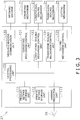
- FIG. 3 shows the configuration of the processing unit 27.
- the processing unit 27 has a central processing unit 100, a product setting storage unit 111, a jamming setting storage unit 112, a jamming prediction unit 113, a conveying mechanism control unit 121, a longitudinal sealing mechanism control unit 123, a transverse sealing mechanism control unit 124, a cutting mechanism control unit 125, and a weighing machine communication unit 130.
- the central processing unit 100 performs various calculations and controls.
- the product setting storage unit 111 stores the sizes of bags B for products P that are to be manufactured, the types of films F, and other settings.
- the jamming setting storage unit 112 stores settings pertaining to article A fall timings that are regarded as normal or abnormal. With each cycle, the jamming prediction unit 113 compares an output signal of the article sensor 26 with a setting stored in the jamming setting storage unit 112, and predicts whether or not jamming could occur in that cycle of the bag-making and packaging apparatus.
- the conveying mechanism control unit 121, the longitudinal sealing mechanism control unit 123, the transverse sealing mechanism control unit 124, and the cutting mechanism control unit 125 respectively control the conveying mechanism 21, the longitudinal sealing mechanism 23, the transverse sealing mechanism 24, and the cutting mechanism 25.
- the weighing machine communication unit 130 conducts communication with the weighing machine 10.
- FIG. 4 shows the film F used in the packaging of the articles A.
- the film F extends in a longitudinal direction L, and has a constant width along a transverse direction T perpendicular to the longitudinal direction L.
- a design corresponding to packaging of one product P is printed at each distance of length D.
- FIG. 5 shows the film tube FT formed in the longitudinal sealing mechanism 23.
- the longitudinally sealed part XL is formed in the film tube FT.
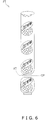
- FIG. 6 shows the transversely sealed part XT formed in the transverse sealing mechanism 24.
- a cut position CP where a cut is made by the cutting mechanism 25, is in the transversely sealed part XT.
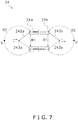
- FIG. 7 shows the details of the transverse sealing mechanism 24.
- the transverse sealing mechanism 24 has a pair of arms 242a, 242b and a pair of rotating shafts 243a, 243b.
- the pair of arms 242a, 242b rotate about the respective rotating shafts 243a, 243b.
- the rotating shafts 243a, 243b are able to move horizontally as indicated by the arrows.
- the movement of the rotating shafts 243a, 243b is synchronized with the rotation of the arms 242a, 242b, whereby the sealing jaws 24a, 24b move in D-shaped paths, indicated by the double-dashed lines.
- the D-shaped paths each have a straight-line portion R1 and a curved-line portion R2.
- the sealing jaws 24a, 24b descend at the same speed as the conveying speed of the film F.
- the transversely sealed part XT is thereby formed.
- the cutting mechanism 25 cuts the transversely sealed part XT.
- FIG. 8 is a timing chart of various signals of the bag-making and packaging apparatus 20.
- a cycle time Tc is the length of the cycle during which the bag-making and packaging apparatus 20 creates one product P.
- An ejection request signal ER is a signal from the bag-making and packaging apparatus 20 to the weighing machine 10 to eject articles A, and is generated once per cycle. In one example, the ejection request signal ER is treated as a starting point of the cycle, but the cycle starting point is not limited to this example.
- An ejection completion signal EC is a signal that reports to the bag-making and packaging apparatus 20 that the weighing machine 10 has ejected articles A in response to the ejection request signal ER.
- An article detection signal AD is a signal representing detection of falling articles A by the article sensor 26.
- a permission time signal PT indicates the timing during which articles A are permitted to pass by the location of the article sensor 26.
- the waveform of the permission time signal PT is determined by two parameters. The first is an offset time T1. The second is a permission time T2.
- the offset time T1 begins at the starting point of the operation cycle.
- the permission time T2 begins at the ending point of the offset time T1.
- the offset time T1 and the permission time T2 are set so that the sum thereof is shorter than the cycle time Tc.
- a sealing jaw state SJ represents the sealing jaws 24a, 24b as being either in the straight-line portions R1 or the curved-line portions R2.
- a cut signal CT causes the cutting mechanism 25 to cut the transversely sealed part XT.
- the jamming prediction unit 113 regards the articles A as falling at the proper fall timing.
- the jamming prediction unit 113 predicts that the articles A could cause jamming. For example, the jamming prediction unit 113 predicts the occurrence of jamming in that cycle on the basis of the presence of a pulse AD1 in the article detection signal AD.
- the transverse sealing mechanism control unit 124 stops the cutting mechanism 25 in that cycle.
- the transversely sealed part XT is thereby not cut in that cycle.
- the bag-making and packaging apparatus 20 ejects an unsatisfactory product Q of the products P.
- An unsatisfactory product Q is two bags B joined at the transversely sealed part XT, as shown in FIG. 9 .
- a second length D2 which is the length of the unsatisfactory product Q, is longer than a first length D1, which is the length of a product P.
- the cutting mechanism 25 does not cut the film tube FT. Therefore, instances of articles A coming out through the cut position CP of the film tube FT are minimized.
- the jamming prediction unit 113 predicts that jamming could occur. Therefore, the possibility of jamming is assessed by a simple configuration that uses the article sensor 26.
- the bag-making and packaging apparatus 20 creates a bag that is longer than the length of a product P. Therefore, it is easy to identify an unsatisfactory product Q including a spot where jamming has occurred.
- the transverse sealing mechanism control unit 124 stops the cutting mechanism 25 in that cycle.
- the transverse sealing mechanism control unit 124 can stop the transverse sealing mechanism 24 in that cycle.
- the transverse sealing mechanism control unit 124 stops the sealing jaws 24a, 24b at points V in the curved-line portions R2 of the D-shaped paths in FIG. 7 .
- the sealing jaws 24a, 24b thereby do not come into contact with the film tube FT in that cycle.
- the ejected unsatisfactory product Q is two joined bags B with no transversely sealed part XT, as shown in FIG. 10 .
- the transverse sealing mechanism 24 does not form a transversely sealed part XT in the film tube FT in a cycle in which jamming could occur. Therefore, damage to the film F by the transverse sealing operation is minimized, and instances of articles A coming out from the film tube FT are therefore further minimized.
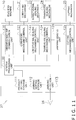
- the transverse sealing mechanism 24 can further have a jamming sensing unit 126 that senses an actual determination of jamming, as shown in FIG. 11 .
- the jamming sensing unit 126 is configured as, for example, an electric current monitoring unit that monitors electric currents of motors that drive the arms 242a, 242b of the transverse sealing mechanism 24. In this case, when an electric current exceeding a predetermined threshold value flows to a motor, the jamming sensing unit 126 assesses that jamming is occurring.
- the central processing unit 100 can update the length of the permission time T2 to a length increased by a predetermined amount, and can write the updated length into the jamming setting storage unit 112.
- the permission time T2 is extended when the jamming sensing unit 126 does not actually sense jamming. Therefore, the permission time T2 is automatically optimized.
- the bag-making and packaging apparatus 20 can be further provided with a warning unit 28 that issues a warning when the jamming has occurred at least a predetermined number of times within a predetermined time duration.
- the sealing jaws 24a, 24b of the transverse sealing mechanism 24 move through the D-shaped paths in FIG. 7 .
- the sealing jaws 24a, 24b can move horizontally back and forth.
- the cutting mechanism 25 cuts the transversely sealed part XT with the knife 25a.
- the cutting mechanism 25 can be configured to thermally cut the transversely sealed part XT with the heat of the heaters of the sealing jaws 24a, 24b.
Landscapes
- Engineering & Computer Science (AREA)
- Mechanical Engineering (AREA)
- Containers And Plastic Fillers For Packaging (AREA)
Abstract
Description
- The present disclosure relates to a bag-making and packaging apparatus.
- With each operation cycle, a bag-making and packaging apparatus receives articles that fall from a weighing machine and packages the articles in a film. Specifically, the bag-making and packaging apparatus performs a longitudinal sealing step of fashioning the film into tube form. The bag-making and packaging apparatus then performs a transverse sealing step of fashioning the tubular film into bag form. The transverse sealing step is performed by sealing jaws.
- When articles falling from the weighing machine reach the sealing jaws at an inappropriate time, "jamming" occurs, in which articles are caught in a transversely sealed part of the film. In the bag-making and packaging apparatus of Patent Literature 1 (Japanese Laid-open Patent Publication No.
2003-72720 - Jamming causes defectives. Another negative effect of jamming is that articles get thrown out of the film from the transversely sealed part where the jamming has occurred. In such instances, the articles adhere to the sealing jaws or to properly packaged products. As a result, this causes operational faults in the transverse sealing operation or fouling of the products.
- An object of the present disclosure is to reduce inconveniences caused by jamming in a bag-making and packaging apparatus.
- A bag-making and packaging apparatus according to a first aspect of the present disclosure creates one product per cycle by packaging articles in a bag made from a film. The bag-making and packaging apparatus comprises a longitudinal sealing mechanism, a guide, an article sensor, a transverse sealing mechanism, a cutting mechanism, and a prediction unit. The longitudinal sealing mechanism forms a film tube from the film. The guide guides the articles falling from above into the film tube. The article sensor senses the articles falling from above. The transverse sealing mechanism forms a transversely sealed part in the film tube with each cycle. The cutting mechanism cuts the film tube in the transversely sealed part with each cycle. The prediction unit predicts whether or not jamming of the articles could occur in the transverse sealing mechanism on the basis of an output of the article sensor with each cycle. When the prediction unit has predicted that the jamming could occur in a certain cycle, the cutting mechanism does not cut the film tube in the certain cycle.
- With this configuration, the cutting mechanism does not cut the film tube in a cycle in which jamming could occur. Therefore, instances in which articles come out from the cut spot of the film tube are minimized.
- A bag-making and packaging apparatus according to a second aspect of the present disclosure is the bag-making and packaging apparatus according to the first aspect, wherein when the prediction unit has predicted that the jamming could occur in a certain cycle, the transverse sealing mechanism does not form the transversely sealed part in the certain cycle.
- With this configuration, the transverse sealing mechanism does not form the transversely sealed part in the film tube in a cycle in which jamming could occur. Therefore, damage to the film by the transverse sealing operation is minimized, and instances of the articles coming out from the film tube are minimized.
- A bag-making and packaging apparatus according to a third aspect of the present disclosure is the bag-making and packaging apparatus according to the first or second aspect, further comprising a setting storage unit. The setting storage unit stores an offset time beginning at the starting point of the cycle and a permission time beginning at the ending point of the offset time. A sum of the offset time and the permission time is shorter than the cycle. When the article sensor detects the articles outside of the permission time, the prediction unit predicts that the jamming could occur.
- With this configuration, when the articles are detected outside of the permission time, the prediction unit predicts that the jamming could occur. Therefore, the possibility of the jamming is assessed by a simple configuration involving the use of the article sensor.
- A bag-making and packaging apparatus according to a fourth aspect of the present disclosure is the bag-making and packaging apparatus according to the third aspect, further comprising a processing unit and a jamming sensing unit that senses an occurrence of the jamming. When the jamming sensing unit does not sense an occurrence of the jamming, the processing unit updates the permission time stored by the setting storage unit to a longer time.
- With this configuration, when the jamming sensing unit does not actually sense the jamming, the permission time is extended. Therefore, the permission time is automatically optimized.
- A bag-making and packaging apparatus according to a fifth aspect of the present disclosure is the bag-making and packaging apparatus according to any one of the first through fourth aspects, further comprising a warning unit. The warning unit issues a warning when the jamming has occurred at least a predetermined number of times within a predetermined time duration.
- With this configuration, a warning is issued when the frequency of jamming occurrences is high. Therefore, a user has the opportunity to reexamine the set value of the permission time.
- A bag-making and packaging apparatus according to a sixth aspect of the present disclosure is the bag-making and packaging apparatus according to any one of the first through fifth aspects, wherein the length of the bag of the product is a first length. When the prediction unit has predicted that the jamming could occur, the bag having a second length greater than the first length is created due to the cutting mechanism not cutting the film tube.
- With this configuration, when the jamming could occur, the bag-making and packaging apparatus creates a bag having a length greater than the length of the product. Therefore, it is easy to identify an unsatisfactory product in which the jamming could have occurred.
- The bag-making and packaging apparatus according to the present advancement reduces inconvenience caused by jamming.
-
-
FIG. 1 is a schematic drawing showing a product P manufactured by a bag-making andpackaging apparatus 20 according to the present disclosure; -
FIG. 2 is a schematic drawing showing the configuration of the bag-making andpackaging apparatus 20; -
FIG. 3 is a block diagram of aprocessing unit 27; -
FIG. 4 is a schematic drawing showing a film F; -
FIG. 5 is a schematic drawing showing a film tube FT; -
FIG. 6 is a schematic drawing showing a film tube FT; -
FIG. 7 is a schematic drawing showing atransverse sealing mechanism 24; -
FIG. 8 is a timing chart of various signals of the bag-making andpackaging apparatus 20; -
FIG. 9 is a schematic drawing showing an example of an ejected unsatisfactory product Q; -
FIG. 10 is a schematic drawing showing an example of an ejected unsatisfactory product Q; -
FIG. 11 is a block diagram of theprocessing unit 27 of the bag-making andpackaging apparatus 20 according to a modification of the present disclosure; and -
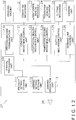
FIG. 12 is a block diagram of theprocessing unit 27 of the bag-making andpackaging apparatus 20 according to another modification of the present disclosure. - Below is a description, made with use of the drawings, of an embodiment of a bag-making and packaging apparatus according to the present disclosure. The specific configuration of the bag-making and packaging apparatus according to the present advancement is not limited to the following embodiment, and can be altered as appropriate within a range that does not deviate from the scope of the advancement.
-
FIG. 1 shows a product P manufactured by a bag-making and packaging apparatus according to the present disclosure. The product P is articles packaged by a bag B made from a film F. A longitudinally sealed part XL and a transversely sealed part XT are formed in the bag B. - The bag-making and
packaging apparatus 20 according to the present advancement is installed below a weighingmachine 10, as shown inFIG. 2 . The weighingmachine 10 drops articles A in predetermined weights into the bag-making andpackaging apparatus 20. The bag-making andpackaging apparatus 20 receives the articles A and manufactures a product P by packaging the articles A in a film F. In one operation cycle of the bag-making andpackaging apparatus 20, one product P is manufactured. - The bag-making and
packaging apparatus 20 has a conveyingmechanism 21, a film-shapingmechanism 22, alongitudinal sealing mechanism 23, atransverse sealing mechanism 24, acutting mechanism 25, anarticle sensor 26, and aprocessing unit 27, as shown inFIG. 2 . - The conveying
mechanism 21 conveys the film F extracted from a film roll FR, and the products P. The conveyingmechanism 21 hasrollers belt 21d, and aconveyor belt 21e. - The film-shaping
mechanism 22 rounds the flat film F into the form of a tube. The film-shapingmechanism 22 has a former 22a and atube 22b. The former 22a deforms the flat film F so that the film encircles thetube 22b. - The
longitudinal sealing mechanism 23 forms a film tube FT from the film F. The film tube FT has a longitudinally sealed part XL. Thelongitudinal sealing mechanism 23 has a heater, and temporarily softens two longitudinal edges of the film F. The two softened longitudinal edges bond together, forming the longitudinally sealed part XL. Thetube 22b of the film-shapingmechanism 22 functions as a guide that guides articles A falling from above to the inside of the film tube FT. - With each cycle, the
transverse sealing mechanism 24 forms one transversely sealed part XT in the film tube FT. Thetransverse sealing mechanism 24 has afirst sealing jaw 24a and asecond sealing jaw 24b. Thefirst sealing jaw 24a and thesecond sealing jaw 24b both have a heater, and temporarily soften part of the film tube FT. The softened parts bond together, forming a transversely sealed part XT. - With each cycle, the
cutting mechanism 25 cuts the film tube FT at the transversely sealed part XT. Thecutting mechanism 25 is provided to thetransverse sealing mechanism 24. Thecutting mechanism 25 includes aknife 25a and a receivingpart 25b. Theknife 25a is provided to thefirst sealing jaw 24a. The receivingpart 25b is provided to thesecond sealing jaw 24b. Theknife 25a can extend and retract. When extended, theknife 25a is accommodated in the receivingpart 25b. - The
article sensor 26 senses the articles A falling from above. Thearticle sensor 26 is, for example, an optical sensor, but this example is not provided by way of limitation. The location where thearticle sensor 26 is attached is, for example, above thetube 22b and below the weighingmachine 10, but this example of a location is not provided by way of limitation. - For example, the
article sensor 26 can be provided to aspot 26a where the film F encircles thetube 22b. In this case, an opening is provided in thetube 22b at a location adjacent to thespot 26a. Light emitted from a light projector of an optical sensor of thearticle sensor 26 permeates through the film F and then passes through the opening of thetube 22b to be radiated onto the articles A. - The
processing unit 27 coordinates the operations of the bag-making andpackaging apparatus 20. Theprocessing unit 27 is a computer including a CPU and a storage device. -
FIG. 3 shows the configuration of theprocessing unit 27. Theprocessing unit 27 has acentral processing unit 100, a productsetting storage unit 111, a jamming settingstorage unit 112, a jammingprediction unit 113, a conveyingmechanism control unit 121, a longitudinal sealingmechanism control unit 123, a transverse sealingmechanism control unit 124, a cuttingmechanism control unit 125, and a weighingmachine communication unit 130. - The
central processing unit 100 performs various calculations and controls. The productsetting storage unit 111 stores the sizes of bags B for products P that are to be manufactured, the types of films F, and other settings. The jammingsetting storage unit 112 stores settings pertaining to article A fall timings that are regarded as normal or abnormal. With each cycle, the jammingprediction unit 113 compares an output signal of thearticle sensor 26 with a setting stored in the jamming settingstorage unit 112, and predicts whether or not jamming could occur in that cycle of the bag-making and packaging apparatus. The conveyingmechanism control unit 121, the longitudinal sealingmechanism control unit 123, the transverse sealingmechanism control unit 124, and the cuttingmechanism control unit 125 respectively control the conveyingmechanism 21, thelongitudinal sealing mechanism 23, thetransverse sealing mechanism 24, and thecutting mechanism 25. The weighingmachine communication unit 130 conducts communication with the weighingmachine 10. -
FIG. 4 shows the film F used in the packaging of the articles A. The film F extends in a longitudinal direction L, and has a constant width along a transverse direction T perpendicular to the longitudinal direction L. A design corresponding to packaging of one product P is printed at each distance of length D. -
FIG. 5 shows the film tube FT formed in thelongitudinal sealing mechanism 23. The longitudinally sealed part XL is formed in the film tube FT. -
FIG. 6 shows the transversely sealed part XT formed in thetransverse sealing mechanism 24. A cut position CP, where a cut is made by thecutting mechanism 25, is in the transversely sealed part XT. -
FIG. 7 shows the details of thetransverse sealing mechanism 24. In addition to the pair of sealingjaws transverse sealing mechanism 24 has a pair ofarms rotating shafts arms rotating shafts shafts rotating shafts arms jaws jaws cutting mechanism 25 cuts the transversely sealed part XT. -
FIG. 8 is a timing chart of various signals of the bag-making andpackaging apparatus 20. A cycle time Tc is the length of the cycle during which the bag-making andpackaging apparatus 20 creates one product P. An ejection request signal ER is a signal from the bag-making andpackaging apparatus 20 to the weighingmachine 10 to eject articles A, and is generated once per cycle. In one example, the ejection request signal ER is treated as a starting point of the cycle, but the cycle starting point is not limited to this example. An ejection completion signal EC is a signal that reports to the bag-making andpackaging apparatus 20 that the weighingmachine 10 has ejected articles A in response to the ejection request signal ER. An article detection signal AD is a signal representing detection of falling articles A by thearticle sensor 26. - A permission time signal PT indicates the timing during which articles A are permitted to pass by the location of the
article sensor 26. The waveform of the permission time signal PT is determined by two parameters. The first is an offset time T1. The second is a permission time T2. The offset time T1 begins at the starting point of the operation cycle. The permission time T2 begins at the ending point of the offset time T1. The offset time T1 and the permission time T2 are set so that the sum thereof is shorter than the cycle time Tc. These parameters are stored in the jamming settingstorage unit 112 of theprocessing unit 27. - A sealing jaw state SJ represents the sealing
jaws cutting mechanism 25 to cut the transversely sealed part XT. - When articles A are detected by the
article sensor 26 while the permission time signal PT is at a high level, the jammingprediction unit 113 regards the articles A as falling at the proper fall timing. When articles A are detected by thearticle sensor 26 while the permission time signal PT is at a low level, the jammingprediction unit 113 predicts that the articles A could cause jamming. For example, the jammingprediction unit 113 predicts the occurrence of jamming in that cycle on the basis of the presence of a pulse AD1 in the article detection signal AD. - In a certain cycle, when the jamming
prediction unit 113 predicts the occurrence of jamming, the transverse sealingmechanism control unit 124 stops thecutting mechanism 25 in that cycle. The transversely sealed part XT is thereby not cut in that cycle. - Due to the stopping of the
cutting mechanism 25, the bag-making andpackaging apparatus 20 ejects an unsatisfactory product Q of the products P. An unsatisfactory product Q is two bags B joined at the transversely sealed part XT, as shown inFIG. 9 . A second length D2, which is the length of the unsatisfactory product Q, is longer than a first length D1, which is the length of a product P. - In a cycle in which jamming could occur, the
cutting mechanism 25 does not cut the film tube FT. Therefore, instances of articles A coming out through the cut position CP of the film tube FT are minimized. - When articles A are detected outside of the permission time T2, the jamming
prediction unit 113 predicts that jamming could occur. Therefore, the possibility of jamming is assessed by a simple configuration that uses thearticle sensor 26. - In a case in which jamming could occur, the bag-making and
packaging apparatus 20 creates a bag that is longer than the length of a product P. Therefore, it is easy to identify an unsatisfactory product Q including a spot where jamming has occurred. - Modifications of the above embodiment are presented below. A plurality of modifications can be combined.
- In the above embodiment, when the jamming
prediction unit 113 predicts the occurrence of jamming, the transverse sealingmechanism control unit 124 stops thecutting mechanism 25 in that cycle. In addition, the transverse sealingmechanism control unit 124 can stop thetransverse sealing mechanism 24 in that cycle. - Specifically, the transverse sealing
mechanism control unit 124 stops the sealingjaws FIG. 7 . The sealingjaws - The ejected unsatisfactory product Q is two joined bags B with no transversely sealed part XT, as shown in
FIG. 10 . - With this configuration, the
transverse sealing mechanism 24 does not form a transversely sealed part XT in the film tube FT in a cycle in which jamming could occur. Therefore, damage to the film F by the transverse sealing operation is minimized, and instances of articles A coming out from the film tube FT are therefore further minimized. - The
transverse sealing mechanism 24 can further have a jammingsensing unit 126 that senses an actual determination of jamming, as shown inFIG. 11 . The jammingsensing unit 126 is configured as, for example, an electric current monitoring unit that monitors electric currents of motors that drive thearms transverse sealing mechanism 24. In this case, when an electric current exceeding a predetermined threshold value flows to a motor, the jammingsensing unit 126 assesses that jamming is occurring. - Furthermore, when the jamming
sensing unit 126 does not sense jamming, thecentral processing unit 100 can update the length of the permission time T2 to a length increased by a predetermined amount, and can write the updated length into the jamming settingstorage unit 112. - With this configuration, the permission time T2 is extended when the jamming
sensing unit 126 does not actually sense jamming. Therefore, the permission time T2 is automatically optimized. - As shown in
FIG. 12 , the bag-making andpackaging apparatus 20 can be further provided with awarning unit 28 that issues a warning when the jamming has occurred at least a predetermined number of times within a predetermined time duration. - With this configuration, a warning is issued when the frequency of jamming occurrences is high. Therefore, the user has an opportunity to reexamine the set value of the permission time T2.
- In the above embodiment, the sealing
jaws transverse sealing mechanism 24 move through the D-shaped paths inFIG. 7 . As an alternative, the sealingjaws - With this configuration, the structure of the
transverse sealing mechanism 24 is simple. - In the above embodiment, the
cutting mechanism 25 cuts the transversely sealed part XT with theknife 25a. As an alternative, thecutting mechanism 25 can be configured to thermally cut the transversely sealed part XT with the heat of the heaters of the sealingjaws - With this configuration, there are few mechanical components, which is advantageous from the standpoint of the maintenance of the bag-making and
packaging apparatus 20. -
- 10
- Weighing machine
- 20
- Bag-making and packaging apparatus
- 21
- Conveying mechanism
- 22
- Film-shaping mechanism
- 22a
- Former
- 22b
- Tube
- 23
- Longitudinal sealing mechanism
- 24
- Transverse sealing mechanism
- 25
- Cutting mechanism
- 26
- Article sensor
- 27
- Processing unit
- 100
- Central processing unit
- 111
- Product setting storage unit
- 112
- Jamming setting storage unit
- 113
- Jamming prediction unit
- A
- Articles
- AD
- Article detection signal
- B
- Bag
- CP
- Cut position
- CT
- Cut signal
- EC
- Ejection completion signal
- ER
- Ejection request signal
- F
- Film
- FR
- Film roll
- FT
- Film tube
- P
- Product
- PT
- Permission time signal
- R1
- Straight-line portion
- R2
- Curved-line portion
- T1
- Offset time
- T2
- Permission time
- Tc
- Cycle time
- XL
- Longitudinally sealed part
- XT
- Transversely sealed part
Claims (7)
- A bag-making and packaging apparatus that creates one product per cycle by packaging articles in a bag made from a film, the bag-making and packaging apparatus comprising:a longitudinal sealing mechanism that forms a film tube from the film;a guide that guides the articles which fall from above into the film tube;an article sensor that senses the articles which fall from above;a transverse sealing mechanism that forms a transversely sealed part in the film tube with each cycle;a cutting mechanism that cuts the film tube in the transversely sealed part with each cycle; anda prediction unit that predicts whether or not jamming of the articles could occur in the transverse sealing mechanism on the basis of an output of the article sensor with each cycle;wherein when the prediction unit has predicted that the jamming could occur in a certain cycle, the cutting mechanism does not cut the film tube in the certain cycle.
- The bag-making and packaging apparatus according to claim 1, whereinwhen the prediction unit has predicted that the jamming could occur in the certain cycle, the transverse sealing mechanism does not form the transversely sealed part in the certain cycle.
- The bag-making and packaging apparatus according to claim 1 or 2, further comprising:a setting storage unit that stores an offset time beginning at the starting point of the cycle and a permission time beginning at the ending point of the offset time,wherein a sum of the offset time and the permission time is shorter than the cycle, andwhen the article sensor detects the articles outside of the permission time, the prediction unit predicts that the jamming could occur.
- The bag-making and packaging apparatus according to claim 3, further comprising:a processing unit; anda jamming sensing unit that senses an occurrence of the jamming;wherein when the jamming sensing unit does not sense an occurrence of the jamming, the processing unit updates the permission time stored by the setting storage unit to a longer time.
- The bag-making and packaging apparatus according to any one of claims 1 to 4, further comprising:a warning unit that issues a warning when the jamming has occurred at least a predetermined number of times within a predetermined time duration.
- The bag-making and packaging apparatus according to any one of claims 1 to 5, whereinthe length of the bag of the product is a first length, andwhen the prediction unit has predicted that the jamming could occur, a bag having a second length greater than the first length is created due to the cutting mechanism not cutting the film tube.
- A method of making and packaging bags that creates one packaged bag product per cycle, the method comprising:longitudinally sealing a film to form a film tube;guiding articles which fall from above into the film tube;sensing the articles which fall from above;transversely sealing part of the film tube with each cycle;cutting the film tube in the transversely sealed part with each cycle;predicting whether or not jamming of the articles could occur during transverse sealing on the basis of sensing the articles; andnot cutting the film in a certain cycle when it is predicted that jamming could occur in the certain cycle.
Applications Claiming Priority (1)
| Application Number | Priority Date | Filing Date | Title |
|---|---|---|---|
| JP2017212149A JP7071729B2 (en) | 2017-11-01 | 2017-11-01 | Bag making and packaging machine |
Publications (2)
| Publication Number | Publication Date |
|---|---|
| EP3480124A1 true EP3480124A1 (en) | 2019-05-08 |
| EP3480124B1 EP3480124B1 (en) | 2020-03-25 |
Family
ID=64048783
Family Applications (1)
| Application Number | Title | Priority Date | Filing Date |
|---|---|---|---|
| EP18203416.5A Active EP3480124B1 (en) | 2017-11-01 | 2018-10-30 | Bag-making and packaging apparatus |
Country Status (4)
| Country | Link |
|---|---|
| US (1) | US10934033B2 (en) |
| EP (1) | EP3480124B1 (en) |
| JP (1) | JP7071729B2 (en) |
| AU (1) | AU2018253503B2 (en) |
Families Citing this family (8)
| Publication number | Priority date | Publication date | Assignee | Title |
|---|---|---|---|---|
| WO2020078879A1 (en) * | 2018-10-19 | 2020-04-23 | Gea Food Solutions Weert B.V. | Vertical flow wrapper and method to produce packages with a reduced gas content |
| EP3939899A1 (en) * | 2020-07-16 | 2022-01-19 | TriVision A/S | A system and a method for packaging product into separate bags |
| JP2022020307A (en) * | 2020-07-20 | 2022-02-01 | 株式会社イシダ | Bag making and packaging machine |
| JP2022051001A (en) * | 2020-09-18 | 2022-03-31 | 株式会社イシダ | Production processing device |
| JP2022064612A (en) | 2020-10-14 | 2022-04-26 | 株式会社イシダ | Bag manufacturing and packaging machine |
| JP7705134B2 (en) * | 2021-07-01 | 2025-07-09 | 株式会社イシダ | Bag making and packaging machine |
| US11999128B2 (en) * | 2022-02-09 | 2024-06-04 | Paper Converting Machine Company | Method of aligning air burst on bag wicketer processing line |
| JP7731132B2 (en) * | 2022-03-30 | 2025-08-29 | 株式会社川島製作所 | Bag making filling packaging machine |
Citations (4)
| Publication number | Priority date | Publication date | Assignee | Title |
|---|---|---|---|---|
| EP0959397A2 (en) * | 1998-05-18 | 1999-11-24 | Ishida Co., Ltd. | Timing controller and packaging machine incorporating same |
| EP0974518A1 (en) * | 1998-07-23 | 2000-01-26 | Ishida Co., Ltd. | Packaging machine and method |
| US6119438A (en) * | 1995-06-30 | 2000-09-19 | Kliklok Corporation | Transitional product flow and adaptive control |
| JP2003072720A (en) | 2001-09-05 | 2003-03-12 | Ishida Co Ltd | Vertical bag making and packaging machine |
Family Cites Families (30)
| Publication number | Priority date | Publication date | Assignee | Title |
|---|---|---|---|---|
| US4546596A (en) * | 1984-05-08 | 1985-10-15 | Hayssen Manufacturing Company | Method of and apparatus for forming, filling and sealing packages |
| US4563862A (en) * | 1984-10-23 | 1986-01-14 | Kliklok Corporation | Package forming apparatus with combined holding and stripper mechanism |
| US4574566A (en) * | 1985-01-14 | 1986-03-11 | Doboy Packaging Machinery, Inc. | Wrapping machine and method |
| US4757668A (en) * | 1986-01-27 | 1988-07-19 | Ilapak Research & Development S.A. | Method and apparatus for form-fill-seal packaging of articles |
| US4800707A (en) * | 1986-10-20 | 1989-01-31 | Package Machinery Company | Vertical form, fill & seal packaging machine with servo motor drive means |
| DE3704797A1 (en) * | 1987-02-16 | 1988-08-25 | Bosch Gmbh Robert | DEVICE FOR PRODUCING BAGS |
| US4768327A (en) * | 1987-06-22 | 1988-09-06 | Package Machinery Company | Packaging machine with variable sealing jaw displacement apparatus |
| DE4024984A1 (en) * | 1990-07-30 | 1992-02-06 | Focke & Co | METHOD AND DEVICE FOR PACKAGING Bulk Goods |
| AU670196B2 (en) * | 1992-12-14 | 1996-07-04 | J.R. Simplot Company | Vacuum pack machine for french fries |
| US5540035A (en) * | 1994-12-07 | 1996-07-30 | Kliklok Corporation | Continuous vertical form-fill-seal packaging machine with synchronized product clamp |
| US6662843B1 (en) * | 1996-07-24 | 2003-12-16 | Illinois Tool Works Inc. | Apparatus for applying tape with fastener profiles to a web |
| GB9626785D0 (en) * | 1996-12-23 | 1997-02-12 | Ishida Seisakusho | Form-fill-seal packaging machine |
| US7121067B1 (en) * | 1998-08-20 | 2006-10-17 | Ishida Co., Ltd. | Method of longitudinally sealing tubular bag-making material |
| US6138442A (en) * | 1998-10-13 | 2000-10-31 | Kliklok Corporation | Packaging machine with continuous sealing jaw movement |
| DE69940934D1 (en) * | 1998-12-28 | 2009-07-09 | Ishida Seisakusho | Weighing, packaging and testing system |
| JP2000226006A (en) * | 1999-02-03 | 2000-08-15 | Ishida Co Ltd | Continuous bag making and packaging method and bag making and packaging machine |
| EP1050469B1 (en) * | 1999-04-07 | 2003-03-19 | Ishida Co., Ltd. | Automatic package inspecting system |
| JP4094166B2 (en) * | 1999-04-07 | 2008-06-04 | 株式会社イシダ | Packaging system |
| JP2001048130A (en) | 1999-08-02 | 2001-02-20 | Tokyo Autom Mach Works Ltd | Method and apparatus for detecting sealing failure in bag making and filling machine |
| JP4557298B2 (en) * | 2001-06-27 | 2010-10-06 | 株式会社イシダ | Vertical bag making and packaging machine |
| JP2003011928A (en) | 2001-06-29 | 2003-01-15 | Nippon Seiki Co Ltd | Filling and packaging apparatus and method for controlling the same |
| JP5235459B2 (en) * | 2008-03-19 | 2013-07-10 | 株式会社川島製作所 | Vertical bag making and packaging system and timing control method thereof |
| JP2012166833A (en) * | 2011-02-16 | 2012-09-06 | Ishida Co Ltd | Packaging machine |
| JP5789457B2 (en) * | 2011-09-07 | 2015-10-07 | 株式会社イシダ | Bag making and packaging machine |
| WO2014079457A2 (en) * | 2012-11-20 | 2014-05-30 | Gram Equipment A/S | Sealing and cutting unit for a form fill seal machine |
| JP6258648B2 (en) * | 2013-09-20 | 2018-01-10 | 株式会社イシダ | Packaging machine |
| US10287046B2 (en) * | 2014-10-28 | 2019-05-14 | Omron Corporation | Control apparatus, system, and program library |
| JP6634622B2 (en) | 2015-07-09 | 2020-01-22 | 株式会社 システムスクエア | Seal inspection equipment |
| CN108349609B (en) * | 2015-11-17 | 2019-05-10 | 株式会社石田 | Bag making and packaging machine |
| JP6534919B2 (en) * | 2015-11-30 | 2019-06-26 | 株式会社イシダ | Bag making and packaging machine |
-
2017
- 2017-11-01 JP JP2017212149A patent/JP7071729B2/en not_active Expired - Fee Related
-
2018
- 2018-10-24 US US16/168,830 patent/US10934033B2/en not_active Expired - Fee Related
- 2018-10-24 AU AU2018253503A patent/AU2018253503B2/en not_active Ceased
- 2018-10-30 EP EP18203416.5A patent/EP3480124B1/en active Active
Patent Citations (4)
| Publication number | Priority date | Publication date | Assignee | Title |
|---|---|---|---|---|
| US6119438A (en) * | 1995-06-30 | 2000-09-19 | Kliklok Corporation | Transitional product flow and adaptive control |
| EP0959397A2 (en) * | 1998-05-18 | 1999-11-24 | Ishida Co., Ltd. | Timing controller and packaging machine incorporating same |
| EP0974518A1 (en) * | 1998-07-23 | 2000-01-26 | Ishida Co., Ltd. | Packaging machine and method |
| JP2003072720A (en) | 2001-09-05 | 2003-03-12 | Ishida Co Ltd | Vertical bag making and packaging machine |
Also Published As
| Publication number | Publication date |
|---|---|
| AU2018253503A1 (en) | 2019-05-16 |
| EP3480124B1 (en) | 2020-03-25 |
| US10934033B2 (en) | 2021-03-02 |
| JP2019085120A (en) | 2019-06-06 |
| US20190127092A1 (en) | 2019-05-02 |
| JP7071729B2 (en) | 2022-05-19 |
| AU2018253503B2 (en) | 2019-08-22 |
Similar Documents
| Publication | Publication Date | Title |
|---|---|---|
| EP3480124B1 (en) | Bag-making and packaging apparatus | |
| CN102026794B (en) | Facility and method for producing containers | |
| EP3038928B1 (en) | A cold processing shrink-wrapping machine for items with extensible film, and related procedure | |
| EP1050460B1 (en) | Packaging system with improved flow of articles | |
| CN110560651B (en) | Method for judging cutting-off of continuous casting billet | |
| EP2996871B1 (en) | Dunnage conversion machine and method with jam-detection system | |
| EP2726040B1 (en) | Method of ejecting faulty absorbent article | |
| US20200017251A1 (en) | System and method for applying tubular shrink sleeve material to containers | |
| JP5235459B2 (en) | Vertical bag making and packaging system and timing control method thereof | |
| CN108263861B (en) | Substrate glass transfer system and method for monitoring substrate glass transfer | |
| EP3750521B1 (en) | Medication auditing support system | |
| JP5358925B2 (en) | Carry-in device and packaging machine | |
| JP5684459B2 (en) | Trim discharge device and trim discharge method | |
| CN109725608B (en) | Production line control system and control method for automatically detecting product state | |
| CN103204275B (en) | What dispenser cut by desiccant cuts control method and system | |
| CN103562075B (en) | Be separated the method for the film pipe containing product stacks, perform the packaging facilities of the method and perforation blown film | |
| CN106275633A (en) | A kind of carrying method | |
| JP6556010B2 (en) | Weighing device | |
| US8844249B2 (en) | Film supplying apparatus | |
| JP2014024556A (en) | Continuous packing discharge control method in bag-making filling packing and bag-making filling packing machine for executing continuous packing discharge control | |
| JPH1111442A (en) | Packaging equipment | |
| CN111409916A (en) | Easy pull sticker joint processing device and method | |
| EP4112281B1 (en) | Bag-making and packaging machine | |
| CN214931018U (en) | Material arranging system and packaging machine thereof | |
| CN219216428U (en) | Conveyer with fall protective properties |
Legal Events
| Date | Code | Title | Description |
|---|---|---|---|
| PUAI | Public reference made under article 153(3) epc to a published international application that has entered the european phase |
Free format text: ORIGINAL CODE: 0009012 |
|
| STAA | Information on the status of an ep patent application or granted ep patent |
Free format text: STATUS: THE APPLICATION HAS BEEN PUBLISHED |
|
| AK | Designated contracting states |
Kind code of ref document: A1 Designated state(s): AL AT BE BG CH CY CZ DE DK EE ES FI FR GB GR HR HU IE IS IT LI LT LU LV MC MK MT NL NO PL PT RO RS SE SI SK SM TR |
|
| AX | Request for extension of the european patent |
Extension state: BA ME |
|
| STAA | Information on the status of an ep patent application or granted ep patent |
Free format text: STATUS: REQUEST FOR EXAMINATION WAS MADE |
|
| 17P | Request for examination filed |
Effective date: 20190627 |
|
| RBV | Designated contracting states (corrected) |
Designated state(s): AL AT BE BG CH CY CZ DE DK EE ES FI FR GB GR HR HU IE IS IT LI LT LU LV MC MK MT NL NO PL PT RO RS SE SI SK SM TR |
|
| GRAP | Despatch of communication of intention to grant a patent |
Free format text: ORIGINAL CODE: EPIDOSNIGR1 |
|
| RIC1 | Information provided on ipc code assigned before grant |
Ipc: B65B 57/16 20060101ALI20190910BHEP Ipc: B65B 9/213 20120101ALI20190910BHEP Ipc: B65B 57/10 20060101AFI20190910BHEP Ipc: B65B 9/20 20120101ALI20190910BHEP |
|
| STAA | Information on the status of an ep patent application or granted ep patent |
Free format text: STATUS: GRANT OF PATENT IS INTENDED |
|
| INTG | Intention to grant announced |
Effective date: 20191017 |
|
| GRAS | Grant fee paid |
Free format text: ORIGINAL CODE: EPIDOSNIGR3 |
|
| GRAA | (expected) grant |
Free format text: ORIGINAL CODE: 0009210 |
|
| STAA | Information on the status of an ep patent application or granted ep patent |
Free format text: STATUS: THE PATENT HAS BEEN GRANTED |
|
| AK | Designated contracting states |
Kind code of ref document: B1 Designated state(s): AL AT BE BG CH CY CZ DE DK EE ES FI FR GB GR HR HU IE IS IT LI LT LU LV MC MK MT NL NO PL PT RO RS SE SI SK SM TR |
|
| REG | Reference to a national code |
Ref country code: GB Ref legal event code: FG4D |
|
| REG | Reference to a national code |
Ref country code: AT Ref legal event code: REF Ref document number: 1248304 Country of ref document: AT Kind code of ref document: T Effective date: 20200415 Ref country code: IE Ref legal event code: FG4D |
|
| REG | Reference to a national code |
Ref country code: DE Ref legal event code: R096 Ref document number: 602018003278 Country of ref document: DE |
|
| REG | Reference to a national code |
Ref country code: NL Ref legal event code: FP |
|
| PG25 | Lapsed in a contracting state [announced via postgrant information from national office to epo] |
Ref country code: RS Free format text: LAPSE BECAUSE OF FAILURE TO SUBMIT A TRANSLATION OF THE DESCRIPTION OR TO PAY THE FEE WITHIN THE PRESCRIBED TIME-LIMIT Effective date: 20200325 Ref country code: NO Free format text: LAPSE BECAUSE OF FAILURE TO SUBMIT A TRANSLATION OF THE DESCRIPTION OR TO PAY THE FEE WITHIN THE PRESCRIBED TIME-LIMIT Effective date: 20200625 Ref country code: FI Free format text: LAPSE BECAUSE OF FAILURE TO SUBMIT A TRANSLATION OF THE DESCRIPTION OR TO PAY THE FEE WITHIN THE PRESCRIBED TIME-LIMIT Effective date: 20200325 |
|
| PG25 | Lapsed in a contracting state [announced via postgrant information from national office to epo] |
Ref country code: SE Free format text: LAPSE BECAUSE OF FAILURE TO SUBMIT A TRANSLATION OF THE DESCRIPTION OR TO PAY THE FEE WITHIN THE PRESCRIBED TIME-LIMIT Effective date: 20200325 Ref country code: BG Free format text: LAPSE BECAUSE OF FAILURE TO SUBMIT A TRANSLATION OF THE DESCRIPTION OR TO PAY THE FEE WITHIN THE PRESCRIBED TIME-LIMIT Effective date: 20200625 Ref country code: LV Free format text: LAPSE BECAUSE OF FAILURE TO SUBMIT A TRANSLATION OF THE DESCRIPTION OR TO PAY THE FEE WITHIN THE PRESCRIBED TIME-LIMIT Effective date: 20200325 Ref country code: GR Free format text: LAPSE BECAUSE OF FAILURE TO SUBMIT A TRANSLATION OF THE DESCRIPTION OR TO PAY THE FEE WITHIN THE PRESCRIBED TIME-LIMIT Effective date: 20200626 Ref country code: HR Free format text: LAPSE BECAUSE OF FAILURE TO SUBMIT A TRANSLATION OF THE DESCRIPTION OR TO PAY THE FEE WITHIN THE PRESCRIBED TIME-LIMIT Effective date: 20200325 |
|
| REG | Reference to a national code |
Ref country code: LT Ref legal event code: MG4D |
|
| PG25 | Lapsed in a contracting state [announced via postgrant information from national office to epo] |
Ref country code: PT Free format text: LAPSE BECAUSE OF FAILURE TO SUBMIT A TRANSLATION OF THE DESCRIPTION OR TO PAY THE FEE WITHIN THE PRESCRIBED TIME-LIMIT Effective date: 20200818 Ref country code: SM Free format text: LAPSE BECAUSE OF FAILURE TO SUBMIT A TRANSLATION OF THE DESCRIPTION OR TO PAY THE FEE WITHIN THE PRESCRIBED TIME-LIMIT Effective date: 20200325 Ref country code: EE Free format text: LAPSE BECAUSE OF FAILURE TO SUBMIT A TRANSLATION OF THE DESCRIPTION OR TO PAY THE FEE WITHIN THE PRESCRIBED TIME-LIMIT Effective date: 20200325 Ref country code: SK Free format text: LAPSE BECAUSE OF FAILURE TO SUBMIT A TRANSLATION OF THE DESCRIPTION OR TO PAY THE FEE WITHIN THE PRESCRIBED TIME-LIMIT Effective date: 20200325 Ref country code: RO Free format text: LAPSE BECAUSE OF FAILURE TO SUBMIT A TRANSLATION OF THE DESCRIPTION OR TO PAY THE FEE WITHIN THE PRESCRIBED TIME-LIMIT Effective date: 20200325 Ref country code: CZ Free format text: LAPSE BECAUSE OF FAILURE TO SUBMIT A TRANSLATION OF THE DESCRIPTION OR TO PAY THE FEE WITHIN THE PRESCRIBED TIME-LIMIT Effective date: 20200325 Ref country code: LT Free format text: LAPSE BECAUSE OF FAILURE TO SUBMIT A TRANSLATION OF THE DESCRIPTION OR TO PAY THE FEE WITHIN THE PRESCRIBED TIME-LIMIT Effective date: 20200325 Ref country code: IS Free format text: LAPSE BECAUSE OF FAILURE TO SUBMIT A TRANSLATION OF THE DESCRIPTION OR TO PAY THE FEE WITHIN THE PRESCRIBED TIME-LIMIT Effective date: 20200725 |
|
| REG | Reference to a national code |
Ref country code: AT Ref legal event code: MK05 Ref document number: 1248304 Country of ref document: AT Kind code of ref document: T Effective date: 20200325 |
|
| REG | Reference to a national code |
Ref country code: DE Ref legal event code: R097 Ref document number: 602018003278 Country of ref document: DE |
|
| PG25 | Lapsed in a contracting state [announced via postgrant information from national office to epo] |
Ref country code: IT Free format text: LAPSE BECAUSE OF FAILURE TO SUBMIT A TRANSLATION OF THE DESCRIPTION OR TO PAY THE FEE WITHIN THE PRESCRIBED TIME-LIMIT Effective date: 20200325 Ref country code: AT Free format text: LAPSE BECAUSE OF FAILURE TO SUBMIT A TRANSLATION OF THE DESCRIPTION OR TO PAY THE FEE WITHIN THE PRESCRIBED TIME-LIMIT Effective date: 20200325 Ref country code: DK Free format text: LAPSE BECAUSE OF FAILURE TO SUBMIT A TRANSLATION OF THE DESCRIPTION OR TO PAY THE FEE WITHIN THE PRESCRIBED TIME-LIMIT Effective date: 20200325 Ref country code: ES Free format text: LAPSE BECAUSE OF FAILURE TO SUBMIT A TRANSLATION OF THE DESCRIPTION OR TO PAY THE FEE WITHIN THE PRESCRIBED TIME-LIMIT Effective date: 20200325 |
|
| PLBE | No opposition filed within time limit |
Free format text: ORIGINAL CODE: 0009261 |
|
| STAA | Information on the status of an ep patent application or granted ep patent |
Free format text: STATUS: NO OPPOSITION FILED WITHIN TIME LIMIT |
|
| PG25 | Lapsed in a contracting state [announced via postgrant information from national office to epo] |
Ref country code: PL Free format text: LAPSE BECAUSE OF FAILURE TO SUBMIT A TRANSLATION OF THE DESCRIPTION OR TO PAY THE FEE WITHIN THE PRESCRIBED TIME-LIMIT Effective date: 20200325 |
|
| 26N | No opposition filed |
Effective date: 20210112 |
|
| PG25 | Lapsed in a contracting state [announced via postgrant information from national office to epo] |
Ref country code: SI Free format text: LAPSE BECAUSE OF FAILURE TO SUBMIT A TRANSLATION OF THE DESCRIPTION OR TO PAY THE FEE WITHIN THE PRESCRIBED TIME-LIMIT Effective date: 20200325 |
|
| PG25 | Lapsed in a contracting state [announced via postgrant information from national office to epo] |
Ref country code: LU Free format text: LAPSE BECAUSE OF NON-PAYMENT OF DUE FEES Effective date: 20201030 Ref country code: MC Free format text: LAPSE BECAUSE OF FAILURE TO SUBMIT A TRANSLATION OF THE DESCRIPTION OR TO PAY THE FEE WITHIN THE PRESCRIBED TIME-LIMIT Effective date: 20200325 |
|
| REG | Reference to a national code |
Ref country code: BE Ref legal event code: MM Effective date: 20201031 |
|
| PG25 | Lapsed in a contracting state [announced via postgrant information from national office to epo] |
Ref country code: BE Free format text: LAPSE BECAUSE OF NON-PAYMENT OF DUE FEES Effective date: 20201031 |
|
| PG25 | Lapsed in a contracting state [announced via postgrant information from national office to epo] |
Ref country code: IE Free format text: LAPSE BECAUSE OF NON-PAYMENT OF DUE FEES Effective date: 20201030 |
|
| PGFP | Annual fee paid to national office [announced via postgrant information from national office to epo] |
Ref country code: FR Payment date: 20211022 Year of fee payment: 4 |
|
| PG25 | Lapsed in a contracting state [announced via postgrant information from national office to epo] |
Ref country code: TR Free format text: LAPSE BECAUSE OF FAILURE TO SUBMIT A TRANSLATION OF THE DESCRIPTION OR TO PAY THE FEE WITHIN THE PRESCRIBED TIME-LIMIT Effective date: 20200325 Ref country code: MT Free format text: LAPSE BECAUSE OF FAILURE TO SUBMIT A TRANSLATION OF THE DESCRIPTION OR TO PAY THE FEE WITHIN THE PRESCRIBED TIME-LIMIT Effective date: 20200325 Ref country code: CY Free format text: LAPSE BECAUSE OF FAILURE TO SUBMIT A TRANSLATION OF THE DESCRIPTION OR TO PAY THE FEE WITHIN THE PRESCRIBED TIME-LIMIT Effective date: 20200325 |
|
| REG | Reference to a national code |
Ref country code: CH Ref legal event code: PL |
|
| PG25 | Lapsed in a contracting state [announced via postgrant information from national office to epo] |
Ref country code: MK Free format text: LAPSE BECAUSE OF FAILURE TO SUBMIT A TRANSLATION OF THE DESCRIPTION OR TO PAY THE FEE WITHIN THE PRESCRIBED TIME-LIMIT Effective date: 20200325 Ref country code: AL Free format text: LAPSE BECAUSE OF FAILURE TO SUBMIT A TRANSLATION OF THE DESCRIPTION OR TO PAY THE FEE WITHIN THE PRESCRIBED TIME-LIMIT Effective date: 20200325 |
|
| PG25 | Lapsed in a contracting state [announced via postgrant information from national office to epo] |
Ref country code: LI Free format text: LAPSE BECAUSE OF NON-PAYMENT OF DUE FEES Effective date: 20211031 Ref country code: CH Free format text: LAPSE BECAUSE OF NON-PAYMENT OF DUE FEES Effective date: 20211031 |
|
| PGFP | Annual fee paid to national office [announced via postgrant information from national office to epo] |
Ref country code: NL Payment date: 20221019 Year of fee payment: 5 |
|
| PGFP | Annual fee paid to national office [announced via postgrant information from national office to epo] |
Ref country code: GB Payment date: 20221020 Year of fee payment: 5 Ref country code: DE Payment date: 20220620 Year of fee payment: 5 |
|
| PG25 | Lapsed in a contracting state [announced via postgrant information from national office to epo] |
Ref country code: FR Free format text: LAPSE BECAUSE OF NON-PAYMENT OF DUE FEES Effective date: 20221031 |
|
| REG | Reference to a national code |
Ref country code: DE Ref legal event code: R119 Ref document number: 602018003278 Country of ref document: DE |
|
| REG | Reference to a national code |
Ref country code: NL Ref legal event code: MM Effective date: 20231101 |
|
| GBPC | Gb: european patent ceased through non-payment of renewal fee |
Effective date: 20231030 |
|
| PG25 | Lapsed in a contracting state [announced via postgrant information from national office to epo] |
Ref country code: GB Free format text: LAPSE BECAUSE OF NON-PAYMENT OF DUE FEES Effective date: 20231030 |
|
| PG25 | Lapsed in a contracting state [announced via postgrant information from national office to epo] |
Ref country code: NL Free format text: LAPSE BECAUSE OF NON-PAYMENT OF DUE FEES Effective date: 20231101 |
|
| PG25 | Lapsed in a contracting state [announced via postgrant information from national office to epo] |
Ref country code: NL Free format text: LAPSE BECAUSE OF NON-PAYMENT OF DUE FEES Effective date: 20231101 Ref country code: GB Free format text: LAPSE BECAUSE OF NON-PAYMENT OF DUE FEES Effective date: 20231030 Ref country code: DE Free format text: LAPSE BECAUSE OF NON-PAYMENT OF DUE FEES Effective date: 20240501 |