EP3471720B1 - Formulation for use in the treatment of uremic pruritus - Google Patents
Formulation for use in the treatment of uremic pruritus Download PDFInfo
- Publication number
- EP3471720B1 EP3471720B1 EP17812796.5A EP17812796A EP3471720B1 EP 3471720 B1 EP3471720 B1 EP 3471720B1 EP 17812796 A EP17812796 A EP 17812796A EP 3471720 B1 EP3471720 B1 EP 3471720B1
- Authority
- EP
- European Patent Office
- Prior art keywords
- histidine
- skin
- urea
- amino acids
- formulation
- Prior art date
- Legal status (The legal status is an assumption and is not a legal conclusion. Google has not performed a legal analysis and makes no representation as to the accuracy of the status listed.)
- Active
Links
Images



Classifications
-
- A—HUMAN NECESSITIES
- A61—MEDICAL OR VETERINARY SCIENCE; HYGIENE
- A61K—PREPARATIONS FOR MEDICAL, DENTAL OR TOILETRY PURPOSES
- A61K31/00—Medicinal preparations containing organic active ingredients
- A61K31/33—Heterocyclic compounds
- A61K31/395—Heterocyclic compounds having nitrogen as a ring hetero atom, e.g. guanethidine or rifamycins
- A61K31/40—Heterocyclic compounds having nitrogen as a ring hetero atom, e.g. guanethidine or rifamycins having five-membered rings with one nitrogen as the only ring hetero atom, e.g. sulpiride, succinimide, tolmetin, buflomedil
- A61K31/4015—Heterocyclic compounds having nitrogen as a ring hetero atom, e.g. guanethidine or rifamycins having five-membered rings with one nitrogen as the only ring hetero atom, e.g. sulpiride, succinimide, tolmetin, buflomedil having oxo groups directly attached to the heterocyclic ring, e.g. piracetam, ethosuximide
-
- A—HUMAN NECESSITIES
- A61—MEDICAL OR VETERINARY SCIENCE; HYGIENE
- A61K—PREPARATIONS FOR MEDICAL, DENTAL OR TOILETRY PURPOSES
- A61K31/00—Medicinal preparations containing organic active ingredients
- A61K31/33—Heterocyclic compounds
- A61K31/395—Heterocyclic compounds having nitrogen as a ring hetero atom, e.g. guanethidine or rifamycins
- A61K31/41—Heterocyclic compounds having nitrogen as a ring hetero atom, e.g. guanethidine or rifamycins having five-membered rings with two or more ring hetero atoms, at least one of which being nitrogen, e.g. tetrazole
- A61K31/4164—1,3-Diazoles
- A61K31/4172—Imidazole-alkanecarboxylic acids, e.g. histidine
-
- A—HUMAN NECESSITIES
- A61—MEDICAL OR VETERINARY SCIENCE; HYGIENE
- A61K—PREPARATIONS FOR MEDICAL, DENTAL OR TOILETRY PURPOSES
- A61K45/00—Medicinal preparations containing active ingredients not provided for in groups A61K31/00 - A61K41/00
- A61K45/06—Mixtures of active ingredients without chemical characterisation, e.g. antiphlogistics and cardiaca
-
- A—HUMAN NECESSITIES
- A61—MEDICAL OR VETERINARY SCIENCE; HYGIENE
- A61K—PREPARATIONS FOR MEDICAL, DENTAL OR TOILETRY PURPOSES
- A61K47/00—Medicinal preparations characterised by the non-active ingredients used, e.g. carriers or inert additives; Targeting or modifying agents chemically bound to the active ingredient
- A61K47/06—Organic compounds, e.g. natural or synthetic hydrocarbons, polyolefins, mineral oil, petrolatum or ozokerite
-
- A—HUMAN NECESSITIES
- A61—MEDICAL OR VETERINARY SCIENCE; HYGIENE
- A61K—PREPARATIONS FOR MEDICAL, DENTAL OR TOILETRY PURPOSES
- A61K47/00—Medicinal preparations characterised by the non-active ingredients used, e.g. carriers or inert additives; Targeting or modifying agents chemically bound to the active ingredient
- A61K47/06—Organic compounds, e.g. natural or synthetic hydrocarbons, polyolefins, mineral oil, petrolatum or ozokerite
- A61K47/08—Organic compounds, e.g. natural or synthetic hydrocarbons, polyolefins, mineral oil, petrolatum or ozokerite containing oxygen, e.g. ethers, acetals, ketones, quinones, aldehydes, peroxides
-
- A—HUMAN NECESSITIES
- A61—MEDICAL OR VETERINARY SCIENCE; HYGIENE
- A61K—PREPARATIONS FOR MEDICAL, DENTAL OR TOILETRY PURPOSES
- A61K47/00—Medicinal preparations characterised by the non-active ingredients used, e.g. carriers or inert additives; Targeting or modifying agents chemically bound to the active ingredient
- A61K47/06—Organic compounds, e.g. natural or synthetic hydrocarbons, polyolefins, mineral oil, petrolatum or ozokerite
- A61K47/08—Organic compounds, e.g. natural or synthetic hydrocarbons, polyolefins, mineral oil, petrolatum or ozokerite containing oxygen, e.g. ethers, acetals, ketones, quinones, aldehydes, peroxides
- A61K47/10—Alcohols; Phenols; Salts thereof, e.g. glycerol; Polyethylene glycols [PEG]; Poloxamers; PEG/POE alkyl ethers
-
- A—HUMAN NECESSITIES
- A61—MEDICAL OR VETERINARY SCIENCE; HYGIENE
- A61K—PREPARATIONS FOR MEDICAL, DENTAL OR TOILETRY PURPOSES
- A61K47/00—Medicinal preparations characterised by the non-active ingredients used, e.g. carriers or inert additives; Targeting or modifying agents chemically bound to the active ingredient
- A61K47/06—Organic compounds, e.g. natural or synthetic hydrocarbons, polyolefins, mineral oil, petrolatum or ozokerite
- A61K47/08—Organic compounds, e.g. natural or synthetic hydrocarbons, polyolefins, mineral oil, petrolatum or ozokerite containing oxygen, e.g. ethers, acetals, ketones, quinones, aldehydes, peroxides
- A61K47/14—Esters of carboxylic acids, e.g. fatty acid monoglycerides, medium-chain triglycerides, parabens or PEG fatty acid esters
-
- A—HUMAN NECESSITIES
- A61—MEDICAL OR VETERINARY SCIENCE; HYGIENE
- A61K—PREPARATIONS FOR MEDICAL, DENTAL OR TOILETRY PURPOSES
- A61K47/00—Medicinal preparations characterised by the non-active ingredients used, e.g. carriers or inert additives; Targeting or modifying agents chemically bound to the active ingredient
- A61K47/06—Organic compounds, e.g. natural or synthetic hydrocarbons, polyolefins, mineral oil, petrolatum or ozokerite
- A61K47/16—Organic compounds, e.g. natural or synthetic hydrocarbons, polyolefins, mineral oil, petrolatum or ozokerite containing nitrogen, e.g. nitro-, nitroso-, azo-compounds, nitriles, cyanates
- A61K47/18—Amines; Amides; Ureas; Quaternary ammonium compounds; Amino acids; Oligopeptides having up to five amino acids
- A61K47/186—Quaternary ammonium compounds, e.g. benzalkonium chloride or cetrimide
-
- A—HUMAN NECESSITIES
- A61—MEDICAL OR VETERINARY SCIENCE; HYGIENE
- A61K—PREPARATIONS FOR MEDICAL, DENTAL OR TOILETRY PURPOSES
- A61K47/00—Medicinal preparations characterised by the non-active ingredients used, e.g. carriers or inert additives; Targeting or modifying agents chemically bound to the active ingredient
- A61K47/06—Organic compounds, e.g. natural or synthetic hydrocarbons, polyolefins, mineral oil, petrolatum or ozokerite
- A61K47/20—Organic compounds, e.g. natural or synthetic hydrocarbons, polyolefins, mineral oil, petrolatum or ozokerite containing sulfur, e.g. dimethyl sulfoxide [DMSO], docusate, sodium lauryl sulfate or aminosulfonic acids
-
- A—HUMAN NECESSITIES
- A61—MEDICAL OR VETERINARY SCIENCE; HYGIENE
- A61K—PREPARATIONS FOR MEDICAL, DENTAL OR TOILETRY PURPOSES
- A61K47/00—Medicinal preparations characterised by the non-active ingredients used, e.g. carriers or inert additives; Targeting or modifying agents chemically bound to the active ingredient
- A61K47/06—Organic compounds, e.g. natural or synthetic hydrocarbons, polyolefins, mineral oil, petrolatum or ozokerite
- A61K47/24—Organic compounds, e.g. natural or synthetic hydrocarbons, polyolefins, mineral oil, petrolatum or ozokerite containing atoms other than carbon, hydrogen, oxygen, halogen, nitrogen or sulfur, e.g. cyclomethicone or phospholipids
-
- A—HUMAN NECESSITIES
- A61—MEDICAL OR VETERINARY SCIENCE; HYGIENE
- A61K—PREPARATIONS FOR MEDICAL, DENTAL OR TOILETRY PURPOSES
- A61K47/00—Medicinal preparations characterised by the non-active ingredients used, e.g. carriers or inert additives; Targeting or modifying agents chemically bound to the active ingredient
- A61K47/06—Organic compounds, e.g. natural or synthetic hydrocarbons, polyolefins, mineral oil, petrolatum or ozokerite
- A61K47/26—Carbohydrates, e.g. sugar alcohols, amino sugars, nucleic acids, mono-, di- or oligo-saccharides; Derivatives thereof, e.g. polysorbates, sorbitan fatty acid esters or glycyrrhizin
-
- A—HUMAN NECESSITIES
- A61—MEDICAL OR VETERINARY SCIENCE; HYGIENE
- A61K—PREPARATIONS FOR MEDICAL, DENTAL OR TOILETRY PURPOSES
- A61K47/00—Medicinal preparations characterised by the non-active ingredients used, e.g. carriers or inert additives; Targeting or modifying agents chemically bound to the active ingredient
- A61K47/30—Macromolecular organic or inorganic compounds, e.g. inorganic polyphosphates
- A61K47/32—Macromolecular compounds obtained by reactions only involving carbon-to-carbon unsaturated bonds, e.g. carbomers, poly(meth)acrylates, or polyvinyl pyrrolidone
-
- A—HUMAN NECESSITIES
- A61—MEDICAL OR VETERINARY SCIENCE; HYGIENE
- A61K—PREPARATIONS FOR MEDICAL, DENTAL OR TOILETRY PURPOSES
- A61K47/00—Medicinal preparations characterised by the non-active ingredients used, e.g. carriers or inert additives; Targeting or modifying agents chemically bound to the active ingredient
- A61K47/44—Oils, fats or waxes according to two or more groups of A61K47/02-A61K47/42; Natural or modified natural oils, fats or waxes, e.g. castor oil, polyethoxylated castor oil, montan wax, lignite, shellac, rosin, beeswax or lanolin
-
- A—HUMAN NECESSITIES
- A61—MEDICAL OR VETERINARY SCIENCE; HYGIENE
- A61K—PREPARATIONS FOR MEDICAL, DENTAL OR TOILETRY PURPOSES
- A61K9/00—Medicinal preparations characterised by special physical form
- A61K9/0012—Galenical forms characterised by the site of application
- A61K9/0014—Skin, i.e. galenical aspects of topical compositions
-
- A—HUMAN NECESSITIES
- A61—MEDICAL OR VETERINARY SCIENCE; HYGIENE
- A61K—PREPARATIONS FOR MEDICAL, DENTAL OR TOILETRY PURPOSES
- A61K9/00—Medicinal preparations characterised by special physical form
- A61K9/06—Ointments; Bases therefor; Other semi-solid forms, e.g. creams, sticks, gels
-
- A—HUMAN NECESSITIES
- A61—MEDICAL OR VETERINARY SCIENCE; HYGIENE
- A61K—PREPARATIONS FOR MEDICAL, DENTAL OR TOILETRY PURPOSES
- A61K9/00—Medicinal preparations characterised by special physical form
- A61K9/10—Dispersions; Emulsions
- A61K9/107—Emulsions ; Emulsion preconcentrates; Micelles
-
- A—HUMAN NECESSITIES
- A61—MEDICAL OR VETERINARY SCIENCE; HYGIENE
- A61P—SPECIFIC THERAPEUTIC ACTIVITY OF CHEMICAL COMPOUNDS OR MEDICINAL PREPARATIONS
- A61P17/00—Drugs for dermatological disorders
-
- A—HUMAN NECESSITIES
- A61—MEDICAL OR VETERINARY SCIENCE; HYGIENE
- A61P—SPECIFIC THERAPEUTIC ACTIVITY OF CHEMICAL COMPOUNDS OR MEDICINAL PREPARATIONS
- A61P17/00—Drugs for dermatological disorders
- A61P17/04—Antipruritics
Definitions
- the present invention relates to a topical formulation comprising a nucleophilic compound, such as histidine or any other amino acids or polypeptides and/or a derivative thereof, for use in the treatment of itchy dry skin caused by urea in in uremic pruritus, of a subject.
- a nucleophilic compound such as histidine or any other amino acids or polypeptides and/or a derivative thereof.
- the present invention also relates to a topical composition for use in the prevention of uremic pruritus.
- Uremic pruritus is one of the most distressing symptoms of renal failure. It affects up to 50% of patients in dialysis (I).
- the skin of the uremic patients is often pale, due to anemia, dry and with scratch marks.
- the condition may include skin symptoms such as eczema, prurigo nodularis, nummular eczema and licinification.
- the subjective symptoms include intense itching and burning which may be localized or generalized.
- Metabolic and endocrine changes in uremic dialyzed patients are many and complex (2).
- the accumulation of urea in the body is one of the central metabolic changes in chronic renal disease.
- Urea is excreted both via the renal system and through the sweat (3).
- the concentration in sweat is 2-4 times higher than the serum concentration. This implies that high concentrations of urea can be present on the skin in uremic patients (4). Sometimes the concentration is so large that urea is visible as uremic frost.
- the stratum corneum is composed of layers of keratinized epithelia, in the form of protein enriched corneocytes, embedded in a lipid intercellular matrix composed of ceramides, cholesterol and free fatty acids and mixed with natural moisturizing factors (NMFs) (5) (6).
- NMFs natural moisturizing factors
- Fifty percent of the NMF is composed of amino acids resulting from the enzymatic break down of epidermal proteins particularly filaggrin (6), and its pivotal amino acid degradation products including histidine, trans-urocanic acid and pyrrolidone carboxylic acid (7).
- the remaining part of the NMF is consists of components of sweat including electrolytes, lactic acid, urea, and to a minor extent amino acids. Beside having a moisturizing effect (water binding) the amino acids represent part of natural UV protection (trans urocanic acid) and function as a pH stabilizing factor.
- filaggrin null carriers Individuals with truncation mutations in the gene coding for filaggrin are strongly predisposed to a severe form of dry skin, ichthyosis vulgaris, and/or eczema. It has been shown that almost 50% of all severe cases of eczema may have at least one mutated filaggrin gene. The barrier defect seen in filaggrin null carriers also appears to lead to increased asthma susceptibility and exacerbations.
- Urea has for long time been used for its ability to denature proteins both in biochemical research and in industrial processes (8).
- the denaturing action of urea on globular proteins is due to the stabilization of the unfolded form of the protein molecule.
- Urea also has a direct concentration dependent effect on amino acids at room temperature (8).
- Small amounts of cyanate which will be present in aqueous urea can add to the -NH2 groups of proteins and amino acids as well as to -SH groups present to yield carbamyl derivatives (9). It has been demonstrated that the logarithm of the rate constant for reaction between cyanate and amino acids are related linearly to the PKa value of the amino groups of the amino acids or polypeptides (15).
- the high concentration of urea in the stratum corneum in the uremic patient is therefore expected to have a profound impact on the on enzymic biological processes in the epidermis and stratum corneum. These effects have not been investigated as an etiological factor for uremic pruritus or seen as a new avenue for treatment of the condition.
- the denaturizing effects of urea, in the concentrations present in uremic patients, is expected to have a profound effect on the formation of the NMF. Denaturation of proteins (particularly filaggrin) must be expected to decrease the filaggrin derived amino acids that constitutes the majority of the NMF in stratum corneum.
- histidine will not be transformed to trans-urocanic acid because the needed enzyme (histidinase) may also be denatured by the high urea concentration in the skin of the uremic patients. Histidine itself will be changed by the direct action of urea on the molecule.
- US20150252035 mentions treatment of itch associated with uremic pruritus among several other skin disorders but the disclosed TRPV4 inhibitors cannot sequester urea by acting as nucleophiles.
- US2009/0186853 discloses a histidine derivative and N-propanoyl derivatives of amino acids that may treat pruritus. However, there is no disclosure of treating itchy dry skin caused by sequestering urea with a nucleophile. On the contrary US2009/0186853 mentions that urea may be included in the formulations.
- US2011/217277 discloses compositions comprising dead sea mud for use in the treatment of uremic pruritus.
- WO2016/086280 relates to dermatological compositions comprising polyhexanide (PHMB) and treatment of skin diseases selected from psoriasis and dermatitis, and atopic dermatitis and allergic dermatitis associated with incontinence such as diaper rash.
- PHMB polyhexanide
- a formulation comprising a nucleophilic compound, comprising amino acids or polypetides having a low amino group PKa for use in the treatment of uremic pruritus.
- nucleophilic compounds such as nucleophilic amino acids or polypetides such as histidine, cysteine, arginine, lysine, glycylglycine, glycylalanine or tri- or tetraglycine.
- nucleophiles react with the urea derived cyanate and produce carbamylated end products and ammonia. Any remaining non-reacting nucleophilic amino acids, and especially histidine, exert the beneficial skin effects known from such amino acids, whereby the skin of patients with uremic pruritus is returned to a normal status without itching spots.
- nucleophilic amino acids and especially histidine, exert the beneficial skin effects known from such amino acids, whereby the skin of patients with uremic pruritus is returned to a normal status without itching spots.
- a method for treating uremic pruritus comprises administering to said subject a therapeutically effective amount of a nucleophilic compound, such as a nucleophilic amino acid, preferably histidine.
- a nucleophilic compound such as a nucleophilic amino acid, preferably histidine.
- a disclosure of the present invention further comprises treatment of additional skin conditions caused by presence of urea or urine, including but not limited to urostomi dermatitis, incontinence dermatitis, and diaper dermatitis, by a method comprising administering to said subject a therapeutically effective amount of a nucleophilic compound, such as a nucleophilic nucleophilic amino acids or polypeptides.
- a nucleophilic compound such as a nucleophilic nucleophilic amino acids or polypeptides.
- a topical formulation comprising histidine for use in the treatment or prevention of uremic pruritus of a subject, wherein the formulation is applied to the skin with a concentration of amino acids or polypetides f and/or a derivative thereof ranging between 0.001 mg/cm 2 and 5 mg/cm 2 skin surface, preferably between 0.003 mg/cm 2 and 1 mg/cm 2 skin surface, more preferably 0.005 mg/cm 2 and 0.5 mg/cm 2 skin surface.
- the derivative is selected from amino acids or polypetides and/or a derivative thereof having a low PKa, one or more histidine degradation products, such as trans urocanic acid, a peptide of histidine or a peptide of histidine and one or more additional amino acids, and a pharmaceutically- acceptable salt of histidine. It is preferred that the histidine is L-histidine.
- histidine is the only active ingredient in the pharmaceutical composition.
- the formulation further comprises pyrrolidone carboxylic acid or salt thereof, preferably the sodium salt.
- the present invention provides a therapeutic method for treating uremic pruritus.
- the invention provides a method for treating uremic pruritus of a subject, wherein a topical formulation comprising histidine and/or a derivative thereof, such as trans urocanic acid (UCA), is applied to the skin with a concentration of histidine and/or a derivative thereof ranging between 0.001 mg/cm 2 and 5 mg/cm 2 skin surface, preferably between 0.003 mg/cm 2 and 1 mg/cm 2 skin surface, more preferably 0.005 mg/cm 2 and 0.5 mg/cm 2 skin surface.
- the amino acids or polypeptides may be the only active ingredient in the pharmaceutical composition.
- the formulation comprises further actives, such as pyrrolidone carboxylic acid.
- the uremic pruritus is a well-defined indication, which can be clearly distinguished from inflammatory skin diseases (particularly a chronic inflammatory skin disease), such as atopic dermatitis, all types of psoriasis (including plaque flexural, guttate, pustular, nail, photosensitive, erythrodermic psoriasis and psoriatic arthritis), acne, ichthyosis, contact dermatitis, eczema, photodermatoses and dry skin disorders.
- inflammatory skin diseases particularly a chronic inflammatory skin disease
- atopic dermatitis such as atopic dermatitis, all types of psoriasis (including plaque flexural, guttate, pustular, nail, photosensitive, erythrodermic psoriasis and psoriatic arthritis), acne, ichthyosis, contact dermatitis, eczema, photodermatoses and dry skin disorders.
- Skin barrier function is controlled by many factors, including the proteins present and the environment in which they reside (for example the pH). The inventors have realized that histidine will not be transformed to trans-urocanic acid because the needed enzyme (histidinase) may be denatured by the high urea concentration in the skin of the uremic patients.
- amino acids including histidine and most polypetides exhibit low or no mammalian toxicity or reported side effects at conventional doses. Accordingly, the use of amino acids including histidine and polypetides as the active ingredient provides advantages in use, including easy access to patients, improvement in patient compliance resulting in increasing usage of the active ingredients in wide patient populations and longer uninterrupted treatment regimens compared to alternative medicaments currently in use. Moreover, amino acids including histidine and most polypetides are expected to be useful in treating the entire body surface of patients and to be effective against a wide range of skin disorders (especially inflammatory skin diseases). Preferably such skin diseases are caused by presence of urea or urine, and includes but are not limited to urostomi dermatitis, incontinence dermatitis, and diaper dermatitis, and more preferably uremic pruritus.
- uremic pruritus is caused by a major excess of urea transported to the upper skin surface by the sweat ducts.
- the novel observation made by the present inventors is that the high urea concentration is disturbing the normal function of proteins and amino acids.
- amino acids including histidine and most polypetides may be used as described herein in any suitable form, for example as discussed herein.
- amino acids including histidine and most polypetides may be used as a sole therapy or in combination with a conventional therapy for the prevention and/or treatment of uremic pruritus.
- Suitable conventional therapies include treatment with steroids (for example steroids for topical administration) and/or with suitable lipids and/or with phototherapy.
- the present disclosure further provides (not claimed) the topical formulation described above for use in the treatment or prevention of pruritus in aging skin of elderly people.
- the disclosure is also directed to the use (not claimed) of the formulation in the treatment or prevention of itchy dry skin in filaggrin defective patients.
- compositions for topical administration in accordance with the present invention may for example be in the form of solutions, creams, ointments, jellies, gels, sprays, foams, powders, liposomes, or aqueous or oily solutions or suspensions.
- Oil-in-water emulsions, water-in-oil emulsions or polyaphrons are also encompassed by the present invention.
- Suitable excipients and carriers include, for example, peanut oil, water, ethyl cocoate, octyl cocoate, polyoxyethylenated hydrogenated castor oil, liquid paraffin, isopropanol, glycerol, propylene glycol, paraffin, celluloses, parabens, stearyl alcohol, polyethylene glycol, isopropyl myristate and phenoxyethanol.
- the pharmaceutical composition may be formulated as a shampoo or conditioner.
- the pharmaceutical composition may be formulated as an additive to washing and bathing products (for example bath or shower gels and creams).
- washing and bathing products for example bath or shower gels and creams.
- Such pharmaceutical compositions for topical administration may include diluents or carriers that are also suitable for use in cosmetics.
- compositions for topical administration by application to the skin may include moisturisers, and sun tan lotions and creams.
- a pharmaceutical composition for topical administration may be provided in any suitable dispenser.
- the diluent or carrier should be selected so as to assist the transport of the active ingredient across the skin barrier and may need to be one capable of crossing the keratinous layer of the skin.
- the active ingredient may be mixed with known carrier materials as discussed herein.
- topical administration may be achieved by means of localized injection, for example intra-dermal injection.
- compositions for topical administration (such as a cream) will contain from about 0.05 w/w% to 15 w/w%, more particularly from about 0.1 to 5 w/w%, even more particularly from about 0.2 to 2 w/w% by weight of the total composition of amino acids including histidine and polypetides and/or a derivative thereof as the active ingredient.
- compositions of the invention may be obtained by conventional procedures using conventional pharmaceutical diluents or carriers, well known in the art.
- a typical cream for topical administration may contain: Ingredient % Versagel M200 (Mineral oil (and) ethylene/propylene/styrene copolymer (and) butylene/ethylene/styrene copolymer) 8.58 Isostearyl isostearate (ISIS) 12.87 Cyclomethicone 4.29 Dimethicone 350cst 3.96 Glycerol 3.00 Laureth 4 0.30 2 Pyrrolidone 5 carboxylic acid (Na salt) 0.50 Histidine 0.50 Carbomer (Ultrez 10) 0.80 Citric acid 0.10 Phenoxyethanol 1.00 Polysorbate 20 0.075 Sodium hyalauronate 0.05 Sodium hydroxide (20% solution) q.s (-0.70) Water q.s. (-63.28) 100.00
- the cream may be prepared as follows.
- a suitable vessel (A) combine the Versagel, Isostearyl isostearate, cyclomethicone and 0.26% laureth 4 with suitable mixing.
- a second vessel (B) combine the dimethicone and 0.04% laureth 4 with suitable mixing.
- a third vessel (C) mix the polysorbate 20 with 7.425% water. With moderate mixing slowly add first the contents of vessel A and then the contents of vessel B into vessel C.
- a fourth vessel (D) combine the glycerol, 2-pyrrolidone-5-carboxylic acid (sodium salt), citric acid, histidine, sodium hyalauronate, phenoxyethanol and 41.55% water.
- a fifth vessel (E) combine the carbomer and 13.50% water. Once fully dispersed and hydrated add with stirring the contents of vessel E into vessel C, then add the contents of vessel D. Adjust the pH (if required) using the sodium hydroxide and then make up to quantity with the remaining water.
- Example 1 In order to demonstrate how the histidine is degraded in the presence of urea (which is an inevitable constituent of the skin in individuals suffering from UP) the cream of Example 1 was subjected to the exposure of 5 w/w% and 10 w/w% of urea. The degradation process was followed over time and after six weeks at 40°C only 20% histidine was left in the cream having 10 w/w% urea.
- urea which is an inevitable constituent of the skin in individuals suffering from UP
- histidine is an essential amino acid a continuous supply thereof is required to maintain the normal function of the skin. Further, it is important because this amino acid is a precursor for UCA, which is an important buffer for the pH regulation in the skin. With respect to uremic pruritus the degradation rate of histidine is much higher than in other skin disorders, such as atopic dermatitis. Accordingly, the inventors have realized that the supply of histidine must be correspondingly higher in order to compensate for the degradation, whereby normal histidine levels can be achieved. With that in mind the present inventors have formulated histidine in such high concentrations (cf Example 1).
- Skin barrier function is controlled by many factors, including the proteins present and the environment in which they reside. Impaired skin barrier function may be due to defective filaggrin. Furthermore, filaggrin is broken down by proteinases to release a large amount of constituent histidine residues. The histidine residues are then deaminated by histidase to form amongst others trans-urocanic acid (trans-UCA).
- trans-UCA trans-urocanic acid
- the present invention is believed to address the problem of defective filaggrin in patients suffering from the itching skin disorders.
- the histidine compensate for defective filaggrin.
- RHE human epidermis
- the skin samples is harvested at day 6 were exposed as above and further day 3 to 2-6.
- the aqueous urea solution was absorbed immediately through the skin samples.
- the two creams left a deposit on top of the skin and were therefore only applied twice; day 0 and day 3 (for the 6-day experiment).
- Daily exposures were abstained to minimize the risk of infection.
- the two different application methods are therefore not directly comparable as a continuous urea exposure must be anticipated from the depot effects of the creams.
- the urea concentrations from experiments 2, 3 and 4 harvested day 6 may have been relatively low due to only one supplementary exposure day 3.
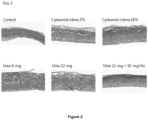
- Figures 2 and 3 show the histological pictures for the experiments harvested day 3 and day 6. At day 3 significant changes are seen in experiments 2, 3, 5 and 6. Severe edema and disruptions are seen in the stratum corneum and premature cell death in stratum spinosum.
- Experiment 1 (the control) and 4 are similar and identical with the general look of 18 days old untreated RHS samples. Similar histological changes are seen in the 6 days' experiments. It is obvious that the skin samples are older. In experiment 2 and 3 the skin has recovered to a certain extent, probably reflecting the limited urea exposure (only day 3).
- Protein analysis was made according to a previous developed method (14). Carbamoylated proteins from the skin samples were coated to ELISA wells and quantified using a using a primary polyclonal anti-homocitrullin antibody and a secondary labelled polyclonal detection antibody.
- the ELISA readings are provided in Table 2.
- Example 3 The same method as described in example 3 was used. The studies were based on the use of the Human Reconstructed Epidermis (RHE) model purchased from Episkin ® . Three experiments were made in duplicate including 2 controls. Growth media (1ml) with and without additions (see below) were replaced daily accordingly to the standard protocol. In contrast to Example 3 the urea exposure was made by addition of urea to the growth medium. Experiment 1 corresponds to the two controls; experiment 2 was with growth medium with 4 mg/ml urea; experiment 3 was with growth medium with 4 mg/ml urea and with addition of 5 mg (500 ⁇ l) cream with 2% amino acids applied on top of RHE skin surface at Day 0 and Day 3. All 6 skin samples looked macroscopically healthy when they were harvested after 6 days. There were no signs of infection or necrosis. They were immediately frozen at minus 80 °C until protein analysis. Parts of all samples were sent for histological examination.
- RHE Human Reconstructed Epidermis
- Protein carbamylated was investigated using the same method as in Experiment 3.
- the data for carbamylation of the total proteins from the skin samples Is shown in Table 3.
- the highest level of carbamylation was found in two skin samples incubated with growth medium supplemented with 4 mg/ml urea.
- the lowest level of carmamylation was found in the skin samples incubated with growth medium supplemented with both urea 4 mg/ml and the 2% amino acid creme, but the level of carbamylation from these skin samples was probably not staticstical different from that seen in the control samples.
- the RHE samples was exposed to calculated real life conditions using histidine as an example of a nucleophile. All exposures were made on top of the skin samples. Carbamylation of proteins could be demonstrated within 6 days after exposure to urea concentrations calculated to be present in dialysis patients. Addition of 0.5% histidine, a concentration similar to the one present in NMF, prevented this carbamylation.
- the samples exposed to the commercial creams containing 5% and 10% urea developed hydration (as expected) of the stratum corneum ( Fig. 2 and 3 ) and the highest degree of protein carbamylation (table 2).
- the maximum tolerable exposure concentrations was tested, which is relevant for uremic pruritus as well as diaper dermatitis and urostomia dermatitis.
- the test was conducted in the RHE system. Further a cream containing 3 nucleophiles (amino acids) in a total concentration of 2% was tested. Urea was added in a concentration 8 times higher than in the average dialysis patient.
- first vessel (A) dissolve sodium hyalauronate in 50% of the water. Once dissolved add the glycerol, 2-pyrrolidone-5-carboxylic acid (sodium salt), citric acid and histidine.
- second vessel (B) disperse with suitable stirring the carbomer into 30% of the water.
- third vessel (C) dissolve the sodium benzoate in 5% water. Add the contents of vessel A into vessel B with stirring then add the contents of vessel C. Adjust the pH with Sodium hydroxide if required and then add water q.s.
- a suitable vessel (A) combine the Versagel, Isostearyl isostearate, Arlamol HD and 0.26% laureth 4 with suitable mixing.
- a second vessel (B) combine the dimethicone and 0.04% laureth 4 with suitable mixing.
- a third vessel (C) mix the polysorbate 20 with 7.425% water. With moderate mixing slowly add first the contents of vessel A and then the contents of vessel B into vessel C.
- a fourth vessel (D) combine the glycerol, 2-pyrrolidone-5-carboxylic acid (sodium salt), citric acid, L-histidine, L-arginine, L-lysine hydrochloride, sodium hyalauronate, phenoxyethanol and 37.85% water.
- a fifth vessel (E) combine the carbomer and 13.50% water. Once fully dispersed and hydrated add with stirring the contents of vessel E into vessel C, then add the contents of vessel D. Adjust the pH (if required) using the sodium hydroxide and then make up to quantity with the remaining water.
Landscapes
- Health & Medical Sciences (AREA)
- Chemical & Material Sciences (AREA)
- Life Sciences & Earth Sciences (AREA)
- Public Health (AREA)
- Pharmacology & Pharmacy (AREA)
- Veterinary Medicine (AREA)
- General Health & Medical Sciences (AREA)
- Medicinal Chemistry (AREA)
- Animal Behavior & Ethology (AREA)
- Epidemiology (AREA)
- General Chemical & Material Sciences (AREA)
- Engineering & Computer Science (AREA)
- Chemical Kinetics & Catalysis (AREA)
- Oil, Petroleum & Natural Gas (AREA)
- Dermatology (AREA)
- Bioinformatics & Cheminformatics (AREA)
- Nuclear Medicine, Radiotherapy & Molecular Imaging (AREA)
- Organic Chemistry (AREA)
- Molecular Biology (AREA)
- Dispersion Chemistry (AREA)
- Biophysics (AREA)
- Inorganic Chemistry (AREA)
- Biochemistry (AREA)
- Proteomics, Peptides & Aminoacids (AREA)
- Pharmaceuticals Containing Other Organic And Inorganic Compounds (AREA)
- Medicinal Preparation (AREA)
- Medicines That Contain Protein Lipid Enzymes And Other Medicines (AREA)
- Acyclic And Carbocyclic Compounds In Medicinal Compositions (AREA)
Description
- The present invention relates to a topical formulation comprising a nucleophilic compound, such as histidine or any other amino acids or polypeptides and/or a derivative thereof, for use in the treatment of itchy dry skin caused by urea in in uremic pruritus, of a subject. The present invention also relates to a topical composition for use in the prevention of uremic pruritus.
- Uremic pruritus is one of the most distressing symptoms of renal failure. It affects up to 50% of patients in dialysis (I). The skin of the uremic patients is often pale, due to anemia, dry and with scratch marks. The condition may include skin symptoms such as eczema, prurigo nodularis, nummular eczema and licinification. The subjective symptoms include intense itching and burning which may be localized or generalized. There have been many hypothesis for the etiology of the condition which have led to a number of systemic and topical treatments.
- In general these treatments have little or no effect although some may help in subgroups of patients (I).
- Metabolic and endocrine changes in uremic dialyzed patients are many and complex (2). The accumulation of urea in the body is one of the central metabolic changes in chronic renal disease. Urea is excreted both via the renal system and through the sweat (3). The concentration in sweat is 2-4 times higher than the serum concentration. This implies that high concentrations of urea can be present on the skin in uremic patients (4). Sometimes the concentration is so large that urea is visible as uremic frost.
- The stratum corneum, the outer part of the skin, is composed of layers of keratinized epithelia, in the form of protein enriched corneocytes, embedded in a lipid intercellular matrix composed of ceramides, cholesterol and free fatty acids and mixed with natural moisturizing factors (NMFs) (5) (6). Fifty percent of the NMF is composed of amino acids resulting from the enzymatic break down of epidermal proteins particularly filaggrin (6), and its pivotal amino acid degradation products including histidine, trans-urocanic acid and pyrrolidone carboxylic acid (7). The remaining part of the NMF is consists of components of sweat including electrolytes, lactic acid, urea, and to a minor extent amino acids. Beside having a moisturizing effect (water binding) the amino acids represent part of natural UV protection (trans urocanic acid) and function as a pH stabilizing factor.
- Individuals with truncation mutations in the gene coding for filaggrin are strongly predisposed to a severe form of dry skin, ichthyosis vulgaris, and/or eczema. It has been shown that almost 50% of all severe cases of eczema may have at least one mutated filaggrin gene. The barrier defect seen in filaggrin null carriers also appears to lead to increased asthma susceptibility and exacerbations.
- Urea has for long time been used for its ability to denature proteins both in biochemical research and in industrial processes (8). The denaturing action of urea on globular proteins is due to the stabilization of the unfolded form of the protein molecule. Urea also has a direct concentration dependent effect on amino acids at room temperature (8). Small amounts of cyanate which will be present in aqueous urea can add to the -NH2 groups of proteins and amino acids as well as to -SH groups present to yield carbamyl derivatives (9). It has been demonstrated that the logarithm of the rate constant for reaction between cyanate and amino acids are related linearly to the PKa value of the amino groups of the amino acids or polypeptides (15).
- The high concentration of urea in the stratum corneum in the uremic patient (urea coming from sweat) is therefore expected to have a profound impact on the on enzymic biological processes in the epidermis and stratum corneum. These effects have not been investigated as an etiological factor for uremic pruritus or seen as a new avenue for treatment of the condition. The denaturizing effects of urea, in the concentrations present in uremic patients, is expected to have a profound effect on the formation of the NMF. Denaturation of proteins (particularly filaggrin) must be expected to decrease the filaggrin derived amino acids that constitutes the majority of the NMF in stratum corneum. Furthermore any available histidine will not be transformed to trans-urocanic acid because the needed enzyme (histidinase) may also be denatured by the high urea concentration in the skin of the uremic patients. Histidine itself will be changed by the direct action of urea on the molecule. These disturbances, which are expected to significantly affect the quantity and quality of the NMF, have not been investigated previously because the knowledge and dynamics of the formation and biological effects of the NMF is new.
- Concerning the prior art
US2016/0008297 discloses a topical formulation for use in the treatment or prevention of itchy skin associated with renal diseases. There is no disclosure of a nucleophilic attack for sequestering urea, and the amino acids used in the formuation are not included to act as nucleophiles. -
US20150252035 mentions treatment of itch associated with uremic pruritus among several other skin disorders but the disclosed TRPV4 inhibitors cannot sequester urea by acting as nucleophiles. -
US2009/0186853 discloses a histidine derivative and N-propanoyl derivatives of amino acids that may treat pruritus. However, there is no disclosure of treating itchy dry skin caused by sequestering urea with a nucleophile. On the contraryUS2009/0186853 mentions that urea may be included in the formulations. -
US2011/217277 discloses compositions comprising dead sea mud for use in the treatment of uremic pruritus. -
WO2016/086280 relates to dermatological compositions comprising polyhexanide (PHMB) and treatment of skin diseases selected from psoriasis and dermatitis, and atopic dermatitis and allergic dermatitis associated with incontinence such as diaper rash. - The present invention is defined by the claims. The references to methods of treatment in the summary and detailed description of the invention in this description are to be interpreted as references to the compounds, pharmaceutical compositions and medicaments of the present invention for use in a method for treatment of the human (or animal) body by therapy (or for diagnosis).
- According to the present invention, there is provided a formulation comprising a nucleophilic compound, comprising amino acids or polypetides having a low amino group PKa for use in the treatment of uremic pruritus. Without being bound by any theory the present inventors have found that the undesired effects of excess urea accumulating on the skin of patients with uremic pruritus can be counteracted by the presence of nucleophilic compounds, such as nucleophilic amino acids or polypetides such as histidine, cysteine, arginine, lysine, glycylglycine, glycylalanine or tri- or tetraglycine.
- According to the analytical chemistry performed by the inventors it appears that such nucleophiles react with the urea derived cyanate and produce carbamylated end products and ammonia. Any remaining non-reacting nucleophilic amino acids, and especially histidine, exert the beneficial skin effects known from such amino acids, whereby the skin of patients with uremic pruritus is returned to a normal status without itching spots. For further details about how peptides and proteins are carbamylated reference is made to the article authored by G.R. Stark (15).
- According to the present invention, there is also provided a method for treating uremic pruritus, which method comprises administering to said subject a therapeutically effective amount of a nucleophilic compound, such as a nucleophilic amino acid, preferably histidine.
- A disclosure of the present invention further comprises treatment of additional skin conditions caused by presence of urea or urine, including but not limited to urostomi dermatitis, incontinence dermatitis, and diaper dermatitis, by a method comprising administering to said subject a therapeutically effective amount of a nucleophilic compound, such as a nucleophilic nucleophilic amino acids or polypeptides.
- Specifically there is provided a topical formulation comprising histidine for use in the treatment or prevention of uremic pruritus of a subject, wherein the formulation is applied to the skin with a concentration of amino acids or polypetides f and/or a derivative thereof ranging between 0.001 mg/cm2 and 5 mg/cm2 skin surface, preferably between 0.003 mg/cm2 and 1 mg/cm2 skin surface, more preferably 0.005 mg/cm2 and 0.5 mg/cm2 skin surface.
- Preferably, the derivative is selected from amino acids or polypetides and/or a derivative thereof having a low PKa, one or more histidine degradation products, such as trans urocanic acid, a peptide of histidine or a peptide of histidine and one or more additional amino acids, and a pharmaceutically- acceptable salt of histidine. It is preferred that the histidine is L-histidine.
- In one embodiment the histidine is the only active ingredient in the pharmaceutical composition.
- In another embodiment the formulation further comprises pyrrolidone carboxylic acid or salt thereof, preferably the sodium salt.
-
-
Figure 1 shows a diagram of the biochemical disturbances associated with uremic pruritus. -
Figure 2 shows histological examination of reconstructed human epidermis samples exposed to urea. -
Figure 3 shows histological examination of reconstructed human epidermis samples exposed to urea. -
Figure 4 shows histological examinations of reconstructed human epidermis samples exposed to urea and a topically applied creame containing 2% amino acids. - As stated the present invention provides a therapeutic method for treating uremic pruritus.
- Specifically the invention provides a method for treating uremic pruritus of a subject, wherein a topical formulation comprising histidine and/or a derivative thereof, such as trans urocanic acid (UCA), is applied to the skin with a concentration of histidine and/or a derivative thereof ranging between 0.001 mg/cm2 and 5 mg/cm2 skin surface, preferably between 0.003 mg/cm2 and 1 mg/cm2 skin surface, more preferably 0.005 mg/cm2 and 0.5 mg/cm2 skin surface. The amino acids or polypeptides may be the only active ingredient in the pharmaceutical composition. Alternatively, the formulation comprises further actives, such as pyrrolidone carboxylic acid.
- The uremic pruritus is a well-defined indication, which can be clearly distinguished from inflammatory skin diseases (particularly a chronic inflammatory skin disease), such as atopic dermatitis, all types of psoriasis (including plaque flexural, guttate, pustular, nail, photosensitive, erythrodermic psoriasis and psoriatic arthritis), acne, ichthyosis, contact dermatitis, eczema, photodermatoses and dry skin disorders.
- Skin barrier function is controlled by many factors, including the proteins present and the environment in which they reside (for example the pH). The inventors have realized that histidine will not be transformed to trans-urocanic acid because the needed enzyme (histidinase) may be denatured by the high urea concentration in the skin of the uremic patients.
- In normal skin many proteins involved in barrier formation are pH dependent and are only active in the UCA-created acidic environment of the upper epidermis/stratum corneum (10). In addition to maintaining this homeostasis, the lowered pH of the stratum corneum directly inhibits microbial infection and growth (11). It is known that defective filaggrin may result in reduced amino acid content including reduced levels of histidine in the stratum corneum, which in turn may lead to reduced levels of trans-UCA and an abnormally high pH. A higher than optimum pH in the stratum corneum is believed to reduce pH dependent lipid processing enzymes (for example β-glucocerebrosidase) and compromise barrier function and repair (12). However, the present investigation is not concerned with solving the physiological cause of defective filaggrinin patients suffering from the skin disorders. The inventors have instead discovered that the use of amino acids including histidine or polypetides as the active ingredient in the use of the present invention appears to compensate for defective filaggrin caused by the high concentration of urea in the skin of uremic pruritus patients. There currently exists no means to prevent and/or treat uremic pruritus.
- Moreover, amino acids including histidine and most polypetides exhibit low or no mammalian toxicity or reported side effects at conventional doses. Accordingly, the use of amino acids including histidine and polypetides as the active ingredient provides advantages in use, including easy access to patients, improvement in patient compliance resulting in increasing usage of the active ingredients in wide patient populations and longer uninterrupted treatment regimens compared to alternative medicaments currently in use. Moreover, amino acids including histidine and most polypetides are expected to be useful in treating the entire body surface of patients and to be effective against a wide range of skin disorders (especially inflammatory skin diseases). Preferably such skin diseases are caused by presence of urea or urine, and includes but are not limited to urostomi dermatitis, incontinence dermatitis, and diaper dermatitis, and more preferably uremic pruritus.
- As shown in
Figure 1 uremic pruritus is caused by a major excess of urea transported to the upper skin surface by the sweat ducts. The novel observation made by the present inventors is that the high urea concentration is disturbing the normal function of proteins and amino acids. - Moreover, the pH regulation is negatively affected by the high concentration of urea.
- The amino acids including histidine and most polypetides may be used as described herein in any suitable form, for example as discussed herein.
- The amino acids including histidine and most polypetides may be used as a sole therapy or in combination with a conventional therapy for the prevention and/or treatment of uremic pruritus. Suitable conventional therapies include treatment with steroids (for example steroids for topical administration) and/or with suitable lipids and/or with phototherapy.
- The present disclosure further provides (not claimed) the topical formulation described above for use in the treatment or prevention of pruritus in aging skin of elderly people. The disclosure is also directed to the use (not claimed) of the formulation in the treatment or prevention of itchy dry skin in filaggrin defective patients.
- Pharmaceutical compositions for topical administration in accordance with the present invention may for example be in the form of solutions, creams, ointments, jellies, gels, sprays, foams, powders, liposomes, or aqueous or oily solutions or suspensions. Oil-in-water emulsions, water-in-oil emulsions or polyaphrons (high internal emulsions, gel emulsions etc) are also encompassed by the present invention. Suitable excipients and carriers include, for example, peanut oil, water, ethyl cocoate, octyl cocoate, polyoxyethylenated hydrogenated castor oil, liquid paraffin, isopropanol, glycerol, propylene glycol, paraffin, celluloses, parabens, stearyl alcohol, polyethylene glycol, isopropyl myristate and phenoxyethanol.
- In the case of topical application to the scalp, the pharmaceutical composition may be formulated as a shampoo or conditioner. In the case of topical application to the skin, the pharmaceutical composition may be formulated as an additive to washing and bathing products (for example bath or shower gels and creams). Such pharmaceutical compositions for topical administration may include diluents or carriers that are also suitable for use in cosmetics.
- Pharmaceutical compositions for topical administration by application to the skin may include moisturisers, and sun tan lotions and creams.
- A pharmaceutical composition for topical administration may be provided in any suitable dispenser.
- In the case of pharmaceutical compositions for topical administration by application to the skin, the diluent or carrier should be selected so as to assist the transport of the active ingredient across the skin barrier and may need to be one capable of crossing the keratinous layer of the skin. Many methods are known for preparation of pharmaceutical compositions for topical application. For example, the active ingredient may be mixed with known carrier materials as discussed herein.
- Alternatively, the skilled person will appreciate that topical administration may be achieved by means of localized injection, for example intra-dermal injection.
- Typically, compositions for topical administration (such as a cream) will contain from about 0.05 w/w% to 15 w/w%, more particularly from about 0.1 to 5 w/w%, even more particularly from about 0.2 to 2 w/w% by weight of the total composition of amino acids including histidine and polypetides and/or a derivative thereof as the active ingredient.
- The pharmaceutical compositions of the invention may be obtained by conventional procedures using conventional pharmaceutical diluents or carriers, well known in the art.
- A typical cream for topical administration may contain:
Ingredient % Versagel M200 (Mineral oil (and) ethylene/propylene/styrene copolymer (and) butylene/ethylene/styrene copolymer) 8.58 Isostearyl isostearate (ISIS) 12.87 Cyclomethicone 4.29 Dimethicone 350cst 3.96 Glycerol 3.00 Laureth 4 0.30 2 Pyrrolidone 5 carboxylic acid (Na salt) 0.50 Histidine 0.50 Carbomer (Ultrez 10) 0.80 Citric acid 0.10 Phenoxyethanol 1.00 Polysorbate 20 0.075 Sodium hyalauronate 0.05 Sodium hydroxide (20% solution) q.s (-0.70) Water q.s. (-63.28) 100.00 - The cream may be prepared as follows. In a suitable vessel (A) combine the Versagel, Isostearyl isostearate, cyclomethicone and 0.26
% laureth 4 with suitable mixing. In a second vessel (B) combine the dimethicone and 0.04% laureth 4 with suitable mixing. In a third vessel (C) mix the polysorbate 20 with 7.425% water. With moderate mixing slowly add first the contents of vessel A and then the contents of vessel B into vessel C. In a fourth vessel (D) combine the glycerol, 2-pyrrolidone-5-carboxylic acid (sodium salt), citric acid, histidine, sodium hyalauronate, phenoxyethanol and 41.55% water. In a fifth vessel (E) combine the carbomer and 13.50% water. Once fully dispersed and hydrated add with stirring the contents of vessel E into vessel C, then add the contents of vessel D. Adjust the pH (if required) using the sodium hydroxide and then make up to quantity with the remaining water. - In order to demonstrate how the histidine is degraded in the presence of urea (which is an inevitable constituent of the skin in individuals suffering from UP) the cream of Example 1 was subjected to the exposure of 5 w/w% and 10 w/w% of urea. The degradation process was followed over time and after six weeks at 40°C only 20% histidine was left in the cream having 10 w/w% urea.
- Since histidine is an essential amino acid a continuous supply thereof is required to maintain the normal function of the skin. Further, it is important because this amino acid is a precursor for UCA, which is an important buffer for the pH regulation in the skin. With respect to uremic pruritus the degradation rate of histidine is much higher than in other skin disorders, such as atopic dermatitis. Accordingly, the inventors have realized that the supply of histidine must be correspondingly higher in order to compensate for the degradation, whereby normal histidine levels can be achieved. With that in mind the present inventors have formulated histidine in such high concentrations (cf Example 1).
- Skin barrier function is controlled by many factors, including the proteins present and the environment in which they reside. Impaired skin barrier function may be due to defective filaggrin. Furthermore, filaggrin is broken down by proteinases to release a large amount of constituent histidine residues. The histidine residues are then deaminated by histidase to form amongst others trans-urocanic acid (trans-UCA).
- The present invention is believed to address the problem of defective filaggrin in patients suffering from the itching skin disorders. The histidine compensate for defective filaggrin.
- To further investigate possible carbamylation in human skin in UP (Uremic Pruritus) the inventors conducted a series of studies in the reconstructed human epidermis (RHE) model. The 4 cm2 large skin samples were delivered from Episkin® in 6 well plates each with a volume of 1 ml. The experiments were carried out in 18-25 days old skin samples. RHE is a standardized technology used to investigate metabolic, toxic and inflammatory reactions in the skin (13). The skin samples were developed from human epidermal stem cells. They were developed on a polycarbamate net with an underlying growth medium. The RHE contains all the different cell layers in the epidermis, including stratum corneum. The samples are kept at 37° C in a 5% CO2 atmosphere. They are handled under sterile conditions. New growth medium is added daily. The 4 cm2 large skin samples were ready for use after 18 days' development; a time span similar to the normal turnover of human skin.
- 12 individual experiments were carried out including 2 controls. Growth media (1 ml) were replaced daily according to the standard protocol. 6 of the samples were harvested at
day day 6 and immediately frozen at minus 80° C until protein analysis. Parts of all samples were sent for histologic examination. - The following exposures (individual experiments), all from stratum corneum side of the skin sample, were made.
- 1. Controls: Left untreated.
- 2. Urea in an aqueous solution in the same amount - calculated as mg/cm2 skin -. as in UP. This calculated amount corresponds to 0.3 mg/cm2, based on calculation of the sum of the average serum levels of urea in uremic patients, urea from sweat, and contribution from active transport of urea into the cells in epidermis. The addition of urea is done by the addition of 200 µl of a solution of 6 mg urea/ml) to the surface of the skin samples.
- 3. As under above item 2 but in double amount (0.6 mg/cm2).
- 4. As under above
item 3 and added 200 µl of a 1% histidine solution. - 5. 5% commercially available urea cream dosed as intended human use
- 6. 10% commercially available urea cream dosed as intended human use The skin samples harvested at
day 3 were exposed day 0 to 2-6 and day 1 to 2-4. (tabl.1) - The skin samples is harvested at
day 6 were exposed as above andfurther day 3 to 2-6. In agreement with Table 1 the aqueous urea solution was absorbed immediately through the skin samples. The two creams left a deposit on top of the skin and were therefore only applied twice; day 0 and day 3 (for the 6-day experiment). Daily exposures were abstained to minimize the risk of infection. The two different application methods are therefore not directly comparable as a continuous urea exposure must be anticipated from the depot effects of the creams. Further the urea concentrations fromexperiments day 6 may have been relatively low due to only onesupplementary exposure day 3. -
Figures 2 and3 show the histological pictures for the experiments harvestedday 3 andday 6. Atday 3 significant changes are seen inexperiments experiment 2 and 3 the skin has recovered to a certain extent, probably reflecting the limited urea exposure (only day 3). - The experiments illustrate a likely dose and time dependent urea effect on the RHS samples. The pronounced edema of the stratum corneum reflects the water binding capacity of urea. But the cell death also point to direct toxic effect from the cyanide ion released from urea in an aqueous solution. It is remarkable that histidine, a nucleophile, can counteract this effect as illustrated in
experiment 4 harvested bothday 3 andday 6. - Protein analysis was made according to a previous developed method (14). Carbamoylated proteins from the skin samples were coated to ELISA wells and quantified using a using a primary polyclonal anti-homocitrullin antibody and a secondary labelled polyclonal detection antibody. The ELISA readings (absorbance units) are provided in Table 2.
- Proteins from the skin samples were furthermore run in an SDS PAGE and an immunoblot were performed with a polyclonal anti-homocitrullin antibody. Results from this experiment confirmed that protein from
experiment 6 resulted in a positive band demonstrating the presence of carbamoylated protein in this sample. The main conclusion from these experiments is that protein carbamylation can be demonstrated in a RHE model after 3 and 6 days' exposure to urea in concentrations comparable to urea in UP patients. The experiments illustrate effect of time and concentration. In accordance with the present invention histidine is therefore able to counteract these effects.
Table 2 Day 3Day 6Controls 0.318 0.395 Urea conc. as in UP (moderate) 6mg 0.377 0.368 Urea conc. as in UP (high) 12mg 0.316 0.475 Urea conc. as in UP (high) 12mg + 0,5% histidine 0.312 0.321 5% urea cream 0,452 0.557 10% urea cream 0.423 0.606 The ELISA readings are presented as absorbance units.
UP: uremic pruritus - The same method as described in example 3 was used. The studies were based on the use of the Human Reconstructed Epidermis (RHE) model purchased from Episkin®. Three experiments were made in duplicate including 2 controls. Growth media (1ml) with and without additions (see below) were replaced daily accordingly to the standard protocol. In contrast to Example 3 the urea exposure was made by addition of urea to the growth medium. Experiment 1 corresponds to the two controls; experiment 2 was with growth medium with 4 mg/ml urea;
experiment 3 was with growth medium with 4 mg/ml urea and with addition of 5 mg (500 µl) cream with 2% amino acids applied on top of RHE skin surface at Day 0 andDay 3. All 6 skin samples looked macroscopically healthy when they were harvested after 6 days. There were no signs of infection or necrosis. They were immediately frozen at minus 80 °C until protein analysis. Parts of all samples were sent for histological examination. - The most pronounced changes were edema, particulary of the skin samples exposed to both urea and the two percentage amino acids. The cells were changed in both
experiment 2 and 3, but there were more viable cells in the skin samples treated with 2% amino acids.Table 3 Elisa readings presented as absorbance units. Average of two experiements. Controls GM 0,53 GM + 4mg urea/ ml 0,68 GM + 4 mg urea/ml with 2% amino acid cream on top applied Day 0 and Day 30,44 - Protein carbamylated was investigated using the same method as in
Experiment 3. The data for carbamylation of the total proteins from the skin samples Is shown in Table 3. The highest level of carbamylation was found in two skin samples incubated with growth medium supplemented with 4 mg/ml urea. The lowest level of carmamylation was found in the skin samples incubated with growth medium supplemented with bothurea 4 mg/ml and the 2% amino acid creme, but the level of carbamylation from these skin samples was probably not staticstical different from that seen in the control samples. - In example 3 the RHE samples was exposed to calculated real life conditions using histidine as an example of a nucleophile. All exposures were made on top of the skin samples. Carbamylation of proteins could be demonstrated within 6 days after exposure to urea concentrations calculated to be present in dialysis patients. Addition of 0.5% histidine, a concentration similar to the one present in NMF, prevented this carbamylation. The samples exposed to the commercial creams containing 5% and 10% urea developed hydration (as expected) of the stratum corneum (
Fig. 2 and3 ) and the highest degree of protein carbamylation (table 2). - In example 4 the maximum tolerable exposure concentrations was tested, which is relevant for uremic pruritus as well as diaper dermatitis and urostomia dermatitis. The test was conducted in the RHE system. Further a cream containing 3 nucleophiles (amino acids) in a total concentration of 2% was tested. Urea was added in a concentration 8 times higher than in the average dialysis patient.
- Application of the 2% amino acid cream caused the expected hydration of the RHE skin samples (
Fig. 4 ). Protein analysis showed that the topically applied cream was able to prevent protein carbamylation during exaggerated urea concentrations exposures (table 3). - In the following the preparation of representative formulations (I-VII) encompassed by the present invention are outlined.
-
PHASE A Water q.s. Histidine 0.50 Citric acid (anhydrous) 0.10 Sodium citrate (dihydrate) 0.17 PHASE B Methylparaben 0.15 Glycerin 8.00 PHASE C Mineral oil 26.00 Petrolatum 12.00 Bees Wax 3.00 Sorbitan Stearate 3.00 Polysorbate 60 4.00 Propylparaben 0.15 100.00 - Premix phase A heating to 70°C.
- Add phase B to phase A.
- Heat phase C to 75°C.
- Add phase C to phase A using high shear mixing.
- Cool with mixing to 25°C.
-
PHASE A Ethylhexyl palmitate 20.0 Beeswax 3.00 Peg-7 hydrogenated castor oil 1.00 Polyglyceryl-3-polyricinoleate 1.00 PHASE B Magnesium sulfate 1.00 Histidine 0.50 Citric acid (anhydrous) 0.10 Sodium citrate (dihydrate) 0.17 Water 73.23 100.00 -
- Heat oil and water phases separately to 65-70
- Add water phase (B) to oil phase (A) with stirring.
- Stir to cool.
-
Ingredient % Glycerol 3.00 2 Pyrrolidone 5 carboxylic acid (Na salt) 0.50 Histidine 0.50 Carbomer (Ultrez 10) 0.80 Citric acid 0.10 Sodium benzoate 0.20 Sodium hyalauronate 0.05 Sodium hydroxide (20% solution) q.s (to pH5.5) Water q.s. 100.00 - In first vessel (A) dissolve sodium hyalauronate in 50% of the water. Once dissolved add the glycerol, 2-pyrrolidone-5-carboxylic acid (sodium salt), citric acid and histidine. In a second vessel (B) disperse with suitable stirring the carbomer into 30% of the water. In a third vessel (C) dissolve the sodium benzoate in 5% water. Add the contents of vessel A into vessel B with stirring then add the contents of vessel C. Adjust the pH with Sodium hydroxide if required and then add water q.s.
-
Oleic acid 5.00 Butylated hydroxyanisole 0.10 PEG 4000 25.00 Histidine 0.50 PEG 400 69.40 100.00 - Combine and heat oleic acid and butylated hydroxyanisole oil 65-70°C with suitable stirring in vessel A. Combine and heat PEG 4000, histidine and PEG 400 to 65-70°C with suitable stirring in vessel B. Add contents of vessel A into vessel B with high shear mixing for five minutes. Allow to cool to room temperature with moderate stirring.
-
Cetyl palmitate 5.00 Diethyl sebacate 8.00 Squalane 5.00 Propylene glycol 5.00 Histidine 0.50 Vaseline 76.50 100.00 - Combine and heat propylene glycol and histidine 65-70°C with suitable stirring in vessel A. Combine and remaining components to 65-70°C with suitable stirring in vessel B. Add contents of vessel A into vessel B with high shear mixing for five minutes. Allow to cool to room temperature with moderate stirring.
-
Sodium lauryl ether sulfate 7.00 Tetrasodium EDTA 0.14 Citric acid (anhydrous) 1.11 Cocamide monoethanolamine 1.00 Sodium lauryl sulfate 7.00 Cocoamidopropyl betaine 2.00 Sodium chloride 0.70 Water q.s. 100.00 - Combine all ingredients with moderate stirring, minimizing foaming.
-
Ingredient % Versagel M200 (Mineral oil (and) ethylene/propylene/styrene copolymer (and) butylene/ethylene/styrene copolymer) 8.58 Isostearyl isostearate (ISIS) 12.87 Arlamol HD (isohexadecane) 4.29 Dimethicone 350cst 3.96 Glycerol 3.00 Laureth 4 0.30 2 Pyrrolidone 5 carboxylic acid (Na salt) 0.50 L-Histidine 0.50 Carbomer (Ultrez 10) 0.80 L-Arginine 0.75 L-Lysine hydrochloride 0.70 Citric acid 0.10 Phenoxyethanol 1.00 Polysorbate 20 0.075 Sodium hyalauronate 0.05 Sodium hydroxide (20% solution) q.s (∼0.70) Water q.s. (∼62.33) 100.00 - In a suitable vessel (A) combine the Versagel, Isostearyl isostearate, Arlamol HD and 0.26
% laureth 4 with suitable mixing. In a second vessel (B) combine the dimethicone and 0.04% laureth 4 with suitable mixing. In a third vessel (C) mix the polysorbate 20 with 7.425% water. With moderate mixing slowly add first the contents of vessel A and then the contents of vessel B into vessel C. In a fourth vessel (D) combine the glycerol, 2-pyrrolidone-5-carboxylic acid (sodium salt), citric acid, L-histidine, L-arginine, L-lysine hydrochloride, sodium hyalauronate, phenoxyethanol and 37.85% water. In a fifth vessel (E) combine the carbomer and 13.50% water. Once fully dispersed and hydrated add with stirring the contents of vessel E into vessel C, then add the contents of vessel D. Adjust the pH (if required) using the sodium hydroxide and then make up to quantity with the remaining water. -
- 1 Fitzpatricks . Dermatology in general medicine. Eds.Freedberg IM et al. Six eds 2003,p 400.
- 2 Harrisons principels of internal medicine. Eds.Kasper et al 16th eds 2005. Chronic renal failure p 1653.
- 3 Fitzpatricks. Dermatology in general medicine.Eds.Freedberg IM et al six eds.2003,p103.
- 4 Al -Tamer YY,Hadi EA,al Badrani II.Ural.Res. 1997;25:337-40.
- 5 Fitzpatricks.Dermatology in general medicine.Eds.Freedberg IM et al. Six eds 2003,p 109.
- 6 Kezic S. Functions of filaggrin and its metabolites . In Flaggrin. Eds Thyssen JP and Maibach HI. 2014; p3-9.
- 7 Kezic S,O'Regan GM, YanN et al. Levels of filaggrin degradation products are influenced by both filaggrin genotype and atopic dermatitis severity. Allergy.2011; 66:934-940.
- 8 Nozaki Y and Tanford C. The solubility of amino acids and related compounds in aqueous urea solutions. J.Biol.Chem. 1963;238:4074-4081.
- 9 Stark G.R and Smyth D.G.The use of cyanate for the determination of NH2 -terminal residues in proteins.J.BioI.Chem.1963,238:214-226
- 10 Schmid-Wendtner MH and Korting HC, Skin Pharmacol. Physiol. 2006: 19:296-302
- 11 Rippke et al, Am. J. Clin. Dermatol. 2004; 5:217-23
- 12 Mauro et al, Arch. Dermatol. Res. 1998; 290: 215-22
- 13 Moss E et al. In situ metabolism of chinamyl alcohol in reconstructed human epidermis: New insigths into the activation of this fragrance sensitizer. Chem.Res.Toxicol. 2016; 29: 1172-8.
- 14 Bandier J et al. Quantification of epidermal filaggrin in human skin and its response to skin irritation. J.Invest Dermatol. 2015;136:1519-29.
- 15 G.R. Stark. Reactions of Cyanate with Functional Groups of Proteins. III. Reactions with Amino and Carboxyl Groups. Biochemistry 1965; 4: 1030-1036
Claims (7)
- Topical formulation comprising a nucleophilic compound, wherein the nucleophilic compound is a nucleophilic amino acid, such as histidine, or a peptide; for use in the treatment or prevention of itchy dry skin caused by urea in uremic pruritus.
- Topical formulation for use according to claim 1, wherein the formulation is applied to the skin with a concentration of the nucleophilic compound ranging between 0.001 mg/cm2 and 5 mg/cm2 skin surface, preferably between 0.003 mg/cm2 and 1 mg/cm2 skin surface, and more preferably 0.005 mg/cm2 and 0.5 mg/cm2 skin surface.
- Topical formulation for use according to any one of the claims 1-2, wherein the nucleophilic compound is selected from one or more of a peptide of histidine and one or more additional amino acids, and a pharmaceutically acceptable salt of histidine.
- Topical formulation for use according to any one of the claims 1-3, wherein histidine is L-histidine.
- Topical formulation for use according to any one of the claims 1-4, wherein the histidine is the only active ingredient in the pharmaceutical composition.
- Topical formulation for use according to any one of the claims 1-4, wherein the formulation further comprises pyrrolidone carboxylic acid, such as the sodium salt of the pyrrolidone carboxylic acid, or one or more of the amino acids glycylglycine, cysteine, arginine, and lysine.
- Topical formulation for use according to any one of the claims 1-6, wherein the formulation is applied to the skin with a concentration of histidine ranging between 0.5 mg/cm2 and 2.5 mg/cm2 skin surface.
Priority Applications (1)
| Application Number | Priority Date | Filing Date | Title |
|---|---|---|---|
| EP24178043.6A EP4397368A3 (en) | 2016-06-17 | 2017-06-16 | Formulation for use in the treatment of uremic pruritus |
Applications Claiming Priority (3)
| Application Number | Priority Date | Filing Date | Title |
|---|---|---|---|
| DKPA201670438 | 2016-06-17 | ||
| DKPA201770225 | 2017-03-28 | ||
| PCT/DK2017/050201 WO2017215723A1 (en) | 2016-06-17 | 2017-06-16 | Formulation for use in the treatment of uremic pruritus |
Related Child Applications (2)
| Application Number | Title | Priority Date | Filing Date |
|---|---|---|---|
| EP24178043.6A Division-Into EP4397368A3 (en) | 2016-06-17 | 2017-06-16 | Formulation for use in the treatment of uremic pruritus |
| EP24178043.6A Division EP4397368A3 (en) | 2016-06-17 | 2017-06-16 | Formulation for use in the treatment of uremic pruritus |
Publications (4)
| Publication Number | Publication Date |
|---|---|
| EP3471720A1 EP3471720A1 (en) | 2019-04-24 |
| EP3471720A4 EP3471720A4 (en) | 2020-02-05 |
| EP3471720B1 true EP3471720B1 (en) | 2024-12-04 |
| EP3471720C0 EP3471720C0 (en) | 2024-12-04 |
Family
ID=60663348
Family Applications (2)
| Application Number | Title | Priority Date | Filing Date |
|---|---|---|---|
| EP24178043.6A Pending EP4397368A3 (en) | 2016-06-17 | 2017-06-16 | Formulation for use in the treatment of uremic pruritus |
| EP17812796.5A Active EP3471720B1 (en) | 2016-06-17 | 2017-06-16 | Formulation for use in the treatment of uremic pruritus |
Family Applications Before (1)
| Application Number | Title | Priority Date | Filing Date |
|---|---|---|---|
| EP24178043.6A Pending EP4397368A3 (en) | 2016-06-17 | 2017-06-16 | Formulation for use in the treatment of uremic pruritus |
Country Status (11)
| Country | Link |
|---|---|
| US (2) | US10806721B2 (en) |
| EP (2) | EP4397368A3 (en) |
| JP (3) | JP7019684B2 (en) |
| KR (3) | KR102454777B1 (en) |
| CN (2) | CN115671098A (en) |
| AU (2) | AU2017283511B2 (en) |
| BR (1) | BR112018076229A2 (en) |
| CA (1) | CA3026620C (en) |
| ES (1) | ES3006940T3 (en) |
| RU (1) | RU2018146294A (en) |
| WO (1) | WO2017215723A1 (en) |
Families Citing this family (3)
| Publication number | Priority date | Publication date | Assignee | Title |
|---|---|---|---|---|
| EP4397368A3 (en) * | 2016-06-17 | 2024-10-16 | Drug Delivery Solutions APS | Formulation for use in the treatment of uremic pruritus |
| WO2023194400A1 (en) * | 2022-04-06 | 2023-10-12 | Mc2 Therapeutics Ltd | Topical formulation for use in the treatment or prevention of itchy dry skin |
| EP4681722A1 (en) * | 2024-07-18 | 2026-01-21 | Institut National de la Santé et de la Recherche Médicale | Methods for the treatment of inflammatory skin diseases with urocanase inhibitor |
Citations (2)
| Publication number | Priority date | Publication date | Assignee | Title |
|---|---|---|---|---|
| WO2011025107A1 (en) * | 2009-08-28 | 2011-03-03 | 전북대학교산학협력단 | Composition for relieving pruritus |
| WO2016086280A1 (en) * | 2014-12-04 | 2016-06-09 | Cardoso De Gouveia Alberto | Dermatological composition and use thereof |
Family Cites Families (18)
| Publication number | Priority date | Publication date | Assignee | Title |
|---|---|---|---|---|
| US4025645A (en) | 1976-01-27 | 1977-05-24 | Jelenko Iii Carl | Non-steroid topical agent for alleviating inflammation in mammals |
| US5811446A (en) | 1997-04-18 | 1998-09-22 | Cytos Pharmaceuticals Llc | Prophylactic and therapeutic methods for ocular degenerative diseases and inflammations and histidine compositions therefor |
| US6573302B1 (en) * | 1999-09-29 | 2003-06-03 | Medical Merchandising, Inc. | Cream utilizing capsaicin |
| US20060211754A1 (en) | 2005-03-16 | 2006-09-21 | Yu Ruey J | Compositions comprising N-propanoyl derivatives of amino acids, aminocarbohydrates and derivatives thereof |
| US20070065396A1 (en) | 2005-09-21 | 2007-03-22 | Tracie Martyn International, Llc | Topical macqui berry formulation |
| JP5168996B2 (en) * | 2007-04-13 | 2013-03-27 | 味の素株式会社 | Preserved aqueous solution with high amino acid content |
| FR2916351B1 (en) * | 2007-05-22 | 2012-12-07 | Galderma Res & Dev | PHARMACEUTICAL COMPOSITION COMPRISING AT LEAST TWO COMPOUNDS SELECTED BY PYRROLIDONE-5-CARBOXYLIC ACID, CITRULLINE, ARGININE AND ASPARAGINE AND THEIR USE IN THE TREATMENT OF ATOPIC DERMATITIS |
| US20090017129A1 (en) * | 2007-07-13 | 2009-01-15 | Ma Or Ze Ev | Dead Sea minerals enriched anti-inflammatory pharmaceutical composition for treatment of cutaneous dryness, itching, peeling and tightness, especially in hemodialysis patients and preparation and treatment methods thereof |
| US8337820B2 (en) | 2008-02-13 | 2012-12-25 | Bart Nieuwenhuijsen | Composition of a water-soluble sunscreen preparation for acne rosacea |
| GB0803054D0 (en) * | 2008-02-20 | 2008-03-26 | Univ Manchester | Medicament |
| EP2373583A1 (en) | 2008-07-23 | 2011-10-12 | Fze Engsl | A combined solid waste, carbon dioxide quicklime sparging, brine water, and reverse osmosis/ion exchange processes for the production of soda chemicals |
| FR2938193B1 (en) * | 2008-11-07 | 2011-08-12 | Expanscience Lab | MEDICAMENT OR DERMATOLOGICAL COMPOSITION COMPRISING A PEPTIDE AVOCADO EXTRACT FOR THE TREATMENT AND PREVENTION OF PRUPIT |
| GEP20146096B (en) * | 2008-12-26 | 2014-05-27 | Glenmark Pharmaceuticals Sa | Fused imidazole derivatives as trpv3 antagonists |
| DE102011110909A1 (en) * | 2011-08-18 | 2013-02-21 | Paul Hartmann Ag | Compositions having a skin barrier enhancing drug combination |
| EP2869897A4 (en) * | 2012-07-06 | 2016-09-28 | Univ Duke | TRPV4 ION CHANNEL ACTIVATION BY PHYSICAL STIMULI AND CRITICAL ROLE OF TRPV4 IN ORGAN-SPECIFIC INFLAMMATION AND DEHALATION |
| WO2012143576A2 (en) | 2012-08-23 | 2012-10-26 | Symrise Ag | Compounds for preventing, reducing and/or alleviating itchy skin condition(s) |
| CN103908467B (en) * | 2013-01-05 | 2017-02-08 | 西藏博睿生物科技有限公司 | Pharmaceutical composition and its preparation |
| EP4397368A3 (en) * | 2016-06-17 | 2024-10-16 | Drug Delivery Solutions APS | Formulation for use in the treatment of uremic pruritus |
-
2017
- 2017-06-16 EP EP24178043.6A patent/EP4397368A3/en active Pending
- 2017-06-16 CN CN202211256647.1A patent/CN115671098A/en active Pending
- 2017-06-16 RU RU2018146294A patent/RU2018146294A/en unknown
- 2017-06-16 KR KR1020197000483A patent/KR102454777B1/en active Active
- 2017-06-16 US US16/310,025 patent/US10806721B2/en active Active
- 2017-06-16 EP EP17812796.5A patent/EP3471720B1/en active Active
- 2017-06-16 BR BR112018076229-6A patent/BR112018076229A2/en not_active Application Discontinuation
- 2017-06-16 CA CA3026620A patent/CA3026620C/en active Active
- 2017-06-16 CN CN201780042643.4A patent/CN109414430B/en active Active
- 2017-06-16 KR KR1020227035218A patent/KR20220143149A/en not_active Ceased
- 2017-06-16 JP JP2019518350A patent/JP7019684B2/en active Active
- 2017-06-16 WO PCT/DK2017/050201 patent/WO2017215723A1/en not_active Ceased
- 2017-06-16 ES ES17812796T patent/ES3006940T3/en active Active
- 2017-06-16 AU AU2017283511A patent/AU2017283511B2/en active Active
- 2017-06-16 KR KR1020247020977A patent/KR20240100484A/en not_active Ceased
-
2020
- 2020-04-27 AU AU2020202785A patent/AU2020202785B2/en active Active
- 2020-09-18 US US17/025,548 patent/US20210000796A1/en not_active Abandoned
-
2022
- 2022-02-02 JP JP2022014925A patent/JP7220316B2/en active Active
- 2022-10-28 JP JP2022173435A patent/JP2022187022A/en active Pending
Patent Citations (2)
| Publication number | Priority date | Publication date | Assignee | Title |
|---|---|---|---|---|
| WO2011025107A1 (en) * | 2009-08-28 | 2011-03-03 | 전북대학교산학협력단 | Composition for relieving pruritus |
| WO2016086280A1 (en) * | 2014-12-04 | 2016-06-09 | Cardoso De Gouveia Alberto | Dermatological composition and use thereof |
Non-Patent Citations (1)
| Title |
|---|
| BLAGOEVA IVA B. ET AL: "Intramolecular nucleophilic attack by urea nitrogen. Reactivity-selectivity relationships for the general acid-base catalysed cyclisations of ureido acids and esters", JOURNAL OF THE CHEMICAL SOCIETY, PERKIN TRANSACTIONS, vol. 11, no. 4, 1 January 1989 (1989-01-01), GB, pages 347 - 353, XP55848884, ISSN: 0300-9580, Retrieved from the Internet <URL:https://pubs.rsc.org/En/content/articlepdf/1989/p2/p29890000347> DOI: 10.1039/P29890000347 * |
Also Published As
| Publication number | Publication date |
|---|---|
| CA3026620A1 (en) | 2017-12-21 |
| JP7019684B2 (en) | 2022-02-15 |
| WO2017215723A1 (en) | 2017-12-21 |
| EP3471720C0 (en) | 2024-12-04 |
| AU2017283511A1 (en) | 2019-01-17 |
| AU2020202785B2 (en) | 2022-02-24 |
| JP7220316B2 (en) | 2023-02-09 |
| KR20220143149A (en) | 2022-10-24 |
| EP3471720A4 (en) | 2020-02-05 |
| KR20190020022A (en) | 2019-02-27 |
| US20210000796A1 (en) | 2021-01-07 |
| EP4397368A2 (en) | 2024-07-10 |
| JP2022187022A (en) | 2022-12-15 |
| EP3471720A1 (en) | 2019-04-24 |
| KR102454777B1 (en) | 2022-10-14 |
| BR112018076229A2 (en) | 2019-03-26 |
| CA3026620C (en) | 2022-09-20 |
| RU2018146294A (en) | 2020-07-17 |
| US20190321336A1 (en) | 2019-10-24 |
| AU2020202785A1 (en) | 2020-05-14 |
| EP4397368A3 (en) | 2024-10-16 |
| ES3006940T3 (en) | 2025-03-19 |
| JP2019518084A (en) | 2019-06-27 |
| RU2018146294A3 (en) | 2020-09-08 |
| US10806721B2 (en) | 2020-10-20 |
| KR20240100484A (en) | 2024-07-01 |
| CN115671098A (en) | 2023-02-03 |
| AU2017283511B2 (en) | 2020-02-06 |
| CN109414430B (en) | 2022-11-01 |
| JP2022048311A (en) | 2022-03-25 |
| CN109414430A (en) | 2019-03-01 |
Similar Documents
| Publication | Publication Date | Title |
|---|---|---|
| AU2006245283B2 (en) | Compositions and methods for treating hyperproliferative epidermal diseases | |
| JP7220316B2 (en) | Formulations for use in the treatment of uremic pruritus | |
| JP5732471B2 (en) | Pharmaceutical composition or analogue comprising a solvent mixture and a vitamin D derivative | |
| WO2025090117A1 (en) | Compositions and methods for treatment of wounds and inflammatory skin conditions | |
| US20140275285A1 (en) | Metadichol® liquid and gel nanoparticle formulations | |
| US12239681B2 (en) | Formulations and methods for skin care | |
| Ferreira et al. | Ectoine as a multifunctional molecule: biotechnological production and pharmaceutical applications | |
| JP5460766B2 (en) | Pharmaceutical composition for external use | |
| JP2008069109A (en) | Pharmaceutical composition for external use | |
| EP4504166B1 (en) | Topical formulation for use in the treatment or prevention of itchy dry skin | |
| CN109715153A (en) | For treating the composition comprising Cromoglycic acid of dermatitis | |
| KR20230084242A (en) | Treatment of dermatological conditions | |
| US20260014120A1 (en) | Compositions and methods for topical delivery of salts of carnosine and carnitine | |
| JP2004018483A (en) | Agent for promoting uptake of basic amino acid in cell and cosmetic or pharmaceutical composition | |
| EP2465503A1 (en) | Pharmaceutical solution of cetirizine hydrochloride | |
| PL234378B1 (en) | Emulsion composition of cefazolin with anti-psoriasis effect |
Legal Events
| Date | Code | Title | Description |
|---|---|---|---|
| STAA | Information on the status of an ep patent application or granted ep patent |
Free format text: STATUS: THE INTERNATIONAL PUBLICATION HAS BEEN MADE |
|
| PUAI | Public reference made under article 153(3) epc to a published international application that has entered the european phase |
Free format text: ORIGINAL CODE: 0009012 |
|
| STAA | Information on the status of an ep patent application or granted ep patent |
Free format text: STATUS: REQUEST FOR EXAMINATION WAS MADE |
|
| 17P | Request for examination filed |
Effective date: 20190108 |
|
| AK | Designated contracting states |
Kind code of ref document: A1 Designated state(s): AL AT BE BG CH CY CZ DE DK EE ES FI FR GB GR HR HU IE IS IT LI LT LU LV MC MK MT NL NO PL PT RO RS SE SI SK SM TR |
|
| AX | Request for extension of the european patent |
Extension state: BA ME |
|
| DAV | Request for validation of the european patent (deleted) | ||
| DAX | Request for extension of the european patent (deleted) | ||
| A4 | Supplementary search report drawn up and despatched |
Effective date: 20200109 |
|
| RIC1 | Information provided on ipc code assigned before grant |
Ipc: A61K 31/4172 20060101AFI20200102BHEP Ipc: A61P 17/04 20060101ALI20200102BHEP |
|
| STAA | Information on the status of an ep patent application or granted ep patent |
Free format text: STATUS: EXAMINATION IS IN PROGRESS |
|
| 17Q | First examination report despatched |
Effective date: 20211014 |
|
| GRAP | Despatch of communication of intention to grant a patent |
Free format text: ORIGINAL CODE: EPIDOSNIGR1 |
|
| STAA | Information on the status of an ep patent application or granted ep patent |
Free format text: STATUS: GRANT OF PATENT IS INTENDED |
|
| INTG | Intention to grant announced |
Effective date: 20240207 |
|
| GRAJ | Information related to disapproval of communication of intention to grant by the applicant or resumption of examination proceedings by the epo deleted |
Free format text: ORIGINAL CODE: EPIDOSDIGR1 |
|
| STAA | Information on the status of an ep patent application or granted ep patent |
Free format text: STATUS: EXAMINATION IS IN PROGRESS |
|
| INTC | Intention to grant announced (deleted) | ||
| GRAP | Despatch of communication of intention to grant a patent |
Free format text: ORIGINAL CODE: EPIDOSNIGR1 |
|
| STAA | Information on the status of an ep patent application or granted ep patent |
Free format text: STATUS: GRANT OF PATENT IS INTENDED |
|
| INTG | Intention to grant announced |
Effective date: 20240624 |
|
| GRAS | Grant fee paid |
Free format text: ORIGINAL CODE: EPIDOSNIGR3 |
|
| GRAA | (expected) grant |
Free format text: ORIGINAL CODE: 0009210 |
|
| STAA | Information on the status of an ep patent application or granted ep patent |
Free format text: STATUS: THE PATENT HAS BEEN GRANTED |
|
| AK | Designated contracting states |
Kind code of ref document: B1 Designated state(s): AL AT BE BG CH CY CZ DE DK EE ES FI FR GB GR HR HU IE IS IT LI LT LU LV MC MK MT NL NO PL PT RO RS SE SI SK SM TR |
|
| REG | Reference to a national code |
Ref country code: GB Ref legal event code: FG4D |
|
| REG | Reference to a national code |
Ref country code: CH Ref legal event code: EP |
|
| REG | Reference to a national code |
Ref country code: DE Ref legal event code: R096 Ref document number: 602017086570 Country of ref document: DE |
|
| REG | Reference to a national code |
Ref country code: IE Ref legal event code: FG4D |
|
| U01 | Request for unitary effect filed |
Effective date: 20250103 |
|
| U07 | Unitary effect registered |
Designated state(s): AT BE BG DE DK EE FI FR IT LT LU LV MT NL PT RO SE SI Effective date: 20250115 |
|
| REG | Reference to a national code |
Ref country code: ES Ref legal event code: FG2A Ref document number: 3006940 Country of ref document: ES Kind code of ref document: T3 Effective date: 20250319 |
|
| PG25 | Lapsed in a contracting state [announced via postgrant information from national office to epo] |
Ref country code: HR Free format text: LAPSE BECAUSE OF FAILURE TO SUBMIT A TRANSLATION OF THE DESCRIPTION OR TO PAY THE FEE WITHIN THE PRESCRIBED TIME-LIMIT Effective date: 20241204 |
|
| PG25 | Lapsed in a contracting state [announced via postgrant information from national office to epo] |
Ref country code: NO Free format text: LAPSE BECAUSE OF FAILURE TO SUBMIT A TRANSLATION OF THE DESCRIPTION OR TO PAY THE FEE WITHIN THE PRESCRIBED TIME-LIMIT Effective date: 20250304 |
|
| PG25 | Lapsed in a contracting state [announced via postgrant information from national office to epo] |
Ref country code: GR Free format text: LAPSE BECAUSE OF FAILURE TO SUBMIT A TRANSLATION OF THE DESCRIPTION OR TO PAY THE FEE WITHIN THE PRESCRIBED TIME-LIMIT Effective date: 20250305 |
|
| PG25 | Lapsed in a contracting state [announced via postgrant information from national office to epo] |
Ref country code: RS Free format text: LAPSE BECAUSE OF FAILURE TO SUBMIT A TRANSLATION OF THE DESCRIPTION OR TO PAY THE FEE WITHIN THE PRESCRIBED TIME-LIMIT Effective date: 20250304 |
|
| U20 | Renewal fee for the european patent with unitary effect paid |
Year of fee payment: 9 Effective date: 20250521 |
|
| PG25 | Lapsed in a contracting state [announced via postgrant information from national office to epo] |
Ref country code: SM Free format text: LAPSE BECAUSE OF FAILURE TO SUBMIT A TRANSLATION OF THE DESCRIPTION OR TO PAY THE FEE WITHIN THE PRESCRIBED TIME-LIMIT Effective date: 20241204 |
|
| PG25 | Lapsed in a contracting state [announced via postgrant information from national office to epo] |
Ref country code: PL Free format text: LAPSE BECAUSE OF FAILURE TO SUBMIT A TRANSLATION OF THE DESCRIPTION OR TO PAY THE FEE WITHIN THE PRESCRIBED TIME-LIMIT Effective date: 20241204 |
|
| PGFP | Annual fee paid to national office [announced via postgrant information from national office to epo] |
Ref country code: GB Payment date: 20250401 Year of fee payment: 9 |
|
| PG25 | Lapsed in a contracting state [announced via postgrant information from national office to epo] |
Ref country code: IS Free format text: LAPSE BECAUSE OF FAILURE TO SUBMIT A TRANSLATION OF THE DESCRIPTION OR TO PAY THE FEE WITHIN THE PRESCRIBED TIME-LIMIT Effective date: 20250404 |
|
| PG25 | Lapsed in a contracting state [announced via postgrant information from national office to epo] |
Ref country code: SK Free format text: LAPSE BECAUSE OF FAILURE TO SUBMIT A TRANSLATION OF THE DESCRIPTION OR TO PAY THE FEE WITHIN THE PRESCRIBED TIME-LIMIT Effective date: 20241204 |
|
| PG25 | Lapsed in a contracting state [announced via postgrant information from national office to epo] |
Ref country code: CZ Free format text: LAPSE BECAUSE OF FAILURE TO SUBMIT A TRANSLATION OF THE DESCRIPTION OR TO PAY THE FEE WITHIN THE PRESCRIBED TIME-LIMIT Effective date: 20241204 |
|
| PGFP | Annual fee paid to national office [announced via postgrant information from national office to epo] |
Ref country code: ES Payment date: 20250703 Year of fee payment: 9 |
|
| PLBE | No opposition filed within time limit |
Free format text: ORIGINAL CODE: 0009261 |
|
| STAA | Information on the status of an ep patent application or granted ep patent |
Free format text: STATUS: NO OPPOSITION FILED WITHIN TIME LIMIT |
|
| REG | Reference to a national code |
Ref country code: CH Ref legal event code: L10 Free format text: ST27 STATUS EVENT CODE: U-0-0-L10-L00 (AS PROVIDED BY THE NATIONAL OFFICE) Effective date: 20251015 |
|
| PGFP | Annual fee paid to national office [announced via postgrant information from national office to epo] |
Ref country code: CH Payment date: 20250701 Year of fee payment: 9 |
|
| 26N | No opposition filed |
Effective date: 20250905 |
|
| PG25 | Lapsed in a contracting state [announced via postgrant information from national office to epo] |
Ref country code: MC Free format text: LAPSE BECAUSE OF FAILURE TO SUBMIT A TRANSLATION OF THE DESCRIPTION OR TO PAY THE FEE WITHIN THE PRESCRIBED TIME-LIMIT Effective date: 20241204 |
|
| PG25 | Lapsed in a contracting state [announced via postgrant information from national office to epo] |
Ref country code: IE Free format text: LAPSE BECAUSE OF NON-PAYMENT OF DUE FEES Effective date: 20250616 |