EP3468542B1 - Self emulsifying and gastro-resistant fat based matrix and preparation method thereof - Google Patents
Self emulsifying and gastro-resistant fat based matrix and preparation method thereof Download PDFInfo
- Publication number
- EP3468542B1 EP3468542B1 EP17742852.1A EP17742852A EP3468542B1 EP 3468542 B1 EP3468542 B1 EP 3468542B1 EP 17742852 A EP17742852 A EP 17742852A EP 3468542 B1 EP3468542 B1 EP 3468542B1
- Authority
- EP
- European Patent Office
- Prior art keywords
- formulation
- liquid
- solid
- oral
- fatty acid
- Prior art date
- Legal status (The legal status is an assumption and is not a legal conclusion. Google has not performed a legal analysis and makes no representation as to the accuracy of the status listed.)
- Active
Links
Images


Classifications
-
- A—HUMAN NECESSITIES
- A61—MEDICAL OR VETERINARY SCIENCE; HYGIENE
- A61K—PREPARATIONS FOR MEDICAL, DENTAL OR TOILETRY PURPOSES
- A61K9/00—Medicinal preparations characterised by special physical form
- A61K9/10—Dispersions; Emulsions
- A61K9/107—Emulsions ; Emulsion preconcentrates; Micelles
-
- A—HUMAN NECESSITIES
- A61—MEDICAL OR VETERINARY SCIENCE; HYGIENE
- A61K—PREPARATIONS FOR MEDICAL, DENTAL OR TOILETRY PURPOSES
- A61K31/00—Medicinal preparations containing organic active ingredients
- A61K31/185—Acids; Anhydrides, halides or salts thereof, e.g. sulfur acids, imidic, hydrazonic or hydroximic acids
- A61K31/19—Carboxylic acids, e.g. valproic acid
- A61K31/20—Carboxylic acids, e.g. valproic acid having a carboxyl group bound to a chain of seven or more carbon atoms, e.g. stearic, palmitic, arachidic acids
- A61K31/202—Carboxylic acids, e.g. valproic acid having a carboxyl group bound to a chain of seven or more carbon atoms, e.g. stearic, palmitic, arachidic acids having three or more double bonds, e.g. linolenic
-
- A—HUMAN NECESSITIES
- A61—MEDICAL OR VETERINARY SCIENCE; HYGIENE
- A61K—PREPARATIONS FOR MEDICAL, DENTAL OR TOILETRY PURPOSES
- A61K31/00—Medicinal preparations containing organic active ingredients
- A61K31/59—Compounds containing 9, 10- seco- cyclopenta[a]hydrophenanthrene ring systems
- A61K31/593—9,10-Secocholestane derivatives, e.g. cholecalciferol, i.e. vitamin D3
-
- A—HUMAN NECESSITIES
- A61—MEDICAL OR VETERINARY SCIENCE; HYGIENE
- A61K—PREPARATIONS FOR MEDICAL, DENTAL OR TOILETRY PURPOSES
- A61K36/00—Medicinal preparations of undetermined constitution containing material from algae, lichens, fungi or plants, or derivatives thereof, e.g. traditional herbal medicines
- A61K36/18—Magnoliophyta (angiosperms)
- A61K36/185—Magnoliopsida (dicotyledons)
- A61K36/32—Burseraceae (Frankincense family)
- A61K36/324—Boswellia, e.g. frankincense
-
- A—HUMAN NECESSITIES
- A61—MEDICAL OR VETERINARY SCIENCE; HYGIENE
- A61K—PREPARATIONS FOR MEDICAL, DENTAL OR TOILETRY PURPOSES
- A61K36/00—Medicinal preparations of undetermined constitution containing material from algae, lichens, fungi or plants, or derivatives thereof, e.g. traditional herbal medicines
- A61K36/18—Magnoliophyta (angiosperms)
- A61K36/88—Liliopsida (monocotyledons)
- A61K36/906—Zingiberaceae (Ginger family)
- A61K36/9066—Curcuma, e.g. common turmeric, East Indian arrowroot or mango ginger
-
- A—HUMAN NECESSITIES
- A61—MEDICAL OR VETERINARY SCIENCE; HYGIENE
- A61K—PREPARATIONS FOR MEDICAL, DENTAL OR TOILETRY PURPOSES
- A61K9/00—Medicinal preparations characterised by special physical form
- A61K9/14—Particulate form, e.g. powders, Processes for size reducing of pure drugs or the resulting products, Pure drug nanoparticles
- A61K9/16—Agglomerates; Granulates; Microbeadlets ; Microspheres; Pellets; Solid products obtained by spray drying, spray freeze drying, spray congealing,(multiple) emulsion solvent evaporation or extraction
Definitions
- the present invention relates to an oral pharmaceutical formulation for the delivery of lipophilic, gastro-damaging and/or unpleasantly tasting active principles and related preparation method.
- Omega-3 fatty acids are essential fatty acids, structurally constituted by a long-chain carboxylic acid characterized by several unsaturations. These components are called essential because they are crucial for the health of the organism, performing relevant functions for the cell membrane, as precursors of cardiovascular chemical mediators, in blood fluidisation and as an important energy reserve. Despite the importance of the above components, human organism is not able to synthesize them autonomously and must take them from the outside, through a balanced diet or by taking supplements/integrators.
- nutraceutical products based on Omega-3 are presently available on the market, but they are mostly characterized by a single formulation, namely the soft capsule.
- polyunsaturated fatty acids are liquid at room temperature and hardly deliverable in a solid pharmaceutical form like hard tablets or capsules.
- soft capsules is the most obvious choice in the delivery of these active principles, but its several technological drawbacks can negatively affect the formulation.
- polyunsaturated fatty acids are known to be susceptible to oxidation, which is a process responsible for the rancidity of the active principle as well as for the reduction of the biological activity of the components.
- soft capsules do not completely hinder the passage of oxygen through the formulation, thus causing an alteration of the taste and of the smell of the product over time.
- soft capsules have a limited masking power, therefore hardly covering the unpleasant taste intrinsically related to some of the active principles (fish oils).
- Beside Omega-3 another product class that has been a great success in the nutraceutical industry is the one of phytotherapeutic remedies, active principles of vegetable origin that are used for the prevention or the treatment of various disorders of human organism, alternatively or in combination with "traditional" pharmacological therapies.
- Said fatty/lipophilic substances tend to grease the surface of the production machinery, such as e.g. the punches of the compressing machines, making it difficult to check the uniformity and dosage of the final pharmaceutical form, which must adhere to demanding quality standards, and furthermore do not let the tablets reach the minimum hardness that guarantees their integrity within the blister packs.
- Selecting a formulation therefore becomes highly relevant, both from a productive-technological point of view and from a pharmacological point of view, since the lack of dissolution of the active principle may be the cause of the ineffectiveness of the product.
- the high tolerability of natural active principles does not exclude the presence of undesired effects, especially in the gastro-intestinal tract, where nausea, abdominal pain and gastric intolerance can be particularly frequent.
- the delivery strategy has a key role not only in ensuring the curing power of the integrator/supplement, but also in limiting those side effects that can reduce the patient compliance, such as in particular gastro-irritation, sense of nausea and sickness.
- these fat matrices contain another component that seems to be the only responsible for the self-emulsifying properties, namely a triglyceride of a fatty acid such as Cremophor RH40.
- the final formulations inserted in hard capsules are never in the form of a powder, but look like a liquid or semi-solid material.
- this patent discloses a self-emulsifying fat matrix comprising ascorbyl palmitate and a monoglyceride of a fatty acid, namely the mono glyceryl stearate in which a lipophilic active principle is dispersed.
- the solid oral formulation is prepared with a known technique encompassing the indispensable presence of an organic solvent (ethanol), which disperses and/or dissolves the active principle, mono glyceryl stearate and ascorbyl palmitate.
- ethanol organic solvent
- the thus obtained solution/dispersion is sprayed on the solid powder, or lactose, and the obtained mixture is subsequently compressed.
- This type of tablets is in any case suitable for the mucosal, but not systemic, oral administration.
- US7025992 also contemplates formulations in the form of soft capsules that, once chewed, turn into non-aqueous liquid solutions. Moreover, this type of formulation allows the absorption of the active principle in any gastrointestinal tract.
- WO2015/193380 describes oral formulations in the form of tablets or capsules containing self-emulsifying mixtures comprising ascorbyl palmitate and monoglycerides.
- the tablets are prepared by adsorbing on already formed tablets, consisting only of conventional excipients, a self-emulsifying liquid matrix containing the active principle, while the capsules contain only the oily liquid phase that is inserted in the hard capsules.
- the Applicant has now surprisingly found that a high amount of lipophilic molecules, even in the form of oils, having gastro-irritant properties or an unpleasant taste or both, can be conveyed in a formulation comprising a self-emulsifying and gastro resistant fat matrix, which can obviate the problems of bioavailability, gastric damage and poor patient compliance known in the state of the art.
- these formulations are easily deliverable with suitable excipients, thus forming powders that are compressible or are suitable to be inserted in hard capsules or in aqueous suspensions.
- the object of the present invention is therefore an oral formulation selected between:
- the formulation object of the present invention has good organoleptic characteristics of gastro-resistance and enteric emulsification.
- a further object of the present invention are methods for the preparation of the formulation in the compressible solid form or as a powder to be inserted in hard capsules and in the liquid form of a suspension.
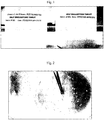
- Figure 1 shows what obtained by dissolving a self-emulsifying tablet, prepared by direct compression of the powder object of the invention containing the tracer copper chlorophyll, an extract of Boswellia Serrata titrated at 75% in boswellic acids and at 10% in alpha-keto-boswellic acid (AKBA).
- Figure 3 shows the liquid suspension obtained by adding dropwise the self-emulsifying, gastro resistant hot fat matrix, to the cold, gelled liquid after homogenizing by means of a turboemulsifier-homogenizer the dispersed phase.
- Figure 4 shows the liquid formulation exemplified in Example 4.
- Figure 5 shows, instead, the formation of the emulsion of the liquid suspension when it encounters the enteric liquid SIF heated at 37°C.
- lipophilic active principle means a molecule with specific biological properties, characterized by a poor solubility in aqueous medium and by a low enteric bioavailability in vivo.
- Active gastro-irritating principle means a molecule whose biological properties are responsible for a specific therapeutic effect as well as for an unwanted irritation of the gastric mucosa, because of a systemic or local effect, such as e.g. some inorganic ferrous salts and in particular ferrous sulphate.
- Unpleasantly tasting active principle means a molecule with specific biological properties, tasting unpleasantly or in any case tasting so that it is difficult to take it as it is.
- self-emulsifying gastro resistant fat matrix means a mixture mainly consisting of lipophilic molecules comprising components with surfactant properties, spontaneously emulsifying in an enteric aqueous medium (pH>7) at a temperature higher than 36°C and selectively disaggregating at enteric level, passing unchanged through the stomach.
- the self-emulsifying gastro resistant fat matrix (A) preferably comprises from 0.1 to 30% by weight of mono and diglycerides of fatty acids C12-C20, from 0.1 to 30% by weight of ascorbic acid ester with a fatty acid C12-C20 on the total weight of the formulation.
- the ascorbic acid ester with a fatty acid C12-C20 is preferably ascorbyl palmitate.
- the self-emulsifying gastro resistant fat matrix (A) contained in the formulation object of the present invention further contains a hydrophilic emulsifier with a high HLB (HLB: Hydrophilic-Lipophilic Balance) >9 and preferably in an amount comprised between 0.1 and 10% by weight based on the total weight of the formulation.
- HLB Hydrophilic-Lipophilic Balance
- Said hydrophilic emulsifier is preferably selected among a polyoxyethylene sorbitan ester with a fatty acid C12-C20, a sucrose ester with a fatty acid C12-C20 (sucroester) or mixtures of the two.
- the fatty acids C12-C20 contained in the formulation of the present invention when in the form of ascorbic acid esters, sucrose esters or mono and diglycerides, are preferably selected among saturated fatty acids C12-C20.
- the fatty acids C12-C20 contained in the formulation of the present invention when in the form of polyoxyethylene sorbitan esters, may be selected among saturated or unsaturated fatty acids C12-C20.
- the preferred polyoxyethylene sorbitan esters with a fatty acid C12-C20 according to the purposes of the present invention are polysorbate 20 and polysorbate 80.
- the self-emulsifying gastro resistant fat matrix (A) contained in the formulation object of the present invention has peculiar self-emulsifying characteristics, which allow it to convey poorly soluble molecules through the formation of hydrophilic micelles in an enteric aqueous environment at pH > 7.
- the peculiar self-emulsifying characteristics are related to the presence of the ascorbic acid ester with a fatty acid C12-C20, whose amphoteric characteristics allow an easy solubilisation of the molecule in the self-emulsifying gastro resistant fat matrix (A) while applying a surfactant power responsible for the emulsification of insoluble active principles once in contact with the enteral alkaline aqueous secretions by sodium bicarbonate.
- the ascorbic acid ester with a fatty acid C12-C20 forms hydrophilic mixed micelles having fat-emulsifying properties in an aqueous environment, especially when the pH is higher than 7 (duodenal environment), thus promoting the hydro-dispersion of the active principles encapsulated in the micelles and their contextual better absorption in the intestinal epithelium.
- hydrophilic emulsifier when present, synergistically works with the ascorbic acid ester with a fatty acid C12-C20, the glycerides of fatty acids and the bile salts present at enteric level, thus contributing to the micellization of the active principles and increasing their permeability in the intestinal wall.
- the same mechanism that promotes self-emulsification therefore has the further function of allowing the selective release of the active principle at intestinal level, where the formulation is dispersed in micellar form and releases the conveyed active principle.
- the formulation object of the present invention shows characteristics of gastro-resistance and improved bioavailability of lipophilic active principles through an effective emulsification triggered by the same excipients in an alkaline environment.
- the formulation object of the invention is refractory to the contact with the hydrochloric acid of gastric juices, thereby reaching unchanged the intestinal cavern.
- the formulation object of the present invention is preferably in solid form or in the form of a liquid suspension.
- formulation in solid form means a compressible powder or a powder for filling hard capsules.
- Compressible powder means a solid formulation, such as a powder, which can generate compact materials having a suitable hardness, preferably not less than 9 kg, even more preferably comprised between 14 and 18 kg.
- powder for filling capsules means a powder with such flowability characteristics and chemical-physical parameters to be correctly processed in the machinery for filling capsules.
- the formulation object of the present invention comprises the self-emulsifying gastro resistant fat matrix (A) and a solid phase (B) comprising polyols and/or sugars.
- the solid phase (B) includes polyols and/or sugars in an amount preferably ranging from 10 to 65% by weight based on the total weight of the formulation.
- the polyols and/or sugars contained in said solid phase (B) are preferably selected among at least one of the following: mannitol, xylitol, sorbitol, inositol, isomalt, sucrose, fructose and dextrose.
- the formulation object of the present invention enables the preparation of solid pharmaceutical forms, such as tablets, provided with a good hardness, preferably comprised between 12 and 15 kg (Durometer).
- said solid phase (B) further contains an ascorbic acid ester with a fatty acid C12-C20, preferably in an amount ranging from 0.1% to 30% by weight based on the total weight of the formulation.
- the addition of an ascorbic acid ester with a fatty acid C12-C20 to the solid phase (B) advantageously improves the uniformity of the hardness of the tablets over time.
- the formulation object of the present invention when in solid form, is preferably used for the preparation of pharmaceutical forms for the oral use of a conventional type, such as for example tablets and capsules, wherein the formulation of interest is associated with suitable excipients and diluents.
- the solid pharmaceutical forms obtained with the solid formulation described herein are prepared with the aid of excipients commonly used for oral solid forms, such as amorphous silica, calcium phosphate, magnesium stearate.
- the formulation object of the present invention comprises the self-emulsifying gastro resistant fat matrix (A) suspended in a liquid phase (B') comprising water and a gelling hydrophilic polymer.
- said liquid phase (B') comprises from 70% to 99% by weight of water and from 0.05% to 2% by weight of a gelling hydrophilic polymer, and optionally glycerol.
- glycerol When said glycerol is present, it is preferably contained in an amount ranging from 1% to 10% by weight based on the total weight of the formulation.
- the liquid suspension Before being dispersed in the aqueous phase (B'), especially when the active principle has a particularly unpleasant taste, the liquid suspension is sometimes a suspension of a powder containing the fat matrix (A) as well as the same polyols and/or sugars used for the preparation of the solid formulation (i).
- the content of polyol and/or sugar in the aqueous dispersion ranges from 5% to 20% of the total weight of the liquid formulation.
- the gelling hydrophilic polymer is, for example, selected among xanthan gum, sodium hyaluronate, guar gum, cellulose derivatives etc.
- the self-emulsifying and gastro resistant technology of the formulation object of the present invention allows conveying unpleasantly tasting active principles by effectively covering their taste, thus increasing the patient compliance.
- the form of liquid suspension of the formulation object of the present invention guarantees an excellent organoleptic coverage of unpleasantly tasting active principles, while maintaining the gastro resistant and enteric self-emulsifying characteristics.
- the active principles deliverable according to the formulation object of the present invention are lipophilic molecules whose poor solubility in water and, consequently, difficult absorption, have the final effect of a low bioavailability and minimum therapeutic activity.
- gastro-irritating substances including, in particular, ferrous salts, with a particular reference to ferrous sulphate heptahydrate and liposoluble vegetable fractions with gastro-irritating action (essential oils, terpenes and others).
- the formulation object of the present patent application contains active principles selected from the group consisting of: plant sterols; Boswellia Serrata D.E. (dry extract); Omega-3 fatty acids; ferrous sulphate and other ferrous salts; Turmeric D.E. (turmeric dry extract); resveratrol; liposoluble vitamins (vitamin D3, vitamin K and its vitamers, vitamin A and E); palmitoyl ethanolamide; gastro-irritating and scarcely bio-available nutraceutical or pharmaceutical substances.
- active principles selected from the group consisting of: plant sterols; Boswellia Serrata D.E. (dry extract); Omega-3 fatty acids; ferrous sulphate and other ferrous salts; Turmeric D.E. (turmeric dry extract); resveratrol; liposoluble vitamins (vitamin D3, vitamin K and its vitamers, vitamin A and E); palmitoyl ethanolamide; gastro-irritating and scarcely bio-available nutraceutical or pharmaceutical substances.
- vitamers mean all those chemical compounds that, although structurally different, have a biological activity attributable to the same parent vitamin.
- nutraceutical refers to a "food-drug", i.e. a food that associates nutritional components selected for their characteristics, such as high digestibility and hypoallergenicity, to the curing properties of natural active principles.
- the formulation according to the present invention comprises Serenoa Repens titrated in total sterols, preferably in the form of dried extracts or oils.
- the formulation object of the present invention comprises as active principle Boswellia Serrata D.E. titrated in boswellic acids.
- the formulation object of the present invention is preferably used in the preparation of food supplements, foods for special medical purposes, functional foods, medical devices, medicinal products.
- food supplements indicate specific products favouring the taking of certain active principles when the body needs them or in case of a wrong diet.
- foods for special medical purposes mean food intended for patients who have nutritional needs that cannot be satisfied by normal food because of a disease, a disorder or a particular medical condition.
- a food is functional if it satisfactorily demonstrates to have positive effects beyond normal nutritional effects on one or more specific functions of the organism that make it relevant for improving the health and the well-being and/or for reducing any risk of disease.
- Medical device means any instrument, apparatus and substance, used alone or in combination, for diagnostic and/or therapeutic purposes.
- Medicinal products mean industrially produced pharmaceutical forms containing at least a pharmaceutical active principle for the treatment and/or the prevention of a disease in animals and, even more preferably, in humans.
- the formulation object of the present invention is obtained with a process that is characterized by the fact that the active principle is dissolved in the melted fat coating matrix without requiring the addition of solvents as it occurs with the formulations disclosed in the aforesaid prior art.
- the active principle is evenly dispersed in a fat matrix with surfactant and gastro resistant characteristics conferred by the glycerides, by the ascorbic acid ester with a fatty acid C12-C20 and by a possible further hydrophilic surfactant agent.
- the molten mass is subsequently cooled under distinct operating conditions depending on whether you want to obtain the solid formulation (i) or the liquid formulation (ii).
- a further object of the present are the different methods that allow obtaining both the solid (i) and the liquid (ii) formulations.
- the preparation method of the formulation according to the present invention in solid form (i) comprises the following steps:
- the hot molten fat mixture (70°C ⁇ T ⁇ 85°C), when joined to the cold solid phase (5°C ⁇ T ⁇ 10°C) comprising polyols and/or sugars, is instantaneously solidified through intimate adsorption on said cold solid phase to produce an even, gastro resistant, self-emulsifying powder in an enteric and compressible alkaline environment.
- the formulation object of the invention can be used for obtaining the pharmaceutical form of interest through compression or encapsulation.
- compression or encapsulation methods usable for manufacturing solid pharmaceutical forms comprising the formulation of the present invention are the classical ones, known to those skilled in the art and disclosed in the inherent technical literature ( Remington: The Science and Practice of Pharmacy, 21st edition, Lippincott Williams & Wilkins ).
- the preparation method of the formulation in solid form contgemplates that an aliquot of the ascorbic acid ester with a fatty acid C12-C20, preferably ascorbyl palmitate, is mixed with polyols and sugars in step d) to form the solid phase of the formulation of interest before that the molten fat mass from step c) is poured on said solid phase previously cooled in step e).
- a further object of the present patent application is a preparation method of the formulation according to the present invention in the form of a drinkable liquid suspension, comprising the following steps:
- the size of the lipid droplets is reduced by means of a turboemulsifier-homogenizer which makes the suspension even and free of coarse particulate ( Fig. 2 ).
- the process for the preparation of the liquid formulation (ii) comprises the following steps:
- the aqueous liquid phase of the liquid formulations (ii) according to the present invention is supplemented with a hydrophilic flavouring agent.
- the fat phase can be usefully supplemented with a lipophilic aroma for better fixing the final taste of the liquid.
- the preparation method of the formulation in the solid form (i) or in the liquid form (ii) of aqueous suspension provides that the monoglycerides and diglycerides of fatty acids C12-C20 and the ascorbic acid ester with a fatty acid C12-C20 are melted together in step (a) with a polyoxyethylene sorbitan ester with a fatty acid C 12-C20 or a sucrose ester with a fatty acid C 12-C20 or a mixture of the two.
- the melting occurs more quickly and at a lower temperature.
- Table 1 lists the concentrations by weight/weight of the components forming a powder consisting of the formulation object of the present invention in solid form.
- Table 1 Phase Component Concentration weight/total weight composition Fat matrix Mono and diglycerides of fatty acids 18.00 % Ascorbyl palmitate 0.10 % Boswellia Resin 75% boswellic acids 22.25 % Vitamin D3 0.05 % Solid phase Ascorbyl palmitate 23.00 % Mannitol 17.00 % Magnesium stearate 4.00 % Amorphous silica 3.00 % Dibasic calcium phosphate dihydrate 12.60 %
- the pharmaceutical powder is obtained by the process described hereinafter.
- Table 2 shows an example of the preparation of a pharmaceutical powder consisting of the formulation object of the present invention in solid form.
- Table 2 Phase Component Concentration weight/total weight composition Fat matrix Mono and diglycerides of fatty acids 16.00 % Ascorbyl palmitate 8.00 % Polysorbate 80 3,00 % Vitamin E 5.52 % Vitamin A 0.23 % Vitamin K1 0.01 % Vitamin D3 0,10 % Solid phase Mannitol 57,14 % Magnesium Stearate 4,00 % Amorphous silica 6,00 %
- Example 2 The pharmaceutical powder relating to Example 2 is obtained by the process described hereinafter.
- Table 3 shows an example of embodiment of the formulation in the form of a gastro resistant and self-emulsifying drinkable liquid obiect of the present invention.
- Table 3 Phase Component Concentration weight/total weight composition Fat matrix Mono and diglycerides of fatty acids 1.50 % Ascorbyl palmitate 1.20 % Caprylic and capric triglyceride 4.00 % Sucrester 060 % 99% Resveratrol from Poligonum Cuspidatum 0.30 % Black pepper fruit 95 % piperine 0.01 % Cream favour 0.20 % Liquid Phase Purified water 86.42 % Xanthan gum 0.27 % Glycerine 4.50 % Potassium sorbate 0.19 % Grapefruit seed 50% Bioflavonoids 0.60 % Sucralose 0.024 % Acesulfame-K 0.028 % Cream Caramel flavour 0.15 %
- the liquid suspension is obtained by the process described hereinafter.
- the tablets prepared as described in the Example 1 and the liquid formulation of the Example 4 are prepared by adding to the coating fat matrix the lipophilic tracer copper chlorophyll, capable of diffusing and colouring the surrounding aqueous system only in case of efficient emulsification.
- the carrier powder copper chlorophyll is prepared according to the preparation method object of the present invention, according to the aforesaid steps I-VIII where the tracer, insoluble in water, is added as if it were the active principle.
- the thus obtained powder was used to prepare the chlorophyll-based tablets, which were immersed in a solution at pH 1.5 for hydrochloric acid.
- the solution was kept under magnetic stirring at a thermostatically controlled temperature of 37°C for 2 hours, in order to simulate the gastric environment.
- part of the liquid was poured in an alkaline solution at pH 8.0 for sodium bicarbonate, together with some tablets. The remaining tablets were left in the acid solution, by means of comparison.
- the alkaline liquid is supplemented with 5% of glycocholic acid, a bile salt released at enteric level and present in the form of sodium salt for the emulsification of fats.
- the solution is kept under moderate magnetic stirring for 30 minutes, at a temperature of 37°C.
- the solutions are visually inspected.
- the acid solution is clear, showing no sign of the tracer in the liquid.
- the tablets have also kept their shape, only showing a minimal surface dusting, probably produced by the collision of the magnetic stir bar with the tablet, but no breakdown or dissolution phenomena.
- the solution on the right, the one simulating the alkaline environment of the first enteric tract, is coloured green, indicating the breakdown of the tablet and the completed emulsification of the lipophilic tracer.
- Example 4 Analogously, also the stable liquid suspension of Example 4 turns into a coloured emulsion when contacted by the simulated enteric liquid (SIF) at 37°C.
- SIF simulated enteric liquid
- the suspended powders in the liquid formulation of the Example 4 retain inside them the active principle, but only in a liquid containing bile salts and having a pH higher than 7.5, which is the pH at which ascorbyl palmitate starts ionising, the suspension becomes emulsion and makes available the active principle for the absorption only at the intestinal level.
- the emulsification of said powder also occurs in response to the enteral lipases that cleave the glycerides, thus increasing the surfactant power of the powder.
Landscapes
- Health & Medical Sciences (AREA)
- Life Sciences & Earth Sciences (AREA)
- Natural Medicines & Medicinal Plants (AREA)
- Chemical & Material Sciences (AREA)
- Veterinary Medicine (AREA)
- Epidemiology (AREA)
- Pharmacology & Pharmacy (AREA)
- Animal Behavior & Ethology (AREA)
- General Health & Medical Sciences (AREA)
- Public Health (AREA)
- Medicinal Chemistry (AREA)
- Engineering & Computer Science (AREA)
- Dispersion Chemistry (AREA)
- Bioinformatics & Cheminformatics (AREA)
- Alternative & Traditional Medicine (AREA)
- Biotechnology (AREA)
- Botany (AREA)
- Medical Informatics (AREA)
- Microbiology (AREA)
- Mycology (AREA)
- Medicinal Preparation (AREA)
- Acyclic And Carbocyclic Compounds In Medicinal Compositions (AREA)
- Pharmaceuticals Containing Other Organic And Inorganic Compounds (AREA)
Description
- The present invention relates to an oral pharmaceutical formulation for the delivery of lipophilic, gastro-damaging and/or unpleasantly tasting active principles and related preparation method.
- Omega-3 fatty acids (Omega-3) are essential fatty acids, structurally constituted by a long-chain carboxylic acid characterized by several unsaturations. These components are called essential because they are crucial for the health of the organism, performing relevant functions for the cell membrane, as precursors of cardiovascular chemical mediators, in blood fluidisation and as an important energy reserve. Despite the importance of the above components, human organism is not able to synthesize them autonomously and must take them from the outside, through a balanced diet or by taking supplements/integrators.
- Several nutraceutical products based on Omega-3 are presently available on the market, but they are mostly characterized by a single formulation, namely the soft capsule.
- For their chemical structure, polyunsaturated fatty acids are liquid at room temperature and hardly deliverable in a solid pharmaceutical form like hard tablets or capsules. The use of soft capsules is the most obvious choice in the delivery of these active principles, but its several technological drawbacks can negatively affect the formulation. In fact, polyunsaturated fatty acids are known to be susceptible to oxidation, which is a process responsible for the rancidity of the active principle as well as for the reduction of the biological activity of the components. Moreover, if compared with a coated tablet or a hard capsule, soft capsules do not completely hinder the passage of oxygen through the formulation, thus causing an alteration of the taste and of the smell of the product over time.
- Furthermore, soft capsules have a limited masking power, therefore hardly covering the unpleasant taste intrinsically related to some of the active principles (fish oils). Beside Omega-3, another product class that has been a great success in the nutraceutical industry is the one of phytotherapeutic remedies, active principles of vegetable origin that are used for the prevention or the treatment of various disorders of human organism, alternatively or in combination with "traditional" pharmacological therapies.
- Many of these molecules, precisely because of their vegetable origin, have a considerable structural complexity, hardly reproducible in the laboratory and equally difficult to deliver with the presently available formulation tools. One of the most common problems is the poor solubility in water of the aforesaid active principles, since they are characterized by a high molecular weight and/or by a certain level of lipophilicity when they are not already present in nature in the form of oils (Serenoa Repens, vitamin A, E, D, K) or lipophilic terpenes such as boswellic acids and others.
- In all these cases, the high lipophilicity complicates the delivery in the classical forms of tablets and capsules as well as in aqueous liquids and, moreover, makes difficult and incomplete the intestinal assimilation occurring after the dissolution or the emulsification of the active principle in the aqueous enteral secretions.
- Besides having a difficult delivery due to their poor solubility in water, substances of fatty/lipophilic nature even hinder the production of solid pharmaceutical forms that should contain them, especially when they must be delivered in large amounts.
- Said fatty/lipophilic substances tend to grease the surface of the production machinery, such as e.g. the punches of the compressing machines, making it difficult to check the uniformity and dosage of the final pharmaceutical form, which must adhere to demanding quality standards, and furthermore do not let the tablets reach the minimum hardness that guarantees their integrity within the blister packs. Selecting a formulation therefore becomes highly relevant, both from a productive-technological point of view and from a pharmacological point of view, since the lack of dissolution of the active principle may be the cause of the ineffectiveness of the product.
- The high tolerability of natural active principles does not exclude the presence of undesired effects, especially in the gastro-intestinal tract, where nausea, abdominal pain and gastric intolerance can be particularly frequent.
- Therefore, the delivery strategy has a key role not only in ensuring the curing power of the integrator/supplement, but also in limiting those side effects that can reduce the patient compliance, such as in particular gastro-irritation, sense of nausea and sickness.
- Moreover, self-emulsifying fat matrix formulations for oral formulations of liposoluble active principles are known from the state of the art, such as those described in
WO12/033478 - Besides containing a monoglyceride of a fatty acid and ascorbyl palmitate, these fat matrices contain another component that seems to be the only responsible for the self-emulsifying properties, namely a triglyceride of a fatty acid such as Cremophor RH40.
- Moreover, the presence of a solvent whose purpose is dissolving the active principle is essential in the preparatory phase.
- In any case, the final formulations inserted in hard capsules are never in the form of a powder, but look like a liquid or semi-solid material.
- Also the formulations disclosed in
US7025992 are very similar to those described in the previous prior art documents. - In fact, also this patent discloses a self-emulsifying fat matrix comprising ascorbyl palmitate and a monoglyceride of a fatty acid, namely the mono glyceryl stearate in which a lipophilic active principle is dispersed.
- However, the solid oral formulation is prepared with a known technique encompassing the indispensable presence of an organic solvent (ethanol), which disperses and/or dissolves the active principle, mono glyceryl stearate and ascorbyl palmitate. The thus obtained solution/dispersion is sprayed on the solid powder, or lactose, and the obtained mixture is subsequently compressed.
- This type of tablets is in any case suitable for the mucosal, but not systemic, oral administration.
-
US7025992 also contemplates formulations in the form of soft capsules that, once chewed, turn into non-aqueous liquid solutions. Moreover, this type of formulation allows the absorption of the active principle in any gastrointestinal tract. - Also
WO2015/193380 describes oral formulations in the form of tablets or capsules containing self-emulsifying mixtures comprising ascorbyl palmitate and monoglycerides. - The tablets are prepared by adsorbing on already formed tablets, consisting only of conventional excipients, a self-emulsifying liquid matrix containing the active principle, while the capsules contain only the oily liquid phase that is inserted in the hard capsules.
- The Applicant has now surprisingly found that a high amount of lipophilic molecules, even in the form of oils, having gastro-irritant properties or an unpleasant taste or both, can be conveyed in a formulation comprising a self-emulsifying and gastro resistant fat matrix, which can obviate the problems of bioavailability, gastric damage and poor patient compliance known in the state of the art.
- Moreover, due to the particular self-emulsifying fat matrix, these formulations are easily deliverable with suitable excipients, thus forming powders that are compressible or are suitable to be inserted in hard capsules or in aqueous suspensions.
- The object of the present invention is therefore an oral formulation selected between:
- (i) a solid form, as a compressible or a flowable powder that can be inserted in hard capsules, or
- (ii) a liquid form, as an aqueous suspension
- mono and diglycerides of fatty acids C12-C20,
- an ascorbic acid ester with a fatty acid C12-C20,
- The formulation object of the present invention has good organoleptic characteristics of gastro-resistance and enteric emulsification.
- A further object of the present invention are methods for the preparation of the formulation in the compressible solid form or as a powder to be inserted in hard capsules and in the liquid form of a suspension.
-
Figure 1 shows what obtained by dissolving a self-emulsifying tablet, prepared by direct compression of the powder object of the invention containing the tracer copper chlorophyll, an extract of Boswellia Serrata titrated at 75% in boswellic acids and at 10% in alpha-keto-boswellic acid (AKBA). - The solution on the left shows the result of the immersion of self-emulsifying tablets in a liquid simulating the acidic environment of the stomach (pH=1.5) for hydrochloric acid. The solution on the right shows instead what obtained from the hydro-dispersion of the same self-emulsifying tablets, directly taken from the beaker containing the solution of hydrochloric acid at pH=1.5, in a liquid simulating the enteric environment (pH=8.0) for sodium bicarbonate and in the presence of 5% w/v sodium glycocholate. A complete breakdown and hydro-dispersion of the solution occurs in 30 minutes.
-
Figure 2 shows the liquid suspension obtained by adding dropwise the self-emulsifying, gastro resistant hot fat matrix (t=75°C) containing 99% resveratrol from Polygonum Cuspidatum root and black pepper fruit titrated at 95% in pipeline, to the cold gelled aqueous liquid (T=10°C). The image clearly shows the sudden coarse solidification of the dispersed lipophilic phase in contact with the cold aqueous matrix. -
Figure 3 shows the liquid suspension obtained by adding dropwise the self-emulsifying, gastro resistant hot fat matrix, to the cold, gelled liquid after homogenizing by means of a turboemulsifier-homogenizer the dispersed phase. -
Figure 4 shows the liquid formulation exemplified in Example 4. -
Figure 5 shows, instead, the formation of the emulsion of the liquid suspension when it encounters the enteric liquid SIF heated at 37°C. - For the purposes of the present invention, the term lipophilic active principle means a molecule with specific biological properties, characterized by a poor solubility in aqueous medium and by a low enteric bioavailability in vivo.
- Active gastro-irritating principle means a molecule whose biological properties are responsible for a specific therapeutic effect as well as for an unwanted irritation of the gastric mucosa, because of a systemic or local effect, such as e.g. some inorganic ferrous salts and in particular ferrous sulphate.
- Unpleasantly tasting active principle means a molecule with specific biological properties, tasting unpleasantly or in any case tasting so that it is difficult to take it as it is.
- For the purposes of the present invention, self-emulsifying gastro resistant fat matrix means a mixture mainly consisting of lipophilic molecules comprising components with surfactant properties, spontaneously emulsifying in an enteric aqueous medium (pH>7) at a temperature higher than 36°C and selectively disaggregating at enteric level, passing unchanged through the stomach.
- The self-emulsifying gastro resistant fat matrix (A) preferably comprises from 0.1 to 30% by weight of mono and diglycerides of fatty acids C12-C20, from 0.1 to 30% by weight of ascorbic acid ester with a fatty acid C12-C20 on the total weight of the formulation.
- For the purposes of the present invention, the ascorbic acid ester with a fatty acid C12-C20 is preferably ascorbyl palmitate.
- In an alternative embodiment, the self-emulsifying gastro resistant fat matrix (A) contained in the formulation object of the present invention further contains a hydrophilic emulsifier with a high HLB (HLB: Hydrophilic-Lipophilic Balance) >9 and preferably in an amount comprised between 0.1 and 10% by weight based on the total weight of the formulation.
- Said hydrophilic emulsifier is preferably selected among a polyoxyethylene sorbitan ester with a fatty acid C12-C20, a sucrose ester with a fatty acid C12-C20 (sucroester) or mixtures of the two.
- The fatty acids C12-C20 contained in the formulation of the present invention, when in the form of ascorbic acid esters, sucrose esters or mono and diglycerides, are preferably selected among saturated fatty acids C12-C20.
- The fatty acids C12-C20 contained in the formulation of the present invention, when in the form of polyoxyethylene sorbitan esters, may be selected among saturated or unsaturated fatty acids C12-C20.
- The preferred polyoxyethylene sorbitan esters with a fatty acid C12-C20 according to the purposes of the present invention are polysorbate 20 and polysorbate 80.
- The self-emulsifying gastro resistant fat matrix (A) contained in the formulation object of the present invention has peculiar self-emulsifying characteristics, which allow it to convey poorly soluble molecules through the formation of hydrophilic micelles in an enteric aqueous environment at pH > 7.
- The peculiar self-emulsifying characteristics are related to the presence of the ascorbic acid ester with a fatty acid C12-C20, whose amphoteric characteristics allow an easy solubilisation of the molecule in the self-emulsifying gastro resistant fat matrix (A) while applying a surfactant power responsible for the emulsification of insoluble active principles once in contact with the enteral alkaline aqueous secretions by sodium bicarbonate.
- In an alkaline aqueous environment (pH = 8.0 - 8.5) by sodium bicarbonate secreted in pancreatic juice, the ascorbic acid ester with a fatty acid C12-C20 becomes hydrosoluble after ionisation of the acid enediol function and produces foam, with the consequent transformation into an ionic surfactant.
- Together with mono and diglycerides C12-C20, and possibly together with a hydrophilic emulsifier when present, the ascorbic acid ester with a fatty acid C12-C20 forms hydrophilic mixed micelles having fat-emulsifying properties in an aqueous environment, especially when the pH is higher than 7 (duodenal environment), thus promoting the hydro-dispersion of the active principles encapsulated in the micelles and their contextual better absorption in the intestinal epithelium.
- The hydrophilic emulsifier, when present, synergistically works with the ascorbic acid ester with a fatty acid C12-C20, the glycerides of fatty acids and the bile salts present at enteric level, thus contributing to the micellization of the active principles and increasing their permeability in the intestinal wall.
- The same mechanism that promotes self-emulsification therefore has the further function of allowing the selective release of the active principle at intestinal level, where the formulation is dispersed in micellar form and releases the conveyed active principle.
- The formulation object of the present invention shows characteristics of gastro-resistance and improved bioavailability of lipophilic active principles through an effective emulsification triggered by the same excipients in an alkaline environment. The formulation object of the invention is refractory to the contact with the hydrochloric acid of gastric juices, thereby reaching unchanged the intestinal cavern. The formulation object of the present invention is preferably in solid form or in the form of a liquid suspension.
- For the purposes of the present invention, formulation in solid form means a compressible powder or a powder for filling hard capsules.
- Compressible powder means a solid formulation, such as a powder, which can generate compact materials having a suitable hardness, preferably not less than 9 kg, even more preferably comprised between 14 and 18 kg.
- For the purposes of the present invention, powder for filling capsules means a powder with such flowability characteristics and chemical-physical parameters to be correctly processed in the machinery for filling capsules.
- When in solid form, the formulation object of the present invention comprises the self-emulsifying gastro resistant fat matrix (A) and a solid phase (B) comprising polyols and/or sugars.
- The solid phase (B) includes polyols and/or sugars in an amount preferably ranging from 10 to 65% by weight based on the total weight of the formulation.
- The polyols and/or sugars contained in said solid phase (B) are preferably selected among at least one of the following: mannitol, xylitol, sorbitol, inositol, isomalt, sucrose, fructose and dextrose.
- Advantageously, the formulation object of the present invention enables the preparation of solid pharmaceutical forms, such as tablets, provided with a good hardness, preferably comprised between 12 and 15 kg (Durometer).
- This technological requirement is hardly obtainable from formulations containing a high fat dosage (up to 25-30% w/w) and in particular from compositions containing liquid or semisolid active principles such as polyunsaturated fatty acids and plant sterols.
- In a particularly preferred embodiment, said solid phase (B) further contains an ascorbic acid ester with a fatty acid C12-C20, preferably in an amount ranging from 0.1% to 30% by weight based on the total weight of the formulation.
- The addition of an ascorbic acid ester with a fatty acid C12-C20 to the solid phase (B) advantageously improves the uniformity of the hardness of the tablets over time. The formulation object of the present invention, when in solid form, is preferably used for the preparation of pharmaceutical forms for the oral use of a conventional type, such as for example tablets and capsules, wherein the formulation of interest is associated with suitable excipients and diluents.
- According to a particularly preferred embodiment, the solid pharmaceutical forms obtained with the solid formulation described herein are prepared with the aid of excipients commonly used for oral solid forms, such as amorphous silica, calcium phosphate, magnesium stearate.
- When in the form of a drinkable liquid aqueous suspension (ii), the formulation object of the present invention comprises the self-emulsifying gastro resistant fat matrix (A) suspended in a liquid phase (B') comprising water and a gelling hydrophilic polymer.
- Preferably, said liquid phase (B') comprises from 70% to 99% by weight of water and from 0.05% to 2% by weight of a gelling hydrophilic polymer, and optionally glycerol.
- When said glycerol is present, it is preferably contained in an amount ranging from 1% to 10% by weight based on the total weight of the formulation.
- Before being dispersed in the aqueous phase (B'), especially when the active principle has a particularly unpleasant taste, the liquid suspension is sometimes a suspension of a powder containing the fat matrix (A) as well as the same polyols and/or sugars used for the preparation of the solid formulation (i).
- In this case, the content of polyol and/or sugar in the aqueous dispersion ranges from 5% to 20% of the total weight of the liquid formulation.
- Preferably, the gelling hydrophilic polymer is, for example, selected among xanthan gum, sodium hyaluronate, guar gum, cellulose derivatives etc.
- Advantageously, the self-emulsifying and gastro resistant technology of the formulation object of the present invention allows conveying unpleasantly tasting active principles by effectively covering their taste, thus increasing the patient compliance.
- The form of liquid suspension of the formulation object of the present invention guarantees an excellent organoleptic coverage of unpleasantly tasting active principles, while maintaining the gastro resistant and enteric self-emulsifying characteristics.
- Due to these self-emulsifying properties, the active principles deliverable according to the formulation object of the present invention are lipophilic molecules whose poor solubility in water and, consequently, difficult absorption, have the final effect of a low bioavailability and minimum therapeutic activity.
- Another category of substances which are particularly suited to the delivery by means of the above technology are gastro-irritating substances including, in particular, ferrous salts, with a particular reference to ferrous sulphate heptahydrate and liposoluble vegetable fractions with gastro-irritating action (essential oils, terpenes and others).
- In parallel, the gastro resistant properties of the formulation in question lead to considerable technological advantages, since the possibility of protecting the stomach from the damaging action of gastro-irritating active principles improves the risk/benefit ratio of the pharmaceutical product, as well as the patient compliance.
- In the preferred embodiment, the formulation object of the present patent application contains active principles selected from the group consisting of: plant sterols; Boswellia Serrata D.E. (dry extract); Omega-3 fatty acids; ferrous sulphate and other ferrous salts; Turmeric D.E. (turmeric dry extract); resveratrol; liposoluble vitamins (vitamin D3, vitamin K and its vitamers, vitamin A and E); palmitoyl ethanolamide; gastro-irritating and scarcely bio-available nutraceutical or pharmaceutical substances.
- For the purposes of the present invention, vitamers mean all those chemical compounds that, although structurally different, have a biological activity attributable to the same parent vitamin.
- For the purposes of the present invention, nutraceutical refers to a "food-drug", i.e. a food that associates nutritional components selected for their characteristics, such as high digestibility and hypoallergenicity, to the curing properties of natural active principles.
- In a preferred embodiment, the formulation according to the present invention comprises Serenoa Repens titrated in total sterols, preferably in the form of dried extracts or oils.
- In the preferred embodiment, the formulation object of the present invention comprises as active principle Boswellia Serrata D.E. titrated in boswellic acids.
- The formulation object of the present invention is preferably used in the preparation of food supplements, foods for special medical purposes, functional foods, medical devices, medicinal products.
- For the purposes of the present invention, food supplements indicate specific products favouring the taking of certain active principles when the body needs them or in case of a wrong diet.
- For the purposes of the present invention, foods for special medical purposes mean food intended for patients who have nutritional needs that cannot be satisfied by normal food because of a disease, a disorder or a particular medical condition.
- For the purposes of the present invention, a food is functional if it satisfactorily demonstrates to have positive effects beyond normal nutritional effects on one or more specific functions of the organism that make it relevant for improving the health and the well-being and/or for reducing any risk of disease.
- Medical device means any instrument, apparatus and substance, used alone or in combination, for diagnostic and/or therapeutic purposes.
- Medicinal products mean industrially produced pharmaceutical forms containing at least a pharmaceutical active principle for the treatment and/or the prevention of a disease in animals and, even more preferably, in humans.
- The formulation object of the present invention is obtained with a process that is characterized by the fact that the active principle is dissolved in the melted fat coating matrix without requiring the addition of solvents as it occurs with the formulations disclosed in the aforesaid prior art.
- In this way, the active principle is evenly dispersed in a fat matrix with surfactant and gastro resistant characteristics conferred by the glycerides, by the ascorbic acid ester with a fatty acid C12-C20 and by a possible further hydrophilic surfactant agent.
- The molten mass is subsequently cooled under distinct operating conditions depending on whether you want to obtain the solid formulation (i) or the liquid formulation (ii).
- A further object of the present are the different methods that allow obtaining both the solid (i) and the liquid (ii) formulations.
- The preparation method of the formulation according to the present invention in solid form (i) comprises the following steps:
- a) dry mixing mono and diglycerides of fatty acids C12-C20, an ascorbic acid ester with a fatty acid C12-C20 and the active principle if this latter is solid;
- b) hot melting the fat mixture referred to in step a) at a temperature comprised between 70°C and 85°C until obtaining a molten fat mass;
- c) adding an active principle to the molten fat mass from step b), if this latter is liquid at room temperature;
- d) providing a solid phase comprising polyols and/or sugars;
- e) cooling the solid phase of step c) at a temperature between 5°C and 10°C;
- f) joining the molten fat mass from step c) to the solid phase referred to in step e) until complete solidification of the molten mass and simultaneous formation of the powder.
- The hot molten fat mixture (70°C < T < 85°C), when joined to the cold solid phase (5°C < T < 10°C) comprising polyols and/or sugars, is instantaneously solidified through intimate adsorption on said cold solid phase to produce an even, gastro resistant, self-emulsifying powder in an enteric and compressible alkaline environment.
- At the same time, after solidification, it is formed an ordered crystal lattice in which the active principle is evenly dispersed.
- At this point, the formulation object of the invention can be used for obtaining the pharmaceutical form of interest through compression or encapsulation.
- The compression or encapsulation methods usable for manufacturing solid pharmaceutical forms comprising the formulation of the present invention are the classical ones, known to those skilled in the art and disclosed in the inherent technical literature ( Remington: The Science and Practice of Pharmacy, 21st edition, Lippincott Williams & Wilkins).
- In an alternative embodiment, the preparation method of the formulation in solid form contgemplates that an aliquot of the ascorbic acid ester with a fatty acid C12-C20, preferably ascorbyl palmitate, is mixed with polyols and sugars in step d) to form the solid phase of the formulation of interest before that the molten fat mass from step c) is poured on said solid phase previously cooled in step e).
- A further object of the present patent application is a preparation method of the formulation according to the present invention in the form of a drinkable liquid suspension, comprising the following steps:
- a. dry mixing mono and diglycerides of fatty acids, an ascorbic acid ester with a fatty acid C12-C20 and the active principle, if this latter is solid at room temperature;
- b. hot melting the fat mixture referred to in step a. at a temperature comprised between 70°C and 85°C until obtaining a molten fat mass;
- c. adding an active principle to the molten fat mass from step b. if this latter is liquid at room temperature;
- d. providing an aqueous liquid phase comprising a gelling hydrophilic polymer and optionally supplemented with glycerol from 1% to 10% by weight;
- e. cooling the aqueous liquid phase referred to in step d. at a temperature comprised between 5°C and 10°C;
- f. joining dropwise under stirring the molten fat mass from step c. to the aqueous liquid phase referred to in step e. until complete solidification by crystallization of the molten fat mass and simultaneous formation of the coarse suspension.
- Once having joined the whole molten fat mass to the cold aqueous phase and having verified the successful solidification of the molten fat mass, the size of the lipid droplets is reduced by means of a turboemulsifier-homogenizer which makes the suspension even and free of coarse particulate (
Fig. 2 ). - In case the formulation contains polyols and/or sugars, the process for the preparation of the liquid formulation (ii) comprises the following steps:
- a. dry mixing mono and diglycerides of fatty acids of an ascorbic acid ester with a fatty acid C12-C20 and the active principle if this latter is solid at room temperature;
- b. hot melting the fat mixture referred to in step a) at a temperature comprised between 70°C and 85°C until obtaining a molten fat mass;
- c. adding an active principle to the molten fat mass from step b if this latter is liquid at room temperature;
- d. joining the molten mass to the polyol and/or sugar cooled at a temperature comprised between 5°C and 10°C and obtaining a powder,
- e. dispersing the powder in an aqueous liquid phase comprising a gelling hydrophilic polymer and optionally supplemented with glycerol from 1% to 10% by weight.
- In a preferred embodiment, the aqueous liquid phase of the liquid formulations (ii) according to the present invention is supplemented with a hydrophilic flavouring agent.
- In the formulation in the suspension liquid phase, also the fat phase can be usefully supplemented with a lipophilic aroma for better fixing the final taste of the liquid.
- In an even more preferred mode, the preparation method of the formulation in the solid form (i) or in the liquid form (ii) of aqueous suspension provides that the monoglycerides and diglycerides of fatty acids C12-C20 and the ascorbic acid ester with a fatty acid C12-C20 are melted together in step (a) with a polyoxyethylene sorbitan ester with a fatty acid C 12-C20 or a sucrose ester with a fatty acid C 12-C20 or a mixture of the two.
- Unexpectedly, in this case the melting occurs more quickly and at a lower temperature.
- For purely illustrative and not limitative purposes, examples relating to the preparation of oral formulations of the present invention, both in the solid form (i) and in the liquid form (ii) of suspension are reported hereinafter.
- Table 1 lists the concentrations by weight/weight of the components forming a powder consisting of the formulation object of the present invention in solid form.
Table 1 Phase Component Concentration weight/total weight composition Fat matrix Mono and diglycerides of fatty acids 18.00 % Ascorbyl palmitate 0.10 % Boswellia Resin 75% boswellic acids 22.25 % Vitamin D3 0.05 % Solid phase Ascorbyl palmitate 23.00 % Mannitol 17.00 % Magnesium stearate 4.00 % Amorphous silica 3.00 % Dibasic calcium phosphate dihydrate 12.60 % - The pharmaceutical powder is obtained by the process described hereinafter.
- A. Dry mixing ascorbyl palmitate and mannitol.
- B. Cooling in a refrigerator the mixture obtained from A. up to a temperature of 10°C.
- C. Dry mixing mono and diglycerides of fatty acids, ascorbyl palmitate and Boswellia.
- D. Hot melting the mixture obtained from C. at a temperature between 70°C and 80°C.
- E. Stabilizing the temperature of the phase obtained in D. at 80°C and adding the vitamin D3.
- F. Immediately after, gradually adsorbing under stirring the fat liquid phase obtained in E. in the cold mixture obtained in B.
- G. Cooling the powder obtained in F. and sieving.
- H. Adding the magnesium stearate, the amorphous silica and the dibasic calcium phosphate dihydrate to the powder obtained in G.
- Table 2 shows an example of the preparation of a pharmaceutical powder consisting of the formulation object of the present invention in solid form.
Table 2 Phase Component Concentration weight/total weight composition Fat matrix Mono and diglycerides of fatty acids 16.00 % Ascorbyl palmitate 8.00 % Polysorbate 80 3,00 % Vitamin E 5.52 % Vitamin A 0.23 % Vitamin K1 0.01 % Vitamin D3 0,10 % Solid phase Mannitol 57,14 % Magnesium Stearate 4,00 % Amorphous silica 6,00 % - The pharmaceutical powder relating to Example 2 is obtained by the process described hereinafter.
- I. Cooling the mannitol in a refrigerator up to a temperature of 10°C.
- II. Mixing mono and diglycerides of fatty acids, ascorbyl palmitate and polysorbate 80.
- III. Hot melting the mixture obtained in II. at a temperature between 70°C and 80°C.
- IV. Mixing vitamin E, vitamin A, vitamin K1 and vitamin D3.
- V. Stabilizing the temperature of the mixture obtained in III. at 80°C and adding the mixture obtained in IV.
- VI. Immediately after, gradually adsorbing under stirring the fatty liquid phase obtained in V. in cold mannitol.
- VII. Cooling the powder obtained in VI. and sieving.
- VIII. Adding the magnesium stearate and the amorphous silica to the powder obtained in VII.
- Table 3 shows an example of embodiment of the formulation in the form of a gastro resistant and self-emulsifying drinkable liquid obiect of the present invention.
Table 3 Phase Component Concentration weight/total weight composition Fat matrix Mono and diglycerides of fatty acids 1.50 % Ascorbyl palmitate 1.20 % Caprylic and capric triglyceride 4.00 % Sucrester 060 % 99% Resveratrol from Poligonum Cuspidatum 0.30 % Black pepper fruit 95 % piperine 0.01 % Cream favour 0.20 % Liquid Phase Purified water 86.42 % Xanthan gum 0.27 % Glycerine 4.50 % Potassium sorbate 0.19 % Grapefruit seed 50% Bioflavonoids 0.60 % Sucralose 0.024 % Acesulfame-K 0.028 % Cream Caramel flavour 0.15 % - The liquid suspension is obtained by the process described hereinafter.
- 1. Dissolving under stirring the potassium sorbate in purified water.
- 2. Adding grapefruit dry extract to the solution obtained in 1.
- 3. Moistening xanthan gum with glycerine.
- 4. Pouring under stirring the mixture obtained in 3 in the solution obtained in 2.
- 5. Cooling the aqueous phase referred to in step 4 to a temperature ranging from 5°C to 10°C.
- 6. Dry mixing mono and diglycerides of fatty acids, ascorbyl palmitate, caprylic/capric triglyceride, sucrester and resveratrol.
- 7. Hot melting the mixture obtained in 6 at a temperature between 70°C and 80°C.
- 8. Immediately before joining the phases, adding black pepper to the mixture obtained in 7.
- 9. Immediately before joining the phases, adding the cream flavour to the aqueous phase from step 5.
- 10. Joining dropwise under stirring the molten fat mass obtained in 8 to the aqueous liquid phase referred to in step 9.
- 11. Reducing the size of the lipid droplets by means of a turboemulsifier-homogenizer.
- 12. Adding sucralose, acesulfame-K and cream caramel flavour to the suspension obtained in 11.
- It is prepared a liquid formulation containing the following components
Table 4 Phase Component Fat matrix Mono and diglycerides of fatty acids 0.300 g Ascorbyl palmitate 0.050 g Boswellia Resin 75% boswellic acids 0.250 g Vitamin D3 25 mcg (1000 IU) Solid phase Ascorbyl palmitate 0.075 g Mannitol 0.600 g Liquid Phase Purified water q.s. to 100 g Xanthan gum 0.250 g Glycerine 5.000 g Potassium sorbate 0.200 g - The formulation given above in Table 4 was prepared according to the following operating modes:
- A. Dry mixing ascorbyl palmitate and mannitol.
- B. Cooling in a refrigerator the mixture obtained in A. up to a temperature of 10°C.
- C. Dry mixing mono and diglycerides of fatty acids, ascorbyl palmitate and Boswellia.
- D. Hot melting the mixture obtained in C. at a temperature between 70°C and 80°C.
- E. Immediately after, gradually adsorbing under stirring the fat liquid phase obtained in E. in the cold mixture obtained in B, thus obtaining a powder.
- F. Dissolving potassium sorbate in water.
- G. Moistening xanthan gum with glycerine.
- H. Pouring under stirring the mixture from G. in the solution obtained in F, thus obtaining a gelled aqueous phase.
- I. Dispersing the powder from step E in the aqueous liquid phase from step H.
- It is evident the formation of a solid suspension stabilized by the gelling agent in the aqueous phase (xanthan gum or other polysaccharides) at 25°C as shown in
Figure 4 . - For illustrative purposes only, it was carried out a preliminary dissolution test of standard tablets obtained with the formulation object of the present patent application, in solid form (i), and in liquid form (ii), to demonstrate the self-emulsifying and gastro protective properties claimed in the above patent.
- The tablets prepared as described in the Example 1 and the liquid formulation of the Example 4 are prepared by adding to the coating fat matrix the lipophilic tracer copper chlorophyll, capable of diffusing and colouring the surrounding aqueous system only in case of efficient emulsification.
- The carrier powder copper chlorophyll is prepared according to the preparation method object of the present invention, according to the aforesaid steps I-VIII where the tracer, insoluble in water, is added as if it were the active principle.
- The thus obtained powder was used to prepare the chlorophyll-based tablets, which were immersed in a solution at pH 1.5 for hydrochloric acid.
- The solution was kept under magnetic stirring at a thermostatically controlled temperature of 37°C for 2 hours, in order to simulate the gastric environment.
- At the end of the two hours, part of the liquid was poured in an alkaline solution at pH 8.0 for sodium bicarbonate, together with some tablets. The remaining tablets were left in the acid solution, by means of comparison.
- In order to reproduce the environment of the duodenal cavern, the alkaline liquid is supplemented with 5% of glycocholic acid, a bile salt released at enteric level and present in the form of sodium salt for the emulsification of fats.
- The solution is kept under moderate magnetic stirring for 30 minutes, at a temperature of 37°C.
- The solutions are visually inspected.
- As shown by the picture in
Figure 1 , the acid solution is clear, showing no sign of the tracer in the liquid. - The tablets have also kept their shape, only showing a minimal surface dusting, probably produced by the collision of the magnetic stir bar with the tablet, but no breakdown or dissolution phenomena.
- The solution on the right, the one simulating the alkaline environment of the first enteric tract, is coloured green, indicating the breakdown of the tablet and the completed emulsification of the lipophilic tracer.
- This simple preliminary test therefore shows not only the inertia of the tablet to the action of the hydrochloric acid, but also the actual emulsification of the alkaline pH preparation, with a dispersion of the active principle (the lipophilic tracer copper chlorophyll) in the aqueous medium. Indirectly, it also proves the effective compressibility of the powder and the possibility of obtaining a tablet despite the high fat content of the formulation.
- Analogously, also the stable liquid suspension of Example 4 turns into a coloured emulsion when contacted by the simulated enteric liquid (SIF) at 37°C.
- The suspended powders in the liquid formulation of the Example 4 retain inside them the active principle, but only in a liquid containing bile salts and having a pH higher than 7.5, which is the pH at which ascorbyl palmitate starts ionising, the suspension becomes emulsion and makes available the active principle for the absorption only at the intestinal level. The emulsification of said powder also occurs in response to the enteral lipases that cleave the glycerides, thus increasing the surfactant power of the powder.
b)hot melting the mixture obtained in step a),
c) adding the active principle to the molten mass in case said one or more active principles are liquid at room temperature.
Claims (19)
- Oral formulation selected between:(i) a solid form, as a compressible or a flowable powder that can be inserted in hard capsules, or(ii) a liquid aqueous suspensioncomprising:• one or more lipophilic and gastro-irritating active principles,• one or more lipophilic and unpleasantly tasting active principles, or• one or more lipophilic gastro-irritating and unpleasantly tasting active principles, dispersed in a self-emulsifying and gastro resistant fat matrix (A), which in turn comprises:wherein said one or more active principles are liquid or solid at room temperature and are dispersed in said self-emulsifying and gastro resistant fat matrix (A) with a process consisting of the following steps:- mono and diglycerides of fatty acids C12-C20,- an ascorbic acid ester with a fatty acid C 12-C20,a) dry mixing the mixture of mono and diglycerides of fatty acids C12-C20, the ascorbic acid ester with a fatty acid C12-C20 and the one or more active principles if they are solid,b) hot melting the mixture obtained in step a),c) adding the active principle to the molten mass in case said one or more active principles are liquid at room temperature.
- Oral formulation according to claim 1, wherein when said formulation is of type (i), it comprises a solid phase (B) comprising polyols and/or sugars, when it is of type (ii) it comprises a liquid phase (B') comprising water and a gelling hydrophilic polymer.
- Oral formulation according to claim 1 or 2, wherein the self-emulsifying gastro resistant fat matrix (A) comprises from 0.1% to 30% by weight of mono and diglycerides of fatty acids C12-C20, from 0.1% to 30% by weight of ascorbic acid ester with a fatty acid C12-C20 on the total weight of the formulation.
- Formulation according to any one of claims 1 to 3, wherein the self-emulsifying gastro resistant fat matrix (A) contains a hydrophilic emulsifier selected among those with HLB>9.
- Formulation according to claim 4, wherein said hydrophilic emulsifier is selected among a polyoxyethylene sorbitan ester with a fatty acid C12-C20, a sucrose ester with a fatty acid C12-C20 or mixtures of the two.
- Formulation according to any one of claims 4 or 5, wherein said hydrophilic emulsifier is present in an amount comprised between 0.1% and 10% by weight based on the total weight of the formulation.
- Oral solid formulation of type (i) according to any one of claims 2-5, wherein the solid phase (B) includes polyols and/or sugars selected among mannitol, xylitol, sorbitol, isomalt, inositol, sucrose, fructose and dextrose.
- Oral solid formulation of type (i) according to any one of claims 2-7, wherein said polyols and/or sugars are present in an amount ranging from 10% to 65% by weight based on the total weight of the solid formulation (i).
- Oral solid formulation of type (i) according to any one of claims 2 to 7, wherein also said solid phase (B) contains an ascorbic acid ester with a fatty acid C 12-C20.
- Oral liquid formulation of type (ii) according to any one of claims 2 to 5, wherein the gelling hydrophilic polymer is selected among: xanthan gum, sodium hyaluronate, guar gum, cellulose derivatives.
- Oral liquid formulation of type (ii) according to any one of claims 2 to 5 and 10, wherein said liquid phase (B') comprises glycerol.
- Oral liquid formulation of type (ii) according to claim 10, wherein said liquid phase comprises from 70% to 99% by weight of water, from 0.05% to 2% by weight of a gelling hydrophilic polymer and from 1% to 10% of glycerol.
- Oral liquid formulation (ii) according to claims 1, 10-12, wherein when the active principle has a particularly unpleasant taste, before being dispersed in the aqueous phase (B'), the liquid suspension is sometimes a suspension of a powder containing the fat matrix (A) as well as the same polyols and/or sugars used for the preparation of the solid formulation (i) of claim 2.
- Oral formulation according to any one of claims 1 to 13, wherein said ascorbic acid ester with a fatty acid C12-C20 is ascorbyl palmitate.
- Formulation according to any one of claims 1-14, wherein the poorly hydrosoluble and/or gastro-irritating and/or unpleasantly tasting active principle is preferably selected from the group consisting of: plant sterols; Boswellia Serrata D.E..; Omega-3 fatty acids; Turmeric D.E..; resveratrol; liposoluble vitamins (vitamin A, E, D3, K and its vitamers); palmitoyl ethanolamide; ferrous sulphate and other ferrous salts and their associations.
- Method for the preparation of the oral solid formulation of type (i) according to any one of claims 1 to 9, 14 and 15, comprising the following steps:a) dry mixing mono and diglycerides of fatty acids C12-C20 and an ascorbic acid ester with a fatty acid C12-C20 and the active principle if this latter is solid at room temperature;b) hot melting the fat mixture referred to in step a) at a temperature comprised between 70°C and 85°C until obtaining a molten fat mass;c) adding one or more active principles to the molten fat mass from step b), if this one or more active principles are liquid at room temperature;d) providing a solid phase comprising polyols and/or sugars;e) cooling the solid phase of step d) at a temperature between 5°C and 10°C;f) joining the molten fat mass from step c) to the solid phase referred to in step e) under stirring until complete solidification by crystallization of the liquid mass and simultaneous formation of the homogeneous powder.
- Method for the preparation of the oral liquid formulation of type (ii) according to any one of claims 1-5, 10-12, 14 and 15, comprising the following steps:a) dry mixing mono and diglycerides of fatty acids, an ascorbic acid ester with a fatty acid C12-C20 and one or more active principles, if they are solid at room temperature;b) hot melting the fat mixture referred to in step a) at a temperature comprised between 70°C and 85°C until obtaining a molten fat mass;c) adding one or more active principles to the molten fat mass from step b) if said one or more active principles are liquid at room temperature;d) providing an aqueous liquid phase comprising a gelling hydrophilic polymer and optionally glycerol;e) cooling the aqueous liquid phase from step d) at a temperature comprised between 5°C and 10°C;f) joining dropwise under stirring the molten fat mass from step c) to the aqueous liquid phase from step e) until complete solidification of the molten fat mass and simultaneous formation of the suspension.
- Method for the preparation of the liquid formulation (ii) according to claim 13, comprising the following steps:a) dry mixing mono and diglycerides of fatty acids, an ascorbic acid ester with a fatty acid C12-C20 and the active principle if this latter is solid at room temperature;b) hot melting the fat mixture referred to in step a) at a temperature comprised between 70°C and 85°C until obtaining a molten fat mass;c) adding an active principle to the molten fat mass from step b) if this latter is liquid at room temperature;d) joining the molten mass on the polyol and/or sugar cooled at a temperature comprised between 5°C and 10°C,e) dispersing the powder in an aqueous liquid phase comprising a gelling hydrophilic polymer and optionally supplemented with glycerol.
- Formulation according to any one of claims 1 to 15 for use in the preparation of food supplements, foods for special medical purposes, functional foods, medical devices, medicinal products.
Priority Applications (1)
| Application Number | Priority Date | Filing Date | Title |
|---|---|---|---|
| PL17742852T PL3468542T3 (en) | 2016-06-09 | 2017-06-09 | Fat-based self-emulsifying and digestion-resistant matrices and method of their preparation |
Applications Claiming Priority (2)
| Application Number | Priority Date | Filing Date | Title |
|---|---|---|---|
| ITUA2016A004228A ITUA20164228A1 (en) | 2016-06-09 | 2016-06-09 | Self-emulsifying and gastro-resistant fat matrix formulation and relative preparation method |
| PCT/IB2017/053416 WO2017212447A2 (en) | 2016-06-09 | 2017-06-09 | Self emulsifying and gastro-resistant fat based matrix and preparation method thereof |
Publications (2)
| Publication Number | Publication Date |
|---|---|
| EP3468542A2 EP3468542A2 (en) | 2019-04-17 |
| EP3468542B1 true EP3468542B1 (en) | 2021-05-26 |
Family
ID=57133310
Family Applications (1)
| Application Number | Title | Priority Date | Filing Date |
|---|---|---|---|
| EP17742852.1A Active EP3468542B1 (en) | 2016-06-09 | 2017-06-09 | Self emulsifying and gastro-resistant fat based matrix and preparation method thereof |
Country Status (5)
| Country | Link |
|---|---|
| EP (1) | EP3468542B1 (en) |
| ES (1) | ES2883356T3 (en) |
| IT (1) | ITUA20164228A1 (en) |
| PL (1) | PL3468542T3 (en) |
| WO (1) | WO2017212447A2 (en) |
Families Citing this family (1)
| Publication number | Priority date | Publication date | Assignee | Title |
|---|---|---|---|---|
| IT202100026924A1 (en) * | 2021-10-20 | 2023-04-20 | Geofarma S R L | Composition based on Palmitoylethanolamide in the form of powders with high enteric bioaccessibility. |
Family Cites Families (6)
| Publication number | Priority date | Publication date | Assignee | Title |
|---|---|---|---|---|
| DE69942205D1 (en) * | 1998-08-13 | 2010-05-12 | Cima Labs Inc | Microemulsions as solid dosage forms for oral administration |
| GB0008785D0 (en) * | 2000-04-10 | 2000-05-31 | Novartis Ag | Organic compounds |
| US7025992B2 (en) * | 2001-02-14 | 2006-04-11 | Gw Pharma Limited | Pharmaceutical formulations |
| IT1400695B1 (en) * | 2010-06-21 | 2013-06-28 | Labomar S R L | PHARMACEUTICAL AND / OR NUTRACEUTICAL COMPOSITIONS CONTAINING ACTIVE INSOLUBLES IN WATER AND PROCEDURE TO OBTAIN THEM. |
| WO2012033478A1 (en) * | 2010-09-07 | 2012-03-15 | Murty Pharmaceuticals, Inc. | An improved oral dosage form of tetrahydrocannabinol and a method of avoiding and/or suppressing hepatic first pass metabolism via targeted chylomicron/lipoprotein delivery |
| EP3157508B1 (en) * | 2014-06-19 | 2020-12-09 | Solural Pharma Aps | Solid oral dosage form of lipophilic compounds |
-
2016
- 2016-06-09 IT ITUA2016A004228A patent/ITUA20164228A1/en unknown
-
2017
- 2017-06-09 WO PCT/IB2017/053416 patent/WO2017212447A2/en not_active Ceased
- 2017-06-09 PL PL17742852T patent/PL3468542T3/en unknown
- 2017-06-09 EP EP17742852.1A patent/EP3468542B1/en active Active
- 2017-06-09 ES ES17742852T patent/ES2883356T3/en active Active
Non-Patent Citations (1)
| Title |
|---|
| None * |
Also Published As
| Publication number | Publication date |
|---|---|
| ES2883356T3 (en) | 2021-12-07 |
| ITUA20164228A1 (en) | 2017-12-09 |
| PL3468542T3 (en) | 2021-12-20 |
| WO2017212447A3 (en) | 2018-02-01 |
| WO2017212447A2 (en) | 2017-12-14 |
| EP3468542A2 (en) | 2019-04-17 |
Similar Documents
| Publication | Publication Date | Title |
|---|---|---|
| JP5339920B2 (en) | emulsion | |
| JP5685540B2 (en) | Chewable gelled emulsion | |
| EA006141B1 (en) | Preparation of vitamin emulsions and concentrates thereof | |
| JP2003238396A (en) | Coenzyme Q10-containing emulsion composition | |
| CN101022786A (en) | Release of lipophilic coenzyme Q10 (CoQ10) and other dietary components from self-emulsifying formulations | |
| EP1858352B1 (en) | A composition comprising a powder containing microencapsulated polyunsaturated long-chain esterified fatty acids distributed in an effervescent base | |
| WO2006035900A1 (en) | Coenzyme q10-containing emulsified composition | |
| JP2013543502A (en) | Sour gel emulsion | |
| EP2582359B1 (en) | Solid compositions in form of powders or granulates for the oral administration of active ingredients and method for obtaining them | |
| CN105617133B (en) | Composite peony seed oil self-emulsifying system composition and preparation method thereof | |
| WO2004000282A1 (en) | Stable compositions of water sensitive ingredients | |
| ES2883356T3 (en) | Self-emulsifying and gastro-resistant fat-based matrix and method of preparation | |
| US20230345992A1 (en) | Oral compositions of lipophilic diety supplements, nutraceuticals and beneficial edible oils | |
| KR20130128785A (en) | Squeezing jelly composition containing purified fish oil and its preparation method | |
| JP7335256B2 (en) | Pharmaceutical formulation of emulsion of simethicone and loperamide | |
| DE69729729T2 (en) | MEDICINAL PRODUCT FOR USE IN THE MOUTH | |
| EP2042180A1 (en) | Preparations containing phytosterol | |
| JP4969989B2 (en) | Phospholipid composition, food composition containing the same, pharmaceutical composition, and method for producing the same | |
| WO2017137894A1 (en) | Compositions comprising absorption augmenting agent | |
| CN121242162A (en) | Phospholipid liposome effervescent granule and preparation method thereof | |
| GB2527802B (en) | An orally disintegrating tablet with differentiated absorption | |
| EP3257502A1 (en) | Formulations in the form of capsules for oral systemic administration comprising s-adenosylmethionine and polyunsaturated fatty acids, preparation and use thereof | |
| CN116172111A (en) | Functional fluid candy and preparation method thereof | |
| WO2021074118A1 (en) | Liquid omega-3 fatty acid compositions for direct oral administration | |
| JPH0149245B2 (en) |
Legal Events
| Date | Code | Title | Description |
|---|---|---|---|
| STAA | Information on the status of an ep patent application or granted ep patent |
Free format text: STATUS: UNKNOWN |
|
| STAA | Information on the status of an ep patent application or granted ep patent |
Free format text: STATUS: THE INTERNATIONAL PUBLICATION HAS BEEN MADE |
|
| PUAI | Public reference made under article 153(3) epc to a published international application that has entered the european phase |
Free format text: ORIGINAL CODE: 0009012 |
|
| STAA | Information on the status of an ep patent application or granted ep patent |
Free format text: STATUS: REQUEST FOR EXAMINATION WAS MADE |
|
| 17P | Request for examination filed |
Effective date: 20181204 |
|
| AK | Designated contracting states |
Kind code of ref document: A2 Designated state(s): AL AT BE BG CH CY CZ DE DK EE ES FI FR GB GR HR HU IE IS IT LI LT LU LV MC MK MT NL NO PL PT RO RS SE SI SK SM TR |
|
| AX | Request for extension of the european patent |
Extension state: BA ME |
|
| DAV | Request for validation of the european patent (deleted) | ||
| DAX | Request for extension of the european patent (deleted) | ||
| STAA | Information on the status of an ep patent application or granted ep patent |
Free format text: STATUS: EXAMINATION IS IN PROGRESS |
|
| RAP1 | Party data changed (applicant data changed or rights of an application transferred) |
Owner name: LABOMAR S.P.A. |
|
| 17Q | First examination report despatched |
Effective date: 20200103 |
|
| RIC1 | Information provided on ipc code assigned before grant |
Ipc: A61K 31/05 20060101AFI20201030BHEP Ipc: A61K 36/324 20060101ALI20201030BHEP Ipc: A61K 9/16 20060101ALI20201030BHEP Ipc: A61K 9/107 20060101ALI20201030BHEP Ipc: A61K 36/9066 20060101ALI20201030BHEP Ipc: A61K 31/593 20060101ALI20201030BHEP Ipc: A61K 9/14 20060101ALI20201030BHEP Ipc: A61K 31/202 20060101ALI20201030BHEP |
|
| GRAP | Despatch of communication of intention to grant a patent |
Free format text: ORIGINAL CODE: EPIDOSNIGR1 |
|
| STAA | Information on the status of an ep patent application or granted ep patent |
Free format text: STATUS: GRANT OF PATENT IS INTENDED |
|
| INTG | Intention to grant announced |
Effective date: 20201217 |
|
| GRAS | Grant fee paid |
Free format text: ORIGINAL CODE: EPIDOSNIGR3 |
|
| GRAA | (expected) grant |
Free format text: ORIGINAL CODE: 0009210 |
|
| STAA | Information on the status of an ep patent application or granted ep patent |
Free format text: STATUS: THE PATENT HAS BEEN GRANTED |
|
| AK | Designated contracting states |
Kind code of ref document: B1 Designated state(s): AL AT BE BG CH CY CZ DE DK EE ES FI FR GB GR HR HU IE IS IT LI LT LU LV MC MK MT NL NO PL PT RO RS SE SI SK SM TR |
|
| REG | Reference to a national code |
Ref country code: GB Ref legal event code: FG4D |
|
| REG | Reference to a national code |
Ref country code: CH Ref legal event code: EP |
|
| REG | Reference to a national code |
Ref country code: AT Ref legal event code: REF Ref document number: 1395506 Country of ref document: AT Kind code of ref document: T Effective date: 20210615 |
|
| REG | Reference to a national code |
Ref country code: DE Ref legal event code: R096 Ref document number: 602017039265 Country of ref document: DE |
|
| REG | Reference to a national code |
Ref country code: IE Ref legal event code: FG4D |
|
| REG | Reference to a national code |
Ref country code: LT Ref legal event code: MG9D |
|
| REG | Reference to a national code |
Ref country code: AT Ref legal event code: MK05 Ref document number: 1395506 Country of ref document: AT Kind code of ref document: T Effective date: 20210526 |
|
| PG25 | Lapsed in a contracting state [announced via postgrant information from national office to epo] |
Ref country code: FI Free format text: LAPSE BECAUSE OF FAILURE TO SUBMIT A TRANSLATION OF THE DESCRIPTION OR TO PAY THE FEE WITHIN THE PRESCRIBED TIME-LIMIT Effective date: 20210526 Ref country code: LT Free format text: LAPSE BECAUSE OF FAILURE TO SUBMIT A TRANSLATION OF THE DESCRIPTION OR TO PAY THE FEE WITHIN THE PRESCRIBED TIME-LIMIT Effective date: 20210526 Ref country code: HR Free format text: LAPSE BECAUSE OF FAILURE TO SUBMIT A TRANSLATION OF THE DESCRIPTION OR TO PAY THE FEE WITHIN THE PRESCRIBED TIME-LIMIT Effective date: 20210526 Ref country code: BG Free format text: LAPSE BECAUSE OF FAILURE TO SUBMIT A TRANSLATION OF THE DESCRIPTION OR TO PAY THE FEE WITHIN THE PRESCRIBED TIME-LIMIT Effective date: 20210826 Ref country code: AT Free format text: LAPSE BECAUSE OF FAILURE TO SUBMIT A TRANSLATION OF THE DESCRIPTION OR TO PAY THE FEE WITHIN THE PRESCRIBED TIME-LIMIT Effective date: 20210526 |
|
| REG | Reference to a national code |
Ref country code: NL Ref legal event code: MP Effective date: 20210526 |
|
| PG25 | Lapsed in a contracting state [announced via postgrant information from national office to epo] |
Ref country code: IS Free format text: LAPSE BECAUSE OF FAILURE TO SUBMIT A TRANSLATION OF THE DESCRIPTION OR TO PAY THE FEE WITHIN THE PRESCRIBED TIME-LIMIT Effective date: 20210926 Ref country code: LV Free format text: LAPSE BECAUSE OF FAILURE TO SUBMIT A TRANSLATION OF THE DESCRIPTION OR TO PAY THE FEE WITHIN THE PRESCRIBED TIME-LIMIT Effective date: 20210526 Ref country code: GR Free format text: LAPSE BECAUSE OF FAILURE TO SUBMIT A TRANSLATION OF THE DESCRIPTION OR TO PAY THE FEE WITHIN THE PRESCRIBED TIME-LIMIT Effective date: 20210827 Ref country code: PT Free format text: LAPSE BECAUSE OF FAILURE TO SUBMIT A TRANSLATION OF THE DESCRIPTION OR TO PAY THE FEE WITHIN THE PRESCRIBED TIME-LIMIT Effective date: 20210927 Ref country code: NO Free format text: LAPSE BECAUSE OF FAILURE TO SUBMIT A TRANSLATION OF THE DESCRIPTION OR TO PAY THE FEE WITHIN THE PRESCRIBED TIME-LIMIT Effective date: 20210826 Ref country code: RS Free format text: LAPSE BECAUSE OF FAILURE TO SUBMIT A TRANSLATION OF THE DESCRIPTION OR TO PAY THE FEE WITHIN THE PRESCRIBED TIME-LIMIT Effective date: 20210526 Ref country code: SE Free format text: LAPSE BECAUSE OF FAILURE TO SUBMIT A TRANSLATION OF THE DESCRIPTION OR TO PAY THE FEE WITHIN THE PRESCRIBED TIME-LIMIT Effective date: 20210526 |
|
| REG | Reference to a national code |
Ref country code: ES Ref legal event code: FG2A Ref document number: 2883356 Country of ref document: ES Kind code of ref document: T3 Effective date: 20211207 |
|
| PG25 | Lapsed in a contracting state [announced via postgrant information from national office to epo] |
Ref country code: NL Free format text: LAPSE BECAUSE OF FAILURE TO SUBMIT A TRANSLATION OF THE DESCRIPTION OR TO PAY THE FEE WITHIN THE PRESCRIBED TIME-LIMIT Effective date: 20210526 |
|
| PG25 | Lapsed in a contracting state [announced via postgrant information from national office to epo] |
Ref country code: SM Free format text: LAPSE BECAUSE OF FAILURE TO SUBMIT A TRANSLATION OF THE DESCRIPTION OR TO PAY THE FEE WITHIN THE PRESCRIBED TIME-LIMIT Effective date: 20210526 Ref country code: SK Free format text: LAPSE BECAUSE OF FAILURE TO SUBMIT A TRANSLATION OF THE DESCRIPTION OR TO PAY THE FEE WITHIN THE PRESCRIBED TIME-LIMIT Effective date: 20210526 Ref country code: RO Free format text: LAPSE BECAUSE OF FAILURE TO SUBMIT A TRANSLATION OF THE DESCRIPTION OR TO PAY THE FEE WITHIN THE PRESCRIBED TIME-LIMIT Effective date: 20210526 Ref country code: EE Free format text: LAPSE BECAUSE OF FAILURE TO SUBMIT A TRANSLATION OF THE DESCRIPTION OR TO PAY THE FEE WITHIN THE PRESCRIBED TIME-LIMIT Effective date: 20210526 Ref country code: DK Free format text: LAPSE BECAUSE OF FAILURE TO SUBMIT A TRANSLATION OF THE DESCRIPTION OR TO PAY THE FEE WITHIN THE PRESCRIBED TIME-LIMIT Effective date: 20210526 Ref country code: CZ Free format text: LAPSE BECAUSE OF FAILURE TO SUBMIT A TRANSLATION OF THE DESCRIPTION OR TO PAY THE FEE WITHIN THE PRESCRIBED TIME-LIMIT Effective date: 20210526 |
|
| REG | Reference to a national code |
Ref country code: CH Ref legal event code: PL |
|
| REG | Reference to a national code |
Ref country code: DE Ref legal event code: R097 Ref document number: 602017039265 Country of ref document: DE |
|
| REG | Reference to a national code |
Ref country code: BE Ref legal event code: MM Effective date: 20210630 |
|
| PLBE | No opposition filed within time limit |
Free format text: ORIGINAL CODE: 0009261 |
|
| STAA | Information on the status of an ep patent application or granted ep patent |
Free format text: STATUS: NO OPPOSITION FILED WITHIN TIME LIMIT |
|
| PG25 | Lapsed in a contracting state [announced via postgrant information from national office to epo] |
Ref country code: MC Free format text: LAPSE BECAUSE OF FAILURE TO SUBMIT A TRANSLATION OF THE DESCRIPTION OR TO PAY THE FEE WITHIN THE PRESCRIBED TIME-LIMIT Effective date: 20210526 Ref country code: LU Free format text: LAPSE BECAUSE OF NON-PAYMENT OF DUE FEES Effective date: 20210609 |
|
| GBPC | Gb: european patent ceased through non-payment of renewal fee |
Effective date: 20210826 |
|
| PG25 | Lapsed in a contracting state [announced via postgrant information from national office to epo] |
Ref country code: LI Free format text: LAPSE BECAUSE OF NON-PAYMENT OF DUE FEES Effective date: 20210630 Ref country code: IE Free format text: LAPSE BECAUSE OF NON-PAYMENT OF DUE FEES Effective date: 20210609 Ref country code: CH Free format text: LAPSE BECAUSE OF NON-PAYMENT OF DUE FEES Effective date: 20210630 |
|
| 26N | No opposition filed |
Effective date: 20220301 |
|
| PG25 | Lapsed in a contracting state [announced via postgrant information from national office to epo] |
Ref country code: IS Free format text: LAPSE BECAUSE OF FAILURE TO SUBMIT A TRANSLATION OF THE DESCRIPTION OR TO PAY THE FEE WITHIN THE PRESCRIBED TIME-LIMIT Effective date: 20210926 Ref country code: AL Free format text: LAPSE BECAUSE OF FAILURE TO SUBMIT A TRANSLATION OF THE DESCRIPTION OR TO PAY THE FEE WITHIN THE PRESCRIBED TIME-LIMIT Effective date: 20210526 |
|
| PG25 | Lapsed in a contracting state [announced via postgrant information from national office to epo] |
Ref country code: GB Free format text: LAPSE BECAUSE OF NON-PAYMENT OF DUE FEES Effective date: 20210826 Ref country code: BE Free format text: LAPSE BECAUSE OF NON-PAYMENT OF DUE FEES Effective date: 20210630 |
|
| PGFP | Annual fee paid to national office [announced via postgrant information from national office to epo] |
Ref country code: DE Payment date: 20220620 Year of fee payment: 6 |
|
| PG25 | Lapsed in a contracting state [announced via postgrant information from national office to epo] |
Ref country code: CY Free format text: LAPSE BECAUSE OF FAILURE TO SUBMIT A TRANSLATION OF THE DESCRIPTION OR TO PAY THE FEE WITHIN THE PRESCRIBED TIME-LIMIT Effective date: 20210526 |
|
| P01 | Opt-out of the competence of the unified patent court (upc) registered |
Effective date: 20230602 |
|
| PG25 | Lapsed in a contracting state [announced via postgrant information from national office to epo] |
Ref country code: HU Free format text: LAPSE BECAUSE OF FAILURE TO SUBMIT A TRANSLATION OF THE DESCRIPTION OR TO PAY THE FEE WITHIN THE PRESCRIBED TIME-LIMIT; INVALID AB INITIO Effective date: 20170609 |
|
| PGFP | Annual fee paid to national office [announced via postgrant information from national office to epo] |
Ref country code: PL Payment date: 20230601 Year of fee payment: 7 |
|
| P02 | Opt-out of the competence of the unified patent court (upc) changed |
Effective date: 20230821 |
|
| REG | Reference to a national code |
Ref country code: DE Ref legal event code: R119 Ref document number: 602017039265 Country of ref document: DE |
|
| PG25 | Lapsed in a contracting state [announced via postgrant information from national office to epo] |
Ref country code: MK Free format text: LAPSE BECAUSE OF FAILURE TO SUBMIT A TRANSLATION OF THE DESCRIPTION OR TO PAY THE FEE WITHIN THE PRESCRIBED TIME-LIMIT Effective date: 20210526 Ref country code: DE Free format text: LAPSE BECAUSE OF NON-PAYMENT OF DUE FEES Effective date: 20240103 |
|
| PG25 | Lapsed in a contracting state [announced via postgrant information from national office to epo] |
Ref country code: TR Free format text: LAPSE BECAUSE OF FAILURE TO SUBMIT A TRANSLATION OF THE DESCRIPTION OR TO PAY THE FEE WITHIN THE PRESCRIBED TIME-LIMIT Effective date: 20210526 |
|
| PGFP | Annual fee paid to national office [announced via postgrant information from national office to epo] |
Ref country code: FR Payment date: 20240628 Year of fee payment: 8 |
|
| PG25 | Lapsed in a contracting state [announced via postgrant information from national office to epo] |
Ref country code: MT Free format text: LAPSE BECAUSE OF FAILURE TO SUBMIT A TRANSLATION OF THE DESCRIPTION OR TO PAY THE FEE WITHIN THE PRESCRIBED TIME-LIMIT Effective date: 20210526 |
|
| PGFP | Annual fee paid to national office [announced via postgrant information from national office to epo] |
Ref country code: ES Payment date: 20240731 Year of fee payment: 8 |
|
| PG25 | Lapsed in a contracting state [announced via postgrant information from national office to epo] |
Ref country code: PL Free format text: LAPSE BECAUSE OF NON-PAYMENT OF DUE FEES Effective date: 20240609 |
|
| PGFP | Annual fee paid to national office [announced via postgrant information from national office to epo] |
Ref country code: IT Payment date: 20250617 Year of fee payment: 9 |
|
| PG25 | Lapsed in a contracting state [announced via postgrant information from national office to epo] |
Ref country code: FR Free format text: LAPSE BECAUSE OF NON-PAYMENT OF DUE FEES Effective date: 20250630 |