EP3468125B1 - Narrowband reference signal (nb-rs) design avoiding collision with lte crs symbols - Google Patents
Narrowband reference signal (nb-rs) design avoiding collision with lte crs symbols Download PDFInfo
- Publication number
- EP3468125B1 EP3468125B1 EP18203846.3A EP18203846A EP3468125B1 EP 3468125 B1 EP3468125 B1 EP 3468125B1 EP 18203846 A EP18203846 A EP 18203846A EP 3468125 B1 EP3468125 B1 EP 3468125B1
- Authority
- EP
- European Patent Office
- Prior art keywords
- type
- pattern
- sequence
- lte system
- crs
- Prior art date
- Legal status (The legal status is an assumption and is not a legal conclusion. Google has not performed a legal analysis and makes no representation as to the accuracy of the status listed.)
- Active
Links
Images



Classifications
-
- H—ELECTRICITY
- H04—ELECTRIC COMMUNICATION TECHNIQUE
- H04L—TRANSMISSION OF DIGITAL INFORMATION, e.g. TELEGRAPHIC COMMUNICATION
- H04L27/00—Modulated-carrier systems
- H04L27/26—Systems using multi-frequency codes
- H04L27/2601—Multicarrier modulation systems
- H04L27/2602—Signal structure
- H04L27/261—Details of reference signals
- H04L27/2613—Structure of the reference signals
-
- H—ELECTRICITY
- H04—ELECTRIC COMMUNICATION TECHNIQUE
- H04L—TRANSMISSION OF DIGITAL INFORMATION, e.g. TELEGRAPHIC COMMUNICATION
- H04L5/00—Arrangements affording multiple use of the transmission path
- H04L5/003—Arrangements for allocating sub-channels of the transmission path
- H04L5/0048—Allocation of pilot signals, i.e. of signals known to the receiver
-
- H—ELECTRICITY
- H04—ELECTRIC COMMUNICATION TECHNIQUE
- H04L—TRANSMISSION OF DIGITAL INFORMATION, e.g. TELEGRAPHIC COMMUNICATION
- H04L27/00—Modulated-carrier systems
- H04L27/26—Systems using multi-frequency codes
- H04L27/2601—Multicarrier modulation systems
- H04L27/2602—Signal structure
- H04L27/2605—Symbol extensions, e.g. Zero Tail, Unique Word [UW]
- H04L27/2607—Cyclic extensions
-
- H—ELECTRICITY
- H04—ELECTRIC COMMUNICATION TECHNIQUE
- H04L—TRANSMISSION OF DIGITAL INFORMATION, e.g. TELEGRAPHIC COMMUNICATION
- H04L5/00—Arrangements affording multiple use of the transmission path
- H04L5/0001—Arrangements for dividing the transmission path
- H04L5/0003—Two-dimensional division
- H04L5/0005—Time-frequency
- H04L5/0007—Time-frequency the frequencies being orthogonal, e.g. OFDM(A) or DMT
-
- H—ELECTRICITY
- H04—ELECTRIC COMMUNICATION TECHNIQUE
- H04L—TRANSMISSION OF DIGITAL INFORMATION, e.g. TELEGRAPHIC COMMUNICATION
- H04L5/00—Arrangements affording multiple use of the transmission path
- H04L5/003—Arrangements for allocating sub-channels of the transmission path
- H04L5/0048—Allocation of pilot signals, i.e. of signals known to the receiver
- H04L5/005—Allocation of pilot signals, i.e. of signals known to the receiver of common pilots, i.e. pilots destined for multiple users or terminals
-
- H—ELECTRICITY
- H04—ELECTRIC COMMUNICATION TECHNIQUE
- H04L—TRANSMISSION OF DIGITAL INFORMATION, e.g. TELEGRAPHIC COMMUNICATION
- H04L5/00—Arrangements affording multiple use of the transmission path
- H04L5/003—Arrangements for allocating sub-channels of the transmission path
- H04L5/0053—Allocation of signalling, i.e. of overhead other than pilot signals
-
- H—ELECTRICITY
- H04—ELECTRIC COMMUNICATION TECHNIQUE
- H04L—TRANSMISSION OF DIGITAL INFORMATION, e.g. TELEGRAPHIC COMMUNICATION
- H04L5/00—Arrangements affording multiple use of the transmission path
- H04L5/003—Arrangements for allocating sub-channels of the transmission path
- H04L5/0058—Allocation criteria
- H04L5/0073—Allocation arrangements that take into account other cell interferences
-
- H—ELECTRICITY
- H04—ELECTRIC COMMUNICATION TECHNIQUE
- H04L—TRANSMISSION OF DIGITAL INFORMATION, e.g. TELEGRAPHIC COMMUNICATION
- H04L5/00—Arrangements affording multiple use of the transmission path
- H04L5/14—Two-way operation using the same type of signal, i.e. duplex
- H04L5/1469—Two-way operation using the same type of signal, i.e. duplex using time-sharing
-
- H—ELECTRICITY
- H04—ELECTRIC COMMUNICATION TECHNIQUE
- H04W—WIRELESS COMMUNICATION NETWORKS
- H04W72/00—Local resource management
- H04W72/04—Wireless resource allocation
- H04W72/044—Wireless resource allocation based on the type of the allocated resource
- H04W72/0446—Resources in time domain, e.g. slots or frames
Definitions
- the present invention relates to the communications field, and more particularly, to a data transmission method and apparatus.
- NB-IOT NarrowBand- Cellular Internet Of Things
- 3GPP 3rd Generation Partnership Project
- An NB-IOT system focuses on a low-complexity and low-throughput radio-frequency access technology, and major research objectives of the technology include: improved indoor coverage, support for a massive number of low-throughput user equipments, low delay sensitivity, ultra-low device costs, low power loss of devices, and a network architecture.
- An uplink transmission bandwidth and a downlink transmission bandwidth of the NB-IOT system are both 180 kHz, and are the same as a bandwidth of one physical resource block (PRB) of a Long Term Evolution (LTE) system. This facilitates the reuse of related designs of an existing LTE system in the NB-IOT system.
- PRB physical resource block
- LTE Long Term Evolution
- the NB-IOT system supports three different operation modes: 1) Stand-alone operation, for example, using a spectrum that is currently used by a GSM EDGE Radio Access Network (GERAN) system to replace one or more GSM carriers. 2) Guard band operation, for example, using an unused resource block within a guard band of an LTE carrier. 3) In-band operation, for example, using a resource block within a normal LTE carrier.
- RS reference signal
- 3GPP Draft R-156462 of Huawei and HiSilicon relates to a downlink design based on orthogonal frequency division multiple access, in particular a physical layer downlink framework for a narrowband 180 kHz carrier.
- 3GPP Draft R1-157419 of Ericsson relates to a downlink design based on 15 kHz subcarrier spacing that builds on top of the existing LTE physical layer design.
- N-PDCCH narrowband physical downlink control channel
- N-PDSCH narrowband physical downlink shared channel
- Embodiments of the present invention provide a data transmission method and apparatus, and a non-transitory computer-readable medium, as claimed in the appended claims, so as to resolve at least the problem in the related art of not knowing which RS is to be used to transmit NB-IOT physical channel data.
- physical downlink channel data is transmitted according to a first-type RS, a second-type RS or a third-type RS, so that a balance between data transmission performance and RS overheads is ensured for different NB-IOT physical downlink channel data, thereby resolving the problem in the related art of not knowing which RS is to be used to transmit NB-IOT physical channel data.
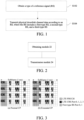
- FIG. 1 is a flowchart of the data transmission method according to an embodiment of the present invention. As shown in FIG. 1 , the process includes the following steps:
- physical downlink channel data is transmitted according to a first-type RS, a second-type RS or a third-type RS, so that a balance between data transmission performance and RS overheads is ensured for different NB-IOT physical downlink channel data, thereby resolving the problem in the related art of not knowing which RS is to be used to transmit NB-IOT physical channel data.
- step S102 is an optional step of the present invention.
- the step may be omitted, or may be performed.
- the type of the RS used to transmit the physical downlink channel data may be determined in at least one of the following manners: a manner of predefined configuration, a manner according to a coverage level and/or an aggregation level, and a manner of signaling indication.
- a pattern of the first-type RS does not overlap a pattern of an LTE system CRS.
- the pattern of the LTE system CRS is a pattern of an LTE system CRS of four ports (the maximum quantity of ports of the LTE system CRS).
- a pattern of the second-type RS is the same as the pattern of the LTE system CRS, or the pattern of the second-type RS is a subset of the pattern of the LTE system CRS.
- the pattern of the LTE system CRS is a pattern of an LTE system CRS of two ports or a pattern of the LTE system CRS of four ports.
- a pattern of the third-type RS is a superposition of the pattern of the first-type RS and the pattern of the second-type RS.
- the pattern of the LTE system CRS in the present invention is a pattern of an LTE system CRS of a current cell. That is, the pattern of the LTE system CRS is determined according to a PCID of the current cell.
- the RS mentioned in this embodiment may be an RS of two ports or an RS of four ports.
- the pattern of the first-type RS when the pattern of the first-type RS is for two ports, the pattern of the first-type RS does not overlap a pattern of the LTE system CRS of four ports.
- the pattern of the second-type RS is for two ports, the pattern of the second-type RS is the same as a pattern of an LTE system CRS of two ports (for example, port 0 and port 1), or is a subset of the pattern of the LTE system CRS of two ports (for example, port 0 and port 1).
- the pattern of the third-type RS is for two ports, the pattern of the third-type RS is a superposition of the pattern of the first-type RS of two ports and the pattern of the second-type RS of two ports.
- the pattern of the first-type RS when the pattern of the first-type RS is for four ports, the pattern of the first-type RS does not overlap a pattern of the LTE system CRS of four ports.
- the pattern of the second-type RS is for four ports, the pattern of the second-type RS is the same as a pattern of the LTE system CRS of four ports, or is a subset of the pattern of the LTE system CRS of four ports.
- the pattern of the third-type RS is for four ports, the pattern of the third-type RS is a superposition of the pattern of the first-type RS of four ports and the pattern of the second-type RS of four ports.
- the second-type RS is an LTE system CRS of two specified ports.
- the two specified ports are port 0 and port 1.
- the LTE system CRS of four ports are configured, the two specified ports are port 0 and port 1 or port 0 and port 2 or port 1 and port 3.
- the mentioned two specified ports are fixed to be port 0 and port 1; or the two specified ports change as subframes change.
- the two specified ports are port 0 and port 2 in some subframes and are port 1 and port 3 in some other subframes.
- port 0 and port 1 may be fixedly used for the four subframes, or, port 0 and port 2 are used for the first two subframes, and port 1 and port 3 are used for the last two subframes.
- the use of the manner of fixedly setting the two specified ports has low implementation complexity and facilitates general design in different operation modes.
- the use of the two specified ports that change as subframes change facilitates the obtaining of a spatial diversity gain.
- a physical downlink channel may be a PDCCH channel or a PDSCH channel.
- the LTE system CRS of two ports is used as the second-type RS, thereby reducing the implementation complexity of a terminal device.
- the third-type RS is a superposition of the second-type RS of two ports and the first-type RS of two ports, where a first port of the first-type RS and a first port of the second-type RS are a same port, and a second port of the first-type RS and a second port of the second-type RS are a same port.
- the second-type RS is an LTE system CRS of two specified ports.
- the two specified ports are port 0 and port 1.
- the two specified ports are port 0 and port 1 or port 0 and port 2 or port 1 and port 3.
- the mentioned two specified ports are fixed to be port 0 and port 1; or the two specified ports change as subframes change.
- the two specified ports change as subframes change, the two specified ports are port 0 and port 2 in some subframes and are port 1 and port 3 in some other subframes.
- port 0 and port 1 may be fixedly used for the four subframes, or, port 0 and port 2 are used for the first two subframes, and port 1 and port 3 are used for the last two subframes.
- the use of the manner of fixedly setting the two specified ports has low implementation complexity and facilitates general design in different operation modes.
- the use of the two specified ports that change as subframes change facilitates the obtaining of a spatial diversity gain.
- the patterns of an RS and a CRS in the present invention are both patterns within the range of a subframe in which there is RS transmission.
- the so-called pattern involves only a resource unit position occupied by an RS, but does not involve specifically which port of the RS occupies the resource unit position.
- a pattern of the first-type RS does not overlap a pattern of an LTE system CRS mentioned in this embodiment includes: when a subframe in which the physical downlink channel data is transmitted is a normal subframe, the first-type RS occupies positions of four LTE system CRS OFDM symbols in the time domain, where each OFDM symbol occupies four resource units; or, the first-type RS occupies positions of four non-LTE system CRS OFDM symbols in the time domain, where each OFDM symbol occupies four resource units; or, the first-type RS occupies positions of eight OFDM symbols in the time domain, where the eight OFDM symbols include LTE system CRS and non-LTE system CRS OFDM symbols, and each OFDM symbol occupies two resource units.
- a pattern of the first-type RS does not overlap a pattern of an LTE system CRS mentioned in this embodiment includes: when a subframe in which the physical downlink channel data is transmitted is a TDD system special subframe, the first-type RS occupies positions of one or two LTE system CRS OFDM symbols in the time domain, where each OFDM symbol occupies four resource units; or, the first-type RS occupies positions of one or two non-LTE system CRS OFDM symbols in the time domain, where each OFDM symbol occupies four resource units; or, the first-type RS occupies positions of four non-LTE system CRS OFDM symbols in the time domain, where each OFDM symbol occupies two or four resource units; or, the first-type RS occupies positions of four OFDM symbols in the time domain, where the four OFDM symbols include LTE system CRS and non-LTE system CRS OFDM symbols, and each OFDM symbol occupies
- the pattern of the first-type RS is fixed, or, the pattern of the first-type RS is determined according to a PCID.
- a quantity of the non-LTE system CRS OFDM symbols is the same as a quantity of the LTE system CRS OFDM symbols.
- the pattern of the first-type RS in the non-LTE system CRS OFDM symbol is fixed, and the pattern of the first-type RS in the LTE system CRS OFDM symbol is determined according to the PCID; or, the pattern of the first-type RS in the non-LTE system CRS OFDM symbol and the pattern of the first-type RS in the LTE system CRS OFDM symbol are both determined according to the PCID, and the pattern of the first-type RS in the non-LTE system CRS OFDM symbol has a fixed offset L with respect to the pattern of the first-type RS in the LTE system CRS OFDM symbol in the frequency domain, where L is an integer greater than or equal to 0.
- the physical downlink channel data is transmitted according to different patterns of the RS.
- the out-of-band operation is a guard band operation or a stand-alone operation.
- a pattern of the RS in the out-of-band operation may be a subset of a pattern of the RS in the in-band operation.
- a transmit side maps the K1 ports to the K2 ports according to a precoding matrix of dimension K2 ⁇ K1
- a receive side obtains an equivalent channel coefficient of the K1 ports according to the precoding matrix of dimension K2 x K1 and an estimated channel coefficient of the K2 ports, where K1 and K2 are integers greater than 0 and K1 is less than K2.
- a terminal device when the physical downlink channel data is transmitted according to the second-type RS or the third-type RS, a terminal device can receive the physical downlink channel data of the K1 ports by using the second-type RS of the K2 ports (for example, four ports).
- an initialization interval of a sequence generator involved for the RS in this embodiment includes: N init subframes or radio frames, where N init is an integer greater than or equal to 1.
- an initialization value of the sequence generator for the RS is determined in at least one of the following manners: determining according to a PCID; determining according to the PCID and a CP type; determining according to an interval sequence number of sequence initialization for the RS and the PCID; and determining according to the interval sequence number of sequence initialization for the RS, the PCID, and the CP type.
- the method in this embodiment may further include: in an in-band operation, indicating a sequence value and/or a port quantity of the second-type RS or the third-type RS in this embodiment by using signaling.
- the method in this embodiment may further include: in an out-of-band operation, predefining a subframe for transmitting the RS in this embodiment and/or configuring a subframe for transmitting the RS in this embodiment by using signaling.
- a subframe for transmitting an SS is not used to transmit the RS or only an OFDM symbol used to transmit the SS in the subframe for transmitting the SS is not used to transmit the RS.
- a sequence of the RS mentioned in this embodiment may be a subsequence whose length is 2 in an LTE system CRS sequence whose length is 2N RB max,DL , where N RB max,DL represents a maximum downlink bandwidth configuration (for example, 110 PRBs) of an LTE system.
- N RB max,DL represents a maximum downlink bandwidth configuration (for example, 110 PRBs) of an LTE system.
- a segment of an existing LTE CRS sequence is extracted and used as the sequence of the RS. This, on one hand, does not cause a heavy loss in transmission performance, and on the other hand, avoids the need to design a completely new RS sequence, thereby reducing the workload for standardization of the sequence of the RS.
- the values of parameters m 0 and m 1 are respectively 0 and 1; or, the values of parameters m 0 and m 1 are respectively N RB max,DL -1 and N RB max,DL .
- the values of parameters m 0 and m 1 are indicated by using signaling, the values ⁇ m 0 , m 1 ⁇ of the parameters belong to a predefined set.
- a predefined set of values ⁇ m 0 , m 1 ⁇ may be ⁇ 0, 11, ⁇ 2, 3 ⁇ , ⁇ 4, 5 ⁇ ,..., ⁇ N RB max,DL -8, N RB max,DL -7 ⁇ , ⁇ N RB max,DL + 6, N RB max,DL + 7 ⁇ , ⁇ N RB max,DL + 8, N RB max,DL + 9 ⁇ , ..., and ⁇ 2N RB max,DL -2, 2N RB max,DL -1 ⁇ .
- the predefined set may be a subset of the predefined set of the in-band operation. Based on this, being subsets of the predefined set of the in-band operation, predefined sets of the guard band operation and the stand-alone operation may be the same or different. For example, for the stand-alone operation, the predefined set may be ⁇ 0, 1 ⁇ , ⁇ 2, 3 ⁇ , ⁇ 4, 5 ⁇ , ..., and ⁇ 14, 15 ⁇ . For the guard band operation, the predefined set of the stand-alone operation may continue to be used, or, a new predefined set is defined.
- the values of parameters m 0 and m 1 are determined by using a predefining manner.
- a terminal device may still not know the operation mode of the NB-IOT system.
- a predefined sequence of the first-type RS (equivalent to the predefined values of m 0 and m 1 ) is used to transmit the PBCH data.
- a predefined sequence of the second-type RS or the third-type RS (equivalent to the predefined values of m 0 and m 1 ) is used to transmit the PDCCH data and the PDSCH data.
- the RS sequence used to transmit PBCH data mentioned in the foregoing embodiment is the same as the RS sequence used to transmit PDCCH data and PDSCH data in the out-of-band operation.
- the foregoing two sequences may be set to be a same sequence.
- the values of ⁇ m 0 , m 1 ⁇ used to determine the sequence of the RS of the PBCH are the same as the values of ⁇ m 0 , m 1 ⁇ used to determine the sequence of the RS of the PDCCH and PDSCH in the out-of-band operation.
- an RS is sent in an MBSFN area of the MBSFN subframe.
- an LTE MBSFN subframe in which no MBMS service is transmitted is not used to transmit the NB-IOT physical downlink channel data
- an RS is not sent in an MBSFN area of the MBSFN subframe.
- the MBSFN subframe may be used as a usable subframe resource for the NB-IOT to transmit the NB-IOT physical downlink channel (for example, PDCCH or PDSCH) data.
- PDCCH physical downlink channel
- an RS (the first-type RS or the second-type RS or the third-type RS) used to demodulate the physical downlink channel data is sent together with physical channel data in an MBSFN area of the MBSFN subframe. Otherwise, when the MBSFN subframe is not used to transmit the NB-IOT physical downlink channel data, a corresponding NB-IOT RS (the first-type RS or the second-type RS or the third-type RS) is not sent in the MBSFN area of the MBSFN subframe, so as to avoid as much as possible the impact on data transmission of UE of the LTE system.
- An MBSFN area of an MBSFN subframe includes all OFDM symbols in the MBSFN subframe except the first two OFDM symbols. It should be noted that, the MBSFN area of the MBSFN subframe is a concept in the time domain, and in the frequency domain, an NB-IOT RS is sent within only the range of an NB-IOT narrowband (one PRB) but is not sent within a bandwidth range of the LTE system.
- the methods in the foregoing embodiments may be accomplished through software plus a necessary universal hardware platform, and definitely may also be accomplished through hardware. However, in most cases, the former implementation is preferred.
- the technical solutions of the present invention essentially or the part that contributes to the prior art may be embodied in the form of a software product.
- the computer software product may be stored in a storage medium (for example, a read-only memory (ROM)/Random Access Memory (RAM), a magnetic disk or an optical disc) and contain several instructions used to instruct a terminal device (for example, a mobile phone, a computer, a server, or a network device) to perform the methods according to the embodiments of the present invention.
- a storage medium for example, a read-only memory (ROM)/Random Access Memory (RAM), a magnetic disk or an optical disc
- a terminal device for example, a mobile phone, a computer, a server, or a network device
- a data transmission apparatus is further provided in this embodiment.
- the apparatus is configured to implement the foregoing embodiments and preferred implementations. Parts that have been described above will not be repeated here.
- the term "module" may be a combination of software and/or hardware that implements a predetermined function.
- the apparatus described in the following embodiments is preferably implemented by using software, the implementation of the apparatus by using hardware or a combination of software and hardware are also possible and conceivable.
- FIG. 2 is a structural block diagram of a data transmission apparatus according to an embodiment of the present invention. As shown in FIG. 2 , the apparatus includes:
- the foregoing modules may be implemented by using software or hardware. Implementation by using hardware may be, but is not limited to, the following manners: the foregoing modules are located in a same processor; or, the foregoing modules are separately located in multiple processors.
- Steps of the method include: transmitting physical downlink channel data according to an RS: a first-type RS, a second-type RS, and a third-type RS.
- the physical downlink channel includes, but is not limited to: a PBCH, a PDCCH, and a PDSCH.
- an initialization interval of a sequence generator for the RS includes N init subframes or radio frames, where N init is an integer greater than or equal to 1.
- a sequence generator for a CRS in an LTE system is initialized on a per-OFDM symbol basis.
- an NB-IOT system if an initialization interval of a sequence of an OFDM symbol is still used, an NB-IOT RS occupies a relatively small quantity of resource units in each OFDM symbol due to the bandwidth restriction of one PRB. As a result, a very small quantity of sequence values are generated after each sequence initialization operation. This is very inefficient.
- one or more subframes or radio frames may be used as an interval to initialize a sequence of the NB-IOT RS.
- An initialization value of the sequence generator for the RS may be determined in one of the following manners: determining according to a PCID, or determining according to the PCID and a CP type, or, determining according to an interval sequence number of sequence initialization for the RS and the PCID, or, determining according to the interval sequence number of sequence initialization for the RS, the PCID, and the CP type.
- a pattern of the first-type RS does not overlap a pattern of an LTE system CRS of four ports, that is, resource units occupied by the first-type RS do not overlap resource units occupied by the LTE system CRS of four ports or the resource units occupied by the LTE system CRS of four ports are no longer used to transmit the first-type RS.
- a pattern of the second-type RS is the same as a pattern of an LTE system CRS of two ports or four ports, or is a subset of the pattern of the LTE system CRS of two ports or four ports.
- resource units occupied by the second-type RS are the same as resource units occupied by the LTE system CRS of two ports or four ports, or the resource units occupied by the second-type RS are a subset of the resource units occupied by the LTE system CRS of two ports or four ports.
- a pattern of the third-type RS is a superposition of the pattern of the first-type RS and the pattern of the second-type RS. That is, resource units occupied by the third-type RS include resource units occupied by the first-type RS and resource units occupied by the second-type RS.
- the RS and the data may have a same power level or different power levels because the second-type RS is equivalent to the LTE system CRS.
- any physical downlink channel at least one of the three RS types may be supported.
- a PBCH channel from the perspective of simplifying the design, only the first-type RS may be supported.
- the second-type RS and the third-type RS may be supported.
- a pattern of the RS does not overlap a pattern of an LTE system CRS includes:
- the pattern of the RS may be fixed, or, may be determined according to a PCID.
- the use of a fixed pattern of the RS can minimize the design complexity.
- the determining of the pattern of the RS according to the PCID facilitates the reuse of existing designs of the LTE system CRS and reduction of interference between RSs of cells.
- a quantity of the non-LTE system CRS OFDM symbols is the same as a quantity of the LTE system CRS OFDM symbols.
- the pattern of the RS in the non-LTE system CRS OFDM symbol is fixed, and the pattern of the RS in the LTE system CRS OFDM symbol is determined according to a PCID. This manner helps ensure regular or uniform patterns of the RS.
- the pattern of the RS in the non-LTE system CRS OFDM symbol and the pattern of the RS in the LTE system CRS OFDM symbol are both determined according to the PCID, and the pattern of the RS in the non-LTE system CRS OFDM symbol has a fixed offset L with respect to the pattern of the RS in the LTE system CRS OFDM symbol in the frequency domain, where L is an integer greater than or equal to 0.
- the physical downlink channel data is transmitted according to different patterns of the RS, where the out-of-band operation is a guard band operation or a stand-alone operation.
- the same type of RS is the first-type RS, the second-type RS or the third-type RS.
- different patterns of the RS are different patterns of the first-type RS.
- different patterns of the RS are different patterns of the second-type RS.
- different patterns of the RS are different patterns of the third-type RS.
- a pattern of the RS in the out-of-band operation is a subset of a pattern of the RS in the in-band operation. That is, resource units occupied by the pattern of the RS in the out-of-band operation are a subset of resource units occupied by the pattern of the RS in the in-band operation.
- the pattern of the first-type RS in the out-of-band operation is a subset of the pattern of the first-type RS in the in-band operation.
- the pattern of the second-type RS in the out-of-band operation is a subset of the pattern of the second-type RS in the in-band operation.
- the pattern of the third-type RS in the out-of-band operation is a subset of the pattern of the third-type RS in the in-band operation.
- the type of the RS used to transmit the physical downlink channel data may be determined in one of the following manners: predefining, or, determining according to a coverage level and/or an aggregation level, or, indication by using signaling. For example, it may be predefined that PBCH data is always transmitted according to the first-type RS. It is assumed that the second-type RS or the third-type RS is used to transmit PDCCH data or PDSCH data. For a PDCCH channel, it may be determined according to the coverage level and/or the aggregation level whether to use the second-type RS or the third-type RS to transmit the PDCCH data.
- the second-type RS For a PDSCH channel, it may be determined according to the coverage level whether to use the second-type RS or the third-type RS to transmit the PDSCH data.
- the use of the second-type RS (having a density lower than that of the third-type RS) cannot provide accurate channel estimation.
- the third-type RS may be used, or otherwise the second-type RS is used.
- a transmit side maps the K1 ports to the K2 ports according to a precoding matrix of dimension K2 ⁇ K1
- a receive side obtains an equivalent channel coefficient of the K1 ports according to the precoding matrix of dimension K2 ⁇ K1 and an estimated channel coefficient of the K2 ports.
- the transmit side maps two ports to four ports according to a precoding matrix of 4 ⁇ 2 dimension, and the receive side obtains an equivalent channel coefficient of two ports according to the precoding matrix of 4 ⁇ 2 dimension and an estimated channel coefficient of four ports.
- a sequence value and/or a port quantity of the second-type RS or the third-type RS is indicated by using signaling.
- the in-band operation when the second-type RS or the third-type RS is used to transmit the physical downlink channel data, in fact, it is equivalent that an existing in-band LTE system CRS is reused as the NB-IOT RS. Because the value of the LTE system CRS depends on the frequency position or PRB index of the CRS, related information (for example, PRB index information) about a sequence value of the RS needs to be notified, so as to implement channel estimation.
- the NB-IOT system reuses a port quantity of the LTE system CRS, it may also be necessary to notify the port quantity of the RS.
- a subframe for transmitting the RS is predefined and/or configured by using signaling.
- the transmitted power spectral density of a base station greatly exceeds that of the in-band operation.
- accurate channel estimation may still be implemented. Therefore, to increase the peak data rate, only some subframes can be used to transmit the RS.
- a specific position (including a period and/or an offset) of a subframe for sending the RS may be indicated by using a predefining manner and/or by using a manner of signaling configuration. For example, it may be predefined that there is always RS transmission in a subframe for transmitting the PBCH data.
- a subframe for transmitting the SS may be not used to transmit an RS or only an OFDM symbol used to transmit the SS in the subframe for transmitting the SS is not used to transmit the RS (for example, this is implemented by using a predefining manner or a manner of signaling configuration).
- physical downlink channel data is transmitted according to a first-type RS, a second-type RS or a third-type RS, so that a balance between data transmission performance and RS overheads is ensured for different NB-IOT physical downlink channel data.
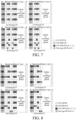
- FIG. 3 is a first schematic diagram of a pattern of a first-type RS for a normal subframe according to an optional embodiment of the present invention.
- the RS occupies four LTE CRS OFDM symbols in the time domain. Each OFDM symbol occupies four resource units.
- the first three OFDM symbols in a subframe may be used for transmitting a LTE downlink control channel PDCCH.
- the RS does not occupy the first three OFDM symbols in the time domain, and specifically occupies the rest four LTE CRS OFDM symbols other than the first three OFDM symbols in the time domain.
- the RS occupies same resource units in the frequency domain, and offsets of frequency domain positions of resource units occupied by the RS with respect to frequency domain positions of resource units occupied by the LTE CRS are fixed to be +1 (as counted starting from the upper sideband).
- FIG. 4 is a second schematic diagram of a pattern of a first-type RS for a normal subframe according to an optional embodiment of the present invention.
- the RS occupies positions of four non-LTE system CRS OFDM symbols in the time domain. Each OFDM symbol occupies four resource units.
- the first three OFDM symbols in the subframe may be used to transmit a PDCCH of an LTE system.
- the RS does not occupy the three OFDM symbols in the time domain, and specifically occupies positions of four non-LTE system CRS OFDM symbols other than the three OFDM symbols in the time domain.
- the RS occupies positions of same resource units in the frequency domain.
- a normal CP type is used as an example.
- sequence numbers of OFDM symbols occupied by the RS are 3, 6, 9, and 12, and sequence numbers of resource units occupied by the RS in the frequency domain are 0, 3, 6, and 9 (as counted starting from the upper sideband).
- sequence numbers of OFDM symbols occupied by the RS are 3, 6, 9, and 12, and sequence numbers of resource units occupied by the RS in the frequency domain are 0, 3, 8, and 11.
- sequence numbers of OFDM symbols occupied by the RS are 3, 6, 9, and 13, and sequence numbers of resource units occupied by the RS in the frequency domain are 0, 3, 6, and 9.
- sequence numbers of OFDM symbols occupied by the RS are 3, 6, 9, and 13, and sequence numbers of resource units occupied by the RS in the frequency domain are 0, 3, 8, and 11.
- the pattern shown by (a) Normal CP in FIG. 4 ensures a uniform distribution of the RS in time and frequency dimensions.
- the pattern shown by (b) Normal CP in FIG. 4 only ensures a uniform distribution of the RS in time domain dimension, the performance of linear interpolation-based channel estimation in the frequency domain is improved by keeping the RS on two sides of a narrowband or a PRB.
- the pattern shown by (c) Normal CP in FIG. 4 only ensures a uniform distribution of the RS in frequency domain dimension, the performance of linear interpolation-based channel estimation in the time domain is improved by keeping the RS on two sides of a usable OFDM symbol area.
- the performance of linear interpolation-based channel estimation in both the time domain and the frequency domain is improved by keeping the RS on two sides of a usable OFDM symbol area and keeping the RS on two sides of a narrowband or a PRB.
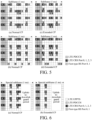
- FIG. 5 is a third schematic diagram of a pattern of a first-type RS for a normal subframe according to an optional embodiment of the present invention.
- the RS occupies positions of eight OFDM symbols in the time domain.
- the eight OFDM symbols include LTE system CRS and non-LTE system CRS OFDM symbols, and each OFDM symbol occupies two resource units.
- the first three OFDM symbols may be used to transmit a PDCCH of an LTE system.
- the RS does not occupy the three OFDM symbols in the time domain, and specifically occupies positions of four non-LTE system CRS OFDM symbols and four LTE system CRS OFDM symbols other than the three OFDM symbols in the time domain.
- the RS occupies positions of different resource units in the frequency domain.
- a normal CP type is used as an example.
- sequence numbers of non-LTE system CRS OFDM symbols occupied by the RS are 3, 6, 9, and 12, and sequence numbers of LTE system CRS OFDM symbols occupied by the RS are 4, 7, 8, and 11.
- sequence numbers of resource units occupied by the RS in the frequency domain are 0 and 6 (as counted starting from the upper sideband).
- sequence numbers of resource units occupied by the RS are 3 and 9.
- offsets of positions of resource units occupied by the RS with respect to positions of two resource units (sequence numbers are 3 and 9) occupied by the LTE system CRS in the two OFDM symbols are -1.
- offsets of positions of resource units occupied by the RS with respect to positions of two resource units (sequence numbers are 3 and 9) occupied by the LTE system CRS in the two OFDM symbols are +1.
- sequence numbers of non-LTE system CRS OFDM symbols occupied by the RS are 3, 6, 9, and 12, and sequence numbers of LTE system CRS OFDM symbols occupied by the RS are 4, 7, 8, and 11.
- sequence numbers of resource units occupied by the RS are 0 and 11.
- offsets of positions of resource units occupied by the RS with respect to positions of two resource units (sequence numbers are 3 and 6) occupied by the LTE system CRS in the OFDM symbols are +1.
- the pattern shown by (a) Normal CP in FIG. 5 occupies more resource units in the frequency domain. This helps improve the performance of linear interpolation-based channel estimation in the frequency domain.
- the pattern of (b) Normal CP has lower complexity and is easy to implement.
- FIG. 6 is a first schematic diagram of a pattern of a first-type RS for a TDD system special subframe according to an optional embodiment of the present invention.
- two OFDM symbols located before a DwPTS may be used to transmit a PDCCH of an LTE system.
- the RS does not occupy the two OFDM symbols in the time domain, and specifically occupies positions of LTE system CRS OFDM symbols other than the two OFDM symbols in the time domain.
- (a) Normal CP in FIG. 6 it is assumed that a configuration ratio of a TDD special subframe is 9:4:1.
- the RS occupies positions of two LTE system CRS OFDM symbols in the time domain. Each OFDM symbol occupies four resource units. Specifically, sequence numbers of the occupied OFDM symbols are 4 and 7. For each LTE system CRS OFDM symbol, the RS occupies positions of same resource units in the frequency domain. Offsets of the resource units occupied by the RS with respect to positions of resource units occupied by the LTE system CRS in the OFDM symbol are +1 (as counted starting from the upper sideband). As shown by (b) Normal CP in FIG.
- the configuration ratio of the TDD special subframe is 7:6:1. That is, seven OFDM symbols are used as the DwPTS, six OFDM symbols are used as the uplink-to-downlink GP, and one OFDM symbol is used as the UpPTS.
- the RS occupies a position of one LTE system CRS OFDM symbol in the time domain. Specifically, a sequence number of the occupied OFDM symbol is 4, and the RS occupies four resource units in the OFDM symbol. Offsets of the resource units occupied by the RS with respect to positions of resource units occupied by the LTE CRS in the OFDM symbol are +1 (as counted starting from the upper sideband).
- FIG. 7 is a second schematic diagram of a pattern of a first-type RS for a TDD system special subframe according to an optional embodiment of the present invention.
- two OFDM symbols located before a DwPTS may be used to transmit a PDCCH of an LTE system.
- the RS does not occupy the two OFDM symbols in the time domain, and specifically occupies positions of non-LTE system CRS OFDM symbols other than the two OFDM symbols.
- a configuration ratio of the TDD special subframe is 9:4:1. That is, nine OFDM symbols are used as the DwPTS, four OFDM symbols are used as an uplink-to-downlink GP, and one OFDM symbol is used as an UpPTS.
- the RS occupies positions of two non-LTE system CRS OFDM symbols in the time domain. Each OFDM symbol occupies four resource units. Specifically, sequence numbers of the occupied OFDM symbols are 3 and 6. For each non-LTE system CRS OFDM symbol, the RS occupies positions of same resource units. Specifically, sequence numbers of the occupied resource units are 0, 3, 6, and 9 (as counted starting from the upper sideband).
- a configuration ratio of the TDD special subframe is 9:4:1. That is, nine OFDM symbols are used as the DwPTS, four OFDM symbols are used as an uplink-to-downlink GP, and one OFDM symbol is used as an UpPTS.
- the RS occupies positions of two non-LTE system CRS OFDM symbols in the time domain. Each OFDM symbol occupies four resource units. Specifically, sequence numbers of the occupied OFDM symbols are 3 and 6. For each non-LTE system CRS OFDM symbol, the RS occupies positions of same resource units. Specifically, sequence numbers of the occupied resource units are 0, 3, 8, and 11 (as counted starting from the upper sideband).
- the pattern shown by (a) Normal CP in FIG. 7 ensures a uniform distribution of the RS in frequency domain dimension, thereby helping simplify the implementation.
- the performance of linear interpolation-based channel estimation in the frequency domain is further improved by keeping the RS on two sides of a narrowband or a PRB.
- a configuration ratio of the TDD special subframe is 7:6:1. That is, seven OFDM symbols are used as the DwPTS, six OFDM symbols are used as an uplink-to-downlink GP, and one OFDM symbol is used as an UpPTS.
- the RS occupies positions of two non-LTE system CRS OFDM symbols in the time domain. Each OFDM symbol occupies four resource units. Specifically, sequence numbers of the occupied OFDM symbols are 3 and 5. For each non-LTE system CRS OFDM symbol, the RS occupies positions of same resource units. Specifically, sequence numbers of the occupied resource units are 0, 3, 6, and 9.
- a configuration ratio of the TDD special subframe is 7:6:1. That is, seven OFDM symbols are used as the DwPTS, six OFDM symbols are used as an uplink-to-downlink GP, and one OFDM symbol is used as an UpPTS.
- the RS occupies positions of two non-LTE system CRS OFDM symbols in the time domain. Each OFDM symbol occupies four resource units. Specifically, sequence numbers of the occupied OFDM symbols are 3 and 5. For each non-LTE system CRS OFDM symbol, the RS occupies positions of same resource units. Specifically, sequence numbers of the occupied resource units are 0, 3, 8, and 11.
- FIG. 8 is a third schematic diagram of a pattern of a first-type RS for a TDD system special subframe according to an optional embodiment of the present invention.
- two OFDM symbols located before a DwPTS may be used to transmit a PDCCH of an LTE system.
- the RS does not occupy the two OFDM symbols in the time domain, and specifically occupies positions of non-LTE system CRS OFDM symbols other than the two OFDM symbols.
- a configuration ratio of the TDD special subframe is 9:4:1. That is, nine OFDM symbols are used as the DwPTS, four OFDM symbols are used as an uplink-to-downlink GP, and one OFDM symbol is used as an UpPTS.
- the RS occupies positions of four non-LTE system CRS OFDM symbols in the time domain. Each OFDM symbol occupies two resource units. Specifically, sequence numbers of the occupied OFDM symbols are 2, 3, 5, and 6. For each non-LTE system CRS OFDM symbol, the RS occupies positions of different resource units. For OFDM symbols 2 and 3, sequence numbers of the occupied resource units in the frequency domain are 0 and 6.
- sequence numbers of the occupied resource units in the frequency domain are 3 and 9 (as counted starting from the upper sideband).
- (b) Normal CP in FIG. 8 it is assumed that the configuration ratio of the TDD special subframe is 9:4:1. That is, nine OFDM symbols are used as the DwPTS, the four OFDM symbols are used as the uplink-to-downlink GP, and one OFDM symbol is used as the UpPTS.
- the RS occupies positions of the four non-LTE system CRS OFDM symbols in the time domain. Each OFDM symbol occupies two resource units. Specifically, sequence numbers of the occupied OFDM symbols are 2, 3, 5, and 6.
- the RS occupies positions of different resource units.
- sequence numbers of the occupied resource units in the frequency domain are 0 and 8.
- sequence numbers of the occupied resource units in the frequency domain are 3 and 11 (as counted starting from the upper sideband).
- (c) Normal CP in FIG. 8 and by (d) Normal CP in FIG. 8 it is assumed that the configuration ratio of the TDD special subframe is 7:6:1. That is, seven OFDM symbols are used as the DwPTS, six OFDM symbols are used as the uplink-to-downlink GP, and one OFDM symbol is used as the UpPTS.
- the patterns of the RS are respectively similar to (a) Normal CP in FIG. 8 and (b) Normal CP in FIG. 8 , and are no longer elaborated here.
- the pattern shown by (a) Normal CP in FIG. 8 ensures a uniform distribution of the RS in frequency domain dimension, thereby helping simplify the implementation.
- the performance of linear interpolation-based channel estimation in the frequency domain is further improved by keeping the RS on two sides of a narrowband or a PRB.
- FIG. 9 is a fourth schematic diagram of a pattern of a first-type RS for a TDD system special subframe according to an optional embodiment of the present invention.
- two OFDM symbols located before a DwPTS may be used to transmit a PDCCH of an LTE system.
- the RS does not occupy the two OFDM symbols in the time domain, and specifically, occupies positions of non-LTE system CRS OFDM symbols other than the two OFDM symbols.
- a configuration ratio of the TDD special subframe is 9:4:1. That is, nine OFDM symbols are used as the DwPTS, four OFDM symbols are used as an uplink-to-downlink GP, and one OFDM symbol is used as an UpPTS.
- the RS occupies positions of four non-LTE system CRS OFDM symbols in the time domain. Each OFDM symbol occupies four resource units. Specifically, sequence numbers of the occupied OFDM symbols are 2, 3, 5, and 6. For each non-LTE system CRS OFDM symbol, the RS occupies positions of same resource units. Specifically, sequence numbers of the occupied resource units are 0, 3, 6, and 9 (as counted starting from the upper sideband).
- the configuration ratio of the TDD special subframe is 9:4:1. That is, nine OFDM symbols are used as the DwPTS, the four OFDM symbols are used as the uplink-to-downlink GP, and one OFDM symbol is used as the UpPTS.
- the RS occupies positions of the four non-LTE system CRS OFDM symbols in the time domain. Each OFDM symbol occupies four resource units. Specifically, sequence numbers of the occupied OFDM symbols are 2, 3, 5, and 6. For each non-LTE system CRS OFDM symbol, the RS occupies positions of same resource units. Specifically, sequence numbers of the occupied resource units are 0, 3, 8, and 11 (as counted starting from the upper sideband).
- the pattern shown by (a) Normal CP in FIG. 9 ensures a uniform distribution of the RS in frequency domain dimension, thereby helping simplify the implementation.
- the performance of linear interpolation-based channel estimation in the frequency domain is further improved by keeping the RS on two sides of a narrowband or a PRB.
- the configuration ratio of the TDD special subframe is 7:6:1. That is, seven OFDM symbols are used as the DwPTS, six OFDM symbols are used as an uplink-to-downlink GP, and one OFDM symbol is used as the UpPTS.
- the pattern of the RS is respectively similar to (a) Normal CP in FIG. 9 and (b) Normal CP in FIG. 9 , and is no longer elaborated here.
- FIG. 10 is a schematic diagram of a pattern of an RS in a non-LTE system CRS OFDM symbol having a fixed offset with respect to a pattern of an RS in an LTE system CRS OFDM symbol according to an optional embodiment of the present invention.
- a normal CP type is used as an example.
- the RS occupies four non-LTE system CRS OFDM symbols (sequence numbers are 3, 6, 9, and 12) and four LTE system CRS OFDM symbols (sequence numbers are 4, 7, 8, and 11) in the time domain.
- OFDM symbols 4 and 11 offsets of positions of two resource units occupied by the RS with respect to positions of two resource units (sequence numbers are 3 and 9) occupied by the LTE system CRS in the OFDM symbols are -1.
- offsets of positions of two resource units occupied by the RS with respect to positions of two resource units (sequence numbers are 3 and 9) occupied by the LTE system CRS in the OFDM symbols are +1. It is assumed that the offset -1 or +1 is kept unchanged.
- the pattern of the RS in an LTE system CRS OFDM symbol is in fact also determined according to the PCID.
- offsets of positions of two resource units occupied by the RS in the frequency domain sequentially with respect to positions of two resource units occupied in the four LTE system CRS OFDM symbols (sequence numbers are 4, 7, 8, and 11) are fixed to be 0.
- the pattern of the RS in a non-LTE system CRS OFDM symbol is also determined according to the PCID.
- a normal CP type is used as an example.
- the RS occupies four OFDM symbols which are not occupied by LTE CRS (time domain index of these four OFDM symbols are 3, 6, 9, and 12) and four OFDM symbols which are occupied by LTE CRS (time domain index of these four OFDM symbols are 4, 7, 8, and 11) in the time domain.
- OFDM symbols 4, 7, 8, and 11 offsets of positions of two resource units occupied by a RS with respect to positions of two resource units (indexs are 0 and 6) occupied by a LTE CRS in the OFDM symbols are +1. It is assumed that the foregoing offset +1 is kept unchanged.
- the pattern of the RS in an OFDM symbol which contains LTE CRS is in fact also determined according to the PCID. Offsets of positions of two resource units occupied by a RS in OFDM symbols 3, 6, 9, and 12 sequentially with respect to positions of two resource units occupied by the RS in four OFDM symbols (indexes are 4, 7, 8, and 11) which contain CRS are fixed to be 3. In this case, the pattern of the RS for PBCH in an OFDM symbol which does not contain CRS is also determined according to the PCID.
- FIG. 11 is a schematic diagram of patterns of a first-type RS used to transmit physical downlink channel data in an in-band operation and in an out-of-band operation according to an optional embodiment of the present invention. It is assumed that in the in-band operation and in the out-of-band operation, the first-type RS of two ports is used to transmit the physical downlink channel data.
- the first-type RS of two ports occupies positions of four non-LTE system CRS OFDM symbols in the time domain. Each OFDM symbol occupies four resource units. Specifically, sequence numbers of the occupied OFDM symbols are 3, 6, 9, and 12, and sequence numbers of the occupied resource units are 0, 3, 6, and 9.
- the first-type RS of two ports occupies positions of the four non-LTE system CRS OFDM symbols in the time domain.
- Each OFDM symbol occupies two resource units.
- sequence numbers of the occupied OFDM symbols are the same as those in the in-band operation, that is, the sequence numbers are 3, 6, 9, and 12.
- sequence numbers of the occupied resource units are 0 and 6.
- sequence numbers of the occupied resource units are 3 and 9.
- a pattern of the first-type RS in the out-of-band operation is completely included in the pattern of the first-type RS in the in-band operation. That is, the pattern of the first-type RS in the out-of-band operation is a subset of the pattern of the first-type RS in the in-band operation.
- FIG. 12 is a schematic diagram of patterns of a second-type RS used to transmit physical downlink channel data in an in-band operation and in an out-of-band operation according to an optional embodiment of the present invention. It is assumed that in the in-band operation and in the out-of-band operation, the second-type RS of two ports is used to transmit the physical downlink channel data.
- the second-type RS of two ports is the LTE system CRS of two ports (port 0 and port 1), and occupies positions of four OFDM symbols in the time domain. Each OFDM symbol occupies four resource units.
- sequence numbers of the occupied OFDM symbols are 0, 4, 7, and 11, and sequence numbers of the occupied resource units are 0, 3, 6, and 9.
- the second-type RS of two ports occupies positions of the four OFDM symbols in the time domain.
- Each OFDM symbol occupies two resource units.
- sequence numbers of the occupied OFDM symbols are the same as those in the in-band operation, that is, the sequence numbers are 0, 4, 7, and 11.
- sequence numbers of the occupied resource units are 3 and 9.
- sequence numbers of the occupied resource units are 0 and 6.
- a pattern of the second-type RS in the out-of-band operation is completely included in a pattern of the second-type RS in the in-band operation. That is, the pattern of the second-type RS in the out-of-band operation is a subset of the pattern of the second-type RS in the in-band operation.
- FIG. 13 is a schematic diagram of patterns of a third-type RS used to transmit physical downlink channel data in an in-band operation and in an out-of-band operation according to an optional embodiment of the present invention. It is assumed that in the in-band operation and in the out-of-band operation, the third-type RS of two ports is used to transmit the physical downlink channel data.
- a pattern of the third-type RS of two ports is a superposition of the pattern of the first-type RS of two ports shown by (a) In-band operation in FIG. 11 and the pattern of the second-type RS of two ports shown by (a) In-band operation in FIG. 12 .
- the third-type RS of two ports occupies positions of eight OFDM symbols in the time domain. Each OFDM symbol occupies four resource units. Specifically, sequence numbers of the occupied OFDM symbols are 1, 3, 4, 6, 7, 9, 11, and 12, and sequence numbers of the occupied resource units are 0, 3, 6, and 9.
- the pattern of the third-type RS of two ports is a superposition of the pattern of the first-type RS of two ports shown by (b) Out-of-band operation in FIG. 11 and the pattern of the second-type RS of two ports shown by (b) Out-of-band operation in FIG. 12 .
- the third-type RS of two ports occupies positions of the eight OFDM symbols in the time domain.
- Each OFDM symbol occupies two resource units.
- sequence numbers of the occupied OFDM symbols are the same as those in the in-band operation, that is, the sequence numbers are 1, 3, 4, 6, 7, 9, 11, and 12.
- sequence numbers of the occupied resource units are 0 and 6.
- sequence numbers of the occupied resource units are 3 and 9.
- the pattern of the third-type RS in the out-of-band operation is completely included in the pattern of the third-type RS in the in-band operation. That is, the pattern of the third-type RS in the out-of-band operation is a subset of the pattern of the third-type RS in the in-band operation.
- a pattern of the third-type RS is a superposition of a pattern of a first-type RS of two ports and a pattern of a second-type RS of four ports
- the following manner may be used to obtain, by using four ports RS, a channel coefficient of two ports of the physical downlink channel data transmitted on the two ports:
- a transmitter maps two ports to four ports according to a precoding matrix of 4 ⁇ 2 dimension.
- s 4 ⁇ 1 W 4 ⁇ 2 ⁇ s 2 ⁇ 1 , where s 2 ⁇ 1 and s 4 ⁇ 1 respectively represent data on two ports before mapping and data on four ports after mapping, and W4x2 represents the precoding matrix.
- a receive side obtains an equivalent channel coefficient of the two ports according to the precoding matrix W 4 ⁇ 2 of 4 ⁇ 2 dimension and an estimated channel coefficient of four ports of the RS of four ports.
- W 4 ⁇ 2 of 4 ⁇ 2 dimension an estimated channel coefficient of four ports of the RS of four ports.
- H 1 ⁇ 2 ′ H 1 ⁇ 4 ⁇ W 4 ⁇ 2
- H 1 ⁇ 4 and H' 1 ⁇ 2 respectively represent a channel coefficient matrix of four ports and an equivalent channel coefficient matrix of the two ports.
- the same precoding matrix W 4 ⁇ 2 may be used for different resource units.
- different precoding matrices W 4 ⁇ 2 are used for different resource units.
- An effect of delay diversity can be achieved by introducing matrices D(i) 2 ⁇ 2 and U 2 ⁇ 2 .
- W 4 ⁇ 2 (i) represents a precoding matrix of an i th resource unit.
- P 4 ⁇ 2 (i) is a matrix in a matrix set with a fixed or configurable size of K.
- a specific matrix is determined according to a resource unit index i.
- N init is an initialization interval of a pseudorandom sequence generator, the unit being a subframe or a radio frame
- n is a sequence number of an initialization interval (consecutive N init subframes or radio frames)
- M is a quantity of resource units occupied by an RS port within the range of each initialization interval N init .
- a pseudorandom sequence c( ⁇ ) is defined based on the prior art of an LTE system.
- An embodiment of the present invention further provides a storage medium.
- the foregoing storage medium may be configured to store program code used to perform the following steps:
- modules or steps of the present invention may be implemented by using a common computing apparatus.
- the modules or steps may be integrated into a single computing apparatus or distributed on a network formed of multiple computing apparatuses.
- the modules or steps may be implemented by using program code executable by a computing apparatus. Therefore, the modules or steps may be stored in a storage apparatus and executed by a computing apparatus.
- the shown or described steps may be performed in a sequence different from the sequence here, or the steps are separately manufactured into various integrated circuit modules, or multiple modules or steps of the modules or steps are manufactured into a single integrated circuit module for implementation. In this way, the present invention is not limited to any particular hardware and software combination.
Landscapes
- Engineering & Computer Science (AREA)
- Signal Processing (AREA)
- Computer Networks & Wireless Communication (AREA)
- Mobile Radio Communication Systems (AREA)
Applications Claiming Priority (4)
| Application Number | Priority Date | Filing Date | Title |
|---|---|---|---|
| CN201510945120 | 2015-12-16 | ||
| CN201610018654.6A CN106888472B (zh) | 2015-12-16 | 2016-01-11 | 数据的传输方法及装置 |
| EP16874664.2A EP3393097A4 (en) | 2015-12-16 | 2016-11-07 | Method and device for transmitting data |
| PCT/CN2016/104924 WO2017101607A1 (zh) | 2015-12-16 | 2016-11-07 | 数据的传输方法及装置 |
Related Parent Applications (2)
| Application Number | Title | Priority Date | Filing Date |
|---|---|---|---|
| EP16874664.2A Division EP3393097A4 (en) | 2015-12-16 | 2016-11-07 | Method and device for transmitting data |
| EP16874664.2A Division-Into EP3393097A4 (en) | 2015-12-16 | 2016-11-07 | Method and device for transmitting data |
Publications (2)
| Publication Number | Publication Date |
|---|---|
| EP3468125A1 EP3468125A1 (en) | 2019-04-10 |
| EP3468125B1 true EP3468125B1 (en) | 2023-07-05 |
Family
ID=59176838
Family Applications (2)
| Application Number | Title | Priority Date | Filing Date |
|---|---|---|---|
| EP18203846.3A Active EP3468125B1 (en) | 2015-12-16 | 2016-11-07 | Narrowband reference signal (nb-rs) design avoiding collision with lte crs symbols |
| EP16874664.2A Withdrawn EP3393097A4 (en) | 2015-12-16 | 2016-11-07 | Method and device for transmitting data |
Family Applications After (1)
| Application Number | Title | Priority Date | Filing Date |
|---|---|---|---|
| EP16874664.2A Withdrawn EP3393097A4 (en) | 2015-12-16 | 2016-11-07 | Method and device for transmitting data |
Country Status (5)
| Country | Link |
|---|---|
| US (1) | US11595166B2 (enExample) |
| EP (2) | EP3468125B1 (enExample) |
| JP (2) | JP2019500797A (enExample) |
| KR (2) | KR102229592B1 (enExample) |
| CN (2) | CN106888472B (enExample) |
Families Citing this family (6)
| Publication number | Priority date | Publication date | Assignee | Title |
|---|---|---|---|---|
| CN108282283B (zh) * | 2017-01-05 | 2023-04-18 | 华为技术有限公司 | 资源映射方法及用户设备 |
| KR102093421B1 (ko) * | 2017-07-12 | 2020-03-25 | 엘지전자 주식회사 | Nrs를 수신하는 방법 및 nb-iot 기기 |
| WO2019148334A1 (zh) * | 2018-01-30 | 2019-08-08 | 华为技术有限公司 | 功率测量方法及设备 |
| US11438748B2 (en) * | 2019-10-16 | 2022-09-06 | Qualcomm Incorporated | Narrowband reference signal configuration for non-anchor carriers |
| WO2021178676A1 (en) * | 2020-03-05 | 2021-09-10 | Qualcomm Incorporated | Shared channel reference signal bundling and multiple concurrent shared channel transmissions |
| EP4338354A2 (en) * | 2021-05-11 | 2024-03-20 | Telefonaktiebolaget LM Ericsson (publ) | Methods, network node, wireless device, media for tbs index range interpretation for 16-qam in different deployment modes |
Family Cites Families (9)
| Publication number | Priority date | Publication date | Assignee | Title |
|---|---|---|---|---|
| WO2010151015A2 (ko) * | 2009-06-22 | 2010-12-29 | 엘지전자 주식회사 | 무선 통신 시스템에서 참조 신호 전송 방법 및 장치 |
| CN102957654B (zh) * | 2011-08-29 | 2018-03-02 | 中兴通讯股份有限公司 | 一种参考信号的传输方法及装置 |
| US9661601B2 (en) * | 2012-12-13 | 2017-05-23 | Qualcomm Incorporated | Crowdsourcing information in a communication network using small cells |
| CN104348580A (zh) * | 2013-08-06 | 2015-02-11 | 夏普株式会社 | 下行物理信道的发送和接收方法以及基站和用户设备 |
| KR102344081B1 (ko) * | 2014-05-23 | 2021-12-28 | 삼성전자 주식회사 | 다수의 이차원 배열 안테나를 사용하는 이동통신 시스템에서의 피드백 송수신 방법 및 장치 |
| CN107852308B (zh) * | 2015-07-22 | 2021-01-05 | 三星电子株式会社 | 用于在无线通信系统中操作机器类型设备的方法和设备 |
| KR102522569B1 (ko) * | 2015-07-22 | 2023-04-17 | 삼성전자주식회사 | 협대역 시스템에서 통신 방법 및 장치 |
| WO2017043856A1 (ko) * | 2015-09-07 | 2017-03-16 | 엘지전자 주식회사 | 무선 통신 시스템에서 하향링크 참조 신호를 수신하기 위한 방법 및 이를 위한 장치 |
| CN108141341B (zh) * | 2015-10-19 | 2022-11-25 | Lg 电子株式会社 | 接收下行链路信号的方法和用户设备以及发送下行链路信号的方法和基站 |
-
2016
- 2016-01-11 CN CN201610018654.6A patent/CN106888472B/zh active Active
- 2016-01-11 CN CN202010135548.2A patent/CN111130744B/zh active Active
- 2016-11-07 EP EP18203846.3A patent/EP3468125B1/en active Active
- 2016-11-07 EP EP16874664.2A patent/EP3393097A4/en not_active Withdrawn
- 2016-11-07 JP JP2018531562A patent/JP2019500797A/ja active Pending
- 2016-11-07 US US16/061,628 patent/US11595166B2/en active Active
- 2016-11-07 KR KR1020187024747A patent/KR102229592B1/ko active Active
- 2016-11-07 KR KR1020187019957A patent/KR20180095584A/ko not_active Withdrawn
-
2018
- 2018-08-27 JP JP2018158303A patent/JP6824232B2/ja active Active
Also Published As
| Publication number | Publication date |
|---|---|
| JP2019500797A (ja) | 2019-01-10 |
| KR102229592B1 (ko) | 2021-03-18 |
| EP3393097A4 (en) | 2018-12-26 |
| EP3393097A1 (en) | 2018-10-24 |
| CN106888472A (zh) | 2017-06-23 |
| CN111130744B (zh) | 2021-10-26 |
| JP6824232B2 (ja) | 2021-02-03 |
| KR20180099926A (ko) | 2018-09-05 |
| EP3468125A1 (en) | 2019-04-10 |
| CN106888472B (zh) | 2020-03-10 |
| KR20180095584A (ko) | 2018-08-27 |
| US11595166B2 (en) | 2023-02-28 |
| JP2018207520A (ja) | 2018-12-27 |
| CN111130744A (zh) | 2020-05-08 |
| US20200266956A1 (en) | 2020-08-20 |
Similar Documents
| Publication | Publication Date | Title |
|---|---|---|
| US11757680B2 (en) | Reference signal sending and receiving methods, device and storage medium | |
| US20240080898A1 (en) | Method and apparatus for information transmission | |
| US10743351B2 (en) | Method and wireless device for transmitting random-access preamble by means of single-tone method | |
| US10484152B2 (en) | Method and apparatus for transmitting or receiving reference signal in beamforming communication system | |
| US20200053704A1 (en) | Method and apparatus for sidelink communications in communication system | |
| US11140528B2 (en) | Method for decoding V2X signal transmitted by means of transmit diversity method in wireless communication system, and terminal using same | |
| EP3411992B1 (en) | Methods and apparatuses for scheduling for coexistence between nb-iot and e-mtc | |
| EP3200412B1 (en) | Method and wireless device for receiving downlink control channel | |
| US11595166B2 (en) | Data transmission method and apparatus | |
| EP2874451B1 (en) | Method for configuring reference signal, base station, and user equipment | |
| EP2346188B1 (en) | Method and device for pilot symbol transmission in downlink mimo system | |
| CN113875303A (zh) | 用于指示控制信息的方法和装置 | |
| CN107888352B (zh) | 参考信号的处理方法、用户设备和基站 | |
| KR20160018244A (ko) | D2d 통신을 위한 d2d 데이터 자원을 결정하는 방법 및 장치 | |
| EP3767906B1 (en) | Apparatus for configuring dm-rs for v2x | |
| EP3429088B1 (en) | Reference signal transmitting method and device, reference signal receiving method and device, and system | |
| US12167474B2 (en) | User equipment for random access and method thereof, base station for random access and method thereof | |
| EP3742636A1 (en) | Method and device for transmitting reference signal | |
| WO2017133676A1 (zh) | 参考信号的发送、接收方法、装置及传输系统 | |
| US12425272B2 (en) | Channel estimation method and apparatus, communication device, and storage medium | |
| US10524249B2 (en) | Data transmission method and apparatus | |
| WO2017121413A1 (zh) | 资源的使用方法及装置 | |
| EP3197219A1 (en) | Method and device for transmitting d2d data on basis of resource pattern | |
| WO2017101607A1 (zh) | 数据的传输方法及装置 | |
| EP3921968B1 (en) | Lte-m carrier placement with guard band in nr band |
Legal Events
| Date | Code | Title | Description |
|---|---|---|---|
| PUAI | Public reference made under article 153(3) epc to a published international application that has entered the european phase |
Free format text: ORIGINAL CODE: 0009012 |
|
| STAA | Information on the status of an ep patent application or granted ep patent |
Free format text: STATUS: THE APPLICATION HAS BEEN PUBLISHED |
|
| AC | Divisional application: reference to earlier application |
Ref document number: 3393097 Country of ref document: EP Kind code of ref document: P |
|
| AK | Designated contracting states |
Kind code of ref document: A1 Designated state(s): AL AT BE BG CH CY CZ DE DK EE ES FI FR GB GR HR HU IE IS IT LI LT LU LV MC MK MT NL NO PL PT RO RS SE SI SK SM TR |
|
| AX | Request for extension of the european patent |
Extension state: BA ME |
|
| STAA | Information on the status of an ep patent application or granted ep patent |
Free format text: STATUS: REQUEST FOR EXAMINATION WAS MADE |
|
| 17P | Request for examination filed |
Effective date: 20191008 |
|
| RBV | Designated contracting states (corrected) |
Designated state(s): AL AT BE BG CH CY CZ DE DK EE ES FI FR GB GR HR HU IE IS IT LI LT LU LV MC MK MT NL NO PL PT RO RS SE SI SK SM TR |
|
| STAA | Information on the status of an ep patent application or granted ep patent |
Free format text: STATUS: EXAMINATION IS IN PROGRESS |
|
| 17Q | First examination report despatched |
Effective date: 20210211 |
|
| GRAP | Despatch of communication of intention to grant a patent |
Free format text: ORIGINAL CODE: EPIDOSNIGR1 |
|
| STAA | Information on the status of an ep patent application or granted ep patent |
Free format text: STATUS: GRANT OF PATENT IS INTENDED |
|
| INTG | Intention to grant announced |
Effective date: 20230210 |
|
| GRAS | Grant fee paid |
Free format text: ORIGINAL CODE: EPIDOSNIGR3 |
|
| GRAA | (expected) grant |
Free format text: ORIGINAL CODE: 0009210 |
|
| STAA | Information on the status of an ep patent application or granted ep patent |
Free format text: STATUS: THE PATENT HAS BEEN GRANTED |
|
| AC | Divisional application: reference to earlier application |
Ref document number: 3393097 Country of ref document: EP Kind code of ref document: P |
|
| AK | Designated contracting states |
Kind code of ref document: B1 Designated state(s): AL AT BE BG CH CY CZ DE DK EE ES FI FR GB GR HR HU IE IS IT LI LT LU LV MC MK MT NL NO PL PT RO RS SE SI SK SM TR |
|
| REG | Reference to a national code |
Ref country code: CH Ref legal event code: EP |
|
| REG | Reference to a national code |
Ref country code: AT Ref legal event code: REF Ref document number: 1585845 Country of ref document: AT Kind code of ref document: T Effective date: 20230715 |
|
| REG | Reference to a national code |
Ref country code: DE Ref legal event code: R096 Ref document number: 602016080899 Country of ref document: DE |
|
| REG | Reference to a national code |
Ref country code: IE Ref legal event code: FG4D |
|
| REG | Reference to a national code |
Ref country code: LT Ref legal event code: MG9D |
|
| REG | Reference to a national code |
Ref country code: NL Ref legal event code: MP Effective date: 20230705 |
|
| REG | Reference to a national code |
Ref country code: AT Ref legal event code: MK05 Ref document number: 1585845 Country of ref document: AT Kind code of ref document: T Effective date: 20230705 |
|
| PG25 | Lapsed in a contracting state [announced via postgrant information from national office to epo] |
Ref country code: NL Free format text: LAPSE BECAUSE OF FAILURE TO SUBMIT A TRANSLATION OF THE DESCRIPTION OR TO PAY THE FEE WITHIN THE PRESCRIBED TIME-LIMIT Effective date: 20230705 |
|
| PG25 | Lapsed in a contracting state [announced via postgrant information from national office to epo] |
Ref country code: GR Free format text: LAPSE BECAUSE OF FAILURE TO SUBMIT A TRANSLATION OF THE DESCRIPTION OR TO PAY THE FEE WITHIN THE PRESCRIBED TIME-LIMIT Effective date: 20231006 |
|
| PG25 | Lapsed in a contracting state [announced via postgrant information from national office to epo] |
Ref country code: ES Free format text: LAPSE BECAUSE OF FAILURE TO SUBMIT A TRANSLATION OF THE DESCRIPTION OR TO PAY THE FEE WITHIN THE PRESCRIBED TIME-LIMIT Effective date: 20230705 |
|
| PG25 | Lapsed in a contracting state [announced via postgrant information from national office to epo] |
Ref country code: IS Free format text: LAPSE BECAUSE OF FAILURE TO SUBMIT A TRANSLATION OF THE DESCRIPTION OR TO PAY THE FEE WITHIN THE PRESCRIBED TIME-LIMIT Effective date: 20231105 |
|
| PG25 | Lapsed in a contracting state [announced via postgrant information from national office to epo] |
Ref country code: SE Free format text: LAPSE BECAUSE OF FAILURE TO SUBMIT A TRANSLATION OF THE DESCRIPTION OR TO PAY THE FEE WITHIN THE PRESCRIBED TIME-LIMIT Effective date: 20230705 Ref country code: RS Free format text: LAPSE BECAUSE OF FAILURE TO SUBMIT A TRANSLATION OF THE DESCRIPTION OR TO PAY THE FEE WITHIN THE PRESCRIBED TIME-LIMIT Effective date: 20230705 Ref country code: PT Free format text: LAPSE BECAUSE OF FAILURE TO SUBMIT A TRANSLATION OF THE DESCRIPTION OR TO PAY THE FEE WITHIN THE PRESCRIBED TIME-LIMIT Effective date: 20231106 Ref country code: NO Free format text: LAPSE BECAUSE OF FAILURE TO SUBMIT A TRANSLATION OF THE DESCRIPTION OR TO PAY THE FEE WITHIN THE PRESCRIBED TIME-LIMIT Effective date: 20231005 Ref country code: LV Free format text: LAPSE BECAUSE OF FAILURE TO SUBMIT A TRANSLATION OF THE DESCRIPTION OR TO PAY THE FEE WITHIN THE PRESCRIBED TIME-LIMIT Effective date: 20230705 Ref country code: LT Free format text: LAPSE BECAUSE OF FAILURE TO SUBMIT A TRANSLATION OF THE DESCRIPTION OR TO PAY THE FEE WITHIN THE PRESCRIBED TIME-LIMIT Effective date: 20230705 Ref country code: IS Free format text: LAPSE BECAUSE OF FAILURE TO SUBMIT A TRANSLATION OF THE DESCRIPTION OR TO PAY THE FEE WITHIN THE PRESCRIBED TIME-LIMIT Effective date: 20231105 Ref country code: HR Free format text: LAPSE BECAUSE OF FAILURE TO SUBMIT A TRANSLATION OF THE DESCRIPTION OR TO PAY THE FEE WITHIN THE PRESCRIBED TIME-LIMIT Effective date: 20230705 Ref country code: GR Free format text: LAPSE BECAUSE OF FAILURE TO SUBMIT A TRANSLATION OF THE DESCRIPTION OR TO PAY THE FEE WITHIN THE PRESCRIBED TIME-LIMIT Effective date: 20231006 Ref country code: FI Free format text: LAPSE BECAUSE OF FAILURE TO SUBMIT A TRANSLATION OF THE DESCRIPTION OR TO PAY THE FEE WITHIN THE PRESCRIBED TIME-LIMIT Effective date: 20230705 Ref country code: ES Free format text: LAPSE BECAUSE OF FAILURE TO SUBMIT A TRANSLATION OF THE DESCRIPTION OR TO PAY THE FEE WITHIN THE PRESCRIBED TIME-LIMIT Effective date: 20230705 Ref country code: AT Free format text: LAPSE BECAUSE OF FAILURE TO SUBMIT A TRANSLATION OF THE DESCRIPTION OR TO PAY THE FEE WITHIN THE PRESCRIBED TIME-LIMIT Effective date: 20230705 |
|
| PG25 | Lapsed in a contracting state [announced via postgrant information from national office to epo] |
Ref country code: PL Free format text: LAPSE BECAUSE OF FAILURE TO SUBMIT A TRANSLATION OF THE DESCRIPTION OR TO PAY THE FEE WITHIN THE PRESCRIBED TIME-LIMIT Effective date: 20230705 |
|
| REG | Reference to a national code |
Ref country code: DE Ref legal event code: R097 Ref document number: 602016080899 Country of ref document: DE |
|
| PG25 | Lapsed in a contracting state [announced via postgrant information from national office to epo] |
Ref country code: SM Free format text: LAPSE BECAUSE OF FAILURE TO SUBMIT A TRANSLATION OF THE DESCRIPTION OR TO PAY THE FEE WITHIN THE PRESCRIBED TIME-LIMIT Effective date: 20230705 Ref country code: RO Free format text: LAPSE BECAUSE OF FAILURE TO SUBMIT A TRANSLATION OF THE DESCRIPTION OR TO PAY THE FEE WITHIN THE PRESCRIBED TIME-LIMIT Effective date: 20230705 Ref country code: EE Free format text: LAPSE BECAUSE OF FAILURE TO SUBMIT A TRANSLATION OF THE DESCRIPTION OR TO PAY THE FEE WITHIN THE PRESCRIBED TIME-LIMIT Effective date: 20230705 Ref country code: DK Free format text: LAPSE BECAUSE OF FAILURE TO SUBMIT A TRANSLATION OF THE DESCRIPTION OR TO PAY THE FEE WITHIN THE PRESCRIBED TIME-LIMIT Effective date: 20230705 Ref country code: CZ Free format text: LAPSE BECAUSE OF FAILURE TO SUBMIT A TRANSLATION OF THE DESCRIPTION OR TO PAY THE FEE WITHIN THE PRESCRIBED TIME-LIMIT Effective date: 20230705 Ref country code: SK Free format text: LAPSE BECAUSE OF FAILURE TO SUBMIT A TRANSLATION OF THE DESCRIPTION OR TO PAY THE FEE WITHIN THE PRESCRIBED TIME-LIMIT Effective date: 20230705 |
|
| PLBE | No opposition filed within time limit |
Free format text: ORIGINAL CODE: 0009261 |
|
| STAA | Information on the status of an ep patent application or granted ep patent |
Free format text: STATUS: NO OPPOSITION FILED WITHIN TIME LIMIT |
|
| 26N | No opposition filed |
Effective date: 20240408 |
|
| REG | Reference to a national code |
Ref country code: CH Ref legal event code: PL |
|
| PG25 | Lapsed in a contracting state [announced via postgrant information from national office to epo] |
Ref country code: MC Free format text: LAPSE BECAUSE OF FAILURE TO SUBMIT A TRANSLATION OF THE DESCRIPTION OR TO PAY THE FEE WITHIN THE PRESCRIBED TIME-LIMIT Effective date: 20230705 |
|
| PG25 | Lapsed in a contracting state [announced via postgrant information from national office to epo] |
Ref country code: LU Free format text: LAPSE BECAUSE OF NON-PAYMENT OF DUE FEES Effective date: 20231107 |
|
| PG25 | Lapsed in a contracting state [announced via postgrant information from national office to epo] |
Ref country code: CH Free format text: LAPSE BECAUSE OF NON-PAYMENT OF DUE FEES Effective date: 20231130 |
|
| PG25 | Lapsed in a contracting state [announced via postgrant information from national office to epo] |
Ref country code: MC Free format text: LAPSE BECAUSE OF FAILURE TO SUBMIT A TRANSLATION OF THE DESCRIPTION OR TO PAY THE FEE WITHIN THE PRESCRIBED TIME-LIMIT Effective date: 20230705 Ref country code: LU Free format text: LAPSE BECAUSE OF NON-PAYMENT OF DUE FEES Effective date: 20231107 Ref country code: CH Free format text: LAPSE BECAUSE OF NON-PAYMENT OF DUE FEES Effective date: 20231130 Ref country code: SI Free format text: LAPSE BECAUSE OF FAILURE TO SUBMIT A TRANSLATION OF THE DESCRIPTION OR TO PAY THE FEE WITHIN THE PRESCRIBED TIME-LIMIT Effective date: 20230705 |
|
| REG | Reference to a national code |
Ref country code: BE Ref legal event code: MM Effective date: 20231130 |
|
| REG | Reference to a national code |
Ref country code: IE Ref legal event code: MM4A |
|
| PG25 | Lapsed in a contracting state [announced via postgrant information from national office to epo] |
Ref country code: IE Free format text: LAPSE BECAUSE OF NON-PAYMENT OF DUE FEES Effective date: 20231107 |
|
| PG25 | Lapsed in a contracting state [announced via postgrant information from national office to epo] |
Ref country code: BE Free format text: LAPSE BECAUSE OF NON-PAYMENT OF DUE FEES Effective date: 20231130 |
|
| PG25 | Lapsed in a contracting state [announced via postgrant information from national office to epo] |
Ref country code: IE Free format text: LAPSE BECAUSE OF NON-PAYMENT OF DUE FEES Effective date: 20231107 Ref country code: BE Free format text: LAPSE BECAUSE OF NON-PAYMENT OF DUE FEES Effective date: 20231130 |
|
| PG25 | Lapsed in a contracting state [announced via postgrant information from national office to epo] |
Ref country code: BG Free format text: LAPSE BECAUSE OF FAILURE TO SUBMIT A TRANSLATION OF THE DESCRIPTION OR TO PAY THE FEE WITHIN THE PRESCRIBED TIME-LIMIT Effective date: 20230705 |
|
| PG25 | Lapsed in a contracting state [announced via postgrant information from national office to epo] |
Ref country code: BG Free format text: LAPSE BECAUSE OF FAILURE TO SUBMIT A TRANSLATION OF THE DESCRIPTION OR TO PAY THE FEE WITHIN THE PRESCRIBED TIME-LIMIT Effective date: 20230705 |
|
| P01 | Opt-out of the competence of the unified patent court (upc) registered |
Free format text: CASE NUMBER: APP_12689/2025 Effective date: 20250314 |
|
| PG25 | Lapsed in a contracting state [announced via postgrant information from national office to epo] |
Ref country code: CY Free format text: LAPSE BECAUSE OF FAILURE TO SUBMIT A TRANSLATION OF THE DESCRIPTION OR TO PAY THE FEE WITHIN THE PRESCRIBED TIME-LIMIT; INVALID AB INITIO Effective date: 20161107 |
|
| PG25 | Lapsed in a contracting state [announced via postgrant information from national office to epo] |
Ref country code: HU Free format text: LAPSE BECAUSE OF FAILURE TO SUBMIT A TRANSLATION OF THE DESCRIPTION OR TO PAY THE FEE WITHIN THE PRESCRIBED TIME-LIMIT; INVALID AB INITIO Effective date: 20161107 |
|
| PGFP | Annual fee paid to national office [announced via postgrant information from national office to epo] |
Ref country code: GB Payment date: 20250918 Year of fee payment: 10 |
|
| PGFP | Annual fee paid to national office [announced via postgrant information from national office to epo] |
Ref country code: FR Payment date: 20250908 Year of fee payment: 10 |
|
| PG25 | Lapsed in a contracting state [announced via postgrant information from national office to epo] |
Ref country code: TR Free format text: LAPSE BECAUSE OF FAILURE TO SUBMIT A TRANSLATION OF THE DESCRIPTION OR TO PAY THE FEE WITHIN THE PRESCRIBED TIME-LIMIT Effective date: 20230705 |
|
| PGFP | Annual fee paid to national office [announced via postgrant information from national office to epo] |
Ref country code: DE Payment date: 20250910 Year of fee payment: 10 |
|
| PGFP | Annual fee paid to national office [announced via postgrant information from national office to epo] |
Ref country code: IT Payment date: 20251022 Year of fee payment: 10 |