EP3466087B1 - Inhaltserfassungs- und verteilungssystem - Google Patents
Inhaltserfassungs- und verteilungssystem Download PDFInfo
- Publication number
- EP3466087B1 EP3466087B1 EP17785106.0A EP17785106A EP3466087B1 EP 3466087 B1 EP3466087 B1 EP 3466087B1 EP 17785106 A EP17785106 A EP 17785106A EP 3466087 B1 EP3466087 B1 EP 3466087B1
- Authority
- EP
- European Patent Office
- Prior art keywords
- content
- capture
- distribution system
- transmissions
- radio frequency
- Prior art date
- Legal status (The legal status is an assumption and is not a legal conclusion. Google has not performed a legal analysis and makes no representation as to the accuracy of the status listed.)
- Active
Links
Images



Classifications
-
- H—ELECTRICITY
- H04—ELECTRIC COMMUNICATION TECHNIQUE
- H04N—PICTORIAL COMMUNICATION, e.g. TELEVISION
- H04N21/00—Selective content distribution, e.g. interactive television or video on demand [VOD]
- H04N21/20—Servers specifically adapted for the distribution of content, e.g. VOD servers; Operations thereof
- H04N21/21—Server components or server architectures
- H04N21/218—Source of audio or video content, e.g. local disk arrays
- H04N21/2187—Live feed
-
- H—ELECTRICITY
- H04—ELECTRIC COMMUNICATION TECHNIQUE
- H04N—PICTORIAL COMMUNICATION, e.g. TELEVISION
- H04N21/00—Selective content distribution, e.g. interactive television or video on demand [VOD]
- H04N21/20—Servers specifically adapted for the distribution of content, e.g. VOD servers; Operations thereof
- H04N21/23—Processing of content or additional data; Elementary server operations; Server middleware
- H04N21/238—Interfacing the downstream path of the transmission network, e.g. adapting the transmission rate of a video stream to network bandwidth; Processing of multiplex streams
- H04N21/2381—Adapting the multiplex stream to a specific network, e.g. an Internet Protocol [IP] network
-
- B—PERFORMING OPERATIONS; TRANSPORTING
- B60—VEHICLES IN GENERAL
- B60H—ARRANGEMENTS OF HEATING, COOLING, VENTILATING OR OTHER AIR-TREATING DEVICES SPECIALLY ADAPTED FOR PASSENGER OR GOODS SPACES OF VEHICLES
- B60H1/00—Heating, cooling or ventilating devices
- B60H1/00642—Control systems or circuits; Control members or indication devices for heating, cooling or ventilating devices
- B60H1/00735—Control systems or circuits characterised by their input, i.e. by the detection, measurement or calculation of particular conditions, e.g. signal treatment, dynamic models
- B60H1/0075—Control systems or circuits characterised by their input, i.e. by the detection, measurement or calculation of particular conditions, e.g. signal treatment, dynamic models the input being solar radiation
-
- B—PERFORMING OPERATIONS; TRANSPORTING
- B60—VEHICLES IN GENERAL
- B60S—SERVICING, CLEANING, REPAIRING, SUPPORTING, LIFTING, OR MANOEUVRING OF VEHICLES, NOT OTHERWISE PROVIDED FOR
- B60S1/00—Cleaning of vehicles
- B60S1/62—Other vehicle fittings for cleaning
- B60S1/66—Other vehicle fittings for cleaning for cleaning vehicle exterior
- B60S1/68—Other vehicle fittings for cleaning for cleaning vehicle exterior for freeing wheels or tyres from foreign matter, e.g. wheel scrapers
-
- H—ELECTRICITY
- H04—ELECTRIC COMMUNICATION TECHNIQUE
- H04H—BROADCAST COMMUNICATION
- H04H40/00—Arrangements specially adapted for receiving broadcast information
- H04H40/18—Arrangements characterised by circuits or components specially adapted for receiving
-
- H—ELECTRICITY
- H04—ELECTRIC COMMUNICATION TECHNIQUE
- H04L—TRANSMISSION OF DIGITAL INFORMATION, e.g. TELEGRAPHIC COMMUNICATION
- H04L65/00—Network arrangements, protocols or services for supporting real-time applications in data packet communication
- H04L65/60—Network streaming of media packets
- H04L65/61—Network streaming of media packets for supporting one-way streaming services, e.g. Internet radio
- H04L65/611—Network streaming of media packets for supporting one-way streaming services, e.g. Internet radio for multicast or broadcast
-
- H—ELECTRICITY
- H04—ELECTRIC COMMUNICATION TECHNIQUE
- H04L—TRANSMISSION OF DIGITAL INFORMATION, e.g. TELEGRAPHIC COMMUNICATION
- H04L65/00—Network arrangements, protocols or services for supporting real-time applications in data packet communication
- H04L65/60—Network streaming of media packets
- H04L65/75—Media network packet handling
- H04L65/752—Media network packet handling adapting media to network capabilities
-
- H—ELECTRICITY
- H04—ELECTRIC COMMUNICATION TECHNIQUE
- H04N—PICTORIAL COMMUNICATION, e.g. TELEVISION
- H04N21/00—Selective content distribution, e.g. interactive television or video on demand [VOD]
- H04N21/20—Servers specifically adapted for the distribution of content, e.g. VOD servers; Operations thereof
- H04N21/23—Processing of content or additional data; Elementary server operations; Server middleware
- H04N21/239—Interfacing the upstream path of the transmission network, e.g. prioritizing client content requests
- H04N21/2393—Interfacing the upstream path of the transmission network, e.g. prioritizing client content requests involving handling client requests
-
- H—ELECTRICITY
- H04—ELECTRIC COMMUNICATION TECHNIQUE
- H04N—PICTORIAL COMMUNICATION, e.g. TELEVISION
- H04N21/00—Selective content distribution, e.g. interactive television or video on demand [VOD]
- H04N21/20—Servers specifically adapted for the distribution of content, e.g. VOD servers; Operations thereof
- H04N21/25—Management operations performed by the server for facilitating the content distribution or administrating data related to end-users or client devices, e.g. end-user or client device authentication, learning user preferences for recommending movies
- H04N21/262—Content or additional data distribution scheduling, e.g. sending additional data at off-peak times, updating software modules, calculating the carousel transmission frequency, delaying a video stream transmission, generating play-lists
- H04N21/26258—Content or additional data distribution scheduling, e.g. sending additional data at off-peak times, updating software modules, calculating the carousel transmission frequency, delaying a video stream transmission, generating play-lists for generating a list of items to be played back in a given order, e.g. playlist, or scheduling item distribution according to such list
-
- H—ELECTRICITY
- H04—ELECTRIC COMMUNICATION TECHNIQUE
- H04N—PICTORIAL COMMUNICATION, e.g. TELEVISION
- H04N21/00—Selective content distribution, e.g. interactive television or video on demand [VOD]
- H04N21/20—Servers specifically adapted for the distribution of content, e.g. VOD servers; Operations thereof
- H04N21/27—Server based end-user applications
- H04N21/274—Storing end-user multimedia data in response to end-user request, e.g. network recorder
- H04N21/2747—Remote storage of video programmes received via the downstream path, e.g. from the server
-
- H—ELECTRICITY
- H04—ELECTRIC COMMUNICATION TECHNIQUE
- H04N—PICTORIAL COMMUNICATION, e.g. TELEVISION
- H04N21/00—Selective content distribution, e.g. interactive television or video on demand [VOD]
- H04N21/40—Client devices specifically adapted for the reception of or interaction with content, e.g. set-top-box [STB]; Operations thereof
- H04N21/47—End-user applications
- H04N21/472—End-user interface for requesting content, additional data or services; End-user interface for interacting with content, e.g. for content reservation or setting reminders, for requesting event notification, for manipulating displayed content
- H04N21/47202—End-user interface for requesting content, additional data or services; End-user interface for interacting with content, e.g. for content reservation or setting reminders, for requesting event notification, for manipulating displayed content for requesting content on demand, e.g. video on demand
-
- H—ELECTRICITY
- H04—ELECTRIC COMMUNICATION TECHNIQUE
- H04N—PICTORIAL COMMUNICATION, e.g. TELEVISION
- H04N21/00—Selective content distribution, e.g. interactive television or video on demand [VOD]
- H04N21/60—Network structure or processes for video distribution between server and client or between remote clients; Control signalling between clients, server and network components; Transmission of management data between server and client, e.g. sending from server to client commands for recording incoming content stream; Communication details between server and client
- H04N21/61—Network physical structure; Signal processing
- H04N21/6106—Network physical structure; Signal processing specially adapted to the downstream path of the transmission network
- H04N21/6112—Network physical structure; Signal processing specially adapted to the downstream path of the transmission network involving terrestrial transmission, e.g. DVB-T
-
- H—ELECTRICITY
- H04—ELECTRIC COMMUNICATION TECHNIQUE
- H04N—PICTORIAL COMMUNICATION, e.g. TELEVISION
- H04N21/00—Selective content distribution, e.g. interactive television or video on demand [VOD]
- H04N21/60—Network structure or processes for video distribution between server and client or between remote clients; Control signalling between clients, server and network components; Transmission of management data between server and client, e.g. sending from server to client commands for recording incoming content stream; Communication details between server and client
- H04N21/61—Network physical structure; Signal processing
- H04N21/6106—Network physical structure; Signal processing specially adapted to the downstream path of the transmission network
- H04N21/6125—Network physical structure; Signal processing specially adapted to the downstream path of the transmission network involving transmission via Internet
-
- H—ELECTRICITY
- H04—ELECTRIC COMMUNICATION TECHNIQUE
- H04N—PICTORIAL COMMUNICATION, e.g. TELEVISION
- H04N21/00—Selective content distribution, e.g. interactive television or video on demand [VOD]
- H04N21/60—Network structure or processes for video distribution between server and client or between remote clients; Control signalling between clients, server and network components; Transmission of management data between server and client, e.g. sending from server to client commands for recording incoming content stream; Communication details between server and client
- H04N21/61—Network physical structure; Signal processing
- H04N21/6106—Network physical structure; Signal processing specially adapted to the downstream path of the transmission network
- H04N21/6143—Network physical structure; Signal processing specially adapted to the downstream path of the transmission network involving transmission via a satellite
-
- H—ELECTRICITY
- H04—ELECTRIC COMMUNICATION TECHNIQUE
- H04N—PICTORIAL COMMUNICATION, e.g. TELEVISION
- H04N21/00—Selective content distribution, e.g. interactive television or video on demand [VOD]
- H04N21/80—Generation or processing of content or additional data by content creator independently of the distribution process; Content per se
- H04N21/83—Generation or processing of protective or descriptive data associated with content; Content structuring
- H04N21/845—Structuring of content, e.g. decomposing content into time segments
- H04N21/8456—Structuring of content, e.g. decomposing content into time segments by decomposing the content in the time domain, e.g. in time segments
-
- H—ELECTRICITY
- H05—ELECTRIC TECHNIQUES NOT OTHERWISE PROVIDED FOR
- H05B—ELECTRIC HEATING; ELECTRIC LIGHT SOURCES NOT OTHERWISE PROVIDED FOR; CIRCUIT ARRANGEMENTS FOR ELECTRIC LIGHT SOURCES, IN GENERAL
- H05B3/00—Ohmic-resistance heating
- H05B3/20—Heating elements having extended surface area substantially in a two-dimensional [2D] plane, e.g. plate-heater
-
- H—ELECTRICITY
- H04—ELECTRIC COMMUNICATION TECHNIQUE
- H04L—TRANSMISSION OF DIGITAL INFORMATION, e.g. TELEGRAPHIC COMMUNICATION
- H04L65/00—Network arrangements, protocols or services for supporting real-time applications in data packet communication
- H04L65/60—Network streaming of media packets
- H04L65/70—Media network packetisation
-
- H—ELECTRICITY
- H04—ELECTRIC COMMUNICATION TECHNIQUE
- H04L—TRANSMISSION OF DIGITAL INFORMATION, e.g. TELEGRAPHIC COMMUNICATION
- H04L67/00—Network arrangements or protocols for supporting network services or applications
- H04L67/01—Protocols
- H04L67/06—Protocols specially adapted for file transfer, e.g. file transfer protocol [FTP]
Definitions
- An example of this is a content broadcast system.
- Conventional content broadcast systems typically relied on an "over the air" broadcast of content or a dedicated delivery system that requires specialized equipment (e.g., cable or satellite system) to broadcast content such as television and radio.
- specialized equipment e.g., cable or satellite system
- techniques have then been developed by the content broadcast systems to stream the content over a network.
- these conventional techniques rely on complicated and expensive hardware systems that are specialized by the content broadcast systems to do so. Accordingly, this complexity and expense limits availability of these hardware systems and functionality made available by these systems.
- US2012127363 proposes a method and system for capturing, storing, and streaming over the air broadcasts based on user requests.
- the system and method utilize subarrays of antenna elements for receiving over the air broadcasts.
- Processing pipelines are used to demodulate, transcode and index the content transmissions to produce content data that are streamed to users. In this way, the feeds from antennas can be accessed by users over a network connection.
- US2013276048 proposes systems and methods for processing a live video stream.
- An ingestion component receives segments of a live video stream in association with a request to process the live video stream.
- a control component generates an instruction graph for the live video stream based on predetermined criteria.
- the instruction graph defines a workflow for processing the live video stream, the workflow comprising a set of services for processing the segments.
- a transcoding component employs a subset of the services to process the segments based at least in part on the instruction graph and a distribution component then streams the segments to a device in response finishing process of the segments.
- US2012008719 proposes a digital broadcast reception apparatus that allows a stable viewing even if a reception environment changes along with a movement.
- a search-mode switching control section instructs a tuning control section to select a diversity operation mode if the current position is close to a boundary of a broadcast area, and select an independent reception operation mode if the current position is not close to the boundary of the broadcast area.
- a first system and a second system are tuned to the same physical channel, and cooperate with each other to demodulate a digital broadcast signal and a make an output through a diversity process.
- the independent reception operation mode the first system and the second system individually and independently demodulate the digital broadcast signal and make an output.
- a content distribution system as set out in claim 1.
- a method as set out in claim 9.
- Content capture and distribution systems are described in the following that are configured to capture "over the air” broadcasts of content and make this content available via a network, e.g., the internet.
- a content capture system is deployed at a geographic location to capture radio signals from a content broadcast system, e.g., using an antenna system.
- a signal conversion module is then employed by the content capture system to convert the radio signals into internet protocol (IP) data that has the content, such as in accordance with an MPEG transport stream.
- IP internet protocol
- This IP data (e.g., raw video feed) is then transmitted by the content capture system using a network transfer protocol (e.g., as full bit-rate "chunks" using a secure hypertext transfer protocol) for distribution by a content distribution system.
- a network transfer protocol e.g., as full bit-rate "chunks" using a secure hypertext transfer protocol
- the content distribution system then receives the content via the network transfer protocol and configures the content for distribution via a network streaming protocol, e.g., MPEG-DASH.
- Client devices such as mobile phones, tablets, desktop computers, smart televisions, and so forth may then receive and render a stream of the content for output to a user.
- the content distribution system along with the content capture system, may make this content available to a wide variety of devices.
- the content distribution system may be implemented in a variety of ways.
- the content distribution system is implemented "in the cloud" via a collection of computing devices (e.g., a plurality of server farms).
- This implementation enables a variety of operations to be performed external to, and remotely from, the content capture system, such as data processing, transcoding, distribution, and so on. Further benefits include a reduction in hardware required at the capture site, as well as a reduction in cost because the bulk of the computing can be performed more cheaply and reliably in the cloud, in comparison to conventional systems.
- the content distribution system may also include a variety of other functionality. In one example, this includes functionality to repair the content.
- the content capture systems for instance, as described above are implemented using relatively inexpensive hardware that costs a fraction of conventional dedicated hardware. Because of this, multiple content capture systems may be deployed in a cost effective manner to capture radio signals from a single content broadcast system, e.g., to capture matching content. Redundancy provided by the multiple content capture systems in the capture of data may be used to repair errors encountered in the capture of this content, support switching between content capture systems (e.g., due to outages), and so forth. Functionality of the content distribution system may also be distributed across a plurality of server farms, thereby protecting against failure. In this way, the content capture and distribution systems have increased robustness over conventional systems.
- the content distribution system is configured to control operation of the content capture systems remotely.
- a user accessing the content distribution system may interact with a user interface to control when content capture systems capture content, frequencies used by the content capture systems to capture the radio signals having the content, and so forth.
- a user may control operation of a multitude of content capture systems distributed across a variety of geographic locations.
- Other examples are also contemplated as further described in the following.
- Example procedures are then described which may be performed in the example environment as well as other environments. Consequently, performance of the example procedures is not limited to the example environment and the example environment is not limited to performance of the example procedures.
- FIG. 1 is an illustration of an environment 100 in an example implementation that is operable to employ techniques described herein.
- the illustrated environment 100 includes a content broadcast system 102, a content capture system 104, a content distribution system 106, and a plurality of client devices 108 that are configured to consume content received from the content distribution system 106 via a network 110, e.g., the internet.
- a network 110 e.g., the internet.
- the client devices 108 may be configured in a variety of ways.
- the client devices 108 may be configured as a desktop computer, a laptop computer, a mobile device (e.g., assuming a handheld configuration such as a tablet or mobile phone as illustrated), and so forth.
- the client devices 108 may range from full resource devices with substantial memory and processor resources (e.g., personal computers, game consoles) to a low-resource device with limited memory and/or processing resources (e.g., mobile devices).
- the content broadcast system 102 is implemented using hardware (e.g., a transmitter and antenna) to transmit radio frequency signals 112 "over the air" that include content, such as television or radio content.
- the radio frequency signals 112 may carry the content as an analog signal or digital signal, e.g., numerically encoded form.
- the content capture system 104 is positioned at a geographic location 114 having a proximity to the content broadcast system 102 sufficient to receive the radio signals 112, e.g., within the same city.
- the content capture system 104 includes an antenna system 116 that is configured to receive the radio frequency signals 112 having the content.
- the content capture system 104 also includes a signal conversion module 118 that is representative of hardware configured to convert the content carried by radio frequency signals 112 into an Internet Protocol (IP) format, such as MPEG-TS.
- IP Internet Protocol
- the content capture system 104 then employs a network transmission module 120 to transmit the content using the IP format using a network transfer protocol, such as in accordance with a secure hypertext transfer protocol (HTTPS).
- HTTPS secure hypertext transfer protocol
- the content capture system 104 may be configured as a "light" system for deployment at geographic locations at a fraction of the cost of conventional hardware systems, which implement signal and data processing hardware at the geographic locations. Further discussion of operation of the content capture system 104 is described in relation to FIG. 2 .
- the content distribution system 106 then receives the content in the IP format via the network 110, e.g., the internet.
- the content distribution system 108 includes a distribution management module 122 that is implemented at least partially in hardware to manage distribution of the content received by the content capture system 104 via the network 110 to the plurality of client devices 108.
- the distribution management module 112 may configure the content in accordance with a network streaming protocol such as MPEG-DASH.
- the plurality of client devices 108 may then receive the content via a stream in accordance with the network streaming protocol and render it for output to a user, e.g., via a browser, a dedicated application, and so forth. In this way, the content from the content broadcast system 102 may be disseminated for consumption across a wide range of client devices 108 as further described in relation to FIG. 3 .
- the content distribution system 106 also includes a capture management module 124.
- the capture management module 124 is representative of functionality implemented at least partially in hardware to manage operation of the content capture system 104. This may include scheduling of when and how (e.g., what frequencies and protocols) the content capture system 104 captures and converts the content via the radio frequency signals 112. Further discussion of management of the content captures system is described in the following in relation to FIG. 5 .
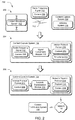
- FIG. 2 depicts a system 200 in an example implementation showing operation of the content capture system 104 of FIG. 1 in greater detail as capturing "over the air” content.
- the system 200 is illustrated using first, second, and third stages 202, 204, 206.
- the content capture system 104 employs an antenna system 116 to capture a broadcast of radio frequency signals 112 from a content broadcast system 102 "over the air.”
- the radio frequency signals 112 are used to carry the content 208 as an analog signal or a digital signal, i.e., in a numerically encoded form. As previously described, this may include a variety of types of content, such as television or radio content.
- a signal conversion module 118 of the content capture system 104 converts the content 208 as carried by the radio frequency signal 112 into an internet protocol format 210.
- a variety of internet protocol formats 210 may be used to store and transport the content 208 digitally, an example of which includes an MPEG transport stream (MPEG-TS).
- MPEG transport stream is a digital content format for transmission and storage of audio, video, or other data that specifies a container format to encapsulate packetized elementary streams.
- the signal conversion module 118 may be implemented in a variety of ways.
- the signal conversion module 118 is implemented as an RF to IP video processor as part of a rack-mounted system.
- the system includes a plurality of interchangeable components (e.g., circuit boards) that are configured to decode different formats of the content 208 as received via the radio frequency signal 112 that are employed by different content broadcast systems 102.
- the content capture system 104 may be deployed across a variety of geographic locations across the globe by providing a corresponding component that is configured to decode the broadcast.
- the signal conversion module 118 may assign a timestamp 212 to respective portions of the content, e.g., packets as part of a header.
- the timestamp 212 may be used to control an order of output and navigation within the content 208 when rendering, as well as for synchronization with other content captured by other content capture systems as further described in relation to FIG. 5 .
- a network transmission module 120 is employed to communicate the content 208 via a network 110 to a content distribution system 106. To do so, the network transmission module 120 configures the content 208 in the internet protocol format 210 according to a network transfer protocol 214, e.g., through use of a transmission server and a network deployment switch.
- a network transfer protocol 214 e.g., through use of a transmission server and a network deployment switch.
- a variety of different network transfer protocols 214 may be used, such as HTTPS.
- the network transmission module 120 may form a plurality of "chunks" of the content 208. These chunks are included as a payload 216 that is transferred over the network 110 as specified by the HTTPS protocol, e.g., supporting authentication and encryption to protect against potentially malicious parties.
- the content 208 included as the payload 216 is a full-bitrate version of the content 208 as converted by the signal conversion module 118 and thus preserves an output richness of the content 208 for receipt by the content distribution system 106.
- the content capture system 104 may be implemented using relatively inexpensive devices that cost a fraction of conventional proprietary systems, e.g., cost less than twenty percent of these conventional systems, which use data processing hardware at the capture site.
- the content capture system 104 is a "light" system in this example in that the system is responsible for capture and communication of the content 208 with minimal processing. Further processing of the content 208, such as packetizing or error correction, is then performed by the content distribution system 106 (e.g., "in the cloud") and thus can take advantage of efficiencies and robustness of server farms and large backend systems, an example of which is further described in the following.
- FIG. 3 depicts a system 300 in an example implementation showing operation of the content distribution system 106 to distribute content 208 received via the network 110 from the content capture system 104 of FIG. 2 .
- This system 300 is also illustrated using first, second, and third stages 302, 304, 306.
- the content distribution system 106 receives the content via a network transfer protocol 214 from the content capture system 104.
- the content 208 for instance, is a full bitrate version as captured by the content capture system 104 that is communicated via the internet using HTTPS.
- the content 208 received via the network transfer protocol 214 is configured by a distribution management module 122 for streaming via a network streaming protocol 308.
- the distribution management module 122 may form the content 208 into a plurality of segments and generate a manifest that describes those segments, e.g., in accordance with MPEG-DASH.
- the distribution management module 122 may then store the content 208 in storage 310 for streaming via the network to a plurality of client devices 108(1), ..., 108(n), ..., 108(N) as shown at the third stage 306.
- FIG. 4 depicts an example user interface 400 that is output by the content distribution system 106 to the plurality of client devices 108 to select content from the content distribution system 106 for output and rendering.
- the user interface 400 is generated by the content distribution system 106 and distributed for output by the plurality of client devices 108.
- the user interface 400 may be output by the client devices 108 in a variety of ways, such as via a browser, dedicated application, and so forth.
- the user interface 400 includes a title 402, 404 of the content, an originator 406, 408 of the content, and a picture-in-picture 410, 412 feed of the content.
- a user may select any of these portions to cause streaming of the represented content from the content distribution system 106. In this way, a user of the client devices 108 may access a wide range of content from a variety of geographic locations.
- FIG. 5 depicts a system 500 in an example implementation in which the content distribution system 106 is configured to control operation of and leverage content obtained from a plurality of content capture systems 104(1)-104(N).
- Content capture and distribution is bifurcated across the content capture system 104 and content distribution system 106.
- the content capture system 104 may be implemented using relatively inexpensive devices when compared to conventional dedicated hardware systems. Because of this, a plurality of content capture systems 104 may be employed to capture a same (i.e., matching) broadcast of content from a content distribution system 102.
- a plurality of content capture systems 104(1)-104(N) are configured to capture radio frequency signals 112 having the same broadcast of content.
- the content capture systems 104(1)-104(N) each include respective antenna systems 116(1)-116(N), signal conversion modules 118(1)-118(N), and network transmission modules 120(1)-120(N) as previously described in relation to FIG. 2 . Accordingly, the plurality of content capture systems 104(1)-104(N) provide a plurality of content 208(1)-208(N) via the network 110 to the content distribution system 106.
- the content distribution system 106 may leverage redundancy of this content 208(1)-208(N) in a variety of ways.
- the distribution management module 112 uses the content 208(1)-208(N) to repair errors that may be caused as part of capture (e.g., interference in the radio frequency signals), conversion, and/or transmission over the network 110 to the content distribution system 106.
- the distribution management module 112 is configured to automatically select a particular copy of a chunk of the content 208 based on a redundancy comparison between different copies of the chunk. The comparison may indicate that the particular copy of the chunk is healthier, e.g., has less data corruption, than another copy of the chunk. In this way, the healthiest copy of each chunk is used for streaming the content 208 to the client devices 108. Further, the comparison of chunks of the same content and the selection of the healthiest chunk can be performed automatically at the content distribution system and without user intervention.
- the content 208(1)-208(N) may be used to address potential outages, e.g., of the content capture systems 104(1)-104(N) or network functionality used to communicate the content 208(1)-208(N) over the network 110. This may be performed by switching between transmissions due to these outages.
- Implementation of the content distribution system 106 may also be distributed, e.g., across a plurality of server farms. For example, a first server farm may receive content 208(1) while another server farm receives content 208(N). In this way, operation of the content distribution system 106 itself is also protected against potential outages of the server farms, thereby improving robustness of the overall system.
- the content distribution system 106 also includes a capture management module 124.
- the capture management module 124 is representative of functionality implemented at least partially in hardware of the content distribution system 106 to manage capture of content by respective content capture systems 104(1)-104(N).
- the capture management module 124 may control "when" and "how" the content capture systems 104(1)-104(N) capture content, e.g., times to turn on and frequencies used to capture the content. In this way, bifurcation of the system used to capture and distribute content may provide rich content in an efficient manner.
- FIG. 6 depicts a procedure 600 in an example implementation in which over-the-air content is captured and distributed.
- Remote capture of radio frequency signals that carry content by a plurality of content capture systems in each of a plurality of geographic areas is managed (block 602).
- the content capture system 104 includes an antenna system 116 configured to capture radio frequency signals 112 from a content broadcast system 102.
- This functionality is managed by the distribution management module 122 of the content distribution system 106 in FIG. 3 .
- the content is then converted from radio frequency signals that carry the content into an internet protocol format by the content capture system, such as in accordance with an MPEG-TS
- Transmission of the content is managed according to a hypertext transfer protocol (HTTP) for receipt by a content distribution system via a network (block 604).
- HTTP hypertext transfer protocol
- multiple copies of the content captured by the plurality of content capture systems from a same broadcast source can be transmitted to the content distribution system to enable redundancy checks and error correction of one or more of the copies.
- the content Upon receipt, the content is configured by the content distribution system for streaming via a network streaming protocol (block 606), such as through use of a manifest and segments in accordance with MPEG-DASH.
- the content is then streamed by the content distribution system via the network using the network streaming protocol for receipt and rendering by at least one client device (block 610).
- the plurality of client devices 108 may interact with the user interface 400 of FIG. 4 to select particular items of interest for streaming to the client device 108.
- FIG. 7 illustrates an example system generally at 700 that includes an example computing device 702 that is representative of one or more computing systems and/or devices that may implement the various techniques described herein. This is illustrated through inclusion of the content distribution system 106.
- the computing device 702 may be, for example, a server of a service provider, a device associated with a client (e.g., a client device), an on-chip system, and/or any other suitable computing device or computing system to implement all or parts of the content broadcast system 102, content capture system 104, content distribution system 106, and/or plurality of client devices 108.
- the example computing device 702 as illustrated includes a processing system 704, one or more computer-readable media 706, and one or more I/O interface 708 that are communicatively coupled, one to another.
- the computing device 702 may further include a system bus or other data and command transfer system that couples the various components, one to another.
- a system bus can include any one or combination of different bus structures, such as a memory bus or memory controller, a peripheral bus, a universal serial bus, and/or a processor or local bus that utilizes any of a variety of bus architectures.
- a variety of other examples are also contemplated, such as control and data lines.
- the processing system 704 is representative of functionality to perform one or more operations using hardware. Accordingly, the processing system 704 is illustrated as including hardware element 710 that may be configured as processors, functional blocks, and so forth. This may include implementation in hardware as an application specific integrated circuit or other logic device formed using one or more semiconductors.
- the hardware elements 710 are not limited by the materials from which they are formed or the processing mechanisms employed therein.
- processors may be comprised of semiconductor(s) and/or transistors (e.g., electronic integrated circuits (ICs)).
- processor-executable instructions may be electronically-executable instructions.
- the computer-readable storage media 706 is illustrated as including memory/storage 712.
- the memory/storage 712 represents memory/storage capacity associated with one or more computer-readable media.
- the memory/storage component 712 may include volatile media (such as random access memory (RAM)) and/or nonvolatile media (such as read only memory (ROM), Flash memory, optical disks, magnetic disks, and so forth).
- the memory/storage component 712 may include fixed media (e.g., RAM, ROM, a fixed hard drive, and so on) as well as removable media (e.g., Flash memory, a removable hard drive, an optical disc, and so forth).
- the computer-readable media 706 may be configured in a variety of other ways as further described below.
- Input/output interface(s) 708 are representative of functionality to allow a user to enter commands and information to computing device 702, and also allow information to be presented to the user and/or other components or devices using various input/output devices.
- input devices include a keyboard, a cursor control device (e.g., a mouse), a microphone, a scanner, touch functionality (e.g., capacitive or other sensors that are configured to detect physical touch), a camera (e.g., which may employ visible or non-visible wavelengths such as infrared frequencies to recognize movement as gestures that do not involve touch), and so forth.
- Examples of output devices include a display device (e.g., a monitor or projector), speakers, a printer, a network card, tactile-response device, and so forth.
- the computing device 702 may be configured in a variety of ways as further described below to support user interaction.
- modules include routines, programs, objects, elements, components, data structures, and so forth that perform particular tasks or implement particular abstract data types.
- module generally represent software, firmware, hardware, or a combination thereof.
- the features of the techniques described herein are platform-independent, meaning that the techniques may be implemented on a variety of commercial computing platforms having a variety of processors.
- Computer-readable media may include a variety of media that may be accessed by the computing device 702.
- computer-readable media may include "computer-readable storage media” and "computer-readable signal media.”
- Computer-readable storage media may refer to media and/or devices that enable persistent and/or non-transitory storage of information in contrast to mere signal transmission, carrier waves, or signals per se. Thus, computer-readable storage media refers to non-signal bearing media.
- the computer-readable storage media includes hardware such as volatile and non-volatile, removable and non-removable media and/or storage devices implemented in a method or technology suitable for storage of information such as computer readable instructions, data structures, program modules, logic elements/circuits, or other data.
- Examples of computer-readable storage media may include, but are not limited to, RAM, ROM, EEPROM, flash memory or other memory technology, CD-ROM, digital versatile disks (DVD) or other optical storage, hard disks, magnetic cassettes, magnetic tape, magnetic disk storage or other magnetic storage devices, or other storage device, tangible media, or article of manufacture suitable to store the desired information and which may be accessed by a computer.
- Computer-readable signal media may refer to a signal-bearing medium that is configured to transmit instructions to the hardware of the computing device 702, such as via a network.
- Signal media typically may embody computer readable instructions, data structures, program modules, or other data in a modulated data signal, such as carrier waves, data signals, or other transport mechanism.
- Signal media also include any information delivery media.
- modulated data signal means a signal that has one or more of its characteristics set or changed in such a manner as to encode information in the signal.
- communication media include wired media such as a wired network or direct-wired connection, and wireless media such as acoustic, RF, infrared, and other wireless media.
- hardware elements 710 and computer-readable media 706 are representative of modules, programmable device logic and/or fixed device logic implemented in a hardware form that may be employed in some embodiments to implement at least some aspects of the techniques described herein, such as to perform one or more instructions.
- Hardware may include components of an integrated circuit or on-chip system, an application-specific integrated circuit (ASIC), a field-programmable gate array (FPGA), a complex programmable logic device (CPLD), and other implementations in silicon or other hardware.
- ASIC application-specific integrated circuit
- FPGA field-programmable gate array
- CPLD complex programmable logic device
- hardware may operate as a processing device that performs program tasks defined by instructions and/or logic embodied by the hardware as well as a hardware utilized to store instructions for execution, e.g., the computer-readable storage media described previously.
- software, hardware, or executable modules may be implemented as one or more instructions and/or logic embodied on some form of computer-readable storage media and/or by one or more hardware elements 710.
- the computing device 702 may be configured to implement particular instructions and/or functions corresponding to the software and/or hardware modules. Accordingly, implementation of a module that is executable by the computing device 702 as software may be achieved at least partially in hardware, e.g., through use of computer-readable storage media and/or hardware elements 710 of the processing system 704.
- the instructions and/or functions may be executable/operable by one or more articles of manufacture (for example, one or more computing devices 702 and/or processing systems 704) to implement techniques, modules, and examples described herein.
- the techniques described herein may be supported by various configurations of the computing device 702 and are not limited to the specific examples of the techniques described herein. This functionality may also be implemented all or in part through use of a distributed system, such as over a "cloud" 714 via a platform 716 as described below.
- the cloud 714 includes and/or is representative of a platform 716 for resources 718.
- the platform 716 abstracts underlying functionality of hardware (e.g., servers) and software resources of the cloud 714.
- the resources 718 may include applications and/or data that can be utilized while computer processing is executed on servers that are remote from the computing device 702.
- Resources 718 can also include services provided over the Internet and/or through a subscriber network, such as a cellular or Wi-Fi network.
- the platform 716 may abstract resources and functions to connect the computing device 702 with other computing devices.
- the platform 716 may also serve to abstract scaling of resources to provide a corresponding level of scale to encountered demand for the resources 718 that are implemented via the platform 716.
- implementation of functionality described herein may be distributed throughout the system 700.
- the functionality may be implemented in part on the computing device 702 as well as via the platform 716 that abstracts the functionality of the cloud 714.
Landscapes
- Engineering & Computer Science (AREA)
- Multimedia (AREA)
- Signal Processing (AREA)
- Databases & Information Systems (AREA)
- Computer Networks & Wireless Communication (AREA)
- Physics & Mathematics (AREA)
- Human Computer Interaction (AREA)
- Mechanical Engineering (AREA)
- Astronomy & Astrophysics (AREA)
- General Physics & Mathematics (AREA)
- Thermal Sciences (AREA)
- Sustainable Development (AREA)
- Life Sciences & Earth Sciences (AREA)
- Information Transfer Between Computers (AREA)
- Two-Way Televisions, Distribution Of Moving Picture Or The Like (AREA)
- Cleaning Of Streets, Tracks, Or Beaches (AREA)
Claims (14)
- Inhaltsverteilungssystem (106), umfassend:ein Erfassungsverwaltungsmodul (124), welches mindestens teilweise in Hardware implementiert ist, um Folgendes zu verwalten:Erfassen von Sendungen von Funkfrequenzsignalen (112), welche Inhalte aus einer Mehrzahl von Inhaltserfassungssystemen (104) aufweisen, wobei die Mehrzahl von Inhaltserfassungssystemen konfiguriert ist, um Funkfrequenzsignale (112) zu empfangen, welche übereinstimmende Inhalte (208) aufweisen, welche durch eine einzelne Sendungsquelle (102) übertragen werden; undÜbertragen der Inhalte an ein Verteilungsverwaltungsmodul (122), gemäß eines Internetprotokoll (IP)-Formats (210) durch die Mehrzahl von Inhaltserfassungssystemen, wie von den Funkfrequenzsignalen (112) umgewandelt; undwobei das Verteilungsverwaltungsmodul (122) mindestens teilweise in Hardware implementiert ist, zum:Empfangen von einer jeweiligen ersten und zweiten Übertragung der übereinstimmenden Inhalte (208) von dem ersten und dem zweiten Inhaltserfassungssystem, wobei jede der ersten und der zweiten Übertragung eine Mehrzahl von Stücken der übereinstimmenden Inhalte (208) umfasst, welche von der einzelnen Sendungsquelle (102) erfasst werden;Reparieren eines Fehlers in den Inhalten (208) unter Verwendung der ersten und der zweiten Übertragung der Inhalte durch automatisches Auswählen einer bestimmten Kopie eines Stücks der Inhalte (208) von der ersten oder der zweiten Übertragung basierend auf einem Redundanzvergleich, welcher anzeigt, welche der ersten und der zweiten Übertragung weniger Datenbeschädigung enthält, wobei der Vergleich ferner anzeigt, dass die bestimmte Kopie des Stücks von der ersten oder der zweiten Übertragung weniger Datenbeschädigung aufweist, als eine andere Kopie des Stücks der Inhalte von der ersten oder der zweiten Übertragung; undStreamen der reparierten Inhalte, welche von der Mehrzahl von Inhaltserfassungssystemen über ein Netzwerk-Streaming-Protokoll (308) empfangen werden, über ein Netzwerk, an entsprechende Clientvorrichtungen aus einer Mehrzahl von Clientvorrichtungen (108).
- Inhaltsverteilungssystem (106) nach Anspruch 1, wobei die Inhalte (208) Fernseh- oder Radioinhalte sind, welche über Funk unter Verwendung der Funkfrequenzsignale ausgesendet werden.
- Inhaltsverteilungssystem (106) nach Anspruch 1, wobei das Erfassungsverwaltungsmodul (124) konfiguriert ist, um die Erfassung der Sendungen durch die Mehrzahl von Inhaltssystemen (104) zu verwalten, indem gesteuert wird, wann eine Frequenz oder welche Frequenz zum Ausführen der Erfassung durch ein entsprechendes System aus der Mehrzahl von Inhaltserfassungssystemen (104) verwendet wird.
- Inhaltsverteilungssystem (106) nach Anspruch 1, wobei ein erstes Inhaltserfassungssystem (104) an einem geographischen Ort angeordnet ist, der von dem geographischen Ort eines zweiten Inhaltserfassungssystems (104) unterschiedlich ist, um unterschiedliche Inhalte zu erfassen.
- Inhaltsverteilungssystem (106) nach Anspruch 1, wobei das Verteilungsverwaltungsmodul (122) konfiguriert ist, um zwischen der ersten und der zweiten Übertragung der Inhalte (208) als Reaktion auf ein Versagen beim Empfang einer der ersten oder der zweiten Übertragung umzuschalten.
- Inhaltsverteilungssystem (106) nach Anspruch 1, wobei die Übertragung von digitalen Daten, welche den Inhalt des Inhaltserfassungssystems aufweisen, ein Hypertextübertragungsprotokoll anwendet.
- Inhaltsverteilungssystem (106) nach Anspruch 1, wobei das Netzwerk-Streaming-Protokoll (308) ein Manifest und eine Mehrzahl von Segmenten der Inhalte anwendet, wie in dem Manifest spezifiziert.
- Inhaltsverteilungssystem nach Anspruch 1, wobei das Verteilungsverwaltungsmodul (122) konfiguriert ist, um eine Benutzerschnittstelle (400) zur Ausgabe durch entsprechende Clientvorrichtungen aus der Mehrzahl von Clientvorrichtungen (108) zur Verfügung zu stellen, wobei die Benutzerschnittstelle (400) konfiguriert ist, um eine Benutzerauswahl von mindestens einem aus einer Mehrzahl von unterschiedlichen Elementen der Inhalte (208) zu empfangen, welche durch entsprechende aus der Mehrzahl von Inhaltserfassungssystemen (104) zum Streamen zu den und zum Rendern durch entsprechende Clientvorrichtungen aus der Mehrzahl von Clientvorrichtungen (108) erfasst werden.
- Verfahren, umfassend:Verwalten der entfernten Erfassung von Funkfrequenzsignalen, welche Inhalte enthalten, wobei die Verwaltung durch ein Inhaltsverteilungssystem (106) ausgeführt wird, welches konfiguriert ist, um eine Mehrzahl von Inhaltserfassungssystemen (104) zu verwalten, wobei die Mehrzahl von Inhaltserfassungssystemen (104) konfiguriert ist, um Funkfrequenzsignale (112) zu empfangen, welche übereinstimmende Inhalte (208) aufweisen, welche durch eine einzelne Sendequelle (102) übertragen werden;Verwalten der Übertragung der Inhalte gemäß eines Hypertextübertragungsprotokolls (http) zum Empfang durch das Inhaltsverteilungssystem (106) über ein Netzwerk, wobei die Übertragung die erste und die zweite Übertragung umfasst, welche jeweils eine Mehrzahl von Stücken von übereinstimmenden Inhalten umfassen, welche von einer einzelnen Sendequelle (102) erfasst wurden;Konfigurieren der Inhalte durch das Inhaltsverteilungssystem (106) zum Streamen über ein Netzwerk-Streaming-Protokoll (308), wobei das Konfigurieren das Reparieren eines Fehlers in den Inhalten unter Verwendung der ersten und der zweiten Übertragung der Inhalte (208) von dem ersten und dem zweiten der Inhaltserfassungssysteme (104) umfasst, welche die Funkfrequenzsignale von der einzelnen Sendequelle (102) erfassen, und wobei das Reparieren des Fehlers in den Inhalten unter Verwendung der ersten und der zweiten Übertragung der Inhalte auf einem Redundanzvergleich basiert, welcher angibt, welche von der ersten und der zweiten Übertragung weniger Datenbeschädigung enthält;wobei das Reparieren des Fehlers in den Inhalten (208) basierend auf dem Redundanzvergleich ferner das automatische Auswählen einer besonderen Kopie eines Stücks der Inhalte aus der ersten oder der zweiten Übertragung basierend auf dem Redundanzvergleich umfasst, wobei der Vergleich ferner angibt, dass die besondere Kopie des Stücks aus der ersten oder der zweiten Übertragung weniger Datenbeschädigung als eine andere Kopie des Stücks der Inhalte aus der ersten oder der zweiten Übertragung aufweist; undStreamen der reparierten Inhalte durch das Inhaltsverteilungssystems (106) über das Netzwerk unter Verwendung des Netzwerk-Streaming-Protokolls (308) zum Empfang und zum Rendern durch die mindestens eine Clientvorrichtung (108).
- Verfahren nach Anspruch 9, wobei die Inhalte Fernseh- oder Radioinhalte sind, welche über Funk unter Verwendung der Funkfrequenzsignale (112) ausgesendet werden.
- Verfahren nach Anspruch 9, wobei das Netzwerk-Streaming-Protokoll (308) ein Manifest und eine Mehrzahl von Segmenten der Inhalte anwendet, wie in dem Manifest spezifiziert.
- Verfahren nach Anspruch 9, wobei das Konfigurieren das Umschalten zwischen einer ersten und einer zweiten Übertragung der Inhalte (208) von dem ersten und von dem zweiten der Mehrzahl von Inhaltserfassungssystemen (104) umfasst, welche die Funkfrequenzsignale (112) von einer einzelnen Sendequelle (102) erfassen, als Reaktion auf ein Versagen beim Empfang einer Übertragung aus der ersten oder der zweiten Übertragung.
- Verfahren nach Anspruch 9, wobei die Inhalte Zeitstempel (212) umfassen, welche entsprechenden Abschnitten der Inhalte zugeordnet sind.
- Verfahren nach Anspruch 13, wobei die Übertragung der Inhalte eine Version mit voller Bitrate der Inhalte ist, welche durch das Inhaltserfassungssystem (104) aus den Funkfrequenzsignalen (112) umgewandelt wird.
Applications Claiming Priority (2)
| Application Number | Priority Date | Filing Date | Title |
|---|---|---|---|
| US201662402882P | 2016-09-30 | 2016-09-30 | |
| PCT/US2017/054563 WO2018064607A1 (en) | 2016-09-30 | 2017-09-29 | Content capture and distribution system |
Publications (2)
| Publication Number | Publication Date |
|---|---|
| EP3466087A1 EP3466087A1 (de) | 2019-04-10 |
| EP3466087B1 true EP3466087B1 (de) | 2020-03-18 |
Family
ID=60120165
Family Applications (1)
| Application Number | Title | Priority Date | Filing Date |
|---|---|---|---|
| EP17785106.0A Active EP3466087B1 (de) | 2016-09-30 | 2017-09-29 | Inhaltserfassungs- und verteilungssystem |
Country Status (6)
| Country | Link |
|---|---|
| US (2) | US20180093645A1 (de) |
| EP (1) | EP3466087B1 (de) |
| JP (1) | JP6644946B2 (de) |
| KR (1) | KR102155971B1 (de) |
| CN (1) | CN110073664B (de) |
| WO (1) | WO2018064607A1 (de) |
Families Citing this family (2)
| Publication number | Priority date | Publication date | Assignee | Title |
|---|---|---|---|---|
| US12441276B2 (en) | 2022-10-13 | 2025-10-14 | Austin Kemp | Vehicle wheel well heating system |
| CN119611534B (zh) * | 2024-12-25 | 2025-12-12 | 东风商用车有限公司 | 一种车用挡泥板及其控制方法、车用挡泥系统 |
Family Cites Families (40)
| Publication number | Priority date | Publication date | Assignee | Title |
|---|---|---|---|---|
| BE876681A (fr) * | 1978-06-14 | 1979-11-30 | Bfg Glassgroup | Procede de fabrication d'un panneau comprenant au moins une cellule photovoltaique et panneau comprenant au moins une telle cellule |
| US4848510A (en) * | 1988-03-23 | 1989-07-18 | Ahmed Mohamed I | Snow and ice melting system for automotive vehicles |
| US5100175A (en) * | 1990-11-29 | 1992-03-31 | Swallow Carl L | Tire traction enhancing kit |
| US6237861B1 (en) * | 1999-06-10 | 2001-05-29 | Thomas M. Northrop | Window deicer and anti-icer |
| US20020023165A1 (en) * | 2000-01-28 | 2002-02-21 | Lahr Nils B. | Method and apparatus for encoder-based distribution of live video and other streaming content |
| US6812900B2 (en) * | 2001-11-07 | 2004-11-02 | Lear Corporation | Vehicle seating system capable of receiving and transmitting radio frequency signals |
| US6808450B2 (en) * | 2002-12-04 | 2004-10-26 | Christopher E. Snow | Solar powered heating and ventilation system for vehicle |
| JP2005065232A (ja) * | 2003-07-25 | 2005-03-10 | Victor Co Of Japan Ltd | ストリームデータの記録再生方法 |
| US6848726B1 (en) * | 2003-12-19 | 2005-02-01 | Carl Horsham | Traction enhancing system |
| US6946621B1 (en) * | 2005-02-10 | 2005-09-20 | Roseman David M | Automotive safety device for melting snow and ice from roadways |
| US20070113370A1 (en) * | 2005-08-22 | 2007-05-24 | August Trofe | Apparatus and method for removing snow from a surface using a heated air current |
| US20070044825A1 (en) * | 2005-08-23 | 2007-03-01 | Joanie Dalessandro | Wheel well deicer |
| EP1917155A1 (de) * | 2005-08-24 | 2008-05-07 | Thomas A. Ward | Hybridfahrzeug mit modularem sonnenkollektor und batterieladesystem zur einsparung von bremsvorgängen zur regeneration |
| WO2007056834A1 (en) * | 2005-11-17 | 2007-05-24 | Mario Smiljanic | Compressor device for cleaning and drying the wheel tyre tread at braking |
| US20080083719A1 (en) * | 2006-09-08 | 2008-04-10 | Bartucco John J | Fender well deicer (defroster) |
| US7693630B1 (en) * | 2006-12-15 | 2010-04-06 | Mitchell Dwayne R | Snow melting system |
| FR2921680B1 (fr) * | 2007-10-02 | 2012-10-19 | Solar Composites | Dispositif support de panneaux photovoltaiques sur une toiture, comprenant des moyens supports autorisant une circulation d'air entre un plan de base et le panneau photovoltaique |
| US9416503B1 (en) * | 2008-07-24 | 2016-08-16 | Isaac Sargent | Road surface seam sealing and drying apparatus |
| DE102008053605A1 (de) * | 2008-10-17 | 2010-04-29 | Ammersee Solar Gmbh | Generatorwagen |
| US8388056B2 (en) * | 2009-05-08 | 2013-03-05 | ReAnna Gayle Smith | Heated collapsible article of furniture |
| CN102422558B (zh) | 2009-05-14 | 2015-04-08 | 三菱电机株式会社 | 数字广播接收装置 |
| US20130057214A1 (en) * | 2010-06-16 | 2013-03-07 | Rolls-Royce Plc | Charging system for an electric vehicle |
| US8965432B2 (en) * | 2010-11-18 | 2015-02-24 | Aereo, Inc. | Method and system for processing antenna feeds using separate processing pipelines |
| US9510061B2 (en) * | 2010-12-03 | 2016-11-29 | Arris Enterprises, Inc. | Method and apparatus for distributing video |
| GB201102002D0 (en) * | 2011-02-07 | 2011-03-23 | Knight Michael D | Solar panel |
| US20120304240A1 (en) * | 2011-05-27 | 2012-11-29 | Romulus Pereira | Method and apparatus for selecting audiovisual content for streaming |
| DE102011083811A1 (de) * | 2011-09-30 | 2013-04-04 | Airbus Operations Gmbh | Sitzvorrichtung für ein Luft- oder Raumfahrzeug |
| US20130191858A1 (en) * | 2012-01-25 | 2013-07-25 | Aereo, Inc. | Broadcast Encoding, Recording and Distribution System and Method |
| US8752112B2 (en) * | 2012-04-12 | 2014-06-10 | Google Inc. | Live streaming video processing |
| US20130326918A1 (en) * | 2012-06-11 | 2013-12-12 | Yahya Muhammad | Exterior Defrost System for Automobile |
| US8799390B2 (en) * | 2012-06-11 | 2014-08-05 | Nimble TV, Inc. | Remote subscription management method and system |
| US9101222B2 (en) * | 2012-10-05 | 2015-08-11 | Jarett Minkoff | Fan-cooled collapsible canopy chair |
| US9903617B2 (en) * | 2013-03-15 | 2018-02-27 | Hotstart, Inc. | Engine heater control system |
| EP3075086A1 (de) * | 2013-11-25 | 2016-10-05 | Saronikos Trading and Services, Unipessoal Lda. | Verfahren und system zum übertragen und empfangen von terrestrischen digitalen rundfunksignalen für radio und tv und zugehöriger sender, empfangssystem, transmodulator und empfänger |
| US10158678B2 (en) * | 2014-06-25 | 2018-12-18 | Lg Electronics Inc. | Broadcast signal transmission device, broadcast signal receiving device, broadcast signal transmission method and broadcast signal receiving method |
| US9908514B1 (en) * | 2015-01-12 | 2018-03-06 | Raymond Lopez | Heat distribution system |
| WO2016196468A1 (en) * | 2015-06-02 | 2016-12-08 | Christopher Wilkinson | Apparatus for removal and processing of frozen or semi-frozen materials |
| US20170036512A1 (en) * | 2015-08-04 | 2017-02-09 | Harold James (Jim) Willard, JR. | System to prevent harm to children, pets or others left in unattended vehicles in hot weather |
| US20170182982A1 (en) * | 2015-12-29 | 2017-06-29 | Christopher Wilkinson | Jet heaters for a motorized vehicle |
| US20170291141A1 (en) * | 2016-04-07 | 2017-10-12 | My Aqueduct, LLC | Portable water collection and filtration system |
-
2017
- 2017-09-21 US US15/711,481 patent/US20180093645A1/en not_active Abandoned
- 2017-09-29 US US15/721,481 patent/US10723326B2/en active Active
- 2017-09-29 CN CN201780041718.7A patent/CN110073664B/zh active Active
- 2017-09-29 KR KR1020197000210A patent/KR102155971B1/ko active Active
- 2017-09-29 EP EP17785106.0A patent/EP3466087B1/de active Active
- 2017-09-29 JP JP2019505222A patent/JP6644946B2/ja active Active
- 2017-09-29 WO PCT/US2017/054563 patent/WO2018064607A1/en not_active Ceased
Non-Patent Citations (1)
| Title |
|---|
| None * |
Also Published As
| Publication number | Publication date |
|---|---|
| US10723326B2 (en) | 2020-07-28 |
| JP2019525339A (ja) | 2019-09-05 |
| US20180093645A1 (en) | 2018-04-05 |
| WO2018064607A1 (en) | 2018-04-05 |
| KR20190015749A (ko) | 2019-02-14 |
| JP6644946B2 (ja) | 2020-02-12 |
| US20180097859A1 (en) | 2018-04-05 |
| CN110073664B (zh) | 2021-10-15 |
| KR102155971B1 (ko) | 2020-09-15 |
| CN110073664A (zh) | 2019-07-30 |
| EP3466087A1 (de) | 2019-04-10 |
Similar Documents
| Publication | Publication Date | Title |
|---|---|---|
| CN105340257B (zh) | 用于过渡到新服务的分布系统 | |
| CN108605161B (zh) | 减少接收、处理或切换内容时的延迟的方法和装置 | |
| US20150230046A1 (en) | Apparatus and method for playing music | |
| US10723326B2 (en) | Content capture and distribution system | |
| CN113747183A (zh) | 一种直播视频分享方法、系统及可读存储介质 | |
| JP6278529B2 (ja) | メディアネットワーク内のローカルコンテンツ格納のためのシステム、方法、及びコンピュータ可読媒体 | |
| US11611799B2 (en) | ATSC 3 application context switching and sharing | |
| US9674306B2 (en) | Method and system for communicating from a client device to a server device in a centralized content distribution system | |
| US11190835B2 (en) | Intelligent unload of broadcaster application on channel change | |
| KR20160094001A (ko) | 휴대 단말을 통한 융합방송 모니터링 장치 및 융합방송 모니터링이 가능한 휴대 단말 | |
| CN113784219B (zh) | 终端设备升级方法、终端设备、控制系统及存储介质 | |
| US11848716B2 (en) | Techniques for ATSC 3.0 broadcast boundary area management using signal quality and packet errors to differentiate between duplicated services on different frequencies during scan | |
| US10812750B2 (en) | Electronic device and operation method therefor | |
| US20230043881A1 (en) | Techniques for atsc 3.0 broadcast boundary area management using complete service reception during scan to determine signal quality of frequencies carrying the duplicate service | |
| KR102809570B1 (ko) | Atsc 3 애플리케이션 컨텍스트 스위칭 및 공유 | |
| AU2016256802B2 (en) | Digital content streaming to loss intolerant streaming clients | |
| US12382110B1 (en) | Transparent media asset substitution using broadcast delivery systems | |
| US11601707B2 (en) | Techniques for ATSC 3.0 broadcast boundary area management using plural tuners | |
| WO2026047772A1 (en) | A plug-in receiver | |
| WO2023012747A1 (en) | Techniques for atsc 3.0 broadcast boundary area management using plural tuners with different numbers of antennae | |
| WO2023012732A1 (en) | Techniques for atsc 3.0 broadcast boundary area management using complete service reception during scan to determine signal quality of frequencies carrying the duplicate service | |
| WO2023012727A1 (en) | Techniques for atsc 3.0 broadcast boundary area management using signal quality and packet errors to differentiate between duplicated services on different frequencies during scan | |
| WO2023012756A1 (en) | Techniques for atsc 3.0 broadcast boundary area management using plural tuners handing off between presentation and scanning | |
| WO2023012746A1 (en) | Techniques for atsc 3.0 broadcast boundary area management using plural tuners | |
| CN116724554A (zh) | Atsc 3应用上下文切换和共享 |
Legal Events
| Date | Code | Title | Description |
|---|---|---|---|
| STAA | Information on the status of an ep patent application or granted ep patent |
Free format text: STATUS: UNKNOWN |
|
| STAA | Information on the status of an ep patent application or granted ep patent |
Free format text: STATUS: THE INTERNATIONAL PUBLICATION HAS BEEN MADE |
|
| PUAI | Public reference made under article 153(3) epc to a published international application that has entered the european phase |
Free format text: ORIGINAL CODE: 0009012 |
|
| STAA | Information on the status of an ep patent application or granted ep patent |
Free format text: STATUS: REQUEST FOR EXAMINATION WAS MADE |
|
| 17P | Request for examination filed |
Effective date: 20190103 |
|
| AK | Designated contracting states |
Kind code of ref document: A1 Designated state(s): AL AT BE BG CH CY CZ DE DK EE ES FI FR GB GR HR HU IE IS IT LI LT LU LV MC MK MT NL NO PL PT RO RS SE SI SK SM TR |
|
| AX | Request for extension of the european patent |
Extension state: BA ME |
|
| GRAP | Despatch of communication of intention to grant a patent |
Free format text: ORIGINAL CODE: EPIDOSNIGR1 |
|
| STAA | Information on the status of an ep patent application or granted ep patent |
Free format text: STATUS: GRANT OF PATENT IS INTENDED |
|
| DAV | Request for validation of the european patent (deleted) | ||
| DAX | Request for extension of the european patent (deleted) | ||
| INTG | Intention to grant announced |
Effective date: 20191007 |
|
| GRAS | Grant fee paid |
Free format text: ORIGINAL CODE: EPIDOSNIGR3 |
|
| GRAA | (expected) grant |
Free format text: ORIGINAL CODE: 0009210 |
|
| STAA | Information on the status of an ep patent application or granted ep patent |
Free format text: STATUS: THE PATENT HAS BEEN GRANTED |
|
| AK | Designated contracting states |
Kind code of ref document: B1 Designated state(s): AL AT BE BG CH CY CZ DE DK EE ES FI FR GB GR HR HU IE IS IT LI LT LU LV MC MK MT NL NO PL PT RO RS SE SI SK SM TR |
|
| REG | Reference to a national code |
Ref country code: GB Ref legal event code: FG4D |
|
| REG | Reference to a national code |
Ref country code: DE Ref legal event code: R096 Ref document number: 602017013375 Country of ref document: DE |
|
| REG | Reference to a national code |
Ref country code: AT Ref legal event code: REF Ref document number: 1247288 Country of ref document: AT Kind code of ref document: T Effective date: 20200415 Ref country code: IE Ref legal event code: FG4D |
|
| PG25 | Lapsed in a contracting state [announced via postgrant information from national office to epo] |
Ref country code: NO Free format text: LAPSE BECAUSE OF FAILURE TO SUBMIT A TRANSLATION OF THE DESCRIPTION OR TO PAY THE FEE WITHIN THE PRESCRIBED TIME-LIMIT Effective date: 20200618 Ref country code: FI Free format text: LAPSE BECAUSE OF FAILURE TO SUBMIT A TRANSLATION OF THE DESCRIPTION OR TO PAY THE FEE WITHIN THE PRESCRIBED TIME-LIMIT Effective date: 20200318 Ref country code: RS Free format text: LAPSE BECAUSE OF FAILURE TO SUBMIT A TRANSLATION OF THE DESCRIPTION OR TO PAY THE FEE WITHIN THE PRESCRIBED TIME-LIMIT Effective date: 20200318 |
|
| REG | Reference to a national code |
Ref country code: NL Ref legal event code: MP Effective date: 20200318 |
|
| PG25 | Lapsed in a contracting state [announced via postgrant information from national office to epo] |
Ref country code: LV Free format text: LAPSE BECAUSE OF FAILURE TO SUBMIT A TRANSLATION OF THE DESCRIPTION OR TO PAY THE FEE WITHIN THE PRESCRIBED TIME-LIMIT Effective date: 20200318 Ref country code: SE Free format text: LAPSE BECAUSE OF FAILURE TO SUBMIT A TRANSLATION OF THE DESCRIPTION OR TO PAY THE FEE WITHIN THE PRESCRIBED TIME-LIMIT Effective date: 20200318 Ref country code: HR Free format text: LAPSE BECAUSE OF FAILURE TO SUBMIT A TRANSLATION OF THE DESCRIPTION OR TO PAY THE FEE WITHIN THE PRESCRIBED TIME-LIMIT Effective date: 20200318 Ref country code: GR Free format text: LAPSE BECAUSE OF FAILURE TO SUBMIT A TRANSLATION OF THE DESCRIPTION OR TO PAY THE FEE WITHIN THE PRESCRIBED TIME-LIMIT Effective date: 20200619 Ref country code: BG Free format text: LAPSE BECAUSE OF FAILURE TO SUBMIT A TRANSLATION OF THE DESCRIPTION OR TO PAY THE FEE WITHIN THE PRESCRIBED TIME-LIMIT Effective date: 20200618 |
|
| REG | Reference to a national code |
Ref country code: LT Ref legal event code: MG4D |
|
| PG25 | Lapsed in a contracting state [announced via postgrant information from national office to epo] |
Ref country code: NL Free format text: LAPSE BECAUSE OF FAILURE TO SUBMIT A TRANSLATION OF THE DESCRIPTION OR TO PAY THE FEE WITHIN THE PRESCRIBED TIME-LIMIT Effective date: 20200318 |
|
| PG25 | Lapsed in a contracting state [announced via postgrant information from national office to epo] |
Ref country code: EE Free format text: LAPSE BECAUSE OF FAILURE TO SUBMIT A TRANSLATION OF THE DESCRIPTION OR TO PAY THE FEE WITHIN THE PRESCRIBED TIME-LIMIT Effective date: 20200318 Ref country code: LT Free format text: LAPSE BECAUSE OF FAILURE TO SUBMIT A TRANSLATION OF THE DESCRIPTION OR TO PAY THE FEE WITHIN THE PRESCRIBED TIME-LIMIT Effective date: 20200318 Ref country code: PT Free format text: LAPSE BECAUSE OF FAILURE TO SUBMIT A TRANSLATION OF THE DESCRIPTION OR TO PAY THE FEE WITHIN THE PRESCRIBED TIME-LIMIT Effective date: 20200812 Ref country code: SM Free format text: LAPSE BECAUSE OF FAILURE TO SUBMIT A TRANSLATION OF THE DESCRIPTION OR TO PAY THE FEE WITHIN THE PRESCRIBED TIME-LIMIT Effective date: 20200318 Ref country code: CZ Free format text: LAPSE BECAUSE OF FAILURE TO SUBMIT A TRANSLATION OF THE DESCRIPTION OR TO PAY THE FEE WITHIN THE PRESCRIBED TIME-LIMIT Effective date: 20200318 Ref country code: RO Free format text: LAPSE BECAUSE OF FAILURE TO SUBMIT A TRANSLATION OF THE DESCRIPTION OR TO PAY THE FEE WITHIN THE PRESCRIBED TIME-LIMIT Effective date: 20200318 Ref country code: SK Free format text: LAPSE BECAUSE OF FAILURE TO SUBMIT A TRANSLATION OF THE DESCRIPTION OR TO PAY THE FEE WITHIN THE PRESCRIBED TIME-LIMIT Effective date: 20200318 Ref country code: IS Free format text: LAPSE BECAUSE OF FAILURE TO SUBMIT A TRANSLATION OF THE DESCRIPTION OR TO PAY THE FEE WITHIN THE PRESCRIBED TIME-LIMIT Effective date: 20200718 |
|
| REG | Reference to a national code |
Ref country code: AT Ref legal event code: MK05 Ref document number: 1247288 Country of ref document: AT Kind code of ref document: T Effective date: 20200318 |
|
| REG | Reference to a national code |
Ref country code: DE Ref legal event code: R097 Ref document number: 602017013375 Country of ref document: DE |
|
| PLBE | No opposition filed within time limit |
Free format text: ORIGINAL CODE: 0009261 |
|
| STAA | Information on the status of an ep patent application or granted ep patent |
Free format text: STATUS: NO OPPOSITION FILED WITHIN TIME LIMIT |
|
| PG25 | Lapsed in a contracting state [announced via postgrant information from national office to epo] |
Ref country code: ES Free format text: LAPSE BECAUSE OF FAILURE TO SUBMIT A TRANSLATION OF THE DESCRIPTION OR TO PAY THE FEE WITHIN THE PRESCRIBED TIME-LIMIT Effective date: 20200318 Ref country code: AT Free format text: LAPSE BECAUSE OF FAILURE TO SUBMIT A TRANSLATION OF THE DESCRIPTION OR TO PAY THE FEE WITHIN THE PRESCRIBED TIME-LIMIT Effective date: 20200318 Ref country code: IT Free format text: LAPSE BECAUSE OF FAILURE TO SUBMIT A TRANSLATION OF THE DESCRIPTION OR TO PAY THE FEE WITHIN THE PRESCRIBED TIME-LIMIT Effective date: 20200318 Ref country code: DK Free format text: LAPSE BECAUSE OF FAILURE TO SUBMIT A TRANSLATION OF THE DESCRIPTION OR TO PAY THE FEE WITHIN THE PRESCRIBED TIME-LIMIT Effective date: 20200318 |
|
| 26N | No opposition filed |
Effective date: 20201221 |
|
| PG25 | Lapsed in a contracting state [announced via postgrant information from national office to epo] |
Ref country code: PL Free format text: LAPSE BECAUSE OF FAILURE TO SUBMIT A TRANSLATION OF THE DESCRIPTION OR TO PAY THE FEE WITHIN THE PRESCRIBED TIME-LIMIT Effective date: 20200318 |
|
| REG | Reference to a national code |
Ref country code: CH Ref legal event code: PL |
|
| PG25 | Lapsed in a contracting state [announced via postgrant information from national office to epo] |
Ref country code: SI Free format text: LAPSE BECAUSE OF FAILURE TO SUBMIT A TRANSLATION OF THE DESCRIPTION OR TO PAY THE FEE WITHIN THE PRESCRIBED TIME-LIMIT Effective date: 20200318 |
|
| REG | Reference to a national code |
Ref country code: BE Ref legal event code: MM Effective date: 20200930 |
|
| PG25 | Lapsed in a contracting state [announced via postgrant information from national office to epo] |
Ref country code: LU Free format text: LAPSE BECAUSE OF NON-PAYMENT OF DUE FEES Effective date: 20200929 |
|
| PG25 | Lapsed in a contracting state [announced via postgrant information from national office to epo] |
Ref country code: FR Free format text: LAPSE BECAUSE OF NON-PAYMENT OF DUE FEES Effective date: 20200930 |
|
| PG25 | Lapsed in a contracting state [announced via postgrant information from national office to epo] |
Ref country code: CH Free format text: LAPSE BECAUSE OF NON-PAYMENT OF DUE FEES Effective date: 20200930 Ref country code: BE Free format text: LAPSE BECAUSE OF NON-PAYMENT OF DUE FEES Effective date: 20200930 Ref country code: LI Free format text: LAPSE BECAUSE OF NON-PAYMENT OF DUE FEES Effective date: 20200930 Ref country code: IE Free format text: LAPSE BECAUSE OF NON-PAYMENT OF DUE FEES Effective date: 20200929 |
|
| PG25 | Lapsed in a contracting state [announced via postgrant information from national office to epo] |
Ref country code: TR Free format text: LAPSE BECAUSE OF FAILURE TO SUBMIT A TRANSLATION OF THE DESCRIPTION OR TO PAY THE FEE WITHIN THE PRESCRIBED TIME-LIMIT Effective date: 20200318 Ref country code: MT Free format text: LAPSE BECAUSE OF FAILURE TO SUBMIT A TRANSLATION OF THE DESCRIPTION OR TO PAY THE FEE WITHIN THE PRESCRIBED TIME-LIMIT Effective date: 20200318 Ref country code: CY Free format text: LAPSE BECAUSE OF FAILURE TO SUBMIT A TRANSLATION OF THE DESCRIPTION OR TO PAY THE FEE WITHIN THE PRESCRIBED TIME-LIMIT Effective date: 20200318 |
|
| PG25 | Lapsed in a contracting state [announced via postgrant information from national office to epo] |
Ref country code: MK Free format text: LAPSE BECAUSE OF FAILURE TO SUBMIT A TRANSLATION OF THE DESCRIPTION OR TO PAY THE FEE WITHIN THE PRESCRIBED TIME-LIMIT Effective date: 20200318 Ref country code: MC Free format text: LAPSE BECAUSE OF FAILURE TO SUBMIT A TRANSLATION OF THE DESCRIPTION OR TO PAY THE FEE WITHIN THE PRESCRIBED TIME-LIMIT Effective date: 20200318 Ref country code: AL Free format text: LAPSE BECAUSE OF FAILURE TO SUBMIT A TRANSLATION OF THE DESCRIPTION OR TO PAY THE FEE WITHIN THE PRESCRIBED TIME-LIMIT Effective date: 20200318 |
|
| P01 | Opt-out of the competence of the unified patent court (upc) registered |
Effective date: 20230508 |
|
| PGFP | Annual fee paid to national office [announced via postgrant information from national office to epo] |
Ref country code: DE Payment date: 20250929 Year of fee payment: 9 |
|
| PGFP | Annual fee paid to national office [announced via postgrant information from national office to epo] |
Ref country code: GB Payment date: 20250929 Year of fee payment: 9 |