EP3463575B1 - Methods and compositions for modulating lymphatic vessels in the central nervous system - Google Patents
Methods and compositions for modulating lymphatic vessels in the central nervous system Download PDFInfo
- Publication number
- EP3463575B1 EP3463575B1 EP17807427.4A EP17807427A EP3463575B1 EP 3463575 B1 EP3463575 B1 EP 3463575B1 EP 17807427 A EP17807427 A EP 17807427A EP 3463575 B1 EP3463575 B1 EP 3463575B1
- Authority
- EP
- European Patent Office
- Prior art keywords
- subject
- meningeal
- mice
- cells
- composition
- Prior art date
- Legal status (The legal status is an assumption and is not a legal conclusion. Google has not performed a legal analysis and makes no representation as to the accuracy of the status listed.)
- Active
Links
Images










































Classifications
-
- A—HUMAN NECESSITIES
- A61—MEDICAL OR VETERINARY SCIENCE; HYGIENE
- A61K—PREPARATIONS FOR MEDICAL, DENTAL OR TOILETRY PURPOSES
- A61K38/00—Medicinal preparations containing peptides
- A61K38/16—Peptides having more than 20 amino acids; Gastrins; Somatostatins; Melanotropins; Derivatives thereof
- A61K38/17—Peptides having more than 20 amino acids; Gastrins; Somatostatins; Melanotropins; Derivatives thereof from animals; from humans
- A61K38/1703—Peptides having more than 20 amino acids; Gastrins; Somatostatins; Melanotropins; Derivatives thereof from animals; from humans from vertebrates
- A61K38/1709—Peptides having more than 20 amino acids; Gastrins; Somatostatins; Melanotropins; Derivatives thereof from animals; from humans from vertebrates from mammals
-
- A—HUMAN NECESSITIES
- A61—MEDICAL OR VETERINARY SCIENCE; HYGIENE
- A61K—PREPARATIONS FOR MEDICAL, DENTAL OR TOILETRY PURPOSES
- A61K38/00—Medicinal preparations containing peptides
- A61K38/16—Peptides having more than 20 amino acids; Gastrins; Somatostatins; Melanotropins; Derivatives thereof
- A61K38/17—Peptides having more than 20 amino acids; Gastrins; Somatostatins; Melanotropins; Derivatives thereof from animals; from humans
- A61K38/18—Growth factors; Growth regulators
- A61K38/1825—Fibroblast growth factor [FGF]
-
- A—HUMAN NECESSITIES
- A61—MEDICAL OR VETERINARY SCIENCE; HYGIENE
- A61K—PREPARATIONS FOR MEDICAL, DENTAL OR TOILETRY PURPOSES
- A61K38/00—Medicinal preparations containing peptides
- A61K38/16—Peptides having more than 20 amino acids; Gastrins; Somatostatins; Melanotropins; Derivatives thereof
- A61K38/17—Peptides having more than 20 amino acids; Gastrins; Somatostatins; Melanotropins; Derivatives thereof from animals; from humans
- A61K38/18—Growth factors; Growth regulators
- A61K38/1858—Platelet-derived growth factor [PDGF]
- A61K38/1866—Vascular endothelial growth factor [VEGF]
-
- A—HUMAN NECESSITIES
- A61—MEDICAL OR VETERINARY SCIENCE; HYGIENE
- A61K—PREPARATIONS FOR MEDICAL, DENTAL OR TOILETRY PURPOSES
- A61K41/00—Medicinal preparations obtained by treating materials with wave energy or particle radiation ; Therapies using these preparations
- A61K41/0057—Photodynamic therapy with a photosensitizer, i.e. agent able to produce reactive oxygen species upon exposure to light or radiation, e.g. UV or visible light; photocleavage of nucleic acids with an agent
-
- A—HUMAN NECESSITIES
- A61—MEDICAL OR VETERINARY SCIENCE; HYGIENE
- A61K—PREPARATIONS FOR MEDICAL, DENTAL OR TOILETRY PURPOSES
- A61K41/00—Medicinal preparations obtained by treating materials with wave energy or particle radiation ; Therapies using these preparations
- A61K41/0057—Photodynamic therapy with a photosensitizer, i.e. agent able to produce reactive oxygen species upon exposure to light or radiation, e.g. UV or visible light; photocleavage of nucleic acids with an agent
- A61K41/0071—PDT with porphyrins having exactly 20 ring atoms, i.e. based on the non-expanded tetrapyrrolic ring system, e.g. bacteriochlorin, chlorin-e6, or phthalocyanines
-
- A—HUMAN NECESSITIES
- A61—MEDICAL OR VETERINARY SCIENCE; HYGIENE
- A61N—ELECTROTHERAPY; MAGNETOTHERAPY; RADIATION THERAPY; ULTRASOUND THERAPY
- A61N5/00—Radiation therapy
- A61N5/06—Radiation therapy using light
- A61N5/0613—Apparatus adapted for a specific treatment
- A61N5/062—Photodynamic therapy, i.e. excitation of an agent
-
- A—HUMAN NECESSITIES
- A61—MEDICAL OR VETERINARY SCIENCE; HYGIENE
- A61P—SPECIFIC THERAPEUTIC ACTIVITY OF CHEMICAL COMPOUNDS OR MEDICINAL PREPARATIONS
- A61P25/00—Drugs for disorders of the nervous system
-
- A—HUMAN NECESSITIES
- A61—MEDICAL OR VETERINARY SCIENCE; HYGIENE
- A61P—SPECIFIC THERAPEUTIC ACTIVITY OF CHEMICAL COMPOUNDS OR MEDICINAL PREPARATIONS
- A61P25/00—Drugs for disorders of the nervous system
- A61P25/28—Drugs for disorders of the nervous system for treating neurodegenerative disorders of the central nervous system, e.g. nootropic agents, cognition enhancers, drugs for treating Alzheimer's disease or other forms of dementia
-
- C—CHEMISTRY; METALLURGY
- C07—ORGANIC CHEMISTRY
- C07K—PEPTIDES
- C07K16/00—Immunoglobulins [IG], e.g. monoclonal or polyclonal antibodies
- C07K16/18—Immunoglobulins [IG], e.g. monoclonal or polyclonal antibodies against material from animals or humans
- C07K16/22—Immunoglobulins [IG], e.g. monoclonal or polyclonal antibodies against material from animals or humans against growth factors ; against growth regulators
-
- C—CHEMISTRY; METALLURGY
- C07—ORGANIC CHEMISTRY
- C07K—PEPTIDES
- C07K16/00—Immunoglobulins [IG], e.g. monoclonal or polyclonal antibodies
- C07K16/18—Immunoglobulins [IG], e.g. monoclonal or polyclonal antibodies against material from animals or humans
- C07K16/28—Immunoglobulins [IG], e.g. monoclonal or polyclonal antibodies against material from animals or humans against receptors, cell surface antigens or cell surface determinants
- C07K16/2863—Immunoglobulins [IG], e.g. monoclonal or polyclonal antibodies against material from animals or humans against receptors, cell surface antigens or cell surface determinants against receptors for growth factors, growth regulators
-
- A—HUMAN NECESSITIES
- A61—MEDICAL OR VETERINARY SCIENCE; HYGIENE
- A61N—ELECTROTHERAPY; MAGNETOTHERAPY; RADIATION THERAPY; ULTRASOUND THERAPY
- A61N5/00—Radiation therapy
- A61N5/06—Radiation therapy using light
- A61N5/067—Radiation therapy using light using laser light
Definitions
- AD Alzheimer's Disease
- Degenerative neurological diseases include degenerative and inflammatory neurological diseases.
- AD Alzheimer's Disease
- Degenerative neurological diseases include dementia worldwide (Andrieu et al., 2015) and is distinctively characterized by early and marked cognitive impairment (Andrieu et al., 2015; Ballard et al., 2011).
- the vast majority (>98%) of AD cases are sporadic (Blennow et al., 2006), and in such cases the etiology of the amyloid pathology is poorly understood (Benilova et al., 2012; Blennow et al., 2006).
- AD amyloid precursor protein
- presenilins 1 and 2 drive the uncontrolled formation of amyloid-beta
- the brain's pathological hallmarks of AD are intracellular neurofibrillary tangles and extracellular amyloid plaques, the latter being a product of the amyloidogenic processing of APP and the resulting deposition of amyloid-beta in the brain parenchyma (Benilova et al., 2012; Hardy and Selkoe, 2002; Ittner and Götz, 2011).
- Increasing aggregation of diffusible amyloid-beta peptides from the ISF and the CSF into toxic oligomeric intermediates and their accumulation in the brain parenchyma are believed to be precipitating factors for different neuroinflammatory abnormalities (Guillot-Sestier et al., 2015; Hong et al., 2016; Matarin et al., 2015), such as the formation of neurofibrillary tangles (Ittner and Götz, 2011) and the pronounced neuronal dysfunction (Palop et al., 2007; Sun et al., 2009; Walsh et al., 2002) in the AD brain.
- MS Multiple Sclerosis
- EP 1 32 098 relates to the introduction hepatocyte growth factor (HGF) gene and/or vascular endothelial growth factor (VEGF) gene into the subarachnoid space in humans for the treatment of cerebrovascular disorders.
- HGF hepatocyte growth factor
- VEGF vascular endothelial growth factor
- Stopa E et al, Cerebrospinal Fluid Research, 2009, 6(Suppl I):54 relates to altered ependymal and leptomeninges in transgenic mice that overexpress FGF2 and amyloid precursor protein.
- Louveau A et al, Nature, 2015, 523(7560), 337-341 relates to structural and functional features of central nervous system lymphatic vessels.
- Tarasoff-Conway JM et al., Nature Review Neurology, 2015, 8(21), 457-470 relates to clearance systems in the brains in the context of Alzeimer disease.
- Organs generally function less effectively with age. For example, skin becomes less elastic, muscle tone is lost, and heart function declines. Aging is a substantial risk factor for numerous neurological diseases, including neurodegenerative diseases and inflammatory neurological diseases.
- Modulating lymphatic vessels in accordance with some embodiments, are used to treat, prevent, or ameliorate symptoms of neurodegenerative diseases such as Alzheimer's disease (AD).
- AD Alzheimer's disease
- Some embodiments include a composition comprising an effective amount of aVEGFR3 agonist, which has at least 85% sequence identity to VEGF-c or VEGF-d, for use in a method of increasing flow of fluid in the central nervous system of a subject, the method comprising determining (e.g., identifying) the subject to be in need of increased fluid flow in the central nervous system, and administering an effective amount of the VEGFR3 agonist to a meningeal space of the subject in need, whereby said administration increases the diameter of a meningeal lymphatic vessel of the subject, thereby increasing fluid flow in the central nervous system of the subject.
- determining the subject to be in need of increased fluid flow comprises determining the subject to have a neurodegenerative disease, determining the subject to have a risk factor for the neurodegenerative disease, or both.
- the neurodegenerative disease is selected from the group consisting of one or more of the following: Alzheimer's disease (AD), dementia, Parkinson's disease, cerebral edema, amyotrophic lateral sclerosis (ALS), Pediatric Autoimmune Neuropsychiatric Disorders Associated with Streptococcal Infections (PANDAS), meningitis, hemorrhagic stroke, autism spectrum disorder (ASD), brain tumor, and epilepsy.
- determining the subject to be in need of increased fluid flow comprises determining the subject to have Alzheimer's disease. In some embodiments, determining the subject to be in need of increased fluid flow comprises determining the subject to have a risk factor for AD selected from the group consisting of at least one of the following: diploidy for apolipoprotein-E-epsilon-4 (apo-E-epsilon-4), a variant in apo-J, a variant in phosphatidylinositol-binding clathrin assembly protein (PICALM), a variant in complement receptor 1 (CR3), a variant in CD33 (Siglee-3), or a variant in triggering receptor expressed on myeloid cells 2 (TREM2), age, familial AD, or a symptom of dementia.
- apo-E-epsilon-4 diploidy for apolipoprotein-E-epsilon-4
- PICALM phosphatidylinositol-binding clathrin assembly protein
- the VEGFR3 agonist is administered selectively or otherwise localized to the meningeal space of the subject.
- the VEGFR3 agonist is administered to the subject by a route selected from the group consisting of at least one of the following: nasal administration, transcranial administration, contact with cerebral spinal fluid (CSF) of the subject, pumping into CSF of the subject, implantation into the skull or brain, contacting a thinned skull or skull portion of the subject with the VEGFR3 agonist, or expression in the subject of a nucleic acid encoding the VEGFR3 agonist, or a combination of any of the listed routes.
- the VEGFR3 agonist is administered.
- the VEGFR3 agonist has at least 85% sequence identity to VEGF-c or VEGF-d,.
- the effective amount of VEGFR3 agonist is administered to the subject after determining the subject to have the risk factor for the neurodegenerative disease.
- the effective amount of VEGFR3 agonist is administered to the subject after determining the subject to have the neurodegenerative disease.
- the diameter of the meningeal lymphatic vessel is increased by at least 5%, 10%, 15%, 20%, 30%, 50% or more (e.g., when post-administration is compared to pre-administration).
- the diameter of the meningeal lymphatic vessel is increased in a manner that increases flow of fluid in the CNS (e.g., brain), for example by at least 10%, 20%, 30%, 50%, or more (e.g., when post-administration is compared to pre-administration).
- increasing fluid flow in the central nervous system of the subject comprises increasing a rate of perfusion of fluid throughout an area of the subject's brain.
- the central nervous system of the subject comprises amyloid-beta plaques, and wherein increasing the fluid flow reduces the quantity of amyloid-beta plaques.
- increasing the flow reduces the quantity of accumulated amyloid-beta plaques by at least 5%.
- At least some of the accumulated amyloid-beta plaques are in the meninges of the subject's brain.
- increasing the fluid flow in the CNS increases clearance of soluble molecules in the brain of the subject (e.g., by at least 10%, 20%, 30%, 50%, or more).
- administration of the composition comprising the flow modulator in some embodiments increases the fluid flow in the CNS and increases clearance of soluble molecules in the CNS (e.g., brain, CSF) by more than about 10%, 20%, 30%, 50%, or more as compared to pre-administration.
- increasing the fluid comprises cerebral spinal fluid (CSF), interstitial fluid (ISF), or both.
- Several embodiments include reducing a quantity of accumulated amyloid-beta plaques in a subject having a neurodegenerative disease or a risk factor therefor. It comprises determining the subject to have the neurodegenerative disease or the risk factor, and administering a composition comprising of a VEGFR3 agonist to a meningeal space of the subject, so that fluid flow in the central nervous system of the subject is increased thus reducing the quantity of accumulated amyloid-beta plaques in the subject.
- at least some of the accumulated amyloid-beta plaques are in the meninges of the subject's brain.
- the quantity of accumulated amyloid-beta plaques is reduced by at least 5%, 10%, 20% or more.
- flow modulators increase the diameter of meningeal lymphatic vessels, which increases drainage, resulting in increased flow in the CSF and ISF. In some embodiments, flow modulators increase the number of meningeal lymphatic vessels, thus increasing net drainage, resulting in increased flow in the CSF and ISF.
- the flow modulators for increasing flow in accordance with various embodiments herein includeVEGFR3 agonists having at least 85% sequence identity to VEGF-c and VEGF-d.
- a flow modulator comprises or consists essentially of a polypeptide or protein that comprises a modification, for example a glycosylation, PEGylation, or the like.
- a composition for use as described herein comprises or consists essentially of a VEGFR3 agonist, which has at least 85% sequence identity to VEGF-c or VEGF-d, and a pharmaceutically acceptable diluent or carrier.
- a pharmaceutically acceptable carrier and formulations are described in " Remington: The Science and Practice of Pharmacy” 22nd Revised Edition, Pharmaceutical Press, Philadelphia, 2012 .
- the composition comprises or consists essentially of a unit dose of a flow modulator effective for increasing flow of CNS fluids, increasing clearance of molecules in the CNS and reducing a quantity of accumulated amyloid-beta plaques in accordance with compositions or uses as described herein.
- an effective amount of VEGFR3 agonist increases flow of the CSF or ISF by at least about 2%, for example, at least about 2%, 3%, 4%, 5%, 6%, 7%, 8%, 9%, 10%, 15%, 20%, 25%, 30%, 35%, 40%, 45%, 50%, 55%, 60%, 65%, 70%, or 75%, including ranges between any two of the listed values.
- exogenous nucleotides encoding a VEGFR3 agonist can also be suitable for compositions for uses in accordance with some embodiments herein. Accordingly, in some embodiments, a nucleotide encoding VEGF-c or VEGF-d as describe herein is expressed in a subject in order to administer the VEGFR3 agonist to a subject.
- the flow modulator is not administered systemically, but rather is administered to a fluid, tissue, or organ in fluid communication with the meningeal space, and on the brain side of the blood-brain barrier. In some embodiments, the flow modulator is not administered systemically, but rather is administered to the CNS. In some embodiments, the flow modulator is administered to the CNS, but is not administered to any organ or tissue outside of the CNS. In some embodiments, the flow modulator is not administered to the blood. In some embodiments, the flow modulator is not administered to a tumor, or to the vasculature of a tumor.
- the flow modulator is administered nasally.
- the flow modulator can be provided in a nasal spray, or can be contacted directly with a nasal mucous membrane.
- the flow modulator is administered through contacting with CSF of the subject.
- the flow modulator can be directly injected into CSF of a patient (for example into a ventricle of the brain).
- Suitable apparatuses for injection can include a syringe, or a pump that is inserted or implanted in the subject and in fluid communication with CSF.
- a composition comprising or consisting essentially of the flow modulator, for example a slow-release gel, is implanted in a subject so that it is in fluid communication with CSF of the subject, and thus contacts the CSF.
- the flow modulator is administered transcranially.
- a composition comprising or consisting essentially of the flow modulator such as a gel can be placed on an outer portion of the subject's skull, and can pass through the subject's skull.
- the flow modulator is contacted with a thinned portion of the subject's skull to facilitate transcranial delivery.
- the flow modulator is administered by expressing a nucleic acid encoding the flow modulator in the subject.
- a vector comprising or consisting essentially of the nucleic acid for example a viral vector such as a retroviral vector, lentiviral vector, or adenoviral vector, or adeno-associated viral vector (AAV) can be administered to a subject as described herein, for example via injection or inhalation.
- expression of the nucleic acid is induced in the subject, for example via a drug or optical regulator of transcription.
- the flow modulator i.e. the VEGFR3 agonist
- the flow modulator is administered selectively to the meningeal space of the subject, or is for use in administration selectively to the meningeal space of the subject.
- administered "selectively" and variations of the root term indicate that the flow modulator is administered preferentially to the indicated target (e.g. meningeal space) compared to other tissues or organs on the same side of the blood brain barrier.
- direct injection to meningeal spaces of the brain would represent "selective" administration, whereas administration to CSF in general via a spinal injection would not.
- the flow modulator is administered selectively to the meningeal space, and not to portions of the CNS outside of the meningeal space, nor to any tissues or organs outside of the CNS. In some embodiments, the flow modulator is administered selectively to the CNS, and not to tissue or organs outside of the CNS such as the peripheral nervous system, muscles, the gastrointestinal system, musculature, or vasculature.
- a flow modulator can be administered in a single administration, or in two or more administrations, which can be separated by a period of time.
- the flow modulator as described herein can be administered via a route of administration as described herein hourly, daily, every other day, every three days, every four days, every five days, every six days, weekly, biweekly, monthly, bimonthly, and the like.
- the flow administration is administered in a single administration, but not in any additional administrations.
- Some embodiments include methods of making a composition or medicament comprising or consisting essentially of a flow modulator as described herein suitable for administration according to a route of administration as described herein.
- a composition comprising or consisting essentially of a VEGFR3 agonist is prepared for nasal administration, administration to the CSF, or transcranial administration.
- a composition comprising or consisting essentially of a VEGFR3 antagonist is prepared for nasal administration, administration by contacting with CSF, or transcranial administration.
- compositions and their uses in accordance with some embodiments herein are useful for treating, preventing, inhibiting, ameliorating, or reducing the symptoms of one or more neurodegenerative diseases.
- These diseases can occur in subjects, for example humans, as well as non-human animals, such as non-human mammals, and non-human primates in particular.
- Neurodegenerative diseases associated with accumulation of macromolecules, cells, and debris in the CNS are treated, prevented, inhibited, or reduced by uses or compositions that increase flow, drainage, and/or clearance in meningeal lymphatic vessels.
- neurodegenerative diseases associated with accumulation of macromolecules, cells, and debris in the CNS are treated, prevented, inhibited, or reduced.
- Examples of neurodgenerative diseases include Alzheimer's disease (AD), dementia, Parkinson's disease, cerebral edema, amyotrophic lateral sclerosis (ALS), Pediatric Autoimmune Neuropsychiatric Disorders Associated with Streptococcal Infections (PANDAS), meningitis, hemorrhagic stroke, autism spectrum disorder (ASD), brain tumor, and epilepsy.
- the neurodegenerative disease can be prevented, treated, or ameliorated prophylactically.
- a subject having one or more risk factors for the neurodegenerative disease can be determined to be in need of receiving a use or composition described herein.
- a subject may have accumulated amyloid-beta plaques in their CNS, and may benefit from increased flow, increased drainage, increased clearance and/or reduction of amyloid-beta plaques, even if they do not yet have an AD diagnosis based on cognitive symptoms.
- a number of risk factors for AD are suitable as risk factors in accordance with compositions and uses of some embodiments herein, for example familial AD, a genetic marker for AD, or a symptom of AD such as early dementia.
- the foremost risk factor for sporadic AD is age.
- increased risk of this form of AD has also been attributed to diverse genetic abnormalities.
- One of them is diploidy for apolipoprotein-E ⁇ 4 (Apo-E ⁇ 4), widely viewed as a major genetic risk factor promoting both early onset of amyloid-beta aggregation and defective amyloid-beta clearance from the brain (Deane et al., 2008; Zlokovic, 2013).
- the risk factor for AD is selected from the group consisting of at least one of the following: diploidy for apolipoprotein-E-epsilon-4 (apo-E-epsilon-4), a variant in apo-J, a variant in phosphatidylinositol-binding clathrin assembly protein (PICALM), a variant in complement receptor 1 (CR3), a variant in CD33 (Siglee-3), or a variant in triggering receptor expressed on myeloid cells 2 (TREM2), age, or a symptom of dementia.
- apo-E-epsilon-4 diploidy for apolipoprotein-E-epsilon-4
- PICALM phosphatidylinositol-binding clathrin assembly protein
- CR3 complement receptor 1
- Siglee-3 a variant in CD33
- TREM2 myeloid cells 2
- compositions for use for increasing flow are provided.
- compositions for use for increasing flow in fluid in the central nervous system of a subject can include determining whether the subject is in need of increased fluid flow in the central nervous system. If the subject is in need of increased fluid flow, the composition for use can include administering an effective amount of VEGFR3 agonist to a meningeal space of the subject.
- the amount of VEGFR3 agonist can increase flow for example, by increasing the diameter of a meningeal lymphatic vessel of the subject, by increasing the quantity of meningeal lymphatic vessels of the subject, and/or by increasing drainage through meningeal lymphatic vessels of the subject.
- fluid flow in the central nervous system of the subject can be increased.
- the fluid comprises cerebral spinal fluid (CSF), interstitial fluid (ISF), or both.
- CSF cerebral spinal fluid
- ISF interstitial fluid
- the VEGFR3 agonist VEGF-c or VEGF-d or an analog, variant, or fragment thereof, more specifically, the VEGFR3 agonist has at least 85% sequence identity to VEGF-c or VEGF-d.
- compositions for use for increasing fluid flow in the CNS can be useful for treating, preventing, or ameliorating the symptoms of neurodegenerative diseases associated with the increased concentration and/or accumulation of molecules or cells or debris in the CNS.
- a subject can be determined to be in need of increased fluid flow by determining whether the subject has a neurodegenerative disease, or is at risk of developing a neurodegenerative disease.
- the disease can be associated with the increased concentrations and/or accumulation of molecules or cells or debris in the CNS, for example Alzheimer's Disease (AD).
- AD Alzheimer's Disease
- the subject can be determined to be at risk for the disease, for example through having familial occurrence of the disease, by having one or more genetic markers associated with the disease, through advanced age, or by exhibiting symptoms of the disease, for example early dementia in the case of AD.
- advanced age refers to an age characterized by a decrease in memory function, decrease in CSF production, substantial increases in neuronal senescence, and in the context of some embodiments, can include at least 65 years of age in a human, for example, at least 60, 65, 70, 75, 80, or 85, including ranges between any of these values.
- determining whether the subject is in need of increased fluid flow comprises determining the subject to have a neurodegenerative disease such as AD. In some embodiments, determining whether the subject is in need of increased fluid flow comprises determining the subject to have a risk factor for the neurodegenerative disease associated with the increased concentration and/or accumulation of molecules or macromolecules or cells or debris in the CNS as described herein. In some embodiments, determining whether the subject is in need of increased fluid flow comprises determining the subject to have a risk factor, and also determining the subject to have the disease itself.
- the neurodegenerative disease is selected from the group consisting of at least one of the following: Alzheimer's disease (AD), dementia, Parkinson's disease, cerebral edema, amyotrophic lateral sclerosis (ALS), Pediatric Autoimmune Neuropsychiatric Disorders Associated with Streptococcal Infections (PANDAS), meningitis, hemorrhagic stroke, autism spectrum disorder (ASD), brain tumor, and epilepsy.
- AD Alzheimer's disease
- dementia dementia
- Parkinson's disease cerebral edema
- ALS amyotrophic lateral sclerosis
- PANDAS Pediatric Autoimmune Neuropsychiatric Disorders Associated with Streptococcal Infections
- ASD autism spectrum disorder
- brain tumor and epilepsy.
- the neurodegenerative disease is Alzheimer's disease.
- the risk factor is a risk factor for Alzheimer's disease as described herein.
- the VEGFR3 agonist and/or FGF2 is administered to the subject after determining that the subject has a risk factor for the neurodegenerative disease (even if the subject does not necessarily have the disease itself), for example for prophylactic treatment or prevention. In some embodiments, the VEGFR3 agonist is administered to the subject after determining that the subject has the neurodegenerative disease.
- the VEGFR3 agonist is administered selectively to the meningeal space of the subject.
- the VEGFR3 agonist is administered to the meningeal space, but is not administered outside the CNS.
- the VEGFR3 agonist is administered to the meningeal space, but is not administered to the blood.
- the VEGFR3 agonist is administered to the subject by a route selected from the group consisting of at least one of the following: nasal administration, transcranial administration, contact with cerebral spinal fluid (CSF) of the subject, pumping into CSF of the subject, implantation into the skull or brain, contacting a thinned skull or skull portion of the subject with the VEGFR3 agonist, or expression in the subject of a nucleic acid encoding the VEGFR3 agonist, or a combination of any of the listed routes. In some embodiments, it is the VEGFR3 agonist that is administered.
- CSF cerebral spinal fluid
- the VEGFR3 agonist is selected from the group consisting of at least one of the following: VEGF-c, VEGF-d, or an analog, variant, or functional fragment thereof, more specifically, the VEGFR3 agonist has at least 85% sequence identity to VEGF-c or VEGF-d.
- the administration of the VEGFR3 agonist results in an increase in CNS fluid flow, meningeal lymphatic vessel diameter, meningeal lymphatic vessel number, meningeal lymphatic vessel drainage, or amelioration of symptoms of a neurodegenerative disease.
- the administration of the VEGFR3 agonist increases diameter of the meningeal lymphatic vessel is increased by at least about 5%, for example at least about 5%, 10%, 15%, 20%, 25%, 30%, 35%, 40%, 45% or 50%, including ranges between any two of the listed values.
- an average diameter of a population of meningeal lymphatic vessels of the subject is increased by a value noted herein.
- the subject is known to have the neurodegenerative disease, for example AD, dementia, Parkinson's disease, cerebral edema, amyotrophic lateral sclerosis (ALS), Pediatric Autoimmune Neuropsychiatric Disorders Associated with Streptococcal Infections (PANDAS), meningitis, hemorrhagic stroke, autism spectrum disorder (ASD), brain tumor, or epilepsy.
- the compositions for use further includes determining that the subject has the neurodegenerative disease. In some embodiments, for example if the compositions for use is prophylactic, it included determining whether the subject has the risk factor for the neurodegenerative disease, even if the subject does not necessarily have a diagnosis for the disease itself.
- compositionsfor use for increasing clearance of molecules from the CNS are Compositionsfor use for increasing clearance of molecules from the CNS
- a quantity of accumulated amyloid-beta plaques in the central nervous system, or the rate of accumulation thereof, is reduced by at least 2%, for example at least 2%, 3%, 4%, 5%, 6%, 7%, 8%, 9%, 10%, 15%, 20%, 25%, 30%, 35%, 40%, 45%, 50%, 55%, 60%, 65%, 70%, 75%, 80%, 85%, 90%, 95%, or 100% including ranges between any two of the listed values
- amyloid-beta plaques are cleared from meningeal portions of the central nervous system of the subject.
- increased fluid flow in the central nervous system of the subject comprises an increased rate of perfusion of fluid throughout an area of the subject's brain.
- lymphatic vessels e.g., meningeal lymphatic vessel(s)
- the term "comprises” is intended to include embodiments where the method, apparatus, composition, etc., consists essentially of and/or consists of the listed steps, components, etc.
- the term “consists essentially of” is intended to include embodiments where the method, apparatus, composition, etc., consists of the listed steps, components, etc.
- the claims may be drafted to exclude any optional element. As such, this statement is intended to serve as antecedent basis for use of such exclusive terminology as "solely,” “only” and the like in connection with the recitation of claim elements, or use of a “negative” limitation.
- the term "about” is used herein to provide literal support for the exact number that it precedes, as well as a number differs from the given number by less than 10%. In other embodiments, the term “about” indicates that the number differs from the given number by less than 9%, 8%, 7%, 6%, 5%, 4%, 3%, 2%, or 1%.
- Some aspects provide treating a condition with a neurological pathology in a subject comprising administering to the subject a therapeutically effective amount of a compound that modulates one or more of a) drainage of the meningeal lymphatic vessel(s); b) diameter of the meningeal lymphatic vessel(s); c) lymphangiogenesis of the meningeal lymphatic vessel(s); d) contractility of the meningeal lymphatic vessel(s); and/or e) permeability of the meningeal lymphatic vessel(s).
- the present disclosure also provides treating AD in a subject by administering to the subject a compound that increases drainage of the meningeal lymphatic vessel(s), increases the diameter of the meningeal lymphatic vessel(s), causes lymphangiogenesis of the meningeal lymphatic vessel(s), modulates contractility of the meningeal lymphatic vessel(s) to increase drainage, and/or modulates the permeability of the meningeal lymphatic vessel(s) to increase drainage.
- the present disclosure also provides of treating a brain tumor in a subject by administering to the subject a compound that increases drainage of the meningeal lymphatic vessel(s), increases the diameter of the meningeal lymphatic vessel(s), causes lymphangiogenesis of the meningeal lymphatic vessel(s), modulates contractility of the meningeal lymphatic vessel(s) to increase drainage, and/or modulates the permeability of the meningeal lymphatic vessel(s) to increase drainage.
- Some aspects include treating a condition with a neurological pathology in a subject by administering to the subject a therapeutically effective amount of a compound that modulates one or more of a) drainage of the meningeal lymphatic vessel(s), b) diameter of the meningeal lymphatic vessel(s), c) lymphangiogenesis of the meningeal lymphatic vessel(s), d) contractility of the meningeal lymphatic vessel(s); and/or e) permeability of the meningeal lymphatic vessel(s).
- it further comprises identifying a subject in need of said treatment.
- the subject in need of said treatment is susceptible to or suffering from the disorder selected from the group consisting AD, dementia, Parkinson's disease, cerebral edema, amyotrophic lateral sclerosis (ALS), epilepsy, brain tumor, Pediatric Autoimmune Neuropsychiatric Disorders Associated with Streptococcal Infections (PANDAS), meningitis, hemorrhagic stroke, autism spectrum disorder (ASD), MS, and myasthenia gravis.
- a therapeutically effective amount of said compound is administered.
- said compound is a vasodilator.
- said compound is a growth faction.
- Said growth factor is selected from the group consisting of VEGF-c and VEGF-d.
- said compound is noradrenaline.
- said compound is a vasoconstrictor.
- said compound is selected from the group consisting of nitric oxide competitor NG-monomethyl L-arginine, cyclo-oxygenase inhibitors, and phosphatidylcholine.
- said therapeutically effective amount of the compound is about 0.00015 mg/kg to about 1.5 mg/kg. In further embodiments, said therapeutically effective amount of the compound is about 0.00015 mg/kg, about 0.00030 mg/kg, about 0.00045 mg/kg, about 0.00060 mg/kg, about 0.00085 mg/kg, about 0.001 mg/kg, about 0.0015 mg/kg, about 0.002 mg/kg, about 0.0025 mg/kg, about 0.003 mg/kg, about 0.0035 mg/kg, about 0.004 mg/kg, about 0.0045 mg/kg, about 0.0050 mg/kg, about 0.0055 mg/kg, about 0.006 mg/kg, about 0.0065 mg/kg, about 0.007 mg/kg, about 0.0075 mg/kg, about 0.008 mg/kg, about 0.0085 mg/kg, about 0.009 mg/kg, about 0.0095 mg/kg, about 0.01 mg/kg, about 0.015 mg/kg, about 0.02 mg/kg, about 0.025 mg/kg.
- said therapeutically effective amount of the compound is less than about 0.00015 mg/kg, about 0.00030 mg/kg, about 0.00045 mg/kg, about 0.00060 mg/kg, about 0.00085 mg/kg, about 0.001 mg/kg, about 0.0015 mg/kg, about 0.002 mg/kg, about 0.0025 mg/kg, about 0.003 mg/kg, about 0.0035 mg/kg, about 0.004 mg/kg, about 0.0045 mg/kg, about 0.0050 mg/kg, about 0.0055 mg/kg, about 0.006 mg/kg, about 0.0065 mg/kg, about 0.007 mg/kg, about 0.0075 mg/kg, about 0.008 mg/kg, about 0.0085 mg/kg, about 0.009 mg/kg, about 0.0095 mg/kg, about 0.01 mg/kg, about 0.015 mg/kg, about 0.02 mg/kg, about 0.025 mg/kg, about 0.03 mg/kg, about 0.035 mg/kg, about 0.040 mg/kg, about 0.0095 mg/
- said therapeutically effective amount of the compound is more than about 0.00015 mg/kg, about 0.00030 mg/kg, about 0.00045 mg/kg, about 0.00060 mg/kg, about 0.00085 mg/kg, about 0.001 mg/kg, about 0.0015 mg/kg, about 0.002 mg/kg, about 0.0025 mg/kg, about 0.003 mg/kg, about 0.0035 mg/kg, about 0.004 mg/kg, about 0.0045 mg/kg, about 0.0050 mg/kg, about 0.0055 mg/kg, about 0.006 mg/kg, about 0.0065 mg/kg, about 0.007 mg/kg, about 0.0075 mg/kg, about 0.008 mg/kg, about 0.0085 mg/kg, about 0.009 mg/kg, about 0.0095 mg/kg, about 0.01 mg/kg, about 0.015 mg/kg, about 0.02 mg/kg, about 0.025 mg/kg, about 0.03 mg/kg, about 0.035 mg/kg, about 0.040 mg/kg, about 0.0095 mg/
- the compound is provided in soluble form. In some embodiments, the compound is provided absorbed in nanogels for slow and constant release. In certain embodiments, the compounds are provided on viral vectors which encode for the reagent that is a RNA or polypeptide.
- the compound is administered into the cerebrospinal fluid (CSF) of the subject.
- CSF cerebrospinal fluid
- an ointment comprises said compound and the ointment is administered via application of the ointment to the head of the subject.
- Treating dementia for example AD
- lymphangiogenic growth factors such as, VEGFC, VEGFD, FGF2
- VEGFC vascular endothelial growth factor
- VEGFD vascular endothelial growth factor
- FGF2 recombinant protein
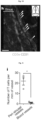
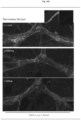
- the provided data indicates that single injection of recombinant VEGF-c into the CSF is sufficient to increase diameter of meningeal lymphatic vessels and increase drainage efficacy; ( FIG. 2e ) .
- Lymphatic drainage using multiphoton microscopy
- disease pathology quantification of A ⁇ deposition in the meninges and the brain
- behavior open field and Morris Water Maze
- Some embodiments include treating AD in a subject by administering to the subject a compound that increases drainage of the meningeal lymphatic vessel(s), increases the diameter of the meningeal lymphatic vessel(s), causes lymphangiogenesis of the meningeal lymphatic vessel(s), modulates contractility of the meningeal lymphatic vessel(s) to increase drainage, and/or modulates the permeability of the meningeal lymphatic vessel(s).
- the present disclosure further provides treating a brain tumor in a subject by administering to the subject a compound that increases drainage of the meningeal lymphatic vessel(s), increases the diameter of the meningeal lymphatic vessel(s), causes lymphangiogenesis of the meningeal lymphatic vessel(s), modulates contractility of the meningeal lymphatic vessel(s) to increase drainage, and/or modulates the permeability of the meningeal lymphatic vessel(s).
- Some aspects include reducing the number and/or volume of existing amyloid plaques or other misfolded proteins comprising administering to a subject a therapeutic effective amount of a compound that increases drainage of and/or increases the diameter of the meningeal lymphatic vessels.
- the subject is selected from the group consisting of subjects identified as being susceptible to Alzheimer's disease and subjects suffering from Alzheimer's disease.
- it further comprises identifying a subject in need of said treatment.
- the subject in need of said treatment is susceptible to or suffering from the disorder selected from the group consisting of AD and brain tumors.
- Identification of such subjects may be made using techniques known to a person of ordinary skill in the art.
- a therapeutically effective amount of said compound is administered.
- said compound is a vasodilator.
- said compound is a growth faction.
- said growth factor is selected from the group consisting of VEGF-c and VEGF-d.
- said compound is noradrenaline.
- said therapeutically effective amount of the compound is about 0.00015 mg/kg to about 1.5 mg/kg. In further embodiments, said therapeutically effective amount of the compound is about 0.00015 mg/kg, about 0.00030 mg/kg, about 0.00045 mg/kg, about 0.00060 mg/kg, about 0.00085 mg/kg, about 0.001 mg/kg, about 0.0015 mg/kg, about 0.002 mg/kg, about 0.0025 mg/kg, about 0.003 mg/kg, about 0.0035 mg/kg, about 0.004 mg/kg, about 0.0045 mg/kg, about 0.0050 mg/kg, about 0.0055 mg/kg, about 0.006 mg/kg, about 0.0065 mg/kg, about 0.007 mg/kg, about 0.0075 mg/kg, about 0.008 mg/kg, about 0.0085 mg/kg, about 0.009 mg/kg, about 0.0095 mg/kg, about 0.01 mg/kg, about 0.015 mg/kg, about 0.02 mg/kg, about 0.025 mg/kg.
- said therapeutically effective amount of the compound is less than about 0.00015 mg/kg, about 0.00030 mg/kg, about 0.00045 mg/kg, about 0.00060 mg/kg, about 0.00085 mg/kg, about 0.001 mg/kg, about 0.0015 mg/kg, about 0.002 mg/kg, about 0.0025 mg/kg, about 0.003 mg/kg, about 0.0035 mg/kg, about 0.004 mg/kg, about 0.0045 mg/kg, about 0.0050 mg/kg, about 0.0055 mg/kg, about 0.006 mg/kg, about 0.0065 mg/kg, about 0.007 mg/kg, about 0.0075 mg/kg, about 0.008 mg/kg, about 0.0085 mg/kg, about 0.009 mg/kg, about 0.0095 mg/kg, about 0.01 mg/kg, about 0.015 mg/kg, about 0.02 mg/kg, about 0.025 mg/kg, about 0.03 mg/kg, about 0.035 mg/kg, about 0.040 mg/kg, about 0.0095 mg/
- said therapeutically effective amount of the compound is more than about 0.00015 mg/kg, about 0.00030 mg/kg, about 0.00045 mg/kg, about 0.00060 mg/kg, about 0.00085 mg/kg, about 0.001 mg/kg, about 0.0015 mg/kg, about 0.002 mg/kg, about 0.0025 mg/kg, about 0.003 mg/kg, about 0.0035 mg/kg, about 0.004 mg/kg, about 0.0045 mg/kg, about 0.0050 mg/kg, about 0.0055 mg/kg, about 0.006 mg/kg, about 0.0065 mg/kg, about 0.007 mg/kg, about 0.0075 mg/kg, about 0.008 mg/kg, about 0.0085 mg/kg, about 0.009 mg/kg, about 0.0095 mg/kg, about 0.01 mg/kg, about 0.015 mg/kg, about 0.02 mg/kg, about 0.025 mg/kg, about 0.03 mg/kg, about 0.035 mg/kg, about 0.040 mg/kg, about 0.0095 mg/
- the compound is provided in soluble form. In some embodiments, the compound is provided absorbed in nanogels for slow and constant release. In certain embodiments, the compounds are provided on viral vectors which encode for the reagent that is a RNA or polypeptide.
- FIG. 8 An alternative to ablation approach, is a ligation of lymphatic vessels. As demonstrated in FIG. 7d , this method is feasible and has an effect on EAE. A more efficient method for ligation/ablation will likely yield more robust effect on EAE.
- T cells from mice will be used, ubiquitously expressing a photoconvertible fluorescent protein, and transfer them into T cell deficient hosts to study the kinetics of T cell migration into the meninges ( Nowotschin, S. & Hadjantonakis, A. K. Use of KikGR a photoconvertible green-to-red fluorescent protein for cell labeling and lineage analysis in ES cells and mouse embryos. BMC developmental biology 9, 49, doi:10.1186/1471-213X-9-49 (2009 )). T cells will be photo-labeled (green-to-red fluorescence; FIG. 9 ) in the sinusal area through the skull, or in the deep cervical lymph nodes, using survival surgery procedure.
- T cells After labeling, dynamics of T cell migration into the meninges will be studied during the resting state, and after EAE induction using two-photon microscopy, histological examination and flow cytometry.
- EAE induction using two-photon microscopy, histological examination and flow cytometry.
- T cells We expect T cells to recirculate between meninges and the deep cervical lymph nodes at a certain rate in healthy mice. This rate is expected to change upon EAE induction, when T cells are supposedly leaving meningeal spaces for massive proliferation in the deep cervical lymph nodes and then return and attack the brain.
- PD-L1 is highly expressed on brain lymphatic endothelial cells (data not shown) and we suggest it mediates tolerance to brain antigens. Mice will be injected with anti-PD-L1 neutralizing antibodies i.c.v. with EAE induction.
- TAM injection will be performed immediately prior to CFA/Mog immunization, 7 days after immunization (the time point when T cells are seen leaving the meningeal spaces), and day 10 post immunization (T cell numbers in the meningeal spaces were exploded when assessed at day 13 post immunization) to ensure prolonged ablation.
- Immune response at the spinal cord and cerebellum, and immune response in the meninges and the deep cervical lymph nodes will be assessed, including Teff activation and proliferation, Treg expansion, and intracellular cytokine expression (Th1 and Th17 profile of T cells) in all groups will be assessed at day 15 post immunization (early into clinical signs). Another group of mice will be kept for 3 weeks for behavioral evaluation and then sacrificed for a histological examination of the CNS.
- Photoablation will be performed immediately prior to CFA/Mog immunization, 7 days after immunization (the time point when T cells are seen leaving the meningeal spaces), and day 10 post immunization (T cell numbers in the meningeal spaces were exploded when assessed at day 13 post immunization).
- Immune response at the spinal cord and cerebellum, and immune response in the meninges and the deep cervical lymph nodes will be assessed, including Teff activation and proliferation, Treg expansion, and intracellular cytokine expression (Th1 and Th17 profile of T cells) in all groups will be assessed at day 15 post immunization (early into clinical signs).
- Another group of mice will be kept for 3 weeks for behavioral evaluation and then sacrificed for a histological examination of the CNS. We expect the mice with photoablated lymphatics to exhibit reduced T cell activation, decreased number of Th1/Th17 cells, and ameliorated disease progression.
- a specific depletion of meningeal T cells will be performed by transcranial application of a depleting anti-CD3e antibodies, an efficient procedure ( FIG. 11 ).
- a therapeutically effective amount of said compound is administered.
- said compound is a vasoconstrictor.
- said compound is selected from the group consisting of nitric oxide competitor NG-monomethyl L-arginine, cyclo-oxygenase inhibitors, and phosphatidylcholine.
- said therapeutically effective amount of the compound is about 0.00015 mg/kg to about 1.5 mg/kg. In further embodiments, said therapeutically effective amount of the compound is about 0.00015 mg/kg, about 0.00030 mg/kg, about 0.00045 mg/kg, about 0.00060 mg/kg, about 0.00085 mg/kg, about 0.001 mg/kg, about 0.0015 mg/kg, about 0.002 mg/kg, about 0.0025 mg/kg, about 0.003 mg/kg, about 0.0035 mg/kg, about 0.004 mg/kg, about 0.0045 mg/kg, about 0.0050 mg/kg, about 0.0055 mg/kg, about 0.006 mg/kg, about 0.0065 mg/kg, about 0.007 mg/kg, about 0.0075 mg/kg, about 0.008 mg/kg, about 0.0085 mg/kg, about 0.009 mg/kg, about 0.0095 mg/kg, about 0.01 mg/kg, about 0.015 mg/kg, about 0.02 mg/kg, about 0.025 mg/kg.
- said therapeutically effective amount of the compound is less than about 0.00015 mg/kg, about 0.00030 mg/kg, about 0.00045 mg/kg, about 0.00060 mg/kg, about 0.00085 mg/kg, about 0.001 mg/kg, about 0.0015 mg/kg, about 0.002 mg/kg, about 0.0025 mg/kg, about 0.003 mg/kg, about 0.0035 mg/kg, about 0.004 mg/kg, about 0.0045 mg/kg, about 0.0050 mg/kg, about 0.0055 mg/kg, about 0.006 mg/kg, about 0.0065 mg/kg, about 0.007 mg/kg, about 0.0075 mg/kg, about 0.008 mg/kg, about 0.0085 mg/kg, about 0.009 mg/kg, about 0.0095 mg/kg, about 0.01 mg/kg, about 0.015 mg/kg, about 0.02 mg/kg, about 0.025 mg/kg, about 0.03 mg/kg, about 0.035 mg/kg, about 0.040 mg/kg, about 0.0095 mg/
- said therapeutically effective amount of the compound is more than about 0.00015 mg/kg, about 0.00030 mg/kg, about 0.00045 mg/kg, about 0.00060 mg/kg, about 0.00085 mg/kg, about 0.001 mg/kg, about 0.0015 mg/kg, about 0.002 mg/kg, about 0.0025 mg/kg, about 0.003 mg/kg, about 0.0035 mg/kg, about 0.004 mg/kg, about 0.0045 mg/kg, about 0.0050 mg/kg, about 0.0055 mg/kg, about 0.006 mg/kg, about 0.0065 mg/kg, about 0.007 mg/kg, about 0.0075 mg/kg, about 0.008 mg/kg, about 0.0085 mg/kg, about 0.009 mg/kg, about 0.0095 mg/kg, about 0.01 mg/kg, about 0.015 mg/kg, about 0.02 mg/kg, about 0.025 mg/kg, about 0.03 mg/kg, about 0.035 mg/kg, about 0.040 mg/kg, about 0.0095 mg/
- the compound is provided in soluble form. In some embodiments, the compound is provided absorbed in nanogels for slow and constant release. In certain embodiments, the compounds are provided on viral vectors which encode for the reagent that is a RNA or polypeptide.
- the compound is administered into the cerebrospinal fluid (CSF) of the subject.
- CSF cerebrospinal fluid
- an ointment comprises said compound and the ointment is administered via application of the ointment to the head of the subject.
- treating a condition with a neurological pathology in a subject can comprise administering to the subject a therapeutically effective amount of a compound that modulates one or more of a) drainage of the meningeal lymphatic vessels; b) diameter of the meningeal lymphatic vessels; c) lymphangiogenesis of the meningeal lymphatic vessels; d) contractility of the meningeal lymphatic vessels; and/or e) permeability of the meningeal lymphatic vessels.
- the administration is into the cerebrospinal fluid (CSF) of said subject.
- an ointment comprises said compound and wherein the administration is via application of the ointment to the head.
- the administration increases drainage and/or increased diameter of the meningeal lymphatic vessels; and wherein the subject in need of said treatment is susceptible to or suffering from a disorder selected from the group consisting of Alzheimer's disease (AD) and brain tumor, or a combination of the two.
- the compound is a vasodilator.
- the administration decreases drainage and/or decreases diameter of the meningeal lymphatic vessels.
- treating Alzheimer's disease in a subject can comprise administering to the subject a therapeutically effective amount of a growth factor into the cerebrospinal fluid (CSF) of the subject, wherein the growth factor is selected from the group consisting of VEGF-c and VEGF-d. In some embodiments, it further comprises identifying a subject in need of said treatment.
- a viral vector is administered into the CSF and said viral vector encodes the growth factor.
- the viral vector is soluble.
- the viral vector is absorbed in a nanogel prior to administration.
- GFAP glial fibrillary acidic protein
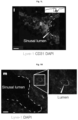
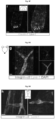
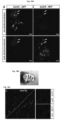
- FIGs. 27A-C Representative images of dcLNs depicting OVA-A647 (red), and stained with DAPI (blue) and against LYVE-1 (green), show that decreased drainage of OVA-A647 into the dcLNs of old mice was increased by delivery of VEGF-C156S ( FIGs. 27A-C ).
- OVA-A647 alone is shown in the inset in the upper right corner of each of FIGs. 27A and 27B
- LYVE-1 alone is shown in the inset in the lower right corner of each of FIGs. 27A and 27B .
- Example 5 Expression of an exogenous VEGF-C transgene by cells in the CNS increases flow
- mice were anesthetized and injected with 10 12 genome copies (GC)/mL (ICM) of either AAV1-CMV-EGFP (or EGFP), a control virus, or AAV1-CMV-mVEGF-C (or mVEGF-C) to increase the expression of mVEGF-C by cells in the CNS.
- GC genome copies
- ICM 10 12 genome copies
- mice were transcardially perfused with saline 2 h post injection. Meningeal whole mounts were stained with DAPI (blue) and for LYVE-1 and CD31.
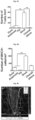
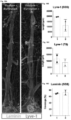
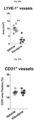
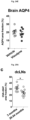
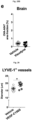
- mVEGF-C Overexpression of mVEGF-C in adult and old mice led to significant increase in the diameter of lymphatic vessels at the superior sagittal sinus (SSS) ( FIG. 28A ), but not in the coverage by CD31 + blood vessels ( FIG. 28B ).
- dcLNs stained for DAPI and LYVE-1 showed a significant increase in OVA-A647 drainage in 20-24 months-old mice that received mVEGF-C virus, when compared to the ones receiving EGFP virus ( FIG.
- Example 6 Expression of an exogenous VEGF-C transgene by cells in the CNS increases flow and improves cognitive performance
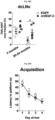
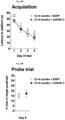
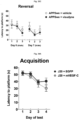
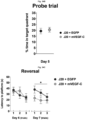
- mice Young adult (2 months of age) and middle-aged (12-14 months) C57BL/6 mice were injected with 10 12 genome copies (GC)/mL (ICM) of either AAV1-CMV-EGFP (or EGFP) or AAV1-CMV-mVEGF-C (or mVEGF-C). 1 month after, mice learning and memory capabilities were assessed in the Morris water maze (MWM) test ( FIGs. 29A-C ). No differences between the two groups of young adult mice were observed in the acquisition, probe trial and reversal tasks of the MWM ( FIGs. 29D-F ).
- MWM Morris water maze
- Example 7 Meningeal amyloid-beta deposits in AD patients.
- Non-AD cortical and AD cortical brain sections containing the respective meningeal layers attached, were stained with DAPI (cell nuclei), for the astrocyte marker GFAP and with an antibody recognizing human N-terminal amyloid beta (A ⁇ ) 37-42 residues (clone D54D2).
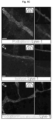
- Amyloid deposition was observed in the AD ( FIG. 30B ), but not in the non-AD ( FIG. 30A ), brain parenchyma, as well as in the meningeal vasculature of the cortex (scale bars, 500 ⁇ m; inset scale bars, 200 ⁇ m).
- Example 8 Meningeal lymphatic (dys)function modulates amyloid pathology in models of Alzheimer's disease
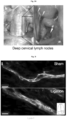
- mice C57BL/6 adult mice were anesthetized and injected ICM with visudyne to induce meningeal lymphatic vessel ablation, or vehicle as a control. After the photoconversion step, mice were allowed to recover for 72 h. Then, catheters were implanted in the cisterna magna of all mice and 2.5 ⁇ g of A ⁇ 42 were injected every 24 h into the CSF for a total of 5 days. Staining with LYVE-1, A ⁇ , and the macrophage marker IBA1 in meningeal whole-mounts showed macrophage activation in response to formation of A ⁇ 42 aggregates. Quantification was performed of the total area of LYVE-1 + lymphatic vessels ( FIG.
- Meningeal lymphatic ablation in 1.5 months-old 5xFAD (APPSweFlLon,PSEN1*M146L*L286V) transgenic mice was achieved by ICM injection of visudyne, or vehicle as a control, followed by a step of transcranial photoconversion. This procedure was repeated every 3 weeks, for a total of 1.5 months.
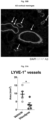
- Meninges of 5xFAD mice from the different groups were stained with DAPI and for LYVE-1 and A ⁇ .
- a ⁇ aggregates were detected in the meninges of 5xFAD mice that undergone lymphatic ablation by visudyne, but not in the meninges of vehicle-injected mice.
- a ⁇ aggregates formed specially around the sinuses and in the cerebellar meninges.
- Hippocampus was stained for DAPI and Amyloid-beta in vehicle or visudyne-injected 5xFAD mice (scale bar, 1mm, inset, 200 ⁇ m).
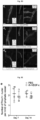
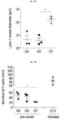
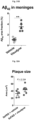
- a statistically significant increase in amyloid plaque number ( FIG. 32A ) and coverage ( FIG. 32B ), and a trend for increased plaque size ( FIG. 32C ), was observed in the hippocampus of 5xFAD mice upon meningeal lymphatic ablation. Results are presented as mean ⁇ s.e.m.; n 5 per group; * P ⁇ 0.05, one-tailed Mann-Whitney test.
- Example 11 Expression of VEGF-C in the CNS ameliorates dementia symptoms in an AD model
- Example 12 In vivo flow from the cisterna magna to meningeal lymphatic vessels
- Example 15 Accumulation of endogenous T cells in meningeal lymphatics
- Example 16 Density of exogenous T cells in meningeal lymphatics
- Example 17 Accumulation of exogenous dendritic cells in meningeal lymphatics
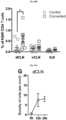
- Example 18 Quantification of the percentage of KiKR CD4 T cells are shown in the dCLN, sCLN and ILN
- C57Bl6 mice were reconstituted with bone marrow from KiKGR mice after lethal irradiation.
- meninges were converted every twelve hours for with 2min exposure with a violet light (through the intact skull).
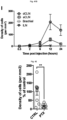
- the density of naive T cells per mm 2 of dCLN, sCLN, brachial and ILN was quantified at different time point post injection.
- Isolated CD4 T cells were incubated for 2h with Xng of pertussis toxin prior to i.c.m. injection in C57Bl6 mice.
- Images of control and PTX-treated T cells in the dCLN of WT mice 12h were taken after i.c.m. injection.
- Density of T cells per mm2 of dCLN was quantified (expressed as a percentage of the control condition) ( FIG. 42 ).
- Example 20 Meningeal T cells circulate into the cervical lymph nodes in a CCR7-CCL21 dependent manner
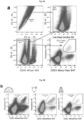
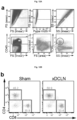
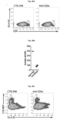
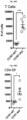
- FIG. 43C A representative dot plot of GFP expression by CD4 T cells in the meninges of C57B16 mice and CCR7 GFP mice is shown in FIG. 43C (representative of 3 independent mice).
- FIG. 43D A representative contour plot of phenotype CCR7 + and CCR7 - CD4 T cells in the meninges of CCR7 GFP mice is shown in FIG. 43D .
- CCR7GF CCR7 expression
- Example 21 Meningeal dendritic cells circulate into the cervical lymph nodes
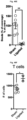
- KiKGR mice meninges were converted for 2min with violet light every 12h for 2 days. After 2 days, mice were injected i.c.m. with Poly(I:C) with peptide. Tissue were harvested 24h after Poly(I:C) injection. Samples were gated to identify dendritic cells. Representative dot plots are shown for B6 controls, which KiKG+ and KiKR+ dendritic cells ( FIG. 45A ) and for KiKGR control mice ( FIG. 45B ). Representative dot plots of KiKR+ dendritic cells in the dCLN, sCLN and ILN 24h after Poly(I:C) injection in converted mice. Representative of 4 mice.
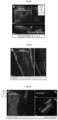
- mice were injected i.c.m. with 1 million of exogenously labeled T cells, Meninges and nasal cavity were harvested and analyzed at the indicated time points. Representative images of the cribriform plate region after 2 and 12h post i.c.m. injection of CFSE-labeled T cells (green). I.c.m. injected T cells (Deep Red Cell Tracker - red) were detected in the lymphatic of the cribriform plate, but also in and around the lymphatic at the base of the nose. Intralymphatic T cells and perilymphatic T cells were observed.
- FIG. 48C Images were obtained of exogenously injected T cells (4 days after ablation) (CFSE) in the dCLN of laser, Visudyne (i.c.m.) and Visudyne (i.c.m.) + laser treated mice 12h after i.c.m. injection.
- CFSE exogenously injected T cells (4 days after ablation)
- Example 25 T cell migration is inhibited by the ablation of meningeal lymphatic vessels (not part of the present invention)
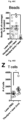
- the density of T cells per mm2 of dCLN was quantified ( FIG. 49B ) or percentage of beads coverage was quantified ( FIG. 49C ) in the dLCN of laser, Visudyne (i.n.) + laser and Visudyne (i.c.m.) + laser treated mice (expressed as percentage of the control condition).
- T cells were quantified in the meninges of laser and Visudyne (i.c.m.) + laser treated mice at 7 days post ablation.
- Example 26 Lack of inflammation-induced lymphangiogenesis of the meningeal lymphatic endothelial cells. (not part of the present invention)
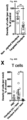
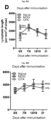
- FIG. 50C and transverse sinuses ( FIG. 50D ) of naive, CFA and MOG immunized mice was performed at different time after immunization.
- mean ⁇ s.e.m, n 3-5 mice/group.
- Example 27 Ablation of lymphatic drainage ameliorate MOG-specific T cells activation in the deep cervical lymph nodes resulting in ameliorated disease development. (not part of the present invention)
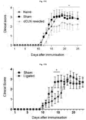
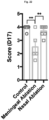
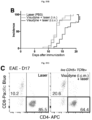
- Incidence of EAE development day mice reach a score of 1 or above) in laser, Visudyne (i.n.) + laser and Visudyne (i.c.m.) + laser treated mice.
- the composition for use comprises various steps or features that are present as single steps or features (as opposed to multiple steps or features).
- the compositions for use includes a single administration of a flow modulator, or the composition comprises or consists essentially of a flow modulator for single use.
- the flow modulator may be present in a single dosage unit effective for increasing flow (or decreasing immune cell migration).
- a composition or use may comprise a single dosage unit of a flow modulator effective for increasing flow (or inhibiting migration of immune cells) as described herein. Multiple features or components are provided in alternate embodiments.
- the composition for use comprises one or more means for flow modulation.
- the means comprises a flow modulator.
- a range includes each individual member.
- a group having 1-3 cells refers to groups having 1, 2, or 3 cells.
- a group having 1-5 cells refers to groups having 1, 2, 3, 4, or 5 cells, and so forth.
Landscapes
- Health & Medical Sciences (AREA)
- Life Sciences & Earth Sciences (AREA)
- Chemical & Material Sciences (AREA)
- General Health & Medical Sciences (AREA)
- Medicinal Chemistry (AREA)
- Public Health (AREA)
- Animal Behavior & Ethology (AREA)
- Engineering & Computer Science (AREA)
- Veterinary Medicine (AREA)
- Pharmacology & Pharmacy (AREA)
- Bioinformatics & Cheminformatics (AREA)
- Immunology (AREA)
- Epidemiology (AREA)
- Organic Chemistry (AREA)
- Proteomics, Peptides & Aminoacids (AREA)
- Biomedical Technology (AREA)
- Molecular Biology (AREA)
- Biochemistry (AREA)
- Zoology (AREA)
- Neurology (AREA)
- Neurosurgery (AREA)
- Gastroenterology & Hepatology (AREA)
- Nuclear Medicine, Radiotherapy & Molecular Imaging (AREA)
- Biophysics (AREA)
- Chemical Kinetics & Catalysis (AREA)
- General Chemical & Material Sciences (AREA)
- Genetics & Genomics (AREA)
- Vascular Medicine (AREA)
- Psychiatry (AREA)
- Hospice & Palliative Care (AREA)
- Pathology (AREA)
- Radiology & Medical Imaging (AREA)
- Marine Sciences & Fisheries (AREA)
- Medicines That Contain Protein Lipid Enzymes And Other Medicines (AREA)
- Peptides Or Proteins (AREA)
- Medicines Containing Antibodies Or Antigens For Use As Internal Diagnostic Agents (AREA)
- Measuring Or Testing Involving Enzymes Or Micro-Organisms (AREA)
Applications Claiming Priority (2)
| Application Number | Priority Date | Filing Date | Title |
|---|---|---|---|
| US201662344164P | 2016-06-01 | 2016-06-01 | |
| PCT/US2017/035285 WO2017210343A1 (en) | 2016-06-01 | 2017-05-31 | Methods and compositions for modulating lymphatic vessels in the central nervous system |
Publications (3)
| Publication Number | Publication Date |
|---|---|
| EP3463575A1 EP3463575A1 (en) | 2019-04-10 |
| EP3463575A4 EP3463575A4 (en) | 2020-01-29 |
| EP3463575B1 true EP3463575B1 (en) | 2025-03-26 |
Family
ID=60477853
Family Applications (1)
| Application Number | Title | Priority Date | Filing Date |
|---|---|---|---|
| EP17807427.4A Active EP3463575B1 (en) | 2016-06-01 | 2017-05-31 | Methods and compositions for modulating lymphatic vessels in the central nervous system |
Country Status (6)
| Country | Link |
|---|---|
| US (1) | US11944665B2 (https=) |
| EP (1) | EP3463575B1 (https=) |
| JP (2) | JP2019522044A (https=) |
| AU (1) | AU2017273629B2 (https=) |
| CA (1) | CA3025366A1 (https=) |
| WO (1) | WO2017210343A1 (https=) |
Families Citing this family (10)
| Publication number | Priority date | Publication date | Assignee | Title |
|---|---|---|---|---|
| WO2017210343A1 (en) | 2016-06-01 | 2017-12-07 | The University Of Virginia Patent Foundation | Methods and compositions for modulating lymphatic vessels in the central nervous system |
| JOP20190248A1 (ar) | 2017-04-21 | 2019-10-20 | Amgen Inc | بروتينات ربط مولد ضد trem2 واستخداماته |
| US12352767B2 (en) | 2018-07-16 | 2025-07-08 | University Of Virginia Patent Foundation | Method of treating cognitive decline associated with neurological diseases based on a decrease in FLT4 expression or activity |
| CN113226283A (zh) * | 2018-10-04 | 2021-08-06 | 罗切斯特大学 | 通过操纵血浆重量摩尔渗透压浓度改善淋巴递送 |
| WO2020102627A1 (en) | 2018-11-16 | 2020-05-22 | Yale University | Manipulation of meningeal lymphatic vasculature for brain and cns tumor therapy |
| WO2021071830A1 (en) | 2019-10-07 | 2021-04-15 | University Of Virginia Patent Foundation | Modulating lymphatic vessels in neurological disease |
| US20230067811A1 (en) | 2020-01-24 | 2023-03-02 | University Of Virginia Patent Foundation | Modulating lymphatic vessels in neurological disease |
| CN114949182B (zh) * | 2022-04-07 | 2025-07-01 | 上海大学 | 一种淋巴管生成诱导剂的用途 |
| US20240207362A1 (en) * | 2022-10-25 | 2024-06-27 | Institute For Basic Science (Ibs) | Extracranial Methods For Facilitating Cerebrospinal Fluid Drainage |
| JP2026510233A (ja) * | 2023-02-16 | 2026-04-02 | ユニバーシティー オブ ロチェスター | グリンパ-リンパ流出の改善 |
Citations (1)
| Publication number | Priority date | Publication date | Assignee | Title |
|---|---|---|---|---|
| US20040214766A1 (en) * | 2001-10-01 | 2004-10-28 | Kari Alitalo | VEGF-C or VEGF-D materials and methods for treatment of neuropathologies |
Family Cites Families (7)
| Publication number | Priority date | Publication date | Assignee | Title |
|---|---|---|---|---|
| EP1132098B1 (en) * | 1999-09-21 | 2010-05-26 | AnGes MG, Inc. | Gene therapy for cerebrovascular disorders |
| US20080057028A1 (en) | 2002-10-02 | 2008-03-06 | Institute Nationale De La Sante Et De La Recherche Medicale (Inserm) | Vegf-C or Vegf-D Materials and Methods for Stimulation of Neural Stem cells |
| US9415090B2 (en) * | 2011-06-01 | 2016-08-16 | Universität Heidelberg | VEGF-D/VEGFR2/3-mediated regulation of dendrites |
| US8852936B2 (en) * | 2012-09-21 | 2014-10-07 | Laurantis Pharma Oy | Autologous lymph node transfer in combination with VEGF-C or VEGF-D growth factor therapy to treat lymphedema and to improve reconstructive surgery |
| WO2017190074A1 (en) | 2016-04-28 | 2017-11-02 | The University Of Chicago | Lymphangiogenesis for therapeutic immunomodulation |
| WO2017210343A1 (en) | 2016-06-01 | 2017-12-07 | The University Of Virginia Patent Foundation | Methods and compositions for modulating lymphatic vessels in the central nervous system |
| WO2020102627A1 (en) | 2018-11-16 | 2020-05-22 | Yale University | Manipulation of meningeal lymphatic vasculature for brain and cns tumor therapy |
-
2017
- 2017-05-31 WO PCT/US2017/035285 patent/WO2017210343A1/en not_active Ceased
- 2017-05-31 EP EP17807427.4A patent/EP3463575B1/en active Active
- 2017-05-31 JP JP2019515772A patent/JP2019522044A/ja active Pending
- 2017-05-31 CA CA3025366A patent/CA3025366A1/en active Pending
- 2017-05-31 AU AU2017273629A patent/AU2017273629B2/en active Active
- 2017-05-31 US US16/306,483 patent/US11944665B2/en active Active
-
2021
- 2021-12-21 JP JP2021207229A patent/JP2022031368A/ja active Pending
Patent Citations (1)
| Publication number | Priority date | Publication date | Assignee | Title |
|---|---|---|---|---|
| US20040214766A1 (en) * | 2001-10-01 | 2004-10-28 | Kari Alitalo | VEGF-C or VEGF-D materials and methods for treatment of neuropathologies |
Also Published As
| Publication number | Publication date |
|---|---|
| US11944665B2 (en) | 2024-04-02 |
| EP3463575A1 (en) | 2019-04-10 |
| US20190269758A1 (en) | 2019-09-05 |
| CA3025366A1 (en) | 2017-12-07 |
| AU2017273629B2 (en) | 2023-06-08 |
| AU2017273629A1 (en) | 2018-12-13 |
| JP2022031368A (ja) | 2022-02-18 |
| JP2019522044A (ja) | 2019-08-08 |
| WO2017210343A1 (en) | 2017-12-07 |
| EP3463575A4 (en) | 2020-01-29 |
Similar Documents
| Publication | Publication Date | Title |
|---|---|---|
| EP3463575B1 (en) | Methods and compositions for modulating lymphatic vessels in the central nervous system | |
| JP6920324B2 (ja) | 神経細胞の損失予防及び再生の効能を有するペプチド及びこれを含む組成物 | |
| ES2546093T3 (es) | VEGF para utilizar en el tratamiento de trastornos del sistema nervioso central | |
| Tsai et al. | G-CSF rescues the memory impairment of animal models of Alzheimer's disease | |
| Pahnke et al. | Alzheimer's disease and blood–brain barrier function—Why have anti-β-amyloid therapies failed to prevent dementia progression? | |
| Osterstock et al. | Sustained alterations of hypothalamic tanycytes during posttraumatic hypopituitarism in male mice | |
| CN101288768A (zh) | 用于治疗渐进神经退化症的医药组合物 | |
| US20240050529A1 (en) | Modulating lymphatic vessels in neurological disease | |
| JP2011513290A (ja) | VEGFxxxbの新規な使用 | |
| Ye et al. | Borneol regulates meningeal lymphatic valve plasticity to clear Aβ aggregates in the prevention of AD-like symptoms | |
| ES2825101T3 (es) | Composiciones y métodos para el tratamiento de trastornos neuropsiquiátricos usando un agonista del receptor de la endotelina B | |
| AU2011314074B2 (en) | ND2 peptides and methods of treating neurological disease | |
| CN117202911A (zh) | 包含作为活性成分的刺五加苷b的用于治疗神经炎症的药物组合物 | |
| Hélie-Legoupil et al. | In vivo imaging of the barrier properties of the glia limitans during health and neuroinflammation | |
| US9078851B2 (en) | Composition for preventing or treating a spinal cord injury | |
| US11241478B2 (en) | Adenovirus-associated viral vectors for expressing variants of tetratricopeptide repeat (TPR)-containing Rab8b interacting (TRIP8b) protein in neurons and uses thereof for treating major depressive disorder (MDD) | |
| US20240207362A1 (en) | Extracranial Methods For Facilitating Cerebrospinal Fluid Drainage | |
| WO2007019190A2 (en) | Role of gax in alzheimer neurovascular dysfunction | |
| TWI669127B (zh) | 治療阿茲海默症之方法及負調控腦部蛋白質聚集之方法 | |
| Coto Vilcapoma | Implantable device for Aβ immunoselective nanopheresis in the cerebrospinal fluid to treat Alzheimer’s Disease | |
| Mandler | Characterisation of neuropathologic alterations following active immunotherapy against Aβ | |
| Benemei et al. | Migraine models | |
| Kumar | Delivering Antibodies to the Brain: Distribution, Transport Mechanisms, and Dose-Response following Intranasal or Systemic Administration | |
| 류정화 | A study on the attenuating effects of neuregulin-1 on cognitive function impairments and its action mechanisms in an Alzheimers disease animal model | |
| Grant | Role of Deleted in Colorectal Cancer (DCC) in the Development and Function of the Mesocorticolimbic Dopaminergic System: Implications for Schizophrenia |
Legal Events
| Date | Code | Title | Description |
|---|---|---|---|
| STAA | Information on the status of an ep patent application or granted ep patent |
Free format text: STATUS: THE INTERNATIONAL PUBLICATION HAS BEEN MADE |
|
| PUAI | Public reference made under article 153(3) epc to a published international application that has entered the european phase |
Free format text: ORIGINAL CODE: 0009012 |
|
| STAA | Information on the status of an ep patent application or granted ep patent |
Free format text: STATUS: REQUEST FOR EXAMINATION WAS MADE |
|
| 17P | Request for examination filed |
Effective date: 20181207 |
|
| AK | Designated contracting states |
Kind code of ref document: A1 Designated state(s): AL AT BE BG CH CY CZ DE DK EE ES FI FR GB GR HR HU IE IS IT LI LT LU LV MC MK MT NL NO PL PT RO RS SE SI SK SM TR |
|
| AX | Request for extension of the european patent |
Extension state: BA ME |
|
| DAV | Request for validation of the european patent (deleted) | ||
| DAX | Request for extension of the european patent (deleted) | ||
| A4 | Supplementary search report drawn up and despatched |
Effective date: 20200108 |
|
| RIC1 | Information provided on ipc code assigned before grant |
Ipc: A61K 39/395 20060101ALI20191220BHEP Ipc: C12Q 1/68 20180101ALI20191220BHEP Ipc: A61K 47/68 20170101ALI20191220BHEP Ipc: A61K 38/18 20060101ALI20191220BHEP Ipc: A61K 51/10 20060101ALI20191220BHEP Ipc: A61P 25/28 20060101AFI20191220BHEP |
|
| STAA | Information on the status of an ep patent application or granted ep patent |
Free format text: STATUS: EXAMINATION IS IN PROGRESS |
|
| 17Q | First examination report despatched |
Effective date: 20210224 |
|
| P01 | Opt-out of the competence of the unified patent court (upc) registered |
Effective date: 20230522 |
|
| GRAP | Despatch of communication of intention to grant a patent |
Free format text: ORIGINAL CODE: EPIDOSNIGR1 |
|
| STAA | Information on the status of an ep patent application or granted ep patent |
Free format text: STATUS: GRANT OF PATENT IS INTENDED |
|
| RIC1 | Information provided on ipc code assigned before grant |
Ipc: A61K 41/00 20060101ALI20240610BHEP Ipc: A61K 39/395 20060101ALI20240610BHEP Ipc: A61K 38/18 20060101ALI20240610BHEP Ipc: A61K 47/68 20170101ALI20240610BHEP Ipc: A61K 51/10 20060101ALI20240610BHEP Ipc: C12Q 1/68 20180101ALI20240610BHEP Ipc: A61P 25/28 20060101AFI20240610BHEP |
|
| INTG | Intention to grant announced |
Effective date: 20240627 |
|
| GRAS | Grant fee paid |
Free format text: ORIGINAL CODE: EPIDOSNIGR3 |
|
| GRAA | (expected) grant |
Free format text: ORIGINAL CODE: 0009210 |
|
| STAA | Information on the status of an ep patent application or granted ep patent |
Free format text: STATUS: THE PATENT HAS BEEN GRANTED |
|
| AK | Designated contracting states |
Kind code of ref document: B1 Designated state(s): AL AT BE BG CH CY CZ DE DK EE ES FI FR GB GR HR HU IE IS IT LI LT LU LV MC MK MT NL NO PL PT RO RS SE SI SK SM TR |
|
| REG | Reference to a national code |
Ref country code: GB Ref legal event code: FG4D |
|
| REG | Reference to a national code |
Ref country code: CH Ref legal event code: EP |
|
| REG | Reference to a national code |
Ref country code: DE Ref legal event code: R096 Ref document number: 602017088553 Country of ref document: DE |
|
| REG | Reference to a national code |
Ref country code: IE Ref legal event code: FG4D |
|
| PG25 | Lapsed in a contracting state [announced via postgrant information from national office to epo] |
Ref country code: RS Free format text: LAPSE BECAUSE OF FAILURE TO SUBMIT A TRANSLATION OF THE DESCRIPTION OR TO PAY THE FEE WITHIN THE PRESCRIBED TIME-LIMIT Effective date: 20250626 |
|
| PG25 | Lapsed in a contracting state [announced via postgrant information from national office to epo] |
Ref country code: FI Free format text: LAPSE BECAUSE OF FAILURE TO SUBMIT A TRANSLATION OF THE DESCRIPTION OR TO PAY THE FEE WITHIN THE PRESCRIBED TIME-LIMIT Effective date: 20250326 |
|
| PGFP | Annual fee paid to national office [announced via postgrant information from national office to epo] |
Ref country code: DE Payment date: 20250529 Year of fee payment: 9 |
|
| PGFP | Annual fee paid to national office [announced via postgrant information from national office to epo] |
Ref country code: GB Payment date: 20250527 Year of fee payment: 9 |
|
| REG | Reference to a national code |
Ref country code: LT Ref legal event code: MG9D |
|
| PG25 | Lapsed in a contracting state [announced via postgrant information from national office to epo] |
Ref country code: NO Free format text: LAPSE BECAUSE OF FAILURE TO SUBMIT A TRANSLATION OF THE DESCRIPTION OR TO PAY THE FEE WITHIN THE PRESCRIBED TIME-LIMIT Effective date: 20250626 |
|
| PG25 | Lapsed in a contracting state [announced via postgrant information from national office to epo] |
Ref country code: HR Free format text: LAPSE BECAUSE OF FAILURE TO SUBMIT A TRANSLATION OF THE DESCRIPTION OR TO PAY THE FEE WITHIN THE PRESCRIBED TIME-LIMIT Effective date: 20250326 |
|
| PG25 | Lapsed in a contracting state [announced via postgrant information from national office to epo] |
Ref country code: LV Free format text: LAPSE BECAUSE OF FAILURE TO SUBMIT A TRANSLATION OF THE DESCRIPTION OR TO PAY THE FEE WITHIN THE PRESCRIBED TIME-LIMIT Effective date: 20250326 |
|
| PGFP | Annual fee paid to national office [announced via postgrant information from national office to epo] |
Ref country code: FR Payment date: 20250526 Year of fee payment: 9 |
|
| PG25 | Lapsed in a contracting state [announced via postgrant information from national office to epo] |
Ref country code: GR Free format text: LAPSE BECAUSE OF FAILURE TO SUBMIT A TRANSLATION OF THE DESCRIPTION OR TO PAY THE FEE WITHIN THE PRESCRIBED TIME-LIMIT Effective date: 20250627 Ref country code: BG Free format text: LAPSE BECAUSE OF FAILURE TO SUBMIT A TRANSLATION OF THE DESCRIPTION OR TO PAY THE FEE WITHIN THE PRESCRIBED TIME-LIMIT Effective date: 20250326 |
|
| REG | Reference to a national code |
Ref country code: NL Ref legal event code: MP Effective date: 20250326 |
|
| PG25 | Lapsed in a contracting state [announced via postgrant information from national office to epo] |
Ref country code: NL Free format text: LAPSE BECAUSE OF FAILURE TO SUBMIT A TRANSLATION OF THE DESCRIPTION OR TO PAY THE FEE WITHIN THE PRESCRIBED TIME-LIMIT Effective date: 20250326 |
|
| PG25 | Lapsed in a contracting state [announced via postgrant information from national office to epo] |
Ref country code: SE Free format text: LAPSE BECAUSE OF FAILURE TO SUBMIT A TRANSLATION OF THE DESCRIPTION OR TO PAY THE FEE WITHIN THE PRESCRIBED TIME-LIMIT Effective date: 20250326 |
|
| REG | Reference to a national code |
Ref country code: AT Ref legal event code: MK05 Ref document number: 1778477 Country of ref document: AT Kind code of ref document: T Effective date: 20250326 |
|
| PG25 | Lapsed in a contracting state [announced via postgrant information from national office to epo] |
Ref country code: SM Free format text: LAPSE BECAUSE OF FAILURE TO SUBMIT A TRANSLATION OF THE DESCRIPTION OR TO PAY THE FEE WITHIN THE PRESCRIBED TIME-LIMIT Effective date: 20250326 |
|
| PG25 | Lapsed in a contracting state [announced via postgrant information from national office to epo] |
Ref country code: ES Free format text: LAPSE BECAUSE OF FAILURE TO SUBMIT A TRANSLATION OF THE DESCRIPTION OR TO PAY THE FEE WITHIN THE PRESCRIBED TIME-LIMIT Effective date: 20250326 Ref country code: PT Free format text: LAPSE BECAUSE OF FAILURE TO SUBMIT A TRANSLATION OF THE DESCRIPTION OR TO PAY THE FEE WITHIN THE PRESCRIBED TIME-LIMIT Effective date: 20250728 |
|
| PG25 | Lapsed in a contracting state [announced via postgrant information from national office to epo] |
Ref country code: PL Free format text: LAPSE BECAUSE OF FAILURE TO SUBMIT A TRANSLATION OF THE DESCRIPTION OR TO PAY THE FEE WITHIN THE PRESCRIBED TIME-LIMIT Effective date: 20250326 Ref country code: IT Free format text: LAPSE BECAUSE OF FAILURE TO SUBMIT A TRANSLATION OF THE DESCRIPTION OR TO PAY THE FEE WITHIN THE PRESCRIBED TIME-LIMIT Effective date: 20250326 |
|
| PG25 | Lapsed in a contracting state [announced via postgrant information from national office to epo] |
Ref country code: AT Free format text: LAPSE BECAUSE OF FAILURE TO SUBMIT A TRANSLATION OF THE DESCRIPTION OR TO PAY THE FEE WITHIN THE PRESCRIBED TIME-LIMIT Effective date: 20250326 |
|
| PG25 | Lapsed in a contracting state [announced via postgrant information from national office to epo] |
Ref country code: EE Free format text: LAPSE BECAUSE OF FAILURE TO SUBMIT A TRANSLATION OF THE DESCRIPTION OR TO PAY THE FEE WITHIN THE PRESCRIBED TIME-LIMIT Effective date: 20250326 |
|
| PG25 | Lapsed in a contracting state [announced via postgrant information from national office to epo] |
Ref country code: RO Free format text: LAPSE BECAUSE OF FAILURE TO SUBMIT A TRANSLATION OF THE DESCRIPTION OR TO PAY THE FEE WITHIN THE PRESCRIBED TIME-LIMIT Effective date: 20250326 |
|
| PG25 | Lapsed in a contracting state [announced via postgrant information from national office to epo] |
Ref country code: SK Free format text: LAPSE BECAUSE OF FAILURE TO SUBMIT A TRANSLATION OF THE DESCRIPTION OR TO PAY THE FEE WITHIN THE PRESCRIBED TIME-LIMIT Effective date: 20250326 |
|
| PG25 | Lapsed in a contracting state [announced via postgrant information from national office to epo] |
Ref country code: IS Free format text: LAPSE BECAUSE OF FAILURE TO SUBMIT A TRANSLATION OF THE DESCRIPTION OR TO PAY THE FEE WITHIN THE PRESCRIBED TIME-LIMIT Effective date: 20250726 |
|
| REG | Reference to a national code |
Ref country code: CH Ref legal event code: H13 Free format text: ST27 STATUS EVENT CODE: U-0-0-H10-H13 (AS PROVIDED BY THE NATIONAL OFFICE) Effective date: 20251223 |
|
| REG | Reference to a national code |
Ref country code: DE Ref legal event code: R097 Ref document number: 602017088553 Country of ref document: DE |
|
| PG25 | Lapsed in a contracting state [announced via postgrant information from national office to epo] |
Ref country code: DK Free format text: LAPSE BECAUSE OF FAILURE TO SUBMIT A TRANSLATION OF THE DESCRIPTION OR TO PAY THE FEE WITHIN THE PRESCRIBED TIME-LIMIT Effective date: 20250326 |
|
| PG25 | Lapsed in a contracting state [announced via postgrant information from national office to epo] |
Ref country code: LU Free format text: LAPSE BECAUSE OF NON-PAYMENT OF DUE FEES Effective date: 20250531 |
|
| PG25 | Lapsed in a contracting state [announced via postgrant information from national office to epo] |
Ref country code: CH Free format text: LAPSE BECAUSE OF NON-PAYMENT OF DUE FEES Effective date: 20250531 |
|
| PG25 | Lapsed in a contracting state [announced via postgrant information from national office to epo] |
Ref country code: CZ Free format text: LAPSE BECAUSE OF FAILURE TO SUBMIT A TRANSLATION OF THE DESCRIPTION OR TO PAY THE FEE WITHIN THE PRESCRIBED TIME-LIMIT Effective date: 20250326 |
|
| REG | Reference to a national code |
Ref country code: BE Ref legal event code: MM Effective date: 20250531 |
|
| PG25 | Lapsed in a contracting state [announced via postgrant information from national office to epo] |
Ref country code: MC Free format text: LAPSE BECAUSE OF FAILURE TO SUBMIT A TRANSLATION OF THE DESCRIPTION OR TO PAY THE FEE WITHIN THE PRESCRIBED TIME-LIMIT Effective date: 20250326 |
|
| PLBE | No opposition filed within time limit |
Free format text: ORIGINAL CODE: 0009261 |
|
| STAA | Information on the status of an ep patent application or granted ep patent |
Free format text: STATUS: NO OPPOSITION FILED WITHIN TIME LIMIT |
|
| REG | Reference to a national code |
Ref country code: CH Ref legal event code: L10 Free format text: ST27 STATUS EVENT CODE: U-0-0-L10-L00 (AS PROVIDED BY THE NATIONAL OFFICE) Effective date: 20260211 |
|
| 26N | No opposition filed |
Effective date: 20260105 |
|
| PG25 | Lapsed in a contracting state [announced via postgrant information from national office to epo] |
Ref country code: IE Free format text: LAPSE BECAUSE OF NON-PAYMENT OF DUE FEES Effective date: 20250531 |
|
| PG25 | Lapsed in a contracting state [announced via postgrant information from national office to epo] |
Ref country code: BE Free format text: LAPSE BECAUSE OF NON-PAYMENT OF DUE FEES Effective date: 20250531 |