EP3462444A1 - Conversion-to-note apparatus, electronic wind instrument and conversion-to-note method - Google Patents
Conversion-to-note apparatus, electronic wind instrument and conversion-to-note method Download PDFInfo
- Publication number
- EP3462444A1 EP3462444A1 EP18196413.1A EP18196413A EP3462444A1 EP 3462444 A1 EP3462444 A1 EP 3462444A1 EP 18196413 A EP18196413 A EP 18196413A EP 3462444 A1 EP3462444 A1 EP 3462444A1
- Authority
- EP
- European Patent Office
- Prior art keywords
- open
- tone
- note
- virtual
- tone hole
- Prior art date
- Legal status (The legal status is an assumption and is not a legal conclusion. Google has not performed a legal analysis and makes no representation as to the accuracy of the status listed.)
- Granted
Links
Images


Classifications
-
- G—PHYSICS
- G10—MUSICAL INSTRUMENTS; ACOUSTICS
- G10H—ELECTROPHONIC MUSICAL INSTRUMENTS; INSTRUMENTS IN WHICH THE TONES ARE GENERATED BY ELECTROMECHANICAL MEANS OR ELECTRONIC GENERATORS, OR IN WHICH THE TONES ARE SYNTHESISED FROM A DATA STORE
- G10H1/00—Details of electrophonic musical instruments
- G10H1/18—Selecting circuits
- G10H1/182—Key multiplexing
-
- G—PHYSICS
- G10—MUSICAL INSTRUMENTS; ACOUSTICS
- G10H—ELECTROPHONIC MUSICAL INSTRUMENTS; INSTRUMENTS IN WHICH THE TONES ARE GENERATED BY ELECTROMECHANICAL MEANS OR ELECTRONIC GENERATORS, OR IN WHICH THE TONES ARE SYNTHESISED FROM A DATA STORE
- G10H1/00—Details of electrophonic musical instruments
- G10H1/32—Constructional details
- G10H1/34—Switch arrangements, e.g. keyboards or mechanical switches specially adapted for electrophonic musical instruments
-
- G—PHYSICS
- G10—MUSICAL INSTRUMENTS; ACOUSTICS
- G10H—ELECTROPHONIC MUSICAL INSTRUMENTS; INSTRUMENTS IN WHICH THE TONES ARE GENERATED BY ELECTROMECHANICAL MEANS OR ELECTRONIC GENERATORS, OR IN WHICH THE TONES ARE SYNTHESISED FROM A DATA STORE
- G10H7/00—Instruments in which the tones are synthesised from a data store, e.g. computer organs
- G10H7/002—Instruments in which the tones are synthesised from a data store, e.g. computer organs using a common processing for different operations or calculations, and a set of microinstructions, e.g. programs, to control the sequence thereof
-
- G—PHYSICS
- G10—MUSICAL INSTRUMENTS; ACOUSTICS
- G10H—ELECTROPHONIC MUSICAL INSTRUMENTS; INSTRUMENTS IN WHICH THE TONES ARE GENERATED BY ELECTROMECHANICAL MEANS OR ELECTRONIC GENERATORS, OR IN WHICH THE TONES ARE SYNTHESISED FROM A DATA STORE
- G10H1/00—Details of electrophonic musical instruments
- G10H1/02—Means for controlling the tone frequencies, e.g. attack or decay; Means for producing special musical effects, e.g. vibratos or glissandos
-
- G—PHYSICS
- G10—MUSICAL INSTRUMENTS; ACOUSTICS
- G10H—ELECTROPHONIC MUSICAL INSTRUMENTS; INSTRUMENTS IN WHICH THE TONES ARE GENERATED BY ELECTROMECHANICAL MEANS OR ELECTRONIC GENERATORS, OR IN WHICH THE TONES ARE SYNTHESISED FROM A DATA STORE
- G10H1/00—Details of electrophonic musical instruments
- G10H1/02—Means for controlling the tone frequencies, e.g. attack or decay; Means for producing special musical effects, e.g. vibratos or glissandos
- G10H1/06—Circuits for establishing the harmonic content of tones, or other arrangements for changing the tone colour
- G10H1/14—Circuits for establishing the harmonic content of tones, or other arrangements for changing the tone colour during execution
-
- G—PHYSICS
- G10—MUSICAL INSTRUMENTS; ACOUSTICS
- G10H—ELECTROPHONIC MUSICAL INSTRUMENTS; INSTRUMENTS IN WHICH THE TONES ARE GENERATED BY ELECTROMECHANICAL MEANS OR ELECTRONIC GENERATORS, OR IN WHICH THE TONES ARE SYNTHESISED FROM A DATA STORE
- G10H3/00—Instruments in which the tones are generated by electromechanical means
- G10H3/12—Instruments in which the tones are generated by electromechanical means using mechanical resonant generators, e.g. strings or percussive instruments, the tones of which are picked up by electromechanical transducers, the electrical signals being further manipulated or amplified and subsequently converted to sound by a loudspeaker or equivalent instrument
-
- G—PHYSICS
- G10—MUSICAL INSTRUMENTS; ACOUSTICS
- G10H—ELECTROPHONIC MUSICAL INSTRUMENTS; INSTRUMENTS IN WHICH THE TONES ARE GENERATED BY ELECTROMECHANICAL MEANS OR ELECTRONIC GENERATORS, OR IN WHICH THE TONES ARE SYNTHESISED FROM A DATA STORE
- G10H2220/00—Input/output interfacing specifically adapted for electrophonic musical tools or instruments
- G10H2220/005—Non-interactive screen display of musical or status data
-
- G—PHYSICS
- G10—MUSICAL INSTRUMENTS; ACOUSTICS
- G10H—ELECTROPHONIC MUSICAL INSTRUMENTS; INSTRUMENTS IN WHICH THE TONES ARE GENERATED BY ELECTROMECHANICAL MEANS OR ELECTRONIC GENERATORS, OR IN WHICH THE TONES ARE SYNTHESISED FROM A DATA STORE
- G10H2220/00—Input/output interfacing specifically adapted for electrophonic musical tools or instruments
- G10H2220/021—Indicator, i.e. non-screen output user interfacing, e.g. visual or tactile instrument status or guidance information using lights, LEDs or seven segments displays
- G10H2220/026—Indicator, i.e. non-screen output user interfacing, e.g. visual or tactile instrument status or guidance information using lights, LEDs or seven segments displays associated with a key or other user input device, e.g. key indicator lights
- G10H2220/056—Hand or finger indicator, e.g. for indicating which hand or which specific finger should be used
-
- G—PHYSICS
- G10—MUSICAL INSTRUMENTS; ACOUSTICS
- G10H—ELECTROPHONIC MUSICAL INSTRUMENTS; INSTRUMENTS IN WHICH THE TONES ARE GENERATED BY ELECTROMECHANICAL MEANS OR ELECTRONIC GENERATORS, OR IN WHICH THE TONES ARE SYNTHESISED FROM A DATA STORE
- G10H2220/00—Input/output interfacing specifically adapted for electrophonic musical tools or instruments
- G10H2220/155—User input interfaces for electrophonic musical instruments
- G10H2220/361—Mouth control in general, i.e. breath, mouth, teeth, tongue or lip-controlled input devices or sensors detecting, e.g. lip position, lip vibration, air pressure, air velocity, air flow or air jet angle
-
- G—PHYSICS
- G10—MUSICAL INSTRUMENTS; ACOUSTICS
- G10H—ELECTROPHONIC MUSICAL INSTRUMENTS; INSTRUMENTS IN WHICH THE TONES ARE GENERATED BY ELECTROMECHANICAL MEANS OR ELECTRONIC GENERATORS, OR IN WHICH THE TONES ARE SYNTHESISED FROM A DATA STORE
- G10H2230/00—General physical, ergonomic or hardware implementation of electrophonic musical tools or instruments, e.g. shape or architecture
- G10H2230/045—Special instrument [spint], i.e. mimicking the ergonomy, shape, sound or other characteristic of a specific acoustic musical instrument category
- G10H2230/155—Spint wind instrument, i.e. mimicking musical wind instrument features; Electrophonic aspects of acoustic wind instruments; MIDI-like control therefor
-
- G—PHYSICS
- G10—MUSICAL INSTRUMENTS; ACOUSTICS
- G10H—ELECTROPHONIC MUSICAL INSTRUMENTS; INSTRUMENTS IN WHICH THE TONES ARE GENERATED BY ELECTROMECHANICAL MEANS OR ELECTRONIC GENERATORS, OR IN WHICH THE TONES ARE SYNTHESISED FROM A DATA STORE
- G10H2250/00—Aspects of algorithms or signal processing methods without intrinsic musical character, yet specifically adapted for or used in electrophonic musical processing
- G10H2250/315—Sound category-dependent sound synthesis processes [Gensound] for musical use; Sound category-specific synthesis-controlling parameters or control means therefor
- G10H2250/461—Gensound wind instruments, i.e. generating or synthesising the sound of a wind instrument, controlling specific features of said sound
Definitions
- the present invention relates to a conversion-to-note apparatus, an electronic wind instrument and a conversion-to-note method for converting operations in playing to notes of sounds to output.
- An acoustic wind instrument has a plurality of tone holes having default open/close states and a plurality of fingering keys which change the open/close states of the tone holes. A player operates the fingering keys, so that the open/close states of the tone holes are changed, and a sound (s) of a predetermined note(s) is output.
- a user can play an acoustic wind instrument by choosing fingering patterns from among fingering patterns of various alternate fingerings in addition to basic fingering patterns according to his/her habit, fingering for a piece of music and so forth.
- an electronic wind instrument has no concept of tone holes because it outputs sounds which are electrically generated by detecting operations on fingering keys.
- Such an electronic wind instrument adopts a method of preregistering correspondences each indicating which fingering pattern produces a sound of which note, and when outputting a sound on the basis of fingering, determining a note associated with a key input pattern indicating which fingering key(s) has been operated, and outputting a sound of the note. (Refer to, for example, JP 2015-084027 A .)
- a conversion-to-note apparatus including: a key which is operated by a user; and a processor which obtains, from a memory, first information to associate a key operation on the key with an open/close state of a tone hole or virtual tone hole and second information to associate the open/close state of the tone hole or virtual tone hole with a note, identifies, based on the first information, the open/close state of the tone hole or virtual tone hole for the key operation detected, and determines, based on the second information, the note for the identified open/close state of the tone hole or virtual tone hole.
- a conversion-to-note method for an apparatus to perform a control process including: detecting a key operation on a key; identifying, based on first information to associate the detected key operation with an open/close state of a tone hole or virtual tone hole, the open/close state of the tone hole or virtual tone hole for the detected key operation; and determining, based on second information to associate the open/close state of the tone hole or virtual tone hole with a note, the note for the identified open/close state of the tone hole or virtual tone hole.
- FIG. 1 is a block diagram showing main components of the electronic wind instrument 100 according to this embodiment.
- the electronic wind instrument 100 of this embodiment includes a conversion-to-note apparatus 10, a breath pressure detector 2, a display 3, a power switch 5, an operation switch 6, and various components for outputting sounds (e.g. a sound output unit 4, a sound output control section 84, and a sound data storage area 95).
- a conversion-to-note apparatus 10 e.g. a breath pressure detector 2, a display 3, a power switch 5, an operation switch 6, and various components for outputting sounds (e.g. a sound output unit 4, a sound output control section 84, and a sound data storage area 95).
- FIG. 1 components constituting the conversion-to-note apparatus 10 are enclosed by a broken line.
- the electronic wind instrument 100 of this embodiment also includes: a not-shown instrument body having a shape of an acoustic wind instrument (e.g. saxophone); and a plurality of fingering keys 1 (fingering keys 1a to 1n in FIG. 1 ) on the outer circumferential surface of the instrument body.
- the number and arrangement of the fingering keys 1 are the same as those of an acoustic wind instrument.
- the fingering keys 1 are provided with their respective key numbers (fingering keys no. 1 to no. n or simply keys no. 1 to no. n).
- the instrument type of the electronic wind instrument 100 of this embodiment is not particularly limited, and the shape and so forth of the instrument body and the number, arrangement and so forth of the fingering keys 1 are appropriately determined according to an intended instrument type of an electronic wind instrument (saxophone, clarinet, flute, etc.).
- the conversion-to-note apparatus 10 may be for one instrument type, or may have data and so forth for various instrument types and be configured to select data and so forth according to the instrument type of an electronic wind instrument in which the conversion-to-note apparatus 10 is installed, the data and so forth being used in processes.
- the electronic wind instrument 100 also includes a key operation detector 11 as an operation detector which detects operations on the fingering keys 1.
- the key operation detector 11 is, for example, a pressure sensor or a touch sensor which, when any of the fingering keys 1 is pressed/operated by a user, detects this operation(s)/press(es).
- the detection result by the key operation detector 11 i.e. whether or not any of the fingering keys 1 has been operated, and if operated, which fingering key(s) 1 has been operated
- a control device 7 detects operations on the fingering keys 1 via the key operation detector 11.
- a not-shown mouthpiece is fitted to an end of the instrument body, and the breath pressure detector 2 is arranged in the instrument body near the mouthpiece.
- the breath pressure detector 2 is a blowing pressure sensor (wind sensor) which detects a blowing pressure of user' s (player's) breath (breath pressure) into the instrument body via the mouthpiece.
- the breath pressure detector 2 detects presence or absence of the breath, and also detects strength and speed (power) of the breath at least while the user is playing the electronic wind instrument 100.
- user's presses of the fingering keys 1 only do not fix operations on the fingering keys 1, but together with detection of the breath pressure by the breath pressure detector 2, fix operations on the fingering keys 1.
- the breath pressure detector 2 functions as an operation fixing unit which fixes operations on the fingering keys 1.
- a conversion-to-virtual-tone-hole section 81 and a note determination section 82 convert the operations on the fingering keys 1 detected by the key operation detector 11 to the open/close states of imaginary tone holes and determine a note(s) (a pitch(es)) therefrom.
- the detection result by the breath pressure detector 2 is output to the control device 7. That is, the control device 7 detects the breath pressure via the breath pressure detector 2.
- the display 3 is arranged on the outer circumferential surface or the like of the instrument body.
- the display 3 displays various instruction screens and so forth.
- the display 3 displays and shows a user a note which is a target for association with virtual tone holes.
- the power switch 5 for turning on and off a not-shown power source, the operation switch 6 as an operation unit for inputting various operations, and so forth are also arranged.
- the operation switch 6 generates various switch events.
- the switch events generated by the operation switch 6 are output to the control device 7.
- an input operation on the operation switch 6 is a trigger to start the virtual-tone-hole-and-note correspondence data creation process described below.
- the electronic wind instrument 100 includes the sound output unit 4 as a component for outputting sounds.
- the sound output unit 4 includes: a D/A converter which convers sound data generated by the control device 7 to analog musical tone signals and outputs the musical tone signals; an amplifier which amplifies the musical tone signals; and a speaker which emits sounds based on the amplified musical tone signals.
- the sound output unit 4 may include an output terminal or the like for outputting the sounds based on the musical tone signals to a headphone or the like.
- the control device 7 is a computer which includes a controller 8 and a storage 9.
- the controller 8 is constituted of a not-shown CPU (Central Processing Unit) .
- the storage 9 is constituted of a ROM (Read Only Memory), a RAM (Random Access Memory) and so forth (all not shown).
- the storage 9 includes a program storage area 91 which stores, for example, various programs for operating the conversion-to-note apparatus 10 and the electronic wind instrument 100 including the conversion-to-note apparatus 10.
- the program storage area 91 stores, for example, a program for performing the virtual-tone-hole-and-note correspondence data creation process and a program for outputting musical tones.
- the storage 9 also includes a key-operation-and-note correspondence data storage area 92.
- the key-operation-and-note correspondence data storage area 92 is a correspondence storage which stores first information to associate operations on the fingering keys 1 with open/close states of imaginary tone holes (virtual tone holes) and second information to associate the open/close states of the virtual tone holes with notes.
- the key-operation-and-note correspondence data storage area 92 stores a virtual tone hole open/close state table 93 as the first information and a virtual-tone-hole-and-note correspondence table 94 as the second information.
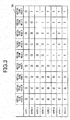
- the virtual tone hole open/close state table 93 as the first information shows, for each of pairs (combinations) of the fingering keys 1 and the tone holes (virtual tone holes in this embodiment), which of an open state, a close state and a dependent open/close state should be the open/close state of the tone hole in a pair if a fingering key 1 in the pair is operated, wherein the dependent open/close state indicates the state in which the tone hole is in the open state or the close state depending on an operation on another fingering key 1.
- FIG. 2 shows an example of the virtual tone hole open/close state table 93.
- this operation switches the virtual tone hole 1 to the close state from the open state which is its default open/close state.
- An operation on one fingering key 1 may affect a plurality of virtual tone holes. For example, if the fingering key 1 having the "key no. 4" is operated, this operation switches the virtual tone holes 4 and 5 to the close state from the open state which is their default open/close state.
- the number of fingering keys and the number of virtual tone holes specified in the virtual tone hole open/close state table 93 are not limited to those shown in the drawings, and all the fingering keys 1 arranged on the electronic wind instrument 100 and all the tone holes which are expected to have according to the instrument type of the electronic wind instrument 100 are specified in the virtual tone hole open/close state table 93.
- FIG. 3 shows an example of the virtual-tone-hole-and-note correspondence table 94.
- a case (pattern) where all the virtual tone holes are in the close state is associated with a sound of a note 1 as a note the sound of which should be output.
- a case (pattern) where only the virtual tone holes 7 and 8 are in the close state is associated with a sound of a note 8 as the note, the sound of which should be output.
- the virtual-tone-hole-and-note correspondence table 94 as the second information can be created or edited by a virtual-tone-hole-and-note correspondence creation section 83 or the like.
- the storage 9 also includes a sound data storage area 95.
- the sound data storage area 95 stores waveform data (sound data) on notes of tone color (timbre) of the instrument type of the electronic wind instrument 100.
- the sound data may be synthetized mechanically, or may be generated, for example, by sampling sounds of an acoustic instrument.
- the controller 8 functionally includes the conversion-to-virtual-tone-hole section 81, the note determination section 82, the virtual-tone-hole-and-note correspondence creation section 83, and the sound output control section 84. These functions as the conversion-to-virtual-tone-hole section 81, the note determination section 82, the virtual-tone-hole-and-note correspondence creation section 83, the sound output control section 84 and so forth are realized by the CPU of the controller 8 in cooperation with the programs stored in the program storage area 91 of the storage 9.
- the conversion-to-virtual-tone-hole section 81 is a control section which converts operations on the fingering keys 1 detected by the key operation detector 11 to the open/close states of the virtual tone holes.
- the conversion-to-virtual-tone-hole section 81 determines the open/close states of the respective tone holes (virtual tone holes in this embodiment) on the basis of the open/close states stored, in the virtual tone hole open/close state table 93 as the first information, for the fingering key(s) 1 detected by the key operation detector 11, which is the operation detector, as being operated.
- the conversion-to-virtual-tone-hole section 81 reads the virtual tone hole open/close state table 93 as the first information from the key-operation-and-note correspondence data storage area 92, and obtains presence or absence of change in the open/close states of the respective virtual tone holes by the operation (s) on the fingering key(s) 1 and type of the change if the change is present, referring to the virtual tone hole open/close state table 93.
- the conversion-to-virtual-tone-hole section 81 determines the open/close states of the respective tone holes (virtual tone holes in this embodiment) on the basis of change to the open state or the close state specified and stored, in the virtual tone hole open/close state table 93 as the first information, for any of the operated and detected fingering keys 1.
- the conversion-to-virtual-tone-hole section 81 determines an open/close state(s) predetermined for the tone hole(s) as a state (s) to which the open/close state (s) of the tone hole(s) should be changed.
- the conversion-to-virtual-tone-hole section 81 recognizes the default open/close states of the respective virtual tone holes, and recognizes the open/close states of the respective virtual tone holes after an operation(s) on the fingering key(s) 1 on the basis of the default open/close states of the respective virtual tone holes and with reference to the virtual tone hole open/close state table 93.
- the conversion-to-virtual-tone-hole section 81 recognizes that the virtual tone holes 2 to 12 are in their default open/close states, and the virtual tone hole 1 is now in the open state.
- user's breath into the instrument body fixes operations on the fingering keys 1, and when the breath pressure detector 2 detects the breath pressure, the operations on all the fingering keys 1 being operated at the time of the detection are reflected in the open/close states of the virtual tone holes.
- the conversion-to-virtual-tone-hole section 81 determines the open/close states of the virtual tone holes as follows: the virtual tone holes 1 and 9 are closed and the virtual tone holes 11 and 12 are opened due to the operations on the three fingering keys 1, and the other virtual tone holes remain in their default open/close states.
- the electronic wind instrument 100 may misrecognize user's breath not for fixing the operations as breath for fixing the operations or may operate in a manner not intended by the user, for example.
- the conversion-to-virtual-tone-hole section 81 fix operations on the fingering keys 1 when the breath pressure detector 2 detects the breath pressure of a predetermined threshold value or larger.
- the note determination section 82 is a control section which determines a note(s) for the open/close states of the virtual tone holes to which operations on the fingering keys 1 have been converted by the conversion-to-virtual-tone-hole section 81.
- the note determination section 82 reads the virtual-tone-hole-and-note correspondence table 94 as the second information from the key-operation-and-note correspondence data storage area 92, and determines a note for the open/close states of the virtual tone holes as a note for the operations on the fingering keys 1, referring to the virtual-tone-hole-and-note correspondence table 94.
- the virtual-tone-hole-and-note correspondence creation section 83 associates, if a note is specified and the fingering key(s) 1 is operated, the open/close states of the virtual tone holes for the operation(s) on the fingering key(s) 1 with the note.
- the conversion-to-note apparatus 10 of the electronic wind instrument 100 of this embodiment has, in addition to a play mode, a correspondence setting mode in which correspondences between operations on the fingering keys 1 and notes of musical tones to be output by (in response to) the operations are set.
- the virtual-tone-hole-and-note correspondence creation section 83 associates the open/close states of the tone holes (virtual tone holes in this embodiment) with the specified note, thereby creating the virtual-tone-hole-and-note correspondence table 94 as the second information, wherein the operation (s) on the fingering key(s) 1 have been converted to the open/close states of the tone holes by the conversion-to-virtual-tone-hole section 81.
- a user can set and register desired fingering patterns for all notes in order which can be output by the electronic wind instrument 100 of this embodiment, starting from the lowest "do", for example.
- the result of the correspondences between the virtual tone holes and the notes newly created by the virtual-tone-hole-and-note correspondence creation section 83 is stored in the key-operation-and-note correspondence data storage area 92 or the like as the virtual-tone-hole-and-note correspondence table 94.
- a virtual-tone-hole-and-note correspondence table 94 constituted of, for example, default settings, is already stored in the key-operation-and-note correspondence data storage area 92, the default settings or the like may be overwritten and updated by the newly created table, or both of them may be stored, for example, as a virtual-tone-hole-and-note correspondence table 94_1 and a virtual-tone-hole-and-note correspondence table 94_2 so that a user can choose a table to use when playing the electronic wind instrument 100.
- the correspondences settable in the correspondence setting mode may be only for fingering patterns of alternate fingerings selectable in an acoustic wind instrument, but are not limited thereto.
- fingering patterns which do not exist (are not used) in an acoustic wind instrument may be set. More specifically, the open/close states of the virtual tone holes may be associated with each desired note, for example, such that an operation on one fingering key 1 can output one note. Such association (i.e. correspondences) allows novice wind instrument players, children and so forth to enjoy playing wind instruments casually.
- correspondences between the virtual tone holes and notes do not need to be set for all the notes as described above. For example, only for notes the basic fingering patterns of which a user is not good at, fingering patterns different from the basic fingering patterns may be set and registered.
- the newly set correspondences between the virtual tone holes and the notes combined with the default correspondences which have not been changed may be stored in the key-operation-and-note correspondence data storage area 92 or the like as a new virtual-tone-hole-and-note correspondence table 94 customized by the user, so that the user can choose and use this table 94 when playing the electronic wind instrument 100.
- the sound output control section 84 causes the sound output unit 4 to output sounds of notes determined by the note determination section 82.
- the sound output control section 84 obtains, in addition to a note (s) determined on the basis of an operation(s) on the fingering key(s) 1, a level or the like of the breath pressure detected by the breath pressure detector 2, and controls the sound output unit 4 and so forth to output a sound of the determined note with a volume for the level or the like of the breath pressure.
- conversion-to-note process conversion-to-note process or virtual-tone-hole-and-note correspondence data creation process
- conversion-to-note process or virtual-tone-hole-and-note correspondence data creation process conversion-to-note process or virtual-tone-hole-and-note correspondence data creation process
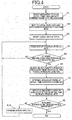
- Step S1 when receiving an instruction to start a virtual-tone-hole-and-note correspondence data creation mode (the correspondence setting mode) input by an operation on the operation switch 6 or the like (Step S1), the controller 8 shifts to the virtual-tone-hole-and-note correspondence data creation mode (Step S2).
- the controller 8 specifies, in response to a user operation, the lowest note of notes which can be output by the electronic wind instrument 100 of this embodiment (Step S3), and causes the display 3 to display the specified note (Step S4) .
- the controller 8 determines whether or not the breath pressure detector 2 has detected the breath pressure (Step S5) . When determining that the breath pressure detector 2 has not detected the breath pressure (Step S5; NO), the controller 8 returns to and repeats Step S4. When the breath pressure detector 2 has detected the breath pressure which is smaller than a predetermined threshold value, the controller 8 may determine that the breath pressure detector 2 has not detected the breath pressure.
- the controller 8 determines that the breath pressure detector 2 has detected the breath pressure (Step S5; YES)
- the key operation detector 11 detects the fingering key(s) 1 being operated at the time of the breath pressure detection (Step S6).
- the conversion-to-virtual-tone-hole section 81 converts the operation(s) on the fingering key(s) 1 detected by the key operation detector 11 to the open/close states of the virtual tone holes (Step S7). More specifically, the conversion-to-virtual-tone-hole section 81 determines how the open/close state of each virtual tone hole has been changed by the operation(s) on the fingering key(s) 1 with reference to (on the basis of) the virtual tone hole open/close state table 93.
- the conversion-to-virtual-tone-hole section 81 determines the open/close states of all the virtual tone holes (Step S7)
- the virtual-tone-hole-and-note correspondence creation section 83 associates data on the determined open/close states of all the virtual tone holes with the specified note, and registers the same in the key-operation-and-note correspondence data storage area 92 as a new virtual-tone-hole-and-note correspondence table 94 (Step S8) .
- the controller 8 determines whether or not it has specified all the notes, which can be output by the electronic wind instrument 100 of this embodiment, up to the highest note (Step S9) . When determining that it has specified all the notes (Step S8; YES), the controller 8 finishes the process.
- Step S9 when determining that it has not specified all the notes up to the highest note yet (Step S9; NO), the controller 8 increases the note by one level (e.g. from “do” to "re") (Step S10), and repeats Step S4 and the following steps.
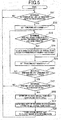
- the controller 8 determines whether or not the key operation detector 11 has detected an operation(s) on any of the fingering keys 1 (Step S11). When determining that the key operation detector 11 has detected no operation on any of the fingering keys 1 (Step S11; NO), the controller 8 repeats Step S11.
- Step S16 the conversion-to-virtual-tone-hole section 81 determines whether or not it has checked all the fingering keys 1 about being operated or not (Step S16).
- the determination about which fingering key(s) 1 has been operated is made promptly, for example, by timer interrupt or regular tasking performed with respect to all the fingering keys 1, and the conversion-to-virtual-tone-hole section 81 regularly updates contents of the virtual tone hole open/close state table 93 to the latest version at all times in response to the operations on the fingering keys 1.
- Step S16 When determining that it has finished checking all the fingering keys 1 about being operated or not (Step S16; YES), the conversion-to-virtual-tone-hole section 81 determines whether or not the breath pressure detector 2 has detected the breath pressure (Step S17). When determining that the breath pressure detector 2 has not detected the breath pressure (or has detected the breath pressure which is smaller than a predetermined threshold value) (Step S17; NO), the controller 8 returns to Step S11 to repeat the process.
- the conversion-to-virtual-tone-hole section 81 fixes the open/close states of all the virtual tone holes in their latest states, and stores this up-to-date virtual tone hole open/close state table 93 in the key-operation-and-note correspondence data storage area 92 (Step S18).
- the note determination section 82 determines a note with reference to (on the basis of) the virtual tone hole open/close state table 93 updated by the conversion-to-virtual-tone-hole section 81 and the virtual-tone-hole-and-note correspondence table 94 (Step S19).
- the sound output control section 84 causes the sound output unit 4 to output a sound of the note determined by the note determination section 82 (Step S20).
- Step S20 the controller 8 returns to Step S11 to repeat the play process (sound output process) . If the power switch 5 is turned off, or no operation on any of the fingering keys 1 or no breath pressure is detected for a certain period of time, the play process may automatically end after a preset/predetermined period of time.
- notes of sounds to be output are determined on the basis of the virtual tone hole open/close state table 93 and the virtual-tone-hole-and-note correspondence table 94.
- the electronic wind instrument 100 can be played by using various fingering patterns although the data amount therefor is relatively small.
- an operation(s) on the fingering key(s) 1 is detected, and the conversion-to-virtual-tone-hole section 81 converts the operation on the fingering key 1 to the open/close states of the virtual tone holes, referring to the virtual tone hole open/close state table 93 as the first information. Further, the note determination section 82 determines a note on the basis of the open/close states of the virtual tone holes, to which the operation on the fingering key 1 has been converted by the conversion-to-virtual-tone-hole section 81, referring to the virtual-tone-hole-and-note correspondence table 94 as the second information.
- the conversion-to-note apparatus 10 of the electronic wind instrument 100 having no concept of tone holes adopts a concept of imaginary tone holes (virtual tone holes), and determines a note by two conversion steps, namely, by converting an operation(s) on the fingering key(s) 1 to the open/close states of the virtual tone holes and converting the open/close states of the virtual tone holes to the note.
- This can simplify data for determining notes.
- the open/close states of the virtual tone holes which are not opened or closed (not affected) by an operation on the fingering key 1 are all indicated by "x", and only the open/close states of the virtual tone holes which are opened or closed (changed) by the operation on the fingering key 1 are expressed by "0" or "1".
- This can reduce the data amount as compared with a case where, for all the pairs (combinations) of the virtual tone holes and the fingering keys 1, the open/close states are expressed by "0" or "1".
- This can reduce the capacity of a memory to be prepared as the storage 9, and also can increase processing speed.
- the conversion-to-note apparatus 10 has the correspondence setting mode in which correspondences between operations on the fingering keys 1 and notes of musical tones to be output by (in response to) the operations are set, and if an operation to specify a note and an operation(s) on the fingering key(s) 1 are performed, the processor associates the open/close states of the virtual tone holes for the operation(s) on the fingering key(s) 1 with the note, thereby creating the virtual-tone-hole-and-note correspondence table 94 as virtual-tone-hole-and-note correspondence data.
- tone holes of the electronic wind instrument 100 are virtual, combinations of the open/close states of the tone holes and notes, the combinations not existing in an acoustic wind instrument, can be set. Consequently, fingering patterns can be customized to user's preference by registering user's desired fingering patterns.
- the electronic wind instrument 100 includes the breath pressure detector 2 as the operation fixing unit which fixes operations on the fingering keys 1.
- the operation detector 11 detects the operations on the fingering keys 1.
- the electronic wind instrument 100 of this embodiment includes: the conversion-to-note apparatus 10; the breath pressure detector 2 which is a blowing pressure sensor that detects the blowing pressure of the breath into the instrument body of the electronic wind instrument 100 via the mouthpiece; the fingering keys 1; the sound data storage area 95 which is a sound data storage that stores sound data; the sound output control section 84 which generates, on the basis of the sound data stored in the sound data storage area 95, musical tone output data for outputting a musical tone of a note determined by the note determination section 82; and the sound output unit 4 which outputs the musical tone on the basis of the musical tone output data generated by the sound output control section 84 if the breath pressure detector 2 detects the blowing pressure.
- the breath pressure detector 2 which is a blowing pressure sensor that detects the blowing pressure of the breath into the instrument body of the electronic wind instrument 100 via the mouthpiece
- the fingering keys 1 the sound data storage area 95 which is a sound data storage that stores sound data
- the sound output control section 84 which generates, on the
- the electronic wind instrument 100 can relatively easily identify notes perform the registration process of new fingering patterns, for example. Accordingly, the electronic wind instrument 100 can be realized as a more-acoustic-wind-instrument-like electronic wind instrument which a user can freely play with his/her preference, habit and so forth reflected.
- the breath pressure detector 2 functions as the operation fixing unit which fixes operations on the fingering keys 1.
- the operation fixing unit is not limited to the breath pressure detector 2 as far as it can identify, on the basis of an operation(s) with a part of the body of a user other than fingers, timings at which operations on the fingering keys 1 are fixed.
- a touch sensor such as a lip sensor which detects a lip touching a mouthpiece
- a touch sensor such as a lip sensor which detects a lip touching a mouthpiece
- the imaginary tone holes are regarded as tone holes.
- the first information is a tone hole open/close state table which indicates the open/close states of the actual tone holes
- the second information is a correspondence table in which the open/close states of the actual tone holes are associated with notes.
Landscapes
- Engineering & Computer Science (AREA)
- Physics & Mathematics (AREA)
- Acoustics & Sound (AREA)
- Multimedia (AREA)
- General Engineering & Computer Science (AREA)
- Electrophonic Musical Instruments (AREA)
Abstract
Description
- The present invention relates to a conversion-to-note apparatus, an electronic wind instrument and a conversion-to-note method for converting operations in playing to notes of sounds to output.
- There is known an electronic wind instrument manufactured by reproducing an acoustic wind instrument, such as a saxophone, as an electronic instrument.
- An acoustic wind instrument has a plurality of tone holes having default open/close states and a plurality of fingering keys which change the open/close states of the tone holes. A player operates the fingering keys, so that the open/close states of the tone holes are changed, and a sound (s) of a predetermined note(s) is output.
- In such an acoustic wind instrument, not one but a plurality of combinations of fingering keys (fingering patterns) exist for generating/realizing the open/close states of tone holes to output a sound(s) of a note(s).
- Hence, a user can play an acoustic wind instrument by choosing fingering patterns from among fingering patterns of various alternate fingerings in addition to basic fingering patterns according to his/her habit, fingering for a piece of music and so forth.
- Meanwhile, an electronic wind instrument has no concept of tone holes because it outputs sounds which are electrically generated by detecting operations on fingering keys.
- Such an electronic wind instrument adopts a method of preregistering correspondences each indicating which fingering pattern produces a sound of which note, and when outputting a sound on the basis of fingering, determining a note associated with a key input pattern indicating which fingering key(s) has been operated, and outputting a sound of the note. (Refer to, for example,
JP 2015-084027 A - According to an aspect of the present invention, there is provided a conversion-to-note apparatus including: a key which is operated by a user; and a processor which obtains, from a memory, first information to associate a key operation on the key with an open/close state of a tone hole or virtual tone hole and second information to associate the open/close state of the tone hole or virtual tone hole with a note, identifies, based on the first information, the open/close state of the tone hole or virtual tone hole for the key operation detected, and determines, based on the second information, the note for the identified open/close state of the tone hole or virtual tone hole.
- According to another aspect of the present invention, there is provided a conversion-to-note method for an apparatus to perform a control process including: detecting a key operation on a key; identifying, based on first information to associate the detected key operation with an open/close state of a tone hole or virtual tone hole, the open/close state of the tone hole or virtual tone hole for the detected key operation; and determining, based on second information to associate the open/close state of the tone hole or virtual tone hole with a note, the note for the identified open/close state of the tone hole or virtual tone hole.
- The accompanying drawings, which are incorporated in and constitute a part of the specification, illustrate embodiments of the invention, and together with the general description given above and the detailed description of the embodiments given below, serve to explain the principles of the invention, wherein:
-
FIG. 1 is a block diagram showing main components of an electronic wind instrument including a conversion-to-note apparatus according to an embodiment; -
FIG. 2 shows an example of a virtual tone hole open/close state table according to the embodiment; -
FIG. 3 shows an example of a virtual-tone-hole-and-note correspondence table according to the embodiment; -
FIG. 4 is a flowchart showing a virtual-tone-hole-and-note correspondence data creation process according to the embodiment; and -
FIG. 5 is a flowchart showing a sound output process by the electronic wind instrument according to the embodiment. - Hereinafter, an embodiment of a conversion-to-note apparatus and an electronic wind instrument including the conversion-to-note apparatus of the present invention is described with reference to
FIG. 1 to FIG. 5 . - Although various technically preferred limitations for carrying out the present invention are imposed on the embodiment below, the technical scope of the present invention is not limited to the embodiment or drawings.
- First, the overall configuration of an
electronic wind instrument 100 according to this embodiment is described with reference toFIG. 1 . -
FIG. 1 is a block diagram showing main components of theelectronic wind instrument 100 according to this embodiment. - As shown in
FIG. 1 , theelectronic wind instrument 100 of this embodiment includes a conversion-to-note apparatus 10, abreath pressure detector 2, adisplay 3, apower switch 5, anoperation switch 6, and various components for outputting sounds (e.g. asound output unit 4, a soundoutput control section 84, and a sound data storage area 95). - In
FIG. 1 , components constituting the conversion-to-note apparatus 10 are enclosed by a broken line. - The
electronic wind instrument 100 of this embodiment also includes: a not-shown instrument body having a shape of an acoustic wind instrument (e.g. saxophone); and a plurality of fingering keys 1 (fingering keys 1a to 1n inFIG. 1 ) on the outer circumferential surface of the instrument body. The number and arrangement of thefingering keys 1 are the same as those of an acoustic wind instrument. Thefingering keys 1 are provided with their respective key numbers (fingering keys no. 1 to no. n or simply keys no. 1 to no. n). - The instrument type of the
electronic wind instrument 100 of this embodiment is not particularly limited, and the shape and so forth of the instrument body and the number, arrangement and so forth of thefingering keys 1 are appropriately determined according to an intended instrument type of an electronic wind instrument (saxophone, clarinet, flute, etc.). - The conversion-to-
note apparatus 10 may be for one instrument type, or may have data and so forth for various instrument types and be configured to select data and so forth according to the instrument type of an electronic wind instrument in which the conversion-to-note apparatus 10 is installed, the data and so forth being used in processes. - The
electronic wind instrument 100 also includes akey operation detector 11 as an operation detector which detects operations on thefingering keys 1. - The
key operation detector 11 is, for example, a pressure sensor or a touch sensor which, when any of thefingering keys 1 is pressed/operated by a user, detects this operation(s)/press(es). - The detection result by the key operation detector 11 (i.e. whether or not any of the
fingering keys 1 has been operated, and if operated, which fingering key(s) 1 has been operated) is output to acontrol device 7. That is, thecontrol device 7 detects operations on thefingering keys 1 via thekey operation detector 11. - A not-shown mouthpiece is fitted to an end of the instrument body, and the
breath pressure detector 2 is arranged in the instrument body near the mouthpiece. - The
breath pressure detector 2 is a blowing pressure sensor (wind sensor) which detects a blowing pressure of user' s (player's) breath (breath pressure) into the instrument body via the mouthpiece. Thebreath pressure detector 2 detects presence or absence of the breath, and also detects strength and speed (power) of the breath at least while the user is playing theelectronic wind instrument 100. - In this embodiment, user's presses of the
fingering keys 1 only do not fix operations on thefingering keys 1, but together with detection of the breath pressure by thebreath pressure detector 2, fix operations on thefingering keys 1. - Thus, the
breath pressure detector 2 functions as an operation fixing unit which fixes operations on thefingering keys 1. - In a state in which operations on the
fingering keys 1 are fixed by detection of the breath pressure by thebreath pressure detector 2 as the operation fixing unit, a conversion-to-virtual-tone-hole section 81 and anote determination section 82, both described below, convert the operations on thefingering keys 1 detected by thekey operation detector 11 to the open/close states of imaginary tone holes and determine a note(s) (a pitch(es)) therefrom. - In order to fix operations on the
fingering keys 1, user's breath into the instrument body is necessary. This can prevent user' s unintended operation of theelectronic wind instrument 100 from occurring when the user presseswrong fingering keys 1 or presses thefingering keys 1 by mistake. Further, this fixation of operations on thefingering keys 1 by detection of the breath pressure allows a user to play theelectronic wind instrument 100 with a feeling similar to that the user can have when he/she plays an acoustic wind instrument because an acoustic wind instrument also outputs sounds by user' s breath thereinto. - The detection result by the
breath pressure detector 2 is output to thecontrol device 7. That is, thecontrol device 7 detects the breath pressure via thebreath pressure detector 2. - The
display 3 is arranged on the outer circumferential surface or the like of the instrument body. - The
display 3 displays various instruction screens and so forth. - In this embodiment, as described below, in a virtual-tone-hole-and-note correspondence data creation process, the
display 3 displays and shows a user a note which is a target for association with virtual tone holes. - On the outer circumferential surface or the like of the instrument body, the
power switch 5 for turning on and off a not-shown power source, theoperation switch 6 as an operation unit for inputting various operations, and so forth are also arranged. - The
operation switch 6 generates various switch events. The switch events generated by theoperation switch 6 are output to thecontrol device 7. - In this embodiment, an input operation on the
operation switch 6 is a trigger to start the virtual-tone-hole-and-note correspondence data creation process described below. - The
electronic wind instrument 100 includes thesound output unit 4 as a component for outputting sounds. - The
sound output unit 4 includes: a D/A converter which convers sound data generated by thecontrol device 7 to analog musical tone signals and outputs the musical tone signals; an amplifier which amplifies the musical tone signals; and a speaker which emits sounds based on the amplified musical tone signals. - The
sound output unit 4 may include an output terminal or the like for outputting the sounds based on the musical tone signals to a headphone or the like. - The
control device 7 is a computer which includes acontroller 8 and astorage 9. Thecontroller 8 is constituted of a not-shown CPU (Central Processing Unit) . Thestorage 9 is constituted of a ROM (Read Only Memory), a RAM (Random Access Memory) and so forth (all not shown). - The
storage 9 includes aprogram storage area 91 which stores, for example, various programs for operating the conversion-to-note apparatus 10 and theelectronic wind instrument 100 including the conversion-to-note apparatus 10. - In this embodiment, the
program storage area 91 stores, for example, a program for performing the virtual-tone-hole-and-note correspondence data creation process and a program for outputting musical tones. - In this embodiment, the
storage 9 also includes a key-operation-and-note correspondencedata storage area 92. - The key-operation-and-note correspondence
data storage area 92 is a correspondence storage which stores first information to associate operations on thefingering keys 1 with open/close states of imaginary tone holes (virtual tone holes) and second information to associate the open/close states of the virtual tone holes with notes. - In this embodiment, the key-operation-and-note correspondence
data storage area 92 stores a virtual tone hole open/close state table 93 as the first information and a virtual-tone-hole-and-note correspondence table 94 as the second information. - The virtual tone hole open/close state table 93 as the first information shows, for each of pairs (combinations) of the
fingering keys 1 and the tone holes (virtual tone holes in this embodiment), which of an open state, a close state and a dependent open/close state should be the open/close state of the tone hole in a pair if a fingering key 1 in the pair is operated, wherein the dependent open/close state indicates the state in which the tone hole is in the open state or the close state depending on an operation on another fingeringkey 1. -
FIG. 2 shows an example of the virtual tone hole open/close state table 93. - In
FIG. 2 , with respect to the fingering keys 1 (fingering keys no. 1 to no. 12 inFIG. 2 or simply keys no. 1 to no. 12) and the virtual tone holes 1 to 12, the open/close states of the virtual tone holes 1 to 12 when each fingeringkey 1 is operated are specified. - In
FIG. 2 , "0" indicates that a virtual tone hole is closed by an operation on a fingering key 1 shown in the left column of the virtual tone hole open/close state table 93, "1" indicates that a virtual tone hole is opened by an operation on a fingering key 1 shown in the left column thereof, and "×" indicates that a virtual tone hole is not affected by an operation on a fingering key 1 shown in the left column thereof. Hence, the open/close state of a virtual tone hole indicated by "x" depends on an operation on another fingering key 1 (a default open/close state predetermined for the virtual tone hole if the virtual tone hole is neither opened nor closed by an operation(s) on any of the fingering keys 1). - For example, if the fingering
key 1 having the "key no. 1" is operated, this operation switches thevirtual tone hole 1 to the close state from the open state which is its default open/close state. - An operation on one
fingering key 1 may affect a plurality of virtual tone holes. For example, if the fingeringkey 1 having the "key no. 4" is operated, this operation switches the virtual tone holes 4 and 5 to the close state from the open state which is their default open/close state. - The number of fingering keys and the number of virtual tone holes specified in the virtual tone hole open/close state table 93 are not limited to those shown in the drawings, and all the
fingering keys 1 arranged on theelectronic wind instrument 100 and all the tone holes which are expected to have according to the instrument type of theelectronic wind instrument 100 are specified in the virtual tone hole open/close state table 93. -
FIG. 3 shows an example of the virtual-tone-hole-and-note correspondence table 94. - In
FIG. 3 , "0" indicates that a virtual tone hole is in the close state, and "1" indicates that a virtual tone hole is in the open state. - For example, a case (pattern) where all the virtual tone holes are in the close state is associated with a sound of a
note 1 as a note the sound of which should be output. As another example, a case (pattern) where only the virtual tone holes 7 and 8 are in the close state is associated with a sound of anote 8 as the note, the sound of which should be output. - In this embodiment, the virtual-tone-hole-and-note correspondence table 94 as the second information can be created or edited by a virtual-tone-hole-and-note
correspondence creation section 83 or the like. - The
storage 9 also includes a sounddata storage area 95. - The sound
data storage area 95 stores waveform data (sound data) on notes of tone color (timbre) of the instrument type of theelectronic wind instrument 100. The sound data may be synthetized mechanically, or may be generated, for example, by sampling sounds of an acoustic instrument. - The
controller 8 functionally includes the conversion-to-virtual-tone-hole section 81, thenote determination section 82, the virtual-tone-hole-and-notecorrespondence creation section 83, and the soundoutput control section 84. These functions as the conversion-to-virtual-tone-hole section 81, thenote determination section 82, the virtual-tone-hole-and-notecorrespondence creation section 83, the soundoutput control section 84 and so forth are realized by the CPU of thecontroller 8 in cooperation with the programs stored in theprogram storage area 91 of thestorage 9. - The conversion-to-virtual-tone-
hole section 81 is a control section which converts operations on thefingering keys 1 detected by thekey operation detector 11 to the open/close states of the virtual tone holes. - More specifically, the conversion-to-virtual-tone-
hole section 81 determines the open/close states of the respective tone holes (virtual tone holes in this embodiment) on the basis of the open/close states stored, in the virtual tone hole open/close state table 93 as the first information, for the fingering key(s) 1 detected by thekey operation detector 11, which is the operation detector, as being operated. - That is, if the
key operation detector 11 detects an operation(s) on any of thefingering keys 1, the conversion-to-virtual-tone-hole section 81 reads the virtual tone hole open/close state table 93 as the first information from the key-operation-and-note correspondencedata storage area 92, and obtains presence or absence of change in the open/close states of the respective virtual tone holes by the operation (s) on the fingering key(s) 1 and type of the change if the change is present, referring to the virtual tone hole open/close state table 93. - Hereinafter, a method for determining the open/close states of the respective tone holes (virtual tone holes in this embodiment) on the basis of an operation(s) on the fingering key(s) 1 performed by the conversion-to-virtual-tone-
hole section 81 is described in detail. - If the
key operation detector 11 detects that two ormore fingering keys 1 have been operated, the conversion-to-virtual-tone-hole section 81 determines the open/close states of the respective tone holes (virtual tone holes in this embodiment) on the basis of change to the open state or the close state specified and stored, in the virtual tone hole open/close state table 93 as the first information, for any of the operated and detectedfingering keys 1. - If the open/close state of any of the tone holes (virtual tone holes in this embodiment) stored, in the virtual tone hole open/close state table 93 as the first information, for each of all the operated and detected
fingering keys 1 is the dependent open/close state, the conversion-to-virtual-tone-hole section 81 determines an open/close state(s) predetermined for the tone hole(s) as a state (s) to which the open/close state (s) of the tone hole(s) should be changed. - More specifically, the conversion-to-virtual-tone-
hole section 81 recognizes the default open/close states of the respective virtual tone holes, and recognizes the open/close states of the respective virtual tone holes after an operation(s) on the fingering key(s) 1 on the basis of the default open/close states of the respective virtual tone holes and with reference to the virtual tone hole open/close state table 93. - For example, if only the fingering
key 1 having the "key no. 1" is operated, only thevirtual tone hole 1 is opened and the other virtual tone holes are not affected by the operation on this fingeringkey 1. Accordingly, their open/close states are unchanged. In this case, the conversion-to-virtual-tone-hole section 81 recognizes that the virtual tone holes 2 to 12 are in their default open/close states, and thevirtual tone hole 1 is now in the open state. - In this embodiment, user's breath into the instrument body fixes operations on the
fingering keys 1, and when thebreath pressure detector 2 detects the breath pressure, the operations on all thefingering keys 1 being operated at the time of the detection are reflected in the open/close states of the virtual tone holes. - For example, if a user presses some of the
fingering keys 1 successively and is pressing/operating thefingering keys 1 having the "key no. 1", "key no. 8" and "key no. 12" at the time the breath pressure is detected by thebreath pressure detector 2, the conversion-to-virtual-tone-hole section 81 determines the open/close states of the virtual tone holes as follows: the virtual tone holes 1 and 9 are closed and the virtual tone holes 11 and 12 are opened due to the operations on the threefingering keys 1, and the other virtual tone holes remain in their default open/close states. - If a small amount of breath touching the instrument body can fix operations on the
fingering keys 1, theelectronic wind instrument 100 may misrecognize user's breath not for fixing the operations as breath for fixing the operations or may operate in a manner not intended by the user, for example. Hence, it is preferable that the conversion-to-virtual-tone-hole section 81 fix operations on thefingering keys 1 when thebreath pressure detector 2 detects the breath pressure of a predetermined threshold value or larger. - The
note determination section 82 is a control section which determines a note(s) for the open/close states of the virtual tone holes to which operations on thefingering keys 1 have been converted by the conversion-to-virtual-tone-hole section 81. - If the conversion-to-virtual-tone-
hole section 81 converts operations on thefingering keys 1 to the open/close states of the virtual tone holes, thenote determination section 82 reads the virtual-tone-hole-and-note correspondence table 94 as the second information from the key-operation-and-note correspondencedata storage area 92, and determines a note for the open/close states of the virtual tone holes as a note for the operations on thefingering keys 1, referring to the virtual-tone-hole-and-note correspondence table 94. - The virtual-tone-hole-and-note
correspondence creation section 83 associates, if a note is specified and the fingering key(s) 1 is operated, the open/close states of the virtual tone holes for the operation(s) on the fingering key(s) 1 with the note. - The conversion-to-
note apparatus 10 of theelectronic wind instrument 100 of this embodiment has, in addition to a play mode, a correspondence setting mode in which correspondences between operations on thefingering keys 1 and notes of musical tones to be output by (in response to) the operations are set. If an operation to specify a note and an operation(s) on the fingering key(s) 1 are performed in this correspondence setting mode, the virtual-tone-hole-and-notecorrespondence creation section 83 associates the open/close states of the tone holes (virtual tone holes in this embodiment) with the specified note, thereby creating the virtual-tone-hole-and-note correspondence table 94 as the second information, wherein the operation (s) on the fingering key(s) 1 have been converted to the open/close states of the tone holes by the conversion-to-virtual-tone-hole section 81. - In the correspondence setting mode, a user can set and register desired fingering patterns for all notes in order which can be output by the
electronic wind instrument 100 of this embodiment, starting from the lowest "do", for example. - The result of the correspondences between the virtual tone holes and the notes newly created by the virtual-tone-hole-and-note
correspondence creation section 83 is stored in the key-operation-and-note correspondencedata storage area 92 or the like as the virtual-tone-hole-and-note correspondence table 94. - If a virtual-tone-hole-and-note correspondence table 94 constituted of, for example, default settings, is already stored in the key-operation-and-note correspondence
data storage area 92, the default settings or the like may be overwritten and updated by the newly created table, or both of them may be stored, for example, as a virtual-tone-hole-and-note correspondence table 94_1 and a virtual-tone-hole-and-note correspondence table 94_2 so that a user can choose a table to use when playing theelectronic wind instrument 100. - The correspondences settable in the correspondence setting mode may be only for fingering patterns of alternate fingerings selectable in an acoustic wind instrument, but are not limited thereto.
- For example, fingering patterns which do not exist (are not used) in an acoustic wind instrument may be set. More specifically, the open/close states of the virtual tone holes may be associated with each desired note, for example, such that an operation on one
fingering key 1 can output one note. Such association (i.e. correspondences) allows novice wind instrument players, children and so forth to enjoy playing wind instruments casually. - Further, in the correspondence setting mode, correspondences between the virtual tone holes and notes do not need to be set for all the notes as described above. For example, only for notes the basic fingering patterns of which a user is not good at, fingering patterns different from the basic fingering patterns may be set and registered.
- In this case, the newly set correspondences between the virtual tone holes and the notes combined with the default correspondences which have not been changed may be stored in the key-operation-and-note correspondence
data storage area 92 or the like as a new virtual-tone-hole-and-note correspondence table 94 customized by the user, so that the user can choose and use this table 94 when playing theelectronic wind instrument 100. - The sound
output control section 84 causes thesound output unit 4 to output sounds of notes determined by thenote determination section 82. - The sound
output control section 84 obtains, in addition to a note (s) determined on the basis of an operation(s) on the fingering key(s) 1, a level or the like of the breath pressure detected by thebreath pressure detector 2, and controls thesound output unit 4 and so forth to output a sound of the determined note with a volume for the level or the like of the breath pressure. - Next, a conversion-to-note method (conversion-to-note process or virtual-tone-hole-and-note correspondence data creation process) according to this embodiment is described with reference to
FIG. 4 . - As shown in
FIG. 4 , in this embodiment, when receiving an instruction to start a virtual-tone-hole-and-note correspondence data creation mode (the correspondence setting mode) input by an operation on theoperation switch 6 or the like (Step S1), thecontroller 8 shifts to the virtual-tone-hole-and-note correspondence data creation mode (Step S2). - In the virtual-tone-hole-and-note correspondence data creation mode, first, the
controller 8 specifies, in response to a user operation, the lowest note of notes which can be output by theelectronic wind instrument 100 of this embodiment (Step S3), and causes thedisplay 3 to display the specified note (Step S4) . - The
controller 8 determines whether or not thebreath pressure detector 2 has detected the breath pressure (Step S5) . When determining that thebreath pressure detector 2 has not detected the breath pressure (Step S5; NO), thecontroller 8 returns to and repeats Step S4. When thebreath pressure detector 2 has detected the breath pressure which is smaller than a predetermined threshold value, thecontroller 8 may determine that thebreath pressure detector 2 has not detected the breath pressure. - On the other hand, when the
controller 8 determines that thebreath pressure detector 2 has detected the breath pressure (Step S5; YES), thekey operation detector 11 detects the fingering key(s) 1 being operated at the time of the breath pressure detection (Step S6). - Then, the conversion-to-virtual-tone-
hole section 81 converts the operation(s) on the fingering key(s) 1 detected by thekey operation detector 11 to the open/close states of the virtual tone holes (Step S7). More specifically, the conversion-to-virtual-tone-hole section 81 determines how the open/close state of each virtual tone hole has been changed by the operation(s) on the fingering key(s) 1 with reference to (on the basis of) the virtual tone hole open/close state table 93. - When the conversion-to-virtual-tone-
hole section 81 determines the open/close states of all the virtual tone holes (Step S7), the virtual-tone-hole-and-notecorrespondence creation section 83 associates data on the determined open/close states of all the virtual tone holes with the specified note, and registers the same in the key-operation-and-note correspondencedata storage area 92 as a new virtual-tone-hole-and-note correspondence table 94 (Step S8) . - The
controller 8 determines whether or not it has specified all the notes, which can be output by theelectronic wind instrument 100 of this embodiment, up to the highest note (Step S9) . When determining that it has specified all the notes (Step S8; YES), thecontroller 8 finishes the process. - On the other hand, when determining that it has not specified all the notes up to the highest note yet (Step S9; NO), the
controller 8 increases the note by one level (e.g. from "do" to "re") (Step S10), and repeats Step S4 and the following steps. - This allows a user to play the
electronic wind instrument 100 with his/her desired fingering patterns. - Next, a sound output process which is performed while a user is playing the
electronic wind instrument 100 of this embodiment is described with reference toFIG. 5 . - As shown in
FIG. 5 , thecontroller 8 determines whether or not thekey operation detector 11 has detected an operation(s) on any of the fingering keys 1 (Step S11). When determining that thekey operation detector 11 has detected no operation on any of the fingering keys 1 (Step S11; NO), thecontroller 8 repeats Step S11. - On the other hand, when the
controller 8 determines that thekey operation detector 11 has detected an operation(s) on one or more fingering keys 1 (Step S11; YES), the conversion-to-virtual-tone-hole section 81 checks, in order, which fingering key(s) 1 has been operated. More specifically, the conversion-to-virtual-tone-hole section 81 sets "fingering key number k = 1" (Step S12), and determines whether or not thekey operation detector 11 has detected an operation on the fingeringkey 1 having the "fingering key number k" (i.e. key no. 1) (Step S13) . When determining that thekey operation detector 11 has detected an operation on the fingeringkey 1 having the "fingering key number k" (Step S13; YES), the conversion-to-virtual-tone-hole section 81 refers to the virtual tone hole open/close state table 93, and updates the open/close states of the virtual tone holes for the fingering key number k concerned (here "k = 1") to those after the operation on the fingering key 1 (Step S14). - On the other hand, when determining that the
key operation detector 11 has detected no operation on the fingeringkey 1 having the "fingering key number k" (Step S13; NO), or when determining that thekey operation detector 11 has detected an operation on the fingeringkey 1 having the "fingering key number k" (Step S13; YES) and updating the open/close states of the virtual tone holes for the fingering key 1 (Step S14), the conversion-to-virtual-tone-hole section 81 sets "fingering key number k = k + 1" (Step S15), and determines whether or not "k = n", namely, "k = k + 1 = n", holds (Step S16). More specifically, in the case where the number of thefingering keys 1 is n, and accordingly thefingering keys 1 having the "key no. 1" to "key no. n" are present, in Step S16, the conversion-to-virtual-tone-hole section 81 determines whether or not it has checked all thefingering keys 1 about being operated or not (Step S16). - When determining that it has not yet finished checking all the
fingering keys 1 about being operated or not (Step S16; NO), the conversion-to-virtual-tone-hole section 81 returns to Step S13 and repeats Step S13 and the following steps for the "fingering key number k = k + 1". - The determination about which fingering key(s) 1 has been operated is made promptly, for example, by timer interrupt or regular tasking performed with respect to all the
fingering keys 1, and the conversion-to-virtual-tone-hole section 81 regularly updates contents of the virtual tone hole open/close state table 93 to the latest version at all times in response to the operations on thefingering keys 1. - When determining that it has finished checking all the
fingering keys 1 about being operated or not (Step S16; YES), the conversion-to-virtual-tone-hole section 81 determines whether or not thebreath pressure detector 2 has detected the breath pressure (Step S17). When determining that thebreath pressure detector 2 has not detected the breath pressure (or has detected the breath pressure which is smaller than a predetermined threshold value) (Step S17; NO), thecontroller 8 returns to Step S11 to repeat the process. - On the other hand, when determining that the
breath pressure detector 2 has detected the breath pressure (Step S17; YES), the conversion-to-virtual-tone-hole section 81 fixes the open/close states of all the virtual tone holes in their latest states, and stores this up-to-date virtual tone hole open/close state table 93 in the key-operation-and-note correspondence data storage area 92 (Step S18). - Further, when the conversion-to-virtual-tone-
hole section 81 determines that thebreath pressure detector 2 has detected the breath pressure (Step S17; YES), thenote determination section 82 determines a note with reference to (on the basis of) the virtual tone hole open/close state table 93 updated by the conversion-to-virtual-tone-hole section 81 and the virtual-tone-hole-and-note correspondence table 94 (Step S19). - Then, the sound
output control section 84 causes thesound output unit 4 to output a sound of the note determined by the note determination section 82 (Step S20). - Once the sound
output control section 84 causes thesound output unit 4 to output the sound (Step S20), thecontroller 8 returns to Step S11 to repeat the play process (sound output process) . If thepower switch 5 is turned off, or no operation on any of thefingering keys 1 or no breath pressure is detected for a certain period of time, the play process may automatically end after a preset/predetermined period of time. - Thus, notes of sounds to be output are determined on the basis of the virtual tone hole open/close state table 93 and the virtual-tone-hole-and-note correspondence table 94. Hence, the
electronic wind instrument 100 can be played by using various fingering patterns although the data amount therefor is relatively small. - As described above, according to this embodiment, an operation(s) on the fingering key(s) 1 is detected, and the conversion-to-virtual-tone-
hole section 81 converts the operation on the fingering key 1 to the open/close states of the virtual tone holes, referring to the virtual tone hole open/close state table 93 as the first information. Further, thenote determination section 82 determines a note on the basis of the open/close states of the virtual tone holes, to which the operation on the fingeringkey 1 has been converted by the conversion-to-virtual-tone-hole section 81, referring to the virtual-tone-hole-and-note correspondence table 94 as the second information. - Thus, the conversion-to-
note apparatus 10 of theelectronic wind instrument 100 having no concept of tone holes adopts a concept of imaginary tone holes (virtual tone holes), and determines a note by two conversion steps, namely, by converting an operation(s) on the fingering key(s) 1 to the open/close states of the virtual tone holes and converting the open/close states of the virtual tone holes to the note. This can simplify data for determining notes. - In particular, in the virtual tone hole open/close state table 93 as the first information, for each fingering
key 1, the open/close states of the virtual tone holes which are not opened or closed (not affected) by an operation on the fingering key 1 (i.e. which depend on an operation on another fingeringkey 1 and are the default open/close states if not affected by an operation on any of the fingering keys 1) are all indicated by "x", and only the open/close states of the virtual tone holes which are opened or closed (changed) by the operation on the fingeringkey 1 are expressed by "0" or "1". This can reduce the data amount as compared with a case where, for all the pairs (combinations) of the virtual tone holes and thefingering keys 1, the open/close states are expressed by "0" or "1". - This can reduce the capacity of a memory to be prepared as the
storage 9, and also can increase processing speed. - Consequently, even if a countless number of fingering patterns of alternate fingerings are present, a large number of the fingering patterns can be covered, and accordingly a variety of music performances can be enjoyed, as with an acoustic wind instrument.
- Further, according to this embodiment, the conversion-to-
note apparatus 10 has the correspondence setting mode in which correspondences between operations on thefingering keys 1 and notes of musical tones to be output by (in response to) the operations are set, and if an operation to specify a note and an operation(s) on the fingering key(s) 1 are performed, the processor associates the open/close states of the virtual tone holes for the operation(s) on the fingering key(s) 1 with the note, thereby creating the virtual-tone-hole-and-note correspondence table 94 as virtual-tone-hole-and-note correspondence data. - This allows a user to play the
electronic wind instrument 100 by choosing fingering patterns from among the fingering patterns of various alternate fingerings in addition to the basic fingering patterns according to his/her habit, fingering for a piece of music and so forth, as with an acoustic wind instrument. - Further, because the tone holes of the
electronic wind instrument 100 are virtual, combinations of the open/close states of the tone holes and notes, the combinations not existing in an acoustic wind instrument, can be set. Consequently, fingering patterns can be customized to user's preference by registering user's desired fingering patterns. - Further, according to this embodiment, the
electronic wind instrument 100 includes thebreath pressure detector 2 as the operation fixing unit which fixes operations on thefingering keys 1. When thebreath pressure detector 2 fixes operations on thefingering keys 1, theoperation detector 11 detects the operations on thefingering keys 1. - This can prevent user's unintended operation of the
electronic wind instrument 100 from occurring when the user presseswrong fingering keys 1 or presses thefingering keys 1 by mistake. For example, this can prevent sounds or the registration process from being output or performed unexpectedly. - Further, the
electronic wind instrument 100 of this embodiment includes: the conversion-to-note apparatus 10; thebreath pressure detector 2 which is a blowing pressure sensor that detects the blowing pressure of the breath into the instrument body of theelectronic wind instrument 100 via the mouthpiece; thefingering keys 1; the sounddata storage area 95 which is a sound data storage that stores sound data; the soundoutput control section 84 which generates, on the basis of the sound data stored in the sounddata storage area 95, musical tone output data for outputting a musical tone of a note determined by thenote determination section 82; and thesound output unit 4 which outputs the musical tone on the basis of the musical tone output data generated by the soundoutput control section 84 if thebreath pressure detector 2 detects the blowing pressure. - Consequently, while a conventional electronic wind instrument has a countless number of fingering patterns and requires a complex note identification process, the
electronic wind instrument 100 can relatively easily identify notes perform the registration process of new fingering patterns, for example. Accordingly, theelectronic wind instrument 100 can be realized as a more-acoustic-wind-instrument-like electronic wind instrument which a user can freely play with his/her preference, habit and so forth reflected. - Although an embodiment of the present invention is described above, needless to say the present invention is not limited to the embodiment and can be appropriately modified in a variety of aspects without departing from the scope of the present invention.
- For example, in the embodiment, the
breath pressure detector 2 functions as the operation fixing unit which fixes operations on thefingering keys 1. However, the operation fixing unit is not limited to thebreath pressure detector 2 as far as it can identify, on the basis of an operation(s) with a part of the body of a user other than fingers, timings at which operations on thefingering keys 1 are fixed. - For example, a touch sensor, such as a lip sensor which detects a lip touching a mouthpiece, may be used. Because operations on the
fingering keys 1 are fixed in the state in which thefingering keys 1 are pressed (operated) with fingers, it is difficult to fix the operations with a hand. The operations may therefore be fixed by detection of another part of the body of a user touching a part of theelectronic wind instrument 100, for example. - Further, in this embodiment, the imaginary tone holes (virtual tone holes) are regarded as tone holes. However, if a musical instrument or the like in which the conversion-to-
note apparatus 10 is installed has physical tone holes, the above processes may be performed on the basis of the open/close states of these tone holes. In this case, the first information is a tone hole open/close state table which indicates the open/close states of the actual tone holes, and the second information is a correspondence table in which the open/close states of the actual tone holes are associated with notes.
Claims (17)
- A conversion-to-note apparatus comprising:a key which is operated by a user; anda processor whichobtains, from a memory, first information to associate a key operation on the key with an open/close state of a tone hole or virtual tone hole and second information to associate the open/close state of the tone hole or virtual tone hole with a note,identifies, based on the first information, the open/close state of the tone hole or virtual tone hole for the key operation detected, anddetermines, based on the second information, the note for the identified open/close state of the tone hole or virtual tone hole.
- The conversion-to-note apparatus according to claim 1, wherein the processor:detects key operations on keys including the key;determines the note for the keys, which have been operated and detected, based on the first information and the second information; andperforms control to produce a sound of the determined note.
- The conversion-to-note apparatus according to claim 1, wherein
the memory stores the first information which shows, for each of pairs of keys including the key and tone holes or virtual tone holes including the tone hole or vertical tone hole, which of an open state, a close state and a dependent open/close state should be the open/close state of a tone hole or virtual tone hole in a pair if a key in the pair is operated, wherein the dependent open/close state indicates a state in which the tone hole or virtual tone hole is in the open state or the close state depending on a kay operation on another key, and
the processor determines the open/close states of the respective tone holes or virtual tone holes based on the open/close states stored, in the first information, for the key operation detected. - The conversion-to-note apparatus according to claim 3, wherein if the processor detects key operations on keys among the keys, the processor determines the open/close states of the respective tone holes or virtual tone holes based on change to the open state or the close state specified and stored, in the first information, for any of the keys, which have been operated and detected.
- The conversion-to-note apparatus according to claim 4, wherein if the open/close state of any of the tone holes or virtual tone holes stored, in the first information, for each of the keys, which have been operated and detected, is the dependent open/close state, the processor determines an open/close state predetermined for the tone hole or virtual tone hole as a state to which the open/close state of the tone hole or virtual tone hole should be changed.
- The conversion-to-note apparatus according to claim 1, wherein
the conversion-to-note apparatus has a setting mode in which a correspondence between the key operation and the note of a musical tone is set, and
if an operation to specify the note and the key operation are performed in the setting mode, the processor associates the open/close state of the tone hole or virtual tone hole with the specified note, thereby creating the second information, wherein the key operation has been converted to the open/close state of the tone hole or virtual tone hole based on the first information. - The conversion-to-note apparatus according to claim 1, wherein the processor:detects a fixing operation which fixes the key operation; andin a state in which the key operation is fixed by the fixing operation, converts the key operation to the open/close state of the tone hole or virtual tone hole, and determines the note.
- The conversion-to-note apparatus according to claim 7, wherein the processor identifies a timing of the fixing operation based on an operation with a part of a body of the user other than a finger.
- The conversion-to-note apparatus according to claim 7, wherein the processor creates or edits the second information based on a user operation.
- An electronic wind instrument comprising:the conversion-to-note apparatus according to claim 1;a blowing pressure sensor which detects a blowing pressure of breath into the electronic wind instrument via a mouthpiece;a plurality of fingering keys;a sound data storage which stores sound data; anda sound output unit which outputs a musical tone, whereinthe processor:determines a note according to key operations on the fingering keys;generates, based on the sound data stored in the sound data storage, musical tone output data on the determined note, andcauses the sound output unit to output the musical tone based on the generated musical tone output data if the blowing pressure sensor detects the blowing pressure.
- A conversion-to-note method for an apparatus to perform a control process comprising:detecting a key operation on a key;identifying, based on first information to associate the detected key operation with an open/close state of a tone hole or virtual tone hole, the open/close state of the tone hole or virtual tone hole for the detected key operation; anddetermining, based on second information to associate the open/close state of the tone hole or virtual tone hole with a note, the note for the identified open/close state of the tone hole or virtual tone hole.
- The conversion-to-note method according to claim 11, wherein the control process comprises:detecting key operations on keys including the key;determining the note for the keys, which have been operated and detected, based on the first information and the second information; andperforming a control to produce a sound of the determined note.
- The conversion-to-note method according to claim 11, wherein
the first information is information which shows, for each of pairs of keys including the key and tone holes or virtual tone holes including the tone hole or vertical tone hole, which of an open state, a close state and a dependent open/close state should be the open/close state of a tone hole or virtual tone hole in a pair if a key in the pair is operated, wherein the dependent open/close state indicates a state in which the tone hole or virtual tone hole is in the open state or the close state depending on a kay operation on another key, and
the control process comprises: determining the open/close states of the respective tone holes or virtual tone holes based on the open/close states stored, in the first information, for the detected key operation. - The conversion-to-note method according to claim 13, wherein the control process comprises: if detecting key operations on keys among the keys, determining the open/close states of the respective tone holes or virtual tone holes based on change to the open state or the close state specified and stored, in the first information, for any of the keys, which have been operated and detected.
- The conversion-to-note method according to claim 14, wherein the control process comprises: if the open/close state of any of the tone holes or virtual tone holes stored, in the first information, for each of the keys, which have been operated and detected, is the dependent open/close state, determining an open/close state predetermined for the tone hole or virtual tone hole as a state to which the open/close state of the tone hole or virtual tone hole should be changed.
- The conversion-to-note method according to claim 11, wherein
the apparatus has a setting mode in which a correspondence between the key operation and the note of a musical tone is set, and
the control process comprises: if an operation to specify the note and the key operation are performed in the setting mode, associating the open/close state of the tone hole or virtual tone hole with the specified note, thereby creating the second information, wherein the key operation has been converted to the open/close state of the tone hole or virtual tone hole based on the first information. - A program to cause a computer to perform a control process comprising:detecting a key operation on a key;identifying, based on first information to associate the detected key operation with an open/close state of a tone hole or virtual tone hole, the open/close state of the tone hole or virtual tone hole for the detected key operation; anddetermining, based on second information to associate the open/close state of the tone hole or virtual tone hole with a note, the note for the identified open/close state of the tone hole or virtual tone hole.
Applications Claiming Priority (1)
| Application Number | Priority Date | Filing Date | Title |
|---|---|---|---|
| JP2017185924A JP6760238B2 (en) | 2017-09-27 | 2017-09-27 | Scale conversion device, electronic wind instrument, scale conversion method and scale conversion program |
Publications (2)
| Publication Number | Publication Date |
|---|---|
| EP3462444A1 true EP3462444A1 (en) | 2019-04-03 |
| EP3462444B1 EP3462444B1 (en) | 2020-07-15 |
Family
ID=63683668
Family Applications (1)
| Application Number | Title | Priority Date | Filing Date |
|---|---|---|---|
| EP18196413.1A Active EP3462444B1 (en) | 2017-09-27 | 2018-09-25 | Conversion-to-note apparatus, electronic wind instrument and conversion-to-note method |
Country Status (4)
| Country | Link |
|---|---|
| US (1) | US10522127B2 (en) |
| EP (1) | EP3462444B1 (en) |
| JP (1) | JP6760238B2 (en) |
| CN (1) | CN109559724B (en) |
Families Citing this family (1)
| Publication number | Priority date | Publication date | Assignee | Title |
|---|---|---|---|---|
| JP7262347B2 (en) * | 2019-09-06 | 2023-04-21 | ローランド株式会社 | electronic wind instrument |
Citations (5)
| Publication number | Priority date | Publication date | Assignee | Title |
|---|---|---|---|---|
| US5929361A (en) * | 1997-09-12 | 1999-07-27 | Yamaha Corporation | Woodwind-styled electronic musical instrument with bite indicator |
| US6002080A (en) * | 1997-06-17 | 1999-12-14 | Yahama Corporation | Electronic wind instrument capable of diversified performance expression |
| US20050172780A1 (en) * | 2004-01-09 | 2005-08-11 | Hideyuki Masuda | Fingering guide displaying apparatus for musical instrument and computer program therefor |
| EP2017825A1 (en) * | 2007-07-17 | 2009-01-21 | Yamaha Corporation | Hybrid wind musical instrument and electric system for the same |
| JP2015084027A (en) | 2013-10-25 | 2015-04-30 | 宗一郎 井上 | Electronic wind instrument system |
Family Cites Families (10)
| Publication number | Priority date | Publication date | Assignee | Title |
|---|---|---|---|---|
| JP2526101B2 (en) * | 1988-08-10 | 1996-08-21 | ローランド株式会社 | Electronic wind instrument |
| JPH0760315B2 (en) * | 1988-11-04 | 1995-06-28 | 松下電器産業株式会社 | Electronic musical instrument |
| JP3427698B2 (en) * | 1997-06-17 | 2003-07-22 | ヤマハ株式会社 | Electronic wind instrument |
| US6538189B1 (en) * | 2001-02-02 | 2003-03-25 | Russell A. Ethington | Wind controller for music synthesizers |
| JP4258498B2 (en) * | 2005-07-25 | 2009-04-30 | ヤマハ株式会社 | Sound control device and program for wind instrument |
| JP4258499B2 (en) * | 2005-07-25 | 2009-04-30 | ヤマハ株式会社 | Sound control device and program for wind instrument |
| JP4506619B2 (en) * | 2005-08-30 | 2010-07-21 | ヤマハ株式会社 | Performance assist device |
| US8581087B2 (en) * | 2010-09-28 | 2013-11-12 | Yamaha Corporation | Tone generating style notification control for wind instrument having mouthpiece section |
| JP6609949B2 (en) * | 2015-03-19 | 2019-11-27 | カシオ計算機株式会社 | Electronic wind instrument |
| CN107180626A (en) * | 2017-05-25 | 2017-09-19 | 淮安市高级职业技术学校 | A kind of non-seedling button of type 17 that blows amplifies sheng, a reed pipe wind instrument |
-
2017
- 2017-09-27 JP JP2017185924A patent/JP6760238B2/en active Active
-
2018
- 2018-09-19 US US16/136,154 patent/US10522127B2/en active Active
- 2018-09-25 EP EP18196413.1A patent/EP3462444B1/en active Active
- 2018-09-25 CN CN201811119163.6A patent/CN109559724B/en active Active
Patent Citations (5)
| Publication number | Priority date | Publication date | Assignee | Title |
|---|---|---|---|---|
| US6002080A (en) * | 1997-06-17 | 1999-12-14 | Yahama Corporation | Electronic wind instrument capable of diversified performance expression |
| US5929361A (en) * | 1997-09-12 | 1999-07-27 | Yamaha Corporation | Woodwind-styled electronic musical instrument with bite indicator |
| US20050172780A1 (en) * | 2004-01-09 | 2005-08-11 | Hideyuki Masuda | Fingering guide displaying apparatus for musical instrument and computer program therefor |
| EP2017825A1 (en) * | 2007-07-17 | 2009-01-21 | Yamaha Corporation | Hybrid wind musical instrument and electric system for the same |
| JP2015084027A (en) | 2013-10-25 | 2015-04-30 | 宗一郎 井上 | Electronic wind instrument system |
Non-Patent Citations (1)
| Title |
|---|
| ANONYMOUS: "Aerophone AE-10 Owner's Manual", 1 January 2016 (2016-01-01), Roland Global Homepage, XP055521839, Retrieved from the Internet <URL:https://static.roland.com/assets/media/pdf/AE-10_eng03_W.pdf> [retrieved on 20181107] * |
Also Published As
| Publication number | Publication date |
|---|---|
| US20190096377A1 (en) | 2019-03-28 |
| JP2019061085A (en) | 2019-04-18 |
| US10522127B2 (en) | 2019-12-31 |
| CN109559724B (en) | 2023-08-18 |
| CN109559724A (en) | 2019-04-02 |
| EP3462444B1 (en) | 2020-07-15 |
| JP6760238B2 (en) | 2020-09-23 |
Similar Documents
| Publication | Publication Date | Title |
|---|---|---|
| CN115376476B (en) | Electronic musical instrument, control method of electronic musical instrument, and computer program product | |
| CN112466265B (en) | Electronic wind instrument and control method thereof | |
| JP7140083B2 (en) | Electronic wind instrument, control method and program for electronic wind instrument | |
| EP3462444B1 (en) | Conversion-to-note apparatus, electronic wind instrument and conversion-to-note method | |
| JP4361327B2 (en) | Electronic musical instrument performance evaluation device | |
| JP2018054767A (en) | Electronic musical instrument, its sound production control method, and program | |
| JPH05265447A (en) | Electronic musical instrument capable of deciding finger of hand operating keyboard | |
| JP2012103575A (en) | Musical tone generating device and musical tone generating program | |
| JP3112633B2 (en) | Electronic keyboard instrument | |
| JPS62157092A (en) | Shoulder type electric drum | |
| JP2015179229A (en) | Musical sound generator, electronic music instrument, musical sound generating method and program | |
| JP2008089975A (en) | Electronic musical instruments | |
| JP6410345B2 (en) | Sound preview apparatus and program | |
| JP5825056B2 (en) | Electronic musical instruments | |
| JP4498645B2 (en) | Electronic musical instrument automatic performance device | |
| JP3669065B2 (en) | Electronic musical instrument control parameter changing device | |
| JP2003122355A (en) | Electronic musical instrument | |
| JP2002073014A (en) | Score for performance | |
| JP3862988B2 (en) | Electronic musical instruments | |
| JP4174961B2 (en) | Performance device, performance method and information recording medium | |
| JPH0727514Y2 (en) | Electronic keyboard instrument | |
| KR200276398Y1 (en) | Digitar Music & Computer KeyBoard | |
| JP2008216870A (en) | Electronic keyboard musical instrument and program for attaining its control method | |
| JP2017173417A (en) | Automatic accompaniment apparatus, automatic accompaniment method, program, and electronic wind instrument | |
| JPH0248698A (en) | Electronic wind instrument |
Legal Events
| Date | Code | Title | Description |
|---|---|---|---|
| PUAI | Public reference made under article 153(3) epc to a published international application that has entered the european phase |
Free format text: ORIGINAL CODE: 0009012 |
|
| STAA | Information on the status of an ep patent application or granted ep patent |
Free format text: STATUS: REQUEST FOR EXAMINATION WAS MADE |
|
| 17P | Request for examination filed |
Effective date: 20180925 |
|
| AK | Designated contracting states |
Kind code of ref document: A1 Designated state(s): AL AT BE BG CH CY CZ DE DK EE ES FI FR GB GR HR HU IE IS IT LI LT LU LV MC MK MT NL NO PL PT RO RS SE SI SK SM TR |
|
| AX | Request for extension of the european patent |
Extension state: BA ME |
|
| RBV | Designated contracting states (corrected) |
Designated state(s): AL AT BE BG CH CY CZ DE DK EE ES FI FR GB GR HR HU IE IS IT LI LT LU LV MC MK MT NL NO PL PT RO RS SE SI SK SM TR |
|
| GRAP | Despatch of communication of intention to grant a patent |
Free format text: ORIGINAL CODE: EPIDOSNIGR1 |
|
| RIC1 | Information provided on ipc code assigned before grant |
Ipc: G10H 1/18 20060101AFI20200121BHEP |
|
| STAA | Information on the status of an ep patent application or granted ep patent |
Free format text: STATUS: GRANT OF PATENT IS INTENDED |
|
| INTG | Intention to grant announced |
Effective date: 20200227 |
|
| GRAS | Grant fee paid |
Free format text: ORIGINAL CODE: EPIDOSNIGR3 |
|
| GRAA | (expected) grant |
Free format text: ORIGINAL CODE: 0009210 |
|
| STAA | Information on the status of an ep patent application or granted ep patent |
Free format text: STATUS: THE PATENT HAS BEEN GRANTED |
|
| AK | Designated contracting states |
Kind code of ref document: B1 Designated state(s): AL AT BE BG CH CY CZ DE DK EE ES FI FR GB GR HR HU IE IS IT LI LT LU LV MC MK MT NL NO PL PT RO RS SE SI SK SM TR |
|
| REG | Reference to a national code |
Ref country code: CH Ref legal event code: EP Ref country code: GB Ref legal event code: FG4D |
|
| REG | Reference to a national code |
Ref country code: IE Ref legal event code: FG4D |
|
| REG | Reference to a national code |
Ref country code: DE Ref legal event code: R096 Ref document number: 602018006028 Country of ref document: DE |
|
| REG | Reference to a national code |
Ref country code: AT Ref legal event code: REF Ref document number: 1291885 Country of ref document: AT Kind code of ref document: T Effective date: 20200815 |
|
| REG | Reference to a national code |
Ref country code: LT Ref legal event code: MG4D |
|
| REG | Reference to a national code |
Ref country code: AT Ref legal event code: MK05 Ref document number: 1291885 Country of ref document: AT Kind code of ref document: T Effective date: 20200715 |
|
| REG | Reference to a national code |
Ref country code: NL Ref legal event code: MP Effective date: 20200715 |
|
| PG25 | Lapsed in a contracting state [announced via postgrant information from national office to epo] |
Ref country code: LT Free format text: LAPSE BECAUSE OF FAILURE TO SUBMIT A TRANSLATION OF THE DESCRIPTION OR TO PAY THE FEE WITHIN THE PRESCRIBED TIME-LIMIT Effective date: 20200715 Ref country code: HR Free format text: LAPSE BECAUSE OF FAILURE TO SUBMIT A TRANSLATION OF THE DESCRIPTION OR TO PAY THE FEE WITHIN THE PRESCRIBED TIME-LIMIT Effective date: 20200715 Ref country code: PT Free format text: LAPSE BECAUSE OF FAILURE TO SUBMIT A TRANSLATION OF THE DESCRIPTION OR TO PAY THE FEE WITHIN THE PRESCRIBED TIME-LIMIT Effective date: 20201116 Ref country code: ES Free format text: LAPSE BECAUSE OF FAILURE TO SUBMIT A TRANSLATION OF THE DESCRIPTION OR TO PAY THE FEE WITHIN THE PRESCRIBED TIME-LIMIT Effective date: 20200715 Ref country code: GR Free format text: LAPSE BECAUSE OF FAILURE TO SUBMIT A TRANSLATION OF THE DESCRIPTION OR TO PAY THE FEE WITHIN THE PRESCRIBED TIME-LIMIT Effective date: 20201016 Ref country code: NO Free format text: LAPSE BECAUSE OF FAILURE TO SUBMIT A TRANSLATION OF THE DESCRIPTION OR TO PAY THE FEE WITHIN THE PRESCRIBED TIME-LIMIT Effective date: 20201015 Ref country code: SE Free format text: LAPSE BECAUSE OF FAILURE TO SUBMIT A TRANSLATION OF THE DESCRIPTION OR TO PAY THE FEE WITHIN THE PRESCRIBED TIME-LIMIT Effective date: 20200715 Ref country code: BG Free format text: LAPSE BECAUSE OF FAILURE TO SUBMIT A TRANSLATION OF THE DESCRIPTION OR TO PAY THE FEE WITHIN THE PRESCRIBED TIME-LIMIT Effective date: 20201015 Ref country code: AT Free format text: LAPSE BECAUSE OF FAILURE TO SUBMIT A TRANSLATION OF THE DESCRIPTION OR TO PAY THE FEE WITHIN THE PRESCRIBED TIME-LIMIT Effective date: 20200715 Ref country code: FI Free format text: LAPSE BECAUSE OF FAILURE TO SUBMIT A TRANSLATION OF THE DESCRIPTION OR TO PAY THE FEE WITHIN THE PRESCRIBED TIME-LIMIT Effective date: 20200715 |
|
| PG25 | Lapsed in a contracting state [announced via postgrant information from national office to epo] |
Ref country code: RS Free format text: LAPSE BECAUSE OF FAILURE TO SUBMIT A TRANSLATION OF THE DESCRIPTION OR TO PAY THE FEE WITHIN THE PRESCRIBED TIME-LIMIT Effective date: 20200715 Ref country code: LV Free format text: LAPSE BECAUSE OF FAILURE TO SUBMIT A TRANSLATION OF THE DESCRIPTION OR TO PAY THE FEE WITHIN THE PRESCRIBED TIME-LIMIT Effective date: 20200715 Ref country code: PL Free format text: LAPSE BECAUSE OF FAILURE TO SUBMIT A TRANSLATION OF THE DESCRIPTION OR TO PAY THE FEE WITHIN THE PRESCRIBED TIME-LIMIT Effective date: 20200715 Ref country code: IS Free format text: LAPSE BECAUSE OF FAILURE TO SUBMIT A TRANSLATION OF THE DESCRIPTION OR TO PAY THE FEE WITHIN THE PRESCRIBED TIME-LIMIT Effective date: 20201115 |
|
| PG25 | Lapsed in a contracting state [announced via postgrant information from national office to epo] |
Ref country code: NL Free format text: LAPSE BECAUSE OF FAILURE TO SUBMIT A TRANSLATION OF THE DESCRIPTION OR TO PAY THE FEE WITHIN THE PRESCRIBED TIME-LIMIT Effective date: 20200715 |
|
| REG | Reference to a national code |
Ref country code: DE Ref legal event code: R097 Ref document number: 602018006028 Country of ref document: DE |
|
| PG25 | Lapsed in a contracting state [announced via postgrant information from national office to epo] |
Ref country code: EE Free format text: LAPSE BECAUSE OF FAILURE TO SUBMIT A TRANSLATION OF THE DESCRIPTION OR TO PAY THE FEE WITHIN THE PRESCRIBED TIME-LIMIT Effective date: 20200715 Ref country code: CZ Free format text: LAPSE BECAUSE OF FAILURE TO SUBMIT A TRANSLATION OF THE DESCRIPTION OR TO PAY THE FEE WITHIN THE PRESCRIBED TIME-LIMIT Effective date: 20200715 Ref country code: DK Free format text: LAPSE BECAUSE OF FAILURE TO SUBMIT A TRANSLATION OF THE DESCRIPTION OR TO PAY THE FEE WITHIN THE PRESCRIBED TIME-LIMIT Effective date: 20200715 Ref country code: RO Free format text: LAPSE BECAUSE OF FAILURE TO SUBMIT A TRANSLATION OF THE DESCRIPTION OR TO PAY THE FEE WITHIN THE PRESCRIBED TIME-LIMIT Effective date: 20200715 Ref country code: SM Free format text: LAPSE BECAUSE OF FAILURE TO SUBMIT A TRANSLATION OF THE DESCRIPTION OR TO PAY THE FEE WITHIN THE PRESCRIBED TIME-LIMIT Effective date: 20200715 Ref country code: IT Free format text: LAPSE BECAUSE OF FAILURE TO SUBMIT A TRANSLATION OF THE DESCRIPTION OR TO PAY THE FEE WITHIN THE PRESCRIBED TIME-LIMIT Effective date: 20200715 |
|
| PLBE | No opposition filed within time limit |
Free format text: ORIGINAL CODE: 0009261 |
|
| STAA | Information on the status of an ep patent application or granted ep patent |
Free format text: STATUS: NO OPPOSITION FILED WITHIN TIME LIMIT |
|
| PG25 | Lapsed in a contracting state [announced via postgrant information from national office to epo] |
Ref country code: AL Free format text: LAPSE BECAUSE OF FAILURE TO SUBMIT A TRANSLATION OF THE DESCRIPTION OR TO PAY THE FEE WITHIN THE PRESCRIBED TIME-LIMIT Effective date: 20200715 |
|
| REG | Reference to a national code |
Ref country code: BE Ref legal event code: MM Effective date: 20200930 |
|
| 26N | No opposition filed |
Effective date: 20210416 |
|
| PG25 | Lapsed in a contracting state [announced via postgrant information from national office to epo] |
Ref country code: LU Free format text: LAPSE BECAUSE OF NON-PAYMENT OF DUE FEES Effective date: 20200925 Ref country code: SK Free format text: LAPSE BECAUSE OF FAILURE TO SUBMIT A TRANSLATION OF THE DESCRIPTION OR TO PAY THE FEE WITHIN THE PRESCRIBED TIME-LIMIT Effective date: 20200715 |
|
| PG25 | Lapsed in a contracting state [announced via postgrant information from national office to epo] |
Ref country code: IE Free format text: LAPSE BECAUSE OF NON-PAYMENT OF DUE FEES Effective date: 20200925 Ref country code: SI Free format text: LAPSE BECAUSE OF FAILURE TO SUBMIT A TRANSLATION OF THE DESCRIPTION OR TO PAY THE FEE WITHIN THE PRESCRIBED TIME-LIMIT Effective date: 20200715 Ref country code: BE Free format text: LAPSE BECAUSE OF NON-PAYMENT OF DUE FEES Effective date: 20200930 |
|
| REG | Reference to a national code |
Ref country code: CH Ref legal event code: PL |
|
| PG25 | Lapsed in a contracting state [announced via postgrant information from national office to epo] |
Ref country code: TR Free format text: LAPSE BECAUSE OF FAILURE TO SUBMIT A TRANSLATION OF THE DESCRIPTION OR TO PAY THE FEE WITHIN THE PRESCRIBED TIME-LIMIT Effective date: 20200715 Ref country code: MT Free format text: LAPSE BECAUSE OF FAILURE TO SUBMIT A TRANSLATION OF THE DESCRIPTION OR TO PAY THE FEE WITHIN THE PRESCRIBED TIME-LIMIT Effective date: 20200715 Ref country code: CY Free format text: LAPSE BECAUSE OF FAILURE TO SUBMIT A TRANSLATION OF THE DESCRIPTION OR TO PAY THE FEE WITHIN THE PRESCRIBED TIME-LIMIT Effective date: 20200715 |
|
| PG25 | Lapsed in a contracting state [announced via postgrant information from national office to epo] |
Ref country code: MK Free format text: LAPSE BECAUSE OF FAILURE TO SUBMIT A TRANSLATION OF THE DESCRIPTION OR TO PAY THE FEE WITHIN THE PRESCRIBED TIME-LIMIT Effective date: 20200715 Ref country code: MC Free format text: LAPSE BECAUSE OF FAILURE TO SUBMIT A TRANSLATION OF THE DESCRIPTION OR TO PAY THE FEE WITHIN THE PRESCRIBED TIME-LIMIT Effective date: 20200715 |
|
| PG25 | Lapsed in a contracting state [announced via postgrant information from national office to epo] |
Ref country code: LI Free format text: LAPSE BECAUSE OF NON-PAYMENT OF DUE FEES Effective date: 20210930 Ref country code: CH Free format text: LAPSE BECAUSE OF NON-PAYMENT OF DUE FEES Effective date: 20210930 |
|
| PGFP | Annual fee paid to national office [announced via postgrant information from national office to epo] |
Ref country code: DE Payment date: 20250730 Year of fee payment: 8 |
|
| PGFP | Annual fee paid to national office [announced via postgrant information from national office to epo] |
Ref country code: GB Payment date: 20250807 Year of fee payment: 8 |
|
| PGFP | Annual fee paid to national office [announced via postgrant information from national office to epo] |
Ref country code: FR Payment date: 20250808 Year of fee payment: 8 |