EP3461902B2 - Enzymatisches hydrolyseverfahren mit sequentieller zufuhr von zusätzen von vorbehandeltem substrat in immer grösseren zeitabständen - Google Patents
Enzymatisches hydrolyseverfahren mit sequentieller zufuhr von zusätzen von vorbehandeltem substrat in immer grösseren zeitabständen Download PDFInfo
- Publication number
- EP3461902B2 EP3461902B2 EP18191590.1A EP18191590A EP3461902B2 EP 3461902 B2 EP3461902 B2 EP 3461902B2 EP 18191590 A EP18191590 A EP 18191590A EP 3461902 B2 EP3461902 B2 EP 3461902B2
- Authority
- EP
- European Patent Office
- Prior art keywords
- process according
- enzymes
- reactor
- impeller
- addition
- Prior art date
- Legal status (The legal status is an assumption and is not a legal conclusion. Google has not performed a legal analysis and makes no representation as to the accuracy of the status listed.)
- Active
Links
Images

Classifications
-
- C—CHEMISTRY; METALLURGY
- C12—BIOCHEMISTRY; BEER; SPIRITS; WINE; VINEGAR; MICROBIOLOGY; ENZYMOLOGY; MUTATION OR GENETIC ENGINEERING
- C12P—FERMENTATION OR ENZYME-USING PROCESSES TO SYNTHESISE A DESIRED CHEMICAL COMPOUND OR COMPOSITION OR TO SEPARATE OPTICAL ISOMERS FROM A RACEMIC MIXTURE
- C12P7/00—Preparation of oxygen-containing organic compounds
- C12P7/02—Preparation of oxygen-containing organic compounds containing a hydroxy group
- C12P7/04—Preparation of oxygen-containing organic compounds containing a hydroxy group acyclic
- C12P7/06—Ethanol, i.e. non-beverage
- C12P7/08—Ethanol, i.e. non-beverage produced as by-product or from waste or cellulosic material substrate
- C12P7/10—Ethanol, i.e. non-beverage produced as by-product or from waste or cellulosic material substrate substrate containing cellulosic material
-
- C—CHEMISTRY; METALLURGY
- C12—BIOCHEMISTRY; BEER; SPIRITS; WINE; VINEGAR; MICROBIOLOGY; ENZYMOLOGY; MUTATION OR GENETIC ENGINEERING
- C12P—FERMENTATION OR ENZYME-USING PROCESSES TO SYNTHESISE A DESIRED CHEMICAL COMPOUND OR COMPOSITION OR TO SEPARATE OPTICAL ISOMERS FROM A RACEMIC MIXTURE
- C12P19/00—Preparation of compounds containing saccharide radicals
- C12P19/14—Preparation of compounds containing saccharide radicals produced by the action of a carbohydrase (EC 3.2.x), e.g. by alpha-amylase, e.g. by cellulase, hemicellulase
-
- C—CHEMISTRY; METALLURGY
- C12—BIOCHEMISTRY; BEER; SPIRITS; WINE; VINEGAR; MICROBIOLOGY; ENZYMOLOGY; MUTATION OR GENETIC ENGINEERING
- C12P—FERMENTATION OR ENZYME-USING PROCESSES TO SYNTHESISE A DESIRED CHEMICAL COMPOUND OR COMPOSITION OR TO SEPARATE OPTICAL ISOMERS FROM A RACEMIC MIXTURE
- C12P19/00—Preparation of compounds containing saccharide radicals
- C12P19/02—Monosaccharides
-
- C—CHEMISTRY; METALLURGY
- C12—BIOCHEMISTRY; BEER; SPIRITS; WINE; VINEGAR; MICROBIOLOGY; ENZYMOLOGY; MUTATION OR GENETIC ENGINEERING
- C12P—FERMENTATION OR ENZYME-USING PROCESSES TO SYNTHESISE A DESIRED CHEMICAL COMPOUND OR COMPOSITION OR TO SEPARATE OPTICAL ISOMERS FROM A RACEMIC MIXTURE
- C12P7/00—Preparation of oxygen-containing organic compounds
- C12P7/02—Preparation of oxygen-containing organic compounds containing a hydroxy group
- C12P7/04—Preparation of oxygen-containing organic compounds containing a hydroxy group acyclic
- C12P7/06—Ethanol, i.e. non-beverage
- C12P7/14—Multiple stages of fermentation; Multiple types of microorganisms or re-use of microorganisms
-
- C—CHEMISTRY; METALLURGY
- C13—SUGAR INDUSTRY
- C13K—SACCHARIDES OBTAINED FROM NATURAL SOURCES OR BY HYDROLYSIS OF NATURALLY OCCURRING DISACCHARIDES, OLIGOSACCHARIDES OR POLYSACCHARIDES
- C13K1/00—Glucose; Glucose-containing syrups
- C13K1/02—Glucose; Glucose-containing syrups obtained by saccharification of cellulosic materials
-
- C—CHEMISTRY; METALLURGY
- C12—BIOCHEMISTRY; BEER; SPIRITS; WINE; VINEGAR; MICROBIOLOGY; ENZYMOLOGY; MUTATION OR GENETIC ENGINEERING
- C12P—FERMENTATION OR ENZYME-USING PROCESSES TO SYNTHESISE A DESIRED CHEMICAL COMPOUND OR COMPOSITION OR TO SEPARATE OPTICAL ISOMERS FROM A RACEMIC MIXTURE
- C12P2201/00—Pretreatment of cellulosic or lignocellulosic material for subsequent enzymatic treatment or hydrolysis
-
- C—CHEMISTRY; METALLURGY
- C12—BIOCHEMISTRY; BEER; SPIRITS; WINE; VINEGAR; MICROBIOLOGY; ENZYMOLOGY; MUTATION OR GENETIC ENGINEERING
- C12P—FERMENTATION OR ENZYME-USING PROCESSES TO SYNTHESISE A DESIRED CHEMICAL COMPOUND OR COMPOSITION OR TO SEPARATE OPTICAL ISOMERS FROM A RACEMIC MIXTURE
- C12P2203/00—Fermentation products obtained from optionally pretreated or hydrolyzed cellulosic or lignocellulosic material as the carbon source
-
- Y—GENERAL TAGGING OF NEW TECHNOLOGICAL DEVELOPMENTS; GENERAL TAGGING OF CROSS-SECTIONAL TECHNOLOGIES SPANNING OVER SEVERAL SECTIONS OF THE IPC; TECHNICAL SUBJECTS COVERED BY FORMER USPC CROSS-REFERENCE ART COLLECTIONS [XRACs] AND DIGESTS
- Y02—TECHNOLOGIES OR APPLICATIONS FOR MITIGATION OR ADAPTATION AGAINST CLIMATE CHANGE
- Y02E—REDUCTION OF GREENHOUSE GAS [GHG] EMISSIONS, RELATED TO ENERGY GENERATION, TRANSMISSION OR DISTRIBUTION
- Y02E50/00—Technologies for the production of fuel of non-fossil origin
- Y02E50/10—Biofuels, e.g. bio-diesel
Definitions
- the present invention relates to an enzymatic hydrolysis process from a lignocellulosic substrate pretreated in sequential feeding mode, defined according to the claims, allowing the transformation of cellulose into glucose.
- the glucose can then be used in various subsequent stages such as for example in a fermentation stage for the production of alcohols, or for the production of intermediates for chemistry.
- Lignocellulosic biomass is characterized by a complex structure made up of three main polymers: cellulose, hemicelluloses and lignin, the proportion of which varies depending on the species of lignocellulosic biomass.
- a typical but non-limiting composition is as follows: cellulose is present at 35 to 50%, hemicelluloses which are polysaccharides essentially made up of pentoses and hexoses are present at 20 to 30% and lignins at 20 to 30%. from 15 to 25% weight.
- the degradation of biomass proves difficult because the polysaccharides of the plant wall (cellulose and hemicelluloses) are closely associated with lignin which gives the walls their rigidity.
- cellulose is the main source of sugars because it is made up of glucose, the latter of which can be easily valorized.
- biochemical valorization processes include several stages.
- a first step is the collection and transport of lignocellulosic biomass to a biomass processing center.
- the second step is the pretreatment or prehydrolysis of the biomass which makes the cellulose accessible to enzymes and thus produces a pretreated lignocellulosic substrate.
- the third step of enzymatic hydrolysis allows, thanks to the use of a solution of cellulolytic and hemicellulolytic enzymes produced by microorganisms, and called enzymatic cocktail, the transformation of cellulose into glucose.
- This glucose can then be valorized into intermediate products, for example into ethanol during a fourth fermentation step by, in general, the yeast Saccharomyces cerevisiae, or into an acetone, butanol, ethanol (ABE) mixture by fermentation by the yeast Clostridium acetobutylicum.
- a fifth distillation step then allows the molecules obtained to be concentrated. Glucose can also be converted into biofuels (hydrogen, methane).
- the enzymatic hydrolysis step said pretreated lignocellulosic substrate must be mixed with a liquid solution containing the cellulolytic and hemicellulolytic enzymes.
- the objective being to obtain a high concentration of sugars, the enzymatic hydrolysis step must be carried out at high concentrations of pretreated lignocellulosic substrate, that is to say with a high dry matter content.
- enzymatic hydrolysis can be carried out in batch or continuous reactors.
- all the components, including the substances which control the pH are placed in the reactor at the start of the hydrolysis.
- Enzymatic hydrolysis processes with continuous feeding are known in the state of the art ( Mondebach, AA, Nokel, SE, 2013. Enzymatic hydrolysis of biomass at high-solids loadings - A Review. Biomass and Bioenergy 56, 526-544 ).
- Requirement WO2016/062646 describes a process for preparing a sugar and/or a fermentation product from lignocellulosic material which comprises several enzymatic hydrolysis steps, the first of which is in “fed-batch” mode.
- the patent application US 2010/0255554 describes a process for the hydrolysis of lignocellulosic biomass in “fed-batch” mode in which the operating parameters of the process are adjusted by controlling the volume of the reactor and/or the frequency of addition of the pretreated lignocellulosic biomass feedstock and optionally the addition of enzymes, and the volume and/or concentration of sugars produced in the reactor.
- the pretreated lignocellulosic biomass feedstock is always added at the same frequency in the reactor.
- the applicant has developed an enzymatic hydrolysis process with improved sequential feeding (“fed-batch”) making it possible to obtain high yields of glucose while reducing the energy consumption of the process and the mixing time.
- the present invention relates to an enzymatic hydrolysis process in sequential feeding in which at least one lignocellulosic substrate pretreated with water and with enzymes is brought into contact, with stirring, in a reactor, said process being characterized in that the sequential addition into the reactor of the pretreated lignocellulosic substrate is carried out increasingly spaced out over time, so as to obtain a predetermined final dry matter content of between 18 and 30% by weight, in which: the dry matter content at the start of the process is less than 10% by weight, the reactor comprises an agitator, the rotation speed of said agitator being less than 100 rpm and the ratio of agitator diameter/reactor diameter D/T being between 0.3 and 0.75.
- the pretreated lignocellulosic substrate and preferably also the enzymes, are injected into an enzymatic hydrolysis process with sequential feeding (“fed-batch”) increasingly spaced out over time, an increase in the yield of glucose as well as a reduction in energy consumption compared to a “fed-batch” process in which the substrate is added regularly over time.
- An advantage of the present invention is to provide an enzymatic hydrolysis process in which the yield of glucose is improved.
- Another advantage of the present invention is to provide an enzymatic hydrolysis process in which, thanks to the “fed-batch” technique but spaced out over time, mixing and viscosity problems are not or less observed. Indeed, thanks to the progressive increase in the dry matter rate, mixing is easy with each addition of substrate, which allows on the one hand to reduce the energy consumption of the agitators and/or to use simpler agitators.
- agitator type with inclined blades also known as “Inclined Blades Impeller” according to Anglo-Saxon terminology
- marine propeller type also known as “Marine Impeller” according to Anglo-Saxon terminology).
- Another advantage of the present invention is to provide an enzymatic hydrolysis process in which the rotation speed of the agitator is low, which is important for maintaining the enzymatic activity ( Mhlongo Sl, Haan R, Viljoen-Bloom M, Zyl WH. Lignocellulosic hydrolysate inhibitors selectively inhibit/deactivate cellulase performance (2015). Enzyme and Microbial Technology, 81:16-22 ).
- process according to the invention is suitable in the case where several substrates of different nature are treated simultaneously in the same reactor (co-processing).
- Another advantage of the present invention is to provide an enzymatic hydrolysis process allowing monitoring and simple adaptation to the evolution of the reaction medium not requiring complex measurements.
- the final dry matter content is between 18 and 24% by weight.
- the addition of the enzymes to the reactor is carried out sequentially and increasingly spaced out over time.
- the pretreated lignocellulosic substrate and the enzymes are added at the same time to the reactor.
- the pretreated lignocellulosic substrate is added in equal quantity.
- the enzymes are added in equal quantity.
- the reactor includes a stirrer and the stirrer diameter/reactor diameter ratio D/T is between 0.3 and 0.75.
- the agitator is an agitator with inclined blades or even of the marine propeller type.
- the enzymes are brought into contact at a concentration of between 0.1 and 60 mg of enzymes per gram of cellulose.
- the process operates at a temperature between 40 and 60°C, at a pH between 4 and 6, and at atmospheric pressure.
- different pretreated lignocellulosic substrates are used, alone or in mixture.
- said process is followed by a fermentation step in the presence of an alcohol-producing microorganism.
- said process is carried out in the presence of an alcohol-producing microorganism according to a process of simultaneous saccharification and fermentation called the SSF process.
- Pretreated lignocellulosic biomass is obtained from wood (hardwood and softwood), raw or treated, agricultural by-products such as straw, plant fibers, forest crops, residues of alcoholic, sugar and sugar plants. cereals, residues from the paper industry, marine biomass (for example cellulosic macroalgae) or transformation products of lignocellulosic materials.
- the lignocellulosic biomass used is wood, wheat straw, wood pulp, miscanthus, rice straw, or corn stalks.
- the different types of lignocellulosic biomass can be used alone or in a mixture.
- the lignocellulosic substrates used in the process of the invention come from biomass pretreated under conditions allowing lignocellulose to be deconstructed by modifying the physical and physicochemical properties of the material. lignocellulosic.
- the pretreatment step can be carried out according to all types of pretreatment of lignocellulosic biomass known to those skilled in the art.
- a prior conditioning step including for example grinding or stone removal, can also be carried out.
- the pretreatment step may be thermal, chemical, mechanical and/or enzymatic treatment or a combination of these treatments.
- the pretreatment step is chosen from a pretreatment in acidic conditions such as acidic cooking or steam explosion in acidic conditions, a pretreatment in alkaline media such as a pretreatment with sodium sulfide ( Kraft process), an ARP process (according to the Anglo-Saxon terminology Ammonia Recycle Percolation) or an AFEX process (according to the Anglo-Saxon terminology Ammonia Fiber Explosion), an oxidizing pretreatment such as a pretreatment using ozone, peroxide hydrogen, oxygen or peracetic acid, pretreatment without adding chemical reagents such as steam explosion without adding acid or pretreatment by washing with very hot water, or even an organosolv process.
- a pretreatment in acidic conditions such as acidic cooking or steam explosion in acidic conditions
- a pretreatment in alkaline media such as a pretreatment with sodium sulfide ( Kraft process), an ARP process (according to the Anglo-Saxon terminology Ammonia Recycle Percolation) or an AFEX process (according to the Anglo-Saxon terminology Ammoni
- the pretreatment step is a pretreatment by steam explosion under acidic conditions.
- acidic conditions 150 to 250°C for a few minutes.
- the present invention relates to an enzymatic hydrolysis process in sequential feeding in which a pretreated lignocellulosic substrate is brought into contact with water and with enzymes in a reactor, with stirring, said process being characterized in that the sequential addition into the reactor of the pretreated lignocellulosic substrate is carried out increasingly spaced out over time, so as to obtain a predetermined final dry matter content of between 18 and 30% by weight, in which: the dry matter content at the start of the process is less than 10% by weight, the reactor comprises an agitator, the rotation speed of said agitator being less than 100 rpm and the ratio of agitator diameter/reactor diameter D/T being between 0.3 and 0.75.
- the predetermined final dry matter content is preferably between 18 and 24% by weight. Throughout the remainder of the text, the concentration of pretreated lignocellulosic substrate is expressed as a percentage by weight of dry matter. The dry matter content is measured according to standard ASTM E1756-08 (2015) “Standard Test Method for Determination of Total Solids in Biomass”.
- the dry matter content at the start of the hydrolysis process, during the first addition of the pretreated lignocellulosic substrate, is less than 10% by weight, preferably less than 8% by weight and particularly preferably less than 6% by weight.
- the frequency of adding the pretreated lignocellulosic substrate is increasingly spaced out.
- additions which are made with decreasing frequency or, in other words, with increasing periodicity.
- the time elapsed between the nth and the n+1th addition is less than the time elapsed between the n+1th addition and the n+2nd addition, and so on.
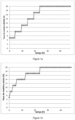
- the time between the first and second addition of substrate is less than the time between the second and third addition, and so on.
- the first addition can be made after 1 hour, the second after 3 hours, the third after 6 hours, the fourth after 1 p.m. and the fifth after 24 hours.
- the quantities added when adding pretreated lignocellulosic substrate generally represent an increase in the dry matter content of at most 5% by weight, preferably between 2 and 5% by weight, and even more preferably between 2 and 3% by weight. .
- the quantity of substrate added during an addition represents for example 3% by weight of dry matter content.
- the pretreated lignocellulosic substrate is added in equal quantity.
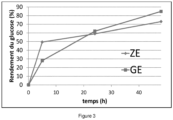
- the addition of the enzymes to the reactor is carried out sequentially and increasingly spaced out over time. It was observed that the addition of enzymes in spaced “fed-batch” mode made it possible to maintain enzymatic activity over time, unlike adding all the enzymes from the start of enzymatic hydrolysis.
- the pretreated lignocellulosic substrate and the enzymes can be added at the same time or staggered in the reactor, while respecting the sequential addition increasingly spaced out over time of each of the components.
- the pretreated lignocellulosic substrate and the enzymes are added at the same time to the reactor.
- the enzymes are added in equal quantity.
- the quantities added during an addition are generally between 0.1 and 60 mg of enzymes per gram of cellulose, preferably between 5 and 40 mg of enzymes per gram of cellulose and preferably between 10 and 30 mg of enzymes per gram of cellulose.
- the enzymatic hydrolysis is generally carried out at a pH between 4 and 6, preferably between 4.5 and 5.8 and even more preferably between 4.8 and 5.5. It generally takes place at a temperature between 40 and 60°C, and preferably between 45 and 55°C. It advantageously operates at atmospheric pressure.
- Enzymatic hydrolysis is carried out using enzymes produced by a microorganism.
- the added enzyme solution contains enzymes that break down cellulose into sugars.
- Microorganisms such as fungi belonging to the genera Trichoderma, Aspergillus, Penicillium or Schizophyllum, or anaerobic bacteria belonging for example to the genus Clostridium, produce these enzymes, containing in particular cellulases adapted to the extensive hydrolysis of cellulose.
- the cellulolytic enzymes of step d) are produced by the microorganism Trichoderma reesei.
- the duration of contact during enzymatic hydrolysis is between 5 and 200 hours, preferably between 2 and 100 hours and preferably between 1 and 50 hours.
- Said method according to the present invention can be followed by measuring over time the value of one of the rheological characteristics of the reaction medium which are advantageously chosen from the viscosity of the reaction medium, the torque of the shaft of the system agitation and the electrical power consumed by the motor.
- the electrical power consumed by the motor is denoted P elec .
- the viscosity of the reaction medium, the torque of the shaft of the stirring system and the electrical power consumed by the motor are rheological monitoring characteristics of the lignocellulosic substrate produced which present several interests. In fact, said characteristics, viscosity, torque and power, are linked together.
- the electrical power consumed by the P elec motor is linked to the mechanical power P meca driving the stirring shaft.
- the electrical power consumed by the motor is a parameter conventionally measured and monitored on pilot or industrial installations.
- the electrical power consumed by the P elec motor is the most easily measurable quantity on an industrial scale.
- said method according to the present invention is characterized in that a measurement is carried out over time of the electrical power consumed by the motor.
- Said process according to the present invention is advantageously carried out in a reactor, preferably of cylindrical shape, having a height/diameter ratio advantageously between 1 and 3.
- the effect of viscosity is less significant in the reaction medium.
- the chosen agitator must be able to handle laminar flows. Large agitators, even scraping the wall of the reactor with moderate rotation speeds and exerting a mixing and kneading action are then necessary.
- simpler agitators, of the inclined blade agitator type or even of the marine propeller type can be used.
- stirrers having a smaller diameter can be used in the process according to the invention.
- the agitator diameter/reactor diameter ratio D/T is between 0.3 and 0.75, and preferably between 0.4 and 0.65.
- the rotation speed can be lower than in the classic system.
- the rotation speed is less than 100 rpm (rotations per minute), preferably less than 80 rpm.
- the enzymatic hydrolysis process according to the invention can be followed by an alcoholic fermentation step by an alcohol-producing microorganism so as to produce a fermented effluent containing alcohol.
- Enzymatic hydrolysis and alcoholic fermentation can also be carried out simultaneously.
- SSF Synthetic Session
- Enzymatic hydrolysis and alcoholic fermentation can also be carried out according to other arrangements known to those skilled in the art, such as the "PSSF” process (Presacchararification followed by Simultaneous Saccharification and Fermentation according to the Anglo-Saxon term) or again the “HHF” process (Hybrid Hydrolysis and Fermentation according to the Anglo-Saxon term).
- the sugars obtained by enzymatic hydrolysis can be fermented into alcohols such as ethanol, 1,3-propanediol, isopropanol, 1-butanol, isobutanol or 1,4-butanediol, alone or in a mixture.
- alcohols such as ethanol, 1,3-propanediol, isopropanol, 1-butanol, isobutanol or 1,4-butanediol, alone or in a mixture.
- alcoholic fermentation produces ethanol.
- Alcoholic fermentation is carried out by yeasts or other alcohol-producing microorganisms.
- alcoholic fermentation designates a process of fermentation of sugars into alcohol(s) using microorganisms alone.
- the alcohol-producing microorganisms used during the alcoholic fermentation stage of the hexoses are preferably chosen from yeasts and bacteria, possibly genetically modified.
- Saccharomyces cerevisiae When the alcohol-producing microorganism is a yeast, Saccharomyces cerevisiae is the most efficient. It is also possible to choose yeasts such as Schizosaccharomyces pombe or Saccharomyces uvarum or diastaticus. More thermophilic yeasts, such as Kluyveromyces fragilis (now often referred to as K. marxianus ) are also of interest, particularly when enzymatic hydrolysis and alcoholic fermentation are carried out simultaneously (SSF process).
- yeasts such as Schizosaccharomyces pombe or Saccharomyces uvarum or diastaticus. More thermophilic yeasts, such as Kluyveromyces fragilis (now often referred to as K. marxianus ) are also of interest, particularly when enzymatic hydrolysis and alcoholic fermentation are carried out simultaneously (SSF process).
- a genetically modified organism such as for example a yeast of the Saccharomyces cerevisiae type such as TMB 3400 ( Ohgren et al, J. of Biotech 126, 488-498, 2006 ) can also be used.
- Zymomonas mobilis which presents an efficient assimilation pathway for the production of ethanol, or anaerobic bacteria of the genus Clostridium, such as for example, Clostridium acetobutylicum for the production of mixtures of alcohols and solvents such as acetone-butanol-ethanol (ABE) or isopropanol-butanol-ethanol (IBE), or even Escherichia coli for the production of isobutanol for example.
- ABE acetone-butanol-ethanol
- IBE isopropanol-butanol-ethanol
- Escherichia coli for the production of isobutanol for example.
- Alcoholic fermentation is preferably carried out at a temperature between 30°C and 40°C, and a pH between 3 and 6.5.
- Yeasts and preferably Saccharomyces cerevisiae, are the microorganisms most preferably used. They have better robustness, safety, and do not require sterility for the operation of the process and installations.
- Yeasts of the Saccharomyces genus are capable of fermenting the one and only hexoses (mainly glucose and mannose). These yeasts optimally valorize hexoses into ethanol and achieve good conversion yields.
- the temperature is between 30 and 45°C, and the pH between 4 and 6 in order to promote the performance of the yeasts .
- the process according to the invention makes it possible to achieve a glucose yield of 80 to 85%, with low energy consumption between 35-40 kJ in 48 hours of enzymatic hydrolysis.
- the energy consumption obtained by the process according to the invention in 48 hours was the same as that obtained in only 5 hours by other fed-batch strategies.
- glucose has an exponential increase in the first 24 hours of the test, where there is an intense activity of conversion of cellulose by cellulase. Afterwards, the growth is slower: in the first hours, an increase of 50 to 90 g of glucose was recorded for each kJ consumed in the mixture; after 24 hours it was 10-15 g/kJ and after 48h it decreased to less than 10 g/kJ.
- Enzymes are proteins with a molecular structure, stabilized by weak forces. This weak stabilization implies that the proteins are affected by different parameters. Mechanical stress is a factor that can reduce enzyme activity.
- FIG. 3 shows the difference between adding the entire quantity of enzymes at the start of the test (ZE, Figure 3 ) and sequential additions, concomitantly with the sequential additions of the substrates (GE, Figure 3 ).
Landscapes
- Chemical & Material Sciences (AREA)
- Organic Chemistry (AREA)
- Life Sciences & Earth Sciences (AREA)
- Engineering & Computer Science (AREA)
- Wood Science & Technology (AREA)
- Zoology (AREA)
- Health & Medical Sciences (AREA)
- General Health & Medical Sciences (AREA)
- Biochemistry (AREA)
- Biotechnology (AREA)
- Chemical Kinetics & Catalysis (AREA)
- Microbiology (AREA)
- Bioinformatics & Cheminformatics (AREA)
- General Engineering & Computer Science (AREA)
- General Chemical & Material Sciences (AREA)
- Genetics & Genomics (AREA)
- Emergency Medicine (AREA)
- Preparation Of Compounds By Using Micro-Organisms (AREA)
Claims (16)
- Enzymatisches Hydrolyseverfahren mit sequentieller Zufuhr, wobei unter Rühren mindestens ein vorbehandeltes Lignozellulosesubstrat mit Wasser und mit Enzymen in einem Reaktor in Kontakt gebracht wird, wobei das Verfahren dadurch gekennzeichnet ist, dass die sequentielle Zugabe des vorbehandelten Lignozellulosesubstrats in den Reaktor in immer größeren Zeitabständen erfolgt, damit ein vorher festgelegter Endtrockensubstanzgehalt zwischen 18 und 30 Gewichts-% erhalten wird,
wobei:der Trockensubstanzgehalt am Anfang des Verfahrens unter 10 Gewichts-% liegt,wobei der Reaktor einen Rührer umfasst, die Drehzahl des Rührers unter 100 U/min liegt und das Verhältnis von Durchmesser des Rührers/Durchmesser des Reaktors D/T zwischen 0,3 und 0,75 liegt. - Verfahren nach Anspruch 1, wobei der Endtrockensubstanzgehalt zwischen 18 und 24 Gewichts-% liegt.
- Verfahren nach einem der vorhergehenden Ansprüche, dadurch gekennzeichnet, dass mindestens 4 Zugaben, und vorzugsweise mindestens 5 Zugaben, von vorbehandeltem Lignozellulosesubstrat im Abstand erfolgen.
- Verfahren nach einem der vorhergehenden Ansprüche, dadurch gekennzeichnet, dass die bei einer Zugabe zugegebene Menge an Lignozellulosesubstrat zwischen 2 und 3 Gewichts-% Trockenmasse ausmacht.
- Verfahren nach einem der vorhergehenden Ansprüche, wobei die Zugabe der Enzyme in den Reaktor sequentiell und in immer größeren Zeitabständen erfolgt.
- Verfahren nach einem der vorhergehenden Ansprüche, wobei das vorbehandelte Lignozellulosesubstrat und die Enzyme gleichzeitig in den Reaktor zugegeben werden.
- Verfahren nach einem der vorhergehenden Ansprüche, wobei bei jeder Zugabe das vorbehandelte Lignozellulosesubstrat in derselben Menge zugegeben wird.
- Verfahren nach einem der vorhergehenden Ansprüche, wobei bei jeder Zugabe die Enzyme in derselben Menge zugegeben werden.
- Verfahren nach einem der vorhergehenden Ansprüche, wobei der Rührer ein Schrägblattrührer oder ein Propellerrührer ist.
- Verfahren nach einem der vorhergehenden Ansprüche, dadurch gekennzeichnet, dass der Reaktor einen von einem Motor angetriebenen Rührer umfasst, und dadurch, dass eine Messung der von dem Motor verbrauchten elektrischen Leistung über den Zeitverlauf vorgenommen wird.
- Verfahren nach einem der vorhergehenden Ansprüche, dadurch gekennzeichnet, dass der Reaktor einen von einem Motor angetriebenen Rührer umfasst, und dadurch, dass die Drehzahl des Rührers unter 80 U/min liegt.
- Verfahren nach einem der vorhergehenden Ansprüche, wobei die Enzyme bei einer Konzentration zwischen 0,1 und 60 mg Enzyme pro Gramm Cellulose in Kontakt gebracht werden.
- Verfahren nach einem der vorhergehenden Ansprüche, wobei das Verfahren bei einer Temperatur zwischen 40 und 60°C, bei einem pH-Wert zwischen 4 und 6 und bei Luftdruck durchgeführt wird.
- Verfahren nach einem der vorhergehenden Ansprüche, wobei verschiedene vorbehandelte Lignozellulosesubstrate, allein oder gemischt, verwendet werden.
- Verfahren nach einem der vorhergehenden Ansprüche, wobei auf das Verfahren ein Schritt zur Fermentierung in Gegenwart eines alkoholerzeugenden Mikroorganismus folgt.
- Verfahren nach einem der vorhergehenden Ansprüche, wobei das Verfahren in Gegenwart eines alkoholerzeugenden Mikroorganismus gemäß einem Verfahren zur gleichzeitigen Verzuckerung und Fermentierung durchgeführt wird.
Priority Applications (1)
| Application Number | Priority Date | Filing Date | Title |
|---|---|---|---|
| HRP20210325TT HRP20210325T4 (hr) | 2017-09-28 | 2018-08-30 | Postupak za enzimatsku hidrolizu u uzastopnom postupku dodavanja uz postupno odvojeno dodavanje prethodno obrađenog supstrata tijekom vremena |
Applications Claiming Priority (1)
| Application Number | Priority Date | Filing Date | Title |
|---|---|---|---|
| FR1759033A FR3071510B1 (fr) | 2017-09-28 | 2017-09-28 | Procede d'hydrolyse enzymatique en alimentation sequentielle avec ajouts du substrat pretraite de plus en plus espaces dans le temps |
Publications (3)
| Publication Number | Publication Date |
|---|---|
| EP3461902A1 EP3461902A1 (de) | 2019-04-03 |
| EP3461902B1 EP3461902B1 (de) | 2020-12-02 |
| EP3461902B2 true EP3461902B2 (de) | 2024-01-03 |
Family
ID=60765821
Family Applications (1)
| Application Number | Title | Priority Date | Filing Date |
|---|---|---|---|
| EP18191590.1A Active EP3461902B2 (de) | 2017-09-28 | 2018-08-30 | Enzymatisches hydrolyseverfahren mit sequentieller zufuhr von zusätzen von vorbehandeltem substrat in immer grösseren zeitabständen |
Country Status (11)
| Country | Link |
|---|---|
| US (1) | US10865426B2 (de) |
| EP (1) | EP3461902B2 (de) |
| CN (1) | CN109576323B (de) |
| BR (1) | BR102018069236A2 (de) |
| CA (1) | CA3018686A1 (de) |
| DK (1) | DK3461902T4 (de) |
| ES (1) | ES2852425T5 (de) |
| FI (1) | FI3461902T4 (de) |
| FR (1) | FR3071510B1 (de) |
| HR (1) | HRP20210325T4 (de) |
| HU (1) | HUE053210T2 (de) |
Families Citing this family (2)
| Publication number | Priority date | Publication date | Assignee | Title |
|---|---|---|---|---|
| FR3140633A1 (fr) | 2022-10-10 | 2024-04-12 | IFP Energies Nouvelles | Procédé de conversion de biomasse lignocellulosique |
| FR3146904A1 (fr) | 2023-03-23 | 2024-09-27 | IFP Energies Nouvelles | Procédé de traitement d’un mélange en phase aqueuse de composés comprenant des sucres à 5 et 6 atomes de carbone. |
Citations (1)
| Publication number | Priority date | Publication date | Assignee | Title |
|---|---|---|---|---|
| CN104651429A (zh) † | 2015-02-03 | 2015-05-27 | 湖南农业大学 | 一种辐照预处理和分批补料实现木质纤维素高底物浓度酶水解的方法 |
Family Cites Families (2)
| Publication number | Priority date | Publication date | Assignee | Title |
|---|---|---|---|---|
| EP3094733B1 (de) * | 2014-01-16 | 2018-09-12 | Department of Biotechnology | Verfahren zur herstellung von löslichen zuckern aus biomasse |
| FR3021975B1 (fr) * | 2014-06-05 | 2018-03-30 | Compagnie Industrielle De La Matiere Vegetale - Cimv | Procede de production, notamment d'ethanol, par hydrolyse enzymatique sequencee de la cellulose et des hemicelluloses d'une matiere premiere lignocellulosique |
-
2017
- 2017-09-28 FR FR1759033A patent/FR3071510B1/fr active Active
-
2018
- 2018-08-30 ES ES18191590T patent/ES2852425T5/es active Active
- 2018-08-30 DK DK18191590.1T patent/DK3461902T4/da active
- 2018-08-30 HU HUE18191590A patent/HUE053210T2/hu unknown
- 2018-08-30 EP EP18191590.1A patent/EP3461902B2/de active Active
- 2018-08-30 HR HRP20210325TT patent/HRP20210325T4/hr unknown
- 2018-08-30 FI FIEP18191590.1T patent/FI3461902T4/fi active
- 2018-09-21 BR BR102018069236-4A patent/BR102018069236A2/pt unknown
- 2018-09-25 CA CA3018686A patent/CA3018686A1/fr active Pending
- 2018-09-27 US US16/143,562 patent/US10865426B2/en active Active
- 2018-09-27 CN CN201811130203.7A patent/CN109576323B/zh active Active
Patent Citations (1)
| Publication number | Priority date | Publication date | Assignee | Title |
|---|---|---|---|---|
| CN104651429A (zh) † | 2015-02-03 | 2015-05-27 | 湖南农业大学 | 一种辐照预处理和分批补料实现木质纤维素高底物浓度酶水解的方法 |
Non-Patent Citations (12)
| Title |
|---|
| CORRÊA LUCIANO JACOB; BADINO ALBERTO COLLI; CRUZ ANTONIO JOSÉ: "Mixing design for enzymatic hydrolysis of sugarcane bagasse: methodology for selection of impeller configuration", BIOPROCESS AND BIOSYSTEMS ENGINEERING, SPRINGER, DE, vol. 39, no. 2, 9 December 2015 (2015-12-09), DE, pages 285 - 294, ISSN: 1615-7591, DOI: 10.1007/s00449-015-1512-6 † |
| CORRÊA LUCIANO JACOB; BADINO ALBERTO COLLI; CRUZ ANTONIO JOSÉ: "Power consumption evaluation of different fed-batch strategies for enzymatic hydrolysis of sugarcane bagasse", BIOPROCESS AND BIOSYSTEMS ENGINEERING, SPRINGER, DE, vol. 39, no. 5, 22 February 2016 (2016-02-22), DE, pages 825 - 833, ISSN: 1615-7591, DOI: 10.1007/s00449-016-1562-4 † |
| CUI ET AL.: "Enhanced enzymatic hydrolysis of lignocellulose by integrated decrystallization and fed-batch operation", RSC ADV., vol. 4, no. 84, 11 September 2014 (2014-09-11), pages 44659 - 44665 † |
| DAVID B. HODGE, M. NAZMUL KARIM, DANIEL J. SCHELL, JAMES D. MCMILLAN: "Model-Based Fed-Batch for High-Solids Enzymatic Cellulose Hydrolysis", APPLIED BIOCHEMISTRY AND BIOTECHNOLOGY, HUMANA PRESS, vol. 152, no. 1, 1 January 2009 (2009-01-01), pages 88 - 107, ISSN: 02732289, DOI: 10.1007/s12010-008-8217-0 † |
| Jung et al., Appl. Biochem. Biotech., 2017,182,1108-20 † |
| LIU YUNYUN; XU JINGLIANG; ZHANG YU; YUAN ZHENHONG; XIE JUN: "Optimization of high solids fed-batch saccharification of sugarcane bagasse based on system viscosity changes", JOURNAL OF BIOTECHNOLOGY, ELSEVIER, AMSTERDAM NL, vol. 211, 3 July 2015 (2015-07-03), Amsterdam NL, pages 5 - 9, ISSN: 0168-1656, DOI: 10.1016/j.jbiotec.2015.06.422 † |
| M.J. CARDONA, E.J. TOZZI, N. KARUNA, T. JEOH, R.L. POWELL, M.J. MCCARTHY: "A process for energy-efficient high-solids fed-batch enzymatic liquefaction of cellulosic biomass", BIORESOURCE TECHNOLOGY, ELSEVIER, AMSTERDAM, NL, vol. 198, 1 December 2015 (2015-12-01), AMSTERDAM, NL, pages 488 - 496, ISSN: 0960-8524, DOI: 10.1016/j.biortech.2015.09.042 † |
| Modenbach et al.. Biomass & Bioen., 2013, 56, 526-544 † |
| Tozzi et al., Aiche Journal, 2014, 60/5, 1582-15900 † |
| YANG ET AL.: "High-concentration sugars production from corn stover based on combined pretreatments and fed-batch process", BIORESOUR. TECH., vol. 101, no. 13, 12 January 2010 (2010-01-12), pages 4884 - 4888 † |
| YU ZHANG, LIU YUN-YUN, XU JING-LIANG, YUAN ZHEN-HONG, QI WEI, ZHUANG XIN-SHU, HE MIN-CHAO: "High solid and low enzyme loading based saccharification of agricultural biomass", BIORESOURCES, vol. 7, no. 1, 1 January 2012 (2012-01-01), pages 345 - 353 † |
| ZHAO XUEBING; DONG LEI; CHEN LIANG; LIU DEHUA: "Batch and multi-step fed-batch enzymatic saccharification of Formiline-pretreated sugarcane bagasse at high solid loadings for high sugar and ethanol titers", BIORESOURCE TECHNOLOGY, ELSEVIER, AMSTERDAM, NL, vol. 135, 29 September 2012 (2012-09-29), AMSTERDAM, NL, pages 350 - 356, ISSN: 0960-8524, DOI: 10.1016/j.biortech.2012.09.074 † |
Also Published As
| Publication number | Publication date |
|---|---|
| US10865426B2 (en) | 2020-12-15 |
| FI3461902T4 (fi) | 2024-04-02 |
| US20190093133A1 (en) | 2019-03-28 |
| ES2852425T3 (es) | 2021-09-13 |
| FR3071510B1 (fr) | 2021-08-27 |
| CN109576323A (zh) | 2019-04-05 |
| EP3461902A1 (de) | 2019-04-03 |
| HUE053210T2 (hu) | 2021-06-28 |
| HRP20210325T4 (hr) | 2024-10-11 |
| CA3018686A1 (fr) | 2019-03-28 |
| BR102018069236A2 (pt) | 2019-04-16 |
| EP3461902B1 (de) | 2020-12-02 |
| FR3071510A1 (fr) | 2019-03-29 |
| DK3461902T3 (da) | 2021-02-22 |
| ES2852425T5 (es) | 2024-06-20 |
| CN109576323B (zh) | 2023-07-04 |
| DK3461902T4 (da) | 2024-03-25 |
| HRP20210325T1 (hr) | 2021-04-02 |
Similar Documents
| Publication | Publication Date | Title |
|---|---|---|
| CN103210090B (zh) | 改进纤维素在高稠度系统中的水解的方法 | |
| EP3440202B1 (de) | Verfahren zur herstellung von cellulasen mit vorbehandeltem lignocellulosischem trester | |
| EP3461902B2 (de) | Enzymatisches hydrolyseverfahren mit sequentieller zufuhr von zusätzen von vorbehandeltem substrat in immer grösseren zeitabständen | |
| EP2791346B1 (de) | Verfahren zur herstellung eines optimierten verflüssigten lignocellulose-substrates | |
| WO2020152105A1 (fr) | Procede de traitement d'une biomasse lignocellulosique | |
| CA2951353C (fr) | Procede de fermentation ibe | |
| EP2697383B1 (de) | Verfahren zur Herstellung von Ethanol aus cellulose- oder lignocellulosehaltiger Biomasse mit Rückführung einer ethanolhaltigen Fermentationsbrühe aus der Fermentation der Pentosefraktion | |
| FR3021975A1 (fr) | Procede de production, notamment d'ethanol, par hydrolyse enzymatique sequencee de la cellulose et des hemicelluloses d'une matiere premiere lignocellulosique | |
| FR2984353A1 (fr) | Procede de production d'un cocktail enzymatique utilisant les residus solides d'un procede de conversion biochimique de materiaux ligno-cellulosiques | |
| FR3071509B1 (fr) | Procede d'hydrolyse enzymatique a partir d'un melange de substrats pretraites de porosites differentes | |
| WO2013107947A1 (fr) | Procédé de pretraitement de la biomasse lignocellulosique avec un sel inorganique hydraté permettant d'obtenir une fraction cellulosique et une fraction hémicellulosique | |
| WO2016120801A1 (fr) | Procédé de prétraitement thermo-chimique d'une biomasse ligno-cellulosique en voie sèche | |
| FR3140633A1 (fr) | Procédé de conversion de biomasse lignocellulosique | |
| Abbas et al. | Bioethanol production from Lignocellulosics: some process considerations and procedures |
Legal Events
| Date | Code | Title | Description |
|---|---|---|---|
| PUAI | Public reference made under article 153(3) epc to a published international application that has entered the european phase |
Free format text: ORIGINAL CODE: 0009012 |
|
| STAA | Information on the status of an ep patent application or granted ep patent |
Free format text: STATUS: THE APPLICATION HAS BEEN PUBLISHED |
|
| AK | Designated contracting states |
Kind code of ref document: A1 Designated state(s): AL AT BE BG CH CY CZ DE DK EE ES FI FR GB GR HR HU IE IS IT LI LT LU LV MC MK MT NL NO PL PT RO RS SE SI SK SM TR |
|
| AX | Request for extension of the european patent |
Extension state: BA ME |
|
| STAA | Information on the status of an ep patent application or granted ep patent |
Free format text: STATUS: REQUEST FOR EXAMINATION WAS MADE |
|
| STAA | Information on the status of an ep patent application or granted ep patent |
Free format text: STATUS: EXAMINATION IS IN PROGRESS |
|
| 17P | Request for examination filed |
Effective date: 20191004 |
|
| RBV | Designated contracting states (corrected) |
Designated state(s): AL AT BE BG CH CY CZ DE DK EE ES FI FR GB GR HR HU IE IS IT LI LT LU LV MC MK MT NL NO PL PT RO RS SE SI SK SM TR |
|
| 17Q | First examination report despatched |
Effective date: 20191106 |
|
| GRAP | Despatch of communication of intention to grant a patent |
Free format text: ORIGINAL CODE: EPIDOSNIGR1 |
|
| STAA | Information on the status of an ep patent application or granted ep patent |
Free format text: STATUS: GRANT OF PATENT IS INTENDED |
|
| INTG | Intention to grant announced |
Effective date: 20200715 |
|
| GRAS | Grant fee paid |
Free format text: ORIGINAL CODE: EPIDOSNIGR3 |
|
| GRAA | (expected) grant |
Free format text: ORIGINAL CODE: 0009210 |
|
| STAA | Information on the status of an ep patent application or granted ep patent |
Free format text: STATUS: THE PATENT HAS BEEN GRANTED |
|
| AK | Designated contracting states |
Kind code of ref document: B1 Designated state(s): AL AT BE BG CH CY CZ DE DK EE ES FI FR GB GR HR HU IE IS IT LI LT LU LV MC MK MT NL NO PL PT RO RS SE SI SK SM TR |
|
| REG | Reference to a national code |
Ref country code: GB Ref legal event code: FG4D Free format text: NOT ENGLISH |
|
| REG | Reference to a national code |
Ref country code: AT Ref legal event code: REF Ref document number: 1340991 Country of ref document: AT Kind code of ref document: T Effective date: 20201215 Ref country code: CH Ref legal event code: EP |
|
| REG | Reference to a national code |
Ref country code: IE Ref legal event code: FG4D Free format text: LANGUAGE OF EP DOCUMENT: FRENCH |
|
| REG | Reference to a national code |
Ref country code: DE Ref legal event code: R096 Ref document number: 602018010315 Country of ref document: DE |
|
| REG | Reference to a national code |
Ref country code: DK Ref legal event code: T3 Effective date: 20210218 |
|
| REG | Reference to a national code |
Ref country code: FI Ref legal event code: FGE |
|
| REG | Reference to a national code |
Ref country code: SE Ref legal event code: TRGR |
|
| REG | Reference to a national code |
Ref country code: NL Ref legal event code: FP |
|
| REG | Reference to a national code |
Ref country code: SK Ref legal event code: T3 Ref document number: E 36475 Country of ref document: SK |
|
| REG | Reference to a national code |
Ref country code: HR Ref legal event code: T1PR Ref document number: P20210325 Country of ref document: HR |
|
| PG25 | Lapsed in a contracting state [announced via postgrant information from national office to epo] |
Ref country code: GR Free format text: LAPSE BECAUSE OF FAILURE TO SUBMIT A TRANSLATION OF THE DESCRIPTION OR TO PAY THE FEE WITHIN THE PRESCRIBED TIME-LIMIT Effective date: 20210303 Ref country code: RS Free format text: LAPSE BECAUSE OF FAILURE TO SUBMIT A TRANSLATION OF THE DESCRIPTION OR TO PAY THE FEE WITHIN THE PRESCRIBED TIME-LIMIT Effective date: 20201202 |
|
| REG | Reference to a national code |
Ref country code: NO Ref legal event code: T2 Effective date: 20201202 |
|
| PG25 | Lapsed in a contracting state [announced via postgrant information from national office to epo] |
Ref country code: BG Free format text: LAPSE BECAUSE OF FAILURE TO SUBMIT A TRANSLATION OF THE DESCRIPTION OR TO PAY THE FEE WITHIN THE PRESCRIBED TIME-LIMIT Effective date: 20210302 Ref country code: PL Free format text: LAPSE BECAUSE OF FAILURE TO SUBMIT A TRANSLATION OF THE DESCRIPTION OR TO PAY THE FEE WITHIN THE PRESCRIBED TIME-LIMIT Effective date: 20201202 Ref country code: LV Free format text: LAPSE BECAUSE OF FAILURE TO SUBMIT A TRANSLATION OF THE DESCRIPTION OR TO PAY THE FEE WITHIN THE PRESCRIBED TIME-LIMIT Effective date: 20201202 |
|
| REG | Reference to a national code |
Ref country code: HU Ref legal event code: AG4A Ref document number: E053210 Country of ref document: HU |
|
| REG | Reference to a national code |
Ref country code: LT Ref legal event code: MG9D |
|
| PG25 | Lapsed in a contracting state [announced via postgrant information from national office to epo] |
Ref country code: LT Free format text: LAPSE BECAUSE OF FAILURE TO SUBMIT A TRANSLATION OF THE DESCRIPTION OR TO PAY THE FEE WITHIN THE PRESCRIBED TIME-LIMIT Effective date: 20201202 Ref country code: PT Free format text: LAPSE BECAUSE OF FAILURE TO SUBMIT A TRANSLATION OF THE DESCRIPTION OR TO PAY THE FEE WITHIN THE PRESCRIBED TIME-LIMIT Effective date: 20210405 Ref country code: RO Free format text: LAPSE BECAUSE OF FAILURE TO SUBMIT A TRANSLATION OF THE DESCRIPTION OR TO PAY THE FEE WITHIN THE PRESCRIBED TIME-LIMIT Effective date: 20201202 Ref country code: SM Free format text: LAPSE BECAUSE OF FAILURE TO SUBMIT A TRANSLATION OF THE DESCRIPTION OR TO PAY THE FEE WITHIN THE PRESCRIBED TIME-LIMIT Effective date: 20201202 Ref country code: CZ Free format text: LAPSE BECAUSE OF FAILURE TO SUBMIT A TRANSLATION OF THE DESCRIPTION OR TO PAY THE FEE WITHIN THE PRESCRIBED TIME-LIMIT Effective date: 20201202 Ref country code: EE Free format text: LAPSE BECAUSE OF FAILURE TO SUBMIT A TRANSLATION OF THE DESCRIPTION OR TO PAY THE FEE WITHIN THE PRESCRIBED TIME-LIMIT Effective date: 20201202 |
|
| REG | Reference to a national code |
Ref country code: DE Ref legal event code: R026 Ref document number: 602018010315 Country of ref document: DE |
|
| PLBI | Opposition filed |
Free format text: ORIGINAL CODE: 0009260 |
|
| REG | Reference to a national code |
Ref country code: ES Ref legal event code: FG2A Ref document number: 2852425 Country of ref document: ES Kind code of ref document: T3 Effective date: 20210913 |
|
| PLAX | Notice of opposition and request to file observation + time limit sent |
Free format text: ORIGINAL CODE: EPIDOSNOBS2 |
|
| REG | Reference to a national code |
Ref country code: HR Ref legal event code: ODRP Ref document number: P20210325 Country of ref document: HR Payment date: 20210819 Year of fee payment: 4 |
|
| PG25 | Lapsed in a contracting state [announced via postgrant information from national office to epo] |
Ref country code: IS Free format text: LAPSE BECAUSE OF FAILURE TO SUBMIT A TRANSLATION OF THE DESCRIPTION OR TO PAY THE FEE WITHIN THE PRESCRIBED TIME-LIMIT Effective date: 20210402 |
|
| REG | Reference to a national code |
Ref country code: FI Ref legal event code: MDE Opponent name: UPM-KYMMENE CORPORATION |
|
| 26 | Opposition filed |
Opponent name: UPM-KYMMENE CORPORATION Effective date: 20210902 |
|
| PG25 | Lapsed in a contracting state [announced via postgrant information from national office to epo] |
Ref country code: AL Free format text: LAPSE BECAUSE OF FAILURE TO SUBMIT A TRANSLATION OF THE DESCRIPTION OR TO PAY THE FEE WITHIN THE PRESCRIBED TIME-LIMIT Effective date: 20201202 |
|
| PG25 | Lapsed in a contracting state [announced via postgrant information from national office to epo] |
Ref country code: SI Free format text: LAPSE BECAUSE OF FAILURE TO SUBMIT A TRANSLATION OF THE DESCRIPTION OR TO PAY THE FEE WITHIN THE PRESCRIBED TIME-LIMIT Effective date: 20201202 |
|
| PLBB | Reply of patent proprietor to notice(s) of opposition received |
Free format text: ORIGINAL CODE: EPIDOSNOBS3 |
|
| REG | Reference to a national code |
Ref country code: CH Ref legal event code: PL |
|
| PG25 | Lapsed in a contracting state [announced via postgrant information from national office to epo] |
Ref country code: MC Free format text: LAPSE BECAUSE OF FAILURE TO SUBMIT A TRANSLATION OF THE DESCRIPTION OR TO PAY THE FEE WITHIN THE PRESCRIBED TIME-LIMIT Effective date: 20201202 |
|
| REG | Reference to a national code |
Ref country code: BE Ref legal event code: MM Effective date: 20210831 |
|
| PG25 | Lapsed in a contracting state [announced via postgrant information from national office to epo] |
Ref country code: LI Free format text: LAPSE BECAUSE OF NON-PAYMENT OF DUE FEES Effective date: 20210831 Ref country code: CH Free format text: LAPSE BECAUSE OF NON-PAYMENT OF DUE FEES Effective date: 20210831 |
|
| PG25 | Lapsed in a contracting state [announced via postgrant information from national office to epo] |
Ref country code: IS Free format text: LAPSE BECAUSE OF FAILURE TO SUBMIT A TRANSLATION OF THE DESCRIPTION OR TO PAY THE FEE WITHIN THE PRESCRIBED TIME-LIMIT Effective date: 20210402 Ref country code: LU Free format text: LAPSE BECAUSE OF NON-PAYMENT OF DUE FEES Effective date: 20210830 |
|
| PG25 | Lapsed in a contracting state [announced via postgrant information from national office to epo] |
Ref country code: IE Free format text: LAPSE BECAUSE OF NON-PAYMENT OF DUE FEES Effective date: 20210830 Ref country code: BE Free format text: LAPSE BECAUSE OF NON-PAYMENT OF DUE FEES Effective date: 20210831 |
|
| REG | Reference to a national code |
Ref country code: HR Ref legal event code: ODRP Ref document number: P20210325 Country of ref document: HR Payment date: 20220816 Year of fee payment: 5 |
|
| REG | Reference to a national code |
Ref country code: AT Ref legal event code: UEP Ref document number: 1340991 Country of ref document: AT Kind code of ref document: T Effective date: 20201202 |
|
| PG25 | Lapsed in a contracting state [announced via postgrant information from national office to epo] |
Ref country code: CY Free format text: LAPSE BECAUSE OF FAILURE TO SUBMIT A TRANSLATION OF THE DESCRIPTION OR TO PAY THE FEE WITHIN THE PRESCRIBED TIME-LIMIT Effective date: 20201202 |
|
| P01 | Opt-out of the competence of the unified patent court (upc) registered |
Effective date: 20230712 |
|
| REG | Reference to a national code |
Ref country code: HR Ref legal event code: ODRP Ref document number: P20210325 Country of ref document: HR Payment date: 20230822 Year of fee payment: 6 |
|
| PUAH | Patent maintained in amended form |
Free format text: ORIGINAL CODE: 0009272 |
|
| STAA | Information on the status of an ep patent application or granted ep patent |
Free format text: STATUS: PATENT MAINTAINED AS AMENDED |
|
| 27A | Patent maintained in amended form |
Effective date: 20240103 |
|
| AK | Designated contracting states |
Kind code of ref document: B2 Designated state(s): AL AT BE BG CH CY CZ DE DK EE ES FI FR GB GR HR HU IE IS IT LI LT LU LV MC MK MT NL NO PL PT RO RS SE SI SK SM TR |
|
| REG | Reference to a national code |
Ref country code: DE Ref legal event code: R102 Ref document number: 602018010315 Country of ref document: DE |
|
| REG | Reference to a national code |
Ref country code: DK Ref legal event code: T4 Effective date: 20240322 |
|
| REG | Reference to a national code |
Ref country code: NL Ref legal event code: FP |
|
| REG | Reference to a national code |
Ref country code: SE Ref legal event code: RPEO |
|
| REG | Reference to a national code |
Ref country code: SK Ref legal event code: T5 Ref document number: E 36475 Country of ref document: SK |
|
| PG25 | Lapsed in a contracting state [announced via postgrant information from national office to epo] |
Ref country code: MK Free format text: LAPSE BECAUSE OF FAILURE TO SUBMIT A TRANSLATION OF THE DESCRIPTION OR TO PAY THE FEE WITHIN THE PRESCRIBED TIME-LIMIT Effective date: 20201202 |
|
| REG | Reference to a national code |
Ref country code: HR Ref legal event code: ODRP Ref document number: P20210325 Country of ref document: HR Payment date: 20240816 Year of fee payment: 7 |
|
| PG25 | Lapsed in a contracting state [announced via postgrant information from national office to epo] |
Ref country code: MT Free format text: LAPSE BECAUSE OF FAILURE TO SUBMIT A TRANSLATION OF THE DESCRIPTION OR TO PAY THE FEE WITHIN THE PRESCRIBED TIME-LIMIT Effective date: 20201202 |
|
| REG | Reference to a national code |
Ref country code: HR Ref legal event code: T4IZ Ref document number: P20210325 Country of ref document: HR |
|
| PGFP | Annual fee paid to national office [announced via postgrant information from national office to epo] |
Ref country code: NL Payment date: 20250825 Year of fee payment: 8 |
|
| PGFP | Annual fee paid to national office [announced via postgrant information from national office to epo] |
Ref country code: HU Payment date: 20250828 Year of fee payment: 8 |
|
| REG | Reference to a national code |
Ref country code: HR Ref legal event code: ODRP Ref document number: P20210325 Country of ref document: HR Payment date: 20250818 Year of fee payment: 8 |
|
| PGFP | Annual fee paid to national office [announced via postgrant information from national office to epo] |
Ref country code: FI Payment date: 20250825 Year of fee payment: 8 Ref country code: ES Payment date: 20250916 Year of fee payment: 8 |
|
| PGFP | Annual fee paid to national office [announced via postgrant information from national office to epo] |
Ref country code: DE Payment date: 20250827 Year of fee payment: 8 Ref country code: DK Payment date: 20250825 Year of fee payment: 8 |
|
| PGFP | Annual fee paid to national office [announced via postgrant information from national office to epo] |
Ref country code: NO Payment date: 20250819 Year of fee payment: 8 |
|
| PGFP | Annual fee paid to national office [announced via postgrant information from national office to epo] |
Ref country code: IT Payment date: 20250825 Year of fee payment: 8 |
|
| PGFP | Annual fee paid to national office [announced via postgrant information from national office to epo] |
Ref country code: GB Payment date: 20250826 Year of fee payment: 8 |
|
| PGFP | Annual fee paid to national office [announced via postgrant information from national office to epo] |
Ref country code: HR Payment date: 20250818 Year of fee payment: 8 |
|
| PGFP | Annual fee paid to national office [announced via postgrant information from national office to epo] |
Ref country code: FR Payment date: 20250825 Year of fee payment: 8 Ref country code: AT Payment date: 20250819 Year of fee payment: 8 |
|
| PGFP | Annual fee paid to national office [announced via postgrant information from national office to epo] |
Ref country code: SE Payment date: 20250825 Year of fee payment: 8 |
|
| PGFP | Annual fee paid to national office [announced via postgrant information from national office to epo] |
Ref country code: SK Payment date: 20250822 Year of fee payment: 8 |
|
| PG25 | Lapsed in a contracting state [announced via postgrant information from national office to epo] |
Ref country code: TR Free format text: LAPSE BECAUSE OF FAILURE TO SUBMIT A TRANSLATION OF THE DESCRIPTION OR TO PAY THE FEE WITHIN THE PRESCRIBED TIME-LIMIT Effective date: 20201202 |