EP3459924A1 - Sanitary ware - Google Patents
Sanitary ware Download PDFInfo
- Publication number
- EP3459924A1 EP3459924A1 EP18192623.9A EP18192623A EP3459924A1 EP 3459924 A1 EP3459924 A1 EP 3459924A1 EP 18192623 A EP18192623 A EP 18192623A EP 3459924 A1 EP3459924 A1 EP 3459924A1
- Authority
- EP
- European Patent Office
- Prior art keywords
- glaze layer
- color
- observation
- base
- sanitary ware
- Prior art date
- Legal status (The legal status is an assumption and is not a legal conclusion. Google has not performed a legal analysis and makes no representation as to the accuracy of the status listed.)
- Withdrawn
Links
Images

Classifications
-
- C—CHEMISTRY; METALLURGY
- C04—CEMENTS; CONCRETE; ARTIFICIAL STONE; CERAMICS; REFRACTORIES
- C04B—LIME, MAGNESIA; SLAG; CEMENTS; COMPOSITIONS THEREOF, e.g. MORTARS, CONCRETE OR LIKE BUILDING MATERIALS; ARTIFICIAL STONE; CERAMICS; REFRACTORIES; TREATMENT OF NATURAL STONE
- C04B41/00—After-treatment of mortars, concrete, artificial stone or ceramics; Treatment of natural stone
- C04B41/80—After-treatment of mortars, concrete, artificial stone or ceramics; Treatment of natural stone of only ceramics
- C04B41/81—Coating or impregnation
- C04B41/89—Coating or impregnation for obtaining at least two superposed coatings having different compositions
-
- C—CHEMISTRY; METALLURGY
- C04—CEMENTS; CONCRETE; ARTIFICIAL STONE; CERAMICS; REFRACTORIES
- C04B—LIME, MAGNESIA; SLAG; CEMENTS; COMPOSITIONS THEREOF, e.g. MORTARS, CONCRETE OR LIKE BUILDING MATERIALS; ARTIFICIAL STONE; CERAMICS; REFRACTORIES; TREATMENT OF NATURAL STONE
- C04B41/00—After-treatment of mortars, concrete, artificial stone or ceramics; Treatment of natural stone
- C04B41/45—Coating or impregnating, e.g. injection in masonry, partial coating of green or fired ceramics, organic coating compositions for adhering together two concrete elements
- C04B41/50—Coating or impregnating, e.g. injection in masonry, partial coating of green or fired ceramics, organic coating compositions for adhering together two concrete elements with inorganic materials
- C04B41/5022—Coating or impregnating, e.g. injection in masonry, partial coating of green or fired ceramics, organic coating compositions for adhering together two concrete elements with inorganic materials with vitreous materials
-
- C—CHEMISTRY; METALLURGY
- C04—CEMENTS; CONCRETE; ARTIFICIAL STONE; CERAMICS; REFRACTORIES
- C04B—LIME, MAGNESIA; SLAG; CEMENTS; COMPOSITIONS THEREOF, e.g. MORTARS, CONCRETE OR LIKE BUILDING MATERIALS; ARTIFICIAL STONE; CERAMICS; REFRACTORIES; TREATMENT OF NATURAL STONE
- C04B41/00—After-treatment of mortars, concrete, artificial stone or ceramics; Treatment of natural stone
- C04B41/009—After-treatment of mortars, concrete, artificial stone or ceramics; Treatment of natural stone characterised by the material treated
-
- C—CHEMISTRY; METALLURGY
- C04—CEMENTS; CONCRETE; ARTIFICIAL STONE; CERAMICS; REFRACTORIES
- C04B—LIME, MAGNESIA; SLAG; CEMENTS; COMPOSITIONS THEREOF, e.g. MORTARS, CONCRETE OR LIKE BUILDING MATERIALS; ARTIFICIAL STONE; CERAMICS; REFRACTORIES; TREATMENT OF NATURAL STONE
- C04B41/00—After-treatment of mortars, concrete, artificial stone or ceramics; Treatment of natural stone
- C04B41/45—Coating or impregnating, e.g. injection in masonry, partial coating of green or fired ceramics, organic coating compositions for adhering together two concrete elements
- C04B41/52—Multiple coating or impregnating multiple coating or impregnating with the same composition or with compositions only differing in the concentration of the constituents, is classified as single coating or impregnation
-
- C—CHEMISTRY; METALLURGY
- C04—CEMENTS; CONCRETE; ARTIFICIAL STONE; CERAMICS; REFRACTORIES
- C04B—LIME, MAGNESIA; SLAG; CEMENTS; COMPOSITIONS THEREOF, e.g. MORTARS, CONCRETE OR LIKE BUILDING MATERIALS; ARTIFICIAL STONE; CERAMICS; REFRACTORIES; TREATMENT OF NATURAL STONE
- C04B41/00—After-treatment of mortars, concrete, artificial stone or ceramics; Treatment of natural stone
- C04B41/45—Coating or impregnating, e.g. injection in masonry, partial coating of green or fired ceramics, organic coating compositions for adhering together two concrete elements
- C04B41/52—Multiple coating or impregnating multiple coating or impregnating with the same composition or with compositions only differing in the concentration of the constituents, is classified as single coating or impregnation
- C04B41/528—Applying layers containing opposite charged particles or materials in the successive layers
-
- C—CHEMISTRY; METALLURGY
- C04—CEMENTS; CONCRETE; ARTIFICIAL STONE; CERAMICS; REFRACTORIES
- C04B—LIME, MAGNESIA; SLAG; CEMENTS; COMPOSITIONS THEREOF, e.g. MORTARS, CONCRETE OR LIKE BUILDING MATERIALS; ARTIFICIAL STONE; CERAMICS; REFRACTORIES; TREATMENT OF NATURAL STONE
- C04B41/00—After-treatment of mortars, concrete, artificial stone or ceramics; Treatment of natural stone
- C04B41/80—After-treatment of mortars, concrete, artificial stone or ceramics; Treatment of natural stone of only ceramics
- C04B41/81—Coating or impregnation
- C04B41/85—Coating or impregnation with inorganic materials
- C04B41/86—Glazes; Cold glazes
-
- C—CHEMISTRY; METALLURGY
- C04—CEMENTS; CONCRETE; ARTIFICIAL STONE; CERAMICS; REFRACTORIES
- C04B—LIME, MAGNESIA; SLAG; CEMENTS; COMPOSITIONS THEREOF, e.g. MORTARS, CONCRETE OR LIKE BUILDING MATERIALS; ARTIFICIAL STONE; CERAMICS; REFRACTORIES; TREATMENT OF NATURAL STONE
- C04B2111/00—Mortars, concrete or artificial stone or mixtures to prepare them, characterised by specific function, property or use
- C04B2111/20—Resistance against chemical, physical or biological attack
- C04B2111/2038—Resistance against physical degradation
- C04B2111/2069—Self-cleaning materials, e.g. using lotus effect
-
- C—CHEMISTRY; METALLURGY
- C04—CEMENTS; CONCRETE; ARTIFICIAL STONE; CERAMICS; REFRACTORIES
- C04B—LIME, MAGNESIA; SLAG; CEMENTS; COMPOSITIONS THEREOF, e.g. MORTARS, CONCRETE OR LIKE BUILDING MATERIALS; ARTIFICIAL STONE; CERAMICS; REFRACTORIES; TREATMENT OF NATURAL STONE
- C04B2111/00—Mortars, concrete or artificial stone or mixtures to prepare them, characterised by specific function, property or use
- C04B2111/80—Optical properties, e.g. transparency or reflexibility
-
- E—FIXED CONSTRUCTIONS
- E03—WATER SUPPLY; SEWERAGE
- E03D—WATER-CLOSETS OR URINALS WITH FLUSHING DEVICES; FLUSHING VALVES THEREFOR
- E03D11/00—Other component parts of water-closets, e.g. noise-reducing means in the flushing system, flushing pipes mounted in the bowl, seals for the bowl outlet, devices preventing overflow of the bowl contents; devices forming a water seal in the bowl after flushing, devices eliminating obstructions in the bowl outlet or preventing backflow of water and excrements from the waterpipe
- E03D11/02—Water-closet bowls ; Bowls with a double odour seal optionally with provisions for a good siphonic action; siphons as part of the bowl
Definitions
- the present disclosure relates to a sanitary ware.
- a glaze layer is formed on an outermost surface (for example, JP 2001-72460 A ).
- the sanitary ware is rendered less likely to be smeared with blots or stains by the glaze layer.
- Another purpose of the glaze layer is to color the sanitary ware.
- the color of a base may fail to be completely concealed by the color of a glaze used.
- the glaze layer may be variable in thickness, which may often result in variability in color in the sanitary ware. Conventionally, such variability in color is not a factor to be considered in the production of sanitary wares.
- the present invention addresses the issue of the known art, and provides a sanitary ware adapted to suppress variability in color.
- the inventors of the present invention have found out that variability in color in a sanitary ware can be adequately suppressed by controlling a difference ( ⁇ L) or a color difference ( ⁇ E) within certain numerical ranges.
- the difference ( ⁇ L) is a difference between an L value obtained from observation of a part with a glaze layer formed thereon and an L value obtained from observation of a part with the glaze layer substantially unformed thereon.
- the color difference ( ⁇ E) is a difference between a color in observation of the part with the glaze layer formed thereon and a color in observation of the part with the glaze layer substantially unformed thereon.
- the present invention has been made based on the finding and may be feasible as hereinafter described.
- the absolute value of the difference ( ⁇ L) between the L value obtained from observation of the part with the glaze layer formed thereon and the L value obtained from observation of the part with the glaze layer substantially unformed thereon is not more than 12, or the color difference ( ⁇ E) between the color in observation of the part with the glaze layer formed thereon and the color in observation of the part with the glaze layer substantially unformed thereon is not more than 14.
- the sanitary ware adapted to suppress variability in color seen from the glaze layer side is provided.
- the sanitary ware may exhibit favorable white color.
- the base having a poor water-absorption ratio may grow in density and thereby may have more glass phase. As a result, coloring components may soak into the glass phase and easily taint the base with color, which may undermines whiteness of the base.
- the base when the base has a water-absorption ratio of from 8% to 30%, the base may have less glass phase with the result that the base may be less likely to be tainted with color.
- whiteness of the sanitary ware may be increased by the component (whitening component) that increases whiteness and thereby the sanitary ware may appear more beautiful.
- the whitening component includes at least one element which belongs to any one of groups 2 to 4 and groups 12 to 14 of the periodic table and also belongs to third to fifth periods of the periodic table, the sanitary ware may appear more white and beautiful.
- the sanitary ware includes the intermediate layer between the base and the glaze layer, variability in color may be suppressed by the intermediate layer in combination with the base and the glaze layer.
- the intermediate layer is white and the glaze layer is transparent, the white color of the intermediate layer may be shown through the glaze layer, whereby variability in color seen from the glaze layer side may be suppressed.
- any values described as “... to " refer to a certain numerical range including upper and lower limits, unless specified otherwise.
- “10 to 20” includes both of the lower limit of “10” and the upper limit of “20”.
- “10 to 20” can be rephrased as “not less than 10 and not more than 20”.
- the sanitary ware described herein refers to a ceramic utensil mostly used with plumbing equipment in, for example, bathrooms, washrooms, and lavatories.
- a sanitary ware 1 includes a base 3, and a glaze layer 5 formed on an outer side than the base 3.
- the sanitary ware 1 is characterized in that, in color representation by the Lab color system (JIS Z8781-4), an absolute value of a difference ( ⁇ L) between an L value obtained from observation of a part with the glaze layer 5 formed thereon and an L value obtained from observation of a part with the glaze layer 5 substantially unformed thereon is not more than 12, or a color difference ( ⁇ E) between a color in observation of the part with the glaze layer 5 formed thereon and a color in observation of the part with the glaze layer 5 substantially unformed thereon is not more than 14.
- the absolute value of the difference ( ⁇ L) is not more than eight, or the color difference ( ⁇ E) is not more than eight. More preferably, the absolute value of the difference ( ⁇ L) is not more than six, or the color difference ( ⁇ E) is not more than six.
- the L value obtained from observation of the part with the glaze layer 5 formed thereon is not less than 80 (upper limit of the L value is normally 100).
- the L value obtained from observation of the part with the glaze layer 5 substantially unformed thereon is not less than 80 (upper limit of the L value is normally 100).
- a part with the glaze layer 5 substantially unformed thereon means a part where the base 3 is substantially exposed, that is, a part where the base 3 is exposed in 95% or more of the whole area of a given portion expressed as 100%.
- the coating may be scraped off so as to expose the base 3.
- an absolute value of a difference ( ⁇ L) between an L value obtained from observation of the part with the glaze layer 5 formed thereon and an L value obtained from observation of the part with the glaze layer 5 substantially unformed thereon means an absolute value of a difference ( ⁇ L) between an L value observed from the glaze layer 5 side (L value observed from the upper side in Fig. 1 ) and an L value observed from the base 3 side (L value observed from the lower side in Fig. 1 ).
- a color difference ( ⁇ E) between a color in observation of the part with the glaze layer 5 formed thereon and a color in observation of the part with the glaze layer 5 substantially unformed thereon means a color difference ( ⁇ E) between a color observed from the glaze layer 5 side (observed from the upper side in Fig. 1 ) and a color observed from the base 3 side (observed from the lower side in Fig. 1 ).
- ⁇ L and ⁇ E are described below.
- R (L 0 , a 0 , b 0 ) is coordinates in color space of the color in observation of the part with the glaze layer 5 substantially unformed thereon
- M (L 1 , a 1 , b 1 ) is coordinates in color space of the color in observation of the part with the glaze layer 5 formed thereon
- ⁇ L, ⁇ a, ⁇ b, ⁇ E are defined as follows. These values may be measured by a color machine (for example, Chroma Meter, CR-400, supplied by Konica Minolta, Inc.).
- the present invention has been made under the circumstances described below.
- the sanitary ware 1 variable in color may be thereby degraded in appearance.
- the past research and development conducted to improve sanitary wares in appearance solely relied on the idea that better appearances were made possible by improving their outermost layers, i.e., the glaze layer 5.
- improvement of the glaze layer 5 alone fails to adequately reduce variability in color.
- the inventors, as a result of their keen studies and tests, have found that it is unanticipatedly necessary to control the color of the base 3 too, and that variability in color is effectively suppressed by defining a relationship in color between the base 3 and the glaze layer 5.
- the present invention has been accomplished based on the finding.
- the present invention may provide the sanitary ware 1 in which variability in color seen from the glaze layer 5 side is suppressed.
- the lower limit of ⁇ L is 0.
- the color difference ( ⁇ E) also may be described as well as the L values.
- the color difference ( ⁇ E) between the color in observation of the part with the glaze layer 5 formed thereon and the color in observation of the part with the glaze layer 5 substantially unformed thereon becomes smaller, the base 3 and the glaze layer 5 become closer in color
- the base 3 and the glaze layer 5 become closer in color, there may be almost no difference in color seen from the glaze layer 5 side, even though the thickness of the glaze layer 5 varies so that the color of the base 3 is shown more or less through the glaze layer 5.
- the present invention may provide the sanitary ware 1 in which variability in color seen from the glaze layer 5 side is suppressed.
- the lower limit of ⁇ E is 0.
- the composition of the base 3 is not particularly limited.
- a base slurry for example, may be used to form the base 3.
- the base slurry may be prepared by adding a predetermined amount of water to a ceramic raw material containing feldspar, pottery stone, kaolin, and clay, and then pulverizing the water-added material using a ball mill.
- the composition of a glaze used to form the glaze layer 5 is not particularly limited.
- a glaze slurry may be used to form the glaze layer 5.
- the glaze slurry may be prepared by adding a predetermined amount of water to a glaze raw material containing silica sand, feldspar, lime, clay, and zinc flower, and then pulverizing the water-added material using a ball mill.
- the thickness of the glaze layer 5 is not particularly limited. In view of waterproofness and resistance against penetration, the glaze layer 5 may preferably have a thickness of from 0.2 mm to 1 mm, more preferably from 0.3 mm to 0.8 mm, still more preferably from 0.4 mm to 0.8 mm.
- the absolute value the difference ( ⁇ L) between the L value obtained from observation of the part with the glaze layer 5 formed thereon and the L value obtained from observation of the part with the glaze layer 5 substantially unformed thereon is not more than a predetermined value, or the color difference ( ⁇ E) between the color in observation of the part with the glaze layer 5 formed thereon and the color in observation of the part with the glaze layer 5 substantially unformed thereon is not more than a predetermined value. Therefore, the composition of a glaze used to form the glaze layer 5 may be decided, in accordance with the composition of the base 3, so that ⁇ E or the absolute value of ⁇ L stays within a predetermined range of values. Alternatively, the composition of the base 3 may be decided, in accordance with the composition of a glaze used to form the glaze layer 5, so that ⁇ E or the absolute value of ⁇ L stays within a predetermined range of values.
- composition of the base 3 and the composition of the composition a glaze used to form the glaze layer 5 are not particularly limited as long as ⁇ E or the absolute value of ⁇ L stays within a predetermined range of values, the following composition is given as an example of the combination of the composition of the base and the composition of the glaze.
- SiO 2 50 to 70 parts by weight Al 2 O 3 : 3 to 15 parts by weight
- CaO 5 to 20 parts by weight
- MgO 0.1 to 10 parts by weight
- K 2 O 0.1 to 10 parts by weight
- Na 2 O 0.1 to 5 parts by weight
- ZnO 0.1 to 20 parts by weight
- ZrO 2 0.1 to 20 parts by weight
- the material, Al 2 O 3 may be replaced with mullite (3Al 2 O 3 ⁇ 2SiO 2 ).
- the material, Al 2 O 3 may be replaced with a mixture of mullite and Al 2 O 3 .
- SiO 2 25 to 40 parts by weight Al 2 O 3 : 35 to 70 parts by weight Fe 2 O 3 : 0.1 to 3.0 parts by weight CaO: 0.1 to 3.0 parts by weight MgO: 0.1 to 3 parts by weight K 2 O: 0.1 to 5.0 parts by weight Na 2 O: 0.1 to 5.0 parts by weight TiO 2 : 0.1 to 5.0 parts by weight
- the material, Al 2 O 3 may be replaced with mullite (3Al 2 O 3 ⁇ 2SiO 2 ).
- the material, Al 2 O 3 may be replaced with a mixture of mullite and Al 2 O 3 .
- TiO 2 is an optional component.
- the water-absorption ratio of the base 3 is not particularly limited.
- the water-absorption ratio may be measured in the following manner. A test piece is dried for 24 hours at 100°C, and its weight (dry weight) is then measured. Thereafter, the test piece is immersed in water for 24 hours, and then its weight (water-absorbed weight) is measured.
- the water-absorption ratio of the base 3, though not necessarily limited to particular percentages, may preferably be not more than 30%, more preferably not more than 20%, still more preferably not more than 15%.
- the base 3 of the sanitary ware 1 must have such a quality that ink penetrability is not more than 3 mm.
- the base 3 has a water-absorption ratio of approximately 1% or less.
- the technical aspects of the present invention described herein may be applicable to not only bases 3 having a water-absorption ratio of 1% or less, as provided for in JIS A 5207, but also bases 3 having a water-absorption ratio of 30% or less.
- the base 3 When the base 3 has a water-absorption ratio of from 8% to 30%, the base 3 may have less glass phase with the result that the base may be less likely to be tainted with color. In this case, it may be preferable to add a component that increases whiteness. Whiteness of the sanitary ware may be increased by the component (whitening component) and thereby the sanitary ware may appear more beautiful.
- the whitening component is not necessarily limited to particular materials. It is preferable that the whitening component includes at least one element which belongs to any one of groups 2 to 4 and groups 12 to 14 of the periodic table and also belongs to the third to fifth periods of the periodic table.
- the elements in groups 2 to 4 and groups 12 to 14 of the periodic table are poorly reactive and less likely to dissolve or break the base 3. Furthermore, the elements in these groups of the periodic table are colorless, so that appearance of the sanitary ware 1 can be improved.
- the elements in third to fifth periods of the periodic table are in solid state and poorly reactive, and furthermore, these elements are abundantly producible and therefore favorable in terms of cost.
- the elements in any one of groups 2 to 4 and also in third to fifth periods are not particularly limited as long as they meet the requirements, the elements preferably may be one or more selected from the group consisting of Al, Si, Sc, Ti, Zn, Ga, Ge, Y, Zr, Cd, In, and Sn.
- a suitable example of the whitening component may be a white pigment, and more specifically, may be one or more selected from the group consisting of TiO 2 , Al 2 O 3 , ZrO 2 , ZnO, SiO 2 , ZrO 2 ⁇ SiO 2 , and 3Al 2 O 3 ⁇ 2SiO 2 .
- the sanitary ware 1 having the base 3 and the glaze layer 5 may further include an intermediate layer 7 between the base 3 and the glaze layer 5.
- the intermediate layer 7 may reduce color difference (difference in whiteness) between the base 3 and the glaze layer 5 and thereby favorably suppress variability in color seen from the glaze layer 5 side.
- the composition of the intermediate layer 7 is not particularly limited.
- the material used to form the intermediate layer 7 may be a mixture of the raw material of the glaze use to form the glaze layer 5 and the raw material of the base 3.
- the intermediate layer 7 may be white, and the glaze layer 5 may be transparent.
- the white color of the intermediate layer 7 may be shown through the glaze layer 5, whereby variability in color seen from the glaze layer 5 side may be suppressed.
- the whitening component added to the base 3 may be proportionately reduced. As a result, inexpensive components can be used to form the base 3, which is favorable in terms of cost.
- a manufacturing method for the sanitary ware 1, though not particularly limited, may be favorably configured as follows.
- a glaze slurry is prepared by adding a predetermined amount of water to a glaze raw material containing silica sand, feldspar, lime, clay, and zinc flower, and then pulverizing the water-added material using a ball mill.
- a base slurry is prepared by adding a predetermined amount of water to a ceramic raw material containing feldspar, pottery stone, kaolin, and clay by predetermined ratios, and then pulverizing the water-added material using a ball mill.
- the base slurry is casted in a plaster mold having a predetermined shape.
- the molded base is then dried at, for example, 40°C into a dry base.
- the glaze slurry is applied to the dry base by, for example, spraying.
- the resulting glazed base is then fired in a kiln at the temperature of, for example, 1200°C to 1300°C. This is how the sanitary ware 1 can be manufactured.
- a glaze slurry was prepared by adding a predetermined amount of water to a glaze raw material containing silica sand, feldspar, lime, clay, and zinc flower, and then pulverizing the water-added material using a ball mill.
- Table 1 shows the glaze composition.
- Glaze composition Wt.% SiO 2 63 Al 2 O 3 10 CaO 13 MgO 2 K 2 O 3 Na 2 O 1 ZnO 2 ZrO 2 6
- a base slurry was prepared by adding a predetermined amount of water to a ceramic raw material containing feldspar, pottery stone, kaolin, and clay by predetermined ratios shown in Table 2, and then pulverizing the water-added material using a ball mill.
- the base slurry was casted in a plaster mold having a predetermined shape and molded, and then released from the mold, so that a molded base was obtained.
- the molded base was then dried at, for example, 40°C into a dry base.
- the glaze slurry was applied by spraying to one surface of the dry base.
- the glazed base was then fired in a kiln at 1220°C into a test piece for evaluation.
- the absolute value of ⁇ L is an absolute value of a value calculated by subtracting the L value obtained from observation of the part with the glaze layer substantially unformed thereon (average of the L values measured at 10 points) from the L value obtained from observation of the part with the glaze layer formed thereon (average of the L values measured at 10 points).
- the value of ⁇ E was calculated from ⁇ L, ⁇ a, and ⁇ b in the before-mentioned formulas.
- the value of ⁇ L is calculated by subtracting the "L” value obtained from observation of the part with the glaze layer substantially unformed thereon (average of the L values measured at 10 points) from the “L” value obtained from observation of the part with the glaze layer formed thereon (average of the L values measured at 10 points).
- the value of ⁇ a is calculated by subtracting the "a" value obtained from observation of the part with the glaze layer substantially unformed thereon (average of the "a” values measured at 10 points) from the "a” value obtained from observation of the part with the glaze layer formed thereon (average of the "a” values measured at 10 points).
- ⁇ b The value of ⁇ b is calculated by subtracting the "b" value obtained from observation of the part with the glaze layer substantially unformed thereon (average of the "b” values measured at 10 points) from the "b” value obtained from observation of the part with the glaze layer formed thereon (average of the "b” values measured at 10 points).
- the absolute value of ⁇ L is not more than 12, and the value of ⁇ E is not more than 14.
- the standard deviation of the L value obtained from observation of the part with the glaze layer formed thereon was smaller than in a comparative example 1. This result teaches that, even though the thickness of the glaze layer varies, variability in color seen from the glaze layer side is suppressed when the requirement that the absolute value of ⁇ L is 12 or less or the value of ⁇ E being 14 or less is met.
- the standard deviation of the L value obtained from observation of the part with the glaze layer formed thereon is not more than 0.60, variability in color is hardly perceivable by the human eye.
- the results of the examples 1 and 2 also indicate that variability in color was effectively suppressed when the base has a water-absorption ratio of from 8% to 20% and includes TiO2. That is, the standard deviation of the L value obtained from observation of the part with the glaze layer formed thereon was very small.
- test pieces of the examples 1 and 2 whiteness was improved and the test pieces were beautiful in appearance, exhibiting a sense of high quality.
- the L value obtained from observation of the part with the glaze layer formed thereon was not less than 80 and the test pieces of these examples exhibited favorably white color.
- the examples of the present invention confirmed that variability in color seen from the glaze layer side in the sanitary ware is adequately suppressed even though the thickness of the glaze layer varies.
- the sanitary ware according to the present invention is not particularly limited in size or shape, and may be suitably changed in size and/or shape depending on intended use of this ware.
- the sanitary ware having a three-dimensional shape with a curved surface may be exemplified.
- the sanitary ware according to the present invention may be suitably for use in, for example, closet bowls, water-saving closet bowls, urinals, washing tanks, washbowls, basins, and slop sinks.
- the present invention may be particularly useful for washbowls since it may be used near users' eyes and variability in color seen from a glazed surface may be more easily caught by the eye, if any.
- the present invention may be particularly useful for washbowls having large depths, for example, depths of 500 mm or more (normally, 1,000 mm or less) since such washbowls may have different glaze thickness in the bottom surface and side surface thereof so that the washbowls may be easily affected by the color of the base.
Landscapes
- Chemical & Material Sciences (AREA)
- Engineering & Computer Science (AREA)
- Ceramic Engineering (AREA)
- Materials Engineering (AREA)
- Structural Engineering (AREA)
- Organic Chemistry (AREA)
- Inorganic Chemistry (AREA)
- Sanitary Device For Flush Toilet (AREA)
- Glass Compositions (AREA)
Abstract
Description
- The present disclosure relates to a sanitary ware.
- In sanitary wares including, for example, toilet bowls and washbowls, a glaze layer is formed on an outermost surface (for example,
JP 2001-72460 A - In the sanitary ware, however, the color of a base may fail to be completely concealed by the color of a glaze used. The glaze layer may be variable in thickness, which may often result in variability in color in the sanitary ware. Conventionally, such variability in color is not a factor to be considered in the production of sanitary wares.
- The present invention addresses the issue of the known art, and provides a sanitary ware adapted to suppress variability in color. The inventors of the present invention have found out that variability in color in a sanitary ware can be adequately suppressed by controlling a difference (ΔL) or a color difference (ΔE) within certain numerical ranges. The difference (ΔL) is a difference between an L value obtained from observation of a part with a glaze layer formed thereon and an L value obtained from observation of a part with the glaze layer substantially unformed thereon. The color difference (ΔE) is a difference between a color in observation of the part with the glaze layer formed thereon and a color in observation of the part with the glaze layer substantially unformed thereon. The present invention has been made based on the finding and may be feasible as hereinafter described.
- <1> The present invention provides a sanitary ware including a base and a glaze layer formed on an outer side than the base. The sanitary ware is characterized in that, in color representation by Lab color system, an absolute value of a difference (ΔL) between an L value obtained from observation of a part with the glaze layer formed thereon and an L value obtained from observation of a part with the glaze layer substantially unformed thereon is not more than 12, or a color difference (ΔE) between a color in observation of the part with the glaze layer formed thereon and a color in observation of the part with the glaze layer substantially unformed thereon is not more than 14.
- <2> The sanitary ware recited in <1> may be further characterized in that the absolute value of the difference (ΔL) is not more than eight, or the color difference (ΔE) is not more than eight.
- <3> The sanitary ware recited in <1> or <2> may be further characterized in that the absolute value of the difference (ΔL) is not more than six, or the color difference (ΔE) is not more than six.
- <4> The sanitary ware recited in any one of <1> to <3> may be further characterized in that the L value obtained from observation of the part with the glaze layer formed thereon is not less than 80.
- <5> The sanitary ware recited in any one of <1> to <4> may be further characterized in that the L value obtained from observation of the part with the glaze layer substantially unformed thereon is not less than 80.
- <6> The sanitary ware recited in any one of <1> to <5> may be further characterized in that the base has a water-absorption ratio of from 8% to 30%, and the base includes a component that increases whiteness as compared with before the component is added.
- <7> The sanitary ware recited in <6> may be further characterized in that the component includes at least one element which belongs to any one of groups 2 to 4 and groups 12 to 14 of a periodic table and also belongs to third to fifth periods of the periodic table.
- <8> The sanitary ware recited in any one of <1> to <7> may further include an intermediate layer between the base and the glaze layer.
- <9> The sanitary ware recited in <8> may be further characterized in that the intermediate layer is white, and the glaze layer is transparent.
- In the sanitary ware according to the present invention, the absolute value of the difference (ΔL) between the L value obtained from observation of the part with the glaze layer formed thereon and the L value obtained from observation of the part with the glaze layer substantially unformed thereon is not more than 12, or the color difference (ΔE) between the color in observation of the part with the glaze layer formed thereon and the color in observation of the part with the glaze layer substantially unformed thereon is not more than 14. In this configuration, even though the thickness of the glaze layer varies so that the color of the base may be shown more or less through the glaze layer, there may be almost no difference in color seen from the glaze layer side. That is, according to this configuration, the sanitary ware adapted to suppress variability in color seen from the glaze layer side is provided.
- In the sanitary ware in which the absolute value of the difference (ΔL) is not more than eight or the color difference (ΔE) is not more than eight, variability in color may be effectively suppressed.
- In the sanitary ware in which the absolute value of the difference (ΔL) is not more than six or the color difference (ΔE) is not more than six, variability in color may be more effectively suppressed.
- When the L value obtained from observation of the part with the glaze layer formed thereon is not less than 80, the sanitary ware may exhibit favorable white color.
- When the L value obtained from observation of the part with the glaze layer substantially unformed thereon is not less than 80, variability in color may be effectively suppressed.
- The base having a poor water-absorption ratio may grow in density and thereby may have more glass phase. As a result, coloring components may soak into the glass phase and easily taint the base with color, which may undermines whiteness of the base. On the other hand, when the base has a water-absorption ratio of from 8% to 30%, the base may have less glass phase with the result that the base may be less likely to be tainted with color. Furthermore, whiteness of the sanitary ware may be increased by the component (whitening component) that increases whiteness and thereby the sanitary ware may appear more beautiful.
- When the whitening component includes at least one element which belongs to any one of groups 2 to 4 and groups 12 to 14 of the periodic table and also belongs to third to fifth periods of the periodic table, the sanitary ware may appear more white and beautiful.
- When the sanitary ware includes the intermediate layer between the base and the glaze layer, variability in color may be suppressed by the intermediate layer in combination with the base and the glaze layer.
- When the intermediate layer is white and the glaze layer is transparent, the white color of the intermediate layer may be shown through the glaze layer, whereby variability in color seen from the glaze layer side may be suppressed.
- The present invention is hereinafter described in further detail using non-limiting examples of a typical embodiment with reference to the accompanying drawings.
-
Fig. 1 is a cross-sectional view of a sanitary ware. -
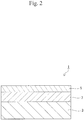
Fig. 2 is a cross-sectional view of the sanitary ware. - The present invention is hereinafter described in detail. In this specification, any values described as "... to ..." refer to a certain numerical range including upper and lower limits, unless specified otherwise. For example, "10 to 20" includes both of the lower limit of "10" and the upper limit of "20". Thus, "10 to 20" can be rephrased as "not less than 10 and not more than 20".
- In the present invention, the sanitary ware described herein refers to a ceramic utensil mostly used with plumbing equipment in, for example, bathrooms, washrooms, and lavatories.
- As illustrated in
Fig. 1 , asanitary ware 1 according to the present invention includes abase 3, and aglaze layer 5 formed on an outer side than thebase 3. Thesanitary ware 1 is characterized in that, in color representation by the Lab color system (JIS Z8781-4), an absolute value of a difference (ΔL) between an L value obtained from observation of a part with theglaze layer 5 formed thereon and an L value obtained from observation of a part with theglaze layer 5 substantially unformed thereon is not more than 12, or a color difference (ΔE) between a color in observation of the part with theglaze layer 5 formed thereon and a color in observation of the part with theglaze layer 5 substantially unformed thereon is not more than 14. Preferably, the absolute value of the difference (ΔL) is not more than eight, or the color difference (ΔE) is not more than eight. More preferably, the absolute value of the difference (ΔL) is not more than six, or the color difference (ΔE) is not more than six. Preferably, the L value obtained from observation of the part with theglaze layer 5 formed thereon is not less than 80 (upper limit of the L value is normally 100). Preferably, the L value obtained from observation of the part with theglaze layer 5 substantially unformed thereon is not less than 80 (upper limit of the L value is normally 100). - Herein, a part with the
glaze layer 5 substantially unformed thereon means a part where thebase 3 is substantially exposed, that is, a part where thebase 3 is exposed in 95% or more of the whole area of a given portion expressed as 100%. When thebase 3 is not substantially exposed with coating or the like, the coating may be scraped off so as to expose thebase 3. - In the
sanitary ware 1 illustrated inFig. 1 , an absolute value of a difference (ΔL) between an L value obtained from observation of the part with theglaze layer 5 formed thereon and an L value obtained from observation of the part with theglaze layer 5 substantially unformed thereon means an absolute value of a difference (ΔL) between an L value observed from theglaze layer 5 side (L value observed from the upper side inFig. 1 ) and an L value observed from thebase 3 side (L value observed from the lower side inFig. 1 ). - A color difference (ΔE) between a color in observation of the part with the
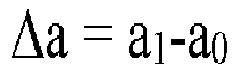
glaze layer 5 formed thereon and a color in observation of the part with theglaze layer 5 substantially unformed thereon means a color difference (ΔE) between a color observed from theglaze layer 5 side (observed from the upper side inFig. 1 ) and a color observed from thebase 3 side (observed from the lower side inFig. 1 ). - The values ΔL and ΔE are described below. In the L*a*b* color system, provided that R (L0, a0, b0) is coordinates in color space of the color in observation of the part with the
glaze layer 5 substantially unformed thereon, and M (L1, a1, b1) is coordinates in color space of the color in observation of the part with theglaze layer 5 formed thereon, ΔL, Δa, Δb, ΔE are defined as follows. These values may be measured by a color machine (for example, Chroma Meter, CR-400, supplied by Konica Minolta, Inc.).


- In the
sanitary ware 1 according to the present invention, even though the thickness of theglaze layer 5 varies, variability in color seen from theglaze layer 5 side may be suppressed when ΔL or ΔE fulfills the above requirements. As far as the inventors of this invention know, there has been no such a sanitary ware that fulfills the above requirements. - The present invention has been made under the circumstances described below. The
sanitary ware 1 variable in color may be thereby degraded in appearance. The past research and development conducted to improve sanitary wares in appearance solely relied on the idea that better appearances were made possible by improving their outermost layers, i.e., theglaze layer 5. However, it is now evident that improvement of theglaze layer 5 alone fails to adequately reduce variability in color. The inventors, as a result of their keen studies and tests, have found that it is unanticipatedly necessary to control the color of thebase 3 too, and that variability in color is effectively suppressed by defining a relationship in color between thebase 3 and theglaze layer 5. The present invention has been accomplished based on the finding. - When the absolute value of the difference (ΔL) between the L value obtained from observation of the part with the
glaze layer 5 formed thereon and the L value obtained from observation of the part with theglaze layer 5 substantially unformed thereon becomes smaller, thebase 3 and theglaze layer 5 become closer in color. When thebase 3 and theglaze layer 5 become closer in color, there may be almost no difference in color seen from theglaze layer 5 side, even though the thickness of theglaze layer 5 varies so that the color of thebase 3 is shown more or less through theglaze layer 5. Accordingly, the present invention may provide thesanitary ware 1 in which variability in color seen from theglaze layer 5 side is suppressed. The lower limit of ΔL is 0. - The color difference (ΔE) also may be described as well as the L values. When the color difference (ΔE) between the color in observation of the part with the
glaze layer 5 formed thereon and the color in observation of the part with theglaze layer 5 substantially unformed thereon becomes smaller, thebase 3 and theglaze layer 5 become closer in color When thebase 3 and theglaze layer 5 become closer in color, there may be almost no difference in color seen from theglaze layer 5 side, even though the thickness of theglaze layer 5 varies so that the color of thebase 3 is shown more or less through theglaze layer 5. Accordingly, the present invention may provide thesanitary ware 1 in which variability in color seen from theglaze layer 5 side is suppressed. The lower limit of ΔE is 0. - The composition of the
base 3 is not particularly limited. A base slurry, for example, may be used to form thebase 3. The base slurry may be prepared by adding a predetermined amount of water to a ceramic raw material containing feldspar, pottery stone, kaolin, and clay, and then pulverizing the water-added material using a ball mill. - The composition of a glaze used to form the
glaze layer 5 is not particularly limited. A glaze slurry may be used to form theglaze layer 5. The glaze slurry may be prepared by adding a predetermined amount of water to a glaze raw material containing silica sand, feldspar, lime, clay, and zinc flower, and then pulverizing the water-added material using a ball mill. - The thickness of the
glaze layer 5 is not particularly limited. In view of waterproofness and resistance against penetration, theglaze layer 5 may preferably have a thickness of from 0.2 mm to 1 mm, more preferably from 0.3 mm to 0.8 mm, still more preferably from 0.4 mm to 0.8 mm. - According to the present invention, the absolute value the difference (ΔL) between the L value obtained from observation of the part with the
glaze layer 5 formed thereon and the L value obtained from observation of the part with theglaze layer 5 substantially unformed thereon is not more than a predetermined value, or the color difference (ΔE) between the color in observation of the part with theglaze layer 5 formed thereon and the color in observation of the part with theglaze layer 5 substantially unformed thereon is not more than a predetermined value. Therefore, the composition of a glaze used to form theglaze layer 5 may be decided, in accordance with the composition of thebase 3, so that ΔE or the absolute value of ΔL stays within a predetermined range of values. Alternatively, the composition of thebase 3 may be decided, in accordance with the composition of a glaze used to form theglaze layer 5, so that ΔE or the absolute value of ΔL stays within a predetermined range of values. - Though the composition of the
base 3 and the composition of the composition a glaze used to form theglaze layer 5 are not particularly limited as long as ΔE or the absolute value of ΔL stays within a predetermined range of values, the following composition is given as an example of the combination of the composition of the base and the composition of the glaze. - SiO2: 50 to 70 parts by weight
Al2O3: 3 to 15 parts by weight
CaO: 5 to 20 parts by weight
MgO: 0.1 to 10 parts by weight
K2O: 0.1 to 10 parts by weight
Na2O: 0.1 to 5 parts by weight
ZnO: 0.1 to 20 parts by weight
ZrO2: 0.1 to 20 parts by weight - The material, Al2O3, may be replaced with mullite (3Al2O3·2SiO2). The material, Al2O3 may be replaced with a mixture of mullite and Al2O3.
- SiO2: 25 to 40 parts by weight
Al2O3: 35 to 70 parts by weight
Fe2O3: 0.1 to 3.0 parts by weight
CaO: 0.1 to 3.0 parts by weight
MgO: 0.1 to 3 parts by weight
K2O: 0.1 to 5.0 parts by weight
Na2O: 0.1 to 5.0 parts by weight
TiO2: 0.1 to 5.0 parts by weight - The material, Al2O3, may be replaced with mullite (3Al2O3·2SiO2). The material, Al2O3 may be replaced with a mixture of mullite and Al2O3. TiO2 is an optional component.
- The water-absorption ratio of the
base 3 is not particularly limited. The water-absorption ratio may be measured in the following manner. A test piece is dried for 24 hours at 100°C, and its weight (dry weight) is then measured. Thereafter, the test piece is immersed in water for 24 hours, and then its weight (water-absorbed weight) is measured. The water-absorption ratio is calculated by the following formula.
- The water-absorption ratio of the
base 3, though not necessarily limited to particular percentages, may preferably be not more than 30%, more preferably not more than 20%, still more preferably not more than 15%. - According to JIS A 5207, the
base 3 of thesanitary ware 1 must have such a quality that ink penetrability is not more than 3 mm. Thebase 3 has a water-absorption ratio of approximately 1% or less. The technical aspects of the present invention described herein may be applicable to not only bases 3 having a water-absorption ratio of 1% or less, as provided for in JIS A 5207, but also bases 3 having a water-absorption ratio of 30% or less. - When the
base 3 has a water-absorption ratio of from 8% to 30%, thebase 3 may have less glass phase with the result that the base may be less likely to be tainted with color. In this case, it may be preferable to add a component that increases whiteness. Whiteness of the sanitary ware may be increased by the component (whitening component) and thereby the sanitary ware may appear more beautiful. - The whitening component is not necessarily limited to particular materials. It is preferable that the whitening component includes at least one element which belongs to any one of groups 2 to 4 and groups 12 to 14 of the periodic table and also belongs to the third to fifth periods of the periodic table. The elements in groups 2 to 4 and groups 12 to 14 of the periodic table are poorly reactive and less likely to dissolve or break the
base 3. Furthermore, the elements in these groups of the periodic table are colorless, so that appearance of thesanitary ware 1 can be improved. The elements in third to fifth periods of the periodic table are in solid state and poorly reactive, and furthermore, these elements are abundantly producible and therefore favorable in terms of cost. - Though the elements in any one of groups 2 to 4 and also in third to fifth periods are not particularly limited as long as they meet the requirements, the elements preferably may be one or more selected from the group consisting of Al, Si, Sc, Ti, Zn, Ga, Ge, Y, Zr, Cd, In, and Sn.
- A suitable example of the whitening component may be a white pigment, and more specifically, may be one or more selected from the group consisting of TiO2, Al2O3, ZrO2, ZnO, SiO2, ZrO2·SiO2, and 3Al2O3·2SiO2.
- As illustrated in
Fig. 2 , thesanitary ware 1 having thebase 3 and theglaze layer 5 may further include anintermediate layer 7 between thebase 3 and theglaze layer 5. Theintermediate layer 7 may reduce color difference (difference in whiteness) between thebase 3 and theglaze layer 5 and thereby favorably suppress variability in color seen from theglaze layer 5 side. - The composition of the
intermediate layer 7 is not particularly limited. The material used to form theintermediate layer 7 may be a mixture of the raw material of the glaze use to form theglaze layer 5 and the raw material of thebase 3. - Preferably, the
intermediate layer 7 may be white, and theglaze layer 5 may be transparent. In this case, the white color of theintermediate layer 7 may be shown through theglaze layer 5, whereby variability in color seen from theglaze layer 5 side may be suppressed. Furthermore, when theintermediate layer 7 is while, the whitening component added to thebase 3 may be proportionately reduced. As a result, inexpensive components can be used to form thebase 3, which is favorable in terms of cost. - A manufacturing method for the
sanitary ware 1, though not particularly limited, may be favorably configured as follows. - A glaze slurry is prepared by adding a predetermined amount of water to a glaze raw material containing silica sand, feldspar, lime, clay, and zinc flower, and then pulverizing the water-added material using a ball mill.
- A base slurry is prepared by adding a predetermined amount of water to a ceramic raw material containing feldspar, pottery stone, kaolin, and clay by predetermined ratios, and then pulverizing the water-added material using a ball mill. The base slurry is casted in a plaster mold having a predetermined shape. The molded base is then dried at, for example, 40°C into a dry base.
- The glaze slurry is applied to the dry base by, for example, spraying. The resulting glazed base is then fired in a kiln at the temperature of, for example, 1200°C to 1300°C. This is how the
sanitary ware 1 can be manufactured. - A further detailed description is given below using examples of the present invention.
- A glaze slurry was prepared by adding a predetermined amount of water to a glaze raw material containing silica sand, feldspar, lime, clay, and zinc flower, and then pulverizing the water-added material using a ball mill. Table 1 shows the glaze composition.
[Table 1] Glaze composition Wt.% SiO2 63 Al2O3 10 CaO 13 MgO 2 K2O 3 Na2O 1 ZnO 2 ZrO2 6 - Each test piece was obtained as described below. A base slurry was prepared by adding a predetermined amount of water to a ceramic raw material containing feldspar, pottery stone, kaolin, and clay by predetermined ratios shown in Table 2, and then pulverizing the water-added material using a ball mill. The base slurry was casted in a plaster mold having a predetermined shape and molded, and then released from the mold, so that a molded base was obtained. The molded base was then dried at, for example, 40°C into a dry base. The glaze slurry was applied by spraying to one surface of the dry base. The glazed base was then fired in a kiln at 1220°C into a test piece for evaluation.
[Table 2] Base composition (wt.%) Example 1 Example 2 Example 3 Example 4 SiO2 49.7 55.9 57.5 64.1 Al2O3 45.4 40.0 36.0 28.1 Fe2O3 0.7 0.4 1.0 1.0 CaO 2.1 0.5 0.7 1.1 MgO 0.3 0.1 0.1 0.2 K2O 0.8 1.2 3.1 4.2 Na2O 0.1 1.4 1.4 1.2 TiO2 0.7 0.6 0.3 0.1 Water-absorption ratio (%) 13.0 8.0 0.5 0.5 L value obtained from observation of a part with a glaze layer formed thereon 91.14 88.75 88.62 90.00 L value obtained from observation of a part with a glaze layer substantially unformed thereon 95.33 93.98 77.36 75.04 Standard deviation of L value obtained from observation of a part with a glaze layer formed thereon 0.08 0.28 0.51 0.70 Absolute value of ΔL 4.20 5.23 11.25 14.96 ΔE 7.68 7.46 13.59 17.11 - In each of the test pieces for evaluation were obtained a water-absorption ratio, "L", "a", and "b" values obtained from observation of a part with the glaze layer formed thereon, and "L", "a", and "b" values obtained from observation of a part with the glaze layer substantially unformed thereon. The water-absorption ratio was measured by the method described earlier.
- As the L value obtained from observation of the part with the glaze layer formed thereon, an average of L values measured at 10 points on the glazed front surface of each test piece was used. As the L value obtained from observation of the part with the glaze layer substantially unformed thereon, an average of L values measured at 10 points on the unglazed back surface of each test piece was used. A standard deviation of the L value obtained from observation of the part with the glaze layer formed thereon was calculated from the L values measured at 10 points on the glazed front surface. The standard deviation indicates variability of the measured values. The absolute value of ΔL is an absolute value of a value calculated by subtracting the L value obtained from observation of the part with the glaze layer substantially unformed thereon (average of the L values measured at 10 points) from the L value obtained from observation of the part with the glaze layer formed thereon (average of the L values measured at 10 points).
- The value of ΔE was calculated from ΔL, Δa, and Δb in the before-mentioned formulas. The value of ΔL is calculated by subtracting the "L" value obtained from observation of the part with the glaze layer substantially unformed thereon (average of the L values measured at 10 points) from the "L" value obtained from observation of the part with the glaze layer formed thereon (average of the L values measured at 10 points). The value of Δa is calculated by subtracting the "a" value obtained from observation of the part with the glaze layer substantially unformed thereon (average of the "a" values measured at 10 points) from the "a" value obtained from observation of the part with the glaze layer formed thereon (average of the "a" values measured at 10 points). The value of Δb is calculated by subtracting the "b" value obtained from observation of the part with the glaze layer substantially unformed thereon (average of the "b" values measured at 10 points) from the "b" value obtained from observation of the part with the glaze layer formed thereon (average of the "b" values measured at 10 points).
- In the examples 1 to 3, the absolute value of ΔL is not more than 12, and the value of ΔE is not more than 14. In all of the examples 1 to 3, the standard deviation of the L value obtained from observation of the part with the glaze layer formed thereon was smaller than in a comparative example 1. This result teaches that, even though the thickness of the glaze layer varies, variability in color seen from the glaze layer side is suppressed when the requirement that the absolute value of ΔL is 12 or less or the value of ΔE being 14 or less is met. When the standard deviation of the L value obtained from observation of the part with the glaze layer formed thereon is not more than 0.60, variability in color is hardly perceivable by the human eye.
- As is indicated by the results of the examples 1 and 2, variability in color was markedly suppressed when the absolute value of ΔL is not more than eight, or the value of ΔE is not more than eight. That is, the standard deviation of the L value obtained from observation of the part with the glaze layer formed thereon was very small.
- When the L value obtained from observation of the part with the glaze layer substantially unformed thereon is not less than 80, variability in color was effectively suppressed, as is indicated by the results of the examples 1 and 2. That is, the standard deviation of the L value obtained from observation of the part with the glaze layer formed thereon was very small.
- The results of the examples 1 and 2 also indicate that variability in color was effectively suppressed when the base has a water-absorption ratio of from 8% to 20% and includes TiO2. That is, the standard deviation of the L value obtained from observation of the part with the glaze layer formed thereon was very small.
- Further, in the test pieces of the examples 1 and 2, whiteness was improved and the test pieces were beautiful in appearance, exhibiting a sense of high quality.
- In the examples 1 to 3, the L value obtained from observation of the part with the glaze layer formed thereon was not less than 80 and the test pieces of these examples exhibited favorably white color.
- The examples of the present invention confirmed that variability in color seen from the glaze layer side in the sanitary ware is adequately suppressed even though the thickness of the glaze layer varies.
- The present invention should not be limited to the embodiment described above, and may be variously modified or replaced within the scope of technical aspects defined in the appended claims.
- The sanitary ware according to the present invention is not particularly limited in size or shape, and may be suitably changed in size and/or shape depending on intended use of this ware. The sanitary ware having a three-dimensional shape with a curved surface may be exemplified. The sanitary ware according to the present invention may be suitably for use in, for example, closet bowls, water-saving closet bowls, urinals, washing tanks, washbowls, basins, and slop sinks. Among these examples, the present invention may be particularly useful for washbowls since it may be used near users' eyes and variability in color seen from a glazed surface may be more easily caught by the eye, if any. Furthermore, the present invention may be particularly useful for washbowls having large depths, for example, depths of 500 mm or more (normally, 1,000 mm or less) since such washbowls may have different glaze thickness in the bottom surface and side surface thereof so that the washbowls may be easily affected by the color of the base.
Claims (9)
- A sanitary ware (1), comprising:a base (3); anda glaze layer (5) formed on an outer side than the base (3),characterized in that:in color representation by Lab color system,an absolute value of a difference (ΔL) between an L value obtained from observation of a part with the glaze layer (5) formed thereon and an L value obtained from observation of a part with the glaze layer (5) substantially unformed thereon is not more than 12, ora color difference (ΔE) between a color in observation of the part with the glaze layer (5) formed thereon and a color in observation of the part with the glaze layer (5) substantially unformed thereon is not more than 14.
- The sanitary ware (1) according to claim 1, wherein
the absolute value of the difference (ΔL) is not more than eight, or
the color difference (ΔE) is not more than eight. - The sanitary ware (1) according to claim 1 or 2, wherein
the absolute value of the difference (ΔL) is not more than six, or
the color difference (ΔE) is not more than six. - The sanitary ware (1) according to any one of claims 1 to 3, wherein the L value obtained from observation of the part with the glaze layer (5) formed thereon is not less than 80.
- The sanitary ware (1) according to any one of claims 1 to 4, wherein the L value obtained from observation of the part with the glaze layer (5) substantially unformed thereon is not less than 80.
- The sanitary ware (1) according to any one of claims 1 to 5, wherein
the base (3) has a water-absorption ratio of from 8% to 30%, and
the base (3) includes a component that increases whiteness as compared with before the component is added. - The sanitary ware (1) according to claim 6, wherein
the component includes at least one element which belongs to any one of groups 2 to 4 and groups 12 to 14 of a periodic table and also belongs to third to fifth periods of the periodic table. - The sanitary ware (1) according to any one of claims 1 to 7, further comprising an intermediate layer (7) between the base (3) and the glaze layer (5).
- The sanitary ware (1) according to claim 8, wherein
the intermediate layer (7) is white, and
the glaze layer (5) is transparent.
Applications Claiming Priority (1)
| Application Number | Priority Date | Filing Date | Title |
|---|---|---|---|
| JP2017177473A JP6967921B2 (en) | 2017-09-15 | 2017-09-15 | Sanitary ware |
Publications (1)
| Publication Number | Publication Date |
|---|---|
| EP3459924A1 true EP3459924A1 (en) | 2019-03-27 |
Family
ID=63517707
Family Applications (1)
| Application Number | Title | Priority Date | Filing Date |
|---|---|---|---|
| EP18192623.9A Withdrawn EP3459924A1 (en) | 2017-09-15 | 2018-09-05 | Sanitary ware |
Country Status (4)
| Country | Link |
|---|---|
| US (1) | US20190084895A1 (en) |
| EP (1) | EP3459924A1 (en) |
| JP (1) | JP6967921B2 (en) |
| CN (1) | CN109503211A (en) |
Families Citing this family (5)
| Publication number | Priority date | Publication date | Assignee | Title |
|---|---|---|---|---|
| CN113213762A (en) * | 2020-02-06 | 2021-08-06 | 程家麒 | Low-zirconium make-up earth glaze |
| CN111792949B (en) * | 2020-07-08 | 2022-02-22 | 佛山市东鹏陶瓷有限公司 | Ceramic glazed tile and preparation method thereof |
| JP7144776B1 (en) * | 2022-03-23 | 2022-09-30 | Toto株式会社 | sanitary ware |
| JP7343031B1 (en) | 2022-12-28 | 2023-09-12 | Toto株式会社 | pottery base |
| US20240360039A1 (en) * | 2023-04-26 | 2024-10-31 | Kohler Co. | Ceramic glaze |
Citations (2)
| Publication number | Priority date | Publication date | Assignee | Title |
|---|---|---|---|---|
| JP2001072460A (en) | 1999-09-01 | 2001-03-21 | Inax Corp | Glazed product and its production |
| JP2002167292A (en) * | 2000-11-30 | 2002-06-11 | Toto Ltd | Sanitary ware |
Family Cites Families (8)
| Publication number | Priority date | Publication date | Assignee | Title |
|---|---|---|---|---|
| ES2222032T3 (en) * | 1998-05-27 | 2005-01-16 | Toto Ltd. | SANITARY ARTICLES OF CERAMICS AND PROCEDURE OF PRODUCTION OF THE SAME. |
| PL346581A1 (en) * | 1998-12-11 | 2002-02-11 | Toto Ltd | Sanitary earthen products |
| JP3456469B2 (en) * | 1999-06-18 | 2003-10-14 | 東陶機器株式会社 | Sanitary ware |
| JP2002173384A (en) * | 2000-12-04 | 2002-06-21 | Toto Ltd | Sanitary ware |
| JP2002179484A (en) * | 2000-12-12 | 2002-06-26 | Toto Ltd | Sanitary ware and its manufacturing method |
| EP2071056A1 (en) * | 2007-12-13 | 2009-06-17 | ArcelorMittal France | Process for the production of enamelled steel sheet or part |
| US8097078B2 (en) * | 2007-12-13 | 2012-01-17 | Unimin Corporation | Binder for whiteware ceramic mixture and method of using same |
| JP5099531B2 (en) * | 2010-09-29 | 2012-12-19 | Toto株式会社 | Sanitary ware having a glaze layer with excellent surface hiding |
-
2017
- 2017-09-15 JP JP2017177473A patent/JP6967921B2/en active Active
-
2018
- 2018-08-22 CN CN201810959245.5A patent/CN109503211A/en active Pending
- 2018-09-05 EP EP18192623.9A patent/EP3459924A1/en not_active Withdrawn
- 2018-09-14 US US16/131,366 patent/US20190084895A1/en not_active Abandoned
Patent Citations (2)
| Publication number | Priority date | Publication date | Assignee | Title |
|---|---|---|---|---|
| JP2001072460A (en) | 1999-09-01 | 2001-03-21 | Inax Corp | Glazed product and its production |
| JP2002167292A (en) * | 2000-11-30 | 2002-06-11 | Toto Ltd | Sanitary ware |
Non-Patent Citations (1)
| Title |
|---|
| MILEVSKAYA R N ET AL: "PREPARING A GLAZE COATING BY APPLYING A TRANSPARENT COLORLESS BORON-CONTAINING GLAZE TO A CERAMIC AND FIRING", CHEMICAL ABSTRACTS, CHEMICAL ABSTRACTS SERVICE (C A S), US, vol. 108, no. 4, 1 January 1988 (1988-01-01), pages 280, XP000017210, ISSN: 0009-2258 * |
Also Published As
| Publication number | Publication date |
|---|---|
| JP6967921B2 (en) | 2021-11-17 |
| CN109503211A (en) | 2019-03-22 |
| US20190084895A1 (en) | 2019-03-21 |
| JP2019052062A (en) | 2019-04-04 |
Similar Documents
| Publication | Publication Date | Title |
|---|---|---|
| US20190084895A1 (en) | Sanitary ware | |
| ES2406354B1 (en) | COMBINATION AND PROCEDURE FOR OBTAINING BACTERICIDE CERAMIC Enamels FOR CERAMIC PRODUCTS | |
| EP2623485B1 (en) | Sanitary ware having glaze layer having excellent base-covering properties | |
| ES2630159T3 (en) | Ceramic glazing with antimicrobial properties | |
| CN105837253B (en) | Ceramic articles and method for manufacturing this ceramic articles | |
| JP2012046364A (en) | Sanitary ware with antifouling property and mat tone surface | |
| Khomenko et al. | DESIGNING ENGOBE COATINGS FOR CERAMIC BRICKS. | |
| WO2012043536A1 (en) | Sanitary ware with excellent image clarity | |
| WO2005069962A2 (en) | Antimicrobial ceramic glaze | |
| KR20190012692A (en) | Glaze and color-glaze and manufacturing method of art-tile using the same | |
| EP3414287B1 (en) | An inorganic antibacterial amorphous coating for ceramic surfaces | |
| JP3813469B2 (en) | Emulsions and glazes | |
| CN121925404A (en) | Sanitary ceramics with a matte finish | |
| JP7424531B1 (en) | Beautiful pottery and the pottery base that provides it | |
| JP2002173384A (en) | Sanitary ware | |
| JPH10236846A (en) | Antibacterial glaze composition and pottery product using the same | |
| JP7343031B1 (en) | pottery base | |
| CN104016718A (en) | High diffuse reflection glaze layer and glaze composition manufacturing thereof | |
| JP2002114566A (en) | Sanitary ware | |
| JP2024146301A (en) | Ceramic with excellent appearance and stain resistance | |
| JP2024146303A (en) | Ceramic with excellent appearance and stain resistance | |
| JP2024146300A (en) | Ceramic with excellent appearance and stain resistance | |
| JP2024146304A (en) | Ceramic with excellent appearance and stain resistance | |
| JP2024146302A (en) | Ceramic with excellent appearance and stain resistance | |
| PT906897E (en) | PROCESS FOR THE PREPARATION OF CRAZY DECORATIONS WITH HIGH RESISTANCE AGAINST ABRASAO BRANDS OF THE CUTTERS AND PRODUCT FOR THE EFFECT |
Legal Events
| Date | Code | Title | Description |
|---|---|---|---|
| PUAI | Public reference made under article 153(3) epc to a published international application that has entered the european phase |
Free format text: ORIGINAL CODE: 0009012 |
|
| STAA | Information on the status of an ep patent application or granted ep patent |
Free format text: STATUS: THE APPLICATION HAS BEEN PUBLISHED |
|
| AK | Designated contracting states |
Kind code of ref document: A1 Designated state(s): AL AT BE BG CH CY CZ DE DK EE ES FI FR GB GR HR HU IE IS IT LI LT LU LV MC MK MT NL NO PL PT RO RS SE SI SK SM TR |
|
| AX | Request for extension of the european patent |
Extension state: BA ME |
|
| STAA | Information on the status of an ep patent application or granted ep patent |
Free format text: STATUS: REQUEST FOR EXAMINATION WAS MADE |
|
| 17P | Request for examination filed |
Effective date: 20190920 |
|
| RBV | Designated contracting states (corrected) |
Designated state(s): AL AT BE BG CH CY CZ DE DK EE ES FI FR GB GR HR HU IE IS IT LI LT LU LV MC MK MT NL NO PL PT RO RS SE SI SK SM TR |
|
| STAA | Information on the status of an ep patent application or granted ep patent |
Free format text: STATUS: EXAMINATION IS IN PROGRESS |
|
| 17Q | First examination report despatched |
Effective date: 20210413 |
|
| RAP1 | Party data changed (applicant data changed or rights of an application transferred) |
Owner name: LIXIL GROUP CORPORATION |
|
| RAP3 | Party data changed (applicant data changed or rights of an application transferred) |
Owner name: LIXIL CORPORATION |
|
| STAA | Information on the status of an ep patent application or granted ep patent |
Free format text: STATUS: THE APPLICATION HAS BEEN WITHDRAWN |
|
| 18W | Application withdrawn |
Effective date: 20210614 |