EP3456275B1 - Carbon dioxide for treating peyronie`s disease - Google Patents
Carbon dioxide for treating peyronie`s disease Download PDFInfo
- Publication number
- EP3456275B1 EP3456275B1 EP17191758.6A EP17191758A EP3456275B1 EP 3456275 B1 EP3456275 B1 EP 3456275B1 EP 17191758 A EP17191758 A EP 17191758A EP 3456275 B1 EP3456275 B1 EP 3456275B1
- Authority
- EP
- European Patent Office
- Prior art keywords
- carbon dioxide
- plaque
- patient
- use according
- plaque mass
- Prior art date
- Legal status (The legal status is an assumption and is not a legal conclusion. Google has not performed a legal analysis and makes no representation as to the accuracy of the status listed.)
- Active
Links
Images
Classifications
-
- A—HUMAN NECESSITIES
- A61—MEDICAL OR VETERINARY SCIENCE; HYGIENE
- A61B—DIAGNOSIS; SURGERY; IDENTIFICATION
- A61B17/00—Surgical instruments, devices or methods
- A61B17/22—Implements for squeezing-off ulcers or the like on inner organs of the body; Implements for scraping-out cavities of body organs, e.g. bones; for invasive removal or destruction of calculus using mechanical vibrations; for removing obstructions in blood vessels, not otherwise provided for
-
- A—HUMAN NECESSITIES
- A61—MEDICAL OR VETERINARY SCIENCE; HYGIENE
- A61B—DIAGNOSIS; SURGERY; IDENTIFICATION
- A61B17/00—Surgical instruments, devices or methods
- A61B17/22—Implements for squeezing-off ulcers or the like on inner organs of the body; Implements for scraping-out cavities of body organs, e.g. bones; for invasive removal or destruction of calculus using mechanical vibrations; for removing obstructions in blood vessels, not otherwise provided for
- A61B17/22004—Implements for squeezing-off ulcers or the like on inner organs of the body; Implements for scraping-out cavities of body organs, e.g. bones; for invasive removal or destruction of calculus using mechanical vibrations; for removing obstructions in blood vessels, not otherwise provided for using mechanical vibrations, e.g. ultrasonic shock waves
-
- A—HUMAN NECESSITIES
- A61—MEDICAL OR VETERINARY SCIENCE; HYGIENE
- A61K—PREPARATIONS FOR MEDICAL, DENTAL OR TOILETRY PURPOSES
- A61K31/00—Medicinal preparations containing organic active ingredients
- A61K31/275—Nitriles; Isonitriles
- A61K31/277—Nitriles; Isonitriles having a ring, e.g. verapamil
-
- A—HUMAN NECESSITIES
- A61—MEDICAL OR VETERINARY SCIENCE; HYGIENE
- A61K—PREPARATIONS FOR MEDICAL, DENTAL OR TOILETRY PURPOSES
- A61K33/00—Medicinal preparations containing inorganic active ingredients
-
- A—HUMAN NECESSITIES
- A61—MEDICAL OR VETERINARY SCIENCE; HYGIENE
- A61K—PREPARATIONS FOR MEDICAL, DENTAL OR TOILETRY PURPOSES
- A61K45/00—Medicinal preparations containing active ingredients not provided for in groups A61K31/00 - A61K41/00
- A61K45/06—Mixtures of active ingredients without chemical characterisation, e.g. antiphlogistics and cardiaca
-
- A—HUMAN NECESSITIES
- A61—MEDICAL OR VETERINARY SCIENCE; HYGIENE
- A61K—PREPARATIONS FOR MEDICAL, DENTAL OR TOILETRY PURPOSES
- A61K9/00—Medicinal preparations characterised by special physical form
- A61K9/0012—Galenical forms characterised by the site of application
- A61K9/0019—Injectable compositions; Intramuscular, intravenous, arterial, subcutaneous administration; Compositions to be administered through the skin in an invasive manner
-
- A—HUMAN NECESSITIES
- A61—MEDICAL OR VETERINARY SCIENCE; HYGIENE
- A61B—DIAGNOSIS; SURGERY; IDENTIFICATION
- A61B17/00—Surgical instruments, devices or methods
- A61B17/22—Implements for squeezing-off ulcers or the like on inner organs of the body; Implements for scraping-out cavities of body organs, e.g. bones; for invasive removal or destruction of calculus using mechanical vibrations; for removing obstructions in blood vessels, not otherwise provided for
- A61B17/225—Implements for squeezing-off ulcers or the like on inner organs of the body; Implements for scraping-out cavities of body organs, e.g. bones; for invasive removal or destruction of calculus using mechanical vibrations; for removing obstructions in blood vessels, not otherwise provided for for extracorporeal shock wave lithotripsy [ESWL], e.g. by using ultrasonic waves
-
- A—HUMAN NECESSITIES
- A61—MEDICAL OR VETERINARY SCIENCE; HYGIENE
- A61B—DIAGNOSIS; SURGERY; IDENTIFICATION
- A61B8/00—Diagnosis using ultrasonic, sonic or infrasonic waves
- A61B8/06—Measuring blood flow
-
- A—HUMAN NECESSITIES
- A61—MEDICAL OR VETERINARY SCIENCE; HYGIENE
- A61M—DEVICES FOR INTRODUCING MEDIA INTO, OR ONTO, THE BODY; DEVICES FOR TRANSDUCING BODY MEDIA OR FOR TAKING MEDIA FROM THE BODY; DEVICES FOR PRODUCING OR ENDING SLEEP OR STUPOR
- A61M2202/00—Special media to be introduced, removed or treated
- A61M2202/02—Gases
- A61M2202/0225—Carbon oxides, e.g. Carbon dioxide
Definitions
- the present invention relates to treatment methods and, more specifically, to a method of treating Peyronie's disease.
- Peyronie's disease also known as induratio penis plastic
- Peyronie's disease is an acquired inflammatory condition of the penis associated with penile curvature. It is a connective tissue disorder involving the growth of fibrous plaques in the soft tissue of the penis. Scar tissue forms in the tunica albuginea, the thick sheath of tissue surrounding the corpora cavemosa causing pain, abnormal curvature, erectile dysfunction, indentation, loss of girth and shortening.
- the penile curvature of Peyronie's disease is caused by an inelastic scar, or plaque (which may include calcification), that shortens the involved aspect of the tunica albuginea of the corpora cavemosa during erection.
- Peyronie's disease may cause fibrotic, nonexpansile thickening of relatively discrete areas of the corpora tunica, typically resulting in focal bend, pain or other functional or structural abnormalities of the erect penis.
- Surgery is one method of treating Peyronie's disease. Surgery has the disadvantage of being expensive and occasionally resulting in unwanted complications. Several medical treatments have been applied, but results so far have been limited. Surgical treatments have also been used to treat Peyronie's disease. Collagenase clostridium histolyticum (marketed as Xiaflex), an injectable drug, is the most common medical treatment of Peyronie's disease.
- the present invention which, in one aspect, is a method of treating a patient having diffused plaque and a plaque mass associated with Peyronie's disease in a penile region, in which a battery of tests is performed to quantify an initial state of parameters associated with Peyronie's disease in the patient.
- Low intensity shock wave therapy is applied to the plaque mass in the penile region, thereby softening the plaque mass and disrupting any calcification in the plaque mass.
- Carbon dioxide is injected into the plaque mass.
- the battery of tests is repeated to quantify a current state of parameters associated with Peyronie's disease in the patient and the current state is compared to the initial state.
- the aforementioned treatment steps are repeated until the current state differs from the initial state by at least a predetermined amount.
- the invention is a treatment method for a patient having a plaque mass associated with Peyronie's disease in a penile region, in which a battery of tests is performed to quantify an initial state of parameters associated with Peyronie's disease in the patient.
- Low intensity shock wave therapy is applied to a plaque mass in the penile region for about thirteen treatments over a period of seven to eight weeks including a two week break period of no low intensity shock wave treatment, thereby softening the plaque and disrupting calcification in the plaque mass.
- a plurality of doses of about 160 cc of carbon dioxide per dose is injected into the plaque mass for a total of 960 cc.
- a counter pulsation treatment is applied every five days during a period of seven weeks to the patient concurrently with the step of applying low intensity shock wave therapy to further disrupt calcification in the plaque mass.
- a therapeutically effective dose of Verapamil is injected into a dorsal area of the penile area after the step of applying low intensity shock wave therapy to the plaque mass.
- the battery of tests is repeated to quantify a current state of parameters associated with Peyronie's disease in the patient and comparing the current state to the initial state. The aforementioned steps are repeated until the current state differs from the initial state by at least a predetermined amount.
- Peyronie's disease causes curvature of the penis 10 as the result of a plaque mass 14 forming in the dorsal tunica of the penis 10. It can also result from calcification of the corpus cavemosa 12 in the penis 10.
- the present treatment protocol includes several steps for improving blood flow through the affected area, along with injecting a therapeutically effective dose of an L-type phenylalkylamine class calcium channel blocker (such as Verapamil) 102 into the plaque mass 14 and also injecting carbon dioxide 104 into the plaque mass 14.
- an L-type phenylalkylamine class calcium channel blocker such as Verapamil
- an initial test battery is performed on the patient 110 in order to establish a baseline.
- This test battery typically includes imaging the plaque with an ultrasound imaging device, measuring blood flow in penile blood vessels of the patient with a duplex Doppler ultrasonography blood flow device and measuring pulse wave velocity in a brachial artery and an ankle artery of the patient. Circulatory blood flow velocity in the patient is tested typically with a duplex Doppler.
- U.S. Patent No. 6,251,076, issued to Hovland et al. discloses one method of determining blood flow velocity in a penile artery and is referred to for the purpose of disclosing exemplary methods of determining blood flow velocity.
- Low intensity shock wave therapy is applied to the plaque mass in the penile region 112. This softens the plaque mass and disrupts calcification in the plaque mass. In doing so, low intensity shockwave (LISW) therapy is applied to the plaque mass for about thirteen treatments over a period of seven to eight weeks, including a two week break period off no low intensity shock wave treatment. In the low intensity shockwave treatment (LISW), shock waves having a maximum energy of 0.09 mJmm2 are applied with a local applicator to the penile area once per day for two or three days per week over a course of five weeks.
- LISW low intensity shockwave
- US-2015/0073312-A1 filed by Ein-Gal , discloses one method of low intensity shockwave treatment and referred to for the purpose of disclosing low intensity shockwave treatment.
- a typical treatment about 300 pulses are applied per minute over the course of between 10 minutes and 20 minutes.
- the LISW treatment stimulates neovascularization and improves penile blood flow and endothelial function when applied to the corpora cavemosa.
- Counter pulsation treatment is applied twice per week during a period of at least ten weeks 114, which can be done concurrently with the low intensity shock wave therapy. This further disrupts calcification in the plaque mass and improves blood flow.
- the course of external counter-pulsation treatment includes applying external counter-pulsation treatments to the patient for a predetermined number of days per week for a predetermined number of weeks.
- an electrocardiogram (ECG) sensing device is applied to the patient and the ECG is sensed.
- 7,314,478 and 7,314,478, both issued to Hui disclose a counter-pulsation apparatus and method for controlling the apparatus and are referred to for the purpose of disclosing exemplary counter-pulsation methods.
- An inflatable cuff is applied to at least one of the patient's calf, lower thigh, upper thigh or buttocks. Typically, cuffs are applied to both of the lower thighs and to both of the upper thighs.
- Counter pulsations are applied to the cuffs by inflating the cuffs to a pressure of about 300 mm Hg during a diastole sensed by the ECG.
- Carbon dioxide is then injected into the plaque mass 116, which is referred to as "carboxy therapy.”
- carboxy therapy is typically performed after the low intensity shockwave treatment and the counter pulsation treatment steps to reduce the dispersal of the carbon dioxide in the injected tissues.
- U.S. Patent No. 9,132,245, issued to Mantell discloses a carboxy therapy application and is referred to disclose one exemplary device and method for administering carboxy therapy.
- the carboxy therapy infuses carbon dioxide into the tissues, causing the body to interpret the presence of the carbon dioxide as an oxygen deficiency, which results in the production of vascular endothelial growth factors in the tissues. This encourages vascular growth and local reduction in fat tissue, which results in increased blood flow to the corpora cavemosa.
- An L-type phenylalkylamine class calcium channel blocker of the type known generically as "Verapamil," is injected into a calcified plaque area of the penile area 118. Typically, in this step 0.625 mg to 2.5 mg ofVerapamil is injected into a dorsal tunica of the patient. About 12 Verapamil treatments are administered at a frequency of one every 14 days.
- the test battery is repeated 120 to quantify patient treatment progress. If there has not been sufficient improvement over the baseline test, then the treatment steps are repeated 122. Indicia of sufficient improvement include the observance of no plaque in the ultrasound imaging and the observance of a doubling in blood flow in the affected area. Once the desired result is achieved, the patient can return periodically for examination and maintenance treatments 124 if such treatments are indicated.
- the methods of the present invention could also be useful in treating calcification in an individual's hand, or other extremity.
Landscapes
- Health & Medical Sciences (AREA)
- Life Sciences & Earth Sciences (AREA)
- Animal Behavior & Ethology (AREA)
- Veterinary Medicine (AREA)
- Public Health (AREA)
- General Health & Medical Sciences (AREA)
- Surgery (AREA)
- Chemical & Material Sciences (AREA)
- Pharmacology & Pharmacy (AREA)
- Medicinal Chemistry (AREA)
- Epidemiology (AREA)
- Engineering & Computer Science (AREA)
- Molecular Biology (AREA)
- Vascular Medicine (AREA)
- Nuclear Medicine, Radiotherapy & Molecular Imaging (AREA)
- Orthopedic Medicine & Surgery (AREA)
- Biomedical Technology (AREA)
- Heart & Thoracic Surgery (AREA)
- Medical Informatics (AREA)
- Mechanical Engineering (AREA)
- Inorganic Chemistry (AREA)
- Dermatology (AREA)
- Acyclic And Carbocyclic Compounds In Medicinal Compositions (AREA)
Description
- The present invention relates to treatment methods and, more specifically, to a method of treating Peyronie's disease.
- Peyronie's disease (also known as induratio penis plastic) is an acquired inflammatory condition of the penis associated with penile curvature. It is a connective tissue disorder involving the growth of fibrous plaques in the soft tissue of the penis. Scar tissue forms in the tunica albuginea, the thick sheath of tissue surrounding the corpora cavemosa causing pain, abnormal curvature, erectile dysfunction, indentation, loss of girth and shortening. The penile curvature of Peyronie's disease is caused by an inelastic scar, or plaque (which may include calcification), that shortens the involved aspect of the tunica albuginea of the corpora cavemosa during erection.
- If left untreated, Peyronie's disease may cause fibrotic, nonexpansile thickening of relatively discrete areas of the corpora tunica, typically resulting in focal bend, pain or other functional or structural abnormalities of the erect penis. Surgery is one method of treating Peyronie's disease. Surgery has the disadvantage of being expensive and occasionally resulting in unwanted complications. Several medical treatments have been applied, but results so far have been limited. Surgical treatments have also been used to treat Peyronie's disease. Collagenase clostridium histolyticum (marketed as Xiaflex), an injectable drug, is the most common medical treatment of Peyronie's disease. It is believed that this works by breaking down the excess collagen in the penis that causes Peyronie's disease. This drug has limited success and it can be quite expensive. Known methods for treating Peyronie's disease through shockwave therapy are described in patent publications
US 2012/0215142 A1 andRU 2256405 C1 - Therefore, there is a need for a reliable and inexpensive non-surgical treatment for Peyronie's disease.
- The disadvantages of the prior art are overcome by the present invention which, in one aspect, is a method of treating a patient having diffused plaque and a plaque mass associated with Peyronie's disease in a penile region, in which a battery of tests is performed to quantify an initial state of parameters associated with Peyronie's disease in the patient. Low intensity shock wave therapy is applied to the plaque mass in the penile region, thereby softening the plaque mass and disrupting any calcification in the plaque mass. Carbon dioxide is injected into the plaque mass. The battery of tests is repeated to quantify a current state of parameters associated with Peyronie's disease in the patient and the current state is compared to the initial state. The aforementioned treatment steps are repeated until the current state differs from the initial state by at least a predetermined amount.
- In another aspect, the invention is a treatment method for a patient having a plaque mass associated with Peyronie's disease in a penile region, in which a battery of tests is performed to quantify an initial state of parameters associated with Peyronie's disease in the patient. Low intensity shock wave therapy is applied to a plaque mass in the penile region for about thirteen treatments over a period of seven to eight weeks including a two week break period of no low intensity shock wave treatment, thereby softening the plaque and disrupting calcification in the plaque mass. A plurality of doses of about 160 cc of carbon dioxide per dose is injected into the plaque mass for a total of 960 cc. A counter pulsation treatment is applied every five days during a period of seven weeks to the patient concurrently with the step of applying low intensity shock wave therapy to further disrupt calcification in the plaque mass. A therapeutically effective dose of Verapamil is injected into a dorsal area of the penile area after the step of applying low intensity shock wave therapy to the plaque mass. The battery of tests is repeated to quantify a current state of parameters associated with Peyronie's disease in the patient and comparing the current state to the initial state. The aforementioned steps are repeated until the current state differs from the initial state by at least a predetermined amount.
- These and other aspects of the invention will become apparent from the following description of the preferred embodiments taken in conjunction with the following drawings. As would be obvious to one skilled in the art, many variations and modifications of the invention may be effected without departing from the spirit and scope of the novel concepts of the disclosure.
-
-
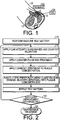
FIG. 1 is a schematic diagram showing treatment of a dorsal plaque. -
FIG. 2 is a flow chart showing a treatment protocol. - A preferred embodiment of the invention is now described in detail. Referring to the drawings, like numbers indicate like parts throughout the views. Unless otherwise specifically indicated in the disclosure that follows, the drawings are not necessarily drawn to scale. As used in the description herein and throughout the claims, the following terms take the meanings explicitly associated herein, unless the context clearly dictates otherwise: the meaning of "a," "an," and "the" includes plural reference, the meaning of "in" includes "in" and "on."
- As shown in
FIG. 1 , Peyronie's disease causes curvature of thepenis 10 as the result of aplaque mass 14 forming in the dorsal tunica of thepenis 10. It can also result from calcification of thecorpus cavemosa 12 in thepenis 10. As will be shown below, the present treatment protocol includes several steps for improving blood flow through the affected area, along with injecting a therapeutically effective dose of an L-type phenylalkylamine class calcium channel blocker (such as Verapamil) 102 into theplaque mass 14 and also injectingcarbon dioxide 104 into theplaque mass 14. - In one embodiment of a treatment protocol for Peyronie's disease, as shown in
FIG. 2 , an initial test battery is performed on thepatient 110 in order to establish a baseline. This test battery typically includes imaging the plaque with an ultrasound imaging device, measuring blood flow in penile blood vessels of the patient with a duplex Doppler ultrasonography blood flow device and measuring pulse wave velocity in a brachial artery and an ankle artery of the patient. Circulatory blood flow velocity in the patient is tested typically with a duplex Doppler.U.S. Patent No. 6,251,076, issued to Hovland et al. , discloses one method of determining blood flow velocity in a penile artery and is referred to for the purpose of disclosing exemplary methods of determining blood flow velocity. - Low intensity shock wave therapy is applied to the plaque mass in the
penile region 112. This softens the plaque mass and disrupts calcification in the plaque mass. In doing so, low intensity shockwave (LISW) therapy is applied to the plaque mass for about thirteen treatments over a period of seven to eight weeks, including a two week break period off no low intensity shock wave treatment. In the low intensity shockwave treatment (LISW), shock waves having a maximum energy of 0.09 mJmm2 are applied with a local applicator to the penile area once per day for two or three days per week over a course of five weeks. U.S. Publication No.US-2015/0073312-A1, filed by Ein-Gal , discloses one method of low intensity shockwave treatment and referred to for the purpose of disclosing low intensity shockwave treatment. In a typical treatment, about 300 pulses are applied per minute over the course of between 10 minutes and 20 minutes. The LISW treatment stimulates neovascularization and improves penile blood flow and endothelial function when applied to the corpora cavemosa. - Counter pulsation treatment is applied twice per week during a period of at least ten
weeks 114, which can be done concurrently with the low intensity shock wave therapy. This further disrupts calcification in the plaque mass and improves blood flow. The course of external counter-pulsation treatment includes applying external counter-pulsation treatments to the patient for a predetermined number of days per week for a predetermined number of weeks. In applying the course of external counter-pulsation treatments an electrocardiogram (ECG) sensing device is applied to the patient and the ECG is sensed.U.S. Patent Nos. 7,314,478 and7,314,478, both issued to Hui , disclose a counter-pulsation apparatus and method for controlling the apparatus and are referred to for the purpose of disclosing exemplary counter-pulsation methods. An inflatable cuff is applied to at least one of the patient's calf, lower thigh, upper thigh or buttocks. Typically, cuffs are applied to both of the lower thighs and to both of the upper thighs. Counter pulsations are applied to the cuffs by inflating the cuffs to a pressure of about 300 mm Hg during a diastole sensed by the ECG. Pressure is then rapidly released from the cuffs during onset of the systole, as sensed by the ECG. Counter-pulsations are performed repeatedly during a treatment sessions that last about one hour, which are performed twice per week over a course of ten weeks. (It should be noted that the term "ECP" is sometimes confused with "EECP," which is a registered a trademark for a brand of ECP. However, the EECP brand can be employed as the type of ECP used. - Carbon dioxide is then injected into the
plaque mass 116, which is referred to as "carboxy therapy." In this step, about 960cc of carbon dioxide is injected into one or both of the corpus cavemosum, the dorsal tunica of the patient or other area of plaque mass (typically in injections of about 160cc each in several different locations). This is typically performed twice per week, but 48 hours apart, for twelve consecutive weeks. Typically, the carboxy therapy is performed after the low intensity shockwave treatment and the counter pulsation treatment steps to reduce the dispersal of the carbon dioxide in the injected tissues.U.S. Patent No. 9,132,245, issued to Mantell - An L-type phenylalkylamine class calcium channel blocker, of the type known generically as "Verapamil," is injected into a calcified plaque area of the
penile area 118. Typically, in this step 0.625 mg to 2.5 mg ofVerapamil is injected into a dorsal tunica of the patient. About 12 Verapamil treatments are administered at a frequency of one every 14 days. - The test battery is repeated 120 to quantify patient treatment progress. If there has not been sufficient improvement over the baseline test, then the treatment steps are repeated 122. Indicia of sufficient improvement include the observance of no plaque in the ultrasound imaging and the observance of a doubling in blood flow in the affected area. Once the desired result is achieved, the patient can return periodically for examination and
maintenance treatments 124 if such treatments are indicated. - The methods of the present invention could also be useful in treating calcification in an individual's hand, or other extremity.
- The above described embodiments, while including the preferred embodiment and the best mode of the invention known to the inventor at the time of filing, are given as illustrative examples only. It will be readily appreciated that many deviations may be made from the specific embodiments disclosed in this specification without departing from the spirit of the invention. Accordingly, the scope of the invention is to be determined by the claims below rather than being limited to the specifically described embodiments above.
Claims (11)
- Carbon dioxide for use in a method of treating Peyronie's disease in a patient having diffused plaque and a plaque mass associated with Peyronie's disease in a penile region, the method comprising the steps of:(a) performing a battery of tests to quantify an initial state of parameters associated with Peyronie's disease in the patient;(b) applying low intensity shock wave therapy to the plaque mass in the penile region, thereby softening the plaque mass and disrupting any calcification in the plaque mass;(c) injecting the carbon dioxide into the plaque mass after the step of applying low intensity shock wave therapy;(d) repeating the battery of tests to quantify a current state of parameters associated with Peyronie's disease in the patient and comparing the current state to the initial state; and(e) until the current state differs from the initial state by at least a predetermined amount, repeating steps (b) through (d).
- Carbon dioxide for use according to claim 1, wherein the method further comprises the step of applying external counter pulsation therapy to the patient concurrently with the step of applying low intensity shock wave therapy, further softening the plaque mass and disrupting any calcification in the plaque mass.
- Carbon dioxide for use according to claim 2, wherein the step of applying counter-pulsation therapy comprises applying a counter pulsation treatment about twice per week during a period of at least ten weeks.
- Carbon dioxide for use according to any one of claims 1 to 3, wherein the step of applying low intensity shock wave therapy to the plaque mass comprises applying low intensity shock wave therapy to the plaque mass for about thirteen treatments over a period of seven to eight weeks, including a two week break period off no low intensity shock wave treatment.
- Carbon dioxide for use according to any one of claims 1 to 4, wherein the method further comprises the step of injecting a therapeutically effective dose of an L-type phenylalkylamine class calcium channel blocker, preferably Verapamil, into a calcified plaque area of the penile area.
- Carbon dioxide for use according to claim 5, wherein the step of injecting a therapeutically effective dose of an L-type phenylalkylamine class calcium channel blocker, preferably Verapamil, is performed after the step of applying low intensity shock wave therapy to the plaque mass.
- Carbon dioxide for use according to claim 5 or 6, wherein the step of injecting a therapeutically effective dose of an L-type phenylalkylamine class calcium channel blocker, preferably Verapamil, comprises the step of injecting between 0.625 mg to 2.5 mg into a dorsal tunica of the patient.
- Carbon dioxide for use according to any one of claims 5 to 7, wherein the step of injecting a therapeutically effective dose of an L-type phenylalkylamine class calcium channel blocker, preferably Verapamil, comprises performing about 12 treatments at a frequency of every 14 days.
- Carbon dioxide for use according to any one of claims 1 to 8, wherein the step of injecting carbon dioxide into the plaque mass comprises injectingabout 960 cc (cm3) of carbon dioxide into a dorsal tunica or corpus cavernosum or other area of plaque mass of the patient; and/ora plurality of doses of about 160 cc (cm3) of carbon dioxide per dose into the plaque mass for a total of 960 cc after the steps pf applying low intensity shock wave therapy and optionally applying a counter pulsation treatment.
- Carbon dioxide for use according to any one of claims 1 to 9, wherein the step of injecting carbon dioxide into the plaque mass is performed twice per week, but 48 hours apart, for twelve consecutive weeks.
- Carbon dioxide for use according to any one of claims 1 to 10, wherein the battery of tests includesimaging the plaque with an ultrasound imaging device and the current state differs from the initial state by the predetermined amount when no plaque is observed; and/ormeasuring blood flow in penile blood vessels of the patient with a duplex Doppler ultrasonography blood flow device and the current state differs from the initial state by the predetermined amount when about a doubling in blood flow is observed; and/ormeasuring pulse wave velocity in a brachial artery and an ankle artery of the patient.
Priority Applications (1)
| Application Number | Priority Date | Filing Date | Title |
|---|---|---|---|
| EP17191758.6A EP3456275B1 (en) | 2017-09-19 | 2017-09-19 | Carbon dioxide for treating peyronie`s disease |
Applications Claiming Priority (1)
| Application Number | Priority Date | Filing Date | Title |
|---|---|---|---|
| EP17191758.6A EP3456275B1 (en) | 2017-09-19 | 2017-09-19 | Carbon dioxide for treating peyronie`s disease |
Publications (2)
| Publication Number | Publication Date |
|---|---|
| EP3456275A1 EP3456275A1 (en) | 2019-03-20 |
| EP3456275B1 true EP3456275B1 (en) | 2020-04-15 |
Family
ID=59982247
Family Applications (1)
| Application Number | Title | Priority Date | Filing Date |
|---|---|---|---|
| EP17191758.6A Active EP3456275B1 (en) | 2017-09-19 | 2017-09-19 | Carbon dioxide for treating peyronie`s disease |
Country Status (1)
| Country | Link |
|---|---|
| EP (1) | EP3456275B1 (en) |
Family Cites Families (7)
| Publication number | Priority date | Publication date | Assignee | Title |
|---|---|---|---|---|
| US6251076B1 (en) | 1997-08-01 | 2001-06-26 | Urometrics Inc. | Male impotence diagnostic ultrasound system |
| US6589267B1 (en) | 2000-11-10 | 2003-07-08 | Vasomedical, Inc. | High efficiency external counterpulsation apparatus and method for controlling same |
| RU2256405C1 (en) * | 2003-11-18 | 2005-07-20 | Диагностический центр "Здоровье" | Method of finding tactics of shock-wave therapy at peyronie's disease |
| EP2493434A1 (en) * | 2009-10-30 | 2012-09-05 | Medispec Ltd | Method and apparatus for treatment of erectile dysfunction with extracorporeal shockwaves |
| ES2763378T3 (en) * | 2011-09-16 | 2020-05-28 | Northgate Tech Inc | Carboxytherapy applicator |
| US9381380B2 (en) | 2013-09-08 | 2016-07-05 | Moshe Ein-Gal | Low intensity shockwave treatment |
| US10195103B2 (en) * | 2016-03-08 | 2019-02-05 | BMR Medical LLC | Method for treating organic erectile dysfunction |
-
2017
- 2017-09-19 EP EP17191758.6A patent/EP3456275B1/en active Active
Non-Patent Citations (1)
| Title |
|---|
| None * |
Also Published As
| Publication number | Publication date |
|---|---|
| EP3456275A1 (en) | 2019-03-20 |
Similar Documents
| Publication | Publication Date | Title |
|---|---|---|
| US10426835B2 (en) | Method for treating Peyronie's disease | |
| US11602540B2 (en) | Method for stimulating blood flow in a penile region of a patient | |
| US11642274B2 (en) | Method for treating organic erectile dysfunction | |
| US5358513A (en) | Parameter selection and electrode placement of neuromuscular electrical stimulation apparatus | |
| US20120215142A1 (en) | Method and apparatus for treatment of erectile dysfunction with extracorporeal shockwaves | |
| US20180147111A1 (en) | Medical protocol for improving human sexual function | |
| RU2385169C1 (en) | Method of treating children with posttraumatic limb injures in postoperative period | |
| US10888698B2 (en) | Apparatus and method for prevention and mitigation of deep vein thrombosis | |
| AU2017232036B2 (en) | Method for treating peyronie's disease | |
| RU2609054C1 (en) | Method for treating erectile dysfunction "julia" | |
| EP3456275A1 (en) | Method for treating peyronie`s disease | |
| AU2017232035A1 (en) | Method for treating organic erectile dysfunction | |
| CA2979368A1 (en) | Therapeutic combination of low intensity shock waves and carbon dioxide for the treatment of peyronie's disease | |
| RU2417800C1 (en) | Method of noninvasive treatment of morphologoanatomic pathologies of intervertebral disks | |
| US12059572B2 (en) | Implantable ultrasonic device | |
| de Godoy et al. | Lymphedema and elephantiasis of the lower limbs: normalization or nearly normalization | |
| RU2525619C1 (en) | Method of treating patients with chronic prostatitis | |
| RU2157111C1 (en) | Device for making vein puncture and method for treating lower extremity varicose veins | |
| RU2543286C1 (en) | Method of treating children with consequences of injuries of upper and lower extremities | |
| RU2190993C1 (en) | Method for performing healing cosmetic rarefaction massage | |
| RU2773101C1 (en) | Method for treating lateral epicondylitis | |
| Kim et al. | Intramuscular hematoma following radial extracorporeal shockwave therapy for chronic neurogenic heterotopic ossification: A case report | |
| RU2859282C1 (en) | Method for colpopoiesis in complete aplasia of uterus and vagina | |
| RU2203696C2 (en) | Method for treating varicose low extremity veins by means of injections | |
| US9968773B1 (en) | Method and system for rehabilitation of scar tissue |
Legal Events
| Date | Code | Title | Description |
|---|---|---|---|
| PUAI | Public reference made under article 153(3) epc to a published international application that has entered the european phase |
Free format text: ORIGINAL CODE: 0009012 |
|
| STAA | Information on the status of an ep patent application or granted ep patent |
Free format text: STATUS: THE APPLICATION HAS BEEN PUBLISHED |
|
| AK | Designated contracting states |
Kind code of ref document: A1 Designated state(s): AL AT BE BG CH CY CZ DE DK EE ES FI FR GB GR HR HU IE IS IT LI LT LU LV MC MK MT NL NO PL PT RO RS SE SI SK SM TR |
|
| AX | Request for extension of the european patent |
Extension state: BA ME |
|
| STAA | Information on the status of an ep patent application or granted ep patent |
Free format text: STATUS: REQUEST FOR EXAMINATION WAS MADE |
|
| 17P | Request for examination filed |
Effective date: 20190815 |
|
| RBV | Designated contracting states (corrected) |
Designated state(s): AL AT BE BG CH CY CZ DE DK EE ES FI FR GB GR HR HU IE IS IT LI LT LU LV MC MK MT NL NO PL PT RO RS SE SI SK SM TR |
|
| RIC1 | Information provided on ipc code assigned before grant |
Ipc: A61B 17/22 20060101AFI20190918BHEP |
|
| GRAP | Despatch of communication of intention to grant a patent |
Free format text: ORIGINAL CODE: EPIDOSNIGR1 |
|
| STAA | Information on the status of an ep patent application or granted ep patent |
Free format text: STATUS: GRANT OF PATENT IS INTENDED |
|
| INTG | Intention to grant announced |
Effective date: 20191111 |
|
| GRAS | Grant fee paid |
Free format text: ORIGINAL CODE: EPIDOSNIGR3 |
|
| GRAA | (expected) grant |
Free format text: ORIGINAL CODE: 0009210 |
|
| STAA | Information on the status of an ep patent application or granted ep patent |
Free format text: STATUS: THE PATENT HAS BEEN GRANTED |
|
| AK | Designated contracting states |
Kind code of ref document: B1 Designated state(s): AL AT BE BG CH CY CZ DE DK EE ES FI FR GB GR HR HU IE IS IT LI LT LU LV MC MK MT NL NO PL PT RO RS SE SI SK SM TR |
|
| REG | Reference to a national code |
Ref country code: CH Ref legal event code: EP |
|
| REG | Reference to a national code |
Ref country code: DE Ref legal event code: R096 Ref document number: 602017014693 Country of ref document: DE |
|
| REG | Reference to a national code |
Ref country code: IE Ref legal event code: FG4D |
|
| REG | Reference to a national code |
Ref country code: AT Ref legal event code: REF Ref document number: 1256381 Country of ref document: AT Kind code of ref document: T Effective date: 20200515 |
|
| REG | Reference to a national code |
Ref country code: NL Ref legal event code: MP Effective date: 20200415 |
|
| REG | Reference to a national code |
Ref country code: LT Ref legal event code: MG4D |
|
| PG25 | Lapsed in a contracting state [announced via postgrant information from national office to epo] |
Ref country code: SE Free format text: LAPSE BECAUSE OF FAILURE TO SUBMIT A TRANSLATION OF THE DESCRIPTION OR TO PAY THE FEE WITHIN THE PRESCRIBED TIME-LIMIT Effective date: 20200415 Ref country code: IS Free format text: LAPSE BECAUSE OF FAILURE TO SUBMIT A TRANSLATION OF THE DESCRIPTION OR TO PAY THE FEE WITHIN THE PRESCRIBED TIME-LIMIT Effective date: 20200815 Ref country code: GR Free format text: LAPSE BECAUSE OF FAILURE TO SUBMIT A TRANSLATION OF THE DESCRIPTION OR TO PAY THE FEE WITHIN THE PRESCRIBED TIME-LIMIT Effective date: 20200716 Ref country code: NO Free format text: LAPSE BECAUSE OF FAILURE TO SUBMIT A TRANSLATION OF THE DESCRIPTION OR TO PAY THE FEE WITHIN THE PRESCRIBED TIME-LIMIT Effective date: 20200715 Ref country code: FI Free format text: LAPSE BECAUSE OF FAILURE TO SUBMIT A TRANSLATION OF THE DESCRIPTION OR TO PAY THE FEE WITHIN THE PRESCRIBED TIME-LIMIT Effective date: 20200415 Ref country code: LT Free format text: LAPSE BECAUSE OF FAILURE TO SUBMIT A TRANSLATION OF THE DESCRIPTION OR TO PAY THE FEE WITHIN THE PRESCRIBED TIME-LIMIT Effective date: 20200415 Ref country code: PT Free format text: LAPSE BECAUSE OF FAILURE TO SUBMIT A TRANSLATION OF THE DESCRIPTION OR TO PAY THE FEE WITHIN THE PRESCRIBED TIME-LIMIT Effective date: 20200817 Ref country code: NL Free format text: LAPSE BECAUSE OF FAILURE TO SUBMIT A TRANSLATION OF THE DESCRIPTION OR TO PAY THE FEE WITHIN THE PRESCRIBED TIME-LIMIT Effective date: 20200415 |
|
| REG | Reference to a national code |
Ref country code: AT Ref legal event code: MK05 Ref document number: 1256381 Country of ref document: AT Kind code of ref document: T Effective date: 20200415 |
|
| PG25 | Lapsed in a contracting state [announced via postgrant information from national office to epo] |
Ref country code: HR Free format text: LAPSE BECAUSE OF FAILURE TO SUBMIT A TRANSLATION OF THE DESCRIPTION OR TO PAY THE FEE WITHIN THE PRESCRIBED TIME-LIMIT Effective date: 20200415 Ref country code: LV Free format text: LAPSE BECAUSE OF FAILURE TO SUBMIT A TRANSLATION OF THE DESCRIPTION OR TO PAY THE FEE WITHIN THE PRESCRIBED TIME-LIMIT Effective date: 20200415 Ref country code: BG Free format text: LAPSE BECAUSE OF FAILURE TO SUBMIT A TRANSLATION OF THE DESCRIPTION OR TO PAY THE FEE WITHIN THE PRESCRIBED TIME-LIMIT Effective date: 20200715 Ref country code: RS Free format text: LAPSE BECAUSE OF FAILURE TO SUBMIT A TRANSLATION OF THE DESCRIPTION OR TO PAY THE FEE WITHIN THE PRESCRIBED TIME-LIMIT Effective date: 20200415 |
|
| PG25 | Lapsed in a contracting state [announced via postgrant information from national office to epo] |
Ref country code: AL Free format text: LAPSE BECAUSE OF FAILURE TO SUBMIT A TRANSLATION OF THE DESCRIPTION OR TO PAY THE FEE WITHIN THE PRESCRIBED TIME-LIMIT Effective date: 20200415 |
|
| REG | Reference to a national code |
Ref country code: DE Ref legal event code: R097 Ref document number: 602017014693 Country of ref document: DE |
|
| PG25 | Lapsed in a contracting state [announced via postgrant information from national office to epo] |
Ref country code: SM Free format text: LAPSE BECAUSE OF FAILURE TO SUBMIT A TRANSLATION OF THE DESCRIPTION OR TO PAY THE FEE WITHIN THE PRESCRIBED TIME-LIMIT Effective date: 20200415 Ref country code: IT Free format text: LAPSE BECAUSE OF FAILURE TO SUBMIT A TRANSLATION OF THE DESCRIPTION OR TO PAY THE FEE WITHIN THE PRESCRIBED TIME-LIMIT Effective date: 20200415 Ref country code: ES Free format text: LAPSE BECAUSE OF FAILURE TO SUBMIT A TRANSLATION OF THE DESCRIPTION OR TO PAY THE FEE WITHIN THE PRESCRIBED TIME-LIMIT Effective date: 20200415 Ref country code: AT Free format text: LAPSE BECAUSE OF FAILURE TO SUBMIT A TRANSLATION OF THE DESCRIPTION OR TO PAY THE FEE WITHIN THE PRESCRIBED TIME-LIMIT Effective date: 20200415 Ref country code: DK Free format text: LAPSE BECAUSE OF FAILURE TO SUBMIT A TRANSLATION OF THE DESCRIPTION OR TO PAY THE FEE WITHIN THE PRESCRIBED TIME-LIMIT Effective date: 20200415 Ref country code: CZ Free format text: LAPSE BECAUSE OF FAILURE TO SUBMIT A TRANSLATION OF THE DESCRIPTION OR TO PAY THE FEE WITHIN THE PRESCRIBED TIME-LIMIT Effective date: 20200415 Ref country code: EE Free format text: LAPSE BECAUSE OF FAILURE TO SUBMIT A TRANSLATION OF THE DESCRIPTION OR TO PAY THE FEE WITHIN THE PRESCRIBED TIME-LIMIT Effective date: 20200415 Ref country code: RO Free format text: LAPSE BECAUSE OF FAILURE TO SUBMIT A TRANSLATION OF THE DESCRIPTION OR TO PAY THE FEE WITHIN THE PRESCRIBED TIME-LIMIT Effective date: 20200415 |
|
| PLBE | No opposition filed within time limit |
Free format text: ORIGINAL CODE: 0009261 |
|
| STAA | Information on the status of an ep patent application or granted ep patent |
Free format text: STATUS: NO OPPOSITION FILED WITHIN TIME LIMIT |
|
| PG25 | Lapsed in a contracting state [announced via postgrant information from national office to epo] |
Ref country code: PL Free format text: LAPSE BECAUSE OF FAILURE TO SUBMIT A TRANSLATION OF THE DESCRIPTION OR TO PAY THE FEE WITHIN THE PRESCRIBED TIME-LIMIT Effective date: 20200415 Ref country code: SK Free format text: LAPSE BECAUSE OF FAILURE TO SUBMIT A TRANSLATION OF THE DESCRIPTION OR TO PAY THE FEE WITHIN THE PRESCRIBED TIME-LIMIT Effective date: 20200415 |
|
| 26N | No opposition filed |
Effective date: 20210118 |
|
| REG | Reference to a national code |
Ref country code: CH Ref legal event code: PL |
|
| PG25 | Lapsed in a contracting state [announced via postgrant information from national office to epo] |
Ref country code: SI Free format text: LAPSE BECAUSE OF FAILURE TO SUBMIT A TRANSLATION OF THE DESCRIPTION OR TO PAY THE FEE WITHIN THE PRESCRIBED TIME-LIMIT Effective date: 20200415 |
|
| REG | Reference to a national code |
Ref country code: BE Ref legal event code: MM Effective date: 20200930 |
|
| PG25 | Lapsed in a contracting state [announced via postgrant information from national office to epo] |
Ref country code: LU Free format text: LAPSE BECAUSE OF NON-PAYMENT OF DUE FEES Effective date: 20200919 |
|
| PG25 | Lapsed in a contracting state [announced via postgrant information from national office to epo] |
Ref country code: FR Free format text: LAPSE BECAUSE OF NON-PAYMENT OF DUE FEES Effective date: 20200930 |
|
| PG25 | Lapsed in a contracting state [announced via postgrant information from national office to epo] |
Ref country code: LI Free format text: LAPSE BECAUSE OF NON-PAYMENT OF DUE FEES Effective date: 20200930 Ref country code: IE Free format text: LAPSE BECAUSE OF NON-PAYMENT OF DUE FEES Effective date: 20200919 Ref country code: BE Free format text: LAPSE BECAUSE OF NON-PAYMENT OF DUE FEES Effective date: 20200930 Ref country code: CH Free format text: LAPSE BECAUSE OF NON-PAYMENT OF DUE FEES Effective date: 20200930 |
|
| PG25 | Lapsed in a contracting state [announced via postgrant information from national office to epo] |
Ref country code: CY Free format text: LAPSE BECAUSE OF FAILURE TO SUBMIT A TRANSLATION OF THE DESCRIPTION OR TO PAY THE FEE WITHIN THE PRESCRIBED TIME-LIMIT Effective date: 20200415 Ref country code: TR Free format text: LAPSE BECAUSE OF FAILURE TO SUBMIT A TRANSLATION OF THE DESCRIPTION OR TO PAY THE FEE WITHIN THE PRESCRIBED TIME-LIMIT Effective date: 20200415 Ref country code: MT Free format text: LAPSE BECAUSE OF FAILURE TO SUBMIT A TRANSLATION OF THE DESCRIPTION OR TO PAY THE FEE WITHIN THE PRESCRIBED TIME-LIMIT Effective date: 20200415 |
|
| PG25 | Lapsed in a contracting state [announced via postgrant information from national office to epo] |
Ref country code: MK Free format text: LAPSE BECAUSE OF FAILURE TO SUBMIT A TRANSLATION OF THE DESCRIPTION OR TO PAY THE FEE WITHIN THE PRESCRIBED TIME-LIMIT Effective date: 20200415 Ref country code: MC Free format text: LAPSE BECAUSE OF FAILURE TO SUBMIT A TRANSLATION OF THE DESCRIPTION OR TO PAY THE FEE WITHIN THE PRESCRIBED TIME-LIMIT Effective date: 20200415 |
|
| P01 | Opt-out of the competence of the unified patent court (upc) registered |
Effective date: 20230601 |
|
| PGFP | Annual fee paid to national office [announced via postgrant information from national office to epo] |
Ref country code: DE Payment date: 20250917 Year of fee payment: 9 |
|
| PGFP | Annual fee paid to national office [announced via postgrant information from national office to epo] |
Ref country code: GB Payment date: 20250918 Year of fee payment: 9 |