EP3445017B1 - Verfahren im zusammenhang mit einem kraftfahrzeugfahrerassistenzsystem - Google Patents
Verfahren im zusammenhang mit einem kraftfahrzeugfahrerassistenzsystem Download PDFInfo
- Publication number
- EP3445017B1 EP3445017B1 EP17186406.9A EP17186406A EP3445017B1 EP 3445017 B1 EP3445017 B1 EP 3445017B1 EP 17186406 A EP17186406 A EP 17186406A EP 3445017 B1 EP3445017 B1 EP 3445017B1
- Authority
- EP
- European Patent Office
- Prior art keywords
- blockchain
- operating instructions
- copy
- driver assistance
- block
- Prior art date
- Legal status (The legal status is an assumption and is not a legal conclusion. Google has not performed a legal analysis and makes no representation as to the accuracy of the status listed.)
- Active
Links
Images




Classifications
-
- H—ELECTRICITY
- H04—ELECTRIC COMMUNICATION TECHNIQUE
- H04L—TRANSMISSION OF DIGITAL INFORMATION, e.g. TELEGRAPHIC COMMUNICATION
- H04L67/00—Network arrangements or protocols for supporting network services or applications
- H04L67/01—Protocols
- H04L67/12—Protocols specially adapted for proprietary or special-purpose networking environments, e.g. medical networks, sensor networks, networks in vehicles or remote metering networks
-
- B—PERFORMING OPERATIONS; TRANSPORTING
- B60—VEHICLES IN GENERAL
- B60W—CONJOINT CONTROL OF VEHICLE SUB-UNITS OF DIFFERENT TYPE OR DIFFERENT FUNCTION; CONTROL SYSTEMS SPECIALLY ADAPTED FOR HYBRID VEHICLES; ROAD VEHICLE DRIVE CONTROL SYSTEMS FOR PURPOSES NOT RELATED TO THE CONTROL OF A PARTICULAR SUB-UNIT
- B60W50/00—Details of control systems for road vehicle drive control not related to the control of a particular sub-unit, e.g. process diagnostic or vehicle driver interfaces
-
- B—PERFORMING OPERATIONS; TRANSPORTING
- B60—VEHICLES IN GENERAL
- B60W—CONJOINT CONTROL OF VEHICLE SUB-UNITS OF DIFFERENT TYPE OR DIFFERENT FUNCTION; CONTROL SYSTEMS SPECIALLY ADAPTED FOR HYBRID VEHICLES; ROAD VEHICLE DRIVE CONTROL SYSTEMS FOR PURPOSES NOT RELATED TO THE CONTROL OF A PARTICULAR SUB-UNIT
- B60W60/00—Drive control systems specially adapted for autonomous road vehicles
- B60W60/001—Planning or execution of driving tasks
-
- G—PHYSICS
- G06—COMPUTING OR CALCULATING; COUNTING
- G06F—ELECTRIC DIGITAL DATA PROCESSING
- G06F21/00—Security arrangements for protecting computers, components thereof, programs or data against unauthorised activity
- G06F21/50—Monitoring users, programs or devices to maintain the integrity of platforms, e.g. of processors, firmware or operating systems
- G06F21/57—Certifying or maintaining trusted computer platforms, e.g. secure boots or power-downs, version controls, system software checks, secure updates or assessing vulnerabilities
-
- G—PHYSICS
- G06—COMPUTING OR CALCULATING; COUNTING
- G06F—ELECTRIC DIGITAL DATA PROCESSING
- G06F21/00—Security arrangements for protecting computers, components thereof, programs or data against unauthorised activity
- G06F21/60—Protecting data
- G06F21/64—Protecting data integrity, e.g. using checksums, certificates or signatures
-
- G—PHYSICS
- G06—COMPUTING OR CALCULATING; COUNTING
- G06F—ELECTRIC DIGITAL DATA PROCESSING
- G06F8/00—Arrangements for software engineering
- G06F8/60—Software deployment
- G06F8/61—Installation
-
- H—ELECTRICITY
- H04—ELECTRIC COMMUNICATION TECHNIQUE
- H04L—TRANSMISSION OF DIGITAL INFORMATION, e.g. TELEGRAPHIC COMMUNICATION
- H04L9/00—Cryptographic mechanisms or cryptographic arrangements for secret or secure communications; Network security protocols
- H04L9/32—Cryptographic mechanisms or cryptographic arrangements for secret or secure communications; Network security protocols including means for verifying the identity or authority of a user of the system or for message authentication, e.g. authorization, entity authentication, data integrity or data verification, non-repudiation, key authentication or verification of credentials
- H04L9/3236—Cryptographic mechanisms or cryptographic arrangements for secret or secure communications; Network security protocols including means for verifying the identity or authority of a user of the system or for message authentication, e.g. authorization, entity authentication, data integrity or data verification, non-repudiation, key authentication or verification of credentials using cryptographic hash functions
- H04L9/3239—Cryptographic mechanisms or cryptographic arrangements for secret or secure communications; Network security protocols including means for verifying the identity or authority of a user of the system or for message authentication, e.g. authorization, entity authentication, data integrity or data verification, non-repudiation, key authentication or verification of credentials using cryptographic hash functions involving non-keyed hash functions, e.g. modification detection codes [MDCs], MD5, SHA or RIPEMD
-
- H—ELECTRICITY
- H04—ELECTRIC COMMUNICATION TECHNIQUE
- H04L—TRANSMISSION OF DIGITAL INFORMATION, e.g. TELEGRAPHIC COMMUNICATION
- H04L9/00—Cryptographic mechanisms or cryptographic arrangements for secret or secure communications; Network security protocols
- H04L9/50—Cryptographic mechanisms or cryptographic arrangements for secret or secure communications; Network security protocols using hash chains, e.g. blockchains or hash trees
-
- B—PERFORMING OPERATIONS; TRANSPORTING
- B60—VEHICLES IN GENERAL
- B60W—CONJOINT CONTROL OF VEHICLE SUB-UNITS OF DIFFERENT TYPE OR DIFFERENT FUNCTION; CONTROL SYSTEMS SPECIALLY ADAPTED FOR HYBRID VEHICLES; ROAD VEHICLE DRIVE CONTROL SYSTEMS FOR PURPOSES NOT RELATED TO THE CONTROL OF A PARTICULAR SUB-UNIT
- B60W50/00—Details of control systems for road vehicle drive control not related to the control of a particular sub-unit, e.g. process diagnostic or vehicle driver interfaces
- B60W2050/0062—Adapting control system settings
- B60W2050/0075—Automatic parameter input, automatic initialising or calibrating means
-
- B—PERFORMING OPERATIONS; TRANSPORTING
- B60—VEHICLES IN GENERAL
- B60W—CONJOINT CONTROL OF VEHICLE SUB-UNITS OF DIFFERENT TYPE OR DIFFERENT FUNCTION; CONTROL SYSTEMS SPECIALLY ADAPTED FOR HYBRID VEHICLES; ROAD VEHICLE DRIVE CONTROL SYSTEMS FOR PURPOSES NOT RELATED TO THE CONTROL OF A PARTICULAR SUB-UNIT
- B60W50/00—Details of control systems for road vehicle drive control not related to the control of a particular sub-unit, e.g. process diagnostic or vehicle driver interfaces
- B60W2050/0062—Adapting control system settings
- B60W2050/0075—Automatic parameter input, automatic initialising or calibrating means
- B60W2050/0095—Automatic control mode change
-
- B—PERFORMING OPERATIONS; TRANSPORTING
- B60—VEHICLES IN GENERAL
- B60W—CONJOINT CONTROL OF VEHICLE SUB-UNITS OF DIFFERENT TYPE OR DIFFERENT FUNCTION; CONTROL SYSTEMS SPECIALLY ADAPTED FOR HYBRID VEHICLES; ROAD VEHICLE DRIVE CONTROL SYSTEMS FOR PURPOSES NOT RELATED TO THE CONTROL OF A PARTICULAR SUB-UNIT
- B60W2556/00—Input parameters relating to data
- B60W2556/45—External transmission of data to or from the vehicle
-
- B—PERFORMING OPERATIONS; TRANSPORTING
- B60—VEHICLES IN GENERAL
- B60W—CONJOINT CONTROL OF VEHICLE SUB-UNITS OF DIFFERENT TYPE OR DIFFERENT FUNCTION; CONTROL SYSTEMS SPECIALLY ADAPTED FOR HYBRID VEHICLES; ROAD VEHICLE DRIVE CONTROL SYSTEMS FOR PURPOSES NOT RELATED TO THE CONTROL OF A PARTICULAR SUB-UNIT
- B60W2756/00—Output or target parameters relating to data
- B60W2756/10—Involving external transmission of data to or from the vehicle
-
- G—PHYSICS
- G06—COMPUTING OR CALCULATING; COUNTING
- G06F—ELECTRIC DIGITAL DATA PROCESSING
- G06F8/00—Arrangements for software engineering
- G06F8/60—Software deployment
- G06F8/65—Updates
-
- H—ELECTRICITY
- H04—ELECTRIC COMMUNICATION TECHNIQUE
- H04L—TRANSMISSION OF DIGITAL INFORMATION, e.g. TELEGRAPHIC COMMUNICATION
- H04L2209/00—Additional information or applications relating to cryptographic mechanisms or cryptographic arrangements for secret or secure communication H04L9/00
- H04L2209/84—Vehicles
-
- H—ELECTRICITY
- H04—ELECTRIC COMMUNICATION TECHNIQUE
- H04L—TRANSMISSION OF DIGITAL INFORMATION, e.g. TELEGRAPHIC COMMUNICATION
- H04L67/00—Network arrangements or protocols for supporting network services or applications
- H04L67/01—Protocols
- H04L67/10—Protocols in which an application is distributed across nodes in the network
- H04L67/104—Peer-to-peer [P2P] networks
-
- H—ELECTRICITY
- H04—ELECTRIC COMMUNICATION TECHNIQUE
- H04L—TRANSMISSION OF DIGITAL INFORMATION, e.g. TELEGRAPHIC COMMUNICATION
- H04L67/00—Network arrangements or protocols for supporting network services or applications
- H04L67/01—Protocols
- H04L67/10—Protocols in which an application is distributed across nodes in the network
- H04L67/1095—Replication or mirroring of data, e.g. scheduling or transport for data synchronisation between network nodes
-
- H—ELECTRICITY
- H04—ELECTRIC COMMUNICATION TECHNIQUE
- H04L—TRANSMISSION OF DIGITAL INFORMATION, e.g. TELEGRAPHIC COMMUNICATION
- H04L67/00—Network arrangements or protocols for supporting network services or applications
- H04L67/34—Network arrangements or protocols for supporting network services or applications involving the movement of software or configuration parameters
Definitions
- the present invention relates to method of securing the operation of a driver assistance system, and more particularly relates to a method of securing the operating instructions of a driver assistance system, and traceability thereof, from changes.
- driver assistance systems that are capable of performing an assistance function are fitted to the driver's vehicle (hereinafter referred to as the "ego vehicle").
- the assistance function may comprise relieving the driver of some of his/her driving duties, or may comprise monitoring the driver's performance in order that errors may be anticipated and/or avoided.
- the assistance function may introduce some additional functionality not ordinarily available to a driver.
- additional functionality may allow the driver to have more information than they ordinarily would do, in order that they can perform a driving task more easily or safely.
- a rear-facing camera for example which can provide a video feed to a driver when reversing, constitutes an example of such an additional functionality.
- the video feed allows the driver to reverse-park more easily and safely but is not actually necessarily monitoring the driver's performance or directly performing a task on the driver's behalf.
- driver assistance systems therefore mitigate risk for the driver of the ego vehicle, his/her passengers, and other road users.
- driver assistance functions will be developed to such an extent that they can control most or all aspects of driving an ego vehicle.
- the driver assistance system will be an autonomous driving system.
- Driver assistance systems may include active devices, which are capable of actively intervening in the operation of the ego vehicle, for example by changing the speed of the ego vehicle.
- Driver assistance systems may alternatively, or additionally, include passive devices, which, for example, notify the driver of a particular driving situation so that the user can react to the notification. For example, the driver assistance system may make an audible signal when the ego vehicle deviates across a road marking unexpectedly.
- a given ego vehicle may include both passive and active systems.
- a driver assistance system may include at least one sensor.
- a particular sensor measures parameters that describe the ego vehicle and/or its surroundings.
- the data from multiple sensors may be combined.
- the data from such a sensor or sensors is processed in order to draw conclusions based on the sensor measurements.
- the driver assistance system may trigger an interaction with the ego vehicle, or with the driver, based on the result of the conclusions.
- substantially all driving functions are controlled by the system.
- Document US2017031676 discloses a system where a distributed blockchain stores software update blockchain block (SUBB) comprising firmware/patches for a vehicle computer.
- SUBB software update blockchain block
- a driver assistance system may be used to control a variety of different aspects of driving safety or driver monitoring.
- ACC Adaptive Cruise Control
- LIDAR Light-AR
- the driver assistance system also knows, and can control, the velocity of the ego vehicle.
- the driver assistance system may control the speed of the ego vehicle in order to maintain a predefined safety condition relative to the vehicle ahead. For example, the driver assistance system may control the speed to maintain a certain distance between the ego vehicle and the vehicle ahead. Alternatively, the driver assistance system may control the speed to maintain a predetermined time-period between the vehicle ahead passing a point, and the ego vehicle passing the same point.
- a driver assistance system that monitors the surroundings of the ego vehicle to identify the position of other vehicles and entities on or around the road on which the ego vehicle is travelling. By monitoring the surroundings, such a driver assistance system can maintain a situational awareness for the ego vehicle. This situational awareness can be used to notify the user of potential hazards. For example, the ego vehicle changing lanes when a second vehicle is in a blind spot, or detecting a second vehicle cutting-in to the path of the ego vehicle, may be notified to a driver. The situational awareness may also be used as an input to an ACC system, for example.
- the operation of the driver assistance system is dictated by at least one set of operating instructions, which form part of the driver assistance system.
- the operating instructions may include, for example, machine code, software, compiled executables, libraries, firmware, and other examples the skilled person will appreciate.
- the operating instructions of a particular driver assistance system can be updated. Updates may include applying patches, adding functionality, and simply installing the operating instructions for the first time. Updating the operating instructions may correspond to "flashing" the operating instruction onto the driver assistance system (or a part of it). It is important that updates to the operating instructions of a driver assistance system are traceable in a secure and reliable manner.
- the operating instructions are generally described as being those that dictate the operation of an ECU. However, it will be understood that the operating instructions could dictate the operation of other elements of a driver assistance system, for example, a sensor.
- an autonomous driving system may correspond generally to a more comprehensive driver assistance system.
- driver assistance systems focusses on driver assistance systems, the intention is that the present invention is also readily applicable to an autonomous driving system.
- a driver assistance system may perform a variety of safety-critical functionalities (safety of both the driver of the vehicle and others), it is important that any unauthorised interference with the driver assistance system and its operation is detected, and if necessary, acted upon.
- a driver assistance system includes an electronic control unit (ECU).
- the ECU is effectively a computing device that can perform tasks according to operating instructions - it can be thought of as the "brain of the driver assistance system".
- the operating instructions are generally stored on the ECU, and may comprise both software and firmware.
- the software may be compiled machine code, may be source code, or may be code that is compiled Just In Time (JIT).
- JIT Just In Time
- a key feature is that the operating instructions dictate the operation of the ECU and therefore at least part of the driver assistance system.
- a single ego vehicle may have multiple ECUs installed therein.
- a single driver assistance system may use multiple sets of operating instructions.
- the operating instructions may be updated, for example to increase or change the functionality of the ECU. Updates may take place "over the air", for example via a wireless connection to a network, and ultimately from a source of the update. The update is sent wirelessly to the driver assistance system, whereupon the operating instructions are updated. The updates may alternatively be performed across a physical connection to the driver assistance system. Physical connection updates may be performed when the ego vehicle is being serviced, for example.
- the malicious party may change the operating instructions so that it appears to the driver that the driver assistance system is working properly, when in fact it is not and the operation of the driver assistance system is unsafe or uncontrolled. Thus, it is particularly important to guard against malicious attacks on driver assistance systems.
- a method of securing operating instructions for a driver assistance system of a motor vehicle including: a) implementing a distributed blockchain including a plurality of blocks, a copy of the blockchain being stored on each of a plurality of nodes; wherein each block includes a different version of the operating instructions, b) performing a verification routine including checking that the copies of the blockchain are identical; and, where a fault copy of the blockchain is not identical, flagging the fault copy as insecure; and preventing use of the fault copy, thus preventing installation of the operating instructions comprised in the blocks of the fault copy.
- the method further including a version-add routine including adding a new block to the copy of the blockchain on each node, the new block including an updated version of the operating instructions.
- the driver assistance system includes a safety electronic control unit (“ECU”), and wherein the operating instructions dictate the operation of said safety ECU.
- ECU safety electronic control unit
- the method further including an ECU update routine including installing on the driver assistance system an install version of the operating instructions from an install block, wherein the install block is not comprised in the fault copy.
- the method further including copying the whole of the install block to the ECU.
- each block includes a verified hash value calculated for input data including the respective version of the operating instructions.
- the method further including copying the verified hash value of the install version of the operating instructions into a verified hash storage means on the safety ECU.
- the verified hash value is calculated for input data including at least a portion of install block metadata of the install block.
- the blockchain is access-controlled.
- the blockchain is encrypted.
- a method of tracing operating instructions for a driver assistance system for a motor vehicle including: a) implementing a distributed blockchain including a plurality of blocks, a copy of the blockchain being stored on each of a plurality of nodes; wherein each block includes at least one install record, wherein each install record includes at least a driver assistance system unique identifier and an operating instructions identifier, b) performing a verification routine including checking that each block of the blockchain is identical across the copies of the blockchain; and, where a fault copy of the blockchain is not identical, flagging the fault copy as insecure; and preventing use of the fault copy, thereby preventing use of the install records comprised in the blocks of the fault copy.
- said operating instructions identifier includes a version identifier of said installed operating instructions.
- the driver assistance system includes a safety electronic control unit (“ECU”), and the installed operating instructions dictate the operation of said safety ECU.
- ECU safety electronic control unit
- the method further including c) permitting a copy of the blockchain that is not the fault copy to be queried to identify whether a more recent version of the installed operating instructions is available in the copy of the blockchain, and if a more recent version is available, installing said more recent version of the operating instructions on to the driver assistance system.
- At least one install record includes at least one of: an install time at which the operating instructions corresponding to the operating instructions identifier were installed onto the driver assistance system corresponding to the driver assistance system unique identifier; test results of an operation of the driver assistance system corresponding to the driver assistance system unique identifier.
- FIG. 1 there is illustrated a schematic representation of an exemplary driver assistance system 1 installed in an ego vehicle 2 (only one side panel of which is denoted in Figure 1 to indicate the vehicle's orientation).
- the driver assistance system 1 comprises a number of different types of sensor mounted at appropriate positions on the ego vehicle 2.
- the system 1 illustrated includes: a pair of divergent and outwardly directed mid-range radar (“MRR") sensors 3 mounted at respective front corners of the vehicle 2, a similar pair of divergent and outwardly directed multi-role radar sensors 4 mounted at respective rear corners of the vehicle, a forwardly directed long-range radar (“LRR”) sensor 5 mounted centrally at the front of the vehicle 2, and a pair of generally forwardly directed optical sensors 6 (cameras) forming part of a stereo vision system (“SVS”) 7 which may be mounted, for example, in the region of the upper edge of the vehicle's windscreen.
- the various sensors 3-6 are operatively connected to a central electronic control system which is typically provided in the form of an integrated electronic control unit (ECU) 8 mounted at a convenient location within the vehicle.
- ECU integrated electronic control unit
- the front and rear MRR sensors 3, 4 are connected to the ECU 8 via a conventional Controller Area Network ("CAN") bus 9, and the LRR sensor 5 and the sensors of the SVS 7 are connected to the ECU 8 via a faster FlexRay serial bus 9, also of a type known per se.
- CAN Controller Area Network
- FlexRay serial bus 9 also of a type known per se.
- the various sensors 3-6 can be used to provide a variety of different types of driver assistance functionalities such as, for example: blind spot monitoring; adaptive cruise control; collision prevention assist; lane departure protection; and rear collision mitigation. Similar sensors may be used in an autonomous driving system.
- the system may also include at least one secondary ECU.
- the secondary ECUs may communicate with the ECU 8 via the CAN bus or the FlexRay serial bus 9.
- the secondary ECUs are discussed in more detail below.
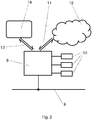
- the system includes an electronic control unit (ECU) 8 of the type shown in Figure 1 .
- the ECU is a so-called safety or primary ECU.
- the safety ECU 8 is connected to an ego vehicle communication network 9 within the ego vehicle 2.
- the ego vehicle communication network 9 may be a CAN bus or a FlexRay system, for example.
- a particular ECU 8 may be connected to more than one such network, which need not be of the same type.
- the safety ECU 8 may communicate with other ECUs in the ego vehicle via the ego vehicle communication network 9.
- the safety ECU 8 is connected to at least one sensor 10.
- three sensors 10 are connected to the safety ECU 8, although this number of sensors should not be considered limiting.
- the connections of each of the sensors 10 to the safety ECU 8 may be wired or wireless.
- the sensor connections may also be via the ego vehicle communication network 9.
- the connection between each sensor 10 and the safety ECU 8 may be a two-way connection - that is, the safety ECU 8 may receive data from the sensors 10 and the safety ECU 8 may send data and/or commands to the sensors 10.
- the sensors 10 may be providing information concerning the state of the ego vehicle itself and/or the state of the surrounding environment.
- the sensors 10 may also provide some data reduction capability - that is, determined parameters may be calculated at the sensors 10 and sent to the safety ECU 8 from the sensors 10, rather than (or in addition to) the sensors 10 sending raw measurements performed by the sensors 10 to the safety ECU 8.
- the safety ECU 8 is also capable of wireless communication with the internet across a 2-way wireless communication link 11.
- the internet includes a cloud computing capability 12, to which the safety ECU 8 may offload processing tasks.
- the wireless communication link 11 may comprise a connection to a mobile telephone communications network, for example.
- the safety ECU 8 may send processing tasks to the cloud 12 over the wireless communication link 11, where the processing task is performed in the cloud 12, before the results of the processing task are sent back to the safety ECU 8 over the wireless communication link 11.
- the wireless communication link 11 may also provide access to data that is not available immediately to the ECU 8.
- data may include map data, for example.
- the safety ECU 8 also has a second communication link 13, which provides access to a distributed functionality 14 external to the ego vehicle 2.
- the distributed functionality may include Vehicle-to-Vehicle communications, and/or Vehicle-to-Infrastructure communications. These may permit driver assistance functionality and/or autonomous driving functionalities in which information can be shared with the ego vehicle 2, and/or to which the ego vehicle 2 can share information across the second communication link 13.
- FIG. 3 shows a view of the ego vehicle 2.
- the ego vehicle 2 includes a safety ECU 8. Also included in the ego vehicle 2 are two secondary ECUs 15, 16.
- the safety ECU 8 and the secondary ECUs 15, 16 are connected via an in-vehicle communication network 17.
- the in-vehicle communication network 17 may be a CAN bus, a FlexRay bus, a Local Interconnect Network (LIN) or an Ethernet network, for example.
- LIN Local Interconnect Network
- the ego vehicle 2 also includes a wireless communication transceiver 18, which is operatively connected to the ECU 8 (although that connection is not shown in Figure 3 ).
- the wireless communication transceiver 18 is configured for wireless communication with a network 19, via a two-way wireless communication link 20.
- the network 19 includes storage of operating instructions, and/or operating instruction updates, in at least one storage location 21.
- FIG 4 shows a schematic of the network 19.
- the network 19 includes a decentralised blockchain.
- the decentralised blockchain includes a plurality of nodes 22.
- Each node 22 of the decentralised blockchain contains a copy of the blockchain (in the absence of a change to any of said copies).
- each of the nodes has a copy of the blockchain; together the nodes form the distributed blockchain.
- the blockchain may be permissioned. That is, the participants to the blockchain are controlled (i.e. a node with a copy of the blockchain). In other words, a potential node requires permission to participate in the distributed blockchain.
- the nodes 22 are interconnected with each other via a plurality of connections 22A. It is not necessary for each node 22 to be directly connected with every other node 22. Equally, the specific connections 22A illustrated Figure 4 should not to be considered limiting.
- the nodes 22 may be connected together in the manner of a peer to peer network, for example, which the skilled person will appreciate includes many different possibilities for the individual connections 22A. Individual connections 22A may be made or taken down as a function of time. The connections 22A may be made across a Local Area Network or a Wide Area Network. The connections 22A may be made across the internet.
- the physical servers on which the nodes 22 are formed may be located physically remotely from each other. That is in different, disparate, physical locations. The different locations may be many miles apart and/or in different countries. This makes obtaining simultaneous physical access to more than one node (or access to all of the nodes) very difficult for a would-be attacker.
- the nodes 22 may be located within different facilities operated and controlled by a single party. For example, nodes 22 may located in separate production and development facilities. Customers of the party provider may have a node located locally to the customer.
- FIG. 5 shows a schematic illustration of a single node 22 of the decentralised blockchain.
- the node 22 includes a copy of the blockchain, which includes four blocks 23. Together the blocks 23 form a local copy of the blockchain (local to the node 22).
- Each block 23 includes a data section 23A.
- Each block also includes block metadata 23B.
- the block metadata 23B allows the functionality of the blockchain to be achieved.
- the blocks 23 are figuratively chained together in a linear sequence. The chain effect relies on hash values formed by hash functions, described briefly below.
- a hash function (or hash algorithm) is a computational routine that, given input data, generates a hash value (alternatively known as hash code, digest, or hash) of said input data.
- a hash function is a mathematical algorithm that maps input data of arbitrary size to a bit string of a fixed size (the hash value). Hash functions per se are known, and will not be described in detail here. Suffice to say, for a first input data the hash function generates a first hash value. If the first input data is changed, even by only a tiny amount, the probability is extremely high that the hash function (when run on the input data again) will generate a second hash value that is different to the first hash value.
- the hash function operates on the input data at a binary level.
- the hash function may be an SHA-2 algorithm, which is a Secure Hash Algorithm - second generation.
- the particular algorithm used in the described embodiment generates a 256-bit hash value, and is known as SHA-256.
- the present invention should not be limited to SHA-256 or to SHA-2 algorithms. It will be apparent to the skilled person in light of this disclosure that hash functions in general are suitable for use in the present invention.
- the block metadata 23B for a given block 23 includes a block hash value of the preceding block 23 in the blockchain. Any changes made to the data of the previous block 23 will require a change to that block's block hash value, which (if the change is to be undetected) must be recomputed and changed in the following block. In turn, this changes the block hash value of the next block, which must also be recomputed if the change to the data is to be undetected. This gives rise to a daisy chain effect, where the data content of a block depends on the data content of the preceding block.
- calculating a single hash value is usually relatively computationally inexpensive.
- allowed values for the block hash value are constrained. Because it is, in general, not possible to predict the change to a hash value when a given change is made to the input data to the hash algorithm, the only way to find a hash value that meets a constraint is by brute force. That is, changing the input data, calculating the hash value, assessing whether hash value meets the constraint, and repeating if it does not.
- the input data to the hash function must be able to be changed when a block is made.
- a portion of the block metadata 23B called the "nonce" is permitted to be changed.
- the block hash value of that block (as stored in the following block) also changes.
- the nonce is repeatedly changed, and the block hash value recalculated after each change, until a block hash value that meets the constraint(s) set for the blockchain is achieved. This repeated changing of the nonce and operation of the hash algorithm may require trillions of attempts, for example, before a block hash value that meets the constraints may be expected to be found.
- the number of tries required before finding a valid block hash value means that determining a block hash value may be computationally expensive, and therefore time consuming to achieve in practice.
- the computational difficulty of finding a block hash value depends on a number of factors, including the strictness of the constraint(s) for the blockchain.
- block metadata 23B As well as the block hash value and nonce, other information may also be included in the block metadata 23B.
- the block hash values in all subsequent blocks in the chain will not match the data content of the corresponding preceding block - and the change can be detected.
- the malicious party would have to make the change and then recalculate valid block hash values (i.e. meeting the constraints) for the changed block and all subsequent blocks. With suitably chosen constraints, this may be prohibitively computationally expensive and time consuming.
- the data contents of the blockchain are secured, and changes to the blockchain can be detected.
- Each local copy of the blockchain data may be verified in a blockchain security check in which the block hash value in the blockchain metadata 23B is checked against a test hash value calculated for the data of the block. If any change (malicious or accidental) is made in the blockchain copy, the occurrence of the change is noted, and the blockchain copy is identified as having been changed.
- This blockchain security check can occur within a single node, no connections external to the node being necessary. Thus, this process may be referred to as an intra-node mode of security.
- Each node is configured to perform such a blockchain security check, operating on the blockchain copy.
- the blockchain security check may be performed periodically by each node.
- the blockchain security check may be performed whenever a read request is made to said node, for example.
- the blockchain security check may be performed before a new block is added to the copy of the blockchain.
- FIG. 6 is a schematic illustration of the cross checking of the copies of the blockchain data that are distributed across the nodes 22.
- the verification routine includes cross checks 24, some of which are illustrated in Figure 6 by the arrows. Each cross check may include the comparison of blocks. The comparison of all blocks may include comparison of the block hash values of those blocks. If a copy of a blockchain on a compromised node is changed (including modifying the block hash values, as the unauthorised party would have to do in order that the blockchain security check could not note the change - see above), then the copy is flagged as a fault copy. The change to the data of the fault copy may be malicious or accidental.
- the verification routine allows the discrepancy to be noted between the fault copy of the blockchain and an unchanged copy on at least one of the other nodes.
- the verification routine may implement a consensus protocol, by which a consensus between nodes is sought.
- the consensus protocol may fall into a variety of categories, for example:
- the consensus protocol may be able to tolerate two categories of fault: fail-stop faults and so-called "Byzantine"-type faults. Fail-stop faults are caused by node failures. For example, a node that stops following the consensus protocol is a fail-stop fault.
- a Byzantine-type fault is a fault caused by a node or nodes behaving erratically. Byzantine-type faults can be caused by a node being compromised. Such a compromised node may provide deliberately false or misleading information to the rest of the distributed blockchain nodes.
- the consensus protocol is able to reach consensus between the nodes in the presence of fail-stop and/or Byzantine-type faults.
- Figure 7 is a schematic illustration of a disconnected node 25, which has become disconnected from the other nodes 22 of the blockchain.
- the broken network connections 26 that previously interconnected the disconnected node with the other nodes 22 on the network have been broken. This disconnection may be temporary. While the broken network connections 26 remain disconnected, the cross checking of the copies of the blockchain on the disconnected node 25 with the copies of the blockchain that are distributed across the other nodes 22 is not possible. When at least one of the network connections is restored, the verification routine can resume, as above.
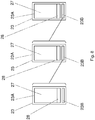
- FIG. 8 illustrates three blocks 23 of a blockchain in accordance with a first embodiment of the invention.
- each block 23 includes a verified version of the operating instructions and a verified hash value for said verified version of the operating instructions.
- each data section 23A includes a verified version of the operating instructions 27 for a safety ECU 8 of a driver assistance system.
- Each data section 23A also includes a verified hash value 28 calculated for the verified, trusted, copy of the operating instructions 27.
- the verified hash value 28 is the result of performing a hash function on the data corresponding to the verified operating instructions 27 stored in the data section 23A.
- the verified hash value 28 may be formed by the trusted source of the operating instructions that originally created the corresponding version of the operating instructions 27. If the data corresponding to the operating instructions 27 stored in the data section 23A is changed, then a test hash value calculated for that changed data would not be identical to the verified hash value 28.
- the verified hash value 28 for the operating instructions may be contained in the block metadata 23B.
- the verified hash value may include, or be formed from, at least a portion of the block metadata.
- the verified hash value for the operating instructions may be equal to the block hash value stored in the corresponding block metadata 23B for the block containing said operating instructions therein.
- the distributed blockchain in accordance with the first embodiment implements both the blockchain security check (on intra-node basis) and the verification routine (on an inter-node basis) to secure the operating instructions.
- the distributed blockchain allows for supply of secure copies of the operating instructions to a driver assistance system.
- an ECU update routine is performed.
- the version of the operating instructions to be installed on the safety ECU is identified - this is the install version.
- the install version is contained in an install block of the blockchain.
- a copy of the install version on a node of the distributed blockchain is identified.
- the install block may be checked whether or not the install block is contained in a fault copy of the blockchain. If the install block is not contained in a fault copy, then the install version may be installed from the install block onto the safety ECU.
- the verified hash value for the install copy may be calculated for input data including the block metadata of the install block.
- the verified hash value of the install copy may be calculated for input data including at least a portion of the block metadata of the install block.
- the verified hash value may be copied into the safety ECU.
- the verified hash value may be copied into the into a verified hash storage means on the safety ECU.
- additional information from the install block metadata may also be copied to the safety ECU during the ECU update routine.
- the whole of the install block (including the block metadata and the data section) may be copied into the safety ECU during the ECU update routine. This allows the checking of a hash of the whole of the install block to be compared to the value of that same hash as stored in the block chain. Again, this allows checking of the security of operating instructions during the ECU update routine.
- a new block 23 is formed and appended to the end of each blockchain copy.
- the distributed blockchain thereby increases in length by one block.
- the new block is transmitted to the nodes across the connections 22A, and added to the end of each of the copies of the blockchain.
- the new block may be formed at one of the nodes 22 before being transmitted to the other nodes 22.
- the new block can be verified by any node 22 by comparing the block hash value in the blockchain metadata 23B of the putative new block to the node's own calculation of what the block hash value should be according to the data content of the immediately preceding block in that node's copy of the blockchain data.
- FIG 9 illustrates three blocks 23 of a blockchain in accordance with a second embodiment of the invention.
- Each data section 23A includes a plurality of install records 29.
- each block 23 is shown containing the same number of install records 29, although this should not be considered limiting.
- the blocks 23 of the blockchain could each contain a different number of records 29 relative to the other blocks 23 of the blockchain.
- Each install record 29 includes at least a driver assistance system unique identifier (for example, a serial number of a safety ECU) and an operating instructions identifier (for example, an operating instructions version number).
- Each install record 29 signifies a documentation of the installation of the operating instructions corresponding to the operating instructions identifier onto the safety ECU corresponding to the safety ECU identifier.
- a given safety ECU, having a single ECU identifier, may have multiple install records 29 in the distributed blockchain. For example, a first install record when the original operating instructions are installed onto the safety ECU, followed by at least one update install record corresponding to an update of the operating instructions on the safety ECU to a different (e.g. later) version of the operating instructions.
- Some or all install records may also include further information, for example the time and date of the installation. Test results of the behaviour of the safety ECU, or the trimming of parameters in the ECU may be stored in a smart contract, which could form at least part of an install record.
- the install records 29 need not all have the format (i.e. the same fields).
- a given block may include install records corresponding to different driver assistance system unique identifiers.
- a copy of the blockchain on a node can be queried only if it has not been flagged as insecure as a fault copy. In other words, use of a copy of the blockchain is only permitted if the copy of the blockchain is not a fault copy. If the copy of the blockchain has been flagged as a fault copy, then the use of the copy of the blockchain is blocked. In turn, this means that the fault copy cannot be queried and the data therein cannot be used.
- the copy of the blockchain may be queried in the manner of database.
- the query may be based on a query driver assistance system unique identifier, in which case all install records corresponding to that query driver assistance system unique identifier may be returned.
- a verified install history for a particular driver assistance system can be found.
- the query may be based on a query operating instructions identifier, in which case all install records corresponding to that query operating instructions identifier may be returned.
- a verified list of safety ECUs having the queried version of the operating instructions installed thereon may be identified. The ego vehicles including these particular safety ECUs may then be targeted for an update to those operating instructions if one is available.
- the distributed blockchain in accordance with the second embodiment implements both the blockchain security check (on intra-node basis) and the verification routine (on an inter-node basis) to secure the install records.
- the blockchain allows for secure traceability of the operating instructions of a driver assistance system.
- a new install record is produced corresponding to that update.
- the install record needs to be added to the blockchain. More specifically, the record is added to the data section 23A of a new block that is to be added to the blockchain. Multiple records may be collected into a single new block, which is then appended to the end of each blockchain copy.
- the blockchain thereby increases in length by one block 23.
- the new block 23 is transmitted to the nodes, and added to the end of each of the copies of the blockchain.
- the new block 23 may be formed at one of the nodes 22 before being transmitted to the other nodes 22.
- the new block 23 can be verified by any node 22 by comparing the block hash value in the blockchain metadata 23B of the putative new block to the node's own calculation of what the block hash value should be according to the data of the immediately preceding block in that node's copy of the blockchain.
- the blockchain security check of each blockchain copy may allow for improved operating instruction security or operating instruction install traceability.
- a fault copy of the blockchain may also be identified by the blockchain security check.
- access to the blockchain may be controlled. For example, only certain parties may be able to add new blocks and/or only (potentially different or overlapping) certain parties may be able to read the blockchain.
- the blockchain may be a permissioned blockchain.
- the blockchain may be encrypted. That is, the copy of the blockchain may be encrypted on the nodes. Furthermore, data extracted from, or sent to, the blockchain of the first embodiment - for example a version of the operating instructions and corresponding verified hash value, or copy of a block - may be encrypted as it is transmitted. Data extracted from, and/or sent to, the blockchain of the second embodiment may also be encrypted as it is transmitted. In both cases, and by way of examples only, the encryption may be using a Transport Layer Security (TLS) or Secure Sockets Layer (SSL) protocol. Communications between an ego vehicle and the blockchain may use one or more such encryption protocols.
- TLS Transport Layer Security
- SSL Secure Sockets Layer
Landscapes
- Engineering & Computer Science (AREA)
- Computer Security & Cryptography (AREA)
- Theoretical Computer Science (AREA)
- General Engineering & Computer Science (AREA)
- Software Systems (AREA)
- Signal Processing (AREA)
- Computer Networks & Wireless Communication (AREA)
- Physics & Mathematics (AREA)
- General Physics & Mathematics (AREA)
- Computer Hardware Design (AREA)
- General Health & Medical Sciences (AREA)
- Health & Medical Sciences (AREA)
- Bioethics (AREA)
- Computing Systems (AREA)
- Medical Informatics (AREA)
- Automation & Control Theory (AREA)
- Human Computer Interaction (AREA)
- Transportation (AREA)
- Mechanical Engineering (AREA)
- Traffic Control Systems (AREA)
- Stored Programmes (AREA)
Claims (11)
- Verfahren zur Sicherung von Betriebsbefehlen für ein Fahrerassistenzsystem eines Kraftfahrzeugs, wobei das Fahrerassistenzsystem eine Sicherheitselektroniksteuereinheit, ECU, umfasst, wobei die Betriebsbefehle den Betrieb der Sicherheits-ECU vorgeben,
wobei das Verfahren Folgendes umfasst:a) Implementieren einer verteilten Blockchain, die eine Vielzahl von Blöcken umfasst,
wobei auf jedem von einer Vielzahl von Knoten, die in einem Netzwerk miteinander verbunden sind, eine Kopie der Blockchain gespeichert ist;
wobei jeder Block eine unterschiedliche Version der Betriebsbefehle umfasst,b) Durchführen einer Verifizierungsroutine, umfassend das Überprüfen, dass die Kopien der Blockchain bei allen Kopien an den Knoten identisch sind; undwobei das Verfahren das Installieren einer Installationsversion der Betriebsbefehle von einem Installationsblock der Blockchain auf dem Fahrerassistenzsystem mit einer ECU-Aktualisierungsroutine umfasst, wobei
wenn eine fehlerhafte Kopie der Blockchain nicht identisch ist, Markieren der fehlerhaften Kopie als unsicher; und
Verhindern der Verwendung der fehlerhaften Kopie, wodurch die Installation der Betriebsbefehle auf der ECU, die in den Blöcken der fehlerhaften Kopie enthalten sind, verhindert wird,
der Installationsblock nicht in der fehlerhaften Kopie enthalten ist. - Verfahren nach Anspruch 1, umfassend eine Versionshinzufügungsroutine, die das Hinzufügen eines neuen Blocks zur Kopie der Blockchain auf jedem Knoten umfasst, wobei der neue Block eine aktualisierte Version der Betriebsbefehle umfasst.
- Verfahren nach Anspruch 1, umfassend das Kopieren der Gesamtheit des Installationsblocks auf die ECU.
- Verfahren nach einem der vorhergehenden Ansprüche, wobei jeder Block einen verifizierten Hash-Wert umfasst, der für Eingabedaten, die die entsprechende Version der Betriebsbefehle umfassen, berechnet ist.
- Verfahren nach Anspruch 4 in Abhängigkeit von Anspruch 1 oder 3, umfassend das Kopieren des verifizierten Hash-Werts der Installationsversion der Betriebsbefehle in ein Speichermittel für verifizierte Hashs auf der Sicherheits-ECU.
- Verfahren nach Anspruch 5, wobei der verifizierte Hash-Wert für Eingabedaten berechnet ist, die zumindest einen Teil von Installationsblock-Metadaten des Installationsblocks umfassen.
- Verfahren nach einem der vorhergehenden Ansprüche, wobei die Blockchain zugriffsgesteuert ist.
- Verfahren nach einem der vorhergehenden Ansprüche, wobei die Blockchain verschlüsselt ist.
- Verfahren zur Verfolgung von Betriebsbefehlen für ein Fahrerassistenzsystem für ein Kraftfahrzeug, wobei das Fahrerassistenzsystem eine Sicherheitselektroniksteuereinheit, ECU, umfasst und wobei Betriebsbefehle, die auf der Sicherheits-ECU installiert sind, den Betrieb der Sicherheits-ECU vorgeben,
wobei das Verfahren Folgendes umfasst:a) Implementieren einer verteilten Blockchain, die eine Vielzahl von Blöcken umfasst,
wobei auf jedem von einer Vielzahl von Knoten, die in einem Netzwerk miteinander verbunden sind, eine Kopie der Blockchain gespeichert ist;
wobei jeder Block zumindest einen Installationseintrag umfasst, wobei jeder Installationseintrag zumindest einen für das Fahrerassistenzsystem eindeutigen Identifikator und einen Betriebsbefehl-Identifikator umfasst,b) Durchführen einer Verifizierungsroutine, umfassend das Überprüfen, dass jeder entsprechende Block der Blockchain bei allen Kopien der Blockchain bei allen Kopien an den Knoten identisch sind; und
wenn eine fehlerhafte Kopie der Blockchain nicht identisch ist, Markieren der fehlerhaften Kopie als unsicher; und
Verhindern der Verwendung der fehlerhaften Kopie, wodurch die Verwendung der Installationseinträge, die in den Blöcken der fehlerhaften Kopie enthalten sind, verhindert wird, wobei das Verfahren ferner Folgendes umfasst:c) Zulassen, dass eine Kopie der Blockchain, die nicht die fehlerhafte Kopie ist, abgefragt wird, um basierend auf dem Installationseintrag zu identifizieren, ob eine aktuellere Version der installierten Betriebsbefehle in der Kopie der Blockchain verfügbar ist, und, wenn eine aktuellere Version verfügbar ist,Installieren der aktuelleren Version der Betriebsbefehle auf dem Fahrerassistenzsystem. - Verfahren nach Anspruch 9, wobei der Betriebsbefehl-Identifikator einen Versionsidentifikator der installierten Betriebsbefehle umfasst.
- Verfahren nach einem der Ansprüche 9 bis 10, wobei zumindest ein Installationseintrag zumindest eines aus Folgenden umfasst:eine Installationszeit, zu der die Betriebsbefehle, die dem Betriebsbefehl-Identifikator entsprechen, auf dem Fahrerassistenzsystem, das dem für das Fahrerassistenzsystem eindeutigen Identifikator entspricht, installiert wurden;Testergebnisse eines Betriebsvorgangs des Fahrerassistenzsystems, das dem für das Fahrerassistenzsystem eindeutigen Identifikator entspricht.
Priority Applications (7)
| Application Number | Priority Date | Filing Date | Title |
|---|---|---|---|
| EP17186406.9A EP3445017B1 (de) | 2017-08-16 | 2017-08-16 | Verfahren im zusammenhang mit einem kraftfahrzeugfahrerassistenzsystem |
| CN201880051918.5A CN111066303B (zh) | 2017-08-16 | 2018-08-13 | 与机动车辆驾驶员辅助系统相关的方法 |
| PCT/EP2018/071948 WO2019034621A1 (en) | 2017-08-16 | 2018-08-13 | METHOD FOR A DRIVER ASSISTANCE SYSTEM FOR A MOTOR VEHICLE |
| JP2020505261A JP7041738B2 (ja) | 2017-08-16 | 2018-08-13 | モータ車両運転者支援システムに関する方法 |
| KR1020207003742A KR102310252B1 (ko) | 2017-08-16 | 2018-08-13 | 자동차 운전자 보조 시스템에 관련된 방법 |
| US16/639,179 US12250320B2 (en) | 2017-08-16 | 2018-08-13 | Method relating to a motor vehicle driver assistance system |
| JP2021209876A JP7250411B2 (ja) | 2017-08-16 | 2021-12-23 | モータ車両運転者支援システムに関する方法 |
Applications Claiming Priority (1)
| Application Number | Priority Date | Filing Date | Title |
|---|---|---|---|
| EP17186406.9A EP3445017B1 (de) | 2017-08-16 | 2017-08-16 | Verfahren im zusammenhang mit einem kraftfahrzeugfahrerassistenzsystem |
Publications (2)
| Publication Number | Publication Date |
|---|---|
| EP3445017A1 EP3445017A1 (de) | 2019-02-20 |
| EP3445017B1 true EP3445017B1 (de) | 2019-10-09 |
Family
ID=59677058
Family Applications (1)
| Application Number | Title | Priority Date | Filing Date |
|---|---|---|---|
| EP17186406.9A Active EP3445017B1 (de) | 2017-08-16 | 2017-08-16 | Verfahren im zusammenhang mit einem kraftfahrzeugfahrerassistenzsystem |
Country Status (6)
| Country | Link |
|---|---|
| US (1) | US12250320B2 (de) |
| EP (1) | EP3445017B1 (de) |
| JP (2) | JP7041738B2 (de) |
| KR (1) | KR102310252B1 (de) |
| CN (1) | CN111066303B (de) |
| WO (1) | WO2019034621A1 (de) |
Families Citing this family (17)
| Publication number | Priority date | Publication date | Assignee | Title |
|---|---|---|---|---|
| US10666767B1 (en) | 2018-01-30 | 2020-05-26 | State Farm Mutual Automobile Insurance Company | Systems and methods for vehicle configuration verification using smart contracts |
| US11159308B2 (en) * | 2019-03-20 | 2021-10-26 | PolySign, Inc. | Preventing an erroneous transmission of a copy of a record of data to a distributed ledger system |
| US11349636B2 (en) * | 2019-03-25 | 2022-05-31 | Micron Technology, Inc. | Local ledger block chain for secure updates |
| US11228443B2 (en) * | 2019-03-25 | 2022-01-18 | Micron Technology, Inc. | Using memory as a block in a block chain |
| US11397814B2 (en) * | 2019-03-25 | 2022-07-26 | Micron Technology, Inc. | Local ledger block chain for secure electronic control unit updates |
| JP7176488B2 (ja) * | 2019-07-08 | 2022-11-22 | 株式会社デンソー | データ保存装置、及びデータ保存プログラム |
| CN110796855A (zh) * | 2019-09-18 | 2020-02-14 | 吴明贵 | 一种基于物联网和区块链的区域交通疏导系统 |
| US11456874B2 (en) * | 2019-09-19 | 2022-09-27 | Denso International America, Inc. | Vehicle control system for cybersecurity and financial transactions |
| JP6884196B1 (ja) * | 2019-12-06 | 2021-06-09 | 三菱重工業株式会社 | 検知装置、改ざん検知システム、中央サーバ、参加者サーバ、改ざん検知方法、及びプログラム |
| KR102172534B1 (ko) * | 2020-04-30 | 2020-11-02 | 주식회사 에스비이엔씨 | 도로를 주행하는 자율 주행차량의 충돌방지를 위한 블록체인 및 센서 근거리 통신 시스템 |
| WO2021217559A1 (zh) * | 2020-04-30 | 2021-11-04 | 华为技术有限公司 | 数据保护方法及装置 |
| KR102172535B1 (ko) * | 2020-05-02 | 2020-11-02 | 주식회사 에스비이엔씨 | 도로를 주행하는 자율주행 차량의 충돌방지를 위한 통신과 블록체인 방법 |
| CN112416389B (zh) * | 2020-11-11 | 2024-06-11 | 沈海峰 | 一种基于区块链技术的ota软件版本管理方法 |
| WO2022113238A1 (en) * | 2020-11-26 | 2022-06-02 | Denso Corporation | Zone-based blockchain system and method for operating zone-based blockchain system |
| JP2022166870A (ja) * | 2021-04-22 | 2022-11-04 | 和男 吉原 | マルウェア検知を目的とした改ざん検知システム |
| TWI823311B (zh) * | 2022-03-29 | 2023-11-21 | 新唐科技股份有限公司 | 用於更新韌體的方法及資料結構產品 |
| GB2640819A (en) * | 2024-02-02 | 2025-11-12 | Richmond Design And Marketing Ltd | Verifying requests |
Family Cites Families (22)
| Publication number | Priority date | Publication date | Assignee | Title |
|---|---|---|---|---|
| JP2005242871A (ja) * | 2004-02-27 | 2005-09-08 | Denso Corp | 通信システム |
| US9754130B2 (en) * | 2011-05-02 | 2017-09-05 | Architecture Technology Corporation | Peer integrity checking system |
| US10847251B2 (en) * | 2013-01-17 | 2020-11-24 | Illumina, Inc. | Genomic infrastructure for on-site or cloud-based DNA and RNA processing and analysis |
| EP2956438B1 (de) | 2013-02-14 | 2017-03-22 | Galderma Research & Development | Verfahren zur synthese von 4-piperidin-4-yl-benzol-1,3-diol und salzen davon sowie neuartige verbindung tert-butyl-4-(2,4-dihydroxy-phenyl)-4-hydroxy-piperidin-1-carboxylat |
| MX2013005303A (es) * | 2013-05-10 | 2013-08-07 | Fondo De Informacion Y Documentacion Para La Ind Infotec | Un sistema y un proceso de alto desempeño para el tratamiento y almacenamiento de datos, basado en componentes de bajo costo, que garantiza la integridad y disponibilidad de los datos para su propia administracion. |
| US20170031676A1 (en) * | 2015-07-27 | 2017-02-02 | Deja Vu Security, Llc | Blockchain computer data distribution |
| US20170032676A1 (en) | 2015-07-30 | 2017-02-02 | Illinois Institute Of Technology | System for detecting pedestrians by fusing color and depth information |
| US10366204B2 (en) | 2015-08-03 | 2019-07-30 | Change Healthcare Holdings, Llc | System and method for decentralized autonomous healthcare economy platform |
| US10402792B2 (en) * | 2015-08-13 | 2019-09-03 | The Toronto-Dominion Bank | Systems and method for tracking enterprise events using hybrid public-private blockchain ledgers |
| KR20170040466A (ko) * | 2015-10-05 | 2017-04-13 | 에스케이하이닉스 주식회사 | 데이터 처리 시스템 |
| BR112018072929A2 (pt) | 2016-05-13 | 2019-02-19 | nChain Holdings Limited | método e sistema para verificar a integridade de um software de computador e programa de software de computador |
| US10592639B2 (en) * | 2016-09-06 | 2020-03-17 | Intel Corporation | Blockchain-based shadow images to facilitate copyright protection of digital content |
| US10185550B2 (en) * | 2016-09-28 | 2019-01-22 | Mcafee, Inc. | Device-driven auto-recovery using multiple recovery sources |
| US10447480B2 (en) | 2016-12-30 | 2019-10-15 | Guardtime Sa | Event verification receipt system and methods |
| US10666767B1 (en) | 2018-01-30 | 2020-05-26 | State Farm Mutual Automobile Insurance Company | Systems and methods for vehicle configuration verification using smart contracts |
| US11159308B2 (en) | 2019-03-20 | 2021-10-26 | PolySign, Inc. | Preventing an erroneous transmission of a copy of a record of data to a distributed ledger system |
| US11397814B2 (en) | 2019-03-25 | 2022-07-26 | Micron Technology, Inc. | Local ledger block chain for secure electronic control unit updates |
| CN110796855A (zh) | 2019-09-18 | 2020-02-14 | 吴明贵 | 一种基于物联网和区块链的区域交通疏导系统 |
| US11456874B2 (en) | 2019-09-19 | 2022-09-27 | Denso International America, Inc. | Vehicle control system for cybersecurity and financial transactions |
| WO2021217559A1 (zh) | 2020-04-30 | 2021-11-04 | 华为技术有限公司 | 数据保护方法及装置 |
| KR102172534B1 (ko) | 2020-04-30 | 2020-11-02 | 주식회사 에스비이엔씨 | 도로를 주행하는 자율 주행차량의 충돌방지를 위한 블록체인 및 센서 근거리 통신 시스템 |
| KR102172535B1 (ko) | 2020-05-02 | 2020-11-02 | 주식회사 에스비이엔씨 | 도로를 주행하는 자율주행 차량의 충돌방지를 위한 통신과 블록체인 방법 |
-
2017
- 2017-08-16 EP EP17186406.9A patent/EP3445017B1/de active Active
-
2018
- 2018-08-13 WO PCT/EP2018/071948 patent/WO2019034621A1/en not_active Ceased
- 2018-08-13 JP JP2020505261A patent/JP7041738B2/ja active Active
- 2018-08-13 KR KR1020207003742A patent/KR102310252B1/ko active Active
- 2018-08-13 US US16/639,179 patent/US12250320B2/en active Active
- 2018-08-13 CN CN201880051918.5A patent/CN111066303B/zh active Active
-
2021
- 2021-12-23 JP JP2021209876A patent/JP7250411B2/ja active Active
Non-Patent Citations (1)
| Title |
|---|
| None * |
Also Published As
| Publication number | Publication date |
|---|---|
| WO2019034621A1 (en) | 2019-02-21 |
| KR102310252B1 (ko) | 2021-10-08 |
| JP2020529667A (ja) | 2020-10-08 |
| JP7041738B2 (ja) | 2022-03-24 |
| CN111066303B (zh) | 2022-10-04 |
| CN111066303A (zh) | 2020-04-24 |
| US20200235936A1 (en) | 2020-07-23 |
| JP2022040171A (ja) | 2022-03-10 |
| EP3445017A1 (de) | 2019-02-20 |
| KR20200020003A (ko) | 2020-02-25 |
| US12250320B2 (en) | 2025-03-11 |
| JP7250411B2 (ja) | 2023-04-03 |
Similar Documents
| Publication | Publication Date | Title |
|---|---|---|
| US12250320B2 (en) | Method relating to a motor vehicle driver assistance system | |
| AU2024200274B2 (en) | Cloaking authority system | |
| US11618395B2 (en) | Vehicle data verification | |
| US11895241B2 (en) | Driver assistance apparatus and method | |
| US10824765B2 (en) | Electronic control units for vehicles | |
| CN114095298B (zh) | 一种管理控制器局域网中模块间安全通信的系统及方法 | |
| US11528325B2 (en) | Prioritizing data using rules for transmission over network | |
| JP2024540548A (ja) | ロバストな無線リプログラミング | |
| CN112537318B (zh) | 用于远程控制机动车的方法 | |
| US20230281017A1 (en) | Autonomous driving controller parallel processor boot order | |
| CN115706676A (zh) | 在车辆的控制器之间进行可信的数据传输的方法、具有控制器的组件、计算机程序和车辆 | |
| US12443705B2 (en) | Method for monitoring a component of an event chain | |
| US12395520B1 (en) | Detection of abnormal operations in connected vehicles | |
| KR102602602B1 (ko) | V2x 환경에서 도로교통인프라를 이용한 공격 탐지 방법 | |
| US12528477B2 (en) | Implementing a dynamic trust model in a vehicle | |
| US20230072587A1 (en) | Method for monitoring a component of an effect chain | |
| US20250266997A1 (en) | Method for determining an encryption method for vehicle communication | |
| Iclodean et al. | Safety and cybersecurity | |
| WO2025126623A1 (ja) | データ保存装置、移動体、及びデータ保存プログラム | |
| GB2592830A (en) | Electronic control units for vehicles |
Legal Events
| Date | Code | Title | Description |
|---|---|---|---|
| PUAI | Public reference made under article 153(3) epc to a published international application that has entered the european phase |
Free format text: ORIGINAL CODE: 0009012 |
|
| STAA | Information on the status of an ep patent application or granted ep patent |
Free format text: STATUS: THE APPLICATION HAS BEEN PUBLISHED |
|
| AK | Designated contracting states |
Kind code of ref document: A1 Designated state(s): AL AT BE BG CH CY CZ DE DK EE ES FI FR GB GR HR HU IE IS IT LI LT LU LV MC MK MT NL NO PL PT RO RS SE SI SK SM TR |
|
| AX | Request for extension of the european patent |
Extension state: BA ME |
|
| STAA | Information on the status of an ep patent application or granted ep patent |
Free format text: STATUS: REQUEST FOR EXAMINATION WAS MADE |
|
| 17P | Request for examination filed |
Effective date: 20190403 |
|
| GRAP | Despatch of communication of intention to grant a patent |
Free format text: ORIGINAL CODE: EPIDOSNIGR1 |
|
| RBV | Designated contracting states (corrected) |
Designated state(s): AL AT BE BG CH CY CZ DE DK EE ES FI FR GB GR HR HU IE IS IT LI LT LU LV MC MK MT NL NO PL PT RO RS SE SI SK SM TR |
|
| STAA | Information on the status of an ep patent application or granted ep patent |
Free format text: STATUS: GRANT OF PATENT IS INTENDED |
|
| INTG | Intention to grant announced |
Effective date: 20190516 |
|
| GRAS | Grant fee paid |
Free format text: ORIGINAL CODE: EPIDOSNIGR3 |
|
| GRAA | (expected) grant |
Free format text: ORIGINAL CODE: 0009210 |
|
| STAA | Information on the status of an ep patent application or granted ep patent |
Free format text: STATUS: THE PATENT HAS BEEN GRANTED |
|
| AK | Designated contracting states |
Kind code of ref document: B1 Designated state(s): AL AT BE BG CH CY CZ DE DK EE ES FI FR GB GR HR HU IE IS IT LI LT LU LV MC MK MT NL NO PL PT RO RS SE SI SK SM TR |
|
| REG | Reference to a national code |
Ref country code: GB Ref legal event code: FG4D |
|
| REG | Reference to a national code |
Ref country code: CH Ref legal event code: EP |
|
| REG | Reference to a national code |
Ref country code: DE Ref legal event code: R096 Ref document number: 602017007608 Country of ref document: DE |
|
| REG | Reference to a national code |
Ref country code: IE Ref legal event code: FG4D |
|
| REG | Reference to a national code |
Ref country code: AT Ref legal event code: REF Ref document number: 1190161 Country of ref document: AT Kind code of ref document: T Effective date: 20191115 |
|
| REG | Reference to a national code |
Ref country code: SE Ref legal event code: TRGR |
|
| REG | Reference to a national code |
Ref country code: NL Ref legal event code: MP Effective date: 20191009 |
|
| REG | Reference to a national code |
Ref country code: LT Ref legal event code: MG4D |
|
| REG | Reference to a national code |
Ref country code: AT Ref legal event code: MK05 Ref document number: 1190161 Country of ref document: AT Kind code of ref document: T Effective date: 20191009 |
|
| PG25 | Lapsed in a contracting state [announced via postgrant information from national office to epo] |
Ref country code: GR Free format text: LAPSE BECAUSE OF FAILURE TO SUBMIT A TRANSLATION OF THE DESCRIPTION OR TO PAY THE FEE WITHIN THE PRESCRIBED TIME-LIMIT Effective date: 20200110 Ref country code: LV Free format text: LAPSE BECAUSE OF FAILURE TO SUBMIT A TRANSLATION OF THE DESCRIPTION OR TO PAY THE FEE WITHIN THE PRESCRIBED TIME-LIMIT Effective date: 20191009 Ref country code: FI Free format text: LAPSE BECAUSE OF FAILURE TO SUBMIT A TRANSLATION OF THE DESCRIPTION OR TO PAY THE FEE WITHIN THE PRESCRIBED TIME-LIMIT Effective date: 20191009 Ref country code: BG Free format text: LAPSE BECAUSE OF FAILURE TO SUBMIT A TRANSLATION OF THE DESCRIPTION OR TO PAY THE FEE WITHIN THE PRESCRIBED TIME-LIMIT Effective date: 20200109 Ref country code: PL Free format text: LAPSE BECAUSE OF FAILURE TO SUBMIT A TRANSLATION OF THE DESCRIPTION OR TO PAY THE FEE WITHIN THE PRESCRIBED TIME-LIMIT Effective date: 20191009 Ref country code: AT Free format text: LAPSE BECAUSE OF FAILURE TO SUBMIT A TRANSLATION OF THE DESCRIPTION OR TO PAY THE FEE WITHIN THE PRESCRIBED TIME-LIMIT Effective date: 20191009 Ref country code: NO Free format text: LAPSE BECAUSE OF FAILURE TO SUBMIT A TRANSLATION OF THE DESCRIPTION OR TO PAY THE FEE WITHIN THE PRESCRIBED TIME-LIMIT Effective date: 20200109 Ref country code: ES Free format text: LAPSE BECAUSE OF FAILURE TO SUBMIT A TRANSLATION OF THE DESCRIPTION OR TO PAY THE FEE WITHIN THE PRESCRIBED TIME-LIMIT Effective date: 20191009 Ref country code: PT Free format text: LAPSE BECAUSE OF FAILURE TO SUBMIT A TRANSLATION OF THE DESCRIPTION OR TO PAY THE FEE WITHIN THE PRESCRIBED TIME-LIMIT Effective date: 20200210 Ref country code: NL Free format text: LAPSE BECAUSE OF FAILURE TO SUBMIT A TRANSLATION OF THE DESCRIPTION OR TO PAY THE FEE WITHIN THE PRESCRIBED TIME-LIMIT Effective date: 20191009 Ref country code: LT Free format text: LAPSE BECAUSE OF FAILURE TO SUBMIT A TRANSLATION OF THE DESCRIPTION OR TO PAY THE FEE WITHIN THE PRESCRIBED TIME-LIMIT Effective date: 20191009 |
|
| PG25 | Lapsed in a contracting state [announced via postgrant information from national office to epo] |
Ref country code: HR Free format text: LAPSE BECAUSE OF FAILURE TO SUBMIT A TRANSLATION OF THE DESCRIPTION OR TO PAY THE FEE WITHIN THE PRESCRIBED TIME-LIMIT Effective date: 20191009 Ref country code: IS Free format text: LAPSE BECAUSE OF FAILURE TO SUBMIT A TRANSLATION OF THE DESCRIPTION OR TO PAY THE FEE WITHIN THE PRESCRIBED TIME-LIMIT Effective date: 20200224 Ref country code: RS Free format text: LAPSE BECAUSE OF FAILURE TO SUBMIT A TRANSLATION OF THE DESCRIPTION OR TO PAY THE FEE WITHIN THE PRESCRIBED TIME-LIMIT Effective date: 20191009 |
|
| PG25 | Lapsed in a contracting state [announced via postgrant information from national office to epo] |
Ref country code: AL Free format text: LAPSE BECAUSE OF FAILURE TO SUBMIT A TRANSLATION OF THE DESCRIPTION OR TO PAY THE FEE WITHIN THE PRESCRIBED TIME-LIMIT Effective date: 20191009 |
|
| REG | Reference to a national code |
Ref country code: DE Ref legal event code: R097 Ref document number: 602017007608 Country of ref document: DE |
|
| PG2D | Information on lapse in contracting state deleted |
Ref country code: IS |
|
| PG25 | Lapsed in a contracting state [announced via postgrant information from national office to epo] |
Ref country code: EE Free format text: LAPSE BECAUSE OF FAILURE TO SUBMIT A TRANSLATION OF THE DESCRIPTION OR TO PAY THE FEE WITHIN THE PRESCRIBED TIME-LIMIT Effective date: 20191009 Ref country code: CZ Free format text: LAPSE BECAUSE OF FAILURE TO SUBMIT A TRANSLATION OF THE DESCRIPTION OR TO PAY THE FEE WITHIN THE PRESCRIBED TIME-LIMIT Effective date: 20191009 Ref country code: RO Free format text: LAPSE BECAUSE OF FAILURE TO SUBMIT A TRANSLATION OF THE DESCRIPTION OR TO PAY THE FEE WITHIN THE PRESCRIBED TIME-LIMIT Effective date: 20191009 Ref country code: DK Free format text: LAPSE BECAUSE OF FAILURE TO SUBMIT A TRANSLATION OF THE DESCRIPTION OR TO PAY THE FEE WITHIN THE PRESCRIBED TIME-LIMIT Effective date: 20191009 Ref country code: IS Free format text: LAPSE BECAUSE OF FAILURE TO SUBMIT A TRANSLATION OF THE DESCRIPTION OR TO PAY THE FEE WITHIN THE PRESCRIBED TIME-LIMIT Effective date: 20200209 |
|
| PLBE | No opposition filed within time limit |
Free format text: ORIGINAL CODE: 0009261 |
|
| STAA | Information on the status of an ep patent application or granted ep patent |
Free format text: STATUS: NO OPPOSITION FILED WITHIN TIME LIMIT |
|
| PG25 | Lapsed in a contracting state [announced via postgrant information from national office to epo] |
Ref country code: SM Free format text: LAPSE BECAUSE OF FAILURE TO SUBMIT A TRANSLATION OF THE DESCRIPTION OR TO PAY THE FEE WITHIN THE PRESCRIBED TIME-LIMIT Effective date: 20191009 Ref country code: IT Free format text: LAPSE BECAUSE OF FAILURE TO SUBMIT A TRANSLATION OF THE DESCRIPTION OR TO PAY THE FEE WITHIN THE PRESCRIBED TIME-LIMIT Effective date: 20191009 Ref country code: SK Free format text: LAPSE BECAUSE OF FAILURE TO SUBMIT A TRANSLATION OF THE DESCRIPTION OR TO PAY THE FEE WITHIN THE PRESCRIBED TIME-LIMIT Effective date: 20191009 |
|
| 26N | No opposition filed |
Effective date: 20200710 |
|
| PG25 | Lapsed in a contracting state [announced via postgrant information from national office to epo] |
Ref country code: SI Free format text: LAPSE BECAUSE OF FAILURE TO SUBMIT A TRANSLATION OF THE DESCRIPTION OR TO PAY THE FEE WITHIN THE PRESCRIBED TIME-LIMIT Effective date: 20191009 |
|
| PG25 | Lapsed in a contracting state [announced via postgrant information from national office to epo] |
Ref country code: MC Free format text: LAPSE BECAUSE OF FAILURE TO SUBMIT A TRANSLATION OF THE DESCRIPTION OR TO PAY THE FEE WITHIN THE PRESCRIBED TIME-LIMIT Effective date: 20191009 |
|
| REG | Reference to a national code |
Ref country code: CH Ref legal event code: PL |
|
| PG25 | Lapsed in a contracting state [announced via postgrant information from national office to epo] |
Ref country code: LU Free format text: LAPSE BECAUSE OF NON-PAYMENT OF DUE FEES Effective date: 20200816 Ref country code: LI Free format text: LAPSE BECAUSE OF NON-PAYMENT OF DUE FEES Effective date: 20200831 Ref country code: CH Free format text: LAPSE BECAUSE OF NON-PAYMENT OF DUE FEES Effective date: 20200831 |
|
| REG | Reference to a national code |
Ref country code: BE Ref legal event code: MM Effective date: 20200831 |
|
| PG25 | Lapsed in a contracting state [announced via postgrant information from national office to epo] |
Ref country code: IE Free format text: LAPSE BECAUSE OF NON-PAYMENT OF DUE FEES Effective date: 20200816 Ref country code: BE Free format text: LAPSE BECAUSE OF NON-PAYMENT OF DUE FEES Effective date: 20200831 |
|
| REG | Reference to a national code |
Ref country code: DE Ref legal event code: R079 Ref document number: 602017007608 Country of ref document: DE Free format text: PREVIOUS MAIN CLASS: H04L0029080000 Ipc: H04L0065000000 |
|
| GBPC | Gb: european patent ceased through non-payment of renewal fee |
Effective date: 20210816 |
|
| PG25 | Lapsed in a contracting state [announced via postgrant information from national office to epo] |
Ref country code: TR Free format text: LAPSE BECAUSE OF FAILURE TO SUBMIT A TRANSLATION OF THE DESCRIPTION OR TO PAY THE FEE WITHIN THE PRESCRIBED TIME-LIMIT Effective date: 20191009 Ref country code: MT Free format text: LAPSE BECAUSE OF FAILURE TO SUBMIT A TRANSLATION OF THE DESCRIPTION OR TO PAY THE FEE WITHIN THE PRESCRIBED TIME-LIMIT Effective date: 20191009 Ref country code: CY Free format text: LAPSE BECAUSE OF FAILURE TO SUBMIT A TRANSLATION OF THE DESCRIPTION OR TO PAY THE FEE WITHIN THE PRESCRIBED TIME-LIMIT Effective date: 20191009 |
|
| PG25 | Lapsed in a contracting state [announced via postgrant information from national office to epo] |
Ref country code: MK Free format text: LAPSE BECAUSE OF FAILURE TO SUBMIT A TRANSLATION OF THE DESCRIPTION OR TO PAY THE FEE WITHIN THE PRESCRIBED TIME-LIMIT Effective date: 20191009 |
|
| PG25 | Lapsed in a contracting state [announced via postgrant information from national office to epo] |
Ref country code: GB Free format text: LAPSE BECAUSE OF NON-PAYMENT OF DUE FEES Effective date: 20210816 |
|
| P01 | Opt-out of the competence of the unified patent court (upc) registered |
Effective date: 20230508 |
|
| P02 | Opt-out of the competence of the unified patent court (upc) changed |
Effective date: 20230524 |
|
| REG | Reference to a national code |
Ref country code: DE Ref legal event code: R082 Ref document number: 602017007608 Country of ref document: DE Representative=s name: MEWBURN ELLIS LLP, DE Ref country code: DE Ref legal event code: R081 Ref document number: 602017007608 Country of ref document: DE Owner name: MAGNA ELECTRONICS SWEDEN AB, SE Free format text: FORMER OWNER: VEONEER SWEDEN AB, VARGARDA, SE |
|
| PGFP | Annual fee paid to national office [announced via postgrant information from national office to epo] |
Ref country code: DE Payment date: 20250819 Year of fee payment: 9 |
|
| PGFP | Annual fee paid to national office [announced via postgrant information from national office to epo] |
Ref country code: FR Payment date: 20250821 Year of fee payment: 9 |
|
| PGFP | Annual fee paid to national office [announced via postgrant information from national office to epo] |
Ref country code: SE Payment date: 20250821 Year of fee payment: 9 |