EP3441959A1 - Electronic device, control method, and control program - Google Patents
Electronic device, control method, and control program Download PDFInfo
- Publication number
- EP3441959A1 EP3441959A1 EP17799336.7A EP17799336A EP3441959A1 EP 3441959 A1 EP3441959 A1 EP 3441959A1 EP 17799336 A EP17799336 A EP 17799336A EP 3441959 A1 EP3441959 A1 EP 3441959A1
- Authority
- EP
- European Patent Office
- Prior art keywords
- user
- controller
- behavior
- determination
- acceleration
- Prior art date
- Legal status (The legal status is an assumption and is not a legal conclusion. Google has not performed a legal analysis and makes no representation as to the accuracy of the status listed.)
- Withdrawn
Links
Images





Classifications
-
- G—PHYSICS
- G08—SIGNALLING
- G08B—SIGNALLING SYSTEMS, e.g. PERSONAL CALLING SYSTEMS; ORDER TELEGRAPHS; ALARM SYSTEMS
- G08B21/00—Alarms responsive to a single specified undesired or abnormal condition and not otherwise provided for
- G08B21/02—Alarms for ensuring the safety of persons
- G08B21/04—Alarms for ensuring the safety of persons responsive to non-activity, e.g. of elderly persons
- G08B21/0407—Alarms for ensuring the safety of persons responsive to non-activity, e.g. of elderly persons based on behaviour analysis
- G08B21/0423—Alarms for ensuring the safety of persons responsive to non-activity, e.g. of elderly persons based on behaviour analysis detecting deviation from an expected pattern of behaviour or schedule
-
- G—PHYSICS
- G08—SIGNALLING
- G08G—TRAFFIC CONTROL SYSTEMS
- G08G1/00—Traffic control systems for road vehicles
- G08G1/005—Traffic control systems for road vehicles including pedestrian guidance indicator
-
- G—PHYSICS
- G01—MEASURING; TESTING
- G01P—MEASURING LINEAR OR ANGULAR SPEED, ACCELERATION, DECELERATION, OR SHOCK; INDICATING PRESENCE, ABSENCE, OR DIRECTION, OF MOVEMENT
- G01P15/00—Measuring acceleration; Measuring deceleration; Measuring shock, i.e. sudden change of acceleration
- G01P15/14—Measuring acceleration; Measuring deceleration; Measuring shock, i.e. sudden change of acceleration by making use of gyroscopes
-
- G—PHYSICS
- G08—SIGNALLING
- G08B—SIGNALLING SYSTEMS, e.g. PERSONAL CALLING SYSTEMS; ORDER TELEGRAPHS; ALARM SYSTEMS
- G08B21/00—Alarms responsive to a single specified undesired or abnormal condition and not otherwise provided for
- G08B21/02—Alarms for ensuring the safety of persons
-
- G—PHYSICS
- G08—SIGNALLING
- G08B—SIGNALLING SYSTEMS, e.g. PERSONAL CALLING SYSTEMS; ORDER TELEGRAPHS; ALARM SYSTEMS
- G08B21/00—Alarms responsive to a single specified undesired or abnormal condition and not otherwise provided for
- G08B21/02—Alarms for ensuring the safety of persons
- G08B21/04—Alarms for ensuring the safety of persons responsive to non-activity, e.g. of elderly persons
- G08B21/0438—Sensor means for detecting
- G08B21/0446—Sensor means for detecting worn on the body to detect changes of posture, e.g. a fall, inclination, acceleration, gait
-
- G—PHYSICS
- G08—SIGNALLING
- G08G—TRAFFIC CONTROL SYSTEMS
- G08G1/00—Traffic control systems for road vehicles
- G08G1/16—Anti-collision systems
- G08G1/166—Anti-collision systems for active traffic, e.g. moving vehicles, pedestrians, bikes
Definitions
- the present disclosure relates to a notification technology.
- an electronic apparatus comprises a controller configured to make determination based on acceleration measured by an accelerometer. The determination is for determining whether behavior of a user of the electronic apparatus is behavior having high probability of inducing a traffic accident. The controller issues an alert notification to the user if the controller determines that the behavior of the user is behavior having high probability of inducing a traffic accident.
- a control method is a control method executed by an electronic apparatus.
- the control method comprises a step of determining whether behavior of a user of the electronic apparatus is behavior having high probability of inducing a traffic accident based on acceleration measured by an accelerometer.
- the control method comprises a step of issuing an alert notification to the user if determination is made that the behavior of the user is behavior having high probability of inducing a traffic accident.
- a control program makes an electronic apparatus execute the following steps.
- the control program makes an electronic apparatus execute a step of determining whether behavior of a user of the electronic apparatus is behavior having high probability of inducing a traffic accident based on acceleration measured by an accelerometer.
- the control program makes an electronic apparatus execute a step of issuing an alert notification to the user if determination is made that the behavior of the user is behavior having high probability of inducing a traffic accident.
- the portable electronic apparatus is a smartphone, for example.
- the portable electronic apparatus is an electronic apparatus that can be carried by a user and has a function of measuring acceleration and air pressure
- the portable electronic apparatus may be an apparatus other than a smartphone.
- the portable electronic apparatus may be an apparatus such as a mobile phone, a tablet, a portable personal computer, a digital camera, a media player, an electronic book reader, a navigator, a pedometer, an activity meter, a head mounted display, hearing aids, earphones, and a gaming machine.
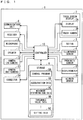
- FIG. 1 illustrates a block diagram showing one example of a functional configuration of a smartphone 1 according to one embodiment.
- the same reference symbols may be given to like components.
- overlapping description may be omitted.
- the smartphone 1 may be referred to as a "subject apparatus.”
- the smartphone 1 comprises a touch screen display 2, a button 3, an illuminance sensor 4, a proximity sensor 5, a communication unit 6, a receiver 7, a microphone 8, a storage 9, a controller 10, a speaker 11, a camera 12, a camera 13, a connector 14, an accelerometer 15, and an azimuth sensor 16.
- the touch screen display 2 comprises a display 2A and a touch screen 2B.
- the display 2A and the touch screen 2B may be, for example, located in an overlapping manner, located side by side, or located away from each other. If the display 2A and the touch screen 2B are located in an overlapping manner, for example, one or more sides of the display 2A need not extend along any side of the touch screen 2B.
- the display 2A comprises a display device such as a liquid crystal display (LCD), an organic electro-luminescence display (OELD), and an inorganic electro-luminescence display (IELD).
- the display 2A can display an object such as letters, images, symbols, and figures in a screen.
- the screen including the object displayed by the display 2A includes a screen referred to as a lock screen, a screen referred to as a home screen, and an application screen displayed during execution of an application.
- the home screen may also be referred to as a desktop, a standby screen, an idle screen, a standard screen, an application list screen, and a launcher screen.
- the touch screen 2B can detect contact or proximity of a finger, a pen, a stylus pen, or the like on or toward the touch screen 2B.
- the touch screen 2B can detect the position thereof on the touch screen 2B.
- the position where fingers, a pen, a stylus pen, or the like detected by the touch screen 2B comes in contact with or comes closer to the touch screen 2B is referred to as a "detection position.”
- the touch screen 2B notifies the controller 10 about the contact or the proximity of a finger on or toward the touch screen 2B together with the detection position.
- the touch screen 2B may notify the controller 10 about a detection position, to thereby notify the controller 10 about detection of contact or proximity.
- the touch screen display 2 comprising the touch screen 2B can execute operation that can be performed by the touch screen 2B. In other words, the touch screen display 2 may perform operation performed by the touch screen 2B.
- the controller 10 can distinguish types of gesture based on at least one of contact or proximity detected by the touch screen 2B, a detection position, change in a detection position, duration of contact or proximity, interval of detections of contact or proximity, and the number of times of detection of contact.
- the smartphone 1 comprising the controller 10 can execute operation that can be performed by the controller 10. In other words, the smartphone 1 may perform operation performed by the controller 10.
- the gesture is operation performed on the touch screen 2B using a finger. Operation performed on the touch screen 2B may be performed on the touch screen display 2 comprising the touch screen 2B. Examples of the gesture distinguished by the controller 10 via the touch screen 2B include, but not only limited to, touch, long touch, release, swipe, tap, double tap, long tap, drag, flick, pinch-in, and pinch-out.
- a detection method of the touch screen 2B may be any method, such as an electrostatic capacitance method, a resistance film method, a surface acoustic wave method, an infrared method, and a load detection method.
- the button 3 can receive an operation input from the user. Regarding the number of buttons 3, either of a single button 3 or a plurality of buttons 3 is acceptable.
- the button 3 is one example of an operation button.
- the illuminance sensor 4 can detect illuminance. Illuminance is a value of a flux of light incident on a unit area in a measurement area of the illuminance sensor 4.
- the illuminance sensor 4 is, for example, used for adjusting brightness of the display 2A.
- the proximity sensor 5 can detect presence of a nearby object in a touchless manner.
- the proximity sensor 5 detects presence of an object based on change in a magnetic field, change in a returning time period of a reflected wave of an ultrasonic wave, or the like.
- the proximity sensor 5 detects, for example, approach between the display 2A and a face.
- the illuminance sensor 4 and the proximity sensor 5 may be formed as one sensor.
- the illuminance sensor 4 may also be used as a proximity sensor.
- the communication unit 6 can wirelessly communicate.
- Wireless communication standards supported by the communication unit 6 include a communication standard for a cellular phone, such as 2G, 3G, 4G, and 5G, and a communication standard for short-range wireless communication.
- Examples of the communication standard for a cellular phone include Long Term Evolution (LTE), Wideband Code Division Multiple Access (W-CDMA), Worldwide Interoperability for Microwave Access (trademark) (WiMAX), CDMA2000, Personal Digital Cellular (PDC), Global System for Mobile Communications (trademark) (GSM), and Personal Handy-phone System (PHS).
- Examples of the communication standard for short-range wireless communication include IEEE802.11, Bluetooth (trademark), Infrared Data Association (IrDA), Near Field Communication (NFC), and Wireless Personal Area Network (WPAN).
- the communication standard for WPAN includes, for example, ZigBee (trademark).
- the communication unit 6 may support a single or a plurality of the communication standards described above. In one example of one embodiment, the communication unit 6 further supports a plurality of communication standards for enabling communication with a roadside unit built at the vicinity of an intersection. In one example of one embodiment, the communication unit 6 can receive a radio wave sent from a roadside unit, which sends a radio wave that can be received by apparatus present within a predetermined communication area including an intersection.
- the receiver 7 can output a sound signal sent from the controller 10 as sound.
- the receiver 7 can, for example, output sound of a video and sound of music played by the smartphone 1, and a voice of a calling partner.
- the microphone 8 can convert an incoming voice of the user etc. into a sound signal, and can send the converted signal to the controller 10.
- the storage 9 can store a program and data.
- the storage 9 may be used as a working area where processing results of the controller 10 are temporarily stored.
- the storage 9 may comprise any non-transitory storage medium such as a semiconductor storage medium and a magnetic storage medium.
- the storage 9 may comprise a plurality of types of storage media.
- the storage 9 may comprise a combination of a storage medium such as a memory card, an optical disc, and a magneto-optical disk, and a reader for the storage medium.
- the storage 9 may comprise a storage device such as random access memory (RAM) that is used as a temporary storage area.
- RAM random access memory
- Programs stored in the storage 9 include applications to be executed in the foreground or the background, and a support program (not shown) that supports operation of the applications.
- a support program (not shown) that supports operation of the applications.
- the application displays a screen relating to the application in the display 2A.
- the support program include an OS.
- the programs may be installed in the storage 9 via wireless communication performed by the communication unit 6 or via a non-transitory storage medium.
- the storage 9 can store a control program 9A, acceleration data 9B, movement determination data 9C, threshold value data 9D, setting data 9Z, etc.
- the control program 9A can cooperate with various applications.
- the control program 9A may cooperate with a cloud storage via the communication unit 6, and may access files and data stored in the cloud storage.
- the cloud storage may store a part or all of the programs and data stored in the storage 9.
- the control program 9A can provide functions related to the operation of the smartphone 1. In one example of one embodiment, the control program 9A can provide each of the functions below.
- the control program 9A can provide a function of determining whether behavior of the user of the subject apparatus is behavior having high probability of inducing a traffic accident, based on acceleration as a detection result of the accelerometer 15. Specifically, the control program 9A can measure vibration and movement that affects the subject apparatus, based on direction and magnitude of acceleration as a detection result of the accelerometer 15. The control program 9A can determine whether the user of the subject apparatus is walking by comparing a measurement result of measured vibration and movement with the movement determination data 9D. If the control program 9A determines that the user is walking, the control program 9A can start monitoring the acceleration.
- the control program 9A can determine that the behavior of the user is behavior having high probability of inducing a traffic accident.
- the control program 9A can use average walking acceleration of the user as the predetermined threshold value, for example. In this case, if the monitored acceleration exceeds the average walking acceleration of the user, the control program 9A can determine that the behavior of the user is behavior having high probability of inducing a traffic accident. Determining whether the monitored acceleration exceeds the average walking acceleration of the user with the aid of the function provided by the control program 9A, sudden running behavior of the user can be recognized, for example.
- control program 9A can determine whether the user of the subject apparatus is stopping by comparing a measurement result of vibration and movement that affects the subject apparatus with the movement determination data 9D. If the control program 9A determines that the user is stopping, the control program 9A can start monitoring the acceleration. Further, similarly to the case of determining that the user is walking, if the monitored acceleration exceeds a predetermined threshold value contained in the threshold value data 9D, the control program 9A can determine that the behavior of the user is behavior having high probability of inducing a traffic accident.
- control program 9A determines that the behavior of the user of the subject apparatus is behavior having high probability of inducing a traffic accident, the control program 9A can provide a function of issuing an alert notification to the user.
- the control program 9A can also determine whether the user of the subject apparatus is walking or stopping by using, in place of or as an auxiliary of the accelerometer 15, at least one of the azimuth sensor 16, the microphone 8, the camera 12, the camera 13, a GPS receiver (not shown), etc.
- the acceleration data 9B includes a value of acceleration acquired by the accelerometer 15.
- the acceleration data 9C includes direction and magnitude of acceleration acquired by the accelerometer 15.
- the acceleration data 9C may include all measurement results measured by the accelerometer 15.
- the movement determination data 9C includes, for example, information of determination conditions that is used for determining a movement state of the user of the smartphone 1.
- the information of determination conditions may include direction and magnitude of acceleration that affects the subject apparatus, an acceleration pattern consisting of time-series changes of direction and magnitude of acceleration, or a combined vector obtained by combining acceleration in thee axes of an X-axis, a Y-axis, and a Z-axis.
- the information of determination conditions includes at least information for determining, based on the detection result of the accelerometer 15, whether the user is walking or stopping.
- the threshold value data 9D includes information of a predetermined threshold value that is used for determining whether behavior of the user is behavior having high probability of inducing a traffic accident.
- the threshold value data 9D includes, as the information of the predetermined threshold value, information of average walking acceleration of the user of the subject apparatus that is measured in advance, for example.
- the setting data 9Z includes information of various settings about operation of the smartphone 1.
- the setting data 9Z includes information of a manner of issuing an alert notification that is to be implemented when determination is made that the behavior of the user is behavior having high probability of inducing a traffic accident.
- the manner of issuing a notification may include a pattern using at least one of sound, image, light, vibration, etc.
- the controller 10 comprises at least one processor for providing control and processing capability to implement various functions as described in detail below.
- the at least one processor may be implemented as a single integrated circuit (IC) or as multiple communicatively coupled integrated circuits and/or discrete circuits. It is appreciated that the at least one processor can be implemented in accordance with various known technologies.
- the processor comprises one or more circuits or units configurable to perform one or more data computing procedures or processes by executing instructions stored in an associated memory, for example.
- the processor may be implemented as firmware (e.g. discrete logic components) configured to perform one or more data computing procedures or processes.
- the processor may comprise one or more processors, controllers, microprocessors, microcontrollers, application specific integrated circuits (ASICs), digital signal processors, programmable logic devices, field programmable gate arrays, or any combination of these devices or structures, or other known devices and structures, to perform the functions described herein.
- ASICs application specific integrated circuits
- digital signal processors programmable logic devices, field programmable gate arrays, or any combination of these devices or structures, or other known devices and structures, to perform the functions described herein.
- the controller 10 comprises an arithmetic processing unit.
- the arithmetic processing unit comprises, but not only limited to, a central processing unit (CPU), a system-on-a-chip (SoC), a micro control unit (MCU), a field-programmable gate array (FPGA), and a coprocessor, for example.
- the controller 10 integrally controls operation of the smartphone 1 so as to implement various functions.
- the controller 10 is one example of a controller.
- the controller 10 executes a command that is contained in a program stored in the storage 9, simultaneously with referring to data stored in the storage 9 as necessary. Then, the controller 10 controls a function unit in accordance with the data or the command, and thereby implements various functions.
- the function unit comprises, but not only limited to, the display 2A, the communication unit 6, the microphone 8, and the speaker 11, for example.
- the controller 10 may change control depending on a detection result of a detector.
- the detector comprises, but not only limited to, the touch screen 2B, the button 3, the illuminance sensor 4, the proximity sensor 5, the microphone 8, the camera 12, the camera 13, the accelerometer 15, and the azimuth sensor 16, for example.
- the controller 10 can implement processing of determining whether behavior of the user of the subject apparatus is behavior having high probability of inducing a traffic accident based on acceleration as a detection result of the accelerometer 15. Specifically, the controller 10 can measure vibration and movement that affects the subject apparatus, based on direction and magnitude of acceleration as a detection result of the accelerometer 15. The controller 10 can determine whether the user of the subject apparatus is walking by comparing a measurement result of measured vibration and movement with the movement determination data 9D. If the controller 10 determines that the user is walking, the controller 10 can start monitoring the acceleration.
- the controller 10 can determine that the behavior of the user is behavior having high probability of inducing a traffic accident. For example, if the monitored acceleration exceeds average walking acceleration of the user, the controller 10 can determine that the behavior of the user is behavior having high probability of inducing a traffic accident.
- the controller 10 can determine whether the user of the subject apparatus is stopping by comparing a measurement result of vibration and movement that affects the subject apparatus with the movement determination data 9D. In this case, if the controller 10 determines that the user is stopping, the controller 10 can start monitoring the acceleration. Further, similarly to the case of determining that the user is walking, if the monitored acceleration exceeds a predetermined threshold value contained in the threshold value data 9D, the controller 10 can determine that the behavior of the user is behavior having high probability of inducing a traffic accident.
- the controller 10 determines that the behavior of the user is behavior having high probability of inducing a traffic accident, the controller 10 can issue an alert notification to the user.
- the speaker 11 can output a sound signal sent from the controller 10 as sound.
- the speaker 11 is, for example, used for outputting a ringtone and music.
- One of the receiver 7 and the speaker 11 may perform the function of the other.
- the camera 12 and the camera 13 can convert their capturing image into an electrical signal.
- the camera 12 is an in-camera that captures an image of an object that faces the display 2A.
- the camera 13 is an out-camera that captures an image of an object that faces the opposite surface of the display 2A.
- the camera 12 and the camera 13 may be implemented in the smartphone 1 as a camera unit in a functionally and physically integrated state that can be used by switching the in-camera and the out-camera.
- the connector 14 is a terminal to which another device is connected.
- the connector 14 may be a general terminal such as Universal Serial Bus (USB), High-Definition Multimedia Interface (trademark) (HDMI), Light Peak (Thunderbolt (trademark)), and an earphone-microphone connector.
- the connector 14 may be a dedicated terminal such as a dock connector. Examples of a device to be connected to the connector 14 include, but not only limited to, an external storage, a speaker, and a communication device.
- the accelerometer 15 can measure direction and magnitude of acceleration that affects the smartphone 1.
- the accelerometer 15 is one example of an accelerometer.
- the azimuth sensor 16 can, for example, detect a direction of geomagnetism, and can measure a direction (azimuth) of the smartphone 1 based on the direction of geomagnetism.
- the smartphone 1 may comprise a GPS receiver and a vibrator, in addition to each function unit of the above.
- the GPS receiver can receive radio wave signals in a predetermined frequency band from GPS satellites.
- the GPS receiver can perform demodulation processing on incoming radio wave signals, and can send out the processed signals to the controller 10.
- the GPS receiver can assist with processing of calculating the current position of the smartphone 1.
- the smartphone 1 may comprise a receiver that can receive signals from positioning artificial satellites other than GPS satellites, and may thereby execute processing of calculating the current position.
- the vibrator can vibrate a part of or the entire smartphone 1.
- the vibrator comprises a piezoelectric element or an eccentric motor, for example, in order to generate vibration.
- a function unit such as a battery that is naturally used for maintaining the functions of the smartphone 1 as well as a controller that is naturally used for implementing control of the smartphone 1 is implemented.
- a receiver for radio wave signals emitted from positioning artificial satellites other than GPS satellites may be implemented in the smartphone 1.
- the positioning artificial satellites other than GPS satellites include, for example, artificial satellites of Global Navigation Satellite System (GLONASS), artificial satellites of Indian Regional Navigational Satellite System (IRNSS), artificial satellites of COMPASS, and artificial satellites of GALILEO.
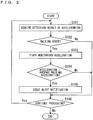
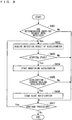
- FIG. 2 and FIG. 3 each illustrate a flowchart showing one example of a flow of processing executed by the smartphone according to one embodiment.
- the processing illustrated in FIG. 2 and FIG. 3 is implemented by the controller 10 executing the control program 9A stored in the storage 9.
- the smartphone 1 starts monitoring acceleration that affects the subject apparatus.
- the smartphone 1 determines whether the monitored acceleration exceeds average walking acceleration, and thereby determines whether behavior of the user has high probability of inducing a traffic accident.
- the controller 10 acquires a detection result of the accelerometer 15 (Step S101).
- the controller 10 determines whether the user of the smartphone 1 is walking based on the detection result of the accelerometer 15 (Step S102).
- Step S102 If the user is walking as a result of the determination (Step S102, Yes), the controller 10 starts monitoring the acceleration as the detection result of the accelerometer 15 (Step S103).
- the controller 10 determines whether the monitored acceleration exceeds average walking acceleration of the user of the subject apparatus (Step S104).
- Step S104 If the monitored acceleration exceeds the average walking acceleration as a result of the determination (Step S104, Yes), the controller 10 issues an alert notification to the user of the subject apparatus (Step S105).
- controller 10 determines whether to continue the processing (Step S106).
- Step S106 If the processing is to be continued as a result of the determination (Step S106, Yes), the controller 10 returns to the processing procedure of Step S101 above. In contrast, if the processing is not to be continued as a result of the determination (Step S106, No), the controller 10 ends the processing illustrated in FIG. 2 .
- Step S104 If the monitored acceleration does not exceed the average walking acceleration as a result of the determination in Step S104 above (Step S104, No), the controller 10 proceeds to the determination of Step S106 above.
- Step S102 If the user is not walking as a result of the determination in Step S102 above (Step S102, No), the controller 10 proceeds to the determination of Step S106 above.
- the smartphone 1 starts monitoring acceleration that affects the subject apparatus.
- the smartphone 1 determines whether the monitored acceleration exceeds average walking acceleration, and thereby determines whether behavior of the user has high probability of inducing a traffic accident.
- the controller 10 acquires a detection result of the accelerometer 15 (Step S201).
- the controller 10 determines whether the user of the smartphone 1 is stopping based on the detection result of the accelerometer 15 (Step S202).
- Step S203 If the user is stopping as a result of the determination (Step S202, Yes), the controller 10 starts monitoring the acceleration as the detection result of the accelerometer 15 (Step S203).
- the controller 10 determines whether the monitored acceleration exceeds average walking acceleration of the user of the subject apparatus (Step S204).
- Step S204 If the monitored acceleration exceeds the average walking acceleration as a result of the determination (Step S204, Yes), the controller 10 issues an alert notification to the user of the subject apparatus (Step S205).
- controller 10 determines whether to continue the processing (Step S206).
- Step S206 If the processing is to be continued as a result of the determination (Step S206, Yes), the controller 10 returns to the processing procedure of Step S201 above. In contrast, if the processing is not to be continued as a result of the determination (Step S206, No), the controller 10 ends the processing illustrated in FIG. 3 .
- Step S204 If the monitored acceleration does not exceed the average walking acceleration as a result of the determination in Step S204 above (Step S204, No), the controller 10 proceeds to the determination of Step S206 above.
- Step S202 If the user is not walking as a result of the determination in Step S202 above (Step S202, No), the controller 10 proceeds to the determination of Step S206 above.
- the smartphone 1 starts monitoring acceleration of the subject apparatus when the user is walking or stopping. Then, the smartphone 1 issues an alert notification to the user on condition that the monitored acceleration exceeds average walking acceleration of the user of the subject apparatus. Therefore, according to one embodiment of the above, unexpected behavior of the user such as sudden running can be recognized as behavior having high probability of inducing a traffic accident, and an alert notification therefor can be issued. With this, notification performed by the electronic apparatus can be improved.
- the smartphone 1 may execute the processing of determining whether behavior of the user has high probability of inducing a traffic accident if the current location of the user or the current time satisfies predetermined conditions, for example. Embodiments of such a case will be described below.
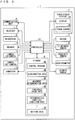
- FIG. 4 illustrates a block diagram showing one example of a functional configuration of the smartphone 1 according to other embodiments.
- the functional configuration of the smartphone 1 illustrated in FIG. 4 is different from the functional configuration of the smartphone 1 illustrated in FIG. 1 in respect of matters described below.
- the storage 9 further stores determination carry-out condition data 9E.
- the determination carry-out condition data 9E corresponds to data that records determination carry-out conditions, on which determination whether behavior of the user of the subject apparatus is behavior having high probability of inducing a traffic accident is carried out.
- the determination carry-out condition data 9E includes information of an area where traffic volume exceeds a threshold value, and information of school-commuting hours for the user.
- the control program 9A can provide a function of determining whether behavior of the user is behavior having high probability of inducing a traffic accident on condition that at least one of the current location of the user of the subject apparatus or the current time satisfies the determination carry-out conditions. Specifically, the control program 9A can determine the current location of the user based on signals acquired from a GPS receiver (not shown), or based on information of a radio base station acquired via the communication unit 6. The control program 9A can determine the current time based on an internal clock (not shown).
- control program 9A determines the current location of the user, the control program 9A can determine whether the determined current location of the user satisfies the determination carry-out conditions, i.e., whether the determined current location of the user is located within an area where traffic volume exceeds a threshold value. If the control program 9A determines the current time, the control program 9A can determine whether the determined current time satisfies the determination carry-out conditions, i.e., whether the determined current time is within school-commuting hours for the user.
- control program 9A can determine whether behavior of the user is behavior having high probability of inducing a traffic accident in a manner similar to that in one embodiment described above.
- the controller 10 can implement a function of determining whether behavior of the user is behavior having high probability of inducing a traffic accident on condition that at least one of the current location of the user of the subject apparatus or the current time satisfies the determination carry-out conditions.
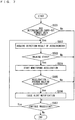
- FIG. 5 and FIG. 6 each illustrate a flowchart showing one example of a flow of processing executed by the smartphone according to other embodiments.
- the processing illustrated in FIG. 5 and FIG. 6 is implemented by the controller 10 executing the control program 9A stored in the storage 9.
- acceleration is acquired to determine whether the user is walking. If the user is walking, acceleration that affects the subject apparatus starts to be monitored to determine whether the monitored acceleration exceeds average walking acceleration. Thus, whether behavior of the user has high probability of inducing a traffic accident is determined.
- the controller 10 determines whether at least one of the current location of the user and the current time satisfies the determination carry-out conditions (Step S301).
- Step S301 If at least one of the current location of the user and the current time satisfies the determination carry-out conditions as a result of the determination (Step S301, Yes), the controller 10 acquires a detection result of the accelerometer 15 (Step S302).
- the controller 10 determines whether the user of the smartphone 1 is walking based on the detection result of the accelerometer 15 (Step S303).
- Step S303 If the user is walking as a result of the determination (Step S303, Yes), the controller 10 starts monitoring the acceleration as the detection result of the accelerometer 15 (Step S304).
- the controller 10 determines whether the monitored acceleration exceeds average walking acceleration of the user of the subject apparatus (Step S305).
- Step S305 If the monitored acceleration exceeds the average walking acceleration as a result of the determination (Step S305, Yes), the controller 10 issues an alert notification to the user of the subject apparatus (Step S306).
- the controller 10 determines whether to continue the processing (Step S307).
- Step S307 If the processing is to be continued as a result of the determination (Step S307, Yes), the controller 10 returns to the processing procedure of Step S302 above. In contrast, if the processing is not to be continued as a result of the determination (Step S307, No), the controller 10 ends the processing illustrated in FIG. 5 .
- Step S305 If the monitored acceleration does not exceed the average walking acceleration as a result of the determination in Step S305 above (Step S305, No), the controller 10 proceeds to the determination of Step S307 above.
- Step S303 If the user is not walking as a result of the determination in Step S303 above (Step S303, No), the controller 10 proceeds to the determination of Step S307 above.
- Step S301, No If both of the current location of the user and the current time do not satisfy the determination carry-out conditions as a result of the determination in Step S301 above (Step S301, No), the controller 10 proceeds to the determination of Step S307 above.
- acceleration is acquired to determine whether the user is stopping. If the user is stopping, acceleration that affects the subject apparatus starts to be monitored to determine whether the monitored acceleration exceeds average walking acceleration. Thus, whether behavior of the user has high probability of inducing a traffic accident is determined.
- the controller 10 determines whether at least one of the current location of the user and the current time satisfies the determination carry-out conditions (Step S401).
- Step S401 If at least one of the current location of the user and the current time satisfies the determination carry-out conditions as a result of the determination (Step S401, Yes), the controller 10 acquires a detection result of the accelerometer 15 (Step S402).
- the controller 10 determines whether the user of the smartphone 1 is stopping based on the detection result of the accelerometer 15 (Step S403).
- Step S404 If the user is stopping as a result of the determination (Step S403, Yes), the controller 10 starts monitoring the acceleration as the detection result of the accelerometer 15 (Step S404).
- the controller 10 determines whether the monitored acceleration exceeds average walking acceleration of the user of the subject apparatus (Step S405).
- Step S406 If the monitored acceleration exceeds the average walking acceleration as a result of the determination (Step S405, Yes), the controller 10 issues an alert notification to the user of the subject apparatus (Step S406).
- controller 10 determines whether to continue the processing (Step S407).
- Step S407 If the processing is to be continued as a result of the determination (Step S407, Yes), the controller 10 returns to the processing procedure of Step S402 above. In contrast, if the processing is not to be continued as a result of the determination (Step S407, No), the controller 10 ends the processing illustrated in FIG. 6 .
- Step S405, No If the monitored acceleration does not exceed the average walking acceleration as a result of the determination in Step S405 above (Step S405, No), the controller 10 proceeds to the determination of Step S407 above.
- Step S403, No If the user is not stopping as a result of the determination in Step S403 above (Step S403, No), the controller 10 proceeds to the determination of Step S407 above.
- Step S401, No If both of the current location of the user and the current time do not satisfy the determination carry-out conditions as a result of the determination in Step S401 above (Step S401, No), the controller 10 proceeds to the determination of Step S407 above.
- the smartphone 1 may regularly access a cloud storage server and download the latest data about determination carry-out conditions via the communication unit 6 such that the determination carry-out condition data 9E stored in the storage 9 is kept updated.
- the determination carry-out condition data 9E may include, as the determination carry-out conditions, information other than the information of an area where traffic volume exceeds a threshold value and the information of school-commuting hours for the user.
- the determination carry-out condition data 9E may include information of an area where the number of traffic accidents happened exceeds a predetermined number, information of an area where exhaust gas concentration exceeds a predetermined proportion, and information of an area where the number of times of sudden driving operation in a vehicle, such as sudden braking and sudden steering, exceeds a predetermined threshold value.
- the smartphone 1 may carry out the determination whether behavior of the user has high probability of inducing a traffic accident in accordance with an outside request.
- One example of embodiments of such a case will be described below.
- the control program 9A can determine whether behavior of the user has high probability of inducing a traffic accident in a manner similar to that in one embodiment described above.
- the determination carry-out request can be sent and received by using various formats, such as Short Message Service (SMS), Multimedia Message Service (MMS), and email.
- SMS Short Message Service
- MMS Multimedia Message Service
- email email
- the controller 10 can implement the processing of determining whether behavior of the user has high probability of inducing a traffic accident in a manner similar to that in one embodiment described above on condition of receiving a determination carry-out request via the communication unit 6.
- FIG. 7 and FIG. 8 each illustrate a flowchart showing one example of a flow of processing executed by the smartphone according to other embodiments.
- the processing illustrated in FIG. 7 and FIG. 8 is implemented by the controller 10 executing the control program 9A stored in the storage 9.
- the controller 10 determines whether a determination carry-out request has been received (Step S501).
- Step S501 If a determination carry-out request has been received as a result of the determination (Step S501, Yes), the controller 10 acquires a detection result of the accelerometer 15 (Step S502).
- the controller 10 determines whether the user of the smartphone 1 is walking based on the detection result of the accelerometer 15 (Step S503).
- Step S503 If the user is walking as a result of the determination (Step S503, Yes), the controller 10 starts monitoring the acceleration as the detection result of the accelerometer 15 (Step S504).
- the controller 10 determines whether the monitored acceleration exceeds average walking acceleration of the user of the subject apparatus (Step S505).
- Step S506 If the monitored acceleration exceeds the average walking acceleration as a result of the determination (Step S505, Yes), the controller 10 issues an alert notification to the user of the subject apparatus (Step S506).
- the controller 10 determines whether to continue the processing (Step S507).
- Step S507 If the processing is to be continued as a result of the determination (Step S507, Yes), the controller 10 returns to the processing procedure of Step S502 above. In contrast, if the processing is not to be continued as a result of the determination (Step S507, No), the controller 10 ends the processing illustrated in FIG. 7 .
- Step S505 If the monitored acceleration does not exceed the average walking acceleration as a result of the determination in Step S505 above (Step S505, No), the controller 10 proceeds to the determination of Step S507 above.
- Step S503, No If the user is not walking as a result of the determination in Step S503 above (Step S503, No), the controller 10 proceeds to the determination of Step S507 above.
- Step S501 If no determination carry-out request has been received in Step S501 above (Step S501, No), the controller 10 proceeds to the determination of Step S507 above.
- the controller 10 determines whether a determination carry-out request has been received (Step S601).
- Step S601 If a determination carry-out request has been received as a result of the determination (Step S601, Yes), the controller 10 acquires a detection result of the accelerometer 15 (Step S602).
- the controller 10 determines whether the user of the smartphone 1 is stopping based on the detection result of the accelerometer 15 (Step S603).
- Step S603 If the user is stopping as a result of the determination (Step S603, Yes), the controller 10 starts monitoring the acceleration as the detection result of the accelerometer 15 (Step S604).
- the controller 10 determines whether the monitored acceleration exceeds average walking acceleration of the user of the subject apparatus (Step S605).
- Step S605 If the monitored acceleration exceeds the average walking acceleration as a result of the determination (Step S605, Yes), the controller 10 issues an alert notification to the user of the subject apparatus (Step S606).
- the controller 10 determines whether to continue the processing (Step S607).
- Step S607 If the processing is to be continued as a result of the determination (Step S607, Yes), the controller 10 returns to the processing procedure of Step S602 above. In contrast, if the processing is not to be continued as a result of the determination (Step S607, No), the controller 10 ends the processing illustrated in FIG. 8 .
- Step S605 If the monitored acceleration does not exceed the average walking acceleration as a result of the determination in Step S605 above (Step S605, No), the controller 10 proceeds to the determination of Step S607 above.
- Step S603 If the user is not stopping as a result of the determination in Step S603 above (Step S603, No), the controller 10 proceeds to the determination of Step S607 above.
- Step S601 If no determination carry-out request has been received in Step S601 above (Step S601, No), the controller 10 proceeds to the determination of Step S607 above.
- the smartphone 1 may execute the above processing illustrated in FIG. 7 and FIG. 8 only if a determination carry-out request has been received from a specific device.
- the smartphone 1 may register an email address of a specific device in advance, and may execute the processing of determining whether behavior of the user has high probability of inducing a traffic accident if an email address of a sender of the incoming determination carry-out request received via email matches the registered email address.
- the user of the smartphone 1 is a student and the user of a specific device is a parent of the student.
- the smartphone 1 uses a detection result of its built-in accelerometer 15 for the processing of determining whether behavior of the user has high probability of inducing a traffic accident.
- the smartphone 1 may execute the processing of determining whether behavior of the user has high probability of inducing a traffic accident by using a sensing result of a wearable terminal worn by the user of the subject apparatus, for example. Embodiments of such a case will be described below.
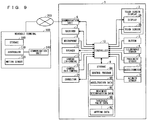
- FIG. 9 illustrates a block diagram showing one example of a functional configuration of the smartphone 1 according to other embodiments.
- the functional configuration of the smartphone 1 illustrated in FIG. 9 is different from the functional configuration of the smartphone 1 illustrated in FIG. 1 in respect of matters described below.
- a wearable terminal 100 is communicatively coupled to the smartphone 1 via a network 200.
- Examples of the wearable device 100 include devices of various wearing types, such as a wristwatch type, an eyeglass type, a shoe type, a hairband type, a key type, a necklace type, a collar type, a finger ring type, a bracelet type, a bag type, and a clothing type.
- the wearable terminal 100 comprises a storage 110, a motion sensor 120, a controller 130, and a communication unit 140.
- the storage 110 stores a program and data used for processing executed by the controller 130.
- the motion sensor 120 measures data for determining motion of the user who wears the wearable terminal 100.
- the motion sensor 120 may be formed as a sensor unit comprising at least one of a load sensor, an accelerometer, a gyro sensor, and a myoelectric sensor. If the wearable terminal 100 is a terminal of a bracelet type, for example, the motion sensor 120 may be formed as a sensor unit that consists of two sensors, namely, an accelerometer and a gyro sensor.
- the controller 130 comprises at least one processor for providing control and processing capability to implement various functions as described in detail below.
- the at least one processor may be implemented as a single integrated circuit (IC) or as multiple communicatively coupled integrated circuits and/or discrete circuits. It is appreciated that the at least one processor can be implemented in accordance with various known technologies.
- the processor comprises one or more circuits or units configurable to perform one or more data computing procedures or processes by executing instructions stored in an associated memory, for example.
- the processor may be implemented as firmware (e.g. discrete logic components) configured to perform one or more data computing procedures or processes.
- the processor may comprise one or more processors, controllers, microprocessors, microcontrollers, application specific integrated circuits (ASICs), digital signal processors, programmable logic devices, field programmable gate arrays, or any combination of these devices or structures, or other known devices and structures, to perform the functions described herein.
- ASICs application specific integrated circuits
- digital signal processors programmable logic devices, field programmable gate arrays, or any combination of these devices or structures, or other known devices and structures, to perform the functions described herein.
- the controller 130 controls motion of the wearable terminal 100 by using the program and data stored in the storage 110. In one embodiment, the controller 130 sends a detection result (measurement data) of the motion sensor 120 to the smartphone 1 via the communication unit 140.
- the communication unit 140 controls sending and receiving of various pieces of data exchanged with the smartphone 1 via the network 200.
- the network 200 includes a wireless network using a standard for short-range wireless communication, such as Bluetooth (trademark) and IEEE802.11.
- the control program 9A can acquire a detection result of the motion sensor 120 of the wearable terminal 100, and can determine whether the user of the subject apparatus is walking by comparing the detection result of the motion sensor 120 with the movement determination data 9D. If the control program 9A determines that the user is walking, the control program 9A can start monitoring the detection result of the motion sensor 120. If the monitored detection result of the motion sensor 120 exceeds a predetermined threshold value contained in the threshold value data 9D, the control program 9A can detect the monitored detection result as sudden behavioral change in the user, and can thereby determine that the behavior of the user is behavior having high probability of inducing a traffic accident.
- the control program 9A can use threshold values individually for acceleration and angular velocity as the predetermined threshold values, for example.
- the threshold value for acceleration for example, average walking acceleration of the user can be adopted.
- the threshold value for angular velocity for example, average walking angular velocity of the user can be adopted.
- control program 9A can determine whether the user of the subject apparatus is stopping by comparing the detection result of the motion sensor 120 with the movement determination data 9D. If the control program 9A determines that the user is stopping, the control program 9A can start monitoring the detection result of the motion sensor 120. Further, similarly to the case of determining that the user is walking, if the monitored detection result of the motion sensor 120 exceeds a predetermined threshold value contained in the threshold value data 9D, the control program 9A can detect the monitored detection result as sudden behavioral change in the user, and can thereby determine that the behavior of the user is behavior having high probability of inducing a traffic accident.
- control program 9A determines that the behavior of the user of the subject apparatus is behavior having high probability of inducing a traffic accident based on the detection result of the motion sensor 120, the control program 9A can provide a function of issuing an alert notification to the user.
- the movement determination data 9C includes information of determination conditions that is used for determining a movement state of the user of the smartphone 1 based on the detection result of the motion sensor 120.
- the information of determination conditions includes at least information for determining, based on the detection result of the motion sensor 120, whether the user is walking or stopping.
- the controller 10 can implement the processing of determining whether the user of the subject apparatus is walking by comparing the detection result of the motion sensor 120 with the movement determination data 9D. If the controller 10 determines that the user is walking, the controller 10 can implement the processing of starting monitoring the detection result of the motion sensor 120 through execution of the control program 9A. If the monitored detection result of the motion sensor 120 exceeds a predetermined threshold value contained in the threshold value data 9D, the controller 10 can, through execution of the control program 9A, detect the monitored detection result as sudden behavioral change in the user, and can thereby implement the processing of determining that the behavior of the user is behavior having high probability of inducing a traffic accident.
- the controller 10 can determine whether the user of the subject apparatus is stopping by comparing the detection result of the motion sensor 120 with the movement determination data 9D. If the controller 10 determines that the user is stopping, the controller 10 can start monitoring the detection result of the motion sensor 120 through execution of the control program 9A. Further, similarly to the case of determining that the user is walking, if the monitored detection result of the motion sensor 120 exceeds a predetermined threshold value contained in the threshold value data 9D, the controller 10 can determine that the behavior of the user is behavior having high probability of inducing a traffic accident through execution of the control program 9A.
- the controller 10 determines that the behavior of the user of the subject apparatus is behavior having high probability of inducing a traffic accident based on the detection result of the motion sensor 120, the controller 10 can issue an alert notification to the user.
- FIG. 10 and FIG. 11 each illustrate a flowchart showing one example of a flow of processing executed by the smartphone according to other embodiments.
- the processing illustrated in FIG. 10 and FIG. 11 is implemented by the controller 10 executing the control program 9A stored in the storage 9.
- the smartphone 1 determines that the user is walking based on a detection result of the motion sensor 120 of the wearable terminal 100, the smartphone 1 starts monitoring the detection result of the motion sensor 120. The smartphone 1 then detects sudden behavioral change in the user based on the monitored detection result of the motion sensor 120, and thereby determines whether behavior of the user has high probability of inducing a traffic accident.
- the controller 10 acquires a detection result of the motion sensor 120 of the wearable terminal 100 (Step S701).
- the controller 10 determines whether the user of the smartphone 1 is walking based on the detection result of the motion sensor 120 (Step S702).
- Step S703 If the user is walking as a result of the determination (Step S702, Yes), the controller 10 starts monitoring the detection result of the motion sensor 120 (Step S703).
- the controller 10 determines whether there was sudden behavioral change in the user based on the detection result of the motion sensor 120 (Step S704). If the detection result of the motion sensor 120 exceeds a predetermined threshold value that is contained in the threshold value data 9D, the controller 10 detects the detection result as sudden behavioral change in the user, and thereby determines that there was sudden behavioral change.
- Step S704 If there was sudden behavioral change in the user as a result of the determination (Step S704, Yes), the controller 10 issues an alert notification to the user of the subject apparatus (Step S705).
- controller 10 determines whether to continue the processing (Step S706).
- Step S706, Yes If the processing is to be continued as a result of the determination (Step S706, Yes), the controller 10 returns to the processing procedure of Step S701 above. In contrast, if the processing is not to be continued as a result of the determination (Step S706, No), the controller 10 ends the processing illustrated in FIG. 10 .
- Step S704 If there was no sudden behavioral change in the user as a result of the determination in Step S704 above (Step S704, No), the controller 10 proceeds to the processing procedure of Step S706 above.
- Step S702 If the user is not walking as a result of the determination in Step S702 above (Step S702, No), the controller 10 proceeds to the processing procedure of Step S706 above.
- the smartphone 1 determines that the user is stopping based on a detection result of the motion sensor 120 of the wearable terminal 100, the smartphone 1 starts monitoring the detection result of the motion sensor 120. The smartphone 1 then detects sudden behavioral change in the user based on the monitored detection result of the motion sensor 120, and thereby determines whether behavior of the user has high probability of inducing a traffic accident.
- the controller 10 acquires a detection result of the motion sensor 120 of the wearable terminal 100 (Step S801).
- the controller 10 determines whether the user of the smartphone 1 is stopping based on the detection result of the motion sensor 120 (Step S802).
- Step S802 If the user is stopping as a result of the determination (Step S802, Yes), the controller 10 starts monitoring the detection result of the motion sensor 120 (Step S803).
- the controller 10 determines whether there was sudden behavioral change in the user based on the detection result of the motion sensor 120 (Step S804). If the detection result of the motion sensor 120 exceeds a predetermined threshold value that is contained in the threshold value data 9D, the controller 10 detects the detection result as sudden behavioral change in the user, and thereby determines that there was sudden behavioral change.
- Step S804 If there was sudden behavioral change in the user as a result of the determination (Step S804, Yes), the controller 10 issues an alert notification to the user of the subject apparatus (Step S805).
- controller 10 determines whether to continue the processing (Step S806).
- Step S806, Yes If the processing is to be continued as a result of the determination (Step S806, Yes), the controller 10 returns to the processing procedure of Step S801 above. In contrast, if the processing is not to be continued as a result of the determination (Step S806, No), the controller 10 ends the processing illustrated in FIG. 11 .
- Step S804 If there was no sudden behavioral change in the user as a result of the determination in Step S804 above (Step S804, No), the controller 10 proceeds to the processing procedure of Step S806 above.
- Step S802 If the user is not stopping as a result of the determination in Step S802 above (Step S802, No), the controller 10 proceeds to the processing procedure of Step S806 above.
Landscapes
- General Physics & Mathematics (AREA)
- Physics & Mathematics (AREA)
- Health & Medical Sciences (AREA)
- Business, Economics & Management (AREA)
- Emergency Management (AREA)
- Gerontology & Geriatric Medicine (AREA)
- General Health & Medical Sciences (AREA)
- Psychiatry (AREA)
- Psychology (AREA)
- Social Psychology (AREA)
- Telephone Function (AREA)
- Emergency Alarm Devices (AREA)
- Traffic Control Systems (AREA)
Abstract
Description
- The present application claims priority to Japanese Patent Application No.
2016-099950 (filed on May 18, 2016 - The present disclosure relates to a notification technology.
- Hitherto, there has been an electronic apparatus that notifies the electronic apparatus or another apparatus at a predetermined timing.
- In one embodiment, an electronic apparatus comprises a controller configured to make determination based on acceleration measured by an accelerometer. The determination is for determining whether behavior of a user of the electronic apparatus is behavior having high probability of inducing a traffic accident. The controller issues an alert notification to the user if the controller determines that the behavior of the user is behavior having high probability of inducing a traffic accident.
- In one embodiment, a control method is a control method executed by an electronic apparatus. The control method comprises a step of determining whether behavior of a user of the electronic apparatus is behavior having high probability of inducing a traffic accident based on acceleration measured by an accelerometer. The control method comprises a step of issuing an alert notification to the user if determination is made that the behavior of the user is behavior having high probability of inducing a traffic accident.
- In one embodiment, a control program makes an electronic apparatus execute the following steps. The control program makes an electronic apparatus execute a step of determining whether behavior of a user of the electronic apparatus is behavior having high probability of inducing a traffic accident based on acceleration measured by an accelerometer. The control program makes an electronic apparatus execute a step of issuing an alert notification to the user if determination is made that the behavior of the user is behavior having high probability of inducing a traffic accident.
-
-
FIG. 1 illustrates a block diagram showing one example of a functional configuration of a smartphone. -
FIG. 2 illustrates a flowchart showing one example of a flow of processing executed by the smartphone. -
FIG. 3 illustrates a flowchart showing one example of a flow of processing executed by the smartphone. -
FIG. 4 illustrates a block diagram showing one example of a functional configuration of the smartphone. -
FIG. 5 illustrates a flowchart showing one example of a flow of processing executed by the smartphone. -
FIG. 6 illustrates a flowchart showing one example of a flow of processing executed by the smartphone. -
FIG. 7 illustrates a flowchart showing one example of a flow of processing executed by the smartphone. -
FIG. 8 illustrates a flowchart showing one example of a flow of processing executed by the smartphone. -
FIG. 9 illustrates a block diagram showing one example of a functional configuration of the smartphone. -
FIG. 10 illustrates a flowchart showing one example of a flow of processing executed by the smartphone. -
FIG. 11 illustrates a flowchart showing one example of a flow of processing executed by the smartphone. - A plurality of embodiments for implementing an electronic apparatus, a control method, and a control program according to the present disclosure will be described in detail with reference to the drawings.
- In the following, description will be given of a portable electronic apparatus as one example of the electronic apparatus according to the present disclosure. The portable electronic apparatus is a smartphone, for example. As long as the portable electronic apparatus is an electronic apparatus that can be carried by a user and has a function of measuring acceleration and air pressure, the portable electronic apparatus may be an apparatus other than a smartphone. For example, the portable electronic apparatus may be an apparatus such as a mobile phone, a tablet, a portable personal computer, a digital camera, a media player, an electronic book reader, a navigator, a pedometer, an activity meter, a head mounted display, hearing aids, earphones, and a gaming machine.
-
FIG. 1 illustrates a block diagram showing one example of a functional configuration of asmartphone 1 according to one embodiment. In the description below, the same reference symbols may be given to like components. In the description below, overlapping description may be omitted. In the description below, thesmartphone 1 may be referred to as a "subject apparatus." - As illustrated in
FIG. 1 , thesmartphone 1 comprises atouch screen display 2, abutton 3, anilluminance sensor 4, aproximity sensor 5, acommunication unit 6, areceiver 7, amicrophone 8, astorage 9, acontroller 10, aspeaker 11, acamera 12, acamera 13, aconnector 14, anaccelerometer 15, and anazimuth sensor 16. - The
touch screen display 2 comprises adisplay 2A and atouch screen 2B. Thedisplay 2A and thetouch screen 2B may be, for example, located in an overlapping manner, located side by side, or located away from each other. If thedisplay 2A and thetouch screen 2B are located in an overlapping manner, for example, one or more sides of thedisplay 2A need not extend along any side of thetouch screen 2B. - The
display 2A comprises a display device such as a liquid crystal display (LCD), an organic electro-luminescence display (OELD), and an inorganic electro-luminescence display (IELD). Thedisplay 2A can display an object such as letters, images, symbols, and figures in a screen. The screen including the object displayed by thedisplay 2A includes a screen referred to as a lock screen, a screen referred to as a home screen, and an application screen displayed during execution of an application. The home screen may also be referred to as a desktop, a standby screen, an idle screen, a standard screen, an application list screen, and a launcher screen. - The
touch screen 2B can detect contact or proximity of a finger, a pen, a stylus pen, or the like on or toward thetouch screen 2B. When fingers, a pen, a stylus pen, or the like comes in contact with or comes closer to thetouch screen 2B, thetouch screen 2B can detect the position thereof on thetouch screen 2B. In the description below, the position where fingers, a pen, a stylus pen, or the like detected by thetouch screen 2B comes in contact with or comes closer to thetouch screen 2B is referred to as a "detection position." Thetouch screen 2B notifies thecontroller 10 about the contact or the proximity of a finger on or toward thetouch screen 2B together with the detection position. Thetouch screen 2B may notify thecontroller 10 about a detection position, to thereby notify thecontroller 10 about detection of contact or proximity. Thetouch screen display 2 comprising thetouch screen 2B can execute operation that can be performed by thetouch screen 2B. In other words, thetouch screen display 2 may perform operation performed by thetouch screen 2B. - The
controller 10 can distinguish types of gesture based on at least one of contact or proximity detected by thetouch screen 2B, a detection position, change in a detection position, duration of contact or proximity, interval of detections of contact or proximity, and the number of times of detection of contact. Thesmartphone 1 comprising thecontroller 10 can execute operation that can be performed by thecontroller 10. In other words, thesmartphone 1 may perform operation performed by thecontroller 10. The gesture is operation performed on thetouch screen 2B using a finger. Operation performed on thetouch screen 2B may be performed on thetouch screen display 2 comprising thetouch screen 2B. Examples of the gesture distinguished by thecontroller 10 via thetouch screen 2B include, but not only limited to, touch, long touch, release, swipe, tap, double tap, long tap, drag, flick, pinch-in, and pinch-out. - A detection method of the
touch screen 2B may be any method, such as an electrostatic capacitance method, a resistance film method, a surface acoustic wave method, an infrared method, and a load detection method. - The
button 3 can receive an operation input from the user. Regarding the number ofbuttons 3, either of asingle button 3 or a plurality ofbuttons 3 is acceptable. Thebutton 3 is one example of an operation button. - The
illuminance sensor 4 can detect illuminance. Illuminance is a value of a flux of light incident on a unit area in a measurement area of theilluminance sensor 4. Theilluminance sensor 4 is, for example, used for adjusting brightness of thedisplay 2A. - The
proximity sensor 5 can detect presence of a nearby object in a touchless manner. Theproximity sensor 5 detects presence of an object based on change in a magnetic field, change in a returning time period of a reflected wave of an ultrasonic wave, or the like. Theproximity sensor 5 detects, for example, approach between thedisplay 2A and a face. Theilluminance sensor 4 and theproximity sensor 5 may be formed as one sensor. Theilluminance sensor 4 may also be used as a proximity sensor. - The
communication unit 6 can wirelessly communicate. Wireless communication standards supported by thecommunication unit 6 include a communication standard for a cellular phone, such as 2G, 3G, 4G, and 5G, and a communication standard for short-range wireless communication. Examples of the communication standard for a cellular phone include Long Term Evolution (LTE), Wideband Code Division Multiple Access (W-CDMA), Worldwide Interoperability for Microwave Access (trademark) (WiMAX), CDMA2000, Personal Digital Cellular (PDC), Global System for Mobile Communications (trademark) (GSM), and Personal Handy-phone System (PHS). Examples of the communication standard for short-range wireless communication include IEEE802.11, Bluetooth (trademark), Infrared Data Association (IrDA), Near Field Communication (NFC), and Wireless Personal Area Network (WPAN). The communication standard for WPAN includes, for example, ZigBee (trademark). Thecommunication unit 6 may support a single or a plurality of the communication standards described above. In one example of one embodiment, thecommunication unit 6 further supports a plurality of communication standards for enabling communication with a roadside unit built at the vicinity of an intersection. In one example of one embodiment, thecommunication unit 6 can receive a radio wave sent from a roadside unit, which sends a radio wave that can be received by apparatus present within a predetermined communication area including an intersection. - The
receiver 7 can output a sound signal sent from thecontroller 10 as sound. Thereceiver 7 can, for example, output sound of a video and sound of music played by thesmartphone 1, and a voice of a calling partner. Themicrophone 8 can convert an incoming voice of the user etc. into a sound signal, and can send the converted signal to thecontroller 10. - The
storage 9 can store a program and data. Thestorage 9 may be used as a working area where processing results of thecontroller 10 are temporarily stored. Thestorage 9 may comprise any non-transitory storage medium such as a semiconductor storage medium and a magnetic storage medium. Thestorage 9 may comprise a plurality of types of storage media. Thestorage 9 may comprise a combination of a storage medium such as a memory card, an optical disc, and a magneto-optical disk, and a reader for the storage medium. Thestorage 9 may comprise a storage device such as random access memory (RAM) that is used as a temporary storage area. - Programs stored in the
storage 9 include applications to be executed in the foreground or the background, and a support program (not shown) that supports operation of the applications. When an application is executed in the foreground, for example, the application displays a screen relating to the application in thedisplay 2A. Examples of the support program include an OS. The programs may be installed in thestorage 9 via wireless communication performed by thecommunication unit 6 or via a non-transitory storage medium. - The
storage 9 can store acontrol program 9A,acceleration data 9B,movement determination data 9C,threshold value data 9D, settingdata 9Z, etc. When providing various functions, thecontrol program 9A can cooperate with various applications. Thecontrol program 9A may cooperate with a cloud storage via thecommunication unit 6, and may access files and data stored in the cloud storage. The cloud storage may store a part or all of the programs and data stored in thestorage 9. - The
control program 9A can provide functions related to the operation of thesmartphone 1. In one example of one embodiment, thecontrol program 9A can provide each of the functions below. - The
control program 9A can provide a function of determining whether behavior of the user of the subject apparatus is behavior having high probability of inducing a traffic accident, based on acceleration as a detection result of theaccelerometer 15. Specifically, thecontrol program 9A can measure vibration and movement that affects the subject apparatus, based on direction and magnitude of acceleration as a detection result of theaccelerometer 15. Thecontrol program 9A can determine whether the user of the subject apparatus is walking by comparing a measurement result of measured vibration and movement with themovement determination data 9D. If thecontrol program 9A determines that the user is walking, thecontrol program 9A can start monitoring the acceleration. If the monitored acceleration exceeds a predetermined threshold value that is contained in thethreshold value data 9D, thecontrol program 9A can determine that the behavior of the user is behavior having high probability of inducing a traffic accident. Thecontrol program 9A can use average walking acceleration of the user as the predetermined threshold value, for example. In this case, if the monitored acceleration exceeds the average walking acceleration of the user, thecontrol program 9A can determine that the behavior of the user is behavior having high probability of inducing a traffic accident. Determining whether the monitored acceleration exceeds the average walking acceleration of the user with the aid of the function provided by thecontrol program 9A, sudden running behavior of the user can be recognized, for example. - Alternatively, the
control program 9A can determine whether the user of the subject apparatus is stopping by comparing a measurement result of vibration and movement that affects the subject apparatus with themovement determination data 9D. If thecontrol program 9A determines that the user is stopping, thecontrol program 9A can start monitoring the acceleration. Further, similarly to the case of determining that the user is walking, if the monitored acceleration exceeds a predetermined threshold value contained in thethreshold value data 9D, thecontrol program 9A can determine that the behavior of the user is behavior having high probability of inducing a traffic accident. - If the
control program 9A determines that the behavior of the user of the subject apparatus is behavior having high probability of inducing a traffic accident, thecontrol program 9A can provide a function of issuing an alert notification to the user. - The
control program 9A can also determine whether the user of the subject apparatus is walking or stopping by using, in place of or as an auxiliary of theaccelerometer 15, at least one of theazimuth sensor 16, themicrophone 8, thecamera 12, thecamera 13, a GPS receiver (not shown), etc. - The
acceleration data 9B includes a value of acceleration acquired by theaccelerometer 15. Theacceleration data 9C includes direction and magnitude of acceleration acquired by theaccelerometer 15. Theacceleration data 9C may include all measurement results measured by theaccelerometer 15. - The
movement determination data 9C includes, for example, information of determination conditions that is used for determining a movement state of the user of thesmartphone 1. The information of determination conditions may include direction and magnitude of acceleration that affects the subject apparatus, an acceleration pattern consisting of time-series changes of direction and magnitude of acceleration, or a combined vector obtained by combining acceleration in thee axes of an X-axis, a Y-axis, and a Z-axis. The information of determination conditions includes at least information for determining, based on the detection result of theaccelerometer 15, whether the user is walking or stopping. - The
threshold value data 9D includes information of a predetermined threshold value that is used for determining whether behavior of the user is behavior having high probability of inducing a traffic accident. Thethreshold value data 9D includes, as the information of the predetermined threshold value, information of average walking acceleration of the user of the subject apparatus that is measured in advance, for example. - The setting
data 9Z includes information of various settings about operation of thesmartphone 1. In one embodiment, the settingdata 9Z includes information of a manner of issuing an alert notification that is to be implemented when determination is made that the behavior of the user is behavior having high probability of inducing a traffic accident. The manner of issuing a notification may include a pattern using at least one of sound, image, light, vibration, etc. - The
controller 10 comprises at least one processor for providing control and processing capability to implement various functions as described in detail below. - In accordance with various embodiments, the at least one processor may be implemented as a single integrated circuit (IC) or as multiple communicatively coupled integrated circuits and/or discrete circuits. It is appreciated that the at least one processor can be implemented in accordance with various known technologies.
- In one embodiment, the processor comprises one or more circuits or units configurable to perform one or more data computing procedures or processes by executing instructions stored in an associated memory, for example. In other embodiments, the processor may be implemented as firmware (e.g. discrete logic components) configured to perform one or more data computing procedures or processes.
- In accordance with various embodiments, the processor may comprise one or more processors, controllers, microprocessors, microcontrollers, application specific integrated circuits (ASICs), digital signal processors, programmable logic devices, field programmable gate arrays, or any combination of these devices or structures, or other known devices and structures, to perform the functions described herein.
- In this example, the
controller 10 comprises an arithmetic processing unit. The arithmetic processing unit comprises, but not only limited to, a central processing unit (CPU), a system-on-a-chip (SoC), a micro control unit (MCU), a field-programmable gate array (FPGA), and a coprocessor, for example. Thecontroller 10 integrally controls operation of thesmartphone 1 so as to implement various functions. Thecontroller 10 is one example of a controller. - The
controller 10 executes a command that is contained in a program stored in thestorage 9, simultaneously with referring to data stored in thestorage 9 as necessary. Then, thecontroller 10 controls a function unit in accordance with the data or the command, and thereby implements various functions. The function unit comprises, but not only limited to, thedisplay 2A, thecommunication unit 6, themicrophone 8, and thespeaker 11, for example. Thecontroller 10 may change control depending on a detection result of a detector. The detector comprises, but not only limited to, thetouch screen 2B, thebutton 3, theilluminance sensor 4, theproximity sensor 5, themicrophone 8, thecamera 12, thecamera 13, theaccelerometer 15, and theazimuth sensor 16, for example. - Through execution of the
control program 9A, thecontroller 10 can implement processing of determining whether behavior of the user of the subject apparatus is behavior having high probability of inducing a traffic accident based on acceleration as a detection result of theaccelerometer 15. Specifically, thecontroller 10 can measure vibration and movement that affects the subject apparatus, based on direction and magnitude of acceleration as a detection result of theaccelerometer 15. Thecontroller 10 can determine whether the user of the subject apparatus is walking by comparing a measurement result of measured vibration and movement with themovement determination data 9D. If thecontroller 10 determines that the user is walking, thecontroller 10 can start monitoring the acceleration. If the monitored acceleration exceeds a predetermined threshold value that is contained in thethreshold value data 9D, thecontroller 10 can determine that the behavior of the user is behavior having high probability of inducing a traffic accident. For example, if the monitored acceleration exceeds average walking acceleration of the user, thecontroller 10 can determine that the behavior of the user is behavior having high probability of inducing a traffic accident. - Alternatively, the
controller 10 can determine whether the user of the subject apparatus is stopping by comparing a measurement result of vibration and movement that affects the subject apparatus with themovement determination data 9D. In this case, if thecontroller 10 determines that the user is stopping, thecontroller 10 can start monitoring the acceleration. Further, similarly to the case of determining that the user is walking, if the monitored acceleration exceeds a predetermined threshold value contained in thethreshold value data 9D, thecontroller 10 can determine that the behavior of the user is behavior having high probability of inducing a traffic accident. - If the
controller 10 determines that the behavior of the user is behavior having high probability of inducing a traffic accident, thecontroller 10 can issue an alert notification to the user. - The
speaker 11 can output a sound signal sent from thecontroller 10 as sound. Thespeaker 11 is, for example, used for outputting a ringtone and music. One of thereceiver 7 and thespeaker 11 may perform the function of the other. - The
camera 12 and thecamera 13 can convert their capturing image into an electrical signal. Thecamera 12 is an in-camera that captures an image of an object that faces thedisplay 2A. Thecamera 13 is an out-camera that captures an image of an object that faces the opposite surface of thedisplay 2A. Thecamera 12 and thecamera 13 may be implemented in thesmartphone 1 as a camera unit in a functionally and physically integrated state that can be used by switching the in-camera and the out-camera. - The
connector 14 is a terminal to which another device is connected. Theconnector 14 may be a general terminal such as Universal Serial Bus (USB), High-Definition Multimedia Interface (trademark) (HDMI), Light Peak (Thunderbolt (trademark)), and an earphone-microphone connector. Theconnector 14 may be a dedicated terminal such as a dock connector. Examples of a device to be connected to theconnector 14 include, but not only limited to, an external storage, a speaker, and a communication device. - The
accelerometer 15 can measure direction and magnitude of acceleration that affects thesmartphone 1. Theaccelerometer 15 is one example of an accelerometer. Theazimuth sensor 16 can, for example, detect a direction of geomagnetism, and can measure a direction (azimuth) of thesmartphone 1 based on the direction of geomagnetism. - The
smartphone 1 may comprise a GPS receiver and a vibrator, in addition to each function unit of the above. The GPS receiver can receive radio wave signals in a predetermined frequency band from GPS satellites. The GPS receiver can perform demodulation processing on incoming radio wave signals, and can send out the processed signals to thecontroller 10. The GPS receiver can assist with processing of calculating the current position of thesmartphone 1. Thesmartphone 1 may comprise a receiver that can receive signals from positioning artificial satellites other than GPS satellites, and may thereby execute processing of calculating the current position. The vibrator can vibrate a part of or theentire smartphone 1. The vibrator comprises a piezoelectric element or an eccentric motor, for example, in order to generate vibration. In thesmartphone 1, a function unit such as a battery that is naturally used for maintaining the functions of thesmartphone 1 as well as a controller that is naturally used for implementing control of thesmartphone 1 is implemented. Note that, in order to determine the current position of the subject apparatus, a receiver for radio wave signals emitted from positioning artificial satellites other than GPS satellites may be implemented in thesmartphone 1. The positioning artificial satellites other than GPS satellites include, for example, artificial satellites of Global Navigation Satellite System (GLONASS), artificial satellites of Indian Regional Navigational Satellite System (IRNSS), artificial satellites of COMPASS, and artificial satellites of GALILEO. - Referring to
FIG. 2 andFIG. 3 , a flow of processing executed by thesmartphone 1 according to one embodiment will be described.FIG. 2 andFIG. 3 each illustrate a flowchart showing one example of a flow of processing executed by the smartphone according to one embodiment. The processing illustrated inFIG. 2 andFIG. 3 is implemented by thecontroller 10 executing thecontrol program 9A stored in thestorage 9. - Referring to
FIG. 2 , description will be given of one example. Specifically, if the user is walking, thesmartphone 1 starts monitoring acceleration that affects the subject apparatus. Thesmartphone 1 then determines whether the monitored acceleration exceeds average walking acceleration, and thereby determines whether behavior of the user has high probability of inducing a traffic accident. - As illustrated in
FIG. 2 , thecontroller 10 acquires a detection result of the accelerometer 15 (Step S101). - Subsequently, the
controller 10 determines whether the user of thesmartphone 1 is walking based on the detection result of the accelerometer 15 (Step S102). - If the user is walking as a result of the determination (Step S102, Yes), the
controller 10 starts monitoring the acceleration as the detection result of the accelerometer 15 (Step S103). - Subsequently, the
controller 10 determines whether the monitored acceleration exceeds average walking acceleration of the user of the subject apparatus (Step S104). - If the monitored acceleration exceeds the average walking acceleration as a result of the determination (Step S104, Yes), the
controller 10 issues an alert notification to the user of the subject apparatus (Step S105). - Subsequently, the
controller 10 determines whether to continue the processing (Step S106). - If the processing is to be continued as a result of the determination (Step S106, Yes), the
controller 10 returns to the processing procedure of Step S101 above. In contrast, if the processing is not to be continued as a result of the determination (Step S106, No), thecontroller 10 ends the processing illustrated inFIG. 2 . - If the monitored acceleration does not exceed the average walking acceleration as a result of the determination in Step S104 above (Step S104, No), the
controller 10 proceeds to the determination of Step S106 above. - If the user is not walking as a result of the determination in Step S102 above (Step S102, No), the
controller 10 proceeds to the determination of Step S106 above. - Referring to
FIG. 3 , description will be given of one example. Specifically, if the user is stopping, thesmartphone 1 starts monitoring acceleration that affects the subject apparatus. Thesmartphone 1 then determines whether the monitored acceleration exceeds average walking acceleration, and thereby determines whether behavior of the user has high probability of inducing a traffic accident. - As illustrated in
FIG. 3 , thecontroller 10 acquires a detection result of the accelerometer 15 (Step S201). - Subsequently, the
controller 10 determines whether the user of thesmartphone 1 is stopping based on the detection result of the accelerometer 15 (Step S202). - If the user is stopping as a result of the determination (Step S202, Yes), the
controller 10 starts monitoring the acceleration as the detection result of the accelerometer 15 (Step S203). - Subsequently, the
controller 10 determines whether the monitored acceleration exceeds average walking acceleration of the user of the subject apparatus (Step S204). - If the monitored acceleration exceeds the average walking acceleration as a result of the determination (Step S204, Yes), the
controller 10 issues an alert notification to the user of the subject apparatus (Step S205). - Subsequently, the
controller 10 determines whether to continue the processing (Step S206). - If the processing is to be continued as a result of the determination (Step S206, Yes), the
controller 10 returns to the processing procedure of Step S201 above. In contrast, if the processing is not to be continued as a result of the determination (Step S206, No), thecontroller 10 ends the processing illustrated inFIG. 3 . - If the monitored acceleration does not exceed the average walking acceleration as a result of the determination in Step S204 above (Step S204, No), the
controller 10 proceeds to the determination of Step S206 above. - If the user is not walking as a result of the determination in Step S202 above (Step S202, No), the
controller 10 proceeds to the determination of Step S206 above. - In one embodiment of the above, the
smartphone 1 starts monitoring acceleration of the subject apparatus when the user is walking or stopping. Then, thesmartphone 1 issues an alert notification to the user on condition that the monitored acceleration exceeds average walking acceleration of the user of the subject apparatus. Therefore, according to one embodiment of the above, unexpected behavior of the user such as sudden running can be recognized as behavior having high probability of inducing a traffic accident, and an alert notification therefor can be issued. With this, notification performed by the electronic apparatus can be improved. - In one embodiment of the above, the
smartphone 1 may execute the processing of determining whether behavior of the user has high probability of inducing a traffic accident if the current location of the user or the current time satisfies predetermined conditions, for example. Embodiments of such a case will be described below. -
FIG. 4 illustrates a block diagram showing one example of a functional configuration of thesmartphone 1 according to other embodiments. The functional configuration of thesmartphone 1 illustrated inFIG. 4 is different from the functional configuration of thesmartphone 1 illustrated inFIG. 1 in respect of matters described below. - The
storage 9 further stores determination carry-outcondition data 9E. The determination carry-outcondition data 9E corresponds to data that records determination carry-out conditions, on which determination whether behavior of the user of the subject apparatus is behavior having high probability of inducing a traffic accident is carried out. The determination carry-outcondition data 9E includes information of an area where traffic volume exceeds a threshold value, and information of school-commuting hours for the user. - The
control program 9A can provide a function of determining whether behavior of the user is behavior having high probability of inducing a traffic accident on condition that at least one of the current location of the user of the subject apparatus or the current time satisfies the determination carry-out conditions. Specifically, thecontrol program 9A can determine the current location of the user based on signals acquired from a GPS receiver (not shown), or based on information of a radio base station acquired via thecommunication unit 6. Thecontrol program 9A can determine the current time based on an internal clock (not shown). If thecontrol program 9A determines the current location of the user, thecontrol program 9A can determine whether the determined current location of the user satisfies the determination carry-out conditions, i.e., whether the determined current location of the user is located within an area where traffic volume exceeds a threshold value. If thecontrol program 9A determines the current time, thecontrol program 9A can determine whether the determined current time satisfies the determination carry-out conditions, i.e., whether the determined current time is within school-commuting hours for the user. If at least one of the determined current location and the determined current time satisfies the determination carry-out conditions, thecontrol program 9A can determine whether behavior of the user is behavior having high probability of inducing a traffic accident in a manner similar to that in one embodiment described above. - Through execution of the
control program 9A, thecontroller 10 can implement a function of determining whether behavior of the user is behavior having high probability of inducing a traffic accident on condition that at least one of the current location of the user of the subject apparatus or the current time satisfies the determination carry-out conditions. - Referring to
FIG. 5 andFIG. 6 , a flow of processing of thesmartphone 1 according to other embodiments will be described.FIG. 5 andFIG. 6 each illustrate a flowchart showing one example of a flow of processing executed by the smartphone according to other embodiments. The processing illustrated inFIG. 5 andFIG. 6 is implemented by thecontroller 10 executing thecontrol program 9A stored in thestorage 9. - Referring to
FIG. 5 , description will be given of one example. Specifically, on condition that at least one of the current location of the user and the current time satisfies the determination carry-out conditions, acceleration is acquired to determine whether the user is walking. If the user is walking, acceleration that affects the subject apparatus starts to be monitored to determine whether the monitored acceleration exceeds average walking acceleration. Thus, whether behavior of the user has high probability of inducing a traffic accident is determined. - As illustrated in
FIG. 5 , thecontroller 10 determines whether at least one of the current location of the user and the current time satisfies the determination carry-out conditions (Step S301). - If at least one of the current location of the user and the current time satisfies the determination carry-out conditions as a result of the determination (Step S301, Yes), the
controller 10 acquires a detection result of the accelerometer 15 (Step S302). - Subsequently, the
controller 10 determines whether the user of thesmartphone 1 is walking based on the detection result of the accelerometer 15 (Step S303). - If the user is walking as a result of the determination (Step S303, Yes), the
controller 10 starts monitoring the acceleration as the detection result of the accelerometer 15 (Step S304). - Subsequently, the
controller 10 determines whether the monitored acceleration exceeds average walking acceleration of the user of the subject apparatus (Step S305). - If the monitored acceleration exceeds the average walking acceleration as a result of the determination (Step S305, Yes), the
controller 10 issues an alert notification to the user of the subject apparatus (Step S306). - Subsequently, the
controller 10 determines whether to continue the processing (Step S307). - If the processing is to be continued as a result of the determination (Step S307, Yes), the
controller 10 returns to the processing procedure of Step S302 above. In contrast, if the processing is not to be continued as a result of the determination (Step S307, No), thecontroller 10 ends the processing illustrated inFIG. 5 . - If the monitored acceleration does not exceed the average walking acceleration as a result of the determination in Step S305 above (Step S305, No), the
controller 10 proceeds to the determination of Step S307 above. - If the user is not walking as a result of the determination in Step S303 above (Step S303, No), the
controller 10 proceeds to the determination of Step S307 above. - If both of the current location of the user and the current time do not satisfy the determination carry-out conditions as a result of the determination in Step S301 above (Step S301, No), the
controller 10 proceeds to the determination of Step S307 above. - Referring to
FIG. 6 , description will be given of one example. Specifically, on condition that at least one of the current location of the user and the current time satisfies the determination carry-out conditions, acceleration is acquired to determine whether the user is stopping. If the user is stopping, acceleration that affects the subject apparatus starts to be monitored to determine whether the monitored acceleration exceeds average walking acceleration. Thus, whether behavior of the user has high probability of inducing a traffic accident is determined. - As illustrated in
FIG. 6 , thecontroller 10 determines whether at least one of the current location of the user and the current time satisfies the determination carry-out conditions (Step S401). - If at least one of the current location of the user and the current time satisfies the determination carry-out conditions as a result of the determination (Step S401, Yes), the
controller 10 acquires a detection result of the accelerometer 15 (Step S402). - Subsequently, the
controller 10 determines whether the user of thesmartphone 1 is stopping based on the detection result of the accelerometer 15 (Step S403). - If the user is stopping as a result of the determination (Step S403, Yes), the
controller 10 starts monitoring the acceleration as the detection result of the accelerometer 15 (Step S404). - Subsequently, the
controller 10 determines whether the monitored acceleration exceeds average walking acceleration of the user of the subject apparatus (Step S405). - If the monitored acceleration exceeds the average walking acceleration as a result of the determination (Step S405, Yes), the
controller 10 issues an alert notification to the user of the subject apparatus (Step S406). - Subsequently, the
controller 10 determines whether to continue the processing (Step S407). - If the processing is to be continued as a result of the determination (Step S407, Yes), the
controller 10 returns to the processing procedure of Step S402 above. In contrast, if the processing is not to be continued as a result of the determination (Step S407, No), thecontroller 10 ends the processing illustrated inFIG. 6 . - If the monitored acceleration does not exceed the average walking acceleration as a result of the determination in Step S405 above (Step S405, No), the
controller 10 proceeds to the determination of Step S407 above. - If the user is not stopping as a result of the determination in Step S403 above (Step S403, No), the
controller 10 proceeds to the determination of Step S407 above. - If both of the current location of the user and the current time do not satisfy the determination carry-out conditions as a result of the determination in Step S401 above (Step S401, No), the
controller 10 proceeds to the determination of Step S407 above. - The
smartphone 1 may regularly access a cloud storage server and download the latest data about determination carry-out conditions via thecommunication unit 6 such that the determination carry-outcondition data 9E stored in thestorage 9 is kept updated. The determination carry-outcondition data 9E may include, as the determination carry-out conditions, information other than the information of an area where traffic volume exceeds a threshold value and the information of school-commuting hours for the user. For example, the determination carry-outcondition data 9E may include information of an area where the number of traffic accidents happened exceeds a predetermined number, information of an area where exhaust gas concentration exceeds a predetermined proportion, and information of an area where the number of times of sudden driving operation in a vehicle, such as sudden braking and sudden steering, exceeds a predetermined threshold value. - In one embodiment of the above, the
smartphone 1 may carry out the determination whether behavior of the user has high probability of inducing a traffic accident in accordance with an outside request. One example of embodiments of such a case will be described below. - On condition of receiving a determination carry-out request via the
communication unit 6, thecontrol program 9A can determine whether behavior of the user has high probability of inducing a traffic accident in a manner similar to that in one embodiment described above. The determination carry-out request can be sent and received by using various formats, such as Short Message Service (SMS), Multimedia Message Service (MMS), and email. - Through execution of the
control program 9A, thecontroller 10 can implement the processing of determining whether behavior of the user has high probability of inducing a traffic accident in a manner similar to that in one embodiment described above on condition of receiving a determination carry-out request via thecommunication unit 6. - Referring to
FIG. 7 andFIG. 8 , a flow of processing of thesmartphone 1 according to other embodiments will be described.FIG. 7 andFIG. 8 each illustrate a flowchart showing one example of a flow of processing executed by the smartphone according to other embodiments. The processing illustrated inFIG. 7 andFIG. 8 is implemented by thecontroller 10 executing thecontrol program 9A stored in thestorage 9. - Referring to
FIG. 7 , description will be given of one example. Specifically, on condition of reception of a determination carry-out request, whether the user is walking is determined. If the user is walking, acceleration that affects the subject apparatus starts to be monitored to determine whether the monitored acceleration exceeds average walking acceleration. Thus, whether behavior of the user has high probability of inducing a traffic accident is determined. - As illustrated in
FIG. 7 , thecontroller 10 determines whether a determination carry-out request has been received (Step S501). - If a determination carry-out request has been received as a result of the determination (Step S501, Yes), the
controller 10 acquires a detection result of the accelerometer 15 (Step S502). - Subsequently, the
controller 10 determines whether the user of thesmartphone 1 is walking based on the detection result of the accelerometer 15 (Step S503). - If the user is walking as a result of the determination (Step S503, Yes), the
controller 10 starts monitoring the acceleration as the detection result of the accelerometer 15 (Step S504). - Subsequently, the
controller 10 determines whether the monitored acceleration exceeds average walking acceleration of the user of the subject apparatus (Step S505). - If the monitored acceleration exceeds the average walking acceleration as a result of the determination (Step S505, Yes), the
controller 10 issues an alert notification to the user of the subject apparatus (Step S506). - Subsequently, the
controller 10 determines whether to continue the processing (Step S507). - If the processing is to be continued as a result of the determination (Step S507, Yes), the
controller 10 returns to the processing procedure of Step S502 above. In contrast, if the processing is not to be continued as a result of the determination (Step S507, No), thecontroller 10 ends the processing illustrated inFIG. 7 . - If the monitored acceleration does not exceed the average walking acceleration as a result of the determination in Step S505 above (Step S505, No), the
controller 10 proceeds to the determination of Step S507 above. - If the user is not walking as a result of the determination in Step S503 above (Step S503, No), the
controller 10 proceeds to the determination of Step S507 above. - If no determination carry-out request has been received in Step S501 above (Step S501, No), the
controller 10 proceeds to the determination of Step S507 above. - Referring to
FIG. 8 , description will be given of one example. Specifically, on condition of reception of a determination carry-out request, whether the user is stopping is determined. If the user is stopping, acceleration that affects the subject apparatus starts to be monitored to determine whether the monitored acceleration exceeds average walking acceleration. Thus, whether behavior of the user has high probability of inducing a traffic accident is determined. - As illustrated in
FIG. 8 , thecontroller 10 determines whether a determination carry-out request has been received (Step S601). - If a determination carry-out request has been received as a result of the determination (Step S601, Yes), the
controller 10 acquires a detection result of the accelerometer 15 (Step S602). - Subsequently, the
controller 10 determines whether the user of thesmartphone 1 is stopping based on the detection result of the accelerometer 15 (Step S603). - If the user is stopping as a result of the determination (Step S603, Yes), the
controller 10 starts monitoring the acceleration as the detection result of the accelerometer 15 (Step S604). - Subsequently, the
controller 10 determines whether the monitored acceleration exceeds average walking acceleration of the user of the subject apparatus (Step S605). - If the monitored acceleration exceeds the average walking acceleration as a result of the determination (Step S605, Yes), the
controller 10 issues an alert notification to the user of the subject apparatus (Step S606). - Subsequently, the
controller 10 determines whether to continue the processing (Step S607). - If the processing is to be continued as a result of the determination (Step S607, Yes), the
controller 10 returns to the processing procedure of Step S602 above. In contrast, if the processing is not to be continued as a result of the determination (Step S607, No), thecontroller 10 ends the processing illustrated inFIG. 8 . - If the monitored acceleration does not exceed the average walking acceleration as a result of the determination in Step S605 above (Step S605, No), the
controller 10 proceeds to the determination of Step S607 above. - If the user is not stopping as a result of the determination in Step S603 above (Step S603, No), the
controller 10 proceeds to the determination of Step S607 above. - If no determination carry-out request has been received in Step S601 above (Step S601, No), the
controller 10 proceeds to the determination of Step S607 above. - The
smartphone 1 may execute the above processing illustrated inFIG. 7 andFIG. 8 only if a determination carry-out request has been received from a specific device. For example, thesmartphone 1 may register an email address of a specific device in advance, and may execute the processing of determining whether behavior of the user has high probability of inducing a traffic accident if an email address of a sender of the incoming determination carry-out request received via email matches the registered email address. One conceivable case is that the user of thesmartphone 1 is a student and the user of a specific device is a parent of the student. - In one embodiment of the above, description has been given of one example where the
smartphone 1 uses a detection result of its built-inaccelerometer 15 for the processing of determining whether behavior of the user has high probability of inducing a traffic accident. Not only limited to such an example, thesmartphone 1 may execute the processing of determining whether behavior of the user has high probability of inducing a traffic accident by using a sensing result of a wearable terminal worn by the user of the subject apparatus, for example. Embodiments of such a case will be described below. -
FIG. 9 illustrates a block diagram showing one example of a functional configuration of thesmartphone 1 according to other embodiments. The functional configuration of thesmartphone 1 illustrated inFIG. 9 is different from the functional configuration of thesmartphone 1 illustrated inFIG. 1 in respect of matters described below. - A
wearable terminal 100 is communicatively coupled to thesmartphone 1 via anetwork 200. Examples of thewearable device 100 include devices of various wearing types, such as a wristwatch type, an eyeglass type, a shoe type, a hairband type, a key type, a necklace type, a collar type, a finger ring type, a bracelet type, a bag type, and a clothing type. - The
wearable terminal 100 comprises a storage 110, amotion sensor 120, acontroller 130, and acommunication unit 140. - The storage 110 stores a program and data used for processing executed by the
controller 130. - The
motion sensor 120 measures data for determining motion of the user who wears thewearable terminal 100. Themotion sensor 120 may be formed as a sensor unit comprising at least one of a load sensor, an accelerometer, a gyro sensor, and a myoelectric sensor. If thewearable terminal 100 is a terminal of a bracelet type, for example, themotion sensor 120 may be formed as a sensor unit that consists of two sensors, namely, an accelerometer and a gyro sensor. - The
controller 130 comprises at least one processor for providing control and processing capability to implement various functions as described in detail below. - In accordance with various embodiments, the at least one processor may be implemented as a single integrated circuit (IC) or as multiple communicatively coupled integrated circuits and/or discrete circuits. It is appreciated that the at least one processor can be implemented in accordance with various known technologies.
- In one embodiment, the processor comprises one or more circuits or units configurable to perform one or more data computing procedures or processes by executing instructions stored in an associated memory, for example. In other embodiments, the processor may be implemented as firmware (e.g. discrete logic components) configured to perform one or more data computing procedures or processes.
- In accordance with various embodiments, the processor may comprise one or more processors, controllers, microprocessors, microcontrollers, application specific integrated circuits (ASICs), digital signal processors, programmable logic devices, field programmable gate arrays, or any combination of these devices or structures, or other known devices and structures, to perform the functions described herein.
- The
controller 130 controls motion of thewearable terminal 100 by using the program and data stored in the storage 110. In one embodiment, thecontroller 130 sends a detection result (measurement data) of themotion sensor 120 to thesmartphone 1 via thecommunication unit 140. - The
communication unit 140 controls sending and receiving of various pieces of data exchanged with thesmartphone 1 via thenetwork 200. Thenetwork 200 includes a wireless network using a standard for short-range wireless communication, such as Bluetooth (trademark) and IEEE802.11. - The
control program 9A can acquire a detection result of themotion sensor 120 of thewearable terminal 100, and can determine whether the user of the subject apparatus is walking by comparing the detection result of themotion sensor 120 with themovement determination data 9D. If thecontrol program 9A determines that the user is walking, thecontrol program 9A can start monitoring the detection result of themotion sensor 120. If the monitored detection result of themotion sensor 120 exceeds a predetermined threshold value contained in thethreshold value data 9D, thecontrol program 9A can detect the monitored detection result as sudden behavioral change in the user, and can thereby determine that the behavior of the user is behavior having high probability of inducing a traffic accident. If themotion sensor 120 is formed as a sensor unit consisting of two sensors of an accelerometer and a gyro sensor, thecontrol program 9A can use threshold values individually for acceleration and angular velocity as the predetermined threshold values, for example. As the threshold value for acceleration, for example, average walking acceleration of the user can be adopted. As the threshold value for angular velocity, for example, average walking angular velocity of the user can be adopted. - Alternatively, the
control program 9A can determine whether the user of the subject apparatus is stopping by comparing the detection result of themotion sensor 120 with themovement determination data 9D. If thecontrol program 9A determines that the user is stopping, thecontrol program 9A can start monitoring the detection result of themotion sensor 120. Further, similarly to the case of determining that the user is walking, if the monitored detection result of themotion sensor 120 exceeds a predetermined threshold value contained in thethreshold value data 9D, thecontrol program 9A can detect the monitored detection result as sudden behavioral change in the user, and can thereby determine that the behavior of the user is behavior having high probability of inducing a traffic accident. - If the
control program 9A determines that the behavior of the user of the subject apparatus is behavior having high probability of inducing a traffic accident based on the detection result of themotion sensor 120, thecontrol program 9A can provide a function of issuing an alert notification to the user. - The
movement determination data 9C includes information of determination conditions that is used for determining a movement state of the user of thesmartphone 1 based on the detection result of themotion sensor 120. The information of determination conditions includes at least information for determining, based on the detection result of themotion sensor 120, whether the user is walking or stopping. - Through execution of the
control program 9A, thecontroller 10 can implement the processing of determining whether the user of the subject apparatus is walking by comparing the detection result of themotion sensor 120 with themovement determination data 9D. If thecontroller 10 determines that the user is walking, thecontroller 10 can implement the processing of starting monitoring the detection result of themotion sensor 120 through execution of thecontrol program 9A. If the monitored detection result of themotion sensor 120 exceeds a predetermined threshold value contained in thethreshold value data 9D, thecontroller 10 can, through execution of thecontrol program 9A, detect the monitored detection result as sudden behavioral change in the user, and can thereby implement the processing of determining that the behavior of the user is behavior having high probability of inducing a traffic accident. - Alternatively, through execution of the
control program 9A, thecontroller 10 can determine whether the user of the subject apparatus is stopping by comparing the detection result of themotion sensor 120 with themovement determination data 9D. If thecontroller 10 determines that the user is stopping, thecontroller 10 can start monitoring the detection result of themotion sensor 120 through execution of thecontrol program 9A. Further, similarly to the case of determining that the user is walking, if the monitored detection result of themotion sensor 120 exceeds a predetermined threshold value contained in thethreshold value data 9D, thecontroller 10 can determine that the behavior of the user is behavior having high probability of inducing a traffic accident through execution of thecontrol program 9A. - If the
controller 10 determines that the behavior of the user of the subject apparatus is behavior having high probability of inducing a traffic accident based on the detection result of themotion sensor 120, thecontroller 10 can issue an alert notification to the user. - Referring to
FIG. 10 andFIG. 11 , a flow of processing executed by thesmartphone 1 according to other embodiments will be described.FIG. 10 andFIG. 11 each illustrate a flowchart showing one example of a flow of processing executed by the smartphone according to other embodiments. The processing illustrated inFIG. 10 andFIG. 11 is implemented by thecontroller 10 executing thecontrol program 9A stored in thestorage 9. - Referring to
FIG. 10 , description will be given of one example. Specifically, if thesmartphone 1 determines that the user is walking based on a detection result of themotion sensor 120 of thewearable terminal 100, thesmartphone 1 starts monitoring the detection result of themotion sensor 120. Thesmartphone 1 then detects sudden behavioral change in the user based on the monitored detection result of themotion sensor 120, and thereby determines whether behavior of the user has high probability of inducing a traffic accident. - As illustrated in
FIG. 10 , thecontroller 10 acquires a detection result of themotion sensor 120 of the wearable terminal 100 (Step S701). - Subsequently, the
controller 10 determines whether the user of thesmartphone 1 is walking based on the detection result of the motion sensor 120 (Step S702). - If the user is walking as a result of the determination (Step S702, Yes), the
controller 10 starts monitoring the detection result of the motion sensor 120 (Step S703). - Subsequently, the
controller 10 determines whether there was sudden behavioral change in the user based on the detection result of the motion sensor 120 (Step S704). If the detection result of themotion sensor 120 exceeds a predetermined threshold value that is contained in thethreshold value data 9D, thecontroller 10 detects the detection result as sudden behavioral change in the user, and thereby determines that there was sudden behavioral change. - If there was sudden behavioral change in the user as a result of the determination (Step S704, Yes), the
controller 10 issues an alert notification to the user of the subject apparatus (Step S705). - Subsequently, the
controller 10 determines whether to continue the processing (Step S706). - If the processing is to be continued as a result of the determination (Step S706, Yes), the
controller 10 returns to the processing procedure of Step S701 above. In contrast, if the processing is not to be continued as a result of the determination (Step S706, No), thecontroller 10 ends the processing illustrated inFIG. 10 . - If there was no sudden behavioral change in the user as a result of the determination in Step S704 above (Step S704, No), the
controller 10 proceeds to the processing procedure of Step S706 above. - If the user is not walking as a result of the determination in Step S702 above (Step S702, No), the
controller 10 proceeds to the processing procedure of Step S706 above. - Referring to
FIG. 11 , description will be given of one example. Specifically, if thesmartphone 1 determines that the user is stopping based on a detection result of themotion sensor 120 of thewearable terminal 100, thesmartphone 1 starts monitoring the detection result of themotion sensor 120. Thesmartphone 1 then detects sudden behavioral change in the user based on the monitored detection result of themotion sensor 120, and thereby determines whether behavior of the user has high probability of inducing a traffic accident. - As illustrated in
FIG. 11 , thecontroller 10 acquires a detection result of themotion sensor 120 of the wearable terminal 100 (Step S801). - Subsequently, the
controller 10 determines whether the user of thesmartphone 1 is stopping based on the detection result of the motion sensor 120 (Step S802). - If the user is stopping as a result of the determination (Step S802, Yes), the
controller 10 starts monitoring the detection result of the motion sensor 120 (Step S803). - Subsequently, the
controller 10 determines whether there was sudden behavioral change in the user based on the detection result of the motion sensor 120 (Step S804). If the detection result of themotion sensor 120 exceeds a predetermined threshold value that is contained in thethreshold value data 9D, thecontroller 10 detects the detection result as sudden behavioral change in the user, and thereby determines that there was sudden behavioral change. - If there was sudden behavioral change in the user as a result of the determination (Step S804, Yes), the
controller 10 issues an alert notification to the user of the subject apparatus (Step S805). - Subsequently, the
controller 10 determines whether to continue the processing (Step S806). - If the processing is to be continued as a result of the determination (Step S806, Yes), the
controller 10 returns to the processing procedure of Step S801 above. In contrast, if the processing is not to be continued as a result of the determination (Step S806, No), thecontroller 10 ends the processing illustrated inFIG. 11 . - If there was no sudden behavioral change in the user as a result of the determination in Step S804 above (Step S804, No), the
controller 10 proceeds to the processing procedure of Step S806 above. - If the user is not stopping as a result of the determination in Step S802 above (Step S802, No), the
controller 10 proceeds to the processing procedure of Step S806 above. - Description herein has been given of characteristic embodiments for the purpose of completely and clearly disclosing a technology relating to the attached claims. The attached claims, however, should not be limited to the above embodiments, but should be embodied by all of the modifications and alternative configurations that may be created by a person skilled in the art within the scope of basic matters described herein.
-
- 1
- smartphone
- 2A
- display
- 2B
- touch screen
- 3
- button
- 4
- illuminance sensor
- 5
- proximity sensor
- 6
- communication unit
- 7
- receiver
- 8
- microphone
- 9
- storage
- 9A
- control program
- 9B
- acceleration data
- 9C
- movement determination data
- 9D
- threshold value data
- 9E
- determination carry-out condition data
- 9Z
- setting data
- 10
- controller
- 11
- speaker
- 12
- camera
- 13
- camera
- 14
- connector
- 15
- accelerometer
- 16
- azimuth sensor
- 100
- wearable terminal
Claims (9)
- An electronic apparatus comprising
a controller configured to make first determination based on acceleration measured by an accelerometer, the first determination being for determining whether behavior of a user of the electronic apparatus is behavior having high probability of inducing a traffic accident, wherein
the controller issues an alert notification to the user if the controller determines that the behavior of the user is behavior having high probability of inducing a traffic accident. - The electronic apparatus according to claim 1, wherein
the controller makes second determination based on the acceleration, the second determination being for determining whether the user is walking,
the controller starts monitoring the acceleration if the controller determines that the user is walking, and
the controller determines that behavior of the user is behavior having high probability of inducing a traffic accident if the monitored acceleration exceeds a predetermined threshold value. - The electronic apparatus according to claim 1, wherein
the controller makes second determination based on the acceleration, the second determination being for determining whether the user is stopping,
the controller starts monitoring the acceleration if the controller determines that the user is stopping, and
the controller determines that behavior of the user is behavior having high probability of inducing a traffic accident if the monitored acceleration exceeds a predetermined threshold value. - The electronic apparatus according to claim 2 or 3, wherein
the controller determines that behavior of the user is behavior having high probability of inducing a traffic accident if the monitored acceleration exceeds average walking acceleration of the user. - The electronic apparatus according to claim 1, further comprising
a storage configured to store conditions for carrying out the first determination, wherein
the controller makes the first determination if at least one of a current location of the user and a current time satisfies the conditions. - The electronic apparatus according to claim 5, wherein
the conditions comprise information of an area where traffic volume exceeds a threshold value, and information of school-commuting hours for the user. - The electronic apparatus according to claim 1, further comprising
a communication unit configured to perform communication with another electronic apparatus, wherein
the controller makes the first determination if the controller receives a request to carry out the first determination from another electronic apparatus via the communication unit. - A control method executed by an electronic apparatus, the control method comprising the steps of:determining whether behavior of a user of the electronic apparatus is behavior having high probability of inducing a traffic accident based on acceleration measured by an accelerometer; andissuing an alert notification to the user if determination is made that the behavior of the user is behavior having high probability of inducing a traffic accident.
- A control program that makes an electronic apparatus execute the steps of:determining whether behavior of a user of the electronic apparatus is behavior having high probability of inducing a traffic accident based on acceleration measured by an accelerometer; andissuing an alert notification to the user if determination is made that the behavior of the user is behavior having high probability of inducing a traffic accident.
Applications Claiming Priority (2)
| Application Number | Priority Date | Filing Date | Title |
|---|---|---|---|
| JP2016099950A JP6529929B2 (en) | 2016-05-18 | 2016-05-18 | Electronic device, control method, and control program |
| PCT/JP2017/018206 WO2017199912A1 (en) | 2016-05-18 | 2017-05-15 | Electronic device, control method, and control program |
Publications (2)
| Publication Number | Publication Date |
|---|---|
| EP3441959A1 true EP3441959A1 (en) | 2019-02-13 |
| EP3441959A4 EP3441959A4 (en) | 2019-04-17 |
Family
ID=60325227
Family Applications (1)
| Application Number | Title | Priority Date | Filing Date |
|---|---|---|---|
| EP17799336.7A Withdrawn EP3441959A4 (en) | 2016-05-18 | 2017-05-15 | ELECTRONIC DEVICE, CONTROL METHOD, AND CONTROL PROGRAM |
Country Status (5)
| Country | Link |
|---|---|
| US (1) | US10614706B2 (en) |
| EP (1) | EP3441959A4 (en) |
| JP (1) | JP6529929B2 (en) |
| CN (1) | CN109155101A (en) |
| WO (1) | WO2017199912A1 (en) |
Families Citing this family (6)
| Publication number | Priority date | Publication date | Assignee | Title |
|---|---|---|---|---|
| US11285368B2 (en) * | 2018-03-13 | 2022-03-29 | Vc Inc. | Address direction guiding apparatus and method |
| US11628805B2 (en) * | 2020-03-23 | 2023-04-18 | Kabushiki Kaisha Tokai Rika Denki Seisakusho | Authentication system, mobile device, processing device, and non-transitory computer-readable medium |
| JP2021147949A (en) * | 2020-03-23 | 2021-09-27 | 株式会社東海理化電機製作所 | Authentication system, mobile device, processing unit, and computer program |
| JP2021147950A (en) * | 2020-03-23 | 2021-09-27 | 株式会社東海理化電機製作所 | Authentication system, mobile device, processing unit, and computer program |
| US20220375103A1 (en) * | 2021-05-19 | 2022-11-24 | Snap Inc. | Automatic media capture based on motion sensor data |
| JP2024039803A (en) * | 2022-09-12 | 2024-03-25 | Necプラットフォームズ株式会社 | Traffic accident prevention system, traffic accident prevention method, traffic accident prevention program, terminal, and cloud device |
Family Cites Families (35)
| Publication number | Priority date | Publication date | Assignee | Title |
|---|---|---|---|---|
| US7116992B1 (en) | 2000-04-05 | 2006-10-03 | Hitachi, Ltd. | Mobile station using positional information |
| JP3855046B2 (en) | 2002-02-20 | 2006-12-06 | 国土交通省国土技術政策総合研究所長 | Information providing position detection method using road-to-vehicle communication |
| JP2005286817A (en) * | 2004-03-30 | 2005-10-13 | Matsushita Electric Ind Co Ltd | Action monitoring terminal, action monitoring system, action monitoring method, and action monitoring program |
| JP4730880B2 (en) | 2004-10-07 | 2011-07-20 | ヤマハ発動機株式会社 | Direction indication information display method and curve information display method for motorcycles |
| JP4547537B2 (en) * | 2004-11-29 | 2010-09-22 | 独立行政法人産業技術総合研究所 | BODY STATE DETECTION DEVICE, DETECTION METHOD AND DETECTION PROGRAM |
| JP2006244261A (en) * | 2005-03-04 | 2006-09-14 | Mitsubishi Pencil Co Ltd | Mobile security device |
| DE102007008387A1 (en) * | 2007-02-21 | 2008-08-28 | Robert Bosch Gmbh | Control device's component for person protection unit, has interface provided for accident sensor system, and inertial sensor system including acceleration sensor system and rotation rate sensor system |
| JP4862693B2 (en) * | 2007-02-28 | 2012-01-25 | トヨタ自動車株式会社 | Communication system, terminal and in-vehicle device |
| JP5125822B2 (en) * | 2008-07-04 | 2013-01-23 | 富士通株式会社 | Portable information processing apparatus, measurement control method, and measurement control program |
| CN102144248B (en) * | 2008-09-04 | 2014-05-14 | 皇家飞利浦电子股份有限公司 | Fall prevention system |
| JP2011035517A (en) * | 2009-07-30 | 2011-02-17 | Newcom Inc | Position tracking and reporting system for mobile communication terminal |
| JP5490490B2 (en) * | 2009-10-30 | 2014-05-14 | 株式会社日立ソリューションズ | Danger detection system |
| JP5407853B2 (en) | 2009-12-28 | 2014-02-05 | 沖電気工業株式会社 | Portable terminal, program thereof and safe driving support system |
| JP2011170559A (en) * | 2010-02-17 | 2011-09-01 | Nippon Telegr & Teleph Corp <Ntt> | Gait monitoring system, information processor, and program thereof |
| JP5115673B2 (en) | 2010-03-16 | 2013-01-09 | 株式会社村田製作所 | Walking shoes |
| CN102103784A (en) * | 2011-02-21 | 2011-06-22 | 惠州Tcl移动通信有限公司 | Anti-missing monitoring system and implementation method thereof |
| JP5866807B2 (en) | 2011-06-06 | 2016-02-24 | 住友電気工業株式会社 | Pedestrian terminal device, computer program, and information notification method |
| FR2976393B1 (en) * | 2011-06-10 | 2013-08-30 | Jw Jean | UNIVERSAL LABELING SYSTEM INTEGRATING AT LEAST TWO LABELS |
| JP5847456B2 (en) * | 2011-06-27 | 2016-01-20 | スパンション エルエルシー | Processor and control method |
| JP2013131143A (en) | 2011-12-22 | 2013-07-04 | Sanyo Electric Co Ltd | Mobile communication device and communication control method |
| JP5887924B2 (en) | 2011-12-28 | 2016-03-16 | 日産自動車株式会社 | Driving support apparatus and method |
| JP5757913B2 (en) | 2012-05-14 | 2015-08-05 | 京セラ株式会社 | Mobile communication device, communication system, control method, and control program |
| JP5379334B1 (en) | 2012-06-12 | 2013-12-25 | オリンパスイメージング株式会社 | Imaging device |
| US9048960B2 (en) | 2012-08-17 | 2015-06-02 | Qualcomm Incorporated | Methods and apparatus for communicating safety message information |
| US9049583B2 (en) * | 2012-08-29 | 2015-06-02 | Cellco Partnership | Impending hazard alert |
| DE102013002284B4 (en) * | 2013-02-08 | 2021-04-15 | Volkswagen Ag | Procedure for the active collision protection of a non-motorized road user |
| JP6238542B2 (en) | 2013-03-27 | 2017-11-29 | 株式会社メガチップス | Lost child search system, program, and lost child search method |
| JP6429368B2 (en) | 2013-08-02 | 2018-11-28 | 本田技研工業株式会社 | Inter-vehicle communication system and method |
| JP6326954B2 (en) | 2014-05-15 | 2018-05-23 | 株式会社デンソー | Communication terminal |
| DE102014219148A1 (en) * | 2014-09-23 | 2016-03-24 | Robert Bosch Gmbh | Method and device for creating a movement model of a road user |
| CN204274420U (en) * | 2014-11-19 | 2015-04-22 | 深圳市华晨阳科技有限公司 | Student is with intelligent health safe electronic bracelet and health management system arranged |
| CN104567858A (en) * | 2014-12-18 | 2015-04-29 | 广东小天才科技有限公司 | Historical track playback method and system based on motion state |
| US9536409B1 (en) * | 2015-08-04 | 2017-01-03 | Intel IP Corporation | System and method for accident avoidance during mobile device usage |
| DE102015219511B4 (en) * | 2015-10-08 | 2019-06-19 | Zf Friedrichshafen Ag | Portable device |
| US9756474B1 (en) * | 2015-12-10 | 2017-09-05 | Massachusetts Mutual Life Insurance Company | Mobile device notification generation |
-
2016
- 2016-05-18 JP JP2016099950A patent/JP6529929B2/en active Active
-
2017
- 2017-05-15 CN CN201780030195.6A patent/CN109155101A/en active Pending
- 2017-05-15 WO PCT/JP2017/018206 patent/WO2017199912A1/en not_active Ceased
- 2017-05-15 EP EP17799336.7A patent/EP3441959A4/en not_active Withdrawn
-
2018
- 2018-11-15 US US16/191,716 patent/US10614706B2/en active Active
Also Published As
| Publication number | Publication date |
|---|---|
| CN109155101A (en) | 2019-01-04 |
| EP3441959A4 (en) | 2019-04-17 |
| JP6529929B2 (en) | 2019-06-12 |
| US20190088113A1 (en) | 2019-03-21 |
| WO2017199912A1 (en) | 2017-11-23 |
| JP2017207933A (en) | 2017-11-24 |
| US10614706B2 (en) | 2020-04-07 |
Similar Documents
| Publication | Publication Date | Title |
|---|---|---|
| US10614706B2 (en) | Electronic apparatus, control method, and non-transitory computer-readable recording medium | |
| WO2017204282A1 (en) | Electronic device, control method, and control program | |
| US20190053001A1 (en) | Mobile electronic apparatus, mobile electronic apparatus control method, and non-transitory computer readable recording medium | |
| EP3147628A1 (en) | Mobile device, control method, and non-transitory storage medium | |
| US10636303B2 (en) | Electronic device, method of communication, and non-transitory computer readable storage medium | |
| US10536810B2 (en) | Electronic apparatus, control method, and non-transitory computer-readable recording medium | |
| US10345331B2 (en) | Mobile electronic device, control method and non-transitory storage medium that stores control program | |
| JP6411404B2 (en) | Electronic device, control method, and control program | |
| JP6823092B2 (en) | Portable electronic devices, control methods and control programs | |
| US10605825B2 (en) | Electronic device, correction control method and non-transitory storage medium | |
| JP6779707B2 (en) | Electronics, control methods, and control programs | |
| JP6636606B2 (en) | Electronic device, control method, and control program | |
| JP6746652B2 (en) | Electronic device, electronic device control method, and electronic device control program | |
| JP6483202B2 (en) | Electronic device, control method, control program, and roadside machine | |
| JP6462056B2 (en) | Electronic device, roadside machine, control method, and control program | |
| JP6833758B2 (en) | Portable electronic devices, portable electronic device control methods and portable electronic device control programs | |
| JP2018056769A (en) | Electronic device, control method, and control program |
Legal Events
| Date | Code | Title | Description |
|---|---|---|---|
| STAA | Information on the status of an ep patent application or granted ep patent |
Free format text: STATUS: THE INTERNATIONAL PUBLICATION HAS BEEN MADE |
|
| PUAI | Public reference made under article 153(3) epc to a published international application that has entered the european phase |
Free format text: ORIGINAL CODE: 0009012 |
|
| STAA | Information on the status of an ep patent application or granted ep patent |
Free format text: STATUS: REQUEST FOR EXAMINATION WAS MADE |
|
| 17P | Request for examination filed |
Effective date: 20181109 |
|
| AK | Designated contracting states |
Kind code of ref document: A1 Designated state(s): AL AT BE BG CH CY CZ DE DK EE ES FI FR GB GR HR HU IE IS IT LI LT LU LV MC MK MT NL NO PL PT RO RS SE SI SK SM TR |
|
| AX | Request for extension of the european patent |
Extension state: BA ME |
|
| A4 | Supplementary search report drawn up and despatched |
Effective date: 20190320 |
|
| RIC1 | Information provided on ipc code assigned before grant |
Ipc: G08B 21/24 20060101ALI20190314BHEP Ipc: G08B 25/04 20060101ALI20190314BHEP Ipc: G08G 1/005 20060101AFI20190314BHEP Ipc: H04M 1/00 20060101ALI20190314BHEP Ipc: G08B 21/04 20060101ALI20190314BHEP |
|
| DAV | Request for validation of the european patent (deleted) | ||
| DAX | Request for extension of the european patent (deleted) | ||
| STAA | Information on the status of an ep patent application or granted ep patent |
Free format text: STATUS: EXAMINATION IS IN PROGRESS |
|
| 17Q | First examination report despatched |
Effective date: 20191204 |
|
| STAA | Information on the status of an ep patent application or granted ep patent |
Free format text: STATUS: THE APPLICATION IS DEEMED TO BE WITHDRAWN |
|
| 18D | Application deemed to be withdrawn |
Effective date: 20201006 |