EP3441608B1 - Procédé et dispositif de démarrage d'un moteur thermique dans un véhicule lors un passage à gué - Google Patents
Procédé et dispositif de démarrage d'un moteur thermique dans un véhicule lors un passage à gué Download PDFInfo
- Publication number
- EP3441608B1 EP3441608B1 EP18186223.6A EP18186223A EP3441608B1 EP 3441608 B1 EP3441608 B1 EP 3441608B1 EP 18186223 A EP18186223 A EP 18186223A EP 3441608 B1 EP3441608 B1 EP 3441608B1
- Authority
- EP
- European Patent Office
- Prior art keywords
- starter
- starting
- engine
- combustion engine
- alternator
- Prior art date
- Legal status (The legal status is an assumption and is not a legal conclusion. Google has not performed a legal analysis and makes no representation as to the accuracy of the status listed.)
- Active
Links
Images

Classifications
-
- F—MECHANICAL ENGINEERING; LIGHTING; HEATING; WEAPONS; BLASTING
- F02—COMBUSTION ENGINES; HOT-GAS OR COMBUSTION-PRODUCT ENGINE PLANTS
- F02N—STARTING OF COMBUSTION ENGINES; STARTING AIDS FOR SUCH ENGINES, NOT OTHERWISE PROVIDED FOR
- F02N11/00—Starting of engines by means of electric motors
- F02N11/04—Starting of engines by means of electric motors the motors being associated with current generators
-
- F—MECHANICAL ENGINEERING; LIGHTING; HEATING; WEAPONS; BLASTING
- F02—COMBUSTION ENGINES; HOT-GAS OR COMBUSTION-PRODUCT ENGINE PLANTS
- F02N—STARTING OF COMBUSTION ENGINES; STARTING AIDS FOR SUCH ENGINES, NOT OTHERWISE PROVIDED FOR
- F02N11/00—Starting of engines by means of electric motors
- F02N11/006—Starting of engines by means of electric motors using a plurality of electric motors
-
- F—MECHANICAL ENGINEERING; LIGHTING; HEATING; WEAPONS; BLASTING
- F02—COMBUSTION ENGINES; HOT-GAS OR COMBUSTION-PRODUCT ENGINE PLANTS
- F02N—STARTING OF COMBUSTION ENGINES; STARTING AIDS FOR SUCH ENGINES, NOT OTHERWISE PROVIDED FOR
- F02N11/00—Starting of engines by means of electric motors
- F02N11/08—Circuits specially adapted for starting of engines
- F02N11/0814—Circuits specially adapted for starting of engines comprising means for controlling automatic idle-start-stop
- F02N11/0818—Conditions for starting or stopping the engine or for deactivating the idle-start-stop mode
- F02N11/0833—Vehicle conditions
- F02N11/0837—Environmental conditions thereof, e.g. traffic, weather or road conditions
-
- F—MECHANICAL ENGINEERING; LIGHTING; HEATING; WEAPONS; BLASTING
- F02—COMBUSTION ENGINES; HOT-GAS OR COMBUSTION-PRODUCT ENGINE PLANTS
- F02N—STARTING OF COMBUSTION ENGINES; STARTING AIDS FOR SUCH ENGINES, NOT OTHERWISE PROVIDED FOR
- F02N11/00—Starting of engines by means of electric motors
- F02N11/10—Safety devices
-
- F—MECHANICAL ENGINEERING; LIGHTING; HEATING; WEAPONS; BLASTING
- F02—COMBUSTION ENGINES; HOT-GAS OR COMBUSTION-PRODUCT ENGINE PLANTS
- F02D—CONTROLLING COMBUSTION ENGINES
- F02D2200/00—Input parameters for engine control
- F02D2200/02—Input parameters for engine control the parameters being related to the engine
- F02D2200/04—Engine intake system parameters
- F02D2200/0418—Air humidity
-
- F—MECHANICAL ENGINEERING; LIGHTING; HEATING; WEAPONS; BLASTING
- F02—COMBUSTION ENGINES; HOT-GAS OR COMBUSTION-PRODUCT ENGINE PLANTS
- F02N—STARTING OF COMBUSTION ENGINES; STARTING AIDS FOR SUCH ENGINES, NOT OTHERWISE PROVIDED FOR
- F02N11/00—Starting of engines by means of electric motors
- F02N11/08—Circuits specially adapted for starting of engines
- F02N11/0848—Circuits specially adapted for starting of engines with means for detecting successful engine start, e.g. to stop starter actuation
-
- F—MECHANICAL ENGINEERING; LIGHTING; HEATING; WEAPONS; BLASTING
- F02—COMBUSTION ENGINES; HOT-GAS OR COMBUSTION-PRODUCT ENGINE PLANTS
- F02N—STARTING OF COMBUSTION ENGINES; STARTING AIDS FOR SUCH ENGINES, NOT OTHERWISE PROVIDED FOR
- F02N2200/00—Parameters used for control of starting apparatus
- F02N2200/02—Parameters used for control of starting apparatus said parameters being related to the engine
- F02N2200/024—Engine oil temperature
-
- F—MECHANICAL ENGINEERING; LIGHTING; HEATING; WEAPONS; BLASTING
- F02—COMBUSTION ENGINES; HOT-GAS OR COMBUSTION-PRODUCT ENGINE PLANTS
- F02N—STARTING OF COMBUSTION ENGINES; STARTING AIDS FOR SUCH ENGINES, NOT OTHERWISE PROVIDED FOR
- F02N2200/00—Parameters used for control of starting apparatus
- F02N2200/12—Parameters used for control of starting apparatus said parameters being related to the vehicle exterior
- F02N2200/124—Information about road conditions, e.g. road inclination or surface
-
- F—MECHANICAL ENGINEERING; LIGHTING; HEATING; WEAPONS; BLASTING
- F02—COMBUSTION ENGINES; HOT-GAS OR COMBUSTION-PRODUCT ENGINE PLANTS
- F02N—STARTING OF COMBUSTION ENGINES; STARTING AIDS FOR SUCH ENGINES, NOT OTHERWISE PROVIDED FOR
- F02N2300/00—Control related aspects of engine starting
- F02N2300/20—Control related aspects of engine starting characterised by the control method
- F02N2300/2002—Control related aspects of engine starting characterised by the control method using different starting modes, methods, or actuators depending on circumstances, e.g. engine temperature or component wear
-
- Y—GENERAL TAGGING OF NEW TECHNOLOGICAL DEVELOPMENTS; GENERAL TAGGING OF CROSS-SECTIONAL TECHNOLOGIES SPANNING OVER SEVERAL SECTIONS OF THE IPC; TECHNICAL SUBJECTS COVERED BY FORMER USPC CROSS-REFERENCE ART COLLECTIONS [XRACs] AND DIGESTS
- Y02—TECHNOLOGIES OR APPLICATIONS FOR MITIGATION OR ADAPTATION AGAINST CLIMATE CHANGE
- Y02T—CLIMATE CHANGE MITIGATION TECHNOLOGIES RELATED TO TRANSPORTATION
- Y02T10/00—Road transport of goods or passengers
- Y02T10/10—Internal combustion engine [ICE] based vehicles
- Y02T10/40—Engine management systems
Definitions
- the invention relates to a method of operating a device for starting a heat engine.
- the invention also relates to a device for starting a heat engine.
- the invention further relates to a heat engine comprising an alternator-starter, a starter and a device for starting a heat engine.
- the invention finally relates to a computer program product and a data recording medium.
- the aim of the invention is to provide a device for starting a heat engine and a method of operating a device for starting a heat engine remedying the above drawbacks.
- the invention proposes in particular a starting device according to claim 6 and a starting method making starting reliable according to claim 1.
- the second mode of operation may include, following a request step to start the thermal engine, the first activation step.
- the second mode of operation may include, following an unsuccessful attempt to start the engine and until the next start of the engine, an implementation of the first mode of operation.
- a device for starting a heat engine comprises hardware and/or software elements implementing the method defined above, in particular hardware and/or software elements designed to implement the method defined above.
- a heat engine system comprises an alternator-starter, a starter, a device defined above and a heat engine.
- a motor vehicle comprises a previously defined thermal engine system or a previously defined device.
- a computer program product can be downloaded from a communications network and/or recorded on a data medium readable by a computer and/or executable by a computer. It includes computer program code instructions for implementing the method defined above, when the program is executed by a computer.
- a data recording medium readable by a computer, on which a computer program is recorded comprises program code instructions for implementing the method defined above.
- the motor vehicle 100 comprises a thermal engine system 60.
- the thermal engine system comprises an alternator-starter 10, a starter 15, a starting device 40 and a thermal engine 20.
- the starting device 40 comprises hardware elements 25, 30, 50 and/or software implementing or governing an operating method of the device 40 for starting the thermal engine 20.
- the device 40 comprises the hardware elements and/or software making it possible to implement the steps of the operating method of the device 40 for starting the thermal engine 20.
- These different elements may include software modules.
- the starter immersion detector 25 is able to detect whether the starter 15 is submerged or whether a leak has occurred in the starter sealing system.
- the detector may include a sensor for the presence of water in a starter housing.
- the temperature sensor 30 is able to determine a temperature of the heat engine 20.
- the sensor may comprise an engine lubricating oil temperature sensor or an engine coolant temperature sensor.
- the computer 50 is able to receive and process the signals from the submerged starter detector 25 and from the measurement of the temperature of the heat engine 20.
- the computer 50 is arranged so as to transmit activation signals from the alternator. starter 10 and starter 15.
- the computer may include control outputs for controlled power switches of the starter and the starter-alternator.
- the computer may be a dedicated computer for the starting device. Alternatively, the ECU can also manage other engine system functions.
- a mode of execution of the operating method of a device 40 for starting a heat engine 20 is described below with reference to the figure 2 .
- the method includes a starter activation step and a starter-alternator activation step.
- the two stages are advantageously exclusive of each other.
- the activation steps are advantageously activation steps of the starter or the starter-alternator carried out to start the engine.
- the step of activating the alternator-starter 10 includes transmitting an activation signal, in particular a power supply signal, from the alternator-starter 10.
- the step of activating the starter includes emission of an activation signal, in particular a power supply signal, from the starter 15.
- the signals are for example emitted by the computer. These signals are for example control signals for controlled switches power supply to the starter and the starter-alternator.
- the starter-alternator activation step therefore causes a power supply or activation of the starter-alternator.
- the starter activation step therefore causes a power supply or activation of the starter.
- This mode of execution is described in the case where the method is in a first mode of operation and then in the case where the method is in a second mode of operation.
- the first mode of operation is implemented between the powering up of the device 40, in particular the computer 50, and the first start of the engine following this powering up.
- the second operating mode is implemented for the rest of the time, that is to say after the first start of the engine following power-up and until the device 40 or the computer 50 is disconnected.
- the starting device operates in the first mode between each new power-up of the starting device or the computer 50 and each first start of the engine.
- the rest of the time in particular from the first start to disconnection of the starting device or the computer 50, the starting device operates in the second mode.
- a driver Before starting the thermal engine of the motor vehicle, a driver turns on the ignition using the key of the motor vehicle or using any other means such as a Start/Stop button for example. It is at the end of this contact activation step that the process is implemented. A request to start the engine can be made at the same time as the ignition is switched on.
- a step of detecting a submerged starter and/or leak in a sealing system of the starter E12 is implemented by means of the submerged starter detector 25. This step of detection is for example carried out using the detector for the presence of water in a starter casing. If it is determined that the starter 15 is submerged and/or if there is a leak in the sealing system of the starter, the activation step involving starting the engine with the alternator is implemented. starter E14. If during the step of detecting a submerged starter and/or leak in a sealing system of the E12 starter, it is not detected that the starter is submerged and no leak is detected in the sealing system of the starter, we move on to a step of measuring the temperature of the engine E13.
- the step of measuring the temperature of the engine E13 is implemented by means of a temperature sensor 30. If the temperature of the heat engine 20 is lower than a first threshold Level 1, the step of activation involving starting the engine with the E17 starter. If the temperature of the heat engine 20 is higher than the first threshold Level 1, the activation step is implemented involving starting the engine with the alternator-starter E14.
- start control step E15 it is verified that the thermal engine 20 has started. If the heat engine has started, we move to an engine stop waiting step E24 of the second operating mode of the process and we exit the first operating mode and enter the second operating mode. During the motor stop waiting step E24, we wait for a definitive or temporary stop of the engine at the request of the driver or an on-board system of the motor vehicle. If, during the start control step E15, it is detected that the engine has not started, we move on to a step of detecting a submerged starter and/or leak in a sealing system of the starter E16.
- activation step E17 involves starting the engine. with the starter. If, during step E16, it is detected that the starter is submerged and/or that there is a leak in the sealing system of the starter, the activation step is implemented, involving starting with the E14 starter-alternator.
- a starting control stage E23 we move on to a starting control stage E23.
- the invention also relates to a computer program product downloadable from a communications network and/or recorded on a data medium readable by the computer 50 and/or executable by the computer 50. It includes computer program code instructions of implementation of the method as described above when the program is executed by the computer 50.
- the invention also relates to a data recording medium, readable by the computer 50, on which is recorded a computer program which includes code instructions of the program for implementing the method as described above.
- the starting method makes it possible to avoid the risk of immobilization of the vehicle if the driver attempts to restart the vehicle when the engine has been stopped while the vehicle has stopped. immobilized in the middle of a ford.
- unsuccessful starting attempts using the starter-alternator are avoided in the event of low temperatures.
- the starting process makes it possible to reduce the number of occurrences of use of the starter and also makes it possible not to oversize the starter for Stop/Start uses and stopping the vehicle with the engine disengaged.
Landscapes
- Engineering & Computer Science (AREA)
- Chemical & Material Sciences (AREA)
- Combustion & Propulsion (AREA)
- Mechanical Engineering (AREA)
- General Engineering & Computer Science (AREA)
- Life Sciences & Earth Sciences (AREA)
- Health & Medical Sciences (AREA)
- Atmospheric Sciences (AREA)
- Environmental & Geological Engineering (AREA)
- Toxicology (AREA)
- Combined Controls Of Internal Combustion Engines (AREA)
- Control Of Vehicle Engines Or Engines For Specific Uses (AREA)
- Ignition Installations For Internal Combustion Engines (AREA)
Description
- L'invention concerne un procédé de fonctionnement d'un dispositif de démarrage d'un moteur thermique.
- L'invention concerne également un dispositif de démarrage d'un moteur thermique.
- L'invention concerne en outre un moteur thermique comprenant un alterno-démarreur, un démarreur et un dispositif de démarrage d'un moteur thermique.
- L'invention concerne finalement un produit programme d'ordinateur et un support d'enregistrement de données.
- Les nouvelles contraintes des pompes à carburant haute pression 3000 bars impliquent un déplacement du démarreur en partie basse du moteur. Ce dernier se retrouve alors dans des zones inondées en cas de passage de gué. On risque alors une immobilisation du véhicule si le conducteur tente un redémarrage de son véhicule lorsque le moteur de ce dernier a été arrêté alors que le véhicule s'est immobilisé au milieu d'un gué.
- On connaît aussi des véhicules équipés d'un alterno-démarreur. Il est possible d'utiliser l'alterno-démarreur afin d'assister le moteur thermique durant la phase d'accélération ou afin de démarrer le moteur thermique du véhicule. Mais l'utilisation de l'alterno-démarreur pose des problèmes par grand froid (typiquement T° < -20°C) lorsque du givre s'est déposé sur la courroie d'entraînement des accessoires. Il fait alors glisser la courroie en phase de démarrage du moteur thermique. Ceci peut rendre impossible un démarrage par grand froid avec un alterno-démarreur. Cette difficulté est particulièrement importante avec un moteur à fort taux comme un moteur Diesel, car ce taux élevé nécessite un couple d'entraînement élevé pour démarrer le moteur. La demande
EP 2 907 716 A2 en est un des nombreux exemples. - Le but de l'invention est de fournir un dispositif de démarrage d'un moteur thermique et un procédé de fonctionnement d'un dispositif de démarrage d'un moteur thermique remédiant aux inconvénients ci-dessus. L'invention propose en particulier un dispositif de démarrage selon la revendication 6 et un procédé de démarrage fiabilisant le démarrage selon la revendication 1.
- Selon l'invention, un procédé régit le fonctionnement d'un dispositif de démarrage d'un moteur thermique comprenant un alterno-démarreur et un démarreur. Le procédé comprend une première et une deuxième étapes d'activation exclusives l'une de l'autre:
- la première étape d'activation comprenant une émission d'un signal d'activation, notamment un signal d'alimentation, de l'alterno-démarreur, et
- la deuxième étape d'activation comprenant une émission d'un signal d'activation, notamment un signal d'alimentation, du démarreur.
- Le procédé comprend
- un premier mode de fonctionnement mis en oeuvre entre une mise sous tension du dispositif de démarrage et le premier démarrage du moteur faisant suite à cette mise sous tension, et
- un deuxième mode de fonctionnement le reste du temps.
- Le premier mode de fonctionnement comprend, suite à une étape de demande de démarrage du moteur thermique, la première étape d'activation s'il est déterminé que :
- le démarreur est immergé ou il existe une fuite dans un système d'étanchéité du démarreur ; ou
- en cas de première tentative de démarrage du moteur dans ce premier mode, le démarreur n'est pas immergé et une température du moteur est supérieure à un premier seuil.
- Le premier mode de fonctionnement comprend, suite à une étape de demande de démarrage du moteur thermique, la deuxième étape d'activation s'il est déterminé que :
- le démarreur n'est pas immergé ; ou
- en cas de première tentative de démarrage du moteur dans ce premier mode, le démarreur n'est pas immergé et une température du moteur est inférieure à un premier seuil.
- Le deuxième mode de fonctionnement peut comprendre, suite à une étape de demande de démarrage du moteur thermique, la première étape d'activation.
- Le deuxième mode de fonctionnement peut comprendre, suite à une tentative infructueuse de démarrage du moteur et jusqu'au prochain démarrage du moteur, une mise en oeuvre du premier mode de fonctionnement.
- Selon l'invention, un dispositif de démarrage d'un moteur thermique comprend des éléments matériels et/ou logiciels mettant en oeuvre le procédé défini précédemment, notamment des éléments matériels et/ou logiciel conçus pour mettre en oeuvre le procédé défini précédemment.
- Les moyens matériels comprennent :
- un détecteur de démarreur immergé, notamment mettant en oeuvre une étape de détection,
- un capteur de température, notamment mettant en oeuvre une étape de mesure, et
- un calculateur.
- Selon l'invention, un système de moteur thermique comprend un alterno-démarreur, un démarreur, un dispositif défini précédemment et un moteur thermique.
- Selon l'invention, un véhicule automobile comprend un système de moteur thermique défini précédemment ou un dispositif défini précédemment.
- Selon l'invention, un produit programme d'ordinateur selon la revendication 9 est téléchargeable depuis un réseau de communication et/ou enregistré sur un support de données lisible par un calculateur et/ou exécutable par un calculateur. Il comprend des instructions de code de programme informatique de mise en oeuvre du procédé défini précédemment, lorsque le programme est exécuté par un calculateur.
- Selon l'invention, un support d'enregistrement de données selon la revendication 10, lisible par un calculateur, sur lequel est enregistré un programme d'ordinateur comprend des instructions de code de programme de mise en oeuvre du procédé défini précédemment.
- Ces objets, caractéristiques et avantages de la présente invention seront exposés en détail dans la description suivante d'un mode de réalisation d'un dispositif de démarrage d'un moteur thermique selon l'invention et d'un mode d'exécution d'un procédé de fonctionnement d'un dispositif de démarrage d'un moteur thermique selon l'invention fait à titre non limitatif en relation avec les figures jointes parmi lesquelles:
- La
figure 1 représente un véhicule automobile équipé d'un dispositif de démarrage d'un moteur thermique. - La
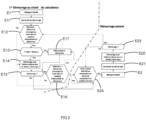
figure 2 représente un ordinogramme d'un mode d'exécution d'un procédé de fonctionnement d'un dispositif de démarrage d'un moteur thermique. - Un exemple d'un véhicule automobile 100 équipé d'un mode de réalisation d'un dispositif 40 de démarrage est décrit ci-après en référence à la
figure 1 . - Le véhicule automobile 100 comprend un système de moteur thermique 60. Le système de moteur thermique comprend un alterno-démarreur 10, un démarreur 15, un dispositif 40 de démarrage et un moteur thermique 20.
- Le dispositif 40 de démarrage comprend des éléments matériels 25, 30, 50 et/ou logiciels mettant en oeuvre ou régissant un procédé de fonctionnement du dispositif 40 de démarrage du moteur thermique 20. En particulier, le dispositif 40 comprend les éléments matériels et/ou logiciels permettant de mettre en oeuvre les étapes du procédé de fonctionnement du dispositif 40 de démarrage du moteur thermique 20. Ces différents éléments peuvent comprendre des modules logiciels.
- Par exemple, les éléments matériels et/ou logiciels peuvent comprendre tout ou partie des éléments suivants :
- un détecteur d'immersion du démarreur 25 ;
- un capteur de température 30 ;
- un calculateur 50.
- Le détecteur d'immersion du démarreur 25 est en mesure de détecter si le démarreur 15 est immergé ou si une fuite s'est produite dans le système d'étanchéité du démarreur. Par exemple, le détecteur peut comprendre un capteur de présence d'eau dans un carter du démarreur.
- Le capteur de température 30 est à même de déterminer une température du moteur thermique 20. Par exemple, le capteur peut comprendre un capteur de température de l'huile de lubrification du moteur ou un capteur de température du liquide de refroidissement du moteur.
- Le calculateur 50 est en mesure de recevoir et de traiter les signaux du détecteur de démarreur immergé 25 et de la mesure de la température du moteur thermique 20. Le calculateur 50 est agencé de sorte à transmettre des signaux d'activation de l'alterno-démarreur 10 et du démarreur 15. Notamment, le calculateur peut comprendre des sorties de commande d'interrupteurs commandés d'alimentation du démarreur et de l'alterno-démarreur. Le calculateur peut être un calculateur dédié du dispositif de démarrage. Alternativement, le calculateur peut également gérer d'autres fonctions du système moteur.
- Un mode d'exécution du procédé de fonctionnement d'un dispositif 40 de démarrage d'un moteur thermique 20 est décrit ci-après en référence à la
figure 2 . - Le procédé comprend une étape d'activation du démarreur et une étape d'activation de l'alterno-démarreur. Les deux étapes sont avantageusement exclusives l'une de l'autre. Les étapes d'activation sont avantageusement des étapes d'activation du démarreur ou de l'alterno-démarreur effectuées pour démarrer le moteur. L'étape d'activation de l'alterno-démarreur 10 comprend une émission d'un signal d'activation, notamment d'un signal d'alimentation, de l'alterno-démarreur 10. L'étape d'activation du démarreur comprend une émission d'un signal d'activation, notamment un signal d'alimentation, du démarreur 15. Les signaux sont par exemple émis par le calculateur. Ces signaux sont par exemple des signaux de commande d'interrupteurs commandés d'alimentation du démarreur et de l'alterno-démarreur. L'étape d'activation de l'alterno-démarreur provoque donc une alimentation électrique ou une activation de l'alterno-démarreur. L'étape d'activation du démarreur provoque donc une alimentation électrique ou une activation du démarreur.
- Ce mode d'exécution est décrit dans le cas où le procédé se trouve dans un premier mode de fonctionnement et ensuite dans le cas où le procédé se trouve dans un deuxième mode de fonctionnement. Le premier mode de fonctionnement est mis en oeuvre entre la mise sous tension du dispositif 40 notamment du calculateur 50, et le premier démarrage du moteur faisant suite à cette mise sous tension. Le deuxième mode de fonctionnement est mis en oeuvre le reste du temps, c'est-à-dire après le premier démarrage du moteur faisant suite à la mise sous tension et jusqu'à la déconnexion du dispositif 40 ou du calculateur 50. Autrement dit, le dispositif de démarrage fonctionne selon le premier mode entre chaque nouvelle mise sous tension du dispositif de démarrage ou du calculateur 50 et chaque premier démarrage du moteur. Le reste du temps, en particulier du premier démarrage à la déconnexion du dispositif de démarrage ou du calculateur 50, le dispositif de démarrage fonctionne selon le deuxième mode.
- Considérons que le procédé se trouve dans le premier mode de fonctionnement.
- Avant de démarrer le moteur thermique du véhicule automobile, un conducteur enclenche le contact au moyen de la clé du véhicule automobile ou à l'aide de tout autre moyen tel qu'un bouton Start/Stop par exemple. C'est à l'issue de cette étape d'enclenchement du contact que le procédé est mis en oeuvre. Une demande de démarrage du moteur peut être réalisée concomitamment à l'enclenchement du contact.
- Suite à une étape de demande de démarrage du moteur thermique E11, une étape de détection de démarreur immergé et/ou de fuite dans un système d'étanchéité du démarreur E12 est mise en oeuvre au moyen du détecteur de démarreur immergé 25. Cette étape de détection est par exemple réalisée à l'aide du détecteur de présence d'eau dans un carter du démarreur. S'il est déterminé que le démarreur 15 est immergé et/ou s'il y a une fuite dans le système d'étanchéité du démarreur, on met en oeuvre l'étape d'activation impliquant un démarrage du moteur avec l'alterno-démarreur E14. Si lors de l'étape de détection de démarreur immergé et/ou de fuite dans un système d'étanchéité du démarreur E12, il n'est pas détecté que le démarreur est immergé et aucune fuite n'est détectée dans le système d'étanchéité du démarreur, on passe à une étape de mesure de la température du moteur E13.
- L'étape de mesure de la température du moteur E13 est mise en oeuvre au moyen d'un capteur de température 30. Si la température du moteur thermique 20 est inférieure à un premier seuil Niveau 1, on met en oeuvre l'étape d'activation impliquant un démarrage du moteur avec le démarreur E17. Si la température du moteur thermique 20 est supérieure au premier seuil Niveau 1, on met en oeuvre l'étape d'activation impliquant un démarrage du moteur avec l'alterno-démarreur E14.
- À l'issue de l'étape de démarrage avec l'alterno-démarreur E14 ou à l'issue de l'étape de démarrage avec le démarreur E17, on passe à une étape de contrôle du démarrage E15.
- Lors de l'étape de contrôle du démarrage E15, on vérifie que le moteur thermique 20 a démarré. Si le moteur thermique a démarré, on passe à une étape d'attente d'arrêt moteur E24 du deuxième mode de fonctionnement du procédé et on sort du premier mode de fonctionnement et on entre dans le deuxième mode de fonctionnement. Durant l'étape d'attente d'arrêt moteur E24, on attend un arrêt définitif ou temporaire du moteur sur demande du conducteur ou d'un système de bord du véhicule automobile. Si, lors de l'étape du contrôle du démarrage E15, on détecte que le moteur n'a pas démarré, on passe à une étape de détection de démarreur immergé et/ou de fuite dans un système d'étanchéité du démarreur E16.
- Si, lors de l'étape E16, on ne détecte pas que le démarreur est immergé, ni qu'il y a une fuite dans le système d'étanchéité, on met en oeuvre l'étape E17 d'activation impliquant le démarrage du moteur avec le démarreur. Si, lors de l'étape E16, on détecte que le démarreur est immergé et/ou qu'il y a une fuite dans le système d'étanchéité du démarreur, on met en oeuvre l'étape d'activation, impliquant le démarrage avec l'alterno-démarreur E14.
- Considérons à présent que, lors de l'étape d'attente d'arrêt du moteur E24, le conducteur ou le système de bord arrête le moteur. Dans ce cas, on se trouve dans le deuxième mode de fonctionnement, plus précisément dans une étape E2 du procédé, le moteur thermique 20 étant à l'arrêt.
- Suite à une étape de demande de démarrage du moteur thermique E21, on met en oeuvre l'étape d'activation impliquant un démarrage du moteur avec l'alterno-démarreur E22.
- À l'issue de l'étape de démarrage avec l'alterno-démarreur E22, on passe à une étape de contrôle du démarrage E23. Lors de cette étape E23, on vérifie que le moteur thermique 20 a démarré. Si le moteur thermique a démarré, on passe à l'étape d'attente d'arrêt moteur E24 du deuxième mode de fonctionnement du procédé. Si le moteur thermique n'a pas démarré, on passe à l'étape de détection de démarreur immergé et/ou de fuite dans un système d'étanchéité du démarreur E12 du premier mode de fonctionnement du procédé et le premier mode de fonctionnement est mis en oeuvre comme décrit précédemment.
- L'invention concerne aussi un produit programme d'ordinateur téléchargeable depuis un réseau de communication et/ou enregistré sur un support de données lisible par le calculateur 50 et/ou exécutable par le calculateur 50. Il comprend des instructions de code de programme informatique de mise en oeuvre du procédé tel que décrit ci-dessus lorsque le programme est exécuté par le calculateur 50.
- L'invention concerne aussi un support d'enregistrement de données, lisible par le calculateur 50, sur lequel est enregistré un programme d'ordinateur qui comprend des instructions de code du programme de mise en oeuvre du procédé tel que décrit ci-dessus.
- Selon le procédé décrit précédemment, il existe quatre situations de démarrage du moteur thermique 20, dans le premier mode de fonctionnement.
- 1) Le moteur thermique est démarré au moyen de l'alterno-démarreur s'il est déterminé que :
- une première tentative de démarrage a été infructueuse, et
- le démarreur est immergé et/ou il y a une fuite dans le système d'étanchéité du démarreur.
- 2) Le moteur thermique est démarré au moyen de l'alterno-démarreur s'il est déterminé que :
- il s'agit d'une première tentative de démarrage, et
- le démarreur n'est pas immergé, et
- la température du moteur est supérieure à un premier seuil Niveau 1.
- 3) Le moteur thermique est démarré au moyen du démarreur s'il est déterminé que :
- une première tentative de démarrage a été infructueuse, et
- le démarreur n'est pas immergé.
- 4) Le moteur thermique est démarré au moyen du démarreur s'il est déterminé que :
- il s'agit d'une première tentative de démarrage, et
- le démarreur n'est pas immergé, et
- la température du moteur est inférieure à un premier seuil Niveau 1.
- Selon le procédé décrit précédemment, il existe deux modes de démarrage du moteur thermique 20 selon la situation, dans le deuxième mode de fonctionnement.
- 1) Le moteur thermique est démarré par défaut à l'aide de l'alterno-démarreur.
- 2) Si la tentative de démarrage du moteur thermique à l'aide de l'alterno-démarreur est infructueuse, la prochaine tentative de démarrage du moteur thermique se fait avec le dispositif dans le premier mode de fonctionnement jusqu'au prochain démarrage du moteur thermique.
- Avantageusement, le procédé de démarrage permet d'éviter le risque d'immobilisation du véhicule si le conducteur tente un redémarrage du véhicule lorsque le moteur a été arrêté alors que le véhicule s'est immobilisé au milieu d'un gué. De plus, on évite les tentatives infructueuses de démarrage à l'aide de l'alterno-démarreur en cas de basses températures.
- Avantageusement encore, le procédé de démarrage permet de réduire le nombre d'occurrence d'usage du démarreur et permet aussi de ne pas sur dimensionner le démarreur pour les usages de Stop/Start et d'arrêt du véhicule avec le moteur débrayé.
Claims (10)
- Procédé de fonctionnement d'un dispositif (40) de démarrage d'un moteur thermique (20) comprenant un alterno-démarreur (10), un démarreur (15) et un calculateur (50), caractérisé en ce que le procédé comprend une première et une deuxième étapes d'activation exclusives l'une de l'autre :- la première étape d'activation comprenant une émission d'un signal d'activation, notamment un signal d'alimentation, de l'alterno-démarreur (10), et- la deuxième étape d'activation comprenant une émission d'un signal d'activation, notamment un signal d'alimentation, du démarreur (15)et en ce que le procédé comprend un premier mode de fonctionnement mis en oeuvre entre une mise sous tension du dispositif (40) de démarrage, notamment du calculateur (50) et le premier démarrage du moteur faisant suite à cette mise sous tension et un deuxième mode de fonctionnement le reste du temps, c'est-à-dire après le premier démarrage du moteur faisant suite à la mise sous tension et jusqu'à la déconnexion du dispositif (40) ou du calculateur (50),caractérisé en ce que le premier mode de fonctionnement comprend pour le premier démarrage du moteur thermique (20) :- une étape de demande de démarrage du moteur thermique (E11), puis une étape de détection de démarreur immergé et/ou de fuite dans un système d'étanchéité du démarreur (E12) mise en oeuvre au moyen d'un détecteur de démarreur immergé (25), la mise en oeuvre d'une étape d'activation impliquant un démarrage du moteur avec l'alterno-démarreur, s'il est déterminé que le démarreur (15) est immergé et/ou s'il y a une fuite dans le système d'étanchéité du démarreur (20) ;- une étape de mesure de la température du moteur (E13) mise en oeuvre au moyen d'un capteur de température (30), dans le cas où il n'a pas été détecté que le démarreur est immergé et qu'aucune fuite n'a été détectée dans le système d'étanchéité du démarreur, l'étape d'activation impliquant un démarrage du moteur avec l'alterno-démarreur (E14) étant mise en oeuvre si la température du moteur thermique (20) est supérieure à un premier seuil (Niveau 1), et l'étape d'activation impliquant le démarrage du moteur avec le démarreur étant mise en oeuvre si la température du moteur thermique (20) est inférieure à un premier seuil (Niveau 1).
- Procédé de fonctionnement selon la revendication précédente caractérisé en ce que le premier mode de fonctionnement comprend, suite à une étape de demande de démarrage du moteur thermique (E11), le démarrage du moteur thermique au moyen de l'alterno-démarreur s'il est déterminé que :- une première tentative de démarrage a été infructueuse ; et- le démarreur est immergé ou il existe une fuite dans le système d'étanchéité du démarreur.
- Procédé de fonctionnement selon l'une quelconque des revendications précédentes, caractérisé en ce que le premier mode de fonctionnement comprend, suite à une étape de demande de démarrage du moteur thermique (E11), le démarrage du moteur thermique au moyen du démarreur s'il est déterminé que :- Une première tentative de démarrage a été infructueuse ; et- le démarreur n'est pas immergé.
- Procédé de fonctionnement selon l'une quelconque des revendications précédentes, caractérisé en ce que le deuxième mode de fonctionnement comprend, suite à une étape de demande de démarrage du moteur thermique (E21), la première étape d'activation.
- Procédé de fonctionnement selon la revendication précédente, caractérisé en ce que le deuxième mode de fonctionnement comprend, suite à une tentative infructueuse de démarrage du moteur et jusqu'au prochain démarrage du moteur, une mise en oeuvre du premier mode de fonctionnement.
- Dispositif (40) de démarrage d'un moteur thermique (20), comprenant des éléments matériels (25, 30, 50) et/ou logiciels mettant en oeuvre le procédé selon l'une des revendications précédentes, notamment des éléments matériels et/ou logiciel conçus pour mettre en oeuvre le procédé selon l'une des revendications précédentes, les moyens matériels comprenant :- un détecteur de démarreur immergé (25),- un capteur de température (30), et- un calculateur (50).
- Système de moteur thermique (60) comprenant un alterno-démarreur (10), un démarreur (15), un dispositif (40) selon la revendication 6 et un moteur thermique (20).
- Véhicule automobile (100) comprenant un système de moteur thermique (60) selon la revendication précédente ou un dispositif (40) selon la revendication 6.
- Produit programme d'ordinateur caractérisé en ce qu'il comprend des instructions de code de programme informatique de mise en oeuvre du procédé selon l'une quelconque des revendications 1 à 5, dans le système de moteur thermique selon la revendication 7 ou dans le véhicule automobile selon la revendication 8, lorsque le programme est exécuté par le calculateur (50) du dispositif (40) de démarrage d'un moteur thermique selon la revendication 6.
- Support d'enregistrement de données, lisible par un calculateur (50), sur lequel est enregistré le produit programme d'ordinateur selon la revendication 9.
Applications Claiming Priority (1)
| Application Number | Priority Date | Filing Date | Title |
|---|---|---|---|
| FR1757606A FR3070061B1 (fr) | 2017-08-09 | 2017-08-09 | Procede et dispositif de demarrage d'un moteur thermique |
Publications (2)
| Publication Number | Publication Date |
|---|---|
| EP3441608A1 EP3441608A1 (fr) | 2019-02-13 |
| EP3441608B1 true EP3441608B1 (fr) | 2024-05-01 |
Family
ID=60955122
Family Applications (1)
| Application Number | Title | Priority Date | Filing Date |
|---|---|---|---|
| EP18186223.6A Active EP3441608B1 (fr) | 2017-08-09 | 2018-07-30 | Procédé et dispositif de démarrage d'un moteur thermique dans un véhicule lors un passage à gué |
Country Status (2)
| Country | Link |
|---|---|
| EP (1) | EP3441608B1 (fr) |
| FR (1) | FR3070061B1 (fr) |
Citations (2)
| Publication number | Priority date | Publication date | Assignee | Title |
|---|---|---|---|---|
| FR2918125A1 (fr) * | 2007-06-29 | 2009-01-02 | Valeo Equip Electr Moteur | Procede et dispositif de commande d'un systeme de demarrage d'un vehicule motorise mettant en oeuvre une architecture du type dit arret-relance automatique du moteur |
| CN106401760A (zh) * | 2016-08-31 | 2017-02-15 | 北京小米移动软件有限公司 | 发动机控制方法、装置及车辆 |
Family Cites Families (4)
| Publication number | Priority date | Publication date | Assignee | Title |
|---|---|---|---|---|
| DE102008042016A1 (de) * | 2008-09-12 | 2010-03-18 | Robert Bosch Gmbh | Verfahren zum Steuern einer Brennkraftmaschine, Computerprogrammprodukt, Detektorsystem und Fahrzeug |
| FR2962770B1 (fr) * | 2010-07-13 | 2012-08-03 | Peugeot Citroen Automobiles Sa | Procede de gestion de redemarrage automatique d'un moteur thermique |
| GB2489561B (en) * | 2011-03-15 | 2013-10-02 | Land Rover Uk Ltd | Vehicle under-body mounted sensor and control system |
| GB2523080A (en) * | 2014-02-12 | 2015-08-19 | Ford Global Tech Llc | An apparatus and method for starting an engine |
-
2017
- 2017-08-09 FR FR1757606A patent/FR3070061B1/fr active Active
-
2018
- 2018-07-30 EP EP18186223.6A patent/EP3441608B1/fr active Active
Patent Citations (3)
| Publication number | Priority date | Publication date | Assignee | Title |
|---|---|---|---|---|
| FR2918125A1 (fr) * | 2007-06-29 | 2009-01-02 | Valeo Equip Electr Moteur | Procede et dispositif de commande d'un systeme de demarrage d'un vehicule motorise mettant en oeuvre une architecture du type dit arret-relance automatique du moteur |
| CN106401760A (zh) * | 2016-08-31 | 2017-02-15 | 北京小米移动软件有限公司 | 发动机控制方法、装置及车辆 |
| EP3290687A2 (fr) * | 2016-08-31 | 2018-03-07 | Beijing Xiaomi Mobile Software Co., Ltd. | Commande d'une fonction marche-arrêt d'un moteur de véhicule |
Also Published As
| Publication number | Publication date |
|---|---|
| EP3441608A1 (fr) | 2019-02-13 |
| FR3070061A1 (fr) | 2019-02-15 |
| FR3070061B1 (fr) | 2020-09-11 |
Similar Documents
| Publication | Publication Date | Title |
|---|---|---|
| EP1781939B1 (fr) | Procede d'inhibition de la commande d'arrêt automatique du moteur thermique d'un vehicule lors de manoeuvres de stationnement | |
| EP1781937A1 (fr) | Procede d'inhibition de la commande d'arret automatique du moteur thermique d'un vehicule en cas d'absence du conducteur | |
| FR2839119A1 (fr) | Systeme de demarrage de moteur | |
| FR2849118A1 (fr) | Dispositif de demarrage de moteur | |
| FR2833655A1 (fr) | Dispositif de demarrage pour demarrer un moteur a combustion interne | |
| EP1781938B1 (fr) | Procede de limitation du nombre d'arrets et de redemarrages automatiques d'un moteur thermique de vehicule | |
| WO2011104459A1 (fr) | Procede de regeneration d'un filtre a particules pour vehicule automobile hybride | |
| EP3441608A1 (fr) | Procédé et dispositif de démarrage d'un moteur thermique dans un véhicule lors un passage à gué | |
| EP1766202B1 (fr) | Systeme d'aide a la regeneration de moyens de depollution associes a des moyens formant catalyseur | |
| EP2160509A1 (fr) | Procede et dispositif de commande d'un systeme de demarrage d'un vehicule motorise mettant en oeuvre une architecture du type dit "arret-relance" automatique du moteur | |
| FR2941909A1 (fr) | Procede et dispositif de controle d'un systeme de motorisation pour vehicule automobile | |
| EP4062048B1 (fr) | Procédé de gestion du couple prélevé sur un moteur thermique par un alternateur | |
| FR2976319A1 (fr) | Procede de gestion de la regeneration d'un filtre a particules | |
| FR2872200A1 (fr) | Systeme d'aide a la regeneration de moyens de depollution associes a des moyens formant catalyseur | |
| EP2976517B1 (fr) | Dispositif de commande de redemmarrage automatique de moteur thermique de vehicule automobile | |
| FR3100362A1 (fr) | Procédé de contrôle d’un dispositif de véhicule | |
| FR3084402A1 (fr) | Procede de prediction d’une temperature estimee de fluide de refroidissement d’un moteur lors d’un prochain trajet | |
| EP2761153B1 (fr) | Commande d'injection de carburant au démarrage d'un moteur thermique | |
| FR2938606A3 (fr) | Systeme d'injection de carburant d'un vehicule automobile et procede de fonctionnement d'un tel systeme | |
| FR3160146A1 (fr) | Vehicule automobile comprenant un enregistrement de donnees de calculateurs interdisant le redemarrage pour la maintenance, procede et programme sur la base d’un tel vehicule | |
| FR3077102A1 (fr) | Procede et systeme de demarrage a froid d'un moteur a combustion interne | |
| WO2012168610A1 (fr) | Procede de regeneration d'un filtre a particules pour vehicule automobile | |
| FR3068393A1 (fr) | Inhibition de l’injection pour les activations de demarreurs trop courtes | |
| FR2881491A1 (fr) | Procede de reconnaissance de l'etat d'un dispositif d'embrayage entre un moteur et une boite de vitesse | |
| FR3084115A1 (fr) | Procede de controle de la masse de carburant a injecter dans un moteur de vehicule, en fonction du rendement d’utilisation du carburant |
Legal Events
| Date | Code | Title | Description |
|---|---|---|---|
| PUAI | Public reference made under article 153(3) epc to a published international application that has entered the european phase |
Free format text: ORIGINAL CODE: 0009012 |
|
| STAA | Information on the status of an ep patent application or granted ep patent |
Free format text: STATUS: THE APPLICATION HAS BEEN PUBLISHED |
|
| AK | Designated contracting states |
Kind code of ref document: A1 Designated state(s): AL AT BE BG CH CY CZ DE DK EE ES FI FR GB GR HR HU IE IS IT LI LT LU LV MC MK MT NL NO PL PT RO RS SE SI SK SM TR |
|
| AX | Request for extension of the european patent |
Extension state: BA ME |
|
| STAA | Information on the status of an ep patent application or granted ep patent |
Free format text: STATUS: REQUEST FOR EXAMINATION WAS MADE |
|
| 17P | Request for examination filed |
Effective date: 20190807 |
|
| RBV | Designated contracting states (corrected) |
Designated state(s): AL AT BE BG CH CY CZ DE DK EE ES FI FR GB GR HR HU IE IS IT LI LT LU LV MC MK MT NL NO PL PT RO RS SE SI SK SM TR |
|
| STAA | Information on the status of an ep patent application or granted ep patent |
Free format text: STATUS: EXAMINATION IS IN PROGRESS |
|
| 17Q | First examination report despatched |
Effective date: 20220119 |
|
| RAP3 | Party data changed (applicant data changed or rights of an application transferred) |
Owner name: RENAULT S.A.S |
|
| RAP3 | Party data changed (applicant data changed or rights of an application transferred) |
Owner name: RENAULT S.A.S |
|
| P01 | Opt-out of the competence of the unified patent court (upc) registered |
Effective date: 20230608 |
|
| GRAP | Despatch of communication of intention to grant a patent |
Free format text: ORIGINAL CODE: EPIDOSNIGR1 |
|
| STAA | Information on the status of an ep patent application or granted ep patent |
Free format text: STATUS: GRANT OF PATENT IS INTENDED |
|
| INTG | Intention to grant announced |
Effective date: 20231025 |
|
| RIN1 | Information on inventor provided before grant (corrected) |
Inventor name: TAQUE, OLIVIER Inventor name: DER MATHEOSSIAN, JEAN-YVES Inventor name: MILLON, JEAN-PIERRE |
|
| RAP1 | Party data changed (applicant data changed or rights of an application transferred) |
Owner name: NEW H POWERTRAIN HOLDING, S.L.U. |
|
| GRAS | Grant fee paid |
Free format text: ORIGINAL CODE: EPIDOSNIGR3 |
|
| GRAA | (expected) grant |
Free format text: ORIGINAL CODE: 0009210 |
|
| STAA | Information on the status of an ep patent application or granted ep patent |
Free format text: STATUS: THE PATENT HAS BEEN GRANTED |
|
| AK | Designated contracting states |
Kind code of ref document: B1 Designated state(s): AL AT BE BG CH CY CZ DE DK EE ES FI FR GB GR HR HU IE IS IT LI LT LU LV MC MK MT NL NO PL PT RO RS SE SI SK SM TR |
|
| REG | Reference to a national code |
Ref country code: GB Ref legal event code: FG4D Free format text: NOT ENGLISH |
|
| REG | Reference to a national code |
Ref country code: CH Ref legal event code: EP |
|
| REG | Reference to a national code |
Ref country code: DE Ref legal event code: R096 Ref document number: 602018068802 Country of ref document: DE |
|
| REG | Reference to a national code |
Ref country code: IE Ref legal event code: FG4D Free format text: LANGUAGE OF EP DOCUMENT: FRENCH |
|
| REG | Reference to a national code |
Ref country code: LT Ref legal event code: MG9D |
|
| REG | Reference to a national code |
Ref country code: NL Ref legal event code: MP Effective date: 20240501 |
|
| PG25 | Lapsed in a contracting state [announced via postgrant information from national office to epo] |
Ref country code: IS Free format text: LAPSE BECAUSE OF FAILURE TO SUBMIT A TRANSLATION OF THE DESCRIPTION OR TO PAY THE FEE WITHIN THE PRESCRIBED TIME-LIMIT Effective date: 20240901 |
|
| PG25 | Lapsed in a contracting state [announced via postgrant information from national office to epo] |
Ref country code: BG Free format text: LAPSE BECAUSE OF FAILURE TO SUBMIT A TRANSLATION OF THE DESCRIPTION OR TO PAY THE FEE WITHIN THE PRESCRIBED TIME-LIMIT Effective date: 20240501 |
|
| PG25 | Lapsed in a contracting state [announced via postgrant information from national office to epo] |
Ref country code: FI Free format text: LAPSE BECAUSE OF FAILURE TO SUBMIT A TRANSLATION OF THE DESCRIPTION OR TO PAY THE FEE WITHIN THE PRESCRIBED TIME-LIMIT Effective date: 20240501 Ref country code: HR Free format text: LAPSE BECAUSE OF FAILURE TO SUBMIT A TRANSLATION OF THE DESCRIPTION OR TO PAY THE FEE WITHIN THE PRESCRIBED TIME-LIMIT Effective date: 20240501 |
|
| PG25 | Lapsed in a contracting state [announced via postgrant information from national office to epo] |
Ref country code: GR Free format text: LAPSE BECAUSE OF FAILURE TO SUBMIT A TRANSLATION OF THE DESCRIPTION OR TO PAY THE FEE WITHIN THE PRESCRIBED TIME-LIMIT Effective date: 20240802 |
|
| PG25 | Lapsed in a contracting state [announced via postgrant information from national office to epo] |
Ref country code: PT Free format text: LAPSE BECAUSE OF FAILURE TO SUBMIT A TRANSLATION OF THE DESCRIPTION OR TO PAY THE FEE WITHIN THE PRESCRIBED TIME-LIMIT Effective date: 20240902 |
|
| REG | Reference to a national code |
Ref country code: AT Ref legal event code: MK05 Ref document number: 1682643 Country of ref document: AT Kind code of ref document: T Effective date: 20240501 |
|
| PG25 | Lapsed in a contracting state [announced via postgrant information from national office to epo] |
Ref country code: NL Free format text: LAPSE BECAUSE OF FAILURE TO SUBMIT A TRANSLATION OF THE DESCRIPTION OR TO PAY THE FEE WITHIN THE PRESCRIBED TIME-LIMIT Effective date: 20240501 |
|
| PG25 | Lapsed in a contracting state [announced via postgrant information from national office to epo] |
Ref country code: ES Free format text: LAPSE BECAUSE OF FAILURE TO SUBMIT A TRANSLATION OF THE DESCRIPTION OR TO PAY THE FEE WITHIN THE PRESCRIBED TIME-LIMIT Effective date: 20240501 |
|
| PG25 | Lapsed in a contracting state [announced via postgrant information from national office to epo] |
Ref country code: AT Free format text: LAPSE BECAUSE OF FAILURE TO SUBMIT A TRANSLATION OF THE DESCRIPTION OR TO PAY THE FEE WITHIN THE PRESCRIBED TIME-LIMIT Effective date: 20240501 |
|
| PG25 | Lapsed in a contracting state [announced via postgrant information from national office to epo] |
Ref country code: PL Free format text: LAPSE BECAUSE OF FAILURE TO SUBMIT A TRANSLATION OF THE DESCRIPTION OR TO PAY THE FEE WITHIN THE PRESCRIBED TIME-LIMIT Effective date: 20240501 |
|
| PG25 | Lapsed in a contracting state [announced via postgrant information from national office to epo] |
Ref country code: LV Free format text: LAPSE BECAUSE OF FAILURE TO SUBMIT A TRANSLATION OF THE DESCRIPTION OR TO PAY THE FEE WITHIN THE PRESCRIBED TIME-LIMIT Effective date: 20240501 |
|
| PG25 | Lapsed in a contracting state [announced via postgrant information from national office to epo] |
Ref country code: PT Free format text: LAPSE BECAUSE OF FAILURE TO SUBMIT A TRANSLATION OF THE DESCRIPTION OR TO PAY THE FEE WITHIN THE PRESCRIBED TIME-LIMIT Effective date: 20240902 Ref country code: PL Free format text: LAPSE BECAUSE OF FAILURE TO SUBMIT A TRANSLATION OF THE DESCRIPTION OR TO PAY THE FEE WITHIN THE PRESCRIBED TIME-LIMIT Effective date: 20240501 Ref country code: NO Free format text: LAPSE BECAUSE OF FAILURE TO SUBMIT A TRANSLATION OF THE DESCRIPTION OR TO PAY THE FEE WITHIN THE PRESCRIBED TIME-LIMIT Effective date: 20240801 Ref country code: NL Free format text: LAPSE BECAUSE OF FAILURE TO SUBMIT A TRANSLATION OF THE DESCRIPTION OR TO PAY THE FEE WITHIN THE PRESCRIBED TIME-LIMIT Effective date: 20240501 Ref country code: LV Free format text: LAPSE BECAUSE OF FAILURE TO SUBMIT A TRANSLATION OF THE DESCRIPTION OR TO PAY THE FEE WITHIN THE PRESCRIBED TIME-LIMIT Effective date: 20240501 Ref country code: IS Free format text: LAPSE BECAUSE OF FAILURE TO SUBMIT A TRANSLATION OF THE DESCRIPTION OR TO PAY THE FEE WITHIN THE PRESCRIBED TIME-LIMIT Effective date: 20240901 Ref country code: HR Free format text: LAPSE BECAUSE OF FAILURE TO SUBMIT A TRANSLATION OF THE DESCRIPTION OR TO PAY THE FEE WITHIN THE PRESCRIBED TIME-LIMIT Effective date: 20240501 Ref country code: GR Free format text: LAPSE BECAUSE OF FAILURE TO SUBMIT A TRANSLATION OF THE DESCRIPTION OR TO PAY THE FEE WITHIN THE PRESCRIBED TIME-LIMIT Effective date: 20240802 Ref country code: FI Free format text: LAPSE BECAUSE OF FAILURE TO SUBMIT A TRANSLATION OF THE DESCRIPTION OR TO PAY THE FEE WITHIN THE PRESCRIBED TIME-LIMIT Effective date: 20240501 Ref country code: ES Free format text: LAPSE BECAUSE OF FAILURE TO SUBMIT A TRANSLATION OF THE DESCRIPTION OR TO PAY THE FEE WITHIN THE PRESCRIBED TIME-LIMIT Effective date: 20240501 Ref country code: BG Free format text: LAPSE BECAUSE OF FAILURE TO SUBMIT A TRANSLATION OF THE DESCRIPTION OR TO PAY THE FEE WITHIN THE PRESCRIBED TIME-LIMIT Effective date: 20240501 Ref country code: AT Free format text: LAPSE BECAUSE OF FAILURE TO SUBMIT A TRANSLATION OF THE DESCRIPTION OR TO PAY THE FEE WITHIN THE PRESCRIBED TIME-LIMIT Effective date: 20240501 Ref country code: RS Free format text: LAPSE BECAUSE OF FAILURE TO SUBMIT A TRANSLATION OF THE DESCRIPTION OR TO PAY THE FEE WITHIN THE PRESCRIBED TIME-LIMIT Effective date: 20240801 |
|
| PG25 | Lapsed in a contracting state [announced via postgrant information from national office to epo] |
Ref country code: DK Free format text: LAPSE BECAUSE OF FAILURE TO SUBMIT A TRANSLATION OF THE DESCRIPTION OR TO PAY THE FEE WITHIN THE PRESCRIBED TIME-LIMIT Effective date: 20240501 |
|
| PG25 | Lapsed in a contracting state [announced via postgrant information from national office to epo] |
Ref country code: EE Free format text: LAPSE BECAUSE OF FAILURE TO SUBMIT A TRANSLATION OF THE DESCRIPTION OR TO PAY THE FEE WITHIN THE PRESCRIBED TIME-LIMIT Effective date: 20240501 |
|
| PG25 | Lapsed in a contracting state [announced via postgrant information from national office to epo] |
Ref country code: CZ Free format text: LAPSE BECAUSE OF FAILURE TO SUBMIT A TRANSLATION OF THE DESCRIPTION OR TO PAY THE FEE WITHIN THE PRESCRIBED TIME-LIMIT Effective date: 20240501 |
|
| PG25 | Lapsed in a contracting state [announced via postgrant information from national office to epo] |
Ref country code: RO Free format text: LAPSE BECAUSE OF FAILURE TO SUBMIT A TRANSLATION OF THE DESCRIPTION OR TO PAY THE FEE WITHIN THE PRESCRIBED TIME-LIMIT Effective date: 20240501 Ref country code: SK Free format text: LAPSE BECAUSE OF FAILURE TO SUBMIT A TRANSLATION OF THE DESCRIPTION OR TO PAY THE FEE WITHIN THE PRESCRIBED TIME-LIMIT Effective date: 20240501 |
|
| PG25 | Lapsed in a contracting state [announced via postgrant information from national office to epo] |
Ref country code: SM Free format text: LAPSE BECAUSE OF FAILURE TO SUBMIT A TRANSLATION OF THE DESCRIPTION OR TO PAY THE FEE WITHIN THE PRESCRIBED TIME-LIMIT Effective date: 20240501 |
|
| PG25 | Lapsed in a contracting state [announced via postgrant information from national office to epo] |
Ref country code: SM Free format text: LAPSE BECAUSE OF FAILURE TO SUBMIT A TRANSLATION OF THE DESCRIPTION OR TO PAY THE FEE WITHIN THE PRESCRIBED TIME-LIMIT Effective date: 20240501 Ref country code: SK Free format text: LAPSE BECAUSE OF FAILURE TO SUBMIT A TRANSLATION OF THE DESCRIPTION OR TO PAY THE FEE WITHIN THE PRESCRIBED TIME-LIMIT Effective date: 20240501 Ref country code: RO Free format text: LAPSE BECAUSE OF FAILURE TO SUBMIT A TRANSLATION OF THE DESCRIPTION OR TO PAY THE FEE WITHIN THE PRESCRIBED TIME-LIMIT Effective date: 20240501 Ref country code: EE Free format text: LAPSE BECAUSE OF FAILURE TO SUBMIT A TRANSLATION OF THE DESCRIPTION OR TO PAY THE FEE WITHIN THE PRESCRIBED TIME-LIMIT Effective date: 20240501 Ref country code: DK Free format text: LAPSE BECAUSE OF FAILURE TO SUBMIT A TRANSLATION OF THE DESCRIPTION OR TO PAY THE FEE WITHIN THE PRESCRIBED TIME-LIMIT Effective date: 20240501 Ref country code: CZ Free format text: LAPSE BECAUSE OF FAILURE TO SUBMIT A TRANSLATION OF THE DESCRIPTION OR TO PAY THE FEE WITHIN THE PRESCRIBED TIME-LIMIT Effective date: 20240501 |
|
| REG | Reference to a national code |
Ref country code: DE Ref legal event code: R097 Ref document number: 602018068802 Country of ref document: DE |
|
| PG25 | Lapsed in a contracting state [announced via postgrant information from national office to epo] |
Ref country code: MC Free format text: LAPSE BECAUSE OF FAILURE TO SUBMIT A TRANSLATION OF THE DESCRIPTION OR TO PAY THE FEE WITHIN THE PRESCRIBED TIME-LIMIT Effective date: 20240501 Ref country code: IT Free format text: LAPSE BECAUSE OF FAILURE TO SUBMIT A TRANSLATION OF THE DESCRIPTION OR TO PAY THE FEE WITHIN THE PRESCRIBED TIME-LIMIT Effective date: 20240501 |
|
| REG | Reference to a national code |
Ref country code: CH Ref legal event code: PL |
|
| PLBE | No opposition filed within time limit |
Free format text: ORIGINAL CODE: 0009261 |
|
| STAA | Information on the status of an ep patent application or granted ep patent |
Free format text: STATUS: NO OPPOSITION FILED WITHIN TIME LIMIT |
|
| PG25 | Lapsed in a contracting state [announced via postgrant information from national office to epo] |
Ref country code: LU Free format text: LAPSE BECAUSE OF NON-PAYMENT OF DUE FEES Effective date: 20240730 |
|
| PG25 | Lapsed in a contracting state [announced via postgrant information from national office to epo] |
Ref country code: LU Free format text: LAPSE BECAUSE OF NON-PAYMENT OF DUE FEES Effective date: 20240730 |
|
| 26N | No opposition filed |
Effective date: 20250204 |
|
| PG25 | Lapsed in a contracting state [announced via postgrant information from national office to epo] |
Ref country code: CH Free format text: LAPSE BECAUSE OF NON-PAYMENT OF DUE FEES Effective date: 20240731 Ref country code: SI Free format text: LAPSE BECAUSE OF FAILURE TO SUBMIT A TRANSLATION OF THE DESCRIPTION OR TO PAY THE FEE WITHIN THE PRESCRIBED TIME-LIMIT Effective date: 20240501 Ref country code: BE Free format text: LAPSE BECAUSE OF NON-PAYMENT OF DUE FEES Effective date: 20240731 |
|
| REG | Reference to a national code |
Ref country code: BE Ref legal event code: MM Effective date: 20240731 |
|
| PG25 | Lapsed in a contracting state [announced via postgrant information from national office to epo] |
Ref country code: IE Free format text: LAPSE BECAUSE OF NON-PAYMENT OF DUE FEES Effective date: 20240730 |
|
| PG25 | Lapsed in a contracting state [announced via postgrant information from national office to epo] |
Ref country code: SE Free format text: LAPSE BECAUSE OF FAILURE TO SUBMIT A TRANSLATION OF THE DESCRIPTION OR TO PAY THE FEE WITHIN THE PRESCRIBED TIME-LIMIT Effective date: 20240501 |
|
| PGFP | Annual fee paid to national office [announced via postgrant information from national office to epo] |
Ref country code: DE Payment date: 20250722 Year of fee payment: 8 |
|
| PGFP | Annual fee paid to national office [announced via postgrant information from national office to epo] |
Ref country code: GB Payment date: 20250722 Year of fee payment: 8 |
|
| PGFP | Annual fee paid to national office [announced via postgrant information from national office to epo] |
Ref country code: FR Payment date: 20250725 Year of fee payment: 8 |
|
| PG25 | Lapsed in a contracting state [announced via postgrant information from national office to epo] |
Ref country code: CY Free format text: LAPSE BECAUSE OF FAILURE TO SUBMIT A TRANSLATION OF THE DESCRIPTION OR TO PAY THE FEE WITHIN THE PRESCRIBED TIME-LIMIT; INVALID AB INITIO Effective date: 20180730 |
|
| PG25 | Lapsed in a contracting state [announced via postgrant information from national office to epo] |
Ref country code: HU Free format text: LAPSE BECAUSE OF FAILURE TO SUBMIT A TRANSLATION OF THE DESCRIPTION OR TO PAY THE FEE WITHIN THE PRESCRIBED TIME-LIMIT; INVALID AB INITIO Effective date: 20180730 |