EP3438279A1 - Method for measuring protein and nucleic acid with ultrahigh sensitivity - Google Patents
Method for measuring protein and nucleic acid with ultrahigh sensitivity Download PDFInfo
- Publication number
- EP3438279A1 EP3438279A1 EP17774110.5A EP17774110A EP3438279A1 EP 3438279 A1 EP3438279 A1 EP 3438279A1 EP 17774110 A EP17774110 A EP 17774110A EP 3438279 A1 EP3438279 A1 EP 3438279A1
- Authority
- EP
- European Patent Office
- Prior art keywords
- enzyme
- thio
- nad
- dehydrogenase
- substrate
- Prior art date
- Legal status (The legal status is an assumption and is not a legal conclusion. Google has not performed a legal analysis and makes no representation as to the accuracy of the status listed.)
- Granted
Links
Images



Classifications
-
- C—CHEMISTRY; METALLURGY
- C12—BIOCHEMISTRY; BEER; SPIRITS; WINE; VINEGAR; MICROBIOLOGY; ENZYMOLOGY; MUTATION OR GENETIC ENGINEERING
- C12Q—MEASURING OR TESTING PROCESSES INVOLVING ENZYMES, NUCLEIC ACIDS OR MICROORGANISMS; COMPOSITIONS OR TEST PAPERS THEREFOR; PROCESSES OF PREPARING SUCH COMPOSITIONS; CONDITION-RESPONSIVE CONTROL IN MICROBIOLOGICAL OR ENZYMOLOGICAL PROCESSES
- C12Q1/00—Measuring or testing processes involving enzymes, nucleic acids or microorganisms; Compositions therefor; Processes of preparing such compositions
- C12Q1/26—Measuring or testing processes involving enzymes, nucleic acids or microorganisms; Compositions therefor; Processes of preparing such compositions involving oxidoreductase
- C12Q1/32—Measuring or testing processes involving enzymes, nucleic acids or microorganisms; Compositions therefor; Processes of preparing such compositions involving oxidoreductase involving dehydrogenase
-
- C—CHEMISTRY; METALLURGY
- C12—BIOCHEMISTRY; BEER; SPIRITS; WINE; VINEGAR; MICROBIOLOGY; ENZYMOLOGY; MUTATION OR GENETIC ENGINEERING
- C12Q—MEASURING OR TESTING PROCESSES INVOLVING ENZYMES, NUCLEIC ACIDS OR MICROORGANISMS; COMPOSITIONS OR TEST PAPERS THEREFOR; PROCESSES OF PREPARING SUCH COMPOSITIONS; CONDITION-RESPONSIVE CONTROL IN MICROBIOLOGICAL OR ENZYMOLOGICAL PROCESSES
- C12Q1/00—Measuring or testing processes involving enzymes, nucleic acids or microorganisms; Compositions therefor; Processes of preparing such compositions
- C12Q1/008—Measuring or testing processes involving enzymes, nucleic acids or microorganisms; Compositions therefor; Processes of preparing such compositions for determining co-enzymes or co-factors, e.g. NAD, ATP
-
- C—CHEMISTRY; METALLURGY
- C12—BIOCHEMISTRY; BEER; SPIRITS; WINE; VINEGAR; MICROBIOLOGY; ENZYMOLOGY; MUTATION OR GENETIC ENGINEERING
- C12Q—MEASURING OR TESTING PROCESSES INVOLVING ENZYMES, NUCLEIC ACIDS OR MICROORGANISMS; COMPOSITIONS OR TEST PAPERS THEREFOR; PROCESSES OF PREPARING SUCH COMPOSITIONS; CONDITION-RESPONSIVE CONTROL IN MICROBIOLOGICAL OR ENZYMOLOGICAL PROCESSES
- C12Q1/00—Measuring or testing processes involving enzymes, nucleic acids or microorganisms; Compositions therefor; Processes of preparing such compositions
- C12Q1/68—Measuring or testing processes involving enzymes, nucleic acids or microorganisms; Compositions therefor; Processes of preparing such compositions involving nucleic acids
-
- C—CHEMISTRY; METALLURGY
- C12—BIOCHEMISTRY; BEER; SPIRITS; WINE; VINEGAR; MICROBIOLOGY; ENZYMOLOGY; MUTATION OR GENETIC ENGINEERING
- C12Q—MEASURING OR TESTING PROCESSES INVOLVING ENZYMES, NUCLEIC ACIDS OR MICROORGANISMS; COMPOSITIONS OR TEST PAPERS THEREFOR; PROCESSES OF PREPARING SUCH COMPOSITIONS; CONDITION-RESPONSIVE CONTROL IN MICROBIOLOGICAL OR ENZYMOLOGICAL PROCESSES
- C12Q1/00—Measuring or testing processes involving enzymes, nucleic acids or microorganisms; Compositions therefor; Processes of preparing such compositions
- C12Q1/68—Measuring or testing processes involving enzymes, nucleic acids or microorganisms; Compositions therefor; Processes of preparing such compositions involving nucleic acids
- C12Q1/6813—Hybridisation assays
- C12Q1/6816—Hybridisation assays characterised by the detection means
-
- G—PHYSICS
- G01—MEASURING; TESTING
- G01N—INVESTIGATING OR ANALYSING MATERIALS BY DETERMINING THEIR CHEMICAL OR PHYSICAL PROPERTIES
- G01N21/00—Investigating or analysing materials by the use of optical means, i.e. using sub-millimetre waves, infrared, visible or ultraviolet light
- G01N21/75—Systems in which material is subjected to a chemical reaction, the progress or the result of the reaction being investigated
- G01N21/77—Systems in which material is subjected to a chemical reaction, the progress or the result of the reaction being investigated by observing the effect on a chemical indicator
- G01N21/78—Systems in which material is subjected to a chemical reaction, the progress or the result of the reaction being investigated by observing the effect on a chemical indicator producing a change of colour
-
- G—PHYSICS
- G01—MEASURING; TESTING
- G01N—INVESTIGATING OR ANALYSING MATERIALS BY DETERMINING THEIR CHEMICAL OR PHYSICAL PROPERTIES
- G01N33/00—Investigating or analysing materials by specific methods not covered by groups G01N1/00 - G01N31/00
- G01N33/48—Biological material, e.g. blood, urine; Haemocytometers
- G01N33/50—Chemical analysis of biological material, e.g. blood, urine; Testing involving biospecific ligand binding methods; Immunological testing
- G01N33/53—Immunoassay; Biospecific binding assay; Materials therefor
-
- G—PHYSICS
- G01—MEASURING; TESTING
- G01N—INVESTIGATING OR ANALYSING MATERIALS BY DETERMINING THEIR CHEMICAL OR PHYSICAL PROPERTIES
- G01N33/00—Investigating or analysing materials by specific methods not covered by groups G01N1/00 - G01N31/00
- G01N33/48—Biological material, e.g. blood, urine; Haemocytometers
- G01N33/50—Chemical analysis of biological material, e.g. blood, urine; Testing involving biospecific ligand binding methods; Immunological testing
- G01N33/53—Immunoassay; Biospecific binding assay; Materials therefor
- G01N33/531—Production of immunochemical test materials
- G01N33/532—Production of labelled immunochemicals
- G01N33/535—Production of labelled immunochemicals with enzyme label or co-enzymes, co-factors, enzyme inhibitors or enzyme substrates
-
- G—PHYSICS
- G01—MEASURING; TESTING
- G01N—INVESTIGATING OR ANALYSING MATERIALS BY DETERMINING THEIR CHEMICAL OR PHYSICAL PROPERTIES
- G01N33/00—Investigating or analysing materials by specific methods not covered by groups G01N1/00 - G01N31/00
- G01N33/48—Biological material, e.g. blood, urine; Haemocytometers
- G01N33/50—Chemical analysis of biological material, e.g. blood, urine; Testing involving biospecific ligand binding methods; Immunological testing
- G01N33/53—Immunoassay; Biospecific binding assay; Materials therefor
- G01N33/569—Immunoassay; Biospecific binding assay; Materials therefor for microorganisms, e.g. protozoa, bacteria, viruses
- G01N33/56911—Bacteria
- G01N33/5695—Mycobacteria
-
- G—PHYSICS
- G01—MEASURING; TESTING
- G01N—INVESTIGATING OR ANALYSING MATERIALS BY DETERMINING THEIR CHEMICAL OR PHYSICAL PROPERTIES
- G01N33/00—Investigating or analysing materials by specific methods not covered by groups G01N1/00 - G01N31/00
- G01N33/48—Biological material, e.g. blood, urine; Haemocytometers
- G01N33/50—Chemical analysis of biological material, e.g. blood, urine; Testing involving biospecific ligand binding methods; Immunological testing
- G01N33/53—Immunoassay; Biospecific binding assay; Materials therefor
- G01N33/573—Immunoassay; Biospecific binding assay; Materials therefor for enzymes or isoenzymes
-
- G—PHYSICS
- G01—MEASURING; TESTING
- G01N—INVESTIGATING OR ANALYSING MATERIALS BY DETERMINING THEIR CHEMICAL OR PHYSICAL PROPERTIES
- G01N33/00—Investigating or analysing materials by specific methods not covered by groups G01N1/00 - G01N31/00
- G01N33/48—Biological material, e.g. blood, urine; Haemocytometers
- G01N33/50—Chemical analysis of biological material, e.g. blood, urine; Testing involving biospecific ligand binding methods; Immunological testing
- G01N33/58—Chemical analysis of biological material, e.g. blood, urine; Testing involving biospecific ligand binding methods; Immunological testing involving labelled substances
- G01N33/581—Chemical analysis of biological material, e.g. blood, urine; Testing involving biospecific ligand binding methods; Immunological testing involving labelled substances with enzyme label (including co-enzymes, co-factors, enzyme inhibitors or substrates)
-
- G—PHYSICS
- G01—MEASURING; TESTING
- G01N—INVESTIGATING OR ANALYSING MATERIALS BY DETERMINING THEIR CHEMICAL OR PHYSICAL PROPERTIES
- G01N21/00—Investigating or analysing materials by the use of optical means, i.e. using sub-millimetre waves, infrared, visible or ultraviolet light
- G01N21/17—Systems in which incident light is modified in accordance with the properties of the material investigated
- G01N21/25—Colour; Spectral properties, i.e. comparison of effect of material on the light at two or more different wavelengths or wavelength bands
-
- G—PHYSICS
- G01—MEASURING; TESTING
- G01N—INVESTIGATING OR ANALYSING MATERIALS BY DETERMINING THEIR CHEMICAL OR PHYSICAL PROPERTIES
- G01N2333/00—Assays involving biological materials from specific organisms or of a specific nature
- G01N2333/195—Assays involving biological materials from specific organisms or of a specific nature from bacteria
- G01N2333/35—Assays involving biological materials from specific organisms or of a specific nature from bacteria from Mycobacteriaceae (F)
-
- G—PHYSICS
- G01—MEASURING; TESTING
- G01N—INVESTIGATING OR ANALYSING MATERIALS BY DETERMINING THEIR CHEMICAL OR PHYSICAL PROPERTIES
- G01N2333/00—Assays involving biological materials from specific organisms or of a specific nature
- G01N2333/90—Enzymes; Proenzymes
- G01N2333/902—Oxidoreductases (1.)
- G01N2333/90209—Oxidoreductases (1.) acting on NADH or NADPH (1.6), e.g. those with a heme protein as acceptor (1.6.2) (general), Cytochrome-b5 reductase (1.6.2.2) or NADPH-cytochrome P450 reductase (1.6.2.4)
Definitions
- the present invention relates to a method for measuring proteins and nucleic acids with ultrahigh sensitivity. More specifically, the present invention relates to a measurement method and kit for measuring proteins and nucleic acids with ultrahigh sensitivity using enzyme immunoassay and nucleic acid probe assay methods. In particular, the present invention relates to a method and kit whereby amplification of thio-NAD(P)H by thio-NAD cycling is further enhanced in a method that allows a target protein and nucleic acid to be measured with ultrahigh sensitivity by amplifying thio-NAD(P)H by a thio-NAD cycling method in which the substrate is an enzyme reaction product produced by an enzyme labeled antibody or nucleic acid probe.
- a typical method for measuring proteins is enzyme immunoassay (ELISA), while methods using Polymerase Chain Reaction (PCR) are being used to measure nucleic acids.
- ELISA enzyme immunoassay
- PCR Polymerase Chain Reaction
- the sensitivity of immunoassay methods has progressed from early colorimetric methods (10 -13 mole) to fluorescent methods to light emission methods (10 -15 mole), and specialized measurement equipment has been developed and improved.
- measurement procedures have been simplified the degree of sensitivity has reached a limit.
- quantification of nucleic acids is fundamentally difficult when target-specific signal detection problems, amplification efficiency problems and the conditions under which the PCR product reaches a plateau and the like are considered together.
- WO 2008-117816 (PTL 1) and WO 2012-128338 (PTL 2) describe an enzymatic measurement method using an antibody-enzyme complex and a nucleic acid probe measurement method using an enzyme-labeled nucleic acid probe with thio-NAD cycling methods.
- PTL1 and PTL2 are expressly incorporated herein by reference in their entirety.
- the method described in PTL 1 combines an enzyme immunoassay method with an enzymatic cycling method in which the substrate is the product of a labeling enzyme used in the enzyme immunoassay.
- a protein or nucleic acid can be assayed or detected visually with high sensitivity by colorimetric methods by amplifying thio-NAD(P)H by geometric progression as a signal substance.
- the method described in PTL 2 is an improved method that avoids the reactivity between the labeling enzyme and the substrate and the partial inhibition of the enzyme reaction by the substrate for the labeling enzyme in the enzymatic cycling reaction that occur in the method described in PTL 1.
- Possible methods for increasing detection sensitivity within the scope of the methods described in PTL 1 and 2 include optimizing the conditions for the enzyme immunoassay in the first stage, and optimizing the conditions for enzymatic cycling in the second stage for example.
- the inventors in this case investigated optimizing the conditions in the enzymatic cycling method, and problems with this approach. The basic principles of enzymatic cycling are described here.
- a substrate (reduced) is produced by the enzyme immunoassay or nucleic acid probe method in the first stage, thio-NAD(P)H having absorbance at 400 nm is generated from this substrate (reduced), NAD(P)H and thio-NAD(P) + , and the generated amount of thio-NAD(P)H is assayed or detected visually.
- the detection sensitivity is greater the greater the amount of thio-NAD(P)H generated relative to a fixed amount of the substrate (reduced), and the operation time can be reduced if this can be accomplished in a shorter amount of time.
- the present invention is as follows.
- an enzyme immunoassay method and nucleic acid probe measurement method whereby a protein or nucleic acid can be assayed or detected visually with greater sensitivity than in conventional methods.
- NAD(P) + means the same as NAD and/or NADP
- NAD(P)H means the same as NADH and/or NADPH
- thio-NAD(P) + means the same as thio-NAD and/or thio-NADP
- thio-NAD(P)H means the same as thio-NADH and/or thio-NADPH.
- DH means dehydrogenase.
- the present invention relates to an enzyme immunoassay method using an antibody-enzyme complex and a nucleic acid probe measurement method using an enzyme-labeled nucleic acid probe (these are generally called the "method of the invention” hereunder).
- the reaction product of the enzyme of the antibody-enzyme complex in the enzyme immunoassay and the reaction product of the enzyme of the enzyme-labeled nucleic acid probe in the nucleic acid probe measurement method are assayed by first producing thio-NADH and/or thio-NADPH by an enzymatic cycling reaction using NADH and/or NADPH, thio-NAD and/or thio-NADP and a dehydrogenase (DH), and then either measuring the generated thio-NADH and/or thio-NADPH or else measuring a color change caused by the generated thio-NADH and/or thio-NADPH.
- DH dehydrogenase
- the antibody-enzyme complex used in the method of the invention comprises an enzyme labeling an antibody specific to a target protein antigen.
- the enzyme-labeled nucleic acid probe comprises an enzyme labeling a nucleic acid probe that binds specifically to a target nucleic acid.
- the enzyme (labeling enzyme) of the antibody-enzyme complex or enzyme-labeled nucleic acid probe can be at least one kind of enzyme selected from the group consisting of the transferase group represented by EC numbers 2., the hydrolase group represented by EC numbers 3.-, the lyase group represented by EC numbers 4.- and the isomerase group represented by EC numbers 5.- for example. Paragraphs 0020 to 0024 of the PTL 1 may be consulted for specific examples of these enzymes.
- the enzyme (labeling enzyme) of the antibody-enzyme complex or enzyme-labeled nucleic acid probe used in the method of the invention may be an alkaline phosphatase (ALP), galactosidase, glucosidase, fructosidase, mannosidase or peroxidase for example.
- ALP alkaline phosphatase
- galactosidase galactosidase
- glucosidase glucosidase
- fructosidase fructosidase
- mannosidase mannosidase
- peroxidase peroxidase
- the method of the present invention may be implemented in the same way as an ordinary immunoassay or nucleic acid probe method.
- an antibody or nucleic acid probe that binds specifically to an object of analysis may be immobilized on the surface of a solid carrier, which may be a microplate or plastic tube, magnetic beads or another solid carrier used in ordinary measurement.
- the antibody-enzyme complex and nucleic acid probe-enzyme complex may be prepared by ordinary methods.
- the antibody of the antibody-enzyme complex may be selected appropriately from antibodies that bind specifically to the object of analysis to be measured by the enzyme immunoassay method of the present invention.
- the enzyme immunoassay method of the invention is used to analyze proteins, and in this case the antibody of the antibody-enzyme complex is an antibody that binds specifically to a protein to be analyzed.
- a substrate having the antibody that binds specifically to the protein to be analyzed immobilized thereon is used.
- the antibody constituting the antibody-enzyme complex and the antibody immobilized on the substrate may also be antibody fragments.
- the object of analysis in the enzyme immunoassay method of the invention need not be a protein, and may be any substance other than a protein that is an object of analysis in ordinary enzyme immunoassay methods.
- a probe complementary to a nucleic acid that is an object of analysis may be selected appropriately in the same way.
- the reaction product of the enzyme of the antibody-enzyme complex or the enzyme of the enzyme-labeled nucleic acid probe in the method of the present invention is assayed by generating thio-NADH and/or thio-NADPH by an enzymatic cycling reaction using NADH and/or NADPH, thio-NAD and/or thio-NADP and a dehydrogenase (DH), and either measuring the generated thio-NADH and/or thio-NADPH or else measuring a color change caused by the generated thio-NADH and/or thio-NADPH.
- DH dehydrogenase
- a feature of the method of the present invention is that an enzyme reaction system that selectively reduces the NAD and/or NADP produced from NADH and/or NADPH by the enzymatic cycling reaction is included in the enzymatic cycling reaction system.
- the "selectively" in the enzyme reaction system that selectively reduces NAD and/or NADP means that the co-existing thio-NAD and/or thio-NADP are substantially not reduced.
- a protein or nucleic acid can be assayed or detected visually with greater sensitivity than in conventional methods because a system that generates (regenerates) NAD(P)H by reducing the NAD(P) produced in the enzymatic cycling reaction without affecting the reaction between the thio-NAD(P) + and thio-NAD(P)H is included in the enzymatic cycling reaction system.
- the substrate in the immunoassay method of the invention is preferably one that does not become a substrate for the enzyme of the antibody-enzyme complex and a substrate for the enzyme of the enzyme cycling system, and the enzyme is preferably an enzyme that does not react with the substrate for the enzyme of the antibody-enzyme complex and the substrate of the enzyme of the enzyme cycling system.
- the substrate of this enzyme reaction system is preferably one that does not become a substrate for the enzyme of the enzyme-labeled nucleic acid probe and a substrate for the enzyme of the enzyme cycling system, and the enzyme is preferably an enzyme that does not react with either the substrate for the enzyme of the enzyme-labeled nucleic acid probe and the substrate for the enzyme of the enzymatic cycling reaction.
- the reaction used to selectively reduce NAD and/or NADP in the present invention is performed with an oxidoreductase having NAD and/or NADP as an electron receptor.
- an oxidoreductase having NAD and/or NADP as an electron receptor.
- a dehydrogenase is preferred. This is because the enzyme used in the enzymatic cycling reaction is also a dehydrogenase, and it is desirable that the optimal conditions be equivalent.
- the enzyme of the enzyme reaction system that selectively reduces NAD and/or NADP is preferably a dehydrogenase.
- the dehydrogenase that is the enzyme of the enzyme reaction system that selectively reduces NAD and/or NADP and the dehydrogenase that is the enzyme of the enzyme cycling system are selected from dehydrogenases having different substrate specificities.
- the dehydrogenase that is the enzyme of the enzyme cycling system is preferably a hydroxysteroid dehydrogenase
- the enzyme of the enzyme reaction system that selectively reduces NAD and/or NADP is selected from those dehydrogenases that are not hydroxysteroid dehydrogenases and that have different substrate specificities from hydroxysteroid dehydrogenases.
- the enzyme of the enzymatic cycling reaction system is a dehydrogenase and preferably a hydroxysteroid dehydrogenase, while the enzyme of the enzyme reaction system that selectively reduces NAD and/or NADP is an enzyme having substrate specificities different from those of the dehydrogenases, preferably selected from the enzyme group represented by EC number 1.1.1 having CH-OH as an electron donor, the enzyme group represented by EC number 1.2.1 having an aldehyde or oxo group as an electron donor, the enzyme group represented by EC number 1.3.1 having CH-CH as an electron donor, the enzyme group represented by EC number 1.4.1 having CH-NH 2 as an electron donor, and the enzyme group represented by EC number 1.5.1 having CH-NH as an electron donor.
- dehydrogenases belonging to the enzyme group represented by EC number 1.1.1 include malate dehydrogenase, D-3-hydroxybutyrate dehydrogenase, lactate dehydrogenase, alcohol dehydrogenase, glycerol dehydrogenase, iditol-2-dehydrogenase, galactitol dehydrogenase, glycerate dehydrogenase, isocitrate dehydrogenase, gulonate 3-dehydrogenase, ribitol-2-dehydrogenase, gluconate-5-dehydrogenase, 3-isopropyl malate dehydrogenase, glucose dehydrogenase, galactose dehydrogenase and the like.
- dehydrogenases belonging to the enzyme group represented by EC number 1.2.1 include aldehyde dehydrogenase, malonate semialdehyde dehydrogenase, succinate semialdehyde dehydrogenase and the like.
- dehydrogenases belonging to the enzyme group represented by EC number 1.3.1 include dihydrouracil dehydrogenase, acyl CoA dehydrogenase, prephenate dehydrogenase and the like.
- dehydrogenases belonging to the enzyme group represented by EC number 1.4.1 include glutamate dehydrogenase, leucine dehydrogenase, alanine dehydrogenase, phenylalanine dehydrogenase, serine dehydrogenase, valine dehydrogenase, glycine dehydrogenase, lysine dehydrogenase, tryptophan dehydrogenase, aspartate dehydrogenase and the like.
- dehydrogenases belonging to the enzyme group represented by EC number 1.5.1 include methylene tetrahydrofolate dehydrogenase, saccharopin dehydrogenase, D-octopine dehydrogenase and the like.
- the enzyme that reduces NAD and/or NADP is selected appropriately after considering the substrate specificity of the dehydrogenase used in the enzymatic cycling reaction and the like. Because substrate specificity may be reduced if the substrate used in the enzymatic cycling reaction is structurally similar to the substrate for the enzyme that reduces NAD and/or NADP, these are selected appropriately so that the respective enzyme reactions are not affected.
- the substance serving as the substrate for the enzyme that selectively reduces NAD should preferably not have a steroid skeleton.
- substances that may serve as substrates without steroid skeletons include organic acids and amino acids, and examples of enzymes that selectively reduce NAD and have these substances as substrates include malate dehydrogenase, lactate dehydrogenase, hydroxybutyrate dehydrogenase, isocitrate dehydrogenase, glutamate dehydrogenase, leucine dehydrogenase, alanine dehydrogenase, phenylalanine dehydrogenase, serine dehydrogenase, valine dehydrogenase, glycine dehydrogenase, lysine dehydrogenase, tryptophan dehydrogenase and aspartate dehydrogenase.
- substrate specificity and the like are preferably also considered with respect to the labeling enzyme.
- an enzyme that uses a substance other than a substance having a phosphate group as a substrate is selected as the enzyme that selectively reduces NAD and/or NADP.
- enzymes having substrates that are substances that do not have phosphate groups include glutamate dehydrogenase, leucine dehydrogenase, alanine dehydrogenase, phenylalanine dehydrogenase, malate dehydrogenase, 3-hydroxybutyrate dehydrogenase, lactate dehydrogenase, glucose dehydrogenase, galactose dehydrogenase and the like.
- glucosidase a glucosidase, galactosidase, fructosidase or mannosidase
- an enzyme that uses a substance other than a substance containing a sugar residue such as glucose, galactose, fructose or mannose as a substrate is used as the enzyme that selectively reduces NAD and/or NADP.
- enzymes that use substances not containing sugar residues as substrates include glutamate dehydrogenase, leucine dehydrogenase, alanine dehydrogenase, phenylalanine dehydrogenase, malate dehydrogenase, 3-hydroxybutyrate dehydrogenase, lactate dehydrogenase and the like.
- an enzyme that uses a substance other than a substance having a peroxide structure as a substrate is used as the enzyme that selectively reduces NAD and/or NADP.
- enzymes that use substances not having peroxide structures as substrates include glutamate dehydrogenase, leucine dehydrogenase, alanine dehydrogenase, phenylalanine dehydrogenase, malate dehydrogenase, 3-hydroxybutyrate dehydrogenase, lactate dehydrogenase, glucose dehydrogenase, galactose dehydrogenase and the like.
- Examples of the combination of enzyme and substrate used in the enzyme reaction system that selectively reduces NAD and/or NADP include, but are not limited to, the following.
- the concentrations of each component may be within the following ranges for example.
- the reaction conditions are selected appropriately in consideration of the optimum temperature ranges of the labeling enzyme, the dehydrogenase (DH) and the enzyme of the enzyme reaction system that selectively reduces NAD and/or NADP.
- a reaction temperature at room temperature is preferred because this simplifies the operations.
- the reaction may also be performed at a temperature higher than or lower than room temperature in consideration of the optimum temperature ranges of the labeling enzyme, the dehydrogenase (DH) and the enzyme of the enzyme reaction system that selectively reduces NAD and/or NADP.
- the reaction time may be a time sufficient to accumulate enough thio-NADH and/or thio-NADPH to allow measurement of the generated amount of thio-NADH and/or thio-NADPH or measurement of a color change caused by the generated thio-NADH and/or thio-NADPH.
- the accumulated amount of thio-NADH and/or thio-NADPH necessary to allow measurement will differ according to the measurement conditions, and can be determined appropriately based on these conditions.
- Cycling systems using thio-NAD(P) in the enzyme cycling system are unique cycling systems that have appeared relatively recently.
- cycling is performed with both NAD(P)/NAD(P)H and its analog thio-NAD(P)/thio-NAD(P)H using a dehydrogenase (DH) that uses NAD(P)/NAD(P)H as a coenzyme, and the substrate of the dehydrogenase is amplified and assayed as thio-NAD(P)H (maximum absorption wavelength: 400 nm, molar extinction coefficient: 11,900).
- DH dehydrogenase
- NADH nm (molar extinction coefficient: 6,200)
- thio-NAD(P)H exhibits absorption in the visible range (maximum absorption wavelength: 400 nm, molar extinction coefficient: 11,900), and therefore has the advantage of being measurable with a common absorptiometer or colorimetric microplate reader.
- PTL 1 represents the first case in which this cycling system is applied to raising the sensitivity of a detection system such as an enzyme immunoassay.
- a detection system such as an enzyme immunoassay.
- a product produced by an enzyme complex in combination with its associated substrate is used as the substrate in a subsequent enzymatic cycling reaction, and the absorption of thio-NAD(P)H produced by the enzymatic cycling reaction is then colorimetrically determined.
- the substrate in the enzymatic cycling reaction may be either a reduced substrate or an oxidized substrate.
- an enzyme reaction system that selectively reduces NAD and/or NADP is also included in the present invention, the NAD and/or NADP produced by the enzymatic cycling reaction is selectively reduced.
- the progress of the enzymatic cycling reaction can be promoted and thio-NAD(P)H production can be increased without adding an excess of thio-NAD(P), NADH and/or NADPH at the beginning of the reaction.
- the present invention encompasses an enzyme cycling kit comprising an enzyme labeling a reactive carrier, its substrate, a cycling reaction enzyme and its coenzymes thio-NAD and NADH, and an enzyme reaction system (enzyme and substrate) that selectively reduces NAD and/or NADP.
- a reactive carrier means an antibody, nucleic acid probe, lectin or the like having the activity of binding with an object of measurement.
- a substance suited to the object of measurement or a substance suited to the labeling enzyme and its substrate may be used as the reactive carrier, without any particular limitations.
- the present invention encompasses an enzyme cycling kit comprising a labeling enzyme and its substrate, a cycling reaction enzyme and its coenzymes thio-NAD and NADH, and an enzyme reaction system (enzyme and substrate) that selectively reduces NAD and/or NADP.
- the kit of the present invention is an enzyme immunoassay kit comprising the reagents of (1) to (6) below:
- the present invention is also a nucleic acid probe measurement kit comprising the reagents of (1) to (6) below:
- the enzyme of the enzyme reaction system of (6) above is preferably a dehydrogenase.
- the substrate does not become a substrate for the enzyme of (1) and the dehydrogenase of (3), and the enzyme is preferably an enzyme that does not react with the substrate of (2) and with thio-NAD and/or thio-NADP of (5).
- the dehydrogenase of (3) above is a hydroxysteroid dehydrogenase (HSD), and the enzyme of the enzyme reaction system of (6) above is a dehydrogenase other than a HSD (hydroxysteroid dehydrogenase).
- HSD hydroxysteroid dehydrogenase
- the enzyme in the enzyme reaction system of (6) above is an enzyme selected from the enzyme group represented by EC number 1.1.1 having CH-OH as an electron donor, the enzyme group represented by EC number 1.2.1 having an aldehyde or oxo group as an electron donor, the enzyme group represented by EC number 1.3.1 having CH-CH as an electron donor, the enzyme group represented by EC number 1.4.1 having CH-NH 2 as an electron donor, and the enzyme group represented by EC number 1.5.1 having CH-NH as an electron donor.
- the enzyme of the antibody-labeling enzyme of (1) in the enzyme immunoassay kit and the enzyme of the nucleic acid probe-labeling enzyme of (1) in the nucleic acid probe measurement kit may each be at least one kind of enzyme selected from the group consisting of the alkaline phosphatases, glucosidases, galactosidases, fructosidases, mannosidases and peroxidases.
- a commercial enzyme-labeled antibody or the like may also be used in combination with the constituent reagents of the kit of the present invention.
- This kit can be used in enzyme immunoassays using enzymatic cycling methods.
- an enzymatic cycling reaction was performed using alkaline phosphatase (ALP) as the labeling enzyme of the antibody, with 17 ⁇ -methoxy-5 ⁇ -androstane 3-phosphate (A3P) as the substrate of the labeling enzyme and 3 ⁇ -hydroxysteroid dehydrogenase (3 ⁇ -HSD) as the enzyme cycling enzyme, in combination with an enzyme reaction whereby NADH was produced by consuming the NAD produced by the previous reaction as a coenzyme.
- ALP alkaline phosphatase
- A3P 17 ⁇ -methoxy-5 ⁇ -androstane 3-phosphate
- 3 ⁇ -HSD 3 ⁇ -hydroxysteroid dehydrogenase
- BCG Mycobacterium bovis BCG Tokyo strain
- Purified MPB64 obtained by ordinary methods as in Reference Example 1 was used as an immunizing antigen to prepare monoclonal antibodies to the protein.
- the monoclonal antibodies were prepared by ordinary methods.
- the monoclonal antibody BL001 obtained in Reference Example 2 was dialyzed with 100 mM acetic acid buffer (pH 3.8). A 30-minute dialysis operation was performed 3 times. Pepsin was added to the antibody solution after dialysis to 5% based on the amount of the antibody, and the solution was heated for 2 hours at 37°C and then neutralized by addition of 1.5 M tris-hydrochloric acid buffer (pH 8.8).
- reaction solution Part of the reaction solution was subjected to SDS (sodium dodecyl sulfate)-polyacrylamide gel electrophoresis (SDS-PAGE), and after production of F(ab') 2 by pepsin digestion treatment had been confirmed, the solution was purified with a column packed with Superdex 200 pg (product of GE Healthcare Japan) to obtain a F(ab') 2 fraction. The concentration of the resulting F(ab') 2 solution was adjusted to 1 mg/ml.
- SDS sodium dodecyl sulfate
- SDS-PAGE sodium dodecyl sulfate-polyacrylamide gel electrophoresis
- 0.1 ml of a 5 mM tris-hydrochloric acid buffer solution (pH 7.0, containing 5 mM MgCl 2 , 0.1 mM ZnCl 2 and 50% glycerol) containing 17.14 mg/ml
- ALP was supplied to a PD-10 column (product of GE Healthcare Japan), and 50 mM sodium borate buffer solution (pH 7.6, containing 1 mM MgCl 2 and 0.1 mM ZnCl 2 ) was substituted for the buffer solution.
- the resulting ALP solution was adjusted to 1 mg/ml.
- the Fab antibody solution prepared in the previous reaction was mixed with the maleimidated ALP solution, and reacted for a whole day and night at 4°C.
- the reaction solution was purified with a column packed with Superdex 200 pg to obtain an ALP-labeled Fab fraction.
- the resulting ALP-labeled Fab solution was concentrated to a predetermined concentration to prepare an ALP-labeled Fab antibody solution.
- the monoclonal antibody BL002 obtained in Reference Example 2 was adjusted with 10 mM tris-hydrochloric acid buffered saline (pH 7.5, hereunder called “TBS”) to 20 ⁇ g/ml. 100 ⁇ l of the resulting antibody solution was added to each well of a flat-bottomed microplate, and left standing for 1 hour at 37°C. This was then washed multiple times with TBS containing 0.05% Tween20, TBS solution containing 1% bovine serum albumin (hereunder called “BSA”) was added 350 ⁇ l per well, and the microplate was blocked by being left standing for 1 hour at room temperature. The solution in the wells was removed, and the microplate was air dried to prepare a monoclonal antibody-immobilized microplate.
- TBS tris-hydrochloric acid buffered saline
- Measurement was performed using the ALP-labeled anti-MPB64 Fab antibody and an enzymatic cycling reaction reagent that was prepared as follows using A3P as the enzymatic cycling reaction substrate and 3 ⁇ -HSD as the enzymatic cycling reaction enzyme.
- test sample prepared in Reference Example 1 was diluted 1 x 10 5 with a sample diluent (TBS containing 0.1% BSA and 0.01% Tween 20), and 100 ⁇ l of this was added to the monoclonal antibody-immobilized microplate prepared in Reference Example 4, and shaken for 1 hour at room temperature.
- the solution was then removed by suction from the wells, which were then washed 3 times with TBS containing 0.05% Tween 20, and 100 ⁇ l of an antibody solution containing the ALP-labeled Fab antibody prepared in Reference Example 3 at a concentration of 2.5 ⁇ g/ml was added and shaken for 1 hour at room temperature.
- reaction reagent 2 shown below, which was prepared by adding (microbial) glutamate dehydrogenase and its enzyme substrate L-glutamate, as a reaction system for reducing the NAD generated by the enzymatic cycling reaction to NADH and recovering it, to the enzymatic cycling reaction reagent 1 using the ALP-labeled anti-MPB64 Fab antibody, A3P as the enzymatic cycling reaction substrate and 3 ⁇ -HSD as the enzymatic cycling reaction enzyme.
- test sample prepared in Reference Example 1 was diluted 1 x 10⁵ with a sample diluent (TBS containing 0.1% BSA and 0.01 % Tween 20), and 100 ⁇ l of this was added to the monoclonal antibody immobilized microplate prepared in Reference Example 4, and shaken for 1 hour at room temperature. The solution was then removed by suction from the wells, which were then washed 3 times with TBS containing 0.05% Tween 20, and 100 ⁇ l of an antibody solution containing the ALP-labeled Fab antibody prepared in Reference Example 3 at a concentration of 2.5 ⁇ g/ml was added and shaken for 1 hour at room temperature.
- TBS sample diluent
- the solution was removed by suction from the wells, which were then washed 3 times with TBS containing 0.05% Tween 20.
- 100 ⁇ l of the reaction reagent 2 was then added to each well, and heated to 37°C as the absorbance of each well was measured at 5 minute intervals after addition of the reaction reagent using a 405 nm filter with a microplate reader (Corona SH-9000) using a filter.
- the sample diluent alone without any added test sample was also measured in the same way to obtain a blank value, and absorbance (hereunder called " ⁇ O.D.") was calculated by subtracting the blank value from the measurement value.
- reaction reagent 3 shown below, which was prepared by adding leucine dehydrogenase (from Bacillus sp.) and its enzyme substrate L-leucine, as a reaction system for reducing the NAD generated by the enzymatic cycling reaction to NADH and recovering it, to the enzymatic cycling reaction reagent 1 using the ALP-labeled anti-MPB64 Fab antibody, A3P as an enzymatic cycling reaction substrate and 3 ⁇ -HSD as an enzymatic cycling reaction enzyme.
- reaction reagent 4 shown below, which was prepared by adding alanine dehydrogenase (from E. coli genetically modified by Bacillus cereus) and its enzyme substrate L-alanine, as a reaction system for reducing the NAD generated by the enzymatic cycling reaction to NADH and recovering it, to the enzymatic cycling reaction reagent 1 using the ALP-labeled anti-MPB64 Fab antibody, A3P as an enzymatic cycling reaction substrate and 3 ⁇ -HSD as an enzymatic cycling reaction enzyme.
- alanine dehydrogenase from E. coli genetically modified by Bacillus cereus
- reaction reagent 5 shown below, which was prepared by adding L-phenylalanine dehydrogenase (from Sporosarcina sp.) and its enzyme substrate L-phenylalanine, as a reaction system for reducing the NAD generated by the enzymatic cycling reaction to NADH and recovering it, to the enzymatic cycling reaction reagent 1 using the ALP-labeled anti-MPB64 Fab antibody, A3P as an enzymatic cycling reaction substrate and 3 ⁇ -HSD as an enzymatic cycling reaction enzyme.
- reaction reagent 6 shown below, which was prepared by adding (microbial) malate dehydrogenase and its enzyme substrate L-malate, as a reaction system for reducing the NAD generated by the enzymatic cycling reaction to NADH and recovering it, to the enzymatic cycling reaction reagent 1 using the ALP-labeled anti-MPB64 Fab antibody, A3P as an enzymatic cycling reaction substrate and 3 ⁇ -HSD as an enzymatic cycling reaction enzyme.
- reaction reagent 7 shown below, which was prepared by adding D-3-hydroxybutyrate dehydrogenase (from Pseudomonas sp.) and its enzyme substrate D-3-hydroxybutyrate, as a reaction system for reducing the NAD generated by the enzymatic cycling reaction to NADH and recovering it, to the enzymatic cycling reaction reagent 1 using the ALP-labeled anti-MPB64 Fab antibody, A3P as an enzymatic cycling reaction substrate and 3 ⁇ -HSD as an enzymatic cycling reaction enzyme.
- reaction reagent 8 shown below, which was prepared by adding L-lactate dehydrogenase (from recombinant E. coli) and its enzyme substrate L-lactate, as a reaction system for reducing the NAD generated by the enzymatic cycling reaction to NADH and recovering it, to the enzymatic cycling reaction reagent 1 using the ALP-labeled anti-MPB64 Fab antibody, A3P as an enzymatic cycling reaction substrate and 3 ⁇ -HSD as an enzymatic cycling reaction enzyme.
- Measurement was performed by two methods using the reaction reagent 1 (conventional method) and reaction reagent 2 (improved method) with test samples prepared at dilution rates of 1 x 10 7 , 1 x 10 6 , 1 x 10 5 , 1 x 10 4 and 1 x 10 3 .
- the measurement was otherwise performed according to the methods described in Example 1.
- the ⁇ O.D. values 60 minutes after addition of the reaction reagents were plotted on the graph shown in Fig. 9 .
- the present invention can be applied favorably to a wide range of fields, including clinical testing and food testing, that require highly sensitive and simple measurement.
Landscapes
- Health & Medical Sciences (AREA)
- Life Sciences & Earth Sciences (AREA)
- Chemical & Material Sciences (AREA)
- Engineering & Computer Science (AREA)
- Immunology (AREA)
- Organic Chemistry (AREA)
- Molecular Biology (AREA)
- Physics & Mathematics (AREA)
- Biochemistry (AREA)
- Analytical Chemistry (AREA)
- General Health & Medical Sciences (AREA)
- Zoology (AREA)
- Proteomics, Peptides & Aminoacids (AREA)
- Wood Science & Technology (AREA)
- Microbiology (AREA)
- Biotechnology (AREA)
- Biomedical Technology (AREA)
- Hematology (AREA)
- Urology & Nephrology (AREA)
- Pathology (AREA)
- General Physics & Mathematics (AREA)
- Genetics & Genomics (AREA)
- General Engineering & Computer Science (AREA)
- Bioinformatics & Cheminformatics (AREA)
- Biophysics (AREA)
- Cell Biology (AREA)
- Medicinal Chemistry (AREA)
- Food Science & Technology (AREA)
- Chemical Kinetics & Catalysis (AREA)
- Plasma & Fusion (AREA)
- Tropical Medicine & Parasitology (AREA)
- Virology (AREA)
- Measuring Or Testing Involving Enzymes Or Micro-Organisms (AREA)
Abstract
Description
- The present invention relates to a method for measuring proteins and nucleic acids with ultrahigh sensitivity. More specifically, the present invention relates to a measurement method and kit for measuring proteins and nucleic acids with ultrahigh sensitivity using enzyme immunoassay and nucleic acid probe assay methods. In particular, the present invention relates to a method and kit whereby amplification of thio-NAD(P)H by thio-NAD cycling is further enhanced in a method that allows a target protein and nucleic acid to be measured with ultrahigh sensitivity by amplifying thio-NAD(P)H by a thio-NAD cycling method in which the substrate is an enzyme reaction product produced by an enzyme labeled antibody or nucleic acid probe.
- This application claims benefit of priority to Japanese Patent Application No.
2016-068686 filed on March 30, 2016 - In recent years, highly sensitive measurement of proteins and nucleic acids is mainly being performed by methods that do not use radioactive substances. A typical method for measuring proteins is enzyme immunoassay (ELISA), while methods using Polymerase Chain Reaction (PCR) are being used to measure nucleic acids. The sensitivity of immunoassay methods has progressed from early colorimetric methods (10-13 mole) to fluorescent methods to light emission methods (10-15 mole), and specialized measurement equipment has been developed and improved. However, although measurement procedures have been simplified the degree of sensitivity has reached a limit. In highly sensitive methods of measuring nucleic acids by PCR, meanwhile, quantification of nucleic acids is fundamentally difficult when target-specific signal detection problems, amplification efficiency problems and the conditions under which the PCR product reaches a plateau and the like are considered together.
-
WO 2008-117816 (PTL 1) andWO 2012-128338 (PTL 2) describe an enzymatic measurement method using an antibody-enzyme complex and a nucleic acid probe measurement method using an enzyme-labeled nucleic acid probe with thio-NAD cycling methods. -
- PTL 1:
WO 2008-117816 - PTL 2:
WO 2012-128338 - PTL1 and PTL2 are expressly incorporated herein by reference in their entirety.
- The method described in
PTL 1 combines an enzyme immunoassay method with an enzymatic cycling method in which the substrate is the product of a labeling enzyme used in the enzyme immunoassay. With this combination, a protein or nucleic acid can be assayed or detected visually with high sensitivity by colorimetric methods by amplifying thio-NAD(P)H by geometric progression as a signal substance. - The method described in
PTL 2 is an improved method that avoids the reactivity between the labeling enzyme and the substrate and the partial inhibition of the enzyme reaction by the substrate for the labeling enzyme in the enzymatic cycling reaction that occur in the method described inPTL 1. - However, there is demand for methods that further increase the detection sensitivity in the methods described in
PTL PTL 
- In this enzymatic cycling reaction system, the detection sensitivity is greater the greater the amount of thio-NAD(P)H generated relative to a fixed amount of the substrate (reduced), and the operation time can be reduced if this can be accomplished in a shorter amount of time.
- Further researches by the inventors in this case have shown that in this enzymatic cycling reaction system, dehydrogenase tends to be inhibited as the amount of NAD(P)H increases, while if the amount of NAD(P)H is less the NAD(P)H in the reaction system is exhausted at an early stage, the reacted amount from thio-NAD(P)+ to thio-NAD(P)H is small, and detection sensitivity cannot be increased because too little thio-NAD(P)H is produced. It has been found that this problem can be solved by increasing the added amounts of thio-NAD(P)+ and NAD(P)H without changing their relative proportions. If the added amount of thio-NAD(P)+ is increased, however, coloration occurs even before the reaction starts due to light absorption (400 nm) by the thio-NAD(P)+, creating a new problem of coloration with blank samples, so this method is not suited to increasing detection sensitivity.
- Under these circumstances, it is an object (problem to be solved) of the present invention to provide a method whereby a protein or nucleic acid can be assayed or detected visually with greater sensitivity than before by increasing the produced amount of thio-NAD(P)H per unit time relative to a fixed amount of the substrate (reduced) to thereby increase detection sensitivity, and then combining this with an enzyme immunoassay method or the like.
- Moreover, if the produced amount of thio-NAD(P)H per unit time can be increased, this means that it is possible to reduce the time require to reach the same amount of thio-NAD(P)H production, and thus reduce the operating time.
- The inventors performed various experimental studies aimed at solving these problems. As a result, we perfected the present invention after discovering that these problems could be solved by including in the enzymatic cycling reaction system a system that generates (regenerates) NAD(P)H by reducing the -NAD(P)+ generated in the enzymatic cycling reaction, without affecting the reaction between the thio-NAD(P)+ and thio-NAD(P)H.
- The present invention is as follows.
- [1] An enzymatic measurement method using an antibody-enzyme complex, the method being implemented in which an enzyme reaction product of the antibody-enzyme complex is assayed by generating thio-NADH and/or thio-NADPH by an enzymatic cycling reaction using NADH and/or NADPH, thio-NAD and/or thio-NADP and a dehydrogenase (DH), and then either measuring the generated thio-NADH and/or thio-NADPH, or else measuring a color change caused by the generated thio-NADH and/or thio-NADPH, wherein
an enzyme reaction system that selectively reduces the NAD and/or NADP generated from NADH and/or NADPH by the enzymatic cycling reaction is included in the enzymatic cycling reaction system. - [2] The method according to [1], wherein the enzyme reaction system that selectively reduces the NAD and/or NADP uses a substrate that does not become a substrate for the enzyme of the antibody-enzyme complex and a substrate for the enzyme of the enzymatic cycling reaction, and an enzyme that does not react with the substrate for the enzyme of the antibody-enzyme complex and the substrate of the enzyme of the enzymatic cycling reaction.
- [3] A nucleic acid probe measurement method using an enzyme-labeled nucleic acid probe, the method being implemented in which an enzyme reaction product of the enzyme-labeled nucleic acid probe is assayed by generating thio-NADH and/or thio-NADPH by an enzymatic cycling reaction using NADH and/or NADPH, thio-NAD and/or thio-NADP and a dehydrogenase (DH), and then either measuring the generated thio-NADH and/or thio-NADPH or else measuring a color change caused by the generated thio-NADH and/or thio-NADPH, wherein
an enzyme reaction system that selectively reduces the NAD and/or NADP generated from NADH and/or NADPH by the enzymatic cycling reaction is included in the enzymatic cycling reaction system. - [4] The method according to [3], wherein the enzyme reaction system that selectively reduces the NAD and/or NADP uses a substrate that does not become a substrate for the enzyme of the enzyme-labeled nucleic acid probe and a substrate for the enzyme of the enzymatic cycling reaction, and an enzyme that does not react with the substrate for the enzyme of the enzyme-labeled nucleic acid probe and the substrate of the enzyme of the enzymatic cycling reaction.
- [5] The method according to any one of [1] to [4], wherein the enzyme of the enzyme reaction system that selectively reduces the NAD and/or NADP is a dehydrogenase.
- [6] The method according to any one of [1] to [5], wherein the enzyme in the enzymatic cycling reaction is a hydroxysteroid dehydrogenase, and the enzyme in the enzyme reaction system that selectively reduces the NAD and/or NADP is a dehydrogenase that is not a hydroxysteroid dehydrogenase.
- [7] The method according to any one of [1] to [6], wherein the enzyme in the enzymatic cycling reaction system is a hydroxysteroid dehydrogenase, and the enzyme in the enzyme reaction system that selectively reduces the NAD and/or NADP is an enzyme selected from the enzyme group represented by EC number 1.1.1 having CH-OH as an electron donor, the enzyme group represented by EC number 1.2.1 having an aldehyde or oxo group as an electron donor, the enzyme group represented by EC number 1.3.1 having CH-CH as an electron donor, the enzyme group represented by EC number 1.4.1 having CH-NH2 as an electron donor, and the enzyme group represented by EC number 1.5.1 having CH-NH as an electron donor.
- [8] The method according to any one of [1] to [7], wherein the enzyme of the antibody-enzyme complex or the enzyme of the enzyme-labeled nucleic acid probe is at least one of enzyme selected from the group consisting of alkaline phosphatases, glucosidases, galactosidases, fructosidases, mannosidases and peroxidases.
- [9] An enzyme immunoassay kit containing reagents (1) to (6) below:
- (1) an enzyme labeling an antibody specific to a target protein antigen;
- (2) a substrate for the enzyme of (1) above;
- (3) a dehydrogenase;
- (4) NADH and/or NADPH;
- (5) thio-NAD and/or thio-NADP; and
- (6) an enzyme reaction system that selectively reduces NAD and/or NADP.
- [10] A nucleic acid probe measurement kit containing reagents (1) to (6) below:
- (1) an enzyme labeling a nucleic acid probe that binds specifically to a target nucleic acid;
- (2) a substrate for the enzyme of (1) above;
- (3) a dehydrogenase;
- (4) NADH and/or NADPH;
- (5) thio-NAD and/or thio-NADP; and
- (6) an enzyme reaction system that selectively reduces NAD and/or NADP.
- [11] The kit according to [9] or [10], wherein the enzyme of the enzyme reaction system of (6) above is a dehydrogenase.
- [12] The kit according to any one of [9] to [11], wherein in the enzyme reaction system of (6) the substrate does not become a substrate for the enzyme of (1) and a substrate for the dehydrogenase of (3), and the enzyme does not react with the substrate of (2) and with the thio-NAD and/or thio-NADP of (5).
- [13] The kit according to any one of [9] to [12], wherein
the dehydrogenase of (3) above is a hydroxysteroid dehydrogenase (HSD), and
the enzyme of the enzyme reaction system of (6) above is a dehydrogenase that is not a HSD (hydroxysteroid dehydrogenase). - [14] The kit according to any one of [9] to [13], wherein the enzyme in the enzyme reaction system of (6) is an enzyme selected from the enzyme group represented by EC number 1.1.1 having CH-OH as an electron donor, the enzyme group represented by EC number 1.2.1 having an aldehyde or oxo group as an electron donor, the enzyme group represented by EC number 1.3.1 having CH-CH as an electron donor, the enzyme group represented by EC number 1.4.1 having CH-NH2 as an electron donor, and the enzyme group represented by EC number 1.5.1 having CH-NH as an electron donor.
- [15] The kit according to any one of [9] and [11] to [14], wherein the enzyme of the antibody-labeling enzyme of (1) is at least one kind of enzyme selected from the group consisting of alkaline phosphatases, glucosidases, galactosidases, fructosidases, mannosidases and peroxidases.
- [16] The kit according to any one of [10] to [14], wherein the enzyme of the nucleic acid probe-labeling enzyme of (1) is at least one kind of enzyme selected from the group consisting of alkaline phosphatases, glucosidases, galactosidases, fructosidases, mannosidases and peroxidases.
- Provided are an enzyme immunoassay method and nucleic acid probe measurement method whereby a protein or nucleic acid can be assayed or detected visually with greater sensitivity than in conventional methods.
-
-
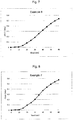
Fig. 1 shows measurement results for a comparative example (conventional method). -
Fig. 2 shows measurement results obtained in Example 1 for MPB64 produced by an enzymatic cycling reaction incorporating glutamate dehydrogenase. -
Fig. 3 shows measurement results obtained in Example 2 for MPB64 produced by an enzymatic cycling reaction incorporating leucine dehydrogenase. -
Fig. 4 shows measurement results obtained in Example 3 for MPB64 produced by an enzymatic cycling reaction incorporating alanine dehydrogenase. -
Fig. 5 shows measurement results obtained in Example 4 for MPB64 produced by an enzymatic cycling reaction incorporating phenylalanine dehydrogenase. -
Fig. 6 shows measurement results obtained in Example 5 for MPB64 produced by an enzymatic cycling reaction incorporating malate dehydrogenase. -
Fig. 7 shows measurement results obtained in Example 6 for MPB64 produced by an enzymatic cycling reaction incorporating D-3-hydrobutyrate dehydrogenase. -
Fig. 8 shows measurement results obtained in Example 7 for MPB64 produced by an enzymatic cycling reaction incorporating lactate dehydrogenase. -
Fig. 9 shows measurement results obtained in Example 8 for MPB64 produced by an enzymatic cycling reaction incorporating glutamate dehydrogenase. - In the present Description, NAD(P)+ means the same as NAD and/or NADP, NAD(P)H means the same as NADH and/or NADPH, thio-NAD(P)+ means the same as thio-NAD and/or thio-NADP, and thio-NAD(P)H means the same as thio-NADH and/or thio-NADPH. DH means dehydrogenase.
- The present invention relates to an enzyme immunoassay method using an antibody-enzyme complex and a nucleic acid probe measurement method using an enzyme-labeled nucleic acid probe (these are generally called the "method of the invention" hereunder). The reaction product of the enzyme of the antibody-enzyme complex in the enzyme immunoassay and the reaction product of the enzyme of the enzyme-labeled nucleic acid probe in the nucleic acid probe measurement method are assayed by first producing thio-NADH and/or thio-NADPH by an enzymatic cycling reaction using NADH and/or NADPH, thio-NAD and/or thio-NADP and a dehydrogenase (DH), and then either measuring the generated thio-NADH and/or thio-NADPH or else measuring a color change caused by the generated thio-NADH and/or thio-NADPH.
- The antibody-enzyme complex used in the method of the invention comprises an enzyme labeling an antibody specific to a target protein antigen. The enzyme-labeled nucleic acid probe comprises an enzyme labeling a nucleic acid probe that binds specifically to a target nucleic acid. The enzyme (labeling enzyme) of the antibody-enzyme complex or enzyme-labeled nucleic acid probe can be at least one kind of enzyme selected from the group consisting of the transferase group represented by EC numbers 2., the hydrolase group represented by EC numbers 3.-, the lyase group represented by EC numbers 4.- and the isomerase group represented by EC numbers 5.- for example. Paragraphs 0020 to 0024 of the
PTL 1 may be consulted for specific examples of these enzymes. - More specifically, the enzyme (labeling enzyme) of the antibody-enzyme complex or enzyme-labeled nucleic acid probe used in the method of the invention may be an alkaline phosphatase (ALP), galactosidase, glucosidase, fructosidase, mannosidase or peroxidase for example. Paragraphs 0024 to 0027 of the
PTL 2 may be consulted for methods of using these enzymes. - Examples of typical combinations of labeling enzymes, substrates and dehydrogenases for enzyme cycling that can be used in the present invention may be found in Paragraphs 0044 to 0051 of the
PTL 2, but of course are not limited to these combinations. - The method of the present invention may be implemented in the same way as an ordinary immunoassay or nucleic acid probe method. For example, an antibody or nucleic acid probe that binds specifically to an object of analysis may be immobilized on the surface of a solid carrier, which may be a microplate or plastic tube, magnetic beads or another solid carrier used in ordinary measurement.
- The antibody-enzyme complex and nucleic acid probe-enzyme complex may be prepared by ordinary methods.
- The antibody of the antibody-enzyme complex may be selected appropriately from antibodies that bind specifically to the object of analysis to be measured by the enzyme immunoassay method of the present invention. For example, the enzyme immunoassay method of the invention is used to analyze proteins, and in this case the antibody of the antibody-enzyme complex is an antibody that binds specifically to a protein to be analyzed. Moreover, in this case a substrate having the antibody that binds specifically to the protein to be analyzed immobilized thereon is used. Furthermore, the antibody constituting the antibody-enzyme complex and the antibody immobilized on the substrate may also be antibody fragments. The object of analysis in the enzyme immunoassay method of the invention need not be a protein, and may be any substance other than a protein that is an object of analysis in ordinary enzyme immunoassay methods.
- For the nucleic acid probe-enzyme complex, a probe complementary to a nucleic acid that is an object of analysis may be selected appropriately in the same way.
- The reaction product of the enzyme of the antibody-enzyme complex or the enzyme of the enzyme-labeled nucleic acid probe in the method of the present invention is assayed by generating thio-NADH and/or thio-NADPH by an enzymatic cycling reaction using NADH and/or NADPH, thio-NAD and/or thio-NADP and a dehydrogenase (DH), and either measuring the generated thio-NADH and/or thio-NADPH or else measuring a color change caused by the generated thio-NADH and/or thio-NADPH.
- A feature of the method of the present invention is that an enzyme reaction system that selectively reduces the NAD and/or NADP produced from NADH and/or NADPH by the enzymatic cycling reaction is included in the enzymatic cycling reaction system. The "selectively" in the enzyme reaction system that selectively reduces NAD and/or NADP means that the co-existing thio-NAD and/or thio-NADP are substantially not reduced.
- In the method of the invention, a protein or nucleic acid can be assayed or detected visually with greater sensitivity than in conventional methods because a system that generates (regenerates) NAD(P)H by reducing the NAD(P) produced in the enzymatic cycling reaction without affecting the reaction between the thio-NAD(P)+ and thio-NAD(P)H is included in the enzymatic cycling reaction system.
- In this enzyme reaction system, the substrate in the immunoassay method of the invention is preferably one that does not become a substrate for the enzyme of the antibody-enzyme complex and a substrate for the enzyme of the enzyme cycling system, and the enzyme is preferably an enzyme that does not react with the substrate for the enzyme of the antibody-enzyme complex and the substrate of the enzyme of the enzyme cycling system. Moreover, in the nucleic acid probe measurement method the substrate of this enzyme reaction system is preferably one that does not become a substrate for the enzyme of the enzyme-labeled nucleic acid probe and a substrate for the enzyme of the enzyme cycling system, and the enzyme is preferably an enzyme that does not react with either the substrate for the enzyme of the enzyme-labeled nucleic acid probe and the substrate for the enzyme of the enzymatic cycling reaction.
- The reaction used to selectively reduce NAD and/or NADP in the present invention is performed with an oxidoreductase having NAD and/or NADP as an electron receptor. Of the oxidoreductases, a dehydrogenase is preferred. This is because the enzyme used in the enzymatic cycling reaction is also a dehydrogenase, and it is desirable that the optimal conditions be equivalent.
- The enzyme of the enzyme reaction system that selectively reduces NAD and/or NADP is preferably a dehydrogenase. However, since the enzyme of the enzymatic cycling reaction is also a dehydrogenase, the dehydrogenase that is the enzyme of the enzyme reaction system that selectively reduces NAD and/or NADP and the dehydrogenase that is the enzyme of the enzyme cycling system are selected from dehydrogenases having different substrate specificities. Since the dehydrogenase that is the enzyme of the enzyme cycling system is preferably a hydroxysteroid dehydrogenase, in this case the enzyme of the enzyme reaction system that selectively reduces NAD and/or NADP is selected from those dehydrogenases that are not hydroxysteroid dehydrogenases and that have different substrate specificities from hydroxysteroid dehydrogenases.
- The enzyme of the enzymatic cycling reaction system is a dehydrogenase and preferably a hydroxysteroid dehydrogenase, while the enzyme of the enzyme reaction system that selectively reduces NAD and/or NADP is an enzyme having substrate specificities different from those of the dehydrogenases, preferably selected from the enzyme group represented by EC number 1.1.1 having CH-OH as an electron donor, the enzyme group represented by EC number 1.2.1 having an aldehyde or oxo group as an electron donor, the enzyme group represented by EC number 1.3.1 having CH-CH as an electron donor, the enzyme group represented by EC number 1.4.1 having CH-NH2 as an electron donor, and the enzyme group represented by EC number 1.5.1 having CH-NH as an electron donor.
- Examples of dehydrogenases belonging to the enzyme group represented by EC number 1.1.1 include malate dehydrogenase, D-3-hydroxybutyrate dehydrogenase, lactate dehydrogenase, alcohol dehydrogenase, glycerol dehydrogenase, iditol-2-dehydrogenase, galactitol dehydrogenase, glycerate dehydrogenase, isocitrate dehydrogenase, gulonate 3-dehydrogenase, ribitol-2-dehydrogenase, gluconate-5-dehydrogenase, 3-isopropyl malate dehydrogenase, glucose dehydrogenase, galactose dehydrogenase and the like.
- Examples of dehydrogenases belonging to the enzyme group represented by EC number 1.2.1 include aldehyde dehydrogenase, malonate semialdehyde dehydrogenase, succinate semialdehyde dehydrogenase and the like.
- Examples of dehydrogenases belonging to the enzyme group represented by EC number 1.3.1 include dihydrouracil dehydrogenase, acyl CoA dehydrogenase, prephenate dehydrogenase and the like.
- Examples of dehydrogenases belonging to the enzyme group represented by EC number 1.4.1 include glutamate dehydrogenase, leucine dehydrogenase, alanine dehydrogenase, phenylalanine dehydrogenase, serine dehydrogenase, valine dehydrogenase, glycine dehydrogenase, lysine dehydrogenase, tryptophan dehydrogenase, aspartate dehydrogenase and the like.
- Examples of dehydrogenases belonging to the enzyme group represented by EC number 1.5.1 include methylene tetrahydrofolate dehydrogenase, saccharopin dehydrogenase, D-octopine dehydrogenase and the like.
- As discussed above, the enzyme that reduces NAD and/or NADP is selected appropriately after considering the substrate specificity of the dehydrogenase used in the enzymatic cycling reaction and the like. Because substrate specificity may be reduced if the substrate used in the enzymatic cycling reaction is structurally similar to the substrate for the enzyme that reduces NAD and/or NADP, these are selected appropriately so that the respective enzyme reactions are not affected.
- For example, when the enzyme in the enzymatic cycling reaction is a hydroxysteroid dehydrogenase (HSD), the substance serving as the substrate for the enzyme that selectively reduces NAD should preferably not have a steroid skeleton. Examples of substances that may serve as substrates without steroid skeletons include organic acids and amino acids, and examples of enzymes that selectively reduce NAD and have these substances as substrates include malate dehydrogenase, lactate dehydrogenase, hydroxybutyrate dehydrogenase, isocitrate dehydrogenase, glutamate dehydrogenase, leucine dehydrogenase, alanine dehydrogenase, phenylalanine dehydrogenase, serine dehydrogenase, valine dehydrogenase, glycine dehydrogenase, lysine dehydrogenase, tryptophan dehydrogenase and aspartate dehydrogenase.
- For the enzyme that selectively reduces NAD and/or NADP, substrate specificity and the like are preferably also considered with respect to the labeling enzyme. For example, when an alkaline phosphatase is used as the labeling enzyme, an enzyme that uses a substance other than a substance having a phosphate group as a substrate is selected as the enzyme that selectively reduces NAD and/or NADP. Examples of enzymes having substrates that are substances that do not have phosphate groups include glutamate dehydrogenase, leucine dehydrogenase, alanine dehydrogenase, phenylalanine dehydrogenase, malate dehydrogenase, 3-hydroxybutyrate dehydrogenase, lactate dehydrogenase, glucose dehydrogenase, galactose dehydrogenase and the like.
- Similarly, when a glucosidase, galactosidase, fructosidase or mannosidase is used as the labeling enzyme, an enzyme that uses a substance other than a substance containing a sugar residue such as glucose, galactose, fructose or mannose as a substrate is used as the enzyme that selectively reduces NAD and/or NADP. Examples of enzymes that use substances not containing sugar residues as substrates include glutamate dehydrogenase, leucine dehydrogenase, alanine dehydrogenase, phenylalanine dehydrogenase, malate dehydrogenase, 3-hydroxybutyrate dehydrogenase, lactate dehydrogenase and the like.
- When a peroxidase is used as the labeling enzyme, on the other hand, an enzyme that uses a substance other than a substance having a peroxide structure as a substrate is used as the enzyme that selectively reduces NAD and/or NADP. Examples of enzymes that use substances not having peroxide structures as substrates include glutamate dehydrogenase, leucine dehydrogenase, alanine dehydrogenase, phenylalanine dehydrogenase, malate dehydrogenase, 3-hydroxybutyrate dehydrogenase, lactate dehydrogenase, glucose dehydrogenase, galactose dehydrogenase and the like.
- Examples of the combination of enzyme and substrate used in the enzyme reaction system that selectively reduces NAD and/or NADP include, but are not limited to, the following.
- (1) Glutamate dehydrogenase and glutamic acid
- (2) Leucine dehydrogenase and leucine
- (3) Alanine dehydrogenase and alanine
- (4) Phenylalanine dehydrogenase and phenylalanine
- (5) Serine dehydrogenase and serine
- (6) Valine dehydrogenase and valine
- (7) Lysine dehydrogenase and lysine
- (8) Tryptophan dehydrogenase and tryptophan
- (9) Aspartate dehydrogenase and aspartic acid
- (10) Malate dehydrogenase and malic acid
- (11) D-3-hydroxybutyrate dehydrogenase and D-3-hydroxybutyric acid
- (12) Lactate dehydrogenase and lactic acid
- (13) Glycerol dehydrogenase and glycerol
- (14) Glycerophosphate dehyrogenase and glyceric acid
- (15) Isocitrate dehydrogenase and isocitric acid
- In the method of the present invention, the concentrations of each component may be within the following ranges for example.
- (1) Concentration range of antibody-enzyme complex or enzyme-labeled nucleic acid probe: 0.01 µg/ml to 1 mg/ml
- (2) Concentration range of substrate for labeling enzyme: 1 µM to 500 mM
- (3) Concentration range of NADH and/or NADPH: 0.01 mM to 50 mM
- (4) Concentration range of thio-NAD and/or thio-NADP: 0.01 mM to 100 mM
- (5) Concentration range of dehydrogenase (DH): 0.01 u/ml to 5000 u/ml
- (6) Concentration range of enzyme of enzyme reaction system that selectively reduces NAD and/or NADP: 0.01 u/ml to 5000 u/ml
- (7) Concentration range of substrate for enzyme of enzyme reaction system that selectively reduces NAD and/or NADP: 1 µM to 500 mM
- The reaction conditions are selected appropriately in consideration of the optimum temperature ranges of the labeling enzyme, the dehydrogenase (DH) and the enzyme of the enzyme reaction system that selectively reduces NAD and/or NADP. For example, a reaction temperature at room temperature is preferred because this simplifies the operations. However, the reaction may also be performed at a temperature higher than or lower than room temperature in consideration of the optimum temperature ranges of the labeling enzyme, the dehydrogenase (DH) and the enzyme of the enzyme reaction system that selectively reduces NAD and/or NADP.
- The reaction time may be a time sufficient to accumulate enough thio-NADH and/or thio-NADPH to allow measurement of the generated amount of thio-NADH and/or thio-NADPH or measurement of a color change caused by the generated thio-NADH and/or thio-NADPH. However, the accumulated amount of thio-NADH and/or thio-NADPH necessary to allow measurement will differ according to the measurement conditions, and can be determined appropriately based on these conditions.
- Cycling systems using thio-NAD(P) in the enzyme cycling system are unique cycling systems that have appeared relatively recently. In such a system, cycling is performed with both NAD(P)/NAD(P)H and its analog thio-NAD(P)/thio-NAD(P)H using a dehydrogenase (DH) that uses NAD(P)/NAD(P)H as a coenzyme, and the substrate of the dehydrogenase is amplified and assayed as thio-NAD(P)H (maximum absorption wavelength: 400 nm, molar extinction coefficient: 11,900). The measurement principles of thio-NAD(P) cycling are as stated above, but can also be explained as follows.

- While the maximum absorption of NADH is 340 nm (molar extinction coefficient: 6,200), thio-NAD(P)H exhibits absorption in the visible range (maximum absorption wavelength: 400 nm, molar extinction coefficient: 11,900), and therefore has the advantage of being measurable with a common absorptiometer or colorimetric microplate reader.
- In cycling systems using thio-NAD(P), some conventional techniques such as measurement of dehydrogenase activity based on increased absorption of NADH and quantification of its substrate have been improved in the method using thio-NAD by exploiting the advantage of measurement using a common absorptiometer or calorimetric microplate reader.
PTL 1 represents the first case in which this cycling system is applied to raising the sensitivity of a detection system such as an enzyme immunoassay. In the present invention, it is now possible to further promote the amplification reaction and achieve greater sensitivity by combining a labeling enzyme with a cycling system and by further including an enzyme reaction system that selectively reduces NAD and/or NADP. - In the measurement method of the present invention, using the example of an enzyme immunoassay method, a product produced by an enzyme complex in combination with its associated substrate is used as the substrate in a subsequent enzymatic cycling reaction, and the absorption of thio-NAD(P)H produced by the enzymatic cycling reaction is then colorimetrically determined. Because enzyme cycling is performed with one kind of dehydrogenase in this reaction, the substrate in the enzymatic cycling reaction may be either a reduced substrate or an oxidized substrate. Moreover, because an enzyme reaction system that selectively reduces NAD and/or NADP is also included in the present invention, the NAD and/or NADP produced by the enzymatic cycling reaction is selectively reduced. Because the NAD and/or NADP is selectively reduced and NADH and/or NADPH is regenerated within the system, the progress of the enzymatic cycling reaction can be promoted and thio-NAD(P)H production can be increased without adding an excess of thio-NAD(P), NADH and/or NADPH at the beginning of the reaction.
- The present invention encompasses an enzyme cycling kit comprising an enzyme labeling a reactive carrier, its substrate, a cycling reaction enzyme and its coenzymes thio-NAD and NADH, and an enzyme reaction system (enzyme and substrate) that selectively reduces NAD and/or NADP.
- A reactive carrier means an antibody, nucleic acid probe, lectin or the like having the activity of binding with an object of measurement. A substance suited to the object of measurement or a substance suited to the labeling enzyme and its substrate may be used as the reactive carrier, without any particular limitations.
- More specifically, the present invention encompasses an enzyme cycling kit comprising a labeling enzyme and its substrate, a cycling reaction enzyme and its coenzymes thio-NAD and NADH, and an enzyme reaction system (enzyme and substrate) that selectively reduces NAD and/or NADP.
- The kit of the present invention is an enzyme immunoassay kit comprising the reagents of (1) to (6) below:
- (1) an enzyme labeling an antibody specific to a target protein antigen,
- (2) a substrate for the enzyme of (1) above,
- (3) a dehydrogenase,
- (4) NADH and/or NADPH,
- (5) thio-NAD and/or thio-NADP, and
- (6) an enzyme reaction system that selectively reduces NAD and/or NADP.
- The present invention is also a nucleic acid probe measurement kit comprising the reagents of (1) to (6) below:
- (1) an enzyme labeling a nucleic acid probe that binds specifically to a target nucleic acid,
- (2) a substrate for the enzyme of (1) above,
- (3) a dehydrogenase,
- (4) NADH and/or NADPH,
- (5) thio-NAD and/or thio-NADP, and
- (6) an enzyme reaction system that selectively reduces NAD and/or NADP.
- The enzyme of the enzyme reaction system of (6) above is preferably a dehydrogenase.
- In the enzyme reaction system of (6) above, preferably the substrate does not become a substrate for the enzyme of (1) and the dehydrogenase of (3), and the enzyme is preferably an enzyme that does not react with the substrate of (2) and with thio-NAD and/or thio-NADP of (5).
- Preferably the dehydrogenase of (3) above is a hydroxysteroid dehydrogenase (HSD), and the enzyme of the enzyme reaction system of (6) above is a dehydrogenase other than a HSD (hydroxysteroid dehydrogenase).
- Preferably the enzyme in the enzyme reaction system of (6) above is an enzyme selected from the enzyme group represented by EC number 1.1.1 having CH-OH as an electron donor, the enzyme group represented by EC number 1.2.1 having an aldehyde or oxo group as an electron donor, the enzyme group represented by EC number 1.3.1 having CH-CH as an electron donor, the enzyme group represented by EC number 1.4.1 having CH-NH2 as an electron donor, and the enzyme group represented by EC number 1.5.1 having CH-NH as an electron donor.
- For the labeling enzyme of (1), the dehydrogenase (DH) of (3), the enzyme of the enzyme reaction system of (6) and the substrates of these and the like, those explained under the methods of the present invention above may be used as is. For example, the enzyme of the antibody-labeling enzyme of (1) in the enzyme immunoassay kit and the enzyme of the nucleic acid probe-labeling enzyme of (1) in the nucleic acid probe measurement kit may each be at least one kind of enzyme selected from the group consisting of the alkaline phosphatases, glucosidases, galactosidases, fructosidases, mannosidases and peroxidases.
- A commercial enzyme-labeled antibody or the like may also be used in combination with the constituent reagents of the kit of the present invention. This kit can be used in enzyme immunoassays using enzymatic cycling methods.
- The present invention is explained in more detail below based on examples. However, these examples only exemplify the present invention, and are not intended to limit the present invention.
- Using a monoclonal antibody to MPB64, a secretory protein specific to the Mycobacterium tuberculosis complex, an enzymatic cycling reaction was performed using alkaline phosphatase (ALP) as the labeling enzyme of the antibody, with 17β-methoxy-5β-androstane 3-phosphate (A3P) as the substrate of the labeling enzyme and 3α-hydroxysteroid dehydrogenase (3α-HSD) as the enzyme cycling enzyme, in combination with an enzyme reaction whereby NADH was produced by consuming the NAD produced by the previous reaction as a coenzyme.
- Mycobacterium bovis BCG Tokyo strain (hereunder called "BCG") was seeded on Middlebrook 7H11 liquid medium, and cultured to a specific turbidity to obtain a culture supernatant. The resulting culture supernatant was adjusted to a McFarland No. 1 equivalent turbidity (equivalent to concentration 1 x 10⁸ cfu/ml) to obtain a test sample.
- Purified MPB64 obtained by ordinary methods as in Reference Example 1 was used as an immunizing antigen to prepare monoclonal antibodies to the protein. The monoclonal antibodies were prepared by ordinary methods.
- Ultimately, two clones were obtained of cells producing monoclonal antibodies reacting with MPB64. The antibodies produced by the respective clones were named monoclonal antibody BL001 and monoclonal antibody BL002.
- The monoclonal antibody BL001 obtained in Reference Example 2 was dialyzed with 100 mM acetic acid buffer (pH 3.8). A 30-minute dialysis operation was performed 3 times. Pepsin was added to the antibody solution after dialysis to 5% based on the amount of the antibody, and the solution was heated for 2 hours at 37°C and then neutralized by addition of 1.5 M tris-hydrochloric acid buffer (pH 8.8). Part of the reaction solution was subjected to SDS (sodium dodecyl sulfate)-polyacrylamide gel electrophoresis (SDS-PAGE), and after production of F(ab')2 by pepsin digestion treatment had been confirmed, the solution was purified with a column packed with Superdex 200 pg (product of GE Healthcare Japan) to obtain a F(ab')2 fraction. The concentration of the resulting F(ab')2 solution was adjusted to 1 mg/ml.
- 0.1 ml of 0.1 M 2-mercaptoethylamine solution was added to 0.9 ml of the resulting F(ab')2 solution, which was then subjected to reduction treatment by 90 minutes of heating at 37°C. Following the 90-minute reduction reaction, the reaction solution was purified with a column packed with Superdex 200 pg to obtain a Fab fraction.
- 0.1 ml of a 5 mM tris-hydrochloric acid buffer solution (pH 7.0, containing 5 mM MgCl2, 0.1 mM ZnCl2 and 50% glycerol) containing 17.14 mg/ml ALP was supplied to a PD-10 column (product of GE Healthcare Japan), and 50 mM sodium borate buffer solution (pH 7.6, containing 1 mM MgCl2 and 0.1 mM ZnCl2) was substituted for the buffer solution. The resulting ALP solution was adjusted to 1 mg/ml. 2.25 ml of a dimethylformamide solution (EMCS concentration 17 mg/ml) containing N-(6-maleimidocaproyloxy)succinimide (hereunder called "EMCS") was added to 0.5 ml of the ALP solution, which was then reacted for 30 minutes at 37°C. The reaction mixture was supplied to a PD-10 column, and 0.1 M tris-hydrochloric acid buffer solution (pH 7.0, containing 1 mM MgCl2 and 0.1 mM ZnCl2) was substituted to obtain a maleimidated ALP solution.
- The Fab antibody solution prepared in the previous reaction was mixed with the maleimidated ALP solution, and reacted for a whole day and night at 4°C. The reaction solution was purified with a column packed with Superdex 200 pg to obtain an ALP-labeled Fab fraction. The resulting ALP-labeled Fab solution was concentrated to a predetermined concentration to prepare an ALP-labeled Fab antibody solution.
- The monoclonal antibody BL002 obtained in Reference Example 2 was adjusted with 10 mM tris-hydrochloric acid buffered saline (pH 7.5, hereunder called "TBS") to 20 µg/ml. 100 µl of the resulting antibody solution was added to each well of a flat-bottomed microplate, and left standing for 1 hour at 37°C. This was then washed multiple times with TBS containing 0.05% Tween20, TBS solution containing 1% bovine serum albumin (hereunder called "BSA") was added 350 µl per well, and the microplate was blocked by being left standing for 1 hour at room temperature. The solution in the wells was removed, and the microplate was air dried to prepare a monoclonal antibody-immobilized microplate.
- Measurement was performed using the ALP-labeled anti-MPB64 Fab antibody and an enzymatic cycling reaction reagent that was prepared as follows using A3P as the enzymatic cycling reaction substrate and 3α-HSD as the enzymatic cycling reaction enzyme.
-
- 0.1 M tris-hydrochloric acid buffer (pH 9.0)
- 2.0 mM thio-NAD
- 0.5 mM NADH
- 0.1 mM 17β-methoxy-5β-androstane 3-phosphate
- 20 U/ml 3α-hydroxysteroid dehydrogenase
- The test sample prepared in Reference Example 1 was diluted 1 x 10⁵ with a sample diluent (TBS containing 0.1% BSA and 0.01% Tween 20), and 100 µl of this was added to the monoclonal antibody-immobilized microplate prepared in Reference Example 4, and shaken for 1 hour at room temperature. The solution was then removed by suction from the wells, which were then washed 3 times with TBS containing 0.05
% Tween 20, and 100 µl of an antibody solution containing the ALP-labeled Fab antibody prepared in Reference Example 3 at a concentration of 2.5 µg/ml was added and shaken for 1 hour at room temperature. The solution was removed by suction from the wells, which were then washed 3 times with TBS containing 0.05% Tween 20. 100 µl of thereaction reagent 1 was then added to each well, and heated to 37°C as the absorbance of each well was measured at 5 minute intervals after addition of the reaction reagent using a 405 nm filter with a microplate reader (Corona SH-9000). The sample diluent alone without any added test sample was also measured in the same way to obtain a blank value, and absorbance (hereunder called "ΔO.D.") was calculated by subtracting the blank value from the measurement value. The resulting ΔO.D. values were plotted to obtain the graph shown inFig. 1 . - Measurement was performed using the
reaction reagent 2 shown below, which was prepared by adding (microbial) glutamate dehydrogenase and its enzyme substrate L-glutamate, as a reaction system for reducing the NAD generated by the enzymatic cycling reaction to NADH and recovering it, to the enzymaticcycling reaction reagent 1 using the ALP-labeled anti-MPB64 Fab antibody, A3P as the enzymatic cycling reaction substrate and 3α-HSD as the enzymatic cycling reaction enzyme. -
- 0.1 M tris-hydrochloric acid buffer (pH 9.0)
- 2.0 mM thio-NAD
- 0.5 mM NADH
- 0.1 mM 17β-methoxy-5β-androstane 3-phosphate
- 20 U/ml 3α-hydroxysteroid dehydrogenase
- 20 U/ml glutamate dehydrogenase
- 2.0 mM L-glutamate
- The test sample prepared in Reference Example 1 was diluted 1 x 10⁵ with a sample diluent (TBS containing 0.1% BSA and 0.01 % Tween 20), and 100 µl of this was added to the monoclonal antibody immobilized microplate prepared in Reference Example 4, and shaken for 1 hour at room temperature. The solution was then removed by suction from the wells, which were then washed 3 times with TBS containing 0.05
% Tween 20, and 100 µl of an antibody solution containing the ALP-labeled Fab antibody prepared in Reference Example 3 at a concentration of 2.5 µg/ml was added and shaken for 1 hour at room temperature. The solution was removed by suction from the wells, which were then washed 3 times with TBS containing 0.05% Tween 20. 100 µl of thereaction reagent 2 was then added to each well, and heated to 37°C as the absorbance of each well was measured at 5 minute intervals after addition of the reaction reagent using a 405 nm filter with a microplate reader (Corona SH-9000) using a filter. The sample diluent alone without any added test sample was also measured in the same way to obtain a blank value, and absorbance (hereunder called "ΔO.D.") was calculated by subtracting the blank value from the measurement value. - The resulting ΔO.D. values were plotted on the graph shown in
Fig. 2 . Since the ΔO.D. had not reached equilibrium even 60 minutes after addition of thereaction reagent 2, it was confirmed that a reaction occurred whereby the NAD generated by the enzymatic cycling reaction was consumed as a coenzyme to produce NADH in the course of an enzyme reaction converting L-glutamic acid to α-ketoglutaric acid by the action of glutamate dehydrogenase, and that reduction of NADH concentration in the enzymatic cycling reaction reagent was suppressed and a reaction producing thio-NADH progressed continuously as a result. Consequently, this was confirmed to be a highly sensitive measurement method with a broad measurement range in comparison with the conventional measurement method using enzyme cycling shown in Comparative Example 1. - Measurement was performed using the
reaction reagent 3 shown below, which was prepared by adding leucine dehydrogenase (from Bacillus sp.) and its enzyme substrate L-leucine, as a reaction system for reducing the NAD generated by the enzymatic cycling reaction to NADH and recovering it, to the enzymaticcycling reaction reagent 1 using the ALP-labeled anti-MPB64 Fab antibody, A3P as an enzymatic cycling reaction substrate and 3α-HSD as an enzymatic cycling reaction enzyme. -
- 0.1 M tris-hydrochloric acid buffer (pH 9.0)
- 2.0 mM thio-NAD
- 0.5 mM NADH
- 0.1 mM 17β-methoxy-5β-androstane 3-phosphate
- 20 U/ml 3α-hydroxysteroid dehydrogenase
- 20 U/ml leucine dehydrogenase
- 2.0 mM L-leucine
- Measurement was performed by the methods described in Example 1. The resulting ΔO.D. values were plotted to obtain the graph shown in
Fig. 3 . - Since the ΔO.D. had not reached equilibrium even 60 minutes after addition of the
reaction reagent 3, it was confirmed that a reaction occurred whereby the NAD generated by the enzymatic cycling reaction was consumed as a coenzyme to produce NADH in the course of an enzyme reaction converting L-leucine to 4-methyl-2-oxopentanoic acid by the action of leucine dehydrogenase, and that reduction of NADH concentration in the enzymatic cycling reaction reagent was suppressed and a reaction producing thio-NADH progressed continuously as a result. Consequently, this was confirmed to be a highly sensitive measurement method with a broad measurement range in comparison with the conventional measurement method using enzyme cycling shown in Comparative Example 1. - Measurement was performed using the
reaction reagent 4 shown below, which was prepared by adding alanine dehydrogenase (from E. coli genetically modified by Bacillus cereus) and its enzyme substrate L-alanine, as a reaction system for reducing the NAD generated by the enzymatic cycling reaction to NADH and recovering it, to the enzymaticcycling reaction reagent 1 using the ALP-labeled anti-MPB64 Fab antibody, A3P as an enzymatic cycling reaction substrate and 3α-HSD as an enzymatic cycling reaction enzyme. -
- 0.1 M tris-hydrochloric acid buffer (pH 9.0)
- 2.0 mM thio-NAD
- 0.5 mM NADH
- 0.1 mM 17β-methoxy-5β-androstane 3-phosphate
- 20 U/ml 3α-hydroxysteroid dehydrogenase
- 20 U/ml alanine dehydrogenase
- 2.0 mM L-alanine
- Measurement was performed by the methods described in Example 1. The resulting ΔO.D. values were plotted to obtain the graph shown in
Fig. 4 . - Since the ΔO.D. had not reached equilibrium even 60 minutes after addition of the
reaction reagent 4, it was confirmed that a reaction occurred whereby the NAD generated by the enzymatic cycling reaction was consumed as a coenzyme to produce NADH in the course of an enzyme reaction converting L-alanine to pyruvic acid by the action of alanine dehydrogenase, and that reduction of NADH concentration in the enzymatic cycling reaction reagent was suppressed and a reaction producing thio-NADH progressed continuously as a result. Consequently, this was confirmed to be a highly sensitive measurement method with a broad measurement range in comparison with the conventional measurement method using enzyme cycling shown in Comparative Example 1. - Measurement was performed using the
reaction reagent 5 shown below, which was prepared by adding L-phenylalanine dehydrogenase (from Sporosarcina sp.) and its enzyme substrate L-phenylalanine, as a reaction system for reducing the NAD generated by the enzymatic cycling reaction to NADH and recovering it, to the enzymaticcycling reaction reagent 1 using the ALP-labeled anti-MPB64 Fab antibody, A3P as an enzymatic cycling reaction substrate and 3α-HSD as an enzymatic cycling reaction enzyme. -
- 0.1 M tris-hydrochloric acid buffer (pH 9.0)
- 2.0 mM thio-NAD
- 0.5 mM NADH
- 0.1 mM 17β-methoxy-5β-androstane 3-phosphate
- 20 U/ml 3α-hydroxysteroid dehydrogenase
- 20 U/ml phenylalanine dehydrogenase
- 2.0 mM L-phenylalanine
- Measurement was performed by the methods described in Example 1. The resulting ΔO.D. values were plotted to obtain the graph shown in
Fig. 5 . - Since the ΔO.D. had not reached equilibrium even 60 minutes after addition of the
reaction reagent 5, it was confirmed that a reaction occurred whereby the NAD generated by the enzymatic cycling reaction was consumed as a coenzyme to produce NADH in the course of an enzyme reaction converting L-phenylalanine to phenylpyruvic acid by the action of L-phenylalanine dehydrogenase, and that reduction of NADH concentration in the enzymatic cycling reaction reagent was suppressed and a reaction producing thio-NADH progressed continuously as a result. Consequently, this was confirmed to be a highly sensitive measurement method with a broad measurement range in comparison with the conventional measurement method using enzyme cycling shown in Comparative Example 1. - Measurement was performed using the
reaction reagent 6 shown below, which was prepared by adding (microbial) malate dehydrogenase and its enzyme substrate L-malate, as a reaction system for reducing the NAD generated by the enzymatic cycling reaction to NADH and recovering it, to the enzymaticcycling reaction reagent 1 using the ALP-labeled anti-MPB64 Fab antibody, A3P as an enzymatic cycling reaction substrate and 3α-HSD as an enzymatic cycling reaction enzyme. -
- 0.1 M tris-hydrochloric acid buffer (pH 9.0)
- 2.0 mM thio-NAD
- 0.5 mM NADH
- 0.1 mM 17β-methoxy-5β-androstane 3-phosphate
- 20 U/ml 3α-hydroxysteroid dehydrogenase
- 20 U/ml malate dehydrogenase
- 2.0 mM L-malate
- Measurement was performed by the methods described in Example 1. The resulting ΔO.D. values were plotted to obtain the graph shown in
Fig. 6 . - Since the ΔO.D. had not reached equilibrium even 60 minutes after addition of the
reaction reagent 6, it was confirmed that a reaction occurred whereby the NAD produced by the enzymatic cycling reaction was consumed as a coenzyme to produce NADH in the course of an enzyme reaction converting malic acid to oxaloacetic acid by the action of malate dehydrogenase, and that reduction of NADH concentration in the enzymatic cycling reaction reagent was suppressed and a reaction producing thio-NADH progressed continuously as a result. Consequently, this was confirmed to be a highly sensitive measurement method with a broad measurement range in comparison with the conventional measurement method using enzyme cycling shown in Comparative Example 1. - Measurement was performed using the
reaction reagent 7 shown below, which was prepared by adding D-3-hydroxybutyrate dehydrogenase (from Pseudomonas sp.) and its enzyme substrate D-3-hydroxybutyrate, as a reaction system for reducing the NAD generated by the enzymatic cycling reaction to NADH and recovering it, to the enzymaticcycling reaction reagent 1 using the ALP-labeled anti-MPB64 Fab antibody, A3P as an enzymatic cycling reaction substrate and 3α-HSD as an enzymatic cycling reaction enzyme. -
- 0.1 M tris-hydrochloric acid buffer (pH 9.0)
- 2.0 mM thio-NAD
- 0.5 mM NADH
- 0.1 mM 17β-methoxy-5β-androstane 3-phosphate
- 20 U/ml 3α-hydroxysteroid dehydrogenase
- 20 U/ml hydroxybutyrate dehydrogenase
- 2.0 mM D-3-hydroxybutyrate
- Measurement was performed by the methods described in Example 1. The resulting ΔO.D. values were plotted to obtain the graph shown in
Fig. 7 . - Since the ΔO.D. had not reached equilibrium even 60 minutes after addition of the
reaction reagent 7, it was confirmed that a reaction occurred in which the NAD produced by the enzymatic cycling reaction was consumed as a coenzyme to produce NADH in the course of an enzyme reaction converting D-3-hydroxybutyrate to acetoacetic acid by the action of D-3-hydroxybutyrate dehydrogenase, and that reduction of NADH concentration in the enzymatic cycling reaction reagent was suppressed and a reaction producing thio-NADH progressed continuously as a result. Consequently, this was confirmed to be a highly sensitive measurement method with a broad measurement range in comparison with the conventional measurement method using enzyme cycling shown in Comparative Example 1. - Measurement was performed using the
reaction reagent 8 shown below, which was prepared by adding L-lactate dehydrogenase (from recombinant E. coli) and its enzyme substrate L-lactate, as a reaction system for reducing the NAD generated by the enzymatic cycling reaction to NADH and recovering it, to the enzymaticcycling reaction reagent 1 using the ALP-labeled anti-MPB64 Fab antibody, A3P as an enzymatic cycling reaction substrate and 3α-HSD as an enzymatic cycling reaction enzyme. -
- 0.1 M tris-hydrochloric acid buffer (pH 9.0)
- 2.0 mM thio-NAD
- 0.5 mM NADH
- 0.1 mM 17β-methoxy-5β-androstane 3-phosphate
- 20 U/ml 3α-hydroxysteroid dehydrogenase
- 20 U/ml lactate dehydrogenase
- 2.0 mM L-lactate
- Measurement was performed by the methods described in Example 1. The resulting ΔO.D. values were plotted to obtain the graph shown in
Fig. 8 . - Since the ΔO.D. had not reached equilibrium even 60 minutes after addition of the
reaction reagent 8, it was confirmed that a reaction occurred in which the NAD produced by the enzymatic cycling reaction was consumed as a coenzyme to produce NADH in the course of an enzyme reaction converting L-lactate to pyruvic acid by the action of L-lactate dehydrogenase, and that reduction of NADH concentration in the enzymatic cycling reaction reagent was suppressed and a reaction producing thio-NADH progressed continuously as a result. Consequently, this was confirmed to be a highly sensitive measurement method with a broad measurement range in comparison with the conventional measurement method using enzyme cycling shown in Comparative Example 1. - Using the
reaction reagent 2 prepared in Example 1, MPB64 in test samples obtained by diluting the test sample prepared in Reference Example 1 with sample diluent at dilution rates of 1 x 10⁷, 1 x 10⁶, 1 x 10⁵, 1 x 10⁴ and 1 x 10³ was measured by an enzymatic cycling method incorporating a reaction that produced NADH by consuming NAD as a coenzyme (hereunder, "improved method"). As a control, test samples with the same dilution sequence were measured by a conventional enzymatic cycling method (conventional method, similar to the method described in PTL 2) using thereaction reagent 1 prepared in Comparative Example 1. -
- 0.1 M tris-hydrochloric acid buffer (pH 9.0)
- 2.0 mM thio-NAD
- 0.5 mM NADH
- 0.1 mM 17β-methoxy-5β-androstane 3-phosphate
- 20 U/ml 3α-hydroxysteroid dehydrogenase
-
- 0.1 M tris-hydrochloric acid buffer (pH 9.0)
- 2.0 mM thio-NAD
- 0.5 mM NADH
- 0.1 mM 17β-methoxy-5β-androstane 3-phosphate
- 20 U/ml 3α-hydroxysteroid dehydrogenase
- 20 U/ml glutamate dehydrogenase
- 2.0 mM L-glutamate
- Measurement was performed by two methods using the reaction reagent 1 (conventional method) and reaction reagent 2 (improved method) with test samples prepared at dilution rates of 1 x 10⁷, 1 x 10⁶, 1 x 10⁵, 1 x 10⁴ and 1 x 10³. The measurement was otherwise performed according to the methods described in Example 1. The ΔO.D. values 60 minutes after addition of the reaction reagents were plotted on the graph shown in
Fig. 9 . - In comparison with the conventional method using the
reaction reagent 1, it was confirmed that in the improved method using thereaction reagent 2, absorbance maintained linearity for each test sample at each dilution rate within a broad range, and the dilution rate at which the test samples reached peak absorbance was low, meaning that quantitative measurement was possible even with highly concentrated test samples. This is thought to be because an enzyme reaction that converts L-glutamate to α-ketoglutaric acid by the action of glutamate dehydrogenase proceeds simultaneously in the enzymatic cycling reaction system, and the NAD generated in the reaction system as a result of the enzymatic cycling reaction is consumed as a coenzyme by the glutamate dehydrogenase to produce NADH, thereby suppressing a reduction in NADH concentration in the reaction system (maintaining NADH concentration in comparison with conventional methods) and progressing a reaction producing thio-NADH. Consequently, the method of the present invention is confirmed to be a measurement method having greater sensitivity and a broader measurement range than conventional methods. - The present invention can be applied favorably to a wide range of fields, including clinical testing and food testing, that require highly sensitive and simple measurement.
Claims (16)
- An enzymatic measurement method using an antibody-enzyme complex, the method being implemented in which an enzyme reaction product of the antibody-enzyme complex is assayed by generating thio-NADH and/or thio-NADPH by an enzymatic cycling reaction using NADH and/or NADPH, thio-NAD and/or thio-NADP and a dehydrogenase (DH), and then either measuring the generated thio-NADH and/or thio-NADPH, or else measuring a color change caused by the generated thio-NADH and/or thio-NADPH, wherein
an enzyme reaction system that selectively reduces the NAD and/or NADP generated from NADH and/or NADPH by the enzymatic cycling reaction is included in the enzymatic cycling reaction system. - The method according to claim 1, wherein the enzyme reaction system that selectively reduces the NAD and/or NADP uses a substrate that does not become a substrate for the enzyme of the antibody-enzyme complex and a substrate for the enzyme of the enzymatic cycling reaction, and an enzyme that does not react with the substrate for the enzyme of the antibody-enzyme complex and the substrate of the enzyme of the enzymatic cycling reaction.
- A nucleic acid probe measurement method using an enzyme-labeled nucleic acid probe, the method being implemented in which an enzyme reaction product of the enzyme-labeled nucleic acid probe is assayed by generating thio-NADH and/or thio-NADPH by an enzymatic cycling reaction using NADH and/or NADPH, thio-NAD and/or thio-NADP and a dehydrogenase (DH), and then either measuring the generated thio-NADH and/or thio-NADPH or else measuring a color change caused by the generated thio-NADH and/or thio-NADPH, wherein
an enzyme reaction system that selectively reduces the NAD and/or NADP generated from NADH and/or NADPH by the enzymatic cycling reaction is included in the enzymatic cycling reaction system. - The method according to claim 3, wherein the enzyme reaction system that selectively reduces the NAD and/or NADP uses a substrate that does not become a substrate for the enzyme of the enzyme-labeled nucleic acid probe and a substrate for the enzyme of the enzymatic cycling reaction, and an enzyme that does not react with the substrate for the enzyme of the enzyme-labeled nucleic acid probe and the substrate of the enzyme of the Pediatr Infect Dis J. 2000 Feb;19(2):104-8. enzymatic cycling reaction.
- The method according to any one of claims 1 to 4, wherein the enzyme of the enzyme reaction system that selectively reduces the NAD and/or NADP is a dehydrogenase.
- The method according to any one of claims 1 to 5, wherein the enzyme in the enzymatic cycling reaction is a hydroxysteroid dehydrogenase, and the enzyme in the enzyme reaction system that selectively reduces the NAD and/or NADP is a dehydrogenase that is not a hydroxysteroid dehydrogenase.
- The method according to any one of claims 1 to 6, wherein the enzyme in the enzymatic cycling reaction system is a hydroxysteroid dehydrogenase, and the enzyme in the enzyme reaction system that selectively reduces the NAD and/or NADP is an enzyme selected from the enzyme group represented by EC number 1.1.1 having CH-OH as an electron donor, the enzyme group represented by EC number 1.2.1 having an aldehyde or oxo group as an electron donor, the enzyme group represented by EC number 1.3.1 having CH-CH as an electron donor, the enzyme group represented by EC number 1.4.1 having CH-NH2 as an electron donor, and the enzyme group represented by EC number 1.5.1 having CH-NH as an electron donor.
- The method according to any one of claims 1 to 7, wherein the enzyme of the antibody-enzyme complex or the enzyme of the enzyme-labeled nucleic acid probe is at least one of enzyme selected from the group consisting of alkaline phosphatases, glucosidases, galactosidases, fructosidases, mannosidases and peroxidases.
- An enzyme immunoassay kit containing reagents (1) to (6) below:(1) an enzyme labeling an antibody specific to a target protein antigen;(2) a substrate for the enzyme of (1) above;(3) a dehydrogenase;(4) NADH and/or NADPH;(5) thio-NAD and/or thio-NADP; and(6) an enzyme reaction system that selectively reduces NAD and/or NADP.
- A nucleic acid probe measurement kit containing reagents (1) to (6) below:(1) an enzyme labeling a nucleic acid probe that binds specifically to a target nucleic acid;(2) a substrate for the enzyme of (1) above;(3) a dehydrogenase;(4) NADH and/or NADPH;(5) thio-NAD and/or thio-NADP; and(6) an enzyme reaction system that selectively reduces NAD and/or NADP.
- The kit according to claim 9 or 10, wherein the enzyme of the enzyme reaction system of (6) above is a dehydrogenase.
- The kit according to any one of claims 9 to 11, wherein in the enzyme reaction system of (6) the substrate does not become a substrate for the enzyme of (1) and a substrate for the dehydrogenase of (3), and the enzyme does not react with the substrate of (2) and with the thio-NAD and/or thio-NADP of (5).
- The kit according to any one of claims 9 to 12, wherein
the dehydrogenase of (3) above is a hydroxysteroid dehydrogenase (HSD), and
the enzyme of the enzyme reaction system of (6) above is a dehydrogenase that is not a HSD (hydroxysteroid dehydrogenase). - The kit according to any one of claims 9 to 13, wherein the enzyme in the enzyme reaction system of (6) is an enzyme selected from the enzyme group represented by EC number 1.1.1 having CH-OH as an electron donor, the enzyme group represented by EC number 1.2.1 having an aldehyde or oxo group as an electron donor, the enzyme group represented by EC number 1.3.1 having CH-CH as an electron donor, the enzyme group represented by EC number 1.4.1 having CH-NH2 as an electron donor, and the enzyme group represented by EC number 1.5.1 having CH-NH as an electron donor.
- The kit according to any one of claims 9 and 11 to 14, wherein the enzyme of the antibody-labeling enzyme of (1) is at least one kind of enzyme selected from the group consisting of alkaline phosphatases, glucosidases, galactosidases, fructosidases, mannosidases and peroxidases.
- The kit according to any one of claims 10 to 14, wherein the enzyme of the nucleic acid probe-labeling enzyme of (1) is at least one kind of enzyme selected from the group consisting of alkaline phosphatases, glucosidases, galactosidases, fructosidases, mannosidases and peroxidases.
Applications Claiming Priority (2)
| Application Number | Priority Date | Filing Date | Title |
|---|---|---|---|
| JP2016068686A JP6960210B2 (en) | 2016-03-30 | 2016-03-30 | Ultra-sensitive measurement method for proteins and nucleic acids |
| PCT/JP2017/008982 WO2017169565A1 (en) | 2016-03-30 | 2017-03-07 | Method for measuring protein and nucleic acid with ultrahigh sensitivity |
Publications (4)
| Publication Number | Publication Date |
|---|---|
| EP3438279A1 true EP3438279A1 (en) | 2019-02-06 |
| EP3438279A4 EP3438279A4 (en) | 2019-11-20 |
| EP3438279B1 EP3438279B1 (en) | 2026-01-07 |
| EP3438279C0 EP3438279C0 (en) | 2026-01-07 |
Family
ID=59964060
Family Applications (1)
| Application Number | Title | Priority Date | Filing Date |
|---|---|---|---|
| EP17774110.5A Active EP3438279B1 (en) | 2016-03-30 | 2017-03-07 | Method for measuring protein and nucleic acid with ultrahigh sensitivity |
Country Status (4)
| Country | Link |
|---|---|
| US (1) | US11702684B2 (en) |
| EP (1) | EP3438279B1 (en) |
| JP (1) | JP6960210B2 (en) |
| WO (1) | WO2017169565A1 (en) |
Families Citing this family (4)
| Publication number | Priority date | Publication date | Assignee | Title |
|---|---|---|---|---|
| ES2762098T3 (en) * | 2011-03-23 | 2020-05-22 | Etsuro Ito | Method and kit for measuring super high sensitivity of protein and nucleic acid, and a new enzyme substrate |
| CN114577745A (en) * | 2022-02-28 | 2022-06-03 | 深圳市乐土生物医药有限公司 | Method for detecting activity of methylenetetrahydrofolate dehydrogenase 2 |
| WO2025004524A1 (en) * | 2023-06-30 | 2025-01-02 | 学校法人早稲田大学 | Method for analyzing trace substance, and trace substance analysis kit |
| WO2025141913A1 (en) * | 2023-12-25 | 2025-07-03 | 学校法人早稲田大学 | Method for analyzing trace substance |
Family Cites Families (7)
| Publication number | Priority date | Publication date | Assignee | Title |
|---|---|---|---|---|
| JP3034969B2 (en) * | 1991-03-01 | 2000-04-17 | 旭化成工業株式会社 | Highly sensitive method for determining ammonia, α-amino acids or α-keto acids and composition for highly sensitive determination |
| WO1993012254A1 (en) * | 1991-12-12 | 1993-06-24 | Asahi Kasei Kogyo Kabushiki Kaisha | Highly sensitive determination of d-3-hydroxybutyric acid or acetoacetic acid and composition therefor |
| JP3981190B2 (en) * | 1997-07-07 | 2007-09-26 | シスメックス株式会社 | Cholesterol determination method and reagent for determination |
| JP3869603B2 (en) * | 1999-12-03 | 2007-01-17 | 株式会社トクヤマ | Homocysteine determination method and reagent |
| JP5044786B2 (en) * | 2007-02-06 | 2012-10-10 | 大学共同利用機関法人自然科学研究機構 | Method for measuring metabolic rate of 2-deoxyglucose |
| WO2008117816A1 (en) * | 2007-03-28 | 2008-10-02 | Etsuro Ito | Super-sensitive measurement method for protein or nucleic acid |
| ES2762098T3 (en) * | 2011-03-23 | 2020-05-22 | Etsuro Ito | Method and kit for measuring super high sensitivity of protein and nucleic acid, and a new enzyme substrate |
-
2016
- 2016-03-30 JP JP2016068686A patent/JP6960210B2/en active Active
-
2017
- 2017-03-07 EP EP17774110.5A patent/EP3438279B1/en active Active
- 2017-03-07 WO PCT/JP2017/008982 patent/WO2017169565A1/en not_active Ceased
- 2017-03-07 US US16/089,488 patent/US11702684B2/en active Active
Also Published As
| Publication number | Publication date |
|---|---|
| EP3438279B1 (en) | 2026-01-07 |
| WO2017169565A1 (en) | 2017-10-05 |
| US11702684B2 (en) | 2023-07-18 |
| EP3438279A4 (en) | 2019-11-20 |
| JP6960210B2 (en) | 2021-11-05 |
| EP3438279C0 (en) | 2026-01-07 |
| US20190106727A1 (en) | 2019-04-11 |
| JP2017176039A (en) | 2017-10-05 |
Similar Documents
| Publication | Publication Date | Title |
|---|---|---|
| JP4061348B2 (en) | Enzymatic measurement method of glycated protein | |
| EP3438279B1 (en) | Method for measuring protein and nucleic acid with ultrahigh sensitivity | |
| JPWO1998048043A1 (en) | Enzymatic method for measuring glycated proteins | |
| US7883862B2 (en) | Diglyceride solutions for lipase activity determination | |
| JP3869015B2 (en) | Assays and probes with enzyme labels | |
| Bier et al. | An enzymatic amplification cycle for high sensitive immunoassay | |
| JP5500985B2 (en) | Ultrasensitive measurement method of protein and nucleic acid | |
| US4657856A (en) | Glutathione peroxidase, process for production thereof, method and composition for the quantitative determination of lipid peroxide | |
| HK40007413A (en) | Method for measuring protein and nucleic acid with ultrahigh sensitivity | |
| KR102009455B1 (en) | Biosensors using a redox enzyme | |
| HK40007413B (en) | Method for measuring protein and nucleic acid with ultrahigh sensitivity | |
| US5589349A (en) | Method for enzymatic analysis and reagant therefor | |
| Ahlawat et al. | An improved amperometric lactose biosensor based on enzyme nanoparticles | |
| JP2005304483A (en) | Method for measuring alkaline phosphatase | |
| US7291474B2 (en) | Hydrolytic substrates for an analyte-dependent enzyme activation system | |
| JP2818696B2 (en) | Highly sensitive quantitative method using NADH kinase | |
| EP0598620A2 (en) | An analytical system or kit for phosphatase | |
| Price | Enzymes as reagents in clinical chemistry | |
| Karami et al. | Construction of a sensitive cascade catalytic method for measurements of plasma phosphatidylcholine | |
| WO2025004524A1 (en) | Method for analyzing trace substance, and trace substance analysis kit | |
| JP4029609B2 (en) | Biological component measurement method and reagent kit used therefor | |
| JP3658820B2 (en) | Method for detecting ligand in sample and reagent therefor | |
| Khanna | Homogeneous enzyme immunoassay | |
| JPH09322799A (en) | Phosphatase activity assay method and assay composition | |
| CA2011260A1 (en) | Signal enhancement in magnetic immunoassay by inhibition of enzymatic catalysis |
Legal Events
| Date | Code | Title | Description |
|---|---|---|---|
| STAA | Information on the status of an ep patent application or granted ep patent |
Free format text: STATUS: THE INTERNATIONAL PUBLICATION HAS BEEN MADE |
|
| PUAI | Public reference made under article 153(3) epc to a published international application that has entered the european phase |
Free format text: ORIGINAL CODE: 0009012 |
|
| STAA | Information on the status of an ep patent application or granted ep patent |
Free format text: STATUS: REQUEST FOR EXAMINATION WAS MADE |
|
| 17P | Request for examination filed |
Effective date: 20181024 |
|
| AK | Designated contracting states |
Kind code of ref document: A1 Designated state(s): AL AT BE BG CH CY CZ DE DK EE ES FI FR GB GR HR HU IE IS IT LI LT LU LV MC MK MT NL NO PL PT RO RS SE SI SK SM TR |
|
| AX | Request for extension of the european patent |
Extension state: BA ME |
|
| DAV | Request for validation of the european patent (deleted) | ||
| DAX | Request for extension of the european patent (deleted) | ||
| A4 | Supplementary search report drawn up and despatched |
Effective date: 20191017 |
|
| RIC1 | Information provided on ipc code assigned before grant |
Ipc: G01N 33/535 20060101ALI20191011BHEP Ipc: G01N 33/53 20060101ALI20191011BHEP Ipc: C12Q 1/68 20180101ALI20191011BHEP Ipc: C12Q 1/32 20060101AFI20191011BHEP |
|
| REG | Reference to a national code |
Ref country code: HK Ref legal event code: DE Ref document number: 40007413 Country of ref document: HK |
|
| STAA | Information on the status of an ep patent application or granted ep patent |
Free format text: STATUS: EXAMINATION IS IN PROGRESS |
|
| 17Q | First examination report despatched |
Effective date: 20201211 |
|
| RAP1 | Party data changed (applicant data changed or rights of an application transferred) |
Owner name: ITO, ETSURO |
|
| RAP1 | Party data changed (applicant data changed or rights of an application transferred) |
Owner name: BIOPHENOMA, INC. |
|
| GRAP | Despatch of communication of intention to grant a patent |
Free format text: ORIGINAL CODE: EPIDOSNIGR1 |
|
| STAA | Information on the status of an ep patent application or granted ep patent |
Free format text: STATUS: GRANT OF PATENT IS INTENDED |
|
| INTG | Intention to grant announced |
Effective date: 20250908 |
|
| GRAS | Grant fee paid |
Free format text: ORIGINAL CODE: EPIDOSNIGR3 |
|
| GRAA | (expected) grant |
Free format text: ORIGINAL CODE: 0009210 |
|
| STAA | Information on the status of an ep patent application or granted ep patent |
Free format text: STATUS: THE PATENT HAS BEEN GRANTED |
|
| RAP3 | Party data changed (applicant data changed or rights of an application transferred) |
Owner name: BIOPHENOMA, INC. |
|
| AK | Designated contracting states |
Kind code of ref document: B1 Designated state(s): AL AT BE BG CH CY CZ DE DK EE ES FI FR GB GR HR HU IE IS IT LI LT LU LV MC MK MT NL NO PL PT RO RS SE SI SK SM TR |
|
| REG | Reference to a national code |
Ref country code: CH Ref legal event code: F10 Free format text: ST27 STATUS EVENT CODE: U-0-0-F10-F00 (AS PROVIDED BY THE NATIONAL OFFICE) Effective date: 20260107 Ref country code: GB Ref legal event code: FG4D |
|
| REG | Reference to a national code |
Ref country code: DE Ref legal event code: R096 Ref document number: 602017093454 Country of ref document: DE |
|
| REG | Reference to a national code |
Ref country code: IE Ref legal event code: FG4D |
|
| U01 | Request for unitary effect filed |
Effective date: 20260130 |
|
| U07 | Unitary effect registered |
Designated state(s): AT BE BG DE DK EE FI FR IT LT LU LV MT NL PT RO SE SI Effective date: 20260204 |
|
| U20 | Renewal fee for the european patent with unitary effect paid |
Year of fee payment: 10 Effective date: 20260218 |
|
| PG25 | Lapsed in a contracting state [announced via postgrant information from national office to epo] |
Ref country code: RS Free format text: LAPSE BECAUSE OF FAILURE TO SUBMIT A TRANSLATION OF THE DESCRIPTION OR TO PAY THE FEE WITHIN THE PRESCRIBED TIME-LIMIT Effective date: 20260407 |
|
| PG25 | Lapsed in a contracting state [announced via postgrant information from national office to epo] |
Ref country code: ES Free format text: LAPSE BECAUSE OF FAILURE TO SUBMIT A TRANSLATION OF THE DESCRIPTION OR TO PAY THE FEE WITHIN THE PRESCRIBED TIME-LIMIT Effective date: 20260107 |
|
| PG25 | Lapsed in a contracting state [announced via postgrant information from national office to epo] |
Ref country code: PL Free format text: LAPSE BECAUSE OF FAILURE TO SUBMIT A TRANSLATION OF THE DESCRIPTION OR TO PAY THE FEE WITHIN THE PRESCRIBED TIME-LIMIT Effective date: 20260107 |
|
| PG25 | Lapsed in a contracting state [announced via postgrant information from national office to epo] |
Ref country code: GR Free format text: LAPSE BECAUSE OF FAILURE TO SUBMIT A TRANSLATION OF THE DESCRIPTION OR TO PAY THE FEE WITHIN THE PRESCRIBED TIME-LIMIT Effective date: 20260408 |
|
| PG25 | Lapsed in a contracting state [announced via postgrant information from national office to epo] |
Ref country code: NO Free format text: LAPSE BECAUSE OF FAILURE TO SUBMIT A TRANSLATION OF THE DESCRIPTION OR TO PAY THE FEE WITHIN THE PRESCRIBED TIME-LIMIT Effective date: 20260407 |
|
| PG25 | Lapsed in a contracting state [announced via postgrant information from national office to epo] |
Ref country code: HR Free format text: LAPSE BECAUSE OF FAILURE TO SUBMIT A TRANSLATION OF THE DESCRIPTION OR TO PAY THE FEE WITHIN THE PRESCRIBED TIME-LIMIT Effective date: 20260107 |
|
| PG25 | Lapsed in a contracting state [announced via postgrant information from national office to epo] |
Ref country code: IS Free format text: LAPSE BECAUSE OF FAILURE TO SUBMIT A TRANSLATION OF THE DESCRIPTION OR TO PAY THE FEE WITHIN THE PRESCRIBED TIME-LIMIT Effective date: 20260507 |