EP3438253B1 - Phytase mutant - Google Patents
Phytase mutant Download PDFInfo
- Publication number
- EP3438253B1 EP3438253B1 EP16896334.6A EP16896334A EP3438253B1 EP 3438253 B1 EP3438253 B1 EP 3438253B1 EP 16896334 A EP16896334 A EP 16896334A EP 3438253 B1 EP3438253 B1 EP 3438253B1
- Authority
- EP
- European Patent Office
- Prior art keywords
- phytase
- seq
- amino acid
- mutant
- acid sequence
- Prior art date
- Legal status (The legal status is an assumption and is not a legal conclusion. Google has not performed a legal analysis and makes no representation as to the accuracy of the status listed.)
- Active
Links
Images

Classifications
-
- C—CHEMISTRY; METALLURGY
- C12—BIOCHEMISTRY; BEER; SPIRITS; WINE; VINEGAR; MICROBIOLOGY; ENZYMOLOGY; MUTATION OR GENETIC ENGINEERING
- C12N—MICROORGANISMS OR ENZYMES; COMPOSITIONS THEREOF; PROPAGATING, PRESERVING, OR MAINTAINING MICROORGANISMS; MUTATION OR GENETIC ENGINEERING; CULTURE MEDIA
- C12N9/00—Enzymes; Proenzymes; Compositions thereof; Processes for preparing, activating, inhibiting, separating or purifying enzymes
- C12N9/14—Hydrolases (3)
- C12N9/16—Hydrolases (3) acting on ester bonds (3.1)
-
- C—CHEMISTRY; METALLURGY
- C12—BIOCHEMISTRY; BEER; SPIRITS; WINE; VINEGAR; MICROBIOLOGY; ENZYMOLOGY; MUTATION OR GENETIC ENGINEERING
- C12N—MICROORGANISMS OR ENZYMES; COMPOSITIONS THEREOF; PROPAGATING, PRESERVING, OR MAINTAINING MICROORGANISMS; MUTATION OR GENETIC ENGINEERING; CULTURE MEDIA
- C12N15/00—Mutation or genetic engineering; DNA or RNA concerning genetic engineering, vectors, e.g. plasmids, or their isolation, preparation or purification; Use of hosts therefor
- C12N15/09—Recombinant DNA-technology
- C12N15/63—Introduction of foreign genetic material using vectors; Vectors; Use of hosts therefor; Regulation of expression
- C12N15/79—Vectors or expression systems specially adapted for eukaryotic hosts
- C12N15/80—Vectors or expression systems specially adapted for eukaryotic hosts for fungi
- C12N15/81—Vectors or expression systems specially adapted for eukaryotic hosts for fungi for yeasts
-
- C—CHEMISTRY; METALLURGY
- C12—BIOCHEMISTRY; BEER; SPIRITS; WINE; VINEGAR; MICROBIOLOGY; ENZYMOLOGY; MUTATION OR GENETIC ENGINEERING
- C12N—MICROORGANISMS OR ENZYMES; COMPOSITIONS THEREOF; PROPAGATING, PRESERVING, OR MAINTAINING MICROORGANISMS; MUTATION OR GENETIC ENGINEERING; CULTURE MEDIA
- C12N15/00—Mutation or genetic engineering; DNA or RNA concerning genetic engineering, vectors, e.g. plasmids, or their isolation, preparation or purification; Use of hosts therefor
- C12N15/09—Recombinant DNA-technology
- C12N15/63—Introduction of foreign genetic material using vectors; Vectors; Use of hosts therefor; Regulation of expression
- C12N15/79—Vectors or expression systems specially adapted for eukaryotic hosts
- C12N15/80—Vectors or expression systems specially adapted for eukaryotic hosts for fungi
- C12N15/81—Vectors or expression systems specially adapted for eukaryotic hosts for fungi for yeasts
- C12N15/815—Vectors or expression systems specially adapted for eukaryotic hosts for fungi for yeasts for yeasts other than Saccharomyces
-
- C—CHEMISTRY; METALLURGY
- C12—BIOCHEMISTRY; BEER; SPIRITS; WINE; VINEGAR; MICROBIOLOGY; ENZYMOLOGY; MUTATION OR GENETIC ENGINEERING
- C12Y—ENZYMES
- C12Y301/00—Hydrolases acting on ester bonds (3.1)
- C12Y301/03—Phosphoric monoester hydrolases (3.1.3)
- C12Y301/03008—3-Phytase (3.1.3.8)
-
- C—CHEMISTRY; METALLURGY
- C12—BIOCHEMISTRY; BEER; SPIRITS; WINE; VINEGAR; MICROBIOLOGY; ENZYMOLOGY; MUTATION OR GENETIC ENGINEERING
- C12Y—ENZYMES
- C12Y301/00—Hydrolases acting on ester bonds (3.1)
- C12Y301/03—Phosphoric monoester hydrolases (3.1.3)
- C12Y301/03026—4-Phytase (3.1.3.26), i.e. 6-phytase
-
- C—CHEMISTRY; METALLURGY
- C12—BIOCHEMISTRY; BEER; SPIRITS; WINE; VINEGAR; MICROBIOLOGY; ENZYMOLOGY; MUTATION OR GENETIC ENGINEERING
- C12Y—ENZYMES
- C12Y301/00—Hydrolases acting on ester bonds (3.1)
- C12Y301/03—Phosphoric monoester hydrolases (3.1.3)
- C12Y301/03002—Acid phosphatase (3.1.3.2)
Definitions
- the present invention relates to the biotechnology field, and particularly relates to phytase mutants, and to a method of producing the mutants.
- the present invention also relates to DNA molecules encoding the mutants, expression vectors and host cells.
- Phytase is a type of phosphatase enzyme and can hydrolyze phytate phosphorus (myo-inositol hexakisphosphate) into myo-inositol and inorganic phosphate.
- Phytase There are two types of phytase: 3-phytase (EC 3.1.3.8) and 6-phytase (EC 3.1.2.6).
- Phytase is widely spread in nature, occurring in plants, animals and microorganisms, including higher plants such as maize and wheat, prokaryotic microbes such as Bacillus subtilis, Pseudomonas, Lactobacillus and Escherichia coli and eukaryotic microbes
- Phytate phosphorus is a major component of all plant seeds, constituting 1%-3% by weight of many cereals, beans and oil seeds and typically accounting for 60%-80% of the total phosphorus.
- mono gastric animals metabolize only 0%-40% of the phytate phosphorus since they lack digestive enzymes for phytate, which results in a number of problems.
- phosphorus source are wasted.
- phytate phosphorus source in feed cannot be efficiently utilized; on the other hand, in order to ensure that the animals' requirement for phosphorus, it is necessary to add inorganic phosphorus in feed, which increases the feed costs.
- the excreta with high phosphorus pollute the environment.
- phytate phosphorus is also a kind of antinutrient, which binds to several metallic ions such as Zn 2+ , Ca 2+ , Cu 2+ and Fe 2+ and other proteins to form insoluble compositions, preventing or inhibiting the absorption of the nutrients in the gastrointestinal tract, and reduces the effective utilization of nutrients.
- Phytase can be used as a feed additive for mono gastric animals, and the feeding effect has been confirmed worldwide. Phytase can improve the phosphorus availability of plant feeds by 60% and decrease the phosphorus excretion by 40%. Phytase also can counteract the anti-nutritional properties of phytate. Therefore, the addition of phytase in animal feed is helpful for improving the production efficiency of livestock and poultry industry and for reducing the environmental pollution caused by phytate.
- the phytase APPA derived from E. coli has high specific activity and good gastrointestinal stability, and can be used in the feed industry by addition to mash feed directly or spraying on pelleted feed.
- Bacterial phytase APPA has lower heat stability, the retention rate of which was even less than 30% after being kept at 70 degree Celsius (°C) for 5 minutes in water bath.
- °C degree Celsius
- CN 104404012 A and CN 102392002 A already describe phytase mutants.
- This invention provides a phytase mutant and a method of production thereof.
- the thermostability of the phytase mutant is significantly improved, which is conducive to the wide applications of the phytase mutant in feed field.
- the present invention relates to a phytase mutant, comprising the amino acid sequence shown as SEQ ID NO: 5, SEQ ID NO: 7, or SEQ ID NO: 9.
- the present invention relates to a DNA molecule comprising a polynucleotide sequence encoding the phytase mutant of the first aspect.
- the polynucleotide sequence is shown as SEQ ID NO: 6 or SEQ ID NO: 8 or SEQ ID NO: 10.
- the present invention relates to an expression vector comprising the DNA molecule of the second aspect.
- the present invention relates to a host cell comprising the expression vector of the third aspect.
- the present invention relates to a producing method of the phytase mutant of the first aspect, which includes:
- phytase mutant comprising the amino acid sequence shown as (I) or (II) or (III):
- the phytase mutant comprises amino acid sequence which has at least 75% identity to the amino acid sequence of SEQ ID NO: 1.
- the phytase mutant comprises amino acid sequence which has at least 80% identity to the amino acid sequence of SEQ ID NO: 1
- the phytase mutant comprise amino acid sequence which has at least 85% identity to the amino acid sequence of SEQ ID NO: 1
- the phytase mutant comprises amino acid sequence which has at least 90% identity to the amino acid sequence of SEQ ID NO: 1
- the phytase mutant comprises amino acid sequence which has at least 95% identity to the amino acid sequence of SEQ ID NO: 1
- the modifications include amidation, phosphorylation, methylation, acetylation, ubiquitination, glycosylation or carbonylation.
- the phytase mutant comprises 16 or 17 or 18 amino acid substitutions.
- the phytase mutant comprises one or more amino acid substitutions at a position selected from positions 46, 62, 70, 73, 75, 80, 114, 137, 142, 146, 159, 161, 176, 187, 255 or 380.
- the phytase mutant comprises amino acid substitutions at positions 46, 62, 70, 73, 75, 80, 114, 137, 142, 146, 159, 161, 176, 187, 255 and/or 380.
- the amino acid sequence of the phytase is SEQ ID NO: 1
- the polynucleotide sequence encoding the phytase is SEQ ID NO: 2.
- the amino acid sequence of the phytase mutant is SEQ ID NO: 3.
- the polynucleotide sequence of the DNA molecule encoding phytase mutant is SEQ ID NO: 4.
- the amino acid substitution is from Trp to Glu at position 46, from Gln to Trp at position 62, from Gly to Glu at position 70, from Ala to Pro at position 73, from Lys to Cys at position 75, from Ser to Pro at position 80 , from Thr to His at position 114 , from Asn to Val at position 137 , from Asp to Arg at position 142, from Ser to Glu at position 146, from Arg to Tyr at position 159, from Thr to Pro at position 161, from Asn to Pro at position 176, from Ser to Pro at position 187, from Tyr to Asp at position 255 , and from Ala to Pro at position 380, the position corresponding to the respective position in SEQ ID NO: 1.
- amino acid sequence of the phytase mutant above is SEQ ID NO: 3 and one polynucleotide sequence encoding the phytase mutant is SEQ ID NO: 4.
- plasmid comprising the polynucleotide sequence of SEQ ID NO: 4.
- the phytase mutant also comprises the amino acid substitutions at positions 126 and/or 211.
- the phytase mutant also comprises the amino acid substitution at position 126.
- the amino acid substitution is from Asn to Asp at position 126 of SEQ ID NO: 3.
- the phytase mutant also comprises the amino acid substitution at position 211.
- the amino acid substitution is from Val to Trp at position 211 of SEQ ID NO: 3.
- the phytase mutant also comprises the amino acid substitutions at positions 126 and 211.
- amino acid substitutions are from Asn to Asp at position 126 and from Val to Trp at position 211of SEQ ID NO: 3.
- a method of producing the phytase mutant which includes:
- the modifications include amidation, phosphorylation, methylation, acetylation, ubiquitination, glycosylation, or carbonylation.
- the substitutions in the method include one or more amino acid substitutions at a position selected from positions 46, 62, 70, 73, 75, 80,114, 137, 142, 146, 159, 161, 176, 187, 255 or 380.
- the substitutions in the method are at positions 46, 62, 70, 73, 75, 80, 114, 137, 142, 146, 159, 161, 176, 187, 255 and/or 380
- the substitutions in the method also comprise amino acid substitutions at positions 126 and/or 211.
- the DNA molecule in step 1 of the method is obtained by amplification reactions of cDNA encoding the amino acid sequence of SEQ ID NO:3.
- the host cell in Step 2 of the method is Pichia.
- an animal feed comprising an effective amount of a phytase mutant described herein to improve animal digestion and absorption of phosphorus
- a method for improving animal digestion and absorption of phosphorus comprising adding an effective amount of the phytase mutant described herein into an animal feed before feeding to the animal.
- the host cell is Pichia.
- thermostability of the phytase mutant expressed in the Pichia comprising the recombinant vector is significantly improved.
- a phytase mutant comprising the amino acid sequence shown as (I) or (II) or (III):
- Figure 1 shows the thermostabilities of Phy7.1, Phy7.2 and Phy8.
- thermostability of wild phytase APPA (the amino acid sequence shown as SEQ ID NO: 1, and the polynucleotide sequence shown as SEQ ID NO: 2)
- 16 amino acid substitutions (W46E, Q62W, G70E, A73P, K75C, S80P, T114H, N137V, D142R, S146E, R159Y, T161P, N176P, S187P, Y255D and A380P) were introduced into APPA.
- the phytase mutant obtained was named PHY6, of which the amino acid sequence was SEQ ID NO: 3 and the encoding polynucleotide sequence was SEQ ID NO: 4.
- the heat resistance of PHY6 was significantly improved.
- the invention discloses a phytase mutant, a method of production thereof, a DNA molecule encoding the mutant, a vector, and a host cells.
- the invention has described the method and application in the preferred embodiments, and technicians in this field can readily modify or appropriately modify and combine the methods and applications to realize and apply the invention without departing from the contents, spirit and scope of the invention.
- PCR enzymes and ligases were purchased from Takara; restriction endonucleases were purchased from Fermentas; plasmid mini kit and gel extraction kit were purchased from Omega; geneMorph II random mutagenesis kit was purchased from MBL Beijing Biotech Co., Ltd.
- PHY6 gene (shown as SEQ ID NO : 4) was amplified using the primers above by a GeneMorph II random mutagenesis kit (Stratagene). After being recovered, the amplification products were digested with EcoRI and Notl and ligated into EcoRI-NotI-digested plasmid pET21 a. After that the plasmid was transformed into E . coli BL21 (DE3) and then the recombinant E . coli cells were spread onto LB+Amp plates. After being incubated at 37°C, the colonies were transferred by a toothpick one by one into 96-well polypropylene microtiter plates containing LB+Amp medium with 150ul 0.1mM IPTG in each well.
- a GeneMorph II random mutagenesis kit (Stratagene). After being recovered, the amplification products were digested with EcoRI and Notl and ligated into EcoRI-NotI-digested plasmid pET
- microtiter plates were incubated at 37°C for 6h with shaking at 220 rpm. The supernatant was removed from the fermentation broth by centrifugation. Afterwards the cells were re-suspended with buffer and repeated freeze-thawed to obtain phytase-containing E.coli cell lysates.
- thermostabilities of some mutants are not improved.
- the thermostabilities or activities of some mutants are even worse.
- this invention provides three phytase mutants with significantly improved thermostability without negative effects on their high activities and original enzymatic properties: N126D, V211W, and N126D/V211W.
- One mutant is named Phy7.1 with one-point mutation N126D, its amino acid sequence is shown as SEQ ID NO: 5, and the encoding polynucleotide sequence is shown as SEQ ID NO: 6.
- Phy7.2 Another phytase mutant is named Phy7.2 with one-point mutation V211W, its amino acid sequence is shown as SEQ ID NO: 7, and the encoding polynucleotide sequence is shown as SEQ ID NO: 8.
- the other phytase mutant is named Phy8 with two-point mutation N126D and V211W, its amino acid sequence is shown as SEQ ID NO: 9, and the encoding polynucleotide sequence is shown as SEQ ID NO: 10.
- polynucleotide sequences of PHY6 and three phytase mutants were synthesized with reference to SEQ ID NO: 4, SEQ ID NO: 6, SEQ ID NO: 8 and SEQ ID NO: 10 and optimized based on codon preference of Pichia Postoris by Shanghai Generay Biotech Co., Ltd, of which an EcoRI restriction site and a Notl restriction site were added to the 5' end and 3' end respectively.
- the four polynucleotide sequences synthesized in 1.2 and the plasmids pPIC-9k were first digested by EcoRI and Notl, and then ligated together at 16°C overnight respectively. After that, the recombinant plasmid was transformed into E. coli DH5a. The recombinant E. coli cells then were spread onto LB+Amp plates. The plates were placed inverted and incubated at 37°C until transformants grew up. Positive transfromants were selected and verified by colony PCR and DNA sequencing.
- the reaction system of colony PCR contained: monoclonal sample, rTaqDNA polymerase 0.5ul, 10xBuffer 2.0 ⁇ L, dNTPs(2.5mM)2.0 ⁇ L, 5'AOX primer(10M):0.5 ⁇ L, 3'AOX primer: 0.5 ⁇ L, ddH 2 O 14.5 ⁇ L; PCR conditions were: 95 °C for 5 min(1 cycle), 94 °C for 30 sec, 55 °C for 30 sec, 72 °C for 2 min(30 cycles) and 72 °C for 10 min(1 cycle).
- the expression vector with PHY6 gene shown as SEQ ID NO: 4 was named as pPIC9K-PHY6, and three vectors with mutant genes shown as SEQ ID NO: 6, SEQ ID NO: 8, SEQ ID NO: 10 were named as pPIC9K-Phy7.1, pPIC9K-Phy7.2 and pPIC9K-Phy8 respectively.
- Host cells P. pastoris GS115 were spread onto YPD plates and the plates were incubated at 30°C for 48h. GS115 colonies were picked up and inoculated into 6mL YPD liquid medium for approximately 12h at 30°C with shaking at 220rpm. Then the YPD liquid medium containing GS115 was inoculated into 30mL YPD liquid medium and incubated for 5h at 30°C with shaking at 220rpm. The cell density of the yeast cultures were measured using a spectrophotometer. When the optical density (OD600) between 1.1 and 1.3, 4mL yeast cultures were added into a sterilized EP tubes and centrifuged at 9000 rpm and 4°C for 2 min.
- OD600 optical density
- the supernatants were removed and aspirated off by sterile filter paper, while the remaining yeast cells were re-suspended in 1ml of sterile pre-cooled water.
- the suspension containing yeast cells was centrifuged at 9000 rpm and 4°C for 2 min.
- the supernatants were removed, while the remaining yeast cells were re-suspended in 1ml of sterile water again.
- the suspension containing yeast cells was centrifuged at 9000 rpm and 4°C for 2 min.
- the supernatant was removed, while the remaining yeast cells were re-suspended in 1ml of pre-cooled sorbitol (1 mol/L).
- the sorbitol containing yeast cells was centrifuged at 9000 rpm and 4°C for 2 min. Then the supernatant was removed, while the remaining yeast cells were re-suspended in 100-150 ⁇ l of sterile pre-cooled sorbitol (1 mol/L).
- the recombinant plasmids pPIC9K-PHY6, pPIC9K-Phy7.1, pPIC9K-Phy7.2 and pPIC9K-Phy8 were linearized by Sal I and transformed into host cells Pichia pastoris GS115 respectively by electroporation.
- the recombinant P . pastoris strains GS115/pPIC9K-PHY6, GS115/pPIC9K-Phy7.1, GS115/pPIC9K-Phy7.2 and GS115/pPIC9K-Phy8 were screened on MD plates. And then multiple copies of transformants were screened on YPD plates containing different concentrations of geneticin (0.5 mg/mL-8 mg/mL).
- Pichia pastoris PHY6 One of the transformants of the recombinant strains GS115/pPIC9K-PHY6 was named Pichia pastoris PHY6.
- One of the transformants of the recombinant strains GS115/pPIC9K-Phy7.1 was named Pichia pastoris Phy7.1.
- One of the transformants of the recombinant strains GS115/pPIC9K-Phy7.2 was named Pichia pastoris Phy7.2.
- Pichia pastoris Phy8 One of the transformants of the recombinant strains GS115/pPIC9K-Phy8.
- the four transformants above were first inoculated into separate flasks with BMGY medium and cultured at 30°C for 1d with agitation at 250 rpm, and then inoculated in BMMY medium at 30°C for 4d with agitation at 250 rpm. 0.5% methanol was added into the medium as an inducer every 24 h.
- the cells were removed from the fermentation broth by centrifugation at 9000 rpm for 10min and the fermentation supernatants containing phytase PHY6, or phytase Phy7.1 or phytase Phy7.2 or Phy8 were retained.
- One phytase unit is the activity of phytase that generates 1 micromole of inorganic phosphorus per minute from 5.0mmol/L sodium phytate at pH 5.0 and 37°C, which is indicated as U.
- acetic acid buffer pH 5.0
- 0.2mL of sample are both added into two separate cuvettes A and B, mixed and warmed at 37°C for 5 min.
- 4mL of substrate solution is added into cuvette A and 4mL of stop solution is added into cuvette B, mixed and reacted at 37°C for 30min.
- the reaction is ended by adding and mixing 4mL stop solution in cuvette A and 4mL substrate solution in cuvette B. After standing for 10 min, the absorbance is measured at 415 nm. Three repeats are made for each sample, and the average of the absorbance values is used for calculating the phytase activity by regression linear.
- the phytase activities of the fermentation supernatants of Pichia pastoris PHY6, Pichia pastoris Phy7.1, Pichia pastoris Phy7.2 and Pichia pastoris Phy8 are 241 U/mL, 223 U/mL, 205 U/mL and 237U/mL, respectively.
- Pichia pastoris PHY6 Pichia pastoris Phy7.1, Pichia pastoris Phy7.2 and Pichia pastoris Phy8 were cultured in four separate 10L fermenters with the fermentation medium containing: 1.1g/L CaSO 4 , 5.5g/L KH 2 PO 4 , 55g/L NH 4 H 2 PO 4 , 16.4g/L MgSO 4 , 20.3g/L K 2 SO 4 , 1.65g/L KOH and 0.05% antifoam.
- the fermentation parameters pH 5.0, 30°C, agitation at 300 rpm, aeration at 1.0-1.5 v/v, and the dissolved oxygen kept above 20%.
- the first stage was for cell culture with 7% seed inoculated and cultured at 30°C for 24-26h until the supplement of glucose was finished.
- the second stage was for cell starvation with no more carbon source supplemented. This stage lasted about 30-60 min until the concentration of dissolved oxygen rose to 80%.
- the third stage was for inducing the expression of phytase with methanol added as an inducer in flow, and the concentration of dissolved oxygen maintained at more than 20%, which lasted about 150-180h. After that, the fermentation broth was treated by the filter press to obtain crude enzyme solution.
- Pichia pastoris PHY6 The phytase activities of the crude enzyme solutions of Pichia pastoris PHY6, Pichia pastoris Phy7.1, Pichia pastoris Phy7.2 and Pichia pastoris Phy8 are 11403 U/mL, 10807 U/mL, 10713 U/mL and 11133 U/mL, respectively.
- the phytase activities of the crude enzyme solutions of Pichia pastoris PHY6, Pichia pastoris Phy7.1, Pichia pastoris Phy7.2 and Pichia pastoris Phy8 were measured at pH5.5 and 5°C intervals between 30°C and 85°C. With the highest phytase activity calculated 100%, the relative enzyme activities were calculated.
- Pichia pastoris PHY6, Pichia pastoris Phy7.1, Pichia pastoris Phy7.2 and Pichia pastoris Phy8 were diluted by 0.1M acetic acid-sodium acetate buffer at pH 2.0, 2.5, 3.0, 3.5, 4.0, 4.5, 5.0, 5.5, 6.0, 6.5, 7.0 respectively.
- the phytase activities were measured at 37°C, and the relative enzyme activities were calculated with the highest enzyme activity calculated 100%.
- the crude enzyme solutions of Pichia pastoris PHY6, Pichia pastoris Phy7.1, Pichia pastoris Phy7.2 and Pichia pastoris Phy8 were diluted 10 times with 0.25M sodium acetate buffer (pH 5.0) which was preheated for 10min.
- the diluted enzyme solutions were well mixed and treated at 85°C for 5min, and 80°C for 10min.
- the phytase activities were measured when the diluted enzyme solutions were cooled to room temperature. With the phytase activity of the untreated enzyme solution calculated 100%, the residual phytase activities were calculated.
- the residual activities of phytase mutants Phy7.1, Phy7.2 and Phy8 are 12.48%, 15.50% and 20.90% higer, respectively, after being treated at 80°C for 10min, and are 13.05%, 18.50% and 27.56% higher, respectively, after being treated at 85°C for 5min.
- the heat-resistance of phytase mutants Phy7.1, Phy7.2 and Phy8 are higher than that of phytase PHY6 (P ⁇ 0.01).
- the invention provides an one-point mutant Phy7.1 (N126D), an one-point mutant Phy7.2 (V211W) and a two-point mutant Phy8 (N126D and V211W).
- N126D one-point mutant Phy7.1
- V211W one-point mutant Phy7.2
- V211W two-point mutant Phy8
- the optimal temperature of the phytase mutants Phy7.1, Phy7.2 and Phy8 remains unchanged, meanwhile the optimal pH of the phytase mutants Phy7.2 remains unchanged, but the optimal pH of Phy7.1 and Phy8 is reduced by 0.5 unit.
- the thermostabilities of the phytase mutants Phy7.1, Phy7.2 and Phy8 have been significantly improved (P ⁇ 0.01), which is conducive to the applications of the phytase mutants in feed.
Landscapes
- Life Sciences & Earth Sciences (AREA)
- Health & Medical Sciences (AREA)
- Genetics & Genomics (AREA)
- Chemical & Material Sciences (AREA)
- Engineering & Computer Science (AREA)
- Organic Chemistry (AREA)
- Wood Science & Technology (AREA)
- Bioinformatics & Cheminformatics (AREA)
- Zoology (AREA)
- General Engineering & Computer Science (AREA)
- Biomedical Technology (AREA)
- Biotechnology (AREA)
- Biochemistry (AREA)
- General Health & Medical Sciences (AREA)
- Microbiology (AREA)
- Molecular Biology (AREA)
- Mycology (AREA)
- Biophysics (AREA)
- Physics & Mathematics (AREA)
- Plant Pathology (AREA)
- Medicinal Chemistry (AREA)
- Enzymes And Modification Thereof (AREA)
- Micro-Organisms Or Cultivation Processes Thereof (AREA)
Description
- The present invention relates to the biotechnology field, and particularly relates to phytase mutants, and to a method of producing the mutants. The present invention also relates to DNA molecules encoding the mutants, expression vectors and host cells.
- Phytase is a type of phosphatase enzyme and can hydrolyze phytate phosphorus (myo-inositol hexakisphosphate) into myo-inositol and inorganic phosphate. There are two types of phytase: 3-phytase (EC 3.1.3.8) and 6-phytase (EC 3.1.2.6). Phytase is widely spread in nature, occurring in plants, animals and microorganisms, including higher plants such as maize and wheat, prokaryotic microbes such as Bacillus subtilis, Pseudomonas, Lactobacillus and Escherichia coli and eukaryotic microbes
- Phytate phosphorus is a major component of all plant seeds, constituting 1%-3% by weight of many cereals, beans and oil seeds and typically accounting for 60%-80% of the total phosphorus. However, mono gastric animals metabolize only 0%-40% of the phytate phosphorus since they lack digestive enzymes for phytate, which results in a number of problems. First of all, phosphorus source are wasted. On the one hand, phytate phosphorus source in feed cannot be efficiently utilized; on the other hand, in order to ensure that the animals' requirement for phosphorus, it is necessary to add inorganic phosphorus in feed, which increases the feed costs. Secondly, the excreta with high phosphorus pollute the environment. 85% of the phytate phosphorus in feed will be directly excreted by animals, and the excreta containing high phytate phosphorus can lead to significant water and soil pollution. In addition, phytate phosphorus is also a kind of antinutrient, which binds to several metallic ions such as Zn2+, Ca2+, Cu2+ and Fe2+ and other proteins to form insoluble compositions, preventing or inhibiting the absorption of the nutrients in the gastrointestinal tract, and reduces the effective utilization of nutrients.
- Phytase can be used as a feed additive for mono gastric animals, and the feeding effect has been confirmed worldwide. Phytase can improve the phosphorus availability of plant feeds by 60% and decrease the phosphorus excretion by 40%. Phytase also can counteract the anti-nutritional properties of phytate. Therefore, the addition of phytase in animal feed is helpful for improving the production efficiency of livestock and poultry industry and for reducing the environmental pollution caused by phytate.
- There are two main kinds of phytase for industrial production, one of which is fungal phytase derived from Aspergillus niger and the other is bacterial phytase derived from E. coli. The phytase APPA derived from E. coli has high specific activity and good gastrointestinal stability, and can be used in the feed industry by addition to mash feed directly or spraying on pelleted feed.
- Bacterial phytase APPA has lower heat stability, the retention rate of which was even less than 30% after being kept at 70 degree Celsius (°C) for 5 minutes in water bath. Thus there is a restriction of adding phytase directly into feed processing due to its low tolerance to high temperature of 80-90°C in feed pelleting period. However, there are still several disadvantages of applying liquid spraying technology using phytase, such as high equipment cost, less stability and uniformity of enzymes in the feed. Therefore it is of great importance to improve the thermostability of phytase for feed.
-
CN 104404012 A andCN 102392002 A already describe phytase mutants. - This invention provides a phytase mutant and a method of production thereof. The thermostability of the phytase mutant is significantly improved, which is conducive to the wide applications of the phytase mutant in feed field.
- In order to achieve the above objects, the invention provides the following technical solutions:
In a first aspect, the present invention relates to a phytase mutant, comprising the amino acid sequence shown as SEQ ID NO: 5, SEQ ID NO: 7, or SEQ ID NO: 9. - In a second aspect, the present invention relates to a DNA molecule comprising a polynucleotide sequence encoding the phytase mutant of the first aspect. Preferably, the polynucleotide sequence is shown as SEQ ID NO: 6 or SEQ ID NO: 8 or SEQ ID NO: 10.
- In a third aspect, the present invention relates to an expression vector comprising the DNA molecule of the second aspect.
- In a fourth aspect, the present invention relates to a host cell comprising the expression vector of the third aspect.
- In a fifth aspect, the present invention relates to a producing method of the phytase mutant of the first aspect, which includes:
- Step 1: obtaining a DNA molecule of the second aspect;
- Step 2: fusing the DNA molecule obtained by step 1 to an expression vector, thereby constructing a recombinant expression vector, and transforming the recombinant expression vector into a host cell; and
- Step 3: inducing the host cell comprising the recombinant expression vector to express the phytase mutant, and then isolating and purifying the phytase mutant.
- Described herein, but not encompassed by the present invention, is a phytase mutant comprising the amino acid sequence shown as (I) or (II) or (III):
- (I) an amino acid sequence which has at least 70% identity to the amino acid sequence of SEQ ID NO: 1;
- (II) an amino acid sequence which has at least one immune epitope of the phytase, and comprises a modification, a substitution, a deletion, and/or an insertion of one or more amino acids within the amino acid sequence of the phytase;
- (III) an amino acid sequence encoded by a nucleotide sequence of SEQ ID NO: 2, or a nucleotide sequence the complementary strand of which hybridizes to SEQ ID NO: 2, or a nucleotide sequence which differs from the sequence of SEQ ID NO: 2 due to the degeneracy of the genetic code;
- In some embodiments, the phytase mutant comprises amino acid sequence which has at least 75% identity to the amino acid sequence of SEQ ID NO: 1.
- In some embodiments, the phytase mutant comprises amino acid sequence which has at least 80% identity to the amino acid sequence of SEQ ID NO: 1
- In some embodiments, the phytase mutant comprise amino acid sequence which has at least 85% identity to the amino acid sequence of SEQ ID NO: 1
- In some embodiments, the phytase mutant comprises amino acid sequence which has at least 90% identity to the amino acid sequence of SEQ ID NO: 1
- In some embodiments, the phytase mutant comprises amino acid sequence which has at least 95% identity to the amino acid sequence of SEQ ID NO: 1
- In some embodiments, the modifications include amidation, phosphorylation, methylation, acetylation, ubiquitination, glycosylation or carbonylation.
- In some embodiments, the phytase mutant comprises 16 or 17 or 18 amino acid substitutions.
- In some embodiments, the phytase mutant comprises one or more amino acid substitutions at a position selected from
positions - In some embodiments, the phytase mutant comprises amino acid substitutions at
positions - In some embodiments, the amino acid sequence of the phytase is SEQ ID NO: 1, and the polynucleotide sequence encoding the phytase is SEQ ID NO: 2.
- In some embodiments, the amino acid sequence of the phytase mutant is SEQ ID NO: 3.
- Also described herein, but not encompassed by the present invention, is a DNA molecule encoding the phytase mutant.
- In some embodiments, the polynucleotide sequence of the DNA molecule encoding phytase mutant is SEQ ID NO: 4.
- Also described herein, but not encompassed by the present invention, is a vector comprising the DNA molecule encoding the phytase mutant.
- In further embodiments, the amino acid substitution is from Trp to Glu at position 46, from Gln to Trp at position 62, from Gly to Glu at
position 70, from Ala to Pro at position 73, from Lys to Cys at position 75, from Ser to Pro atposition 80 , from Thr to His at position 114 , from Asn to Val at position 137 , from Asp to Arg at position 142, from Ser to Glu at position 146, from Arg to Tyr at position 159, from Thr to Pro at position 161, from Asn to Pro at position 176, from Ser to Pro at position 187, from Tyr to Asp at position 255 , and from Ala to Pro at position 380, the position corresponding to the respective position in SEQ ID NO: 1. - The amino acid sequence of the phytase mutant above is SEQ ID NO: 3 and one polynucleotide sequence encoding the phytase mutant is SEQ ID NO: 4.
- Also described herein, but not encompassed by the present invention, is a plasmid comprising the polynucleotide sequence of SEQ ID NO: 4.
- In other embodiments, the phytase mutant also comprises the amino acid substitutions at positions 126 and/or 211.
- In other embodiments, the phytase mutant also comprises the amino acid substitution at position 126.
- In other embodiments, the amino acid substitution is from Asn to Asp at position 126 of SEQ ID NO: 3.
- In other embodiments, the phytase mutant also comprises the amino acid substitution at position 211.
- In other embodiments, the amino acid substitution is from Val to Trp at position 211 of SEQ ID NO: 3.
- In other embodiments, the phytase mutant also comprises the amino acid substitutions at positions 126 and 211.
- In other embodiments, the amino acid substitutions are from Asn to Asp at position 126 and from Val to Trp at position 211of SEQ ID NO: 3.
- Also described herein, but not encompassed by the present invention, is a method of producing the phytase mutant, which includes:
- Step 1: obtain a DNA molecule comprising a polynucleotide sequence encoding the amino acid sequence shown as (I) or (II) or (III):
- (I) an amino acid sequence which has at least 70% identity to the amino acid sequence of the phytase;
- (II) an amino acid sequence which has at least one immune epitope of the phytase, and comprise a modification, a substitution, a deletion, and/or an insertion of one or more amino acids of the amino acid sequence of the phytase;
- (III) an amino acid sequence encoded by a nucleotide sequence of SEQ ID NO: 2, or a nucleotide sequence the complementary strand of which hybridizes to SEQ ID NO: 2, or a nucleotide sequence which differs from the sequence of SEQ ID NO: 2 due to the degeneracy of the genetic code;
wherein the amino acid sequence comprises 1, 2, 3, 4, 5, 6, 7, 8, 9, 10, 11, 12, 13, 14, 15, 16, 17 or 18 amino acid substitutions.
- Step 2: fuse the DNA molecule obtained by step 1 to an expression vector, construct recombinant expression vector, and transform the recombinant expression vector into a host cell;
- Step 3: induce the host cell coomprising recombinant expression vector to express the fusion protein, and then isolate and purify the fusion protein.
- In some embodiments, the modifications include amidation, phosphorylation, methylation, acetylation, ubiquitination, glycosylation, or carbonylation.
- In some embodiments, the substitutions in the method include one or more amino acid substitutions at a position selected from
positions 46, 62, 70, 73, 75, 80,114, 137, 142, 146, 159, 161, 176, 187, 255 or 380. - In some embodiments, the substitutions in the method are at
positions - In other embodiments, the substitutions in the method also comprise amino acid substitutions at positions 126 and/or 211.
- In some embodiments, the DNA molecule in step 1 of the method is obtained by amplification reactions of cDNA encoding the amino acid sequence of SEQ ID NO:3.
- The host cell in
Step 2 of the method is Pichia. - Also described herein, but not encompassed by the present invention, is: (1) an animal feed comprising an effective amount of a phytase mutant described herein to improve animal digestion and absorption of phosphorus; and (2) a method for improving animal digestion and absorption of phosphorus comprising adding an effective amount of the phytase mutant described herein into an animal feed before feeding to the animal.
- Also described herein, but not encompassed by the present invention, is a host cell comprising the recombinant expression vector.
- In some embodiments, the host cell is Pichia.
- The thermostability of the phytase mutant expressed in the Pichia comprising the recombinant vector is significantly improved.
- Also described herein, but not encompassed by the present invention, is a phytase mutant, comprising the amino acid sequence shown as (I) or (II) or (III):
- (I) an amino acid sequence which has at least 70% identity to the amino acid sequence of the phytase;
- (II) an amino acid sequence which has at least one immune epitope of the phytase, and comprises a modification, a substitution, a deletion, and/or an insertion of one or more amino acids within the amino acid sequence of the phytase;
- (III) an amino acid sequence encoded by a nucleotide sequence of SEQ ID NO: 2, or a nucleotide sequence the complementary strand of which hybridizes to SEQ ID NO: 2, or a nucleotide sequence which differs from the sequence of SEQ ID NO: 2 due to the degeneracy of the genetic code;
wherein the amino acid sequence comprises 1, 2, 3, 4, 5, 6, 7, 8, 9, 10, 11, 12, 13, 14, 15, 16, 17 or 18 amino acid substitutions. -
Figure 1 shows the thermostabilities of Phy7.1, Phy7.2 and Phy8. - In order to improve the thermostability of wild phytase APPA (the amino acid sequence shown as SEQ ID NO: 1, and the polynucleotide sequence shown as SEQ ID NO: 2), 16 amino acid substitutions (W46E, Q62W, G70E, A73P, K75C, S80P, T114H, N137V, D142R, S146E, R159Y, T161P, N176P, S187P, Y255D and A380P) were introduced into APPA. The phytase mutant obtained was named PHY6, of which the amino acid sequence was SEQ ID NO: 3 and the encoding polynucleotide sequence was SEQ ID NO: 4. Compared with APPA, the heat resistance of PHY6 was significantly improved. (This part of contents has been described in details in Chinese application No.
201510532520.1 - The invention discloses a phytase mutant, a method of production thereof, a DNA molecule encoding the mutant, a vector, and a host cells. The invention has described the method and application in the preferred embodiments, and technicians in this field can readily modify or appropriately modify and combine the methods and applications to realize and apply the invention without departing from the contents, spirit and scope of the invention.
- Conventional techniques and methods in the field of genetic engineering and molecular biology are used in the invention, for example, the methods recorded in MOLECULAR CLONING: A LABORATORY MANUAL, 3nd Ed. (Sambrook, 2001) and CURRENT PROTOCOLS IN MOLECULAR BIOLOGY (Ausubel, 2003). These general references provide one of skill in art with a general dictionary of many of the terms used in this invention. Based on the technical scheme described in the invention, all technical and scientific terms can choose other conventional methods, experimental programs and reagents to realize the invention, including, but not limited to that described in the embodiments of the invention. For example, the following experimental materials and reagents can be used in the invention:
Strains and vectors: E. coli DH5a, Pichia pastoris strain GS115, vector pPIC9k, Amp and G418 were purchased from Invitrogen. - Enzymes and Kits: PCR enzymes and ligases were purchased from Takara; restriction endonucleases were purchased from Fermentas; plasmid mini kit and gel extraction kit were purchased from Omega; geneMorph II random mutagenesis kit was purchased from MBL Beijing Biotech Co., Ltd.
-
- Lariant broth (LB medium): 0.5% yeast extract, 1% tryptone, 1% NaCl, pH7.0;
- LB-AMP medium: LB medium with 100µg/mL ampicillin;
- Yeast extract peptone dextrose medium (YPD medium): 1% yeast extract, 2% tryptone, 2% glucose;
- Minimal dextrose medium (MD medium): 2% tryptone, 2% agar;
- BMGY medium: 2% tryptone, 1% yeast extract, 100 mM potassium phosphate buffer (pH 6.0), 1.34% YNB, 4×10⁻⁵ biotin, 1% glycerol;
- BMMY medium: 2% tryptone, 1% yeast extract, 100 mM potassium phosphate buffer (pH 6.0), 1.34% YNB, 4×10⁻⁵ biotin, 1% methanol.
- The invention is further illustrated by the following examples:
- In order to improve the thermostability of phytase mutant PHY6, the protein structure of PHY6 (encoded by the polynucleotide sequence shown as SEQ ID NO: 4) was analyzed. There were two domains in the protein: domain I contained 134 amino acid residues at the N-terminus and 152 amino acid residues at C-terminus, while domain II contained the remaining 124 amino acid residues in the middle. The conserved sequences and activity center were all in domain I. Without destroying the secondary structure and activity center of the protein, further mutations of the amino acid residuals were carried out.
-
- PHY6-F1 : GGCGAATTC CAGTCAGAACCAGAGTTGAAGTT (Underlined is the recognition site of restriction endonuclease EcoRI), which is shown as SEQ ID NO: 11;
- PHY6-R1 : ATAGCGGCCGCTTACAAGGAACAAGCAGGGAT (Underlined is the recognition site of restriction endonuclease Notl), which is shown as SEQ ID NO: 12;
- PHY6 gene (shown as SEQ ID NO : 4) was amplified using the primers above by a GeneMorph II random mutagenesis kit (Stratagene). After being recovered, the amplification products were digested with EcoRI and Notl and ligated into EcoRI-NotI-digested plasmid pET21 a. After that the plasmid was transformed into E. coli BL21 (DE3) and then the recombinant E. coli cells were spread onto LB+Amp plates. After being incubated at 37°C, the colonies were transferred by a toothpick one by one into 96-well polypropylene microtiter plates containing LB+Amp medium with 150ul 0.1mM IPTG in each well. The microtiter plates were incubated at 37°C for 6h with shaking at 220 rpm. The supernatant was removed from the fermentation broth by centrifugation. Afterwards the cells were re-suspended with buffer and repeated freeze-thawed to obtain phytase-containing E.coli cell lysates.
- 40ul cell lysates were transferred into two separate new 96-well plates, one of which was treated at 80°C for 10 min, and the other was not. 80ul substrates were added into each well of the plates and incubated for 30 min at 37°C. Afterwards 80ul stop solution (ammonium vanadate: ammonium molybdate: nitric acid = 1:1:2) was added to end the reaction. In each well of the plates, the contents of inorganic phosphate were determined, which reflected the post-heat treatment activities of different mutants obtained in the invention.
- Compared with phytase PHY6, the thermostabilities of some mutants are not improved. The thermostabilities or activities of some mutants are even worse. Besides, there are some mutants with improved thermostabilities, but their enzymatic properties are significantly changed, which also limits their applications in feed. Finally, this invention provides three phytase mutants with significantly improved thermostability without negative effects on their high activities and original enzymatic properties: N126D, V211W, and N126D/V211W.
- One mutant is named Phy7.1 with one-point mutation N126D, its amino acid sequence is shown as SEQ ID NO: 5, and the encoding polynucleotide sequence is shown as SEQ ID NO: 6.
- Another phytase mutant is named Phy7.2 with one-point mutation V211W, its amino acid sequence is shown as SEQ ID NO: 7, and the encoding polynucleotide sequence is shown as SEQ ID NO: 8.
- The other phytase mutant is named Phy8 with two-point mutation N126D and V211W, its amino acid sequence is shown as SEQ ID NO: 9, and the encoding polynucleotide sequence is shown as SEQ ID NO: 10.
- The polynucleotide sequences of PHY6 and three phytase mutants were synthesized with reference to SEQ ID NO: 4, SEQ ID NO: 6, SEQ ID NO: 8 and SEQ ID NO: 10 and optimized based on codon preference of Pichia Postoris by Shanghai Generay Biotech Co., Ltd, of which an EcoRI restriction site and a Notl restriction site were added to the 5' end and 3' end respectively.
- The four polynucleotide sequences synthesized in 1.2 and the plasmids pPIC-9k were first digested by EcoRI and Notl, and then ligated together at 16°C overnight respectively. After that, the recombinant plasmid was transformed into E. coli DH5a. The recombinant E. coli cells then were spread onto LB+Amp plates. The plates were placed inverted and incubated at 37°C until transformants grew up. Positive transfromants were selected and verified by colony PCR and DNA sequencing. The reaction system of colony PCR contained: monoclonal sample, rTaqDNA polymerase 0.5ul, 10xBuffer 2.0µL, dNTPs(2.5mM)2.0µL, 5'AOX primer(10M):0.5µL, 3'AOX primer: 0.5µL, ddH2O 14.5µL; PCR conditions were: 95 °C for 5 min(1 cycle), 94 °C for 30 sec, 55 °C for 30 sec, 72 °C for 2 min(30 cycles) and 72 °C for 10 min(1 cycle). The expression vector with PHY6 gene shown as SEQ ID NO: 4 was named as pPIC9K-PHY6, and three vectors with mutant genes shown as SEQ ID NO: 6, SEQ ID NO: 8, SEQ ID NO: 10 were named as pPIC9K-Phy7.1, pPIC9K-Phy7.2 and pPIC9K-Phy8 respectively.
- Host cells P. pastoris GS115 were spread onto YPD plates and the plates were incubated at 30°C for 48h. GS115 colonies were picked up and inoculated into 6mL YPD liquid medium for approximately 12h at 30°C with shaking at 220rpm. Then the YPD liquid medium containing GS115 was inoculated into 30mL YPD liquid medium and incubated for 5h at 30°C with shaking at 220rpm.The cell density of the yeast cultures were measured using a spectrophotometer. When the optical density (OD600) between 1.1 and 1.3, 4mL yeast cultures were added into a sterilized EP tubes and centrifuged at 9000 rpm and 4°C for 2 min. The supernatants were removed and aspirated off by sterile filter paper, while the remaining yeast cells were re-suspended in 1ml of sterile pre-cooled water. The suspension containing yeast cells was centrifuged at 9000 rpm and 4°C for 2 min. The supernatants were removed, while the remaining yeast cells were re-suspended in 1ml of sterile water again. The suspension containing yeast cells was centrifuged at 9000 rpm and 4°C for 2 min. The supernatant was removed, while the remaining yeast cells were re-suspended in 1ml of pre-cooled sorbitol (1 mol/L). The sorbitol containing yeast cells was centrifuged at 9000 rpm and 4°C for 2 min. Then the supernatant was removed, while the remaining yeast cells were re-suspended in 100-150µl of sterile pre-cooled sorbitol (1 mol/L).
- The recombinant plasmids pPIC9K-PHY6, pPIC9K-Phy7.1, pPIC9K-Phy7.2 and pPIC9K-Phy8 were linearized by Sal I and transformed into host cells Pichia pastoris GS115 respectively by electroporation. The recombinant P. pastoris strains GS115/pPIC9K-PHY6, GS115/pPIC9K-Phy7.1, GS115/pPIC9K-Phy7.2 and GS115/pPIC9K-Phy8 were screened on MD plates. And then multiple copies of transformants were screened on YPD plates containing different concentrations of geneticin (0.5 mg/mL-8 mg/mL).
- One of the transformants of the recombinant strains GS115/pPIC9K-PHY6 was named Pichia pastoris PHY6. One of the transformants of the recombinant strains GS115/pPIC9K-Phy7.1 was named Pichia pastoris Phy7.1. One of the transformants of the recombinant strains GS115/pPIC9K-Phy7.2 was named Pichia pastoris Phy7.2. One of the transformants of the recombinant strains GS115/pPIC9K-Phy8 was named Pichia pastoris Phy8. The four transformants above were first inoculated into separate flasks with BMGY medium and cultured at 30°C for 1d with agitation at 250 rpm, and then inoculated in BMMY medium at 30°C for 4d with agitation at 250 rpm. 0.5% methanol was added into the medium as an inducer every 24 h. The cells were removed from the fermentation broth by centrifugation at 9000 rpm for 10min and the fermentation supernatants containing phytase PHY6, or phytase Phy7.1 or phytase Phy7.2 or Phy8 were retained.
- One phytase unit is the activity of phytase that generates 1 micromole of inorganic phosphorus per minute from 5.0mmol/L sodium phytate at pH 5.0 and 37°C, which is indicated as U.
- 1.8mL of acetic acid buffer (pH 5.0) and 0.2mL of sample are both added into two separate cuvettes A and B, mixed and warmed at 37°C for 5 min. 4mL of substrate solution is added into cuvette A and 4mL of stop solution is added into cuvette B, mixed and reacted at 37°C for 30min. The reaction is ended by adding and mixing 4mL stop solution in cuvette A and 4mL substrate solution in cuvette B. After standing for 10 min, the absorbance is measured at 415 nm. Three repeats are made for each sample, and the average of the absorbance values is used for calculating the phytase activity by regression linear.
- Enzyme activity:

- where: X-Unit of enzyme activity, U/g(mL);
- F-Total dilution factors of sample solution before reaction;
- C-The enzyme activity calculated from the linear regression equation based on the absorbance of the actual sample solution, U;
- m-Sample mass or volume, g/mL;
- 30-Reaction time;
- Phytase activities of the fermentation supernatants of Pichia pastoris PHY6, Phy7.1, Phy7.2 and Phy 8 were detected by the method mentioned above, and the results are provided in Table 1.
Table 1 Phytase activities Sample Value 1 Value 2Value 3Average Activity ( U/mL ) PHY6 0.491 0.487 0.490 0.489 241 Phy7.1 0.472 0.467 0.470 0.470 223 Phy7.2 0.470 0.463 0.466 0.466 205 Phy8 0.485 0.479 0.483 0.482 237 - The phytase activities of the fermentation supernatants of Pichia pastoris PHY6, Pichia pastoris Phy7.1, Pichia pastoris Phy7.2 and Pichia pastoris Phy8 are 241 U/mL, 223 U/mL, 205 U/mL and 237U/mL, respectively.
- Pichia pastoris PHY6, Pichia pastoris Phy7.1, Pichia pastoris Phy7.2 and Pichia pastoris Phy8 were cultured in four separate 10L fermenters with the fermentation medium containing: 1.1g/L CaSO4, 5.5g/L KH2PO4, 55g/L NH4H2PO4, 16.4g/L MgSO4, 20.3g/L K2SO4, 1.65g/L KOH and 0.05% antifoam.
- The fermentation parameters: pH 5.0, 30°C, agitation at 300 rpm, aeration at 1.0-1.5 v/v, and the dissolved oxygen kept above 20%.
- There were three stages of the fermentation process. The first stage was for cell culture with 7% seed inoculated and cultured at 30°C for 24-26h until the supplement of glucose was finished. The second stage was for cell starvation with no more carbon source supplemented. This stage lasted about 30-60 min until the concentration of dissolved oxygen rose to 80%. The third stage was for inducing the expression of phytase with methanol added as an inducer in flow, and the concentration of dissolved oxygen maintained at more than 20%, which lasted about 150-180h. After that, the fermentation broth was treated by the filter press to obtain crude enzyme solution.
- The phytase activities of the crude enzyme solutions were determined by the method mentioned in 1.4.2, and the results are provided in Table 2.
Table 2 Phytase activities Sample Value 1 Value 2Value 3Average Activity ( U/mL ) PHY6 0.488 0.487 0.490 0.488 11403 Phy7.1 0.475 0.478 0.480 0.478 10807 Phy7.2 0.469 0.473 0.470 0.471 10713 Phy8 0.483 0.480 0.481 0.481 11133 - The phytase activities of the crude enzyme solutions of Pichia pastoris PHY6, Pichia pastoris Phy7.1, Pichia pastoris Phy7.2 and Pichia pastoris Phy8 are 11403 U/mL, 10807 U/mL, 10713 U/mL and 11133 U/mL, respectively.
- The phytase activities of the crude enzyme solutions of Pichia pastoris PHY6, Pichia pastoris Phy7.1, Pichia pastoris Phy7.2 and Pichia pastoris Phy8 were measured at pH5.5 and 5°C intervals between 30°C and 85°C. With the highest phytase activity calculated 100%, the relative enzyme activities were calculated.
- The results show that the optimal temperatures of phytase mutant Phy7.1, Phy7.2 and Phy8 are all 75°C, which is the same with phytase mutant PHY6.
- The crude enzyme solutions of Pichia pastoris PHY6, Pichia pastoris Phy7.1, Pichia pastoris Phy7.2 and Pichia pastoris Phy8 were diluted by 0.1M acetic acid-sodium acetate buffer at pH 2.0, 2.5, 3.0, 3.5, 4.0, 4.5, 5.0, 5.5, 6.0, 6.5, 7.0 respectively. The phytase activities were measured at 37°C, and the relative enzyme activities were calculated with the highest enzyme activity calculated 100%.
- The results show that the optimal pH of Pichia pastoris Phy7.2 and Pichia pastoris PHY6 is both 5.0, but the optimal pH of Pichia pastoris Phy7.1 and Pichia pastoris Phy8 is reduced by 0.5 unit, to 4.5.
- The crude enzyme solutions of Pichia pastoris PHY6, Pichia pastoris Phy7.1, Pichia pastoris Phy7.2 and Pichia pastoris Phy8 were diluted 10 times with 0.25M sodium acetate buffer (pH 5.0) which was preheated for 10min. The diluted enzyme solutions were well mixed and treated at 85°C for 5min, and 80°C for 10min. The phytase activities were measured when the diluted enzyme solutions were cooled to room temperature. With the phytase activity of the untreated enzyme solution calculated 100%, the residual phytase activities were calculated.
- As shown in
Figure 1 , compared with phytase PHY6, the residual activities of phytase mutants Phy7.1, Phy7.2 and Phy8 are 12.48%, 15.50% and 20.90% higer, respectively, after being treated at 80°C for 10min, and are 13.05%, 18.50% and 27.56% higher, respectively, after being treated at 85°C for 5min. The heat-resistance of phytase mutants Phy7.1, Phy7.2 and Phy8 are higher than that of phytase PHY6 (P<0.01). - In conclusion, using the phytase PHY6 as a basis, the invention provides an one-point mutant Phy7.1 (N126D), an one-point mutant Phy7.2 (V211W) and a two-point mutant Phy8 (N126D and V211W). Compared with phytase PHY6, the optimal temperature of the phytase mutants Phy7.1, Phy7.2 and Phy8 remains unchanged, meanwhile the optimal pH of the phytase mutants Phy7.2 remains unchanged, but the optimal pH of Phy7.1 and Phy8 is reduced by 0.5 unit. The thermostabilities of the phytase mutants Phy7.1, Phy7.2 and Phy8 have been significantly improved (P<0.01), which is conducive to the applications of the phytase mutants in feed.
-
- <110> QINGDAO VLAND BIOTECH GROUP CO., LTD.
- <120> Phytase Mutants
- <130> 1036-1 PCTEP
- <150>
CN 201610184337.1
<151> 2016-03-28 - <160> 12
- <170> PatentIn version 3.3
- <210> 1
<211> 410
<212> PRT
<213> Phytase - <400> 1


- <210> 2
<211> 1233
<212> DNA
<213> Phytase - <400> 2

- <210> 3
<211> 410
<212> PRT
<213> Artificial Sequence - <400> 3


- <210> 4
<211> 1233
<212> DNA
<213> Artificial Sequence - <400> 4

- <210> 5
<211> 410
<212> PRT
<213> Artificial Sequence - <400> 5

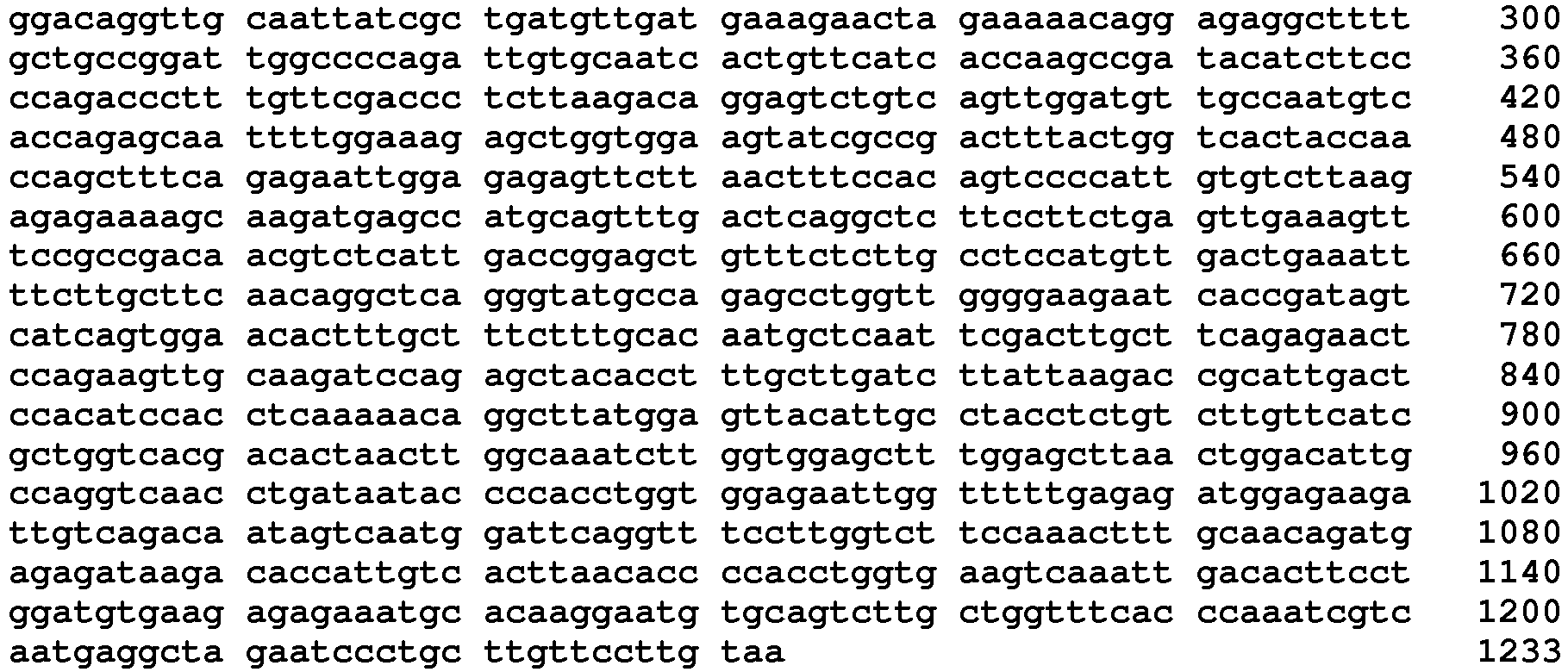
- <210> 6
<211> 1233
<212> DNA
<213> Artificial Sequence - <400> 6

- <210> 7
<211> 410
<212> PRT
<213> Artificial Sequence - <400> 7


- <210> 8
<211> 1233
<212> DNA
<213> Artificial Sequence - <400> 8

- <210> 9
<211> 410
<212> PRT
<213> Artificial Sequence - <400> 9


- <210> 10
<211> 1233
<212> DNA
<213> Artificial Sequence - <400> 10


- <210> 11
<211> 32
<212> DNA
<213> Artificial Sequence - <400> 11
ggcgaattcc agtcagaacc agagttgaag tt 32 - <210> 12
<211> 32
<212> DNA
<213> Artificial Sequence - <400> 12
atagcggccg cttacaagga acaagcaggg at 32
Claims (6)
- A phytase mutant, comprising the amino acid sequence shown as SEQ ID NO: 5, SEQ ID NO: 7, or SEQ ID NO: 9.
- A DNA molecule comprising a polynucleotide sequence encoding the phytase mutant of claim 1.
- The DNA molecule of claim 2, wherein the polynucleotide sequence is shown as SEQ ID NO: 6 or SEQ ID NO: 8 or SEQ ID NO: 10.
- An expression vector comprising the DNA molecule of claims 2 or 3.
- A host cell comprising the expression vector of claim 4.
- A producing method of the phytase mutant of claim 1, which includes:Step 1: obtaining a DNA molecule of claim 2;Step 2: fusing the DNA molecule obtained by step 1 to an expression vector, thereby constructing a recombinant expression vector, and transforming the recombinant expression vector into a host cell; andStep 3: inducing the host cell comprising the recombinant expression vector to express the phytase mutant, and then isolating and purifying the phytase mutant.
Applications Claiming Priority (2)
| Application Number | Priority Date | Filing Date | Title |
|---|---|---|---|
| CN201610184337.1A CN107236717B (en) | 2016-03-28 | 2016-03-28 | Phytase mutant |
| PCT/CN2016/093918 WO2017166562A1 (en) | 2016-03-28 | 2016-08-08 | Phytase mutant |
Publications (3)
| Publication Number | Publication Date |
|---|---|
| EP3438253A1 EP3438253A1 (en) | 2019-02-06 |
| EP3438253A4 EP3438253A4 (en) | 2019-08-21 |
| EP3438253B1 true EP3438253B1 (en) | 2021-06-16 |
Family
ID=59963348
Family Applications (1)
| Application Number | Title | Priority Date | Filing Date |
|---|---|---|---|
| EP16896334.6A Active EP3438253B1 (en) | 2016-03-28 | 2016-08-08 | Phytase mutant |
Country Status (6)
| Country | Link |
|---|---|
| US (1) | US11214776B2 (en) |
| EP (1) | EP3438253B1 (en) |
| CN (1) | CN107236717B (en) |
| DK (1) | DK3438253T3 (en) |
| ES (1) | ES2879292T3 (en) |
| WO (1) | WO2017166562A1 (en) |
Families Citing this family (13)
| Publication number | Priority date | Publication date | Assignee | Title |
|---|---|---|---|---|
| CN108251439B (en) * | 2018-01-11 | 2021-03-30 | 山西大学 | A kind of artificially modified trypsin-resistant phytase and its preparation method and application |
| WO2019228441A1 (en) * | 2018-05-30 | 2019-12-05 | 南京百斯杰生物工程有限公司 | Phytase mutant |
| WO2020063267A1 (en) * | 2018-09-28 | 2020-04-02 | 青岛蔚蓝生物集团有限公司 | Phytase mutant |
| WO2020063268A1 (en) * | 2018-09-28 | 2020-04-02 | 青岛蔚蓝生物集团有限公司 | Phytase mutant |
| CN111218436B (en) * | 2018-11-27 | 2022-08-30 | 青岛蔚蓝生物集团有限公司 | Phytase mutant |
| EP3737751A1 (en) * | 2019-03-21 | 2020-11-18 | Fornia BioSolutions, Inc. | Additional phytase variants and methods |
| CN110724676B (en) * | 2019-10-21 | 2021-09-07 | 广东溢多利生物科技股份有限公司 | A phytase mutant and its vector and application |
| CN110698557B (en) * | 2019-11-06 | 2021-06-18 | 郑州伊美诺生物技术有限公司 | ACTH mutant, recombinant protein, application thereof, and kit containing ACTH recombinant protein |
| CN117778350A (en) | 2020-04-29 | 2024-03-29 | 济南百斯杰生物工程有限公司 | A parental phytase variant |
| CN118931873A (en) * | 2020-05-22 | 2024-11-12 | 青岛蔚蓝生物集团有限公司 | Phytase mutants |
| CN113717958B (en) * | 2020-05-22 | 2024-04-12 | 青岛蔚蓝生物集团有限公司 | Phytase mutant with improved specific activity |
| CN113717959B (en) * | 2020-05-22 | 2024-04-02 | 青岛蔚蓝生物集团有限公司 | Phytase mutants |
| CN114807087B (en) * | 2022-06-28 | 2022-09-27 | 中国农业科学院北京畜牧兽医研究所 | Method for improving thermal stability of phytase, mutant and application |
Family Cites Families (13)
| Publication number | Priority date | Publication date | Assignee | Title |
|---|---|---|---|---|
| TW200305430A (en) | 2001-12-28 | 2003-11-01 | Syngenta Participations Ag | Thermotolerant phytase for animal feed |
| JP4516358B2 (en) * | 2004-05-26 | 2010-08-04 | 富士通株式会社 | Radio base station apparatus and radio communication method |
| CN101724611B (en) | 2008-10-24 | 2012-02-15 | 福建福大百特科技发展有限公司 | Acid phytase APPA as well as mutant and preparation method thereof |
| WO2011117406A1 (en) * | 2010-03-26 | 2011-09-29 | Novozymes A/S | Thermostable phytase variants |
| CN102392002B (en) * | 2011-11-03 | 2013-06-19 | 青岛蔚蓝生物集团有限公司 | Improved escherichia coli phytase HTP6M and gene and application thereof |
| CN102943083B (en) * | 2012-11-27 | 2013-12-25 | 青岛根源生物技术集团有限公司 | Site-specific mutagenesis high temperature resistant phytase gene TP and expression vector and application thereof |
| WO2015070372A1 (en) * | 2013-11-12 | 2015-05-21 | 中国农业科学院饲料研究所 | A method for producing a phytase variant with improved thermal stability, and a phytase variant and the use thereof |
| DK3222714T3 (en) | 2014-11-21 | 2019-12-09 | Qingdao Vland Biotech Group Co Ltd | PHYTASEMUTANTS |
| CN104450643B (en) | 2014-12-19 | 2020-07-28 | 青岛蔚蓝生物集团有限公司 | Phytase mutants and their applications |
| CN104404012B (en) | 2014-12-19 | 2019-06-07 | 青岛蔚蓝生物集团有限公司 | A kind of novel phytase |
| CN104911160B (en) | 2015-07-10 | 2017-06-20 | 青岛玛斯特生物技术有限公司 | A kind of neutral phytase mutant and its application |
| CN105219749B (en) | 2015-11-04 | 2019-08-27 | 广东溢多利生物科技股份有限公司 | Optimized and improved phytase mutants and their coding genes and applications |
| US10351832B2 (en) * | 2016-06-30 | 2019-07-16 | Fornia Biosolutions, Inc. | Phytases and uses thereof |
-
2016
- 2016-03-28 CN CN201610184337.1A patent/CN107236717B/en active Active
- 2016-08-08 EP EP16896334.6A patent/EP3438253B1/en active Active
- 2016-08-08 DK DK16896334.6T patent/DK3438253T3/en active
- 2016-08-08 US US16/089,044 patent/US11214776B2/en not_active Expired - Fee Related
- 2016-08-08 WO PCT/CN2016/093918 patent/WO2017166562A1/en not_active Ceased
- 2016-08-08 ES ES16896334T patent/ES2879292T3/en active Active
Non-Patent Citations (1)
| Title |
|---|
| None * |
Also Published As
| Publication number | Publication date |
|---|---|
| CN107236717B (en) | 2021-03-30 |
| EP3438253A4 (en) | 2019-08-21 |
| DK3438253T3 (en) | 2021-07-12 |
| CN107236717A (en) | 2017-10-10 |
| WO2017166562A1 (en) | 2017-10-05 |
| US20200277582A1 (en) | 2020-09-03 |
| ES2879292T3 (en) | 2021-11-22 |
| EP3438253A1 (en) | 2019-02-06 |
| US11214776B2 (en) | 2022-01-04 |
Similar Documents
| Publication | Publication Date | Title |
|---|---|---|
| US11739336B2 (en) | Phytase mutants | |
| US11214776B2 (en) | Phytase mutant | |
| KR20010042138A (en) | Phytase variants | |
| CN104450643B (en) | Phytase mutants and their applications | |
| CN110029120B (en) | A high-yielding strain of phytase and its application | |
| EP1230350A1 (en) | Site-directed mutagenesis of escherichia coli phytase | |
| US12378538B2 (en) | Phytase mutant | |
| CN105950578A (en) | Heat-resisting glucose oxidase mutant as well as encoding gene and application thereof | |
| CN105950577A (en) | Glucose oxidase mutant with improved thermal stability as well as encoding genes and application thereof | |
| EP4155396A1 (en) | Phytase mutant | |
| CN101426907B (en) | Cloning and expression of a novel phytase | |
| CN102392002A (en) | Improved escherichia coli phytase HTP6M and gene and application thereof | |
| CN108118038A (en) | A kind of glucose oxidase mutant | |
| CN103725707B (en) | Genetic engineering strain for recombinant expression of phytase | |
| CN104404012A (en) | Novel phytase | |
| CN103667204B (en) | Phytase from aspergillus fumigatus | |
| CN111218436B (en) | Phytase mutant | |
| WO2020063268A1 (en) | Phytase mutant | |
| CN115094050A (en) | Neutral phytase mutant and application thereof | |
| CN115725635A (en) | Pichia pastoris mutant strain and application thereof in production of neutral phytase | |
| CN114395544A (en) | High specific activity phytase mutant | |
| CN107988177A (en) | Glucose oxidase mutant | |
| WO2020063267A1 (en) | Phytase mutant | |
| CN113717959B (en) | Phytase mutants | |
| CN116121222A (en) | Neutral phytase mutant and application thereof |
Legal Events
| Date | Code | Title | Description |
|---|---|---|---|
| STAA | Information on the status of an ep patent application or granted ep patent |
Free format text: STATUS: THE INTERNATIONAL PUBLICATION HAS BEEN MADE |
|
| PUAI | Public reference made under article 153(3) epc to a published international application that has entered the european phase |
Free format text: ORIGINAL CODE: 0009012 |
|
| STAA | Information on the status of an ep patent application or granted ep patent |
Free format text: STATUS: REQUEST FOR EXAMINATION WAS MADE |
|
| 17P | Request for examination filed |
Effective date: 20180914 |
|
| AK | Designated contracting states |
Kind code of ref document: A1 Designated state(s): AL AT BE BG CH CY CZ DE DK EE ES FI FR GB GR HR HU IE IS IT LI LT LU LV MC MK MT NL NO PL PT RO RS SE SI SK SM TR |
|
| AX | Request for extension of the european patent |
Extension state: BA ME |
|
| DAV | Request for validation of the european patent (deleted) | ||
| DAX | Request for extension of the european patent (deleted) | ||
| A4 | Supplementary search report drawn up and despatched |
Effective date: 20190718 |
|
| RIC1 | Information provided on ipc code assigned before grant |
Ipc: C12N 9/16 20060101AFI20190712BHEP Ipc: C12N 15/55 20060101ALI20190712BHEP |
|
| STAA | Information on the status of an ep patent application or granted ep patent |
Free format text: STATUS: EXAMINATION IS IN PROGRESS |
|
| 17Q | First examination report despatched |
Effective date: 20200528 |
|
| GRAP | Despatch of communication of intention to grant a patent |
Free format text: ORIGINAL CODE: EPIDOSNIGR1 |
|
| STAA | Information on the status of an ep patent application or granted ep patent |
Free format text: STATUS: GRANT OF PATENT IS INTENDED |
|
| INTG | Intention to grant announced |
Effective date: 20210317 |
|
| GRAS | Grant fee paid |
Free format text: ORIGINAL CODE: EPIDOSNIGR3 |
|
| GRAA | (expected) grant |
Free format text: ORIGINAL CODE: 0009210 |
|
| STAA | Information on the status of an ep patent application or granted ep patent |
Free format text: STATUS: THE PATENT HAS BEEN GRANTED |
|
| AK | Designated contracting states |
Kind code of ref document: B1 Designated state(s): AL AT BE BG CH CY CZ DE DK EE ES FI FR GB GR HR HU IE IS IT LI LT LU LV MC MK MT NL NO PL PT RO RS SE SI SK SM TR |
|
| REG | Reference to a national code |
Ref country code: GB Ref legal event code: FG4D |
|
| REG | Reference to a national code |
Ref country code: CH Ref legal event code: EP |
|
| REG | Reference to a national code |
Ref country code: DE Ref legal event code: R096 Ref document number: 602016059534 Country of ref document: DE |
|
| REG | Reference to a national code |
Ref country code: DK Ref legal event code: T3 Effective date: 20210705 |
|
| REG | Reference to a national code |
Ref country code: AT Ref legal event code: REF Ref document number: 1402376 Country of ref document: AT Kind code of ref document: T Effective date: 20210715 |
|
| REG | Reference to a national code |
Ref country code: IE Ref legal event code: FG4D |
|
| REG | Reference to a national code |
Ref country code: LT Ref legal event code: MG9D |
|
| PG25 | Lapsed in a contracting state [announced via postgrant information from national office to epo] |
Ref country code: HR Free format text: LAPSE BECAUSE OF FAILURE TO SUBMIT A TRANSLATION OF THE DESCRIPTION OR TO PAY THE FEE WITHIN THE PRESCRIBED TIME-LIMIT Effective date: 20210616 Ref country code: BG Free format text: LAPSE BECAUSE OF FAILURE TO SUBMIT A TRANSLATION OF THE DESCRIPTION OR TO PAY THE FEE WITHIN THE PRESCRIBED TIME-LIMIT Effective date: 20210916 Ref country code: FI Free format text: LAPSE BECAUSE OF FAILURE TO SUBMIT A TRANSLATION OF THE DESCRIPTION OR TO PAY THE FEE WITHIN THE PRESCRIBED TIME-LIMIT Effective date: 20210616 Ref country code: LT Free format text: LAPSE BECAUSE OF FAILURE TO SUBMIT A TRANSLATION OF THE DESCRIPTION OR TO PAY THE FEE WITHIN THE PRESCRIBED TIME-LIMIT Effective date: 20210616 |
|
| REG | Reference to a national code |
Ref country code: AT Ref legal event code: MK05 Ref document number: 1402376 Country of ref document: AT Kind code of ref document: T Effective date: 20210616 |
|
| REG | Reference to a national code |
Ref country code: ES Ref legal event code: FG2A Ref document number: 2879292 Country of ref document: ES Kind code of ref document: T3 Effective date: 20211122 |
|
| REG | Reference to a national code |
Ref country code: NL Ref legal event code: MP Effective date: 20210616 |
|
| PG25 | Lapsed in a contracting state [announced via postgrant information from national office to epo] |
Ref country code: GR Free format text: LAPSE BECAUSE OF FAILURE TO SUBMIT A TRANSLATION OF THE DESCRIPTION OR TO PAY THE FEE WITHIN THE PRESCRIBED TIME-LIMIT Effective date: 20210917 Ref country code: LV Free format text: LAPSE BECAUSE OF FAILURE TO SUBMIT A TRANSLATION OF THE DESCRIPTION OR TO PAY THE FEE WITHIN THE PRESCRIBED TIME-LIMIT Effective date: 20210616 Ref country code: RS Free format text: LAPSE BECAUSE OF FAILURE TO SUBMIT A TRANSLATION OF THE DESCRIPTION OR TO PAY THE FEE WITHIN THE PRESCRIBED TIME-LIMIT Effective date: 20210616 Ref country code: SE Free format text: LAPSE BECAUSE OF FAILURE TO SUBMIT A TRANSLATION OF THE DESCRIPTION OR TO PAY THE FEE WITHIN THE PRESCRIBED TIME-LIMIT Effective date: 20210616 Ref country code: NO Free format text: LAPSE BECAUSE OF FAILURE TO SUBMIT A TRANSLATION OF THE DESCRIPTION OR TO PAY THE FEE WITHIN THE PRESCRIBED TIME-LIMIT Effective date: 20210916 |
|
| PG25 | Lapsed in a contracting state [announced via postgrant information from national office to epo] |
Ref country code: SM Free format text: LAPSE BECAUSE OF FAILURE TO SUBMIT A TRANSLATION OF THE DESCRIPTION OR TO PAY THE FEE WITHIN THE PRESCRIBED TIME-LIMIT Effective date: 20210616 Ref country code: SK Free format text: LAPSE BECAUSE OF FAILURE TO SUBMIT A TRANSLATION OF THE DESCRIPTION OR TO PAY THE FEE WITHIN THE PRESCRIBED TIME-LIMIT Effective date: 20210616 Ref country code: NL Free format text: LAPSE BECAUSE OF FAILURE TO SUBMIT A TRANSLATION OF THE DESCRIPTION OR TO PAY THE FEE WITHIN THE PRESCRIBED TIME-LIMIT Effective date: 20210616 Ref country code: RO Free format text: LAPSE BECAUSE OF FAILURE TO SUBMIT A TRANSLATION OF THE DESCRIPTION OR TO PAY THE FEE WITHIN THE PRESCRIBED TIME-LIMIT Effective date: 20210616 Ref country code: PT Free format text: LAPSE BECAUSE OF FAILURE TO SUBMIT A TRANSLATION OF THE DESCRIPTION OR TO PAY THE FEE WITHIN THE PRESCRIBED TIME-LIMIT Effective date: 20211018 Ref country code: EE Free format text: LAPSE BECAUSE OF FAILURE TO SUBMIT A TRANSLATION OF THE DESCRIPTION OR TO PAY THE FEE WITHIN THE PRESCRIBED TIME-LIMIT Effective date: 20210616 Ref country code: CZ Free format text: LAPSE BECAUSE OF FAILURE TO SUBMIT A TRANSLATION OF THE DESCRIPTION OR TO PAY THE FEE WITHIN THE PRESCRIBED TIME-LIMIT Effective date: 20210616 Ref country code: AT Free format text: LAPSE BECAUSE OF FAILURE TO SUBMIT A TRANSLATION OF THE DESCRIPTION OR TO PAY THE FEE WITHIN THE PRESCRIBED TIME-LIMIT Effective date: 20210616 |
|
| PG25 | Lapsed in a contracting state [announced via postgrant information from national office to epo] |
Ref country code: PL Free format text: LAPSE BECAUSE OF FAILURE TO SUBMIT A TRANSLATION OF THE DESCRIPTION OR TO PAY THE FEE WITHIN THE PRESCRIBED TIME-LIMIT Effective date: 20210616 |
|
| REG | Reference to a national code |
Ref country code: DE Ref legal event code: R097 Ref document number: 602016059534 Country of ref document: DE |
|
| REG | Reference to a national code |
Ref country code: CH Ref legal event code: PL |
|
| PG25 | Lapsed in a contracting state [announced via postgrant information from national office to epo] |
Ref country code: MC Free format text: LAPSE BECAUSE OF FAILURE TO SUBMIT A TRANSLATION OF THE DESCRIPTION OR TO PAY THE FEE WITHIN THE PRESCRIBED TIME-LIMIT Effective date: 20210616 |
|
| PLBE | No opposition filed within time limit |
Free format text: ORIGINAL CODE: 0009261 |
|
| REG | Reference to a national code |
Ref country code: BE Ref legal event code: MM Effective date: 20210831 |
|
| STAA | Information on the status of an ep patent application or granted ep patent |
Free format text: STATUS: NO OPPOSITION FILED WITHIN TIME LIMIT |
|
| PG25 | Lapsed in a contracting state [announced via postgrant information from national office to epo] |
Ref country code: LI Free format text: LAPSE BECAUSE OF NON-PAYMENT OF DUE FEES Effective date: 20210831 Ref country code: CH Free format text: LAPSE BECAUSE OF NON-PAYMENT OF DUE FEES Effective date: 20210831 |
|
| 26N | No opposition filed |
Effective date: 20220317 |
|
| GBPC | Gb: european patent ceased through non-payment of renewal fee |
Effective date: 20210916 |
|
| PG25 | Lapsed in a contracting state [announced via postgrant information from national office to epo] |
Ref country code: LU Free format text: LAPSE BECAUSE OF NON-PAYMENT OF DUE FEES Effective date: 20210808 Ref country code: AL Free format text: LAPSE BECAUSE OF FAILURE TO SUBMIT A TRANSLATION OF THE DESCRIPTION OR TO PAY THE FEE WITHIN THE PRESCRIBED TIME-LIMIT Effective date: 20210616 |
|
| PG25 | Lapsed in a contracting state [announced via postgrant information from national office to epo] |
Ref country code: IT Free format text: LAPSE BECAUSE OF FAILURE TO SUBMIT A TRANSLATION OF THE DESCRIPTION OR TO PAY THE FEE WITHIN THE PRESCRIBED TIME-LIMIT Effective date: 20210616 Ref country code: IE Free format text: LAPSE BECAUSE OF NON-PAYMENT OF DUE FEES Effective date: 20210808 Ref country code: GB Free format text: LAPSE BECAUSE OF NON-PAYMENT OF DUE FEES Effective date: 20210916 Ref country code: FR Free format text: LAPSE BECAUSE OF NON-PAYMENT OF DUE FEES Effective date: 20210816 Ref country code: BE Free format text: LAPSE BECAUSE OF NON-PAYMENT OF DUE FEES Effective date: 20210831 |
|
| PG25 | Lapsed in a contracting state [announced via postgrant information from national office to epo] |
Ref country code: CY Free format text: LAPSE BECAUSE OF FAILURE TO SUBMIT A TRANSLATION OF THE DESCRIPTION OR TO PAY THE FEE WITHIN THE PRESCRIBED TIME-LIMIT Effective date: 20210616 |
|
| PG25 | Lapsed in a contracting state [announced via postgrant information from national office to epo] |
Ref country code: HU Free format text: LAPSE BECAUSE OF FAILURE TO SUBMIT A TRANSLATION OF THE DESCRIPTION OR TO PAY THE FEE WITHIN THE PRESCRIBED TIME-LIMIT; INVALID AB INITIO Effective date: 20160808 |
|
| PG25 | Lapsed in a contracting state [announced via postgrant information from national office to epo] |
Ref country code: MK Free format text: LAPSE BECAUSE OF FAILURE TO SUBMIT A TRANSLATION OF THE DESCRIPTION OR TO PAY THE FEE WITHIN THE PRESCRIBED TIME-LIMIT Effective date: 20210616 |
|
| PG25 | Lapsed in a contracting state [announced via postgrant information from national office to epo] |
Ref country code: MT Free format text: LAPSE BECAUSE OF FAILURE TO SUBMIT A TRANSLATION OF THE DESCRIPTION OR TO PAY THE FEE WITHIN THE PRESCRIBED TIME-LIMIT Effective date: 20210616 |
|
| PGFP | Annual fee paid to national office [announced via postgrant information from national office to epo] |
Ref country code: DK Payment date: 20250606 Year of fee payment: 10 |
|
| PGFP | Annual fee paid to national office [announced via postgrant information from national office to epo] |
Ref country code: ES Payment date: 20250918 Year of fee payment: 10 |
|
| PGFP | Annual fee paid to national office [announced via postgrant information from national office to epo] |
Ref country code: DE Payment date: 20250627 Year of fee payment: 10 |
|
| PGFP | Annual fee paid to national office [announced via postgrant information from national office to epo] |
Ref country code: TR Payment date: 20250804 Year of fee payment: 10 |