EP3435300A1 - Assessment device and assessment system - Google Patents
Assessment device and assessment system Download PDFInfo
- Publication number
- EP3435300A1 EP3435300A1 EP17795904.6A EP17795904A EP3435300A1 EP 3435300 A1 EP3435300 A1 EP 3435300A1 EP 17795904 A EP17795904 A EP 17795904A EP 3435300 A1 EP3435300 A1 EP 3435300A1
- Authority
- EP
- European Patent Office
- Prior art keywords
- user
- proficiency level
- information
- acquisition unit
- unit
- Prior art date
- Legal status (The legal status is an assumption and is not a legal conclusion. Google has not performed a legal analysis and makes no representation as to the accuracy of the status listed.)
- Ceased
Links
Images


Classifications
-
- G—PHYSICS
- G06—COMPUTING OR CALCULATING; COUNTING
- G06F—ELECTRIC DIGITAL DATA PROCESSING
- G06F9/00—Arrangements for program control, e.g. control units
- G06F9/06—Arrangements for program control, e.g. control units using stored programs, i.e. using an internal store of processing equipment to receive or retain programs
- G06F9/44—Arrangements for executing specific programs
- G06F9/451—Execution arrangements for user interfaces
- G06F9/453—Help systems
-
- G—PHYSICS
- G06—COMPUTING OR CALCULATING; COUNTING
- G06F—ELECTRIC DIGITAL DATA PROCESSING
- G06F3/00—Input arrangements for transferring data to be processed into a form capable of being handled by the computer; Output arrangements for transferring data from processing unit to output unit, e.g. interface arrangements
- G06F3/01—Input arrangements or combined input and output arrangements for interaction between user and computer
- G06F3/048—Interaction techniques based on graphical user interfaces [GUI]
- G06F3/0481—Interaction techniques based on graphical user interfaces [GUI] based on specific properties of the displayed interaction object or a metaphor-based environment, e.g. interaction with desktop elements like windows or icons, or assisted by a cursor's changing behaviour or appearance
-
- G—PHYSICS
- G06—COMPUTING OR CALCULATING; COUNTING
- G06Q—INFORMATION AND COMMUNICATION TECHNOLOGY [ICT] SPECIALLY ADAPTED FOR ADMINISTRATIVE, COMMERCIAL, FINANCIAL, MANAGERIAL OR SUPERVISORY PURPOSES; SYSTEMS OR METHODS SPECIALLY ADAPTED FOR ADMINISTRATIVE, COMMERCIAL, FINANCIAL, MANAGERIAL OR SUPERVISORY PURPOSES, NOT OTHERWISE PROVIDED FOR
- G06Q10/00—Administration; Management
- G06Q10/06—Resources, workflows, human or project management; Enterprise or organisation planning; Enterprise or organisation modelling
- G06Q10/063—Operations research, analysis or management
- G06Q10/0631—Resource planning, allocation, distributing or scheduling for enterprises or organisations
- G06Q10/06312—Adjustment or analysis of established resource schedule, e.g. resource or task levelling, or dynamic rescheduling
-
- G—PHYSICS
- G06—COMPUTING OR CALCULATING; COUNTING
- G06Q—INFORMATION AND COMMUNICATION TECHNOLOGY [ICT] SPECIALLY ADAPTED FOR ADMINISTRATIVE, COMMERCIAL, FINANCIAL, MANAGERIAL OR SUPERVISORY PURPOSES; SYSTEMS OR METHODS SPECIALLY ADAPTED FOR ADMINISTRATIVE, COMMERCIAL, FINANCIAL, MANAGERIAL OR SUPERVISORY PURPOSES, NOT OTHERWISE PROVIDED FOR
- G06Q20/00—Payment architectures, schemes or protocols
- G06Q20/08—Payment architectures
- G06Q20/14—Payment architectures specially adapted for billing systems
- G06Q20/145—Payments according to the detected use or quantity
-
- G—PHYSICS
- G06—COMPUTING OR CALCULATING; COUNTING
- G06Q—INFORMATION AND COMMUNICATION TECHNOLOGY [ICT] SPECIALLY ADAPTED FOR ADMINISTRATIVE, COMMERCIAL, FINANCIAL, MANAGERIAL OR SUPERVISORY PURPOSES; SYSTEMS OR METHODS SPECIALLY ADAPTED FOR ADMINISTRATIVE, COMMERCIAL, FINANCIAL, MANAGERIAL OR SUPERVISORY PURPOSES, NOT OTHERWISE PROVIDED FOR
- G06Q30/00—Commerce
- G06Q30/04—Billing or invoicing
-
- H—ELECTRICITY
- H04—ELECTRIC COMMUNICATION TECHNIQUE
- H04L—TRANSMISSION OF DIGITAL INFORMATION, e.g. TELEGRAPHIC COMMUNICATION
- H04L41/00—Arrangements for maintenance, administration or management of data switching networks, e.g. of packet switching networks
- H04L41/50—Network service management, e.g. ensuring proper service fulfilment according to agreements
- H04L41/5061—Network service management, e.g. ensuring proper service fulfilment according to agreements characterised by the interaction between service providers and their network customers, e.g. customer relationship management
- H04L41/5064—Customer relationship management
-
- H—ELECTRICITY
- H04—ELECTRIC COMMUNICATION TECHNIQUE
- H04M—TELEPHONIC COMMUNICATION
- H04M1/00—Substation equipment, e.g. for use by subscribers
- H04M1/72—Mobile telephones; Cordless telephones, i.e. devices for establishing wireless links to base stations without route selection
- H04M1/724—User interfaces specially adapted for cordless or mobile telephones
-
- H—ELECTRICITY
- H04—ELECTRIC COMMUNICATION TECHNIQUE
- H04M—TELEPHONIC COMMUNICATION
- H04M11/00—Telephonic communication systems specially adapted for combination with other electrical systems
-
- H—ELECTRICITY
- H04—ELECTRIC COMMUNICATION TECHNIQUE
- H04M—TELEPHONIC COMMUNICATION
- H04M2250/00—Details of telephonic subscriber devices
- H04M2250/56—Details of telephonic subscriber devices including a user help function
Definitions
- the present invention relates to a technique for determining a proficiency level of operation of a user apparatus.
- Patent Literature 1 discloses a technique in which a degree to which a user proficiently uses a device (proficiency level) is estimated based on personal information of a user (sex, age, favorite color, favorite character, etc.) or the like.
- Patent Literature 1 JP 2006-127372A
- a user's proficiency level of operation of a user apparatus for example, a hint explaining a simple operation method is displayed if the user has a low proficiency level, or a hint explaining an advanced operation method is displayed if the user has a high proficiency level, and in this manner, the technique can be used such that information that is likely to be useful to the user is presented. For this reason, it is desirable that the proficiency level of the user is acquired with a high accuracy.
- an object of the present invention is to determine a user's proficiency level of operation of a user apparatus with higher accuracy.
- the present invention provides a determination apparatus including: an acquisition unit configured to acquire information indicating a usage status of a user apparatus of a user; and a determination unit configured to determine a proficiency level of operation of the user apparatus of the user based on the acquired information indicating the usage status.
- the acquisition unit may acquire information relating to a contract for a service used by operating the user apparatus, as the information indicating the usage status.
- the acquisition unit may acquire a time at which the service is contracted, a method for entering the contract for the service, or information indicating whether or not content of the service has been changed, as the information relating to the contract.
- the acquisition unit may acquire information relating to billing of a paid service used by operating the user apparatus, as the information indicating the usage status.
- the acquisition unit may acquire information indicating a billing unit price for the paid service or a billing frequency for the paid service, as the information relating to billing.
- the user apparatus may include a user apparatus belonging to a first group, and another user apparatus belonging to a second group that has more functions than the user apparatus belonging to the first group, and the acquisition unit may acquire information relating to the other user apparatus that has been used by the user, as the information indicating the usage status.
- the acquisition unit may acquire information on a period in during which the user has used the other user apparatus in the past, a number of the other user apparatus that is used by the user, a performance of the other user apparatus that is used by the user, or a model of the other user apparatus that is used by the user, as the information indicating the usage status.
- the user apparatus may have a function of displaying usage method information indicating a method of using the user apparatus, and the acquisition unit may acquire a history of operations performed by the user while the usage method information is displayed, as the information indicating the usage status.
- the user apparatus may have a function of displaying multiple pieces of usage method information indicating methods of using the user apparatus, and from among the multiple pieces of usage method information, the acquisition unit may acquire information specifying usage method information displayed when the user performs a specific operation, as the information indicating the usage status.
- the present invention provides a determination system including: an acquisition unit configured to acquire information indicating a usage status of a user apparatus of a user; and a determination unit configured to determine a proficiency level of operation of the user apparatus of the user based on the acquired information indicating the usage status.
- FIG. 1 is a drawing showing an overall configuration of information processing system 1 according to a first embodiment.
- Information processing system 1 is a system for making it possible to comfortably use a user apparatus such as a smartphone by providing a user using the user apparatus with hints corresponding to the user's proficiency level (e.g., indicated as beginner, intermediate, and advanced) of operation of the user apparatus.
- a hint in this context is information indicating how to use the user apparatus, and for example, a hint is information indicating a method for performing an operation on a screen currently being displayed, information indicating a method for performing restoration from an error that has occurred on the user apparatus, or the like.
- Information management system 1 includes network 2, smartphone 10, and server apparatus 20.
- Network 2 includes a mobile communication network, Internet, or the like, and mediates data exchange between apparatuses.
- Smartphone 10 is connected to network 2 through mobile communication
- server apparatus 20 is connected to network 2 with a wire (or wirelessly).
- Smartphone 10 is a user apparatus used by a user.
- Smartphone 10 includes a function of determining the above-mentioned user's proficiency level of operation of the user apparatus, and a function of displaying information corresponding to the determined proficiency level.
- Proficiency level or “proficiency level of operation” is simply mentioned, it is assumed to mean the user's proficiency level of operation of the user apparatus.
- Smartphone 10 determines the proficiency level based on information stored in server apparatus 20.
- Server apparatus 20 is an information processing apparatus that stores information to be used in the determination of the proficiency level. This information will be described in detail later.
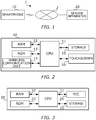
- FIG. 2 shows a hardware configuration of smartphone 10.
- Smartphone 10 is a computer that includes CPU (Central Processing Unit) 11, RAM (Random Access Memory) 12, ROM (Read Only Memory) 13, wireless communication unit 14, storage 15, and touchscreen 16.
- CPU Central Processing Unit
- RAM Random Access Memory
- ROM Read Only Memory
- wireless communication unit storage 15, and touchscreen 16.
- Wireless communication unit 14 has a communication circuit that performs wireless communication conforming to mobile communication and wireless communication conforming to a wireless LAN (Local Area Network), and performs communication with an external apparatus via network 2.
- Storage 15 is a storage means such as a flash memory, and stores data and programs to be used by CPU 11 for control.
- Touchscreen 16 includes a display, which is a display means of smartphone 10, and a touch panel provided on the surface of the display, and touchscreen 16 displays an image and receives operations from a user.
- FIG. 3 shows a hardware configuration of server apparatus 20.
- Server apparatus 20 is a computer including CPU 21, RAM 22, ROM 23, NIC (Network Interface Card) 24, and storage 25.
- CPU 21, RAM 22, and ROM 23 are hardware that is the same as the hardware with the same name shown in FIG. 2 .
- NIC 24 includes a circuit for communicating with network 2 through a wire (or wirelessly) and communicates with, for example, smartphone 10 via network 2.
- Storage 25 is a storage means such as an HDD (Hard Disk Drive) or SSD (Solid State Drive), and stores data and programs to be used by the CPU 21 for control.
- HDD Hard Disk Drive
- SSD Solid State Drive
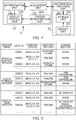
- FIG. 4 shows a functional configuration realized by information processing system 1.
- Smartphone 10 includes acquisition unit 101, determination unit 102, trigger determination unit 103, and display control unit 104.
- Server apparatus 20 includes storage unit 201, update unit 202, and information provision unit 203.
- Storage unit 201 of server apparatus 20 stores service contract information, which is information relating to the contract for the service that is used by the user operating smartphone 10.
- service contract information is information relating to the contract for the service that is used by the user operating smartphone 10.
- a remote support service for asking an operator at a call center how to use the smartphone
- a cloud storage service for storing the user's data in a storage region ensured in a cloud system
- a navigation service for providing a car navigation function for instructing guidance of a route of a car, switching of a screen, playback of music, and the like through voice.
- FIG. 5 shows an example of stored service contract information.
- storage unit 201 stores a "user ID”, a “contract period”, a “contract method”, and a "change history” in association with each other for each of a "remote support service", a "cloud storage service”, and a “navigation service”.
- storage unit 201 stores the user ID "ID001" of the user using the remote support service, the contract period "2014.10.xx-" (-without end indicates that the contract is still in effect), the contract method "Shinjuku store” (indicates that the contract is entered at the store with that name), and the change history "none” (indicates that there have been no changes since the start of the contract) in association with each other.
- storage unit 201 stores the user ID "ID036" of the user using the navigation service, the contract period "2015.04.xx-2015.07.xx” (indicates that the contract ended on 2015.07.xx), the contract method "online” (indicates that the contract is entered by inputting predetermined items on a webpage for making a contract), and the two change histories "3D display” and "multiple language compatibility" in association with each other.
- identification information is used which is not allocated in the service systems for managing the service contracts, but is allocated in order to identify the user using information processing system 1. That is, the same user ID is allocated to the same person.
- a user ID table in which the user IDs of the present system and the user IDs of the service systems are associated is stored in server apparatus 20. Note that if a user ID that is used in common is used in the systems for managing the service contracts, that user ID may be used in information processing system 1 as well.
- Update unit 202 of server apparatus 20 updates the service contract information stored in storage unit 201.
- Update unit 202 periodically requests service contract information of the users from the service systems, for example.
- Update unit 202 acquires service contract information that is transmitted in response to the request, and if there is a difference (a change in the contract content) between the service contract information and the service contract information stored in storage unit 201, update unit 202 updates the stored service contract information by applying the difference thereto.
- Acquisition unit 101 of smartphone 10 acquires the service contract information of the user using smartphone 10.
- the service contract information is an example of information indicating the usage status of the user apparatus (smartphone 10 in the present embodiment) of the user in the present invention
- acquisition unit 101 is an example of an "acquisition unit" of the present invention. Usage of the user apparatus in this context encompasses not only operation of the user apparatus, but also using a service by operating the user apparatus.
- the user ID of the user using smartphone 10 is stored in smartphone 10 during user registration of information processing system 1, for example.
- Acquisition unit 101 transmits, to server apparatus 20, request data for requesting the service contract information of the user identified by the user ID stored in smartphone 10.
- Information provision unit 203 of server apparatus 20 provides the service contract information requested by the user apparatus to that user apparatus.
- information provision unit 203 reads out the service contract information stored in association with the user ID indicated by the request data, from storage unit 201.
- Information provision unit 203 provides the requested service contract information by transmitting the read-out service contract information to smartphone 10, which is the transmission source of the request data.
- Acquisition unit 101 acquires the service contract information transmitted from server apparatus 20 in response to the request data. Specifically, acquisition unit 101 acquires the pieces of information shown in FIG. 5 , that is, service contract information including the contract time indicating the time at which the service is contracted, the contract method for the service, and the change history indicating whether or not the content of the service has been changed. Acquisition unit 101 supplies the acquired service contract information to determination unit 102.
- Determination unit 102 of smartphone 10 determines the user's proficiency level of operation of the user apparatus based on the service contract information acquired by acquisition unit 101.
- Determination unit 102 is an example of a "determination unit” of the present invention
- CPU 11 of smartphone 10, which realizes determination unit 102 is an example of a “determination apparatus” of the present invention.
- Determination unit 102 stores a proficiency level score table in which the service contract information and scores indicating proficiency levels are associated, and a proficiency level table in which the proficiency level scores and the proficiency levels (in this embodiment, beginner, intermediate, and advanced) are associated, and determines the proficiency level using these tables.
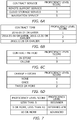
- FIGS. 6A to 6D show examples of proficiency level score tables.
- the proficiency level scores "1", “3", and “5" are respectively associated with the contract services “remote support service”, “cloud storage service”, and “navigation service”.
- the proficiency level scores "1", “2”, and “3” are respectively associated with the contract times "2016.01.01 or later”, “2014.01.01 or later, 2015.12.31 or earlier", and "2013.12.31 or earlier”.
- the contract time means the time at which the contract date is included.
- the proficiency level scores "1" and “3" are respectively associated with the contract methods “in-store” and “online”.
- the proficiency level scores "0", “1", and “2” are respectively associated with the change histories “none", “once”, and “twice or more”.
- Determination unit 102 reads out the scores associated in these proficiency level score tables with the contract time, contract method, and change history included in the service contract information supplied from acquisition unit 101, and adds up the read-out scores.
- the contract service is "remote support service”
- the contract date is "2014.10.xx”
- the contract method is "Shinjuku store”
- the change history is "none”
- determination unit 102 adds "1", which is associated with the "remote support service”, "2”, which is associated with "2014.01.01-2015.12.31”, "1”, which is associated with the contract method "in-store”, and "0”, which is associated with the change history "none", to obtain "4", which is calculated as the score indicating the user's proficiency level.
- FIG. 7 shows an example of a proficiency level table.
- the proficiency levels “beginner”, “intermediate”, and “advanced” are respectively associated with the proficiency level scores “less than 5", “5 or more, less than 10", and "10 or more”.
- Determination unit 102 determines the proficiency level associated in the proficiency level table with the proficiency level score calculated as described above, as the proficiency level of the user using the smartphone 10. Since "4" has been calculated as the score indicating the user proficiency level for the user of "ID001" described above for example, determination unit 102 determines "beginner”, which is associated with “less than 5", as the user's proficiency level. Also, since "13" has been calculated as the score indicating the user proficiency level for the user of "ID003", determination unit 102 determines "advanced", which is associated with "10 or more”, as the user's proficiency level.
- Determination unit 102 performs the above-described determination at, for example, a determined timing (every day, every week, or the like), when the user performs an operation for instructing determination of the proficiency level, or the like.
- Acquisition unit 101 acquires the service contract information at the timing at which determination unit 102 determines the proficiency level, for example. Note that acquisition unit 101 may also acquire the service contract information at a different timing (e.g., periodically, with a higher frequency than the determination of the proficiency level). Determination unit 102 supplies the thus-determined proficiency level to display control unit 104.
- Trigger determination unit 103 of smartphone 10 determines whether or not an event (called a "trigger") that triggers display of a hint to the user using smartphone 10 has occurred. For example, startup of a specific application program, the occurrence of a specific error, display of a specific webpage, a performance of a specific operation, or the like is used as the trigger. Trigger determination unit 103 stores the types of processing corresponding to the triggers.
- the processing corresponding to the triggers is, for example, processing for starting up a specific application, processing for displaying an error code of a specific error, processing for displaying a specific web page, processing for generating operation data indicating a specific operation, and the like.
- trigger determination unit 103 determines that the corresponding triggers have occurred. Trigger determination unit 103 periodically determines whether or not the triggers have occurred, and if it is determined that any of the triggers has occurred, trigger determination unit 103 supplies trigger information indicating the trigger that occurred to display control unit 104.
- display control unit 104 of smartphone 10 displays a hint corresponding to the trigger and the proficiency level determined by determination unit 102 on the display means.
- the hint displayed by display control unit 104 is information indicating how to use the above-described user apparatus, and is an example of "usage method information" of the present invention. Due to display control unit 104 and the display means cooperating, a function of displaying the usage method information is realized.
- Display control unit 104 stores a hint table in which the triggers, proficiency levels, and hints are associated, and display control unit 104 performs hint display control using the hint table.
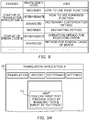
- FIG. 8 shows an example of a hint table.
- the set composed of the proficiency level "beginner” and the hint “how to use basic function” the set composed of the proficiency level “intermediate” and the hint “how to use expanded function”
- the set composed of the proficiency level “advanced” and the hint “dictionary customization method” are associated with the trigger "startup of translation application A”.
- the set composed of the proficiency level "beginner” and the hint “restarting method” the set composed of the proficiency level “intermediate” and the hint “operation method for resolving error
- the set composed of the proficiency level “advanced” and the hint “method for finding cause of error” are associated with the trigger "display of error code B".
- display control unit 104 When the trigger information is supplied from trigger determination unit 103, display control unit 104 reads out the hint associated with the trigger indicated by the supplied trigger information and the proficiency level supplied from determination unit 102. If the trigger "startup of translation application A" for example is supplied from trigger determination unit 103 and the proficiency level “intermediate” has been supplied from determination unit 102, display control unit 104 displays the hint "how to use expanded function", which is associated with the trigger and proficiency level in the hint table.
- FIGS. 9A and 9B show examples of hints that are displayed.
- display control unit 104 displays "hint” and a hint H1 saying "You can input text through voice by enabling 'voice input' in 'settings'.” on touchscreen 16 (display means in the present embodiment) on which the screen "translation application A” is displayed.
- Hint H1 is the hint stored as "how to use expanded settings", which is associated with "intermediate” in the hint table.
- FIG. 10 indicates an example of an operation procedure of apparatuses for determination processing and display processing.
- the operation procedure is started upon reaching the timing at which determination unit 102 determines the proficiency level.
- smartphone 10 acquisition unit 101
- smartphone 10 transmits the generated acquisition data to server apparatus 20 (step S12).
- server apparatus 20 Upon receiving the request data in step S12, server apparatus 20 (information provision unit 203) reads out the service contract information of the user indicated by the request data (step S13) and transmits the read-out service contract information to smartphone 10, which is the request source (step S14). Smartphone 10 (acquisition unit 101) acquires the service contract information transmitted in step S14 (step S15).
- smartphone 10 determines the proficiency level of operation of the user apparatus of the user using smartphone 10 based on the acquired service contract information (step S16).
- Steps S11 to S16 are an operation procedure for determination processing.
- smartphone 10 trigger determination unit 103
- smartphone 10 display control unit 104
- the proficiency level of operation is determined based on the service contract information of the service used by the user.
- the service contract information is an example of information indicating the usage status of the user apparatus, and the proficiency level score calculated based on the service contract information is obtained as a result of analyzing the usage status of the user apparatus.
- the result of analyzing the usage status can be applied to the proficiency level determination processing.
- users with a high proficiency level tend to enter contracts online, since entering a contract online requires more familiarity with the operation of the user apparatus and there are fewer restraints on the place and time compared to entering a contract at a store. Also, the more familiar with operating the user apparatus a user is and the higher that user's proficiency level is, the more likely that user is to perform contract changes suiting that user's usage status in order to sufficiently use the service. In view of this, in the above-described example, the proficiency level is determined according to these trends.
- the present embodiment by thus determining the proficiency level based on the service contract information, which is correlated with the proficiency level of operation of the user apparatus, it is possible to determine the user's proficiency level of operation of the user apparatus with higher accuracy compared to the case of determining the proficiency level without giving consideration to the service contract information.
- a second embodiment of the present invention will be described below with a focus on differences from the first embodiment.
- the service contract information is used to determine the proficiency level, but in the second embodiment, information relating to billing in the case where a user uses a paid service is used.
- FIG. 11 shows a functional configuration realized by information processing system 1a according to the second embodiment.
- Information processing system 1a includes smartphone 10a and server apparatus 20a.
- Smartphone 10a includes acquisition unit 111, determination unit 102, trigger determination unit 103, and display control unit 104.
- Server apparatus 20a includes storage unit 211, update unit 212, and information provision unit 213.
- Storage unit 211 of server apparatus 20a stores service billing information, which is information relating to the billing of a paid service that is used by the user operating smartphone 10.
- FIG. 12 shows an example of stored billing information.
- storage unit 211 stores the billing date/time "2016.01.10 13:xx” and the billing amount "1500” (yen), the billing date/time "2016.02.20 19:xx” and the billing amount "2000” (yen), the billing date/time "2016.04.05 10:xx” and the billing amount "1000" (yen), and the like in association with the user ID "ID001".
- storage unit 211 stores the billing date/time "2016.01.15 20:xx” and the billing amount "300" (yen), the billing date/time "2016.01.15 21:xx” and the billing amount “500” (yen), the billing date/time "2016.01.15 23:xx” and the billing amount "400” (yen), and the like in association with the user ID "ID002".
- Update unit 212 of server apparatus 20a updates the billing information stored in storage unit 211. For example, similarly to update unit 202 shown in FIG. 4 , update unit 212 acquires the billing information from the service system that provides the paid service and updates the stored billing information.
- Acquisition unit 111 of smartphone 10a acquires the billing information of the user using smartphone 10a.
- the billing information is an example of information indicating the user's usage status of the user apparatus (smartphone 10a in the present embodiment) of the present invention
- acquisition unit 111 is an example of an "acquisition unit" of the present invention.
- acquisition unit 111 acquires billing information by transmitting the request data to server apparatus 20a.
- Information provision unit 213 of server apparatus 20a provides the billing information requested by the user apparatus to that user apparatus. Similarly to information provision unit 203 shown in FIG. 4 , information provision unit 213 provides billing information to smartphone 10a, which is the user apparatus that transmitted the request data. Acquisition unit 111 acquires the billing information provided by information provision unit 213 and supplies the acquired billing information to determination unit 102.
- Determination unit 102 of smartphone 10a determines the user's proficiency level of operation of the user apparatus based on the billing information acquired by acquisition unit 111. Determination unit 102 stores a proficiency level score table in which the billing information and the scores indicating the proficiency levels are associated, and a proficiency level table in which the proficiency level scores and the proficiency levels are associated, and determines the proficiency level based on these tables.
- FIGS. 13A and 13B show examples of proficiency level score tables.
- the proficiency level scores "1", “3”, and “5" are respectively associated with the billing unit prices “less than threshold Th11", “greater than or equal to threshold Th11, less than threshold Th12", and “greater than or equal to threshold Th12".
- the proficiency level scores "1", “3”, and “5" are respectively associated with the billing frequency "less than threshold Th21”, “greater than or equal to threshold Th21, less than threshold Th22", and “greater than or equal to threshold Th22”.
- the billing unit price is obtained by dividing the billing amounts included in the billing information acquired by acquisition unit 111 by the number of billing instances, and the billing frequency is obtained by calculating the average value of the number of billing instances in which the billing date/time is included in a unit period.
- acquisition unit 111 acquires billing information indicating the billing unit price of the paid service and the billing frequency of the paid service.
- Determination unit 102 calculates the billing unit price and the billing frequency of the user using smartphone 10a based on the billing information supplied by acquisition unit 111. Determination unit 102 adds up the proficiency level scores associated in the proficiency level score table with the calculated billing unit price and the billing frequency.
- the billing unit price calculated based on the billing information of the user of "ID001" shown in FIG. 12 is “1500” yen, which is greater than or equal to threshold Th11 and less than threshold Th12, and the billing frequency is "once per month", which is less than threshold Th21.
- determination unit 102 adds "3", which is associated with the billing unit price "greater than or equal to threshold Th11, less than threshold Th12", and "1", which is associated with the billing frequency "less than threshold Th21", to obtain "4", which is calculated as the score indicating the user's proficiency level.
- the billing unit price calculated based on the billing information of the user of "ID002" shown in FIG. 12 is "400" yen, which is less than threshold Th11, and the billing frequency is "50 times per month", which is greater than or equal to threshold Th22.
- determination unit 102 adds "1”, which is associated with the billing unit price “less than threshold Th11”, and "5", which is associated with the billing frequency "greater than or equal to threshold Th22", to obtain "6", which is calculated as the score indicating the proficiency level of the user.
- FIG. 14 shows an example of a proficiency level table.
- the proficiency levels “beginner”, “intermediate”, and “advanced” are respectively associated with the proficiency level scores “less than 3", “3 or more, less than 6", and “6 or more”. Since “4" has been calculated as the score indicating the user proficiency level for the user of "ID001" described above for example, determination unit 102 determines “intermediate”, which is associated with “3 or more, less than 6", as the user's proficiency level. Also, since "6" has been calculated as the score indicating the user proficiency level for the user of "ID002", determination unit 102 determines "advanced", which is associated with "6 or more", as the user's proficiency level.
- the proficiency level of operation is determined based on the billing information, which is an example of information indicating the usage status of the user apparatus, and therefore the results of analyzing the usage status of the user apparatus can be applied to the proficiency level determination processing.
- the billing information which is an example of information indicating the usage status of the user apparatus
- the results of analyzing the usage status of the user apparatus can be applied to the proficiency level determination processing.
- the proficiency level is determined according to these trends.
- a third embodiment of the present invention will be described below with a focus on differences from the above-described embodiments.
- the service contract information or the billing information is used to determine the proficiency level, but in the third embodiment, information relating to a multi-function apparatus, such as a smartphone or a tablet terminal, which has been used by the user in the past, is used.
- a user apparatus belonging to the second group is called a multi-function apparatus.
- An operator operating an information processing system classifies the first group and the second group.
- FIG. 15 shows a functional configuration realized by information processing system 1b according to the third embodiment.
- Information processing system 1b includes smartphone 10b and server apparatus 20b.
- Smartphone 10b includes acquisition unit 121, determination unit 102, trigger determination unit 103, and display control unit 104.
- Server apparatus 20b includes storage unit 221, update unit 222, and information provision unit 223.
- Storage unit 221 of server apparatus 20b stores multi-function apparatus information, which is information relating to a multi-function apparatus that has been used by the user in the past.
- FIG. 16 shows an example of the stored multi-function apparatus information.
- storage unit 221 stores the used model "A Corp. Low 1", the storage capacity "16 GB”, and the usage period "2014.01-2015.12", and the used model "B Corp. Mid 1", the storage capacity "32 GB”, and the usage period "2016.01-" in association with the user ID "ID001".
- storage unit 221 stores the used model "A Corp. Mid 2", the storage capacity "64 GB”, and the usage period "2012.04-2013.12", the used model "A Corp. High 1", the storage capacity "128 GB”, and the usage period "2013.01-2015.12", the used model “C Corp. High 1”, the storage capacity "256 GB”, and the usage period "2015.09-”, and the used model "A Corp. High 2", the storage capacity "128 GB", and the usage period "2016.01-” in association with the user ID "ID002".
- Level of performance indicates classifications of the level of performance (Low being the lowest and High being the highest) among multi-function apparatuses.
- the level of performance is indicated by, for example, the speed of the CPU, the size of the storage capacity, the speed of reading out data from the storage means, the communication speed, and the like (the performance is higher the faster the CPU is, the greater the storage capacity is, the faster data readout is, and the faster the communication speed is).
- Update unit 222 of server apparatus 20b updates the multi-function apparatus information stored in storage unit 221. For example, similarly to update unit 202 shown in FIG. 4 , update unit 222 acquires the multi-function apparatus information from a sales management system of a company that sells multi-function apparatuses, and update unit 222 updates the stored multi-function apparatus information.
- Acquisition unit 121 of smartphone 10b acquires the multi-function apparatus information of the user using smartphone 10b.
- the multi-function apparatus information is an example of information indicating the user's usage status of the user apparatus (smartphone 10b in the present embodiment) of the present invention
- acquisition unit 121 is an example of an "acquisition unit" of the present invention.
- acquisition unit 121 acquires the multi-function apparatus information by transmitting request data to server apparatus 20b.
- Information provision unit 223 of server apparatus 20b provides the multi-function apparatus information requested by the user apparatus to that user apparatus. Similarly to information provision unit 203 shown in FIG. 4 , information provision unit 223 provides multi-function apparatus information to smartphone 10b, which is the user apparatus that transmitted the request data. Acquisition unit 121 acquires the multi-function apparatus information provided by information provision unit 223 and supplies the acquired multi-function apparatus information to determination unit 102.
- Determination unit 102 of smartphone 10b determines the user's proficiency level of operation of the user apparatus based on the multi-function apparatus information acquired by acquisition unit 121. Determination unit 102 stores the proficiency level score table in which the multi-function apparatus information and the scores indicating the proficiency levels are associated, and a proficiency level table in which the scores of the proficiency levels and the proficiency levels are associated, and determines the proficiency level based on these tables.
- FIGS. 17A to 17D show examples of proficiency level score tables.
- the proficiency level scores "1", “3”, and “5" are respectively associated with the usage periods “less than 1 year”, “1 year or more, less than 3 years", and “3 years or more”.
- the usage period indicates the period in which the multi-function apparatus is used by the user in the past.
- the proficiency level scores "1", “3", and “5" are respectively associated with the simultaneously-used apparatus counts “1", "2", and "3 or more”.
- the simultaneously-used apparatus count indicates the number of multi-function apparatuses used by the user, and in the present embodiment, the simultaneously-used apparatus count indicates the number of apparatuses currently being used simultaneously. Note that if multiple multi-function apparatuses have been used in the past, the number of apparatuses that have been used simultaneously in the past may be included.
- the proficiency level scores "1", “3”, and “5" are respectively associated with the apparatus performances (storage capacities) “less than 32 GB", “32 GB or more, less than 128 GB", “128 GB or more”.
- the proficiency level scores "1", “3”, and “5" are respectively associated with the apparatus models “low end", “middle range", and "high end”.
- the performance of the multi-function apparatus usually a smartphone
- the model is indicated as the apparatus model.
- the above-described usage period is obtained by adding up the usage periods included in the multi-function apparatus information acquired by acquisition unit 121 and excluding overlapping periods. Also, the number of multi-function apparatuses for which the usage period has not ended indicates the current simultaneously-used apparatus count. In this manner, acquisition unit 121 acquires information indicating the above-described usage period, simultaneously-used apparatus count, apparatus performance, and apparatus model as the multi-function apparatus information.
- Determination unit 102 adds up the proficiency level scores associated in the proficiency level score table with the usage period, simultaneously-used apparatus count, apparatus performance, and apparatus model indicated by the multi-function apparatus information supplied from acquisition unit 121. For example, in the case of the user of "ID001" shown in FIG. 16 , determination unit 102 adds up “3", which is associated with the usage period "1 year or more, less than 3 years", “1”, which is associated with the simultaneously-used apparatus count “1”, “3”, which is associated with the apparatus performance "32 GB or more, less than 128 GB”, and “3", which is associated with the apparatus model "middle range”, to obtain “10", which is calculated as the score indicating the user's proficiency level.
- determination unit 102 adds up "5", which is associated with the usage period "3 years or more”, “3”, which is associated with the simultaneously-used apparatus count “2”, "5", which is associated with the apparatus performance "128 GB or more”, and "5", which is associated with the apparatus model "high end”, to obtain "18", which is calculated as the score indicating the user's proficiency level.
- FIG. 18 shows an example of a proficiency level table.
- the proficiency levels “beginner”, “intermediate”, and “advanced” are respectively associated with the proficiency level scores “less than 10", “10 or more, less than 15", and "15 or more”. Since “10” has been calculated as the score indicating the user proficiency level for the user of "ID001" described above for example, determination unit 102 determines “intermediate”, which is associated with “10 or more, less than 15", as the user's proficiency level. Also, since "18” has been calculated as the score indicating the user proficiency level for the user of "ID002", determination unit 102 determines "advanced", which is associated with "15 or more", as the user's proficiency level.
- the proficiency level of operation is determined based on information relating to the multi-function apparatus, which is an example of information indicating the usage status of the user apparatus, and therefore the results of analyzing the usage status of the user apparatus can be applied to the proficiency level determination processing.
- the longer a user uses the multi-function apparatus the more experience that user has operating the user apparatus, and therefore the higher the proficiency level tends to be.
- the higher the user's proficiency level is, the number of simultaneously-used apparatuses tends to be greater, the apparatus performance tends to be higher, and the apparatus model tends to be closer to being high end.
- the proficiency level is determined according to these trends.
- the multi-function apparatus information information including the usage period, the simultaneously-used apparatus count, the apparatus performance, and the apparatus model
- the proficiency level of operation it is possible to determine the proficiency level of operation with a higher accuracy compared to the case of determining the proficiency level without giving consideration to the multi-function apparatus information.
- Information indicating the usage status that is different from that in the above-described embodiment may be used to determine the proficiency level. For example, a history of operations performed by the user may be used when a hint is displayed.
- FIG. 19 shows a functional configuration realized by smartphone 10c according to the present modified example.
- Smartphone 10c includes determination unit 102, trigger determination unit 103, display control unit 104, storage control unit 131, storage unit 132, and acquisition unit 133.
- display control unit 104 supplies the displayed hint to storage control unit 131. If there are multiple character strings and images indicating a hint, display control unit 104 supplies them to storage control unit 131 each time display is performed.
- storage control unit 131 stores the operation history in storage unit 132.
- storage control unit 131 stores the operation history up to when a predetermined period has elapsed thereafter.
- the predetermined period for example, a period of a length according to which a user is expected to be able to perform an operation based on the displayed hint is used.
- Storage control unit 131 thus stores the operation history in storage unit 132, and stores the hint that is displayed when the operations indicated by the operation history are performed, in storage unit 132.
- Storage unit 132 stores the operation history and the hint stored by storage control unit 131.
- FIG. 20 shows an example of the stored operation history and hint.
- storage unit 132 stores the operation contents "operation of selecting item E", “operation of setting parameter F", ..., and “operation of completing initial setting", the operation times "19:00", “19:02", ..., and "20:00", and a hint with the title "operation procedure for initial setting of application D" in association with each other.
- the title of the hint is shown in FIG. 20
- storage unit 132 actually stores the content of a series of hints that are displayed as indicating the operation procedure for initial settings of application D.
- Acquisition unit 133 acquires the operation history stored in storage unit 132, that is, the history of operations performed by the user while the hint is displayed by display control unit 104.
- the operation history is an example of information indicating the usage status of the user apparatus (smartphone 10c in the present modified example) of the user in the present invention, and acquisition unit 133 is an example of an "acquisition unit" of the present invention.
- Acquisition unit 133 acquires the operation history and the hint stored in association with the operation history, and supplies the operation history and the hint to determination unit 102.
- Determination unit 102 determines the user's proficiency level of operation of the user apparatus based on the operation history acquired by acquisition unit 133. For this determination, determination unit 102 calculates the degree of matching between the operation content indicated by the operation history and the operation content indicated by the hint, and the operation time that is needed for the operation indicated by the operation history. Determination unit 102 stores a proficiency level score table in which the degrees of matching and operation times of the operation content, and scores indicating the proficiency level are associated, and a proficiency level table in which the proficiency level scores and the proficiency levels are associated, and determination unit 102 determines the proficiency level using these tables.
- FIGS. 21A and 21B show examples of proficiency level score tables.
- the proficiency level scores "1", “3”, and “5" are respectively associated with the operation content matching degrees “less than 70%”, “70% or more, less than 90%", and “90% or more”.
- the proficiency level scores "5", "3", and “1” are respectively associated with the operation times “standard time ⁇ less than 0.5", “standard time ⁇ 0.5 or more, standard time ⁇ less than 1.5", and “standard time ⁇ 1.5 or more”.
- FIG. 22 shows an example of a proficiency level table.
- the proficiency levels “beginner”, “intermediate”, and “advanced” are respectively associated with the proficiency level scores “less than 5", "5 or more, less than 8", and “8 or more”. Since "4" is calculated as the score indicating the user proficiency level in the case where the operation history shown in FIG. 20 is acquired, for example, determination unit 102 determines "beginner", which is associated with "less than 5", as the user's proficiency level.
- the proficiency level based on the information indicating the usage status of the user apparatus (operation history obtained when the hint is displayed), which is correlated with the proficiency level of operation, it is possible to determine the proficiency level of operation with a higher accuracy compared to the case of determining the proficiency level without giving consideration to this information.
- determination unit 102 determines the proficiency level based on information indicating which hint the user referenced.
- FIG. 23 shows a functional configuration realized by smartphone 10d according to the present modified example.
- Smartphone 10d includes acquisition unit 134 instead of acquisition unit 133 shown in FIG. 19 .
- Display control unit 104 displays multiple hints.
- Acquisition unit 134 acquires hint specification information indicating the hint according to which the user performed a specific operation when displayed, among the multiple hints displayed by display control unit 104.
- This hint specific information is an example of information indicating the usage status of the user apparatus (smartphone 10d in the present embodiment) of the user of the present invention
- acquisition unit 134 is an example of an "acquisition unit” of the present invention.
- a specific operation is, for example, an operation for displaying a continuation of a hint.
- FIG. 24 shows an example of a specific operation.
- display control unit 104 displays hint H3, which includes the character strings "hint" and "The operation procedure for initial setting of application D is as follows.”, operator image B1, which says “To the next page”, and operator image B2, which says “Close", on touchscreen 16 of smartphone 10d.
- An operation of pressing operator image B1 is an example of an operation for displaying a continuation of a hint.
- an operation of moving a scroll bar to display a portion of the hint that is not displayed is another operation for displaying a continuation of a hint.
- acquisition unit 134 acquires the name of the hint stored in storage unit 132 in association with the operation history including the operation contents, as the above-described hint specification information. Acquisition unit 134 supplies the thus-acquired hint specification information to determination unit 102.
- Determination unit 102 determines the user's proficiency level of operation of the user apparatus based on the hint specification information acquired by acquisition unit 134. Determination unit 102 stores a proficiency level score table in which the types of hints specified by the hint specification information and the scores indicating the proficiency level are associated, and a proficiency level table in which the proficiency level scores and the proficiency levels are associated, and determination unit 102 determines the proficiency level using these tables.
- FIG. 25 is an example of a proficiency level score table.
- the proficiency level score "1" is associated with the hint type "explanation of initial settings and standard functions”.
- the proficiency level scores "3" and "5" are respectively associated with the hint types “explanation of additional function” and "explanation of customization method”.
- Determination unit 102 adds up the proficiency level scores associated in the proficiency level score table with hint types specified according to the hint specification information supplied from acquisition unit 134.
- determination unit 102 calculates "1", which is associated with the hint type "explanation of initial settings and standard functions", as the score indicating the proficiency level. If there are multiple hints specified by the hint specification information, determination unit 102 adds up the proficiency level scores associated with the hint types. Thereafter, similarly to the above-described examples, determination unit 102 determines the user's proficiency level using the proficiency level table.
- the types of hints that are referenced tend to differ depending on how high the proficiency level is. For example, simple hints are helpful to a beginner, and difficult hints are helpful to an advanced user.
- the proficiency level based on the information indicating the usage status (information specifying the hint displayed when the user performs a specific operation), which is correlated with the proficiency level of operation, it is possible to determine the proficiency level of operation with a higher accuracy compared to the case of determining the proficiency level without giving consideration to this information.
- FIG. 26 is an example of a proficiency level score table of the present modified example.
- the proficiency level scores "0" and "2" are respectively associated with the contract times "one month from the start of sale of the user apparatus" and "other".
- Determination unit 102 may also determine the proficiency level with consideration given to the operation history (not limited to the above-described operation history during hint display) of the user apparatus, for example, instead of the above-described information indicating the usage state. In this case, for example, scores are provided for all of the operations a user can perform, such that a higher score is provided the more difficult the operation is. Determination unit 102 determines the proficiency level by adding the average value of the scores provided for the operations performed by the user in a certain period to the proficiency level scores calculated based on the information indicating the usage status. Note that the method of determining the proficiency level based on the operation history is not limited to that described here, and another known technique may be used.
- the proficiency levels are indicated as beginner, intermediate, and advanced in the above-described examples, there is no limitation to this.
- proficiency levels lower than beginner and higher than advanced may also be indicated, and these may be indicated by levels (LV1, LV2, ).
- the proficiency level scores may be used as-is as the proficiency levels (the proficiency level being higher the greater the score is).
- a higher proficiency level is indicated the larger the proficiency level scores are in the above-described embodiment, conversely, it is also possible to use a deduction method on the proficiency level scores and to indicate a higher proficiency level the smaller the score is.
- determination unit 102 determines a higher proficiency level the smaller the total proficiency level score is.
- the proficiency level may be indicated in any manner, as long as a hint that is suitable according to the proficiency level can be displayed.
- FIG. 4 and the like may be realized by an apparatus different from that in the embodiment.
- FIGS. 27A and 27B show examples of functional configurations of the present modified example.
- smartphone 10e is shown, which includes storage unit 201 and update unit 202 included in server apparatus 20, in addition to the units included in smartphone 10 in FIG. 4 .
- smartphone 10e can determine the proficiency level of operation based on the service contract information.
- information processing system 1f which includes smartphone 10f including trigger determination unit 103 and display control unit 104 shown in FIG. 4 , and server apparatus 20f including storage unit 201, update unit 202, acquisition unit 101, and determination unit 102 shown in FIG. 4 .
- server apparatus 20f determines the user's proficiency level of operation using smartphone 10f, and smartphone 10f displays a hint based on the determination result.
- Server apparatus 20f in this case is an example of a "determination apparatus" of the present invention.
- the user apparatus is not limited to the above-described smartphone, and may be a mobile telephone, a tablet terminal, a laptop personal computer, a desktop personal computer, or the like. In short, the user apparatus may be anything, as long as it is an apparatus operated by a user.
- the determined proficiency level is utilized for hint display in the above-described examples, there is no limitation to this.
- items displayed on a menu screen may be selected according to the proficiency level (the number of items relating to screen or function customization increases the higher the proficiency level is, or the like).
- the proficiency level may be used in any kind of application, as long as user-friendliness improves by changing the operation of the user apparatus according to the proficiency level of operation of the user apparatus.
- the present invention is also understood as a determination system (the information processing system described in the examples above being an example thereof) including such determination apparatuses.
- the present invention is understood also as a determination method for achieving processing implemented by the apparatuses, and is understood also as a program for causing a computer for controlling the apparatuses to function.
- This program may also be provided in the form of a recording medium such as an optical disk storing the program, and may be provided in a form that can be downloaded to a computer via a network such as the Internet, installed, and used, or the like.
Landscapes
- Engineering & Computer Science (AREA)
- Business, Economics & Management (AREA)
- Theoretical Computer Science (AREA)
- Human Resources & Organizations (AREA)
- Physics & Mathematics (AREA)
- General Physics & Mathematics (AREA)
- General Business, Economics & Management (AREA)
- Development Economics (AREA)
- Economics (AREA)
- Strategic Management (AREA)
- Software Systems (AREA)
- General Engineering & Computer Science (AREA)
- Accounting & Taxation (AREA)
- Human Computer Interaction (AREA)
- Finance (AREA)
- Entrepreneurship & Innovation (AREA)
- Marketing (AREA)
- Signal Processing (AREA)
- Computer Networks & Wireless Communication (AREA)
- Game Theory and Decision Science (AREA)
- Educational Administration (AREA)
- Operations Research (AREA)
- Quality & Reliability (AREA)
- Tourism & Hospitality (AREA)
- User Interface Of Digital Computer (AREA)
- Telephone Function (AREA)
- Telephonic Communication Services (AREA)
- Management, Administration, Business Operations System, And Electronic Commerce (AREA)
Abstract
Description
- The present invention relates to a technique for determining a proficiency level of operation of a user apparatus.
- A technique for determining a proficiency level of operation of a user apparatus is known. For example,
Patent Literature 1 discloses a technique in which a degree to which a user proficiently uses a device (proficiency level) is estimated based on personal information of a user (sex, age, favorite color, favorite character, etc.) or the like. - Patent Literature 1:
JP 2006-127372A - If a user's proficiency level of operation of a user apparatus is acquired, for example, a hint explaining a simple operation method is displayed if the user has a low proficiency level, or a hint explaining an advanced operation method is displayed if the user has a high proficiency level, and in this manner, the technique can be used such that information that is likely to be useful to the user is presented. For this reason, it is desirable that the proficiency level of the user is acquired with a high accuracy.
- In view of this, an object of the present invention is to determine a user's proficiency level of operation of a user apparatus with higher accuracy.
- In order to achieve the above-described object, the present invention provides a determination apparatus including: an acquisition unit configured to acquire information indicating a usage status of a user apparatus of a user; and a determination unit configured to determine a proficiency level of operation of the user apparatus of the user based on the acquired information indicating the usage status.
- Also, the acquisition unit may acquire information relating to a contract for a service used by operating the user apparatus, as the information indicating the usage status.
- Furthermore, the acquisition unit may acquire a time at which the service is contracted, a method for entering the contract for the service, or information indicating whether or not content of the service has been changed, as the information relating to the contract.
- Also, the acquisition unit may acquire information relating to billing of a paid service used by operating the user apparatus, as the information indicating the usage status.
- Furthermore, the acquisition unit may acquire information indicating a billing unit price for the paid service or a billing frequency for the paid service, as the information relating to billing.
- Also, the user apparatus may include a user apparatus belonging to a first group, and another user apparatus belonging to a second group that has more functions than the user apparatus belonging to the first group, and the acquisition unit may acquire information relating to the other user apparatus that has been used by the user, as the information indicating the usage status.
- Furthermore, the acquisition unit may acquire information on a period in during which the user has used the other user apparatus in the past, a number of the other user apparatus that is used by the user, a performance of the other user apparatus that is used by the user, or a model of the other user apparatus that is used by the user, as the information indicating the usage status.
- Also, the user apparatus may have a function of displaying usage method information indicating a method of using the user apparatus, and the acquisition unit may acquire a history of operations performed by the user while the usage method information is displayed, as the information indicating the usage status.
- Furthermore, the user apparatus may have a function of displaying multiple pieces of usage method information indicating methods of using the user apparatus, and from among the multiple pieces of usage method information, the acquisition unit may acquire information specifying usage method information displayed when the user performs a specific operation, as the information indicating the usage status.
- Also, the present invention provides a determination system including: an acquisition unit configured to acquire information indicating a usage status of a user apparatus of a user; and a determination unit configured to determine a proficiency level of operation of the user apparatus of the user based on the acquired information indicating the usage status.
- According to the present invention, it is possible to determine a user's proficiency level of operation of a user apparatus with higher accuracy.
-
-
FIG. 1 is a drawing showing an overall configuration of an information processing system according to a first embodiment. -
FIG. 2 is a diagram showing a hardware configuration of a smartphone. -
FIG. 3 is a diagram showing a hardware configuration of a server apparatus. -
FIG. 4 is a diagram showing a functional configuration realized by an information processing system. -
FIG. 5 is a diagram showing an example of stored service contract information. -
FIG. 6A is a diagram showing an example of a proficiency level score table. -
FIG. 6B is a diagram showing an example of a proficiency level score table. -
FIG. 6C is a diagram showing an example of a proficiency level score table. -
FIG. 6D is a diagram showing an example of a proficiency level score table. -
FIG. 7 is a diagram showing an example of a proficiency level table. -
FIG. 8 is a diagram showing an example of a hint table. -
FIG. 9A is a diagram showing an example of a displayed hint. -
FIG. 9B is a diagram showing an example of a displayed hint. -
FIG. 10 is a diagram showing an example of an operation procedure of apparatuses for determination processing and display processing. -
FIG. 11 is a diagram showing a functional configuration realized by an information processing system according to a second embodiment. -
FIG. 12 is a diagram showing an example of stored billing information. -
FIG. 13A is a diagram showing an example of a proficiency level score table. -
FIG. 13B is a diagram showing an example of a proficiency level score table. -
FIG. 14 is a diagram showing an example of a proficiency level table. -
FIG. 15 is a diagram showing a functional configuration realized by an information processing system according to a third embodiment. -
FIG. 16 is a diagram showing an example of stored multi-function apparatus information. -
FIG. 17A is a diagram showing an example of a proficiency level score table. -
FIG. 17B is a diagram showing an example of a proficiency level score table. -
FIG. 17C is a diagram showing an example of a proficiency level score table. -
FIG. 17D is a diagram showing an example of a proficiency level score table. -
FIG. 18 is a diagram showing an example of a proficiency level table. -
FIG. 19 is a diagram showing a functional configuration realized by a smartphone according to a modified example. -
FIG. 20 is a diagram showing an example of a stored operation history and hint. -
FIG. 21A is a diagram showing an example of a proficiency level score table. -
FIG. 21B is a diagram showing an example of a proficiency level score table. -
FIG. 22 is a diagram showing an example of a proficiency level table. -
FIG. 23 is a diagram showing a functional configuration realized by a smartphone according to a modified example. -
FIG. 24 is a diagram showing an example of a specific operation. -
FIG. 25 is a diagram showing an example of a proficiency level score table. -
FIG. 26 is a diagram showing an example of a proficiency level score table in a modified example. -
FIG. 27A is a diagram showing an example of a functional configuration in a modified example. -
FIG. 27B is a diagram showing an example of a functional configuration in a modified example. -
FIG. 1 is a drawing showing an overall configuration ofinformation processing system 1 according to a first embodiment.Information processing system 1 is a system for making it possible to comfortably use a user apparatus such as a smartphone by providing a user using the user apparatus with hints corresponding to the user's proficiency level (e.g., indicated as beginner, intermediate, and advanced) of operation of the user apparatus. A hint in this context is information indicating how to use the user apparatus, and for example, a hint is information indicating a method for performing an operation on a screen currently being displayed, information indicating a method for performing restoration from an error that has occurred on the user apparatus, or the like. -
Information management system 1 includesnetwork 2,smartphone 10, andserver apparatus 20.Network 2 includes a mobile communication network, Internet, or the like, and mediates data exchange between apparatuses.Smartphone 10 is connected tonetwork 2 through mobile communication, andserver apparatus 20 is connected to network 2 with a wire (or wirelessly). -
Smartphone 10 is a user apparatus used by a user.Smartphone 10 includes a function of determining the above-mentioned user's proficiency level of operation of the user apparatus, and a function of displaying information corresponding to the determined proficiency level. Hereinafter, when "proficiency level" or "proficiency level of operation" is simply mentioned, it is assumed to mean the user's proficiency level of operation of the user apparatus.Smartphone 10 determines the proficiency level based on information stored inserver apparatus 20.Server apparatus 20 is an information processing apparatus that stores information to be used in the determination of the proficiency level. This information will be described in detail later. -
FIG. 2 shows a hardware configuration ofsmartphone 10.Smartphone 10 is a computer that includes CPU (Central Processing Unit) 11, RAM (Random Access Memory) 12, ROM (Read Only Memory) 13,wireless communication unit 14,storage 15, andtouchscreen 16. -
CPU 11 controls the operation of the units by executing programs stored inROM 13 orstorage 15 usingRAM 12 as a work area.Wireless communication unit 14 has a communication circuit that performs wireless communication conforming to mobile communication and wireless communication conforming to a wireless LAN (Local Area Network), and performs communication with an external apparatus vianetwork 2.Storage 15 is a storage means such as a flash memory, and stores data and programs to be used byCPU 11 for control.Touchscreen 16 includes a display, which is a display means ofsmartphone 10, and a touch panel provided on the surface of the display, andtouchscreen 16 displays an image and receives operations from a user. -
FIG. 3 shows a hardware configuration ofserver apparatus 20.Server apparatus 20 is acomputer including CPU 21, RAM 22,ROM 23, NIC (Network Interface Card) 24, and storage 25.CPU 21, RAM 22, andROM 23 are hardware that is the same as the hardware with the same name shown inFIG. 2 . NIC 24 includes a circuit for communicating withnetwork 2 through a wire (or wirelessly) and communicates with, for example,smartphone 10 vianetwork 2. Storage 25 is a storage means such as an HDD (Hard Disk Drive) or SSD (Solid State Drive), and stores data and programs to be used by theCPU 21 for control. - The functions described hereinafter are realized by the CPUs of the apparatuses included in
information processing system 1 executing the programs and controlling the units.
FIG. 4 shows a functional configuration realized byinformation processing system 1.Smartphone 10 includesacquisition unit 101,determination unit 102,trigger determination unit 103, anddisplay control unit 104.Server apparatus 20 includesstorage unit 201,update unit 202, and information provision unit 203. -
Storage unit 201 ofserver apparatus 20 stores service contract information, which is information relating to the contract for the service that is used by theuser operating smartphone 10. In the present embodiment, as the service used by the user, a remote support service for asking an operator at a call center how to use the smartphone, a cloud storage service for storing the user's data in a storage region ensured in a cloud system, and a navigation service for providing a car navigation function for instructing guidance of a route of a car, switching of a screen, playback of music, and the like through voice. -
FIG. 5 shows an example of stored service contract information. In the example ofFIG. 5 ,storage unit 201 stores a "user ID", a "contract period", a "contract method", and a "change history" in association with each other for each of a "remote support service", a "cloud storage service", and a "navigation service". For example,storage unit 201 stores the user ID "ID001" of the user using the remote support service, the contract period "2014.10.xx-" (-without end indicates that the contract is still in effect), the contract method "Shinjuku store" (indicates that the contract is entered at the store with that name), and the change history "none" (indicates that there have been no changes since the start of the contract) in association with each other. - Also,
storage unit 201 stores the user ID "ID036" of the user using the navigation service, the contract period "2015.04.xx-2015.07.xx" (indicates that the contract ended on 2015.07.xx), the contract method "online" (indicates that the contract is entered by inputting predetermined items on a webpage for making a contract), and the two change histories "3D display" and "multiple language compatibility" in association with each other. - In the present embodiment, as these user IDs, identification information is used which is not allocated in the service systems for managing the service contracts, but is allocated in order to identify the user using
information processing system 1. That is, the same user ID is allocated to the same person. A user ID table in which the user IDs of the present system and the user IDs of the service systems are associated is stored inserver apparatus 20. Note that if a user ID that is used in common is used in the systems for managing the service contracts, that user ID may be used ininformation processing system 1 as well. -
Update unit 202 ofserver apparatus 20 updates the service contract information stored instorage unit 201.Update unit 202 periodically requests service contract information of the users from the service systems, for example.Update unit 202 acquires service contract information that is transmitted in response to the request, and if there is a difference (a change in the contract content) between the service contract information and the service contract information stored instorage unit 201,update unit 202 updates the stored service contract information by applying the difference thereto. -
Acquisition unit 101 ofsmartphone 10 acquires the service contract information of theuser using smartphone 10. The service contract information is an example of information indicating the usage status of the user apparatus (smartphone 10 in the present embodiment) of the user in the present invention, andacquisition unit 101 is an example of an "acquisition unit" of the present invention. Usage of the user apparatus in this context encompasses not only operation of the user apparatus, but also using a service by operating the user apparatus. The user ID of theuser using smartphone 10 is stored insmartphone 10 during user registration ofinformation processing system 1, for example.Acquisition unit 101 transmits, toserver apparatus 20, request data for requesting the service contract information of the user identified by the user ID stored insmartphone 10. - Information provision unit 203 of
server apparatus 20 provides the service contract information requested by the user apparatus to that user apparatus. When the above-mentioned request data is transmitted fromacquisition unit 101 ofsmartphone 10, for example, information provision unit 203 reads out the service contract information stored in association with the user ID indicated by the request data, fromstorage unit 201. - Information provision unit 203 provides the requested service contract information by transmitting the read-out service contract information to
smartphone 10, which is the transmission source of the request data.Acquisition unit 101 acquires the service contract information transmitted fromserver apparatus 20 in response to the request data. Specifically,acquisition unit 101 acquires the pieces of information shown inFIG. 5 , that is, service contract information including the contract time indicating the time at which the service is contracted, the contract method for the service, and the change history indicating whether or not the content of the service has been changed.Acquisition unit 101 supplies the acquired service contract information todetermination unit 102. -
Determination unit 102 ofsmartphone 10 determines the user's proficiency level of operation of the user apparatus based on the service contract information acquired byacquisition unit 101.Determination unit 102 is an example of a "determination unit" of the present invention, andCPU 11 ofsmartphone 10, which realizesdetermination unit 102, is an example of a "determination apparatus" of the present invention.Determination unit 102 stores a proficiency level score table in which the service contract information and scores indicating proficiency levels are associated, and a proficiency level table in which the proficiency level scores and the proficiency levels (in this embodiment, beginner, intermediate, and advanced) are associated, and determines the proficiency level using these tables. -
FIGS. 6A to 6D show examples of proficiency level score tables. In the example shown inFIG. 6A , the proficiency level scores "1", "3", and "5" are respectively associated with the contract services "remote support service", "cloud storage service", and "navigation service". In the example ofFIG. 6B , the proficiency level scores "1", "2", and "3" are respectively associated with the contract times "2016.01.01 or later", "2014.01.01 or later, 2015.12.31 or earlier", and "2013.12.31 or earlier". The contract time means the time at which the contract date is included. - In the example of
FIG. 6C , the proficiency level scores "1" and "3" are respectively associated with the contract methods "in-store" and "online". In the example ofFIG. 6D , the proficiency level scores "0", "1", and "2" are respectively associated with the change histories "none", "once", and "twice or more".Determination unit 102 reads out the scores associated in these proficiency level score tables with the contract time, contract method, and change history included in the service contract information supplied fromacquisition unit 101, and adds up the read-out scores. - For example, in the service contract information of the user of "ID001" shown in
FIG. 5 , the contract service is "remote support service", the contract date is "2014.10.xx", the contract method is "Shinjuku store", and the change history is "none", and thereforedetermination unit 102 adds "1", which is associated with the "remote support service", "2", which is associated with "2014.01.01-2015.12.31", "1", which is associated with the contract method "in-store", and "0", which is associated with the change history "none", to obtain "4", which is calculated as the score indicating the user's proficiency level. - The user of "ID003" shown in
FIG. 5 uses the "remote support service" and the "cloud storage service". In this case, in the present embodiment,determination unit 102 further adds the scores ("4" and "9" respectively) calculated based on the respective pieces of service contract information to obtain the score "13" (4+9=13), which is calculated as the score indicating the user's proficiency level. -
FIG. 7 shows an example of a proficiency level table. In the example ofFIG. 7 , the proficiency levels "beginner", "intermediate", and "advanced" are respectively associated with the proficiency level scores "less than 5", "5 or more, less than 10", and "10 or more".Determination unit 102 determines the proficiency level associated in the proficiency level table with the proficiency level score calculated as described above, as the proficiency level of the user using thesmartphone 10. Since "4" has been calculated as the score indicating the user proficiency level for the user of "ID001" described above for example,determination unit 102 determines "beginner", which is associated with "less than 5", as the user's proficiency level. Also, since "13" has been calculated as the score indicating the user proficiency level for the user of "ID003",determination unit 102 determines "advanced", which is associated with "10 or more", as the user's proficiency level. -
Determination unit 102 performs the above-described determination at, for example, a determined timing (every day, every week, or the like), when the user performs an operation for instructing determination of the proficiency level, or the like.Acquisition unit 101 acquires the service contract information at the timing at whichdetermination unit 102 determines the proficiency level, for example. Note thatacquisition unit 101 may also acquire the service contract information at a different timing (e.g., periodically, with a higher frequency than the determination of the proficiency level).Determination unit 102 supplies the thus-determined proficiency level to displaycontrol unit 104. -
Trigger determination unit 103 ofsmartphone 10 determines whether or not an event (called a "trigger") that triggers display of a hint to theuser using smartphone 10 has occurred. For example, startup of a specific application program, the occurrence of a specific error, display of a specific webpage, a performance of a specific operation, or the like is used as the trigger.Trigger determination unit 103 stores the types of processing corresponding to the triggers. - The processing corresponding to the triggers is, for example, processing for starting up a specific application, processing for displaying an error code of a specific error, processing for displaying a specific web page, processing for generating operation data indicating a specific operation, and the like. When these processes are performed by
smartphone 10,trigger determination unit 103 determines that the corresponding triggers have occurred.Trigger determination unit 103 periodically determines whether or not the triggers have occurred, and if it is determined that any of the triggers has occurred,trigger determination unit 103 supplies trigger information indicating the trigger that occurred to displaycontrol unit 104. - If the occurrence of a trigger is determined by
trigger determination unit 103,display control unit 104 ofsmartphone 10 displays a hint corresponding to the trigger and the proficiency level determined bydetermination unit 102 on the display means. The hint displayed bydisplay control unit 104 is information indicating how to use the above-described user apparatus, and is an example of "usage method information" of the present invention. Due todisplay control unit 104 and the display means cooperating, a function of displaying the usage method information is realized.Display control unit 104 stores a hint table in which the triggers, proficiency levels, and hints are associated, anddisplay control unit 104 performs hint display control using the hint table. -
FIG. 8 shows an example of a hint table. In the example ofFIG. 8 , the set composed of the proficiency level "beginner" and the hint "how to use basic function", the set composed of the proficiency level "intermediate" and the hint "how to use expanded function", and the set composed of the proficiency level "advanced" and the hint "dictionary customization method" are associated with the trigger "startup of translation application A". Also, the set composed of the proficiency level "beginner" and the hint "restarting method", the set composed of the proficiency level "intermediate" and the hint "operation method for resolving error", and the set composed of the proficiency level "advanced" and the hint "method for finding cause of error" are associated with the trigger "display of error code B". - When the trigger information is supplied from
trigger determination unit 103,display control unit 104 reads out the hint associated with the trigger indicated by the supplied trigger information and the proficiency level supplied fromdetermination unit 102. If the trigger "startup of translation application A" for example is supplied fromtrigger determination unit 103 and the proficiency level "intermediate" has been supplied fromdetermination unit 102,display control unit 104 displays the hint "how to use expanded function", which is associated with the trigger and proficiency level in the hint table. -
FIGS. 9A and9B show examples of hints that are displayed. In the example ofFIG. 9A , if the user is determined as "intermediate",display control unit 104 displays "hint" and a hint H1 saying "You can input text through voice by enabling 'voice input' in 'settings'." on touchscreen 16 (display means in the present embodiment) on which the screen "translation application A" is displayed. Hint H1 is the hint stored as "how to use expanded settings", which is associated with "intermediate" in the hint table. - In the example of
FIG. 9B , if the user is determined as "advanced",display control unit 104 displays "hint" and hint H2 saying "You can register words by selecting 'word registration' from 'dictionary'." ontouchscreen 16. Hint H2 is the hint stored as "dictionary customization method", which is associated with "advanced" in the hint table. Ininformation processing system 1, hints corresponding to the proficiency level of the user are thus displayed on the user apparatus (in this embodiment, smartphone 10) used by the user. - Based on the above-described configuration, the apparatuses included in
information processing system 1 perform determination processing for determining the proficiency level and display processing for displaying a hint.
FIG. 10 indicates an example of an operation procedure of apparatuses for determination processing and display processing. In the example shown inFIG. 10 , the operation procedure is started upon reaching the timing at whichdetermination unit 102 determines the proficiency level. First, smartphone 10 (acquisition unit 101) generates request data for requesting acquisition of the service contract information of the user using smartphone 10 (step S11), andsmartphone 10 transmits the generated acquisition data to server apparatus 20 (step S12). - Upon receiving the request data in step S12, server apparatus 20 (information provision unit 203) reads out the service contract information of the user indicated by the request data (step S13) and transmits the read-out service contract information to
smartphone 10, which is the request source (step S14). Smartphone 10 (acquisition unit 101) acquires the service contract information transmitted in step S14 (step S15). - Next, smartphone 10 (determination unit 102) determines the proficiency level of operation of the user apparatus of the
user using smartphone 10 based on the acquired service contract information (step S16). Steps S11 to S16 are an operation procedure for determination processing. In the example ofFIG. 10 , in step S16 and onward, it is assumed that smartphone 10 (trigger determination unit 103) has determined that a trigger ofsmartphone 10 has occurred (step S21). In this case, smartphone 10 (display control unit 104) displays a hint corresponding to the type of trigger that has occurred and the determined proficiency level ontouchscreen 16, which is a display means (step S22). - In the present embodiment, the proficiency level of operation is determined based on the service contract information of the service used by the user. The service contract information is an example of information indicating the usage status of the user apparatus, and the proficiency level score calculated based on the service contract information is obtained as a result of analyzing the usage status of the user apparatus. According to the present embodiment, the result of analyzing the usage status can be applied to the proficiency level determination processing.
- In the above-described example, for example, beginners, who are not familiar with the operation method of the user apparatus (in the present embodiment, smartphone 10), often use the "remote support service", and intermediate and advanced users, who often deal with large amounts of data, such as videos, images, and music on the user apparatus often use the "cloud storage service". Also, advanced users, who are used to giving voice instruction, often use the "navigation service". Thus, there is sometimes a trend in the proficiency levels of the users that use each contract service. Also, the earlier a user's contract time is, that is, the longer a user has been using a service, the more advanced that user's operation of the user apparatus tends to be.
- Also, users with a high proficiency level tend to enter contracts online, since entering a contract online requires more familiarity with the operation of the user apparatus and there are fewer restraints on the place and time compared to entering a contract at a store. Also, the more familiar with operating the user apparatus a user is and the higher that user's proficiency level is, the more likely that user is to perform contract changes suiting that user's usage status in order to sufficiently use the service. In view of this, in the above-described example, the proficiency level is determined according to these trends. In the present embodiment, by thus determining the proficiency level based on the service contract information, which is correlated with the proficiency level of operation of the user apparatus, it is possible to determine the user's proficiency level of operation of the user apparatus with higher accuracy compared to the case of determining the proficiency level without giving consideration to the service contract information.
- A second embodiment of the present invention will be described below with a focus on differences from the first embodiment. In the first embodiment, the service contract information is used to determine the proficiency level, but in the second embodiment, information relating to billing in the case where a user uses a paid service is used.
-
FIG. 11 shows a functional configuration realized by information processing system 1a according to the second embodiment. Information processing system 1a includessmartphone 10a andserver apparatus 20a.Smartphone 10a includesacquisition unit 111,determination unit 102,trigger determination unit 103, anddisplay control unit 104.Server apparatus 20a includesstorage unit 211,update unit 212, andinformation provision unit 213. -
Storage unit 211 ofserver apparatus 20a stores service billing information, which is information relating to the billing of a paid service that is used by theuser operating smartphone 10.
FIG. 12 shows an example of stored billing information. In the example ofFIG. 12 ,storage unit 211 stores the billing date/time "2016.01.10 13:xx" and the billing amount "1500" (yen), the billing date/time "2016.02.20 19:xx" and the billing amount "2000" (yen), the billing date/time "2016.04.05 10:xx" and the billing amount "1000" (yen), and the like in association with the user ID "ID001". - Also,
storage unit 211 stores the billing date/time "2016.01.15 20:xx" and the billing amount "300" (yen), the billing date/time "2016.01.15 21:xx" and the billing amount "500" (yen), the billing date/time "2016.01.15 23:xx" and the billing amount "400" (yen), and the like in association with the user ID "ID002". -
Update unit 212 ofserver apparatus 20a updates the billing information stored instorage unit 211. For example, similarly to updateunit 202 shown inFIG. 4 ,update unit 212 acquires the billing information from the service system that provides the paid service and updates the stored billing information. -
Acquisition unit 111 ofsmartphone 10a acquires the billing information of theuser using smartphone 10a. The billing information is an example of information indicating the user's usage status of the user apparatus (smartphone 10a in the present embodiment) of the present invention, andacquisition unit 111 is an example of an "acquisition unit" of the present invention. Similarly toacquisition unit 101 shown inFIG. 4 ,acquisition unit 111 acquires billing information by transmitting the request data toserver apparatus 20a. -
Information provision unit 213 ofserver apparatus 20a provides the billing information requested by the user apparatus to that user apparatus. Similarly to information provision unit 203 shown inFIG. 4 ,information provision unit 213 provides billing information tosmartphone 10a, which is the user apparatus that transmitted the request data.Acquisition unit 111 acquires the billing information provided byinformation provision unit 213 and supplies the acquired billing information todetermination unit 102. -
Determination unit 102 ofsmartphone 10a determines the user's proficiency level of operation of the user apparatus based on the billing information acquired byacquisition unit 111.Determination unit 102 stores a proficiency level score table in which the billing information and the scores indicating the proficiency levels are associated, and a proficiency level table in which the proficiency level scores and the proficiency levels are associated, and determines the proficiency level based on these tables. -
FIGS. 13A and13B show examples of proficiency level score tables. In the example ofFIG. 13A , the proficiency level scores "1", "3", and "5" are respectively associated with the billing unit prices "less than threshold Th11", "greater than or equal to threshold Th11, less than threshold Th12", and "greater than or equal to threshold Th12". In the example ofFIG. 13B , the proficiency level scores "1", "3", and "5" are respectively associated with the billing frequency "less than threshold Th21", "greater than or equal to threshold Th21, less than threshold Th22", and "greater than or equal to threshold Th22". - The billing unit price is obtained by dividing the billing amounts included in the billing information acquired by
acquisition unit 111 by the number of billing instances, and the billing frequency is obtained by calculating the average value of the number of billing instances in which the billing date/time is included in a unit period. Thus,acquisition unit 111 acquires billing information indicating the billing unit price of the paid service and the billing frequency of the paid service.Determination unit 102 calculates the billing unit price and the billing frequency of theuser using smartphone 10a based on the billing information supplied byacquisition unit 111.Determination unit 102 adds up the proficiency level scores associated in the proficiency level score table with the calculated billing unit price and the billing frequency. - For example, it is assumed that the billing unit price calculated based on the billing information of the user of "ID001" shown in
FIG. 12 is "1500" yen, which is greater than or equal to threshold Th11 and less than threshold Th12, and the billing frequency is "once per month", which is less than threshold Th21. In this case,determination unit 102 adds "3", which is associated with the billing unit price "greater than or equal to threshold Th11, less than threshold Th12", and "1", which is associated with the billing frequency "less than threshold Th21", to obtain "4", which is calculated as the score indicating the user's proficiency level. - Also, the billing unit price calculated based on the billing information of the user of "ID002" shown in
FIG. 12 is "400" yen, which is less than threshold Th11, and the billing frequency is "50 times per month", which is greater than or equal to threshold Th22. In this case,determination unit 102 adds "1", which is associated with the billing unit price "less than threshold Th11", and "5", which is associated with the billing frequency "greater than or equal to threshold Th22", to obtain "6", which is calculated as the score indicating the proficiency level of the user. -
FIG. 14 shows an example of a proficiency level table. In the example ofFIG. 14 , the proficiency levels "beginner", "intermediate", and "advanced" are respectively associated with the proficiency level scores "less than 3", "3 or more, less than 6", and "6 or more". Since "4" has been calculated as the score indicating the user proficiency level for the user of "ID001" described above for example,determination unit 102 determines "intermediate", which is associated with "3 or more, less than 6", as the user's proficiency level. Also, since "6" has been calculated as the score indicating the user proficiency level for the user of "ID002",determination unit 102 determines "advanced", which is associated with "6 or more", as the user's proficiency level. - In the present embodiment as well, similarly to the first embodiment, the proficiency level of operation is determined based on the billing information, which is an example of information indicating the usage status of the user apparatus, and therefore the results of analyzing the usage status of the user apparatus can be applied to the proficiency level determination processing. For example, the more proficient a user is at operating the user apparatus, the more enthusiastically that user will use the paid service, and therefore the higher the "billing unit price" and the "billing frequency" tend to be. In view of this, in the above-described example, the proficiency level is determined according to these trends. In the present embodiment, in this manner, by determining the proficiency level based on the billing information, which is correlated with the proficiency level of operation, it is possible to determine the proficiency level of operation with a higher accuracy compared to the case of determining the proficiency level without giving consideration to the billing information.
- A third embodiment of the present invention will be described below with a focus on differences from the above-described embodiments. In the above-described embodiments, the service contract information or the billing information is used to determine the proficiency level, but in the third embodiment, information relating to a multi-function apparatus, such as a smartphone or a tablet terminal, which has been used by the user in the past, is used.
- Note that in the present invention, if user apparatuses are divided into user apparatuses belonging to a first group (e.g., a mobile telephone that is operated using buttons) and user apparatuses belonging to a second group (e.g., a smartphone or tablet terminal that is operated using a touchscreen) that has more functions than the user apparatus belonging to the first group, a user apparatus belonging to the second group is called a multi-function apparatus. An operator operating an information processing system, for example, classifies the first group and the second group.
-
FIG. 15 shows a functional configuration realized byinformation processing system 1b according to the third embodiment.Information processing system 1b includessmartphone 10b andserver apparatus 20b.Smartphone 10b includesacquisition unit 121,determination unit 102,trigger determination unit 103, anddisplay control unit 104.Server apparatus 20b includes storage unit 221,update unit 222, and information provision unit 223. - Storage unit 221 of
server apparatus 20b stores multi-function apparatus information, which is information relating to a multi-function apparatus that has been used by the user in the past.
FIG. 16 shows an example of the stored multi-function apparatus information. In the example ofFIG. 16 , storage unit 221 stores the used model "A Corp. Low 1", the storage capacity "16 GB", and the usage period "2014.01-2015.12", and the used model "B Corp. Mid 1", the storage capacity "32 GB", and the usage period "2016.01-" in association with the user ID "ID001". - Also, storage unit 221 stores the used model "A Corp. Mid 2", the storage capacity "64 GB", and the usage period "2012.04-2013.12", the used model "A Corp. High 1", the storage capacity "128 GB", and the usage period "2013.01-2015.12", the used model "C Corp. High 1", the storage capacity "256 GB", and the usage period "2015.09-", and the used model "A Corp. High 2", the storage capacity "128 GB", and the usage period "2016.01-" in association with the user ID "ID002".
- Note that "Low", "Mid", and "High", which are included in the names of the models, indicate classifications of the level of performance (Low being the lowest and High being the highest) among multi-function apparatuses. The level of performance is indicated by, for example, the speed of the CPU, the size of the storage capacity, the speed of reading out data from the storage means, the communication speed, and the like (the performance is higher the faster the CPU is, the greater the storage capacity is, the faster data readout is, and the faster the communication speed is).
-
Update unit 222 ofserver apparatus 20b updates the multi-function apparatus information stored in storage unit 221. For example, similarly to updateunit 202 shown inFIG. 4 ,update unit 222 acquires the multi-function apparatus information from a sales management system of a company that sells multi-function apparatuses, andupdate unit 222 updates the stored multi-function apparatus information. -
Acquisition unit 121 ofsmartphone 10b acquires the multi-function apparatus information of theuser using smartphone 10b. The multi-function apparatus information is an example of information indicating the user's usage status of the user apparatus (smartphone 10b in the present embodiment) of the present invention, andacquisition unit 121 is an example of an "acquisition unit" of the present invention. Similarly toacquisition unit 101 shown inFIG. 4 ,acquisition unit 121 acquires the multi-function apparatus information by transmitting request data toserver apparatus 20b. - Information provision unit 223 of
server apparatus 20b provides the multi-function apparatus information requested by the user apparatus to that user apparatus. Similarly to information provision unit 203 shown inFIG. 4 , information provision unit 223 provides multi-function apparatus information tosmartphone 10b, which is the user apparatus that transmitted the request data.Acquisition unit 121 acquires the multi-function apparatus information provided by information provision unit 223 and supplies the acquired multi-function apparatus information todetermination unit 102. -
Determination unit 102 ofsmartphone 10b determines the user's proficiency level of operation of the user apparatus based on the multi-function apparatus information acquired byacquisition unit 121.Determination unit 102 stores the proficiency level score table in which the multi-function apparatus information and the scores indicating the proficiency levels are associated, and a proficiency level table in which the scores of the proficiency levels and the proficiency levels are associated, and determines the proficiency level based on these tables. -
FIGS. 17A to 17D show examples of proficiency level score tables. In the example ofFIG. 17A , the proficiency level scores "1", "3", and "5" are respectively associated with the usage periods "less than 1 year", "1 year or more, less than 3 years", and "3 years or more". The usage period indicates the period in which the multi-function apparatus is used by the user in the past. In the example ofFIG. 17B , the proficiency level scores "1", "3", and "5" are respectively associated with the simultaneously-used apparatus counts "1", "2", and "3 or more". The simultaneously-used apparatus count indicates the number of multi-function apparatuses used by the user, and in the present embodiment, the simultaneously-used apparatus count indicates the number of apparatuses currently being used simultaneously. Note that if multiple multi-function apparatuses have been used in the past, the number of apparatuses that have been used simultaneously in the past may be included. - In the example of
FIG. 17C , the proficiency level scores "1", "3", and "5" are respectively associated with the apparatus performances (storage capacities) "less than 32 GB", "32 GB or more, less than 128 GB", "128 GB or more". In the example ofFIG. 17D , the proficiency level scores "1", "3", and "5" are respectively associated with the apparatus models "low end", "middle range", and "high end". In the present embodiment, the performance of the multi-function apparatus (usually a smartphone) that is currently mainly used by the user is indicated as the apparatus performance, and the model is indicated as the apparatus model. - The above-described usage period is obtained by adding up the usage periods included in the multi-function apparatus information acquired by
acquisition unit 121 and excluding overlapping periods. Also, the number of multi-function apparatuses for which the usage period has not ended indicates the current simultaneously-used apparatus count. In this manner,acquisition unit 121 acquires information indicating the above-described usage period, simultaneously-used apparatus count, apparatus performance, and apparatus model as the multi-function apparatus information. -
Determination unit 102 adds up the proficiency level scores associated in the proficiency level score table with the usage period, simultaneously-used apparatus count, apparatus performance, and apparatus model indicated by the multi-function apparatus information supplied fromacquisition unit 121. For example, in the case of the user of "ID001" shown inFIG. 16 ,determination unit 102 adds up "3", which is associated with the usage period "1 year or more, less than 3 years", "1", which is associated with the simultaneously-used apparatus count "1", "3", which is associated with the apparatus performance "32 GB or more, less than 128 GB", and "3", which is associated with the apparatus model "middle range", to obtain "10", which is calculated as the score indicating the user's proficiency level. - Also, in the case of the user of "ID002" indicated in
FIG. 16 ,determination unit 102 adds up "5", which is associated with the usage period "3 years or more", "3", which is associated with the simultaneously-used apparatus count "2", "5", which is associated with the apparatus performance "128 GB or more", and "5", which is associated with the apparatus model "high end", to obtain "18", which is calculated as the score indicating the user's proficiency level. -
FIG. 18 shows an example of a proficiency level table. In the example ofFIG. 18 , the proficiency levels "beginner", "intermediate", and "advanced" are respectively associated with the proficiency level scores "less than 10", "10 or more, less than 15", and "15 or more". Since "10" has been calculated as the score indicating the user proficiency level for the user of "ID001" described above for example,determination unit 102 determines "intermediate", which is associated with "10 or more, less than 15", as the user's proficiency level. Also, since "18" has been calculated as the score indicating the user proficiency level for the user of "ID002",determination unit 102 determines "advanced", which is associated with "15 or more", as the user's proficiency level. - In the present embodiment as well, similarly to the first embodiment, the proficiency level of operation is determined based on information relating to the multi-function apparatus, which is an example of information indicating the usage status of the user apparatus, and therefore the results of analyzing the usage status of the user apparatus can be applied to the proficiency level determination processing. For example, the longer a user uses the multi-function apparatus, the more experience that user has operating the user apparatus, and therefore the higher the proficiency level tends to be. Also, the higher the user's proficiency level is, the number of simultaneously-used apparatuses tends to be greater, the apparatus performance tends to be higher, and the apparatus model tends to be closer to being high end.
- In view of this, in the above-described example, the proficiency level is determined according to these trends. In the present embodiment, in this manner, by determining the proficiency level based on the multi-function apparatus information (information including the usage period, the simultaneously-used apparatus count, the apparatus performance, and the apparatus model), which is correlated with the proficiency level of operation, it is possible to determine the proficiency level of operation with a higher accuracy compared to the case of determining the proficiency level without giving consideration to the multi-function apparatus information.
- The above-described embodiments are merely examples of implementing the present invention, and may be modified as described below. Also, the embodiments and modified examples may be implemented in combination, as needed.
- Information indicating the usage status that is different from that in the above-described embodiment may be used to determine the proficiency level. For example, a history of operations performed by the user may be used when a hint is displayed.
-
FIG. 19 shows a functional configuration realized by smartphone 10c according to the present modified example. Smartphone 10c includesdetermination unit 102,trigger determination unit 103,display control unit 104,storage control unit 131,storage unit 132, andacquisition unit 133. When a hint is displayed,display control unit 104 supplies the displayed hint tostorage control unit 131. If there are multiple character strings and images indicating a hint,display control unit 104 supplies them tostorage control unit 131 each time display is performed. - If an operation is performed by the user when a hint is displayed by
display control unit 104,storage control unit 131 stores the operation history instorage unit 132. When a hint is supplied fromdisplay control unit 104, for example,storage control unit 131 stores the operation history up to when a predetermined period has elapsed thereafter. As the predetermined period, for example, a period of a length according to which a user is expected to be able to perform an operation based on the displayed hint is used.Storage control unit 131 thus stores the operation history instorage unit 132, and stores the hint that is displayed when the operations indicated by the operation history are performed, instorage unit 132. -
Storage unit 132 stores the operation history and the hint stored bystorage control unit 131. -
FIG. 20 shows an example of the stored operation history and hint. In the example ofFIG. 20 ,storage unit 132 stores the operation contents "operation of selecting item E", "operation of setting parameter F", ..., and "operation of completing initial setting", the operation times "19:00", "19:02", ..., and "20:00", and a hint with the title "operation procedure for initial setting of application D" in association with each other. Although only the title of the hint is shown inFIG. 20 ,storage unit 132 actually stores the content of a series of hints that are displayed as indicating the operation procedure for initial settings of application D. -
Acquisition unit 133 acquires the operation history stored instorage unit 132, that is, the history of operations performed by the user while the hint is displayed bydisplay control unit 104. The operation history is an example of information indicating the usage status of the user apparatus (smartphone 10c in the present modified example) of the user in the present invention, andacquisition unit 133 is an example of an "acquisition unit" of the present invention.Acquisition unit 133 acquires the operation history and the hint stored in association with the operation history, and supplies the operation history and the hint todetermination unit 102. -
Determination unit 102 determines the user's proficiency level of operation of the user apparatus based on the operation history acquired byacquisition unit 133. For this determination,determination unit 102 calculates the degree of matching between the operation content indicated by the operation history and the operation content indicated by the hint, and the operation time that is needed for the operation indicated by the operation history.Determination unit 102 stores a proficiency level score table in which the degrees of matching and operation times of the operation content, and scores indicating the proficiency level are associated, and a proficiency level table in which the proficiency level scores and the proficiency levels are associated, anddetermination unit 102 determines the proficiency level using these tables. -
FIGS. 21A and 21B show examples of proficiency level score tables. In the example ofFIG. 21A , the proficiency level scores "1", "3", and "5" are respectively associated with the operation content matching degrees "less than 70%", "70% or more, less than 90%", and "90% or more". In the example ofFIG. 21B , the proficiency level scores "5", "3", and "1" are respectively associated with the operation times "standard time × less than 0.5", "standard time × 0.5 or more, standard time × less than 1.5", and "standard time × 1.5 or more". -
Determination unit 102 adds up the proficiency level scores associated in the proficiency level score table with the matching degrees and operation times of the operation content calculated based on the operation history supplied fromacquisition unit 133. For example, if the operation history shown inFIG. 20 is acquired, the matching degree of the operation content is 85%, the operation time is calculated as 1 hour, and the standard time for "method for initial setting of application D" is 30 minutes,determination unit 102 adds "3", which is associated with the operation content matching degree "70% or more, less than 90%", and "1", which is associated with the operation time "standard time × 1.5 or more" (standard time 30 minutes × 1.5 = 45 minutes < calculated operation time of 1 hour), to obtain "4", which is calculated as the score indicating the proficiency level of the user. -
FIG. 22 shows an example of a proficiency level table. In the example ofFIG. 22 , the proficiency levels "beginner", "intermediate", and "advanced" are respectively associated with the proficiency level scores "less than 5", "5 or more, less than 8", and "8 or more". Since "4" is calculated as the score indicating the user proficiency level in the case where the operation history shown inFIG. 20 is acquired, for example,determination unit 102 determines "beginner", which is associated with "less than 5", as the user's proficiency level. - The higher the proficiency level of the user is, the shorter the amount of time in which the user can perform the operation as indicated by the hint is, and therefore the higher the matching degree of the operation content tends to be and the shorter the operation time tends to be. In the present embodiment, by determining the proficiency level based on the information indicating the usage status of the user apparatus (operation history obtained when the hint is displayed), which is correlated with the proficiency level of operation, it is possible to determine the proficiency level of operation with a higher accuracy compared to the case of determining the proficiency level without giving consideration to this information.
- In the above-described example, when a correct and rapid operation is performed in accordance with the display hint, it is determined that the proficiency level is high. However, if a simple hint is displayed, an advanced user sometimes does not perform an operation in accordance with the hint, since the advanced user does not need to look at the hint. In view of this, in the present modified example,
determination unit 102 determines the proficiency level based on information indicating which hint the user referenced. -
FIG. 23 shows a functional configuration realized bysmartphone 10d according to the present modified example.Smartphone 10d includesacquisition unit 134 instead ofacquisition unit 133 shown inFIG. 19 .Display control unit 104 displays multiple hints.Acquisition unit 134 acquires hint specification information indicating the hint according to which the user performed a specific operation when displayed, among the multiple hints displayed bydisplay control unit 104. - This hint specific information is an example of information indicating the usage status of the user apparatus (
smartphone 10d in the present embodiment) of the user of the present invention, andacquisition unit 134 is an example of an "acquisition unit" of the present invention. A specific operation is, for example, an operation for displaying a continuation of a hint.
FIG. 24 shows an example of a specific operation. In the example ofFIG. 24 ,display control unit 104 displays hint H3, which includes the character strings "hint" and "The operation procedure for initial setting of application D is as follows.", operator image B1, which says "To the next page", and operator image B2, which says "Close", ontouchscreen 16 ofsmartphone 10d. - An operation of pressing operator image B1 is an example of an operation for displaying a continuation of a hint. Other than this, an operation of moving a scroll bar to display a portion of the hint that is not displayed is another operation for displaying a continuation of a hint. For example,
acquisition unit 134 acquires the name of the hint stored instorage unit 132 in association with the operation history including the operation contents, as the above-described hint specification information.Acquisition unit 134 supplies the thus-acquired hint specification information todetermination unit 102. -
Determination unit 102 determines the user's proficiency level of operation of the user apparatus based on the hint specification information acquired byacquisition unit 134.Determination unit 102 stores a proficiency level score table in which the types of hints specified by the hint specification information and the scores indicating the proficiency level are associated, and a proficiency level table in which the proficiency level scores and the proficiency levels are associated, anddetermination unit 102 determines the proficiency level using these tables. -
FIG. 25 is an example of a proficiency level score table. In the example ofFIG. 25 , the proficiency level score "1" is associated with the hint type "explanation of initial settings and standard functions". Similarly, the proficiency level scores "3" and "5" are respectively associated with the hint types "explanation of additional function" and "explanation of customization method".Determination unit 102 adds up the proficiency level scores associated in the proficiency level score table with hint types specified according to the hint specification information supplied fromacquisition unit 134. - For example, if hint H3 shown in
FIG. 24 is specified,determination unit 102 calculates "1", which is associated with the hint type "explanation of initial settings and standard functions", as the score indicating the proficiency level. If there are multiple hints specified by the hint specification information,determination unit 102 adds up the proficiency level scores associated with the hint types. Thereafter, similarly to the above-described examples,determination unit 102 determines the user's proficiency level using the proficiency level table. - The types of hints that are referenced tend to differ depending on how high the proficiency level is. For example, simple hints are helpful to a beginner, and difficult hints are helpful to an advanced user. In the present embodiment, by determining the proficiency level based on the information indicating the usage status (information specifying the hint displayed when the user performs a specific operation), which is correlated with the proficiency level of operation, it is possible to determine the proficiency level of operation with a higher accuracy compared to the case of determining the proficiency level without giving consideration to this information.
- In an embodiment, the earlier the contract time of the service contract is, that is, the longer the period that has elapsed since entering the contract, the higher the proficiency level score is, but there is no limitation to this.
FIG. 26 is an example of a proficiency level score table of the present modified example. In the example ofFIG. 26 , the proficiency level scores "0" and "2" are respectively associated with the contract times "one month from the start of sale of the user apparatus" and "other". - In the early stages of selling the user apparatus, promotions are sometimes offered, such as providing various services free of charge for a certain period or at a discount and having the user renew if the user is satisfied with the services. For this reason, in this time, although more service contracts are entered compared to other times, those services are not likely to be used. In view of this, in the example of
FIG. 26 , by reducing the score of the proficiency level for the service contract entered in the early stages of selling the user apparatus, it is possible to determine the proficiency level with a higher accuracy compared to the case of using the score determined without giving consideration to whether or not the service contract is entered in the early stages of selling. -
Determination unit 102 may also determine the proficiency level with consideration given to the operation history (not limited to the above-described operation history during hint display) of the user apparatus, for example, instead of the above-described information indicating the usage state. In this case, for example, scores are provided for all of the operations a user can perform, such that a higher score is provided the more difficult the operation is.Determination unit 102 determines the proficiency level by adding the average value of the scores provided for the operations performed by the user in a certain period to the proficiency level scores calculated based on the information indicating the usage status. Note that the method of determining the proficiency level based on the operation history is not limited to that described here, and another known technique may be used. - Although the proficiency levels are indicated as beginner, intermediate, and advanced in the above-described examples, there is no limitation to this. For example, proficiency levels lower than beginner and higher than advanced may also be indicated, and these may be indicated by levels (LV1, LV2, ...). Also, the proficiency level scores may be used as-is as the proficiency levels (the proficiency level being higher the greater the score is). In this case, although a higher proficiency level is indicated the larger the proficiency level scores are in the above-described embodiment, conversely, it is also possible to use a deduction method on the proficiency level scores and to indicate a higher proficiency level the smaller the score is. In this case,
determination unit 102 determines a higher proficiency level the smaller the total proficiency level score is. In any case, the proficiency level may be indicated in any manner, as long as a hint that is suitable according to the proficiency level can be displayed. - The functions shown in
FIG. 4 and the like may be realized by an apparatus different from that in the embodiment. -
FIGS. 27A and 27B show examples of functional configurations of the present modified example. In the example ofFIG. 27A ,smartphone 10e is shown, which includesstorage unit 201 andupdate unit 202 included inserver apparatus 20, in addition to the units included insmartphone 10 inFIG. 4 . In this case, even ifserver apparatus 20 is not present,smartphone 10e can determine the proficiency level of operation based on the service contract information. - In the example of
FIG. 27B ,information processing system 1f is shown, which includessmartphone 10f includingtrigger determination unit 103 anddisplay control unit 104 shown inFIG. 4 , andserver apparatus 20f includingstorage unit 201,update unit 202,acquisition unit 101, anddetermination unit 102 shown inFIG. 4 . In this case,server apparatus 20f determines the user's proficiency level ofoperation using smartphone 10f, andsmartphone 10f displays a hint based on the determination result.Server apparatus 20f in this case is an example of a "determination apparatus" of the present invention. - The user apparatus is not limited to the above-described smartphone, and may be a mobile telephone, a tablet terminal, a laptop personal computer, a desktop personal computer, or the like. In short, the user apparatus may be anything, as long as it is an apparatus operated by a user.
- Although the determined proficiency level is utilized for hint display in the above-described examples, there is no limitation to this. For example, items displayed on a menu screen may be selected according to the proficiency level (the number of items relating to screen or function customization increases the higher the proficiency level is, or the like). Also, it is possible to make it easier for the user to operate by increasing the sizes of icons and characters the lower the proficiency level is. In short, the proficiency level may be used in any kind of application, as long as user-friendliness improves by changing the operation of the user apparatus according to the proficiency level of operation of the user apparatus.
- Other than a determination apparatus such as a CPU of a smartphone or a server apparatus, the present invention is also understood as a determination system (the information processing system described in the examples above being an example thereof) including such determination apparatuses. Also, the present invention is understood also as a determination method for achieving processing implemented by the apparatuses, and is understood also as a program for causing a computer for controlling the apparatuses to function. This program may also be provided in the form of a recording medium such as an optical disk storing the program, and may be provided in a form that can be downloaded to a computer via a network such as the Internet, installed, and used, or the like.
-
- 1
- Information processing system
- 2
- Network
- 10
- Smartphone
- 20
- Server apparatus
- 16
- Touchscreen
- 101
- Acquisition unit
- 102
- Determination unit
- 103
- Trigger determination unit
- 104
- Display control unit
- 111
- Acquisition unit
- 121
- Acquisition unit
- 131
- Storage control unit
- 132
- Storage unit
- 133
- Acquisition unit
- 134
- Acquisition unit
- 201
- Storage unit
- 202
- Update unit
- 203
- Information provision unit
- 211
- Storage unit
- 212
- Update unit
- 213
- Information provision unit
- 221
- Storage unit
- 222
- Update unit
- 223
- Information provision unit
Claims (10)
- A determination apparatus comprising:an acquisition unit configured to acquire information indicating a usage status of a user apparatus of a user; anda determination unit configured to determine a proficiency level of operation of the user apparatus of the user based on the acquired information indicating the usage status.
- The determination apparatus according to claim 1, wherein
the acquisition unit acquires information relating to a contract for a service used by operation of the user apparatus, as the information indicating the usage status. - The determination apparatus according to claim 2, wherein
the acquisition unit acquires a time at which the service is contracted, a method for entering the contract for the service, or information indicating whether or not content of the service has been changed, as the information relating to the contract. - The determination apparatus according to any one of claims 1 to 3, wherein
the acquisition unit acquires information relating to billing of a paid service used by the operation of the user apparatus, as the information indicating the usage status. - The determination apparatus according to claim 4, wherein
the acquisition unit acquires information indicating a billing unit price for the paid service or a billing frequency for the paid service, as the information relating to billing. - The determination apparatus according to any one of claims 1 to 5, wherein
the user apparatus includes a user apparatus belonging to a first group, and another user apparatus belonging to a second group that has more functions than the user apparatus belonging to the first group, and
the acquisition unit acquires information relating to the other user apparatus that has been used by the user, as the information indicating the usage status. - The determination apparatus according to claim 6, wherein
the acquisition unit acquires information on a period in which the user has used the other user apparatus in the past, a number of the other user apparatus that is used by the user, a performance of the other user apparatus that is used by the user, or a model of the other user apparatus that is used by the user, as the information indicating the usage status. - The determination apparatus according to any one of claims 1 to 7, wherein
the user apparatus has a function of displaying usage method information indicating a method of using the user apparatus, and
the acquisition unit acquires a history of operations performed by the user while the usage method information is displayed, as the information indicating the usage status. - The determination apparatus according to any one of claims 1 to 8, wherein
the user apparatus has a function of displaying multiple pieces of usage method information indicating methods of using the user apparatus, and
from among the multiple pieces of usage method information, the acquisition unit acquires information specifying usage method information displayed when the user performs a specific operation, as the information indicating the usage status. - A determination system comprising:an acquisition unit configured to acquire information indicating a usage status of a user apparatus of a user; anda determination unit configured to determine a proficiency level of operation of the user apparatus of the user based on the acquired information indicating the usage status.
Applications Claiming Priority (2)
| Application Number | Priority Date | Filing Date | Title |
|---|---|---|---|
| JP2016094590 | 2016-05-10 | ||
| PCT/JP2017/015625 WO2017195543A1 (en) | 2016-05-10 | 2017-04-18 | Assessment device and assessment system |
Publications (2)
| Publication Number | Publication Date |
|---|---|
| EP3435300A1 true EP3435300A1 (en) | 2019-01-30 |
| EP3435300A4 EP3435300A4 (en) | 2019-05-01 |
Family
ID=60266500
Family Applications (1)
| Application Number | Title | Priority Date | Filing Date |
|---|---|---|---|
| EP17795904.6A Ceased EP3435300A4 (en) | 2016-05-10 | 2017-04-18 | EVALUATION DEVICE AND EVALUATION SYSTEM |
Country Status (4)
| Country | Link |
|---|---|
| US (1) | US10831515B2 (en) |
| EP (1) | EP3435300A4 (en) |
| JP (1) | JP6745338B2 (en) |
| WO (1) | WO2017195543A1 (en) |
Families Citing this family (3)
| Publication number | Priority date | Publication date | Assignee | Title |
|---|---|---|---|---|
| JP2019079187A (en) * | 2017-10-23 | 2019-05-23 | 京セラドキュメントソリューションズ株式会社 | Information processing system and information processing method |
| JP7040488B2 (en) * | 2019-03-28 | 2022-03-23 | オムロン株式会社 | Troubleshooting support devices, troubleshooting support methods, and programs |
| JP2022151313A (en) * | 2021-03-26 | 2022-10-07 | パナソニックIpマネジメント株式会社 | Electronic apparatus cooperation system, contactless charger, control device, and method |
Family Cites Families (20)
| Publication number | Priority date | Publication date | Assignee | Title |
|---|---|---|---|---|
| AU6065100A (en) * | 1999-06-30 | 2001-01-31 | Ac Properties B.V. | A system, method and article of manufacture for a customer profile-tailored support interface in an electronic software distribution environment |
| JP2006127372A (en) | 2004-11-01 | 2006-05-18 | Matsushita Electric Ind Co Ltd | User interface device |
| JP2006251917A (en) | 2005-03-08 | 2006-09-21 | Toshiba Corp | Skill level determination device, skill level monitoring system, skill level determination program, and skill level determination method |
| JP2006331063A (en) * | 2005-05-26 | 2006-12-07 | Matsushita Electric Ind Co Ltd | Operation menu change device |
| JP4717743B2 (en) * | 2005-08-23 | 2011-07-06 | 株式会社リコー | Information processing device |
| US8920343B2 (en) * | 2006-03-23 | 2014-12-30 | Michael Edward Sabatino | Apparatus for acquiring and processing of physiological auditory signals |
| US7738860B2 (en) * | 2006-05-31 | 2010-06-15 | Sony Ericsson Mobile Communications Ab | Controlling access to wireless communications device features based on user proficiency |
| WO2009138979A1 (en) * | 2008-05-13 | 2009-11-19 | P. Square Medical Ltd. | Monitoring conditions of a patient's urinary system |
| US20080198154A1 (en) | 2007-02-19 | 2008-08-21 | Kabushiki Kaisha Toshiba | Image processing apparatus and method for supporting operation of image processing apparatus |
| US7845558B2 (en) * | 2007-09-28 | 2010-12-07 | First Data Corporation | Accessing financial accounts with 3D bar code |
| US20160086222A1 (en) * | 2009-01-21 | 2016-03-24 | Truaxis, Inc. | Method and system to remind users of targeted offers in similar categories |
| US20140172560A1 (en) * | 2009-01-21 | 2014-06-19 | Truaxis, Inc. | System and method of profitability analytics |
| JP5417246B2 (en) | 2010-04-13 | 2014-02-12 | 株式会社Nttドコモ | Information processing apparatus, information processing method, and program |
| US20110296304A1 (en) | 2010-05-27 | 2011-12-01 | Palm, Inc. | Adaptive Gesture Tutorial |
| US8719602B1 (en) * | 2012-09-21 | 2014-05-06 | Google Inc. | Enabling system-wide power user options |
| JP6008831B2 (en) * | 2013-12-09 | 2016-10-19 | 三菱重工業株式会社 | Risk calculation system and risk calculation method |
| KR102206426B1 (en) * | 2014-01-15 | 2021-01-22 | 삼성전자 주식회사 | Method and apparatus for providing help of user device |
| KR20170020090A (en) * | 2015-08-13 | 2017-02-22 | 엘지전자 주식회사 | Mobile terminal and method of controlling the same |
| US20170053224A1 (en) * | 2015-08-20 | 2017-02-23 | Honeywell International Inc. | System and method for providing multi-site visualization and scoring of performance against service agreement |
| US11157600B2 (en) * | 2016-06-10 | 2021-10-26 | OneTrust, LLC | Data processing and scanning systems for assessing vendor risk |
-
2017
- 2017-04-18 EP EP17795904.6A patent/EP3435300A4/en not_active Ceased
- 2017-04-18 WO PCT/JP2017/015625 patent/WO2017195543A1/en not_active Ceased
- 2017-04-18 US US16/092,296 patent/US10831515B2/en not_active Expired - Fee Related
- 2017-04-18 JP JP2018516910A patent/JP6745338B2/en not_active Expired - Fee Related
Also Published As
| Publication number | Publication date |
|---|---|
| WO2017195543A1 (en) | 2017-11-16 |
| JPWO2017195543A1 (en) | 2019-02-21 |
| EP3435300A4 (en) | 2019-05-01 |
| JP6745338B2 (en) | 2020-08-26 |
| US20190129735A1 (en) | 2019-05-02 |
| US10831515B2 (en) | 2020-11-10 |
Similar Documents
| Publication | Publication Date | Title |
|---|---|---|
| US8819025B2 (en) | Recommending applications for mobile devices based on installation histories | |
| CN110210882A (en) | Promote position matching process and device, promotion message methods of exhibiting and device | |
| JP2016186742A (en) | Guide matching system, guide matching method and program | |
| JP2015225361A (en) | A / B test measurement method and measurement management system | |
| US10831515B2 (en) | Determination apparatus and determination system | |
| KR102034723B1 (en) | Information processing device, control method, and program | |
| US10977712B2 (en) | Cognitive system and method to provide most relevant product reviews to specific customer within product browse experience | |
| CN111752431B (en) | Information display method and device | |
| CN108139900B (en) | Communicating information about updates of an application | |
| JP2016191969A (en) | Guide support system, guide support method, and program | |
| WO2015029115A1 (en) | Electronic book system, electronic book provision method, recording medium, and program | |
| JP6196410B1 (en) | System, method and program for managing user credit information | |
| JP5902731B2 (en) | Repayment simulation system | |
| CN108255911A (en) | Evaluation method, equipment and the electronic equipment of the network information | |
| JP7692972B2 (en) | PROGRAM FOR PROVIDING A PRE-DEFINED SERVICE, AND SYSTEM AND METHOD FOR PROVIDING A PRE-DEFINED SERVICE - Patent application | |
| JP7826405B1 (en) | Information processing device, information processing system, information processing method and program | |
| CN105045466A (en) | Information provision method and apparatus | |
| US20240013290A1 (en) | Customizing an insight display of a graphical user interface based on rules and user customizations | |
| EP4408003A1 (en) | Information processing device, information processing method, and program | |
| JP5908783B2 (en) | Advertisement-linked learning device, advertisement-linked learning method, and program | |
| WO2019207750A1 (en) | Specialist introduction system, specialist introduction method, and program | |
| Mostyaev | Social features of mobile application development | |
| JP6914989B2 (en) | Editing support system and editing support method | |
| JP2024166844A (en) | Information processing device, information processing method, and information processing program | |
| JP2025096001A (en) | Providing device, providing method, and providing program |
Legal Events
| Date | Code | Title | Description |
|---|---|---|---|
| STAA | Information on the status of an ep patent application or granted ep patent |
Free format text: STATUS: THE INTERNATIONAL PUBLICATION HAS BEEN MADE |
|
| PUAI | Public reference made under article 153(3) epc to a published international application that has entered the european phase |
Free format text: ORIGINAL CODE: 0009012 |
|
| STAA | Information on the status of an ep patent application or granted ep patent |
Free format text: STATUS: REQUEST FOR EXAMINATION WAS MADE |
|
| 17P | Request for examination filed |
Effective date: 20181022 |
|
| AK | Designated contracting states |
Kind code of ref document: A1 Designated state(s): AL AT BE BG CH CY CZ DE DK EE ES FI FR GB GR HR HU IE IS IT LI LT LU LV MC MK MT NL NO PL PT RO RS SE SI SK SM TR |
|
| AX | Request for extension of the european patent |
Extension state: BA ME |
|
| A4 | Supplementary search report drawn up and despatched |
Effective date: 20190328 |
|
| RIC1 | Information provided on ipc code assigned before grant |
Ipc: G06F 3/0481 20130101ALI20190322BHEP Ipc: H04M 11/00 20060101ALI20190322BHEP Ipc: G06F 3/048 20130101ALI20190322BHEP Ipc: G06F 9/451 20180101ALI20190322BHEP Ipc: G06Q 10/06 20120101AFI20190322BHEP |
|
| DAV | Request for validation of the european patent (deleted) | ||
| DAX | Request for extension of the european patent (deleted) | ||
| STAA | Information on the status of an ep patent application or granted ep patent |
Free format text: STATUS: EXAMINATION IS IN PROGRESS |
|
| 17Q | First examination report despatched |
Effective date: 20200709 |
|
| REG | Reference to a national code |
Ref country code: DE Ref legal event code: R003 |
|
| STAA | Information on the status of an ep patent application or granted ep patent |
Free format text: STATUS: THE APPLICATION HAS BEEN REFUSED |
|
| 18R | Application refused |
Effective date: 20210531 |