EP3434774A1 - Signal-sensor polynucleotides for the alteration of cellular phenotypes - Google Patents
Signal-sensor polynucleotides for the alteration of cellular phenotypes Download PDFInfo
- Publication number
- EP3434774A1 EP3434774A1 EP18179340.7A EP18179340A EP3434774A1 EP 3434774 A1 EP3434774 A1 EP 3434774A1 EP 18179340 A EP18179340 A EP 18179340A EP 3434774 A1 EP3434774 A1 EP 3434774A1
- Authority
- EP
- European Patent Office
- Prior art keywords
- signal
- sensor
- protein
- mrna
- sequence
- Prior art date
- Legal status (The legal status is an assumption and is not a legal conclusion. Google has not performed a legal analysis and makes no representation as to the accuracy of the status listed.)
- Withdrawn
Links
Images


Classifications
-
- C—CHEMISTRY; METALLURGY
- C07—ORGANIC CHEMISTRY
- C07K—PEPTIDES
- C07K14/00—Peptides having more than 20 amino acids; Gastrins; Somatostatins; Melanotropins; Derivatives thereof
- C07K14/435—Peptides having more than 20 amino acids; Gastrins; Somatostatins; Melanotropins; Derivatives thereof from animals; from humans
- C07K14/46—Peptides having more than 20 amino acids; Gastrins; Somatostatins; Melanotropins; Derivatives thereof from animals; from humans from vertebrates
- C07K14/47—Peptides having more than 20 amino acids; Gastrins; Somatostatins; Melanotropins; Derivatives thereof from animals; from humans from vertebrates from mammals
-
- A—HUMAN NECESSITIES
- A61—MEDICAL OR VETERINARY SCIENCE; HYGIENE
- A61K—PREPARATIONS FOR MEDICAL, DENTAL OR TOILETRY PURPOSES
- A61K31/00—Medicinal preparations containing organic active ingredients
- A61K31/70—Carbohydrates; Sugars; Derivatives thereof
- A61K31/7088—Compounds having three or more nucleosides or nucleotides
- A61K31/7105—Natural ribonucleic acids, i.e. containing only riboses attached to adenine, guanine, cytosine or uracil and having 3'-5' phosphodiester links
-
- A—HUMAN NECESSITIES
- A61—MEDICAL OR VETERINARY SCIENCE; HYGIENE
- A61K—PREPARATIONS FOR MEDICAL, DENTAL OR TOILETRY PURPOSES
- A61K31/00—Medicinal preparations containing organic active ingredients
- A61K31/70—Carbohydrates; Sugars; Derivatives thereof
- A61K31/7088—Compounds having three or more nucleosides or nucleotides
- A61K31/711—Natural deoxyribonucleic acids, i.e. containing only 2'-deoxyriboses attached to adenine, guanine, cytosine or thymine and having 3'-5' phosphodiester links
-
- A—HUMAN NECESSITIES
- A61—MEDICAL OR VETERINARY SCIENCE; HYGIENE
- A61K—PREPARATIONS FOR MEDICAL, DENTAL OR TOILETRY PURPOSES
- A61K48/00—Medicinal preparations containing genetic material which is inserted into cells of the living body to treat genetic diseases; Gene therapy
- A61K48/005—Medicinal preparations containing genetic material which is inserted into cells of the living body to treat genetic diseases; Gene therapy characterised by an aspect of the 'active' part of the composition delivered, i.e. the nucleic acid delivered
- A61K48/0058—Nucleic acids adapted for tissue specific expression, e.g. having tissue specific promoters as part of a contruct
-
- A—HUMAN NECESSITIES
- A61—MEDICAL OR VETERINARY SCIENCE; HYGIENE
- A61P—SPECIFIC THERAPEUTIC ACTIVITY OF CHEMICAL COMPOUNDS OR MEDICINAL PREPARATIONS
- A61P35/00—Antineoplastic agents
-
- A—HUMAN NECESSITIES
- A61—MEDICAL OR VETERINARY SCIENCE; HYGIENE
- A61P—SPECIFIC THERAPEUTIC ACTIVITY OF CHEMICAL COMPOUNDS OR MEDICINAL PREPARATIONS
- A61P35/00—Antineoplastic agents
- A61P35/02—Antineoplastic agents specific for leukemia
-
- C—CHEMISTRY; METALLURGY
- C12—BIOCHEMISTRY; BEER; SPIRITS; WINE; VINEGAR; MICROBIOLOGY; ENZYMOLOGY; MUTATION OR GENETIC ENGINEERING
- C12N—MICROORGANISMS OR ENZYMES; COMPOSITIONS THEREOF; PROPAGATING, PRESERVING, OR MAINTAINING MICROORGANISMS; MUTATION OR GENETIC ENGINEERING; CULTURE MEDIA
- C12N15/00—Mutation or genetic engineering; DNA or RNA concerning genetic engineering, vectors, e.g. plasmids, or their isolation, preparation or purification; Use of hosts therefor
- C12N15/09—Recombinant DNA-technology
- C12N15/11—DNA or RNA fragments; Modified forms thereof; Non-coding nucleic acids having a biological activity
- C12N15/113—Non-coding nucleic acids modulating the expression of genes, e.g. antisense oligonucleotides; Antisense DNA or RNA; Triplex- forming oligonucleotides; Catalytic nucleic acids, e.g. ribozymes; Nucleic acids used in co-suppression or gene silencing
-
- C—CHEMISTRY; METALLURGY
- C12—BIOCHEMISTRY; BEER; SPIRITS; WINE; VINEGAR; MICROBIOLOGY; ENZYMOLOGY; MUTATION OR GENETIC ENGINEERING
- C12N—MICROORGANISMS OR ENZYMES; COMPOSITIONS THEREOF; PROPAGATING, PRESERVING, OR MAINTAINING MICROORGANISMS; MUTATION OR GENETIC ENGINEERING; CULTURE MEDIA
- C12N15/00—Mutation or genetic engineering; DNA or RNA concerning genetic engineering, vectors, e.g. plasmids, or their isolation, preparation or purification; Use of hosts therefor
- C12N15/09—Recombinant DNA-technology
- C12N15/63—Introduction of foreign genetic material using vectors; Vectors; Use of hosts therefor; Regulation of expression
- C12N15/79—Vectors or expression systems specially adapted for eukaryotic hosts
- C12N15/85—Vectors or expression systems specially adapted for eukaryotic hosts for animal cells
-
- A—HUMAN NECESSITIES
- A61—MEDICAL OR VETERINARY SCIENCE; HYGIENE
- A61K—PREPARATIONS FOR MEDICAL, DENTAL OR TOILETRY PURPOSES
- A61K38/00—Medicinal preparations containing peptides
-
- C—CHEMISTRY; METALLURGY
- C12—BIOCHEMISTRY; BEER; SPIRITS; WINE; VINEGAR; MICROBIOLOGY; ENZYMOLOGY; MUTATION OR GENETIC ENGINEERING
- C12N—MICROORGANISMS OR ENZYMES; COMPOSITIONS THEREOF; PROPAGATING, PRESERVING, OR MAINTAINING MICROORGANISMS; MUTATION OR GENETIC ENGINEERING; CULTURE MEDIA
- C12N2310/00—Structure or type of the nucleic acid
- C12N2310/10—Type of nucleic acid
- C12N2310/14—Type of nucleic acid interfering nucleic acids [NA]
- C12N2310/141—MicroRNAs, miRNAs
Definitions
- the invention relates to compositions, methods, processes, kits and devices for the design, preparation, manufacture and/or formulation of signal-sensor polynucleotides, primary constructs and mRNA molecules for the alteration of cellular phenotypes and microenvironments.
- Cancer is a disease characterized by uncontrolled cell division and growth within the body. In the United States, roughly a third of all women and half of all men will experience cancer in their lifetime. Polypeptides are involved in every aspect of the disease including cancer cell biology (carcinogenesis, cell cycle suppression, DNA repair and angiogenesis), treatment (immunotherapy, hormone manipulation, enzymatic inhibition), diagnosis and determination of cancer type (molecular markers for breast, prostate, colon and cervical cancer for example). With the host of undesired consequences brought about by standard treatments such as chemotherapy and radiotherapy used today, genetic therapy for the manipulation of disease-related peptides and their functions provides a more targeted approach to disease diagnosis, treatment and management.
- Provisional Patent Application No 61/681,661, filed August 10, 2012 entitled Modified Polynucleotides for the Production of Intracellular Membrane Bound Proteins
- U.S. Provisional Patent Application No 61/737,160, filed December 14, 2012 entitled Modified Polynucleotides for the Production of Intracellular Membrane Bound Proteins
- U.S. Provisional Patent Application No 61/618,911, filed April 2, 2012 entitled Modified Polynucleotides for the Production of Nuclear Proteins
- U.S. Provisional Patent Application No 61/681,667, filed August 10, 2012 entitled Modified Polynucleotides for the Production of Nuclear Proteins
- Provisional Patent Application No 61/737,168, filed December 14, 2012 entitled Modified Polynucleotides for the Production of Nuclear Proteins
- U.S. Provisional Patent Application No 61/618,922, filed April 2, 2012 entitled Modified Polynucleotides for the Production of Proteins
- U.S. Provisional Patent Application No 61/681,675, filed August 10, 2012 entitled Modified Polynucleotides for the Production of Proteins
- U.S. Provisional Patent Application No 61/737,174, filed December 14, 2012 entitled Modified Polynucleotides for the Production of Proteins
- Provisional Patent Application No 61/737,203, filed December 14, 2012 entitled Modified Polynucleotides for the Production of Proteins Associated with Human Disease
- US Provisional Patent Application No 61/681,720, filed August 10, 2012 entitled Modified Polynucleotides for the Production of Cosmetic Proteins and Peptides
- US Provisional Patent Application No 61/737,213 , filed December 14, 2012 entitled Modified Polynucleotides for the Production of Cosmetic Proteins and Peptides
- PCT/US2013/030064 entitled Modified Polynucleotides for the Production of Secreted Proteins; US Patent Application No 13/791,921, filed March 9, 2013 , entitled Modified Polynucleotides for the Production of Secreted Proteins; International Application No PCT/US2013/030059, filed March 9, 2013 , entitled Modified Polynucleotides for the Production of Membrane Proteins; International Application No. PCT/US2013/030066, filed March 9, 2013 , entitled Modified Polynucleotides for the Production of Cytoplasmic and Cytoskeletal Proteins; International Application No.
- PCT/US2013/030067 filed March 9, 2013 , entitled Modified Polynucleotides for the Production of Nuclear Proteins
- International Application No. PCT/US2013/030060 filed March 9, 2013 , entitled Modified Polynucleotides for the Production of Proteins
- International Application No. PCT/US2013/030061 filed March 9, 2013 , entitled Modified Polynucleotides for the Production of Proteins Associated with Human Disease
- US Patent Application No 13/791,910 filed March 9, 2013 , entitled Modified Polynucleotides for the Production of Proteins Associated with Human Disease
- PCT/US2013/030068 filed March 9, 2013 , entitled Modified Polynucleotides for the Production of Cosmetic Proteins and Peptides
- International Application No. PCT/US2013/030070 filed March 9, 2013 , entitled Modified Polynucleotides for the Production of Oncology-Related Proteins and Peptides
- International Patent Application No. PCT/US2013/031821 filed March 15, 2013 , entitled In Vivo Production of Proteins; the contents of each of which are herein incorporated by reference in their entireties.
- Formulations and delivery of modified polynucleotides are described in, for example, co-pending and co-owned International Publication No WO2013090648, filed December 14, 2012 , entitled Modified Nucleoside, Nucleotide, Nucleic Acid Compositions and US Publication No US20130156849, filed December 14, 2012 , entitled Modified Nucleoside, Nucleotide, Nucleic Acid Compositions; the contents of each of which are herein incorporated by reference in their entireties.
- next generation of therapeutics must also address the complex cellular microenvironment of the cancer and have the capacity for cell, tissue, organ or patient stratification, whether structurally or functionally.
- nucleic acid based compounds or polynucleotide-encoding nucleic acid-based compounds e.g., signal-sensor polynucleotides
- nucleic acid-based compounds e.g., signal-sensor polynucleotides
- compositions, methods, processes, kits and devices for the design, preparation, manufacture and/or formulation of signal-sensor polynucleotide molecules encoding at least one oncology-related polypeptide of interest may be chemically modified mRNA (mmRNA) molecules.
- mmRNA mRNA
- the present invention provides an isolated signal-sensor polynucleotide comprising a region encoding an oncology-related polypeptide of interest that functions, when translated, to send a death or survival signal.
- death or survival signals include those which (i) alter (increase or decrease) the expression of one or more proteins, nucleic acids, or non-coding nucleic acids, (ii) alter the binding properties of biomolecules within the cell, and/or (iii) perturb the cellular microenvironment in a therapeutically benificial way.
- the signal-sensor polnucleotide may also encode in a flanking region, one or more sensor sequences.
- sensor sequences function to "sense" the cell, tissue or ogan microenvironment and confer upon the signal-sensor polynucleotide an altered expression or half life profile (increased or decreased) depending on the interactions of the sensor sequence with the cell, tissue or organ microenvironment.
- signal -sensor polynucleotide comprising, a first region of linked nucleosides, a first flanking region located 5' relative to said first region and a second flanking region located 3' relative to said first region.
- the first region may encode an oncology-related polypeptide of interest such as, but not limited to, SEQ ID NOs: 1321-2487, 6611-6616 and 7355-7361, 7490, 7492, 7493, 7512, 7514, 7516 and 7517 and the first flanking region may include a sequence of linked nucleosides such as, but not limited to, the native 5' untranslated region (UTR) of any of the nucleic acids that encode any of SEQ ID NOs: 1321-2487, 6611-6616, 7355-7361, 7490, 7492, 7493, 7512, 7514, 7516, 7517, SEQ ID NO: 1-4 and functional variants thereof.
- UTR native 5' untranslated region
- the first region may comprise at least an open reading frame of a nucleic acid sequence selected from the group consisting of SEQ ID NOs: 2488-2496, 6617-6621, 7348-7354, 7362-7489, 7491, 7494, 7506, 7511 and 7513.
- the second flanking region may include a sequence of linked nucleosides such as, but not limited to, the native 3' UTR of any of the nucleic acids that encode any of SEQ ID NOs: 1321-2487, 6611-6616, 7355-7361, 7490, 7492, 7493, 7512, 7514, 7516, 7517, SEQ ID NO: 5-21 and functional variants thereof, and one or more sensor sequences located such as, but not limited to, SEQ ID NOs: 3529-4549, SEQ ID NOs: 5571-6591 and functional variants thereof.
- the signal-sensor polynucleotide may also include a 3' tailing sequence of linked nucleosides.
- a signal-sensor polynucleotide which comprises an mRNA encoding an oncology-related polypeptide of interest and one or more sensor sequences such as, but not limited to, SEQ ID NOs: 3529-4549, SEQ ID NOs: 5571-6591 and functional variants thereof.
- the oncology-related polypeptide of interest may be, but is not limited to, SEQ ID NOs: 1321-2487, 6611-6616, 7355-7361, 7490, 7492, 7493, 7512, 7514, 7516 and 7517.
- the mRNA may include at least one open reading frame of a nucleic acid sequence selected from the group consisting of SEQ ID NOs: 2488-2496, 6617-6621, 7348-7354, 7362-7489, 7491, 7494, 7506, 7511 and 7513.
- the signal-sensor polynucleotides may comprise one, two, three or more than three stop codons.
- the signal-sensor polynucleotides comprise two stop codons.
- the first stop codon is "TGA” and the second stop codon is selected from the group consisting of "TAA,” "TGA” and “TAG.”
- signal-sensor polynucleotides comprise three stop codons.
- the signal-sensor polynucleotides may have a 3' tailing sequence of linked nucleosides such as, but not limited to, a poly-A tail of at least 140 nucleotides, a triple helix, and a poly A-G quartet.
- the signal-sensor polynucleotides may have a 5'cap such as, but not limited to, CapO, Cap1, ARCA, inosine, N1-methyl-guanosine, 2'fluoro-guanosine, 7-deaza-guanosine, 8-oxo-guanosine, 2-amino-guanosine, LNA-guanosine, and 2-azido-guanosine.
- a 5'cap such as, but not limited to, CapO, Cap1, ARCA, inosine, N1-methyl-guanosine, 2'fluoro-guanosine, 7-deaza-guanosine, 8-oxo-guanosine, 2-amino-guanosine, LNA-guanosine, and 2-azido-guanosine.
- the signal-sensor polynucleotides may include at least one chemical modification such as, but not limited to, modifications located on one or more of a nucleoside and/or the backbone of the nucleotides.
- the signal-sensor polynucleotides comprise a pseudouridine analog such as, but not limited to, 1-carboxymethyl-pseudouridine, 1-propynyl-pseudouridine, 1-taurinomethyl-pseudouridine, 1-taurinomethyl-4-thio-pseudouridine, 1-methyl-pseudouridine(m 1 ⁇ ), 1-methyl-4-thio-pseudouridine (m 1 s 4 ⁇ ), 4-thio-1-methyl-pseudouridine, 3-methyl-pseudouridine (m 3 ⁇ ), 2-thio-1-methyl-pseudouridine, 1-methyl-1-deaza-pseudouridine, 2-thio
- the signal-sensor polynucleotides comprise the pseudouridine analog 1-methylpseudouridine. In yet another embodiment, the signal-sensor polynucleotides comprise the pseudouridine analog 1-methylpseudouridine and the modified nucleoside 5-methylcytidine.
- the signal sensor-polynucleotides may include at least two chemical modifications such as, but not limited to, modifications located on one or more of a nucleoside and/or the backbone of the nucleotides.
- the signal-sensor polynucleotide comprises the chemical modifications 1-methylpseudouridine and 5-methylcytidine.
- the signal-sensor polynucleotides may comprise at least one translation enhancer element (TEE) such as, but not limited to, TEE-001 - TEE-705.
- TEE translation enhancer element
- the signal-sensor polynucleotide encodes a factor modulating the affinity between HIF subunits and/or HIF-dependent gene expression such as, but not limited to, SEQ ID NO: 6611-6616.
- the signal-sensor polynucleotides may be purified and/or formulated.
- the present invention provides a method of treating a disease, disorder and/or condition in a subject in need thereof by increasing the level of an oncology-related polypeptide of interest comprising administering to said subject an isolated signal-sensor polynucleotide encoding said oncology-related polypeptide.
- the disease, disorder and/or condition may include, but is not limited to, adrenal cortical cancer, advanced cancer, anal cancer, aplastic anemia, bileduct cancer, bladder cancer, bone cancer, bone metastasis, brain tumors, brain cancer, breast cancer, childhood cancer, cancer of unknown primary origin, Castleman disease, cervical cancer, colon/rectal cancer, endometrial cancer, esophagus cancer, Ewing family of tumors, eye cancer, gallbladder cancer, gastrointestinal carcinoid tumors, gastrointestinal stromal tumors, gestational trophoblastic disease, Hodgkin disease, Kaposi sarcoma, renal cell carcinoma, laryngeal and hypopharyngeal cancer, acute lymphocytic leukemia, acute myeloid leukemia, chronic lymphocytic leukemia, chronic myeloid leukemia, chronic myelomonocytic leukemia, liver cancer, non-small cell lung cancer, small cell lung cancer, lung carcinoid tumor, lymphoma of the skin
- the present invention provides a method of reducing, eliminating,or preventing tumor growth in a subject in need thereof by increasing the level of an oncology-related polypeptide of interest comprising administering to said subject an isolated signal-sensor polynucleotide encoding said oncology-related polypeptide.
- the tumor growth may be associated with or results from a disease, disorder and/or condition such as, but not limited to, adrenal cortical cancer, advanced cancer, anal cancer, aplastic anemia, bileduct cancer, bladder cancer, bone cancer, bone metastasis, brain tumors, brain cancer, breast cancer, childhood cancer, cancer of unknown primary origin, Castleman disease, cervical cancer, colon/rectal cancer, endometrial cancer, esophagus cancer, Ewing family of tumors, eye cancer, gallbladder cancer, gastrointestinal carcinoid tumors, gastrointestinal stromal tumors, gestational trophoblastic disease, Hodgkin disease, Kaposi sarcoma, renal cell carcinoma, laryngeal and hypopharyngeal cancer, acute lymphocytic leukemia, acute myeloid leukemia, chronic lymphocytic leukemia, chronic myeloid leukemia, chronic myelomonocytic leukemia, liver cancer, non-small cell lung cancer, small cell lung cancer, lung carcinoi
- the present invention provides a method of reducing and/or ameriorating at least one symptom of cancer in a subject in need thereof by increasing the level of a polypeptide of interest comprising administering to said subject an isolated signal-sensor polynucleotide encoding said oncology-related polypeptide.
- Non-limiting examples of symptoms include weakness, aches and pains, fever, fatigue, weight loss, blood clots, increased blood calcium levels, low white blood cell count, short of breath, dizziness, headaches, hyperpigmentation, jaundice, erthema, pruritis, excessive hair growth, change in bowel habits, change in bladder function, long-lasting sores, white patches inside the mouth, white spots on the tongue, unusual bleeding or discharge, thickening or lump on parts of the body, indigestion, trouble swallowing, changes in warts or moles, change in new skin and nagging cough and hoarseness.
- the present invention provides a method of preferentially inducing cell death in cancer cells in a tissue or organ comprising contacting the tissue or organ with a signal-sensor polynucleotide encoding an oncology-related polypeptide whose expression triggers apoptosis or cell death and at least one microRNA binding site of a microRNA where the expression of the microRNA in the cancer cell is lower than the expression of the mircroRNA in normal non-cancerous cells.
- the signal-sensor polynucleotide may be administered at a total daily dose of between 0.001 ug and 150 ug.
- Administration of a signal-sensor polynucleotide may be by injection, topical administration, ophthalmic administration or intranasal administration.
- administration may be by injection such as, but not limited to, intradermal, subcutaneous and intramuscular.
- administration may be topical such as, but not limited to, using creams, lotions, ointments, gels, sprays, solutions and the like.
- RNA ribonucleic acid
- RNA ribonucleic acid
- compositions including pharmaceutical compositions
- methods for the design, preparation, manufacture and/or formulation of polynucleotides encoding one or more polypeptides of interest are also provided.
- polypeptides of the present invention are encoded by a new class of polynucleotide therapeutics, termed "signal-sensor polynucleotides" which are particularly useful in the stratification, profiling and/or personalization of the polynucleotide therapeutice (e.g., mRNA) and which are tailored to a particular cell type, disease or cell microenvironment or biological profile.
- signal-sensor polynucleotides e.g., mRNA
- cancers exhibit diverse gene expression patterns, physicochemical environments and metastatic or motility behaviors and according to Hanahan and Weinberg (Cell, 2011, 144:646-674 ) there are six hallmarks of cancer. These include sustaining a proliferative signaling, evading growth suppressors, resisting cell death, enabling replicative immortality, inducing angiogenesis, and activating invasion and metastasis. These hallmarks or functions of cancer allow the cancer to survive, proliferate and disseminate and each arises at different times and in different patterns depending on the cancer type.
- the polynucleotides of the present invention represent such therapeutics; having the ability to selectively stabilize or destabilize cell systems, signal proliferation (survival) or death, trigger the cell cycle or senescence and/or activate or avoid the immune response depending on the cell type, e.g., cancer or normal cell.
- signal-sensor polynucleotide therapeutics may be used to destabilize the survival advantages or hallmarks of a cancer cell (hence they would be cytotoxic).
- diagnostic efforts would include the profiling of the cancer (although this would not be required a priori ) including including metabolic state (hypoxic, acidotic), apoptotic vs. survival gene profiles, cell cycle vs. senescent stage, immune status, and stromal factors present.
- the signal-sensor polynucleotide disrupts the transcriptome of the cancer cell.
- the disruption may affect one or more signaling or expression events.
- the encoded oncology-related polypeptide may act upstream of a transcription factor known to induce or enhance the expression of genes associated with a cancer. Delivery of the signal-sensor polynucleotide encoding the oncology-related polypeptide which inhibits such a transcription factor (either by binding or sequestration or degradation) would thereby alter the transcriptome of the cancer cell and have a therapeutic benefit.
- a transcription factor is HIF-1alpha.
- a signal-sensor polynucleotide encoding a protein which is capable of binding HIF-1alpha or whose expression results in lower HIF-1alpha, would effectively turn down HIF-1alpha regulated genes, e.g., VEGFA or SLC2A1, and destabilize the cancer.
- the profile of the cancer may be evaluated before the signal-sensor polynucleotide is selected.
- profiling data would inform the selection of which oncology-related polypeptide to be delivered.
- the profile of gene expression categorized by hallmark class such as apoptosis, replicative capacity or metabolic signature would allow dynamic instability scoring for a polypeptide and an optimization of therapeutic window for the signal-sensor polynucleotide.
- a "dynamic instability index” refers to a dose of signal-sensor polynuclotide sufficient to induce 50% increase of the oncology-related target protein in vitro in a cancer cell as compared to a normal matched cell.
- Profiling may also be done within hallmark classes such as the distinction between caspase-dependent and caspase independent gene expression for the apoptosis class.
- profiling could be conducted across classes such as gene profiling of apoptosis, senescence (replicative capacity), and metabolic classes.
- the signal-sensor polynucleotides described herein may be used to reduce the expression and/or amount of a polypeptide in a cell.
- MYC inhibitor A, MYC inhibitor B, MYC inhibitor C or MYC inhibitor D may be used on Hep3B cells in order to determine the potentcy of MYC inhibitor A, MYC inhibitor B, MYC inhibitor C or MYC inhibitor D at various concentrations (see e.g., Example 55).
- the signal-sensor polynucleotides described hereim may direct either cytotoxic or cytoprotective therapeutic benefit to specific cells, e.g., normal vs. cancerous.
- signal-sensor polynucleotides would not only encode an oncology-related polypeptide but also a sensor sequence.
- Sensor sequences include, for example, microRNA binding sites, transcription factor binding sites, artificial binding sites engineered to act as pseudo-receptors for endogenous nucleic acid binding molecules.
- a "sensor region” is a region of linked nucleosides of the signal-sensor polynucleotide comprising at least one sensor sequence.
- the signal-sensor polynucleotides of the present invention may have one or more sensor regions.
- one or more sensor regions may be located in the first flanking region.
- the sensor region in the first flanking region may comprise at least one sensor sequence.
- the sensor sequence may be, but is not limited to, mir-122, mir-142-3p, mir-142-5p, mir-146, fragments or variants thereof.
- the sensor region in the first flanking region may comprise at least one sensor sequence such as a mir-122 sequence.
- the mir-122 sequence may be, but is not limited to, a mir-122 binding site, mir-122 seed sequence, mir-122 binding site without the seed sequence or a combination thereof.
- one or more sensor regions may be located in the second flanking region.
- the sensor region in the second flanking region may include a sensor sequence such as mir-122, mir-142-3p, mir-142-5p, mir-146, fragments or variants thereof.
- the sensor region in the second flanking region may include three sensor sequences.
- the sensor sequences may be, but are not limited to, mir-122 sequences such as mir-122 binding sites, mir-122 seed sequences, mir-122 binding sites without the seed sequence or a combination thereof.
- the sensor region in the second flanking region is located in the 3'UTR and the sensor region may include a sensor sequence which is a mir-122 sequence.
- the mir-122 sequence may be, but is not limited to, a mir-122 binding site, mir-122 seed sequence, mir-122 binding site without the seed sequence or a combination thereof.
- two or more sensor regions may be located in the same region of the signal-sensor polynucleotide such as, but not limited to, a first region first region of linked nucleotides, the first flanking region and/or the second flanking region.
- the two or more sensor regions are located in the second flanking region.
- three sensor regions are located in the 3' UTR in the second flanking region.
- the three sensor regions may include, mir-122 binding sites, mir-122 seed sequences, mir-122 binding sites without the seed sequence or a combination thereof
- two or more sensor regions may be located in different regions of the signal-sensor polynucleotide such as, but not limited to, the first region of linked nucleotides, the first flanking region and/or the second flanking region.
- a first sensor region is located in the first flanking region and a second sensor region is located in the second flanking region.
- the sensor regions may comprise the same sensor sequence or different sensor sequences.
- a start codon is located within a sensor region.
- a sensor region may comprise two or more sensor sequences.
- the sensor sequences may be the same or different.
- the sensor region may comprise two or more sensor sequence which are different from each other but they may be based on the same mir binding site.
- the sensor region may include at least one miR binding site sequence and at least one mir binding site sequence with the seed removed.
- the sensor region may include at least one miR binding site sequence and at least one miR seed sequence.
- the sensor region may include at least one miR binding site sequence with the seed removed and at least one miR seed sequence.
- the sensor region may comprise two or more sensor sequences which are in a pattern such as ABABAB or AABBAABBAABB or ABCABCABC or variants thereof repeated once, twice, or more than three times.
- a pattern such as ABABAB or AABBAABBAABB or ABCABCABC or variants thereof repeated once, twice, or more than three times.
- each letter, A, B, or C represent a different miR sequence.
- the signal-sensor polynucleotide may include two or more sensor regions with each sensor region having one or more sensor sequences.
- the sensor sequences may be in a pattern such as ABABAB or AABBAABBAABB or ABCABCABC or variants thereof repeated once, twice, or more than three times in each of the sensor regions.
- the sensor sequences may be in a pattern such as ABABAB or AABBAABBAABB or ABCABCABC or variants thereof repeated once, twice, or more than three times across the entire signal-sensor polynucleotide. In these patterns, each letter, A, B, or C represent a different miR sequence.
- the first sensor region may have sensor sequences in the pattern ABA and the second sensor region may have sensor sequences in the pattern BAB so the overall pattern of the sensor sequences in the signal-sensor polynucleotide is ABABAB.
- the first sensor region may have sensor sequences AA
- the second sensor region may have sensor sequences BB
- the third sensor region may have sensor sequences AA
- the fourth sensor region may have sensor seuqences BB so the overall pattern of the sensor sequences in the signal-sensor polynucleotide is AABBAABB.
- the sensor sequences in the signal-sensor polynucleotides of the present invention may include one or more regulatory sequences in the 3-UTR and/or 5'UTR of natural mRNAs, which regulate mRNA stability and translation in different tissues and cells.
- cis-regulatory elements may include, but are not limited to, Cis- RNP (Ribonucleoprotein)/RBP (RNA binding protein) regulatory elements, AU-rich element AUE, structured stem-loop, constitutive decay elements (CDEs), GC-richness and other structured mRNA motifs ( Parker BJ et al., Genome Research, 2011,21, 1929-1943 , which is herein incorporated by reference in its entirety.).
- CDEs are a class of regulatory motifs that mediate mRNA degradation through their interaction with Roquin proteins.
- CDEs are found in many mRNAs that encode regulators of development and inflammation to limit cytokine production in macrophage ( Leppek K et al., Cell, 2013, 153, 869-881 , which is herein incorporated by reference in its entirety.).
- a particular CDE can be introduced to the signal-sensor polynucleotide when the degradation of polypeptides in a cell or tissue is desired.
- a particular CDE can also be removed from the signal-sensor polynucleotide in order to maintain a more stable mRNA in a cell or tissue for sustaining protein expression.
- microRNA profiling of the cancer cells or tissues may be conducted to determine the presence or absence of miRNA in the cells or tissues to determine the appropriate microRNA to use as sensor sequences in the signal sensor polynucleotides.
- MicroRNA gene regulation may be influenced by the sequence surrounding the microRNA such as, but not limited to, the species of the surrounding sequence, the type of sequence (e.g., heterologous, homologous and artificial), regulatory elements in the surrounding sequence and/or structural elements in the surrounding sequence.
- the microRNA may be influenced by the 5'UTR and/or the 3'UTR.
- a non-human 3'UTR may increase the regulatory effect of the microRNA sequence on the expression of a polypeptide of interest compared to a human 3'UTR of the same sequence type.
- microRNA mediated gene regulation can influence microRNA mediated gene regulation.
- a structured IRES Internal Ribosome Entry Site
- EIF4A2 binding to this secondarily structured element in the 5'UTR is necessary for microRNA mediated gene expression ( Meijer HA et al., Science, 2013, 340, 82-85 , herein incorporated by reference in its entirety).
- the sensor-signal polynucleotide can further be modified to include this structured 5'-UTR in order to enhance microRNA mediated gene regulation.
- At least one microRNA site can be engineered into the 3' UTR of the signal-sensor polynucleotides of the present invention.
- at least two, at least three, at least four, at least five, at least six, at least seven, at least eight, at least nine, at least ten or more microRNA sites may be engineered into the 3' UTR of the signal-sensor polynucleotides of the present invention.
- the microRNA sites incorporated into the signal-sensor polynucleotides may be the same or may be different microRNA sites.
- the microRNA sites incorporated into the signal-sensor polynucleotides may target the same or different tissues in the body.
- tissue-, cell-type-,or disease-specific microRNA binding sites in the 3' UTR of a signal-sensor polynucleotide can be reduced.
- tissue-, cell-type-,or disease-specific microRNA binding sites in the 3' UTR of a signal-sensor polynucleotide e.g. hepatocytes, myeloid cells, endothelial cells, cancer cells, etc.
- a microRNA site can be engineered near the 5' terminus of the 3'UTR, about halfway between the 5' terminus and 3'terminus of the 3'UTR and/or near the 3'terminus of the 3'UTR.
- a microRNA site may be engineered near the 5' terminus of the 3'UTR and about halfway between the 5' terminus and 3'terminus of the 3'UTR.
- a microRNA site may be engineered near the 3'terminus of the 3'UTR and about halfway between the 5' terminus and 3'terminus of the 3'UTR.
- a microRNA site may be engineered near the 5' terminus of the 3'UTR and near the 3' terminus of the 3'UTR.
- a 3'UTR can comprise 4 microRNA sites.
- the microRNA sites may be complete microRNA binding sites, microRNA seed sequences and/or microRNA binding site sequences without the seed sequence.
- a signal-sensor polynucleotide may be engineered to include microRNA sites which are expressed in different tissues of a subject.
- a signal-sensor polynucleotide of the present invention may be engineered to include miR-192 and miR-122 to regulate expression of the signal-sensor polynucleotide in the liver and kidneys of a subject.
- a signal-sensor polynucleotide may be engineered to include more than one microRNA sites for the same tissue.
- a signal-sensor polynucleotide of the present invention may be engineered to include miR-17-92 and miR-126 to regulate expression of the signal-sensor polynucleotide in endothelial cells of a subject.
- the therapeutic window and or differential expression associated with the oncology-related polypeptide encoded by the signal-sensor polynucleotide of the invention may be altered.
- signal-sensor polynucleotides may be designed whereby a death signal is more highly expressed in cancer cells (or a survival signal in a normal cell) by virtue of the miRNA signature of those cells.
- the signal-sensor polynucleotide encoding the binding site for that miRNA (or miRNAs) would be more highly expressed.
- the oncology-related polypeptide encoded by the signal-sensor polynucleotide is selected as a protein which triggers or induces cell death.
- Neigboring noncancer cells harboring a higher expression of the same miRNA would be less affected by the encoded death signal as the signal-sensor polynucleotide would be expressed at a lower level due to the affects of the miRNA binding to the binding site or "sensor" encoded in the 3'UTR.
- cell survival or cytoprotective signals may be delivered to tissues containing cancer and non cancerous cells where a miRNA has a higher expression in the cancer cells-the result being a lower survival signal to the cancer cell and a larger survival signature to the normal cell.
- Multiple signal-sensor polynucleotides may be designed and administered having different signals according to the previous paradigm.
- the expression of a signal-sensor polynucleotide may be controlled by incorporating at least one sensor sequence in the signal-sensor polynucleotide and formulating the signal-sensor polynucleotide.
- a polynucleotide may be targeted to an orthotopic tumor by having a polynucleotide incorporating a miR-122 binding site and formulated in a lipid nanoparticle comprising the cationic lipid DLin-KC2-DMA (see e.g., the experiments described in Example 56A and 56B).
- signal-sensor polynucleotides can be engineered for more targeted expression in specific cell types or only under specific biological conditions.
- signal-sensor polynucleotides could be designed that would be optimal for protein expression in a tissue or in the context of a biological condition such as cancer.
- Transfection experiments can be conducted in relevant cell lines, using engineered signal-sensor polynucleotides and protein production can be assayed at various time points post-transfection.
- cells can be transfected with different microRNA binding site-engineering nucleic acids or signal-sensor polynucleotides and by using an ELISA kit to the relevant protein and assaying protein produced at 6 hr, 12 hr, 24 hr, 48 hr, 72 hr and 7 days post-transfection.
- In vivo experiments can also be conducted using microRNA-binding site-engineered molecules to examine changes in tissue-specific expression of formulated signal-sensor polynucleotides.
- the signal-sensor polynucleotides of the invention may include at least one microRNA in order to dampen the antigen presentation by antigen presenting cells.
- the microRNA may be the complete microRNA sequence, the microRNA seed sequence, the microRNA sequence without the seed or a combination thereof.
- the microRNA incorporated into the signal-sensor polynucleotide may be specific to the hematopoietic system.
- the microRNA incorporated into the signal-sensor polynucleotides of the invention to dampen antigen presentation is miR-142-3p.
- the signal-sensor polynucleotides of the invention may include at least one microRNA in order to dampen expression of the encoded polypeptide in a cell of interest.
- the signal-sensor polynucleotides of the invention may include at least one miR-122 binding site in order to dampen expression of an encoded polypeptide of interest in the liver.
- the signal-sensor polynucleotides of the invention may include at least one miR-142-3p binding site, miR-142-3p seed sequence, miR-142-3p binding site without the seed, miR-142-5p binding site, miR-142-5p seed sequence, miR-142-5p binding site without the seed, miR-146 binding site, miR-146 seed sequence and/or miR-146 binding site without the seed sequence (see e.g., the experiment outlined in Example 47 and Example 60).
- the signal-sensor polynucleotides described herein may be modified as to avoid the deficiencies of other polypeptide-encoding molecules of the art.
- the signal-sensor polynucleotides are referred to as modified signal-sensor polynucleotides or primary constructs, modified mRNA or mmRNA.
- signal-sensor polynucleotide polynucleotides, primary constructs and/or mmRNA encoding oncology-related polypeptides of interest which have been designed to improve one or more of the stability and/or clearance in tissues, receptor uptake and/or kinetics, cellular access by the compositions, engagement with translational machinery, mRNA half-life, translation efficiency, immune evasion, protein production capacity, secretion efficiency (when applicable), accessibility to circulation, protein half-life and/or modulation of a cell's status, function and/or activity.
- the present invention provides nucleic acid molecules, specifically signal-sensor polynucleotides, primary constructs and/or mmRNA which encode one or more oncology-related polypeptides of interest.
- the invention contemplates signal-sensor polynucleotides which are useful in cancer or cancer related diseases, disorders.
- signal-sensor polynucleotides are nucleic acid transcripts which encode one or more oncology-related polypeptides of interest that, when translated, delivers a "signal" to the cell (cancer or noncancerous) which results in the therapeutic benefit to the organism of either being detrimental to the cancer cell or beneficial to normal cells or both detrimental to cancer cells and advantageous to normal cells.
- the signal-sensor polynucleotides may optionally further comprise a sequence (translatable or not) which "senses" the microenvironment of the polynucleotide and alters (a) the function or phenotypic outcome associated with the peptide or protein which is translated, (b) the expression level of the signal-sensor polynucleotide, and/or both.
- nucleic acid in its broadest sense, includes any compound and/or substance that comprise a polymer of nucleotides. These polymers are often referred to as polynucleotides.
- Exemplary nucleic acids or polynucleotides of the invention include, but are not limited to, ribonucleic acids (RNAs), deoxyribonucleic acids (DNAs), threose nucleic acids (TNAs), glycol nucleic acids (GNAs), peptide nucleic acids (PNAs), locked nucleic acids (LNAs, including LNA having a ⁇ -D-ribo configuration, ⁇ -LNA having an ⁇ -L-ribo configuration (a diastereomer of LNA), 2'-amino-LNA having a 2'-amino functionalization, and 2'-amino- ⁇ -LNA having a 2'-amino functionalization) or hybrids thereof.
- RNAs ribonucleic acids
- DNAs deoxy
- the signal-sensor polynucleotide or nucleic acid molecule is a messenger RNA (mRNA).
- mRNA messenger RNA
- the term "messenger RNA” (mRNA) refers to any polynucleotide which encodes a polypeptide of interest and which is capable of being translated to produce the encoded polypeptide of interest in vitro, in vivo, in situ or ex vivo.
- Signal-sensor polynucleotides of the invention may be mRNA or any nucleic acid molecule and may or may not be chemically modified.
- the basic components of an mRNA molecule include at least a coding region, a 5'UTR, a 3'UTR, a 5' cap and a poly-A tail.
- the present invention expands the scope of functionality of traditional mRNA molecules by providing signal-sensor polynucleotides or primary RNA constructs which maintain a modular organization, but which comprise one or more structural and/or chemical modifications or alterations which impart useful properties to the polynucleotide including, in some embodiments, the lack of a substantial induction of the innate immune response of a cell into which the signal-sensor polynucleotide is introduced.
- modified mRNA molecules of the present invention which may be synthetic, are termed "mmRNA.”
- a "structural" feature or modification is one in which two or more linked nucleotides are inserted, deleted, duplicated, inverted or randomized in a signal-sensor polynucleotide polynucleotide, primary construct or mmRNA without significant chemical modification to the nucleotides themselves. Because chemical bonds will necessarily be broken and reformed to effect a structural modification, structural modifications are of a chemical nature and hence are chemical modifications. However, structural modifications will result in a different sequence of nucleotides. For example, the polynucleotide "ATCG” may be chemically modified to "AT-5meC-G". The same polynucleotide may be structurally modified from “ATCG” to "ATCCCG". Here, the dinucleotide "CC” has been inserted, resulting in a structural modification to the polynucleotide.
- the signal-sensor polynucleotides of the present invention are distinguished from wild type mRNA in their functional and/or structural design features which serve to, as evidenced herein, overcome existing problems of effective polypeptide production using nucleic acid-based therapeutics.
- Figure 1 shows a representative signal-sensor primary construct 100 of the present invention.
- the term "primary construct” or “primary mRNA construct” refers to a signal-sensor polynucleotide transcript which encodes one or more polypeptides of interest and which retains sufficient structural and/or chemical features to allow the polypeptide of interest encoded therein to be translated.
- Signal-sensor primary constructs may be polynucleotides of the invention. When structurally or chemically modified, the signal-sensor primary construct may be referred to as a mmRNA.
- the primary construct 100 here contains a first region of linked nucleotides 102 that is flanked by a first flanking region 104 and a second flaking region 106 .
- the "first region” may be referred to as a "coding region” or “region encoding” or simply the “first region.”
- This first region may include, but is not limited to, the encoded oncology-related polypeptide of interest.
- the oncology-related polypeptide of interest may comprise at its 5' terminus one or more signal peptide sequences encoded by a signal peptide sequence region 103 .
- the flanking region 104 may comprise a region of linked nucleotides comprising one or more complete or incomplete 5' UTRs sequences.
- the flanking region 104 may also comprise a 5' terminal cap 108 .
- the second flanking region 106 may comprise a region of linked nucleotides comprising one or more complete or incomplete 3' UTRs.
- the flanking region 106 may also comprise a 3' tailing sequence 110 and a 3'UTR 120 .
- first operational region 105 Bridging the 5' terminus of the first region 102 and the first flanking region 104 is a first operational region 105 .
- this operational region comprises a start codon.
- the operational region may alternatively comprise any translation initiation sequence or signal including a start codon.
- this operational region comprises a stop codon.
- the operational region may alternatively comprise any translation initiation sequence or signal including a stop codon. According to the present invention, multiple serial stop codons may also be used.
- the operation region of the present invention may comprise two stop codons.
- the first stop codon may be "TGA” and the second stop codon may be selected from the group consisting of "TAA,” “TGA” and “TAG.”
- the operation region may further comprise three stop codons.
- the third stop codon may be selected from the group consisting of "TAA,” “TGA” and "TAG.”
- the 3'UTR 120 of the second flanking region 106 may comprise one or more sensor sequences 130 .
- a region comprising at least one sensor sequence is referred to as a "sensor region.”
- These sensor sequences as discussed herein operate as pseudo-receptors (or binding sites) for ligands of the local microenvironment of the primary construct or signal-sensor polynucleotide.
- microRNA bindng sites or miRNA seeds may be used as sensors such that they function as pseudoreceptors for any microRNAs present in the environment of the polynucleotide.
- the shortest length of the first region of the signal-sensor primary construct of the present invention can be the length of a nucleic acid sequence that is sufficient to encode for a dipeptide, a tripeptide, a tetrapeptide, a pentapeptide, a hexapeptide, a heptapeptide, an octapeptide, a nonapeptide, or a decapeptide.
- the length may be sufficient to encode a peptide of 2-30 amino acids, e.g. 5-30, 10-30, 2-25, 5-25, 10-25, or 10-20 amino acids.
- the length may be sufficient to encode for a peptide of at least 11, 12, 13, 14, 15, 17, 20, 25 or 30 amino acids, or a peptide that is no longer than 40 amino acids, e.g. no longer than 35, 30, 25, 20,17,15,14,13,12,11 or 10 amino acids.
- the length of the first region encoding the oncology-related polypeptide of interest of the present invention is greater than about 30 nucleotides in length (e.g., at least or greater than about 35, 40, 45, 50, 55, 60, 70, 80, 90, 100, 120, 140, 160, 180, 200, 250, 300, 350, 400, 450, 500, 600, 700, 800, 900,1,000,1,100, 1,200, 1,300, 1,400, 1,500, 1,600, 1,700, 1,800, 1,900, 2,000, 2,500, and 3,000, 4,000, 5,000, 6,000, 7,000, 8,000, 9,000, 10,000, 20,000, 30,000, 40,000, 50,000, 60,000, 70,000, 80,000, 90,000 or up to and including 100,000 nucleotides).
- the "first region” may be referred to as a "coding region” or "region encoding” or simply the "first region.”
- the signal-sensor polynucleotide polynucleotide, primary construct, or mmRNA includes from about 30 to about 100,000 nucleotides (e.g., from 30 to 50, from 30 to 100, from 30 to 250, from 30 to 500, from 30 to 1,000, from 30 to 1,500, from 30 to 3,000, from 30 to 5,000, from 30 to 7,000, from 30 to 10,000, from 30 to 25,000, from 30 to 50,000, from 30 to 70,000, from 100 to 250, from 100 to 500, from 100 to 1,000, from 100 to 1,500, from 100 to 3,000, from 100 to 5,000, from 100 to 7,000, from 100 to 10,000, from 100 to 25,000, from 100 to 50,000, from 100 to 70,000, from 100 to 100,000, from 500 to 1,000, from 500 to 1,500, from 500 to 2,000, from 500 to 3,000, from 500 to 5,000, from 500 to 7,000, from 500 to 10,000, from 500 to 25,000, from 500 to 50,000, from 500 to 70,000, from 500 to 100,000, from 1,000 to 1,500, from 500
- the first and second flanking regions may range independently from 15-1,000 nucleotides in length (e.g., greater than 30, 40, 45, 50, 55, 60, 70, 80, 90, 100, 120, 140, 160, 180, 200, 250, 300, 350, 400, 450, 500, 600, 700, 800, and 900 nucleotides or at least 30, 40, 45, 50, 55, 60, 70, 80, 90,100, 120, 140, 160, 180, 200, 250, 300, 350, 400, 450, 500, 600, 700, 800, 900, and 1,000 nucleotides).
- 15-1,000 nucleotides in length e.g., greater than 30, 40, 45, 50, 55, 60, 70, 80, 90, 100, 120, 140, 160, 180, 200, 250, 300, 350, 400, 450, 500, 600, 700, 800, 900, and 1,000 nucleotides.
- the tailing sequence may range from absent to 500 nucleotides in length (e.g., at least 60, 70, 80, 90, 120, 140, 160, 180, 200, 250, 300, 350, 400, 450, or 500 nucleotides).
- the length may be determined in units of or as a function of polyA binding protein binding.
- the polyA tail is long enough to bind at least 4 monomers of polyA binding protein.
- PolyA binding protein monomers bind to stretches of approximately 38 nucleotides. As such, it has been observed that polyA tails of about 80 nucleotides and 160 nucleotides are functional.
- the capping region may comprise a single cap or a series of nucleotides forming the cap.
- the capping region may be from 1 to 10, e.g. 2-9, 3-8, 4-7, 1-5, 5-10, or at least 2, or 10 or fewer nucleotides in length.
- the cap is absent.
- the first and second operational regions may range from 3 to 40, e.g., 5-30, 10-20, 15, or at least 4, or 30 or fewer nucleotides in length and may comprise, in addition to a start and/or stop codon, one or more signal and/or restriction sequences.
- a signal-sensor primary construct or mmRNA may be cyclized, or concatemerized, to generate a translation competent molecule to assist interactions between poly-A binding proteins and 5'-end binding proteins.
- the mechanism of cyclization or concatemerization may occur through at least 3 different routes: 1) chemical, 2) enzymatic, and 3) ribozyme catalyzed.
- the newly formed 5'-/3'-linkage may be intramolecular or intermolecular.
- the 5'-end and the 3'-end of the nucleic acid may contain chemically reactive groups that, when close together, form a new covalent linkage between the 5'-end and the 3'-end of the molecule.
- the 5'-end may contain an NHS-ester reactive group and the 3'-end may contain a 3'-amino-terminated nucleotide such that in an organic solvent the 3'-amino-terminated nucleotide on the 3'-end of a synthetic mRNA molecule will undergo a nucleophilic attack on the 5'-NHS-ester moiety forming a new 5'-/3'-amide bond.
- T4 RNA ligase may be used to enzymatically link a 5'-phosphorylated nucleic acid molecule to the 3'-hydroxyl group of a nucleic acid forming a new phosphorodiester linkage.
- 1 ⁇ g of a nucleic acid molecule is incubated at 37°C for 1 hour with 1-10 units of T4 RNA ligase (New England Biolabs, Ipswich, MA) according to the manufacturer's protocol.
- the ligation reaction may occur in the presence of a split oligonucleotide capable of base-pairing with both the 5'- and 3'- region in juxtaposition to assist the enzymatic ligation reaction.
- either the 5'-or 3'-end of the cDNA template encodes a ligase ribozyme sequence such that during in vitro transcription, the resultant nucleic acid molecule can contain an active ribozyme sequence capable of ligating the 5'-end of a nucleic acid molecule to the 3'-end of a nucleic acid molecule.
- the ligase ribozyme may be derived from the Group I Intron, Group I Intron, Hepatitis Delta Virus, Hairpin ribozyme or may be selected by SELEX (systematic evolution of ligands by exponential enrichment).
- the ribozyme ligase reaction may take 1 to 24 hours at temperatures between 0 and 37°C.
- multiple distinct signal-sensor polynucleotides, primary constructs or mmRNA may be linked together through the 3'-end using nucleotides which are modified at the 3'-terminus.
- Chemical conjugation may be used to control the stoichiometry of delivery into cells.
- the glyoxylate cycle enzymes, isocitrate lyase and malate synthase may be supplied into HepG2 cells at a 1:1 ratio to alter cellular fatty acid metabolism.
- This ratio may be controlled by chemically linking signal-sensor polynucleotides, primary constructs or mmRNA using a 3'-azido terminated nucleotide on one signal-sensor polynucleotide, primary construct or mmRNA species and a C5-ethynyl or alkynyl-containing nucleotide on the opposite signal-sensor polynucleotide, primary construct or mmRNA species.
- the modified nucleotide is added post-transcriptionally using terminal transferase (New England Biolabs, Ipswich, MA) according to the manufacturer's protocol.
- the two signal-sensor polynucleotide, primary construct or mmRNA species may be combined in an aqueous solution, in the presence or absence of copper, to form a new covalent linkage via a click chemistry mechanism as described in the literature.
- more than two signal-sensor polynucleotides may be linked together using a functionalized linker molecule.
- a functionalized saccharide molecule may be chemically modified to contain multiple chemical reactive groups (SH-, NH 2 -, N 3 , etc%) to react with the cognate moiety on a 3'-functionalized signal-sensorpolynucleotide molecule (i.e., a 3'-maleimide ester, 3'-NHS-ester, alkynyl).
- the number of reactive groups on the modified saccharide can be controlled in a stoichiometric fashion to directly control the stoichiometric ratio of conjugated signal-sensor polynucleotide, primary construct or mmRNA.
- signal-sensor polynucleotide primary constructs or mmRNA of the present invention can be designed to be conjugated to other polynucleotides, oncology-related polypeptides, dyes, intercalating agents (e.g . acridines), cross-linkers (e.g . psoralene, mitomycin C), porphyrins (TPPC4, texaphyrin, Sapphyrin), polycyclic aromatic hydrocarbons (e.g ., phenazine, dihydrophenazine), artificial endonucleases (e.g .
- intercalating agents e.g acridines
- cross-linkers e.g psoralene, mitomycin C
- porphyrins TPPC4, texaphyrin, Sapphyrin
- polycyclic aromatic hydrocarbons e.g ., phenazine, dihydrophenazine
- artificial endonucleases e.g .
- alkylating agents phosphate, amino, mercapto, PEG (e.g ., PEG-40K), MPEG, [MPEG] 2 , polyamino, alkyl, substituted alkyl, radiolabeled markers, enzymes, haptens ( e.g .
- biotin e.g ., aspirin, vitamin E, folic acid
- transport/absorption facilitators e.g ., aspirin, vitamin E, folic acid
- synthetic ribonucleases proteins, e.g., glycoproteins, or peptides, e.g., molecules having a specific affinity for a co-ligand, or antibodies e.g., an antibody, that binds to a specified cell type such as a cancer cell, endothelial cell, or bone cell, hormones and hormone receptors, non-peptidic species, such as lipids, lectins, carbohydrates, vitamins, cofactors, or a drug.
- a specified cell type such as a cancer cell, endothelial cell, or bone cell
- hormones and hormone receptors non-peptidic species, such as lipids, lectins, carbohydrates, vitamins, cofactors, or a drug.
- Conjugation may result in increased stability and/or half life and may be particularly useful in targeting the signal-sensor polynucleotides, primary constructs or mmRNA to specific sites in the cell, tissue or organism.
- the signal-sensor polynucleotide mmRNA or primary constructs may be administered with, or further encode one or more of RNAi agents, siRNAs, shRNAs, miRNAs, miRNA binding sites, antisense RNAs, ribozymes, catalytic DNA, tRNA, RNAs that induce triple helix formation, aptamers or vectors, and the like.
- RNAi agents siRNAs, shRNAs, miRNAs, miRNA binding sites, antisense RNAs, ribozymes, catalytic DNA, tRNA, RNAs that induce triple helix formation, aptamers or vectors, and the like.
- the signal-sensor polynucleotides described herein may be conjugated with a moiety to target various cancer cells such as, but not limited to, the moieties described in US Patent Application No. US20130216561 , the contents of which are herein incorporated by reference in its entirety.
- the linkage between the signal-sensor polynucleotides and the cancer targeting moiety may be an acid cleavable linkage that can increase the efficacy of the conjugate such as, but not limited to, the linkages described in US Patent Application No. US20130216561 , the contents of which are herein incorporated by reference in its entirety.
- bifunctional signal-sensor polynucleotides e.g., bifunctional primary constructs or bifunctional mmRNA.
- bifunctional signal-sensor polynucleotides are those having or capable of at least two functions. These molecules may also by convention be referred to as multifunctional.
- bifunctional signal-sensor polynucleotides may be encoded by the RNA (the function may not manifest until the encoded product is translated) or may be a property of the polynucleotide itself. It may be structural or chemical.
- Bifunctional modified signal-sensor polynucleotides may comprise a function that is covalently or electrostatically associated with the polynucleotides. Further, the two functions may be provided in the context of a complex of a signal-sensor polynucleotide and another molecule.
- Bifunctional signal-sensor polynucleotides may encode oncology-related peptides which are anti-proliferative. These peptides may be linear, cyclic, constrained or random coil. They may function as aptamers, signaling molecules, ligands or mimics or mimetics thereof. Anti-proliferative peptides may, as translated, be from 3 to 50 amino acids in length. They may be 5-40, 10-30, or approximately 15 amino acids long. They may be single chain, multichain or branched and may form complexes, aggregates or any multi-unit structure once translated.
- signal-sensor polynucleotides and primary constructs having sequences that are partially or substantially not translatable e.g., having a noncoding region.
- Such noncoding region may be the "first region" of the signal-sensor primary construct.
- the noncoding region may be a region other than the first region.
- Such molecules are generally not translated, but can exert an effect on protein production by one or more of binding to and sequestering one or more translational machinery components such as a ribosomal protein or a transfer RNA (tRNA), thereby effectively reducing protein expression in the cell or modulating one or more pathways or cascades in a cell which in turn alters protein levels.
- tRNA transfer RNA
- the signal-sensor polynucleotide and/or primary construct may contain or encode one or more long noncoding RNA (IncRNA, or lincRNA) or portion thereof, a small nucleolar RNA (sno-RNA), micro RNA (miRNA), small interfering RNA (siRNA) or Piwi-interacting RNA (piRNA).
- RNA long noncoding RNA
- miRNA micro RNA
- siRNA small interfering RNA
- piRNA Piwi-interacting RNA
- the signal-sensor polynucleotides of the present invention may be auxotrophic.
- auxotrophic refers to signal-sensor polynucleotides that comprise at least one feature that triggers, facilitates or induces the degradation or inactivation of the itself in response to spatial or temporal cues such that oncology-related protein expression is substantially prevented or reduced.
- spatial or temporal cues include the location of the signal-sensor polynucleotide to be translated such as a particular tissue or organ or cellular environment. Also contemplated are cues involving temperature, pH, ionic strength, moisture content, and the like.
- the feature is located in a terminal region of the signal-sensor polynucleotides of the present invention.
- the auxotrophic mRNA may contain a miR binding site in the terminal region which binds to a miR expressed in a selected tissue so that the expression of the auxotrophic mRNA is substantially prevented or reduced in the selected tissue.
- an auxotrophic mRNA containing a miR-122 binding site will not produce protein if localized to the liver since miR-122 is expressed in the liver and binding of the miR would effectuate destruction of the auxotrophic mRNA.
- HEK293 cells do not express miR-122 so there would be little to no downregulation of a signal-sensor polynucleotide having a miR-122 sequence in HEK293 but for hepatocytes which do expression miR-122 there would be a downregulation of a signal-sensor polynucleotide having a miR-122 sequence in hepatocytes (see e.g., the study outlined Example 19).
- the miR-122 level can be measured in HeLa cells, primary human hepatocytes and primary rat hepatocytes prior to administration with a signal-sensor polynucleotide encoding having at least one miR-122 binding site, miR-122 binding site without the seed sequence or a miR-122 binding site After administration the expression of the signal-sensor polynucleotide can be measured to determine the dampening effect of the miR-122 in the signal-sensor polynucleotide (see e.g., the studies outlined in Examples 41, 42, 43 57, 58 and 59).
- the effectiveness of the miR-122 binding site, miR-122 seed or the miR-122 binding site without the seed in different 3'UTRs may be evaluated in order to determine the proper UTR for the desired outcome such as, but not limited to, the highest dampening effect (see e.g., the study outlined in Example 46).
- the degradation or inactivation of auxotrophic mRNA may comprise a feature responsive to a change in pH.
- the auxotrophic mRNA may be triggered in an environment having a pH of between pH 4.5 to 8.0 such as at a pH of 5.0 to 6.0 or a pH of 6.0 to 6.5.
- the change in pH may be a change of 0.1 unit, 0.2 units, 0.3 units, 0.4 units, 0.5 units, 0.6 units, 0.7 units, 0.8 units, 0.9 units, 1.0 units, 1.1 units, 1.2 units, 1.3 units, 1.4 units, 1.5 units, 1.6 units, 1.7 units, 1.8 units, 1.9 units, 2.0 units, 2.1 units, 2.2 units, 2.3 units, 2.4 units, 2.5 units, 2.6 units, 2.7 units, 2.8 units, 2.9 units, 3.0 units, 3.1 units, 3.2 units, 3.3 units, 3.4 units, 3.5 units, 3.6 units, 3.7 units, 3.8 units, 3.9 units, 4.0 units or more.
- the degradation or inactivation of auxotrophic mRNA may be triggered or induced by changes in temperature.
- a change of temperature from room temperature to body temperature may be less than 1°C, less than 5°C, less than 10°C, less than 15°C, less than 20°C, less than 25°C or more than 25°C.
- the degradation or inactivation of auxotrophic mRNA may be triggered or induced by a change in the levels of ions in the subject.
- the ions may be cations or anions such as, but not limited to, sodium ions, potassium ions, chloride ions, calcium ions, magnesium ions and/or phosphate ions.
- the signal-sensor primary construct is designed to encode one or more oncology-related polypeptides of interest or fragments thereof.
- An oncology-related polypeptide of interest may include, but is not limited to, whole polypeptides, a plurality of polypeptides or fragments of polypeptides, which independently may be encoded by one or more nucleic acids, a plurality of nucleic acids, fragments of nucleic acids or variants of any of the aforementioned.
- the term "oncology-related polypeptides of interest” refers to any polypeptide which is selected to be encoded in the signal-sensor primary construct of the present invention.
- polypeptide means a polymer of amino acid residues (natural or unnatural) linked together most often by peptide bonds.
- polypeptides include gene products, naturally occurring polypeptides, synthetic polypeptides, homologs, orthologs, paralogs, fragments and other equivalents, variants, and analogs of the foregoing.
- a polypeptide may be a single molecule or may be a multi-molecular complex such as a dimer, trimer or tetramer. They may also comprise single chain or multichain polypeptides such as antibodies or insulin and may be associated or linked. Most commonly disulfide linkages are found in multichain polypeptides.
- the term polypeptide may also apply to amino acid polymers in which one or more amino acid residues are an artificial chemical analogue of a corresponding naturally occurring amino acid.
- polypeptide variant refers to molecules which differ in their amino acid sequence from a native or reference sequence.
- the amino acid sequence variants may possess substitutions, deletions, and/or insertions at certain positions within the amino acid sequence, as compared to a native or reference sequence.
- variants will possess at least about 50% identity (homology) to a native or reference sequence, and preferably, they will be at least about 80%, more preferably at least about 90% identical (homologous) to a native or reference sequence.
- variant mimics are provided.
- the term “variant mimic” is one which contains one or more amino acids which would mimic an activated sequence.
- glutamate may serve as a mimic for phosphoro-threonine and/or phosphoro-serine.
- variant mimics may result in deactivation or in an inactivated product containing the mimic, e.g., phenylalanine may act as an inactivating substitution for tyrosine; or alanine may act as an inactivating substitution for serine.
- “Homology” as it applies to amino acid sequences is defined as the percentage of residues in the candidate amino acid sequence that are identical with the residues in the amino acid sequence of a second sequence after aligning the sequences and introducing gaps, if necessary, to achieve the maximum percent homology. Methods and computer programs for the alignment are well known in the art. It is understood that homology depends on a calculation of percent identity but may differ in value due to gaps and penalties introduced in the calculation.
- homologs as it applies to polypeptide sequences means the corresponding sequence of other species having substantial identity to a second sequence of a second species.
- Analogs is meant to include polypeptide variants which differ by one or more amino acid alterations, e.g., substitutions, additions or deletions of amino acid residues that still maintain one or more of the properties of the parent or starting polypeptide.
- compositions which are polypeptide based including variants and derivatives. These include substitutional, insertional, deletion and covalent variants and derivatives.
- derivative is used synonymously with the term “variant” but generally refers to a molecule that has been modified and/or changed in any way relative to a reference molecule or starting molecule.
- sequence tags or amino acids such as one or more lysines
- Sequence tags can be used for peptide purification or localization.
- Lysines can be used to increase peptide solubility or to allow for biotinylation.
- amino acid residues located at the carboxy and amino terminal regions of the amino acid sequence of a peptide or protein may optionally be deleted providing for truncated sequences.
- Certain amino acids e.g., C-terminal or N-terminal residues
- substitutional variants when referring to polypeptides are those that have at least one amino acid residue in a native or starting sequence removed and a different amino acid inserted in its place at the same position.
- the substitutions may be single, where only one amino acid in the molecule has been substituted, or they may be multiple, where two or more amino acids have been substituted in the same molecule.
- conservative amino acid substitution refers to the substitution of an amino acid that is normally present in the sequence with a different amino acid of similar size, charge, or polarity.
- conservative substitutions include the substitution of a non-polar (hydrophobic) residue such as isoleucine, valine and leucine for another non-polar residue.
- conservative substitutions include the substitution of one polar (hydrophilic) residue for another such as between arginine and lysine, between glutamine and asparagine, and between glycine and serine.
- substitution of a basic residue such as lysine, arginine or histidine for another, or the substitution of one acidic residue such as aspartic acid or glutamic acid for another acidic residue are additional examples of conservative substitutions.
- non-conservative substitutions include the substitution of a non-polar (hydrophobic) amino acid residue such as isoleucine, valine, leucine, alanine, methionine for a polar (hydrophilic) residue such as cysteine, glutamine, glutamic acid or lysine and/or a polar residue for a non-polar residue.
- “Insertional variants” when referring to polypeptides are those with one or more amino acids inserted immediately adjacent to an amino acid at a particular position in a native or starting sequence. "Immediately adjacent" to an amino acid means connected to either the alpha-carboxy or alpha-amino functional group of the amino acid.
- deletional variants when referring to polypeptides are those with one or more amino acids in the native or starting amino acid sequence removed. Ordinarily, deletional variants will have one or more amino acids deleted in a particular region of the molecule.
- Covalent derivatives when referring to polypeptides include modifications of a native or starting protein with an organic proteinaceous or non-proteinaceous derivatizing agent, and/or post-translational modifications. Covalent modifications are traditionally introduced by reacting targeted amino acid residues of the protein with an organic derivatizing agent that is capable of reacting with selected side-chains or terminal residues, or by harnessing mechanisms of post-translational modifications that function in selected recombinant host cells. The resultant covalent derivatives are useful in programs directed at identifying residues important for biological activity, for immunoassays, or for the preparation of anti-protein antibodies for immunoaffinity purification of the recombinant glycoprotein. Such modifications are within the ordinary skill in the art and are performed without undue experimentation.
- Certain post-translational modifications are the result of the action of recombinant host cells on the expressed oncology-related polypeptide.
- Glutaminyl and asparaginyl residues are frequently post-translationally deamidated to the corresponding glutamyl and aspartyl residues. Alternatively, these residues are deamidated under mildly acidic conditions. Either form of these residues may be present in the oncology-related polypeptides produced in accordance with the present invention.
- Features when referring to polypeptides are defined as distinct amino acid sequence-based components of a molecule.
- Features of the polypeptides encoded by the mmRNA of the present invention include surface manifestations, local conformational shape, folds, loops, half-loops, domains, half-domains, sites, termini or any combination thereof.
- surface manifestation refers to a polypeptide based component of a protein appearing on an outermost surface.
- local conformational shape means a polypeptide based structural manifestation of a protein which is located within a definable space of the protein.
- fold refers to the resultant conformation of an amino acid sequence upon energy minimization.
- a fold may occur at the secondary or tertiary level of the folding process.
- secondary level folds include beta sheets and alpha helices.
- tertiary folds include domains and regions formed due to aggregation or separation of energetic forces. Regions formed in this way include hydrophobic and hydrophilic pockets, and the like.
- the term "turn" as it relates to protein conformation means a bend which alters the direction of the backbone of a peptide or polypeptide and may involve one, two, three or more amino acid residues.
- loop refers to a structural feature of a polypeptide which may serve to reverse the direction of the backbone of a peptide or polypeptide. Where the loop is found in a polypeptide and only alters the direction of the backbone, it may comprise four or more amino acid residues. Oliva et al. have identified at least 5 classes of protein loops (J. Mol Biol 266 (4): 814-830; 1997 ). Loops may be open or closed. Closed loops or "cyclic" loops may comprise 2, 3, 4, 5, 6, 7, 8, 9, 10 or more amino acids between the bridging moieties.
- Such bridging moieties may comprise a cysteine-cysteine bridge (Cys-Cys) typical in polypeptides having disulfide bridges or alternatively bridging moieties may be non-protein based such as the dibromozylyl agents used herein.
- Cys-Cys cysteine-cysteine bridge
- bridging moieties may be non-protein based such as the dibromozylyl agents used herein.
- domain refers to a motif of a polypeptide having one or more identifiable structural or functional characteristics or properties (e.g., binding capacity, serving as a site for protein-protein interactions).
- sub-domains may be identified within domains or half-domains, these subdomains possessing less than all of the structural or functional properties identified in the domains or half domains from which they were derived. It is also understood that the amino acids that comprise any of the domain types herein need not be contiguous along the backbone of the polypeptide (i.e., nonadjacent amino acids may fold structurally to produce a domain, half-domain or subdomain).
- site As used herein when referring to polypeptides the terms "site” as it pertains to amino acid based embodiments is used synonymously with “amino acid residue” and "amino acid side chain.”
- a site represents a position within a peptide or polypeptide that may be modified, manipulated, altered, derivatized or varied within the polypeptide based molecules of the present invention.
- terminal refers to an extremity of a peptide or polypeptide. Such extremity is not limited only to the first or final site of the peptide or polypeptide but may include additional amino acids in the terminal regions.
- the polypeptide based molecules of the present invention may be characterized as having both an N-terminus (terminated by an amino acid with a free amino group (NH2)) and a C-terminus (terminated by an amino acid with a free carboxyl group (COOH)).
- Proteins of the invention are in some cases made up of multiple polypeptide chains brought together by disulfide bonds or by non-covalent forces (multimers, oligomers). These sorts of proteins will have multiple N- and C-termini.
- the termini of the polypeptides may be modified such that they begin or end, as the case may be, with a non-polypeptide based moiety such as an organic conjugate.
- any of the features have been identified or defined as a desired component of a polypeptide to be encoded by the signal-sensor primary construct or mmRNA of the invention, any of several manipulations and/or modifications of these features may be performed by moving, swapping, inverting, deleting, randomizing or duplicating. Furthermore, it is understood that manipulation of features may result in the same outcome as a modification to the molecules of the invention. For example, a manipulation which involved deleting a domain would result in the alteration of the length of a molecule just as modification of a nucleic acid to encode less than a full length molecule would.
- Modifications and manipulations can be accomplished by methods known in the art such as, but not limited to, site directed mutagenesis.
- the resulting modified molecules may then be tested for activity using in vitro or in vivo assays such as those described herein or any other suitable screening assay known in the art.
- the oncology-related polypeptides may comprise a consensus sequence which is discovered through rounds of experimentation.
- a "consensus" sequence is a single sequence which represents a collective population of sequences allowing for variability at one or more sites.
- protein fragments, functional protein domains, and homologous proteins are also considered to be within the scope of oncology-related polypeptides of interest of this invention.
- any protein fragment meaning an oncology-related polypeptide sequence at least one amino acid residue shorter than a reference oncology-related polypeptide sequence but otherwise identical
- a reference oncology-related protein 10, 20, 30, 40, 50, 60, 70, 80, 90, 100 or greater than 100 amino acids in length.
- any oncology-related protein that includes a stretch of about 20, about 30, about 40, about 50, or about 100 amino acids which are about 40%, about 50%, about 60%, about 70%, about 80%, about 90%, about 95%, or about 100% identical to any of the sequences described herein can be utilized in accordance with the invention.
- a polypeptide to be utilized in accordance with the invention includes 2, 3, 4, 5, 6, 7, 8, 9, 10, or more mutations as shown in any of the sequences provided or referenced herein.
- the signal-sensor primary constructs or mmRNA of the present invention may be designed to encode oncology-related polypeptides of interest such as oncology-related peptides and proteins.
- signal-sensor primary constructs or mmRNA of the present invention may encode variant polypeptides which have a certain identity with a reference oncology-related polypeptide sequence.
- a "reference oncology-related polypeptide sequence” refers to a starting oncology-related polypeptide sequence. Reference sequences may be wild type sequences or any sequence to which reference is made in the design of another sequence.
- a "reference polypeptide sequence” may, e.g., be any one of the protein sequence listed in Table 6.
- identity refers to a relationship between the sequences of two or more peptides, as determined by comparing the sequences. In the art, identity also means the degree of sequence relatedness between peptides, as determined by the number of matches between strings of two or more amino acid residues. Identity measures the percent of identical matches between the smaller of two or more sequences with gap alignments (if any) addressed by a particular mathematical model or computer program (i.e., "algorithms"). Identity of related peptides can be readily calculated by known methods. Such methods include, but are not limited to, those described in Computational Molecular Biology, Lesk, A.
- the polypeptide variant may have the same or a similar activity as the reference oncology-related polypeptide.
- the variant may have an altered activity (e.g., increased or decreased) relative to a reference oncology-related polypeptide.
- variants of a particular signal-sensor polynucleotide or oncology-related polypeptide of the invention will have at least about 40%, 45%, 50%, 55%, 60%, 65%, 70%, 75%, 80%, 85%, 90%, 91%, 92%, 93%, 94%, 95%, 96%, 97%, 98%, 99% but less than 100% sequence identity to that particular reference signal-sensor polynucleotide or oncology-related polypeptide as determined by sequence alignment programs and parameters described herein and known to those skilled in the art.
- Such tools for alignment include those of the BLAST suite ( Stephen F. Altschul, Thomas L. Madden, Alejandro A. Schaffer, Jinghui Zhang, Zheng Zhang, Webb Miller, and David J. Lipman (1997), "Gapped BLAST and PSI-BLAST: a new generation of protein database search programs", Nucleic Acids Res. 25:3389-3402 .)
- Other tools are described herein, specifically in the definition of "identity.”
- BLAST algorithm Default parameters in the BLAST algorithm include, for example, an expect threshold of 10, Word size of 28, Match/Mismatch Scores 1, -2, Gap costs Linear. Any filter can be applied as well as a selection for species specific repeats, e.g., Homo sapiens.
- the signal-sensor polynucleotides, primary constructs and/or mmRNA may be used to treat a disease, disorder and/or condition in a subject.
- the polynucleotides, primary constructs and/or mmRNA may be used to reduce, eliminate or prevent tumor growth in a subject.
- the signal-sensor polynucleotides, primary constructs and/or mmRNA may be used to recude and/or ameliorate at least one symptom of cancer in a subject.
- a symptom of cancer may include, but is not limited to, weakness, aches and pains, fever, fatigue, weight loss, blood clots, increased blood calcium levels, low white blood cell count, short of breath, dizziness, headaches, hyperpigmentation, jaundice, erthema, pruritis, excessive hair growth, change in bowel habits, change in bladder function, long-lasting sores, white patches inside the mouth, white spots on the tongue, unusual bleeding or discharge, thickening or lump on parts of the body, indigestion, trouble swallowing, changes in warts or moles, change in new skin and nagging cough or hoarseness.
- the signal-sensor polynucleotides, primary constructs and/or mmRNA may reduce a side-effect associated with cancer such as, but not limited to, chemo brain, peripheral neuropathy, fatigue, depression, nausea, vomiting, pain, anemia, lymphedema, infections, sexual side effects, reduced fertility or infertility, ostomics, insomnia and hair loss.
- a side-effect associated with cancer such as, but not limited to, chemo brain, peripheral neuropathy, fatigue, depression, nausea, vomiting, pain, anemia, lymphedema, infections, sexual side effects, reduced fertility or infertility, ostomics, insomnia and hair loss.
- the signal-sensor primary constructs or mmRNA disclosed herein may encode one or more validated or "in testing" oncology-related proteins or oncology-related peptides.
- one or more oncology-related proteins or oncology-related peptides currently being marketed or in development may be encoded by the oncology-related signal-sensor polynucleotide, primary constructs or mmRNA of the present invention. While not wishing to be bound by theory, it is believed that incorporation into the signal-sensor primary constructs or mmRNA of the invention will result in improved therapeutic efficacy due at least in part to the specificity, purity and selectivity of the construct designs.
- the signal-sensor polynucleotides, primary constructs and/or mmRNA may alter a biological and/or physiolocial process and/or compound such as, but not limited to, the cell cycle, the DNA damage response (e.g., DNA damage repair), apoptosis, angiogenesis, cell motility, the epithelial to mesenchymal transition in epithelial cells, the phosphatidyl inositol 3 (PI3) kinase/Akt cellular signaling pathway, telomerase activity and/or expression, tumor metastasis, tumorigenesis, cathepsins, cell senescence, receptor tyrosine kinase signaling, metabolism and drug metabolism, G protein signaling, growth factors and receptors, heat shock proteins, histone deacetylases, hormone receptors, hypoxia, poly ADP-ribose polymerases, protein kinases, RAS signaling, topisomerases, transcription factors and tumor suppressor activity in cancerous, pre
- the signal-sensor polynucleotides, primary constructs and/or mmRNA may be used to express a polypeptide in cells or tissues for the purpose of replacing the protein produced from a deleted or mutated gene.
- polynucleotides, primary constructs or mmRNA of the invention may be used to treat cancer which has been caused by carcinogens of natural and/or synthetic origin.
- use of the polynucleotides, primary constructs and/or mmRNA may be used to treat cancer caused by other organisms and/or cancers caused by viral infection.
- UTRs Untranslated Regions
- Untranslated regions (UTRs) of a gene are transcribed but not translated.
- the 5'UTR starts at the transcription start site and continues to the start codon but does not include the start codon; whereas, the 3'UTR starts immediately following the stop codon and continues until the transcriptional termination signal.
- the regulatory features of a UTR can be incorporated into the signal-sensor polynucleotides, primary constructs and/or mmRNA of the present invention to enhance the stability of the molecule.
- the specific features can also be incorporated to ensure controlled down-regulation of the transcript in case they are misdirected to undesired organs sites.
- the untranslated regions may be incorporated into a vector system which can produce mRNA and/or be delivered to a cell, tissue and/or organism to produce a polypeptide of interest.
- the signal-sensor polynucleotides, primary constructs and/or mmRNA of the present may comprise at least one terminal modification.
- terminal modifications are described in US Provisional Patent Application No US 61/729,933, filed November 26, 2012 , entitled Terminally Optimized Modified RNAs, US Provisional Patent application No US 61/737,224, filed December 14, 2012 , entitled Terminally Optimized RNAs, US Provisional Patent Application No US 61/758,921, filed January 31, 2013 , entitled Differential Targeting Using RNA Constructs, US Provisional Patent Application No.
- Natural 5'UTRs bear features which play roles in for translation initiation. They harbor signatures like Kozak sequences which are commonly known to be involved in the process by which the ribosome initiates translation of many genes. Kozak sequences have the consensus CCR(A/G)CCAUGG, where R is a purine (adenine or guanine) three bases upstream of the start codon (AUG), which is followed by another 'G'. 5'UTR also have been known to form secondary structures which are involved in elongation factor binding. For example, one of the secondary 5'-UTR structures is the structured IRES for elF4A2 elongation factor binding, which is necessary for the microRNA mediated gene repression at 3'-UTR.
- 5'UTR secondary structures involved in elongation factor binding can interact with other RNA binding molecules in the 5'UTR or 3'UTR to regulate gene expression.
- the elongation factor EIF4A2 binding to a secondarily structured element in the 5'UTR is necessary for microRNA mediated repression (Meijer HA et al., Science, 2013, 340, 82-85 , herein incorporated by reference in its entirety).
- the different secondary structures in the 5'UTR can be incorporated into the flanking region to either stabilize or selectively destalized mRNAs in specific tissues or cells.
- mRNA such as albumin, serum amyloid A, Apolipoprotein A/B/E, transferrin, alpha fetoprotein, erythropoietin, or Factor VIII
- tissue-specific mRNA to improve expression in that tissue is possible - for muscle (MyoD, Myosin, Myoglobin, Myogenin, Herculin), for endothelial cells (Tie-1, CD36), for myeloid cells (C/EBP, AML1, G-CSF, GM-CSF, CD11b, MSR, Fr-1, i-NOS), for leukocytes (CD45, CD18), for adipose tissue (CD36, GLUT4, ACRP30, adiponectin) and for lung epithelial cells (SP-A/B/C/D).
- non-UTR sequences may be incorporated into the 5' (or 3' UTR) UTRs.
- introns or portions of introns sequences may be incorporated into the flanking regions of the signal-sensor polynucleotides, primary constructs or mmRNA of the invention. Incorporation of intronic sequences may increase protein production as well as mRNA levels.
- TAEs Translation Enhancer Elements
- the 5'UTR of the signal-sensor polynucleotides, primary constructs, modified nucleic acids and/or mmRNA may include at least one translational enhancer polynucleotide, translation enhancer element, translational enhancer elements (collectively referred to as "TEE"s).
- TEE translational enhancer polynucleotide, translation enhancer element, translational enhancer elements
- the TEE may be located between the transcription promoter and the start codon.
- the signal-sensor polynucleotides, primary constructs, modified nucleic acids and/or mmRNA with at least one TEE in the 5'UTR may include a cap at the 5'UTR. Further, at least one TEE may be located in the 5'UTR of signal-sensor polynucleotides, primary constructs, modified nucleic acids and/or mmRNA undergoing cap-dependent or cap-independent translation.
- translational enhancer element or “translation enhancer element” (herein collectively referred to as “TEE”) refers to sequences that increase the amount of polypeptide or protein produced from an mRNA.
- TEEs are conserved elements in the UTR which can promote translational activity of a nucleic acid such as, but not limited to, cap-dependent or cap-independent translation.
- a nucleic acid such as, but not limited to, cap-dependent or cap-independent translation.
- the TEE may be any of the TEEs listed in Table 35 in Example 45, including portion and/or fragments thereof.
- the TEE sequence may include at least 5%, at least 10%, at least 15%, at least 20%, at least 25%, at least 30%, at least 35%, at least 40%, at least 45%, at least 50%, at least 55%, at least 60%, at least 65%, at least 70%, at least 75%, at least 80%, at least 85%, at least 90%, at least 95%, at least 99% or more than 99% of the TEE sequences disclosed in Table 35 and/or the TEE sequence may include a 5-30 nucleotide fragment, a 5-25 nucleotide fragment, a 5-20 nucleotide fragment, a 5-15 nucleotide fragment, a 5-10 nucleotide fragment of the TEE sequences disclosed in Table 35.
- the TEEs known may be in the 5'-leader of the Gtx homeodomain protein ( Chappell et al., Proc. Natl. Acad. Sci. USA 101:9590-9594, 2004 , herein incorporated by reference in their entirety).
- TEEs are disclosed as SEQ ID NOs: 1-35 in US Patent Publication No. US20090226470 , SEQ ID NOs: 1-35 in US Patent Publication US20130177581 , SEQ ID NOs: 1-35 in International Patent Publication No. WO2009075886 , SEQ ID NOs: 1-5, and 7-645 in International Patent Publication No. WO2012009644 , SEQ ID NO:1 in International Patent Publication No. WO1999024595 , SEQ ID NO:1 in US Patent No. US6310197 , and SEQ ID NO:1 in US Patent No. US6849405 , each of which is herein incorporated by reference in its entirety.
- the TEE may be an internal ribosome entry site (IRES), HCV-IRES or an IRES element such as, but not limited to, those described in US Patent No. US7468275 , US Patent Publication Nos. US20070048776 and US20110124100 and International Patent Publication Nos. WO2007025008 and WO2001055369 , each of which is herein incorporated by reference in its entirety.
- the IRES elements may include, but are not limited to, the Gtx sequences (e.g., Gtx9-nt, Gtx8-nt, Gtx7-nt) described by Chappell et al. (Proc. Natl. Acad. Sci.
- Translational enhancer polynucleotides or “translation enhancer polynucleotide sequences” are polynucleotides which include one or more of the specific TEE exemplified herein and/or disclosed in the art (see e.g., US6310197 , US6849405 , US7456273 , US7183395 , US20090226470 , US20070048776 , US20110124100 , US20090093049 , US20130177581 , WO2009075886 , WO2007025008 , WO2012009644 , WO2001055371 WO1999024595 , and EP2610341A1 and EP2610340A1 ; each of which is herein incorporated by reference in its entirety) or their variants, homologs or functional derivatives.
- One or multiple copies of a specific TEE can be present in the signal-sensor polynucleotides, primary constructs, modified nucleic acids and/or mmRNA.
- the TEEs in the translational enhancer polynucleotides can be organized in one or more sequence segments.
- a sequence segment can harbor one or more of the specific TEEs exemplified herein, with each TEE being present in one or more copies.
- multiple sequence segments are present in a translational enhancer polynucleotide, they can be homogenous or heterogeneous.
- the multiple sequence segments in a translational enhancer polynucleotide can harbor identical or different types of the specific TEEs exemplified herein, identical or different number of copies of each of the specific TEEs, and/or identical or different organization of the TEEs within each sequence segment.
- the signal-sensor polynucleotides, primary constructs, modified nucleic acids and/or mmRNA may include at least one TEE that is described in International Patent Publication No. WO1999024595 , WO2012009644 , WO2009075886 , WO2007025008 , WO1999024595 , European Patent Publication No. EP2610341A1 and EP2610340A1 , US Patent No. US6310197 , US6849405 , US7456273 , US7183395 , US Patent Publication No.
- the TEE may be located in the 5'UTR of the signal-sensor polynucleotides, primary constructs, modified nucleic acids and/or mmRNA.
- the signal-sensor polynucleotides, primary constructs, modified nucleic acids and/or mmRNA may include at least one TEE that has at least 50%, at least 55%, at least 60%, at least 65%, at least 70%, at least 75%, at least 80%, at least 85%, at least 90%, at least 95% or at least 99% identity with the TEEs described in US Patent Publication Nos. US20090226470 , US20070048776 , US20130177581 and US20110124100 , International Patent Publication No. WO1999024595 , WO2012009644 , WO2009075886 and WO2007025008 , European Patent Publication No. EP2610341A1 and EP2610340A1 , US Patent No. US6310197 , US6849405 , US7456273 , US7183395 , each of which is herein incorporated by reference in its entirety.
- the 5'UTR of the signal-sensor polynucleotides, primary constructs, modified nucleic acids and/or mmRNA may include at least 1, at least 2, at least 3, at least 4, at least 5, at least 6, at least 7, at least 8, at least 9, at least 10, at least 11, at least 12, at least 13, at least 14, at least 15, at least 16, at least 17, at least 18 at least 19, at least 20, at least 21, at least 22, at least 23, at least 24, at least 25, at least 30, at least 35, at least 40, at least 45, at least 50, at least 55 or more than 60 TEE sequences.
- the TEE sequences in the 5'UTR of the signal-sensor polynucleotides, primary constructs, modified nucleic acids and/or mmRNA of the present invention may be the same or different TEE sequences.
- the TEE sequences may be in a pattern such as ABABAB or AABBAABBAABB or ABCABCABC or variants thereof repeated once, twice, or more than three times. In these patterns, each letter, A, B, or C represent a different TEE sequence at the nucleotide level.
- the 5'UTR may include a spacer to separate two TEE sequences.
- the spacer may be a 15 nucleotide spacer and/or other spacers known in the art.
- the 5'UTR may include a TEE sequence-spacer module repeated at least once, at least twice, at least 3 times, at least 4 times, at least 5 times, at least 6 times, at least 7 times, at least 8 times and at least 9 times or more than 9 times in the 5'UTR.
- the spacer separating two TEE sequences may include other sequences known in the art which may regulate the translation of the signal-sensor polynucleotides, primary constructs, modified nucleic acids and/or mmRNA of the present invention such as, but not limited to, miR sequences described herein (e.g., miR binding sites and miR seeds).
- miR sequences described herein e.g., miR binding sites and miR seeds.
- each spacer used to separate two TEE sequences may include a different miR sequence or component of a miR sequence (e.g., miR seed sequence).
- the TEE in the 5'UTR of the signal-sensor polynucleotides, primary constructs, modified nucleic acids and/or mmRNA of the present invention may include at least 5%, at least 10%, at least 15%, at least 20%, at least 25%, at least 30%, at least 35%, at least 40%, at least 45%, at least 50%, at least 55%, at least 60%, at least 65%, at least 70%, at least 75%, at least 80%, at least 85%, at least 90%, at least 95%, at least 99% or more than 99% of the TEE sequences disclosed in US Patent Publication Nos. US20090226470 , US20070048776 , US20130177581 and US20110124100 , International Patent Publication No.
- the TEE in the 5'UTR of the signal-sensor polynucleotides, primary constructs, modified nucleic acids and/or mmRNA of the present invention may include a 5-30 nucleotide fragment, a 5-25 nucleotide fragment, a 5-20 nucleotide fragment, a 5-15 nucleotide fragment, a 5-10 nucleotide fragment of the TEE sequences disclosed in US Patent Publication Nos. US20090226470 , US20070048776 , US20130177581 and US20110124100 , International Patent Publication No. WO1999024595 , WO2012009644 , WO2009075886 and WO2007025008 , European Patent Publication No. EP2610341A1 and EP2610340A1 , US Patent No. US6310197 , US6849405 , US7456273 , US7183395 ; each of which are herein incorporated by reference in their entirety.
- the TEE in the 5'UTR of the signal-sensor polynucleotides, primary constructs, modified nucleic acids and/or mmRNA of the present invention may include at least 5%, at least 10%, at least 15%, at least 20%, at least 25%, at least 30%, at least 35%, at least 40%, at least 45%, at least 50%, at least 55%, at least 60%, at least 65%, at least 70%, at least 75%, at least 80%, at least 85%, at least 90%, at least 95%, at least 99% or more than 99% of the TEE sequences disclosed in Chappell et al. (Proc. Natl. Acad. Sci. USA 101:9590-9594, 2004 ) and Zhou et al.
- the TEE in the 5'UTR of the signal-sensor polynucleotides, primary constructs, modified nucleic acids and/or mmRNA of the present invention may include a 5-30 nucleotide fragment, a 5-25 nucleotide fragment, a 5-20 nucleotide fragment, a 5-15 nucleotide fragment, a 5-10 nucleotide fragment of the TEE sequences disclosed in Chappell et al. (Proc. Natl. Acad. Sci. USA 101:9590-9594, 2004 ) and Zhou et al.
- the TEE used in the 5'UTR of the signal-sensor polynucleotides, primary constructs, modified nucleic acids and/or mmRNA of the present invention is an IRES sequence such as, but not limited to, those described in US Patent No. US7468275 and International Patent Publication No. WO2001055369 , each of which is herein incorporated by reference in its entirety.
- the TEEs used in the 5'UTR of the signal-sensor polynucleotides, primary constructs, modified nucleic acids and/or mmRNA of the present invention may be identified by the methods described in US Patent Publication No. US20070048776 and US20110124100 and International Patent Publication Nos. WO2007025008 and WO2012009644 , each of which is herein incorporated by reference in its entirety.
- the TEEs used in the 5'UTR of the signal-sensor polynucleotides, primary constructs, modified nucleic acids and/or mmRNA of the present invention may be a transcription regulatory element described in US Patent No. US7456273 and US7183395 , US Patent Publication No. US20090093049 , and International Publication No. WO2001055371 , each of which is herein incorporated by reference in their entirety.
- the transcription regulatory elements may be identified by methods known in the art, such as, but not limited to, the methods described in US Patent No. US7456273 and US7183395 , US Patent Publication No. US20090093049 , and International Publication No. WO2001055371 , each of which is herein incorporated by reference in their entirety.
- the TEE used in the 5'UTR of the signal-sensor polynucleotides, primary constructs, modified nucleic acids and/or mmRNA of the present invention is an oligonucleotide or portion thereof as described in US Patent No. US7456273 and US7183395 , US Patent Publication No. US20090093049 , and International Publication No. WO2001055371 , each of which is herein incorporated by reference in their entirety.
- the 5' UTR comprising at least one TEE described herein may be incorporated in a monocistronic sequence such as, but not limited to, a vector system or a nucleic acid vector.
- a monocistronic sequence such as, but not limited to, a vector system or a nucleic acid vector.
- the vector systems and nucleic acid vectors may include those described in US Patent Nos. 7456273 and US7183395 , US
- the TEEs described herein may be located in the 5'UTR and/or the 3'UTR of the signal-sensor polynucleotides, primary constructs, modified nucleic acids and/or mmRNA.
- the TEEs located in the 3'UTR may be the same and/or different than the TEEs located in and/or described for incorporation in the 5'UTR.
- the 3'UTR of the signal-sensor polynucleotides, primary constructs, modified nucleic acids and/or mmRNA may include at least 1, at least 2, at least 3, at least 4, at least 5, at least 6, at least 7, at least 8, at least 9, at least 10, at least 11, at least 12, at least 13, at least 14, at least 15, at least 16, at least 17, at least 18 at least 19, at least 20, at least 21, at least 22, at least 23, at least 24, at least 25, at least 30, at least 35, at least 40, at least 45, at least 50, at least 55 or more than 60 TEE sequences.
- the TEE sequences in the 3'UTR of the signal-sensor polynucleotides, primary constructs, modified nucleic acids and/or mmRNA of the present invention may be the same or different TEE sequences.
- the TEE sequences may be in a pattern such as ABABAB or AABBAABBAABB or ABCABCABC or variants thereof repeated once, twice, or more than three times. In these patterns, each letter, A, B, or C represent a different TEE sequence at the nucleotide level.
- the 3'UTR may include a spacer to separate two TEE sequences.
- the spacer may be a 15 nucleotide spacer and/or other spacers known in the art.
- the 3'UTR may include a TEE sequence-spacer module repeated at least once, at least twice, at least 3 times, at least 4 times, at least 5 times, at least 6 times, at least 7 times, at least 8 times and at least 9 times or more than 9 times in the 3'UTR.
- the spacer separating two TEE sequences may include other sequences known in the art which may regulate the translation of the signal-sensor polynucleotides, primary constructs, modified nucleic acids and/or mmRNA of the present invention such as, but not limited to, miR sequences described herein (e.g., miR binding sites and miR seeds).
- miR sequences described herein e.g., miR binding sites and miR seeds.
- each spacer used to separate two TEE sequences may include a different miR sequence or component of a miR sequence (e.g., miR seed sequence).
- the incorporation of a miR sequence and/or a TEE sequence changes the shape of the stem loop region which may increase and/or descrease translation.
- a miR sequence and/or a TEE sequence changes the shape of the stem loop region which may increase and/or descrease translation.
- the 5'UTR may comprise at least one microRNA sequence.
- the microRNA sequence may be, but is not limited to, a 19 or 22 nucleotide sequence and/or a microRNA sequence without the seed.
- microRNA sequence in the 5'UTR may be used to stabilize the nucleic acid and/or mRNA described herein.
- a microRNA sequence in the 5'UTR may be used to decrease the accessibility of the site of translation initiation such as, but not limited to a start codon.
- Matsuda et al (PLoS One. 2010 11(5):e15057 ; herein incorporated by reference in its entirety) used antisense locked nucleic acid (LNA) oligonucleotides and exon-junctino complexes (EJCs) around a start codon (-4 to +37 where the A of the AUG codons is +1) in order to decrease the accessibility to the first start codon (AUG).
- LNA antisense locked nucleic acid
- EJCs exon-junctino complexes
- the signal-sensor polynucleotides of the present invention may comprise a microRNA sequence, instead of the LNA or EJC sequence described by Matsuda et al, near the site of translation initiation in order to decrease the accessibility to the site of translation initiation.
- the site of translation initiation may be prior to, after or within the microRNA sequence.
- the site of translation initiation may be located within a microRNA sequence such as a seed sequence or binding site.
- the site of translation initiation may be located within a miR-122 sequence such as the seed sequence or the mir-122 binding site.
- the nucleic acids or mRNA of the present invention comprises at least one microRNA sequence in a region of the nucleic acid or mRNA which may interact with a RNA binding protein.
- RNA Motifs for RNA Binding Proteins (RBPs)
- RNA binding proteins can regulate numerous aspects of co- and post-transcription gene expression such as, but not limited to, RNA splicing, localization, translation, turnover, polyadenylation, capping, modification, export and localization.
- RNA-binding domains such as, but not limited to, RNA recognition motif (RR) and hnRNP K-homology (KH) domains, typically regulate the sequence association between RBPs and their RNA targets ( Ray et al. Nature 2013. 499:172-177 ; herein incorporated by reference in its entirety).
- the canonical RBDs can bind short RNA sequences.
- the canonical RBDs can recognize structure RNAs.
- the nucleic acids and/or mRNA may comprise at least one RNA-binding motif such as, but not limited to a RNA-binding domain (RBD).
- RBD RNA-binding domain
- the RBD may be any of the RBDs, fragments or variants thereof descried by Ray et al. (Nature 2013. 499:172-177 ; herein incorporated by reference in its entirety).
- the nucleic acids or mRNA of the present invention may comprise a sequence for at least one RNA-binding domain (RBDs).
- RBDs RNA-binding domains
- At least one flanking region may comprise at least one RBD.
- the first flanking region and the second flanking region may both comprise at least one RBD.
- the RBD may be the same or each of the RBDs may have at least 60% sequence identity to the other RBD.
- at least on RBD may be located before, after and/or within the 3'UTR of the nucleic acid or mRNA of the present invention.
- at least one RBD may be located before or within the first 300 nucleosides of the 3'UTR.
- the nucleic acids and/or mRNA of the present invention may comprise at least one RBD in the first region of linked nucleosides.
- the RBD may be located before, after or within a coding region (e.g., the ORF).
- the first region of linked nucleosides and/or at least one flanking region may comprise at least on RBD.
- the first region of linked nucleosides may comprise a RBD related to splicing factors and at least one flanking region may comprise a RBD for stability and/or translation factors.
- the nucleic acids and/or mRNA of the present invention may comprise at least one RBD located in a coding and/or non-coding region of the nucleic acids and/or mRNA.
- At least one RBD may be incorporated into at least one flanking region to increase the stability of the nucleic acid and/or mRNA of the present invention.
- a microRNA sequence in a RNA binding protein motif may be used to decrease the accessibility of the site of translation initiation such as, but not limited to a start codon.
- the signal-sensor polynucleotdies of the present invention may comprise a microRNA sequence, instead of the LNA or EJC sequence described by Matsuda et al, near the site of translation initiation in order to decrease the accessibility to the site of translation initiation.
- the site of translation initiation may be prior to, after or within the microRNA sequence.
- the site of translation initiation may be located within a microRNA sequence such as a seed sequence or binding site.
- the site of translation initiation may be located within a miR-122 sequence such as the seed sequence or the mir-122 binding site.
- an antisense locked nucleic acid (LNA) oligonucleotides and exon-junctino complexes (EJCs) may be used in the RNA binding protein motif.
- the LNA and EJCs may be used around a start codon (-4 to +37 where the A of the AUG codons is +1) in order to decrease the accessibility to the first start codon (AUG).
- 3'UTRs are known to have stretches of Adenosines and Uridines embedded in them. These AU rich signatures are particularly prevalent in genes with high rates of turnover. Based on their sequence features and functional properties, the AU rich elements (AREs) can be separated into three classes (Chen et al, 1995): Class I AREs contain several dispersed copies of an AUUUA motif within U-rich regions. C-Myc and MyoD contain class I AREs. Class II AREs possess two or more overlapping UUAUUUA(U/A)(U/A) nonamers. Molecules containing this type of AREs include GM-CSF and TNF-a. Class III ARES are less well defined.
- AREs 3' UTR AU rich elements
- Introduction, removal or modification of 3' UTR AU rich elements can be used to modulate the stability of signal-sensor polynucleotides, primary constructs or mmRNA of the invention.
- AREs can be identified and removed or mutated to increase the intracellular stability and thus increase translation and production of the resultant protein.
- Transfection experiments can be conducted in relevant cell lines, using signal-sensor polynucleotides, primary constructs or mmRNA of the invention and protein production can be assayed at various time points post-transfection.
- cells can be transfected with different ARE-engineering molecules and by using an ELISA kit to the relevant protein and assaying protein produced at 6 hr, 12 hr, 24 hr, 48 hr, and 7 days post-transfection.
- signal-sequence polynucleotides of the present invention may include a triple helix on the 3' end of the signal-sequence polynucleotides.
- the 3' end of the nucleic acids of the present invention may include a triple helix alone or in combination with a Poly-A tail.
- the signal-sequence polynucleotides of the present invention may comprise at least a first and a second U-rich region, a conserved stem loop region between the first and second region and an A-rich region.
- the first and second U-rich region and the A-rich region may associate to form a triple helix on the 3' end of the nucleic acid. This triple helix may stabilize the nucleic acid, enhance the translational efficiency of the nucleic acid and/or protect the 3' end from degradation.
- triple helices include, but are not limited to, the triple helix sequence of metastasis-associated lung adenocarcinoma transcript 1 (MALAT1), MEN- ⁇ and polyadenylated nuclear (PAN) RNA (See Wilusz et al., Genes & Development 2012 26:2392-2407 ; herein incorporated by reference in its entirety).
- MALAT1 metastasis-associated lung adenocarcinoma transcript 1
- MEN- ⁇ and polyadenylated nuclear (PAN) RNA
- the 3' end of the modified nucleic acids, enhanced modified RNA or ribonucleic acids of the present invention comprises a first U-rich region comprising TTTTTCTTTT (SEQ ID NO: 1), a second U-rich region comprising TTTTGCTTTTT (SEQ ID NO: 2) or TTTTGCTTTT (SEQ ID NO: 3), an A-rich region comprising AAAAAGCAAAA (SEQ ID NO: 4).
- the 3' end of the nucleic acids of the present invention comprises a triple helix formation structure comprising a first U-rich region, a conserved region, a second U-rich region and an A-rich region.
- the triple helix may be formed from the cleavage of a MALAT1 sequence prior to the cloverleaf structure.
- MALAT1 is a long non-coding RNA which, when cleaved, forms a triple helix and a tRNA-like cloverleaf structure.
- the MALAT1 transcript then localizes to nuclear speckles and the tRNA-like cloverleaf localizes to the cytoplasm ( Wilusz et al. Cell 2008 135(5): 919-932 ; herein incorporated by reference in its entirety).
- the terminal end of the nucleic acid of the present invention comprising the MALAT1 sequence can then form a triple helix structure, after RNaseP cleavage from the cloverleaf structure, which stabilizes the nucleic acid ( Peart et al. Non-mRNA 3' end formation: how the other half lives; WIREs RNA 2013 ; herein incorporated by reference in its entirety).
- the signal-sequence polynucleotides described herein comprise a MALAT1 sequence.
- the signal-sequence polynucleotides may be polyadenylated.
- the signal-sequence polynucleotides is not polyadenylated but has an increased resistance to degradation compared to unmodified nucleic acids or mRNA.
- the signal-sequence polynucleotides of the present invention may comprise a MALAT1 sequence in the second flanking region (e.g., the 3'UTR).
- the MALAT1 sequence may be human or mouse.
- the cloverleaf structure of the MALAT1 sequence may also undergo processing by RNaseZ and CCA adding enzyme to form a tRNA-like structure called mascRNA (MALAT1-associated small cytoplasmic RNA).
- mascRNA MALAT1-associated small cytoplasmic RNA
- the mascRNA may encode a protein or a fragment thereof and/or may comprise a microRNA sequence.
- the mascRNA may comprise at least one chemical modification described herein.
- the nucleic acids of the present invention may include a stem loop such as, but not limited to, a histone stem loop.
- the stem loop may be a nucleotide sequence that is about 25 or about 26 nucleotides in length such as, but not limited to, SEQ ID NOs: 7-17 as described in International Patent Publication No. WO2013103659 , herein incorporated by reference in its entirety.
- the histone stem loop may be located 3' relative to the coding region (e.g., at the 3' terminus of the coding region). As a non-limiting example, the stem loop may be located at the 3' end of a nucleic acid described herein.
- the stem loop may be located in the second terminal region.
- the stem loop may be located within an untranslated region (e.g., 3'UTR) in the second terminal region.
- the nucleic acid such as, but not limited to mRNA, which comprises the histone stem loop may be stabilized by the addition of at least one chain terminating nucleoside.
- the addition of at least one chain terminating nucleoside may slow the degradation of a nucleic acid and thus can increase the half-life of the nucleic acid.
- the chain terminating nucleoside may be, but is not limited to, those described in International Patent Publication No. WO2013103659 , herein incorporated by reference in its entirety.
- the chain terminating nucleosides which may be used with the present invention includes, but is not limited to, 3'-deoxyadenosine (cordycepin), 3'-deoxyuridine, 3'-deoxycytosine, 3'-deoxyguanosine, 3-deoxythymine, 2',3'-dideoxynucleosides, such as 2',3'-dideoxyadenosine, 2',3'-dideoxyuridine, 2',3'-dideoxycytosine, 2',3'-dideoxyguanosine, 2',3'-dideoxythymine, a 2'-deoxynucleoside, or a -O-methylnucleoside.
- the nucleic acid such as, but not limited to mRNA, which comprises the histone stem loop may be stabilized by a modification to the 3'region of the nucleic acid that can prevent and/or inhibit the addition of oligio(U) (see e.g., International Patent Publication No. WO2013103659 , herein incorporated by reference in its entirety).
- the nucleic acid such as, but not limited to mRNA, which comprises the histone stem loop may be stabilized by the addition of an oligonucleotide that terminates in a 3'-deoxynucleoside, 2',3'-dideoxynucleoside 3'-O-methylnucleosides, 3'-O-ethylnucleosides, 3'-arabinosides, and other modified nucleosides known in the art and/or described herein.
- the nucleic acids of the present invention may include a histone stem loop, a polyA tail sequence and/or a 5'cap structure.
- the histone stem loop may be before and/or after the polyA tail sequence.
- the nucleic acids comprising the histone stem loop and a polyA tail sequence may include a chain terminating nucleoside described herein.
- the nucleic acids of the present invention may include a histone stem loop and a 5'cap structure.
- the 5'cap structure may include, but is not limited to, those described herein and/or known in the art.
- the conserved stem loop region may comprise a miR sequence described herein.
- the stem loop region may comprise the seed sequence of a miR sequence described herein.
- the stem loop region may comprise a miR-122 seed sequence.
- the conserved stem loop region may comprise a miR sequence described herein and may also include a TEE sequence.
- the incorporation of a miR sequence and/or a TEE sequence changes the shape of the stem loop region which may increase and/or descrease translation.
- a miR sequence and/or a TEE sequence changes the shape of the stem loop region which may increase and/or descrease translation.
- the 5' cap structure of an mRNA is involved in nuclear export, increasing mRNA stability and binds the mRNA Cap Binding Protein (CBP), which is responsibile for mRNA stability in the cell and translation competency through the association of CBP with poly(A) binding protein to form the mature cyclic mRNA species.
- CBP mRNA Cap Binding Protein
- the cap further assists the removal of 5' proximal introns removal during mRNA splicing.
- Endogenous mRNA molecules may be 5'-end capped generating a 5'-ppp-5'-triphosphate linkage between a terminal guanosine cap residue and the 5'-terminal transcribed sense nucleotide of the mRNA molecule.
- This 5'-guanylate cap may then be methylated to generate an N7-methyl-guanylate residue.
- the ribose sugars of the terminal and/or anteterminal transcribed nucleotides of the 5' end of the mRNA may optionally also be 2'-O-methylated.
- 5'-decapping through hydrolysis and cleavage of the guanylate cap structure may target a nucleic acid molecule, such as an mRNA molecule, for degradation.
- Modifications to the signal-sensor polynucleotides, primary constructs, and mmRNA of the present invention may generate a non-hydrolyzable cap structure preventing decapping and thus increasing mRNA half-life. Because cap structure hydrolysis requires cleavage of 5'-ppp-5' phosphorodiester linkages, modified nucleotides may be used during the capping reaction. For example, a Vaccinia Capping Enzyme from New England Biolabs (Ipswich, MA) may be used with ⁇ -thio-guanosine nucleotides according to the manufacturer's instructions to create a phosphorothioate linkage in the 5'-ppp-5' cap. Additional modified guanosine nucleotides may be used such as ⁇ -methyl-phosphonate and seleno-phosphate nucleotides.
- Additional modifications include, but are not limited to, 2'-O-methylation of the ribose sugars of 5'-terminal and/or 5'-anteterminal nucleotides of the mRNA (as mentioned above) on the 2'-hydroxyl group of the sugar ring.
- Multiple distinct 5'-cap structures can be used to generate the 5'-cap of a nucleic acid molecule, such as an mRNA molecule.
- Cap analogs which herein are also referred to as synthetic cap analogs, chemical caps, chemical cap analogs, or structural or functional cap analogs, differ from natural (i.e. endogenous, wild-type or physiological) 5'-caps in their chemical structure, while retaining cap function. Cap analogs may be chemically (i.e. non-enzymatically) or enzymatically synthesized and/linked to a nucleic acid molecule.
- the Anti-Reverse Cap Analog (ARCA) cap contains two guanines linked by a 5'-5'-triphosphate group, wherein one guanine contains an N7 methyl group as well as a 3'-O-methyl group (i.e., N7,3'-O-dimethyl-guanosine-5'-triphosphate-5'-guanosine (m 7 G-3'mppp-G; which may equivaliently be designated 3'O-Me-m7G(5')ppp(5')G).
- the 3'-O atom of the other, unmodified, guanine becomes linked to the 5'-terminal nucleotide of the capped nucleic acid molecule (e.g. an mRNA or mmRNA).
- the N7- and 3'-O-methlyated guanine provides the terminal moiety of the capped nucleic acid molecule (e.g. mRNA or mmRNA).
- mCAP which is similar to ARCA but has a 2'-O-methyl group on guanosine (i.e., N7,2'-O-dimethyl-guanosine-5'-triphosphate-5'-guanosine, m 7 Gm-ppp-G).
- cap analogs allow for the concomitant capping of a nucleic acid molecule in an in vitro transcription reaction, up to 20% of transcripts remain uncapped. This, as well as the structural differences of a cap analog from an endogenous 5'-cap structures of nucleic acids produced by the endogenous, cellular transcription machinery, may lead to reduced translational competency and reduced cellular stability.
- Signal-sensor polynucleotides, primary constructs and mmRNA of the invention may also be capped post-transcriptionally, using enzymes, in orderto generate more authentic 5'-cap structures.
- the phrase "more authentic” refers to a feature that closely mirrors or mimics, either structurally or functionally, an endogenous or wild type feature. That is, a "more authentic" feature is better representative of an endogenous, wild-type, natural or physiological cellular function and/or structure as compared to synthetic features or analogs, etc., of the prior art, or which outperforms the corresponding endogenous, wild-type, natural or physiological feature in one or more respects.
- Non-limiting examples of more authentic 5'cap structures of the present invention are those which, among other things, have enhanced binding of cap binding proteins, increased half life, reduced susceptibility to 5' endonucleases and/or reduced 5'decapping, as compared to synthetic 5'cap structures known in the art (or to a wild-type, natural or physiological 5'cap structure).
- recombinant Vaccinia Virus Capping Enzyme and recombinant 2'-O-methyltransferase enzyme can create a canonical 5'-5'-triphosphate linkage between the 5'-terminal nucleotide of an mRNA and a guanine cap nucleotide wherein the cap guanine contains an N7 methylation and the 5'-terminal nucleotide of the mRNA contains a 2'-O-methyl.
- Cap1 structure is termed the Cap1 structure.
- Cap structures include 7mG(5')ppp(5')N,pN2p (cap 0), 7mG(5')ppp(5')NlmpNp (cap 1), and 7mG(5')-ppp(5')NlmpN2mp (cap 2).
- the signal-sensor polynucleotides, primary constructs or mmRNA may be capped post-transcriptionally, and because this process is more efficient, nearly 100% of the signal-sensor polynucleotides, primary constructs or mmRNA may be capped. This is in contrast to ⁇ 80% when a cap analog is linked to an mRNA in the course of an in vitro transcription reaction.
- 5' terminal caps may include endogenous caps or cap analogs.
- a 5' terminal cap may comprise a guanine analog.
- Useful guanine analogs include inosine, N1-methyl-guanosine, 2'fluoro-guanosine, 7-deaza-guanosine, 8-oxo-guanosine, 2-amino-guanosine, LNA-guanosine, and 2-azido-guanosine.
- Additional viral sequences such as, but not limited to, the translation enhancer sequence of the barley yellow dwarf virus (BYDV-PAV) can be engineered and inserted in the 3' UTR of the signal-sensor polynucleotides, primary constructs or mmRNA of the invention and can stimulate the translation of the construct in vitro and in vivo.
- Transfection experiments can be conducted in relevant cell lines at and protein production can be assayed by ELISA at 12hr, 24hr, 48hr, 72 hr and day 7 post-transfection.
- signal-sensor polynucleotides, primary constructs or mmRNA which may contain an internal ribosome entry site (IRES).
- IRES internal ribosome entry site
- An IRES may act as the sole ribosome binding site, or may serve as one of multiple ribosome binding sites of an mRNA.
- signal-sensor polynucleotides, primary constructs or mmRNA containing more than one functional ribosome binding site may encode several oncology-related peptides or oncology-related polypeptides that are translated independently by the ribosomes ("multicistronic nucleic acid molecules").
- IRES sequences that can be used according to the invention include without limitation, those from picornaviruses (e.g. FMDV), pest viruses (CFFV), polio viruses (PV), encephalomyocarditis viruses (ECMV), foot-and-mouth disease viruses (FMDV), hepatitis C viruses (HCV), classical swine fever viruses (CSFV), murine leukemia virus (MLV), simian immune deficiency viruses (SIV) or cricket paralysis viruses (CrPV).
- picornaviruses e.g. FMDV
- CFFV pest viruses
- PV polio viruses
- ECMV encephalomyocarditis viruses
- FMDV foot-and-mouth disease viruses
- HCV hepatitis C viruses
- CSFV classical swine fever viruses
- MLV murine leukemia virus
- SIV simian immune deficiency viruses
- CrPV cricket paralysis viruses
- a long chain of adenine nucleotides may be added to a polynucleotide such as an mRNA molecule in order to increase stability.
- a polynucleotide such as an mRNA molecule
- the 3' end of the transcript may be cleaved to free a 3' hydroxyl.
- poly-A polymerase adds a chain of adenine nucleotides to the RNA.
- the process, called polyadenylation adds a poly-A tail that can be between 100 and 250 residues long.
- the length of a poly-A tail of the present invention is greater than 30 nucleotides in length.
- the poly-A tail is greater than 35 nucleotides in length (e.g., at least or greater than about 35, 40, 45, 50, 55, 60, 70, 80, 90, 100,120,140,160,180,200,250,300,350,400,450,500, 600, 700, 800, 900, 1,000, 1,100, 1,200, 1,300, 1,400, 1,500, 1,600, 1,700, 1,800, 1,900, 2,000, 2,500, and 3,000 nucleotides).
- the signal-sensor polynucleotides, primary construct, or mmRNA includes from about 30 to about 3,000 nucleotides (e.g., from 30 to 50, from 30 to 100, from 30 to 250, from 30 to 500, from 30 to 750, from 30 to 1,000, from 30 to 1,500, from 30 to 2,000, from 30 to 2,500, from 50 to 100, from 50 to 250, from 50 to 500, from 50 to 750, from 50 to 1,000, from 50 to 1,500, from 50 to 2,000, from 50 to 2,500, from 50 to 3,000, from 100 to 500, from 100 to 750, from 100 to 1,000, from 100 to 1,500, from 100 to 2,000, from 100 to 2,500, from 100 to 3,000, from 500 to 750, from 500 to 1,000, from 500 to 1,500, from 500 to 2,000, from 500 to 2,500, from 500 to 3,000, from 1,000 to 1,500, from 1,000 to 2,000, from 1,000 to 2,500, from 1,000 to 3,000, from 1,500 to 2,000, from 1,500 to 2,500, from 1,500 to
- the poly-A tail is designed relative to the length of the overall signal-sensor polynucleotides, primary constructs or mmRNA. This design may be based on the length of the coding region, the length of a particular feature or region (such as the first or flanking regions), or based on the length of the ultimate product expressed from the polynucleotides, primary constructs or mmRNA.
- the poly-A tail may be 10, 20, 30, 40, 50, 60, 70, 80, 90, or 100% greater in length than the signal-sensor polynucleotides, primary constructs or mmRNA or feature thereof.
- the poly-A tail may also be designed as a fraction of polynucleotides, primary constructs or mmRNA to which it belongs.
- the poly-A tail may be 10, 20, 30, 40, 50, 60, 70, 80, or 90% or more of the total length of the construct or the total length of the construct minus the poly-A tail.
- engineered binding sites and/or conjugation of signal-sensor polynucleotides, primary constructs or mmRNA for Poly-A binding protein may be used to enhance expression.
- the engineered binding sites may be sensor sequences which can operate as binding sites for ligands of the local microenvironment of the nucleic acids and/or mRNA.
- the nucleic acids and/or mRNA may comprise at least one engineered binding site to alter the binding affinity of Poly-A binding protein (PABP) and analogs thereof.
- PABP Poly-A binding protein
- the incorporation of at least one engineered binding site may increase the binding affinity of the PABP and analogs thereof.
- multiple distinct signal-sensor polynucleotides, primary constructs or mmRNA may be linked together to the PABP (Poly-A binding protein) through the 3'-end using modified nucleotides at the 3'-terminus of the poly-A tail.
- Transfection experiments can be conducted in relevant cell lines and protein production can be assayed by ELISA at 12hr, 24hr, 48hr, 72 hr and day 7 post-transfection.
- the transfection experiments may be used to evaluate the effect on PABP or analogs thereof binding affinity as a result of the addition of at least one engineered binding site.
- the signal-sensor polynucleotides and primary constructs of the present invention are designed to include a polyA-G quartet.
- the G-quartet is a cyclic hydrogen bonded array of four guanine nucleotides that can be formed by G-rich sequences in both DNA and RNA.
- the G-quartet is incorporated at the end of the poly-A tail.
- the resultant mmRNA construct is assayed for stability, protein production and other parameters including half-life at various time points. It has been discovered that the polyA-G quartet results in protein production equivalent to at least 75% of that seen using a poly-A tail of 120 nucleotides alone.
- the nucleic acids or mRNA of the present invention may comprise a polyA tail and may be stabilized by the addition of a chain terminating nucleoside.
- the nucleic acids and/or mRNA with a polyA tail may further comprise a 5'cap structure.
- the nucleic acids or mRNA of the present invention may comprise a polyA-G quartet.
- the nucleic acids and/or mRNA with a polyA-G quartet may further comprise a 5'cap structure.
- the chain terminating nucleoside which may be used to stabilize the nucleic acid or mRNA comprising a polyA tail or polyA-G quartet may be, but is not limited to, those described in International Patent Publication No. WO2013103659 , herein incorporated by reference in its entirety.
- the chain terminating nucleosides which may be used with the present invention includes, but is not limited to, 3'-deoxyadenosine (cordycepin), 3'-deoxyuridine, 3'-deoxycytosine, 3'-deoxyguanosine, 3'-deoxythymine, 2',3'-dideoxynucleosides, such as 2',3'-dideoxyadenosine, 2',3'-dideoxyuridine, 2',3-dideoxycytosine, 2',3'-dideoxyguanosine, 2',3'-dideoxythymine, a 2'-deoxynucleoside, or a -0- methylnucleoside.
- 3'-deoxyadenosine cordycepin
- 3'-deoxyuridine 3'-deoxycytosine
- 3'-deoxyguanosine 3'-deoxythymine
- the nucleic acid such as, but not limited to mRNA, which comprise a polyA tail or a polyA-G quartet may be stabilized by a modification to the 3'region of the nucleic acid that can prevent and/or inhibit the addition of oligio(U) (see e.g., International Patent Publication No. WO2013103659 , herein incorporated by reference in its entirety).
- the nucleic acid such as, but not limited to mRNA, which comprise a polyA tail or a polyA-G quartet may be stabilized by the addition of an oligonucleotide that terminates in a 3'-deoxynucleoside, 2',3'-dideoxynucleoside 3'-0- methylnucleosides, 3'-0-ethylnucleosides, 3'-arabinosides, and other modified nucleosides known in the art and/or described herein.
- the signal-sensor polynucleotides, primary constructs or mmRNA of the present invention may be quantified in exosomes derived from one or more bodily fluid.
- bodily fluids include peripheral blood, serum, plasma, ascites, urine, cerebrospinal fluid (CSF), sputum, saliva, bone marrow, synovial fluid, aqueous humor, amniotic fluid, cerumen, breast milk, broncheoalveolar lavage fluid, semen, prostatic fluid, cowper's fluid or pre-ejaculatory fluid, sweat, fecal matter, hair, tears, cyst fluid, pleural and peritoneal fluid, pericardial fluid, lymph, chyme, chyle, bile, interstitial fluid, menses, pus, sebum, vomit, vaginal secretions, mucosal secretion, stool water, pancreatic juice, lavage fluids from sinus cavities, bronchopulmonary aspirates, blastocyl cavity fluid
- exosomes may be retrieved from an organ selected from the group consisting of lung, heart, pancreas, stomach, intestine, bladder, kidney, ovary, testis, skin, colon, breast, prostate, brain, esophagus, liver, and placenta.
- the level or concentration of signal-sensor polynucleotides, primary construct or mmRNA may be an expression level, presence, absence, truncation or alteration of the administered construct. It is advantageous to correlate the level with one or more clinical phenotypes or with an assay for a human disease biomarker.
- the assay may be performed using construct specific probes, cytometry, qRT-PCR, real-time PCR, PCR, flow cytometry, electrophoresis, mass spectrometry, or combinations thereof while the exosomes may be isolated using immunohistochemical methods such as enzyme linked immunosorbent assay (ELISA) methods. Exosomes may also be isolated by size exclusion chromatography, density gradient centrifugation, differential centrifugation, nanomembrane ultrafiltration, immunoabsorbent capture, affinity purification, microfluidic separation, or combinations thereof.
- immunohistochemical methods such as enzyme linked immunosorbent assay (ELISA) methods.
- Exosomes may also be isolated by size exclusion chromatography, density gradient centrifugation, differential centrifugation, nanomembrane ultrafiltration, immunoabsorbent capture, affinity purification, microfluidic separation, or combinations thereof.
- Signal-sensor polynucleotides, primary constructs or mmRNA for use in accordance with the invention may be prepared according to any available technique including, but not limited to chemical synthesis, enzymatic synthesis, which is generally termed in vitro transcription (IVT) or enzymatic or chemical cleavage of a longer precursor, etc.
- IVT in vitro transcription
- Methods of synthesizing RNAs are known in the art (see, e.g., Gait, M.J. (ed.) Oligonucleotide synthesis: a practical approach, Oxford [Oxfordshire], Washington, DC: IRL Press, 1984 ; and Herdewijn, P. (ed.) Oligonucleotide synthesis: methods and applications, Methods in Molecular Biology, v. 288 (Clifton, N.J.) Totowa, N.J.: Humana Press, 2005 ; both of which are incorporated herein by reference).
- the process of design and synthesis of the signal-sensor primary constructs of the invention generally includes the steps of gene construction, mRNA production (either with or without modifications) and purification.
- a target signal-sensor polynucleotide sequence encoding the oncology-related polypeptide of interest is first selected for incorporation into a vector which will be amplified to produce a cDNA template.
- the target signal-sensor polynucleotide sequence and/or any flanking sequences may be codon optimized.
- the cDNA template is then used to produce mRNA through in vitro transcription (IVT). After production, the mRNA may undergo purification and clean-up processes. The steps of which are provided in more detail below.
- the step of gene construction may include, but is not limited to gene synthesis, vector amplification, plasmid purification, plasmid linearization and clean-up, and cDNA template synthesis and clean-up.
- a signal-sensor primary construct is designed.
- a first region of linked nucleosides encoding the polypeptide of interest may be constructed using an open reading frame (ORF) of a selected nucleic acid (DNA or RNA) transcript.
- the ORF may comprise the wild type ORF, an isoform, variant or a fragment thereof.
- an "open reading frame” or “ORF” is meant to refer to a nucleic acid sequence (DNA or RNA) which is capable of encoding an oncology-related polypeptide of interest. ORFs often begin with the start codon, ATG and end with a nonsense or termination codon or signal.
- nucleotide sequence of the first region may be codon optimized. Codon optimization methods are known in the art and may be useful in efforts to achieve one or more of several goals. These goals include to match codon frequencies in target and host organisms to ensure proper folding, bias GC content to increase mRNA stability or reduce secondary structures, minimize tandem repeat codons or base runs that may impair gene construction or expression, customize transcriptional and translational control regions, insert or remove protein trafficking sequences, remove/add post translation modification sites in encoded protein (e.g.
- Codon optimization tools, algorithms and services are known in the art, non-limiting examples include services from GeneArt (Life Technologies) and/or DNA2.0 (Menlo Park CA).
- the ORF sequence is optimized using optimization algorithms. Codon options for each amino acid are given in Table 1. Table 1.
- nucleotide sequence after a nucleotide sequence has been codon optimized it may be further evaluated for regions containing restriction sites. At least one nucleotide within the restriction site regions may be replaced with another nucleotide in order to remove the restriction site from the sequence but the replacement of nucleotides does alter the amino acid sequence which is encoded by the codon optimized nucleotide sequence.
- flanking regions may be incorporated into the signal-sensor primary construct before and/or after optimization of the ORF. It is not required that a signal-sensor primary construct contain both a 5' and 3' flanking region. Examples of such features include, but are not limited to, untranslated regions (UTRs), Kozak sequences, an oligo(dT) sequence, and detectable tags and may include multiple cloning sites which may have Xbal recognition.
- a 5' UTR and/or a 3' UTR may be provided as flanking regions. Multiple 5' or 3' UTRs may be included in the flanking regions and may be the same or of different sequences. Any portion of the flanking regions, including none, may be codon optimized and any may independently contain one or more different structural or chemical modifications, before and/or after codon optimization. Combinations of features may be included in the first and second flanking regions and may be contained within other features.
- the ORF may be flanked by a 5' UTR which may contain a strong Kozak translational initiation signal and/or a 3' UTR which may include an oligo(dT) sequence for templated addition of a poly-A tail.
- Tables 2 and 3 provide a listing of exemplary UTRs which may be utilized in the signal-sensor primary construct of the present invention as flanking regions. Shown in Table 2 is a representative listing of a 5'-untranslated region of the invention. Variants of 5' UTRs may be utilized wherein one or more nucleotides are added or removed to the termini, including A, T, C or G. Table 2. 5'-Untranslated Regions 5 ' UTR Identifier Name/ Description Sequence SEQ ID NO.
- Table 3 Shown in Table 3 is a representative listing of 3'-untranslated regions of the invention. Variants of 3' UTRs may be utilized wherein one or more nucleotides are added or removed to the termini, including A, T, C or G. Table 3. 3'.Untranslated Regions 3'UTR Identifier Name/Description Sequence SEQ ID NO.
- 3UTR-001 Creatine Kinase 5 3UTR-002 Myoglobin 6 3UTR-003 ⁇ -actin 7 3UTR-004 Albumin 8 3UTR-005 ⁇ -globin 9 3UTR-006 G-CSF 10 3UTR-007 Col1a2; collagen, type I, alpha 2 11 3UTR-008 Col6a2; collagen, type VI, alpha 2 12 3UTR-009 RPN1; ribophorin I 13 3UTR-010 LRP1; low density lipoprotein receptor-related protein 1 14 3UTR-011 Nnt1; cardiotrophin-like cytokine factor 1 15 3UTR-012 Col6a1; collagen, type VI, alpha 1 16 3UTR-013 Calr; calreticulin 17 3UTR-014 Col1a1; collagen, type I, alpha 1 18 3UTR-015 Plod1; procollagenlysine, 2-oxoglutarate 5-dioxygenase 1 19 3
- any UTR from any gene may be incorporated into the respective first or second flanking region of the primary construct.
- multiple wild-type UTRs of any known gene may be utilized. It is also within the scope of the present invention to provide artificial UTRs which are not variants of wild type genes. These UTRs or portions thereof may be placed in the same orientation as in the transcript from which they were selected or may be altered in orientation or location. Hence a 5' or 3' UTR may be inverted, shortened, lengthened, made chimeric with one or more other 5' UTRs or 3' UTRs.
- the term "altered" as it relates to a UTR sequence means that the UTR has been changed in some way in relation to a reference sequence.
- a 3' or 5' UTR may be altered relative to a wild type or native UTR by the change in orientation or location as taught above or may be altered by the inclusion of additional nucleotides, deletion of nucleotides, swapping or transposition of nucleotides. Any of these changes producing an "altered" UTR (whether 3' or 5') comprise a variant UTR.
- a double, triple or quadruple UTR such as a 5' or 3' UTR may be used.
- a "double" UTR is one in which two copies of the same UTR are encoded either in series or substantially in series.
- a double beta-globin 3' UTR may be used as described in US Patent publication 20100129877 , the contents of which are incorporated herein by reference in its entirety.
- patterned UTRs are those UTRs which reflect a repeating or alternating pattern, such as ABABAB or AABBAABBAABB or ABCABCABC or variants thereof repeated once, twice, or more than 3 times. In these patterns, each letter, A, B, or C represent a different UTR at the nucleotide level.
- flanking regions are selected from a family of transcripts whose proteins share a common function, structure, feature of property.
- oncology-related polypeptides of interest may belong to a family of proteins which are expressed in a particular cell, tissue or at some time during development.
- the UTRs from any of these genes may be swapped for any other UTR of the same or different family of proteins to create a new chimeric primary transcript.
- a "family of proteins" is used in the broadest sense to refer to a group of two or more oncology-related polypeptides of interest which share at least one function, structure, feature, localization, origin, or expression pattern.
- the signal-sensor primary construct components are reconstituted and transformed into a vector such as, but not limited to, plasmids, viruses, cosmids, and artificial chromosomes.
- a vector such as, but not limited to, plasmids, viruses, cosmids, and artificial chromosomes.
- the optimized construct may be reconstituted and transformed into chemically competent E . coli , yeast, neurospora, maize, drosophila, etc. where high copy plasmid-like or chromosome structures occur by methods described herein.
- the signal-sensor primary constructs of the present invention may include at least two stop codons before the 3' untranslated region (UTR).
- the stop codon may be selected from TGA, TAA and TAG.
- the signal-sensor primary constructs of the present invention include the stop codon TGA and one additional stop codon.
- the addition stop codon may be TAA.
- the vector containing the signal-sensor primary construct is then amplified and the plasmid isolated and purified using methods known in the art such as, but not limited to, a maxi prep using the Invitrogen PURELINKTM HiPure Maxiprep Kit (Carlsbad, CA).
- the plasmid may then be linearized using methods known in the art such as, but not limited to, the use of restriction enzymes and buffers.
- the linearization reaction may be purified using methods including, for example Invitrogen's PURELINKTM PCR Micro Kit (Carlsbad, CA), and HPLC based purification methods such as, but not limited to, strong anion exchange HPLC, weak anion exchange HPLC, reverse phase HPLC (RP-HPLC), and hydrophobic interaction HPLC (HIC-HPLC) and Invitrogen's standard PURELINKTM PCR Kit (Carlsbad, CA).
- the purification method may be modified depending on the size of the linearization reaction which was conducted.
- the linearized plasmid is then used to generate cDNA for in vitro transcription (IVT) reactions.
- a cDNA template may be synthesized by having a linearized plasmid undergo polymerase chain reaction (PCR).
- PCR polymerase chain reaction
- Table 4 is a listing of primers and probes that may be useful in the PCR reactions of the present invention. It should be understood that the listing is not exhaustive and that primer-probe design for any amplification is within the skill of those in the art. Probes may also contain chemically modified bases to increase base-pairing fidelity to the target molecule and base-pairing strength. Such modifications may include 5-methyl-Cytidine, 2, 6-di-amino-purine, 2'-fluoro, phosphoro-thioate, or locked nucleic acids. Table 4.
- the cDNA may be submitted for sequencing analysis before undergoing transcription.
- Signal-sensor polynucleotide Production (signal-sensor mRNA)
- the process of signal-sensor polynucleotide production may include, but is not limited to, in vitro transcription, cDNA template removal and RNA clean-up, and capping and/or tailing reactions.
- the cDNA produced in the previous step may be transcribed using an in vitro transcription (IVT) system.
- the system typically comprises a transcription buffer, nucleotide triphosphates (NTPs), an RNase inhibitor and a polymerase.
- NTPs may be manufactured in house, may be selected from a supplier, or may be synthesized as described herein.
- the NTPs may be selected from, but are not limited to, those described herein including natural and unnatural (modified) NTPs.
- the polymerase may be selected from, but is not limited to, T7 RNA polymerase, T3 RNA polymerase and mutant polymerases such as, but not limited to, polymerases able to be incorporated into modified nucleic acids.
- RNA polymerases or variants may be used in the design of the signal-sensor primary constructs of the present invention.
- RNA polymerases may be modified by inserting or deleting amino acids of the RNA polymerase sequence.
- the RNA polymerase may be modified to exhibit an increased ability to incorporate a 2'-modified nucleotide triphosphate compared to an unmodified RNA polymerase (see International Publication WO2008078180 and U.S. Patent 8,101,385 ; herein incorporated by reference in their entireties).
- Variants may be obtained by evolving an RNA polymerase, optimizing the RNA polymerase amino acid and/or nucleic acid sequence and/or by using other methods known in the art.
- T7 RNA polymerase variants may be evolved using the continuous directed evolution system set out by Esvelt et al.
- T7 RNA polymerase may encode at least one mutation such as, but not limited to, lysine at position 93 substituted for threonine (K93T), l4M, A7T, E63V, V64D, A65E, D66Y, T76N, C125R, S128R, A136T, N165S, G175R, H176L, Y178H, F182L, L196F, G198V, D208Y, E222K, S228A, Q239R, T243N, G259D, M267I, G280C, H300R, D351A, A354S, E356D, L360P, A383V, Y385C, D388Y, S397R, M401T, N410S, K450R, P451T, G452V, E484A,
- T7 RNA polymerase variants may encode at least mutation as described in U.S. Pub. Nos. 20100120024 and 20070117112 ; herein incorporated by reference in their entireties.
- Variants of RNA polymerase may also include, but are not limited to, substitutional variants, conservative amino acid substitution, insertional variants, deletional variants and/or covalent derivatives.
- the signal-sensor primary construct may be designed to be recognized by the wild type or variant RNA polymerases. In doing so, the signal-sensor primary construct may be modified to contain sites or regions of sequence changes from the wild type or parent primary construct.
- the signal-sensor primary construct may be designed to include at least one substitution and/or insertion upstream of an RNA polymerase binding or recognition site, downstream of the RNA polymerase binding or recognition site, upstream of the TATA box sequence, downstream of the TATA box sequence of the signal-sensor primary construct but upstream of the coding region of the primary construct, within the 5'UTR, before the 5'UTR and/or after the 5'UTR.
- the 5'UTR of the signal-sensor primary construct may be replaced by the insertion of at least one region and/or string of nucleotides of the same base.
- the region and/or string of nucleotides may include, but is not limited to, at least 3, at least 4, at least 5, at least 6, at least 7 or at least 8 nucleotides and the nucleotides may be natural and/or unnatural.
- the group of nucleotides may include 5-8 adenine, cytosine, thymine, a string of any of the other nucleotides disclosed herein and/or combinations thereof.
- the 5'UTR of the signal-sensor primary construct may be replaced by the insertion of at least two regions and/or strings of nucleotides of two different bases such as, but not limited to, adenine, cytosine, thymine, any of the other nucleotides disclosed herein and/or combinations thereof.
- the 5'UTR may be replaced by inserting 5-8 adenine bases followed by the insertion of 5-8 cytosine bases.
- the 5'UTR may be replaced by inserting 5-8 cytosine bases followed by the insertion of 5-8 adenine bases.
- the signal-sensor primary construct may include at least one substitution and/or insertion downstream of the transcription start site which may be recognized by an RNA polymerase.
- at least one substitution and/or insertion may occur downstream the transcription start site by substituting at least one nucleic acid in the region just downstream of the transcription start site (such as, but not limited to, +1 to +6). Changes to region of nucleotides just downstream of the transcription start site may affect initiation rates, increase apparent nucleotide triphosphate (NTP) reaction constant values, and increase the dissociation of short transcripts from the transcription complex curing initial transcription ( Brieba et al, Biochemistry (2002) 41: 5144-5149 ; herein incorporated by reference in its entirety).
- the modification, substitution and/or insertion of at least one nucleic acid may cause a silent mutation of the nucleic acid sequence or may cause a mutation in the amino acid sequence.
- the signal-sensor primary construct may include the substitution of at least 1, at least 2, at least 3, at least 4, at least 5, at least 6, at least 7, at least 8, at least 9, at least 10, at least 11, at least 12 or at least 13 guanine bases downstream of the transcription start site.
- the signal-sensor primary construct may include the substitution of at least 1, at least 2, at least 3, at least 4, at least 5 or at least 6 guanine bases in the region just downstream of the transcription start site.
- the guanine bases may be substituted by at least 1, at least 2, at least 3 or at least 4 adenine nucleotides.
- the nucleotides in the region are GGGAGA the guanine bases may be substituted by at least 1, at least 2, at least 3 or at least 4 cytosine bases.
- the guanine bases in the region are GGGAGA the guanine bases may be substituted by at least 1, at least 2, at least 3 or at least 4 thymine, and/or any of the nucleotides described herein.
- the signal-sensor primary construct may include at least one substitution and/or insertion upstream of the start codon.
- the start codon is the first codon of the protein coding region whereas the transcription start site is the site where transcription begins.
- the signal-sensor primary construct may include, but is not limited to, at least 1, at least 2, at least 3, at least 4, at least 5, at least 6, at least 7 or at least 8 substitutions and/or insertions of nucleotide bases.
- the nucleotide bases may be inserted or substituted at 1, at least 1, at least 2, at least 3, at least 4 or at least 5 locations upstream of the start codon.
- the nucleotides inserted and/or substituted may be the same base (e.g., all A or all C or all T or all G), two different bases (e.g., A and C, A and T, or C and T), three different bases (e.g., A, C and T or A, C and T) or at least four different bases.
- the guanine base upstream of the coding region in the signal-sensor primary construct may be substituted with adenine, cytosine, thymine, or any of the nucleotides described herein.
- the substitution of guanine bases in the signal-sensor primary construct may be designed so as to leave one guanine base in the region downstream of the transcription start site and before the start codon (see Esvelt et al. Nature (2011) 472(7344):499-503 ; herein incorporated by reference in its entirety).
- at least 5 nucleotides may be inserted at 1 location downstream of the transcription start site but upstream of the start codon and the at least 5 nucleotides may be the same base type.
- RNA clean-up may also include a purification method such as, but not limited to, AGENCOURT® CLEANSEQ® system from Beckman Coulter (Danvers, MA), HPLC based purification methods such as, but not limited to, strong anion exchange HPLC, weak anion exchange HPLC, reverse phase HPLC (RP-HPLC), and hydrophobic interaction HPLC (HIC-HPLC).
- AGENCOURT® CLEANSEQ® system from Beckman Coulter (Danvers, MA)
- HPLC based purification methods such as, but not limited to, strong anion exchange HPLC, weak anion exchange HPLC, reverse phase HPLC (RP-HPLC), and hydrophobic interaction HPLC (HIC-HPLC).
- the signal-sensor primary construct or mmRNA may also undergo capping and/or tailing reactions.
- a capping reaction may be performed by methods known in the art to add a 5' cap to the 5' end of the signal-sensor primary construct. Methods for capping include, but are not limited to, using a Vaccinia Capping enzyme (New England Biolabs, Ipswich, MA).
- a poly-A tailing reaction may be performed by methods known in the art, such as, but not limited to, 2' O-methyltransferase and by methods as described herein. If the signal-sensor primary construct generated from cDNA does not include a poly-T, it may be beneficial to perform the poly-A-tailing reaction before the signal-sensor primary construct is cleaned.
- Signal-sensor primary construct or mmRNA purification may include, but is not limited to, mRNA or mmRNA clean-up, quality assurance and quality control.
- mRNA or mmRNA clean-up may be performed by methods known in the arts such as, but not limited to, AGENCOURT® beads (Beckman Coulter Genomics, Danvers, MA), poly-T beads, LNATM oligo-T capture probes (EXIQON® Inc, Vedbaek, Denmark) or HPLC based purification methods such as, but not limited to, strong anion exchange HPLC, weak anion exchange HPLC, reverse phase HPLC (RP-HPLC), and hydrophobic interaction HPLC (HIC-HPLC).
- AGENCOURT® beads Beckman Coulter Genomics, Danvers, MA
- poly-T beads poly-T beads
- LNATM oligo-T capture probes EXIQON® Inc, Vedbaek, Denmark
- HPLC based purification methods such as, but not limited to, strong anion
- purified when used in relation to a polynucleotide such as a “purified mRNA or signal-sensor mmRNA” refers to one that is separated from at least one contaminant.
- a "contaminant” is any substance which makes another unfit, impure or inferior.
- a purified signal-sensor polynucleotide e.g., DNA and RNA
- a quality assurance and/or quality control check may be conducted using methods such as, but not limited to, gel electrophoresis, UV absorbance, or analytical HPLC.
- the signal-sensor mRNA or mmRNA may be sequenced by methods including, but not limited to reverse-transcriptase-PCR.
- the signal-sensor mRNA or mmRNA may be quantified using methods such as, but not limited to, ultraviolet visible spectroscopy (UV/Vis).
- UV/Vis ultraviolet visible spectroscopy
- a non-limiting example of a UV/Vis spectrometer is a NANODROP® spectrometer (ThermoFisher, Waltham, MA).
- the quantified signal-sensor mRNA or mmRNA may be analyzed in order to determine if the signal-sensor mRNA or mmRNA may be of proper size, check that no degradation of the signal-sensor mRNA or mmRNA has occurred.
- Degradation of the signal-sensor mRNA and/or mmRNA may be checked by methods such as, but not limited to, agarose gel electrophoresis, HPLC based purification methods such as, but not limited to, strong anion exchange HPLC, weak anion exchange HPLC, reverse phase HPLC (RP-HPLC), and hydrophobic interaction HPLC (HIC-HPLC), liquid chromatography-mass spectrometry (LCMS), capillary electrophoresis (CE) and capillary gel electrophoresis (CGE).
- HPLC based purification methods such as, but not limited to, strong anion exchange HPLC, weak anion exchange HPLC, reverse phase HPLC (RP-HPLC), and hydrophobic interaction HPLC (HIC-HPLC), liquid chromatography-mass spectrometry (LCMS), capillary electrophoresis (CE) and capillary gel electrophoresis (CGE).
- the signal-sensor primary constructs or mmRNA may also encode additional features which facilitate trafficking of the polypeptides to therapeutically relevant sites.
- One such feature which aids in protein trafficking is the signal peptide sequence.
- a "signal sequence” or “signal peptide” is a polynucleotide or polypeptide, respectively, which is from about 9 to 200 nucleotides (3-60 amino acids) in length which is incorporated at the 5' (or N-terminus) of the coding region or polypeptide encoded, respectively. Addition of these sequences result in trafficking of the encoded oncology-related polypeptide to the endoplasmic reticulum through one or more secretory pathways. Some signal peptides are cleaved from the protein by signal peptidase after the proteins are transported.
- Table 5 is a representative listing of signal proteins or peptides which may be incorporated for encoding by the signal-sensor polynucleotides, primary constructs or mmRNA of the invention. Table 5.
- Signal Peptides ID Description NUCLEOTIDE SEQUENCE (5'-3') SEQ ID NO. ENCODED PEPTIDE SEQ ID NO.
- SS secretion signal
- MLS mitochondrial leader signal.
- the signal-sensor primary constructs or mmRNA of the present invention may be designed to encode any of the signal peptide sequences of SEQ ID NOs 94-155, or fragments or variants thereof. These sequences may be included at the beginning of the oncology-related polypeptide coding region, in the middle or at the terminus or alternatively into a flanking region. Further, any of the signal-sensor polynucleotide primary constructs of the present invention may also comprise one or more of the sequences defined by SEQ ID NOs 32-93. These may be in the first region or either flanking region.
- Additional signal peptide sequences which may be utilized in the present invention include those taught in, for example, databases such as those found at http://www.signalpeptide.de/ or http://proline.bic.nus.edu.sg/spdb/. Those described in US Patents 8,124,379 ; 7,413,875 and 7,385,034 are also within the scope of the invention and the contents of each are incorporated herein by reference in their entirety.
- the signal-sensor polynucleotide, primary constructs or mmRNA may include a nucleic acid sequence encoding a nuclear localization signal (NLS) and/or a nuclear export signal (NES).
- a signal-sensor polynucleotide, primary constructs or mmRNA may include a nucleic acid sequence encoding a nuclear localization signal (NLS).
- the signal-sensor polynucleotide, primary construct or mmRNA encoding a NLS would be able to traffic an oncology related polypeptide into the nucleus and deliver a survival or death signal to the nuclear microenvironment.
- the signal-sensor polynucleotide, primary constructs or mmRNA may include a nucleic acid sequence encoding a nuclear export signal such as NES1 and/or NES2.
- the signal-sensor polynucleotide, primary constructs or mmRNA may encode a NES1, NES2 and a NLS signal and an oncology related polypeptide or a scambled sequence which is not translatable in order to interact with HIF1-alpha to alter the transcritome of the cancer cells.
- the signal-sensor primary constructs comprise at least a first region of linked nucleosides encoding at least one oncology-related polypeptide of interest.
- the oncology-related polypeptides of interest or "targets" or oncology-related proteins and oncology-related peptides of the present invention are listed in Table 6, Table 7 and Table 41.
- Oncology-related polypeptides may be divided into classes based on their function and area of cancer intervention. For example, the classes may include targets associated with (1) apoptosis or Survival signal imbalance (AS targets).
- AS targets apoptosis or Survival signal imbalance
- caspase dependent or caspase independent targets may be caspase dependent or caspase independent targets; (2) replicative potential or anti-senescence (CC/S targets); (3) metabolic stress including the involvement of acidosis or hypoxia (O 2 > 1%) (M targets); (4) immune response (I targets); and (5) DNA damage/protection (DDR targets).
- ENSEMBL Transcript ID (ENST)
- ENSEMBL Protein ID (ENSP)
- OPT optimized sequence ID
- the targets are also categorized by group where "AS” refers to targets involved in apoptotic signaling; “M” refers to targets involved in metabolic processes and "CC/S” refers to targets involved in cell cycle and senescense.
- AS refers to targets involved in apoptotic signaling
- M refers to targets involved in metabolic processes
- CC/S refers to targets involved in cell cycle and senescense.
- Table 6 Oncology Related Targets Cat. Target Target Description ENST ID Trans. SEQ ID NO ENSP ID Prot. SEQ ID NO OPT.
- pombe 302506 956 303706 2117 CC/S CDC25A cell division cycle 25 homolog A (S. pombe) 351231 957 343166 2118 CC/S CDC25A cell division cycle 25 homolog A (S. pombe) 437972 958 404285 2119 CC/S CDC25B cell division cycle 25 homolog B (S. pombe) 245960 959 245960 2120 CC/S CDC25B cell division cycle 25 homolog B (S. pombe) 340833 960 339170 2121 CC/S CDC25B cell division cycle 25 homolog B (S. pombe) 344256 961 339125 2122 CC/S CDC25B cell division cycle 25 homolog B (S.
- pombe 307980 1179 311360 2340 CC/S Rb protein retinoblastoma 1 267163 1180 267163 2341 CC/S Rb protein retinoblastoma 1 467505 1181 434702 2342 CC/S Rb protein retinoblastoma 1 542917 1182 437642 2343 CC/S SMC1 structural maintenance of chromosomes 1A 322213 1183 323421 2344 CC/S SMC1 structural maintenance of chromosomes 1A 340213 1184 344906 2345 CC/S SMC1 structural maintenance of chromosomes 1A 375340 1185 364489 2346 CC/S SMC1 structural maintenance of chromosomes 1A 428014 1186 413509 2347 CC/S USP1 ubiquitin specific peptidase 1 339950 1187 343526 2348 CC/S USP1 ubiquitin specific peptidase 1 371146 1188 360188 2349
- caspase 3_cleavable Constitutively active (C.A.) caspase 3 cleavable (RevCasp3_Cleavable) NA 1317 NA 2484 C.A. caspase 3_uncleavabl e Constitutively active (C.A.) caspase 3 uncleavable (RevCasp3_UnCleavable) NA 1318 NA 2485 C.A. caspase 6 Constitutively active (C.A.) caspase 6 (RevCasp6) NA 1319 NA 2486 SIAh1 siah E3 ubiquitin protein ligase 1 NA 1320 NA 2487 HSV1-tk Herpes simplex virus 1-thymidine kinase
- Familial Cancer Syndrome Targets Familial Cancer Syndrome Tumor Suppressor Gene Function Chromosomal Location
- Tumor Types Observed Li-Fraumeni Syndrome P53 cell cycle regulation, apoptosis 17p13.1 brain tumors, sarcomas, leukemia, breast cancer Familial Retinoblastoma RB1 cell cycle regulation 13q14.1-q14.2 retinoblastoma, osteogenic sarcoma Wilms
- the oncology-related polypeptides may include any "death signal” protein that can be recognized by active T cells of immune system.
- Such suicide signal proteins encoded by the sensor-signal polynucleotides can be selectively expressed in particular tissues or cells (e.g. cancer cells) through engineered microRNA binding sites and/or other regulatory elements as described herein.
- the group of proteins when they are expressed on the surface of a caner cell, can prime T cell to induce T cell mediated immune response, thus killing the cancer cell.
- a group of proteins that are known to present a "death signal” include, CD80, CD86, B7 and MHC II, etc.
- the oncology-related polypeptides of the present invention may include at least one protein cleavage signal containing at least one protein cleavage site.
- the protein cleavage site may be located at the N-terminus, the C-terminus, at any space between the N- and the C- termini such as, but not limited to, half-way between the N- and C-termini, between the N-terminus and the halfway point, between the halfway point and the C-terminus, and combinations thereof.
- the oncology-related polypeptides of the present invention may include, but is not limited to, a proprotein convertase (or prohormone convertase), thrombin or Factor Xa protein cleavage signal.
- Proprotein convertases are a family of nine proteinases, comprising seven basic amino acid-specific subtilisin-like serine proteinases related to yeast kexin, known as prohormone convertase 1/3 (PC1/3), PC2, furin, PC4, PC5/6, paired basic amino-acid cleaving enzyme 4 (PACE4) and PC7, and two other subtilases that cleave at non-basic residues, called subtilisin kexin isozyme 1 (SKI-1) and proprotein convertase subtilisin kexin 9 (PCSK9).
- Non-limiting examples of protein cleavage signal amino acid sequences are listing in Table 8.
- "X” refers to any amino acid
- "n” may be 0, 2, 4 or 6 amino acids
- "*" refers to the protein cleavage site.
- Protein Cleavage Site Sequences Protein Cleavage Signal Amino Acid Cleavage Sequence SEQ ID NO Proprotein convertase R-X-X-R* 2497 R-X-K/R-R* 2498 K/R-Xn-K/R* 2499 or 2500 Thrombin L-V-P-R*-G-S 2501 L-V-P-R* 2502 A/F/G/I/L/T/V/M-A/F/G/I/L/T/V/W/A-P-R* 2503 Factor Xa I-E-G-R* 2504 I-D-G-R* 2505 A-E-G-R* 2506 A/F/G/I/L/T/V/M-D/E-G-R* 2507
- the signal-sensor primary constructs and the mmRNA of the present invention may be engineered such that the primary construct or mmRNA contains at least one encoded protein cleavage signal.
- the encoded protein cleavage signal may be located before the start codon, after the start codon, before the coding region, within the coding region such as, but not limited to, halfway in the coding region, between the start codon and the halfway point, between the halfway point and the stop codon, after the coding region, before the stop codon, between two stop codons, after the stop codon and combinations thereof.
- the signal-sensor primary constructs or mmRNA of the present invention may include at least one encoded protein cleavage signal containing at least one protein cleavage site.
- the encoded protein cleavage signal may include, but is not limited to, a proprotein convertase (or prohormone convertase), thrombin and/or Factor Xa protein cleavage signal.
- a proprotein convertase or prohormone convertase
- thrombin or Factor Xa protein cleavage signal.
- Factor Xa protein cleavage signal may be used as Table 1 above or other known methods to determine the appropriate encoded protein cleavage signal to include in the signal-sensor primary constructs or mmRNA of the present invention. For example, starting with the signal of Table 8 and considering the codons of Table 1 one can design a signal for the signal-sensor primary construct which can produce a protein signal in the resulting oncology-related polypeptide.
- the oncology-related polypeptides of the present invention include at least one protein cleavage signal and/or site.
- the polypeptides of the present invention include at least one protein cleavage signal and/or site with the proviso that the polypeptide is not GLP-1.
- the signal-sensor primary constructs or mmRNA of the present invention includes at least one encoded protein cleavage signal and/or site.
- the signal-sensor primary constructs or mmRNA of the present invention includes at least one encoded protein cleavage signal and/or site with the proviso that the signal-sensor primary construct or mmRNA does not encode GLP-1.
- the signal-sensor primary constructs or mmRNA of the present invention may include more than one coding region. Where multiple coding regions are present in the signal-sensor primary construct or mmRNA of the present invention, the multiple coding regions may be separated by encoded protein cleavage sites.
- the signal-sensor primary construct or mmRNA may be signed in an ordered pattern. On such pattern follows AXBY form where A and B are coding regions which may be the same or different coding regions and/or may encode the same or different oncology-related polypeptides, and X and Y are encoded protein cleavage signals which may encode the same or different protein cleavage signals.
- a second such pattern follows the form AXYBZ where A and B are coding regions which may be the same or different coding regions and/or may encode the same or different oncology-related polypeptides, and X, Y and Z are encoded protein cleavage signals which may encode the same or different protein cleavage signals.
- a third pattern follows the form ABXCY where A, B and C are coding regions which may be the same or different coding regions and/or may encode the same or different oncology-related polypeptides, and X and Y are encoded protein cleavage signals which may encode the same or different protein cleavage signals.
- the oncology-related polypeptides, signal-sensor primary constructs and mmRNA can also contain sequences that encode protein cleavage sites so that the polypeptides, signal-sensor primary constructs and mmRNA can be released from a carrier region or a fusion partner by treatment with a specific protease for said protein cleavage site.
- microRNAs are 19-25 nucleotide long noncoding RNAs that bind to the 3'UTR of nucleic acid molecules and down-regulate gene expression either by reducing nucleic acid molecule stability or by inhibiting translation.
- the modified nucleic acids (mRNA), enhanced modified RNA or ribonucleic acids of the invention may comprise one or more microRNA target sequences, microRNA sequences, or microRNA seeds. Such sequences may correspond to any known microRNA such as those taught in US Publication US2005/0261218 and US Publication US2005/0059005 , the contents of which are incorporated herein by reference in their entirety.
- known microRNAs, their sequences and their binding site sequences in the human genome are listed below in Table 9.
- a microRNA sequence comprises a "seed" region, i.e., a sequence in the region of positions 2-8 of the mature microRNA, which sequence has perfect Watson-Crick complementarity to the miRNA target sequence.
- a microRNA seed may comprise positions 2-8 or 2-7 of the mature microRNA.
- a microRNA seed may comprise 7 nucleotides (e.g., nucleotides 2-8 of the mature microRNA), wherein the seed-complementary site in the corresponding miRNA target is flanked by an adenine (A) opposed to microRNA position 1.
- a microRNA seed may comprise 6 nucleotides (e.g., nucleotides 2-7 of the mature microRNA), wherein the seed-complementary site in the corresponding miRNA target is flanked by an adenine (A) opposed to microRNA position 1.
- A adenine
- the bases of the microRNA seed have complete complementarity with the target sequence.
- miR-122 a microRNA abundant in liver, can inhibit the expression of the gene of interest if one or multiple target sites of miR-122 are engineered into the 3'UTR of the signal-sensor polynucleotide.
- Introduction of one or multiple binding sites for different microRNA can be engineered to further decrease the longevity, stability, and protein translation of a signal-sensor polynucleotide.
- microRNA site refers to a microRNA target site or a microRNA recognition site, or any nucleotide sequence to which a microRNA binds or associates. It should be understood that "binding" may follow traditional Watson-Crick hybridization rules or may reflect any stable association of the microRNA with the target sequence at or adjacent to the microRNA site.
- microRNA binding sites can be engineered out of (i.e. removed from) sequences in which they naturally occur in order to increase protein expression in specific tissues.
- miR-122 binding sites may be removed to improve protein expression in the liver.
- signal-sensor polynucleotides may include at least one miRNA-binding site in the 3'UTR in order to direct cytotoxic or cytoprotective mRNA therapeutics to specific cells such as, but not limited to, normal and/or cancerous cells (e.g., HEP3B or SNU449).
- a strong apoptotic signal and at least one miR-122a binding site is encoded by the signal-sensor polynucleotide where the at least one miR-122a binding site is located in the 3'UTR.
- apoptosis inducing factor short isoform (AlFsh) and at least one miR-122a binding site is encoded by the signal-sensor polynucleotide where the at least one miR-122a binding site is located in the 3'UTR.
- constitutively active (C.A.) caspase 6 and at least one miR-122a binding site is encoded by the signal-sensor polynucleotide where the at least one miR-122a binding site is located in the 3'UTR.
- HSV1-tk and at least one miR-122a binding site is encoded by the signal-sensor polynucleotide where the at least one miR-122a binding site is located in the 3'UTR.
- signal-sensor polynucleotides may include three miRNA-binding sites in the 3'UTR in order to direct cytotoxic or cytoprotective mRNA therapeutics to specific cells such as, but not limited to, normal and/or cancerous cells (e.g., HEP3B or SNU449).
- cytotoxic or cytoprotective mRNA therapeutics to specific cells such as, but not limited to, normal and/or cancerous cells (e.g., HEP3B or SNU449).
- a strong apoptotic signal and three miR-122a binding sites are encoded by the signal-sensor polynucleotide where the three miR-122a binding sites are located in the 3'UTR.
- apoptosis inducing factor short isoform (AlFsh) and three miR-122a binding sites are encoded by the signal-sensor polynucleotide where the three miR-122a binding sites are located in the 3'UTR.
- constitutively active (C.A.) caspase 6 and three miR-122a binding sites are encoded by the signal-sensor polynucleotide where the three miR-122a binding sites are located in the 3'UTR.
- HSV1-tk and and three miR-122a binding sites are encoded by the signal-sensor polynucleotide where the three miR-122a binding sites are located in the 3'UTR.
- microRNAs which are differentially expressed in different tissues and cells, and often associated with different types of dieases (e.g. cancer cells). The decision of removal or insertion of microRNA binding sites, or any combination, is dependent on microRNA expression patterns and their profilings in cancer cells.
- tissues where microRNA are known to regulate mRNA, and thereby protein expression include, but are not limited to, liver (miR-122), muscle (miR-133, miR-206, miR-208), endothelial cells (miR-17-92, miR-126), myeloid cells (miR-142-3p, miR-142-5p, miR-16, miR-21, miR-223, miR-24, miR-27), nervous system (mir-124a, miR-9), pluripotent cells (miR-302, miR-367, miR-290, miR-371, miR-373), pancreatic islet cells (miR-375), adipose tissue (let-7, miR-30c), heart (miR-1d, miR-149), kidney (miR-192, miR-194, miR-204), and lung epithelial cells (let-7, miR-133, miR-126).
- liver miR-122
- muscle miR-133, miR-206,
- microRNAs are known to be differentially expressed in immune cells (also called hematopoietic cells), such as antigen presenting cells (APCs) (e.g. dendritic cells and macrophages), macrophages, monocytes, B lymphocytes, T lymphocytes, granuocytes, natural killer cells, etc.
- APCs antigen presenting cells
- Immune cell specific microRNAs are involved in immunogenicity, autoimmunity, the immune -response to infection, inflammation, as well as unwanted immune response after gene therapy and tissue/organ transplantation. Immune cells specific microRNAs also regulate many aspects of development, proliferation, differentiation and apoptosis of hematopoietic cells (immune cells).
- miR-142 and miR-146 are exclusively expressed in the immune cells, particularly abundant in myeloid dendritic cells.
- Introducing the miR-142 binding site into the 3'-UTR of a signal-sensor polypeptide of the present invention can selectively suppress the gene expression in the antigen presenting cells through miR-142 mediated mRNA degradation, limiting antigen presentation in professional APCs (e.g. dendritic cells) and thereby preventing antigen-mediated immune response after gene delivery (see, Annoni A et al., blood, 2009, 114, 5152-5161 , the content of which is herein incorporated by reference in its entirety.)
- microRNAs binding sites that are known to be expressed in immune cells can be engineered into the signal-sensor polynucleotides to suppress the expression of the sensor-signal polynucleotide in APCs through microRNA mediated RNA degradation, subduing the antigen-mediated immune response, while the expression of the sensor-signal polynucleotide is maintained in non-immune cells where the immune cell specific microRNAs are not expressed.
- the miR-122 binding site can be removed and the miR-142 (and/or mirR-146) binding sites can be engineered into the 3-UTR of the signal -sensor polynucleotide (e.g., see the constructs described in Example 38 and the experiment outlined in Examples 39 and 40).
- the signal-sensor polynucleotide may include another negative regulatory element in the 3-UTR, either alone or in combination with mir-142 and/or mir-146 binding sites.
- one regulatory element is the Constitutive Decay Elements (CDEs).
- Immune cells specific microRNAs include, but are not limited to, hsa-let-7a-2-3p, hsa-let-7a-3p, hsa-7a-5p, hsa-let-7c, hsa-let-7e-3p, hsa-let-7e-5p, hsa-let-7g-3p, hsa-let-7g-5p, hsa-let-7i-3p, hsa-let-7i-5p, miR-10a-3p, miR-10a-5p, miR-1184, hsa-let-7f-1--3p, hsa-let-7f-2--5p, hsa-let-7f-5p, miR-125b-1-3p, miR-125b-2-3p, miR-125b-5p, miR-1279, miR-130a-3p, miR-130a-5p, miR-132-3p, miR-132-5p, miR-142-3p, miR-142-5p, mi
- microRNAs that are enriched in specific types of immune cells. Furthermore, novel miroRNAs are discovered in the immune cells in the art through micro-array hybridization and microtome analysis ( Jima DD et al, Blood, 2010, 116:e118-e127 ; Vaz C et al., BMC Genomics, 2010, 11,288 , the content of each of which is incorporated herein by reference in its entirety).
- MicroRNAs that are known to be expressed in the liver include, but are not limited to, miR-107, miR-122-3p, miR-122-5p, miR-1228-3p, miR-1228-5p, miR-1249, miR-129-5p, miR-1303, miR-151a-3p, miR-151a-5p, miR-152, miR-194-3p, miR-194-5p, miR-199a-3p, miR-199a-5p, miR-199b-3p, miR-199b-5p, miR-296-5p, miR-557, miR-581, miR-939-3p, miR-939-5p.
- microRNA binding sites from any liver specific microRNA can be introduced to or removed from the signal-sensor polynucleotides to regulate the expression of the signal-sensor polynucleotides in the liver.
- Liver specific microRNAs binding sites can be engineered alone or further in combination with immune cells (e.g. APCs) microRNA binding sites in order to prevent an immune reaction against protein expression in the liver.
- immune cells e.g. APCs
- MicroRNAs that are known to be expressed in the lung include, but are not limited to, let-7a-2-3p, let-7a-3p, let-7a-5p, miR-126-3p, miR-126-5p, miR-127-3p, miR-127-5p, miR-130a-3p, miR-130a-5p, miR-130b-3p, miR-130b-5p, miR-133a, miR-133b, miR-134, miR-18a-3p, miR-18a-5p, miR-18b-3p, miR-18b-5p, miR-24-1-5p, miR-24-2-5p, miR-24-3p, miR-296-3p, miR-296-5p, miR-32-3p, miR-337-3p, miR-337-5p, miR-381-3p, miR-381-5p.
- MicroRNA binding sites from any lung specific microRNA can be introduced to or removed from the signal-sensor polynucleotide to regulate the expression of the signal-sensor polynucleotide in the lung.
- Lung specific microRNAs binding sites can be engineered alone or further in combination with immune cells (e.g. APCs) microRNA binding sites in order to prevent an immune reaction against protein expression in the lung.
- immune cells e.g. APCs
- MicroRNAs that are known to be expressed in the heart include, but are not limited to, miR-1, miR-133a, miR-133b, miR-149-3p, miR-149-5p, miR-186-3p, miR-186-5p, miR-208a, miR-208b, miR-210, miR-296-3p, miR-320, miR-451a, miR-451b, miR-499a-3p, miR-499a-5p, miR-499b-3p, miR-499b-5p, miR-744-3p, miR-744-5p, miR-92b-3p and miR-92b-5p.
- microRNA binding sites from any heart specific microRNA can be introduced to or removed from the signal-sensor polynucleotides to regulate the expression of the signal-sensor polynucleotides in the heart.
- Heart specific microRNAs binding sites can be engineered alone or further in combination with immune cells (e.g. APCs) microRNA binding sites in order to prevent an immune reaction against protein expression in the heart.
- immune cells e.g. APCs
- MicroRNAs that are known to be expressed in the nervous system include, but are not limited to, miR-124-5p, miR-125a-3p, miR-125a-5p, miR-125b-1-3p, miR-125b-2-3p, miR-125b-5p,miR-1271-3p, miR-1271-5p, miR-128, miR-132-5p, miR-135a-3p, miR-135a-5p, miR-135b-3p, miR-135b-5p, miR-137, miR-139-5p, miR-139-3p, miR-149-3p, miR-149-5p, miR-153, miR-181c-3p, miR-181c-5p, miR-183-3p, miR-183-5p, miR-190a, miR-190b, miR-212-3p, miR-212-5p, miR-219-1-3p, miR-219-2-3p, miR-23a-3p, miR-23a-5p,mi
- microRNAs enriched in the nervous system further include those specifically expressed in neurons, including, but not limited to, miR-132-3p, miR-132-3p, miR-148b-3p, miR-148b-5p, miR-151a-3p, miR-151a-5p, miR-212-3p, miR-212-5p, miR-320b, miR-320e, miR-323a-3p, miR-323a-5p, miR-324-5p, miR-325, miR-326, miR-328, miR-922 and those specifically expressed in glial cells, including, but not limited to, miR-1250, miR-219-1-3p, miR-219-2-3p, miR-219-5p, miR-23a-3p, miR-23a-5p, miR-3065-3p, miR-3065-5p, miR-30e-3p, miR-30e-5p, miR-32-5p, miR-338-5p, miR-657.
- miR-132-3p
- microRNA binding sites from any CNS specific microRNA can be introduced to or removed from the signal-sensor polynucleotides to regulate the expression of the signal-sensor polynucleotide in the nervous system.
- Nervous system specific microRNAs binding sites can be engineered alone or further in combination with immune cells (e.g. APCs) microRNA binding sites in order to prevent an immune reaction against protein expression in the nervous system.
- immune cells e.g. APCs
- MicroRNAs that are known to be expressed in the pancreas include, but are not limited to, miR-105-3p, miR-105-5p, miR-184, miR-195-3p, miR-195-5p, miR-196a-3p, miR-196a-5p, miR-214-3p, miR-214-5p, miR-216a-3p, miR-216a-5p, miR-30a-3p, miR-33a-3p, miR-33a-5p, miR-375, miR-7-1-3p, miR-7-2-3p, miR-493-3p, miR-493-5p and miR-944.
- MicroRNA binding sites from any pancreas specific microRNA can be introduced to or removed from the signal-sensor polynucleotide to regulate the expression of the signal-sensor polynucleotide in the pancreas.
- Pancreas specific microRNAs binding sites can be engineered alone or further in combination with immune cells (e.g. APCs) microRNA binding sites in order to prevent immune reaction against protein expression in the pancreas.
- immune cells e.g. APCs
- MicroRNAs that are known to be expressed in the kidney further include, but are not limited to, miR-122-3p, miR-145-5p, miR-17-5p, miR-192-3p, miR-192-5p, miR-194-3p, miR-194-5p, miR-20a-3p, miR-20a-5p, miR-204-3p, miR-204-5p, miR-210, miR-216a-3p, miR-216a-5p, miR-296-3p, miR-30a-3p, miR-30a-5p, miR-30b-3p, miR-30b-5p, miR-30c-1-3p, miR-30c-2-3p, miR30c-5p, miR-324-3p, miR-335-3p, miR-335-5p, miR-363-3p, miR-363-5p and miR-562.
- MicroRNA binding sites from any kidney specific microRNA can be introduced to or removed from the signal-sensor polynucleotide to regulate the expression of the signal-sensor polynucleotide in the kidney.
- Kidney specific microRNAs binding sites can be engineered alone or further in combination with immune cells (e.g. APCs) microRNA binding sites in order to prevent immune reaction against protein expression in the kidney.
- immune cells e.g. APCs
- MicroRNAs that are known to be expressed in the muscle further include, but are not limited to, let-7g-3p, let-7g-5p, miR-1, miR-1286, miR-133a, miR-133b, miR-140-3p, miR-143-3p, miR-143-5p, miR-145-3p, miR-145-5p, miR-188-3p, miR-188-5p, miR-206, miR-208a, miR-208b, miR-25-3p and miR-25-5p.
- MicroRNA binding sites from any muscle specific microRNA can be introduced to or removed from the signal-sensor polynucleotide to regulate the expression of the signal-sensor polynucleotide in the muscle.
- Muscle specific microRNAs binding sites can be engineered alone or further in combination with immune cells (e.g. APCs) microRNA binding sites in order to prevent an immune reaction against protein expression in the muscle.
- MicroRNAs are differentially expressed in different types of cells, such as endothelial cells, epithelial cells and adipocytes.
- microRNAs that are expressed in endothelial cells include, but are not limited to, let-7b-3p, let-7b-5p, miR-100-3p, miR-100-5p, miR-101-3p, miR-101-5p, miR-126-3p, miR-126-5p, miR-1236-3p, miR-1236-5p, miR-130a-3p, miR-130a-5p, miR-17-5p, miR-17-3p, miR-18a-3p, miR-18a-5p,, miR-19a-3p, miR-19a-5p, miR-19b-1-5p, miR-19b-2-5p, miR-19b-3p, miR-20a-3p, miR-20a-5p, miR-217, miR-210, miR-21-3p, miR-21-5p, miR-221-3p, miR-221-5p, miR
- MicroRNA binding sites from any endothelial cell specific microRNA can be introduced to or removed from the signal-sensor polynucleotide in order to modulate the expression of the signal-sensor polynucleotide in the endothelial cells in various conditions.
- microRNAs that are expressed in epithelial cells include, but are not limited to, let-7b-3p, let-7b-5p, miR-1246, miR-200a-3p, miR-200a-5p, miR-200b-3p, miR-200b-5p, miR-200c-3p, miR-200c-5p, miR-338-3p, miR-429, miR-451a, miR-451b, miR-494, miR-802 and miR-34a, miR-34b-5p, miR-34c-5p, miR-449a, miR-449b-3p, miR-449b-5p specific in respiratory ciliated epithelial cells; let-7 family, miR-133a, miR-133b, miR-126 specific in lung epithelial cells; miR-382-3p, miR-382-5p specific in renal epithelial cells and miR-762 specific in corneal epithelial cells. MicroRNA binding sites from any epithelial cell specific
- a large group of microRNAs are enriched in embryonic stem cells, controlling stem cell self-renewal as well as the development and/or differentiation of various cell lineages, such as neural cells, cardiac, hematopoietic cells, skin cells, osteogenic cells and muscle cells ( Kuppusamy KT et al., Curr. Mol Med, 2013, 13(5), 757-764 ; Vidigal JA and Ventura A, Semin Cancer Biol. 2012, 22(5-6), 428-436 ; Goff LA et al., PLoS One, 2009, 4:e7192 ; Morin RD et al., Genome Res,2008,18, 610-621 ; Yoo JK et al., Stem Cells Dev.
- MicroRNAs abundant in embryonic stem cells include, but are not limited to, let-7a-2-3p, let-a-3p, let-7a-5p, let7d-3p, let-7d-5p, miR-103a-2-3p, miR-103a-5p, miR-106b-3p, miR-106b-5p, miR-1246, miR-1275, miR-138-1-3p, miR-138-2-3p, miR-138-5p, miR-154-3p, miR-154-5p, miR-200c-3p, miR-200c-5p, miR-290, miR-301a-3p, miR-301a-5p, miR-302a-3p, miR-302a-5p, miR-302b-3p, miR-302b-5p, miR-302c-3p, miR-302c-5p, miR-302d-3p, miR-302d-5p, miR-302d-5p, miR-300a-2-3p, miR-103a-5p, mi
- the binding sites of embryonic stem cell specific microRNAs can be included in or removed from the 3-UTR of the signal-sensor polynucleotide to modulate the development and/or differentiation of embryonic stem cells, to inhibit the senescence of stem cells in a degenerative condition (e.g. degenerative diseases), orto stimulate the senescence and apoptosis of stem cells in a disease condition (e.g. cancer stem cell).
- a degenerative condition e.g. degenerative diseases
- apoptosis of stem cells in a disease condition e.g. cancer stem cell
- microRNAs are differentially expressed in cancer cells ( WO2008/154098 , US2013/0059015 , US2013/0042333 , WO2011/157294 ); cancer stem cells ( US2012/0053224 ); pancreatic cancers and diseases ( US2009/0131348 , US2011/0171646 , US2010/0286232 , US8389210 ); asthma and inflammation ( US8415096 ); prostate cancer ( US2013/0053264 ); hepatocellular carcinoma ( WO2012/151212 , US2012/0329672 , WO2008/054828 , US8252538 ); lung cancer cells ( WO2011/076143 , WO2013/033640 , WO2009/070653 , US2010/
- microRNA sites that are over-expressed in certain cancer and/or tumor cells can be removed from the 3-UTR of the signal-sensor polynucleotide encoding the oncology-related polypeptide, restoring the expression suppressed by the over-expressed microRNAs in cancer cells, thus ameliorating the corresponsive biological function, for instance, transcription stimulation and/or repression, cell cycle arrest, apoptosis and cell death.
- normal cells and tissues, wherein microRNA expression is not up-regulated, will remain unaffected.
- MicroRNA can also regulate complex biological processes such as angiogenesis (miR-132) ( Anand and Cheresh Curr Opin Hematol 2011 18:171-176 ).
- binding sites for microRNAs that are involved in such processes may be removed or introduced, in order to tailor the expression of the signal-sensor polynucleotides expression to biologically relevant cell types or to the context of relevant biological processes.
- the signal-sensor polynucleotide are defined as auxotrophic signal-sensor polynucleotides.
- Table 9 is a non-exhaustive listing of miRs and miR binding sites (miR BS) and their sequences which may be used with the present invention.
- Table 9. Mirs and mir binding sites microRNA mir SEQ ID BS SEQ ID microRNA mir SEQ ID BS SEQ ID hsa-let-7a-2-3p 2508 3529 hsa-miR-4471 4550 5571 hsa-let-7a-3p 2509 3530 hsa-miR-4472 4551 5572 hsa-let-7a-5p 2510 3531 hsa-miR-4473 4552 5573 hsa-let-7b-3p 2511 3532 hsa-miR-4474-3p 4553 5574 hsa-let-7b-5p 2512 3533 hsa-miR-4474-5p 4554 5575 hsa-let-7c 2513 3534 hsa-miR-4475 4555 5576 hsa-let
- microRNAs are differentially expressed in different tissues and cells, and often associated with different types of dieases (e.g.cancer cells). The decision of removal or insertion of microRNA binding sites, or any combination, is dependent on microRNA expression patterns and their profilings in cancer cells.
- HCC represents hepatocellular carcinoma
- ALL stands for acute lymphoblastsic leukemia
- RCC renal cell carcinoma
- CLL chrominc lymphocytic leukemia
- MALT stands for mucosa-associated lymphoid tissue.
- Embryonic stem cells lung, myeloid cells inflammatory, various cancers (lung, cervical, breast, pancreatic, etc) tumor suppressor hsa-let-7a-3p 2509 3530 Embryonic stem cells, lung inflammatory, various cancers (lung, cervical, breast, pancreatic, etc) tumor suppressor hsa-let-7a-5p 2510 3531 Embryonic stem cells, lung inflammatory, various cancers (lung, cervical, breast, pancreatic, etc) tumor suppressor hsa-let-7b-3p 2511 3532 epithelial cells, endothelial cells (vascular) lung cancer, colorectal cancer, cervical cancer, inflammation and immune response after infection tumor angiogenesis hsa-let-7b-5p 2512 3533 epithelial cells, endothelial cells (vascular) cervical cancer, inflammation and
- MicroRNAs that are enriched in specific types of immune cells are listed in Table 11. Furthermore, novel miroRNAs are discovered in the immune cells in the art through micro-array hybridization and microtome analysis ( Jima DD et al, Blood, 2010, 116:e118-e127 ; Vaz C et al., BMC Genomics, 2010, 11,288 , the content of each of which is incorporated herein by reference in its entirety).
- HCC represents hepatocellular carcinoma
- ALL stands for acute lymphoblastsic leukemia
- CLL stands for chrominc lymphocytic leukemia. Table 11.
- microRNAs in immune cells microRNA mir SEQ ID BS SEQ ID tissues/cells with MicroRNAs associated diseases biological functions/targets hsa-let-7a-2-3p 2508 3529 embryonic stem cells, lung, myeloid cells inflammatory, various cancers (lung, cervical, breast, pancreatic, etc) tumor suppressor, target to c-myc hsa-let-7a-3p 2509 3530 embryonic stem cell, lung, myeloid cells inflammatory, various cancers (lung, cervical, breast, pancreatic, etc) tumor suppressor, target to c-myc hsa-let-7a-5p 2510 3531 embryonic stem cells, lung, myeloid cells inflammatory, various cancers (lung, cervical, breast, pancreatic, etc) tumor suppressor, target to c-myc hsa-let-7c 2513 3534 dendritic cells various cacners (cervical, pancreatic, lung, esopphageal, etc) tumor suppressor apoptosis (target to
- a signal-sensor polynucleotide such as a primary construct or a mRNA molecule
- the terms "modification” or, as appropriate, “modified” refer to modification with respect to A, G, U or C ribonucleotides. Generally, herein, these terms are not intended to refer to the ribonucleotide modifications in naturally occurring 5'-terminal mRNA cap moieties.
- the term "modification” refers to a modification as compared to the canonical set of 20 amino acids.
- the modifications may be various distinct modifications.
- the coding region, the flanking regions and/or the terminal regions may contain one, two, or more (optionally different) nucleoside or nucleotide modifications.
- a modified signal-sensor polynucleotide, primary construct, or mmRNA introduced to a cell may exhibit reduced degradation in the cell, as compared to an unmodified signal-sensor polynucleotide, primary construct, or mmRNA.
- the signal-sensor polynucleotides, primary constructs, and mmRNA can include any useful modification, such as to the sugar, the nucleobase, or the internucleoside linkage (e.g. to a linking phosphate / to a phosphodiester linkage / to the phosphodiester backbone).
- One or more atoms of a pyrimidine nucleobase may be replaced or substituted with optionally substituted amino, optionally substituted thiol, optionally substituted alkyl (e.g., methyl or ethyl), or halo (e.g., chloro or fluoro).
- modifications are present in each of the sugar and the internucleoside linkage.
- Modifications according to the present invention may be modifications of ribonucleic acids (RNAs) to deoxyribonucleic acids (DNAs), threose nucleic acids (TNAs), glycol nucleic acids (GNAs), peptide nucleic acids (PNAs), locked nucleic acids (LNAs) or hybrids thereof). Additional modifications are described herein.
- the signal-sensor polynucleotides, primary constructs, and mmRNA of the invention do not substantially induce an innate immune response of a cell into which the mRNA is introduced.
- Featues of an induced innate immune response include 1) increased expression of pro-inflammatory cytokines, 2) activation of intracellular PRRs (RIG-I, MDA5, etc, and/or 3) termination or reduction in protein translation.
- an immune response is induced.
- the invention provides a modified nucleic acid molecule containing a degradation domain, which is capable of being acted on in a directed manner within a cell.
- the present disclosure provides signal-sensor polynucleotides comprising a nucleoside or nucleotide that can disrupt the binding of a major groove interacting, e.g. binding, partner with the polynucleotide (e.g., where the modified nucleotide has decreased binding affinity to major groove interacting partner, as compared to an unmodified nucleotide).
- the signal-sensor polynucleotides, primary constructs, and mmRNA can optionally include other agents (e.g., RNAi-inducing agents, RNAi agents, siRNAs, shRNAs, miRNAs, antisense RNAs, ribozymes, catalytic DNA, tRNA, RNAs that induce triple helix formation, aptamers, vectors, etc.).
- the signal-sensor polynucleotides, primary constructs, or mmRNA may include one or more messenger RNAs (mRNAs) and one or more modified nucleoside or nucleotides (e.g., mmRNA molecules). Details for these signal-sensor polynucleotides, primary constructs, and mmRNA follow.
- the signal-sensor polynucleotides, primary constructs, and mmRNA of the invention includes a first region of linked nucleosides encoding an oncology-related polypeptide of interest, a first flanking region located at the 5' terminus of the first region, and a second flanking region located at the 3' terminus of the first region.
- the signal-sensor polynucleotide, primary construct, or mmRNA are constructed according to the methods and modifications of International Application PCT/US12/058519 filed October 3, 2012 (M9), the contents of which are incorporated herein by reference in their entirety.
- the signal-sensor polynucleotides, primary constructs, and mmRNA can optionally include 5' and/or 3' flanking regions, which are described herein.
- mmRNA Signal-sensor Modified RNA
- the present invention also includes the building blocks, e.g., modified ribonucleosides, modified ribonucleotides, of modified signal-sensor mRNA (mmRNA) molecules.
- these building blocks can be useful for preparing the signal-sensor polynucleotides, primary constructs, or mmRNA of the invention.
- Such building blocks are taught in co-pending International Application PCT/US12/058519 filed October 3, 2012 (M9), the contents of which are incorporated herein by reference in their entirety.
- nucleoside is defined as a compound containing a sugar molecule (e.g., a pentose or ribose) or a derivative thereof in combination with an organic base (e.g., a purine or pyrimidine) or a derivative thereof (also referred to herein as "nucleobase”).
- organic base e.g., a purine or pyrimidine
- nucleotide is defined as a nucleoside including a phosphate group.
- the nucleosides and nucleotides described herein are generally chemically modified on the major groove face.
- modified nucleotides include an amino group, a thiol group, an alkyl group, a halo group, or any described herein.
- the modified nucleotides may by synthesized by any useful method, as described herein (e.g., chemically, enzymatically, or recombinantly to include one or more modified or non-natural nucleosides).
- the modified nucleosides and nucleotides can include a modified nucleobase.
- nucleobases found in RNA include, but are not limited to, adenine, guanine, cytosine, and uracil.
- nucleobase found in DNA include, but are not limited to, adenine, guanine, cytosine, and thymine.
- These nucleobases can be modified or wholly replaced to provide signal-sensor polynucleotides, primary constructs, or mmRNA molecules having enhanced properties.
- the nucleosides and nucleotides described herein can be chemically modified. In some embodiments, chemical modifications can include an amino group, a thiol group, an alkyl group, or a halo group.
- the modified nucleotides which may be incorporated into a signal-sensor polynucleotide, primary construct, or mmRNA molecule, can be modified on the internucleoside linkage (e.g., phosphate backbone).
- internucleoside linkage e.g., phosphate backbone
- the phrases "phosphate” and "phosphodiester” are used interchangeably.
- Backbone phosphate groups can be modified by replacing one or more of the oxygen atoms with a different substituent.
- the modified nucleosides and nucleotides can include the wholesale replacement of an unmodified phosphate moiety with another internucleoside linkage as described herein.
- modified phosphate groups include, but are not limited to, phosphorothioate, phosphoroselenates, boranophosphates, boranophosphate esters, hydrogen phosphonates, phosphoramidates, phosphorodiamidates, alkyl or aryl phosphonates, and phosphotriesters.
- Phosphorodithioates have both non-linking oxygens replaced by sulfur.
- the phosphate linker can also be modified by the replacement of a linking oxygen with nitrogen (bridged phosphoramidates), sulfur (bridged phosphorothioates), and carbon (bridged methylene-phosphonates).
- the ⁇ -thio substituted phosphate moiety is provided to confer stability to RNA and DNA polymers through the unnatural phosphorothioate backbone linkages.
- Phosphorothioate DNA and RNA have increased nuclease resistance and subsequently a longer half-life in a cellular environment.
- Phosphorothioate linked signal-sensor polynucleotides, primary constructs, or mmRNA molecules are expected to also reduce the innate immune response through weaker binding/activation of cellular innate immune molecules.
- a modified nucleoside includes an alpha-thio-nucleoside (e.g., 5'-0-(1-thiophosphate)-adenosine, 5'-0-(1-thiophosphate)-cytidine (a-thio-cytidine), 5'-0-(1-thiophosphate)-guanosine, 5'-0-(1-thiophosphate)-uridine, or5'-0-(1-thiophosphate)-pseudouridine).
- alpha-thio-nucleoside e.g., 5'-0-(1-thiophosphate)-adenosine, 5'-0-(1-thiophosphate)-cytidine (a-thio-cytidine), 5'-0-(1-thiophosphate)-guanosine, 5'-0-(1-thiophosphate)-uridine, or5'-0-(1-thiophosphate)-pseudouridine).
- internucleoside linkages that may be employed according to the present invention, including internucleoside linkages which do not contain a phosphorous atom, are described herein below.
- the signal-sensor polynucleotides, primary constructs, and mmRNA of the invention can include a combination of modifications to the sugar, the nucleobase, and/or the internucleoside linkage. These combinations can include any one or more modifications described herein or in International Application PCT/US12/058519 filed October 3, 2012 (M9), the contents of which are incorporated herein by reference in their entirety.
- the signal-sensor polypeptides, primary constructs, and mmRNA molecules for use in accordance with the invention may be prepared according to any useful technique, as described herein.
- the modified nucleosides and nucleotides used in the synthesis of signal-sensor polynucleotides, primary constructs, and mmRNA molecules disclosed herein can be prepared from readily available starting materials using the following general methods and procedures. Where typical or preferred process conditions (e.g., reaction temperatures, times, mole ratios of reactants, solvents, pressures, etc.) are provided, a skilled artisan would be able to optimize and develop additional process conditions. Optimum reaction conditions may vary with the particular reactants or solvent used, but such conditions can be determined by one skilled in the art by routine optimization procedures.
- spectroscopic means such as nuclear magnetic resonance spectroscopy (e.g., 1 H or 13 C) infrared spectroscopy, spectrophotometry (e.g., UV-visible), or mass spectrometry, or by chromatography such as high performance liquid chromatography (HPLC) or thin layer chromatography.
- HPLC high performance liquid chromatography
- Preparation of signal-sensor polynucleotides, primary constructs, and mmRNA molecules of the present invention can involve the protection and deprotection of various chemical groups.
- the need for protection and deprotection, and the selection of appropriate protecting groups can be readily determined by one skilled in the art.
- the chemistry of protecting groups can be found, for example, in Greene, et al., Protective Groups in Organic Synthesis, 2d. Ed., Wiley & Sons, 1991 , which is incorporated herein by reference in its entirety.
- Suitable solvents can be substantially nonreactive with the starting materials (reactants), the intermediates, or products at the temperatures at which the reactions are carried out, i.e., temperatures which can range from the solvent's freezing temperature to the solvent's boiling temperature.
- a given reaction can be carried out in one solvent or a mixture of more than one solvent.
- suitable solvents for a particular reaction step can be selected.
- Resolution of racemic mixtures of modified nucleosides and nucleotides can be carried out by any of numerous methods known in the art.
- An example method includes fractional recrystallization using a "chiral resolving acid" which is an optically active, salt-forming organic acid.
- Suitable resolving agents for fractional recrystallization methods are, for example, optically active acids, such as the D and L forms of tartaric acid, diacetyltartaric acid, dibenzoyltartaric acid, mandelic acid, malic acid, lactic acid or the various optically active camphorsulfonic acids.
- Resolution of racemic mixtures can also be carried out by elution on a column packed with an optically active resolving agent (e.g., dinitrobenzoylphenylglycine).
- an optically active resolving agent e.g., dinitrobenzoylphenylglycine
- Suitable elution solvent composition can be determined by one skilled in the art.
- Modified nucleosides and nucleotides can be prepared according to the synthetic methods described in Ogata et al., J. Org. Chem. 74:2585-2588 (2009 ); Purmal et al., Nucl. Acids Res. 22(1): 72-78, (1994 ); Fukuhara et al., Biochemistry, 1(4): 563-568 (1962 ); and Xu et al., Tetrahedron, 48(9): 1729-1740 (1992 ), each of which are incorporated by reference in their entirety.
- the signal-sensor polynucleotides, primary constructs, and mmRNA of the invention may or may not be uniformly modified along the entire length of the molecule.
- one or more or all types of nucleotide e.g., purine or pyrimidine, or any one or more or all of A, G, U, C
- nucleotides X in a signal-sensor polynucleotide of the invention are modified, wherein X may any one of nucleotides A, G, U, C, or any one of the combinations A+G, A+U, A+C, G+U, G+C, U+C, A+G+U, A+G+C, G+U+C or A+G+C.
- nucleotide modifications may exist at various positions in the signal-sensor polynucleotide, primary construct, or mmRNA.
- nucleotide analogs or other modification(s) may be located at any position(s) of a signal-sensor polynucleotide, primary construct, or mmRNA such that the function of the signal-sensor polynucleotide, primary construct, or mmRNA is not substantially decreased.
- a modification may also be a 5' or 3' terminal modification.
- the signal-sensor polynucleotide, primary construct, or mmRNA may contain from about 1% to about 100% modified nucleotides (either in relation to overall nucleotide content, or in relation to one or more types of nucleotide, i.e.
- any one or more of A, G, U or C) or any intervening percentage e.g., from 1% to 20%, from 1% to 25%, from 1% to 50%, from 1% to 60%, from 1% to 70%, from 1% to 80%, from 1% to 90%, from 1% to 95%, from 10% to 20%, from 10% to 25%, from 10% to 50%, from 10% to 60%, from 10% to 70%, from 10% to 80%, from 10% to 90%, from 10% to 95%, from 10% to 100%, from 20% to 25%, from 20% to 50%, from 20% to 60%, from 20% to 70%, from 20% to 80%, from 20% to 90%, from 20% to 95%, from 20% to 100%, from 50% to 60%, from 50% to 70%, from 50% to 80%, from 50% to 90%, from 50% to 95%, from 50% to 100%, from 70% to 80%, from 70% to 90%, from 70% to 95%, from 70% to 100%, from 80% to 90%, from 80% to 95%, from 90% to 100%, and from 95% to 100%).
- any intervening percentage e.g.,
- the signal-sensor polynucleotide, primary construct, or mmRNA includes a modified pyrimidine (e.g., a modified uracil/uridine/U or modified cytosine/cytidine/C).
- a modified pyrimidine e.g., a modified uracil/uridine/U or modified cytosine/cytidine/C.
- the uracil or uridine (generally: U) in the signal-sensor polynucleotide, primary construct, or mmRNA molecule may be replaced with from about 1% to about 100% of a modified uracil or modified uridine (e.g., from 1% to 20%, from 1% to 25%, from 1% to 50%, from 1% to 60%, from 1% to 70%, from 1% to 80%, from 1% to 90%, from 1% to 95%, from 10% to 20%, from 10% to 25%, from 10% to 50%, from 10% to 60%, from 10% to 70%, from 10% to 80%, from 10% to 90%, from 10% to 95%, from 10% to 100%, from 20% to 25%, from 20% to 50%, from 20% to 60%, from 20% to 70%, from 20% to 80%, from 20% to 90%, from 20% to 95%, from 20% to 100%, from 50% to 60%, from 50% to 70%, from 50% to 80%, from 50% to 90%, from 50% to 95%, from 50% to 100%, from 70% to 80%, from 70% to 90%, from from from 20% to
- the modified uracil or uridine can be replaced by a compound having a single unique structure or by a plurality of compounds having different structures (e.g., 2, 3, 4 or more unique structures, as described herein).
- the cytosine or cytidine (generally: C) in the signal-sensor polynucleotide, primary construct, or mmRNA molecule may be replaced with from about 1% to about 100% of a modified cytosine or modified cytidine (e.g., from 1% to 20%, from 1% to 25%, from 1% to 50%, from 1% to 60%, from 1% to 70%, from 1% to 80%, from 1% to 90%, from 1% to 95%, from 10% to 20%, from 10% to 25%, from 10% to 50%, from 10% to 60%, from 10% to 70%, from 10% to 80%, from 10% to 90%, from 10% to 95%, from 10% to 100%, from 20% to 25%, from 20% to 50%, from 20% to 60%, from 20% to 70%, from 20% to 80%, from 20% to 80%
- modified nucleotides and modified nucleotide combinations are provided in International Application PCT/US12/058519 filed October 3, 2012 (M9) the contents of which are incorporated herein by reference in their entirety.
- At least 25% of the cytidines are replaced (e.g., at least about 30%, at least about 35%, at least about 40%, at least about 45%, at least about 50%, at least about 55%, at least about 60%, at least about 65%, at least about 70%, at least about 75%, at least about 80%, at least about 85%, at least about 90%, at least about 95%, or about 100%).
- At least 25% of the uracils are replaced (e.g., at least about 30%, at least about 35%, at least about 40%, at least about 45%, at least about 50%, at least about 55%, at least about 60%, at least about 65%, at least about 70%, at least about 75%, at least about 80%, at least about 85%, at least about 90%, at least about 95%, or about 100%).
- At least 25% of the cytidines are replaced, and at least 25% of the uracils are replaced (e.g., at least about 30%, at least about 35%, at least about 40%, at least about 45%, at least about 50%, at least about 55%, at least about 60%, at least about 65%, at least about 70%, at least about 75%, at least about 80%, at least about 85%, at least about 90%, at least about 95%, or about 100%).
- the present invention provides signal-sensor polynucleotides, primary constructs and mmRNA compositions and complexes in combination with one or more pharmaceutically acceptable excipients.
- Pharmaceutical compositions may optionally comprise one or more additional active substances, e.g. therapeutically and/or prophylactically active substances.
- additional active substances e.g. therapeutically and/or prophylactically active substances.
- General considerations in the formulation and/or manufacture of pharmaceutical agents may be found, for example, in Remington: The Science and Practice of Pharmacy 21st ed., Lippincott Williams & Wilkins, 2005 (incorporated herein by reference).
- compositions are administered to humans, human patients or subjects.
- active ingredient generally refers to signal-sensor polynucleotides, primary constructs and mmRNA to be delivered as described herein.
- compositions are principally directed to pharmaceutical compositions which are suitable for administration to humans, it will be understood by the skilled artisan that such compositions are generally suitable for administration to any other animal, e.g., to non-human animals, e.g. non-human mammals. Modification of pharmaceutical compositions suitable for administration to humans in order to render the compositions suitable for administration to various animals is well understood, and the ordinarily skilled veterinary pharmacologist can design and/or perform such modification with merely ordinary, if any, experimentation.
- Subjects to which administration of the pharmaceutical compositions is contemplated include, but are not limited to, humans and/or other primates; mammals, including commercially relevant mammals such as cattle, pigs, horses, sheep, cats, dogs, mice, and/or rats; and/or birds, including commercially relevant birds such as poultry, chickens, ducks, geese, and/or turkeys.
- Formulations of the pharmaceutical compositions described herein may be prepared by any method known or hereafter developed in the art of pharmacology. In general, such preparatory methods include the step of bringing the active ingredient into association with an excipient and/or one or more other accessory ingredients, and then, if necessary and/or desirable, dividing, shaping and/or packaging the product into a desired single- or multi-dose unit.
- a pharmaceutical composition in accordance with the invention may be prepared, packaged, and/or sold in bulk, as a single unit dose, and/or as a plurality of single unit doses.
- a "unit dose" is discrete amount of the pharmaceutical composition comprising a predetermined amount of the active ingredient.
- the amount of the active ingredient is generally equal to the dosage of the active ingredient which would be administered to a subject and/or a convenient fraction of such a dosage such as, for example, one-half or one-third of such a dosage.
- Relative amounts of the active ingredient, the pharmaceutically acceptable excipient, and/or any additional ingredients in a pharmaceutical composition in accordance with the invention will vary, depending upon the identity, size, and/or condition of the subject treated and further depending upon the route by which the composition is to be administered.
- the composition may comprise between 0.1% and 100%, e.g., between .5 and 50%, between 1-30%, between 5-80%, at least 80% (w/w) active ingredient.
- the signal-sensor polynucleotide, primary construct, and mmRNA of the invention can be formulated using one or more excipients to: (1) increase stability; (2) increase cell transfection; (3) permit the sustained or delayed release (e.g., from a depot formulation of the signal-sensor polynucleotide, primary construct, or mmRNA); (4) alter the biodistribution (e.g., target the polynucleotide, primary construct, or mmRNA to specific tissues or cell types); (5) increase the translation of encoded protein in vivo; and/or (6) alter the release profile of encoded protein in vivo.
- excipients to: (1) increase stability; (2) increase cell transfection; (3) permit the sustained or delayed release (e.g., from a depot formulation of the signal-sensor polynucleotide, primary construct, or mmRNA); (4) alter the biodistribution (e.g., target the polynucleotide, primary construct, or mmRNA to specific tissues or cell types); (5)
- excipients of the present invention can include, without limitation, lipidoids, liposomes, lipid nanoparticles, polymers, lipoplexes, core-shell nanoparticles, peptides, proteins, cells transfected with signal-sensor polynucleotide, primary construct, or mmRNA (e.g., for transplantation into a subject), hyaluronidase, nanoparticle mimics and combinations thereof.
- the signal-sensor polynucleotide, primary construct, or mmRNA of the present invention may be formulated using self-assembled nucleic acid nanoparticles.
- the formulations of the invention can include one or more excipients, each in an amount that together increases the stability of the signal-sensor polynucleotide, primary construct, or mmRNA, increases cell transfection by the signal-sensor polynucleotide, primary construct, or mmRNA, increases the expression of polynucleotide, primary construct, or mmRNA encoded protein, and/or alters the release profile of signal-sensor polynucleotide, primary construct, or mmRNA encoded proteins.
- the primary construct and mmRNA of the present invention may be formulated using self-assembled nucleic acid nanoparticles.
- Formulations of the pharmaceutical compositions described herein may be prepared by any method known or hereafter developed in the art of pharmacology. In general, such preparatory methods include the step of associating the active ingredient with an excipient and/or one or more other accessory ingredients.
- a pharmaceutical composition in accordance with the present disclosure may be prepared, packaged, and/or sold in bulk, as a single unit dose, and/or as a plurality of single unit doses.
- a "unit dose" refers to a discrete amount of the pharmaceutical composition comprising a predetermined amount of the active ingredient.
- the amount of the active ingredient may generally be equal to the dosage of the active ingredient which would be administered to a subject and/or a convenient fraction of such a dosage including, but not limited to, one-half or one-third of such a dosage.
- Relative amounts of the active ingredient, the pharmaceutically acceptable excipient, and/or any additional ingredients in a pharmaceutical composition in accordance with the present disclosure may vary, depending upon the identity, size, and/or condition of the subject being treated and further depending upon the route by which the composition is to be administered.
- the composition may comprise between 0.1% and 99% (w/w) of the active ingredient.
- the formulations described herein may contain at least one signal-sensor mmRNA.
- the formulations may contain 1, 2, 3, 4 or 5 signal-sensor mmRNA.
- the formulation may contain modified mRNA encoding proteins selected from categories such as, proteins.
- the formulation contains at least three signal-sensor modified mRNA encoding oncology-related proteins.
- the formulation contains at least five signal-sensor modified mRNA encoding oncology-related proteins.
- compositions may additionally comprise a pharmaceutically acceptable excipient, which, as used herein, includes, but is not limited to, any and all solvents, dispersion media, diluents, or other liquid vehicles, dispersion or suspension aids, surface active agents, isotonic agents, thickening or emulsifying agents, preservatives, and the like, as suited to the particular dosage form desired.
- a pharmaceutically acceptable excipient includes, but is not limited to, any and all solvents, dispersion media, diluents, or other liquid vehicles, dispersion or suspension aids, surface active agents, isotonic agents, thickening or emulsifying agents, preservatives, and the like, as suited to the particular dosage form desired.
- excipients for formulating pharmaceutical compositions and techniques for preparing the composition are known in the art (see Remington: The Science and Practice of Pharmacy, 21st Edition, A. R. Gennaro, Lippincott, Williams & Wilkins, Baltimore, MD, 2006
- any conventional excipient medium may be contemplated within the scope of the present disclosure, except insofar as any conventional excipient medium may be incompatible with a substance or its derivatives, such as by producing any undesirable biological effect or otherwise interacting in a deleterious manner with any other component(s) of the pharmaceutical composition.
- the particle size of the lipid nanoparticle may be increased and/or decreased.
- the change in particle size may be able to help counter biological reaction such as, but not limited to, inflammation or may increase the biological effect of the signal-sensor modified mRNA delivered to mammals.
- compositions include, but are not limited to, inert diluents, surface active agents and/or emulsifiers, preservatives, buffering agents, lubricating agents, and/or oils. Such excipients may optionally be included in the pharmaceutical formulations of the invention.
- compositions of the present invention may comprise at least one adjuvant which may be a chemo-adjuvant.
- adjuvant which may be a chemo-adjuvant.
- Non-limiting examples of chemo-adjuvants and delivery systems which comprises a chemo-adjuvant are described in International Patent Publication No. WO2013134349 , the contents of which is herein incorporated by reference in its entirety.
- the chemo-adjuvant may be bonded to, non-covalently bonded to or encapsulated within a delivery vehicle described herein.
- lipidoids The synthesis of lipidoids has been extensively described and formulations containing these compounds are particularly suited for delivery of signal-sensor polynucleotides, primary constructs or mmRNA (see Mahon et al., Bioconjug Chem. 2010 21:1448-1454 ; Schroeder et al., J Intern Med. 2010 267:9-21 ; Akinc et al., Nat Biotechnol. 2008 26:561-569 ; Love et al., Proc Natl Acad Sci USA. 2010 107:1864-1869 ; Siegwart et al., Proc Natl Acad Sci USA. 2011108:12996-3001 ; all of which are incorporated herein in their entireties).
- the present disclosure describes their formulation and use in delivering single stranded signal-sensor polynucleotides, primary constructs, or mmRNA.
- Complexes, micelles, liposomes or particles can be prepared containing these lipidoids and therefore, can result in an effective delivery of the signal-sensor polynucleotide, primary construct, or mmRNA, as judged by the production of an encoded protein, following the injection of a lipidoid formulation via localized and/or systemic routes of administration.
- Lipidoid complexes of signal-sensor polynucleotides, primary constructs, or mmRNA can be administered by various means including, but not limited to, intravenous, intramuscular, or subcutaneous routes.
- nucleic acids may be affected by many parameters, including, but not limited to, the formulation composition, nature of particle PEGylation, degree of loading, oligonucleotide to lipid ratio, and biophysical parameters such as particle size ( Akinc et al., Mol Ther. 2009 17:872-879 ; herein incorporated by reference in its entirety).
- particle size Akinc et al., Mol Ther. 2009 17:872-879 ; herein incorporated by reference in its entirety.
- small changes in the anchor chain length of poly(ethylene glycol) (PEG) lipids may result in significant effects on in vivo efficacy.
- Formulations with the different lipidoids including, but not limited to penta[3-(1-laurylaminopropionyl)]-triethylenetetramine hydrochloride (TETA-5LAP; aka 98N12-5, see Murugaiah et al., Analytical Biochemistry, 401:61 (2010 )), C12-200 (including derivatives and variants), and MD1, can be tested for in vivo activity.
- TETA-5LAP penta[3-(1-laurylaminopropionyl)]-triethylenetetramine hydrochloride
- C12-200 including derivatives and variants
- MD1 penta[3-(1-laurylaminopropionyl)]-triethylenetetramine hydrochloride
- lipidoid referred to herein as "98N12-5" is disclosed by Akinc et al., Mol Ther. 2009 17:872-879 and is incorporated by reference in its entirety.
- the lipidoid referred to herein as "C12-200” is disclosed by Love et al., Proc Natl Acad Sci USA. 2010 107:1864-1869 and Liu and Huang, Molecular Therapy. 2010 669-670 ; both of which are herein incorporated by reference in their entirety.
- the lipidoid formulations can include particles comprising either 3 or 4 or more components in addition to signal-sensor polynucleotide, primary construct, or mmRNA.
- formulations with certain lipidoids include, but are not limited to, 98N12-5 and may contain 42% lipidoid, 48% cholesterol and 10% PEG (C14 alkyl chain length).
- formulations with certain lipidoids include, but are not limited to, C12-200 and may contain 50% lipidoid, 10% disteroylphosphatidyl choline, 38.5% cholesterol, and 1.5% PEG-DMG.
- Combinations of different lipidoids may be used to improve the efficacy of signal-sensor polynucleotide, primary construct, or mmRNA directed protein production as the lipidoids may be able to increase cell transfection by the signal-sensor polynucleotide, primary construct, or mmRNA; and/or increase the translation of encoded oncology-related protein (see Whitehead et al., Mol. Ther. 2011, 19:1688-1694 , herein incorporated by reference in its entirety).
- the particle size of the lipid nanoparticle may be increased and/or decreased.
- the change in particle size may be able to help counter biological reaction such as, but not limited to, inflammation or may increase the biological effect of, the signal-sensor polynucleotide, primary construct, or mmRNA delivered to subjects.
- Liposomes Liposomes, Lipoplexes, and Lipid Nanoparticles
- the signal-sensor polynucleotide, primary construct, and mmRNA of the invention can be formulated using one or more liposomes, lipoplexes, or lipid nanoparticles.
- pharmaceutical compositions of signal-sensor polynucleotide, primary construct, or mmRNA include liposomes. Liposomes are artificially-prepared vesicles which may primarily be composed of a lipid bilayer and may be used as a delivery vehicle for the administration of nutrients and pharmaceutical formulations.
- Liposomes can be of different sizes such as, but not limited to, a multilamellar vesicle (MLV) which may be hundreds of nanometers in diameter and may contain a series of concentric bilayers separated by narrow aqueous compartments, a small unicellular vesicle (SUV) which may be smaller than 50 nm in diameter, and a large unilamellar vesicle (LUV) which may be between 50 and 500 nm in diameter.
- MLV multilamellar vesicle
- SUV small unicellular vesicle
- LUV large unilamellar vesicle
- Liposome design may include, but is not limited to, opsonins or ligands in order to improve the attachment of liposomes to unhealthy tissue or to activate events such as, but not limited to, endocytosis.
- Liposomes may contain a low or a high pH in order to improve the delivery of the pharmaceutical formulations.
- liposomes may depend on the physicochemical characteristics such as, but not limited to, the pharmaceutical formulation entrapped and the liposomal ingredients, the nature of the medium in which the lipid vesicles are dispersed, the effective concentration of the entrapped substance and its potential toxicity, any additional processes involved during the application and/or delivery of the vesicles, the optimization size, polydispersity and the shelf-life of the vesicles for the intended application, and the batch-to-batch reproducibility and possibility of large-scale production of safe and efficient liposomal products.
- compositions described herein may include, without limitation, liposomes such as those formed from 1,2-dioleyloxy- N , N- dimethylaminopropane (DODMA) liposomes, DiLa2 liposomes from Marina Biotech (Bothell, WA), 1,2-dilinoleyloxy-3-dimethylaminopropane (DLin-DMA), 2,2-dilinoleyl-4-(2-dimethylaminoethyl)-[1,3]-dioxolane (DLin-KC2-DMA), and MC3 ( US20100324120 ; herein incorporated by reference in its entirety) and liposomes which may deliver small molecule drugs such as, but not limited to, DOXIL® from Janssen Biotech, Inc. (Horsham, PA).
- DOXIL® 1,2-dioleyloxy- N , N- dimethylaminopropane
- DODMA dimethylaminopropane
- DLin-DMA 1,2-
- compositions described herein may include, without limitation, liposomes such as those formed from the synthesis of stabilized plasmid-lipid particles (SPLP) or stabilized nucleic acid lipid particle (SNALP) that have been previously described and shown to be suitable for oligonucleotide delivery in vitro and in vivo (see Wheeler et al. Gene Therapy. 1999 6:271-281 ; Zhang et al. Gene Therapy. 1999 6:1438-1447 ; Jeffs et al. Pharm Res. 2005 22:362-372 ; Morrissey et al., Nat Biotechnol. 2005 2:1002-1007 ; Zimmermann et al., Nature.
- liposomes such as those formed from the synthesis of stabilized plasmid-lipid particles (SPLP) or stabilized nucleic acid lipid particle (SNALP) that have been previously described and shown to be suitable for oligonucleotide delivery in vitro and in vivo (see Wheeler et al. Gene
- a liposome can contain, but is not limited to, 55% cholesterol, 20% disteroylphosphatidyl choline (DSPC), 10% PEG-S-DSG, and 15% 1,2-dioleyloxy- N , N- dimethylaminopropane (DODMA), as described by Jeffs et al.
- DSPC disteroylphosphatidyl choline
- PEG-S-DSG 10% PEG-S-DSG
- DODMA 1,2-dioleyloxy- N , N- dimethylaminopropane
- certain liposome formulations may contain, but are not limited to, 48% cholesterol, 20% DSPC, 2% PEG-c-DMA, and 30% cationic lipid, where the cationic lipid can be 1 ,2-distearloxy- N , N -dimethylaminopropane (DSDMA), DODMA, DLin-DMA, or 1,2-dilinolenyloxy-3-dimethylaminopropane (DLenDMA), as described by Heyes et al.
- composition compsotions may include liposomes which may be formed to deliver signal-sensor mmRNA which may encode at least one immunogen.
- the mmRNA may be encapsulated by the liposome and/or it may be contained in an acqueous core which may then be encapsulated by the liposome (see International Pub. Nos. WO2012031046 , WO2012031043 , WO201203091 and WO2012006378 herein incorporated by reference in their entireties).
- the signal-sensor mmRNA which may encode an immunogen may be formulated in a cationic oil-in-water emulstion where the emulsion particle comprises an oil core and a cationic lipid which can interact with the signal-sensor mmRNA anchoring the molecule to the emulsion particle (see International Pub. No. WO2012006380 ).
- the lipid formulation may include at least cationic lipid, a lipid which may enhance transfection and a least one lipid which contains a hydrophilic head group linked to a lipid moiety (International Pub. No. WO2011076807 and U.S. Pub. No. 20110200582 ; herein incorporated by reference in their entireties).
- the signal-sensor polynucleotides, primary constructs and/or mmRNA encoding an immunogen may be formulated in a lipid vesicle which may have crosslinks between functionalized lipid bilayers (see U.S. Pub. No. 20120177724 , herein incorporated by reference in its entirety).
- the signal-sensor polynucleotides, primary constructs and/or mmRNA may be formulated in a lipid vesicle which may have crosslinks between functionalized lipid bilayers.
- the signal-sensor polynucleotides, primary constructs and/or mmRNA may be formulated in a lipid-polycation complex
- the formation of the lipid-polycation complex may be accomplished by methods known in the art and/or as described in U.S. Pub. No. 20120178702 , herein incorporated by reference in its entirety.
- the polycation may include a cationic peptide or a polypeptide such as, but not limited to, polylysine, polyornithine and/or polyarginine.
- the signal-sensor polynucleotides, primary constructs and/or mmRNA may be formulated in a lipid-polycation complex which may further include a neutral lipid such as, but not limited to, cholesterol or dioleoyl phosphatidylethanolamine (DOPE).
- a neutral lipid such as, but not limited to, cholesterol or dioleoyl phosphatidylethanolamine (DOPE).
- DOPE dioleoyl phosphatidylethanolamine
- the liposome formulation may be influenced by, but not limited to, the selection of the cationic lipid component, the degree of cationic lipid saturation, the nature of the PEGylation, ratio of all components and biophysical parameters such as size.
- the liposome formulation was composed of 57.1 % cationic lipid, 7.1% dipalmitoylphosphatidylcholine, 34.3 % cholesterol, and 1.4% PEG-c-DMA.
- changing the composition of the cationic lipid could more effectively deliver siRNA to various antigen presenting cells ( Basha et al. Mol Ther. 2011 19:2186-2200 ; herein incorporated by reference in its entirety).
- the ratio of PEG in the LNP formulations may be increased or decreased and/or the carbon chain length of the PEG lipid may be modified from C14 to C18 to alter the pharmacokinetics and/or biodistribution of the LNP formulations.
- LNP formulations may contain 1-5% of the lipid molar ratio of PEG-c-DOMG as compared to the cationic lipid, DSPC and cholesterol.
- the PEG-c-DOMG may be replaced with a PEG lipid such as, but not limited to, PEG- DSG (1,2-Distearoyl-sn-glycerol, methoxypolyethylene glycol) or PEG-DPG (1,2-Dipalmitoyl-sn-glycerol, methoxypolyethylene glycol).
- PEG- DSG (1,2-Distearoyl-sn-glycerol, methoxypolyethylene glycol
- PEG-DPG 1,2-Dipalmitoyl-sn-glycerol, methoxypolyethylene glycol.
- the cationic lipid may be selected from any lipid known in the art such as, but not limited to, DLin-MC3-DMA, DLin-DMA, C12-200 and DLin-KC2-DMA.
- the LNP formulations of the signal-sensor polynucleotides, primary constructs and/or mmRNA may contain PEG-c-DOMG 3% lipid molar ratio. In another embodiment, the LNP formulations of the signal-sensor polynucleotides, primary constructs and/or mmRNA may contain PEG-c-DOMG 1.5% lipid molar ratio.
- the pharmaceutical compositions of the signal-sensor polynucleotides, primary constructs and/or mmRNA may include at least one of the PEGylated lipids described in International Publication No. 2012099755 , herein incorporated by reference.
- the pharmaceutical compositions may be formulated in liposomes such as, but not limited to, DiLa2 liposomes (Marina Biotech, Bothell, WA), SMARTICLES® (Marina Biotech, Bothell, WA), neutral DOPC (1,2-dioleoyl-sn-glycero-3-phosphocholine) based liposomes (e.g., siRNA delivery for ovarian cancer ( Landen et al. Cancer Biology & Therapy 2006 5(12)1708-1713 )) and hyaluronan-coated liposomes (Quiet Therapeutics, Israel).
- DiLa2 liposomes Marina Biotech, Bothell, WA
- SMARTICLES® Marina Biotech, Bothell, WA
- neutral DOPC (1,2-dioleoyl-sn-glycero-3-phosphocholine) based liposomes e.g., siRNA delivery for ovarian cancer ( Landen et al. Cancer Biology & Therapy 2006 5
- the liposome may be a liposomal nanostructure which has been formulated for treatment of cancers and other diseases or to control the cholesterol metabolism in cells.
- the liposome nanostructure may also comprise a scavenger receptor type B-1 (SR-B1) in order to kill cancer cells.
- SR-B1 scavenger receptor type B-1
- Non-limiting examples of liposomal nanostructures, which may be used with the signal-sensor polynucleotides described herein, are described in International Publication No. WO2013126776 , the contents of which are herein incorporated by reference in its entirety.
- the liposomes described herein may comprise at least one immunomodulator such as, but not limited to, cytokines.
- immunomodulator such as, but not limited to, cytokines.
- Formulations and methods of using the liposomes comprising at least one immunomodulator are described in International Publication No WO2013129935 and WO2013129936 , the contents of each of which are herein incorporated by reference in their entirety.
- the liposomes comprising at least one immunomodulator may be used in the treatment of cancer.
- the liposomes comprising an immunomodulator may comprise a signal-sensor polynucleotide described herein.
- the liposome comprising an immunomodulator may be used in a combination with at least one antibody such as the particulate or vesicular immunomodulators described in International Publication No WO2013129936 , the contents of which are herein incorporated by reference in its entirety.
- Lipid nanoparticle formulations may be improved by replacing the cationic lipid with a biodegradable cationic lipid which is known as a rapidly eliminated lipid nanoparticle (reLNP).
- Ionizable cationic lipids such as, but not limited to, DLinDMA, DLin-KC2-DMA, and DLin-MC3-DMA, have been shown to accumulate in plasma and tissues overtime and may be a potential source of toxicity.
- the rapid metabolism of the rapidly eliminated lipids can improve the tolerability and therapeutic index of the lipid nanoparticles by an order of magnitude from a 1 mg/kg dose to a 10 mg/kg dose in rat.
- ester linkage can improve the degradation and metabolism profile of the cationic component, while still maintaining the activity of the reLNP formulation.
- the ester linkage can be internally located within the lipid chain or it may be terminally located at the terminal end of the lipid chain.
- the internal ester linkage may replace any carbon in the lipid chain.
- the internal ester linkage may be located on either side of the saturated carbon.
- an immune response may be elicited by delivering a lipid nanoparticle which may include a nanospecies, a polymer and an immunogen.
- a lipid nanoparticle which may include a nanospecies, a polymer and an immunogen.
- the polymer may encapsulate the nanospecies or partially encapsulate the nanospecies.
- the immunogen may be a recombinant oncology-related protein, a signal-sensor modified RNA and/or a primary construct described herein.
- the lipid nanoparticle may be formulated for use in a vaccine such as, but not limited to, against a pathogen.
- Lipid nanoparticles may be engineered to alter the surface properties of particles so the lipid nanoparticles may penetrate the mucosal barrier.
- Mucus is located on mucosal tissue such as, but not limted to, oral (e.g., the buccal and esophageal membranes and tonsil tissue), ophthalmic, gastrointestinal (e.g., stomach, small intestine, large intestine, colon, rectum), nasal, respiratory (e.g., nasal, pharyngeal, tracheal and bronchial membranes), genital (e.g., vaginal, cervical and urethral membranes).
- oral e.g., the buccal and esophageal membranes and tonsil tissue
- ophthalmic e.g., gastrointestinal (e.g., stomach, small intestine, large intestine, colon, rectum)
- nasal, respiratory e.g., nasal, pharyngeal, tracheal and bron
- Nanoparticles larger than 10-200 nm which are preferred for higher drug encapsulation efficiency and the ability to provide the sustained delivery of a wide array of drugs have been thought to be too large to rapidly diffuse through mucosal barriers. Mucus is continuously secreted, shed, discarded or digested and recycled so most of the trapped particles may be removed from the mucosla tissue within seconds or within a few hours. Large polymeric nanoparticles (200nm -500nm in diameter) which have been coated densely with a low molecular weight polyethylene glycol (PEG) diffused through mucus only 4 to 6-fold lower than the same particles diffusing in water ( Lai et al. PNAS 2007 104(5):1482-487 ; Lai et al.
- PEG polyethylene glycol
- the transport of nanoparticles may be determined using rates of permeation and/or fluorescent microscopy techniques including, but not limited to, fluorescence recovery after photobleaching (FRAP) and high resolution multiple particle tracking (MPT).
- FRAP fluorescence recovery after photobleaching
- MPT high resolution multiple particle tracking
- the lipid nanoparticle engineered to penetrate mucus may comprise a polymeric material (i.e. a polymeric core) and/or a polymer-vitamin conjugate and/or a tri-block co-polymer.
- the polymeric material may include, but is not limited to, polyamines, polyethers, polyamides, polyesters, polycarbamates, polyureas, polycarbonates, poly(styrenes), polyimides, polysulfones, polyurethanes, polyacetylenes, polyethylenes, polyethyeneimines, polyisocyanates, polyacrylates, polymethacrylates, polyacrylonitriles, and polyarylates.
- the polymeric material may be biodegradable and/or biocompatible.
- Non-limiting examples of specific polymers include poly(caprolactone) (PCL), ethylene vinyl acetate polymer (EVA), poly(lactic acid) (PLA), poly(L-lactic acid) (PLLA), poly(glycolic acid) (PGA), poly(lactic acid-co-glycolic acid) (PLGA), poly(L-lactic acid-co-glycolic acid) (PLLGA), poly(D,L-lactide) (PDLA), poly(L-lactide) (PLLA), poly(D,L-lactide-co-caprolactone), poly(D,L-lactide-co-caprolactone-co-glycolide), poly(D,L-lactide-co-PEO-co-D,L-lactide), poly(D,L-lactide-co-PPO-co-D,L-lactide), polyalkyl cyanoacralate, polyurethane, poly-L-lysine (PLL), hydroxypropyl methacrylate (
- the co-polymer may be a polymer that is generally regarded as safe (GRAS) and the formation of the lipid nanoparticle may be in such a way that no new chemical entities are created.
- the lipid nanoparticle may comprise poloxamers coating PLGA nanoparticles without forming new chemical entities which are still able to rapidly penetrate human mucus ( Yang et al. Angew. Chem. Int. Ed. 2011 50:2597-2600 ; herein incorporated by reference in its entirety).
- the vitamin of the polymer-vitamin conjugate may be vitamin E.
- the vitamin portion of the conjugate may be substituted with other suitable components such as, but not limited to, vitamin A, vitamin E, other vitamins, cholesterol, a hydrophobic moiety, or a hydrophobic component of other surfactants (e.g., sterol chains, fatty acids, hydrocarbon chains and alkylene oxide chains).
- the lipid nanoparticle engineered to penetrate mucus may include surface altering agents such as, but not limited to, signal-sensor mmRNA, anionic protein (e.g., bovine serum albumin), surfactants (e.g., cationic surfactants such as for example dimethyldioctadecyl-ammonium bromide), sugars or sugar derivatives (e.g., cyclodextrin), nucleic acids, polymers (e.g., heparin, polyethylene glycol and poloxamer), mucolytic agents (e.g., N-acetylcysteine, mugwort, bromelain, papain, clerodendrum, acetylcysteine, bromhexine, carbocisteine, eprazinone, mesna, ambroxol, sobrerol, domiodol, letosteine, stepronin, tiopronin, gelsolin, thymosin ⁇
- the surface altering agent may be embedded or enmeshed in the particle's surface or disposed (e.g., by coating, adsorption, covalent linkage, or other process) on the surface of the lipid nanoparticle.
- the mucus penetrating lipid nanoparticles may comprise at least one signal-sensor mmRNA described herein.
- the signal-sensor mmRNA may be encapsulated in the lipid nanoparticle and/or disposed on the surface of the paricle.
- the signal-sensor mmRNA may be covalently coupled to the lipid nanoparticle.
- Formulations of mucus penetrating lipid nanoparticles may comprise a plurality of nanoparticles. Further, the formulations may contain particles which may interact with the mucus and alter the structural and/or adhesive properties of the surrounding mucus to decrease mucoadhesion which may increase the delivery of the mucus penetrating lipid nanoparticles to the mucosal tissue.
- Lipid nanoparticles may be engineered to alter the surface properties of particles so the lipid nanoparticles may penetrate the mucosal barrier.
- Mucus is located on mucosal tissue such as, but not limted to, oral (e.g., the buccal and esophageal membranes and tonsil tissue), ophthalmic, gastrointestinal (e.g., stomach, small intestine, large intestine, colon, rectum), nasal, respiratory (e.g., nasal, pharyngeal, tracheal and bronchial membranes), genital (e.g., vaginal, cervical and urethral membranes).
- oral e.g., the buccal and esophageal membranes and tonsil tissue
- ophthalmic e.g., gastrointestinal (e.g., stomach, small intestine, large intestine, colon, rectum)
- nasal, respiratory e.g., nasal, pharyngeal, tracheal and bron
- Nanoparticles larger than 10-200 nm which are preferred for higher drug encapsulation efficiency and the ability to provide the sustained delivery of a wide array of drugs have been thought to be too large to rapidly diffuse through mucosal barriers. Mucus is continuously secreted, shed, discarded or digested and recycled so most of the trapped particles may be removed from the mucosla tissue within seconds or within a few hours. Large polymeric nanoparticles (200nm -500nm in diameter) which have been coated densely with a low molecular weight polyethylene glycol (PEG) diffused through mucus only 4 to 6-fold lower than the same particles diffusing in water ( Lai et al. PNAS 2007 104(5):1482-487 ; Lai et al.
- PEG polyethylene glycol
- the transport of nanoparticles may be determined using rates of permeation and/or fluorescent microscopy techniques including, but not limited to, fluorescence recovery after photobleaching (FRAP) and high resolution multiple particle tracking (MPT).
- FRAP fluorescence recovery after photobleaching
- MPT high resolution multiple particle tracking
- the lipid nanoparticle engineered to penetrate mucus may comprise a polymeric material (i.e. a polymeric core) and/or a polymer-vitamin conjugate and/or a tri-block co-polymer.
- the polymeric material may including, but is not limited to, polyamines, polyethers, polyamides, polyesters, polycarbamates, polyureas, polycarbonates, poly(styrenes), polyimides, polysulfones, polyurethanes, polyacetylenes, polyethylenes, polyethyeneimines, polyisocyanates, polyacrylates, polymethacrylates, polyacrylonitriles, and polyarylates.
- the polymeric material may be biodegradable and/or biocompatible.
- Non-limiting examples of specific polymers include poly(caprolactone) (PCL), ethylene vinyl acetate polymer (EVA), poly(lactic acid) (PLA), poly(L-lactic acid) (PLLA), poly(glycolic acid) (PGA), poly(lactic acid-co-glycolic acid) (PLGA), poly(L-lactic acid-co-glycolic acid) (PLLGA), poly(D,L-lactide) (PDLA), poly(L-lactide) (PLLA), poly(D,L-lactide-co-caprolactone), poly(D,L-lactide-co-caprolactone-co-glycolide), poly(D,L-lactide-co-PEO-co-D,L-lactide), poly(D,L-lactide-co-PPO-co-D,L-lactide), polyalkyl cyanoacralate, polyurethane, poly-L-lysine (PLL), hydroxypropyl methacrylate (
- the vitamin of the polymer-vitamin conjugate may be vitamin E.
- the vitamin portion of the conjugate may be substituted with other suitable components such as, but not limited to, vitamin A, vitamin E, other vitamins, cholesterol, a hydrophobic moiety, or a hydrophobic component of other surfactants (e.g., sterol chains, fatty acids, hydrocarbon chains and alkylene oxide chains).
- the lipid nanoparticle engineered to penetrate mucus may include surface altering agents such as, but not limited to, mmRNA, anionic protein (e.g., bovine serum albumin), surfactants (e.g., cationic surfactants such as for example dimethyldioctadecyl-ammonium bromide), sugars or sugar derivatives (e.g., cyclodextrin), nucleic acids, polymers (e.g., heparin, polyethylene glycol and poloxamer), mucolytic agents (e.g., N-acetylcysteine, mugwort, bromelain, papain, clerodendrum, acetylcysteine, bromhexine, carbocisteine, eprazinone, mesna, ambroxol, sobrerol, domiodol, letosteine, stepronin, tiopronin, gelsolin, thymosin ⁇ 4 dor
- the surface altering agent may be embedded or enmeshed in the particle's surface or disposed (e.g., by coating, adsorption, covalent linkage, or other process) on the surface of the lipid nanoparticle.
- the mucus penetrating lipid nanoparticles may comprise at least one signal-sensor polynucleotide, primary construct, or mmRNA described herein.
- the signal-sensor polynucleotide, primary construct, or mmRNA may be encapsulated in the lipid nanoparticle and/or disposed on the surface of the paricle.
- the signal-sensor polynucleotide, primary construct, or mmRNA may be covalently coupled to the lipid nanoparticle.
- Formulations of mucus penetrating lipid nanoparticles may comprise a plurality of nanoparticles.
- formulations may contain particles which may interact with the mucus and alter the structural and/or adhesive properties of the surrounding mucus to decrease mucoadhesion which may increase the delivery of the mucus penetrating lipid nanoparticles to the mucosal tissue.
- the nanoparticle may be for a dual modality therapy such as described by Mieszawska et al. (Bioconjugate Chemistry, 2013, 24 (9), pp 1429-1434 ; the contents of which is herein incorporated by reference in its entirety) comprising at least one therapeutic agent (e.g., a signal-sequence polynucleotide described herein).
- the therapeutic agent or agents formulated in the lipid nanoparticle may be an anti-angiogenic and a cytotoxic agent (see e.g., the polymer-lipid nanoparticles taught by Mieszawska et al. Bioconjugate Chemistry, 2013, 24 (9), pp 1429-1434 ; the contents of which is herein incorporated by reference in its entirety).
- the nanoparticle may comprise a LyP-1 peptide such as the nanocarrier composition described in International Patent Publication No. WO2013100869 , the contents of which are herein incorporated by reference in its entirety.
- the LyP-1 peptide may be contained in the nanoparticles disclosed herein, or may be a conjugate, derivative, analogue or pegylated form of the peptide.
- a nanoparticle comprising the LyP-1 peptide may comprise a signal-sensor polynucleotide and may be used for cancer treatment and/or imaging.
- the signal-sensor polynucleotide, primary construct, or mmRNA is formulated as a lipoplex, such as, without limitation, the ATUPLEXTM system, the DACC system, the DBTC system and other siRNA-lipoplex technology from Silence Therapeutics (London, United Kingdom), STEMFECTTM from STEMGENT® (Cambridge, MA), and polyethylenimine (PEI) or protamine-based targeted and non-targeted delivery of nucleic acids acids ( Aleku et al. Cancer Res. 2008 68:9788-9798 ; Strumberg et al.
- a lipoplex such as, without limitation, the ATUPLEXTM system, the DACC system, the DBTC system and other siRNA-lipoplex technology from Silence Therapeutics (London, United Kingdom), STEMFECTTM from STEMGENT® (Cambridge, MA), and polyethylenimine (PEI) or protamine-based targeted and non-targeted delivery of nucleic acids acids ( Aleku et
- such formulations may also be constructed or compositions altered such that they passively or actively are directed to different cell types in vivo, including but not limited to hepatocytes, immune cells, tumor cells, endothelial cells, antigen presenting cells, and leukocytes ( Akinc et al. Mol Ther. 2010 18:1357-1364 ; Song et al., Nat Biotechnol. 2005 23:709-717 ; Judge et al., J Clin Invest.
- One example of passive targeting of formulations to liver cells includes the DLin-DMA, DLin-KC2-DMA and MC3-based lipid nanoparticle formulations which have been shown to bind to apolipoprotein E and promote binding and uptake of these formulations into hepatocytes in vivo ( Akinc et al. Mol Ther. 2010 18:1357-1364 ; herein incorporated by reference in its entirety).
- Formulations can also be selectively targeted through expression of different ligands on their surface as exemplified by, but not limited by, folate, transferrin, N-acetylgalactosamine (GaINAc), and antibody targeted approaches ( Kolhatkar et al., Curr Drug Discov Technol. 2011 8:197-206 ; Musacchio and Torchilin, Front Biosci. 201116:1388-1412 ; Yu et al., Mol Membr Biol. 2010 27:286-298 ; Patil et al., Crit Rev Ther Drug Carrier Syst. 2008 25:1-61 ; Benoit et al., Biomacromolecules.
- the signal-sensor polynucleotide, primary construct, or mmRNA is formulated as a solid lipid nanoparticle.
- a solid lipid nanoparticle may be spherical with an average diameter between 10 to 1000 nm. SLN possess a solid lipid core matrix that can solubilize lipophilic molecules and may be stabilized with surfactants and/or emulsifiers.
- the lipid nanoparticle may be a self-assembly lipid-polymer nanoparticle (see Zhang et al., ACS Nano, 2008, 2 (8), pp 1696-1702 ; herein incorporated by reference in its entirety).
- Liposomes, lipoplexes, or lipid nanoparticles may be used to improve the efficacy of signal-sensor polynucleotide, primary construct, or mmRNA directed protein production as these formulations may be able to increase cell transfection by the signal-sensor polynucleotide, primary construct, or mmRNA; and/or increase the translation of encoded protein.
- One such example involves the use of lipid encapsulation to enable the effective systemic delivery of polyplex plasmid DNA ( Heyes et al., Mol Ther. 2007 15:713-720 ; herein incorporated by reference in its entirety).
- the liposomes, lipoplexes, or lipid nanoparticles may also be used to increase the stability of the signal-sensor polynucleotide, primary construct, or mmRNA.
- the signal-sensor polynucleotide, primary construct, and mmRNA of the invention can be formulated using natural and/or synthetic polymers.
- polymers which may be used for delivery include, but are not limited to, Dynamic POLYCONJUGATETM formulations from MIRUS® Bio (Madison, WI) and Roche Madison (Madison, WI), PHASERXTM polymer formulations such as, without limitation, SMARTT POLYMER TECHNOLOGYTM (Seattle, WA), DMRI/DOPE, poloxamer, VAXFECTIN® adjuvant from Vical (San Diego, CA), chitosan, cyclodextrin from Calando Pharmaceuticals (Pasadena, CA), dendrimers and poly(lactic-co-glycolic acid) (PLGA) polymers.
- RONDELTM RNAi/Oligonucleotide Nanoparticle Delivery
- PHASERXTM pH responsive co-block polymers
- PLGA formulations include, but are not limited to, PLGA injectable depots (e.g., ELIGARD® which is formed by dissolving PLGA in 66% N-methyl-2-pyrrolidone (NMP) and the remainder being aqueous solvent and leuprolide. Once injected, the PLGA and leuprolide peptide precipitates into the subcutaneous space).
- PLGA injectable depots e.g., ELIGARD® which is formed by dissolving PLGA in 66% N-methyl-2-pyrrolidone (NMP) and the remainder being aqueous solvent and leuprolide. Once injected, the PLGA and leuprolide peptide precipitates into the subcutaneous space).
- NMP N-methyl-2-pyrrolidone
- This particular approach is a multicomponent polymer system whose key features include a membrane-active polymer to which nucleic acid, in this case siRNA, is covalently coupled via a disulfide bond and where both PEG (for charge masking) and N-acetylgalactosamine (for hepatocyte targeting) groups are linked via pH-sensitive bonds ( Rozema et al., Proc Natl Acad Sci USA. 2007 104:12982-12887 ).
- the polymer complex On binding to the hepatocyte and entry into the endosome, the polymer complex disassembles in the low-pH environment, with the polymer exposing its positive charge, leading to endosomal escape and cytoplasmic release of the siRNA from the polymer.
- the polymer Through replacement of the N-acetylgalactosamine group with a mannose group, it was shown one could alter targeting from asialoglycoprotein receptor-expressing hepatocytes to sinusoidal endothelium and Kupffer cells.
- Another polymer approach involves using transferrin-targeted cyclodextrin-containing polycation nanoparticles.
- the polymer formulation can permit the sustained or delayed release of signal-sensor polynucleotide, primary construct, or mmRNA (e.g., following intramuscular or subcutaneous injection).
- the altered release profile for the signal-sensor polynucleotide, primary construct, or mmRNA can result in, for example, translation of an encoded protein over an extended period of time.
- the polymer formulation may also be used to increase the stability of the signal-sensor polynucleotide, primary construct, or mmRNA.
- Biodegradable polymers have been previously used to protect nucleic acids other than mmRNA from degradation and been shown to result in sustained release of payloads in vivo ( Rozema et al., Proc Natl Acad Sci USA.
- the pharmaceutical compositions may be sustained release formulations.
- the sustained release formulations may be for subcutaneous delivery.
- Sustained release formulations may include, but are not limited to, PLGA microspheres, ethylene vinyl acetate (EVAc), poloxamer, GELSITE® (Nanotherapeutics, Inc. Alachua, FL), HYLENEX® (Halozyme Therapeutics, San Diego CA), surgical sealants such as fibrinogen polymers (Ethicon Inc. Cornelia, GA). TISSELL® (Baxter International, Inc Deerfield, IL), PEG-based sealants, and COSEAL® (Baxter International, Inc Deerfield, IL).
- modified mRNA may be formulated in PLGA microspheres by preparing the PLGA microspheres with tunable release rates (e.g., days and weeks) and encapsulating the signal-sensor modified mRNA in the PLGA microspheres while maintaining the integrity of the signal-sensor modified mRNA during the encapsulation process.
- EVAc are non-biodegradeable, biocompatible polymers which are used extensively in pre-clinical sustained release implant applications (e.g., extended release products Ocusert a pilocarpine ophthalmic insert for glaucoma or progestasert a sustained release progesterone intrauterine deivce; transdermal delivery systems Testoderm, Duragesic and Selegiline; catheters).
- Poloxamer F-407 NF is a hydrophilic, non-ionic surfactant triblock copolymer of polyoxyethylene-polyoxypropylene-polyoxyethylene having a low viscosity at temperatures less than 5°C and forms a solid gel at temperatures greater than 15°C.
- PEG-based surgical sealants comprise two synthetic PEG components mixed in a delivery device which can be prepared in one minute, seals in 3 minutes and is reabsorbed within 30 days.
- GELSITE® and natural polymers are capable of in-situ gelation at the site of administration. They have been shown to interact with protein and peptide therapeutic candidates through ionic ineraction to provide a stabilizing effect.
- Polymer formulations can also be selectively targeted through expression of different ligands as exemplified by, but not limited by, folate, transferrin, and N-acetylgalactosamine (GalNAc) ( Benoit et al., Biomacromolecules. 201112:2708-2714 ; Rozema et al., Proc Natl Acad Sci USA. 2007 104:12982-12887 ; Davis, Mol Pharm. 2009 6:659-668 ; Davis, Nature 2010 464:1067-1070 ; herein incorporated by reference in its entirety).
- GalNAc N-acetylgalactosamine
- the signal-sensor mmRNA of the invention may be formulated with or in a polymeric compound.
- the polymer may include at least one polymer such as, but not limited to, polyethylene glycol (PEG), poly(l-lysine)(PLL), PEG grafted to PLL, cationic lipopolymer, biodegradable cationic lipopolymer, polyethyleneimine (PEI), cross-linked branched poly(alkylene imines), a polyamine derivative, a modified poloxamer, a biodegradable polymer, biodegradable block copolymer, biodegradable random copolymer, biodegradable polyester copolymer, biodegradable polyester block copolymer, biodegradable polyester block random copolymer, linear biodegradable copolymer, poly[ ⁇ -(4-aminobutyl)-L-glycolic acid) (PAGA), biodegradable cross-linked cationic multi-block copolymers or combinations thereof .
- the signal-sensor mmRNA of the invention may be formulated with the polymeric compound of PEG grafted with PLL as described in U.S. Pat. No. 6,177,274 herein incorporated by reference in its entirety.
- the formulation may be used for transfecting cells in vitro or for in vivo delivery of the signal-sensor mmRNA.
- the signal-sensor mmRNA may be suspended in a solution or medium with a cationic polymer, in a dry pharmaceutical composition or in a solution that is capable of being dried as described in U.S. Pub. Nos. 20090042829 and 20090042825 each of which are herein incorporated by reference in their entireties.
- a polyamine derivative may be used to deliver nucleic acids or to treat and/or prevent a disease or to be included in an implantable or injectable device ( U.S. Pub. No. 20100260817 herein incorporated by reference in its entirety).
- a pharmaceutical composition may include the signal-sensor mmRNA and the polyamine derivative described in U.S. Pub. No. 20100260817 (the contents of which are incorporated herein by reference in its entirety.
- the signal-sensor mmRNA of the invention may be formulated in a pharmaceutical compound including a poly(alkylene imine), a biodegradable cationic lipopolymer, a biodegradable block copolymer, a biodegradable polymer, or a biodegradable random copolymer, a biodegradable polyester block copolymer, a biodegradable polyester polymer, a biodegradable polyester random copolymer, a linear biodegradable copolymer, PAGA, a biodegradable cross-linked cationic multi-block copolymer or combinations thereof.
- the biodegradable cationic lipopolymer may be made my methods known in the art and/or described in U.S. Pat. No.
- the poly(alkylene imine) may be made using methods known in the art and/or as described in U.S. Pub. No. 20100004315 , herein incorporated by reference in its entirety.
- the biodegradabale polymer, biodegradable block copolymer, the biodegradable random copolymer, biodegradable polyester block copolymer, biodegradable polyester polymer, or biodegradable polyester random copolymer may be made using methods known in the art and/or as described in U.S. Pat. Nos.
- the linear biodegradable copolymer may be made using methods known in the art and/or as described in U.S. Pat. No. 6,652,886 .
- the PAGA polymer may be made using methods known in the art and/or as described in U.S. Pat. Nos. 6,217,912 herein incorporated by reference in its entirety.
- the PAGA polymer may be copolymerized to form a copolymer or block copolymer with polymers such as but not limited to, poly-L-lysine, polyargine, polyomithine, histones, avidin, protamines, polylactides and poly(lactide-co-glycolides).
- the biodegradable cross-linked cationic multi-block copolymers may be made my methods known in the art and/or as described in U.S. Pat. No. 8,057,821 or U.S. Pub. No. 2012009145 herein incorporated by reference in their entireties.
- the multi-block copolymers may be synthesized using linear polyethyleneimine (LPEI) blocks which have distinct patterns as compared to branched polyethyleneimines.
- LPEI linear polyethyleneimine
- the composition or pharmaceutical composition may be made by the methods known in the art, described herein, or as described in U.S. Pub. No. 20100004315 or U.S. Pat. Nos. 6,267,987 and 6,217,912 herein incorporated by reference in their entireties.
- a gene delivery composition may include a nucleotide sequence and a poloxamer.
- the signal-sensor mmRNA of the present inveition may be used in a gene delivery composition with the poloxamer described in U.S. Pub. No. 20100004313 .
- the polymer formulation of the present invention may be stabilized by contacting the polymer formulation, which may include a cationic carrier, with a cationic lipopolymer which may be covalently linked to cholesterol and polyethylene glycol groups.
- the polymer formulation may be contacted with a cationic lipopolymer using the methods described in U.S. Pub. No. 20090042829 herein incorporated by reference in its entirety.
- the cationic carrier may include, but is not limited to, polyethylenimine, poly(trimethylenimine), poly(tetramethylenimine), polypropylenimine, aminoglycoside-polyamine, dideoxy-diamino-b-cyclodextrin, spermine, spermidine, poly(2-dimethylamino)ethyl methacrylate, poly(lysine), poly(histidine), poly(arginine), cationized gelatin, dendrimers, chitosan, 1,2-Dioleoyl-3-Trimethylammonium-Propane(DOTAP), N-[1-(2,3-dioleoyloxy)propyl]-N,N,N-trimethylammonium chloride (DOTMA), 1-[2-(oleoyloxy)ethyl]-2-oleyl-3-(2-hydroxyethyl)imidazolinium chloride (DOTIM), 2,3-dioleyloxy-
- the signal-sensor polynucleotide, primary construct, and mmRNA of the invention can also be formulated as a nanoparticle using a combination of polymers, lipids, and/or other biodegradable agents, such as, but not limited to, calcium phosphate.
- Components may be combined in a core-shell, hybrid, and/or layer-by-layer architecture, to allow for fine-tuning of the nanoparticle so to delivery of the signal-sensor polynucleotide, primary construct and mmRNA may be enhanced ( Wang et al., Nat Mater. 2006 5:791-796 ; Fuller et al., Biomaterials. 2008 29:1526-1532 ; DeKoker et al., Adv Drug Deliv Rev.
- Biodegradable calcium phosphate nanoparticles in combination with lipids and/or polymers have been shown to deliver signal-sensor polynucleotides, primary constructs and mmRNA in vivo.
- a lipid coated calcium phosphate nanoparticle which may also contain a targeting ligand such as anisamide, may be used to deliver the signal-sensor polynucleotide, primary construct and mmRNA of the present invention.
- a lipid coated calcium phosphate nanoparticle was used ( Li et al., J Contr Rel. 2010 142: 416-421 ; Li et al., J Contr Rel.
- This delivery system combines both a targeted nanoparticle and a component to enhance the endosomal escape, calcium phosphate, in order to improve delivery of the siRNA.
- calcium phosphate with a PEG-polyanion block copolymer may be used to deliver signal-sensor polynucleotides, primary constructs and mmRNA ( Kazikawa et al., J Contr Rel. 2004 97:345-356 ; Kazikawa et al., J Contr Rel. 2006 111:368-370 ).
- a PEG-charge-conversional polymer may be used to form a nanoparticle to deliver the signal-sensor polynucleotides, primary constructs and mmRNA of the present invention.
- the PEG-charge-conversional polymer may improve upon the PEG-polyanion block copolymers by being cleaved into a polycation at acidic pH, thus enhancing endosomal escape.
- core-shell nanoparticles have additionally focused on a high-throughput approach to synthesize cationic cross-linked nanogel cores and various shells ( Siegwart et al., Proc Natl Acad Sci USA. 2011108:12996-13001 ).
- the complexation, delivery, and internalization of the polymeric nanoparticles can be precisely controlled by altering the chemical composition in both the core and shell components of the nanoparticle.
- the core-shell nanoparticles may efficiently deliver siRNA to mouse hepatocytes after they covalently attach cholesterol to the nanoparticle.
- a hollow lipid core comprising a middle PLGA layer and an outer neutral lipid layer containg PEG may be used to delivery of the signal-sensor polynucleotide, primary construct and mmRNA of the present invention.
- a luciferease-expressing tumor it was determined that the lipid-polymer-lipid hybrid nanoparticle significantly suppressed luciferase expression, as compared to a conventional lipoplex ( Shi et al, Angew Chem Int Ed. 2011 50:7027-7031 ).
- the signal-sensor polynucleotide, primary construct, and mmRNA of the invention can be formulated with peptides and/or proteins in order to increase transfection of cells by the polynucleotide, primary construct, or mmRNA.
- peptides such as, but not limited to, cell penetrating peptides and proteins and peptides that enable intracellular delivery may be used to deliver pharmaceutical formulations.
- a non-limiting example of a cell penetrating peptide which may be used with the pharmaceutical formulations of the present invention includes a cell-penetrating peptide sequence attached to polycations that facilitates delivery to the intracellular space, e.g., HIV-derived TAT peptide, penetratins, transportans, or hCT derived cell-penetrating peptides (see, e.g., Caron et al., Mol. Ther. 3(3):310-8 (2001 ); Langel, Cell-Penetrating Peptides: Processes and Applications (CRC Press, Boca Raton FL, 2002 ); El-Andaloussi et al., Curr. Pharm. Des.
- compositions can also be formulated to include a cell penetrating agent, e.g., liposomes, which enhance delivery of the compositions to the intracellular space.
- a cell penetrating agent e.g., liposomes
- signal-sensor polynucleotides, primary constructs, and mmRNA of the invention may be complexed to peptides and/or proteins such as, but not limited to, peptides and/or proteins from Aileron Therapeutics (Cambridge, MA) and Permeon Biologics (Cambridge, MA) in order to enable intracellular delivery ( Cronican et al., ACS Chem. Biol. 2010 5:747-752 ; McNaughton et al., Proc. Natl. Acad. Sci. USA 2009106:6111-6116 ; Sawyer, Chem Biol Drug Des. 2009 73:3-6 ; Verdine and Hilinski, Methods Enzymol. 2012;503:3-33 ; all of which are herein incorporated by reference in its entirety).
- Aileron Therapeutics Cambridge, MA
- Permeon Biologics Cambridge, MA
- the cell-penetrating polypeptide may comprise a first domain and a second domain.
- the first domain may comprise a supercharged polypeptide.
- the second domain may comprise a protein-binding partner.
- protein-binding partner includes, but are not limited to, antibodies and functional fragments thereof, scaffold proteins, or peptides.
- the cell-penetrating polypeptide may further comprise an intracellular binding partner for the protein-binding partner.
- the cell-penetrating polypeptide may be capable of being secreted from a cell where the signal-sensor polynucleotide, primary construct, or mmRNA may be introduced.
- Formulations of the including peptides or proteins may be used to increase cell transfection by the signal-sensor polynucleotide, primary construct, or mmRNA, alter the biodistribution of the signal-sensor polynucleotide, primary construct, or mmRNA (e.g., by targeting specific tissues or cell types), and/or increase the translation of encoded protein.
- the signal-sensor polynucleotide, primary construct, and mmRNA of the invention can be transfected ex vivo into cells, which are subsequently transplanted into a subject.
- the pharmaceutical compositions may include red blood cells to deliver modified RNA to liver and myeloid cells, virosomes to deliver modified RNA in virus-like particles (VLPs), and electroporated cells such as, but not limited to, from MAXCYTE® (Gaithersburg, MD) and from ERYTECH® (Lyon, France) to deliver modified RNA. Examples of use of red blood cells, viral particles and electroporated cells to deliver payloads other than mmRNA have been documented ( Godfrin et al., Expert Opin Biol Ther.
- Cell-based formulations of the signal-sensor polynucleotide, primary construct, and mmRNA of the invention may be used to ensure cell transfection (e.g., in the cellular carrier), alter the biodistribution of the signal-sensor polynucleotide, primary construct, or mmRNA (e.g., by targeting the cell carrier to specific tissues or cell types), and/or increase the translation of encoded oncology-related protein.
- nucleic acid into a cell
- non-viral mediated techniques include, but are not limited to, electroporation, calcium phosphate mediated transfer, nucleofection, sonoporation, heat shock, magnetofection, liposome mediated transfer, microinjection, microprojectile mediated transfer (nanoparticles), cationic polymer mediated transfer (DEAE-dextran, polyethylenimine, polyethylene glycol (PEG) and the like) or cell fusion.
- Sonoporation or cellular sonication
- sound e.g., ultrasonic frequencies
- Sonoporation methods are known to those in the art and are used to deliver nucleic acids in vivo ( Yoon and Park, Expert Opin Drug Deliv. 2010 7:321-330 ; Postema and Gilja, Curr Pharm Biotechnol. 2007 8:355-361 ; Newman and Bettinger, Gene Ther. 2007 14:465-475 ; all herein incorporated by reference in their entirety).
- Electroporation techniques are also well known in the art and are used to deliver nucleic acids in vivo and clinically ( Andre et al., Curr Gene Ther. 2010 10:267-280 ; Chiarella et al., Curr Gene Ther. 2010 10:281-286 ; Hojman, Curr Gene Ther. 2010 10:128-138 ; all herein incorporated by reference in their entirety).
- signal-sensor polynucleotides, primary constructs or mmRNA may be delivered by electroporation as described in Example 12.
- the intramuscular or subcutaneous localized injection of signal-sensor polynucleotide, primary construct, or mmRNA of the invention can include hyaluronidase, which catalyzes the hydrolysis of hyaluronan.
- hyaluronidase catalyzes the hydrolysis of hyaluronan.
- hyaluronidase By catalyzing the hydrolysis of hyaluronan, a constituent of the interstitial barrier, hyaluronidase lowers the viscosity of hyaluronan, thereby increasing tissue permeability.
- the hyaluronidase can be used to increase the number of cells exposed to a signal-sensor polynucleotide, primary construct, or mmRNA of the invention administered intramuscularly or subcutaneously.
- the signal-sensor polynucleotide, primary construct or mmRNA of the invention may be encapsulated within and/or absorbed to a nanoparticle mimic.
- a nanoparticle mimic can mimic the delivery function organisms or particles such as, but not limited to, pathogens, viruses, bacteria, fungus, parasites, prions and cells.
- the signal-sensor polynucleotide, primary construct or mmRNA of the invention may be encapsulated in a non-viron particle which can mimic the delivery function of a virus (see International Pub. No. WO2012006376 herein incorporated by reference in its entirety).
- the signal-sensor polynucleotides, primary constructs or mmRNA of the invention can be attached or otherwise bound to at least one nanotube such as, but not limited to, rosette nanotubes, rosette nanotubes having twin bases with a linker, carbon nanotubes and/or single-walled carbon nanotubes,
- the signal-sensor polynucleotides, primary constructs or mmRNA may be bound to the nanotubes through forces such as, but not limited to, steric, ionic, covalent and/or other forces.
- the nanotube can release one or more signal-sensor polynucleotides, primary constructs or mmRNA into cells.
- the size and/or the surface structure of at least one nanotube may be altered so as to govern the interaction of the nanotubes within the body and/or to attach or bind to the signal-sensor polynucleotides, primary constructs or mmRNA disclosed herein.
- the building block and/or the functional groups attached to the building block of the at least one nanotube may be altered to adjust the dimensions and/or properties of the nanotube.
- the length of the nanotubes may be altered to hinder the nanotubes from passing through the holes in the walls of normal blood vessels but still small enough to pass through the larger holes in the blood vessels of tumor tissue.
- At least one nanotube may also be coated with delivery enhancing compounds including polymers, such as, but not limited to, polyethylene glycol.
- delivery enhancing compounds including polymers, such as, but not limited to, polyethylene glycol.
- at least one nanotube and/or the signal-sensor polynucleotides, primary constructs or mmRNA may be mixed with pharmaceutically acceptable excipients and/or delivery vehicles.
- the signal-sensor polynucleotides, primary constructs or mmRNA are attached and/or otherwise bound to at least one rosette nanotube.
- the rosette nanotubes may be formed by a process known in the art and/or by the process described in International Publication No. WO2012094304 , herein incorporated by reference in its entirety.
- At least one signal-sensor polynucleotide, primary construct and/or mmRNA may be attached and/or otherwise bound to at least one rosette nanotube by a process as described in International Publication No.
- rosette nanotubes or modules forming rosette nanotubes are mixed in aqueous media with at least one signal-sensor polynucleotide, primary construct and/or mmRNA under conditions which may cause at least one signal-sensor polynucleotide, primary construct or mmRNA to attach or otherwise bind to the rosette nanotubes.
- the signal-sensor polynucleotides, primary constructs, and mmRNA of the invention include conjugates, such as a polynucleotide, primary construct, or mmRNA covalently linked to a carrier or targeting group, or including two encoding regions that together produce a fusion protein (e.g., bearing a targeting group and therapeutic protein or peptide).
- conjugates such as a polynucleotide, primary construct, or mmRNA covalently linked to a carrier or targeting group, or including two encoding regions that together produce a fusion protein (e.g., bearing a targeting group and therapeutic protein or peptide).
- the conjugates of the invention include a naturally occurring substance, such as a protein (e.g., human serum albumin (HSA), low-density lipoprotein (LDL), high-density lipoprotein (HDL), or globulin); an carbohydrate (e.g., a dextran, pullulan, chitin, chitosan, inulin, cyclodextrin or hyaluronic acid); or a lipid.
- the ligand may also be a recombinant or synthetic molecule, such as a synthetic polymer, e.g., a synthetic polyamino acid, an oligonucleotide (e.g. an aptamer).
- polyamino acids examples include polyamino acid is a polylysine (PLL), poly L-aspartic acid, poly L-glutamic acid, styrene-maleic acid anhydride copolymer, poly(L-lactide-co-glycolied) copolymer, divinyl ether-maleic anhydride copolymer, N-(2-hydroxypropyl)methacrylamide copolymer (HMPA), polyethylene glycol (PEG), polyvinyl alcohol (PVA), polyurethane, poly(2-ethylacryllic acid), N-isopropylacrylamide polymers, or polyphosphazine.
- PLL polylysine
- poly L-aspartic acid poly L-glutamic acid
- styrene-maleic acid anhydride copolymer poly(L-lactide-co-glycolied) copolymer
- divinyl ether-maleic anhydride copolymer divinyl ether-
- polyamines include: polyethylenimine, polylysine (PLL), spermine, spermidine, polyamine, pseudopeptide-polyamine, peptidomimetic polyamine, dendrimer polyamine, arginine, amidine, protamine, cationic lipid, cationic porphyrin, quaternary salt of a polyamine, or an alpha helical peptide.
- the conjugate of the present invention may function as a carrier for the signal-sensor mmRNA of the present invention.
- the conjugate may comprise a cationic polymer such as, but not limited to, polyamine, polylysine, polyalkylenimine, and polyethylenimine which may be grafted to with poly(ethyleneglycol).
- the conjugate may be similar to the polymeric conjugate and the method of synthesizing the polymeric conjugate described in U.S. Pat. No. 6,586,524 herein incorporated by reference in its entirety.
- the conjugates can also include targeting groups, e.g., a cell or tissue targeting agent, e.g., a lectin, glycoprotein, lipid or protein, e.g., an antibody, that binds to a specified cell type such as a kidney cell.
- a cell or tissue targeting agent e.g., a lectin, glycoprotein, lipid or protein, e.g., an antibody, that binds to a specified cell type such as a kidney cell.
- a targeting group can be a thyrotropin, melanotropin, lectin, glycoprotein, surfactant protein A, Mucin carbohydrate, multivalent lactose, multivalent galactose, N-acetyl-galactosamine, N-acetyl-gulucosamine multivalent mannose, multivalent fucose, glycosylated polyaminoacids, multivalent galactose, transferrin, bisphosphonate, polyglutamate, polyaspartate, a lipid, cholesterol, a steroid, bile acid, folate, vitamin B12, biotin, an RGD peptide, an RGD peptide mimetic or an aptamer.
- Targeting groups can be proteins, e.g., glycoproteins, or peptides, e.g., molecules having a specific affinity for a co-ligand, or antibodies e.g., an antibody, that binds to a specified cell type such as a cancer cell, endothelial cell, or bone cell.
- Targeting groups may also include hormones and hormone receptors. They can also include non-peptidic species, such as lipids, lectins, carbohydrates, vitamins, cofactors, multivalent lactose, multivalent galactose, N-acetyl-galactosamine, N-acetyl-gulucosamine multivalent mannose, multivalent fucose, or aptamers.
- the ligand can be, for example, a lipopolysaccharide, or an activator of p38 MAP kinase.
- the targeting group can be any ligand that is capable of targeting a specific receptor. Examples include, without limitation, folate, GalNAc, galactose, mannose, mannose-6P, apatamers, integrin receptor ligands, chemokine receptor ligands, transferrin, biotin, serotonin receptor ligands, PSMA, endothelin, GCPII, somatostatin, LDL, and HDL ligands.
- the targeting group is an aptamer.
- the aptamer can be unmodified or have any combination of modifications disclosed herein.
- compositions of the present invention may include chemical modifications such as, but not limited to, modifications similar to locked nucleic acids.
- LNA locked nucleic acid
- Some embodiments featured in the invention include signal-sensor polynucleotides, primary constructs or mmRNA with phosphorothioate backbones and oligonucleosides with other modified backbones, and in particular --CH 2 --NH--CH 2 --, --CH 2 --N(CH 3 )--O--CH 2 --[known as a methylene (methylimino) or MMI backbone], --CH 2 -O--N(CH 3 )--CH 2 --, --CH 2 --N(CH 3 )--N(CH 3 )--CH 2 -- and --N(CH 3 )--CH 2 --CH 2 --[wherein the native phosphodiester backbone is represented as --O-P(O) 2 --O--CH 2 --] of the above-referenced U.S.
- the polynucleotides featured herein have morpholino backbone structures of the above-referenced U.S. Pat. No. 5,034,506 .
- Modifications at the 2' position may also aid in delivery. Preferably, modifications at the 2' position are not located in a polypeptide-coding sequence, i.e., not in a translatable region. Modifications at the 2' position may be located in a 5'UTR, a 3'UTR and/or a tailing region.
- Modifications at the 2' position can include one of the following at the 2' position: H (i.e., 2'-deoxy); F; O-, S-, or N-alkyl; O-, S-, or N-alkenyl; O-, S- or N-alkynyl; or O-alkyl-O-alkyl, wherein the alkyl, alkenyl and alkynyl may be substituted or unsubstituted C 1 to C 10 alkyl or C 2 to C 10 alkenyl and alkynyl.
- Exemplary suitable modifications include O[(CH 2 ) n O] m CH 3 , O(CH 2 ).
- n and m are from 1 to about 10.
- the signal-sensor polynucleotides, primary constructs or mmRNA include one of the following at the 2' position: C 1 to C 10 lower alkyl, substituted lower alkyl, alkaryl, aralkyl, O-alkaryl or O-aralkyl, SH, SCH 3 , OCN, CI, Br, CN, CF 3 , OCF 3 , SOCH 3 , SO 2 CH 3 , ONO 2 , NO 2 , N 3 , NH 2 , heterocycloalkyl, heterocycloalkaryl, aminoalkylamino, polyalkylamino, substituted silyl, an RNA cleaving group, a reporter group, an intercalator, a group for improving the pharmacokinetic properties, or a group for improving the pharmacodynamic properties, and other substituents having similar properties.
- the modification includes a 2'-methoxyethoxy (2'-O--CH 2 CH 2 OCH 3 , also known as 2'-O-(2-methoxyethyl) or 2'-MOE) ( Martin et al., Helv. Chim. Acta, 1995, 78:486-504 ) i.e., an alkoxy-alkoxy group.
- 2'-methoxyethoxy 2'-O--CH 2 CH 2 OCH 3
- 2'-MOE 2'-methoxyethoxy
- 2'-dimethylaminooxyethoxy i.e., a O(CH 2 ) 2 ON(CH 3 ) 2 group, also known as 2'-DMAOE, as described in examples herein below
- 2'-dimethylaminoethoxyethoxy also known in the art as 2'-0-dimethylaminoethoxyethyl or 2'-DMAEOE
- 2'-O--CH 2 -O--CH 2 --N(CH 2 ) 2 also described in examples herein below.
- the signal-sensor polynucleotide, primary construct, or mmRNA is covalently conjugated to a cell penetrating polypeptide.
- the cell-penetrating peptide may also include a signal peptide sequence.
- the conjugates of the invention can be designed to have increased stability; increased cell transfection; and/or altered the biodistribution (e.g., targeted to specific tissues or cell types).
- Self-assembled nanoparticles have a well-defined size which may be precisely controlled as the nucleic acid strands may be easily reprogrammable.
- the optimal particle size for a cancer-targeting nanodelivery carrier is 20-100 nm as a diameter greater than 20 nm avoids renal clearance and enhances delivery to certain tumors through enhanced permeability and retention effect.
- Using self-assembled nucleic acid nanoparticles a single uniform population in size and shape having a precisely controlled spatial orientation and density of cancer-targeting ligands for enhanced delivery.
- oligonucleotide nanoparticles were prepared using programmable self-assembly of short DNA fragments and therapeutic siRNAs.
- nanoparticles are molecularly identical with controllable particle size and target ligand location and density.
- the DNA fragments and siRNAs self-assembled into a one-step reaction to generate DNA/siRNA tetrahedral nanoparticles for targeted in vivo delivery. ( Lee et al., Nature Nanotechnology 2012 7:389-393 ).
- compositions may additionally comprise a pharmaceutically acceptable excipient, which, as used herein, includes any and all solvents, dispersion media, diluents, or other liquid vehicles, dispersion or suspension aids, surface active agents, isotonic agents, thickening or emulsifying agents, preservatives, solid binders, lubricants and the like, as suited to the particular dosage form desired.
- a pharmaceutically acceptable excipient includes any and all solvents, dispersion media, diluents, or other liquid vehicles, dispersion or suspension aids, surface active agents, isotonic agents, thickening or emulsifying agents, preservatives, solid binders, lubricants and the like, as suited to the particular dosage form desired.
- Remington's The Science and Practice of Pharmacy 21st Edition, A. R. Gennaro (Lippincott, Williams & Wilkins, Baltimore, MD, 2006 ; incorporated herein by reference) discloses various excipients used in
- a pharmaceutically acceptable excipient is at least 95%, at least 96%, at least 97%, at least 98%, at least 99%, or 100% pure.
- an excipient is approved for use in humans and for veterinary use.
- an excipient is approved by United States Food and Drug Administration.
- an excipient is pharmaceutical grade.
- an excipient meets the standards of the United States Pharmacopoeia (USP), the European Pharmacopoeia (EP), the British Pharmacopoeia, and/or the International Pharmacopoeia.
- compositions include, but are not limited to, inert diluents, dispersing and/or granulating agents, surface active agents and/or emulsifiers, disintegrating agents, binding agents, preservatives, buffering agents, lubricating agents, and/or oils. Such excipients may optionally be included in pharmaceutical compositions.
- Exemplary diluents include, but are not limited to, calcium carbonate, sodium carbonate, calcium phosphate, dicalcium phosphate, calcium sulfate, calcium hydrogen phosphate, sodium phosphate lactose, sucrose, cellulose, microcrystalline cellulose, kaolin, mannitol, sorbitol, inositol, sodium chloride, dry starch, cornstarch, powdered sugar, etc., and/or combinations thereof.
- Exemplary granulating and/or dispersing agents include, but are not limited to, potato starch, corn starch, tapioca starch, sodium starch glycolate, clays, alginic acid, guar gum, citrus pulp, agar, bentonite, cellulose and wood products, natural sponge, cation-exchange resins, calcium carbonate, silicates, sodium carbonate, cross-linked poly(vinyl-pyrrolidone) (crospovidone), sodium carboxymethyl starch (sodium starch glycolate), carboxymethyl cellulose, cross-linked sodium carboxymethyl cellulose (croscarmellose), methylcellulose, pregelatinized starch (starch 1500), microcrystalline starch, water insoluble starch, calcium carboxymethyl cellulose, magnesium aluminum silicate (VEEGUM®), sodium lauryl sulfate, quaternary ammonium compounds, etc., and/or combinations thereof.
- crospovidone cross-linked poly(vinyl-pyrrolidone)
- Exemplary surface active agents and/or emulsifiers include, but are not limited to, natural emulsifiers (e.g. acacia, agar, alginic acid, sodium alginate, tragacanth, chondrux, cholesterol, xanthan, pectin, gelatin, egg yolk, casein, wool fat, cholesterol, wax, and lecithin), colloidal clays (e.g. bentonite [aluminum silicate] and VEEGUM® [magnesium aluminum silicate]), long chain amino acid derivatives, high molecularweight alcohols (e.g.
- natural emulsifiers e.g. acacia, agar, alginic acid, sodium alginate, tragacanth, chondrux, cholesterol, xanthan, pectin, gelatin, egg yolk, casein, wool fat, cholesterol, wax, and lecithin
- colloidal clays e.g. bentonite [aluminum silicate
- stearyl alcohol cetyl alcohol, oleyl alcohol, triacetin monostearate, ethylene glycol distearate, glyceryl monostearate, and propylene glycol monostearate, polyvinyl alcohol), carbomers (e.g. carboxy polymethylene, polyacrylic acid, acrylic acid polymer, and carboxyvinyl polymer), carrageenan, cellulosic derivatives (e.g. carboxymethylcellulose sodium, powdered cellulose, hydroxymethyl cellulose, hydroxypropyl cellulose, hydroxypropyl methylcellulose, methylcellulose), sorbitan fatty acid esters (e.g.
- polyoxyethylene monostearate [MYRJ®45], polyoxyethylene hydrogenated castor oil, polyethoxylated castor oil, polyoxymethylene stearate, and SOLUTOL®), sucrose fatty acid esters, polyethylene glycol fatty acid esters (e.g. CREMOPHOR®), polyoxyethylene ethers, (e.g.
- polyoxyethylene lauryl ether [BRIJ®30]), poly(vinyl-pyrrolidone), diethylene glycol monolaurate, triethanolamine oleate, sodium oleate, potassium oleate, ethyl oleate, oleic acid, ethyl laurate, sodium lauryl sulfate, PLUORINC®F 68, POLOXAMER®188, cetrimonium bromide, cetylpyridinium chloride, benzalkonium chloride, docusate sodium, etc. and/or combinations thereof.
- Exemplary binding agents include, but are not limited to, starch (e.g. cornstarch and starch paste); gelatin; sugars (e.g. sucrose, glucose, dextrose, dextrin, molasses, lactose, lactitol, mannitol,); natural and synthetic gums (e.g.
- acacia sodium alginate, extract of Irish moss, panwar gum, ghatti gum, mucilage of isapol husks, carboxymethylcellulose, methylcellulose, ethylcellulose, hydroxyethylcellulose, hydroxypropyl cellulose, hydroxypropyl methylcellulose, microcrystalline cellulose, cellulose acetate, poly(vinyl-pyrrolidone), magnesium aluminum silicate (VEEGLIM®), and larch arabogalactan); alginates; polyethylene oxide; polyethylene glycol; inorganic calcium salts; silicic acid; polymethacrylates; waxes; water; alcohol; etc.; and combinations thereof.
- Exemplary preservatives may include, but are not limited to, antioxidants, chelating agents, antimicrobial preservatives, antifungal preservatives, alcohol preservatives, acidic preservatives, and/or other preservatives.
- Exemplary antioxidants include, but are not limited to, alpha tocopherol, ascorbic acid, acorbyl palmitate, butylated hydroxyanisole, butylated hydroxytoluene, monothioglycerol, potassium metabisulfite, propionic acid, propyl gallate, sodium ascorbate, sodium bisulfite, sodium metabisulfite, and/or sodium sulfite.
- Exemplary chelating agents include ethylenediaminetetraacetic acid (EDTA), citric acid monohydrate, disodium edetate, dipotassium edetate, edetic acid, fumaric acid, malic acid, phosphoric acid, sodium edetate, tartaric acid, and/or trisodium edetate.
- EDTA ethylenediaminetetraacetic acid
- citric acid monohydrate disodium edetate
- dipotassium edetate dipotassium edetate
- edetic acid fumaric acid, malic acid, phosphoric acid, sodium edetate, tartaric acid, and/or trisodium edetate.
- antimicrobial preservatives include, but are not limited to, benzalkonium chloride, benzethonium chloride, benzyl alcohol, bronopol, cetrimide, cetylpyridinium chloride, chlorhexidine, chlorobutanol, chlorocresol, chloroxylenol, cresol, ethyl alcohol, glycerin, hexetidine, imidurea, phenol, phenoxyethanol, phenylethyl alcohol, phenylmercuric nitrate, propylene glycol, and/or thimerosal.
- Exemplary antifungal preservatives include, but are not limited to, butyl paraben, methyl paraben, ethyl paraben, propyl paraben, benzoic acid, hydroxybenzoic acid, potassium benzoate, potassium sorbate, sodium benzoate, sodium propionate, and/or sorbic acid.
- Exemplary alcohol preservatives include, but are not limited to, ethanol, polyethylene glycol, phenol, phenolic compounds, bisphenol, chlorobutanol, hydroxybenzoate, and/or phenylethyl alcohol.
- Exemplary acidic preservatives include, but are not limited to, vitamin A, vitamin C, vitamin E, beta-carotene, citric acid, acetic acid, dehydroacetic acid, ascorbic acid, sorbic acid, and/or phytic acid.
- preservatives include, but are not limited to, tocopherol, tocopherol acetate, deteroxime mesylate, cetrimide, butylated hydroxyanisol (BHA), butylated hydroxytoluened (BHT), ethylenediamine, sodium lauryl sulfate (SLS), sodium lauryl ether sulfate (SLES), sodium bisulfite, sodium metabisulfite, potassium sulfite, potassium metabisulfite, GLYDANT PLUS®, PHENONIP®, methylparaben, GERMAN®15, GERMABEN®II, NEOLONETM, KATHONTM, and/or ELIXYL®.
- Exemplary buffering agents include, but are not limited to, citrate buffer solutions, acetate buffer solutions, phosphate buffer solutions, ammonium chloride, calcium carbonate, calcium chloride, calcium citrate, calcium glubionate, calcium gluceptate, calcium gluconate, D-gluconic acid, calcium glycerophosphate, calcium lactate, propanoic acid, calcium levulinate, pentanoic acid, dibasic calcium phosphate, phosphoric acid, tribasic calcium phosphate, calcium hydroxide phosphate, potassium acetate, potassium chloride, potassium gluconate, potassium mixtures, dibasic potassium phosphate, monobasic potassium phosphate, potassium phosphate mixtures, sodium acetate, sodium bicarbonate, sodium chloride, sodium citrate, sodium lactate, dibasic sodium phosphate, monobasic sodium phosphate, sodium phosphate mixtures, tromethamine, magnesium hydroxide, aluminum hydroxide, alginic acid, pyrogen-free water, isotonic
- Exemplary lubricating agents include, but are not limited to, magnesium stearate, calcium stearate, stearic acid, silica, talc, malt, glyceryl behanate, hydrogenated vegetable oils, polyethylene glycol, sodium benzoate, sodium acetate, sodium chloride, leucine, magnesium lauryl sulfate, sodium lauryl sulfate, etc., and combinations thereof.
- oils include, but are not limited to, almond, apricot kernel, avocado, babassu, bergamot, black current seed, borage, cade, camomile, canola, caraway, carnauba, castor, cinnamon, cocoa butter, coconut, cod liver, coffee, corn, cotton seed, emu, eucalyptus, evening primrose, fish, flaxseed, geraniol, gourd, grape seed, hazel nut, hyssop, isopropyl myristate, jojoba, kukui nut, lavandin, lavender, lemon, litsea cubeba, macademia nut, mallow, mango seed, meadowfoam seed, mink, nutmeg, olive, orange, orange roughy, palm, palm kernel, peach kernel, peanut, poppy seed, pumpkin seed, rapeseed, rice bran, rosemary, safflower, sandalwood, sasquana, savoury
- oils include, but are not limited to, butyl stearate, caprylic triglyceride, capric triglyceride, cyclomethicone, diethyl sebacate, dimethicone 360, isopropyl myristate, mineral oil, octyldodecanol, oleyl alcohol, silicone oil, and/or combinations thereof.
- Excipients such as cocoa butter and suppository waxes, coloring agents, coating agents, sweetening, flavoring, and/or perfuming agents can be present in the composition, according to the judgment of the formulator.
- the present disclosure encompasses the delivery of signal-sensor polynucleotides, primary constructs or mmRNA for any of therapeutic, pharmaceutical, diagnostic or imaging by any appropriate route taking into consideration likely advances in the sciences of drug delivery. Delivery may be naked or formulated.
- the signal-sensor polynucleotides, primary constructs or mmRNA of the present invention may be delivered to a cell naked.
- naked refers to delivering signal-sensor polynucleotides, primary constructs or mmRNA free from agents which promote transfection.
- the polynucleotides, primary constructs or mmRNA delivered to the cell may contain no modifications.
- the naked signal-sensor polynucleotides, primary constructs or mmRNA may be delivered to the cell using routes of administration known in the art and described herein.
- the signal-sensor polynucleotides, primary constructs or mmRNA of the present invention may be formulated, using the methods described herein.
- the formulations may contain signal-sensor polynucleotides, primary constructs or mmRNA which may be modified and/or unmodified.
- the formulations may further include, but are not limited to, cell penetration agents, a pharmaceutically acceptable carrier, a delivery agent, a bioerodible or biocompatible polymer, a solvent, and a sustained-release delivery depot.
- the formulated signal-sensor polynucleotides, primary constructs or mmRNA may be delivered to the cell using routes of administration known in the art and described herein.
- compositions may also be formulated for direct delivery to an organ or tissue in any of several ways in the art including, but not limited to, direct soaking or bathing, via a catheter, by gels, powder, ointments, creams, gels, lotions, and/or drops, by using substrates such as fabric or biodegradable materials coated or impregnated with the compositions, and the like.
- the signal-sensor polynucleotides, primary constructs or mmRNA of the present invention may be administered by any route which results in a therapeutically effective outcome. These include, but are not limited to enteral, gastroenteral, epidural, oral, transdermal, epidural (peridural), intracerebral (into the cerebrum), intracerebroventricular (into the cerebral ventricles), epicutaneous (application onto the skin), intradermal, (into the skin itself), subcutaneous (under the skin), nasal administration (through the nose), intravenous (into a vein), intraarterial (into an artery), intramuscular (into a muscle), intracardiac (into the heart), intraosseous infusion (into the bone marrow), intrathecal (into the spinal canal), intraperitoneal, (infusion or injection into the peritoneum), intravesical infusion, intravitreal, (through the eye), intracavernous injection, (into the base of the penis), intravaginal administration, intrauter
- compositions may be administered in a way which allows them cross the blood-brain barrier, vascular barrier, or other epithelial barrier.
- Non-limiting routes of administration for the signal-sensor polynucleotides, primary constructs or mmRNA of the present invention are described below.
- Liquid dosage forms for oral and parenteral administration include, but are not limited to, pharmaceutically acceptable emulsions, microemulsions, solutions, suspensions, syrups, and/or elixirs.
- liquid dosage forms may comprise inert diluents commonly used in the art such as, for example, water or other solvents, solubilizing agents and emulsifiers such as ethyl alcohol, isopropyl alcohol, ethyl carbonate, ethyl acetate, benzyl alcohol, benzyl benzoate, propylene glycol, 1,3-butylene glycol, dimethylformamide, oils (in particular, cottonseed, groundnut, corn, germ, olive, castor, and sesame oils), glycerol, tetrahydrofurfuryl alcohol, polyethylene glycols and fatty acid esters of sorbitan, and mixtures thereof.
- inert diluents commonly used in the art such as, for example,
- oral compositions can include adjuvants such as wetting agents, emulsifying and suspending agents, sweetening, flavoring, and/or perfuming agents.
- adjuvants such as wetting agents, emulsifying and suspending agents, sweetening, flavoring, and/or perfuming agents.
- compositions are mixed with solubilizing agents such as CREMOPHOR®, alcohols, oils, modified oils, glycols, polysorbates, cyclodextrins, polymers, and/or combinations thereof.
- Injectable preparations for example, sterile injectable aqueous or oleaginous suspensions may be formulated according to the known art using suitable dispersing agents, wetting agents, and/or suspending agents.
- Sterile injectable preparations may be sterile injectable solutions, suspensions, and/or emulsions in nontoxic parenterally acceptable diluents and/or solvents, for example, as a solution in 1,3-butanediol.
- the acceptable vehicles and solvents that may be employed are water, Ringers solution, U.S.P., and isotonic sodium chloride solution.
- Sterile, fixed oils are conventionally employed as a solvent or suspending medium.
- any bland fixed oil can be employed including synthetic mono- or diglycerides.
- Fatty acids such as oleic acid can be used in the preparation of injectables.
- Injectable formulations can be sterilized, for example, by filtration through a bacterial-retaining filter, and/or by incorporating sterilizing agents in the form of sterile solid compositions which can be dissolved or dispersed in sterile water or other sterile injectable medium prior to use.
- the rate of drug release can be controlled.
- biodegradable polymers include poly(orthoesters) and poly(anhydrides).
- Depot injectable formulations are prepared by entrapping the drug in liposomes or microemulsions which are compatible with body tissues.
- compositions for rectal or vaginal administration are typically suppositories which can be prepared by mixing compositions with suitable non-irritating excipients such as cocoa butter, polyethylene glycol or a suppository wax which are solid at ambient temperature but liquid at body temperature and therefore melt in the rectum or vaginal cavity and release the active ingredient.
- suitable non-irritating excipients such as cocoa butter, polyethylene glycol or a suppository wax which are solid at ambient temperature but liquid at body temperature and therefore melt in the rectum or vaginal cavity and release the active ingredient.
- Solid dosage forms for oral administration include capsules, tablets, pills, powders, and granules.
- an active ingredient is mixed with at least one inert, pharmaceutically acceptable excipient such as sodium citrate or dicalcium phosphate and/or fillers or extenders (e.g. starches, lactose, sucrose, glucose, mannitol, and silicic acid), binders (e.g. carboxymethylcellulose, alginates, gelatin, polyvinylpyrrolidinone, sucrose, and acacia), humectants (e.g. glycerol), disintegrating agents (e.g.
- the dosage form may comprise buffering agents.
- solution retarding agents e.g. paraffin
- absorption accelerators e.g. quaternary ammonium compounds
- wetting agents e.g. cetyl alcohol and glycerol monostearate
- absorbents e.g. kaolin and bentonite clay
- lubricants e.g. talc, calcium stearate, magnesium stearate, solid polyethylene glycols, sodium lauryl sulfate
- the dosage form may comprise buffering agents.
- compositions containing the signal-sensor polynucleotides, primary constructs or mmRNA of the invention may be formulated for administration topically.
- the skin may be an ideal target site for delivery as it is readily accessible. Gene expression may be restricted not only to the skin, potentially avoiding nonspecific toxicity, but also to specific layers and cell types within the skin.
- the site of cutaneous expression of the delivered compositions will depend on the route of nucleic acid delivery.
- Three routes are commonly considered to deliver signal-sensor polynucleotides, primary constructs or mmRNA to the skin: (i) topical application (e.g. for local/regional treatment and/or oncology-related applications); (ii) intradermal injection (e.g. for local/regional treatment and/or oncology-related applications); and (iii) systemic delivery (e.g. for treatment of dermatologic diseases that affect both cutaneous and extracutaneous regions).
- Signal-sensor polynucleotides, primary constructs or mmRNA can be delivered to the skin by several different approaches known in the art.
- the invention provides for a variety of dressings (e.g., wound dressings) or bandages (e.g., adhesive bandages) for conveniently and/or effectively carrying out methods of the present invention.
- dressing or bandages may comprise sufficient amounts of pharmaceutical compositions and/or signal-sensor polynucleotides, primary constructs or mmRNA described herein to allow a user to perform multiple treatments of a subject(s).
- the invention provides for the signal-sensor polynucleotides, primary constructs or mmRNA compositions to be delivered in more than one injection.
- tissue such as skin
- a device and/or solution which may increase permeability.
- the tissue may be subjected to an abrasion device to increase the permeability of the skin (see U.S. Patent Publication No. 20080275468 , herein incorporated by reference in its entirety).
- the tissue may be subjected to an ultrasound enhancement device.
- An ultrasound enhancement device may include, but is not limited to, the devices described in U.S. Publication No. 20040236268 and U.S. Patent Nos. 6,491,657 and 6,234,990 ; herein incorporated by reference in their entireties. Methods of enhancing the permeability of tissue are described in U.S. Publication Nos. 20040171980 and 20040236268 and U.S. Pat. No. 6,190,315 ; herein incorporated by reference in their entireties.
- a device may be used to increase permeability of tissue before delivering formulations of modified mRNA described herein.
- the permeability of skin may be measured by methods known in the art and/or described in U.S. Patent No. 6,190,315 , herein incorporated by reference in its entirety.
- a modified mRNA formulation may be delivered by the drug delivery methods described in U.S. Patent No. 6,190,315 , herein incorporated by reference in its entirety.
- tissue may be treated with a eutectic mixture of local anesthetics (EMLA) cream before, during and/or after the tissue may be subjected to a device which may increase permeability.
- EMLA local anesthetics
- enhancers may be applied to the tissue before, during, and/or after the tissue has been treated to increase permeability.
- Enhancers include, but are not limited to, transport enhancers, physical enhancers, and cavitation enhancers. Non-limiting examples of enhancers are described in U.S. Patent No. 6,190,315 , herein incorporated by reference in its entirety.
- a device may be used to increase permeability of tissue before delivering formulations of modified mRNA described herein, which may further contain a substance that invokes an immune response.
- a formulation containing a substance to invoke an immune response may be delivered by the methods described in U.S. Publication Nos. 20040171980 and 20040236268 ; herein incorporated by reference in their entireties.
- Dosage forms for topical and/or transdermal administration of a composition may include ointments, pastes, creams, lotions, gels, foams, powders, solutions, sprays, inhalants and/or patches.
- an active ingredient is admixed under sterile conditions with a pharmaceutically acceptable excipient and/or any needed preservatives and/or buffers as may be required.
- the present invention contemplates the use of transdermal patches, which often have the added advantage of providing controlled delivery of a compound to the body.
- dosage forms may be prepared, for example, by dissolving and/or dispensing the compound in the proper medium.
- rate may be controlled by either providing a rate controlling membrane and/or by dispersing the compound in a polymer matrix and/or gel.
- Formulations suitable for topical administration include, but are not limited to, liquid and/or semi liquid preparations such as liniments, lotions, oil in water and/or water in oil emulsions such as creams, ointments and/or pastes, and/or solutions and/or suspensions.
- liquid and/or semi liquid preparations such as liniments, lotions, oil in water and/or water in oil emulsions such as creams, ointments and/or pastes, and/or solutions and/or suspensions.
- Topically-administrable formulations may, for example, comprise from about 0.1% to about 10% (w/w) active ingredient, although the concentration of active ingredient may be as high as the solubility limit of the active ingredient in the solvent.
- Formulations for topical administration may further comprise one or more of the additional ingredients described herein.
- the signal-sensor polynucleotides, primary construct and mmRNA of present invention may use various penetration enhancers to deliver the signal-sensor polynucleotides, primary construct and mmRNA to at least one area associated with one or more hyperproliferative diseases, disorders or conditions.
- Most drugs are present in solution in both ionized and nonionized forms. However, usually only lipid soluble or lipophilic drugs readily cross cell membranes. It has been discovered that even non-lipophilic drugs may cross cell membranes if the membrane to be crossed is treated with a penetration enhancer. In addition to aiding the diffusion of non-lipophilic drugs across cell membranes, penetration enhancers also enhance the permeability of lipophilic drugs.
- Penetration enhancers may be classified as belonging to one of five broad categories, i.e., surfactants, fatty acids, bile salts, chelating agents, and non-chelating non-surfactants ( Lee et al., Critical Reviews in Therapeutic Drug Carrier Systems, 1991, p.92 ). Each of the above mentioned classes of penetration enhancers are described below in greater detail. Combinations of penetration enhancer may also be encompassed by the scope of the present invention, for example, fatty acids/salts in combination with bile acids/salts. Other non-limiting examples of combinations of penetration enhancers include the combination of sodium salt of lauric acid, capric acid and UDCA.
- surfactants are chemical entities which, when dissolved in an aqueous solution, reduce the surface tension of the solution or the interfacial tension between the aqueous solution and another liquid, with the result that absorption of the signal-sensor polynucleotides, primary constructs and mmRNA through the mucosa is enhanced.
- these penetration enhancers include, for example, sodium lauryl sulfate, polyoxyethylene-9-lauryl ether and polyoxyethylene-20-cetyl ether) ( Lee et al., Critical Reviews in Therapeutic Drug Carrier Systems, 1991, p.92 ); and perfluorochemical emulsions, such as FC-43 ( Takahashi et al., J. Pharm. Pharmacol., 1988, 40, 252 ).
- fatty acids and their derivatives which act as penetration enhancers include, but are not limited to, oleic acid, lauric acid, capric acid (n-decanoic acid), myristic acid, palmitic acid, stearic acid, linoleic acid, linolenic acid, dicaprate, tricaprate, monoolein (1-monooleoyl-rac-glycerol), dilaurin, caprylic acid, arachidonic acid, glycerol 1-monocaprate, 1-dodecylazacycloheptan-2-one, acylcarnitines, acylcholines, C 1 - C 10 alkyl esters thereof (e.g., methyl, isopropyl and t-butyl), and mono- and diglycerides thereof (i.e., oleate, laurate, caprate, myristate, palmitate, stearate, linoleate, etc.) ( Lee et
- bile salts include any of the naturally occurring components of bile as well as any of their synthetic derivatives.
- the bile salts of the invention include, but are not limited to, cholic acid (or its pharmaceutically acceptable sodium salt, sodium cholate), dehydrocholic acid (sodium dehydrocholate), deoxycholic acid (sodium deoxycholate), glucholic acid (sodium glucholate), glycholic acid (sodium glycocholate), glycodeoxycholic acid (sodium glycodeoxycholate), taurocholic acid (sodium taurocholate), taurodeoxycholic acid (sodium taurodeoxycholate), chenodeoxycholic acid (sodium chenodeoxycholate), ursodeoxycholic acid (UDCA), sodium tauro-24,25-dihydro-fusidate (STDHF), sodium glycodihydrofusidate and polyoxyethylene-9-lauryl ether (POE) ( Lee et al., Critical Reviews in Therapeutic Drug Carrier Systems, 1991, page 92 ; Swinyard, Chapter 39 In: Remington's
- Chelating agents can be defined as compounds that remove metallic ions from solution by forming complexes therewith, with the result that absorption of signal-sensor polynucleotides, primary construct and mmRNA through the mucosa is enhanced.
- chelating agents have the added advantage of also serving as DNase inhibitors, as most characterized DNA nucleases require a divalent metal ion for catalysis and are thus inhibited by chelating agents ( Jarrett, J. Chromatogr., 1993, 618, 315-339 ).
- Chelating agents of the invention include but are not limited to disodium ethylenediaminetetraacetate (EDTA), citric acid, salicylates (e.g., sodium salicylate, 5-methoxysalicylate and homovanilate), N-acyl derivatives of collagen, laureth-9 and N-amino acyl derivatives of beta-diketones (enamines)( Lee et al., Critical Reviews in Therapeutic Drug Carrier Systems, 1991, page 92 ; Muranishi, Critical Reviews in Therapeutic Drug Carrier Systems, 1990, 7, 1-33 ; Buur et al., J. Control Rel., 1990, 14, 43-51 ).
- EDTA disodium ethylenediaminetetraacetate
- citric acid e.g., citric acid
- salicylates e.g., sodium salicylate, 5-methoxysalicylate and homovanilate
- N-acyl derivatives of collagen e.g., laureth-9 and N-amino acy
- non-chelating non-surfactant penetration enhancing compounds can be defined as compounds that demonstrate insignificant activity as chelating agents or as surfactants but that nonetheless enhance absorption of signal-sensor polynucleotides, primary construct and mmRNA through the alimentary mucosa ( Muranishi, Critical Reviews in Therapeutic Drug Carrier Systems, 1990, 7, 1-33 ).
- This class of penetration enhancers include, but are not limited to, unsaturated cyclic ureas, 1-alkyl- and 1-alkenylazacyclo-alkanone derivatives ( Lee et al., Critical Reviews in Therapeutic Drug Carrier Systems, 1991, page 92 ); and non-steroidal anti-inflammaton agents such as diclofenac sodium, indomethacin and phenylbutazone ( Yamashita et al., J. Pharm. Pharmacol., 1987, 39, 621-626 ).
- Agents that enhance uptake of signal-sensor polynucleotides, primary construct and mmRNA at the cellular level may also be added to the pharmaceutical and other compositions of the present invention.
- cationic lipids such as lipofectin ( Junichi et al, U.S. Pat. No. 5,705,188 ), cationic glycerol derivatives, and polycationic molecules, such as polylysine ( Lollo et al., PCT Application WO 97/30731 ), are also known to enhance the cellular uptake of signal-sensor polynucleotides, primary construct and mmRNA.
- agents may be utilized to enhance the penetration of the administered signal-sensor polynucleotides, primary construct and mmRNA, including glycols such as ethylene glycol and propylene glycol, pyrrols such as 2-pyrrol, azones, and terpenes such as limonene and menthone.
- the composition is formulated in depots for extended release.
- a specific organ or tissue a "target tissue" is targeted for administration.
- the signal-sensor polynucleotides, primary constructs or mmRNA are spatially retained within or proximal to a target tissue.
- retention is determined by measuring the amount of the nucleic acid present in the composition that enters one or more target cells. For example, at least 1, 5, 10, 20, 30, 40, 50,60,70,80,85,90,95,96,97,98,99,99.9,99.99 or greater than 99.99% of the nucleic acids administered to the subject are present intracellularly at a period of time following administration.
- intramuscular injection to a mammalian subject is performed using an aqueous composition containing a ribonucleic acid and a transfection reagent, and retention of the composition is determined by measuring the amount of the ribonucleic acid present in the muscle cells.
- aspects of the invention are directed to methods of providing a composition to a target tissue of a mammalian subject, by contacting the target tissue (containing one or more target cells) with the composition under conditions such that the composition is substantially retained in the target tissue.
- the composition contains an effective amount of a signal-sensor polynucleotides, primary constructs or mmRNA such that the polypeptide of interest is produced in at least one target cell.
- the compositions generally contain a cell penetration agent, although "naked" nucleic acid (such as nucleic acids without a cell penetration agent or other agent) is also contemplated, and a pharmaceutically acceptable carrier.
- the amount of an oncology-related protein produced by cells in a tissue is desirably increased.
- this increase in oncology-related protein production is spatially restricted to cells within the target tissue.
- the composition includes a plurality of different signal-sensor polynucleotides, primary constructs or mmRNA, where one or more than one of the signal-sensor polynucleotides, primary constructs or mmRNA encodes an oncology-related polypeptide of interest.
- the composition also contains a cell penetration agent to assist in the intracellular delivery of the composition.
- a determination is made of the dose of the composition required to produce the oncology-related polypeptide of interest in a substantial percentage of cells contained within the predetermined volume of the target tissue (generally, without inducing significant production of the oncology-related polypeptide of interest in tissue adjacent to the predetermined volume, or distally to the target tissue). Subsequent to this determination, the determined dose is introduced directly into the tissue of the mammalian subject.
- the invention provides for the signal-sensor polynucleotides, primary constructs or mmRNA to be delivered in more than one injection or by split dose injections.
- the invention may be retained near target tissue using a small disposable drug reservoir or patch pump.
- patch pumps include those manufactured and/or sold by BDO (Franklin Lakes, NJ), Insulet Corporation (Bedford, MA), SteadyMed Therapeutics (San Francisco, CA), Medtronic (Minneapolis, MN), UniLife (York, PA), Valeritas (Bridgewater, NJ), and SpringLeaf Therapeutics (Boston, MA).
- a pharmaceutical composition may be prepared, packaged, and/or sold in a formulation suitable for pulmonary administration via the buccal cavity.
- a formulation may comprise dry particles which comprise the active ingredient and which have a diameter in the range from about 0.5 nm to about 7 nm or from about 1 nm to about 6 nm.
- Such compositions are suitably in the form of dry powders for administration using a device comprising a dry powder reservoir to which a stream of propellant may be directed to disperse the powder and/or using a self propelling solvent/powder dispensing container such as a device comprising the active ingredient dissolved and/or suspended in a low-boiling propellant in a sealed container.
- Such powders comprise particles wherein at least 98% of the particles by weight have a diameter greater than 0.5 nm and at least 95% of the particles by number have a diameter less than 7 nm. Alternatively, at least 95% of the particles by weight have a diameter greater than 1 nm and at least 90% of the particles by number have a diameter less than 6 nm.
- Dry powder compositions may include a solid fine powder diluent such as sugar and are conveniently provided in a unit dose form.
- Low boiling propellants generally include liquid propellants having a boiling point of below 65 °F at atmospheric pressure. Generally the propellant may constitute 50% to 99.9% (w/w) of the composition, and active ingredient may constitute 0.1% to 20% (w/w) of the composition.
- a propellant may further comprise additional ingredients such as a liquid non-ionic and/or solid anionic surfactant and/or a solid diluent (which may have a particle size of the same order as particles comprising the active ingredient).
- compositions formulated for pulmonary delivery may provide an active ingredient in the form of droplets of a solution and/or suspension.
- Such formulations may be prepared, packaged, and/or sold as aqueous and/or dilute alcoholic solutions and/or suspensions, optionally sterile, comprising active ingredient, and may conveniently be administered using any nebulization and/or atomization device.
- Such formulations may further comprise one or more additional ingredients including, but not limited to, a flavoring agent such as saccharin sodium, a volatile oil, a buffering agent, a surface active agent, and/or a preservative such as methylhydroxybenzoate.
- Droplets provided by this route of administration may have an average diameter in the range from about 0.1 nm to about 200 nm.
- Formulations described herein as being useful for pulmonary delivery are useful for intranasal delivery of a pharmaceutical composition.
- Another formulation suitable for intranasal administration is a coarse powder comprising the active ingredient and having an average particle from about 0.2 ⁇ m to 500 ⁇ m.
- Such a formulation is administered in the manner in which snuff is taken, i . e . by rapid inhalation through the nasal passage from a container of the powder held close to the nose.
- Formulations suitable for nasal administration may, for example, comprise from about as little as 0.1% (w/w) and as much as 100% (w/w) of active ingredient, and may comprise one or more of the additional ingredients described herein.
- a pharmaceutical composition may be prepared, packaged, and/or sold in a formulation suitable for buccal administration. Such formulations may, for example, be in the form of tablets and/or lozenges made using conventional methods, and may, for example, 0.1% to 20% (w/w) active ingredient, the balance comprising an orally dissolvable and/or degradable composition and, optionally, one or more of the additional ingredients described herein.
- formulations suitable for buccal administration may comprise a powder and/or an aerosolized and/or atomized solution and/or suspension comprising active ingredient.
- Such powdered, aerosolized, and/or aerosolized formulations when dispersed, may have an average particle and/or droplet size in the range from about 0.1 nm to about 200 nm, and may further comprise one or more of any additional ingredients described herein.
- a pharmaceutical composition may be prepared, packaged, and/or sold in a formulation suitable for ophthalmic administration.
- Such formulations may, for example, be in the form of eye drops including, for example, a 0.1/1.0% (w/w) solution and/or suspension of the active ingredient in an aqueous or oily liquid excipient.
- Such drops may further comprise buffering agents, salts, and/or one or more other of any additional ingredients described herein.
- Other ophthalmically-administrable formulations which are useful include those which comprise the active ingredient in microcrystalline form and/or in a liposomal preparation. Ear drops and/or eye drops are contemplated as being within the scope of this invention.
- the signal-sensor polynucleotides, primary constructs or mmRNA described herein can be used in a number of different scenarios in which delivery of a substance (the "payload") to a biological target is desired, for example delivery of detectable substances for detection of the target, or delivery of a therapeutic agent.
- Detection methods can include, but are not limited to, both imaging in vitro and in vivo imaging methods, e.g., immunohistochemistry, bioluminescence imaging (BLI), Magnetic Resonance Imaging (MRI), positron emission tomography (PET), electron microscopy, X-ray computed tomography, Raman imaging, optical coherence tomography, absorption imaging, thermal imaging, fluorescence reflectance imaging, fluorescence microscopy, fluorescence molecular tomographic imaging, nuclear magnetic resonance imaging, X-ray imaging, ultrasound imaging, photoacoustic imaging, lab assays, or in any situation where tagging/staining/imaging is required.
- imaging in vitro and in vivo imaging methods e.g., immunohistochemistry, bioluminescence imaging (BLI), Magnetic Resonance Imaging (MRI), positron emission tomography (PET), electron microscopy, X-ray computed tomography, Raman imaging, optical coherence tomography, absorption imaging, thermal imaging
- the signal-sensor polynucleotides, primary constructs or mmRNA can be designed to include both a linker and a payload in any useful orientation.
- a linker having two ends is used to attach one end to the payload and the other end to the nucleobase, such as at the C-7 or C-8 positions of the deaza-adenosine or deaza-guanosine or to the N-3 or C-5 positions of cytosine or uracil.
- the signal-sensor polynucleotide of the invention can include more than one payload (e.g., a label and a transcription inhibitor), as well as a cleavable linker.
- the modified nucleotide is a modified 7-deaza-adenosine triphosphate, where one end of a cleavable linker is attached to the C7 position of 7-deaza-adenine, the other end of the linker is attached to an inhibitor (e.g., to the C5 position of the nucleobase on a cytidine), and a label (e.g., Cy5) is attached to the center of the linker (see, e.g., compound 1 of A*pCp C5 Parg Capless in Fig. 5 and columns 9 and 10 of U.S. Pat. No. 7,994,304 , incorporated herein by reference).
- an inhibitor e.g., to the C5 position of the nucleobase on a cytidine
- a label e.g., Cy5
- the resulting signal-sensor polynucleotide having a cleavable linker attached to a label and an inhibitor (e.g., a polymerase inhibitor).
- an inhibitor e.g., a polymerase inhibitor.
- the linker e.g., with reductive conditions to reduce a linker having a cleavable disulfide moiety
- the label and inhibitor are released. Additional linkers and payloads (e.g., therapeutic agents, detectable labels, and cell penetrating payloads) are described herein.
- the signal-sensor polynucleotides, primary constructs or mmRNA described herein can be used in reprogramming induced pluripotent stem cells (iPS cells), which can directly track cells that are transfected compared to total cells in the cluster.
- iPS cells induced pluripotent stem cells
- a drug that may be attached to the signal-sensor polynucleotides, primary constructs or mmRNA via a linker and may be fluorescently labeled can be used to track the drug in vivo, e.g. intracellularly.
- Other examples include, but are not limited to, the use of signal-sensor polynucleotides, primary constructs or mmRNA in reversible drug delivery into cells.
- the signal-sensor polynucleotides, primary constructs or mmRNA described herein can be used in intracellular targeting of a payload, e.g., detectable or therapeutic agent, to specific organelle.
- exemplary intracellular targets can include, but are not limited to, the nuclear localization for advanced mRNA processing, or a nuclear localization sequence (NLS) linked to the mRNA containing an inhibitor.
- NLS nuclear localization sequence
- the signal-sensor polynucleotides, primary constructs or mmRNA described herein can be used to deliver therapeutic agents to cells or tissues, e.g., in living animals.
- the signal-sensor polynucleotides, primary constructs or mmRNA described herein can be used to deliver highly polar chemotherapeutics agents to kill cancer cells.
- the signal-sensor polynucleotides, primary constructs or mmRNA attached to the therapeutic agent through a linker can facilitate member permeation allowing the therapeutic agent to travel into a cell to reach an intracellular target.
- the signal-sensor polynucleotides, primary constructs or mmRNA can be attached to the polynucleotides, primary constructs or mmRNA a viral inhibitory peptide (VIP) through a cleavable linker.
- VIP viral inhibitory peptide
- the signal-sensor polynucleotides, primary constructs or mmRNA can be attached through the linker to an ADP-ribosylate, which is responsible for the actions of some bacterial toxins, such as cholera toxin, diphtheria toxin, and pertussis toxin.
- ADP-ribosylate which is responsible for the actions of some bacterial toxins, such as cholera toxin, diphtheria toxin, and pertussis toxin.
- toxin proteins are ADP-ribosyltransferases that modify target proteins in human cells.
- cholera toxin ADP-ribosylates G proteins modifies human cells by causing massive fluid secret
- the payload may be a therapeutic agent such as a cytotoxin, radioactive ion, chemotherapeutic, or other therapeutic agent.
- a cytotoxin or cytotoxic agent includes any agent that may be detrimental to cells. Examples include, but are not limited to, taxol, cytochalasin B, gramicidin D, ethidium bromide, emetine, mitomycin, etoposide, teniposide, vincristine, vinblastine, colchicine, doxorubicin, daunorubicin, dihydroxyanthracinedione, mitoxantrone, mithramycin, actinomycin D, 1-dehydrotestosterone, glucocorticoids, procaine, tetracaine, lidocaine, propranolol, puromycin, maytansinoids, e.g., maytansinol (see U.S.
- Radioactive ions include, but are not limited to iodine (e.g., iodine 125 or iodine 131), strontium 89, phosphorous, palladium, cesium, iridium, phosphate, cobalt, yttrium 90, samarium 153, and praseodymium.
- iodine e.g., iodine 125 or iodine 131
- strontium 89 phosphorous, palladium, cesium, iridium, phosphate, cobalt, yttrium 90, samarium 153, and praseodymium.
- therapeutic agents include, but are not limited to, antimetabolites (e.g., methotrexate, 6-mercaptopurine, 6-thioguanine, cytarabine, 5-fluorouracil decarbazine), alkylating agents (e.g., mechlorethamine, thiotepa chlorambucil, rachelmycin (CC-1065), melphalan, carmustine (BSNU), lomustine (CCNU), cyclophosphamide, busulfan, dibromomannitol, streptozotocin, mitomycin C, and cis-dichlorodiamine platinum (II) (DDP) cisplatin), anthracyclines (e.g., daunorubicin (formerly daunomycin) and doxorubicin), antibiotics (e.g., dactinomycin (formerly actinomycin), bleomycin, mithramycin, and anthramycin (AMC)), and
- the payload may be a detectable agent, such as various organic small molecules, inorganic compounds, nanoparticles, enzymes or enzyme substrates, fluorescent materials, luminescent materials (e.g., luminol), bioluminescent materials (e.g., luciferase, luciferin, and aequorin), chemiluminescent materials, radioactive materials (e.g., 18 F, 67 Ga, 81m Kr, 82 Rb, 111 In, 123 I, 133 Xe, 201 Tl, 125 I, 35 S, 14 C, 3 H, or 99m Tc (e.g., as pertechnetate (technetate(VII), TcO 4 - )), and contrast agents (e.g., gold (e.g., gold nanoparticles), gadolinium (e.g., chelated Gd), iron oxides (e.g., superparamagnetic iron oxide (SPIO), monocrystalline iron oxide nanoparticles
- fluorescent materials
- optically-detectable labels include for example, without limitation, 4-acetamido-4'-isothiocyanatostilbene-2,2'disulfonic acid; acridine and derivatives (e.g., acridine and acridine isothiocyanate); 5-(2'-aminoethyl)aminonaphthalene-1-sulfonic acid (EDANS); 4-amino-N-[3-vinylsulfonyl)phenyl]naphthalimide-3,5 disulfonate; N-(4-anilino-l-naphthyl)maleimide; anthranilamide; BODIPY; Brilliant Yellow; coumarin and derivatives (e.g., coumarin, 7-amino-4-methylcoumarin (AMC, Coumarin 120), and 7-amino-4-trifluoromethylcoumarin (Coumarin 151)); cyanine dyes; cyanosine; 4',6
- the detectable agent may be a non-detectable pre-cursor that becomes detectable upon activation (e.g., fluorogenictetrazine-fluorophore constructs (e.g., tetrazine-BODIPY FL, tetrazine-Oregon Green 488, or tetrazine-BODIPY TMR-X) or enzyme activatable fluorogenic agents (e.g., PROSENSE® (VisEn Medical))).
- fluorogenictetrazine-fluorophore constructs e.g., tetrazine-BODIPY FL, tetrazine-Oregon Green 488, or tetrazine-BODIPY TMR-X
- enzyme activatable fluorogenic agents e.g., PROSENSE® (VisEn Medical)
- ELISAs enzyme linked immunosorbent assays
- IA enzyme immunoassays
- RIA radioimmunoassays
- the signal-sensor polynucleotides, primary constructs or mmRNA may be used in combination with one or more other therapeutic, prophylactic, diagnostic, or imaging agents.
- Compositions can be administered concurrently with, prior to, or subsequent to, one or more other desired therapeutics or medical procedures. In general, each agent will be administered at a dose and/or on a time schedule determined for that agent.
- the present disclosure encompasses the delivery of pharmaceutical, prophylactic, diagnostic, or imaging compositions in combination with agents that may improve their bioavailability, reduce and/or modify their metabolism, inhibit their excretion, and/or modify their distribution within the body.
- the signal-sensor nucleic acids or mmRNA may be used in combination with a pharmaceutical agent for the treatment of cancer or to control hyperproliferative cells.
- a combination therapy for the treatment of solid primary or metastasized tumor is described using a pharmaceutical composition including a DNA plasmid encoding for interleukin-12 with a lipopolymer and also administering at least one anticancer agent or chemotherapeutic.
- the signal-sensor nucleic acids and mmRNA of the present invention that encodes anti-proliferative molecules may be in a pharmaceutical composition with a lipopolymer (see e.g., U.S. Pub. No.
- the present invention provides methods comprising administering modified mRNAs and their encoded proteins or complexes in accordance with the invention to a subject in need thereof.
- Nucleic acids, proteins or complexes, or pharmaceutical, imaging, diagnostic, or prophylactic compositions thereof may be administered to a subject using any amount and any route of administration effective for preventing, treating, diagnosing, or imaging a disease, disorder, and/or condition (e.g., a disease, disorder, and/or condition relating to working memory deficits).
- a disease, disorder, and/or condition e.g., a disease, disorder, and/or condition relating to working memory deficits.
- the exact amount required will vary from subject to subject, depending on the species, age, and general condition of the subject, the severity of the disease, the particular composition, its mode of administration, its mode of activity, and the like.
- compositions in accordance with the invention are typically formulated in dosage unit form for ease of administration and uniformity of dosage. It will be understood, however, that the total daily usage of the compositions of the present invention may be decided by the attending physician within the scope of sound medical judgment.
- the specific therapeutically effective, prophylactically effective, or appropriate imaging dose level for any particular patient will depend upon a variety of factors including the disorder being treated and the severity of the disorder; the activity of the specific compound employed; the specific composition employed; the age, body weight, general health, sex and diet of the patient; the time of administration, route of administration, and rate of excretion of the specific compound employed; the duration of the treatment; drugs used in combination or coincidental with the specific compound employed; and like factors well known in the medical arts.
- compositions in accordance with the present invention may be administered at dosage levels sufficient to deliver from about 0.0001 mg/kg to about 100 mg/kg, from about 0.001 mg/kg to about 0.05 mg/kg, from about 0.005 mg/kg to about 0.05 mg/kg, from about 0.001 mg/kg to about 0.005 mg/kg, from about 0.05 mg/kg to about 0.5 mg/kg, from about 0.01 mg/kg to about 50 mg/kg, from about 0.1 mg/kg to about 40 mg/kg, from about 0.5 mg/kg to about 30 mg/kg, from about 0.01 mg/kg to about 10 mg/kg, from about 0.1 mg/kg to about 10 mg/kg, or from about 1 mg/kg to about 25 mg/kg, of subject body weight per day, one or more times a day, to obtain the desired therapeutic, diagnostic, prophylactic, or imaging effect.
- the desired dosage may be delivered three times a day, two times a day, once a day, every other day, every third day, every week, every two weeks, every three weeks, or every four weeks.
- the desired dosage may be delivered using multiple administrations (e.g., two, three, four, five, six, seven, eight, nine, ten, eleven, twelve, thirteen, fourteen, or more administrations).
- a split dose is the division of single unit dose or total daily dose into two or more doses, e.g, two or more administrations of the single unit dose.
- a "single unit dose” is a dose of any therapeutic administed in one dose/at one time/single route/single point of contact, i.e., single administration event.
- a "total daily dose” is an amount given or prescribed in 24 hr period. It may be administered as a single unit dose.
- the mmRNA of the present invention are administed to a subject in split doses.
- the mmRNA may be formulated in buffer only or in a formulation described herein.
- a pharmaceutical composition described herein can be formulated into a dosage form described herein, such as a topical, intranasal, intratracheal, or injectable (e.g., intravenous, intraocular, intravitreal, intramuscular, intracardiac, intraperitoneal, subcutaneous).
- injectable e.g., intravenous, intraocular, intravitreal, intramuscular, intracardiac, intraperitoneal, subcutaneous.
- Liquid dosage forms for parenteral administration include, but are not limited to, pharmaceutically acceptable emulsions, microemulsions, solutions, suspensions, syrups, and/or elixirs.
- liquid dosage forms may comprise inert diluents commonly used in the art including, but not limited to, water or other solvents, solubilizing agents and emulsifiers such as ethyl alcohol, isopropyl alcohol, ethyl carbonate, ethyl acetate, benzyl alcohol, benzyl benzoate, propylene glycol, 1,3-butylene glycol, dimethylformamide, oils (in particular, cottonseed, groundnut, corn, germ, olive, castor, and sesame oils), glycerol, tetrahydrofurfuryl alcohol, polyethylene glycols and fatty acid esters of sorbitan, and mixtures thereof.
- inert diluents commonly used in the art including, but not limited to,
- compositions may be mixed with solubilizing agents such as CREMOPHOR®, alcohols, oils, modified oils, glycols, polysorbates, cyclodextrins, polymers, and/or combinations thereof.
- solubilizing agents such as CREMOPHOR®, alcohols, oils, modified oils, glycols, polysorbates, cyclodextrins, polymers, and/or combinations thereof.
- Injectable preparations for example, sterile injectable aqueous or oleaginous suspensions may be formulated according to the known art and may include suitable dispersing agents, wetting agents, and/or suspending agents.
- Sterile injectable preparations may be sterile injectable solutions, suspensions, and/or emulsions in nontoxic parenterally acceptable diluents and/or solvents, for example, a solution in 1,3-butanediol.
- the acceptable vehicles and solvents that may be employed include, but are not limited to, are water, Ringer's solution, U.S.P., and isotonic sodium chloride solution.
- Sterile, fixed oils are conventionally employed as a solvent or suspending medium. For this purpose any bland fixed oil can be employed including synthetic mono- or diglycerides. Fatty acids such as oleic acid can be used in the preparation of injectables.
- Injectable formulations can be sterilized, for example, by filtration through a bacterial-retaining filter, and/or by incorporating sterilizing agents in the form of sterile solid compositions which can be dissolved or dispersed in sterile water or other sterile injectable medium prior to use.
- the absorption of the active ingredient may be desirable to slow the absorption of the active ingredient from subcutaneous or intramuscular injection. This may be accomplished by the use of a liquid suspension of crystalline or amorphous material with poor water solubility.
- the rate of absorption of the signal-sensor polynucleotide, primary construct or mmRNA then depends upon its rate of dissolution which, in turn, may depend upon crystal size and crystalline form.
- delayed absorption of a parenterally administered signal-sensor polynucleotide, primary construct or mmRNA may be accomplished by dissolving or suspending the signal-sensor polynucleotide, primary construct or mmRNA in an oil vehicle.
- Injectable depot forms are made by forming microencapsule matrices of the signal-sensor polynucleotide, primary construct or mmRNA in biodegradable polymers such as polylactide-polyglycolide. Depending upon the ratio of the signal-sensor polynucleotide, primary construct or mmRNA to polymer and the nature of the particular polymer employed, the rate of signal-sensor polynucleotide, primary construct or mmRNA release can be controlled. Examples of other biodegradable polymers include, but are not limited to, poly(orthoesters) and poly(anhydrides). Depot injectable formulations may be prepared by entrapping the signal-sensor polynucleotide, primary construct or mmRNA in liposomes or microemulsions which are compatible with body tissues.
- Formulations described herein as being useful for pulmonary delivery may also be use for intranasal delivery of a pharmaceutical composition.
- Another formulation suitable for intranasal administration may be a coarse powder comprising the active ingredient and having an average particle from about 0.2 ⁇ m to 500 ⁇ m.
- Such a formulation may be administered in the manner in which snuff is taken, i.e. by rapid inhalation through the nasal passage from a container of the powder held close to the nose.
- Formulations suitable for nasal administration may, for example, comprise from about as little as 0.1% (w/w) and as much as 100% (w/w) of active ingredient, and may comprise one or more of the additional ingredients described herein.
- a pharmaceutical composition may be prepared, packaged, and/or sold in a formulation suitable for buccal administration. Such formulations may, for example, be in the form of tablets and/or lozenges made using conventional methods, and may, for example, contain about 0.1% to 20% (w/w) active ingredient, where the balance may comprise an orally dissolvable and/or degradable composition and, optionally, one or more of the additional ingredients described herein.
- formulations suitable for buccal administration may comprise a powder and/or an aerosolized and/or atomized solution and/or suspension comprising active ingredient.
- Such powdered, aerosolized, and/or aerosolized formulations when dispersed, may have an average particle and/or droplet size in the range from about 0.1 nm to about 200 nm, and may further comprise one or more of any additional ingredients described herein.
- Solid dosage forms of tablets, dragees, capsules, pills, and granules can be prepared with coatings and shells such as enteric coatings and other coatings well known in the pharmaceutical formulating art. They may optionally comprise opacifying agents and can be of a composition that they release the active ingredient(s) only, or preferentially, in a certain part of the intestinal tract, optionally, in a delayed manner. Examples of embedding compositions which can be used include polymeric substances and waxes. Solid compositions of a similar type may be employed as fillers in soft and hard-filled gelatin capsules using such excipients as lactose or milk sugar as well as high molecular weight polyethylene glycols and the like.
- compositions described herein can be characterized by one or more of bioavailability, therapeutic window and/or volume of distribution.
- the signal-sensor polynucleotides, primary constructs or mmRNA when formulated into a composition with a delivery agent as described herein, can exhibit an increase in bioavailability as compared to a composition lacking a delivery agent as described herein.
- bioavailability refers to the systemic availability of a given amount of signal-sensor polynucleotides, primary constructs or mmRNA administered to a mammal. Bioavailability can be assessed by measuring the area under the curve (AUC) or the maximum serum or plasma concentration (C max ) of the unchanged form of a compound following administration of the compound to a mammal.
- AUC is a determination of the area under the curve plotting the serum or plasma concentration of a compound along the ordinate (Y-axis) against time along the abscissa (X-axis).
- the AUC for a particular compound can be calculated using methods known to those of ordinary skill in the art and as described in G. S. Banker, Modern Pharmaceutics, Drugs and the Pharmaceutical Sciences, v. 72, Marcel Dekker, New York, Inc., 1996 , herein incorporated by reference.
- the C max value is the maximum concentration of the compound achieved in the serum or plasma of a mammal following administration of the compound to the mammal.
- the C max value of a particular compound can be measured using methods known to those of ordinary skill in the art.
- the phrases "increasing bioavailability" or “improving the pharmacokinetics,” as used herein mean that the systemic availability of a first signal-sensor polynucleotide, primary construct or mmRNA, measured as AUC, C max , or C min in a mammal is greater, when co-administered with a delivery agent as described herein, than when such co-administration does not take place.
- the bioavailability of the signal-sensor polynucleotide, primary construct or mmRNA can increase by at least about 2%, at least about 5%, at least about 10%, at least about 15%, at least about 20%, at least about 25%, at least about 30%, at least about 35%, at least about 40%, at least about 45%, at least about 50%, at least about 55%, at least about 60%, at least about 65%, at least about 70%, at least about 75%, at least about 80%, at least about 85%, at least about 90%, at least about 95%, or about 100%.
- the signal-sensor polynucleotides, primary constructs or mmRNA when formulated into a composition with a delivery agent as described herein, can exhibit an increase in the therapeutic window of the administered signal-sensor polynucleotide, primary construct or mmRNA composition as compared to the therapeutic window of the administered signal-sensor polynucleotide, primary construct or mmRNA composition lacking a delivery agent as described herein.
- therapeutic window refers to the range of plasma concentrations, or the range of levels of therapeutically active substance at the site of action, with a high probability of eliciting a therapeutic effect.
- the therapeutic window of the signal-sensor polynucleotide, primary construct or mmRNA when co-administered with a delivery agent as described herein can increase by at least about 2%, at least about 5%, at least about 10%, at least about 15%, at least about 20%, at least about 25%, at least about 30%, at least about 35%, at least about 40%, at least about 45%, at least about 50%, at least about 55%, at least about 60%, at least about 65%, at least about 70%, at least about 75%, at least about 80%, at least about 85%, at least about 90%, at least about 95%, or about 100%.
- the signal-sensor polynucleotides, primary constructs or mmRNA when formulated into a composition with a delivery agent as described herein, can exhibit an improved volume of distribution (V dist ), e.g., reduced or targeted, relative to a composition lacking a delivery agent as described herein.
- the volume of distribution (V dist ) relates the amount of the drug in the body to the concentration of the drug in the blood or plasma.
- volume of distribution refers to the fluid volume that would be required to contain the total amount of the drug in the body at the same concentration as in the blood or plasma: V dist equals the amount of drug in the body/concentration of drug in blood or plasma.
- the volume of distribution would be 1 liter.
- the volume of distribution reflects the extent to which the drug is present in the extravascular tissue.
- a large volume of distribution reflects the tendency of a compound to bind to the tissue components compared with plasma protein binding.
- V dist can be used to determine a loading dose to achieve a steady state concentration.
- the volume of distribution of the signal-sensor polynucleotide, primary construct or mmRNA when co-administered with a delivery agent as described herein can decrease at least about 2%, at least about 5%, at least about 10%, at least about 15%, at least about 20%, at least about 25%, at least about 30%, at least about 35%, at least about 40%, at least about 45%, at least about 50%, at least about 55%, at least about 60%, at least about 65%, at least about 70%.
- the biological effect of the signal-sensor modified mRNA delivered to the animals may be categorized by analyzing the protein expression in the animals.
- the protein expression may be determined from analyzing a biological sample collected from a mammal administered the signal-sensor modified mRNA of the present invention.
- the expression protein encoded by the signal-sensor modified mRNA administered to the mammal of at least 50 pg/ml may be preferred.
- a protein expression of 50-200 pg/ml for the protein encoded by the signal-sensor modified mRNA delivered to the mammal may be seen as a therapeutically effective amount of protein in the mammal.
- Mass spectrometry is an analytical technique that can provide structural and molecular mass/concentration information on molecules after their conversion to ions.
- the molecules are first ionized to acquire positive or negative charges and then they travel through the mass analyzer to arrive at different areas of the detector according to their mass/charge (m/z) ratio.
- Mass spectrometry is performed using a mass spectrometer which includes an ion source for ionizing the fractionated sample and creating charged molecules for further analysis.
- ionization of the sample may be performed by electrospray ionization (ESI), atmospheric pressure chemical ionization (APCI), photoionization, electron ionization, fast atom bombardment (FAB)/liquid secondary ionization (LSIMS), matrix assisted laser desorption/ionization (MALDI), field ionization, field desorption, thermospray/plasmaspray ionization, and particle beam ionization.
- ESI electrospray ionization
- APCI atmospheric pressure chemical ionization
- FAB fast atom bombardment
- LIMS liquid secondary ionization
- MALDI matrix assisted laser desorption/ionization
- field ionization field desorption
- thermospray/plasmaspray ionization and particle beam ionization.
- the positively charged or negatively charged ions thereby created may be analyzed to determine a mass-to-charge ratio (i.e., m/z).
- Suitable analyzers for determining mass-to-charge ratios include quadropole analyzers, ion traps analyzers, and time-of-flight analyzers.
- the ions may be detected using several detection modes. For example, selected ions may be detected (i.e., using a selective ion monitoring mode (SIM)), or alternatively, ions may be detected using a scanning mode, e.g., multiple reaction monitoring (MRM) or selected reaction monitoring (SRM).
- SIM selective ion monitoring mode
- MRM multiple reaction monitoring
- SRM selected reaction monitoring
- LC-MS/MRM Liquid chromatography-multiple reaction monitoring
- MRM multiple reaction monitoring
- a biological sample which may contain at least one protein encoded by at least one modified mRNA of the present invention may be analyzed by the method of MRM-MS.
- the quantification of the biological sample may further include, but is not limited to, isotopically labeled peptides or proteins as internal standards.
- the biological sample once obtained from the subject, may be subjected to enzyme digestion.
- digest means to break apart into shorter peptides.
- the phrase “treating a sample to digest proteins” means manipulating a sample in such a way as to break down proteins in a sample.
- enzymes include, but are not limited to, trypsin, endoproteinase Glu-C and chymotrypsin.
- a biological sample which may contain at least one protein encoded by at least one modified mRNA of the present invention may be digested using enzymes.
- a biological sample which may contain protein encoded by modified mRNA of the present invention may be analyzed for protein using electrospray ionization.
- Electrospray ionization (ESI) mass spectrometry (ESIMS) uses electrical energy to aid in the transfer of ions from the solution to the gaseous phase before they are analyzed by mass spectrometry.
- Samples may be analyzed using methods known in the art (e.g., Ho et al., Clin Biochem Rev. 2003 24(1):3-12 ).
- the ionic species contained in solution may be transferred into the gas phase by dispersing a fine spray of charge droplets, evaporating the solvent and ejecting the ions from the charged droplets to generate a mist of highly charged droplets.
- the mist of highly charged droplets may be analyzed using at least 1, at least 2, at least 3 or at least 4 mass analyzers such as, but not limited to, a quadropole mass analyzer.
- the mass spectrometry method may include a purification step.
- the first quadrapole may be set to select a single m/z ratio so it may filter out other molecular ions having a different m/z ratio which may eliminate complicated and time-consuming sample purification procedures prior to MS analysis.
- a biological sample which may contain protein encoded by modified mRNA of the present invention may be analyzed for protein in a tandem ESIMS system (e.g., MS/MS).
- the droplets may be analyzed using a product scan (or daughter scan) a precursor scan (parent scan) a neutral loss or a multiple reaction monitoring.
- a biological sample which may contain protein encoded by modified mRNA of the present invention may be analyzed using matrix-assisted laser desorption/ionization (MALDI) mass spectrometry (MALDIMS).
- MALDI matrix-assisted laser desorption/ionization
- MALDIMS matrix-assisted laser desorption/ionization mass spectrometry
- MALDI provides for the nondestructive vaporization and ionization of both large and small molecules, such as proteins.
- the analyte is first co-crystallized with a large molar excess of a matrix compound, which may also include, but is not limited to, an ultraviolet absorbing weak organic acid.
- Non-limiting examples of matrices used in MALDI are ⁇ -cyano-4-hydroxycinnamic acid, 3,5-dimethoxy-4-hydroxycinnamic acid and 2,5-dihydroxybenzoic acid.
- Laser radiation of the analyte-matrix mixture may result in the vaporization of the matrix and the analyte.
- the laser induced desorption provides high ion yields of the intact analyte and allows for measurement of compounds with high accuracy.
- Samples may be analyzed using methods known in the art (e.g., Lewis, Wei and Siuzdak, Encyclopedia of Analytical Chemistry 2000:5880-5894 ).
- mass analyzers used in the MALDI analysis may include a linear time-of-flight (TOF), a TOF reflectron or a Fourier transform mass analyzer.
- the analyte-matrix mixture may be formed using the dried-droplet method.
- a biologic sample is mixed with a matrix to create a saturated matrix solution where the matrix-to-sample ratio is approximately 5000:1.
- An aliquot (approximately 0.5-2.0 uL) of the saturated matrix solution is then allowed to dry to form the analyte-matrix
- the analyte-matrix mixture may be formed using the thin-layer method.
- a matrix homogeneous film is first formed and then the sample is then applied and may be absorbed by the matrix to form the analyte-matrix
- the analyte-matrix mixture may be formed using the thick-layer method.
- a matrix homogeneous film is formed with a nitro-cellulose matrix additive. Once the uniform nitro-cellulose matrix layer is obtained the sample is applied and absorbed into the matrix to form the analyte-matrix
- the analyte-matrix mixture may be formed using the sandwich method.
- a thin layer of matrix crystals is prepared as in the thin-layer method followed by the addition of droplets of aqueous trifluoroacetic acid, the sample and matrix. The sample is then absorbed into the matrix to form the analyte-matrix mixture.
- the signal-sensor polynucleotides, primary constructs and mmRNA of the present invention are designed, in preferred embodiments, to provide for avoidance or evasion of deleterious bio-responses such as the immune response and/or degradation pathways, overcoming the threshold of expression and/or improving protein production capacity, improved expression rates or translation efficiency, improved drug or protein half life and/or protein concentrations, optimized protein localization, to improve one or more of the stability and/or clearance in tissues, receptor uptake and/or kinetics, cellular access by the compositions, engagement with translational machinery, secretion efficiency (when applicable), accessibility to circulation, and/or modulation of a cell's status, function and/or activity.
- the signal-sensor polynucleotides, primary constructs or mmRNA of the present invention can be used as therapeutic or prophylactic agents. They are provided for use in medicine.
- signal-sensor polynucleotide, primary construct or mmRNA described herein can be administered to a subject, wherein the signal-sensor polynucleotide, primary construct or mmRNA is translated in vivo to produce a therapeutic or prophylactic oncology-related polypeptide in the subject.
- compositions, methods, kits, and reagents for diagnosis, treatment or prevention of a disease or condition in humans and other mammals are provided.
- the active therapeutic agents of the invention include signal-sensor polynucleotides, primary constructs or mmRNA, cells containing polynucleotides, primary constructs or mmRNA or polypeptides translated from the signal-sensor polynucleotides, primary constructs or mmRNA.
- combination therapeutics containing one or more signal-sensor polynucleotide, primary construct or mmRNA containing translatable regions that encode for a protein or proteins that boost a mammalian subject's immunity along with a protein that induces antibody-dependent cellular toxicity.
- a recombinant polypeptide in a cell population using the signal-sensor polynucleotide, primary construct or mmRNA described herein.
- Such translation can be in vivo, ex vivo, in culture, or in vitro.
- the cell population is contacted with an effective amount of a composition containing the signal-sensor nucleic acid that has at least one nucleoside modification, and a translatable region encoding the recombinant oncology-related polypeptide.
- the population is contacted under conditions such that the signal-sensor nucleic acid is localized into one or more cells of the cell population and the recombinant oncology-related polypeptide is translated in the cell from the signal-sensor nucleic acid.
- an "effective amount" of the composition is provided based, at least in part, on the target tissue, target cell type, means of administration, physical characteristics of the nucleic acid (e.g., size, and extent of modified nucleosides), and other determinants.
- an effective amount of the composition provides efficient protein production in the cell, preferably more efficient than a composition containing a corresponding unmodified nucleic acid. Increased efficiency may be demonstrated by increased cell transfection (i.e., the percentage of cells transfected with the nucleic acid), increased protein translation from the nucleic acid, decreased nucleic acid degradation (as demonstrated, e.g., by increased duration of protein translation from a modified nucleic acid), or reduced innate immune response of the host cell.
- aspects of the invention are directed to methods of inducing in vivo translation of a recombinant polypeptide in a mammalian subject in need thereof.
- an effective amount of a composition containing a nucleic acid that has at least one structural or chemical modification and a translatable region encoding the recombinant polypeptide is administered to the subject using the delivery methods described herein.
- the nucleic acid is provided in an amount and under other conditions such that the nucleic acid is localized into a cell of the subject and the recombinant polypeptide is translated in the cell from the nucleic acid.
- the cell in which the nucleic acid is localized, or the tissue in which the cell is present, may be targeted with one or more than one rounds of nucleic acid administration.
- the administered signal-sensor polynucleotide, primary construct or mmRNA directs production of one or more recombinant polypeptides that provide a functional activity which is substantially absent in the cell, tissue or organism in which the recombinant oncology-related polypeptide is translated.
- the missing functional activity may be enzymatic, structural, or gene regulatory in nature.
- the administere signal-sensor polynucleotide, primary construct or mmRNA directs production of one or more recombinant oncology-related polypeptides that increases (e.g., synergistically) a functional activity which is present but substantially deficient in the cell in which the recombinant oncology-related polypeptide is translated.
- the administere signal-sensor polynucleotide, primary construct or mmRNA directs production of one or more recombinant polypeptides that replace an oncology-related polypeptide (or multiple oncology-related polypeptides) that is substantially absent in the cell in which the recombinant oncology-related polypeptide is translated.
- Such absence may be due to genetic mutation of the encoding gene or regulatory pathway thereof.
- the recombinant oncology-related polypeptide increases the level of an endogenous oncology-related protein in the cell to a desirable level; such an increase may bring the level of the endogenous oncology-related protein from a subnormal level to a normal level or from a normal level to a super-normal level.
- the recombinant oncology-related polypeptide functions to antagonize the activity of an endogenous protein present in, on the surface of, or secreted from the cell.
- the activity of the endogenous oncology-related protein is deleterious to the subject; for example, due to mutation of the endogenous oncology-related protein resulting in altered activity or localization.
- the recombinant oncology-related polypeptide antagonizes, directly or indirectly, the activity of a biological moiety present in, on the surface of, or secreted from the cell.
- antagonized biological moieties include lipids (e.g., cholesterol), a lipoprotein (e.g., low density lipoprotein), a nucleic acid, a carbohydrate, a protein toxin such as shiga and tetanus toxins, or a small molecule toxin such as botulinum, cholera, and diphtheria toxins. Additionally, the antagonized biological molecule may be an endogenous protein that exhibits an undesirable activity, such as a cytotoxic or cytostatic activity.
- the recombinant oncology-related proteins described herein may be engineered for localization within the cell, potentially within a specific compartment such as the nucleus, or are engineered for secretion from the cell or translocation to the plasma membrane of the cell.
- modified signal-sensor mRNAs and their encoded oncology-related polypeptides in accordance with the present invention may be used for treatment of any of a variety of diseases, disorders, and/or conditions described herein.
- the signal-sensor polynucleotides, primary constructs and/or mmRNA may be used in the treatment, management, characterization and/or diagnosis of cancer, a cancer-related and/or a cancer treatment-related disorder, side effect and/or condition.
- Such disease, disorders and conditions include, but are not limited to, adrenal cortical cancer, advanced cancer, anal cancer, aplastic anemia, bileduct cancer, bladder cancer, bone cancer, bone metastasis, brain tumors, brain cancer, breast cancer, childhood cancer, cancer of unknown primary origin, Castleman disease, cervical cancer, colon/rectal cancer, endometrial cancer, esophagus cancer, Ewing family of tumors, eye cancer, fallopian tube cancer, gallbladder cancer, gastrointestinal carcinoid tumors, gastrointestinal stromal tumors, gestational trophoblastic disease, Hodgkin disease, Kaposi sarcoma, renal cell carcinoma, laryngeal and hypopharyngeal cancer, acute lymphocytic leukemia, acute myeloid leukemia, chronic lymphocytic leukemia, chronic myeloid leukemia, chronic myelomonocytic leukemia, liver cancer, non-small cell lung cancer, small cell lung cancer, lung carcinoid tumor, lymphoma
- the signal-sensor polynucleotides, primary constructs and/or mmRNA may be used in the treating, managing or manipulating at least one cancer-related or cancer treatment-related disorder, side effect or condition such as chemo brain, peripheral neuropathy, fatigue, depression, nausea and vomiting, pain, anemia, lymphedema, infections, second cancers caused by cancer treatment, sexual side effects, reduced fertility or infertility, ostomies, insomnia and hair loss.
- side effect or condition such as chemo brain, peripheral neuropathy, fatigue, depression, nausea and vomiting, pain, anemia, lymphedema, infections, second cancers caused by cancer treatment, sexual side effects, reduced fertility or infertility, ostomies, insomnia and hair loss.
- the signal-sensor polynucleotides, primary constructs and/or mmRNA may be used to reduce the effect of at least one symptom of cancer in a subject.
- the symptom may include, but is not limited to, weakness, aches and pains, fever, fatigue, weight loss, blood clots, increased blood calcium levels, low white blood cell count, short of breath, dizziness, headaches, hyperpigmentation, jaundice, erthema, pruritis, excessive hair growth, change in bowel habits, change in bladder function, long-lasting sores, white patches inside the mouth, white spots on the tongue, unusual bleeding or discharge, thickening or lump on parts of the body, indigestion, trouble swallowing, changes in warts or moles, change in new skin and nagging cough or hoarseness.
- the signal-sensor polynucleotides may be investigated in any number of cancer or normal cell lines.
- Non-limiting examples of cell lines which may be useful in these investigations include those from ATCC (Manassas, VA) including MRC-5, A549, T84, NCI-H2126 [H2126], NCI-H1688 [H1688], WI-38, WI-38 VA-13 subline 2RA, WI-26 VA4, C3A [HepG2/C3A, derivative of Hep G2 (ATCC HB-8065)], THLE-3, H69AR, NCI-H292 [H292], CFPAC-1, NTERA-2 cl.D1 [NT2/D1], DMS 79, DMS 53, DMS 153, DMS 114, MSTO-211H, SW 1573 [SW-1573, SW1573], SW 1271 [SW-1271, SW1271], SHP-77, SNU-398, SNU-449, SNU-182, SNU-475, SNU-3
- the signal-sensor polynucleotides described herein may be investigated in human lung adenocarcinoma.
- a signal-sensor polynucleotide encoding constitutively active caspase 3 fully modified with 5-methylcytidine and 1-methylpseudouridine or fully modified with 1-methylpseudouridine may be delivered to cultured human lung adenocarcinoma A549 cells (see e.g., the experiment outlined in Example 53).
- a signal-sensor polynucleotide encoding constitutively active caspase 6 fully modified with 5-methylcytidine and 1-methylpseudouridine or fully modified with 1-methylpseudouridine may be delivered to cultured human lung adenocarcinoma A549 cells (see e.g., the experiment outlined in Example 53).
- the signal-sensor polynucleotides described herein may be investigated in human hepatocellular carcinoma.
- a signal-sensor polynucleotide encoding constitutively active caspase 3 fully modified with 5-methylcytidine and 1-methylpseudouridine or fully modified with 1-methylpseudouridine may be delivered to human hepatocellular carcinoma Hep3B cells (see e.g., the experiment outlined in Example 54).
- the signal-sensor polynucleotides may be investigated in an animal model.
- the animal model may be for lung cancer such as the lung cancer model of Fukazawa et al (Anticancer Research, 2010; 30: 4193-4200 ) where a congenic mouse is created by crossing a ubiquitously expressing dominant negative Myc (Omomyc) mouse with a KRAS mutation- positive lung cancer model mouse.
- Omomyc ubiquitously expressing dominant negative Myc
- lung tumors caused by the expression of mutated KRAS regresses in the congenic mouse, indicating that Omomyc caused tumor cell death of KRAS mutation-positive lung cancer.
- the signal-sensor polynucleotides may be investigated in a transgenic animal model.
- the transgenic animal model is a LSL-KRAS G12D : TRE Omomyc:CMV rtTA triple transgenic model which involves the use of an adenovirus expressing Cre recombinase which is administered via inhalation to induce oncogene expression via excision of the floxed STOP codon, and ubiquitous Omomyc expression is controlled via doxycycline.
- the model is reported in Soucek et al. (Nature, 1-5 (2008 )).
- mice of Soucek may be crossed with the LSLKRAS G12D single transgenic mice (Jackson Laboratories) and may be used for inhalation delivered or otherwise lung-delivered studies of signal-sensor polynucleotides expressing MYC inhibitor D or other oncology related polypeptide described herein.
- the signal-sensor polynucleotides may be investigated in a mouse-in-mouse model such as, but not limited to a model which is akin to the p53-/-:c-Myc overexpressing HCC model of Zender (Cell. 2006 June 30; 125(7): 1253-1267 ).
- the signal-sensor polynucleotides may be investigated in a Nongermline genetically engineered mouse model (NGEMM).
- NGEMM Nongermline genetically engineered mouse model
- the design of mouse-in-mouse model may involve starting with the WT or tumor suppressor deleted (such as p53-/-) 129 Sv/Ev Mm ES cell clone; introduction of liver activated protein (LAP) promoter directed tetracycline transactivator (tTA) and tetO-luciferase for liver specific imaging; freezing the resulting LAP-tTA: tetO-luciferase clones to be used for c-Myc as well as other liver relevant programs oncogene; adding tetO driven oncogene, e.g.
- LAP liver activated protein
- tTA tetracycline transactivator
- tO-luciferase for liver specific imaging
- freezing the resulting LAP-tTA t
- tetOcMyc Freeze resulting LAP-tTA: tetO-luciferase: tetO-MYC clones; injecting resulting ES clones into C57Bl/6 blastocytes and implant in pseudo pregnant mothers whereby the resulting chimeric animals are the tumor model upon removal of doxycycline (i.e. Tet- Off).
- the type of model will ideally evince inducible nodules of c-Myc-driven, luciferase-expressing HCC surrounded by normal hepatocytes.
- the signal-sensor polynucleotides may be investigated in Orthotopic HCC models using the HEP3B cell lines in mice (Crown Bio).
- any of the animal models described above may be used to investigate a signal-sensor polynucleotide encoding MYC inhibitor D.
- the study may also include a signal-sensor polynucleotide encoding a negative control such as, but not limited to, an untranslatable mRNAfor MYC inhibitor D and a vehicle only delivery.
- the animal may be evaluated for gene expression, tumor status and/or for any of the hallmarks that are generally associated with cancer phenotypes or genotypes.
- any of the animal models described above may be used to investigate a signal-sensor polynucleotide encoding dominant negative hTERT.
- the study may also include a signal-sensor polynucleotide encoding a negative control such as, but not limited to, an untranslatable mRNA for dominant negative hTERT and a vehicle only delivery.
- the animal may be evaluated for gene expression, tumor status and/or for any of the hallmarks that are generally associated with cancer phenotypes or genotypes.
- any of the animal models described above may be used to investigate a signal-sensor polynucleotide encoding dominant negative survivin.
- the study may also include a signal-sensor polynucleotide encoding a negative control such as, but not limited to, an untranslatable mRNA for dominant negative survivin and a vehicle only delivery.
- the animal may be evaluated for gene expression, tumor status and/or for any of the hallmarks that are generally associated with cancer phenotypes or genotypes.
- signal-sensor polynucleotides may include at least one miRNA-binding site in the 3'UTR in order to direct cytotoxic or cytoprotective mRNA therapeutics to specific cells such as, but not limited to, normal and/or cancerous cells in an animal model described herein.
- a strong apoptotic signal and at least one miR-122a binding site is encoded by the signal-sensor polynucleotide where the at least one miR-122a binding site is located in the 3'UTR.
- apoptosis inducing factor short isoform (AlFsh) and at least one miR-122a binding site is encoded by the signal-sensor polynucleotide where the at least one miR-122a binding site is located in the 3'UTR.
- constitutively active (C.A.) caspase 6 and at least one miR-122a binding site is encoded by the signal-sensor polynucleotide where the at least one miR-122a binding site is located in the 3'UTR.
- HSV1-tk and at least one miR-122a binding site is encoded by the signal-sensor polynucleotide where the at least one miR-122a binding site is located in the 3'UTR.
- signal-sensor polynucleotides may include three miRNA-binding sites in the 3'UTR in order to direct cytotoxic or cytoprotective mRNA therapeutics to specific cells such as, but not limited to, normal and/or cancerous cells in an animal model described herein.
- a strong apoptotic signal and three miR-122a binding sites are encoded by the signal-sensor polynucleotide where the three miR-122a binding sites are located in the 3'UTR.
- apoptosis inducing factor short isoform (AlFsh) and three miR-122a binding sites are encoded by the signal-sensor polynucleotide where the three miR-122a binding sites are located in the 3'UTR.
- constitutively active (C.A.) caspase 6 and three miR-122a binding sites are encoded by the signal-sensor polynucleotide where the three miR-122a binding sites are located in the 3'UTR.
- HSV1-tk and and three miR-122a binding sites are encoded by the signal-sensor polynucleotide where the three miR-122a binding sites are located in the 3'UTR.
- Brain cancer is the growth of abnormal cells in the tissues of the brain usually related to the growth of malignant brain tumors. Brain tumors grow and press on the nearby areas of the brain which can stop that part of the brain from working the way it should. Brain cancer rarely spreads into other tissues outside of the brain.
- the grade of tumor based on how abnormal the cancer cells look under a microscope, may be used to tell the difference between slow- and fast-growing tumors. Grade I tumors grow slowly, rarely spreads into nearby tissues, has cells that look like normal cells and the entire tumor may be removable by surgery. Grade II tumors also grow slowly but may spread into nearby tissue and may recur. Grade III tumors grow quickly, is likely to spread into nearby tissue and the tumor cells look very different from normal cells.
- Symptoms of brain cancer may include, but are not limited to, morning headache or headache that goes away after vomiting, frequent nausea and vomiting, vision, hearing, and speech problems, loss of balance and trouble walking, weakness on one side of the body, unusual sleepiness or change in activity level, unusual changes in personality or behavior, seizures.
- the signal-sensor polynucleotides, primary constructs or mmRNA of the present invention may be used to treat a disease, disorder and/or condition in a subject who has been diagnosed or may be diagnosed with brain cancer by administereing to said subject an isolated polynucleotide encoding an oncology-related polypeptide of interest.
- the polynucleotides, primary constructs or mmRNA of the present invention may be used to reduce, eliminate, or prevent tumor growth in a subject who has been diagnosed or may be diagnosed with brain cancer by administereing to said subject an isolated polynucleotide encoding an oncology-related polypeptide of interest.
- the signal-sensor polynucleotides, primary constructs or mmRNA of the present invention may be used to reduce and/or ameliorate at least one symptom of cancer in a subject who has been diagnosed or may be diagnosed with brain cancer by administereing to said subject an isolated polynucleotide encoding an oncology-related polypeptide of interest.
- breast cancer forms in the tissues of the breast, of both men and women, such as, but not limited to, the ducts and the lobules.
- the most common type of breast cancer is ductal carcinoma which begins in the cells of the ducts.
- Lobular cancer which begins in the lobes or lobules, is often found in both breasts.
- An uncommon type of breast cancer, inflammatory breast cancer causes the breast to be warm, red and swollen.
- Hereditary breast cancer makes up approximately 5-10% of all breast cancer and altered genes are common in some ethnic groups making that enthic group more susceptible to breast cancer.
- Symptoms of breast cancer include, but are not limited to, a lumpm or thickening in or near the breast or in the underarm area, change in the size or shape of the breast, dimple or puckering in the skin of the breast, inward turned nipple of the breast, fluid from the nipple which is not breast milk, scaly, red or swollen skin on the breast, nipple, or areola, and dimples in the breast that look like the skin of orange (peau d'orange).
- the signal-sensor polynucleotides, primary constructs or mmRNA of the present invention may be used to treat a disease, disorder and/or condition in a subject who has been diagnosed or may be diagnosed with breast cancer by administereing to said subject an isolated polynucleotide encoding an oncology-related polypeptide of interest.
- the polynucleotides, primary constructs or mmRNA of the present invention may be used to reduce, eliminate, or prevent tumor growth in a subject who has been diagnosed or may be diagnosed with breast cancer by administereing to said subject an isolated polynucleotide encoding an oncology-related polypeptide of interest.
- the signal-sensor polynucleotides, primary constructs or mmRNA of the present invention may be used to reduce and/or ameliorate at least one symptom of cancer in a subject who has been diagnosed or may be diagnosed with breast cancer by administereing to said subject an isolated polynucleotide encoding an oncology-related polypeptide of interest.
- Cervical cancer forms in the tissues of the cervic and is usually slow-growing.
- the cause of cervical cancer usually related to the human papillomavirus (HPV) infection.
- HPV human papillomavirus
- cervical cancer may not not show any signs, possible symptoms may include, but are not limited to, vaignal bleeding, unusal vaginal discharge, pelvic pain and pain during sexual intercourse.
- the signal-sensor polynucleotides, primary constructs or mmRNA of the present invention may be used to treat a disease, disorder and/or condition in a subject who has been diagnosed or may be diagnosed with cervical cancer by administereing to said subject an isolated polynucleotide encoding an oncology-related polypeptide of interest.
- the signal-sensor polynucleotides, primary constructs or mmRNA of the present invention may be used to reduce, eliminate, or prevent tumor growth in a subject who has been diagnosed or may be diagnosed with cervical cancer by administereing to said subject an isolated polynucleotide encoding an oncology-related polypeptide of interest.
- the signal-sensor polynucleotides, primary constructs or mmRNA of the present invention may be used to reduce and/or ameliorate at least one symptom of cancer in a subject who has been diagnosed or may be diagnosed with cervical cancer by administereing to said subject an isolated polynucleotide encoding an oncology-related polypeptide of interest.
- Esophageal cancer is cancer that forms in the tissues lining the esophagus.
- Squamous cell carcinoma is cancer that forms in the thin, flat cells lining the esophagus (also called epidermoid carcinoma).
- Cancer that begins in the glandular (secretory) cells which produce and release fluids such as mucus is called adneocarcinoma.
- Common symptoms associated with esophageal cancer include, but are not limited to, painful or difficult swallowing, weight loss, pain behind the breastbone, hoarseness and cough, and indigestion and heartbum.
- the signal-sensor polynucleotides, primary constructs or mmRNA of the present invention may be used to treat a disease, disorder and/or condition in a subject who has been diagnosed or may be diagnosed with esophageal cancer by administereing to said subject an isolated polynucleotide encoding an oncology-related polypeptide of interest.
- the signal-sensor polynucleotides, primary constructs or mmRNA of the present invention may be used to reduce, eliminate, or prevent tumor growth in a subject who has been diagnosed or may be diagnosed with esophageal cancer by administereing to said subject an isolated polynucleotide encoding an oncology-related polypeptide of interest.
- the signal-sensor polynucleotides, primary constructs or mmRNA of the present invention may be used to reduce and/or ameliorate at least one symptom of cancer in a subject who has been diagnosed or may be diagnosed with esophageal cancer by administereing to said subject an isolated polynucleotide encoding an oncology-related polypeptide.
- Familial cancer syndrome describes the genetic predisposition of a subject to develop cancer. 5-10% of all cancers are hereditary and are passed on through specific in specific genes passed from one blood relative to another. Subjects that inherit one of these gene changes may have a higher likelihood of developing cancer within their lifetime.
- Familial cancer syndrome includes disorder such as, but not limited to, Ataxia Telangiectasia, Basal Cell Nevus Syndrome, Nevoid Basal Cell Carcinoma Syndrome, Gorlin Syndrome, Beck-with Wiedemann Syndrome, Birt-Hogg-Dube Syndrome, Bloom Syndrome, hereditary breast and/or ovarian cancer, Carney Complex, Types I and II, Familial Chordoma, Colon Cancer, Hereditary Nonpolyposis-Lynch Syndrome, Costello Syndrome, Facio-Cutaneous-Skeletal Syndrome, Cowden Syndrome, Dyskeratosis Congenita, Tylosis with Esophaeal Cancer, Keratosis Palmaris et Plantaris with Esophageal Cancer, Howel-Evans Syndrome, Herediatary Multiple Exostosis, Fanconi Anemia, Hereditary Diffuse Gastric Cancer, Gastrointestinal Stromal Tumor, Multiple Gastrointestinal Stromal Tumor, Familial Hyperparathyroidism, Acute Mye
- the signal-sensor polynucleotides, primary constructs or mmRNA of the present invention may be used to treat a disease, disorder and/or condition in a subject who has been diagnosed or may be diagnosed with Familial cancer syndrome by administereing to said subject an isolated polynucleotide encoding an oncology-related polypeptide of interest.
- the signal-sensor polynucleotides, primary constructs or mmRNA of the present invention may be used to reduce, eliminate, or prevent tumor growth in a subject who has been diagnosed or may be diagnosed with Familial cancer syndrome by administereing to said subject an isolated polynucleotide encoding an oncology-related polypeptide of interest.
- the signal-sensor polynucleotides, primary constructs or mmRNA of the present invention may be used to reduce and/or ameliorate at least one symptom of cancer in a subject who has been diagnosed or may be diagnosed with Familial cancer syndrome by administereing to said subject an isolated polynucleotide encoding an oncology-related polypeptide of interest.
- Leukemia is a form of cancer that starts in blood-forming tissue such as the bone marrow which can cause a large number of blood cells to be produced and enter the blood stream. Leukemia can also spread to the central nervous system and cause brain and spinal cord cancer. Types of leukemia include, but are not limited to, adult acute lymphoblastic, childhood acute lymphoblastic, aduct acute myeloid, chronic lymphocytic, chronic myelogenous and hairy cell.
- Non-limiting examples of symptoms of leukemia include weakness or feeling tired, fever, easy bruising or bleeding, petechiae, shortness of breath, weight loss or loss of appetite, pain in the bones or stomach, pain or feeling of fullness below the ribs, and painless lumps in the neck, underarm, stomach orgroin.
- the signal-sensor polynucleotides, primary constructs or mmRNA of the present invention may be used to treat a disease, disorder and/or condition in a subject who has been diagnosed or may be diagnosed with leukemia by administereing to said subject an isolated polynucleotide encoding an oncology-related polypeptide of interest.
- the signal-sensor polynucleotides, primary constructs or mmRNA of the present invention may be used to reduce, eliminate, or prevent tumor growth in a subject who has been diagnosed or may be diagnosed with leukemia by administereing to said subject an isolated polynucleotide encoding an oncology-related polypeptide of interest.
- the signal-sensor polynucleotides, primary constructs or mmRNA of the present invention may be used to reduce and/or ameliorate at least one symptom of cancer in a subject who has been diagnosed or may be diagnosed with leukemia by administereing to said subject an isolated polynucleotide encoding an oncology-related polypeptide of interest.
- liver cancer There are two types of liver cancer, primary liver cancer which forms in the tissue of the liver and secondary liver cancer, or metastatic liver cancer, that spreads to the liver from another part of the body.
- Possible symptoms of liver canver include, but are not limited to, a hard lump on the right side just below the rib cage, discomfort in the upper abdomen on the right side, pain around the right shoulder blade, unexplained weight loss, jaundice, unusual tiredness, nausea and loss of appetide.
- the signal-sensor polynucleotides, primary constructs or mmRNA of the present invention may be used to treat a disease, disorder and/or condition in a subject who has been diagnosed or may be diagnosed with liver cancer by administereing to said subject an isolated polynucleotide encoding an oncology-related polypeptide of interest.
- the signal-sensor polynucleotides, primary constructs or mmRNA of the present invention may be used to reduce, eliminate, or prevent tumor growth in a subject who has been diagnosed or may be diagnosed with liver cancer by administereing to said subject an isolated polynucleotide encoding an oncology-related polypeptide of interest.
- the signal-sensor polynucleotides, primary constructs or mmRNA of the present invention may be used to reduce and/or ameliorate at least one symptom of cancer in a subject who has been diagnosed or may be diagnosed with liver cancer by administereing to said subject an isolated polynucleotide encoding an oncology-related polypeptide of interest.
- the c-myc protein is a multifunctional bHLHZip transcription factor with critical roles in normal cellular processes and aberrantly regulated in the majority of human cancers.
- c-, N- and L-Myc are family members that can dimerize with partners such as Max, Mad and Miz-1.
- the protein is implicated in the transactivation and repression of a vast number of proposed transcriptional targets and recent work has demonstrated a role for Myc as a "transcriptional amplifier" of otherwise transactivated genes in developing cancers. It has a well established function in cancer cell proliferation, growth, biosynthetic metabolism, ribogenesis and translation and possibly a non-redundant node through whichoncogenic signals must navigate.
- MYC inhibitor D (also known as Omomyc) is a unique dominant-negative 90 a.a. protein comprised of the human c-Myc oligomerization domain with 4 introduced mutations E57T, E64I, R70Q, R71N ( Soucek et al., Oncogene, 1998;17, 2463-2472 ). Importantly, it exhibits selectivity in binding and inhibitory capability: binding c-Myc, N-Myc, Max and Miz-1. It also prevents E-box mediated transactivation while retaining Miz-1 directed transrepression.
- MYC inhibitor D has been specifically exhibited in vivo where transgenic expression of OMOMYC blocked MycERTAM induced keratinocyte proliferation ( Soucek et al., CDD 2004; 11, 1038-1045 ); transgenic Omomyc prevented the establishment and induced the regression of forming and mature lung tumors, respectively, in the LSL-KrasG12D mouse model with reversible toxicity ( Soucek et al., Nature 2008, 455, 679-683 ); transgenic Omomyc prevents tumor formation and regresses established tumors in the RIP1-TAG2 model of pancreatic neuroendocrine cancer with controllable side effects, and further shows a role for cancer cell Myc in the maintenance of a permissive tumor microenvironment ( Sodir et al., Genes and Development 2011, 25, 907-916 ); and it was reported "that Omomyc induces cell death of KRAS-mutated human lung adenocarcinoma A549 cells
- the present invention includes signal-sensor polynucleotides encoding MYC inhibitor D as the oncology-related polypeptide; with or without a sensor sequence for the treatment of hepatocellular carcinoma (HCC).
- HCC hepatocellular carcinoma
- the studies of HCC may be performed in any of the subclasses of HCC cell lines as described by Hoshida et al (Cancer Research 2009; 69: 7385-7392 ). These include S2 cells wich have higher TGF-beta and WNT signaling and demonstrate and associated with a greater risk of early recurrence, S2 which exhibit increased myc and AKT expression and the highest level of alpha feto-protein or S3 which retain the hepatocyte like phenotype.
- S1 and S2 types have also been shown to exhibit increased E2F1 and decreased p53 expression; while S2 alone has shown decreased levels of interferon.
- S1 cell lines include SNU-387, SNU-423, SNU-449, SNU-475, SNU-182, SK-Hep1, HLE, HLF, and Focus, whereas S2 cell lines include Huh-1, Huh-6, Huh-7, HepG2, Hep3B, Hep3B-TR, Hep40, and PLC/PRF/5 cells.
- Lung cancer forms in the tissues of the lung usually in the cells lining the air passages and is classified as either small cell lung cancer or non-small cell lung cancer.
- small cell lung cancer There are two types of small cell lung cancer, small cell carcinoma and combined small cell carcinoma.
- the types of on-small cell lung cancer are squamous cell carcinoma (cancer begins in the squamous cells), large cell carcinoma (cancer may begin in several types of cells) and adenocarcinoma (cancer begins in the cells that line the alveoli and in cells that make mucus).
- Symptoms of lung cancer include, but are not limited to, chest discomfort or pain, cough that does not go away or gets worse over time, trouble breathing, wheezing, blood in the sputum, hoarseness, loss of appetite, weight loss for no known reason, feeling very tired, trouble swallowing and swelling in the face and/or veins in the neck.
- the signal-sensor polynucleotides, primary constructs or mmRNA of the present invention may be used to treat a disease, disorder and/or condition in a subject who has been diagnosed or may be diagnosed with lung cancer by administereing to said subject an isolated polynucleotide encoding an oncology-related polypeptide of interest.
- the signal-sensor polynucleotides, primary constructs or mmRNA of the present invention may be used to reduce, eliminate, or prevent tumor growth in a subject who has been diagnosed or may be diagnosed with lung cancer by administereing to said subject an isolated polynucleotide encoding a polypeptide of interest.
- the signal-sensor polynucleotides, primary constructs or mmRNA of the present invention may be used to reduce and/or ameliorate at least one symptom of cancer in a subject who has been diagnosed or may be diagnosed with lung cancer by administereing to said subject an isolated polynucleotide encoding an oncology-related polypeptide of interest.
- Lymphoma is cancer that beings in the cells of the immune system.
- Subjects who have Hodgkin lymphoma have a cell called Reed-Stemberg cell and non-Hodgkin lymphoma includes a large group of cancers of immune system cells.
- Examples of Lymphoma include, but are not limited to, painless, swollen lymph nodes in the neck, underarm or groin, fever for no known reason, drenching night sweats, weight loss for no known reason, itchy skin and fatigue.
- the signal-sensor polynucleotides, primary constructs or mmRNA of the present invention may be used to treat a disease, disorder and/or condition in a subject who has been diagnosed or may be diagnosed with lymphoma by administereing to said subject an isolated polynucleotide encoding a polypeptide of interest.
- the signal-sensor polynucleotides, primary constructs or mmRNA of the present invention may be used to reduce, eliminate, or prevent tumor growth in a subject who has been diagnosed or may be diagnosed with lymphoma by administereing to said subject an isolated polynucleotide encoding a polypeptide of interest.
- the polynucleotides, primary constructs or mmRNA of the present invention may be used to reduce and/or ameliorate at least one symptom of cancer in a subject who has been diagnosed or may be diagnosed with lymphoma by administereing to said subject an isolated polynucleotide encoding an oncology-related polypeptide of interest.
- Ovarian cancer is cancer which forms in the tissues of the ovary which are either ovarian epithelial carcinomas (begins on the surface of the ovary) or malignant germ cell tumors (cancer that begins in the egg cells).
- Symptoms of ovarian cancer include, but are not limited to, pain or swelling in the abdomen, pain in the pelvis, gastrointestinal problems such as gas, bloating, or constipation and vaginal bleeding after menopause.
- the signal-sensor polynucleotides, primary constructs or mmRNA of the present invention may be used to treat a disease, disorder and/or condition in a subject who has been diagnosed or may be diagnosed with ovarian cancer by administereing to said subject an isolated polynucleotide encoding an oncology-related polypeptide of interest.
- the signal-sensor polynucleotides, primary constructs or signal-sensor mmRNA of the present invention may be used to reduce, eliminate, or prevent tumor growth in a subject who has been diagnosed or may be diagnosed with ovarian cancer by administereing to said subject an isolated polynucleotide encoding an oncology-related polypeptide of interest.
- the signal-sensor polynucleotides, primary constructs or signal-sensor mmRNA of the present invention may be used to reduce and/or ameliorate at least one symptom of cancer in a subject who has been diagnosed or may be diagnosed with ovarian cancer by administereing to said subject an isolated polynucleotide encoding an oncology-related polypeptide of interest.
- Prostate that forms in the tissue of the prostate mainly affects older men.
- Non-limiting examples of prostate cancer include, but are not limited to, weak or interrupted flow of urine, frequent urination, trouble urinating, pain or burning during urination, blood in the urine or semen, pain in the back, hips or pelvis that does not go away and painful ejaculation.
- the signal-sensor polynucleotides, primary constructs or mmRNA of the present invention may be used to treat a disease, disorder and/or condition in a subject who has been diagnosed or may be diagnosed with prostate cancer by administereing to said subject an isolated polynucleotide encoding an oncology-related polypeptide of interest.
- the signal-sensor polynucleotides, primary constructs or mmRNA of the present invention may be used to reduce, eliminate, or prevent tumor growth in a subject who has been diagnosed or may be diagnosed with prostate cancer by administereing to said subject an isolated polynucleotide encoding an oncology-related polypeptide of interest.
- the signal-sensor polynucleotides, primary constructs or mmRNA of the present invention may be used to reduce and/or ameliorate at least one symptom of cancer in a subject who has been diagnosed or may be diagnosed with prostate cancer by administereing to said subject an isolated polynucleotide encoding an oncology-related polypeptide of interest.
- Testicular cancer forms in the tissues of one or both testicles and is most common in young or middle-aged men. Most testicular cancers being in germ cells and are called testicular germ cell tumors. There are two types of testicular germ cell tumors called seminomas and nonseminomas. Common symptoms of testicular cancer include, but are not limited to, a painless lump or swelling in either testicle, change in how the testicle feels, dull ache in the lower abdomen or the groin, sudden build-up of fluid in the scrotum and pain or discomfort in a testicle or in the scrotum.
- the signal-sensor polynucleotides, primary constructs or mmRNA of the present invention may be used to treat a disease, disorder and/or condition in a subject who has been diagnosed or may be diagnosed with testicular cancer by administereing to said subject an isolated polynucleotide encoding an oncology-related polypeptide of interest.
- the signal-sensor polynucleotides, primary constructs or mmRNA of the present invention may be used to reduce, eliminate, or prevent tumor growth in a subject who has been diagnosed or may be diagnosed with testicular cancer by administereing to said subject an isolated signal-sensor polynucleotide encoding an oncology-related polypeptide of interest.
- the polynucleotides, primary constructs or mmRNA of the present invention may be used to reduce and/or ameliorate at least one symptom of cancer in a subject who has been diagnosed or may be diagnosed with testicular cancer by administereing to said subject an isolated polynucleotide encoding an oncology-related polypeptide of interest.
- Throat cancer forms in the tissues of the pharynx and includes cancer of the nasopharynx (nasopharyngeal cancer), oropharynx (oropharyngeal cancer), hypopharynx (hypopharyngeal cancer), and larynx (laryngeal cancer).
- Common symptoms of throat cancer include, but are not limited to, a sore throat that does not go away, ear pain, lump in the neck, painful or difficulty swallowing, change or hoarseness in the voice, trouble breathing or speaking, nosebleeds, trouble hearing, pain or ringing in the ear, headaches, dull pain behind the breast bone, cough and weight loss for no reason.
- the signal-sensor polynucleotides, primary constructs or mmRNA of the present invention may be used to treat a disease, disorder and/or condition in a subject who has been diagnosed or may be diagnosed with throat cancer by administereing to said subject an isolated polynucleotide encoding an oncology-relateda polypeptide of interest.
- the signal-sensor polynucleotides, primary constructs or mmRNA of the present invention may be used to reduce, eliminate, or prevent tumor growth in a subject who has been diagnosed or may be diagnosed with throat cancer by administereing to said subject an isolated polynucleotide encoding an oncology-related polypeptide of interest.
- the signal-sensor polynucleotides, primary constructs or mmRNA of the present invention may be used to reduce and/or ameliorate at least one symptom of cancer in a subject who has been diagnosed or may be diagnosed with throat cancer by administereing to said subject an isolated polynucleotide encoding an oncology-related polypeptide of interest.
- Hypoxia-inducible factors control cellular adaptation to oxygen deprivation. Cancer cells engage HIFs to sustain their growth in adverse conditions, thus promoting a cellular reprograming that includes metabolism, proliferation, survival and mobility. HIFs overexpression in human cancer biopsies correlates with high metastasis and mortality.
- HIFs regulate genes related to metabolism such as GLUT1, GLUT3, ALDOA, EN01, GAPDH, HK1, HK2, PFKL, PGK1, PKM2, LDHA, proliferation such as IGF-2, TGFA, VEGFA, survival such as TERT, NANOG, OCT4 and cell migration-invasion such as ZEB1, ZEB2, SNAI2, MMP14, MMP9, AMF, MET, PTHrP.
- one or more signal-sensor polynucleotides may be administered to the cancer cell to investigate the destabilization of cancer.
- the selection of the sequence, dose or administrative route is optionally informed by diagnostic evaluation of the cell, tumor, tissue or organism including, but not limited to, expression profiling of the cancer, metabolic evaluation (hypoxic, acidotic), apoptotic vs. survival profiling, cell cycle vs. senescent profiling, immune sensitivities, and/or evaluation of stromal factors.
- the signal-sensor polynucleotides may encode either or both of the oncology related polypeptides, CITED4 and SHARP 1.
- the signal-sensor polynucleotides are then administered where the administration of either or both results in the inhibition of the transcriptome of HIF-1alpha in cancer cells. Suppression of HIF1-alpha gene regulated expression occurs upon administration with higher suppression when both polynucleotides are administered together.
- Reporter constructs such as luciferase under HIF1-alpha are used in the manner similar to the methods disclosed in van de Sluis et al, (J Clin Invest. 2010;120(6):2119-2130 ).
- additional experiments can be conducted using a cancer cell line where CITED4 and SHARP1 are themselves down regulated either under hypoxic conditions.
- a positive result woudl demonstrate that specifically targeting the metabolic profile (in this case hypoxic-adaptations of CITED4 and SHAPR1) with replacement of native proteins via signal-sensor polynucleotides can directly impact the transcriptome and survival advantage of cancer cells with this profile. Further, the data could show that the relative impact of signal-sensor polynucleotide vs. vehicle under hypoxic conditions was more significant for cancer cells than for normal cells.
- the cancer cells have a disproportionate survival advantage based on their CITED4+SHARP1 down regulation
- a normal cell is to overproduction of it. It is understood that a cancer cell will likely be experiencing hypoxic conditions and that a normal cell under normoxic conditions might be able to tolerate CITED4 and SHARP1 over expression because the normal cell is not dependent on HIF1alpha transctiptome for survival advantage.
- in vivo experiments are performed according to the design of the in vitro experiments where the animal model is one evincing metastasis in the cancer setting because HIF-1alpha appears to confer the largest portion of its advantage in metastasis.
- Animals are administered the signal-sensor polynucleotide compared to no treatment or a control polynucleotide. Animal cells, tissues and/or organs are then evaluated for alterations in gene expression profiles or transcriptome levels.
- titrate refers to a method whereby one or more factors are introduced systematically (such as at increasing levels or wherein the one or more factors are systematically modified) to a solution, scenario or series thereof in order to assess a property of interest.
- the property of interest is the binding affinity between two cofactors.
- constructs encoding the two cofactors are obtained and/or synthesized and a series of mutant constructs are prepared and/or synthesized.
- Mutant constructs encode cofactor mutants that may include truncated mutants (mutant proteins lacking one or more amino acids from either the N- or C-terminal domains), mutants with regional deletions [proteins wherein internal regions (comprising one or more amino acids) of the protein are absent], mutants with single amino acid substitutions (wherein a normally expressed amino acid is replaced with an alternative amino acid), mutants with one or more additional amino acids added internally or at either terminus, mutants with regional substitutions [proteins wherein internal regions (comprising one or more amino acids) of the protein are substituted with alternative regions (comprising one or more amino acids) and/or combinations of any of these. Mutant constructs are mutated randomly or subjected to targeted mutation based on existing knowledge of the molecular interactions necessary for binding between the two cofactors being investigated.
- a series of mutant proteins are designed such that the mutations follow a progressive pattern along the polypeptide chain. Such series may allow for a better understanding of a particular aspect or feature of the interaction between cofactors.
- a mutant series may include, for example, the production of a series of mutants, each with a single amino acid substitution, wherein each mutant has a different amino acid along it's polypeptide sequence mutated (e.g. alanine is substituted, thereby eliminating the influence of an amino acid side chain at each position).
- a series of mutants are designed such that the mutants in the series comprise truncations of increasing size.
- amino acids capable of being post-translationally modified e.g. phosphorylated, acetylated, ubiquitinated, glycosylated, etc.
- amino acids capable of being post-translationally modified e.g. phosphorylated, acetylated, ubiquitinated, glycosylated, etc.
- Binding affinity may be assessed using any of a variety of methods known in the art. Such methods may include, but are not limited to Western blot analysis, immunoprecipitation, enzyme-linked immunosorbent assay (ELISA), fluorescence resonance energy transfer (FRET), fluorescence recovery after photobleaching (FRAP), fluorescence polarization technologies and/or surface plasmon resonance (SPR) based technologies.
- ELISA enzyme-linked immunosorbent assay
- FRET fluorescence resonance energy transfer
- FRAP fluorescence recovery after photobleaching
- SPR surface plasmon resonance
- a mutant series of one or both cofactors are combined with the two unmutated cofactors (to allow for binding competition between the wild type and mutated proteins). Changes in affinity between the two cofactors in the presence of increasing concentrations of different mutants are assessed and compared and/or plotted against the specific mutations present in the series of mutants that are competing for binding.
- mutant cofactors in a series are individually combined with a corresponding unmutated binding partner and assessed for binding affinity. Increasing concentrations of the wild type cofactor (corresponding to the mutant cofactor) are introduced and changes in binding between the mutant cofactors and the corresponding unmutated binding partner are assessed. Comparisons are made between the resulting binding curves and the binding curves of other mutants tested.
- titration of the binding affinity between two cofactors is assessed in the presence or absence of increasing concentrations of a third factor.
- a third factor may be an inhibitor or activator of binding between the two cofactors.
- a series of mutants, as described above, may be generated for a third factor and such a series may be used in titration experiments to assess the effect of mutations on binding between the two cofactors.
Landscapes
- Health & Medical Sciences (AREA)
- Life Sciences & Earth Sciences (AREA)
- Chemical & Material Sciences (AREA)
- Genetics & Genomics (AREA)
- Engineering & Computer Science (AREA)
- Molecular Biology (AREA)
- General Health & Medical Sciences (AREA)
- Organic Chemistry (AREA)
- Biomedical Technology (AREA)
- Biochemistry (AREA)
- Biotechnology (AREA)
- Zoology (AREA)
- Medicinal Chemistry (AREA)
- Wood Science & Technology (AREA)
- Bioinformatics & Cheminformatics (AREA)
- General Engineering & Computer Science (AREA)
- Pharmacology & Pharmacy (AREA)
- Public Health (AREA)
- Veterinary Medicine (AREA)
- Animal Behavior & Ethology (AREA)
- Epidemiology (AREA)
- Biophysics (AREA)
- Plant Pathology (AREA)
- Physics & Mathematics (AREA)
- Microbiology (AREA)
- General Chemical & Material Sciences (AREA)
- Chemical Kinetics & Catalysis (AREA)
- Nuclear Medicine, Radiotherapy & Molecular Imaging (AREA)
- Toxicology (AREA)
- Gastroenterology & Hepatology (AREA)
- Proteomics, Peptides & Aminoacids (AREA)
- Hematology (AREA)
- Oncology (AREA)
- Medicines That Contain Protein Lipid Enzymes And Other Medicines (AREA)
- Pharmaceuticals Containing Other Organic And Inorganic Compounds (AREA)
- Peptides Or Proteins (AREA)
- Measuring Or Testing Involving Enzymes Or Micro-Organisms (AREA)
- Micro-Organisms Or Cultivation Processes Thereof (AREA)
Abstract
Description
- This application claims priority to
U.S. Provisional Application No. 61,753,661, filed January 17, 2013 U.S. Provisional Application No. 61/754,159, filed January 18, 2013 U.S. Provisional Application No. 61/781,097, filed March 14, 2013 U.S. Provisional Application No. 61/829,334, filed May 31,2013 U.S. Provisional Application No. 61/839,893, filed June 27, 2013 U.S. Provisional Application No. 61/842,733, filed July 3, 2013 U.S. Provisional Application No. 61/857,304, filed July 23, 2013 - The present application is being filed along with a Sequence Listing in electronic format. The Sequence listing file, entitled M37PCT.txt, was created on
September 30, 2013 and is 9,748,473 - The invention relates to compositions, methods, processes, kits and devices for the design, preparation, manufacture and/or formulation of signal-sensor polynucleotides, primary constructs and mRNA molecules for the alteration of cellular phenotypes and microenvironments.
- Cancer is a disease characterized by uncontrolled cell division and growth within the body. In the United States, roughly a third of all women and half of all men will experience cancer in their lifetime. Polypeptides are involved in every aspect of the disease including cancer cell biology (carcinogenesis, cell cycle suppression, DNA repair and angiogenesis), treatment (immunotherapy, hormone manipulation, enzymatic inhibition), diagnosis and determination of cancer type (molecular markers for breast, prostate, colon and cervical cancer for example). With the host of undesired consequences brought about by standard treatments such as chemotherapy and radiotherapy used today, genetic therapy for the manipulation of disease-related peptides and their functions provides a more targeted approach to disease diagnosis, treatment and management.
- To this end, it has been previously shown that certain modified mRNA sequences have the potential as therapeutics with benefits beyond just evading, avoiding or diminishing the immune response. Such studies are detailed in published co-pending International Publication No
WO2012019168 filed August 5, 201, International Publication NoWO2012045082 filed October 3, 2011 , International Publication NoWO2012045075 filed October 3, 2011 , International Publication NoWO2013052523 filed October 3, 2012 , and International Publication NoWO2013090648 filed December 14, 2012 the contents of which are incorporated herein by reference in their entirety. - The use of modified polynucleotides in the fields of antibodies, viruses, veterinary applications and a variety of in vivo settings have been explored and are disclosed in, for example, co-pending and co-owned
U.S. Provisional Patent Application No 61/618,862, filed April 2, 2012 U.S. Provisional Patent Application No 61/681,645, filed August 10, 2012 U.S. Provisional Patent Application No 61/737,130, filed December 14, 2012 U.S. Provisional Patent Application No 61/618,866, filed April 2, 2012 U.S. Provisional Patent Application No 61/681,647, filed August 10, 2012 U.S. Provisional Patent Application No 61/737,134, filed December 14, 2012 U.S. Provisional Patent Application No 61/618,868, filed April 2, 2012 U.S. Provisional Patent Application No 61/681,648, filed August 10, 2012 U.S. Provisional Patent Application No 61/737,135, filed December 14, 2012 U.S. Provisional Patent Application No 61/618,870, filed April 2, 2012 U.S. Provisional Patent Application No 61/681,649, filed August 10,2012 U.S. Provisional Patent Application No 61/737,139, filed December 14, 2012 U.S. Provisional Patent Application No 61/618,873, filed April 2, 2012 U.S. Provisional Patent Application No 61/681,650, filed August 10, 2012 U.S. Provisional Patent Application No 61/737,147, filed December 14, 2012 U.S. Provisional Patent Application No 61/618,878, filed April 2, 2012 U.S. Provisional Patent Application No 61/681,654, filed August 10, 2012 U.S. Provisional Patent Application No 61/737,152, filed December 14, 2012 U.S. Provisional Patent Application No 61/618,885, filed April 2, 2012 U.S. Provisional Patent Application No 61/681,658, filed August 10, 2012 U.S. Provisional Patent Application No 61/737,155, filed December 14, 2012 U.S. Provisional Patent Application No 61/618,896, filed April 2, 2012 U.S. Provisional Patent Application No 61/668,157, filed July 5, 2012 U.S. Provisional Patent Application No 61/681,661, filed August 10, 2012 U.S. Provisional Patent Application No 61/737,160, filed December 14, 2012 U.S. Provisional Patent Application No 61/618,911, filed April 2, 2012 U.S. Provisional Patent Application No 61/681,667, filed August 10, 2012 U.S. Provisional Patent Application No 61/737,168, filed December 14, 2012 U.S. Provisional Patent Application No 61/618,922, filed April 2, 2012 U.S. Provisional Patent Application No 61/681,675, filed August 10, 2012 U.S. Provisional Patent Application No 61/737,174, filed December 14, 2012 U.S. Provisional Patent Application No 61/618,935, filed April 2, 2012 U.S. Provisional Patent Application No 61/681,687, filed August 10, 2012 U.S. Provisional Patent Application No 61/737,184, filed December 14, 2012 U.S. Provisional Patent Application No 61/618,945, filed April 2, 2012 U.S. Provisional Patent Application No 61/681,696, filed August 10, 2012 U.S. Provisional Patent Application No 61/737,191, filed December 14, 2012 U.S. Provisional Patent Application No 61/618,953, filed April 2, 2012 U.S. Provisional Patent Application No 61/681,704, filed August 10, 2012 U.S. Provisional Patent Application No 61/737,203, filed December 14, 2012 US Provisional Patent Application No 61/681,720, filed August 10, 2012 US Provisional Patent Application No 61/737,213 , filed December 14, 2012 US Provisional Patent Application No. 61/681,742, filed August 10, 2012 International Application No PCT/US2013/030062, filed March 9, 2013 , entitled Modified Polynucleotides for the Production of Biologics and Proteins Associated with Human Disease;US Patent Application No 13/791,922, filed March 9, 2013 International Application No PCT/US2013/030063, filed March 9, 2013 , entitled Modified Polynucleotides; International Application No.PCT/US2013/030064 , entitled Modified Polynucleotides for the Production of Secreted Proteins;US Patent Application No 13/791,921, filed March 9, 2013 PCT/US2013/030059, filed March 9, 2013 , entitled Modified Polynucleotides for the Production of Membrane Proteins; International Application No.PCT/US2013/030066, filed March 9, 2013 , entitled Modified Polynucleotides for the Production of Cytoplasmic and Cytoskeletal Proteins; International Application No.PCT/US2013/030067, filed March 9, 2013 , entitled Modified Polynucleotides for the Production of Nuclear Proteins; International Application No.PCT/US2013/030060, filed March 9, 2013 , entitled Modified Polynucleotides for the Production of Proteins; International Application No.PCT/US2013/030061, filed March 9, 2013 , entitled Modified Polynucleotides for the Production of Proteins Associated with Human Disease;US Patent Application No 13/791,910, filed March 9, 2013 International Application No. PCT/US2013/030068, filed March 9, 2013 , entitled Modified Polynucleotides for the Production of Cosmetic Proteins and Peptides; and International Application No.PCT/US2013/030070, filed March 9, 2013 , entitled Modified Polynucleotides for the Production of Oncology-Related Proteins and Peptides; International Patent Application No.PCT/US2013/031821, filed March 15, 2013 , entitled In Vivo Production of Proteins; the contents of each of which are herein incorporated by reference in their entireties. - Formulations and delivery of modified polynucleotides are described in, for example, co-pending and co-owned International Publication No
WO2013090648, filed December 14, 2012 , entitled Modified Nucleoside, Nucleotide, Nucleic Acid Compositions and US Publication NoUS20130156849, filed December 14, 2012 , entitled Modified Nucleoside, Nucleotide, Nucleic Acid Compositions; the contents of each of which are herein incorporated by reference in their entireties. - The next generation of therapeutics must also address the complex cellular microenvironment of the cancer and have the capacity for cell, tissue, organ or patient stratification, whether structurally or functionally.
- The present invention addresses this need by providing nucleic acid based compounds or polynucleotide-encoding nucleic acid-based compounds (e.g., signal-sensor polynucleotides) which encode a polypeptide of interest and which have structural and/or chemical features that allow for greater selectivity, profiling or stratification along defineable disease characteristics or metrics.
- Described herein are compositions, methods, processes, kits and devices for the design, preparation, manufacture and/or formulation of signal-sensor polynucleotide molecules encoding at least one oncology-related polypeptide of interest. Such signal-sensor polynucleotides may be chemically modified mRNA (mmRNA) molecules.
- The present invention provides an isolated signal-sensor polynucleotide comprising a region encoding an oncology-related polypeptide of interest that functions, when translated, to send a death or survival signal. Such death or survival signals include those which (i) alter (increase or decrease) the expression of one or more proteins, nucleic acids, or non-coding nucleic acids, (ii) alter the binding properties of biomolecules within the cell, and/or (iii) perturb the cellular microenvironment in a therapeutically benificial way.
- Optionally, the signal-sensor polnucleotide may also encode in a flanking region, one or more sensor sequences. Such sensor sequences function to "sense" the cell, tissue or ogan microenvironment and confer upon the signal-sensor polynucleotide an altered expression or half life profile (increased or decreased) depending on the interactions of the sensor sequence with the cell, tissue or organ microenvironment.
- In one aspect, provided herein are signal -sensor polynucleotide comprising, a first region of linked nucleosides, a first flanking region located 5' relative to said first region and a second flanking region located 3' relative to said first region. The first region may encode an oncology-related polypeptide of interest such as, but not limited to, SEQ ID NOs: 1321-2487, 6611-6616 and 7355-7361, 7490, 7492, 7493, 7512, 7514, 7516 and 7517 and the first flanking region may include a sequence of linked nucleosides such as, but not limited to, the native 5' untranslated region (UTR) of any of the nucleic acids that encode any of SEQ ID NOs: 1321-2487, 6611-6616, 7355-7361, 7490, 7492, 7493, 7512, 7514, 7516, 7517, SEQ ID NO: 1-4 and functional variants thereof. The first region may comprise at least an open reading frame of a nucleic acid sequence selected from the group consisting of SEQ ID NOs: 2488-2496, 6617-6621, 7348-7354, 7362-7489, 7491, 7494, 7506, 7511 and 7513.
- The second flanking region may include a sequence of linked nucleosides such as, but not limited to, the native 3' UTR of any of the nucleic acids that encode any of SEQ ID NOs: 1321-2487, 6611-6616, 7355-7361, 7490, 7492, 7493, 7512, 7514, 7516, 7517, SEQ ID NO: 5-21 and functional variants thereof, and one or more sensor sequences located such as, but not limited to, SEQ ID NOs: 3529-4549, SEQ ID NOs: 5571-6591 and functional variants thereof. The signal-sensor polynucleotide may also include a 3' tailing sequence of linked nucleosides.
- In another aspect, provided herein is a signal-sensor polynucleotide which comprises an mRNA encoding an oncology-related polypeptide of interest and one or more sensor sequences such as, but not limited to, SEQ ID NOs: 3529-4549, SEQ ID NOs: 5571-6591 and functional variants thereof. The oncology-related polypeptide of interest may be, but is not limited to, SEQ ID NOs: 1321-2487, 6611-6616, 7355-7361, 7490, 7492, 7493, 7512, 7514, 7516 and 7517. The mRNA may include at least one open reading frame of a nucleic acid sequence selected from the group consisting of SEQ ID NOs: 2488-2496, 6617-6621, 7348-7354, 7362-7489, 7491, 7494, 7506, 7511 and 7513.
- The signal-sensor polynucleotides may comprise one, two, three or more than three stop codons. In one aspect, the signal-sensor polynucleotides comprise two stop codons. As a non-limiting example, the first stop codon is "TGA" and the second stop codon is selected from the group consisting of "TAA," "TGA" and "TAG." In another aspect, signal-sensor polynucleotides comprise three stop codons.
- The signal-sensor polynucleotides may have a 3' tailing sequence of linked nucleosides such as, but not limited to, a poly-A tail of at least 140 nucleotides, a triple helix, and a poly A-G quartet.
- The signal-sensor polynucleotides may have a 5'cap such as, but not limited to, CapO, Cap1, ARCA, inosine, N1-methyl-guanosine, 2'fluoro-guanosine, 7-deaza-guanosine, 8-oxo-guanosine, 2-amino-guanosine, LNA-guanosine, and 2-azido-guanosine.
- In one aspect, the signal-sensor polynucleotides may include at least one chemical modification such as, but not limited to, modifications located on one or more of a nucleoside and/or the backbone of the nucleotides. In one embodiment, the signal-sensor polynucleotides comprise a pseudouridine analog such as, but not limited to, 1-carboxymethyl-pseudouridine, 1-propynyl-pseudouridine, 1-taurinomethyl-pseudouridine, 1-taurinomethyl-4-thio-pseudouridine, 1-methyl-pseudouridine(m1ψ), 1-methyl-4-thio-pseudouridine (m1s4ψ), 4-thio-1-methyl-pseudouridine, 3-methyl-pseudouridine (m3ψ), 2-thio-1-methyl-pseudouridine, 1-methyl-1-deaza-pseudouridine, 2-thio-1-methyl-1-deaza-pseudouridine, dihydropseudouridine, 2-thio-dihydropseudouridine, 2-methoxyuridine, 2-methoxy-4-thio-uridine, 4-methoxy-pseudouridine, 4-methoxy-2-thio-pseudouridine, N1-methyl-pseudouridine, 1-methyl-3-(3-amino-3-carboxypropyl)pseudouridine (acp3ψ), and 2'-O-methyl-pseudouridine (ψm). In another embodiment, the signal-sensor polynucleotides comprise the pseudouridine analog 1-methylpseudouridine. In yet another embodiment, the signal-sensor polynucleotides comprise the pseudouridine analog 1-methylpseudouridine and the modified nucleoside 5-methylcytidine.
- In another aspect, the signal sensor-polynucleotides may include at least two chemical modifications such as, but not limited to, modifications located on one or more of a nucleoside and/or the backbone of the nucleotides. As a non-limiting example, the signal-sensor polynucleotide comprises the chemical modifications 1-methylpseudouridine and 5-methylcytidine.
- The signal-sensor polynucleotides may comprise at least one translation enhancer element (TEE) such as, but not limited to, TEE-001 - TEE-705.
- In one aspect, the signal-sensor polynucleotide encodes a factor modulating the affinity between HIF subunits and/or HIF-dependent gene expression such as, but not limited to, SEQ ID NO: 6611-6616.
- The signal-sensor polynucleotides may be purified and/or formulated.
- Employing the signal-sensor polynucleotides, the present invention provides a method of treating a disease, disorder and/or condition in a subject in need thereof by increasing the level of an oncology-related polypeptide of interest comprising administering to said subject an isolated signal-sensor polynucleotide encoding said oncology-related polypeptide. The disease, disorder and/or condition may include, but is not limited to, adrenal cortical cancer, advanced cancer, anal cancer, aplastic anemia, bileduct cancer, bladder cancer, bone cancer, bone metastasis, brain tumors, brain cancer, breast cancer, childhood cancer, cancer of unknown primary origin, Castleman disease, cervical cancer, colon/rectal cancer, endometrial cancer, esophagus cancer, Ewing family of tumors, eye cancer, gallbladder cancer, gastrointestinal carcinoid tumors, gastrointestinal stromal tumors, gestational trophoblastic disease, Hodgkin disease, Kaposi sarcoma, renal cell carcinoma, laryngeal and hypopharyngeal cancer, acute lymphocytic leukemia, acute myeloid leukemia, chronic lymphocytic leukemia, chronic myeloid leukemia, chronic myelomonocytic leukemia, liver cancer, non-small cell lung cancer, small cell lung cancer, lung carcinoid tumor, lymphoma of the skin, malignant mesothelioma, multiple myeloma, myelodysplastic syndrome, nasal cavity and paranasal sinus cancer, nasopharyngeal cancer, neuroblastoma, non-Hodgkin lymphoma, oral cavity and oropharyngeal cancer, osteosarcoma, ovarian cancer, pancreatic cancer, penile cancer, pituitary tumors, prostate cancer, retinoblastoma, rhabdomyosarcoma, salivary gland cancer, sarcoma in adult soft tissue, basal and squamous cell skin cancer, melanoma, small intestine cancer, stomach cancer, testicular cancer, throat cancer, thymus cancer, thyroid cancer, uterine sarcoma, vaginal cancer, vulvar cancer, Waldenstrom macroglobulinemia, Wilms tumor and secondary cancers caused by cancer treatment.
- The present invention provides a method of reducing, eliminating,or preventing tumor growth in a subject in need thereof by increasing the level of an oncology-related polypeptide of interest comprising administering to said subject an isolated signal-sensor polynucleotide encoding said oncology-related polypeptide. The tumor growth may be associated with or results from a disease, disorder and/or condition such as, but not limited to, adrenal cortical cancer, advanced cancer, anal cancer, aplastic anemia, bileduct cancer, bladder cancer, bone cancer, bone metastasis, brain tumors, brain cancer, breast cancer, childhood cancer, cancer of unknown primary origin, Castleman disease, cervical cancer, colon/rectal cancer, endometrial cancer, esophagus cancer, Ewing family of tumors, eye cancer, gallbladder cancer, gastrointestinal carcinoid tumors, gastrointestinal stromal tumors, gestational trophoblastic disease, Hodgkin disease, Kaposi sarcoma, renal cell carcinoma, laryngeal and hypopharyngeal cancer, acute lymphocytic leukemia, acute myeloid leukemia, chronic lymphocytic leukemia, chronic myeloid leukemia, chronic myelomonocytic leukemia, liver cancer, non-small cell lung cancer, small cell lung cancer, lung carcinoid tumor, lymphoma of the skin, malignant mesothelioma, multiple myeloma, myelodysplastic syndrome, nasal cavity and paranasal sinus cancer, nasopharyngeal cancer, neuroblastoma, non-Hodgkin lymphoma, oral cavity and oropharyngeal cancer, osteosarcoma, ovarian cancer, pancreatic cancer, penile cancer, pituitary tumors, prostate cancer, retinoblastoma, rhabdomyosarcoma, salivary gland cancer, sarcoma in adult soft tissue, basal and squamous cell skin cancer, melanoma, small intestine cancer, stomach cancer, testicular cancer, throat cancer, thymus cancer, thyroid cancer, uterine sarcoma, vaginal cancer, vulvar cancer, Waldenstrom macroglobulinemia, Wilms tumor and secondary cancers caused by cancer treatment.
- The present invention provides a method of reducing and/or ameriorating at least one symptom of cancer in a subject in need thereof by increasing the level of a polypeptide of interest comprising administering to said subject an isolated signal-sensor polynucleotide encoding said oncology-related polypeptide. Non-limiting examples of symptoms include weakness, aches and pains, fever, fatigue, weight loss, blood clots, increased blood calcium levels, low white blood cell count, short of breath, dizziness, headaches, hyperpigmentation, jaundice, erthema, pruritis, excessive hair growth, change in bowel habits, change in bladder function, long-lasting sores, white patches inside the mouth, white spots on the tongue, unusual bleeding or discharge, thickening or lump on parts of the body, indigestion, trouble swallowing, changes in warts or moles, change in new skin and nagging cough and hoarseness.
- The present invention provides a method of preferentially inducing cell death in cancer cells in a tissue or organ comprising contacting the tissue or organ with a signal-sensor polynucleotide encoding an oncology-related polypeptide whose expression triggers apoptosis or cell death and at least one microRNA binding site of a microRNA where the expression of the microRNA in the cancer cell is lower than the expression of the mircroRNA in normal non-cancerous cells.
- The signal-sensor polynucleotide may be administered at a total daily dose of between 0.001 ug and 150 ug. Administration of a signal-sensor polynucleotide may be by injection, topical administration, ophthalmic administration or intranasal administration. In one aspect, administration may be by injection such as, but not limited to, intradermal, subcutaneous and intramuscular. In another aspect, administration may be topical such as, but not limited to, using creams, lotions, ointments, gels, sprays, solutions and the like.
- The details of various embodiments of the invention are set forth in the description below. Other features, objects, and advantages of the invention will be apparent from the description and the drawings, and from the claims.
- The foregoing and other objects, features and advantages will be apparent from the following description of particular embodiments of the invention, as illustrated in the accompanying drawings in which like reference characters refer to the same parts throughout the different views. The drawings are not necessarily to scale, emphasis instead being placed upon illustrating the principles of various embodiments of the invention.
-
FIG. 1 is a schematic of a primary construct of the present invention. -
FIG. 2 is an expanded schematic of the second flanking region of a primary construct of the present invention illustrating the signal-sensor elements of the polynucleotide. -
FIG. 3 is a gel profile of Apoptosis-Inducing Factor short (AlFsh) protein from AlFsh modified mRNA in mammals.Figure 3A shows the expected size of AlFsh.Figure 3B shows the expected size of AlFsh. -
FIG. 4 is a gel profile of Siah E3 ubiquitin protein ligase 1 (SIAH1) protein from SIAH1 modified mRNA in mammals.Figure 4A shows the expected size of SIAH1.Figure 4B shows the expected size of SIAH1. -
FIG. 5 is a gel profile of constitutively active (C.A.) caspase 3 (also known as reverse caspase 3 (Rev-Caspase 3)) protein from C.A.caspase 3 modified mRNA in mammals.Figure 5A shows the expected size of C.A.caspase 3.Figure 5B shows the expected size of C.A.caspase 3. -
FIG. 6 is a gel profile of Granulysin protein from granulysin modified mRNA in mammals.Figure 6A shows the expected size of granulysin.Figure 6B shows the expected size of granulysin. -
FIG. 7 is a western blot of C.A.caspase 3 and C.A.caspase 6.Figure 7A shows protein from C.A.caspase 3 modified mRNA fully modified with 5-methylcytidine and 1-methylpseudouridine or fully modified with 1-methylpseudouridine.Figure 7B shows protein from C.A.caspase 6 modified mRNA fully modified with 5-methylcytidine and 1-methylpseudouridine or fully modified with 1-methylpseudouridine. - It is of great interest in the fields of therapeutics, diagnostics, reagents and for biological assays to be able to deliver a nucleic acid, e.g., a ribonucleic acid (RNA) inside a cell, whether in vitro, in vivo, in situ or ex vivo, such as to cause intracellular translation of the nucleic acid and production of an encoded polypeptide of interest. Of particular importance is the delivery and function of a non-integrative polynucleotide.
- Described herein are compositions (including pharmaceutical compositions) and methods for the design, preparation, manufacture and/or formulation of polynucleotides encoding one or more polypeptides of interest. Also provided are systems, processes, devices and kits for the selection, design and/or utilization of the polynucleotides encoding the polypeptides of interest described herein.
- To this end, polypeptides of the present invention are encoded by a new class of polynucleotide therapeutics, termed "signal-sensor polynucleotides" which are particularly useful in the stratification, profiling and/or personalization of the polynucleotide therapeutice (e.g., mRNA) and which are tailored to a particular cell type, disease or cell microenvironment or biological profile.
- It is known that cancers exhibit diverse gene expression patterns, physicochemical environments and metastatic or motility behaviors and according to Hanahan and Weinberg (Cell, 2011, 144:646-674) there are six hallmarks of cancer. These include sustaining a proliferative signaling, evading growth suppressors, resisting cell death, enabling replicative immortality, inducing angiogenesis, and activating invasion and metastasis. These hallmarks or functions of cancer allow the cancer to survive, proliferate and disseminate and each arises at different times and in different patterns depending on the cancer type.
- The development of cancer therapeutics which to selectively target the cancer cells while sparing normal cells dominates ongoing efforts in every area of oncology. The polynucleotides of the present invention represent such therapeutics; having the ability to selectively stabilize or destabilize cell systems, signal proliferation (survival) or death, trigger the cell cycle or senescence and/or activate or avoid the immune response depending on the cell type, e.g., cancer or normal cell.
- According to the present invention, signal-sensor polynucleotide therapeutics may be used to destabilize the survival advantages or hallmarks of a cancer cell (hence they would be cytotoxic). In one embodiment diagnostic efforts would include the profiling of the cancer (although this would not be required a priori) including including metabolic state (hypoxic, acidotic), apoptotic vs. survival gene profiles, cell cycle vs. senescent stage, immune status, and stromal factors present.
- In one embodiment the signal-sensor polynucleotide disrupts the transcriptome of the cancer cell. The disruption may affect one or more signaling or expression events. For example the encoded oncology-related polypeptide may act upstream of a transcription factor known to induce or enhance the expression of genes associated with a cancer. Delivery of the signal-sensor polynucleotide encoding the oncology-related polypeptide which inhibits such a transcription factor (either by binding or sequestration or degradation) would thereby alter the transcriptome of the cancer cell and have a therapeutic benefit. One such transcription factor is HIF-1alpha. A signal-sensor polynucleotide encoding a protein which is capable of binding HIF-1alpha or whose expression results in lower HIF-1alpha, would effectively turn down HIF-1alpha regulated genes, e.g., VEGFA or SLC2A1, and destabilize the cancer.
- In one embodiment, the profile of the cancer may be evaluated before the signal-sensor polynucleotide is selected. Such profiling data would inform the selection of which oncology-related polypeptide to be delivered. The profile of gene expression, categorized by hallmark class such as apoptosis, replicative capacity or metabolic signature would allow dynamic instability scoring for a polypeptide and an optimization of therapeutic window for the signal-sensor polynucleotide. As used herein, a "dynamic instability index" refers to a dose of signal-sensor polynuclotide sufficient to induce 50% increase of the oncology-related target protein in vitro in a cancer cell as compared to a normal matched cell.
- Profiling may also be done within hallmark classes such as the distinction between caspase-dependent and caspase independent gene expression for the apoptosis class. Alternatively, profiling could be conducted across classes such as gene profiling of apoptosis, senescence (replicative capacity), and metabolic classes.
- In one embodiment, the signal-sensor polynucleotides described herein may be used to reduce the expression and/or amount of a polypeptide in a cell. As a non-limiting example, MYC inhibitor A, MYC inhibitor B, MYC inhibitor C or MYC inhibitor D may be used on Hep3B cells in order to determine the potentcy of MYC inhibitor A, MYC inhibitor B, MYC inhibitor C or MYC inhibitor D at various concentrations (see e.g., Example 55).
- In one embodiment, the signal-sensor polynucleotides described hereim may direct either cytotoxic or cytoprotective therapeutic benefit to specific cells, e.g., normal vs. cancerous.
- In one embodiment signal-sensor polynucleotides would not only encode an oncology-related polypeptide but also a sensor sequence. Sensor sequences include, for example, microRNA binding sites, transcription factor binding sites, artificial binding sites engineered to act as pseudo-receptors for endogenous nucleic acid binding molecules. A "sensor region" is a region of linked nucleosides of the signal-sensor polynucleotide comprising at least one sensor sequence. The signal-sensor polynucleotides of the present invention may have one or more sensor regions.
- In one embodiment, one or more sensor regions may be located in the first flanking region. As a non-limiting example, the sensor region in the first flanking region may comprise at least one sensor sequence. The sensor sequence may be, but is not limited to, mir-122, mir-142-3p, mir-142-5p, mir-146, fragments or variants thereof. As another non-limiting example, the sensor region in the first flanking region may comprise at least one sensor sequence such as a mir-122 sequence. The mir-122 sequence may be, but is not limited to, a mir-122 binding site, mir-122 seed sequence, mir-122 binding site without the seed sequence or a combination thereof.
- In another embodiment, one or more sensor regions may be located in the second flanking region. As a non-limiting example, the sensor region in the second flanking region may include a sensor sequence such as mir-122, mir-142-3p, mir-142-5p, mir-146, fragments or variants thereof. As another non-limiting example, the sensor region in the second flanking region may include three sensor sequences. The sensor sequences may be, but are not limited to, mir-122 sequences such as mir-122 binding sites, mir-122 seed sequences, mir-122 binding sites without the seed sequence or a combination thereof. As yet another non-limiting example, the sensor region in the second flanking region is located in the 3'UTR and the sensor region may include a sensor sequence which is a mir-122 sequence. The mir-122 sequence may be, but is not limited to, a mir-122 binding site, mir-122 seed sequence, mir-122 binding site without the seed sequence or a combination thereof.
- In one embodiment, two or more sensor regions may be located in the same region of the signal-sensor polynucleotide such as, but not limited to, a first region first region of linked nucleotides, the first flanking region and/or the second flanking region. As a non-limiting example, the two or more sensor regions are located in the second flanking region. As yet another non-limiting example, three sensor regions are located in the 3' UTR in the second flanking region. The three sensor regions may include, mir-122 binding sites, mir-122 seed sequences, mir-122 binding sites without the seed sequence or a combination thereof
- In another embodiment, two or more sensor regions may be located in different regions of the signal-sensor polynucleotide such as, but not limited to, the first region of linked nucleotides, the first flanking region and/or the second flanking region. As a non-limiting example, a first sensor region is located in the first flanking region and a second sensor region is located in the second flanking region. The sensor regions may comprise the same sensor sequence or different sensor sequences.
- In one embodiment, a start codon is located within a sensor region.
- In one embodiment, a sensor region may comprise two or more sensor sequences. The sensor sequences may be the same or different.
- In one embodiment, the sensor region may comprise two or more sensor sequence which are different from each other but they may be based on the same mir binding site. As a non-limiting example, the sensor region may include at least one miR binding site sequence and at least one mir binding site sequence with the seed removed. As another non-limiting example, the sensor region may include at least one miR binding site sequence and at least one miR seed sequence. As yet another non-limiting example, the sensor region may include at least one miR binding site sequence with the seed removed and at least one miR seed sequence.
- In another embodiment, the sensor region may comprise two or more sensor sequences which are in a pattern such as ABABAB or AABBAABBAABB or ABCABCABC or variants thereof repeated once, twice, or more than three times. In these patterns, each letter, A, B, or C represent a different miR sequence.
- In yet another embodiment, the signal-sensor polynucleotide may include two or more sensor regions with each sensor region having one or more sensor sequences. As a non-limiting example, the sensor sequences may be in a pattern such as ABABAB or AABBAABBAABB or ABCABCABC or variants thereof repeated once, twice, or more than three times in each of the sensor regions. As another non-limiting example, the sensor sequences may be in a pattern such as ABABAB or AABBAABBAABB or ABCABCABC or variants thereof repeated once, twice, or more than three times across the entire signal-sensor polynucleotide. In these patterns, each letter, A, B, or C represent a different miR sequence. As a non-limiting example, the first sensor region may have sensor sequences in the pattern ABA and the second sensor region may have sensor sequences in the pattern BAB so the overall pattern of the sensor sequences in the signal-sensor polynucleotide is ABABAB. As another non-limiting example, the first sensor region may have sensor sequences AA, the second sensor region may have sensor sequences BB, the third sensor region may have sensor sequences AA and the fourth sensor region may have sensor seuqences BB so the overall pattern of the sensor sequences in the signal-sensor polynucleotide is AABBAABB.
- The sensor sequences in the signal-sensor polynucleotides of the present invention may include one or more regulatory sequences in the 3-UTR and/or 5'UTR of natural mRNAs, which regulate mRNA stability and translation in different tissues and cells. Such cis-regulatory elements may include, but are not limited to, Cis- RNP (Ribonucleoprotein)/RBP (RNA binding protein) regulatory elements, AU-rich element AUE, structured stem-loop, constitutive decay elements (CDEs), GC-richness and other structured mRNA motifs (Parker BJ et al., Genome Research, 2011,21, 1929-1943, which is herein incorporated by reference in its entirety.). For example, CDEs are a class of regulatory motifs that mediate mRNA degradation through their interaction with Roquin proteins. In particular, CDEs are found in many mRNAs that encode regulators of development and inflammation to limit cytokine production in macrophage (Leppek K et al., Cell, 2013, 153, 869-881, which is herein incorporated by reference in its entirety.).
- In one embodiment, a particular CDE can be introduced to the signal-sensor polynucleotide when the degradation of polypeptides in a cell or tissue is desired. A particular CDE can also be removed from the signal-sensor polynucleotide in order to maintain a more stable mRNA in a cell or tissue for sustaining protein expression.
- In one embodiment, microRNA (miRNA) profiling of the cancer cells or tissues may be conducted to determine the presence or absence of miRNA in the cells or tissues to determine the appropriate microRNA to use as sensor sequences in the signal sensor polynucleotides.
- MicroRNA gene regulation may be influenced by the sequence surrounding the microRNA such as, but not limited to, the species of the surrounding sequence, the type of sequence (e.g., heterologous, homologous and artificial), regulatory elements in the surrounding sequence and/or structural elements in the surrounding sequence. The microRNA may be influenced by the 5'UTR and/or the 3'UTR. As a non-limiting example, a non-human 3'UTR may increase the regulatory effect of the microRNA sequence on the expression of a polypeptide of interest compared to a human 3'UTR of the same sequence type.
- Other regulatory elements and/or structural elements of the 5'-UTR can influence microRNA mediated gene regulation. One such example is a structured IRES (Internal Ribosome Entry Site) in the 5'UTR, which is necessary for the binding of translational elongation factors to initiate protein translation. EIF4A2 binding to this secondarily structured element in the 5'UTR is necessary for microRNA mediated gene expression (Meijer HA et al., Science, 2013, 340, 82-85, herein incorporated by reference in its entirety). The sensor-signal polynucleotide can further be modified to include this structured 5'-UTR in order to enhance microRNA mediated gene regulation.
- At least one microRNA site can be engineered into the 3' UTR of the signal-sensor polynucleotides of the present invention. In this context, at least two, at least three, at least four, at least five, at least six, at least seven, at least eight, at least nine, at least ten or more microRNA sites may be engineered into the 3' UTR of the signal-sensor polynucleotides of the present invention. In one embodiment, the microRNA sites incorporated into the signal-sensor polynucleotides may be the same or may be different microRNA sites. In another embodiment, the microRNA sites incorporated into the signal-sensor polynucleotides may target the same or different tissues in the body. As a non-limiting example, through the introduction of tissue-, cell-type-,or disease-specific microRNA binding sites in the 3' UTR of a signal-sensor polynucleotide, the degree of expression in specific cell types (e.g. hepatocytes, myeloid cells, endothelial cells, cancer cells, etc.) can be reduced.
- In one embodiment, a microRNA site can be engineered near the 5' terminus of the 3'UTR, about halfway between the 5' terminus and 3'terminus of the 3'UTR and/or near the 3'terminus of the 3'UTR. As a non-limiting example, a microRNA site may be engineered near the 5' terminus of the 3'UTR and about halfway between the 5' terminus and 3'terminus of the 3'UTR. As another non-limiting example, a microRNA site may be engineered near the 3'terminus of the 3'UTR and about halfway between the 5' terminus and 3'terminus of the 3'UTR. As yet another non-limiting example, a microRNA site may be engineered near the 5' terminus of the 3'UTR and near the 3' terminus of the 3'UTR.
- In another embodiment, a 3'UTR can comprise 4 microRNA sites. The microRNA sites may be complete microRNA binding sites, microRNA seed sequences and/or microRNA binding site sequences without the seed sequence.
- In one embodiment, a signal-sensor polynucleotide may be engineered to include microRNA sites which are expressed in different tissues of a subject. As a non-limiting example, a signal-sensor polynucleotide of the present invention may be engineered to include miR-192 and miR-122 to regulate expression of the signal-sensor polynucleotide in the liver and kidneys of a subject. In another embodiment, a signal-sensor polynucleotide may be engineered to include more than one microRNA sites for the same tissue. For example a signal-sensor polynucleotide of the present invention may be engineered to include miR-17-92 and miR-126 to regulate expression of the signal-sensor polynucleotide in endothelial cells of a subject.
- In one embodiment, the therapeutic window and or differential expression associated with the oncology-related polypeptide encoded by the signal-sensor polynucleotide of the invention may be altered. For example, signal-sensor polynucleotides may be designed whereby a death signal is more highly expressed in cancer cells (or a survival signal in a normal cell) by virtue of the miRNA signature of those cells. Where a cancer cell expresses a lower level of a particular miRNA, the signal-sensor polynucleotide encoding the binding site for that miRNA (or miRNAs) would be more highly expressed. Hence, the oncology-related polypeptide encoded by the signal-sensor polynucleotide is selected as a protein which triggers or induces cell death. Neigboring noncancer cells, harboring a higher expression of the same miRNA would be less affected by the encoded death signal as the signal-sensor polynucleotide would be expressed at a lower level due to the affects of the miRNA binding to the binding site or "sensor" encoded in the 3'UTR. Conversely, cell survival or cytoprotective signals may be delivered to tissues containing cancer and non cancerous cells where a miRNA has a higher expression in the cancer cells-the result being a lower survival signal to the cancer cell and a larger survival signature to the normal cell. Multiple signal-sensor polynucleotides may be designed and administered having different signals according to the previous paradigm.
- In one embodiment, the expression of a signal-sensor polynucleotide may be controlled by incorporating at least one sensor sequence in the signal-sensor polynucleotide and formulating the signal-sensor polynucleotide. As a non-limiting example, a polynucleotide may be targeted to an orthotopic tumor by having a polynucleotide incorporating a miR-122 binding site and formulated in a lipid nanoparticle comprising the cationic lipid DLin-KC2-DMA (see e.g., the experiments described in Example 56A and 56B).
- Through an understanding of the expression patterns of microRNA in different cell types, signal-sensor polynucleotides can be engineered for more targeted expression in specific cell types or only under specific biological conditions. Through introduction of tissue-specific microRNA binding sites, signal-sensor polynucleotides could be designed that would be optimal for protein expression in a tissue or in the context of a biological condition such as cancer.
- Transfection experiments can be conducted in relevant cell lines, using engineered signal-sensor polynucleotides and protein production can be assayed at various time points post-transfection. For example, cells can be transfected with different microRNA binding site-engineering nucleic acids or signal-sensor polynucleotides and by using an ELISA kit to the relevant protein and assaying protein produced at 6 hr, 12 hr, 24 hr, 48 hr, 72 hr and 7 days post-transfection. In vivo experiments can also be conducted using microRNA-binding site-engineered molecules to examine changes in tissue-specific expression of formulated signal-sensor polynucleotides.
- In one embodiment, the signal-sensor polynucleotides of the invention may include at least one microRNA in order to dampen the antigen presentation by antigen presenting cells. The microRNA may be the complete microRNA sequence, the microRNA seed sequence, the microRNA sequence without the seed or a combination thereof. As a non-limiting example, the microRNA incorporated into the signal-sensor polynucleotide may be specific to the hematopoietic system. As another non-limiting example, the microRNA incorporated into the signal-sensor polynucleotides of the invention to dampen antigen presentation is miR-142-3p.
- In one embodiment, the signal-sensor polynucleotides of the invention may include at least one microRNA in order to dampen expression of the encoded polypeptide in a cell of interest. As a non-limiting example, the signal-sensor polynucleotides of the invention may include at least one miR-122 binding site in order to dampen expression of an encoded polypeptide of interest in the liver. As another non-limiting example, the signal-sensor polynucleotides of the invention may include at least one miR-142-3p binding site, miR-142-3p seed sequence, miR-142-3p binding site without the seed, miR-142-5p binding site, miR-142-5p seed sequence, miR-142-5p binding site without the seed, miR-146 binding site, miR-146 seed sequence and/or miR-146 binding site without the seed sequence (see e.g., the experiment outlined in Example 47 and Example 60).
- According to the present invention, the signal-sensor polynucleotides described herein may be modified as to avoid the deficiencies of other polypeptide-encoding molecules of the art. Hence, in this embodiment the signal-sensor polynucleotides are referred to as modified signal-sensor polynucleotides or primary constructs, modified mRNA or mmRNA.
- Provided herein, in part, are signal-sensor polynucleotide polynucleotides, primary constructs and/or mmRNA encoding oncology-related polypeptides of interest which have been designed to improve one or more of the stability and/or clearance in tissues, receptor uptake and/or kinetics, cellular access by the compositions, engagement with translational machinery, mRNA half-life, translation efficiency, immune evasion, protein production capacity, secretion efficiency (when applicable), accessibility to circulation, protein half-life and/or modulation of a cell's status, function and/or activity.
- The present invention provides nucleic acid molecules, specifically signal-sensor polynucleotides, primary constructs and/or mmRNA which encode one or more oncology-related polypeptides of interest. Specifically the invention contemplates signal-sensor polynucleotides which are useful in cancer or cancer related diseases, disorders. As used herein, "signal-sensor polynucleotides" are nucleic acid transcripts which encode one or more oncology-related polypeptides of interest that, when translated, delivers a "signal" to the cell (cancer or noncancerous) which results in the therapeutic benefit to the organism of either being detrimental to the cancer cell or beneficial to normal cells or both detrimental to cancer cells and advantageous to normal cells. The signal-sensor polynucleotides may optionally further comprise a sequence (translatable or not) which "senses" the microenvironment of the polynucleotide and alters (a) the function or phenotypic outcome associated with the peptide or protein which is translated, (b) the expression level of the signal-sensor polynucleotide, and/or both.
- The term "nucleic acid," in its broadest sense, includes any compound and/or substance that comprise a polymer of nucleotides. These polymers are often referred to as polynucleotides. Exemplary nucleic acids or polynucleotides of the invention include, but are not limited to, ribonucleic acids (RNAs), deoxyribonucleic acids (DNAs), threose nucleic acids (TNAs), glycol nucleic acids (GNAs), peptide nucleic acids (PNAs), locked nucleic acids (LNAs, including LNA having a β-D-ribo configuration, α-LNA having an α-L-ribo configuration (a diastereomer of LNA), 2'-amino-LNA having a 2'-amino functionalization, and 2'-amino-α-LNA having a 2'-amino functionalization) or hybrids thereof.
- In preferred embodiments, the signal-sensor polynucleotide or nucleic acid molecule is a messenger RNA (mRNA). As used herein, the term "messenger RNA" (mRNA) refers to any polynucleotide which encodes a polypeptide of interest and which is capable of being translated to produce the encoded polypeptide of interest in vitro, in vivo, in situ or ex vivo. Signal-sensor polynucleotides of the invention may be mRNA or any nucleic acid molecule and may or may not be chemically modified.
- Traditionally, the basic components of an mRNA molecule include at least a coding region, a 5'UTR, a 3'UTR, a 5' cap and a poly-A tail. Building on this wild type modular structure, the present invention expands the scope of functionality of traditional mRNA molecules by providing signal-sensor polynucleotides or primary RNA constructs which maintain a modular organization, but which comprise one or more structural and/or chemical modifications or alterations which impart useful properties to the polynucleotide including, in some embodiments, the lack of a substantial induction of the innate immune response of a cell into which the signal-sensor polynucleotide is introduced. As such, modified mRNA molecules of the present invention, which may be synthetic, are termed "mmRNA." As used herein, a "structural" feature or modification is one in which two or more linked nucleotides are inserted, deleted, duplicated, inverted or randomized in a signal-sensor polynucleotide polynucleotide, primary construct or mmRNA without significant chemical modification to the nucleotides themselves. Because chemical bonds will necessarily be broken and reformed to effect a structural modification, structural modifications are of a chemical nature and hence are chemical modifications. However, structural modifications will result in a different sequence of nucleotides. For example, the polynucleotide "ATCG" may be chemically modified to "AT-5meC-G". The same polynucleotide may be structurally modified from "ATCG" to "ATCCCG". Here, the dinucleotide "CC" has been inserted, resulting in a structural modification to the polynucleotide.
- The signal-sensor polynucleotides of the present invention are distinguished from wild type mRNA in their functional and/or structural design features which serve to, as evidenced herein, overcome existing problems of effective polypeptide production using nucleic acid-based therapeutics.
-
Figure 1 shows a representative signal-sensorprimary construct 100 of the present invention. As used herein, the term "primary construct" or "primary mRNA construct" refers to a signal-sensor polynucleotide transcript which encodes one or more polypeptides of interest and which retains sufficient structural and/or chemical features to allow the polypeptide of interest encoded therein to be translated. Signal-sensor primary constructs may be polynucleotides of the invention. When structurally or chemically modified, the signal-sensor primary construct may be referred to as a mmRNA. - Returning to
FIG. 1 , theprimary construct 100 here contains a first region of linked nucleotides 102 that is flanked by afirst flanking region 104 and asecond flaking region 106. As used herein, the "first region" may be referred to as a "coding region" or "region encoding" or simply the "first region." This first region may include, but is not limited to, the encoded oncology-related polypeptide of interest. The oncology-related polypeptide of interest may comprise at its 5' terminus one or more signal peptide sequences encoded by a signalpeptide sequence region 103. Theflanking region 104 may comprise a region of linked nucleotides comprising one or more complete or incomplete 5' UTRs sequences. Theflanking region 104 may also comprise a 5'terminal cap 108. Thesecond flanking region 106 may comprise a region of linked nucleotides comprising one or more complete or incomplete 3' UTRs. Theflanking region 106 may also comprise a 3' tailing sequence 110 and a3'UTR 120. - Bridging the 5' terminus of the first region 102 and the
first flanking region 104 is a first operational region 105. Traditionally this operational region comprises a start codon. The operational region may alternatively comprise any translation initiation sequence or signal including a start codon. - Bridging the 3' terminus of the first region 102 and the
second flanking region 106 is a secondoperational region 107. Traditionally this operational region comprises a stop codon. The operational region may alternatively comprise any translation initiation sequence or signal including a stop codon. According to the present invention, multiple serial stop codons may also be used. In one embodiment, the operation region of the present invention may comprise two stop codons. The first stop codon may be "TGA" and the second stop codon may be selected from the group consisting of "TAA," "TGA" and "TAG." The operation region may further comprise three stop codons. The third stop codon may be selected from the group consisting of "TAA," "TGA" and "TAG." - Turning to
Figure 2 , the3'UTR 120 of thesecond flanking region 106 may comprise one ormore sensor sequences 130. A region comprising at least one sensor sequence is referred to as a "sensor region." These sensor sequences as discussed herein operate as pseudo-receptors (or binding sites) for ligands of the local microenvironment of the primary construct or signal-sensor polynucleotide. For example, microRNA bindng sites or miRNA seeds may be used as sensors such that they function as pseudoreceptors for any microRNAs present in the environment of the polynucleotide. - Generally, the shortest length of the first region of the signal-sensor primary construct of the present invention can be the length of a nucleic acid sequence that is sufficient to encode for a dipeptide, a tripeptide, a tetrapeptide, a pentapeptide, a hexapeptide, a heptapeptide, an octapeptide, a nonapeptide, or a decapeptide. In another embodiment, the length may be sufficient to encode a peptide of 2-30 amino acids, e.g. 5-30, 10-30, 2-25, 5-25, 10-25, or 10-20 amino acids. The length may be sufficient to encode for a peptide of at least 11, 12, 13, 14, 15, 17, 20, 25 or 30 amino acids, or a peptide that is no longer than 40 amino acids, e.g. no longer than 35, 30, 25, 20,17,15,14,13,12,11 or 10 amino acids. Examples of dipeptides that the polynucleotide sequences can encode or include, but are not limited to, carnosine and anserine.
- Generally, the length of the first region encoding the oncology-related polypeptide of interest of the present invention is greater than about 30 nucleotides in length (e.g., at least or greater than about 35, 40, 45, 50, 55, 60, 70, 80, 90, 100, 120, 140, 160, 180, 200, 250, 300, 350, 400, 450, 500, 600, 700, 800, 900,1,000,1,100, 1,200, 1,300, 1,400, 1,500, 1,600, 1,700, 1,800, 1,900, 2,000, 2,500, and 3,000, 4,000, 5,000, 6,000, 7,000, 8,000, 9,000, 10,000, 20,000, 30,000, 40,000, 50,000, 60,000, 70,000, 80,000, 90,000 or up to and including 100,000 nucleotides). As used herein, the "first region" may be referred to as a "coding region" or "region encoding" or simply the "first region."
- In some embodiments, the signal-sensor polynucleotide polynucleotide, primary construct, or mmRNA includes from about 30 to about 100,000 nucleotides (e.g., from 30 to 50, from 30 to 100, from 30 to 250, from 30 to 500, from 30 to 1,000, from 30 to 1,500, from 30 to 3,000, from 30 to 5,000, from 30 to 7,000, from 30 to 10,000, from 30 to 25,000, from 30 to 50,000, from 30 to 70,000, from 100 to 250, from 100 to 500, from 100 to 1,000, from 100 to 1,500, from 100 to 3,000, from 100 to 5,000, from 100 to 7,000, from 100 to 10,000, from 100 to 25,000, from 100 to 50,000, from 100 to 70,000, from 100 to 100,000, from 500 to 1,000, from 500 to 1,500, from 500 to 2,000, from 500 to 3,000, from 500 to 5,000, from 500 to 7,000, from 500 to 10,000, from 500 to 25,000, from 500 to 50,000, from 500 to 70,000, from 500 to 100,000, from 1,000 to 1,500, from 1,000 to 2,000, from 1,000 to 3,000, from 1,000 to 5,000, from 1,000 to 7,000, from 1,000 to 10,000, from 1,000 to 25,000, from 1,000 to 50,000, from 1,000 to 70,000, from 1,000 to 100,000, from 1,500 to 3,000, from 1,500 to 5,000, from 1,500 to 7,000, from 1,500 to 10,000, from 1,500 to 25,000, from 1,500 to 50,000, from 1,500 to 70,000, from 1,500 to 100,000, from 2,000 to 3,000, from 2,000 to 5,000, from 2,000 to 7,000, from 2,000 to 10,000, from 2,000 to 25,000, from 2,000 to 50,000, from 2,000 to 70,000, and from 2,000 to 100,000).
- According to the present invention, the first and second flanking regions may range independently from 15-1,000 nucleotides in length (e.g., greater than 30, 40, 45, 50, 55, 60, 70, 80, 90, 100, 120, 140, 160, 180, 200, 250, 300, 350, 400, 450, 500, 600, 700, 800, and 900 nucleotides or at least 30, 40, 45, 50, 55, 60, 70, 80, 90,100, 120, 140, 160, 180, 200, 250, 300, 350, 400, 450, 500, 600, 700, 800, 900, and 1,000 nucleotides).
- According to the present invention, the tailing sequence may range from absent to 500 nucleotides in length (e.g., at least 60, 70, 80, 90, 120, 140, 160, 180, 200, 250, 300, 350, 400, 450, or 500 nucleotides). Where the tailing region is a polyA tail, the length may be determined in units of or as a function of polyA binding protein binding. In this embodiment, the polyA tail is long enough to bind at least 4 monomers of polyA binding protein. PolyA binding protein monomers bind to stretches of approximately 38 nucleotides. As such, it has been observed that polyA tails of about 80 nucleotides and 160 nucleotides are functional.
- According to the present invention, the capping region may comprise a single cap or a series of nucleotides forming the cap. In this embodiment the capping region may be from 1 to 10, e.g. 2-9, 3-8, 4-7, 1-5, 5-10, or at least 2, or 10 or fewer nucleotides in length. In some embodiments, the cap is absent.
- According to the present invention, the first and second operational regions may range from 3 to 40, e.g., 5-30, 10-20, 15, or at least 4, or 30 or fewer nucleotides in length and may comprise, in addition to a start and/or stop codon, one or more signal and/or restriction sequences.
- According to the present invention, a signal-sensor primary construct or mmRNA may be cyclized, or concatemerized, to generate a translation competent molecule to assist interactions between poly-A binding proteins and 5'-end binding proteins. The mechanism of cyclization or concatemerization may occur through at least 3 different routes: 1) chemical, 2) enzymatic, and 3) ribozyme catalyzed. The newly formed 5'-/3'-linkage may be intramolecular or intermolecular.
- In the first route, the 5'-end and the 3'-end of the nucleic acid may contain chemically reactive groups that, when close together, form a new covalent linkage between the 5'-end and the 3'-end of the molecule. The 5'-end may contain an NHS-ester reactive group and the 3'-end may contain a 3'-amino-terminated nucleotide such that in an organic solvent the 3'-amino-terminated nucleotide on the 3'-end of a synthetic mRNA molecule will undergo a nucleophilic attack on the 5'-NHS-ester moiety forming a new 5'-/3'-amide bond.
- In the second route, T4 RNA ligase may be used to enzymatically link a 5'-phosphorylated nucleic acid molecule to the 3'-hydroxyl group of a nucleic acid forming a new phosphorodiester linkage. In an example reaction, 1µg of a nucleic acid molecule is incubated at 37°C for 1 hour with 1-10 units of T4 RNA ligase (New England Biolabs, Ipswich, MA) according to the manufacturer's protocol. The ligation reaction may occur in the presence of a split oligonucleotide capable of base-pairing with both the 5'- and 3'- region in juxtaposition to assist the enzymatic ligation reaction.
- In the third route, either the 5'-or 3'-end of the cDNA template encodes a ligase ribozyme sequence such that during in vitro transcription, the resultant nucleic acid molecule can contain an active ribozyme sequence capable of ligating the 5'-end of a nucleic acid molecule to the 3'-end of a nucleic acid molecule. The ligase ribozyme may be derived from the Group I Intron, Group I Intron, Hepatitis Delta Virus, Hairpin ribozyme or may be selected by SELEX (systematic evolution of ligands by exponential enrichment). The ribozyme ligase reaction may take 1 to 24 hours at temperatures between 0 and 37°C.
- According to the present invention, multiple distinct signal-sensor polynucleotides, primary constructs or mmRNA may be linked together through the 3'-end using nucleotides which are modified at the 3'-terminus. Chemical conjugation may be used to control the stoichiometry of delivery into cells. For example, the glyoxylate cycle enzymes, isocitrate lyase and malate synthase, may be supplied into HepG2 cells at a 1:1 ratio to alter cellular fatty acid metabolism. This ratio may be controlled by chemically linking signal-sensor polynucleotides, primary constructs or mmRNA using a 3'-azido terminated nucleotide on one signal-sensor polynucleotide, primary construct or mmRNA species and a C5-ethynyl or alkynyl-containing nucleotide on the opposite signal-sensor polynucleotide, primary construct or mmRNA species. The modified nucleotide is added post-transcriptionally using terminal transferase (New England Biolabs, Ipswich, MA) according to the manufacturer's protocol. After the addition of the 3'-modified nucleotide, the two signal-sensor polynucleotide, primary construct or mmRNA species may be combined in an aqueous solution, in the presence or absence of copper, to form a new covalent linkage via a click chemistry mechanism as described in the literature.
- In another example, more than two signal-sensor polynucleotides may be linked together using a functionalized linker molecule. For example, a functionalized saccharide molecule may be chemically modified to contain multiple chemical reactive groups (SH-, NH2-, N3, etc...) to react with the cognate moiety on a 3'-functionalized signal-sensorpolynucleotide molecule (i.e., a 3'-maleimide ester, 3'-NHS-ester, alkynyl). The number of reactive groups on the modified saccharide can be controlled in a stoichiometric fashion to directly control the stoichiometric ratio of conjugated signal-sensor polynucleotide, primary construct or mmRNA.
- In order to further enhance oncology-related protein production, signal-sensor polynucleotide primary constructs or mmRNA of the present invention can be designed to be conjugated to other polynucleotides, oncology-related polypeptides, dyes, intercalating agents (e.g. acridines), cross-linkers (e.g. psoralene, mitomycin C), porphyrins (TPPC4, texaphyrin, Sapphyrin), polycyclic aromatic hydrocarbons (e.g., phenazine, dihydrophenazine), artificial endonucleases (e.g. EDTA), alkylating agents, phosphate, amino, mercapto, PEG (e.g., PEG-40K), MPEG, [MPEG]2, polyamino, alkyl, substituted alkyl, radiolabeled markers, enzymes, haptens (e.g. biotin), transport/absorption facilitators (e.g., aspirin, vitamin E, folic acid), synthetic ribonucleases, proteins, e.g., glycoproteins, or peptides, e.g., molecules having a specific affinity for a co-ligand, or antibodies e.g., an antibody, that binds to a specified cell type such as a cancer cell, endothelial cell, or bone cell, hormones and hormone receptors, non-peptidic species, such as lipids, lectins, carbohydrates, vitamins, cofactors, or a drug.
- Conjugation may result in increased stability and/or half life and may be particularly useful in targeting the signal-sensor polynucleotides, primary constructs or mmRNA to specific sites in the cell, tissue or organism.
- According to the present invention, the signal-sensor polynucleotide mmRNA or primary constructs may be administered with, or further encode one or more of RNAi agents, siRNAs, shRNAs, miRNAs, miRNA binding sites, antisense RNAs, ribozymes, catalytic DNA, tRNA, RNAs that induce triple helix formation, aptamers or vectors, and the like.
- In one embodiment, the signal-sensor polynucleotides described herein may be conjugated with a moiety to target various cancer cells such as, but not limited to, the moieties described in US Patent Application No.
US20130216561 , the contents of which are herein incorporated by reference in its entirety. The linkage between the signal-sensor polynucleotides and the cancer targeting moiety may be an acid cleavable linkage that can increase the efficacy of the conjugate such as, but not limited to, the linkages described in US Patent Application No.US20130216561 , the contents of which are herein incorporated by reference in its entirety. - In one embodiment of the invention are bifunctional signal-sensor polynucleotides (e.g., bifunctional primary constructs or bifunctional mmRNA). As the name implies, bifunctional signal-sensor polynucleotides are those having or capable of at least two functions. These molecules may also by convention be referred to as multifunctional.
- The multiple functionalities of bifunctional signal-sensor polynucleotides may be encoded by the RNA (the function may not manifest until the encoded product is translated) or may be a property of the polynucleotide itself. It may be structural or chemical. Bifunctional modified signal-sensor polynucleotides may comprise a function that is covalently or electrostatically associated with the polynucleotides. Further, the two functions may be provided in the context of a complex of a signal-sensor polynucleotide and another molecule.
- Bifunctional signal-sensor polynucleotides may encode oncology-related peptides which are anti-proliferative. These peptides may be linear, cyclic, constrained or random coil. They may function as aptamers, signaling molecules, ligands or mimics or mimetics thereof. Anti-proliferative peptides may, as translated, be from 3 to 50 amino acids in length. They may be 5-40, 10-30, or approximately 15 amino acids long. They may be single chain, multichain or branched and may form complexes, aggregates or any multi-unit structure once translated.
- As described herein, provided are signal-sensor polynucleotides and primary constructs having sequences that are partially or substantially not translatable, e.g., having a noncoding region. Such noncoding region may be the "first region" of the signal-sensor primary construct. Alternatively, the noncoding region may be a region other than the first region. Such molecules are generally not translated, but can exert an effect on protein production by one or more of binding to and sequestering one or more translational machinery components such as a ribosomal protein or a transfer RNA (tRNA), thereby effectively reducing protein expression in the cell or modulating one or more pathways or cascades in a cell which in turn alters protein levels. The signal-sensor polynucleotide and/or primary construct may contain or encode one or more long noncoding RNA (IncRNA, or lincRNA) or portion thereof, a small nucleolar RNA (sno-RNA), micro RNA (miRNA), small interfering RNA (siRNA) or Piwi-interacting RNA (piRNA).
- In one embodiment, the signal-sensor polynucleotides of the present invention may be auxotrophic. As used herein, the term "auxotrophic" refers to signal-sensor polynucleotides that comprise at least one feature that triggers, facilitates or induces the degradation or inactivation of the itself in response to spatial or temporal cues such that oncology-related protein expression is substantially prevented or reduced. Such spatial or temporal cues include the location of the signal-sensor polynucleotide to be translated such as a particular tissue or organ or cellular environment. Also contemplated are cues involving temperature, pH, ionic strength, moisture content, and the like.
- In one embodiment, the feature is located in a terminal region of the signal-sensor polynucleotides of the present invention. As a non-limiting example, the auxotrophic mRNA may contain a miR binding site in the terminal region which binds to a miR expressed in a selected tissue so that the expression of the auxotrophic mRNA is substantially prevented or reduced in the selected tissue. To this end and for example, an auxotrophic mRNA containing a miR-122 binding site will not produce protein if localized to the liver since miR-122 is expressed in the liver and binding of the miR would effectuate destruction of the auxotrophic mRNA. As a non-limiting example, HEK293 cells do not express miR-122 so there would be little to no downregulation of a signal-sensor polynucleotide having a miR-122 sequence in HEK293 but for hepatocytes which do expression miR-122 there would be a downregulation of a signal-sensor polynucleotide having a miR-122 sequence in hepatocytes (see e.g., the study outlined Example 19). As another non-limiting example, the miR-122 level can be measured in HeLa cells, primary human hepatocytes and primary rat hepatocytes prior to administration with a signal-sensor polynucleotide encoding having at least one miR-122 binding site, miR-122 binding site without the seed sequence or a miR-122 binding site After administration the expression of the signal-sensor polynucleotide can be measured to determine the dampening effect of the miR-122 in the signal-sensor polynucleotide (see e.g., the studies outlined in Examples 41, 42, 43 57, 58 and 59). As yet another non-limiting example, the effectiveness of the miR-122 binding site, miR-122 seed or the miR-122 binding site without the seed in different 3'UTRs may be evaluated in order to determine the proper UTR for the desired outcome such as, but not limited to, the highest dampening effect (see e.g., the study outlined in Example 46).
- In one embodiment, the degradation or inactivation of auxotrophic mRNA may comprise a feature responsive to a change in pH. As a non-limiting example, the auxotrophic mRNA may be triggered in an environment having a pH of between pH 4.5 to 8.0 such as at a pH of 5.0 to 6.0 or a pH of 6.0 to 6.5. The change in pH may be a change of 0.1 unit, 0.2 units, 0.3 units, 0.4 units, 0.5 units, 0.6 units, 0.7 units, 0.8 units, 0.9 units, 1.0 units, 1.1 units, 1.2 units, 1.3 units, 1.4 units, 1.5 units, 1.6 units, 1.7 units, 1.8 units, 1.9 units, 2.0 units, 2.1 units, 2.2 units, 2.3 units, 2.4 units, 2.5 units, 2.6 units, 2.7 units, 2.8 units, 2.9 units, 3.0 units, 3.1 units, 3.2 units, 3.3 units, 3.4 units, 3.5 units, 3.6 units, 3.7 units, 3.8 units, 3.9 units, 4.0 units or more.
- In another embodiment, the degradation or inactivation of auxotrophic mRNA may be triggered or induced by changes in temperature. As a non-limiting example, a change of temperature from room temperature to body temperature. The change of temperature may be less than 1°C, less than 5°C, less than 10°C, less than 15°C, less than 20°C, less than 25°C or more than 25°C.
- In yet another embodiment, the degradation or inactivation of auxotrophic mRNA may be triggered or induced by a change in the levels of ions in the subject. The ions may be cations or anions such as, but not limited to, sodium ions, potassium ions, chloride ions, calcium ions, magnesium ions and/or phosphate ions.
- According to the present invention, the signal-sensor primary construct is designed to encode one or more oncology-related polypeptides of interest or fragments thereof. An oncology-related polypeptide of interest may include, but is not limited to, whole polypeptides, a plurality of polypeptides or fragments of polypeptides, which independently may be encoded by one or more nucleic acids, a plurality of nucleic acids, fragments of nucleic acids or variants of any of the aforementioned. As used herein, the term "oncology-related polypeptides of interest" refers to any polypeptide which is selected to be encoded in the signal-sensor primary construct of the present invention. As used herein, "polypeptide" means a polymer of amino acid residues (natural or unnatural) linked together most often by peptide bonds. The term, as used herein, refers to proteins, polypeptides, and peptides of any size, structure, or function. In some instances the polypeptide encoded is smaller than about 50 amino acids and the polypeptide is then termed a peptide. If the polypeptide is a peptide, it will be at least about 2, 3, 4, or at least 5 amino acid residues long. Thus, polypeptides include gene products, naturally occurring polypeptides, synthetic polypeptides, homologs, orthologs, paralogs, fragments and other equivalents, variants, and analogs of the foregoing. A polypeptide may be a single molecule or may be a multi-molecular complex such as a dimer, trimer or tetramer. They may also comprise single chain or multichain polypeptides such as antibodies or insulin and may be associated or linked. Most commonly disulfide linkages are found in multichain polypeptides. The term polypeptide may also apply to amino acid polymers in which one or more amino acid residues are an artificial chemical analogue of a corresponding naturally occurring amino acid.
- The term "polypeptide variant" refers to molecules which differ in their amino acid sequence from a native or reference sequence. The amino acid sequence variants may possess substitutions, deletions, and/or insertions at certain positions within the amino acid sequence, as compared to a native or reference sequence. Ordinarily, variants will possess at least about 50% identity (homology) to a native or reference sequence, and preferably, they will be at least about 80%, more preferably at least about 90% identical (homologous) to a native or reference sequence.
- In some embodiments "variant mimics" are provided. As used herein, the term "variant mimic" is one which contains one or more amino acids which would mimic an activated sequence. For example, glutamate may serve as a mimic for phosphoro-threonine and/or phosphoro-serine. Alternatively, variant mimics may result in deactivation or in an inactivated product containing the mimic, e.g., phenylalanine may act as an inactivating substitution for tyrosine; or alanine may act as an inactivating substitution for serine.
- "Homology" as it applies to amino acid sequences is defined as the percentage of residues in the candidate amino acid sequence that are identical with the residues in the amino acid sequence of a second sequence after aligning the sequences and introducing gaps, if necessary, to achieve the maximum percent homology. Methods and computer programs for the alignment are well known in the art. It is understood that homology depends on a calculation of percent identity but may differ in value due to gaps and penalties introduced in the calculation.
- By "homologs" as it applies to polypeptide sequences means the corresponding sequence of other species having substantial identity to a second sequence of a second species.
- "Analogs" is meant to include polypeptide variants which differ by one or more amino acid alterations, e.g., substitutions, additions or deletions of amino acid residues that still maintain one or more of the properties of the parent or starting polypeptide.
- The present invention contemplates several types of compositions which are polypeptide based including variants and derivatives. These include substitutional, insertional, deletion and covalent variants and derivatives. The term "derivative" is used synonymously with the term "variant" but generally refers to a molecule that has been modified and/or changed in any way relative to a reference molecule or starting molecule.
- As such, signal-sensor polynucleotides encoding oncology-related polypeptides containing substitutions, insertions and/or additions, deletions and covalent modifications with respect to reference sequences, in particular the oncology-related polypeptide sequences disclosed herein, are included within the scope of this invention. For example, sequence tags or amino acids, such as one or more lysines, can be added to the peptide sequences of the invention (e.g., at the N-terminal or C-terminal ends). Sequence tags can be used for peptide purification or localization. Lysines can be used to increase peptide solubility or to allow for biotinylation. Alternatively, amino acid residues located at the carboxy and amino terminal regions of the amino acid sequence of a peptide or protein may optionally be deleted providing for truncated sequences. Certain amino acids (e.g., C-terminal or N-terminal residues) may alternatively be deleted depending on the use of the sequence, as for example, expression of the sequence as part of a larger sequence which is soluble, or linked to a solid support.
- "Substitutional variants" when referring to polypeptides are those that have at least one amino acid residue in a native or starting sequence removed and a different amino acid inserted in its place at the same position. The substitutions may be single, where only one amino acid in the molecule has been substituted, or they may be multiple, where two or more amino acids have been substituted in the same molecule.
- As used herein the term "conservative amino acid substitution" refers to the substitution of an amino acid that is normally present in the sequence with a different amino acid of similar size, charge, or polarity. Examples of conservative substitutions include the substitution of a non-polar (hydrophobic) residue such as isoleucine, valine and leucine for another non-polar residue. Likewise, examples of conservative substitutions include the substitution of one polar (hydrophilic) residue for another such as between arginine and lysine, between glutamine and asparagine, and between glycine and serine. Additionally, the substitution of a basic residue such as lysine, arginine or histidine for another, or the substitution of one acidic residue such as aspartic acid or glutamic acid for another acidic residue are additional examples of conservative substitutions. Examples of non-conservative substitutions include the substitution of a non-polar (hydrophobic) amino acid residue such as isoleucine, valine, leucine, alanine, methionine for a polar (hydrophilic) residue such as cysteine, glutamine, glutamic acid or lysine and/or a polar residue for a non-polar residue.
- "Insertional variants" when referring to polypeptides are those with one or more amino acids inserted immediately adjacent to an amino acid at a particular position in a native or starting sequence. "Immediately adjacent" to an amino acid means connected to either the alpha-carboxy or alpha-amino functional group of the amino acid.
- "Deletional variants" when referring to polypeptides are those with one or more amino acids in the native or starting amino acid sequence removed. Ordinarily, deletional variants will have one or more amino acids deleted in a particular region of the molecule.
- "Covalent derivatives" when referring to polypeptides include modifications of a native or starting protein with an organic proteinaceous or non-proteinaceous derivatizing agent, and/or post-translational modifications. Covalent modifications are traditionally introduced by reacting targeted amino acid residues of the protein with an organic derivatizing agent that is capable of reacting with selected side-chains or terminal residues, or by harnessing mechanisms of post-translational modifications that function in selected recombinant host cells. The resultant covalent derivatives are useful in programs directed at identifying residues important for biological activity, for immunoassays, or for the preparation of anti-protein antibodies for immunoaffinity purification of the recombinant glycoprotein. Such modifications are within the ordinary skill in the art and are performed without undue experimentation.
- Certain post-translational modifications are the result of the action of recombinant host cells on the expressed oncology-related polypeptide. Glutaminyl and asparaginyl residues are frequently post-translationally deamidated to the corresponding glutamyl and aspartyl residues. Alternatively, these residues are deamidated under mildly acidic conditions. Either form of these residues may be present in the oncology-related polypeptides produced in accordance with the present invention.
- Other post-translational modifications include hydroxylation of proline and lysine, phosphorylation of hydroxyl groups of seryl orthreonyl residues, methylation of the alpha-amino groups of lysine, arginine, and histidine side chains (T. E. Creighton, Proteins: Structure and Molecular Properties, W.H. Freeman & Co., San Francisco, pp. 79-86 (1983)).
- "Features" when referring to polypeptides are defined as distinct amino acid sequence-based components of a molecule. Features of the polypeptides encoded by the mmRNA of the present invention include surface manifestations, local conformational shape, folds, loops, half-loops, domains, half-domains, sites, termini or any combination thereof.
- As used herein when referring to polypeptides the term "surface manifestation" refers to a polypeptide based component of a protein appearing on an outermost surface.
- As used herein when referring to polypeptides the term "local conformational shape" means a polypeptide based structural manifestation of a protein which is located within a definable space of the protein.
- As used herein when referring to polypeptides the term "fold" refers to the resultant conformation of an amino acid sequence upon energy minimization. A fold may occur at the secondary or tertiary level of the folding process. Examples of secondary level folds include beta sheets and alpha helices. Examples of tertiary folds include domains and regions formed due to aggregation or separation of energetic forces. Regions formed in this way include hydrophobic and hydrophilic pockets, and the like.
- As used herein the term "turn" as it relates to protein conformation means a bend which alters the direction of the backbone of a peptide or polypeptide and may involve one, two, three or more amino acid residues.
- As used herein when referring to polypeptides the term "loop" refers to a structural feature of a polypeptide which may serve to reverse the direction of the backbone of a peptide or polypeptide. Where the loop is found in a polypeptide and only alters the direction of the backbone, it may comprise four or more amino acid residues. Oliva et al. have identified at least 5 classes of protein loops (J. Mol Biol 266 (4): 814-830; 1997). Loops may be open or closed. Closed loops or "cyclic" loops may comprise 2, 3, 4, 5, 6, 7, 8, 9, 10 or more amino acids between the bridging moieties. Such bridging moieties may comprise a cysteine-cysteine bridge (Cys-Cys) typical in polypeptides having disulfide bridges or alternatively bridging moieties may be non-protein based such as the dibromozylyl agents used herein.
- As used herein when referring to polypeptides the term "half-loop" refers to a portion of an identified loop having at least half the number of amino acid resides as the loop from which it is derived. It is understood that loops may not always contain an even number of amino acid residues. Therefore, in those cases where a loop contains or is identified to comprise an odd number of amino acids, a half-loop of the odd-numbered loop will comprise the whole number portion or next whole number portion of the loop (number of amino acids of the loop/2+/-0.5 amino acids). For example, a loop identified as a 7 amino acid loop could produce half-loops of 3 amino acids or 4 amino acids (7/2=3.5+/-0.5 being 3 or 4).
- As used herein when referring to polypeptides the term "domain" refers to a motif of a polypeptide having one or more identifiable structural or functional characteristics or properties (e.g., binding capacity, serving as a site for protein-protein interactions).
- As used herein when referring to polypeptides the term "half-domain" means a portion of an identified domain having at least half the number of amino acid resides as the domain from which it is derived. It is understood that domains may not always contain an even number of amino acid residues. Therefore, in those cases where a domain contains or is identified to comprise an odd number of amino acids, a half-domain of the odd-numbered domain will comprise the whole number portion or next whole number portion of the domain (number of amino acids of the domain/2+/-0.5 amino acids). For example, a domain identified as a 7 amino acid domain could produce half-domains of 3 amino acids or 4 amino acids (7/2=3.5+/-0.5 being 3 or 4). It is also understood that sub-domains may be identified within domains or half-domains, these subdomains possessing less than all of the structural or functional properties identified in the domains or half domains from which they were derived. It is also understood that the amino acids that comprise any of the domain types herein need not be contiguous along the backbone of the polypeptide (i.e., nonadjacent amino acids may fold structurally to produce a domain, half-domain or subdomain).
- As used herein when referring to polypeptides the terms "site" as it pertains to amino acid based embodiments is used synonymously with "amino acid residue" and "amino acid side chain." A site represents a position within a peptide or polypeptide that may be modified, manipulated, altered, derivatized or varied within the polypeptide based molecules of the present invention.
- As used herein the terms "termini" or "terminus" when referring to polypeptides refers to an extremity of a peptide or polypeptide. Such extremity is not limited only to the first or final site of the peptide or polypeptide but may include additional amino acids in the terminal regions. The polypeptide based molecules of the present invention may be characterized as having both an N-terminus (terminated by an amino acid with a free amino group (NH2)) and a C-terminus (terminated by an amino acid with a free carboxyl group (COOH)). Proteins of the invention are in some cases made up of multiple polypeptide chains brought together by disulfide bonds or by non-covalent forces (multimers, oligomers). These sorts of proteins will have multiple N- and C-termini. Alternatively, the termini of the polypeptides may be modified such that they begin or end, as the case may be, with a non-polypeptide based moiety such as an organic conjugate.
- Once any of the features have been identified or defined as a desired component of a polypeptide to be encoded by the signal-sensor primary construct or mmRNA of the invention, any of several manipulations and/or modifications of these features may be performed by moving, swapping, inverting, deleting, randomizing or duplicating. Furthermore, it is understood that manipulation of features may result in the same outcome as a modification to the molecules of the invention. For example, a manipulation which involved deleting a domain would result in the alteration of the length of a molecule just as modification of a nucleic acid to encode less than a full length molecule would.
- Modifications and manipulations can be accomplished by methods known in the art such as, but not limited to, site directed mutagenesis. The resulting modified molecules may then be tested for activity using in vitro or in vivo assays such as those described herein or any other suitable screening assay known in the art.
- According to the present invention, the oncology-related polypeptides may comprise a consensus sequence which is discovered through rounds of experimentation. As used herein a "consensus" sequence is a single sequence which represents a collective population of sequences allowing for variability at one or more sites.
- As recognized by those skilled in the art, protein fragments, functional protein domains, and homologous proteins are also considered to be within the scope of oncology-related polypeptides of interest of this invention. For example, provided herein is any protein fragment (meaning an oncology-related polypeptide sequence at least one amino acid residue shorter than a reference oncology-related polypeptide sequence but otherwise identical) of a reference oncology-related
protein - The signal-sensor primary constructs or mmRNA of the present invention may be designed to encode oncology-related polypeptides of interest such as oncology-related peptides and proteins.
- In one embodiment, signal-sensor primary constructs or mmRNA of the present invention may encode variant polypeptides which have a certain identity with a reference oncology-related polypeptide sequence. As used herein, a "reference oncology-related polypeptide sequence" refers to a starting oncology-related polypeptide sequence. Reference sequences may be wild type sequences or any sequence to which reference is made in the design of another sequence. A "reference polypeptide sequence" may, e.g., be any one of the protein sequence listed in Table 6.
- The term "identity" as known in the art, refers to a relationship between the sequences of two or more peptides, as determined by comparing the sequences. In the art, identity also means the degree of sequence relatedness between peptides, as determined by the number of matches between strings of two or more amino acid residues. Identity measures the percent of identical matches between the smaller of two or more sequences with gap alignments (if any) addressed by a particular mathematical model or computer program (i.e., "algorithms"). Identity of related peptides can be readily calculated by known methods. Such methods include, but are not limited to, those described in Computational Molecular Biology, Lesk, A. M., ed., Oxford University Press, New York, 1988; Biocomputing: Informatics and Genome Projects, Smith, D. W., ed., Academic Press, New York, 1993; Computer Analysis of Sequence Data, Part 1, Griffin, A. M., and Griffin, H. G., eds., Humana Press, New Jersey, 1994; Sequence Analysis in Molecular Biology, von Heinje, G., Academic Press, 1987; Sequence Analysis Primer, Gribskov, M. and Devereux, J., eds., M. Stockton Press, New York, 1991; and Carillo et al., SIAM J. Applied Math. 48, 1073 (1988).
- In some embodiments, the polypeptide variant may have the same or a similar activity as the reference oncology-related polypeptide. Alternatively, the variant may have an altered activity (e.g., increased or decreased) relative to a reference oncology-related polypeptide. Generally, variants of a particular signal-sensor polynucleotide or oncology-related polypeptide of the invention will have at least about 40%, 45%, 50%, 55%, 60%, 65%, 70%, 75%, 80%, 85%, 90%, 91%, 92%, 93%, 94%, 95%, 96%, 97%, 98%, 99% but less than 100% sequence identity to that particular reference signal-sensor polynucleotide or oncology-related polypeptide as determined by sequence alignment programs and parameters described herein and known to those skilled in the art. Such tools for alignment include those of the BLAST suite (Stephen F. Altschul, Thomas L. Madden, Alejandro A. Schaffer, Jinghui Zhang, Zheng Zhang, Webb Miller, and David J. Lipman (1997), "Gapped BLAST and PSI-BLAST: a new generation of protein database search programs", Nucleic Acids Res. 25:3389-3402.) Other tools are described herein, specifically in the definition of "identity."
- Default parameters in the BLAST algorithm include, for example, an expect threshold of 10, Word size of 28, Match/Mismatch Scores 1, -2, Gap costs Linear. Any filter can be applied as well as a selection for species specific repeats, e.g., Homo sapiens.
- In one embodiment, the signal-sensor polynucleotides, primary constructs and/or mmRNA may be used to treat a disease, disorder and/or condition in a subject.
- In one embodiment, the polynucleotides, primary constructs and/or mmRNA may be used to reduce, eliminate or prevent tumor growth in a subject.
- In one embodiment, the signal-sensor polynucleotides, primary constructs and/or mmRNA may be used to recude and/or ameliorate at least one symptom of cancer in a subject. A symptom of cancer may include, but is not limited to, weakness, aches and pains, fever, fatigue, weight loss, blood clots, increased blood calcium levels, low white blood cell count, short of breath, dizziness, headaches, hyperpigmentation, jaundice, erthema, pruritis, excessive hair growth, change in bowel habits, change in bladder function, long-lasting sores, white patches inside the mouth, white spots on the tongue, unusual bleeding or discharge, thickening or lump on parts of the body, indigestion, trouble swallowing, changes in warts or moles, change in new skin and nagging cough or hoarseness. Further, the signal-sensor polynucleotides, primary constructs and/or mmRNA may reduce a side-effect associated with cancer such as, but not limited to, chemo brain, peripheral neuropathy, fatigue, depression, nausea, vomiting, pain, anemia, lymphedema, infections, sexual side effects, reduced fertility or infertility, ostomics, insomnia and hair loss.
- The signal-sensor primary constructs or mmRNA disclosed herein, may encode one or more validated or "in testing" oncology-related proteins or oncology-related peptides.
- According to the present invention, one or more oncology-related proteins or oncology-related peptides currently being marketed or in development may be encoded by the oncology-related signal-sensor polynucleotide, primary constructs or mmRNA of the present invention. While not wishing to be bound by theory, it is believed that incorporation into the signal-sensor primary constructs or mmRNA of the invention will result in improved therapeutic efficacy due at least in part to the specificity, purity and selectivity of the construct designs.
- The signal-sensor polynucleotides, primary constructs and/or mmRNA may alter a biological and/or physiolocial process and/or compound such as, but not limited to, the cell cycle, the DNA damage response (e.g., DNA damage repair), apoptosis, angiogenesis, cell motility, the epithelial to mesenchymal transition in epithelial cells, the phosphatidyl inositol 3 (PI3) kinase/Akt cellular signaling pathway, telomerase activity and/or expression, tumor metastasis, tumorigenesis, cathepsins, cell senescence, receptor tyrosine kinase signaling, metabolism and drug metabolism, G protein signaling, growth factors and receptors, heat shock proteins, histone deacetylases, hormone receptors, hypoxia, poly ADP-ribose polymerases, protein kinases, RAS signaling, topisomerases, transcription factors and tumor suppressor activity in cancerous, precancerous and/or other cells.
- In one embodiment, the signal-sensor polynucleotides, primary constructs and/or mmRNA may used to express a polypeptide in cells or tissues for the purpose of replacing the protein produced from a deleted or mutated gene.
- Further, the polynucleotides, primary constructs or mmRNA of the invention may be used to treat cancer which has been caused by carcinogens of natural and/or synthetic origin. In another embodiment, the use of the polynucleotides, primary constructs and/or mmRNA may be used to treat cancer caused by other organisms and/or cancers caused by viral infection.
- Untranslated regions (UTRs) of a gene are transcribed but not translated. The 5'UTR starts at the transcription start site and continues to the start codon but does not include the start codon; whereas, the 3'UTR starts immediately following the stop codon and continues until the transcriptional termination signal. There is growing body of evidence about the regulatory roles played by the UTRs in terms of stability of the nucleic acid molecule and translation. The regulatory features of a UTR can be incorporated into the signal-sensor polynucleotides, primary constructs and/or mmRNA of the present invention to enhance the stability of the molecule. The specific features can also be incorporated to ensure controlled down-regulation of the transcript in case they are misdirected to undesired organs sites. The untranslated regions may be incorporated into a vector system which can produce mRNA and/or be delivered to a cell, tissue and/or organism to produce a polypeptide of interest.
- In one embodiment, the signal-sensor polynucleotides, primary constructs and/or mmRNA of the present may comprise at least one terminal modification. Non-limiting examples of terminal modifications are described in US Provisional Patent Application No
US 61/729,933, filed November 26, 2012 US 61/737,224, filed December 14, 2012 US 61/758,921, filed January 31, 2013 US 61/781,139, filed March 14, 2013 US 61/829,359, filed May 31, 2013 US Provisional Patent Application No. 61/839,903, filed June 27, 2013 US Provisional Patent Application No. 61/842,709, filed July 3, 2013 US Provisional Patent Application No. 61/857,436, filed July 23, 2013 - Natural 5'UTRs bear features which play roles in for translation initiation. They harbor signatures like Kozak sequences which are commonly known to be involved in the process by which the ribosome initiates translation of many genes. Kozak sequences have the consensus CCR(A/G)CCAUGG, where R is a purine (adenine or guanine) three bases upstream of the start codon (AUG), which is followed by another 'G'. 5'UTR also have been known to form secondary structures which are involved in elongation factor binding. For example, one of the secondary 5'-UTR structures is the structured IRES for elF4A2 elongation factor binding, which is necessary for the microRNA mediated gene repression at 3'-UTR.
- 5'UTR secondary structures involved in elongation factor binding can interact with other RNA binding molecules in the 5'UTR or 3'UTR to regulate gene expression. For example, the elongation factor EIF4A2 binding to a secondarily structured element in the 5'UTR is necessary for microRNA mediated repression (Meijer HA et al., Science, 2013, 340, 82-85, herein incorporated by reference in its entirety). The different secondary structures in the 5'UTR can be incorporated into the flanking region to either stabilize or selectively destalized mRNAs in specific tissues or cells.
- By engineering the features typically found in abundantly expressed genes of specific target organs, one can enhance the stability and oncology-related protein production of the signal-sensor polynucleotides, primary constructs or mmRNA of the invention. For example, introduction of 5' UTR of liver-expressed mRNA, such as albumin, serum amyloid A, Apolipoprotein A/B/E, transferrin, alpha fetoprotein, erythropoietin, or Factor VIII, could be used to enhance expression of a nucleic acid molecule, such as a mmRNA, in hepatic cell lines or liver. Likewise, use of 5' UTR from other tissue-specific mRNA to improve expression in that tissue is possible - for muscle (MyoD, Myosin, Myoglobin, Myogenin, Herculin), for endothelial cells (Tie-1, CD36), for myeloid cells (C/EBP, AML1, G-CSF, GM-CSF, CD11b, MSR, Fr-1, i-NOS), for leukocytes (CD45, CD18), for adipose tissue (CD36, GLUT4, ACRP30, adiponectin) and for lung epithelial cells (SP-A/B/C/D).
- Other non-UTR sequences may be incorporated into the 5' (or 3' UTR) UTRs. For example, introns or portions of introns sequences may be incorporated into the flanking regions of the signal-sensor polynucleotides, primary constructs or mmRNA of the invention. Incorporation of intronic sequences may increase protein production as well as mRNA levels.
- In one embodiment, the 5'UTR of the signal-sensor polynucleotides, primary constructs, modified nucleic acids and/or mmRNA may include at least one translational enhancer polynucleotide, translation enhancer element, translational enhancer elements (collectively referred to as "TEE"s). As a non-limiting example, the TEE may be located between the transcription promoter and the start codon. The signal-sensor polynucleotides, primary constructs, modified nucleic acids and/or mmRNA with at least one TEE in the 5'UTR may include a cap at the 5'UTR. Further, at least one TEE may be located in the 5'UTR of signal-sensor polynucleotides, primary constructs, modified nucleic acids and/or mmRNA undergoing cap-dependent or cap-independent translation.
- The term "translational enhancer element" or "translation enhancer element" (herein collectively referred to as "TEE") refers to sequences that increase the amount of polypeptide or protein produced from an mRNA.
- In one embodiment, TEEs are conserved elements in the UTR which can promote translational activity of a nucleic acid such as, but not limited to, cap-dependent or cap-independent translation. The conservation of these sequences has been previously shown by Panek et al (Nucleic Acids Research, 2013, 1-10; herein incorporated by reference in its entirety) across 14 species including humans.
- In one embodiment, the TEE may be any of the TEEs listed in Table 35 in Example 45, including portion and/or fragments thereof. The TEE sequence may include at least 5%, at least 10%, at least 15%, at least 20%, at least 25%, at least 30%, at least 35%, at least 40%, at least 45%, at least 50%, at least 55%, at least 60%, at least 65%, at least 70%, at least 75%, at least 80%, at least 85%, at least 90%, at least 95%, at least 99% or more than 99% of the TEE sequences disclosed in Table 35 and/or the TEE sequence may include a 5-30 nucleotide fragment, a 5-25 nucleotide fragment, a 5-20 nucleotide fragment, a 5-15 nucleotide fragment, a 5-10 nucleotide fragment of the TEE sequences disclosed in Table 35.
- In one non-limiting example, the TEEs known may be in the 5'-leader of the Gtx homeodomain protein (Chappell et al., Proc. Natl. Acad. Sci. USA 101:9590-9594, 2004, herein incorporated by reference in their entirety).
- In another non-limiting example, TEEs are disclosed as SEQ ID NOs: 1-35 in US Patent Publication No.
US20090226470 , SEQ ID NOs: 1-35 in US Patent PublicationUS20130177581 , SEQ ID NOs: 1-35 in International Patent Publication No.WO2009075886 , SEQ ID NOs: 1-5, and 7-645 in International Patent Publication No.WO2012009644 , SEQ ID NO:1 in International Patent Publication No.WO1999024595 , SEQ ID NO:1 inUS Patent No. US6310197 , and SEQ ID NO:1 inUS Patent No. US6849405 , each of which is herein incorporated by reference in its entirety. - In yet another non-limiting example, the TEE may be an internal ribosome entry site (IRES), HCV-IRES or an IRES element such as, but not limited to, those described in
US Patent No. US7468275 , US Patent Publication Nos.US20070048776 andUS20110124100 and International Patent Publication Nos.WO2007025008 andWO2001055369 , each of which is herein incorporated by reference in its entirety. The IRES elements may include, but are not limited to, the Gtx sequences (e.g., Gtx9-nt, Gtx8-nt, Gtx7-nt) described by Chappell et al. (Proc. Natl. Acad. Sci. USA 101:9590-9594, 2004) and Zhou et al. (PNAS 102:6273-6278, 2005) and in US Patent Publication Nos.US20070048776 andUS20110124100 and International Patent Publication No.WO2007025008 , each of which is herein incorporated by reference in its entirety. - "Translational enhancer polynucleotides" or "translation enhancer polynucleotide sequences" are polynucleotides which include one or more of the specific TEE exemplified herein and/or disclosed in the art (see e.g.,
US6310197 ,US6849405 ,US7456273 ,US7183395 ,US20090226470 ,US20070048776 ,US20110124100 ,US20090093049 ,US20130177581 ,WO2009075886 ,WO2007025008 ,WO2012009644 ,WO2001055371 WO1999024595 , andEP2610341A1 andEP2610340A1 ; each of which is herein incorporated by reference in its entirety) or their variants, homologs or functional derivatives. One or multiple copies of a specific TEE can be present in the signal-sensor polynucleotides, primary constructs, modified nucleic acids and/or mmRNA. The TEEs in the translational enhancer polynucleotides can be organized in one or more sequence segments. A sequence segment can harbor one or more of the specific TEEs exemplified herein, with each TEE being present in one or more copies. When multiple sequence segments are present in a translational enhancer polynucleotide, they can be homogenous or heterogeneous. Thus, the multiple sequence segments in a translational enhancer polynucleotide can harbor identical or different types of the specific TEEs exemplified herein, identical or different number of copies of each of the specific TEEs, and/or identical or different organization of the TEEs within each sequence segment. - In one embodiment, the signal-sensor polynucleotides, primary constructs, modified nucleic acids and/or mmRNA may include at least one TEE that is described in International Patent Publication No.
WO1999024595 ,WO2012009644 ,WO2009075886 ,WO2007025008 ,WO1999024595 , European Patent Publication No.EP2610341A1 andEP2610340A1 ,US Patent No. US6310197 ,US6849405 ,US7456273 ,US7183395 , US Patent Publication No.US20090226470 ,US20110124100 ,US20070048776 ,US20090093049 andUS20130177581 , each of which is herein incorporated by reference in its entirety. The TEE may be located in the 5'UTR of the signal-sensor polynucleotides, primary constructs, modified nucleic acids and/or mmRNA. - In another embodiment, the signal-sensor polynucleotides, primary constructs, modified nucleic acids and/or mmRNA may include at least one TEE that has at least 50%, at least 55%, at least 60%, at least 65%, at least 70%, at least 75%, at least 80%, at least 85%, at least 90%, at least 95% or at least 99% identity with the TEEs described in US Patent Publication Nos.
US20090226470 ,US20070048776 ,US20130177581 andUS20110124100 , International Patent Publication No.WO1999024595 ,WO2012009644 ,WO2009075886 andWO2007025008 , European Patent Publication No.EP2610341A1 andEP2610340A1 ,US Patent No. US6310197 ,US6849405 ,US7456273 ,US7183395 , each of which is herein incorporated by reference in its entirety. - In one embodiment, the 5'UTR of the signal-sensor polynucleotides, primary constructs, modified nucleic acids and/or mmRNA may include at least 1, at least 2, at least 3, at least 4, at least 5, at least 6, at least 7, at least 8, at least 9, at least 10, at least 11, at least 12, at least 13, at least 14, at least 15, at least 16, at least 17, at least 18 at least 19, at least 20, at least 21, at least 22, at least 23, at least 24, at least 25, at least 30, at least 35, at least 40, at least 45, at least 50, at least 55 or more than 60 TEE sequences. The TEE sequences in the 5'UTR of the signal-sensor polynucleotides, primary constructs, modified nucleic acids and/or mmRNA of the present invention may be the same or different TEE sequences. The TEE sequences may be in a pattern such as ABABAB or AABBAABBAABB or ABCABCABC or variants thereof repeated once, twice, or more than three times. In these patterns, each letter, A, B, or C represent a different TEE sequence at the nucleotide level.
- In one embodiment, the 5'UTR may include a spacer to separate two TEE sequences. As a non-limiting example, the spacer may be a 15 nucleotide spacer and/or other spacers known in the art. As another non-limiting example, the 5'UTR may include a TEE sequence-spacer module repeated at least once, at least twice, at least 3 times, at least 4 times, at least 5 times, at least 6 times, at least 7 times, at least 8 times and at least 9 times or more than 9 times in the 5'UTR.
- In another embodiment, the spacer separating two TEE sequences may include other sequences known in the art which may regulate the translation of the signal-sensor polynucleotides, primary constructs, modified nucleic acids and/or mmRNA of the present invention such as, but not limited to, miR sequences described herein (e.g., miR binding sites and miR seeds). As a non-limiting example, each spacer used to separate two TEE sequences may include a different miR sequence or component of a miR sequence (e.g., miR seed sequence).
- In one embodiment, the TEE in the 5'UTR of the signal-sensor polynucleotides, primary constructs, modified nucleic acids and/or mmRNA of the present invention may include at least 5%, at least 10%, at least 15%, at least 20%, at least 25%, at least 30%, at least 35%, at least 40%, at least 45%, at least 50%, at least 55%, at least 60%, at least 65%, at least 70%, at least 75%, at least 80%, at least 85%, at least 90%, at least 95%, at least 99% or more than 99% of the TEE sequences disclosed in US Patent Publication Nos.
US20090226470 ,US20070048776 ,US20130177581 andUS20110124100 , International Patent Publication No.WO1999024595 ,WO2012009644 ,WO2009075886 andWO2007025008 ,European Patent Publication No. EP2610341A1 andEP2610340A1 ,US Patent No. US6310197 ,US6849405 ,US7456273 ,US7183395 . In another embodiment, the TEE in the 5'UTR of the signal-sensor polynucleotides, primary constructs, modified nucleic acids and/or mmRNA of the present invention may include a 5-30 nucleotide fragment, a 5-25 nucleotide fragment, a 5-20 nucleotide fragment, a 5-15 nucleotide fragment, a 5-10 nucleotide fragment of the TEE sequences disclosed in US Patent Publication Nos.US20090226470 ,US20070048776 ,US20130177581 andUS20110124100 , International Patent Publication No.WO1999024595 ,WO2012009644 ,WO2009075886 andWO2007025008 , European Patent Publication No.EP2610341A1 andEP2610340A1 ,US Patent No. US6310197 ,US6849405 ,US7456273 ,US7183395 ; each of which are herein incorporated by reference in their entirety. - In one embodiment, the TEE in the 5'UTR of the signal-sensor polynucleotides, primary constructs, modified nucleic acids and/or mmRNA of the present invention may include at least 5%, at least 10%, at least 15%, at least 20%, at least 25%, at least 30%, at least 35%, at least 40%, at least 45%, at least 50%, at least 55%, at least 60%, at least 65%, at least 70%, at least 75%, at least 80%, at least 85%, at least 90%, at least 95%, at least 99% or more than 99% of the TEE sequences disclosed in Chappell et al. (Proc. Natl. Acad. Sci. USA 101:9590-9594, 2004) and Zhou et al. (PNAS 102:6273-6278, 2005), in Supplemental Table 1 and in Supplemental Table 2 disclosed by Wellensiek et al (Genome-wide profiling of human cap-independent translation-enhancing elements, Nature Methods, 2013; DOI:10.1038/NMETH.2522); each of which is herein incorporated by reference in its entirety. In another embodiment, the TEE in the 5'UTR of the signal-sensor polynucleotides, primary constructs, modified nucleic acids and/or mmRNA of the present invention may include a 5-30 nucleotide fragment, a 5-25 nucleotide fragment, a 5-20 nucleotide fragment, a 5-15 nucleotide fragment, a 5-10 nucleotide fragment of the TEE sequences disclosed in Chappell et al. (Proc. Natl. Acad. Sci. USA 101:9590-9594, 2004) and Zhou et al. (PNAS 102:6273-6278, 2005), in Supplemental Table 1 and in Supplemental Table 2 disclosed by Wellensiek et al (Genome-wide profiling of human cap-independent translation-enhancing elements, Nature Methods, 2013; DOI:10.1038/NMETH.2522); each of which is herein incorporated by reference in its entirety.
- In one embodiment, the TEE used in the 5'UTR of the signal-sensor polynucleotides, primary constructs, modified nucleic acids and/or mmRNA of the present invention is an IRES sequence such as, but not limited to, those described in
US Patent No. US7468275 and International Patent Publication No.WO2001055369 , each of which is herein incorporated by reference in its entirety. - In one embodiment, the TEEs used in the 5'UTR of the signal-sensor polynucleotides, primary constructs, modified nucleic acids and/or mmRNA of the present invention may be identified by the methods described in US Patent Publication No.
US20070048776 andUS20110124100 and International Patent Publication Nos.WO2007025008 andWO2012009644 , each of which is herein incorporated by reference in its entirety. - In another embodiment, the TEEs used in the 5'UTR of the signal-sensor polynucleotides, primary constructs, modified nucleic acids and/or mmRNA of the present invention may be a transcription regulatory element described in
US Patent No. US7456273 andUS7183395 , US Patent Publication No.US20090093049 , and International Publication No.WO2001055371 , each of which is herein incorporated by reference in their entirety. The transcription regulatory elements may be identified by methods known in the art, such as, but not limited to, the methods described inUS Patent No. US7456273 andUS7183395 , US Patent Publication No.US20090093049 , and International Publication No.WO2001055371 , each of which is herein incorporated by reference in their entirety. - In yet another embodiment, the TEE used in the 5'UTR of the signal-sensor polynucleotides, primary constructs, modified nucleic acids and/or mmRNA of the present invention is an oligonucleotide or portion thereof as described in
US Patent No. US7456273 andUS7183395 , US Patent Publication No.US20090093049 , and International Publication No.WO2001055371 , each of which is herein incorporated by reference in their entirety. - The 5' UTR comprising at least one TEE described herein may be incorporated in a monocistronic sequence such as, but not limited to, a vector system or a nucleic acid vector. As a non-limiting example, the vector systems and nucleic acid vectors may include those described in
US Patent Nos. 7456273 andUS7183395 , US - Patent Publication No.
US20070048776 ,US20090093049 andUS20110124100 and International Patent Publication Nos.WO2007025008 andWO2001055371 , each of which is herein incorporated by reference in its entirety. - In one embodiment, the TEEs described herein may be located in the 5'UTR and/or the 3'UTR of the signal-sensor polynucleotides, primary constructs, modified nucleic acids and/or mmRNA. The TEEs located in the 3'UTR may be the same and/or different than the TEEs located in and/or described for incorporation in the 5'UTR.
- In one embodiment, the 3'UTR of the signal-sensor polynucleotides, primary constructs, modified nucleic acids and/or mmRNA may include at least 1, at least 2, at least 3, at least 4, at least 5, at least 6, at least 7, at least 8, at least 9, at least 10, at least 11, at least 12, at least 13, at least 14, at least 15, at least 16, at least 17, at least 18 at least 19, at least 20, at least 21, at least 22, at least 23, at least 24, at least 25, at least 30, at least 35, at least 40, at least 45, at least 50, at least 55 or more than 60 TEE sequences. The TEE sequences in the 3'UTR of the signal-sensor polynucleotides, primary constructs, modified nucleic acids and/or mmRNA of the present invention may be the same or different TEE sequences. The TEE sequences may be in a pattern such as ABABAB or AABBAABBAABB or ABCABCABC or variants thereof repeated once, twice, or more than three times. In these patterns, each letter, A, B, or C represent a different TEE sequence at the nucleotide level.
- In one embodiment, the 3'UTR may include a spacer to separate two TEE sequences. As a non-limiting example, the spacer may be a 15 nucleotide spacer and/or other spacers known in the art. As another non-limiting example, the 3'UTR may include a TEE sequence-spacer module repeated at least once, at least twice, at least 3 times, at least 4 times, at least 5 times, at least 6 times, at least 7 times, at least 8 times and at least 9 times or more than 9 times in the 3'UTR.
- In another embodiment, the spacer separating two TEE sequences may include other sequences known in the art which may regulate the translation of the signal-sensor polynucleotides, primary constructs, modified nucleic acids and/or mmRNA of the present invention such as, but not limited to, miR sequences described herein (e.g., miR binding sites and miR seeds). As a non-limiting example, each spacer used to separate two TEE sequences may include a different miR sequence or component of a miR sequence (e.g., miR seed sequence).
- In one embodiment, the incorporation of a miR sequence and/or a TEE sequence changes the shape of the stem loop region which may increase and/or descrease translation. (see e.g, Kedde et al. A Pumilio-induced RNA structure switch in p27-3'UTR controls miR-221 and miR-22 accessibility. Nature Cell Biology. 2010, herein incorporated by reference in its entirety).
- In one embodiment, the 5'UTR may comprise at least one microRNA sequence. The microRNA sequence may be, but is not limited to, a 19 or 22 nucleotide sequence and/or a microRNA sequence without the seed.
- In one embodiment the microRNA sequence in the 5'UTR may be used to stabilize the nucleic acid and/or mRNA described herein.
- In another embodiment, a microRNA sequence in the 5'UTR may be used to decrease the accessibility of the site of translation initiation such as, but not limited to a start codon. Matsuda et al (PLoS One. 2010 11(5):e15057; herein incorporated by reference in its entirety) used antisense locked nucleic acid (LNA) oligonucleotides and exon-junctino complexes (EJCs) around a start codon (-4 to +37 where the A of the AUG codons is +1) in order to decrease the accessibility to the first start codon (AUG). Matsuda showed that altering the sequence around the start codon with an LNA or EJC the efficiency, length and structural stability of the nucleic acid or mRNA is affected. The signal-sensor polynucleotides of the present invention may comprise a microRNA sequence, instead of the LNA or EJC sequence described by Matsuda et al, near the site of translation initiation in order to decrease the accessibility to the site of translation initiation. The site of translation initiation may be prior to, after or within the microRNA sequence. As a non-limiting example, the site of translation initiation may be located within a microRNA sequence such as a seed sequence or binding site. As another non-limiting example, the site of translation initiation may be located within a miR-122 sequence such as the seed sequence or the mir-122 binding site.
- In one embodiment, the nucleic acids or mRNA of the present invention comprises at least one microRNA sequence in a region of the nucleic acid or mRNA which may interact with a RNA binding protein.
- RNA binding proteins (RBPs) can regulate numerous aspects of co- and post-transcription gene expression such as, but not limited to, RNA splicing, localization, translation, turnover, polyadenylation, capping, modification, export and localization. RNA-binding domains (RBDs), such as, but not limited to, RNA recognition motif (RR) and hnRNP K-homology (KH) domains, typically regulate the sequence association between RBPs and their RNA targets (Ray et al. Nature 2013. 499:172-177; herein incorporated by reference in its entirety). In one embodiment, the canonical RBDs can bind short RNA sequences. In another embodiment, the canonical RBDs can recognize structure RNAs.
- In one embodiment, the nucleic acids and/or mRNA may comprise at least one RNA-binding motif such as, but not limited to a RNA-binding domain (RBD).
- In one embodiment, the RBD may be any of the RBDs, fragments or variants thereof descried by Ray et al. (Nature 2013. 499:172-177; herein incorporated by reference in its entirety).
- In one embodiment, the nucleic acids or mRNA of the present invention may comprise a sequence for at least one RNA-binding domain (RBDs). When the nucleic acids or mRNA of the present invention comprise more than one RBD, the RBDs do not need to be from the same species or even the same structural class.
- In one embodiment, at least one flanking region (e.g., the 5'UTR and/or the 3'UTR) may comprise at least one RBD. In another embodiment, the first flanking region and the second flanking region may both comprise at least one RBD. The RBD may be the same or each of the RBDs may have at least 60% sequence identity to the other RBD. As a non-limiting example, at least on RBD may be located before, after and/or within the 3'UTR of the nucleic acid or mRNA of the present invention. As another non-limiting example, at least one RBD may be located before or within the first 300 nucleosides of the 3'UTR.
- In another embodiment, the nucleic acids and/or mRNA of the present invention may comprise at least one RBD in the first region of linked nucleosides. The RBD may be located before, after or within a coding region (e.g., the ORF).
- In yet another embodiment, the first region of linked nucleosides and/or at least one flanking region may comprise at least on RBD. As a non-limiting example, the first region of linked nucleosides may comprise a RBD related to splicing factors and at least one flanking region may comprise a RBD for stability and/or translation factors.
- In one embodiment, the nucleic acids and/or mRNA of the present invention may comprise at least one RBD located in a coding and/or non-coding region of the nucleic acids and/or mRNA.
- In one embodiment, at least one RBD may be incorporated into at least one flanking region to increase the stability of the nucleic acid and/or mRNA of the present invention.
- In one embodiment, a microRNA sequence in a RNA binding protein motif may be used to decrease the accessibility of the site of translation initiation such as, but not limited to a start codon. The signal-sensor polynucleotdies of the present invention may comprise a microRNA sequence, instead of the LNA or EJC sequence described by Matsuda et al, near the site of translation initiation in order to decrease the accessibility to the site of translation initiation. The site of translation initiation may be prior to, after or within the microRNA sequence. As a non-limiting example, the site of translation initiation may be located within a microRNA sequence such as a seed sequence or binding site. As another non-limiting example, the site of translation initiation may be located within a miR-122 sequence such as the seed sequence or the mir-122 binding site.
- In another embodiment, an antisense locked nucleic acid (LNA) oligonucleotides and exon-junctino complexes (EJCs) may be used in the RNA binding protein motif. The LNA and EJCs may be used around a start codon (-4 to +37 where the A of the AUG codons is +1) in order to decrease the accessibility to the first start codon (AUG).
- 3'UTRs are known to have stretches of Adenosines and Uridines embedded in them. These AU rich signatures are particularly prevalent in genes with high rates of turnover. Based on their sequence features and functional properties, the AU rich elements (AREs) can be separated into three classes (Chen et al, 1995): Class I AREs contain several dispersed copies of an AUUUA motif within U-rich regions. C-Myc and MyoD contain class I AREs. Class II AREs possess two or more overlapping UUAUUUA(U/A)(U/A) nonamers. Molecules containing this type of AREs include GM-CSF and TNF-a. Class III ARES are less well defined. These U rich regions do not contain an AUUUA motif. c-Jun and Myogenin are two well-studied examples of this class. Most proteins binding to the AREs are known to destabilize the messenger, whereas members of the ELAV family, most notably HuR, have been documented to increase the stability of mRNA. HuR binds to AREs of all the three classes. Engineering the HuR specific binding sites into the 3' UTR of nucleic acid molecules will lead to HuR binding and thus, stabilization of the message in vivo.
- Introduction, removal or modification of 3' UTR AU rich elements (AREs) can be used to modulate the stability of signal-sensor polynucleotides, primary constructs or mmRNA of the invention. When engineering specific polynucleotides, primary constructs or mmRNA, one or more copies of an ARE can be introduced to make polynucleotides, primary constructs or mmRNA of the invention less stable and thereby curtail translation and decrease production of the resultant protein. Likewise, AREs can be identified and removed or mutated to increase the intracellular stability and thus increase translation and production of the resultant protein. Transfection experiments can be conducted in relevant cell lines, using signal-sensor polynucleotides, primary constructs or mmRNA of the invention and protein production can be assayed at various time points post-transfection. For example, cells can be transfected with different ARE-engineering molecules and by using an ELISA kit to the relevant protein and assaying protein produced at 6 hr, 12 hr, 24 hr, 48 hr, and 7 days post-transfection.
- In one embodiment, signal-sequence polynucleotides of the present invention may include a triple helix on the 3' end of the signal-sequence polynucleotides. The 3' end of the nucleic acids of the present invention may include a triple helix alone or in combination with a Poly-A tail.
- In one embodiment, the signal-sequence polynucleotides of the present invention may comprise at least a first and a second U-rich region, a conserved stem loop region between the first and second region and an A-rich region. The first and second U-rich region and the A-rich region may associate to form a triple helix on the 3' end of the nucleic acid. This triple helix may stabilize the nucleic acid, enhance the translational efficiency of the nucleic acid and/or protect the 3' end from degradation. Exemplary triple helices include, but are not limited to, the triple helix sequence of metastasis-associated lung adenocarcinoma transcript 1 (MALAT1), MEN-β and polyadenylated nuclear (PAN) RNA (See Wilusz et al., Genes & Development 2012 26:2392-2407; herein incorporated by reference in its entirety). In one embodiment, the 3' end of the modified nucleic acids, enhanced modified RNA or ribonucleic acids of the present invention comprises a first U-rich region comprising TTTTTCTTTT (SEQ ID NO: 1), a second U-rich region comprising TTTTGCTTTTT (SEQ ID NO: 2) or TTTTGCTTTT (SEQ ID NO: 3), an A-rich region comprising AAAAAGCAAAA (SEQ ID NO: 4). In another embodiment, the 3' end of the nucleic acids of the present invention comprises a triple helix formation structure comprising a first U-rich region, a conserved region, a second U-rich region and an A-rich region.
- In one embodiment, the triple helix may be formed from the cleavage of a MALAT1 sequence prior to the cloverleaf structure. While not meaning to be bound by theory, MALAT1 is a long non-coding RNA which, when cleaved, forms a triple helix and a tRNA-like cloverleaf structure. The MALAT1 transcript then localizes to nuclear speckles and the tRNA-like cloverleaf localizes to the cytoplasm (Wilusz et al. Cell 2008 135(5): 919-932; herein incorporated by reference in its entirety).
- As a non-limiting example, the terminal end of the nucleic acid of the present invention comprising the MALAT1 sequence can then form a triple helix structure, after RNaseP cleavage from the cloverleaf structure, which stabilizes the nucleic acid (Peart et al. Non-mRNA 3' end formation: how the other half lives; WIREs RNA 2013; herein incorporated by reference in its entirety).
- In one embodiment, the signal-sequence polynucleotides described herein comprise a MALAT1 sequence. In another embodiment, the signal-sequence polynucleotides may be polyadenylated. In yet another embodiment, the signal-sequence polynucleotides is not polyadenylated but has an increased resistance to degradation compared to unmodified nucleic acids or mRNA.
- In one embodiment, the signal-sequence polynucleotides of the present invention may comprise a MALAT1 sequence in the second flanking region (e.g., the 3'UTR). As a non-limiting example, the MALAT1 sequence may be human or mouse.
- In another embodiment, the cloverleaf structure of the MALAT1 sequence may also undergo processing by RNaseZ and CCA adding enzyme to form a tRNA-like structure called mascRNA (MALAT1-associated small cytoplasmic RNA). As a non-limiting example, the mascRNA may encode a protein or a fragment thereof and/or may comprise a microRNA sequence. The mascRNA may comprise at least one chemical modification described herein.
- In one embodiment, the nucleic acids of the present invention may include a stem loop such as, but not limited to, a histone stem loop. The stem loop may be a nucleotide sequence that is about 25 or about 26 nucleotides in length such as, but not limited to, SEQ ID NOs: 7-17 as described in International Patent Publication No.
WO2013103659 , herein incorporated by reference in its entirety. The histone stem loop may be located 3' relative to the coding region (e.g., at the 3' terminus of the coding region). As a non-limiting example, the stem loop may be located at the 3' end of a nucleic acid described herein. - In one embodiment, the stem loop may be located in the second terminal region. As a non-limiting example, the stem loop may be located within an untranslated region (e.g., 3'UTR) in the second terminal region.
- In one embodiment, the nucleic acid such as, but not limited to mRNA, which comprises the histone stem loop may be stabilized by the addition of at least one chain terminating nucleoside. Not wishing to be bound by theory, the addition of at least one chain terminating nucleoside may slow the degradation of a nucleic acid and thus can increase the half-life of the nucleic acid.
- In one embodiment, the chain terminating nucleoside may be, but is not limited to, those described in International Patent Publication No.
WO2013103659 , herein incorporated by reference in its entirety. In another embodiment, the chain terminating nucleosides which may be used with the present invention includes, but is not limited to, 3'-deoxyadenosine (cordycepin), 3'-deoxyuridine, 3'-deoxycytosine, 3'-deoxyguanosine, 3-deoxythymine, 2',3'-dideoxynucleosides, such as 2',3'-dideoxyadenosine, 2',3'-dideoxyuridine, 2',3'-dideoxycytosine, 2',3'-dideoxyguanosine, 2',3'-dideoxythymine, a 2'-deoxynucleoside, or a -O-methylnucleoside. - In another embodiment, the nucleic acid such as, but not limited to mRNA, which comprises the histone stem loop may be stabilized by a modification to the 3'region of the nucleic acid that can prevent and/or inhibit the addition of oligio(U) (see e.g., International Patent Publication No.
WO2013103659 , herein incorporated by reference in its entirety). - In yet another embodiment, the nucleic acid such as, but not limited to mRNA, which comprises the histone stem loop may be stabilized by the addition of an oligonucleotide that terminates in a 3'-deoxynucleoside, 2',3'-dideoxynucleoside 3'-O-methylnucleosides, 3'-O-ethylnucleosides, 3'-arabinosides, and other modified nucleosides known in the art and/or described herein.
- In one embodiment, the nucleic acids of the present invention may include a histone stem loop, a polyA tail sequence and/or a 5'cap structure. The histone stem loop may be before and/or after the polyA tail sequence. The nucleic acids comprising the histone stem loop and a polyA tail sequence may include a chain terminating nucleoside described herein.
- In another embodiment, the nucleic acids of the present invention may include a histone stem loop and a 5'cap structure. The 5'cap structure may include, but is not limited to, those described herein and/or known in the art.
- In one embodiment, the conserved stem loop region may comprise a miR sequence described herein. As a non-limiting example, the stem loop region may comprise the seed sequence of a miR sequence described herein. In another non-limiting example, the stem loop region may comprise a miR-122 seed sequence.
- In another embodiment, the conserved stem loop region may comprise a miR sequence described herein and may also include a TEE sequence.
- In one embodiment, the incorporation of a miR sequence and/or a TEE sequence changes the shape of the stem loop region which may increase and/or descrease translation. (see e.g, Kedde et al. A Pumilio-induced RNA structure switch in p27-3'UTR controls miR-221 and miR-22 accessibility. Nature Cell Biology. 2010, herein incorporated by reference in its entirety).
- The 5' cap structure of an mRNA is involved in nuclear export, increasing mRNA stability and binds the mRNA Cap Binding Protein (CBP), which is responsibile for mRNA stability in the cell and translation competency through the association of CBP with poly(A) binding protein to form the mature cyclic mRNA species. The cap further assists the removal of 5' proximal introns removal during mRNA splicing.
- Endogenous mRNA molecules may be 5'-end capped generating a 5'-ppp-5'-triphosphate linkage between a terminal guanosine cap residue and the 5'-terminal transcribed sense nucleotide of the mRNA molecule. This 5'-guanylate cap may then be methylated to generate an N7-methyl-guanylate residue. The ribose sugars of the terminal and/or anteterminal transcribed nucleotides of the 5' end of the mRNA may optionally also be 2'-O-methylated. 5'-decapping through hydrolysis and cleavage of the guanylate cap structure may target a nucleic acid molecule, such as an mRNA molecule, for degradation.
- Modifications to the signal-sensor polynucleotides, primary constructs, and mmRNA of the present invention may generate a non-hydrolyzable cap structure preventing decapping and thus increasing mRNA half-life. Because cap structure hydrolysis requires cleavage of 5'-ppp-5' phosphorodiester linkages, modified nucleotides may be used during the capping reaction. For example, a Vaccinia Capping Enzyme from New England Biolabs (Ipswich, MA) may be used with α-thio-guanosine nucleotides according to the manufacturer's instructions to create a phosphorothioate linkage in the 5'-ppp-5' cap. Additional modified guanosine nucleotides may be used such as α-methyl-phosphonate and seleno-phosphate nucleotides.
- Additional modifications include, but are not limited to, 2'-O-methylation of the ribose sugars of 5'-terminal and/or 5'-anteterminal nucleotides of the mRNA (as mentioned above) on the 2'-hydroxyl group of the sugar ring. Multiple distinct 5'-cap structures can be used to generate the 5'-cap of a nucleic acid molecule, such as an mRNA molecule.
- Cap analogs, which herein are also referred to as synthetic cap analogs, chemical caps, chemical cap analogs, or structural or functional cap analogs, differ from natural (i.e. endogenous, wild-type or physiological) 5'-caps in their chemical structure, while retaining cap function. Cap analogs may be chemically (i.e. non-enzymatically) or enzymatically synthesized and/linked to a nucleic acid molecule.
- For example, the Anti-Reverse Cap Analog (ARCA) cap contains two guanines linked by a 5'-5'-triphosphate group, wherein one guanine contains an N7 methyl group as well as a 3'-O-methyl group (i.e., N7,3'-O-dimethyl-guanosine-5'-triphosphate-5'-guanosine (m7G-3'mppp-G; which may equivaliently be designated 3'O-Me-m7G(5')ppp(5')G). The 3'-O atom of the other, unmodified, guanine becomes linked to the 5'-terminal nucleotide of the capped nucleic acid molecule (e.g. an mRNA or mmRNA). The N7- and 3'-O-methlyated guanine provides the terminal moiety of the capped nucleic acid molecule (e.g. mRNA or mmRNA).
- Another exemplary cap is mCAP, which is similar to ARCA but has a 2'-O-methyl group on guanosine (i.e., N7,2'-O-dimethyl-guanosine-5'-triphosphate-5'-guanosine, m7Gm-ppp-G).
- While cap analogs allow for the concomitant capping of a nucleic acid molecule in an in vitro transcription reaction, up to 20% of transcripts remain uncapped. This, as well as the structural differences of a cap analog from an endogenous 5'-cap structures of nucleic acids produced by the endogenous, cellular transcription machinery, may lead to reduced translational competency and reduced cellular stability.
- Signal-sensor polynucleotides, primary constructs and mmRNA of the invention may also be capped post-transcriptionally, using enzymes, in orderto generate more authentic 5'-cap structures. As used herein, the phrase "more authentic" refers to a feature that closely mirrors or mimics, either structurally or functionally, an endogenous or wild type feature. That is, a "more authentic" feature is better representative of an endogenous, wild-type, natural or physiological cellular function and/or structure as compared to synthetic features or analogs, etc., of the prior art, or which outperforms the corresponding endogenous, wild-type, natural or physiological feature in one or more respects. Non-limiting examples of more authentic 5'cap structures of the present invention are those which, among other things, have enhanced binding of cap binding proteins, increased half life, reduced susceptibility to 5' endonucleases and/or reduced 5'decapping, as compared to synthetic 5'cap structures known in the art (or to a wild-type, natural or physiological 5'cap structure). For example, recombinant Vaccinia Virus Capping Enzyme and recombinant 2'-O-methyltransferase enzyme can create a canonical 5'-5'-triphosphate linkage between the 5'-terminal nucleotide of an mRNA and a guanine cap nucleotide wherein the cap guanine contains an N7 methylation and the 5'-terminal nucleotide of the mRNA contains a 2'-O-methyl. Such a structure is termed the Cap1 structure. This cap results in a higher translational-competency and cellular stability and a reduced activation of cellular pro-inflammatory cytokines, as compared, e.g., to other 5'cap analog structures known in the art. Cap structures include 7mG(5')ppp(5')N,pN2p (cap 0), 7mG(5')ppp(5')NlmpNp (cap 1), and 7mG(5')-ppp(5')NlmpN2mp (cap 2).
- Because the signal-sensor polynucleotides, primary constructs or mmRNA may be capped post-transcriptionally, and because this process is more efficient, nearly 100% of the signal-sensor polynucleotides, primary constructs or mmRNA may be capped. This is in contrast to ∼80% when a cap analog is linked to an mRNA in the course of an in vitro transcription reaction.
- According to the present invention, 5' terminal caps may include endogenous caps or cap analogs. According to the present invention, a 5' terminal cap may comprise a guanine analog. Useful guanine analogs include inosine, N1-methyl-guanosine, 2'fluoro-guanosine, 7-deaza-guanosine, 8-oxo-guanosine, 2-amino-guanosine, LNA-guanosine, and 2-azido-guanosine.
- Additional viral sequences such as, but not limited to, the translation enhancer sequence of the barley yellow dwarf virus (BYDV-PAV) can be engineered and inserted in the 3' UTR of the signal-sensor polynucleotides, primary constructs or mmRNA of the invention and can stimulate the translation of the construct in vitro and in vivo. Transfection experiments can be conducted in relevant cell lines at and protein production can be assayed by ELISA at 12hr, 24hr, 48hr, 72 hr and day 7 post-transfection.
- Further, provided are signal-sensor polynucleotides, primary constructs or mmRNA which may contain an internal ribosome entry site (IRES). First identified as a feature Picorna virus RNA, IRES plays an important role in initiating protein synthesis in absence of the 5' cap structure. An IRES may act as the sole ribosome binding site, or may serve as one of multiple ribosome binding sites of an mRNA. signal-sensor polynucleotides, primary constructs or mmRNA containing more than one functional ribosome binding site may encode several oncology-related peptides or oncology-related polypeptides that are translated independently by the ribosomes ("multicistronic nucleic acid molecules"). When signal-sensor polynucleotides, primary constructs or mmRNA are provided with an IRES, further optionally provided is a second translatable region. Examples of IRES sequences that can be used according to the invention include without limitation, those from picornaviruses (e.g. FMDV), pest viruses (CFFV), polio viruses (PV), encephalomyocarditis viruses (ECMV), foot-and-mouth disease viruses (FMDV), hepatitis C viruses (HCV), classical swine fever viruses (CSFV), murine leukemia virus (MLV), simian immune deficiency viruses (SIV) or cricket paralysis viruses (CrPV).
- During RNA processing, a long chain of adenine nucleotides (poly-Atail) may be added to a polynucleotide such as an mRNA molecule in order to increase stability. Immediately after transcription, the 3' end of the transcript may be cleaved to free a 3' hydroxyl. Then poly-A polymerase adds a chain of adenine nucleotides to the RNA. The process, called polyadenylation, adds a poly-A tail that can be between 100 and 250 residues long.
- It has been discovered that unique poly-A tail lengths provide certain advantages to the signal-sensor polynucleotides, primary constructs or mmRNA of the present invention.
- Generally, the length of a poly-A tail of the present invention is greater than 30 nucleotides in length. In another embodiment, the poly-A tail is greater than 35 nucleotides in length (e.g., at least or greater than about 35, 40, 45, 50, 55, 60, 70, 80, 90, 100,120,140,160,180,200,250,300,350,400,450,500, 600, 700, 800, 900, 1,000, 1,100, 1,200, 1,300, 1,400, 1,500, 1,600, 1,700, 1,800, 1,900, 2,000, 2,500, and 3,000 nucleotides). In some embodiments, the signal-sensor polynucleotides, primary construct, or mmRNA includes from about 30 to about 3,000 nucleotides (e.g., from 30 to 50, from 30 to 100, from 30 to 250, from 30 to 500, from 30 to 750, from 30 to 1,000, from 30 to 1,500, from 30 to 2,000, from 30 to 2,500, from 50 to 100, from 50 to 250, from 50 to 500, from 50 to 750, from 50 to 1,000, from 50 to 1,500, from 50 to 2,000, from 50 to 2,500, from 50 to 3,000, from 100 to 500, from 100 to 750, from 100 to 1,000, from 100 to 1,500, from 100 to 2,000, from 100 to 2,500, from 100 to 3,000, from 500 to 750, from 500 to 1,000, from 500 to 1,500, from 500 to 2,000, from 500 to 2,500, from 500 to 3,000, from 1,000 to 1,500, from 1,000 to 2,000, from 1,000 to 2,500, from 1,000 to 3,000, from 1,500 to 2,000, from 1,500 to 2,500, from 1,500 to 3,000, from 2,000 to 3,000, from 2,000 to 2,500, and from 2,500 to 3,000).
- In one embodiment, the poly-A tail is designed relative to the length of the overall signal-sensor polynucleotides, primary constructs or mmRNA. This design may be based on the length of the coding region, the length of a particular feature or region (such as the first or flanking regions), or based on the length of the ultimate product expressed from the polynucleotides, primary constructs or mmRNA.
- In this context the poly-A tail may be 10, 20, 30, 40, 50, 60, 70, 80, 90, or 100% greater in length than the signal-sensor polynucleotides, primary constructs or mmRNA or feature thereof. The poly-A tail may also be designed as a fraction of polynucleotides, primary constructs or mmRNA to which it belongs. In this context, the poly-A tail may be 10, 20, 30, 40, 50, 60, 70, 80, or 90% or more of the total length of the construct or the total length of the construct minus the poly-A tail.
- In one embodiment, engineered binding sites and/or conjugation of signal-sensor polynucleotides, primary constructs or mmRNA for Poly-A binding protein may be used to enhance expression. The engineered binding sites may be sensor sequences which can operate as binding sites for ligands of the local microenvironment of the nucleic acids and/or mRNA. As a non-limiting example, the nucleic acids and/or mRNA may comprise at least one engineered binding site to alter the binding affinity of Poly-A binding protein (PABP) and analogs thereof. The incorporation of at least one engineered binding site may increase the binding affinity of the PABP and analogs thereof.
- Additionally, multiple distinct signal-sensor polynucleotides, primary constructs or mmRNA may be linked together to the PABP (Poly-A binding protein) through the 3'-end using modified nucleotides at the 3'-terminus of the poly-A tail. Transfection experiments can be conducted in relevant cell lines and protein production can be assayed by ELISA at 12hr, 24hr, 48hr, 72 hr and day 7 post-transfection. As a non-limiting example, the transfection experiments may be used to evaluate the effect on PABP or analogs thereof binding affinity as a result of the addition of at least one engineered binding site.
- In one embodiment, the signal-sensor polynucleotides and primary constructs of the present invention are designed to include a polyA-G Quartet. The G-quartet is a cyclic hydrogen bonded array of four guanine nucleotides that can be formed by G-rich sequences in both DNA and RNA. In this embodiment, the G-quartet is incorporated at the end of the poly-A tail. The resultant mmRNA construct is assayed for stability, protein production and other parameters including half-life at various time points. It has been discovered that the polyA-G quartet results in protein production equivalent to at least 75% of that seen using a poly-A tail of 120 nucleotides alone.
- In one embodiment, the nucleic acids or mRNA of the present invention may comprise a polyA tail and may be stabilized by the addition of a chain terminating nucleoside. The nucleic acids and/or mRNA with a polyA tail may further comprise a 5'cap structure.
- In another embodiment, the nucleic acids or mRNA of the present invention may comprise a polyA-G Quartet. The nucleic acids and/or mRNA with a polyA-G Quartet may further comprise a 5'cap structure.
- In one embodiment, the chain terminating nucleoside which may be used to stabilize the nucleic acid or mRNA comprising a polyA tail or polyA-G Quartet may be, but is not limited to, those described in International Patent Publication No.
WO2013103659 , herein incorporated by reference in its entirety. In another embodiment, the chain terminating nucleosides which may be used with the present invention includes, but is not limited to, 3'-deoxyadenosine (cordycepin), 3'-deoxyuridine, 3'-deoxycytosine, 3'-deoxyguanosine, 3'-deoxythymine, 2',3'-dideoxynucleosides, such as 2',3'-dideoxyadenosine, 2',3'-dideoxyuridine, 2',3-dideoxycytosine, 2',3'-dideoxyguanosine, 2',3'-dideoxythymine, a 2'-deoxynucleoside, or a -0- methylnucleoside. - In another embodiment, the nucleic acid such as, but not limited to mRNA, which comprise a polyA tail or a polyA-G Quartet may be stabilized by a modification to the 3'region of the nucleic acid that can prevent and/or inhibit the addition of oligio(U) (see e.g., International Patent Publication No.
WO2013103659 , herein incorporated by reference in its entirety). - In yet another embodiment, the nucleic acid such as, but not limited to mRNA, which comprise a polyA tail or a polyA-G Quartet may be stabilized by the addition of an oligonucleotide that terminates in a 3'-deoxynucleoside, 2',3'-dideoxynucleoside 3'-0- methylnucleosides, 3'-0-ethylnucleosides, 3'-arabinosides, and other modified nucleosides known in the art and/or described herein.
- In one embodiment, the signal-sensor polynucleotides, primary constructs or mmRNA of the present invention may be quantified in exosomes derived from one or more bodily fluid. As used herein "bodily fluids" include peripheral blood, serum, plasma, ascites, urine, cerebrospinal fluid (CSF), sputum, saliva, bone marrow, synovial fluid, aqueous humor, amniotic fluid, cerumen, breast milk, broncheoalveolar lavage fluid, semen, prostatic fluid, cowper's fluid or pre-ejaculatory fluid, sweat, fecal matter, hair, tears, cyst fluid, pleural and peritoneal fluid, pericardial fluid, lymph, chyme, chyle, bile, interstitial fluid, menses, pus, sebum, vomit, vaginal secretions, mucosal secretion, stool water, pancreatic juice, lavage fluids from sinus cavities, bronchopulmonary aspirates, blastocyl cavity fluid, and umbilical cord blood. Alternatively, exosomes may be retrieved from an organ selected from the group consisting of lung, heart, pancreas, stomach, intestine, bladder, kidney, ovary, testis, skin, colon, breast, prostate, brain, esophagus, liver, and placenta.
- In the quantification method, a sample of not more than 2mL is obtained from the subject and the exosomes isolated by size exclusion chromatography, density gradient centrifugation, differential centrifugation, nanomembrane ultrafiltration, immunoabsorbent capture, affinity purification, microfluidic separation, or combinations thereof. In the analysis, the level or concentration of signal-sensor polynucleotides, primary construct or mmRNA may be an expression level, presence, absence, truncation or alteration of the administered construct. It is advantageous to correlate the level with one or more clinical phenotypes or with an assay for a human disease biomarker. The assay may be performed using construct specific probes, cytometry, qRT-PCR, real-time PCR, PCR, flow cytometry, electrophoresis, mass spectrometry, or combinations thereof while the exosomes may be isolated using immunohistochemical methods such as enzyme linked immunosorbent assay (ELISA) methods. Exosomes may also be isolated by size exclusion chromatography, density gradient centrifugation, differential centrifugation, nanomembrane ultrafiltration, immunoabsorbent capture, affinity purification, microfluidic separation, or combinations thereof.
- These methods afford the investigator the ability to monitor, in real time, the level of signal-sensor polynucleotides, primary constructs or mmRNA remaining or delivered. This is possible because the polynucleotides, primary constructs or mmRNA of the present invention differ from the endogenous forms due to the structural and/or chemical modifications.
- Signal-sensor polynucleotides, primary constructs or mmRNA for use in accordance with the invention may be prepared according to any available technique including, but not limited to chemical synthesis, enzymatic synthesis, which is generally termed in vitro transcription (IVT) or enzymatic or chemical cleavage of a longer precursor, etc. Methods of synthesizing RNAs are known in the art (see, e.g., Gait, M.J. (ed.) Oligonucleotide synthesis: a practical approach, Oxford [Oxfordshire], Washington, DC: IRL Press, 1984; and Herdewijn, P. (ed.) Oligonucleotide synthesis: methods and applications, Methods in Molecular Biology, v. 288 (Clifton, N.J.) Totowa, N.J.: Humana Press, 2005; both of which are incorporated herein by reference).
- The process of design and synthesis of the signal-sensor primary constructs of the invention generally includes the steps of gene construction, mRNA production (either with or without modifications) and purification. In the enzymatic synthesis method, a target signal-sensor polynucleotide sequence encoding the oncology-related polypeptide of interest is first selected for incorporation into a vector which will be amplified to produce a cDNA template. Optionally, the target signal-sensor polynucleotide sequence and/or any flanking sequences may be codon optimized. The cDNA template is then used to produce mRNA through in vitro transcription (IVT). After production, the mRNA may undergo purification and clean-up processes. The steps of which are provided in more detail below.
- The step of gene construction may include, but is not limited to gene synthesis, vector amplification, plasmid purification, plasmid linearization and clean-up, and cDNA template synthesis and clean-up.
- Once an oncology-related polypeptide of interest, or target, is selected for production, a signal-sensor primary construct is designed. Within the primary construct, a first region of linked nucleosides encoding the polypeptide of interest may be constructed using an open reading frame (ORF) of a selected nucleic acid (DNA or RNA) transcript. The ORF may comprise the wild type ORF, an isoform, variant or a fragment thereof. As used herein, an "open reading frame" or "ORF" is meant to refer to a nucleic acid sequence (DNA or RNA) which is capable of encoding an oncology-related polypeptide of interest. ORFs often begin with the start codon, ATG and end with a nonsense or termination codon or signal.
- Further, the nucleotide sequence of the first region may be codon optimized. Codon optimization methods are known in the art and may be useful in efforts to achieve one or more of several goals. These goals include to match codon frequencies in target and host organisms to ensure proper folding, bias GC content to increase mRNA stability or reduce secondary structures, minimize tandem repeat codons or base runs that may impair gene construction or expression, customize transcriptional and translational control regions, insert or remove protein trafficking sequences, remove/add post translation modification sites in encoded protein (e.g. glycosylation sites), add, remove or shuffle protein domains, insert or delete restriction sites, modify ribosome binding sites and mRNA degradation sites, to adjust translational rates to allow the various domains of the protein to fold properly, or to reduce or eliminate problem secondary structures within the mRNA. Codon optimization tools, algorithms and services are known in the art, non-limiting examples include services from GeneArt (Life Technologies) and/or DNA2.0 (Menlo Park CA). In one embodiment, the ORF sequence is optimized using optimization algorithms. Codon options for each amino acid are given in Table 1.
Table 1. Codon Options Amino Acid Single Letter Code Codon Options Isoleucine I ATT, ATC, ATA Leucine L CTT, CTC, CTA, CTG, TTA, TTG Valine V GTT, GTC, GTA, GTG Phenylalanine F TTT, TTC Methionine M ATG Cysteine C TGT, TGC Alanine A GCT, GCC, GCA, GCG Glycine G GGT, GGC, GGA, GGG Proline P CCT, CCC, CCA, CCG Threonine T ACT, ACC, ACA, ACG Serine S TCT, TCC, TCA, TCG, AGT, AGC Tyrosine Y TAT, TAC Tryptophan W TGG Glutamine Q CAA, CAG Asparagine N AAT, AAC Histidine H CAT, CAC Glutamic acid E GAA, GAG Aspartic acid D GAT, GAC Lysine K AAA, AAG Arginine R CGT, CGC, CGA, CGG, AGA, AGG Selenocysteine Sec UGA in mRNA in presence of Selenocystein insertion element (SECIS) Stop codons Stop TAA, TAG, TGA - In one embodiment, after a nucleotide sequence has been codon optimized it may be further evaluated for regions containing restriction sites. At least one nucleotide within the restriction site regions may be replaced with another nucleotide in order to remove the restriction site from the sequence but the replacement of nucleotides does alter the amino acid sequence which is encoded by the codon optimized nucleotide sequence.
- Features, which may be considered beneficial in some embodiments of the present invention, may be encoded by the signal-sensor primary construct and may flank the ORF as a first or second flanking region. The flanking regions may be incorporated into the signal-sensor primary construct before and/or after optimization of the ORF. It is not required that a signal-sensor primary construct contain both a 5' and 3' flanking region. Examples of such features include, but are not limited to, untranslated regions (UTRs), Kozak sequences, an oligo(dT) sequence, and detectable tags and may include multiple cloning sites which may have Xbal recognition.
- In some embodiments, a 5' UTR and/or a 3' UTR may be provided as flanking regions. Multiple 5' or 3' UTRs may be included in the flanking regions and may be the same or of different sequences. Any portion of the flanking regions, including none, may be codon optimized and any may independently contain one or more different structural or chemical modifications, before and/or after codon optimization. Combinations of features may be included in the first and second flanking regions and may be contained within other features. For example, the ORF may be flanked by a 5' UTR which may contain a strong Kozak translational initiation signal and/or a 3' UTR which may include an oligo(dT) sequence for templated addition of a poly-A tail.
- Tables 2 and 3 provide a listing of exemplary UTRs which may be utilized in the signal-sensor primary construct of the present invention as flanking regions. Shown in Table 2 is a representative listing of a 5'-untranslated region of the invention. Variants of 5' UTRs may be utilized wherein one or more nucleotides are added or removed to the termini, including A, T, C or G.
Table 2. 5'-Untranslated Regions 5' UTR Identifier Name/ Description Sequence SEQ ID NO. Native Wild type UTR See wild type sequence - 5UTR-001 Synthetic UTR GGGAAATAAGAGAGAAAAGAAGAGTAAGAAGAAATATAAGAGCCACC 1 5UTR-002 Upstream UTR GGGAGATCAGAGAGAAAAGAAGAGTAAGAAGAAATATAAGAGCCACC 2 5UTR- 003 Upstream UTR 
3 5UTR-004 Upstream UTR GGGAGACAAGCUUGGCAUUCCGGUACUGUUGGUAAAGCCACC 4 - Shown in Table 3 is a representative listing of 3'-untranslated regions of the invention. Variants of 3' UTRs may be utilized wherein one or more nucleotides are added or removed to the termini, including A, T, C or G.
Table 3. 3'.Untranslated Regions 3'UTR Identifier Name/Description Sequence SEQ ID NO. 3UTR-001 Creatine Kinase 
5 3UTR-002 Myoglobin 
6 3UTR-003 α-actin 
7 3UTR-004 Albumin 
8 3UTR-005 α-globin 
9 3UTR-006 G-CSF 
10 3UTR-007 Col1a2; collagen, type I, alpha 2 
11 
3UTR-008 Col6a2; collagen, type VI, alpha 2 
12 3UTR-009 RPN1; ribophorin I 
13 3UTR-010 LRP1; low density lipoprotein receptor-related protein 1 
14 3UTR-011 Nnt1; cardiotrophin-like cytokine factor 1 
15 
3UTR-012 Col6a1; collagen, type VI, alpha 1 
16 3UTR-013 Calr; calreticulin 
17 3UTR-014 Col1a1; collagen, type I, alpha 1 
18 
3UTR-015 Plod1; procollagenlysine, 2-oxoglutarate 5-dioxygenase 1 
19 3UTR-016 Nucb1; nucleobindin 1 
20 
3UTR-017 α-globin 
21 - It should be understood that those listed in the previous tables are examples and that any UTR from any gene may be incorporated into the respective first or second flanking region of the primary construct. Furthermore, multiple wild-type UTRs of any known gene may be utilized. It is also within the scope of the present invention to provide artificial UTRs which are not variants of wild type genes. These UTRs or portions thereof may be placed in the same orientation as in the transcript from which they were selected or may be altered in orientation or location. Hence a 5' or 3' UTR may be inverted, shortened, lengthened, made chimeric with one or more other 5' UTRs or 3' UTRs. As used herein, the term "altered" as it relates to a UTR sequence, means that the UTR has been changed in some way in relation to a reference sequence. For example, a 3' or 5' UTR may be altered relative to a wild type or native UTR by the change in orientation or location as taught above or may be altered by the inclusion of additional nucleotides, deletion of nucleotides, swapping or transposition of nucleotides. Any of these changes producing an "altered" UTR (whether 3' or 5') comprise a variant UTR.
- In one embodiment, a double, triple or quadruple UTR such as a 5' or 3' UTR may be used. As used herein, a "double" UTR is one in which two copies of the same UTR are encoded either in series or substantially in series. For example, a double beta-globin 3' UTR may be used as described in
US Patent publication 20100129877 , the contents of which are incorporated herein by reference in its entirety. - It is also within the scope of the present invention to have patterned UTRs. As used herein "patterned UTRs" are those UTRs which reflect a repeating or alternating pattern, such as ABABAB or AABBAABBAABB or ABCABCABC or variants thereof repeated once, twice, or more than 3 times. In these patterns, each letter, A, B, or C represent a different UTR at the nucleotide level.
- In one embodiment, flanking regions are selected from a family of transcripts whose proteins share a common function, structure, feature of property. For example, oncology-related polypeptides of interest may belong to a family of proteins which are expressed in a particular cell, tissue or at some time during development. The UTRs from any of these genes may be swapped for any other UTR of the same or different family of proteins to create a new chimeric primary transcript. As used herein, a "family of proteins" is used in the broadest sense to refer to a group of two or more oncology-related polypeptides of interest which share at least one function, structure, feature, localization, origin, or expression pattern.
- After optimization (if desired), the signal-sensor primary construct components are reconstituted and transformed into a vector such as, but not limited to, plasmids, viruses, cosmids, and artificial chromosomes. For example, the optimized construct may be reconstituted and transformed into chemically competent E. coli, yeast, neurospora, maize, drosophila, etc. where high copy plasmid-like or chromosome structures occur by methods described herein.
- In one embodiment, the signal-sensor primary constructs of the present invention may include at least two stop codons before the 3' untranslated region (UTR). The stop codon may be selected from TGA, TAA and TAG. In one embodiment, the signal-sensor primary constructs of the present invention include the stop codon TGA and one additional stop codon. In a further embodiment the addition stop codon may be TAA.
- The vector containing the signal-sensor primary construct is then amplified and the plasmid isolated and purified using methods known in the art such as, but not limited to, a maxi prep using the Invitrogen PURELINK™ HiPure Maxiprep Kit (Carlsbad, CA).
- The plasmid may then be linearized using methods known in the art such as, but not limited to, the use of restriction enzymes and buffers. The linearization reaction may be purified using methods including, for example Invitrogen's PURELINK™ PCR Micro Kit (Carlsbad, CA), and HPLC based purification methods such as, but not limited to, strong anion exchange HPLC, weak anion exchange HPLC, reverse phase HPLC (RP-HPLC), and hydrophobic interaction HPLC (HIC-HPLC) and Invitrogen's standard PURELINK™ PCR Kit (Carlsbad, CA). The purification method may be modified depending on the size of the linearization reaction which was conducted. The linearized plasmid is then used to generate cDNA for in vitro transcription (IVT) reactions.
- A cDNA template may be synthesized by having a linearized plasmid undergo polymerase chain reaction (PCR). Table 4 is a listing of primers and probes that may be useful in the PCR reactions of the present invention. It should be understood that the listing is not exhaustive and that primer-probe design for any amplification is within the skill of those in the art. Probes may also contain chemically modified bases to increase base-pairing fidelity to the target molecule and base-pairing strength. Such modifications may include 5-methyl-Cytidine, 2, 6-di-amino-purine, 2'-fluoro, phosphoro-thioate, or locked nucleic acids.
Table 4. Primers and Probes Primer/Probe Identifier Sequence (5'-3') Hybridization target SEQ ID NO. UFP TTGGACCCTCGTACAGAAGCTAATACG cDNA Template 22 URP Tx160CTTCCTACTCAGGCTTTATTCAAAGACCA cDNA Template 23 GBA1 CCTTGACCTTCTGGAACTTC Acid glucocerebrosidase 24 GBA2 CCAAGCACTGAAACGGATAT Acid glucocerebrosidase 25 LUC1 GATGAAAAGTGCTCCAAGGA Luciferase 26 LUC2 AACCGTGATGAAAAGGTACC Luciferase 27 LUC3 TCATGCAGATTGGAAAGGTC Luciferase 28 GCSF1 CTTCTTGGACTGTCCAGAGG G-CSF 29 GCSF2 GCAGTCCCTGATACAAGAAC G- CSF 30 GCSF3 GATTGAAGGTGGCTCGCTAC G-CSF 31 *UFP is universal forward primer; URP is universal reverse primer. - In one embodiment, the cDNA may be submitted for sequencing analysis before undergoing transcription.
- The process of signal-sensor polynucleotide production may include, but is not limited to, in vitro transcription, cDNA template removal and RNA clean-up, and capping and/or tailing reactions.
- The cDNA produced in the previous step may be transcribed using an in vitro transcription (IVT) system. The system typically comprises a transcription buffer, nucleotide triphosphates (NTPs), an RNase inhibitor and a polymerase. The NTPs may be manufactured in house, may be selected from a supplier, or may be synthesized as described herein. The NTPs may be selected from, but are not limited to, those described herein including natural and unnatural (modified) NTPs. The polymerase may be selected from, but is not limited to, T7 RNA polymerase, T3 RNA polymerase and mutant polymerases such as, but not limited to, polymerases able to be incorporated into modified nucleic acids.
- Any number of RNA polymerases or variants may be used in the design of the signal-sensor primary constructs of the present invention.
- RNA polymerases may be modified by inserting or deleting amino acids of the RNA polymerase sequence. As a non-limiting example, the RNA polymerase may be modified to exhibit an increased ability to incorporate a 2'-modified nucleotide triphosphate compared to an unmodified RNA polymerase (see International Publication
WO2008078180 andU.S. Patent 8,101,385 ; herein incorporated by reference in their entireties). - Variants may be obtained by evolving an RNA polymerase, optimizing the RNA polymerase amino acid and/or nucleic acid sequence and/or by using other methods known in the art. As a non-limiting example, T7 RNA polymerase variants may be evolved using the continuous directed evolution system set out by Esvelt et al. (Nature (2011) 472(7344):499-503; herein incorporated by reference in its entirety) where clones of T7 RNA polymerase may encode at least one mutation such as, but not limited to, lysine at position 93 substituted for threonine (K93T), l4M, A7T, E63V, V64D, A65E, D66Y, T76N, C125R, S128R, A136T, N165S, G175R, H176L, Y178H, F182L, L196F, G198V, D208Y, E222K, S228A, Q239R, T243N, G259D, M267I, G280C, H300R, D351A, A354S, E356D, L360P, A383V, Y385C, D388Y, S397R, M401T, N410S, K450R, P451T, G452V, E484A, H523L, H524N, G542V, E565K, K577E, K577M, N601S, S684Y, L699I, K713E, N748D, Q754R, E775K, A827V, D851N or L864F. As another non-limiting example, T7 RNA polymerase variants may encode at least mutation as described in
U.S. Pub. Nos. 20100120024 and20070117112 ; herein incorporated by reference in their entireties. Variants of RNA polymerase may also include, but are not limited to, substitutional variants, conservative amino acid substitution, insertional variants, deletional variants and/or covalent derivatives. - In one embodiment, the signal-sensor primary construct may be designed to be recognized by the wild type or variant RNA polymerases. In doing so, the signal-sensor primary construct may be modified to contain sites or regions of sequence changes from the wild type or parent primary construct.
- In one embodiment, the signal-sensor primary construct may be designed to include at least one substitution and/or insertion upstream of an RNA polymerase binding or recognition site, downstream of the RNA polymerase binding or recognition site, upstream of the TATA box sequence, downstream of the TATA box sequence of the signal-sensor primary construct but upstream of the coding region of the primary construct, within the 5'UTR, before the 5'UTR and/or after the 5'UTR.
- In one embodiment, the 5'UTR of the signal-sensor primary construct may be replaced by the insertion of at least one region and/or string of nucleotides of the same base. The region and/or string of nucleotides may include, but is not limited to, at least 3, at least 4, at least 5, at least 6, at least 7 or at least 8 nucleotides and the nucleotides may be natural and/or unnatural. As a non-limiting example, the group of nucleotides may include 5-8 adenine, cytosine, thymine, a string of any of the other nucleotides disclosed herein and/or combinations thereof.
- In one embodiment, the 5'UTR of the signal-sensor primary construct may be replaced by the insertion of at least two regions and/or strings of nucleotides of two different bases such as, but not limited to, adenine, cytosine, thymine, any of the other nucleotides disclosed herein and/or combinations thereof. For example, the 5'UTR may be replaced by inserting 5-8 adenine bases followed by the insertion of 5-8 cytosine bases. In another example, the 5'UTR may be replaced by inserting 5-8 cytosine bases followed by the insertion of 5-8 adenine bases.
- In one embodiment, the signal-sensor primary construct may include at least one substitution and/or insertion downstream of the transcription start site which may be recognized by an RNA polymerase. As a non-limiting example, at least one substitution and/or insertion may occur downstream the transcription start site by substituting at least one nucleic acid in the region just downstream of the transcription start site (such as, but not limited to, +1 to +6). Changes to region of nucleotides just downstream of the transcription start site may affect initiation rates, increase apparent nucleotide triphosphate (NTP) reaction constant values, and increase the dissociation of short transcripts from the transcription complex curing initial transcription (Brieba et al, Biochemistry (2002) 41: 5144-5149; herein incorporated by reference in its entirety). The modification, substitution and/or insertion of at least one nucleic acid may cause a silent mutation of the nucleic acid sequence or may cause a mutation in the amino acid sequence.
- In one embodiment, the signal-sensor primary construct may include the substitution of at least 1, at least 2, at least 3, at least 4, at least 5, at least 6, at least 7, at least 8, at least 9, at least 10, at least 11, at least 12 or at least 13 guanine bases downstream of the transcription start site.
- In one embodiment, the signal-sensor primary construct may include the substitution of at least 1, at least 2, at least 3, at least 4, at least 5 or at least 6 guanine bases in the region just downstream of the transcription start site. As a non-limiting example, if the nucleotides in the region are GGGAGA the guanine bases may be substituted by at least 1, at least 2, at least 3 or at least 4 adenine nucleotides. In another non-limiting example, if the nucleotides in the region are GGGAGA the guanine bases may be substituted by at least 1, at least 2, at least 3 or at least 4 cytosine bases. In another non-limiting example, if the nucleotides in the region are GGGAGA the guanine bases may be substituted by at least 1, at least 2, at least 3 or at least 4 thymine, and/or any of the nucleotides described herein.
- In one embodiment, the signal-sensor primary construct may include at least one substitution and/or insertion upstream of the start codon. For the purpose of clarity, one of skill in the art would appreciate that the start codon is the first codon of the protein coding region whereas the transcription start site is the site where transcription begins. The signal-sensor primary construct may include, but is not limited to, at least 1, at least 2, at least 3, at least 4, at least 5, at least 6, at least 7 or at least 8 substitutions and/or insertions of nucleotide bases. The nucleotide bases may be inserted or substituted at 1, at least 1, at least 2, at least 3, at least 4 or at least 5 locations upstream of the start codon. The nucleotides inserted and/or substituted may be the same base (e.g., all A or all C or all T or all G), two different bases (e.g., A and C, A and T, or C and T), three different bases (e.g., A, C and T or A, C and T) or at least four different bases. As a non-limiting example, the guanine base upstream of the coding region in the signal-sensor primary construct may be substituted with adenine, cytosine, thymine, or any of the nucleotides described herein. In another non-limiting example the substitution of guanine bases in the signal-sensor primary construct may be designed so as to leave one guanine base in the region downstream of the transcription start site and before the start codon (see Esvelt et al. Nature (2011) 472(7344):499-503; herein incorporated by reference in its entirety). As a non-limiting example, at least 5 nucleotides may be inserted at 1 location downstream of the transcription start site but upstream of the start codon and the at least 5 nucleotides may be the same base type.
- The cDNA template may be removed using methods known in the art such as, but not limited to, treatment with Deoxyribonuclease I (DNase I). RNA clean-up may also include a purification method such as, but not limited to, AGENCOURT® CLEANSEQ® system from Beckman Coulter (Danvers, MA), HPLC based purification methods such as, but not limited to, strong anion exchange HPLC, weak anion exchange HPLC, reverse phase HPLC (RP-HPLC), and hydrophobic interaction HPLC (HIC-HPLC).
- The signal-sensor primary construct or mmRNA may also undergo capping and/or tailing reactions. A capping reaction may be performed by methods known in the art to add a 5' cap to the 5' end of the signal-sensor primary construct. Methods for capping include, but are not limited to, using a Vaccinia Capping enzyme (New England Biolabs, Ipswich, MA).
- A poly-A tailing reaction may be performed by methods known in the art, such as, but not limited to, 2' O-methyltransferase and by methods as described herein. If the signal-sensor primary construct generated from cDNA does not include a poly-T, it may be beneficial to perform the poly-A-tailing reaction before the signal-sensor primary construct is cleaned.
- Signal-sensor primary construct or mmRNA purification may include, but is not limited to, mRNA or mmRNA clean-up, quality assurance and quality control. mRNA or mmRNA clean-up may be performed by methods known in the arts such as, but not limited to, AGENCOURT® beads (Beckman Coulter Genomics, Danvers, MA), poly-T beads, LNA™ oligo-T capture probes (EXIQON® Inc, Vedbaek, Denmark) or HPLC based purification methods such as, but not limited to, strong anion exchange HPLC, weak anion exchange HPLC, reverse phase HPLC (RP-HPLC), and hydrophobic interaction HPLC (HIC-HPLC). The term "purified" when used in relation to a polynucleotide such as a "purified mRNA or signal-sensor mmRNA" refers to one that is separated from at least one contaminant. As used herein, a "contaminant" is any substance which makes another unfit, impure or inferior. Thus, a purified signal-sensor polynucleotide (e.g., DNA and RNA) is present in a form or setting different from that in which it is found in nature, or a form or setting different from that which existed prior to subjecting it to a treatment or purification method.
- A quality assurance and/or quality control check may be conducted using methods such as, but not limited to, gel electrophoresis, UV absorbance, or analytical HPLC.
- In another embodiment, the signal-sensor mRNA or mmRNA may be sequenced by methods including, but not limited to reverse-transcriptase-PCR.
- In one embodiment, the signal-sensor mRNA or mmRNA may be quantified using methods such as, but not limited to, ultraviolet visible spectroscopy (UV/Vis). A non-limiting example of a UV/Vis spectrometer is a NANODROP® spectrometer (ThermoFisher, Waltham, MA). The quantified signal-sensor mRNA or mmRNA may be analyzed in order to determine if the signal-sensor mRNA or mmRNA may be of proper size, check that no degradation of the signal-sensor mRNA or mmRNA has occurred. Degradation of the signal-sensor mRNA and/or mmRNA may be checked by methods such as, but not limited to, agarose gel electrophoresis, HPLC based purification methods such as, but not limited to, strong anion exchange HPLC, weak anion exchange HPLC, reverse phase HPLC (RP-HPLC), and hydrophobic interaction HPLC (HIC-HPLC), liquid chromatography-mass spectrometry (LCMS), capillary electrophoresis (CE) and capillary gel electrophoresis (CGE).
- The signal-sensor primary constructs or mmRNA may also encode additional features which facilitate trafficking of the polypeptides to therapeutically relevant sites. One such feature which aids in protein trafficking is the signal peptide sequence. As used herein, a "signal sequence" or "signal peptide" is a polynucleotide or polypeptide, respectively, which is from about 9 to 200 nucleotides (3-60 amino acids) in length which is incorporated at the 5' (or N-terminus) of the coding region or polypeptide encoded, respectively. Addition of these sequences result in trafficking of the encoded oncology-related polypeptide to the endoplasmic reticulum through one or more secretory pathways. Some signal peptides are cleaved from the protein by signal peptidase after the proteins are transported.
- Table 5 is a representative listing of signal proteins or peptides which may be incorporated for encoding by the signal-sensor polynucleotides, primary constructs or mmRNA of the invention.
Table 5. Signal Peptides ID Description NUCLEOTIDE SEQUENCE (5'-3') SEQ ID NO. ENCODED PEPTIDE SEQ ID NO. SS-001 α-1-antitrypsin 
32 MMPSSVSWGILLAG LCCLVPVSLA 94 SS-002 G-CSF 
33 MAGPATQSPMKLM ALQLLLWHSALWTV QEA 95 SS-003 Factor IX 
34 MQRVNMIMAESPSL ITICLLGYLLSAECTV FLDHENANKILNRPK R 96 SS-004 Prolactin 
35 MKGSLLLLLVSNLLL CQSVAP 97 SS-005 Albumin 
36 MKWVTFISLLFLFSS AYSRG VFRR 98 SS-006 HMMSP38 
37 MWWRLWWLLLLLL LLPMWA 99 MLS-001 ornithine carbamoyltransferas e 
38 MLFNLRILLNNAAFR NGHNFMVRNFRCG QPLQ 100 MLS-002 Cytochrome C Oxidase subunit 8A 
39 MSVLTPLLLRGLTG SARRLPVPRAKIHSL 101 MLS-003 Cytochrome C Oxidase subunit 8A 
40 MSVLTPLLLRGLTG SARRLPVPRAKIHSL 102 SS-007 Type III, bacterial 
41 MVTKITLSPQNFRIQ KQETTLLKEKSTEK NSLAKSILAVKNHFI ELRSKLSERFISHKN T 103 SS-008 Viral 
42 MLSFVDTRTLLLLAV TSCLA TCQ 104 SS-009 viral 
43 MGSSQAPRMGSVG GHGLMALLMAGLIL PGILA 105 SS-010 Viral 
44 MAGIFYFLFSFLFGI CD 106 SS-011 Viral 
45 MENRLLRVFLVWAA L TMDGASA 107 SS-012 Viral 
46 MARQGCFGSYQVIS LFTFAIGVNLCLG 108 SS-013 Bacillus 
47 MSRLPVLLLLQLLVR PGLQ 109 SS-014 Bacillus 
48 MKQQKRLYARLLTL LFALIFLLPHSSASA 110 SS-015 Secretion signal 
49 MATPLPPPSPRHLR LLRLLLSG 111 SS-016 Secretion signal 
50 MKAPGRLVLIILCSV VFS 112 SS-017 Secretion signal 
51 MLQLWKLLCGVLT 113 SS-018 Secretion signal 
52 MLYLQGWSMPAVA 114 SS-019 Secretion signal 
53 MDNVQPKIKHRPFC FSVKGHVKMLRLDII NSLVTTVFMLIVSVL ALIP 115 SS-020 Secretion signal 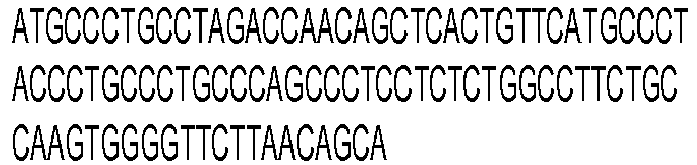
54 MPCLDQQLTVHALP CPAQPSSLAFCQVG FLTA 116 SS-021 Secretion signal 
55 MKTLFNPAPAIADLD PQFYTLSDVFCCNE SEAEILTGLTVGSAA DA 117 SS-022 Secretion signal 
56 MKPLLVVFVFLFLW DPVLA 118 SS-023 Secretion signal 
57 MSCSLKFTLIVIFFTC TLSSS 119 SS-024 Secretion signal 
58 MVLTKPLQRNGSM MSFENVKEKSREG GPHAHTPEEELCFV VTHTPQVQTTLNLF FHIFKVLTQPLSLLW G 120 SS-025 Secretion signal 
59 MATPPFRLIRKMFS FKVSRWMGLACFR SLAAS 121 SS-026 Secretion signal 
60 MSFFQLLMKRKELIP LVVFMTVAAGGASS 122 SS-027 Secretion signal 
61 MVSALRGAPLIRVH SSPVSSPSVSGPAA LVSCLSSQSSALS 123 SS-028 Secretion signal 
62 MMGSPVSHLLAGF CVWVVLG 124 SS-029 Secretion signal 
63 MASMAAVL TWALAL LSAFSA TQA 125 SS-030 Secretion signal 
64 MVLMWTSGDAFKT AYFLLKGAPLQFSV CGLLQVLVDLAILGQ ATA 126 SS-031 Secretion signal 
65 MDFVAGAIGGVCGV AVGYPLDTVKVRIQ TEPLYTGIWHCVRD TYHRERVWGFYRG 127 
LSLPVCTVSLVSS SS-032 Secretion signal 
66 MEKPLFPLVPLHWF GFGYTALVVSGGIV GYVKTGSVPSLAAG LLFGSLA 128 SS-033 Secretion signal 
67 MGLLLPLALCILVLC 129 SS-034 Secretion signal 
68 MGIQTSPVLLASLG VGLVTLLGLAVG 130 SS-035 Secretion signal 
69 MSDLLLLGLIGGLTL LLLLTLLAFA 131 SS-036 Secretion signal 
70 METVVIVAIGVLATIF LASFAALVLVCRQ 132 SS-037 Secretion signal 
71 MAGSVECTWGWG HCAPSPLLLWTLLLF AAPFGLLG 133 SS-038 Secretion signal 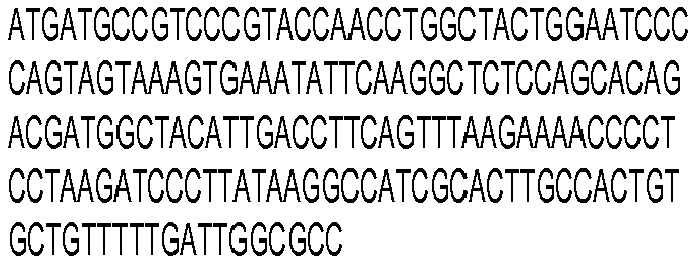
72 MMPSRTNLATGIPS SKVKYSRLSSTDDG YIDLQFKKTPPKIPY KAIALATVLFLIGA 134 SS-039 Secretion signal 
73 MALPQMCDGSHLA STLRYCMTVSGTVV LVAGTLCFA 135 SS-041 Vrg-6 
74 MKKWFVAAGIGAGL LMLSSAA 136 SS-042 PhoA 
75 MKQSTIALALLPLLF TPVTKA 137 SS-043 OmpA 
76 MKKTAIAIAVALAGF ATVAQA 138 SS-044 STI 
77 MKKLMLAIFFSVLSF PSFSQS 139 SS-045 STII 
78 MKKNIAFLLASMFVF SIATNAYA 140 SS-046 Amylase 
79 MFAKRFKTSLLPLFA GFLLLFHLVLAGPAA AS 141 SS-047 Alpha Factor 
80 MRFPSIFTAVLFAAS SALA 142 SS-048 Alpha Factor 
81 MRFPSIFTTVLFAAS SALA 143 SS-049 Alpha Factor 
82 MRFPSIFTSVLFAAS SALA 144 SS-050 Alpha Factor 
83 MRFPSIFTHVLFAAS SALA 145 SS-051 Alpha Factor 
84 MRFPSIFTIVLFAAS SALA 146 SS-052 Alpha Factor 
85 MRFPSIFTFVLFAAS SALA 147 SS-053 Alpha Factor 
86 MRFPSIFTEVLFAAS SALA 148 SS-054 Alpha Factor 
87 MRFPSIFTGVLFAAS SALA 149 SS-055 Endoglucanase V 
88 MRSSPLLRSAVVAA LPVLALA 150 SS-056 Secretion signal 
89 MGAAAVRWHLCVL LALGTRGRL 151 SS-057 Fungal 
90 MRSSLVLFFVSAWT ALA 152 SS-058 Fibronectin 
91 MLRGPGPGRLLLLA VLCLGTSVRCTETG KSKR 153 SS-059 Fibronectin 
92 MLRGPGPGLLLLAV QCLGTAVPSTGA 154 SS-060 Fibronectin 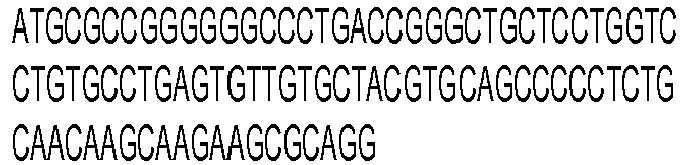
93 MRRGALTGLLLVLC LSVVLRAAPSATSK KRR 155 - In the table, SS is secretion signal and MLS is mitochondrial leader signal. The signal-sensor primary constructs or mmRNA of the present invention may be designed to encode any of the signal peptide sequences of SEQ ID NOs 94-155, or fragments or variants thereof. These sequences may be included at the beginning of the oncology-related polypeptide coding region, in the middle or at the terminus or alternatively into a flanking region. Further, any of the signal-sensor polynucleotide primary constructs of the present invention may also comprise one or more of the sequences defined by SEQ ID NOs 32-93. These may be in the first region or either flanking region.
- Additional signal peptide sequences which may be utilized in the present invention include those taught in, for example, databases such as those found at http://www.signalpeptide.de/ or http://proline.bic.nus.edu.sg/spdb/. Those described in
US Patents 8,124,379 ;7,413,875 and7,385,034 are also within the scope of the invention and the contents of each are incorporated herein by reference in their entirety. - In one embodiment, the signal-sensor polynucleotide, primary constructs or mmRNA may include a nucleic acid sequence encoding a nuclear localization signal (NLS) and/or a nuclear export signal (NES). In one aspect, a signal-sensor polynucleotide, primary constructs or mmRNA may include a nucleic acid sequence encoding a nuclear localization signal (NLS). The signal-sensor polynucleotide, primary construct or mmRNA encoding a NLS would be able to traffic an oncology related polypeptide into the nucleus and deliver a survival or death signal to the nuclear microenvironment. In another aspect, the signal-sensor polynucleotide, primary constructs or mmRNA may include a nucleic acid sequence encoding a nuclear export signal such as NES1 and/or NES2. As a nonlimiting example, the signal-sensor polynucleotide, primary constructs or mmRNA may encode a NES1, NES2 and a NLS signal and an oncology related polypeptide or a scambled sequence which is not translatable in order to interact with HIF1-alpha to alter the transcritome of the cancer cells.
- According to the present invention, the signal-sensor primary constructs comprise at least a first region of linked nucleosides encoding at least one oncology-related polypeptide of interest. The oncology-related polypeptides of interest or "targets" or oncology-related proteins and oncology-related peptides of the present invention are listed in Table 6, Table 7 and Table 41. Oncology-related polypeptides may be divided into classes based on their function and area of cancer intervention. For example, the classes may include targets associated with (1) apoptosis or Survival signal imbalance (AS targets). These may be caspase dependent or caspase independent targets; (2) replicative potential or anti-senescence (CC/S targets); (3) metabolic stress including the involvement of acidosis or hypoxia (O2 > 1%) (M targets); (4) immune response (I targets); and (5) DNA damage/protection (DDR targets).
- Shown in Table 6, in addition to the name and description of the gene encoding the oncology-related polypeptide of interest are the ENSEMBL Transcript ID (ENST), the ENSEMBL Protein ID (ENSP), each present where applicable, and when available the optimized sequence ID (OPT. SEQ ID). The targets are also categorized by group where "AS" refers to targets involved in apoptotic signaling; "M" refers to targets involved in metabolic processes and "CC/S" refers to targets involved in cell cycle and senescense.
Table 6. Oncology Related Targets Cat. Target Target Description ENST ID Trans. SEQ ID NO ENSP ID Prot. SEQ ID NO OPT. SEQ ID NO AS 14-3-3 tyrosine 3-monooxygenase/tryptophan 5-monooxygenase activation protein, theta polypeptide 238081 156 238081 1321 AS 14-3-3 tyrosine 3-monooxygenase/tryptophan 5-monooxygenase activation protein, eta polypeptide 248975 157 248975 1322 AS 14-3-3 tyrosine 3-monooxygenase/tryptophan 5-monooxygenase activation protein, epsilon polypeptide 264335 158 264335 1323 AS 14-3-3 tyrosine 3-monooxygenase/tryptophan 5-monooxygenase activation protein, gamma polypeptide 307630 159 306330 1324 AS 14-3-3 tyrosine 3-monooxygenase/tryptophan 5-monooxygenase activation protein, zeta polypeptide 353245 160 309503 1325 AS 14-3-3 tyrosine 3-monooxygenase/tryptophan 5-monooxygenase activation protein, beta polypeptide 353703 161 300161 1326 AS 14-3-3 tyrosine 3-monooxygenase/tryptophan 5-monooxygenase activation protein, beta polypeptide 372839 162 361930 1327 AS 14-3-3 tyrosine 3-monooxygenase/tryptophan 5-monooxygenase activation protein, theta polypeptide 381844 163 371267 1328 AS 14-3-3 tyrosine 3-monooxygenase/tryptophan 5-monooxygenase activation protein, zeta polypeptide 395948 164 379278 1329 AS 14-3-3 tyrosine 3-monooxygenase/tryptophan 5-monooxygenase activation protein, zeta polypeptide 395951 165 379281 1330 AS 14-3-3 tyrosine 3-monooxygenase/tryptophan 5-monooxygenase activation protein, zeta polypeptide 395953 166 379283 1331 AS 14-3-3 tyrosine 3-monooxygenase/tryptophan 5-monooxygenase activation protein, zeta polypeptide 395956 167 379286 1332 AS 14-3-3 tyrosine 3-monooxygenase/tryptophan 5-monooxygenase activation protein, zeta polypeptide 395957 168 379287 1333 AS 14-3-3 tyrosine 3-monooxygenase/tryptophan 5-monooxygenase activation protein, zeta polypeptide 395958 169 379288 1334 AS 14-3-3 tyrosine 3-monooxygenase/tryptophan 5-monooxygenase activation protein, epsilon polypeptide 414131 170 406058 1335 AS 14-3-3 tyrosine 3-monooxygenase/tryptophan 5-monooxygenase activation protein, zeta polypeptide 418997 171 416551 1336 AS 14-3-3 tyrosine 3-monooxygenase/tryptophan 5-monooxygenase activation protein, zeta polypeptide 419477 172 395114 1337 AS 14-3-3 tyrosine 3-monooxygenase/tryptophan 5-monooxygenase activation protein, beta polypeptide 428262 173 394729 1338 AS 14-3-3 tyrosine 3-monooxygenase/tryptophan 5-monooxygenase activation protein, zeta polypeptide 437293 174 394880 1339 AS 14-3-3 tyrosine 3-monooxygenase/tryptophan 5-monooxygenase activation protein, beta polypeptide 445830 175 394558 1340 AS 14-3-3 tyrosine 3-monooxygenase/tryptophan 5-monooxygenase activation protein, theta polypeptide 446619 176 398990 1341 AS 14-3-3 tyrosine 3-monooxygenase/tryptophan 5-monooxygenase activation protein, gamma polypeptide 453207 177 390645 1342 AS 14-3-3 tyrosine 3-monooxygenase/tryptophan 5-monooxygenase activation protein, zeta polypeptide 457309 178 398599 1343 AS 14-3-3 tyrosine 3-monooxygenase/tryptophan 5-monooxygenase activation protein, zeta polypeptide 517797 179 427801 1344 AS 14-3-3 tyrosine 3-monooxygenase/tryptophan 5-monooxygenase activation protein, zeta polypeptide 521309 180 429623 1345 AS 14-3-3 tyrosine 3-monooxygenase/tryptophan 5-monooxygenase activation protein, zeta polypeptide 521328 181 429041 1346 AS 14-3-3 tyrosine 3-monooxygenase/tryptophan 5-monooxygenase activation protein, zeta polypeptide 521607 182 430058 1347 AS 14-3-3 tyrosine 3-monooxygenase/tryptophan 5-monooxygenase activation protein, zeta polypeptide 522542 183 430072 1348 AS 14-3-3 tyrosine 3-monooxygenase/tryptophan 5-monooxygenase activation protein, zeta polypeptide 522819 184 428775 1349 AS 14-3-3 tyrosine 3-monooxygenase/tryptophan 5-monooxygenase activation protein, zeta polypeptide 523131 185 428381 1350 AS 14-3-3 tyrosine 3-monooxygenase/tryptophan 5-monooxygenase activation protein, zeta polypeptide 523848 186 428860 1351 AS 14-3-3 tyrosine 3-monooxygenase/tryptophan 5-monooxygenase activation protein, gamma polypeptide 536755 187 443803 1352 AS 14-3-3 tyrosine 3-monooxygenase/tryptophan 5-monooxygenase activation protein, theta polypeptide 539979 188 443226 1353 AS AIF apoptosis-inducing factor, mitochondrion-associated, 1 287295 189 287295 1354 AS AIF apoptosis-inducing factor, mitochondrion-associated, 2 307864 190 312370 1355 AS AIF apoptosis-inducing factor, mitochondrion-associated, 1 319908 191 315122 1356 AS AIF apoptosis-inducing factor, mitochondrion-associated, 3 333607 192 327671 1357 AS AIF apoptosis-inducing factor, mitochondrion-associated, 3 335375 193 335369 1358 AS AIF apoptosis-inducing factor, mitochondrion-associated, 1 346424 194 316320 1359 AS AIF apoptosis-inducing factor, mitochondrion-associated, 2 373248 195 362345 1360 AS AIF apoptosis-inducing factor, mitochondrion-associated, 2 395039 196 378480 1361 AS AIF apoptosis-inducing factor, mitochondrion-associated, 3 399163 197 382116 1362 AS AIF apoptosis-inducing factor, mitochondrion-associated, 3 399167 198 382120 1363 AS AIF apoptosis-inducing factor, mitochondrion-associated, 3 405089 199 385800 1364 AS AIF apoptosis-inducing factor, mitochondrion-associated, 3 434714 200 399657 1365 AS AIF apoptosis-inducing factor, mitochondrion-associated, 3 440238 201 390798 1366 AS AIF apoptosis-inducing factor, mitochondrion-associated, 1 440263 202 405879 1367 AS AIF apoptosis-inducing factor, mitochondrion-associated, 3 441376 203 402067 1368 AS AIF apoptosis-inducing factor, mitochondrion-associated, 1 460436 204 431222 1369 AS AIF apoptosis-inducing factor, mitochondrion-associated, 1 535724 205 446113 1370 AS AKT (PKB) v-akt murine thymoma viral oncogene homolog 3 (protein kinase B, gamma) 263826 206 263826 1371 AS AKT (PKB) v-akt murine thymoma viral oncogene homolog 2 311278 207 309428 1372 AS AKT (PKB) v-akt murine thymoma viral oncogene homolog 3 (protein kinase B, gamma) 336199 208 336943 1373 AS AKT (PKB) v-akt murine thymoma viral oncogene homolog 1 349310 209 270202 1374 AS AKT (PKB) v-akt murine thymoma viral oncogene homolog 2 358335 210 351095 1375 AS AKT (PKB) v-akt murine thymoma viral oncogene homolog 3 (protein kinase B, gamma) 366539 211 355497 1376 AS AKT (PKB) v-akt murine thymoma viral oncogene homolog 3 (protein kinase B, gamma) 366540 212 355498 1377 AS AKT (PKB) v-akt murine thymoma viral oncogene homolog 2 391844 213 375719 1378 AS AKT (PKB) v-akt murine thymoma viral oncogene homolog 2 392037 214 375891 1379 AS AKT (PKB) v-akt murine thymoma viral oncogene homolog 2 392038 215 375892 1380 AS AKT (PKB) v-akt murine thymoma viral oncogene homolog 1 402615 216 385326 1381 AS AKT (PKB) v-akt murine thymoma viral oncogene homolog 1 407796 217 384293 1382 AS AKT (PKB) v-akt murine thymoma viral oncogene homolog 2 416362 218 407999 1383 AS AKT (PKB) v-akt murine thymoma viral oncogene homolog 2 416994 219 392458 1384 AS AKT (PKB) v-akt murine thymoma viral oncogene homolog 2 423127 220 403842 1385 AS AKT (PKB) v-akt murine thymoma viral oncogene homolog 2 424901 221 399532 1386 AS AKT (PKB) v-akt murine thymoma viral oncogene homolog 2 427375 222 403890 1387 AS AKT (PKB) v-akt murine thymoma viral oncogene homolog 2 452077 223 404083 1388 AS AKT (PKB) v-akt murine thymoma viral oncogene homolog 2 456441 224 396532 1389 AS AKT (PKB) v-akt murine thymoma viral oncogene homolog 2 537834 225 441591 1390 AS AKT (PKB) v-akt murine thymoma viral oncogene homolog 1 544168 226 443897 1391 AS AKT (PKB) v-akt murine thymoma viral oncogene homolog 3 (protein kinase B, gamma) 552631 227 447820 1392 AS AKT (PKB) v-akt murine thymoma viral oncogene homolog 1 554581 228 451828 1393 AS AKT (PKB) v-akt murine thymoma viral oncogene homolog 1 554848 229 451166 1394 AS AKT (PKB) v-akt murine thymoma viral oncogene homolog 1 555528 230 450688 1395 AS AKT (PKB) v-akt murine thymoma viral oncogene homolog 1 555926 231 451824 1396 AS ANT solute carrierfamily 25 (mitochondrial carrier; adenine nucleotide translocator), member 4 281456 232 281456 1397 AS Apaf-1 apoptotic peptidase activating factor 1 333991 233 334558 1398 AS Apaf-1 apoptotic peptidase activating factor 1 339433 234 341830 1399 AS Apaf-1 apoptotic peptidase activating factor 1 357310 235 349862 1400 AS Apaf-1 apoptotic peptidase activating factor 1 359972 236 353059 1401 AS Apaf-1 apoptotic peptidase activating factor 1 547045 237 449791 1402 AS Apaf-1 apoptotic peptidase activating factor 1 549007 238 448161 1403 AS Apaf-1 apoptotic peptidase activating factor 1 550527 239 448449 1404 AS Apaf-1 apoptotic peptidase activating factor 1 551964 240 448165 1405 AS Apaf-1 apoptotic peptidase activating factor 1 552268 241 448826 1406 AS APRIL(TNFS F13) tumor necrosis factor (ligand) superfamily, member 13 338784 242 343505 1407 AS APRIL(TNFS F13) tumor necrosis factor (ligand) superfamily, member 13 349228 243 314455 1408 AS APRIL(TNFS F13) tumor necrosis factor (ligand) superfamily, member 13 380535 244 369908 1409 AS APRIL(TNFS F13) tumor necrosis factor (ligand) superfamily, member 13 396545 245 379794 1410 AS ARTS phosphoribosyl pyrophosphate synthetase 1 372418 246 361495 1411 AS ARTS phosphoribosyl pyrophosphate synthetase 1 372419 247 361496 1412 AS ARTS phosphoribosyl pyrophosphate synthetase 1 372428 248 361505 1413 AS ARTS phosphoribosyl pyrophosphate synthetase 1 372435 249 361512 1414 AS ARTS phosphoribosyl pyrophosphate synthetase 1 543248 250 443185 1415 AS ASK1 (MAP3K5) mitogen-activated protein kinasekinasekinase 5 355845 251 348104 1416 AS ASK1 (MAP3K5) mitogen-activated protein kinasekinasekinase 5 359015 252 351908 1417 AS ASK1 (MAP3K5) mitogen-activated protein kinasekinasekinase 5 367768 253 356742 1418 AS BAD BCL2-associated agonist of cell death 309032 254 309103 1419 AS BAD BCL2-associated agonist of cell death 394532 255 378040 1420 AS BAD BCL2-associated agonist of cell death 540152 256 440807 1421 AS BAFF(TNFS F13B) tumor necrosis factor (ligand) superfamily, member 13b 375887 257 365048 1422 AS BAFF(TNFS F13B) tumor necrosis factor (ligand) superfamily, member 13b 430559 258 389540 1423 AS BAFF(TNFS F13B) tumor necrosis factor (ligand) superfamily, member 13b 542136 259 445334 1424 AS Bak BCL2-antagonist/killer 1 360661 260 353878 1425 AS Bak BCL2-antagonist/killer 1 374460 261 363584 1426 AS Bak BCL2-antagonist/killer 1 374467 262 363591 1427 AS Bak BCL2-antagonist/killer 1 442998 263 391258 1428 AS BAX BCL2-associated X protein 293288 264 293288 1429 AS BAX BCL2-associated X protein 345358 265 263262 1430 AS BAX BCL2-associated X protein 354470 266 346461 1431 AS BAX BCL2-associated X protein 391871 267 375744 1432 AS BAX BCL2-associated X protein 415969 268 389971 1433 AS BAX BCL2-associated X protein 539787 269 441413 1434 AS Bcl-2 B-cell CLL/lymphoma 2 333681 270 329623 1435 AS Bcl-2 B-cell CLL/lymphoma 2 398117 271 381185 1436 AS Bcl-2 B-cell CLL/lymphoma 2 444484 272 404214 1437 AS Bcl-B BCL2-like 10 (apoptosis facilitator) 260442 273 260442 1438 AS Bcl-W BCL2-like 2 250405 274 250405 1439 AS Bcl-W BCL2-like 2 554635 275 451234 1440 AS Bcl-W BCL2-like 2 557236 276 451701 1441 AS Bcl-W BCL2-like 2 557579 277 452265 1442 AS Bcl-XL BCL2-like 1 307677 278 302564 1443 AS Bcl-XL BCL2-like 1 376055 279 365223 1444 AS Bcl-XL BCL2-like 1 376062 280 365230 1445 AS Bcl-XL BCL2-like 1 420488 281 390760 1446 AS Bcl-XL BCL2-like 1 420653 282 405563 1447 AS Bcl-XL BCL2-like 1 422920 283 411252 1448 AS Bcl-XL BCL2-like 1 439267 284 389688 1449 AS Bcl-XL BCL2-like 1 450273 285 406203 1450 AS Bcl-XL BCL2-like 1 456404 286 395545 1451 AS BCMA tumor necrosis factor receptor superfamily, member 17 53243 287 53243 1452 AS BCMA tumor necrosis factor receptor superfamily, member 17 396495 288 379753 1453 AS BCMA tumor necrosis factor receptor superfamily, member 17 435355 289 401782 1454 AS BFL1 BCL2-related protein A1 267953 290 267953 1455 AS BFL1 BCL2-related protein A1 335661 291 335250 1456 AS Bid BH3 interacting domain death agonist 317361 292 318822 1457 AS Bid BH3 interacting domain death agonist 342111 293 344594 1458 AS Bid BH3 interacting domain death agonist 399765 294 382667 1459 AS Bid BH3 interacting domain death agonist 399767 295 382669 1460 AS Bid BH3 interacting domain death agonist 399774 296 382674 1461 AS Bid BH3 interacting domain death agonist 551952 297 449236 1462 AS Bik BCL2-interacting killer (apoptosis-inducing) 216115 298 216115 1463 AS Bim BCL2-like 11 (apoptosis facilitator) 308659 299 309226 1464 AS Bim BCL2-like 11 (apoptosis facilitator) 337565 300 338374 1465 AS Bim BCL2-like 11 (apoptosis facilitator) 357757 301 350398 1466 AS Bim BCL2-like 11 (apoptosis facilitator) 393252 302 376941 1467 AS Bim BCL2-like 11 (apoptosis facilitator) 393253 303 376942 1468 AS Bim BCL2-like 11 (apoptosis facilitator) 393256 304 376943 1469 AS Bim BCL2-like 11 (apoptosis facilitator) 432179 305 411870 1470 AS Bim BCL2-like 11 (apoptosis facilitator) 452033 306 403666 1471 AS BMF Bcl2 modifying factor 220446 307 220446 1472 AS BMF Bcl2 modifying factor 354670 308 346697 1473 AS BMF Bcl2 modifying factor 397573 309 380703 1474 AS BMF Bcl2 modifying factor 431415 310 396511 1475 AS BMF Bcl2 modifying factor 559701 311 453919 1476 AS BMF Bcl2 modifying factor 561282 312 453522 1477 AS BMF Bcl2 modifying factor 561360 313 453892 1478 AS BRE brain and reproductive organ-expressed (TNFRSF1A modulator) 342045 314 339371 1479 AS BRE brain and reproductive organ-expressed (TNFRSF1A modulator) 344773 315 343412 1480 AS BRE brain and reproductive organ-expressed (TNFRSF1A modulator) 361704 316 354699 1481 AS BRE brain and reproductive organ-expressed (TNFRSF1A modulator) 379623 317 368944 1482 AS BRE brain and reproductive organ-expressed (TNFRSF1A modulator) 379624 318 368945 1483 AS BRE brain and reproductive organ-expressed (TNFRSF1A modulator) 379632 319 368953 1484 AS BRE brain and reproductive organ-expressed (TNFRSF1A modulator) 436924 320 392345 1485 AS Calcineurin A protein phosphatase 3, catalytic subunit, alpha isozyme 323055 321 320580 1486 AS Calcineurin A protein phosphatase 3, catalytic subunit, alpha isozyme 394853 322 378322 1487 AS Calcineurin A protein phosphatase 3, catalytic subunit, alpha isozyme 394854 323 378323 1488 AS Calcineurin A protein phosphatase 3, catalytic subunit, alpha isozyme 507176 324 422990 1489 AS Calcineurin A protein phosphatase 3, catalytic subunit, alpha isozyme 512215 325 422781 1490 AS Calcineurin A protein phosphatase 3, catalytic subunit, alpha isozyme 523694 326 429350 1491 AS Calcineurin A protein phosphatase 3, catalytic subunit, alpha isozyme 525819 327 434599 1492 AS Calcineurin A protein phosphatase 3, catalytic subunit, alpha isozyme 529324 328 431619 1493 AS Caspase-1 caspase 1, apoptosis-related cysteine peptidase (interleukin 1, beta, convertase) 353247 329 344132 1494 AS Caspase-1 caspase 1, apoptosis-related cysteine peptidase (interleukin 1, beta, convertase) 393136 330 376844 1495 AS Caspase-1 caspase 1, apoptosis-related cysteine peptidase (interleukin 1, beta, convertase) 415981 331 408446 1496 AS Caspase-1 caspase 1, apoptosis-related cysteine peptidase (interleukin 1, beta, convertase) 436863 332 410076 1497 AS Caspase-1 caspase 1, apoptosis-related cysteine peptidase (interleukin 1, beta, convertase) 446369 333 403260 1498 AS Caspase-1 caspase 1, apoptosis-related cysteine peptidase (interleukin 1, beta, convertase) 525825 334 434779 1499 AS Caspase-1 caspase 1, apoptosis-related cysteine peptidase (interleukin 1, beta, convertase) 526568 335 434250 1500 AS Caspase-1 caspase 1, apoptosis-related cysteine peptidase (interleukin 1, beta, convertase) 528974 336 434259 1501 AS Caspase-1 caspase 1, apoptosis-related cysteine peptidase (interleukin 1, beta, convertase) 529871 337 431947 1502 AS Caspase-1 caspase 1, apoptosis-related cysteine peptidase (interleukin 1, beta, convertase) 531166 338 434303 1503 AS Caspase-1 caspase 1, apoptosis-related cysteine peptidase (interleukin 1, beta, convertase) 533400 339 433138 1504 AS Caspase-1 caspase 1, apoptosis-related cysteine peptidase (interleukin 1, beta, convertase) 534497 340 436875 1505 AS Caspase-10 caspase 10, apoptosis-related cysteine peptidase 272879 341 272879 1506 AS Caspase-10 caspase 10, apoptosis-related cysteine peptidase 286186 342 286186 1507 AS Caspase-10 caspase 10, apoptosis-related cysteine peptidase 346817 343 237865 1508 AS Caspase-10 caspase 10, apoptosis-related cysteine peptidase 360132 344 353250 1509 AS Caspase-2 caspase 2, apoptosis-related cysteine peptidase 310447 345 312664 1510 AS Caspase-2 caspase 2, apoptosis-related cysteine peptidase 350623 346 340030 1511 AS Caspase-2 caspase 2, apoptosis-related cysteine peptidase 392923 347 376654 1512 AS Caspase-3 caspase 3, apoptosis-related cysteine peptidase 308394 348 311032 1513 AS Caspase-3 caspase 3, apoptosis-related cysteine peptidase 438467 349 390792 1514 AS Caspase-3 caspase 3, apoptosis-related cysteine peptidase 447121 350 407142 1515 AS Caspase-3 caspase 3, apoptosis-related cysteine peptidase 523916 351 428929 1516 AS Caspase-4 caspase 4, apoptosis-related cysteine peptidase 355546 352 347741 1517 AS Caspase-4 caspase 4, apoptosis-related cysteine peptidase 417440 353 401673 1518 AS Caspase-4 caspase 4, apoptosis-related cysteine peptidase 444739 354 388566 1519 AS Caspase-5 caspase 5, apoptosis-related cysteine peptidase 260315 355 260315 1520 AS Caspase-5 caspase 5, apoptosis-related cysteine peptidase 393139 356 376847 1521 AS Caspase-5 caspase 5, apoptosis-related cysteine peptidase 393141 357 376849 1522 AS Caspase-5 caspase 5, apoptosis-related cysteine peptidase 418434 358 398130 1523 AS Caspase-5 caspase 5, apoptosis-related cysteine peptidase 444749 359 388365 1524 AS Caspase-5 caspase 5, apoptosis-related cysteine peptidase 526056 360 436877 1525 AS Caspase-5 caspase 5, apoptosis-related cysteine peptidase 531367 361 434471 1526 AS Caspase-6 caspase 6, apoptosis-related cysteine peptidase 265164 362 265164 1527 AS Caspase-6 caspase 6, apoptosis-related cysteine peptidase 352981 363 285333 1528 AS Caspase-7 caspase 7, apoptosis-related cysteine peptidase 345633 364 298701 1529 AS Caspase-7 caspase 7, apoptosis-related cysteine peptidase 369315 365 358321 1530 AS Caspase-7 caspase 7, apoptosis-related cysteine peptidase 369316 366 358322 1531 AS Caspase-7 caspase 7, apoptosis-related cysteine peptidase 369318 367 358324 1532 AS Caspase-7 caspase 7, apoptosis-related cysteine peptidase 369319 368 358325 1533 AS Caspase-7 caspase 7, apoptosis-related cysteine peptidase 369321 369 358327 1534 AS Caspase-7 caspase 7, apoptosis-related cysteine peptidase 369331 370 358337 1535 AS Caspase-7 caspase 7, apoptosis-related cysteine peptidase 429617 371 400094 1536 AS Caspase-7 caspase 7, apoptosis-related cysteine peptidase 442393 372 394482 1537 AS Caspase-7 caspase 7, apoptosis-related cysteine peptidase 452490 373 398107 1538 AS Caspase-8 caspase 8, apoptosis-related cysteine peptidase 264274 374 264274 1539 AS Caspase-8 caspase 8, apoptosis-related cysteine peptidase 264275 375 264275 1540 AS Caspase-8 caspase 8, apoptosis-related cysteine peptidase 323492 376 325722 1541 AS Caspase-8 caspase 8, apoptosis-related cysteine peptidase 358485 377 351273 1542 AS Caspase-8 caspase 8, apoptosis-related cysteine peptidase 392258 378 376087 1543 AS Caspase-8 caspase 8, apoptosis-related cysteine peptidase 392259 379 376088 1544 AS Caspase-8 caspase 8, apoptosis-related cysteine peptidase 392261 380 376089 1545 AS Caspase-8 caspase 8, apoptosis-related cysteine peptidase 392263 381 376091 1546 AS Caspase-8 caspase 8, apoptosis-related cysteine peptidase 392266 382 376094 1547 AS Caspase-8 caspase 8, apoptosis-related cysteine peptidase 413726 383 397528 1548 AS Caspase-8 caspase 8, apoptosis-related cysteine peptidase 429881 384 390641 1549 AS Caspase-8 caspase 8, apoptosis-related cysteine peptidase 432109 385 412523 1550 AS Caspase-8 caspase 8, apoptosis-related cysteine peptidase 440732 386 396869 1551 AS Caspase-8 caspase 8, apoptosis-related cysteine peptidase 447616 387 388306 1552 AS Caspase-9 caspase 9, apoptosis-related cysteine peptidase 333868 388 330237 1553 AS Caspase-9 caspase 9, apoptosis-related cysteine peptidase 348549 389 255256 1554 AS Caspase-9 caspase 9, apoptosis-related cysteine peptidase 375874 390 365034 1555 AS Caspase-9 caspase 9, apoptosis-related cysteine peptidase 375890 391 365051 1556 AS Caspase-9 caspase 9, apoptosis-related cysteine peptidase 440484 392 411304 1557 AS Caspase-9 caspase 9, apoptosis-related cysteine peptidase 447522 393 396540 1558 AS Caspase-9 caspase 9, apoptosis-related cysteine peptidase 546424 394 449584 1559 AS CD27 CD27 molecule 266557 395 266557 1560 AS CD30 tumor necrosis factor receptor superfamily, member 8 263932 396 263932 1561 AS CD30 tumor necrosis factor receptor superfamily, member 8 413146 397 398337 1562 AS CD30 tumor necrosis factor receptor superfamily, member 8 417814 398 390650 1563 AS CD30L tumor necrosis factor (ligand) superfamily, member 8 223795 399 223795 1564 AS CD40 CD40 molecule, TNF receptor superfamily member 5 372278 400 361352 1565 AS CD40L(TNFS F5) CD40 ligand 370628 401 359662 1566 AS CD40L(TNFS F5) CD40 ligand 370629 402 359663 1567 AS CD41 CD40 molecule, TNF receptor superfamily member 5 372276 403 361350 1568 AS CD42 CD40 molecule, TNF receptor superfamily member 5 372285 404 361359 1569 AS CD70(TNFS F7) CD70 molecule 245903 405 245903 1570 AS CD70(TNFS F7) CD70 molecule 423145 406 395294 1571 AS CDK1 (p34) cyclin-dependent kinase 1 316629 407 325970 1572 AS CDK1 (p34) cyclin-dependent kinase 1 373809 408 362915 1573 AS CDK1 (p34) cyclin-dependent kinase 1 395284 409 378699 1574 AS CDK1 (p34) cyclin-dependent kinase 1 448257 410 397973 1575 AS CDK1 (p34) cyclin-dependent kinase 1 519078 411 430665 1576 AS CDK5 cyclin-dependent kinase 5 485972 412 419782 1577 AS CDK5R1 (p35) cyclin-dependent kinase 5, regulatory subunit 1 (p35) 313401 413 318486 1578 AS c-FLIP(S) CASP8 and FADD-like apoptosis regulator 309955 414 312455 1579 AS c-FLIP(S) CASP8 and FADD-like apoptosis regulator 340870 415 339326 1580 AS c-FLIP(S) CASP8 and FADD-like apoptosis regulator 343375 416 339391 1581 AS c-FLIP(S) CASP8 and FADD-like apoptosis regulator 355558 417 347757 1582 AS c-FLIP(S) CASP8 and FADD-like apoptosis regulator 395148 418 378580 1583 AS c-FLIP(S) CASP8 and FADD-like apoptosis regulator 417748 419 412882 1584 AS c-FLIP(S) CASP8 and FADD-like apoptosis regulator 423241 420 399420 1585 AS c-FLIP(S) CASP8 and FADD-like apoptosis regulator 433445 421 391029 1586 AS c-FLIP(S) CASP8 and FADD-like apoptosis regulator 441224 422 411897 1587 AS c-FLIP(S) CASP8 and FADD-like apoptosis regulator 443227 423 413270 1588 AS cIAP1 baculoviral IAP repeat containing 3 NA 424 NA 1589 2488 AS c-IAP1 baculoviral IAP repeat containing 3 263464 425 263464 1590 AS c-IAP1 baculoviral IAP repeat containing 3 532808 426 432907 1591 AS cIAP2 baculoviral IAP repeat containing 2 NA 427 NA 1592 AS C-IAP2 baculoviral IAP repeat containing 2 227758 428 227758 1593 AS C-IAP2 baculoviral IAP repeat containing 2 530675 429 431723 1594 AS C-IAP2 baculoviral IAP repeat containing 2 532672 430 434979 1595 AS C-IAP2 baculoviral IAP repeat containing 2 541741 431 440771 1596 AS c-Jun jun proto-oncogene 371222 432 360266 1597 AS c-Raf-1 v-raf-1 murine leukemia viral oncogene homolog 1 251849 433 251849 1598 AS c-Raf-1 v-raf-1 murine leukemia viral oncogene homolog 1 442415 434 401888 1599 AS c-Raf-1 v-raf-1 murine leukemia viral oncogene homolog 1 534997 435 441186 1600 AS c-Raf-1 v-raf-1 murine leukemia viral oncogene homolog 1 542177 436 443567 1601 AS Cytochrome c cytochrome c, somatic 305786 437 307786 1602 AS Cytochrome c cytochrome c, somatic 409409 438 386270 1603 AS Cytochrome c cytochrome c, somatic 409764 439 387279 1604 AS Cytochrome c cytochrome c, somatic 413447 440 416479 1605 AS DAXX death-domain associated protein 266000 441 266000 1606 AS DAXX death-domain associated protein 374542 442 363668 1607 AS DAXX death-domain associated protein 383062 443 372539 1608 AS DAXX death-domain associated protein 383194 444 372681 1609 AS DAXX death-domain associated protein 399060 445 382014 1610 AS DAXX death-domain associated protein 399344 446 382281 1611 AS DAXX death-domain associated protein 414083 447 396876 1612 AS DAXX death-domain associated protein 414272 448 409756 1613 AS DAXX death-domain associated protein 419855 449 397612 1614 AS DAXX death-domain associated protein 428268 450 408215 1615 AS DAXX death-domain associated protein 429531 451 415898 1616 AS DAXX death-domain associated protein 433482 452 404623 1617 AS DAXX death-domain associated protein 436311 453 404376 1618 AS DAXX death-domain associated protein 438332 454 411700 1619 AS DAXX death-domain associated protein 440500 455 403986 1620 AS DAXX death-domain associated protein 445009 456 394108 1621 AS DAXX death-domain associated protein 446403 457 406008 1622 AS DAXX death-domain associated protein 453407 458 408499 1623 AS DAXX death-domain associated protein 453931 459 412433 1624 AS DAXX death-domain associated protein 454197 460 412177 1625 AS DAXX death-domain associated protein 455860 461 410772 1626 AS DAXX death-domain associated protein 547663 462 447115 1627 AS DAXX death-domain associated protein 548604 463 448337 1628 AS DAXX death-domain associated protein 550822 464 447861 1629 AS DAXX death-domain associated protein 552944 465 447833 1630 AS DcR3 tumor necrosis factor receptor superfamily, member 6b, decoy 342852 466 342328 1631 AS DcR3 tumor necrosis factor receptor superfamily, member 6b, decoy 369996 467 359013 1632 AS DcR3 tumor necrosis factor receptor superfamily, member 6b, decoy 370006 468 359023 1633 AS DFF40 (CAD) DNA fragmentation factor, 40kDa, beta polypeptide (caspase-activated DNase) 338895 469 339524 1634 AS DFF40 (CAD) DNA fragmentation factor, 40kDa, beta polypeptide (caspase-activated DNase) 339350 470 343218 1635 AS DFF40 (CAD) DNA fragmentation factor, 40kDa, beta polypeptide (caspase-activated DNase) 341385 471 345906 1636 AS DFF40 (CAD) DNA fragmentation factor, 40kDa, beta polypeptide (caspase-activated DNase) 378206 472 367448 1637 AS DFF40 (CAD) DNA fragmentation factor, 40kDa, beta polypeptide (caspase-activated DNase) 378209 473 367454 1638 AS DFF40 (CAD) DNA fragmentation factor, 40kDa, beta polypeptide (caspase-activated DNase) 378212 474 367457 1639 AS DFF40 (CAD) DNA fragmentation factor, 40kDa, beta polypeptide (caspase-activated DNase) 430539 475 389502 1640 AS DFF40 (CAD) DNA fragmentation factor, 40kDa, beta polypeptide (caspase-activated DNase) 448632 476 411635 1641 AS DFF40 (CAD) DNA fragmentation factor, 40kDa, beta polypeptide (caspase-activated DNase) 491998 477 436775 1642 AS DR3 tumor necrosis factor receptor superfamily, member 25 348333 478 314451 1643 AS DR3 tumor necrosis factor receptor superfamily, member 25 351748 479 326762 1644 AS DR3 tumor necrosis factor receptor superfamily, member 25 351959 480 337713 1645 AS DR3 tumor necrosis factor receptor superfamily, member 25 356876 481 349341 1646 AS DR3 tumor necrosis factor receptor superfamily, member 25 377782 482 367013 1647 AS DR4 tumor necrosis factor receptor superfamily, member 10a 221132 483 221132 1648 AS DR5 tumor necrosis factor receptor superfamily, member 10b 276431 484 276431 1649 AS DR5 tumor necrosis factor receptor superfamily, member 10b 347739 485 317859 1650 AS DR5 tumor necrosis factor receptor superfamily, member 10b 542226 486 443386 1651 AS DR6 tumor necrosis factor receptor superfamily, member 21 296861 487 296861 1652 AS DR6 tumor necrosis factor receptor superfamily, member 21 419206 488 390032 1653 AS EGFR epidermal growth factor receptor 275493 489 275493 1654 AS EGFR epidermal growth factor receptor 342916 490 342376 1655 AS EGFR epidermal growth factor receptor 344576 491 345973 1656 AS EGFR epidermal growth factor receptor 395504 492 378880 1657 AS EGFR epidermal growth factor receptor 420316 493 413843 1658 AS EGFR epidermal growth factor receptor 442591 494 410031 1659 AS EGFR epidermal growth factor receptor 454757 495 395243 1660 AS EGFR epidermal growth factor receptor 455089 496 415559 1661 AS EGFR epidermal growth factor receptor 533450 497 435262 1662 AS ErbB2 v-erb-b2 erythroblastic leukemia viral oncogene homolog 2, neuro/glioblastoma derived oncogene homolog (avian) 269571 498 269571 1663 AS ErbB2 v-erb-b2 erythroblastic leukemia viral oncogene homolog 2, neuro/glioblastoma derived oncogene homolog (avian) 406381 499 385185 1664 AS ErbB2 v-erb-b2 erythroblastic leukemia viral oncogene homolog 2, neuro/glioblastoma derived oncogene homolog (avian) 445658 500 404047 1665 AS ErbB2 v-erb-b2 erythroblastic leukemia viral oncogene homolog 2, neuro/glioblastoma derived oncogene homolog (avian) 540042 501 446382 1666 AS ErbB2 v-erb-b2 erythroblastic leukemia viral oncogene homolog 2, neuro/glioblastoma derived oncogene homolog (avian) 540147 502 443562 1667 AS ErbB2 v-erb-b2 erythroblastic leukemia viral oncogene homolog 2, neuro/glioblastoma derived oncogene homolog (avian) 541774 503 446466 1668 AS ErbB3 v-erb-b2 erythroblastic leukemia viral oncogene homolog 3 (avian) 267101 504 267101 1669 AS ErbB3 v-erb-b2 erythroblastic leukemia viral oncogene homolog 3 (avian) 394099 505 377659 1670 AS ErbB3 v-erb-b2 erythroblastic leukemia viral oncogene homolog 3 (avian) 411731 506 415753 1671 AS ErbB3 v-erb-b2 erythroblastic leukemia viral oncogene homolog 3 (avian) 415288 507 408340 1672 AS ErbB3 v-erb-b2 erythroblastic leukemia viral oncogene homolog 3 (avian) 450146 508 399178 1673 AS ErbB3 v-erb-b2 erythroblastic leukemia viral oncogene homolog 3 (avian) 549282 509 448636 1674 AS ErbB3 v-erb-b2 erythroblastic leukemia viral oncogene homolog 3 (avian) 551085 510 448483 1675 AS Erk(MAPK1/ 3) mitogen-activated protein kinase 1 215832 511 215832 1676 AS Erk(MAPK1/ 3) mitogen-activated protein kinase 3 263025 512 263025 1677 AS Erk(MAPK1/ 3) mitogen-activated protein kinase 3 322266 513 327293 1678 AS Erk(MAPK1/ 3) mitogen-activated protein kinase 3 395200 514 378626 1679 AS Erk(MAPK1/ 3) mitogen-activated protein kinase 3 395202 515 378628 1680 AS Erk(MAPK1/ 3) mitogen-activated protein kinase 1 398822 516 381803 1681 AS Erk(MAPK1/ 3) mitogen-activated protein kinase 3 403394 517 384895 1682 AS Erk(MAPK1/ 3) mitogen-activated protein kinase 1 415911 518 409149 1683 AS Erk(MAPK1/ 3) mitogen-activated protein kinase 3 484663 519 432742 1684 AS Erk(MAPK1/ 3) mitogen-activated protein kinase 1 544786 520 440842 1685 AS FADD Fas (TNFRSF6)-associated via death domain 301838 521 301838 1686 AS FLASH caspase 8 associated protein 2 237177 522 NA 1687 AS FLASH caspase 8 associated protein 2 419040 523 NA AS FLASH caspase 8 associated protein 2 444163 524 NA AS FLASH caspase 8 associated protein 2 547893 525 NA AS FLASH caspase 8 associated protein 2 548224 526 NA AS FLASH caspase 8 associated protein 2 551025 527 NA AS FLASH caspase 8 associated protein 2 552401 528 NA AS FN14 tumor necrosis factor receptor superfamily, member 12A 326577 529 326737 1688 AS FN14 tumor necrosis factor receptor superfamily, member 12A 341627 530 343894 1689 AS GCK (MAP4K2) mitogen-activated protein kinasekinasekinasekinase 2 294066 531 294066 1690 AS GRB2 growth factor receptor-bound protein 2 316615 532 317360 1691 AS GRB2 growth factor receptor-bound protein 2 316804 533 339007 1692 AS GRB2 growth factor receptor-bound protein 2 392562 534 376345 1693 AS GRB2 growth factor receptor-bound protein 2 392564 535 376347 1694 AS H-Ras v-Ha-ras Harvey rat sarcoma viral oncogene homolog 311189 536 309845 1695 AS H-Ras v-Ha-ras Harvey rat sarcoma viral oncogene homolog 397594 537 380722 1696 AS H-Ras v-Ha-ras Harvey rat sarcoma viral oncogene homolog 397596 538 380723 1697 AS H-Ras v-Ha-ras Harvey rat sarcoma viral oncogene homolog 417302 539 388246 1698 AS H-Ras v-Ha-ras Harvey rat sarcoma viral oncogene homolog 451590 540 407586 1699 AS H-Ras v-Ha-ras Harvey rat sarcoma viral oncogene homolog 493230 541 434023 1700 AS HRK harakiri, BCL2 interacting protein (contains only BH3 domain) 257572 542 257572 1701 AS HSP27 heat shock 27kDa protein 1 248553 543 248553 1702 AS HSP27 heat shock 27kDa protein 3 302005 544 303394 1703 AS HSP27 Heat shock protein beta-2 304298 545 302476 1704 AS HSP27 heat shock 27kDa protein 1 432276 546 406545 1705 AS HSP27 Heat shock protein beta-2 537382 547 445585 1706 AS HtrA2/Omi HtrA serine peptidase 2 258080 548 258080 1707 AS HtrA2/Omi HtrA serine peptidase 2 352222 549 312893 1708 AS Humanin MT-RNR2-like 4 399974 550 382856 1709 AS Humanin MT-RNR2-like 5 512524 551 437910 1710 AS Humanin MT-RNR2-like 8 536684 552 439666 1711 AS Humanin MT-RNR2-like 1 540040 553 439228 1712 AS Humanin MT-RNR2-like 3 543500 554 443339 1713 AS Humanin MT-RNR2-like 7 544824 555 439985 1714 AS Humanin MT-RNR2-like 10 545075 556 442159 1715 AS Humanin MT-RNR2-like 6 570419 557 461075 1716 AS ICAD DNA fragmentation factor, 45kDa, alpha polypeptide 377036 558 366235 1717 AS ICAD DNA fragmentation factor, 45kDa, alpha polypeptide 377038 559 366237 1718 AS IGF-1R insulin-like growth factor 1 receptor 268035 560 268035 1719 AS IKK (alpha) conserved helix-loop-helix ubiquitous kinase 370397 561 359424 1720 AS IKK (beta) inhibitor of kappa light polypeptide gene enhancer in B-cells, kinase beta 379708 562 369030 1721 AS IKK (beta) inhibitor of kappa light polypeptide gene enhancer in B-cells, kinase beta 416505 563 404920 1722 AS IKK (beta) inhibitor of kappa light polypeptide gene enhancer in B-cells, kinase beta 520810 564 430684 1723 AS IKK-gamma inhibitor of kappa light polypeptide gene enhancer in B-cells, kinase gamma 263518 565 263518 1724 AS IKK-gamma inhibitor of kappa light polypeptide gene enhancer in B-cells, kinase gamma 369601 566 358614 1725 AS IKK-gamma inhibitor of kappa light polypeptide gene enhancer in B-cells, kinase gamma 369606 567 358619 1726 AS IKK-gamma inhibitor of kappa light polypeptide gene enhancer in B-cells, kinase gamma 369607 568 358620 1727 AS IKK-gamma inhibitor of kappa light polypeptide gene enhancer in B-cells, kinase gamma 369609 569 358622 1728 AS IKK-gamma inhibitor of kappa light polypeptide gene enhancer in B-cells, kinase gamma 422680 570 390368 1729 AS IKK-gamma inhibitor of kappa light polypeptide gene enhancer in B-cells, kinase gamma 440286 571 394934 1730 AS IKK-gamma inhibitor of kappa light polypeptide gene enhancer in B-cells, kinase gamma 445622 572 395205 1731 AS IKK-gamma inhibitor of kappa light polypeptide gene enhancer in B-cells, kinase gamma 455588 573 400769 1732 AS IRAK1 interleukin-1 receptor-associated kinase 1 369980 574 358997 1733 AS IRAK1 interleukin-1 receptor-associated kinase 1 393682 575 377287 1734 AS IRAK1 interleukin-1 receptor-associated kinase 1 393687 576 377291 1735 AS IRAK1 interleukin-1 receptor-associated kinase 1 429936 577 392662 1736 AS IRAK2 interleukin-1 receptor-associated kinase 2 256458 578 256458 1737 AS IRS-1 insulin receptor substrate 1 305123 579 304895 1738 AS jBid; formed after cleaving BID at position 25 jBID NA NA 1739 AS JNK1(MAPK 8) mitogen-activated protein kinase 8 360332 580 353483 1740 AS JNK1(MAPK 8) mitogen-activated protein kinase 8 374174 581 363289 1741 AS JNK1(MAPK 8) mitogen-activated protein kinase 8 374176 582 363291 1742 AS JNK1(MAPK 8) mitogen-activated protein kinase 8 374179 583 363294 1743 AS JNK1(MAPK 8) mitogen-activated protein kinase 8 374182 584 363297 1744 AS JNK1(MAPK 8) mitogen-activated protein kinase 8 374189 585 363304 1745 AS JNK1(MAPK 8) mitogen-activated protein kinase 8 395611 586 378974 1746 AS JNK1(MAPK 8) mitogen-activated protein kinase 8 426557 587 397729 1747 AS JNK1(MAPK 8) mitogen-activated protein kinase 8 429041 588 393223 1748 AS JNK1(MAPK 8) mitogen-activated protein kinase 8 432379 589 387936 1749 AS JNK3(MAPK 10) mitogen-activated protein kinase 10 359221 590 352157 1750 AS JNK3(MAPK 10) mitogen-activated protein kinase 10 361569 591 355297 1751 AS JNK3(MAPK 10) mitogen-activated protein kinase 10 395157 592 378586 1752 AS JNK3(MAPK 10) mitogen-activated protein kinase 10 395160 593 378589 1753 AS JNK3(MAPK 10) mitogen-activated protein kinase 10 395161 594 378590 1754 AS JNK3(MAPK 10) mitogen-activated protein kinase 10 395166 595 378595 1755 AS JNK3(MAPK 10) mitogen-activated protein kinase 10 395169 596 378598 1756 AS JNK3(MAPK 10) mitogen-activated protein kinase 10 449047 597 414469 1757 AS JNK3(MAPK 10) mitogen-activated protein kinase 10 502302 598 423918 1758 AS JNK3(MAPK 10) mitogen-activated protein kinase 10 503911 599 421409 1759 AS JNK3(MAPK 10) mitogen-activated protein kinase 10 506773 600 421359 1760 AS JNK3(MAPK 10) mitogen-activated protein kinase 10 509464 601 424128 1761 AS JNK3(MAPK 10) mitogen-activated protein kinase 10 511167 602 422277 1762 AS JNK3(MAPK 10) mitogen-activated protein kinase 10 511328 603 421762 1763 AS JNK3(MAPK 10) mitogen-activated protein kinase 10 512017 604 424755 1764 AS JNK3(MAPK 10) mitogen-activated protein kinase 10 512564 605 422985 1765 AS JNK3(MAPK 10) mitogen-activated protein kinase 10 515400 606 424154 1766 AS MAP1 mannan-binding lectin serine peptidase 1 (C4/C2 activating component of Ra-reactive factor) 169293 607 169293 1767 AS MAP1 mannan-binding lectin serine peptidase 1 (C4/C2 activating component of Ra-reactive factor) 296280 608 296280 1768 AS MAP1 mannan-binding lectin serine peptidase 1 (C4/C2 activating component of Ra-reactive factor) 337774 609 336792 1769 AS MAP1 mannan-binding lectin serine peptidase 1 (C4/C2 activating component of Ra-reactive factor) 392472 610 376264 1770 AS MAP1 mannan-binding lectin serine peptidase 1 (C4/C2 activating component of Ra-reactive factor) 541811 611 440446 1771 AS MAP1 mannan-binding lectin serine peptidase 1 (C4/C2 activating component of Ra-reactive factor) 541896 612 446240 1772 AS Mcl-1 myeloid cell leukemia sequence 1 (BCL2-related) 307940 613 309973 1773 AS Mcl-1 myeloid cell leukemia sequence 1 (BCL2-related) 369026 614 358022 1774 AS Mcl-1 myeloid cell leukemia sequence 1 (BCL2-related) 439749 615 411395 1775 AS MEK1(MAP2 K1) mitogen-activated protein kinase 1 215832 616 215832 1776 AS MEK1(MAP2 K1) mitogen-activated protein kinasekinase 1 307102 617 302486 1777 AS MEK1(MAP2 K1) mitogen-activated protein kinase 1 415911 618 409149 1778 AS MEK1(MAP2 K1) mitogen-activated protein kinase 1 544786 619 440842 1779 AS MEK2(MAP2 K2) mitogen-activated protein kinasekinase 2 262948 620 262948 1780 AS MEK4 (MAP2K4) mitogen-activated protein kinasekinase 4 353533 621 262445 1781 AS MEK4 (MAP2K4) mitogen-activated protein kinasekinase 4 415385 622 410402 1782 AS MEK4 (MAP2K4) mitogen-activated protein kinasekinase 4 536413 623 441610 1783 AS MEK4 (MAP2K4) mitogen-activated protein kinasekinase 4 538465 624 444874 1784 AS MEKK1(MAP 3K1) mitogen-activated protein kinasekinasekinase 1 399503 625 382423 1785 AS NADE (NGFRAP1) nerve growth factor receptor (TNFRSF16) associated protein 1 299872 626 299872 1786 AS NADE (NGFRAP1) nerve growth factor receptor (TNFRSF16) associated protein 1 361298 627 354843 1787 AS NADE (NGFRAP1) nerve growth factor receptor (TNFRSF16) associated protein 1 372634 628 361717 1788 AS NADE (NGFRAP1) nerve growth factor receptor (TNFRSF16) associated protein 1 372635 629 361718 1789 AS NADE (NGFRAP1) nerve growth factor receptor (TNFRSF16) associated protein 1 372645 630 361728 1790 AS NGF nerve growth factor (beta polypeptide) 369512 631 358525 1791 AS NGFR nerve growth factor receptor 172229 632 172229 1792 AS NGFR nerve growth factor receptor 504201 633 421731 1793 AS NIK (MAP3K14) mitogen-activated protein kinasekinasekinase 14 344686 634 342059 1794 AS NIK (MAP3K14) mitogen-activated protein kinasekinasekinase 14 376926 635 366125 1795 AS NOXA phorbol-12-myristate-13-acetate-induced protein 1 269518 636 269518 1796 AS NOXA phorbol-12-myristate-13-acetate-induced protein 1 316660 637 326119 1797 AS OX40 tumor necrosis factor receptor superfamily, member 4 379236 638 368538 1798 AS OX40 tumor necrosis factor receptor superfamily, member 4 453580 639 390907 1799 AS OX40L(TNF SF4) tumor necrosis factor (ligand) superfamily, member 4 281834 640 281834 1800 AS OX40L(TNF SF4) tumor necrosis factor (ligand) superfamily, member 4 367718 641 356691 1801 AS OX40L(TNF SF4) tumor necrosis factor (ligand) superfamily, member 4 545292 642 439704 1802 AS p53 tumor protein p53 269305 643 269305 1803 AS p53 tumor protein p53 269305 644 269305 1804 2489 AS p53 tumor protein p53 359597 645 352610 1805 AS p53 tumor protein p53 396473 646 379735 1806 AS p53 tumor protein p53 413465 647 410739 1807 AS p53 tumor protein p53 414315 648 394195 1808 AS p53 tumor protein p53 419024 649 402130 1809 AS p53 tumor protein p53 420246 650 391127 1810 AS p53 tumor protein p53 445888 651 391478 1811 2490 AS p53 tumor protein p53 455263 652 398846 1812 AS p53 tumor protein p53 503591 653 426252 1813 AS p53 tumor protein p53 508793 654 424104 1814 AS p53 tumor protein p53 509690 655 425104 1815 AS p53 tumor protein p53 514944 656 423862 1816 AS p53 tumor protein p53 545858 657 437792 1817 AS p70 S6 kinase 1 ribosomal protein S6 kinase, 70kDa, polypeptide 1 225577 658 225577 1818 AS p70 S6 kinase 1 ribosomal protein S6 kinase, 70kDa, polypeptide 1 393021 659 376744 1819 AS p70 S6 kinase 1 ribosomal protein S6 kinase, 70kDa, polypeptide 1 406116 660 384335 1820 AS p70 S6 kinase 1 ribosomal protein S6 kinase, 70kDa, polypeptide 1 443572 661 441993 1821 AS p70 S6 kinase 2 ribosomal protein S6 kinase, 70kDa, polypeptide 2 312629 662 308413 1822 AS p70 S6 kinase 2 ribosomal protein S6 kinase, 70kDa, polypeptide 2 528964 663 432847 1823 AS p70 S6 kinase 2 ribosomal protein S6 kinase, 70kDa, polypeptide 2 539188 664 442949 1824 AS p90Rsk ribosomal protein S6 kinase, 90kDa, polypeptide 1 374162 665 363277 1825 AS p90Rsk ribosomal protein S6 kinase, 90kDa, polypeptide 1 374164 666 363279 1826 AS p90Rsk ribosomal protein S6 kinase, 90kDa, polypeptide 1 374168 667 363283 1827 AS p90Rsk ribosomal protein S6 kinase, 90kDa, polypeptide 1 403732 668 383967 1828 AS p90Rsk ribosomal protein S6 kinase, 90kDa, polypeptide 1 530003 669 432281 1829 AS p90Rsk ribosomal protein S6 kinase, 90kDa, polypeptide 1 531382 670 435412 1830 AS PAK2 p21 protein (Cdc42/Rac)-activated kinase 2 327134 671 314067 1831 AS PARP-1 poly (ADP-ribose) polymerase 1 366790 672 355755 1832 AS PARP-1 poly (ADP-ribose) polymerase 1 366791 673 355756 1833 AS PARP-1 poly (ADP-ribose) polymerase 1 366792 674 355757 1834 AS PARP-1 poly (ADP-ribose) polymerase 1 366794 675 355759 1835 AS PARP-1 poly (ADP-ribose) polymerase 1 432338 676 412774 1836 AS PDPK1 3-phosphoinositide dependent protein kinase-1 342085 677 344220 1837 AS PDPK1 3-phosphoinositide dependent protein kinase-1 354836 678 346895 1838 AS PDPK1 3-phosphoinositide dependent protein kinase-1 441549 679 395357 1839 AS PI3K phosphoinositide-3-kinase, catalytic, alpha polypeptide 263967 680 263967 1840 AS PI3K phosphoinositide-3-kinase, catalytic, beta polypeptide 289153 681 289153 1841 AS PI3K phosphoinositide-3-kinase, catalytic, gamma polypeptide 359195 682 352121 1842 AS PI3K phosphoinositide-3-kinase, catalytic, delta polypeptide 360563 683 353766 1843 AS PI3K phosphoinositide-3-kinase, catalytic, delta polypeptide 361110 684 354410 1844 AS PI3K phosphoinositide-3-kinase, catalytic, delta polypeptide 377346 685 366563 1845 AS PI3K phosphoinositide-3-kinase, catalytic, gamma polypeptide 440650 686 392258 1846 AS PI3K phosphoinositide-3-kinase, catalytic, beta polypeptide 461451 687 420399 1847 AS PI3K phosphoinositide-3-kinase, catalytic, alpha polypeptide 468036 688 417479 1848 AS PI3K phosphoinositide-3-kinase, catalytic, beta polypeptide 477593 689 418143 1849 AS PI3K phosphoinositide-3-kinase, catalytic, beta polypeptide 483968 690 419857 1850 AS PI3K phosphoinositide-3-kinase, catalytic, beta polypeptide 493568 691 417869 1851 AS PI3K phosphoinositide-3-kinase, catalytic, gamma polypeptide 496166 692 419260 1852 AS PI3K phosphoinositide-3-kinase, catalytic, delta polypeptide 536656 693 446444 1853 AS PI3K phosphoinositide-3-kinase, catalytic, delta polypeptide 543390 694 443811 1854 AS PI3K phosphoinositide-3-kinase, catalytic, beta polypeptide 544716 695 438259 1855 AS PKA-cat protein kinase, cAMP-dependent, catalytic, alpha 308677 696 309591 1856 AS PKA-cat protein kinase, cAMP-dependent, catalytic, alpha 350356 697 340940 1857 AS PKA-cat protein kinase, cAMP-dependent, catalytic, beta 370679 698 359713 1858 AS PKA-cat protein kinase, cAMP-dependent, catalytic, beta 370680 699 359714 1859 AS PKA-cat protein kinase, cAMP-dependent, catalytic, beta 370681 700 359715 1860 AS PKA-cat protein kinase, cAMP-dependent, catalytic, beta 370682 701 359716 1861 AS PKA-cat protein kinase, cAMP-dependent, catalytic, beta 370684 702 359718 1862 AS PKA-cat protein kinase, cAMP-dependent, catalytic, beta 370685 703 359719 1863 AS PKA-cat protein kinase, cAMP-dependent, catalytic, beta 370688 704 359722 1864 AS PKA-cat protein kinase, cAMP-dependent, catalytic, beta 370689 705 359723 1865 AS PKA-cat protein kinase, cAMP-dependent, catalytic, gamma 377276 706 366488 1866 AS PKA-cat protein kinase, cAMP-dependent, catalytic, beta 394838 707 378314 1867 AS PKA-cat protein kinase, cAMP-dependent, catalytic, beta 394839 708 378315 1868 AS PKA-cat protein kinase, cAMP-dependent, catalytic, beta 413538 709 397175 1869 AS PKA-cat protein kinase, cAMP-dependent, catalytic, beta 417530 710 399326 1870 AS PKA-cat protein kinase, cAMP-dependent, catalytic, beta 432111 711 392275 1871 AS PKA-cat protein kinase, cAMP-dependent, catalytic, beta 436133 712 390906 1872 AS PKA-cat protein kinase, cAMP-dependent, catalytic, beta 446538 713 401252 1873 AS PKA-cat protein kinase, cAMP-dependent, catalytic, beta 450730 714 393654 1874 AS PKA-cat protein kinase, cAMP-dependent, catalytic, alpha 535695 715 441654 1875 AS PKA-cat protein kinase, cAMP-dependent, catalytic, alpha 536649 716 440418 1876 AS PKC-delta protein kinase C, delta 330452 717 331602 1877 AS PKC-delta protein kinase C, delta 394729 718 378217 1878 AS PKC-delta protein kinase C, delta 478843 719 419726 1879 AS PKC-delta protein kinase C, delta 487897 720 418106 1880 AS PKC-Zeta protein kinase C, zeta 378567 721 367830 1881 AS PKC-Zeta protein kinase C, zeta 400920 722 383711 1882 AS PKC-Zeta protein kinase C, zeta 400921 723 383712 1883 AS PKC-Zeta protein kinase C, zeta 461106 724 426412 1884 AS PKC-Zeta protein kinase C, zeta 470511 725 421350 1885 AS PKC-Zeta protein kinase C, zeta 470596 726 424228 1886 AS PKC-Zeta protein kinase C, zeta 470986 727 421219 1887 AS PKC-Zeta protein kinase C, zeta 482686 728 425317 1888 AS PKC-Zeta protein kinase C, zeta 496325 729 421869 1889 AS PP1-cat alpha protein phosphatase 1, catalytic subunit, alpha isozyme 312989 730 326031 1890 AS PP1-cat alpha protein phosphatase 1, catalytic subunit, alpha isozyme 376745 731 365936 1891 AS PP1-cat alpha protein phosphatase 1, catalytic subunit, alpha isozyme 451458 732 405603 1892 AS PP2a catalytic protein phosphatase 2, catalytic subunit, alpha isozyme 481195 733 418447 1893 AS PP2C protein phosphatase, Mg2+/Mn2+ dependent, 1H 228705 734 228705 1894 AS PP2C protein phosphatase, Mg2+/Mn2+ dependent, 1F 263212 735 263212 1895 AS PP2C protein phosphatase, Mg2+/Mn2+ dependent, 1B 282412 736 282412 1896 AS PP2C protein phosphatase, Mg2+/Mn2+ dependent, 1K 295908 737 295908 1897 AS PP2C protein phosphatase, Mg2+/Mn2+ dependent, 1M 296487 738 296487 1898 AS PP2C protein phosphatase, Mg2+/Mn2+ dependent, 1D 305921 739 306682 1899 AS PP2C protein phosphatase, Mg2+/Mn2+ dependent, 1E 308249 740 312411 1900 AS PP2C protein phosphatase, Mg2+/Mn2+ dependent, 1J 309276 741 308926 1901 AS PP2C protein phosphatase, Mg2+/Mn2+ dependent, 1K 315194 742 324761 1902 AS PP2C protein phosphatase, Mg2+/Mn2+ dependent, 1M 323588 743 319894 1903 AS PP2C protein phosphatase, Mg2+/Mn2+ dependent, 1N (putative) 324688 744 321761 1904 AS PP2C protein phosphatase, Mg2+/Mn2+ dependent, 1A 325642 745 327255 1905 AS PP2C protein phosphatase, Mg2+/Mn2+ dependent, 1A 325658 746 314850 1906 AS PP2C protein phosphatase, Mg2+/Mn2+ dependent, 1G 344034 747 342778 1907 AS PP2C protein phosphatase, Mg2+/Mn2+ dependent, 1B 345249 748 326089 1908 AS PP2C protein phosphatase, Mg2+/Mn2+ dependent, 1G 350803 749 264714 1909 AS PP2C protein phosphatase, Mg2+/Mn2+ dependent, 1J 359994 750 353088 1910 AS PP2C protein phosphatase, Mg2+/Mn2+ dependent, 1B 378551 751 367813 1911 AS PP2C protein phosphatase, Mg2+/Mn2+ dependent, 1D 392995 752 376720 1912 AS PP2C protein phosphatase, Mg2+/Mn2+ dependent, 1A 395076 753 378514 1913 AS PP2C protein phosphatase, Mg2+/Mn2+ dependent, 1G 395543 754 378913 1914 AS PP2C protein phosphatase, Mg2+/Mn2+ dependent, 1N (putative) 396734 755 379960 1915 AS PP2C protein phosphatase, Mg2+/Mn2+ dependent, 1F 397495 756 380632 1916 AS PP2C protein phosphatase, Mg2+/Mn2+ dependent, 1F 406981 757 384715 1917 AS PP2C protein phosphatase, Mg2+/Mn2+ dependent, 1F 407142 758 384930 1918 AS PP2C protein phosphatase, Mg2+/Mn2+ dependent, 1B 409432 759 387287 1919 AS PP2C protein phosphatase, Mg2+/Mn2+ dependent, 1M 409502 760 387046 1920 AS PP2C protein phosphatase, Mg2+/Mn2+ dependent, 1B 409895 761 387341 1921 AS PP2C protein phosphatase, Mg2+/Mn2+ dependent, 1B 419807 762 390087 1922 AS PP2C protein phosphatase, Mg2+/Mn2+ dependent, 1E 443121 763 390257 1923 AS PP2C protein phosphatase, Mg2+/Mn2+ dependent, 1M 457351 764 393747 1924 AS PP2C protein phosphatase, Mg2+/Mn2+ dependent, 1L 497343 765 420354 1925 AS PP2C protein phosphatase, Mg2+/Mn2+ dependent, 1L 498165 766 417659 1926 AS PP2C protein phosphatase, Mg2+/Mn2+ dependent, 1K 506423 767 424155 1927 AS PP2C protein phosphatase, Mg2+/Mn2+ dependent, 1A 525399 768 435398 1928 AS PP2C protein phosphatase, Mg2+/Mn2+ dependent, 1A 528241 769 431453 1929 AS PP2C protein phosphatase, Mg2+/Mn2+ dependent, 1A 529574 770 432966 1930 AS PP2C protein phosphatase, Mg2+/Mn2+ dependent, 1A 531937 771 435575 1931 AS PP2C protein phosphatase, Mg2+/Mn2+ dependent, 1F 538191 772 439915 1932 AS PP2C protein phosphatase, Mg2+/Mn2+ dependent, 1G 544412 773 442536 1933 AS PP2C protein phosphatase, Mg2+/Mn2+ dependent, 1D 544712 774 438518 1934 AS Puma BCL2 binding component 3 300880 775 300880 1935 AS Puma BCL2 binding component 3 341983 776 341155 1936 AS Puma BCL2 binding component 3 439096 777 395862 1937 AS Puma BCL2 binding component 3 449228 778 404503 1938 AS RAIDD CASP2 and RIPK1 domain containing adaptor with death domain 332896 779 327647 1939 AS RAIDD CASP2 and RIPK1 domain containing adaptor with death domain 541813 780 442624 1940 AS RAIDD CASP2 and RIPK1 domain containing adaptor with death domain 542893 781 439068 1941 AS RAIDD CASP2 and RIPK1 domain containing adaptor with death domain 551065 782 448425 1942 AS RANK tumor necrosis factor receptor superfamily, member 11a, NFKB activator 269485 783 269485 1943 AS RANK tumor necrosis factor receptor superfamily, member 11a, NFKB activator 382790 784 372240 1944 AS RANKL tumor necrosis factor (ligand) superfamily, member 11 239849 785 239849 1945 AS RANKL tumor necrosis factor (ligand) superfamily, member 11 358545 786 351347 1946 AS RANKL tumor necrosis factor (ligand) superfamily, member 11 398795 787 381775 1947 AS RANKL tumor necrosis factor (ligand) superfamily, member 11 405262 788 384042 1948 AS RANKL tumor necrosis factor (ligand) superfamily, member 11 544862 789 444913 1949 AS RelA (p65 NF-kappaB subunit) v-rel reticuloendotheliosis viral oncogene homolog A (avian) 308639 790 311508 1950 AS RelA (p65 NF-kappaB subunit) v-rel reticuloendotheliosis viral oncogene homolog A (avian) 406246 791 384273 1951 AS RelA (p65 NF-kappaB subunit) v-rel reticuloendotheliosis viral oncogene homolog A (avian) 426617 792 437980 1952 AS RelA (p65 NF-kappaB subunit) v-rel reticuloendotheliosis viral oncogene homolog A (avian) 525693 793 432537 1953 AS RelA (p65 NF-kappaB subunit) v-rel reticuloendotheliosis viral oncogene homolog A (avian) 526283 794 435290 1954 AS RelA (p65 NF-kappaB subunit) v-rel reticuloendotheliosis viral oncogene homolog A (avian) 545816 795 443700 1955 AS RIPK1 receptor (TNFRSF)-interacting serine-threonine kinase 1 259808 796 259808 1956 AS RIPK1 receptor (TNFRSF)-interacting serine-threonine kinase 1 380409 797 369773 1957 AS RIPK1 receptor (TNFRSF)-interacting serine-threonine kinase 1 453483 798 415981 1958 AS RIPK1 receptor (TNFRSF)-interacting serine-threonine kinase 1 541791 799 442294 1959 AS Sequestoso me 1 (p62) sequestosome 1 360718 800 353944 1960 AS Sequestoso me 1 (p62) sequestosome 1 376929 801 366128 1961 AS Sequestoso me 1 (p62) sequestosome 1 389805 802 374455 1962 AS Sequestoso me 1 (p62) sequestosome 1 402874 803 385553 1963 AS Sequestoso me 1 (p62) sequestosome 1 422245 804 394534 1964 AS Sequestoso me 1 (p62) sequestosome 1 454378 805 408107 1965 AS Sequestoso me 1 (p62) sequestosome 1 514093 806 427308 1966 AS Shc SHC (Src homology 2 domain containing) transforming protein 2 264554 807 264554 1967 AS Shc SHC (Src homology 2 domain containing) transforming protein 1 366442 808 396162 1968 AS Shc SHC (Src homology 2 domain containing) transforming protein 1 368441 809 357426 1969 AS Shc SHC (Src homology 2 domain containing) transforming protein 1 368443 810 357428 1970 AS Shc SHC (Src homology 2 domain containing) transforming protein 1 368445 811 357430 1971 AS Shc SHC (Src homology 2 domain containing) transforming protein 1 368449 812 357434 1972 AS Shc SHC (Src homology 2 domain containing) transforming protein 1 368450 813 357435 1973 AS Shc SHC (Src homology 2 domain containing) transforming protein 1 368453 814 357438 1974 AS Shc SHC (Src homology 2 domain containing) transforming protein 3 375830 815 364990 1975 AS Shc SHC (Src homology 2 domain containing) transforming protein 3 375831 816 364991 1976 AS Shc SHC (Src homology 2 domain containing) transforming protein 3 375835 817 364995 1977 AS Shc SHC (Src homology 2 domain containing) transforming protein 1 412170 818 398441 1978 AS Shc SHC (Src homology 2 domain containing) transforming protein 1 414115 819 404908 1979 AS Shc SHC (Src homology 2 domain containing) transforming protein 1 444179 820 398864 1980 AS Shc SHC (Src homology 2 domain containing) transforming protein 1 444664 821 396333 1981 AS Shc SHC (Src homology 2 domain containing) transforming protein 1 448116 822 401303 1982 AS Siah-1 seven in absentia homolog 1 (Drosophila) 356721 823 349156 1983 AS Siah-1 seven in absentia homolog 1 (Drosophila) 380006 824 369343 1984 AS Siah-1 seven in absentia homolog 1 (Drosophila) 394725 825 378214 1985 AS SMAC diablo, IAP-binding mitochondrial protein NA 826 NA 1986 AS Smac/Diablo diablo, IAP-binding mitochondrial protein 267169 827 267169 1987 AS Smac/Diablo diablo, IAP-binding mitochondrial protein 353548 828 320343 1988 AS Smac/Diablo diablo, IAP-binding mitochondrial protein 413918 829 411638 1989 AS Smac/Diablo diablo, IAP-binding mitochondrial protein 443649 830 398495 1990 AS Smac/Diablo diablo, IAP-binding mitochondrial protein 464942 831 442360 1991 AS SODD BCL2-associated athanogene 4 287322 832 287322 1992 AS SODD BCL2-associated athanogene 4 432471 833 393298 1993 AS SOS son of sevenless homolog 2 (Drosophila) 216373 834 216373 1994 AS SOS son of sevenless homolog 1 (Drosophila) 263879 835 263879 1995 AS SOS son of sevenless homolog 1 (Drosophila) 395038 836 378479 1996 AS SOS son of sevenless homolog 1 (Drosophila) 402219 837 384675 1997 AS SOS son of sevenless homolog 1 (Drosophila) 426016 838 387784 1998 AS SOS son of sevenless homolog 1 (Drosophila) 428721 839 399992 1999 AS SOS son of sevenless homolog 2 (Drosophila) 543680 840 445328 2000 AS SOS son of sevenless homolog 1 (Drosophila) 543698 841 441172 2001 AS SUMO-1 SMT3 suppressor of mif two 3 homolog 1 (S. cerevisiae) 392244 842 376075 2002 AS SUMO-1 SMT3 suppressor of mif two 3 homolog 1 (S. cerevisiae) 392245 843 376076 2003 AS SUMO-1 SMT3 suppressor of mif two 3 homolog 1 (S. cerevisiae) 392246 844 376077 2004 AS SUMO-1 SMT3 suppressor of mif two 3 homolog 1 (S. cerevisiae) 409205 845 386267 2005 AS SUMO-1 SMT3 suppressor of mif two 3 homolog 1 (S. cerevisiae) 409498 846 386472 2006 AS Survivin baculoviral IAP repeat containing 5 301633 847 301633 2007 AS Survivin baculoviral IAP repeat containing 5 350051 848 324180 2008 AS Survivin baculoviral IAP repeat containing 5 374948 849 364086 2009 AS Survivin baculoviral IAP repeat containing 5 432014 850 389088 2010 AS TACI tumor necrosis factor receptor superfamily, member 13B 261652 851 261652 2011 AS TACI tumor necrosis factor receptor superfamily, member 13B 437538 852 413453 2012 AS tBid tBID NA NA 2013 AS TL1A tumor necrosis factor (ligand) superfamily, member 15 374044 853 363156 2014 AS TL1A tumor necrosis factor (ligand) superfamily, member 15 374045 854 363157 2015 AS TNF-alpha tumor necrosis factor 376122 855 365290 2016 AS TNF-alpha tumor necrosis factor 383496 856 372988 2017 AS TNF-alpha tumor necrosis factor 412275 857 392858 2018 AS TNF-alpha tumor necrosis factor 420425 858 410668 2019 AS TNF-alpha tumor necrosis factor 443707 859 389492 2020 AS TNF-alpha tumor necrosis factor 445232 860 389265 2021 AS TNF-alpha tumor necrosis factor 448781 861 389490 2022 AS TNF-alpha tumor necrosis factor 449264 862 398698 2023 AS TNF-R1 tumor necrosis factor receptor superfamily, member 1A 162749 863 162749 2024 AS TNF-R1 tumor necrosis factor receptor superfamily, member 1A 366159 864 380389 2025 AS TNF-R2 tumor necrosis factor receptor superfamily, member 1B 376259 865 365435 2026 AS TNF-R2 tumor necrosis factor receptor superfamily, member 1B 376259 866 365435 2027 2491 AS TNF-R2 tumor necrosis factor receptor superfamily, member 1B 400863 867 383660 2028 AS TNF-R2 tumor necrosis factor receptor superfamily, member 1B 536782 868 440425 2029 AS TRADD TNFRSF1A-associated via death domain 345057 869 341268 2030 AS TRAF2 TNF receptor-associated factor 2 247668 870 247668 2031 AS TRAF2 TNF receptor-associated factor 2 359662 871 352685 2032 AS TRAF2 TNF receptor-associated factor 2 371645 872 360708 2033 AS TRAF2 TNF receptor-associated factor 2 414589 873 397653 2034 AS TRAF2 TNF receptor-associated factor 2 419057 874 405860 2035 AS TRAF2 TNF receptor-associated factor 2 429509 875 406524 2036 AS TRAF2 TNF receptor-associated factor 2 432785 876 400061 2037 AS TRAF2 TNF receptor-associated factor 2 536468 877 446414 2038 AS TRAF3 TNF receptor-associated factor 3 347662 878 328003 2039 AS TRAF3 TNF receptor-associated factor 3 351691 879 332468 2040 AS TRAF3 TNF receptor-associated factor 3 392745 880 376500 2041 AS TRAF3 TNF receptor-associated factor 3 539721 881 445998 2042 AS TRAF3 TNF receptor-associated factor 3 560371 882 454207 2043 AS TRAF3 TNF receptor-associated factor 3 560463 883 453623 2044 AS TRAF5 TNF receptor-associated factor 5 261464 884 261464 2045 AS TRAF5 TNF receptor-associated factor 5 336184 885 336825 2046 AS TRAF5 TNF receptor-associated factor 5 367004 886 355971 2047 AS TRAF5 TNF receptor-associated factor 5 427925 887 389891 2048 AS TRAF6 TNF receptor-associated factor 6 348124 888 337853 2049 AS TRAF6 TNF receptor-associated factor 6 526995 889 433623 2050 AS TrkA neurotrophic tyrosine kinase, receptor, type 1 368196 890 357179 2051 AS TrkA neurotrophic tyrosine kinase, receptor, type 1 392302 891 376120 2052 AS TrkA neurotrophic tyrosine kinase, receptor, type 1 524377 892 431418 2053 AS TWEAK(TNF SF12) tumor necrosis factor (ligand) superfamily, member 12 293825 893 293825 2054 AS TWEAK(TNF SF12) tumor necrosis factor (ligand) superfamily, member 12 557233 894 451451 2055 AS VDAC 1 voltage-dependent anion channel 1 265333 895 265333 2056 AS VDAC 1 voltage-dependent anion channel 1 395044 896 378484 2057 AS VDAC 1 voltage-dependent anion channel 1 395047 897 378487 2058 AS VDAC 2 voltage-dependent anion channel 2 298468 898 298468 2059 AS VDAC 2 voltage-dependent anion channel 2 313132 899 361635 2060 AS VDAC 2 voltage-dependent anion channel 2 332211 900 361686 2061 AS VDAC 2 voltage-dependent anion channel 2 344036 901 344876 2062 AS VDAC 2 voltage-dependent anion channel 2 413289 902 389551 2063 AS VDAC 2 voltage-dependent anion channel 2 447677 903 401492 2064 AS VDAC 2 voltage-dependent anion channel 2 535553 904 445901 2065 AS VDAC 2 voltage-dependent anion channel 2 543351 905 443092 2066 AS XIAP X-linked inhibitor of apoptosis 355640 906 347858 2067 AS XIAP X-linked inhibitor of apoptosis 371199 907 360242 2068 AS XIAP X-linked inhibitor of apoptosis 430625 908 400637 2069 AS XIAP X-linked inhibitor of apoptosis 434753 909 395230 2070 AS XIAP X-linked inhibitor of apoptosis NA 910 NA 2071 CC/S ATM ataxia telangiectasia mutated 278616 911 278616 2072 CC/S ATM ataxia telangiectasia mutated 389511 912 374162 2073 CC/S ATM ataxia telangiectasia mutated 452508 913 388058 2074 CC/S ATM ataxia telangiectasia mutated 532931 914 432318 2075 CC/S ATR ataxia telangiectasia and Rad3 related 350721 915 343741 2076 CC/S ATR ataxia telangiectasia and Rad3 related 383101 916 372581 2077 CC/S ATRIP ATR interacting protein 320211 917 323099 2078 CC/S ATRIP ATR interacting protein 346691 918 302338 2079 CC/S ATRIP ATR interacting protein 357105 919 349620 2080 CC/S ATRIP ATR interacting protein 412052 920 400930 2081 CC/S ATRIP ATR interacting protein 421175 921 406664 2082 CC/S Bard1 BRCA1 associated RING domain 1 260947 922 260947 2083 CC/S Bard1 BRCA1 associated RING domain 1 449967 923 406752 2084 CC/S BLM Bloom syndrome, RecQ helicase-like 355112 924 347232 2085 CC/S BLM Bloom syndrome, RecQ helicase-like 536925 925 442330 2086 CC/S BLM Bloom syndrome, RecQ helicase-like 543977 926 439075 2087 CC/S Brca1 breast cancer 1, early onset 309486 927 310938 2088 CC/S Brca1 breast cancer 1, early onset 346315 928 246907 2089 CC/S Brca1 breast cancer 1, early onset 351666 929 338007 2090 CC/S Brca1 breast cancer 1, early onset 352993 930 312236 2091 CC/S Brca1 breast cancer 1, early onset 354071 931 326002 2092 CC/S Brca1 breast cancer 1, early onset 357654 932 350283 2093 CC/S Brca1 breast cancer 1, early onset 393691 933 377294 2094 CC/S Brca1 breast cancer 1, early onset 412061 934 397145 2095 CC/S Brca1 breast cancer 1, early onset 461221 935 418548 2096 CC/S Brca1 breast cancer 1, early onset 461798 936 417988 2097 CC/S Brca1 breast cancer 1, early onset 468300 937 417148 2098 CC/S Brca1 breast cancer 1, early onset 470026 938 419274 2099 CC/S Brca1 breast cancer 1, early onset 471181 939 418960 2100 CC/S Brca1 breast cancer 1, early onset 476777 940 417554 2101 CC/S Brca1 breast cancer 1, early onset 477152 941 419988 2102 CC/S Brca1 breast cancer 1, early onset 478531 942 420412 2103 CC/S Brca1 breast cancer 1, early onset 484087 943 419481 2104 CC/S Brca1 breast cancer 1, early onset 489037 944 420781 2105 CC/S Brca1 breast cancer 1, early onset 491747 945 420705 2106 CC/S Brca1 breast cancer 1, early onset 492859 946 420253 2107 CC/S Brca1 breast cancer 1, early onset 493795 947 418775 2108 CC/S Brca1 breast cancer 1, early onset 493919 948 418819 2109 CC/S Brca1 breast cancer 1, early onset 494123 949 419103 2110 CC/S Brca1 breast cancer 1, early onset 497488 950 418986 2111 CC/S c-Abl c-abl oncogene 1, non-receptor tyrosine kinase 318560 951 323315 2112 CC/S c-Abl c-abl oncogene 1, non-receptor tyrosine kinase 372348 952 361423 2113 CC/S c-Abl c-abl oncogene 1, non-receptor tyrosine kinase 393293 953 376971 2114 CC/S c-Abl c-abl oncogene 1, non-receptor tyrosine kinase 438426 954 407756 2115 CC/S c-Abl c-abl oncogene 1, non-receptor tyrosine kinase 444970 955 400412 2116 CC/S CDC25A cell division cycle 25 homolog A (S. pombe) 302506 956 303706 2117 CC/S CDC25A cell division cycle 25 homolog A (S. pombe) 351231 957 343166 2118 CC/S CDC25A cell division cycle 25 homolog A (S. pombe) 437972 958 404285 2119 CC/S CDC25B cell division cycle 25 homolog B (S. pombe) 245960 959 245960 2120 CC/S CDC25B cell division cycle 25 homolog B (S. pombe) 340833 960 339170 2121 CC/S CDC25B cell division cycle 25 homolog B (S. pombe) 344256 961 339125 2122 CC/S CDC25B cell division cycle 25 homolog B (S. pombe) 379598 962 368918 2123 CC/S CDC25B cell division cycle 25 homolog B (S. pombe) 439880 963 405972 2124 CC/S CDC25C cell division cycle 25 homolog C (S. pombe) 323760 964 321656 2125 CC/S CDC25C cell division cycle 25 homolog C (S. pombe) 348983 965 345205 2126 CC/S CDC25C cell division cycle 25 homolog C (S. pombe) 356505 966 348898 2127 CC/S CDC25C cell division cycle 25 homolog C (S. pombe) 357274 967 349821 2128 CC/S CDC25C cell division cycle 25 homolog C (S. pombe) 415130 968 392631 2129 CC/S CDC25C cell division cycle 25 homolog C (S. pombe) 503022 969 427251 2130 CC/S CDC25C cell division cycle 25 homolog C (S. pombe) 513970 970 424795 2131 CC/S CDC25C cell division cycle 25 homolog C (S. pombe) 534892 971 443196 2132 CC/S CDK2 cyclin-dependent kinase 2 266970 972 266970 2133 CC/S CDK2 cyclin-dependent kinase 2 354056 973 243067 2134 CC/S CDK4 cyclin-dependent kinase 4 257904 974 257904 2135 CC/S CDK4 cyclin-dependent kinase 4 312990 975 316889 2136 CC/S CDK4 cyclin-dependent kinase 4 540325 976 439076 2137 CC/S CDK4 cyclin-dependent kinase 4 552254 977 449179 2138 CC/S CDK4 cyclin-dependent kinase 4 552388 978 448963 2139 CC/S CDK4 cyclin-dependent kinase 4 552862 979 446763 2140 CCIS CDK6 cyclin-dependent kinase 6 265734 980 265734 2141 CC/S CDK6 cyclin-dependent kinase 6 424848 981 397087 2142 CCIS Chk1 checkpoint kinase 1 278916 982 278916 2143 CC/S Chk1 checkpoint kinase 1 428830 983 412504 2144 CCIS Chk1 checkpoint kinase 1 438015 984 388648 2145 CC/S Chk1 checkpoint kinase 1 524737 985 432890 2146 CCIS Chk1 checkpoint kinase 1 525396 986 434141 2147 CC/S Chk1 checkpoint kinase 1 526937 987 431815 2148 CC/S Chk1 checkpoint kinase 1 527013 988 431525 2149 CC/S Chk1 checkpoint kinase 1 534070 989 435371 2150 CC/S Chk1 checkpoint kinase 1 534685 990 432470 2151 CC/S Chk1 checkpoint kinase 1 544373 991 442317 2152 CC/S Chk2 checkpoint kinase 2 328354 992 329178 2153 CC/S Chk2 checkpoint kinase 2 348295 993 329012 2154 CC/S Chk2 checkpoint kinase 2 382563 994 372003 2155 CC/S Chk2 checkpoint kinase 2 382565 995 372006 2156 CC/S Chk2 checkpoint kinase 2 382566 996 372007 2157 CC/S Chk2 checkpoint kinase 2 382578 997 372021 2158 CC/S Chk2 checkpoint kinase 2 382580 998 372023 2159 CC/S Chk2 checkpoint kinase 2 402731 999 384835 2160 CC/S Chk2 checkpoint kinase 2 403642 1000 384919 2161 CC/S Chk2 checkpoint kinase 2 404276 1001 385747 2162 CC/S Chk2 checkpoint kinase 2 405598 1002 386087 2163 CC/S Chk2 checkpoint kinase 2 544772 1003 442458 2164 CC/S Claspin claspin 251195 1004 251195 2165 CC/S Claspin claspin 318121 1005 312995 2166 CC/S Claspin claspin 373220 1006 362317 2167 CCIS Claspin claspin 544356 1007 442335 2168 CC/S Cyclin A cyclin A2 274026 1008 274026 2169 CC/S Cyclin B cyclin B1 256442 1009 256442 2170 CC/S Cyclin B cyclin B3 276014 1010 276014 2171 CC/S Cyclin B cyclin B2 288207 1011 288207 2172 CC/S Cyclin B cyclin B3 348603 1012 338682 2173 CC/S Cyclin B cyclin B3 376038 1013 365206 2174 CC/S Cyclin B cyclin B3 376042 1014 365210 2175 CC/S Cyclin B cyclin B3 396540 1015 379790 2176 CC/S Cyclin B cyclin B1 505500 1016 424588 2177 CC/S Cyclin B cyclin B1 506572 1017 423387 2178 CC/S Cyclin D cyclin D1 227507 1018 227507 2179 CC/S Cyclin D cyclin D2 261254 1019 261254 2180 CC/S Cyclin D cyclin D3 372987 1020 362078 2181 CC/S Cyclin D cyclin D3 372988 1021 362079 2182 CC/S Cyclin D cyclin D3 372991 1022 362082 2183 CC/S Cyclin D cyclin D3 414200 1023 397545 2184 CC/S Cyclin D cyclin D3 415497 1024 401595 2185 CC/S Cyclin D cyclin D3 505064 1025 425830 2186 CC/S Cyclin D cyclin D3 511642 1026 426212 2187 CC/S Cyclin D cyclin D1 542897 1027 441863 2188 CC/S Cyclin E cyclin E1 262643 1028 262643 2189 CC/S Cyclin E cyclin E2 308108 1029 309181 2190 CC/S Cyclin E cyclin E1 357943 1030 350625 2191 CC/S Cyclin E cyclin E2 396133 1031 379437 2192 CC/S Cyclin E cyclin E1 444983 1032 410179 2193 CC/S Cyclin E cyclin E2 520509 1033 429089 2194 CC/S Cyclin E cyclin E2 542725 1034 445726 2195 CC/S DNA-PK protein kinase, DNA-activated, catalytic polypeptide 314191 1035 313420 2196 CC/S DNA-PK protein kinase, DNA-activated, catalytic polypeptide 338368 1036 345182 2197 CC/S E2F1/2/3/4/5/6 E2F transcription factor 5, p130-binding 256117 1037 256117 2198 CC/S E2F1/2/3/4/5/6 E2F transcription factor 6 307236 1038 302159 2199 CC/S E2F1/2/3/4/5/6 E2F transcription factor 1 343380 1039 345571 2200 CC/S E2F1/2/3/4/5/6 E2F transcription factor 3 346618 1040 262904 2201 CC/S E2F1/2/3/4/5/6 E2F transcription factor 2 361729 1041 355249 2202 CC/S E2F1/2/3/4/5/6 E2F transcription factor 6 362009 1042 355036 2203 CC/S E2F1/2/3/4/5/6 E2F transcription factor 3 378646 1043 367914 2204 CC/S E2F1/2/3/4/5/6 E2F transcription factor 4, p107/p130-binding 379378 1044 368686 2205 CC/S E2F1/2/3/4/5/6 E2F transcription factor 6 381525 1045 370936 2206 CC/S E2F1/2/3/4/5/6 E2F transcription factor 5, p130-binding 416274 1046 398124 2207 CC/S E2F1/2/3/4/5/6 E2F transcription factor 5, p130-binding 418930 1047 414312 2208 CC/S E2F1/2/3/4/5/6 E2F transcription factor 5, p130-binding 517476 1048 429120 2209 CC/S E2F1/2/3/4/5/6 E2F transcription factor 5, p130-binding 518234 1049 429669 2210 CC/S E2F1/2/3/4/5/6 E2F transcription factor 3 535432 1050 443418 2211 CC/S E2F1/2/3/4/5/6 E2F transcription factor 6 542100 1051 446315 2212 CC/S E2F1/2/3/4/5/6 E2F transcription factor 6 546212 1052 438864 2213 CC/S FANCD2 Fanconi anemia, complementation group D2 287647 1053 287647 2214 CC/S FANCD2 Fanconi anemia, complementation group D2 383806 1054 373317 2215 CC/S FANCD2 Fanconi anemia, complementation group D2 383807 1055 373318 2216 CC/S FANCD2 Fanconi anemia, complementation group D2 419585 1056 398754 2217 CC/S FANCL Fanconi anemia, complementation group L 233741 1057 233741 2218 CC/S FANCL Fanconi anemia, complementation group L 540646 1058 441431 2219 CC/S GADD45 alpha growth arrest and DNA-damage-inducible, alpha 370986 1059 360025 2220 CC/S GADD45 beta growth arrest and DNA-damage-inducible, beta 215631 1060 215631 2221 CC/S GADD45 beta growth arrest and DNA-damage-inducible, alpha 370985 1061 360024 2222 CC/S MDM2 Mdm2 p53 binding protein homolog (mouse) 258148 1062 258148 2223 CC/S MDM2 Mdm2 p53 binding protein homolog (mouse) 258149 1063 258149 2224 CC/S MDM2 Mdm2 p53 binding protein homolog (mouse) 299252 1064 299252 2225 CC/S MDM2 Mdm2 p53 binding protein homolog (mouse) 311420 1065 310742 2226 CC/S MDM2 Mdm2 p53 binding protein homolog (mouse) 311440 1066 311302 2227 CC/S MDM2 Mdm2 p53 binding protein homolog (mouse) 348801 1067 335096 2228 CC/S MDM2 Mdm2 p53 binding protein homolog (mouse) 350057 1068 266624 2229 CC/S MDM2 Mdm2 p53 binding protein homolog (mouse) 356290 1069 348637 2230 CC/S MDM2 Mdm2 p53 binding protein homolog (mouse) 358483 1070 351270 2231 CCIS MDM2 Mdm2 p53 binding protein homolog (mouse) 360430 1071 353611 2232 CC/S MDM2 Mdm2 p53 binding protein homolog (mouse) 393410 1072 377062 2233 CC/S MDM2 Mdm2 p53 binding protein homolog (mouse) 393412 1073 377064 2234 CC/S MDM2 Mdm2 p53 binding protein homolog (mouse) 393413 1074 377065 2235 CC/S MDM2 Mdm2 p53 binding protein homolog (mouse) 393415 1075 377067 2236 CC/S MDM2 Mdm2 p53 binding protein homolog (mouse) 428863 1076 410694 2237 CC/S MDM2 Mdm2 p53 binding protein homolog (mouse) 462284 1077 417281 2238 CC/S MDM2 Mdm2 p53 binding protein homolog (mouse) 517852 1078 430257 2239 CC/S MDM2 Mdm2 p53 binding protein homolog (mouse) 539479 1079 444430 2240 CC/S MDM2 Mdm2 p53 binding protein homolog (mouse) 540827 1080 440932 2241 CC/S MDM2 Mdm2 p53 binding protein homolog (mouse) 544648 1081 443274 2242 CC/S NFBD1 mediator of DNA-damage checkpoint 1 376405 1082 365587 2243 CC/S NFBD1 mediator of DNA-damage checkpoint 1 376406 1083 365588 2244 CC/S NFBD1 mediator of DNA-damage checkpoint 1 383566 1084 373060 2245 CC/S NFBD1 mediator of DNA-damage checkpoint 1 412395 1085 392833 2246 CC/S NFBD1 mediator of DNA-damage checkpoint 1 413973 1086 408831 2247 CC/S NFBD1 mediator of DNA-damage checkpoint 1 416368 1087 410383 2248 CC/S NFBD1 mediator of DNA-damage checkpoint 1 416571 1088 400979 2249 CC/S NFBD1 mediator of DNA-damage checkpoint 1 417033 1089 408962 2250 CC/S NFBD1 mediator of DNA-damage checkpoint 1 417228 1090 400305 2251 CC/S NFBD1 mediator of DNA-damage checkpoint 1 419172 1091 398474 2252 CC/S NFBD1 mediator of DNA-damage checkpoint 1 419675 1092 397642 2253 CC/S NFBD1 mediator of DNA-damage checkpoint 1 420019 1093 396484 2254 CC/S NFBD1 mediator of DNA-damage checkpoint 1 420320 1094 416511 2255 CC/S NFBD1 mediator of DNA-damage checkpoint 1 422104 1095 390375 2256 CC/S NFBD1 mediator of DNA-damage checkpoint 1 422195 1096 407703 2257 CC/S NFBD1 mediator of DNA-damage checkpoint 1 422266 1097 411310 2258 CC/S NFBD1 mediator of DNA-damage checkpoint 1 423726 1098 391230 2259 CC/S NFBD1 mediator of DNA-damage checkpoint 1 424437 1099 398151 2260 CC/S NFBD1 mediator of DNA-damage checkpoint 1 424507 1100 388355 2261 CC/S NFBD1 mediator of DNA-damage checkpoint 1 424638 1101 394074 2262 CC/S NFBD1 mediator of DNA-damage checkpoint 1 425029 1102 397126 2263 CC/S NFBD1 mediator of DNA-damage checkpoint 1 425072 1103 396989 2264 CC/S NFBD1 mediator of DNA-damage checkpoint 1 425790 1104 397021 2265 CC/S NFBD1 mediator of DNA-damage checkpoint 1 427406 1105 387429 2266 CC/S NFBD1 mediator of DNA-damage checkpoint 1 429610 1106 406850 2267 CC/S NFBD1 mediator of DNA-damage checkpoint 1 430358 1107 414163 2268 CC/S NFBD1 mediator of DNA-damage checkpoint 1 431441 1108 392784 2269 CC/S NFBD1 mediator of DNA-damage checkpoint 1 432998 1109 405991 2270 CC/S NFBD1 mediator of DNA-damage checkpoint 1 435664 1110 404318 2271 CC/S NFBD1 mediator of DNA-damage checkpoint 1 435797 1111 400677 2272 CC/S NFBD1 mediator of DNA-damage checkpoint 1 437759 1112 387743 2273 CC/S NFBD1 mediator of DNA-damage checkpoint 1 438165 1113 387706 2274 CC/S NFBD1 mediator of DNA-damage checkpoint 1 440369 1114 415212 2275 CC/S NFBD1 mediator of DNA-damage checkpoint 1 441397 1115 390489 2276 CC/S NFBD1 mediator of DNA-damage checkpoint 1 444412 1116 413610 2277 CC/S NFBD1 mediator of DNA-damage checkpoint 1 445130 1117 396124 2278 CC/S NFBD1 mediator of DNA-damage checkpoint 1 445764 1118 393886 2279 CC/S NFBD1 mediator of DNA-damage checkpoint 1 447192 1119 405806 2280 CC/S NFBD1 mediator of DNA-damage checkpoint 1 447640 1120 396389 2281 CC/S NFBD1 mediator of DNA-damage checkpoint 1 448895 1121 396121 2282 CC/S NFBD1 mediator of DNA-damage checkpoint 1 449153 1122 409167 2283 CC/S NFBD1 mediator of DNA-damage checkpoint 1 450033 1123 390040 2284 CC/S NFBD1 mediator of DNA-damage checkpoint 1 452213 1124 404936 2285 CC/S NFBD1 mediator of DNA-damage checkpoint 1 455729 1125 404954 2286 CC/S NFBD1 mediator of DNA-damage checkpoint 1 456589 1126 405350 2287 CC/S NFBD1 mediator of DNA-damage checkpoint 1 546487 1127 448679 2288 CC/S NFBD1 mediator of DNA-damage checkpoint 1 546539 1128 448232 2289 CC/S NFBD1 mediator of DNA-damage checkpoint 1 547047 1129 449059 2290 CC/S NFBD1 mediator of DNA-damage checkpoint 1 547353 1130 447883 2291 CC/S NFBD1 mediator of DNA-damage checkpoint 1 547681 1131 447851 2292 CC/S NFBD1 mediator of DNA-damage checkpoint 1 547700 1132 449083 2293 CC/S NFBD1 mediator of DNA-damage checkpoint 1 547874 1133 447682 2294 CC/S NFBD1 mediator of DNA-damage checkpoint 1 548103 1134 449499 2295 CC/S NFBD1 mediator of DNA-damage checkpoint 1 548112 1135 448434 2296 CC/S NFBD1 mediator of DNA-damage checkpoint 1 548248 1136 448080 2297 CC/S NFBD1 mediator of DNA-damage checkpoint 1 548433 1137 449971 2298 CC/S NFBD1 mediator of DNA-damage checkpoint 1 548542 1138 446597 2299 CC/S NFBD1 mediator of DNA-damage checkpoint 1 548805 1139 446924 2300 CC/S NFBD1 mediator of DNA-damage checkpoint 1 548827 1140 449201 2301 CC/S NFBD1 mediator of DNA-damage checkpoint 1 548893 1141 447943 2302 CC/S NFBD1 mediator of DNA-damage checkpoint 1 548947 1142 447711 2303 CC/S NFBD1 mediator of DNA-damage checkpoint 1 549228 1143 447517 2304 CC/S NFBD1 mediator of DNA-damage checkpoint 1 549382 1144 449177 2305 CC/S NFBD1 mediator of DNA-damage checkpoint 1 549428 1145 447038 2306 CC/S NFBD1 mediator of DNA-damage checkpoint 1 549771 1146 448812 2307 CC/S NFBD1 mediator of DNA-damage checkpoint 1 550004 1147 447084 2308 CC/S NFBD1 mediator of DNA-damage checkpoint 1 550110 1148 446980 2309 CC/S NFBD1 mediator of DNA-damage checkpoint 1 550210 1149 447697 2310 CC/S NFBD1 mediator of DNA-damage checkpoint 1 550408 1150 447136 2311 CC/S NFBD1 mediator of DNA-damage checkpoint 1 550500 1151 450002 2312 CC/S NFBD1 mediator of DNA-damage checkpoint 1 550688 1152 448066 2313 CC/S NFBD1 mediator of DNA-damage checkpoint 1 551204 1153 447799 2314 CC/S NFBD1 mediator of DNA-damage checkpoint 1 551267 1154 450198 2315 CC/S NFBD1 mediator of DNA-damage checkpoint 1 551460 1155 449274 2316 CC/S NFBD1 mediator of DNA-damage checkpoint 1 551554 1156 448538 2317 CC/S NFBD1 mediator of DNA-damage checkpoint 1 551621 1157 448285 2318 CC/S NFBD1 mediator of DNA-damage checkpoint 1 551740 1158 450037 2319 CC/S NFBD1 mediator of DNA-damage checkpoint 1 552263 1159 447069 2320 CC/S NFBD1 mediator of DNA-damage checkpoint 1 552349 1160 449892 2321 CC/S NFBD1 mediator of DNA-damage checkpoint 1 552474 1161 447771 2322 CC/S NFBD1 mediator of DNA-damage checkpoint 1 552522 1162 449936 2323 CC/S NFBD1 mediator of DNA-damage checkpoint 1 552776 1163 447825 2324 CC/S NFBD1 mediator of DNA-damage checkpoint 1 553047 1164 447247 2325 CC/S NFBD1 mediator of DNA-damage checkpoint 1 553048 1165 447787 2326 CC/S NFBD1 mediator of DNA-damage checkpoint 1 553130 1166 446809 2327 CC/S NFBD1 mediator of DNA-damage checkpoint 1 553196 1167 449586 2328 CC/S Nibrin nibrin 265433 1168 265433 2329 CC/S Nibrin nibrin 452387 1169 445213 2330 CC/S p107 retinoblastoma-like 1 (p107) 344359 1170 343646 2331 CC/S p107 retinoblastoma-like 1 (p107) 373664 1171 362768 2332 CC/S p130 retinoblastoma-like 2 (p130) 262133 1172 262133 2333 CC/S p130 retinoblastoma-like 2 (p130) 379935 1173 369267 2334 CC/S p130 retinoblastoma-like 2 (p130) 544405 1174 443744 2335 CC/S p130 retinoblastoma-like 2 (p130) 544545 1175 444685 2336 CC/S p21 P21 NA 1176 NA 2337 CC/S PCNA proliferating cell nuclear antigen 379143 1177 368438 2338 CC/S PCNA proliferating cell nuclear antigen 379160 1178 368458 2339 CC/S RAD9 RAD9 homolog A (S. pombe) 307980 1179 311360 2340 CC/S Rb protein retinoblastoma 1 267163 1180 267163 2341 CC/S Rb protein retinoblastoma 1 467505 1181 434702 2342 CC/S Rb protein retinoblastoma 1 542917 1182 437642 2343 CC/S SMC1 structural maintenance of chromosomes 1A 322213 1183 323421 2344 CC/S SMC1 structural maintenance of chromosomes 1A 340213 1184 344906 2345 CC/S SMC1 structural maintenance of chromosomes 1A 375340 1185 364489 2346 CC/S SMC1 structural maintenance of chromosomes 1A 428014 1186 413509 2347 CC/S USP1 ubiquitin specific peptidase 1 339950 1187 343526 2348 CC/S USP1 ubiquitin specific peptidase 1 371146 1188 360188 2349 CC/S USP1 ubiquitin specific peptidase 1 452143 1189 403662 2350 M 4EBP-1 eukaryotic translation initiation factor 4E binding protein 1 338825 1190 340691 2351 M ARNT aryl hydrocarbon receptor nuclear translocator 354396 1191 346372 2352 M ARNT aryl hydrocarbon receptor nuclear translocator 358595 1192 351407 2353 M ARNT aryl hydrocarbon receptor nuclear translocator 368975 1193 357971 2354 M ARNT aryl hydrocarbon receptor nuclear translocator 394700 1194 378190 2355 M ARNT aryl hydrocarbon receptor nuclear translocator 471844 1195 425899 2356 M ARNT aryl hydrocarbon receptor nuclear translocator 505755 1196 427571 2357 M ARNT aryl hydrocarbon receptor nuclear translocator 515192 1197 423851 2358 M CAIX carbonic anhydrase IX 378357 1198 367608 2359 M CAIX carbonic anhydrase IX 544074 1199 438541 2360 M CBP CREB binding protein 262367 1200 262367 2361 M CBP CREB binding protein 323508 1201 323550 2362 M CBP CREB binding protein 382070 1202 371502 2363 M CBP CREB binding protein 543883 1203 441978 2364 M CITED1 Cbp/p300-interacting transactivator, with Glu/Asp-rich carboxy-terminal domain, 1 246139 1204 246139 2365 M CITED1 Cbp/p300-interacting transactivator, with Glu/Asp-rich carboxy-terminal domain, 1 373619 1205 362721 2366 M CITED1 Cbp/p300-interacting transactivator, with Glu/Asp-rich carboxy-terminal domain, 1 417400 1206 414781 2367 M CITED1 Cbp/p300-interacting transactivator, with Glu/Asp-rich carboxy-terminal domain, 1 427412 1207 391407 2368 M CITED1 Cbp/p300-interacting transactivator, with Glu/Asp-rich carboxy-terminal domain, 1 429794 1208 407496 2369 M CITED1 Cbp/p300-interacting transactivator, with Glu/Asp-rich carboxy-terminal domain, 1 431381 1209 388548 2370 M CITED1 Cbp/p300-interacting transactivator, with Glu/Asp-rich carboxy-terminal domain, 1 445983 1210 403274 2371 M CITED1 Cbp/p300-interacting transactivator, with Glu/Asp-rich carboxy-terminal domain, 1 450875 1211 405765 2372 M CITED1 Cbp/p300-interacting transactivator, with Glu/Asp-rich carboxy-terminal domain, 1 453707 1212 401764 2373 M CITED2 Cbp/p300-interacting transactivator, with Glu/Asp-rich carboxy-terminal domain, 2 367651 1213 356623 2374 M CITED2 Cbp/p300-interacting transactivator, with Glu/Asp-rich carboxy-terminal domain, 2 392312 1214 376126 2375 M CITED2 Cbp/p300-interacting transactivator, with Glu/Asp-rich carboxy-terminal domain, 2 536159 1215 442831 2376 M CITED2 Cbp/p300-interacting transactivator, with Glu/Asp-rich carboxy-terminal domain, 2 537332 1216 444198 2377 M CITED4 Cbp/p300-interacting transactivator, with Glu/Asp-rich carboxy-terminal domain, 4 NA 1217 NA 2378 M CITED4 Cbp/p300-interacting transactivator, with Glu/Asp-rich carboxy-terminal domain, 4 (CBP/p300 interacting transactivator with ED-rich tail) 372638 1218 361721 2379 M COMMD1 copper metabolism (Murr1) domain containing 1 311832 1219 308236 2380 M COMMD1 copper metabolism (Murr1) domain containing 1 427417 1220 413207 2381 M COMMD1 copper metabolism (Murr1) domain containing 1 444166 1221 410050 2382 M COMMD1 copper metabolism (Murr1) domain containing 1 458337 1222 401236 2383 M COMMD1 copper metabolism (Murr1) domain containing 1 538736 1223 438961 2384 M CREB cAMP responsive element binding protein 1 236996 1224 236996 2385 M CREB cAMP responsive element binding protein 1 353267 1225 236995 2386 M CREB cAMP responsive element binding protein 3 353704 1226 342136 2387 M CREB cAMP responsive element binding protein 1 374397 1227 363518 2388 M CREB cAMP responsive element binding protein 1 430624 1228 405539 2389 M CREB cAMP responsive element binding protein 1 432329 1229 387699 2390 M CREB cAMP responsive element binding protein 1 445803 1230 407227 2391 M CREB cAMP responsive element binding protein 1 452474 1231 392428 2392 M CREB cAMP responsive element binding protein 1 536726 1232 445892 2393 M CREB cAMP responsive element binding protein 1 539789 1233 440809 2394 M eIF4E eukaryotic translation initiation factor 4E 280892 1234 280892 2395 M eIF4E eukaryotic translation initiation factor 4E 450253 1235 389624 2396 M HIF3-alpha hypoxia inducible factor 3, alpha subunit 244302 1236 244302 2397 M HIF3-alpha hypoxia inducible factor 3, alpha subunit 291300 1237 291300 2398 M FIH hypoxia inducible factor 1, alpha subunit inhibitor (factor inhibiting HIF) 299163 1238 299163 2399 M HIF3-alpha) hypoxia inducible factor 3, alpha subunit 300862 1239 300862 2400 M HIF3-alpha hypoxia inducible factor 3, alpha subunit 339613 1240 341877 2401 M HIF3-alpha hypoxia inducible factor 3, alpha subunit 377670 1241 366898 2402 M HIF3-alpha hypoxia inducible factor 3, alpha subunit 414707 1242 412808 2403 M HIF3-alpha hypoxia inducible factor 3, alpha subunit 420102 1243 407771 2404 M FIH (factor inhibiting HIF) hypoxia inducible factor 1, alpha subunit inhibitor 442724 1244 399734 2405 M HIF3-alpha hypoxia inducible factor 3, alpha subunit 457771 1245 408008 2406 M HIF3-alpha hypoxia inducible factor 3, alpha subunit 457865 1246 394052 2407 M HIF3-alpha hypoxia inducible factor 3, alpha subunit 475432 1247 432578 2408 M FIH (factor inhibiting HIF) hypoxia inducible factor 1, alpha subunit inhibitor 533589 1248 433360 2409 M Grb2 growth factor receptor-bound protein 2 316615 1249 317360 2410 M Grb2 growth factor receptor-bound protein 2 316804 1250 339007 2411 M Grb2 growth factor receptor-bound protein 2 392562 1251 376345 2412 M Grb2 growth factor receptor-bound protein 2 392564 1252 376347 2413 M HNF4alpha hepatocyte nuclear factor 4, alpha 316099 1253 312987 2414 M HNF4alpha hepatocyte nuclear factor 4, alpha 316673 1254 315180 2415 M HNF4alpha hepatocyte nuclear factor 4, alpha 338692 1255 343807 2416 M HNF4alpha hepatocyte nuclear factor 4, alpha 415691 1256 412111 2417 M HNF4alpha hepatocyte nuclear factor 4, alpha 443598 1257 410911 2418 M HNF4alpha hepatocyte nuclear factor 4, alpha 457232 1258 396216 2419 M HNF4alpha2 Homo sapiens hepatocyte nuclear factor 4, alpha (HNF4A), transcript variant 2, mRNA NA 1259 NA 2420 M IBP3 insulin-like growth factor binding protein 3 275521 1260 275521 2421 M IBP3 insulin-like growth factor binding protein 3 381083 1261 370473 2422 M IBP3 insulin-like growth factor binding protein 3 381086 1262 370476 2423 M IBP3 insulin-like growth factor binding protein 3 417621 1263 399116 2424 M IBP3 insulin-like growth factor binding protein 3 428530 1264 390298 2425 M IBP3 insulin-like growth factor binding protein 3 433047 1265 404461 2426 M IBP3 insulin-like growth factor binding protein 3 438491 1266 393740 2427 M IBP3 insulin-like growth factor binding protein 3 442142 1267 392472 2428 M IBP3 insulin-like growth factor binding protein 3 545032 1268 439999 2429 M JAB1 COP9 constitutive photomorphogenic homolog subunit 5 (Arabidopsis) 357849 1269 350512 2430 M MNK1 MAP kinase interacting serine/threonine kinase 1 341183 1270 339573 2431 M MNK1 MAP kinase interacting serine/threonine kinase 1 371944 1271 361012 2432 M MNK1 MAP kinase interacting serine/threonine kinase 1 371945 1272 361013 2433 M MNK1 MAP kinase interacting serine/threonine kinase 1 371946 1273 361014 2434 M MNK1 MAP kinase interacting serine/threonine kinase 1 428112 1274 411135 2435 M MNK1 MAP kinase interacting serine/threonine kinase 1 496619 1275 436709 2436 M MNK1 MAP kinase interacting serine/threonine kinase 1 545730 1276 440974 2437 M MNK2 MAP kinase interacting serine/threonine kinase 2 250896 1277 250896 2438 M MNK2 MAP kinase interacting serine/threonine kinase 2 309340 1278 309485 2439 M MNK2 MAP kinase interacting serine/threonine kinase 2 541165 1279 438904 2440 M MNK2 MAP kinase interacting serine/threonine kinase 2 545627 1280 441245 2441 M p15(INK4A) cyclin-dependent kinase inhibitor 2B (p15, inhibits CDK4) 276925 1281 276925 2442 M p15(INK4A) cyclin-dependent kinase inhibitor 2B (p15, inhibits CDK4) 380142 1282 369487 2443 M p300 E1A binding protein p300 263253 1283 263253 2444 M Per1 period homolog 1 (Drosophila) 317276 1284 314420 2445 M Per1 period homolog 1 (Drosophila) 354903 1285 346979 2446 M RPS6 ribosomal protein S6 315377 1286 369743 2447 M RPS6 ribosomal protein S6 380381 1287 369741 2448 M RPS6 ribosomal protein S6 380384 1288 369745 2449 M RPS6 ribosomal protein S6 380394 1289 369757 2450 M SHARP1 basic helix-loop-helix family, member e41 NA 1290 NA 2451 M SHARP1 (BHLHE41) basic helix-loop-helix family, member e41 242728 1291 242728 2452 M SHARP1 (BHLHE41) basic helix-loop-helix family, member e41 540731 1292 437369 2453 M SRC1 nuclear receptor coactivator 1 288599 1293 288599 2454 M SRC1 nuclear receptor coactivator 1 348332 1294 320940 2455 M SRC1 nuclear receptor coactivator 1 395856 1295 379197 2456 M SRC1 nuclear receptor coactivator 1 405141 1296 385097 2457 M SRC1 nuclear receptor coactivator 1 406961 1297 385216 2458 M SRC1 nuclear receptor coactivator 1 538539 1298 444039 2459 M tuberin tuberous sclerosis 2 219476 1299 219476 2460 M tuberin tuberous sclerosis 2 350773 1300 344383 2461 M tuberin tuberous sclerosis 2 353929 1301 248099 2462 M tuberin tuberous sclerosis 2 382538 1302 371978 2463 M tuberin tuberous sclerosis 2 401874 1303 384468 2464 M tuberin tuberous sclerosis 2 439673 1304 399232 2465 AIFSH apoptosis-inducing factor, short NA 1305 NA 2466 Angiopoietin 1 Angiopoietin 1 NA 1306 NA 2467 2492 BMP2 CO BMP2 CO NA 1307 NA 2468 2493 c-MYC v-myc myelocytomatosis viral oncogene homolog (avian) NA 1308 NA 2469 COMMD1 COMMD1 NA 1309 NA COMMD1 NES deleted COMMD1 with nuclear export seqences deleted NA NA 2470 COMMD1 NES1 deleted and NLS added COMMD1 with nuclear export sequences deleted and nuclear localization signals added NA NA 2471 COMMD1 SV40 NLS COMMD1 with SV40 and nuclear localization signals NA NA 2472 COMMD1wt COMMD1 wild-type NA NA 2473 GLUT1 solute carrierfamily 2 (facilitated glucose transporter), member 1 NA 1310 NA 2474 Granulysin FL15 Granulysin FL15 NA 1311 NA 2475 Granulysin NS9 Granulysin NS9 NA NA 2476 2494 Granulysin S9 Granulysin S9 NA NA 2477 2495 HIF1 a hypoxia inducible factor 1, alpha subunit (basic helix-loop-helix transcription factor) NA 1312 NA 2478 IL15 interleukin 15 NA 1313 NA 2479 KGF fibroblast growth factor 7, precursor; mature is 32-194 NA 1314 NA 2480 MCT4 solute carrier family 16, member 4 (monocarboxylic acid transporter 5) NA 1315 NA 2481 2496 MYC inhibitor D MYC inhibitor D (OMOMyc) NA 1316 NA 2482 MYC inhibitor D_90 MYC inhibitor D_90 (OmoMyc_90) NA NA 2483 C.A. caspase 3_cleavable Constitutively active (C.A.) caspase 3 cleavable (RevCasp3_Cleavable)NA 1317 NA 2484 C.A. caspase 3_uncleavabl e Constitutively active (C.A.) caspase 3 uncleavable (RevCasp3_UnCleavable)NA 1318 NA 2485 C.A. caspase 6Constitutively active (C.A.) caspase 6 (RevCasp6) NA 1319 NA 2486 SIAh1 siah E3 ubiquitin protein ligase 1 NA 1320 NA 2487 HSV1-tk Herpes simplex virus 1-thymidine kinase - Shown in Table 7, are familiar cancer syndromes, tumor suppressor genes, function of the tumor suppressor gene, chromosomal location, and tumor type observed. Signal-sensor polynucleotides of the present invention can be designed as a therapeutic for any of those listed in the table.
Table 7. Familial Cancer Syndrome Targets Familial Cancer Syndrome Tumor Suppressor Gene Function Chromosomal Location Tumor Types Observed Li-Fraumeni Syndrome P53 cell cycle regulation, apoptosis 17p13.1 brain tumors, sarcomas, leukemia, breast cancer Familial Retinoblastoma RB1 cell cycle regulation 13q14.1-q14.2 retinoblastoma, osteogenic sarcoma Wilms Tumor WT1 transcriptional regulation 11p13 pediatric kidney cancer, most common form of childhood solid tumor Neurofibromatosis Type 1 NF1 catalysis of RAS inactivation 17q11.2 neurofibromas, sarcomas, gliomas Neurofibromatosis Type 2 NF2 linkage of cell membrane to actin cytoskeleton 22q12.2 Schwann cell tumors, astrocytomas, meningiomas, ependymonas Familial Adenomatous Polyposis APC signaling through adhesion molecules to nucleus 5q21-q22 colon cancer Tuberous sclerosis 1 TSC1 forms complex with TSC2 protein, inhibits signaling to downstream effectors of mTOR 9q34 seizures, mental retardation, facial angiofibromas Tuberous sclerosis 2 TSC2 forms complex with TSC1 protein, inhibits signaling to downstream effectors of mTOR 16p13.3 benign growths (hamartomas) in many tissues, astrocytomas, rhabdomyosarcomas Deleted in Pancreatic Carcinoma 4, Familial juvenile polyposis syndrome DPC4, also known as SMAD4 regulation of TGF-β/BMP signal transduction 18q21.1 pancreatic carcinoma, colon cancer Deleted in Colorectal Carcinoma DCC transmembrane receptor involved in axonal guidance via netrins 18q21.3 colorectal cancer Familial Breast Cancer BRCA1 functions in transcription, DNA binding, transcription coupled DNA repair, homologous recombination, chromosomal stability, ubiquitination of proteins, and centrosome replication 17q21 breast and ovarian cancer Familial Breast Cancer BRCA2 (FANCD1) transcriptional regulation of genes involved in DNA repair and homologous recombination 13q12.3 breast and ovarian cancer Cowden syndrome PTEN phosphoinositide 3-phosphatase, protein tyrosine phosphatase 10q23.3 gliomas, breast cancer, thyroid cancer, head & neck squamous carcinoma Peutz-Jeghers Syndrome (PJS) STK11 (serine-threonine kinase 11) phosphorylates and activates AMP-activated kinase (AMPK), AMPK involved in stress responses, lipid and glucose meatabolism 19p13.3 hyperpigmentation, multiple hamartomatous polyps, colorectal, breast and ovarian cancers Hereditary Nonpolyposis Colon Cancer type 1, HNPCC1 MSH2 DNA mismatch repair 2p22-p21 colon cancer Hereditary Nonpolyposis Colon Cancer type 2, HNPCC2 MLH1 DNA mismatch repair 3p21.3 colon cancer Familial diffuse-type gastric cancer CDH1 cell-cell adhesion protein 16q22.1 gastric cancer, lobular breast cancer von Hippel-Lindau Syndrome VHL regulation of transcription elongation through activation of a ubiquitin ligase complex 3p26-p25 renal cancers, hemangioblastomas, pheochromocytoma, retinal angioma Familial Melanoma CDKN2A p16INK4 inhibits cell-cycle kinases CDK4 and CDK6; p14ARF binds the p53 stabilizing protein MDM2 9p21 melanoma, pancreatic cancer, others Gorlin Syndrome: Nevoid basal cell carcinoma syndrome (NBCCS) PTCH (e.g., PTCH1, PTCH2) transmembrane receptor for sonic hedgehog (shh), involved in early development through repression of action of smoothened 9q22.3 basal cell skin carcinoma Multiple Endocrine Neoplasia Type 1 MEN1 intrastrand DNA crosslink repair 11q13 parathyroid and pituitary adenomas, islet cell tumors, carcinoid - In additional to the above mentioned targets, the the oncology-related polypeptides may include any "death signal" protein that can be recognized by active T cells of immune system. Such suicide signal proteins encoded by the sensor-signal polynucleotides can be selectively expressed in particular tissues or cells (e.g. cancer cells) through engineered microRNA binding sites and/or other regulatory elements as described herein. The group of proteins, when they are expressed on the surface of a caner cell, can prime T cell to induce T cell mediated immune response, thus killing the cancer cell. As a non-limiting example, a group of proteins that are known to present a "death signal", include, CD80, CD86, B7 and MHC II, etc.
- In one embodiment, the oncology-related polypeptides of the present invention may include at least one protein cleavage signal containing at least one protein cleavage site. The protein cleavage site may be located at the N-terminus, the C-terminus, at any space between the N- and the C- termini such as, but not limited to, half-way between the N- and C-termini, between the N-terminus and the halfway point, between the halfway point and the C-terminus, and combinations thereof.
- The oncology-related polypeptides of the present invention may include, but is not limited to, a proprotein convertase (or prohormone convertase), thrombin or Factor Xa protein cleavage signal. Proprotein convertases are a family of nine proteinases, comprising seven basic amino acid-specific subtilisin-like serine proteinases related to yeast kexin, known as prohormone convertase 1/3 (PC1/3), PC2, furin, PC4, PC5/6, paired basic amino-acid cleaving enzyme 4 (PACE4) and PC7, and two other subtilases that cleave at non-basic residues, called subtilisin kexin isozyme 1 (SKI-1) and proprotein convertase subtilisin kexin 9 (PCSK9). Non-limiting examples of protein cleavage signal amino acid sequences are listing in Table 8. In Table 8, "X" refers to any amino acid, "n" may be 0, 2, 4 or 6 amino acids and "*" refers to the protein cleavage site. In Table 8, SEQ ID NO: 2499 refers to when n=4 and SEQ ID NO: 2500 refers to when n=6.
Table 8. Protein Cleavage Site Sequences Protein Cleavage Signal Amino Acid Cleavage Sequence SEQ ID NO Proprotein convertase R-X-X-R* 2497 R-X-K/R-R* 2498 K/R-Xn-K/R* 2499 or 2500 Thrombin L-V-P-R*-G-S 2501 L-V-P-R* 2502 A/F/G/I/L/T/V/M-A/F/G/I/L/T/V/W/A-P-R* 2503 Factor Xa I-E-G-R* 2504 I-D-G-R* 2505 A-E-G-R* 2506 A/F/G/I/L/T/V/M-D/E-G-R* 2507 - In one embodiment, the signal-sensor primary constructs and the mmRNA of the present invention may be engineered such that the primary construct or mmRNA contains at least one encoded protein cleavage signal. The encoded protein cleavage signal may be located before the start codon, after the start codon, before the coding region, within the coding region such as, but not limited to, halfway in the coding region, between the start codon and the halfway point, between the halfway point and the stop codon, after the coding region, before the stop codon, between two stop codons, after the stop codon and combinations thereof.
- In one embodiment, the signal-sensor primary constructs or mmRNA of the present invention may include at least one encoded protein cleavage signal containing at least one protein cleavage site. The encoded protein cleavage signal may include, but is not limited to, a proprotein convertase (or prohormone convertase), thrombin and/or Factor Xa protein cleavage signal. One of skill in the art may use Table 1 above or other known methods to determine the appropriate encoded protein cleavage signal to include in the signal-sensor primary constructs or mmRNA of the present invention. For example, starting with the signal of Table 8 and considering the codons of Table 1 one can design a signal for the signal-sensor primary construct which can produce a protein signal in the resulting oncology-related polypeptide.
- In one embodiment, the oncology-related polypeptides of the present invention include at least one protein cleavage signal and/or site.
- As a non-limiting example,
U.S. Pat. No. 7,374,930 andU.S. Pub. No. 20090227660 , herein incorporated by reference in their entireties, use a furin cleavage site to cleave the N-terminal methionine of GLP-1 in the expression product from the Golgi apparatus of the cells. In one embodiment, the polypeptides of the present invention include at least one protein cleavage signal and/or site with the proviso that the polypeptide is not GLP-1. - In one embodiment, the signal-sensor primary constructs or mmRNA of the present invention includes at least one encoded protein cleavage signal and/or site.
- In one embodiment, the signal-sensor primary constructs or mmRNA of the present invention includes at least one encoded protein cleavage signal and/or site with the proviso that the signal-sensor primary construct or mmRNA does not encode GLP-1.
- In one embodiment, the signal-sensor primary constructs or mmRNA of the present invention may include more than one coding region. Where multiple coding regions are present in the signal-sensor primary construct or mmRNA of the present invention, the multiple coding regions may be separated by encoded protein cleavage sites. As a non-limiting example, the signal-sensor primary construct or mmRNA may be signed in an ordered pattern. On such pattern follows AXBY form where A and B are coding regions which may be the same or different coding regions and/or may encode the same or different oncology-related polypeptides, and X and Y are encoded protein cleavage signals which may encode the same or different protein cleavage signals. A second such pattern follows the form AXYBZ where A and B are coding regions which may be the same or different coding regions and/or may encode the same or different oncology-related polypeptides, and X, Y and Z are encoded protein cleavage signals which may encode the same or different protein cleavage signals. A third pattern follows the form ABXCY where A, B and C are coding regions which may be the same or different coding regions and/or may encode the same or different oncology-related polypeptides, and X and Y are encoded protein cleavage signals which may encode the same or different protein cleavage signals.
- In one embodiment, the oncology-related polypeptides, signal-sensor primary constructs and mmRNA can also contain sequences that encode protein cleavage sites so that the polypeptides, signal-sensor primary constructs and mmRNA can be released from a carrier region or a fusion partner by treatment with a specific protease for said protein cleavage site.
- microRNAs (or miRNA) are 19-25 nucleotide long noncoding RNAs that bind to the 3'UTR of nucleic acid molecules and down-regulate gene expression either by reducing nucleic acid molecule stability or by inhibiting translation. The modified nucleic acids (mRNA), enhanced modified RNA or ribonucleic acids of the invention may comprise one or more microRNA target sequences, microRNA sequences, or microRNA seeds. Such sequences may correspond to any known microRNA such as those taught in US Publication
US2005/0261218 and US PublicationUS2005/0059005 , the contents of which are incorporated herein by reference in their entirety. As a non-limiting embodiment, known microRNAs, their sequences and their binding site sequences in the human genome are listed below in Table 9. - A microRNA sequence comprises a "seed" region, i.e., a sequence in the region of positions 2-8 of the mature microRNA, which sequence has perfect Watson-Crick complementarity to the miRNA target sequence. A microRNA seed may comprise positions 2-8 or 2-7 of the mature microRNA. In some embodiments, a microRNA seed may comprise 7 nucleotides (e.g., nucleotides 2-8 of the mature microRNA), wherein the seed-complementary site in the corresponding miRNA target is flanked by an adenine (A) opposed to microRNA position 1. In some embodiments, a microRNA seed may comprise 6 nucleotides (e.g., nucleotides 2-7 of the mature microRNA), wherein the seed-complementary site in the corresponding miRNA target is flanked by an adenine (A) opposed to microRNA position 1. See for example, Grimson A, Farh KK, Johnston WK, Garrett-Engele P, Lim LP, Bartel DP; Mol Cell. 2007 Jul 6;27(1):91-105. The bases of the microRNA seed have complete complementarity with the target sequence. By engineering microRNA target sequences into the 3'UTR of nucleic acids or mRNA of the invention one can target the molecule for degradation or reduced translation, provided the microRNA in question is available. This process will reduce the hazard of off target effects upon nucleic acid molecule delivery. Identification of microRNA, microRNA target regions, and their expression patterns and role in biology have been reported (Bonauer et al., Curr Drug Targets 2010 11 :943-949; Anand and Cheresh Curr Opin Hematol 2011 18:171-176; Contreras and Rao Leukemia 2012 26:404-413 (2011 Dec 20. doi: 10.1038/leu.2011.356); Bartel Cell 2009 136:215-233; Landgraf et al, Cell, 2007 129:1401-1414; Gentner and Naldini, Tissue Antigens. 2012 80:393-403 and all references therein; each of which is herein incorporated by reference in its entirety).
- For example, if the signal-sensor polynucleotide is not intended to be delivered to the liver but ends up there, then miR-122, a microRNA abundant in liver, can inhibit the expression of the gene of interest if one or multiple target sites of miR-122 are engineered into the 3'UTR of the signal-sensor polynucleotide. Introduction of one or multiple binding sites for different microRNA can be engineered to further decrease the longevity, stability, and protein translation of a signal-sensor polynucleotide. As used herein, the term "microRNA site" refers to a microRNA target site or a microRNA recognition site, or any nucleotide sequence to which a microRNA binds or associates. It should be understood that "binding" may follow traditional Watson-Crick hybridization rules or may reflect any stable association of the microRNA with the target sequence at or adjacent to the microRNA site.
- Conversely, for the purposes of the signal-sensor polynucleotides of the present invention, microRNA binding sites can be engineered out of (i.e. removed from) sequences in which they naturally occur in order to increase protein expression in specific tissues. For example, miR-122 binding sites may be removed to improve protein expression in the liver.
- In one embodiment, signal-sensor polynucleotides may include at least one miRNA-binding site in the 3'UTR in order to direct cytotoxic or cytoprotective mRNA therapeutics to specific cells such as, but not limited to, normal and/or cancerous cells (e.g., HEP3B or SNU449). As a non-limiting example, a strong apoptotic signal and at least one miR-122a binding site is encoded by the signal-sensor polynucleotide where the at least one miR-122a binding site is located in the 3'UTR. As another non-limiting example, apoptosis inducing factor short isoform (AlFsh) and at least one miR-122a binding site is encoded by the signal-sensor polynucleotide where the at least one miR-122a binding site is located in the 3'UTR. As yet another non-limiting example, constitutively active (C.A.)
caspase 6 and at least one miR-122a binding site is encoded by the signal-sensor polynucleotide where the at least one miR-122a binding site is located in the 3'UTR. As another non-limiting example, HSV1-tk and at least one miR-122a binding site is encoded by the signal-sensor polynucleotide where the at least one miR-122a binding site is located in the 3'UTR. - In another embodiment, signal-sensor polynucleotides may include three miRNA-binding sites in the 3'UTR in order to direct cytotoxic or cytoprotective mRNA therapeutics to specific cells such as, but not limited to, normal and/or cancerous cells (e.g., HEP3B or SNU449). As a non-limiting example, a strong apoptotic signal and three miR-122a binding sites are encoded by the signal-sensor polynucleotide where the three miR-122a binding sites are located in the 3'UTR. As another non-limiting example, apoptosis inducing factor short isoform (AlFsh) and three miR-122a binding sites are encoded by the signal-sensor polynucleotide where the three miR-122a binding sites are located in the 3'UTR. As yet another non-limiting example, constitutively active (C.A.)
caspase 6 and three miR-122a binding sites are encoded by the signal-sensor polynucleotide where the three miR-122a binding sites are located in the 3'UTR. As another non-limiting example, HSV1-tk and and three miR-122a binding sites are encoded by the signal-sensor polynucleotide where the three miR-122a binding sites are located in the 3'UTR. - Regulation of expression in multiple tissues can be accomplished through introduction or removal or one or several microRNA binding sites. Shown below in Table 10 are microRNAs which are differentially expressed in different tissues and cells, and often associated with different types of dieases (e.g. cancer cells). The decision of removal or insertion of microRNA binding sites, or any combination, is dependent on microRNA expression patterns and their profilings in cancer cells.
- Examples of tissues where microRNA are known to regulate mRNA, and thereby protein expression, include, but are not limited to, liver (miR-122), muscle (miR-133, miR-206, miR-208), endothelial cells (miR-17-92, miR-126), myeloid cells (miR-142-3p, miR-142-5p, miR-16, miR-21, miR-223, miR-24, miR-27), nervous system (mir-124a, miR-9), pluripotent cells (miR-302, miR-367, miR-290, miR-371, miR-373), pancreatic islet cells (miR-375), adipose tissue (let-7, miR-30c), heart (miR-1d, miR-149), kidney (miR-192, miR-194, miR-204), and lung epithelial cells (let-7, miR-133, miR-126).
- Specifically, microRNAs are known to be differentially expressed in immune cells (also called hematopoietic cells), such as antigen presenting cells (APCs) (e.g. dendritic cells and macrophages), macrophages, monocytes, B lymphocytes, T lymphocytes, granuocytes, natural killer cells, etc. Immune cell specific microRNAs are involved in immunogenicity, autoimmunity, the immune -response to infection, inflammation, as well as unwanted immune response after gene therapy and tissue/organ transplantation. Immune cells specific microRNAs also regulate many aspects of development, proliferation, differentiation and apoptosis of hematopoietic cells (immune cells). For example, miR-142 and miR-146 are exclusively expressed in the immune cells, particularly abundant in myeloid dendritic cells. Introducing the miR-142 binding site into the 3'-UTR of a signal-sensor polypeptide of the present invention can selectively suppress the gene expression in the antigen presenting cells through miR-142 mediated mRNA degradation, limiting antigen presentation in professional APCs (e.g. dendritic cells) and thereby preventing antigen-mediated immune response after gene delivery (see, Annoni A et al., blood, 2009, 114, 5152-5161, the content of which is herein incorporated by reference in its entirety.)
- In one embodiment, microRNAs binding sites that are known to be expressed in immune cells, in particular, the antigen presenting cells, can be engineered into the signal-sensor polynucleotides to suppress the expression of the sensor-signal polynucleotide in APCs through microRNA mediated RNA degradation, subduing the antigen-mediated immune response, while the expression of the sensor-signal polynucleotide is maintained in non-immune cells where the immune cell specific microRNAs are not expressed. For example, to prevent the immunogenic reaction caused by a liver specific protein expression, the miR-122 binding site can be removed and the miR-142 (and/or mirR-146) binding sites can be engineered into the 3-UTR of the signal -sensor polynucleotide (e.g., see the constructs described in Example 38 and the experiment outlined in Examples 39 and 40).
- To further drive the selective degradation and suppression of mRNA in APCs and macrophage, the signal-sensor polynucleotide may include another negative regulatory element in the 3-UTR, either alone or in combination with mir-142 and/or mir-146 binding sites. As a non-limiting example, one regulatory element is the Constitutive Decay Elements (CDEs).
- Immune cells specific microRNAs include, but are not limited to, hsa-let-7a-2-3p, hsa-let-7a-3p, hsa-7a-5p, hsa-let-7c, hsa-let-7e-3p, hsa-let-7e-5p, hsa-let-7g-3p, hsa-let-7g-5p, hsa-let-7i-3p, hsa-let-7i-5p, miR-10a-3p, miR-10a-5p, miR-1184, hsa-let-7f-1--3p, hsa-let-7f-2--5p, hsa-let-7f-5p, miR-125b-1-3p, miR-125b-2-3p, miR-125b-5p, miR-1279, miR-130a-3p, miR-130a-5p, miR-132-3p, miR-132-5p, miR-142-3p, miR-142-5p, miR-143-3p, miR-143-5p, miR-146a-3p, miR-146a-5p, miR-146b-3p, miR-146b-5p, miR-147a, miR-147b, miR-148a-5p, miR-148a-3p, miR-150-3p, miR-150-5p, miR-151b, miR-155-3p, miR-155-5p, miR-15a-3p, miR-15a-5p, miR-15b-5p, miR-15b-3p, miR-16-1-3p, miR-16-2-3p, miR-16-5p, miR-17-5p, miR-181a-3p, miR-181a-5p, miR-181a-2-3p, miR-182-3p, miR-182-5p, miR-197-3p, miR-197-5p, miR-21-5p, miR-21-3p, miR-214-3p, miR-214-5p, miR-223-3p, miR-223-5p, miR-221-3p, miR-221-5p, miR-23b-3p, miR-23b-5p, miR-24-1-5p,miR-24-2-5p, miR-24-3p, miR-26a-1-3p, miR-26a-2-3p, miR-26a-5p, miR-26b-3p, miR-26b-5p, miR-27a-3p, miR-27a-5p, miR-27b-3p,miR-27b-5p, miR-28-3p, miR-28-5p, miR-2909, miR-29a-3p, miR-29a-5p, miR-29b-1-5p, miR-29b-2-5p, miR-29c-3p, miR-29c-5p,, miR-30e-3p, miR-30e-5p, miR-331-5p, miR-339-3p, miR-339-5p, miR-345-3p, miR-345-5p, miR-346, miR-34a-3p, miR-34a-5p, , miR-363-3p, miR-363-5p, miR-372, miR-377-3p, miR-377-5p, miR-493-3p, miR-493-5p, miR-542, miR-548b-5p, miR548c-5p, miR-548i, miR-548j, miR-548n, miR-574-3p, miR-598, miR-718, miR-935, miR-99a-3p, miR-99a-5p, miR-99b-3p and miR-99b-5p. Shown below in Table 11 are microRNAs that are enriched in specific types of immune cells. Furthermore, novel miroRNAs are discovered in the immune cells in the art through micro-array hybridization and microtome analysis (Jima DD et al, Blood, 2010, 116:e118-e127; Vaz C et al., BMC Genomics, 2010, 11,288, the content of each of which is incorporated herein by reference in its entirety).
- MicroRNAs that are known to be expressed in the liver include, but are not limited to, miR-107, miR-122-3p, miR-122-5p, miR-1228-3p, miR-1228-5p, miR-1249, miR-129-5p, miR-1303, miR-151a-3p, miR-151a-5p, miR-152, miR-194-3p, miR-194-5p, miR-199a-3p, miR-199a-5p, miR-199b-3p, miR-199b-5p, miR-296-5p, miR-557, miR-581, miR-939-3p, miR-939-5p. microRNA binding sites from any liver specific microRNA can be introduced to or removed from the signal-sensor polynucleotides to regulate the expression of the signal-sensor polynucleotides in the liver. Liver specific microRNAs binding sites can be engineered alone or further in combination with immune cells (e.g. APCs) microRNA binding sites in order to prevent an immune reaction against protein expression in the liver.
- MicroRNAs that are known to be expressed in the lung include, but are not limited to, let-7a-2-3p, let-7a-3p, let-7a-5p, miR-126-3p, miR-126-5p, miR-127-3p, miR-127-5p, miR-130a-3p, miR-130a-5p, miR-130b-3p, miR-130b-5p, miR-133a, miR-133b, miR-134, miR-18a-3p, miR-18a-5p, miR-18b-3p, miR-18b-5p, miR-24-1-5p, miR-24-2-5p, miR-24-3p, miR-296-3p, miR-296-5p, miR-32-3p, miR-337-3p, miR-337-5p, miR-381-3p, miR-381-5p. MicroRNA binding sites from any lung specific microRNA can be introduced to or removed from the signal-sensor polynucleotide to regulate the expression of the signal-sensor polynucleotide in the lung. Lung specific microRNAs binding sites can be engineered alone or further in combination with immune cells (e.g. APCs) microRNA binding sites in order to prevent an immune reaction against protein expression in the lung.
- MicroRNAs that are known to be expressed in the heart include, but are not limited to, miR-1, miR-133a, miR-133b, miR-149-3p, miR-149-5p, miR-186-3p, miR-186-5p, miR-208a, miR-208b, miR-210, miR-296-3p, miR-320, miR-451a, miR-451b, miR-499a-3p, miR-499a-5p, miR-499b-3p, miR-499b-5p, miR-744-3p, miR-744-5p, miR-92b-3p and miR-92b-5p. microRNA binding sites from any heart specific microRNA can be introduced to or removed from the signal-sensor polynucleotides to regulate the expression of the signal-sensor polynucleotides in the heart. Heart specific microRNAs binding sites can be engineered alone or further in combination with immune cells (e.g. APCs) microRNA binding sites in order to prevent an immune reaction against protein expression in the heart.
- MicroRNAs that are known to be expressed in the nervous system include, but are not limited to, miR-124-5p, miR-125a-3p, miR-125a-5p, miR-125b-1-3p, miR-125b-2-3p, miR-125b-5p,miR-1271-3p, miR-1271-5p, miR-128, miR-132-5p, miR-135a-3p, miR-135a-5p, miR-135b-3p, miR-135b-5p, miR-137, miR-139-5p, miR-139-3p, miR-149-3p, miR-149-5p, miR-153, miR-181c-3p, miR-181c-5p, miR-183-3p, miR-183-5p, miR-190a, miR-190b, miR-212-3p, miR-212-5p, miR-219-1-3p, miR-219-2-3p, miR-23a-3p, miR-23a-5p,miR-30a-5p, miR-30b-3p, miR-30b-5p, miR-30c-1-3p, miR-30c-2-3p, miR-30c-5p, miR-30d-3p, miR-30d-5p, miR-329, miR-342-3p, miR-3665, miR-3666, miR-380-3p, miR-380-5p, miR-383, miR-410, miR-425-3p, miR-425-5p, miR-454-3p, miR-454-5p, miR-483, miR-510, miR-516a-3p, miR-548b-5p, miR-548c-5p, miR-571, miR-7-1-3p, miR-7-2-3p, miR-7-5p, miR-802, miR-922, miR-9-3p and miR-9-5p. microRNAs enriched in the nervous system further include those specifically expressed in neurons, including, but not limited to, miR-132-3p, miR-132-3p, miR-148b-3p, miR-148b-5p, miR-151a-3p, miR-151a-5p, miR-212-3p, miR-212-5p, miR-320b, miR-320e, miR-323a-3p, miR-323a-5p, miR-324-5p, miR-325, miR-326, miR-328, miR-922 and those specifically expressed in glial cells, including, but not limited to, miR-1250, miR-219-1-3p, miR-219-2-3p, miR-219-5p, miR-23a-3p, miR-23a-5p, miR-3065-3p, miR-3065-5p, miR-30e-3p, miR-30e-5p, miR-32-5p, miR-338-5p, miR-657. microRNA binding sites from any CNS specific microRNA can be introduced to or removed from the signal-sensor polynucleotides to regulate the expression of the signal-sensor polynucleotide in the nervous system. Nervous system specific microRNAs binding sites can be engineered alone or further in combination with immune cells (e.g. APCs) microRNA binding sites in order to prevent an immune reaction against protein expression in the nervous system.
- MicroRNAs that are known to be expressed in the pancreas include, but are not limited to, miR-105-3p, miR-105-5p, miR-184, miR-195-3p, miR-195-5p, miR-196a-3p, miR-196a-5p, miR-214-3p, miR-214-5p, miR-216a-3p, miR-216a-5p, miR-30a-3p, miR-33a-3p, miR-33a-5p, miR-375, miR-7-1-3p, miR-7-2-3p, miR-493-3p, miR-493-5p and miR-944. MicroRNA binding sites from any pancreas specific microRNA can be introduced to or removed from the signal-sensor polynucleotide to regulate the expression of the signal-sensor polynucleotide in the pancreas. Pancreas specific microRNAs binding sites can be engineered alone or further in combination with immune cells (e.g. APCs) microRNA binding sites in order to prevent immune reaction against protein expression in the pancreas.
- MicroRNAs that are known to be expressed in the kidney further include, but are not limited to, miR-122-3p, miR-145-5p, miR-17-5p, miR-192-3p, miR-192-5p, miR-194-3p, miR-194-5p, miR-20a-3p, miR-20a-5p, miR-204-3p, miR-204-5p, miR-210, miR-216a-3p, miR-216a-5p, miR-296-3p, miR-30a-3p, miR-30a-5p, miR-30b-3p, miR-30b-5p, miR-30c-1-3p, miR-30c-2-3p, miR30c-5p, miR-324-3p, miR-335-3p, miR-335-5p, miR-363-3p, miR-363-5p and miR-562. MicroRNA binding sites from any kidney specific microRNA can be introduced to or removed from the signal-sensor polynucleotide to regulate the expression of the signal-sensor polynucleotide in the kidney. Kidney specific microRNAs binding sites can be engineered alone or further in combination with immune cells (e.g. APCs) microRNA binding sites in order to prevent immune reaction against protein expression in the kidney.
- MicroRNAs that are known to be expressed in the muscle further include, but are not limited to, let-7g-3p, let-7g-5p, miR-1, miR-1286, miR-133a, miR-133b, miR-140-3p, miR-143-3p, miR-143-5p, miR-145-3p, miR-145-5p, miR-188-3p, miR-188-5p, miR-206, miR-208a, miR-208b, miR-25-3p and miR-25-5p. MicroRNA binding sites from any muscle specific microRNA can be introduced to or removed from the signal-sensor polynucleotide to regulate the expression of the signal-sensor polynucleotide in the muscle. Muscle specific microRNAs binding sites can be engineered alone or further in combination with immune cells (e.g. APCs) microRNA binding sites in order to prevent an immune reaction against protein expression in the muscle.
- MicroRNAs are differentially expressed in different types of cells, such as endothelial cells, epithelial cells and adipocytes. For example, microRNAs that are expressed in endothelial cells include, but are not limited to, let-7b-3p, let-7b-5p, miR-100-3p, miR-100-5p, miR-101-3p, miR-101-5p, miR-126-3p, miR-126-5p, miR-1236-3p, miR-1236-5p, miR-130a-3p, miR-130a-5p, miR-17-5p, miR-17-3p, miR-18a-3p, miR-18a-5p,, miR-19a-3p, miR-19a-5p, miR-19b-1-5p, miR-19b-2-5p, miR-19b-3p, miR-20a-3p, miR-20a-5p, miR-217, miR-210, miR-21-3p, miR-21-5p, miR-221-3p, miR-221-5p, miR-222-3p, miR-222-5p, miR-23a-3p, miR-23a-5p, miR-296-5p, miR-361-3p, miR-361-5p, miR-421, miR-424-3p, miR-424-5p, miR-513a-5p, miR-92a-1-5p, miR-92a-2-5p, miR-92a-3p, miR-92b-3p and miR-92b-5p. Many novel microRNAs were discovered in endothelial cells from deep-sequencing analysis (Voellenkle C e tal., RNA, 2012, 18, 472-484, herein incorporated by reference in its entirety). MicroRNA binding sites from any endothelial cell specific microRNA can be introduced to or removed from the signal-sensor polynucleotide in order to modulate the expression of the signal-sensor polynucleotide in the endothelial cells in various conditions.
- For further example, microRNAs that are expressed in epithelial cells include, but are not limited to, let-7b-3p, let-7b-5p, miR-1246, miR-200a-3p, miR-200a-5p, miR-200b-3p, miR-200b-5p, miR-200c-3p, miR-200c-5p, miR-338-3p, miR-429, miR-451a, miR-451b, miR-494, miR-802 and miR-34a, miR-34b-5p, miR-34c-5p, miR-449a, miR-449b-3p, miR-449b-5p specific in respiratory ciliated epithelial cells; let-7 family, miR-133a, miR-133b, miR-126 specific in lung epithelial cells; miR-382-3p, miR-382-5p specific in renal epithelial cells and miR-762 specific in corneal epithelial cells. MicroRNA binding sites from any epithelial cell specific microRNA can be introduced to or removed from the signal-sensor polynucleotide in order to modulate the expression of the signal-sensor polynucleotide in the epithelial cells in various conditions.
- In addition, a large group of microRNAs are enriched in embryonic stem cells, controlling stem cell self-renewal as well as the development and/or differentiation of various cell lineages, such as neural cells, cardiac, hematopoietic cells, skin cells, osteogenic cells and muscle cells (Kuppusamy KT et al., Curr. Mol Med, 2013, 13(5), 757-764; Vidigal JA and Ventura A, Semin Cancer Biol. 2012, 22(5-6), 428-436; Goff LA et al., PLoS One, 2009, 4:e7192; Morin RD et al., Genome Res,2008,18, 610-621; Yoo JK et al., Stem Cells Dev. 2012, 21(11), 2049-2057, each of which is herein incorporated by reference in its entirety). MicroRNAs abundant in embryonic stem cells include, but are not limited to, let-7a-2-3p, let-a-3p, let-7a-5p, let7d-3p, let-7d-5p, miR-103a-2-3p, miR-103a-5p, miR-106b-3p, miR-106b-5p, miR-1246, miR-1275, miR-138-1-3p, miR-138-2-3p, miR-138-5p, miR-154-3p, miR-154-5p, miR-200c-3p, miR-200c-5p, miR-290, miR-301a-3p, miR-301a-5p, miR-302a-3p, miR-302a-5p, miR-302b-3p, miR-302b-5p, miR-302c-3p, miR-302c-5p, miR-302d-3p, miR-302d-5p, miR-302e, miR-367-3p, miR-367-5p, miR-369-3p, miR-369-5p, miR-370, miR-371, miR-373, miR-380-5p, miR-423-3p, miR-423-5p, miR-486-5p, miR-520c-3p, miR-548e, miR-548f, miR-548g-3p, miR-548g-5p, miR-548i, miR-548k, miR-548l, miR-548m, miR-548n, miR-548o-3p, miR-548o-5p, miR-548p, miR-664a-3p, miR-664a-5p, miR-664b-3p, miR-664b-5p, miR-766-3p, miR-766-5p, miR-885-3p, miR-885-5p,miR-93-3p, miR-93-5p, miR-941,miR-96-3p, miR-96-5p, miR-99b-3p and miR-99b-5p. Many predicted novel microRNAs are discovered by deep sequencing in human embryonic stem cells (Morin RD et al., Genome Res,2008,18, 610-621; Goff LA et al., PLoS One, 2009, 4:e7192; Bar M et al., Stem cells, 2008, 26, 2496-2505, the content of each of which is incorporated herein by references in its entirety).
- In one embodiment, the binding sites of embryonic stem cell specific microRNAs can be included in or removed from the 3-UTR of the signal-sensor polynucleotide to modulate the development and/or differentiation of embryonic stem cells, to inhibit the senescence of stem cells in a degenerative condition (e.g. degenerative diseases), orto stimulate the senescence and apoptosis of stem cells in a disease condition (e.g. cancer stem cell).
- Many microRNA expression studies have been conducted, and are described in the art, to profile the differential expression of microRNAs in various cancer cells /tissues and other diseases. Some microRNAs are abnormally over-expressed in certain cancer cells and others are under-expressed. For example, microRNAs are differentially expressed in cancer cells (
WO2008/154098 ,US2013/0059015 ,US2013/0042333 ,WO2011/157294 ); cancer stem cells (US2012/0053224 ); pancreatic cancers and diseases (US2009/0131348 ,US2011/0171646 ,US2010/0286232 ,US8389210 ); asthma and inflammation (US8415096 ); prostate cancer (US2013/0053264 ); hepatocellular carcinoma (WO2012/151212 ,US2012/0329672 ,WO2008/054828 ,US8252538 ); lung cancer cells (WO2011/076143 ,WO2013/033640 ,WO2009/070653 ,US2010/0323357 ); cutaneous T cell lymphoma (WO2013/011378 ); colorectal cancer cells (WO2011/0281756 WO2011/076142 ); cancer positive lympho nodes - (
WO2009/100430 ,US2009/0263803 ); nasopharyngeal carcinoma (EP2112235 ); chronic obstructive pulmonary disease (US2012/0264626 ,US2013/0053263 ); thyroid cancer (WO2013/066678 ); ovarian cancer cells (US2012/0309645 ,WO2011/095623 ); breast cancer cells (WO2008/154098 ,WO2007/081740 ,US2012/0214699 ), leukemia and lymphoma (WO2008/073915 ,US2009/0092974 ,US2012/0316081 ,US2012/0283310 ,WO2010/018563 , the content of each of which is incorporated herein by reference in their entirety). - Specifically, microRNA sites that are over-expressed in certain cancer and/or tumor cells can be removed from the 3-UTR of the signal-sensor polynucleotide encoding the oncology-related polypeptide, restoring the expression suppressed by the over-expressed microRNAs in cancer cells, thus ameliorating the corresponsive biological function, for instance, transcription stimulation and/or repression, cell cycle arrest, apoptosis and cell death. Normal cells and tissues, wherein microRNA expression is not up-regulated, will remain unaffected.
- MicroRNA can also regulate complex biological processes such as angiogenesis (miR-132) (Anand and Cheresh Curr Opin Hematol 2011 18:171-176). In the signal-sensor polynucleotides of the invention, binding sites for microRNAs that are involved in such processes may be removed or introduced, in order to tailor the expression of the signal-sensor polynucleotides expression to biologically relevant cell types or to the context of relevant biological processes. In this context, the signal-sensor polynucleotideare defined as auxotrophic signal-sensor polynucleotides.
- Table 9 is a non-exhaustive listing of miRs and miR binding sites (miR BS) and their sequences which may be used with the present invention.
Table 9. Mirs and mir binding sites microRNA mir SEQ ID BS SEQ ID microRNA mir SEQ ID BS SEQ ID hsa-let-7a-2-3p 2508 3529 hsa-miR-4471 4550 5571 hsa-let-7a-3p 2509 3530 hsa-miR-4472 4551 5572 hsa-let-7a-5p 2510 3531 hsa-miR-4473 4552 5573 hsa-let-7b-3p 2511 3532 hsa-miR-4474-3p 4553 5574 hsa-let-7b-5p 2512 3533 hsa-miR-4474-5p 4554 5575 hsa-let-7c 2513 3534 hsa-miR-4475 4555 5576 hsa-let-7d-3p 2514 3535 hsa-miR-4476 4556 5577 hsa-let-7d-5p 2515 3536 hsa-miR-4477a 4557 5578 hsa-let-7e-3p 2516 3537 hsa-miR-4477b 4558 5579 hsa-let-7e-5p 2517 3538 hsa-miR-4478 4559 5580 hsa-let-7f-1-3p 2518 3539 hsa-miR-4479 4560 5581 hsa-let-7f-2-3p 2519 3540 hsa-miR-448 4561 5582 hsa-let-7f-5p 2520 3541 hsa-miR-4480 4562 5583 hsa-let-7g-3p 2521 3542 hsa-miR-4481 4563 5584 hsa-let-7g-5p 2522 3543 hsa-miR-4482-3p 4564 5585 hsa-let-7i-3p 2523 3544 hsa-miR-4482-5p 4565 5586 hsa-let-7i-5p 2524 3545 hsa-miR-4483 4566 5587 hsa-miR-1 2525 3546 hsa-miR-4484 4567 5588 hsa-miR-100-3p 2526 3547 hsa-miR-4485 4568 5589 hsa-miR-100-5p 2527 3548 hsa-miR-4486 4569 5590 hsa-miR-101-3p 2528 3549 hsa-miR-4487 4570 5591 hsa-miR-101-5p 2529 3550 hsa-miR-4488 4571 5592 hsa-miR-103a-2-5p 2530 3551 hsa-miR-4489 4572 5593 hsa-miR-103a-3p 2531 3552 hsa-miR-4490 4573 5594 hsa-miR-103b 2532 3553 hsa-miR-4491 4574 5595 hsa-miR-105-3p 2533 3554 hsa-miR-4492 4575 5596 hsa-miR-105-5p 2534 3555 hsa-miR-4493 4576 5597 hsa-miR-106a-3p 2535 3556 hsa-miR-4494 4577 5598 hsa-miR-106a-5p 2536 3557 hsa-miR-4495 4578 5599 hsa-miR-106b-3p 2537 3558 hsa-miR-4496 4579 5600 hsa-miR-106b-5p 2538 3559 hsa-miR-4497 4580 5601 hsa-miR-107 2539 3560 hsa-miR-4498 4581 5602 hsa-miR-10a-3p 2540 3561 hsa-miR-4499 4582 5603 hsa-miR-10a-5p 2541 3562 hsa-miR-449a 4583 5604 hsa-miR-10b-3p 2542 3563 hsa-miR-449b-3p 4584 5605 hsa-miR-10b-5p 2543 3564 hsa-miR-449b-5p 4585 5606 hsa-miR-1178-3p 2544 3565 hsa-miR-449c-3p 4586 5607 hsa-miR-1178-5p 2545 3566 hsa-miR-449c-5p 4587 5608 hsa-miR-1179 2546 3567 hsa-miR-4500 4588 5609 hsa-miR-1180 2547 3568 hsa-miR-4501 4589 5610 hsa-miR-1181 2548 3569 hsa-miR-4502 4590 5611 hsa-miR-1182 2549 3570 hsa-miR-4503 4591 5612 hsa-miR-1183 2550 3571 hsa-miR-4504 4592 5613 hsa-miR-1184 2551 3572 hsa-miR-4505 4593 5614 hsa-miR-1185-1-3p 2552 3573 hsa-miR-4506 4594 5615 hsa-miR-1185-2-3p 2553 3574 hsa-miR-4507 4595 5616 hsa-miR-1185-5p 2554 3575 hsa-miR-4508 4596 5617 hsa-miR-1193 2555 3576 hsa-miR-4509 4597 5618 hsa-miR-1197 2556 3577 hsa-miR-450a-3p 4598 5619 hsa-miR-1200 2557 3578 hsa-miR-450a-5p 4599 5620 hsa-miR-1202 2558 3579 hsa-miR-450b-3p 4600 5621 hsa-miR-1203 2559 3580 hsa-miR-450b-5p 4601 5622 hsa-miR-1204 2560 3581 hsa-miR-4510 4602 5623 hsa-miR-1205 2561 3582 hsa-miR-4511 4603 5624 hsa-miR-1206 2562 3583 hsa-miR-4512 4604 5625 hsa-miR-1207-3p 2563 3584 hsa-miR-4513 4605 5626 hsa-miR-1207-5p 2564 3585 hsa-miR-4514 4606 5627 hsa-miR-1208 2565 3586 hsa-miR-4515 4607 5628 hsa-miR-122-3p 2566 3587 hsa-miR-4516 4608 5629 hsa-miR-1224-3p 2567 3588 hsa-miR-4517 4609 5630 hsa-miR-1224-5p 2568 3589 hsa-miR-4518 4610 5631 hsa-miR-1225-3p 2569 3590 hsa-miR-4519 4611 5632 hsa-miR-1225-5p 2570 3591 hsa-miR-451a 4612 5633 hsa-miR-122-5p 2571 3592 hsa-miR-451b 4613 5634 hsa-miR-1226-3p 2572 3593 hsa-miR-4520a-3p 4614 5635 hsa-miR-1226-5p 2573 3594 hsa-miR-4520a-5p 4615 5636 hsa-miR-1227-3p 2574 3595 hsa-miR-4520b-3p 4616 5637 hsa-miR-1227-5p 2575 3596 hsa-miR-4520b-5p 4617 5638 hsa-miR-1228-3p 2576 3597 hsa-miR-4521 4618 5639 hsa-miR-1228-5p 2577 3598 hsa-miR-4522 4619 5640 hsa-miR-1229-3p 2578 3599 hsa-miR-4523 4620 5641 hsa-miR-1229-5p 2579 3600 hsa-miR-452-3p 4621 5642 hsa-miR-1231 2580 3601 hsa-miR-4524a-3p 4622 5643 hsa-miR-1233-1-5p 2581 3602 hsa-miR-4524a-5p 4623 5644 hsa-miR-1233-3p 2582 3603 hsa-miR-4524b-3p 4624 5645 hsa-miR-1234-3p 2583 3604 hsa-miR-4524b-5p 4625 5646 hsa-miR-1234-5p 2584 3605 hsa-miR-4525 4626 5647 hsa-miR-1236-3p 2585 3606 hsa-miR-452-5p 4627 5648 hsa-miR-1236-5p 2586 3607 hsa-miR-4526 4628 5649 hsa-miR-1237-3p 2587 3608 hsa-miR-4527 4629 5650 hsa-miR-1237-5p 2588 3609 hsa-miR-4528 4630 5651 hsa-miR-1238-3p 2589 3610 hsa-miR-4529-3p 4631 5652 hsa-miR-1238-5p 2590 3611 hsa-miR-4529-5p 4632 5653 hsa-miR-1243 2591 3612 hsa-miR-4530 4633 5654 hsa-miR-124-3p 2592 3613 hsa-miR-4531 4634 5655 hsa-miR-1244 2593 3614 hsa-miR-4532 4635 5656 hsa-miR-1245a 2594 3615 hsa-miR-4533 4636 5657 hsa-miR-1245b-3p 2595 3616 hsa-miR-4534 4637 5658 hsa-miR-1245b-5p 2596 3617 hsa-miR-4535 4638 5659 hsa-miR-124-5p 2597 3618 hsa-miR-4536-3p 4639 5660 hsa-miR-1246 2598 3619 hsa-miR-4536-5p 4640 5661 hsa-miR-1247-3p 2599 3620 hsa-miR-4537 4641 5662 hsa-miR-1247-5p 2600 3621 hsa-miR-4538 4642 5663 hsa-miR-1248 2601 3622 hsa-miR-4539 4643 5664 hsa-miR-1249 2602 3623 hsa-miR-4540 4644 5665 hsa-miR-1250 2603 3624 hsa-miR-454-3p 4645 5666 hsa-miR-1251 2604 3625 hsa-miR-454-5p 4646 5667 hsa-miR-1252 2605 3626 hsa-miR-455-3p 4647 5668 hsa-miR-1253 2606 3627 hsa-miR-455-5p 4648 5669 hsa-miR-1254 2607 3628 hsa-miR-4632-3p 4649 5670 hsa-miR-1255a 2608 3629 hsa-miR-4632-5p 4650 5671 hsa-miR-1255b-2-3p 2609 3630 hsa-miR-4633-3p 4651 5672 hsa-miR-1255b-5p 2610 3631 hsa-miR-4633-5p 4652 5673 hsa-miR-1256 2611 3632 hsa-miR-4634 4653 5674 hsa-miR-1257 2612 3633 hsa-miR-4635 4654 5675 hsa-miR-1258 2613 3634 hsa-miR-4636 4655 5676 hsa-miR-125a-3p 2614 3635 hsa-miR-4637 4656 5677 hsa-miR-125a-5p 2615 3636 hsa-miR-4638-3p 4657 5678 hsa-miR-125b-1-3p 2616 3637 hsa-miR-4638-5p 4658 5679 hsa-miR-125b-2-3p 2617 3638 hsa-miR-4639-3p 4659 5680 hsa-miR-125b-5p 2618 3639 hsa-miR-4639-5p 4660 5681 hsa-miR-1260a 2619 3640 hsa-miR-4640-3p 4661 5682 hsa-miR-1260b 2620 3641 hsa-miR-4640-5p 4662 5683 hsa-miR-1261 2621 3642 hsa-miR-4641 4663 5684 hsa-miR-1262 2622 3643 hsa-miR-4642 4664 5685 hsa-miR-1263 2623 3644 hsa-miR-4643 4665 5686 hsa-miR-126-3p 2624 3645 hsa-miR-4644 4666 5687 hsa-miR-1264 2625 3646 hsa-miR-4645-3p 4667 5688 hsa-miR-1265 2626 3647 hsa-miR-4645-5p 4668 5689 hsa-miR-126-5p 2627 3648 hsa-miR-4646-3p 4669 5690 hsa-miR-1266 2628 3649 hsa-miR-4646-5p 4670 5691 hsa-miR-1267 2629 3650 hsa-miR-4647 4671 5692 hsa-miR-1268a 2630 3651 hsa-miR-4648 4672 5693 hsa-miR-1268b 2631 3652 hsa-miR-4649-3p 4673 5694 hsa-miR-1269a 2632 3653 hsa-miR-4649-5p 4674 5695 hsa-miR-1269b 2633 3654 hsa-miR-4650-3p 4675 5696 hsa-miR-1270 2634 3655 hsa-miR-4650-5p 4676 5697 hsa-miR-1271-3p 2635 3656 hsa-miR-4651 4677 5698 hsa-miR-1271-5p 2636 3657 hsa-miR-4652-3p 4678 5699 hsa-miR-1272 2637 3658 hsa-miR-4652-5p 4679 5700 hsa-miR-1273a 2638 3659 hsa-miR-4653-3p 4680 5701 hsa-miR-1273c 2639 3660 hsa-miR-4653-5p 4681 5702 hsa-miR-1273d 2640 3661 hsa-miR-4654 4682 5703 hsa-miR-1273e 2641 3662 hsa-miR-4655-3p 4683 5704 hsa-miR-1273f 2642 3663 hsa-miR-4655-5p 4684 5705 hsa-miR-1273g-3p 2643 3664 hsa-miR-4656 4685 5706 hsa-miR-1273g-5p 2644 3665 hsa-miR-4657 4686 5707 hsa-miR-127-3p 2645 3666 hsa-miR-4658 4687 5708 hsa-miR-1275 2646 3667 hsa-miR-4659a-3p 4688 5709 hsa-miR-127-5p 2647 3668 hsa-miR-4659a-5p 4689 5710 hsa-miR-1276 2648 3669 hsa-miR-4659b-3p 4690 5711 hsa-miR-1277-3p 2649 3670 hsa-miR-4659b-5p 4691 5712 hsa-miR-1277-5p 2650 3671 hsa-miR-466 4692 5713 hsa-miR-1278 2651 3672 hsa-miR-4660 4693 5714 hsa-miR-1279 2652 3673 hsa-miR-4661-3p 4694 5715 hsa-miR-128 2653 3674 hsa-miR-4661-5p 4695 5716 hsa-miR-1281 2654 3675 hsa-miR-4662a-3p 4696 5717 hsa-miR-1282 2655 3676 hsa-miR-4662a-5p 4697 5718 hsa-miR-1283 2656 3677 hsa-miR-4662b 4698 5719 hsa-miR-1284 2657 3678 hsa-miR-4663 4699 5720 hsa-miR-1285-3p 2658 3679 hsa-miR-4664-3p 4700 5721 hsa-miR-1285-5p 2659 3680 hsa-miR-4664-5p 4701 5722 hsa-miR-1286 2660 3681 hsa-miR-4665-3p 4702 5723 hsa-miR-1287 2661 3682 hsa-miR-4665-5p 4703 5724 hsa-miR-1288 2662 3683 hsa-miR-4666a-3p 4704 5725 hsa-miR-1289 2663 3684 hsa-miR-4666a-5p 4705 5726 hsa-miR-1290 2664 3685 hsa-miR-4666b 4706 5727 hsa-miR-1291 2665 3686 hsa-miR-4667-3p 4707 5728 hsa-miR-129-1-3p 2666 3687 hsa-miR-4667-5p 4708 5729 hsa-miR-1292-3p 2667 3688 hsa-miR-4668-3p 4709 5730 hsa-miR-129-2-3p 2668 3689 hsa-miR-4668-5p 4710 5731 hsa-miR-1292-5p 2669 3690 hsa-miR-4669 4711 5732 hsa-miR-1293 2670 3691 hsa-miR-4670-3p 4712 5733 hsa-miR-1294 2671 3692 hsa-miR-4670-5p 4713 5734 hsa-miR-1295a 2672 3693 hsa-miR-4671-3p 4714 5735 hsa-miR-1295b-3p 2673 3694 hsa-miR-4671-5p 4715 5736 hsa-miR-1295b-5p 2674 3695 hsa-miR-4672 4716 5737 hsa-miR-129-5p 2675 3696 hsa-miR-4673 4717 5738 hsa-miR-1296 2676 3697 hsa-miR-4674 4718 5739 hsa-miR-1297 2677 3698 hsa-miR-4675 4719 5740 hsa-miR-1298 2678 3699 hsa-miR-4676-3p 4720 5741 hsa-miR-1299 2679 3700 hsa-miR-4676-5p 4721 5742 hsa-miR-1301 2680 3701 hsa-miR-4677-3p 4722 5743 hsa-miR-1302 2681 3702 hsa-miR-4677-5p 4723 5744 hsa-miR-1303 2682 3703 hsa-miR-4678 4724 5745 hsa-miR-1304-3p 2683 3704 hsa-miR-4679 4725 5746 hsa-miR-1304-5p 2684 3705 hsa-miR-4680-3p 4726 5747 hsa-miR-1305 2685 3706 hsa-miR-4680-5p 4727 5748 hsa-miR-1306-3p 2686 3707 hsa-miR-4681 4728 5749 hsa-miR-1306-5p 2687 3708 hsa-miR-4682 4729 5750 hsa-miR-1307-3p 2688 3709 hsa-miR-4683 4730 5751 hsa-miR-1307-5p 2689 3710 hsa-miR-4684-3p 4731 5752 hsa-miR-130a-3p 2690 3711 hsa-miR-4684-5p 4732 5753 hsa-miR-130a-5p 2691 3712 hsa-miR-4685-3p 4733 5754 hsa-miR-130b-3p 2692 3713 hsa-miR-4685-5p 4734 5755 hsa-miR-130b-5p 2693 3714 hsa-miR-4686 4735 5756 hsa-miR-1321 2694 3715 hsa-miR-4687-3p 4736 5757 hsa-miR-1322 2695 3716 hsa-miR-4687-5p 4737 5758 hsa-miR-1323 2696 3717 hsa-miR-4688 4738 5759 hsa-miR-132-3p 2697 3718 hsa-miR-4689 4739 5760 hsa-miR-1324 2698 3719 hsa-miR-4690-3p 4740 5761 hsa-miR-132-5p 2699 3720 hsa-miR-4690-5p 4741 5762 hsa-miR-133a 2700 3721 hsa-miR-4691-3p 4742 5763 hsa-miR-133b 2701 3722 hsa-miR-4691-5p 4743 5764 hsa-miR-134 2702 3723 hsa-miR-4692 4744 5765 hsa-miR-1343 2703 3724 hsa-miR-4693-3p 4745 5766 hsa-miR-135a-3p 2704 3725 hsa-miR-4693-5p 4746 5767 hsa-miR-135a-5p 2705 3726 hsa-miR-4694-3p 4747 5768 hsa-miR-135b-3p 2706 3727 hsa-miR-4694-5p 4748 5769 hsa-miR-135b-5p 2707 3728 hsa-miR-4695-3p 4749 5770 hsa-miR-136-3p 2708 3729 hsa-miR-4695-5p 4750 5771 hsa-miR-136-5p 2709 3730 hsa-miR-4696 4751 5772 hsa-miR-137 2710 3731 hsa-miR-4697-3p 4752 5773 hsa-miR-138-1-3p 2711 3732 hsa-miR-4697-5p 4753 5774 hsa-miR-138-2-3p 2712 3733 hsa-miR-4698 4754 5775 hsa-miR-138-5p 2713 3734 hsa-miR-4699-3p 4755 5776 hsa-miR-139-3p 2714 3735 hsa-miR-4699-5p 4756 5777 hsa-miR-139-5p 2715 3736 hsa-miR-4700-3p 4757 5778 hsa-miR-140-3p 2716 3737 hsa-miR-4700-5p 4758 5779 hsa-miR-140-5p 2717 3738 hsa-miR-4701-3p 4759 5780 hsa-miR-141-3p 2718 3739 hsa-miR-4701-5p 4760 5781 hsa-miR-141-5p 2719 3740 hsa-miR-4703-3p 4761 5782 hsa-miR-142-3p 2720 3741 hsa-miR-4703-5p 4762 5783 hsa-miR-142-5p 2721 3742 hsa-miR-4704-3p 4763 5784 hsa-miR-143-3p 2722 3743 hsa-miR-4704-5p 4764 5785 hsa-miR-143-5p 2723 3744 hsa-miR-4705 4765 5786 hsa-miR-144-3p 2724 3745 hsa-miR-4706 4766 5787 hsa-miR-144-5p 2725 3746 hsa-miR-4707-3p 4767 5788 hsa-miR-145-3p 2726 3747 hsa-miR-4707-5p 4768 5789 hsa-miR-145-5p 2727 3748 hsa-miR-4708-3p 4769 5790 hsa-miR-1468 2728 3749 hsa-miR-4708-5p 4770 5791 hsa-miR-1469 2729 3750 hsa-miR-4709-3p 4771 5792 hsa-miR-146a-3p 2730 3751 hsa-miR-4709-5p 4772 5793 hsa-miR-146a-5p 2731 3752 hsa-miR-4710 4773 5794 hsa-miR-146b-3p 2732 3753 hsa-miR-4711-3p 4774 5795 hsa-miR-146b-5p 2733 3754 hsa-miR-4711-5p 4775 5796 hsa-miR-1470 2734 3755 hsa-miR-4712-3p 4776 5797 hsa-miR-1471 2735 3756 hsa-miR-4712-5p 4777 5798 hsa-miR-147a 2736 3757 hsa-miR-4713-3p 4778 5799 hsa-miR-147b 2737 3758 hsa-miR-4713-5p 4779 5800 hsa-miR-148a-3p 2738 3759 hsa-miR-4714-3p 4780 5801 hsa-miR-148a-5p 2739 3760 hsa-miR-4714-5p 4781 5802 hsa-miR-148b-3p 2740 3761 hsa-miR-4715-3p 4782 5803 hsa-miR-148b-5p 2741 3762 hsa-miR-4715-5p 4783 5804 hsa-miR-149-3p 2742 3763 hsa-miR-4716-3p 4784 5805 hsa-miR-149-5p 2743 3764 hsa-miR-4716-5p 4785 5806 hsa-miR-150-3p 2744 3765 hsa-miR-4717-3p 4786 5807 hsa-miR-150-5p 2745 3766 hsa-miR-4717-5p 4787 5808 hsa-miR-151a-3p 2746 3767 hsa-miR-4718 4788 5809 hsa-miR-151a-5p 2747 3768 hsa-miR-4719 4789 5810 hsa-miR-151b 2748 3769 hsa-miR-4720-3p 4790 5811 hsa-miR-152 2749 3770 hsa-miR-4720-5p 4791 5812 hsa-miR-153 2750 3771 hsa-miR-4721 4792 5813 hsa-miR-1537 2751 3772 hsa-miR-4722-3p 4793 5814 hsa-miR-1538 2752 3773 hsa-miR-4722-5p 4794 5815 hsa-miR-1539 2753 3774 hsa-miR-4723-3p 4795 5816 hsa-miR-154-3p 2754 3775 hsa-miR-4723-5p 4796 5817 hsa-miR-154-5p 2755 3776 hsa-miR-4724-3p 4797 5818 hsa-miR-155-3p 2756 3777 hsa-miR-4724-5p 4798 5819 hsa-miR-155-5p 2757 3778 hsa-miR-4725-3p 4799 5820 hsa-miR-1587 2758 3779 hsa-miR-4725-5p 4800 5821 hsa-miR-15a-3p 2759 3780 hsa-miR-4726-3p 4801 5822 hsa-miR-15a-5p 2760 3781 hsa-miR-4726-5p 4802 5823 hsa-miR-15b-3p 2761 3782 hsa-miR-4727-3p 4803 5824 hsa-miR-15b-5p 2762 3783 hsa-miR-4727-5p 4804 5825 hsa-miR-16-1-3p 2763 3784 hsa-miR-4728-3p 4805 5826 hsa-miR-16-2-3p 2764 3785 hsa-miR-4728-5p 4806 5827 hsa-miR-16-5p 2765 3786 hsa-miR-4729 4807 5828 hsa-miR-17-3p 2766 3787 hsa-miR-4730 4808 5829 hsa-miR-17-5p 2767 3788 hsa-miR-4731-3p 4809 5830 hsa-miR-181a-2-3p 2768 3789 hsa-miR-4731-5p 4810 5831 hsa-miR-181a-3p 2769 3790 hsa-miR-4732-3p 4811 5832 hsa-miR-181a-5p 2770 3791 hsa-miR-4732-5p 4812 5833 hsa-miR-181b-3p 2771 3792 hsa-miR-4733-3p 4813 5834 hsa-miR-181b-5p 2772 3793 hsa-miR-4733-5p 4814 5835 hsa-miR-181c-3p 2773 3794 hsa-miR-4734 4815 5836 hsa-miR-181c-5p 2774 3795 hsa-miR-4735-3p 4816 5837 hsa-miR-181d 2775 3796 hsa-miR-4735-5p 4817 5838 hsa-miR-182-3p 2776 3797 hsa-miR-4736 4818 5839 hsa-miR-1825 2777 3798 hsa-miR-4737 4819 5840 hsa-miR-182-5p 2778 3799 hsa-miR-4738-3p 4820 5841 hsa-miR-1827 2779 3800 hsa-miR-4738-5p 4821 5842 hsa-miR-183-3p 2780 3801 hsa-miR-4739 4822 5843 hsa-miR-183-5p 2781 3802 hsa-miR-4740-3p 4823 5844 hsa-miR-184 2782 3803 hsa-miR-4740-5p 4824 5845 hsa-miR-185-3p 2783 3804 hsa-miR-4741 4825 5846 hsa-miR-185-5p 2784 3805 hsa-miR-4742-3p 4826 5847 hsa-miR-186-3p 2785 3806 hsa-miR-4742-5p 4827 5848 hsa-miR-186-5p 2786 3807 hsa-miR-4743-3p 4828 5849 hsa-miR-187-3p 2787 3808 hsa-miR-4743-5p 4829 5850 hsa-miR-187-5p 2788 3809 hsa-miR-4744 4830 5851 hsa-miR-188-3p 2789 3810 hsa-miR-4745-3p 4831 5852 hsa-miR-188-5p 2790 3811 hsa-miR-4745-5p 4832 5853 hsa-miR-18a-3p 2791 3812 hsa-miR-4746-3p 4833 5854 hsa-miR-18a-5p 2792 3813 hsa-miR-4746-5p 4834 5855 hsa-miR-18b-3p 2793 3814 hsa-miR-4747-3p 4835 5856 hsa-miR-18b-5p 2794 3815 hsa-miR-4747-5p 4836 5857 hsa-miR-1908 2795 3816 hsa-miR-4748 4837 5858 hsa-miR-1909-3p 2796 3817 hsa-miR-4749-3p 4838 5859 hsa-miR-1909-5p 2797 3818 hsa-miR-4749-5p 4839 5860 hsa-miR-190a 2798 3819 hsa-miR-4750-3p 4840 5861 hsa-miR-190b 2799 3820 hsa-miR-4750-5p 4841 5862 hsa-miR-1910 2800 3821 hsa-miR-4751 4842 5863 hsa-miR-1911-3p 2801 3822 hsa-miR-4752 4843 5864 hsa-miR-1911-5p 2802 3823 hsa-miR-4753-3p 4844 5865 hsa-miR-1912 2803 3824 hsa-miR-4753-5p 4845 5866 hsa-miR-1913 2804 3825 hsa-miR-4754 4846 5867 hsa-miR-191-3p 2805 3826 hsa-miR-4755-3p 4847 5868 hsa-miR-1914-3p 2806 3827 hsa-miR-4755-5p 4848 5869 hsa-miR-1914-5p 2807 3828 hsa-miR-4756-3p 4849 5870 hsa-miR-1915-3p 2808 3829 hsa-miR-4756-5p 4850 5871 hsa-miR-1915-5p 2809 3830 hsa-miR-4757-3p 4851 5872 hsa-miR-191-5p 2810 3831 hsa-miR-4757-5p 4852 5873 hsa-miR-192-3p 2811 3832 hsa-miR-4758-3p 4853 5874 hsa-miR-192-5p 2812 3833 hsa-miR-4758-5p 4854 5875 hsa-miR-193a-3p 2813 3834 hsa-miR-4759 4855 5876 hsa-miR-193a-5p 2814 3835 hsa-miR-4760-3p 4856 5877 hsa-miR-193b-3p 2815 3836 hsa-miR-4760-5p 4857 5878 hsa-miR-193b-5p 2816 3837 hsa-miR-4761-3p 4858 5879 hsa-miR-194-3p 2817 3838 hsa-miR-4761-5p 4859 5880 hsa-miR-194-5p 2818 3839 hsa-miR-4762-3p 4860 5881 hsa-miR-195-3p 2819 3840 hsa-miR-4762-5p 4861 5882 hsa-miR-195-5p 2820 3841 hsa-miR-4763-3p 4862 5883 hsa-miR-196a-3p 2821 3842 hsa-miR-4763-5p 4863 5884 hsa-miR-196a-5p 2822 3843 hsa-miR-4764-3p 4864 5885 hsa-miR-196b-3p 2823 3844 hsa-miR-4764-5p 4865 5886 hsa-miR-196b-5p 2824 3845 hsa-miR-4765 4866 5887 hsa-miR-1972 2825 3846 hsa-miR-4766-3p 4867 5888 hsa-miR-1973 2826 3847 hsa-miR-4766-5p 4868 5889 hsa-miR-197-3p 2827 3848 hsa-miR-4767 4869 5890 hsa-miR-197-5p 2828 3849 hsa-miR-4768-3p 4870 5891 hsa-miR-1976 2829 3850 hsa-miR-4768-5p 4871 5892 hsa-miR-198 2830 3851 hsa-miR-4769-3p 4872 5893 hsa-miR-199a-3p 2831 3852 hsa-miR-4769-5p 4873 5894 hsa-miR-199a-5p 2832 3853 hsa-miR-4770 4874 5895 hsa-miR-199b-3p 2833 3854 hsa-miR-4771 4875 5896 hsa-miR-199b-5p 2834 3855 hsa-miR-4772-3p 4876 5897 hsa-miR-19a-3p 2835 3856 hsa-miR-4772-5p 4877 5898 hsa-miR-19a-5p 2836 3857 hsa-miR-4773 4878 5899 hsa-miR-19b-1-5p 2837 3858 hsa-miR-4774-3p 4879 5900 hsa-miR-19b-2-5p 2838 3859 hsa-miR-4774-5p 4880 5901 hsa-miR-19b-3p 2839 3860 hsa-miR-4775 4881 5902 hsa-miR-200a-3p 2840 3861 hsa-miR-4776-3p 4882 5903 hsa-miR-200a-5p 2841 3862 hsa-miR-4776-5p 4883 5904 hsa-miR-200b-3p 2842 3863 hsa-miR-4777-3p 4884 5905 hsa-miR-200b-5p 2843 3864 hsa-miR-4777-5p 4885 5906 hsa-miR-200c-3p 2844 3865 hsa-miR-4778-3p 4886 5907 hsa-miR-200c-5p 2845 3866 hsa-miR-4778-5p 4887 5908 hsa-miR-202-3p 2846 3867 hsa-miR-4779 4888 5909 hsa-miR-202-5p 2847 3868 hsa-miR-4780 4889 5910 hsa-miR-203a 2848 3869 hsa-miR-4781-3p 4890 5911 hsa-miR-203b-3p 2849 3870 hsa-miR-4781-5p 4891 5912 hsa-miR-203b-5p 2850 3871 hsa-miR-4782-3p 4892 5913 hsa-miR-204-3p 2851 3872 hsa-miR-4782-5p 4893 5914 hsa-miR-204-5p 2852 3873 hsa-miR-4783-3p 4894 5915 hsa-miR-2052 2853 3874 hsa-miR-4783-5p 4895 5916 hsa-miR-2053 2854 3875 hsa-miR-4784 4896 5917 hsa-miR-205-3p 2855 3876 hsa-miR-4785 4897 5918 hsa-miR-2054 2856 3877 hsa-miR-4786-3p 4898 5919 hsa-miR-205-5p 2857 3878 hsa-miR-4786-5p 4899 5920 hsa-miR-206 2858 3879 hsa-miR-4787-3p 4900 5921 hsa-miR-208a 2859 3880 hsa-miR-4787-5p 4901 5922 hsa-miR-208b 2860 3881 hsa-miR-4788 4902 5923 hsa-miR-20a-3p 2861 3882 hsa-miR-4789-3p 4903 5924 hsa-miR-20a-5p 2862 3883 hsa-miR-4789-5p 4904 5925 hsa-miR-20b-3p 2863 3884 hsa-miR-4790-3p 4905 5926 hsa-miR-20b-5p 2864 3885 hsa-miR-4790-5p 4906 5927 hsa-miR-210 2865 3886 hsa-miR-4791 4907 5928 hsa-miR-2110 2866 3887 hsa-miR-4792 4908 5929 hsa-miR-2113 2867 3888 hsa-miR-4793-3p 4909 5930 hsa-miR-211-3p 2868 3889 hsa-miR-4793-5p 4910 5931 hsa-miR-2114-3p 2869 3890 hsa-miR-4794 4911 5932 hsa-miR-2114-5p 2870 3891 hsa-miR-4795-3p 4912 5933 hsa-miR-2115-3p 2871 3892 hsa-miR-4795-5p 4913 5934 hsa-miR-2115-5p 2872 3893 hsa-miR-4796-3p 4914 5935 hsa-miR-211-5p 2873 3894 hsa-miR-4796-5p 4915 5936 hsa-miR-2116-3p 2874 3895 hsa-miR-4797-3p 4916 5937 hsa-miR-2116-5p 2875 3896 hsa-miR-4797-5p 4917 5938 hsa-miR-2117 2876 3897 hsa-miR-4798-3p 4918 5939 hsa-miR-212-3p 2877 3898 hsa-miR-4798-5p 4919 5940 hsa-miR-212-5p 2878 3899 hsa-miR-4799-3p 4920 5941 hsa-miR-21-3p 2879 3900 hsa-miR-4799-5p 4921 5942 hsa-miR-214-3p 2880 3901 hsa-miR-4800-3p 4922 5943 hsa-miR-214-5p 2881 3902 hsa-miR-4800-5p 4923 5944 hsa-miR-215 2882 3903 hsa-miR-4801 4924 5945 hsa-miR-21-5p 2883 3904 hsa-miR-4802-3p 4925 5946 hsa-miR-216a-3p 2884 3905 hsa-miR-4802-5p 4926 5947 hsa-miR-216a-5p 2885 3906 hsa-miR-4803 4927 5948 hsa-miR-216b 2886 3907 hsa-miR-4804-3p 4928 5949 hsa-miR-217 2887 3908 hsa-miR-4804-5p 4929 5950 hsa-miR-218-1-3p 2888 3909 hsa-miR-483-3p 4930 5951 hsa-miR-218-2-3p 2889 3910 hsa-miR-483-5p 4931 5952 hsa-miR-218-5p 2890 3911 hsa-miR-484 4932 5953 hsa-miR-219-1-3p 2891 3912 hsa-miR-485-3p 4933 5954 hsa-miR-219-2-3p 2892 3913 hsa-miR-485-5p 4934 5955 hsa-miR-219-5p 2893 3914 hsa-miR-486-3p 4935 5956 hsa-miR-221-3p 2894 3915 hsa-miR-486-5p 4936 5957 hsa-miR-221-5p 2895 3916 hsa-miR-487a 4937 5958 hsa-miR-222-3p 2896 3917 hsa-miR-487b 4938 5959 hsa-miR-222-5p 2897 3918 hsa-miR-488-3p 4939 5960 hsa-miR-223-3p 2898 3919 hsa-miR-488-5p 4940 5961 hsa-miR-223-5p 2899 3920 hsa-miR-489 4941 5962 hsa-miR-22-3p 2900 3921 hsa-miR-490-3p 4942 5963 hsa-miR-224-3p 2901 3922 hsa-miR-490-5p 4943 5964 hsa-miR-224-5p 2902 3923 hsa-miR-491-3p 4944 5965 hsa-miR-22-5p 2903 3924 hsa-miR-491-5p 4945 5966 hsa-miR-2276 2904 3925 hsa-miR-492 4946 5967 hsa-miR-2277-3p 2905 3926 hsa-miR-493-3p 4947 5968 hsa-miR-2277-5p 2906 3927 hsa-miR-493-5p 4948 5969 hsa-miR-2278 2907 3928 hsa-miR-494 4949 5970 hsa-miR-2355-3p 2908 3929 hsa-miR-495-3p 4950 5971 hsa-miR-2355-5p 2909 3930 hsa-miR-495-5p 4951 5972 hsa-miR-2392 2910 3931 hsa-miR-496 4952 5973 hsa-miR-23a-3p 2911 3932 hsa-miR-497-3p 4953 5974 hsa-miR-23a-5p 2912 3933 hsa-miR-497-5p 4954 5975 hsa-miR-23b-3p 2913 3934 hsa-miR-498 4955 5976 hsa-miR-23b-5p 2914 3935 hsa-miR-4999-3p 4956 5977 hsa-miR-23c 2915 3936 hsa-miR-4999-5p 4957 5978 hsa-miR-24-1-5p 2916 3937 hsa-miR-499a-3p 4958 5979 hsa-miR-24-2-5p 2917 3938 hsa-miR-499a-5p 4959 5980 hsa-miR-24-3p 2918 3939 hsa-miR-499b-3p 4960 5981 hsa-miR-2467-3p 2919 3940 hsa-miR-499b-5p 4961 5982 hsa-miR-2467-5p 2920 3941 hsa-miR-5000-3p 4962 5983 hsa-miR-25-3p 2921 3942 hsa-miR-5000-5p 4963 5984 hsa-miR-25-5p 2922 3943 hsa-miR-5001-3p 4964 5985 hsa-miR-2681-3p 2923 3944 hsa-miR-5001-5p 4965 5986 hsa-miR-2681-5p 2924 3945 hsa-miR-5002-3p 4966 5987 hsa-miR-2682-3p 2925 3946 hsa-miR-5002-5p 4967 5988 hsa-miR-2682-5p 2926 3947 hsa-miR-5003-3p 4968 5989 hsa-miR-26a-1-3p 2927 3948 hsa-miR-5003-5p 4969 5990 hsa-miR-26a-2-3p 2928 3949 hsa-miR-5004-3p 4970 5991 hsa-miR-26a-5p 2929 3950 hsa-miR-5004-5p 4971 5992 hsa-miR-26b-3p 2930 3951 hsa-miR-5006-3p 4972 5993 hsa-miR-26b-5p 2931 3952 hsa-miR-5006-5p 4973 5994 hsa-miR-27a-3p 2932 3953 hsa-miR-5007-3p 4974 5995 hsa-miR-27a-5p 2933 3954 hsa-miR-5007-5p 4975 5996 hsa-miR-27b-3p 2934 3955 hsa-miR-5008-3p 4976 5997 hsa-miR-27b-5p 2935 3956 hsa-miR-5008-5p 4977 5998 hsa-miR-28-3p 2936 3957 hsa-miR-5009-3p 4978 5999 hsa-miR-28-5p 2937 3958 hsa-miR-5009-5p 4979 6000 hsa-miR-2861 2938 3959 hsa-miR-500a-3p 4980 6001 hsa-miR-2909 2939 3960 hsa-miR-500a-5p 4981 6002 hsa-miR-296-3p 2940 3961 hsa-miR-500b 4982 6003 hsa-miR-2964a-3p 2941 3962 hsa-miR-5010-3p 4983 6004 hsa-miR-2964a-5p 2942 3963 hsa-miR-5010-5p 4984 6005 hsa-miR-296-5p 2943 3964 hsa-miR-5011-3p 4985 6006 hsa-miR-297 2944 3965 hsa-miR-5011-5p 4986 6007 hsa-miR-298 2945 3966 hsa-miR-501-3p 4987 6008 hsa-miR-299-3p 2946 3967 hsa-miR-501-5p 4988 6009 hsa-miR-299-5p 2947 3968 hsa-miR-502-3p 4989 6010 hsa-miR-29a-3p 2948 3969 hsa-miR-502-5p 4990 6011 hsa-miR-29a-5p 2949 3970 hsa-miR-503-3p 4991 6012 hsa-miR-29b-1-5p 2950 3971 hsa-miR-503-5p 4992 6013 hsa-miR-29b-2-5p 2951 3972 hsa-miR-504 4993 6014 hsa-miR-29b-3p 2952 3973 hsa-miR-5047 4994 6015 hsa-miR-29c-3p 2953 3974 hsa-miR-505-3p 4995 6016 hsa-miR-29c-5p 2954 3975 hsa-miR-505-5p 4996 6017 hsa-miR-300 2955 3976 hsa-miR-506-3p 4997 6018 hsa-miR-301a-3p 2956 3977 hsa-miR-506-5p 4998 6019 hsa-miR-301a-5p 2957 3978 hsa-miR-507 4999 6020 hsa-miR-301b 2958 3979 hsa-miR-508-3p 5000 6021 hsa-miR-302a-3p 2959 3980 hsa-miR-508-5p 5001 6022 hsa-miR-302a-5p 2960 3981 hsa-miR-5087 5002 6023 hsa-miR-302b-3p 2961 3982 hsa-miR-5088 5003 6024 hsa-miR-302b-5p 2962 3983 hsa-miR-5089-3p 5004 6025 hsa-miR-302c-3p 2963 3984 hsa-miR-5089-5p 5005 6026 hsa-miR-302c-5p 2964 3985 hsa-miR-5090 5006 6027 hsa-miR-302d-3p 2965 3986 hsa-miR-5091 5007 6028 hsa-miR-302d-5p 2966 3987 hsa-miR-5092 5008 6029 hsa-miR-302e 2967 3988 hsa-miR-5093 5009 6030 hsa-miR-302f 2968 3989 hsa-miR-509-3-5p 5010 6031 hsa-miR-3064-3p 2969 3990 hsa-miR-509-3p 5011 6032 hsa-miR-3064-5p 2970 3991 hsa-miR-5094 5012 6033 hsa-miR-3065-3p 2971 3992 hsa-miR-5095 5013 6034 hsa-miR-3065-5p 2972 3993 hsa-miR-509-5p 5014 6035 hsa-miR-3074-3p 2973 3994 hsa-miR-5096 5015 6036 hsa-miR-3074-5p 2974 3995 hsa-miR-510 5016 6037 hsa-miR-30a-3p 2975 3996 hsa-miR-5100 5017 6038 hsa-miR-30a-5p 2976 3997 hsa-miR-511 5018 6039 hsa-miR-30b-3p 2977 3998 hsa-miR-512-3p 5019 6040 hsa-miR-30b-5p 2978 3999 hsa-miR-512-5p 5020 6041 hsa-miR-30c-1-3p 2979 4000 hsa-miR-513a-3p 5021 6042 hsa-miR-30c-2-3p 2980 4001 hsa-miR-513a-5p 5022 6043 hsa-miR-30c-5p 2981 4002 hsa-miR-513b 5023 6044 hsa-miR-30d-3p 2982 4003 hsa-miR-513c-3p 5024 6045 hsa-miR-30d-5p 2983 4004 hsa-miR-513c-5p 5025 6046 hsa-miR-30e-3p 2984 4005 hsa-miR-514a-3p 5026 6047 hsa-miR-30e-5p 2985 4006 hsa-miR-514a-5p 5027 6048 hsa-miR-3115 2986 4007 hsa-miR-514b-3p 5028 6049 hsa-miR-3116 2987 4008 hsa-miR-514b-5p 5029 6050 hsa-miR-3117-3p 2988 4009 hsa-miR-515-3p 5030 6051 hsa-miR-3117-5p 2989 4010 hsa-miR-515-5p 5031 6052 hsa-miR-3118 2990 4011 hsa-miR-516a-3p 5032 6053 hsa-miR-3119 2991 4012 hsa-miR-516a-5p 5033 6054 hsa-miR-3120-3p 2992 4013 hsa-miR-516b-3p 5034 6055 hsa-miR-3120-5p 2993 4014 hsa-miR-516b-5p 5035 6056 hsa-miR-3121-3p 2994 4015 hsa-miR-517-5p 5036 6057 hsa-miR-3121-5p 2995 4016 hsa-miR-517a-3p 5037 6058 hsa-miR-3122 2996 4017 hsa-miR-517b-3p 5038 6059 hsa-miR-3123 2997 4018 hsa-miR-517c-3p 5039 6060 hsa-miR-3124-3p 2998 4019 hsa-miR-5186 5040 6061 hsa-miR-3124-5p 2999 4020 hsa-miR-5187-3p 5041 6062 hsa-miR-3125 3000 4021 hsa-miR-5187-5p 5042 6063 hsa-miR-3126-3p 3001 4022 hsa-miR-5188 5043 6064 hsa-miR-3126-5p 3002 4023 hsa-miR-5189 5044 6065 hsa-miR-3127-3p 3003 4024 hsa-miR-518a-3p 5045 6066 hsa-miR-3127-5p 3004 4025 hsa-miR-518a-5p 5046 6067 hsa-miR-3128 3005 4026 hsa-miR-518b 5047 6068 hsa-miR-3129-3p 3006 4027 hsa-miR-518c-3p 5048 6069 hsa-miR-3129-5p 3007 4028 hsa-miR-518c-5p 5049 6070 hsa-miR-3130-3p 3008 4029 hsa-miR-518d-3p 5050 6071 hsa-miR-3130-5p 3009 4030 hsa-miR-518d-5p 5051 6072 hsa-miR-3131 3010 4031 hsa-miR-518e-3p 5052 6073 hsa-miR-3132 3011 4032 hsa-miR-518e-5p 5053 6074 hsa-miR-3133 3012 4033 hsa-miR-518f-3p 5054 6075 hsa-miR-3134 3013 4034 hsa-miR-518f-5p 5055 6076 hsa-miR-3135a 3014 4035 hsa-miR-5190 5056 6077 hsa-miR-3135b 3015 4036 hsa-miR-5191 5057 6078 hsa-miR-3136-3p 3016 4037 hsa-miR-5192 5058 6079 hsa-miR-3136-5p 3017 4038 hsa-miR-5193 5059 6080 hsa-miR-3137 3018 4039 hsa-miR-5194 5060 6081 hsa-miR-3138 3019 4040 hsa-miR-5195-3p 5061 6082 hsa-miR-3139 3020 4041 hsa-miR-5195-5p 5062 6083 hsa-miR-31-3p 3021 4042 hsa-miR-5196-3p 5063 6084 hsa-miR-3140-3p 3022 4043 hsa-miR-5196-5p 5064 6085 hsa-miR-3140-5p 3023 4044 hsa-miR-5197-3p 5065 6086 hsa-miR-3141 3024 4045 hsa-miR-5197-5p 5066 6087 hsa-miR-3142 3025 4046 hsa-miR-519a-3p 5067 6088 hsa-miR-3143 3026 4047 hsa-miR-519a-5p 5068 6089 hsa-miR-3144-3p 3027 4048 hsa-miR-519b-3p 5069 6090 hsa-miR-3144-5p 3028 4049 hsa-miR-519b-5p 5070 6091 hsa-miR-3145-3p 3029 4050 hsa-miR-519c-3p 5071 6092 hsa-miR-3145-5p 3030 4051 hsa-miR-519c-5p 5072 6093 hsa-miR-3146 3031 4052 hsa-miR-519d 5073 6094 hsa-miR-3147 3032 4053 hsa-miR-519e-3p 5074 6095 hsa-miR-3148 3033 4054 hsa-miR-519e-5p 5075 6096 hsa-miR-3149 3034 4055 hsa-miR-520a-3p 5076 6097 hsa-miR-3150a-3p 3035 4056 hsa-miR-520a-5p 5077 6098 hsa-miR-3150a-5p 3036 4057 hsa-miR-520b 5078 6099 hsa-miR-3150b-3p 3037 4058 hsa-miR-520c-3p 5079 6100 hsa-miR-3150b-5p 3038 4059 hsa-miR-520c-5p 5080 6101 hsa-miR-3151 3039 4060 hsa-miR-520d-3p 5081 6102 hsa-miR-3152-3p 3040 4061 hsa-miR-520d-5p 5082 6103 hsa-miR-3152-5p 3041 4062 hsa-miR-520e 5083 6104 hsa-miR-3153 3042 4063 hsa-miR-520f 5084 6105 hsa-miR-3154 3043 4064 hsa-miR-520g 5085 6106 hsa-miR-3155a 3044 4065 hsa-miR-520h 5086 6107 hsa-miR-3155b 3045 4066 hsa-miR-521 5087 6108 hsa-miR-3156-3p 3046 4067 hsa-miR-522-3p 5088 6109 hsa-miR-3156-5p 3047 4068 hsa-miR-522-5p 5089 6110 hsa-miR-3157-3p 3048 4069 hsa-miR-523-3p 5090 6111 hsa-miR-3157-5p 3049 4070 hsa-miR-523-5p 5091 6112 hsa-miR-3158-3p 3050 4071 hsa-miR-524-3p 5092 6113 hsa-miR-3158-5p 3051 4072 hsa-miR-524-5p 5093 6114 hsa-miR-3159 3052 4073 hsa-miR-525-3p 5094 6115 hsa-miR-31-5p 3053 4074 hsa-miR-525-5p 5095 6116 hsa-miR-3160-3p 3054 4075 hsa-miR-526a 5096 6117 hsa-miR-3160-5p 3055 4076 hsa-miR-526b-3p 5097 6118 hsa-miR-3161 3056 4077 hsa-miR-526b-5p 5098 6119 hsa-miR-3162-3p 3057 4078 hsa-miR-527 5099 6120 hsa-miR-3162-5p 3058 4079 hsa-miR-532-3p 5100 6121 hsa-miR-3163 3059 4080 hsa-miR-532-5p 5101 6122 hsa-miR-3164 3060 4081 hsa-miR-539-3p 5102 6123 hsa-miR-3165 3061 4082 hsa-miR-539-5p 5103 6124 hsa-miR-3166 3062 4083 hsa-miR-541-3p 5104 6125 hsa-miR-3167 3063 4084 hsa-miR-541-5p 5105 6126 hsa-miR-3168 3064 4085 hsa-miR-542-3p 5106 6127 hsa-miR-3169 3065 4086 hsa-miR-542-5p 5107 6128 hsa-miR-3170 3066 4087 hsa-miR-543 5108 6129 hsa-miR-3171 3067 4088 hsa-miR-544a 5109 6130 hsa-miR-3173-3p 3068 4089 hsa-miR-544b 5110 6131 hsa-miR-3173-5p 3069 4090 hsa-miR-545-3p 5111 6132 hsa-miR-3174 3070 4091 hsa-miR-545-5p 5112 6133 hsa-miR-3175 3071 4092 hsa-miR-548 5113 6134 hsa-miR-3176 3072 4093 hsa-miR-548-3p 5114 6135 hsa-miR-3177-3p 3073 4094 hsa-miR-548-5p 5115 6136 hsa-miR-3177-5p 3074 4095 hsa-miR-548a 5116 6137 hsa-miR-3178 3075 4096 hsa-miR-548a-3p 5117 6138 hsa-miR-3179 3076 4097 hsa-miR-548a-5p 5118 6139 hsa-miR-3180 3077 4098 hsa-miR-548aa 5119 6140 hsa-miR-3180-3p 3078 4099 hsa-miR-548ab 5120 6141 hsa-miR-3180-5p 3079 4100 hsa-miR-548ac 5121 6142 hsa-miR-3181 3080 4101 hsa-miR-548ad 5122 6143 hsa-miR-3182 3081 4102 hsa-miR-548ae 5123 6144 hsa-miR-3183 3082 4103 hsa-miR-548ag 5124 6145 hsa-miR-3184-3p 3083 4104 hsa-miR-548ah-3p 5125 6146 hsa-miR-3184-5p 3084 4105 hsa-miR-548ah-5p 5126 6147 hsa-miR-3185 3085 4106 hsa-miR-548ai 5127 6148 hsa-miR-3186-3p 3086 4107 hsa-miR-548aj-3p 5128 6149 hsa-miR-3186-5p 3087 4108 hsa-miR-548aj-5p 5129 6150 hsa-miR-3187-3p 3088 4109 hsa-miR-548ak 5130 6151 hsa-miR-3187-5p 3089 4110 hsa-miR-548al 5131 6152 hsa-miR-3188 3090 4111 hsa-miR-548am-3p 5132 6153 hsa-miR-3189-3p 3091 4112 hsa-miR-548am-5p 5133 6154 hsa-miR-3189-5p 3092 4113 hsa-miR-548an 5134 6155 hsa-miR-3190-3p 3093 4114 hsa-miR-548ao-3p 5135 6156 hsa-miR-3190-5p 3094 4115 hsa-miR-548ao-5p 5136 6157 hsa-miR-3191-3p 3095 4116 hsa-miR-548ap-3p 5137 6158 hsa-miR-3191-5p 3096 4117 hsa-miR-548ap-5p 5138 6159 hsa-miR-3192 3097 4118 hsa-miR-548aq-3p 5139 6160 hsa-miR-3193 3098 4119 hsa-miR-548aq-5p 5140 6161 hsa-miR-3194-3p 3099 4120 hsa-miR-548ar-3p 5141 6162 hsa-miR-3194-5p 3100 4121 hsa-miR-548ar-5p 5142 6163 hsa-miR-3195 3101 4122 hsa-miR-548as-3p 5143 6164 hsa-miR-3196 3102 4123 hsa-miR-548as-5p 5144 6165 hsa-miR-3197 3103 4124 hsa-miR-548at-3p 5145 6166 hsa-miR-3198 3104 4125 hsa-miR-548at-5p 5146 6167 hsa-miR-3199 3105 4126 hsa-miR-548au-3p 5147 6168 hsa-miR-3200-3p 3106 4127 hsa-miR-548au-5p 5148 6169 hsa-miR-3200-5p 3107 4128 hsa-miR-548av-3p 5149 6170 hsa-miR-3201 3108 4129 hsa-miR-548av-5p 5150 6171 hsa-miR-3202 3109 4130 hsa-miR-548aw 5151 6172 hsa-miR-320a 3110 4131 hsa-miR-548ay-3p 5152 6173 hsa-miR-320b 3111 4132 hsa-miR-548ay-5p 5153 6174 hsa-miR-320c 3112 4133 hsa-miR-548az-3p 5154 6175 hsa-miR-320d 3113 4134 hsa-miR-548az-5p 5155 6176 hsa-miR-320e 3114 4135 hsa-miR-548b-3p 5156 6177 hsa-miR-323a-3p 3115 4136 hsa-miR-548b-5p 5157 6178 hsa-miR-323a-5p 3116 4137 hsa-miR-548c-3p 5158 6179 hsa-miR-323b-3p 3117 4138 hsa-miR-548c-5p 5159 6180 hsa-miR-323b-5p 3118 4139 hsa-miR-548d-3p 5160 6181 hsa-miR-32-3p 3119 4140 hsa-miR-548d-5p 5161 6182 hsa-miR-324-3p 3120 4141 hsa-miR-548e 5162 6183 hsa-miR-324-5p 3121 4142 hsa-miR-548f 5163 6184 hsa-miR-325 3122 4143 hsa-miR-548g-3p 5164 6185 hsa-miR-32-5p 3123 4144 hsa-miR-548g-5p 5165 6186 hsa-miR-326 3124 4145 hsa-miR-548h-3p 5166 6187 hsa-miR-328 3125 4146 hsa-miR-548h-5p 5167 6188 hsa-miR-329 3126 4147 hsa-miR-548i 5168 6189 hsa-miR-330-3p 3127 4148 hsa-miR-548j 5169 6190 hsa-miR-330-5p 3128 4149 hsa-miR-548k 5170 6191 hsa-miR-331-3p 3129 4150 hsa-miR-548l 5171 6192 hsa-miR-331-5p 3130 4151 hsa-miR-548m 5172 6193 hsa-miR-335-3p 3131 4152 hsa-miR-548n 5173 6194 hsa-miR-335-5p 3132 4153 hsa-miR-548o-3p 5174 6195 hsa-miR-337-3p 3133 4154 hsa-miR-548o-5p 5175 6196 hsa-miR-337-5p 3134 4155 hsa-miR-548p 5176 6197 hsa-miR-338-3p 3135 4156 hsa-miR-548q 5177 6198 hsa-miR-338-5p 3136 4157 hsa-miR-548s 5178 6199 hsa-miR-339-3p 3137 4158 hsa-miR-548t-3p 5179 6200 hsa-miR-339-5p 3138 4159 hsa-miR-548t-5p 5180 6201 hsa-miR-33a-3p 3139 4160 hsa-miR-548u 5181 6202 hsa-miR-33a-5p 3140 4161 hsa-miR-548w 5182 6203 hsa-miR-33b-3p 3141 4162 hsa-miR-548y 5183 6204 hsa-miR-33b-5p 3142 4163 hsa-miR-548z 5184 6205 hsa-miR-340-3p 3143 4164 hsa-miR-549a 5185 6206 hsa-miR-340-5p 3144 4165 hsa-miR-550a-3-5p 5186 6207 hsa-miR-342-3p 3145 4166 hsa-miR-550a-3p 5187 6208 hsa-miR-342-5p 3146 4167 hsa-miR-550a-5p 5188 6209 hsa-miR-345-3p 3147 4168 hsa-miR-550b-2-5p 5189 6210 hsa-miR-345-5p 3148 4169 hsa-miR-550b-3p 5190 6211 hsa-miR-346 3149 4170 hsa-miR-551a 5191 6212 hsa-miR-34a-3p 3150 4171 hsa-miR-551b-3p 5192 6213 hsa-miR-34a-5p 3151 4172 hsa-miR-551b-5p 5193 6214 hsa-miR-34b-3p 3152 4173 hsa-miR-552 5194 6215 hsa-miR-34b-5p 3153 4174 hsa-miR-553 5195 6216 hsa-miR-34c-3p 3154 4175 hsa-miR-554 5196 6217 hsa-miR-34c-5p 3155 4176 hsa-miR-555 5197 6218 hsa-miR-3529-3p 3156 4177 hsa-miR-556-3p 5198 6219 hsa-miR-3529-5p 3157 4178 hsa-miR-556-5p 5199 6220 hsa-miR-3591-3p 3158 4179 hsa-miR-557 5200 6221 hsa-miR-3591-5p 3159 4180 hsa-miR-5571-3p 5201 6222 hsa-miR-3605-3p 3160 4181 hsa-miR-5571-5p 5202 6223 hsa-miR-3605-5p 3161 4182 hsa-miR-5572 5203 6224 hsa-miR-3606-3p 3162 4183 hsa-miR-5579-3p 5204 6225 hsa-miR-3606-5p 3163 4184 hsa-miR-5579-5p 5205 6226 hsa-miR-3607-3p 3164 4185 hsa-miR-558 5206 6227 hsa-miR-3607-5p 3165 4186 hsa-miR-5580-3p 5207 6228 hsa-miR-3609 3166 4187 hsa-miR-5580-5p 5208 6229 hsa-miR-3610 3167 4188 hsa-miR-5581-3p 5209 6230 hsa-miR-3611 3168 4189 hsa-miR-5581-5p 5210 6231 hsa-miR-3612 3169 4190 hsa-miR-5582-3p 5211 6232 hsa-miR-3613-3p 3170 4191 hsa-miR-5582-5p 5212 6233 hsa-miR-3613-5p 3171 4192 hsa-miR-5583-3p 5213 6234 hsa-miR-361-3p 3172 4193 hsa-miR-5583-5p 5214 6235 hsa-miR-3614-3p 3173 4194 hsa-miR-5584-3p 5215 6236 hsa-miR-3614-5p 3174 4195 hsa-miR-5584-5p 5216 6237 hsa-miR-3615 3175 4196 hsa-miR-5585-3p 5217 6238 hsa-miR-361-5p 3176 4197 hsa-miR-5585-5p 5218 6239 hsa-miR-3616-3p 3177 4198 hsa-miR-5586-3p 5219 6240 hsa-miR-3616-5p 3178 4199 hsa-miR-5586-5p 5220 6241 hsa-miR-3617-3p 3179 4200 hsa-miR-5587-3p 5221 6242 hsa-miR-3617-5p 3180 4201 hsa-miR-5587-5p 5222 6243 hsa-miR-3618 3181 4202 hsa-miR-5588-3p 5223 6244 hsa-miR-3619-3p 3182 4203 hsa-miR-5588-5p 5224 6245 hsa-miR-3619-5p 3183 4204 hsa-miR-5589-3p 5225 6246 hsa-miR-3620-3p 3184 4205 hsa-miR-5589-5p 5226 6247 hsa-miR-3620-5p 3185 4206 hsa-miR-559 5227 6248 hsa-miR-3621 3186 4207 hsa-miR-5590-3p 5228 6249 hsa-miR-3622a-3p 3187 4208 hsa-miR-5590-5p 5229 6250 hsa-miR-3622a-5p 3188 4209 hsa-miR-5591-3p 5230 6251 hsa-miR-3622b-3p 3189 4210 hsa-miR-5591-5p 5231 6252 hsa-miR-3622b-5p 3190 4211 hsa-miR-561-3p 5232 6253 hsa-miR-362-3p 3191 4212 hsa-miR-561-5p 5233 6254 hsa-miR-362-5p 3192 4213 hsa-miR-562 5234 6255 hsa-miR-363-3p 3193 4214 hsa-miR-563 5235 6256 hsa-miR-363-5p 3194 4215 hsa-miR-564 5236 6257 hsa-miR-3646 3195 4216 hsa-miR-566 5237 6258 hsa-miR-3648 3196 4217 hsa-miR-567 5238 6259 hsa-miR-3649 3197 4218 hsa-miR-568 5239 6260 hsa-miR-3650 3198 4219 hsa-miR-5680 5240 6261 hsa-miR-3651 3199 4220 hsa-miR-5681a 5241 6262 hsa-miR-3652 3200 4221 hsa-miR-5681b 5242 6263 hsa-miR-3653 3201 4222 hsa-miR-5682 5243 6264 hsa-miR-3654 3202 4223 hsa-miR-5683 5244 6265 hsa-miR-3655 3203 4224 hsa-miR-5684 5245 6266 hsa-miR-3656 3204 4225 hsa-miR-5685 5246 6267 hsa-miR-3657 3205 4226 hsa-miR-5686 5247 6268 hsa-miR-3658 3206 4227 hsa-miR-5687 5248 6269 hsa-miR-3659 3207 4228 hsa-miR-5688 5249 6270 hsa-miR-365a-3p 3208 4229 hsa-miR-5689 5250 6271 hsa-miR-365a-5p 3209 4230 hsa-miR-569 5251 6272 hsa-miR-365b-3p 3210 4231 hsa-miR-5690 5252 6273 hsa-miR-365b-5p 3211 4232 hsa-miR-5691 5253 6274 hsa-miR-3660 3212 4233 hsa-miR-5692a 5254 6275 hsa-miR-3661 3213 4234 hsa-miR-5692b 5255 6276 hsa-miR-3662 3214 4235 hsa-miR-5692c 5256 6277 hsa-miR-3663-3p 3215 4236 hsa-miR-5693 5257 6278 hsa-miR-3663-5p 3216 4237 hsa-miR-5694 5258 6279 hsa-miR-3664-3p 3217 4238 hsa-miR-5695 5259 6280 hsa-miR-3664-5p 3218 4239 hsa-miR-5696 5260 6281 hsa-miR-3665 3219 4240 hsa-miR-5697 5261 6282 hsa-miR-3666 3220 4241 hsa-miR-5698 5262 6283 hsa-miR-3667-3p 3221 4242 hsa-miR-5699 5263 6284 hsa-miR-3667-5p 3222 4243 hsa-miR-5700 5264 6285 hsa-miR-3668 3223 4244 hsa-miR-5701 5265 6286 hsa-miR-3669 3224 4245 hsa-miR-5702 5266 6287 hsa-miR-3670 3225 4246 hsa-miR-5703 5267 6288 hsa-miR-3671 3226 4247 hsa-miR-570-3p 5268 6289 hsa-miR-3672 3227 4248 hsa-miR-5704 5269 6290 hsa-miR-3673 3228 4249 hsa-miR-5705 5270 6291 hsa-miR-367-3p 3229 4250 hsa-miR-570-5p 5271 6292 hsa-miR-3674 3230 4251 hsa-miR-5706 5272 6293 hsa-miR-3675-3p 3231 4252 hsa-miR-5707 5273 6294 hsa-miR-3675-5p 3232 4253 hsa-miR-5708 5274 6295 hsa-miR-367-5p 3233 4254 hsa-miR-571 5275 6296 hsa-miR-3676-3p 3234 4255 hsa-miR-572 5276 6297 hsa-miR-3676-5p 3235 4256 hsa-miR-573 5277 6298 hsa-miR-3677-3p 3236 4257 hsa-miR-5739 5278 6299 hsa-miR-3677-5p 3237 4258 hsa-miR-574-3p 5279 6300 hsa-miR-3678-3p 3238 4259 hsa-miR-574-5p 5280 6301 hsa-miR-3678-5p 3239 4260 hsa-miR-575 5281 6302 hsa-miR-3679-3p 3240 4261 hsa-miR-576-3p 5282 6303 hsa-miR-3679-5p 3241 4262 hsa-miR-576-5p 5283 6304 hsa-miR-3680-3p 3242 4263 hsa-miR-577 5284 6305 hsa-miR-3680-5p 3243 4264 hsa-miR-578 5285 6306 hsa-miR-3681-3p 3244 4265 hsa-miR-5787 5286 6307 hsa-miR-3681-5p 3245 4266 hsa-miR-579 5287 6308 hsa-miR-3682-3p 3246 4267 hsa-miR-580 5288 6309 hsa-miR-3682-5p 3247 4268 hsa-miR-581 5289 6310 hsa-miR-3683 3248 4269 hsa-miR-582-3p 5290 6311 hsa-miR-3684 3249 4270 hsa-miR-582-5p 5291 6312 hsa-miR-3685 3250 4271 hsa-miR-583 5292 6313 hsa-miR-3686 3251 4272 hsa-miR-584-3p 5293 6314 hsa-miR-3687 3252 4273 hsa-miR-584-5p 5294 6315 hsa-miR-3688-3p 3253 4274 hsa-miR-585 5295 6316 hsa-miR-3688-5p 3254 4275 hsa-miR-586 5296 6317 hsa-miR-3689a-3p 3255 4276 hsa-miR-587 5297 6318 hsa-miR-3689a-5p 3256 4277 hsa-miR-588 5298 6319 hsa-miR-3689b-3p 3257 4278 hsa-miR-589-3p 5299 6320 hsa-miR-3689b-5p 3258 4279 hsa-miR-589-5p 5300 6321 hsa-miR-3689c 3259 4280 hsa-miR-590-3p 5301 6322 hsa-miR-3689d 3260 4281 hsa-miR-590-5p 5302 6323 hsa-miR-3689e 3261 4282 hsa-miR-591 5303 6324 hsa-miR-3689f 3262 4283 hsa-miR-592 5304 6325 hsa-miR-3690 3263 4284 hsa-miR-593-3p 5305 6326 hsa-miR-3691-3p 3264 4285 hsa-miR-593-5p 5306 6327 hsa-miR-3691-5p 3265 4286 hsa-miR-595 5307 6328 hsa-miR-3692-3p 3266 4287 hsa-miR-596 5308 6329 hsa-miR-3692-5p 3267 4288 hsa-miR-597 5309 6330 hsa-miR-369-3p 3268 4289 hsa-miR-598 5310 6331 hsa-miR-369-5p 3269 4290 hsa-miR-599 5311 6332 hsa-miR-370 3270 4291 hsa-miR-600 5312 6333 hsa-miR-3713 3271 4292 hsa-miR-601 5313 6334 hsa-miR-3714 3272 4293 hsa-miR-602 5314 6335 hsa-miR-371a-3p 3273 4294 hsa-miR-603 5315 6336 hsa-miR-371a-5p 3274 4295 hsa-miR-604 5316 6337 hsa-miR-371b-3p 3275 4296 hsa-miR-605 5317 6338 hsa-miR-371b-5p 3276 4297 hsa-miR-606 5318 6339 hsa-miR-372 3277 4298 hsa-miR-6068 5319 6340 hsa-miR-373-3p 3278 4299 hsa-miR-6069 5320 6341 hsa-miR-373-5p 3279 4300 hsa-miR-607 5321 6342 hsa-miR-374a-3p 3280 4301 hsa-miR-6070 5322 6343 hsa-miR-374a-5p 3281 4302 hsa-miR-6071 5323 6344 hsa-miR-374b-3p 3282 4303 hsa-miR-6072 5324 6345 hsa-miR-374b-5p 3283 4304 hsa-miR-6073 5325 6346 hsa-miR-374c-3p 3284 4305 hsa-miR-6074 5326 6347 hsa-miR-374c-5p 3285 4306 hsa-miR-6075 5327 6348 hsa-miR-375 3286 4307 hsa-miR-6076 5328 6349 hsa-miR-376a-2-5p 3287 4308 hsa-miR-6077 5329 6350 hsa-miR-376a-3p 3288 4309 hsa-miR-6078 5330 6351 hsa-miR-376a-5p 3289 4310 hsa-miR-6079 5331 6352 hsa-miR-376b-3p 3290 4311 hsa-miR-608 5332 6353 hsa-miR-376b-5p 3291 4312 hsa-miR-6080 5333 6354 hsa-miR-376c-3p 3292 4313 hsa-miR-6081 5334 6355 hsa-miR-376c-5p 3293 4314 hsa-miR-6082 5335 6356 hsa-miR-377-3p 3294 4315 hsa-miR-6083 5336 6357 hsa-miR-377-5p 3295 4316 hsa-miR-6084 5337 6358 hsa-miR-378a-3p 3296 4317 hsa-miR-6085 5338 6359 hsa-miR-378a-5p 3297 4318 hsa-miR-6086 5339 6360 hsa-miR-378b 3298 4319 hsa-miR-6087 5340 6361 hsa-miR-378c 3299 4320 hsa-miR-6088 5341 6362 hsa-miR-378d 3300 4321 hsa-miR-6089 5342 6363 hsa-miR-378e 3301 4322 hsa-miR-609 5343 6364 hsa-miR-378f 3302 4323 hsa-miR-6090 5344 6365 hsa-miR-378g 3303 4324 hsa-miR-610 5345 6366 hsa-miR-378h 3304 4325 hsa-miR-611 5346 6367 hsa-miR-378i 3305 4326 hsa-miR-612 5347 6368 hsa-miR-378j 3306 4327 hsa-miR-6124 5348 6369 hsa-miR-379-3p 3307 4328 hsa-miR-6125 5349 6370 hsa-miR-379-5p 3308 4329 hsa-miR-6126 5350 6371 hsa-miR-380-3p 3309 4330 hsa-miR-6127 5351 6372 hsa-miR-380-5p 3310 4331 hsa-miR-6128 5352 6373 hsa-miR-381-3p 3311 4332 hsa-miR-6129 5353 6374 hsa-miR-381-5p 3312 4333 hsa-miR-613 5354 6375 hsa-miR-382-3p 3313 4334 hsa-miR-6130 5355 6376 hsa-miR-382-5p 3314 4335 hsa-miR-6131 5356 6377 hsa-miR-383 3315 4336 hsa-miR-6132 5357 6378 hsa-miR-384 3316 4337 hsa-miR-6133 5358 6379 hsa-miR-3907 3317 4338 hsa-miR-6134 5359 6380 hsa-miR-3908 3318 4339 hsa-miR-614 5360 6381 hsa-miR-3909 3319 4340 hsa-miR-615-3p 5361 6382 hsa-miR-3910 3320 4341 hsa-miR-615-5p 5362 6383 hsa-miR-3911 3321 4342 hsa-miR-616-3p 5363 6384 hsa-miR-3912 3322 4343 hsa-miR-6165 5364 6385 hsa-miR-3913-3p 3323 4344 hsa-miR-616-5p 5365 6386 hsa-miR-3913-5p 3324 4345 hsa-miR-617 5366 6387 hsa-miR-3914 3325 4346 hsa-miR-618 5367 6388 hsa-miR-3915 3326 4347 hsa-miR-619 5368 6389 hsa-miR-3916 3327 4348 hsa-miR-620 5369 6390 hsa-miR-3917 3328 4349 hsa-miR-621 5370 6391 hsa-miR-3918 3329 4350 hsa-miR-622 5371 6392 hsa-miR-3919 3330 4351 hsa-miR-623 5372 6393 hsa-miR-3920 3331 4352 hsa-miR-624-3p 5373 6394 hsa-miR-3921 3332 4353 hsa-miR-624-5p 5374 6395 hsa-miR-3922-3p 3333 4354 hsa-miR-625-3p 5375 6396 hsa-miR-3922-5p 3334 4355 hsa-miR-625-5p 5376 6397 hsa-miR-3923 3335 4356 hsa-miR-626 5377 6398 hsa-miR-3924 3336 4357 hsa-miR-627 5378 6399 hsa-miR-3925-3p 3337 4358 hsa-miR-628-3p 5379 6400 hsa-miR-3925-5p 3338 4359 hsa-miR-628-5p 5380 6401 hsa-miR-3926 3339 4360 hsa-miR-629-3p 5381 6402 hsa-miR-3927-3p 3340 4361 hsa-miR-629-5p 5382 6403 hsa-miR-3927-5p 3341 4362 hsa-miR-630 5383 6404 hsa-miR-3928 3342 4363 hsa-miR-631 5384 6405 hsa-miR-3929 3343 4364 hsa-miR-632 5385 6406 hsa-miR-3934-3p 3344 4365 hsa-miR-633 5386 6407 hsa-miR-3934-5p 3345 4366 hsa-miR-634 5387 6408 hsa-miR-3935 3346 4367 hsa-miR-635 5388 6409 hsa-miR-3936 3347 4368 hsa-miR-636 5389 6410 hsa-miR-3937 3348 4369 hsa-miR-637 5390 6411 hsa-miR-3938 3349 4370 hsa-miR-638 5391 6412 hsa-miR-3939 3350 4371 hsa-miR-639 5392 6413 hsa-miR-3940-3p 3351 4372 hsa-miR-640 5393 6414 hsa-miR-3940-5p 3352 4373 hsa-miR-641 5394 6415 hsa-miR-3941 3353 4374 hsa-miR-642a-3p 5395 6416 hsa-miR-3942-3p 3354 4375 hsa-miR-642a-5p 5396 6417 hsa-miR-3942-5p 3355 4376 hsa-miR-642b-3p 5397 6418 hsa-miR-3943 3356 4377 hsa-miR-642b-5p 5398 6419 hsa-miR-3944-3p 3357 4378 hsa-miR-643 5399 6420 hsa-miR-3944-5p 3358 4379 hsa-miR-644a 5400 6421 hsa-miR-3945 3359 4380 hsa-miR-645 5401 6422 hsa-miR-3960 3360 4381 hsa-miR-646 5402 6423 hsa-miR-3972 3361 4382 hsa-miR-647 5403 6424 hsa-miR-3973 3362 4383 hsa-miR-648 5404 6425 hsa-miR-3974 3363 4384 hsa-miR-649 5405 6426 hsa-miR-3975 3364 4385 hsa-miR-6499-3p 5406 6427 hsa-miR-3976 3365 4386 hsa-miR-6499-5p 5407 6428 hsa-miR-3977 3366 4387 hsa-miR-650 5408 6429 hsa-miR-3978 3367 4388 hsa-miR-6500-3p 5409 6430 hsa-miR-409-3p 3368 4389 hsa-miR-6500-5p 5410 6431 hsa-miR-409-5p 3369 4390 hsa-miR-6501-3p 5411 6432 hsa-miR-410 3370 4391 hsa-miR-6501-5p 5412 6433 hsa-miR-411-3p 3371 4392 hsa-miR-6502-3p 5413 6434 hsa-miR-411-5p 3372 4393 hsa-miR-6502-5p 5414 6435 hsa-miR-412 3373 4394 hsa-miR-6503-3p 5415 6436 hsa-miR-421 3374 4395 hsa-miR-6503-5p 5416 6437 hsa-miR-422a 3375 4396 hsa-miR-6504-3p 5417 6438 hsa-miR-423-3p 3376 4397 hsa-miR-6504-5p 5418 6439 hsa-miR-423-5p 3377 4398 hsa-miR-6505-3p 5419 6440 hsa-miR-424-3p 3378 4399 hsa-miR-6505-5p 5420 6441 hsa-miR-424-5p 3379 4400 hsa-miR-6506-3p 5421 6442 hsa-miR-4251 3380 4401 hsa-miR-6506-5p 5422 6443 hsa-miR-4252 3381 4402 hsa-miR-6507-3p 5423 6444 hsa-miR-4253 3382 4403 hsa-miR-6507-5p 5424 6445 hsa-miR-425-3p 3383 4404 hsa-miR-6508-3p 5425 6446 hsa-miR-4254 3384 4405 hsa-miR-6508-5p 5426 6447 hsa-miR-4255 3385 4406 hsa-miR-6509-3p 5427 6448 hsa-miR-425-5p 3386 4407 hsa-miR-6509-5p 5428 6449 hsa-miR-4256 3387 4408 hsa-miR-651 5429 6450 hsa-miR-4257 3388 4409 hsa-miR-6510-3p 5430 6451 hsa-miR-4258 3389 4410 hsa-miR-6510-5p 5431 6452 hsa-miR-4259 3390 4411 hsa-miR-6511a-3p 5432 6453 hsa-miR-4260 3391 4412 hsa-miR-6511a-5p 5433 6454 hsa-miR-4261 3392 4413 hsa-miR-6511b-3p 5434 6455 hsa-miR-4262 3393 4414 hsa-miR-6511b-5p 5435 6456 hsa-miR-4263 3394 4415 hsa-miR-6512-3p 5436 6457 hsa-miR-4264 3395 4416 hsa-miR-6512-5p 5437 6458 hsa-miR-4265 3396 4417 hsa-miR-6513-3p 5438 6459 hsa-miR-4266 3397 4418 hsa-miR-6513-5p 5439 6460 hsa-miR-4267 3398 4419 hsa-miR-6514-3p 5440 6461 hsa-miR-4268 3399 4420 hsa-miR-6514-5p 5441 6462 hsa-miR-4269 3400 4421 hsa-miR-6515-3p 5442 6463 hsa-miR-4270 3401 4422 hsa-miR-6515-5p 5443 6464 hsa-miR-4271 3402 4423 hsa-miR-652-3p 5444 6465 hsa-miR-4272 3403 4424 hsa-miR-652-5p 5445 6466 hsa-miR-4273 3404 4425 hsa-miR-653 5446 6467 hsa-miR-4274 3405 4426 hsa-miR-654-3p 5447 6468 hsa-miR-4275 3406 4427 hsa-miR-654-5p 5448 6469 hsa-miR-4276 3407 4428 hsa-miR-655 5449 6470 hsa-miR-4277 3408 4429 hsa-miR-656 5450 6471 hsa-miR-4278 3409 4430 hsa-miR-657 5451 6472 hsa-miR-4279 3410 4431 hsa-miR-658 5452 6473 hsa-miR-4280 3411 4432 hsa-miR-659-3p 5453 6474 hsa-miR-4281 3412 4433 hsa-miR-659-5p 5454 6475 hsa-miR-4282 3413 4434 hsa-miR-660-3p 5455 6476 hsa-miR-4283 3414 4435 hsa-miR-660-5p 5456 6477 hsa-miR-4284 3415 4436 hsa-miR-661 5457 6478 hsa-miR-4285 3416 4437 hsa-miR-662 5458 6479 hsa-miR-4286 3417 4438 hsa-miR-663a 5459 6480 hsa-miR-4287 3418 4439 hsa-miR-663b 5460 6481 hsa-miR-4288 3419 4440 hsa-miR-664a-3p 5461 6482 hsa-miR-4289 3420 4441 hsa-miR-664a-5p 5462 6483 hsa-miR-429 3421 4442 hsa-miR-664b-3p 5463 6484 hsa-miR-4290 3422 4443 hsa-miR-664b-5p 5464 6485 hsa-miR-4291 3423 4444 hsa-miR-665 5465 6486 hsa-miR-4292 3424 4445 hsa-miR-668 5466 6487 hsa-miR-4293 3425 4446 hsa-miR-670 5467 6488 hsa-miR-4294 3426 4447 hsa-miR-671-3p 5468 6489 hsa-miR-4295 3427 4448 hsa-miR-6715a-3p 5469 6490 hsa-miR-4296 3428 4449 hsa-miR-6715b-3p 5470 6491 hsa-miR-4297 3429 4450 hsa-miR-6715b-5p 5471 6492 hsa-miR-4298 3430 4451 hsa-miR-671-5p 5472 6493 hsa-miR-4299 3431 4452 hsa-miR-6716-3p 5473 6494 hsa-miR-4300 3432 4453 hsa-miR-6716-5p 5474 6495 hsa-miR-4301 3433 4454 hsa-miR-6717-5p 5475 6496 hsa-miR-4302 3434 4455 hsa-miR-6718-5p 5476 6497 hsa-miR-4303 3435 4456 hsa-miR-6719-3p 5477 6498 hsa-miR-4304 3436 4457 hsa-miR-6720-3p 5478 6499 hsa-miR-4305 3437 4458 hsa-miR-6721-5p 5479 6500 hsa-miR-4306 3438 4459 hsa-miR-6722-3p 5480 6501 hsa-miR-4307 3439 4460 hsa-miR-6722-5p 5481 6502 hsa-miR-4308 3440 4461 hsa-miR-6723-5p 5482 6503 hsa-miR-4309 3441 4462 hsa-miR-6724-5p 5483 6504 hsa-miR-4310 3442 4463 hsa-miR-675-3p 5484 6505 hsa-miR-4311 3443 4464 hsa-miR-675-5p 5485 6506 hsa-miR-4312 3444 4465 hsa-miR-676-3p 5486 6507 hsa-miR-4313 3445 4466 hsa-miR-676-5p 5487 6508 hsa-miR-431-3p 3446 4467 hsa-miR-708-3p 5488 6509 hsa-miR-4314 3447 4468 hsa-miR-708-5p 5489 6510 hsa-miR-4315 3448 4469 hsa-miR-711 5490 6511 hsa-miR-431-5p 3449 4470 hsa-miR-7-1-3p 5491 6512 hsa-miR-4316 3450 4471 hsa-miR-718 5492 6513 hsa-miR-4317 3451 4472 hsa-miR-7-2-3p 5493 6514 hsa-miR-4318 3452 4473 hsa-miR-744-3p 5494 6515 hsa-miR-4319 3453 4474 hsa-miR-744-5p 5495 6516 hsa-miR-4320 3454 4475 hsa-miR-758-3p 5496 6517 hsa-miR-4321 3455 4476 hsa-miR-758-5p 5497 6518 hsa-miR-4322 3456 4477 hsa-miR-759 5498 6519 hsa-miR-4323 3457 4478 hsa-miR-7-5p 5499 6520 hsa-miR-432-3p 3458 4479 hsa-miR-760 5500 6521 hsa-miR-4324 3459 4480 hsa-miR-761 5501 6522 hsa-miR-4325 3460 4481 hsa-miR-762 5502 6523 hsa-miR-432-5p 3461 4482 hsa-miR-764 5503 6524 hsa-miR-4326 3462 4483 hsa-miR-765 5504 6525 hsa-miR-4327 3463 4484 hsa-miR-766-3p 5505 6526 hsa-miR-4328 3464 4485 hsa-miR-766-5p 5506 6527 hsa-miR-4329 3465 4486 hsa-miR-767-3p 5507 6528 hsa-miR-433 3466 4487 hsa-miR-767-5p 5508 6529 hsa-miR-4330 3467 4488 hsa-miR-769-3p 5509 6530 hsa-miR-4417 3468 4489 hsa-miR-769-5p 5510 6531 hsa-miR-4418 3469 4490 hsa-miR-770-5p 5511 6532 hsa-miR-4419a 3470 4491 hsa-miR-802 5512 6533 hsa-miR-4419b 3471 4492 hsa-miR-873-3p 5513 6534 hsa-miR-4420 3472 4493 hsa-miR-873-5p 5514 6535 hsa-miR-4421 3473 4494 hsa-miR-874 5515 6536 hsa-miR-4422 3474 4495 hsa-miR-875-3p 5516 6537 hsa-miR-4423-3p 3475 4496 hsa-miR-875-5p 5517 6538 hsa-miR-4423-5p 3476 4497 hsa-miR-876-3p 5518 6539 hsa-miR-4424 3477 4498 hsa-miR-876-5p 5519 6540 hsa-miR-4425 3478 4499 hsa-miR-877-3p 5520 6541 hsa-miR-4426 3479 4500 hsa-miR-877-5p 5521 6542 hsa-miR-4427 3480 4501 hsa-miR-885-3p 5522 6543 hsa-miR-4428 3481 4502 hsa-miR-885-5p 5523 6544 hsa-miR-4429 3482 4503 hsa-miR-887 5524 6545 hsa-miR-4430 3483 4504 hsa-miR-888-3p 5525 6546 hsa-miR-4431 3484 4505 hsa-miR-888-5p 5526 6547 hsa-miR-4432 3485 4506 hsa-miR-889 5527 6548 hsa-miR-4433-3p 3486 4507 hsa-miR-890 5528 6549 hsa-miR-4433-5p 3487 4508 hsa-miR-891a 5529 6550 hsa-miR-4434 3488 4509 hsa-miR-891b 5530 6551 hsa-miR-4435 3489 4510 hsa-miR-892a 5531 6552 hsa-miR-4436a 3490 4511 hsa-miR-892b 5532 6553 hsa-miR-4436b-3p 3491 4512 hsa-miR-892c-3p 5533 6554 hsa-miR-4436b-5p 3492 4513 hsa-miR-892c-5p 5534 6555 hsa-miR-4437 3493 4514 hsa-miR-920 5535 6556 hsa-miR-4438 3494 4515 hsa-miR-921 5536 6557 hsa-miR-4439 3495 4516 hsa-miR-922 5537 6558 hsa-miR-4440 3496 4517 hsa-miR-924 5538 6559 hsa-miR-4441 3497 4518 hsa-miR-92a-1-5p 5539 6560 hsa-miR-4442 3498 4519 hsa-miR-92a-2-5p 5540 6561 hsa-miR-4443 3499 4520 hsa-miR-92a-3p 5541 6562 hsa-miR-4444 3500 4521 hsa-miR-92b-3p 5542 6563 hsa-miR-4445-3p 3501 4522 hsa-miR-92b-5p 5543 6564 hsa-miR-4445-5p 3502 4523 hsa-miR-933 5544 6565 hsa-miR-4446-3p 3503 4524 hsa-miR-93-3p 5545 6566 hsa-miR-4446-5p 3504 4525 hsa-miR-934 5546 6567 hsa-miR-4447 3505 4526 hsa-miR-935 5547 6568 hsa-miR-4448 3506 4527 hsa-miR-93-5p 5548 6569 hsa-miR-4449 3507 4528 hsa-miR-936 5549 6570 hsa-miR-4450 3508 4529 hsa-miR-937-3p 5550 6571 hsa-miR-4451 3509 4530 hsa-miR-937-5p 5551 6572 hsa-miR-4452 3510 4531 hsa-miR-938 5552 6573 hsa-miR-4453 3511 4532 hsa-miR-939-3p 5553 6574 hsa-miR-4454 3512 4533 hsa-miR-939-5p 5554 6575 hsa-miR-4455 3513 4534 hsa-miR-9-3p 5555 6576 hsa-miR-4456 3514 4535 hsa-miR-940 5556 6577 hsa-miR-4457 3515 4536 hsa-miR-941 5557 6578 hsa-miR-4458 3516 4537 hsa-miR-942 5558 6579 hsa-miR-4459 3517 4538 hsa-miR-943 5559 6580 hsa-miR-4460 3518 4539 hsa-miR-944 5560 6581 hsa-miR-4461 3519 4540 hsa-miR-95 5561 6582 hsa-miR-4462 3520 4541 hsa-miR-9-5p 5562 6583 hsa-miR-4463 3521 4542 hsa-miR-96-3p 5563 6584 hsa-miR-4464 3522 4543 hsa-miR-96-5p 5564 6585 hsa-miR-4465 3523 4544 hsa-miR-98-3p 5565 6586 hsa-miR-4466 3524 4545 hsa-miR-98-5p 5566 6587 hsa-miR-4467 3525 4546 hsa-miR-99a-3p 5567 6588 hsa-miR-4468 3526 4547 hsa-miR-99a-5p 5568 6589 hsa-miR-4469 3527 4548 hsa-miR-99b-3p 5569 6590 hsa-miR-4470 3528 4549 hsa-miR-99b-5p 5570 6591 - As shown in Table 10, microRNAs are differentially expressed in different tissues and cells, and often associated with different types of dieases (e.g.cancer cells). The decision of removal or insertion of microRNA binding sites, or any combination, is dependent on microRNA expression patterns and their profilings in cancer cells. In Table 10, "HCC" represents hepatocellular carcinoma, "ALL" stands for acute lymphoblastsic leukemia, "RCC" stands for renal cell carcinoma, "CLL" stands for chrominc lymphocytic leukemia and "MALT" stands for mucosa-associated lymphoid tissue.
Table 10. mirs, tissues/cell expression and diseases microRNA mir SEQ ID BS SEQ ID Tissues/cells Associated Disease Biological Function hsa-let-7a-2-3p 2508 3529 Embryonic stem cells, lung, myeloid cells inflammatory, various cancers (lung, cervical, breast, pancreatic, etc) tumor suppressor hsa-let-7a-3p 2509 3530 Embryonic stem cells, lung inflammatory, various cancers (lung, cervical, breast, pancreatic, etc) tumor suppressor hsa-let-7a-5p 2510 3531 Embryonic stem cells, lung inflammatory, various cancers (lung, cervical, breast, pancreatic, etc) tumor suppressor hsa-let-7b-3p 2511 3532 epithelial cells, endothelial cells (vascular) lung cancer, colorectal cancer, cervical cancer, inflammation and immune response after infection tumor angiogenesis hsa-let-7b-5p 2512 3533 epithelial cells, endothelial cells (vascular) cervical cancer, inflammation and immune response after infection tumor angiogenesis hsa-let-7c 2513 3534 dendritic cells various cacners (cervical, pancreatic, lung, esopphageal, etc) tumor suppressor, apoptosis hsa-let-7d-3p 2514 3535 embryonic stem cells associated with various cancer cells tumor suppressor hsa-let-7d-5p 2515 3536 embryonic stem cells associated with various cancer cells tumor suppressor hsa-let-7e-3p 2516 3537 immune cells various cancer cells, autoimmunity, endotoxin tolerance tumor suppressor hsa-let-7e-5p 2517 3538 immune cells various cancer cells tumor suppressor hsa-let-7f-1-3p 2518 3539 immune cells (T cells) various cancer cells tumor suppressor hsa-let-7f-2-3p 2519 3540 immune cells (T cells) various cancer cells tumor suppressor hsa-let-7f-5p 2520 3541 immune cells (T cells) Various cancer cells tumor suppressor hsa-let-7g-3p 2521 3542 hematopoietic cells, adipose, smooth muscle cells various cancer cells (lung, breast, etc) tumor suppressor hsa-let-7g-5p 2522 3543 hematopoietic cells, adipose, smooth muscle cells various cancer cells (lung, breast, etc) tumor suppressor hsa-let-7i-3p 2523 3544 immune cells chronic lymphocyte leukimia tumor suppressor hsa-let-7i-5p 2524 3545 immune cells chronic lymphocyte leukimia tumor suppressor hsa-miR-1 2525 3546 muscle, heart angiogenesis, cell proliferation (myogenesis ) hsa-miR-100-3p 2526 3547 hematopoietic cells, endothelial cells gastric cancer, pancreatic cancer tumor angiogenesis hsa-miR-100-5p 2527 3548 hematopoietic cells, endothelial cells gastric cancer, pancreatic cancer tumor angiogenesis hsa-miR-101-3p 2528 3549 endothelial cells various cancers (breast,non-small cell lung, colon, gastric, pancreatic, bladder, etc); lupus erythematosus angiogenesis hsa-miR-101-5p 2529 3550 endothelial cells various cancers (breast,non-small cell lung, colon, gastric, pancreatic, bladder, etc); lupus erythematosus angiogenesis hsa-miR-103a-2-5p 2530 3551 embryonic stem cells, many tissues/cells various cancers (endometrial, neuroblastoma, colorectal, breast, liver, etc) oncogene, cell growth hsa-miR-103a-3p 2531 3552 embryonic stem cells, many tissues/cells various cancers (endometrial, neuroblastoma, colorectal, breast, liver, etc) oncogene, cell growth hsa-miR-103b 2532 3553 Many tissues/cells various cancers (endometrial, neuroblastoma, colorectal, breast, liver, etc) oncogene, cell growth hsa-miR-105-3p 2533 3554 pancreatic cells hsa-miR-105-5p 2534 3555 pancreatic cells hsa-miR-106a-3p 2535 3556 osteogenic cells osteocarcoma, other cancers cell differentiation hsa-miR-106a-5p 2536 3557 osteogenic cells osteocarcoma, other cancers cell differentiation hsa-miR-106b-3p 2537 3558 embryonic stem cells various cancers (non-small lung cancer, gastric cancer, HCC, gliomas, etc) oncogene hsa-miR-106b-5p 2538 3559 embryonic stem cells various cancers (non-small lung cancer, gastric cancer, HCC, gliomas, etc) oncogene hsa-miR-107 2539 3560 many tissues, brain hepatocytes/liver breast cancer, pituitary adenoma, obesity/diabetes hsa-miR-10a-3p 2540 3561 hematopoeitic cells acute myeoid leukemia oncogene, cell growth hsa-miR-10a-5p 2541 3562 hematopoeitic cells acute myeoid leukemia oncogene, cell growth hsa-miR-10b-3p 2542 3563 multiple tissues and cells various cancers (breast, ovarian, glioblastoma, pancreatc ductal adenocarcinoma, gastric, etc) oncogene hsa-miR-10b-5p 2543 3564 multiple tissues and cells various cancers (breast, ovarian, glioblastoma, pancreatc ductal adenocarcinoma, gastric, etc) oncogene hsa-miR-1178-3p 2544 3565 osteocarcoma hsa-miR-1178-5p 2545 3566 osteocarcoma hsa-miR-1179 2546 3567 osteocarcoma hsa-miR-1180 2547 3568 discovered in sarcoma, no expression data hsa-miR-1181 2548 3569 downregulated in ovarian cancer cells, associated with HCV infection in hepatocytes hsa-miR-1182 2549 3570 placenta hsa-miR-1183 2550 3571 associated with rectal cancer hsa-miR-1184 2551 3572 Hematopoietic cells downregulated in oral leukoplakia (OLK) hsa-miR-1185-1-3p 2552 3573 placenta hsa-miR-1185-2-3p 2553 3574 placenta hsa-miR-1185-5p 2554 3575 placenta hsa-miR-1193 2555 3576 melanoma hsa-miR-1197 2556 3577 neublastoma hsa-miR-1200 2557 3578 chronic lynphocytic leukemia hsa-miR-1202 2558 3579 chronic lynphocytic leukemia, downregulated in ovarian cancer cells hsa-miR-1203 2559 3580 in the chromosome 8q24 region, cancer cells hsa-miR-1204 2560 3581 in the chromosome 8q24 region, cancer cells hsa-miR-1205 2561 3582 in the chromosome 8q24 region, cancer cells hsa-miR-1206 2562 3583 in the chromosome 8q24 region, cancer cells hsa-miR-1207-3p 2563 3584 in the chromosome 8q24 region, cancer cells hsa-miR-1207-5p 2564 3585 in the chromosome 8q24 region, cancer cells hsa-miR-1208 2565 3586 in the chromosome 8q24 region, cancer cells hsa-miR-122-3p 2566 3587 kidney, liver/hepatocytes Renal Cell Carcinoma (RCC), cancer cells lipid metabolism hsa-miR-1224-3p 2567 3588 Lupus nephritis hsa-miR-1224-5p 2568 3589 rectal cancer hsa-miR-1225-3p 2569 3590 adrenal pheochromocytomas; upregulated in MITF KnockDown melanocytes hsa-miR-1225-5p 2570 3591 prostate cancer hsa-miR-122-5p 2571 3592 liver/hepatocytes cancer cells lipid metabolism hsa-miR-1226-3p 2572 3593 discovered in a mirtron screening hsa-miR-1226-5p 2573 3594 discovered in a mirtron screening hsa-miR-1227-3p 2574 3595 cartilage/chondrocytes hsa-miR-1227-5p 2575 3596 cartilage/chondrocytes hsa-miR-1228-3p 2576 3597 liver(hepatocytes) Hepatocellular carcinoma(HCC) anti-apoptosis hsa-miR-1228-5p 2577 3598 liver(hepatocytes) Hepatocellular carcinoma(HCC) anti-apoptosis hsa-miR-1229-3p 2578 3599 discovered in a mirtron screening hsa-miR-1229-5p 2579 3600 discovered in a mirtron screening hsa-miR-1231 2580 3601 HCC hsa-miR-1233-1-5p 2581 3602 serum hsa-miR-1233-3p 2582 3603 serum hsa-miR-1234-3p 2583 3604 discovered in embryonic stem cell hsa-miR-1234-5p 2584 3605 discovered in embryonic stem cell hsa-miR-1236-3p 2585 3606 lymphatic endothelial cells target to VEGFR-3 hsa-miR-1236-5p 2586 3607 lymphatic endothelial cells target to VEGFR-3 hsa-miR-1237-3p 2587 3608 esophageal cell line KYSE-150R hsa-miR-1237-5p 2588 3609 esophageal cell line KYSE-150R hsa-miR-1238-3p 2589 3610 colorectal cancer hsa-miR-1238-5p 2590 3611 colorectal cancer hsa-miR-1243 2591 3612 discovered in embryonic stem cells hsa-miR-124-3p 2592 3613 brain, plasma (exosomal) glioma cell differentiation hsa-miR-1244 2593 3614 discovered in embryonic stem cells hsa-miR-1245a 2594 3615 discovered in embryonic stem cells hsa-miR-1245b-3p 2595 3616 discovered in embryonic stem cells hsa-miR-1245b-5p 2596 3617 discovered in embryonic stem cells hsa-miR-124-5p 2597 3618 brain, Plasma (circulating) upregulated in heart dysfunction, glioma cell differentiation hsa-miR-1246 2598 3619 embryonic stem cells, epithelial cells hsa-miR-1247-3p 2599 3620 embryoid body cells hsa-miR-1247-5p 2600 3621 embryoid body cells hsa-miR-1248 2601 3622 component of SnoRNAs hsa-miR-1249 2602 3623 liver(hepatocytes) hsa-miR-1250 2603 3624 oligodendrocytes hsa-miR-1251 2604 3625 discovered in embryonic stem cells hsa-miR-1252 2605 3626 discovered in embryonic stem cells hsa-miR-1253 2606 3627 discovered in embryonic stem cells hsa-miR-1254 2607 3628 embryonic stem cells hsa-miR-1255a 2608 3629 discovered in embryonic stem cells hsa-miR-1255b-2-3p 2609 3630 discovered in embryonic stem cells hsa-miR-1255b-5p 2610 3631 discovered in embryonic stem cells hsa-miR-1256 2611 3632 discovered in embryonic stem cells prostate cancer hsa-miR-1257 2612 3633 discovered in embryonic stem cells liposarcoma (soft tissue sarcoma) hsa-miR-1258 2613 3634 discovered in embryonic stem cells breast cancer and lung cancer hsa-miR-125a-3p 2614 3635 brain, hematopoietic cells various cancer (prostate, HCC, etc) cell proliferation and differentiation hsa-miR-125a-5p 2615 3636 brain, hematopoietic cells various cancer (prostate, HCC, etc) cell proliferation and differentiation hsa-miR-125b-1-3p 2616 3637 hematopoietic cells (monocytes), brain(neuron) various cancer (prostate, HCC, etc) oncogene, cell differentiation hsa-miR-125b-2-3p 2617 3638 hematopoietic cells (monocytes), brain(neuron) various cancer (prostate, HCC, etc) oncogene, cell differentiation hsa-miR-125b-5p 2618 3639 hematopoietic cells, brain (neuron) various cancer (cutaneous T cell lymphoma, prostate, HCC, etc) oncogene, cell differentiation hsa-miR-1260a 2619 3640 periodontal tissue hsa-miR-1260b 2620 3641 periodontal tissue hsa-miR-1261 2621 3642 embryonic stem cells hsa-miR-1262 2622 3643 embryoid body cells hsa-miR-1263 2623 3644 discovered in embryonic stem cells hsa-miR-126-3p 2624 3645 endothelial cells,lung B-lieage ALL angiogenesis hsa-miR-1264 2625 3646 discovered in embryonic stem cells hsa-miR-1265 2626 3647 discovered in embryonic stem cells hsa-miR-126-5p 2627 3648 endothelial cells,lung breast cancer, B-lieage ALL angiogenesis hsa-miR-1266 2628 3649 embryonic stem cells hsa-miR-1267 2629 3650 discovered in embryonic stem cells hsa-miR-1268a 2630 3651 embryonic stem cells hsa-miR-1268b 2631 3652 embryonic stem cells hsa-miR-1269a 2632 3653 embryoid body cells hsa-miR-1269b 2633 3654 embryoid body cells hsa-miR-1270 2634 3655 discovered in embryonic stem cells hsa-miR-1271-3p 2635 3656 brain Hepatocellular carcinoma(HCC) Suppress GPC-3 in HCC hsa-miR-1271-5p 2636 3657 brain Hepatocellular carcinoma(HCC) Suppress GPC-3 in HCC hsa-miR-1272 2637 3658 embryonic stem cells hsa-miR-1273a 2638 3659 discovered in embryonic stem cells hsa-miR-1273c 2639 3660 colorectal cancer hsa-miR-1273d 2640 3661 discovered in embryonic stem cells hsa-miR-1273e 2641 3662 solid tumor cells hsa-miR-1273f 2642 3663 cervical cancer hsa-miR-1273g-3p 2643 3664 cervical cancer hsa-miR-1273g-5p 2644 3665 cervical cancer hsa-miR-127-3p 2645 3666 lung, placenta hsa-miR-1275 2646 3667 embryonic stem cells gastric carcinoma hsa-miR-127-5p 2647 3668 lung, placenta(islet) hsa-miR-1276 2648 3669 discovered in embryonic stem cells hsa-miR-1277-3p 2649 3670 embryoid body cells hsa-miR-1277-5p 2650 3671 embryoid body cells hsa-miR-1278 2651 3672 discovered in embryonic stem cells hsa-miR-1279 2652 3673 monocytes hsa-miR-128 2653 3674 glioblast, brain B-lieage ALL target to neurofibromin 1 in neuron hsa-miR-1281 2654 3675 muscle invasive bladder cancer hsa-miR-1282 2655 3676 discovered in embryonic stem cells hsa-miR-1283 2656 3677 placenta hsa-miR-1284 2657 3678 lung cancer hsa-miR-1285-3p 2658 3679 various cancer cells inhibit P53 expression hsa-miR-1285-5p 2659 3680 various cancer cells inhibit P53 expression hsa-miR-1286 2660 3681 smooth muscle esophageal cancer hsa-miR-1287 2661 3682 embryoid body cells breast cancer hsa-miR-1288 2662 3683 discovered in embryonic stem cells hsa-miR-1289 2663 3684 multiple cell types hsa-miR-1290 2664 3685 embryoid body cells gastric carcinoma hsa-miR-1291 2665 3686 hepatocytes component of SnoRNAs hsa-miR-129-1-3p 2666 3687 multiple cell types HCC cancer cells hsa-miR-1292-3p 2667 3688 hsa-miR-129-2-3p 2668 3689 multiple cell types various cancer cells hsa-miR-1292-5p 2669 3690 hsa-miR-1293 2670 3691 discovered in embryonic stem cells hsa-miR-1294 2671 3692 discovered in embryonic stem cells hsa-miR-1295a 2672 3693 tumor cells (follicular lymphoma) hsa-miR-1295b-3p 2673 3694 tumor cells (follicular lymphoma) hsa-miR-1295b-5p 2674 3695 tumor cells (follicular lymphoma) hsa-miR-129-5p 2675 3696 liver(hepatocytes) HCC, thyroid cancer cell death in cancer cell hsa-miR-1296 2676 3697 breast cancer hsa-miR-1297 2677 3698 discovered in embryonic stem cells hsa-miR-1298 2678 3699 hsa-miR-1299 2679 3700 discovered in embryonic stem cells hsa-miR-1301 2680 3701 breast cancer hsa-miR-1302 2681 3702 hsa-miR-1303 2682 3703 hepatocyte colorectal cancer, liver cancer hsa-miR-1304-3p 2683 3704 dental development hsa-miR-1304-5p 2684 3705 dental development hsa-miR-1305 2685 3706 discovered in embryonic stem cells hsa-miR-1306-3p 2686 3707 discovered in embryonic stem cells hsa-miR-1306-5p 2687 3708 discovered in embryonic stem cells hsa-miR-1307-3p 2688 3709 discovered in embryonic stem cells hsa-miR-1307-5p 2689 3710 discovered in embryonic stem cells hsa-miR-130a-3p 2690 3711 lung, monocytes, vascular endothelial cells various cancers (basal cell carcinoma, HCC,ovarian, etc), drug resistance pro-angiogenic hsa-miR-130a-5p 2691 3712 lung, monocytes, vascular endothelial cells various cancers (basal cell carcinoma, HCC,ovarian, etc), drug resistance pro-angiogenic hsa-miR-130b-3p 2692 3713 Lung, epidermal cells( keratinocytes) various cancers (gastric, rena cell carcinoma) cell proiferation/senescence hsa-miR-130b-5p 2693 3714 Lung, epidermal cells( keratinocytes) various cancers (gastric, rena cell carcinoma) cell proiferation/senescence hsa-miR-1321 2694 3715 neuroblastoma hsa-miR-1322 2695 3716 neuroblastoma hsa-miR-1323 2696 3717 placenta neuroblastoma hsa-miR-132-3p 2697 3718 Brain(neuron), immune cells hsa-miR-1324 2698 3719 neuroblastoma hsa-miR-132-5p 2699 3720 brain(neuron), immune cells hsa-miR-133a 2700 3721 muscle, heart, epithelial cells (lung) heart failure, esophageal cancer myogenesis hsa-miR-133b 2701 3722 muscle, heart, epithelial cells (lung) heart failure, esophageal cancer myogenesis hsa-miR-134 2702 3723 lung (epithelial) non-samll cell lung cancer, pulmonary embolism hsa-miR-1343 2703 3724 breast cancer cells hsa-miR-135a-3p 2704 3725 brain, other tissues various cancer cells (lung, breast, colorectal, HCC, etc) tumor suppressor hsa-miR-135a-5p 2705 3726 brain, other tissues various cancer cells (lung, breast, colorectal, HCC, etc) tumor suppressor hsa-miR-135b-3p 2706 3727 brain, placenta, other tissues various cancers (gastric, mammary,neuroblastomas, pancreatic, etc) hsa-miR-135b-5p 2707 3728 brain, placenta, other tissues various cancers (gastric, mammary,neu roblastomas, pancreatic, etc) hsa-miR-136-3p 2708 3729 stem cells, placenta glioma tumor suppressor hsa-miR-136-5p 2709 3730 stem cells, placenta glioma tumor suppressor hsa-miR-137 2710 3731 brain various cancers (glioblastoma, breast, gastric etc), Alzheimers disease inhibiting cancer cell proliferation and migration hsa-miR-138-1-3p 2711 3732 stem cells, epidermal cells(keratinocytes) arious cancer cells, downregulated in HCC cell proliferation/senescence hsa-miR-138-2-3p 2712 3733 stem cells arious cancer cells, downregulated in HCC hsa-miR-138-5p 2713 3734 stem cells arious cancer cells, downregulated in HCC hsa-miR-139-3p 2714 3735 hematocytes, brain various cancer cells (colorectal, gastric, ovarian) repress cancer metastasis hsa-miR-139-5p 2715 3736 hematocytes, brain various cancer cells (colorectal, gastric, ovarian) repress cancer metastasis hsa-miR-140-3p 2716 3737 airway smooth muscle Virus infection, cancers hsa-miR-140-5p 2717 3738 cartilage (chondrocytes) csncers hsa-miR-141-3p 2718 3739 Many tissues/cells various cancer cells (HCC, prostate, kidney, etc) cell differentiation hsa-miR-141-5p 2719 3740 Many tissues/cells various cancer cells (HCC, prostate, kidney, etc) cell differentiation hsa-miR-142-3p 2720 3741 meyloid cells, hematopoiesis, APC cells immune response hsa-miR-142-5p 2721 3742 meyloid cells, hematopoiesis, APC cells immune response hsa-miR-143-3p 2722 3743 vascular smooth muscle pre-B-cell acute lymphocytic leukemia, virus infection hsa-miR-143-5p 2723 3744 vascular smooth muscle, T-cells virus infection hsa-miR-144-3p 2724 3745 erythroid various cancers (lung, colorectal, etc) cell differentiation hsa-miR-144-5p 2725 3746 erythroid various cancers (lung, colorectal, etc) cell differentiation hsa-miR-145-3p 2726 3747 kidney, cartilage, vascular smooth muscle T-cell lupus tumor suppressor hsa-miR-145-5p 2727 3748 kidney, cartilage, vascular smooth muscle T-cell lupus tumor suppressor hsa-miR-1468 2728 3749 lung cancer hsa-miR-1469 2729 3750 tumor cell(follicular lymphoma), rectal cancer hsa-miR-146a-3p 2730 3751 immune cells, hematopoiesis various cancers, endotoxin tolerance hsa-miR-146a-5p 2731 3752 immune cells, hematopoiesis various cancers, endotoxin tolerance hsa-miR-146b-3p 2732 3753 immune cells various cancers hsa-miR-146b-5p 2733 3754 Embryonic stem cells various cancers (glioma) tumor invation, migration hsa-miR-1470 2734 3755 hsa-miR-1471 2735 3756 tumor cell(follicular lymphoma), rectal cancer hsa-miR-147a 2736 3757 Macrophage inflammatory response hsa-miR-147b 2737 3758 Macrophage inflammatory response hsa-miR-148a-3p 2738 3759 hematopoietic cells CLL, T-lineage ALL hsa-miR-148a-5p 2739 3760 hematopoietic cells CLL, T-lineage ALL hsa-miR-148b-3p 2740 3761 neuron hsa-miR-148b-5p 2741 3762 neuron hsa-miR-149-3p 2742 3763 heart, brain various cancers (glioma, colorectal, gastric, etc) hsa-miR-149-5p 2743 3764 heart, brain various cancers (glioma, colorectal, gastric, etc) hsa-miR-150-3p 2744 3765 hematopoietic cells (lymphoid) circulating plasma (acute myeloid leukemia) hsa-miR-150-5p 2745 3766 hematopoietic cells (lymphoid) circulating plasma (acute myeloid leukemia) hsa-miR-151a-3p 2746 3767 neuron, fetal liver hsa-miR-151a-5p 2747 3768 neuron, fetal liver hsa-miR-151b 2748 3769 immune cells (B-cells) hsa-miR-152 2749 3770 liver hsa-miR-153 2750 3771 brain hsa-miR-1537 2751 3772 hsa-miR-1538 2752 3773 blood Cancer cells hsa-miR-1539 2753 3774 esophageal cell line KYSE-150R hsa-miR-154-3p 2754 3775 embryonic stem cells hsa-miR-154-5p 2755 3776 embryonic stem cells hsa-miR-155-3p 2756 3777 T/B cells, monocytes,breast various cancers (CLL, B cell lymphoma, breast, lung, ovarian, cervical, colorectal, prostate) hsa-miR-155-5p 2757 3778 T/B cells, monocytes,breast various cancers (CLL, B cell lymphoma, breast, lung, ovarian, cervical, colorectal, prostate) hsa-miR-1587 2758 3779 identified in B-cells hsa-miR-15a-3p 2759 3780 blood, lymphocyte, hematopoietic tissues (spleen) cell cycle, proliferation hsa-miR-15a-5p 2760 3781 blood, lymphocyte, hematopoietic tissues (spleen) cell cycle, proliferation hsa-miR-15b-3p 2761 3782 blood, lymphocyte, hematopoietic tissues (spleen) cell cycle, proliferation hsa-miR-15b-5p 2762 3783 blood, lymphocyte, hematopoietic tissues (spleen) cell cycle, proliferation hsa-miR-16-1-3p 2763 3784 embryonic stem cells, blood, hematopoietic tissues (spleen) hsa-miR-16-2-3p 2764 3785 blood, lymphocyte, hematopoietic tissues (spleen) hsa-miR-16-5p 2765 3786 Many tissues, blood hsa-miR-17-3p 2766 3787 embryonic stem cells, endothelial cells, tumor angiogenesis hsa-miR-17-5p 2767 3788 endothelial cells, kidney, breast; tumor angiogenesis hsa-miR-181a-2-3p 2768 3789 glioblast, stem cells hsa-miR-181a-3p 2769 3790 glioblast, myeloid cells, Embryonic stem cells hsa-miR-181a-5p 2770 3791 glioblast, myeloid cells, Embryonic stem cells hsa-miR-181b-3p 2771 3792 glioblast, Embryonic stem cells, epidermal (keratinocytes) cell proiferation/senescence hsa-miR-181b-5p 2772 3793 glioblast, Embryonic stem cells, epidermal (keratinocytes) cell proiferation/senescence hsa-miR-181c-3p 2773 3794 brain, stem cells/progenitor variou cance cells (gliobasltoma, basal cell carcinoma, prostate) cell differentiation hsa-miR-181c-5p 2774 3795 brain, stem cells/progenitor variou cance cells (gliobasltoma, basal cell carcinoma, prostate) cell differentiation hsa-miR-181d 2775 3796 glia cells hsa-miR-182-3p 2776 3797 immune cells autoimmune immune response hsa-miR-1825 2777 3798 discovered in a MiRDeep screening hsa-miR-182-5p 2778 3799 lung, immune cells autoimmune immune response hsa-miR-1827 2779 3800 small cell lung cancer hsa-miR-183-3p 2780 3801 brain hsa-miR-183-5p 2781 3802 brain hsa-miR-184 2782 3803 blood, tongue, pancreas (islet) hsa-miR-185-3p 2783 3804 hsa-miR-185-5p 2784 3805 hsa-miR-186-3p 2785 3806 osteoblasts, heart various cancer cells hsa-miR-186-5p 2786 3807 osteoblasts, heart various cancer cells hsa-miR-187-3p 2787 3808 thyroid tumor hsa-miR-187-5p 2788 3809 thyroid tumor hsa-miR-188-3p 2789 3810 irway smooth muscle, central nervous system hsa-miR-188-5p 2790 3811 irway smooth muscle, central nervous system hsa-miR-18a-3p 2791 3812 endothelial cells, lung hsa-miR-18a-5p 2792 3813 endothelial cells, lung hsa-miR-18b-3p 2793 3814 lung hsa-miR-18b-5p 2794 3815 lung hsa-miR-1908 2795 3816 breast cancer hsa-miR-1909-3p 2796 3817 rectal cancer hsa-miR-1909-5p 2797 3818 rectal cancer hsa-miR-190a 2798 3819 brain hsa-miR-190b 2799 3820 brain hsa-miR-1910 2800 3821 embryonic stem cells hsa-miR-1911-3p 2801 3822 embryonic stem cells, neural precursor hsa-miR-1911-5p 2802 3823 embryonic stem cells, neural precursor hsa-miR-1912 2803 3824 embryonic stem cells, neural precursor hsa-miR-1913 2804 3825 embryonic stem cells hsa-miR-191-3p 2805 3826 chroninc lymphocyte leukimia, B-lieage ALL hsa-miR-1914-3p 2806 3827 embryonic stem cells hsa-miR-1914-5p 2807 3828 embryonic stem cells hsa-miR-1915-3p 2808 3829 embryonic stem cells hsa-miR-1915-5p 2809 3830 embryonic stem cells hsa-miR-191-5p 2810 3831 chroninc lymphocyte leukimia, B-lieage ALL hsa-miR-192-3p 2811 3832 kidney hsa-miR-192-5p 2812 3833 kidney hsa-miR-193a-3p 2813 3834 many tissues/cells various cancer cells (lung, osteoblastoma, ALL, follicular lymphoma, etc) tumor suppressor, proliferation hsa-miR-193a-5p 2814 3835 many tissues/cells various cancer cells (lung, osteoblastoma, ALL, follicular lymphoma, etc) tumor suppressor, proliferation hsa-miR-193b-3p 2815 3836 many tissues/cells, semen arious cancer cells (prostate, breast, melanoma, myeloma, non small cell lung, etc)follicular lymphoma) tumor suppressor hsa-miR-193b-5p 2816 3837 many tissues/cells, semen arious cancer cells (prostate, breast, melanoma, myeloma, non small cell lung, etc)follicular lymphoma) tumor suppressor hsa-miR-194-3p 2817 3838 kidney,liver various cancers hsa-miR-194-5p 2818 3839 kidney,liver various cancers hsa-miR-195-3p 2819 3840 breast, pancreas (islet) hsa-miR-195-5p 2820 3841 breast, pancreas (islet) hsa-miR-196a-3p 2821 3842 pancreatic cells,endometrial tissues, mesenchymal stem cells various cancer cells (pancreatic, osteosarcoma, endometrial, AML etc) oncogenic, tumor suppressor hsa-miR-196a-5p 2822 3843 pancreatic cells,endometrial tissues, mesenchymal stem cells various cancer cells (pancreatic, osteosarcoma, endometrial, AML etc) oncogenic, tumor suppressor hsa-miR-196b-3p 2823 3844 endometrial tissues glioblastoma apoptosis hsa-miR-196b-5p 2824 3845 endometrial tissues glioblastoma apoptosis hsa-miR-1972 2825 3846 acute lymphoblastic leukemia hsa-miR-1973 2826 3847 acute lymphoblastic leukemia hsa-miR-197-3p 2827 3848 blood (myeloid), other tissues/cells various cancers (thyroid tumor, leukemia, etc) hsa-miR-197-5p 2828 3849 blood (myeloid), other tissues/cells various cancers (thyroid tumor, leukemia, etc) hsa-miR-1976 2829 3850 acute lymphoblastic leukemia hsa-miR-198 2830 3851 central nevous system(CNS) hsa-miR-199a-3p 2831 3852 liver, embryoid body cells, cardiomyocytes hsa-miR-199a-5p 2832 3853 liver, cardiomyocytes hsa-miR-199b-3p 2833 3854 liver, osteoblast various cancers osteogenesis hsa-miR-199b-5p 2834 3855 liver, osteoblast various cancers osteogenesis hsa-miR-19a-3p 2835 3856 endothelial cells tumor angiogenesis hsa-miR-19a-5p 2836 3857 endothelial cells tumor angiogenesis hsa-miR-19b-1-5p 2837 3858 endothelial cells tumor angiogenesis hsa-miR-19b-2-5p 2838 3859 endothelial cells tumor angiogenesis hsa-miR-19b-3p 2839 3860 endothelial cells tumor angiogenesis hsa-miR-200a-3p 2840 3861 epithelial cells, many other tissues various cancers (breast, cervical, bladder, etc) tumor progression and metastasis hsa-miR-200a-5p 2841 3862 epithelial cells, many other tissues various cancers (breast, cervical, bladder, etc) tumor progression and metastasis hsa-miR-200b-3p 2842 3863 epithelial cells, many other tissues tumor progression and metastasis hsa-miR-200b-5p 2843 3864 epithelial cells, many other tissues tumor progression and metastasis hsa-miR-200c-3p 2844 3865 epithelial cells, many other tissues, embryonic stem cells tumor progression and metastasis hsa-miR-200c-5p 2845 3866 epithelial cells, many other tissues, embryonic stem cells tumor progression and metastasis hsa-miR-202-3p 2846 3867 blood lymphomagenesis, other cancers hsa-miR-202-5p 2847 3868 blood lymphomagenesis, other cancers hsa-miR-203a 2848 3869 skin (epithelium) psoriasis, autoimmune hsa-miR-203b-3p 2849 3870 skin specific (epithelium) psoriasis, autoimmune hsa-miR-203b-5p 2850 3871 skin specific (epithelium) psoriasis, autoimmune hsa-miR-204-3p 2851 3872 adipose, other tissues/cells. kidney various cancers tumor metastasis hsa-miR-204-5p 2852 3873 adipose, other tissues/cells, kidney various cancers tumor metastasis hsa-miR-2052 2853 3874 hsa-miR-2053 2854 3875 hsa-miR-205-3p 2855 3876 blood(plasma) various cancer cells (breast, glioma, melanoma, endometrial, etc) hsa-miR-2054 2856 3877 hsa-miR-205-5p 2857 3878 blood(plasma) various cancer cells (breast, glioma, melanoma, endometrial, etc) hsa-miR-206 2858 3879 muscle (cardiac and skeletal) myogenesis hsa-miR-208a 2859 3880 heart(cardiomyocyte), muscle cardiac defects hsa-miR-208b 2860 3881 heart(cardiomyocyte), muscle cardiac defects hsa-miR-20a-3p 2861 3882 endothelial cells, kidney, osteogenic cells hsa-miR-20a-5p 2862 3883 endothelial cells, kidney, osteogenic cells hsa-miR-20b-3p 2863 3884 osteogenic cells hsa-miR-20b-5p 2864 3885 osteogenic cells hsa-miR-210 2865 3886 kidney, heart, vascular endothelial cells RCC, B-cell lymphocytes angiogenesis hsa-miR-2110 2866 3887 rectal cancer hsa-miR-2113 2867 3888 embryonic stem cells hsa-miR-211-3p 2868 3889 melanocytes melanoma and other cancers hsa-miR-2114-3p 2869 3890 ovary, female reproductuve tract hsa-miR-2114-5p 2870 3891 ovary, female reproductuve tract hsa-miR-2115-3p 2871 3892 female reproductive tract ovarian cancer hsa-miR-2115-5p 2872 3893 female reproductive tract ovarian cancer hsa-miR-211-5p 2873 3894 melanocytes melanoma and other cancers hsa-miR-2116-3p 2874 3895 live cancer(hepatocytes) and ovarian cancer hsa-miR-2116-5p 2875 3896 live cancer(hepatocytes) and ovarian cancer hsa-miR-2117 2876 3897 ovarian cancer hsa-miR-212-3p 2877 3898 brain(neuron), spleen lymphoma hsa-miR-212-5p 2878 3899 brain(neuron), spleen lymphoma hsa-miR-21-3p 2879 3900 glioblast, Blood (meyloid cells), liver, vascular endothelial cells autoimmune, heart diseases, cancers hsa-miR-214-3p 2880 3901 immune cerlls, pancreas varioua cancers (melanoma, pancreatic, ovarian) immune response hsa-miR-214-5p 2881 3902 immune cells, pancreas varioua cancers (melanoma, pancreatic, ovarian) immune response hsa-miR-215 2882 3903 many tissues/cells various cancers (renal, colon, osteosarcoma) cell cycle arrest/p53 inducible hsa-miR-21-5p 2883 3904 blood (myeloid cells), liver, endothelial cells autoimmune, heart diseases, cancers hsa-miR-216a-3p 2884 3905 kidney, pancreas hsa-miR-216a-5p 2885 3906 kidney, pancreas hsa-miR-216b 2886 3907 cancers senescence hsa-miR-217 2887 3908 endothelial cells various cancer cells ( pancreas, kidney, breast) hsa-miR-218-1-3p 2888 3909 endothelial cells various cancer cells (gastric tumor, bladder, cervical, etc) hsa-miR-218-2-3p 2889 3910 various cancer cells (gastric tumor, bladder, cervical, etc) hsa-miR-218-5p 2890 3911 various cancer cells (gastric tumor, bladder, cervical, etc) hsa-miR-219-1-3p 2891 3912 brain, oligodendrocytes hsa-miR-219-2-3p 2892 3913 brain, oligodendrocytes hsa-miR-219-5p 2893 3914 brain, oligodendrocytes hsa-miR-221-3p 2894 3915 endothelial cells, immune cells leukemia and other cancers angiogenesis/vasculoge nesis hsa-miR-221-5p 2895 3916 endothelial cells, immune cells leukemia and other cancers angiogenesis/vasculoge nesis hsa-miR-222-3p 2896 3917 endothelial cells various cancers angiogenesis hsa-miR-222-5p 2897 3918 endothelial cells various cancers angiogenesis hsa-miR-223-3p 2898 3919 meyloid cells leukemia hsa-miR-223-5p 2899 3920 meyloid cells leukemia hsa-miR-22-3p 2900 3921 many tissues/cells various cancers tumorigenesis hsa-miR-224-3p 2901 3922 blood(plasma), ovary cancers and inflammation hsa-miR-224-5p 2902 3923 blood(plasma), ovary cancers and inflammation hsa-miR-22-5p 2903 3924 many tissues/cells Various cancers tumorigenesis hsa-miR-2276 2904 3925 breast cancer hsa-miR-2277-3p 2905 3926 female reproductive tract hsa-miR-2277-5p 2906 3927 female reproductive tract hsa-miR-2278 2907 3928 breast cancer hsa-miR-2355-3p 2908 3929 embryonic stem cells hsa-miR-2355-5p 2909 3930 embryonic stem cells hsa-miR-2392 2910 3931 identified in B-cells hsa-miR-23a-3p 2911 3932 brain(astrocyte), endothelial cells, blood(erythroid) Cancers hsa-miR-23a-5p 2912 3933 brain(astrocyte), endothelial cells, blood(erythroid) cancers hsa-miR-23b-3p 2913 3934 blood, meyloid cells cancers (renal cancer, glioblastoma, prostate, etc) and autoimmune hsa-miR-23b-5p 2914 3935 blood, meyloid cells cancers(globlastoma, prostate, etc) and autoimmune hsa-miR-23c 2915 3936 cervical cancer hsa-miR-24-1-5p 2916 3937 lung, meyloid cells hsa-miR-24-2-5p 2917 3938 lung, meyloid cells hsa-miR-24-3p 2918 3939 lung, meyloid cells hsa-miR-2467-3p 2919 3940 breast cancer hsa-miR-2467-5p 2920 3941 breast cancer hsa-miR-25-3p 2921 3942 embryonic stem cells, airway smooth muscle hsa-miR-25-5p 2922 3943 embryonic stem cells, airway smooth muscle hsa-miR-2681-3p 2923 3944 breast cancer hsa-miR-2681-5p 2924 3945 breast cancer hsa-miR-2682-3p 2925 3946 hsa-miR-2682-5p 2926 3947 hsa-miR-26a-1-3p 2927 3948 embryonic stem cells, blood, other tissues CLL and other cancers cell cycle and differentiation hsa-miR-26a-2-3p 2928 3949 blood, other tissues CLL and other cancers cell cycle and differentiation hsa-miR-26a-5p 2929 3950 blood, other tissues CLL and other cancers cell cycle and differentiation hsa-miR-26b-3p 2930 3951 hematopoietic cells hsa-miR-26b-5p 2931 3952 hematopoietic cells hsa-miR-27a-3p 2932 3953 meyloid cells various cancer cells hsa-miR-27a-5p 2933 3954 meyloid cells various cancer cells hsa-miR-27b-3p 2934 3955 meyloid cells, vascular endothelial cells various cancer cells pro-angiogenic hsa-miR-27b-5p 2935 3956 meyloid cells, vascular endothelial cells various cancer cells pro-angiogenic hsa-miR-28-3p 2936 3957 blood(immune cells) B/T cell lymphoma hsa-miR-28-5p 2937 3958 blood(immune cells) B/T cell lymphoma hsa-miR-2861 2938 3959 osteoblasts basal cell carcinoma hsa-miR-2909 2939 3960 T-Lymphocytes hsa-miR-296-3p 2940 3961 kidney, heart,lung, entothelial cells angiogenesis hsa-miR-2964a-3p 2941 3962 hsa-miR-2964a-5p 2942 3963 hsa-miR-296-5p 2943 3964 lung, liver, endothelial cells angiogenesis hsa-miR-297 2944 3965 oocyte and prostate hsa-miR-298 2945 3966 breast cancer hsa-miR-299-3p 2946 3967 myeloid leukaemia, hepatoma, breast cancer hsa-miR-299-5p 2947 3968 myeloid leukaemia, hepatoma, breast cancer hsa-miR-29a-3p 2948 3969 immuno system CLL, other cancers, neurodegenative disease tumor suppression, immune modulation hsa-miR-29a-5p 2949 3970 immuno system CLL, other cancers, neurodegenative disease tumor suppression, immune modulation hsa-miR-29b-1-5p 2950 3971 immuno system CLL, other cancers, neurodegenative disease tumor suppression, immune modulation hsa-miR-29b-2-5p 2951 3972 immuno system CLL, other cancers tumor suppression, immune modulation hsa-miR-29b-3p 2952 3973 immuno system CLL, other cancers tumor suppression, immune modulation hsa-miR-29c-3p 2953 3974 immuno system CLL, other cancers tumor suppression, immune modulation hsa-miR-29c-5p 2954 3975 immuno system CLL, other cancers tumor suppression, immune modulation hsa-miR-300 2955 3976 osteoblast Bladder cancer hsa-miR-301a-3p 2956 3977 embryonic stem cells hsa-miR-301a-5p 2957 3978 embryonic stem cells hsa-miR-301b 2958 3979 esophageal adenocarcinoma, colonic cancer hsa-miR-302a-3p 2959 3980 embryonic stem cells, lipid metabolism lipid metabolism hsa-miR-302a-5p 2960 3981 embryonic stem cells, lipid metabolism lipid metabolism hsa-miR-302b-3p 2961 3982 embryonic stem cells hsa-miR-302b-5p 2962 3983 embryonic stem cells hsa-miR-302c-3p 2963 3984 embryonic stem cells hsa-miR-302c-5p 2964 3985 embryonic stem cells hsa-miR-302d-3p 2965 3986 embryonic stem cells hsa-miR-302d-5p 2966 3987 embryonic stem cells hsa-miR-302e 2967 3988 embryoid body cells hsa-miR-302f 2968 3989 gastric cancer hsa-miR-3064-3p 2969 3990 hsa-miR-3064-5p 2970 3991 hsa-miR-3065-3p 2971 3992 oligodendrocytes anti-virus response hsa-miR-3065-5p 2972 3993 oligodendrocytes solid tumors hsa-miR-3074-3p 2973 3994 various cancer(melanoma, breast) hsa-miR-3074-5p 2974 3995 various cancer(melanoma, breast) hsa-miR-30a-3p 2975 3996 kidney, pancreatic cells various cancers autophagy hsa-miR-30a-5p 2976 3997 CNS(prefrontal cortex), other tissues glioma, colon carcinoma autophagy hsa-miR-30b-3p 2977 3998 kidney, adipose, CNS(prefrontal cortex) hsa-miR-30b-5p 2978 3999 kidney, adipose, CNS(prefrontal cortex) hsa-miR-30c-1-3p 2979 4000 kidney, adipose, CNS(prefrontal cortex) hsa-miR-30c-2-3p 2980 4001 kidney, adipose, CNS(prefrontal cortex) hsa-miR-30c-5p 2981 4002 kidney, adipose, CNS(prefrontal cortex) hsa-miR-30d-3p 2982 4003 CNS (prefrontal cortex hsa-miR-30d-5p 2983 4004 CNS (prefrontal cortex, embryoid body cells hsa-miR-30e-3p 2984 4005 myeloid cells, glia cells hsa-miR-30e-5p 2985 4006 myeloid cells, glia cells hsa-miR-3115 2986 4007 various cancer (melanoma, breast tumor) hsa-miR-3116 2987 4008 discovered in the melanoma miRNAome hsa-miR-3117-3p 2988 4009 discovered in the melanoma miRNAome hsa-miR-3117-5p 2989 4010 discovered in the melanoma miRNAome hsa-miR-3118 2990 4011 discovered in the melanoma miRNAome hsa-miR-3119 2991 4012 discovered in the melanoma miRNAome hsa-miR-3120-3p 2992 4013 discovered in the melanoma miRNAome breast tumor hsa-miR-3120-5p 2993 4014 discovered in the melanoma miRNAome breast tumor hsa-miR-3121-3p 2994 4015 discovered in the melanoma miRNAome breast tumor hsa-miR-3121-5p 2995 4016 discovered in the melanoma miRNAome breast tumor hsa-miR-3122 2996 4017 discovered in the melanoma miRNAome hsa-miR-3123 2997 4018 discovered in the melanoma miRNAome hsa-miR-3124-3p 2998 4019 discovered in the melanoma miRNAome, ovary breast tumor hsa-miR-3124-5p 2999 4020 discovered in the melanoma miRNAome, ovary breast tumor hsa-miR-3125 3000 4021 discovered in the melanoma miRNAome hsa-miR-3126-3p 3001 4022 discovered in the melanoma miRNAome, ovary breast tumor hsa-miR-3126-5p 3002 4023 discovered in the melanoma miRNAome, ovary breast tumor hsa-miR-3127-3p 3003 4024 discovered in the melanoma miRNAome breast tumor hsa-miR-3127-5p 3004 4025 discovered in the melanoma miRNAome breast tumor hsa-miR-3128 3005 4026 discovered in the melanoma miRNAome breast tumor hsa-miR-3129-3p 3006 4027 discovered in the melanoma miRNAome, ovary breast tumor hsa-miR-3129-5p 3007 4028 discovered in the melanoma miRNAome, ovary breast tumor hsa-miR-3130-3p 3008 4029 discovered in the melanoma miRNAome, ovary breast tumor hsa-miR-3130-5p 3009 4030 discovered in the melanoma miRNAome, ovary breast tumor hsa-miR-3131 3010 4031 discovered in the melanoma miRNAome breast tumor hsa-miR-3132 3011 4032 discovered in the melanoma miRNAome hsa-miR-3133 3012 4033 discovered in the melanoma miRNAome hsa-miR-3134 3013 4034 discovered in the melanoma miRNAome hsa-miR-3135a 3014 4035 discovered in the melanoma miRNAome hsa-miR-3135b 3015 4036 discovered in B cells hsa-miR-3136-3p 3016 4037 discovered in the melanoma miRNAome lymphoblastic leukaemia and breast tumor hsa-miR-3136-5p 3017 4038 discovered in the melanoma miRNAome lymphoblastic leukaemia and breast tumor hsa-miR-3137 3018 4039 discovered in the melanoma miRNAome hsa-miR-3138 3019 4040 discovered in the melanoma miRNAome, ovary hsa-miR-3139 3020 4041 discovered in the melanoma miRNAome hsa-miR-31-3p 3021 4042 hsa-miR-3140-3p 3022 4043 discovered in the melanoma miRNAome, ovary lymphoblastic leukaemia and breast tumor hsa-miR-3140-5p 3023 4044 discovered in the melanoma miRNAome, ovary lymphoblastic leukaemia and breast tumor hsa-miR-3141 3024 4045 discovered in the melanoma miRNAome hsa-miR-3142 3025 4046 discovered in the melanoma miRNAome; immune cells hsa-miR-3143 3026 4047 discovered in the melanoma miRNAome breast tumor hsa-miR-3144-3p 3027 4048 discovered in the melanoma miRNAome, ovary hsa-miR-3144-5p 3028 4049 discovered in the melanoma miRNAome, ovary hsa-miR-3145-3p 3029 4050 discovered in the melanoma miRNAome breast tumor hsa-miR-3145-5p 3030 4051 discovered in the melanoma miRNAome breast tumor hsa-miR-3146 3031 4052 discovered in the melanoma miRNAome breast tumor hsa-miR-3147 3032 4053 discovered in the melanoma miRNAome hsa-miR-3148 3033 4054 discovered in the melanoma miRNAome hsa-miR-3149 3034 4055 discovered in the melanoma miRNAome, ovary hsa-miR-3150a-3p 3035 4056 discovered in the melanoma miRNAome breast tumor hsa-miR-3150a-5p 3036 4057 discovered in the melanoma miRNAome breast tumor hsa-miR-3150b-3p 3037 4058 discovered in the melanoma miRNAome breast tumor and lymphoblastic leukaemia hsa-miR-3150b-5p 3038 4059 discovered in the melanoma miRNAome breast tumor and lymphoblastic leukaemia hsa-miR-3151 3039 4060 discovered in the melanoma miRNAome lymphoblastic leukaemia hsa-miR-3152-3p 3040 4061 discovered in the melanoma miRNAome, ovary breast tumor hsa-miR-3152-5p 3041 4062 discovered in the melanoma miRNAome, ovary breast tumor hsa-miR-3153 3042 4063 discovered in the melanoma miRNAome hsa-miR-3154 3043 4064 discovered in the melanoma miRNAome lymphoblastic leukaemia hsa-miR-3155a 3044 4065 discovered in the melanoma miRNAome hsa-miR-3155b 3045 4066 discovered in B cells hsa-miR-3156-3p 3046 4067 discovered in the melanoma miRNAome breast tumor hsa-miR-3156-5p 3047 4068 discovered in the melanoma miRNAome breast tumor hsa-miR-3157-3p 3048 4069 discovered in the melanoma miRNAome breast tumor hsa-miR-3157-5p 3049 4070 discovered in the melanoma miRNAome breast tumor hsa-miR-3158-3p 3050 4071 discovered in the melanoma miRNAome, ovary breast tumor hsa-miR-3158-5p 3051 4072 discovered in the melanoma miRNAome, ovary breast tumor hsa-miR-3159 3052 4073 discovered in the melanoma miRNAome hsa-miR-31-5p 3053 4074 various cancer cells (breast, lung, prostate) hsa-miR-3160-3p 3054 4075 discovered in the melanoma miRNAome breast tumor hsa-miR-3160-5p 3055 4076 discovered in the melanoma miRNAome breast tumor hsa-miR-3161 3056 4077 discovered in the melanoma miRNAome hsa-miR-3162-3p 3057 4078 discovered in the melanoma miRNAome breast tumor hsa-miR-3162-5p 3058 4079 discovered in the melanoma miRNAome breast tumor hsa-miR-3163 3059 4080 discovered in the melanoma miRNAome hsa-miR-3164 3060 4081 discovered in the melanoma miRNAome hsa-miR-3165 3061 4082 discovered in the melanoma miRNAome breast tumor hsa-miR-3166 3062 4083 discovered in the melanoma miRNAome hsa-miR-3167 3063 4084 discovered in the melanoma miRNAome, ovary hsa-miR-3168 3064 4085 discovered in the melanoma miRNAome hsa-miR-3169 3065 4086 discovered in the melanoma miRNAome hsa-miR-3170 3066 4087 discovered in the melanoma miRNAome breast tumor hsa-miR-3171 3067 4088 discovered in the melanoma miRNAome, ovary hsa-miR-3173-3p 3068 4089 discovered in the melanoma miRNAome breast tumor hsa-miR-3173-5p 3069 4090 discovered in the melanoma miRNAome breast tumor hsa-miR-3174 3070 4090 in the melanoma discovered miRNAome hsa-miR-3175 3071 4092 discovered in the melanoma miRNAome, ovary breast tumor hsa-miR-3176 3072 4093 discovered in the melanoma miRNAome breast tumor hsa-miR-3177-3p 3073 4094 discovered in the melanoma miRNAome breast tumor and lymphoblastic leukaemia hsa-miR-3177-5p 3074 4095 discovered in the melanoma miRNAome breast tumor and lymphoblastic leukaemia hsa-miR-3178 3075 4096 discovered in the melanoma miRNAome hsa-miR-3179 3076 4097 discovered in the melanoma miRNAome hsa-miR-3180 3077 4098 discovered in the melanoma miRNAome, ovary breast tumor hsa-miR-3180-3p 3078 4099 discovered in breast tunor hsa-miR-3180-5p 3079 4100 discovered in breast tumor hsa-miR-3181 3080 4101 discovered in the melanoma miRNAome hsa-miR-3182 3081 4102 discovered in the melanoma miRNAome hsa-miR-3183 3082 4103 discovered in the melanoma miRNAome hsa-miR-3184-3p 3083 4104 discovered in the melanoma miRNAome hsa-miR-3184-5p 3084 4105 discovered in the melanoma miRNAome hsa-miR-3185 3085 4106 discovered in the melanoma miRNAome hsa-miR-3186-3p 3086 4107 discovered in the melanoma miRNAome, ovary hsa-miR-3186-5p 3087 4108 discovered in the melanoma miRNAome, ovary hsa-miR-3187-3p 3088 4109 discovered in the melanoma miRNAome breast tumor hsa-miR-3187-5p 3089 4110 discovered in the melanoma miRNAome breast tumor hsa-miR-3188 3090 4111 discovered in the melanoma miRNAome hsa-miR-3189-3p 3091 4112 discovered in the melanoma miRNAome breast tumor hsa-miR-3189-5p 3092 4113 discovered in the melanoma miRNAome breast tumor hsa-miR-3190-3p 3093 4114 discovered in the melanoma miRNAome lymphoblastic leukaemia hsa-miR-3190-5p 3094 4115 discovered in the melanoma miRNAome lymphoblastic leukaemia hsa-miR-3191-3p 3095 4116 discovered in the melanoma miRNAome hsa-miR-3191-5p 3096 4117 discovered in the melanoma miRNAome hsa-miR-3192 3097 4118 discovered in the melanoma miRNAome breast tumor hsa-miR-3193 3098 4119 discovered in the melanoma miRNAome hsa-miR-3194-3p 3099 4120 discovered in the melanoma miRNAome breast tumor hsa-miR-3194-5p 3100 4121 discovered in the melanoma miRNAome breast tumor hsa-miR-3195 3101 4122 discovered in the melanoma miRNAome hsa-miR-3196 3102 4123 basal cell carcinoma hsa-miR-3197 3103 4124 discovered in the melanoma miRNAome hsa-miR-3198 3104 4125 discovered in the melanoma miRNAome breast tumor hsa-miR-3199 3105 4126 discovered in the melanoma miRNAome hsa-miR-3200-3p 3106 4127 discovered in the melanoma miRNAome, ovary breast tumor hsa-miR-3200-5p 3107 4128 discovered in the melanoma miRNAome, ovary breast tumor hsa-miR-3201 3108 4129 discovered in the melanoma miRNAome, hsa-miR-3202 3109 4130 discovered in the melanoma miRNAome,epithelial cell BEAS2B hsa-miR-320a 3110 4131 blood, heart(myocardiac) colon cancer cells, heart disease hsa-miR-320b 3111 4132 central nevous system hsa-miR-320c 3112 4133 chondrocyte cartilage metabolism hsa-miR-320d 3113 4134 cancer stem cells hsa-miR-320e 3114 4135 neural cells hsa-miR-323a-3p 3115 4136 neurons myeloid leukaemia, mudulla thyroid carcinoma hsa-miR-323a-5p 3116 4137 neurons myeloid leukaemia, mudulla thyroid carcinoma hsa-miR-323b-3p 3117 4138 myeloid leukaemia hsa-miR-323b-5p 3118 4139 myeloid leukaemia hsa-miR-32-3p 3119 4140 blood, glia various cancers (lung, kidney, prostate, etc), virus infection hsa-miR-324-3p 3120 4141 kidney hsa-miR-324-5p 3121 4142 neurons tumor cells hsa-miR-325 3122 4143 neurons, placenta hsa-miR-32-5p 3123 4144 blood, glia various cancers (lung, kidney, prostate, etc), virus infection hsa-miR-326 3124 4145 neurons tumor cells hsa-miR-328 3125 4146 neuron, blood tumor cells hsa-miR-329 3126 4147 brain and platele hsa-miR-330-3p 3127 4148 various cancers( prostate, glioblastoma, colorectal) hsa-miR-330-5p 3128 4149 various cancers) prostate, glioblastoma, colorectal) hsa-miR-331-3p 3129 4150 gastric cancer hsa-miR-331-5p 3130 4151 lymphocytes hsa-miR-335-3p 3131 4152 kidney, breast RCC, multiple myeloma hsa-miR-335-5p 3132 4153 kidney, breast RCC, multiple myeloma hsa-miR-337-3p 3133 4154 lung gastric cancer hsa-miR-337-5p 3134 4155 lung hsa-miR-338-3p 3135 4156 epithelial cells, oligodendrocytes gastric, rectal cancer cells, osteosarcoma hsa-miR-338-5p 3136 4157 oligodendrocytes gastric cancer hsa-miR-339-3p 3137 4158 immune cell hsa-miR-339-5p 3138 4159 immune cell hsa-miR-33a-3p 3139 4160 pancreatic islet, lipid metabolism lipid metabolism hsa-miR-33a-5p 3140 4161 pancreatic islet, lipid metabolism lipid metabolism hsa-miR-33b-3p 3141 4162 lipid metabolism lipid metabolism hsa-miR-33b-5p 3142 4163 lipid metabolism lipid metabolism hsa-miR-340-3p 3143 4164 various cancers hsa-miR-340-5p 3144 4165 embryoid body cells hsa-miR-342-3p 3145 4166 brain, circulating plasma multiple myeloma, other cancers hsa-miR-342-5p 3146 4167 circulating plasma multiple myeloma, other cancers hsa-miR-345-3p 3147 4168 hematopoietic cells follicular lymphoma, other cancers hsa-miR-345-5p 3148 4169 hematopoietic cells follicular lymphoma, other cancers hsa-miR-346 3149 4170 immume cells cancers and autoimmune hsa-miR-34a-3p 3150 4171 breast, meyloid cells, ciliated epithelial cells gastric cancer, CLL, other tumor suppressor, p53 inducible hsa-miR-34a-5p 3151 4172 breast, meyloid cells, ciliated epithelial cells gastric cancer, CLL, other tumor suppressor, p53 inducible hsa-miR-34b-3p 3152 4173 ciliated epithelial cells various cancers tumor suppressor, p53 inducible hsa-miR-34b-5p 3153 4174 ciliated epithelial cells various cancers tumor suppressor, p53 inducible hsa-miR-34c-3p 3154 4175 ciliated epithelial cells, placenta various cancers tumor suppressor, p53 inducible hsa-miR-34c-5p 3155 4176 ciliated epithelial cells, placenta various cancers tumor suppressor, p53 inducible hsa-miR-3529-3p 3156 4177 discovered in breast tumor hsa-miR-3529-5p 3157 4178 discovered in breast tumor hsa-miR-3591-3p 3158 4179 discovered in breast tumor hsa-miR-3591-5p 3159 4180 discovered in breast tumor hsa-miR-3605-3p 3160 4181 discovered in reprodcutive tracts hsa-miR-3605-5p 3161 4182 discovered in reprodcutive tracts hsa-miR-3606-3p 3162 4183 discovered in cervical tumors hsa-miR-3606-5p 3163 4184 discovered in cervical tumors hsa-miR-3607-3p 3164 4185 discovered in cervical tumors hsa-miR-3607-5p 3165 4186 discovered in cervical tumors hsa-miR-3609 3166 4187 discovered in cervical tumors hsa-miR-3610 3167 4188 discovered in cervical tumors hsa-miR-3611 3168 4189 discovered in cervical tumors hsa-miR-3612 3169 4190 discovered in cervical tumors hsa-miR-3613-3p 3170 4191 discovered in cervical tumors hsa-miR-3613-5p 3171 4192 discovered in cervical tumors hsa-miR-361-3p 3172 4193 blood, endothelial cells hsa-miR-3614-3p 3173 4194 discovered in cervical and breast tumors hsa-miR-3614-5p 3174 4195 discovered in cervical and breast tumors hsa-miR-3615 3175 4196 discovered in cervical tumors hsa-miR-361-5p 3176 4197 endothelial cells hsa-miR-3616-3p 3177 4198 discovered in cervical tumors hsa-miR-3616-5p 3178 4199 discovered in cervical tumors hsa-miR-3617-3p 3179 4200 discovered in cervical tumors and psoriasis hsa-miR-3617-5p 3180 4201 discovered in cervical tumors and psoriasis hsa-miR-3618 3181 4202 discovered in cervical tumors hsa-miR-3619-3p 3182 4203 discovered in breast tumors hsa-miR-3619-5p 3183 4204 discovered in breast tumors hsa-miR-3620-3p 3184 4205 discovered in cervical tumors hsa-miR-3620-5p 3185 4206 discovered in cervical tumors hsa-miR-3621 3186 4207 discovered in cervical tumors hsa-miR-3622a-3p 3187 4208 discovered in breast tumors hsa-miR-3622a-5p 3188 4209 discovered in breast tumors hsa-miR-3622b-3p 3189 4210 discovered in cervical tumors hsa-miR-3622b-5p 3190 4211 discovered in cervical tumors hsa-miR-362-3p 3191 4212 melanoma hsa-miR-362-5p 3192 4213 melanoma hsa-miR-363-3p 3193 4214 kidney stem cell, blood cells hsa-miR-363-5p 3194 4215 kidney stem cell, blood cells hsa-miR-3646 3195 4216 discovered in solid tumor hsa-miR-3648 3196 4217 discovered in solid tumor hsa-miR-3649 3197 4218 discovered in solid tumor hsa-miR-3650 3198 4219 discovered in solid tumor hsa-miR-3651 3199 4220 discovered in solid tumor hsa-miR-3652 3200 4221 discovered in solid tumor hsa-miR-3653 3201 4222 discovered in solid tumor hsa-miR-3654 3202 4223 discovered in solid tumor hsa-miR-3655 3203 4224 discovered in solid tumor hsa-miR-3656 3204 4225 discovered in solid tumor hsa-miR-3657 3205 4226 discovered in solid tumor hsa-miR-3658 3206 4227 discovered in solid tumor hsa-miR-3659 3207 4228 discovered in breast tumors hsa-miR-365a-3p 3208 4229 various cancer cells (Immune cells, lung, colon, endometriotic) apoptosis hsa-miR-365a-5p 3209 4230 various cancer cells (Immune cells, lung, colon, endometriotic)) apoptosis hsa-miR-365b-3p 3210 4231 various cancers (retinoblastoma ,colon, endometriotic) apoptosis hsa-miR-365b-5p 3211 4232 various cancers (colon, endometriotic) apoptosis hsa-miR-3660 3212 4233 discovered in breast tumors hsa-miR-3661 3213 4234 discovered in breast tumors hsa-miR-3662 3214 4235 hsa-miR-3663-3p 3215 4236 hsa-miR-3663-5p 3216 4237 hsa-miR-3664-3p 3217 4238 discovered in breast tumors hsa-miR-3664-5p 3218 4239 discovered in breast tumors hsa-miR-3665 3219 4240 brain hsa-miR-3666 3220 4241 brain hsa-miR-3667-3p 3221 4242 discovered in peripheral blood hsa-miR-3667-5p 3222 4243 discovered in peripheral blood hsa-miR-3668 3223 4244 discovered in peripheral blood hsa-miR-3669 3224 4245 discovered in peripheral blood hsa-miR-3670 3225 4246 discovered in peripheral blood hsa-miR-3671 3226 4247 discovered in peripheral blood hsa-miR-3672 3227 4248 discovered in peripheral blood hsa-miR-3673 3228 4249 discovered in peripheral blood hsa-miR-367-3p 3229 4250 embryonic stem cells reprogramming hsa-miR-3674 3230 4251 discovered in peripheral blood hsa-miR-3675-3p 3231 4252 discovered in peripheral blood hsa-miR-3675-5p 3232 4253 discovered in peripheral blood hsa-miR-367-5p 3233 4254 embryonic stem cells reprogramming hsa-miR-3676-3p 3234 4255 discovered in peripheral blood hsa-miR-3676-5p 3235 4256 discovered in peripheral blood hsa-miR-3677-3p 3236 4257 discovered in peripheral blood hsa-miR-3677-5p 3237 4258 discovered in peripheral blood hsa-miR-3678-3p 3238 4259 discovered in peripheral blood hsa-miR-3678-5p 3239 4260 discovered in peripheral blood hsa-miR-3679-3p 3240 4261 discovered in peripheral blood hsa-miR-3679-5p 3241 4262 discovered in peripheral blood hsa-miR-3680-3p 3242 4263 discovered in peripheral blood hsa-miR-3680-5p 3243 4264 discovered in peripheral blood hsa-miR-3681-3p 3244 4265 discovered in peripheral blood hsa-miR-3681-5p 3245 4266 discovered in peripheral blood hsa-miR-3682-3p 3246 4267 discovered in peripheral blood hsa-miR-3682-5p 3247 4268 discovered in peripheral blood hsa-miR-3683 3248 4269 discovered in peripheral blood hsa-miR-3684 3249 4270 discovered in peripheral blood hsa-miR-3685 3250 4271 discovered in peripheral blood hsa-miR-3686 3251 4272 discovered in peripheral blood hsa-miR-3687 3252 4273 discovered in peripheral blood hsa-miR-3688-3p 3253 4274 discovered in breast tumor hsa-miR-3688-5p 3254 4275 discovered in breast tumor hsa-miR-3689a-3p 3255 4276 discovered in female reproductuve tract hsa-miR-3689a-5p 3256 4277 discovered in female reproductuve tract and peripheral blood hsa-miR-3689b-3p 3257 4278 discovered in female reproductuve tract and peripheral blood hsa-miR-3689b-5p 3258 4279 discovered in female reproductuve tract hsa-miR-3689c 3259 4280 discovered in B cells hsa-miR-3689d 3260 4281 discovered in B cells hsa-miR-3689e 3261 4282 discovered in B cells hsa-miR-3689f 3262 4283 discovered in B cells hsa-miR-3690 3263 4284 discovered in peripheral blood hsa-miR-3691-3p 3264 4285 discovered in peripheral blood hsa-miR-3691-5p 3265 4286 discovered in peripheral blood hsa-miR-3692-3p 3266 4287 discovered in peripheral blood hsa-miR-3692-5p 3267 4288 discovered in peripheral blood hsa-miR-369-3p 3268 4289 stem cells reprogramming hsa-miR-369-5p 3269 4290 stem cells reprogramming hsa-miR-370 3270 4291 acute meyloid leukaemia and other cancers tumor suppressor, lipid metabolism hsa-miR-3713 3271 4292 discovered in neuroblastoma hsa-miR-3714 3272 4293 discovered in neuroblastoma hsa-miR-371a-3p 3273 4294 serum hsa-miR-371a-5p 3274 4295 serum hsa-miR-371 b-3p 3275 4296 serum hsa-miR-371b-5p 3276 4297 serum hsa-miR-372 3277 4298 hematopoietic cells, lung, placental (blood) hsa-miR-373-3p 3278 4299 breast cancer hsa-miR-373-5p 3279 4300 breast cancer hsa-miR-374a-3p 3280 4301 muscle (myoblasts) breast and lung cancer myogenic differentiation hsa-miR-374a-5p 3281 4302 muscle (myoblasts) breast and lung cancer myogenic differentiation hsa-miR-374b-3p 3282 4303 muscle (myoblasts) myogenic differentiation hsa-miR-374b-5p 3283 4304 muscle (myoblasts) myogenic differentiation hsa-miR-374c-3p 3284 4305 muscle (myoblasts) myogenic differentiation hsa-miR-374c-5p 3285 4306 muscle (myoblasts) myogenic differentiation hsa-miR-375 3286 4307 pancreas (islet) hsa-miR-376a-2-5p 3287 4308 regulatory miRs for hematopoietic cells (erythroid, platelet, lympho) hsa-miR-376a-3p 3288 4309 regulatory miRs for hematopoietic cells (erythroid, platelet, lympho) hsa-miR-376a-5p 3289 4310 regulatory miRs for hematopoietic cells (erythroid, platelet, lympho) hsa-miR-376b-3p 3290 4311 blood various cancer cells autophagy hsa-miR-376b-5p 3291 4312 blood various cancer cells autophagy hsa-miR-376c-3p 3292 4313 trophoblast various cancer cells cell proliferatio hsa-miR-376c-5p 3293 4314 trophoblast various cancer cells cell proliferatio hsa-miR-377-3p 3294 4315 hematopoietic cells hsa-miR-377-5p 3295 4316 hematopoietic cells hsa-miR-378a-3p 3296 4317 ovary, lipid metabolism hsa-miR-378a-5p 3297 4318 ovary, placenta/trophoblast, lipid metabolism hsa-miR-378b 3298 4319 lipid metabolism hsa-miR-378c 3299 4320 lipid metabolism hsa-miR-378d 3300 4321 lipid metabolism hsa-miR-378e 3301 4322 lipid metabolism hsa-miR-378f 3302 4323 lipid metabolism hsa-miR-378g 3303 4324 lipid metabolism hsa-miR-378h 3304 4325 lipid metabolism hsa-miR-378i 3305 4326 lipid metabolism hsa-miR-378j 3306 4327 lipid metabolism hsa-miR-379-3p 3307 4328 various cancers (breast, hepatocytes, colon) hsa-miR-379-5p 3308 4329 various cancers (breast, hepatocytes, colon) hsa-miR-380-3p 3309 4330 brain neuroblastoma hsa-miR-380-5p 3310 4331 brain, embryonic stem cells neuroblastoma hsa-miR-381-3p 3311 4332 chondrogenesis, lung, brain hsa-miR-381-5p 3312 4333 chondrogenesis, lung, brain hsa-miR-382-3p 3313 4334 renal epithelial cells hsa-miR-382-5p 3314 4335 renal epithelial cells hsa-miR-383 3315 4336 testes, brain (medulla) hsa-miR-384 3316 4337 epithelial cells hsa-miR-3907 3317 4338 discovered in female reproductive tract hsa-miR-3908 3318 4339 discovered in female reproductive tract hsa-miR-3909 3319 4340 discovered in female reproductive tract hsa-miR-3910 3320 4341 discovered in female reproductive tract hsa-miR-3911 3321 4342 discovered in breast tumor and female reproductive tract hsa-miR-3912 3322 4343 discovered in female reproductive tract hsa-miR-3913-3p 3323 4344 discovered in breast tumor and female reproductive tract hsa-miR-3913-5p 3324 4345 discovered in breast tumor and female reproductive tract hsa-miR-3914 3325 4346 discovered in breast tumor and female reproductive tract hsa-miR-3915 3326 4347 discovered in female reproductive tract hsa-miR-3916 3327 4348 discovered in female reproductive tract hsa-miR-3917 3328 4349 discovered in female reproductive tract hsa-miR-3918 3329 4350 discovered in female reproductive tract hsa-miR-3919 3330 4351 discovered in female reproductive tract hsa-miR-3920 3331 4352 discovered in female reproductive tract hsa-miR-3921 3332 4353 discovered in female reproductive tract hsa-miR-3922-3p 3333 4354 discovered in breast tumor and female reproductive tract hsa-miR-3922-5p 3334 4355 discovered in breast tumor and female reproductive tract hsa-miR-3923 3335 4356 discovered in female reproductive tract hsa-miR-3924 3336 4357 discovered in female reproductive tract hsa-miR-3925-3p 3337 4358 discovered in breast tumor and female reproductive tract hsa-miR-3925-5p 3338 4359 discovered in breast tumor and female reproductive tract hsa-miR-3926 3339 4360 discovered in female reproductive tract hsa-miR-3927-3p 3340 4361 discovered in female reproductive tract and psoriasis hsa-miR-3927-5p 3341 4362 discovered in female reproductive tract and psoriasis hsa-miR-3928 3342 4363 discovered in female reproductive tract hsa-miR-3929 3343 4364 discovered in female reproductive tract hsa-miR-3934-3p 3344 4365 discovered in abnormal skin (psoriasis) hsa-miR-3934-5p 3345 4366 discovered in abnormal skin (psoriasis) hsa-miR-3935 3346 4367 hsa-miR-3936 3347 4368 discovered in breast tumor and lymphoblastic leukaemia hsa-miR-3937 3348 4369 hsa-miR-3938 3349 4370 hsa-miR-3939 3350 4371 hsa-miR-3940-3p 3351 4372 discovered in breast tumor hsa-miR-3940-5p 3352 4373 discovered in breast tumor hsa-miR-3941 3353 4374 hsa-miR-3942-3p 3354 4375 discovered in breast tumor and lymphoblastic leukaemia hsa-miR-3942-5p 3355 4376 discovered in breast tumor and lymphoblastic leukaemia hsa-miR-3943 3356 4377 hsa-miR-3944-3p 3357 4378 discovered in breast tumor hsa-miR-3944-5p 3358 4379 discovered in breast tumor hsa-miR-3945 3359 4380 hsa-miR-3960 3360 4381 osteoblast hsa-miR-3972 3361 4382 discovered in Acute Myeloid Leukaemia hsa-miR-3973 3362 4383 discovered in Acute Myeloid Leukaemia hsa-miR-3974 3363 4384 discovered in Acute Myeloid Leukaemia hsa-miR-3975 3364 4385 discovered in Acute Myeloid Leukaemia hsa-miR-3976 3365 4386 discovered in Acute Myeloid Leukaemia hsa-miR-3977 3366 4387 discovered in Acute Myeloid Leukaemia hsa-miR-3978 3367 4388 discovered in Acute Myeloid Leukaemia hsa-miR-409-3p 3368 4389 gastric cancer hsa-miR-409-5p 3369 4390 gastric cancer hsa-miR-410 3370 4391 brain glioma hsa-miR-411-3p 3371 4392 Glioblastoma others hsa-miR-411-5p 3372 4393 Glioblastoma others hsa-miR-412 3373 4394 upregulated in lung cancer hsa-miR-421 3374 4395 endothelial cells gastric cancer, HCC hsa-miR-422a 3375 4396 circulating microRNA (in plasma) hsa-miR-423-3p 3376 4397 embryonic stem cells hsa-miR-423-5p 3377 4398 heart, embryonic stem cells hsa-miR-424-3p 3378 4399 endothelial cells various cancers(e.g B-lieage ALL), cardiac diseases pro-angiogenic hsa-miR-424-5p 3379 4400 endothelial cells various cancers(e.g B-lieage ALL), cardiac diseases pro-angiogenic hsa-miR-4251 3380 4401 discovered in embryonic stem cells and neural precusors hsa-miR-4252 3381 4402 discovered in embryonic stem cells and neural precusors hsa-miR-4253 3382 4403 discovered in embryonic stem cells and neural precusors hsa-miR-425-3p 3383 4404 brain ovarian cancer, brain tumor hsa-miR-4254 3384 4405 discovered in embryonic stem cells and neural precusors hsa-miR-4255 3385 4406 discovered in embryonic stem cells and neural precusors hsa-miR-425-5p 3386 4407 brain B-lieage ALL, brain tumor hsa-miR-4256 3387 4408 discovered in embryonic stem cells and neural precusors hsa-miR-4257 3388 4409 discovered in embryonic stem cells and neural precusors hsa-miR-4258 3389 4410 discovered in embryonic stem cells and neural precusors hsa-miR-4259 3390 4411 discovered in embryonic stem cells and neural precusors hsa-miR-4260 3391 4412 discovered in embryonic stem cells and neural precusors hsa-miR-4261 3392 4413 discovered in embryonic stem cells and neural precusors hsa-miR-4262 3393 4414 discovered in embryonic stem cells and neural precusors hsa-miR-4263 3394 4415 discovered in embryonic stem cells and neural precusors hsa-miR-4264 3395 4416 discovered in embryonic stem cells and neural precusors hsa-miR-4265 3396 4417 discovered in embryonic stem cells and neural precusors hsa-miR-4266 3397 4418 discovered in embryonic stem cells and neural precusors hsa-miR-4267 3398 4419 discovered in embryonic stem cells and neural precusors hsa-miR-4268 3399 4420 discovered in embryonic stem cells and neural precusors hsa-miR-4269 3400 4421 discovered in embryonic stem cells and neural precusors hsa-miR-4270 3401 4422 discovered in embryonic stem cells and neural precusors hsa-miR-4271 3402 4423 discovered in embryonic stem cells and neural precusors hsa-miR-4272 3403 4424 discovered in embryonic stem cells and neural precusors hsa-miR-4273 3404 4425 hsa-miR-4274 3405 4426 discovered in embryonic stem cells and neural precusors hsa-miR-4275 3406 4427 discovered in embryonic stem cells and neural precusors hsa-miR-4276 3407 4428 discovered in embryonic stem cells and neural precusors hsa-miR-4277 3408 4429 discovered in embryonic stem cells and neural precusors hsa-miR-4278 3409 4430 discovered in embryonic stem cells and neural precusors hsa-miR-4279 3410 4431 discovered in embryonic stem cells and neural precusors hsa-miR-4280 3411 4432 discovered in embryonic stem cells and neural precusors hsa-miR-4281 3412 4433 discovered in embryonic stem cells and neural precusors hsa-miR-4282 3413 4434 discovered in embryonic stem cells and neural precusors hsa-miR-4283 3414 4435 discovered in embryonic stem cells and neural precusors hsa-miR-4284 3415 4436 discovered in embryonic stem cells and neural precusors hsa-miR-4285 3416 4437 discovered in embryonic stem cells and neural precusors hsa-miR-4286 3417 4438 discovered in embryonic stem cells and neural precusors hsa-miR-4287 3418 4439 discovered in embryonic stem cells and neural precusors hsa-miR-4288 3419 4440 discovered in embryonic stem cells and neural precusors hsa-miR-4289 3420 4441 discovered in embryonic stem cells and neural precusors hsa-miR-429 3421 4442 Epithelial cells various cancers (colorectal, endometrial, gastric, ovarian etc) hsa-miR-4290 3422 4443 discovered in embryonic stem cells and neural precusors hsa-miR-4291 3423 4444 discovered in embryonic stem cells and neural precusors hsa-miR-4292 3424 4445 discovered in embryonic stem cells and neural precusors hsa-miR-4293 3425 4446 discovered in embryonic stem cells and neural precusors hsa-miR-4294 3426 4447 discovered in embryonic stem cells and neural precusors hsa-miR-4295 3427 4448 discovered in embryonic stem cells and neural precusors hsa-miR-4296 3428 4449 discovered in embryonic stem cells and neural precusors hsa-miR-4297 3429 4450 discovered in embryonic stem cells and neural precusors hsa-miR-4298 3430 4451 discovered in embryonic stem cells and neural precusors hsa-miR-4299 3431 4452 discovered in embryonic stem cells and neural precusors hsa-miR-4300 3432 4453 discovered in embryonic stem cells and neural precusors hsa-miR-4301 3433 4454 discovered in embryonic stem cells and neural precusors hsa-miR-4302 3434 4455 discovered in embryonic stem cells and neural precusors hsa-miR-4303 3435 4456 discovered in embryonic stem cells and neural precusors hsa-miR-4304 3436 4457 discovered in embryonic stem cells and neural precusors hsa-miR-4305 3437 4458 discovered in embryonic stem cells and neural precusors hsa-miR-4306 3438 4459 discovered in embryonic stem cells and neural precusors hsa-miR-4307 3439 4460 discovered in embryonic stem cells and neural precusors hsa-miR-4308 3440 4461 discovered in embryonic stem cells and neural precusors hsa-miR-4309 3441 4462 discovered in embryonic stem cells and neural precusors hsa-miR-4310 3442 4463 discovered in embryonic stem cells and neural precusors hsa-miR-4311 3443 4464 discovered in embryonic stem cells and neural precusors hsa-miR-4312 3444 4465 discovered in embryonic stem cells and neural precusors hsa-miR-4313 3445 4466 discovered in embryonic stem cells and neural precusors hsa-miR-431-3p 3446 4467 Cancers (follicular lymphoma) hsa-miR-4314 3447 4468 discovered in embryonic stem cells and neural precusors hsa-miR-4315 3448 4469 discovered in embryonic stem cells and neural precusors hsa-miR-431-5p 3449 4470 Cancers (follicular lymphoma) hsa-miR-4316 3450 4471 discovered in embryonic stem cells and neural precusors hsa-miR-4317 3451 4472 discovered in embryonic stem cells and neural precusors hsa-miR-4318 3452 4473 discovered in embryonic stem cells and neural precusors hsa-miR-4319 3453 4474 discovered in embryonic stem cells and neural precusors hsa-miR-4320 3454 4475 discovered in embryonic stem cells and neural precusors hsa-miR-4321 3455 4476 discovered in embryonic stem cells and neural precusors hsa-miR-4322 3456 4477 discovered in embryonic stem cells and neural precusors hsa-miR-4323 3457 4478 discovered in embryonic stem cells and neural precusors hsa-miR-432-3p 3458 4479 myoblast myogenic differentiation hsa-miR-4324 3459 4480 discovered in embryonic stem cells and neural precusors hsa-miR-4325 3460 4481 discovered in embryonic stem cells and neural precusors hsa-miR-432-5p 3461 4482 myoblast myogenic differentiation hsa-miR-4326 3462 4483 discovered in embryonic stem cells and neural precusors hsa-miR-4327 3463 4484 discovered in embryonic stem cells and neural precusors hsa-miR-4328 3464 4485 discovered in embryonic stem cells and neural precusors hsa-miR-4329 3465 4486 discovered in embryonic stem cells and neural precusors hsa-miR-433 3466 4487 various diseases (cancer, Parkinson's, Chondrodysplasia) hsa-miR-4330 3467 4488 discovered in embryonic stem cells and neural precusors hsa-miR-4417 3468 4489 discovered in B cells hsa-miR-4418 3469 4490 discovered in B cells hsa-miR-4419a 3470 4491 discovered in B cells hsa-miR-4419b 3471 4492 discovered in B cells hsa-miR-4420 3472 4493 discovered in B cells hsa-miR-4421 3473 4494 discovered in B cells hsa-miR-4422 3474 4495 discovered in breast tumor and B cells hsa-miR-4423-3p 3475 4496 discovered in breast tumor, B cells and skin(psoriasis) hsa-miR-4423-5p 3476 4497 discovered in breast tumor B cells and skin(psoriasis) hsa-miR-4424 3477 4498 discovered in B cells hsa-miR-4425 3478 4499 discovered in B cells hsa-miR-4426 3479 4500 discovered in B cells hsa-miR-4427 3480 4501 discovered in B cells hsa-miR-4428 3481 4502 discovered in B cells hsa-miR-4429 3482 4503 discovered in B cells hsa-miR-4430 3483 4504 discovered in B cells hsa-miR-4431 3484 4505 discovered in B cells hsa-miR-4432 3485 4506 discovered in B cells hsa-miR-4433-3p 3486 4507 discovered in B cells hsa-miR-4433-5p 3487 4508 discovered in B cells hsa-miR-4434 3488 4509 discovered in B cells hsa-miR-4435 3489 4510 discovered in B cells hsa-miR-4436a 3490 4511 discovered in breast tumor and B cells hsa-miR-4436b-3p 3491 4512 discovered in breast tumor hsa-miR-4436b-5p 3492 4513 discovered in breast tumor hsa-miR-4437 3493 4514 discovered in B cells hsa-miR-4438 3494 4515 discovered in B cells hsa-miR-4439 3495 4516 discovered in B cells hsa-miR-4440 3496 4517 discovered in B cells hsa-miR-4441 3497 4518 discovered in B cells hsa-miR-4442 3498 4519 discovered in B cells hsa-miR-4443 3499 4520 discovered in B cells hsa-miR-4444 3500 4521 discovered in B cells hsa-miR-4445-3p 3501 4522 discovered in B cells hsa-miR-4445-5p 3502 4523 discovered in B cells hsa-miR-4446-3p 3503 4524 discovered in breast tumor and B cells hsa-miR-4446-5p 3504 4525 discovered in breast tumor and B cells hsa-miR-4447 3505 4526 discovered in B cells hsa-miR-4448 3506 4527 discovered in B cells hsa-miR-4449 3507 4528 discovered in B cells hsa-miR-4450 3508 4529 discovered in B cells hsa-miR-4451 3509 4530 discovered in B cells hsa-miR-4452 3510 4531 discovered in B cells hsa-miR-4453 3511 4532 discovered in B cells hsa-miR-4454 3512 4533 discovered in B cells hsa-miR-4455 3513 4534 discovered in B cells hsa-miR-4456 3514 4535 discovered in B cells hsa-miR-4457 3515 4536 discovered in B cells hsa-miR-4458 3516 4537 discovered in B cells hsa-miR-4459 3517 4538 discovered in B cells hsa-miR-4460 3518 4539 discovered in B cells hsa-miR-4461 3519 4540 discovered in B cells hsa-miR-4462 3520 4541 discovered in B cells hsa-miR-4463 3521 4542 discovered in B cells hsa-miR-4464 3522 4543 discovered in B cells hsa-miR-4465 3523 4544 discovered in B cells hsa-miR-4466 3524 4545 discovered in B cells hsa-miR-4467 3525 4546 discovered in breast tumor and B cells hsa-miR-4468 3526 4547 discovered in B cells hsa-miR-4469 3527 4548 discovered in breast tumor and B cells hsa-miR-4470 3528 4549 discovered in B cells hsa-miR-4471 4550 5571 discovered in breast tumor and B cells hsa-miR-4472 4551 5572 discovered in B cells hsa-miR-4473 4552 5573 discovered in B cells hsa-miR-4474-3p 4553 5574 discovered in breast tumor, lymphoblastic leukaemia and B cells hsa-miR-4474-5p 4554 5575 discovered in breast tumor, lymphoblastic leukaemia and B cells hsa-miR-4475 4555 5576 discovered in B cells hsa-miR-4476 4556 5577 discovered in B cells hsa-miR-4477a 4557 5578 discovered in B cells hsa-miR-4477b 4558 5579 discovered in B cells hsa-miR-4478 4559 5580 discovered in B cells hsa-miR-4479 4560 5581 discovered in B cells hsa-miR-448 4561 5582 liver(hepatocytes) HCC hsa-miR-4480 4562 5583 discovered in B cells hsa-miR-4481 4563 5584 discovered in B cells hsa-miR-4482-3p 4564 5585 discovered in B cells hsa-miR-4482-5p 4565 5586 discovered in B cells hsa-miR-4483 4566 5587 discovered in B cells hsa-miR-4484 4567 5588 discovered in B cells hsa-miR-4485 4568 5589 discovered in B cells hsa-miR-4486 4569 5590 discovered in B cells hsa-miR-4487 4570 5591 discovered in B cells hsa-miR-4488 4571 5592 discovered in B cells hsa-miR-4489 4572 5593 discovered in breast tumor and B cells hsa-miR-4490 4573 5594 discovered in B cells hsa-miR-4491 4574 5595 discovered in B cells hsa-miR-4492 4575 5596 discovered in B cells hsa-miR-4493 4576 5597 discovered in B cells hsa-miR-4494 4577 5598 discovered in B cells hsa-miR-4495 4578 5599 discovered in B cells hsa-miR-4496 4579 5600 discovered in B cells hsa-miR-4497 4580 5601 discovered in B cells hsa-miR-4498 4581 5602 discovered in B cells hsa-miR-4499 4582 5603 discovered in B cells hsa-miR-449a 4583 5604 chondrocytes, ciliated epithelial cells lung, colonic, ovarian cancer cell cycle progression and proliferation hsa-miR-449b-3p 4584 5605 ciliated epithelial cells, other tissues various cancer cells cell cycle progression and proliferation hsa-miR-449b-5p 4585 5606 ciliated epithelial cells, other tissues various cancer cells cell cycle progression and proliferation hsa-miR-449c-3p 4586 5607 epithelial ovarian cancer cells hsa-miR-449c-5p 4587 5608 epithelial ovarian cancer cells hsa-miR-4500 4588 5609 discovered in B cells hsa-miR-4501 4589 5610 discovered in B cells hsa-miR-4502 4590 5611 discovered in B cells hsa-miR-4503 4591 5612 discovered in B cells hsa-miR-4504 4592 5613 discovered in B cells hsa-miR-4505 4593 5614 discovered in B cells hsa-miR-4506 4594 5615 discovered in B cells hsa-miR-4507 4595 5616 discovered in B cells hsa-miR-4508 4596 5617 discovered in B cells hsa-miR-4509 4597 5618 discovered in B cells hsa-miR-450a-3p 4598 5619 hsa-miR-450a-5p 4599 5620 hsa-miR-450b-3p 4600 5621 hsa-miR-450b-5p 4601 5622 hsa-miR-4510 4602 5623 discovered in B cells hsa-miR-4511 4603 5624 discovered in B cells hsa-miR-4512 4604 5625 discovered in B cells hsa-miR-4513 4605 5626 discovered in B cells hsa-miR-4514 4606 5627 discovered in B cells hsa-miR-4515 4607 5628 discovered in B cells hsa-miR-4516 4608 5629 discovered in B cells hsa-miR-4517 4609 5630 discovered in B cells hsa-miR-4518 4610 5631 discovered in B cells hsa-miR-4519 4611 5632 discovered in B cells hsa-miR-451a 4612 5633 heart, central nevous system, epithelial cells hsa-miR-451b 4613 5634 heart, central nevous system, epithelial cells hsa-miR-4520a-3p 4614 5635 discovered in breast tumor and B cells, skin(psoriasis) hsa-miR-4520a-5p 4615 5636 discovered in breast tumor and B cells, skin(psoriasis) hsa-miR-4520b-3p 4616 5637 discovered in breast tumor hsa-miR-4520b-5p 4617 5638 discovered in breast tumor hsa-miR-4521 4618 5639 discovered in B cells hsa-miR-4522 4619 5640 discovered in B cells hsa-miR-4523 4620 5641 discovered in B cells hsa-miR-452-3p 4621 5642 myoblast bladder cancer and others hsa-miR-4524a-3p 4622 5643 discovered in breast tumor and B cells, skin(psoriasis) hsa-miR-4524a-5p 4623 5644 discovered in breast tumor and B cells, skin(psoriasis) hsa-miR-4524b-3p 4624 5645 discovered in breast tumor and B cells, skin(psoriasis) hsa-miR-4524b-5p 4625 5646 discovered in breast tumor and B cells, skin(psoriasis) hsa-miR-4525 4626 5647 discovered in B cells hsa-miR-452-5p 4627 5648 myoblast bladder cancer and others hsa-miR-4526 4628 5649 discovered in breast tumor and B cells hsa-miR-4527 4629 5650 discovered in B cells hsa-miR-4528 4630 5651 discovered in B cells hsa-miR-4529-3p 4631 5652 discovered in breast tumor and B cells hsa-miR-4529-5p 4632 5653 discovered in breast tumor and B cells hsa-miR-4530 4633 5654 discovered in B cells hsa-miR-4531 4634 5655 discovered in B cells hsa-miR-4532 4635 5656 discovered in B cells hsa-miR-4533 4636 5657 discovered in B cells hsa-miR-4534 4637 5658 discovered in B cells hsa-miR-4535 4638 5659 discovered in B cells hsa-miR-4536-3p 4639 5660 discovered in B cells hsa-miR-4536-5p 4640 5661 discovered in B cells hsa-miR-4537 4641 5662 discovered in B cells hsa-miR-4538 4642 5663 discovered in B cells hsa-miR-4539 4643 5664 discovered in B cells hsa-miR-4540 4644 5665 discovered in B cells hsa-miR-454-3p 4645 5666 embryoid body cells, central nevous system, monocytes hsa-miR-454-5p 4646 5667 embryoid body cells, central nevous system, monocytes hsa-miR-455-3p 4647 5668 basal cell carcinoma, other cancers hsa-miR-455-5p 4648 5669 basal cell carcinoma, other cancers hsa-miR-4632-3p 4649 5670 discovred in breast tumor hsa-miR-4632-5p 4650 5671 discovered in breast tumor hsa-miR-4633-3p 4651 5672 discovered in breast tumor hsa-miR-4633-5p 4652 5673 discovered in breast tumor hsa-miR-4634 4653 5674 discovered in breast tumor hsa-miR-4635 4654 5675 discovered in breast tumor hsa-miR-4636 4655 5676 discovered in breast tumor hsa-miR-4637 4656 5677 discovered in breast tumor and lymphoblastic leukaemia hsa-miR-4638-3p 4657 5678 discovered in breast tumor hsa-miR-4638-5p 4658 5679 discovered in breast tumor hsa-miR-4639-3p 4659 5680 discovered in breast tumor hsa-miR-4639-5p 4660 5681 discovered in breast tumor hsa-miR-4640-3p 4661 5682 discovered in breast tumor hsa-miR-4640-5p 4662 5683 discovered in breast tumor hsa-miR-4641 4663 5684 discovered in breast tumor hsa-miR-4642 4664 5685 discovered in breast tumor hsa-miR-4643 4665 5686 discovered in breast tumor hsa-miR-4644 4666 5687 discovered in breast tumor hsa-miR-4645-3p 4667 5688 discovered in breast tumor hsa-miR-4645-5p 4668 5689 discovered in breast tumor hsa-miR-4646-3p 4669 5690 discovered in breast tumor hsa-miR-4646-5p 4670 5691 discovered in breast tumor hsa-miR-4647 4671 5692 discovered in breast tumor hsa-miR-4648 4672 5693 discovered in breast tumor hsa-miR-4649-3p 4673 5694 discovered in breast tumor hsa-miR-4649-5p 4674 5695 discovered in breast tumor hsa-miR-4650-3p 4675 5696 discovered in breast tumor hsa-miR-4650-5p 4676 5697 discovered in breast tumor hsa-miR-4651 4677 5698 discovered in breast tumor hsa-miR-4652-3p 4678 5699 discovered in breast tumor hsa-miR-4652-5p 4679 5700 discovered in breast tumor hsa-miR-4653-3p 4680 5701 discovered in breast tumor hsa-miR-4653-5p 4681 5702 discovered in breast tumor hsa-miR-4654 4682 5703 discovered in breast tumor hsa-miR-4655-3p 4683 5704 discovered in breast tumor hsa-miR-4655-5p 4684 5705 discovered in breast tumor hsa-miR-4656 4685 5706 discovered in breast tumor hsa-miR-4657 4686 5707 discovered in breast tumor hsa-miR-4658 4687 5708 discovered in breast tumor hsa-miR-4659a-3p 4688 5709 discovered in breast tumor hsa-miR-4659a-5p 4689 5710 discovered in breast tumor hsa-miR-4659b-3p 4690 5711 discovered in breast tumor hsa-miR-4659b-5p 4691 5712 discovered in breast tumor hsa-miR-466 4692 5713 hsa-miR-4660 4693 5714 discovered in breast tumor hsa-miR-4661-3p 4694 5715 discovered in breast tumor hsa-miR-4661-5p 4695 5716 discovered in breast tumor hsa-miR-4662a-3p 4696 5717 discovered in breast tumor, psoriasis hsa-miR-4662a-5p 4697 5718 discovered in breast tumor, psoriasis hsa-miR-4662b 4698 5719 discovered in breast tumor hsa-miR-4663 4699 5720 discovered in breast tumor hsa-miR-4664-3p 4700 5721 discovered in breast tumor hsa-miR-4664-5p 4701 5722 discovered in breast tumor hsa-miR-4665-3p 4702 5723 discovered in breast tumor hsa-miR-4665-5p 4703 5724 discovered in breast tumor hsa-miR-4666a-3p 4704 5725 discovered in breast tumor hsa-miR-4666a-5p 4705 5726 discovered in breast tumor hsa-miR-4666b 4706 5727 hsa-miR-4667-3p 4707 5728 discovered in breast tumor hsa-miR-4667-5p 4708 5729 discovered in breast tumor hsa-miR-4668-3p 4709 5730 discovered in breast tumor hsa-miR-4668-5p 4710 5731 discovered in breast tumor hsa-miR-4669 4711 5732 discovered in breast tumor hsa-miR-4670-3p 4712 5733 discovered in breast tumor hsa-miR-4670-5p 4713 5734 discovered in breast tumor hsa-miR-4671-3p 4714 5735 discovered in breast tumor hsa-miR-4671-5p 4715 5736 discovered in breast tumor hsa-miR-4672 4716 5737 discovered in breast tumor hsa-miR-4673 4717 5738 discovered in breast tumor hsa-miR-4674 4718 5739 discovered in breast tumor hsa-miR-4675 4719 5740 discovered in breast tumor hsa-miR-4676-3p 4720 5741 discovered in breast tumor hsa-miR-4676-5p 4721 5742 discovered in breast tumor hsa-miR-4677-3p 4722 5743 discovered in breast tumor, psoriasis hsa-miR-4677-5p 4723 5744 discovered in breast tumor, psoriasis hsa-miR-4678 4724 5745 discovered in breast tumor hsa-miR-4679 4725 5746 discovered in breast tumor hsa-miR-4680-3p 4726 5747 discovered in breast tumor hsa-miR-4680-5p 4727 5748 discovered in breast tumor hsa-miR-4681 4728 5749 discovered in breast tumor hsa-miR-4682 4729 5750 discovered in breast tumor hsa-miR-4683 4730 5751 discovered in breast tumor hsa-miR-4684-3p 4731 5752 discovered in breast tumor hsa-miR-4684-5p 4732 5753 discovered in breast tumor hsa-miR-4685-3p 4733 5754 discovered in breast tumor hsa-miR-4685-5p 4734 5755 discovered in breast tumor hsa-miR-4686 4735 5756 discovered in breast tumor hsa-miR-4687-3p 4736 5757 discovered in breast tumor hsa-miR-4687-5p 4737 5758 discovered in breast tumor hsa-miR-4688 4738 5759 discovered in breast tumor hsa-miR-4689 4739 5760 discovered in breast tumor hsa-miR-4690-3p 4740 5761 discovered in breast tumor hsa-miR-4690-5p 4741 5762 discovered in breast tumor hsa-miR-4691-3p 4742 5763 discovered in breast tumor hsa-miR-4691-5p 4743 5764 discovered in breast tumor hsa-miR-4692 4744 5765 discovered in breast tumor hsa-miR-4693-3p 4745 5766 discovered in breast tumor hsa-miR-4693-5p 4746 5767 discovered in breast tumor hsa-miR-4694-3p 4747 5768 discovered in breast tumor hsa-miR-4694-5p 4748 5769 discovered in breast tumor hsa-miR-4695-3p 4749 5770 discovered in breast tumor hsa-miR-4695-5p 4750 5771 discovered in breast tumor hsa-miR-4696 4751 5772 discovered in breast tumor hsa-miR-4697-3p 4752 5773 discovered in breast tumor hsa-miR-4697-5p 4753 5774 discovered in breast tumor hsa-miR-4698 4754 5775 discovered in breast tumor hsa-miR-4699-3p 4755 5776 discovered in breast tumor hsa-miR-4699-5p 4756 5777 discovered in breast tumor hsa-miR-4700-3p 4757 5778 discovered in breast tumor hsa-miR-4700-5p 4758 5779 discovered in breast tumor hsa-miR-4701-3p 4759 5780 discovered in breast tumor hsa-miR-4701-5p 4760 5781 discovered in breast tumor hsa-miR-4703-3p 4761 5782 discovered in breast tumor hsa-miR-4703-5p 4762 5783 discovered in breast tumor hsa-miR-4704-3p 4763 5784 discovered in breast tumor hsa-miR-4704-5p 4764 5785 discovered in breast tumor hsa-miR-4705 4765 5786 discovered in breast tumor hsa-miR-4706 4766 5787 discovered in breast tumor hsa-miR-4707-3p 4767 5788 discovered in breast tumor hsa-miR-4707-5p 4768 5789 discovered in breast tumor hsa-miR-4708-3p 4769 5790 discovered in breast tumor hsa-miR-4708-5p 4770 5791 discovered in breast tumor hsa-miR-4709-3p 4771 5792 discovered in breast tumor hsa-miR-4709-5p 4772 5793 discovered in breast tumor hsa-miR-4710 4773 5794 discovered in breast tumor hsa-miR-4711-3p 4774 5795 discovered in breast tumor hsa-miR-4711-5p 4775 5796 discovered in breast tumor hsa-miR-4712-3p 4776 5797 discovered in breast tumor hsa-miR-4712-5p 4777 5798 discovered in breast tumor hsa-miR-4713-3p 4778 5799 discovered in breast tumor hsa-miR-4713-5p 4779 5800 discovered in breast tumor hsa-miR-4714-3p 4780 5801 discovered in breast tumor hsa-miR-4714-5p 4781 5802 discovered in breast tumor hsa-miR-4715-3p 4782 5803 discovered in breast tumor hsa-miR-4715-5p 4783 5804 discovered in breast tumor hsa-miR-4716-3p 4784 5805 discovered in breast tumor hsa-miR-4716-5p 4785 5806 discovered in breast tumor hsa-miR-4717-3p 4786 5807 discovered in breast tumor hsa-miR-4717-5p 4787 5808 discovered in breast tumor hsa-miR-4718 4788 5809 discovered in breast tumor hsa-miR-4719 4789 5810 discovered in breast tumor hsa-miR-4720-3p 4790 5811 discovered in breast tumor hsa-miR-4720-5p 4791 5812 discovered in breast tumor hsa-miR-4721 4792 5813 discovered in breast tumor hsa-miR-4722-3p 4793 5814 discovered in breast tumor hsa-miR-4722-5p 4794 5815 discovered in breast tumor hsa-miR-4723-3p 4795 5816 discovered in breast tumor hsa-miR-4723-5p 4796 5817 discovered in breast tumor hsa-miR-4724-3p 4797 5818 discovered in breast tumor hsa-miR-4724-5p 4798 5819 discovered in breast tumor hsa-miR-4725-3p 4799 5820 discovered in breast tumor hsa-miR-4725-5p 4800 5821 discovered in breast tumor hsa-miR-4726-3p 4801 5822 discovered in breast tumor hsa-miR-4726-5p 4802 5823 discovered in breast tumor hsa-miR-4727-3p 4803 5824 discovered in breast tumor hsa-miR-4727-5p 4804 5825 discovered in breast tumor hsa-miR-4728-3p 4805 5826 discovered in breast tumor hsa-miR-4728-5p 4806 5827 discovered in breast tumor hsa-miR-4729 4807 5828 discovered in breast tumor hsa-miR-4730 4808 5829 discovered in breast tumor hsa-miR-4731-3p 4809 5830 discovered in breast tumor hsa-miR-4731-5p 4810 5831 discovered in breast tumor hsa-miR-4732-3p 4811 5832 discovered in breast tumor hsa-miR-4732-5p 4812 5833 discovered in breast tumor hsa-miR-4733-3p 4813 5834 discovered in breast tumor hsa-miR-4733-5p 4814 5835 discovered in breast tumor hsa-miR-4734 4815 5836 discovered in breast tumor hsa-miR-4735-3p 4816 5837 discovered in breast tumor hsa-miR-4735-5p 4817 5838 discovered in breast tumor hsa-miR-4736 4818 5839 discovered in breast tumor hsa-miR-4737 4819 5840 discovered in breast tumor hsa-miR-4738-3p 4820 5841 discovered in breast tumor hsa-miR-4738-5p 4821 5842 discovered in breast tumor hsa-miR-4739 4822 5843 discovered in breast tumor hsa-miR-4740-3p 4823 5844 discovered in breast tumor hsa-miR-4740-5p 4824 5845 discovered in breast tumor hsa-miR-4741 4825 5846 discovered in breast tumor, psoriasis hsa-miR-4742-3p 4826 5847 discovered in breast tumor, psoriasis hsa-miR-4742-5p 4827 5848 discovered in breast tumor hsa-miR-4743-3p 4828 5849 discovered in breast tumor hsa-miR-4743-5p 4829 5850 discovered in breast tumor hsa-miR-4744 4830 5851 discovered in breast tumor hsa-miR-4745-3p 4831 5852 discovered in breast tumor hsa-miR-4745-5p 4832 5853 discovered in breast tumor hsa-miR-4746-3p 4833 5854 discovered in breast tumor hsa-miR-4746-5p 4834 5855 discovered in breast tumor hsa-miR-4747-3p 4835 5856 discovered in breast tumor hsa-miR-4747-5p 4836 5857 discovered in breast tumor hsa-miR-4748 4837 5858 discovered in breast tumor hsa-miR-4749-3p 4838 5859 discovered in breast tumor hsa-miR-4749-5p 4839 5860 discovered in breast tumor hsa-miR-4750-3p 4840 5861 discovered in breast tumor hsa-miR-4750-5p 4841 5862 discovered in breast tumor hsa-miR-4751 4842 5863 discovered in breast tumor hsa-miR-4752 4843 5864 discovered in breast tumor hsa-miR-4753-3p 4844 5865 discovered in breast tumor hsa-miR-4753-5p 4845 5866 discovered in breast tumor hsa-miR-4754 4846 5867 discovered in breast tumor hsa-miR-4755-3p 4847 5868 discovered in breast tumor hsa-miR-4755-5p 4848 5869 discovered in breast tumor hsa-miR-4756-3p 4849 5870 discovered in breast tumor hsa-miR-4756-5p 4850 5871 discovered in breast tumor hsa-miR-4757-3p 4851 5872 discovered in breast tumor hsa-miR-4757-5p 4852 5873 discovered in breast tumor hsa-miR-4758-3p 4853 5874 discovered in breast tumor hsa-miR-4758-5p 4854 5875 discovered in breast tumor hsa-miR-4759 4855 5876 discovered in breast tumor hsa-miR-4760-3p 4856 5877 discovered in breast tumor hsa-miR-4760-5p 4857 5878 discovered in breast tumor hsa-miR-4761-3p 4858 5879 discovered in breast tumor hsa-miR-4761-5p 4859 5880 discovered in breast tumor hsa-miR-4762-3p 4860 5881 discovered in breast tumor hsa-miR-4762-5p 4861 5882 discovered in breast tumor hsa-miR-4763-3p 4862 5883 discovered in breast tumor hsa-miR-4763-5p 4863 5884 discovered in breast tumor hsa-miR-4764-3p 4864 5885 discovered in breast tumor hsa-miR-4764-5p 4865 5886 discovered in breast tumor hsa-miR-4765 4866 5887 discovered in breast tumor hsa-miR-4766-3p 4867 5888 discovered in breast tumor hsa-miR-4766-5p 4868 5889 discovered in breast tumor hsa-miR-4767 4869 5890 discovered in breast tumor hsa-miR-4768-3p 4870 5891 discovered in breast tumor hsa-miR-4768-5p 4871 5892 discovered in breast tumor hsa-miR-4769-3p 4872 5893 discovered in breast tumor hsa-miR-4769-5p 4873 5894 discovered in breast tumor hsa-miR-4770 4874 5895 discovered in breast tumor hsa-miR-4771 4875 5896 discovered in breast tumor hsa-miR-4772-3p 4876 5897 discovered in breast tumor, blood monoclear cells energy metabolism/ obesity hsa-miR-4772-5p 4877 5898 discovered in breast tumor, blood monoclear cells energy metabolism/ obesity hsa-miR-4773 4878 5899 discovered in breast tumor hsa-miR-4774-3p 4879 5900 discovered in breast tumor and Lymphoblastic leukemia hsa-miR-4774-5p 4880 5901 discovered in breast tumor and Lymphoblastic leukemia hsa-miR-4775 4881 5902 discovered in breast tumor hsa-miR-4776-3p 4882 5903 discovered in breast tumor hsa-miR-4776-5p 4883 5904 discovered in breast tumor hsa-miR-4777-3p 4884 5905 discovered in breast tumor hsa-miR-4777-5p 4885 5906 discovered in breast tumor hsa-miR-4778-3p 4886 5907 discovered in breast tumor hsa-miR-4778-5p 4887 5908 discovered in breast tumor hsa-miR-4779 4888 5909 discovered in breast tumor hsa-miR-4780 4889 5910 discovered in breast tumor hsa-miR-4781-3p 4890 5911 discovered in breast tumor hsa-miR-4781-5p 4891 5912 discovered in breast tumor hsa-miR-4782-3p 4892 5913 discovered in breast tumor hsa-miR-4782-5p 4893 5914 discovered in breast tumor hsa-miR-4783-3p 4894 5915 discovered in breast tumor hsa-miR-4783-5p 4895 5916 discovered in breast tumor hsa-miR-4784 4896 5917 discovered in breast tumor hsa-miR-4785 4897 5918 discovered in breast tumor hsa-miR-4786-3p 4898 5919 discovered in breast tumor hsa-miR-4786-5p 4899 5920 discovered in breast tumor hsa-miR-4787-3p 4900 5921 discovered in breast tumor hsa-miR-4787-5p 4901 5922 discovered in breast tumor hsa-miR-4788 4902 5923 discovered in breast tumor hsa-miR-4789-3p 4903 5924 discovered in breast tumor hsa-miR-4789-5p 4904 5925 discovered in breast tumor hsa-miR-4790-3p 4905 5926 discovered in breast tumor hsa-miR-4790-5p 4906 5927 discovered in breast tumor hsa-miR-4791 4907 5928 discovered in breast tumor hsa-miR-4792 4908 5929 discovered in breast tumor hsa-miR-4793-3p 4909 5930 discovered in breast tumor hsa-miR-4793-5p 4910 5931 discovered in breast tumor hsa-miR-4794 4911 5932 discovered in breast tumor hsa-miR-4795-3p 4912 5933 discovered in breast tumor hsa-miR-4795-5p 4913 5934 discovered in breast tumor hsa-miR-4796-3p 4914 5935 discovered in breast tumor hsa-miR-4796-5p 4915 5936 discovered in breast tumor hsa-miR-4797-3p 4916 5937 discovered in breast tumor hsa-miR-4797-5p 4917 5938 discovered in breast tumor hsa-miR-4798-3p 4918 5939 discovered in breast tumor hsa-miR-4798-5p 4919 5940 discovered in breast tumor hsa-miR-4799-3p 4920 5941 discovered in breast tumor hsa-miR-4799-5p 4921 5942 discovered in breast tumor hsa-miR-4800-3p 4922 5943 discovered in breast tumor hsa-miR-4800-5p 4923 5944 discovered in breast tumor hsa-miR-4801 4924 5945 discovered in breast tumor hsa-miR-4802-3p 4925 5946 discovered in breast tumor, psoriasis hsa-miR-4802-5p 4926 5947 discovered in breast tumor, psoriasis hsa-miR-4803 4927 5948 discovered in breast tumor hsa-miR-4804-3p 4928 5949 discovered in breast tumor hsa-miR-4804-5p 4929 5950 discovered in breast tumor hsa-miR-483-3p 4930 5951 aderonocortical carcinoma, rectal/pancreatic cancer, proliferation of wounded epithelial cells oncogenic hsa-miR-483-5p 4931 5952 cartilage (chondrocyte), fetal brain aderonocortical carcinoma angiogenesis hsa-miR-484 4932 5953 mitochondrial network hsa-miR-485-3p 4933 5954 hsa-miR-485-5p 4934 5955 ovarian epithelial tumor hsa-miR-486-3p 4935 5956 erythroid cells various cancers hsa-miR-486-5p 4936 5957 stem cells (adipose) various cancers hsa-miR-487a 4937 5958 laryngeal carcinoma hsa-miR-487b 4938 5959 neuroblastoma,pulmonary carcinogenesis hsa-miR-488-3p 4939 5960 prostate cancer, others hsa-miR-488-5p 4940 5961 prostate cancer, others hsa-miR-489 4941 5962 mesenchymal stem cells osteogenesis hsa-miR-490-3p 4942 5963 neuroblastoma, terine leiomyoma (ULM)/muscle hsa-miR-490-5p 4943 5964 neuroblastoma, terine leiomyoma (ULM)/muscle hsa-miR-491-3p 4944 5965 various cancers, brain disease pro-apoptosis hsa-miR-491-5p 4945 5966 various cancers, brain disease pro-apoptosis hsa-miR-492 4946 5967 hsa-miR-493-3p 4947 5968 myeloid cells, pancreas (islet) hsa-miR-493-5p 4948 5969 myeloid cells, pancreas (islet) hsa-miR-494 4949 5970 epithelial cells various cancers cell cycle hsa-miR-495-3p 4950 5971 platelet various cancers (gastric, MLL leukemia, pancreatic etc) and inflammation hsa-miR-495-5p 4951 5972 platelet various cancers (gastric, MLL leukemia, pancreatic etc) and inflammation hsa-miR-496 4952 5973 Blood hsa-miR-497-3p 4953 5974 various cancers (breast, colorectal, etc) tumor supressor/pro-apoptosis hsa-miR-497-5p 4954 5975 various cancers (breast, colorectal, etc) tumor supressor/pro-apoptosis hsa-miR-498 4955 5976 autoimmuno (e.g. rheumatoid arthritis) hsa-miR-4999-3p 4956 5977 hsa-miR-4999-5p 4957 5978 hsa-miR-499a-3p 4958 5979 heart, cardiac stem cells cardiovascular disease cardiomyocyte differentiation hsa-miR-499a-5p 4959 5980 heart, cardiac stem cells cardiovascular disease cardiomyocyte differentiation hsa-miR-499b-3p 4960 5981 heart, cardiac stem cells cardiovascular disease cardiomyocyte differentiation hsa-miR-499b-5p 4961 5982 heart, cardiac stem cells cardiovascular disease cardiomyocyte differentiation hsa-miR-5000-3p 4962 5983 discovered in lymphoblastic leukaemia hsa-miR-5000-5p 4963 5984 discovered in lymphoblastic leukaemia hsa-miR-5001-3p 4964 5985 hsa-miR-5001-5p 4965 5986 hsa-miR-5002-3p 4966 5987 hsa-miR-5002-5p 4967 5988 hsa-miR-5003-3p 4968 5989 hsa-miR-5003-5p 4969 5990 hsa-miR-5004-3p 4970 5991 hsa-miR-5004-5p 4971 5992 hsa-miR-5006-3p 4972 5993 discovered in lymphoblastic leukaemia hsa-miR-5006-5p 4973 5994 discovered in lymphoblastic leukaemia hsa-miR-5007-3p 4974 5995 hsa-miR-5007-5p 4975 5996 hsa-miR-5008-3p 4976 5997 hsa-miR-5008-5p 4977 5998 hsa-miR-5009-3p 4978 5999 hsa-miR-5009-5p 4979 6000 hsa-miR-500a-3p 4980 6001 hsa-miR-500a-5p 4981 6002 hsa-miR-500b 4982 6003 Blood (plasma) hsa-miR-5010-3p 4983 6004 abnormal skin (psoriasis) hsa-miR-5010-5p 4984 6005 abnormal skin (psoriasis) hsa-miR-5011-3p 4985 6006 hsa-miR-5011-5p 4986 6007 hsa-miR-501-3p 4987 6008 hsa-miR-501-5p 4988 6009 hsa-miR-502-3p 4989 6010 various cancers ( hepatocellular, ovarian, breast) hsa-miR-502-5p 4990 6011 various cancers ( hepatocellular, ovarian, breast) hsa-miR-503-3p 4991 6012 ovary hsa-miR-503-5p 4992 6013 ovary hsa-miR-504 4993 6014 glioblastoma hsa-miR-5047 4994 6015 hsa-miR-505-3p 4995 6016 breast cancer hsa-miR-505-5p 4996 6017 breast cancer hsa-miR-506-3p 4997 6018 various cancers hsa-miR-506-5p 4998 6019 various cancers hsa-miR-507 4999 6020 hsa-miR-508-3p 5000 6021 renal cell carcinoma hsa-miR-508-5p 5001 6022 endothelial progenitor cells (EPCs) hsa-miR-5087 5002 6023 hsa-miR-5088 5003 6024 hsa-miR-5089-3p 5004 6025 hsa-miR-5089-5p 5005 6026 hsa-miR-5090 5006 6027 hsa-miR-5091 5007 6028 hsa-miR-5092 5008 6029 hsa-miR-5093 5009 6030 hsa-miR-509-3-5p 5010 6031 testis hsa-miR-509-3p 5011 6032 renal cell carcinoma, brain disease hsa-miR-5094 5012 6033 hsa-miR-5095 5013 6034 cervical cancer hsa-miR-509-5p 5014 6035 metabolic syndrome, brain disease hsa-miR-5096 5015 6036 cervical cance hsa-miR-510 5016 6037 brain hsa-miR-5100 5017 6038 discoverd in Salivary gland hsa-miR-511 5018 6039 dendritic cells and macrophages hsa-miR-512-3p 5019 6040 embryonic stem cells, placenta hsa-miR-512-5p 5020 6041 embryonic stem cells, placenta, hsa-miR-513a-3p 5021 6042 lung carcinoma hsa-miR-513a-5p 5022 6043 endothelial cells hsa-miR-513b 5023 6044 follicular lymphoma hsa-miR-513c-3p 5024 6045 hsa-miR-513c-5p 5025 6046 hsa-miR-514a-3p 5026 6047 hsa-miR-514a-5p 5027 6048 hsa-miR-514b-3p 5028 6049 various cancer cells hsa-miR-514b-5p 5029 6050 various cancer cells hsa-miR-515-3p 5030 6051 hsa-miR-515-5p 5031 6052 placenta hsa-miR-516a-3p 5032 6053 frontal cortex hsa-miR-516a-5p 5033 6054 placenta hsa-miR-516b-3p 5034 6055 hsa-miR-516b-5p 5035 6056 hsa-miR-517-5p 5036 6057 placenta hsa-miR-517a-3p 5037 6058 placenta hsa-miR-517b-3p 5038 6059 placenta hsa-miR-517c-3p 5039 6060 placenta hsa-miR-5186 5040 6061 discovered in lymphoblastic leukaemia hsa-miR-5187-3p 5041 6062 discovered in lymphoblastic leukaemia, skin (psoriasis) hsa-miR-5187-5p 5042 6063 discovered in lymphoblastic leukaemia, skin (psoriasis) hsa-miR-5188 5043 6064 discovered in lymphoblastic leukaemia hsa-miR-5189 5044 6065 discovered in lymphoblastic leukaemia hsa-miR-518a-3p 5045 6066 HCC hsa-miR-518a-5p 5046 6067 various cancer cells hsa-miR-518b 5047 6068 placenta HCC cell cycle progression hsa-miR-518c-3p 5048 6069 placenta hsa-miR-518c-5p 5049 6070 placenta hsa-miR-518d-3p 5050 6071 hsa-miR-518d-5p 5051 6072 hsa-miR-518e-3p 5052 6073 HCC cell cycle progression hsa-miR-518e-5p 5053 6074 HCC cell cycle progression hsa-miR-518f-3p 5054 6075 placenta hsa-miR-518f-5p 5055 6076 placenta hsa-miR-5190 5056 6077 discovered in lymphoblastic leukaemia hsa-miR-5191 5057 6078 discovered in lymphoblastic leukaemia hsa-miR-5192 5058 6079 discovered in lymphoblastic leukaemia hsa-miR-5193 5059 6080 discovered in lymphoblastic leukaemia hsa-miR-5194 5060 6081 discovered in lymphoblastic leukaemia hsa-miR-5195-3p 5061 6082 discovered in lymphoblastic leukaemia hsa-miR-5195-5p 5062 6083 discovered in lymphoblastic leukaemia hsa-miR-5196-3p 5063 6084 discovered in lymphoblastic leukaemia hsa-miR-5196-5p 5064 6085 discovered in lymphoblastic leukaemia hsa-miR-5197-3p 5065 6086 discovered in lymphoblastic leukaemia hsa-miR-5197-5p 5066 6087 discovered in lymphoblastic leukaemia hsa-miR-519a-3p 5067 6088 placenta HCC hsa-miR-519a-5p 5068 6089 placenta HCC hsa-miR-519b-3p 5069 6090 breast cancer hsa-miR-519b-5p 5070 6091 breast cancer hsa-miR-519c-3p 5071 6092 hsa-miR-519c-5p 5072 6093 hsa-miR-519d 5073 6094 placenta hsa-miR-519e-3p 5074 6095 placenta hsa-miR-519e-5p 5075 6096 placenta hsa-miR-520a-3p 5076 6097 placenta hsa-miR-520a-5p 5077 6098 placenta hsa-miR-520b 5078 6099 breast cancer hsa-miR-520c-3p 5079 6100 gastric cancer, breast tumor hsa-miR-520c-5p 5080 6101 breast tumor hsa-miR-520d-3p 5081 6102 various cancer cells hsa-miR-520d-5p 5082 6103 various cancer cells hsa-miR-520e 5083 6104 hepatoma tomor suppressor hsa-miR-520f 5084 6105 breast cancer hsa-miR-520g 5085 6106 HCC, bladder cancer, breast cancer hsa-miR-520h 5086 6107 placental specific hsa-miR-521 5087 6108 prostate cancer hsa-miR-522-3p 5088 6109 HCC hsa-miR-522-5p 5089 6110 HCC hsa-miR-523-3p 5090 6111 hsa-miR-523-5p 5091 6112 hsa-miR-524-3p 5092 6113 colon cancer stem cells hsa-miR-524-5p 5093 6114 placental specific gliomas hsa-miR-525-3p 5094 6115 placental specific HCC hsa-miR-525-5p 5095 6116 placental specific hsa-miR-526a 5096 6117 placental specific hsa-miR-526b-3p 5097 6118 placental specific hsa-miR-526b-5p 5098 6119 placental specific hsa-miR-527 5099 6120 hsa-miR-532-3p 5100 6121 ALL hsa-miR-532-5p 5101 6122 ALL hsa-miR-539-3p 5102 6123 hsa-miR-539-5p 5103 6124 hsa-miR-541-3p 5104 6125 hsa-miR-541-5p 5105 6126 hsa-miR-542-3p 5106 6127 monocytes hsa-miR-542-5p 5107 6128 basal cell carcinoma, neuroblastoma hsa-miR-543 5108 6129 hsa-miR-544a 5109 6130 osteocarcoma hsa-miR-544b 5110 6131 osteocarcoma hsa-miR-545-3p 5111 6132 hsa-miR-545-5p 5112 6133 rectal cancer hsa-miR-548 5113 6134 hsa-miR-548-3p 5114 6135 hsa-miR-548-5p 5115 6136 hsa-miR-548a 5116 6137 identified in colorectal microRNAome hsa-miR-548a-3p 5117 6138 identified in colorectal microRNAome hsa-miR-548a-5p 5118 6139 identified in colorectal microRNAome hsa-miR-548aa 5119 6140 identified in cervical tumor hsa-miR-548ab 5120 6141 discovered in B-cells hsa-miR-548ac 5121 6142 discovered in B-cells hsa-miR-548ad 5122 6143 discovered in B-cells hsa-miR-548ae 5123 6144 discovered in B-cells hsa-miR-548ag 5124 6145 discovered in B-cells hsa-miR-548ah-3p 5125 6146 discovered in B-cells hsa-miR-548ah-5p 5126 6147 discovered in B-cells hsa-miR-548ai 5127 6148 discovered in B-cells hsa-miR-548aj-3p 5128 6149 discovered in B-cells hsa-miR-548aj-5p 5129 6150 discovered in B-cells hsa-miR-548ak 5130 6151 discovered in B-cells hsa-miR-548al 5131 6152 discovered in B-cells hsa-miR-548am-3p 5132 6153 discovered in B-cells hsa-miR-548am-5p 5133 6154 discovered in B-cells hsa-miR-548an 5134 6155 discovered in B-cells hsa-miR-548ao-3p 5135 6156 hsa-miR-548ao-5p 5136 6157 hsa-miR-548ap-3p 5137 6158 hsa-miR-548ap-5p 5138 6159 hsa-miR-548aq-3p 5139 6160 hsa-miR-548aq-5p 5140 6161 hsa-miR-548ar-3p 5141 6162 hsa-miR-548ar-5p 5142 6163 hsa-miR-548as-3p 5143 6164 hsa-miR-548as-5p 5144 6165 hsa-miR-548at-3p 5145 6166 prostate cancer hsa-miR-548at-5p 5146 6167 prostate cancer hsa-miR-548au-3p 5147 6168 hsa-miR-548au-5p 5148 6169 hsa-miR-548av-3p 5149 6170 hsa-miR-548av-5p 5150 6171 hsa-miR-548aw 5151 6172 prostate cancer hsa-miR-548ay-3p 5152 6173 discovered in abnormal skin (psoriasis) hsa-miR-548ay-5p 5153 6174 discovered in abnormal skin (psoriasis) hsa-miR-548az-3p 5154 6175 discovered in abnormal skin (psoriasis) hsa-miR-548az-5p 5155 6176 discovered in abnormal skin (psoriasis) hsa-miR-548b-3p 5156 6177 identified in colorectal microRNAome hsa-miR-548b-5p 5157 6178 immune cells, frontal cortex hsa-miR-548c-3p 5158 6179 identified in colorectal microRNAome hsa-miR-548c-5p 5159 6180 immune cells, frontal cortex hsa-miR-548d-3p 5160 6181 identified in colorectal microRNAome hsa-miR-548d-5p 5161 6182 identified in colorectal microRNAome hsa-miR-548e 5162 6183 embryonic stem cells hsa-miR-548f 5163 6184 embryonic stem cells hsa-miR-548g-3p 5164 6185 embryonic stem cells hsa-miR-548g-5p 5165 6186 embryonic stem cells hsa-miR-548h-3p 5166 6187 embryonic stem cells hsa-miR-548h-5p 5167 6188 embryonic stem cells hsa-miR-548i 5168 6189 embryonic stem cells, immune cells hsa-miR-548j 5169 6190 immune cells hsa-miR-548k 5170 6191 embryonic stem cells hsa-miR-548l 5171 6192 embryonic stem cells hsa-miR-548m 5172 6193 embryonic stem cells hsa-miR-548n 5173 6194 embryonic stem cells, immune cells hsa-miR-548o-3p 5174 6195 embryonic stem cells hsa-miR-548o-5p 5175 6196 embryonic stem cells hsa-miR-548p 5176 6197 embryonic stem cells hsa-miR-548q 5177 6198 ovarian cancer cells hsa-miR-548s 5178 6199 discovered in the melanoma MicroRNAome hsa-miR-548t-3p 5179 6200 discovered in the melanoma MicroRNAome hsa-miR-548t-5p 5180 6201 discovered in the melanoma MicroRNAome hsa-miR-548u 5181 6202 discovered in the melanoma MicroRNAome hsa-miR-548w 5182 6203 discovered in the melanoma MicroRNAome hsa-miR-548y 5183 6204 hsa-miR-548z 5184 6205 discovered in cervical tumor hsa-miR-549a 5185 6206 discovered in a colorectal MicroRNAome hsa-miR-550a-3-5p 5186 6207 Hepatocellular Carcinoma hsa-miR-550a-3p 5187 6208 Hepatocellular Carcinoma hsa-miR-550a-5p 5188 6209 Hepatocellular Carcinoma hsa-miR-550b-2-5p 5189 6210 discovered in cervical tumor hsa-miR-550b-3p 5190 6211 discovered in cervical tumor hsa-miR-551a 5191 6212 gastric cancer hsa-miR-551b-3p 5192 6213 hepatocytes hsa-miR-551b-5p 5193 6214 hepatocytes hsa-miR-552 5194 6215 discovered in a colorectal MicroRNAome hsa-miR-553 5195 6216 discovered in a colorectal MicroRNAome hsa-miR-554 5196 6217 discovered in a colorectal MicroRNAome hsa-miR-555 5197 6218 discovered in a colorectal MicroRNAome hsa-miR-556-3p 5198 6219 discovered in a colorectal MicroRNAome hsa-miR-556-5p 5199 6220 discovered in a colorectal MicroRNAome hsa-miR-557 5200 6221 liver(hepatocytes) hsa-miR-5571-3p 5201 6222 discoveredd in Salivary gland hsa-miR-5571-5p 5202 6223 discoveredd in Salivary gland hsa-miR-5572 5203 6224 discoveredd in Salivary gland hsa-miR-5579-3p 5204 6225 hsa-miR-5579-5p 5205 6226 hsa-miR-558 5206 6227 neuroblastoma hsa-miR-5580-3p 5207 6228 hsa-miR-5580-5p 5208 6229 hsa-miR-5581-3p 5209 6230 hsa-miR-5581-5p 5210 6231 hsa-miR-5582-3p 5211 6232 hsa-miR-5582-5p 5212 6233 hsa-miR-5583-3p 5213 6234 hsa-miR-5583-5p 5214 6235 hsa-miR-5584-3p 5215 6236 hsa-miR-5584-5p 5216 6237 hsa-miR-5585-3p 5217 6238 hsa-miR-5585-5p 5218 6239 hsa-miR-5586-3p 5219 6240 hsa-miR-5586-5p 5220 6241 hsa-miR-5587-3p 5221 6242 hsa-miR-5587-5p 5222 6243 hsa-miR-5588-3p 5223 6244 hsa-miR-5588-5p 5224 6245 hsa-miR-5589-3p 5225 6246 hsa-miR-5589-5p 5226 6247 hsa-miR-559 5227 6248 hsa-miR-5590-3p 5228 6249 hsa-miR-5590-5p 5229 6250 hsa-miR-5591-3p 5230 6251 hsa-miR-5591-5p 5231 6252 hsa-miR-561-3p 5232 6253 multiple myeloma hsa-miR-561-5p 5233 6254 multiple myeloma hsa-miR-562 5234 6255 hsa-miR-563 5235 6256 discovered in a colorectal MicroRNAome hsa-miR-564 5236 6257 Chronic myeloid leukemia hsa-miR-566 5237 6258 MALT lymphoma/lymphocyte hsa-miR-567 5238 6259 colorectal cancer hsa-miR-568 5239 6260 discovered in a colorectal MicroRNAome hsa-miR-5680 5240 6261 Associated with metastatic prostate cancer hsa-miR-5681a 5241 6262 Associated with metastatic prostate cancer hsa-miR-5681 b 5242 6263 Associated with metastatic prostate cancer hsa-miR-5682 5243 6264 Associated with metastatic prostate cancer hsa-miR-5683 5244 6265 Associated with metastatic prostate cancer hsa-miR-5684 5245 6266 Associated with metastatic prostate cancer hsa-miR-5685 5246 6267 Associated with metastatic prostate cancer hsa-miR-5686 5247 6268 Associated with metastatic prostate cancer hsa-miR-5687 5248 6269 Associated with metastatic prostate cancer hsa-miR-5688 5249 6270 Associated with metastatic prostate cancer hsa-miR-5689 5250 6271 Associated with metastatic prostate cancer hsa-miR-569 5251 6272 hsa-miR-5690 5252 6273 Associated with metastatic prostate cancer hsa-miR-5691 5253 6274 Associated with metastatic prostate cancer hsa-miR-5692a 5254 6275 Associated with metastatic prostate cancer hsa-miR-5692b 5255 6276 Associated with metastatic prostate cancer hsa-miR-5692c 5256 6277 Associated with metastatic prostate cancer hsa-miR-5693 5257 6278 Associated with metastatic prostate cancer hsa-miR-5694 5258 6279 Associated with metastatic prostate cancer hsa-miR-5695 5259 6280 Associated with metastatic prostate cancer hsa-miR-5696 5260 6281 Associated with metastatic prostate cancer hsa-miR-5697 5261 6282 Associated with metastatic prostate cancer hsa-miR-5698 5262 6283 Associated with metastatic prostate cancer hsa-miR-5699 5263 6284 Associated with metastatic prostate cancer hsa-miR-5700 5264 6285 Associated with metastatic prostate cancer hsa-miR-5701 5265 6286 Associated with metastatic prostate cancer hsa-miR-5702 5266 6287 Associated with metastatic prostate cancer hsa-miR-5703 5267 6288 Associated with metastatic prostate cancer hsa-miR-570-3p 5268 6289 follicular lymphoma hsa-miR-5704 5269 6290 Associated with metastatic prostate cancer hsa-miR-5705 5270 6291 Associated with metastatic prostate cancer hsa-miR-570-5p 5271 6292 follicular lymphoma hsa-miR-5706 5272 6293 Associated with metastatic prostate cancer hsa-miR-5707 5273 6294 Associated with metastatic prostate cancer hsa-miR-5708 5274 6295 Associated with metastatic prostate cancer hsa-miR-571 5275 6296 frontal cortex hsa-miR-572 5276 6297 circulating microRNA (in plasma) basal cell carcinoma hsa-miR-573 5277 6298 discovered in the colorectal MicroRNAome hsa-miR-5739 5278 6299 endothelial cells hsa-miR-574-3p 5279 6300 blood (myeloid cells) follicular lymphoma hsa-miR-574-5p 5280 6301 semen hsa-miR-575 5281 6302 gastric cancer hsa-miR-576-3p 5282 6303 discovered in a colorectal MicroRNAome hsa-miR-576-5p 5283 6304 cartilage/ chondrocyte hsa-miR-577 5284 6305 discovered in a colorectal MicroRNAome hsa-miR-578 5285 6306 discovered in a colorectal MicroRNAome hsa-miR-5787 5286 6307 fibroblast hsa-miR-579 5287 6308 hsa-miR-580 5288 6309 breast cancer hsa-miR-581 5289 6310 liver(hepatocytes) hsa-miR-582-3p 5290 6311 cartilage/chondrocyte bladder cancer hsa-miR-582-5p 5291 6312 bladder cancer hsa-miR-583 5292 6313 rectal cancer cells hsa-miR-584-3p 5293 6314 tumor cells (follicular lymphoma, rectal cancer cells) hsa-miR-584-5p 5294 6315 tumor cells (follicular lymphoma, rectal cancer cells) hsa-miR-585 5295 6316 oral squamous cell carcinoma hsa-miR-586 5296 6317 discovered in a colorectal MicroRNAome hsa-miR-587 5297 6318 discovered in a colorectal MicroRNAome hsa-miR-588 5298 6319 discovered in a colorectal MicroRNAome hsa-miR-589-3p 5299 6320 mesothelial cells hsa-miR-589-5p 5300 6321 mesothelial cells hsa-miR-590-3p 5301 6322 cardiomyocytes Cell cycle progression hsa-miR-590-5p 5302 6323 cardiomyocytes Cell cycle progression hsa-miR-591 5303 6324 neuroblastoma hsa-miR-592 5304 6325 hepatocellular carcinoma hsa-miR-593-3p 5305 6326 esophageal cancer hsa-miR-593-5p 5306 6327 esophageal cancer hsa-miR-595 5307 6328 heart failure hsa-miR-596 5308 6329 ependymoma, cancers hsa-miR-597 5309 6330 discovered in a colorectal MicroRNAome hsa-miR-598 5310 6331 Blood (lymphocytes) hsa-miR-599 5311 6332 Multiple sclerosis hsa-miR-600 5312 6333 discovered in a colorectal MicroRNAome hsa-miR-601 5313 6334 various cancers ( colonrectal, gastric) hsa-miR-602 5314 6335 oocyte hsa-miR-603 5315 6336 hsa-miR-604 5316 6337 discovered in a colorectal MicroRNAome hsa-miR-605 5317 6338 discovered in a colorectal MicroRNAome hsa-miR-606 5318 6339 discovered in a colorectal MicroRNAome hsa-miR-6068 5319 6340 discovered in endothelial cells hsa-miR-6069 5320 6341 discovered in endothelial cells hsa-miR-607 5321 6342 discovered in a colorectal MicroRNAome hsa-miR-6070 5322 6343 discovered in a colorectal MicroRNAome hsa-miR-6071 5323 6344 discovered in endothelial cells hsa-miR-6072 5324 6345 discovered in endothelial cells hsa-miR-6073 5325 6346 discovered in endothelial cells hsa-miR-6074 5326 6347 discovered in endothelial cells hsa-miR-6075 5327 6348 discovered in endothelial cells hsa-miR-6076 5328 6349 discovered in endothelial cells hsa-miR-6077 5329 6350 discovered in endothelial cells hsa-miR-6078 5330 6351 discovered in endothelial cells hsa-miR-6079 5331 6352 discovered in endothelial cells hsa-miR-608 5332 6353 various cancers hsa-miR-6080 5333 6354 discovered in endothelial cells hsa-miR-6081 5334 6355 discovered in endothelial cells hsa-miR-6082 5335 6356 discovered in endothelial cells hsa-miR-6083 5336 6357 discovered in endothelial cells hsa-miR-6084 5337 6358 discovered in endothelial cells hsa-miR-6085 5338 6359 discovered in endothelial cells hsa-miR-6086 5339 6360 embryonic stem cells hsa-miR-6087 5340 6361 embryonic stem cells hsa-miR-6088 5341 6362 embryonic stem cells hsa-miR-6089 5342 6363 embryonic stem cells hsa-miR-609 5343 6364 discovered in a colorectal MicroRNAome hsa-miR-6090 5344 6365 embryonic stem cells hsa-miR-610 5345 6366 gastric cancer hsa-miR-611 5346 6367 Renal cell carcinoma hsa-miR-612 5347 6368 AM leukemia hsa-miR-6124 5348 6369 hsa-miR-6125 5349 6370 hsa-miR-6126 5350 6371 hsa-miR-6127 5351 6372 hsa-miR-6128 5352 6373 hsa-miR-6129 5353 6374 hsa-miR-613 5354 6375 lipid metabollism hsa-miR-6130 5355 6376 hsa-miR-6131 5356 6377 hsa-miR-6132 5357 6378 hsa-miR-6133 5358 6379 hsa-miR-6134 5359 6380 hsa-miR-614 5360 6381 circulating micrRNAs (in Plasma) hsa-miR-615-3p 5361 6382 hsa-miR-615-5p 5362 6383 hsa-miR-616-3p 5363 6384 prostate cancer hsa-miR-6165 5364 6385 Pro-apoptotic factor hsa-miR-616-5p 5365 6386 prostate cancer hsa-miR-617 5366 6387 hsa-miR-618 5367 6388 hsa-miR-619 5368 6389 discovered in a colorectal MicroRNAome hsa-miR-620 5369 6390 discovered in a colorectal MicroRNAome hsa-miR-621 5370 6391 hsa-miR-622 5371 6392 hsa-miR-623 5372 6393 hsa-miR-624-3p 5373 6394 chondrocyte hsa-miR-624-5p 5374 6395 chondrocyte hsa-miR-625-3p 5375 6396 liver(hepatocytes), circulating (blood) various cancers hsa-miR-625-5p 5376 6397 liver(hepatocytes), circulating (blood) various cancers hsa-miR-626 5377 6398 discovered in the colorectal MicroRNAome hsa-miR-627 5378 6399 colorectal cancer hsa-miR-628-3p 5379 6400 neuroblastoma hsa-miR-628-5p 5380 6401 neuroblastoma hsa-miR-629-3p 5381 6402 B-lineage ALL, T cell lupus, RCC/kidney hsa-miR-629-5p 5382 6403 B-lineage ALL, T cell lupus, RCC/kidney hsa-miR-630 5383 6404 chondrocytes rectal cancer hsa-miR-631 5384 6405 discovered in the colorectal MicroRNAom hsa-miR-632 5385 6406 myelodysplastic syndromes hsa-miR-633 5386 6407 multiple sclerosis hsa-miR-634 5387 6408 cartilage/ chondrocyte hsa-miR-635 5388 6409 discovered in the colorectal MicroRNAome hsa-miR-636 5389 6410 myelodysplastic syndromes hsa-miR-637 5390 6411 discovered in the colorectal MicroRNAome hsa-miR-638 5391 6412 Lupus nephritis, basal cell carcinoma hsa-miR-639 5392 6413 discovered in the colorectal MicroRNAome hsa-miR-640 5393 6414 Chronic lymphocytic leukemia hsa-miR-641 5394 6415 cartilage/ chondrocyte hsa-miR-642a-3p 5395 6416 adipocyte hsa-miR-642a-5p 5396 6417 discovered in the colorectal MicroRNAome hsa-miR-642b-3p 5397 6418 discovered in a cervial tumo hsa-miR-642b-5p 5398 6419 discovered in a cervial tumo hsa-miR-643 5399 6420 discovered in the colorectal MicroRNAome hsa-miR-644a 5400 6421 hsa-miR-645 5401 6422 ovarian cancer hsa-miR-646 5402 6423 hsa-miR-647 5403 6424 prostate and lung cancer hsa-miR-648 5404 6425 circulating micrRNAs (in Plasma) hsa-miR-649 5405 6426 Serum hsa-miR-6499-3p 5406 6427 discovered in abnormal skin (psoriasis) hsa-miR-6499-5p 5407 6428 discovered in abnormal skin (psoriasis) hsa-miR-650 5408 6429 melanoma hsa-miR-6500-3p 5409 6430 discovered in abnormal skin (psoriasis) hsa-miR-6500-5p 5410 6431 discovered in abnormal skin (psoriasis) hsa-miR-6501-3p 5411 6432 discovered in abnormal skin (psoriasis) hsa-miR-6501-5p 5412 6433 discovered in abnormal skin (psoriasis) hsa-miR-6502-3p 5413 6434 discovered in abnormal skin (psoriasis) hsa-miR-6502-5p 5414 6435 discovered in abnormal skin (psoriasis) hsa-miR-6503-3p 5415 6436 discovered in abnormal skin (psoriasis) hsa-miR-6503-5p 5416 6437 discovered in abnormal skin (psoriasis) hsa-miR-6504-3p 5417 6438 discovered in abnormal skin (psoriasis) hsa-miR-6504-5p 5418 6439 discovered in abnormal skin (psoriasis) hsa-miR-6505-3p 5419 6440 discovered in abnormal skin (psoriasis) hsa-miR-6505-5p 5420 6441 discovered in abnormal skin (psoriasis) hsa-miR-6506-3p 5421 6442 discovered in abnormal skin (psoriasis) hsa-miR-6506-5p 5422 6443 discovered in abnormal skin (psoriasis) hsa-miR-6507-3p 5423 6444 discovered in abnormal skin (psoriasis) hsa-miR-6507-5p 5424 6445 discovered in abnormal skin (psoriasis) hsa-miR-6508-3p 5425 6446 discovered in abnormal skin (psoriasis) hsa-miR-6508-5p 5426 6447 discovered in abnormal skin (psoriasis) hsa-miR-6509-3p 5427 6448 discovered in abnormal skin (psoriasis) hsa-miR-6509-5p 5428 6449 discovered in abnormal skin (psoriasis) hsa-miR-651 5429 6450 discovered in the colorectal MicroRNAome lung cancer hsa-miR-6510-3p 5430 6451 discovered in abnormal skin (psoriasis) hsa-miR-6510-5p 5431 6452 discovered in abnormal skin (psoriasis) hsa-miR-6511a-3p 5432 6453 discovered in abnormal skin (psoriasis) and epididymis hsa-miR-6511a-5p 5433 6454 discovered in abnormal skin (psoriasis) and epididymis hsa-miR-6511b-3p 5434 6455 discovered in epididymis hsa-miR-6511b-5p 5435 6456 discovered in epididymis hsa-miR-6512-3p 5436 6457 discovered in abnormal skin (psoriasis) hsa-miR-6512-5p 5437 6458 discovered in abnormal skin (psoriasis) hsa-miR-6513-3p 5438 6459 discovered in abnormal skin (psoriasis) hsa-miR-6513-5p 5439 6460 discovered in abnormal skin (psoriasis) hsa-miR-6514-3p 5440 6461 discovered in abnormal skin (psoriasis) hsa-miR-6514-5p 5441 6462 discovered in abnormal skin (psoriasis) hsa-miR-6515-3p 5442 6463 discovered in abnormal skin (psoriasis) and epididymis hsa-miR-6515-5p 5443 6464 discovered in abnormal skin (psoriasis) and epididymis hsa-miR-652-3p 5444 6465 rectal cancer cells hsa-miR-652-5p 5445 6466 rectal cancer cells hsa-miR-653 5446 6467 Discovered in the colorectal MicroRNAome hsa-miR-654-3p 5447 6468 Discovered in the colorectal MicroRNAome hsa-miR-654-5p 5448 6469 bone marrow prostate cancer hsa-miR-655 5449 6470 hsa-miR-656 5450 6471 various cancers hsa-miR-657 5451 6472 oligodendrocytes diabetes hsa-miR-658 5452 6473 gastric cancer hsa-miR-659-3p 5453 6474 myoblast hsa-miR-659-5p 5454 6475 myoblast hsa-miR-660-3p 5455 6476 myoblast hsa-miR-660-5p 5456 6477 myoblast hsa-miR-661 5457 6478 breast cancer hsa-miR-662 5458 6479 endothelial progenitor cells, oocytes hsa-miR-663a 5459 6480 follicular lymphoma, Lupus nephritis hsa-miR-663b 5460 6481 follicular lymphoma, Lupus nephritis hsa-miR-664a-3p 5461 6482 embryonic stem cells component of SnoRNAs hsa-miR-664a-5p 5462 6483 embryonic stem cells component of SnoRNAs hsa-miR-664b-3p 5463 6484 embryonic stem cells component of SnoRNAs hsa-miR-664b-5p 5464 6485 embryonic stem cells component of SnoRNAs hsa-miR-665 5465 6486 breast cancer hsa-miR-668 5466 6487 keratinocytes senescence hsa-miR-670 5467 6488 hsa-miR-671-3p 5468 6489 hsa-miR-6715a-3p 5469 6490 discovered in epididymis hsa-miR-6715b-3p 5470 6491 discovered in epididymis hsa-miR-6715b-5p 5471 6492 discovered in epididymis hsa-miR-671-5p 5472 6493 rectal cancer, prolactinomas hsa-miR-6716-3p 5473 6494 discovered in epididymis hsa-miR-6716-5p 5474 6495 discovered in epididymis hsa-miR-6717-5p 5475 6496 discovered in epididymis hsa-miR-6718-5p 5476 6497 discovered in epididymis hsa-miR-6719-3p 5477 6498 discovered in epididymis hsa-miR-6720-3p 5478 6499 discovered in epididymis hsa-miR-6721-5p 5479 6500 discovered in epididymis hsa-miR-6722-3p 5480 6501 discovered in epididymis hsa-miR-6722-5p 5481 6502 discovered in epididymis hsa-miR-6723-5p 5482 6503 discovered in epididymis hsa-miR-6724-5p 5483 6504 discovered in epididymis hsa-miR-675-3p 5484 6505 adrenocortical tumor hsa-miR-675-5p 5485 6506 adrenocortical tumor hsa-miR-676-3p 5486 6507 discovered in female reproductuve tract hsa-miR-676-5p 5487 6508 discovered in female reproductuve tract hsa-miR-708-3p 5488 6509 Various cancers (lung, bladder, pancreatic, ALL) hsa-miR-708-5p 5489 6510 Various cancers (lung, bladder, pancreatic, ALL) hsa-miR-711 5490 6511 cutaneous T-cell lymphomas hsa-miR-7-1-3p 5491 6512 Glioblast, brain, prancreas hsa-miR-718 5492 6513 blood hsa-miR-7-2-3p 5493 6514 brain, pancreas hsa-miR-744-3p 5494 6515 heart hsa-miR-744-5p 5495 6516 embryonic stem cells, heart hsa-miR-758-3p 5496 6517 cholesterol regulation and brain hsa-miR-758-5p 5497 6518 cholesterol regulation and brain hsa-miR-759 5498 6519 hsa-miR-7-5p 5499 6520 brain hsa-miR-760 5500 6521 colonrectal and breast cancer hsa-miR-761 5501 6522 hsa-miR-762 5502 6523 corneal epithelial cells hsa-miR-764 5503 6524 osteoblast hsa-miR-765 5504 6525 rectal cancer hsa-miR-766-3p 5505 6526 embryonic stem cells hsa-miR-766-5p 5506 6527 embryonic stem cells hsa-miR-767-3p 5507 6528 / hsa-miR-767-5p 5508 6529 / hsa-miR-769-3p 5509 6530 hsa-miR-769-5p 5510 6531 hsa-miR-770-5p 5511 6532 hsa-miR-802 5512 6533 brain, epithelial cells, hepatocytes down symdrome hsa-miR-873-3p 5513 6534 hsa-miR-873-5p 5514 6535 hsa-miR-874 5515 6536 cervical cancer, lung cancer, carcinoma hsa-miR-875-3p 5516 6537 hsa-miR-875-5p 5517 6538 hsa-miR-876-3p 5518 6539 hsa-miR-876-5p 5519 6540 hsa-miR-877-3p 5520 6541 hsa-miR-877-5p 5521 6542 hsa-miR-885-3p 5522 6543 embryonic stem cells hsa-miR-885-5p 5523 6544 embryonic stem cells hsa-miR-887 5524 6545 hsa-miR-888-3p 5525 6546 hsa-miR-888-5p 5526 6547 hsa-miR-889 5527 6548 hsa-miR-890 5528 6549 epididymis hsa-miR-891a 5529 6550 epididymis osteosarcoma hsa-miR-891b 5530 6551 epididymis hsa-miR-892a 5531 6552 epididymis hsa-miR-892b 5532 6553 epididymis hsa-miR-892c-3p 5533 6554 discovered in epididymis hsa-miR-892c-5p 5534 6555 discovered in epididymis hsa-miR-920 5535 6556 human testis hsa-miR-921 5536 6557 human testis muscle invasive bladder cancer hsa-miR-922 5537 6558 human testis, neuronal tissues multiple sclerosis, Alcoholic liver disease hsa-miR-924 5538 6559 human testis hsa-miR-92a-1-5p 5539 6560 endothelial cells hsa-miR-92a-2-5p 5540 6561 endothelial cells hsa-miR-92a-3p 5541 6562 endothelial cells, CNS hsa-miR-92b-3p 5542 6563 endothelial cells, heart hsa-miR-92b-5p 5543 6564 endothelial cells, heart hsa-miR-933 5544 6565 discovered in cervical cancer hsa-miR-93-3p 5545 6566 embryonic stem cells basal cell carcinoma hsa-miR-934 5546 6567 discovered in cervical cancer hsa-miR-935 5547 6568 blood monoclear cells energy metabolism/ obesity, medullablastoma/neural stem cells hsa-miR-93-5p 5548 6569 embryonic stem cells hsa-miR-936 5549 6570 skin hsa-miR-937-3p 5550 6571 cervical cancer hsa-miR-937-5p 5551 6572 cervical cancer hsa-miR-938 5552 6573 Various cancer cells hsa-miR-939-3p 5553 6574 hepatocytes hsa-miR-939-5p 5554 6575 hepatocytes hsa-miR-9-3p 5555 6576 brain Cancers and brain diseases hsa-miR-940 5556 6577 identified in Cervical cancer hsa-miR-941 5557 6578 Embryonic stem cells hsa-miR-942 5558 6579 lung cancer hsa-miR-943 5559 6580 identified in Cervical cancer hsa-miR-944 5560 6581 various cancers (cervical, pancreatic, colonrectal) hsa-miR-95 5561 6582 various cancers (pancreatic, glioblastoma, colorectal etc) hsa-miR-9-5p 5562 6583 brain Cancers and brain disease hsa-miR-96-3p 5563 6584 stem cells various cancers (prostate, lymphoma, HCC, etc) and inflammation hsa-miR-96-5p 5564 6585 stem cells various cancers (prostate, lymphoma, HCC, etc) and inflammation hsa-miR-98-3p 5565 6586 various cancer cells apoptosis hsa-miR-98-5p 5566 6587 various cancer cells apoptosis hsa-miR-99a-3p 5567 6588 hemapoietic cells hsa-miR-99a-5p 5568 6589 hemapoietic cells hsa-miR-99b-3p 5569 6590 hemapoietic cells, embryonic stem cells hsa-miR-99b-5p 5570 6591 hemapoietic cells, embryonic stem cells - MicroRNAs that are enriched in specific types of immune cells are listed in Table 11. Furthermore, novel miroRNAs are discovered in the immune cells in the art through micro-array hybridization and microtome analysis (Jima DD et al, Blood, 2010, 116:e118-e127; Vaz C et al., BMC Genomics, 2010, 11,288, the content of each of which is incorporated herein by reference in its entirety). In Table 11, "HCC" represents hepatocellular carcinoma, "ALL" stands for acute lymphoblastsic leukemia and "CLL" stands for chrominc lymphocytic leukemia.
Table 11. microRNAs in immune cells microRNA mir SEQ ID BS SEQ ID tissues/cells with MicroRNAs associated diseases biological functions/targets hsa-let-7a-2-3p 2508 3529 embryonic stem cells, lung, myeloid cells inflammatory, various cancers (lung, cervical, breast, pancreatic, etc) tumor suppressor, target to c-myc hsa-let-7a-3p 2509 3530 embryonic stem cell, lung, myeloid cells inflammatory, various cancers (lung, cervical, breast, pancreatic, etc) tumor suppressor, target to c-myc hsa-let-7a-5p 2510 3531 embryonic stem cells, lung, myeloid cells inflammatory, various cancers (lung, cervical, breast, pancreatic, etc) tumor suppressor, target to c-myc hsa-let-7c 2513 3534 dendritic cells various cacners (cervical, pancreatic, lung, esopphageal, etc) tumor suppressor apoptosis (target to BCL-xl) hsa-let-7e-3p 2516 3537 immune cells various cancer cells, autoimmunity TLR signal pathway in endotoxin tolerance tumor suppressor hsa-let-7e-5p 2517 3538 immune cells associated with various cancer cells tumor suppressor hsa-let-7f-1-3p 2518 3539 immune cells (T cells) associated with various cancer cells tumor suppressor hsa-let-7f-2-3p 2519 3540 immune cells (T cells) associated with various cancer cells tumor suppressor hsa-let-7f-5p 2520 3541 immune cells (T cells) associated with various cancer cells tumor suppressor hsa-let-7g-3p 2521 3542 hematopoietic cells, adipose, smooth muscle cells various cancer cells (lung, breast, etc) tumor suppressor (target to NFkB, LOX1) hsa-let-7g-5p 2522 3543 hematopoietic cells, adipose, smooth muscle cells various cancer cells (lung, breast, etc) tumor suppressor (target to NFkB, LOX1) hsa-let-7i-3p 2523 3544 immune cells chronic lymphocyte leukimia tumor suppressor hsa-let-7i-5p 2524 3545 immune cells chronic lymphocyte leukimia tumor suppressor hsa-miR-10a-3p 2530 3551 hematopoeitic cells acute myeoid leukemia oncogene, cell growth hsa-miR-10a-5p 2541 3562 hematopoietic cells acute myeloid leukemia oncogene, cell growth hsa-miR-1184 2551 3572 Hematopoietic cells downregulated in oral leukoplakia (OLK) predited in the intron 22 of F8 gene hsa-miR-125b-1-3p 2616 3637 hematopoietic cells (monocytes), brain (neuron) various cancer (ALL, prostate, HCC, etc); TLR signal pathway in endotoxin tolerance oncogene, cell differentiation hsa-miR-125b-2-3p 2617 3638 hematopoietic cells (monocytes), brain (neuron) various cancer (ALL, prostate, HCC etc); TLR signal pathway in endotoxin tolerance oncogene cell differentiation hsa-miR-125b-5p 2618 3639 hematopoietic cells, brain (neuron) various cancer (Cutaneous T cell lymphomas, prostate, HCC, etc); TLR signal pathway in endotoxin tolerance oncogene cell differentiation hsa-miR-1279 2652 3673 monocytes hsa-miR-130a-3p 2690 3711 lung, monocytes, vascular endothelial cells various cancers (basal cell carcinoma, HCC,ovarian, etc), drug resistance pro-angiogenic hsa-miR-130a-5p 2691 3712 lung, monocytes, vasscular endothelial cells various cancers (basal cell carcinoma, HCC,ovarian, etc), drug resistance pro-angiogenic hsa-miR-132-3p 2697 3718 brain(neuron), immune cells hsa-miR-132-5p 2699 3720 brain(neuron), immune cells hsa-miR-142-3p 2720 3741 meyloid cells, hematopoiesis, APC cells tumor suppressor, immune response hsa-miR-142-5p 2721 3742 meyloid cells, hematopoiesis, APC cells immune response hsa-miR-143-5p 2723 3744 vascular smooth muscle, T-cells increased in serum after virus infection hsa-miR-146a-3p 2730 3751 immune cells, hematopoiesis,cartilage, associated with CLL, TLR signal pathway in endotoxin tolerance hsa-miR-146a-5p 2731 3752 immune cells, hematopoiesis, cartilage, associated with CLL, TLR signal pathway in endotoxin tolerance hsa-miR-146b-3p 2732 3753 immune cells cancers (thyroid carcimona) immune response hsa-miR-146b-5p 2733 3754 embryoid body cells thyroid cancer, associated with CLL tumor invation, migration hsa-miR-147a 2736 3757 Macrophage inflammatory response hsa-miR-147b 2737 3758 Macrophage inflammatory response hsa-miR-148a-3p 2738 3759 hematopoietic cells associated with CLL, T-lineage ALL hsa-miR-148a-5p 2739 3760 hematopoietic cells associated with CLL, T-lineage ALL hsa-miR-150-3p 2744 3765 hematopoitic cells (lymphoid) circulating plasma (acute myeloid leukemia) hsa-miR-150-5p 2745 3766 hematopoitic cells (lymphoid) circulating plasma (acute myeloid leukemia) hsa-miR-151b 2748 3769 immune cells (B-cells) hsa-miR-155-3p 2756 3777 T/B cells, monocytes,breast associated with CLL, TLR signal pathway in endotoxin tolerance; upregulated in B cell lymphoma (CLL) and other cancers (breast, lung, ovarian, cervical, colorectal, prostate) hsa-miR-155-5p 2757 3778 T/B cells, monocytes,breast associated with CLL, TLR signal pathway in endotoxin tolerance, upregulated in B cell lymphoma (CLL) and other cancers (breast, lung, ovarian, cervical, colorectal, prostate) hsa-miR-15a-3p 2759 3780 blood, lymphocyte, hematopoietic tissues (spleen) chronic lymphocytic leukemia hsa-miR-15a-5p 2760 3781 blood, lymphocyte, hematopoietic tissues (spleen) chronic lymphocytic leukemia hsa-miR-15b-3p 2761 3782 blood, lymphocyte, hematopoietic tissues (spleen) cell cycle, proliferation hsa-miR-15b-5p 2762 3783 blood, lymphocyte, hematopoietic tissues (spleen) cell cycle, proliferation hsa-miR-16-1-3p 2763 3784 embryonic stem cells, blood, hematopoietic tissues (spleen) chronic lymphocytic leukemia hsa-miR-16-2-3p 2764 3785 blood, lymphocyte, hematopoietic tissues (spleen) hsa-miR-16-5p 2765 3786 blood, lymphocyte, hematopoietic tissues hsa-miR-181a-3p 2769 3790 glioblast, myeloid cells, Embryonic stem cells hsa-miR-181a-5p 2770 3791 glioblast, myeloid cells, Embryonic stem cells hsa-miR-182-3p 2776 3797 immune cells colonrectal cancer, autoimmne immune response hsa-miR-182-5p 2778 3799 lung, immune cells autoimmune immune response hsa-miR-197-3p 2827 3848 blood (myeloid), other tissues various cancers (thyroid tumor, leukemia, etc) hsa-miR-197-5p 2828 3849 blood (myeloid), other tissues various cancers (thyroid tumor, leukemia, etc) hsa-miR-21-3p 2879 3099 glioblast, Blood (meyloid cells), liver, vascular endothelial cells autoimmune, heart diseases, cancers hsa-miR-214-3p 2880 3901 immune cells, pancreas varioua cancers (melanoma, pancreatic, ovarian) immune response hsa-miR-214-5p 2881 3902 immune cells, pancreas varioua cancers (melanoma, pancreatic, ovarian) immune response hsa-miR-21-5p 2883 3904 blood (myeloid cells), liver, endothelial cells autoimmune, heart diseases, cancers hsa-miR-221-3p 2894 3915 endothelial cells, immune cells breast cancer,upregulated in thyroid cell transformation induced by HMGA1, TLR signal pathway in endotoxin tolerance, upregulated in T cell ALL angiogenesis/vasculoge nesis hsa-miR-221-5p 2895 3916 endothelial cells, immune cells breast cancer,upregulated in thyroid cell transformation induced by HMGA1, TLR signal pathway in endotoxin tolerance, upregulated in T cell ALL angiogenesis/vasculoge nesis hsa-miR-223-3p 2898 3919 meyloid cells associated with CLL hsa-miR-223-5p 2899 3920 meyloid cells associated with CLL hsa-miR-23b-3p 2913 3934 blood, myeloid cells cancers (renal cancer, glioblastoma, prostate, etc) and autoimmune hsa-miR-23b-5p 2914 3935 blood, myeloid cells cancers(glioblastoma, prostate, etc) and autoimmune hsa-miR-24-1-5p 2916 3937 lung, myeloid cells hsa-miR-24-2-5p 2917 3938 lung, myeloid cells hsa-miR-24-3p 2918 3939 lung, myeloid cells hsa-miR-26a-1-3p 2927 3948 embryonic stem cells, blood (T cells) chronic lymphocyte leukemia and other cancers cell cycle and differentiation hsa-miR-26a-2-3p 2928 3949 blood (Tcells), other tissues blood (Tcells), other tissues chronic lymphocyte leukemia and other cancers cell cycle and differentiation hsa-miR-26a-5p 2929 3950 chronic lymphocyte leukemia and other cancers cell cycle and differentiation hsa-miR-26b-3p 2930 3951 hematopoietic cells hsa-miR-26b-5p 2931 3952 hematopoietic cells hsa-miR-27a-3p 2932 3953 myeloid cells various cancer cells hsa-miR-27a-5p 2933 3954 myeloid cells various cancer cells hsa-miR-27b-3p 2934 3955 myeloid cells, vascular endothelial cells various cancer cells pro-angiogenic hsa-miR-28-3p 2936 3957 blood(immune cells) B/T cell lymphoma hsa-miR-28-5p 2937 3958 blood(immune cells) B/T cell lymphoma hsa-miR-2909 2939 3960 T-Lymphocytes hsa-miR-29a-3p 2948 3969 immuno system, colonrectun various cancers, neurodegenative disease tumor suppression, immune modulation (mir-29 family) hsa-miR-29a-5p 2949 3970 immuno system, colonrectun various cancers, neurodegenative disease adaptive immunity hsa-miR-29b-1-5p 2950 3971 immuno system associated with CLL, other cancers, neurodegenative disease adaptive immunity hsa-miR-29b-2-5p 2951 3972 immuno system associated with CLL, other cancers, adaptive immunity hsa-miR-29b-3p 2952 3973 immuno system associated with CLL, other cancers adaptive immunity hsa-miR-29c-3p 2953 3974 immuno system associated with CLL, other cancers adaptive immunity hsa-miR-29c-5p 2954 3975 immuno system associated with CLL, other cancers adaptive immunity hsa-miR-30e-3p 2984 4005 myeloid cells, glia cells hsa-miR-30e-5p 2985 4006 myeloid cells, glia cells hsa-miR-331-5p 3130 4151 lymphocytes hsa-miR-339-3p 3137 4158 immune cells hsa-miR-339-5p 3138 4159 immune cells hsa-miR-345-3p 3147 4168 hematopoietic cells increased in follicular lymphoma(53), other cancers hsa-miR-345-5p 3148 4169 hematopoietic cells increased in follicular lymphoma(53) hsa-miR-346 3149 4170 immume cells cancers and autoimmune hsa-miR-34a-3p 3150 4171 breast, myeloid cells, ciliated epithelial cells gastric cancer, CLL, other tumor suppressor, p53 inducible hsa-miR-34a-5p 3151 4172 breast, myeloid cells, ciliated epithelial cells gastric cancer, CLL, other tumor suppressor, p53 inducible hsa-miR-363-3p 3193 4214 kidney stem cell, blood cells hsa-miR-363-5p 3194 4215 kidney stem cell, blood cells hsa-miR-372 3277 4298 hematopoietic cells, lung, placental (blood) hsa-miR-377-3p 3294 4315 hematopoietic cells hsa-miR-377-5p 3295 4316 hematopoietic cells hsa-miR-493-3p 4947 5968 myeloid cells, pancreas (islet) hsa-miR-493-5p 4948 5969 myeloid cells, pancreas (islet) hsa-miR-542-3p 5106 6127 monocytes targets to survivin, introduce growth arrest hsa-miR-548b-5p 5157 6178 immune cells frontal cortex hsa-miR-548c-5p 5159 6180 immune cells frontal cortex hsa-miR-548i 5168 6189 embryonic stem cells (41), immune cells hsa-miR-548j 5169 6190 immune cells hsa-miR-548n 5173 6194 embryonic stem cells, immune cells hsa-miR-574-3p 5279 6300 blood (myeloid cells) increased in follicular lymphoma(53) hsa-miR-598 5310 6331 in blood lymphocytes (PBL) hsa-miR-935 5547 6568 identified in human cervical cancer blood mononuclear cells associated with energy metabolism/obesity, medullablastoma/neural stem cells hsa-miR-99a-3p 5567 6588 hemapoietic cells hsa-miR-99a-5p 5568 6589 hemapoietic cells, plasma (exosome) hsa-miR-99b-3p 5569 6590 hemapoietic cells, Embryonic stem cells, hsa-miR-99b-5p 5570 6591 hemapoietic cells, Embryonic stem cells, plasma(exosome) - Herein, in a signal-sensor polynucleotide (such as a primary construct or a mRNA molecule), the terms "modification" or, as appropriate, "modified" refer to modification with respect to A, G, U or C ribonucleotides. Generally, herein, these terms are not intended to refer to the ribonucleotide modifications in naturally occurring 5'-terminal mRNA cap moieties. In a polypeptide, the term "modification" refers to a modification as compared to the canonical set of 20 amino acids.
- The modifications may be various distinct modifications. In some embodiments, the coding region, the flanking regions and/or the terminal regions may contain one, two, or more (optionally different) nucleoside or nucleotide modifications. In some embodiments, a modified signal-sensor polynucleotide, primary construct, or mmRNA introduced to a cell may exhibit reduced degradation in the cell, as compared to an unmodified signal-sensor polynucleotide, primary construct, or mmRNA.
- The signal-sensor polynucleotides, primary constructs, and mmRNA can include any useful modification, such as to the sugar, the nucleobase, or the internucleoside linkage (e.g. to a linking phosphate / to a phosphodiester linkage / to the phosphodiester backbone). One or more atoms of a pyrimidine nucleobase may be replaced or substituted with optionally substituted amino, optionally substituted thiol, optionally substituted alkyl (e.g., methyl or ethyl), or halo (e.g., chloro or fluoro). In certain embodiments, modifications (e.g., one or more modifications) are present in each of the sugar and the internucleoside linkage. Modifications according to the present invention may be modifications of ribonucleic acids (RNAs) to deoxyribonucleic acids (DNAs), threose nucleic acids (TNAs), glycol nucleic acids (GNAs), peptide nucleic acids (PNAs), locked nucleic acids (LNAs) or hybrids thereof). Additional modifications are described herein.
- As described herein, in some embodiments, the signal-sensor polynucleotides, primary constructs, and mmRNA of the invention do not substantially induce an innate immune response of a cell into which the mRNA is introduced. Featues of an induced innate immune response include 1) increased expression of pro-inflammatory cytokines, 2) activation of intracellular PRRs (RIG-I, MDA5, etc, and/or 3) termination or reduction in protein translation. In other embodiments, an immune response is induced.
- In certain embodiments, it may desirable to intracellularly degrade a modified nucleic acid molecule introduced into the cell. For example, degradation of a modified nucleic acid molecule may be preferable if precise timing of protein production is desired. Thus, in some embodiments, the invention provides a modified nucleic acid molecule containing a degradation domain, which is capable of being acted on in a directed manner within a cell.
- In another aspect, the present disclosure provides signal-sensor polynucleotides comprising a nucleoside or nucleotide that can disrupt the binding of a major groove interacting, e.g. binding, partner with the polynucleotide (e.g., where the modified nucleotide has decreased binding affinity to major groove interacting partner, as compared to an unmodified nucleotide).
- The signal-sensor polynucleotides, primary constructs, and mmRNA can optionally include other agents (e.g., RNAi-inducing agents, RNAi agents, siRNAs, shRNAs, miRNAs, antisense RNAs, ribozymes, catalytic DNA, tRNA, RNAs that induce triple helix formation, aptamers, vectors, etc.). In some embodiments, the signal-sensor polynucleotides, primary constructs, or mmRNA may include one or more messenger RNAs (mRNAs) and one or more modified nucleoside or nucleotides (e.g., mmRNA molecules). Details for these signal-sensor polynucleotides, primary constructs, and mmRNA follow.
- The signal-sensor polynucleotides, primary constructs, and mmRNA of the invention includes a first region of linked nucleosides encoding an oncology-related polypeptide of interest, a first flanking region located at the 5' terminus of the first region, and a second flanking region located at the 3' terminus of the first region.
- In some embodiments, the signal-sensor polynucleotide, primary construct, or mmRNA are constructed according to the methods and modifications of International Application
PCT/US12/058519 filed October 3, 2012 - The signal-sensor polynucleotides, primary constructs, and mmRNA can optionally include 5' and/or 3' flanking regions, which are described herein.
- The present invention also includes the building blocks, e.g., modified ribonucleosides, modified ribonucleotides, of modified signal-sensor mRNA (mmRNA) molecules. For example, these building blocks can be useful for preparing the signal-sensor polynucleotides, primary constructs, or mmRNA of the invention. Such building blocks are taught in co-pending International Application
PCT/US12/058519 filed October 3, 2012 - The present disclosure provides for modified nucleosides and nucleotides. As described herein "nucleoside" is defined as a compound containing a sugar molecule (e.g., a pentose or ribose) or a derivative thereof in combination with an organic base (e.g., a purine or pyrimidine) or a derivative thereof (also referred to herein as "nucleobase"). As described herein, "nucleotide" is defined as a nucleoside including a phosphate group. In some embodiments, the nucleosides and nucleotides described herein are generally chemically modified on the major groove face. Exemplary non-limiting modifications include an amino group, a thiol group, an alkyl group, a halo group, or any described herein. The modified nucleotides may by synthesized by any useful method, as described herein (e.g., chemically, enzymatically, or recombinantly to include one or more modified or non-natural nucleosides).
- The modified nucleosides and nucleotides can include a modified nucleobase. Examples of nucleobases found in RNA include, but are not limited to, adenine, guanine, cytosine, and uracil. Examples of nucleobase found in DNA include, but are not limited to, adenine, guanine, cytosine, and thymine. These nucleobases can be modified or wholly replaced to provide signal-sensor polynucleotides, primary constructs, or mmRNA molecules having enhanced properties. For example, the nucleosides and nucleotides described herein can be chemically modified. In some embodiments, chemical modifications can include an amino group, a thiol group, an alkyl group, or a halo group.
- The modified nucleotides, which may be incorporated into a signal-sensor polynucleotide, primary construct, or mmRNA molecule, can be modified on the internucleoside linkage (e.g., phosphate backbone). Herein, in the context of the polynucleotide backbone, the phrases "phosphate" and "phosphodiester" are used interchangeably. Backbone phosphate groups can be modified by replacing one or more of the oxygen atoms with a different substituent. Further, the modified nucleosides and nucleotides can include the wholesale replacement of an unmodified phosphate moiety with another internucleoside linkage as described herein. Examples of modified phosphate groups include, but are not limited to, phosphorothioate, phosphoroselenates, boranophosphates, boranophosphate esters, hydrogen phosphonates, phosphoramidates, phosphorodiamidates, alkyl or aryl phosphonates, and phosphotriesters. Phosphorodithioates have both non-linking oxygens replaced by sulfur. The phosphate linker can also be modified by the replacement of a linking oxygen with nitrogen (bridged phosphoramidates), sulfur (bridged phosphorothioates), and carbon (bridged methylene-phosphonates).
- The α-thio substituted phosphate moiety is provided to confer stability to RNA and DNA polymers through the unnatural phosphorothioate backbone linkages. Phosphorothioate DNA and RNA have increased nuclease resistance and subsequently a longer half-life in a cellular environment. Phosphorothioate linked signal-sensor polynucleotides, primary constructs, or mmRNA molecules are expected to also reduce the innate immune response through weaker binding/activation of cellular innate immune molecules.
- In specific embodiments, a modified nucleoside includes an alpha-thio-nucleoside (e.g., 5'-0-(1-thiophosphate)-adenosine, 5'-0-(1-thiophosphate)-cytidine (a-thio-cytidine), 5'-0-(1-thiophosphate)-guanosine, 5'-0-(1-thiophosphate)-uridine, or5'-0-(1-thiophosphate)-pseudouridine).
- Other internucleoside linkages that may be employed according to the present invention, including internucleoside linkages which do not contain a phosphorous atom, are described herein below.
- The signal-sensor polynucleotides, primary constructs, and mmRNA of the invention can include a combination of modifications to the sugar, the nucleobase, and/or the internucleoside linkage. These combinations can include any one or more modifications described herein or in International Application
PCT/US12/058519 filed October 3, 2012 - The signal-sensor polypeptides, primary constructs, and mmRNA molecules for use in accordance with the invention may be prepared according to any useful technique, as described herein. The modified nucleosides and nucleotides used in the synthesis of signal-sensor polynucleotides, primary constructs, and mmRNA molecules disclosed herein can be prepared from readily available starting materials using the following general methods and procedures. Where typical or preferred process conditions (e.g., reaction temperatures, times, mole ratios of reactants, solvents, pressures, etc.) are provided, a skilled artisan would be able to optimize and develop additional process conditions. Optimum reaction conditions may vary with the particular reactants or solvent used, but such conditions can be determined by one skilled in the art by routine optimization procedures.
- The processes described herein can be monitored according to any suitable method known in the art. For example, product formation can be monitored by spectroscopic means, such as nuclear magnetic resonance spectroscopy (e.g., 1H or 13C) infrared spectroscopy, spectrophotometry (e.g., UV-visible), or mass spectrometry, or by chromatography such as high performance liquid chromatography (HPLC) or thin layer chromatography.
- Preparation of signal-sensor polynucleotides, primary constructs, and mmRNA molecules of the present invention can involve the protection and deprotection of various chemical groups. The need for protection and deprotection, and the selection of appropriate protecting groups can be readily determined by one skilled in the art. The chemistry of protecting groups can be found, for example, in Greene, et al., Protective Groups in Organic Synthesis, 2d. Ed., Wiley & Sons, 1991, which is incorporated herein by reference in its entirety.
- The reactions of the processes described herein can be carried out in suitable solvents, which can be readily selected by one of skill in the art of organic synthesis. Suitable solvents can be substantially nonreactive with the starting materials (reactants), the intermediates, or products at the temperatures at which the reactions are carried out, i.e., temperatures which can range from the solvent's freezing temperature to the solvent's boiling temperature. A given reaction can be carried out in one solvent or a mixture of more than one solvent. Depending on the particular reaction step, suitable solvents for a particular reaction step can be selected.
- Resolution of racemic mixtures of modified nucleosides and nucleotides (e.g., mmRNA molecules) can be carried out by any of numerous methods known in the art. An example method includes fractional recrystallization using a "chiral resolving acid" which is an optically active, salt-forming organic acid. Suitable resolving agents for fractional recrystallization methods are, for example, optically active acids, such as the D and L forms of tartaric acid, diacetyltartaric acid, dibenzoyltartaric acid, mandelic acid, malic acid, lactic acid or the various optically active camphorsulfonic acids. Resolution of racemic mixtures can also be carried out by elution on a column packed with an optically active resolving agent (e.g., dinitrobenzoylphenylglycine). Suitable elution solvent composition can be determined by one skilled in the art.
- Modified nucleosides and nucleotides (e.g., building block molecules) can be prepared according to the synthetic methods described in Ogata et al., J. Org. Chem. 74:2585-2588 (2009); Purmal et al., Nucl. Acids Res. 22(1): 72-78, (1994); Fukuhara et al., Biochemistry, 1(4): 563-568 (1962); and Xu et al., Tetrahedron, 48(9): 1729-1740 (1992), each of which are incorporated by reference in their entirety.
- The signal-sensor polynucleotides, primary constructs, and mmRNA of the invention may or may not be uniformly modified along the entire length of the molecule. For example, one or more or all types of nucleotide (e.g., purine or pyrimidine, or any one or more or all of A, G, U, C) may or may not be uniformly modified in a polynucleotide of the invention, or in a given predetermined sequence region thereof (e.g. one or more of the sequence regions represented in
Figure 1 ). In some embodiments, all nucleotides X in a signal-sensor polynucleotide of the invention (or in a given sequence region thereof) are modified, wherein X may any one of nucleotides A, G, U, C, or any one of the combinations A+G, A+U, A+C, G+U, G+C, U+C, A+G+U, A+G+C, G+U+C or A+G+C. - Different sugar modifications, nucleotide modifications, and/or internucleoside linkages (e.g., backbone structures) may exist at various positions in the signal-sensor polynucleotide, primary construct, or mmRNA. One of ordinary skill in the art will appreciate that the nucleotide analogs or other modification(s) may be located at any position(s) of a signal-sensor polynucleotide, primary construct, or mmRNA such that the function of the signal-sensor polynucleotide, primary construct, or mmRNA is not substantially decreased. A modification may also be a 5' or 3' terminal modification. The signal-sensor polynucleotide, primary construct, or mmRNA may contain from about 1% to about 100% modified nucleotides (either in relation to overall nucleotide content, or in relation to one or more types of nucleotide, i.e. any one or more of A, G, U or C) or any intervening percentage (e.g., from 1% to 20%, from 1% to 25%, from 1% to 50%, from 1% to 60%, from 1% to 70%, from 1% to 80%, from 1% to 90%, from 1% to 95%, from 10% to 20%, from 10% to 25%, from 10% to 50%, from 10% to 60%, from 10% to 70%, from 10% to 80%, from 10% to 90%, from 10% to 95%, from 10% to 100%, from 20% to 25%, from 20% to 50%, from 20% to 60%, from 20% to 70%, from 20% to 80%, from 20% to 90%, from 20% to 95%, from 20% to 100%, from 50% to 60%, from 50% to 70%, from 50% to 80%, from 50% to 90%, from 50% to 95%, from 50% to 100%, from 70% to 80%, from 70% to 90%, from 70% to 95%, from 70% to 100%, from 80% to 90%, from 80% to 95%, from 80% to 100%, from 90% to 95%, from 90% to 100%, and from 95% to 100%).
- In some embodiments, the signal-sensor polynucleotide, primary construct, or mmRNA includes a modified pyrimidine (e.g., a modified uracil/uridine/U or modified cytosine/cytidine/C). In some embodiments, the uracil or uridine (generally: U) in the signal-sensor polynucleotide, primary construct, or mmRNA molecule may be replaced with from about 1% to about 100% of a modified uracil or modified uridine (e.g., from 1% to 20%, from 1% to 25%, from 1% to 50%, from 1% to 60%, from 1% to 70%, from 1% to 80%, from 1% to 90%, from 1% to 95%, from 10% to 20%, from 10% to 25%, from 10% to 50%, from 10% to 60%, from 10% to 70%, from 10% to 80%, from 10% to 90%, from 10% to 95%, from 10% to 100%, from 20% to 25%, from 20% to 50%, from 20% to 60%, from 20% to 70%, from 20% to 80%, from 20% to 90%, from 20% to 95%, from 20% to 100%, from 50% to 60%, from 50% to 70%, from 50% to 80%, from 50% to 90%, from 50% to 95%, from 50% to 100%, from 70% to 80%, from 70% to 90%, from 70% to 95%, from 70% to 100%, from 80% to 90%, from 80% to 95%, from 80% to 100%, from 90% to 95%, from 90% to 100%, and from 95% to 100% of a modified uracil or modified uridine). The modified uracil or uridine can be replaced by a compound having a single unique structure or by a plurality of compounds having different structures (e.g., 2, 3, 4 or more unique structures, as described herein). In some embodiments, the cytosine or cytidine (generally: C) in the signal-sensor polynucleotide, primary construct, or mmRNA molecule may be replaced with from about 1% to about 100% of a modified cytosine or modified cytidine (e.g., from 1% to 20%, from 1% to 25%, from 1% to 50%, from 1% to 60%, from 1% to 70%, from 1% to 80%, from 1% to 90%, from 1% to 95%, from 10% to 20%, from 10% to 25%, from 10% to 50%, from 10% to 60%, from 10% to 70%, from 10% to 80%, from 10% to 90%, from 10% to 95%, from 10% to 100%, from 20% to 25%, from 20% to 50%, from 20% to 60%, from 20% to 70%, from 20% to 80%, from 20% to 90%, from 20% to 95%, from 20% to 100%, from 50% to 60%, from 50% to 70%, from 50% to 80%, from 50% to 90%, from 50% to 95%, from 50% to 100%, from 70% to 80%, from 70% to 90%, from 70% to 95%, from 70% to 100%, from 80% to 90%, from 80% to 95%, from 80% to 100%, from 90% to 95%, from 90% to 100%, and from 95% to 100% of a modified cytosine or modified cytidine). The modified cytosine or cytidine can be replaced by a compound having a single unique structure or by a plurality of compounds having different structures (e.g., 2, 3, 4 or more unique structures, as described herein).
- Further examples of modified nucleotides and modified nucleotide combinations are provided in International Application
PCT/US12/058519 filed October 3, 2012 - In some embodiments, at least 25% of the cytidines are replaced (e.g., at least about 30%, at least about 35%, at least about 40%, at least about 45%, at least about 50%, at least about 55%, at least about 60%, at least about 65%, at least about 70%, at least about 75%, at least about 80%, at least about 85%, at least about 90%, at least about 95%, or about 100%).
- In some embodiments, at least 25% of the uracils are replaced (e.g., at least about 30%, at least about 35%, at least about 40%, at least about 45%, at least about 50%, at least about 55%, at least about 60%, at least about 65%, at least about 70%, at least about 75%, at least about 80%, at least about 85%, at least about 90%, at least about 95%, or about 100%).
- In some embodiments, at least 25% of the cytidines are replaced, and at least 25% of the uracils are replaced (e.g., at least about 30%, at least about 35%, at least about 40%, at least about 45%, at least about 50%, at least about 55%, at least about 60%, at least about 65%, at least about 70%, at least about 75%, at least about 80%, at least about 85%, at least about 90%, at least about 95%, or about 100%).
- The present invention provides signal-sensor polynucleotides, primary constructs and mmRNA compositions and complexes in combination with one or more pharmaceutically acceptable excipients. Pharmaceutical compositions may optionally comprise one or more additional active substances, e.g. therapeutically and/or prophylactically active substances. General considerations in the formulation and/or manufacture of pharmaceutical agents may be found, for example, in Remington: The Science and Practice of Pharmacy 21st ed., Lippincott Williams & Wilkins, 2005 (incorporated herein by reference).
- In some embodiments, compositions are administered to humans, human patients or subjects. For the purposes of the present disclosure, the phrase "active ingredient" generally refers to signal-sensor polynucleotides, primary constructs and mmRNA to be delivered as described herein.
- Although the descriptions of pharmaceutical compositions provided herein are principally directed to pharmaceutical compositions which are suitable for administration to humans, it will be understood by the skilled artisan that such compositions are generally suitable for administration to any other animal, e.g., to non-human animals, e.g. non-human mammals. Modification of pharmaceutical compositions suitable for administration to humans in order to render the compositions suitable for administration to various animals is well understood, and the ordinarily skilled veterinary pharmacologist can design and/or perform such modification with merely ordinary, if any, experimentation. Subjects to which administration of the pharmaceutical compositions is contemplated include, but are not limited to, humans and/or other primates; mammals, including commercially relevant mammals such as cattle, pigs, horses, sheep, cats, dogs, mice, and/or rats; and/or birds, including commercially relevant birds such as poultry, chickens, ducks, geese, and/or turkeys.
- Formulations of the pharmaceutical compositions described herein may be prepared by any method known or hereafter developed in the art of pharmacology. In general, such preparatory methods include the step of bringing the active ingredient into association with an excipient and/or one or more other accessory ingredients, and then, if necessary and/or desirable, dividing, shaping and/or packaging the product into a desired single- or multi-dose unit.
- A pharmaceutical composition in accordance with the invention may be prepared, packaged, and/or sold in bulk, as a single unit dose, and/or as a plurality of single unit doses. As used herein, a "unit dose" is discrete amount of the pharmaceutical composition comprising a predetermined amount of the active ingredient. The amount of the active ingredient is generally equal to the dosage of the active ingredient which would be administered to a subject and/or a convenient fraction of such a dosage such as, for example, one-half or one-third of such a dosage.
- Relative amounts of the active ingredient, the pharmaceutically acceptable excipient, and/or any additional ingredients in a pharmaceutical composition in accordance with the invention will vary, depending upon the identity, size, and/or condition of the subject treated and further depending upon the route by which the composition is to be administered. By way of example, the composition may comprise between 0.1% and 100%, e.g., between .5 and 50%, between 1-30%, between 5-80%, at least 80% (w/w) active ingredient.
- The signal-sensor polynucleotide, primary construct, and mmRNA of the invention can be formulated using one or more excipients to: (1) increase stability; (2) increase cell transfection; (3) permit the sustained or delayed release (e.g., from a depot formulation of the signal-sensor polynucleotide, primary construct, or mmRNA); (4) alter the biodistribution (e.g., target the polynucleotide, primary construct, or mmRNA to specific tissues or cell types); (5) increase the translation of encoded protein in vivo; and/or (6) alter the release profile of encoded protein in vivo. In addition to traditional excipients such as any and all solvents, dispersion media, diluents, or other liquid vehicles, dispersion or suspension aids, surface active agents, isotonic agents, thickening or emulsifying agents, preservatives, excipients of the present invention can include, without limitation, lipidoids, liposomes, lipid nanoparticles, polymers, lipoplexes, core-shell nanoparticles, peptides, proteins, cells transfected with signal-sensor polynucleotide, primary construct, or mmRNA (e.g., for transplantation into a subject), hyaluronidase, nanoparticle mimics and combinations thereof. Further, the signal-sensor polynucleotide, primary construct, or mmRNA of the present invention may be formulated using self-assembled nucleic acid nanoparticles.
- Accordingly, the formulations of the invention can include one or more excipients, each in an amount that together increases the stability of the signal-sensor polynucleotide, primary construct, or mmRNA, increases cell transfection by the signal-sensor polynucleotide, primary construct, or mmRNA, increases the expression of polynucleotide, primary construct, or mmRNA encoded protein, and/or alters the release profile of signal-sensor polynucleotide, primary construct, or mmRNA encoded proteins. Further, the primary construct and mmRNA of the present invention may be formulated using self-assembled nucleic acid nanoparticles.
- Formulations of the pharmaceutical compositions described herein may be prepared by any method known or hereafter developed in the art of pharmacology. In general, such preparatory methods include the step of associating the active ingredient with an excipient and/or one or more other accessory ingredients.
- A pharmaceutical composition in accordance with the present disclosure may be prepared, packaged, and/or sold in bulk, as a single unit dose, and/or as a plurality of single unit doses. As used herein, a "unit dose" refers to a discrete amount of the pharmaceutical composition comprising a predetermined amount of the active ingredient. The amount of the active ingredient may generally be equal to the dosage of the active ingredient which would be administered to a subject and/or a convenient fraction of such a dosage including, but not limited to, one-half or one-third of such a dosage.
- Relative amounts of the active ingredient, the pharmaceutically acceptable excipient, and/or any additional ingredients in a pharmaceutical composition in accordance with the present disclosure may vary, depending upon the identity, size, and/or condition of the subject being treated and further depending upon the route by which the composition is to be administered. For example, the composition may comprise between 0.1% and 99% (w/w) of the active ingredient.
- In some embodiments, the formulations described herein may contain at least one signal-sensor mmRNA. As a non-limiting example, the formulations may contain 1, 2, 3, 4 or 5 signal-sensor mmRNA. In one embodiment the formulation may contain modified mRNA encoding proteins selected from categories such as, proteins. In one embodiment, the formulation contains at least three signal-sensor modified mRNA encoding oncology-related proteins. In one embodiment, the formulation contains at least five signal-sensor modified mRNA encoding oncology-related proteins.
- Pharmaceutical formulations may additionally comprise a pharmaceutically acceptable excipient, which, as used herein, includes, but is not limited to, any and all solvents, dispersion media, diluents, or other liquid vehicles, dispersion or suspension aids, surface active agents, isotonic agents, thickening or emulsifying agents, preservatives, and the like, as suited to the particular dosage form desired. Various excipients for formulating pharmaceutical compositions and techniques for preparing the composition are known in the art (see Remington: The Science and Practice of Pharmacy, 21st Edition, A. R. Gennaro, Lippincott, Williams & Wilkins, Baltimore, MD, 2006; incorporated herein by reference). The use of a conventional excipient medium may be contemplated within the scope of the present disclosure, except insofar as any conventional excipient medium may be incompatible with a substance or its derivatives, such as by producing any undesirable biological effect or otherwise interacting in a deleterious manner with any other component(s) of the pharmaceutical composition.
- In some embodiments, the particle size of the lipid nanoparticle may be increased and/or decreased. The change in particle size may be able to help counter biological reaction such as, but not limited to, inflammation or may increase the biological effect of the signal-sensor modified mRNA delivered to mammals.
- Pharmaceutically acceptable excipients used in the manufacture of pharmaceutical compositions include, but are not limited to, inert diluents, surface active agents and/or emulsifiers, preservatives, buffering agents, lubricating agents, and/or oils. Such excipients may optionally be included in the pharmaceutical formulations of the invention.
- Pharmaceutical compositions of the present invention may comprise at least one adjuvant which may be a chemo-adjuvant. Non-limiting examples of chemo-adjuvants and delivery systems which comprises a chemo-adjuvant are described in International Patent Publication No.
WO2013134349 , the contents of which is herein incorporated by reference in its entirety. The chemo-adjuvant may be bonded to, non-covalently bonded to or encapsulated within a delivery vehicle described herein. - The synthesis of lipidoids has been extensively described and formulations containing these compounds are particularly suited for delivery of signal-sensor polynucleotides, primary constructs or mmRNA (see Mahon et al., Bioconjug Chem. 2010 21:1448-1454; Schroeder et al., J Intern Med. 2010 267:9-21; Akinc et al., Nat Biotechnol. 2008 26:561-569; Love et al., Proc Natl Acad Sci USA. 2010 107:1864-1869; Siegwart et al., Proc Natl Acad Sci USA. 2011108:12996-3001; all of which are incorporated herein in their entireties).
- While these lipidoids have been used to effectively deliver double stranded small interfering RNA molecules in rodents and non-human primates (see Akinc et al., Nat Biotechnol. 2008 26:561-569; Frank-Kamenetsky et al., Proc Natl Acad Sci U S A. 2008 105:11915-11920; Akinc et al., Mol Ther. 2009 17:872-879; Love etal., Proc Natl Acad Sci USA. 2010 107:1864-1869; Leuschner et al., Nat Biotechnol. 2011 29:1005-1010; all of which is incorporated herein in their entirety), the present disclosure describes their formulation and use in delivering single stranded signal-sensor polynucleotides, primary constructs, or mmRNA. Complexes, micelles, liposomes or particles can be prepared containing these lipidoids and therefore, can result in an effective delivery of the signal-sensor polynucleotide, primary construct, or mmRNA, as judged by the production of an encoded protein, following the injection of a lipidoid formulation via localized and/or systemic routes of administration. Lipidoid complexes of signal-sensor polynucleotides, primary constructs, or mmRNA can be administered by various means including, but not limited to, intravenous, intramuscular, or subcutaneous routes.
- In vivo delivery of nucleic acids may be affected by many parameters, including, but not limited to, the formulation composition, nature of particle PEGylation, degree of loading, oligonucleotide to lipid ratio, and biophysical parameters such as particle size (Akinc et al., Mol Ther. 2009 17:872-879; herein incorporated by reference in its entirety). As an example, small changes in the anchor chain length of poly(ethylene glycol) (PEG) lipids may result in significant effects on in vivo efficacy. Formulations with the different lipidoids, including, but not limited to penta[3-(1-laurylaminopropionyl)]-triethylenetetramine hydrochloride (TETA-5LAP; aka 98N12-5, see Murugaiah et al., Analytical Biochemistry, 401:61 (2010)), C12-200 (including derivatives and variants), and MD1, can be tested for in vivo activity.
- The lipidoid referred to herein as "98N12-5" is disclosed by Akinc et al., Mol Ther. 2009 17:872-879 and is incorporated by reference in its entirety.
- The lipidoid referred to herein as "C12-200" is disclosed by Love et al., Proc Natl Acad Sci USA. 2010 107:1864-1869 and Liu and Huang, Molecular Therapy. 2010 669-670; both of which are herein incorporated by reference in their entirety. The lipidoid formulations can include particles comprising either 3 or 4 or more components in addition to signal-sensor polynucleotide, primary construct, or mmRNA. As an example, formulations with certain lipidoids, include, but are not limited to, 98N12-5 and may contain 42% lipidoid, 48% cholesterol and 10% PEG (C14 alkyl chain length). As another example, formulations with certain lipidoids, include, but are not limited to, C12-200 and may contain 50% lipidoid, 10% disteroylphosphatidyl choline, 38.5% cholesterol, and 1.5% PEG-DMG.
- Combinations of different lipidoids may be used to improve the efficacy of signal-sensor polynucleotide, primary construct, or mmRNA directed protein production as the lipidoids may be able to increase cell transfection by the signal-sensor polynucleotide, primary construct, or mmRNA; and/or increase the translation of encoded oncology-related protein (see Whitehead et al., Mol. Ther. 2011, 19:1688-1694, herein incorporated by reference in its entirety).
- In some embodiments, the particle size of the lipid nanoparticle may be increased and/or decreased. The change in particle size may be able to help counter biological reaction such as, but not limited to, inflammation or may increase the biological effect of, the signal-sensor polynucleotide, primary construct, or mmRNA delivered to subjects.
- The signal-sensor polynucleotide, primary construct, and mmRNA of the invention can be formulated using one or more liposomes, lipoplexes, or lipid nanoparticles. In one embodiment, pharmaceutical compositions of signal-sensor polynucleotide, primary construct, or mmRNA include liposomes. Liposomes are artificially-prepared vesicles which may primarily be composed of a lipid bilayer and may be used as a delivery vehicle for the administration of nutrients and pharmaceutical formulations. Liposomes can be of different sizes such as, but not limited to, a multilamellar vesicle (MLV) which may be hundreds of nanometers in diameter and may contain a series of concentric bilayers separated by narrow aqueous compartments, a small unicellular vesicle (SUV) which may be smaller than 50 nm in diameter, and a large unilamellar vesicle (LUV) which may be between 50 and 500 nm in diameter. Liposome design may include, but is not limited to, opsonins or ligands in order to improve the attachment of liposomes to unhealthy tissue or to activate events such as, but not limited to, endocytosis. Liposomes may contain a low or a high pH in order to improve the delivery of the pharmaceutical formulations.
- The formation of liposomes may depend on the physicochemical characteristics such as, but not limited to, the pharmaceutical formulation entrapped and the liposomal ingredients, the nature of the medium in which the lipid vesicles are dispersed, the effective concentration of the entrapped substance and its potential toxicity, any additional processes involved during the application and/or delivery of the vesicles, the optimization size, polydispersity and the shelf-life of the vesicles for the intended application, and the batch-to-batch reproducibility and possibility of large-scale production of safe and efficient liposomal products.
- In one embodiment, pharmaceutical compositions described herein may include, without limitation, liposomes such as those formed from 1,2-dioleyloxy-N,N-dimethylaminopropane (DODMA) liposomes, DiLa2 liposomes from Marina Biotech (Bothell, WA), 1,2-dilinoleyloxy-3-dimethylaminopropane (DLin-DMA), 2,2-dilinoleyl-4-(2-dimethylaminoethyl)-[1,3]-dioxolane (DLin-KC2-DMA), and MC3 (
US20100324120 ; herein incorporated by reference in its entirety) and liposomes which may deliver small molecule drugs such as, but not limited to, DOXIL® from Janssen Biotech, Inc. (Horsham, PA). - In one embodiment, pharmaceutical compositions described herein may include, without limitation, liposomes such as those formed from the synthesis of stabilized plasmid-lipid particles (SPLP) or stabilized nucleic acid lipid particle (SNALP) that have been previously described and shown to be suitable for oligonucleotide delivery in vitro and in vivo (see Wheeler et al. Gene Therapy. 1999 6:271-281; Zhang et al. Gene Therapy. 1999 6:1438-1447; Jeffs et al. Pharm Res. 2005 22:362-372; Morrissey et al., Nat Biotechnol. 2005 2:1002-1007; Zimmermann et al., Nature. 2006 441:111-114; Heyes et al. J Contr Rel. 2005 107:276-287; Semple et al. Nature Biotech. 2010 28:172-176; Judge et al. J Clin Invest. 2009 119:661-673; deFougerolles Hum Gene Ther. 2008 19:125-132; all of which are incorporated herein in their entireties.) The original manufacture method by Wheeler et al. was a detergent dialysis method, which was later improved by Jeffs et al. and is referred to as the spontaneous vesicle formation method. The liposome formulations are composed of 3 to 4 lipid components in addition to the signal-sensor polynucleotide, primary construct, or mmRNA. As an example a liposome can contain, but is not limited to, 55% cholesterol, 20% disteroylphosphatidyl choline (DSPC), 10% PEG-S-DSG, and 15% 1,2-dioleyloxy-N,N-dimethylaminopropane (DODMA), as described by Jeffs et al. As another example, certain liposome formulations may contain, but are not limited to, 48% cholesterol, 20% DSPC, 2% PEG-c-DMA, and 30% cationic lipid, where the cationic lipid can be 1 ,2-distearloxy-N,N-dimethylaminopropane (DSDMA), DODMA, DLin-DMA, or 1,2-dilinolenyloxy-3-dimethylaminopropane (DLenDMA), as described by Heyes et al.
- In one embdodiment, pharmaceutical compsotions may include liposomes which may be formed to deliver signal-sensor mmRNA which may encode at least one immunogen. The mmRNA may be encapsulated by the liposome and/or it may be contained in an acqueous core which may then be encapsulated by the liposome (see International Pub. Nos.
WO2012031046 ,WO2012031043 ,WO201203091 WO2012006378 herein incorporated by reference in their entireties). In another embodiment, the signal-sensor mmRNA which may encode an immunogen may be formulated in a cationic oil-in-water emulstion where the emulsion particle comprises an oil core and a cationic lipid which can interact with the signal-sensor mmRNA anchoring the molecule to the emulsion particle (see International Pub. No.WO2012006380 ). In yet another embodiment, the lipid formulation may include at least cationic lipid, a lipid which may enhance transfection and a least one lipid which contains a hydrophilic head group linked to a lipid moiety (International Pub. No.WO2011076807 andU.S. Pub. No. 20110200582 ; herein incorporated by reference in their entireties). In another embodiment, the signal-sensor polynucleotides, primary constructs and/or mmRNA encoding an immunogen may be formulated in a lipid vesicle which may have crosslinks between functionalized lipid bilayers (seeU.S. Pub. No. 20120177724 , herein incorporated by reference in its entirety). - In one embodiment, the signal-sensor polynucleotides, primary constructs and/or mmRNA may be formulated in a lipid vesicle which may have crosslinks between functionalized lipid bilayers.
- In one embodiment, the signal-sensor polynucleotides, primary constructs and/or mmRNA may be formulated in a lipid-polycation complex, The formation of the lipid-polycation complex may be accomplished by methods known in the art and/or as described in
U.S. Pub. No. 20120178702 , herein incorporated by reference in its entirety. As a non-limiting example, the polycation may include a cationic peptide or a polypeptide such as, but not limited to, polylysine, polyornithine and/or polyarginine. In another embodiment, the signal-sensor polynucleotides, primary constructs and/or mmRNA may be formulated in a lipid-polycation complex which may further include a neutral lipid such as, but not limited to, cholesterol or dioleoyl phosphatidylethanolamine (DOPE). - The liposome formulation may be influenced by, but not limited to, the selection of the cationic lipid component, the degree of cationic lipid saturation, the nature of the PEGylation, ratio of all components and biophysical parameters such as size. In one example by Semple et al. (Semple et al. Nature Biotech. 2010 28:172-176), the liposome formulation was composed of 57.1 % cationic lipid, 7.1% dipalmitoylphosphatidylcholine, 34.3 % cholesterol, and 1.4% PEG-c-DMA. As another example, changing the composition of the cationic lipid could more effectively deliver siRNA to various antigen presenting cells (Basha et al. Mol Ther. 2011 19:2186-2200; herein incorporated by reference in its entirety).
- In some embodiments, the ratio of PEG in the LNP formulations may be increased or decreased and/or the carbon chain length of the PEG lipid may be modified from C14 to C18 to alter the pharmacokinetics and/or biodistribution of the LNP formulations. As a non-limiting example, LNP formulations may contain 1-5% of the lipid molar ratio of PEG-c-DOMG as compared to the cationic lipid, DSPC and cholesterol. In another embodiment the PEG-c-DOMG may be replaced with a PEG lipid such as, but not limited to, PEG- DSG (1,2-Distearoyl-sn-glycerol, methoxypolyethylene glycol) or PEG-DPG (1,2-Dipalmitoyl-sn-glycerol, methoxypolyethylene glycol). The cationic lipid may be selected from any lipid known in the art such as, but not limited to, DLin-MC3-DMA, DLin-DMA, C12-200 and DLin-KC2-DMA.
- In one embodiment, the LNP formulations of the signal-sensor polynucleotides, primary constructs and/or mmRNA may contain PEG-c-
DOMG 3% lipid molar ratio. In another embodiment, the LNP formulations of the signal-sensor polynucleotides, primary constructs and/or mmRNA may contain PEG-c-DOMG 1.5% lipid molar ratio. - In one embodiment, the pharmaceutical compositions of the signal-sensor polynucleotides, primary constructs and/or mmRNA may include at least one of the PEGylated lipids described in International Publication No.
2012099755 , herein incorporated by reference. - In one embodiment, the pharmaceutical compositions may be formulated in liposomes such as, but not limited to, DiLa2 liposomes (Marina Biotech, Bothell, WA), SMARTICLES® (Marina Biotech, Bothell, WA), neutral DOPC (1,2-dioleoyl-sn-glycero-3-phosphocholine) based liposomes (e.g., siRNA delivery for ovarian cancer (Landen et al. Cancer Biology & Therapy 2006 5(12)1708-1713)) and hyaluronan-coated liposomes (Quiet Therapeutics, Israel).
- In some embodiments the liposome may be a liposomal nanostructure which has been formulated for treatment of cancers and other diseases or to control the cholesterol metabolism in cells. The liposome nanostructure may also comprise a scavenger receptor type B-1 (SR-B1) in order to kill cancer cells. Non-limiting examples of liposomal nanostructures, which may be used with the signal-sensor polynucleotides described herein, are described in International Publication No.
WO2013126776 , the contents of which are herein incorporated by reference in its entirety. - In one embodiment, the liposomes described herein may comprise at least one immunomodulator such as, but not limited to, cytokines. Formulations and methods of using the liposomes comprising at least one immunomodulator are described in International Publication No
WO2013129935 andWO2013129936 , the contents of each of which are herein incorporated by reference in their entirety. As a non-limiting example, the liposomes comprising at least one immunomodulator may be used in the treatment of cancer. The liposomes comprising an immunomodulator may comprise a signal-sensor polynucleotide described herein. As a non-limiting example, the liposome comprising an immunomodulator may be used in a combination with at least one antibody such as the particulate or vesicular immunomodulators described in International Publication NoWO2013129936 , the contents of which are herein incorporated by reference in its entirety. - Lipid nanoparticle formulations may be improved by replacing the cationic lipid with a biodegradable cationic lipid which is known as a rapidly eliminated lipid nanoparticle (reLNP). Ionizable cationic lipids, such as, but not limited to, DLinDMA, DLin-KC2-DMA, and DLin-MC3-DMA, have been shown to accumulate in plasma and tissues overtime and may be a potential source of toxicity. The rapid metabolism of the rapidly eliminated lipids can improve the tolerability and therapeutic index of the lipid nanoparticles by an order of magnitude from a 1 mg/kg dose to a 10 mg/kg dose in rat. Inclusion of an enzymatically degraded ester linkage can improve the degradation and metabolism profile of the cationic component, while still maintaining the activity of the reLNP formulation. The ester linkage can be internally located within the lipid chain or it may be terminally located at the terminal end of the lipid chain. The internal ester linkage may replace any carbon in the lipid chain.
- In one embodiment, the internal ester linkage may be located on either side of the saturated carbon.
- In one embodiment, an immune response may be elicited by delivering a lipid nanoparticle which may include a nanospecies, a polymer and an immunogen. (
U.S. Publication No. 20120189700 and International Publication No.WO2012099805 ; herein incorporated by reference in their entireties). The polymer may encapsulate the nanospecies or partially encapsulate the nanospecies. The immunogen may be a recombinant oncology-related protein, a signal-sensor modified RNA and/or a primary construct described herein. In one embodiment, the lipid nanoparticle may be formulated for use in a vaccine such as, but not limited to, against a pathogen. - Lipid nanoparticles may be engineered to alter the surface properties of particles so the lipid nanoparticles may penetrate the mucosal barrier. Mucus is located on mucosal tissue such as, but not limted to, oral (e.g., the buccal and esophageal membranes and tonsil tissue), ophthalmic, gastrointestinal (e.g., stomach, small intestine, large intestine, colon, rectum), nasal, respiratory (e.g., nasal, pharyngeal, tracheal and bronchial membranes), genital (e.g., vaginal, cervical and urethral membranes). Nanoparticles larger than 10-200 nm which are preferred for higher drug encapsulation efficiency and the ability to provide the sustained delivery of a wide array of drugs have been thought to be too large to rapidly diffuse through mucosal barriers. Mucus is continuously secreted, shed, discarded or digested and recycled so most of the trapped particles may be removed from the mucosla tissue within seconds or within a few hours. Large polymeric nanoparticles (200nm -500nm in diameter) which have been coated densely with a low molecular weight polyethylene glycol (PEG) diffused through mucus only 4 to 6-fold lower than the same particles diffusing in water (Lai et al. PNAS 2007 104(5):1482-487; Lai et al. Adv Drug Deliv Rev. 2009 61(2): 158-171; herein incorporated by reference in their entirety). The transport of nanoparticles may be determined using rates of permeation and/or fluorescent microscopy techniques including, but not limited to, fluorescence recovery after photobleaching (FRAP) and high resolution multiple particle tracking (MPT).
- The lipid nanoparticle engineered to penetrate mucus may comprise a polymeric material (i.e. a polymeric core) and/or a polymer-vitamin conjugate and/or a tri-block co-polymer. The polymeric material may include, but is not limited to, polyamines, polyethers, polyamides, polyesters, polycarbamates, polyureas, polycarbonates, poly(styrenes), polyimides, polysulfones, polyurethanes, polyacetylenes, polyethylenes, polyethyeneimines, polyisocyanates, polyacrylates, polymethacrylates, polyacrylonitriles, and polyarylates. The polymeric material may be biodegradable and/or biocompatible. Non-limiting examples of specific polymers include poly(caprolactone) (PCL), ethylene vinyl acetate polymer (EVA), poly(lactic acid) (PLA), poly(L-lactic acid) (PLLA), poly(glycolic acid) (PGA), poly(lactic acid-co-glycolic acid) (PLGA), poly(L-lactic acid-co-glycolic acid) (PLLGA), poly(D,L-lactide) (PDLA), poly(L-lactide) (PLLA), poly(D,L-lactide-co-caprolactone), poly(D,L-lactide-co-caprolactone-co-glycolide), poly(D,L-lactide-co-PEO-co-D,L-lactide), poly(D,L-lactide-co-PPO-co-D,L-lactide), polyalkyl cyanoacralate, polyurethane, poly-L-lysine (PLL), hydroxypropyl methacrylate (HPMA), polyethyleneglycol, poly-L-glutamic acid, poly(hydroxy acids), polyanhydrides, polyorthoesters, poly(ester amides), polyamides, poly(ester ethers), polycarbonates, polyalkylenes such as polyethylene and polypropylene, polyalkylene glycols such as poly(ethylene glycol) (PEG), polyalkylene oxides (PEO), polyalkylene terephthalates such as poly(ethylene terephthalate), polyvinyl alcohols (PVA), polyvinyl ethers, polyvinyl esters such as polyvinyl acetate), polyvinyl halides such as polyvinyl chloride) (PVC), polyvinylpyrrolidone, polysiloxanes, polystyrene (PS), polyurethanes, derivatized celluloses such as alkyl celluloses, hydroxyalkyl celluloses, cellulose ethers, cellulose esters, nitro celluloses, hydroxypropylcellulose, carboxymethylcellulose, polymers of acrylic acids, such as poly(methyl(meth)acrylate) (PMMA), poly(ethyl(meth)acrylate), poly(butyl(meth)acrylate), poly(isobutyl(meth)acrylate), poly(hexyl(meth)acrylate), poly(isodecyl(meth)acrylate), poly(lauryl(meth)acrylate), poly(phenyl(meth)acrylate), poly(methyl acrylate), poly(isopropyl acrylate), poly(isobutyl acrylate), poly(octadecyl acrylate) and copolymers and mixtures thereof, polydioxanone and its copolymers, polyhydroxyalkanoates, polypropylene fumarate, polyoxymethylene, poloxamers, poly(ortho)esters, poly(butyric acid), poly(valeric acid), poly(lactide-co-caprolactone), and trimethylene carbonate, polyvinylpyrrolidone.The lipid nanoparticle may be coated or associated with a co-polymer such as, but not limited to, a block co-polymer, and (poly(ethylene glycol))-(poly(propylene oxide))-(poly(ethylene glycol)) triblock copolymer (see
US Publication 20120121718 andUS Publication 20100003337 ; herein incorporated by reference in their entireties). The co-polymer may be a polymer that is generally regarded as safe (GRAS) and the formation of the lipid nanoparticle may be in such a way that no new chemical entities are created. For example, the lipid nanoparticle may comprise poloxamers coating PLGA nanoparticles without forming new chemical entities which are still able to rapidly penetrate human mucus (Yang et al. Angew. Chem. Int. Ed. 2011 50:2597-2600; herein incorporated by reference in its entirety). - The vitamin of the polymer-vitamin conjugate may be vitamin E. The vitamin portion of the conjugate may be substituted with other suitable components such as, but not limited to, vitamin A, vitamin E, other vitamins, cholesterol, a hydrophobic moiety, or a hydrophobic component of other surfactants (e.g., sterol chains, fatty acids, hydrocarbon chains and alkylene oxide chains).
- The lipid nanoparticle engineered to penetrate mucus may include surface altering agents such as, but not limited to, signal-sensor mmRNA, anionic protein (e.g., bovine serum albumin), surfactants (e.g., cationic surfactants such as for example dimethyldioctadecyl-ammonium bromide), sugars or sugar derivatives (e.g., cyclodextrin), nucleic acids, polymers (e.g., heparin, polyethylene glycol and poloxamer), mucolytic agents (e.g., N-acetylcysteine, mugwort, bromelain, papain, clerodendrum, acetylcysteine, bromhexine, carbocisteine, eprazinone, mesna, ambroxol, sobrerol, domiodol, letosteine, stepronin, tiopronin, gelsolin, thymosin β4 dornase alfa, neltenexine, erdosteine) and various DNases including rhDNase.. The surface altering agent may be embedded or enmeshed in the particle's surface or disposed (e.g., by coating, adsorption, covalent linkage, or other process) on the surface of the lipid nanoparticle. (see
US Publication 20100215580 andUS Publication 20080166414 ; herein incorporated by reference in their entireties). - The mucus penetrating lipid nanoparticles may comprise at least one signal-sensor mmRNA described herein. The signal-sensor mmRNA may be encapsulated in the lipid nanoparticle and/or disposed on the surface of the paricle. The signal-sensor mmRNA may be covalently coupled to the lipid nanoparticle. Formulations of mucus penetrating lipid nanoparticles may comprise a plurality of nanoparticles. Further, the formulations may contain particles which may interact with the mucus and alter the structural and/or adhesive properties of the surrounding mucus to decrease mucoadhesion which may increase the delivery of the mucus penetrating lipid nanoparticles to the mucosal tissue.
- Lipid nanoparticles may be engineered to alter the surface properties of particles so the lipid nanoparticles may penetrate the mucosal barrier. Mucus is located on mucosal tissue such as, but not limted to, oral (e.g., the buccal and esophageal membranes and tonsil tissue), ophthalmic, gastrointestinal (e.g., stomach, small intestine, large intestine, colon, rectum), nasal, respiratory (e.g., nasal, pharyngeal, tracheal and bronchial membranes), genital (e.g., vaginal, cervical and urethral membranes). Nanoparticles larger than 10-200 nm which are preferred for higher drug encapsulation efficiency and the ability to provide the sustained delivery of a wide array of drugs have been thought to be too large to rapidly diffuse through mucosal barriers. Mucus is continuously secreted, shed, discarded or digested and recycled so most of the trapped particles may be removed from the mucosla tissue within seconds or within a few hours. Large polymeric nanoparticles (200nm -500nm in diameter) which have been coated densely with a low molecular weight polyethylene glycol (PEG) diffused through mucus only 4 to 6-fold lower than the same particles diffusing in water (Lai et al. PNAS 2007 104(5):1482-487; Lai et al. Adv Drug Deliv Rev. 2009 61(2): 158-171; herein incorporated by reference in their entirety). The transport of nanoparticles may be determined using rates of permeation and/or fluorescent microscopy techniques including, but not limited to, fluorescence recovery after photobleaching (FRAP) and high resolution multiple particle tracking (MPT).
- The lipid nanoparticle engineered to penetrate mucus may comprise a polymeric material (i.e. a polymeric core) and/or a polymer-vitamin conjugate and/or a tri-block co-polymer. The polymeric material may including, but is not limited to, polyamines, polyethers, polyamides, polyesters, polycarbamates, polyureas, polycarbonates, poly(styrenes), polyimides, polysulfones, polyurethanes, polyacetylenes, polyethylenes, polyethyeneimines, polyisocyanates, polyacrylates, polymethacrylates, polyacrylonitriles, and polyarylates. The polymeric material may be biodegradable and/or biocompatible. Non-limiting examples of specific polymers include poly(caprolactone) (PCL), ethylene vinyl acetate polymer (EVA), poly(lactic acid) (PLA), poly(L-lactic acid) (PLLA), poly(glycolic acid) (PGA), poly(lactic acid-co-glycolic acid) (PLGA), poly(L-lactic acid-co-glycolic acid) (PLLGA), poly(D,L-lactide) (PDLA), poly(L-lactide) (PLLA), poly(D,L-lactide-co-caprolactone), poly(D,L-lactide-co-caprolactone-co-glycolide), poly(D,L-lactide-co-PEO-co-D,L-lactide), poly(D,L-lactide-co-PPO-co-D,L-lactide), polyalkyl cyanoacralate, polyurethane, poly-L-lysine (PLL), hydroxypropyl methacrylate (HPMA), polyethyleneglycol, poly-L-glutamic acid, poly(hydroxy acids), polyanhydrides, polyorthoesters, poly(ester amides), polyamides, poly(ester ethers), polycarbonates, polyalkylenes such as polyethylene and polypropylene, polyalkylene glycols such as poly(ethylene glycol) (PEG), polyalkylene oxides (PEG), polyalkylene terephthalates such as poly(ethylene terephthalate), polyvinyl alcohols (PVA), polyvinyl ethers, polyvinyl esters such as polyvinyl acetate), polyvinyl halides such as polyvinyl chloride) (PVC), polyvinylpyrrolidone, polysiloxanes, polystyrene (PS), polyurethanes, derivatized celluloses such as alkyl celluloses, hydroxyalkyl celluloses, cellulose ethers, cellulose esters, nitro celluloses, hydroxypropylcellulose, carboxymethylcellulose, polymers of acrylic acids, such as poly(methyl(meth)acrylate) (PMMA), poly(ethyl(meth)acrylate), poly(butyl(meth)acrylate), poly(isobutyl(meth)acrylate), poly(hexyl(meth)acrylate), poly(isodecyl(meth)acrylate), poly(lauryl(meth)acrylate),poly(phenyl(meth)acrylate), poly(methyl acrylate), poly(isopropyl acrylate), poly(isobutyl acrylate), poly(octadecyl acrylate) and copolymers and mixtures thereof, polydioxanone and its copolymers, polyhydroxyalkanoates, polypropylene fumarate, polyoxymethylene, poloxamers, poly(ortho)esters, poly(butyric acid), poly(valeric acid), poly(lactide-co-caprolactone), and trimethylene carbonate, polyvinylpyrrolidone.The lipid nanoparticle may be coated or associated with a co-polymer such as, but not limited to, a block co-polymer, and (poly(ethylene glycol))-(poly(propylene oxide))-(poly(ethylene glycol)) triblock copolymer (see
US Publication 20120121718 andUS Publication 20100003337 ; herein incorporated by reference in their entireties). - The vitamin of the polymer-vitamin conjugate may be vitamin E. The vitamin portion of the conjugate may be substituted with other suitable components such as, but not limited to, vitamin A, vitamin E, other vitamins, cholesterol, a hydrophobic moiety, or a hydrophobic component of other surfactants (e.g., sterol chains, fatty acids, hydrocarbon chains and alkylene oxide chains).
- The lipid nanoparticle engineered to penetrate mucus may include surface altering agents such as, but not limited to, mmRNA, anionic protein (e.g., bovine serum albumin), surfactants (e.g., cationic surfactants such as for example dimethyldioctadecyl-ammonium bromide), sugars or sugar derivatives (e.g., cyclodextrin), nucleic acids, polymers (e.g., heparin, polyethylene glycol and poloxamer), mucolytic agents (e.g., N-acetylcysteine, mugwort, bromelain, papain, clerodendrum, acetylcysteine, bromhexine, carbocisteine, eprazinone, mesna, ambroxol, sobrerol, domiodol, letosteine, stepronin, tiopronin, gelsolin, thymosin β4 dornase alfa, neltenexine, erdosteine) and various DNases including rhDNase.. The surface altering agent may be embedded or enmeshed in the particle's surface or disposed (e.g., by coating, adsorption, covalent linkage, or other process) on the surface of the lipid nanoparticle. (see
US Publication 20100215580 andUS Publication 20080166414 ; herein incorporated by reference in their entireties). - The mucus penetrating lipid nanoparticles may comprise at least one signal-sensor polynucleotide, primary construct, or mmRNA described herein. The signal-sensor polynucleotide, primary construct, or mmRNA may be encapsulated in the lipid nanoparticle and/or disposed on the surface of the paricle. The signal-sensor polynucleotide, primary construct, or mmRNA may be covalently coupled to the lipid nanoparticle. Formulations of mucus penetrating lipid nanoparticles may comprise a plurality of nanoparticles. Further, the formulations may contain particles which may interact with the mucus and alter the structural and/or adhesive properties of the surrounding mucus to decrease mucoadhesion which may increase the delivery of the mucus penetrating lipid nanoparticles to the mucosal tissue.
- In one embodiment, the nanoparticle may be for a dual modality therapy such as described by Mieszawska et al. (Bioconjugate Chemistry, 2013, 24 (9), pp 1429-1434; the contents of which is herein incorporated by reference in its entirety) comprising at least one therapeutic agent (e.g., a signal-sequence polynucleotide described herein). The therapeutic agent or agents formulated in the lipid nanoparticle may be an anti-angiogenic and a cytotoxic agent (see e.g., the polymer-lipid nanoparticles taught by Mieszawska et al. Bioconjugate Chemistry, 2013, 24 (9), pp 1429-1434; the contents of which is herein incorporated by reference in its entirety).
- In another embodiment, the nanoparticle may comprise a LyP-1 peptide such as the nanocarrier composition described in International Patent Publication No.
WO2013100869 , the contents of which are herein incorporated by reference in its entirety. The LyP-1 peptide may be contained in the nanoparticles disclosed herein, or may be a conjugate, derivative, analogue or pegylated form of the peptide. In one embodiment, a nanoparticle comprising the LyP-1 peptide may comprise a signal-sensor polynucleotide and may be used for cancer treatment and/or imaging. - In one embodiment, the signal-sensor polynucleotide, primary construct, or mmRNA is formulated as a lipoplex, such as, without limitation, the ATUPLEX™ system, the DACC system, the DBTC system and other siRNA-lipoplex technology from Silence Therapeutics (London, United Kingdom), STEMFECT™ from STEMGENT® (Cambridge, MA), and polyethylenimine (PEI) or protamine-based targeted and non-targeted delivery of nucleic acids acids (Aleku et al. Cancer Res. 2008 68:9788-9798; Strumberg et al. Int J Clin Pharmacol Ther 2012 50:76-78; Santel et al., Gene Ther 2006 13:1222-1234; Santel et al., Gene Ther 2006 13:1360-1370; Gutbier et al., Pulm Pharmacol. Ther. 2010 23:334-344; Kaufmann et al. Microvasc Res 2010 80:286-293 Weide et al. J Immunother. 2009 32:498-507; Weide et al. J Immunother. 2008 31:180-188; Pascolo Expert Opin. Biol. Ther. 4:1285-1294; Fotin-Mleczeketal., 2011 J. Immunother. 34:1-15; Song et al., Nature Biotechnol. 2005, 23:709-717; Peer et al., Proc Natl Acad Sci USA. 2007 6;104:4095-4100; deFougerolles Hum Gene Ther. 2008 19:125-132; all of which are incorporated herein by reference in its entirety).
- In one embodiment such formulations may also be constructed or compositions altered such that they passively or actively are directed to different cell types in vivo, including but not limited to hepatocytes, immune cells, tumor cells, endothelial cells, antigen presenting cells, and leukocytes (Akinc et al. Mol Ther. 2010 18:1357-1364; Song et al., Nat Biotechnol. 2005 23:709-717; Judge et al., J Clin Invest. 2009 119:661-673; Kaufmann et al., Microvasc Res 2010 80:286-293; Santel et al., Gene Ther 2006 13:1222-1234; Santel et al., Gene Ther 2006 13:1360-1370; Gutbier et al., Pulm Pharmacol. Ther. 2010 23:334-344; Basha et al., Mol. Ther. 2011 19:2186-2200; Fenske and Cullis, Expert Opin Drug Deliv. 2008 5:25-44; Peer et al., Science. 2008 319:627-630; Peer and Lieberman, Gene Ther. 201118:1127-1133; all of which are incorporated herein by reference in its entirety). One example of passive targeting of formulations to liver cells includes the DLin-DMA, DLin-KC2-DMA and MC3-based lipid nanoparticle formulations which have been shown to bind to apolipoprotein E and promote binding and uptake of these formulations into hepatocytes in vivo (Akinc et al. Mol Ther. 2010 18:1357-1364; herein incorporated by reference in its entirety). Formulations can also be selectively targeted through expression of different ligands on their surface as exemplified by, but not limited by, folate, transferrin, N-acetylgalactosamine (GaINAc), and antibody targeted approaches (Kolhatkar et al., Curr Drug Discov Technol. 2011 8:197-206; Musacchio and Torchilin, Front Biosci. 201116:1388-1412; Yu et al., Mol Membr Biol. 2010 27:286-298; Patil et al., Crit Rev Ther Drug Carrier Syst. 2008 25:1-61; Benoit et al., Biomacromolecules. 2011 12:2708-2714 Zhao et al., Expert Opin Drug Deliv. 2008 5:309-319; Akinc et al., Mol Ther. 2010 18:1357-1364; Srinivasan et al., Methods Mol Biol. 2012 820:105-116; Ben-Arie et al., Methods Mol Biol. 2012 757:497-507; Peer 2010 J Control Release. 20:63-68; Peer et al., Proc Natl Acad Sci USA. 2007 104:4095-4100; Kim et al., Methods Mol Biol. 2011 721:339-353; Subramanya et al., Mol Ther. 2010 18:2028-2037; Song et al., Nat Biotechnol. 2005 23:709-717; Peer et al., Science. 2008 319:627-630; Peer and Lieberman, Gene Ther. 201118:1127-1133; all of which are incorporated herein by reference in its entirety)..
- In one embodiment, the signal-sensor polynucleotide, primary construct, or mmRNA is formulated as a solid lipid nanoparticle. A solid lipid nanoparticle (SLN) may be spherical with an average diameter between 10 to 1000 nm. SLN possess a solid lipid core matrix that can solubilize lipophilic molecules and may be stabilized with surfactants and/or emulsifiers. In a further embodiment, the lipid nanoparticle may be a self-assembly lipid-polymer nanoparticle (see Zhang et al., ACS Nano, 2008, 2 (8), pp 1696-1702; herein incorporated by reference in its entirety).
- Liposomes, lipoplexes, or lipid nanoparticles may be used to improve the efficacy of signal-sensor polynucleotide, primary construct, or mmRNA directed protein production as these formulations may be able to increase cell transfection by the signal-sensor polynucleotide, primary construct, or mmRNA; and/or increase the translation of encoded protein. One such example involves the use of lipid encapsulation to enable the effective systemic delivery of polyplex plasmid DNA (Heyes et al., Mol Ther. 2007 15:713-720; herein incorporated by reference in its entirety). The liposomes, lipoplexes, or lipid nanoparticles may also be used to increase the stability of the signal-sensor polynucleotide, primary construct, or mmRNA.
- The signal-sensor polynucleotide, primary construct, and mmRNA of the invention can be formulated using natural and/or synthetic polymers. Non-limiting examples of polymers which may be used for delivery include, but are not limited to, Dynamic POLYCONJUGATE™ formulations from MIRUS® Bio (Madison, WI) and Roche Madison (Madison, WI), PHASERX™ polymer formulations such as, without limitation, SMARTT POLYMER TECHNOLOGY™ (Seattle, WA), DMRI/DOPE, poloxamer, VAXFECTIN® adjuvant from Vical (San Diego, CA), chitosan, cyclodextrin from Calando Pharmaceuticals (Pasadena, CA), dendrimers and poly(lactic-co-glycolic acid) (PLGA) polymers. RONDEL™ (RNAi/Oligonucleotide Nanoparticle Delivery) polymers (Arrowhead Research Corporation, Pasadena, CA) and pH responsive co-block polymers such as, but not limited to, PHASERX™ (Seattle, WA).
- A non-limiting example of PLGA formulations include, but are not limited to, PLGA injectable depots (e.g., ELIGARD® which is formed by dissolving PLGA in 66% N-methyl-2-pyrrolidone (NMP) and the remainder being aqueous solvent and leuprolide. Once injected, the PLGA and leuprolide peptide precipitates into the subcutaneous space).
- Many of these polymer approaches have demonstrated efficacy in delivering oligonucleotides in vivo into the cell cytoplasm (reviewed in deFougerolles Hum Gene Ther. 2008 19:125-132; herein incorporated by reference in its entirety). Two polymer approaches that have yielded robust in vivo delivery of nucleic acids, in this case with small interfering RNA (siRNA), are dynamic polyconjugates and cyclodextrin-based nanoparticles. The first of these delivery approaches uses dynamic polyconjugates and has been shown in vivo in mice to effectively deliver siRNA and silence endogenous target mRNA in hepatocytes (Rozema et al., Proc Natl Acad Sci USA. 2007 104:12982-12887). This particular approach is a multicomponent polymer system whose key features include a membrane-active polymer to which nucleic acid, in this case siRNA, is covalently coupled via a disulfide bond and where both PEG (for charge masking) and N-acetylgalactosamine (for hepatocyte targeting) groups are linked via pH-sensitive bonds (Rozema et al., Proc Natl Acad Sci USA. 2007 104:12982-12887). On binding to the hepatocyte and entry into the endosome, the polymer complex disassembles in the low-pH environment, with the polymer exposing its positive charge, leading to endosomal escape and cytoplasmic release of the siRNA from the polymer. Through replacement of the N-acetylgalactosamine group with a mannose group, it was shown one could alter targeting from asialoglycoprotein receptor-expressing hepatocytes to sinusoidal endothelium and Kupffer cells. Another polymer approach involves using transferrin-targeted cyclodextrin-containing polycation nanoparticles. These nanoparticles have demonstrated targeted silencing of the EWS-FLI1 gene product in transferrin receptor-expressing Ewing's sarcoma tumor cells (Hu-Lieskovan et al., Cancer Res.2005 65: 8984-8982) and siRNA formulated in these nanoparticles was well tolerated in non-human primates (Heidel et al., Proc Natl Acad Sci USA 2007 104:5715-21). Both of these delivery strategies incorporate rational approaches using both targeted delivery and endosomal escape mechanisms.
- The polymer formulation can permit the sustained or delayed release of signal-sensor polynucleotide, primary construct, or mmRNA (e.g., following intramuscular or subcutaneous injection). The altered release profile for the signal-sensor polynucleotide, primary construct, or mmRNA can result in, for example, translation of an encoded protein over an extended period of time. The polymer formulation may also be used to increase the stability of the signal-sensor polynucleotide, primary construct, or mmRNA. Biodegradable polymers have been previously used to protect nucleic acids other than mmRNA from degradation and been shown to result in sustained release of payloads in vivo (Rozema et al., Proc Natl Acad Sci USA. 2007 104:12982-12887; Sullivan et al., Expert Opin Drug Deliv. 2010 7:1433-1446; Convertine et al., Biomacromolecules. 2010 Oct 1; Chu et al., Acc Chem Res.2012 Jan 13; Manganiello et al., Biomaterials. 2012 33:2301-2309; Benoit et al., Biomacromolecules. 2011 12:2708-2714; Singha et al., Nucleic Acid Ther. 2011 2:133-147; deFougerolles Hum Gene Ther. 2008 19:125-132; Schaffert and Wagner, Gene Ther. 2008 16:1131-1138; Chaturvedi et al., Expert Opin Drug Deliv. 2011 8:1455-1468; Davis, Mol Pharm. 2009 6:659-668; Davis, Nature 2010 464:1067-1070; herein incorporated by reference in its entirety).
- In one embodiment, the pharmaceutical compositions may be sustained release formulations. In a further embodiment, the sustained release formulations may be for subcutaneous delivery. Sustained release formulations may include, but are not limited to, PLGA microspheres, ethylene vinyl acetate (EVAc), poloxamer, GELSITE® (Nanotherapeutics, Inc. Alachua, FL), HYLENEX® (Halozyme Therapeutics, San Diego CA), surgical sealants such as fibrinogen polymers (Ethicon Inc. Cornelia, GA). TISSELL® (Baxter International, Inc Deerfield, IL), PEG-based sealants, and COSEAL® (Baxter International, Inc Deerfield, IL).
- As a non-limiting example modified mRNA may be formulated in PLGA microspheres by preparing the PLGA microspheres with tunable release rates (e.g., days and weeks) and encapsulating the signal-sensor modified mRNA in the PLGA microspheres while maintaining the integrity of the signal-sensor modified mRNA during the encapsulation process. EVAc are non-biodegradeable, biocompatible polymers which are used extensively in pre-clinical sustained release implant applications (e.g., extended release products Ocusert a pilocarpine ophthalmic insert for glaucoma or progestasert a sustained release progesterone intrauterine deivce; transdermal delivery systems Testoderm, Duragesic and Selegiline; catheters). Poloxamer F-407 NF is a hydrophilic, non-ionic surfactant triblock copolymer of polyoxyethylene-polyoxypropylene-polyoxyethylene having a low viscosity at temperatures less than 5°C and forms a solid gel at temperatures greater than 15°C. PEG-based surgical sealants comprise two synthetic PEG components mixed in a delivery device which can be prepared in one minute, seals in 3 minutes and is reabsorbed within 30 days. GELSITE® and natural polymers are capable of in-situ gelation at the site of administration. They have been shown to interact with protein and peptide therapeutic candidates through ionic ineraction to provide a stabilizing effect.
- Polymer formulations can also be selectively targeted through expression of different ligands as exemplified by, but not limited by, folate, transferrin, and N-acetylgalactosamine (GalNAc) (Benoit et al., Biomacromolecules. 201112:2708-2714; Rozema et al., Proc Natl Acad Sci USA. 2007 104:12982-12887; Davis, Mol Pharm. 2009 6:659-668; Davis, Nature 2010 464:1067-1070; herein incorporated by reference in its entirety).
- The signal-sensor mmRNA of the invention may be formulated with or in a polymeric compound. The polymer may include at least one polymer such as, but not limited to, polyethylene glycol (PEG), poly(l-lysine)(PLL), PEG grafted to PLL, cationic lipopolymer, biodegradable cationic lipopolymer, polyethyleneimine (PEI), cross-linked branched poly(alkylene imines), a polyamine derivative, a modified poloxamer, a biodegradable polymer, biodegradable block copolymer, biodegradable random copolymer, biodegradable polyester copolymer, biodegradable polyester block copolymer, biodegradable polyester block random copolymer, linear biodegradable copolymer, poly[α-(4-aminobutyl)-L-glycolic acid) (PAGA), biodegradable cross-linked cationic multi-block copolymers or combinations thereof .
- As a non-limiting example, the signal-sensor mmRNA of the invention may be formulated with the polymeric compound of PEG grafted with PLL as described in
U.S. Pat. No. 6,177,274 herein incorporated by reference in its entirety. The formulation may be used for transfecting cells in vitro or for in vivo delivery of the signal-sensor mmRNA. In another example, the signal-sensor mmRNA may be suspended in a solution or medium with a cationic polymer, in a dry pharmaceutical composition or in a solution that is capable of being dried as described inU.S. Pub. Nos. 20090042829 and20090042825 each of which are herein incorporated by reference in their entireties. - A polyamine derivative may be used to deliver nucleic acids or to treat and/or prevent a disease or to be included in an implantable or injectable device (
U.S. Pub. No. 20100260817 herein incorporated by reference in its entirety). As a non-limiting example, a pharmaceutical composition may include the signal-sensor mmRNA and the polyamine derivative described inU.S. Pub. No. 20100260817 (the contents of which are incorporated herein by reference in its entirety. - For example, the signal-sensor mmRNA of the invention may be formulated in a pharmaceutical compound including a poly(alkylene imine), a biodegradable cationic lipopolymer, a biodegradable block copolymer, a biodegradable polymer, or a biodegradable random copolymer, a biodegradable polyester block copolymer, a biodegradable polyester polymer, a biodegradable polyester random copolymer, a linear biodegradable copolymer, PAGA, a biodegradable cross-linked cationic multi-block copolymer or combinations thereof. The biodegradable cationic lipopolymer may be made my methods known in the art and/or described in
U.S. Pat. No. 6,696,038 ,U.S. App. Nos. 20030073619 and20040142474 which is herein incorporated by reference in their entireties.The poly(alkylene imine) may be made using methods known in the art and/or as described inU.S. Pub. No. 20100004315 , herein incorporated by reference in its entirety. The biodegradabale polymer, biodegradable block copolymer, the biodegradable random copolymer, biodegradable polyester block copolymer, biodegradable polyester polymer, or biodegradable polyester random copolymer may be made using methods known in the art and/or as described inU.S. Pat. Nos. 6,517,869 and6,267,987 , the contents of which are each incorporated herein by reference in its entirety. The linear biodegradable copolymer may be made using methods known in the art and/or as described inU.S. Pat. No. 6,652,886 . The PAGA polymer may be made using methods known in the art and/or as described inU.S. Pat. Nos. 6,217,912 herein incorporated by reference in its entirety. The PAGA polymer may be copolymerized to form a copolymer or block copolymer with polymers such as but not limited to, poly-L-lysine, polyargine, polyomithine, histones, avidin, protamines, polylactides and poly(lactide-co-glycolides). The biodegradable cross-linked cationic multi-block copolymers may be made my methods known in the art and/or as described inU.S. Pat. No. 8,057,821 orU.S. Pub. No. 2012009145 herein incorporated by reference in their entireties. For example, the multi-block copolymers may be synthesized using linear polyethyleneimine (LPEI) blocks which have distinct patterns as compared to branched polyethyleneimines. Further, the composition or pharmaceutical composition may be made by the methods known in the art, described herein, or as described inU.S. Pub. No. 20100004315 orU.S. Pat. Nos. 6,267,987 and6,217,912 herein incorporated by reference in their entireties. - As described in
U.S. Pub. No. 20100004313 , herein incorporated by reference in its entirety, a gene delivery composition may include a nucleotide sequence and a poloxamer. For example, the signal-sensor mmRNA of the present inveition may be used in a gene delivery composition with the poloxamer described inU.S. Pub. No. 20100004313 . - In one embodiment, the polymer formulation of the present invention may be stabilized by contacting the polymer formulation, which may include a cationic carrier, with a cationic lipopolymer which may be covalently linked to cholesterol and polyethylene glycol groups. The polymer formulation may be contacted with a cationic lipopolymer using the methods described in
U.S. Pub. No. 20090042829 herein incorporated by reference in its entirety. The cationic carrier may include, but is not limited to, polyethylenimine, poly(trimethylenimine), poly(tetramethylenimine), polypropylenimine, aminoglycoside-polyamine, dideoxy-diamino-b-cyclodextrin, spermine, spermidine, poly(2-dimethylamino)ethyl methacrylate, poly(lysine), poly(histidine), poly(arginine), cationized gelatin, dendrimers, chitosan, 1,2-Dioleoyl-3-Trimethylammonium-Propane(DOTAP), N-[1-(2,3-dioleoyloxy)propyl]-N,N,N-trimethylammonium chloride (DOTMA), 1-[2-(oleoyloxy)ethyl]-2-oleyl-3-(2-hydroxyethyl)imidazolinium chloride (DOTIM), 2,3-dioleyloxy-N-[2(sperminecarboxamido)ethyl]-N,N-dimethyl-1-propanaminium trifluoroacetate (DOSPA), 3B-[N-(N',N'-Dimethylaminoethane)-carbamoyl]Cholesterol Hydrochloride (DC-Cholesterol HCl) diheptadecylamidoglycyl spermidine (DOGS), N,N-distearyl-N,N-dimethylammonium bromide (DDAB), N-(1,2-dimyristyloxyprop-3-yl)-N,N-dimethyl-N-hydroxyethyl ammonium bromide (DMRIE), N,N-dioleyl-N,N-dimethylammonium chloride DODAC) and combinations thereof. - The signal-sensor polynucleotide, primary construct, and mmRNA of the invention can also be formulated as a nanoparticle using a combination of polymers, lipids, and/or other biodegradable agents, such as, but not limited to, calcium phosphate. Components may be combined in a core-shell, hybrid, and/or layer-by-layer architecture, to allow for fine-tuning of the nanoparticle so to delivery of the signal-sensor polynucleotide, primary construct and mmRNA may be enhanced (Wang et al., Nat Mater. 2006 5:791-796; Fuller et al., Biomaterials. 2008 29:1526-1532; DeKoker et al., Adv Drug Deliv Rev. 2011 63:748-761; Endres et al., Biomaterials. 2011 32:7721-7731; Su et al., Mol Pharm. 2011 ; herein incorporated by reference in its entirety).
- Biodegradable calcium phosphate nanoparticles in combination with lipids and/or polymers have been shown to deliver signal-sensor polynucleotides, primary constructs and mmRNA in vivo. In one embodiment, a lipid coated calcium phosphate nanoparticle, which may also contain a targeting ligand such as anisamide, may be used to deliver the signal-sensor polynucleotide, primary construct and mmRNA of the present invention. For example, to effectively deliver siRNA in a mouse metastatic lung model a lipid coated calcium phosphate nanoparticle was used (Li et al., J Contr Rel. 2010 142: 416-421; Li et al., J Contr Rel. 2012 158:108-114; Yang et al., Mol Ther. 2012 20:609-615). This delivery system combines both a targeted nanoparticle and a component to enhance the endosomal escape, calcium phosphate, in order to improve delivery of the siRNA.
- In one embodiment, calcium phosphate with a PEG-polyanion block copolymer may be used to deliver signal-sensor polynucleotides, primary constructs and mmRNA (Kazikawa et al., J Contr Rel. 2004 97:345-356; Kazikawa et al., J Contr Rel. 2006 111:368-370).
- In one embodiment, a PEG-charge-conversional polymer (Pitella et al., Biomaterials. 2011 32:3106-3114) may be used to form a nanoparticle to deliver the signal-sensor polynucleotides, primary constructs and mmRNA of the present invention. The PEG-charge-conversional polymer may improve upon the PEG-polyanion block copolymers by being cleaved into a polycation at acidic pH, thus enhancing endosomal escape.
- The use of core-shell nanoparticles has additionally focused on a high-throughput approach to synthesize cationic cross-linked nanogel cores and various shells (Siegwart et al., Proc Natl Acad Sci USA. 2011108:12996-13001). The complexation, delivery, and internalization of the polymeric nanoparticles can be precisely controlled by altering the chemical composition in both the core and shell components of the nanoparticle. For example, the core-shell nanoparticles may efficiently deliver siRNA to mouse hepatocytes after they covalently attach cholesterol to the nanoparticle.
- In one embodiment, a hollow lipid core comprising a middle PLGA layer and an outer neutral lipid layer containg PEG may be used to delivery of the signal-sensor polynucleotide, primary construct and mmRNA of the present invention. As a non-limiting example, in mice bearing a luciferease-expressing tumor, it was determined that the lipid-polymer-lipid hybrid nanoparticle significantly suppressed luciferase expression, as compared to a conventional lipoplex (Shi et al, Angew Chem Int Ed. 2011 50:7027-7031).
- The signal-sensor polynucleotide, primary construct, and mmRNA of the invention can be formulated with peptides and/or proteins in order to increase transfection of cells by the polynucleotide, primary construct, or mmRNA. In one embodiment, peptides such as, but not limited to, cell penetrating peptides and proteins and peptides that enable intracellular delivery may be used to deliver pharmaceutical formulations. A non-limiting example of a cell penetrating peptide which may be used with the pharmaceutical formulations of the present invention includes a cell-penetrating peptide sequence attached to polycations that facilitates delivery to the intracellular space, e.g., HIV-derived TAT peptide, penetratins, transportans, or hCT derived cell-penetrating peptides (see, e.g., Caron et al., Mol. Ther. 3(3):310-8 (2001); Langel, Cell-Penetrating Peptides: Processes and Applications (CRC Press, Boca Raton FL, 2002); El-Andaloussi et al., Curr. Pharm. Des. 11(28):3597-611 (2003); and Deshayes et al., Cell. Mol. Life Sci. 62(16):1839-49 (2005), all of which are incorporated herein by reference). The compositions can also be formulated to include a cell penetrating agent, e.g., liposomes, which enhance delivery of the compositions to the intracellular space. signal-sensor polynucleotides, primary constructs, and mmRNA of the invention may be complexed to peptides and/or proteins such as, but not limited to, peptides and/or proteins from Aileron Therapeutics (Cambridge, MA) and Permeon Biologics (Cambridge, MA) in order to enable intracellular delivery (Cronican et al., ACS Chem. Biol. 2010 5:747-752; McNaughton et al., Proc. Natl. Acad. Sci. USA 2009106:6111-6116; Sawyer, Chem Biol Drug Des. 2009 73:3-6; Verdine and Hilinski, Methods Enzymol. 2012;503:3-33; all of which are herein incorporated by reference in its entirety).
- In one embodiment, the cell-penetrating polypeptide may comprise a first domain and a second domain. The first domain may comprise a supercharged polypeptide. The second domain may comprise a protein-binding partner. As used herein, "protein-binding partner" includes, but are not limited to, antibodies and functional fragments thereof, scaffold proteins, or peptides. The cell-penetrating polypeptide may further comprise an intracellular binding partner for the protein-binding partner. The cell-penetrating polypeptide may be capable of being secreted from a cell where the signal-sensor polynucleotide, primary construct, or mmRNA may be introduced.
- Formulations of the including peptides or proteins may be used to increase cell transfection by the signal-sensor polynucleotide, primary construct, or mmRNA, alter the biodistribution of the signal-sensor polynucleotide, primary construct, or mmRNA (e.g., by targeting specific tissues or cell types), and/or increase the translation of encoded protein.
- The signal-sensor polynucleotide, primary construct, and mmRNA of the invention can be transfected ex vivo into cells, which are subsequently transplanted into a subject. As non-limiting examples, the pharmaceutical compositions may include red blood cells to deliver modified RNA to liver and myeloid cells, virosomes to deliver modified RNA in virus-like particles (VLPs), and electroporated cells such as, but not limited to, from MAXCYTE® (Gaithersburg, MD) and from ERYTECH® (Lyon, France) to deliver modified RNA. Examples of use of red blood cells, viral particles and electroporated cells to deliver payloads other than mmRNA have been documented (Godfrin et al., Expert Opin Biol Ther. 2012 12:127-133; Fang et al., Expert Opin Biol Ther. 2012 12:385-389; Hu et al., Proc Natl Acad Sci U S A. 2011 108:10980-10985; Lund et al., Pharm Res. 2010 27:400-420; Huckriede et al., J Liposome Res. 2007;17:39-47; Cusi, Hum Vaccin. 2006 2:1-7; de Jonge et al., Gene Ther. 2006 13:400-411; all of which are herein incorporated by reference in its entirety).
- Cell-based formulations of the signal-sensor polynucleotide, primary construct, and mmRNA of the invention may be used to ensure cell transfection (e.g., in the cellular carrier), alter the biodistribution of the signal-sensor polynucleotide, primary construct, or mmRNA (e.g., by targeting the cell carrier to specific tissues or cell types), and/or increase the translation of encoded oncology-related protein.
- A variety of methods are known in the art and suitable for introduction of nucleic acid into a cell, including viral and non-viral mediated techniques. Examples of typical non-viral mediated techniques include, but are not limited to, electroporation, calcium phosphate mediated transfer, nucleofection, sonoporation, heat shock, magnetofection, liposome mediated transfer, microinjection, microprojectile mediated transfer (nanoparticles), cationic polymer mediated transfer (DEAE-dextran, polyethylenimine, polyethylene glycol (PEG) and the like) or cell fusion.
- The technique of sonoporation, or cellular sonication, is the use of sound (e.g., ultrasonic frequencies) for modifying the permeability of the cell plasma membrane. Sonoporation methods are known to those in the art and are used to deliver nucleic acids in vivo (Yoon and Park, Expert Opin Drug Deliv. 2010 7:321-330; Postema and Gilja, Curr Pharm Biotechnol. 2007 8:355-361; Newman and Bettinger, Gene Ther. 2007 14:465-475; all herein incorporated by reference in their entirety). Sonoporation methods are known in the art and are also taught for example as it relates to bacteria in
US Patent Publication 20100196983 and as it relates to other cell types in, for example,US Patent Publication 20100009424 , each of which are incorporated herein by reference in their entirety. - Electroporation techniques are also well known in the art and are used to deliver nucleic acids in vivo and clinically (Andre et al., Curr Gene Ther. 2010 10:267-280; Chiarella et al., Curr Gene Ther. 2010 10:281-286; Hojman, Curr Gene Ther. 2010 10:128-138; all herein incorporated by reference in their entirety). In one embodiment, signal-sensor polynucleotides, primary constructs or mmRNA may be delivered by electroporation as described in Example 12.
- The intramuscular or subcutaneous localized injection of signal-sensor polynucleotide, primary construct, or mmRNA of the invention can include hyaluronidase, which catalyzes the hydrolysis of hyaluronan. By catalyzing the hydrolysis of hyaluronan, a constituent of the interstitial barrier, hyaluronidase lowers the viscosity of hyaluronan, thereby increasing tissue permeability (Frost, Expert Opin. Drug Deliv. (2007) 4:427-440; herein incorporated by reference in its entirety). It is useful to speed their dispersion and systemic distribution of encoded proteins produced by transfected cells. Alternatively, the hyaluronidase can be used to increase the number of cells exposed to a signal-sensor polynucleotide, primary construct, or mmRNA of the invention administered intramuscularly or subcutaneously.
- The signal-sensor polynucleotide, primary construct or mmRNA of the invention may be encapsulated within and/or absorbed to a nanoparticle mimic. A nanoparticle mimic can mimic the delivery function organisms or particles such as, but not limited to, pathogens, viruses, bacteria, fungus, parasites, prions and cells. As a non-limiting example the signal-sensor polynucleotide, primary construct or mmRNA of the invention may be encapsulated in a non-viron particle which can mimic the delivery function of a virus (see International Pub. No.
WO2012006376 herein incorporated by reference in its entirety). - The signal-sensor polynucleotides, primary constructs or mmRNA of the invention can be attached or otherwise bound to at least one nanotube such as, but not limited to, rosette nanotubes, rosette nanotubes having twin bases with a linker, carbon nanotubes and/or single-walled carbon nanotubes, The signal-sensor polynucleotides, primary constructs or mmRNA may be bound to the nanotubes through forces such as, but not limited to, steric, ionic, covalent and/or other forces.
- In one embodiment, the nanotube can release one or more signal-sensor polynucleotides, primary constructs or mmRNA into cells. The size and/or the surface structure of at least one nanotube may be altered so as to govern the interaction of the nanotubes within the body and/or to attach or bind to the signal-sensor polynucleotides, primary constructs or mmRNA disclosed herein. In one embodiment, the building block and/or the functional groups attached to the building block of the at least one nanotube may be altered to adjust the dimensions and/or properties of the nanotube. As a non-limiting example, the length of the nanotubes may be altered to hinder the nanotubes from passing through the holes in the walls of normal blood vessels but still small enough to pass through the larger holes in the blood vessels of tumor tissue.
- In one embodiment, at least one nanotube may also be coated with delivery enhancing compounds including polymers, such as, but not limited to, polyethylene glycol. In another embodiment, at least one nanotube and/or the signal-sensor polynucleotides, primary constructs or mmRNA may be mixed with pharmaceutically acceptable excipients and/or delivery vehicles.
- In one embodiment, the signal-sensor polynucleotides, primary constructs or mmRNA are attached and/or otherwise bound to at least one rosette nanotube. The rosette nanotubes may be formed by a process known in the art and/or by the process described in International Publication No.
WO2012094304 , herein incorporated by reference in its entirety. At least one signal-sensor polynucleotide, primary construct and/or mmRNA may be attached and/or otherwise bound to at least one rosette nanotube by a process as described in International Publication No.WO2012094304 , herein incorporated by reference in its entirety, where rosette nanotubes or modules forming rosette nanotubes are mixed in aqueous media with at least one signal-sensor polynucleotide, primary construct and/or mmRNA under conditions which may cause at least one signal-sensor polynucleotide, primary construct or mmRNA to attach or otherwise bind to the rosette nanotubes. - The signal-sensor polynucleotides, primary constructs, and mmRNA of the invention include conjugates, such as a polynucleotide, primary construct, or mmRNA covalently linked to a carrier or targeting group, or including two encoding regions that together produce a fusion protein (e.g., bearing a targeting group and therapeutic protein or peptide).
- The conjugates of the invention include a naturally occurring substance, such as a protein (e.g., human serum albumin (HSA), low-density lipoprotein (LDL), high-density lipoprotein (HDL), or globulin); an carbohydrate (e.g., a dextran, pullulan, chitin, chitosan, inulin, cyclodextrin or hyaluronic acid); or a lipid. The ligand may also be a recombinant or synthetic molecule, such as a synthetic polymer, e.g., a synthetic polyamino acid, an oligonucleotide (e.g. an aptamer). Examples of polyamino acids include polyamino acid is a polylysine (PLL), poly L-aspartic acid, poly L-glutamic acid, styrene-maleic acid anhydride copolymer, poly(L-lactide-co-glycolied) copolymer, divinyl ether-maleic anhydride copolymer, N-(2-hydroxypropyl)methacrylamide copolymer (HMPA), polyethylene glycol (PEG), polyvinyl alcohol (PVA), polyurethane, poly(2-ethylacryllic acid), N-isopropylacrylamide polymers, or polyphosphazine. Example of polyamines include: polyethylenimine, polylysine (PLL), spermine, spermidine, polyamine, pseudopeptide-polyamine, peptidomimetic polyamine, dendrimer polyamine, arginine, amidine, protamine, cationic lipid, cationic porphyrin, quaternary salt of a polyamine, or an alpha helical peptide.
- Representative U.S. patents that teach the preparation of polynucleotide conjugates, particularly to RNA, include, but are not limited to,
U.S. Pat. Nos. 4,828,979 ;4,948,882 ;5,218,105 ;5,525,465 ;5,541,313 ;5,545,730 ;5,552,538 ;5,578,717 ,5,580,731 ;5,591,584 ;5,109,124 ;5,118,802 ;5,138,045 ;5,414,077 ;5,486,603 ;5,512,439 ;5,578,718 ;5,608,046 ;4,587,044 ;4,605,735 ;4,667,025 ;4,762,779 ;4,789,737 ;4,824,941 ;4,835,263 ;4,876,335 ;4,904,582 ;4,958,013 ;5,082,830 ;5,112,963 ;5,214,136 ;5,082,830 ;5,112,963 ;5,214,136 ;5,245,022 ;5,254,469 ;5,258,506 ;5,262,536 ;5,272,250 ;5,292,873 ;5,317,098 ;5,371,241 ,5,391,723 ;5,416,203 ,5,451,463 ;5,510,475 ;5,512,667 ;5,514,785 ;5,565,552 ;5,567,810 ;5,574,142 ;5,585,481 ;5,587,371 ;5,595,726 ;5,597,696 ;5,599,923 ;5,599,928 and5,688,941 ;6,294,664 ;6,320,017 ;6,576,752 ;6,783,931 ;6,900,297 ;7,037,646 ; each of which is herein incorporated by reference in their entirety. - In one embodiment, the conjugate of the present invention may function as a carrier for the signal-sensor mmRNA of the present invention. The conjugate may comprise a cationic polymer such as, but not limited to, polyamine, polylysine, polyalkylenimine, and polyethylenimine which may be grafted to with poly(ethyleneglycol). As a non-limiting example, the conjugate may be similar to the polymeric conjugate and the method of synthesizing the polymeric conjugate described in
U.S. Pat. No. 6,586,524 herein incorporated by reference in its entirety. - The conjugates can also include targeting groups, e.g., a cell or tissue targeting agent, e.g., a lectin, glycoprotein, lipid or protein, e.g., an antibody, that binds to a specified cell type such as a kidney cell. A targeting group can be a thyrotropin, melanotropin, lectin, glycoprotein, surfactant protein A, Mucin carbohydrate, multivalent lactose, multivalent galactose, N-acetyl-galactosamine, N-acetyl-gulucosamine multivalent mannose, multivalent fucose, glycosylated polyaminoacids, multivalent galactose, transferrin, bisphosphonate, polyglutamate, polyaspartate, a lipid, cholesterol, a steroid, bile acid, folate, vitamin B12, biotin, an RGD peptide, an RGD peptide mimetic or an aptamer.
- Targeting groups can be proteins, e.g., glycoproteins, or peptides, e.g., molecules having a specific affinity for a co-ligand, or antibodies e.g., an antibody, that binds to a specified cell type such as a cancer cell, endothelial cell, or bone cell. Targeting groups may also include hormones and hormone receptors. They can also include non-peptidic species, such as lipids, lectins, carbohydrates, vitamins, cofactors, multivalent lactose, multivalent galactose, N-acetyl-galactosamine, N-acetyl-gulucosamine multivalent mannose, multivalent fucose, or aptamers. The ligand can be, for example, a lipopolysaccharide, or an activator of p38 MAP kinase.
- The targeting group can be any ligand that is capable of targeting a specific receptor. Examples include, without limitation, folate, GalNAc, galactose, mannose, mannose-6P, apatamers, integrin receptor ligands, chemokine receptor ligands, transferrin, biotin, serotonin receptor ligands, PSMA, endothelin, GCPII, somatostatin, LDL, and HDL ligands. In particular embodiments, the targeting group is an aptamer. The aptamer can be unmodified or have any combination of modifications disclosed herein.
- In one embodiment, pharmaceutical compositions of the present invention may include chemical modifications such as, but not limited to, modifications similar to locked nucleic acids.
- Representative U.S. Patents that teach the preparation of locked nucleic acid (LNA) such as those from Santaris, include, but are not limited to, the following:
U.S. Pat. Nos. 6,268,490 ;6,670,461 ;6,794,499 ;6,998,484 ;7,053,207 ;7,084,125 ; and7,399,845 , each of which is herein incorporated by reference in its entirety. - Representative U.S. patents that teach the preparation of PNA compounds include, but are not limited to,
U.S. Pat. Nos. 5,539,082 ;5,714,331 ; and5,719,262 , each of which is herein incorporated by reference. Further teaching of PNA compounds can be found, for example, in Nielsen et al., Science, 1991, 254, 1497-1500. - Some embodiments featured in the invention include signal-sensor polynucleotides, primary constructs or mmRNA with phosphorothioate backbones and oligonucleosides with other modified backbones, and in particular --CH2--NH--CH2--, --CH2--N(CH3)--O--CH2--[known as a methylene (methylimino) or MMI backbone], --CH2-O--N(CH3)--CH2--, --CH2--N(CH3)--N(CH3)--CH2-- and --N(CH3)--CH2--CH2--[wherein the native phosphodiester backbone is represented as --O-P(O)2--O--CH2--] of the above-referenced
U.S. Pat. No. 5,489,677 , and the amide backbones of the above-referencedU.S. Pat. No. 5,602,240 . In some embodiments, the polynucleotides featured herein have morpholino backbone structures of the above-referencedU.S. Pat. No. 5,034,506 . - Modifications at the 2' position may also aid in delivery. Preferably, modifications at the 2' position are not located in a polypeptide-coding sequence, i.e., not in a translatable region. Modifications at the 2' position may be located in a 5'UTR, a 3'UTR and/or a tailing region. Modifications at the 2' position can include one of the following at the 2' position: H (i.e., 2'-deoxy); F; O-, S-, or N-alkyl; O-, S-, or N-alkenyl; O-, S- or N-alkynyl; or O-alkyl-O-alkyl, wherein the alkyl, alkenyl and alkynyl may be substituted or unsubstituted C1 to C10 alkyl or C2 to C10 alkenyl and alkynyl. Exemplary suitable modifications include O[(CH2)nO]mCH3, O(CH2).n,OCH3, O(CH2)nNH2, O(CH2) nCH3, O(CH2)nONH2, and O(CH2)nON[(CH2)nCH3)]2, where n and m are from 1 to about 10. In other embodiments, the signal-sensor polynucleotides, primary constructs or mmRNA include one of the following at the 2' position: C1 to C10 lower alkyl, substituted lower alkyl, alkaryl, aralkyl, O-alkaryl or O-aralkyl, SH, SCH3, OCN, CI, Br, CN, CF3, OCF3, SOCH3, SO2CH3, ONO2, NO2, N3, NH2, heterocycloalkyl, heterocycloalkaryl, aminoalkylamino, polyalkylamino, substituted silyl, an RNA cleaving group, a reporter group, an intercalator, a group for improving the pharmacokinetic properties, or a group for improving the pharmacodynamic properties, and other substituents having similar properties. In some embodiments, the modification includes a 2'-methoxyethoxy (2'-O--CH2CH2OCH3, also known as 2'-O-(2-methoxyethyl) or 2'-MOE) (Martin et al., Helv. Chim. Acta, 1995, 78:486-504) i.e., an alkoxy-alkoxy group. Another exemplary modification is 2'-dimethylaminooxyethoxy, i.e., a O(CH2)2ON(CH3)2 group, also known as 2'-DMAOE, as described in examples herein below, and 2'-dimethylaminoethoxyethoxy (also known in the art as 2'-0-dimethylaminoethoxyethyl or 2'-DMAEOE), i.e., 2'-O--CH2-O--CH2--N(CH2)2, also described in examples herein below. Other modifications include 2'-methoxy (2'-OCH3), 2'-aminopropoxy (2'-OCH2CH2CH2NH2) and 2'-fluoro (2'-F). Similar modifications may also be made at other positions, particularly the 3' position of the sugar on the 3' terminal nucleotide or in 2'-5' linked dsRNAs and the 5' position of 5' terminal nucleotide, signal-sensor polynucleotides of the invention may also have sugar mimetics such as cyclobutyl moieties in place of the pentofuranosyl sugar. Representative U.S. patents that teach the preparation of such modified sugar structures include, but are not limited to,
U.S. Pat. Nos. 4,981,957 ;5,118,800 ;5,319,080 ;5,359,044 ;5,393,878 ;5,446,137 ;5,466,786 ;5,514,785 ;5,519,134 ;5,567,811 ;5,576,427 ;5,591,722 ;5,597,909 ;5,610,300 ;5,627,053 ;5,639,873 ;5,646,265 ;5,658,873 ;5,670,633 ; and5,700,920 and each of which is herein incorporated by reference. - In still other embodiments, the signal-sensor polynucleotide, primary construct, or mmRNA is covalently conjugated to a cell penetrating polypeptide. The cell-penetrating peptide may also include a signal peptide sequence. The conjugates of the invention can be designed to have increased stability; increased cell transfection; and/or altered the biodistribution (e.g., targeted to specific tissues or cell types).
- Self-assembled nanoparticles have a well-defined size which may be precisely controlled as the nucleic acid strands may be easily reprogrammable. For example, the optimal particle size for a cancer-targeting nanodelivery carrier is 20-100 nm as a diameter greater than 20 nm avoids renal clearance and enhances delivery to certain tumors through enhanced permeability and retention effect. Using self-assembled nucleic acid nanoparticles a single uniform population in size and shape having a precisely controlled spatial orientation and density of cancer-targeting ligands for enhanced delivery. As a non-limiting example, oligonucleotide nanoparticles were prepared using programmable self-assembly of short DNA fragments and therapeutic siRNAs. These nanoparticles are molecularly identical with controllable particle size and target ligand location and density. The DNA fragments and siRNAs self-assembled into a one-step reaction to generate DNA/siRNA tetrahedral nanoparticles for targeted in vivo delivery. (Lee et al., Nature Nanotechnology 2012 7:389-393).
- Pharmaceutical formulations may additionally comprise a pharmaceutically acceptable excipient, which, as used herein, includes any and all solvents, dispersion media, diluents, or other liquid vehicles, dispersion or suspension aids, surface active agents, isotonic agents, thickening or emulsifying agents, preservatives, solid binders, lubricants and the like, as suited to the particular dosage form desired. Remington's The Science and Practice of Pharmacy, 21st Edition, A. R. Gennaro (Lippincott, Williams & Wilkins, Baltimore, MD, 2006; incorporated herein by reference) discloses various excipients used in formulating pharmaceutical compositions and known techniques for the preparation thereof. Except insofar as any conventional excipient medium is incompatible with a substance or its derivatives, such as by producing any undesirable biological effect or otherwise interacting in a deleterious manner with any other component(s) of the pharmaceutical composition, its use is contemplated to be within the scope of this invention.
- In some embodiments, a pharmaceutically acceptable excipient is at least 95%, at least 96%, at least 97%, at least 98%, at least 99%, or 100% pure. In some embodiments, an excipient is approved for use in humans and for veterinary use. In some embodiments, an excipient is approved by United States Food and Drug Administration. In some embodiments, an excipient is pharmaceutical grade. In some embodiments, an excipient meets the standards of the United States Pharmacopoeia (USP), the European Pharmacopoeia (EP), the British Pharmacopoeia, and/or the International Pharmacopoeia.
- Pharmaceutically acceptable excipients used in the manufacture of pharmaceutical compositions include, but are not limited to, inert diluents, dispersing and/or granulating agents, surface active agents and/or emulsifiers, disintegrating agents, binding agents, preservatives, buffering agents, lubricating agents, and/or oils. Such excipients may optionally be included in pharmaceutical compositions.
- Exemplary diluents include, but are not limited to, calcium carbonate, sodium carbonate, calcium phosphate, dicalcium phosphate, calcium sulfate, calcium hydrogen phosphate, sodium phosphate lactose, sucrose, cellulose, microcrystalline cellulose, kaolin, mannitol, sorbitol, inositol, sodium chloride, dry starch, cornstarch, powdered sugar, etc., and/or combinations thereof.
- Exemplary granulating and/or dispersing agents include, but are not limited to, potato starch, corn starch, tapioca starch, sodium starch glycolate, clays, alginic acid, guar gum, citrus pulp, agar, bentonite, cellulose and wood products, natural sponge, cation-exchange resins, calcium carbonate, silicates, sodium carbonate, cross-linked poly(vinyl-pyrrolidone) (crospovidone), sodium carboxymethyl starch (sodium starch glycolate), carboxymethyl cellulose, cross-linked sodium carboxymethyl cellulose (croscarmellose), methylcellulose, pregelatinized starch (starch 1500), microcrystalline starch, water insoluble starch, calcium carboxymethyl cellulose, magnesium aluminum silicate (VEEGUM®), sodium lauryl sulfate, quaternary ammonium compounds, etc., and/or combinations thereof.
- Exemplary surface active agents and/or emulsifiers include, but are not limited to, natural emulsifiers (e.g. acacia, agar, alginic acid, sodium alginate, tragacanth, chondrux, cholesterol, xanthan, pectin, gelatin, egg yolk, casein, wool fat, cholesterol, wax, and lecithin), colloidal clays (e.g. bentonite [aluminum silicate] and VEEGUM® [magnesium aluminum silicate]), long chain amino acid derivatives, high molecularweight alcohols (e.g. stearyl alcohol, cetyl alcohol, oleyl alcohol, triacetin monostearate, ethylene glycol distearate, glyceryl monostearate, and propylene glycol monostearate, polyvinyl alcohol), carbomers (e.g. carboxy polymethylene, polyacrylic acid, acrylic acid polymer, and carboxyvinyl polymer), carrageenan, cellulosic derivatives (e.g. carboxymethylcellulose sodium, powdered cellulose, hydroxymethyl cellulose, hydroxypropyl cellulose, hydroxypropyl methylcellulose, methylcellulose), sorbitan fatty acid esters (e.g. polyoxyethylene sorbitan monolaurate [TWEEN®20], polyoxyethylene sorbitan [TWEENn®60], polyoxyethylene sorbitan monooleate [TWEEN®80], sorbitan monopalmitate [SPAN®40], sorbitan monostearate [Span®60], sorbitan tristearate [Span®65], glyceryl monooleate, sorbitan monooleate [SPAN®80]), polyoxyethylene esters (e.g. polyoxyethylene monostearate [MYRJ®45], polyoxyethylene hydrogenated castor oil, polyethoxylated castor oil, polyoxymethylene stearate, and SOLUTOL®), sucrose fatty acid esters, polyethylene glycol fatty acid esters (e.g. CREMOPHOR®), polyoxyethylene ethers, (e.g. polyoxyethylene lauryl ether [BRIJ®30]), poly(vinyl-pyrrolidone), diethylene glycol monolaurate, triethanolamine oleate, sodium oleate, potassium oleate, ethyl oleate, oleic acid, ethyl laurate, sodium lauryl sulfate, PLUORINC®F 68, POLOXAMER®188, cetrimonium bromide, cetylpyridinium chloride, benzalkonium chloride, docusate sodium, etc. and/or combinations thereof.
- Exemplary binding agents include, but are not limited to, starch (e.g. cornstarch and starch paste); gelatin; sugars (e.g. sucrose, glucose, dextrose, dextrin, molasses, lactose, lactitol, mannitol,); natural and synthetic gums (e.g. acacia, sodium alginate, extract of Irish moss, panwar gum, ghatti gum, mucilage of isapol husks, carboxymethylcellulose, methylcellulose, ethylcellulose, hydroxyethylcellulose, hydroxypropyl cellulose, hydroxypropyl methylcellulose, microcrystalline cellulose, cellulose acetate, poly(vinyl-pyrrolidone), magnesium aluminum silicate (VEEGLIM®), and larch arabogalactan); alginates; polyethylene oxide; polyethylene glycol; inorganic calcium salts; silicic acid; polymethacrylates; waxes; water; alcohol; etc.; and combinations thereof.
- Exemplary preservatives may include, but are not limited to, antioxidants, chelating agents, antimicrobial preservatives, antifungal preservatives, alcohol preservatives, acidic preservatives, and/or other preservatives. Exemplary antioxidants include, but are not limited to, alpha tocopherol, ascorbic acid, acorbyl palmitate, butylated hydroxyanisole, butylated hydroxytoluene, monothioglycerol, potassium metabisulfite, propionic acid, propyl gallate, sodium ascorbate, sodium bisulfite, sodium metabisulfite, and/or sodium sulfite. Exemplary chelating agents include ethylenediaminetetraacetic acid (EDTA), citric acid monohydrate, disodium edetate, dipotassium edetate, edetic acid, fumaric acid, malic acid, phosphoric acid, sodium edetate, tartaric acid, and/or trisodium edetate. Exemplary antimicrobial preservatives include, but are not limited to, benzalkonium chloride, benzethonium chloride, benzyl alcohol, bronopol, cetrimide, cetylpyridinium chloride, chlorhexidine, chlorobutanol, chlorocresol, chloroxylenol, cresol, ethyl alcohol, glycerin, hexetidine, imidurea, phenol, phenoxyethanol, phenylethyl alcohol, phenylmercuric nitrate, propylene glycol, and/or thimerosal. Exemplary antifungal preservatives include, but are not limited to, butyl paraben, methyl paraben, ethyl paraben, propyl paraben, benzoic acid, hydroxybenzoic acid, potassium benzoate, potassium sorbate, sodium benzoate, sodium propionate, and/or sorbic acid. Exemplary alcohol preservatives include, but are not limited to, ethanol, polyethylene glycol, phenol, phenolic compounds, bisphenol, chlorobutanol, hydroxybenzoate, and/or phenylethyl alcohol. Exemplary acidic preservatives include, but are not limited to, vitamin A, vitamin C, vitamin E, beta-carotene, citric acid, acetic acid, dehydroacetic acid, ascorbic acid, sorbic acid, and/or phytic acid. Other preservatives include, but are not limited to, tocopherol, tocopherol acetate, deteroxime mesylate, cetrimide, butylated hydroxyanisol (BHA), butylated hydroxytoluened (BHT), ethylenediamine, sodium lauryl sulfate (SLS), sodium lauryl ether sulfate (SLES), sodium bisulfite, sodium metabisulfite, potassium sulfite, potassium metabisulfite, GLYDANT PLUS®, PHENONIP®, methylparaben, GERMAN®15, GERMABEN®II, NEOLONE™, KATHON™, and/or ELIXYL®.
- Exemplary buffering agents include, but are not limited to, citrate buffer solutions, acetate buffer solutions, phosphate buffer solutions, ammonium chloride, calcium carbonate, calcium chloride, calcium citrate, calcium glubionate, calcium gluceptate, calcium gluconate, D-gluconic acid, calcium glycerophosphate, calcium lactate, propanoic acid, calcium levulinate, pentanoic acid, dibasic calcium phosphate, phosphoric acid, tribasic calcium phosphate, calcium hydroxide phosphate, potassium acetate, potassium chloride, potassium gluconate, potassium mixtures, dibasic potassium phosphate, monobasic potassium phosphate, potassium phosphate mixtures, sodium acetate, sodium bicarbonate, sodium chloride, sodium citrate, sodium lactate, dibasic sodium phosphate, monobasic sodium phosphate, sodium phosphate mixtures, tromethamine, magnesium hydroxide, aluminum hydroxide, alginic acid, pyrogen-free water, isotonic saline, Ringer's solution, ethyl alcohol, etc., and/or combinations thereof.
- Exemplary lubricating agents include, but are not limited to, magnesium stearate, calcium stearate, stearic acid, silica, talc, malt, glyceryl behanate, hydrogenated vegetable oils, polyethylene glycol, sodium benzoate, sodium acetate, sodium chloride, leucine, magnesium lauryl sulfate, sodium lauryl sulfate, etc., and combinations thereof.
- Exemplary oils include, but are not limited to, almond, apricot kernel, avocado, babassu, bergamot, black current seed, borage, cade, camomile, canola, caraway, carnauba, castor, cinnamon, cocoa butter, coconut, cod liver, coffee, corn, cotton seed, emu, eucalyptus, evening primrose, fish, flaxseed, geraniol, gourd, grape seed, hazel nut, hyssop, isopropyl myristate, jojoba, kukui nut, lavandin, lavender, lemon, litsea cubeba, macademia nut, mallow, mango seed, meadowfoam seed, mink, nutmeg, olive, orange, orange roughy, palm, palm kernel, peach kernel, peanut, poppy seed, pumpkin seed, rapeseed, rice bran, rosemary, safflower, sandalwood, sasquana, savoury, sea buckthorn, sesame, shea butter, silicone, soybean, sunflower, tea tree, thistle, tsubaki, vetiver, walnut, and wheat germ oils. Exemplary oils include, but are not limited to, butyl stearate, caprylic triglyceride, capric triglyceride, cyclomethicone, diethyl sebacate, dimethicone 360, isopropyl myristate, mineral oil, octyldodecanol, oleyl alcohol, silicone oil, and/or combinations thereof.
- Excipients such as cocoa butter and suppository waxes, coloring agents, coating agents, sweetening, flavoring, and/or perfuming agents can be present in the composition, according to the judgment of the formulator.
- The present disclosure encompasses the delivery of signal-sensor polynucleotides, primary constructs or mmRNA for any of therapeutic, pharmaceutical, diagnostic or imaging by any appropriate route taking into consideration likely advances in the sciences of drug delivery. Delivery may be naked or formulated.
- The signal-sensor polynucleotides, primary constructs or mmRNA of the present invention may be delivered to a cell naked. As used herein in, "naked" refers to delivering signal-sensor polynucleotides, primary constructs or mmRNA free from agents which promote transfection. For example, the polynucleotides, primary constructs or mmRNA delivered to the cell may contain no modifications. The naked signal-sensor polynucleotides, primary constructs or mmRNA may be delivered to the cell using routes of administration known in the art and described herein.
- The signal-sensor polynucleotides, primary constructs or mmRNA of the present invention may be formulated, using the methods described herein. The formulations may contain signal-sensor polynucleotides, primary constructs or mmRNA which may be modified and/or unmodified. The formulations may further include, but are not limited to, cell penetration agents, a pharmaceutically acceptable carrier, a delivery agent, a bioerodible or biocompatible polymer, a solvent, and a sustained-release delivery depot. The formulated signal-sensor polynucleotides, primary constructs or mmRNA may be delivered to the cell using routes of administration known in the art and described herein.
- The compositions may also be formulated for direct delivery to an organ or tissue in any of several ways in the art including, but not limited to, direct soaking or bathing, via a catheter, by gels, powder, ointments, creams, gels, lotions, and/or drops, by using substrates such as fabric or biodegradable materials coated or impregnated with the compositions, and the like.
- The signal-sensor polynucleotides, primary constructs or mmRNA of the present invention may be administered by any route which results in a therapeutically effective outcome. These include, but are not limited to enteral, gastroenteral, epidural, oral, transdermal, epidural (peridural), intracerebral (into the cerebrum), intracerebroventricular (into the cerebral ventricles), epicutaneous (application onto the skin), intradermal, (into the skin itself), subcutaneous (under the skin), nasal administration (through the nose), intravenous (into a vein), intraarterial (into an artery), intramuscular (into a muscle), intracardiac (into the heart), intraosseous infusion (into the bone marrow), intrathecal (into the spinal canal), intraperitoneal, (infusion or injection into the peritoneum), intravesical infusion, intravitreal, (through the eye), intracavernous injection, (into the base of the penis), intravaginal administration, intrauterine, extra-amniotic administration, transdermal (diffusion through the intact skin for systemic distribution), transmucosal (diffusion through a mucous membrane), insufflation (snorting), sublingual, sublabial, enema, eye drops (onto the conjunctiva), or in ear drops. In specific embodiments, compositions may be administered in a way which allows them cross the blood-brain barrier, vascular barrier, or other epithelial barrier. Non-limiting routes of administration for the signal-sensor polynucleotides, primary constructs or mmRNA of the present invention are described below.
- Liquid dosage forms for oral and parenteral administration include, but are not limited to, pharmaceutically acceptable emulsions, microemulsions, solutions, suspensions, syrups, and/or elixirs. In addition to active ingredients, liquid dosage forms may comprise inert diluents commonly used in the art such as, for example, water or other solvents, solubilizing agents and emulsifiers such as ethyl alcohol, isopropyl alcohol, ethyl carbonate, ethyl acetate, benzyl alcohol, benzyl benzoate, propylene glycol, 1,3-butylene glycol, dimethylformamide, oils (in particular, cottonseed, groundnut, corn, germ, olive, castor, and sesame oils), glycerol, tetrahydrofurfuryl alcohol, polyethylene glycols and fatty acid esters of sorbitan, and mixtures thereof. Besides inert diluents, oral compositions can include adjuvants such as wetting agents, emulsifying and suspending agents, sweetening, flavoring, and/or perfuming agents. In certain embodiments for parenteral administration, compositions are mixed with solubilizing agents such as CREMOPHOR®, alcohols, oils, modified oils, glycols, polysorbates, cyclodextrins, polymers, and/or combinations thereof.
- Injectable preparations, for example, sterile injectable aqueous or oleaginous suspensions may be formulated according to the known art using suitable dispersing agents, wetting agents, and/or suspending agents. Sterile injectable preparations may be sterile injectable solutions, suspensions, and/or emulsions in nontoxic parenterally acceptable diluents and/or solvents, for example, as a solution in 1,3-butanediol. Among the acceptable vehicles and solvents that may be employed are water, Ringers solution, U.S.P., and isotonic sodium chloride solution. Sterile, fixed oils are conventionally employed as a solvent or suspending medium. For this purpose any bland fixed oil can be employed including synthetic mono- or diglycerides. Fatty acids such as oleic acid can be used in the preparation of injectables.
- Injectable formulations can be sterilized, for example, by filtration through a bacterial-retaining filter, and/or by incorporating sterilizing agents in the form of sterile solid compositions which can be dissolved or dispersed in sterile water or other sterile injectable medium prior to use.
- In order to prolong the effect of an active ingredient, it is often desirable to slow the absorption of the active ingredient from subcutaneous or intramuscular injection. This may be accomplished by the use of a liquid suspension of crystalline or amorphous material with poor water solubility. The rate of absorption of the drug then depends upon its rate of dissolution which, in turn, may depend upon crystal size and crystalline form. Alternatively, delayed absorption of a parenterally administered drug form is accomplished by dissolving or suspending the drug in an oil vehicle. Injectable depot forms are made by forming microencapsule matrices of the drug in biodegradable polymers such as polylactide-polyglycolide. Depending upon the ratio of drug to polymer and the nature of the particular polymer employed, the rate of drug release can be controlled. Examples of other biodegradable polymers include poly(orthoesters) and poly(anhydrides). Depot injectable formulations are prepared by entrapping the drug in liposomes or microemulsions which are compatible with body tissues.
- Compositions for rectal or vaginal administration are typically suppositories which can be prepared by mixing compositions with suitable non-irritating excipients such as cocoa butter, polyethylene glycol or a suppository wax which are solid at ambient temperature but liquid at body temperature and therefore melt in the rectum or vaginal cavity and release the active ingredient.
- Solid dosage forms for oral administration include capsules, tablets, pills, powders, and granules. In such solid dosage forms, an active ingredient is mixed with at least one inert, pharmaceutically acceptable excipient such as sodium citrate or dicalcium phosphate and/or fillers or extenders (e.g. starches, lactose, sucrose, glucose, mannitol, and silicic acid), binders (e.g. carboxymethylcellulose, alginates, gelatin, polyvinylpyrrolidinone, sucrose, and acacia), humectants (e.g. glycerol), disintegrating agents (e.g. agar, calcium carbonate, potato or tapioca starch, alginic acid, certain silicates, and sodium carbonate), solution retarding agents (e.g. paraffin), absorption accelerators (e.g. quaternary ammonium compounds), wetting agents (e.g. cetyl alcohol and glycerol monostearate), absorbents (e.g. kaolin and bentonite clay), and lubricants (e.g. talc, calcium stearate, magnesium stearate, solid polyethylene glycols, sodium lauryl sulfate), and mixtures thereof. In the case of capsules, tablets and pills, the dosage form may comprise buffering agents.
- As described herein, compositions containing the signal-sensor polynucleotides, primary constructs or mmRNA of the invention may be formulated for administration topically. The skin may be an ideal target site for delivery as it is readily accessible. Gene expression may be restricted not only to the skin, potentially avoiding nonspecific toxicity, but also to specific layers and cell types within the skin.
- The site of cutaneous expression of the delivered compositions will depend on the route of nucleic acid delivery. Three routes are commonly considered to deliver signal-sensor polynucleotides, primary constructs or mmRNA to the skin: (i) topical application (e.g. for local/regional treatment and/or oncology-related applications); (ii) intradermal injection (e.g. for local/regional treatment and/or oncology-related applications); and (iii) systemic delivery (e.g. for treatment of dermatologic diseases that affect both cutaneous and extracutaneous regions). Signal-sensor polynucleotides, primary constructs or mmRNA can be delivered to the skin by several different approaches known in the art. Most topical delivery approaches have been shown to work for delivery of DNA, such as but not limited to, topical application of non-cationic liposome-DNA complex, cationic liposome-DNA complex, particle-mediated (gene gun), puncture-mediated gene transfections, and viral delivery approaches. After delivery of the nucleic acid, gene products have been detected in a number of different skin cell types, including, but not limited to, basal keratinocytes, sebaceous gland cells, dermal fibroblasts and dermal macrophages.
- In one embodiment, the invention provides for a variety of dressings (e.g., wound dressings) or bandages (e.g., adhesive bandages) for conveniently and/or effectively carrying out methods of the present invention. Typically dressing or bandages may comprise sufficient amounts of pharmaceutical compositions and/or signal-sensor polynucleotides, primary constructs or mmRNA described herein to allow a user to perform multiple treatments of a subject(s).
- In one embodiment, the invention provides for the signal-sensor polynucleotides, primary constructs or mmRNA compositions to be delivered in more than one injection.
- In one embodiment, before topical and/or transdermal administration at least one area of tissue, such as skin, may be subjected to a device and/or solution which may increase permeability. In one embodiment, the tissue may be subjected to an abrasion device to increase the permeability of the skin (see
U.S. Patent Publication No. 20080275468 , herein incorporated by reference in its entirety). In another embodiment, the tissue may be subjected to an ultrasound enhancement device. An ultrasound enhancement device may include, but is not limited to, the devices described inU.S. Publication No. 20040236268 andU.S. Patent Nos. 6,491,657 and6,234,990 ; herein incorporated by reference in their entireties. Methods of enhancing the permeability of tissue are described inU.S. Publication Nos. 20040171980 and20040236268 andU.S. Pat. No. 6,190,315 ; herein incorporated by reference in their entireties. - In one embodiment, a device may be used to increase permeability of tissue before delivering formulations of modified mRNA described herein. The permeability of skin may be measured by methods known in the art and/or described in
U.S. Patent No. 6,190,315 , herein incorporated by reference in its entirety. As a non-limiting example, a modified mRNA formulation may be delivered by the drug delivery methods described inU.S. Patent No. 6,190,315 , herein incorporated by reference in its entirety. - In another non-limiting example tissue may be treated with a eutectic mixture of local anesthetics (EMLA) cream before, during and/or after the tissue may be subjected to a device which may increase permeability. Katz et al. (Anesth Analg (2004); 98:371-76; herein incorporated by reference in its entirety) showed that using the EMLA cream in combination with a low energy, an onset of superficial cutaneous analgesia was seen as fast as 5 minutes after a pretreatment with a low energy ultrasound.
- In one embodiment, enhancers may be applied to the tissue before, during, and/or after the tissue has been treated to increase permeability. Enhancers include, but are not limited to, transport enhancers, physical enhancers, and cavitation enhancers. Non-limiting examples of enhancers are described in
U.S. Patent No. 6,190,315 , herein incorporated by reference in its entirety. - In one embodiment, a device may be used to increase permeability of tissue before delivering formulations of modified mRNA described herein, which may further contain a substance that invokes an immune response. In another non-limiting example, a formulation containing a substance to invoke an immune response may be delivered by the methods described in
U.S. Publication Nos. 20040171980 and20040236268 ; herein incorporated by reference in their entireties. - Dosage forms for topical and/or transdermal administration of a composition may include ointments, pastes, creams, lotions, gels, foams, powders, solutions, sprays, inhalants and/or patches. Generally, an active ingredient is admixed under sterile conditions with a pharmaceutically acceptable excipient and/or any needed preservatives and/or buffers as may be required. Additionally, the present invention contemplates the use of transdermal patches, which often have the added advantage of providing controlled delivery of a compound to the body. Such dosage forms may be prepared, for example, by dissolving and/or dispensing the compound in the proper medium. Alternatively or additionally, rate may be controlled by either providing a rate controlling membrane and/or by dispersing the compound in a polymer matrix and/or gel.
- Formulations suitable for topical administration include, but are not limited to, liquid and/or semi liquid preparations such as liniments, lotions, oil in water and/or water in oil emulsions such as creams, ointments and/or pastes, and/or solutions and/or suspensions.
- Topically-administrable formulations may, for example, comprise from about 0.1% to about 10% (w/w) active ingredient, although the concentration of active ingredient may be as high as the solubility limit of the active ingredient in the solvent. Formulations for topical administration may further comprise one or more of the additional ingredients described herein.
- In one embodiment, the signal-sensor polynucleotides, primary construct and mmRNA of present invention may use various penetration enhancers to deliver the signal-sensor polynucleotides, primary construct and mmRNA to at least one area associated with one or more hyperproliferative diseases, disorders or conditions. Most drugs are present in solution in both ionized and nonionized forms. However, usually only lipid soluble or lipophilic drugs readily cross cell membranes. It has been discovered that even non-lipophilic drugs may cross cell membranes if the membrane to be crossed is treated with a penetration enhancer. In addition to aiding the diffusion of non-lipophilic drugs across cell membranes, penetration enhancers also enhance the permeability of lipophilic drugs.
- Penetration enhancers may be classified as belonging to one of five broad categories, i.e., surfactants, fatty acids, bile salts, chelating agents, and non-chelating non-surfactants (Lee et al., Critical Reviews in Therapeutic Drug Carrier Systems, 1991, p.92). Each of the above mentioned classes of penetration enhancers are described below in greater detail. Combinations of penetration enhancer may also be encompassed by the scope of the present invention, for example, fatty acids/salts in combination with bile acids/salts. Other non-limiting examples of combinations of penetration enhancers include the combination of sodium salt of lauric acid, capric acid and UDCA.
- In connection with the present invention, surfactants (or "surface-active agents") are chemical entities which, when dissolved in an aqueous solution, reduce the surface tension of the solution or the interfacial tension between the aqueous solution and another liquid, with the result that absorption of the signal-sensor polynucleotides, primary constructs and mmRNA through the mucosa is enhanced. In addition to bile salts and fatty acids, these penetration enhancers include, for example, sodium lauryl sulfate, polyoxyethylene-9-lauryl ether and polyoxyethylene-20-cetyl ether) (Lee et al., Critical Reviews in Therapeutic Drug Carrier Systems, 1991, p.92); and perfluorochemical emulsions, such as FC-43 (Takahashi et al., J. Pharm. Pharmacol., 1988, 40, 252).
- Various fatty acids and their derivatives which act as penetration enhancers include, but are not limited to, oleic acid, lauric acid, capric acid (n-decanoic acid), myristic acid, palmitic acid, stearic acid, linoleic acid, linolenic acid, dicaprate, tricaprate, monoolein (1-monooleoyl-rac-glycerol), dilaurin, caprylic acid, arachidonic acid, glycerol 1-monocaprate, 1-dodecylazacycloheptan-2-one, acylcarnitines, acylcholines, C1 - C10 alkyl esters thereof (e.g., methyl, isopropyl and t-butyl), and mono- and diglycerides thereof (i.e., oleate, laurate, caprate, myristate, palmitate, stearate, linoleate, etc.) (Lee et al., Critical Reviews in Therapeutic Drug Carryier Systems, 1991, p.92; Muranishi, Critical Reviews in Therapeutic Drug Carrier Systems, 1990, 7, 1-33; El Hariri et al., J. Pharm. Pharmacol., 1992, 44, 651-654).
- The physiological role of bile includes the facilitation of dispersion and absorption of lipids and fat-soluble vitamins (Brunton, Chapter 38 in: Goodman & Gilman's The Pharmacological Basis of Therapeutics, 9th Ed., Hardman et al. Eds., McGraw-Hill, New York, 1996, pp. 934-935). Various natural bile salts, and their synthetic derivatives, act as penetration enhancers. Thus the term "bile salts" includes any of the naturally occurring components of bile as well as any of their synthetic derivatives. The bile salts of the invention include, but are not limited to, cholic acid (or its pharmaceutically acceptable sodium salt, sodium cholate), dehydrocholic acid (sodium dehydrocholate), deoxycholic acid (sodium deoxycholate), glucholic acid (sodium glucholate), glycholic acid (sodium glycocholate), glycodeoxycholic acid (sodium glycodeoxycholate), taurocholic acid (sodium taurocholate), taurodeoxycholic acid (sodium taurodeoxycholate), chenodeoxycholic acid (sodium chenodeoxycholate), ursodeoxycholic acid (UDCA), sodium tauro-24,25-dihydro-fusidate (STDHF), sodium glycodihydrofusidate and polyoxyethylene-9-lauryl ether (POE) (Lee et al., Critical Reviews in Therapeutic Drug Carrier Systems, 1991, page 92; Swinyard, Chapter 39 In: Remington's Pharmaceutical Sciences, 18th Ed., Gennaro, ed., Mack Publishing Co., Easton, Pa., 1990, pages 782-783; Muranishi, Critical Reviews in Therapeutic Drug Carrier Systems, 1990,7, 1-33; Yamamoto et al., J. Pharm. Exp. Ther., 1992, 263, 25; Yamashita et al., J. Pharm. Sci., 1990, 79, 579-583).
- Chelating agents, as used in connection with the present invention, can be defined as compounds that remove metallic ions from solution by forming complexes therewith, with the result that absorption of signal-sensor polynucleotides, primary construct and mmRNA through the mucosa is enhanced. With regards to their use as penetration enhancers in the present invention, chelating agents have the added advantage of also serving as DNase inhibitors, as most characterized DNA nucleases require a divalent metal ion for catalysis and are thus inhibited by chelating agents (Jarrett, J. Chromatogr., 1993, 618, 315-339). Chelating agents of the invention include but are not limited to disodium ethylenediaminetetraacetate (EDTA), citric acid, salicylates (e.g., sodium salicylate, 5-methoxysalicylate and homovanilate), N-acyl derivatives of collagen, laureth-9 and N-amino acyl derivatives of beta-diketones (enamines)(Lee et al., Critical Reviews in Therapeutic Drug Carrier Systems, 1991, page 92; Muranishi, Critical Reviews in Therapeutic Drug Carrier Systems, 1990, 7, 1-33; Buur et al., J. Control Rel., 1990, 14, 43-51).
- As used herein, non-chelating non-surfactant penetration enhancing compounds can be defined as compounds that demonstrate insignificant activity as chelating agents or as surfactants but that nonetheless enhance absorption of signal-sensor polynucleotides, primary construct and mmRNA through the alimentary mucosa (Muranishi, Critical Reviews in Therapeutic Drug Carrier Systems, 1990, 7, 1-33). This class of penetration enhancers include, but are not limited to, unsaturated cyclic ureas, 1-alkyl- and 1-alkenylazacyclo-alkanone derivatives (Lee et al., Critical Reviews in Therapeutic Drug Carrier Systems, 1991, page 92); and non-steroidal anti-inflammaton agents such as diclofenac sodium, indomethacin and phenylbutazone (Yamashita et al., J. Pharm. Pharmacol., 1987, 39, 621-626).
- Agents that enhance uptake of signal-sensor polynucleotides, primary construct and mmRNA at the cellular level may also be added to the pharmaceutical and other compositions of the present invention. For example, cationic lipids, such as lipofectin (
Junichi et al, U.S. Pat. No. 5,705,188 ), cationic glycerol derivatives, and polycationic molecules, such as polylysine (Lollo et al., PCT Application WO 97/30731 - Other agents may be utilized to enhance the penetration of the administered signal-sensor polynucleotides, primary construct and mmRNA, including glycols such as ethylene glycol and propylene glycol, pyrrols such as 2-pyrrol, azones, and terpenes such as limonene and menthone.
- As described herein, in some embodiments, the composition is formulated in depots for extended release. Generally, a specific organ or tissue (a "target tissue") is targeted for administration.
- In some aspects of the invention, the signal-sensor polynucleotides, primary constructs or mmRNA are spatially retained within or proximal to a target tissue. Provided are method of providing a composition to a target tissue of a mammalian subject by contacting the target tissue (which contains one or more target cells) with the composition under conditions such that the composition, in particular the nucleic acid component(s) of the composition, is substantially retained in the target tissue, meaning that at least 10, 20, 30, 40, 50, 60, 70, 80, 85, 90, 95, 96, 97, 98, 99, 99.9, 99.99 or greater than 99.99% of the composition is retained in the target tissue. Advantageously, retention is determined by measuring the amount of the nucleic acid present in the composition that enters one or more target cells. For example, at least 1, 5, 10, 20, 30, 40, 50,60,70,80,85,90,95,96,97,98,99,99.9,99.99 or greater than 99.99% of the nucleic acids administered to the subject are present intracellularly at a period of time following administration. For example, intramuscular injection to a mammalian subject is performed using an aqueous composition containing a ribonucleic acid and a transfection reagent, and retention of the composition is determined by measuring the amount of the ribonucleic acid present in the muscle cells.
- Aspects of the invention are directed to methods of providing a composition to a target tissue of a mammalian subject, by contacting the target tissue (containing one or more target cells) with the composition under conditions such that the composition is substantially retained in the target tissue. The composition contains an effective amount of a signal-sensor polynucleotides, primary constructs or mmRNA such that the polypeptide of interest is produced in at least one target cell. The compositions generally contain a cell penetration agent, although "naked" nucleic acid (such as nucleic acids without a cell penetration agent or other agent) is also contemplated, and a pharmaceutically acceptable carrier.
- In some circumstances, the amount of an oncology-related protein produced by cells in a tissue is desirably increased. Preferably, this increase in oncology-related protein production is spatially restricted to cells within the target tissue. Thus, provided are methods of increasing production of an oncology-related protein of interest in a tissue of a mammalian subject. A composition is provided that contains signal-sensor polynucleotides, primary constructs or mmRNA characterized in that a unit quantity of composition has been determined to produce the polypeptide of interest in a substantial percentage of cells contained within a predetermined volume of the target tissue.
- In some embodiments, the composition includes a plurality of different signal-sensor polynucleotides, primary constructs or mmRNA, where one or more than one of the signal-sensor polynucleotides, primary constructs or mmRNA encodes an oncology-related polypeptide of interest. Optionally, the composition also contains a cell penetration agent to assist in the intracellular delivery of the composition. A determination is made of the dose of the composition required to produce the oncology-related polypeptide of interest in a substantial percentage of cells contained within the predetermined volume of the target tissue (generally, without inducing significant production of the oncology-related polypeptide of interest in tissue adjacent to the predetermined volume, or distally to the target tissue). Subsequent to this determination, the determined dose is introduced directly into the tissue of the mammalian subject.
- In one embodiment, the invention provides for the signal-sensor polynucleotides, primary constructs or mmRNA to be delivered in more than one injection or by split dose injections.
- In one embodiment, the invention may be retained near target tissue using a small disposable drug reservoir or patch pump. Non-limiting examples of patch pumps include those manufactured and/or sold by BDO (Franklin Lakes, NJ), Insulet Corporation (Bedford, MA), SteadyMed Therapeutics (San Francisco, CA), Medtronic (Minneapolis, MN), UniLife (York, PA), Valeritas (Bridgewater, NJ), and SpringLeaf Therapeutics (Boston, MA).
- A pharmaceutical composition may be prepared, packaged, and/or sold in a formulation suitable for pulmonary administration via the buccal cavity. Such a formulation may comprise dry particles which comprise the active ingredient and which have a diameter in the range from about 0.5 nm to about 7 nm or from about 1 nm to about 6 nm. Such compositions are suitably in the form of dry powders for administration using a device comprising a dry powder reservoir to which a stream of propellant may be directed to disperse the powder and/or using a self propelling solvent/powder dispensing container such as a device comprising the active ingredient dissolved and/or suspended in a low-boiling propellant in a sealed container. Such powders comprise particles wherein at least 98% of the particles by weight have a diameter greater than 0.5 nm and at least 95% of the particles by number have a diameter less than 7 nm. Alternatively, at least 95% of the particles by weight have a diameter greater than 1 nm and at least 90% of the particles by number have a diameter less than 6 nm. Dry powder compositions may include a solid fine powder diluent such as sugar and are conveniently provided in a unit dose form.
- Low boiling propellants generally include liquid propellants having a boiling point of below 65 °F at atmospheric pressure. Generally the propellant may constitute 50% to 99.9% (w/w) of the composition, and active ingredient may constitute 0.1% to 20% (w/w) of the composition. A propellant may further comprise additional ingredients such as a liquid non-ionic and/or solid anionic surfactant and/or a solid diluent (which may have a particle size of the same order as particles comprising the active ingredient).
- Pharmaceutical compositions formulated for pulmonary delivery may provide an active ingredient in the form of droplets of a solution and/or suspension. Such formulations may be prepared, packaged, and/or sold as aqueous and/or dilute alcoholic solutions and/or suspensions, optionally sterile, comprising active ingredient, and may conveniently be administered using any nebulization and/or atomization device. Such formulations may further comprise one or more additional ingredients including, but not limited to, a flavoring agent such as saccharin sodium, a volatile oil, a buffering agent, a surface active agent, and/or a preservative such as methylhydroxybenzoate. Droplets provided by this route of administration may have an average diameter in the range from about 0.1 nm to about 200 nm.
- Formulations described herein as being useful for pulmonary delivery are useful for intranasal delivery of a pharmaceutical composition. Another formulation suitable for intranasal administration is a coarse powder comprising the active ingredient and having an average particle from about 0.2 µm to 500 µm. Such a formulation is administered in the manner in which snuff is taken, i.e. by rapid inhalation through the nasal passage from a container of the powder held close to the nose.
- Formulations suitable for nasal administration may, for example, comprise from about as little as 0.1% (w/w) and as much as 100% (w/w) of active ingredient, and may comprise one or more of the additional ingredients described herein. A pharmaceutical composition may be prepared, packaged, and/or sold in a formulation suitable for buccal administration. Such formulations may, for example, be in the form of tablets and/or lozenges made using conventional methods, and may, for example, 0.1% to 20% (w/w) active ingredient, the balance comprising an orally dissolvable and/or degradable composition and, optionally, one or more of the additional ingredients described herein. Alternately, formulations suitable for buccal administration may comprise a powder and/or an aerosolized and/or atomized solution and/or suspension comprising active ingredient. Such powdered, aerosolized, and/or aerosolized formulations, when dispersed, may have an average particle and/or droplet size in the range from about 0.1 nm to about 200 nm, and may further comprise one or more of any additional ingredients described herein.
- A pharmaceutical composition may be prepared, packaged, and/or sold in a formulation suitable for ophthalmic administration. Such formulations may, for example, be in the form of eye drops including, for example, a 0.1/1.0% (w/w) solution and/or suspension of the active ingredient in an aqueous or oily liquid excipient. Such drops may further comprise buffering agents, salts, and/or one or more other of any additional ingredients described herein. Other ophthalmically-administrable formulations which are useful include those which comprise the active ingredient in microcrystalline form and/or in a liposomal preparation. Ear drops and/or eye drops are contemplated as being within the scope of this invention.
- The signal-sensor polynucleotides, primary constructs or mmRNA described herein can be used in a number of different scenarios in which delivery of a substance (the "payload") to a biological target is desired, for example delivery of detectable substances for detection of the target, or delivery of a therapeutic agent. Detection methods can include, but are not limited to, both imaging in vitro and in vivo imaging methods, e.g., immunohistochemistry, bioluminescence imaging (BLI), Magnetic Resonance Imaging (MRI), positron emission tomography (PET), electron microscopy, X-ray computed tomography, Raman imaging, optical coherence tomography, absorption imaging, thermal imaging, fluorescence reflectance imaging, fluorescence microscopy, fluorescence molecular tomographic imaging, nuclear magnetic resonance imaging, X-ray imaging, ultrasound imaging, photoacoustic imaging, lab assays, or in any situation where tagging/staining/imaging is required.
- The signal-sensor polynucleotides, primary constructs or mmRNA can be designed to include both a linker and a payload in any useful orientation. For example, a linker having two ends is used to attach one end to the payload and the other end to the nucleobase, such as at the C-7 or C-8 positions of the deaza-adenosine or deaza-guanosine or to the N-3 or C-5 positions of cytosine or uracil. The signal-sensor polynucleotide of the invention can include more than one payload (e.g., a label and a transcription inhibitor), as well as a cleavable linker. In one embodiment, the modified nucleotide is a modified 7-deaza-adenosine triphosphate, where one end of a cleavable linker is attached to the C7 position of 7-deaza-adenine, the other end of the linker is attached to an inhibitor (e.g., to the C5 position of the nucleobase on a cytidine), and a label (e.g., Cy5) is attached to the center of the linker (see, e.g., compound 1 of A*pCp C5 Parg Capless in
Fig. 5 and columns 9 and 10 ofU.S. Pat. No. 7,994,304 , incorporated herein by reference). Upon incorporation of the modified 7-deaza-adenosine triphosphate to an encoding region, the resulting signal-sensor polynucleotide having a cleavable linker attached to a label and an inhibitor (e.g., a polymerase inhibitor). Upon cleavage of the linker (e.g., with reductive conditions to reduce a linker having a cleavable disulfide moiety), the label and inhibitor are released. Additional linkers and payloads (e.g., therapeutic agents, detectable labels, and cell penetrating payloads) are described herein. - For example, the signal-sensor polynucleotides, primary constructs or mmRNA described herein can be used in reprogramming induced pluripotent stem cells (iPS cells), which can directly track cells that are transfected compared to total cells in the cluster. In another example, a drug that may be attached to the signal-sensor polynucleotides, primary constructs or mmRNA via a linker and may be fluorescently labeled can be used to track the drug in vivo, e.g. intracellularly. Other examples include, but are not limited to, the use of signal-sensor polynucleotides, primary constructs or mmRNA in reversible drug delivery into cells.
- The signal-sensor polynucleotides, primary constructs or mmRNA described herein can be used in intracellular targeting of a payload, e.g., detectable or therapeutic agent, to specific organelle. Exemplary intracellular targets can include, but are not limited to, the nuclear localization for advanced mRNA processing, or a nuclear localization sequence (NLS) linked to the mRNA containing an inhibitor.
- In addition, the signal-sensor polynucleotides, primary constructs or mmRNA described herein can be used to deliver therapeutic agents to cells or tissues, e.g., in living animals. For example, the signal-sensor polynucleotides, primary constructs or mmRNA described herein can be used to deliver highly polar chemotherapeutics agents to kill cancer cells. The signal-sensor polynucleotides, primary constructs or mmRNA attached to the therapeutic agent through a linker can facilitate member permeation allowing the therapeutic agent to travel into a cell to reach an intracellular target.
- In another example, the signal-sensor polynucleotides, primary constructs or mmRNA can be attached to the polynucleotides, primary constructs or mmRNA a viral inhibitory peptide (VIP) through a cleavable linker. The cleavable linker can release the VIP and dye into the cell. In another example, the signal-sensor polynucleotides, primary constructs or mmRNA can be attached through the linker to an ADP-ribosylate, which is responsible for the actions of some bacterial toxins, such as cholera toxin, diphtheria toxin, and pertussis toxin. These toxin proteins are ADP-ribosyltransferases that modify target proteins in human cells. For example, cholera toxin ADP-ribosylates G proteins modifies human cells by causing massive fluid secretion from the lining of the small intestine, which results in life-threatening diarrhea.
- In some embodiments, the payload may be a therapeutic agent such as a cytotoxin, radioactive ion, chemotherapeutic, or other therapeutic agent. A cytotoxin or cytotoxic agent includes any agent that may be detrimental to cells. Examples include, but are not limited to, taxol, cytochalasin B, gramicidin D, ethidium bromide, emetine, mitomycin, etoposide, teniposide, vincristine, vinblastine, colchicine, doxorubicin, daunorubicin, dihydroxyanthracinedione, mitoxantrone, mithramycin, actinomycin D, 1-dehydrotestosterone, glucocorticoids, procaine, tetracaine, lidocaine, propranolol, puromycin, maytansinoids, e.g., maytansinol (see
U.S. Pat. No. 5,208,020 incorporated herein in its entirety), rachelmycin (CC-1065, seeU.S. Pat. Nos. 5,475,092 ,5,585,499 , and5,846,545 , all of which are incorporated herein by reference), and analogs or homologs thereof. Radioactive ions include, but are not limited to iodine (e.g., iodine 125 or iodine 131),strontium 89, phosphorous, palladium, cesium, iridium, phosphate, cobalt, yttrium 90, samarium 153, and praseodymium. Other therapeutic agents include, but are not limited to, antimetabolites (e.g., methotrexate, 6-mercaptopurine, 6-thioguanine, cytarabine, 5-fluorouracil decarbazine), alkylating agents (e.g., mechlorethamine, thiotepa chlorambucil, rachelmycin (CC-1065), melphalan, carmustine (BSNU), lomustine (CCNU), cyclophosphamide, busulfan, dibromomannitol, streptozotocin, mitomycin C, and cis-dichlorodiamine platinum (II) (DDP) cisplatin), anthracyclines (e.g., daunorubicin (formerly daunomycin) and doxorubicin), antibiotics (e.g., dactinomycin (formerly actinomycin), bleomycin, mithramycin, and anthramycin (AMC)), and anti-mitotic agents (e.g., vincristine, vinblastine, taxol and maytansinoids). - In some embodiments, the payload may be a detectable agent, such as various organic small molecules, inorganic compounds, nanoparticles, enzymes or enzyme substrates, fluorescent materials, luminescent materials (e.g., luminol), bioluminescent materials (e.g., luciferase, luciferin, and aequorin), chemiluminescent materials, radioactive materials (e.g., 18F, 67Ga, 81mKr, 82Rb, 111In, 123I, 133Xe, 201Tl, 125I, 35S, 14C, 3H, or 99mTc (e.g., as pertechnetate (technetate(VII), TcO4 -)), and contrast agents (e.g., gold (e.g., gold nanoparticles), gadolinium (e.g., chelated Gd), iron oxides (e.g., superparamagnetic iron oxide (SPIO), monocrystalline iron oxide nanoparticles (MIONs), and ultrasmall superparamagnetic iron oxide (USPIO)), manganese chelates (e.g., Mn-DPDP), barium sulfate, iodinated contrast media (iohexol), microbubbles, or perfluorocarbons). Such optically-detectable labels include for example, without limitation, 4-acetamido-4'-isothiocyanatostilbene-2,2'disulfonic acid; acridine and derivatives (e.g., acridine and acridine isothiocyanate); 5-(2'-aminoethyl)aminonaphthalene-1-sulfonic acid (EDANS); 4-amino-N-[3-vinylsulfonyl)phenyl]naphthalimide-3,5 disulfonate; N-(4-anilino-l-naphthyl)maleimide; anthranilamide; BODIPY; Brilliant Yellow; coumarin and derivatives (e.g., coumarin, 7-amino-4-methylcoumarin (AMC, Coumarin 120), and 7-amino-4-trifluoromethylcoumarin (Coumarin 151)); cyanine dyes; cyanosine; 4',6-diaminidino-2-phenylindole (DAPI); 5' 5"-dibromopyrogallol-sulfonaphthalein (Bromopyrogallol Red); 7-diethylamino-3-(4'-isothiocyanatophenyl)-4-methylcoumarin; diethylenetriamine pentaacetate; 4,4'-diisothiocyanatodihydro-stilbene-2,2'-disulfonic acid; 4,4'-diisothiocyanatostilbene-2,2'-disulfonic acid; 5-[dimethylamino]-naphthalene-1-sulfonyl chloride (DNS, dansylchloride); 4-dimethylaminophenylazophenyl-4'-isothiocyanate (DABITC); eosin and derivatives (e.g., eosin and eosin isothiocyanate); erythrosin and derivatives (e.g., erythrosin B and erythrosin isothiocyanate); ethidium; fluorescein and derivatives (e.g., 5-carboxyfluorescein (FAM), 5-(4,6-dichlorotriazin-2-yl)aminofluorescein (DTAF), 2',7'-dimethoxy-4'5'-dichioro-6-carboxyfiuorescein, fluorescein, fluorescein isothiocyanate, X-rhodamine-5-(and-6)-isothiocyanate (QFITC orXRITC), and fluorescamine); 2-[2-[3-[[1,3-dihydro-1,1-dimethyl-3-(3-sulfopropyl)-2H-benz[e]indol-2-ylidene]ethylidene]-2-[4-(ethoxycarbonyl)-1-piperazinyl]-1-cyclopenten-1-yl]ethenyl]-1,1-dimethyl-3-(3-sulforpropyl)-1H-benz[e]indolium hydroxide, inner salt, compound with n,n-diethylethanamine(1:1)(IR144); 5-chloro-2-[2-[3-[(5-chloro-3-ethyl-2(3H)-benzothiazol-ylidene)ethylidene]-2-(diphenylamino)-1-cyclopenten-1-yl]ethenyl]-3-ethyl benzothiazolium perchlorate (IR140); Malachite Green isothiocyanate; 4-methylumbelliferone orthocresolphthalein; nitrotyrosine; pararosaniline; Phenol Red; B-phycoerythrin; o-phthaldialdehyde; pyrene and derivatives(e.g., pyrene, pyrene butyrate, and succinimidyl 1-pyrene); butyrate quantum dots; Reactive Red 4 (CIBACRON™ Brilliant Red 3B-A); rhodamine and derivatives (e.g., 6-carboxy-X-rhodamine (ROX), 6-carboxyrhodamine (R6G), lissamine rhodamine B sulfonyl chloride rhodarnine (Rhod), rhodamine B, rhodamine 123, rhodamine X isothiocyanate, sulforhodamine B, sulforhodamine 101, sulfonyl chloride derivative of sulforhodamine 101 (Texas Red), N,N,N',N'tetramethyl-6-carboxyrhodamine (TAMRA) tetramethyl rhodamine, and tetramethyl rhodamine isothiocyanate (TRITC)); riboflavin; rosolic acid; terbium chelate derivatives; Cyanine-3 (Cy3); Cyanine-5 (Cy5); cyanine-5.5 (Cy5.5), Cyanine-7 (Cy7); IRD 700; IRD 800; Alexa 647; La Jolta Blue; phthalo cyanine; and naphthalo cyanine.
- In some embodiments, the detectable agent may be a non-detectable pre-cursor that becomes detectable upon activation (e.g., fluorogenictetrazine-fluorophore constructs (e.g., tetrazine-BODIPY FL, tetrazine-Oregon Green 488, or tetrazine-BODIPY TMR-X) or enzyme activatable fluorogenic agents (e.g., PROSENSE® (VisEn Medical))). In vitro assays in which the enzyme labeled compositions can be used include, but are not limited to, enzyme linked immunosorbent assays (ELISAs), immunoprecipitation assays, immunofluorescence, enzyme immunoassays (EIA), radioimmunoassays (RIA), and Western blot analysis.Cornbinations
- The signal-sensor polynucleotides, primary constructs or mmRNA may be used in combination with one or more other therapeutic, prophylactic, diagnostic, or imaging agents. By "in combination with," it is not intended to imply that the agents must be administered at the same time and/or formulated for delivery together, although these methods of delivery are within the scope of the present disclosure. Compositions can be administered concurrently with, prior to, or subsequent to, one or more other desired therapeutics or medical procedures. In general, each agent will be administered at a dose and/or on a time schedule determined for that agent. In some embodiments, the present disclosure encompasses the delivery of pharmaceutical, prophylactic, diagnostic, or imaging compositions in combination with agents that may improve their bioavailability, reduce and/or modify their metabolism, inhibit their excretion, and/or modify their distribution within the body. As a non-limiting example, the signal-sensor nucleic acids or mmRNA may be used in combination with a pharmaceutical agent for the treatment of cancer or to control hyperproliferative cells. In
U.S. Pat. No. 7,964,571 , herein incorporated by reference in its entirety, a combination therapy for the treatment of solid primary or metastasized tumor is described using a pharmaceutical composition including a DNA plasmid encoding for interleukin-12 with a lipopolymer and also administering at least one anticancer agent or chemotherapeutic. Further, the signal-sensor nucleic acids and mmRNA of the present invention that encodes anti-proliferative molecules may be in a pharmaceutical composition with a lipopolymer (see e.g.,U.S. Pub. No. 20110218231 , herein incorporated by reference in its entirety, claiming a pharmaceutical composition comprising a DNA plasmid encoding an anti-proliferative molecule and a lipopolymer) which may be administered with at least one chemotherapeutic or anticancer agent. - The present invention provides methods comprising administering modified mRNAs and their encoded proteins or complexes in accordance with the invention to a subject in need thereof. Nucleic acids, proteins or complexes, or pharmaceutical, imaging, diagnostic, or prophylactic compositions thereof, may be administered to a subject using any amount and any route of administration effective for preventing, treating, diagnosing, or imaging a disease, disorder, and/or condition (e.g., a disease, disorder, and/or condition relating to working memory deficits). The exact amount required will vary from subject to subject, depending on the species, age, and general condition of the subject, the severity of the disease, the particular composition, its mode of administration, its mode of activity, and the like. Compositions in accordance with the invention are typically formulated in dosage unit form for ease of administration and uniformity of dosage. It will be understood, however, that the total daily usage of the compositions of the present invention may be decided by the attending physician within the scope of sound medical judgment. The specific therapeutically effective, prophylactically effective, or appropriate imaging dose level for any particular patient will depend upon a variety of factors including the disorder being treated and the severity of the disorder; the activity of the specific compound employed; the specific composition employed; the age, body weight, general health, sex and diet of the patient; the time of administration, route of administration, and rate of excretion of the specific compound employed; the duration of the treatment; drugs used in combination or coincidental with the specific compound employed; and like factors well known in the medical arts.
- In certain embodiments, compositions in accordance with the present invention may be administered at dosage levels sufficient to deliver from about 0.0001 mg/kg to about 100 mg/kg, from about 0.001 mg/kg to about 0.05 mg/kg, from about 0.005 mg/kg to about 0.05 mg/kg, from about 0.001 mg/kg to about 0.005 mg/kg, from about 0.05 mg/kg to about 0.5 mg/kg, from about 0.01 mg/kg to about 50 mg/kg, from about 0.1 mg/kg to about 40 mg/kg, from about 0.5 mg/kg to about 30 mg/kg, from about 0.01 mg/kg to about 10 mg/kg, from about 0.1 mg/kg to about 10 mg/kg, or from about 1 mg/kg to about 25 mg/kg, of subject body weight per day, one or more times a day, to obtain the desired therapeutic, diagnostic, prophylactic, or imaging effect. The desired dosage may be delivered three times a day, two times a day, once a day, every other day, every third day, every week, every two weeks, every three weeks, or every four weeks. In certain embodiments, the desired dosage may be delivered using multiple administrations (e.g., two, three, four, five, six, seven, eight, nine, ten, eleven, twelve, thirteen, fourteen, or more administrations).
- According to the present invention, it has been discovered that administration of mmRNA in split-dose regimens produce higher levels of proteins in mammalian subjects. As used herein, a "split dose" is the division of single unit dose or total daily dose into two or more doses, e.g, two or more administrations of the single unit dose. As used herein, a "single unit dose" is a dose of any therapeutic administed in one dose/at one time/single route/single point of contact, i.e., single administration event. As used herein, a "total daily dose" is an amount given or prescribed in 24 hr period. It may be administered as a single unit dose. In one embodiment, the mmRNA of the present invention are administed to a subject in split doses. The mmRNA may be formulated in buffer only or in a formulation described herein.
- A pharmaceutical composition described herein can be formulated into a dosage form described herein, such as a topical, intranasal, intratracheal, or injectable (e.g., intravenous, intraocular, intravitreal, intramuscular, intracardiac, intraperitoneal, subcutaneous).
- Liquid dosage forms for parenteral administration include, but are not limited to, pharmaceutically acceptable emulsions, microemulsions, solutions, suspensions, syrups, and/or elixirs. In addition to active ingredients, liquid dosage forms may comprise inert diluents commonly used in the art including, but not limited to, water or other solvents, solubilizing agents and emulsifiers such as ethyl alcohol, isopropyl alcohol, ethyl carbonate, ethyl acetate, benzyl alcohol, benzyl benzoate, propylene glycol, 1,3-butylene glycol, dimethylformamide, oils (in particular, cottonseed, groundnut, corn, germ, olive, castor, and sesame oils), glycerol, tetrahydrofurfuryl alcohol, polyethylene glycols and fatty acid esters of sorbitan, and mixtures thereof. In certain embodiments for parenteral administration, compositions may be mixed with solubilizing agents such as CREMOPHOR®, alcohols, oils, modified oils, glycols, polysorbates, cyclodextrins, polymers, and/or combinations thereof.
- Injectable preparations, for example, sterile injectable aqueous or oleaginous suspensions may be formulated according to the known art and may include suitable dispersing agents, wetting agents, and/or suspending agents. Sterile injectable preparations may be sterile injectable solutions, suspensions, and/or emulsions in nontoxic parenterally acceptable diluents and/or solvents, for example, a solution in 1,3-butanediol. Among the acceptable vehicles and solvents that may be employed include, but are not limited to, are water, Ringer's solution, U.S.P., and isotonic sodium chloride solution. Sterile, fixed oils are conventionally employed as a solvent or suspending medium. For this purpose any bland fixed oil can be employed including synthetic mono- or diglycerides. Fatty acids such as oleic acid can be used in the preparation of injectables.
- Injectable formulations can be sterilized, for example, by filtration through a bacterial-retaining filter, and/or by incorporating sterilizing agents in the form of sterile solid compositions which can be dissolved or dispersed in sterile water or other sterile injectable medium prior to use.
- In order to prolong the effect of an active ingredient, it may be desirable to slow the absorption of the active ingredient from subcutaneous or intramuscular injection. This may be accomplished by the use of a liquid suspension of crystalline or amorphous material with poor water solubility. The rate of absorption of the signal-sensor polynucleotide, primary construct or mmRNA then depends upon its rate of dissolution which, in turn, may depend upon crystal size and crystalline form. Alternatively, delayed absorption of a parenterally administered signal-sensor polynucleotide, primary construct or mmRNA may be accomplished by dissolving or suspending the signal-sensor polynucleotide, primary construct or mmRNA in an oil vehicle. Injectable depot forms are made by forming microencapsule matrices of the signal-sensor polynucleotide, primary construct or mmRNA in biodegradable polymers such as polylactide-polyglycolide. Depending upon the ratio of the signal-sensor polynucleotide, primary construct or mmRNA to polymer and the nature of the particular polymer employed, the rate of signal-sensor polynucleotide, primary construct or mmRNA release can be controlled. Examples of other biodegradable polymers include, but are not limited to, poly(orthoesters) and poly(anhydrides). Depot injectable formulations may be prepared by entrapping the signal-sensor polynucleotide, primary construct or mmRNA in liposomes or microemulsions which are compatible with body tissues.
- Formulations described herein as being useful for pulmonary delivery may also be use for intranasal delivery of a pharmaceutical composition. Another formulation suitable for intranasal administration may be a coarse powder comprising the active ingredient and having an average particle from about 0.2 µm to 500 µm. Such a formulation may be administered in the manner in which snuff is taken, i.e. by rapid inhalation through the nasal passage from a container of the powder held close to the nose.
- Formulations suitable for nasal administration may, for example, comprise from about as little as 0.1% (w/w) and as much as 100% (w/w) of active ingredient, and may comprise one or more of the additional ingredients described herein. A pharmaceutical composition may be prepared, packaged, and/or sold in a formulation suitable for buccal administration. Such formulations may, for example, be in the form of tablets and/or lozenges made using conventional methods, and may, for example, contain about 0.1% to 20% (w/w) active ingredient, where the balance may comprise an orally dissolvable and/or degradable composition and, optionally, one or more of the additional ingredients described herein. Alternately, formulations suitable for buccal administration may comprise a powder and/or an aerosolized and/or atomized solution and/or suspension comprising active ingredient. Such powdered, aerosolized, and/or aerosolized formulations, when dispersed, may have an average particle and/or droplet size in the range from about 0.1 nm to about 200 nm, and may further comprise one or more of any additional ingredients described herein.
- General considerations in the formulation and/or manufacture of pharmaceutical agents may be found, for example, in Remington: The Science and Practice of Pharmacy 21st ed., Lippincott Williams & Wilkins, 2005 (incorporated herein by reference).
- Solid dosage forms of tablets, dragees, capsules, pills, and granules can be prepared with coatings and shells such as enteric coatings and other coatings well known in the pharmaceutical formulating art. They may optionally comprise opacifying agents and can be of a composition that they release the active ingredient(s) only, or preferentially, in a certain part of the intestinal tract, optionally, in a delayed manner. Examples of embedding compositions which can be used include polymeric substances and waxes. Solid compositions of a similar type may be employed as fillers in soft and hard-filled gelatin capsules using such excipients as lactose or milk sugar as well as high molecular weight polyethylene glycols and the like.
- The pharmaceutical compositions described herein can be characterized by one or more of bioavailability, therapeutic window and/or volume of distribution.
- The signal-sensor polynucleotides, primary constructs or mmRNA, when formulated into a composition with a delivery agent as described herein, can exhibit an increase in bioavailability as compared to a composition lacking a delivery agent as described herein. As used herein, the term "bioavailability" refers to the systemic availability of a given amount of signal-sensor polynucleotides, primary constructs or mmRNA administered to a mammal. Bioavailability can be assessed by measuring the area under the curve (AUC) or the maximum serum or plasma concentration (Cmax) of the unchanged form of a compound following administration of the compound to a mammal. AUC is a determination of the area under the curve plotting the serum or plasma concentration of a compound along the ordinate (Y-axis) against time along the abscissa (X-axis). Generally, the AUC for a particular compound can be calculated using methods known to those of ordinary skill in the art and as described in G. S. Banker, Modern Pharmaceutics, Drugs and the Pharmaceutical Sciences, v. 72, Marcel Dekker, New York, Inc., 1996, herein incorporated by reference.
- The Cmax value is the maximum concentration of the compound achieved in the serum or plasma of a mammal following administration of the compound to the mammal. The Cmax value of a particular compound can be measured using methods known to those of ordinary skill in the art. The phrases "increasing bioavailability" or "improving the pharmacokinetics," as used herein mean that the systemic availability of a first signal-sensor polynucleotide, primary construct or mmRNA, measured as AUC, Cmax, or Cmin in a mammal is greater, when co-administered with a delivery agent as described herein, than when such co-administration does not take place. In some embodiments, the bioavailability of the signal-sensor polynucleotide, primary construct or mmRNA can increase by at least about 2%, at least about 5%, at least about 10%, at least about 15%, at least about 20%, at least about 25%, at least about 30%, at least about 35%, at least about 40%, at least about 45%, at least about 50%, at least about 55%, at least about 60%, at least about 65%, at least about 70%, at least about 75%, at least about 80%, at least about 85%, at least about 90%, at least about 95%, or about 100%.
- The signal-sensor polynucleotides, primary constructs or mmRNA, when formulated into a composition with a delivery agent as described herein, can exhibit an increase in the therapeutic window of the administered signal-sensor polynucleotide, primary construct or mmRNA composition as compared to the therapeutic window of the administered signal-sensor polynucleotide, primary construct or mmRNA composition lacking a delivery agent as described herein. As used herein "therapeutic window" refers to the range of plasma concentrations, or the range of levels of therapeutically active substance at the site of action, with a high probability of eliciting a therapeutic effect. In some embodiments, the therapeutic window of the signal-sensor polynucleotide, primary construct or mmRNA when co-administered with a delivery agent as described herein can increase by at least about 2%, at least about 5%, at least about 10%, at least about 15%, at least about 20%, at least about 25%, at least about 30%, at least about 35%, at least about 40%, at least about 45%, at least about 50%, at least about 55%, at least about 60%, at least about 65%, at least about 70%, at least about 75%, at least about 80%, at least about 85%, at least about 90%, at least about 95%, or about 100%.
- The signal-sensor polynucleotides, primary constructs or mmRNA, when formulated into a composition with a delivery agent as described herein, can exhibit an improved volume of distribution (Vdist), e.g., reduced or targeted, relative to a composition lacking a delivery agent as described herein. The volume of distribution (Vdist) relates the amount of the drug in the body to the concentration of the drug in the blood or plasma. As used herein, the term "volume of distribution" refers to the fluid volume that would be required to contain the total amount of the drug in the body at the same concentration as in the blood or plasma: Vdist equals the amount of drug in the body/concentration of drug in blood or plasma. For example, for a 10 mg dose and a plasma concentration of 10 mg/L, the volume of distribution would be 1 liter. The volume of distribution reflects the extent to which the drug is present in the extravascular tissue. A large volume of distribution reflects the tendency of a compound to bind to the tissue components compared with plasma protein binding. In a clinical setting, Vdist can be used to determine a loading dose to achieve a steady state concentration. In some embodiments, the volume of distribution of the signal-sensor polynucleotide, primary construct or mmRNA when co-administered with a delivery agent as described herein can decrease at least about 2%, at least about 5%, at least about 10%, at least about 15%, at least about 20%, at least about 25%, at least about 30%, at least about 35%, at least about 40%, at least about 45%, at least about 50%, at least about 55%, at least about 60%, at least about 65%, at least about 70%.
- In one embodiment, the biological effect of the signal-sensor modified mRNA delivered to the animals may be categorized by analyzing the protein expression in the animals. The protein expression may be determined from analyzing a biological sample collected from a mammal administered the signal-sensor modified mRNA of the present invention. In one embodiment, the expression protein encoded by the signal-sensor modified mRNA administered to the mammal of at least 50 pg/ml may be preferred. For example, a protein expression of 50-200 pg/ml for the protein encoded by the signal-sensor modified mRNA delivered to the mammal may be seen as a therapeutically effective amount of protein in the mammal.
- Mass spectrometry (MS) is an analytical technique that can provide structural and molecular mass/concentration information on molecules after their conversion to ions. The molecules are first ionized to acquire positive or negative charges and then they travel through the mass analyzer to arrive at different areas of the detector according to their mass/charge (m/z) ratio.
- Mass spectrometry is performed using a mass spectrometer which includes an ion source for ionizing the fractionated sample and creating charged molecules for further analysis. For example ionization of the sample may be performed by electrospray ionization (ESI), atmospheric pressure chemical ionization (APCI), photoionization, electron ionization, fast atom bombardment (FAB)/liquid secondary ionization (LSIMS), matrix assisted laser desorption/ionization (MALDI), field ionization, field desorption, thermospray/plasmaspray ionization, and particle beam ionization. The skilled artisan will understand that the choice of ionization method can be determined based on the analyte to be measured, type of sample, the type of detector, the choice of positive versus negative mode, etc.
- After the sample has been ionized, the positively charged or negatively charged ions thereby created may be analyzed to determine a mass-to-charge ratio (i.e., m/z). Suitable analyzers for determining mass-to-charge ratios include quadropole analyzers, ion traps analyzers, and time-of-flight analyzers. The ions may be detected using several detection modes. For example, selected ions may be detected (i.e., using a selective ion monitoring mode (SIM)), or alternatively, ions may be detected using a scanning mode, e.g., multiple reaction monitoring (MRM) or selected reaction monitoring (SRM).
- Liquid chromatography-multiple reaction monitoring (LC-MS/MRM) coupled with stable isotope labeled dilution of peptide standards has been shown to be an effective method for protein verification (e.g., Keshishian et al., Mol Cell Proteomics 2009 8: 2339-2349; Kuhn et al., Clin Chem 2009 55:1108-1117; Lopez et al., Clin Chem 2010 56:281-290). Unlike untargeted mass spectrometry frequently used in biomarker discovery studies, targeted MS methods are peptide sequence-based modes of MS that focus the full analytical capacity of the instrument on tens to hundreds of selected peptides in a complex mixture. By restricting detection and fragmentation to only those peptides derived from proteins of interest, sensitivity and reproducibility are improved dramatically compared to discovery-mode MS methods. This method of mass spectrometry-based multiple reaction monitoring (MRM) quantitation of proteins can dramatically impact the discovery and quantitation of biomarkers via rapid, targeted, multiplexed protein expression profiling of clinical samples.
- In one embodiment, a biological sample which may contain at least one protein encoded by at least one modified mRNA of the present invention may be analyzed by the method of MRM-MS. The quantification of the biological sample may further include, but is not limited to, isotopically labeled peptides or proteins as internal standards.
- According to the present invention, the biological sample, once obtained from the subject, may be subjected to enzyme digestion. As used herein, the term "digest" means to break apart into shorter peptides. As used herein, the phrase "treating a sample to digest proteins" means manipulating a sample in such a way as to break down proteins in a sample. These enzymes include, but are not limited to, trypsin, endoproteinase Glu-C and chymotrypsin. In one embodiment, a biological sample which may contain at least one protein encoded by at least one modified mRNA of the present invention may be digested using enzymes.
- In one embodiment, a biological sample which may contain protein encoded by modified mRNA of the present invention may be analyzed for protein using electrospray ionization. Electrospray ionization (ESI) mass spectrometry (ESIMS) uses electrical energy to aid in the transfer of ions from the solution to the gaseous phase before they are analyzed by mass spectrometry. Samples may be analyzed using methods known in the art (e.g., Ho et al., Clin Biochem Rev. 2003 24(1):3-12). The ionic species contained in solution may be transferred into the gas phase by dispersing a fine spray of charge droplets, evaporating the solvent and ejecting the ions from the charged droplets to generate a mist of highly charged droplets. The mist of highly charged droplets may be analyzed using at least 1, at least 2, at least 3 or at least 4 mass analyzers such as, but not limited to, a quadropole mass analyzer. Further, the mass spectrometry method may include a purification step. As a non-limiting example, the first quadrapole may be set to select a single m/z ratio so it may filter out other molecular ions having a different m/z ratio which may eliminate complicated and time-consuming sample purification procedures prior to MS analysis.
- In one embodiment, a biological sample which may contain protein encoded by modified mRNA of the present invention may be analyzed for protein in a tandem ESIMS system (e.g., MS/MS). As non-limiting examples, the droplets may be analyzed using a product scan (or daughter scan) a precursor scan (parent scan) a neutral loss or a multiple reaction monitoring.
- In one embodiment, a biological sample which may contain protein encoded by modified mRNA of the present invention may be analyzed using matrix-assisted laser desorption/ionization (MALDI) mass spectrometry (MALDIMS). MALDI provides for the nondestructive vaporization and ionization of both large and small molecules, such as proteins. In MALDI analysis, the analyte is first co-crystallized with a large molar excess of a matrix compound, which may also include, but is not limited to, an ultraviolet absorbing weak organic acid. Non-limiting examples of matrices used in MALDI are α-cyano-4-hydroxycinnamic acid, 3,5-dimethoxy-4-hydroxycinnamic acid and 2,5-dihydroxybenzoic acid. Laser radiation of the analyte-matrix mixture may result in the vaporization of the matrix and the analyte. The laser induced desorption provides high ion yields of the intact analyte and allows for measurement of compounds with high accuracy. Samples may be analyzed using methods known in the art (e.g., Lewis, Wei and Siuzdak, Encyclopedia of Analytical Chemistry 2000:5880-5894). As non-limiting examples, mass analyzers used in the MALDI analysis may include a linear time-of-flight (TOF), a TOF reflectron or a Fourier transform mass analyzer.
- In one embodiment, the analyte-matrix mixture may be formed using the dried-droplet method. A biologic sample is mixed with a matrix to create a saturated matrix solution where the matrix-to-sample ratio is approximately 5000:1. An aliquot (approximately 0.5-2.0 uL) of the saturated matrix solution is then allowed to dry to form the analyte-matrix
- In one embodiment, the analyte-matrix mixture may be formed using the thin-layer method. A matrix homogeneous film is first formed and then the sample is then applied and may be absorbed by the matrix to form the analyte-matrix
- In one embodiment, the analyte-matrix mixture may be formed using the thick-layer method. A matrix homogeneous film is formed with a nitro-cellulose matrix additive. Once the uniform nitro-cellulose matrix layer is obtained the sample is applied and absorbed into the matrix to form the analyte-matrix
- In one embodiment, the analyte-matrix mixture may be formed using the sandwich method. A thin layer of matrix crystals is prepared as in the thin-layer method followed by the addition of droplets of aqueous trifluoroacetic acid, the sample and matrix. The sample is then absorbed into the matrix to form the analyte-matrix mixture.
- The signal-sensor polynucleotides, primary constructs and mmRNA of the present invention are designed, in preferred embodiments, to provide for avoidance or evasion of deleterious bio-responses such as the immune response and/or degradation pathways, overcoming the threshold of expression and/or improving protein production capacity, improved expression rates or translation efficiency, improved drug or protein half life and/or protein concentrations, optimized protein localization, to improve one or more of the stability and/or clearance in tissues, receptor uptake and/or kinetics, cellular access by the compositions, engagement with translational machinery, secretion efficiency (when applicable), accessibility to circulation, and/or modulation of a cell's status, function and/or activity.
- The signal-sensor polynucleotides, primary constructs or mmRNA of the present invention, such as modified nucleic acids and modified RNAs, and the proteins translated from them described herein can be used as therapeutic or prophylactic agents. They are provided for use in medicine. For example, signal-sensor polynucleotide, primary construct or mmRNA described herein can be administered to a subject, wherein the signal-sensor polynucleotide, primary construct or mmRNA is translated in vivo to produce a therapeutic or prophylactic oncology-related polypeptide in the subject. Provided are compositions, methods, kits, and reagents for diagnosis, treatment or prevention of a disease or condition in humans and other mammals. The active therapeutic agents of the invention include signal-sensor polynucleotides, primary constructs or mmRNA, cells containing polynucleotides, primary constructs or mmRNA or polypeptides translated from the signal-sensor polynucleotides, primary constructs or mmRNA.
- In certain embodiments, provided herein are combination therapeutics containing one or more signal-sensor polynucleotide, primary construct or mmRNA containing translatable regions that encode for a protein or proteins that boost a mammalian subject's immunity along with a protein that induces antibody-dependent cellular toxicity.
- Provided herein are methods of inducing translation of a recombinant polypeptide in a cell population using the signal-sensor polynucleotide, primary construct or mmRNA described herein. Such translation can be in vivo, ex vivo, in culture, or in vitro. The cell population is contacted with an effective amount of a composition containing the signal-sensor nucleic acid that has at least one nucleoside modification, and a translatable region encoding the recombinant oncology-related polypeptide. The population is contacted under conditions such that the signal-sensor nucleic acid is localized into one or more cells of the cell population and the recombinant oncology-related polypeptide is translated in the cell from the signal-sensor nucleic acid.
- An "effective amount" of the composition is provided based, at least in part, on the target tissue, target cell type, means of administration, physical characteristics of the nucleic acid (e.g., size, and extent of modified nucleosides), and other determinants. In general, an effective amount of the composition provides efficient protein production in the cell, preferably more efficient than a composition containing a corresponding unmodified nucleic acid. Increased efficiency may be demonstrated by increased cell transfection (i.e., the percentage of cells transfected with the nucleic acid), increased protein translation from the nucleic acid, decreased nucleic acid degradation (as demonstrated, e.g., by increased duration of protein translation from a modified nucleic acid), or reduced innate immune response of the host cell.
- Aspects of the invention are directed to methods of inducing in vivo translation of a recombinant polypeptide in a mammalian subject in need thereof. Therein, an effective amount of a composition containing a nucleic acid that has at least one structural or chemical modification and a translatable region encoding the recombinant polypeptide is administered to the subject using the delivery methods described herein. The nucleic acid is provided in an amount and under other conditions such that the nucleic acid is localized into a cell of the subject and the recombinant polypeptide is translated in the cell from the nucleic acid. The cell in which the nucleic acid is localized, or the tissue in which the cell is present, may be targeted with one or more than one rounds of nucleic acid administration.
- In certain embodiments, the administered signal-sensor polynucleotide, primary construct or mmRNA directs production of one or more recombinant polypeptides that provide a functional activity which is substantially absent in the cell, tissue or organism in which the recombinant oncology-related polypeptide is translated. For example, the missing functional activity may be enzymatic, structural, or gene regulatory in nature. In related embodiments, the administere signal-sensor polynucleotide, primary construct or mmRNA directs production of one or more recombinant oncology-related polypeptides that increases (e.g., synergistically) a functional activity which is present but substantially deficient in the cell in which the recombinant oncology-related polypeptide is translated.
- In other embodiments, the administere signal-sensor polynucleotide, primary construct or mmRNA directs production of one or more recombinant polypeptides that replace an oncology-related polypeptide (or multiple oncology-related polypeptides) that is substantially absent in the cell in which the recombinant oncology-related polypeptide is translated. Such absence may be due to genetic mutation of the encoding gene or regulatory pathway thereof. In some embodiments, the recombinant oncology-related polypeptide increases the level of an endogenous oncology-related protein in the cell to a desirable level; such an increase may bring the level of the endogenous oncology-related protein from a subnormal level to a normal level or from a normal level to a super-normal level.
- Alternatively, the recombinant oncology-related polypeptide functions to antagonize the activity of an endogenous protein present in, on the surface of, or secreted from the cell. Usually, the activity of the endogenous oncology-related protein is deleterious to the subject; for example, due to mutation of the endogenous oncology-related protein resulting in altered activity or localization. Additionally, the recombinant oncology-related polypeptide antagonizes, directly or indirectly, the activity of a biological moiety present in, on the surface of, or secreted from the cell. Examples of antagonized biological moieties include lipids (e.g., cholesterol), a lipoprotein (e.g., low density lipoprotein), a nucleic acid, a carbohydrate, a protein toxin such as shiga and tetanus toxins, or a small molecule toxin such as botulinum, cholera, and diphtheria toxins. Additionally, the antagonized biological molecule may be an endogenous protein that exhibits an undesirable activity, such as a cytotoxic or cytostatic activity.
- The recombinant oncology-related proteins described herein may be engineered for localization within the cell, potentially within a specific compartment such as the nucleus, or are engineered for secretion from the cell or translocation to the plasma membrane of the cell.
- In some embodiments, modified signal-sensor mRNAs and their encoded oncology-related polypeptides in accordance with the present invention may be used for treatment of any of a variety of diseases, disorders, and/or conditions described herein.
- In one embodiment, the signal-sensor polynucleotides, primary constructs and/or mmRNA may be used in the treatment, management, characterization and/or diagnosis of cancer, a cancer-related and/or a cancer treatment-related disorder, side effect and/or condition. Such disease, disorders and conditions include, but are not limited to, adrenal cortical cancer, advanced cancer, anal cancer, aplastic anemia, bileduct cancer, bladder cancer, bone cancer, bone metastasis, brain tumors, brain cancer, breast cancer, childhood cancer, cancer of unknown primary origin, Castleman disease, cervical cancer, colon/rectal cancer, endometrial cancer, esophagus cancer, Ewing family of tumors, eye cancer, fallopian tube cancer, gallbladder cancer, gastrointestinal carcinoid tumors, gastrointestinal stromal tumors, gestational trophoblastic disease, Hodgkin disease, Kaposi sarcoma, renal cell carcinoma, laryngeal and hypopharyngeal cancer, acute lymphocytic leukemia, acute myeloid leukemia, chronic lymphocytic leukemia, chronic myeloid leukemia, chronic myelomonocytic leukemia, liver cancer, non-small cell lung cancer, small cell lung cancer, lung carcinoid tumor, lymphoma of the skin, malignant mesothelioma, multiple myeloma, myelodysplastic syndrome, nasal cavity and paranasal sinus cancer, nasopharyngeal cancer, neuroblastoma, non-Hodgkin lymphoma, oral cavity and oropharyngeal cancer, osteosarcoma, ovarian cancer, pancreatic cancer, penile cancer, pituitary tumors, prostate cancer, retinoblastoma, rhabdomyosarcoma, salivary gland cancer, sarcoma in adult soft tissue, basal and squamous cell skin cancer, melanoma, small intestine cancer, stomach cancer, testicular cancer, thymus cancer, thyroid cancer, uterine sarcoma, vaginal cancer, vulvar cancer, Waldenstrom macroglobulinemia, Wilms tumor.
- In another embodiment, the signal-sensor polynucleotides, primary constructs and/or mmRNA may be used in the treating, managing or manipulating at least one cancer-related or cancer treatment-related disorder, side effect or condition such as chemo brain, peripheral neuropathy, fatigue, depression, nausea and vomiting, pain, anemia, lymphedema, infections, second cancers caused by cancer treatment, sexual side effects, reduced fertility or infertility, ostomies, insomnia and hair loss.
- In one embodiment, the signal-sensor polynucleotides, primary constructs and/or mmRNA may be used to reduce the effect of at least one symptom of cancer in a subject. The symptom may include, but is not limited to, weakness, aches and pains, fever, fatigue, weight loss, blood clots, increased blood calcium levels, low white blood cell count, short of breath, dizziness, headaches, hyperpigmentation, jaundice, erthema, pruritis, excessive hair growth, change in bowel habits, change in bladder function, long-lasting sores, white patches inside the mouth, white spots on the tongue, unusual bleeding or discharge, thickening or lump on parts of the body, indigestion, trouble swallowing, changes in warts or moles, change in new skin and nagging cough or hoarseness.
- In one embodiment, the signal-sensor polynucleotides may be investigated in any number of cancer or normal cell lines. Non-limiting examples of cell lines which may be useful in these investigations include those from ATCC (Manassas, VA) including MRC-5, A549, T84, NCI-H2126 [H2126], NCI-H1688 [H1688], WI-38, WI-38 VA-13 subline 2RA, WI-26 VA4, C3A [HepG2/C3A, derivative of Hep G2 (ATCC HB-8065)], THLE-3, H69AR, NCI-H292 [H292], CFPAC-1, NTERA-2 cl.D1 [NT2/D1], DMS 79, DMS 53, DMS 153, DMS 114, MSTO-211H, SW 1573 [SW-1573, SW1573], SW 1271 [SW-1271, SW1271], SHP-77, SNU-398, SNU-449, SNU-182, SNU-475, SNU-387, SNU-423, NL20, NL20-TA [NL20T-A], THLE-2, HBE135-E6E7, HCC827, HCC4006, NCI-H23 [H23], NCI-H1299, NCI-H187 [H187], NCI-H358 [H-358, H358], NCI-H378 [H378], NCI-H522 [H522], NCI-H526 [H526], NCI-H727 [H727], NCI-H810 [H810], NCI-H889 [H889], NCI-H1155 [H1155], NCI-H1404 [H1404], NCI-N87 [N87], NCI-H196 [H196], NCI-H211 [H211], NCI-H220 [H220], NCI-H250 [H250], NCI-H524 [H524], NCI-H647 [H647], NCI-H650 [H650], NCI-H711 [H711], NCI-H719 [H719], NCI-H740 [H740], NCI-H748 [H748], NCI-H774 [H774], NCI-H838 [H838], NCI-H841 [H841], NCI-H847 [H847], NCI-H865 [H865], NCI-H920 [H920], NCI-H1048 [H1048], NCI-H1092 [H1092], NCI-H1105 [H1105], NCI-H1184 [H1184], NCI-H1238 [H1238], NCI-H1341 [H1341], NCI-H1385 [H1385], NCI-H1417 [H1417], NCI-H1435 [H1435], NCI-H1436 [H1436], NCI-H1437 [H1437], NCI-H1522 [H1522], NCI-H1563 [H1563], NCI-H1568 [H1568], NCI-H1573 [H1573], NCI-H1581 [H1581], NCI-H1618 [H1618], NCI-H1623 [H1623], NCI-H1650 [H-1650, H1650], NCI-H1651 [H1651], NCI-H1666 [H-1666, H1666], NCI-H1672 [H1672], NCI-H1693 [H1693], NCI-H1694 [H1694], NCI-H1703 [H1703], NCI-H1734 [H-1734, H1734], NCI-H1755 [H1755], NCI-H1755 [H1755], NCI-H1770 [H1770], NCI-H1793 [H1793], NCI-H1836 [H1836], NCI-H1838 [H1838], NCI-H1869 [H1869], NCI-H1876 [H1876], NCI-H1882 [H1882], NCI-H1915 [H1915], NCI-H1930 [H1930], NCI-H1944 [H1944], NCI-H1975 [H-1975, H1975], NCI-H1993 [H1993], NCI-H2023 [H2023], NCI-H2029 [H2029], NCI-H2030 [H2030], NCI-H2066 [H2066], NCI-H2073 [H2073], NCI-H2081 [H2081], NCI-H2085 [H2085], NCI-H2087 [H2087], NCI-H2106 [H2106], NCI-H2110 [H2110], NCI-H2135 [H2135], NCI-H2141 [H2141], NCI-H2171 [H2171], NCI-H2172 [H2172], NCI-H2195 [H2195], NCI-H2196 [H2196], NCI-H2198 [H2198], NCI-H2227 [H2227], NCI-H2228 [H2228], NCI-H2286 [H2286], NCI-H2291 [H2291], NCI-H2330 [H2330], NCI-H2342 [H2342], NCI-H2347 [H2347], NCI-H2405 [H2405], NCI-H2444 [H2444], UMC-11, NCI-H64 [H64], NCI-H735 [H735], NCI-H735 [H735], NCI-H1963 [H1963], NCI-H2107 [H2107], NCI-H2108 [H2108], NCI-H2122 [H2122], Hs 573.T, Hs 573.Lu, PLC/PRF/5, BEAS-2B, Hep G2, Tera-1, Tera-2, NCI-H69 [H69], NCI-H128 [H128], ChaGo-K-1, NCI-H446 [H446], NCI-H209 [H209], NCI-H146 [H146], NCI-H441 [H441], NCI-H82 [H82], NCI-H460 [H460], NCI-H596 [H596], NCI-H676B [H676B], NCI-H345 [H345], NCI-H820 [H820], NCI-H520 [H520], NCI-H661 [H661], NCI-H510A [H510A, NCI-H510], SK-HEP-1, A-427, Calu-1, Calu-3, Calu-6, SK-LU-1, SK-MES-1, SW 900 [SW-900, SW900], Malme-3M, and Capan-1.
- In one embodiment, the signal-sensor polynucleotides described herein may be investigated in human lung adenocarcinoma. As a non-limiting example, a signal-sensor polynucleotide encoding constitutively
active caspase 3 fully modified with 5-methylcytidine and 1-methylpseudouridine or fully modified with 1-methylpseudouridine may be delivered to cultured human lung adenocarcinoma A549 cells (see e.g., the experiment outlined in Example 53). As another non-limiting example, a signal-sensor polynucleotide encoding constitutivelyactive caspase 6 fully modified with 5-methylcytidine and 1-methylpseudouridine or fully modified with 1-methylpseudouridine may be delivered to cultured human lung adenocarcinoma A549 cells (see e.g., the experiment outlined in Example 53). - In another embodiment, the signal-sensor polynucleotides described herein may be investigated in human hepatocellular carcinoma. As a non-limiting example, a signal-sensor polynucleotide encoding constitutively
active caspase 3 fully modified with 5-methylcytidine and 1-methylpseudouridine or fully modified with 1-methylpseudouridine may be delivered to human hepatocellular carcinoma Hep3B cells (see e.g., the experiment outlined in Example 54). - In one embodiment, the signal-sensor polynucleotides may be investigated in an animal model. As a non-limiting example, the animal model may be for lung cancer such as the lung cancer model of Fukazawa et al (Anticancer Research, 2010; 30: 4193-4200) where a congenic mouse is created by crossing a ubiquitously expressing dominant negative Myc (Omomyc) mouse with a KRAS mutation- positive lung cancer model mouse. In the presence of Omomyc, lung tumors caused by the expression of mutated KRAS regresses in the congenic mouse, indicating that Omomyc caused tumor cell death of KRAS mutation-positive lung cancer.
- As another non-limiting example, Human lung cancer xenografts are also prepared by the method of Fukazawa where human lung cancer xenografts are established in 4-week-old female BALB/C nude mice (Charles River Laboratories Japan, Kanagawa, Japan) by subcutaneous inoculation of 4×10⁶ A549 cells into the dorsal flank. The mice are randomly assigned into six groups (n=6/group). After the tumors reach a diameter of about 0.5 cm (approximately 6 days after tumor inoculations), each group of mice are injected with 100 µl solution containing PBS, 5×10¹⁰ vp of control or signal-sensor polynucleotide into the dorsalflank tumor for the selected dosing regimen. Animals are then observed closely and survival studiesor other analyses are performed.
- In one embodiment, the signal-sensor polynucleotides may be investigated in a transgenic animal model. As a non-limiting example, the transgenic animal model is a LSL-KRASG12D: TRE Omomyc:CMV rtTA triple transgenic model which involves the use of an adenovirus expressing Cre recombinase which is administered via inhalation to induce oncogene expression via excision of the floxed STOP codon, and ubiquitous Omomyc expression is controlled via doxycycline. The model is reported in Soucek et al. (Nature, 1-5 (2008)). As another non-limiting example, the mice of Soucek may be crossed with the LSLKRASG12D single transgenic mice (Jackson Laboratories) and may be used for inhalation delivered or otherwise lung-delivered studies of signal-sensor polynucleotides expressing MYC inhibitor D or other oncology related polypeptide described herein.
- In another embodiment, the signal-sensor polynucleotides may be investigated in a mouse-in-mouse model such as, but not limited to a model which is akin to the p53-/-:c-Myc overexpressing HCC model of Zender (Cell. 2006 June 30; 125(7): 1253-1267).
- In one embodiment, the signal-sensor polynucleotides may be investigated in a Nongermline genetically engineered mouse model (NGEMM). As a non-limiting example, the design of mouse-in-mouse model may involve starting with the WT or tumor suppressor deleted (such as p53-/-) 129 Sv/Ev Mm ES cell clone; introduction of liver activated protein (LAP) promoter directed tetracycline transactivator (tTA) and tetO-luciferase for liver specific imaging; freezing the resulting LAP-tTA: tetO-luciferase clones to be used for c-Myc as well as other liver relevant programs oncogene; adding tetO driven oncogene, e.g. tetOcMyc; Freeze resulting LAP-tTA: tetO-luciferase: tetO-MYC clones; injecting resulting ES clones into C57Bl/6 blastocytes and implant in pseudo pregnant mothers whereby the resulting chimeric animals are the tumor model upon removal of doxycycline (i.e. Tet- Off). The type of model will ideally evince inducible nodules of c-Myc-driven, luciferase-expressing HCC surrounded by normal hepatocytes.
- In another embodiment, the signal-sensor polynucleotides may be investigated in Orthotopic HCC models using the HEP3B cell lines in mice (Crown Bio).
- As a non-limiting example, any of the animal models described above may be used to investigate a signal-sensor polynucleotide encoding MYC inhibitor D. The study may also include a signal-sensor polynucleotide encoding a negative control such as, but not limited to, an untranslatable mRNAfor MYC inhibitor D and a vehicle only delivery. The animal may be evaluated for gene expression, tumor status and/or for any of the hallmarks that are generally associated with cancer phenotypes or genotypes.
- As another non-limiting example, any of the animal models described above may be used to investigate a signal-sensor polynucleotide encoding dominant negative hTERT. The study may also include a signal-sensor polynucleotide encoding a negative control such as, but not limited to, an untranslatable mRNA for dominant negative hTERT and a vehicle only delivery. The animal may be evaluated for gene expression, tumor status and/or for any of the hallmarks that are generally associated with cancer phenotypes or genotypes.
- As another non-limiting example, any of the animal models described above may be used to investigate a signal-sensor polynucleotide encoding dominant negative survivin. The study may also include a signal-sensor polynucleotide encoding a negative control such as, but not limited to, an untranslatable mRNA for dominant negative survivin and a vehicle only delivery. The animal may be evaluated for gene expression, tumor status and/or for any of the hallmarks that are generally associated with cancer phenotypes or genotypes.
- In one embodiment, signal-sensor polynucleotides may include at least one miRNA-binding site in the 3'UTR in order to direct cytotoxic or cytoprotective mRNA therapeutics to specific cells such as, but not limited to, normal and/or cancerous cells in an animal model described herein. As a non-limiting example, a strong apoptotic signal and at least one miR-122a binding site is encoded by the signal-sensor polynucleotide where the at least one miR-122a binding site is located in the 3'UTR. As another non-limiting example, apoptosis inducing factor short isoform (AlFsh) and at least one miR-122a binding site is encoded by the signal-sensor polynucleotide where the at least one miR-122a binding site is located in the 3'UTR. As yet another non-limiting example, constitutively active (C.A.)
caspase 6 and at least one miR-122a binding site is encoded by the signal-sensor polynucleotide where the at least one miR-122a binding site is located in the 3'UTR. As another non-limiting example, HSV1-tk and at least one miR-122a binding site is encoded by the signal-sensor polynucleotide where the at least one miR-122a binding site is located in the 3'UTR. - In another embodiment, signal-sensor polynucleotides may include three miRNA-binding sites in the 3'UTR in order to direct cytotoxic or cytoprotective mRNA therapeutics to specific cells such as, but not limited to, normal and/or cancerous cells in an animal model described herein. As a non-limiting example, a strong apoptotic signal and three miR-122a binding sites are encoded by the signal-sensor polynucleotide where the three miR-122a binding sites are located in the 3'UTR. As another non-limiting example, apoptosis inducing factor short isoform (AlFsh) and three miR-122a binding sites are encoded by the signal-sensor polynucleotide where the three miR-122a binding sites are located in the 3'UTR. As yet another non-limiting example, constitutively active (C.A.)
caspase 6 and three miR-122a binding sites are encoded by the signal-sensor polynucleotide where the three miR-122a binding sites are located in the 3'UTR. As another non-limiting example, HSV1-tk and and three miR-122a binding sites are encoded by the signal-sensor polynucleotide where the three miR-122a binding sites are located in the 3'UTR. - Brain cancer is the growth of abnormal cells in the tissues of the brain usually related to the growth of malignant brain tumors. Brain tumors grow and press on the nearby areas of the brain which can stop that part of the brain from working the way it should. Brain cancer rarely spreads into other tissues outside of the brain. The grade of tumor, based on how abnormal the cancer cells look under a microscope, may be used to tell the difference between slow- and fast-growing tumors. Grade I tumors grow slowly, rarely spreads into nearby tissues, has cells that look like normal cells and the entire tumor may be removable by surgery. Grade II tumors also grow slowly but may spread into nearby tissue and may recur. Grade III tumors grow quickly, is likely to spread into nearby tissue and the tumor cells look very different from normal cells. Grade IV, high-grade, grows and spreads very quickly and there may be areas of dead cells in the tumor. Symptoms of brain cancer may include, but are not limited to, morning headache or headache that goes away after vomiting, frequent nausea and vomiting, vision, hearing, and speech problems, loss of balance and trouble walking, weakness on one side of the body, unusual sleepiness or change in activity level, unusual changes in personality or behavior, seizures.
- In one embodiment, the signal-sensor polynucleotides, primary constructs or mmRNA of the present invention may be used to treat a disease, disorder and/or condition in a subject who has been diagnosed or may be diagnosed with brain cancer by administereing to said subject an isolated polynucleotide encoding an oncology-related polypeptide of interest. In one embodiment, the polynucleotides, primary constructs or mmRNA of the present invention may be used to reduce, eliminate, or prevent tumor growth in a subject who has been diagnosed or may be diagnosed with brain cancer by administereing to said subject an isolated polynucleotide encoding an oncology-related polypeptide of interest. In one embodiment, the signal-sensor polynucleotides, primary constructs or mmRNA of the present invention may be used to reduce and/or ameliorate at least one symptom of cancer in a subject who has been diagnosed or may be diagnosed with brain cancer by administereing to said subject an isolated polynucleotide encoding an oncology-related polypeptide of interest.
- Breast cancer forms in the tissues of the breast, of both men and women, such as, but not limited to, the ducts and the lobules. The most common type of breast cancer is ductal carcinoma which begins in the cells of the ducts. Lobular cancer, which begins in the lobes or lobules, is often found in both breasts. An uncommon type of breast cancer, inflammatory breast cancer, causes the breast to be warm, red and swollen. Hereditary breast cancer makes up approximately 5-10% of all breast cancer and altered genes are common in some ethnic groups making that enthic group more susceptible to breast cancer. Symptoms of breast cancer include, but are not limited to, a lumpm or thickening in or near the breast or in the underarm area, change in the size or shape of the breast, dimple or puckering in the skin of the breast, inward turned nipple of the breast, fluid from the nipple which is not breast milk, scaly, red or swollen skin on the breast, nipple, or areola, and dimples in the breast that look like the skin of orange (peau d'orange).
- In one embodiment, the signal-sensor polynucleotides, primary constructs or mmRNA of the present invention may be used to treat a disease, disorder and/or condition in a subject who has been diagnosed or may be diagnosed with breast cancer by administereing to said subject an isolated polynucleotide encoding an oncology-related polypeptide of interest. In one embodiment, the polynucleotides, primary constructs or mmRNA of the present invention may be used to reduce, eliminate, or prevent tumor growth in a subject who has been diagnosed or may be diagnosed with breast cancer by administereing to said subject an isolated polynucleotide encoding an oncology-related polypeptide of interest. In one embodiment, the signal-sensor polynucleotides, primary constructs or mmRNA of the present invention may be used to reduce and/or ameliorate at least one symptom of cancer in a subject who has been diagnosed or may be diagnosed with breast cancer by administereing to said subject an isolated polynucleotide encoding an oncology-related polypeptide of interest.
- Cervical cancer forms in the tissues of the cervic and is usually slow-growing. The cause of cervical cancer usually related to the human papillomavirus (HPV) infection. Although cervical cancer may not not show any signs, possible symptoms may include, but are not limited to, vaignal bleeding, unusal vaginal discharge, pelvic pain and pain during sexual intercourse.
- In one embodiment, the signal-sensor polynucleotides, primary constructs or mmRNA of the present invention may be used to treat a disease, disorder and/or condition in a subject who has been diagnosed or may be diagnosed with cervical cancer by administereing to said subject an isolated polynucleotide encoding an oncology-related polypeptide of interest. In one embodiment, the signal-sensor polynucleotides, primary constructs or mmRNA of the present invention may be used to reduce, eliminate, or prevent tumor growth in a subject who has been diagnosed or may be diagnosed with cervical cancer by administereing to said subject an isolated polynucleotide encoding an oncology-related polypeptide of interest. In one embodiment, the signal-sensor polynucleotides, primary constructs or mmRNA of the present invention may be used to reduce and/or ameliorate at least one symptom of cancer in a subject who has been diagnosed or may be diagnosed with cervical cancer by administereing to said subject an isolated polynucleotide encoding an oncology-related polypeptide of interest.
- Esophageal cancer is cancer that forms in the tissues lining the esophagus. There are two common types of esophageal cancer which are named for the type of cells that become malignant. Squamous cell carcinoma is cancer that forms in the thin, flat cells lining the esophagus (also called epidermoid carcinoma). Cancer that begins in the glandular (secretory) cells which produce and release fluids such as mucus is called adneocarcinoma. Common symptoms associated with esophageal cancer include, but are not limited to, painful or difficult swallowing, weight loss, pain behind the breastbone, hoarseness and cough, and indigestion and heartbum.
- In one embodiment, the signal-sensor polynucleotides, primary constructs or mmRNA of the present invention may be used to treat a disease, disorder and/or condition in a subject who has been diagnosed or may be diagnosed with esophageal cancer by administereing to said subject an isolated polynucleotide encoding an oncology-related polypeptide of interest. In one embodiment, the signal-sensor polynucleotides, primary constructs or mmRNA of the present invention may be used to reduce, eliminate, or prevent tumor growth in a subject who has been diagnosed or may be diagnosed with esophageal cancer by administereing to said subject an isolated polynucleotide encoding an oncology-related polypeptide of interest. In one embodiment, the signal-sensor polynucleotides, primary constructs or mmRNA of the present invention may be used to reduce and/or ameliorate at least one symptom of cancer in a subject who has been diagnosed or may be diagnosed with esophageal cancer by administereing to said subject an isolated polynucleotide encoding an oncology-related polypeptide.
- Familial cancer syndrome describes the genetic predisposition of a subject to develop cancer. 5-10% of all cancers are hereditary and are passed on through specific in specific genes passed from one blood relative to another. Subjects that inherit one of these gene changes may have a higher likelihood of developing cancer within their lifetime. Familial cancer syndrome includes disorder such as, but not limited to, Ataxia Telangiectasia, Basal Cell Nevus Syndrome, Nevoid Basal Cell Carcinoma Syndrome, Gorlin Syndrome, Beck-with Wiedemann Syndrome, Birt-Hogg-Dube Syndrome, Bloom Syndrome, hereditary breast and/or ovarian cancer, Carney Complex, Types I and II, Familial Chordoma, Colon Cancer, Hereditary Nonpolyposis-Lynch Syndrome, Costello Syndrome, Facio-Cutaneous-Skeletal Syndrome, Cowden Syndrome, Dyskeratosis Congenita, Tylosis with Esophaeal Cancer, Keratosis Palmaris et Plantaris with Esophageal Cancer, Howel-Evans Syndrome, Herediatary Multiple Exostosis, Fanconi Anemia, Hereditary Diffuse Gastric Cancer, Gastrointestinal Stromal Tumor, Multiple Gastrointestinal Stromal Tumor, Familial Hyperparathyroidism, Acute Myeloid Leukemia, Familial Leukemia, Chronic Lymphocytic Leukemia, Li-Fraumeni Syndrome, Hodgkin Lymphoma, Non-Hodgkin Lymphoma, Hereditary Multiple Melanoma, Mosaic Varigated Aneuploidy, Multple Endocrine Neoplasia Type I, Type 2A and 2B, Familial Medullary Thyroid Cancer, Familial Mulitple Myeloma, Hereditary Neuroblastoma, Neurofibromatosis Type 1 and 2, Nijmegen Breakage Syndrome, Hereditary Pancreatic Cancer, Hereditary Paraganglioma, Peutz-Jeghers Syndrome, Familial Adenomatous Polyposis, Familial Juvenile Polyposis, MYH-Associated Polyposis, Hereditary Prostate Cancer, Hereditary Renal Cell Carcinoma with Multiple Cutaneous and Uterine Leiomyomas, Hereditary Renal Cell Carcinoma, Hereditary Papillary Renal Cell Carcinoma, Rhabdoid Predisposition Syndrome, Rothmund-Thomson Syndrome, Simpson-Golabi-Behmel Syndrome, Familial Testicular Germ Cell Tumor, Familial Non-medullary Thyroid Carcinoma, Tuberous Sclerosis Complex, von Hippel-Lindau Syndrome, Familial Waldenstrom Macroglobulinemia, Werner Syndrome, Familial Wilms Tumor and Xeroderma Pigmentosum.
- In one embodiment, the signal-sensor polynucleotides, primary constructs or mmRNA of the present invention may be used to treat a disease, disorder and/or condition in a subject who has been diagnosed or may be diagnosed with Familial cancer syndrome by administereing to said subject an isolated polynucleotide encoding an oncology-related polypeptide of interest. In one embodiment, the signal-sensor polynucleotides, primary constructs or mmRNA of the present invention may be used to reduce, eliminate, or prevent tumor growth in a subject who has been diagnosed or may be diagnosed with Familial cancer syndrome by administereing to said subject an isolated polynucleotide encoding an oncology-related polypeptide of interest. In one embodiment, the signal-sensor polynucleotides, primary constructs or mmRNA of the present invention may be used to reduce and/or ameliorate at least one symptom of cancer in a subject who has been diagnosed or may be diagnosed with Familial cancer syndrome by administereing to said subject an isolated polynucleotide encoding an oncology-related polypeptide of interest.
- Leukemia is a form of cancer that starts in blood-forming tissue such as the bone marrow which can cause a large number of blood cells to be produced and enter the blood stream. Leukemia can also spread to the central nervous system and cause brain and spinal cord cancer. Types of leukemia include, but are not limited to, adult acute lymphoblastic, childhood acute lymphoblastic, aduct acute myeloid, chronic lymphocytic, chronic myelogenous and hairy cell. Non-limiting examples of symptoms of leukemia include weakness or feeling tired, fever, easy bruising or bleeding, petechiae, shortness of breath, weight loss or loss of appetite, pain in the bones or stomach, pain or feeling of fullness below the ribs, and painless lumps in the neck, underarm, stomach orgroin.
- In one embodiment, the signal-sensor polynucleotides, primary constructs or mmRNA of the present invention may be used to treat a disease, disorder and/or condition in a subject who has been diagnosed or may be diagnosed with leukemia by administereing to said subject an isolated polynucleotide encoding an oncology-related polypeptide of interest. In one embodiment, the signal-sensor polynucleotides, primary constructs or mmRNA of the present invention may be used to reduce, eliminate, or prevent tumor growth in a subject who has been diagnosed or may be diagnosed with leukemia by administereing to said subject an isolated polynucleotide encoding an oncology-related polypeptide of interest. In one embodiment, the signal-sensor polynucleotides, primary constructs or mmRNA of the present invention may be used to reduce and/or ameliorate at least one symptom of cancer in a subject who has been diagnosed or may be diagnosed with leukemia by administereing to said subject an isolated polynucleotide encoding an oncology-related polypeptide of interest.
- There are two types of liver cancer, primary liver cancer which forms in the tissue of the liver and secondary liver cancer, or metastatic liver cancer, that spreads to the liver from another part of the body. Possible symptoms of liver canver include, but are not limited to, a hard lump on the right side just below the rib cage, discomfort in the upper abdomen on the right side, pain around the right shoulder blade, unexplained weight loss, jaundice, unusual tiredness, nausea and loss of appetide.
- In one embodiment, the signal-sensor polynucleotides, primary constructs or mmRNA of the present invention may be used to treat a disease, disorder and/or condition in a subject who has been diagnosed or may be diagnosed with liver cancer by administereing to said subject an isolated polynucleotide encoding an oncology-related polypeptide of interest. In one embodiment, the signal-sensor polynucleotides, primary constructs or mmRNA of the present invention may be used to reduce, eliminate, or prevent tumor growth in a subject who has been diagnosed or may be diagnosed with liver cancer by administereing to said subject an isolated polynucleotide encoding an oncology-related polypeptide of interest. In one embodiment, the signal-sensor polynucleotides, primary constructs or mmRNA of the present invention may be used to reduce and/or ameliorate at least one symptom of cancer in a subject who has been diagnosed or may be diagnosed with liver cancer by administereing to said subject an isolated polynucleotide encoding an oncology-related polypeptide of interest.
- The c-myc protein is a multifunctional bHLHZip transcription factor with critical roles in normal cellular processes and aberrantly regulated in the majority of human cancers. c-, N- and L-Myc are family members that can dimerize with partners such as Max, Mad and Miz-1. The protein is implicated in the transactivation and repression of a vast number of proposed transcriptional targets and recent work has demonstrated a role for Myc as a "transcriptional amplifier" of otherwise transactivated genes in developing cancers. It has a well established function in cancer cell proliferation, growth, biosynthetic metabolism, ribogenesis and translation and possibly a non-redundant node through whichoncogenic signals must navigate.
- MYC inhibitor D (also known as Omomyc) is a unique dominant-negative 90 a.a. protein comprised of the human c-Myc oligomerization domain with 4 introduced mutations E57T, E64I, R70Q, R71N (Soucek et al., Oncogene, 1998;17, 2463-2472). Importantly, it exhibits selectivity in binding and inhibitory capability: binding c-Myc, N-Myc, Max and Miz-1. It also prevents E-box mediated transactivation while retaining Miz-1 directed transrepression. The therapeutic potential of MYC inhibitor D has been specifically exhibited in vivo where transgenic expression of OMOMYC blocked MycERTAM induced keratinocyte proliferation (Soucek et al., CDD 2004; 11, 1038-1045); transgenic Omomyc prevented the establishment and induced the regression of forming and mature lung tumors, respectively, in the LSL-KrasG12D mouse model with reversible toxicity (Soucek et al., Nature 2008, 455, 679-683); transgenic Omomyc prevents tumor formation and regresses established tumors in the RIP1-TAG2 model of pancreatic neuroendocrine cancer with controllable side effects, and further shows a role for cancer cell Myc in the maintenance of a permissive tumor microenvironment (Sodir et al., Genes and Development 2011, 25, 907-916); and it was reported "that Omomyc induces cell death of KRAS-mutated human lung adenocarcinoma A549 cells in vitro and in vivo" (Fukazawa et al., Anticancer Res, 2010, 30, 4193-4200).
- Although it stands to reason that the inhibition of oncogenic c-Myc via the directed expression of MYC inhibitor D might prove to be an effective therapy in at least a subset of HCCs, proof of concept in HCC remains to be demonstrated.
- In some embodiments, the present invention includes signal-sensor polynucleotides encoding MYC inhibitor D as the oncology-related polypeptide; with or without a sensor sequence for the treatment of hepatocellular carcinoma (HCC). The studies of HCC may be performed in any of the subclasses of HCC cell lines as described by Hoshida et al (Cancer Research 2009; 69: 7385-7392). These include S2 cells wich have higher TGF-beta and WNT signaling and demonstrate and associated with a greater risk of early recurrence, S2 which exhibit increased myc and AKT expression and the highest level of alpha feto-protein or S3 which retain the hepatocyte like phenotype. S1 and S2 types have also been shown to exhibit increased E2F1 and decreased p53 expression; while S2 alone has shown decreased levels of interferon. S1 cell lines include SNU-387, SNU-423, SNU-449, SNU-475, SNU-182, SK-Hep1, HLE, HLF, and Focus, whereas S2 cell lines include Huh-1, Huh-6, Huh-7, HepG2, Hep3B, Hep3B-TR, Hep40, and PLC/PRF/5 cells.
- Lung cancer forms in the tissues of the lung usually in the cells lining the air passages and is classified as either small cell lung cancer or non-small cell lung cancer. There are two types of small cell lung cancer, small cell carcinoma and combined small cell carcinoma. The types of on-small cell lung cancer are squamous cell carcinoma (cancer begins in the squamous cells), large cell carcinoma (cancer may begin in several types of cells) and adenocarcinoma (cancer begins in the cells that line the alveoli and in cells that make mucus). Symptoms of lung cancer include, but are not limited to, chest discomfort or pain, cough that does not go away or gets worse over time, trouble breathing, wheezing, blood in the sputum, hoarseness, loss of appetite, weight loss for no known reason, feeling very tired, trouble swallowing and swelling in the face and/or veins in the neck.
- In one embodiment, the signal-sensor polynucleotides, primary constructs or mmRNA of the present invention may be used to treat a disease, disorder and/or condition in a subject who has been diagnosed or may be diagnosed with lung cancer by administereing to said subject an isolated polynucleotide encoding an oncology-related polypeptide of interest. In one embodiment, the signal-sensor polynucleotides, primary constructs or mmRNA of the present invention may be used to reduce, eliminate, or prevent tumor growth in a subject who has been diagnosed or may be diagnosed with lung cancer by administereing to said subject an isolated polynucleotide encoding a polypeptide of interest. In one embodiment, the signal-sensor polynucleotides, primary constructs or mmRNA of the present invention may be used to reduce and/or ameliorate at least one symptom of cancer in a subject who has been diagnosed or may be diagnosed with lung cancer by administereing to said subject an isolated polynucleotide encoding an oncology-related polypeptide of interest.
- Lymphoma is cancer that beings in the cells of the immune system. Subjects who have Hodgkin lymphoma have a cell called Reed-Stemberg cell and non-Hodgkin lymphoma includes a large group of cancers of immune system cells. Examples of Lymphoma include, but are not limited to, painless, swollen lymph nodes in the neck, underarm or groin, fever for no known reason, drenching night sweats, weight loss for no known reason, itchy skin and fatigue.
- In one embodiment, the signal-sensor polynucleotides, primary constructs or mmRNA of the present invention may be used to treat a disease, disorder and/or condition in a subject who has been diagnosed or may be diagnosed with lymphoma by administereing to said subject an isolated polynucleotide encoding a polypeptide of interest. In one embodiment, the signal-sensor polynucleotides, primary constructs or mmRNA of the present invention may be used to reduce, eliminate, or prevent tumor growth in a subject who has been diagnosed or may be diagnosed with lymphoma by administereing to said subject an isolated polynucleotide encoding a polypeptide of interest. In one embodiment, the polynucleotides, primary constructs or mmRNA of the present invention may be used to reduce and/or ameliorate at least one symptom of cancer in a subject who has been diagnosed or may be diagnosed with lymphoma by administereing to said subject an isolated polynucleotide encoding an oncology-related polypeptide of interest.
- Ovarian cancer is cancer which forms in the tissues of the ovary which are either ovarian epithelial carcinomas (begins on the surface of the ovary) or malignant germ cell tumors (cancer that begins in the egg cells). Symptoms of ovarian cancer include, but are not limited to, pain or swelling in the abdomen, pain in the pelvis, gastrointestinal problems such as gas, bloating, or constipation and vaginal bleeding after menopause.
- In one embodiment, the signal-sensor polynucleotides, primary constructs or mmRNA of the present invention may be used to treat a disease, disorder and/or condition in a subject who has been diagnosed or may be diagnosed with ovarian cancer by administereing to said subject an isolated polynucleotide encoding an oncology-related polypeptide of interest. In one embodiment, the signal-sensor polynucleotides, primary constructs or signal-sensor mmRNA of the present invention may be used to reduce, eliminate, or prevent tumor growth in a subject who has been diagnosed or may be diagnosed with ovarian cancer by administereing to said subject an isolated polynucleotide encoding an oncology-related polypeptide of interest. In one embodiment, the signal-sensor polynucleotides, primary constructs or signal-sensor mmRNA of the present invention may be used to reduce and/or ameliorate at least one symptom of cancer in a subject who has been diagnosed or may be diagnosed with ovarian cancer by administereing to said subject an isolated polynucleotide encoding an oncology-related polypeptide of interest.
- Prostate that forms in the tissue of the prostate mainly affects older men. Non-limiting examples of prostate cancer include, but are not limited to, weak or interrupted flow of urine, frequent urination, trouble urinating, pain or burning during urination, blood in the urine or semen, pain in the back, hips or pelvis that does not go away and painful ejaculation.
- In one embodiment, the signal-sensor polynucleotides, primary constructs or mmRNA of the present invention may be used to treat a disease, disorder and/or condition in a subject who has been diagnosed or may be diagnosed with prostate cancer by administereing to said subject an isolated polynucleotide encoding an oncology-related polypeptide of interest. In one embodiment, the signal-sensor polynucleotides, primary constructs or mmRNA of the present invention may be used to reduce, eliminate, or prevent tumor growth in a subject who has been diagnosed or may be diagnosed with prostate cancer by administereing to said subject an isolated polynucleotide encoding an oncology-related polypeptide of interest. In one embodiment, the signal-sensor polynucleotides, primary constructs or mmRNA of the present invention may be used to reduce and/or ameliorate at least one symptom of cancer in a subject who has been diagnosed or may be diagnosed with prostate cancer by administereing to said subject an isolated polynucleotide encoding an oncology-related polypeptide of interest.
- Testicular cancer forms in the tissues of one or both testicles and is most common in young or middle-aged men. Most testicular cancers being in germ cells and are called testicular germ cell tumors. There are two types of testicular germ cell tumors called seminomas and nonseminomas. Common symptoms of testicular cancer include, but are not limited to, a painless lump or swelling in either testicle, change in how the testicle feels, dull ache in the lower abdomen or the groin, sudden build-up of fluid in the scrotum and pain or discomfort in a testicle or in the scrotum.
- In one embodiment, the signal-sensor polynucleotides, primary constructs or mmRNA of the present invention may be used to treat a disease, disorder and/or condition in a subject who has been diagnosed or may be diagnosed with testicular cancer by administereing to said subject an isolated polynucleotide encoding an oncology-related polypeptide of interest. In one embodiment, the signal-sensor polynucleotides, primary constructs or mmRNA of the present invention may be used to reduce, eliminate, or prevent tumor growth in a subject who has been diagnosed or may be diagnosed with testicular cancer by administereing to said subject an isolated signal-sensor polynucleotide encoding an oncology-related polypeptide of interest. In one embodiment, the polynucleotides, primary constructs or mmRNA of the present invention may be used to reduce and/or ameliorate at least one symptom of cancer in a subject who has been diagnosed or may be diagnosed with testicular cancer by administereing to said subject an isolated polynucleotide encoding an oncology-related polypeptide of interest.
- Throat cancer forms in the tissues of the pharynx and includes cancer of the nasopharynx (nasopharyngeal cancer), oropharynx (oropharyngeal cancer), hypopharynx (hypopharyngeal cancer), and larynx (laryngeal cancer). Common symptoms of throat cancer include, but are not limited to, a sore throat that does not go away, ear pain, lump in the neck, painful or difficulty swallowing, change or hoarseness in the voice, trouble breathing or speaking, nosebleeds, trouble hearing, pain or ringing in the ear, headaches, dull pain behind the breast bone, cough and weight loss for no reason.
- In one embodiment, the signal-sensor polynucleotides, primary constructs or mmRNA of the present invention may be used to treat a disease, disorder and/or condition in a subject who has been diagnosed or may be diagnosed with throat cancer by administereing to said subject an isolated polynucleotide encoding an oncology-relateda polypeptide of interest. In one embodiment, the signal-sensor polynucleotides, primary constructs or mmRNA of the present invention may be used to reduce, eliminate, or prevent tumor growth in a subject who has been diagnosed or may be diagnosed with throat cancer by administereing to said subject an isolated polynucleotide encoding an oncology-related polypeptide of interest. In one embodiment, the signal-sensor polynucleotides, primary constructs or mmRNA of the present invention may be used to reduce and/or ameliorate at least one symptom of cancer in a subject who has been diagnosed or may be diagnosed with throat cancer by administereing to said subject an isolated polynucleotide encoding an oncology-related polypeptide of interest.
- Hypoxia-inducible factors (HIFs) control cellular adaptation to oxygen deprivation. Cancer cells engage HIFs to sustain their growth in adverse conditions, thus promoting a cellular reprograming that includes metabolism, proliferation, survival and mobility. HIFs overexpression in human cancer biopsies correlates with high metastasis and mortality.
- HIFs regulate genes related to metabolism such as GLUT1, GLUT3, ALDOA, EN01, GAPDH, HK1, HK2, PFKL, PGK1, PKM2, LDHA, proliferation such as IGF-2, TGFA, VEGFA, survival such as TERT, NANOG, OCT4 and cell migration-invasion such as ZEB1, ZEB2, SNAI2, MMP14, MMP9, AMF, MET, PTHrP. (Keith, et al Nat Rev Cancer 2012; 12:9-22).
- In one embodiment, one or more signal-sensor polynucleotides may be administered to the cancer cell to investigate the destabilization of cancer, The selection of the sequence, dose or administrative route is optionally informed by diagnostic evaluation of the cell, tumor, tissue or organism including, but not limited to, expression profiling of the cancer, metabolic evaluation (hypoxic, acidotic), apoptotic vs. survival profiling, cell cycle vs. senescent profiling, immune sensitivities, and/or evaluation of stromal factors.
- In one embodiment, the signal-sensor polynucleotides may encode either or both of the oncology related polypeptides, CITED4 and SHARP 1. The signal-sensor polynucleotides are then administered where the administration of either or both results in the inhibition of the transcriptome of HIF-1alpha in cancer cells. Suppression of HIF1-alpha gene regulated expression occurs upon administration with higher suppression when both polynucleotides are administered together.Reporter constructs such as luciferase under HIF1-alpha are used in the manner similar to the methods disclosed in van de Sluis et al, (J Clin Invest. 2010;120(6):2119-2130). It is known that both CITED4 and SHARP1 expression results in decreased HIF1-alpha and concomitant reduction in HIF1-alpha regulated gene expression. Cell death and/or proliferation may also be evaluated in order to determine the effectiveness of the signal-sensor polynucleotide.
- In another embodiment, additional experiments can be conducted using a cancer cell line where CITED4 and SHARP1 are themselves down regulated either under hypoxic conditions. A positive result woudl demonstrate that specifically targeting the metabolic profile (in this case hypoxic-adaptations of CITED4 and SHAPR1) with replacement of native proteins via signal-sensor polynucleotides can directly impact the transcriptome and survival advantage of cancer cells with this profile. Further, the data could show that the relative impact of signal-sensor polynucleotide vs. vehicle under hypoxic conditions was more significant for cancer cells than for normal cells. (i.e., the cancer cells have a disproportionate survival advantage based on their CITED4+SHARP1 down regulation) that makes them more sensitive to the replacement of this protein then a normal cell is to overproduction of it. It is understood that a cancer cell will likely be experiencing hypoxic conditions and that a normal cell under normoxic conditions might be able to tolerate CITED4 and SHARP1 over expression because the normal cell is not dependent on HIF1alpha transctiptome for survival advantage.
- In one embodiment, in vivo experiments are performed according to the design of the in vitro experiments where the animal model is one evincing metastasis in the cancer setting because HIF-1alpha appears to confer the largest portion of its advantage in metastasis. Animals are administered the signal-sensor polynucleotide compared to no treatment or a control polynucleotide. Animal cells, tissues and/or organs are then evaluated for alterations in gene expression profiles or transcriptome levels.
- Experiments may be conducted in order to titrate the binding affinity between two cofactors. As used herein, the term "titrate" refers to a method whereby one or more factors are introduced systematically (such as at increasing levels or wherein the one or more factors are systematically modified) to a solution, scenario or series thereof in order to assess a property of interest. In this embodiment, the property of interest is the binding affinity between two cofactors. In one embodiment, constructs encoding the two cofactors are obtained and/or synthesized and a series of mutant constructs are prepared and/or synthesized. Mutant constructs encode cofactor mutants that may include truncated mutants (mutant proteins lacking one or more amino acids from either the N- or C-terminal domains), mutants with regional deletions [proteins wherein internal regions (comprising one or more amino acids) of the protein are absent], mutants with single amino acid substitutions (wherein a normally expressed amino acid is replaced with an alternative amino acid), mutants with one or more additional amino acids added internally or at either terminus, mutants with regional substitutions [proteins wherein internal regions (comprising one or more amino acids) of the protein are substituted with alternative regions (comprising one or more amino acids) and/or combinations of any of these. Mutant constructs are mutated randomly or subjected to targeted mutation based on existing knowledge of the molecular interactions necessary for binding between the two cofactors being investigated.
- In some embodiments, a series of mutant proteins are designed such that the mutations follow a progressive pattern along the polypeptide chain. Such series may allow for a better understanding of a particular aspect or feature of the interaction between cofactors. A mutant series may include, for example, the production of a series of mutants, each with a single amino acid substitution, wherein each mutant has a different amino acid along it's polypeptide sequence mutated (e.g. alanine is substituted, thereby eliminating the influence of an amino acid side chain at each position). In another example, a series of mutants are designed such that the mutants in the series comprise truncations of increasing size. In another example, amino acids capable of being post-translationally modified (e.g. phosphorylated, acetylated, ubiquitinated, glycosylated, etc.) in a similar manner may be mutated along the polypeptide sequence in a series of mutants.
- For titration experiments with mutant cofactors, a baseline affinity between the two cofactors is established by combining both cofactors under conditions favorable for binding and the binding affinity between the cofactors is assayed. Binding affinity may be assessed using any of a variety of methods known in the art. Such methods may include, but are not limited to Western blot analysis, immunoprecipitation, enzyme-linked immunosorbent assay (ELISA), fluorescence resonance energy transfer (FRET), fluorescence recovery after photobleaching (FRAP), fluorescence polarization technologies and/or surface plasmon resonance (SPR) based technologies. For titration, according to one method, a mutant series of one or both cofactors are combined with the two unmutated cofactors (to allow for binding competition between the wild type and mutated proteins). Changes in affinity between the two cofactors in the presence of increasing concentrations of different mutants are assessed and compared and/or plotted against the specific mutations present in the series of mutants that are competing for binding. Alternatively, mutant cofactors in a series are individually combined with a corresponding unmutated binding partner and assessed for binding affinity. Increasing concentrations of the wild type cofactor (corresponding to the mutant cofactor) are introduced and changes in binding between the mutant cofactors and the corresponding unmutated binding partner are assessed. Comparisons are made between the resulting binding curves and the binding curves of other mutants tested.
- In some embodiments, titration of the binding affinity between two cofactors is assessed in the presence or absence of increasing concentrations of a third factor. Such a third factor may be an inhibitor or activator of binding between the two cofactors. A series of mutants, as described above, may be generated for a third factor and such a series may be used in titration experiments to assess the effect of mutations on binding between the two cofactors.
- Information obtained from titration experiments may be used to design modified mRNA molecules to encode factors that modulate the interaction between cofactors.
- In some embodiments, titration experiments are carried out wherein the binding affinity between HIF1 subunits (HIF1- alpha, HIF2-alpha and ARNT) and/or mutated HIF1 subunits and/or other proteins that interact with HIF1 is assessed. Titration experiments may utilize mutant series generated using constructs for one or more of HIF1-alpha, HIF2-alpha, ARNT and/or a third interacting factor. In some embodiments, a mutant series is generated for HIF1-alpha. HIF1-alpha and HIF2-alpha are hyrdroxylated by HIF hydroxylase enzymes under normal levels of oxygen in the cell, facilitating degredation and/or blocking transcriptional activity. Hyrdorxylation decreases as oxygen levels drop, allowing HIF1-alpha and/or HIF2-alpha to associate with their cofactor, ARNT leading to elevated expression of genes comprising HIF-response elements (HREs) (Keith, B. et al., HIF1α and HIF2α: sibling rivalry in hypoxic tumour growth and progression. Nat Rev Cancer. 2011 Dec 15;12(1):9-22). In one embodiment, HIF1-alpha mutant series are generated wherein mutations in the series progressively eliminate one or more hydroxylation sites along the polypeptide chain (including, but not limited to proline 402, proline 564 and/or asparagine 803), thereby modulating stability and/or transcriptional activity in mutant versions of HIF1-alpha. In another embodiment, an alternative cofactor, HIF2-alpha is used to generate a mutant series. Such a mutant series may progressively eliminate one or more hydroxylation sites along the polypeptide chain (including, but not limited to proline 405, proline 531 and/or asparagine 847), thereby modulating stability and/or transcriptional activity in mutant versions of HIF2-alpha. In another embodiment, HIF1-alpha and/or HIF2-alpha mutant series are generated that progressively mutate regions necessary for interaction with ARNT, thereby creating mutants with altered abilities to bind ARNT and modulate HIF-dependent gene expression. In another embodiment, ARNT mutant series are generated that progressively mutate regions necessary for interactions with other HIF subunits, thereby creating mutants with altered abilities to bind HIF subunits and modulate HIF-dependent gene expression.
- In some embodiments, mutant series are generated for Von Hippel-Landau tumor suppressor protein (pVHL). This protein binds hydroxylated HIF1-alpha and HIF2-alpha, facilitating their ubiquitination and degradation. In one embodiment, mutant series are generated that progressively mutate regions necessary for interaction with HIF1 subunits, thereby creating mutants with altered abilities to bind HIF1 subunits and modulate HIF-dependent gene expression.
- Non-limiting examples of transcript and polypeptide sequences which may be used for the titration experiments are shown in Table 27 (transcript) and Table 28 (polypeptide).
- The invention provides a variety of kits for conveniently and/or effectively carrying out methods of the present invention. Typically kits will comprise sufficient amounts and/or numbers of components to allow a user to perform multiple treatments of a subject(s) and/or to perform multiple experiments.
- In one aspect, the present invention provides kits comprising the molecules (signal-sensor polynucleotides, primary constructs or mmRNA) of the invention. In one embodiment, the kit comprises one or more functional antibodies or function fragments thereof.
- Said kits can be for oncology-related protein production, comprising a first signal-sensor polynucleotide, primary construct or mmRNA comprising a translatable region. The kit may further comprise packaging and instructions and/or a delivery agent to form a formulation composition. The delivery agent may comprise a saline, a buffered solution, a lipidoid or any delivery agent disclosed herein.
- In one embodiment, the buffer solution may include sodium chloride, calcium chloride, phosphate and/or EDTA. In another embodiment, the buffer solution may include, but is not limited to, saline, saline with 2mM calcium, 5% sucrose, 5% sucrose with 2mM calcium, 5% Mannitol, 5% Mannitol with 2mM calcium, Ringer's lactate, sodium chloride, sodium chloride with 2mM calcium. In a futher embodiment, the buffer solutions may be precipitated or it may be lyophilized. The amount of each component may be varied to enable consistent, reproducible higher concentration saline or simple buffer formulations. The components may also be varied in order to increase the stability of modified RNA in the buffer solution over a period of time and/or under a variety of conditions. In one aspect, the present invention provides kits for oncology-related protein production, comprising: signal-sensor polynucleotide, primary construct or mmRNA comprising a translatable region, provided in an amount effective to produce a desired amount of an oncology-related protein encoded by the translatable region when introduced into a target cell; a second signal-sensor polynucleotide comprising an inhibitory nucleic acid, provided in an amount effective to substantially inhibit the innate immune response of the cell; and packaging and instructions.
- In one aspect, the present invention provides kits for oncology-related protein production, comprising signal-sensor polynucleotide, primary construct or mmRNA comprising a translatable region, wherein the signal-sensor polynucleotide exhibits reduced degradation by a cellular nuclease, and packaging and instructions.
- In one aspect, the present invention provides kits for oncology-related protein production, comprising signal-sensor polynucleotide, primary construct or mmRNA comprising a translatable region, wherein the polynucleotide exhibits reduced degradation by a cellular nuclease, and a mammalian cell suitable for translation of the translatable region of the first nucleic acid.
- The present invention provides for devices which may incorporate signal-sensor polynucleotides, primary constructs or mmRNA that encode polypeptides of interest. These devices contain in a stable formulation the reagents to synthesize a signal-sensor polynucleotide in a formulation available to be immediately delivered to a subject in need thereof, such as a human patient.
- In some embodiments the device is self-contained, and is optionally capable of wireless remote access to obtain instructions for synthesis and/or analysis of the generated signal-sensor polynucleotide, primary construct or mmRNA. The device is capable of mobile synthesis of at least one signal-sensor polynucleotide, primary construct or mmRNA and preferably an unlimited number of different signal-sensor polynucleotides, primary constructs or mmRNA. In certain embodiments, the device is capable of being transported by one or a small number of individuals. In other embodiments, the device is scaled to fit on a benchtop or desk. In other embodiments, the device is scaled to fit into a suitcase, backpack or similarly sized object. In another embodiment, the device may be a point of care or handheld device. In further embodiments, the device is scaled to fit into a vehicle, such as a car, truck or ambulance, or a military vehicle such as a tank or personnel carrier. The information necessary to generate a modified signal-sensor mRNA encoding oncology-related polypeptide of interest is present within a computer readable medium present in the device.
- In one embodiment, a device may be used to assess levels of an oncology-related protein which has been administered in the form of signal-sensor polynucleotide, primary construct or mmRNA. The device may comprise a blood, urine or other biofluidic test.
- In some embodiments, the device is capable of communication (e.g., wireless communication) with a database of nucleic acid and polypeptide sequences which may be signal-sensor nucleic acid and oncology-related polypeptide seqeunces. The device contains at least one sample block for insertion of one or more sample vessels. Such sample vessels are capable of accepting in liquid or other form any number of materials such as template DNA, nucleotides, enzymes, buffers, and other reagents. The sample vessels are also capable of being heated and cooled by contact with the sample block. The sample block is generally in communication with a device base with one or more electronic control units for the at least one sample block. The sample block preferably contains a heating module, such heating molecule capable of heating and/or cooling the sample vessels and contents thereof to temperatures between about -20C and above +100C. The device base is in communication with a voltage supply such as a battery or external voltage supply. The device also contains means for storing and distributing the materials for RNA synthesis.
- Optionally, the sample block contains a module for separating the synthesized nucleic acids. Alternatively, the device contains a separation module operably linked to the sample block. Preferably the device contains a means for analysis of the synthesized nucleic acid. Such analysis includes sequence identity (demonstrated such as by hybridization), absence of non-desired sequences, measurement of integrity of synthesized mRNA (such has by microfluidic viscometry combined with spectrophotometry), and concentration and/or potency of modified RNA (such as by spectrophotometry).
- In certain embodiments, the device is combined with a means for detection of pathogens present in a biological material obtained from a subject, e.g., the IBIS PLEX-ID system (Abbott, Abbott Park, IL) for microbial identification.
- Suitable devices for use in delivering intradermal pharmaceutical compositions described herein include short needle devices such as those described in
U.S. Patents 4,886,499 ;5,190,521 ;5,328,483 ;5,527,288 ;4,270,537 ;5,015,235 ;5,141,496 ; and5,417,662 . Intradermal compositions may be administered by devices which limit the effective penetration length of a needle into the skin, such as those described inPCT publication WO 99/34850 U.S. Patents 5,480,381 ;5,599,302 ;5,334,144 ;5,993,412 ;5,649,912 ;5,569,189 ;5,704,911 ;5,383,851 ;5,893,397 ;5,466,220 ;5,339,163 ;5,312,335 ;5,503,627 ;5,064,413 ;5,520,639 ;4,596,556 ;4,790,824 ;4,941,880 ;4,940,460 ; andPCT publications WO 97/37705 WO 97/13537 - In some embodiments, the device may be a pump or comprise a catheter for administration of compounds or compositions of the invention across the blood brain barrier. Such devices include but are not limited to a pressurized olfactory delivery device, iontophoresis devices, multi-layered microfluidic devices, and the like. Such devices may be portable or stationary. They may be implantable or externally tethered to the body or combinations thereof.
- Devices for administration may be employed to deliver the signal-sensor polynucleotides, primary constructs or mmRNA of the present invention according to single, multi- or split-dosing regimens taught herein. Such devices are described below.
- Method and devices known in the art for multi-administration to cells, organs and tissues are contemplated for use in conjunction with the methods and compositions disclosed herein as embodiments of the present invention. These include, for example, those methods and devices having multiple needles, hybrid devices employing for example lumens or catheters as well as devices utilizing heat, electric current or radiation driven mechanisms.
- According to the present invention, these multi-administration devices may be utilized to deliver the single, multi- or split doses contemplated herein.
- A method for delivering therapeutic agents to a solid tissue has been described by Bahrami et al. and is taught for example in
US Patent Publication 20110230839 , the contents of which are incorporated herein by reference in their entirety. According to Bahrami, an array of needles is incorporated into a device which delivers a substantially equal amount of fluid at any location in said solid tissue along each needle's length. - A device for delivery of biological material across the biological tissue has been described by Kodgule et al. and is taught for example in
US Patent Publication 20110172610 , the contents of which are incorporated herein by reference in their entirety. According to Kodgule, multiple hollow micro-needles made of one or more metals and having outer diameters from about 200 microns to about 350 microns and lengths of at least 100 microns are incorporated into the device which delivers peptides, proteins, carbohydrates, nucleic acid molecules, lipids and other pharmaceutically active ingredients or combinations thereof. - A delivery probe for delivering a therapeutic agent to a tissue has been described by Gunday et al. and is taught for example in
US Patent Publication 20110270184 , the contents of which are incorporated herein by reference in their entirety. According to Gunday, multiple needles are incorporated into the device which moves the attached capsules between an activated position and an inactivated position to force the agent out of the capsules through the needles. - A multiple-injection medical apparatus has been described by Assaf and is taught for example in
US Patent Publication 20110218497 , the contents of which are incorporated herein by reference in their entirety. According to Assaf, multiple needles are incorporated into the device which has a chamber connected to one or more of said needles and a means for continuously refilling the chamber with the medical fluid after each injection. - In one embodiment, the signal-sensor polynucleotide, primary construct, or mmRNA is administered subcutaneously or intramuscularly via at least 3 needles to three different, optionally adjacent, sites simultaneously, or within a 60 minutes period (e.g., administration to 4, 5, 6, 7, 8, 9, or 10 sites simultaneously or within a 60 minute period). The split doses can be administered simultaneously to adjacent tissue using the devices described in
U.S. Patent Publication Nos. 20110230839 and20110218497 , each of which is incorporated herein by reference. - An at least partially implantable system for injecting a substance into a patient's body, in particular a penis erection stimulation system has been described by Forsell and is taught for example in
US Patent Publication 20110196198 , the contents of which are incorporated herein by reference in their entirety. According to Forsell, multiple needles are incorporated into the device which is implanted along with one or more housings adjacent the patient's left and right corpora cavernosa. A reservoir and a pump are also implanted to supply drugs through the needles. - A method for the transdermal delivery of a therapeutic effective amount of iron has been described by Berenson and is taught for example in
US Patent Publication 20100130910 , the contents of which are incorporated herein by reference in their entirety. According to Berenson, multiple needles may be used to create multiple micro channels in stratum corneum to enhance transdermal delivery of the ionic iron on an iontophoretic patch. - A method for delivery of biological material across the biological tissue has been described by Kodgule et al and is taught for example in
US Patent Publication 20110196308 , the contents of which are incorporated herein by reference in their entirety. According to Kodgule, multiple biodegradable microneedles containing a therapeutic active ingredient are incorporated in a device which delivers proteins, carbohydrates, nucleic acid molecules, lipids and other pharmaceutically active ingredients or combinations thereof. - A transdermal patch comprising a botulinum toxin composition has been described by Donovan and is taught for example in
US Patent Publication 20080220020 , the contents of which are incorporated herein by reference in their entirety. According to Donovan, multiple needles are incorporated into the patch which delivers botulinum toxin under stratum corneum through said needles which project through the stratum corneum of the skin without rupturing a blood vessel. - A small, disposable drug reservoir, or patch pump, which can hold approximately 0.2 to 15 mL of liquid formulations can be placed on the skin and deliver the formulation continuously subcutaneously using a small bore needed (e.g., 26 to 34 gauge). As non-limiting examples, the patch pump may be 50 mm by 76 mm by 20 mm spring loaded having a 30 to 34 gauge needle (BD™ Microinfuser, Franklin Lakes NJ), 41 mm by 62 mm by 17 mm with a 2 mL reservoir used for drug delivery such as insulin (OMNIPOD®, Insulet Corporation Bedford, MA), or 43-60 mm diameter, 10 mm thick with a 0.5 to 10 mL reservoir (PATCHPUMP®, SteadyMed Therapeutics, San Francisco, CA). Further, the patch pump may be battery powered and/or rechargeable.
- A cryoprobe for administration of an active agent to a location of cryogenic treatment has been described by Toubia and is taught for example in
US Patent Publication 20080140061 , the contents of which are incorporated herein by reference in their entirety. According to Toubia, multiple needles are incorporated into the probe which receives the active agent into a chamber and administers the agent to the tissue. - A method for treating or preventing inflammation or promoting healthy joints has been described by Stock et al and is taught for example in
US Patent Publication 20090155186 , the contents of which are incorporated herein by reference in their entirety. According to Stock, multiple needles are incorporated in a device which administers compositions containing signal transduction modulator compounds. - A multi-site injection system has been described by Kimmell et al. and is taught for example in
US Patent Publication 20100256594 , the contents of which are incorporated herein by reference in their entirety. According to Kimmell, multiple needles are incorporated into a device which delivers a medication into a stratum corneum through the needles. - A method for delivering interferons to the intradermal compartment has been described by Dekker et al. and is taught for example in
US Patent Publication 20050181033 , the contents of which are incorporated herein by reference in their entirety. According to Dekker, multiple needles having an outlet with an exposed height between 0 and 1 mm are incorporated into a device which improves pharmacokinetics and bioavailability by delivering the substance at a depth between 0.3 mm and 2 mm. - A method for delivering genes, enzymes and biological agents to tissue cells has described by Desai and is taught for example in
US Patent Publication 20030073908 , the contents of which are incorporated herein by reference in their entirety. According to Desai, multiple needles are incorporated into a device which is inserted into a body and delivers a medication fluid through said needles. - A method for treating cardiac arrhythmias with fibroblast cells has been described by Lee et al and is taught for example in
US Patent Publication 20040005295 , the contents of which are incorporated herein by reference in their entirety. According to Lee, multiple needles are incorporated into the device which delivers fibroblast cells into the local region of the tissue. - A method using a magnetically controlled pump for treating a brain tumor has been described by Shachar et al. and is taught for example in
US Patent 7799012 (method) and7799016 (device), the contents of which are incorporated herein by reference in their entirety. According Shachar, multiple needles were incorporated into the pump which pushes a medicating agent through the needles at a controlled rate. - Methods of treating functional disorders of the bladder in mammalian females have been described by Versi et al. and are taught for example in
US Patent 8,029,496 , the contents of which are incorporated herein by reference in their entirety. According to Versi, an array of micro-needles is incorporated into a device which delivers a therapeutic agent through the needles directly into the trigone of the bladder. - A micro-needle transdermal transport device has been described by Angel et al and is taught for example in
US Patent 7,364,568 , the contents of which are incorporated herein by reference in their entirety. According to Angel, multiple needles are incorporated into the device which transports a substance into a body surface through the needles which are inserted into the surface from different directions. The micro-needle transdermal transport device may be a solid micro-needle system or a hollow micro-needle system. As a non-limiting example, the solid micro-needle system may have up to a 0.5 mg capacity, with 300-1500 solid micro-needles per cm2 about 150-700 µm tall coated with a drug. The micro-needles penetrate the stratum corneum and remain in the skin for short duration (e.g., 20 seconds to 15 minutes). In another example, the hollow micro-needle system has up to a 3 mL capacity to deliver liquid formulations using 15-20 microneedles per cm2 being approximately 950 µm tall. The micro-needles penetrate the skin to allow the liquid formulations to flow from the device into the skin. The hollow micro-needle system may be worn from 1 to 30 minutes depending on the formulation volume and viscocity. - A device for subcutaneous infusion has been described by Dalton et al and is taught for example in
US Patent 7,150,726 , the contents of which are incorporated herein by reference in their entirety. According to Dalton, multiple needles are incorporated into the device which delivers fluid through the needles into a subcutaneous tissue. - A device and a method for intradermal delivery of vaccines and gene therapeutic agents through microcannula have been described by Mikszta et al. and are taught for example in
US Patent 7,473,247 , the contents of which are incorporated herein by reference in their entirety. According to Mitszta, at least one hollow micro-needle is incorporated into the device which delivers the vaccines to the subject's skin to a depth of between 0.025 mm and 2 mm. - A method of delivering insulin has been described by Pettis et al and is taught for example in
US Patent 7,722,595 , the contents of which are incorporated herein by reference in their entirety. According to Pettis, two needles are incorporated into a device wherein both needles insert essentially simultaneously into the skin with the first at a depth of less than 2.5 mm to deliver insulin to intradermal compartment and the second at a depth of greater than 2.5 mm and less than 5.0 mm to deliver insulin to subcutaneous compartment. - Cutaneous injection delivery under suction has been described by Kochamba et al. and is taught for example in
US Patent 6,896,666 , the contents of which are incorporated herein by reference in their entirety. According to Kochamba, multiple needles in relative adjacency with each other are incorporated into a device which injects a fluid below the cutaneous layer. - A device for withdrawing or delivering a substance through the skin has been described by Down et al and is taught for example in
US Patent 6,607,513 , the contents of which are incorporated herein by reference in their entirety. According to Down, multiple skin penetrating members which are incorporated into the device have lengths of about 100 microns to about 2000 microns and are about 30 to 50 gauge. - A device for delivering a substance to the skin has been described by Palmer et al and is taught for example in
US Patent 6,537,242 , the contents of which are incorporated herein by reference in their entirety. According to Palmer, an array of micro-needles is incorporated into the device which uses a stretching assembly to enhance the contact of the needles with the skin and provides a more uniform delivery of the substance. - A perfusion device for localized drug delivery has been described by Zamoyski and is taught for example in
US Patent 6,468,247 , the contents of which are incorporated herein by reference in their entirety. According to Zamoyski, multiple hypodermic needles are incorporated into the device which injects the contents of the hypodermics into a tissue as said hypodermics are being retracted. - A method for enhanced transport of drugs and biological molecules across tissue by improving the interaction between micro-needles and human skin has been described by Prausnitz et al. and is taught for example in
US Patent 6,743,211 , the contents of which are incorporated herein by reference in their entirety. According to Prausnitz, multiple micro-needles are incorporated into a device which is able to present a more rigid and less deformable surface to which the micro-needles are applied. - A device for intraorgan administration of medicinal agents has been described by Ting et al and is taught for example in
US Patent 6,077,251 , the contents of which are incorporated herein by reference in their entirety. According to Ting, multiple needles having side openings for enhanced administration are incorporated into a device which by extending and retracting said needles from and into the needle chamber forces a medicinal agent from a reservoir into said needles and injects said medicinal agent into a target organ. - A multiple needle holder and a subcutaneous multiple channel infusion port has been described by Brown and is taught for example in
US Patent 4,695,273 , the contents of which are incorporated herein by reference in their entirety. According to Brown, multiple needles on the needle holder are inserted through the septum of the infusion port and communicate with isolated chambers in said infusion port. - A dual hypodermic syringe has been described by Horn and is taught for example in
US Patent 3,552,394 , the contents of which are incorporated herein by reference in their entirety. According to Horn, two needles incorporated into the device are spaced apart less than 68 mm and may be of different styles and lengths, thus enabling injections to be made to different depths. - A syringe with multiple needles and multiple fluid compartments has been described by Hershberg and is taught for example in
US Patent 3,572,336 , the contents of which are incorporated herein by reference in their entirety. According to Hershberg, multiple needles are incorporated into the syringe which has multiple fluid compartments and is capable of simultaneously administering incompatible drugs which are not able to be mixed for one injection. - A surgical instrument for intradermal injection of fluids has been described by Eliscu et al. and is taught for example in
US Patent 2,588,623 , the contents of which are incorporated herein by reference in their entirety. According to Eliscu, multiple needles are incorporated into the instrument which injects fluids intradermally with a wider disperse. - An apparatus for simultaneous delivery of a substance to multiple breast milk ducts has been described by Hung and is taught for example in
EP 1818017 , the contents of which are incorporated herein by reference in their entirety. According to Hung, multiple lumens are incorporated into the device which inserts though the orifices of the ductal networks and delivers a fluid to the ductal networks. - A catheter for introduction of medications to the tissue of a heart or other organs has been described by Tkebuchava and is taught for example in
WO2006138109 , the contents of which are incorporated herein by reference in their entirety. According to Tkebuchava, two curved needles are incorporated which enter the organ wall in a flattened trajectory. - Devices for delivering medical agents have been described by Mckay et al. and are taught for example in
WO2006118804 , the content of which are incorporated herein by reference in their entirety. According to Mckay, multiple needles with multiple orifices on each needle are incorporated into the devices to facilitate regional delivery to a tissue, such as the interior disc space of a spinal disc. - A method for directly delivering an immunomodulatory substance into an intradermal space within a mammalian skin has been described by Pettis and is taught for example in
WO2004020014 , the contents of which are incorporated herein by reference in their entirety. According to Pettis, multiple needles are incorporated into a device which delivers the substance through the needles to a depth between 0.3 mm and 2 mm. - Methods and devices for administration of substances into at least two compartments in skin for systemic absorption and improved pharmacokinetics have been described by Pettis et al. and are taught for example in
WO2003094995 , the contents of which are incorporated herein by reference in their entirety. According to Pettis, multiple needles having lengths between about 300 µm and about 5 mm are incorporated into a device which delivers to intradermal and subcutaneous tissue compartments simultaneously. - A drug delivery device with needles and a roller has been described by Zimmerman et al. and is taught for example in
WO2012006259 , the contents of which are incorporated herein by reference in their entirety. According to Zimmerman, multiple hollow needles positioned in a roller are incorporated into the device which delivers the content in a reservoir through the needles as the roller rotates. - Methods and devices using catheters and lumens may be employed to administer the mmRNA of the present invention on a single, multi- or split dosing schedule. Such methods and devices are described below.
- A catheter-based delivery of skeletal myoblasts to the myocardium of damaged hearts has been described by Jacoby et al and is taught for example in
US Patent Publication 20060263338 , the contents of which are incorporated herein by reference in their entirety. According to Jacoby, multiple needles are incorporated into the device at least part of which is inserted into a blood vessel and delivers the cell composition through the needles into the localized region of the subject's heart. - An apparatus for treating asthma using neurotoxin has been described by Deem et al and is taught for example in
US Patent Publication 20060225742 , the contents of which are incorporated herein by reference in their entirety. According to Deem, multiple needles are incorporated into the device which delivers neurotoxin through the needles into the bronchial tissue. - A method for administering multiple-component therapies has been described by Nayak and is taught for example in
US Patent 7,699,803 , the contents of which are incorporated herein by reference in their entirety. According to Nayak, multiple injection cannulas may be incorporated into a device wherein depth slots may be included for controlling the depth at which the therapeutic substance is delivered within the tissue. - A surgical device for ablating a channel and delivering at least one therapeutic agent into a desired region of the tissue has been described by McIntyre et al and is taught for example in
US Patent 8,012,096 , the contents of which are incorporated herein by reference in their entirety. According to McIntyre, multiple needles are incorporated into the device which dispenses a therapeutic agent into a region of tissue surrounding the channel and is particularly well suited fortransmyocardial revascularization operations. - Methods of treating functional disorders of the bladder in mammalian females have been described by Versi et al and are taught for example in
US Patent 8,029,496 , the contents of which are incorporated herein by reference in their entirety. According to Versi, an array of micro-needles is incorporated into a device which delivers a therapeutic agent through the needles directly into the trigone of the bladder. - A device and a method for delivering fluid into a flexible biological barrier have been described by Yeshurun et al. and are taught for example in
US Patent 7,998,119 (device) and8,007,466 (method), the contents of which are incorporated herein by reference in their entirety. According to Yeshurun, the micro-needles on the device penetrate and extend into the flexible biological barrier and fluid is injected through the bore of the hollow micro-needles. - A method for epicardially injecting a substance into an area of tissue of a heart having an epicardial surface and disposed within a torso has been described by Bonner et al and is taught for example in
US Patent 7,628,780 , the contents of which are incorporated herein by reference in their entirety. According to Bonner, the devices have elongate shafts and distal injection heads for driving needles into tissue and injecting medical agents into the tissue through the needles. - A device for sealing a puncture has been described by Nielsen et al and is taught for example in
US Patent 7,972,358 , the contents of which are incorporated herein by reference in their entirety. According to Nielsen, multiple needles are incorporated into the device which delivers a closure agent into the tissue surrounding the puncture tract. - A method for myogenesis and angiogenesis has been described by Chiu et al. and is taught for example in
US Patent 6,551,338 , the contents of which are incorporated herein by reference in their entirety. According to Chiu, 5 to 15 needles having a maximum diameter of at least 1.25 mm and a length effective to provide a puncture depth of 6 to 20 mm are incorporated into a device which inserts into proximity with a myocardium and supplies an exogeneous angiogenic or myogenic factor to said myocardium through the conduits which are in at least some of said needles. - A method for the treatment of prostate tissue has been described by Bolmsj et al. and is taught for example in
US Patent 6,524,270 , the contents of which are incorporated herein by reference in their entirety. According to Bolmsj, a device comprising a catheter which is inserted through the urethra has at least one hollow tip extendible into the surrounding prostate tissue. An astringent and analgesic medicine is administered through said tip into said prostate tissue. - A method for infusing fluids to an intraosseous site has been described by Findlay et al. and is taught for example in
US Patent 6,761,726 , the contents of which are incorporated herein by reference in their entirety. According to Findlay, multiple needles are incorporated into a device which is capable of penetrating a hard shell of material covered by a layer of soft material and delivers a fluid at a predetermined distance below said hard shell of material. - A device for injecting medications into a vessel wall has been described by Vigil et al. and is taught for example in
US Patent 5,713,863 , the contents of which are incorporated herein by reference in their entirety. According to Vigil, multiple injectors are mounted on each of the flexible tubes in the device which introduces a medication fluid through a multi-lumen catheter, into said flexible tubes and out of said injectors for infusion into the vessel wall. - A catheter for delivering therapeutic and/or diagnostic agents to the tissue surrounding a bodily passageway has been described by Faxon et al. and is taught for example in
US Patent 5,464,395 , the contents of which are incorporated herein by reference in their entirety. According to Faxon, at least one needle cannula is incorporated into the catheter which delivers the desired agents to the tissue through said needles which project outboard of the catheter. - Balloon catheters for delivering therapeutic agents have been described by Orr and are taught for example in
WO2010024871 , the contents of which are incorporated herein by reference in their entirety. According to Orr, multiple needles are incorporated into the devices which deliver the therapeutic agents to different depths within the tissue. - Methods and devices utilizing electric current may be employed to deliver the mmRNA of the present invention according to the single, multi- or split dosing regimens taught herein. Such methods and devices are described below.
- An electro collagen induction therapy device has been described by Marquez and is taught for example in
US Patent Publication 20090137945 , the contents of which are incorporated herein by reference in their entirety. According to Marquez, multiple needles are incorporated into the device which repeatedly pierce the skin and draw in the skin a portion of the substance which is applied to the skin first. - An electrokinetic system has been described by Etheredge et al. and is taught for example in
US Patent Publication 20070185432 , the contents of which are incorporated herein by reference in their entirety. According to Etheredge, micro-needles are incorporated into a device which drives by an electrical current the medication through the needles into the targeted treatment site. - An iontophoresis device has been described by Matsumura et al. and is taught for example in
US Patent 7,437,189 , the contents of which are incorporated herein by reference in their entirety. According to Matsumura, multiple needles are incorporated into the device which is capable of delivering ionizable drug into a living body at higher speed or with higher efficiency. - Intradermal delivery of biologically active agents by needle-free injection and electroporation has been described by Hoffmann et al and is taught for example in
US Patent 7,171,264 , the contents of which are incorporated herein by reference in their entirety. According to Hoffmann, one or more needle-free injectors are incorporated into an electroporation device and the combination of needle-free injection and electroporation is sufficient to introduce the agent into cells in skin, muscle or mucosa. - A method for electropermeabilization-mediated intracellular delivery has been described by Lundkvist et al. and is taught for example in
US Patent 6,625,486 , the contents of which are incorporated herein by reference in their entirety. According to Lundkvist, a pair of needle electrodes is incorporated into a catheter. Said catheter is positioned into a body lumen followed by extending said needle electrodes to penetrate into the tissue surrounding said lumen. Then the device introduces an agent through at least one of said needle electrodes and applies electric field by said pair of needle electrodes to allow said agent pass through the cell membranes into the cells at the treatment site. - A delivery system for transdermal immunization has been described by Levin et al. and is taught for example in
WO2006003659 , the contents of which are incorporated herein by reference in their entirety. According to Levin, multiple electrodes are incorporated into the device which applies electrical energy between the electrodes to generate micro channels in the skin to facilitate transdermal delivery. - A method for delivering RF energy into skin has been described by Schomacker and is taug ht for example in
WO2011163264 , the contents of which are incorporated herein by reference in their entirety. According to Schomacker, multiple needles are incorporated into a device which applies vacuum to draw skin into contact with a plate so that needles insert into skin through the holes on the plate and deliver RF energy. - At various places in the present specification, substituents of compounds of the present disclosure are disclosed in groups or in ranges. It is specifically intended that the present disclosure include each and every individual subcombination of the members of such groups and ranges. For example, the term "C1-6 alkyl" is specifically intended to individually disclose methyl, ethyl, C3 alkyl, C4 alkyl, C5 alkyl, and C6 alkyl.
- About: As used herein, the term "about" means +/-10% of the recited value.
- Administered in combination: As used herein, the term "administered in combination" or "combined administration" means that two or more agents are administered to a subject at the same time or within an interval such that there may be an overlap of an effect of each agent on the patient. In some embodiments, they are administered within about 60, 30, 15, 10, 5, or 1 minute of one another. In some embodiments, the administrations of the agents are spaced sufficiently closely together such that a combinatorial (e.g., a synergistic) effect is achieved.
- Animal: As used herein, the term "animal" refers to any member of the animal kingdom. In some embodiments, "animal" refers to humans at any stage of development. In some embodiments, "animal" refers to non-human animals at any stage of development. In certain embodiments, the non-human animal is a mammal (e.g., a rodent, a mouse, a rat, a rabbit, a monkey, a dog, a cat, a sheep, cattle, a primate, or a pig). In some embodiments, animals include, but are not limited to, mammals, birds, reptiles, amphibians, fish, and worms. In some embodiments, the animal is a transgenic animal, genetically-engineered animal, or a clone.
- Antigens of interest or desired antigens: As used herein, the terms "antigens of interest" or "desired antigens" include those proteins and other biomolecules provided herein that are immunospecifically bound by the antibodies and fragments, mutants, variants, and alterations thereof described herein. Examples of antigens of interest include, but are not limited to, insulin, insulin-like growth factor, hGH, tPA, cytokines, such as interleukins (IL), e.g., IL-1, IL-2, IL-3, IL-4, IL-5, IL-6, IL-7, IL-8, IL-9, IL-10, IL-11, IL-12, IL-13, IL-14, IL-15, IL-16, IL-17, IL-18, interferon (IFN) alpha, IFN beta, IFN gamma, IFN omega or IFN tau, tumor necrosis factor (TNF), such as TNF alpha and TNF beta, TNF gamma, TRAIL; G-CSF, GM-CSF, M-CSF, MCP-1 and VEGF.
- Approximately: As used herein, the term "approximately" or "about," as applied to one or more values of interest, refers to a value that is similar to a stated reference value. In certain embodiments, the term "approximately" or "about" refers to a range of values that fall within 25%, 20%, 19%, 18%, 17%, 16%, 15%, 14%, 13%, 12%, 11%, 10%, 9%, 8%, 7%, 6%, 5%, 4%, 3%, 2%, 1%, or less in either direction (greater than or less than) of the stated reference value unless otherwise stated or otherwise evident from the context (except where such number would exceed 100% of a possible value).
- Associated with: As used herein, the terms "associated with," "conjugated," "linked," "attached," and "tethered," when used with respect to two or more moieties, means that the moieties are physically associated or connected with one another, either directly or via one or more additional moieties that serves as a linking agent, to form a structure that is sufficiently stable so that the moieties remain physically associated under the conditions in which the structure is used, e.g., physiological conditions. An "association" need not be strictly through direct covalent chemical bonding. It may also suggest ionic or hydrogen bonding or a hybridization based connectivity sufficiently stable such that the "associated" entities remain physically associated.
- Bifunctional: As used herein, the term "bifunctional" refers to any substance, molecule or moiety which is capable of or maintains at least two functions. The functions may effect the same outcome or a different outcome. The structure that produces the function may be the same or different. For example, bifunctional modified RNAs of the present invention may encode a cytotoxic peptide (a first function) while those nucleosides which comprise the encoding RNA are, in and of themselves, cytotoxic (second function). In this example, delivery of the bifunctional modified RNA to a cancer cell would produce not only a peptide or protein molecule which may ameliorate or treat the cancer but would also deliver a cytotoxic payload of nucleosides to the cell should degradation, instead of translation of the modified RNA, occur.
- Biocompatible: As used herein, the term "biocompatible" means compatible with living cells, tissues, organs or systems posing little to no risk of injury, toxicity or rejection by the immune system.
- Biodegradable: As used herein, the term "biodegradable" means capable of being broken down into innocuous products by the action of living things.
- Biologically active: As used herein, the phrase "biologically active" refers to a characteristic of any substance that has activity in a biological system and/or organism. For instance, a substance that, when administered to an organism, has a biological effect on that organism, is considered to be biologically active. In particular embodiments, signal-sensor polynucleotide, primary construct or mmRNA of the present invention may be considered biologically active if even a portion of the signal-sensor polynucleotide, primary construct or mmRNA is biologically active or mimics an activity considered biologically relevant.
- Cancer: As used herein, the term "cancer" in a subject refers to the presence of cells possessing characteristics, such as uncontrolled proliferation, immortality, metastatic potential, rapid growth and proliferation rate, and certain characteristic morphological features. Often, cancer cells will be in the form of a tumor, but such cells may exist alone within a subject, or may circulate in the blood stream as independent cells, such as leukemic cells.
- Cell growth: As used herein, the term "cell growth" is principally associated with growth in cell numbers, which occurs by means of cell reproduction (i.e. proliferation) when the rate of the latter is greater than the rate of cell death (e.g. by apoptosis or necrosis).
- Chemical terms: The following provides the definition of various chemical terms from "acyl" to "thiol."
- The term "acyl," as used herein, represents a hydrogen or an alkyl group (e.g., a haloalkyl group), as defined herein, that is attached to the parent molecular group through a carbonyl group, as defined herein, and is exemplified by formyl (i.e., a carboxyaldehyde group), acetyl, propionyl, butanoyl and the like. Exemplary unsubstituted acyl groups include from 1 to 7, from 1 to 11, or from 1 to 21 carbons. In some embodiments, the alkyl group is further substituted with 1, 2, 3, or 4 substituents as described herein.
- The term "acylamino," as used herein, represents an acyl group, as defined herein, attached to the parent molecular group though an amino group, as defined herein (i.e., -N(RN1)-C(O)-R, where R is H or an optionally substituted C1-6, C1-10, or C1-20 alkyl group and RN1 is as defined herein). Exemplary unsubstituted acylamino groups include from 1 to 41 carbons (e.g., from 1 to 7, from 1 to 13, from 1 to 21, from 2 to 7, from 2 to 13, from 2 to 21, or from 2 to 41 carbons). In some embodiments, the alkyl group is further substituted with 1, 2, 3, or 4 substituents as described herein, and/or the amino group is -NH2 or -NHRN1, wherein RN1 is, independently, OH, NO2, NH2, NRN2 2, SO2ORN2, SO2RN2, SORN2, alkyl, or aryl, and each RN2 can be H, alkyl, or aryl.
- The term "acyloxy," as used herein, represents an acyl group, as defined herein, attached to the parent molecular group though an oxygen atom (i.e., -O-C(O)-R, where R is H or an optionally substituted C1-6, C1-10, or C1-20 alkyl group). Exemplary unsubstituted acyloxy groups include from 1 to 21 carbons (e.g., from 1 to 7 or from 1 to 11 carbons). In some embodiments, the alkyl group is further substituted with 1, 2, 3, or 4 substituents as described herein, and/or the amino group is -NH2 or-NHRN1, wherein RN1 is, independently, OH, NO2, NH2, NRN2 2, SO2ORN2, SO2RN2, SORN2, alkyl, or aryl, and each RN2 can be H, alkyl, or aryl.
- The term "alkaryl," as used herein, represents an aryl group, as defined herein, attached to the parent molecular group through an alkylene group, as defined herein. Exemplary unsubstituted alkaryl groups are from 7 to 30 carbons (e.g., from 7 to 16 or from 7 to 20 carbons, such as C1-6 alk-C6-10 aryl, C1-10 alk-C6-10 aryl, or C1-20 alk-C6-10 aryl). In some embodiments, the alkylene and the aryl each can be further substituted with 1, 2, 3, or 4 substituent groups as defined herein for the respective groups. Other groups preceded by the prefix "alk-" are defined in the same manner, where "alk" refers to a C1-6 alkylene, unless otherwise noted, and the attached chemical structure is as defined herein.
- The term "alkcycloalkyl" represents a cycloalkyl group, as defined herein, attached to the parent molecular group through an alkylene group, as defined herein (e.g., an alkylene group of from 1 to 4, from 1 to 6, from 1 to 10, or form 1 to 20 carbons). In some embodiments, the alkylene and the cycloalkyl each can be further substituted with 1, 2, 3, or 4 substituent groups as defined herein for the respective group.
- The term "alkenyl," as used herein, represents monovalent straight or branched chain groups of, unless otherwise specified, from 2 to 20 carbons (e.g., from 2 to 6 or from 2 to 10 carbons) containing one or more carbon-carbon double bonds and is exemplified by ethenyl, 1-propenyl, 2-propenyl, 2-methyl-1-propenyl, 1-butenyl, 2-butenyl, and the like. Alkenyls include both cis and trans isomers. Alkenyl groups may be optionally substituted with 1, 2, 3, or 4 substituent groups that are selected, independently, from amino, aryl, cycloalkyl, or heterocyclyl (e.g., heteroaryl), as defined herein, or any of the exemplary alkyl substituent groups described herein.
- The term "alkenyloxy" represents a chemical substituent of formula -OR, where R is a C2-20 alkenyl group (e.g., C2-6 or C2-10 alkenyl), unless otherwise specified. Exemplary alkenyloxy groups include ethenyloxy, propenyloxy, and the like. In some embodiments, the alkenyl group can be further substituted with 1, 2, 3, or 4 substituent groups as defined herein (e.g., a hydroxy group).
- The term "alkheteroaryl" refers to a heteroaryl group, as defined herein, attached to the parent molecular group through an alkylene group, as defined herein. Exemplary unsubstituted alkheteroaryl groups are from 2 to 32 carbons (e.g., from 2 to 22, from 2 to 18, from 2 to 17, from 2 to 16, from 3 to 15, from 2 to 14, from 2 to 13, or from 2 to 12 carbons, such as C1-6 alk-C1-12 heteroaryl, C1-10 alk-C1-12 heteroaryl, or C1-20 alk-C1-12 heteroaryl). In some embodiments, the alkylene and the heteroaryl each can be further substituted with 1, 2, 3, or 4 substituent groups as defined herein for the respective group. Alkheteroaryl groups are a subset of alkheterocyclyl groups.
- The term "alkheterocyclyl" represents a heterocyclyl group, as defined herein, attached to the parent molecular group through an alkylene group, as defined herein. Exemplary unsubstituted alkheterocyclyl groups are from 2 to 32 carbons (e.g., from 2 to 22, from 2 to 18, from 2 to 17, from 2 to 16, from 3 to 15, from 2 to 14, from 2 to 13, or from 2 to 12 carbons, such as C1-6 alk-C1-12 heterocyclyl, C1-10 alk-C1-12 heterocyclyl, or C1-20 alk-C1-12 heterocyclyl). In some embodiments, the alkylene and the heterocyclyl each can be further substituted with 1, 2, 3, or 4 substituent groups as defined herein for the respective group.
- The term "alkoxy" represents a chemical substituent of formula -OR, where R is a C1-20 alkyl group (e.g., C1-6 or C1-10 alkyl), unless otherwise specified. Exemplary alkoxy groups include methoxy, ethoxy, propoxy (e.g., n-propoxy and isopropoxy), t-butoxy, and the like. In some embodiments, the alkyl group can be further substituted with 1, 2, 3, or 4 substituent groups as defined herein (e.g., hydroxy or alkoxy).
- The term "alkoxyalkoxy" represents an alkoxy group that is substituted with an alkoxy group. Exemplary unsubstituted alkoxyalkoxy groups include between 2 to 40 carbons (e.g., from 2 to 12 or from 2 to 20 carbons, such as C1-6 alkoxy-C1-6 alkoxy, C1-10 alkoxy-C1-10 alkoxy, or C1-20 alkoxy-C1-20 alkoxy). In some embodiments, the each alkoxy group can be further substituted with 1, 2, 3, or 4 substituent groups as defined herein.
- The term "alkoxyalkyl" represents an alkyl group that is substituted with an alkoxy group. Exemplary unsubstituted alkoxyalkyl groups include between 2 to 40 carbons (e.g., from 2 to 12 or from 2 to 20 carbons, such as C1-6 alkoxy-C1-6 alkyl, C1-10 alkoxy-C1-10 alkyl, or C1-20 alkoxy-C1-20 alkyl). In some embodiments, the alkyl and the alkoxy each can be further substituted with 1, 2, 3, or 4 substituent groups as defined herein for the respective group.
- The term "alkoxycarbonyl," as used herein, represents an alkoxy, as defined herein, attached to the parent molecular group through a carbonyl atom (e.g., - C(O)-OR, where R is H or an optionally substituted C1-6, C1-10, or C1-20 alkyl group). Exemplary unsubstituted alkoxycarbonyl include from 1 to 21 carbons (e.g., from 1 to 11 or from 1 to 7 carbons). In some embodiments, the alkoxy group is further substituted with 1, 2, 3, or4 substituents as described herein.
- The term "alkoxycarbonylalkoxy," as used herein, represents an alkoxy group, as defined herein, that is substituted with an alkoxycarbonyl group, as defined herein (e.g., -O-alkyl-C(O)-OR, where R is an optionally substituted C1-6, C1-10, or C1-20 alkyl group). Exemplary unsubstituted alkoxycarbonylalkoxy include from 3 to 41 carbons (e.g., from 3 to 10, from 3 to 13, from 3 to 17, from 3 to 21, or from 3 to 31 carbons, such as C1-6 alkoxycarbonyl-C1-6 alkoxy, C1-10 alkoxycarbonyl-C1-10 alkoxy, or C1-20 alkoxycarbonyl-C1-20 alkoxy). In some embodiments, each alkoxy group is further independently substituted with 1, 2, 3, or 4 substituents, as described herein (e.g., a hydroxy group).
- The term "alkoxycarbonylalkyl," as used herein, represents an alkyl group, as defined herein, that is substituted with an alkoxycarbonyl group, as defined herein (e.g., -alkyl-C(O)-OR, where R is an optionally substituted C1-20, C1-10, or C1-6 alkyl group). Exemplary unsubstituted alkoxycarbonylalkyl include from 3 to 41 carbons (e.g., from 3 to 10, from 3 to 13, from 3 to 17, from 3 to 21, or from 3 to 31 carbons, such as C1-6 alkoxycarbonyl-C1-6 alkyl, C1-10 alkoxycarbonyl-C1-10 alkyl, or C1-20 alkoxycarbonyl-C1-20 alkyl). In some embodiments, each alkyl and alkoxy group is further independently substituted with 1, 2, 3, or 4 substituents as described herein (e.g., a hydroxy group).
- The term "alkyl," as used herein, is inclusive of both straight chain and branched chain saturated groups from 1 to 20 carbons (e.g., from 1 to 10 or from 1 to 6), unless otherwise specified. Alkyl groups are exemplified by methyl, ethyl, n- and iso-propyl, n-, sec-, iso- and tert-butyl, neopentyl, and the like, and may be optionally substituted with one, two, three, or, in the case of alkyl groups of two carbons or more, four substituents independently selected from the group consisting of: (1) C1-6 alkoxy; (2) C1-6 alkylsulfinyl; (3) amino, as defined herein (e.g., unsubstituted amino (i.e., -NH2) or a substituted amino (i.e., -N(RN1)2, where RN1 is as defined for amino); (4) C6-10 aryl-C1-6 alkoxy; (5) azido; (6) halo; (7) (C2-9 heterocyclyl)oxy; (8) hydroxy; (9) nitro; (10) oxo (e.g., carboxyaldehyde or acyl); (11) C1-7 spirocyclyl; (12) thioalkoxy; (13) thiol; (14) -CO2RA', where RA' is selected from the group consisting of (a) C1-20 alkyl (e.g., C1-6 alkyl), (b) C2-20 alkenyl (e.g., C2-6 alkenyl), (c) C6-10 aryl, (d) hydrogen, (e) C1-6 alk-C6-10 aryl, (f) amino-C1-20 alkyl, (g) polyethylene glycol of -(CH2)s2(OCH2CH2)s1(CH2)s3OR', wherein s1 is an integer from 1 to 10 (e.g., from 1 to 6 orfrom 1 to 4), each of s2 and s3, independently, is an integer from 0 to 10 (e.g., from 0 to 4, from 0 to 6, from 1 to 4, from 1 to 6, or from 1 to 10), and R' is H or C1-20 alkyl, and (h) amino-polyethylene glycol of - NRN1(CH2)s2(CH2CH2O)s1(CH2)s3NRN1, wherein s1 is an integer from 1 to 10 (e.g., from 1 to 6 orfrom 1 to 4), each of s2 and s3, independently, is an integer from 0 to 10 (e.g., from 0 to 4, from 0 to 6, from 1 to 4, from 1 to 6, or from 1 to 10), and each RN1 is, independently, hydrogen or optionally substituted C1-6 alkyl; (15) -C(O)NRB'RC', where each of RB' and RC' is, independently, selected from the group consisting of (a) hydrogen, (b) C1-6 alkyl, (c) C6-10 aryl, and (d) C1-6 alk-C6-10 aryl; (16) -SO2RD', where RD' is selected from the group consisting of (a) C1-6 alkyl, (b) C6-10 aryl, (c) C1-6 alk-C6-10 aryl, and (d) hydroxy; (17) -SO2NRE'RF', where each of RE' and RF' is, independently, selected from the group consisting of (a) hydrogen, (b) C1-6 alkyl, (c) C6-10 aryl and (d) C1-6 alk-C6-10 aryl; (18) -C(O)RG', where RG' is selected from the group consisting of (a) C1-20 alkyl (e.g., C1-6 alkyl), (b) C2-20 alkenyl (e.g., C2-6 alkenyl), (c) C6-10 aryl, (d) hydrogen, (e) C1-6 alk-C6-10 aryl, (f) amino-C1-20 alkyl, (g) polyethylene glycol of -(CH2)s2(OCH2CH2)s1(CH2)s3OR', wherein s1 is an integer from 1 to 10 (e.g., from 1 to 6 or from 1 to 4), each of s2 and s3, independently, is an integer from 0 to 10 (e.g., from 0 to 4, from 0 to 6, from 1 to 4, from 1 to 6, or from 1 to 10), and R' is H or C1-20 alkyl, and (h) amino-polyethylene glycol of -NRN1(CH2)s2(CH2CH2O)s1(CH2)s3NRN1, wherein s1 is an integer from 1 to 10 (e.g., from 1 to 6 or from 1 to 4), each of s2 and s3, independently, is an integer from 0 to 10 (e.g., from 0 to 4, from 0 to 6, from 1 to 4, from 1 to 6, or from 1 to 10), and each RN1 is, independently, hydrogen or optionally substituted C1-6 alkyl; (19) -NRH'C(O)RI', wherein RH' is selected from the group consisting of (a1) hydrogen and (b1) C1-6 alkyl, and RI' is selected from the group consisting of (a2) C1-20 alkyl (e.g., C1-6 alkyl), (b2) C2-20 alkenyl (e.g., C2-6 alkenyl), (c2) C6-10 aryl, (d2) hydrogen, (e2) C1-6 alk-C6-10 aryl, (f2) amino-C1-20 alkyl, (g2) polyethylene glycol of -(CH2)s2(OCH2CH2)s1(CH2)s3OR', wherein s1 is an integer from 1 to 10 (e.g., from 1 to 6 orfrom 1 to 4), each of s2 and s3, independently, is an integer from 0 to 10 (e.g., from 0 to 4, from 0 to 6, from 1 to 4, from 1 to 6, or from 1 to 10), and R' is H or C1-20 alkyl, and (h2) amino-polyethylene glycol of - NRN1(CH2)s2(CH2CH2O)s1(CH2)s3NRN1, wherein s1 is an integer from 1 to 10 (e.g., from 1 to 6 or from 1 to 4), each of s2 and s3, independently, is an integer from 0 to 10 (e.g., from 0 to 4, from 0 to 6, from 1 to 4, from 1 to 6, or from 1 to 10), and each RN1 is, independently, hydrogen or optionally substituted C1-6 alkyl; (20) -NRJ'C(O)ORK', wherein RJ' is selected from the group consisting of (a1) hydrogen and (b1) C1-6 alkyl, and RK' is selected from the group consisting of (a2) C1-20 alkyl (e.g., C1-6 alkyl), (b2) C2-20 alkenyl (e.g., C2-6 alkenyl), (c2) C6-10 aryl, (d2) hydrogen, (e2) C1-6 alk-C6-10 aryl, (f2) amino-C1-20 alkyl, (g2) polyethylene glycol of -(CH2)s2(OCH2CH2)s1(CH2)s3OR', wherein s1 is an integer from 1 to 10 (e.g., from 1 to 6 or from 1 to 4), each of s2 and s3, independently, is an integer from 0 to 10 (e.g., from 0 to 4, from 0 to 6, from 1 to 4, from 1 to 6, or from 1 to 10), and R' is H or C1-20 alkyl, and (h2) amino-polyethylene glycol of -NRN1(CH2)s2(CH2CH2O)s1(CH2)s3NRN1, wherein s1 is an integer from 1 to 10 (e.g., from 1 to 6 or from 1 to 4), each of s2 and s3, independently, is an integer from 0 to 10 (e.g., from 0 to 4, from 0 to 6, from 1 to 4, from 1 to 6, or from 1 to 10), and each RN1 is, independently, hydrogen or optionally substituted C1-6 alkyl; and (21) amidine. In some embodiments, each of these groups can be further substituted as described herein. For example, the alkylene group of a C1-alkaryl can be further substituted with an oxo group to afford the respective aryloyl substituent.
- The term "alkylene" and the prefix "alk-," as used herein, represent a saturated divalent hydrocarbon group derived from a straight or branched chain saturated hydrocarbon by the removal of two hydrogen atoms, and is exemplified by methylene, ethylene, isopropylene, and the like. The term "Cx-y alkylene" and the prefix "Cx-y alk-" represent alkylene groups having between x and y carbons. Exemplary values for x are 1, 2, 3, 4, 5, and 6, and exemplary values for y are 2, 3, 4, 5, 6, 7, 8, 9, 10, 12, 14, 16, 18, or 20 (e.g., C1-6, C1-10, C2-20, C2-6, C2-10, or C2-20 alkylene). In some embodiments, the alkylene can be further substituted with 1, 2, 3, or 4 substituent groups as defined herein for an alkyl group.
- The term "alkylsulfinyl," as used herein, represents an alkyl group attached to the parent molecular group through an -S(O)- group. Exemplary unsubstituted alkylsulfinyl groups are from 1 to 6, from 1 to 10, or from 1 to 20 carbons. In some embodiments, the alkyl group can be further substituted with 1, 2, 3, or 4 substituent groups as defined herein.
- The term "alkylsulfinylalkyl," as used herein, represents an alkyl group, as defined herein, substituted by an alkylsulfinyl group. Exemplary unsubstituted alkylsulfinylalkyl groups are from 2 to 12, from 2 to 20, or from 2 to 40 carbons. In some embodiments, each alkyl group can be further substituted with 1, 2, 3, or 4 substituent groups as defined herein.
- The term "alkynyl," as used herein, represents monovalent straight or branched chain groups from 2 to 20 carbon atoms (e.g., from 2 to 4, from 2 to 6, or from 2 to 10 carbons) containing a carbon-carbon triple bond and is exemplified by ethynyl, 1-propynyl, and the like. Alkynyl groups may be optionally substituted with 1, 2, 3, or 4 substituent groups that are selected, independently, from aryl, cycloalkyl, or heterocyclyl (e.g., heteroaryl), as defined herein, or any of the exemplary alkyl substituent groups described herein.
- The term "alkynyloxy" represents a chemical substituent of formula -OR, where R is a C2-20 alkynyl group (e.g., C2-6 or C2-10 alkynyl), unless otherwise specified. Exemplary alkynyloxy groups include ethynyloxy, propynyloxy, and the like. In some embodiments, the alkynyl group can be further substituted with 1, 2, 3, or 4 substituent groups as defined herein (e.g., a hydroxy group).
- The term "amidine," as used herein, represents a -C(=NH)NH2 group.
- The term "amino," as used herein, represents -N(RN1)2, wherein each RN1 is, independently, H, OH, NO2, N(RN2)2, SO2ORN2, SO2RN2, SORN2, an N-protecting group, alkyl, alkenyl, alkynyl, alkoxy, aryl, alkaryl, cycloalkyl, alkcycloalkyl, carboxyalkyl, sulfoalkyl, heterocyclyl (e.g., heteroaryl), or alkheterocyclyl (e.g., alkheteroaryl), wherein each of these recited RN1 groups can be optionally substituted, as defined herein for each group; or two RN1 combine to form a heterocyclyl or an N-protecting group, and wherein each RN2 is, independently, H, alkyl, or aryl. The amino groups of the invention can be an unsubstituted amino (i.e., -NH2) or a substituted amino (i.e., -N(RN1)2). In a preferred embodiment, amino is -NH2 or -NHRN1, wherein RN1 is, independently, OH, NO2, NH2, NRN2 2, SO2ORN2, SO2RN2, SORN2, alkyl, carboxyalkyl, sulfoalkyl, or aryl, and each RN2 can be H, C1-20 alkyl (e.g., C1-6 alkyl), or C6-10 aryl.
- The term "amino acid," as described herein, refers to a molecule having a side chain, an amino group, and an acid group (e.g., a carboxy group of -CO2H or a sulfo group of -SO3H), wherein the amino acid is attached to the parent molecular group by the side chain, amino group, or acid group (e.g., the side chain). In some embodiments, the amino acid is attached to the parent molecular group by a carbonyl group, where the side chain or amino group is attached to the carbonyl group. Exemplary side chains include an optionally substituted alkyl, aryl, heterocyclyl, alkaryl, alkheterocyclyl, aminoalkyl, carbamoylalkyl, and carboxyalkyl. Exemplary amino acids include alanine, arginine, asparagine, aspartic acid, cysteine, glutamic acid, glutamine, glycine, histidine, hydroxynorvaline, isoleucine, leucine, lysine, methionine, norvaline, ornithine, phenylalanine, proline, pyrrolysine, selenocysteine, serine, taurine, threonine, tryptophan, tyrosine, and valine. Amino acid groups may be optionally substituted with one, two, three, or, in the case of amino acid groups of two carbons or more, four substituents independently selected from the group consisting of: (1) C1-6 alkoxy; (2) C1-6 alkylsulfinyl; (3) amino, as defined herein (e.g., unsubstituted amino (i.e., -NH2) or a substituted amino (i.e., -N(RN1)2, where RN1 is as defined for amino); (4) C6-10 aryl-C1-6 alkoxy; (5) azido; (6) halo; (7) (C2-9 heterocyclyl)oxy; (8) hydroxy; (9) nitro; (10) oxo (e.g., carboxyaldehyde or acyl); (11) C1-7 spirocyclyl; (12) thioalkoxy; (13) thiol; (14) -CO2RA', where RA' is selected from the group consisting of (a) C1-20 alkyl (e.g., C1-6 alkyl), (b) C2-20 alkenyl (e.g., C2-6 alkenyl), (c) C6-10 aryl, (d) hydrogen, (e) C1-6 alk-C6-10 aryl, (f) amino-C1-20 alkyl, (g) polyethylene glycol of -(CH2)s2(OCH2CH2)s1(CH2)s3OR', wherein s1 is an integer from 1 to 10 (e.g., from 1 to 6 or from 1 to 4), each of s2 and s3, independently, is an integer from 0 to 10 (e.g., from 0 to 4, from 0 to 6, from 1 to 4, from 1 to 6, or from 1 to 10), and R' is H or C1-20 alkyl, and (h) amino-polyethylene glycol of - NRN1(CH2)s2(CH2CH2O)s1(CH2)s3NRN1, wherein s1 is an integer from 1 to 10 (e.g., from 1 to 6 or from 1 to 4), each of s2 and s3, independently, is an integer from 0 to 10 (e.g., from 0 to 4, from 0 to 6, from 1 to 4, from 1 to 6, or from 1 to 10), and each RN1 is, independently, hydrogen or optionally substituted C1-6 alkyl; (15) -C(O)NRB'RC', where each of RB' and RC' is, independently, selected from the group consisting of (a) hydrogen, (b) C1-6 alkyl, (c) C6-10 aryl, and (d) C1-6 alk-C6-10 aryl; (16) -SO2RD', where RD' is selected from the group consisting of (a) C1-6 alkyl, (b) C6-10 aryl, (c) C1-6 alk-C6-10 aryl, and (d) hydroxy; (17) -SO2NRE'RF', where each of RE' and RF' is, independently, selected from the group consisting of (a) hydrogen, (b) C1-6 alkyl, (c) C6-10 aryl and (d) C1-6 alk-C6-10 aryl; (18) -C(O)RG', where RG' is selected from the group consisting of (a) C1-20 alkyl (e.g., C1-6 alkyl), (b) C2-20 alkenyl (e.g., C2-6 alkenyl), (c) C6-10 aryl, (d) hydrogen, (e) C1-6 alk-C6-10 aryl, (f) amino-C1-20 alkyl, (g) polyethylene glycol of -(CH2)s2(OCH2CH2)s1(CH2)s3OR', wherein s1 is an integer from 1 to 10 (e.g., from 1 to 6 or from 1 to 4), each of s2 and s3, independently, is an integer from 0 to 10 (e.g., from 0 to 4, from 0 to 6, from 1 to 4, from 1 to 6, or from 1 to 10), and R' is H or C1-20 alkyl, and (h) amino-polyethylene glycol of -NRN1(CH2)s2(CH2CH2O)s1(CH2)s3NRN1, wherein s1 is an integer from 1 to 10 (e.g., from 1 to 6 or from 1 to 4), each of s2 and s3, independently, is an integer from 0 to 10 (e.g., from 0 to 4, from 0 to 6, from 1 to 4, from 1 to 6, or from 1 to 10), and each RN1 is, independently, hydrogen or optionally substituted C1-6 alkyl; (19) -NRH'C(O)RI', wherein RH' is selected from the group consisting of (a1) hydrogen and (b1) C1-6 alkyl, and RI' is selected from the group consisting of (a2) C1-20 alkyl (e.g., C1-6 alkyl), (b2) C2-20 alkenyl (e.g., C2-6 alkenyl), (c2) C6-10 aryl, (d2) hydrogen, (e2) C1-6 alk-C6-10 aryl, (f2) amino-C1-20 alkyl, (g2) polyethylene glycol of -(CH2)s2(OCH2CH2)s1(CH2)s3OR', wherein s1 is an integer from 1 to 10 (e.g., from 1 to 6 or from 1 to 4), each of s2 and s3, independently, is an integer from 0 to 10 (e.g., from 0 to 4, from 0 to 6, from 1 to 4, from 1 to 6, or from 1 to 10), and R' is H or C1-20 alkyl, and (h2) amino-polyethylene glycol of-NRN1(CH2)s2(CH2CH2O)s1(CH2)s3NRN1, wherein s1 is an integer from 1 to 10 (e.g., from 1 to 6 or from 1 to 4), each of s2 and s3, independently, is an integer from 0 to 10 (e.g., from 0 to 4, from 0 to 6, from 1 to 4, from 1 to 6, or from 1 to 10), and each RN1 is, independently, hydrogen or optionally substituted C1-6 alkyl; (20) -NRJ'C(O)ORK', wherein RJ' is selected from the group consisting of (a1) hydrogen and (b1) C1-6 alkyl, and RK' is selected from the group consisting of (a2) C1-20 alkyl (e.g., C1-6 alkyl), (b2) C2-20 alkenyl (e.g., C2-6 alkenyl), (c2) C6-10 aryl, (d2) hydrogen, (e2) C1-6 alk-C6-10 aryl, (f2) amino-C1-20 alkyl, (g2) polyethylene glycol of -(CH2)s2(OCH2CH2)s1(CH2)s3OR', wherein s1 is an integer from 1 to 10 (e.g., from 1 to 6 or from 1 to 4), each of s2 and s3, independently, is an integer from 0 to 10 (e.g., from 0 to 4, from 0 to 6, from 1 to 4, from 1 to 6, or from 1 to 10), and R' is H or C1-20 alkyl, and (h2) amino-polyethylene glycol of -NRN1(CH2)s2(CH2CH2O)s1(CH2)s3NRN1, wherein s1 is an integer from 1 to 10 (e.g., from 1 to 6 or from 1 to 4), each of s2 and s3, independently, is an integer from 0 to 10 (e.g., from 0 to 4, from 0 to 6, from 1 to 4, from 1 to 6, or from 1 to 10), and each RN1 is, independently, hydrogen or optionally substituted C1-6 alkyl; and (21) amidine. In some embodiments, each of these groups can be further substituted as described herein.
- The term "aminoalkoxy," as used herein, represents an alkoxy group, as defined herein, substituted by an amino group, as defined herein. The alkyl and amino each can be further substituted with 1, 2, 3, or 4 substituent groups as described herein for the respective group (e.g., CO2RA', where RA' is selected from the group consisting of (a) C1-6 alkyl, (b) C6-10 aryl, (c) hydrogen, and (d) C1-6 alk-C6-10 aryl, e.g., carboxy).
- The term "aminoalkyl," as used herein, represents an alkyl group, as defined herein, substituted by an amino group, as defined herein. The alkyl and amino each can be further substituted with 1, 2, 3, or 4 substituent groups as described herein for the respective group (e.g., CO2RA', where RA' is selected from the group consisting of (a) C1-6 alkyl, (b) C6-10 aryl, (c) hydrogen, and (d) C1-6 alk-C6-10 aryl, e.g., carboxy).
- The term "aryl," as used herein, represents a mono-, bicyclic, or multicyclic carbocyclic ring system having one or two aromatic rings and is exemplified by phenyl, naphthyl, 1,2-dihydronaphthyl, 1,2,3,4-tetrahydronaphthyl, anthracenyl, phenanthrenyl, fluorenyl, indanyl, indenyl, and the like, and may be optionally substituted with 1, 2, 3, 4, or 5 substituents independently selected from the group consisting of: (1) C1-7 acyl (e.g., carboxyaldehyde); (2) C1-20 alkyl (e.g., C1-6 alkyl, C1-6 alkoxy-C1-6 alkyl, C1-6 alkylsulfinyl-C1-6 alkyl, amino-C1-6 alkyl, azido-C1-6 alkyl, (carboxyaldehyde)-C1-6 alkyl, halo-C1-6 alkyl (e.g., perfluoroalkyl), hydroxy-C1-6 alkyl, nitro-C1-6 alkyl, or C1-6 thioalkoxy-C1-6 alkyl); (3) C1-20 alkoxy (e.g., C1-6 alkoxy, such as perfluoroalkoxy); (4) C1-6 alkylsulfinyl; (5) C6-10 aryl; (6) amino; (7) C1-6 alk-C6-10 aryl; (8) azido; (9) C3-8 cycloalkyl; (10) C1-6 alk-C3-8 cycloalkyl; (11) halo; (12) C1-12 heterocyclyl (e.g., C1-12 heteroaryl); (13) (C1-12 heterocyclyl)oxy; (14) hydroxy; (15) nitro; (16) C1-20 thioalkoxy (e.g., C1-6 thioalkoxy); (17) -(CH2)qCO2RA', where q is an integer from zero to four, and RA' is selected from the group consisting of (a) C1-6 alkyl, (b) C6-10 aryl, (c) hydrogen, and (d) C1-6 alk-C6-10 aryl; (18) -(CH2)qCONRB'WC', where q is an integer from zero to four and where RB' and RC' are independently selected from the group consisting of (a) hydrogen, (b) C1-6 alkyl, (c) C6-10 aryl, and (d) C1-6 alk-C6-10 aryl; (19) -(CH2)qSO2RD', where q is an integer from zero to four and where RD' is selected from the group consisting of (a) alkyl, (b) C6-10 aryl, and (c) alk-C6-10 aryl; (20) -(CH2)qSO2NRE'RF', where q is an integer from zero to four and where each of RE' and RF' is, independently, selected from the group consisting of (a) hydrogen, (b) C1-6 alkyl, (c) C6-10 aryl, and (d) C1-6 alk-C6-10 aryl; (21) thiol; (22) C6-10 aryloxy; (23) C3-8 cycloalkoxy; (24) C6-10 aryl-C1-6 alkoxy; (25) C1-6 alk-C1-12 heterocyclyl (e.g., C1-6 alk-C1-12 heteroaryl); (26) C2-20 alkenyl; and (27) C2-20 alkynyl. In some embodiments, each of these groups can be further substituted as described herein. For example, the alkylene group of a C1-alkaryl or a C1-alkheterocyclyl can be further substituted with an oxo group to afford the respective aryloyl and (heterocyclyl)oyl substituent group.
- The term "arylalkoxy," as used herein, represents an alkaryl group, as defined herein, attached to the parent molecular group through an oxygen atom. Exemplary unsubstituted alkoxyalkyl groups include from 7 to 30 carbons (e.g., from 7 to 16 or from 7 to 20 carbons, such as C6-10 aryl-C1-6 alkoxy, C6-10 aryl-C1-10 alkoxy, or C6-10 aryl-C1-20 alkoxy). In some embodiments, the arylalkoxy group can be substituted with 1, 2, 3, or 4 substituents as defined herein
- The term "aryloxy" represents a chemical substituent of formula -OR', where R' is an aryl group of 6 to 18 carbons, unless otherwise specified. In some embodiments, the aryl group can be substituted with 1, 2, 3, or 4 substituents as defined herein.
- The term "aryloyl," as used herein, represents an aryl group, as defined herein, that is attached to the parent molecular group through a carbonyl group. Exemplary unsubstituted aryloyl groups are of 7 to 11 carbons. In some embodiments, the aryl group can be substituted with 1, 2, 3, or 4 substituents as defined herein.
- The term "azido" represents an -N3 group, which can also be represented as -N=N=N.
- The term "bicyclic," as used herein, refer to a structure having two rings, which may be aromatic or non-aromatic. Bicyclic structures include spirocyclyl groups, as defined herein, and two rings that share one or more bridges, where such bridges can include one atom or a chain including two, three, or more atoms. Exemplary bicyclic groups include a bicyclic carbocyclyl group, where the first and second rings are carbocyclyl groups, as defined herein; a bicyclic aryl groups, where the first and second rings are aryl groups, as defined herein; bicyclic heterocyclyl groups, where the first ring is a heterocyclyl group and the second ring is a carbocyclyl (e.g., aryl) or heterocyclyl (e.g., heteroaryl) group; and bicyclic heteroaryl groups, where the first ring is a heteroaryl group and the second ring is a carbocyclyl (e.g., aryl) or heterocyclyl (e.g., heteroaryl) group. In some embodiments, the bicyclic group can be substituted with 1, 2, 3, or 4 substituents as defined herein for cycloalkyl, heterocyclyl, and aryl groups.
- The terms "carbocyclic" and "carbocyclyl," as used herein, refer to an optionally substituted C3-12 monocyclic, bicyclic, or tricyclic structure in which the rings, which may be aromatic or non-aromatic, are formed by carbon atoms. Carbocyclic structures include cycloalkyl, cycloalkenyl, and aryl groups.
- The term "carbamoyl," as used herein, represents -C(O)-N(RN1)2, where the meaning of each RN1 is found in the definition of "amino" provided herein.
- The term "carbamoylalkyl," as used herein, represents an alkyl group, as defined herein, substituted by a carbamoyl group, as defined herein. The alkyl group can be further substituted with 1, 2, 3, or 4 substituent groups as described herein.
- The term "carbamyl," as used herein, refers to a carbamate group having the structure -NRN1C(=O)OR or -OC(=O)N(RN1)2, where the meaning of each RN1 is found in the definition of "amino" provided herein, and R is alkyl, cycloalkyl , alkcycloalkyl, aryl, alkaryl, heterocyclyl (e.g., heteroaryl), or alkheterocyclyl (e.g., alkheteroaryl), as defined herein.
- The term "carbonyl," as used herein, represents a C(O) group, which can also be represented as C=O.
- The term "carboxyaldehyde" represents an acyl group having the structure -CHO.
- The term "carboxy," as used herein, means -CO2H.
- The term "carboxyalkoxy," as used herein, represents an alkoxy group, as defined herein, substituted by a carboxy group, as defined herein. The alkoxy group can be further substituted with 1, 2, 3, or 4 substituent groups as described herein for the alkyl group.
- The term "carboxyalkyl," as used herein, represents an alkyl group, as defined herein, substituted by a carboxy group, as defined herein. The alkyl group can be further substituted with 1, 2, 3, or 4 substituent groups as described herein.
- The term "cyano," as used herein, represents an -CN group.
- The term "cycloalkoxy" represents a chemical substituent of formula -OR, where R is a C3-8 cycloalkyl group, as defined herein, unless otherwise specified. The cycloalkyl group can be further substituted with 1, 2, 3, or 4 substituent groups as described herein. Exemplary unsubstituted cycloalkoxy groups are from 3 to 8 carbons. In some embodiment, the cycloalkyl group can be further substituted with 1, 2, 3, or 4 substituent groups as described herein.
- The term "cycloalkyl," as used herein represents a monovalent saturated or unsaturated non-aromatic cyclic hydrocarbon group from three to eight carbons, unless otherwise specified, and is exemplified by cyclopropyl, cyclobutyl, cyclopentyl, cyclohexyl, cycloheptyl, bicyclo[2.2.1.]heptyl, and the like. When the cycloalkyl group includes one carbon-carbon double bond, the cycloalkyl group can be referred to as a "cycloalkenyl" group. Exemplary cycloalkenyl groups include cyclopentenyl, cyclohexenyl, and the like. The cycloalkyl groups of this invention can be optionally substituted with: (1) C1-7 acyl (e.g., carboxyaldehyde); (2) C1-20 alkyl (e.g., C1-6 alkyl, C1-6 alkoxy-C1-6 alkyl, C1-6 alkylsulfinyl-C1-6 alkyl, amino-C1-6 alkyl, azido-C1-6 alkyl, (carboxyaldehyde)-C1-6 alkyl, halo-C1-6 alkyl (e.g., perfluoroalkyl), hydroxy-C1-6 alkyl, nitro-C1-6 alkyl, or C1-6 thioalkoxy-C1-6 alkyl); (3) C1-20 alkoxy (e.g., C1-6 alkoxy, such as perfluoroalkoxy); (4) C1-6 alkylsulfinyl; (5) C6-10 aryl; (6) amino; (7) C1-6 alk-C6-10 aryl; (8) azido; (9) C3-8 cycloalkyl; (10) C1-6 alk-C3-8 cycloalkyl; (11) halo; (12) C1-12 heterocyclyl (e.g., C1-12 heteroaryl); (13) (C1-12 heterocyclyl)oxy; (14) hydroxy; (15) nitro; (16) C1-20 thioalkoxy (e.g., C1-6 thioalkoxy); (17) -(CH2)qCO2RA', where q is an integer from zero to four, and RA' is selected from the group consisting of (a) C1-6 alkyl, (b) C6-10 aryl, (c) hydrogen, and (d) C1-6 alk-C6-10 aryl; (18) -(CH2)qCONRB'RC', where q is an integer from zero to four and where RB' and RC' are independently selected from the group consisting of (a) hydrogen, (b) C6-10 alkyl, (c) C6-10 aryl, and (d) C1-6 alk-C6-10 aryl; (19) -(CH2)qSO2RD', where q is an integer from zero to four and where RD' is selected from the group consisting of (a) C6-10 alkyl, (b) C6-10 aryl, and (c) C1-6 alk-C6-10 aryl; (20) -(CH2)qSO2NRE'RF', where q is an integer from zero to four and where each of RE' and RF' is, independently, selected from the group consisting of (a) hydrogen, (b) C6-10 alkyl, (c) C6-10 aryl, and (d) C1-6 alk-C6-10 aryl; (21) thiol; (22) C6-10 aryloxy; (23) C3-8 cycloalkoxy; (24) C6-10 aryl-C1-6 alkoxy; (25) C1-6 alk-C1-12 heterocyclyl (e.g., C1-6 alk-C1-12 heteroaryl); (26) oxo; (27) C2-20 alkenyl; and (28) C2-20 alkynyl. In some embodiments, each of these groups can be further substituted as described herein. For example, the alkylene group of a C1-alkaryl or a C1-alkheterocyclyl can be further substituted with an oxo group to afford the respective aryloyl and (heterocyclyl)oyl substituent group.
- The term "diastereomer," as used herein means stereoisomers that are not mirror images of one another and are non-superimposable on one another.
- The term "effective amount" of an agent, as used herein, is that amount sufficient to effect beneficial or desired results, for example, clinical results, and, as such, an "effective amount" depends upon the context in which it is being applied. For example, in the context of administering an agent that treats cancer, an effective amount of an agent is, for example, an amount sufficient to achieve treatment, as defined herein, of cancer, as compared to the response obtained without administration of the agent.
- The term "enantiomer," as used herein, means each individual optically active form of a compound of the invention, having an optical purity or enantiomeric excess (as determined by methods standard in the art) of at least 80% (i.e., at least 90% of one enantiomer and at most 10% of the other enantiomer), preferably at least 90% and more preferably at least 98%.
- The term "halo," as used herein, represents a halogen selected from bromine, chlorine, iodine, or fluorine.
- The term "haloalkoxy," as used herein, represents an alkoxy group, as defined herein, substituted by a halogen group (i.e., F, Cl, Br, or I). A haloalkoxy may be substituted with one, two, three, or, in the case of alkyl groups of two carbons or more, four halogens. Haloalkoxy groups include perfluoroalkoxys (e.g., -OCF3), -OCHF2,-OCH2F, -OCCl3, -OCH2CH2Br, -OCH2CH(CH2CH2Br)CH3, and -OCHICH3. In some embodiments, the haloalkoxy group can be further substituted with 1, 2, 3, or 4 substituent groups as described herein for alkyl groups.
- The term "haloalkyl," as used herein, represents an alkyl group, as defined herein, substituted by a halogen group (i.e., F, Cl, Br, or I). A haloalkyl may be substituted with one, two, three, or, in the case of alkyl groups of two carbons or more, four halogens. Haloalkyl groups include perfluoroalkyls (e.g., -CF3), -CHF2, -CH2F,-CCl3, -CH2CH2Br, -CH2CH(CH2CH2Br)CH3, and -CHICH3. In some embodiments, the haloalkyl group can be further substituted with 1, 2, 3, or 4 substituent groups as described herein for alkyl groups.
- The term "heteroalkylene," as used herein, refers to an alkylene group, as defined herein, in which one or two of the constituent carbon atoms have each been replaced by nitrogen, oxygen, or sulfur. In some embodiments, the heteroalkylene group can be further substituted with 1, 2, 3, or 4 substituent groups as described herein for alkylene groups.
- The term "heteroaryl," as used herein, represents that subset of heterocyclyls, as defined herein, which are aromatic: i.e., they contain 4n+2 pi electrons within the mono- or multicyclic ring system. Exemplary unsubstituted heteroaryl groups are of 1 to 12 (e.g., 1 to 11,1 to 10, 1 to 9, 2 to 12, 2 to 11, 2 to 10, or 2 to 9) carbons. In some embodiment, the heteroaryl is substituted with 1, 2, 3, or 4 substituents groups as defined for a heterocyclyl group.
- The term "heterocyclyl," as used herein represents a 5-, 6- or 7-membered ring, unless otherwise specified, containing one, two, three, or four heteroatoms independently selected from the group consisting of nitrogen, oxygen, and sulfur. The 5-membered ring has zero to two double bonds, and the 6- and 7-membered rings have zero to three double bonds. Exemplary unsubstituted heterocyclyl groups are of 1 to 12 (e.g., 1 to 11, 1 to 10, 1 to 9, 2 to 12, 2 to 11, 2 to 10, or 2 to 9) carbons. The term "heterocyclyl" also represents a heterocyclic compound having a bridged multicyclic structure in which one or more carbons and/or heteroatoms bridges two non-adjacent members of a monocyclic ring, e.g., a quinuclidinyl group. The term "heterocyclyl" includes bicyclic, tricyclic, and tetracyclic groups in which any of the above heterocyclic rings is fused to one, two, or three carbocyclic rings, e.g., an aryl ring, a cyclohexane ring, a cyclohexene ring, a cyclopentane ring, a cyclopentene ring, or another monocyclic heterocyclic ring, such as indolyl, quinolyl, isoquinolyl, tetrahydroquinolyl, benzofuryl, benzothienyl and the like. Examples of fused heterocyclyls include tropanes and 1,2,3,5,8,8a-hexahydroindolizine. Heterocyclics include pyrrolyl, pyrrolinyl, pyrrolidinyl, pyrazolyl, pyrazolinyl, pyrazolidinyl, imidazolyl, imidazolinyl, imidazolidinyl, pyridyl, piperidinyl, homopiperidinyl, pyrazinyl, piperazinyl, pyrimidinyl, pyridazinyl, oxazolyl, oxazolidinyl, isoxazolyl, isoxazolidiniyl, morpholinyl, thiomorpholinyl, thiazolyl, thiazolidinyl, isothiazolyl, isothiazolidinyl, indolyl, indazolyl, quinolyl, isoquinolyl, quinoxalinyl, dihydroquinoxalinyl, quinazolinyl, cinnolinyl, phthalazinyl, benzimidazolyl, benzothiazolyl, benzoxazolyl, benzothiadiazolyl, furyl, thienyl, thiazolidinyl, isothiazolyl, triazolyl, tetrazolyl, oxadiazolyl (e.g., 1,2,3-oxadiazolyl), purinyl, thiadiazolyl (e.g., 1,2,3-thiadiazolyl), tetrahydrofuranyl, dihydrofuranyl, tetrahydrothienyl, dihydrothienyl, dihydroindolyl, dihydroquinolyl, tetrahydroquinolyl, tetrahydroisoquinolyl, dihydroisoquinolyl, pyranyl, dihydropyranyl, dithiazolyl, benzofuranyl, isobenzofuranyl, benzothienyl, and the like, including dihydro and tetrahydro forms thereof, where one or more double bonds are reduced and replaced with hydrogens. Still other exemplary heterocyclyls include: 2,3,4,5-tetrahydro-2-oxo-oxazolyl; 2,3-dihydro-2-oxo-1H-imidazolyl; 2,3,4,5-tetrahydro-5-oxo-1 H-pyrazolyl (e.g., 2,3,4,5-tetrahydro-2-phenyl-5-oxo-1 H-pyrazolyl); 2,3,4,5-tetrahydro-2,4-dioxo-1 H-imidazolyl (e.g., 2,3,4,5-tetrahydro-2,4-dioxo-5-methyl-5-phenyl-1 H-imidazolyl); 2,3-dihydro-2-thioxo-1,3,4-oxadiazolyl (e.g., 2,3-dihydro-2-thioxo-5-phenyl-1,3,4-oxadiazolyl); 4,5-dihydro-5-oxo-1H-triazolyl (e.g., 4,5-dihydro-3-methyl-4-amino 5-oxo-1H-triazolyl); 1,2,3,4-tetrahydro-2,4-dioxopyridinyl (e.g., 1,2,3,4-tetrahydro-2,4-dioxo-3,3-diethylpyridinyl); 2,6-dioxo-piperidinyl (e.g., 2,6-dioxo-3-ethyl-3-phenylpiperidinyl); 1,6-dihydro-6-oxopyridiminyl; 1,6-dihydro-4-oxopyrimidinyl (e.g., 2-(methylthio)-1,6-dihydro-4-oxo-5-methylpyrimidin-1-yl); 1,2,3,4-tetrahydro-2,4-dioxopyrimidinyl (e.g., 1,2,3,4-tetrahydro-2,4-dioxo-3-ethylpyrimidinyl); 1,6-dihydro-6-oxo-pyridazinyl (e.g., 1,6-dihydro-6-oxo-3-ethylpyridazinyl); 1,6-dihydro-6-oxo-1,2,4-triazinyl (e.g., 1,6-dihydro-5-isopropyl-6-oxo-1,2,4-triazinyl); 2,3-dihydro-2-oxo-1H-indolyl (e.g., 3,3-dimethyl-2,3-dihydro-2-oxo-1H-indolyl and 2,3-dihydro-2-oxo-3,3'-spiropropane-1H-indol-1-yl); 1,3-dihydro-1-oxo-2H-iso-indolyl; 1,3-dihydro-1,3-dioxo-2H-iso-indolyl; 1H-benzopyrazolyl (e.g., 1-(ethoxycarbonyl)-1H-benzopyrazolyl); 2,3-dihydro-2-oxo-1H-benzimidazolyl (e.g., 3-ethyl-2,3-dihydro-2-oxo-1H-benzimidazolyl); 2,3-dihydro-2-oxo-benzoxazolyl (e.g., 5-chloro-2,3-dihydro-2-oxo-benzoxazolyl); 2,3-dihydro-2-oxo-benzoxazolyl; 2-oxo-2H-benzopyranyl; 1,4-benzodioxanyl; 1,3-benzodioxanyl; 2,3-dihydro-3-oxo,4H-1,3-benzothiazinyl; 3,4-dihydro-4-oxo-3H-quinazolinyl (e.g., 2-methyl-3,4-dihydro-4-oxo-3H-quinazolinyl); 1,2,3,4-tetrahydro-2,4-dioxo-3H-quinazolyl (e.g., 1-ethyl-1,2,3,4-tetrahydro-2,4-dioxo-3H-quinazolyl); 1,2,3,6-tetrahydro-2,6-dioxo-7H-purinyl (e.g., 1,2,3,6-tetrahydro-1,3-dimethyl-2,6-dioxo-7H-purinyl); 1,2,3,6-tetrahydro-2,6-dioxo-1H-purinyl (e.g., 1,2,3,6-tetrahydro-3,7-dimethyl-2,6-dioxo-1H-purinyl); 2-oxobenz[c,d]indolyl; 1,1-dioxo-2H-naphth[1,8-c,d]isothiazolyl; and 1,8-naphthylenedicarboxamido. Additional heterocyclics include 3,3a,4,5,6,6a-hexahydro-pyrrolo[3,4-b]pyrrol-(2H)-yl, and 2,5-diazabicyclo[2.2.1]heptan-2-yl, homopiperazinyl (ordiazepanyl), tetrahydropyranyl, dithiazolyl, benzofuranyl, benzothienyl, oxepanyl, thiepanyl, azocanyl, oxecanyl, and thiocanyl. Heterocyclic groups also include groups of the formula

- E' is selected from the group consisting of -N- and -CH-; F' is selected from the group consisting of -N=CH-, -NH-CH2-, -NH-C(O)-, -NH-, -CH=N-, -CH2-NH-, -C(O)-NH-, -CH=CH-, -CH2-, -CH2CH2-, -CH2O-, -OCH2-, -O-, and -S-; and G' is selected from the group consisting of -CH- and -N-. Any of the heterocyclyl groups mentioned herein may be optionally substituted with one, two, three, four or five substituents independently selected from the group consisting of: (1) C1-7 acyl (e.g., carboxyaldehyde); (2) C1-20 alkyl (e.g., C1-6 alkyl, C1-6 alkoxy-C1-6 alkyl, C1-6 alkylsulfinyl-C1-6 alkyl, amino-C1-6 alkyl, azido-C1-6 alkyl, (carboxyaldehyde)-C1-6 alkyl, halo-C1-6 alkyl (e.g., perfluoroalkyl), hydroxy-C1-6 alkyl, nitro-C1-6 alkyl, or C1-6 thioalkoxy-C1-6 alkyl); (3) C1-20 alkoxy (e.g., C1-6 alkoxy, such as perfluoroalkoxy); (4) C1-6 alkylsulfinyl; (5) C6-10 aryl; (6) amino; (7) C1-6 alk-C6-10 aryl; (8) azido; (9) C3-8 cycloalkyl; (10) C1-6 alk-C3-8 cycloalkyl; (11) halo; (12) C1-12 heterocyclyl (e.g., C2-12 heteroaryl); (13) (C1-12 heterocyclyl)oxy; (14) hydroxy; (15) nitro; (16) C1-20 thioalkoxy (e.g., C1-6 thioalkoxy); (17) -(CH2)qCO2RA', where q is an integer from zero to four, and RA' is selected from the group consisting of (a) C1-6 alkyl, (b) C6-10 aryl, (c) hydrogen, and (d) C1-6 alk-C6-10 aryl; (18) -(CH2)qCONRB'RC', where q is an integer from zero to four and where RB' and RC' are independently selected from the group consisting of (a) hydrogen, (b) C1-6 alkyl, (c) C6-10 aryl, and (d) C1-6 alk-C6-10 aryl; (19) -(CH2)qSO2RD', where q is an integer from zero to four and where RD' is selected from the group consisting of (a) C1-6 alkyl, (b) C6-10 aryl, and (c) C1-6 alk-C6-10 aryl; (20) -(CH2)qSO2NRE'RF', where q is an integer from zero to four and where each of RE' and RF' is, independently, selected from the group consisting of (a) hydrogen, (b) C1-6 alkyl, (c) C6-10 aryl, and (d) C1-6 alk-C6-10 aryl; (21) thiol; (22) C6-10 aryloxy; (23) C3-8 cycloalkoxy; (24) arylalkoxy; (25) C1-6 alk-C1-12 heterocyclyl (e.g., C1-6 alk-C1-12 heteroaryl); (26) oxo; (27) (C1-12 heterocyclyl)imino; (28) C2-20 alkenyl; and (29) C2-20 alkynyl. In some embodiments, each of these groups can be further substituted as described herein. For example, the alkylene group of a C1-alkaryl or a C1-alkheterocyclyl can be further substituted with an oxo group to afford the respective aryloyl and (heterocyclyl)oyl substituent group.
- The term "(heterocyclyl)imino," as used herein, represents a heterocyclyl group, as defined herein, attached to the parent molecular group through an imino group. In some embodiments, the heterocyclyl group can be substituted with 1, 2, 3, or 4 substituent groups as defined herein.
- The term "(heterocyclyl)oxy," as used herein, represents a heterocyclyl group, as defined herein, attached to the parent molecular group through an oxygen atom. In some embodiments, the heterocyclyl group can be substituted with 1, 2, 3, or 4 substituent groups as defined herein.
- The term "(heterocyclyl)oyl," as used herein, represents a heterocyclyl group, as defined herein, attached to the parent molecular group through a carbonyl group. In some embodiments, the heterocyclyl group can be substituted with 1, 2, 3, or 4 substituent groups as defined herein.
- The term "hydrocarbon," as used herein, represents a group consisting only of carbon and hydrogen atoms.
- The term "hydroxy," as used herein, represents an -OH group.
- The term "hydroxyalkenyl," as used herein, represents an alkenyl group, as defined herein, substituted by one to three hydroxy groups, with the proviso that no more than one hydroxy group may be attached to a single carbon atom of the alkyl group, and is exemplified by dihydroxypropenyl, hydroxyisopentenyl, and the like.
- The term "hydroxyalkyl," as used herein, represents an alkyl group, as defined herein, substituted by one to three hydroxy groups, with the proviso that no more than one hydroxy group may be attached to a single carbon atom of the alkyl group, and is exemplified by hydroxymethyl, dihydroxypropyl, and the like.
- The term "isomer," as used herein, means any tautomer, stereoisomer, enantiomer, or diastereomer of any compound of the invention. It is recognized that the compounds of the invention can have one or more chiral centers and/or double bonds and, therefore, exist as stereoisomers, such as double-bond isomers (i.e., geometric E/Z isomers) or diastereomers (e.g., enantiomers (i.e., (+) or (-)) or cis/trans isomers). According to the invention, the chemical structures depicted herein, and therefore the compounds of the invention, encompass all of the corresponding stereoisomers, that is, both the stereomerically pure form (e.g., geometrically pure, enantiomerically pure, or diastereomerically pure) and enantiomeric and stereoisomeric mixtures, e.g., racemates. Enantiomeric and stereoisomeric mixtures of compounds of the invention can typically be resolved into their component enantiomers or stereoisomers by well-known methods, such as chiral-phase gas chromatography, chiral-phase high performance liquid chromatography, crystallizing the compound as a chiral salt complex, or crystallizing the compound in a chiral solvent. Enantiomers and stereoisomers can also be obtained from stereomerically or enantiomerically pure intermediates, reagents, and catalysts by well-known asymmetric synthetic methods.
- The term "N-protected amino," as used herein, refers to an amino group, as defined herein, to which is attached one or two N-protecting groups, as defined herein.
- The term "N-protecting group," as used herein, represents those groups intended to protect an amino group against undesirable reactions during synthetic procedures. Commonly used N-protecting groups are disclosed in Greene, "Protective Groups in Organic Synthesis," 3rd Edition (John Wiley & Sons, New York, 1999), which is incorporated herein by reference. N-protecting groups include acyl, aryloyl, or carbamyl groups such as formyl, acetyl, propionyl, pivaloyl, t-butylacetyl, 2-chloroacetyl, 2-bromoacetyl, trifluoroacetyl, trichloroacetyl, phthalyl, o-nitrophenoxyacetyl, α-chlorobutyryl, benzoyl, 4-chlorobenzoyl, 4-bromobenzoyl, 4-nitrobenzoyl, and chiral auxiliaries such as protected or unprotected D, L or D, L-amino acids such as alanine, leucine, phenylalanine, and the like; sulfonyl-containing groups such as benzenesulfonyl, p-toluenesulfonyl, and the like; carbamate forming groups such as benzyloxycarbonyl, p-chlorobenzyloxycarbonyl, p-methoxybenzyloxycarbonyl, p-nitrobenzyloxycarbonyl, 2-nitrobenzyloxycarbonyl, p-bromobenzyloxycarbonyl, 3,4-dimethoxybenzyloxycarbonyl, 3,5-dimethoxybenzyloxycarbonyl, 2,4-dimethoxybenzyloxycarbonyl, 4-methoxybenzyloxycarbonyl, 2-nitro-4,5-dimethoxybenzyloxycarbonyl, 3,4,5-trimethoxybenzyloxycarbonyl, 1-(p-biphenylyl)-1-methylethoxycarbonyl, α,α-dimethyl-3,5-dimethoxybenzyloxycarbonyl, benzhydryloxy carbonyl, t-butyloxycarbonyl, diisopropylmethoxycarbonyl, isopropyloxycarbonyl, ethoxycarbonyl, methoxycarbonyl, allyloxycarbonyl, 2,2,2,-trichloroethoxycarbonyl, phenoxycarbonyl, 4-nitrophenoxy carbonyl, fluorenyl-9-methoxycarbonyl, cyclopentyloxycarbonyl, adamantyloxycarbonyl, cyclohexyloxycarbonyl, phenylthiocarbonyl, and the like, alkaryl groups such as benzyl, triphenylmethyl, benzyloxymethyl, and the like and silyl groups, such as trimethylsilyl, and the like. Preferred N-protecting groups are formyl, acetyl, benzoyl, pivaloyl, t-butylacetyl, alanyl, phenylsulfonyl, benzyl, t-butyloxycarbonyl (Boc), and benzyloxycarbonyl (Cbz).
- The term "nitro," as used herein, represents an -NO2 group.
- The term "oxo" as used herein, represents =O.
- The term "perfluoroalkyl," as used herein, represents an alkyl group, as defined herein, where each hydrogen radical bound to the alkyl group has been replaced by a fluoride radical. Perfluoroalkyl groups are exemplified by trifluoromethyl, pentafluoroethyl, and the like.
- The term "perfluoroalkoxy," as used herein, represents an alkoxy group, as defined herein, where each hydrogen radical bound to the alkoxy group has been replaced by a fluoride radical. Perfluoroalkoxy groups are exemplified by trifluoromethoxy, pentafluoroethoxy, and the like.
- The term "spirocyclyl," as used herein, represents a C2-7 alkylene diradical, both ends of which are bonded to the same carbon atom of the parent group to form a spirocyclic group, and also a C1-6 heteroalkylene diradical, both ends of which are bonded to the same atom. The heteroalkylene radical forming the spirocyclyl group can containing one, two, three, or four heteroatoms independently selected from the group consisting of nitrogen, oxygen, and sulfur. In some embodiments, the spirocyclyl group includes one to seven carbons, excluding the carbon atom to which the diradical is attached. The spirocyclyl groups of the invention may be optionally substituted with 1, 2, 3, or 4 substituents provided herein as optional substituents for cycloalkyl and/or heterocyclyl groups.
- The term "stereoisomer," as used herein, refers to all possible different isomeric as well as conformational forms which a compound may possess (e.g., a compound of any formula described herein), in particular all possible stereochemically and conformationally isomeric forms, all diastereomers, enantiomers and/or conformers of the basic molecular structure. Some compounds of the present invention may exist in different tautomeric forms, all of the latter being included within the scope of the present invention.
- The term "sulfoalkyl," as used herein, represents an alkyl group, as defined herein, substituted by a sulfo group of -SO3H. In some embodiments, the alkyl group can be further substituted with 1, 2, 3, or 4 substituent groups as described herein.
- The term "sulfonyl," as used herein, represents an -S(O)2- group.
- The term "thioalkaryl," as used herein, represents a chemical substituent of formula -SR, where R is an alkaryl group. In some embodiments, the alkaryl group can be further substituted with 1, 2, 3, or 4 substituent groups as described herein.
- The term "thioalkheterocyclyl," as used herein, represents a chemical substituent of formula -SR, where R is an alkheterocyclyl group. In some embodiments, the alkheterocyclyl group can be further substituted with 1, 2, 3, or 4 substituent groups as described herein.
- The term "thioalkoxy," as used herein, represents a chemical substituent of formula -SR, where R is an alkyl group, as defined herein. In some embodiments, the alkyl group can be further substituted with 1, 2, 3, or 4 substituent groups as described herein.
- The term "thiol" represents an -SH group.
- Compound: As used herein, the term "compound," is meant to include all stereoisomers, geometric isomers, tautomers, and isotopes of the structures depicted.
- The compounds described herein can be asymmetric (e.g., having one or more stereocenters). All stereoisomers, such as enantiomers and diastereomers, are intended unless otherwise indicated. Compounds of the present disclosure that contain asymmetrically substituted carbon atoms can be isolated in optically active or racemic forms. Methods on how to prepare optically active forms from optically active starting materials are known in the art, such as by resolution of racemic mixtures or by stereoselective synthesis. Many geometric isomers of olefins, C=N double bonds, and the like can also be present in the compounds described herein, and all such stable isomers are contemplated in the present disclosure. Cis and trans geometric isomers of the compounds of the present disclosure are described and may be isolated as a mixture of isomers or as separated isomeric forms.
- Compounds of the present disclosure also include tautomeric forms. Tautomeric forms result from the swapping of a single bond with an adjacent double bond and the concomitant migration of a proton. Tautomeric forms include prototropic tautomers which are isomeric protonation states having the same empirical formula and total charge. Examples prototropic tautomers include ketone - enol pairs, amide - imidic acid pairs, lactam - lactim pairs, amide - imidic acid pairs, enamine - imine pairs, and annular forms where a proton can occupy two or more positions of a heterocyclic system, such as, 1H- and 3H-imidazole, 1H-, 2H- and 4H- 1,2,4-triazole, 1H- and 2H-isoindole, and 1H- and 2H-pyrazole. Tautomeric forms can be in equilibrium or sterically locked into one form by appropriate substitution.
- Compounds of the present disclosure also include all of the isotopes of the atoms occurring in the intermediate or final compounds. "Isotopes" refers to atoms having the same atomic number but different mass numbers resulting from a different number of neutrons in the nuclei. For example, isotopes of hydrogen include tritium and deuterium.
- The compounds and salts of the present disclosure can be prepared in combination with solvent or water molecules to form solvates and hydrates by routine methods.
- Condition: As used herein, the term "condition" refers to a disorder that presents with observable symptoms.
- Conserved: As used herein, the term "conserved" refers to nucleotides or amino acid residues of a polynucleotide sequence or polypeptide sequence, respectively, that are those that occur unaltered in the same position of two or more sequences being compared. Nucleotides or amino acids that are relatively conserved are those that are conserved amongst more related sequences than nucleotides or amino acids appearing elsewhere in the sequences.
- In some embodiments, two or more sequences are said to be "completely conserved" if they are 100% identical to one another. In some embodiments, two or more sequences are said to be "highly conserved" if they are at least 70% identical, at least 80% identical, at least 90% identical, or at least 95% identical to one another. In some embodiments, two or more sequences are said to be "highly conserved" if they are about 70% identical, about 80% identical, about 90% identical, about 95%, about 98%, or about 99% identical to one another. In some embodiments, two or more sequences are said to be "conserved" if they are at least 30% identical, at least 40% identical, at least 50% identical, at least 60% identical, at least 70% identical, at least 80% identical, at least 90% identical, or at least 95% identical to one another. In some embodiments, two or more sequences are said to be "conserved" if they are about 30% identical, about 40% identical, about 50% identical, about 60% identical, about 70% identical, about 80% identical, about 90% identical, about 95% identical, about 98% identical, or about 99% identical to one another. Conservation of sequence may apply to the entire length of an oligonucleotide or polypeptide or may apply to a portion, region or feature thereof.
- Cyclic or Cyclized: As used herein, the term "cyclic" refers to the presence of a continuous loop. Cyclic molecules need not be circular, only joined to form an unbroken chain of subunits. Cyclic molecules such as the engineered RNA or mRNA of the present invention may be single units or multimers or comprise one or more components of a complex or higher order structure.
- Cytostatic: As used herein, "cytostatic" refers to inhibiting, reducing, suppressing the growth, division, or multiplication of a cell (e.g., a mammalian cell (e.g., a human cell)), bacterium, virus, fungus, protozoan, parasite, prion, or a combination thereof.
- Cytotoxic: As used herein, "cytotoxic" refers to killing or causing injurious, toxic, or deadly effect on a cell (e.g., a mammalian cell (e.g., a human cell)), bacterium, virus, fungus, protozoan, parasite, prion, or a combination thereof.
- Delivery: As used herein, "delivery" refers to the act or manner of delivering a compound, substance, entity, moiety, cargo or payload.
- Delivery Agent: As used herein, "delivery agent" refers to any substance which facilitates, at least in part, the in vivo delivery of signal-sensor polynucleotide, primary construct or mmRNA to targeted cells.
- Destabilized: As used herein, the term "destable," "destabilize," or "destabilizing region" means a region or molecule that is less stable than a starting, wild-type or native form of the same region or molecule.
- Detectable label: As used herein, "detectable label" refers to one or more markers, signals, or moieties which are attached, incorporated or associated with another entity that is readily detected by methods known in the art including radiography, fluorescence, chemiluminescence, enzymatic activity, absorbance and the like. Detectable labels include radioisotopes, fluorophores, chromophores, enzymes, dyes, metal ions, ligands such as biotin, avidin, streptavidin and haptens, quantum dots, and the like. Detectable labels may be located at any position in the peptides or proteins disclosed herein. They may be within the amino acids, the peptides, or proteins, or located at the N- or C- termini.
- Disease: As used herein, the term "disease" refers to an abnormal condition affecting the body of an organism often showing specific bodily symptoms.
- Disorder: As used herein, the term "disorder, "refers to a disruption of or an interference with normal functions or established systems of the body.
- Digest: As used herein, the term "digest" means to break apart into smaller pieces or components. When referring to polypeptides or proteins, digestion results in the production of peptides.
- Distal: As used herein, the term "distal" means situated away from the center or away from a point or region of interest.
- Dose splitting factor (DSF)-ratio of PUD of dose split treatment divided by PUD of total daily dose or single unit dose. The value is derived from comparison of dosing regimens groups.
- Encoded protein cleavage signal: As used herein, "encoded protein cleavage signal" refers to the nucleotide sequence which encodes a protein cleavage signal.
- Engineered: As used herein, embodiments of the invention are "engineered" when they are designed to have a feature or property, whether structural or chemical, that varies from a starting point, wild type or native molecule.
- Exosome: As used herein, "exosome" is a vesicle secreted by mammalian cells or a complex involved in RNA degradation.
- Expression: As used herein, "expression" of a nucleic acid sequence refers to one or more of the following events: (1) production of an RNA template from a DNA sequence (e.g., by transcription); (2) processing of an RNA transcript (e.g., by splicing, editing, 5' cap formation, and/or 3' end processing); (3) translation of an RNA into a polypeptide or protein; and (4) post-translational modification of a polypeptide or protein.
- Feature: As used herein, a "feature" refers to a characteristic, a property, or a distinctive element.
- Formulation: As used herein, a "formulation" includes at least a signal-sensor polynucleotide, primary construct or mmRNA and a delivery agent.
- Fragment: A "fragment," as used herein, refers to a portion. For example, fragments of proteins may comprise polypeptides obtained by digesting full-length protein isolated from cultured cells.
- Functional: As used herein, a "functional" biological molecule is a biological molecule in a form in which it exhibits a property and/or activity by which it is characterized.
- Genotype: As used herein, "genotype" refers to the change in the genotype, or genetic makeup, of a subject, cell, tissue, organ and/or organism.
- Homology: As used herein, the term "homology" refers to the overall relatedness between polymeric molecules, e.g. between nucleic acid molecules (e.g. DNA molecules and/or RNA molecules) and/or between polypeptide molecules. In some embodiments, polymeric molecules are considered to be "homologous" to one another if their sequences are at least 25%, 30%, 35%, 40%, 45%, 50%, 55%, 60%, 65%, 70%, 75%, 80%, 85%, 90%, 95%, or 99% identical or similar. The term "homologous" necessarily refers to a comparison between at least two sequences (polynucleotide or polypeptide sequences). In accordance with the invention, two polynucleotide sequences are considered to be homologous if the polypeptides they encode are at least about 50%, 60%, 70%, 80%, 90%, 95%, or even 99% for at least one stretch of at least about 20 amino acids. In some embodiments, homologous polynucleotide sequences are characterized by the ability to encode a stretch of at least 4-5 uniquely specified amino acids. For polynucleotide sequences less than 60 nucleotides in length, homology is determined by the ability to encode a stretch of at least 4-5 uniquely specified amino acids. In accordance with the invention, two protein sequences are considered to be homologous if the proteins are at least about 50%, 60%, 70%, 80%, or 90% identical for at least one stretch of at least about 20 amino acids.
- Identity: As used herein, the term "identity" refers to the overall relatedness between polymeric molecules, e.g., between oligonucleotide molecules (e.g. DNA molecules and/or RNA molecules) and/or between polypeptide molecules. Calculation of the percent identity of two polynucleotide sequences, for example, can be performed by aligning the two sequences for optimal comparison purposes (e.g., gaps can be introduced in one or both of a first and a second nucleic acid sequences for optimal alignment and non-identical sequences can be disregarded for comparison purposes). In certain embodiments, the length of a sequence aligned for comparison purposes is at least 30%, at least 40%, at least 50%, at least 60%, at least 70%, at least 80%, at least 90%, at least 95%, or 100% of the length of the reference sequence. The nucleotides at corresponding nucleotide positions are then compared. When a position in the first sequence is occupied by the same nucleotide as the corresponding position in the second sequence, then the molecules are identical at that position. The percent identity between the two sequences is a function of the number of identical positions shared by the sequences, taking into account the number of gaps, and the length of each gap, which needs to be introduced for optimal alignment of the two sequences. The comparison of sequences and determination of percent identity between two sequences can be accomplished using a mathematical algorithm. For example, the percent identity between two nucleotide sequences can be determined using methods such as those described in Computational Molecular Biology, Lesk, A. M., ed., Oxford University Press, New York, 1988; Biocomputing: Informatics and Genome Projects, Smith, D. W., ed., Academic Press, New York, 1993; Sequence Analysis in Molecular Biology, von Heinje, G., Academic Press, 1987; Computer Analysis of Sequence Data, Part I, Griffin, A. M., and Griffin, H. G., eds., Humana Press, New Jersey, 1994; and Sequence Analysis Primer, Gribskov, M. and Devereux, J., eds., M Stockton Press, New York, 1991; each of which is incorporated herein by reference. For example, the percent identity between two nucleotide sequences can be determined using the algorithm of Meyers and Miller (CABIOS, 1989, 4:11-17), which has been incorporated into the ALIGN program (version 2.0) using a PAM120 weight residue table, a gap length penalty of 12 and a gap penalty of 4. The percent identity between two nucleotide sequences can, alternatively, be determined using the GAP program in the GCG software package using an NWSgapdna.CMP matrix. Methods commonly employed to determine percent identity between sequences include, but are not limited to those disclosed in Carillo, H., and Lipman, D., SIAM J Applied Math., 48:1073 (1988); incorporated herein by reference. Techniques for determining identity are codified in publicly available computer programs. Exemplary computer software to determine homology between two sequences include, but are not limited to, GCG program package, Devereux, J., et al., Nucleic Acids Research, 12(1), 387 (1984)), BLASTP, BLASTN, and FASTA Altschul, S. F. et al., J. Molec. Biol., 215, 403 (1990)).
- Inhibit expression of a gene: As used herein, the phrase "inhibit expression of a gene" means to cause a reduction in the amount of an expression product of the gene. The expression product can be an RNA transcribed from the gene (e.g., an mRNA) or a polypeptide translated from an mRNA transcribed from the gene. Typically a reduction in the level of an mRNA results in a reduction in the level of a polypeptide translated therefrom. The level of expression may be determined using standard techniques for measuring mRNA or protein.
- In vitro: As used herein, the term "in vitro" refers to events that occur in an artificial environment, e.g., in a test tube or reaction vessel, in cell culture, in a Petri dish, etc., rather than within an organism (e.g., animal, plant, or microbe).
- In vivo: As used herein, the term "in vivo" refers to events that occur within an organism (e.g., animal, plant, or microbe or cell or tissue thereof).
- Isolated: As used herein, the term "isolated" refers to a substance or entity that has been separated from at least some of the components with which it was associated (whether in nature or in an experimental setting). Isolated substances may have varying levels of purity in reference to the substances from which they have been associated. Isolated substances and/or entities may be separated from at least about 10%, about 20%, about 30%, about 40%, about 50%, about 60%, about 70%, about 80%, about 90%, or more of the other components with which they were initially associated. In some embodiments, isolated agents are more than about 80%, about 85%, about 90%, about 91%, about 92%, about 93%, about 94%, about 95%, about 96%, about 97%, about 98%, about 99%, or more than about 99% pure. As used herein, a substance is "pure" if it is substantially free of other components. Substantially isolated: By "substantially isolated" is meant that the compound is substantially separated from the environment in which it was formed or detected. Partial separation can include, for example, a composition enriched in the compound of the present disclosure. Substantial separation can include compositions containing at least about 50%, at least about 60%, at least about 70%, at least about 80%, at least about 90%, at least about 95%, at least about 97%, or at least about 99% by weight of the compound of the present disclosure, or salt thereof. Methods for isolating compounds and their salts are routine in the art.
- Linker: As used herein, a linker refers to a group of atoms, e.g., 10-1,000 atoms, and can be comprised of the atoms or groups such as, but not limited to, carbon, amino, alkylamino, oxygen, sulfur, sulfoxide, sulfonyl, carbonyl, and imine. The linker can be attached to a modified nucleoside or nucleotide on the nucleobase or sugar moiety at a first end, and to a payload, e.g., a detectable or therapeutic agent, at a second end. The linker may be of sufficient length as to not interfere with incorporation into a nucleic acid sequence. The linker can be used for any useful purpose, such as to form mmRNA multimers (e.g., through linkage of two or more signal-sensor polynucleotides, primary constructs, or mmRNA molecules) or mmRNA conjugates, as well as to administer a payload, as described herein. Examples of chemical groups that can be incorporated into the linker include, but are not limited to, alkyl, alkenyl, alkynyl, amido, amino, ether, thioether, ester, alkylene, heteroalkylene, aryl, or heterocyclyl, each of which can be optionally substituted, as described herein. Examples of linkers include, but are not limited to, unsaturated alkanes, polyethylene glycols (e.g., ethylene or propylene glycol monomeric units, e.g., diethylene glycol, dipropylene glycol, triethylene glycol, tripropylene glycol, tetraethylene glycol, ortetraethylene glycol), and dextran polymers, Other examples include, but are not limited to, cleavable moieties within the linker, such as, for example, a disulfide bond (-S-S-) or an azo bond
- (-N=N-), which can be cleaved using a reducing agent or photolysis. Non-limiting examples of a selectively cleavable bond include an amido bond can be cleaved for example by the use of tris(2-carboxyethyl)phosphine (TCEP), or other reducing agents, and/or photolysis, as well as an ester bond can be cleaved for example by acidic or basic hydrolysis.
- Metastasis: As used herein, the term "metastasis" means the process by which cancer spreads from the place at which it first arose as a primary tumor to distant locations in the body.
- Method of Treating: The phrase "a method of treating" or its equivalent, when applied to, for example, cancer refers to a procedure or course of action that is designed to reduce or eliminate the number of cancer cells, prevent the increase in the number of cancer cells, or to alleviate the symptoms of a cancer in a subject. A method of treating cancer or another oncology-related disorder does not necessarily mean that the cancer cells or other disorder will, in fact, be completely eliminated, that the number of cells or disorder will, in fact, be reduced, or that the symptoms of a cancer or other disorder will, in fact, be alleviated. Often, a method of treating cancer will be performed even with a low likelihood of success, but which, given the medical history and estimated survival expectancy of a subject, is nevertheless deemed an overall beneficial course of action.
- MicroRNA (miRNA) binding site: As used herein, a microRNA (miRNA) binding site represents a nucleotide location or region of a nucleic acid transcript to which at least the "seed" region of a miRNA binds.
- Modified: As used herein "modified" refers to a changed state or structure of a molecule of the invention. Molecules may be modified in many ways including chemically, structurally, and functionally. In one embodiment, the mRNA molecules of the present invention are modified by the introduction of non-natural nucleosides and/or nucleotides, e.g., as it relates to the natural ribonucleotides A, U, G, and C. Noncanonical nucleotides such as the cap structures are not considered "modified" although they differ from the chemical structure of the A, C, G, U ribonucleotides.
- Mucus: As used herein, "mucus" refers to the natural substance that is viscous and comprises mucin glycoproteins.
- Naturally occurring: As used herein, "naturally occurring" means existing in nature without artificial aid.
- Non-human vertebrate: As used herein, a "non human vertebrate" includes all vertebrates except Homo sapiens, including wild and domesticated species. Examples of non-human vertebrates include, but are not limited to, mammals, such as alpaca, banteng, bison, camel, cat, cattle, deer, dog, donkey, gayal, goat, guinea pig, horse, llama, mule, pig, rabbit, reindeer, sheep water buffalo, and yak.
- Off-target: As used herein, "off target" refers to any unintended effect on any one or more target, gene, or cellular transcript.
- Oncology-related: As used herein, the term "oncology-related" refers to any disease, disorder, condition, treatment, process, substance or compound related to any aspect of one or more hyperproliferative diseases, disorders and/or conditions including, but not limited to, cancer.
- Open reading frame: As used herein, "open reading frame" or "ORF" refers to a sequence which does not contain a stop codon in a given reading frame.
- Operably linked: As used herein, the phrase "operably linked" refers to a functional connection between two or more molecules, constructs, transcripts, entities, moieties or the like.
- Paratope: As used herein, a "paratope" refers to the antigen-binding site of an antibody.
- Patient: As used herein, "patient" refers to a subject who may seek or be in need of treatment, requires treatment, is receiving treatment, will receive treatment, or a subject who is under care by a trained professional for a particular disease or condition.
- Optionally substituted: Herein a phrase of the form "optionally substituted X" (e.g., optionally substituted alkyl) is intended to be equivalent to "X, wherein X is optionally substituted" (e.g., "alkyl, wherein said alkyl is optionally substituted"). It is not intended to mean that the feature "X" (e.g. alkyl) per se is optional.
- Peptide: As used herein, "peptide" is less than or equal to 50 amino acids long, e.g., about 5, 10, 15, 20, 25, 30, 35, 40, 45, or 50 amino acids long.
- Pharmaceutical composition: The phrase "pharmaceutical composition" refers to a composition that alters the etiology of a disease, disorder and/or condition.
- Pharmaceutically acceptable: The phrase "pharmaceutically acceptable" is employed herein to refer to those compounds, materials, compositions, and/or dosage forms which are, within the scope of sound medical judgment, suitable for use in contact with the tissues of human beings and animals without excessive toxicity, irritation, allergic response, or other problem or complication, commensurate with a reasonable benefit/risk ratio.
- Pharmaceutically acceptable excipients: The phrase "pharmaceutically acceptable excipient," as used herein, refers any ingredient other than the compounds described herein (for example, a vehicle capable of suspending or dissolving the active compound) and having the properties of being substantially nontoxic and non-inflammatory in a patient. Excipients may include, for example: antiadherents, antioxidants, binders, coatings, compression aids, disintegrants, dyes (colors), emollients, emulsifiers, fillers (diluents), film formers or coatings, flavors, fragrances, glidants (flow enhancers), lubricants, preservatives, printing inks, sorbents, suspensing or dispersing agents, sweeteners, and waters of hydration. Exemplary excipients include, but are not limited to: butylated hydroxytoluene (BHT), calcium carbonate, calcium phosphate (dibasic), calcium stearate, croscarmellose, crosslinked polyvinyl pyrrolidone, citric acid, crospovidone, cysteine, ethylcellulose, gelatin, hydroxypropyl cellulose, hydroxypropyl methylcellulose, lactose, magnesium stearate, maltitol, mannitol, methionine, methylcellulose, methyl paraben, microcrystalline cellulose, polyethylene glycol, polyvinyl pyrrolidone, povidone, pregelatinized starch, propyl paraben, retinyl palmitate, shellac, silicon dioxide, sodium carboxymethyl cellulose, sodium citrate, sodium starch glycolate, sorbitol, starch (corn), stearic acid, sucrose, talc, titanium dioxide, vitamin A, vitamin E, vitamin C, and xylitol.
- Pharmaceutically acceptable salts: The present disclosure also includes pharmaceutically acceptable salts of the compounds described herein. As used herein, "pharmaceutically acceptable salts" refers to derivatives of the disclosed compounds wherein the parent compound is modified by converting an existing acid or base moiety to its salt form (e.g., by reacting the free base group with a suitable organic acid). Examples of pharmaceutically acceptable salts include, but are not limited to, mineral or organic acid salts of basic residues such as amines; alkali or organic salts of acidic residues such as carboxylic acids; and the like. Representative acid addition salts include acetate, adipate, alginate, ascorbate, aspartate, benzenesulfonate, benzoate, bisulfate, borate, butyrate, camphorate, camphorsulfonate, citrate, cyclopentanepropionate, digluconate, dodecylsulfate, ethanesulfonate, fumarate, glucoheptonate, glycerophosphate, hemisulfate, heptonate, hexanoate, hydrobromide, hydrochloride, hydroiodide, 2-hydroxy-ethanesulfonate, lactobionate, lactate, laurate, lauryl sulfate, malate, maleate, malonate, methanesulfonate, 2-naphthalenesulfonate, nicotinate, nitrate, oleate, oxalate, palmitate, pamoate, pectinate, persulfate, 3-phenylpropionate, phosphate, picrate, pivalate, propionate, stearate, succinate, sulfate, tartrate, thiocyanate, toluenesulfonate, undecanoate, valerate salts, and the like. Representative alkali or alkaline earth metal salts include sodium, lithium, potassium, calcium, magnesium, and the like, as well as nontoxic ammonium, quaternary ammonium, and amine cations, including, but not limited to ammonium, tetramethylammonium, tetraethylammonium, methylamine, dimethylamine, trimethylamine, triethylamine, ethylamine, and the like. The pharmaceutically acceptable salts of the present disclosure include the conventional non-toxic salts of the parent compound formed, for example, from non-toxic inorganic or organic acids. The pharmaceutically acceptable salts of the present disclosure can be synthesized from the parent compound which contains a basic or acidic moiety by conventional chemical methods. Generally, such salts can be prepared by reacting the free acid or base forms of these compounds with a stoichiometric amount of the appropriate base or acid in water or in an organic solvent, or in a mixture of the two; generally, nonaqueous media like ether, ethyl acetate, ethanol, isopropanol, or acetonitrile are preferred. Lists of suitable salts are found in Remington's Pharmaceutical Sciences, 17th ed., Mack Publishing Company, Easton, Pa., 1985, p. 1418, Pharmaceutical Salts: Properties, Selection, and Use, P.H. Stahl and C.G. Wermuth (eds.), Wiley-VCH, 2008, and Berge et al., Journal of Pharmaceutical Science, 66,1-19 (1977), each of which is incorporated herein by reference in its entirety.
- Pharmaceutically acceptable solvate: The term "pharmaceutically acceptable solvate," as used herein, means a compound of the invention wherein molecules of a suitable solvent are incorporated in the crystal lattice. A suitable solvent is physiologically tolerable at the dosage administered. For example, solvates may be prepared by crystallization, recrystallization, or precipitation from a solution that includes organic solvents, water, or a mixture thereof. Examples of suitable solvents are ethanol, water (for example, mono-, di-, and tri-hydrates), N-methylpyrrolidinone (NMP), dimethyl sulfoxide (DMSO), N,N'-dimethylformamide (DMF), N,N'-dimethylacetamide (DMAC), 1,3-dimethyl-2-imidazolidinone (DMEU), 1,3-dimethyl-3,4,5,6-tetrahydro-2-(1H)-pyrimidinone (DMPU), acetonitrile (ACN), propylene glycol, ethyl acetate, benzyl alcohol, 2-pyrrolidone, benzyl benzoate, and the like. When water is the solvent, the solvate is referred to as a "hydrate."
- Pharmacokinetic: As used herein, "pharmacokinetic" refers to any one or more properties of a molecule or compound as it relates to the determination of the fate of substances administered to a living organism. Pharmacokinetics is divided into several areas including the extent and rate of absorption, distribution, metabolism and excretion. This is commonly referred to as ADME where: (A) Absorption is the process of a substance entering the blood circulation; (D) Distribution is the dispersion or dissemination of substances throughout the fluids and tissues of the body; (M) Metabolism (or Biotransformation) is the irreversible transformation of parent compounds into daughter metabolites; and (E) Excretion (or Elimination) refers to the elimination of the substances from the body. In rare cases, some drugs irreversibly accumulate in body tissue.
- Phenotype: As used herein, "phenotype" refers to the set of observable characteristics of a subject, cell, tissue, organ and/or organism.
- Physicochemical: As used herein, "physicochemical" means of or relating to a physical and/or chemical property.
- Preventing: As used herein, the term "preventing" refers to partially or completely delaying onset of an infection, disease, disorder and/or condition; partially or completely delaying onset of one or more symptoms, features, or clinical manifestations of a particular infection, disease, disorder, and/or condition; partially or completely delaying onset of one or more symptoms, features, or manifestations of a particular infection, disease, disorder, and/or condition; partially or completely delaying progression from an infection, a particular disease, disorder and/or condition; and/or decreasing the risk of developing pathology associated with the infection, the disease, disorder, and/or condition.
- Prodrug: The present disclosure also includes prodrugs of the compounds described herein. As used herein, "prodrugs" refer to any substance, molecule or entity which is in a form predicate for that substance, molecule or entity to act as a therapeutic upon chemical or physical alteration. Prodrugs may by covalently bonded or sequestered in some way and which release or are converted into the active drug moiety prior to, upon or after administered to a mammalian subject. Prodrugs can be prepared by modifying functional groups present in the compounds in such a way that the modifications are cleaved, either in routine manipulation or in vivo, to the parent compounds. Prodrugs include compounds wherein hydroxyl, amino, sulfhydryl, or carboxyl groups are bonded to any group that, when administered to a mammalian subject, cleaves to form a free hydroxyl, amino, sulfhydryl, or carboxyl group respectively. Preparation and use of prodrugs is discussed in T. Higuchi and V. Stella, "Pro-drugs as Novel Delivery Systems," Vol. 14 of the A.C.S. Symposium Series, and in Bioreversible Carriers in Drug Design, ed. Edward B. Roche, American Pharmaceutical Association and Pergamon Press, 1987, both of which are hereby incorporated by reference in their entirety.
- Proliferate: As used herein, the term "proliferate" means to grow, expand or increase or cause to grow, expand or increase rapidly. "Proliferative" means having the ability to proliferate. "Anti-proliferative" means having properties counter to or inapposite to proliferative properties.
- Protein cleavage site: As used herein, "protein cleavage site" refers to a site where controlled cleavage of the amino acid chain can be accomplished by chemical, enzymatic or photochemical means.
- Protein cleavage signal: As used herein "protein cleavage signal" refers to at least one amino acid that flags or marks a polypeptide for cleavage.
- Progression: As used herein, the term "progression" (e.g., cancer progression) means the advancement or worsening of or toward a disease or condition.
- Protein of interest: As used herein, the terms "proteins of interest" or "desired proteins" include those provided herein and fragments, mutants, variants, and alterations thereof.
- Proximal: As used herein, the term "proximal" means situated nearer to the center or to a point or region of interest.
- Pseudouridine: As used herein, pseudouridine refers to the C-glycoside isomer of the nucleoside uridine. A "pseudouridine analog" is any modification, variant, isoform or derivative of pseudouridine. For example, pseudouridine analogs include but are not limited to 1-carboxymethyl-pseudouridine, 1 -propynyl-pseudouridine, 1-taurinomethyl-pseudouridine, 1-taurinomethyl-4-thio-pseudouridine, 1-methyl-pseudouridine (m1ψ), 1-methyl-4-thio-pseudouridine (m1s4ψ), 4-thio-1-methyl-pseudouridine, 3-methyl-pseudouridine (m3ψ), 2-thio-1-methyl-pseudouridine, 1-methyl-1-deaza-pseudouridine, 2-thio-1-methyl-1-deaza-pseudouridine, dihydropseudouridine, 2-thio-dihydropseudouridine, 2-methoxyuridine, 2-methoxy-4-thio-uridine, 4-methoxy-pseudouridine, 4-methoxy-2-thio-pseudouridine, N1-methyl-pseudouridine, 1-methyl-3-(3-amino-3-carboxypropyl)pseudouridine (acp3 ψ), and 2'-0-methyl-pseudouridine (ψm).
- Purified: As used herein, "purify," "purified," "purification" means to make substantially pure or clear from unwanted components, material defilement, admixture or imperfection.
- Regression: As used herein, the term "regression" or "degree of regression" refers to the reversal, either phenotypically or genotypically, of a cancer progression. Slowing or stopping cancer progression may be considered regression.
- Reducing the effect: As used herein, the phrase "reducing the effect" when referring to symptoms, means reducing, eliminating or alleviating the symptom in the subject. It does not necessarily mean that the symptom will, in fact, be completely eliminated, reduced or alleviated.
- Sample: As used herein, the term "sample" or "biological sample" refers to a subset of its tissues, cells or component parts (e.g. body fluids, including but not limited to blood, mucus, lymphatic fluid, synovial fluid, cerebrospinal fluid, saliva, amniotic fluid, amniotic cord blood, urine, vaginal fluid and semen). A sample further may include a homogenate, lysate or extract prepared from a whole organism or a subset of its tissues, cells or component parts, or a fraction or portion thereof, including but not limited to, for example, plasma, serum, spinal fluid, lymph fluid, the external sections of the skin, respiratory, intestinal, and genitourinary tracts, tears, saliva, milk, blood cells, tumors, organs. A sample further refers to a medium, such as a nutrient broth or gel, which may contain cellular components, such as proteins or nucleic acid molecule.
- Side effect: As used herein, the phrase "side effect" refers to a secondary effect of treatment.
- Signal Peptide Sequences: As used herein, the phrase "signal peptide sequences" refers to a sequence which can direct the transport or localization of a protein.
- Signal-sensor polynucleotide: As used herein, "signal-sensor polynucleotides" are nucleic acid transcripts which encode one or more oncology-related polypeptides of interest that, when translated, delivers a "signal" to the cell (cancer or noncancerous) which results in the therapeutic benefit to the organism of either being detrimental to the cancer cell or beneficial to normal cells or both detrimental to cancer cells and advantageous to normal cells. The signal-sensor polynucleotides may optionally further comprise a sequence (translatable or not) which "senses" the microenvironment of the polynucleotide and alters (a) the function or phenotypic outcome associated with the peptide or protein which is translated, (b) the expression level of the signal-sensor polynucleotide, and/or both.
- Single unit dose: As used herein, a "single unit dose" is a dose of any therapeutic administed in one dose/at one time/single route/single point of contact, i.e., single administration event.
- Similarity: As used herein, the term "similarity" refers to the overall relatedness between polymeric molecules, e.g. between polynucleotide molecules (e.g. DNA molecules and/or RNA molecules) and/or between polypeptide molecules. Calculation of percent similarity of polymeric molecules to one another can be performed in the same manner as a calculation of percent identity, except that calculation of percent similarity takes into account conservative substitutions as is understood in the art.
- Skin: The term "skin" is the thin layer of tissue forming the natural outer covering of the body of a subject and includes the epidermis and the dermis. The dermis is the thick layer of living tissue below the epidermis which is the surface epithelium of the skin.
- Split dose: As used herein, a "split dose" is the division of single unit dose or total daily dose into two or more doses.
- Stable: As used herein "stable" refers to a compound that is sufficiently robust to survive isolation to a useful degree of purity from a reaction mixture, and preferably capable of formulation into an efficacious therapeutic agent.
- Stabilized: As used herein, the term "stabilize", "stabilized," "stabilized region" means to make or become stable.
- Subject: As used herein, the term "subject" or "patient" refers to any organism to which a composition in accordance with the invention may be administered, e.g., for experimental, diagnostic, prophylactic, and/or therapeutic purposes. Typical subjects include animals (e.g., mammals such as mice, rats, rabbits, non-human primates, and humans) and/or plants.
- Substantially: As used herein, the term "substantially" refers to the qualitative condition of exhibiting total or near-total extent or degree of a characteristic or property of interest. One of ordinary skill in the biological arts will understand that biological and chemical phenomena rarely, if ever, go to completion and/or proceed to completeness or achieve or avoid an absolute result. The term "substantially" is therefore used herein to capture the potential lack of completeness inherent in many biological and chemical phenomena.
- Substantially equal: As used herein as it relates to time differences between doses, the term means plus/minus 2%.
- Substantially simultaneously: As used herein and as it relates to plurality of doses, the term means within 2 seconds.
- Suffering from: An individual who is "suffering from" a disease, disorder, and/or condition has been diagnosed with or displays one or more symptoms of a disease, disorder, and/or condition.
- Susceptible to: An individual who is "susceptible to" a disease, disorder, and/or condition has not been diagnosed with and/or may not exhibit symptoms of the disease, disorder, and/or condition but harbors a propensity to develop a disease or its symptoms. In some embodiments, an individual who is susceptible to a disease, disorder, and/or condition (for example, cancer) may be characterized by one or more of the following: (1) a genetic mutation associated with development of the disease, disorder, and/or condition; (2) a genetic polymorphism associated with development of the disease, disorder, and/or condition; (3) increased and/or decreased expression and/or activity of a protein and/or nucleic acid associated with the disease, disorder, and/or condition; (4) habits and/or lifestyles associated with development of the disease, disorder, and/or condition; (5) a family history of the disease, disorder, and/or condition; and (6) exposure to and/or infection with a microbe associated with development of the disease, disorder, and/or condition. In some embodiments, an individual who is susceptible to a disease, disorder, and/or condition will develop the disease, disorder, and/or condition. In some embodiments, an individual who is susceptible to a disease, disorder, and/or condition will not develop the disease, disorder, and/or condition.
- Symptom: As used herein, the term "symptom" is a signal of a disease, disorder and/or condition. For example, symptoms may be felt or noticed by the subject who has them but may not be easily accessed by looking at a subject's outward appearance or behaviors. Examples of symptoms include, but are not limited to, weakness, aches and pains, fever, fatigue, weight loss, blood clots, increased blood calcium levels, low white blood cell count, short of breath, dizziness, headaches, hyperpigmentation, jaundice, erthema, pruritis, excessive hair growth, change in bowel habits, change in bladder function, long-lasting sores, white patches inside the mouth, white spots on the tongue, unusual bleeding or discharge, thickening or lump on parts of the body, indigestion, trouble swallowing, changes in warts or moles, change in new skin and nagging cough or hoarseness.
- Synthetic: The term "synthetic" means produced, prepared, and/or manufactured by the hand of man. Synthesis of polynucleotides or polypeptides or other molecules of the present invention may be chemical or enzymatic.
- Targeted Cells: As used herein, "targeted cells" refers to any one or more cells of interest. The cells may be found in vitro, in vivo, in situ or in the tissue or organ of an organism. The organism may be an animal, preferably a mammal, more preferably a human and most preferably a patient.
- Therapeutic Agent: The term "therapeutic agent" refers to any agent that, when administered to a subject, has a therapeutic, diagnostic, and/or prophylactic effect and/or elicits a desired biological and/or pharmacological effect.
- Therapeutically effective amount: As used herein, the term "therapeutically effective amount" means an amount of an agent to be delivered (e.g., nucleic acid, drug, therapeutic agent, diagnostic agent, prophylactic agent, etc.) that is sufficient, when administered to a subject suffering from or susceptible to an infection, disease, disorder, and/or condition, to treat, improve symptoms of, diagnose, prevent, and/or delay the onset of the infection, disease, disorder, and/or condition.
- Therapeutically effective outcome: As used herein, the term "therapeutically effective outcome" means an outcome that is sufficient in a subject suffering from or susceptible to an infection, disease, disorder, and/or condition, to treat, improve symptoms of, diagnose, prevent, and/or delay the onset of the infection, disease, disorder, and/or condition.
- Total daily dose: As used herein, a "total daily dose" is an amount given or prescribed in 24 hr period. It may be administered as a single unit dose.
- Transcription factor: As used herein, the term "transcription factor" refers to a DNA-binding protein that regulates transcription of DNA into RNA, for example, by activation or repression of transcription. Some transcription factors effect regulation of transcription alone, while others act in concert with other proteins. Some transcription factor can both activate and repress transcription under certain conditions. In general, transcription factors bind a specific target sequence or sequences highly similar to a specific consensus sequence in a regulatory region of a target gene. Transcription factors may regulate transcription of a target gene alone or in a complex with other molecules.
- Treating: As used herein, the term "treating" refers to partially or completely alleviating, ameliorating, improving, relieving, delaying onset of, inhibiting progression of, reducing severity of, and/or reducing incidence of one or more symptoms or features of a particular infection, disease, disorder, and/or condition. For example, "treating" cancer may refer to inhibiting survival, growth, and/or spread of a tumor. Treatment may be administered to a subject who does not exhibit signs of a disease, disorder, and/or condition and/or to a subject who exhibits only early signs of a disease, disorder, and/or condition for the purpose of decreasing the risk of developing pathology associated with the disease, disorder, and/or condition.
- Tumor: As used herein, a "tumor" is an abnormal growth of tissue, whether benign or malignant.
- Tumor growth: As used herein, the term "tumor growth" or "tumor metastases" means an increased mass or volume of the tumor or expansion of the tumor distribution.
- Unmodified: As used herein, "unmodified" refers to any substance, compound or molecule prior to being changed in anyway. Unmodified may, but does not always, refer to the wild type or native form of a biomolecule. Molecules may undergo a series of modifications whereby each modified molecule may serve as the "unmodified" starting molecule for a subsequent modification.
- Those skilled in the art will recognize, or be able to ascertain using no more than routine experimentation, many equivalents to the specific embodiments in accordance with the invention described herein. The scope of the present invention is not intended to be limited to the above Description, but rather is as set forth in the appended claims.
- In the claims, articles such as "a," "an," and "the" may mean one or more than one unless indicated to the contrary or otherwise evident from the context. Claims or descriptions that include "or" between one or more members of a group are considered satisfied if one, more than one, or all of the group members are present in, employed in, or otherwise relevant to a given product or process unless indicated to the contrary or otherwise evident from the context. The invention includes embodiments in which exactly one member of the group is present in, employed in, or otherwise relevant to a given product or process. The invention includes embodiments in which more than one, or all of the group members are present in, employed in, or otherwise relevant to a given product or process.
- It is also noted that the term "comprising" is intended to be open and permits but does not require the inclusion of additional elements or steps. When the term "comprising" is used herein, the term "consisting of" is thus also encompassed and disclosed.
- Where ranges are given, endpoints are included. Furthermore, it is to be understood that unless otherwise indicated or otherwise evident from the context and understanding of one of ordinary skill in the art, values that are expressed as ranges can assume any specific value or subrange within the stated ranges in different embodiments of the invention, to the tenth of the unit of the lower limit of the range, unless the context clearly dictates otherwise.
- In addition, it is to be understood that any particular embodiment of the present invention that falls within the prior art may be explicitly excluded from any one or more of the claims. Since such embodiments are deemed to be known to one of ordinary skill in the art, they may be excluded even if the exclusion is not set forth explicitly herein. Any particular embodiment of the compositions of the invention (e.g., any nucleic acid or protein encoded thereby; any method of production; any method of use; etc.) can be excluded from any one or more claims, for any reason, whether or not related to the existence of prior art.
- All cited sources, for example, references, publications, databases, database entries, and art cited herein, are incorporated into this application by reference, even if not expressly stated in the citation. In case of conflicting statements of a cited source and the instant application, the statement in the instant application shall control.
- Section and table headings are not intended to be limiting.
- Modified signal-sensor mRNAs (mmRNA) according to the invention may be made using standard laboratory methods and materials. The open reading frame (ORF) of the gene of interest may be flanked by a 5' untranslated region (UTR) which may contain a strong Kozak translational initiation signal and/or an alpha-globin 3' UTR which may include an oligo(dT) sequence for templated addition of a poly-A tail. The modified mRNAs may be modified to reduce the cellular innate immune response. The modifications to reduce the cellular response may include pseudouridine (ψ) and 5-methyl-cytidine (5meC, 5mc or m5C). (See, Kariko K et al. Immunity 23:165-75 (2005), Kariko K et al. Mol Ther 16:1833-40 (2008), Anderson BR et al. NAR (2010); herein incorporated by reference).
- The ORF may also include various upstream or downstream additions (such as, but not limited to, β-globin, tags, etc.) may be ordered from an optimization service such as, but limited to, DNA2.0 (Menlo Park, CA) and may contain multiple cloning sites which may have Xbal recognition. Upon receipt of the construct, it may be reconstituted and transformed into chemically competent E. coli.
- For the present invention, NEB DH5-alpha Competent E. coli may be used. Transformations are performed according to NEB instructions using 100 ng of plasmid. The protocol is as follows:
Thaw a tube of NEB 5-alpha Competent E. coli cells on ice for 10 minutes. - Add 1-5 µl containing 1 pg-100 ng of plasmid DNA to the cell mixture. Carefully flick the tube 4-5 times to mix cells and DNA. Do not vortex.
- Place the mixture on ice for 30 minutes. Do not mix.
- Heat shock at 42°C for exactly 30 seconds. Do not mix.
- Place on ice for 5 minutes. Do not mix.
- Pipette 950 µl of room temperature SOC into the mixture.
- Place at 37°C for 60 minutes. Shake vigorously (250 rpm) or rotate.
- Warm selection plates to 37°C.
- Mix the cells thoroughly by flicking the tube and inverting.
- Spread 50-100 µl of each dilution onto a selection plate and incubate overnight at 37°C. Alternatively, incubate at 30°C for 24-36 hours or 25°C for 48 hours.
- A single colony is then used to inoculate 5 ml of LB growth media using the appropriate antibiotic and then allowed to grow (250 RPM, 37° C) for 5 hours. This is then used to inoculate a 200 ml culture medium and allowed to grow overnight under the same conditions.
- To isolate the plasmid (up to 850 µg), a maxi prep is performed using the Invitrogen PURELlNK™ HiPure Maxiprep Kit (Carlsbad, CA), following the manufacturer's instructions.
- In order to generate cDNA for In Vitro Transcription (IVT), the plasmid is first linearized using a restriction enzyme such as Xbal. A typical restriction digest with Xbal will comprise the following: Plasmid 1.0 µg, 10x Buffer 1.0 µl; Xbal 1.5 µl; dH20 up to 10 µl; incubated at 37° C for 1 hr. If performing at lab scale (< 5µg), the reaction is cleaned up using Invitrogen's PURELlNK™ PCR Micro Kit (Carlsbad, CA) per manufacturer's instructions. Larger scale purifications may need to be done with a product that has a larger load capacity such as Invitrogen's standard PURELlNK™ PCR Kit (Carlsbad, CA). Following the cleanup, the linearized vector is quantified using the NanoDrop and analyzed to confirm linearization using agarose gel electrophoresis.
- As a non-limiting example, G-CSF may represent the polypeptide of interest. Sequences used in the steps outlined in Examples 1-5 are shown in Table 12. It should be noted that the start codon (ATG) has been underlined in each sequence of Table 12.
Table 12. G-CSF Sequences SEQ ID NO Description 6592 cDNAsequence: 
6593 cDNA having T7 polymerase site, Afel and Xba restriction site: 
6594 Optimized sequence; containing T7 polymerase site, Afel and Xba restriction site 
6595 mRNA sequence (transcribed) 
- PCR procedures for the preparation of cDNA are performed using 2x KAPA HIFI™ HotStart ReadyMix by Kapa Biosystems (Woburn, MA). This system includes 2x KAPA ReadyMix12.5 µl; Forward Primer (10 uM) 0.75 µl; Reverse Primer (10 uM) 0.75 µl;
Template cDNA 100 ng; and dH20 diluted to 25.0 µl. The reaction conditions are at 95° C for 5 min. and 25 cycles of 98° C for 20 sec, then 58° C for 15 sec, then 72° C for 45 sec, then 72° C for 5 min. then 4° C to termination. - The reverse primer of the instant invention incorporates a poly-T120 for a poly-A120 in the mRNA. Other reverse primers with longer or shorter poly(T) tracts can be used to adjust the length of the poly(A) tail in the mRNA.
- The reaction is cleaned up using Invitrogen's PURELlNK™ PCR Micro Kit (Carlsbad, CA) per manufacturer's instructions (up to 5 µg). Larger reactions will require a cleanup using a product with a larger capacity. Following the cleanup, the cDNA is quantified using the NanoDrop and analyzed by agarose gel electrophoresis to confirm the cDNA is the expected size. The cDNA is then submitted for sequencing analysis before proceeding to the in vitro transcription reaction.
- The in vitro transcription reaction generates mRNA containing modified nucleotides or modified RNA. The input nucleotide triphosphate (NTP) mix is made in-house using natural and un-natural NTPs.
- A typical in vitro transcription reaction includes the following:
- Template cDNA 1.0 µg
- 10x transcription buffer (400 mM Tris-HCl pH 8.0,190 mM MgCl2, 50 mM DTT, 10 mM Spermidine) 2.0 µl
- Custom NTPs (25mM each) 7.2 µl
- RNase Inhibitor 20 U
- T7 RNA polymerase 3000 U
- dH20 Up to 20.0 µl. and
- Incubation at 37° C for 3 hr-5 hrs.
- The crude IVT mix may be stored at 4° C overnight for cleanup the next day. 1 U of RNase-free DNase is then used to digest the original template. After 15 minutes of incubation at 37° C, the mRNA is purified using Ambion's MEGACLEAR™ Kit (Austin, TX) following the manufacturer's instructions. This kit can purify up to 500 µg of RNA. Following the cleanup, the RNA is quantified using the NanoDrop and analyzed by agarose gel electrophoresis to confirm the RNA is the proper size and that no degradation of the RNA has occurred.
- Capping of the mRNA is performed as follows where the mixture includes:
IVT RNA 60 µg-180µg and dH20 up to 72 µl. The mixture is incubated at 65° C for 5 minutes to denature RNA, and then is transferred immediately to ice. - The protocol then involves the mixing of 10x Capping Buffer (0.5 M Tris-HCI (pH 8.0), 60 mM KCI, 12.5 mM MgCl2) (10.0 µl); 20 mM GTP (5.0 µ), 20 mM S-Adenosyl Methionine (2.5 µl); RNase Inhibitor (100 U); 2'-O-Methyltransfe rase (400U); Vaccinia capping enzyme (Guanylyl transferase) (40 U); dH20 (Up to 28 µl); and incubation at 37° C for 30 minutes for 60 µg RNA or up to 2 hours for 180 µg of RNA.
- The mRNA is then purified using Ambion's MEGACLEAR™ Kit (Austin, TX) following the manufacturer's instructions. Following the cleanup, the RNA is quantified using the NANODROP™ (ThermoFisher, Waltham, MA) and analyzed by agarose gel electrophoresis to confirm the RNA is the proper size and that no degradation of the RNA has occurred. The RNA product may also be sequenced by running a reverse-transcription-PCR to generate the cDNA for sequencing.
- Without a poly-T in the cDNA, a poly-A tailing reaction must be performed before cleaning the final product. This is done by mixing Capped IVT RNA (100 µl); RNase Inhibitor (20 U); 10x Tailing Buffer (0.5 M Tris-HCI (pH 8.0), 2.5 M NaCl, 100 mM MgCl2)(12.0 µl); 20 mM ATP (6.0 µl); Poly-A Polymerase (20 U); dH20 up to 123.5 µl and incubation at 37° C for 30 min. If the poly-A tail is already in the transcript, then the tailing reaction may be skipped and proceed directly to cleanup with Ambion's MEGACLEAR™ kit (Austin, TX) (up to 500 µg). Poly-A Polymerase is preferably a recombinant enzyme expressed in yeast.
- For studies performed and described herein, the poly-A tail is encoded in the IVT template to comprise160 nucleotides in length. However, it should be understood that the processivity or integrity of the polyA tailing reaction may not always result in exactly 160 nucleotides. Hence polyA tails of approximately 160 nucleotides, e.g, about 150-165,155,156,157,158,159,160,161,162,163,164 or 165 are within the scope of the invention.
- 5'-capping of modified RNA may be completed concomitantly during the in vitro-transcription reaction using the following chemical RNA cap analogs to generate the 5'-guanosine cap structure according to manufacturer protocols: 3'-O-Me-m7G(5')ppp(5') G [the ARCA cap];G(5')ppp(5')A; G(5')ppp(5')G; m7G(5')ppp(5')A; m7G(5')ppp(5')G (New England BioLabs, Ipswich, MA). 5'-capping of modified RNA may be completed post-transcriptionally using a Vaccinia Virus Capping Enzyme to generate the "Cap 0" structure: m7G(5')ppp(5')G (New England BioLabs, Ipswich, MA). Cap 1 structure may be generated using both Vaccinia Virus Capping Enzyme and a 2'-O methyl-transferase to generate: m7G(5')ppp(5')G-2'-O-methyl. Cap 2 structure may be generated from the Cap 1 structure followed by the 2'-O-methylation of the 5'-antepenultimate nucleotide using a 2'-O methyl-transferase.
Cap 3 structure may be generated from the Cap 2 structure followed by the 2'-O-methylation of the 5'-preantepenultimate nucleotide using a 2'-O methyl-transferase. Enzymes are preferably derived from a recombinant source. - When transfected into mammalian cells, the modified mRNAs have a stability of between 12-18 hours or more than 18 hours, e.g., 24, 36, 48, 60, 72 or greater than 72 hours.
- Synthetic mRNAs encoding human G-CSF (cDNA shown in SEQ ID NO: 6567; mRNA sequence fully modified with 5-methylcytidine at each cytidine and pseudouridine replacement at each uridine site shown in SEQ ID NO: 6570 with a polyA tail approximately 160 nucletodies in length not shown in sequence) containing the ARCA (3' O-Me-m7G(5')ppp(5')G) cap analog or the Cap1 structure can be transfected into human primary keratinocytes at equal concentrations. 6,12,24 and 36 hours post-transfection the amount of G-CSF secreted into the culture medium can be assayed by ELISA. Synthetic mRNAs that secrete higher levels of G-CSF into the medium would correspond to a synthetic mRNA with a higher translationally-competent Cap structure.
- Synthetic mRNAs encoding human G-CSF (cDNA shown in SEQ ID NO: 6567; mRNA sequence fully modified with 5-methylcytidine at each cytidine and pseudouridine replacement at each uridine site shown in SEQ ID NO: 6570 with a polyA tail approximately 160 nucletodies in length not shown in sequence) containing the ARCA cap analog or the Cap1 structure crude synthesis products can be compared for purity using denaturing Agarose-Urea gel electrophoresis or HPLC analysis. Synthetic mRNAs with a single, consolidated band by electrophoresis correspond to the higher purity product compared to a synthetic mRNA with multiple bands or streaking bands. Synthetic mRNAs with a single HPLC peak would also correspond to a higher purity product. The capping reaction with a higher efficiency would provide a more pure mRNA population.
- Synthetic mRNAs encoding human G-CSF (cDNA shown in SEQ ID NO: 6567; mRNA sequence fully modified with 5-methylcytidine at each cytidine and pseudouridine replacement at each uridine site shown in SEQ ID NO: 6570 with a polyA tail approximately 160 nucletodies in length not shown in sequence) containing the ARCA cap analog or the Cap1 structure can be transfected into human primary keratinocytes at multiple concentrations. 6,12,24 and 36 hours post-transfection the amount of pro-inflammatory cytokines such as TNF-alpha and IFN-beta secreted into the culture medium can be assayed by ELISA. Synthetic mRNAs that secrete higher levels of pro-inflammatory cytokines into the medium would correspond to a synthetic mRNA containing an immune-activating cap structure.
- Synthetic mRNAs encoding human G-CSF (cDNA shown in SEQ ID NO: 6567; mRNA sequence fully modified with 5-methylcytidine at each cytidine and pseudouridine replacement at each uridine site shown in SEQ ID NO: 6570 with a polyA tail approximately 160 nucletodies in length not shown in sequence) containing the ARCA cap analog or the Cap1 structure can be analyzed for capping reaction efficiency by LC-MS after capped mRNA nuclease treatment. Nuclease treatment of capped mRNAs would yield a mixture of free nucleotides and the capped 5'-5-triphosphate cap structure detectable by LC-MS. The amount of capped product on the LC-MS spectra can be expressed as a percent of total mRNA from the reaction and would correspond to capping reaction efficiency. The cap structure with higher capping reaction efficiency would have a higher amount of capped product by LC-MS.
- Individual modified RNAs (200-400 ng in a 20 µl volume) or reverse transcribed PCR products (200-400 ng) are loaded into a well on a non-denaturing 1.2% Agarose E-Gel (Invitrogen, Carlsbad, CA) and run for 12-15 minutes according to the manufacturer protocol.
- Modified RNAs in TE buffer (1 µl) are used for Nanodrop UV absorbance readings to quantitate the yield of each modified RNA from an in vitro transcription reaction.
- Signal-sensor polynucleotides may be formulated for in vitro and in vivo experiments according to the methods taught in International Application
PCT/US12/069610 filed December 14, 2012 - Signal-sensor polynucleotides may be investigated using the methods described in co-pending International Patent application No.
PCT/US2013/030070 filed March 9, 2013 andUS Patent Application No. US 61/681,742 filed August 10, 2012 - Signal-sensor polynucleotides may be investigated in any number of cancer or normal cell lines. Cell lines useful in the present invention include those from ATCC (Manassas, VA) and are listed in Table 13.
Table 13. Cell lines ATCC Number Hybridoma or Cell line Description Name CCL-171 Homo sapiens (human) Source: Organ: lung MRC-5 Disease: normal Cell Type: fibroblast CCL-185 Homo sapiens (human) Source: Organ: lung A549 Disease: carcinoma CCL-248 Homo sapiens (human) Source: Organ: colon T84 Disease: colorectal carcinoma Derived from metastatic site: lung CCL-256 Homo sapiens (human) Source: Organ: lung NCI-H2126 [H2126] Disease: adenocarcinoma; non-small cell lung cancer Derived from metastatic site: pleural effusion CCL-257 Homo sapiens (human) Source: Organ: lung NCI-H1688 [H1688] Disease: carcinoma; classic small cell lung cancer CCL-75 Homo sapiens (human) Source: Organ: lung WI-38 Disease: normal Cell Type: fibroblast CCL-75.1 Homo sapiens (human) Source: Organ: lung WI-38 VA-13 subline 2RA Cell Type: fibroblastSV40 transformed CCL-95.1 Homo sapiens (human) Source: Organ: lung WI-26 VA4 Cell Type: SV40 transformed CRL-10741 Homo sapiens (human) Source: Organ: liver C3A [HepG2/C3A, derivative of Hep Disease: hepatocellular carcinoma G2 (ATCC HB-8065)] CRL-11233 Homo sapiens (human) Source: Organ: liver THLE-3 Tissue: left lobe Cell Type: epithelialimmortalized with SV40 large T antigen CRL-11351 Homo sapiens (human) Source: Organ: lung H69AR Disease: carcinoma; small cell lung cancer; multidrug resistant Cell Type: epithelial CRL-1848 Homo sapiens (human) Source: Organ: lung NCI-H292 [H292] Disease: mucoepidermoid pulmonary carcinoma CRL-1918 Homo sapiens (human) Source: Organ: pancreas CFPAC-1 Disease: ductal adenocarcinoma; cystic fibrosis Derived from metastatic site: liver metastasis CRL-1973 Homo sapiens (human) Source: Organ: testis NTERA-2 cl.D1 [NT2/D1] Disease: malignant pluripotent embryonal carcinoma Derived from metastatic site: lung CRL-2049 Homo sapiens (human) Source: Organ: lung DMS 79 Disease: carcinoma; small cell lung cancer CRL-2062 Homo sapiens (human) Source: Organ: lung DMS 53 Disease: carcinoma; small cell lung cancer CRL-2064 Homo sapiens (human) Source: Organ: lung DMS 153 Disease: carcinoma; small cell lung cancer Derived from metastatic site: liver CRL-2066 Homo sapiens (human) Source: Organ: lung DMS 114 Disease: carcinoma; small cell lung cancer CRL-2081 Homo sapiens (human) Source: Disease: biphasic mesothelioma MSTO-211H Derived from metastatic site: lung CRL-2170 Homo sapiens (human) Source: Organ: lung SW 1573 [SW-1573, SW1573] Disease: alveolar cell carcinoma CRL-2177 Homo sapiens (human) Source: Organ: lung SW 1271 [SW-1271, SW1271] Disease: carcinoma; small cell lung cancer CRL-2195 Homo sapiens (human) Source: Organ: lung SHP-77 Disease: carcinoma; small cell lung cancer Cell Type: large cell, variant; CRL-2233 Homo sapiens (human) Source: Organ: liver SNU-398 Disease: hepatocellular carcinoma CRL-2234 Homo sapiens (human) Source: Organ: liver SNU-449 Tumor Stage: grade II-III/IV Disease: hepatocellular carcinoma CRL-2235 Homo sapiens (human) Source: Organ: liver SNU-182 Tumor Stage: grade III/IV Disease: hepatocellular carcinoma CRL-2236 Homo sapiens (human) Source: Organ: liver SNU-475 Tumor Stage: grade II-IV/V Disease: hepatocellular carcinoma CRL-2237 Homo sapiens (human) Source: Organ: liver SNU-387 Tumor Stage: grade IV/V Disease: pleomorphic hepatocellular carcinoma CRL-2238 Homo sapiens (human) Source: Organ: liver SNU-423 Tumor Stage: grade III/IV Disease: pleomorphic hepatocellular carcinoma CRL-2503 Homo sapiens (human) Source: Organ: lung NL20 Tissue: bronchus Disease: normal CRL-2504 Homo sapiens (human) Source: Organ: lung NL20-TA [NL20T-A] Tissue: bronchus Disease: normal CRL-2706 Homo sapiens (human) Source: Organ: liver THLE-2 Tissue: left lobe Cell Type: epithelialSV40 transformed CRL-2741 Homo sapiens (human) Source: Organ: lung HBE135-E6E7 Tissue: bronchus Cell Type: epithelialHPV-16 E6/E7 transformed CRL-2868 Homo sapiens (human) Source: Organ: lung HCC827 Disease: adenocarcinoma Cell Type: epithelial CRL-2871 Homo sapiens (human) Source: Organ: lung HCC4006 Disease: adenocarcinoma Derived from metastatic site: pleural effusion Cell Type: epithelial CRL-5800 Homo sapiens (human) Source: Organ: lung NCI-H23 [H23] Disease: adenocarcinoma; non-small cell lung cancer CRL-5803 Homo sapiens (human) Source: Organ: lung NCI-H1299 Disease: carcinoma; non-small cell lung cancer Derived from metastatic site: lymph node CRL-5804 Homo sapiens (human) Source: Organ: lung NCI-H187 [H187] Disease: carcinoma; classic small cell lung cancer Derived from metastatic site: pleural effusion CRL-5807 Homo sapiens (human) Source: Organ: lung NCI-H358 [H-358, H358] Tissue: bronchiole; alveolus Disease: bronchioalveolar carcinoma; non-small cell lung cancer CRL-5808 Homo sapiens (human) Source: Organ: lung NCI-H378 [H378] Tumor Stage: stage E Disease: carcinoma; classic small cell lung cancer Derived from metastatic site: pleural effusion CRL-5810 Homo sapiens (human) Source: Organ: lung NCI-H522 [H522] Tumor Stage: stage 2 Disease: adenocarcinoma; non-small cell lung cancer CRL-5811 Homo sapiens (human) Source: Organ: lung NCI-H526 [H526] Tumor Stage: stage E Disease: carcinoma; variant small cell lung cancer Derived from metastatic site: bone marrow CRL-5815 Homo sapiens (human) Source: Organ: lung NCI-H727 [H727] Tissue: bronchus Disease: carcinoid CRL-5816 Homo sapiens (human) Source: Organ: lung NCI-H810 [H810] Tumor Stage: stage 2 Disease: carcinoma; non-small cell lung cancer CRL-5817 Homo sapiens (human) Source: Organ: lung NCI-H889 [H889] Tumor Stage: stage E Disease: carcinoma; classic small cell lung cancer Derived from metastatic site: lymph node CRL-5818 Homo sapiens (human) Source: Organ: lung NCI-H1155 [H1155] Disease: carcinoma; non-small cell lung cancer Derived from metastatic site: lymph node CRL-5819 Homo sapiens (human) Source: Organ: lung NCI-H1404 [H1404] Disease: papillary adenocarcinoma Derived from metastatic site: lymph node CRL-5822 Homo sapiens (human) Source: Organ: stomach NCI-N87 [N87] Disease: gastric carcinoma Derived from metastatic site: liver CRL-5823 Homo sapiens (human) Source: Organ: lung NCI-H196 [H196] Tumor Stage: stage E Disease: carcinoma; variant small cell lung cancer Derived from metastatic site: pleural effusion CRL-5824 Homo sapiens (human) Source: Organ: lung NCI-H211 [H211] Tumor Stage: stage E Disease: carcinoma; small cell lung cancer Derived from metastatic site: bone marrow CRL-5825 Homo sapiens (human) Source: Organ: lung NCI-H220 [H220] Tumor Stage: stage E Disease: carcinoma; classic small cell lung cancer Derived from metastatic site: pleural effusion CRL-5828 Homo sapiens (human) Source: Organ: lung NCI-H250 [H250] Tumor Stage: stage E Disease: carcinoma; classic small cell lung cancer Derived from metastatic site: brain CRL-5831 Homo sapiens (human) Source: Organ: lung NCI-H524 [H524] Tumor Stage: stage L Disease: carcinoma; variant small cell lung cancer Derived from metastatic site: lymph node CRL-5834 Homo sapiens (human) Source: Organ: lung NCI-H647 [H647] Tumor Stage: stage 3A Disease: adenosquamous carcinoma; non-small cell lung cancer Derived from metastatic site: pleural effusion CRL-5835 Homo sapiens (human) Source: Organ: lung NCI-H650 [H650] Disease: bronchioalveolar carcinoma; non-small cell lung cancer Derived from metastatic site: lymph node CRL-5836 Homo sapiens (human) Source: Organ: lung NCI-H711 [H711] Tumor Stage: stage E Disease: carcinoma; classic small cell lung cancer Derived from metastatic site: bone marrow CRL-5837 Homo sapiens (human) Source: Organ: lung NCI-H719 [H719] Tumor Stage: stage E Disease: carcinoma; classic small cell lung cancer Derived from metastatic site: bone marrow CRL-5840 Homo sapiens (human) Source: Organ: lung NCI-H740 [H740] Tumor Stage: stage E Disease: carcinoma; classic small cell lung cancer Derived from metastatic site: lymph node CRL-5841 Homo sapiens (human) Source: Organ: lung NCI-H748 [H748] Tumor Stage: stage E Disease: carcinoma; classic small cell lung cancer Derived from metastatic site: lymph node CRL-5842 Homo sapiens (human) Source: Organ: lung NCI-H774 [H774] Tumor Stage: stage E Disease: carcinoma; classic small cell lung cancer Derived from metastatic site: soft tissue CRL-5844 Homo sapiens (human) Source: Organ: lung NCI-H838 [H838] Tumor stage: 3B Disease: adenocarcinoma; non-small cell lung cancer Derived from metastatic site: lymph node CRL-5845 Homo sapiens (human) Source: Organ: lung NCI-H841 [H841] Tumor Stage: stage L Disease: carcinoma; variant small cell lung cancer Derived from metastatic site: lymph node CRL-5846 Homo sapiens (human) Source: Organ: lung NCI-H847 [H847] Tumor Stage: stage L Disease: carcinoma; classic small cell lung cancer Derived from metastatic site: pleural effusion CRL-5849 Homo sapiens (human) Source: Organ: lung NCI-H865 [H865] Tumor Stage: stage L Disease: carcinoma; classic small cell lung cancer Derived from metastatic site: pleural effusion CRL-5850 Homo sapiens (human) Source: Organ: lung NCI-H920 [H920] Tumor Stage: stage 4 Disease: adenocarcinoma; non-small cell lung cancer Derived from metastatic site: lymph node CRL-5853 Homo sapiens (human) Source: Organ: lung NCI-H1048 [H1048] Disease: carcinoma; small cell lung cancer Derived from metastatic site: pleural effusion CRL-5855 Homo sapiens (human) Source: Organ: lung NCI-H1092 [H1092] Tumor Stage: stage E Disease: carcinoma; classic small cell lung cancer Derived from metastatic site: bone marrow CRL-5856 Homo sapiens (human) Source: Organ: lung NCI-H1105 [H1105] Tumor Stage: stage E Disease: carcinoma; classic small cell lung cancer Derived from metastatic site: lymph node CRL-5858 Homo sapiens (human) Source: Organ: lung NCI-H1184 [H1184] Tumor Stage: stage L Disease: carcinoma; small cell lung cancer Derived from metastatic site: lymph node CRL-5859 Homo sapiens (human) Source: Organ: lung NCI-H1238 [H1238] Tumor Stage: stage E Disease: carcinoma; small cell lung cancer Derived from metastatic site: bone marrow CRL-5864 Homo sapiens (human) Source: Organ: lung NCI-H1341 [H1341] Disease: carcinoma; small cell lung cancer Derived from metastatic site: cervix CRL-5867 Homo sapiens (human) Source: Organ: lung NCI-H1385 [H1385] Tumor Stage: stage 3A Disease: carcinoma; non-small cell lung cancer Derived from metastatic site: lymph node CRL-5869 Homo sapiens (human) Source: Organ: lung NCI-H1417 [H1417] Tumor Stage: stage E Disease: carcinoma; classic small cell lung cancer CRL-5870 Homo sapiens (human) Source: Organ: lung NCI-H1435 [H1435] Disease: adenocarcinoma; non-small cell lung cancer CRL-5871 Homo sapiens (human) Source: Organ: lung NCI-H1436 [H1436] Tumor Stage: stage E Disease: carcinoma; classic small cell lung cancer Derived from metastatic site: lymph node CRL-5872 Homo sapiens (human) Source: Organ: lung NCI-H1437 [H1437] Tumor Stage: stage 1 Disease: adenocarcinoma; non-small cell lung cancer Derived from metastatic site: pleural effusion CRL-5874 Homo sapiens (human) Source: Organ: lung NCI-H1522 [H1522] Tumor Stage: stage E Disease: carcinoma; small cell lung cancer Derived from metastatic site: pleural effusion CRL-5875 Homo sapiens (human) Source: Organ: lung NCI-H1563 [H1563] Disease: adenocarcinoma; non-small cell lung cancer CRL-5876 Homo sapiens (human) Source: Organ: lung NCI-H1568 [H1568] Disease: adenocarcinoma; non-small cell lung cancer Derived from metastatic site: lymph node CRL-5877 Homo sapiens (human) Source: Organ: lung NCI-H1573 [H1573] Tumor Stage: stage 4 Disease: adenocarcinoma Derived from metastatic site: soft tissue CRL-5878 Homo sapiens (human) Source: Organ: lung NCI-H1581 [H1581] Tumor Stage: stage 4 Disease: non-small cell lung cancer Cell Type: large cell; CRL-5879 Homo sapiens (human) Source: Tumor Stage: stage E NCI-H1618 [H1618] Disease: carcinoma; small cell lung cancer Derived from metastatic site: bone marrow CRL-5881 Homo sapiens (human) Source: Organ: lung NCI-H1623 [H1623] Tumor Stage: stage 3B Disease: adenocarcinoma; non-small cell lung cancer Derived from metastatic site: lymph node CRL-5883 Homo sapiens (human) Source: Organ: lung NCI-H1650 [H-1650, H1650] Tumor Stage: stage 3B Disease: adenocarcinoma; bronchoalveolar carcinoma Derived from metastatic site: pleural effusion CRL-5884 Homo sapiens (human) Source: Organ: lung NCI-H1651 [H1651] Disease: adenocarcinoma; non-small cell lung cancer CRL-5885 Homo sapiens (human) Source: Organ: lung NCI-H1666 [H-1666, H1666] Disease: adenocarcinoma; bronchoalveolar carcinoma Derived from metastatic site: pleural effusion CRL-5886 Homo sapiens (human) Source: Organ: lung NCI-H1672 [H1672] Tumor Stage: stage L Disease: carcinoma; classic small cell lung cancer CRL-5887 Homo sapiens (human) Source: Organ: lung NCI-H1693 [H1693] Tumor Stage: stage 3B Disease: adenocarcinoma; non-small cell lung cancer Derived from metastatic site: lymph node CRL-5888 Homo sapiens (human) Source: Organ: lung NCI-H1694 [H1694] Tumor Stage: stage E Disease: carcinoma; classic small cell lung cancer Derived from metastatic site: ascites CRL-5889 Homo sapiens (human) Source: Organ: lung NCI-H1703 [H1703] Tumor Stage: stage 1 Disease: non-small cell lung cancer Cell Type: squamous cell; CRL-5891 Homo sapiens (human) Source: Organ: lung NCI-H1734 [H-1734, H1734] Disease: adenocarcinoma; non-small cell lung cancer CRL-5892 Homo sapiens (human) Source: Organ: lung NCI-H1755 [H1755] Tumor Stage: stage 4 Disease: adenocarcinoma; non-small cell lung cancer Derived from metastatic site: liver CRL-5892 Homo sapiens (human) Source: Organ: lung NCI-H1755 [H1755] Tumor Stage: stage 4 Disease: adenocarcinoma; non-small cell lung cancer Derived from metastatic site: liver CRL-5893 Homo sapiens (human) Source: Organ: lung NCI-H1770 [H1770] Tumor Stage: stage 4 Disease: carcinoma; non-small cell lung cancer Derived from metastatic site: lymph node Cell Type: neuroendocrine; CRL-5896 Homo sapiens (human) Source: Organ: lung NCI-H1793 [H1793] Disease: adenocarcinoma; non-small cell lung cancer CRL-5898 Homo sapiens (human) Source: Organ: lung NCI-H1836 [H1836] Tumor Stage: stage L Disease: carcinoma; classic small cell lung cancer CRL-5899 Homo sapiens (human) Source: Organ: lung NCI-H1838 [H1838] Disease: adenocarcinoma; non-small cell lung cancer CRL-5900 Homo sapiens (human) Source: Organ: lung NCI-H1869 [H1869] Tumor Stage: stage 4 Disease: non-small cell lung cancer Derived from metastatic site: pleural effusion Cell Type: squamous cell; CRL-5902 Homo sapiens (human) Source: Organ: lung NCI-H1876 [H1876] Tumor Stage: stage E Disease: carcinoma; classic small cell lung cancer Derived from metastatic site: lymph node CRL-5903 Homo sapiens (human) Source: Organ: lung NCI-H1882 [H1882] Tumor Stage: stage E Disease: carcinoma; small cell lung cancer Derived from metastatic site: bone marrow CRL-5904 Homo sapiens (human) Source: Organ: lung NCI-H1915 [H1915] Tumor Stage: stage 4 Disease: poorly differentiated carcinoma; non-small cell lung cancer Derived from metastatic site: brain Cell Type: large cell; CRL-5906 Homo sapiens (human) Source: Organ: lung NCI-H1930 [H1930] Tumor Stage: stage L Disease: carcinoma; classic small cell lung cancer Derived from metastatic site: lymph node CRL-5907 Homo sapiens (human) Source: Organ: lung NCI-H1944 [H1944] Tumor Stage: stage 3B Disease: adenocarcinoma; non-small cell lung cancer Derived from metastatic site: soft tissue CRL-5908 Homo sapiens (human) Source: Organ: lung NCI-H1975 [H-1975, H1975] Disease: adenocarcinoma; non-small cell lung cancer CRL-5909 Homo sapiens (human) Source: Organ: lung NCI-H1993 [H1993] Tumor Stage: stage 3A Disease: adenocarcinoma; non-small cell lung cancer Derived from metastatic site: lymph node CRL-5912 Homo sapiens (human) Source: Organ: lung NCI-H2023 [H2023] Tumor Stage: stage 3A Disease: adenocarcinoma; non-small cell lung cancer Derived from metastatic site: lymph node CRL-5913 Homo sapiens (human) Source: Organ: lung NCI-H2029 [H2029] Tumor Stage: stage E Disease: carcinoma; small cell lung cancer Derived from metastatic site: lymph node CRL-5914 Homo sapiens (human) Source: Organ: lung NCI-H2030 [H2030] Disease: adenocarcinoma; non-small cell lung cancer Derived from metastatic site: lymph node CRL-5917 Homo sapiens (human) Source: Organ: lung NCI-H2066 [H2066] Tumor Stage: stage 1 Disease: mixed; small cell lung cancer; adenocarcinoma; squamous cell carcinoma CRL-5918 Homo sapiens (human) Source: Organ: lung NCI-H2073 [H2073] Tumor Stage: stage 3A Disease: adenocarcinoma; non-small cell lung cancer CRL-5920 Homo sapiens (human) Source: Organ: lung NCI-H2081 [H2081] Tumor Stage: stage E Disease: carcinoma; classic small cell lung cancer Derived from metastatic site: pleural effusion CRL-5921 Homo sapiens (human) Source: Organ: lung NCI-H2085 [H2085] Disease: adenocarcinoma; non-small cell lung cancer CRL-5922 Homo sapiens (human) Source: Organ: lung NCI-H2087 [H2087] Tumor Stage: stage 1 Disease: adenocarcinoma; non-small cell lung cancer Derived from metastatic site: lymph node CRL-5923 Homo sapiens (human) Source: Organ: lung NCI-H2106 [H2106] Tissue: neuroendocrine Tumor Stage: stage 4 Disease: non-small cell lung cancer Derived from metastatic site: lymph node CRL-5924 Homo sapiens (human) Source: Organ: lung NCI-H2110 [H2110] Disease: non-small cell lung cancer Derived from metastatic site: pleural effusion CRL-5926 Homo sapiens (human) Source: Organ: lung NCI-H2135 [H2135] Disease: non-small cell lung cancer CRL-5927 Homo sapiens (human) Source: Organ: lung NCI-H2141 [H2141] Tumor Stage: stage E Disease: carcinoma; small cell lung cancer Derived from metastatic site: lymph node CRL-5929 Homo sapiens (human) Source: Organ: lung NCI-H2171 [H2171] Tumor Stage: stage E Disease: carcinoma; small cell lung cancer Derived from metastatic site: pleural effusion CRL-5930 Homo sapiens (human) Source: Organ: lung NCI-H2172 [H2172] Disease: non-small cell lung cancer CRL-5931 Homo sapiens (human) Source: Organ: lung NCI-H2195 [H2195] Tumor Stage: stage E Disease: carcinoma; small cell lung cancer Derived from metastatic site: bone marrow CRL-5932 Homo sapiens (human) Source: Organ: lung NCI-H2196 [H2196] Tumor Stage: stage E Disease: carcinoma; small cell lung cancer Derived from metastatic site: bone marrow CRL-5933 Homo sapiens (human) Source: Organ: lung NCI-H2198 [H2198] Tumor Stage: stage E Disease: carcinoma; small cell lung cancer Derived from metastatic site: lymph node CRL-5934 Homo sapiens (human) Source: Organ: lung NCI-H2227 [H2227] Tumor Stage: stage E Disease: carcinoma; small cell lung cancer CRL-5935 Homo sapiens (human) Source: Organ: lung NCI-H2228 [H2228] Disease: adenocarcinoma; non-small cell lung cancer CRL-5938 Homo sapiens (human) Source: Organ: lung NCI-H2286 [H2286] Tumor Stage: stage 1 Disease: mixed; small cell lung cancer; adenocarcinoma; squamous cell carcinoma CRL-5939 Homo sapiens (human) Source: Organ: lung NCI-H2291 [H2291] Disease: adenocarcinoma; non-small cell lung cancer Derived from metastatic site: lymph node CRL-5940 Homo sapiens (human) Source: Organ: lung NCI-H2330 [H2330] Tumor Stage: stage L Disease: carcinoma; small cell lung cancer Derived from metastatic site: lymph node CRL-5941 Homo sapiens (human) Source: Organ: lung NCI-H2342 [H2342] Tumor Stage: stage 3A Disease: adenocarcinoma; non-small cell lung cancer CRL-5942 Homo sapiens (human) Source: Organ: lung NCI-H2347 [H2347] Tumor Stage: stage 1 Disease: adenocarcinoma; non-small cell lung cancer CRL-5944 Homo sapiens (human) Source: Organ: lung NCI-H2405 [H2405] Tumor Stage: stage 4 Disease: adenocarcinoma; non-small cell lung cancer Derived from metastatic site: ascites CRL-5945 Homo sapiens (human) Source: Organ: lung NCI-H2444 [H2444] Disease: non-small cell lung cancer CRL-5975 Homo sapiens (human) Source: Organ: lung UMC-11 Disease: carcinoid CRL-5976 Homo sapiens (human) Source: Organ: lung NCI-H64 [H64] Tumor Stage: stage E Disease: carcinoma; small cell lung cancer Derived from metastatic site: lymph node CRL-5978 Homo sapiens (human) Source: Organ: lung NCI-H735 [H735] Tumor Stage: stage E Disease: carcinoma; small cell lung cancer Derived from metastatic site: liver CRL-5978 Homo sapiens (human) Source: Organ: lung NCI-H735 [H735] Tumor Stage: stage E Disease: carcinoma; small cell lung cancer Derived from metastatic site: liver CRL-5982 Homo sapiens (human) Source: Organ: lung NCI-H1963 [H1963] Tumor Stage: stage L Disease: carcinoma; small cell lung cancer CRL-5983 Homo sapiens (human) Source: Organ: lung NCI-H2107 [H2107] Tumor Stage: stage E Disease: carcinoma; small cell lung cancer Derived from metastatic site: bone marrow CRL-5984 Homo sapiens (human) Source: Organ: lung NCI-H2108 [H2108] Tumor Stage: stage E Disease: carcinoma; small cell lung cancer Derived from metastatic site: bone marrow CRL-5985 Homo sapiens (human) Source: Organ: lung NCI-H2122 [H2122] Tumor Stage: stage 4 Disease: adenocarcinoma; non-small cell lung cancer Derived from metastatic site: pleural effusion CRL-7343 Homo sapiens (human) Source: Organ: lung Hs 573.T Disease: cancer CRL-7344 Homo sapiens (human) Source: Organ: lung Hs 573.Lu CRL-8024 Homo sapiens (human) Source: Organ: liver PLC/PRF/5 Disease: hepatoma Cell Type: Alexander cells; CRL-9609 Homo sapiens (human) Source: Organ: lung BEAS-2B Tissue: bronchus Disease: normal Cell Type: epithelialvirus transformed HB-8065 Homo sapiens (human) Source: Organ: liver Hep G2 Disease: hepatocellular carcinoma HTB-105 Homo sapiens (human) Source: Organ: testes Tera-1 Disease: embryonal carcinoma, malignant Derived from metastatic site: lung HTB-106 Homo sapiens (human) Source: Disease: malignant embryonal carcinoma Tera-2 Derived from metastatic site: lung HTB-119 Homo sapiens (human) Source: Organ: lung NCI-H69 [H69] Disease: carcinoma; small cell lung cancer HTB-120 Homo sapiens (human) Source: Organ: lung NCI-H128 [H128] Disease: carcinoma; small cell lung cancer Derived from metastatic site: pleural effusion HTB-168 Homo sapiens (human) Source: Organ: lung ChaGo-K-1 Tissue: bronchus Disease: bronchogenic carcinoma HTB-171 Homo sapiens (human) Source: Organ: lung NCI-H446 [H446] Disease: carcinoma; small cell lung cancer Derived from metastatic site: pleural effusion HTB-172 Homo sapiens (human) Source: Organ: lung NCI-H209 [H209] Disease: carcinoma; small cell lung cancer Derived from metastatic site: bone marrow HTB-173 Homo sapiens (human) Source: Organ: lung NCI-H146 [H146] Disease: carcinoma; small cell lung cancer Derived from metastatic site: bone marrow HTB-174 Homo sapiens (human) Source: Organ: lung NCI-H441 [H441] Disease: papillary adenocarcinoma HTB-175 Homo sapiens (human) Source: Organ: lung NCI-H82 [H82] Disease: carcinoma; small cell lung cancer Derived from metastatic site: pleural effusion HTB-177 Homo sapiens (human) Source: Organ: lung NCI-H460 [H460] Disease: carcinoma; large cell lung cancer Derived from metastatic site: pleural effusion HTB-178 Homo sapiens (human) Source: Organ: lung NCI-H596 [H596] Disease: adenosquamous carcinoma HTB-179 Homo sapiens (human) Source: Organ: lung NCI-H676B [H676B] Disease: adenocarcinoma Derived from metastatic site: pleural effusion HTB-180 Homo sapiens (human) Source: Organ: lung NCI-H345 [H345] Disease: carcinoma; small cell lung cancer Derived from metastatic site: bone marrow HTB-181 Homo sapiens (human) Source: Organ: lung NCI-H820 [H820] Disease: papillary adenocarcinoma Derived from metastatic site: lymph node HTB-182 Homo sapiens (human) Source: Organ: lung NCI-H520 [H520] Disease: squamous cell carcinoma HTB-183 Homo sapiens (human) Source: Organ: lung NCI-H661 [H661] Disease: carcinoma; large cell lung cancer Derived from metastatic site: lymph node HTB-184 Homo sapiens (human) Source: Organ: lung NCI-H510A [H510A, NCI-H510] Disease: carcinoma; small cell lung cancer; extrapulmonary origin Derived from metastatic site: adrenal gland HTB-52 Homo sapiens (human) Source: Organ: liver SK-HEP-1 Tissue: ascites Disease: adenocarcinoma HTB-53 Homo sapiens (human) Source: Organ: lung A-427 Disease: carcinoma HTB-54 Homo sapiens (human) Source: Organ: lung Calu-1 Tumor Stage: grade III Disease: epidermoid carcinoma Derived from metastatic site: pleura HTB-55 Homo sapiens (human) Source: Organ: lung Calu-3 Disease: adenocarcinoma Derived from metastatic site: pleural effusion HTB-56 Homo sapiens (human) Source: Organ: unknown, probably lung Calu-6 Disease: anaplastic carcinoma HTB-57 Homo sapiens (human) Source: Organ: lung SK-LU-1 Disease: adenocarcinoma HTB-58 Homo sapiens (human) Source: Organ: lung SK-MES-1 Disease: squamous cell carcinoma Derived from metastatic site: pleural effusion HTB-59 Homo sapiens (human) Source: Organ: lung SW 900 [SW-900, SW900] Tumor Stage: grade IV Disease: squamous cell carcinoma HTB-64 Homo sapiens (human) Source: Disease: malignant melanoma Malme-3M Derived from metastatic site: lung HTB-79 Homo sapiens (human) Source: Organ: pancreas Capan-1 Disease: adenocarcinoma Derived from metastatic site: liver - Various animal models are available for the study of the signal-sensor polynucleotides of the present invention. These include, among others, models for lung and liver cancers.
- The lung cancer model of Fukazawa et al (Anticancer Research, 2010; 30: 4193-4200) is employed in studies of signal-sensor polynucleotides. Briefly, a congenic mouse is created by crossing a ubiquitously expressing dominant negative Myc (Omomyc) mouse with a KRAS mutation- positive lung cancer model mouse. In the presence of Omomyc, lung tumors caused by the expression of mutated KRAS regresses in the congenic mouse, indicating that Omomyc caused tumor cell death of KRAS mutation-positive lung cancer.
- Human lung cancer xenografts are also prepared by the method of Fukazawa. Briefly, human lung cancer xenografts are established in 4-week-old female BALB/C nude mice (Charles River Laboratories Japan, Kanagawa, Japan) by subcutaneous inoculation of 4×10⁶ A549 cells into the dorsal flank. The mice are randomly assigned into six groups (n=6/group). After the tumors reach a diameter of about 0.5 cm (approximately 6 days after tumor inoculations), each group of mice are injected with 100 µl solution containing PBS, 5×10¹⁰ vp of control or signal-sensor polynucleotide into the dorsalflank tumor for the selected dosing regimen. Animals are then observed closely and survival studiesor other analyses are performed.
- The LSL-KRASG12D: TRE Omomyc:CMV rtTA triple transgenic model involves the use of an adenovirus expressing Cre recombinase which is administered via inhalation to induce oncogene expression via excision of the floxed STOP codon, and ubiquitous Omomyc expression is controlled via doxycycline. The model is reported in Soucek et al. (Nature, 1-5 (2008)). The mice of Soucek may be crossed with the LSLKRASG12D single transgenic mice (Jackson Laboratories) and may be used for inhalation delivered or otherwise lung-delivered studies of signal-sensor polynucleotides expressing MYC inhibitor D or other oncology related polypeptide.
- Mouse-in-mouse models may also be employed. Such models are akin to the p53-/-:c-Myc overexpressing HCC model of Zender (Cell. 2006 June 30; 125(7): 1253-1267).
- Design of such models involve starting with the WT or tumor suppressor deleted (such as p53 -/-) 129 Sv/Ev Mm ES cell clone; introduction of liver activated protein (LAP) promoter directed tetracycline transactivator (tTA) and tetO-luciferase for liver specific imaging; freezing the resulting LAP-tTA: tetO-luciferase clones to be used for c-Myc as well as other liver relevant programs oncogene; adding tetO driven oncogene, e.g. tetOcMyc; Freeze resulting LAP-tTA: tetO-luciferase: tetO-MYC clones; injecting resulting ES clones into C57BI/6 blastocytes and implant in pseudo pregnant mothers whereby the resulting chimeric animals are the tumor model upon removal of doxycycline (i.e. Tet- Off). The model will ideally evince inducible nodules of c-Myc-driven, luciferase-expressing HCC surrounded by normal hepatocytes.
- Orthotopic HCC models using the HEP3B cell lines in mice may also be used (Crown Bio).
- Nongermline genetically engineered mouse model (NGEMM) platform is a platform that could also be utilized for exploring signal-sensor polynucleotides.
- Hypoxia-inducible factors (HIFs) control cellular adaptation to oxygen deprivation. Cancer cells engage HIFs to sustain their growth in adverse conditions, thus promoting a cellular reprograming that includes metabolism, proliferation, survival and mobility. HIFs overexpression in human cancer biopsies correlates with high metastasis and mortality.
- Hifs regulate genes related to metabolism such as GLUT1, GLUT3, ALDOA, ENO1, GAPDH, HK1, HK2, PFKL, PGK1, PKM2, LDHA, proliferation such as IGF-2, TGFA, VEGFA, survival such as TERT, NANOG, OCT4 and cell migration-invasion such as ZEB1, ZEB2, SNAI2, MMP14, MMP9, AMF, MET, PTHrP. (Keith, et al Nat Rev Cancer 2012; 12:9-22).
- To investigate the destabilization of cancer, one or more signal-sensor polynucleotides may be administered to the cancer cell. The selection of the sequence, dose or administrative route is optionally informed by diagnostic evaluation of the cell, tumor, tissue or organism including, but not limited to, expression profiling of the cancer, metabolic evaluation (hypoxic, acidotic), apoptotic vs. survival profiling, cell cycle vs. senescent profiling, immune sensitivities, and/or evaluation of stromal factors.
- In one arm of the study signal-sensor polynucleotides encoding either or both oncology related polypeptides, CITED4 and SHARP 1 are administered where administration of either or both results in the inhibition of the transcriptome of HIF-1alpha in cancer cells. Suppression of HIF1-alpha gene regulated expression occurs upon administration with higher suppression when both polynucleotides are administered together. Reporter constructs such as luciferase under HIF1-alpha are used in the manner similarto the methods disclosed in van de Sluis et al, (J Clin Invest. 2010;120(6):2119-2130). It is known that both CITED4 and SHARP1 expression results in decreased HIF1-alpha and concomitant reduction in HIF1-alpha regulated gene expression. Evaluation of cell death and/or proliferation isalso performed.
- Additional experiments involve the use a cancer cell line where CITED4 and SHARP1 are themselves down regulated either under hypoxic conditions. Therefore a positive result demonstrates that specifically targeting the metabolic profile (in this case hypoxic-adaptations of CITED4 and SHAPR1) with replacement of native proteins via signal-sensor polynucleotides can directly impact the transcriptome and survival advantage of cancer cells with this profile. Further, the data would show that the relative impact of signal-sensor polynucleotide vs. vehicle under hypoxic conditions was more significant for cancer cells than for normal cells. (i.e., the cancer cells have a disproportionate survival advantage based on their CITED4+SHARP1 down regulation) that makes them more sensitive to the replacement of this protein then a normal cell is to overproduction of it. It is understood that a cancer cell will likely be experiencing hypoxic conditions and that a normal cell under normoxic conditions might be able to tolerate CITED4 and SHARP1 over expression because the normal cell is not dependent on HIF1alpha transctiptome for survival advantage.
- In vivo experiments are performed according to the design of the in vitro experiments where the animal model is one evincing metastasis in the cancer setting because HIF-1alpha appears to confer the largest portion of its advantage in metastasis. Animals are administered the signal-sensor polynucleotide compared to no treatment or a control polynucleotide. Animal cells, tissues and/or organs are then evaluated for alterations in gene expression profiles or transcriptome levels.
- Two nuclear export signals (NES) which may be incorporated into the Signal-sensor polynucleotides of the present invention include those reported by Muller, et al (Traffic, 2009,10: 514-527) and are associated with signaling via the gene COMMD1. These are NES1, PVAIIELEL (SEQ ID NO 6596) and NES2, VNQILKTLSE (SEQ ID NO 6597).
- Nuclear localization signals may also be used. One such sequence is PKKKRKV (SEQ ID NO: 6598).
- Cell lines or mice are administered one or more signal-sensor polynucleotides having a NLS or NES encoded therein. Upon administration the polynucleotide is trafficked to an alternate location, e.g., into the nucleus using the NLS. The oncology related polypeptide having the NLS would be trafficked to the nucleus where it would deliver either a survival or death signal to the nuclear microenvironment. Polypeptides which may be localized to the nucleus include those with altered binding properties for DNA which will function to alter the expression profile of the cell in a therapeutically benefical manner for the cell, tissue or organism.
- In one experiment, the signal-sensor polynucleotide encodes a COMMD1 mut1/mut2 + NLS (e.g., both NES signals disrupted plus a NLS added) following the methods of Muller et al, (Traffic 2009; 10: 514-527) and van de Sluis et al, (J Clin Invest. 2010;120 (6):2119-2130). The signal sequence may encode an oncology related polypeptide or a scrambled sequence which is not translatable. The signal sequence encoded would interact with HIF1-alpha to alter the transcritome of the cancer cells.
- The experiment is repeated under normal and hypoxic conditions.
- Once identified the HIF1-alpha dependent signal-sensor polynucleotide is tested in cancer cell lines clonal survival or a marker of apoptosis is measured and compared to control or mock treated cells.
- Using the animal models outlined in Example 13, animals are treated with signal-sensor polynucleotide for MYC inhibitor D vs. negative control (untranslatable mRNA for MYC inhibitor D) vs. vehicle. For the KRas model addition of the existing transduced OmoMyc model may also be utilized. Animals are then evaluated for gene expression, tumor status or for any of the hallmarks associated with cancer phenotypes or genotypes.
- Deliver one or multiple mRNA therapeutics resulting in a protein (native or non-native, intracellular or extracellular) that confers a cytoprotective advantage to normal cells in the setting of cancer therapeutics (both mRNA and non-mRNA)
- miRNA-binding sites are used in the 3'UTR of mRNA therapeutics to direct cytotoxic or cytoprotective mRNA therapeutics to specific cells (normal and/or cancerous).
- A strong apoptotic signal (i.e., AlFsh - Apoptosis Inducing Factor short isoform, constitutively active (C.A.) caspase 6 (also known as Rev-caspase-6) - is a a component of HSV1-tk - herpes simplex virus 1-thymidine kinase) is encoded as the oncology-related polypeptide or "signal" and is encoded along with a series of 3'UTR miR binding sites, such as that for mir-122a, that would make the signal-sensor polynucleotide relatively much more stable in cancerous cells than in normal cells.
- Experiments comparing cancer vs. normal heaptic cell lines where the cancer cell lines have a specific miR signature are performed in vitro. SNU449 or HEP3B (human derived HCC cell lines) are used because both have been shown to have "undetectable miR-122a", whereas normal hepatocytes should have very high miR-122a levels.
- First a cancer cell is selected which is sensitive to AlFsh signal-sensor polynucleotide (i.e., it results in apoptosis).
- Three miR-122a binding sites are encoded into the 3'UTR of an mRNA sequence for AIFsh and the study arms include 2 cell lines (normal hepatocyte, SNU449 or HEP3B) x 5 treatments (vehicle alone, signal-sensor polynucleotide untranslatabe, signal-sensor polynucleotide AIFsh (no miR BS in 3'UTR), 3'UTR[miR122a BS x3]-signal-sensor polynucleotide untranslatable, 3'UTR[miR122a BS x3]- signal-sensor polynucleotide AIFsh).
- The expected result would be significant apoptosis in the face of signal-sensor polynucleotide AIFsh in both normal and cancer (HEP3B or SNU449) cell lines in the absence of any 3'UTR-miR122a BS. However, a significant difference in the relative apoptosis of normal vs. cancer cell lines in the face of 3'UTR [miR122a BS x3]-signal-sensor polynucleotide AlFsh.
- Reversibility of the effect is shown with the co-administration of miR122a to the cancer cell line (e.g., through some transduction of the miR122a activity back into the cancer cell line).
- First a cancer cell is selected which is sensitive to C.A.
caspase 6 signal-sensor polynucleotide (i.e., it results in apoptosis). - Three miR-122a binding sites are encoded into the 3'UTR of an mRNA sequence for C.A.
caspase 6 and the study arms include 2 cell lines (normal hepatocyte, SNU449 or HEP3B) x 5 treatments (vehicle alone, signal-sensor polynucleotide untranslatabe, signal-sensor polynucleotide C.A. caspase 6 (no miR BS in 3'UTR), 3'UTR[miR122a BS x3]- signal-sensor polynucleotide untranslatable, 3'UTR[miR122a BS x3]- signal-sensor polynucleotide C.A. caspase 6). - The expected result would be significant apoptosis in the face of signal-sensor polynucleotide C.A.
caspase 6 in both normal and cancer (HEP3B or SNU449) cell lines in the absence of any 3'UTR-miR122a BS. However, a significant difference in the relative apoptosis of normal vs. cancer cell lines in the face of 3'UTR [miR122a BS x3]- signal-sensor polynucleotide C.A.caspase 6 . - First a cancer cell is selected which is sensitive to HSV1-tk signal-sensor polynucleotide (i.e., it results in apoptosis).
- Three miR-122a binding sites are encoded into the 3'UTR of an mRNA sequence for HSV1-tk and the study arms include 2 cell lines (normal hepatocyte, SNU449 or HEP3B) x 5 treatments (vehicle alone, signal-sensor polynucleotide untranslatabe, signal-sensor polynucleotide HSV1-tk (no miR BS in 3'UTR), 3'UTR[miR122a BS x3]- signal-sensor polynucleotide untranslatable, 3'UTR[miR122a BS x3]- signal-sensor polynucleotide HSV1-tk).
- The expected result would be significant apoptosis in the face of signal-sensor polynucleotide HSV1-tk in both normal and cancer (HEP3B or SNU449) cell lines in the absence of any 3'UTR-miR122a BS. However, a significant difference in the relative apoptosis of normal vs. cancer cell lines in the face of 3'UTR [miRI 22a BS x3]-signal-sensor polynucleotide HSV1-tk.
- Reversibility of the effect is shown with the co-administration of miR122a to the cancer cell line (e.g., through some transduction of the miR122a activity back into the cancer cell line).
- In vivo animal studies are performed for AlFsh, C.A.
caspase 6 and HSV1-tk using any of the models disclosed herein or a commercially available orthotopic HCC model. - Human embryonic kidney epithelial cells (HEK293A) and primary human hepatocytes (Hepatocytes) were seeded at a density of 200,000 per well in 500 ul cell culture medium (InVitro GRO medium from Celsis, Chicago, IL). G-CSF mRNA having an alpha-globin 3'UTR (G-CSF alpha) (mRNA sequence is shown in SEQ ID NO: 6599; polyA tail of approximately 160 nucleotides not shown in sequence; 5'Cap, Cap1; fully modified with 5-methylcytidine and pseudouridine) G-CSF mRNA having an alpha-globin 3'UTR and a miR-122 binding site (G-CSF miR-122) (mRNA sequence is shown in SEQ ID NO: 6600; polyA tail of approximately 160 nucleotides not shown in sequence; 5'Cap, Cap1; fully modified with 5-methylcytidine and pseudouridine) or G-CSF mRNA having an alpha-globin 3'UTR with four miR-122 binding sites with the seed deleted (G-CSF no seed) (mRNA sequence is shown in SEQ ID NO: 6601; polyA tail of approximately 160 nucleotides not shown in sequence; 5'Cap, Cap1; fully modified with 5-methylcytidine and pseudouridine) was tested at a concentration of 250 ng per well in 24 well plates. The expression of G-CSF was measured by ELISA and the results are shown in Table 14.
Table 14, miR-122 Binding Sites HEK293A Hepatocytes Protein Expression (ng/mL) Protein Expression (ng/mL) G-CSF alpha 99.85 8.18 G-CSF miR-122 87.67 0 G-CSF no seed 200.2 8.05 - Since HEK293 cells do not express miR-122 there was no down-regulation of G-CSF protein from the sequence containing miR-122. Whereas, the human hepatocytes express high levels of miR-122 and there was a drastic down-regulation of G-CSF protein objserved when the G-CSF sequence contained the miR-122 target sequence. Consequently, the mRNA functioned as an auxotrophic mRNA.
- Cell lines of liver and lung cancer, such as those described herein, are transfected with MYC inhibitor D modified mRNA in saline or formulated as described herein or in International Application No
PCT/US2012/69610 , herein incorporated by reference in its entirety. To evaluate the selectivity and/orthe effects of therapy with MYC inhibitor D modified mRNA, normal hepatocytes are also transfected with the MYC inhibitor D modified mRNA. - Signal-sensor polynucleotides are formulated in lipid nanoparticles as described herein, known in the art, and/or as described in International Application No
PCT/US2012/69610 , herein incorporated by reference in its entirety. For tumor delivery, the lipid nanoparticle formulations are adapted for efficient delivery prior to in vitro or in vivo administration. For targeted delivery and/or to reduce toxicity the signal-senor polynucleotides include at least one miR binding site. - The lipid nanoparticle formulations are administered by methods known in the art or described herein (e.g., intraveneous, intramuscular and/or intranasal) to liver and lung cancer models (e.g., those described herein and subcutaneous human xenografts in mice, orthotopic human xenografts in mice and transgenic/genetically engineered mouse models).
- Signal-sensor polynucleotides are formulated for in vivo delivery in a lung and/or liver cancer model (e.g., those described herein). The signal-sensor polynucleotides are formulated in lipid nanoparticles as described herein, known in the art and/or described in International Application No
PCT/US2012/69610 , herein incorporated by reference in its entirety. - The lung and/or liver cancer models are analyzed for protein expression, apoptosis, toxicity, efficacy through tumor volume, liver enzyme levels and effect on tumor tissue to evaluate the effect of administration of the formulated signal-sensor polynucleotides on the lung and/or liver cancer models. Assays are used to evaluate protein expression of the signal-sensor polynucleotides. Apoptosis, toxicity, efficacy through tumor volume, liver enzyme levels and tumor tissue are evaluate using common methods known in the art.
- Nanoparticle formulations of 98N12-5 (NPA-005) and DLin-KC2-DMA (NPA-003) were tested at varying concentrations to determine the MFI of FL4 or mCherry (mRNA sequence shown in SEQ ID NO: 6602; polyA tail of approximately 160 nucleotides not shown in sequence; 5'cap, Cap1; fully modified with 5-methylcytidine and pseudouridine) over a range of doses. The formulations tested are outlined in Table 15. To determine the optimal concentration of nanoparticle formulations of 98N12-5, varying concentrations of formulated modified RNA (100 ng, 10 ng, 1.0 ng, 0.1 ng and 0.01 ng per well) were tested in a 24-well plate of HEK293.
- Human embryonic kidney epithelial (HEK293) (LGC standards GmbH, Wesel, Germany) were seeded on 96-well plates (Greiner Bio-one GmbH, Frickenhausen, Germany) and plates were precoated with collagen type1. HEK293 were seeded at a density of 30,000 cells per well in 100 µl cell culture medium. The cell culture medium was DMEM, 10% FCS, adding 2mM L-Glutamine, 1 mM Sodiumpyruvate and 1x non-essential amino acids (Biochrom AG, Berlin, Germany) and 1.2 mg/ml Sodiumbicarbonate (Sigma-Aldrich, Munich, Germany). Formulations containing mCherry mRNA were added in quadruplicates directly after seeding the cells and incubated.
- Cells were harvested by transferring the culture media supernatants to a 96-well Pro-Bind U-bottom plate (Beckton Dickinson GmbH, Heidelberg, Germany). Cells were trypsinized with ½ volume Trypsin/EDTA (Biochrom AG, Berlin, Germany), pooled with respective supernatants and fixed by adding one volume PBS/2%FCS (both Biochrom AG, Berlin, Germany)/0.5% formaldehyde (Merck, Darmstadt, Germany). Samples then were submitted to a flow cytometer measurement with a 532nm excitation laser and the 610/20 filter for PE-Texas Red in a LSRII cytometer (Beckton Dickinson GmbH, Heidelberg, Germany). The mean fluorescence intensity (MFI) of all events were analyzed and the results of the FL4 MFI of each dose are shown in Table 16. Likewise, to determine the optimal concentration of nanoparticle formulations of DLin-KC2-DMA, varying concentrations of formulated modified RNA (250 ng 100 ng, 10 ng, 1.0 ng, 0.1 ng and 0.01 ng per well) were tested in a 24-well plate of HEK293, and the results of the FL4 MFI of each dose are shown in Table 17. Nanoparticle formulations of DLin-KC2-DMA were also tested at varying concentrations of formulated modified RNA (250 ng, 100 ng and 30 ng per well) in a 24 well plate of HEK293, and the results of the FL4 MFI of each dose are shown in Table 18. A dose of 1 ng/well for 98N12-5 and a dose of 10 ng/well for DLin-KC2-DMA were found to resemble the FL4 MFI of the background.
- To determine how close the concentrations resembled the background, we utilized a flow cytometer with optimized filter sets for detection of mCherry expression, and were able to obtain results with increased sensitivity relative to background levels. Doses of 25 ng/well, 0.25 ng/well, 0.025 ng/well and 0.0025 ng/well were analyzed for 98N12-5 (NPA-005) and DLin-KC2-DMA (NPA-003) to determine the MFI of mCherry. As shown in Table 19, the concentration of 0.025 ng/well and lesser concentrations are similar to the background MFI level of mCherry which is about 386.125.
Table 15. Formulations Formulation # NPA-003 NPA-005 Lipid DLin-KC2-DMA 98N12-5 Lipid/RNA wt/ wt 20 15 Mean size 114 nm 106 nm PDI: 0.08 PDI: 0.12 Table 16. HEK293, NPA-005, 24-well, n=4 Formulation FL4 MFI Untreated control 0.246 NPA-005 100 ng 2.2175 NPA-005 10 ng 0.651 NPA-005 1.0 ng 0.28425 NPA-005 0.1 ng 0.27675 NPA-005 0.01 ng 0.2865 Table 17. HEK293, NPA-003, 24-well, n=4 Formulation FL4 MFI Untreated control 0.3225 NPA-003 250 ng 2.9575 NPA-003 100 ng 1.255 NPA-003 10 ng 0.40025 NPA-0031 ng 0.33025 NPA-003 0.1 ng 0.34625 NPA-003 0.01 ng 0.3475 Table 18. HEK293, NPA-003, 24-well, n=4 Formulation FL4 MFI Untreated control 0.27425 NPA-003 250 ng 5.6075 NPA-003 100 ng 3.7825 NPA-003 30 ng 1.5525 Table 19. Concentration and MFI MFI mCherry Formulation NPA-003 NPA-005 25 ng/well 11963.25 12256.75 0.25 ng/well 1349.75 2572.75 0.025 ng/well 459.50 534.75 0.0025 ng/well 310.75 471.75 - Formulations of DLin-DMA, DLin-K-DMA, DLin-KC2-DMA, 98N12-5, C12-200 and DLin-MC3-DMA were incubated at a concentration of 60 ng/well or 62.5 ng/well in a plate of HEK293 and 62.5 ng/well in a plate of HepG2 cells for 24 hours to determine the MFI of mCherry (mRNA sequence shown in SEQ ID NO: 6602; polyA tail of approximately 160 nucleotides not shown in sequence; 5'cap, Cap1; fully modified with 5-methylcytidine and pseudouridine) for each formulation.
- Human embryonic kidney epithelial (HEK293) and hepatocellular carcinoma epithelial (HepG2) cells (LGC standards GmbH, Wesel, Germany) were seeded on 96-well plates (Greiner Bio-one GmbH, Frickenhausen, Germany) and plates for HEK293 cells were precoated with collagen type1. HEK293 were seeded at a density of 30,000 and HepG2 were seeded at a density of 35,000 cells per well in 100 µl cell culture medium. For HEK293 the cell culture medium was DMEM, 10% FCS, adding 2mM L-Glutamine, 1 mM Sodiumpyruvate and 1x non-essential amino acids (Biochrom AG, Berlin, Germany) and 1.2 mg/ml Sodiumbicarbonate (Sigma-Aldrich, Munich, Germany) and for HepG2 the culture medium was MEM (Gibco Life Technologies, Darmstadt, Germany), 10% FCS adding 2mM L-Glutamine, 1 mM Sodiumpyruvate and 1x non-essential amino acids (Biochrom AG, Berlin, Germany. Formulations containing mCherry mRNA (mRNA sequence shown in SEQ ID NO: 6602; polyA tail of approximately 160 nucleotides not shown in sequence; 5'cap, Cap1); were added in quadruplicates directly after seeding the cells and incubated. The mCherry cDNAwith the T7 promoter, 5'untranslated region (UTR) and 3' UTR used in in vitro transcription (IVT) is given in SEQ ID NO: 6603. The mCherry mRNA was modified with 5meC at each cytidine and pseudouridine replacement at each uridine site.
- Cells were harvested by transferring the culture media supernatants to a 96-well Pro-Bind U-bottom plate (Beckton Dickinson GmbH, Heidelberg, Germany). Cells were trypsinized with ½ volume Trypsin/EDTA (Biochrom AG, Berlin, Germany), pooled with respective supernatants and fixed by adding one volume PBS/2%FCS (both Biochrom AG, Berlin, Germany)/0.5% formaldehyde (Merck, Darmstadt, Germany). Samples then were submitted to a flow cytometer measurement with a 532nm excitation laser and the 610/20 filter for PE-Texas Red in a LSRII cytometer (Beckton Dickinson GmbH, Heidelberg, Germany). The mean fluorescence intensity (MFI) of all events was determined.
- The formulations tested are outlined in Table 20 below. As shown in Table 21 for the 60 ng/well and Tables 22, 23, 24 and 25 for the 62.5 ng/well,the formulation of NPA-003 and NPA-018 have the highest mCherry MFI and the formulations of NPA-008, NPA-010 and NPA-013 are most the similar to the background sample mCherry MFI value.
Table 20. Formulations Formulation # Lipid Lipid/RNA wt/wt Mean size (nm) NPA-001 DLin-KC2-DMA 10 155 nm PDI: 0.08 NPA-002 DLin-KC2-DMA 15 140 nm PDI: 0.11 NPA-002-2 DLin-KC2-DMA 15 105 nm PDI: 0.04 NPA-003 DLin-KC2- DMA 20 114 nm PDI: 0.08 NPA-003-2 DLin-KC2- DMA 20 95 nm PDI: 0.02 NPA-005 98N12-5 15 127 nm PDI: 0.12 NPA-006 98N12-5 20 126 nm PDI: 0.08 NPA-007 DLin-DMA 15 148 nm PDI: 0.09 NPA-008 DLin-K-DMA 15 121 nm PDI: 0.08 NPA-009 C12-200 15 138 nm PDI: 0.15 NPA-010 DLin-MC3-DMA 15 126 nm PDI: 0.09 NPA-012 DLin- DMA 20 86 nm PDI: 0.08 NPA-013 DLin-K- DMA 20 104 nm PDI: 0.03 NPA-014 C12-200 20 101 nm PDI: 0.06 NPA-015 DLin-MC3- DMA 20 109 nm PDI: 0.07 Table 21. HEK293, 96-well, 60 ng Modified RNA/well Formulation MFI mCherry Untreated 871.81 NPA-001 6407.25 NPA-002 14995 NPA-003 29499.5 NPA-005 3762 NPA-006 2676 NPA-007 9905.5 NPA-008 1648.75 NPA-009 2348.25 NPA-010 4426.75 NPA-012 11466 NPA-013 2098.25 NPA-014 3194.25 NPA-015 14524 Table 22. HEK293, 62,5 ng /well Formulation MFI mCherry Untreated 871.81 NPA-001 6407.25 NPA-002 14995 NPA-003 29499.5 NPA-005 3762 NPA-006 2676 NPA-007 9905.5 NPA-008 1648.75 NPA-009 2348.25 NPA-010 4426.75 NPA-012 11466 NPA-013 2098.25 NPA-014 3194.25 NPA-015 14524 Table 23. HEK293, 62,5 ng /well Formulation MFI mCherry Untreated 295 NPA-007 3504 NPA-012 8286 NPA-017 6128 NPA-003-2 17528 NPA-018 34142 NPA-010 1095 NPA-015 5859 NPA-019 3229 Table 24. HepG2, 62,5 ng /well Formulation MFI mCherry Untreated 649.94 NPA-001 6006.25 NPA-002 8705 NPA-002-2 15860.25 NPA-003 15059.25 NPA-003-2 28881 NPA-005 1676 NPA-006 1473 NPA-007 15678 NPA-008 2976.25 NPA-009 961.75 NPA-010 3301.75 NPA-012 18333.25 NPA-013 5853 NPA-014 2257 NPA-015 16225.75 Table 25. HepG2, 62,5 ng /well Formulation MFI mCherry Untreated control 656 NPA-007 16798 NPA-012 21993 NPA-017 20377 NPA-003-2 35651 NPA-018 40154 NPA-010 2496 NPA-015 19741 NPA-019 16373 - mCherry mRNA (SEQ ID NO: 6604; polyAtail of approximately 160 nucleotides not shown in sequence; 5'cap, Cap1; fully modified with 5-methylcytidine and pseudouridine) was formulated as a lipid nanoparticle (LNP) using the syringe pump method. The LNP was formulated at a 20:1 weight ratio of total lipid to modified mRNA with a final lipid molar ratio of 50:10:38.5:1.5 (DLin-KC2-DMA: DSPC: Cholesterol: PEG-c-DOMG). The mCherry formulation, listed in Table 26, was characterized by particle size, zeta potential, and encapsulation.
Table 26. mCherry Formulation Formulation # NPA-003-5 Modified mRNA mCherry Mean size 105 nm PDI: 0.09 Zeta at pH 7.4 1.8 mV Encaps. (RiboGr) 100% - The LNP formulation was administered to mice (n=5) intravenously at a modified mRNA dose of 100 ug. Mice were sacrificed at 24 hrs after dosing. The liver and spleen from the mice administered with mCherry modified mRNA formulations were analyzed by immunohistochemistry (IHC), western blot, or fluorescence-activated cell sorting (FACS).
- Histology of the liver showed uniform mCherry expression throughout the section, while untreated animals did not express mCherry. Western blots were also used to confirm mCherry expression in the treated animals, whereas mCherry was not detected in the untreated animals. Tubulin was used as a control marker and was detected in both treated and untreated mice, indicating that normal protein expression in hepatocytes was unaffected.
- FACS and IHC were also performed on the spleens of mCherry and untreated mice. All leukocyte cell populations were negative for mCherry expression by FACS analysis. By IHC, there were also no observable differences in the spleen in the spleen between mCherry treated and untreated mice.
- Experiments are conducted in order to titrate the binding affinity between two cofactors. As used herein, the term "titrate" refers to a method whereby one or more factors are introduced systematically (such as at increasing levels or wherein the one or more factors are systematically modified) to a solution, scenario or series thereof in order to assess a property of interest. In this embodiment, the property of interest is the binding affinity between two cofactors. In one embodiment, constructs encoding the two cofactors are obtained and/or synthesized and a series of mutant constructs are prepared and/or synthesized. Mutant constructs encode cofactor mutants that may include truncated mutants (mutant proteins lacking one or more amino acids from either the N- or C-terminal domains), mutants with regional deletions [proteins wherein internal regions (comprising one or more amino acids) of the protein are absent], mutants with single amino acid substitutions (wherein a normally expressed amino acid is replaced with an alternative amino acid), mutants with one or more additional amino acids added internally or at either terminus, mutants with regional substitutions [proteins wherein internal regions (comprising one or more amino acids) of the protein are substituted with alternative regions (comprising one or more amino acids) and/or combinations of any of these. Mutant constructs are mutated randomly or subjected to targeted mutation based on existing knowledge of the molecular interactions necessary for binding between the two cofactors being investigated.
- In some embodiments, a series of mutant proteins are designed such that the mutations follow a progressive pattern along the polypeptide chain. Such series may allow for a better understanding of a particular aspect or feature of the interaction between cofactors. A mutant series may include, for example, the production of a series of mutants, each with a single amino acid substitution, wherein each mutant has a different amino acid along it's polypeptide sequence mutated (e.g. alanine is substituted, thereby eliminating the influence of an amino acid side chain at each position). In another example, a series of mutants are designed such that the mutants in the series comprise truncations of increasing size. In another example, amino acids capable of being post-translationally modified (e.g. phosphorylated, acetylated, ubiquitinated, glycosylated, etc.) in a similar manner may be mutated along the polypeptide sequence in a series of mutants.
- For titration experiments with mutant cofactors, a baseline affinity between the two cofactors is established by combining both cofactors under conditions favorable for binding and the binding affinity between the cofactors is assayed. Binding affinity may be assessed using any of a variety of methods known in the art. Such methods may include, but are not limited to Western blot analysis, immunoprecipitation, enzyme-linked immunosorbent assay (ELISA), fluorescence resonance energy transfer (FRET), fluorescence recovery after photobleaching (FRAP), fluorescence polarization technologies and/or surface plasmon resonance (SPR) based technologies. For titration, according to one method, a mutant series of one or both cofactors are combined with the two unmutated cofactors (to allow for binding competition between the wild type and mutated proteins). Changes in affinity between the two cofactors in the presence of increasing concentrations of different mutants are assessed and compared and/or plotted against the specific mutations present in the series of mutants that are competing for binding. Alternatively, mutant cofactors in a series are individually combined with a corresponding unmutated binding partner and assessed for binding affinity. Increasing concentrations of the wild type cofactor (corresponding to the mutant cofactor) are introduced and changes in binding between the mutant cofactors and the corresponding unmutated binding partner are assessed. Comparisons are made between the resulting binding curves and the binding curves of other mutants tested.
- In some embodiments, titration of the binding affinity between two cofactors is assessed in the presence or absence of increasing concentrations of a third factor. Such a third factor may be an inhibitor or activator of binding between the two cofactors. A series of mutants, as described above, may be generated for a third factor and such a series may be used in titration experiments to assess the effect of mutations on binding between the two cofactors.
- Information obtained from titration experiments may be used to design modified mRNA molecules to encode factors that modulate the interaction between cofactors.
- In some embodiments, titration experiments are carried out wherein the binding affinity between HIF1 subunits (HIF1- alpha, HIF2-alpha and ARNT) and/or mutated HIF1 subunits and/or other proteins that interact with HIF1 is assessed. Titration experiments may utilize mutant series generated using constructs for one or more of HIF1-alpha, HIF2-alpha, ARNT and/or a third interacting factor. In some embodiments, a mutant series is generated for HIF1-alpha. HIF1-alpha and HIF2-alpha are hyrdroxylated by HIF hydroxylase enzymes under normal levels of oxygen in the cell, facilitating degredation and/or blocking transcriptional activity. Hyrdorxylation decreases as oxygen levels drop, allowing HIF1-alpha and/or HIF2-alpha to associate with their cofactor, ARNT leading to elevated expression of genes comprising HIF-response elements (HREs) (Keith, B. et al., HIF1α and HIF2α: sibling rivalry in hypoxic tumour growth and progression. Nat Rev Cancer. 2011 Dec 15;12(1):9-22). In one embodiment, HIF1-alpha mutant series are generated wherein mutations in the series progressively eliminate one or more hydroxylation sites along the polypeptide chain (including, but not limited to proline 402, proline 564 and/or asparagine 803), thereby modulating stability and/or transcriptional activity in mutant versions of HIF1-alpha. In another embodiment, an alternative cofactor, HIF2-alpha is used to generate a mutant series. Such a mutant series may progressively eliminate one or more hydroxylation sites along the polypeptide chain (including, but not limited to proline 405, proline 531 and/or asparagine 847), thereby modulating stability and/or transcriptional activity in mutant versions of HIF2-alpha. In another embodiment, HIF1-alpha and/or HIF2-alpha mutant series are generated that progressively mutate regions necessary for interaction with ARNT, thereby creating mutants with altered abilities to bind ARNT and modulate HIF-dependent gene expression. In another embodiment, ARNT mutant series are generated that progressively mutate regions necessary for interactions with other HIF subunits, thereby creating mutants with altered abilities to bind HIF subunits and modulate HIF-dependent gene expression.
- In some embodiments, mutant series are generated for Von Hippel-Landau tumor suppressor protein (pVHL). This protein binds hydroxylated HIF1-alpha and HIF2-alpha, facilitating their ubiquitination and degradation. In one embodiment, mutant series are generated that progressively mutate regions necessary for interaction with HIF1 subunits, thereby creating mutants with altered abilities to bind HIF1 subunits and modulate HIF-dependent gene expression.
- Shown in Table 27 and 28 are the transcript sequences and polypeptide sequences (respectively) for protein targets for use in titration experiments. The name and description of the gene encoding the polypeptide of interest are accompanied by the ENSEMBL Transcript ID (ENST) and transcript sequence (Table 27) or the ENSEMBL Protein ID (ENSP) and peptide sequence (Table 28). In some embodiments of the present invention, modified mRNAs may be designed to encode factors that modulate the affinity between HIF subunits and/or HIF-dependent gene expression. Such modified mRNAs may be designed using knowledge gained from titration experiments.
Table 27. Transcript sequences for additional targets for titration experiments Target Target Description ENST ID Transcript Sequence SEQ ID NO HIF2-alpha hypoxia inducible factor 2, alpha subunit; endothelial PAS domain protein 1 263734 
6605 
pVHL von Hippel-Lindau tumor suppressor 256474 
6606 

pVHL von Hippel-Lindau tumor suppressor 345392 
6607 pVHL von Hippel-Lindau tumor suppressor 450183 
6608 
HIF1-alpha hypoxia inducible factor 1, alpha subunit (basic helix-loop-helix transcription factor) 557538 
6609 
HIF1-alpha hypoxia inducible factor 1, alpha subunit (basic helix-loop-helix transcription factor) 394997 
6610 
Table 28. Peptide sequences for additional targets for titration experiments Target Target Description ENSP ID Protein Sequence SEQ ID NO HIF2-alpha hypoxia inducible factor 2, alpha subunit; endothelial PAS domain protein 1 263734 
6611 pVHL von Hippel-Lindau tumor suppressor 256474 
6612 pVHL von Hippel-Lindau tumor suppressor 344757 
6613 
pVHL von Hippel-Lindau tumor suppressor 395399 
6614 HIF1-alpha hypoxia inducible factor 1, alpha subunit (basic helix-loop-helix transcription factor) 451696 
6615 HIF1-alpha hypoxia inducible factor 1, alpha subunit (basic helix-loop-helix transcription factor) 378446 
6616 - Table 29 describes the modified mRNA sequences described in Examples 27-33.
Table 29 Target mRNA Sequence (polyA tail and 5'cap not shown in sequence) SEQ ID NO Apoptosis-inducing factor short (AIFsh) 
6617 
Siah E3 ubiquitin protein ligase 1 (SIAH1) 
6618 Constitively active (C.A. caspase 3 (also known as reverse caspase 3 (Rev-Caspase 3)) 
6619 Granulysin 
6620 MYC inhibitor D 
6621 - CD1 mice (Harlan Laboratories, South Easton, MA) were administered intravenously lipolexed apoptosis-inducing factor short (AIFsh) modified mRNA (mRNA sequence shown in Table 29; polyA tail of approximately 140 nucleotides not shown in sequence; 5'cap, Cap1) fully modified with 5-methylcytidine and pseudouridine
- (5mC/pU), fully modified with 5-methylcytidine and 1-methylpseudouridine (5mC/1mpU), 25% of uridine modified with 2-thiouridine and 25% of cytidine modified with 5-methylcytidine (s2U and 5mC), fully modified with pseudouridine (pU) or fully modified with 1-methylpseudouridine (1mpU) The mice were administered a dose of 2 ug of mRNA complexed with 2ul Lipofectamine 2000 (LifeTechnologies, Grand Island, NY) in 100ul sterile basal DMEM medium (w/o additives, LifeTechnologies, Grand Island, NY).
- After 6 hours, the animals were sacrificed and serum & spleen are taken. Spleens were transferred to 6-well plates and kept on ice in presence of 1ml PBS. One spleen was cut with a scalpel several times and with a rubber cell scraper splenocytes were squeezed out until the PBS turns turbid due to cell release.
- Leaving fibrous components behind, the cells were transferred to a 100um cell strainer (BD Biosciences, San Jose, CA) sitting on a 12-well cell culture plate. By gravity the cells passed through the cell strainer and were collected beneath in the 12-well culture dish. 1 ml of PBS was transferred with the free-floating splenocytes to an Eppendorf tube and spun for 5 min at 2000 rpm. The PBS was discarded and the cell pellet combined with 500 ul fresh PBS. The spenocytes were resuspended by brief vortexing for 5 mins at 2000 rpm. The PBS was discarded and 1ml BD Pharmlyse was added to the cell pellet. The splenocytes were resuspended by brief vortexing. The cells were incubated at room temperature for 3 minutes and then spun at 200 rpm for 5 minutes. The cells were washed twice with 500 ul PBS and spun as described above. The cells were resuspended with 500 ul of PBS and spun as described.
- 250 ul of splenocytes were combined with 1x Pharmlyse buffer and vortexed briefly or resuspended with a pipet and then spun for 2 minutes at 2000 rpm.
- In one tube, resuspend cell pellet in 500ul RIPA buffer with protease inhibitor cocktail for mammalian cells (BostonBioproducts, Ashland, MA) and freeze lysate or continue with BCA assay immediately. In a second tube, add 250ul FACS staining kit fixation solution (4% formaldehyde; R and D Systems, Minneapolis, MN) and then incubate for 10 minutes at room temperature. The cells were washed twice with 500 ul PBS and spun as described above. The cell pellet was resuspended in 500 PBS and stored at 4°C.
- Protein lysates were loaded on NuPage SDS-PAGE system (chambers and power supply) with 1.5mm ready-to-use Bis-Tris gels and 4-12% acrylamide gradient with MOPS-buffer as running aid (all Life Technologies, Grand Island, NY). Each lysate sample was prepared to 40ul final volume. This sample contained 25ug protein lysate in variable volume, RIPA buffer to make up volume to 26ul, 4ul of 10x reducing agent and 10ul 4x SDS loading buffer (both from Life Technologies, Grand Island, NY). Samples were heated at 95oC for 5min and loaded on the gel. Standard settings were chosen by the manufacturer, 200V, 120mA and max. 25W. Run time was 60min, but no longer than running dye reaching the lower end of the gel.
- After the run was terminated, the plastic case was cracked and the encased gel transferred to a ready-to-use nitrocellulose membrane kit and power supply (iBLOT; LifeTechnologies, Grand Island, NY). Using default settings, the protein lysate was transferred by high Ampere electricity from the gel to the membrane.
- After the transfer, the membranes were incubated in 5% BSA in 1X TBS for 15 minutes then in 5% BSA in 1X TBS + 0.1 % Tween for another 15 minutes. Primary antibodies (AlFsh rabbit polyclonal antibody; Abcam, Cambridge, MA) against AlFsh proteins were applied in 3ml of 5% BSA in 1X TBS solution at a 1:500 to 1:2000 dilution for 3 hours at room temperature and gentle agitation on an orbital shaker. Membranes are washed 3 times with 1X TBS/0.1 % Tween, 5 minutes each time with gentle agitation. The secondary antibody (Goat anti-rabbit HRP conjugate; Abcam, Cambridge, MA) was conjugated to horse radish peroxidase and binds to the primary antibody antibodies. The secondary antibody was diluted of 1:1000 to 1:5000 in 5% BSA in 1X TBS and incubated for 3 hrs at RT.
- At the end of incubation time, the membranes were washed 3 times with 1X TBS/0.1 % Tween, 5 minutes each time with gentle agitation. The membranes were developed in 5ml Pierce WestPico Chemiluminescent Subtrate (Thermo Fisher, Rockford, IL) as directed.
- As shown in
Figures 3A and 3B the Western Blot detected protein around the expected size of 60 kd for each of the 2 samples evaluated for each chemistry. - CD1 mice (Harlan Laboratories, South Easton, MA) were administered intravenously lipolexed siah E3 ubiquitin protein ligase 1 (SIAH1) modified mRNA (mRNA sequence shown in SEQ ID NO. 6618 (Table 29); polyA tail of approximately 140 nucleotides not shown in sequence; 5'cap, Cap1) fully modified with 5-methylcytidine and pseudouridine (5mC/pU), fully modified with 5-methylcytidine and 1-methylpseudouridine (5mC/1mpU), 25% of uridine modified with 2-thiouridine and 25% of cytidine modified with 5-methylcytidine (s2U and 5mC), fully modified with pseudouridine (pU) or fully modified with 1-methylpseudouridine (1 mpU). The mice were administered a dose of 2 ug of mRNA complexed with 2ul Lipofectamine 2000 (LifeTechnologies, Grand Island, NY) in 100ul sterile basal DMEM medium (w/o additives, LifeTechnologies, Grand Island, NY).
- After 6 hours, the animals were sacrificed and serum & spleen are taken. Spleens were transferred to 6-well plates and kept on ice in presence of 1ml PBS. One spleen was cut with a scalpel several times and with a rubber cell scraper splenocytes were squeezed out until the PBS turns turbid due to cell release.
- Leaving fibrous components behind, the cells were transferred to a 100um cell strainer (BD Biosciences, San Jose, CA) sitting on a 12-well cell culture plate. By gravity the cells passed through the cell strainer and were collected beneath in the 12-well culture dish. 1 ml of PBS was transferred with the free-floating splenocytes to an Eppendorf tube and spun for 5 min at 2000 rpm. The PBS was discarded and the cell pellet combined with 500 ul fresh PBS. The spenocytes were resuspended by brief vortexing for 5 mins at 2000 rpm. The PBS was discarded and 1ml BD Pharmlyse was added to the cell pellet. The splenocytes were resuspended by brief vortexing. The cells were incubated at room temperature for 3 minutes and then spun at 200 rpm for 5 minutes. The cells were washed twice with 500 ul PBS and spun as described above. The cells were resuspended with 500 ul of PBS and spun as described.
- 250 ul of splenocytes were combined with 1x Pharmlyse buffer and vortexed briefly or resuspended with a pipet and then spun for 2 minutes at 2000 rpm.
- In one tube, resuspend cell pellet in 500ul RIPA buffer with protease inhibitor cocktail for mammalian cells (BostonBioproducts, Ashland, MA) and freeze lysate or continue with BCA assay immediately. In a second tube, add 250ul FACS staining kit fixation solution (4% formaldehyde; R and D Systems, Minneapolis, MN) and then incubate for 10 minutes at room temperature. The cells were washed twice with 500 ul PBS and spun as described above. The cell pellet was resuspended in 500 PBS and stored at 4°C.
- Protein lysates were loaded on NuPage SDS-PAGE system (chambers and power supply) with 1.5mm ready-to-use Bis-Tris gels and 4-12% acrylamide gradient with MOPS-buffer as running aid (all Life Technologies, Grand Island, NY). Each lysate sample was prepared to 40ul final volume. This sample contained 25ug protein lysate in variable volume, RIPA buffer to make up volume to 26ul, 4ul of 10x reducing agent and 10ul 4x SDS loading buffer (both from Life Technologies, Grand Island, NY). Samples were heated at 95oC for 5min and loaded on the gel. Standard settings were chosen by the manufacturer, 200V, 120mA and max. 25W. Run time was 60min, but no longer than running dye reaching the lower end of the gel.
- After the run was terminated, the plastic case was cracked and the encased gel transferred to a ready-to-use nitrocellulose membrane kit and power supply (iBLOT; LifeTechnologies, Grand Island, NY). Using default settings, the protein lysate was transferred by high Ampere electricity from the gel to the membrane.
- After the transfer, the membranes were incubated in 5% BSA in 1X TBS for 15 minutes then in 5% BSA in 1X TBS + 0.1 % Tween for another 15 minutes. Primary antibodies (SIAH1 rabbit polyclonal antibody; Abcam, Cambridge, MA) against SIAH1 proteins were applied in 3ml of 5% BSA in 1X TBS solution at a 1:500 to 1:2000 dilution for 3 hours at room temperature and gentle agitation on an orbital shaker. Membranes are washed 3 times with 1X TBS/0.1 % Tween, 5 minutes each time with gentle agitation. The secondary antibody (Goat anti-rabbit HRP conjugate; Abcam, Cambridge, MA) was conjugated to horse radish peroxidase and binds to the primary antibody antibodies. The secondary antibody was diluted of 1:1000 to 1:5000 in 5% BSA in 1X TBS and incubated for 3 hrs at RT.
- At the end of incubation time, the membranes were washed 3 times with 1X TBS/0.1 % Tween, 5 minutes each time with gentle agitation. The membranes were developed in 5ml Pierce WestPico Chemiluminescent Subtrate (Thermo Fisher, Rockford, IL) as directed.
- As shown in
Figures 4A and 4B the Western Blot detected protein around the expected size of 31 kd for each of the 2 samples evaluated for each chemistry. - CD1 mice (Harlan Laboratories, South Easton, MA) were administered intravenously lipolexed constitutively active (C.A.) caspase 3 (also known as Reverse-
Caspase 3 or Rev-Caspase 3) modified mRNA (mRNA sequence shown in SEQ ID NO. 6619 (Table 29); polyA tail of approximately 140 nucleotides not shown in sequence; 5'cap, Cap1) fully modified with 5-methylcytidine and pseudouridine (5mC/pU), fully modified with 5-methylcytidine and 1-methylpseudouridine (5mC/1mpU), 25% of uridine modified with 2-thiouridine and 25% of cytidine modified with 5-methylcytidine (s2U and 5mC), fully modified with pseudouridine (pU) or fully modified with 1-methylpseudouridine (1mpU). The mice were administered a dose of 2 ug of mRNA complexed with 2ul Lipofectamine 2000 (LifeTechnologies, Grand Island, NY) in 100ul sterile basal DMEM medium (w/o additives, LifeTechnologies, Grand Island, NY). - After 6 hours, the animals were sacrificed and serum & spleen are taken. Spleens were transferred to 6-well plates and kept on ice in presence of 1ml PBS. One spleen was cut with a scalpel several times and with a rubber cell scraper splenocytes were squeezed out until the PBS turns turbid due to cell release.
- Leaving fibrous components behind, the cells were transferred to a 100um cell strainer (BD Biosciences, San Jose, CA) sitting on a 12-well cell culture plate. By gravity the cells passed through the cell strainer and were collected beneath in the 12-well culture dish. 1 ml of PBS was transferred with the free-floating splenocytes to an Eppendorf tube and spun for 5 min at 2000 rpm. The PBS was discarded and the cell pellet combined with 500 ul fresh PBS. The spenocytes were resuspended by brief vortexing for 5 mins at 2000 rpm. The PBS was discarded and 1ml BD Pharmlyse was added to the cell pellet. The splenocytes were resuspended by brief vortexing. The cells were incubated at room temperature for 3 minutes and then spun at 200 rpm for 5 minutes. The cells were washed twice with 500 ul PBS and spun as described above. The cells were resuspended with 500 ul of PBS and spun as described.
- 250 ul of splenocytes were combined with 1x Pharmlyse buffer and vortexed briefly or resuspended with a pipet and then spun for 2 minutes at 2000 rpm.
- In one tube, resuspend cell pellet in 500ul RIPA buffer with protease inhibitor cocktail for mammalian cells (BostonBioproducts, Ashland, MA) and freeze lysate or continue with BCA assay immediately. In a second tube, add 250ul FACS staining kit fixation solution (4% formaldehyde; R and D Systems, Minneapolis, MN) and then incubate for 10 minutes at room temperature. The cells were washed twice with 500 ul PBS and spun as described above. The cell pellet was resuspended in 500 PBS and stored at 4°C.
- Protein lysates were loaded on NuPage SDS-PAGE system (chambers and power supply) with 1.5mm ready-to-use Bis-Tris gels and 4-12% acrylamide gradient with MOPS-buffer as running aid (all Life Technologies, Grand Island, NY). Each lysate sample was prepared to 40ul final volume. This sample contained 25ug protein lysate in variable volume, RIPA buffer to make up volume to 26ul, 4ul of 10x reducing agent and 10ul 4x SDS loading buffer (both from Life Technologies, Grand Island, NY). Samples were heated at 95oC for 5min and loaded on the gel. Standard settings were chosen by the manufacturer, 200V, 120mA and max. 25W. Run time was 60min, but no longer than running dye reaching the lower end of the gel.
- After the run was terminated, the plastic case was cracked and the encased gel transferred to a ready-to-use nitrocellulose membrane kit and power supply (iBLOT; LifeTechnologies, Grand Island, NY). Using default settings, the protein lysate was transferred by high Ampere electricity from the gel to the membrane.
- After the transfer, the membranes were incubated in 5% BSA in 1X TBS for 15 minutes then in 5% BSA in 1X TBS + 0.1 % Tween for another 15 minutes. Primary antibodies (
Caspase 3 rabbit polyclonal antibody; Abcam, Cambridge, MA) against target proteins were applied in 3ml of 5% BSA in 1X TBS solution at a 1:500 to 1:2000 dilution for 3 hours at room temperature and gentle agitation on an orbital shaker. Membranes are washed 3 times with 1X TBS/0.1 % Tween, 5 minutes each time with gentle agitation. The secondary antibody (Goat anti-rabbit HRP conjugate; Abcam, Cambridge, MA) was conjugated to horse radish peroxidase and binds to the primary antibody antibodies. The secondary antibody was diluted of 1:1000 to 1:5000 in 5% BSA in 1X TBS and incubated for 3 hrs at RT. - At the end of incubation time, the membranes were washed 3 times with 1X TBS/0.1 % Tween, 5 minutes each time with gentle agitation. The membranes were developed in 5ml Pierce WestPico Chemiluminescent Subtrate (Thermo Fisher, Rockford, IL) as directed.
- As shown in
Figures 5A and 5B the Western Blot detected protein around the expected size of 32 kd for each of the 2 samples evaluated for each chemistry. - CD1 mice (Harlan Laboratories, South Easton, MA) were administered intravenously lipolexed granulysin mRNA (mRNA sequence shown in SEQ ID NO. 6620 (Table 29); polyA tail of approximately 140 nucleotides not shown in sequence; 5'cap, Cap1) fully modified with 5-methylcytidine and pseudouridine (5mC/pU), fully modified with 5-methylcytidine and 1-methylpseudouridine (5mC/1mpU), 25% of uridine modified with 2-thiouridine and 25% of cytidine modified with 5-methylcytidine (s2U and 5mC), fully modified with pseudouridine (pU) or fully modified with 1-methylpseudouridine (1mpU), The mice were administered a dose of 2 ug of mRNA complexed with 2ul Lipofectamine 2000 (LifeTechnologies, Grand Island, NY) in 100ul sterile basal DMEM medium (w/o additives, LifeTechnologies, Grand Island, NY).
- After 6 hours, the animals were sacrificed and serum & spleen are taken. Spleens were transferred to 6-well plates and kept on ice in presence of 1ml PBS. One spleen was cut with a scalpel several times and with a rubber cell scraper splenocytes were squeezed out until the PBS turns turbid due to cell release.
- Leaving fibrous components behind, the cells were transferred to a 100um cell strainer (BD Biosciences, San Jose, CA) sitting on a 12-well cell culture plate. By gravity the cells passed through the cell strainer and were collected beneath in the 12-well culture dish. 1 ml of PBS was transferred with the free-floating splenocytes to an Eppendorf tube and spun for 5 min at 2000 rpm. The PBS was discarded and the cell pellet combined with 500 ul fresh PBS. The spenocytes were resuspended by brief vortexing for 5 mins at 2000 rpm. The PBS was discarded and 1ml BD Pharmlyse was added to the cell pellet. The splenocytes were resuspended by brief vortexing. The cells were incubated at room temperature for 3 minutes and then spun at 200 rpm for 5 minutes. The cells were washed twice with 500 ul PBS and spun as described above. The cells were resuspended with 500 ul of PBS and spun as described.
- 250 ul of splenocytes were combined with 1x Pharmlyse buffer and vortexed briefly or resuspended with a pipet and then spun for 2 minutes at 2000 rpm.
- In one tube, resuspend cell pellet in 500ul RIPA buffer with protease inhibitor cocktail for mammalian cells (BostonBioproducts, Ashland, MA) and freeze lysate or continue with BCA assay immediately. In a second tube, add 250ul FACS staining kit fixation solution (4% formaldehyde; R and D Systems, Minneapolis, MN) and then incubate for 10 minutes at room temperature. The cells were washed twice with 500 ul PBS and spun as described above. The cell pellet was resuspended in 500 PBS and stored at 4°C.
- Protein lysates were loaded on NuPage SDS-PAGE system (chambers and power supply) with 1.5mm ready-to-use Bis-Tris gels and 4-12% acrylamide gradient with MOPS-buffer as running aid (all Life Technologies, Grand Island, NY). Each lysate sample was prepared to 40ul final volume. This sample contained 25ug protein lysate in variable volume, RIPA buffer to make up volume to 26ul, 4ul of 10x reducing agent and 10ul 4x SDS loading buffer (both from Life Technologies, Grand Island, NY). Samples were heated at 95oC for 5min and loaded on the gel. Standard settings were chosen by the manufacturer, 200V, 120mA and max. 25W. Run time was 60min, but no longer than running dye reaching the lower end of the gel.
- After the run was terminated, the plastic case was cracked and the encased gel transferred to a ready-to-use nitrocellulose membrane kit and power supply (iBLOT; LifeTechnologies, Grand Island, NY). Using default settings, the protein lysate was transferred by high Ampere electricity from the gel to the membrane.
- After the transfer, the membranes were incubated in 5% BSA in 1X TBS for 15 minutes then in 5% BSA in 1X TBS + 0.1 % Tween for another 15 minutes. Primary antibodies (Granulysin mouse monoclonal antibody; Abcam, Cambridge, MA) against granulysin proteins were applied in 3ml of 5% BSA in 1X TBS solution at a 1:500 to 1:2000 dilution for 3 hours at room temperature and gentle agitation on an orbital shaker. Membranes are washed 3 times with 1X TBS/0.1 % Tween, 5 minutes each time with gentle agitation. The secondary antibody (Donkey anti-mouse HRP conjugate; Abcam, Cambridge, MA) was conjugated to horse radish peroxidase and binds to the primary antibody antibodies. The secondary antibody was diluted of 1:1000 to 1:5000 in 5% BSA in 1X TBS and incubated for 3 hrs at RT.
- At the end of incubation time, the membranes were washed 3 times with 1X TBS/0.1 % Tween, 5 minutes each time with gentle agitation. The membranes were developed in 5ml Pierce WestPico Chemiluminescent Subtrate (Thermo Fisher, Rockford, IL) as directed.
- As shown in
Figures 6A and 6B the Western Blot detected protein around the expected size of 16 kd for each of the 2 samples evaluated for each chemistry. - Proteins can be evaluated using liquid chromatography-mass spectrometry in tandem with mass spectrometry (LC-MS/MS) with quantitative LC-multiple reaction monitoring (MRM) in order to confirm the identity of the peptide.
- The identity of any protein target described herein can be evaluated using the liquid chromatography-mass spectrometry in tandem with mass spectrometry (LC-MS/MS) with quantitative LC-multiple reaction monitoring (MRM) Assay (Biognosys AG, Schlieren Switzerland). HeLa cell lysates containing protein expressed from modified mRNA are evaluated using LC-MS/MS with quantitative LC-MRM Assay (Biognosys, Schlieren Switzerland) in order to confirm the identity of the peptides in the cell lysates. The identified peptide fragments are compared against known proteins including isoforms using methods known and/or described in the art.
- Protein in each sample in lysis buffer is reduced by incubation for 1 hour at 37°C with 5 mM tris(2-carboxyethyl)phosphine (TCEP). Alkylation is carried out using 10 mM iodoacetamide for 30 minutes in the dark at room temperature. Proteins are digested to peptides using trypsin (sequence grade, PromegaCorporation, Madison, WI) at a protease: protein ratio of 1:50. Digestion is carried out overnight at 37°C (total digestion time is 12 hours). Peptides are cleaned up for mass spectrometric analysis using C18 spin columns (The Nest Group, Southborough, MA) according to the manufacturer's instructions. Peptides are dried down to complete dryness and resuspended in LC solvent A (1% acetonitrile, 0.1% formic acid (FA)). All solvents are HPLC-grade from SIGMA-ALDRICH® (St. Louis, MO) and all chemicals, where not stated otherwise, are obtained from SIGMA-ALDRICH® (St. Louis, MO).
- Peptides are injected to a packed C18 column (Magic AQ, 3 um particle size, 200 Å pore size, Michrom Bioresources, Inc (Auburn, CA); 11 cm column length, 75 um inner diameter, New Objective (Woburn, MA)) on a Proxeon Easy nLC nano-liquid chromatography system for all mass spectrometric analysis. LC solvents are A: 1 % acetonitrile in water with 0.1% FA; B: 3% water in acetonitrile with 0.1% FA. The LC gradient for shotgun analysis is 5-35% solvent B in 120 minutes followed by 35-100 % solvent B in 2 minutes and 100 % solvent B for 8 minutes (total gradient length is 130 minutes). LC-MS/MS shotgun runs for peptide discovery are carried out on a Thermo Scientific (Thermo Fisher Scientific) (Billerica, MA) Q Exactive mass spectrometer equipped with a standard nano-electrospray source. The LC gradient for LC-MRM is 5-35% solvent B in 30 minutes followed by 35-100% solvent B in 2 minutes and 100% solvent B for 8 minutes (total gradient length is 40 minutes). The Thermo Scientific (Thermo Fisher Scientific) (Billerica, MA) TSQ Vantage triple quadrupole mass spectrometer is equipped with a standard nano-eiectrospray source. In unscheduled MRM mode for recalibration it is operated at a dwell time of 20 ms per transition. For relative quantification of the peptides across samples, the TSQ Vantage is operated in scheduled MRM mode with an acquisition window length of 4 minutes. The LC eluent is electrosprayed at 1.9 kV and MRM analysis is performed using a Q1 peak width of 0.7 Da. Collision energies are calculated for the TSQ Vantage by a linear regression according to the vendor's specifications.
- For the generation of LC-MRM assays, the 12 most intense fragment ions from LC-MS/MS analysis are measured in scheduled LC-MRM mode and data were processed using MQUEST® (Cluetec, Karlsruhe, Germany), the scoring part of mProphet (Reiter et al, mProphet: Automated data processing and statistical validation for large-scale SRM experiments, Nature Methods, 2011 (8), 430-435; the contents of which are herein incorporated by reference). Assays were validated manually, exact fragment intensities are determined and iRTs (indexed retention times) are assigned relative to Biognosys's iRT-peptides (Escher et al. Using iRT, a normalized retention time for more targeted measurement of peptides, Proteomics, 2012 (12), 1111-1121; the contents of which are herein incorporated by reference). For the relative quantification of the peptides across the sample series the 8 most intense transitions of each assay are measured across the sample series. Data analysis is carried out using SpectroDive™ (Biognosys, Schlieren Switzerland). Total peak areas are compared for the selected peptides and a false discover rate of 0.05 is applied. Peptides with a Qvalue below 0.05 are excluded and considered not detected in the respective sample.
- Cell lysates containing protein produced from siah E3 ubiquitin protein ligase 1 (SIAH1) modified mRNA (mRNA sequence shown in SEQ ID NO. 6618 (Table 29); polyA tail of approximately 140 nucleotides not shown in sequence; 5'cap, Cap1), MYC inhibitor D (a unique dominant-negative 90 amino acid protein comprised of the human c-Myc) modified mRNA (mRNA sequence shown in SEQ ID NO. 6621 (Table 29); polyA tail of approximately 140 nucleotides not shown in sequence; 5'cap, Cap1), fully modified with 5-methylcytidine and pseudouridine (5mC and pU), fully modified with 5-methylcytidine and 1-methylpsudouridine (5mC and 1mpU), modified where 25% of uridine modified with 2-thiouridine and 25% of cytidine modified with 5-methylcytidine (s2U and 5mC), fully modified with pseudouridine (pU), or fully modified with 1-methylpseudouridine (1mpU) were evaluated using the LC-MS/MS with quantitative LC-MRM as described in Example 31. Peptide fragments identified for the evaluated proteins are shown in Table 30.
Table 30. Proteins and Peptide Fragment Sequences Peptide Fragment SEQ ID NO 5mC and pU 5mC and 1mpU s2U and 5mC pU 1mpU SIAH1 GPLGSIR 6622 YES - YES - YES MYC INHIBITOR D ATAYILSVQAETQK 6623 YES YES YES YES YES KATAYILSVQAETQK 6624 YES YES YES YES YES LISEIDLLRK 6625 YES YES YES YES YES - Cell lysates containing protein produced from granulysin mRNA (mRNA sequence shown in Table 29; polyA tail of approximately 140 nucleotides not shown in sequence; 5'cap, Cap1) fully modified with 1-methylpseudouridine (1mpU) were evaluated using the LC-MS/MS with quantitative LC-MRM as described in Example 31. Peptide fragments identified for the evaluated proteins are shown in Table 31. In Table 31, "Uniprot ID" refers to the protein identifier from the UniProt database when the peptide fragment sequences were blasted against all review proteins in the database.
Table 31. Proteins and Peptide Fragment Sequences Peptide Fragment SEQ ID NO Uniprot ID GRANULYSIN SCPCLAQEGPQGDLLTK 6626 P22749 - Using the animal models outlined in Example 13, animals are treated with signal-sensor polynucleotide encoding for a dominant negative STAT3 molecule or a dominant negative Akt molecule whose expression has been shown to interfere with PI-3 kinase induced oncogenic transformation, including in glioblastoma cells (Vogt and Hart, Cancer Discov, 2011 1:481-486; herein included by reference in its entirety). Animals are injected with mRNA encoding dominant negative STAT3 mRNA vs dominant negative Akt mRNA vs negative control mRNA (non-translated version of the same mRNA containing multiple stop codons) vs vehicle using an appropriate route of delivery and formulation. Animals are then evaluated for gene expression, tumor status or for any of the hallmarks associated with cancer phenotypes or genotypes. Other examples of dominant negative approaches for cancer are outlined and could similarly be used with modified mRNA (Moss and Lemoine Chapter 15 RNA Interference and Dominant Negative Approaches in Viral Therapy of Cancer Harrington et al., eds. Wiley & Sons; herein incorporated by reference in its entirety).
- Using the animal models outlined in Example 13, animals are treated with signal-sensor polynucleotide encoding for a dominant negative hTERT whose expression has been shown to interfere with telomerase activity and lead to apoptosis of cancer cells (Agrawal et al. 2012 Recent Pat Anricancer Drug Discov 7:102-117, Samy et al. 2012 Mol Cancer Ther 11:2384-2393, Nguyen et al. 2009 Cell Cycle. 8:3227-3233; all herein included by reference in their entirety). Telomerase, a specialised RNA-directed DNA polymerase extends and stabilises the telomeres at the ends of the eukaryotic chromosomes. The progressive loss of telomeres results in limited number of cell divisions and has been linked to the mechanism of human cellular ageing. Tumour cells marked by indefinite proliferation have stable telomere length maintained by telomerase. The differential expression of the telomerase enzyme in normal and cancer cells have led to the evolution of tumour specific anti-telomerase approaches which inhibit the telomerase enzyme activity so as to destabilise and shorten the telomeres leading to senescence in cancer cells. One such approach is to use modified mRNA to express a dominant negative hTERT. As such animals are injected with mRNA encoding dominant negative hTERT mRNA vs negative control mRNA (non-translated version of the same mRNA containing multiple stop codons) vs vehicle using an appropriate route of delivery and formulation. Animals are then evaluated for gene expression, tumor status or for any of the hallmarks associated with cancer phenotypes or genotypes. Other examples of dominant negative approaches for cancer are outlined and could similarly be used with modified mRNA (Moss and Lemoine Chapter 15 RNA Interference and Dominant Negative Approaches in Viral Therapy of Cancer Harrington et al., eds. Wiley & Sons; herein incorporated by reference in its entirety).
- Using the animal models outlined in Example 13, animals are treated with signal-sensor polynucleotide encoding for a dominant negative survivin (C84A and others) whose expression has been shown to lead to apoptosis of cancer cells (Cheung et al. 2010 Cancer Cell Int. 10:36; herein included by reference in its entirety). Survivin is a member of the inhibitor-of-apoptosis (IAP) family which is widely expressed by many different cancers. Overexpression of survivin is associated with drug resistance in cancer cells, and reduced patient survival after chemotherapy and radiotherapy. Agents that antagonize the function of survivin hold promise for treating many forms of cancer. One such approach is to use modified mRNA to express a dominant negative survivin (C84A mutation is one described example). As such animals are injected with mRNA encoding dominant negative survivin mRNA vs negative control mRNA (non-translated version of the same mRNA containing multiple stop codons) vs vehicle using an appropriate route of delivery and formulation. Animals are then evaluated for gene expression, tumor status or for any of the hallmarks associated with cancer phenotypes or genotypes. Other examples of dominant negative approaches for cancer are outlined and could similarly be used with modified mRNA (Moss and Lemoine Chapter 15_RNA Interference and Dominant Negative Approaches in Viral Therapy of Cancer Harrington et al., eds. Wiley & Sons; herein incorporated by reference in its entirety).
- Human embryonic kidney epithelial cells (HEK293A), or antigen presenting cells or cell lines with highly expressed mir-142/146, such as monocyte-derived dendritic cells (MDDC) or PBMC, are seeded at a density of 200,000 per well in 500 ul cell culture medium (InVitro GRO medium from Celsis, Chicago, IL). G-CSF mRNA (mRNA sequence is shown in SEQ ID NO: 6595; polyA tail of at least 140 nucleotides not shown in sequence; 5'Cap, Cap1) G-CSF mRNA having a miR-142-5p binding site (G-CSF miR-142-5p) (cDNA sequence is shown in SEQ ID NO:6627; mRNA sequence is shown in SEQ ID NO: 6628, polyA tail of at least 140 nucleotides not shown in sequence; 5'Cap, Cap1), G-CSF mRNA having a seed sequence from miR-142-5p binding site (G-CSF miR-142-5p-seed) (cDNA sequence is shown in SEQ ID NO. 6629; mRNA sequence is shown in SEQ ID NO: 6630; polyA tail of at least 140 nucleotides not shown in sequence; 5'Cap, Cap1) G-CSF mRNA having a miR-142-5p binding site without the seed sequence (G-CSF miR-142-5p-seedless) (cDNA sequence is shown in SEQ ID NO: 6631, mRNA sequence is shown in SEQ ID NO: 6632; polyAtail of at least 140 nucleotides not shown in sequence; 5'Cap, Cap1) G-CSF mRNA having a miR-142-3p binding site (G-CSF miR-142-3p) (cDNA sequence is shown in SEQ ID NO: 6633, mRNA sequence is shown in SEQ ID NO: 6634; polyAtail of at least 140 nucleotides not shown in sequence; 5'Cap, Cap1; G-CSF mRNA having a seed sequence from miR-142-3p binding site (G-CSF miR-142-3p-seed) (cDNA sequence is shown in SEQ ID NO: 6635, mRNA sequence is shown in SEQ ID NO: 6636; polyA tail of at least 140 nucleotides not shown in sequence; 5'Cap, Cap1) G-CSF mRNA having a miR-142-3p binding site without the seed sequence (G-CSF miR-142-3p-seedless) (cDNA sequence is shown in SEQ ID NO: 6637; mRNA sequence is shown in SEQ ID NO: 6638; polyA tail of at least 140 nucleotides not shown in sequence; 5'Cap, Cap1) G-CSF mRNA having a miR-146a binding site (G-CSF miR-146a) (cDNA sequence is shown in SEQ ID NO. 6639, mRNA sequence is shown in SEQ ID NO: 6640; polyA tail of at least 140 nucleotides not shown in sequence; 5'Cap, Cap1) G-CSF mRNA having a seed sequence from miR-146a binding site (G-CSF miR-146a-seed) (cDNA sequence is shown in SEQ ID NO.6641, mRNA sequence is shown in SEQ ID NO:6642; polyAtail at least 140 nucleotides not shown in sequence; 5'Cap,Cap1) or G-CSF mRNA having a miR-146a binding site without the seed sequence(G-CSF miR-146a-seedless) (cDNA sequence is shown in SEQ ID NO.6643, mRNA sequence is shown in SEQ ID NO: 6644; polyAtail at least nucleotides not shown in sequence; 5'Cap, Cap1) are tested at a concentration of 250 ng per well in 24 well plates. The mRNA sequences are evaluated with various chemical modifications described herein and/or known in the art including, fully modified with 5-methylcytidine and pseudouridine, fully modified with 5-methylcytidine and 1-methylpseudouridine, fully modified with pseudouridine, fully modified with 1-methylpseudouridine and where 25% of the uridine residues are modified with 2-thiouridine and 25% of the cytidine residues are modified with 5-methylcytidine. The expression of G-CSF in each sample is measured by ELISA.
- Shown in Table 32 are the DNA and mRNA G-CSF seuqences with the miR binding sites described above. In the table, the start codon of each sequence is underlined.
Table 32. G-CSF constructs with miR binding sites SEQ ID NO. Description SEQ 6627 DNA sequence having the T7 polymerase site and restriction sites: G-CSF miR-142-5p 
6628 mRNA sequence: G-CSF miR-142-5p 
6629 DNA sequence having the T7 polymerase site and restriction sites: G-CSF miR-142-5p-seed 

6630 mRNA sequence: G-CSF miR-142-5p-seed 
6631 DNA sequence having the T7 polymerase site and restriction sites: G-CSF miR-142-5p-seedless 
6632 mRNA sequence: G-CSF miR-142-5p-seedless 
6633 DNA sequence having the T7 polymerase site and restriction sites: G-CSF miR-142-3p 
6634 mRNA sequence: G-CSF miR-142-3p 

6635 DNA sequence having the T7 polymerase site and restriction sites: G-CSF miR-142-3p-seed 
6636 mRNA sequence: G-CSF miR-142-3p-seed 
6637 DNA sequence having the T7 polymerase site and restriction sites: G-CSF miR-142-3p-seedless 
6638 mRNA sequence: G-CSF miR-142-3p-seedless 
6639 DNA sequence having the T7 polymerase site and 
restriction sites: G-CSF miR-146a 
6640 mRNA sequence: G-CSF miR-146a 
6641 DNA sequence having the T7 polymerase site and restriction sites: G-CSF-146a-seed 
6642 mRNA sequence: G-CSF-146a-seed 
6643 DNA sequence having the T7 polymerase site and restriction sites: G-CSF-146a-seedless 
6644 mRNA sequence: G-CSF-146a-seedless 

- It is likely that the binding site "seed" sequence is sufficient to induce mircoRNA binding, the expression of G-CSF should be down-regulated in cells transfected with miR-142-3p, miR-142-3p-seed, miR-142-5p, miR-142-5p-seed, miR-146a or miR-146a-seed. Whereas, the miR-142-3p-seedless, miR-142-5p-seedless, miR-146a-seedless should not change the expression of G-CSF, as compared with cells transfected with G-CSF mRNA without microRNA binding sites.
- The binding sites for microRNAs are used in the 3'UTR of mRNA therapeutics to selectively degrade mRNA therapeutics in the immune cells to subdue unwanted immunogenic reactions caused by mRNA therapeutics delivery.
- A signal-sensor polynucleotide comprising a series of 3'UTR miR binding sites which make the signal sensor polynucleotide more unstable in antigen presenting cells (APCs), such as, but not limited to mir-142-5p, mir-142-3p, mir-146a-5p and mir-146a-3p, encodes an oncology-related polypeptide of the present invention. The addition of miR binding sites in the 3'UTR making a signal sensnor polynucleotide unstable would subdue modified mRNA mediated immune stimulation.
- Experiments comparing the cytokine expression (e.g. TNF-alpha) induced by the signal-sensor polypeptide with APCs specific microRNA signature vs. without such signature is performed in vitro by methods described herein and/or known in the art.
- Human embryonic kidney epithelial cells (HEK293A), antigen-presenting cells or cell lines with highly expressed mir-142/146, such as monocyte-derived dendritic cells (MDDC) or PBMC, are seeded at a density of 200,000 per well in 500 ul cell culture medium (InVitro GRO medium from Celsis, Chicago, IL). Cultured cells are transfected with G-CSF mRNAs with or without microRNA signature, as described in Example 37. The cells are transfected for five consecutive days. The transfection complexes are removed four hours after each round of transfection.
- The culture supernatant is assayed for secreted G-CSF (R&D Systems, catalog #DCS50), tumor necrosis factor-alpha (TNF-alpha) and interferon alpha (IFN-alpha by ELISA every day after transfection following manufacturers protocols. The cells are analyzed for viability using CELL TITER GLO® (Promega, catalog #G7570) 6 hrs and 18 hrs after the first round of transfection and every alternate day following that. At the same time from the harvested cells, total RNA is isolated and treated with DNASE® using the RNAEASY micro kit (catalog #74004) following the manufacturer's protocol. 100 ng of total RNA is used for cDNA synthesis using the High Capacity cDNA Reverse Transcription kit (Applied Biosystems, cat #4368814) following the manufacturer's protocol. The cDNA is then analyzed for the expression of innate immune response genes by quantitative real time PCR using SybrGreen in a Biorad CFX 384 instrument following the manufacturer's protocol.
- To test the signal sensor protein expression and in vivo immune response, female BALB/C mice (n=5) are injected intramuscularly with G-CSF mRNA with or without microRNA signatures as described in Example 37. Blood is collected at 8 hours after dosing. The protein levels of G-CSF, TNF-alpha and IFN-alpha is determined by ELISA.
- The difference of cytokine production is seen as measured by mouse TNF-alpha and IFN-alpha level in serum. Injection with G-CSF modified mRNA having miR-142 and miR-146a binding site or binding site seed shows a lower level of cytokine response in vivo.
- Hepatocyte specific miR-122 level in rat and human primary hepatocytes was measured. Hela Cells and primary rat and human hepatocytes were cultured and RNAs were extracted from cell lysates. The miR-122 level in rat and human primary hepatocytes was compared with that in Hela cells. The miR-122 level is about 6 fold increased in primary human hepatocytes and about 12 fold increased in primary rat hepatocytes, respectively, as compared with that in Hela cells.
- Primary rat and human hepatocytes and Hela cells were seeded at a density of 200,000 per well in 500 ul cell culture medium (InVitro GRO medium from Celsis, Chicago, IL). G-CSF mRNA having a miR-122 binding site in the 3'UTR (G-CSF miR-122-1X) (mRNA sequence is shown in SEQ ID NO: 6600; polyAtail of approximately 140 nucleotides not shown in sequence; 5'Cap, Cap1) fully modified with 5-methylcytidine and pseudouridine (5mC/pU), or fully modified with pseudouridine(pU) or G-CSF mRNA with four miR-122 binding sites with the seed deleted (G-CSF no seed) (mRNA sequence is shown in SEQ ID NO: 6601; polyAtail of approximately 140 nucleotides not shown in sequence; 5'Cap, Cap1) fully modified with 5-methylcytidine and pseudouridine (5mC/pU) or fully modified with pseudouridine (pU) was tested at a concentration of 250 ng per well in 24 well plates. The 24 hours after transfection, the expression of G-CSF was measured by ELISA, and the results are shown in Table 33.
Table 33. G-CSF mir122 expression Hela cells Primary human Hepatocytes Primary rat Hepatocytes Protein Expression (ng/mL) Protein Expression (ng/mL) Protein Expression (ng/mL) G-CSF m!R-122 1X (5mC/pU) 167.34 67.60 3.40 G-CSF miR-122 1X (pU) 292.18 116.18 25.63 G-CSF no seed (5mC/pU) 194.78 129.77 8.39 G-CSF no seed (pU) 335.78 462.88 84.93 - MicroRNA control gene expression through the translational suppression and/or degradation of target messenger RNA. Mir-122 binding site containing G-CSF mRNA was translationally regulated in hepatocytes.
- Primary rat and human hepatocytes and Hela cells were seeded at a density of 200,000 per well in 500 ul cell culture medium (InVitro GRO medium from Celsis, Chicago, IL). G-CSF mRNA (G-CSF alpha) (mRNA sequence is shown in SEQ ID NO: 6599; polyA tail of approximately 140 nucleotides not shown in sequence; 5'Cap, Cap1) fully modified with 5-methylcytidine and pseudouridine (5mC/pU), G-CSF mRNA having a miR-122 binding site in the 3'UTR (G-CSF miR-122-1X) (mRNA sequence is shown in SEQ ID NO: 6600; polyA tail of approximately 140 nucleotides not shown in sequence; 5'Cap, Cap 1) fully modified with 5-methylcytidine and pseudouridine (5mc/pU) or G-CSF mRNA with four miR-122 binding sites with the seed deleted (G-CSF no seed) (mRNA sequence is shown in SEQ ID NO: 6601; polyA tail of approximately 140 nucleotides not shown in sequence; 5'Cap, Cap1) fully modified with 5-methylcytidine and pseudouridine (5mC/pU) was tested at a concentration of 250 ng per well in 24 well plates. 24 hours after transfection, the expression of G-CSF was measured by ELISA. The G-CSF drug (mRNA) levels and protein levels are shown in Table 34.
Table 34. G-CSF drug and protein levels Human Hepatocytes Rat Hepatocytes Drug (mRNA) level (unit normalized to HPRT) Protein expression (ng/ml) Drug (mRNA) level (unit normalized to HPRT) Protein expression (ng/ml) G-CSF alpha (5mC/pU) 43237.6 247.26 26615.88 784.6 G-CSF miR-122-1X (5mC/pU) 46340.9 74.07 20171.07 40.628 G-CSF no seed (5mC/pU) 70239.7 298.28 23170.47 894.06 - The polynucleotides, primary constructs and/or mmRNA of the present invention are formulated using one of the methods described herein such as in buffer, lipid nanoparticles and PLGA. These formulations are then administered to or contacted with microphysiological systems created from organ chips as described in International Publication Nos.
WO2013086502 ,WO2013086486 andWO2013086505 , the contents of each of which are herein incorporated by reference in its entirety. - The 5' and/or 3' untranslated regions (UTRs) in the signal-sensor polynucleotides, primary constructs and/or mmRNA described herein may include at least one translation enhancing element (TEE). Such TEE which may be included in the 5'UTR and/or 3'UTR include, but are not limited to, those listed in Table 35, including portion and/or fragments thereof. The TEE sequence may include at least 5%, at least 10%, at least 15%, at least 20%, at least 25%, at least 30%, at least 35%, at least 40%, at least 45%, at least 50%, at least 55%, at least 60%, at least 65%, at least 70%, at least 75%, at least 80%, at least 85%, at least 90%, at least 95%, at least 99% or more than 99% of the TEE sequences disclosed in Table 35 and/or the TEE sequence may include a 5-30 nucleotide fragment, a 5-25 nucleotide fragment, a 5-20 nucleotide fragment, a 5-15 nucleotide fragment, a 5-10 nucleotide fragment of the TEE sequences disclosed in Table 35.
Table 35. TEE Sequences TEE Identifier Sequence SEQ ID NO TEE-001 MSCSGCNGMWA 6645 TEE-002 RNSGAGMGRMR 6646 TEE-003 RNSGAGMGRMRRR 6647 TEE-004 RMSCSGCNGMWR 6648 TEE-005 GCGAGAGAA - TEE-006 GGGAGCGAA - TEE-007 GCGAGAGGA - TEE-008 GCGAGCGGA - TEE-009 CGGAGCGAA - TEE-010 CGGAGCGGA - TEE-011 ACGAGAGGA - TEE-012 ACGAGCGGA - TEE-013 GACGAGAGGA 6649 TEE-014 GACGAGAGAA 6650 TEE-015 AGCGAGCG - TEE-016 AGGAGAGGA - TEE-017 GCCGAGAGA - TEE-018 CGAGAGGCA - TEE-019 GAGAGGAGC - TEE-020 CGCGGCGGA - TEE-021 CGCCGCCGC - TEE-022 GCGGCTGAA - TEE-023 CCGGCTGAA - TEE-024 CGCCGCTGAA 6651 TEE-025 CGCCGCGGAA 6652 TEE-026 CGCCGCCGAA 6653 TEE-027 CCCGCGGAA - TEE-028 CCCGCCGAA - TEE-029 CCCGCTGAA - TEE-030 CCCGGCGGA - TEE-031 CGCGGCTGA - TEE-032 CGGCTGCTA - TEE-033 CCCGGCGGA - TEE-034 AGCCGCCGCA 6654 TEE-035 ACGCCGCCGA 6655 TEE-036 GGCATTCATCGT 6656 TEE-037 GCATTAGTATCT 6657 TEE-038 TCGGTTATTGTT 6658 TEE-039 TCCAATTGGGAA 6659 TEE-040 ATCTATTGGCCA 6660 TEE-041 TTACTGGGTGTT 6661 TEE-042 AGGGTGAAGGTC 6662 TEE-043 GGTGGGTGTGTC 6663 TEE-044 CGCTTCAATGCT 6664 TEE-045 TGCTTCAATGCC 6665 TEE-046 TGTGTCTTTGCA 6666 TEE-047 CACGGGGACAGC 6667 TEE-048 AAGCTGTACATG 6668 TEE-049 GATGGGGGCACA 6669 TEE-050 ATATGTGCCCTT 6670 TEE-051 TCCTTCTGGGTC 6671 TEE-052 GGTGGGTGTGTC 6672 TEE-053 GAATGGATGGGG 6673 TEE-054 CAXGTGATATTC 6674 TEE-055 AGGAGGGTTTGT 6675 TEE-056 TGGGCGAGTGGG 6676 TEE-057 CGGCTCACCAGT 6677 TEE-058 GGTTTCXATAAC 6678 TEE-059 GGTGGGTGTGTC 6679 TEE-060 TTACTGGGTGTT 6680 TEE-061 AAGTCTTTGGGT 6681 TEE-062 CCGGCGGGU - TEE-063 CCGGCGGG - TEE-064 CCGGCGG - TEE-065 CCGGCG - TEE-066 CCGGC - TEE-067 CGGCGGGU - TEE-068 
6682 TEE-069 
6683 TEE-070 
6684 TEE-071 
6685 TEE-072 
6686 TEE-073 
6687 TEE-074 
6688 TEE-075 
6689 TEE-076 
6690 TEE-077 
6691 TEE-078 
6692 TEE-079 
6693 TEE-080 
6694 TEE-081 
6695 TEE-082 
6696 TEE-083 
6697 TEE-084 
6698 TEE-085 
6699 TEE-086 
6700 TEE-087 
6701 TEE-088 
6702 TEE-089 
6703 TEE-090 
6704 TEE-091 
6705 TEE-092 
6706 TEE-093 AGAAAAACACACAGACAACAAAAAACACAGAACGAACGACAATGACAAAATGGCCAAGC 6707 TEE-094 
6708 TEE-095 
6709 TEE-096 
6710 TEE-097 
6711 TEE-098 
6712 TEE-099 
6713 TEE-100 
6714 TEE-101 
6715 TEE-102 
6716 TEE-103 
6717 TEE-104 
6718 TEE-105 
6719 TEE-106 
6720 TEE-107 
6721 TEE-108 
6722 TEE-109 
6723 TEE-110 
6724 TEE-111 
6725 TEE-112 
6726 TEE-113 
6727 TEE-114 
6728 TEE-115 
6729 TEE-116 
6730 TEE-117 
6731 TEE-118 
6732 TEE-119 
6733 TEE-120 
6734 TEE-121 
6735 TEE-122 
6736 TEE-123 
6737 TEE-124 
6738 TEE-125 
6739 TEE-126 
6740 TEE-127 
6741 TEE-128 
6742 TEE-129 TAAACAGGAACCAAAGACAAAAATCACATGATTATCTCAATAGATGCAGAAAAGGCC 6743 TEE-130 
6744 TEE-131 
6745 TEE-132 
6746 TEE-133 
6747 TEE-134 
6748 
TEE-135 
6749 TEE-136 
6750 TEE-137 
6751 TEE-138 
6752 TEE-139 
6753 TEE-140 
6754 TEE-141 
6755 TEE-142 
6756 TEE-143 
6757 TEE-144 
6758 TEE-145 
6759 TEE-146 
6760 TEE-147 
6761 TEE-148 
6762 TEE-149 
6763 TEE-150 
6764 TEE-151 
6765 TEE-152 
6766 TEE-153 
6767 TEE-154 
6768 TEE-155 
6769 TEE-156 
6770 TEE-157 
6771 TEE-158 
6772 TEE-159 
6773 TEE-160 
6774 TEE-161 AACAGCAATGACAATGATCAGTAACAAGACTTTTAACCTTTGAAAAAATCAGGACC 6775 TEE-162 
6776 TEE-163 
6777 TEE-164 
6778 TEE-165 
6779 TEE-166 
6780 TEE-167 
6781 TEE-168 
6782 TEE-169 
6783 TEE-170 
6784 TEE-171 
6785 TEE-172 
6786 TEE-173 
6787 TEE-174 
6788 TEE-175 
6789 TEE-176 
6790 TEE-177 
6791 TEE-178 
6792 TEE-179 
6793 TEE-180 
6794 TEE-181 
6795 TEE-182 
6796 TEE-183 
6797 TEE-184 
6798 TEE-185 
6799 TEE-186 
6800 TEE-187 
6801 TEE-188 TCAGACCATAGCAGATAAGATGCAGATTAGCAATACGAATACGATTGCCATGACAGAGTGGTTGGTG 6802 TEE-189 ACAAACAATCCAATTCGAAAATGGGCAAGATATTTCACCAAAGACATGAGCTGATATTTCAC 6803 TEE-190 
6804 TEE-191 
6805 TEE-192 
6806 TEE-193 
6807 TEE-194 
6808 TEE-195 
6809 TEE-196 
6810 TEE-197 
6811 TEE-198 TTCACAGCAGCCATTACGCACAATAGCCAGAAGGTGGGAACAGACAAAATGCCTTTTGATGGG 6812 TEE-199 
6813 TEE-200 
6814 TEE-201 
6815 TEE-202 
6816 TEE-203 
6817 TEE-204 
6818 TEE-205 
6819 TEE-206 
6820 TEE-207 
6821 TEE-208 
6822 TEE-209 
6823 TEE-210 
6824 TEE-211 
6825 TEE-212 
6826 TEE-213 
6827 TEE-214 
6828 TEE-215 
6829 TEE-216 
6830 TEE-217 
6831 TEE-218 
6832 TEE-219 
6833 
TEE-220 
6834 TEE-221 
6835 TEE-222 
6836 TEE-223 
6837 TEE-224 
6838 TEE-225 
6839 TEE-226 
6840 TEE-227 
6841 TEE-228 
6842 TEE-229 
6843 TEE-230 
6844 TEE-231 
6845 TEE-232 
6846 TEE-233 
6847 TEE-234 
6848 TEE-235 
6849 TEE-236 
6850 TEE-237 
6851 TEE-238 
6852 TEE-239 
6853 TEE-240 
6854 TEE-241 
6855 TEE-242 
6856 TEE-243 
6857 TEE-244 
6858 TEE-245 
6859 TEE-246 
6860 TEE-247 
6861 
TEE-248 
6862 TEE-249 
6863 TEE-250 
6864 TEE-251 
6865 TEE-252 
6866 TEE-253 
6867 TEE-254 
6868 TEE-255 
6869 TEE-256 
6870 TEE-257 
6871 TEE-258 ACCAATCAAGAAAACAATGCAACCCACAGAGAATGGACAAAAGCAAGGCAGGACCTGGCT 6872 TEE-259 
6873 TEE-260 
6874 TEE-261 
6875 TEE-262 
6876 TEE-263 
6877 TEE-264 
6878 TEE-265 
6879 TEE-266 
6880 TEE-267 
6881 TEE-268 
6882 TEE-269 
6883 TEE-270 
6884 TEE-271 
6885 TEE-272 
6886 TEE-273 
6887 TEE-274 
6888 TEE-275 
6889 TEE-276 
6890 TEE-277 
6891 TEE-278 
6892 TEE-279 
6893 TEE-280 
6894 TEE-281 
6895 TEE-282 
6896 TEE-283 
6897 TEE-284 
6898 TEE-285 
6899 TEE-286 
6900 TEE-287 
6901 TEE-288 
6902 TEE-289 
6903 TEE-290 
6904 TEE-291 
6905 TEE-292 
6906 TEE-293 
6907 TEE-294 
6908 TEE-295 
6909 TEE-296 
6910 TEE-297 
6911 TEE-298 
6912 TEE-299 
6913 TEE-300 
6914 TEE-301 
6915 TEE-302 
6916 TEE-303 
6917 TEE-304 
6918 TEE-305 AATCGAATAGAATCATCGAATGGACTCGAATGGAATCATCGAATGTAATGATGGAACAGTC 6919 TEE-306 
6920 TEE-307 ATGGAATGGAATGGAATGGAATTAAATGGAATGGAAGGAATGGAATCGAATGGAATGGAAAGGAATC 6921 TEE-308 
6922 TEE-309 
6923 TEE-310 
6924 TEE-311 
6925 TEE-312 
6926 TEE-313 
6927 TEE-314 
6928 TEE-315 
6929 TEE-316 
6930 TEE-317 
6931 TEE-318 
6932 TEE-319 
6933 TEE-320 
6934 TEE-321 
6935 TEE-322 
6936 TEE-323 
6937 TEE-324 
6938 TEE-325 
6939 TEE-326 
6940 TEE-327 CAACATCAACGGAAAAAAACGGAATTACGAATGGATCGAAGAGAATCATCGAATGGACC 6941 TEE-328 
6942 TEE-329 
6943 TEE-330 
6944 TEE-331 
6945 TEE-332 
6946 TEE-333 
6947 TEE-334 
6948 TEE-335 
6949 TEE-336 
6950 TEE-337 
6951 TEE-338 
6952 TEE-339 
6953 TEE-340 GAATAGAACGAAATGGAATGGAATGGAATGGAATGGAAAGGAATGGAATGGAATGGAACG 6954 TEE-341 
6955 TEE-342 
6956 TEE-343 
6957 TEE-344 
6958 TEE-345 
6959 TEE-346 
6960 
TEE-347 
6961 TEE-348 
6962 TEE-349 
6963 TEE-350 
6964 TEE-351 
6965 TEE-352 
6966 TEE-353 
6967 TEE-354 AACATCAAACGGAAAAAAACGGAAATATCGAATGGAATCGAAGAGAATCATCGAATGGACC 6968 TEE-355 
6969 TEE-356 
6970 TEE-357 CAATGCGTCAAGCTCAGACGTGCCTCACTACGGCAATGCGTCAAGCTCAGGCGTGCCTCACTAT 6971 TEE-358 
6972 TEE-359 AATCAAAGAATTGAATCGAATGGAATCATCTAATGTACTCGAATGGAATCACCAT 6973 TEE-360 
6974 TEE-361 
6975 TEE-362 
6976 TEE-363 
6977 TEE-364 
6978 TEE-365 
6979 TEE-366 
6980 TEE-367 
6981 TEE-368 
6982 TEE-369 
6983 TEE-370 
6984 TEE-371 
6985 TEE-372 
6986 TEE-373 AACGGAAAAAAACGGAATTATCGAATGGAATCGAAGAGATCATCGAATGGACC 6987 TEE-374 
6988 TEE-375 
6989 TEE-376 
6990 TEE-377 
6991 TEE-378 
6992 TEE-379 
6993 TEE-380 
6994 TEE-381 
6995 TEE-382 
6996 TEE-383 
6997 TEE-384 
6998 TEE-385 
6999 TEE-386 
7000 TEE-387 
7001 TEE-388 
7002 TEE-389 
7003 
TEE-390 
7004 TEE-391 
7005 TEE-392 
7006 TEE-393 GGAATTTAATAGAATGTACCCGAATGGAACGGAATGGAATGGAATTGTATGGCATGGAATGGAA 7007 TEE-394 
7008 TEE-395 
7009 TEE-396 
7010 TEE-397 
7011 TEE-398 
7012 TEE-399 
7013 TEE-400 
7014 TEE-401 
7015 TEE-402 
7016 TEE-403 
7017 TEE-404 
7018 TEE-405 
7019 TEE-406 
7020 TEE-407 ATCAACATCAACGGAAAAAAAACGGAATTATCGAATGGAATCGAAGAGAATCATCGAATGGACC 7021 TEE-408 
7022 TEE-409 ATCAACATCAAACGGAAAAAAAACGGAATTATCGAATGGATCGAAGAGAATCATCGAATGGACC 7023 TEE-410 
7024 
TEE-411 
7025 TEE-412 
7026 TEE-413 
7027 TEE-414 
7028 TEE-415 
7029 TEE-416 
7030 TEE-417 
7031 TEE-418 
7032 TEE-419 
7033 TEE-420 
7034 TEE-421 
7035 TEE-422 
7036 TEE-423 
7037 TEE-424 
7038 TEE-425 
7039 TEE-426 
7040 TEE-427 
7041 TEE-428 
7042 TEE-429 
7043 TEE-430 
7044 TEE-431 
7045 TEE-432 
7046 TEE-433 
7047 TEE-434 
7048 TEE-435 
7049 TEE-436 
7050 TEE-437 
7051 TEE-438 
7052 TEE-439 
7053 TEE-440 
7054 TEE-441 
7055 TEE-442 
7056 TEE-443 GGTCCATTCGATGATTCTCTTCCATTCGATAATTCCGTTTTTTCCCGTTTGATGTTGATTCC 7057 TEE-444 
7058 TEE-445 
7059 TEE-446 
7060 TEE-447 TAATCATCTTCGAATTGAAAACAAAGCAATCATTAAATGTACTCTAACGGAATCATCGAATGGACC 7061 TEE-448 
7062 TEE-449 
7063 TEE-450 
7064 TEE-451 
7065 TEE-452 
7066 TEE-453 
7067 TEE-454 
7068 TEE-455 
7069 TEE-456 
7070 TEE-457 
7071 TEE-458 
7072 TEE-459 
7073 TEE-460 
7074 TEE-461 ACATCAAACGGAAAAAAAAAACAAAACGGAATTATCGAATGGAATGAATCATCGAATGGACC 7075 TEE-462 
7076 TEE-463 
7077 TEE-464 
7078 TEE-465 ACACACACATTCAAAGCAGCAATATTTACAACAGCCAAAAGGTGGAAACAATTGAGCAATTG 7079 TEE-466 
7080 TEE-467 ATCAACATCAAACGGAAAAAACGGAATTATCGAATGGAATCGAAGAGAATCATCGAACGGACC 7081 TEE-468 
7082 TEE-469 
7083 TEE-470 
7084 TEE-471 
7085 TEE-472 
7086 TEE-473 
7087 TEE-474 
7088 TEE-475 
7089 TEE-476 
7090 TEE-477 
7091 TEE-478 
7092 TEE-479 
7093 TEE-480 
7094 TEE-481 
7095 TEE-482 
7096 TEE-483 
7097 TEE-484 
7098 TEE-485 
7099 TEE-486 
7100 TEE-487 
7101 TEE-488 
7102 TEE-489 
7103 TEE-490 
7104 TEE-491 
7105 TEE-492 
7106 TEE-493 
7107 TEE-494 
7108 TEE-495 
7109 TEE-496 ATCAACATCAAACGGAAAAAAACGGAATTATCGAATGGAATCGAAGAGAATCATCGAATGGACC 7110 TEE-497 GAATCAACATCAAACGGAAAAAAACCGAATTATCGAATGGAATCGAAGAGAATCATCGAATGGACC 7111 TEE-498 
7112 
TEE-499 
7113 TEE-500 
7114 TEE-501 
7115 TEE-502 
7116 TEE-503 
7117 TEE-504 
7118 TEE-505 
7119 TEE-506 
7120 TEE-507 
7121 TEE-508 
7122 TEE-509 
7123 TEE-510 
7124 TEE-511 
7125 TEE-512 
7126 TEE-513 
7127 TEE-514 
7128 TEE-515 
7129 TEE-516 
7130 TEE-517 AGAATGGAAAGGAATCGAACGAAAGGAATGGAGACAGATGGAATGGAATG 7131 TEE-518 
7132 TEE-519 
7133 
TEE-520 
7134 TEE-521 
7135 TEE-522 
7136 TEE-523 
7137 TEE-524 
7138 TEE-525 
7139 TEE-526 
7140 TEE-527 
7141 TEE-528 
7142 TEE-529 GGAATCAACATCAAACGGAAAAAAAACGGAATTATCGAATGGAATCGAAGAGAATCATCGAATGGACC 7143 TEE-530 GGAATAATCATCATCAAACAGAACCAAATGGAATCATTGAATGGAATCAAAGGCAATCATGGTCGAATG 7144 TEE-531 
7145 TEE-532 
7146 TEE-533 
7147 TEE-534 
7148 TEE-535 
7149 TEE-536 
7150 TEE-537 
7151 TEE-538 
7152 TEE-539 
7153 TEE-540 
7154 TEE-541 GGAACAAAATGAAATCGAACGGTAGGAATCATACAGAACAGAAAGAAATGGAACGGAATGGAATG 7155 TEE-542 AACGGAAAAAACGGAATTATCGAATGGAATCGAAGAGAATCATCGAATGGAATCGAATGGAGTCATCG 7156 TEE-543 
7157 TEE-544 
7158 TEE-545 
7159 TEE-546 
7160 TEE-547 
7161 TEE-548 TCAAACGGAAAAAAACGGAATTATCGAATGGAATCGAAGAGAATCATCGAATGGACC 7162 TEE-549 
7163 TEE-550 
7164 TEE-551 
7165 TEE-552 
7166 TEE-553 
7167 TEE-554 
7168 TEE-555 
7169 TEE-556 
7170 TEE-557 
7171 TEE-558 
7172 TEE-559 
7173 TEE-560 
7174 TEE-561 
7175 TEE-562 
7176 
TEE-563 
7177 TEE-564 
7178 TEE-565 
7179 TEE-566 
7180 TEE-567 
7181 TEE-568 
7182 TEE-569 
7183 TEE-570 
7184 TEE-571 
7185 TEE-572 
7186 TEE-573 AAATCAACAACAAACGGAAAAAAAAGGAATTATCGAATGGAATCAAAGAGAATCATCGAATGGACC 7187 TEE-574 
7188 TEE-575 
7189 TEE-576 
7190 TEE-577 
7191 TEE-578 
7192 TEE-579 
7193 TEE-580 
7194 TEE-581 
7195 TEE-582 
7196 TEE-583 
7197 TEE-584 
7198 TEE-585 
7199 TEE-586 
7200 TEE-587 
7201 TEE-588 
7202 TEE-589 
7203 TEE-590 
7204 TEE-591 
7205 TEE-592 
7206 TEE-593 
7207 TEE-594 CAATCAGAGCGGACACAAACAAATTGCATGGGAAGAATCAATATCGTGAAAATGGCC 7208 TEE-595 
7209 TEE-596 
7210 TEE-597 
7211 TEE-598 
7212 TEE-599 
7213 TEE-600 
7214 TEE-601 
7215 TEE-602 
7216 TEE-603 
7217 TEE-604 
7218 TEE-605 
7219 TEE-606 
7220 TEE-607 
7221 TEE-608 
7222 TEE-609 
7223 TEE-610 
7224 TEE-611 
7225 TEE-612 
7226 TEE-613 
7227 TEE-614 
7228 TEE-615 ACCACACACAAAATACACCACACACCACACACACACCACACACTATACACACACCACACACCACACAC 7229 TEE-616 
7230 TEE-617 
7231 TEE-618 
7232 TEE-619 
7233 TEE-620 
7234 TEE-621 
7235 TEE-622 
7236 TEE-623 
7237 TEE-624 
7238 TEE-625 TGGAATCAACATCAAACGGAAAAAAACGGAATTATCGAATGGAATCGAAGAGAATCATCGAATGGACC 7239 TEE-626 
7240 TEE-627 
7241 TEE-628 AACATCAAACGGAAAAAAAACGGAATTATCGAATCGAAGAGAATCATCGAATGGACC 7242 TEE-629 
7243 TEE-630 
7244 TEE-631 
7245 TEE-632 
7246 TEE-633 
7247 TEE-634 
7248 TEE-635 
7249 TEE-636 
7250 TEE-637 
7251 TEE-638 GAATCAAATCAATGGAATCAAATCAAATGGAATGGAATGGAATTGTATGGAATGGAATGGCATGG 7252 TEE-639 
7253 TEE-640 AACATCAAACGGAAAAAAACGGAATTATCGAATGGAATCGAAGAGAATCATCGAATGGACC 7254 TEE-641 
7255 TEE-642 
7256 TEE-643 
7257 TEE-644 
7258 TEE-645 
7259 TEE-646 
7260 TEE-647 
7261 TEE-648 AAACGGAAAAAAACGGAATTATCGAATGGAATCGAATAGAATCATCGAATGGACC 7262 TEE-649 
7263 TEE-650 
7264 TEE-651 
7265 TEE-652 AAAACAAACAACAACGACAAATCATGAGACCAGAGTTAAGAAACAATGAGACCAGGCTGGGTGTGGTG 7266 TEE-653 
7267 TEE-654 
7268 TEE-655 AACCCGAGTGCAATAGAATGGAATCGAATGGAATGGAATGGAATGGAATGGAATGGAATGGAGTC 7269 TEE-656 
7270 TEE-657 
7271 TEE-658 
7272 TEE-659 
7273 TEE-660 
7274 TEE-661 
7275 TEE-662 
7276 TEE-663 
7277 TEE-664 
7278 TEE-665 
7279 TEE-666 GGAATCGAATGGCATCAACATCAAACGGAAAAAAACGGAATTATCGAATGGAATCGAATGGAATCATC 7280 TEE-667 
7281 TEE-668 
7282 TEE-669 
7283 TEE-670 
7284 TEE-671 
7285 TEE-672 
7286 TEE-673 
7287 TEE-674 
7288 TEE-675 GAATCAACATCAAACGGAAAAAAACGGAATTATCGAATGGAATCGAAGAGAATCATCGAATGGACC 7289 TEE-676 GGAATCAACATCAAACGGAAAAAAACGGAATTATCGAATGGAATCGAAGAGAATCATCGAATGGACC 7290 TEE-677 
7291 TEE-678 GGAATGGAATGGAATGGAGCCGAATGGAATGGAATGTACTCAAATGGAATGC 7292 TEE-679 
7293 TEE-680 
7294 TEE-681 ACACATATCAAACAAACAAAAGCAATTGACTATCTAGAAATGTCGGGAAATGGCAAGATATTACA 7295 TEE-682 
7296 TEE-683 
7297 TEE-684 
7298 TEE-685 AAAATACAGCGTTATGAAAAGAATGAACACACACACACACACACACACACAGAAAATGT 7299 TEE-686 
7300 TEE-687 
7301 TEE-688 
7302 TEE-689 
7303 TEE-690 
7304 TEE-691 
7305 TEE-692 ACATCAAACGGAAAAAAACGGAATTATCGAATGGAATCGAAGAGAATCATCGAATGGACC 7306 TEE-693 
7307 TEE-694 
7308 TEE-695 
7309 TEE-696 
7310 TEE-697 GAAATGGAATGGAAAGGAATAAAATCAAGTGAAATTGGATGGAATGGATTGGAATGGATTGGAATG 7311 TEE-698 
7312 TEE-699 
7313 TEE-700 AACATCAAACGGAAAAAAACGGAATTATCGTATGGAATCGAAGAGAATCATCGAATGGACC 7314 TEE-701 
7315 TEE-702 
7316 TEE-703 AATGCAATCGAATAGAATCATCGAATAGACTCGAATGGAATCATCGAATGGAATGGAATGGAACAGTC 7317 TEE-704 
7318 TEE-705 
7319 - MicroRNA controls gene expression through the translational suppression and/or degradation of target messenger RNA. The expression of G-CSF mRNA and Factor IX mRNA with human or mouse alpha-globin 3' untranslated regions (UTRs) were down regulated in human primary hepatocytes using miR-122 sequences in the 3'UTR.
- Primary human hepatocytes were seeded at a density of 350000 per well in 500 ul cell culture medium (InVitro GRO medium from Celsis, Chicago, IL).
- G-CSF mRNA having a human alpha-globin 3'UTR (G-CSF Hs3'UTR; mRNA sequence shown in SEO ID NO: 7320; polyA tail of approximately 140 nucleotides not shown in sequence; 5'cap, Cap1) or a mouse alpha-globin 3'UTR (G-CSF Mm3'UTR; mRNA sequence shown in SEQ ID NO: 7321; polyA tail of approximately 140 nucleotides not shown in sequence; 5'cap, Cap1) were fully modified with 5-methylcytidine and 1-methylpseudouridine. G-CSF mRNA containing a human 3'UTR having a miR-122 sequence in the 3'UTR (G-CSF Hs3'UTR miR-122; mRNA sequence shown in SEQ ID NO: 7322; polyA tail of approximately 140 nucleotides not shown in sequence; 5'cap, Cap1), or a miR-122 seed sequence in the 3'UTR (G-CSF Hs3'UTR miR-122 seed; mRNA sequence shown in SEQ ID NO: 7323; polyA tail of approximately 140 nucleotides not shown in sequence; 5'cap, Cap1) or a miR-122 sequence without the seed sequence in the 3'UTR (G-CSF Hs3'UTR miR-122 seedless; mRNA sequence shown in SEQ ID NO: 7324; polyA tail of approximately 140 nucleotides not shown in sequence; 5'cap, Cap1) were fully modified with 5-methylcytidine and 1-methylpseudouridine. G-CSF mRNA containing a mouse 3'UTR having a miR-122 sequence in the 3'UTR (G-CSF Mm3'UTR miR-122; mRNA sequence shown in SEQ ID NO: 7325; polyA tail of approximately 140 nucleotides not shown in sequence; 5'cap, Cap1), or a miR-122 seed sequence in the 3'UTR (G-CSF Mm3'UTR miR-122 seed; mRNA sequence shown in SEQ ID NO: 7326; polyA tail of approximately 140 nucleotides not shown in sequence; 5'cap, Cap1) or a miR-122 sequence without the seed sequence in the 3'UTR (G-CSF Mm3'UTR miR-122 seedless; mRNA sequence shown in SEQ ID NO: 7327; polyA tail of approximately 140 nucleotides not shown in sequence; 5'cap, Cap1) were fully modified with 5-methylcytidine and 1-methylpseudouridine.
- Factor IX mRNA having a human alpha-globin 3'UTR (Factor IX Hs3'UTR; mRNA sequence shown in SEQ ID NO: 7328; polyA tail of approximately 140 nucleotides not shown in sequence; 5'cap, Cap1) or a mouse alpha-globin 3'UTR (Factor IX Mm3'UTR; mRNA sequence shown in SEQ ID NO: 7329; polyA tail of approximately 140 nucleotides not shown in sequence; 5'cap, Cap1) were fully modified with 5-methylcytidine and 1-methylpseudouridine. Factor IX mRNA containing a human 3'UTR having a miR-122 sequence in the 3'UTR (Factor IX Hs3'UTR miR-122; mRNA sequence shown in SEQ ID NO: 7330; polyA tail of approximately 140 nucleotides not shown in sequence; 5'cap, Cap1), or a miR-122 seed sequence in the 3'UTR (Factor IX Hs3'UTR miR-122 seed; mRNA sequence shown in SEQ ID NO: 7331; polyA tail of approximately 140 nucleotides not shown in sequence; 5'cap, Cap1) or a miR-122 sequence without the seed sequence in the 3'UTR (Factor IX Hs3'UTR miR-122 seedless; mRNA sequence shown in SEQ ID NO: 7332; polyA tail of approximately 140 nucleotides not shown in sequence; 5'cap, Cap1) were fully modified with 5-methylcytidine and 1-methylpseudouridine. Factor IX mRNA containing a mouse 3'UTR having a miR-122 sequence in the 3'UTR (Factor IX Mm3'UTR miR-122; mRNA sequence shown in SEQ ID NO: 7333; polyA tail of approximately 140 nucleotides not shown in sequence; 5'cap, Cap1), or a miR-122 seed sequence in the 3'UTR (Factor IX Mm3'UTR miR-122 seed; mRNA sequence shown in SEQ ID NO: 7334; polyA tail of approximately 140 nucleotides not shown in sequence; 5'cap, Cap1) or a miR-122 sequence without the seed sequence in the 3'UTR (Factor IX Mm3'UTR miR-122 seedless; mRNA sequence shown in SEQ ID NO: 7335; polyA tail of approximately 140 nucleotides not shown in sequence; 5'cap, Cap1) were fully modified with 5-methylcytidine and 1-methylpseudouridine.
- Each G-CSF or Factor IX mRNA sequence was tested at a concentration of 500 ng per well in 24 well plates. 24, 48 and 72 hours after transfection, the expression of protein was measured by ELISA. The protein levels for G-CSF are shown in Table 36 and the protein levels for Factor IX are shown in Table 37.
Table 36. G-CSF Protein Expression Description Protein Expression (ng/ml) 24 Hours 48 Hours 72 Hours G-CSF Hs3'UTR 43.9 18.8 5.7 G-CSF Hs3'UTR miR-122 6.9 0.7 0.12 G-CSF Hs3'UTR miR-122 seed 48.5 25.6 8.2 G-CSF Hs3'UTR miR-122 seedless 31.7 11.7 3.4 G-CSF Mm3'UTR 84.9 100.4 21.3 G-CSF Mm3'UTR miR-122 24.0 3.03 0.8 G-CSF Mm3'UTR miR-122 seed 115.8 96.4 19.2 G-CSF Mm3'UTR miR-122 seedless 113.1 92.9 18.9 Table 37. Factor IX Protein Expression Description Protein Expression (ng/ml) 24 Hours 48 Hours 72 Hours G-CSF Hs3'UTR 43.9 18.8 5.7 G-CSF Hs3'UTR miR-122 6.9 0.7 0.12 G-CSF Hs3'UTR miR-122 seed 48.5 25.6 8.2 G-CSF Hs3'UTR miR-122 seedless 31.7 11.7 3.4 G-CSF Mm3'UTR 84.9 100.4 21.3 G-CSF Mm3'UTR miR-122 24.0 3.03 0.8 G-CSF Mm3'UTR miR-122 seed 115.8 96.4 19.2 G-CSF Mm3'UTR miR-122 seedless 113.1 92.9 18.9 - HeLa and RAW264 cells were seeded at a density of 17000 and 80000 per well respectively, in 100 ul cell culture medium (DMEM+10%FBS).
- G-CSF mRNA (G-CSF; mRNA sequence shown in SEQ ID NO: 6595; polyAtail of approximately 140 nucleotides not shown in sequence; 5'cap, Cap1) was fully modified with 5-methylcytidine and 1-methylpseudouridine.
- G-CSF mRNA having a miR-142-3p sequence in the 3'UTR (G-CSF miR-142-3p; mRNA sequence shown in SEQ ID NO: 6634; polyAtail of approximately 140 nucleotides not shown in sequence; 5'cap, Cap1), or a miR-142-3p seed sequence in the 3'UTR (G-CSF miR-142-3p seed; mRNA sequence shown in SEQ ID NO: 6636; polyA tail of approximately 140 nucleotides not shown in sequence; 5'cap, Cap1) or a miR-142-3p sequence without the seed sequence in the 3'UTR (G-CSF miR-142-3p seedless; mRNA sequence shown in SEQ ID NO: 6638; polyAtail of approximately 140 nucleotides not shown in sequence; 5'cap, Cap1) were fully modified with 5-methylcytidine and 1-methylpseudouridine.
- G-CSF mRNA having a miR-142-5p sequence in the 3'UTR (G-CSF miR-142-5p; mRNA sequence shown in SEQ ID NO: 6628; polyAtail of approximately 140 nucleotides not shown in sequence; 5'cap, Cap1), or a miR-142-5p seed sequence in the 3'UTR (G-CSF miR-142-5p seed; mRNA sequence shown in SEQ ID NO: 6630; polyA tail of approximately 140 nucleotides not shown in sequence; 5'cap, Cap1) or a miR-142-5p sequence without the seed sequence in the 3'UTR (G-CSF miR-142-5p seedless; mRNA sequence shown in SEQ ID NO: 6632; polyAtail of approximately 140 nucleotides not shown in sequence; 5'cap, Cap1) were fully modified with 5-methylcytidine and 1-methylpseudouridine.
- G-CSF mRNA having a miR-146a sequence in the 3'UTR (G-CSF miR-146a; mRNA sequence shown in SEQ ID NO: 6640; polyA tail of approximately 140 nucleotides not shown in sequence; 5'cap, Cap1), or a miR-146a seed sequence in the 3'UTR (G-CSF miR-146a seed; mRNA sequence shown in SEQ ID NO: 6642; polyA tail of approximately 140 nucleotides not shown in sequence; 5'cap, Cap1) or a miR-146a sequence without the seed sequence in the 3'UTR (G-CSF miR-146a seedless; mRNA sequence shown in SEQ ID NO: 6644; polyA tail of approximately 140 nucleotides not shown in sequence; 5'cap, Cap1) were fully modified with 5-methylcytidine and 1-methylpseudouridine.
- Each G-CSF mRNA sequence was tested at a concentration of 500 ng per well in 24 well plates for each cell type. 24 hours after transfection, the expression of protein was measured by ELISA and the protein levels are shown in Table 38. The G-CSF sequences with a miR-142-3p sequence in the 3'UTR down regulated G-CSF expression in RAW264 cells whereas the G-CSF sequences with a miR-142-5p or miR-146a sequence in the 3'UTR did not down regulate G-CSF expression.
Table 38. G-CSF Expression Description HeLa Cells RAW264 Cells Protein Expression (ng/ml) Protein Expression (ng/ml) G-CSF 243.5 173.7 G-CSF miR-142-3p 309.1 67.6 G-CSF miR-142-3p seed 259.8 178.1 G-CSF miR-142-3p seedless 321.7 220.2 G-CSF miR-142-5p 291.8 223.3 G-CSF miR-142-5p seed 261.3 233.1 G-CSF miR-142-5p seedless 330.2 255.1 G-CSF miR-146a 272.6 125.2 G-CSF miR-146a seed 219.4 138.3 G-CSF miR-146a seedless 217.7 132.8 - HeLa cells were seeded at a density of 17000 per well in 100 ul cell culture medium (DMEM + 10%FBS). G-CSF mRNA having an IRES sequence and Kozak sequence (G-CSF IRES Kozak; mRNA sequence shown in SEQ ID NO: 7336; polyA tail of approximately 140 nucleotides not shown in sequence; 5'cap, Cap1), G-CSF mRNA having an IRES sequence but not a Kozak sequence (G-CSF IRES; mRNA sequence shown in SEQ ID NO: 7337; polyA tail of approximately 140 nucleotides not shown in sequence; 5'cap, Cap1), G-CSF mRNA without an IRES or Kozak sequence (GCSF no Kozak; mRNA sequence shown in SEQ ID NO: 7338; polyA tail of approximately 140 nucleotides not shown in sequence; 5'cap, Cap1) or a G-CSF sequence having a Kozak sequence (G-CSF Kozak; mRNA sequence shown in SEQ ID NO: 7339; polyA tail of approximately 140 nucleotides not shown in sequence; 5'cap, Cap1) were fully modified with fully modified with 5-methylcytidine and 1-methylpseudouridine and tested at a concentration of 75 ng per well in 24 well plates. 24 hours after transfection, the expression of G-CSF was measured by ELISA, and the results are shown in Table 39.
Table 39. G-CSF expression Description Protein Expression (ng/ml) G-CSF IRES Kozak 2.01 G-CSF IRES 1.64 G-CSF no Kozak 795.53 G-CSF Kozak 606.28 - Modified mRNA encoding G-CSF or mCherry with a human or mouse MALAT1 sequence and their corresponding cDNA sequences are shown below in Table 40. In Table 40, the start codon of each sequence is underlined and the MALAT1 seuqences are bolded.
Table 40. MALAT1 Constructs Sequence SEQ ID NO: G-CSF with Mouse MALAT1 sequence Optimized G-CSF cDNA sequence containing a T7 polymerase site, kozak sequence, and a Mouse MALAT1 sequence (bold): 7340 
mRNA sequence (transcribed): 7341 

mCherry with Mouse MALAT1 sequence Optimized mCherry cDNA sequence containing a T7 polymerase site, kozak sequence, and a Mouse MALAT1 sequence (bold): 7342 
mRNA sequence (transcribed): 7343 
G-CSF with Human MALAT1 sequence Optimized G-CSF cDNA sequence containing a T7 polymerase site, kozak sequence, and a Human MALAT1 sequence (bold): 7344 

mRNA sequence (transcribed): 7345 
mCherry with Human MALAT1 sequence Optimized mCherry cDNA sequence containing a T7 polymerase site, kozak sequence, and a Human MALAT1 sequence (bold): 7346 
mRNA sequence (transcribed): 7347 
- These modified mRNA sequences can include at least one chemical modification described herein. The G-CSF or mCherry modified mRNA sequence can be formulated, using methods described herein and/or known in the art, prior to transfection and/or administration.
- The modified mRNA sequence encoding G-CSF or mCherry can be transfected in vitro to various cell types such as HEK293, HeLa, PBMC and BJ fibroblast and those described in Table 25 of co-pending
US Provisional Application No. 61/839,903, filed June 27th, 2013 - Septin 4 may be an oncology-related polypeptide of interest. Shown in Table 41, in addition to the name and description of the gene encoding the oncology-related polypeptide of interest, are the ENSEMBL Transcript ID (ENST), the ENSEMBL Protein ID (ENSP), each present where applicable, and when available the optimized sequence ID (OPT. SEQ ID).
Table 41. Oncology-Related Targets Target Target Description ENST ID Trans. SEQ ID NO ENSP ID Prot. SEQ ID NO OPT. SEQ ID NO SEPT4 septin 4 317256 7348 321071 7355 7363, 7368, 7375, 7382, 7389, 7396 SEPT4 septin 4 317268 7349 321674 7356 7364, 7369, 7376, 7383, 7390, 7397, 7403-7489 SEPT4 septin 4 393086 7350 376801 7357 7370, 7377, 7384, 7391, 7398 SEPT4 septin 4 412945 7351 414779 7358 7365, 7371, 7378, 7385, 7392, 7399 SEPT4 septin 4 426861 7352 402348 7359 7366, 7372, 7379, 7386, 7393, 7400 SEPT4 septin 4 457347 7353 402000 7360 7367, 7373, 7380, 7387, 7394, 7401 SEPT4 septin 4 583114 7354 463768 7361 7374, 7381, 7388, 7395, 7402 SEPT4 septin 4 7362 - Cell lysates containing protein produced from: (a) apoptosis-inducing factor 1, mitochondrial, short isoform (AIFsh; gene name AIFM1) modified mRNA (mRNA sequence shown in SEQ ID NO. 6617 (Table 42); polyA tail of approximately 140 nucleotides not shown in sequence; 5'cap, Cap1); (b) copper metabolism (Murr1) domain containing 1 (COMMD1) modified mRNA (mRNA sequence shown in SEQ ID NO. 7491 (Table 42); polyA tail of approximately 140 nucleotides not shown in sequence; 5'cap, Cap1); (c) septin 4 (SEPT4) modified mRNA (mRNA sequence shown in SEQ ID NO. 7362 (Table 42); polyA tail of approximately 140 nucleotides not shown in sequence; 5'cap, Cap1); and (d) diablo, IAP-binding mitochondrial protein (DIABLO) modified mRNA (mRNA sequence shown in SEQ ID NO. 7494 (Table 42); polyAtail of approximately 140 nucleotides not shown in sequence; 5'cap, Cap1); all fully modified with 5-methylcytidine and pseudouridine (5mC and pU), fully modified with 5-methylcytidine and 1-methylpseudouridine (5mC and 1mpU), modified where 25% of uridine modified with 2-thiouridine and 25% of cytidine modified with 5-methylcytidine (s2U and 5mC), fully modified with pseudouridine (pU), or fully modified with 1-methylpseudouridine (1mpU) were evaluated using the LC-MS/MS with quantitative LC-MRM as described in Example 31.
Table 42. Target Sequences Description Sequence SEQ ID NO: AIFsh 
6617 

7490 COMMD1 
7491 
7492 SEPT4 
7362 
7493 Diablo, IAP-binding mitochondrial protein (DIABLO) 
7494 
1986 - Peptide fragments identified for the evaluated proteins are shown in Table 43.
Table 43. Protein and Peptide Fragment Sequences Peptide Fragment SEQ ID NO 5mC and pU 5mC and 1mpU s2U and 5mC pU 1mpU AIFM1 DGEQHEDLNEVAK 7495 - - - - YES TGGLEIDSDFGGFR 7496 YES - - YES YES COMMD1 ESLMNQSR 7497 YES YES YES YES YES HSAQIHTPVAIIELELGK 7498 - - YES YES YES WNSGLR 7499 - YES YES YES YES SEPT4 ESGTDFPIPAVPPGTDPETEK 7500 YES YES YES YES YES FLEDTTDDGELSK 7501 YES YES YES YES YES HAVDIEEK 7502 YES YES YES YES YES DIABLO AVYTLTSLYR 7503 YES YES YES YES YES LAEAQIEELR 7504 YES YES YES YES YES NHIQLVK 7505 YES YES YES YES YES - Human lung cancer A549 cells were plated in 6-wells, and transfected with Lipofectamine 2000 (Life Technologies) and 5g of constitutively active (C.A.)

caspase 3 mRNA (mRNA sequence shown in SEQ ID NO: 6619 (Table 44); polyA tail of approximately 140 nucleotides not shown in sequence; 5' cap, Cap1) or constitutively active (C.A.)caspase 6 mRNA (mRNA sequence shown in SEQ ID NO: 7506 (Table 44); polyA tail of approximately 140 nucleotides not shown in sequence; 5' cap, Cap1) fully modified with 5-methylcytidine and 1-methylpseudouridine (5mC and 1mpU) or fully modified with 1-methylpseudouridine (1mpU). Cells were harvested 7-10 hours post-transfection and lysed in RIPA buffer containing a protease inhibitor cocktail (Roche, Indianapolis, IN). 20 □g of cell lysate per lane was run for Western blotting to detect endogenous and introducedcaspase 3; endogenous and introducedcaspase 6; thecaspase 3 downstream-substrate PARP; and thecaspase 6 downstream-substrate lamin A/C. Compared to control lysate, higher levels ofcleaved caspase 3 and cleavedcaspase 6 were detected in C.A.caspase 3 and C.A.caspase 6 modified mRNA transfected cells, respectively. As shown inFigure 7 , cleavage of the downstream substrates PARP and lamin A/C were detected in cells treated with C.A.caspase 3 modified mRNA (Figure 7A ) and C.A.caspase 6 modified mRNAs (Figure 7B ). The 5 lanes of the Westerns shown inFigure 7A and 7B contain lysate from the following: 1) untransfected HeLa cells, 2) untransfected A549, 3) A549 lipofectamine alone control, 4) A549 transfected with 5mC, 1 mpU modified mRNA, and 5) A549 transfected with 1mpU modified mRNA.Table 44. C.A. Caspase Sequences Description Sequence SEQ ID NO: C.A. caspase 3
6619 
2484 C.A. caspase 6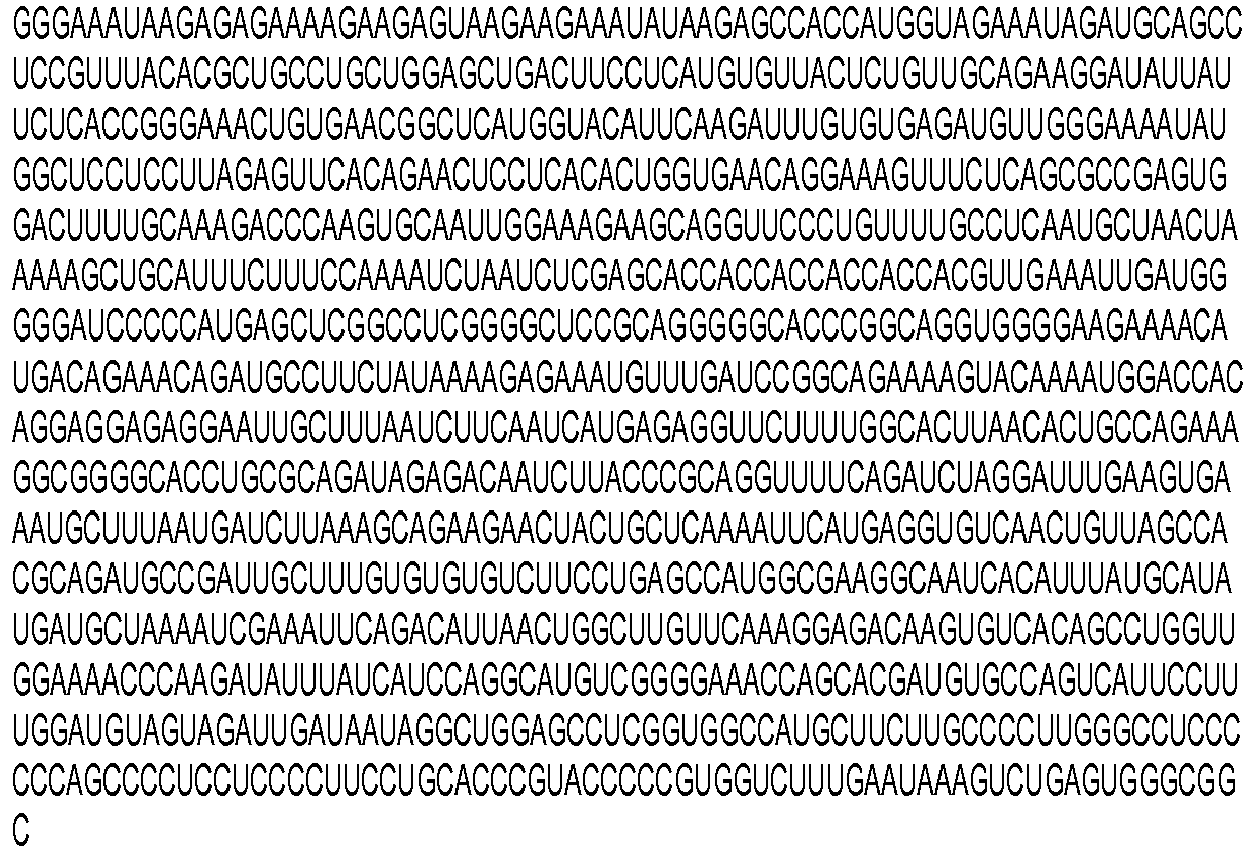
7506 
2486 - The activity of cultured human lung adenocarcinoma A549 cells was evaluated through the measurement of formazan converted by mitochondrial dehydrogenases from WST-1 substrate (Roche, Indianapolis, IN). 7500 cells per 96-well were treated with a single dose of varying amounts of Lipofectamine 2000-lipoplexed constitutively active (C.A.)
caspase 3 mRNA (mRNA sequence shown in SEQ ID NO: 6619 (Table 44); polyAtail of approximately 140 nucleotides not shown in sequence; 5' cap, Cap1) or constitutively active (C.A.)caspase 6 mRNA (mRNA sequence shown in SEQ ID NO: 7506 (Table 44); polyAtail of approximately 140 nucleotides not shown in sequence; 5' cap, Cap1) fully modified with 5-methylcytidine and 1-methylpseudouridine (5mC and 1mpU) or fully modified with 1-methylpseudouridine (1mpU) or a control proteins (eGFP (mRNA sequence shown in SEQ ID NO: 7507; polyA tail of approximately 140 nucleotides not shown in sequence; 5' cap, Cap1; fully modified with 5-methylcytidine and 1-methylpseudouridine (5mC and 1mpU) or fully modified with 1-methylpseudouridine (1mpU)) and luciferase (mRNA sequence shown in SEQ ID NO: 7508; polyA tail of approximately 140 nucleotides not shown in sequence; 5' cap, Cap1; fully modified with 5-methylcytidine and 1-methylpseudouridine (5mC and 1mpU) or fully modified with 1-methylpseudouridine (1mpU))). Cellular activity was measured in cultured cells 1 day after mRNA treatment according to the WST-1 manufacturer's protocol, and is plotted as a 450 nm absorbance reading of the converted formazan that had been corrected for background signal. As shown in Table 45, increasing amounts of transfected C.A. caspase mRNA (0 ng, 2 ng, 10 ng, 50 ng and 250 ng) markedly inhibited the optical density (OD) signal (as a readout of cellular activity) compared to controls. Similar results were obtained in human lung adenocarcinoma H441 cells and human cervical cancer HeLa cells.Table 45. Cellular Activity Description Amount of mRNA (ng) WST-1 OD mean (450-690 nm) C.A. caspase 3 (1mpU and 5mC) 0 2.46 2 1.93 10 1.05 50 0.31 250 0.04 C.A. caspase 6 (1mpU and 5mC) 0 2.49 2 2.41 10 1.64 50 0.75 250 0.30 eGFP (1mpU and 5mC) 0 2.37 2 2.36 10 2.19 50 1.84 250 1.84 Luciferase (1mpU and 5mC) 0 2.26 2 1.93 10 2.00 50 1.94 250 1.87 C.A. caspase 3 (1mpU) 0 2.62 2 2.35 10 1.80 50 0.91 250 0.17 C.A. caspase 6 (1mpU) 0 2.17 2 2.34 10 2.01 50 1.29 250 0.42 eGFP (1mpU) 0 2.56 2 2.67 10 2.86 50 2.72 250 2.38 Luciferase (1mpU) 0 2.12 2 2.56 10 2.68 50 2.64 250 2.21 - Human hepatocellular carcinoma Hep3B cells were plated in a 6-well plate at a seeding density of 3x10⁶cells/well and Lipofectamine 2000-transfected with mRNAs fully modified with 5-methylcytidine and 1-methylpseudouridine (5mC and 1mpU) or fully modified with 1-methylpseudouridine (1mpU) designed to encode the following: fluorescent protein mCherry (mRNA sequence shown in SEQ ID NO: 6602; polyA tail of approximately 140 nucleotides not shown in sequence; 5' cap, Cap1), non-translatable Factor IX (mRNA sequence shown in SEQ ID NO: 7509; polyA tail of approximately 140 nucleotides not shown in sequence; 5' cap, Cap1), full length wildtype C-MYC (mRNA sequence shown in SEQ ID NO: 7510; polyA tail of approximately 140 nucleotides not shown in sequence; 5' cap, Cap1), MYC inhibitor A (mRNA sequence shown in SEQ ID NO: 7511 (Table 46); polyA tail of approximately 140 nucleotides not shown in sequence; 5' cap, Cap1), MYC inhibitor B (mRNA sequence shown in SEQ ID NO: 7513 (Table 46); polyA tail of approximately 140 nucleotides not shown in sequence; 5' cap, Cap1), MYC inhibitor C (mRNA sequence shown in SEQ ID NO: 7418 (Table 46); polyA tail of approximately 140 nucleotides not shown in sequence; 5' cap, Cap1) and MYC inhibitor D (mRNA sequence shown in SEQ ID NO: 7515 (Table 46); polyA tail of approximately 140 nucleotides not shown in sequence; 5' cap, Cap1). Cells were collected 8 hours post-transfection and lysates were made using RIPA lysis buffer including a protease inhibitor cocktail (Roche, Indianapolis,IN). Equal amounts of lysate determined by BCA assay were resolved by SDS-PAGE through 4-12% BIS-TRIS gels, transferred to nitrocellulose blots and probed with appropriate primary and secondary antibodies. Western blot analyses revealed positive expression of the 4 modified mRNA MYC inhibitors, as well as full length C-MYC, in Hep3B cells.
Table 46. MYC Inhibitor Sequences Description Sequence SEQ ID NO: MYC inhibitor A 
7511 
7512 MYC inhibitor B 
7513 
7514 MYC inhibitor C 
7515 
7516 MYC inhibitor D 
6621 
7517 
- Hep3B cells were plated in a 96-well plate at a seeding density of 2500 cells/well and Lipofectamine 2000-transfected with 0, 0.2 nM, 0.7 nM, 2 nM or 6 nM of modified mRNAs fully modified with 1-methylpseudouridine (1mpU) designed to encode the following: mCherry (mRNA sequence shown in SEQ ID NO: 6602; polyA tail of approximately 140 nucleotides not shown in sequence; 5' cap, Cap1), non-translatable Factor IX (mRNA sequence shown in SEQ ID NO: 7509; polyAtail of approximately 140 nucleotides not shown in sequence; 5' cap, Cap1), full length wildtype C-MYC (mRNA sequence shown in SEQ ID NO: 7510; polyA tail of approximately 140 nucleotides not shown in sequence; 5' cap, Cap1), MYC inhibitor A (mRNA sequence shown in SEQ ID NO: 7511; polyA tail of approximately 140 nucleotides not shown in sequence; 5' cap, Cap1), MYC inhibitor B (mRNA sequence shown in SEQ ID NO: 7513; polyAtail of approximately 140 nucleotides not shown in sequence; 5' cap, Cap1), MYC inhibitor C (mRNA sequence shown in SEQ ID NO: 7515; polyA tail of approximately 140 nucleotides not shown in sequence; 5' cap, Cap1) and MYC inhibitor D (mRNA sequence shown in SEQ ID NO: 6621; polyA tail of approximately 140 nucleotides not shown in sequence; 5' cap, Cap1). Cellular activity was measured 48 hours post-transfection with the use of WST-1 according to manufacturer's instructions (Roche, Indianapolis, IN). Absorbance readings were taken at 450 nm 4 hours after the addition of WST-1, and background-corrected results are shown in Table 47. The three highest concentrations of each of the inhibitors (MYC inhibitor A, MYC inhibitor B, MYC inhibitor C and MYC inhibitor D) reduced absorbance signal compared to the controls.
Table 47. Cellular Activity Description Amount of mRNA (nM) WST-1 OD mean (450-690 nm) MYC inhibitor A 0 0.45 0.2 0.42 0.7 0.09 2 0.12 6 0.05 MYC inhibitor B 0 0.67 0.2 0.69 0.7 0.24 2 0.09 6 0.05 MYC inhibitor C 0 0.73 0.2 0.73 0.7 0.34 2 0.09 6 0.04 MYC inhibitor D 0 0.74 0.2 0.68 0.7 0.32 2 0.14 6 0.07 mCherry 0 0.66 0.2 0.66 0.7 0.62 2 0.60 6 0.51 Non-translatable FIX 0 0.65 0.2 0.65 0.7 0.61 2 0.62 6 0.49 Wild-Type MYC 0 0.58 0.2 0.51 0.7 0.51 2 0.51 6 0.46 - BALB/c nude mice were injected intravenously with 0.1 mg/kg luciferase modified mRNA without a miR-122 binding site ("non-targeted mRNA"; mRNA sequence shown in SEQ ID NO: 7518; polyA tail of approximately 140 nucleotides not shown in sequence; 5' cap, Cap1; fully modified with 5-methylcytidine and 1-methylpeudouridine) formulated in a lipid nanoparticle described in Table 48 or luciferase modified mRNA with a miR-122 binding site in the 3'UTR ("miR-122 targeted mRNA"; mRNA sequence shown in SEQ ID NO: 7519; polyA tail of approximately 140 nucleotides not shown in sequence; 5' cap, Cap1; fully modified with 5-methylcytidine and 1-methylpeudouridine) formulated in a lipid nanoparticle described in Table 49.
Table 48. Lipid Nanoparticle for Non-targeted mRNA LNP Luciferase: non-targeted mRNA Lipid DLin-KC2-DMA Lipid/RNA wt/ wt 20 Mean size 73.3 nm PDI: 0.06 Table 49. Lipid Nanoparticle for Targeted mRNA LNP Luciferase: targeted mRNA Lipid DLin-KC2-DMA Lipid/RNA wt/ wt 20 Mean size 70.6 nm PDI: 0.08 - 24 hours post-treatment, animals were anesthetized, injected with the luciferase substrate D-luciferin and the bioluminescence imaging (BLI) from living animals was evaluated in an IVIS imager 15 minutes later. Signals were obtained from animals injected with non-targeted mRNA and from miR-122 targeted mRNA, and presented in Table 50. The total light signal produced from livers of animals treated with miR 122 targeted mRNA is 29x lower than non-targeted mRNA, showing that the engineered element in the 3'UTR may inhibit protein expression in normal tissue.
Table 50. In vivo expression of modified mRNA modulated by an engineered miR122 binding site Description Luciferase signal from liver (photons/sec) Non-targeted mRNA 7.9 x 10⁷ miR-122 targted mRNA 2.7 x 10⁶ - BALB/c nude mice were intrahepatically implanted with 2x10⁶ hepatocellular carcinoma Hep3B cells and resulting orthotopic tumors allowed to grow for 24 days. Tumor-bearing mice were then intravenously injected with 0.1 mg/kg luciferase modified mRNA without a miR-122 binding site ("non-targeted mRNA"; mRNA sequence shown in SEQ ID NO: 7518; polyA tail of approximately 140 nucleotides not shown in sequence; 5' cap, Cap1; fully modified with 5-methylcytidine and 1-methylpeudouridine) or luciferase modified mRNA with a miR-122 binding site in the 3'UTR ("miR-122 targeted mRNA"; mRNA sequence shown in SEQ ID NO: 7519; polyA tail of approximately 140 nucleotides not shown in sequence; 5' cap, Cap1; fully modified with 5-methylcytidine and 1-methylpeudouridine) formulated in a lipid nanoparticle described in Table 45 (above). 24 hr post-treatment animals were anesthetized, injected with the luciferase substrate D-luciferin and bioluminescence imaging (BLI) from living animals was evaluated in an
IVIS imager 20 minutes later. Signal from orthotopic tumors compared to adjacent normal liver was quantified, and miR-122-targeted mRNA systemically delivered via lipid nanoparticles achieved over 2-fold enrichment in tumor compared to normal liver. - HeLa cells were seeded at a density of 15,000 per well in 100 ul cell culture medium (DMEM + 10%FBS). G-CSF mRNA having a miR-122 sequence in the 3'UTR (G-CSF miR122; mRNA sequence shown in SEQ ID NO: 7325; polyA tail of approximately 140 nucleotides not shown in sequence; 5'cap,Cap 1; fully modified with 5-methylcytosine and 1-methylpseudouridine) or G-CSF mRNA having a miR-122 sequence without the seed sequence in the 3'UTR (G-CSF seedless; mRNA sequence shown in SEQ ID NO: 7327; polyA tail of approximately 140 nucleotides not shown in sequence; 5'cap, Cap1; fully modified with 5-methylcytosine and 1-methylpseudouridine) were transfected with 0.3ul per well of Lipofectamine 2000 at a concentration of 75 ng of mRNA per well in 96 well plates. The supernatant was collected between 16-18 hours after transfection and expression of G-CSF was measured by ELISA, and the results are shown in Table 51.
Table 51. G-CSF Expression in HeLa Description Protein Expression (ng/ml) G-CSF miR122 292.1 G-CSF seedless 335.7 - Primary human or rat hepatocytes cells were seeded at a density of 350,000 cells per well in 500 ul cell culture medium (InvitroGRO CP and InVitroGRO HI Medium + 2.2% Torpedo Antibiotic Mix). G-CSF mRNA having a miR-122 sequence in the 3'UTR (G-CSF miR122; mRNA sequence shown in SEQ ID NO: 7520; polyA tail of approximately 140 nucleotides not shown in sequence; 5'cap, Cap1; fully modified with 5-methylcytosine and 1-methylpseudouridine) or G-CSF mRNA having a miR-122 sequence without the seed sequence in the 3'UTR (G-CSF seedless; mRNA sequence shown in SEQ ID NO: 7521; polyA tail of approximately 140 nucleotides not shown in sequence; 5'cap, Cap1; fully modified with 5-methylcytosine and 1-methylpseudouridine) were transfected with 1 ul per well of Lipofectamine 2000 at a concentration of 500 ng of mRNA per well in 24 well plates for the primary human hepatocytes and the primary rat hepatocytes. The supernatant was collected between 16-18 hours after transfection and expression of G-CSF was measured by ELISA, and the results are shown in Table 52. The mir-122 binding site sequence in the mRNA dampened the G-CSF protein expression in the primary hepatocytes.
Table 52. G-CSF Expression in Hepatocytes Description Primary Human Hepatocytes Primary Rat Hepatocytes Protein Expression (ng/ml) Protein Expression (ng/ml) G- CSF miR122 116 26 G-CSF seedless 463 85 - HeLa cells were seeded at a density of 17,000 per well in 100 ul cell culture medium (DMEM + 10%FBS). G-CSF mRNA without a miR-122 sequence in the 3'UTR (G-CSF; mouse 3' UTR mRNA sequence shown in SEQ ID NO: 7321; polyA tail of approximately 140 nucleotides not shown in sequence; 5'cap, Cap1; fully modified with 5-methylcytosine and 1-methylpseudouridine; human 3'UTR mRNA sequence shown in SEQ ID NO: 7320; polyA tail of approximately 140 nucleotides not shown in sequence; 5'cap, Cap1; fully modified with 5-methylcytosine and 1-methylpseudouridine), G-CSF mRNA having a miR-122 sequence in the 3'UTR (G-CSF miR122; mouse 3' UTR mRNA sequence shown in SEQ ID NO: 7325; polyAtail of approximately 140 nucleotides not shown in sequence; 5'cap, Cap1; fully modified with 5-methylcytosine and 1-methylpseudouridine; human 3'UTR mRNA sequence shown in SEQ ID NO: 7322; polyA tail of approximately 140 nucleotides not shown in sequence; 5'cap, Cap1; fully modified with 5-methylcytosine and 1-methylpseudouridine), G-CSF mRNA having a miR-122 seed sequence in the 3'UTR (G-CSF seed; mouse 3' UTR mRNA sequence shown in SEQ ID NO: 7326; polyA tail of approximately 140 nucleotides not shown in sequence; 5'cap, Cap1; fully modified with 5-methylcytosine and 1-methylpseudouridine; human 3'UTR mRNA sequence shown in SEQ ID NO: 7323; polyA tail of approximately 140 nucleotides not shown in sequence; 5'cap, Cap1; fully modified with 5-methylcytosine and 1-methylpseudouridine), G-CSF mRNA having a miR-122 sequence without the seed sequence in the 3'UTR (G-CSF seedless; mouse 3' UTR mRNA sequence shown in SEQ ID NO: 7327; polyA tail of approximately 140 nucleotides not shown in sequence; 5'cap, Cap1; fully modified with 5-methylcytosine and 1-methylpseudouridine; human 3'UTR mRNA sequence shown in SEQ ID NO: 7324; polyA tail of approximately 140 nucleotides not shown in sequence; 5'cap, Cap1; fully modified with 5-methylcytosine and 1-methylpseudouridine), Factor IX mRNA without a miR-122 sequence in the 3'UTR (FIX; mouse 3' UTR mRNA sequence shown in SEQ ID NO: 7329; polyA tail of approximately 140 nucleotides not shown in sequence; 5'cap, Cap1; fully modified with 5-methylcytosine and 1-methylpseudouridine; human 3'UTR mRNA sequence shown in SEQ ID NO: 7328; polyA tail of approximately 140 nucleotides not shown in sequence; 5'cap, Cap1; fully modified with 5-methylcytosine and 1-methylpseudouridine), Factor IX mRNA having a miR-122 sequence in the 3'UTR (FIX miR122; mouse 3' UTR mRNA sequence shown in SEQ ID NO: 7333; polyAtail of approximately 140 nucleotides not shown in sequence; 5'cap, Cap1; fully modified with 5-methylcytosine and 1-methylpseudouridine; human 3'UTR mRNA sequence shown in SEQ ID NO: 7330; polyA tail of approximately 140 nucleotides not shown in sequence; 5'cap, Cap1; fully modified with 5-methylcytosine and 1-methylpseudouridine), Factor IX mRNA having a miR-122 seed sequence in the 3'UTR (FIX seed; mouse 3' UTR mRNA sequence shown in SEQ ID NO: 7334; polyAtail of approximately 140 nucleotides not shown in sequence; 5'cap, Cap1; fully modified with 5-methylcytosine and 1-methylpseudouridine; human 3'UTR mRNA sequence shown in SEQ ID NO: 7331; polyA tail of approximately 140 nucleotides not shown in sequence; 5'cap, Cap1; fully modified with 5-methylcytosine and 1-methylpseudouridine) or Factor IX mRNA having a miR-122 sequence without the seed sequence in the 3'UTR (FIX seedless; mouse 3' UTR mRNA sequence shown in SEQ ID NO: 7335; polyAtail of approximately 140 nucleotides not shown in sequence; 5'cap, Cap1; fully modified with 5-methylcytosine and 1-methylpseudouridine; human 3'UTR mRNA sequence shown in SEQ ID NO: 7332; polyA tail of approximately 140 nucleotides not shown in sequence; 5'cap, Cap1; fully modified with 5-methylcytosine and 1-methylpseudouridine) were transfected with 0.3 ul per well of Lipofectamine 2000 at a concentration of 75 ng of mRNA per well in 96 well plates. The supernatant was collected between 16-18 hours after transfection, expression of G-CSF or Factor IX was measured by ELISA, and the results are shown in Table 53.
Table 53. Expression in HeLa Description Protein Expression Mm 3'UTR (ng/ml) Protein Expression Hs 3'UTR (ng/ml) G-CSF 271.72 69.4 G-CSF miR122 305.36 68.8 G-CSF seed 209.5 98.0 G-CSF seedless 243.2 80.9 FIX 249.8 131.6 FIX mir122 204.6 55.4 FIX seed 290.05 127.6 FIX seedless 180.9 31.6 - Primary human or rat hepatocytes cells were seeded at a density of 350,000 cells per well in 500 ul cell culture medium (InvitroGRO CP and InVitroGRO HI Medium + 2.2% Torpedo Antibiotic). G-CSF mRNA without a miR-122 sequence in the 3'UTR (G-CSF; mouse 3' UTR mRNA sequence shown in SEQ ID NO: 7321; polyA tail of approximately 140 nucleotides not shown in sequence; 5'cap, Cap1; fully modified with 5-methylcytosine and 1-methylpseudouridine; human 3'UTR mRNA sequence shown in SEQ ID NO: 7320; polyA tail of approximately 140 nucleotides not shown in sequence; 5'cap, Cap1; fully modified with 5-methylcytosine and 1-methylpseudouridine), G-CSF mRNA having a miR-122 sequence in the 3'UTR (G-CSF miR122; mouse 3' UTR mRNA sequence shown in SEQ ID NO: 7325; polyA tail of approximately 140 nucleotides not shown in sequence; 5'cap, Cap1; fully modified with 5-methylcytosine and 1-methylpseudouridine; human 3'UTR mRNA sequence shown in SEQ ID NO: 7322; polyA tail of approximately 140 nucleotides not shown in sequence; 5'cap, Cap1; fully modified with 5-methylcytosine and 1-methylpseudouridine), G-CSF mRNA having a miR-122 seed sequence in the 3'UTR (G-CSF seed; mouse 3' UTR mRNA sequence shown in SEQ ID NO: 7326; polyA tail of approximately 140 nucleotides not shown in sequence; 5'cap, Cap1; fully modified with 5-methylcytosine and 1-methylpseudouridine; human 3'UTR mRNA sequence shown in SEQ ID NO: 7323; polyA tail of approximately 140 nucleotides not shown in sequence; 5'cap, Cap1; fully modified with 5-methylcytosine and 1-methylpseudouridine), G-CSF mRNA having a miR-122 sequence without the seed sequence in the 3'UTR (G-CSF seedless; mouse 3' UTR mRNA sequence shown in SEQ ID NO: 7327; polyA tail of approximately 140 nucleotides not shown in sequence; 5'cap, Cap1; fully modified with 5-methylcytosine and 1-methylpseudouridine; human 3'UTR mRNA sequence shown in SEQ ID NO: 7324; polyA tail of approximately 140 nucleotides not shown in sequence; 5'cap, Cap1; fully modified with 5-methylcytosine and 1-methylpseudouridine), Factor IX mRNA without a miR-122 sequence in the 3'UTR (FIX; mouse 3' UTR mRNA sequence shown in SEQ ID NO: 7329; polyA tail of approximately 140 nucleotides not shown in sequence; 5'cap, Cap1; fully modified with 5-methylcytosine and 1-methylpseudouridine; human 3'UTR mRNA sequence shown in SEQ ID NO: 7328; polyA tail of approximately 140 nucleotides not shown in sequence; 5'cap, Cap1; fully modified with 5-methylcytosine and 1-methylpseudouridine), Factor IX mRNA having a miR-122 sequence in the 3'UTR (FIX miR122; mouse 3' UTR mRNA sequence shown in SEQ ID NO: 7333; polyA tail of approximately 140 nucleotides not shown in sequence; 5'cap, Cap1; fully modified with 5-methylcytosine and 1-methylpseudouridine; human 3'UTR mRNA sequence shown in SEQ ID NO: 7330; polyA tail of approximately 140 nucleotides not shown in sequence; 5'cap, Cap1; fully modified with 5-methylcytosine and 1-methylpseudouridine), Factor IX mRNA having a miR-122 seed sequence in the 3'UTR (FIX seed; mouse 3' UTR mRNA sequence shown in SEQ ID NO: 7334; polyA tail of approximately 140 nucleotides not shown in sequence; 5'cap, Cap1; fully modified with 5-methylcytosine and 1-methylpseudouridine; human 3'UTR mRNA sequence shown in SEQ ID NO: 7331; polyA tail of approximately 140 nucleotides not shown in sequence; 5'cap, Cap1; fully modified with 5-methylcytosine and 1-methylpseudouridine) or Factor IX mRNA having a miR-122 sequence without the seed sequence in the 3'UTR (FIX seedless; mouse 3' UTR mRNA sequence shown in SEQ ID NO: 7335; polyA tail of approximately 140 nucleotides not shown in sequence; 5'cap, Cap1; fully modified with 5-methylcytosine and 1-methylpseudouridine; human 3'UTR mRNA sequence shown in SEQ ID NO: 7332; polyA tail of approximately 140 nucleotides not shown in sequence; 5'cap, Cap1; fully modified with 5-methylcytosine and 1-methylpseudouridine) were transfected with 1 ul per well of Lipofectamine 2000 at a concentration of 500 ng per well in 24 well plates for the primary human hepatocytes and the primary rat hepatocytes. The supernatant was collected at 24 hours, 48 hours and 72 hours after transfection, expression of G-CSF and Factor IX was measured by ELISA, and the results are shown in Table 54. The mir-122 binding site sequence in the mRNA dampened the G-CSF and Factor IX protein expression in the primary hepatocytes.
Table 54. G-CSF Expression in Hepatocytes Description Time Point Primary Human Hepatocytes Primary Human Hepatocytes Protein Expression (ng/ml) Mm 3'UTR Protein Expression (ng/ml) Hs 3'UTR G-CSF 24 hours 43.9 84.9 48 hours 18.8 100.4 72 hours 5.7 21.3 G-CSF miR122 24 hours 6.9 24.0 48 hours .7 3.03 72 hours .12 .88 G-CSF seed 24 hours 48.5 115.8 48 hours 25.6 96.4 72 hours 8.2 19.2 G-CSF seedless 24 hours 31.7 113.1 48 hours 11.7 92.9 72 hours 3.4 18.9 FIX 24 hours 90.8 63.2 48 hours 159.6 124.8 72 hours 70.5 44.3 FIX mir122 24 hours 11.8 15.9 48 hours 5.0 4.4 72 hours 1.0 .4 FIX seed 24 hours 77.2 60.2 48 hours 115.0 63.0 72 hours 41.7 20.1 FIX seedless 24 hours 69.3 53.7 48 hours 123.8 75.0 72 hours 49.0 24.5 - The base level of mir-122 in Human hepatocytes, rat hepatocytes, human hepatocellular carcinoma cells (Hep3B) and HeLa cells were determined by TAQMAN® analysis using the manufacturers protocol. The levels were normalized to U6 and the results are shown in Table 55.
Table 55. miR-122 Levels in Various Cell Types Cell Type miR.122 level (normalized to U6) Human Hepatocytes 16.8 Rat Hepatocytes 10.9 Hep3B 0 HeLa 0 - Primary human hepatocytes were seeded at a density of 50,000 cells per well in 100 ul cell culture medium (InvitroGRO CP and InVitroGRO HI Medium + 2.2% Torpedo Antibiotic Mix) and Hep3B cells were seeded at a density of 20,000 cells per well in 100 ul cell culture medium MEM + 10%FBS. G-CSF mRNA without a miR-122 sequence in the 3'UTR (G-CSF; mRNA sequence shown in SEQ ID NO: 7320; polyA tail of approximately 140 nucleotides not shown in sequence; 5'cap, cap1; fully modified with 5-methylcytosine and 1-methylpseudouridine), G-CSF mRNA having a miR-122 sequence in the 3'UTR (G-CSF miR122; mRNA sequence shown in SEQ ID NO: 7322; polyA tail of approximately 140 nucleotides not shown in sequence; 5'cap, cap1; fully modified with 5-methylcytosine and 1-methylpseudouridine), G-CSF mRNA having a miR-122 seed sequence in the 3'UTR (G-CSF seed; mRNA sequence shown in SEQ ID NO: 7323; polyA tail of approximately 140 nucleotides not shown in sequence; 5'cap, cap1; fully modified with 5-methylcytosine and 1-methylpseudouridine) or G-CSF mRNA having a miR-122 sequence without the seed sequence in the 3'UTR (G-CSF seedless; mRNA sequence shown in SEQ ID NO: 7324; polyA tail of approximately 140 nucleotides not shown in sequence; 5'cap, Cap1; fully modified with 5-methylcytosine and 1-methylpseudouridine) were transfected with 0.3 ul per well of Lipofectamine 2000 at a concentration of 75 ng of mRNA per well in 96 well plates for the primary human hepatocytes and the Hep3B cells. The supernatant was collected at 24 hours, 48 hours and 72 hours after transfection, expression of G-CSF was measured by ELISA, and the results are shown in Table 56. The mir-122 binding site sequence in the mRNA dampened the G-CSF protein expression in the primary human hepatocytes but not in the Hep3B cells.
Table 56. G-CSF Expression Description Time Point Primary Human Hepatocytes Hep3B Protein Expression (ng/ml) Hs 3'UTR Protein Expression (ng/ml) Hs 3'UTR G-CSF 24 hours 76 55 48 hours 12 33 72 hours 6 10 G-CSF miR122 24 hours 32 37 48 hours 1 27 72 hours 0 6 G-CSF seed 24 hours 75 39 48 hours 11 28 72 hours 4 6 G-CSF seedless 24 hours 79 49 48 hours 15 35 72 hours 6 9 - The base level of miR-142 3p in RAW264.7 cells and HeLa cells were determined by TAQMAN® analysis using the manufacturer's protocol. The levels were normalized to U6 and the results are shown in Table 57.
Table 57. miR-142 3p Levels in Various Cell Types Cell Type miR.122 level (normalized to U6) Human Hepatocytes 16.8 Rat Hepatocytes 10.9 Hep3B 0 HeLa 0 - HeLa cells were seeded at a density of 17,000 per well in 100 ul cell culture medium DMEM + 10%FBS and RAW264.7 cells were seeded at a density of 200,000 per well in 100 ul cell culture medium DMEM + 10%FBS. G-CSF mRNA without a miR-142 3p sequence in the 3'UTR (G-CSF; mRNA sequence shown in SEQ ID NO: 7522; polyA tail of approximately 140 nucleotides not shown in sequence; 5'cap, Cap1; fully modified with 5-methylcytosine and 1-methylpseudouridine), G-CSF mRNA having a miR-142 3p sequence in the 3'UTR (G-CSF miR142 3p; mRNA sequence shown in SEQ ID NO: 7523; polyAtail of approximately 140 nucleotides not shown in sequence; 5'cap, Cap1; fully modified with 5-methylcytosine and 1-methylpseudouridine), G-CSF mRNA having a miR-142 3p seed sequence in the 3'UTR (G-CSF seed; mRNA sequence shown in SEQ ID NO: 7524; polyA tail of approximately 140 nucleotides not shown in sequence; 5'cap, cap1; fully modified with 5-methylcytosine and 1-methylpseudouridine) or G-CSF mRNA having a miR-142 3p sequence without the seed sequence in the 3'UTR (G-CSF seedless; mRNA sequence shown in SEQ ID NO: 7525; polyA tail of approximately 140 nucleotides not shown in sequence; 5'cap, Cap1; fully modified with 5-methylcytosine and 1-methylpseudouridine) were transfected with 0.3ul per well of Lipofectamine 2000 at a concentration of 75 ng of mRNA per well in 96 well plates for HeLa or with 1 ul per well of Lipofectamine 2000 at a concentration of 250 ng of mRNA per well in 24 well plates for RAW264.7 cells. The supernatant was collected 16-18 hours after transfection, expression of G-CSF was measured by ELISA, and the results are shown in Table 58. miR-142 3p sites in G-CSF were shown to down-regulate G-CSF expression in RAW264.7 cells.
Table 58. Expression Description HeLa Protein Expression (ng/ml) RAW264,7 Protein Expression (ng/ml) G-CSF 243.5 124.8 G-CSF miR142 3p 309.1 42.8 G-CSF seed 259.8 148.1 G-CSF seedless 321.7 185.2 - RAW264.7 cells were seeded at a density of 60,000 cells per well in 100 ul cell culture medium (DMEM + 10%FBS). G-CSF mRNA without a miR-142 3p sequence in the 3'UTR (G-CSF; mRNA sequence shown in SEQ ID NO: 7522; polyA tail of approximately 140 nucleotides not shown in sequence; 5'cap, Cap1; fully modified with 5-methylcytosine and 1-methylpseudouridine), G-CSF mRNA having a miR-142 3p sequence in the 3'UTR (G-CSF miR142 3p; mRNA sequence shown in SEQ ID NO: 7523; polyA tail of approximately 140 nucleotides not shown in sequence; 5'cap, Cap1; fully modified with 5-methylcytosine and 1-methylpseudouridine), G-CSF mRNA having a miR-142 3p seed sequence in the 3'UTR (G-CSF seed; mRNA sequence shown in SEQ ID NO: 7524; polyAtail of approximately 140 nucleotides not shown in sequence; 5'cap, cap1; fully modified with 5-methylcytosine and 1-methylpseudouridine) or G-CSF mRNA having a miR-142 3p sequence without the seed sequence in the 3'UTR (G-CSF seedless; mRNA sequence shown in SEQ ID NO: 7525; polyAtail of approximately 140 nucleotides not shown in sequence; 5'cap, Cap1; fully modified with 5-methylcytosine and 1-methylpseudouridine) were transfected with 0.3 ul per well of Lipofectamine 2000 at a concentration of 75 ng of mRNA per well in 96 well plates. The supernatant was collected at 24 hours, 48 hours and 72 hours after transfection, expression of G-CSF was measured by ELISA, and the results are shown in Table 59. The mir-142 3p binding site sequence in the mRNA showed a strong suppression of G-CSF expression in RAW264.7 cells over time.
Table 59. G-CSF Expression Description Time Point RAW264.7 Cells Protein Expression (ng/ml) G-CSF 24 hours 133.5 48 hours 69.7 72 hours 2.1 G-CSF miR142 3p 24 hours 60.1 48 hours 9.2 72 hours .3 G-CSF seed 24 hours 244.9 48 hours 68.9 72 hours 2.3 G-CSF seedless 24 hours 250.2 48 hours 95.9 72 hours 3.0 - Peripheral blood mononuclear cells (PBMCs) were seeded at a density of 150,000 cells per well in 100 ul cell culture medium (Opti-MEM and after transfection add 10%FBS). G-CSF mRNA having a miR-142 3p sequence in the 3'UTR (G-CSF miR142 3p; mRNA sequence shown in SEQ ID NO: 7523; polyA tail of approximately 140 nucleotides not shown in sequence; 5'cap, Cap1; fully modified with 5-methylcytosine and 1-methylpseudouridine), G-CSF mRNA having a miR-142 3p seed sequence in the 3'UTR (G-CSF seed; mRNA sequence shown in SEQ ID NO: 7524; polyAtail of approximately 140 nucleotides not shown in sequence; 5'cap, cap1; fully modified with 5-methylcytosine and 1-methylpseudouridine) or G-CSF mRNA having a miR-142 3p sequence without the seed sequence in the 3'UTR (G-CSF seedless; mRNA sequence shown in SEQ ID NO: 7525; polyA tail of approximately 140 nucleotides not shown in sequence; 5'cap, cap1; fully modified with 5-methylcytosine and 1-methylpseudouridine) were transfected in triplicate with 0.4 ul per well of Lipofectamine 2000 at a concentration of 500 ng of mRNA per well in 96 well plates for 2 or 3 donors. The supernatant was collected at 24 hours after transfection and the expression of G-CSF was measured by ELISA. The results for the 2 donors are shown in Table 60 and the results for the 3 donors are shown in Table 61. The mir-142 3p binding site sequence in the mRNA was shown to down regulate G-CSF expression in human PBMC.
Table 60. Expression PBMC (2 donors) Description Protein Expression (ng/ml) G-CSF miR142 3p 5.09 G-CSF seed 10.06 G-CSF seedless 9.38 Table 61. Expression PBMC (3 donors) Description Protein Expression (ng/ml) G-CSF miR142 3p 7.48 G-CSF seed 13.40 G-CSF seedless 13.98 - It is to be understood that the words which have been used are words of description rather than limitation, and that changes may be made within the purview of the appended claims without departing from the true scope and spirit of the invention in its broader aspects.
- While the present invention has been described at some length and with some particularity with respect to the several described embodiments, it is not intended that it should be limited to any such particulars or embodiments or any particular embodiment, but it is to be construed with references to the appended claims so as to provide the broadest possible interpretation of such claims in view of the prior art and, therefore, to effectively encompass the intended scope of the invention.
- All publications, patent applications, patents, and other references mentioned herein are incorporated by reference in their entirety. In case of conflict, the present specification, including definitions, will control. In addition, section headings, the materials, methods, and examples are illustrative only and not intended to be limiting.
- The present disclosure also includes the following items.
- 1. An isolated synthetic signal-sensor polynucleotide, wherein said isolated synthetic signal-sensor polynucleotide comprises an mRNA which encodes an oncology-related polypeptide of interest and one or more sensor sequences selected from the group consisting of any of SEQ ID NOs: 3529-4549, SEQ ID NOs: 5571-6591 and functional variants thereof.
- 2. The isolated synthetic signal-sensor polynucleotide of item 1 wherein the oncology-related polypeptide of interest is selected from the group consisting of SEQ ID NOs: 1321-2487, 6611-6616, 7355-7361, 7490, 7492, 7493, 7512, 7514, 7516 and 7517.
- 3. The isolated synthetic signal-sensor polynucleotide of item 1 wherein the mRNA comprises at least an open reading frame of a nucleic acid sequence selected from the group consisting of SEQ ID NOs: 2488-2496, 6617-6621, 7348-7354, 7362-7489, 7491, 7494, 7506, 7511 and 7513.
- 4. The isolated synthetic signal-sensor polynucleotide of
item 3, wherein the open reading frame is codon optimized. - 5. The isolated synthetic signal-sensor polynucleotide of item 1, wherein the mRNA comprises two stop codons.
- 6. The isolated synthetic signal-sensor isolated polynucleotide of item 1, wherein the mRNA comprises a first stop codon "TGA" and a second stop codon selected from the group consisting of "TAA," "TGA" and "TAG."
- 7. The isolated synthetic signal-sensor polynucleotide of item 1, wherein the mRNA has a 3' tailing sequence of linked nucleosides selected from the group consisting of a poly-A tail of at least 140 nucleotides, a triple helix, and a poly A-G quartet.
- 8. The isolated synthetic signal-sensor polynucleotide of item 1, wherein the mRNA comprises at least one 5'terminal cap selected from the group consisting of CapO, Cap1, ARCA, inosine, N1-methyl-guanosine, 2'fluoro-guanosine, 7-deaza-guanosine, 8-oxo-guanosine, 2-amino-guanosine, LNA-guanosine, and 2-azido-guanosine.
- 9. The isolated synthetic signal-sensor polynucleotide of item 1, where the isolated synthetic signal-sensor polynucleotide is substantially purified.
- 10. The isolated synthetic signal-sensor polynucleotide of item 1, wherein the isolated synthetic signal-sensor polynucleotide comprises at least one chemical modification.
- 11. The isolated synthetic signal-sensor polynucleotide of item 10, wherein the at least one chemical modification is 1-methylpseudouridine.
- 12. The isolated synthetic signal-sensor polynucleotide of
item 11, further comprising the chemical modification 5-methylcytidine. - 13. The isolated synthetic signal-sensor polynucleotide of item 1, where the isolated synthetic signal-sensor polynucleotide comprises at least two chemical modifications.
- 14. The isolated synthetic signal-sensor polynucleotide of item 13, wherein the modifications are located on one or more of a nucleoside and/or the backbone of said nucleotides.
- 15. The isolated synthetic signal-sensor polynucleotide of item 13, where the modifications are located on both a nucleoside and a backbone linkage.
- 16. The isolated synthetic signal-sensor polynucleotide of item 13, where the modifications are located on the backbone linkage.
- 17. The isolated synthetic signal-sensor polynucleotide of item 1, wherein the isolated signal-sensor polynucleotide is codon optimized.
- 18. The isolated synthetic signal-sensor polynucleotide of item 1, wherein the isolated signal-sensor polynucleotide is formulated.
- 19. The isolated synthetic signal-sensor polynucleotide of item 1 wherein the polypeptide of interest is a factor modulating the affinity between HIF subunits and/or HIF-dependent gene expression.
- 20. The isolated synthetic signal-sensor polynucleotide of item 19 wherein the HIF subunits are selected from the group consisting of SEQ ID NO: 6611-6616.
- 21. The isolated synthetic signal-sensor polynucleotide of item 1 wherein the isolated synthetic signal-sensor polynucleotide comprises at least one translation enhancer element.
- 22. An isolated synthetic signal-sensor polynucleotide comprising:
- (a) a first region of linked nucleosides, said first region encoding an oncology-related polypeptide of interest selected from the group consisting of SEQ ID NOs: 1321-2487, 6611-6616 and 7355-7361, 7490, 7492, 7493, 7512, 7514, 7516 and 7517;
- (b) a first flanking region located 5' relative to said first region comprising;
- (i) a sequence of linked nucleosides selected from the group consisting of the native 5' untranslated region (UTR) of any of the nucleic acids that encode any of SEQ ID NOs: 1321-2487, 6611-6616, 7355-7361, 7490, 7492, 7493, 7512, 7514, 7516, 7517, SEQ ID NO:1-4 and functional variants thereof;
- (c) a second flanking region located 3' relative to said first region comprising;
- (i') a sequence of linked nucleosides selected from the group consisting of the native 3' UTR of any of the nucleic acids that encode any of SEQ ID NOs: 1321-2487, 6611-6616, 7355-7361, 7490, 7492, 7493, 7512, 7514, 7516, 7517, SEQ ID NO: 5-21 and functional variants thereof;
- (ii') one or more sensor sequences located selected from the group consisting of the any of SEQ ID NOs: 3529-4549, SEQ ID NOs: 5571-6591 and functional variants thereof; and
- (iii') a 3' tailing sequence of linked nucleosides.
- 23. The isolated synthetic signal-sensor polynucleotide of item 22 wherein the first region of linked nucleosides comprises at least an open reading frame of a nucleic acid sequence, wherein the nucleic acid sequence is selected from the group consisting of SEQ ID NOs: 2488-2496, 6617-6621, 7348-7354, 7362-7489, 7491, 7494, 7506, 7511 and 7513.
- 24. The isolated synthetic signal-sensor polynucleotide of item 23, wherein the open reading frame is codon optimized.
- 25. The isolated synthetic signal-sensor polynucleotide of item 22, wherein the first region comprises two stop codons.
- 26. The isolated synthetic signal-sensor isolated polynucleotide of item 22, wherein the first region comprises a first stop codon "TGA" and a second stop codon selected from the group consisting of "TAA," "TGA" and "TAG."
- 27. The isolated synthetic signal-sensor polynucleotide of item 22, wherein the 3' tailing sequence of linked nucleosides is selected from the group consisting of a poly-A tail of at least 140 nucleotides, a triple helix, and a poly A-G quartet.
- 28. The isolated synthetic signal-sensor polynucleotide of item 22, wherein the first flanking region further comprises at least one 5'terminal cap.
- 29. The isolated synthetic signal-sensor polynucleotide of
item 28, wherein the at least one 5' terminal cap is selected from the group consisting of CapO, Cap1, ARCA, inosine, N1-methyl-guanosine, 2'fluoro-guanosine, 7-deaza-guanosine, 8-oxo-guanosine, 2-amino-guanosine, LNA-guanosine, and 2-azido-guanosine. - 30. The isolated synthetic signal-sensor polynucleotide of
item 28 where the isolated signal-sensor polynucleotide is substantially purified. - 31. The isolated synthetic signal-sensor polynucleotide of item 22, wherein the isolated synthetic signal-sensor polynucleotide comprises at least one chemical modification.
- 32. The isolated synthetic signal-sensor polynucleotide of item 31, wherein the at least one chemical modification is 1-methylpseudouridine.
- 33. The isolated synthetic signal-sensor polynucleotide of item 32, further comprising the chemical modification 5-methylcytidine.
- 34. The isolated synthetic signal-sensor polynucleotide of item 22, comprising at least two chemical modifications in the first region.
- 35. The isolated synthetic signal-sensor polynucleotide of item 34, wherein the modifications are located on one or more of a nucleoside and/or the backbone of said nucleotides.
- 36. The isolated synthetic signal-sensor polynucleotide of item 34, where the modifications are located on both a nucleoside and a backbone linkage.
- 37. The isolated synthetic signal-sensor polynucleotide of item 34, where the modifications are located on the backbone linkage.
- 38. The isolated synthetic signal-sensor polynucleotide of item 22, where the isolated signal-sensor polynucleotide is codon optimized.
- 39. The isolated synthetic signal-sensor polynucleotide of item 38, wherein the first region of linked nucleosides is codon optimized.
- 40. The isolated synthetic signal-sensor polynucleotide of item 22, wherein the isolated signal-sensor polynucleotide is formulated.
- 41. A method of treating a disease, disorder and/or condition in a subject in need thereof by increasing the level of an oncology-related polypeptide of interest comprising administering to said subject an isolated synthetic signal-sensor polynucleotide encoding said oncology-related polypeptide.
- 42. A method of reducing, eliminating or preventing tumor growth in a subject in need thereof by increasing the level of an oncology-related polypeptide of interest comprising administering to said subject an isolated synthetic signal-sensor polynucleotide encoding said oncology-related polypeptide.
- 43. A method of reducing and/or ameliorating at least one symptom of cancer in a subject need thereof by increasing the level of an oncology-related polypeptide of interest comprising administering to said subject an isolated synthetic signal-sensor polynucleotide encoding said oncology-related polypeptide.
- 44. The method of any of items 41-43 wherein the disease, disorder and/or condition is selected from the group consisting of adrenal cortical cancer, advanced cancer, anal cancer, aplastic anemia, bileduct cancer, bladder cancer, bone cancer, bone metastasis, brain tumors, brain cancer, breast cancer, childhood cancer, cancer of unknown primary origin, Castleman disease, cervical cancer, colon/rectal cancer, endometrial cancer, esophagus cancer, Ewing family of tumors, eye cancer, gallbladder cancer, gastrointestinal carcinoid tumors, gastrointestinal stromal tumors, gestational trophoblastic disease, Hodgkin disease, Kaposi sarcoma, renal cell carcinoma, laryngeal and hypopharyngeal cancer, acute lymphocytic leukemia, acute myeloid leukemia, chronic lymphocytic leukemia, chronic myeloid leukemia, chronic myelomonocytic leukemia, liver cancer, hepatocellular carcinoma (HCC), non-small cell lung cancer, small cell lung cancer, lung carcinoid tumor, lymphoma of the skin, malignant mesothelioma, multiple myeloma, myelodysplastic syndrome, nasal cavity and paranasal sinus cancer, nasopharyngeal cancer, neuroblastoma, non-Hodgkin lymphoma, oral cavity and oropharyngeal cancer, osteosarcoma, ovarian cancer, pancreatic cancer, penile cancer, pituitary tumors, prostate cancer, retinoblastoma, rhabdomyosarcoma, salivary gland cancer, sarcoma in adult soft tissue, basal and squamous cell skin cancer, melanoma, small intestine cancer, stomach cancer, testicular cancer, throat cancer, thymus cancer, thyroid cancer, uterine sarcoma, vaginal cancer, vulvar cancer, Waldenstrom macroglobulinemia, Wilms tumor and secondary cancers caused by cancer treatment.
- 45. The method of item 44 wherein the tumor growth is results from a disease, disorder and/or condition selected from the group consisting of adrenal cortical cancer, advanced cancer, anal cancer, aplastic anemia, bileduct cancer, bladder cancer, bone cancer, bone metastasis, brain tumors, brain cancer, breast cancer, childhood cancer, cancer of unknown primary origin, Castleman disease, cervical cancer, colon/rectal cancer, endometrial cancer, esophagus cancer, Ewing family of tumors, eye cancer, gallbladder cancer, gastrointestinal carcinoid tumors, gastrointestinal stromal tumors, gestational trophoblastic disease, Hodgkin disease, Kaposi sarcoma, renal cell carcinoma, laryngeal and hypopharyngeal cancer, acute lymphocytic leukemia, acute myeloid leukemia, chronic lymphocytic leukemia, chronic myeloid leukemia, chronic myelomonocytic leukemia, liver cancer, hepatocellular carcinoma (HCC), non-small cell lung cancer, small cell lung cancer, lung carcinoid tumor, lymphoma of the skin, malignant mesothelioma, multiple myeloma, myelodysplastic syndrome, nasal cavity and paranasal sinus cancer, nasopharyngeal cancer, neuroblastoma, non-Hodgkin lymphoma, oral cavity and oropharyngeal cancer, osteosarcoma, ovarian cancer, pancreatic cancer, penile cancer, pituitary tumors, prostate cancer, retinoblastoma, rhabdomyosarcoma, salivary gland cancer, sarcoma in adult soft tissue, basal and squamous cell skin cancer, melanoma, small intestine cancer, stomach cancer, testicular cancer, throat cancer, thymus cancer, thyroid cancer, uterine sarcoma, vaginal cancer, vulvar cancer, Waldenstrom macroglobulinemia, Wilms tumor and secondary cancers caused by cancer treatment.
- 46. The method of any of items 41-43 wherein the administration of the isolated synthetic signal-sensor polynucleotide reduces the number of cancer cells, eliminates cancer cells, prevents an increase in cancer cells and/or alleviates the symptoms of cancer in a subject.
- 47. The method of item 43 wherein the at least one symptom of cancer is selected from the group consisting of weakness, aches and pains, fever, fatigue, weight loss, blood clots, increased blood calcium levels, low white blood cell count, short of breath, dizziness, headaches, hyperpigmentation, jaundice, erthema, pruritis, excessive hair growth, change in bowel habits, change in bladder function, long-lasting sores, white patches inside the mouth, white spots on the tongue, unusual bleeding or discharge, thickening or lump on parts of the body, indigestion, trouble swallowing, changes in warts or moles, change in new skin and nagging cough and hoarseness.
- 48. The methods of any of items 41-43, wherein the isolated synthetic signal-sensor polynucleotide is formulated.
- 49. The method of item 48, wherein the isolated synthetic signal-sensor polynucleotide is administered at a total daily dose of between 0.001 ug and 150 ug.
- 50. The method of item 49, wherein administration is by injection, topical administration, ophthalmic administration or intranasal administration.
- 51. The method of
item 50, wherein administration is by injection and said injection is selected from the group consisting of intradermal, subcutaneous and intramuscular. - 52. The method of
item 50, wherein administration is topical administration and said topical administration is selected from the group consisting of cream, lotion, ointment, gel, spray, solution and the like. - 53. A method of preferentially inducing cell death in cancer cells in a tissue or organ, comprising
- (a) contacting said tissue or organ with an isolated synthetic signal-sensor polynucleotide, wherein said isolated synthetic signal-sensor polynucleotide encodes
- (i) an oncology-related polypeptide whose expression triggers apoptosis or cell death, and
- (ii) at least one microRNA binding site of a microRNA, where the expression of said microRNA in the cancer cell is lower than the expression of said microRNA in normal, non cancerous cells.
- (a) contacting said tissue or organ with an isolated synthetic signal-sensor polynucleotide, wherein said isolated synthetic signal-sensor polynucleotide encodes
Claims (14)
- A messenger RNA (mRNA) encoding a polypeptide of interest for use in a method of treating a disease, disorder or condition in a subject, wherein expression of the polypeptide from the mRNA is dampened in the liver, the mRNA comprising a 3' untranslated region (3' UTR) comprising at least one miR-122 microRNA binding site, and wherein uridine in the mRNA is replaced from 95% to 100% with modified uridine.
- The mRNA of claim 1, wherein the modified uridine is a pseudouridine analog.
- The mRNA of claim 2, wherein the pseudouridine analog is 1-methyl pseudouridine.
- The mRNA of any one of claims 1-3, wherein further cytidine is replaced to 100% with 5-methyl-cytidine nucleosides.
- The mRNA of any one of claims 1-4, comprising at least two miR-122 binding sites.
- The mRNA of any one of claims 1-4, comprising at least three miR-122 binding sites.
- The mRNA of any one of claims 1-6, wherein the miR-122 binding site is a miR-122-3p.
- The mRNA of claim 7, wherein the miR-122-3p binding site comprises the sequence set forth in SEQ ID NO: 3587.
- The mRNA of any one of claims 1-6, wherein the miR-122 binding site is a miR-122-5p.
- The mRNA of claim 9, wherein the miR-122-5p binding site comprises the sequence set forth in SEQ. ID NO: 3592.
- The mRNA of any one of the preceding claims, wherein the mRNA comprises a 5'UTR comprising a translation initiation sequence selected from the group consisting of a Kozak sequence and an internal ribosome entry site (IRES).
- The mRNA of any one of the preceding claims, comprising at least one 5' cap structure.
- The mRNA of claim 12, wherein the at least one 5' cap structure is selected from the group consisting 7mG(5')ppp(5')N,pN2p (cap 0), 7mG(5')ppp(5')NlmpNp (cap 1), and 7mG(5')-ppp(5')NlmpN2mp (cap 2).
- The mRNA of any one of the preceding claims, wherein the 3' tailing region of linked nucleosides comprises a poly A tail of at least 80, at least 90, at least 100, at least 120, at least 140, or at least 160 nucleosides.
Applications Claiming Priority (9)
| Application Number | Priority Date | Filing Date | Title |
|---|---|---|---|
| US201361753661P | 2013-01-17 | 2013-01-17 | |
| US201361754159P | 2013-01-18 | 2013-01-18 | |
| US201361781097P | 2013-03-14 | 2013-03-14 | |
| US201361829334P | 2013-05-31 | 2013-05-31 | |
| US201361839893P | 2013-06-27 | 2013-06-27 | |
| US201361842733P | 2013-07-03 | 2013-07-03 | |
| US201361857304P | 2013-07-23 | 2013-07-23 | |
| EP13779972.2A EP2946014A2 (en) | 2013-01-17 | 2013-09-30 | Signal-sensor polynucleotides for the alteration of cellular phenotypes |
| PCT/US2013/062531 WO2014113089A2 (en) | 2013-01-17 | 2013-09-30 | Signal-sensor polynucleotides for the alteration of cellular phenotypes |
Related Parent Applications (1)
| Application Number | Title | Priority Date | Filing Date |
|---|---|---|---|
| EP13779972.2A Division EP2946014A2 (en) | 2013-01-17 | 2013-09-30 | Signal-sensor polynucleotides for the alteration of cellular phenotypes |
Publications (1)
| Publication Number | Publication Date |
|---|---|
| EP3434774A1 true EP3434774A1 (en) | 2019-01-30 |
Family
ID=49448268
Family Applications (2)
| Application Number | Title | Priority Date | Filing Date |
|---|---|---|---|
| EP13779972.2A Withdrawn EP2946014A2 (en) | 2013-01-17 | 2013-09-30 | Signal-sensor polynucleotides for the alteration of cellular phenotypes |
| EP18179340.7A Withdrawn EP3434774A1 (en) | 2013-01-17 | 2013-09-30 | Signal-sensor polynucleotides for the alteration of cellular phenotypes |
Family Applications Before (1)
| Application Number | Title | Priority Date | Filing Date |
|---|---|---|---|
| EP13779972.2A Withdrawn EP2946014A2 (en) | 2013-01-17 | 2013-09-30 | Signal-sensor polynucleotides for the alteration of cellular phenotypes |
Country Status (7)
| Country | Link |
|---|---|
| US (4) | US20140200261A1 (en) |
| EP (2) | EP2946014A2 (en) |
| JP (3) | JP2016504050A (en) |
| AU (2) | AU2013374345A1 (en) |
| CA (1) | CA2897941A1 (en) |
| HK (1) | HK1217215A1 (en) |
| WO (1) | WO2014113089A2 (en) |
Cited By (7)
| Publication number | Priority date | Publication date | Assignee | Title |
|---|---|---|---|---|
| US10704021B2 (en) | 2012-03-15 | 2020-07-07 | Flodesign Sonics, Inc. | Acoustic perfusion devices |
| US10785574B2 (en) | 2017-12-14 | 2020-09-22 | Flodesign Sonics, Inc. | Acoustic transducer driver and controller |
| US10975368B2 (en) | 2014-01-08 | 2021-04-13 | Flodesign Sonics, Inc. | Acoustophoresis device with dual acoustophoretic chamber |
| US11214789B2 (en) | 2016-05-03 | 2022-01-04 | Flodesign Sonics, Inc. | Concentration and washing of particles with acoustics |
| US11377651B2 (en) | 2016-10-19 | 2022-07-05 | Flodesign Sonics, Inc. | Cell therapy processes utilizing acoustophoresis |
| WO2022233880A1 (en) | 2021-05-03 | 2022-11-10 | Curevac Ag | Improved nucleic acid sequence for cell type specific expression |
| US11708572B2 (en) | 2015-04-29 | 2023-07-25 | Flodesign Sonics, Inc. | Acoustic cell separation techniques and processes |
Families Citing this family (161)
| Publication number | Priority date | Publication date | Assignee | Title |
|---|---|---|---|---|
| PL3338765T3 (en) | 2009-12-01 | 2019-06-28 | Translate Bio, Inc. | Steroid derivative for the delivery of mrna in human genetic diseases |
| CA2807552A1 (en) | 2010-08-06 | 2012-02-09 | Moderna Therapeutics, Inc. | Engineered nucleic acids and methods of use thereof |
| ES3005233T3 (en) | 2010-10-01 | 2025-03-14 | Modernatx Inc | Modified nucleosides, nucleotides, and nucleic acids, and uses thereof |
| US8853377B2 (en) | 2010-11-30 | 2014-10-07 | Shire Human Genetic Therapies, Inc. | mRNA for use in treatment of human genetic diseases |
| JP2014511687A (en) | 2011-03-31 | 2014-05-19 | モデルナ セラピューティクス インコーポレイテッド | Engineered nucleic acid delivery and formulation |
| PT2717893T (en) | 2011-06-08 | 2019-08-20 | Translate Bio Inc | Lipid nanoparticle compositions and methods for mrna delivery |
| JP2015501844A (en) | 2011-12-16 | 2015-01-19 | モデルナ セラピューティクス インコーポレイテッドModerna Therapeutics,Inc. | Modified nucleosides, nucleotides and nucleic acid compositions |
| US9283287B2 (en) | 2012-04-02 | 2016-03-15 | Moderna Therapeutics, Inc. | Modified polynucleotides for the production of nuclear proteins |
| WO2013151663A1 (en) | 2012-04-02 | 2013-10-10 | modeRNA Therapeutics | Modified polynucleotides for the production of membrane proteins |
| US9254311B2 (en) | 2012-04-02 | 2016-02-09 | Moderna Therapeutics, Inc. | Modified polynucleotides for the production of proteins |
| US9572897B2 (en) | 2012-04-02 | 2017-02-21 | Modernatx, Inc. | Modified polynucleotides for the production of cytoplasmic and cytoskeletal proteins |
| KR20220051197A (en) | 2012-05-17 | 2022-04-26 | 익스텐드 바이오사이언시즈, 인크. | Carriers for improved drug delivery |
| WO2013185067A1 (en) | 2012-06-08 | 2013-12-12 | Shire Human Genetic Therapies, Inc. | Nuclease resistant polynucleotides and uses thereof |
| WO2013185069A1 (en) | 2012-06-08 | 2013-12-12 | Shire Human Genetic Therapies, Inc. | Pulmonary delivery of mrna to non-lung target cells |
| WO2014028429A2 (en) | 2012-08-14 | 2014-02-20 | Moderna Therapeutics, Inc. | Enzymes and polymerases for the synthesis of rna |
| ES2921623T3 (en) | 2012-11-26 | 2022-08-30 | Modernatx Inc | terminally modified RNA |
| JP2016504050A (en) * | 2013-01-17 | 2016-02-12 | モデルナ セラピューティクス インコーポレイテッドModerna Therapeutics,Inc. | Signal sensor polynucleotide for modification of cell phenotype |
| US20160024181A1 (en) | 2013-03-13 | 2016-01-28 | Moderna Therapeutics, Inc. | Long-lived polynucleotide molecules |
| ES2981185T3 (en) | 2013-03-14 | 2024-10-07 | Translate Bio Inc | Methods for purifying messenger RNA |
| US10258698B2 (en) | 2013-03-14 | 2019-04-16 | Modernatx, Inc. | Formulation and delivery of modified nucleoside, nucleotide, and nucleic acid compositions |
| EP2968586B1 (en) | 2013-03-14 | 2018-07-25 | Translate Bio, Inc. | Cftr mrna compositions and related methods and uses |
| ES2882110T3 (en) | 2013-03-14 | 2021-12-01 | Translate Bio Inc | Methods and Compositions for Delivering mRNA-Encoded Antibodies |
| US10077439B2 (en) | 2013-03-15 | 2018-09-18 | Modernatx, Inc. | Removal of DNA fragments in mRNA production process |
| EP4614148A3 (en) | 2013-03-15 | 2025-12-17 | Translate Bio, Inc. | Synergistic enhancement of the delivery of nucleic acids via blended formulations |
| EP2971161B1 (en) | 2013-03-15 | 2018-12-26 | ModernaTX, Inc. | Ribonucleic acid purification |
| EP2983804A4 (en) | 2013-03-15 | 2017-03-01 | Moderna Therapeutics, Inc. | Ion exchange purification of mrna |
| EP2971033B8 (en) * | 2013-03-15 | 2019-07-10 | ModernaTX, Inc. | Manufacturing methods for production of rna transcripts |
| HUE056760T2 (en) | 2013-07-11 | 2022-03-28 | Modernatx Inc | Compositions comprising synthetic polynucleotides encoding crispr related proteins and synthetic sgrnas and methods of use |
| WO2015048744A2 (en) | 2013-09-30 | 2015-04-02 | Moderna Therapeutics, Inc. | Polynucleotides encoding immune modulating polypeptides |
| WO2015051169A2 (en) | 2013-10-02 | 2015-04-09 | Moderna Therapeutics, Inc. | Polynucleotide molecules and uses thereof |
| KR20160067219A (en) | 2013-10-03 | 2016-06-13 | 모더나 세라퓨틱스, 인코포레이티드 | Polynucleotides encoding low density lipoprotein receptor |
| US11224642B2 (en) | 2013-10-22 | 2022-01-18 | Translate Bio, Inc. | MRNA therapy for argininosuccinate synthetase deficiency |
| WO2015061467A1 (en) | 2013-10-22 | 2015-04-30 | Shire Human Genetic Therapies, Inc. | Lipid formulations for delivery of messenger rna |
| MX2016005239A (en) | 2013-10-22 | 2016-08-12 | Shire Human Genetic Therapies | TREATMENT WITH MESSENGER RIBONUCLEIC ACID FOR PHENYLKETONURIA. |
| CA2928040A1 (en) | 2013-10-22 | 2015-04-30 | Shire Human Genetic Therapies, Inc. | Cns delivery of mrna and uses thereof |
| JP6571679B2 (en) | 2014-04-25 | 2019-09-04 | トランスレイト バイオ, インコーポレイテッド | Method for purifying messenger RNA |
| US10022455B2 (en) | 2014-05-30 | 2018-07-17 | Translate Bio, Inc. | Biodegradable lipids for delivery of nucleic acids |
| EP3862439B1 (en) | 2014-06-18 | 2025-10-01 | Toray Industries, Inc. | Liver cancer detection kit or device, and detection method |
| WO2015196128A2 (en) | 2014-06-19 | 2015-12-23 | Moderna Therapeutics, Inc. | Alternative nucleic acid molecules and uses thereof |
| CA2952824C (en) | 2014-06-24 | 2023-02-21 | Shire Human Genetic Therapies, Inc. | Stereochemically enriched compositions for delivery of nucleic acids |
| CA2953265C (en) | 2014-07-02 | 2023-09-26 | Shire Human Genetic Therapies, Inc. | Encapsulation of messenger rna |
| CA2955238A1 (en) | 2014-07-16 | 2016-01-21 | Moderna Therapeutics, Inc. | Circular polynucleotides |
| WO2016014846A1 (en) | 2014-07-23 | 2016-01-28 | Moderna Therapeutics, Inc. | Modified polynucleotides for the production of intrabodies |
| EP3177732A4 (en) * | 2014-08-08 | 2018-04-25 | ModernaTX, Inc. | Compositions and methods for the treatment of ophthalmic diseases and conditions |
| US9585934B2 (en) | 2014-10-22 | 2017-03-07 | Extend Biosciences, Inc. | Therapeutic vitamin D conjugates |
| US9789197B2 (en) | 2014-10-22 | 2017-10-17 | Extend Biosciences, Inc. | RNAi vitamin D conjugates |
| WO2016065052A1 (en) | 2014-10-22 | 2016-04-28 | Extend Biosciences, Inc. | Insulin vitamin d conjugates |
| WO2016069752A1 (en) * | 2014-10-29 | 2016-05-06 | University Of Houston System | Nanovectors for penetrating brain tumor tissues to conduct gene therapy |
| MA56412A (en) | 2014-12-05 | 2022-05-04 | Translate Bio Inc | MESSENGER RNA THERAPY FOR THE TREATMENT OF JOINT DISEASES |
| US20170362605A1 (en) * | 2014-12-19 | 2017-12-21 | Modernatx, Inc. | Terminal modifications of polynucleotides |
| WO2016130572A2 (en) * | 2015-02-10 | 2016-08-18 | Dana-Farber Cancer Institute, Inc. | Methods of determining levels of exposure to radiation and uses thereof |
| WO2016149508A1 (en) | 2015-03-19 | 2016-09-22 | Shire Human Genetic Therapies, Inc. | Mrna therapy for pompe disease |
| EP3318630B1 (en) | 2015-04-22 | 2020-11-04 | iPS Academia Japan, Inc. | Method for sorting tissue cells |
| JP6893177B2 (en) * | 2015-05-15 | 2021-06-23 | キュアバック アーゲー | PRIME-BOOST REGIMENS containing administration of at least one mRNA construct |
| EP3307305A4 (en) * | 2015-06-10 | 2019-05-22 | Modernatx, Inc. | Targeted adaptive vaccines |
| WO2017049286A1 (en) | 2015-09-17 | 2017-03-23 | Moderna Therapeutics, Inc. | Polynucleotides containing a morpholino linker |
| SI3350333T1 (en) | 2015-09-17 | 2022-04-29 | ModernaTX,Inc. | Polynucleotides containing a stabilizing tail region |
| EP3359670B2 (en) | 2015-10-05 | 2024-02-14 | ModernaTX, Inc. | Methods for therapeutic administration of messenger ribonucleic acid drugs |
| CN108473969B9 (en) | 2015-10-14 | 2024-08-23 | 川斯勒佰尔公司 | Modification of RNA-associated enzymes for enhanced production |
| KR101737706B1 (en) * | 2015-12-15 | 2017-05-18 | 한국원자력의학원 | a tumor suppressor containing miR-5582-5p |
| EP3390630B1 (en) * | 2015-12-17 | 2025-01-22 | ModernaTX, Inc. | Polynucleotides encoding methylmalonyl-coa mutase |
| WO2017112943A1 (en) | 2015-12-23 | 2017-06-29 | Modernatx, Inc. | Methods of using ox40 ligand encoding polynucleotides |
| CN105483233B (en) * | 2015-12-24 | 2018-07-20 | 北京大学第一医院 | The system for detecting miR-3158-5p expression quantity is predicting aspirin to the application in cardiovascular patient curative effect |
| WO2017118230A1 (en) * | 2016-01-04 | 2017-07-13 | 杨祚璋 | Mirna marker for diagnosing osteosarcoma |
| EP3405579A1 (en) * | 2016-01-22 | 2018-11-28 | Modernatx, Inc. | Messenger ribonucleic acids for the production of intracellular binding polypeptides and methods of use thereof |
| US20200330606A1 (en) * | 2016-03-29 | 2020-10-22 | Valkyrie Therapeutics Inc. | Modulation of structural maintenance of chromosome-1 expression |
| ES2835051T3 (en) * | 2016-03-31 | 2021-06-21 | Ethris Gmbh | Novel minimal UTR sequences |
| KR102369898B1 (en) | 2016-04-08 | 2022-03-03 | 트랜슬레이트 바이오 인코포레이티드 | Multimeric Encoding Nucleic Acids and Uses Thereof |
| US20190135868A1 (en) * | 2016-04-29 | 2019-05-09 | The University Of Chicago | Synthetic dna binding domain peptides and uses thereof |
| US20190298657A1 (en) | 2016-05-18 | 2019-10-03 | Modernatx, Inc. | Polynucleotides Encoding Acyl-CoA Dehydrogenase, Very Long-Chain for the Treatment of Very Long-Chain Acyl-CoA Dehydrogenase Deficiency |
| US12128113B2 (en) | 2016-05-18 | 2024-10-29 | Modernatx, Inc. | Polynucleotides encoding JAGGED1 for the treatment of Alagille syndrome |
| EP3896164A1 (en) * | 2016-05-18 | 2021-10-20 | ModernaTX, Inc. | Polynucleotides encoding alpha-galactosidase a for the treatment of fabry disease |
| WO2017201349A1 (en) | 2016-05-18 | 2017-11-23 | Modernatx, Inc. | Polynucleotides encoding citrin for the treatment of citrullinemia type 2 |
| EP3458092A1 (en) | 2016-05-18 | 2019-03-27 | Modernatx, Inc. | Mrna combination therapy for the treatment of cancer |
| US11001861B2 (en) | 2016-05-18 | 2021-05-11 | Modernatx, Inc. | Polynucleotides encoding galactose-1-phosphate uridylyltransferase for the treatment of galactosemia type 1 |
| AU2017266948B2 (en) | 2016-05-18 | 2024-07-04 | Fundacion Para La Investigacion Medica Aplicada | Polynucleotides encoding porphobilinogen deaminase for the treatment of acute intermittent porphyria |
| DK3458083T5 (en) | 2016-05-18 | 2024-10-21 | Modernatx Inc | POLYNUCLEOTIDES ENCODING INTERLEUKIN-12 (IL12) AND USES THEREOF |
| WO2017201325A1 (en) | 2016-05-18 | 2017-11-23 | Modernatx, Inc. | Combinations of mrnas encoding immune modulating polypeptides and uses thereof |
| WO2017210735A1 (en) * | 2016-06-07 | 2017-12-14 | Garvan Institute Of Medical Research | Methods of treating neuroblastoma and reagents therefor |
| CN109312313A (en) | 2016-06-13 | 2019-02-05 | 川斯勒佰尔公司 | Messenger RNA therapy for the treatment of ornithine transcarbamylase deficiency |
| WO2017218704A1 (en) | 2016-06-14 | 2017-12-21 | Modernatx, Inc. | Stabilized formulations of lipid nanoparticles |
| US12385034B2 (en) | 2016-06-24 | 2025-08-12 | Modernatx, Inc. | Methods and apparatus for filtration |
| JP2019520829A (en) | 2016-07-07 | 2019-07-25 | ルビウス セラピューティクス, インコーポレイテッド | Compositions and methods related to therapeutic cell lines expressing foreign RNA |
| WO2018018077A1 (en) * | 2016-07-25 | 2018-02-01 | Garvan Institute Of Medical Research | Methods of treating breast cancer and reagents therefor |
| EP3532070A1 (en) | 2016-10-26 | 2019-09-04 | Modernatx, Inc. | Messenger ribonucleic acids for enhancing immune responses and methods of use thereof |
| US11583504B2 (en) | 2016-11-08 | 2023-02-21 | Modernatx, Inc. | Stabilized formulations of lipid nanoparticles |
| WO2018094964A1 (en) * | 2016-11-25 | 2018-05-31 | 武汉大学 | Method with apoptotic signal-regulated kinase 1n-dimerization serving as target for screening medicament use for treating steatohepatitis |
| EP3576780A1 (en) | 2017-02-01 | 2019-12-11 | Modernatx, Inc. | Immunomodulatory therapeutic mrna compositions encoding activating oncogene mutation peptides |
| AU2018224326B2 (en) | 2017-02-27 | 2024-01-04 | Translate Bio, Inc. | Novel codon-optimized CFTR mRNA |
| US11629340B2 (en) | 2017-03-03 | 2023-04-18 | Obsidian Therapeutics, Inc. | DHFR tunable protein regulation |
| CN110914433A (en) | 2017-03-24 | 2020-03-24 | 库尔维科公司 | Nucleic acids encoding CRISPR-associated proteins and uses thereof |
| EP4491233A3 (en) * | 2017-04-21 | 2025-04-16 | Ospedale San Raffaele S.r.l. | Gene therapy |
| MX2019013752A (en) | 2017-05-16 | 2020-07-20 | Translate Bio Inc | Treatment of cystic fibrosis by delivery of codon-optimized mrna encoding cftr. |
| US11421011B2 (en) | 2017-05-18 | 2022-08-23 | Modernatx, Inc. | Polynucleotides encoding tethered interleukin-12 (IL12) polypeptides and uses thereof |
| ES2952779T3 (en) | 2017-05-18 | 2023-11-06 | Modernatx Inc | Modified messenger RNA comprising functional RNA elements |
| EP4464797A3 (en) * | 2017-06-29 | 2025-02-26 | Toray Industries, Inc. | Kit, device, and method for detecting lung cancer |
| US20210079440A1 (en) * | 2017-07-12 | 2021-03-18 | Kyoto University | HIGH EXPRESSION mRNA SWITCH |
| WO2019046809A1 (en) | 2017-08-31 | 2019-03-07 | Modernatx, Inc. | Methods of making lipid nanoparticles |
| US11167043B2 (en) | 2017-12-20 | 2021-11-09 | Translate Bio, Inc. | Composition and methods for treatment of ornithine transcarbamylase deficiency |
| US20190314291A1 (en) | 2018-01-30 | 2019-10-17 | Modernatx, Inc. | Compositions and methods for delivery of agents to immune cells |
| KR102141124B1 (en) * | 2018-01-30 | 2020-08-04 | (주)바이오니아 | Double-stranded Oligonucleotide Complex comprising Double― stranded miRNA and Uses thereof |
| WO2019199974A1 (en) * | 2018-04-10 | 2019-10-17 | Onconetics Pharmaceuticals, Inc. | Microrna regulated expression vectors, methods of making, and uses thereof |
| KR102070969B1 (en) * | 2018-04-10 | 2020-01-29 | 한국한의학연구원 | A marker for the identification of pain |
| EP3773745A1 (en) | 2018-04-11 | 2021-02-17 | ModernaTX, Inc. | Messenger rna comprising functional rna elements |
| KR20210005148A (en) | 2018-04-25 | 2021-01-13 | 도레이 카부시키가이샤 | Kit, device and method for detection of bladder cancer |
| CN108760700A (en) * | 2018-05-29 | 2018-11-06 | 云南健牛生物科技有限公司 | A kind of preparation of fluorescence gold nanoclusters and it is used for tetracycline and copper fluorescence probe |
| SG11202101069SA (en) | 2018-08-08 | 2021-03-30 | Theramir Ltd | Microrna-based therapy targeted against lcp-1 positive cancers |
| CN118421617A (en) | 2018-08-24 | 2024-08-02 | 川斯勒佰尔公司 | Method for purifying messenger RNA |
| KR102913044B1 (en) * | 2018-08-30 | 2026-01-16 | 더 유니버시티 오브 노쓰 캐롤라이나 엣 채플 힐 | Feedback-enabled synthetic genes, target seed match cassettes, and uses thereof |
| EP3849589A1 (en) | 2018-09-14 | 2021-07-21 | ModernaTX, Inc. | Methods and compositions for treating cancer using mrna therapeutics |
| WO2020061457A1 (en) | 2018-09-20 | 2020-03-26 | Modernatx, Inc. | Preparation of lipid nanoparticles and methods of administration thereof |
| CN109439749B (en) * | 2018-09-26 | 2022-06-24 | 北京恩泽康泰生物科技有限公司 | Exosome miRNA marker for colorectal cancer diagnosis and diagnosis kit |
| US20230031853A1 (en) * | 2018-11-15 | 2023-02-02 | The Trustees Of The University Of Pennsylvania | Compositions and methods for the cytoplasmic delivery of antibodies and other proteins |
| EP3883592A1 (en) | 2018-11-21 | 2021-09-29 | Translate Bio, Inc. | Treatment of cystic fibrosis by delivery of nebulized mrna encoding cftr |
| US12042527B2 (en) | 2019-01-08 | 2024-07-23 | Modernatx, Inc. | Use of mRNAs encoding OX40L, IL-23 and IL-36gamma in combination with immune checkpoint blockade for treating particular cancers |
| MX2021009245A (en) | 2019-01-31 | 2021-11-12 | Modernatx Inc | METHODS FOR THE PREPARATION OF LIPID NANOPARTICLES. |
| EP4600411A3 (en) | 2019-04-09 | 2025-09-10 | The University of Chicago | Versatile peptide and protein macrocyclization and multimerization with diels-alder cycloadditions |
| JP2022531461A (en) | 2019-05-07 | 2022-07-06 | モデルナティエックス インコーポレイテッド | Polynucleotides that disrupt immune cell activity and how to use them |
| US20220241315A1 (en) * | 2019-06-05 | 2022-08-04 | Cancerstem Tech Inc. | Therapeutic agent for cancer |
| KR20220035137A (en) * | 2019-06-21 | 2022-03-21 | 큐랄리스 코포레이션 | PPM1A inhibitors and methods of use thereof |
| US20220387628A1 (en) | 2019-06-24 | 2022-12-08 | Modernatx, Inc. | Messenger rna comprising functional rna elements and uses thereof |
| WO2020263883A1 (en) | 2019-06-24 | 2020-12-30 | Modernatx, Inc. | Endonuclease-resistant messenger rna and uses thereof |
| AU2020329616B2 (en) * | 2019-08-14 | 2026-03-12 | Boehringer Ingelheim Rcv Gmbh & Co Kg | Caspase-2 variants |
| CN110628907B (en) * | 2019-09-09 | 2023-01-24 | 张宝华 | Gallbladder cancer plasma exosome microRNAs markers and application thereof |
| WO2021055609A1 (en) | 2019-09-20 | 2021-03-25 | Translate Bio, Inc. | Mrna encoding engineered cftr |
| CN110845596B (en) * | 2019-11-15 | 2021-09-03 | 上海交通大学 | Mutant xSUMO and related products |
| JP2023507501A (en) * | 2019-12-23 | 2023-02-22 | ヴェルサメブ アーゲー | Compositions and methods for simultaneously modulating gene expression |
| CN113134010B (en) * | 2020-01-20 | 2023-09-01 | 上海市生物医药技术研究院 | A microRNA targeting estrogen receptor alpha and its anti-tumor application |
| CN116133652A (en) | 2020-01-31 | 2023-05-16 | 摩登纳特斯有限公司 | Method for preparing lipid nanoparticles |
| CN111440802A (en) * | 2020-03-16 | 2020-07-24 | 复旦大学附属妇产科医院 | Sequence for expressing RP11-395G23.3, construct and construction method and application thereof |
| CN114774540B (en) * | 2020-03-30 | 2025-07-04 | 中国医学科学院肿瘤医院 | Including the application of exosome miR-106b-3p, miR-330-5p, etc. in the diagnosis of lung cancer |
| US20230212675A1 (en) * | 2020-03-31 | 2023-07-06 | Toray Industries, Inc. | Kit or device and method for detecting hippocampal atrophy |
| JP2023526059A (en) | 2020-05-14 | 2023-06-20 | モダーナティエックス・インコーポレイテッド | LNP compositions comprising mRNA therapeutics and effector molecules |
| IL299196A (en) | 2020-06-23 | 2023-02-01 | Modernatx Inc | Lnp compositions comprising mrna therapeutics with extended half-life |
| PH12022553532A1 (en) * | 2020-07-10 | 2024-06-24 | SociaTa Des Produits Nestla S A | Nutritional composition comprising mir-3184 |
| TW202220637A (en) | 2020-08-06 | 2022-06-01 | 美商現代公司 | Methods of preparing lipid nanoparticles |
| CN113337558A (en) * | 2020-08-20 | 2021-09-03 | 深圳市瑞吉生物科技有限公司 | Cap analog 5' with Cap2 structure and preparation method and application thereof |
| JP2024506908A (en) | 2021-02-12 | 2024-02-15 | モデルナティエックス インコーポレイテッド | LNP compositions containing payloads for in vivo therapy |
| US20240384277A1 (en) | 2021-06-15 | 2024-11-21 | Modernatx, Inc. | Engineered polynucleotides for cell-type or microenvironment-specific expression |
| WO2023277168A1 (en) * | 2021-06-30 | 2023-01-05 | 協和キリン株式会社 | Polynucleotide and medicinal composition |
| WO2023064469A1 (en) | 2021-10-13 | 2023-04-20 | Modernatx, Inc. | Compositions of mrna-encoded il15 fusion proteins and methods of use thereof |
| CN114107347B (en) * | 2021-11-24 | 2022-10-28 | 中国人民解放军空军军医大学 | Engineered exosome based on-demand anti-inflammatory function and loaded with inflammation-responsive mRNA (messenger ribonucleic acid), and construction method and application thereof |
| CN114854740B (en) * | 2022-03-29 | 2024-03-15 | 南京医科大学 | miR-483-5p cavernosa and its use in the preparation of drugs that inhibit beta cell dedifferentiation in type 2 diabetes |
| US12325881B2 (en) * | 2022-04-04 | 2025-06-10 | Agency For Science, Technology And Research | Method of determining and treating breast cancer |
| JP2023152484A (en) * | 2022-04-04 | 2023-10-17 | エージェンシー フォー サイエンス, テクノロジー アンド リサーチ | Method of determining and treating breast cancer |
| EP4561546A1 (en) | 2022-07-29 | 2025-06-04 | ModernaTX, Inc. | Lipid nanoparticle compositions comprising surface lipid derivatives and related uses |
| WO2024026475A1 (en) | 2022-07-29 | 2024-02-01 | Modernatx, Inc. | Compositions for delivery to hematopoietic stem and progenitor cells (hspcs) and related uses |
| WO2024026487A1 (en) | 2022-07-29 | 2024-02-01 | Modernatx, Inc. | Lipid nanoparticle compositions comprising phospholipid derivatives and related uses |
| EP4593867A2 (en) | 2022-09-30 | 2025-08-06 | Extend Biosciences, Inc. | Long-acting parathyroid hormone |
| CN115261482B (en) * | 2022-10-08 | 2022-12-09 | 暨南大学 | Application of miR-4256 in the treatment, diagnosis and prognosis evaluation of gastric cancer |
| CN115869332A (en) * | 2022-10-27 | 2023-03-31 | 北京新合睿恩生物医疗科技有限公司 | mRNA drug with low expression in liver after delivery into body and preparation method thereof |
| WO2024178305A1 (en) | 2023-02-24 | 2024-08-29 | Modernatx, Inc. | Compositions of mrna-encoded il-15 fusion proteins and methods of use thereof for treating cancer |
| CN116286628B (en) * | 2023-05-15 | 2023-07-28 | 四川大学华西医院 | Dental pulp mesenchymal stem cell culture medium additive, culture medium and application thereof |
| WO2024259373A1 (en) | 2023-06-14 | 2024-12-19 | Modernatx, Inc. | Compounds and compositions for delivery of therapeutic agents |
| WO2025160381A1 (en) | 2024-01-26 | 2025-07-31 | Modernatx, Inc. | Methods of preparing lipid nanoparticles |
| WO2025166202A1 (en) | 2024-01-31 | 2025-08-07 | Modernatx, Inc. | Lipid nanoparticle compositions comprising sialic acid derivatives and the uses thereof |
| WO2025184429A1 (en) | 2024-02-28 | 2025-09-04 | Modernatx, Inc. | Bromodomain and extra-terminal domain (bet) epigenetic reader decoy |
| WO2025194138A1 (en) | 2024-03-14 | 2025-09-18 | Tessera Therapeutics, Inc. | St1cas9 compositions and methods for modulating a genome |
| WO2025255571A1 (en) * | 2024-06-07 | 2025-12-11 | University Of Pittsburgh - Of The Commonwealth System Of Higher Education | Ask neurogenic and neurotrophic reprogramming of the skin |
| WO2026025031A1 (en) | 2024-07-26 | 2026-01-29 | Modernatx, Inc. | Mrna encoding mageb2 tcer molecule |
| WO2026096575A1 (en) | 2024-10-29 | 2026-05-07 | Modernatx, Inc. | Mrna encoding concatemeric prame epitope polypeptide |
Citations (267)
| Publication number | Priority date | Publication date | Assignee | Title |
|---|---|---|---|---|
| US2588623A (en) | 1948-05-10 | 1952-03-11 | Eliscu Frank | Surgical instrument for intradermal injection of fluids |
| US3552394A (en) | 1966-04-12 | 1971-01-05 | Ferrell S Horn | One-piece multiple hypodermic syringe arrangement |
| US3572336A (en) | 1968-04-30 | 1971-03-23 | Daniel R Hershberg | Syringe |
| US4270537A (en) | 1979-11-19 | 1981-06-02 | Romaine Richard A | Automatic hypodermic syringe |
| US4587044A (en) | 1983-09-01 | 1986-05-06 | The Johns Hopkins University | Linkage of proteins to nucleic acids |
| US4596556A (en) | 1985-03-25 | 1986-06-24 | Bioject, Inc. | Hypodermic injection apparatus |
| US4605735A (en) | 1983-02-14 | 1986-08-12 | Wakunaga Seiyaku Kabushiki Kaisha | Oligonucleotide derivatives |
| US4667025A (en) | 1982-08-09 | 1987-05-19 | Wakunaga Seiyaku Kabushiki Kaisha | Oligonucleotide derivatives |
| US4695273A (en) | 1986-04-08 | 1987-09-22 | I-Flow Corporation | Multiple needle holder and subcutaneous multiple channel infusion port |
| US4762779A (en) | 1985-06-13 | 1988-08-09 | Amgen Inc. | Compositions and methods for functionalizing nucleic acids |
| US4790824A (en) | 1987-06-19 | 1988-12-13 | Bioject, Inc. | Non-invasive hypodermic injection device |
| US4824941A (en) | 1983-03-10 | 1989-04-25 | Julian Gordon | Specific antibody to the native form of 2'5'-oligonucleotides, the method of preparation and the use as reagents in immunoassays or for binding 2'5'-oligonucleotides in biological systems |
| US4828979A (en) | 1984-11-08 | 1989-05-09 | Life Technologies, Inc. | Nucleotide analogs for nucleic acid labeling and detection |
| US4835263A (en) | 1983-01-27 | 1989-05-30 | Centre National De La Recherche Scientifique | Novel compounds containing an oligonucleotide sequence bonded to an intercalating agent, a process for their synthesis and their use |
| US4876335A (en) | 1986-06-30 | 1989-10-24 | Wakunaga Seiyaku Kabushiki Kaisha | Poly-labelled oligonucleotide derivative |
| US4886499A (en) | 1986-12-18 | 1989-12-12 | Hoffmann-La Roche Inc. | Portable injection appliance |
| US4904582A (en) | 1987-06-11 | 1990-02-27 | Synthetic Genetics | Novel amphiphilic nucleic acid conjugates |
| US4940460A (en) | 1987-06-19 | 1990-07-10 | Bioject, Inc. | Patient-fillable and non-invasive hypodermic injection device assembly |
| US4941880A (en) | 1987-06-19 | 1990-07-17 | Bioject, Inc. | Pre-filled ampule and non-invasive hypodermic injection device assembly |
| US4948882A (en) | 1983-02-22 | 1990-08-14 | Syngene, Inc. | Single-stranded labelled oligonucleotides, reactive monomers and methods of synthesis |
| US4958013A (en) | 1989-06-06 | 1990-09-18 | Northwestern University | Cholesteryl modified oligonucleotides |
| US4981957A (en) | 1984-07-19 | 1991-01-01 | Centre National De La Recherche Scientifique | Oligonucleotides with modified phosphate and modified carbohydrate moieties at the respective chain termini |
| US5015235A (en) | 1987-02-20 | 1991-05-14 | National Carpet Equipment, Inc. | Syringe needle combination |
| US5034506A (en) | 1985-03-15 | 1991-07-23 | Anti-Gene Development Group | Uncharged morpholino-based polymers having achiral intersubunit linkages |
| US5064413A (en) | 1989-11-09 | 1991-11-12 | Bioject, Inc. | Needleless hypodermic injection device |
| US5082830A (en) | 1988-02-26 | 1992-01-21 | Enzo Biochem, Inc. | End labeled nucleotide probe |
| US5109124A (en) | 1988-06-01 | 1992-04-28 | Biogen, Inc. | Nucleic acid probe linked to a label having a terminal cysteine |
| US5112963A (en) | 1987-11-12 | 1992-05-12 | Max-Planck-Gesellschaft Zur Foerderung Der Wissenschaften E.V. | Modified oligonucleotides |
| US5118800A (en) | 1983-12-20 | 1992-06-02 | California Institute Of Technology | Oligonucleotides possessing a primary amino group in the terminal nucleotide |
| US5118802A (en) | 1983-12-20 | 1992-06-02 | California Institute Of Technology | DNA-reporter conjugates linked via the 2' or 5'-primary amino group of the 5'-terminal nucleoside |
| US5138045A (en) | 1990-07-27 | 1992-08-11 | Isis Pharmaceuticals | Polyamine conjugated oligonucleotides |
| US5141496A (en) | 1988-11-03 | 1992-08-25 | Tino Dalto | Spring impelled syringe guide with skin penetration depth adjustment |
| US5190521A (en) | 1990-08-22 | 1993-03-02 | Tecnol Medical Products, Inc. | Apparatus and method for raising a skin wheal and anesthetizing skin |
| US5208020A (en) | 1989-10-25 | 1993-05-04 | Immunogen Inc. | Cytotoxic agents comprising maytansinoids and their therapeutic use |
| US5214136A (en) | 1990-02-20 | 1993-05-25 | Gilead Sciences, Inc. | Anthraquinone-derivatives oligonucleotides |
| US5218105A (en) | 1990-07-27 | 1993-06-08 | Isis Pharmaceuticals | Polyamine conjugated oligonucleotides |
| US5245022A (en) | 1990-08-03 | 1993-09-14 | Sterling Drug, Inc. | Exonuclease resistant terminally substituted oligonucleotides |
| US5254469A (en) | 1989-09-12 | 1993-10-19 | Eastman Kodak Company | Oligonucleotide-enzyme conjugate that can be used as a probe in hybridization assays and polymerase chain reaction procedures |
| US5258506A (en) | 1984-10-16 | 1993-11-02 | Chiron Corporation | Photolabile reagents for incorporation into oligonucleotide chains |
| US5262536A (en) | 1988-09-15 | 1993-11-16 | E. I. Du Pont De Nemours And Company | Reagents for the preparation of 5'-tagged oligonucleotides |
| US5272250A (en) | 1992-07-10 | 1993-12-21 | Spielvogel Bernard F | Boronated phosphoramidate compounds |
| US5292873A (en) | 1989-11-29 | 1994-03-08 | The Research Foundation Of State University Of New York | Nucleic acids labeled with naphthoquinone probe |
| US5312335A (en) | 1989-11-09 | 1994-05-17 | Bioject Inc. | Needleless hypodermic injection device |
| US5317098A (en) | 1986-03-17 | 1994-05-31 | Hiroaki Shizuya | Non-radioisotope tagging of fragments |
| US5319080A (en) | 1991-10-17 | 1994-06-07 | Ciba-Geigy Corporation | Bicyclic nucleosides, oligonucleotides, process for their preparation and intermediates |
| US5328483A (en) | 1992-02-27 | 1994-07-12 | Jacoby Richard M | Intradermal injection device with medication and needle guard |
| US5334144A (en) | 1992-10-30 | 1994-08-02 | Becton, Dickinson And Company | Single use disposable needleless injector |
| US5339163A (en) | 1988-03-16 | 1994-08-16 | Canon Kabushiki Kaisha | Automatic exposure control device using plural image plane detection areas |
| US5359044A (en) | 1991-12-13 | 1994-10-25 | Isis Pharmaceuticals | Cyclobutyl oligonucleotide surrogates |
| US5371241A (en) | 1991-07-19 | 1994-12-06 | Pharmacia P-L Biochemicals Inc. | Fluorescein labelled phosphoramidites |
| US5383851A (en) | 1992-07-24 | 1995-01-24 | Bioject Inc. | Needleless hypodermic injection device |
| US5391723A (en) | 1989-05-31 | 1995-02-21 | Neorx Corporation | Oligonucleotide conjugates |
| US5414077A (en) | 1990-02-20 | 1995-05-09 | Gilead Sciences | Non-nucleoside linkers for convenient attachment of labels to oligonucleotides using standard synthetic methods |
| US5417662A (en) | 1991-09-13 | 1995-05-23 | Pharmacia Ab | Injection needle arrangement |
| US5446137A (en) | 1993-12-09 | 1995-08-29 | Syntex (U.S.A.) Inc. | Oligonucleotides containing 4'-substituted nucleotides |
| US5451463A (en) | 1989-08-28 | 1995-09-19 | Clontech Laboratories, Inc. | Non-nucleoside 1,3-diol reagents for labeling synthetic oligonucleotides |
| US5464395A (en) | 1994-04-05 | 1995-11-07 | Faxon; David P. | Catheter for delivering therapeutic and/or diagnostic agents to the tissue surrounding a bodily passageway |
| US5466786A (en) | 1989-10-24 | 1995-11-14 | Gilead Sciences | 2'modified nucleoside and nucleotide compounds |
| US5466220A (en) | 1994-03-08 | 1995-11-14 | Bioject, Inc. | Drug vial mixing and transfer device |
| US5475092A (en) | 1992-03-25 | 1995-12-12 | Immunogen Inc. | Cell binding agent conjugates of analogues and derivatives of CC-1065 |
| US5480381A (en) | 1991-08-23 | 1996-01-02 | Weston Medical Limited | Needle-less injector |
| US5486603A (en) | 1990-01-08 | 1996-01-23 | Gilead Sciences, Inc. | Oligonucleotide having enhanced binding affinity |
| US5489677A (en) | 1990-07-27 | 1996-02-06 | Isis Pharmaceuticals, Inc. | Oligonucleoside linkages containing adjacent oxygen and nitrogen atoms |
| US5510475A (en) | 1990-11-08 | 1996-04-23 | Hybridon, Inc. | Oligonucleotide multiple reporter precursors |
| US5512439A (en) | 1988-11-21 | 1996-04-30 | Dynal As | Oligonucleotide-linked magnetic particles and uses thereof |
| US5512667A (en) | 1990-08-28 | 1996-04-30 | Reed; Michael W. | Trifunctional intermediates for preparing 3'-tailed oligonucleotides |
| US5514785A (en) | 1990-05-11 | 1996-05-07 | Becton Dickinson And Company | Solid supports for nucleic acid hybridization assays |
| US5519134A (en) | 1994-01-11 | 1996-05-21 | Isis Pharmaceuticals, Inc. | Pyrrolidine-containing monomers and oligomers |
| US5525465A (en) | 1987-10-28 | 1996-06-11 | Howard Florey Institute Of Experimental Physiology And Medicine | Oligonucleotide-polyamide conjugates and methods of production and applications of the same |
| US5527288A (en) | 1990-12-13 | 1996-06-18 | Elan Medical Technologies Limited | Intradermal drug delivery device and method for intradermal delivery of drugs |
| US5539082A (en) | 1993-04-26 | 1996-07-23 | Nielsen; Peter E. | Peptide nucleic acids |
| US5545730A (en) | 1984-10-16 | 1996-08-13 | Chiron Corporation | Multifunctional nucleic acid monomer |
| US5565552A (en) | 1992-01-21 | 1996-10-15 | Pharmacyclics, Inc. | Method of expanded porphyrin-oligonucleotide conjugate synthesis |
| US5567811A (en) | 1990-05-03 | 1996-10-22 | Amersham International Plc | Phosphoramidite derivatives, their preparation and the use thereof in the incorporation of reporter groups on synthetic oligonucleotides |
| US5569189A (en) | 1992-09-28 | 1996-10-29 | Equidyne Systems, Inc. | hypodermic jet injector |
| US5574142A (en) | 1992-12-15 | 1996-11-12 | Microprobe Corporation | Peptide linkers for improved oligonucleotide delivery |
| US5576427A (en) | 1993-03-30 | 1996-11-19 | Sterling Winthrop, Inc. | Acyclic nucleoside analogs and oligonucleotide sequences containing them |
| US5578718A (en) | 1990-01-11 | 1996-11-26 | Isis Pharmaceuticals, Inc. | Thiol-derivatized nucleosides |
| US5580731A (en) | 1994-08-25 | 1996-12-03 | Chiron Corporation | N-4 modified pyrimidine deoxynucleotides and oligonucleotide probes synthesized therewith |
| US5585481A (en) | 1987-09-21 | 1996-12-17 | Gen-Probe Incorporated | Linking reagents for nucleotide probes |
| US5587371A (en) | 1992-01-21 | 1996-12-24 | Pharmacyclics, Inc. | Texaphyrin-oligonucleotide conjugates |
| US5591722A (en) | 1989-09-15 | 1997-01-07 | Southern Research Institute | 2'-deoxy-4'-thioribonucleosides and their antiviral activity |
| US5595726A (en) | 1992-01-21 | 1997-01-21 | Pharmacyclics, Inc. | Chromophore probe for detection of nucleic acid |
| US5597909A (en) | 1994-08-25 | 1997-01-28 | Chiron Corporation | Polynucleotide reagents containing modified deoxyribose moieties, and associated methods of synthesis and use |
| US5597696A (en) | 1994-07-18 | 1997-01-28 | Becton Dickinson And Company | Covalent cyanine dye oligonucleotide conjugates |
| US5599928A (en) | 1994-02-15 | 1997-02-04 | Pharmacyclics, Inc. | Texaphyrin compounds having improved functionalization |
| US5599302A (en) | 1995-01-09 | 1997-02-04 | Medi-Ject Corporation | Medical injection system and method, gas spring thereof and launching device using gas spring |
| US5602240A (en) | 1990-07-27 | 1997-02-11 | Ciba Geigy Ag. | Backbone modified oligonucleotide analogs |
| US5608046A (en) | 1990-07-27 | 1997-03-04 | Isis Pharmaceuticals, Inc. | Conjugated 4'-desmethyl nucleoside analog compounds |
| US5610300A (en) | 1992-07-01 | 1997-03-11 | Ciba-Geigy Corporation | Carbocyclic nucleosides containing bicyclic rings, oligonucleotides therefrom, process for their preparation, their use and intermediates |
| WO1997013537A1 (en) | 1995-10-10 | 1997-04-17 | Visionary Medical Products Corporation | Gas pressured needle-less injection device |
| US5627053A (en) | 1994-03-29 | 1997-05-06 | Ribozyme Pharmaceuticals, Inc. | 2'deoxy-2'-alkylnucleotide containing nucleic acid |
| US5639873A (en) | 1992-02-05 | 1997-06-17 | Centre National De La Recherche Scientifique (Cnrs) | Oligothionucleotides |
| US5646265A (en) | 1990-01-11 | 1997-07-08 | Isis Pharmceuticals, Inc. | Process for the preparation of 2'-O-alkyl purine phosphoramidites |
| US5649912A (en) | 1994-03-07 | 1997-07-22 | Bioject, Inc. | Ampule filling device |
| US5658873A (en) | 1993-04-10 | 1997-08-19 | Degussa Aktiengesellschaft | Coated sodium percarbonate particles, a process for their production and detergent, cleaning and bleaching compositions containing them |
| WO1997030731A2 (en) | 1996-02-21 | 1997-08-28 | The Immune Response Corporation | Method of preparing polynucleotide-carrier complexes for delivery to cells |
| US5670633A (en) | 1990-01-11 | 1997-09-23 | Isis Pharmaceuticals, Inc. | Sugar modified oligonucleotides that detect and modulate gene expression |
| WO1997037705A1 (en) | 1996-04-11 | 1997-10-16 | Weston Medical Limited | Spring-powered dispensing device for medical purposes |
| US5688941A (en) | 1990-07-27 | 1997-11-18 | Isis Pharmaceuticals, Inc. | Methods of making conjugated 4' desmethyl nucleoside analog compounds |
| US5705188A (en) | 1993-02-19 | 1998-01-06 | Nippon Shinyaku Company, Ltd. | Drug composition containing nucleic acid copolymer |
| US5713863A (en) | 1996-01-11 | 1998-02-03 | Interventional Technologies Inc. | Catheter with fluid medication injectors |
| US5714331A (en) | 1991-05-24 | 1998-02-03 | Buchardt, Deceased; Ole | Peptide nucleic acids having enhanced binding affinity, sequence specificity and solubility |
| US5719262A (en) | 1993-11-22 | 1998-02-17 | Buchardt, Deceased; Ole | Peptide nucleic acids having amino acid side chains |
| US5893397A (en) | 1996-01-12 | 1999-04-13 | Bioject Inc. | Medication vial/syringe liquid-transfer apparatus |
| WO1999024595A1 (en) | 1997-11-12 | 1999-05-20 | The Brigham And Women's Hospital, Inc. | The translation enhancer element of the human amyloid precursor protein gene |
| WO1999034850A1 (en) | 1998-01-08 | 1999-07-15 | Fiderm S.R.L. | Device for controlling the penetration depth of a needle, for application to an injection syringe |
| US5993412A (en) | 1997-05-19 | 1999-11-30 | Bioject, Inc. | Injection apparatus |
| US6077251A (en) | 1997-10-30 | 2000-06-20 | Ting; Windsor | Medicinal agent administration system |
| US6177274B1 (en) | 1998-05-20 | 2001-01-23 | Expression Genetics, Inc. | Hepatocyte targeting polyethylene glyco-grafted poly-L-lysine polymeric gene carrier |
| US6190315B1 (en) | 1998-01-08 | 2001-02-20 | Sontra Medical, Inc. | Sonophoretic enhanced transdermal transport |
| US6217912B1 (en) | 1998-07-13 | 2001-04-17 | Expression Genetics, Inc. | Polyester analogue of poly-L-lysine as a soluble, biodegradable gene delivery carrier |
| US6234990B1 (en) | 1996-06-28 | 2001-05-22 | Sontra Medical, Inc. | Ultrasound enhancement of transdermal transport |
| US6268490B1 (en) | 1997-03-07 | 2001-07-31 | Takeshi Imanishi | Bicyclonucleoside and oligonucleotide analogues |
| US6267987B1 (en) | 1997-12-12 | 2001-07-31 | Samyang Corporation | Positively charged poly[alpha-(omega-aminoalkyl) glycolic acid] for the delivery of a bioactive agent via tissue and cellular uptake |
| WO2001055371A1 (en) | 2000-01-28 | 2001-08-02 | The Scripps Research Institute | Methods of identifying synthetic transcriptional and translational regulatory elements, and compositions relating to same |
| US6294664B1 (en) | 1993-07-29 | 2001-09-25 | Isis Pharmaceuticals, Inc. | Synthesis of oligonucleotides |
| US6320017B1 (en) | 1997-12-23 | 2001-11-20 | Inex Pharmaceuticals Corp. | Polyamide oligomers |
| US6468247B1 (en) | 2000-04-21 | 2002-10-22 | Mark Zamoyski | Perfusion device for localized drug delivery |
| US6517869B1 (en) | 1997-12-12 | 2003-02-11 | Expression Genetics, Inc. | Positively charged poly(alpha-(omega-aminoalkyl)lycolic acid) for the delivery of a bioactive agent via tissue and cellular uptake |
| US6524270B1 (en) | 1999-12-23 | 2003-02-25 | Prostalund Operations Ab | Method and device for the treatment of prostate tissue |
| US6537242B1 (en) | 2000-06-06 | 2003-03-25 | Becton, Dickinson And Company | Method and apparatus for enhancing penetration of a member for the intradermal sampling or administration of a substance |
| US20030073908A1 (en) | 1996-04-26 | 2003-04-17 | 2000 Injectx, Inc. | Method and apparatus for delivery of genes, enzymes and biological agents to tissue cells |
| US6551338B1 (en) | 1999-09-01 | 2003-04-22 | Mcgill University | Method and device for myogenesis and angiogenesis of the heart |
| US6576752B1 (en) | 1997-02-14 | 2003-06-10 | Isis Pharmaceuticals, Inc. | Aminooxy functionalized oligomers |
| US6586524B2 (en) | 2001-07-19 | 2003-07-01 | Expression Genetics, Inc. | Cellular targeting poly(ethylene glycol)-grafted polymeric gene carrier |
| US6607513B1 (en) | 2000-06-08 | 2003-08-19 | Becton, Dickinson And Company | Device for withdrawing or administering a substance and method of manufacturing a device |
| US6625486B2 (en) | 2001-04-11 | 2003-09-23 | Advanced Cardiovascular Systems, Inc. | Method and apparatus for intracellular delivery of an agent |
| WO2003094995A1 (en) | 2002-05-06 | 2003-11-20 | Becton, Dickinson And Company | Method and device for controlling drug pharmacokinetics |
| US6652886B2 (en) | 2001-02-16 | 2003-11-25 | Expression Genetics | Biodegradable cationic copolymers of poly (alkylenimine) and poly (ethylene glycol) for the delivery of bioactive agents |
| US6670461B1 (en) | 1997-09-12 | 2003-12-30 | Exiqon A/S | Oligonucleotide analogues |
| US20040005295A1 (en) | 2002-05-08 | 2004-01-08 | The Regents Of The University Of California | System and method for treating cardiac arrhythmias with fibroblast cells |
| US6696038B1 (en) | 2000-09-14 | 2004-02-24 | Expression Genetics, Inc. | Cationic lipopolymer as biocompatible gene delivery agent |
| WO2004020014A2 (en) | 2002-08-30 | 2004-03-11 | Becton, Dickinson And Company | Method of controlling pharmacokinetics of immunomodulatory compounds |
| US6743211B1 (en) | 1999-11-23 | 2004-06-01 | Georgia Tech Research Corporation | Devices and methods for enhanced microneedle penetration of biological barriers |
| US6761726B1 (en) | 1998-05-15 | 2004-07-13 | Pyng Medical Corp. | Method and apparatus for the intraosseous introduction of a device such as an infusion tube |
| US6783931B1 (en) | 1990-01-11 | 2004-08-31 | Isis Pharmaceuticals, Inc. | Amine-derivatized nucleosides and oligonucleosides |
| US20040171980A1 (en) | 1998-12-18 | 2004-09-02 | Sontra Medical, Inc. | Method and apparatus for enhancement of transdermal transport |
| US20040236268A1 (en) | 1998-01-08 | 2004-11-25 | Sontra Medical, Inc. | Method and apparatus for enhancement of transdermal transport |
| US20050059005A1 (en) | 2001-09-28 | 2005-03-17 | Thomas Tuschl | Microrna molecules |
| US6896666B2 (en) | 2002-11-08 | 2005-05-24 | Kochamba Family Trust | Cutaneous injection delivery under suction |
| US20050181033A1 (en) | 2000-06-29 | 2005-08-18 | Dekker John P.Iii | Method for delivering interferons to the intradermal compartment |
| US20050261218A1 (en) | 2003-07-31 | 2005-11-24 | Christine Esau | Oligomeric compounds and compositions for use in modulation small non-coding RNAs |
| WO2006003659A2 (en) | 2004-07-06 | 2006-01-12 | Transpharma Medical Ltd. | Delivery system for transdermal immunization |
| US6998484B2 (en) | 2000-10-04 | 2006-02-14 | Santaris Pharma A/S | Synthesis of purine locked nucleic acid analogues |
| US7037646B1 (en) | 1990-01-11 | 2006-05-02 | Isis Pharmaceuticals, Inc. | Amine-derivatized nucleosides and oligonucleosides |
| US7053207B2 (en) | 1999-05-04 | 2006-05-30 | Exiqon A/S | L-ribo-LNA analogues |
| US7084125B2 (en) | 1999-03-18 | 2006-08-01 | Exiqon A/S | Xylo-LNA analogues |
| US20060225742A1 (en) | 2003-05-13 | 2006-10-12 | The Foundry, Inc. | Apparatus for treating asthma using neurotoxin |
| WO2006118804A1 (en) | 2005-04-29 | 2006-11-09 | Warsaw Orthopedic, Inc. | Devices for delivering medical agents |
| US20060263338A1 (en) | 2005-03-04 | 2006-11-23 | Jacoby Douglas B | Catheter-based delivery of Skeletal Myoblasts to the Myocardium of Damaged Hearts |
| US7150726B2 (en) | 2004-01-23 | 2006-12-19 | Norfolk Medical | Device for subcutaneous infusion of fluids |
| WO2006138109A1 (en) | 2005-06-14 | 2006-12-28 | Tengiz Tkebuchava | Catheter for introduction of medications to the tissues of a heart or other organ |
| US7171264B1 (en) | 1999-05-10 | 2007-01-30 | Genetronics, Inc. | Intradermal delivery of active agents by needle-free injection and electroporation |
| US20070048776A1 (en) | 2005-08-24 | 2007-03-01 | The Scripps Research Institute | Translation enhancer-element dependent vector systems |
| US20070117112A1 (en) | 2005-06-30 | 2007-05-24 | Diener John L | Materials and methods for the generation of fully 2'-modified nucleic acid transcripts |
| WO2007081740A2 (en) | 2006-01-05 | 2007-07-19 | The Ohio State University Research Foundation | Micrornarna-based methods and compositions for the diagnosis and treatment of solid cancers |
| US20070185432A1 (en) | 2005-09-19 | 2007-08-09 | Transport Pharmaceuticals, Inc. | Electrokinetic system and method for delivering methotrexate |
| EP1818017A2 (en) | 1999-03-01 | 2007-08-15 | Cytyc Corporation | Apparatus and kits for simultaneous delivery of a substance to multiple breast milk ducts |
| US7361908B2 (en) | 2006-04-13 | 2008-04-22 | The Hong Kong Polytechnic University | Radiation dose estimation for radiochromic films based on measurements at multiple absorption peaks |
| US7364568B2 (en) | 2001-10-26 | 2008-04-29 | Massachusetts Institute Of Technology | Microneedle transdermal transport device |
| WO2008054828A2 (en) | 2006-11-01 | 2008-05-08 | The Ohio State University Research Foundation | Microrna expression signature for predicting survival and metastases in hepatocellular carcinoma |
| US7374930B2 (en) | 2002-05-21 | 2008-05-20 | Expression Genetics, Inc. | GLP-1 gene delivery for the treatment of type 2 diabetes |
| US7385034B2 (en) | 1998-12-22 | 2008-06-10 | Serono Genetics Institute S.A. | Complementary DNAs encoding proteins with signal peptides |
| US20080140061A1 (en) | 2006-09-08 | 2008-06-12 | Arbel Medical Ltd. | Method And Device For Combined Treatment |
| WO2008073915A2 (en) | 2006-12-08 | 2008-06-19 | Asuragen, Inc. | Micrornas differentially expressed in leukemia and uses thereof |
| WO2008078180A2 (en) | 2006-12-22 | 2008-07-03 | Archemix Corp. | Materials and methods for the generation of transcripts comprising modified nucleotides |
| US20080166414A1 (en) | 2004-01-28 | 2008-07-10 | Johns Hopkins University | Drugs And Gene Carrier Particles That Rapidly Move Through Mucous Barriers |
| US7399845B2 (en) | 2006-01-27 | 2008-07-15 | Isis Pharmaceuticals, Inc. | 6-modified bicyclic nucleic acid analogs |
| US7413875B2 (en) | 1999-08-05 | 2008-08-19 | Serono Genetics Institute S.A. | ESTs and encoded human proteins |
| US20080220020A1 (en) | 2002-07-11 | 2008-09-11 | Stephen Donovan | Transdermal Botulinum Toxin Compositions |
| US7437189B2 (en) | 2005-03-22 | 2008-10-14 | Tti Ellebeau, Inc. | Iontophoresis device |
| US20080275468A1 (en) | 2007-04-27 | 2008-11-06 | Echo Therapeutics, Inc. | Skin permeation device for analyte sensing or transdermal drug delivery |
| WO2008154098A2 (en) | 2007-06-07 | 2008-12-18 | Wisconsin Alumni Research Foundation | Reagents and methods for mirna expression analysis and identification of cancer biomarkers |
| US7468275B2 (en) | 2000-01-28 | 2008-12-23 | The Scripps Research Institute | Synthetic internal ribosome entry sites and methods of identifying same |
| US7473247B2 (en) | 1999-10-14 | 2009-01-06 | Becton, Dickinson And Company | Intradermal delivery of vaccines and gene therapeutic agents via microcannula |
| US20090042829A1 (en) | 2007-08-06 | 2009-02-12 | Majed Matar | Nucleic Acid-Lipopolymer Compositions |
| US20090131348A1 (en) | 2006-09-19 | 2009-05-21 | Emmanuel Labourier | Micrornas differentially expressed in pancreatic diseases and uses thereof |
| US20090137945A1 (en) | 2007-11-28 | 2009-05-28 | Claire Marquez | Electro Collagen Induction Therapy Device |
| WO2009070653A1 (en) | 2007-11-30 | 2009-06-04 | The Ohio State University Research Foundation | Microrna expression profiling and targeting in peripheral blood in lung cancer |
| US20090155186A1 (en) | 2005-06-13 | 2009-06-18 | Signum Bioscences, Inc. | Compositions and methods for treating inflammatory conditions |
| WO2009075886A1 (en) | 2007-12-11 | 2009-06-18 | The Scripps Research Institute | Compositions and methods related to mrna translational enhancer elements |
| WO2009100430A2 (en) | 2008-02-08 | 2009-08-13 | Asuragen, Inc | miRNAs DIFFERENTIALLY EXPRESSED IN LYMPH NODES FROM CANCER PATIENTS |
| EP2112235A1 (en) | 2008-04-24 | 2009-10-28 | Max-Planck-Gesellschaft zur Förderung der Wissenschaften e.V. | Compositions and methods for microRNA expression profiling of nasopharyngeal carcinoma |
| US20090286852A1 (en) * | 2005-08-23 | 2009-11-19 | Katalin Kariko | RNA containing modified nucleosides and methods of use thereof |
| US7628780B2 (en) | 2001-01-13 | 2009-12-08 | Medtronic, Inc. | Devices and methods for interstitial injection of biologic agents into tissue |
| US20100004315A1 (en) | 2008-03-14 | 2010-01-07 | Gregory Slobodkin | Biodegradable Cross-Linked Branched Poly(Alkylene Imines) |
| US20100003337A1 (en) | 2004-12-10 | 2010-01-07 | Justin Hanes | Functionalized poly(ether-anhydride) block copolymers |
| US20100004313A1 (en) | 2008-02-29 | 2010-01-07 | Tbd | Modified Poloxamers for Gene Expression and Associated Methods |
| US20100009424A1 (en) | 2008-07-14 | 2010-01-14 | Natasha Forde | Sonoporation systems and methods |
| WO2010018563A2 (en) | 2008-08-12 | 2010-02-18 | Rosetta Genomics Ltd. | Compositions and methods for the prognosis of lymphoma |
| WO2010024871A1 (en) | 2008-08-26 | 2010-03-04 | Med Institute, Inc. | Balloon catheters having a plurality of needles for the injection of one or more therapeutic agents |
| US7699803B2 (en) | 2007-01-03 | 2010-04-20 | Medtronic Vascular, Inc. | Devices and methods for injection of multiple-component therapies |
| US20100120024A1 (en) | 2005-06-30 | 2010-05-13 | Sharon Cload | Materials and methods for the generation of transcripts comprising modified nucleotides |
| US20100129877A1 (en) | 2005-09-28 | 2010-05-27 | Ugur Sahin | Modification of RNA, Producing an Increased Transcript Stability and Translation Efficiency |
| US20100130910A1 (en) | 2008-06-25 | 2010-05-27 | Berenson Ronald J | Patches and method for the transdermal delivery of a therapeutically effective amount of iron |
| US20100196983A1 (en) | 2009-02-05 | 2010-08-05 | Ut-Battelle, Llc | Transformation of gram positive bacteria by sonoporation |
| US20100215580A1 (en) | 2006-09-08 | 2010-08-26 | The Johns Hopkins University | Compositions and methods for enhancing transport through mucus |
| US7799012B2 (en) | 2008-06-20 | 2010-09-21 | Pharmaco-Kinesis Corporation | Magnetic breather pump and a method for treating a brain tumor using the same |
| US20100256594A1 (en) | 2004-04-12 | 2010-10-07 | Kimmell Steven D | Multi-site injection system |
| US20100260817A1 (en) | 2009-03-20 | 2010-10-14 | Egen, Inc. | Polyamine Derivatives |
| US20100286232A1 (en) | 2006-03-02 | 2010-11-11 | The Ohio State University | Microrna expression profile associated with pancreatic cancer |
| US20100324120A1 (en) | 2009-06-10 | 2010-12-23 | Jianxin Chen | Lipid formulation |
| US7964571B2 (en) | 2004-12-09 | 2011-06-21 | Egen, Inc. | Combination of immuno gene therapy and chemotherapy for treatment of cancer and hyperproliferative diseases |
| WO2011076143A1 (en) | 2009-12-24 | 2011-06-30 | Fudan University | Compositions and methods for microrna expression profiling of lung cancer |
| WO2011076807A2 (en) | 2009-12-23 | 2011-06-30 | Novartis Ag | Lipids, lipid compositions, and methods of using them |
| WO2011076142A1 (en) | 2009-12-24 | 2011-06-30 | Fudan University | Compositions and methods for microrna expession profiling in plasma of colorectal cancer |
| US7972358B2 (en) | 2002-08-01 | 2011-07-05 | Abbott Laboratories Vascular Enterprises Limited | Apparatus for sealing a puncture by causing a reduction in the circumference of the puncture |
| US20110172610A1 (en) | 2008-06-06 | 2011-07-14 | Mandar Kodgule | Device and a system for delivery of biological material |
| US7994304B2 (en) | 2005-11-22 | 2011-08-09 | Helicos Biosciences Corporation | Methods and compositions for sequencing a nucleic acid |
| US20110196198A1 (en) | 2008-10-10 | 2011-08-11 | Milux Holdings S.A. | Infusion of drugs |
| WO2011095623A2 (en) | 2010-02-05 | 2011-08-11 | Febit Holding Gmbh | miRNA IN THE DIAGNOSIS OF OVARIAN CANCER |
| US7998119B2 (en) | 2003-11-18 | 2011-08-16 | Nano Pass Technologies Ltd. | System and method for delivering fluid into flexible biological barrier |
| US8007466B2 (en) | 2004-11-18 | 2011-08-30 | Nanopass Technologies Ltd. | System and method for delivering fluid into flexible biological barrier |
| US8012096B2 (en) | 2005-10-17 | 2011-09-06 | Cardiogenesis Corporation | Surgical device and method for performing combination revascularization and therapeutic substance delivery to tissue |
| US20110218497A1 (en) | 2008-10-14 | 2011-09-08 | Antoine Assaf | Multiple-injection medical apparatus |
| US20110230839A1 (en) | 2007-08-14 | 2011-09-22 | Fred Hutchinson Cancer Research Center | Needle Array Assembly and Method for Delivering Therapeutic Agents |
| US8029496B2 (en) | 2007-03-05 | 2011-10-04 | Ebrahim Versi | Method and device for delivering drug to the trigone of the bladder |
| US20110270184A1 (en) | 2010-04-28 | 2011-11-03 | Gunday Erhan H | Pressure/Vacuum Actuated Catheter Drug Delivery Probe |
| US8057821B2 (en) | 2004-11-03 | 2011-11-15 | Egen, Inc. | Biodegradable cross-linked cationic multi-block copolymers for gene delivery and methods of making thereof |
| WO2011157294A1 (en) | 2010-06-16 | 2011-12-22 | Universita' Degli Studi Di Padova | Compositions for use in treating or preventing cancer, breast cancer, lung cancer, ovarian cancer, metastasis, heart failure, cardiac remodelling, dilated cardiomyopathy, autoimmune diseases, or diseases or disorders related thereto |
| WO2011163264A2 (en) | 2010-06-21 | 2011-12-29 | Candela Corporation | Driving microneedle arrays into skin and delivering rf energy |
| WO2012003091A1 (en) | 2010-06-30 | 2012-01-05 | Eastman Kodak Company | Printer having an alternate scavenger geometry |
| WO2012006378A1 (en) | 2010-07-06 | 2012-01-12 | Novartis Ag | Liposomes with lipids having an advantageous pka- value for rna delivery |
| WO2012006376A2 (en) | 2010-07-06 | 2012-01-12 | Novartis Ag | Virion-like delivery particles for self-replicating rna molecules |
| WO2012006259A1 (en) | 2010-07-05 | 2012-01-12 | Roller Jet Ltd. | Drug delivery device with needles and roller |
| WO2012006380A2 (en) | 2010-07-06 | 2012-01-12 | Novartis Ag | Cationic oil-in-water emulsions |
| WO2012009644A2 (en) | 2010-07-16 | 2012-01-19 | Arizona Board Of Regents | Methods to identify synthetic and natural rna elements that enhance protein translation |
| WO2012019168A2 (en) | 2010-08-06 | 2012-02-09 | Moderna Therapeutics, Inc. | Engineered nucleic acids and methods of use thereof |
| US8124379B2 (en) | 2004-06-14 | 2012-02-28 | Novozymes A/S | Signal peptide for producing a polypeptide |
| US20120053224A1 (en) | 2008-12-10 | 2012-03-01 | Universitat Regensburg | Compositions and methods for micro-rna expression profiling of cancer stem cells |
| WO2012031043A1 (en) | 2010-08-31 | 2012-03-08 | Novartis Ag | Pegylated liposomes for delivery of immunogen-encoding rna |
| WO2012031046A2 (en) | 2010-08-31 | 2012-03-08 | Novartis Ag | Lipids suitable for liposomal delivery of protein-coding rna |
| WO2012045082A2 (en) | 2010-10-01 | 2012-04-05 | Jason Schrum | Engineered nucleic acids and methods of use thereof |
| US20120121718A1 (en) | 2010-11-05 | 2012-05-17 | The Johns Hopkins University | Compositions and methods relating to reduced mucoadhesion |
| WO2012094304A1 (en) | 2011-01-04 | 2012-07-12 | Brown University | Nanotubes as carriers of nucleic acids into cells |
| US20120177724A1 (en) | 2010-03-19 | 2012-07-12 | Massachusetts Institute Of Technology | Lipid vesicle compositions and methods of use |
| US20120178702A1 (en) | 1995-01-23 | 2012-07-12 | University Of Pittsburgh | Stable lipid-comprising drug delivery complexes and methods for their production |
| WO2012099755A1 (en) | 2011-01-11 | 2012-07-26 | Alnylam Pharmaceuticals, Inc. | Pegylated lipids and their use for drug delivery |
| WO2012099805A2 (en) | 2011-01-19 | 2012-07-26 | Ocean Nanotech, Llc | Nanoparticle based immunological stimulation |
| US20120264626A1 (en) | 2009-05-08 | 2012-10-18 | The Ohio State University Research Foundation | MicroRNA Expression Profiling and Targeting in Chronic Obstructive Pulmonary Disease (COPD) Lung Tissue and Methods of Use Thereof |
| US20120283310A1 (en) | 2008-02-28 | 2012-11-08 | Croce Carlo M | MicroRNA Signatures Associated with Human Chronic Lymphocytic Leukemia (CLL) and Uses Thereof |
| WO2012151212A1 (en) | 2011-05-01 | 2012-11-08 | University Of Rochester | Multifocal hepatocellular carcinoma microrna expression patterns and uses thereof |
| US20120316081A1 (en) | 2010-01-29 | 2012-12-13 | H. Lee Moffitt Cancer Center And Research Institute, Inc. | Method of Identifying Myelodysplastic Syndromes |
| WO2013011378A1 (en) | 2011-07-15 | 2013-01-24 | Leo Pharma A/S | Diagnostic microrna profiling in cutaneous t-cell lymphoma (ctcl) |
| US20130042333A1 (en) | 2011-05-06 | 2013-02-14 | Jean-Gabriel JUDDE | Markers for cancer prognosis and therapy and methods of use |
| US20130053263A1 (en) | 2009-12-30 | 2013-02-28 | Febit Holding Gmbh | miRNA FINGERPRINT IN THE DIAGNOSIS OF COPD |
| US8389210B2 (en) | 2006-01-05 | 2013-03-05 | The Ohio State University Research Foundation | MicroRNA expression abnormalities in pancreatic endocrine and acinar tumors |
| WO2013033640A1 (en) | 2011-09-01 | 2013-03-07 | Allegro Diagnostics Corp. | Methods and compositions for detecting cancer based on mirna expression profiles |
| US20130059015A1 (en) | 2010-03-11 | 2013-03-07 | H. Lee Moffitt Cancer Center & Research Institute | Human Cancer micro-RNA Expression Profiles Predictive of Chemo-Response |
| US8415096B2 (en) | 2007-05-23 | 2013-04-09 | University Of South Florida | Micro-RNAs modulating immunity and inflammation |
| WO2013052523A1 (en) | 2011-10-03 | 2013-04-11 | modeRNA Therapeutics | Modified nucleosides, nucleotides, and nucleic acids, and uses thereof |
| WO2013066678A1 (en) | 2011-10-26 | 2013-05-10 | Georgetown University | Microrna expression profiling of thyroid cancer |
| WO2013086486A1 (en) | 2011-12-09 | 2013-06-13 | President And Fellows Of Harvard College | Integrated human organ-on-chip microphysiological systems |
| WO2013086502A1 (en) | 2011-12-09 | 2013-06-13 | President And Fellows Of Harvard College | Organ chips and uses thereof |
| WO2013086505A1 (en) | 2011-12-09 | 2013-06-13 | Vanderbilt University | Integrated organ-on-chip system and applications of the same |
| US20130156849A1 (en) | 2011-12-16 | 2013-06-20 | modeRNA Therapeutics | Modified nucleoside, nucleotide, and nucleic acid compositions |
| WO2013100869A2 (en) | 2011-11-28 | 2013-07-04 | Guersoy Reyhan Neslihan | Lipid-based nanocarrier systems for using cancer treatment |
| WO2013103659A1 (en) | 2012-01-04 | 2013-07-11 | Board Of Supervisors Of Louisiana State University And Agricultural And Mechanical College | Stabilizing rna by incorporating chain-terminating nucleosides at the 3'-terminus |
| US20130216561A1 (en) | 2002-12-13 | 2013-08-22 | Immunomedics, Inc. | Immunoconjugates with an Intracellularly-Cleavable Linkage |
| WO2013126776A1 (en) | 2012-02-22 | 2013-08-29 | Northwestern University | Nanostructures for treating cancers and other conditions |
| WO2013129936A1 (en) | 2012-02-27 | 2013-09-06 | Epitarget As | Use of an antibody and a particulate immunomodulator in therapy |
| WO2013129935A1 (en) | 2012-02-27 | 2013-09-06 | Epitarget As | Use of a particulate immunomodulator in cancer therapy |
| WO2013134349A1 (en) | 2012-03-06 | 2013-09-12 | Clemson University | Delivery systems for enhancing drug efficacy |
| WO2013151669A1 (en) * | 2012-04-02 | 2013-10-10 | modeRNA Therapeutics | Modified polynucleotides for the production of cytoplasmic and cytoskeletal proteins |
| WO2013151666A2 (en) * | 2012-04-02 | 2013-10-10 | modeRNA Therapeutics | Modified polynucleotides for the production of biologics and proteins associated with human disease |
| WO2014081507A1 (en) * | 2012-11-26 | 2014-05-30 | Moderna Therapeutics, Inc. | Terminally modified rna |
Family Cites Families (33)
| Publication number | Priority date | Publication date | Assignee | Title |
|---|---|---|---|---|
| WO1999014346A2 (en) * | 1997-09-19 | 1999-03-25 | Sequitur, Inc. | SENSE mRNA THERAPY |
| US20040142474A1 (en) | 2000-09-14 | 2004-07-22 | Expression Genetics, Inc. | Novel cationic lipopolymer as a biocompatible gene delivery agent |
| EP1903054A3 (en) | 2001-06-05 | 2008-07-23 | CureVac GmbH | Pharmaceutical compound containing a stabilised mRNA which is optimised for translation in its coded areas |
| MXPA05002219A (en) * | 2002-08-28 | 2005-07-05 | Immunex Corp | Compositions and methods for treating cardiovascular disease. |
| CN1768139A (en) * | 2003-02-10 | 2006-05-03 | 独立行政法人产业技术总合研究所 | Regulation of gene expression by DNA interference |
| WO2006028245A1 (en) | 2004-09-07 | 2006-03-16 | Kawajun Co., Ltd. | Automatic merchandise advancing shelf device |
| BRPI0608829A2 (en) * | 2005-04-19 | 2011-03-15 | Basf Plant Science Gmbh | method for transgenic expression with enhanced specificity in a plant, use of a chimeric nucleic acid construct, chimeric ribonucleotide sequence, expression construct, expression vector, nonhuman organism or transformed cell, transformed seed, and pharmaceutical preparation |
| ES2564823T3 (en) | 2005-05-27 | 2016-03-29 | Ospedale San Raffaele S.R.L. | Gene vector comprising miRNA |
| WO2008091799A2 (en) * | 2007-01-22 | 2008-07-31 | The Trustees Of Columbia University In The City Of New York | Cell-based methods for identifying inhibitors of parkinson's disease-associated lrrk2 mutants |
| US8367318B2 (en) * | 2007-07-23 | 2013-02-05 | Dharmacon, Inc. | Screening of micro-RNA cluster inhibitor pools |
| US20130108663A1 (en) | 2007-09-14 | 2013-05-02 | Vrije Universiteit Brussel | Enhancing the t-cell stimulatory capacity of human antigen presenting cells in vitro and in vivo and their use in vaccination |
| JPWO2009093384A1 (en) * | 2008-01-24 | 2011-05-26 | 独立行政法人産業技術総合研究所 | Polynucleotide, polynucleotide analogue and gene expression control method using the same |
| US9394538B2 (en) * | 2008-05-07 | 2016-07-19 | Shi-Lung Lin | Development of universal cancer drugs and vaccines |
| US20120100558A1 (en) * | 2008-09-08 | 2012-04-26 | Hanash Samir M | Lung cancer diagnosis |
| AU2009307677C1 (en) | 2008-10-20 | 2022-09-22 | Alnylam Pharmaceuticals, Inc. | Compositions and methods for inhibiting expression of transthyretin |
| US9938540B2 (en) | 2008-11-12 | 2018-04-10 | Ospedale San Raffaele S.R.L. | Gene vector for inducing transgene-specific immune tolerance |
| JP2014501097A (en) | 2009-07-06 | 2014-01-20 | アルナイラム ファーマシューティカルズ, インコーポレイテッド | Composition and method for enhancing production of biological material |
| EP3165234B1 (en) | 2009-07-31 | 2019-04-03 | ethris GmbH | Rna with a combination of unmodified and modified nucleotides for protein expression |
| WO2011028175A1 (en) | 2009-09-01 | 2011-03-10 | Agency For Science, Technology And Research | Terminal device and method for processing an encrypted bit stream |
| PL3338765T3 (en) | 2009-12-01 | 2019-06-28 | Translate Bio, Inc. | Steroid derivative for the delivery of mrna in human genetic diseases |
| WO2011088309A1 (en) * | 2010-01-14 | 2011-07-21 | Regulus Therapeutics Inc. | Microrna compositions and methods |
| CA2795695A1 (en) * | 2010-04-09 | 2011-10-13 | The University Of Tokyo | Microrna-controlled recombinant vaccinia virus and use thereof |
| EP3072961A1 (en) | 2010-04-16 | 2016-09-28 | Children's Medical Center Corporation | Sustained polypeptide expression from synthetic, modified rnas and uses thereof |
| WO2012019630A1 (en) | 2010-08-13 | 2012-02-16 | Curevac Gmbh | Nucleic acid comprising or coding for a histone stem-loop and a poly(a) sequence or a polyadenylation signal for increasing the expression of an encoded protein |
| JP2014511687A (en) * | 2011-03-31 | 2014-05-19 | モデルナ セラピューティクス インコーポレイテッド | Engineered nucleic acid delivery and formulation |
| JP2014511694A (en) | 2011-04-03 | 2014-05-19 | ザ ジェネラル ホスピタル コーポレーション ドゥーイング ビジネス アズ マサチューセッツ ジェネラル ホスピタル | Efficient in vivo protein expression using modified RNA (MOD-RNA) |
| JP2016504050A (en) | 2013-01-17 | 2016-02-12 | モデルナ セラピューティクス インコーポレイテッドModerna Therapeutics,Inc. | Signal sensor polynucleotide for modification of cell phenotype |
| WO2015007871A2 (en) | 2013-07-17 | 2015-01-22 | Ospedale San Raffaele S.R.L. | Micrornas and autoimmune-immune mediated inflammatory disease |
| WO2015048744A2 (en) | 2013-09-30 | 2015-04-02 | Moderna Therapeutics, Inc. | Polynucleotides encoding immune modulating polypeptides |
| EP3169783A4 (en) | 2014-07-17 | 2018-10-03 | Modernatx, Inc. | Terminal modifications of polynucleotides |
| WO2016077125A1 (en) | 2014-11-10 | 2016-05-19 | Moderna Therapeutics, Inc. | Alternative nucleic acid molecules containing reduced uracil content and uses thereof |
| EP3173092B1 (en) | 2015-04-22 | 2019-06-26 | CureVac AG | Rna containing composition for treatment of tumor diseases |
| WO2017112943A1 (en) | 2015-12-23 | 2017-06-29 | Modernatx, Inc. | Methods of using ox40 ligand encoding polynucleotides |
-
2013
- 2013-09-30 JP JP2015553717A patent/JP2016504050A/en active Pending
- 2013-09-30 EP EP13779972.2A patent/EP2946014A2/en not_active Withdrawn
- 2013-09-30 CA CA2897941A patent/CA2897941A1/en not_active Abandoned
- 2013-09-30 WO PCT/US2013/062531 patent/WO2014113089A2/en not_active Ceased
- 2013-09-30 US US14/041,011 patent/US20140200261A1/en not_active Abandoned
- 2013-09-30 EP EP18179340.7A patent/EP3434774A1/en not_active Withdrawn
- 2013-09-30 HK HK16105211.4A patent/HK1217215A1/en unknown
- 2013-09-30 AU AU2013374345A patent/AU2013374345A1/en not_active Abandoned
- 2013-12-20 US US14/135,876 patent/US20140206852A1/en not_active Abandoned
-
2017
- 2017-02-01 JP JP2017016882A patent/JP2017113010A/en active Pending
- 2017-08-24 AU AU2017219054A patent/AU2017219054B2/en not_active Ceased
-
2018
- 2018-07-16 US US16/036,170 patent/US20190185529A1/en not_active Abandoned
- 2018-08-03 JP JP2018146351A patent/JP6726711B2/en not_active Expired - Fee Related
-
2021
- 2021-01-29 US US17/162,061 patent/US11708396B2/en active Active
Patent Citations (322)
| Publication number | Priority date | Publication date | Assignee | Title |
|---|---|---|---|---|
| US2588623A (en) | 1948-05-10 | 1952-03-11 | Eliscu Frank | Surgical instrument for intradermal injection of fluids |
| US3552394A (en) | 1966-04-12 | 1971-01-05 | Ferrell S Horn | One-piece multiple hypodermic syringe arrangement |
| US3572336A (en) | 1968-04-30 | 1971-03-23 | Daniel R Hershberg | Syringe |
| US4270537A (en) | 1979-11-19 | 1981-06-02 | Romaine Richard A | Automatic hypodermic syringe |
| US4789737A (en) | 1982-08-09 | 1988-12-06 | Wakunaga Seiyaku Kabushiki Kaisha | Oligonucleotide derivatives and production thereof |
| US4667025A (en) | 1982-08-09 | 1987-05-19 | Wakunaga Seiyaku Kabushiki Kaisha | Oligonucleotide derivatives |
| US4835263A (en) | 1983-01-27 | 1989-05-30 | Centre National De La Recherche Scientifique | Novel compounds containing an oligonucleotide sequence bonded to an intercalating agent, a process for their synthesis and their use |
| US4605735A (en) | 1983-02-14 | 1986-08-12 | Wakunaga Seiyaku Kabushiki Kaisha | Oligonucleotide derivatives |
| US5541313A (en) | 1983-02-22 | 1996-07-30 | Molecular Biosystems, Inc. | Single-stranded labelled oligonucleotides of preselected sequence |
| US4948882A (en) | 1983-02-22 | 1990-08-14 | Syngene, Inc. | Single-stranded labelled oligonucleotides, reactive monomers and methods of synthesis |
| US4824941A (en) | 1983-03-10 | 1989-04-25 | Julian Gordon | Specific antibody to the native form of 2'5'-oligonucleotides, the method of preparation and the use as reagents in immunoassays or for binding 2'5'-oligonucleotides in biological systems |
| US4587044A (en) | 1983-09-01 | 1986-05-06 | The Johns Hopkins University | Linkage of proteins to nucleic acids |
| US5118802A (en) | 1983-12-20 | 1992-06-02 | California Institute Of Technology | DNA-reporter conjugates linked via the 2' or 5'-primary amino group of the 5'-terminal nucleoside |
| US5118800A (en) | 1983-12-20 | 1992-06-02 | California Institute Of Technology | Oligonucleotides possessing a primary amino group in the terminal nucleotide |
| US4981957A (en) | 1984-07-19 | 1991-01-01 | Centre National De La Recherche Scientifique | Oligonucleotides with modified phosphate and modified carbohydrate moieties at the respective chain termini |
| US5552538A (en) | 1984-10-16 | 1996-09-03 | Chiron Corporation | Oligonucleotides with cleavable sites |
| US5545730A (en) | 1984-10-16 | 1996-08-13 | Chiron Corporation | Multifunctional nucleic acid monomer |
| US5258506A (en) | 1984-10-16 | 1993-11-02 | Chiron Corporation | Photolabile reagents for incorporation into oligonucleotide chains |
| US5578717A (en) | 1984-10-16 | 1996-11-26 | Chiron Corporation | Nucleotides for introducing selectably cleavable and/or abasic sites into oligonucleotides |
| US4828979A (en) | 1984-11-08 | 1989-05-09 | Life Technologies, Inc. | Nucleotide analogs for nucleic acid labeling and detection |
| US5034506A (en) | 1985-03-15 | 1991-07-23 | Anti-Gene Development Group | Uncharged morpholino-based polymers having achiral intersubunit linkages |
| US4596556A (en) | 1985-03-25 | 1986-06-24 | Bioject, Inc. | Hypodermic injection apparatus |
| US4762779A (en) | 1985-06-13 | 1988-08-09 | Amgen Inc. | Compositions and methods for functionalizing nucleic acids |
| US5317098A (en) | 1986-03-17 | 1994-05-31 | Hiroaki Shizuya | Non-radioisotope tagging of fragments |
| US4695273A (en) | 1986-04-08 | 1987-09-22 | I-Flow Corporation | Multiple needle holder and subcutaneous multiple channel infusion port |
| US4876335A (en) | 1986-06-30 | 1989-10-24 | Wakunaga Seiyaku Kabushiki Kaisha | Poly-labelled oligonucleotide derivative |
| US4886499A (en) | 1986-12-18 | 1989-12-12 | Hoffmann-La Roche Inc. | Portable injection appliance |
| US5015235A (en) | 1987-02-20 | 1991-05-14 | National Carpet Equipment, Inc. | Syringe needle combination |
| US4904582A (en) | 1987-06-11 | 1990-02-27 | Synthetic Genetics | Novel amphiphilic nucleic acid conjugates |
| US4941880A (en) | 1987-06-19 | 1990-07-17 | Bioject, Inc. | Pre-filled ampule and non-invasive hypodermic injection device assembly |
| US4940460A (en) | 1987-06-19 | 1990-07-10 | Bioject, Inc. | Patient-fillable and non-invasive hypodermic injection device assembly |
| US4790824A (en) | 1987-06-19 | 1988-12-13 | Bioject, Inc. | Non-invasive hypodermic injection device |
| US5585481A (en) | 1987-09-21 | 1996-12-17 | Gen-Probe Incorporated | Linking reagents for nucleotide probes |
| US5525465A (en) | 1987-10-28 | 1996-06-11 | Howard Florey Institute Of Experimental Physiology And Medicine | Oligonucleotide-polyamide conjugates and methods of production and applications of the same |
| US5112963A (en) | 1987-11-12 | 1992-05-12 | Max-Planck-Gesellschaft Zur Foerderung Der Wissenschaften E.V. | Modified oligonucleotides |
| US5082830A (en) | 1988-02-26 | 1992-01-21 | Enzo Biochem, Inc. | End labeled nucleotide probe |
| US5339163A (en) | 1988-03-16 | 1994-08-16 | Canon Kabushiki Kaisha | Automatic exposure control device using plural image plane detection areas |
| US5109124A (en) | 1988-06-01 | 1992-04-28 | Biogen, Inc. | Nucleic acid probe linked to a label having a terminal cysteine |
| US5262536A (en) | 1988-09-15 | 1993-11-16 | E. I. Du Pont De Nemours And Company | Reagents for the preparation of 5'-tagged oligonucleotides |
| US5141496A (en) | 1988-11-03 | 1992-08-25 | Tino Dalto | Spring impelled syringe guide with skin penetration depth adjustment |
| US5512439A (en) | 1988-11-21 | 1996-04-30 | Dynal As | Oligonucleotide-linked magnetic particles and uses thereof |
| US5599923A (en) | 1989-03-06 | 1997-02-04 | Board Of Regents, University Of Tx | Texaphyrin metal complexes having improved functionalization |
| US5391723A (en) | 1989-05-31 | 1995-02-21 | Neorx Corporation | Oligonucleotide conjugates |
| US5416203A (en) | 1989-06-06 | 1995-05-16 | Northwestern University | Steroid modified oligonucleotides |
| US4958013A (en) | 1989-06-06 | 1990-09-18 | Northwestern University | Cholesteryl modified oligonucleotides |
| US5451463A (en) | 1989-08-28 | 1995-09-19 | Clontech Laboratories, Inc. | Non-nucleoside 1,3-diol reagents for labeling synthetic oligonucleotides |
| US5254469A (en) | 1989-09-12 | 1993-10-19 | Eastman Kodak Company | Oligonucleotide-enzyme conjugate that can be used as a probe in hybridization assays and polymerase chain reaction procedures |
| US5591722A (en) | 1989-09-15 | 1997-01-07 | Southern Research Institute | 2'-deoxy-4'-thioribonucleosides and their antiviral activity |
| US5466786A (en) | 1989-10-24 | 1995-11-14 | Gilead Sciences | 2'modified nucleoside and nucleotide compounds |
| US5466786B1 (en) | 1989-10-24 | 1998-04-07 | Gilead Sciences | 2' Modified nucleoside and nucleotide compounds |
| US5208020A (en) | 1989-10-25 | 1993-05-04 | Immunogen Inc. | Cytotoxic agents comprising maytansinoids and their therapeutic use |
| US5312335A (en) | 1989-11-09 | 1994-05-17 | Bioject Inc. | Needleless hypodermic injection device |
| US5064413A (en) | 1989-11-09 | 1991-11-12 | Bioject, Inc. | Needleless hypodermic injection device |
| US5503627A (en) | 1989-11-09 | 1996-04-02 | Bioject, Inc. | Ampule for needleless injection |
| US5292873A (en) | 1989-11-29 | 1994-03-08 | The Research Foundation Of State University Of New York | Nucleic acids labeled with naphthoquinone probe |
| US5486603A (en) | 1990-01-08 | 1996-01-23 | Gilead Sciences, Inc. | Oligonucleotide having enhanced binding affinity |
| US5646265A (en) | 1990-01-11 | 1997-07-08 | Isis Pharmceuticals, Inc. | Process for the preparation of 2'-O-alkyl purine phosphoramidites |
| US6783931B1 (en) | 1990-01-11 | 2004-08-31 | Isis Pharmaceuticals, Inc. | Amine-derivatized nucleosides and oligonucleosides |
| US5670633A (en) | 1990-01-11 | 1997-09-23 | Isis Pharmaceuticals, Inc. | Sugar modified oligonucleotides that detect and modulate gene expression |
| US7037646B1 (en) | 1990-01-11 | 2006-05-02 | Isis Pharmaceuticals, Inc. | Amine-derivatized nucleosides and oligonucleosides |
| US5578718A (en) | 1990-01-11 | 1996-11-26 | Isis Pharmaceuticals, Inc. | Thiol-derivatized nucleosides |
| US6900297B1 (en) | 1990-01-11 | 2005-05-31 | Isis Pharmaceuticals, Inc. | Amine-derivatized nucleosides and oligonucleosides |
| US5214136A (en) | 1990-02-20 | 1993-05-25 | Gilead Sciences, Inc. | Anthraquinone-derivatives oligonucleotides |
| US5414077A (en) | 1990-02-20 | 1995-05-09 | Gilead Sciences | Non-nucleoside linkers for convenient attachment of labels to oligonucleotides using standard synthetic methods |
| US5567811A (en) | 1990-05-03 | 1996-10-22 | Amersham International Plc | Phosphoramidite derivatives, their preparation and the use thereof in the incorporation of reporter groups on synthetic oligonucleotides |
| US5514785A (en) | 1990-05-11 | 1996-05-07 | Becton Dickinson And Company | Solid supports for nucleic acid hybridization assays |
| US5489677A (en) | 1990-07-27 | 1996-02-06 | Isis Pharmaceuticals, Inc. | Oligonucleoside linkages containing adjacent oxygen and nitrogen atoms |
| US5218105A (en) | 1990-07-27 | 1993-06-08 | Isis Pharmaceuticals | Polyamine conjugated oligonucleotides |
| US5602240A (en) | 1990-07-27 | 1997-02-11 | Ciba Geigy Ag. | Backbone modified oligonucleotide analogs |
| US5688941A (en) | 1990-07-27 | 1997-11-18 | Isis Pharmaceuticals, Inc. | Methods of making conjugated 4' desmethyl nucleoside analog compounds |
| US5608046A (en) | 1990-07-27 | 1997-03-04 | Isis Pharmaceuticals, Inc. | Conjugated 4'-desmethyl nucleoside analog compounds |
| US5138045A (en) | 1990-07-27 | 1992-08-11 | Isis Pharmaceuticals | Polyamine conjugated oligonucleotides |
| US5245022A (en) | 1990-08-03 | 1993-09-14 | Sterling Drug, Inc. | Exonuclease resistant terminally substituted oligonucleotides |
| US5567810A (en) | 1990-08-03 | 1996-10-22 | Sterling Drug, Inc. | Nuclease resistant compounds |
| US5190521A (en) | 1990-08-22 | 1993-03-02 | Tecnol Medical Products, Inc. | Apparatus and method for raising a skin wheal and anesthetizing skin |
| US5512667A (en) | 1990-08-28 | 1996-04-30 | Reed; Michael W. | Trifunctional intermediates for preparing 3'-tailed oligonucleotides |
| US5510475A (en) | 1990-11-08 | 1996-04-23 | Hybridon, Inc. | Oligonucleotide multiple reporter precursors |
| US5527288A (en) | 1990-12-13 | 1996-06-18 | Elan Medical Technologies Limited | Intradermal drug delivery device and method for intradermal delivery of drugs |
| US5714331A (en) | 1991-05-24 | 1998-02-03 | Buchardt, Deceased; Ole | Peptide nucleic acids having enhanced binding affinity, sequence specificity and solubility |
| US5371241A (en) | 1991-07-19 | 1994-12-06 | Pharmacia P-L Biochemicals Inc. | Fluorescein labelled phosphoramidites |
| US5480381A (en) | 1991-08-23 | 1996-01-02 | Weston Medical Limited | Needle-less injector |
| US5417662A (en) | 1991-09-13 | 1995-05-23 | Pharmacia Ab | Injection needle arrangement |
| US5319080A (en) | 1991-10-17 | 1994-06-07 | Ciba-Geigy Corporation | Bicyclic nucleosides, oligonucleotides, process for their preparation and intermediates |
| US5393878A (en) | 1991-10-17 | 1995-02-28 | Ciba-Geigy Corporation | Bicyclic nucleosides, oligonucleotides, process for their preparation and intermediates |
| US5359044A (en) | 1991-12-13 | 1994-10-25 | Isis Pharmaceuticals | Cyclobutyl oligonucleotide surrogates |
| US5565552A (en) | 1992-01-21 | 1996-10-15 | Pharmacyclics, Inc. | Method of expanded porphyrin-oligonucleotide conjugate synthesis |
| US5595726A (en) | 1992-01-21 | 1997-01-21 | Pharmacyclics, Inc. | Chromophore probe for detection of nucleic acid |
| US5587371A (en) | 1992-01-21 | 1996-12-24 | Pharmacyclics, Inc. | Texaphyrin-oligonucleotide conjugates |
| US5639873A (en) | 1992-02-05 | 1997-06-17 | Centre National De La Recherche Scientifique (Cnrs) | Oligothionucleotides |
| US5328483A (en) | 1992-02-27 | 1994-07-12 | Jacoby Richard M | Intradermal injection device with medication and needle guard |
| US5475092A (en) | 1992-03-25 | 1995-12-12 | Immunogen Inc. | Cell binding agent conjugates of analogues and derivatives of CC-1065 |
| US5585499A (en) | 1992-03-25 | 1996-12-17 | Immunogen Inc. | Cyclopropylbenzindole-containing cytotoxic drugs |
| US5846545A (en) | 1992-03-25 | 1998-12-08 | Immunogen, Inc. | Targeted delivery of cyclopropylbenzindole-containing cytotoxic drugs |
| US5610300A (en) | 1992-07-01 | 1997-03-11 | Ciba-Geigy Corporation | Carbocyclic nucleosides containing bicyclic rings, oligonucleotides therefrom, process for their preparation, their use and intermediates |
| US5700920A (en) | 1992-07-01 | 1997-12-23 | Novartis Corporation | Carbocyclic nucleosides containing bicyclic rings, oligonucleotides therefrom, process for their preparation, their use and intermediates |
| US5272250A (en) | 1992-07-10 | 1993-12-21 | Spielvogel Bernard F | Boronated phosphoramidate compounds |
| US5520639A (en) | 1992-07-24 | 1996-05-28 | Bioject, Inc. | Needleless hypodermic injection methods and device |
| US5383851A (en) | 1992-07-24 | 1995-01-24 | Bioject Inc. | Needleless hypodermic injection device |
| US5704911A (en) | 1992-09-28 | 1998-01-06 | Equidyne Systems, Inc. | Needleless hypodermic jet injector |
| US5569189A (en) | 1992-09-28 | 1996-10-29 | Equidyne Systems, Inc. | hypodermic jet injector |
| US5334144A (en) | 1992-10-30 | 1994-08-02 | Becton, Dickinson And Company | Single use disposable needleless injector |
| US5574142A (en) | 1992-12-15 | 1996-11-12 | Microprobe Corporation | Peptide linkers for improved oligonucleotide delivery |
| US5705188A (en) | 1993-02-19 | 1998-01-06 | Nippon Shinyaku Company, Ltd. | Drug composition containing nucleic acid copolymer |
| US5576427A (en) | 1993-03-30 | 1996-11-19 | Sterling Winthrop, Inc. | Acyclic nucleoside analogs and oligonucleotide sequences containing them |
| US5658873A (en) | 1993-04-10 | 1997-08-19 | Degussa Aktiengesellschaft | Coated sodium percarbonate particles, a process for their production and detergent, cleaning and bleaching compositions containing them |
| US5539082A (en) | 1993-04-26 | 1996-07-23 | Nielsen; Peter E. | Peptide nucleic acids |
| US6294664B1 (en) | 1993-07-29 | 2001-09-25 | Isis Pharmaceuticals, Inc. | Synthesis of oligonucleotides |
| US5719262A (en) | 1993-11-22 | 1998-02-17 | Buchardt, Deceased; Ole | Peptide nucleic acids having amino acid side chains |
| US5446137A (en) | 1993-12-09 | 1995-08-29 | Syntex (U.S.A.) Inc. | Oligonucleotides containing 4'-substituted nucleotides |
| US5446137B1 (en) | 1993-12-09 | 1998-10-06 | Behringwerke Ag | Oligonucleotides containing 4'-substituted nucleotides |
| US5519134A (en) | 1994-01-11 | 1996-05-21 | Isis Pharmaceuticals, Inc. | Pyrrolidine-containing monomers and oligomers |
| US5599928A (en) | 1994-02-15 | 1997-02-04 | Pharmacyclics, Inc. | Texaphyrin compounds having improved functionalization |
| US5649912A (en) | 1994-03-07 | 1997-07-22 | Bioject, Inc. | Ampule filling device |
| US5466220A (en) | 1994-03-08 | 1995-11-14 | Bioject, Inc. | Drug vial mixing and transfer device |
| US5627053A (en) | 1994-03-29 | 1997-05-06 | Ribozyme Pharmaceuticals, Inc. | 2'deoxy-2'-alkylnucleotide containing nucleic acid |
| US5464395A (en) | 1994-04-05 | 1995-11-07 | Faxon; David P. | Catheter for delivering therapeutic and/or diagnostic agents to the tissue surrounding a bodily passageway |
| US5597696A (en) | 1994-07-18 | 1997-01-28 | Becton Dickinson And Company | Covalent cyanine dye oligonucleotide conjugates |
| US5580731A (en) | 1994-08-25 | 1996-12-03 | Chiron Corporation | N-4 modified pyrimidine deoxynucleotides and oligonucleotide probes synthesized therewith |
| US5591584A (en) | 1994-08-25 | 1997-01-07 | Chiron Corporation | N-4 modified pyrimidine deoxynucleotides and oligonucleotide probes synthesized therewith |
| US5597909A (en) | 1994-08-25 | 1997-01-28 | Chiron Corporation | Polynucleotide reagents containing modified deoxyribose moieties, and associated methods of synthesis and use |
| US5599302A (en) | 1995-01-09 | 1997-02-04 | Medi-Ject Corporation | Medical injection system and method, gas spring thereof and launching device using gas spring |
| US20120178702A1 (en) | 1995-01-23 | 2012-07-12 | University Of Pittsburgh | Stable lipid-comprising drug delivery complexes and methods for their production |
| WO1997013537A1 (en) | 1995-10-10 | 1997-04-17 | Visionary Medical Products Corporation | Gas pressured needle-less injection device |
| US5713863A (en) | 1996-01-11 | 1998-02-03 | Interventional Technologies Inc. | Catheter with fluid medication injectors |
| US5893397A (en) | 1996-01-12 | 1999-04-13 | Bioject Inc. | Medication vial/syringe liquid-transfer apparatus |
| WO1997030731A2 (en) | 1996-02-21 | 1997-08-28 | The Immune Response Corporation | Method of preparing polynucleotide-carrier complexes for delivery to cells |
| WO1997037705A1 (en) | 1996-04-11 | 1997-10-16 | Weston Medical Limited | Spring-powered dispensing device for medical purposes |
| US20030073908A1 (en) | 1996-04-26 | 2003-04-17 | 2000 Injectx, Inc. | Method and apparatus for delivery of genes, enzymes and biological agents to tissue cells |
| US6234990B1 (en) | 1996-06-28 | 2001-05-22 | Sontra Medical, Inc. | Ultrasound enhancement of transdermal transport |
| US6491657B2 (en) | 1996-06-28 | 2002-12-10 | Sontra Medical, Inc. | Ultrasound enhancement of transdermal transport |
| US6576752B1 (en) | 1997-02-14 | 2003-06-10 | Isis Pharmaceuticals, Inc. | Aminooxy functionalized oligomers |
| US6268490B1 (en) | 1997-03-07 | 2001-07-31 | Takeshi Imanishi | Bicyclonucleoside and oligonucleotide analogues |
| US5993412A (en) | 1997-05-19 | 1999-11-30 | Bioject, Inc. | Injection apparatus |
| US6670461B1 (en) | 1997-09-12 | 2003-12-30 | Exiqon A/S | Oligonucleotide analogues |
| US6794499B2 (en) | 1997-09-12 | 2004-09-21 | Exiqon A/S | Oligonucleotide analogues |
| US6077251A (en) | 1997-10-30 | 2000-06-20 | Ting; Windsor | Medicinal agent administration system |
| US6849405B2 (en) | 1997-11-12 | 2005-02-01 | The Brigham And Women's Hospital, Inc. | Translation enhancer element of the human amyloid precursor protein gene |
| US6310197B1 (en) | 1997-11-12 | 2001-10-30 | The Brigham And Women's Hospital, Inc. | Translation enhancer element of the human amyloid precursor protein gene |
| WO1999024595A1 (en) | 1997-11-12 | 1999-05-20 | The Brigham And Women's Hospital, Inc. | The translation enhancer element of the human amyloid precursor protein gene |
| US6517869B1 (en) | 1997-12-12 | 2003-02-11 | Expression Genetics, Inc. | Positively charged poly(alpha-(omega-aminoalkyl)lycolic acid) for the delivery of a bioactive agent via tissue and cellular uptake |
| US6267987B1 (en) | 1997-12-12 | 2001-07-31 | Samyang Corporation | Positively charged poly[alpha-(omega-aminoalkyl) glycolic acid] for the delivery of a bioactive agent via tissue and cellular uptake |
| US6320017B1 (en) | 1997-12-23 | 2001-11-20 | Inex Pharmaceuticals Corp. | Polyamide oligomers |
| US20040236268A1 (en) | 1998-01-08 | 2004-11-25 | Sontra Medical, Inc. | Method and apparatus for enhancement of transdermal transport |
| US6190315B1 (en) | 1998-01-08 | 2001-02-20 | Sontra Medical, Inc. | Sonophoretic enhanced transdermal transport |
| WO1999034850A1 (en) | 1998-01-08 | 1999-07-15 | Fiderm S.R.L. | Device for controlling the penetration depth of a needle, for application to an injection syringe |
| US6761726B1 (en) | 1998-05-15 | 2004-07-13 | Pyng Medical Corp. | Method and apparatus for the intraosseous introduction of a device such as an infusion tube |
| US6177274B1 (en) | 1998-05-20 | 2001-01-23 | Expression Genetics, Inc. | Hepatocyte targeting polyethylene glyco-grafted poly-L-lysine polymeric gene carrier |
| US6217912B1 (en) | 1998-07-13 | 2001-04-17 | Expression Genetics, Inc. | Polyester analogue of poly-L-lysine as a soluble, biodegradable gene delivery carrier |
| US20040171980A1 (en) | 1998-12-18 | 2004-09-02 | Sontra Medical, Inc. | Method and apparatus for enhancement of transdermal transport |
| US7385034B2 (en) | 1998-12-22 | 2008-06-10 | Serono Genetics Institute S.A. | Complementary DNAs encoding proteins with signal peptides |
| EP1818017A2 (en) | 1999-03-01 | 2007-08-15 | Cytyc Corporation | Apparatus and kits for simultaneous delivery of a substance to multiple breast milk ducts |
| US7084125B2 (en) | 1999-03-18 | 2006-08-01 | Exiqon A/S | Xylo-LNA analogues |
| US7053207B2 (en) | 1999-05-04 | 2006-05-30 | Exiqon A/S | L-ribo-LNA analogues |
| US7171264B1 (en) | 1999-05-10 | 2007-01-30 | Genetronics, Inc. | Intradermal delivery of active agents by needle-free injection and electroporation |
| US7413875B2 (en) | 1999-08-05 | 2008-08-19 | Serono Genetics Institute S.A. | ESTs and encoded human proteins |
| US6551338B1 (en) | 1999-09-01 | 2003-04-22 | Mcgill University | Method and device for myogenesis and angiogenesis of the heart |
| US7473247B2 (en) | 1999-10-14 | 2009-01-06 | Becton, Dickinson And Company | Intradermal delivery of vaccines and gene therapeutic agents via microcannula |
| US6743211B1 (en) | 1999-11-23 | 2004-06-01 | Georgia Tech Research Corporation | Devices and methods for enhanced microneedle penetration of biological barriers |
| US6524270B1 (en) | 1999-12-23 | 2003-02-25 | Prostalund Operations Ab | Method and device for the treatment of prostate tissue |
| US7456273B2 (en) | 2000-01-28 | 2008-11-25 | The Scripps Research Institute | Methods of identifying synthetic transcriptional and translational regulatory elements, and compositions relating to same |
| WO2001055371A1 (en) | 2000-01-28 | 2001-08-02 | The Scripps Research Institute | Methods of identifying synthetic transcriptional and translational regulatory elements, and compositions relating to same |
| US20090093049A1 (en) | 2000-01-28 | 2009-04-09 | The Scripps Research Institute | Methods of Identifying Synthetic Transcriptional and Translational Regulatory Elements, and Compositions Related to Same |
| US7183395B2 (en) | 2000-01-28 | 2007-02-27 | The Scripps Research Institute | Methods of identifying synthetic transcriptional and translational regulatory elements, and compositions relating to same |
| US7468275B2 (en) | 2000-01-28 | 2008-12-23 | The Scripps Research Institute | Synthetic internal ribosome entry sites and methods of identifying same |
| WO2001055369A1 (en) | 2000-01-28 | 2001-08-02 | The Scripps Research Institute | Synthetic internal ribosome entry sites and methods of identifying same |
| US6468247B1 (en) | 2000-04-21 | 2002-10-22 | Mark Zamoyski | Perfusion device for localized drug delivery |
| US6537242B1 (en) | 2000-06-06 | 2003-03-25 | Becton, Dickinson And Company | Method and apparatus for enhancing penetration of a member for the intradermal sampling or administration of a substance |
| US6607513B1 (en) | 2000-06-08 | 2003-08-19 | Becton, Dickinson And Company | Device for withdrawing or administering a substance and method of manufacturing a device |
| US20050181033A1 (en) | 2000-06-29 | 2005-08-18 | Dekker John P.Iii | Method for delivering interferons to the intradermal compartment |
| US6696038B1 (en) | 2000-09-14 | 2004-02-24 | Expression Genetics, Inc. | Cationic lipopolymer as biocompatible gene delivery agent |
| US6998484B2 (en) | 2000-10-04 | 2006-02-14 | Santaris Pharma A/S | Synthesis of purine locked nucleic acid analogues |
| US7628780B2 (en) | 2001-01-13 | 2009-12-08 | Medtronic, Inc. | Devices and methods for interstitial injection of biologic agents into tissue |
| US6652886B2 (en) | 2001-02-16 | 2003-11-25 | Expression Genetics | Biodegradable cationic copolymers of poly (alkylenimine) and poly (ethylene glycol) for the delivery of bioactive agents |
| US6625486B2 (en) | 2001-04-11 | 2003-09-23 | Advanced Cardiovascular Systems, Inc. | Method and apparatus for intracellular delivery of an agent |
| US6586524B2 (en) | 2001-07-19 | 2003-07-01 | Expression Genetics, Inc. | Cellular targeting poly(ethylene glycol)-grafted polymeric gene carrier |
| US20050059005A1 (en) | 2001-09-28 | 2005-03-17 | Thomas Tuschl | Microrna molecules |
| US7364568B2 (en) | 2001-10-26 | 2008-04-29 | Massachusetts Institute Of Technology | Microneedle transdermal transport device |
| US7722595B2 (en) | 2002-05-06 | 2010-05-25 | Becton, Dickinson And Company | Method and device for controlling drug pharmacokinetics |
| WO2003094995A1 (en) | 2002-05-06 | 2003-11-20 | Becton, Dickinson And Company | Method and device for controlling drug pharmacokinetics |
| US20040005295A1 (en) | 2002-05-08 | 2004-01-08 | The Regents Of The University Of California | System and method for treating cardiac arrhythmias with fibroblast cells |
| US20090227660A1 (en) | 2002-05-21 | 2009-09-10 | Seungjoon Oh | GLP-1 gene delivery for the treatment of type 2 diabetes |
| US7374930B2 (en) | 2002-05-21 | 2008-05-20 | Expression Genetics, Inc. | GLP-1 gene delivery for the treatment of type 2 diabetes |
| US20080220020A1 (en) | 2002-07-11 | 2008-09-11 | Stephen Donovan | Transdermal Botulinum Toxin Compositions |
| US7972358B2 (en) | 2002-08-01 | 2011-07-05 | Abbott Laboratories Vascular Enterprises Limited | Apparatus for sealing a puncture by causing a reduction in the circumference of the puncture |
| WO2004020014A2 (en) | 2002-08-30 | 2004-03-11 | Becton, Dickinson And Company | Method of controlling pharmacokinetics of immunomodulatory compounds |
| US6896666B2 (en) | 2002-11-08 | 2005-05-24 | Kochamba Family Trust | Cutaneous injection delivery under suction |
| US20130216561A1 (en) | 2002-12-13 | 2013-08-22 | Immunomedics, Inc. | Immunoconjugates with an Intracellularly-Cleavable Linkage |
| US20060225742A1 (en) | 2003-05-13 | 2006-10-12 | The Foundry, Inc. | Apparatus for treating asthma using neurotoxin |
| US20050261218A1 (en) | 2003-07-31 | 2005-11-24 | Christine Esau | Oligomeric compounds and compositions for use in modulation small non-coding RNAs |
| US7998119B2 (en) | 2003-11-18 | 2011-08-16 | Nano Pass Technologies Ltd. | System and method for delivering fluid into flexible biological barrier |
| US7150726B2 (en) | 2004-01-23 | 2006-12-19 | Norfolk Medical | Device for subcutaneous infusion of fluids |
| US20080166414A1 (en) | 2004-01-28 | 2008-07-10 | Johns Hopkins University | Drugs And Gene Carrier Particles That Rapidly Move Through Mucous Barriers |
| US20100256594A1 (en) | 2004-04-12 | 2010-10-07 | Kimmell Steven D | Multi-site injection system |
| US8124379B2 (en) | 2004-06-14 | 2012-02-28 | Novozymes A/S | Signal peptide for producing a polypeptide |
| WO2006003659A2 (en) | 2004-07-06 | 2006-01-12 | Transpharma Medical Ltd. | Delivery system for transdermal immunization |
| US8057821B2 (en) | 2004-11-03 | 2011-11-15 | Egen, Inc. | Biodegradable cross-linked cationic multi-block copolymers for gene delivery and methods of making thereof |
| US20120009145A1 (en) | 2004-11-03 | 2012-01-12 | Gregory Slobodkin | Biodegradable Cross-Linked Cationic Multi-block Copolymers for Gene Delivery and Methods of Making Thereof |
| US8007466B2 (en) | 2004-11-18 | 2011-08-30 | Nanopass Technologies Ltd. | System and method for delivering fluid into flexible biological barrier |
| US20110218231A1 (en) | 2004-12-09 | 2011-09-08 | Egen, Inc. | Combination of Immuno Gene Therapy and Chemotherapy for Treatment of Cancer and Hyperproliferative Diseases |
| US7964571B2 (en) | 2004-12-09 | 2011-06-21 | Egen, Inc. | Combination of immuno gene therapy and chemotherapy for treatment of cancer and hyperproliferative diseases |
| US20100003337A1 (en) | 2004-12-10 | 2010-01-07 | Justin Hanes | Functionalized poly(ether-anhydride) block copolymers |
| US20060263338A1 (en) | 2005-03-04 | 2006-11-23 | Jacoby Douglas B | Catheter-based delivery of Skeletal Myoblasts to the Myocardium of Damaged Hearts |
| US7437189B2 (en) | 2005-03-22 | 2008-10-14 | Tti Ellebeau, Inc. | Iontophoresis device |
| WO2006118804A1 (en) | 2005-04-29 | 2006-11-09 | Warsaw Orthopedic, Inc. | Devices for delivering medical agents |
| US20090155186A1 (en) | 2005-06-13 | 2009-06-18 | Signum Bioscences, Inc. | Compositions and methods for treating inflammatory conditions |
| WO2006138109A1 (en) | 2005-06-14 | 2006-12-28 | Tengiz Tkebuchava | Catheter for introduction of medications to the tissues of a heart or other organ |
| US20070117112A1 (en) | 2005-06-30 | 2007-05-24 | Diener John L | Materials and methods for the generation of fully 2'-modified nucleic acid transcripts |
| US8101385B2 (en) | 2005-06-30 | 2012-01-24 | Archemix Corp. | Materials and methods for the generation of transcripts comprising modified nucleotides |
| US20100120024A1 (en) | 2005-06-30 | 2010-05-13 | Sharon Cload | Materials and methods for the generation of transcripts comprising modified nucleotides |
| US20090286852A1 (en) * | 2005-08-23 | 2009-11-19 | Katalin Kariko | RNA containing modified nucleosides and methods of use thereof |
| US20110124100A1 (en) | 2005-08-24 | 2011-05-26 | The Scripps Research Institute | Translation enhancer-element dependent vector systems |
| WO2007025008A2 (en) | 2005-08-24 | 2007-03-01 | The Scripps Research Institute | Translation enhancer-element dependent vector systems |
| US20070048776A1 (en) | 2005-08-24 | 2007-03-01 | The Scripps Research Institute | Translation enhancer-element dependent vector systems |
| US20070185432A1 (en) | 2005-09-19 | 2007-08-09 | Transport Pharmaceuticals, Inc. | Electrokinetic system and method for delivering methotrexate |
| US20100129877A1 (en) | 2005-09-28 | 2010-05-27 | Ugur Sahin | Modification of RNA, Producing an Increased Transcript Stability and Translation Efficiency |
| US8012096B2 (en) | 2005-10-17 | 2011-09-06 | Cardiogenesis Corporation | Surgical device and method for performing combination revascularization and therapeutic substance delivery to tissue |
| US7994304B2 (en) | 2005-11-22 | 2011-08-09 | Helicos Biosciences Corporation | Methods and compositions for sequencing a nucleic acid |
| WO2007081740A2 (en) | 2006-01-05 | 2007-07-19 | The Ohio State University Research Foundation | Micrornarna-based methods and compositions for the diagnosis and treatment of solid cancers |
| US8389210B2 (en) | 2006-01-05 | 2013-03-05 | The Ohio State University Research Foundation | MicroRNA expression abnormalities in pancreatic endocrine and acinar tumors |
| US20120214699A1 (en) | 2006-01-05 | 2012-08-23 | The Ohio State University | Methods for Diagnosing Breast Cancer Using MicroRNA Signatures |
| US7399845B2 (en) | 2006-01-27 | 2008-07-15 | Isis Pharmaceuticals, Inc. | 6-modified bicyclic nucleic acid analogs |
| US20110171646A1 (en) | 2006-03-02 | 2011-07-14 | The Ohio State University Research Foundation | Microrna expression profile associated with pancreatic cancer |
| US20100286232A1 (en) | 2006-03-02 | 2010-11-11 | The Ohio State University | Microrna expression profile associated with pancreatic cancer |
| US7361908B2 (en) | 2006-04-13 | 2008-04-22 | The Hong Kong Polytechnic University | Radiation dose estimation for radiochromic films based on measurements at multiple absorption peaks |
| US20100215580A1 (en) | 2006-09-08 | 2010-08-26 | The Johns Hopkins University | Compositions and methods for enhancing transport through mucus |
| US20080140061A1 (en) | 2006-09-08 | 2008-06-12 | Arbel Medical Ltd. | Method And Device For Combined Treatment |
| US20090131348A1 (en) | 2006-09-19 | 2009-05-21 | Emmanuel Labourier | Micrornas differentially expressed in pancreatic diseases and uses thereof |
| WO2008054828A2 (en) | 2006-11-01 | 2008-05-08 | The Ohio State University Research Foundation | Microrna expression signature for predicting survival and metastases in hepatocellular carcinoma |
| US8252538B2 (en) | 2006-11-01 | 2012-08-28 | The Ohio State University | MicroRNA expression signature for predicting survival and metastases in hepatocellular carcinoma |
| US20120329672A1 (en) | 2006-11-01 | 2012-12-27 | Croce Carlo M | MicroRNA Expression Signature for Predicting Survival and Metastases in Hepatocellular Carcinoma |
| WO2008073915A2 (en) | 2006-12-08 | 2008-06-19 | Asuragen, Inc. | Micrornas differentially expressed in leukemia and uses thereof |
| US20090092974A1 (en) | 2006-12-08 | 2009-04-09 | Asuragen, Inc. | Micrornas differentially expressed in leukemia and uses thereof |
| WO2008078180A2 (en) | 2006-12-22 | 2008-07-03 | Archemix Corp. | Materials and methods for the generation of transcripts comprising modified nucleotides |
| US7699803B2 (en) | 2007-01-03 | 2010-04-20 | Medtronic Vascular, Inc. | Devices and methods for injection of multiple-component therapies |
| US8029496B2 (en) | 2007-03-05 | 2011-10-04 | Ebrahim Versi | Method and device for delivering drug to the trigone of the bladder |
| US20080275468A1 (en) | 2007-04-27 | 2008-11-06 | Echo Therapeutics, Inc. | Skin permeation device for analyte sensing or transdermal drug delivery |
| US8415096B2 (en) | 2007-05-23 | 2013-04-09 | University Of South Florida | Micro-RNAs modulating immunity and inflammation |
| WO2008154098A2 (en) | 2007-06-07 | 2008-12-18 | Wisconsin Alumni Research Foundation | Reagents and methods for mirna expression analysis and identification of cancer biomarkers |
| US20090042829A1 (en) | 2007-08-06 | 2009-02-12 | Majed Matar | Nucleic Acid-Lipopolymer Compositions |
| US20090042825A1 (en) | 2007-08-06 | 2009-02-12 | Majed Matar | Composition, method of preparation & application of concentrated formulations of condensed nucleic acids with a cationic lipopolymer |
| US20110230839A1 (en) | 2007-08-14 | 2011-09-22 | Fred Hutchinson Cancer Research Center | Needle Array Assembly and Method for Delivering Therapeutic Agents |
| US20090137945A1 (en) | 2007-11-28 | 2009-05-28 | Claire Marquez | Electro Collagen Induction Therapy Device |
| WO2009070653A1 (en) | 2007-11-30 | 2009-06-04 | The Ohio State University Research Foundation | Microrna expression profiling and targeting in peripheral blood in lung cancer |
| US20100323357A1 (en) | 2007-11-30 | 2010-12-23 | The Ohio State University Research Foundation | MicroRNA Expression Profiling and Targeting in Peripheral Blood in Lung Cancer |
| EP2610340A1 (en) | 2007-12-11 | 2013-07-03 | The Scripps Research Institute | Compositions and methods related to mRNA translational enhancer elements |
| EP2610341A1 (en) | 2007-12-11 | 2013-07-03 | The Scripps Research Institute | Compositions and methods related to mRNA translational enhancer elements |
| WO2009075886A1 (en) | 2007-12-11 | 2009-06-18 | The Scripps Research Institute | Compositions and methods related to mrna translational enhancer elements |
| US20090226470A1 (en) | 2007-12-11 | 2009-09-10 | Mauro Vincent P | Compositions and methods related to mRNA translational enhancer elements |
| US20130177581A1 (en) | 2007-12-11 | 2013-07-11 | The Scripps Research Institute | Compositions and Methods Related to mRNA Translational Enhancer Elements |
| US20090263803A1 (en) | 2008-02-08 | 2009-10-22 | Sylvie Beaudenon | Mirnas differentially expressed in lymph nodes from cancer patients |
| WO2009100430A2 (en) | 2008-02-08 | 2009-08-13 | Asuragen, Inc | miRNAs DIFFERENTIALLY EXPRESSED IN LYMPH NODES FROM CANCER PATIENTS |
| US20120283310A1 (en) | 2008-02-28 | 2012-11-08 | Croce Carlo M | MicroRNA Signatures Associated with Human Chronic Lymphocytic Leukemia (CLL) and Uses Thereof |
| US20100004313A1 (en) | 2008-02-29 | 2010-01-07 | Tbd | Modified Poloxamers for Gene Expression and Associated Methods |
| US20100004315A1 (en) | 2008-03-14 | 2010-01-07 | Gregory Slobodkin | Biodegradable Cross-Linked Branched Poly(Alkylene Imines) |
| EP2112235A1 (en) | 2008-04-24 | 2009-10-28 | Max-Planck-Gesellschaft zur Förderung der Wissenschaften e.V. | Compositions and methods for microRNA expression profiling of nasopharyngeal carcinoma |
| US20110172610A1 (en) | 2008-06-06 | 2011-07-14 | Mandar Kodgule | Device and a system for delivery of biological material |
| US20110196308A1 (en) | 2008-06-06 | 2011-08-11 | Mandar Kodgule | Device and a system for delivery of biological material |
| US7799012B2 (en) | 2008-06-20 | 2010-09-21 | Pharmaco-Kinesis Corporation | Magnetic breather pump and a method for treating a brain tumor using the same |
| US7799016B2 (en) | 2008-06-20 | 2010-09-21 | Pharmaco-Kinesis Corporation | Magnetic breather pump and a method for treating a brain tumor using the same |
| US20100130910A1 (en) | 2008-06-25 | 2010-05-27 | Berenson Ronald J | Patches and method for the transdermal delivery of a therapeutically effective amount of iron |
| US20100009424A1 (en) | 2008-07-14 | 2010-01-14 | Natasha Forde | Sonoporation systems and methods |
| WO2010018563A2 (en) | 2008-08-12 | 2010-02-18 | Rosetta Genomics Ltd. | Compositions and methods for the prognosis of lymphoma |
| WO2010024871A1 (en) | 2008-08-26 | 2010-03-04 | Med Institute, Inc. | Balloon catheters having a plurality of needles for the injection of one or more therapeutic agents |
| US20110196198A1 (en) | 2008-10-10 | 2011-08-11 | Milux Holdings S.A. | Infusion of drugs |
| US20110218497A1 (en) | 2008-10-14 | 2011-09-08 | Antoine Assaf | Multiple-injection medical apparatus |
| US20120053224A1 (en) | 2008-12-10 | 2012-03-01 | Universitat Regensburg | Compositions and methods for micro-rna expression profiling of cancer stem cells |
| US20100196983A1 (en) | 2009-02-05 | 2010-08-05 | Ut-Battelle, Llc | Transformation of gram positive bacteria by sonoporation |
| US20100260817A1 (en) | 2009-03-20 | 2010-10-14 | Egen, Inc. | Polyamine Derivatives |
| US20120264626A1 (en) | 2009-05-08 | 2012-10-18 | The Ohio State University Research Foundation | MicroRNA Expression Profiling and Targeting in Chronic Obstructive Pulmonary Disease (COPD) Lung Tissue and Methods of Use Thereof |
| US20100324120A1 (en) | 2009-06-10 | 2010-12-23 | Jianxin Chen | Lipid formulation |
| WO2011076807A2 (en) | 2009-12-23 | 2011-06-30 | Novartis Ag | Lipids, lipid compositions, and methods of using them |
| US20110200582A1 (en) | 2009-12-23 | 2011-08-18 | Novartis Ag | Lipids, lipid compositions, and methods of using them |
| WO2011076143A1 (en) | 2009-12-24 | 2011-06-30 | Fudan University | Compositions and methods for microrna expression profiling of lung cancer |
| WO2011076142A1 (en) | 2009-12-24 | 2011-06-30 | Fudan University | Compositions and methods for microrna expession profiling in plasma of colorectal cancer |
| US20130053264A1 (en) | 2009-12-30 | 2013-02-28 | Febit Holding Gmbh | Mirna fingerprint in the diagnosis of prostate cancer |
| US20130053263A1 (en) | 2009-12-30 | 2013-02-28 | Febit Holding Gmbh | miRNA FINGERPRINT IN THE DIAGNOSIS OF COPD |
| US20120316081A1 (en) | 2010-01-29 | 2012-12-13 | H. Lee Moffitt Cancer Center And Research Institute, Inc. | Method of Identifying Myelodysplastic Syndromes |
| WO2011095623A2 (en) | 2010-02-05 | 2011-08-11 | Febit Holding Gmbh | miRNA IN THE DIAGNOSIS OF OVARIAN CANCER |
| US20120309645A1 (en) | 2010-02-05 | 2012-12-06 | Febit Holding Gmbh | miRNA IN THE DIAGNOSIS OF OVARIAN CANCER |
| US20130059015A1 (en) | 2010-03-11 | 2013-03-07 | H. Lee Moffitt Cancer Center & Research Institute | Human Cancer micro-RNA Expression Profiles Predictive of Chemo-Response |
| US20120177724A1 (en) | 2010-03-19 | 2012-07-12 | Massachusetts Institute Of Technology | Lipid vesicle compositions and methods of use |
| US20110270184A1 (en) | 2010-04-28 | 2011-11-03 | Gunday Erhan H | Pressure/Vacuum Actuated Catheter Drug Delivery Probe |
| WO2011157294A1 (en) | 2010-06-16 | 2011-12-22 | Universita' Degli Studi Di Padova | Compositions for use in treating or preventing cancer, breast cancer, lung cancer, ovarian cancer, metastasis, heart failure, cardiac remodelling, dilated cardiomyopathy, autoimmune diseases, or diseases or disorders related thereto |
| WO2011163264A2 (en) | 2010-06-21 | 2011-12-29 | Candela Corporation | Driving microneedle arrays into skin and delivering rf energy |
| WO2012003091A1 (en) | 2010-06-30 | 2012-01-05 | Eastman Kodak Company | Printer having an alternate scavenger geometry |
| WO2012006259A1 (en) | 2010-07-05 | 2012-01-12 | Roller Jet Ltd. | Drug delivery device with needles and roller |
| WO2012006380A2 (en) | 2010-07-06 | 2012-01-12 | Novartis Ag | Cationic oil-in-water emulsions |
| WO2012006376A2 (en) | 2010-07-06 | 2012-01-12 | Novartis Ag | Virion-like delivery particles for self-replicating rna molecules |
| WO2012006378A1 (en) | 2010-07-06 | 2012-01-12 | Novartis Ag | Liposomes with lipids having an advantageous pka- value for rna delivery |
| WO2012009644A2 (en) | 2010-07-16 | 2012-01-19 | Arizona Board Of Regents | Methods to identify synthetic and natural rna elements that enhance protein translation |
| WO2012019168A2 (en) | 2010-08-06 | 2012-02-09 | Moderna Therapeutics, Inc. | Engineered nucleic acids and methods of use thereof |
| WO2012031046A2 (en) | 2010-08-31 | 2012-03-08 | Novartis Ag | Lipids suitable for liposomal delivery of protein-coding rna |
| WO2012031043A1 (en) | 2010-08-31 | 2012-03-08 | Novartis Ag | Pegylated liposomes for delivery of immunogen-encoding rna |
| WO2012045082A2 (en) | 2010-10-01 | 2012-04-05 | Jason Schrum | Engineered nucleic acids and methods of use thereof |
| WO2012045075A1 (en) | 2010-10-01 | 2012-04-05 | Jason Schrum | Modified nucleosides, nucleotides, and nucleic acids, and uses thereof |
| US20120121718A1 (en) | 2010-11-05 | 2012-05-17 | The Johns Hopkins University | Compositions and methods relating to reduced mucoadhesion |
| WO2012094304A1 (en) | 2011-01-04 | 2012-07-12 | Brown University | Nanotubes as carriers of nucleic acids into cells |
| WO2012099755A1 (en) | 2011-01-11 | 2012-07-26 | Alnylam Pharmaceuticals, Inc. | Pegylated lipids and their use for drug delivery |
| US20120189700A1 (en) | 2011-01-19 | 2012-07-26 | Zoraida Aguilar | Nanoparticle Based Immunological Stimulation |
| WO2012099805A2 (en) | 2011-01-19 | 2012-07-26 | Ocean Nanotech, Llc | Nanoparticle based immunological stimulation |
| WO2012151212A1 (en) | 2011-05-01 | 2012-11-08 | University Of Rochester | Multifocal hepatocellular carcinoma microrna expression patterns and uses thereof |
| US20130042333A1 (en) | 2011-05-06 | 2013-02-14 | Jean-Gabriel JUDDE | Markers for cancer prognosis and therapy and methods of use |
| WO2013011378A1 (en) | 2011-07-15 | 2013-01-24 | Leo Pharma A/S | Diagnostic microrna profiling in cutaneous t-cell lymphoma (ctcl) |
| WO2013033640A1 (en) | 2011-09-01 | 2013-03-07 | Allegro Diagnostics Corp. | Methods and compositions for detecting cancer based on mirna expression profiles |
| WO2013052523A1 (en) | 2011-10-03 | 2013-04-11 | modeRNA Therapeutics | Modified nucleosides, nucleotides, and nucleic acids, and uses thereof |
| WO2013066678A1 (en) | 2011-10-26 | 2013-05-10 | Georgetown University | Microrna expression profiling of thyroid cancer |
| WO2013100869A2 (en) | 2011-11-28 | 2013-07-04 | Guersoy Reyhan Neslihan | Lipid-based nanocarrier systems for using cancer treatment |
| WO2013086505A1 (en) | 2011-12-09 | 2013-06-13 | Vanderbilt University | Integrated organ-on-chip system and applications of the same |
| WO2013086502A1 (en) | 2011-12-09 | 2013-06-13 | President And Fellows Of Harvard College | Organ chips and uses thereof |
| WO2013086486A1 (en) | 2011-12-09 | 2013-06-13 | President And Fellows Of Harvard College | Integrated human organ-on-chip microphysiological systems |
| WO2013090648A1 (en) | 2011-12-16 | 2013-06-20 | modeRNA Therapeutics | Modified nucleoside, nucleotide, and nucleic acid compositions |
| US20130156849A1 (en) | 2011-12-16 | 2013-06-20 | modeRNA Therapeutics | Modified nucleoside, nucleotide, and nucleic acid compositions |
| WO2013103659A1 (en) | 2012-01-04 | 2013-07-11 | Board Of Supervisors Of Louisiana State University And Agricultural And Mechanical College | Stabilizing rna by incorporating chain-terminating nucleosides at the 3'-terminus |
| WO2013126776A1 (en) | 2012-02-22 | 2013-08-29 | Northwestern University | Nanostructures for treating cancers and other conditions |
| WO2013129936A1 (en) | 2012-02-27 | 2013-09-06 | Epitarget As | Use of an antibody and a particulate immunomodulator in therapy |
| WO2013129935A1 (en) | 2012-02-27 | 2013-09-06 | Epitarget As | Use of a particulate immunomodulator in cancer therapy |
| WO2013134349A1 (en) | 2012-03-06 | 2013-09-12 | Clemson University | Delivery systems for enhancing drug efficacy |
| WO2013151669A1 (en) * | 2012-04-02 | 2013-10-10 | modeRNA Therapeutics | Modified polynucleotides for the production of cytoplasmic and cytoskeletal proteins |
| WO2013151666A2 (en) * | 2012-04-02 | 2013-10-10 | modeRNA Therapeutics | Modified polynucleotides for the production of biologics and proteins associated with human disease |
| WO2013151672A2 (en) * | 2012-04-02 | 2013-10-10 | modeRNA Therapeutics | Modified polynucleotides for the production of oncology-related proteins and peptides |
| WO2014081507A1 (en) * | 2012-11-26 | 2014-05-30 | Moderna Therapeutics, Inc. | Terminally modified rna |
| EP2922554A1 (en) | 2012-11-26 | 2015-09-30 | Moderna Therapeutics, Inc. | Terminally modified rna |
Non-Patent Citations (217)
| Title |
|---|
| "Biocomputing: Informatics and Genome Projects", 1993, ACADEMIC PRESS |
| "Bioreversible Carriers in Drug Design", 1987, AMERICAN PHARMACEUTICAL ASSOCIATION AND PERGAMON PRESS |
| "Computational Molecular Biology", 1988, OXFORD UNIVERSITY PRESS |
| "Computer Analysis of Sequence Data", 1994, HUMANA PRESS |
| "Computer Analysis of Sequence Data, Part 1", 1994, HUMANA PRESS |
| "Methods in Molecular Biology", vol. 288, 2005, HUMANA PRESS, article "Oligonucleotide synthesis: methods and applications" |
| "Oligonucleotide synthesis: a practical approach", 1984, IRL PRESS |
| "Pharmaceutical Salts: Properties, Selection, and Use", 2008, WILEY-VCH |
| "Remington: The Science and Practice of Pharmacy", 2005, LIPPINCOTT WILLIAMS & WILKINS |
| "Remington's Pharmaceutical Sciences", 1985, MACK PUBLISHING COMPANY, pages: 1418 |
| "Remington's The Science and Practice of Pharmacy", 2006, LIPPINCOTT, WILLIAMS & WILKINS |
| "Sequence Analysis Primer", 1991, M STOCKTON PRESS |
| "Sequence Analysis Primer", 1991, M. STOCKTON PRESS |
| A. R. GENNARO: "Remington: The Science and Practice of Pharmacy", 2006, LIPPINCOTT, WILLIAMS & WILKINS |
| AGRAWAL ET AL., RECENT PAT ANRICANCER DRUG DISCOV, vol. 7, 2012, pages 102 - 117 |
| AKINC ET AL., MOL THER., vol. 17, 2009, pages 872 - 879 |
| AKINC ET AL., MOL THER., vol. 18, 2010, pages 1357 - 1364 |
| AKINC ET AL., NAT BIOTECHNOL., vol. 26, 2008, pages 561 - 569 |
| AKINC, MOL THER., vol. 17, 2009, pages 872 - 879 |
| ALEKU ET AL., CANCER RES., vol. 68, 2008, pages 9788 - 9798 |
| ALTSCHUL, S. F. ET AL., J. MOLEC. BIOL., vol. 215, 1990, pages 403 |
| ANAND; CHERESH, CURR OPIN HEMATOL, vol. 18, 2011, pages 171 - 176 |
| ANDERSON BR ET AL., NAR, 2010 |
| ANDRE ET AL., CURR GENE THER, vol. 10, 2010, pages 267 - 280 |
| BARTEL, CELL, vol. 136, 2009, pages 215 - 233 |
| BASHA ET AL., MOL THER., vol. 19, 2011, pages 2186 - 2200 |
| BASHA ET AL., MOL. THER., vol. 19, 2011, pages 2186 - 2200 |
| BEN-ARIE ET AL., METHODS MOL BIOL., vol. 757, 2012, pages 497 - 507 |
| BENOIT ET AL., BIOMACROMOLECULES, vol. 12, 2011, pages 2708 - 2714 |
| BERGE ET AL., JOURNAL OF PHARMACEUTICAL SCIENCE, vol. 66, 1977, pages 1 - 19 |
| BONAUER ET AL., CURR DRUG TARGETS, vol. 11, 2010, pages 943 - 949 |
| BRIEBA ET AL., BIOCHEMISTRY, vol. 41, 2002, pages 5144 - 5149 |
| BROWN BRIAN D ET AL: "Endogenous microRNA can be broadly exploited to regulate transgene expression according to tissue, lineage and differentiation state", NATURE BIOTECHNOLOGY, NATURE PUBLISHING GROUP, NEW YORK, NY, US, vol. 25, no. 12, 16 November 2007 (2007-11-16), pages 1457 - 1467, XP002471752, ISSN: 1087-0156, DOI: 10.1038/NBT1372 * |
| BRUNTON ET AL.: "Goodman & Gilman's The Pharmacological Basis of Therapeutics", 1996, MCGRAW-HILL, pages: 934 - 935 |
| BUUR ET AL., J. CONTROL REL., vol. 14, 1990, pages 43 - 51 |
| CARILLO ET AL.: "SIAM J. Applied Math", vol. 48, 1988, pages: 1073 |
| CARILLO, H.; LIPMAN, D., SIAM J APPLIED MATH., vol. 48, 1988, pages 1073 |
| CARON ET AL., MOL. THER., vol. 3, no. 3, 2001, pages 310 - 8 |
| CHAPPELL ET AL., PROC. NATL. ACAD. SCI. USA, vol. 101, 2004, pages 9590 - 9594 |
| CHATURVEDI ET AL., EXPERT OPIN DRUG DELIV., vol. 8, 2011, pages 1455 - 1468 |
| CHEUNG ET AL., CANCER CELL INT., vol. 10, 2010, pages 36 |
| CHIARELLA ET AL., CURR GENE THER, vol. 10, 2010, pages 281 - 286 |
| CHU ET AL., ACC CHEM RES., 13 January 2012 (2012-01-13) |
| CONTRERAS; RAO, LEUKEMIA 2012, vol. 26, 20 December 2011 (2011-12-20), pages 404 - 413 |
| CONVERTINE ET AL., BIOMACROMOLECULES, 1 October 2010 (2010-10-01) |
| CRONICAN ET AL., ACS CHEM. BIOL., vol. 5, 2010, pages 747 - 752 |
| CUSI, HUM VACCIN., vol. 2, 2006, pages 1 - 7 |
| DAVIS, MOL PHARM., vol. 6, 2009, pages 659 - 668 |
| DAVIS, NATURE, vol. 464, 2010, pages 1067 - 1070 |
| DE JONGE ET AL., GENE THER., vol. 13, 2006, pages 400 - 411 |
| DEFOUGEROLLES, HUM GENE THER, vol. 19, 2008, pages 125 - 132 |
| DEFOUGEROLLES, HUM GENE THER., vol. 19, 2008, pages 125 - 132 |
| DEKOKER ET AL., ADV DRUG DELIV REV., vol. 63, 2011, pages 748 - 761 |
| DESHAYES ET AL., CELL. MOL. LIFE SCI., vol. 62, no. 16, 2005, pages 1839 - 49 |
| DEVEREUX, J ET AL., NUCLEIC ACIDS RESEARCH, vol. 12, no. 1, 1984, pages 387 |
| EL HARIRI ET AL., J. PHARM. PHARMACOL., vol. 44, 1992, pages 651 - 654 |
| EL-ANDALOUSSI ET AL., CURR. PHARM. DES., vol. 11, no. 28, 2003, pages 3597 - 611 |
| ENDRES ET AL., BIOMATERIAIS, vol. 32, 2011, pages 7721 - 7731 |
| ESCHER ET AL.: "Using iRT, a normalized retention time for more targeted measurement of peptides", PROTEOMICS, vol. 12, 2012, pages 1111 - 1121, XP055596029, DOI: 10.1002/pmic.201100463 |
| ESVELT ET AL., NATURE, vol. 472, no. 7344, 2011, pages 499 - 503 |
| ESVELT, NATURE, vol. 472, no. 7344, 2011, pages 499 - 503 |
| FANG ET AL., EXPERT OPIN BIOL THER., vol. 12, 2012, pages 385 - 389 |
| FENSKE; CULLIS, EXPERT OPIN DRUG DELIV., vol. 5, 2008, pages 25 - 44 |
| FILIPOWICZ WITOLD; GROSSHANS HELGE: "The Liver-Specific MicroRNA miR-122: Biology and Therapeutic Potential", PROGRESS IN DRUG RESEARCH - FORTSCHRITTE DERARZNEIMITTELFORSCHUNG - PROGRES DES RECHERCHES PHARMACEUTIQUES., BIRKHAEUSER VERLAG, BASEL., CH, 1 January 2011 (2011-01-01), CH, pages 221 - 238, XP008158869, ISSN: 0071-786X, DOI: 10.1007/978-3-7643-8989-5_11 |
| FOTIN-MLECZEK ET AL., J. IMMUNOTHER., vol. 34, 2011, pages 1 - 15 |
| FRANK-KAMENETSKY ET AL., PROC NATL ACAD SCI U S A, vol. 105, 2008, pages 11915 - 11920 |
| FROST, EXPERT OPIN. DRUG DELIV., vol. 4, 2007, pages 427 - 440 |
| FUKAZAWA ET AL., ANTICANCER RESEARCH, vol. 30, 2010, pages 4193 - 4200 |
| FUKAZAWA, ANTICANCER RES, vol. 30, 2010, pages 4193 - 4200 |
| FUKUHARA ET AL., BIOCHEMISTRY, vol. 1, no. 4, 1962, pages 563 - 568 |
| FULLER ET AL., BIOMATERIALS, vol. 29, 2008, pages 1526 - 1532 |
| G. S. BANKER: "Modern Pharmaceutics, Drugs and the Pharmaceutical Sciences", vol. 72, 1996, MARCEL DEKKER, NEW YORK, INC. |
| GODFRIN ET AL., EXPERT OPIN BIOL THER., vol. 12, 2012, pages 127 - 133 |
| GREENE ET AL.: "Protective Groups in Organic Synthesis", 1991, WILEY & SONS |
| GREENE: "Protective Groups in Organic Synthesis", 1999, JOHN WILEY & SONS |
| GRIMSON A; FARH KK; JOHNSTON WK; GARRETT-ENGELE P; LIM LP; BARTEL DP, MOL CELL, vol. 27, no. 1, 6 July 2007 (2007-07-06), pages 91 - 105 |
| GUTBIER ET AL., PULM PHARMACOL. THER., vol. 23, 2010, pages 334 - 344 |
| HANAHAN; WEINBERG, CELL, vol. 144, 2011, pages 646 - 674 |
| HEIDEL ET AL., PROC NATL ACAD SCI USA, vol. 104, 2007, pages 5715 - 21 |
| HEINJE, G.: "Sequence Analysis in Molecular Biology", 1987, ACADEMIC PRESS |
| HEYES ET AL., J CONTR REL., vol. 107, 2005, pages 276 - 287 |
| HEYES ET AL., MOL THER., vol. 15, 2007, pages 713 - 720 |
| HO ET AL., CLIN BIOCHEM REV, vol. 24, no. 1, 2003, pages 3 - 12 |
| HOJMAN, CURR GENE THER, vol. 10, 2010, pages 128 - 138 |
| HOSHIDA ET AL., CANCER RESEARCH, vol. 69, 2009, pages 7385 - 7392 |
| HU ET AL., PROC NATL ACAD SCI USA, vol. 108, 2011, pages 10980 - 10985 |
| HUCKRIEDE ET AL., J LIPOSOME RES., vol. 17, 2007, pages 39 - 47 |
| HU-LIESKOVAN ET AL., CANCER RES., vol. 65, 2005, pages 8984 - 8982 |
| J. MOL BIOL, vol. 266, no. 4, 1997, pages 814 - 830 |
| JARRETT, J. CHROMATOGR., vol. 618, 1993, pages 315 - 339 |
| JEFFS ET AL., PHARM RES., vol. 22, 2005, pages 362 - 372 |
| JUDGE ET AL., J CLIN INVEST., vol. 119, 2009, pages 661 - 673 |
| KARIKO K ET AL., IMMUNITY, vol. 23, 2005, pages 165 - 75 |
| KARIKO K ET AL., MOL THER, vol. 16, 2008, pages 1833 - 40 |
| KARIKÓ KATALIN ET AL: "Incorporation of pseudouridine into mRNA yields superior nonimmunogenic vector with increased translational capacity and biological stability", MOLECULAR THERAPY, NATURE PUBLISHING GROUP, GB, vol. 16, no. 11, 1 November 2008 (2008-11-01), pages 1833 - 1840, XP002614742, ISSN: 1525-0024, DOI: 10.1038/MT.2008.200 * |
| KATZ ET AL., ANESTH ANALG, vol. 98, 2004, pages 371 - 76 |
| KAUFMANN ET AL., MICROVASC RES, vol. 80, 2010, pages 286 - 293 |
| KAZIKAWA ET AL., J CONTR REL., vol. 111, 2006, pages 368 - 370 |
| KAZIKAWA ET AL., J CONTR REL., vol. 97, 2004, pages 345 - 356 |
| KEDDE ET AL.: "A Pumilio-induced RNA structure switch in p27-3'UTR controls miR-221 and miR-22 accessibility", NATURE CELL BIOLOGY, 2010 |
| KEITH ET AL., NAT REV CANCER, vol. 12, 2012, pages 9 - 22 |
| KEITH, B. ET AL.: "HIF1 a and HIF2a: sibling rivalry in hypoxic tumour growth and progression", NAT REV CANCER, vol. 12, no. 1, 15 December 2011 (2011-12-15), pages 9 - 22, XP055396956, DOI: 10.1038/nrc3183 |
| KESHISHIAN ET AL., MOL CELL PROTEOMICS, vol. 8, 2009, pages 2339 - 2349 |
| KIM ET AL., METHODS MOL BIOL., vol. 721, 2011, pages 339 - 353 |
| KOLHATKAR ET AL., CURR DRUG DISCOV TECHNOL., vol. 8, 2011, pages 197 - 206 |
| KUHN ET AL., CLIN CHEM, vol. 55, 2009, pages 1108 - 1117 |
| LAI ET AL., ADV DRUG DELIV REV., vol. 61, no. 2, 2009, pages 158 - 171 |
| LAI ET AL., PNAS, vol. 104, no. 5, 2007, pages 1482 - 487 |
| LANDEN ET AL., CANCER BIOLOGY & THERAPY, vol. 5, no. 12, 2006, pages 1708 - 1713 |
| LANDGRAF ET AL., CELL, vol. 129, 2007, pages 1401 - 1414 |
| LANGEL: "Cell-Penetrating Peptides: Processes and Applications", 2002, CRC PRESS |
| LEE ET AL., CRITICAL REVIEWS IN THERAPEUTIC DRUG CARRIER SYSTEMS, 1991, pages 92 |
| LEE ET AL., CRITICAL REVIEWS IN THERAPEUTIC DRUG CARRYIER SYSTEMS, 1991, pages 92 |
| LEE ET AL., NATURE NANOTECHNOLOGY, vol. 7, 2012, pages 389 - 393 |
| LEPPEK K ET AL., CELL, vol. 153, 2013, pages 869 - 881 |
| LEUSCHNER ET AL., NAT BIOTECHNOL., vol. 29, 2011, pages 1005 - 1010 |
| LEWIS; WEI; SIUZDAK: "Encyclopedia of Analytical Chemistry", 2000, pages: 5880 - 5894 |
| LI ET AL., J CONTR REL., vol. 142, 2010, pages 416 - 421 |
| LI ET AL., J CONTR REL., vol. 158, 2012, pages 108 - 114 |
| LIU; HUANG, MOLECULAR THERAPY, 2010, pages 669 - 670 |
| LOPEZ ET AL., CLIN CHEM, vol. 56, 2010, pages 281 - 290 |
| LOVE ET AL., PROC NATL ACAD SCI USA, vol. 107, 2010, pages 1864 - 1869 |
| LOVE, PROC NATL ACAD SCI USA., vol. 107, 2010, pages 1864 - 1869 |
| LUND ET AL., PHARM RES., vol. 27, 2010, pages 400 - 420 |
| MAHON ET AL., BIOCONJUG CHEM, vol. 21, 2010, pages 1448 - 1454 |
| MANGANIELLO ET AL., BIOMATERIALS, vol. 33, 2012, pages 2301 - 2309 |
| MARTIN ET AL., HELV. CHIM. ACTA, vol. 78, 1995, pages 486 - 504 |
| MATSUDA ET AL., PLOS ONE, vol. 11, no. 5, 2010, pages e15057 |
| MCNAUGHTON ET AL., PROC. NATL. ACAD. SCI. USA, vol. 2009106, pages 6111 - 6116 |
| MEIJER HA ET AL., SCIENCE, vol. 340, 2013, pages 82 - 85 |
| MEYERS; MILLER, CABIOS, vol. 4, 1989, pages 11 - 17 |
| MICHAEL S D KORMANN ET AL: "Expression of therapeutic proteins after delivery of chemically modified mRNA in mice", NATURE BIOTECHNOLOGY, vol. 29, no. 2, 1 February 2011 (2011-02-01), pages 154 - 157, XP055040839, ISSN: 1087-0156, DOI: 10.1038/nbt.1733 * |
| MIESZAWSKA ET AL., BIOCONJUGATE CHEMISTRY, vol. 24, no. 9, 2013, pages 1429 - 1434 |
| MORRISSEY ET AL., NAT BIOTECHNOL., vol. 2, 2005, pages 1002 - 1007 |
| MOSS; LEMOINE ET AL.: "RNA Interference and Dominant Negative Approaches in Viral Therapy of Cancer", WILEY & SONS |
| MULLER ET AL., TRAFFIC, vol. 10, 2009, pages 514 - 527 |
| MURANISHI, CRITICAL REVIEWS IN THERAPEUTIC DRUG CARRIER SYSTEMS, vol. 7, 1990, pages 1 - 33 |
| MURUGAIAH ET AL., ANALYTICAL BIOCHEMISTRY, vol. 401, 2010, pages 61 |
| MUSACCHIO; TORCHILIN, FRONT BIOSCI., vol. 201116, pages 1388 - 1412 |
| NEWMAN; BETTINGER, GENE THER., vol. 14, 2007, pages 465 - 475 |
| NGUYEN ET AL., CELL CYCLE, vol. 8, 2009, pages 3227 - 3233 |
| NIELSEN ET AL., SCIENCE, vol. 254, 1991, pages 1497 - 1500 |
| OGATA ET AL., J. ORG. CHEM., vol. 74, 2009, pages 2585 - 2588 |
| PANEK ET AL., NUCLEIC ACIDS RESEARCH, 2013, pages 1 - 10 |
| PARKER BJ ET AL., GENOME RESEARCH, vol. 21, 2011, pages 1929 - 1943 |
| PASCOLO, EXPERT OPIN. BIOL. THER., vol. 4, pages 1285 - 1294 |
| PATIL ET AL., CRIT REV THER DRUG CARRIER SYST., vol. 25, 2008, pages 1 - 61 |
| PEART ET AL.: "Non-mRNA 3' end formation: how the other half lives", WIRES RNA, 2013 |
| PEER ET AL., PROC NATL ACAD SCI USA, vol. 104, 2007, pages 4095 - 4100 |
| PEER ET AL., SCIENCE, vol. 319, 2008, pages 627 - 630 |
| PEER, J CONTROL RELEASE, vol. 20, 2010, pages 63 - 68 |
| PEER; LIEBERMAN, GENE THER, vol. 18, 2011, pages 1127 - 1133 |
| PEER; LIEBERMAN, GENE THER., vol. 18, 2011, pages 1127 - 1133 |
| PITELLA ET AL., BIOMATERIALS, vol. 32, 2011, pages 3106 - 3114 |
| POSTEMA; GILJA, CURR PHARM BIOTECHNOL., vol. 8, 2007, pages 355 - 361 |
| PURMAL ET AL., NUCL. ACIDS RES., vol. 22, no. 1, 1994, pages 72 - 78 |
| RAY ET AL., NATURE, vol. 499, 2013, pages 172 - 177 |
| REITER ET AL.: "mProphet: Automated data processing and statistical validation for large-scale SRM experiments", NATURE METHODS, vol. 8, 2011, pages 430 - 435, XP055475326, DOI: 10.1038/nmeth.1584 |
| ROZEMA ET AL., PROC NATL ACAD SCI USA, vol. 104, 2007, pages 12982 - 12887 |
| ROZEMA ET AL., PROC NATL ACAD SCI USA., vol. 104, 2007, pages 12982 - 12887 |
| SAMY ET AL., MOL CANCER THER, vol. 11, 2012, pages 2384 - 2393 |
| SANTEL ET AL., GENE THER, vol. 13, 2006, pages 1222 - 1234 |
| SANTEL ET AL., GENE THER, vol. 13, 2006, pages 1360 - 1370 |
| SAWYER, CHEM BIOL DRUG DES, vol. 73, 2009, pages 3 - 6 |
| SCHAFFERT; WAGNER, GENE THER, vol. 16, 2008, pages 1131 - 1138 |
| SCHROEDER ET AL., J INTERN MED., vol. 267, 2010, pages 9 - 21 |
| SEMPLE ET AL., NATURE BIOTECH, vol. 28, 2010, pages 172 - 176 |
| SEMPLE ET AL., NATURE BIOTECH., vol. 28, 2010, pages 172 - 176 |
| SHI ET AL., ANGEW CHEM INT ED., vol. 50, 2011, pages 7027 - 7031 |
| SIEGWART ET AL., PROC NATL ACAD SCI USA, vol. 108, 2011, pages 12996 - 13001 |
| SIEGWART ET AL., PROC NATL ACAD SCI USA, vol. 108, 2011, pages 12996 - 3001 |
| SINGHA ET AL., NUCLEIC ACID THER., vol. 2, 2011, pages 133 - 147 |
| SODIR, GENES AND DEVELOPMENT, vol. 25, 2011, pages 907 - 916 |
| SONG ET AL., NAT BIOTECHNOL., vol. 23, 2005, pages 709 - 717 |
| SONG ET AL., NATURE BIOTECHNOL., vol. 23, 2005, pages 709 - 717 |
| SOUCEK ET AL., NATURE, 2008, pages 1 - 5 |
| SOUCEK ET AL., NATURE, vol. 455, 2008, pages 679 - 683 |
| SOUCEK, CDD, vol. 11, 2004, pages 1038 - 1045 |
| SOUCEK, ONCOGENE, vol. 17, 1998, pages 2463 - 2472 |
| SRINIVASAN ET AL., METHODS MOL BIOL., vol. 820, 2012, pages 105 - 116 |
| STEPHEN F. ALTSCHUL; THOMAS L. MADDEN; ALEJANDRO A. SCHAFFER; JINGHUI ZHANG; ZHENG ZHANG; WEBB MILLER; DAVID J. LIPMAN: "Gapped BLAST and PSI-BLAST: a new generation of protein database search programs", NUCLEIC ACIDS RES., vol. 25, 1997, pages 3389 - 3402, XP002905950, DOI: 10.1093/nar/25.17.3389 |
| STRUMBERG ET AL., INT J CLIN PHARMACOL THER, vol. 50, 2012, pages 76 - 78 |
| SU ET AL., MOL PHARM., vol. 8, no. 3, 6 June 2011 (2011-06-06), pages 774 - 87 |
| SUBRAMANYA ET AL., MOL THER., vol. 18, 2010, pages 2028 - 2037 |
| SULLIVAN ET AL., EXPERT OPIN DRUG DELIV., vol. 7, 2010, pages 1433 - 1446 |
| SWINYARD: "Remington's Pharmaceutical Sciences", 1990, MACK PUBLISHING CO., pages: 782 - 783 |
| T. E. CREIGHTON: "Proteins: Structure and Molecular Properties", 1983, W.H. FREEMAN & CO., pages: 79 - 86 |
| T. HIGUCHI; V. STELLA: "Pro-drugs as Novel Delivery Systems", A.C.S. SYMPOSIUM SERIES, vol. 14 |
| TAKAHASHI ET AL., J. PHARM. PHARMACOL., vol. 40, 1988, pages 252 |
| TAKAYUKI SUZUKI ET AL: "miR-122a-Regulated Expression of a Suicide Gene Prevents Hepatotoxicity Without Altering Antitumor Effects in Suicide Gene Therapy", MOLECULAR THERAPY, vol. 16, no. 10, 1 October 2008 (2008-10-01), pages 1719 - 1726, XP055006986, ISSN: 1525-0016, DOI: 10.1038/mt.2008.159 * |
| VAN DE SLUIS ET AL., J CLIN INVEST., vol. 120, no. 6, 2010, pages 2119 - 2130 |
| VERDINE; HILINSKI, METHODS ENZYMOL., vol. 503, 2012, pages 3 - 33 |
| VIRGINIE PICHARD ET AL: "Specific Micro RNA-Regulated TetR-KRAB Transcriptional Control of Transgene Expression in Viral Vector-Transduced Cells", PLOS ONE, vol. 7, no. 12, 14 December 2012 (2012-12-14), pages e51952, XP055265826, DOI: 10.1371/journal.pone.0051952 * |
| VOGT; HART, CANCER DISCOV, vol. 1, 2011, pages 481 - 486 |
| WANG ET AL., NAT MATER., vol. 5, 2006, pages 791 - 796 |
| WANG YUHUA ET AL: "Systemic delivery of modified mRNA encoding herpes simplex virus 1 thymidine kinase for targeted cancer gene therapy", MOLECULAR THE, NATURE PUBLISHING GROUP, GB, vol. 21, no. 2, 11 December 2012 (2012-12-11), pages 358 - 367, XP009170717, ISSN: 1525-0024, DOI: 10.1038/MT.2012.250 * |
| WEIDE ET AL., J IMMUNOTHER., vol. 31, 2008, pages 180 - 188 |
| WEIDE ET AL., J IMMUNOTHER., vol. 32, 2009, pages 498 - 507 |
| WELLENSIEK ET AL.: "Genome-wide profiling of human cap-independent translation-enhancing elements", NATURE METHODS, 2013 |
| WHEELER ET AL., GENE THERAPY, vol. 6, 1999, pages 271 - 281 |
| WHITEHEAD ET AL., MOI. THER., vol. 19, 2011, pages 1688 - 1694 |
| WILUSZ ET AL., CELL, vol. 135, no. 5, 2008, pages 919 - 932 |
| WILUSZ ET AL., GENES & DEVELOPMENT, vol. 26, 2012, pages 2392 - 2407 |
| XU ET AL., TETRAHEDRON, vol. 48, no. 9, 1992, pages 1729 - 1740 |
| YAMAMOTO ET AL., J. PHARM. EXP. THER, vol. 263, 1992, pages 25 |
| YAMASHITA ET AL., J. PHARM. PHARMACOL., vol. 39, 1987, pages 621 - 626 |
| YAMASHITA ET AL., J. PHARM. SCI., vol. 79, 1990, pages 579 - 583 |
| YANG ET AL., ANGEW. CHEM. INT. ED., vol. 50, 2011, pages 2597 - 2600 |
| YANG ET AL., MOL THER., vol. 20, 2012, pages 609 - 615 |
| YOON; PARK, EXPERT OPIN DRUG DELIV., vol. 7, 2010, pages 321 - 330 |
| YU ET AL., MOL MEMBR BIOL., vol. 27, 2010, pages 286 - 298 |
| ZENDER, CELL, vol. 125, no. 7, 30 June 2006 (2006-06-30), pages 1253 - 1267 |
| ZHANG ET AL., ACS NANO, vol. 2, no. 8, 2008, pages 1696 - 1702 |
| ZHANG ET AL., GENE THERAPY, vol. 6, 1999, pages 1438 - 1447 |
| ZHAO ET AL., EXPERT OPIN DRUG DELIV., vol. 5, 2008, pages 309 - 319 |
| ZHOU ET AL., PNAS, vol. 102, 2005, pages 6273 - 6278 |
| ZIMMERMANN ET AL., NATURE, vol. 441, 2006, pages 111 - 114 |
Cited By (7)
| Publication number | Priority date | Publication date | Assignee | Title |
|---|---|---|---|---|
| US10704021B2 (en) | 2012-03-15 | 2020-07-07 | Flodesign Sonics, Inc. | Acoustic perfusion devices |
| US10975368B2 (en) | 2014-01-08 | 2021-04-13 | Flodesign Sonics, Inc. | Acoustophoresis device with dual acoustophoretic chamber |
| US11708572B2 (en) | 2015-04-29 | 2023-07-25 | Flodesign Sonics, Inc. | Acoustic cell separation techniques and processes |
| US11214789B2 (en) | 2016-05-03 | 2022-01-04 | Flodesign Sonics, Inc. | Concentration and washing of particles with acoustics |
| US11377651B2 (en) | 2016-10-19 | 2022-07-05 | Flodesign Sonics, Inc. | Cell therapy processes utilizing acoustophoresis |
| US10785574B2 (en) | 2017-12-14 | 2020-09-22 | Flodesign Sonics, Inc. | Acoustic transducer driver and controller |
| WO2022233880A1 (en) | 2021-05-03 | 2022-11-10 | Curevac Ag | Improved nucleic acid sequence for cell type specific expression |
Also Published As
| Publication number | Publication date |
|---|---|
| JP2016504050A (en) | 2016-02-12 |
| AU2017219054A1 (en) | 2017-09-14 |
| US20190185529A1 (en) | 2019-06-20 |
| US20140206852A1 (en) | 2014-07-24 |
| CA2897941A1 (en) | 2014-07-24 |
| AU2013374345A1 (en) | 2015-08-06 |
| US20140200261A1 (en) | 2014-07-17 |
| JP6726711B2 (en) | 2020-07-22 |
| AU2017219054B2 (en) | 2019-09-26 |
| EP2946014A2 (en) | 2015-11-25 |
| US20230013773A1 (en) | 2023-01-19 |
| JP2018183181A (en) | 2018-11-22 |
| HK1217215A1 (en) | 2016-12-30 |
| JP2017113010A (en) | 2017-06-29 |
| US11708396B2 (en) | 2023-07-25 |
| WO2014113089A3 (en) | 2014-09-12 |
| WO2014113089A2 (en) | 2014-07-24 |
Similar Documents
| Publication | Publication Date | Title |
|---|---|---|
| US11708396B2 (en) | Signal-sensor polynucleotides for the alteration of cellular phenotypes | |
| US20250170228A1 (en) | Terminally modified rna | |
| US11603399B2 (en) | Long-lived polynucleotide molecules | |
| US20170252461A1 (en) | Heterologous untranslated regions for mrna | |
| HK40080438A (en) | Terminally modified rna | |
| HK40005169A (en) | Signal-sensor polynucleotides for the alteration of cellular phenotypes | |
| HK1214515B (en) | Terminally modified rna |
Legal Events
| Date | Code | Title | Description |
|---|---|---|---|
| PUAI | Public reference made under article 153(3) epc to a published international application that has entered the european phase |
Free format text: ORIGINAL CODE: 0009012 |
|
| STAA | Information on the status of an ep patent application or granted ep patent |
Free format text: STATUS: THE APPLICATION HAS BEEN PUBLISHED |
|
| AC | Divisional application: reference to earlier application |
Ref document number: 2946014 Country of ref document: EP Kind code of ref document: P |
|
| AK | Designated contracting states |
Kind code of ref document: A1 Designated state(s): AL AT BE BG CH CY CZ DE DK EE ES FI FR GB GR HR HU IE IS IT LI LT LU LV MC MK MT NL NO PL PT RO RS SE SI SK SM TR |
|
| STAA | Information on the status of an ep patent application or granted ep patent |
Free format text: STATUS: REQUEST FOR EXAMINATION WAS MADE |
|
| 17P | Request for examination filed |
Effective date: 20190730 |
|
| RBV | Designated contracting states (corrected) |
Designated state(s): AL AT BE BG CH CY CZ DE DK EE ES FI FR GB GR HR HU IE IS IT LI LT LU LV MC MK MT NL NO PL PT RO RS SE SI SK SM TR |
|
| REG | Reference to a national code |
Ref country code: HK Ref legal event code: DE Ref document number: 40005169 Country of ref document: HK |
|
| STAA | Information on the status of an ep patent application or granted ep patent |
Free format text: STATUS: EXAMINATION IS IN PROGRESS |
|
| 17Q | First examination report despatched |
Effective date: 20201113 |
|
| TPAC | Observations filed by third parties |
Free format text: ORIGINAL CODE: EPIDOSNTIPA |
|
| RAP3 | Party data changed (applicant data changed or rights of an application transferred) |
Owner name: MODERNATX, INC. |
|
| GRAP | Despatch of communication of intention to grant a patent |
Free format text: ORIGINAL CODE: EPIDOSNIGR1 |
|
| STAA | Information on the status of an ep patent application or granted ep patent |
Free format text: STATUS: GRANT OF PATENT IS INTENDED |
|
| INTG | Intention to grant announced |
Effective date: 20240529 |
|
| RAP3 | Party data changed (applicant data changed or rights of an application transferred) |
Owner name: MODERNATX, INC. |
|
| GRAJ | Information related to disapproval of communication of intention to grant by the applicant or resumption of examination proceedings by the epo deleted |
Free format text: ORIGINAL CODE: EPIDOSDIGR1 |
|
| STAA | Information on the status of an ep patent application or granted ep patent |
Free format text: STATUS: EXAMINATION IS IN PROGRESS |
|
| GRAP | Despatch of communication of intention to grant a patent |
Free format text: ORIGINAL CODE: EPIDOSNIGR1 |
|
| STAA | Information on the status of an ep patent application or granted ep patent |
Free format text: STATUS: GRANT OF PATENT IS INTENDED |
|
| INTC | Intention to grant announced (deleted) | ||
| INTG | Intention to grant announced |
Effective date: 20241015 |
|
| STAA | Information on the status of an ep patent application or granted ep patent |
Free format text: STATUS: THE APPLICATION IS DEEMED TO BE WITHDRAWN |
|
| 18D | Application deemed to be withdrawn |
Effective date: 20250218 |
|
| REG | Reference to a national code |
Ref country code: HK Ref legal event code: WD Ref document number: 40005169 Country of ref document: HK |