EP3433742B1 - Verwendung mehrerer speicherelemente in einer eingangs-/speicherverwaltungseinheit für übersetzungen von virtuellen adressen in physische adressen - Google Patents
Verwendung mehrerer speicherelemente in einer eingangs-/speicherverwaltungseinheit für übersetzungen von virtuellen adressen in physische adressen Download PDFInfo
- Publication number
- EP3433742B1 EP3433742B1 EP17803328.8A EP17803328A EP3433742B1 EP 3433742 B1 EP3433742 B1 EP 3433742B1 EP 17803328 A EP17803328 A EP 17803328A EP 3433742 B1 EP3433742 B1 EP 3433742B1
- Authority
- EP
- European Patent Office
- Prior art keywords
- memory elements
- iommu
- physical address
- virtual address
- memory
- Prior art date
- Legal status (The legal status is an assumption and is not a legal conclusion. Google has not performed a legal analysis and makes no representation as to the accuracy of the status listed.)
- Active
Links
Images
Classifications
-
- G—PHYSICS
- G06—COMPUTING OR CALCULATING; COUNTING
- G06F—ELECTRIC DIGITAL DATA PROCESSING
- G06F12/00—Accessing, addressing or allocating within memory systems or architectures
- G06F12/02—Addressing or allocation; Relocation
- G06F12/0223—User address space allocation, e.g. contiguous or non contiguous base addressing
- G06F12/0292—User address space allocation, e.g. contiguous or non contiguous base addressing using tables or multilevel address translation means
-
- G—PHYSICS
- G06—COMPUTING OR CALCULATING; COUNTING
- G06F—ELECTRIC DIGITAL DATA PROCESSING
- G06F12/00—Accessing, addressing or allocating within memory systems or architectures
- G06F12/02—Addressing or allocation; Relocation
- G06F12/08—Addressing or allocation; Relocation in hierarchically structured memory systems, e.g. virtual memory systems
- G06F12/10—Address translation
- G06F12/1009—Address translation using page tables, e.g. page table structures
-
- G—PHYSICS
- G06—COMPUTING OR CALCULATING; COUNTING
- G06F—ELECTRIC DIGITAL DATA PROCESSING
- G06F12/00—Accessing, addressing or allocating within memory systems or architectures
- G06F12/02—Addressing or allocation; Relocation
- G06F12/08—Addressing or allocation; Relocation in hierarchically structured memory systems, e.g. virtual memory systems
- G06F12/10—Address translation
- G06F12/1027—Address translation using associative or pseudo-associative address translation means, e.g. translation look-aside buffer [TLB]
-
- G—PHYSICS
- G06—COMPUTING OR CALCULATING; COUNTING
- G06F—ELECTRIC DIGITAL DATA PROCESSING
- G06F12/00—Accessing, addressing or allocating within memory systems or architectures
- G06F12/02—Addressing or allocation; Relocation
- G06F12/08—Addressing or allocation; Relocation in hierarchically structured memory systems, e.g. virtual memory systems
- G06F12/10—Address translation
- G06F12/1081—Address translation for peripheral access to main memory, e.g. direct memory access [DMA]
-
- G—PHYSICS
- G06—COMPUTING OR CALCULATING; COUNTING
- G06F—ELECTRIC DIGITAL DATA PROCESSING
- G06F3/00—Input arrangements for transferring data to be processed into a form capable of being handled by the computer; Output arrangements for transferring data from processing unit to output unit, e.g. interface arrangements
- G06F3/06—Digital input from, or digital output to, record carriers, e.g. RAID, emulated record carriers or networked record carriers
- G06F3/0601—Interfaces specially adapted for storage systems
- G06F3/0602—Interfaces specially adapted for storage systems specifically adapted to achieve a particular effect
- G06F3/0608—Saving storage space on storage systems
-
- G—PHYSICS
- G06—COMPUTING OR CALCULATING; COUNTING
- G06F—ELECTRIC DIGITAL DATA PROCESSING
- G06F3/00—Input arrangements for transferring data to be processed into a form capable of being handled by the computer; Output arrangements for transferring data from processing unit to output unit, e.g. interface arrangements
- G06F3/06—Digital input from, or digital output to, record carriers, e.g. RAID, emulated record carriers or networked record carriers
- G06F3/0601—Interfaces specially adapted for storage systems
- G06F3/0628—Interfaces specially adapted for storage systems making use of a particular technique
- G06F3/0629—Configuration or reconfiguration of storage systems
- G06F3/0632—Configuration or reconfiguration of storage systems by initialisation or re-initialisation of storage systems
-
- G—PHYSICS
- G06—COMPUTING OR CALCULATING; COUNTING
- G06F—ELECTRIC DIGITAL DATA PROCESSING
- G06F3/00—Input arrangements for transferring data to be processed into a form capable of being handled by the computer; Output arrangements for transferring data from processing unit to output unit, e.g. interface arrangements
- G06F3/06—Digital input from, or digital output to, record carriers, e.g. RAID, emulated record carriers or networked record carriers
- G06F3/0601—Interfaces specially adapted for storage systems
- G06F3/0668—Interfaces specially adapted for storage systems adopting a particular infrastructure
- G06F3/0671—In-line storage system
- G06F3/0683—Plurality of storage devices
- G06F3/0685—Hybrid storage combining heterogeneous device types, e.g. hierarchical storage, hybrid arrays
-
- G—PHYSICS
- G06—COMPUTING OR CALCULATING; COUNTING
- G06F—ELECTRIC DIGITAL DATA PROCESSING
- G06F2212/00—Indexing scheme relating to accessing, addressing or allocation within memory systems or architectures
- G06F2212/10—Providing a specific technical effect
- G06F2212/1028—Power efficiency
-
- G—PHYSICS
- G06—COMPUTING OR CALCULATING; COUNTING
- G06F—ELECTRIC DIGITAL DATA PROCESSING
- G06F2212/00—Indexing scheme relating to accessing, addressing or allocation within memory systems or architectures
- G06F2212/65—Details of virtual memory and virtual address translation
- G06F2212/657—Virtual address space management
-
- G—PHYSICS
- G06—COMPUTING OR CALCULATING; COUNTING
- G06F—ELECTRIC DIGITAL DATA PROCESSING
- G06F2212/00—Indexing scheme relating to accessing, addressing or allocation within memory systems or architectures
- G06F2212/68—Details of translation look-aside buffer [TLB]
- G06F2212/681—Multi-level TLB, e.g. microTLB and main TLB
-
- Y—GENERAL TAGGING OF NEW TECHNOLOGICAL DEVELOPMENTS; GENERAL TAGGING OF CROSS-SECTIONAL TECHNOLOGIES SPANNING OVER SEVERAL SECTIONS OF THE IPC; TECHNICAL SUBJECTS COVERED BY FORMER USPC CROSS-REFERENCE ART COLLECTIONS [XRACs] AND DIGESTS
- Y02—TECHNOLOGIES OR APPLICATIONS FOR MITIGATION OR ADAPTATION AGAINST CLIMATE CHANGE
- Y02D—CLIMATE CHANGE MITIGATION TECHNOLOGIES IN INFORMATION AND COMMUNICATION TECHNOLOGIES [ICT], I.E. INFORMATION AND COMMUNICATION TECHNOLOGIES AIMING AT THE REDUCTION OF THEIR OWN ENERGY USE
- Y02D10/00—Energy efficient computing, e.g. low power processors, power management or thermal management
Definitions
- the described embodiments relate to computing devices. More specifically, the described embodiments relate to using multiple memory elements in an input-output memory management unit (IOMMU) in a computing device for performing virtual address to physical address translations.
- IOMMU input-output memory management unit
- peripherals such as graphics processing units (GPUs), digital signal processors (DSPs), etc.
- some or all of the peripherals are provided with access to a memory in the computing device (e.g., a main memory in the computing device).
- the peripherals use a "virtual memory” technique for accessing memory.
- peripherals or workloads executed by the peripherals
- the virtual addresses used by peripherals may not map directly to the physical addresses -- and therefore may not indicate the locations in the shared memory where corresponding data is actually stored.
- the computing devices therefore include mechanisms such as input-output memory management units (IOMMUs) that are configured to provide virtual address to physical address translations for the peripherals.
- IOMMUs input-output memory management units
- An IOMMU upon receiving a request from a peripheral that includes virtual addresses, translates the virtual address into a corresponding physical address. The IOMMU then provides the physical address to the requesting peripheral, which can then perform memory access(es) using the physical address.
- a page table is a record stored in a memory of a computing device that includes an entry, or a "page table entry,” with virtual address to physical address translation information for pages (e.g., 4 KB blocks of data) that are stored in the memory.
- an IOMMU Upon receiving a request from a peripheral to translate a given virtual address, an IOMMU acquires corresponding physical address information from the page table by performing a "page table walk,” during which the page table is searched, possibly entry-by-entry, for a page table entry that provides the physical address associated with the virtual address.
- IOMMUs therefore include translation lookaside buffers ("TLBs"), which are local caches that are used for storing a limited number of copies of page table entries acquired during page table walks.
- TLBs translation lookaside buffers
- An IOMMU will first attempt to acquire cached page table entry information from a corresponding TLB for performing a virtual address to physical address translation. When the page table entry information is not present in the corresponding TLB (i.e., when a "TLB miss" occurs), the IOMMU performs the above-described page table walk -- and may then cache a copy of information from the acquired page table entry in the TLB.
- a TLB in an IOMMU may be implemented using a type of memory (e.g., synchronous dynamic random access memory (SRAM)) that is not optimally-suited for at least some of the numerous possible arrangements of peripherals.
- SRAM synchronous dynamic random access memory
- US 2012/017063 A1 and US 8244978 B2 disclose an IOMMU comprising a TLB for caching frequently accessed address translations.
- the described embodiments use a "virtual memory” technique for handling data accesses by software programs being executed in a computing device and by peripherals for the computing device.
- a block of memory of a given size e.g., 4 kB, 64 kB, etc.
- a page of memory
- corresponding memory management units (or other entities, such as processors, etc.) keep track of the physical locations of the pages for the programs and peripherals.
- a memory management unit (MMU) in a processor may keep track of the physical locations of the pages for programs executed by the processor.
- IOMMU input-output memory management unit
- programs and peripherals address memory using "virtual addresses" in "virtual address spaces," which are address spaces that are specific to corresponding programs or peripherals, instead of addressing memory using addresses based on the physical locations of pages (or "physical addresses”).
- virtual addresses indicate the locations where data is stored within the pages in memory and memory accesses are made using the virtual addresses accordingly.
- the virtual addresses may not map directly to the physical addresses of the physical locations where data is stored in pages in the memory.
- the memory management units translate the virtual addresses used by the programs and peripherals in memory access requests into the physical addresses where the data is actually located.
- the memory management units provide the translated physical addresses to the programs (or an operating system, etc.) or the peripherals, which then use the physical addresses to perform memory accesses.
- the described embodiments include a "page table.”
- the page table is a record stored in a memory of the computing device that includes an entry, or a "page table entry,” with virtual address to physical address translation information for pages that are stored in the memory.
- a corresponding memory management unit or another entity, such as a processor acquires corresponding physical address information from the page table by performing a "page table walk,” during which the page table is searched, possibly entry-by-entry, for a page table entry that provides the physical address associated with the virtual address.
- TLBs translation lookaside buffers
- processors and IOMMUs and possibly peripherals
- the memory management units When the page table entry information is not present in the corresponding TLB (i.e., when a "miss" occurs), the memory management units perform the above-described page table walk to acquire the desired page table entry -- and may cache a copy of information from the acquired page table entry in the corresponding TLB.
- a computing device includes an input-output memory management unit (IOMMU) and one or more peripherals.
- IOMMU input-output memory management unit
- the IOMMU handles accesses by the peripherals to a memory in the computing device, including performing virtual address to physical address translations.
- the IOMMU includes two or more memory elements that can be used for performing the virtual address to physical address translations.
- the IOMMU may include a first memory element having a first type of memory circuits (e.g., static random access memory (SRAM)), a second memory element having a second type of memory circuits (e.g., phase-change memory (PCM)), etc., each of which may be used for performing virtual address to physical address translations as described herein.
- SRAM static random access memory
- PCM phase-change memory
- the two or more memory elements in the IOMMU can be used for storing virtual address to physical address translation information for a translation lookaside buffer (TLB) in the IOMMU (e.g., records of virtual address to physical address translations, associated metadata, etc.).
- a controller in the IOMMU determines that one or more of the memory elements are to be used to store virtual address to physical address translation information for the TLB.
- the one or more factors may be associated with, dependent on, or otherwise relevant to the performance of virtual address to physical address translations in IOMMU, the peripherals, etc.
- the controller uses the one or more of the memory elements for storing virtual address to physical address translation information for the TLB.
- the controller may disable the particular memory element (e.g., power down the element) or make the particular element available for other uses.
- some or all of the memory elements from among the two or more memory elements are used to store blocks of page table information.
- blocks e.g., multi-entry sections, regions, etc.
- memory elements or portions thereof that are not being used to store virtual address to physical address translation for the TLB in the IOMMU are used to store the blocks of page table information.
- the IOMMU includes a non-volatile memory element that is used for preserving (i.e., retaining) information for performing virtual address to physical address translations when the IOMMU is powered down.
- information from the non-volatile memory element may be used to update some or all of the virtual address to physical address translation information for the TLB in the IOMMU and/or blocks of page table information in the IOMMU.
- the described embodiments enable the use of the memory elements in the IOMMU in a manner that is suitable for the particular types of memory elements in the IOMMU, the peripherals in the computing device, etc. This can enable more efficient, balanced, and/or optimized use of the memory elements, thereby improving the overall operation of the IOMMU, the peripherals, and the computing device.
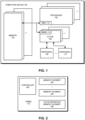
- FIG. 1 presents a block diagram illustrating a computing device 100 in accordance with some embodiments.
- computing device 100 includes processor 102, memory 104, input-output (IO) hub 106, and peripherals 108-110.
- Processor 102 is a functional block that performs computational operations in computing device 100.
- processor 102 includes one or more central processing unit (CPUs) cores, and/or other processing functional blocks.
- CPUs central processing unit
- Memory 104 is a functional block that performs operations for storing and providing data and instructions to other functional blocks in computing device 100.
- Memory 104 comprises memory circuits such as one or more of dynamic random access memory (DRAM), double data rate synchronous DRAM (DDR SDRAM), and/or other types of volatile and/or non-volatile memory circuits that are used for storing instructions and data for the other functional blocks, as well as control circuits for handling accesses of the instructions and data that are stored in the memory circuits.
- DRAM dynamic random access memory
- DDR SDRAM double data rate synchronous DRAM
- memory 104 is the "main memory" in computing device 100.
- processor 102 includes memory management unit 112.
- Memory management unit 112 is a functional block that handles interactions between processor 102 and memory 104, such as by performing virtual address to physical address translations, memory access permission checking, etc.
- IO hub 106 is a functional block that handles interactions between peripherals such as peripherals 108-110 and other functional blocks in computing device 100 (e.g., processor 102, memory 104, etc.). For example, IO hub 106 may receive communications (inputs, events, interrupts, data, etc.) from peripherals 108-110 and forward the communications to other functional blocks in computing device 100. As another example, IO hub 106 may receive communications (commands, outputs, events, interrupts, data, etc.) from processor 102, memory 104, and/or other functional blocks in computing device 100 and forward the communications to corresponding peripherals.
- communications inputs, events, interrupts, data, etc.
- IO hub 106 may receive communications (commands, outputs, events, interrupts, data, etc.) from processor 102, memory 104, and/or other functional blocks in computing device 100 and forward the communications to corresponding peripherals.
- IOMMU 114 is a functional block that handles interactions between peripherals 108-110 and memory 104.
- IOMMU 114 may perform virtual address to physical address translations, memory access protection for memory 104 from peripherals 108-110, peripheral event and interrupt handling, etc.
- IOMMU 114 selects memory elements to be used for performing virtual address to physical address translations, as described in more detail below.
- Peripherals 108-110 include actual/real or virtual devices that interact with other functional blocks in computing device 100.
- peripherals 108-110 include one or more of graphics processing units (GPUs), embedded processors, application specific integrated circuits (ASICs), digital signal processors (DSPs), network processors, disk drives, expansion cards (video cards, sound cards, network interface controllers, etc.), mice/keyboards, microphones, media players, controllers, and/or other peripherals.
- GPUs graphics processing units
- ASICs application specific integrated circuits
- DSPs digital signal processors
- network processors disk drives
- expansion cards video cards, sound cards, network interface controllers, etc.
- mice/keyboards mice/keyboards, microphones, media players, controllers, and/or other peripherals.
- peripherals 108-110 are connected to IO hub through one or more corresponding IO interfaces, such as a low pin count (LPC) interface, a universal serial bus TM (USB) interface, a Peripheral Component Interconnect Express TM (PCIe) bus by PCI-SIG of Beaverton, OR, and/or another expansion bus.
- LPC low pin count
- USB universal serial bus
- PCIe Peripheral Component Interconnect Express TM
- some or all of the peripherals have offload capabilities, and thus are able to offload some computational work from processor 102 and/or other functional blocks in computing device 100.
- one or more of the peripherals 108-110 include memory elements that are used for performing virtual address to physical address translations.
- peripherals 108-110 may include memory elements that are used for holding virtual address to physical address translation information (virtual address to physical address translations, metadata, etc.) for TLBs in the peripherals.
- peripherals 108-110 may perform lookups in the TLBs in the peripherals to translate virtual addresses to physical addresses, if such translation information exists in the TLBs in the peripherals, as an alternative to communicating requests for translations to IOMMU 114.
- communication paths are coupled between the various elements in computing device 100 (processor 102, memory 104, etc.), as shown by arrow-headed lines between the elements.
- the communication paths are used to transmit commands, data, event notifications, interrupts, and/or other information between the elements.
- some or all of the communication paths include functional blocks for handling communication on the communication paths, protocol conversions, etc.
- one or more of the communication paths include buses of different protocols and functional blocks for converting (i.e., bridging) communications between the buses.
- the communication paths include a HyperTransport TM bus by the HyperTransport Consortium of Sunnyvale, CA, a QuickPath Interconnect (QPI) bus, and/or another frontside bus.
- computing device 100 is described with a particular arrangement of functional blocks, some embodiments include a different number and/or arrangement of functional blocks. For example, some embodiments have multiple processors, memories, and/or IO hubs, as shown by the multiple elements and ellipses in FIG. 1 . As another example, in some embodiments, computing device 100 includes a number of cache memories. As yet another example, in some embodiments, computing device 100 includes a different number of peripherals (shown by an ellipsis between peripherals 108-110 in FIG. 1 ). Generally, the described embodiments can use any number or arrangement of functional blocks that can perform the operations herein described.
- computing device 100 includes additional functional blocks or other elements for performing the operations herein described and/or other operations.
- computing device 100 may include power controllers, batteries, media processors, communication mechanisms (e.g., a northbridge, a southbridge, etc.), networking mechanisms, display mechanisms, etc.
- Computing device 100 can be, or can be included in, any electronic device that performs computational operations.
- computing device 100 can be, or can be included in, electronic devices such as desktop computers, laptop computers, wearable computing devices, tablet computers, smart phones, servers, network appliances, toys, audio-visual equipment, home appliances, controllers, etc., and/or combinations thereof.
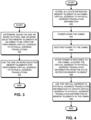
- FIG. 2 presents a block diagram illustrating IOMMU 114 in accordance with some embodiments.
- IOMMU 114 includes controller 200, memory elements 202-204, and state retention memory element 206.
- Controller 200 is a functional block that performs operations for handling interactions between peripherals 108-110 and memory 104. The operations performed by controller 200 can include virtual address to physical address translations, memory access protection for memory 104 from peripherals 108-110, peripheral event and interrupt handling, etc.
- controller 200 includes a microcontroller, an ASIC, an embedded processor, a CPU core, and/or another functional block.
- controller 200 includes general purpose processing circuits that execute program code (e.g., firmware, software routines, etc.) for performing some or all of the operations herein described.
- controller 200 includes purpose-specific circuits (e.g., logic circuits, computational circuits, discrete circuit elements, etc.) that perform some or all of the operations herein described.
- Memory elements 202-204 are functional blocks that include memory circuits to be used for performing virtual address to physical address translations in IOMMU 114.
- memory elements 202-204 include memory circuits that can be used for storing virtual address to physical address translation information and metadata for a translation lookaside buffer (TLB) in IOMMU 114 and/or blocks of page table information (where a "block" of page table information includes multiple page table entries).
- TLB translation lookaside buffer
- Memory elements 202-204 each include volatile and/or non-volatile memory circuits such as static random access memory (SRAM), DRAM (such as DDR SDRAM, etc.), PCM, memristor, magnetoresistive random access memory (MRAM), spin-transfer torque MRAM (STT MRAM), flash memory, and/or other types of memory circuits.
- SRAM static random access memory
- DRAM dynamic random access memory
- PCM PCM
- memristor memristor
- MRAM magnetoresistive random access memory
- STT MRAM spin-transfer torque MRAM
- flash memory and/or other types of memory circuits.
- the memory circuits in each of memory elements 202-204 have one or more different characteristics.
- the characteristics can be characteristics such as speed, capacity (in terms of bytes of storage available), monetary cost, susceptibility to wear-out, average read/write cycles to failure, power consumption, size of circuits (in terms of layout area), hardware interfaces, operating temperature, software support (e.g., compatibility with software programs such as operating systems, drivers, applications, etc.), communication interface bandwidth, and/or other characteristics.
- memory element 202 includes a first type of memory (e.g., SRAM) that is fast, but expensive (in terms of monetary cost, power consumption, and/or other costs), and memory element 204 includes a second type of memory (e.g., PCM) that is slower, but cheaper and thus more scalable (e.g., cheaper to purchase in larger capacities, install, operate, etc. than memory element 202).
- SRAM static random access memory
- PCM second type of memory
- memory elements 202-204 can be used for storing virtual address to physical address translation information for a TLB in IOMMU 114.
- the memory elements 202-204 can be used to store virtual address to physical address translations, metadata associated with virtual address to physical address translations, summary information regarding the virtual address to physical address translations, and/or other information to be stored in or associated with a TLB in IOMMU 114.
- the virtual address to physical address translations include information for determining physical locations (e.g., pages, regions, etc.) in memory 104 to which corresponding virtual addresses map. For example, given some or all of the bits of a virtual address, some or all of the bits of a corresponding physical address may be acquired from memory element 202 and/or 204.
- Metadata includes information associated with, characterizing, controlling, and/or otherwise relevant to one or more corresponding virtual address to physical address translations, such as validity information, age, number and/or type of accesses, access permissions (e.g., read, read/write, access privilege level, etc.), page size indicators, dirty indicators (e.g., indicating when data for a corresponding page has been modified), and/or other information.
- validity information e.g., age, number and/or type of accesses, access permissions (e.g., read, read/write, access privilege level, etc.), page size indicators, dirty indicators (e.g., indicating when data for a corresponding page has been modified), and/or other information.
- the summary information includes information associated with, characterizing, controlling, and/or otherwise relevant to the virtual address to physical address translations in the TLB, the accesses of the TLB, etc., such as a record of pages or addresses that have been accessed, pages or addresses with particular access types, pages or addresses with specified characteristics, identifications of peripherals that are accessing one or more addresses and/or pages, etc.
- controller 200 can perform TLB operations using the information stored in the memory element.
- controller 200 can perform operations such as virtual address to physical address translation, metadata acquisition, page permission checking, TLB updates, summary data acquisition, etc.
- controller 200 can store virtual address to physical address translation information for the TLB in the memory element in such a way that the above-described TLB operations can be performed.
- the memory element may be logically divided into a set of TLB entries, each TLB entry including a corresponding number of bits (e.g., 256 bits, 96 bits, etc.), with portions of the bits used for storing virtual address to physical address translation information, metadata, etc.
- TLB entries each TLB entry including a corresponding number of bits (e.g., 256 bits, 96 bits, etc.), with portions of the bits used for storing virtual address to physical address translation information, metadata, etc.
- the memory element is arranged (or the memory elements are arranged) with two or more hierarchical lookup structures that can be used for lookups of virtual address to physical address translations in the TLB.
- the memory element (or memory elements) may be used to store a directory, a Bloom filter, etc. that can be used to perform fast initial lookups to determine if TLB information is not present in the TLB in order to avoid a full lookup when possible.
- controller 200 can select one or more memory elements from memory elements 202-204 to be used to store the virtual address to physical address translation information for the TLB in IOMMU 114. More specifically, based on one or more factors, controller 200 determines that one or more memory elements are to be used to store virtual address to physical address translation information for the TLB. Generally, the factors include factors associated with, dependent on, or otherwise relevant to the performance of virtual address to physical address translations in IOMMU 114 and/or peripherals 108-110 (and, more generally, the operation of computing device 100). (Examples of factors are described below.) Controller 200 then uses the determined one or more memory elements for storing virtual address to physical address translation information for the TLB.
- each of the one or more memory elements may be used to store a corresponding "portion" of the virtual address to physical address translation information for the TLB, such as storing corresponding subsets of a set of virtual address to physical address translation information for the TLB.
- the one or more selected memory elements may store a given fraction of virtual address to physical address translation information (half, etc.), virtual address to physical address translation information associated with certain peripherals, virtual address to physical address translation information for particular virtual address ranges, etc.
- controller 200 after controller 200 determines the one or more memory elements of memory elements 202-204 to be used to store virtual address to physical address translation information, controller 200 powers up, transitions between power states, and/or otherwise makes the one or more memory elements available.
- a memory element may be disabled (e.g., powered down, in a low power state, etc.) and therefore transitioned to a full power state, such as by setting a supply voltage for the memory element to a level at which information can be retained in the memory element, by activating a controlling clock for the memory element, by activating an interface functional block for the memory element, etc.
- controller 200 determines that a particular memory element of memory elements 202-204 is not to be used to store virtual address to physical address translation information for the TLB, the particular memory element is disabled (e.g., transitioned to or maintained powered off, in a low power state, etc.) or made available for other uses.
- memory elements 202-204 may be used for storing other information. For example, a portion or region of one or more of memory elements 202-204 (e.g., a given number of bytes starting from a specified location in the memory element) may be allocated, reserved, etc. for storing virtual address to physical address translation for the TLB, and other portion(s) or region(s) of the memory element may be allocated for other uses.
- a portion or region of one or more of memory elements 202-204 e.g., a given number of bytes starting from a specified location in the memory element
- one or more memory elements of memory elements 202-204 can be used to store for blocks of page table information.
- the memory elements can store portions, sections, etc. of the page table that include multiple page table entries (and possibly a large number of page table entries) with corresponding virtual address to physical address translation information, metadata, etc.
- the blocks of page table information that are stored in the memory elements are similarly arranged to page table information that is stored in memory 104 (e.g., include similar information that is similarly organized).
- page table walks can be performed at least partially using the blocks of page table information stored in memory elements.
- computing device 100 i.e., an entity such as controller 200 or processor 102 can monitor page table accesses and recognize that IOMMU 114 and/or one or more peripherals have accessed given blocks of the page table and/or that the accesses conform to one or more policies (e.g., number of accesses, number of peripherals accessing, etc.).
- Computing device 100 can then move the given blocks of the page table from memory 104 to one or more memory elements among memory elements 202-204 that are available for use for storing for blocks of page table entries in IOMMU 114.
- the block of the page table can be removed or copied from memory 104 and stored in the one or more memory elements.
- entities in computing device 100 that are to walk the blocks of the page table stored in the one or more memory elements acquire the blocks of the page table from the memory elements and search them as described above.
- memory elements 202-204 may appear, when available to store blocks of page table information, as a portion of an overall memory in computing device 100.
- IOMMU 114 and memory elements 202-204 may appear as a node in a non-uniform memory access (NUMA) system.
- NUMA non-uniform memory access
- State retention memory element 206 is a functional block that includes non-volatile memory circuits (e.g., flash, etc.) that are used for preserving information for performing virtual address to physical address translations when IOMMU 114 is powered down (e.g., when IOMMU 114 is in a low-power mode or powered off).
- state retention memory element 206 may be used to store copies of virtual address to physical address translation information from the TLB and/or blocks of page table information.
- information from state retention memory element 206 may be acquired, e.g., during or after a power-up operation for IOMMU 114, and used to update some or all of the virtual address to physical address translation information in the TLB and/or blocks of page table information in the IOMMU.
- the virtual address to physical address translation information is preserved in state retention memory element 206 (i.e., stored therein) as part of a sequence for powering down IOMMU 114. For example, before powering down IOMMU 114, some or all virtual address to physical address translation information for the TLB and/or blocks of page table information in the IOMMU may be copied into state retention memory element 206. In some embodiments, state retention memory element 206 is dynamically updated as virtual address to physical address translation information is stored in the TLB and/or blocks of page table information is stored in the IOMMU.
- the validity of the information stored in state retention memory element 206 is verified before being used for updates, such as by verifying that the information for performing virtual address to physical address translations and/or blocks of page table information remains current and accurate. For example, controller 200 may determine that the mappings between virtual addresses and physical addresses have not changed since the information was stored in state retention memory element 206.
- IOMMU 114 is shown with two memory elements (i.e., memory elements 202-204), in some embodiments, IOMMU 114 includes more memory elements (as shown by the ellipsis in FIG. 2 ). In these embodiments, the operations described herein (i.e., determining selected memory elements, using the selected memory elements, etc.) can be performed for the corresponding number of memory elements. Generally, the described embodiments can be used with any number of memory elements in IOMMU 114. In addition, although IOMMU 114 is shown with state retention memory element 206, in some embodiments, IOMMU 114 does not include state retention memory element 206.
- a controller determines memory elements that are to be used to perform virtual address to physical address translations in an IOMMU (e.g., IOMMU 114).
- the factors used in making the determination include factors associated with, dependent on, or otherwise relevant to the performance of virtual address to physical address translations in the IOMMU, the peripherals (e.g., peripherals 108-110), and/or the computing device.
- the factors are representative of corresponding aspects of the operation of the IOMMU and/or the memory elements (e.g., memory elements 202-204) in the IOMMU, the operation of the peripherals and the memory elements (if any) in the peripherals, and/or the operation of the computing device.
- the factors may be related to speeds at which virtual address to physical address translations are performed in the IOMMU and/or the peripherals, the locations in the IOMMU and/or the peripherals where virtual address to physical address translations are performed, the types of memory elements in the IOMMU and/or the peripherals, etc.
- the factors include the characteristics of the memory elements available in the IOMMU.
- a first memory element in the IOMMU has characteristics including a small capacity, but faster access times
- a second memory element in the IOMMU has characteristics including a larger capacity, but slower access times.
- the controller may determine the one or more of the memory elements to be used for performing virtual address to physical address translations in the IOMMU based at least in part on the characteristics of the memory elements.
- the controller also uses a current operating condition, mode, and/or state of the IOMMU, the peripherals, and/or the computing device (e.g., number of virtual address to physical address translations performed, number of peripherals, etc.) when making the determination based on the characteristics of the memory elements. For example, the controller may select a faster memory element to be used to perform virtual address to physical address translations when there are likely to be a larger number of virtual address to physical address translation requests. As another example, the controller may select a larger-capacity memory element when there are likely to be a larger number of virtual address to physical address translations stored in the IOMMU.
- a current operating condition, mode, and/or state of the IOMMU, the peripherals, and/or the computing device e.g., number of virtual address to physical address translations performed, number of peripherals, etc.
- Using the characteristics of the memory elements to determine which memory elements are to be used as described can enable the IOMMU to store more virtual address to physical address translation information, perform virtual address to physical address translations more quickly, perform virtual address to physical address translations using more reliable memory circuits, etc., depending on operating conditions, modes, or states.
- the factors include the memory elements available (or not) for performing virtual address to physical address translations in the peripherals (i.e., for "locally" performing virtual address to physical address translations in the peripherals, instead of the peripherals requesting the corresponding virtual address to physical address translations from the IOMMU).
- some or all of the peripherals have local TLBs implemented using different types and/or arrangements of memory circuits, such when a peripheral has one or more TLBs implemented in SRAM, DRAM, PCM, etc.
- the TLBs in the peripherals can be used to cache virtual address to physical address translation information that may or may not also be cached in the TLB in the IOMMU.
- the controller may determine the one or more of the memory elements in the IOMMU to be used to store virtual address to physical address translation for a TLB in the IOMMU based at least in part on the types and arrangements of memory circuits used as TLBs in the peripherals. For example, when a peripheral has a memory element (or a combination of multiple memory elements) of more than a given capacity to be used to hold virtual address to physical address translation information for a TLB in the peripheral, the controller may determine that a smaller-capacity and/or slower memory element is to be used for holding virtual address to physical address translations in a TLB in the IOMMU. This may avoid the situation where the memory element used for holding virtual address to physical address translations in a TLB in the IOMMU is underused and/or is faster than necessary because peripherals are able to perform most of their own virtual address to physical address translations.
- the factors include an amount of duplication of TLB entries in the TLB in the IOMMU.
- the peripherals and processes executed by the peripherals share the TLB in the IOMMU. Because the peripherals and processes can cause the eviction of entries from the TLB in the IOMMU (e.g., after context switches, etc.), it is possible for a peripheral or process to evict TLB entries that are being used by other peripherals or processes. Duplicating TLB entries in the TLB in the IOMMU can help to avoid the eviction of useful TLB entries and the corresponding inefficient operation of the peripherals and/or processes.
- the controller may determine the memory elements to be used to store virtual address to physical address translation for a TLB in the IOMMU based at least in part on the amount of duplication being used for TLB entries. For example, for more than a threshold amount of duplication, the controller may determine a larger-capacity memory element.
- TLB entries (or summary information) in the TLB in the IOMMU include information about the peripherals and/or processes that have accessed TLB entries and/or duplicate TLB entries.
- information such as an amount of sharing of pages between the peripherals, a distribution and/or a priority of processing reliant on particular pages, and/or a nature of the peripherals accessing pages can be used in duplicating TLB entries and/or determining the memory element based on the duplication.
- the factors include a current or estimated future amount of wear on the memory elements in the IOMMU and/or in the peripherals.
- Certain types of memory technology e.g., STT, PCM, etc.
- the controller may determine the memory elements to be used to perform virtual address to physical address translations in the IOMMU based at least in part on an amount of wear, a number and/or type of accesses (e.g., TLB lookups, etc.) being made by peripherals, and/or the presence (or absence) of a TLB in the peripheral. For example, when more than a threshold amount of TLB lookups are made by or projected to be made by one or more peripherals in a TLB in the IOMMU, the controller may select a memory with less susceptibility to wear-out.
- information about the factors is known or otherwise acquired in advance of the determination.
- a particular peripheral may be known by the controller (via a list, table, etc.) to include particular memory elements to be used in performing virtual address to physical address translations (e.g., as a TLB in the peripheral).
- an administrator, designer, or other user may input or otherwise provide the controller (or, more generally, the computing device) with information about the factors.
- the controller may receive reports from the computing device and/or the peripherals about the factors.
- the controller may monitor virtual address to physical address translations and/or other operations to determine the factors, perhaps over a specified time period (e.g., seconds, hours, days, etc.).
- a specified relationship is maintained between the types of memory used for performing virtual address to physical address translations in the IOMMU and in the peripherals. For example, a target of a total of N entries (where N is a particular integer) for holding virtual address to physical address translation information for corresponding TLBs between the peripheral and the IOMMU may be used. As another example, a target or estimate of a number or rate of virtual address to physical address translations that are able to be performed by the peripherals and the IOMMU may be used.
- the factors are generally factors associated with, dependent on, or otherwise relevant to the performance of virtual address to physical address translations in the IOMMU and/or the peripherals.
- One possible purpose, therefore, of using each factor is to enable better decisions to be made regarding which memory elements are to be used (or not) for performing virtual address to physical address translations.
- a controller selects memory elements from among available memory elements in an IOMMU (e.g., IOMMU 114) to be used for performing virtual address to physical address translations.
- FIG. 3 presents a flowchart illustrating a process for selecting memory elements to be used for performing virtual address to physical address translations in accordance with some embodiments. Note that the operations shown in FIG. 3 are presented as a general example of operations performed by some embodiments. The operations performed by other embodiments include different operations or, in unclaimed embodiments, operations that are performed in a different order. Additionally, although certain mechanisms/elements are used in describing the operations (e.g., a controller, etc.), in some unclaimed embodiments, other mechanisms perform the operations and/or the operations are performed on other mechanisms/elements.
- the process shown in FIG. 3 starts when the controller determines, based on one or more factors, one or more selected memory elements from among a set of available memory elements in the IOMMU to be used for performing virtual address to physical address translations (step 300).
- the controller selects memory elements that are to be used for storing virtual address to physical address translation information for a TLB. More specifically, the controller determines which of the memory elements are to be used to store a corresponding portion of the virtual address to physical address translation information for the TLB.
- the one or more factors include factors associated with, dependent on, or otherwise relevant to the performance of virtual address to physical address translations in the IOMMU and/or the peripherals (and, more generally, the operation of the computing device in which the IOMMU is located).
- step 300 is performed as the IOMMU starts up (e.g., is initially powered up, restored from a low power state, etc.).
- the particular memory elements that are to be used for storing virtual address to physical address translation information for the TLB are set at start-up.
- the memory elements do not change after being set at start-up.
- the memory elements may be dynamically changed (i.e., changed, possibly multiple times, as the IOMMU operates).
- the controller periodically checks the memory elements being used for performing virtual address to physical address translations (e.g., every X seconds, as a given event occurs, etc.), and may dynamically change the memory elements used for performing virtual address to physical address translations.
- the controller (or another entity in the computing device) includes a copying mechanism for copying virtual address to physical address translation information from memory element to memory element to enable the changes.
- the controller also selects memory elements that are to be used for storing blocks of page table information.
- memory elements and/or portions of memory elements that are not used for storing virtual address to physical address translation information for the TLB may be used for storing the blocks of page table information.
- a first portion of a memory element e.g., half, a given number of bytes, etc.
- a second portion may be reserved or allocated for storing blocks of page table information.
- the controller uses the one or more selected memory elements to perform virtual address to physical address translations in the IOMMU (step 302). More specifically, the controller uses at least some of the memory elements for performing translations of virtual addresses to physical addresses, to acquire metadata associated with virtual address to physical address translations, and/or for performing other operations that rely on data (possibly including summary data) in the TLB in the IOMMU. For example, the controller can receive a translation request that includes a virtual address from a peripheral (or from a workload executed by the peripheral), can look up a corresponding physical address in the TLB (i.e., in a corresponding memory element), and can return the physical address to the requesting peripheral.
- the controller may also use the memory elements (or portions thereof) that are to be used for storing blocks of page table information for storing blocks of page table information. As described above, this operation includes moving or copying the blocks of page table information from a memory (e.g., memory 104 or elsewhere in computing device 100) into the memory elements and subsequently using the blocks of page table information to perform page table walks, etc.
- a memory e.g., memory 104 or elsewhere in computing device 100
- the controller may power up the memory elements to be used for performing virtual address to physical address translations.
- the memory element when a memory element is not being used for performing virtual address to physical address translations, the memory element is transitioned to, or maintained in, a low power state, such as with a supply voltage reduced (perhaps to zero), a controlling clock frequency reduced (perhaps to zero), etc.
- the controller determines that the memory element is to be used for performing virtual address to physical address translations, the memory element can be transitioned to a powered up state, such as with a supply voltage increased to one of one or more operating voltages, a controlling clock frequency increased to one of one or more operating frequencies, etc.
- FIG. 4 presents a flowchart illustrating a process for using a state retention memory element (e.g., state retention memory element 206) to update virtual address to physical address translation information in a memory element in an IOMMU (e.g., IOMMU 114) in accordance with some embodiments.
- a state retention memory element e.g., state retention memory element 206
- IOMMU e.g., IOMMU 114
- FIG. 4 presents a flowchart illustrating a process for using a state retention memory element (e.g., state retention memory element 206) to update virtual address to physical address translation information in a memory element in an IOMMU (e.g., IOMMU 114) in accordance with some embodiments.
- the operations shown in FIG. 4 are presented as a general example of operations performed by some embodiments. The operations performed by other embodiments include different operations and/or operations that are performed in a different order.
- certain mechanisms/elements are used in describing the operations (e.g., a controller,
- a controller e.g., controller 200 stores, in a state retention memory element, information to be used for performing virtual address to physical address translations (step 400).
- the controller can store, in the state retention memory element, virtual address to physical address translation information copied from a TLB in the IOMMU and/or otherwise based on information in the TLB.
- the controller can store, in the state retention memory element, blocks of page table information copied from one or more of the memory elements.
- the controller can store the information in the state retention memory element as information is added to, updated, or otherwise changed in the memory element(s) (e.g., memory elements 202-204) in the IOMMU and/or can be performed as part of a power-down operation for the IOMMU (e.g., as the IOMMU is transitioned from a full power state to a low power state).
- the memory element(s) e.g., memory elements 202-204
- the controller can store the information in the state retention memory element as information is added to, updated, or otherwise changed in the memory element(s) (e.g., memory elements 202-204) in the IOMMU and/or can be performed as part of a power-down operation for the IOMMU (e.g., as the IOMMU is transitioned from a full power state to a low power state).
- the IOMMU is then powered down (step 402).
- the IOMMU may be transitioned to a low power state to conserve power.
- the memory elements in which virtual address to physical address translation information is stored may be maintained in an operating state (i.e., at corresponding voltages, currents, clock frequencies, etc.) insufficient to retain data in the memory elements.
- the virtual address to physical address translation information is preserved while the IOMMU is in the low power state.
- the IOMMU may be transitioned from the low power state to a full power state.
- the memory elements in the IOMMU are maintained in an operating state sufficient to retain data in the memory elements. Due to the earlier transition through the low power state, however, the memory elements may no longer hold virtual address to physical address translation information (i.e., the information may have been lost when the memory elements were powered down).
- the controller therefore acquires, from the state retention memory element, the preserved virtual address to physical address translation information (step 406).
- the controller uses the virtual address to physical address translation information to update some or all of the virtual address to physical address translation information in the memory elements (step 408).
- the controller may use the virtual address to physical address translation information acquired from state retention memory element to update the TLB in the IOMMU (e.g., fill one or more entries in the TLB, etc.).
- the controller may copy blocks of page table information from the state retention memory element to one or more memory elements in the IOMMU.
- the controller before updating the memory elements as in step 408, the controller verifies the validity of the virtual address to physical address translation information.
- this operation includes determining, based at least in part on an operating environment of IOMMU, that the virtual address to physical address translation information is still current, i.e., has not changed since the IOMMU was powered down.
- the controller can inquire with one or more other entities in the computing device (e.g., processor 102, etc.) to determine if virtual address to physical address translation mappings and/or blocks of page table information changed while IOMMU was powered down.
- a computing device uses code and/or data stored on a non-transitory computer-readable storage medium to perform some or all of the operations herein described. More specifically, the computing device reads the code and/or data from the computer-readable storage medium and executes the code and/or uses the data when performing the described operations.
- a computer-readable storage medium can be any device or medium or combination thereof that stores code and/or data for use by a computing device.
- the computer-readable storage medium can include, but is not limited to, volatile memory or non-volatile memory, including flash memory, random access memory (SRAM, DRAM, DDR, DDR2/DDR3/DDR4 SDRAM, etc.), read-only memory (ROM), and/or magnetic or optical storage mediums (e.g., disk drives, magnetic tape, CDs, DVDs).
- one or more hardware modules are configured to perform the operations herein described.
- the hardware modules can comprise, but are not limited to, one or more processors/cores/central processing units (CPUs), application-specific integrated circuit (ASIC) chips, field-programmable gate arrays (FPGAs), controllers, memory management units (e.g., IOMMUs, MMUs, etc.), compute units, embedded processors, graphics processors (GPUs)/graphics cores, pipelines, Accelerated Processing Units (APUs), and/or other programmable-logic devices.
- the hardware modules include one or more general-purpose circuits that are configured by executing instructions (program code, firmware, etc.) to perform the operations.
- a data structure representative of some or all of the structures and mechanisms described herein is stored on a computer-readable storage medium that includes a database or other data structure which can be read by a computing device and used, directly or indirectly, to fabricate hardware comprising the structures and mechanisms.
- the data structure may be a behavioral-level description or register-transfer level (RTL) description of the hardware functionality in a high level design language (HDL) such as Verilog or VHDL.
- HDL high level design language
- the description may be read by a synthesis tool which may synthesize the description to produce a netlist comprising a list of gates/circuit elements from a synthesis library that represent the functionality of the hardware comprising the above-described structures and mechanisms.
- the netlist may then be placed and routed to produce a data set describing geometric shapes to be applied to masks.
- the masks may then be used in various semiconductor fabrication steps to produce a semiconductor circuit or circuits corresponding to the above-described structures and mechanisms.
- the database on the computer accessible storage medium may be the netlist (with or without the synthesis library) or the data set, as desired, or Graphic Data System (GDS) II data.
- GDS Graphic Data System
- circuits in a functional block include circuits that execute program code (e.g., microcode, firmware, applications, etc.) to perform the described operations.
- program code e.g., microcode, firmware, applications, etc.
Landscapes
- Engineering & Computer Science (AREA)
- Theoretical Computer Science (AREA)
- Physics & Mathematics (AREA)
- General Engineering & Computer Science (AREA)
- General Physics & Mathematics (AREA)
- Human Computer Interaction (AREA)
- Memory System Of A Hierarchy Structure (AREA)
- Memory System (AREA)
- Power Sources (AREA)
Claims (16)
- Eingabe-Ausgabe-Speicherverwaltungseinheit, IOMMU, (114), umfassend:eine Vielzahl von Speicherelementen (202, 204), wobei jedes Speicherelement unter der Vielzahl von Speicherelementen entweder zum Durchführen von Übersetzungen von virtuellen Adressen in physische Adressen oder zum Durchführen von anderen Operationen als Übersetzungen von virtuellen Adressen in physische Adressen auswählbar ist; undeine Steuerung (200), wobei die Steuerung konfiguriert ist zum:Auswählen, unter Verwendung eines oder mehrerer Faktoren, eines oder mehrerer ausgewählter Speicherelemente aus der Vielzahl von Speicherelementen zum Durchführen von Übersetzungen von virtuellen Adressen in physische Adressen in der IOMMU;Durchführen der Übersetzungen von virtuellen Adressen in physische Adressen unter Verwendung des einen oder der mehreren ausgewählten Speicherelemente; undVerwenden nicht ausgewählter Speicherelemente aus der Vielzahl von Speicherelementen, die nicht zum Durchführen von Übersetzungen von virtuellen Adressen in physische Adressen ausgewählt sind, für andere Operationen als dem Durchführen von Übersetzungen von virtuellen Adressen in physische Adressen, oder Deaktivieren der nicht ausgewählten Speicherelemente.
- IOMMU nach Anspruch 1, wobei ein oder mehrere Peripheriegeräte, die mit der IOMMU gekoppelt sind, periphere Speicherelemente umfassen, wobei jedes periphere Speicherelement von einem entsprechenden Peripheriegerät verwendet werden soll, um Informationen zur Übersetzung von virtuellen Adressen in physische Adressen zu speichern, wobei die Informationen zur Übersetzung von virtuellen Adressen in physische Adressen von dem entsprechenden Peripheriegerät zum lokalen Durchführen von Übersetzungen von virtuellen Adressen in physische Adressen verwendet werden sollen, und wobei:der eine oder die mehreren Faktoren Typen der peripheren Speicherelemente in dem einen oder den mehreren Peripheriegeräten umfassen; unddas Auswählen des einen oder der mehreren ausgewählten Speicherelemente Auswählen mindestens eines Typs des ausgewählten Speicherelements, das zum Durchführen von Übersetzungen von virtuellen Adressen in physische Adressen in der IOMMU verwendet werden soll, unter Verwendung der Typen der peripheren Speicherelemente in dem einen oder den mehreren Peripheriegeräten umfasst.
- IOMMU nach Anspruch 1, wobei:der eine oder die mehreren Faktoren eine Duplizierungsmenge der Informationen zur Übersetzung von virtuellen Adressen in physische Adressen umfassen; unddas Auswählen des einen oder der mehreren ausgewählten Speicherelemente Auswählen mindestens eines Typs des ausgewählten Speicherelements, das zum Durchführen von Übersetzungen von virtuellen Adressen in physische Adressen in der IOMMU verwendet werden soll, unter Verwendung der Duplizierungsmenge umfasst.
- IOMMU nach Anspruch 1, wobei:der eine oder die mehreren Faktoren Abnutzungsmengen an einigen oder allen der Vielzahl von Speicherelementen umfassen; unddas Auswählen des einen oder der mehreren ausgewählten Speicherelemente Auswählen mindestens eines Typs des ausgewählten Speicherelements, das zum Durchführen von Übersetzungen von virtuellen Adressen in physische Adressen in der IOMMU verwendet werden soll, unter Verwendung der Abnutzungsmengen umfasst.
- IOMMU nach Anspruch 1, wobei das Verwenden des einen oder der mehreren ausgewählten Speicherelemente umfasst:
Speichern, in mindestens einem des einen oder der mehreren ausgewählten Speicherelemente, der Informationen zur Übersetzung von virtuellen Adressen in physische Adressen für einen Übersetzungspuffer (Translation Lookaside Buffer) der IOMMU. - IOMMU nach Anspruch 1, wobei das Verwenden des einen oder der mehreren ausgewählten Speicherelemente umfasst:
Speichern, in mindestens einem des einen oder der mehreren ausgewählten Speicherelemente, von Kopien eines oder mehrerer Blöcke von Seitentabelleninformationen, wobei jeder Block von Seitentabelleninformationen eine Vielzahl von entsprechenden Seitentabelleneinträgen mit Informationen zur Übersetzung von virtuellen Adressen in physische Adressen einschließt. - IOMMU nach Anspruch 1, wobei das Verwenden des einen oder der mehreren ausgewählten Speicherelemente umfasst:
Veranlassen des Übergangs von Speicherelementen des einen oder der mehreren ausgewählten Speicherelemente, die sich in einem Niederleistungszustand befinden, von dem Niederleistungszustand in einen eingeschalteten Zustand. - IOMMU nach Anspruch 1, ferner umfassend:ein nichtflüchtiges Speicherelement, wobei das nichtflüchtige Speicherelement konfiguriert ist, Informationen zu erhalten, die zum Durchführen von Übersetzungen von virtuellen Adressen in physische Adressen in der IOMMU verwendet werden sollen, während die IOMMU abgeschaltet ist;wobei, nachdem die IOMMU eingeschaltet ist, die Steuerung ferner konfiguriert ist zum:Erfassen der Informationen von dem nichtflüchtigen Speicherelement; undAktualisieren einiger oder aller des einen oder der mehreren ausgewählten Speicherelemente unter Verwendung der Informationen.
- IOMMU nach Anspruch 8, wobei die Steuerung ferner konfiguriert ist zum, vor dem Aktualisieren der einigen oder aller des einen oder der mehreren ausgewählten Speicherelemente:
Verifizieren einer Gültigkeit der Informationen zumindest teilweise basierend auf einer Betriebsumgebung der IOMMU. - Verfahren zum Betreiben einer Eingabe-Ausgabe-Speicherverwaltungseinheit, IOMMU, die eine Vielzahl von Speicherelementen umfasst, wobei jedes Speicherelement unter der Vielzahl von Speicherelementen entweder zum Durchführen von Übersetzungen von virtuellen Adressen in physische Adressen oder zum Durchführen von anderen Operationen als Übersetzungen von virtuellen Adressen in physische Adressen auswählbar ist, wobei das Verfahren umfasst:Auswählen, unter Verwendung eines oder mehrerer Faktoren, eines oder mehrerer ausgewählter Speicherelemente aus der Vielzahl von Speicherelementen zum Durchführen von Übersetzungen von virtuellen Adressen in physische Adressen in der IOMMU (300);Durchführen der Übersetzungen von virtuellen Adressen in physische Adressen unter Verwendung des einen oder der mehreren ausgewählten Speicherelemente (302); undVerwenden nicht ausgewählter Speicherelemente aus der Vielzahl von Speicherelementen, die nicht zum Durchführen von Übersetzungen von virtuellen Adressen in physische Adressen ausgewählt sind, für andere Operationen als dem Durchführen von Übersetzungen von virtuellen Adressen in physische Adressen, oder Deaktivieren der nicht ausgewählten Speicherelemente.
- Verfahren nach Anspruch 10, wobei ein oder mehrere Peripheriegeräte, die mit der IOMMU gekoppelt sind, periphere Speicherelemente umfassen, wobei jedes periphere Speicherelement von einem entsprechenden Peripheriegerät verwendet werden soll, um Informationen zur Übersetzung von virtuellen Adressen in physische Adressen zu speichern, wobei die Informationen zur Übersetzung von virtuellen Adressen in physische Adressen von dem entsprechenden Peripheriegerät zum lokalen Durchführen von Übersetzungen von virtuellen Adressen in physische Adressen verwendet werden sollen, und wobei:der eine oder die mehreren Faktoren Typen der peripheren Speicherelemente in dem einen oder den mehreren Peripheriegeräten umfassen; unddas Auswählen des einen oder der mehreren ausgewählten Speicherelemente Auswählen mindestens eines Typs des ausgewählten Speicherelements, das zum Durchführen von Übersetzungen von virtuellen Adressen in physische Adressen in der IOMMU verwendet werden soll, unter Verwendung der Typen der peripheren Speicherelemente in dem einen oder den mehreren Peripheriegeräten umfasst.
- Verfahren nach Anspruch 10, wobei:der eine oder die mehreren Faktoren eine Duplizierungsmenge der Informationen zur Übersetzung von virtuellen Adressen in physische Adressen umfassen; unddas Auswählen des einen oder der mehreren ausgewählten Speicherelemente Auswählen mindestens eines Typs des ausgewählten Speicherelements, das zum Durchführen von Übersetzungen von virtuellen Adressen in physische Adressen in der IOMMU verwendet werden soll, unter Verwendung der Duplizierungsmenge umfasst.
- Verfahren nach Anspruch 10, wobeider eine oder die mehreren Faktoren Abnutzungsmengen an einigen oder allen der Vielzahl von Speicherelementen umfassen; unddas Auswählen des einen oder der mehreren ausgewählten Speicherelemente Auswählen mindestens eines Typs des ausgewählten Speicherelements, das zum Durchführen von Übersetzungen von virtuellen Adressen in physische Adressen in der IOMMU verwendet werden soll, unter Verwendung der Abnutzungsmengen umfasst.
- Verfahren nach Anspruch 10, wobei das Verwenden des einen oder der mehreren ausgewählten Speicherelemente umfasst:
Speichern, in mindestens einem des einen oder der mehreren ausgewählten Speicherelemente, der Informationen zur Übersetzung von virtuellen Adressen in physische Adressen für einen Übersetzungspuffer (Translation Lookaside Buffer) der IOMMU. - Verfahren nach Anspruch 10, wobei das Verwenden des einen oder der mehreren ausgewählten Speicherelemente umfasst:
Speichern, in mindestens einem des einen oder der mehreren ausgewählten Speicherelemente, eines oder mehrerer Blöcke von Seitentabelleninformationen, wobei jeder Block von Seitentabelleninformationen eine Vielzahl von entsprechenden Seitentabelleneinträgen mit Informationen zur Übersetzung von virtuellen Adressen in physische Adressen einschließt. - IOMMU nach Anspruch 1, wobei das Deaktivieren der nicht ausgewählten Speicherelemente Veranlassen des Übergangs der nicht ausgewählten Speicherelemente in einen abgeschalteten Zustand oder Niederleistungszustand beinhaltet.
Applications Claiming Priority (2)
| Application Number | Priority Date | Filing Date | Title |
|---|---|---|---|
| US15/167,038 US10678702B2 (en) | 2016-05-27 | 2016-05-27 | Using multiple memory elements in an input-output memory management unit for performing virtual address to physical address translations |
| PCT/US2017/033514 WO2017205204A1 (en) | 2016-05-27 | 2017-05-19 | Using multiple memory elements in an input-output memory management unit for performing virtual address to physical address translations |
Publications (3)
| Publication Number | Publication Date |
|---|---|
| EP3433742A1 EP3433742A1 (de) | 2019-01-30 |
| EP3433742A4 EP3433742A4 (de) | 2019-11-20 |
| EP3433742B1 true EP3433742B1 (de) | 2023-05-03 |
Family
ID=60411875
Family Applications (1)
| Application Number | Title | Priority Date | Filing Date |
|---|---|---|---|
| EP17803328.8A Active EP3433742B1 (de) | 2016-05-27 | 2017-05-19 | Verwendung mehrerer speicherelemente in einer eingangs-/speicherverwaltungseinheit für übersetzungen von virtuellen adressen in physische adressen |
Country Status (6)
| Country | Link |
|---|---|
| US (2) | US10678702B2 (de) |
| EP (1) | EP3433742B1 (de) |
| JP (1) | JP7232644B2 (de) |
| KR (1) | KR102423713B1 (de) |
| CN (1) | CN109154907B (de) |
| WO (1) | WO2017205204A1 (de) |
Families Citing this family (13)
| Publication number | Priority date | Publication date | Assignee | Title |
|---|---|---|---|---|
| US11762764B1 (en) | 2015-12-02 | 2023-09-19 | Pure Storage, Inc. | Writing data in a storage system that includes a first type of storage device and a second type of storage device |
| WO2018057039A1 (en) * | 2016-09-26 | 2018-03-29 | Hewlett-Packard Development Company, L. | Update memory management information to boot an electronic device from a reduced power mode |
| KR102702995B1 (ko) * | 2016-12-01 | 2024-09-04 | 삼성전자주식회사 | 이종의 메모리 소자들을 포함하는 집적회로 소자 및 그 제조 방법 |
| US10956332B2 (en) * | 2017-11-01 | 2021-03-23 | Advanced Micro Devices, Inc. | Retaining cache entries of a processor core during a powered-down state |
| WO2019132976A1 (en) | 2017-12-29 | 2019-07-04 | Intel Corporation | Unified address translation for virtualization of input/output devices |
| US11573904B2 (en) * | 2018-10-12 | 2023-02-07 | Vmware, Inc. | Transparent self-replicating page tables in computing systems |
| US11320995B2 (en) * | 2018-10-31 | 2022-05-03 | Western Digital Technologies, Inc. | Transferring computational operations to controllers of data storage devices |
| US11003588B2 (en) * | 2019-08-22 | 2021-05-11 | Advanced Micro Devices, Inc. | Networked input/output memory management unit |
| KR102355374B1 (ko) | 2019-09-27 | 2022-01-25 | 에스케이하이닉스 주식회사 | 이종 메모리를 이용하여 메모리 주소 변환 테이블을 관리하는 메모리 관리 유닛 및 이의 메모리 주소 관리 방법 |
| US11409446B2 (en) | 2020-11-11 | 2022-08-09 | Micro Technology, Inc. | Media management on power-up |
| CN112527698B (zh) * | 2020-12-04 | 2024-03-22 | 联想(北京)有限公司 | 一种处理方法、装置及设备 |
| CN114546896A (zh) * | 2022-02-22 | 2022-05-27 | 杭州中天微系统有限公司 | 系统内存管理单元、读写请求处理方法、电子设备和片上系统 |
| CN115658565B (zh) * | 2022-11-09 | 2025-09-30 | 海光信息技术股份有限公司 | 一种基于协处理器的内存操作方法、装置及电子设备 |
Citations (1)
| Publication number | Priority date | Publication date | Assignee | Title |
|---|---|---|---|---|
| EP2758884B1 (de) * | 2011-09-25 | 2018-07-25 | Advanced Micro Devices, Inc. | Ein-/ausgabe-speicherverwaltungseinheit mit schutzmodus zur verhinderung eines speicherzugriffs durch ein-/ausgabevorrichtungen |
Family Cites Families (36)
| Publication number | Priority date | Publication date | Assignee | Title |
|---|---|---|---|---|
| US6370632B1 (en) | 1997-11-18 | 2002-04-09 | Intrinsity, Inc. | Method and apparatus that enforces a regional memory model in hierarchical memory systems |
| KR20020026814A (ko) * | 2000-10-02 | 2002-04-12 | 포만 제프리 엘 | 컴퓨터 시스템의 중지 및 재개 동작을 위한 방법 및 장치 |
| US6963963B2 (en) * | 2003-03-25 | 2005-11-08 | Freescale Semiconductor, Inc. | Multiprocessor system having a shared main memory accessible by all processor units |
| JP3806131B2 (ja) | 2003-05-21 | 2006-08-09 | 富士通株式会社 | アドレス変換バッファの電力制御方法及びその装置 |
| US20050080934A1 (en) | 2003-09-30 | 2005-04-14 | Cota-Robles Erik C. | Invalidating translation lookaside buffer entries in a virtual machine (VM) system |
| US7222214B2 (en) | 2004-03-25 | 2007-05-22 | Lucent Technologies Inc. | Device-level address translation within a programmable non-volatile memory device |
| US7543131B2 (en) * | 2005-08-12 | 2009-06-02 | Advanced Micro Devices, Inc. | Controlling an I/O MMU |
| US7917723B2 (en) * | 2005-12-01 | 2011-03-29 | Microsoft Corporation | Address translation table synchronization |
| US7613898B2 (en) * | 2006-01-17 | 2009-11-03 | Globalfoundries Inc. | Virtualizing an IOMMU |
| US7739474B2 (en) * | 2006-02-07 | 2010-06-15 | International Business Machines Corporation | Method and system for unifying memory access for CPU and IO operations |
| US7426627B2 (en) * | 2006-03-10 | 2008-09-16 | Microsoft Corporation | Selective address translation for a resource such as a hardware device |
| US7813210B2 (en) | 2007-08-16 | 2010-10-12 | Unity Semiconductor Corporation | Multiple-type memory |
| US8601234B2 (en) | 2007-11-07 | 2013-12-03 | Qualcomm Incorporated | Configurable translation lookaside buffer |
| US8639943B2 (en) | 2008-06-16 | 2014-01-28 | Qualcomm Incorporated | Methods and systems for checking run-time integrity of secure code cross-reference to related applications |
| US8291192B2 (en) | 2008-10-30 | 2012-10-16 | Kyocera Document Solutions, Inc. | Memory management system |
| US9569349B2 (en) | 2008-12-19 | 2017-02-14 | Ati Technologies Ulc | Method and apparatus for reallocating memory content |
| US8832354B2 (en) * | 2009-03-25 | 2014-09-09 | Apple Inc. | Use of host system resources by memory controller |
| US8386747B2 (en) * | 2009-06-11 | 2013-02-26 | Freescale Semiconductor, Inc. | Processor and method for dynamic and selective alteration of address translation |
| US8244978B2 (en) | 2010-02-17 | 2012-08-14 | Advanced Micro Devices, Inc. | IOMMU architected TLB support |
| JP2011203937A (ja) * | 2010-03-25 | 2011-10-13 | Nec Corp | Dmaセキュリティチェック回路及びdmaセキュリティチェック方法 |
| US8086765B2 (en) * | 2010-04-29 | 2011-12-27 | Hewlett-Packard Development Company, L.P. | Direct I/O device access by a virtual machine with memory managed using memory disaggregation |
| US8239619B2 (en) * | 2010-07-09 | 2012-08-07 | Macronix International Co., Ltd. | Method and apparatus for high-speed byte-access in block-based flash memory |
| US8635385B2 (en) * | 2010-07-16 | 2014-01-21 | Advanced Micro Devices, Inc. | Mechanism to handle peripheral page faults |
| US8856475B1 (en) * | 2010-08-01 | 2014-10-07 | Apple Inc. | Efficient selection of memory blocks for compaction |
| US9355031B2 (en) * | 2011-04-21 | 2016-05-31 | International Business Machines Corporation | Techniques for mapping device addresses to physical memory addresses |
| US8719464B2 (en) | 2011-11-30 | 2014-05-06 | Advanced Micro Device, Inc. | Efficient memory and resource management |
| US20130262736A1 (en) | 2012-03-30 | 2013-10-03 | Ati Technologies Ulc | Memory types for caching policies |
| US9058268B1 (en) * | 2012-09-20 | 2015-06-16 | Matrox Graphics Inc. | Apparatus, system and method for memory management |
| US9086950B2 (en) | 2012-09-26 | 2015-07-21 | Avaya Inc. | Method for heap management |
| US10310973B2 (en) * | 2012-10-25 | 2019-06-04 | Nvidia Corporation | Efficient memory virtualization in multi-threaded processing units |
| KR101463536B1 (ko) | 2012-11-30 | 2014-11-19 | 성균관대학교산학협력단 | 메모리 관리 장치, 방법 및 시스템 |
| KR102014083B1 (ko) * | 2012-12-31 | 2019-08-27 | 삼성전자주식회사 | 단말기의 메모리 관리방법 및 장치 |
| US9342403B2 (en) | 2014-03-28 | 2016-05-17 | Intel Corporation | Method and apparatus for managing a spin transfer torque memory |
| US10282100B2 (en) * | 2014-08-19 | 2019-05-07 | Samsung Electronics Co., Ltd. | Data management scheme in virtualized hyperscale environments |
| US10275171B2 (en) | 2014-09-16 | 2019-04-30 | Kove Ip, Llc | Paging of external memory |
| US9626300B2 (en) * | 2015-07-27 | 2017-04-18 | Google Inc. | Address caching in switches |
-
2016
- 2016-05-27 US US15/167,038 patent/US10678702B2/en active Active
-
2017
- 2017-05-19 EP EP17803328.8A patent/EP3433742B1/de active Active
- 2017-05-19 CN CN201780029508.6A patent/CN109154907B/zh active Active
- 2017-05-19 JP JP2018555752A patent/JP7232644B2/ja active Active
- 2017-05-19 WO PCT/US2017/033514 patent/WO2017205204A1/en not_active Ceased
- 2017-05-19 KR KR1020187030779A patent/KR102423713B1/ko active Active
-
2020
- 2020-06-05 US US16/894,473 patent/US11341059B2/en active Active
Patent Citations (1)
| Publication number | Priority date | Publication date | Assignee | Title |
|---|---|---|---|---|
| EP2758884B1 (de) * | 2011-09-25 | 2018-07-25 | Advanced Micro Devices, Inc. | Ein-/ausgabe-speicherverwaltungseinheit mit schutzmodus zur verhinderung eines speicherzugriffs durch ein-/ausgabevorrichtungen |
Also Published As
| Publication number | Publication date |
|---|---|
| EP3433742A4 (de) | 2019-11-20 |
| JP2019521409A (ja) | 2019-07-25 |
| US20170344490A1 (en) | 2017-11-30 |
| EP3433742A1 (de) | 2019-01-30 |
| CN109154907B (zh) | 2023-09-15 |
| US10678702B2 (en) | 2020-06-09 |
| US11341059B2 (en) | 2022-05-24 |
| WO2017205204A1 (en) | 2017-11-30 |
| US20200301849A1 (en) | 2020-09-24 |
| KR20190002473A (ko) | 2019-01-08 |
| KR102423713B1 (ko) | 2022-07-21 |
| CN109154907A (zh) | 2019-01-04 |
| JP7232644B2 (ja) | 2023-03-03 |
Similar Documents
| Publication | Publication Date | Title |
|---|---|---|
| US11341059B2 (en) | Using multiple memory elements in an input-output memory management unit for performing virtual address to physical address translations | |
| CN103119570B (zh) | 用于实现微页表的装置、方法和系统 | |
| US9852069B2 (en) | RAM disk using non-volatile random access memory | |
| US10019377B2 (en) | Managing cache coherence using information in a page table | |
| JP5348429B2 (ja) | 持続性メモリのためのキャッシュコヒーレンスプロトコル | |
| CN107608910B (zh) | 用于实现具有不同操作模式的多级存储器分级结构的设备和方法 | |
| US9811456B2 (en) | Reliable wear-leveling for non-volatile memory and method therefor | |
| US10503655B2 (en) | Data block sizing for channels in a multi-channel high-bandwidth memory | |
| KR102933847B1 (ko) | 게스트 운영체제에 입출력 메모리 관리 유닛 레지스터 복사본을 제공하는 방법 | |
| EP3553665B1 (de) | Zugangsverfahren, -vorrichtung und -system für nichtflüchtigen speicher | |
| KR20230162100A (ko) | 계층형 메모리 관리를 오프로드하기 위한 방법들 및 장치들 | |
| US10324760B2 (en) | Leases for blocks of memory in a multi-level memory | |
| WO2014052383A1 (en) | System cache with data pending state | |
| EP4272081B1 (de) | Migrieren von speicherseiten, die durch eingabe-ausgabe-einrichtungen zugänglich sind | |
| CN110597742A (zh) | 用于具有持久系统存储器的计算机系统的改进存储模型 | |
| CN113272789B (zh) | 由输入输出存储器管理单元进行的域标识符和装置标识符转译 | |
| US11561906B2 (en) | Rinsing cache lines from a common memory page to memory | |
| US20230359556A1 (en) | Performing Operations for Handling Data using Processor in Memory Circuitry in a High Bandwidth Memory | |
| US12086447B2 (en) | Systems and methods for reducing instruction code memory footprint for multiple processes executed at a coprocessor |
Legal Events
| Date | Code | Title | Description |
|---|---|---|---|
| STAA | Information on the status of an ep patent application or granted ep patent |
Free format text: STATUS: THE INTERNATIONAL PUBLICATION HAS BEEN MADE |
|
| PUAI | Public reference made under article 153(3) epc to a published international application that has entered the european phase |
Free format text: ORIGINAL CODE: 0009012 |
|
| STAA | Information on the status of an ep patent application or granted ep patent |
Free format text: STATUS: REQUEST FOR EXAMINATION WAS MADE |
|
| 17P | Request for examination filed |
Effective date: 20181025 |
|
| AK | Designated contracting states |
Kind code of ref document: A1 Designated state(s): AL AT BE BG CH CY CZ DE DK EE ES FI FR GB GR HR HU IE IS IT LI LT LU LV MC MK MT NL NO PL PT RO RS SE SI SK SM TR |
|
| AX | Request for extension of the european patent |
Extension state: BA ME |
|
| DAV | Request for validation of the european patent (deleted) | ||
| DAX | Request for extension of the european patent (deleted) | ||
| REG | Reference to a national code |
Ref country code: DE Ref legal event code: R079 Ref document number: 602017068364 Country of ref document: DE Free format text: PREVIOUS MAIN CLASS: G06F0012020000 Ipc: G06F0012108100 |
|
| A4 | Supplementary search report drawn up and despatched |
Effective date: 20191017 |
|
| RIC1 | Information provided on ipc code assigned before grant |
Ipc: G06F 12/1081 20160101AFI20191011BHEP Ipc: G06F 12/1009 20160101ALI20191011BHEP Ipc: G06F 12/1027 20160101ALI20191011BHEP |
|
| STAA | Information on the status of an ep patent application or granted ep patent |
Free format text: STATUS: EXAMINATION IS IN PROGRESS |
|
| 17Q | First examination report despatched |
Effective date: 20210514 |
|
| GRAP | Despatch of communication of intention to grant a patent |
Free format text: ORIGINAL CODE: EPIDOSNIGR1 |
|
| STAA | Information on the status of an ep patent application or granted ep patent |
Free format text: STATUS: GRANT OF PATENT IS INTENDED |
|
| INTG | Intention to grant announced |
Effective date: 20221206 |
|
| RIN1 | Information on inventor provided before grant (corrected) |
Inventor name: KEGEL, ANDREW G. Inventor name: BLAGODUROV, SERGEY |
|
| GRAS | Grant fee paid |
Free format text: ORIGINAL CODE: EPIDOSNIGR3 |
|
| GRAA | (expected) grant |
Free format text: ORIGINAL CODE: 0009210 |
|
| STAA | Information on the status of an ep patent application or granted ep patent |
Free format text: STATUS: THE PATENT HAS BEEN GRANTED |
|
| AK | Designated contracting states |
Kind code of ref document: B1 Designated state(s): AL AT BE BG CH CY CZ DE DK EE ES FI FR GB GR HR HU IE IS IT LI LT LU LV MC MK MT NL NO PL PT RO RS SE SI SK SM TR |
|
| REG | Reference to a national code |
Ref country code: GB Ref legal event code: FG4D |
|
| REG | Reference to a national code |
Ref country code: DE Ref legal event code: R096 Ref document number: 602017068364 Country of ref document: DE |
|
| REG | Reference to a national code |
Ref country code: AT Ref legal event code: REF Ref document number: 1565252 Country of ref document: AT Kind code of ref document: T Effective date: 20230515 Ref country code: CH Ref legal event code: EP |
|
| REG | Reference to a national code |
Ref country code: IE Ref legal event code: FG4D |
|
| P01 | Opt-out of the competence of the unified patent court (upc) registered |
Effective date: 20230530 |
|
| REG | Reference to a national code |
Ref country code: LT Ref legal event code: MG9D |
|
| REG | Reference to a national code |
Ref country code: NL Ref legal event code: MP Effective date: 20230503 |
|
| REG | Reference to a national code |
Ref country code: AT Ref legal event code: MK05 Ref document number: 1565252 Country of ref document: AT Kind code of ref document: T Effective date: 20230503 |
|
| PG25 | Lapsed in a contracting state [announced via postgrant information from national office to epo] |
Ref country code: SE Free format text: LAPSE BECAUSE OF FAILURE TO SUBMIT A TRANSLATION OF THE DESCRIPTION OR TO PAY THE FEE WITHIN THE PRESCRIBED TIME-LIMIT Effective date: 20230503 Ref country code: PT Free format text: LAPSE BECAUSE OF FAILURE TO SUBMIT A TRANSLATION OF THE DESCRIPTION OR TO PAY THE FEE WITHIN THE PRESCRIBED TIME-LIMIT Effective date: 20230904 Ref country code: NO Free format text: LAPSE BECAUSE OF FAILURE TO SUBMIT A TRANSLATION OF THE DESCRIPTION OR TO PAY THE FEE WITHIN THE PRESCRIBED TIME-LIMIT Effective date: 20230803 Ref country code: NL Free format text: LAPSE BECAUSE OF FAILURE TO SUBMIT A TRANSLATION OF THE DESCRIPTION OR TO PAY THE FEE WITHIN THE PRESCRIBED TIME-LIMIT Effective date: 20230503 Ref country code: ES Free format text: LAPSE BECAUSE OF FAILURE TO SUBMIT A TRANSLATION OF THE DESCRIPTION OR TO PAY THE FEE WITHIN THE PRESCRIBED TIME-LIMIT Effective date: 20230503 Ref country code: AT Free format text: LAPSE BECAUSE OF FAILURE TO SUBMIT A TRANSLATION OF THE DESCRIPTION OR TO PAY THE FEE WITHIN THE PRESCRIBED TIME-LIMIT Effective date: 20230503 |
|
| PG25 | Lapsed in a contracting state [announced via postgrant information from national office to epo] |
Ref country code: RS Free format text: LAPSE BECAUSE OF FAILURE TO SUBMIT A TRANSLATION OF THE DESCRIPTION OR TO PAY THE FEE WITHIN THE PRESCRIBED TIME-LIMIT Effective date: 20230503 Ref country code: PL Free format text: LAPSE BECAUSE OF FAILURE TO SUBMIT A TRANSLATION OF THE DESCRIPTION OR TO PAY THE FEE WITHIN THE PRESCRIBED TIME-LIMIT Effective date: 20230503 Ref country code: LV Free format text: LAPSE BECAUSE OF FAILURE TO SUBMIT A TRANSLATION OF THE DESCRIPTION OR TO PAY THE FEE WITHIN THE PRESCRIBED TIME-LIMIT Effective date: 20230503 Ref country code: LT Free format text: LAPSE BECAUSE OF FAILURE TO SUBMIT A TRANSLATION OF THE DESCRIPTION OR TO PAY THE FEE WITHIN THE PRESCRIBED TIME-LIMIT Effective date: 20230503 Ref country code: IS Free format text: LAPSE BECAUSE OF FAILURE TO SUBMIT A TRANSLATION OF THE DESCRIPTION OR TO PAY THE FEE WITHIN THE PRESCRIBED TIME-LIMIT Effective date: 20230903 Ref country code: HR Free format text: LAPSE BECAUSE OF FAILURE TO SUBMIT A TRANSLATION OF THE DESCRIPTION OR TO PAY THE FEE WITHIN THE PRESCRIBED TIME-LIMIT Effective date: 20230503 Ref country code: GR Free format text: LAPSE BECAUSE OF FAILURE TO SUBMIT A TRANSLATION OF THE DESCRIPTION OR TO PAY THE FEE WITHIN THE PRESCRIBED TIME-LIMIT Effective date: 20230804 |
|
| PG25 | Lapsed in a contracting state [announced via postgrant information from national office to epo] |
Ref country code: FI Free format text: LAPSE BECAUSE OF FAILURE TO SUBMIT A TRANSLATION OF THE DESCRIPTION OR TO PAY THE FEE WITHIN THE PRESCRIBED TIME-LIMIT Effective date: 20230503 |
|
| REG | Reference to a national code |
Ref country code: CH Ref legal event code: PL |
|
| PG25 | Lapsed in a contracting state [announced via postgrant information from national office to epo] |
Ref country code: SK Free format text: LAPSE BECAUSE OF FAILURE TO SUBMIT A TRANSLATION OF THE DESCRIPTION OR TO PAY THE FEE WITHIN THE PRESCRIBED TIME-LIMIT Effective date: 20230503 |
|
| REG | Reference to a national code |
Ref country code: BE Ref legal event code: MM Effective date: 20230531 |
|
| PG25 | Lapsed in a contracting state [announced via postgrant information from national office to epo] |
Ref country code: SM Free format text: LAPSE BECAUSE OF FAILURE TO SUBMIT A TRANSLATION OF THE DESCRIPTION OR TO PAY THE FEE WITHIN THE PRESCRIBED TIME-LIMIT Effective date: 20230503 Ref country code: SK Free format text: LAPSE BECAUSE OF FAILURE TO SUBMIT A TRANSLATION OF THE DESCRIPTION OR TO PAY THE FEE WITHIN THE PRESCRIBED TIME-LIMIT Effective date: 20230503 Ref country code: RO Free format text: LAPSE BECAUSE OF FAILURE TO SUBMIT A TRANSLATION OF THE DESCRIPTION OR TO PAY THE FEE WITHIN THE PRESCRIBED TIME-LIMIT Effective date: 20230503 Ref country code: LU Free format text: LAPSE BECAUSE OF NON-PAYMENT OF DUE FEES Effective date: 20230519 Ref country code: LI Free format text: LAPSE BECAUSE OF NON-PAYMENT OF DUE FEES Effective date: 20230531 Ref country code: EE Free format text: LAPSE BECAUSE OF FAILURE TO SUBMIT A TRANSLATION OF THE DESCRIPTION OR TO PAY THE FEE WITHIN THE PRESCRIBED TIME-LIMIT Effective date: 20230503 Ref country code: DK Free format text: LAPSE BECAUSE OF FAILURE TO SUBMIT A TRANSLATION OF THE DESCRIPTION OR TO PAY THE FEE WITHIN THE PRESCRIBED TIME-LIMIT Effective date: 20230503 Ref country code: CZ Free format text: LAPSE BECAUSE OF FAILURE TO SUBMIT A TRANSLATION OF THE DESCRIPTION OR TO PAY THE FEE WITHIN THE PRESCRIBED TIME-LIMIT Effective date: 20230503 Ref country code: CH Free format text: LAPSE BECAUSE OF NON-PAYMENT OF DUE FEES Effective date: 20230531 |
|
| REG | Reference to a national code |
Ref country code: DE Ref legal event code: R097 Ref document number: 602017068364 Country of ref document: DE |
|
| PG25 | Lapsed in a contracting state [announced via postgrant information from national office to epo] |
Ref country code: MC Free format text: LAPSE BECAUSE OF FAILURE TO SUBMIT A TRANSLATION OF THE DESCRIPTION OR TO PAY THE FEE WITHIN THE PRESCRIBED TIME-LIMIT Effective date: 20230503 |
|
| REG | Reference to a national code |
Ref country code: IE Ref legal event code: MM4A |
|
| PG25 | Lapsed in a contracting state [announced via postgrant information from national office to epo] |
Ref country code: MC Free format text: LAPSE BECAUSE OF FAILURE TO SUBMIT A TRANSLATION OF THE DESCRIPTION OR TO PAY THE FEE WITHIN THE PRESCRIBED TIME-LIMIT Effective date: 20230503 |
|
| PLBE | No opposition filed within time limit |
Free format text: ORIGINAL CODE: 0009261 |
|
| STAA | Information on the status of an ep patent application or granted ep patent |
Free format text: STATUS: NO OPPOSITION FILED WITHIN TIME LIMIT |
|
| 26N | No opposition filed |
Effective date: 20240206 |
|
| PG25 | Lapsed in a contracting state [announced via postgrant information from national office to epo] |
Ref country code: IE Free format text: LAPSE BECAUSE OF NON-PAYMENT OF DUE FEES Effective date: 20230519 |
|
| PG25 | Lapsed in a contracting state [announced via postgrant information from national office to epo] |
Ref country code: IE Free format text: LAPSE BECAUSE OF NON-PAYMENT OF DUE FEES Effective date: 20230519 |
|
| PG25 | Lapsed in a contracting state [announced via postgrant information from national office to epo] |
Ref country code: SI Free format text: LAPSE BECAUSE OF FAILURE TO SUBMIT A TRANSLATION OF THE DESCRIPTION OR TO PAY THE FEE WITHIN THE PRESCRIBED TIME-LIMIT Effective date: 20230503 |
|
| PG25 | Lapsed in a contracting state [announced via postgrant information from national office to epo] |
Ref country code: SI Free format text: LAPSE BECAUSE OF FAILURE TO SUBMIT A TRANSLATION OF THE DESCRIPTION OR TO PAY THE FEE WITHIN THE PRESCRIBED TIME-LIMIT Effective date: 20230503 Ref country code: IT Free format text: LAPSE BECAUSE OF FAILURE TO SUBMIT A TRANSLATION OF THE DESCRIPTION OR TO PAY THE FEE WITHIN THE PRESCRIBED TIME-LIMIT Effective date: 20230503 Ref country code: FR Free format text: LAPSE BECAUSE OF NON-PAYMENT OF DUE FEES Effective date: 20230703 Ref country code: BE Free format text: LAPSE BECAUSE OF NON-PAYMENT OF DUE FEES Effective date: 20230531 |
|
| PG25 | Lapsed in a contracting state [announced via postgrant information from national office to epo] |
Ref country code: BG Free format text: LAPSE BECAUSE OF FAILURE TO SUBMIT A TRANSLATION OF THE DESCRIPTION OR TO PAY THE FEE WITHIN THE PRESCRIBED TIME-LIMIT Effective date: 20230503 |
|
| PG25 | Lapsed in a contracting state [announced via postgrant information from national office to epo] |
Ref country code: BG Free format text: LAPSE BECAUSE OF FAILURE TO SUBMIT A TRANSLATION OF THE DESCRIPTION OR TO PAY THE FEE WITHIN THE PRESCRIBED TIME-LIMIT Effective date: 20230503 |
|
| PGFP | Annual fee paid to national office [announced via postgrant information from national office to epo] |
Ref country code: DE Payment date: 20250423 Year of fee payment: 9 |
|
| PG25 | Lapsed in a contracting state [announced via postgrant information from national office to epo] |
Ref country code: CY Free format text: LAPSE BECAUSE OF FAILURE TO SUBMIT A TRANSLATION OF THE DESCRIPTION OR TO PAY THE FEE WITHIN THE PRESCRIBED TIME-LIMIT; INVALID AB INITIO Effective date: 20170519 |
|
| PG25 | Lapsed in a contracting state [announced via postgrant information from national office to epo] |
Ref country code: HU Free format text: LAPSE BECAUSE OF FAILURE TO SUBMIT A TRANSLATION OF THE DESCRIPTION OR TO PAY THE FEE WITHIN THE PRESCRIBED TIME-LIMIT; INVALID AB INITIO Effective date: 20170519 |
|
| PG25 | Lapsed in a contracting state [announced via postgrant information from national office to epo] |
Ref country code: TR Free format text: LAPSE BECAUSE OF FAILURE TO SUBMIT A TRANSLATION OF THE DESCRIPTION OR TO PAY THE FEE WITHIN THE PRESCRIBED TIME-LIMIT Effective date: 20230503 |
|
| PGFP | Annual fee paid to national office [announced via postgrant information from national office to epo] |
Ref country code: GB Payment date: 20260318 Year of fee payment: 10 |