EP3428798B1 - Ressourcenzuweisungsverfahren und vorrichtung zur genetischen analyse - Google Patents
Ressourcenzuweisungsverfahren und vorrichtung zur genetischen analyse Download PDFInfo
- Publication number
- EP3428798B1 EP3428798B1 EP17778632.4A EP17778632A EP3428798B1 EP 3428798 B1 EP3428798 B1 EP 3428798B1 EP 17778632 A EP17778632 A EP 17778632A EP 3428798 B1 EP3428798 B1 EP 3428798B1
- Authority
- EP
- European Patent Office
- Prior art keywords
- target
- chromosome region
- value
- coverage depth
- target chromosome
- Prior art date
- Legal status (The legal status is an assumption and is not a legal conclusion. Google has not performed a legal analysis and makes no representation as to the accuracy of the status listed.)
- Not-in-force
Links
Images


Classifications
-
- G—PHYSICS
- G16—INFORMATION AND COMMUNICATION TECHNOLOGY [ICT] SPECIALLY ADAPTED FOR SPECIFIC APPLICATION FIELDS
- G16B—BIOINFORMATICS, i.e. INFORMATION AND COMMUNICATION TECHNOLOGY [ICT] SPECIALLY ADAPTED FOR GENETIC OR PROTEIN-RELATED DATA PROCESSING IN COMPUTATIONAL MOLECULAR BIOLOGY
- G16B50/00—ICT programming tools or database systems specially adapted for bioinformatics
- G16B50/30—Data warehousing; Computing architectures
-
- G—PHYSICS
- G06—COMPUTING OR CALCULATING; COUNTING
- G06F—ELECTRIC DIGITAL DATA PROCESSING
- G06F9/00—Arrangements for program control, e.g. control units
- G06F9/06—Arrangements for program control, e.g. control units using stored programs, i.e. using an internal store of processing equipment to receive or retain programs
- G06F9/46—Multiprogramming arrangements
- G06F9/50—Allocation of resources, e.g. of the central processing unit [CPU]
-
- G—PHYSICS
- G16—INFORMATION AND COMMUNICATION TECHNOLOGY [ICT] SPECIALLY ADAPTED FOR SPECIFIC APPLICATION FIELDS
- G16B—BIOINFORMATICS, i.e. INFORMATION AND COMMUNICATION TECHNOLOGY [ICT] SPECIALLY ADAPTED FOR GENETIC OR PROTEIN-RELATED DATA PROCESSING IN COMPUTATIONAL MOLECULAR BIOLOGY
- G16B20/00—ICT specially adapted for functional genomics or proteomics, e.g. genotype-phenotype associations
-
- G—PHYSICS
- G16—INFORMATION AND COMMUNICATION TECHNOLOGY [ICT] SPECIALLY ADAPTED FOR SPECIFIC APPLICATION FIELDS
- G16B—BIOINFORMATICS, i.e. INFORMATION AND COMMUNICATION TECHNOLOGY [ICT] SPECIALLY ADAPTED FOR GENETIC OR PROTEIN-RELATED DATA PROCESSING IN COMPUTATIONAL MOLECULAR BIOLOGY
- G16B20/00—ICT specially adapted for functional genomics or proteomics, e.g. genotype-phenotype associations
- G16B20/20—Allele or variant detection, e.g. single nucleotide polymorphism [SNP] detection
-
- G—PHYSICS
- G06—COMPUTING OR CALCULATING; COUNTING
- G06F—ELECTRIC DIGITAL DATA PROCESSING
- G06F9/00—Arrangements for program control, e.g. control units
- G06F9/06—Arrangements for program control, e.g. control units using stored programs, i.e. using an internal store of processing equipment to receive or retain programs
- G06F9/46—Multiprogramming arrangements
- G06F9/52—Program synchronisation; Mutual exclusion, e.g. by means of semaphores
-
- G—PHYSICS
- G16—INFORMATION AND COMMUNICATION TECHNOLOGY [ICT] SPECIALLY ADAPTED FOR SPECIFIC APPLICATION FIELDS
- G16B—BIOINFORMATICS, i.e. INFORMATION AND COMMUNICATION TECHNOLOGY [ICT] SPECIALLY ADAPTED FOR GENETIC OR PROTEIN-RELATED DATA PROCESSING IN COMPUTATIONAL MOLECULAR BIOLOGY
- G16B30/00—ICT specially adapted for sequence analysis involving nucleotides or amino acids
- G16B30/10—Sequence alignment; Homology search
Definitions
- Embodiments of this application relate to the field of computers, and more specifically, to a resource allocation method and apparatus for gene analysis.
- DNA sequencing technologies gene analysis has become an important means for detection and targeted treatment of hereditary and mutation diseases.
- a gene is a DNA sequence that carries hereditary information.
- a DNA is a long-chain polymer, and composition units include four types of deoxyribonucleotides.
- a carrier of the DNA may be referred to as a chromosome.
- gene analysis includes the following three stages: DNA sequencing (Sequencing), DNA sequence assembly (Assembly) and variant calling (Variant Calling), and gene annotation (Annotation) and analysis.
- a base symbol sequence that is output after sequencing may be referred to as a base sequence read.
- the DNA sequence assembly and variant calling is a process in which base sequence reads (Read) that are output by the sequencer are assembled into a DNA sequence by using a computer method, and a variant base locus is found by comparing the DNA sequence with a reference DNA. Specifically, the base sequence reads that are output by the sequencer are mapped, to determine coordinates of each read. A read with known coordinates after mapping processing is referred to as a sequenced read. Then, each chromosome region may be used as an object, so as to perform cleansing and variant calling on a sequenced read in each chromosome region; and variant calling results of the chromosome regions are combined.
- a cleansing and variant calling task in a chromosome region requires a large quantity of computing resources. Therefore, a proper resource allocation method is urgently needed, so as to improve the computing resource utilization efficiency and the gene analysis execution efficiency.
- MUSHTAQ HAMID ET AL "Cluster-based Apache Spark implementation of the GATK DNA analysis pipeline", 2015 IEEE INTERNATIONAL CONFERENCE ON BIOINFORMATICS AND BIOMEDICINE (BIBM), IEEE, 9 November 2015 (2015-11-09), pages 1471 - 1477, XP032833721 discloses a framework that implements an in-memory distributed version of the GATK pipeline using Apache Spark.
- BENJAMIN J KELLY ET AL "Churchill: an ultra-fast, deterministic, highly scalable and balanced parallelization strategy for the discovery of human genetic variation in clinical and population-scale genomics", GENOME BIOLOGY, vol. 16, no. 1, 25 January 2015 (2015-01-25), GB, pages 6, XP055560791 discloses a balanced regional parallelization strategy.
- AGGOUR KAREEM S ET AL "A highly parallel next-generation DNA sequencing data analysis pipeline in Hadoop", 2015 IEEE INTERNATIONAL CONFERENCE ON BIOINFORMATICS AND BIOMEDICINE (BIBM), IEEE, 9 November 2015 (2015-11-09), pages 756 - 763, XP032833608 discloses a highly parallel end-to-end next-generation DNA sequencing data analysis pipeline.
- DRIES DECAP ET AL "Halvade: scalable sequence analysis with MapReduce", BIOINFORMATICS., vol. 31, no. 15, 23 March 2015 (2015-03-23), GB, pages 2482 - 2488, XP055560889 discloses a scalable sequence analysis method with MapReduce.
- Embodiments of this application provide a resource allocation method and apparatus for a gene analysis operation, to efficiently use a computing resource.
- the invention is defined by the appended independent claims.
- a resource allocation method for gene analysis includes: obtaining, according to a sequenced read in a target chromosome region, a parameter value that is of the target chromosome region and that is used for resource allocation; and allocating, according to the parameter value that is of the target chromosome region and that is used for resource allocation, a computing resource to an operation in a cleansing and variant calling task that is in the gene analysis and that is performed on the sequenced read in the target chromosome region.
- a parameter value used for resource allocation is obtained according to a sequenced read in a chromosome region, and a computing resource is allocated to an operation in a cleansing and variant calling task for the sequenced read according to the parameter value. Therefore, the computing resource can be dynamically scheduled according to the sequenced read in the chromosome region, so that the resource can be efficiently used.
- a parameter that is of the target chromosome region and that is used for resource allocation includes: at least one of a quantity of sequenced reads in the target chromosome region or an average coverage depth of loci in the target chromosome region.
- a quantity of sequenced reads in a chromosome region is a quantity of sequenced reads that cover the chromosome region.
- An average coverage depth value of loci in the chromosome region may be calculated in the following manner: A sum of length values of all sequenced reads that cover the chromosome region is calculated, the sum of the length values of all the sequenced reads that cover the chromosome region is divided by a length value of the chromosome region, and a quotient value is used as the average coverage depth value of the loci in the chromosome region.
- a location of a base in a DNA is referred to as a locus.
- a sequenced read is a read that has definite chromosome coordinates after undergoing mapping processing.
- the obtaining, according to a sequenced read in a target chromosome region, a parameter value that is of the target chromosome region and that is used for resource allocation includes: obtaining a coverage depth value of a locus in the target chromosome region according to a quantity value of sequenced reads that cover the locus in the target chromosome region; determining a gap in the target chromosome region according to the coverage depth value of the locus in the target chromosome region, to obtain at least two segments in the target chromosome region that use the gap as an interval, where a coverage depth value of a locus in the gap is less than a first threshold, the gap is a segment or a locus in the target chromosome region, and the at least two segments do not include the gap; determining some or all of the at least two segments in the target chromosome region as a target segment; using at least
- the quantity of sequenced reads in the target segment is a quantity of sequenced reads that cover the target segment.
- the length of the target segment may be a quantity of loci in the target segment.
- the average coverage depth value of the loci in the target segment may be calculated in the following manner: A sum of length values of the sequenced reads in the target segment is calculated, the sum of length values of the sequenced reads in the target segment is divided by a length value of the target segment, and a quotient value is used as the average coverage depth value of the loci in the target segment.
- the obtaining, according to a sequenced read in a target chromosome region, a parameter value that is of the target chromosome region and that is used for resource allocation includes: obtaining a coverage depth value of a locus in the target chromosome region according to a quantity value of sequenced reads that cover the locus in the target chromosome region; determining a gap in the target chromosome region according to the coverage depth value of the locus in the target chromosome region, to obtain at least two segments in the target chromosome region that use the gap as an interval, where a coverage depth value of a locus in the gap is less than a first threshold, the gap is a segment or a locus in the target chromosome region, and the at least two segments do not include the gap; determining some or all of the at least two segments in the target chromosome region as a target segment,
- the obtaining the parameter value that is of the target chromosome region and that is used for resource allocation includes: calculating the weighted average value of the coverage depth values of the target segments by using a ratio of a length value of a target segment of the target segments to a length value of the target chromosome region as a weight value of a coverage depth value of the target segment.
- the target segment herein may be any target segment in the target chromosome region, that is, for any target segment, a ratio of a length value of the target segment to the length value of the target chromosome region may be used as a weight value of a coverage depth value of the target segment.
- the determining some or all of the at least two segments in the target chromosome region as a target segment includes: using, as the target segment, at least one of a segment that is in the at least two segments in the target chromosome region and in which a quantity of sequenced reads meets a preset quantity requirement or a segment that is in the at least two segments in the target chromosome region and in which an average coverage depth of loci meets a preset coverage depth requirement.
- each of k segments that are in the at least two segments and that have a maximum average coverage depth of loci is determined as the target segment, or each segment that is in the at least two segments and in which an average coverage depth of loci is greater than a second threshold is determined as the target segment, or each of k segments that are in the at least two segments and have a maximum quantity of sequenced reads is determined as the target segment, or each segment that is in the multiple segments and in which a quantity of sequenced reads is greater than a third threshold is determined as the target segment.
- a gap in which an average coverage depth of loci is less than a threshold is used as an interval, to divide the chromosome region into multiple segments, and the target segment is selected from the multiple segments.
- a parameter of the target segment is used as the parameter used for resource allocation, and a segment that has a relatively large quantity of reads or a relatively large coverage depth may be locally counted, to better determine a deviation status of the parameter that is in the target chromosome region and that is used for resource allocation.
- the segment that is in the multiple segments and has a relatively large coverage depth or a relatively large quantity of reads is further selected as the target segment, so that parameters referenced during resource allocation are more meaningful.
- the allocating, according to the parameter value that is of the target chromosome region and that is used for resource allocation, a computing resource to an operation in a cleansing and variant calling task that is in the gene analysis and that is performed on the sequenced read in the target chromosome region includes: obtaining an average value of respective parameter values that are of at least two chromosome regions and that are used for resource allocation; obtaining, according to the parameter value that is of the target chromosome region and that is used for resource allocation and the average value of the respective parameter values that are of the at least two chromosome regions and that are used for resource allocation, a deviation of the parameter value that is of the target chromosome region and that is used for resource allocation from the average value of the respective parameter values that are of the at least two chromosome regions and that are used for resource allocation; and allocating the computing resource to the operation according to the deviation.
- the at least two chromosome regions include the target chromosome region.
- the deviation includes a ratio of the weighted average value of the coverage depth values of the target segments to a weighted average value of respective coverage depth values of the at least two chromosome regions; and the coverage depth of the chromosome region includes a weighted average value of respective coverage depth values of loci in at least two segments in the chromosome region, or includes an average coverage depth of loci in the chromosome region.
- the deviation includes a ratio of the quantity value of the sequenced reads in the target chromosome region to an arithmetic average value of respective quantity values of sequenced reads in the at least two chromosome regions.
- the deviation may be determined according to a difference between the parameter value that is of the target chromosome region and that is used for resource allocation and the average value of the respective parameter values that are of the at least two chromosome regions and that are used for resource allocation, or may be determined in another manner provided that a degree of the deviation of the parameter value that is of the target chromosome region and that is used for resource allocation from the average value of the respective parameter values that are of the at least two chromosome regions and that are used for resource allocation can be reflected.
- the computing resource may be allocated in another manner. For example, the resource is allocated according to the parameter value that is of the target chromosome region and that is used for resource allocation, and the average value of the respective parameter values that are of the at least two chromosome regions and that are used for resource allocation is not considered.
- the allocating the computing resource to the operation according to the deviation includes: adjusting, according to the deviation, an initial computing resource used for implementing the operation, to obtain the computing resource.
- resource allocation if it is determined that a task requires relatively more computing resources, some of resources that are pre-allocated to a task that requires a relatively small computing amount may be reallocated to the task that requires relatively more computing resources.
- computing resources pre-allocated to a task that requires relatively fewer computing resources may not change, but instead, another computing resource (a spare computing resource that has not been pre-allocated) is allocated to a task that requires relatively more computing resources.
- a resource allocation plan may be updated in the following calculation manner:
- x-region is the parameter value that is of the target chromosome region and that is used for resource allocation; x-average is the average value of the parameter values that are of the at least two chromosome regions and that are used for resource allocation;
- R ⁇ r-cpu_cores, r-mem, r-gpu, r-fpga> is a basic resource allocation plan of one or more operations in the cleansing and variant calling task for the sequenced read, and r-cpu_cores, r-mem, r-gpu, and r-fpga are respectively used to describe a CPU core resource, a memory resource, a GPU resource, and an FPGA resource that are pre-allocated and required for performing the one or more operations;
- P ⁇ p-cpu_cores, p-mem, p-gpu, p-fpga> describes a resource allocation adjustment unit of the one or more operations;
- a difference between computing amounts of chromosome region analysis tasks is determined according to sequenced reads in chromosome regions, and guidance is provided for a scheduling system so that the scheduling system preferentially allocates an advantaged computing resource to a complex analysis task, so as to improve overall performance of a gene analysis operation, improve use efficiency of computing resources in an analysis system, and generally reduce time overheads of the gene analysis operation.
- the at least one operation includes at least one of a deduplication operation, a filtering operation, a local realignment operation, a base quality score recalibration operation, or a variant calling operation.
- the deduplication operation, the filtering operation, the local realignment operation, and the base quality score recalibration operation are in a relatively strong correlation with the quantity of sequenced reads in the target chromosome region. Therefore, before each of the deduplication operation, the filtering operation, the local realignment operation, and the base quality score recalibration operation, a resource is allocated according to a quantity of sequenced reads that are in a chromosome region and that undergo previous processing, or a resource is allocated according to a quantity of sequenced reads in a chromosome region only before the deduplication operation.
- the variant calling operation is in a relatively strong correlation with the weighted average value of the coverage depth values of the target segments. Therefore, the target segments and the weighted average value of the coverage depth values of the target segments may be determined before the variant calling operation according to a quantity of sequenced reads that are in the chromosome region and that undergo previous processing, and a resource is allocated.
- the computing resource includes at least one of a central processing unit resource, a memory resource, an image processing unit resource, or a field programmable gate array resource.
- a resource allocation apparatus for gene analysis includes: an obtaining unit, configured to obtain, according to a sequenced read in a target chromosome region, a parameter value that is of the target chromosome region and that is used for resource allocation; and an allocation unit, configured to allocate, according to the parameter value that is of the target chromosome region and that is used for resource allocation, a computing resource to an operation in a cleansing and variant calling task that is in the gene analysis and that is performed on the sequenced read in the target chromosome region.
- a parameter that is of the target chromosome region and that is used for resource allocation includes: at least one of a quantity of sequenced reads in the target chromosome region or an average coverage depth of loci in the target chromosome region.
- the obtaining unit is configured to: obtain a coverage depth value of a locus in the target chromosome region according to a quantity value of sequenced reads that cover the locus in the target chromosome region; determine a gap in the target chromosome region according to the coverage depth value of the locus in the target chromosome region, to obtain at least two segments in the target chromosome region that use the gap as an interval, where a coverage depth value of a locus in the gap is less than a first threshold, the gap is a segment or a locus in the target chromosome region, and the at least two segments do not include the gap; determine some or all of the at least two segments in the target chromosome region as a target segment; use at least one of a quantity of target segments, a length of the target segment, a quantity of sequenced reads in the target segment, or a coverage depth of the target segment as a parameter that is of the target chromos
- the obtaining unit is configured to: obtain a coverage depth value of a locus in the target chromosome region according to a quantity value of sequenced reads that cover the locus in the target chromosome region; determine a gap in the target chromosome region according to the coverage depth value of the locus in the target chromosome region, to obtain at least two segments in the target chromosome region that use the gap as an interval, where a coverage depth value of a locus in the gap is less than a first threshold, the gap is a segment or a locus in the target chromosome region, and the at least two segments do not include the gap; determine some or all of the at least two segments in the target chromosome region as a target segment, where there are at least two target segments; use a weighted average value of coverage depth values of the target segments as a parameter that is of the target chromosome region and that is used for resource allocation, where the coverage depth of the target
- the obtaining unit is configured to use, as the target segment, at least one of a segment that is in the at least two segments in the target chromosome region and in which a quantity of sequenced reads meets a preset quantity requirement or a segment that is in the at least two segments in the target chromosome region and in which an average coverage depth of loci meets a preset coverage depth requirement.
- the obtaining unit is configured to calculate the weighted average value of the coverage depth values of the target segments by using a ratio of a length value of a target segment of the target segments to a length value of the target chromosome region as a weight value of a coverage depth value of the target segment.
- the obtaining unit is further configured to obtain an average value of respective parameter values that are of at least two chromosome regions and that are used for resource allocation; and the allocation unit is configured to: obtain, according to the parameter value that is obtained by the obtaining unit and that is of the target chromosome region and that is used for resource allocation and the average value, obtained by the obtaining unit, of the respective parameter values that are of the at least two chromosome regions and that are used for resource allocation, a deviation of the parameter value that is of the target chromosome region and that is used for resource allocation from the average value of the parameter values that are of the at least two chromosome regions and that are used for resource allocation; and allocate the computing resource to the operation according to the deviation.
- the at least two chromosome regions include the target chromosome region.
- the deviation includes a ratio of the weighted average value of the coverage depth values of the target segments to a weighted average value of respective coverage depth values of the at least two chromosome regions; and the coverage depth of the chromosome region includes a weighted average value of respective coverage depth values of loci in at least two segments in the chromosome region, or includes an average coverage depth of loci in the chromosome region.
- the deviation includes a ratio of the quantity value of the sequenced reads in the target chromosome region to an arithmetic average value of respective quantity values of sequenced reads in the at least two chromosome regions.
- the allocation unit is configured to adjust, according to the deviation, an initial computing resource used for implementing the operation, to obtain the computing resource.
- a resource allocation apparatus for gene analysis includes a memory and a processor.
- the memory is configured to store an instruction
- the processor is configured to execute the instruction stored in the memory.
- the processor executes the instruction stored in the memory, the processor performs the method according to the first aspect or any possible implementation of the first aspect.
- a computer storage medium stores program code, and the program code is used to instruct to perform the method according to the first aspect or any possible implementation of the first aspect.
- a gene is a DNA sequence carrying hereditary information, is a basic hereditary unit of character controlling, and is also a base sequence with functionality.
- the gene expresses the carried hereditary information by directing protein synthesis, to control character (disparity) expression of a biont.
- a DNA is a long-chain polymer, and composition units are referred to as four types of deoxyribonucleotides.
- the deoxyribonucleotide includes a deoxyribose (pentose), a phosphoric acid, and a base (Base).
- the deoxyribose and the phosphoric acid are connected by using an ester bond, to form an external long-chain skeleton.
- Each sugar molecule is internally connected to one of four types of bases.
- a sequence formed by arranging these bases along a long DNA chain may form hereditary code, and the hereditary code is a basis for composing a protein amino acid sequence.
- Bases that form the deoxyribonucleic acid are adenine (A), thymine (T), cytosine (C), and guanine (G), and four corresponding types of deoxyribonucleotides are respectively deoxyadenosine monophosphate (dAMP), deoxythymidine monophosphate (dTMP), deoxycytidine monophosphate (dCMP), and deoxyguanosine monophosphate (dGMP).
- dAMP deoxyadenosine monophosphate
- dTMP deoxythymidine monophosphate
- dCMP deoxycytidine monophosphate
- dGMP deoxyguanosine monophosphate
- the DNA is in a double-stranded structure, that is, a base on one strand appears in pair with a base on a corresponding location on the other strand.
- a base pair (BP) is formed according to a rule of combining A and T and combining C and G.
- the BP is used as a length unit of the DNA, and locations of A, T, C, and G in the DNA are referred to as loci.
- characters A, T, C, and G respectively represent the four types of bases, and each character occupies one byte. Therefore, a byte is also used as a length unit of the base sequence.
- a chromosome is a main carrier of the DNA. Chromosomes of human beings appear in pairs, and are also referred to as diploids. A somatic cell of a normal person has 22 pairs of Vietnameseromosomes (Chr 1 to Chr 22) and one pair of sex chromosomes (Chr X and Chr Y) in total, and a chromosome number is a natural unit of gene region division.
- Gene analysis includes three steps: DNA sequencing, DNA sequence assembly and variant calling, and gene annotation and analysis.
- the DNA sequencing is a process of determining nucleotide arrangement order in a DNA molecule.
- a genetic sequencing technology based on massive parallel sequencing may be used.
- a DNA is divided into segments with lengths of tens to hundreds of bases, and then a sequencer simultaneously sequences dozens to millions of segments.
- a base symbol sequence that is output after sequencing may be referred to as a read.
- the coverage is a percentage of base loci observed by means of sequencing in a to-be-sequenced target chromosome region.
- the sequencing depth is a ratio of a total base quantity obtained by means of sequencing to a length of a to-be-sequenced genome.
- the sequencing depth is approximately positively correlated with the coverage. It is generally considered that when the sequencing depth is at least 18x, relatively high accuracy can be achieved.
- a common whole-gene sequencing depth is 30x to 80x, and a sequencing depth for a region related to a specific disease may reach 100x to 10000x, where x represents a multiple/a depth, that is, a quantity of times for which a locus in the target chromosome region is covered by a read.
- a DNA segment may be "lost". It may be considered that the coverage is mainly used for estimating a “loss” percentage. To avoid the loss, the DNA is replicated and sequenced multiple times, to increase the "sequencing depth", so that a "coverage depth" of an output result is increased.
- the DNA sequence assembly and variant calling is a process in which scattered base sequence reads that are output by the sequencer are assembled into a complete DNA sequence by using a computer method, and a variant base locus is found by comparing the DNA sequence with a reference DNA.
- the read is a character string with a length of dozens to hundreds of bytes.
- Original coordinates of the read in the DNA can be determined only after the read is mapped to a reference sequence. Because a human DNA has many repeated base sequences, some reads may be mapped to multiple locations, or multiple reads that are output by means of depth sequencing may be mapped to a same location, or multiple reads are mapped to a same location because of another reason. Therefore, a deduplication operation may be performed. The deduplication operation is used to remove a read that has same coordinates, a same length, and same content, so as to simplify data.
- a local realignment operation may be performed, that is, an indel variant is called, and local realignment is performed around the indel variant to recalibrate read coordinates.
- a variant calling operation may be performed, that is, a sequencing quality score and a mapping quality score of the read are analyzed, and a variant is called by means of comparison with a reference sequence.
- phases such as a filtering operation and a base quality score recalibration operation may be added among the foregoing mapping operation, deduplication operation, and variant calling operation.
- the gene annotation and analysis means that a sequencing result is analyzed and a gene and a function of the gene are identified by using a bioinformatics method and with reference to proteomics and transcriptomics, and a relationship between a variant and a related disease is found.
- a parallel computing framework may be used to construct an extensible gene analysis pipeline, for example, a parallel computing framework such as Hadoop or Spark may be used.
- the parallel computing framework such as Hadoop or Spark is designed mainly for homogeneous cluster nodes, and it is assumed that execution overheads of parallel tasks are balanced.
- an obvious counting deviation occurs between a data amount of each task unit and a computing time of each task unit. Consequently, a "long tail" problem caused by a small quantity of complex computing tasks occurs, that is, an overall analysis task cannot end in time because some sub-tasks delay the computing time.
- a Halvade system is a MapReduce-style distributed gene analysis pipeline application framework developed based on a Hadoop computing framework. In the abstract, a method thereof may also be implemented in a Spark computing framework.
- a FASTQ file used to store reads is segmented into n chunks of approximately 60 MB, and the n chunks are uploaded to a distributed file system.
- a map stage (120) operating nodes read data from the distributed file system and concurrently execute independent read map tasks for each chunk.
- a shuffle stage (130) mapped reads are sorted and distributed to m reduce task units.
- Each reduce task (140) processes only a read in a specified chromosome region, and m may be equal or not equal to n.
- variant calling results that are output in the reduce tasks are merged (150) into a uniform VCF file.
- Each reduce task is corresponding to a specified segment of chromosome region.
- a task in a reduce stage is divided into a data cleansing step and a variant calling step.
- Data cleansing includes operations such as deduplication, local realignment, and base quality recalibration.
- a quantity of map tasks may be determined by a quantity of chunks of FASTQ data.
- a quantity of reduce tasks may be determined by a quantity of chromosome regions.
- a quantity of map tasks or reduce tasks that are concurrently performed may be determined by cluster resources. It should be understood that FASTQ is a format of storing a read in the embodiments of this application, but is not limited in the embodiments of this application.
- BWA MEM or BWA ALN+BWA SAMPE may be used in Halvade to map a read, and sequenced read data in a SAM format is output.
- Shuffled read data may be deduplicated by using an elPrep tool or a Picard tool in the reduce stage, and data in a BAM format is output.
- a GATK toolset may perform indel point realignment, base quality recalibration, and variant calling.
- HaplotypeCaller is a variant calling tool that has better accuracy but higher computing complexity than UnifiedGenotyper.
- Reads output by a sequencer have asymmetrical coverage depths in different chromosome regions. For example, after a mapping operation is performed on a base sequence whose average sequencing depth is 60x, actual coverage depths of different chromosome regions are from zero to thousands (or even higher).
- Halvade In a parallel computing framework (such as Hadoop or Spark), a data distribution rule of shuffled data in the reduce stage needs to be determined before a map task is started.
- Halvade a chromosome region with a fixed length is used as a basis for read distribution. Consequently, data amounts and computing amounts of different reduce task processing are severely unbalanced. Therefore, a disadvantage of Halvade is that balanced computing resources are allocated to all tasks and an analysis time "long tail" problem caused by a task deviation cannot be resolved. Time overheads of a small quantity of complex reduce tasks may be at least ten times of an average task time, and 1% of computing tasks may delay an entire analysis time by 20% to 50%.
- this application provides a resource allocation method, to properly allocate a computing resource.
- FIG. 2 is a schematic flowchart of a resource allocation method 200 according to an embodiment of this application. As shown in FIG. 2 , the method 200 includes step 210 and step 220.
- step 210 a parameter value that is of a target chromosome region and that is used for resource allocation is obtained according to a sequenced read in the target chromosome region.
- a computing resource is allocated, according to the parameter value that is of the target chromosome region and that is used for resource allocation, to an operation in a cleansing and variant calling task that is in the gene analysis and that is performed on the sequenced read in the target chromosome region.
- a chromosome region may be obtained by means of pre-division.
- One chromosome may be used as one chromosome region, or a partial region of one chromosome may be used as one chromosome region, or multiple chromosomes may be used as one chromosome region.
- a computing resource may be allocated to an operation in a cleansing and variant calling task for a sequenced read by using one chromosome region as a whole.
- this embodiment of this application may be applied to a MapReduce framework.
- the cleansing and variant calling task for the sequenced read may be referred to as a reduce task.
- this embodiment of this application may be applied to another framework.
- the cleansing and variant calling task for the sequenced read may include at least one of a deduplication operation, a local realignment operation, a filtering operation, a base quality score recalibration operation, or a variant calling operation.
- the sequenced read is a read that has definite chromosome coordinates after undergoing mapping processing.
- a parameter that is of the target chromosome region and that is used for resource allocation may include at least one of a quantity of sequenced reads in the target chromosome region or an average coverage depth of loci in the target chromosome region.
- a quantity of sequenced reads in a chromosome region is a quantity of sequenced reads that cover the chromosome region. If only some bases of a sequenced read belong to the chromosome region, a quantity value of the sequenced read may be determined as 1, or a quantity value of the sequenced read may be determined as less than 1 such as 0.6 according to a percentage of the sequenced read in the chromosome region, that is, 60% of bases in the sequenced read belong to the chromosome region.
- An average coverage depth value in loci in the chromosome region may be calculated in the following manner: A sum of length values of all sequenced reads that cover the chromosome region is calculated, the sum is divided by a length value of the chromosome region, and a quotient value is used as the average coverage depth value of the loci in the chromosome region.
- a length of the sequenced read and the length of the chromosome region may use a quantity of loci as a unit, for example, if the chromosome region includes 100 loci, the length value of the chromosome region is a length of 100 loci.
- the chromosome region may be divided into multiple segments, and some or all of the segments are selected as a target segment.
- a parameter that is of the target chromosome region and that is used for resource allocation may include at least one of a quantity of target segments in the target chromosome region, a length of the target segment, a quantity of sequenced reads in the target segment, or an average coverage depth of loci in the target segment.
- the quantity of sequenced reads in the target segment is a quantity of sequenced reads that cover the target segment.
- the length of the target segment may be a quantity of loci in the target segment.
- the average coverage depth value of the loci in the target segment may be calculated in the following manner: A sum of length values of the sequenced reads in the target segment is calculated, the sum is divided by a length value of the target segment, and a quotient value is used as the average coverage depth value of the loci in the target segment.
- a weighted average value of coverage depth values of target segments in the target chromosome region is an average coverage depth of loci in the target segment.
- the target chromosome region includes at least two target segments.
- the weighted average value of the coverage depth values of the target segments may be obtained by performing weighting processing on an average coverage depth value of loci in all the target segments.
- the weighted average value of the coverage depth values of the target segments is determined by using, as a weight value, a ratio of a length value of each target segment to a sum of length values of the target segments in the target chromosome region.
- the target segment may be determined in the following manner: A coverage depth value of a locus in the target chromosome region is obtained according to a quantity value of sequenced reads that cover the locus in the target chromosome region; a gap in the target chromosome region is determined according to the coverage depth value of the locus in the target chromosome region, to obtain at least two segments in the target chromosome region that use the gap as an interval, where a coverage depth value of a locus in the gap is less than a first threshold, the gap is a segment or a locus in the target chromosome region, and the at least two segments do not include the gap; and some or all of the at least two segments in the target chromosome region are determined as the target segment.
- any locus whose coverage depth value is less than the first threshold may be used as a locus in the gap, or N (N is greater than or equal to 2) loci may be used as a unit, and any N loci of which an average coverage depth value is less than the first threshold are used as a whole and used as the gap.
- the N loci may be selected in a loci overlapping manner or in a loci non-overlapping manner.
- N there are 100 loci, N is 5, and selection is performed in the loci non-overlapping manner.
- An average coverage depth value of loci 1 to 5 may be determined, and then an average coverage depth value of loci 6 to 10 is determined, and so on. Any five loci of which an average coverage depth value is less than the first threshold are used as a gap for segment division.
- an average coverage depth value of loci 1 to 5 may be determined, an average coverage depth value of loci 2 to 6 is determined, and an average coverage depth value of loci 3 to 7 is determined. Any five loci of which an average coverage depth value is less than the first threshold are used as a gap for segment division. For example, it is assumed that the average coverage depth value of the loci 1 to 5 and the average coverage depth value of the loci 2 to 6 are each less than the first threshold, and the loci 1 to 6 may be used as the gap.
- a coverage depth value of a locus may be obtained by determining a quantity of reads that cover the locus.
- the first threshold may be set according to an actual case, for example, according to a counting computing amount that a computing system can bear. For example, a smaller counting computing amount that the computing system can bear indicates that a higher threshold may be set.
- the target segment when the target segment is selected from the at least two segments obtained by dividing the chromosome region, the target segment may be selected according to at least one of a quantity of sequenced reads in the at least two segments or an average coverage depth of loci in the at least two segments.
- At least one of a segment that is in the at least two segments in the target chromosome region and in which a quantity of sequenced reads meets a preset quantity requirement or a segment that is in the at least two segments in the target chromosome region and in which an average coverage depth of loci meets a preset coverage depth requirement is used as the target segment.
- each of k segments that are in the at least two segments and that have a maximum average coverage depth of loci is determined as the target segment, or each segment that is in the at least two segments and in which an average coverage depth value of loci is greater than a second threshold is determined as the target segment, or each of k segments that are in the at least two segments and have a maximum quantity of sequenced reads is determined as the target segment, or each segment that is in the multiple segments and in which a quantity value of sequenced reads is greater than a third threshold is determined as the target segment.
- a gap in which an average coverage depth value of loci is less than a threshold is used as an interval, to divide the chromosome region into multiple segments, and the target segment is selected from the multiple segments.
- a parameter of the target segment is used as the parameter used for resource allocation, and a segment that has a relatively large quantity of reads or a relatively large coverage depth may be locally counted, to better determine a deviation status of the parameter that is in the target chromosome region and that is used for resource allocation.
- the segment that is in the multiple segments and has a relatively large coverage depth or a relatively large quantity of reads is further selected as the target segment, so that parameters referenced during resource allocation are more meaningful.
- the target segment in the chromosome region may be determined in another manner.
- specific loci are selected as a start point and an end point of the target segment.
- the second locus in the chromosome region is selected as a start point of the first target segment, and the 50 th locus is selected as an end point of the target segment;
- the 102 nd locus in the chromosome region is selected as a start point of the second target segment, and the 150 th locus is selected as an end point of the second target segment;
- the 202 nd locus in the chromosome region is selected as a start point of the third target segment, and the 250 th locus is selected as an end point of the third target segment; and so on.
- At least one of the quantity of sequenced reads in the target segment, the average coverage depth of the loci in the target segment, or the weighted average value of the coverage depth values of the target segments in the target chromosome region may be used as the parameter used for resource allocation.
- the computing resource mentioned in this embodiment of this application may include at least one of a central processing unit (CPU) resource, a memory resource, a graphics processing unit (GPU) resource, or a field programmable gate array (FPGA) resource.
- CPU central processing unit
- memory e.g., a random access memory
- GPU graphics processing unit
- FPGA field programmable gate array
- an average value of respective parameter values that are of at least two chromosome regions and that are used for resource allocation may be obtained; a deviation of the parameter value that is of the target chromosome region and that is used for resource allocation from the average value of the respective parameter values that are of the at least two chromosome regions and that are used for resource allocation is obtained according to the parameter value that is of the target chromosome region and that is used for resource allocation and the average value of the respective parameter values that are of the at least two chromosome regions and that are used for resource allocation; and the computing resource is allocated to the operation according to the deviation.
- the foregoing deviation may be determined by using a ratio of the parameter value that is of the target chromosome region and that is used for resource allocation to the average value of the respective parameter values that are of the at least two chromosome regions and that are used for resource allocation, and the computing resource is allocated according to the deviation.
- the ratio of the parameter value that is of the target chromosome region and that is used for resource allocation to the average value of the respective parameter values that are of the at least two chromosome regions and that are used for resource allocation may be a value obtained after the parameter value that is of the target chromosome region and that is used for resource allocation is divided by the average value of the respective parameter values that are of the at least two chromosome regions and that are used for resource allocation.
- a quantity value of resources allocated to the target chromosome region may be positively correlated with the ratio.
- the ratio of the parameter value that is of the target chromosome region and that is used for resource allocation to the average value of the respective parameter values that are of the at least two chromosome regions and that are used for resource allocation may be a value obtained after the average value of the respective parameter values that are of the at least two chromosome regions and that are used for resource allocation is divided by the parameter value that is of the target chromosome region and that is used for resource allocation.
- a quantity value of resources allocated to the target chromosome region may be negatively correlated with the ratio.
- the foregoing average value may be an arithmetic average value or a weighted average value.
- the parameter that is of the target chromosome region and that is used for resource allocation includes the quantity of sequenced reads in the target chromosome region.
- the computing resource may be allocated according to a ratio of the quantity value of the sequenced reads in the target chromosome region to an arithmetic average value of respective quantity values of sequenced reads in the at least two chromosome regions.
- a deviation of the quantity value of the sequenced reads in the target chromosome region from the arithmetic average value of the respective quantity values of the sequenced reads in the at least two chromosome regions may be determined by using a deviation of a size of an input file in the target chromosome region from an average size of input files in the at least two chromosome regions.
- the parameter that is of the target chromosome region and that is used for resource allocation includes the average coverage depth value of the loci in the target chromosome region.
- the computing resource may be allocated according to a ratio of the average coverage depth value of the loci in the target chromosome region to an arithmetic average value of respective average coverage depth values of loci in the at least two chromosome regions.
- the parameter that is of the target chromosome region and that is used for resource allocation includes the quantity of target segments
- target segment division may be performed on a non-target chromosome region in the at least two chromosome regions according to a target segment division rule that is the same as that used in the target chromosome region, and an arithmetic average value of respective quantity values of target segments in the at least two chromosome regions is determined.
- the computing resource may be allocated according to a ratio of the quantity value of the target segments in the target chromosome region to the arithmetic average value of the respective quantity values of the target segments in the at least two chromosome regions.
- the parameter that is of the target chromosome region and that is used for resource allocation includes the length of the target segment
- target segment division may be performed on a non-target chromosome region in the at least two chromosome regions according to a target segment division rule that is the same as that used in the target chromosome region, and a total length value of target segments in each chromosome region is determined.
- the computing resource may be allocated according to a ratio of a total length value of the target segments in the target chromosome region to an arithmetic average value of respective total length values of the target segments in the at least two chromosome regions.
- the parameter that is of the target chromosome region and that is used for resource allocation includes the quantity of sequenced reads in the target segment
- target segment division may be performed on a non-target chromosome region in the at least two chromosome regions according to a target segment division rule that is the same as that used in the target chromosome region, and a total quantity of reads in a target segment in each chromosome region is determined.
- the computing resource may be allocated according to a ratio of a total quantity of sequenced reads in the target segment in the target chromosome region to an arithmetic average value of respective total quantities of sequenced reads in target segments in the at least two chromosome regions.
- the parameter that is of the target chromosome region and that is used for resource allocation includes the average coverage depth of the loci in the target segment, an average coverage depth value of loci in all target segments in the target chromosome region may be calculated, target segment division is performed on a non-target chromosome region in the at least two chromosome regions according to a target segment division rule that is the same as that used in the target chromosome region, and an average coverage depth value of loci in all target segments in each non-target chromosome region in the at least two chromosome regions is determined.
- the computing resource may be allocated according to a ratio of the average coverage depth value of the loci in all the target segments in the target chromosome region to an arithmetic average value of respective average coverage depths of loci in target segments in the at least two chromosome regions.
- the parameter that is of the target chromosome region and that is used for resource allocation includes the weighted average value of the coverage depth values of the target segments in the target chromosome region.
- the computing resource may be allocated according to a ratio of the weighted average value of the coverage depth values of the target segments in the target chromosome region to a weighted average value of respective coverage depth values of the at least two chromosome regions.
- the coverage depth of the chromosome region includes a weighted average value of respective coverage depth values of loci in at least two segments in the chromosome region, or includes an average coverage depth of loci in the chromosome region.
- segments in the non-target chromosome region in the at least two chromosome regions may be divided in a manner that is the same as a manner of dividing target segments in the target chromosome region.
- weighted coverage depth values of at least two segments in the non-target chromosome region may be calculated by using, as a weight value, a ratio of a length value of each of the at least two segments to a total length value of the at least two segments.
- a weighted average value of respective coverage depth values of the at least two chromosome regions may be calculated by using, as a weight value, a ratio of a length value of each of the at least two chromosome regions to a total length value of the at least two chromosome regions.
- the deviation may be determined according to a difference between the parameter value that is of the target chromosome region and that is used for resource allocation and the average value of the respective parameter values that are of the at least two chromosome regions and that are used for resource allocation, or may be determined in another manner provided that a degree of the deviation of the parameter value that is of the target chromosome region and that is used for resource allocation from the average value of the respective parameter values that are of the at least two chromosome regions and that are used for resource allocation can be reflected.
- the computing resource may be allocated in another manner.
- the resource is allocated according to the parameter value that is of the target chromosome region and that is used for resource allocation, and the average value of the respective parameter values that are of the at least two chromosome regions and that are used for resource allocation is not considered.
- the target chromosome region has 100 sequenced reads, and a computing resource required by each sequenced read may be determined, to determine resources required by the 100 sequenced reads.
- a coverage depth value of a locus in the target chromosome region is in a specific function relationship with a quantity value of required computing resources.
- a resource is allocated according to the function relationship.
- the coverage depth value is positively correlated with the quantity value of the computing resources.
- the resource is allocated according to one type of parameter in the foregoing examples, the resource may be allocated by considering multiple parameters in this embodiment of this application, for example, both the average coverage depth of the loci in the target chromosome region and the average coverage depth of the loci in the target segment in the target chromosome region are considered.
- an initial computing resource used for implementing at least one operation in the cleansing and variant calling task for the sequenced read is adjusted to obtain a computing resource used for the operation.
- a resource may be pre-allocated to the at least one operation in the cleansing and variant calling task for the sequenced read, and then the pre-allocated resource is adjusted according to the parameter value that is of the target chromosome region and that is used for resource allocation.
- no resource may be pre-allocated to the operation in the cleansing and variant calling task for the sequenced read, and a resource may be directly allocated according to the parameter value that is of the target chromosome region and that is used for resource allocation.
- resource allocation if it is determined that a task requires relatively more computing resources, some of resources that are pre-allocated to a task that requires a relatively small computing amount may be reallocated to the task that requires relatively more computing resources.
- computing resources pre-allocated to a task that requires relatively fewer computing resources may not change, but instead, another computing resource (a spare computing resource that has not been pre-allocated) is allocated to a task that requires relatively more computing resources.
- a resource may be allocated according to one or more types of the foregoing parameter values used for resource allocation, and then all operations in the cleansing and variant calling task for the sequenced read are performed.
- resource allocation implementation can be simplified.
- parameters may be counted after mapping processing and before data cleansing, that is, a parameter value used for resource allocation is determined.
- the parameter value is sent to a deviation scheduler.
- the deviation scheduler determines a resource allocation plan according to the parameter value, and then notifies a task scheduler of the resource allocation plan.
- the task scheduler instructs a corresponding task execution module to cleanse data according to an updated task resource, and instructs the corresponding task execution module to perform variant calling by using the updated task resource.
- a resource manager may be responsible for tracking a use status of a system computing resource.
- the system computing resource includes a CPU core, a memory, a GPU, an FPGA, and the like.
- a resource quota needs to be obtained first before each operation is started and performed.
- the resource manager may preferentially allocate a resource according to a resource allocation plan of a resource allocation apparatus and may allocate a resource with overload if necessary, and start a deviation step in time when available resources are insufficient.
- a resource may be allocated before each operation in the cleansing and variant calling task for the sequenced read, and a specifically used parameter may be determined according to a corresponding operation. For example, if the deduplication operation, the filtering operation, the local realignment operation, and the base quality score recalibration operation are in a stronger correlation with the quantity of sequenced reads in the chromosome region, and the variant calling operation is in a stronger correlation with the weighted average value of the coverage depth values of the target segments, and before a corresponding operation is performed, a resource may be allocated to the operation according to a parameter value with a relatively strong correlation. In this case, a resource can be accurately allocated.
- a parameter is counted (that is, the parameter value that is of the target chromosome region and that is used for resource allocation is determined) after mapping processing and before each operation such as the deduplication operation, the local realignment operation (not shown), or the variant calling operation. Then a deviation scheduler determines a resource allocation plan according to the parameter value that is of the target chromosome region and that is used for resource allocation, and then notifies a task scheduler of the resource allocation plan, and the task scheduler allocates a resource to a reduce task.
- FIG. 3 and FIG. 4 show task resource updating, that is, there is pre-configured resource allocation. However, this is not limited in this embodiment of this application. In this embodiment of this application, there may not be pre-configured resource allocation, and a resource is directly allocated according to the parameter value that is of the target chromosome region and that is used for resource allocation.
- a resource allocation plan may be updated in the following calculation manner:
- x-region is the parameter value that is of the target chromosome region and that is used for resource allocation; x-average is the average value of the parameter values that are of the at least two chromosome regions and that are used for resource allocation;
- R ⁇ r-cpu_cores, r-mem, r-gpu, r-fpga> is a basic resource allocation plan of one or more operations in the cleansing and variant calling task for the sequenced read, and r-cpu_cores, r-mem, r-gpu, and r-fpga are respectively used to describe a CPU core resource, a memory resource, a GPU resource, and an FPGA resource that are pre-allocated and required for performing the one or more operations;
- P ⁇ p-cpu_cores, p-mem, p-gpu, p-fpga> describes a resource allocation adjustment unit of the one or more operations;
- the parameter that is of the target chromosome region and that is used for resource allocation is the quantity of sequenced reads in the target chromosome region
- an average value of respective quantity values of sequenced reads in the at least two chromosome regions may be obtained.
- the at least two chromosome regions include the target chromosome region.
- a computing resource is allocated to the at least one operation in the cleansing and variant calling task for the sequenced read in the target chromosome region according to a ratio of the quantity value of the sequenced reads in the target chromosome region to the average value.
- the deduplication operation, the filtering operation, the local realignment operation, and the base quality score recalibration operation are in a relatively strong correlation with a quantity of reads in a chromosome region. Therefore, before each of the deduplication operation, the filtering operation, the local realignment operation, and the base quality score recalibration operation, a resource is allocated according to a quantity value of sequenced reads that are in the chromosome region and that undergo previous processing, or a resource is allocated according to a quantity value of sequenced reads in a chromosome region only before the deduplication operation.
- the weighted average value of the respective coverage depth values of the at least two chromosome regions needs to be further obtained.
- a computing resource is allocated to the at least one operation in the cleansing and variant calling task for the sequenced read in the target chromosome region according to a ratio of the weighted average value of the coverage depth values of the target segments in the target chromosome region to the weighted average value of the respective coverage depth values of the at least two chromosome regions.
- a coverage depth of a chromosome region may include a weighted average value of respective coverage depth values of loci in at least two segments in the chromosome region, or include an average coverage depth of loci in the chromosome region.
- the variant calling operation is in a relatively strong correlation with the weighted average value of the coverage depth values of the target segments. Therefore, the target segments and the weighted average value of the coverage depth values of the target segments may be determined before the variant calling operation according to the quantity value of the sequenced reads that are in the chromosome region and that undergo the previous processing, and a resource is allocated.
- c-average and d-average may be calculated in real time by using a chromosome region counting result submitted by each reduce task, or may be calculated in advance according to a total quantity of sequenced reads output by means of mapping and information about a segmented chromosome region before the reduce task is started.
- a difference between computing amounts of chromosome region analysis tasks is determined according to sequenced reads in chromosome regions, and guidance is provided for a scheduling system so that the scheduling system preferentially allocates an advantaged computing resource to a complex analysis task, so as to improve overall performance of a gene analysis operation, improve use efficiency of computing resources in an analysis system, and generally reduce time overheads of the gene analysis operation.
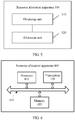
- FIG. 5 is a schematic block diagram of a resource allocation apparatus 300 for gene analysis according to an embodiment of this application.
- the apparatus includes an obtaining unit 310 and an allocation unit 320.
- the obtaining unit 310 is configured to obtain, according to a sequenced read in a target chromosome region, a parameter value that is of the target chromosome region and that is used for resource allocation.
- the allocation unit 320 is configured to allocate, according to the parameter value that is of the target chromosome region and that is used for resource allocation, a computing resource to an operation in a cleansing and variant calling task that is in the gene analysis and that is performed on the sequenced read in the target chromosome region.
- a parameter that is of the target chromosome region and that is used for resource allocation includes at least one of a quantity of sequenced reads in the target chromosome region or an average coverage depth of loci in the target chromosome region.
- the obtaining unit is configured to: obtain a coverage depth value of a locus in the target chromosome region according to a quantity value of sequenced reads that cover the locus in the target chromosome region; determine a gap in the target chromosome region according to the coverage depth value of the locus in the target chromosome region, to obtain at least two segments in the target chromosome region that use the gap as an interval, where a coverage depth value of a locus in the gap is less than a first threshold, the gap is a segment or a locus in the target chromosome region, and the at least two segments do not include the gap; determine some or all of the at least two segments in the target chromosome region as a target segment; use at least one of a quantity of target segments, a length of the target segment, a quantity of sequenced reads in the target segment, or a coverage depth of the target segment as a parameter that is of the target chromosome region and that is used for resource allocation; and obtain the parameter value
- the obtaining unit 310 is configured to: obtain a coverage depth value of a locus in the target chromosome region according to a quantity value of sequenced reads that cover the locus in the target chromosome region; determine a gap in the target chromosome region according to the coverage depth value of the locus in the target chromosome region, to obtain at least two segments in the target chromosome region that use the gap as an interval, where a coverage depth value of a locus in the gap is less than a first threshold, the gap is a segment or a locus in the target chromosome region, and the at least two segments do not include the gap; determine some or all of the at least two segments in the target chromosome region as a target segment, where there are at least two target segments; use a weighted average value of coverage depth values of the target segments as a parameter that is of the target chromosome region and that is used for resource allocation, where the coverage depth of the target segment is an average coverage depth of loci in the target segment
- the obtaining unit 310 is configured to use, as the target segment, at least one of a segment that is in the at least two segments in the target chromosome region and in which a quantity of sequenced reads meets a preset quantity requirement or a segment that is in the at least two segments in the target chromosome region and in which an average coverage depth of loci meets a preset coverage depth requirement.
- the obtaining unit 310 is configured to calculate the weighted average value of the coverage depth values of the target segments by using a ratio of a length value of the target segment to a length value of the target chromosome region as a weight value of a coverage depth value of the target segment.
- the obtaining unit 310 is further configured to obtain an average value of respective parameter values that are of at least two chromosome regions and that are used for resource allocation.
- the allocation unit 320 is configured to: obtain, according to the parameter value that is obtained by the obtaining unit 310 and that is of the target chromosome region and that is used for resource allocation and the average value, obtained by the obtaining unit 310, of the respective parameter values that are of the at least two chromosome regions and that are used for resource allocation, a deviation of the parameter value that is of the target chromosome region and that is used for resource allocation from the average value of the respective parameter values that are of the at least two chromosome regions and that are used for resource allocation; and allocate the computing resource to the operation according to the deviation.
- the at least two chromosome regions include the target chromosome region.
- the deviation includes a ratio of the weighted average value of the coverage depth values of the target segments to a weighted average value of respective coverage depth values of the at least two chromosome regions.
- the coverage depth of the chromosome region includes a weighted average value of respective coverage depth values of loci in at least two segments in the chromosome region, or includes an average coverage depth of loci in the chromosome region.
- the deviation includes a ratio of the quantity value of the sequenced reads in the target chromosome region to an arithmetic average value of respective quantity values of sequenced reads in the at least two chromosome regions.
- the allocation unit 320 is configured to adjust, according to the deviation, an initial computing resource used for implementing the operation, to obtain the computing resource.
- apparatus 300 may implement a corresponding process in the method embodiment shown in FIG. 2 or in another optional embodiment (for example, that shown in FIG. 3 or FIG. 4 ). For brevity, details are not described herein again.
- FIG. 6 is a schematic block diagram of a resource allocation apparatus 400 for gene analysis according to an embodiment of this application.
- the apparatus 400 includes a processor 410 and a memory 420.
- the memory 420 is configured to store a program instruction.
- the processor 410 may invoke the program instruction stored in the memory 420, and may perform one or more steps in the embodiment shown in FIG. 2 or another optional implementation in the method embodiment.
- the processor 410 may invoke the program instruction stored in the memory 420 to perform the following processing: obtaining, according to a sequenced read in a target chromosome region, a parameter value that is of the target chromosome region and that is used for resource allocation; and allocating, according to the parameter value that is of the target chromosome region and that is used for resource allocation, a computing resource to an operation in a cleansing and variant calling task that is in the gene analysis and that is performed on the sequenced read in the target chromosome region.
- a parameter that is of the target chromosome region and that is used for resource allocation includes at least one of a quantity of sequenced reads in the target chromosome region or an average coverage depth of loci in the target chromosome region.
- the processor 410 may invoke the program instruction stored in the memory 420 to perform the following processing: obtaining a coverage depth value of a locus in the target chromosome region according to a quantity value of sequenced reads that cover the locus in the target chromosome region; determining a gap in the target chromosome region according to the coverage depth value of the locus in the target chromosome region, to obtain at least two segments in the target chromosome region that use the gap as an interval, where a coverage depth value of a locus in the gap is less than a first threshold, the gap is a segment or a locus in the target chromosome region, and the at least two segments do not include the gap; determining some or all of the at least two segments in the target chromosome region as a target segment; using at least one of a quantity of target segments, a length of the target segment, a quantity of sequenced reads in the target segment, or a coverage depth of the target segment as a parameter that is of the target chromosome
- the processor 410 may invoke the program instruction stored in the memory 420 to perform the following processing: obtaining a coverage depth value of a locus in the target chromosome region according to a quantity value of sequenced reads that cover the locus in the target chromosome region; determining a gap in the target chromosome region according to the coverage depth value of the locus in the target chromosome region, to obtain at least two segments in the target chromosome region that use the gap as an interval, where a coverage depth value of a locus in the gap is less than a first threshold, the gap is a segment or a locus in the target chromosome region, and at least two segments do not include the gap; determining some or all of the at least two segments in the target chromosome region as a target segment, where there are at least two target segments; using a weighted average value of coverage depth values of the target segments as a parameter that is of the target chromosome region and that is used for resource allocation, where the coverage depth of
- the processor 410 may invoke the program instruction stored in the memory 420 to perform the following processing: using, as the target segment, at least one of a segment that is in the at least two segments in the target chromosome region and in which a quantity of sequenced reads meets a preset quantity requirement or a segment that is in the at least two segments in the target chromosome region and in which an average coverage depth of loci meets a preset coverage depth requirement.
- the processor 410 may invoke the program instruction stored in the memory 420 to perform the following processing: calculating the weighted average value of the coverage depth values of the target segments by using a ratio of a length value of the target segment to a length value of the target chromosome region as a weight value of a coverage depth value of the target segment.
- the processor 410 may invoke the program instruction stored in the memory 420 to perform the following processing: obtaining an average value of respective parameter values that are of at least two chromosome regions and that are used for resource allocation; obtaining, according to the parameter value that is of the target chromosome region and that is used for resource allocation and the average value of the respective parameter values that are of the at least two chromosome regions and that are used for resource allocation, a deviation of the parameter value that is of the target chromosome region and that is used for resource allocation from the average value of the respective parameter values that are of the at least two chromosome regions and that are used for resource allocation; and allocating the computing resource to the operation according to the deviation.
- the at least two chromosome regions include the target chromosome region.
- the deviation includes a ratio of the weighted average value of the coverage depth values of the target segments to a weighted average value of respective coverage depth values of the at least two chromosome regions.
- the coverage depth of the chromosome region includes a weighted average value of respective coverage depth values of loci in at least two segments in the chromosome region, or includes an average coverage depth of loci in the chromosome region.
- the deviation includes a ratio of the quantity value of the sequenced reads in the target chromosome region to an arithmetic average value of respective quantity values of sequenced reads in the at least two chromosome regions.
- the processor 410 may invoke the program instruction stored in the memory 420 to perform the following processing: adjusting, according to the deviation, an initial computing resource used for implementing the operation, to obtain the computing resource.
- the apparatus 400 may further include a bus system 430, and the processor 410 and the memory 420 are connected by using the bus system 430.
- the processor 410 and the memory 420 may be connected in another manner, for example, be directly connected.
- the apparatus 400 further includes a receiver 440, configured to transmit data to or receive data from another apparatus, for example, receive a sequenced read sent by the another apparatus, so that the processor may obtain, based on the sequenced read, the parameter value that is of the target chromosome region and that is used for resource allocation.
- a receiver 440 configured to transmit data to or receive data from another apparatus, for example, receive a sequenced read sent by the another apparatus, so that the processor may obtain, based on the sequenced read, the parameter value that is of the target chromosome region and that is used for resource allocation.
- the processor 410 may be a central processing unit (CPU), a network processor (NP), or a combination of a CPU and an NP.
- the processor 410 may further include a hardware chip.
- the hardware chip may be an application-specific integrated circuit (ASIC), a programmable logic device (PLD), or a combination thereof.
- the PLD may be a complex programmable logical device (CPLD), a field programmable gate array (FPGA), generic array logic (GAL), or any combination thereof.
- the bus system 430 may further include a power bus, a control bus, a status signal bus, and the like.
- the bus system 430 is indicated by using only one thick line in the figure. However, it does not indicate that there is only one bus or only one type of bus.
- apparatus 400 may implement a corresponding process in the method embodiment shown in FIG. 2 or in another optional embodiment. For brevity, details are not described herein again.
- the disclosed system, apparatus, and method may be implemented in other manners.
- the described apparatus embodiment is merely an example.
- the unit division is merely logical function division and may be other division in actual implementation.
- a plurality of units or components may be combined or integrated into another system, or some features may be ignored or not performed.
- the displayed or discussed mutual couplings or direct couplings or communication connections may be implemented by using some interfaces.
- the indirect couplings or communication connections between the apparatuses or units may be implemented in electronic, mechanical, or other forms.
- the units described as separate parts may or may not be physically separate, and parts displayed as units may or may not be physical units, may be located in one position, or may be distributed on a plurality of network units. Some or all of the units may be selected according to actual requirements to achieve the objectives of the solutions of the embodiments.
- the functions When the functions are implemented in the form of a software functional unit and sold or used as an independent product, the functions may be stored in a computer-readable storage medium.
- the software product is stored in a storage medium, and includes several instructions for instructing a computer device (which may be a personal computer, a server, or a network device) to perform all or some of the steps of the methods described in the embodiments of this application.
- the foregoing storage medium includes: any medium that can store program code, such as a USB flash drive, a removable hard disk, a read-only memory (ROM), a random access memory (RAM), a magnetic disk, or an optical disc.
Landscapes
- Engineering & Computer Science (AREA)
- Physics & Mathematics (AREA)
- Theoretical Computer Science (AREA)
- Health & Medical Sciences (AREA)
- Life Sciences & Earth Sciences (AREA)
- Bioinformatics & Cheminformatics (AREA)
- Bioinformatics & Computational Biology (AREA)
- Evolutionary Biology (AREA)
- Spectroscopy & Molecular Physics (AREA)
- Biophysics (AREA)
- Medical Informatics (AREA)
- General Health & Medical Sciences (AREA)
- Biotechnology (AREA)
- Software Systems (AREA)
- Analytical Chemistry (AREA)
- Chemical & Material Sciences (AREA)
- Genetics & Genomics (AREA)
- Molecular Biology (AREA)
- Proteomics, Peptides & Aminoacids (AREA)
- General Engineering & Computer Science (AREA)
- General Physics & Mathematics (AREA)
- Databases & Information Systems (AREA)
- Bioethics (AREA)
- Measuring Or Testing Involving Enzymes Or Micro-Organisms (AREA)
Claims (18)
- Ressourcenzuweisungsverfahren zur Genanalyse, umfassend:Erhalten, entsprechend einem sequenzierten Lesevorgang in einer Ziel-Chromosomenregion, eines Parameterwerts, der zu der Ziel-Chromosomenregion gehört und der zur Ressourcenzuweisung (210) verwendet wird; undZuweisen, entsprechend dem Parameterwert, der zu der Ziel-Chromosomenregion gehört und der zur Ressourcenzuweisung verwendet wird, einer Rechenressource zu einer Operation in einer Reinigungs- und Variantenaufruf-Task, die zur Genanalyse gehört und die bei dem sequenzierten Lesevorgang in der Ziel-Chromosomenregion (220) durchgeführt wird;dadurch gekennzeichnet, dassdas Erhalten eines Parameterwerts, der zu der Ziel-Chromosomenregion gehört und der zur Ressourcenzuweisung verwendet wird, entsprechend einem sequenzierten Lesevorgang in einer Ziel-Chromosomenregion umfasst:Erhalten eines Abdeckungstiefenwerts eines Orts in der Ziel-Chromosomenregion entsprechend einem Mengenwert von sequenzierten Lesevorgängen, die den Ort in der Ziel-Chromosomenregion abdecken;Ermitteln eines Spalts in der Ziel-Chromosomenregion entsprechend dem Abdeckungstiefenwert des Orts in der Ziel-Chromosomenregion, um mindestens zwei Segmente in der Ziel-Chromosomenregion zu erhalten, die den Spalt als ein Intervall verwenden, wobei ein Abdeckungstiefenwert eines Orts in dem Spalt geringer ist als ein erster Schwellenwert, der Spalt ein Segment oder ein Ort in der Ziel-Chromosomenregion ist und die mindestens zwei Segmente in der Ziel-Chromosomenregion den Spalt nicht umfassen;Festlegen einiger oder aller der mindestens zwei Segmente in der Ziel-Chromosomenregion als ein Zielsegment;Verwenden mindestens einer Menge von Zielsegmenten, einer Länge des Zielsegments, einer Menge von sequenzierten Lesevorgängen in dem Zielsegment oder einer Abdeckungstiefe des Zielsegments als ein Parameter, der zu der Ziel-Chromosomenregion gehört und der zur Ressourcenzuweisung verwendet wird, wobei die Abdeckungstiefe des Zielsegments eine durchschnittliche Abdeckungstiefe von Orten in dem Zielsegment ist; undErhalten des Parameterwerts, der zu der Ziel-Chromosomenregion gehört und der zur Ressourcenzuweisung verwendet wird;oder
das Erhalten eines Parameterwerts, der zu der Ziel-Chromosomenregion gehört und der zur Ressourcenzuweisung verwendet wird, entsprechend einem sequenzierten Lesevorgang in einer Ziel-Chromosomenregion umfasst:Erhalten eines Abdeckungstiefenwerts eines Orts in der Ziel-Chromosomenregion entsprechend einem Mengenwert von sequenzierten Lesevorgängen, die den Ort in der Ziel-Chromosomenregion abdecken;Ermitteln eines Spalts in der Ziel-Chromosomenregion entsprechend dem Abdeckungstiefenwert des Orts in der Ziel-Chromosomenregion, um mindestens zwei Segmente in der Ziel-Chromosomenregion zu erhalten, die den Spalt als ein Intervall verwenden, wobei ein Abdeckungstiefenwert eines Orts in dem Spalt geringer ist als ein erster Schwellenwert, der Spalt ein Segment oder ein Ort in der Ziel-Chromosomenregion ist und die mindestens zwei Segmente in der Ziel-Chromosomenregion den Spalt nicht umfassen;Festlegen einiger oder aller der mindestens zwei Segmente in der Ziel-Chromosomenregion als ein Zielsegment, wobei mindestens zwei Zielsegmente vorliegen;Verwenden eines gewichteten Durchschnittswerts der Abdeckungstiefenwerte der Zielsegmente als ein Parameter, der zu der Ziel-Chromosomenregion gehört und der zur Ressourcenzuweisung verwendet wird, wobei die Abdeckungstiefe des Zielsegments eine durchschnittliche Abdeckungstiefe von Orten in dem Zielsegment ist; undErhalten des Parameterwerts, der zu der Ziel-Chromosomenregion gehört und der zur Ressourcenzuweisung verwendet wird. - Verfahren nach Anspruch 1, wobei ein Parameter, der zu der Ziel-Chromosomenregion gehört und der zur Ressourcenzuweisung verwendet wird, umfasst:
mindestens eines von einer Menge von sequenzierten Lesevorgängen in der Ziel-Chromosomenregion oder einer durchschnittlichen Abdeckungstiefe von Orten in der Ziel-Chromosomenregion. - Verfahren nach Anspruch 1, wobei das Festlegen einiger oder aller der mindestens zwei Segmente in der Ziel-Chromosomenregion als ein Zielsegment umfasst:
Verwenden, als das Zielsegment, von mindestens einem eines Segments, das in den mindestens zwei Segmenten in der Ziel-Chromosomenregion vorliegt und in dem eine Menge von sequenzierten Lesevorgängen eine vorgegebene Mengenanforderung erfüllt, oder eines Segments, das in den mindestens zwei Segmenten in der Ziel-Chromosomenregion vorliegt und in dem eine durchschnittliche Abdeckungstiefe von Orten eine vorgegebene Abdeckungstiefenanforderung erfüllt. - Verfahren nach Anspruch 1, wobei das Erhalten des Parameterwerts, der zu der Ziel-Chromosomenregion gehört und der zur Ressourcenzuweisung verwendet wird, umfasst:
Berechnen des gewichteten Durchschnittswerts der Abdeckungstiefenwerte der Zielsegmente unter Verwendung eines Verhältnisses eines Längenwerts eines Zielsegments der Zielsegmente zu einem Längenwert der Ziel-Chromosomenregion als einem gewichteten Wert eines Abdeckungstiefenwerts des Zielsegments. - Verfahren nach einem der Ansprüche 1 bis 4, wobei das entsprechend dem Parameterwert, der zu der Ziel-Chromosomenregion gehört und der zur Ressourcenzuweisung verwendet wird, erfolgende Zuweisen einer Rechenressource zu einer Operation in einer Reinigungs- und Variantenaufruf-Task, die zu der Genanalyse gehört und die bei dem sequenzierten Lesevorgang in der Ziel-Chromosomenregion durchgeführt wird, umfasst:Erhalten eines Durchschnittswerts von entsprechenden Parameterwerten, die zu mindestens zwei Chromosomenregionen gehören und die zur Ressourcenzuweisung verwendet werden;Erhalten, entsprechend dem Parameterwert, der zu der Ziel-Chromosomenregion gehört und der zur Ressourcenzuweisung verwendet wird, und dem Durchschnittswert der entsprechenden Parameterwerte, die zu den mindestens zwei Chromosomenregionen gehören und die zur Ressourcenzuweisung verwendet werden, einer Abweichung des Parameterwerts, der zu der Ziel-Chromosomenregion gehört und der zur Ressourcenzuweisung verwendet wird, von dem Durchschnittswert der entsprechenden Parameterwerte, die zu den mindestens zwei Chromosomenregionen gehören und die zur Ressourcenzuweisung verwendet werden; undZuweisen der Rechenressource zu der Operation entsprechend der Abweichung.
- Verfahren nach Anspruch 5, wobei die mindestens zwei Chromosomenregionen die Ziel-Chromosomenregion umfassen.
- Verfahren nach Anspruch 5 oder 6, wobei die Abweichung umfasst:
ein Verhältnis des gewichteten Durchschnittswerts der Abdeckungstiefenwerte der Zielsegmente zu einem gewichteten Durchschnittswert von entsprechenden Abdeckungstiefenwerten der mindestens zwei Chromosomenregionen; und die Abdeckungstiefe der Chromosomenregion einen gewichteten Durchschnittswert von entsprechenden Abdeckungstiefenwerten von Orten in mindestens zwei Segmenten in der Chromosomenregion umfasst oder eine durchschnittliche Abdeckungstiefe von Orten in der Chromosomenregion umfasst. - Verfahren nach Anspruch 5 oder 6, wobei die Abweichung umfasst:
ein Verhältnis des Mengenwerts der sequenzierten Lesevorgänge in der Ziel-Chromosomenregion zu einem arithmetischen Durchschnittswert von entsprechenden Mengenwerten von sequenzierten Lesevorgängen in den mindestens zwei Chromosomenregionen. - Verfahren nach einem der Ansprüche 5 bis 8, wobei das Zuweisen der Rechenressource zu der Operation entsprechend der Abweichung umfasst:
Einstellen, entsprechend der Abweichung, einer anfänglichen Rechenressource, verwendet zum Implementieren der Operation, um die Rechenressource zu erhalten. - Ressourcenzuweisungsvorrichtung (300) zur Genanalyse, umfassend:eine Erhalteinheit (310), ausgelegt zum Erhalten, entsprechend einem sequenzierten Lesevorgang in einer Ziel-Chromosomenregion, eines Parameterwerts, der zu der Ziel-Chromosomenregion gehört und der zur Ressourcenzuweisung verwendet wird; undeine Zuweisungseinheit (320), ausgelegt zum Zuweisen, entsprechend dem Parameterwert, der von der Erhalteinheit (310) erhalten wird und der zu der Ziel-Chromosomenregion gehört und der zur Ressourcenzuweisung verwendet wird, einer Rechenressource zu einer Operation in einer Reinigungs- und Variantenaufruf-Task, die zu der Genanalyse gehört und die bei dem sequenzierten Lesevorgang in der Ziel-Chromosomenregion durchgeführt wird;dadurch gekennzeichnet, dasswobei die Erhalteinheit (310) ausgelegt ist zumErhalten eines Abdeckungstiefenwerts eines Orts in der Ziel-Chromosomenregion entsprechend einem Mengenwert von sequenzierten Lesevorgängen, die den Ort in der Ziel-Chromosomenregion abdecken;Ermitteln eines Spalts in der Ziel-Chromosomenregion entsprechend dem Abdeckungstiefenwert des Orts in der Ziel-Chromosomenregion, um mindestens zwei Segmente in der Ziel-Chromosomenregion zu erhalten, die den Spalt als ein Intervall verwenden, wobei ein Abdeckungstiefenwert eines Orts in dem Spalt geringer ist als ein erster Schwellenwert, der Spalt ein Segment oder ein Ort in der Ziel-Chromosomenregion ist und die mindestens zwei Segmente in der Ziel-Chromosomenregion den Spalt nicht umfassen;Festlegen einiger oder aller der mindestens zwei Segmente in der Ziel-Chromosomenregion als ein Zielsegment;Verwenden mindestens einer Menge von Zielsegmenten, einer Länge des Zielsegments, einer Menge von sequenzierten Lesevorgängen in dem Zielsegment oder einer Abdeckungstiefe des Zielsegments als ein Parameter, der zu der Ziel-Chromosomenregion gehört und der zur Ressourcenzuweisung verwendet wird, wobei die Abdeckungstiefe des Zielsegments eine durchschnittliche Abdeckungstiefe von Orten in dem Zielsegment ist; undErhalten des Parameterwerts, der zu der Ziel-Chromosomenregion gehört und der zur Ressourcenzuweisung verwendet wird;oderdie Erhalteinheit (310) ausgelegt ist zumErhalten eines Abdeckungstiefenwerts eines Orts in der Ziel-Chromosomenregion entsprechend einem Mengenwert von sequenzierten Lesevorgängen, die den Ort in der Ziel-Chromosomenregion abdecken;Ermitteln eines Spalts in der Ziel-Chromosomenregion entsprechend dem Abdeckungstiefenwert des Orts in der Ziel-Chromosomenregion, um mindestens zwei Segmente in der Ziel-Chromosomenregion zu erhalten, die den Spalt als ein Intervall verwenden, wobei ein Abdeckungstiefenwert eines Orts in dem Spalt geringer ist als ein erster Schwellenwert, der Spalt ein Segment oder ein Ort in der Ziel-Chromosomenregion ist und die mindestens zwei Segmente in der Ziel-Chromosomenregion den Spalt nicht umfassen;Festlegen einiger oder aller der mindestens zwei Segmente in der Ziel-Chromosomenregion als ein Zielsegment, wobei mindestens zwei Zielsegmente vorliegen;Verwenden eines gewichteten Durchschnittswerts von Abdeckungstiefenwerten der Zielsegmente als ein Parameter, der zu der Ziel-Chromosomenregion gehört und der zur Ressourcenzuweisung verwendet wird, wobei die Abdeckungstiefe des Zielsegments eine durchschnittliche Abdeckungstiefe von Orten in dem Zielsegment ist; undErhalten des Parameterwerts, der zu der Ziel-Chromosomenregion gehört und der zur Ressourcenzuweisung verwendet wird.
- Vorrichtung (300) nach Anspruch 10, wobei ein Parameter, der zu der Ziel-Chromosomenregion gehört und der zur Ressourcenzuweisung verwendet wird, umfasst:
mindestens eines von einer Menge von sequenzierten Lesevorgängen in der Ziel-Chromosomenregion oder einer durchschnittlichen Abdeckungstiefe von Orten in der Ziel-Chromosomenregion. - Vorrichtung (300) nach Anspruch 10, wobei die Erhalteinheit (310) ausgelegt ist zum Verwenden, als das Zielsegment, von mindestens einem eines Segments, das in den mindestens zwei Segmenten in der Ziel-Chromosomenregion vorliegt und in dem eine Menge von sequenzierten Lesevorgängen eine vorgegebene Mengenanforderung erfüllt, oder eines Segments, das in den mindestens zwei Segmenten in der Ziel-Chromosomenregion vorliegt und in dem eine durchschnittliche Abdeckungstiefe von Orten eine vorgegebene Abdeckungstiefenanforderung erfüllt.
- Vorrichtung (300) nach Anspruch 10, wobei die Erhalteinheit (310) ausgelegt ist zum Berechnen des gewichteten Durchschnittswerts der Abdeckungstiefenwerte der Zielsegmente unter Verwendung eines Verhältnisses eines Längenwerts eines Zielsegments der Zielsegmente zu einem Längenwert der Ziel-Chromosomenregion als einem gewichteten Wert eines Abdeckungstiefenwerts des Zielsegments.
- Vorrichtung (300) nach einem der Ansprüche 10 bis 13, wobei die Erhalteinheit (310) ferner ausgelegt ist zum Erhalten eines Durchschnittswerts von entsprechenden Parametern, die zu mindestens zwei Chromosomenregionen gehören und die zur Ressourcenzuweisung verwendet werden; und
die Zuweisungseinheit (320) ausgelegt ist zum Erhalten, entsprechend dem Parameterwert, der von der Erhalteinheit erhalten wird und der zu der Ziel-Chromosomenregion gehört und der zur Ressourcenzuweisung verwendet wird, und entsprechend dem von der Erhalteinheit (310) erhaltenen Durchschnittswert der entsprechenden Parameterwerte, die zu den mindestens zwei Chromosomenregionen gehören und die zur Ressourcenzuteilung verwendet werden, einer Abweichung des Parameterwerts, der zu der Ziel-Chromosomenregion gehört und der zur Ressourcenzuweisung verwendet wird, von dem Durchschnittswert der entsprechenden Parameterwerte, die zu den mindestens zwei Chromosomenregionen gehören und die zur Ressourcenzuweisung verwendet werden; und
zum Zuweisen der Rechenressource zu der Operation entsprechend der Abweichung. - Vorrichtung (300) nach Anspruch 14, wobei die mindestens zwei Chromosomenregionen die Ziel-Chromosomenregion umfassen.
- Vorrichtung (300) nach Anspruch 14 oder 15, wobei die Abweichung umfasst:
ein Verhältnis des gewichteten Durchschnittswerts der Abdeckungstiefenwerte der Zielsegmente zu einem gewichteten Durchschnittswert von entsprechenden Abdeckungstiefenwerten der mindestens zwei Chromosomenregionen; und die Abdeckungstiefe der Chromosomenregion einen gewichteten Durchschnittswert von entsprechenden Abdeckungstiefenwerten von Orten in mindestens zwei Segmenten in der Chromosomenregion umfasst oder eine durchschnittliche Abdeckungstiefe von Orten in der Chromosomenregion umfasst. - Vorrichtung (300) nach Anspruch 14 oder 15, wobei die Abweichung umfasst:
ein Verhältnis des Mengenwerts der sequenzierten Lesevorgänge in der Ziel-Chromosomenregion zu einem arithmetischen Durchschnittswert von entsprechenden Mengenwerten von sequenzierten Lesevorgängen in den mindestens zwei Chromosomenregionen. - Vorrichtung (300) nach einem der Ansprüche 14 bis 17, wobei die Zuweisungseinheit (320) ausgelegt ist zum
Einstellen, entsprechend der Abweichung, einer anfänglichen Rechenressource, verwendet zum Implementieren der Operation, um die Rechenressource zu erhalten.
Applications Claiming Priority (2)
| Application Number | Priority Date | Filing Date | Title |
|---|---|---|---|
| CN201610219164.2A CN107273204B (zh) | 2016-04-08 | 2016-04-08 | 用于基因分析的资源分配方法和装置 |
| PCT/CN2017/079306 WO2017173968A1 (zh) | 2016-04-08 | 2017-04-01 | 用于基因分析的资源分配方法和装置 |
Publications (3)
| Publication Number | Publication Date |
|---|---|
| EP3428798A1 EP3428798A1 (de) | 2019-01-16 |
| EP3428798A4 EP3428798A4 (de) | 2019-04-03 |
| EP3428798B1 true EP3428798B1 (de) | 2020-09-02 |
Family
ID=60000865
Family Applications (1)
| Application Number | Title | Priority Date | Filing Date |
|---|---|---|---|
| EP17778632.4A Not-in-force EP3428798B1 (de) | 2016-04-08 | 2017-04-01 | Ressourcenzuweisungsverfahren und vorrichtung zur genetischen analyse |
Country Status (4)
| Country | Link |
|---|---|
| US (1) | US10853135B2 (de) |
| EP (1) | EP3428798B1 (de) |
| CN (1) | CN107273204B (de) |
| WO (1) | WO2017173968A1 (de) |
Cited By (1)
| Publication number | Priority date | Publication date | Assignee | Title |
|---|---|---|---|---|
| RU2799005C2 (ru) * | 2020-10-22 | 2023-06-30 | БиДжиАй Дженомикс Ко., Лтд | Способ обработки данных секвенирования генов и устройство для обработки данных секвенирования генов |
Families Citing this family (7)
| Publication number | Priority date | Publication date | Assignee | Title |
|---|---|---|---|---|
| CN108229103B (zh) * | 2018-01-15 | 2020-12-25 | 无锡臻和生物科技有限公司 | 循环肿瘤dna重复序列的处理方法及装置 |
| CN109616154A (zh) * | 2018-12-27 | 2019-04-12 | 北京优迅医学检验实验室有限公司 | 测序深度的矫正方法及装置 |
| CN111584011B (zh) * | 2020-04-10 | 2023-08-29 | 中国科学院计算技术研究所 | 面向基因比对的细粒度并行负载特征抽取分析方法及系统 |
| CN112259168B (zh) * | 2020-10-22 | 2023-03-28 | 深圳华大基因科技服务有限公司 | 基因测序数据处理方法和基因测序数据处理装置 |
| CN112233727B (zh) * | 2020-10-29 | 2024-01-26 | 北京诺禾致源科技股份有限公司 | 数据分区存储方法及装置 |
| CN112486961A (zh) * | 2020-11-18 | 2021-03-12 | 广西电网有限责任公司电力科学研究院 | 一种大数据实时处理的方法及处理装置 |
| IL317769A (en) * | 2022-06-24 | 2025-02-01 | Illumina Inc | Variant reading of high-coverage samples with limited memory |
Family Cites Families (15)
| Publication number | Priority date | Publication date | Assignee | Title |
|---|---|---|---|---|
| AU2002350131A1 (en) * | 2001-11-09 | 2003-05-26 | Gene Logic Inc. | System and method for storage and analysis of gene expression data |
| CN101118611A (zh) * | 2007-09-07 | 2008-02-06 | 北京航空航天大学 | 基于遗传算法的业务过程模型资源配置优化方法 |
| CN101608233A (zh) * | 2009-07-21 | 2009-12-23 | 西安交通大学 | 一种x染色体str基因位点分型的荧光检测方法 |
| CN101865843B (zh) * | 2010-05-04 | 2012-05-23 | 中国科学院深圳先进技术研究院 | 多组分生物标识物的检测方法 |
| CN101930502B (zh) * | 2010-09-03 | 2011-12-21 | 深圳华大基因科技有限公司 | 表型基因的检测及生物信息分析的方法及系统 |
| EP2614161B1 (de) * | 2010-09-09 | 2020-11-04 | Fabric Genomics, Inc. | Werkzeug zur kommentierung, analyse und auswahl von varianzen |
| US11031097B2 (en) * | 2013-01-28 | 2021-06-08 | Hasso-Plattner Institut fuer Softwaresystemtechnik GmbH | System for genomic data processing with an in-memory database system and real-time analysis |
| US20160048633A1 (en) * | 2013-03-15 | 2016-02-18 | Cypher Genomics, Inc. | Systems and methods for genomic variant annotation |
| CN104244426B (zh) | 2013-06-09 | 2019-02-05 | 华为技术有限公司 | 一种数据无线承载drb的资源分配方法及装置 |
| WO2015171660A1 (en) * | 2014-05-05 | 2015-11-12 | Board Of Regents, The University Of Texas System | Variant annotation, analysis and selection tool |
| US20160125130A1 (en) * | 2014-11-05 | 2016-05-05 | Agilent Technologies, Inc. | Method for assigning target-enriched sequence reads to a genomic location |
| EP3057007B1 (de) * | 2015-02-13 | 2021-08-11 | Hasso-Plattner-Institut für Softwaresystemtechnik GmbH | Cloud-basierte hardware-architektur |
| CN105046109B (zh) | 2015-06-26 | 2018-06-29 | 四川云合创智科技有限公司 | 一种用于生物信息序列分析的加速平台 |
| CN105117619A (zh) * | 2015-08-10 | 2015-12-02 | 杨福辉 | 一种全基因组测序数据分析方法 |
| WO2018053761A1 (zh) * | 2016-09-22 | 2018-03-29 | 华为技术有限公司 | 一种数据处理方法、装置及计算节点 |
-
2016
- 2016-04-08 CN CN201610219164.2A patent/CN107273204B/zh not_active Expired - Fee Related
-
2017
- 2017-04-01 EP EP17778632.4A patent/EP3428798B1/de not_active Not-in-force
- 2017-04-01 WO PCT/CN2017/079306 patent/WO2017173968A1/zh not_active Ceased
-
2018
- 2018-10-05 US US16/153,099 patent/US10853135B2/en not_active Expired - Fee Related
Non-Patent Citations (1)
| Title |
|---|
| None * |
Cited By (1)
| Publication number | Priority date | Publication date | Assignee | Title |
|---|---|---|---|---|
| RU2799005C2 (ru) * | 2020-10-22 | 2023-06-30 | БиДжиАй Дженомикс Ко., Лтд | Способ обработки данных секвенирования генов и устройство для обработки данных секвенирования генов |
Also Published As
| Publication number | Publication date |
|---|---|
| EP3428798A1 (de) | 2019-01-16 |
| US20190042311A1 (en) | 2019-02-07 |
| CN107273204A (zh) | 2017-10-20 |
| WO2017173968A1 (zh) | 2017-10-12 |
| US10853135B2 (en) | 2020-12-01 |
| CN107273204B (zh) | 2020-10-09 |
| EP3428798A4 (de) | 2019-04-03 |
Similar Documents
| Publication | Publication Date | Title |
|---|---|---|
| US10853135B2 (en) | Resource allocation method and apparatus for gene analysis | |
| Alser et al. | Shouji: a fast and efficient pre-alignment filter for sequence alignment | |
| Neyshabur et al. | NETAL: a new graph-based method for global alignment of protein–protein interaction networks | |
| Hashemifar et al. | Hubalign: an accurate and efficient method for global alignment of protein–protein interaction networks | |
| Böcker et al. | Cluster editing | |
| US9600625B2 (en) | Systems and methods for processing nucleic acid sequence data | |
| Muiño et al. | ChIP-seq Analysis in R (CSAR): An R package for the statistical detection of protein-bound genomic regions | |
| EP3139270A1 (de) | Datengewinnungsverfahren und knoten | |
| CN108985008B (zh) | 一种快速比对基因数据的方法和比对系统 | |
| Letsch et al. | Insect phylogenomics: results, problems and the impact of matrix composition | |
| Ekim et al. | A randomized parallel algorithm for efficiently finding near-optimal universal hitting sets | |
| Choi et al. | Libra: scalable k-mer–based tool for massive all-vs-all metagenome comparisons | |
| US8898422B2 (en) | Workload-aware distributed data processing apparatus and method for processing large data based on hardware acceleration | |
| CN109033439A (zh) | 流式数据的处理方法和装置 | |
| US20210089358A1 (en) | Techniques for improving processing of bioinformatics information to decrease processing time | |
| US20220157414A1 (en) | Method and system for facilitating optimization of a cluster computing network for sequencing data analysis using adaptive data parallelization, and non-transitory storage medium | |
| CN106407743A (zh) | 一种基于集群的高通量数据分析方法 | |
| Tárraga et al. | Acceleration of short and long DNA read mapping without loss of accuracy using suffix array | |
| Kanellos et al. | MR-microT: a MapReduce-based MicroRNA target prediction method | |
| Xu et al. | An efficient algorithm for DNA fragment assembly in MapReduce | |
| CN109477140B (zh) | 一种数据处理方法、装置及计算节点 | |
| US20190156917A1 (en) | Data Processing Method and Apparatus | |
| Gomez-Sanchez et al. | Using AWS EC2 as test-bed infrastructure in theI/O system configuration for HPC applications | |
| Das et al. | Large-scale parallel genome assembler over cloud computing environment | |
| Abduallah et al. | A time-delayed information-theoretic approach to the reverse engineering of gene regulatory networks using apache spark |
Legal Events
| Date | Code | Title | Description |
|---|---|---|---|
| STAA | Information on the status of an ep patent application or granted ep patent |
Free format text: STATUS: THE INTERNATIONAL PUBLICATION HAS BEEN MADE |
|
| PUAI | Public reference made under article 153(3) epc to a published international application that has entered the european phase |
Free format text: ORIGINAL CODE: 0009012 |
|
| STAA | Information on the status of an ep patent application or granted ep patent |
Free format text: STATUS: REQUEST FOR EXAMINATION WAS MADE |
|
| 17P | Request for examination filed |
Effective date: 20181010 |
|
| AK | Designated contracting states |
Kind code of ref document: A1 Designated state(s): AL AT BE BG CH CY CZ DE DK EE ES FI FR GB GR HR HU IE IS IT LI LT LU LV MC MK MT NL NO PL PT RO RS SE SI SK SM TR |
|
| AX | Request for extension of the european patent |
Extension state: BA ME |
|
| A4 | Supplementary search report drawn up and despatched |
Effective date: 20190306 |
|
| RIC1 | Information provided on ipc code assigned before grant |
Ipc: G16B 30/10 20190101ALN20190228BHEP Ipc: G16B 50/30 20190101ALI20190228BHEP Ipc: G06F 9/52 20060101ALN20190228BHEP Ipc: G06F 9/50 20060101AFI20190228BHEP |
|
| DAV | Request for validation of the european patent (deleted) | ||
| DAX | Request for extension of the european patent (deleted) | ||
| REG | Reference to a national code |
Ref country code: DE Ref legal event code: R079 Ref document number: 602017022932 Country of ref document: DE Free format text: PREVIOUS MAIN CLASS: G06F0009500000 Ipc: G16B0050300000 |
|
| RIC1 | Information provided on ipc code assigned before grant |
Ipc: G16B 50/30 20190101AFI20200227BHEP Ipc: G06F 9/50 20060101ALI20200227BHEP Ipc: G16B 30/10 20190101ALN20200227BHEP Ipc: G06F 9/52 20060101ALN20200227BHEP |
|
| GRAP | Despatch of communication of intention to grant a patent |
Free format text: ORIGINAL CODE: EPIDOSNIGR1 |
|
| STAA | Information on the status of an ep patent application or granted ep patent |
Free format text: STATUS: GRANT OF PATENT IS INTENDED |
|
| RIC1 | Information provided on ipc code assigned before grant |
Ipc: G16B 50/30 20190101AFI20200228BHEP Ipc: G06F 9/52 20060101ALN20200228BHEP Ipc: G06F 9/50 20060101ALI20200228BHEP Ipc: G16B 30/10 20190101ALN20200228BHEP |
|
| RIC1 | Information provided on ipc code assigned before grant |
Ipc: G06F 9/50 20060101ALI20200317BHEP Ipc: G16B 50/30 20190101AFI20200317BHEP Ipc: G16B 30/10 20190101ALN20200317BHEP Ipc: G06F 9/52 20060101ALN20200317BHEP |
|
| INTG | Intention to grant announced |
Effective date: 20200407 |
|
| GRAS | Grant fee paid |
Free format text: ORIGINAL CODE: EPIDOSNIGR3 |
|
| GRAA | (expected) grant |
Free format text: ORIGINAL CODE: 0009210 |
|
| STAA | Information on the status of an ep patent application or granted ep patent |
Free format text: STATUS: THE PATENT HAS BEEN GRANTED |
|
| AK | Designated contracting states |
Kind code of ref document: B1 Designated state(s): AL AT BE BG CH CY CZ DE DK EE ES FI FR GB GR HR HU IE IS IT LI LT LU LV MC MK MT NL NO PL PT RO RS SE SI SK SM TR |
|
| REG | Reference to a national code |
Ref country code: GB Ref legal event code: FG4D |
|
| REG | Reference to a national code |
Ref country code: AT Ref legal event code: REF Ref document number: 1309756 Country of ref document: AT Kind code of ref document: T Effective date: 20200915 Ref country code: CH Ref legal event code: EP |
|
| REG | Reference to a national code |
Ref country code: DE Ref legal event code: R096 Ref document number: 602017022932 Country of ref document: DE |
|
| REG | Reference to a national code |
Ref country code: IE Ref legal event code: FG4D |
|
| REG | Reference to a national code |
Ref country code: LT Ref legal event code: MG4D |
|
| PG25 | Lapsed in a contracting state [announced via postgrant information from national office to epo] |
Ref country code: FI Free format text: LAPSE BECAUSE OF FAILURE TO SUBMIT A TRANSLATION OF THE DESCRIPTION OR TO PAY THE FEE WITHIN THE PRESCRIBED TIME-LIMIT Effective date: 20200902 Ref country code: HR Free format text: LAPSE BECAUSE OF FAILURE TO SUBMIT A TRANSLATION OF THE DESCRIPTION OR TO PAY THE FEE WITHIN THE PRESCRIBED TIME-LIMIT Effective date: 20200902 Ref country code: LT Free format text: LAPSE BECAUSE OF FAILURE TO SUBMIT A TRANSLATION OF THE DESCRIPTION OR TO PAY THE FEE WITHIN THE PRESCRIBED TIME-LIMIT Effective date: 20200902 Ref country code: BG Free format text: LAPSE BECAUSE OF FAILURE TO SUBMIT A TRANSLATION OF THE DESCRIPTION OR TO PAY THE FEE WITHIN THE PRESCRIBED TIME-LIMIT Effective date: 20201202 Ref country code: GR Free format text: LAPSE BECAUSE OF FAILURE TO SUBMIT A TRANSLATION OF THE DESCRIPTION OR TO PAY THE FEE WITHIN THE PRESCRIBED TIME-LIMIT Effective date: 20201203 Ref country code: NO Free format text: LAPSE BECAUSE OF FAILURE TO SUBMIT A TRANSLATION OF THE DESCRIPTION OR TO PAY THE FEE WITHIN THE PRESCRIBED TIME-LIMIT Effective date: 20201202 Ref country code: SE Free format text: LAPSE BECAUSE OF FAILURE TO SUBMIT A TRANSLATION OF THE DESCRIPTION OR TO PAY THE FEE WITHIN THE PRESCRIBED TIME-LIMIT Effective date: 20200902 |
|
| REG | Reference to a national code |
Ref country code: NL Ref legal event code: MP Effective date: 20200902 |
|
| REG | Reference to a national code |
Ref country code: AT Ref legal event code: MK05 Ref document number: 1309756 Country of ref document: AT Kind code of ref document: T Effective date: 20200902 |
|
| PG25 | Lapsed in a contracting state [announced via postgrant information from national office to epo] |
Ref country code: PL Free format text: LAPSE BECAUSE OF FAILURE TO SUBMIT A TRANSLATION OF THE DESCRIPTION OR TO PAY THE FEE WITHIN THE PRESCRIBED TIME-LIMIT Effective date: 20200902 Ref country code: LV Free format text: LAPSE BECAUSE OF FAILURE TO SUBMIT A TRANSLATION OF THE DESCRIPTION OR TO PAY THE FEE WITHIN THE PRESCRIBED TIME-LIMIT Effective date: 20200902 Ref country code: RS Free format text: LAPSE BECAUSE OF FAILURE TO SUBMIT A TRANSLATION OF THE DESCRIPTION OR TO PAY THE FEE WITHIN THE PRESCRIBED TIME-LIMIT Effective date: 20200902 |
|
| PG25 | Lapsed in a contracting state [announced via postgrant information from national office to epo] |
Ref country code: SM Free format text: LAPSE BECAUSE OF FAILURE TO SUBMIT A TRANSLATION OF THE DESCRIPTION OR TO PAY THE FEE WITHIN THE PRESCRIBED TIME-LIMIT Effective date: 20200902 Ref country code: EE Free format text: LAPSE BECAUSE OF FAILURE TO SUBMIT A TRANSLATION OF THE DESCRIPTION OR TO PAY THE FEE WITHIN THE PRESCRIBED TIME-LIMIT Effective date: 20200902 Ref country code: CZ Free format text: LAPSE BECAUSE OF FAILURE TO SUBMIT A TRANSLATION OF THE DESCRIPTION OR TO PAY THE FEE WITHIN THE PRESCRIBED TIME-LIMIT Effective date: 20200902 Ref country code: RO Free format text: LAPSE BECAUSE OF FAILURE TO SUBMIT A TRANSLATION OF THE DESCRIPTION OR TO PAY THE FEE WITHIN THE PRESCRIBED TIME-LIMIT Effective date: 20200902 Ref country code: PT Free format text: LAPSE BECAUSE OF FAILURE TO SUBMIT A TRANSLATION OF THE DESCRIPTION OR TO PAY THE FEE WITHIN THE PRESCRIBED TIME-LIMIT Effective date: 20210104 |
|
| PG25 | Lapsed in a contracting state [announced via postgrant information from national office to epo] |
Ref country code: ES Free format text: LAPSE BECAUSE OF FAILURE TO SUBMIT A TRANSLATION OF THE DESCRIPTION OR TO PAY THE FEE WITHIN THE PRESCRIBED TIME-LIMIT Effective date: 20200902 Ref country code: AT Free format text: LAPSE BECAUSE OF FAILURE TO SUBMIT A TRANSLATION OF THE DESCRIPTION OR TO PAY THE FEE WITHIN THE PRESCRIBED TIME-LIMIT Effective date: 20200902 Ref country code: AL Free format text: LAPSE BECAUSE OF FAILURE TO SUBMIT A TRANSLATION OF THE DESCRIPTION OR TO PAY THE FEE WITHIN THE PRESCRIBED TIME-LIMIT Effective date: 20200902 Ref country code: IS Free format text: LAPSE BECAUSE OF FAILURE TO SUBMIT A TRANSLATION OF THE DESCRIPTION OR TO PAY THE FEE WITHIN THE PRESCRIBED TIME-LIMIT Effective date: 20210102 |
|
| REG | Reference to a national code |
Ref country code: DE Ref legal event code: R097 Ref document number: 602017022932 Country of ref document: DE |
|
| PG25 | Lapsed in a contracting state [announced via postgrant information from national office to epo] |
Ref country code: SK Free format text: LAPSE BECAUSE OF FAILURE TO SUBMIT A TRANSLATION OF THE DESCRIPTION OR TO PAY THE FEE WITHIN THE PRESCRIBED TIME-LIMIT Effective date: 20200902 |
|
| PLBE | No opposition filed within time limit |
Free format text: ORIGINAL CODE: 0009261 |
|
| STAA | Information on the status of an ep patent application or granted ep patent |
Free format text: STATUS: NO OPPOSITION FILED WITHIN TIME LIMIT |
|
| 26N | No opposition filed |
Effective date: 20210603 |
|
| PG25 | Lapsed in a contracting state [announced via postgrant information from national office to epo] |
Ref country code: DK Free format text: LAPSE BECAUSE OF FAILURE TO SUBMIT A TRANSLATION OF THE DESCRIPTION OR TO PAY THE FEE WITHIN THE PRESCRIBED TIME-LIMIT Effective date: 20200902 Ref country code: SI Free format text: LAPSE BECAUSE OF FAILURE TO SUBMIT A TRANSLATION OF THE DESCRIPTION OR TO PAY THE FEE WITHIN THE PRESCRIBED TIME-LIMIT Effective date: 20200902 |
|
| PG25 | Lapsed in a contracting state [announced via postgrant information from national office to epo] |
Ref country code: IT Free format text: LAPSE BECAUSE OF FAILURE TO SUBMIT A TRANSLATION OF THE DESCRIPTION OR TO PAY THE FEE WITHIN THE PRESCRIBED TIME-LIMIT Effective date: 20200902 |
|
| PG25 | Lapsed in a contracting state [announced via postgrant information from national office to epo] |
Ref country code: MC Free format text: LAPSE BECAUSE OF FAILURE TO SUBMIT A TRANSLATION OF THE DESCRIPTION OR TO PAY THE FEE WITHIN THE PRESCRIBED TIME-LIMIT Effective date: 20200902 |
|
| PG25 | Lapsed in a contracting state [announced via postgrant information from national office to epo] |
Ref country code: LU Free format text: LAPSE BECAUSE OF NON-PAYMENT OF DUE FEES Effective date: 20210401 |
|
| REG | Reference to a national code |
Ref country code: BE Ref legal event code: MM Effective date: 20210430 |
|
| PG25 | Lapsed in a contracting state [announced via postgrant information from national office to epo] |
Ref country code: CH Free format text: LAPSE BECAUSE OF NON-PAYMENT OF DUE FEES Effective date: 20210430 Ref country code: LI Free format text: LAPSE BECAUSE OF NON-PAYMENT OF DUE FEES Effective date: 20210430 |
|
| PG25 | Lapsed in a contracting state [announced via postgrant information from national office to epo] |
Ref country code: IE Free format text: LAPSE BECAUSE OF NON-PAYMENT OF DUE FEES Effective date: 20210401 |
|
| PG25 | Lapsed in a contracting state [announced via postgrant information from national office to epo] |
Ref country code: IS Free format text: LAPSE BECAUSE OF FAILURE TO SUBMIT A TRANSLATION OF THE DESCRIPTION OR TO PAY THE FEE WITHIN THE PRESCRIBED TIME-LIMIT Effective date: 20210102 |
|
| PG25 | Lapsed in a contracting state [announced via postgrant information from national office to epo] |
Ref country code: BE Free format text: LAPSE BECAUSE OF NON-PAYMENT OF DUE FEES Effective date: 20210430 |
|
| PG25 | Lapsed in a contracting state [announced via postgrant information from national office to epo] |
Ref country code: NL Free format text: LAPSE BECAUSE OF NON-PAYMENT OF DUE FEES Effective date: 20200923 Ref country code: CY Free format text: LAPSE BECAUSE OF FAILURE TO SUBMIT A TRANSLATION OF THE DESCRIPTION OR TO PAY THE FEE WITHIN THE PRESCRIBED TIME-LIMIT Effective date: 20200902 |
|
| PG25 | Lapsed in a contracting state [announced via postgrant information from national office to epo] |
Ref country code: HU Free format text: LAPSE BECAUSE OF FAILURE TO SUBMIT A TRANSLATION OF THE DESCRIPTION OR TO PAY THE FEE WITHIN THE PRESCRIBED TIME-LIMIT; INVALID AB INITIO Effective date: 20170401 |
|
| PG25 | Lapsed in a contracting state [announced via postgrant information from national office to epo] |
Ref country code: MK Free format text: LAPSE BECAUSE OF FAILURE TO SUBMIT A TRANSLATION OF THE DESCRIPTION OR TO PAY THE FEE WITHIN THE PRESCRIBED TIME-LIMIT Effective date: 20200902 |
|
| PGFP | Annual fee paid to national office [announced via postgrant information from national office to epo] |
Ref country code: GB Payment date: 20240229 Year of fee payment: 8 |
|
| PGFP | Annual fee paid to national office [announced via postgrant information from national office to epo] |
Ref country code: FR Payment date: 20240311 Year of fee payment: 8 |
|
| PGFP | Annual fee paid to national office [announced via postgrant information from national office to epo] |
Ref country code: DE Payment date: 20240306 Year of fee payment: 8 |
|
| PG25 | Lapsed in a contracting state [announced via postgrant information from national office to epo] |
Ref country code: MT Free format text: LAPSE BECAUSE OF FAILURE TO SUBMIT A TRANSLATION OF THE DESCRIPTION OR TO PAY THE FEE WITHIN THE PRESCRIBED TIME-LIMIT Effective date: 20200902 |
|
| REG | Reference to a national code |
Ref country code: DE Ref legal event code: R119 Ref document number: 602017022932 Country of ref document: DE |
|
| PG25 | Lapsed in a contracting state [announced via postgrant information from national office to epo] |
Ref country code: TR Free format text: LAPSE BECAUSE OF FAILURE TO SUBMIT A TRANSLATION OF THE DESCRIPTION OR TO PAY THE FEE WITHIN THE PRESCRIBED TIME-LIMIT Effective date: 20200902 |
|
| GBPC | Gb: european patent ceased through non-payment of renewal fee |
Effective date: 20250401 |
|
| PG25 | Lapsed in a contracting state [announced via postgrant information from national office to epo] |
Ref country code: DE Free format text: LAPSE BECAUSE OF NON-PAYMENT OF DUE FEES Effective date: 20251104 |
|
| PG25 | Lapsed in a contracting state [announced via postgrant information from national office to epo] |
Ref country code: GB Free format text: LAPSE BECAUSE OF NON-PAYMENT OF DUE FEES Effective date: 20250401 |
|
| PG25 | Lapsed in a contracting state [announced via postgrant information from national office to epo] |
Ref country code: FR Free format text: LAPSE BECAUSE OF NON-PAYMENT OF DUE FEES Effective date: 20250430 |