EP3428045A1 - Einkomponentiger hitzehärtender epoxidklebstoff hoher auswaschbeständigkeit - Google Patents
Einkomponentiger hitzehärtender epoxidklebstoff hoher auswaschbeständigkeit Download PDFInfo
- Publication number
- EP3428045A1 EP3428045A1 EP17181275.3A EP17181275A EP3428045A1 EP 3428045 A1 EP3428045 A1 EP 3428045A1 EP 17181275 A EP17181275 A EP 17181275A EP 3428045 A1 EP3428045 A1 EP 3428045A1
- Authority
- EP
- European Patent Office
- Prior art keywords
- epoxy resin
- resin adhesive
- group
- component thermosetting
- thermosetting epoxy
- Prior art date
- Legal status (The legal status is an assumption and is not a legal conclusion. Google has not performed a legal analysis and makes no representation as to the accuracy of the status listed.)
- Withdrawn
Links
- 229920001187 thermosetting polymer Polymers 0.000 title claims abstract description 47
- 238000005406 washing Methods 0.000 title description 14
- 229920006332 epoxy adhesive Polymers 0.000 title description 8
- 239000003822 epoxy resin Substances 0.000 claims abstract description 96
- 229920000647 polyepoxide Polymers 0.000 claims abstract description 96
- 239000000853 adhesive Substances 0.000 claims abstract description 86
- 230000001070 adhesive effect Effects 0.000 claims abstract description 86
- 239000002245 particle Substances 0.000 claims abstract description 43
- LNEPOXFFQSENCJ-UHFFFAOYSA-N haloperidol Chemical compound C1CC(O)(C=2C=CC(Cl)=CC=2)CCN1CCCC(=O)C1=CC=C(F)C=C1 LNEPOXFFQSENCJ-UHFFFAOYSA-N 0.000 claims abstract description 12
- 239000004849 latent hardener Substances 0.000 claims abstract description 5
- 239000000758 substrate Substances 0.000 claims description 53
- 229910052751 metal Inorganic materials 0.000 claims description 36
- 239000002184 metal Substances 0.000 claims description 36
- -1 trimethylsilyl groups surface-modified silica Chemical class 0.000 claims description 33
- 229920000642 polymer Polymers 0.000 claims description 24
- 229920001730 Moisture cure polyurethane Polymers 0.000 claims description 21
- 125000002887 hydroxy group Chemical group [H]O* 0.000 claims description 21
- 239000007788 liquid Substances 0.000 claims description 18
- 239000012745 toughening agent Substances 0.000 claims description 15
- VYPSYNLAJGMNEJ-UHFFFAOYSA-N Silicium dioxide Chemical group O=[Si]=O VYPSYNLAJGMNEJ-UHFFFAOYSA-N 0.000 claims description 13
- 125000003710 aryl alkyl group Chemical group 0.000 claims description 13
- 125000003118 aryl group Chemical group 0.000 claims description 13
- 150000002118 epoxides Chemical group 0.000 claims description 12
- 125000000217 alkyl group Chemical group 0.000 claims description 10
- 238000000034 method Methods 0.000 claims description 10
- 125000001424 substituent group Chemical group 0.000 claims description 10
- 239000003981 vehicle Substances 0.000 claims description 9
- 239000003795 chemical substances by application Substances 0.000 claims description 7
- QGBSISYHAICWAH-UHFFFAOYSA-N dicyandiamide Chemical group NC(N)=NC#N QGBSISYHAICWAH-UHFFFAOYSA-N 0.000 claims description 7
- 229910052799 carbon Inorganic materials 0.000 claims description 6
- 229920002635 polyurethane Polymers 0.000 claims description 6
- 239000004814 polyurethane Substances 0.000 claims description 6
- 150000001412 amines Chemical class 0.000 claims description 5
- IQPQWNKOIGAROB-UHFFFAOYSA-N isocyanate group Chemical group [N-]=C=O IQPQWNKOIGAROB-UHFFFAOYSA-N 0.000 claims description 5
- 125000000843 phenylene group Chemical group C1(=C(C=CC=C1)*)* 0.000 claims description 5
- 125000001931 aliphatic group Chemical group 0.000 claims description 4
- 235000013877 carbamide Nutrition 0.000 claims description 4
- 125000004432 carbon atom Chemical group C* 0.000 claims description 4
- 238000010276 construction Methods 0.000 claims description 4
- 150000003672 ureas Chemical class 0.000 claims description 4
- HAMNKKUPIHEESI-UHFFFAOYSA-N aminoguanidine Chemical class NNC(N)=N HAMNKKUPIHEESI-UHFFFAOYSA-N 0.000 claims description 3
- 239000002131 composite material Substances 0.000 claims description 3
- 239000011258 core-shell material Substances 0.000 claims description 3
- 229920001971 elastomer Polymers 0.000 claims description 3
- 150000002357 guanidines Chemical class 0.000 claims description 3
- 150000002460 imidazoles Chemical class 0.000 claims description 3
- 239000005060 rubber Substances 0.000 claims description 3
- CYRMSUTZVYGINF-UHFFFAOYSA-N trichlorofluoromethane Chemical compound FC(Cl)(Cl)Cl CYRMSUTZVYGINF-UHFFFAOYSA-N 0.000 claims description 3
- 125000003545 alkoxy group Chemical group 0.000 claims description 2
- 125000002947 alkylene group Chemical group 0.000 claims description 2
- 125000002102 aryl alkyloxo group Chemical group 0.000 claims description 2
- 125000004104 aryloxy group Chemical group 0.000 claims description 2
- 125000000753 cycloalkyl group Chemical group 0.000 claims description 2
- 238000005201 scrubbing Methods 0.000 claims description 2
- 125000003700 epoxy group Chemical group 0.000 abstract description 4
- 239000000203 mixture Substances 0.000 description 31
- 229920005862 polyol Polymers 0.000 description 21
- 150000003077 polyols Chemical class 0.000 description 20
- 125000005442 diisocyanate group Chemical group 0.000 description 17
- 238000001723 curing Methods 0.000 description 15
- GYZLOYUZLJXAJU-UHFFFAOYSA-N diglycidyl ether Chemical group C1OC1COCC1CO1 GYZLOYUZLJXAJU-UHFFFAOYSA-N 0.000 description 12
- 239000000463 material Substances 0.000 description 12
- 235000013824 polyphenols Nutrition 0.000 description 12
- IISBACLAFKSPIT-UHFFFAOYSA-N bisphenol A Chemical compound C=1C=C(O)C=CC=1C(C)(C)C1=CC=C(O)C=C1 IISBACLAFKSPIT-UHFFFAOYSA-N 0.000 description 11
- 229920001451 polypropylene glycol Polymers 0.000 description 11
- 239000007787 solid Substances 0.000 description 11
- PEDCQBHIVMGVHV-UHFFFAOYSA-N Glycerine Chemical compound OCC(O)CO PEDCQBHIVMGVHV-UHFFFAOYSA-N 0.000 description 10
- 229910000831 Steel Inorganic materials 0.000 description 10
- 150000001875 compounds Chemical class 0.000 description 10
- 239000010959 steel Substances 0.000 description 10
- KAKZBPTYRLMSJV-UHFFFAOYSA-N Butadiene Chemical compound C=CC=C KAKZBPTYRLMSJV-UHFFFAOYSA-N 0.000 description 9
- VTYYLEPIZMXCLO-UHFFFAOYSA-L Calcium carbonate Chemical compound [Ca+2].[O-]C([O-])=O VTYYLEPIZMXCLO-UHFFFAOYSA-L 0.000 description 9
- KWYUFKZDYYNOTN-UHFFFAOYSA-M Potassium hydroxide Chemical compound [OH-].[K+] KWYUFKZDYYNOTN-UHFFFAOYSA-M 0.000 description 9
- 229920005989 resin Polymers 0.000 description 9
- 239000011347 resin Substances 0.000 description 9
- WYURNTSHIVDZCO-UHFFFAOYSA-N Tetrahydrofuran Chemical compound C1CCOC1 WYURNTSHIVDZCO-UHFFFAOYSA-N 0.000 description 8
- PXKLMJQFEQBVLD-UHFFFAOYSA-N bisphenol F Chemical compound C1=CC(O)=CC=C1CC1=CC=C(O)C=C1 PXKLMJQFEQBVLD-UHFFFAOYSA-N 0.000 description 8
- 150000002009 diols Chemical class 0.000 description 8
- 150000002989 phenols Chemical class 0.000 description 8
- 150000008442 polyphenolic compounds Chemical class 0.000 description 8
- 125000002924 primary amino group Chemical group [H]N([H])* 0.000 description 8
- 239000004593 Epoxy Substances 0.000 description 7
- LYCAIKOWRPUZTN-UHFFFAOYSA-N Ethylene glycol Chemical compound OCCO LYCAIKOWRPUZTN-UHFFFAOYSA-N 0.000 description 7
- 239000004743 Polypropylene Substances 0.000 description 7
- ZJCCRDAZUWHFQH-UHFFFAOYSA-N Trimethylolpropane Chemical compound CCC(CO)(CO)CO ZJCCRDAZUWHFQH-UHFFFAOYSA-N 0.000 description 7
- 239000011248 coating agent Substances 0.000 description 7
- 238000000576 coating method Methods 0.000 description 7
- 150000003573 thiols Chemical group 0.000 description 7
- VPWNQTHUCYMVMZ-UHFFFAOYSA-N 4,4'-sulfonyldiphenol Chemical class C1=CC(O)=CC=C1S(=O)(=O)C1=CC=C(O)C=C1 VPWNQTHUCYMVMZ-UHFFFAOYSA-N 0.000 description 6
- ISWSIDIOOBJBQZ-UHFFFAOYSA-N Phenol Chemical compound OC1=CC=CC=C1 ISWSIDIOOBJBQZ-UHFFFAOYSA-N 0.000 description 6
- HEMHJVSKTPXQMS-UHFFFAOYSA-M Sodium hydroxide Chemical compound [OH-].[Na+] HEMHJVSKTPXQMS-UHFFFAOYSA-M 0.000 description 6
- 238000006243 chemical reaction Methods 0.000 description 6
- 238000002360 preparation method Methods 0.000 description 6
- 241000894007 species Species 0.000 description 6
- 229930185605 Bisphenol Natural products 0.000 description 5
- 150000001298 alcohols Chemical class 0.000 description 5
- 229910052782 aluminium Inorganic materials 0.000 description 5
- XAGFODPZIPBFFR-UHFFFAOYSA-N aluminium Chemical compound [Al] XAGFODPZIPBFFR-UHFFFAOYSA-N 0.000 description 5
- 235000010216 calcium carbonate Nutrition 0.000 description 5
- ODINCKMPIJJUCX-UHFFFAOYSA-N calcium oxide Inorganic materials [Ca]=O ODINCKMPIJJUCX-UHFFFAOYSA-N 0.000 description 5
- 229920001577 copolymer Polymers 0.000 description 5
- 239000003085 diluting agent Substances 0.000 description 5
- 239000000945 filler Substances 0.000 description 5
- NIMLQBUJDJZYEJ-UHFFFAOYSA-N isophorone diisocyanate Chemical compound CC1(C)CC(N=C=O)CC(C)(CN=C=O)C1 NIMLQBUJDJZYEJ-UHFFFAOYSA-N 0.000 description 5
- 229920001748 polybutylene Polymers 0.000 description 5
- 235000012239 silicon dioxide Nutrition 0.000 description 5
- XLYOFNOQVPJJNP-UHFFFAOYSA-N water Chemical compound O XLYOFNOQVPJJNP-UHFFFAOYSA-N 0.000 description 5
- UPMLOUAZCHDJJD-UHFFFAOYSA-N 4,4'-Diphenylmethane Diisocyanate Chemical compound C1=CC(N=C=O)=CC=C1CC1=CC=C(N=C=O)C=C1 UPMLOUAZCHDJJD-UHFFFAOYSA-N 0.000 description 4
- NLHHRLWOUZZQLW-UHFFFAOYSA-N Acrylonitrile Chemical compound C=CC#N NLHHRLWOUZZQLW-UHFFFAOYSA-N 0.000 description 4
- 229910000838 Al alloy Inorganic materials 0.000 description 4
- IAYPIBMASNFSPL-UHFFFAOYSA-N Ethylene oxide Chemical compound C1CO1 IAYPIBMASNFSPL-UHFFFAOYSA-N 0.000 description 4
- 229910001335 Galvanized steel Inorganic materials 0.000 description 4
- 229920002121 Hydroxyl-terminated polybutadiene Polymers 0.000 description 4
- 239000005058 Isophorone diisocyanate Substances 0.000 description 4
- 229940106691 bisphenol a Drugs 0.000 description 4
- 229910000019 calcium carbonate Inorganic materials 0.000 description 4
- BRPQOXSCLDDYGP-UHFFFAOYSA-N calcium oxide Chemical compound [O-2].[Ca+2] BRPQOXSCLDDYGP-UHFFFAOYSA-N 0.000 description 4
- 239000000292 calcium oxide Substances 0.000 description 4
- YCIMNLLNPGFGHC-UHFFFAOYSA-N catechol Chemical compound OC1=CC=CC=C1O YCIMNLLNPGFGHC-UHFFFAOYSA-N 0.000 description 4
- 239000000470 constituent Substances 0.000 description 4
- MTHSVFCYNBDYFN-UHFFFAOYSA-N diethylene glycol Chemical compound OCCOCCO MTHSVFCYNBDYFN-UHFFFAOYSA-N 0.000 description 4
- 150000002170 ethers Chemical class 0.000 description 4
- 239000008397 galvanized steel Substances 0.000 description 4
- 235000011187 glycerol Nutrition 0.000 description 4
- 150000002334 glycols Chemical class 0.000 description 4
- 238000013007 heat curing Methods 0.000 description 4
- 238000010438 heat treatment Methods 0.000 description 4
- 229920002857 polybutadiene Polymers 0.000 description 4
- 229920001223 polyethylene glycol Polymers 0.000 description 4
- 239000005056 polyisocyanate Substances 0.000 description 4
- 229920001228 polyisocyanate Polymers 0.000 description 4
- 239000000047 product Substances 0.000 description 4
- GHMLBKRAJCXXBS-UHFFFAOYSA-N resorcinol Chemical compound OC1=CC=CC(O)=C1 GHMLBKRAJCXXBS-UHFFFAOYSA-N 0.000 description 4
- 229920006395 saturated elastomer Polymers 0.000 description 4
- 150000004072 triols Chemical class 0.000 description 4
- JOLVYUIAMRUBRK-UHFFFAOYSA-N 11',12',14',15'-Tetradehydro(Z,Z-)-3-(8-Pentadecenyl)phenol Natural products OC1=CC=CC(CCCCCCCC=CCC=CCC=C)=C1 JOLVYUIAMRUBRK-UHFFFAOYSA-N 0.000 description 3
- YLKVIMNNMLKUGJ-UHFFFAOYSA-N 3-Delta8-pentadecenylphenol Natural products CCCCCCC=CCCCCCCCC1=CC=CC(O)=C1 YLKVIMNNMLKUGJ-UHFFFAOYSA-N 0.000 description 3
- 229920003319 Araldite® Polymers 0.000 description 3
- WVDDGKGOMKODPV-UHFFFAOYSA-N Benzyl alcohol Chemical compound OCC1=CC=CC=C1 WVDDGKGOMKODPV-UHFFFAOYSA-N 0.000 description 3
- JOLVYUIAMRUBRK-UTOQUPLUSA-N Cardanol Chemical compound OC1=CC=CC(CCCCCCC\C=C/C\C=C/CC=C)=C1 JOLVYUIAMRUBRK-UTOQUPLUSA-N 0.000 description 3
- FAYVLNWNMNHXGA-UHFFFAOYSA-N Cardanoldiene Natural products CCCC=CCC=CCCCCCCCC1=CC=CC(O)=C1 FAYVLNWNMNHXGA-UHFFFAOYSA-N 0.000 description 3
- 241000579895 Chlorostilbon Species 0.000 description 3
- 239000005057 Hexamethylene diisocyanate Substances 0.000 description 3
- 239000004698 Polyethylene Substances 0.000 description 3
- 239000004721 Polyphenylene oxide Substances 0.000 description 3
- XXROGKLTLUQVRX-UHFFFAOYSA-N allyl alcohol Chemical compound OCC=C XXROGKLTLUQVRX-UHFFFAOYSA-N 0.000 description 3
- 239000011324 bead Substances 0.000 description 3
- WERYXYBDKMZEQL-UHFFFAOYSA-N butane-1,4-diol Chemical compound OCCCCO WERYXYBDKMZEQL-UHFFFAOYSA-N 0.000 description 3
- PTFIPECGHSYQNR-UHFFFAOYSA-N cardanol Natural products CCCCCCCCCCCCCCCC1=CC=CC(O)=C1 PTFIPECGHSYQNR-UHFFFAOYSA-N 0.000 description 3
- 239000003054 catalyst Substances 0.000 description 3
- 125000004122 cyclic group Chemical group 0.000 description 3
- 239000010976 emerald Substances 0.000 description 3
- 229910052876 emerald Inorganic materials 0.000 description 3
- 229910021485 fumed silica Inorganic materials 0.000 description 3
- 239000000499 gel Substances 0.000 description 3
- RRAMGCGOFNQTLD-UHFFFAOYSA-N hexamethylene diisocyanate Chemical compound O=C=NCCCCCCN=C=O RRAMGCGOFNQTLD-UHFFFAOYSA-N 0.000 description 3
- 238000004519 manufacturing process Methods 0.000 description 3
- KJFMBFZCATUALV-UHFFFAOYSA-N phenolphthalein Chemical class C1=CC(O)=CC=C1C1(C=2C=CC(O)=CC=2)C2=CC=CC=C2C(=O)O1 KJFMBFZCATUALV-UHFFFAOYSA-N 0.000 description 3
- 229920005906 polyester polyol Polymers 0.000 description 3
- 229920000570 polyether Polymers 0.000 description 3
- 229920000573 polyethylene Polymers 0.000 description 3
- 239000004848 polyfunctional curative Substances 0.000 description 3
- DVKJHBMWWAPEIU-UHFFFAOYSA-N toluene 2,4-diisocyanate Chemical compound CC1=CC=C(N=C=O)C=C1N=C=O DVKJHBMWWAPEIU-UHFFFAOYSA-N 0.000 description 3
- ALQLPWJFHRMHIU-UHFFFAOYSA-N 1,4-diisocyanatobenzene Chemical compound O=C=NC1=CC=C(N=C=O)C=C1 ALQLPWJFHRMHIU-UHFFFAOYSA-N 0.000 description 2
- VZXPHDGHQXLXJC-UHFFFAOYSA-N 1,6-diisocyanato-5,6-dimethylheptane Chemical compound O=C=NC(C)(C)C(C)CCCCN=C=O VZXPHDGHQXLXJC-UHFFFAOYSA-N 0.000 description 2
- PQXKWPLDPFFDJP-UHFFFAOYSA-N 2,3-dimethyloxirane Chemical compound CC1OC1C PQXKWPLDPFFDJP-UHFFFAOYSA-N 0.000 description 2
- STMDPCBYJCIZOD-UHFFFAOYSA-N 2-(2,4-dinitroanilino)-4-methylpentanoic acid Chemical compound CC(C)CC(C(O)=O)NC1=CC=C([N+]([O-])=O)C=C1[N+]([O-])=O STMDPCBYJCIZOD-UHFFFAOYSA-N 0.000 description 2
- KUBDPQJOLOUJRM-UHFFFAOYSA-N 2-(chloromethyl)oxirane;4-[2-(4-hydroxyphenyl)propan-2-yl]phenol Chemical compound ClCC1CO1.C=1C=C(O)C=CC=1C(C)(C)C1=CC=C(O)C=C1 KUBDPQJOLOUJRM-UHFFFAOYSA-N 0.000 description 2
- RUGWIVARLJMKDM-UHFFFAOYSA-N 2-(oxiran-2-ylmethoxymethyl)furan Chemical compound C1OC1COCC1=CC=CO1 RUGWIVARLJMKDM-UHFFFAOYSA-N 0.000 description 2
- GNNHGXRETBSBMR-UHFFFAOYSA-N 2-(pentadec-3-enoxymethyl)oxirane Chemical compound CCCCCCCCCCCC=CCCOCC1CO1 GNNHGXRETBSBMR-UHFFFAOYSA-N 0.000 description 2
- HHRACYLRBOUBKM-UHFFFAOYSA-N 2-[(4-tert-butylphenoxy)methyl]oxirane Chemical compound C1=CC(C(C)(C)C)=CC=C1OCC1OC1 HHRACYLRBOUBKM-UHFFFAOYSA-N 0.000 description 2
- AOBIOSPNXBMOAT-UHFFFAOYSA-N 2-[2-(oxiran-2-ylmethoxy)ethoxymethyl]oxirane Chemical compound C1OC1COCCOCC1CO1 AOBIOSPNXBMOAT-UHFFFAOYSA-N 0.000 description 2
- QTWJRLJHJPIABL-UHFFFAOYSA-N 2-methylphenol;3-methylphenol;4-methylphenol Chemical compound CC1=CC=C(O)C=C1.CC1=CC=CC(O)=C1.CC1=CC=CC=C1O QTWJRLJHJPIABL-UHFFFAOYSA-N 0.000 description 2
- XMTQQYYKAHVGBJ-UHFFFAOYSA-N 3-(3,4-DICHLOROPHENYL)-1,1-DIMETHYLUREA Chemical compound CN(C)C(=O)NC1=CC=C(Cl)C(Cl)=C1 XMTQQYYKAHVGBJ-UHFFFAOYSA-N 0.000 description 2
- WOCGGVRGNIEDSZ-UHFFFAOYSA-N 4-[2-(4-hydroxy-3-prop-2-enylphenyl)propan-2-yl]-2-prop-2-enylphenol Chemical compound C=1C=C(O)C(CC=C)=CC=1C(C)(C)C1=CC=C(O)C(CC=C)=C1 WOCGGVRGNIEDSZ-UHFFFAOYSA-N 0.000 description 2
- CSCPPACGZOOCGX-UHFFFAOYSA-N Acetone Chemical compound CC(C)=O CSCPPACGZOOCGX-UHFFFAOYSA-N 0.000 description 2
- 244000226021 Anacardium occidentale Species 0.000 description 2
- XFXPMWWXUTWYJX-UHFFFAOYSA-N Cyanide Chemical compound N#[C-] XFXPMWWXUTWYJX-UHFFFAOYSA-N 0.000 description 2
- FBPFZTCFMRRESA-FSIIMWSLSA-N D-Glucitol Natural products OC[C@H](O)[C@H](O)[C@@H](O)[C@H](O)CO FBPFZTCFMRRESA-FSIIMWSLSA-N 0.000 description 2
- FBPFZTCFMRRESA-JGWLITMVSA-N D-glucitol Chemical compound OC[C@H](O)[C@@H](O)[C@H](O)[C@H](O)CO FBPFZTCFMRRESA-JGWLITMVSA-N 0.000 description 2
- VGGSQFUCUMXWEO-UHFFFAOYSA-N Ethene Chemical compound C=C VGGSQFUCUMXWEO-UHFFFAOYSA-N 0.000 description 2
- 239000005977 Ethylene Substances 0.000 description 2
- QIGBRXMKCJKVMJ-UHFFFAOYSA-N Hydroquinone Chemical compound OC1=CC=C(O)C=C1 QIGBRXMKCJKVMJ-UHFFFAOYSA-N 0.000 description 2
- 229920005863 Lupranol® Polymers 0.000 description 2
- FYYHWMGAXLPEAU-UHFFFAOYSA-N Magnesium Chemical compound [Mg] FYYHWMGAXLPEAU-UHFFFAOYSA-N 0.000 description 2
- 229910000861 Mg alloy Inorganic materials 0.000 description 2
- ALQSHHUCVQOPAS-UHFFFAOYSA-N Pentane-1,5-diol Chemical compound OCCCCCO ALQSHHUCVQOPAS-UHFFFAOYSA-N 0.000 description 2
- FQYUMYWMJTYZTK-UHFFFAOYSA-N Phenyl glycidyl ether Chemical compound C1OC1COC1=CC=CC=C1 FQYUMYWMJTYZTK-UHFFFAOYSA-N 0.000 description 2
- YGYAWVDWMABLBF-UHFFFAOYSA-N Phosgene Chemical compound ClC(Cl)=O YGYAWVDWMABLBF-UHFFFAOYSA-N 0.000 description 2
- 239000004952 Polyamide Substances 0.000 description 2
- 239000002202 Polyethylene glycol Substances 0.000 description 2
- DNIAPMSPPWPWGF-UHFFFAOYSA-N Propylene glycol Chemical compound CC(O)CO DNIAPMSPPWPWGF-UHFFFAOYSA-N 0.000 description 2
- GOOHAUXETOMSMM-UHFFFAOYSA-N Propylene oxide Chemical compound CC1CO1 GOOHAUXETOMSMM-UHFFFAOYSA-N 0.000 description 2
- 102220560925 Sialidase-3_R45V_mutation Human genes 0.000 description 2
- PPBRXRYQALVLMV-UHFFFAOYSA-N Styrene Chemical compound C=CC1=CC=CC=C1 PPBRXRYQALVLMV-UHFFFAOYSA-N 0.000 description 2
- PGTXKIZLOWULDJ-UHFFFAOYSA-N [Mg].[Zn] Chemical compound [Mg].[Zn] PGTXKIZLOWULDJ-UHFFFAOYSA-N 0.000 description 2
- 239000004918 carbon fiber reinforced polymer Substances 0.000 description 2
- 235000020226 cashew nut Nutrition 0.000 description 2
- JXCGFZXSOMJFOA-UHFFFAOYSA-N chlorotoluron Chemical compound CN(C)C(=O)NC1=CC=C(C)C(Cl)=C1 JXCGFZXSOMJFOA-UHFFFAOYSA-N 0.000 description 2
- 239000010960 cold rolled steel Substances 0.000 description 2
- 238000011109 contamination Methods 0.000 description 2
- 229930003836 cresol Natural products 0.000 description 2
- QSAWQNUELGIYBC-UHFFFAOYSA-N cyclohexane-1,2-dicarboxylic acid Chemical compound OC(=O)C1CCCCC1C(O)=O QSAWQNUELGIYBC-UHFFFAOYSA-N 0.000 description 2
- 150000004985 diamines Chemical class 0.000 description 2
- 150000001991 dicarboxylic acids Chemical class 0.000 description 2
- 239000000539 dimer Substances 0.000 description 2
- 238000003618 dip coating Methods 0.000 description 2
- JBKVHLHDHHXQEQ-UHFFFAOYSA-N epsilon-caprolactam Chemical compound O=C1CCCCCN1 JBKVHLHDHHXQEQ-UHFFFAOYSA-N 0.000 description 2
- 150000002148 esters Chemical class 0.000 description 2
- XXOYNJXVWVNOOJ-UHFFFAOYSA-N fenuron Chemical compound CN(C)C(=O)NC1=CC=CC=C1 XXOYNJXVWVNOOJ-UHFFFAOYSA-N 0.000 description 2
- 239000011521 glass Substances 0.000 description 2
- 230000009477 glass transition Effects 0.000 description 2
- 150000002390 heteroarenes Chemical class 0.000 description 2
- ACCCMOQWYVYDOT-UHFFFAOYSA-N hexane-1,1-diol Chemical compound CCCCCC(O)O ACCCMOQWYVYDOT-UHFFFAOYSA-N 0.000 description 2
- XXMIOPMDWAUFGU-UHFFFAOYSA-N hexane-1,6-diol Chemical compound OCCCCCCO XXMIOPMDWAUFGU-UHFFFAOYSA-N 0.000 description 2
- 238000005984 hydrogenation reaction Methods 0.000 description 2
- 125000004464 hydroxyphenyl group Chemical group 0.000 description 2
- 239000004850 liquid epoxy resins (LERs) Substances 0.000 description 2
- 229910052749 magnesium Inorganic materials 0.000 description 2
- 239000011777 magnesium Substances 0.000 description 2
- 229910044991 metal oxide Inorganic materials 0.000 description 2
- 150000004706 metal oxides Chemical class 0.000 description 2
- BMLIZLVNXIYGCK-UHFFFAOYSA-N monuron Chemical compound CN(C)C(=O)NC1=CC=C(Cl)C=C1 BMLIZLVNXIYGCK-UHFFFAOYSA-N 0.000 description 2
- JAYXSROKFZAHRQ-UHFFFAOYSA-N n,n-bis(oxiran-2-ylmethyl)aniline Chemical compound C1OC1CN(C=1C=CC=CC=1)CC1CO1 JAYXSROKFZAHRQ-UHFFFAOYSA-N 0.000 description 2
- CLCWCGOCHZSFQE-UHFFFAOYSA-N n,n-bis(oxiran-2-ylmethyl)cyclohexanamine Chemical compound C1OC1CN(C1CCCCC1)CC1CO1 CLCWCGOCHZSFQE-UHFFFAOYSA-N 0.000 description 2
- 229940117969 neopentyl glycol Drugs 0.000 description 2
- 239000003921 oil Substances 0.000 description 2
- 230000003647 oxidation Effects 0.000 description 2
- 238000007254 oxidation reaction Methods 0.000 description 2
- 239000003973 paint Substances 0.000 description 2
- 238000010422 painting Methods 0.000 description 2
- 239000000049 pigment Substances 0.000 description 2
- 229920002647 polyamide Polymers 0.000 description 2
- 238000006116 polymerization reaction Methods 0.000 description 2
- 239000011148 porous material Substances 0.000 description 2
- 230000001698 pyrogenic effect Effects 0.000 description 2
- 239000002994 raw material Substances 0.000 description 2
- 125000005624 silicic acid group Chemical class 0.000 description 2
- 239000000377 silicon dioxide Substances 0.000 description 2
- 239000002904 solvent Substances 0.000 description 2
- 239000000600 sorbitol Substances 0.000 description 2
- 239000007858 starting material Substances 0.000 description 2
- 229920000638 styrene acrylonitrile Polymers 0.000 description 2
- 238000006467 substitution reaction Methods 0.000 description 2
- 239000004094 surface-active agent Substances 0.000 description 2
- 229920003051 synthetic elastomer Polymers 0.000 description 2
- 239000005061 synthetic rubber Substances 0.000 description 2
- YLQBMQCUIZJEEH-UHFFFAOYSA-N tetrahydrofuran Natural products C=1C=COC=1 YLQBMQCUIZJEEH-UHFFFAOYSA-N 0.000 description 2
- XFVUECRWXACELC-UHFFFAOYSA-N trimethyl oxiran-2-ylmethyl silicate Chemical compound CO[Si](OC)(OC)OCC1CO1 XFVUECRWXACELC-UHFFFAOYSA-N 0.000 description 2
- VCPQWWKLNIMKND-UHFFFAOYSA-L zinc hydroxy sulfate Chemical compound [Zn++].OOS([O-])(=O)=O.OOS([O-])(=O)=O VCPQWWKLNIMKND-UHFFFAOYSA-L 0.000 description 2
- NWONKYPBYAMBJT-UHFFFAOYSA-L zinc sulfate Chemical compound [Zn+2].[O-]S([O-])(=O)=O NWONKYPBYAMBJT-UHFFFAOYSA-L 0.000 description 2
- 229960001763 zinc sulfate Drugs 0.000 description 2
- 229910000368 zinc sulfate Inorganic materials 0.000 description 2
- PAPBSGBWRJIAAV-UHFFFAOYSA-N ε-Caprolactone Chemical compound O=C1CCCCCO1 PAPBSGBWRJIAAV-UHFFFAOYSA-N 0.000 description 2
- HSINOMROUCMIEA-FGVHQWLLSA-N (2s,4r)-4-[(3r,5s,6r,7r,8s,9s,10s,13r,14s,17r)-6-ethyl-3,7-dihydroxy-10,13-dimethyl-2,3,4,5,6,7,8,9,11,12,14,15,16,17-tetradecahydro-1h-cyclopenta[a]phenanthren-17-yl]-2-methylpentanoic acid Chemical class C([C@@]12C)C[C@@H](O)C[C@H]1[C@@H](CC)[C@@H](O)[C@@H]1[C@@H]2CC[C@]2(C)[C@@H]([C@H](C)C[C@H](C)C(O)=O)CC[C@H]21 HSINOMROUCMIEA-FGVHQWLLSA-N 0.000 description 1
- 125000003837 (C1-C20) alkyl group Chemical group 0.000 description 1
- DNIAPMSPPWPWGF-GSVOUGTGSA-N (R)-(-)-Propylene glycol Chemical compound C[C@@H](O)CO DNIAPMSPPWPWGF-GSVOUGTGSA-N 0.000 description 1
- SBJCUZQNHOLYMD-UHFFFAOYSA-N 1,5-Naphthalene diisocyanate Chemical compound C1=CC=C2C(N=C=O)=CC=CC2=C1N=C=O SBJCUZQNHOLYMD-UHFFFAOYSA-N 0.000 description 1
- CDVGOPJOZUAFPX-UHFFFAOYSA-N 1-(oxiran-2-ylmethoxy)hexan-1-ol Chemical compound CCCCCC(O)OCC1CO1 CDVGOPJOZUAFPX-UHFFFAOYSA-N 0.000 description 1
- YKPXTMAQTAVHDA-UHFFFAOYSA-N 1-methylcyclohexa-3,5-diene-1,3-diol Chemical compound CC1(O)CC(O)=CC=C1 YKPXTMAQTAVHDA-UHFFFAOYSA-N 0.000 description 1
- HECLRDQVFMWTQS-RGOKHQFPSA-N 1755-01-7 Chemical compound C1[C@H]2[C@@H]3CC=C[C@@H]3[C@@H]1C=C2 HECLRDQVFMWTQS-RGOKHQFPSA-N 0.000 description 1
- WWCSTJWKTAXUGJ-UHFFFAOYSA-N 1943-97-1 Chemical compound C1=CC(O)=CC=C1C1(C=2C=CC(O)=CC=2)C(C2C3CCC2)CC3C1 WWCSTJWKTAXUGJ-UHFFFAOYSA-N 0.000 description 1
- BPRJQFIHEGORJE-UHFFFAOYSA-N 2-(1-hydroxypropan-2-yloxy)propan-1-ol 1-(2-hydroxypropoxy)propan-2-ol Chemical compound CC(O)COCC(C)O.CC(CO)OC(C)CO BPRJQFIHEGORJE-UHFFFAOYSA-N 0.000 description 1
- BBBUAWSVILPJLL-UHFFFAOYSA-N 2-(2-ethylhexoxymethyl)oxirane Chemical compound CCCCC(CC)COCC1CO1 BBBUAWSVILPJLL-UHFFFAOYSA-N 0.000 description 1
- YSUQLAYJZDEMOT-UHFFFAOYSA-N 2-(butoxymethyl)oxirane Chemical compound CCCCOCC1CO1 YSUQLAYJZDEMOT-UHFFFAOYSA-N 0.000 description 1
- JPEGUDKOYOIOOP-UHFFFAOYSA-N 2-(hexoxymethyl)oxirane Chemical compound CCCCCCOCC1CO1 JPEGUDKOYOIOOP-UHFFFAOYSA-N 0.000 description 1
- WNISWKAEAPQCJQ-UHFFFAOYSA-N 2-[(2-nonylphenoxy)methyl]oxirane Chemical compound CCCCCCCCCC1=CC=CC=C1OCC1OC1 WNISWKAEAPQCJQ-UHFFFAOYSA-N 0.000 description 1
- CUFXMPWHOWYNSO-UHFFFAOYSA-N 2-[(4-methylphenoxy)methyl]oxirane Chemical compound C1=CC(C)=CC=C1OCC1OC1 CUFXMPWHOWYNSO-UHFFFAOYSA-N 0.000 description 1
- HSDVRWZKEDRBAG-UHFFFAOYSA-N 2-[1-(oxiran-2-ylmethoxy)hexoxymethyl]oxirane Chemical class C1OC1COC(CCCCC)OCC1CO1 HSDVRWZKEDRBAG-UHFFFAOYSA-N 0.000 description 1
- HIGURUTWFKYJCH-UHFFFAOYSA-N 2-[[1-(oxiran-2-ylmethoxymethyl)cyclohexyl]methoxymethyl]oxirane Chemical class C1OC1COCC1(COCC2OC2)CCCCC1 HIGURUTWFKYJCH-UHFFFAOYSA-N 0.000 description 1
- KUAUJXBLDYVELT-UHFFFAOYSA-N 2-[[2,2-dimethyl-3-(oxiran-2-ylmethoxy)propoxy]methyl]oxirane Chemical compound C1OC1COCC(C)(C)COCC1CO1 KUAUJXBLDYVELT-UHFFFAOYSA-N 0.000 description 1
- 125000003903 2-propenyl group Chemical group [H]C([*])([H])C([H])=C([H])[H] 0.000 description 1
- WMRCTEPOPAZMMN-UHFFFAOYSA-N 2-undecylpropanedioic acid Chemical compound CCCCCCCCCCCC(C(O)=O)C(O)=O WMRCTEPOPAZMMN-UHFFFAOYSA-N 0.000 description 1
- FOLVZNOYNJFEBK-UHFFFAOYSA-N 3,5-bis(isocyanatomethyl)bicyclo[2.2.1]heptane Chemical compound C1C(CN=C=O)C2C(CN=C=O)CC1C2 FOLVZNOYNJFEBK-UHFFFAOYSA-N 0.000 description 1
- UYEMGAFJOZZIFP-UHFFFAOYSA-N 3,5-dihydroxybenzoic acid Chemical class OC(=O)C1=CC(O)=CC(O)=C1 UYEMGAFJOZZIFP-UHFFFAOYSA-N 0.000 description 1
- XRFYZEHRLUNWIJ-UHFFFAOYSA-N 3-pentadec-1-enylphenol Chemical compound CCCCCCCCCCCCCC=CC1=CC=CC(O)=C1 XRFYZEHRLUNWIJ-UHFFFAOYSA-N 0.000 description 1
- PVFQHGDIOXNKIC-UHFFFAOYSA-N 4-[2-[3-[2-(4-hydroxyphenyl)propan-2-yl]phenyl]propan-2-yl]phenol Chemical compound C=1C=CC(C(C)(C)C=2C=CC(O)=CC=2)=CC=1C(C)(C)C1=CC=C(O)C=C1 PVFQHGDIOXNKIC-UHFFFAOYSA-N 0.000 description 1
- OAMHYUFAZBQLPK-UHFFFAOYSA-N 5,6-di(propan-2-ylidene)cyclohexa-1,3-diene Chemical compound CC(C)=C1C=CC=CC1=C(C)C OAMHYUFAZBQLPK-UHFFFAOYSA-N 0.000 description 1
- JDCCCHBBXRQRGU-UHFFFAOYSA-N 5-phenylpenta-2,4-dienenitrile Chemical compound N#CC=CC=CC1=CC=CC=C1 JDCCCHBBXRQRGU-UHFFFAOYSA-N 0.000 description 1
- 229910018072 Al 2 O 3 Inorganic materials 0.000 description 1
- RGCKGOZRHPZPFP-UHFFFAOYSA-N Alizarin Natural products C1=CC=C2C(=O)C3=C(O)C(O)=CC=C3C(=O)C2=C1 RGCKGOZRHPZPFP-UHFFFAOYSA-N 0.000 description 1
- 239000005995 Aluminium silicate Substances 0.000 description 1
- LCFVJGUPQDGYKZ-UHFFFAOYSA-N Bisphenol A diglycidyl ether Chemical compound C=1C=C(OCC2OC2)C=CC=1C(C)(C)C(C=C1)=CC=C1OCC1CO1 LCFVJGUPQDGYKZ-UHFFFAOYSA-N 0.000 description 1
- GIXXQTYGFOHYPT-UHFFFAOYSA-N Bisphenol P Chemical compound C=1C=C(C(C)(C)C=2C=CC(O)=CC=2)C=CC=1C(C)(C)C1=CC=C(O)C=C1 GIXXQTYGFOHYPT-UHFFFAOYSA-N 0.000 description 1
- 239000004604 Blowing Agent Substances 0.000 description 1
- 239000005494 Chlorotoluron Substances 0.000 description 1
- 239000005510 Diuron Substances 0.000 description 1
- SNRUBQQJIBEYMU-UHFFFAOYSA-N Dodecane Natural products CCCCCCCCCCCC SNRUBQQJIBEYMU-UHFFFAOYSA-N 0.000 description 1
- VZCYOOQTPOCHFL-OWOJBTEDSA-N Fumaric acid Chemical compound OC(=O)\C=C\C(O)=O VZCYOOQTPOCHFL-OWOJBTEDSA-N 0.000 description 1
- PMMYEEVYMWASQN-DMTCNVIQSA-N Hydroxyproline Chemical compound O[C@H]1CN[C@H](C(O)=O)C1 PMMYEEVYMWASQN-DMTCNVIQSA-N 0.000 description 1
- 239000004609 Impact Modifier Substances 0.000 description 1
- 101100269674 Mus musculus Alyref2 gene Proteins 0.000 description 1
- 229920000459 Nitrile rubber Polymers 0.000 description 1
- IGFHQQFPSIBGKE-UHFFFAOYSA-N Nonylphenol Natural products CCCCCCCCCC1=CC=C(O)C=C1 IGFHQQFPSIBGKE-UHFFFAOYSA-N 0.000 description 1
- 239000004727 Noryl Substances 0.000 description 1
- 229920001207 Noryl Polymers 0.000 description 1
- 229920003171 Poly (ethylene oxide) Polymers 0.000 description 1
- 239000005062 Polybutadiene Substances 0.000 description 1
- 229910004298 SiO 2 Inorganic materials 0.000 description 1
- UKLDJPRMSDWDSL-UHFFFAOYSA-L [dibutyl(dodecanoyloxy)stannyl] dodecanoate Chemical compound CCCCCCCCCCCC(=O)O[Sn](CCCC)(CCCC)OC(=O)CCCCCCCCCCC UKLDJPRMSDWDSL-UHFFFAOYSA-L 0.000 description 1
- 239000002253 acid Substances 0.000 description 1
- 150000007513 acids Chemical class 0.000 description 1
- 239000002318 adhesion promoter Substances 0.000 description 1
- WNLRTRBMVRJNCN-UHFFFAOYSA-N adipic acid Chemical compound OC(=O)CCCCC(O)=O WNLRTRBMVRJNCN-UHFFFAOYSA-N 0.000 description 1
- 229910052783 alkali metal Inorganic materials 0.000 description 1
- 125000002877 alkyl aryl group Chemical group 0.000 description 1
- 150000005215 alkyl ethers Chemical class 0.000 description 1
- WNROFYMDJYEPJX-UHFFFAOYSA-K aluminium hydroxide Chemical compound [OH-].[OH-].[OH-].[Al+3] WNROFYMDJYEPJX-UHFFFAOYSA-K 0.000 description 1
- PNEYBMLMFCGWSK-UHFFFAOYSA-N aluminium oxide Inorganic materials [O-2].[O-2].[O-2].[Al+3].[Al+3] PNEYBMLMFCGWSK-UHFFFAOYSA-N 0.000 description 1
- 235000012211 aluminium silicate Nutrition 0.000 description 1
- 150000001414 amino alcohols Chemical class 0.000 description 1
- 150000008064 anhydrides Chemical class 0.000 description 1
- 150000001448 anilines Chemical class 0.000 description 1
- 239000011952 anionic catalyst Substances 0.000 description 1
- 150000001491 aromatic compounds Chemical class 0.000 description 1
- 239000000440 bentonite Substances 0.000 description 1
- 229910000278 bentonite Inorganic materials 0.000 description 1
- SVPXDRXYRYOSEX-UHFFFAOYSA-N bentoquatam Chemical compound O.O=[Si]=O.O=[Al]O[Al]=O SVPXDRXYRYOSEX-UHFFFAOYSA-N 0.000 description 1
- 235000019445 benzyl alcohol Nutrition 0.000 description 1
- 125000001797 benzyl group Chemical group [H]C1=C([H])C([H])=C(C([H])=C1[H])C([H])([H])* 0.000 description 1
- 230000015572 biosynthetic process Effects 0.000 description 1
- VCCBEIPGXKNHFW-UHFFFAOYSA-N biphenyl-4,4'-diol Chemical group C1=CC(O)=CC=C1C1=CC=C(O)C=C1 VCCBEIPGXKNHFW-UHFFFAOYSA-N 0.000 description 1
- JRPRCOLKIYRSNH-UHFFFAOYSA-N bis(oxiran-2-ylmethyl) benzene-1,2-dicarboxylate Chemical compound C=1C=CC=C(C(=O)OCC2OC2)C=1C(=O)OCC1CO1 JRPRCOLKIYRSNH-UHFFFAOYSA-N 0.000 description 1
- 229920001400 block copolymer Polymers 0.000 description 1
- 239000002981 blocking agent Substances 0.000 description 1
- NTXGQCSETZTARF-UHFFFAOYSA-N buta-1,3-diene;prop-2-enenitrile Chemical compound C=CC=C.C=CC#N NTXGQCSETZTARF-UHFFFAOYSA-N 0.000 description 1
- CDQSJQSWAWPGKG-UHFFFAOYSA-N butane-1,1-diol Chemical compound CCCC(O)O CDQSJQSWAWPGKG-UHFFFAOYSA-N 0.000 description 1
- QXJJQWWVWRCVQT-UHFFFAOYSA-K calcium;sodium;phosphate Chemical compound [Na+].[Ca+2].[O-]P([O-])([O-])=O QXJJQWWVWRCVQT-UHFFFAOYSA-K 0.000 description 1
- 239000004202 carbamide Substances 0.000 description 1
- 150000004649 carbonic acid derivatives Chemical class 0.000 description 1
- 150000001733 carboxylic acid esters Chemical class 0.000 description 1
- 239000004359 castor oil Substances 0.000 description 1
- 235000019438 castor oil Nutrition 0.000 description 1
- 239000000919 ceramic Substances 0.000 description 1
- 239000007795 chemical reaction product Substances 0.000 description 1
- 229910001919 chlorite Inorganic materials 0.000 description 1
- 229910052619 chlorite group Inorganic materials 0.000 description 1
- QBWCMBCROVPCKQ-UHFFFAOYSA-N chlorous acid Chemical compound OCl=O QBWCMBCROVPCKQ-UHFFFAOYSA-N 0.000 description 1
- 238000004140 cleaning Methods 0.000 description 1
- 230000001143 conditioned effect Effects 0.000 description 1
- 238000005260 corrosion Methods 0.000 description 1
- 230000007797 corrosion Effects 0.000 description 1
- 150000001896 cresols Chemical class 0.000 description 1
- 229910052906 cristobalite Inorganic materials 0.000 description 1
- 229910002026 crystalline silica Inorganic materials 0.000 description 1
- 230000001186 cumulative effect Effects 0.000 description 1
- 230000001419 dependent effect Effects 0.000 description 1
- GUJOJGAPFQRJSV-UHFFFAOYSA-N dialuminum;dioxosilane;oxygen(2-);hydrate Chemical compound O.[O-2].[O-2].[O-2].[Al+3].[Al+3].O=[Si]=O.O=[Si]=O.O=[Si]=O.O=[Si]=O GUJOJGAPFQRJSV-UHFFFAOYSA-N 0.000 description 1
- 239000012975 dibutyltin dilaurate Substances 0.000 description 1
- 235000014113 dietary fatty acids Nutrition 0.000 description 1
- 238000002050 diffraction method Methods 0.000 description 1
- IMHDGJOMLMDPJN-UHFFFAOYSA-N dihydroxybiphenyl Natural products OC1=CC=CC=C1C1=CC=CC=C1O IMHDGJOMLMDPJN-UHFFFAOYSA-N 0.000 description 1
- SZXQTJUDPRGNJN-UHFFFAOYSA-N dipropylene glycol Chemical compound OCCCOCCCO SZXQTJUDPRGNJN-UHFFFAOYSA-N 0.000 description 1
- 238000009826 distribution Methods 0.000 description 1
- 125000003438 dodecyl group Chemical group [H]C([H])([H])C([H])([H])C([H])([H])C([H])([H])C([H])([H])C([H])([H])C([H])([H])C([H])([H])C([H])([H])C([H])([H])C([H])([H])C([H])([H])* 0.000 description 1
- 229910000514 dolomite Inorganic materials 0.000 description 1
- 239000010459 dolomite Substances 0.000 description 1
- 239000000975 dye Substances 0.000 description 1
- 238000004070 electrodeposition Methods 0.000 description 1
- 239000000194 fatty acid Substances 0.000 description 1
- 229930195729 fatty acid Natural products 0.000 description 1
- 150000004665 fatty acids Chemical class 0.000 description 1
- 239000010433 feldspar Substances 0.000 description 1
- GNBHRKFJIUUOQI-UHFFFAOYSA-N fluorescein Chemical compound O1C(=O)C2=CC=CC=C2C21C1=CC=C(O)C=C1OC1=CC(O)=CC=C21 GNBHRKFJIUUOQI-UHFFFAOYSA-N 0.000 description 1
- ZEMPKEQAKRGZGQ-XOQCFJPHSA-N glycerol triricinoleate Natural products CCCCCC[C@@H](O)CC=CCCCCCCCC(=O)OC[C@@H](COC(=O)CCCCCCCC=CC[C@@H](O)CCCCCC)OC(=O)CCCCCCCC=CC[C@H](O)CCCCCC ZEMPKEQAKRGZGQ-XOQCFJPHSA-N 0.000 description 1
- VOZRXNHHFUQHIL-UHFFFAOYSA-N glycidyl methacrylate Chemical compound CC(=C)C(=O)OCC1CO1 VOZRXNHHFUQHIL-UHFFFAOYSA-N 0.000 description 1
- 239000012760 heat stabilizer Substances 0.000 description 1
- 125000004435 hydrogen atom Chemical group [H]* 0.000 description 1
- WGCNASOHLSPBMP-UHFFFAOYSA-N hydroxyacetaldehyde Natural products OCC=O WGCNASOHLSPBMP-UHFFFAOYSA-N 0.000 description 1
- 238000007654 immersion Methods 0.000 description 1
- 230000006698 induction Effects 0.000 description 1
- 239000003112 inhibitor Substances 0.000 description 1
- 229910052500 inorganic mineral Inorganic materials 0.000 description 1
- 239000012948 isocyanate Substances 0.000 description 1
- 150000002513 isocyanates Chemical class 0.000 description 1
- QQVIHTHCMHWDBS-UHFFFAOYSA-N isophthalic acid Chemical compound OC(=O)C1=CC=CC(C(O)=O)=C1 QQVIHTHCMHWDBS-UHFFFAOYSA-N 0.000 description 1
- 238000005304 joining Methods 0.000 description 1
- NLYAJNPCOHFWQQ-UHFFFAOYSA-N kaolin Chemical compound O.O.O=[Al]O[Si](=O)O[Si](=O)O[Al]=O NLYAJNPCOHFWQQ-UHFFFAOYSA-N 0.000 description 1
- 150000002596 lactones Chemical class 0.000 description 1
- 239000004611 light stabiliser Substances 0.000 description 1
- 239000000395 magnesium oxide Substances 0.000 description 1
- CPLXHLVBOLITMK-UHFFFAOYSA-N magnesium oxide Inorganic materials [Mg]=O CPLXHLVBOLITMK-UHFFFAOYSA-N 0.000 description 1
- AXZKOIWUVFPNLO-UHFFFAOYSA-N magnesium;oxygen(2-) Chemical compound [O-2].[Mg+2] AXZKOIWUVFPNLO-UHFFFAOYSA-N 0.000 description 1
- 238000005259 measurement Methods 0.000 description 1
- WSFSSNUMVMOOMR-NJFSPNSNSA-N methanone Chemical compound O=[14CH2] WSFSSNUMVMOOMR-NJFSPNSNSA-N 0.000 description 1
- 125000002496 methyl group Chemical group [H]C([H])([H])* 0.000 description 1
- 239000010445 mica Substances 0.000 description 1
- 229910052618 mica group Inorganic materials 0.000 description 1
- 235000010755 mineral Nutrition 0.000 description 1
- 239000012764 mineral filler Substances 0.000 description 1
- KKZJGLLVHKMTCM-UHFFFAOYSA-N mitoxantrone Chemical compound O=C1C2=C(O)C=CC(O)=C2C(=O)C2=C1C(NCCNCCO)=CC=C2NCCNCCO KKZJGLLVHKMTCM-UHFFFAOYSA-N 0.000 description 1
- 229960001156 mitoxantrone Drugs 0.000 description 1
- 150000002763 monocarboxylic acids Chemical class 0.000 description 1
- 229910052901 montmorillonite Inorganic materials 0.000 description 1
- NXPPAOGUKPJVDI-UHFFFAOYSA-N naphthalene-1,2-diol Chemical compound C1=CC=CC2=C(O)C(O)=CC=C21 NXPPAOGUKPJVDI-UHFFFAOYSA-N 0.000 description 1
- SLCVBVWXLSEKPL-UHFFFAOYSA-N neopentyl glycol Chemical compound OCC(C)(C)CO SLCVBVWXLSEKPL-UHFFFAOYSA-N 0.000 description 1
- QJGQUHMNIGDVPM-UHFFFAOYSA-N nitrogen group Chemical group [N] QJGQUHMNIGDVPM-UHFFFAOYSA-N 0.000 description 1
- 125000001400 nonyl group Chemical group [H]C([*])([H])C([H])([H])C([H])([H])C([H])([H])C([H])([H])C([H])([H])C([H])([H])C([H])([H])C([H])([H])[H] 0.000 description 1
- SNQQPOLDUKLAAF-UHFFFAOYSA-N nonylphenol Chemical compound CCCCCCCCCC1=CC=CC=C1O SNQQPOLDUKLAAF-UHFFFAOYSA-N 0.000 description 1
- 229920003986 novolac Polymers 0.000 description 1
- CQRYARSYNCAZFO-UHFFFAOYSA-N o-hydroxybenzyl alcohol Natural products OCC1=CC=CC=C1O CQRYARSYNCAZFO-UHFFFAOYSA-N 0.000 description 1
- 239000012766 organic filler Substances 0.000 description 1
- QQWAKSKPSOFJFF-UHFFFAOYSA-N oxiran-2-ylmethyl 2,2-dimethyloctanoate Chemical compound CCCCCCC(C)(C)C(=O)OCC1CO1 QQWAKSKPSOFJFF-UHFFFAOYSA-N 0.000 description 1
- XRQKARZTFMEBBY-UHFFFAOYSA-N oxiran-2-ylmethyl benzoate Chemical compound C=1C=CC=CC=1C(=O)OCC1CO1 XRQKARZTFMEBBY-UHFFFAOYSA-N 0.000 description 1
- BVJSUAQZOZWCKN-UHFFFAOYSA-N p-hydroxybenzyl alcohol Chemical compound OCC1=CC=C(O)C=C1 BVJSUAQZOZWCKN-UHFFFAOYSA-N 0.000 description 1
- 238000007591 painting process Methods 0.000 description 1
- WXZMFSXDPGVJKK-UHFFFAOYSA-N pentaerythritol Chemical compound OCC(CO)(CO)CO WXZMFSXDPGVJKK-UHFFFAOYSA-N 0.000 description 1
- 125000001997 phenyl group Chemical group [H]C1=C([H])C([H])=C(*)C([H])=C1[H] 0.000 description 1
- QCDYQQDYXPDABM-UHFFFAOYSA-N phloroglucinol Chemical compound OC1=CC(O)=CC(O)=C1 QCDYQQDYXPDABM-UHFFFAOYSA-N 0.000 description 1
- 229960001553 phloroglucinol Drugs 0.000 description 1
- 229920003023 plastic Polymers 0.000 description 1
- 239000004033 plastic Substances 0.000 description 1
- 239000004014 plasticizer Substances 0.000 description 1
- 229920000768 polyamine Polymers 0.000 description 1
- 239000004417 polycarbonate Substances 0.000 description 1
- 229920000515 polycarbonate Polymers 0.000 description 1
- 229920001195 polyisoprene Polymers 0.000 description 1
- 229920001955 polyphenylene ether Polymers 0.000 description 1
- 229920001155 polypropylene Polymers 0.000 description 1
- 239000000843 powder Substances 0.000 description 1
- SCUZVMOVTVSBLE-UHFFFAOYSA-N prop-2-enenitrile;styrene Chemical compound C=CC#N.C=CC1=CC=CC=C1 SCUZVMOVTVSBLE-UHFFFAOYSA-N 0.000 description 1
- 235000013772 propylene glycol Nutrition 0.000 description 1
- 239000010453 quartz Substances 0.000 description 1
- 230000005855 radiation Effects 0.000 description 1
- LIVNPJMFVYWSIS-UHFFFAOYSA-N silicon monoxide Chemical class [Si-]#[O+] LIVNPJMFVYWSIS-UHFFFAOYSA-N 0.000 description 1
- 229910052814 silicon oxide Inorganic materials 0.000 description 1
- 125000006850 spacer group Chemical group 0.000 description 1
- 239000007921 spray Substances 0.000 description 1
- 238000005507 spraying Methods 0.000 description 1
- 239000003381 stabilizer Substances 0.000 description 1
- 238000003860 storage Methods 0.000 description 1
- 239000010435 syenite Substances 0.000 description 1
- 229910002029 synthetic silica gel Inorganic materials 0.000 description 1
- 239000000454 talc Substances 0.000 description 1
- 229910052623 talc Inorganic materials 0.000 description 1
- 125000003396 thiol group Chemical class [H]S* 0.000 description 1
- 239000013008 thixotropic agent Substances 0.000 description 1
- 125000003944 tolyl group Chemical group 0.000 description 1
- 239000013638 trimer Substances 0.000 description 1
- 125000000026 trimethylsilyl group Chemical group [H]C([H])([H])[Si]([*])(C([H])([H])[H])C([H])([H])[H] 0.000 description 1
- DSROZUMNVRXZNO-UHFFFAOYSA-K tris[(1-naphthalen-1-yl-3-phenylnaphthalen-2-yl)oxy]alumane Chemical compound C=1C=CC=CC=1C=1C=C2C=CC=CC2=C(C=2C3=CC=CC=C3C=CC=2)C=1O[Al](OC=1C(=C2C=CC=CC2=CC=1C=1C=CC=CC=1)C=1C2=CC=CC=C2C=CC=1)OC(C(=C1C=CC=CC1=C1)C=2C3=CC=CC=C3C=CC=2)=C1C1=CC=CC=C1 DSROZUMNVRXZNO-UHFFFAOYSA-K 0.000 description 1
- 229930195735 unsaturated hydrocarbon Natural products 0.000 description 1
- 239000010456 wollastonite Substances 0.000 description 1
- 229910052882 wollastonite Inorganic materials 0.000 description 1
- 125000005023 xylyl group Chemical group 0.000 description 1
Classifications
-
- C—CHEMISTRY; METALLURGY
- C08—ORGANIC MACROMOLECULAR COMPOUNDS; THEIR PREPARATION OR CHEMICAL WORKING-UP; COMPOSITIONS BASED THEREON
- C08G—MACROMOLECULAR COMPOUNDS OBTAINED OTHERWISE THAN BY REACTIONS ONLY INVOLVING UNSATURATED CARBON-TO-CARBON BONDS
- C08G59/00—Polycondensates containing more than one epoxy group per molecule; Macromolecules obtained by polymerising compounds containing more than one epoxy group per molecule using curing agents or catalysts which react with the epoxy groups
- C08G59/18—Macromolecules obtained by polymerising compounds containing more than one epoxy group per molecule using curing agents or catalysts which react with the epoxy groups ; e.g. general methods of curing
-
- C—CHEMISTRY; METALLURGY
- C08—ORGANIC MACROMOLECULAR COMPOUNDS; THEIR PREPARATION OR CHEMICAL WORKING-UP; COMPOSITIONS BASED THEREON
- C08G—MACROMOLECULAR COMPOUNDS OBTAINED OTHERWISE THAN BY REACTIONS ONLY INVOLVING UNSATURATED CARBON-TO-CARBON BONDS
- C08G18/00—Polymeric products of isocyanates or isothiocyanates
- C08G18/06—Polymeric products of isocyanates or isothiocyanates with compounds having active hydrogen
- C08G18/08—Processes
- C08G18/10—Prepolymer processes involving reaction of isocyanates or isothiocyanates with compounds having active hydrogen in a first reaction step
- C08G18/12—Prepolymer processes involving reaction of isocyanates or isothiocyanates with compounds having active hydrogen in a first reaction step using two or more compounds having active hydrogen in the first polymerisation step
-
- C—CHEMISTRY; METALLURGY
- C08—ORGANIC MACROMOLECULAR COMPOUNDS; THEIR PREPARATION OR CHEMICAL WORKING-UP; COMPOSITIONS BASED THEREON
- C08G—MACROMOLECULAR COMPOUNDS OBTAINED OTHERWISE THAN BY REACTIONS ONLY INVOLVING UNSATURATED CARBON-TO-CARBON BONDS
- C08G18/00—Polymeric products of isocyanates or isothiocyanates
- C08G18/06—Polymeric products of isocyanates or isothiocyanates with compounds having active hydrogen
- C08G18/08—Processes
- C08G18/16—Catalysts
- C08G18/22—Catalysts containing metal compounds
- C08G18/24—Catalysts containing metal compounds of tin
- C08G18/244—Catalysts containing metal compounds of tin tin salts of carboxylic acids
- C08G18/246—Catalysts containing metal compounds of tin tin salts of carboxylic acids containing also tin-carbon bonds
-
- C—CHEMISTRY; METALLURGY
- C08—ORGANIC MACROMOLECULAR COMPOUNDS; THEIR PREPARATION OR CHEMICAL WORKING-UP; COMPOSITIONS BASED THEREON
- C08G—MACROMOLECULAR COMPOUNDS OBTAINED OTHERWISE THAN BY REACTIONS ONLY INVOLVING UNSATURATED CARBON-TO-CARBON BONDS
- C08G18/00—Polymeric products of isocyanates or isothiocyanates
- C08G18/06—Polymeric products of isocyanates or isothiocyanates with compounds having active hydrogen
- C08G18/28—Polymeric products of isocyanates or isothiocyanates with compounds having active hydrogen characterised by the compounds used containing active hydrogen
- C08G18/2805—Compounds having only one group containing active hydrogen
- C08G18/2815—Monohydroxy compounds
- C08G18/282—Alkanols, cycloalkanols or arylalkanols including terpenealcohols
- C08G18/2825—Alkanols, cycloalkanols or arylalkanols including terpenealcohols having at least 6 carbon atoms
-
- C—CHEMISTRY; METALLURGY
- C08—ORGANIC MACROMOLECULAR COMPOUNDS; THEIR PREPARATION OR CHEMICAL WORKING-UP; COMPOSITIONS BASED THEREON
- C08G—MACROMOLECULAR COMPOUNDS OBTAINED OTHERWISE THAN BY REACTIONS ONLY INVOLVING UNSATURATED CARBON-TO-CARBON BONDS
- C08G18/00—Polymeric products of isocyanates or isothiocyanates
- C08G18/06—Polymeric products of isocyanates or isothiocyanates with compounds having active hydrogen
- C08G18/28—Polymeric products of isocyanates or isothiocyanates with compounds having active hydrogen characterised by the compounds used containing active hydrogen
- C08G18/40—High-molecular-weight compounds
- C08G18/4009—Two or more macromolecular compounds not provided for in one single group of groups C08G18/42 - C08G18/64
- C08G18/4063—Mixtures of compounds of group C08G18/62 with other macromolecular compounds
-
- C—CHEMISTRY; METALLURGY
- C08—ORGANIC MACROMOLECULAR COMPOUNDS; THEIR PREPARATION OR CHEMICAL WORKING-UP; COMPOSITIONS BASED THEREON
- C08G—MACROMOLECULAR COMPOUNDS OBTAINED OTHERWISE THAN BY REACTIONS ONLY INVOLVING UNSATURATED CARBON-TO-CARBON BONDS
- C08G18/00—Polymeric products of isocyanates or isothiocyanates
- C08G18/06—Polymeric products of isocyanates or isothiocyanates with compounds having active hydrogen
- C08G18/28—Polymeric products of isocyanates or isothiocyanates with compounds having active hydrogen characterised by the compounds used containing active hydrogen
- C08G18/40—High-molecular-weight compounds
- C08G18/48—Polyethers
- C08G18/4854—Polyethers containing oxyalkylene groups having four carbon atoms in the alkylene group
-
- C—CHEMISTRY; METALLURGY
- C08—ORGANIC MACROMOLECULAR COMPOUNDS; THEIR PREPARATION OR CHEMICAL WORKING-UP; COMPOSITIONS BASED THEREON
- C08G—MACROMOLECULAR COMPOUNDS OBTAINED OTHERWISE THAN BY REACTIONS ONLY INVOLVING UNSATURATED CARBON-TO-CARBON BONDS
- C08G18/00—Polymeric products of isocyanates or isothiocyanates
- C08G18/06—Polymeric products of isocyanates or isothiocyanates with compounds having active hydrogen
- C08G18/70—Polymeric products of isocyanates or isothiocyanates with compounds having active hydrogen characterised by the isocyanates or isothiocyanates used
- C08G18/72—Polyisocyanates or polyisothiocyanates
- C08G18/74—Polyisocyanates or polyisothiocyanates cyclic
- C08G18/75—Polyisocyanates or polyisothiocyanates cyclic cycloaliphatic
- C08G18/751—Polyisocyanates or polyisothiocyanates cyclic cycloaliphatic containing only one cycloaliphatic ring
- C08G18/752—Polyisocyanates or polyisothiocyanates cyclic cycloaliphatic containing only one cycloaliphatic ring containing at least one isocyanate or isothiocyanate group linked to the cycloaliphatic ring by means of an aliphatic group
- C08G18/753—Polyisocyanates or polyisothiocyanates cyclic cycloaliphatic containing only one cycloaliphatic ring containing at least one isocyanate or isothiocyanate group linked to the cycloaliphatic ring by means of an aliphatic group containing one isocyanate or isothiocyanate group linked to the cycloaliphatic ring by means of an aliphatic group having a primary carbon atom next to the isocyanate or isothiocyanate group
- C08G18/755—Polyisocyanates or polyisothiocyanates cyclic cycloaliphatic containing only one cycloaliphatic ring containing at least one isocyanate or isothiocyanate group linked to the cycloaliphatic ring by means of an aliphatic group containing one isocyanate or isothiocyanate group linked to the cycloaliphatic ring by means of an aliphatic group having a primary carbon atom next to the isocyanate or isothiocyanate group and at least one isocyanate or isothiocyanate group linked to a secondary carbon atom of the cycloaliphatic ring, e.g. isophorone diisocyanate
-
- C—CHEMISTRY; METALLURGY
- C08—ORGANIC MACROMOLECULAR COMPOUNDS; THEIR PREPARATION OR CHEMICAL WORKING-UP; COMPOSITIONS BASED THEREON
- C08G—MACROMOLECULAR COMPOUNDS OBTAINED OTHERWISE THAN BY REACTIONS ONLY INVOLVING UNSATURATED CARBON-TO-CARBON BONDS
- C08G18/00—Polymeric products of isocyanates or isothiocyanates
- C08G18/06—Polymeric products of isocyanates or isothiocyanates with compounds having active hydrogen
- C08G18/70—Polymeric products of isocyanates or isothiocyanates with compounds having active hydrogen characterised by the isocyanates or isothiocyanates used
- C08G18/72—Polyisocyanates or polyisothiocyanates
- C08G18/80—Masked polyisocyanates
- C08G18/8061—Masked polyisocyanates masked with compounds having only one group containing active hydrogen
- C08G18/8064—Masked polyisocyanates masked with compounds having only one group containing active hydrogen with monohydroxy compounds
- C08G18/8067—Masked polyisocyanates masked with compounds having only one group containing active hydrogen with monohydroxy compounds phenolic compounds
-
- C—CHEMISTRY; METALLURGY
- C08—ORGANIC MACROMOLECULAR COMPOUNDS; THEIR PREPARATION OR CHEMICAL WORKING-UP; COMPOSITIONS BASED THEREON
- C08G—MACROMOLECULAR COMPOUNDS OBTAINED OTHERWISE THAN BY REACTIONS ONLY INVOLVING UNSATURATED CARBON-TO-CARBON BONDS
- C08G59/00—Polycondensates containing more than one epoxy group per molecule; Macromolecules obtained by polymerising compounds containing more than one epoxy group per molecule using curing agents or catalysts which react with the epoxy groups
- C08G59/18—Macromolecules obtained by polymerising compounds containing more than one epoxy group per molecule using curing agents or catalysts which react with the epoxy groups ; e.g. general methods of curing
- C08G59/40—Macromolecules obtained by polymerising compounds containing more than one epoxy group per molecule using curing agents or catalysts which react with the epoxy groups ; e.g. general methods of curing characterised by the curing agents used
-
- C—CHEMISTRY; METALLURGY
- C08—ORGANIC MACROMOLECULAR COMPOUNDS; THEIR PREPARATION OR CHEMICAL WORKING-UP; COMPOSITIONS BASED THEREON
- C08L—COMPOSITIONS OF MACROMOLECULAR COMPOUNDS
- C08L63/00—Compositions of epoxy resins; Compositions of derivatives of epoxy resins
-
- C—CHEMISTRY; METALLURGY
- C08—ORGANIC MACROMOLECULAR COMPOUNDS; THEIR PREPARATION OR CHEMICAL WORKING-UP; COMPOSITIONS BASED THEREON
- C08L—COMPOSITIONS OF MACROMOLECULAR COMPOUNDS
- C08L75/00—Compositions of polyureas or polyurethanes; Compositions of derivatives of such polymers
- C08L75/04—Polyurethanes
-
- C—CHEMISTRY; METALLURGY
- C09—DYES; PAINTS; POLISHES; NATURAL RESINS; ADHESIVES; COMPOSITIONS NOT OTHERWISE PROVIDED FOR; APPLICATIONS OF MATERIALS NOT OTHERWISE PROVIDED FOR
- C09J—ADHESIVES; NON-MECHANICAL ASPECTS OF ADHESIVE PROCESSES IN GENERAL; ADHESIVE PROCESSES NOT PROVIDED FOR ELSEWHERE; USE OF MATERIALS AS ADHESIVES
- C09J163/00—Adhesives based on epoxy resins; Adhesives based on derivatives of epoxy resins
-
- C—CHEMISTRY; METALLURGY
- C09—DYES; PAINTS; POLISHES; NATURAL RESINS; ADHESIVES; COMPOSITIONS NOT OTHERWISE PROVIDED FOR; APPLICATIONS OF MATERIALS NOT OTHERWISE PROVIDED FOR
- C09J—ADHESIVES; NON-MECHANICAL ASPECTS OF ADHESIVE PROCESSES IN GENERAL; ADHESIVE PROCESSES NOT PROVIDED FOR ELSEWHERE; USE OF MATERIALS AS ADHESIVES
- C09J175/00—Adhesives based on polyureas or polyurethanes; Adhesives based on derivatives of such polymers
- C09J175/04—Polyurethanes
-
- C—CHEMISTRY; METALLURGY
- C08—ORGANIC MACROMOLECULAR COMPOUNDS; THEIR PREPARATION OR CHEMICAL WORKING-UP; COMPOSITIONS BASED THEREON
- C08K—Use of inorganic or non-macromolecular organic substances as compounding ingredients
- C08K3/00—Use of inorganic substances as compounding ingredients
- C08K3/34—Silicon-containing compounds
- C08K3/36—Silica
Definitions
- the invention relates to the field of thermosetting epoxy adhesives.
- One-component heat-curing epoxy adhesives have long been used in as adhesives for the shell of transport. After application of these adhesives and joining, the joined parts are painted. In order to optimize the painting process, these parts are cleaned by means of washing liquid before painting. In order to survive this cleaning process and not to lead to contamination and contamination in the subsequent cathodic electrodeposition (KTL) process, the adhesive used must be as "washable" as possible.
- the object of the present invention is therefore to provide heat-curing epoxy resin compositions which can be applied well in the temperature range from 40 ° C. to 70 ° C., in particular 30 ° C. to 70 ° C., and also at higher temperatures, ie. between 20 and 100 ° C, in particular between 40 and 70 ° C, preferably between 50 and 70 ° C, are washable.
- thermosetting epoxy resin composition according to claim 1 is able to achieve this object.
- the epoxy adhesive is one component, i. the constituents of the epoxy resin adhesive, in particular the epoxy resin and the hardener, are contained in one component without curing taking place at the usual ambient temperature or room temperature. Therefore, the one-component epoxy adhesive is storage stable. It is therefore tradable in this form, while in two-component systems, the mixture of components is only possible immediately before use.
- the curing of the one-component epoxy adhesive is carried out by heating, typically at a temperature of about 70 ° C, for example in the range of 100 to 220 ° C. In this respect, it is a one-component thermosetting Epoxidharzklebstoff.
- the prefix poly in terms such as polyol or polyisocyanate means that the compound has two or more of the named groups.
- a polyisocyanate is e.g. a compound having two or more isocyanate groups.
- Room temperature is understood here to mean a temperature of 23 ° C., unless stated otherwise.
- the thermosetting one-component epoxy resin adhesive contains at least one epoxy resin having on average more than one epoxide group per molecule.
- the epoxide group is preferably present as a glycidyl ether group.
- the epoxy resin having on average more than one epoxy group per molecule is preferably an epoxy liquid resin or a solid epoxy resin.
- solid epoxy resin is well known to the person skilled in the art and is used in contrast to "liquid epoxy resins”.
- the glass transition temperature of solid resins is above room temperature, i. they can be ground at room temperature to give pourable powders.
- Preferred solid epoxy resins have the formula (X)
- substituents R 'and R "independently of one another are either H or CH 3 .
- the index s stands for a value of> 1.5, in particular from 1.5 to 12, preferably 2 to 12.
- Such solid epoxy resins are commercially available, for example from Dow or Huntsman or Momentive.
- Preferred liquid epoxy resins have the formula (XI).
- the substituents R '"and R""independently of one another are either H or CH 3.
- the index r stands for a value from 0 to 1.
- r stands for a value from 0 to less than 0.2.
- DGEBA diglycidyl ethers of bisphenol A
- bisphenol F bisphenol F
- bisphenol A / F bisphenol A
- 'A / F' refers to a mixture of acetone with formaldehyde, which as starting material in its preparation is used.
- Such liquid resins are available, for example, as Araldite® GY 250, Araldite® PY 304, Araldite® GY 282 (Huntsman) or D.E.R. TM 331 or D.E.R. TM 330 (Dow) or Epikote 828 (Momentive).
- the epoxy resin is an epoxy liquid resin of formula (XI).
- the thermosetting epoxy resin adhesive contains both at least one epoxy liquid resin of formula (XI) and at least one solid epoxy resin of formula (X).
- the proportion of the epoxy resin having on average more than one epoxide group per molecule is preferably 10 to 85 wt .-%, in particular 15 to 70 wt .-% and more preferably 15 to 60 wt .-%, based on the total weight of the epoxy resin adhesive.
- the thermosetting one-component epoxy resin adhesive further contains at least one latent curing agent for epoxy resins.
- Latent curing agents are substantially inert at room temperature and are activated by elevated temperature, typically at temperatures of 70 ° C or more, thereby starting the curing reaction.
- the usual latent hardeners for epoxy resins can be used. It is preferably a latent nitrogen-containing hardener for epoxy resins.
- latent hardeners examples include dicyandiamide, guanamines, guanidines, aminoguanidines and their derivatives; substituted ureas, in particular 3- (3-chloro-4-methylphenyl) -1,1-dimethylurea (chlorotoluron), or phenyl-dimethylureas, in particular p-chlorophenyl-N, N-dimethylurea (monuron), 3-phenyl-1, 1-dimethylurea (fenuron) or 3,4-dichlorophenyl-N, N-dimethylurea (diuron), as well as imidazoles and amine complexes.
- substituted ureas in particular 3- (3-chloro-4-methylphenyl) -1,1-dimethylurea (chlorotoluron), or phenyl-dimethylureas, in particular p-chlorophenyl-N, N-dimethylurea (monur
- the latent curing agent is selected from the list consisting of dicyandiamide, guanamines, guanidines, aminoguanidines and their derivatives, substituted ureas, imidazoles and amine complexes.
- a latent curing agent is dicyandiamide.
- the proportion of the latent curing agent is preferably 0.5 to 12% by weight, more preferably 1 to 8% by weight, based on the total weight of the epoxy resin adhesive.
- thermosetting epoxy resin adhesive further contains 2-7 wt .-%, in particular 2-6.5 wt .-%, 2-5 wt .-%, preferably 2-4 wt .-%, airgel particles, based on the total weight of the one-component thermosetting epoxy resin adhesive.
- the proportion is 2-5% by weight, preferably 2-4% by weight, in particular 3-4% by weight, of airgel particles, based on the total weight of the one-component thermosetting epoxy resin adhesive, this is high impact peel strength values, in particular in the range from 23 ° C to - 30 ° C, conducive.
- airgel in this document is preferably understood as meaning a highly porous material of low density silicon oxides or metal oxides prepared by forming a gel and subsequently removing liquid from the gel while substantially retaining the gel structure.
- Preferred novel airgel particles have a BET surface area of more than 200 m 2 / g, more than 300 m 2 / g, more than 400 m 2 / g. Particularly preferred are airgel particles having a surface area of 500-1,000 m 2 / g, in particular 600-800 m 2 / g.
- BET surface area a BET surface area, which is measured according to DIN ISO 9277.
- the particle density of the airgel particles is preferably 90-200 kg / m 3 , in particular from 110-190 kg / m 3 .
- the term "particle density” is preferably understood to mean a bulk density which is measured in accordance with DIN ISO 697.
- airgel particles having pore sizes of less than 180 nm, in particular less than 150 nm, less than 100 nm, particularly preferably less than 50 nm.
- Airgel particles based on silicon dioxide (SiO 2 ) are preferred. However, airgel particles based on metal oxides may also be used, such as alumina (Al 2 O 3 ).
- airgel particles based on synthetic amorphous silica gel which may optionally be surface-modified.
- Amorphous silica airgel particles surface-modified with trimethylsilyl groups are preferably used. Such amorphous silica-based airgel particles differ from other silica materials such as crystalline silica or others amorphous silica forms such as fumed silica.
- airgel particles having an average particle size of 0.01 to 5 mm, preferably 0.1 to 4 mm, particularly preferably 1 to 4 mm.
- average particle size here preferably refers to the D50 value of the cumulative volume distribution curve in which 50% by volume of the particles have a diameter that is smaller than the value.
- the mean particle size or the D50 value is preferably determined by laser diffractometry.
- Airgel particles are commercially available from various sources. Suitable airgel particles are, for example, those available from Cabot Corp. (Billerica, MA, USA) are available under the trade names Airgel Particles P100, 200 and 300.
- the thermosetting epoxy resin adhesive optionally contains at least one toughener D.
- the tougheners D may be solid or liquid.
- the toughener D is selected from the group consisting of terminally blocked polyurethane polymers D1, liquid rubbers D2 and core-shell polymers D3.
- the toughener D is a terminally blocked polyurethane polymer D1, preferably it is a terminally blocked polyurethane prepolymer of the formula (I).
- R 1 is a p-valent radical of an isocyanate-terminated linear or branched polyurethane prepolymer after removal of the terminal isocyanate groups and p is from 2 to 8.
- R 2 is independently a substituent which is selected from the group consisting of
- R 5 , R 6 , R 7 and R 8 are each independently an alkyl or cycloalkyl or aralkyl or arylalkyl group, or R 5 forms together with R 6 , or R 7 together with R 8 , a part of a 4- to 7-membered ring which is optionally substituted.
- R 9 ' and R 10 are each independently an alkyl or aralkyl or arylalkyl group or an alkyloxy or aryloxy or aralkyloxy group and R 11 is an alkyl group.
- R 12 , R 13 and R 14 each independently represent an alkylene group having 2 to 5 C atoms, which optionally has double bonds or is substituted, or for a phenylene group or for a hydrogenated phenylene group.
- R 15 , R 16 and R 17 are each independently H or an alkyl group or an aryl group or an aralkyl group and R 18 is an aralkyl group or a mono- or polynuclear substituted or unsubstituted aromatic group which optionally has aromatic hydroxyl groups.
- R 4 is a radical of a primary or secondary hydroxyl-containing aliphatic, cycloaliphatic, aromatic or araliphatic epoxide after removal of the hydroxy and epoxide groups and m is 1, 2 or 3.
- Phenols or polyphenols, in particular bisphenols, after removal of a hydroxyl group are, in particular, to be regarded as R 18 on the one hand.
- Preferred examples of such phenols and bisphenols are, in particular, phenol, cresol, resorcinol, pyrocatechol, cardanol (3-pentadecenylphenol (from cashew nut shell oil)), nonylphenol, phenols reacted with styrene or dicyclopentadiene, bisphenol A, bisphenol -F and 2,2'-diallyl-bisphenol-A.
- R 18 in particular, hydroxybenzyl alcohol and benzyl alcohol are considered after removal of a hydroxyl group.
- R 5 , R 6 , R 7 , R 8 , R 9 , R 9 ' , R 10 , R 11 , R 15 , R 16 or R 17 is an alkyl group, this is in particular a linear or branched C 1 -C 20 alkyl group.
- R 5 , R 6 , R 7 , R 8 , R 9 , R 9 ' , R 10 , R 15 , R 16 , R 17 or R 18 is an aralkyl group, this grouping is in particular a methylene-bonded aromatic group, in particular a benzyl group.
- R 5, R 6, R 7, R 8, R 9, R 9 'or R 10 is an alkylaryl group, this is especially a phenylene residue, bonded via C 1 - to C 20 alkyl group, such as tolyl or xylyl.
- radicals R 2 are preferably the substituents of the formulas
- ⁇ -caprolactam is preferred after removal of the NH proton.
- radicals R 2 are radicals which are selected from the group consisting of
- the radical Y in this case represents a saturated, aromatic or olefinically unsaturated hydrocarbon radical having 1 to 20 C atoms, in particular having 1 to 15 C atoms.
- Y in particular allyl, methyl, nonyl, dodecyl, phenyl, alkyl ethers, carboxylic acid esters or an unsaturated C 15 -alkyl radical having 1 to 3 double bonds are preferred.
- R 2 is --- OR 18 .
- the preparation of the terminally blocked polyurethane prepolymer of the formula (I) is carried out from the isocyanate-terminated linear or branched polyurethane prepolymer with one or more isocyanate-reactive compounds R 2 H. If several such isocyanate-reactive Compounds can be used, the reaction can be carried out sequentially or with a mixture of these compounds.
- the reaction is preferably carried out in such a way that the one or more isocyanate-reactive compounds R 2 H are used stoichiometrically or in stoichiometric excess in order to ensure that all NCO groups have reacted.
- the polyurethane prepolymer having isocyanate end groups on which R 1 is based can be prepared from at least one diisocyanate or triisocyanate and from a polymer Q PM with terminal amino, thiol or hydroxyl groups and / or from an optionally substituted polyphenol Q PP .
- Suitable diisocyanates are aliphatic, cycloaliphatic, aromatic or araliphatic diisocyanates, in particular commercial products such as methylene diphenyl diisocyanate (MDI), hexamethylene diisocyanate (HDI), toluene diisocyanate (TDI), tolidine diisocyanate (TODI), isophorone diisocyanate (IPDI), trimethylhexamethylene diisocyanate (TMDI), 2,5- or 2,6-bis (isocyanatomethyl) bicyclo [2.2.1] heptane, 1,5-naphthalene diisocyanate (NDI), dicyclohexylmethyl diisocyanate (H 12 MDI), p-phenylene diisocyanate (PPDI), m-tetramethylxylylene diisocyanate (TMXDI), etc. as well as their dimers.
- Preferred are HDI, IPDI, MDI or TD
- Suitable triisocyanates are trimers or biurets of aliphatic, cycloaliphatic, aromatic or araliphatic diisocyanates, especially the isocyanurates and biurets of the diisocyanates described in the previous paragraph. Of course, suitable mixtures of di- or triisocyanates can be used.
- polymers Q PM with terminal amino, thiol or hydroxyl groups are particularly suitable polymers Q PM having two or three terminal amino, thiol or hydroxyl groups.
- the polymers Q PM advantageously have an equivalent weight of 300-6000, in particular of 600-4000, preferably of 700-2200 g / equivalent of NCO-reactive groups.
- the polymers Q PM di- or higher functional polyols having OH equivalent weights of 300 to 6000 g / OH equivalent, in particular from 600 to 4000 g / OH equivalent, preferably 700 - 2200 g / OH equivalent.
- the polyols selected from the group consisting of polyethylene glycols, polypropylene glycols, polyethylene glycol-polypropylene glycol block co-polymers, polybutylene glycols, hydroxyl-terminated polybutadienes, hydroxyl-terminated butadiene / acrylonitrile copolymers, hydroxyl-terminated synthetic rubbers, their hydrogenation products and mixtures of these polyols.
- polymers Q PM di- or higher-functional amino-terminated polyethylene ethers
- polypropylene ethers such as those sold under the name Jeffamine® by Huntsman
- polybutylene ethers such as those sold under the name Jeffamine® by Huntsman
- polybutadienes such as those under the name Hypro® ATBN
- Hypro® ATBN acrylonitrile copolymers
- suitable polymers Q PM are in particular hydroxyl-containing polybutadienes or polyisoprenes or their partially or completely hydrogenated reaction products.
- polymers Q PM can also be chain-extended, as can be carried out in a manner known to the person skilled in the art by the reaction of polyamines, polyols and polyisocyanates, in particular of diamines, diols and diisocyanates.
- a species of the formula (VI) or (VII) forms, as shown below, depending on the selected stoichiometry.
- the radicals Y 1 and Y 2 represent a divalent organic radical and the indices u and v vary from 1 to typically 5, depending on the stoichiometric ratio.
- the indices x and y vary from 1 to typically 5, depending on the stoichiometric ratio, and are in particular 1 or 2.
- the species of the formula (VI) can also be reacted with the species of the formula (VII) to give a NCO-containing chain-extended polyurethane prepolymer.
- diols and / or diamines and diisocyanates are preferred.
- higher functionality polyols such as trimethylolpropane or pentaerythritol
- polyisocyanates such as isocyanurates of diisocyanates
- the prepolymers do not have too high viscosities, especially if higher functional compounds are used for the chain extension, since this can be converted into the polyurethane prepolymers of the formula (I) or complicate the application of the adhesive.
- polymers Q PM are preferred polyols having average molecular weights between 600 and 6000 daltons selected from the group consisting of polyethylene glycols, polypropylene glycols, polyethylene glycol-polypropylene glycol block polymers, polybutylene glycols, hydroxyl-terminated polybutadienes, hydroxyl-terminated butadiene-acrylonitrile copolymers and mixtures thereof.
- polymers Q PM particular preference is given to ⁇ , ⁇ -dihydroxypolyalkylene glycols having C 2 -C 6 -alkylene groups or having mixed C 2 -C 6 -alkylene groups which are terminated by amino, thiol or, preferably, hydroxyl groups.
- polyphenol Q PP are particularly suitable bis-, tris- and tetraphenols. These are understood to mean not only pure phenols, but optionally also substituted phenols. The type of substitution can be very diverse. In particular, this is a substitution directly on the aromatic Core to which the phenolic OH group is bound understood. Phenols are furthermore not only understood as mononuclear aromatics, but also as polynuclear or condensed aromatics or heteroaromatics which have the phenolic OH group directly on the aromatic or heteroaromatic compounds.
- the bis- and trisphenols are particularly suitable.
- the polyurethane prepolymer is prepared from at least one diisocyanate or triisocyanate and from a polymer Q PM with terminal amino, thiol or hydroxyl groups.
- the preparation of the polyurethane prepolymer is carried out in a manner known to the person skilled in the art, in particular by using the diisocyanate or triisocyanate in a stoichiometric excess with respect to the amino, thiol or hydroxyl groups of the polymer Q PM .
- the polyurethane prepolymer is prepared from at least one diisocyanate or triisocyanate and from one, optionally substituted, polyphenol Q PP .
- the polyurethane prepolymer is produced in a manner known to the polyurethane specialist and, in particular, by using the diisocyanate or triisocyanate in a stoichiometric excess with respect to the phenolic groups of the polyphenol Q PP .
- the polyurethane prepolymer is prepared from at least one diisocyanate or triisocyanate and from a polymer Q PM with terminal amino, thiol or hydroxyl groups and from one, optionally substituted, polyphenol Q PP .
- the polyurethane prepolymer from at least one diisocyanate or triisocyanate as well as from a polymer Q PM with terminal amino, thiol or hydroxyl groups and / or from an optionally substituted polyphenol Q PP different possibilities are available.
- the polyurethane prepolymer having isocyanate end groups preferably has elastic character. It preferably exhibits a glass transition temperature Tg of less than 0 ° C.
- the one-component thermosetting epoxy resin adhesive additionally comprises at least one filler F.
- these are preferably mica, talc, kaolin, wollastonite, feldspar, syenite, chlorite, bentonite, montmorillonite, calcium carbonate (precipitated or ground), dolomite, quartz, Cristobalite, calcium oxide, aluminum hydroxide, magnesium oxide, ceramic hollow spheres, glass hollow spheres, organic hollow spheres, glass spheres, colored pigments.
- fillers selected from the group consisting of calcium carbonate and calcium oxide.
- the total proportion of the total filler F is 5-40% by weight, preferably 5-20% by weight, based on the total weight of the epoxy resin adhesive.
- the proportion of silicic acids (pyrogenic or precipitated), based on the total weight of the epoxy resin adhesive is less than 5% by weight, less than 2% by weight, less than 1% by weight, less than 0.5% by weight. %, in particular less than 0.1% by weight.
- the epoxy resin adhesive is free of silicic acids (pyrogenic or precipitated).
- hexanediol diglycidyl ethers cresyl glycidyl ethers, p- tert -butylphenyl glycidyl ethers, polypropylene glycol diglycidyl ethers and polyethylene glycol diglycidyl ethers.
- the total proportion of epoxide group-bearing reactive diluent G is 0.1-15% by weight, preferably 0.1-5% by weight, particularly preferably 0.1-2% by weight, more preferably 0.2-1% by weight, based on the total weight of the epoxy resin adhesive.
- the one-component thermosetting epoxy resin adhesive may comprise further constituents, in particular catalysts, stabilizers, in particular heat and / or light stabilizers, thixotropic agents, plasticizers, solvents, mineral or organic fillers, blowing agents, dyes and pigments, corrosion inhibitors, surfactants, defoamers and adhesion promoters.
- the preferred one-component thermosetting epoxy resin adhesive may be advantageous if the preferred one-component thermosetting epoxy resin adhesive to more than 80% by weight, preferably more than 90% by weight, in particular more than 95% by weight, particularly preferably more than 98% by weight, most preferably more than 99% by weight, based on the total weight of the epoxy resin composition, of the aforementioned constituents.
- the one-component thermosetting epoxy resin adhesive has a viscosity of 1000 Pas - 4,000 Pas at 25 ° C, in particular 1000 Pas - 3,500 Pas at 25 ° C on. Particularly preferably, the viscosity at 25 ° C has a value between 1000 Pas and 3000 Pas. Most preferably, the viscosity at 25 ° C between 1100 Pas and 2800 Pas.
- the viscosity is measured oscillographically by means of a rheometer with heatable plate (MCR 301, Anton Paar) (gap 1000 ⁇ m, measuring plate diameter: 25 mm (plate / plate), deformation 0.01 at 5 Hz, temperature: 25 ° C).
- MCR 301 Anton Paar
- the adhesive advantageously has a viscosity (correspondingly measured at 60 ° C.) of between 600 Pas and 50 Pas.
- the adhesive advantageously has a viscosity (measured at 50 ° C) between 800 Pas and 150 Pas.
- the first and / or second substrate, in particular metal substrate may each be used as such or as part of an article, i. an article comprising the first or second substrate, in particular metal substrate, are used.
- the substrates, in particular metal substrates are preferably used as such.
- the first and the second substrate, in particular metal substrate may be made of the same or a different material.
- the first and / or second substrate are preferably metal substrates. However, if necessary, they are also heat-resistant plastics such as polyamides (PA), polyphenylene ether, for example, Noryl ® or carbon fiber reinforced plastics (CFRP) is conceivable as the first and / or second substrate.
- PA polyamides
- CFRP carbon fiber reinforced plastics
- first and / or second metal substrate are suitable as the first and / or second metal substrate, in particular in the form of a metal sheet, such as e.g. in transport construction, e.g. used in the automotive industry, or in the manufacture of white goods.
- first and / or second metal substrate are metal substrates, in particular sheets, of steel, in particular electrolytically galvanized steel, hot-dip galvanized steel or oily steel, Bonazinkbe Anlagenetem steel, and phosphated steel, and aluminum, especially in the typical car in the car variants and magnesium or magnesium alloys.
- the first and / or second metal substrate are, however, particularly preferably a metal substrate, in particular a sheet selected from steel with a zinc-magnesium coating, galvanized steel with a coating containing zinc sulfate and / or zinc hydroxysulfate, cold-rolled steel, aluminum, aluminum alloy or a metal, in particular steel, with a coating of aluminum or an aluminum alloy, metal substrates, in particular steel substrates, with a forming aid as a coating, and magnesium or magnesium alloys.
- a metal substrate in particular a sheet selected from steel with a zinc-magnesium coating, galvanized steel with a coating containing zinc sulfate and / or zinc hydroxysulfate, cold-rolled steel, aluminum, aluminum alloy or a metal, in particular steel, with a coating of aluminum or an aluminum alloy, metal substrates, in particular steel substrates, with a forming aid as a coating, and magnesium or magnesium alloys.
- the one-component thermosetting epoxy resin adhesive is applied to the first substrate, in particular metal substrate, in step (a) of the method according to the invention. This is done e.g. at an application temperature of the adhesive of 10 ° C to 80 ° C, preferably from 15 ° C to 60 ° C, more preferably from 30 to 60 ° C.
- the application is preferably in the form of a bead of adhesive. An automatic order is preferred.
- the adhesive application can take place on the entire surface or on a part of the surface of the first substrate, in particular metal substrate.
- the adhesive may e.g. only in an edge region of the substrate, in particular metal substrate, are applied.
- the epoxy resin adhesive applied to the first substrate, in particular metal substrate is mixed with the second one Substrate, in particular metal substrate, contacted to form an adhesive bond.
- the adhesive is heated to a temperature in the range of 100 to 220 ° C, preferably 120 to 200 ° C.
- KTL cathodic dip painting
- a step b ') is carried out between step b) and step c), wherein step b') comprises: contacting the substrates and the one-component thermosetting epoxy resin adhesive in contact therewith with a scrubbing liquid at a temperature between 20 and 100 ° C, in particular between 40 and 70 ° C; preferably between 50 and 70 ° C.
- Step b ') is typically carried out by spraying with a washing liquid or by immersion in a washing bath.
- this washing process is carried out at a temperature of between 40 and 70 ° C; preferably between 50 and 70 ° C.
- the washing liquid used is in particular water.
- the washing liquid may contain further constituents, in particular surfactants and / or solvents. When cumming are often performed at fairly high pressure. Prints of up to 4 bar are quite common.
- the curing of the epoxy adhesive in the adhesive bond can be done in one step, but it is also possible curing in two or more steps, wherein between or during the curing steps in addition steps, eg a wash and / or a dip coating, eg a cathodic dip paint, a or both substrates, in particular metal substrates, with subsequent washing, can be interposed.
- addition steps eg a wash and / or a dip coating, eg a cathodic dip paint, a or both substrates, in particular metal substrates, with subsequent washing, can be interposed.
- the epoxy resin composition in the adhesive bond can e.g. in a first step to a temperature of 100 to 130 ° C, preferably from 115 to 125 ° C, and in a second step to a temperature of 140 - 220 ° C, in particular from 140 to 200 ° C, preferably between 160 - 190 ° C, heated.
- further operations may be carried out, e.g. a contact with a washing liquid, e.g. at a temperature of 20 to 100 ° C, preferably 40 and 70 ° C, and / or a dip coating of one or both substrates, in particular metal substrates, in a cathodic dip bath, wherein the curing of the epoxy resin adhesive in the second step e.g. can be performed simultaneously with the curing of the applied dip paint.
- a washing liquid e.g. at a temperature of 20 to 100 ° C, preferably 40 and 70 ° C
- a dip coating of one or both substrates in particular metal substrates
- the one-component heat-curing epoxy resin adhesive according to the invention and the method according to the invention are particularly suitable for bonding substrates, in particular metal substrates, for the production of means of transport, in particular automobiles, buses, trucks, rail vehicles, ships or aircraft, or white goods, in particular washing machines, tumblers or dishwashers, or Parts thereof, preferably vehicles or attachments thereof.
- a further aspect of the invention relates to an article comprising a cured adhesive bond, wherein the adhesive bond is obtainable by the method according to the invention described above.
- the article may e.g. a means of transport, in particular an automobile, bus, truck, rail vehicle, ship or aircraft, or a white goods, in particular a washing machine, a tumbler or a dishwasher, or be a part of such an article.
- the article is preferably a vehicle or an attachment of a vehicle.
- thermosetting Epoxidharzklebstoffs invention as described above for heat-resistant bonding of substrates, in particular metal substrates, preferably metal substrates made of steel a zinc-magnesium coating, galvanized steel with a coating comprising zinc sulfate and / or zinc hydroxysulfate, cold-rolled steel, aluminum, aluminum alloy or a metal, in particular steel, with a coating of aluminum or an aluminum alloy.
- a further aspect of the invention relates to the use of airgel particles, as described above, for increasing the washout resistance of a one-component thermosetting epoxy resin adhesive, in particular a thermosetting epoxy resin adhesive in vehicle construction.
- Another aspect of the invention relates to the use of airgel particles, as described above, to increase the impact peel strength / Impact peel (I-peel) (according to ISO 11343), in particular between 23 ° C to - 30 ° C, a one-component thermosetting Epoxidharzklebstoffs , in particular a heat-curing epoxy resin adhesive in vehicle construction.
- I-peel Impact peel
- a one-component thermosetting Epoxidharzklebstoffs in particular a heat-curing epoxy resin adhesive in vehicle construction.
- Tables 1 and 2 The reference compositions Ref. 1-Ref. 6 and the compositions Ex.1 and Ex.2 according to the invention were prepared as shown in Tables 1 and 2.
- the quantities in Tables 1 and 2 are given in parts by weight.
- Airgel particles (% by weight) - - - - 1.6 3.3 6.5 8th fumed silica (% by weight) - 1.6 3.3 6.5 - - - - Total (wt%) 100 100 100 100 100 100 100 100 100 100 100 100 100 100 100 100 100 100 100 100 100 100 IP (23 ° C) (MPa) ⁇ 15 nb nb nb 18.6 22.3 nb nb IP (-30 ° C) (MPa) ⁇ 8 nb nb nb 11.2 13.2 8.0 nb Wash out 6 6 4 1 6 1 0 0 Viscosity (Pas) ⁇ 500 nb nb nb nb 1000-2000 3000-4000 6500
- the respective composition was applied at room temperature as a triangular bead (width 8 mm, height 10 mm) to an oiled sheet (200 ⁇ 25 mm, electrolytically galvanized). applied.
- the sheet metal has one hole at each end of the sheet metal ( ⁇ 8 mm, center, distance 10 mm to the end of the sheet metal) for attachment to the bogie.
- the sample was then conditioned for one hour at room temperature.
- these sheets were mounted in a bogie and hung in a container filled with 55 ° C warm water container at a speed of the stirrer from 60 rpm to half in the water and rotated for 10 min.
- the distance of the sheets measured from the axle of the bogie is 120 mm.
- the viscosity was measured by oscillography using a rheometer with heatable plate (MCR 301, Anton Paar) at the indicated temperature (gap 1000 ⁇ m, measuring plate diameter: 25 mm (plate / plate), deformation 0.01 at 5 Hz, heating rate 10 ° C / min).
- the specimens were produced with the adhesive and steel DC04 + ZE with the dimensions 90 x 20 x 0.8 mm.
- the bond area was 20 ⁇ 30mm with a layer thickness of 0.2mm and glass beads as spacers.
- the samples were cured for 25 minutes at 180 ° C oven temperature.
- the impact peel strength was measured in each case at the indicated temperatures (23 ° C., -30 ° C.) as a triple determination on a Zwick 450 impact pendulum.
- the average force in N / mm under the measurement curve is given from 25% to 90% according to ISO11343.
- compositions containing 3.3% by weight of airgel particles have compositions with no or 1.6% by weight of airgel particles having high impact peel strength values at -30 ° C. The same behavior was also observed for impact peel strength at 23 ° C.
Landscapes
- Chemical & Material Sciences (AREA)
- Organic Chemistry (AREA)
- Health & Medical Sciences (AREA)
- Chemical Kinetics & Catalysis (AREA)
- Medicinal Chemistry (AREA)
- Polymers & Plastics (AREA)
- Adhesives Or Adhesive Processes (AREA)
Abstract
Die vorliegende Erfindung betrifft einkomponentige hitzehärtende Epoxidharzklebstoffe, umfassend:
a) mindestens ein Epoxidharz mit durchschnittlich mehr als einer Epoxidgruppe pro Molekül;
b) mindestens einen latenten Härter für Epoxidharze; und
c) 2-7 Gew.-%, Aerogelpartikel, bezogen auf das Gesamtgewicht des einkomponentigen hitzehärtenden Epoxidharzklebstoffs,
wobei der Epoxidharzklebstoff eine Viskosität von 1000 - 4000 Pas, insbesondere 1000 - 3500 Pas, bei 25°C aufweist, wobei die Viskosität oszillographisch bestimmt wird mittels eines Rheometers mit beheizbarer Platte (MCR 301, AntonPaar) (Spalt 1000 µm, Mess-Plattendurchmesser: 25 mm (Platte/Platte), Deformation 0,01 bei 5 Hz, Temperatur: 25°C). Die Epoxidharzklebstoffe zeichnen sich dadurch aus, dass sie im Temperaturbereich von 40 °C bis 70 °C gut applizierbar sind und auch bei höheren Temperaturen auswaschbeständig sind.
Description
- Die Erfindung betrifft das Gebiet der hitzehärtenden Epoxidklebstoffe.
- Einkomponentige hitzehärtende Epoxidharzklebstoffe werden schon seit langem im als Klebstoffe für den Rohbau von Transportmittel eingesetzt. Nach der Applikation dieser Klebstoffe und dem Fügen werden die gefügten Teile lackiert. Um den Lackierungsprozess zu optimieren, werden diese Teile vor dem Lackieren mittels Waschflüssigkeit gereinigt. Um diesen Reinigungsprozess zu überstehen und im darauf folgenden KTL-Prozess (KTL = Kathodische Lauchlackierung) nicht zu Verunreinigungen und Kontaminationen zu führen, muss der verwendete Klebstoff möglichst "auswaschbeständig" sein.
- Die bisherigen derartigen Klebstoffe sind bei der Applikation bei Raumtemperatur sehr hochviskos und werden deshalb vorwiegend bei höheren Temperaturen appliziert. Dies ist jedoch ein grosser Nachteil besonders dann, wenn die Applikation als Spritzapplikation erfolgen soll.
- Aufgabe der vorliegenden Erfindung ist es daher, hitzehärtende Epoxidharzzusammensetzungen zur Verfügung zu stellen, welche im Temperaturbereich von 40 °C bis 70 °C, insbesondere 30 °C bis 70 °C, gut applizierbar sind und auch bei höheren Temperaturen, d.h. zwischen 20 und 100°C, insbesondere zwischen 40 und 70°C, bevorzugt zwischen 50 und 70°C, auswaschbeständig sind.
- Überraschenderweise wurde gefunden, dass eine einkomponentige hitzehärtende Epoxidharzzusammensetzung gemäss Anspruch 1 diese Aufgabe zu lösen vermag.
- Weiter wurde überraschenderweise gefunden, dass solche erfindungsgemässen Epoxidharzzusammensetzungen, welche zusätzlich Schlagzähigkeitsmodifikatoren enthalten, eine hohe Schlagschälfestigkeit bei Raumtemperatur sowie tiefen Temperaturen aufweisen.
- Weitere Aspekte der Erfindung sind Gegenstand weiterer unabhängiger Ansprüche und weitere bevorzugte Ausführungsformen der Erfindung sind Gegenstand der Unteransprüche.
- Die vorliegende Erfindung betrifft somit einen einkomponentigen hitzehärtenden Epoxidharzklebstoff, umfassend
- a) mindestens ein Epoxidharz mit durchschnittlich mehr als einer Epoxidgruppe pro Molekül;
- b) mindestens einen latenten Härter für Epoxidharze; und
- c) 2-7 Gew.-%, insbesondere 2-6.5 Gew.-%, 2-5 Gew.-%, 2-4 Gew.-%, Aerogelpartikel, bezogen auf das Gesamtgewicht des einkomponentigen hitzehärtenden Epoxidharzklebstoffs,
- Der Epoxidharzklebstoff ist einkomponentig, d.h. die Bestandteile des Epoxidharzklebstoffs, insbesondere das Epoxidharz und der Härter, sind in einer Komponente enthalten, ohne dass bei üblicher Umgebungstemperatur bzw. Raumtemperatur eine Härtung stattfindet. Daher ist der einkomponentige Epoxidharzklebstoff lagerstabil. Er ist daher in dieser Form handelbar, während bei zweikomponentigen Systemen die Mischung der Komponenten erst unmittelbar vor der Anwendung möglich ist.
- Die Härtung des einkomponentigen Epoxidharzklebstoffs erfolgt durch Erhitzen, typischerweise bei einer Temperatur von über 70°C, z.B. im Bereich von 100 bis 220 °C. Insofern handelt es sich um einen einkomponentigen hitzehärtenden Epoxidharzklebstoff.
- Die Vorsilbe Poly in Ausdrücken wie Polyol oder Polyisocyanat bedeutet, dass die Verbindung zwei oder mehr der genannten Gruppen aufweist. Ein Polyisocyanat ist z.B. eine Verbindung mit zwei oder mehr Isocyanatgruppen.
- Der Ausdruck "unabhängig voneinander" wie nachstehend verwendet bedeutet, dass in demselben Molekül mehrere gleich bezeichneten Substituenten gleiche oder unterschiedliche Bedeutung gemäß der Definition aufweisen können.
- Die gestrichelten Linien in den Formeln dieses Dokumentes stellen jeweils die Bindung zwischen dem jeweiligen Substituenten und dem dazugehörigen Molekülrest dar.
- Unter Raumtemperatur wird hier eine Temperatur von 23 °C verstanden, sofern nicht anders angegeben.
- Der hitzehärtende einkomponentige Epoxidharzklebstoff enthält mindestens ein Epoxidharz mit durchschnittlich mehr als einer Epoxidgruppe pro Molekül. Die Epoxidgruppe liegt vorzugsweise als Glycidylethergruppe vor. Das Epoxidharz mit durchschnittlich mehr als einer Epoxidgruppe pro Molekül ist vorzugsweise ein Epoxid-Flüssigharz oder ein Epoxid-Festharz. Der Begriff "Epoxid-Festharz" ist dem Epoxid-Fachmann bestens bekannt und wird im Gegensatz zu "Epoxid-Flüssigharzen" verwendet. Die Glastemperatur von Festharzen liegt über Raumtemperatur, d.h. sie lassen sich bei Raumtemperatur zu schüttfähigen Pulvern zerkleinern.
- Bevorzugte Epoxid-Festharze weisen die Formel (X) auf

- Hierbei stehen die Substituenten R' und R" unabhängig voneinander entweder für H oder CH3.
- Weiterhin steht der Index s für einen Wert von > 1,5, insbesondere von 1,5 bis 12, bevorzugt 2 bis 12.
- Derartige Epoxid-Festharze sind kommerziell erhältlich beispielsweise von Dow oder Huntsman oder Momentive.
- Verbindungen der Formel (X) mit einem Index s im Bereich von größer 1 bis 1,5 werden vom Fachmann als Semisolid-Epoxidharze bezeichnet. Für die hier vorliegende Erfindung werden sie ebenfalls als Festharze betrachtet. Bevorzugt sind jedoch Epoxid-Festharze im engeren Sinn, d.h. Epoxid-Festharze der Formel (X) mit einem Index s, der einen Wert von > 1,5 aufweist.
- Bevorzugte Epoxid-Flüssigharze weisen die Formel (XI) auf.

- Hierbei stehen die Substituenten R'" und R"" unabhängig voneinander entweder für H oder CH3. Weiterhin steht der Index r für einen Wert von 0 bis 1. Bevorzugt steht r für einen Wert von 0 bis kleiner als 0,2.
- Es handelt sich somit vorzugsweise um Diglycidylether von Bisphenol-A (DGEBA), von Bisphenol-F sowie von Bisphenol-A/F (Die Bezeichnung ,A/F' verweist hierbei auf eine Mischung von Aceton mit Formaldehyd, welche als Edukt bei dessen Herstellung verwendet wird). Solche Flüssigharze sind beispielsweise als Araldite® GY 250, Araldite® PY 304, Araldite® GY 282 (Huntsman) oder D.E.R.™ 331 oder D.E.R.™ 330 (Dow) oder Epikote 828 (Momentive) erhältlich.
- Bevorzugt stellt das Epoxidharz ein Epoxid-Flüssigharz der Formel (XI) dar. In einer noch mehr bevorzugten Ausführungsform enthält der hitzehärtende Epoxidharzklebstoff sowohl mindestens ein Epoxid-Flüssigharz der Formel (XI) als auch mindestens ein Epoxid-Festharz der Formel (X).
- Der Anteil des Epoxidharzes mit durchschnittlich mehr als einer Epoxidgruppe pro Molekül beträgt vorzugsweise 10 bis 85 Gew.-%, insbesondere 15 bis 70 Gew.-% und bevorzugter 15 bis 60 Gew.-%, bezogen auf das Gesamtgewicht des Epoxidharzklebstoffs.
- Der hitzehärtende einkomponentige Epoxidharzklebstoff enthält ferner mindestens einen latenten Härter für Epoxidharze. Latente Härter sind bei Raumtemperatur im Wesentlichen inert und werden durch erhöhte Temperatur, typischerweise bei Temperaturen von 70°C oder mehr, aktiviert, wodurch die Härtungsreaktion gestartet wird. Es können die üblichen latenten Härter für Epoxidharze eingesetzt werden. Es handelt sich bevorzugt um einen latenten Stickstoff enthaltenden Härter für Epoxidharze.
- Beispiele für geeignete latente Härter sind Dicyandiamid, Guanamine, Guanidine, Aminoguanidine und deren Derivate; substituierte Harnstoffe, insbesondere 3-(3-Chlor-4-methylphenyl)-1,1-dimethylharnstoff (Chlortoluron), oder Phenyl-dimethylharnstoffe, insbesondere p-Chlorphenyl-N,N-dimethylharnstoff (Monuron), 3-Phenyl-1,1-dimethylharnstoff (Fenuron) oder 3,4-Dichlorphenyl-N,N-dimethylharnstoff (Diuron), sowie Imidazole und Amin-Komplexe.
- Vorzugsweise ist der latente Härter ausgewählt ist aus der Liste bestehend aus Dicyandiamid, Guanaminen, Guanidinen, Aminoguanidinen und deren Derivaten, substituierten Harnstoffen, Imidazolen und Amin-Komplexen.
- Besonders bevorzugt als latenter Härter ist Dicyandiamid.
- Der Anteil des latenten Härters beträgt bevorzugt 0,5 bis 12 Gew.-%, bevorzugter 1 bis 8 Gew.-%, bezogen auf das Gesamtgewicht des Epoxidharzklebstoffs.
- Der hitzehärtende Epoxidharzklebstoff enthält ferner 2-7 Gew.-%, insbesondere 2-6.5 Gew.-%, 2-5 Gew.-%, bevorzugt 2-4 Gew.-%, Aerogelpartikel, bezogen auf das Gesamtgewicht des einkomponentigen hitzehärtenden Epoxidharzklebstoffs.
- Beträgt der Anteil 2-5 Gew.-%, bevorzugt 2-4 Gew.-%, insbesondere 3-4 Gew.-% Aerogelpartikel, bezogen auf das Gesamtgewicht des einkomponentigen hitzehärtenden Epoxidharzklebstoffs, ist dies hohen Werten der Schlagschälfestigkeit, insbesondere im Bereich von 23 °C bis - 30 °C, zuträglich.
- Unter dem Begriff "Aerogel" wird im vorliegenden Dokument vorzugsweise ein hochporöses Material aus Siliciumoxiden oder Metalloxiden mit geringer Dichte, das durch Bilden eines Gels und anschliessendes Entfernen von Flüssigkeit aus dem Gel hergestellt wird, während die Gelstruktur im Wesentlichen zurückgehalten wird, verstanden.
- Bevorzugte erfindungsgemässe Aerogelpartikel haben eine BET-Oberfläche von mehr als 200 m2/g, mehr als 300 m2/g, mehr als 400 m2/g. Besonders bevorzugt sind Aerogelpartikel mit einer Oberfläche von 500 - 1000 m2/g, insbesondere 600 - 800 m2/g. Vorzugsweise wird unter dem Begriff "BET-Oberfläche" "eine BET-Oberfläche, die nach DIN ISO 9277 gemessen wird.
- Vorzugsweise beträgt die Partikeldichte der Aerogelpartikel 90-200 kg/m3, insbesondere von 110-190 kg/m3. Vorzugsweise wird unter dem Begriff "Partikeldichte" eine Schüttdichte verstanden, die nach DIN ISO 697 gemessen wird.
- Weiterhin bevorzugt sind Aerogelpartikel mit Porengrössen von weniger als 180 nm, insbesondere weniger als 150 nm, weniger als 100 nm, besonders bevorzugt weniger als 50 nm.
- Bevorzugt sind Aerogelpartikel basierend auf Siliciumdioxid (SiO2). Es können jedoch auch Aerogelpartikel basierend auf Metalloxiden verwendet werden, wie beispielsweise Aluminiumoxid (Al2O3).
- Besonders bevorzugt sind Aerogelpartikel basierend auf synthetischem amorphem Kieselgel, das gegebenenfalls oberflächenmodifiziert sein kann.
- Es werden vorzugsweise amorphe Siliciumdioxid-Aerogelpartikel verwendet, die mit Trimethylsilylgruppen oberflächenmodifiziert sind. Solche amorphe Siliciumdioxid-basierte Aerogelpartikel unterscheiden sich von anderen Siliciumdioxidmaterialien wie kristallinem Siliciumdioxid oder anderen amorphen Siliciumdioxidformen wie pyrogenem (fumed) Siliciumdioxid.
- Bevorzugt sind Aerogelpartikel mit einer mittleren Partikelgrösse von 0.01 - 5 mm, vorzugsweise 0.1 - 4 mm, insbesondere bevorzugt 1 - 4 mm.
- Der Begriff "mittlere Partikelgrösse" bezieht sich hier vorzugsweise auf den D50-Wert der kumulativen Volumenverteilungskurve, bei der 50 Vol.-% der Partikel einen Durchmesser aufweisen, der kleiner als der Wert ist. Die mittlere Partikelgrösse oder der D50-Wert wird vorzugsweise durch Laserdiffraktometrie bestimmt.
- Der Fachmann weiß, wie man Aerogelpartikel herstellt. Spezifische Verfahren zur Herstellung von Aerogelpartikeln sind z. B. in
WO 2008/115812 A2 (Cabot) oderEP 0699104 B1 (Hoechst ) erläutert. Aerogelpartikel sind im Handel aus verschiedenen Quellen erhältlich. Geeignete Aerogelpartikel sind beispielsweise solche, die von Cabot Corp. (Billerica, MA, USA) unter den Handelsnamen Airogel Partikel P100, 200 und 300 erhältlich sind. - Der hitzehärtende Epoxidharzklebstoff enthält gegebenenfalls mindestens einen Zähigkeitsverbesserer D. Die Zähigkeitsverbesserer D können fest oder flüssig sein.
- Insbesondere ist der Zähigkeitsverbesserer D ausgewählt ist aus der Gruppe bestehend aus endständig blockierten Polyurethanpolymeren D1, Flüssigkautschuken D2 und Core-Shell-Polymeren D3.
- Bevorzugt ist der Zähigkeitsverbesserer D ein endständig blockiertes Polyurethanpolymer D1, vorzugsweise handelt es sich um ein endständig blockiertes Polyurethanprepolymer der Formel (I).

- Hierbei steht R1 für einen p-wertigen Rest eines mit Isocyanatgruppen terminierten linearen oder verzweigten Polyurethanprepolymers nach dem Entfernen der endständigen Isocyanatgruppen und p für einen Wert von 2 bis 8.
- Weiterhin stehen R2 unabhängig voneinander für einen Substituenten, welcher ausgewählt ist aus der Gruppe bestehend aus


- Hierbei steht R5, R6, R7 und R8 je unabhängig voneinander für eine Alkyl- oder Cycloalkyl- oder Aralkyl- oder Arylalkyl-Gruppe, oder R5 bildet zusammen mit R6, oder R7 zusammen mit R8, einen Teil eines 4- bis 7-gliedrigen Rings bilden, welcher gegebenenfalls substituiert ist.
- Weiterhin stehen R9' und R10 je unabhängig voneinander für eine Alkyl- oder Aralkyl- oder Arylalkyl-Gruppe oder für eine Alkyloxy- oder Aryloxy- oder Aralkyloxy-Gruppe und R11 für eine Alkylgruppe.
- R12 , R13 und R14 stehen je unabhängig voneinander für eine Alkylengruppe mit 2 bis 5 C-Atomen, welche gegebenenfalls Doppelbindungen aufweist oder substituiert ist, oder für eine Phenylengruppe oder für eine hydrierte Phenylengruppe.
- R15, R16 und R17 stehen je unabhängig voneinander für H oder für eine Alkylgruppe oder für eine Arylgruppe oder eine Aralkylgruppe und R18 steht für eine Aralkylgruppe oder für eine ein- oder mehrkernige substituierte oder unsubstituierte Aromatengruppe, welche gegebenenfalls aromatische Hydroxylgruppen aufweist.
- Schliesslich steht R4 für einen Rest eines eine primäre oder sekundäre Hydroxylgruppe enthaltenden aliphatischen, cycloaliphatischen, aromatischen oder araliphatischen Epoxids nach dem Entfernen der Hydroxy- und Epoxidgruppen und m für einen Wert von 1, 2 oder 3.
- Als R18 sind insbesondere einerseits Phenole oder Polyphenole, insbesondere Bisphenole, nach Entfernung einer Hydroxylgruppe zu betrachten. Bevorzugte Bespiele für derartige Phenole und Bisphenole sind insbesondere Phenol, Kresol, Resorcinol, Brenzkatechin, Cardanol (3-Pentadecenylphenol (aus Cashewnuss-Schalen-Öl)), Nonylphenol, mit Styrol oder Dicyclopentadien umgesetzte Phenole, Bis-Phenol-A, Bis-Phenol-F und 2,2'-Diallyl-bisphenol-A. Als R18 sind andererseits insbesondere Hydroxybenzylalkohol und Benzylalkohol nach Entfernung einer Hydroxylgruppe zu betrachten.
- Falls R5, R6, R7, R8, R9, R9', R10, R11, R15, R16 oder R17 für eine Alkylgruppe steht, ist diese insbesondere eine lineare oder verzweigte C1-C20-Alkylgruppe.
- Falls R5, R6, R7, R8, R9, R9', R10, R15, R16, R17 oder R18 für eine Aralkylgruppe steht, ist diese Gruppierung insbesondere eine über Methylen gebundene aromatische Gruppe, insbesondere eine Benzylgruppe.
- Falls R5, R6, R7, R8, R9, R9' oder R10 für eine Alkylarylgruppe steht, ist diese insbesondere eine über Phenylen gebundene C1- bis C20-Alkylgruppe, wie beispielsweise Tolyl oder Xylyl.
- Die Reste R2 sind vorzugsweise die Substituenten der Formeln

- Als Substituent der Formel

- Als Substituent der Formel ---O-R18 sind Monophenole oder Polyphenole, insbesondere Bisphenole, nach Entfernung eines phenolischen Wasserstoffatoms bevorzugt. Besonders bevorzugte Bespiele für derartigen Reste R2 sind Reste, welche ausgewählt sind aus der Gruppe bestehend aus


- Der Rest Y steht hierbei für einen gesättigten, aromatischen oder olefinisch ungesättigten Kohlenwasserstoffrest mit 1 bis 20 C-Atomen, insbesondere mit 1 bis 15 C-Atomen. Als Y sind insbesondere Allyl, Methyl, Nonyl, Dodecyl, Phenyl, Alkylether, Carbonsäureester oder ein ungesättigter C15-Alkylrest mit 1 bis 3 Doppelbindungen bevorzugt.
- Meist bevorzugt steht R2 für ---O-R18.
- Die Herstellung des endständig blockierten Polyurethanprepolymers der Formel (I) erfolgt aus dem Isocyanatgruppen terminierten linearen oder verzweigten Polyurethanprepolymer mit einer oder mehreren Isocyanat-reaktiven Verbindungen R2H. Falls mehrere derartige Isocyanat-reaktive Verbindungen eingesetzt werden, kann die Reaktion sequentiell oder mit einer Mischung dieser Verbindungen erfolgen.
- Die Umsetzung erfolgt bevorzugt so, dass die eine oder die mehreren Isocyanat-reaktiven Verbindungen R2H stöchiometrisch oder im stöchiometrischen Überschuss eingesetzt werden, um zu gewährleisten, dass alle NCO-Gruppen umgesetzt sind.
- Das Polyurethanprepolymer mit Isocyanat-Endgruppengruppen, auf dem R1 basiert, lässt sich aus mindestens einem Diisocyanat oder Triisocyanat sowie aus einem Polymeren QPM mit endständigen Amino-, Thiol- oder Hydroxylgruppen und/oder aus einem, gegebenenfalls substituierten, Polyphenol QPP herstellen.
- Geeignete Diisocyanate sind aliphatische, cycloaliphatische, aromatische oder araliphatische Diisocyanate, insbesondere handelsübliche Produkte wie Methylendiphenyldiisocyanat (MDI), Hexamethylendiisocyanat (HDI), Toluoldiisocyanat (TDI), Tolidindiisocyanat (TODI), Isophorondiisocyanat (IPDI), Trimethylhexamethylendiisocyanat (TMDI), 2,5- oder 2,6-Bis-(isocyanatomethyl)-bicyclo[2.2.1]heptan, 1,5-Naphthalindiisocyanat (NDI), Dicyclohexylmethyldiisocyanat (H12MDI), p-Phenylendiisocyanat (PPDI), m-Tetramethylxylylen diisocyanat (TMXDI), etc. sowie deren Dimere. Bevorzugt sind HDI, IPDI, MDI oder TDI.
- Geeignete Triisocyanate sind Trimere oder Biurete von aliphatischen, cycloaliphatischen, aromatischen oder araliphatischen Diisocyanaten, insbesondere die Isocyanurate und Biurete der im vorherigen Absatz beschriebenen Diisocyanate. Selbstverständlich können auch geeignete Mischungen von Di- oder Triisocyanaten eingesetzt werden.
- Als Polymere QPM mit endständigen Amino-, Thiol- oder Hydroxylgruppen sind insbesondere geeignet Polymere QPM mit zwei oder drei endständigen Amino-, Thiol- oder Hydroxylgruppen.
- Die Polymere QPM weisen vorteilhaft ein Equivalenzgewicht von 300 - 6000, insbesondere von 600 - 4000, bevorzugt von 700 - 2200 g/Equivalent NCO-reaktiver Gruppen auf.
- Als Polymere QPM geeignet sind Polyole, z.B. die folgenden handelsüblichen Polyole oder beliebige Mischungen davon:
- Polyoxyalkylenpolyole, auch Polyetherpolyole genannt, welche das Polymerisationsprodukt von Ethylenoxid, 1,2-Propylenoxid, 1,2- oder 2,3-Butylenoxid, Tetrahydrofuran oder Mischungen davon sind, gegebenenfalls polymerisiert mit Hilfe eines Startermoleküls mit zwei oder drei aktiven H-Atomen wie beispielsweise Wasser oder Verbindungen mit zwei oder drei OH-Gruppen. Eingesetzt werden können sowohl Polyoxyalkylenpolyole, die einen niedrigen Ungesättigtheitsgrad aufweisen (gemessen nach ASTM D-2849-69 und angegeben in Milliequivalent Ungesättigtheit pro Gramm Polyol (mEq/g)), hergestellt beispielsweise mit Hilfe von sogenannten Double Metal Cyanide Complex Katalysatoren (kurz DMC-Katalysatoren), als auch Polyoxyalkylenpolyole mit einem höheren Ungesättigtheitsgrad, hergestellt beispielsweise mit Hilfe von anionischen Katalysatoren wie NaOH, KOH oder Alkalialkoholaten. Besonders geeignet sind Polyoxypropylendiole und -triole mit einem Ungesättigtheitsgrad tiefer als 0,02 mEq/g und mit einem mittleren Molekulargewicht im Bereich von 1000 - 30'000 Dalton, Polyoxybutylendiole und -triole, Polyoxypropylendiole und -triole mit einem mittleren Molekulargewicht von 400 - 8'000 Dalton, sowie sogenannte "EO-endcapped" (ethylene oxide-endcapped) Polyoxypropylendiole oder -triole. Letztere sind spezielle Polyoxypropylenpolyoxyethylenpolyole, die beispielsweise dadurch erhalten werden, dass reine Polyoxypropylenpolyole nach Abschluss der Polypropoxylierung mit Ethylenoxid alkoxyliert werden und dadurch primäre Hydroxylgruppen aufweisen.
- Hydroxyterminierte Polybutadienpolyole, wie beispielsweise solche, die durch Polymerisation von 1,3-Butadien und Allylalkohol oder durch Oxidation von Polybutadien hergestellt werden, sowie deren Hydrierungsprodukte;
- Styrol-Acrylnitril gepfropfte Polyetherpolyole, wie sie beispielsweise von BASF unter dem Namen Lupranol® geliefert werden;
- Polyhydroxyterminierte Acrylnitril/Butadien-Copolymere, wie sie beispielsweise aus carboxylterminierten Acrylnitril/Butadien-Copolymeren (kommerziell erhältlich unter dem Namen Hypox® CTBN von Emerald Perfomance Materials) und Epoxiden oder Aminoalkoholen hergestellt werden können;
- Polyesterpolyole, hergestellt beispielsweise aus zwei- bis dreiwertigen Alkoholen wie beispielsweise 1,2-Ethandiol, Diethylenglykol, 1,2-Propandiol, Dipropylenglykol, 1,4-Butandiol, 1,5-Pentandiol, 1,6-Hexandiol, Neopentylglykol, Glycerin, 1,1,1-Trimethylolpropan oder Mischungen der vorgenannten Alkohole mit organischen Dicarbonsäuren oder deren Anhydriden oder Estern wie beispielsweise Bernsteinsäure, Glutarsäure, Adipinsäure, Korksäure, Sebacinsäure, Dodecandicarbonsäure, Maleinsäure, Fumarsäure, Phthalsäure, Isophthalsäure, Terephthalsäure und Hexahydrophthalsäure oder Mischungen der vorgenannten Säuren, sowie Polyesterpolyole aus Lactonen wie beispielsweise ε-Caprolacton;
- Polycarbonatpolyole, wie sie durch Umsetzung beispielsweise der oben genannten - zum Aufbau der Polyesterpolyole eingesetzten - Alkohole mit Dialkylcarbonaten, Diarylcarbonaten oder Phosgen zugänglich sind.
- Vorteilhaft sind die Polymere QPM di- oder höherfunktioneller Polyole mit OH-Equivalentgewichten von 300 bis 6000 g/OH-Equivalent, insbesondere von 600 bis 4000 g/OH-Equivalent, vorzugsweise 700 - 2200 g/OH-Equivalent. Weiterhin vorteilhaft sind die Polyole ausgewählt aus der Gruppe bestehend aus Polyethylenglycolen, Polypropylenglycolen, Polyethylenglycol-Polypropylenglycol-Block-Co-polymeren, Polybutylenglycolen, hydroxylterminierten Polybutadienen, hydroxylterminierten Butadien/Acrylnitril-Copolymeren, hydroxylterminierten synthetischen Kautschuken, deren Hydrierungsprodukten und Gemischen dieser genannten Polyole.
- Desweiteren können als Polymere QPM auch di- oder höherfunktionelle aminoterminierte Polyethylenether, Polypropylenether, wie sie zum Beispiel unter dem Namen Jeffamine® von Huntsman vertrieben werden, Polybutylenether, Polybutadiene, Butadien/Acrylnitril-Copolymere, wie sie zum Beispiel die unter dem Namen Hypro® ATBN von Emerald Perfomance Materials vertrieben werden, sowie weitere aminoterminierte synthetische Kautschuke oder Gemische der genannte Komponenten verwendet werden.
- Für gewisse Anwendungen sind als Polymere QPM insbesondere Hydroxyl-Gruppen aufweisende Polybutadiene oder Polyisoprene oder deren partiell oder vollständig hydrierte Reaktionsprodukte geeignet.
- Es ist weiterhin möglich, dass die Polymere QPM auch kettenverlängert sein können, wie es in dem Fachmann bekannter Art und Weise durch die Reaktion von Polyaminen, Polyolen und Polyisocyanaten, insbesondere von Diaminen, Diolen und Diisocyanaten, durchgeführt werden kann.
- Am Beispiel eines Diisocyanates und eines Diols bildet sich daraus, wie im Folgenden gezeigt, je nach gewählter Stöchiometrie eine Spezies der Formel (VI) oder (VII)

- Diese Spezies der Formel (VI) oder (VII) können dann wiederum weiterreagiert werden. So kann beispielsweise aus der Spezies der Formel (VI) und einem Diol mit einem divalenten organischen Rest Y3 ein kettenverlängertes Polyurethanprepolymer der folgenden Formel gebildet werden:

- Aus der Spezies der Formel (VII) und einem Diisocyanat mit einem divalenten organischen Rest Y4 kann ein kettenverlängertes Polyurethanprepolymer der folgenden Formel gebildet werden:

- Die Indizes x und y variieren je nach Stöchiometrieverhältnis von 1 bis typischerweise 5, und sind insbesondere 1 oder 2.
- Weiterhin kann auch die Spezies der Formel (VI) mit der Spezies der Formel (VII) umgesetzt werden, so dass ein NCO-Gruppen aufweisendes kettenverlängertes Polyurethanprepolymer entsteht.
- Für die Kettenverlängerung werden insbesondere Diole und/oder Diamine und Diisocyanate bevorzugt. Selbstverständlich ist dem Fachmann klar, dass auch höherfunktionelle Polyole, wie beispielsweise Trimethylolpropan oder Pentaerythrit, oder höherfunktionelle Polyisocyanate, wie Isocyanurate von Diisocyanaten, für die Kettenverlängerung verwendet werden können.
- Bei den Polyurethanprepolymeren generell und bei den kettenverlängerten Polyurethanprepolymeren im Speziellen ist vorteilhaft darauf zu achten, dass die Prepolymere nicht zu hohe Viskositäten aufweisen, insbesondere wenn höher funktionelle Verbindungen für die Kettenverlängerung eingesetzt werden, denn dies kann deren Umsetzung zu den Polyurethanprepolymeren der Formel (I) beziehungsweise die Applikation des Klebstoffs erschweren.
- Als Polymere QPM bevorzugt sind Polyole mit mittleren Molekulargewichten zwischen 600 und 6000 Dalton ausgewählt aus der Gruppe bestehend aus Polyethylenglykolen, Polypropylenglykolen, Polyethylenglykol-Polypropylenglykol-Blockpolymeren, Polybutylenglykolen, hydroxylterminierte Polybutadiene, hydroxylterminierte Butadien-Acrylnitril-Copolymere sowie deren Gemische.
- Als Polymere QPM sind insbesondere bevorzugt α,ω-Dihydroxypoly-alkylenglykole mit C2-C6-Alkylengruppen oder mit gemischten C2-C6-Alkylengruppen, die mit Amino-, Thiol- oder, bevorzugt, Hydroxylgruppen terminiert sind. Besonders bevorzugt sind Polypropylenglykole oder Polybutylenglykole. Weiterhin besonders bevorzugt sind Hydroxylgruppen-terminierte Polyoxybutylene.
- Als Polyphenol QPP sind insbesondere geeignet Bis-, Tris- und Tetraphenole. Hierunter werden nicht nur reine Phenole, sondern gegebenenfalls auch substituierte Phenole verstanden. Die Art der Substitution kann sehr vielfältig sein. Insbesondere wird hierunter eine Substitution direkt am aromatischen Kern, an den die phenolische OH-Gruppe gebunden ist, verstanden. Unter Phenolen werden weiterhin nicht nur einkernige Aromaten, sondern auch mehrkernige oder kondensierte Aromaten oder Heteroaromaten verstanden, welche die phenolische OH-Gruppe direkt am Aromaten beziehungsweise Heteroaromaten aufweisen.
- Durch die Art und Stellung eines solchen Substituenten wird unter anderem die für die Bildung des Polyurethanprepolymers nötige Reaktion mit Isocyanaten beeinflusst.
- Besonders eignen sich die Bis- und Trisphenole. Als Bisphenole oder Trisphenole sind beispielsweise geeignet 1,4-Dihydroxybenzol, 1,3-Dihydroxybenzol, 1,2-Dihydroxybenzol, 1,3-Dihydroxytoluol, 3,5-Dihydroxybenzoate, 2,2-Bis(4-hydroxyphenyl)propan (=Bisphenol-A), Bis(4-hydroxyphenyl)methan (=Bisphenol-F), Bis(4-hydroxyphenyl)sulfon (=Bisphenol-S), Naphtoresorcin, Dihydroxynaphthalin, Dihydroxyanthrachinon, Dihydroxy-biphenyl, 3,3-bis(p-hydroxyphenyl)phthalide, 5,5-Bis(4-hydroxyphenyl)hexahydro-4,7-methano-indan, Phenolpthalein, Fluorescein, 4,4'-[bis-(hydroxyphenyl)-1,3-Phenylene-bis-(1-Methyl-ethyliden)] (=Bisphenol-M), 4,4'-[bis-(hydroxyphenyl)-1,4-Pheny-lenbis-(1-Methyl-ethyliden)] (=Bisphenol-P), 2,2'-Diallyl-bisphenol-A, Diphenole und Dikresole hergestellt durch Umsetzung von Phenolen oder Kresolen mit Di-isopropylidenbenzol, Phloroglucin, Gallsäureester, Phenol- oder Kresolnovolacke mit -OH-Funktionalität von 2,0 bis 3,5 sowie alle Isomeren der vorgenannten Verbindungen.
- In einer ersten Ausführungsform wird das Polyurethanprepolymer aus mindestens einem Diisocyanat oder Triisocyanat sowie aus einem Polymeren QPM mit endständigen Amino-, Thiol- oder Hydroxylgruppen hergestellt. Die Herstellung des Polyurethanprepolymers erfolgt in einer dem Polyurethan-Fachmann bekannten Art und Weise, insbesondere, indem das Diisocyanat oder Triisocyanat in einem stöchiometrischen Überschuss in Bezug auf die Amino-, Thiol- oder Hydroxylgruppen des Polymeren QPM eingesetzt wird.
- In einer zweiten Ausführungsform wird das Polyurethanprepolymer aus mindestens einem Diisocyanat oder Triisocyanat sowie aus einem, gegebenenfalls substituierten, Polyphenol QPP hergestellt. Die Herstellung des Polyurethanprepolymers erfolgt in einer dem Polyurethan-Fachmann bekannter Art und Weise, insbesondere indem das Diisocyanat oder Triisocyanat in einem stöchiometrischen Überschuss in Bezug auf die phenolischen Gruppen des Polyphenols QPP eingesetzt wird.
- In einer dritten Ausführungsform wird das Polyurethanprepolymer aus mindestens einem Diisocyanat oder Triisocyanat sowie aus einem Polymeren QPM mit endständigen Amino-, Thiol- oder Hydroxylgruppen sowie aus einem, gegebenenfalls substituierten, Polyphenol QPP hergestellt. Zur Herstellung des Polyurethanprepolymers aus mindestens einem Diisocyanat oder Triisocyanat sowie aus einem Polymeren QPM mit endständigen Amino-, Thiol- oder Hydroxylgruppen und / oder aus einem, gegebenenfalls substituierten, Polyphenol QPP stehen unterschiedliche Möglichkeiten zur Verfügung.
- Besonders bevorzugt ist die erste Ausführungsform.
- Das Polyurethanprepolymer mit Isocyanatendgruppen weist bevorzugt elastischen Charakter auf. Es zeigt bevorzugt eine Glasumwandlungstemperatur Tg von kleiner als 0°C.
- Vorzugsweise beträgt der Anteil an:
- Zähigkeitsverbesserer D1 10-60 Gew.-%, insbesondere 20-40 Gew.-%;
- Zähigkeitsverbesserer D2 10-30 Gew.-%, insbesondere 20-30 Gew.-%:
- Zähigkeitsverbesserer D3 10-30 Gew.-%, insbesondere 20-30 Gew.-%;
- In einer bevorzugten Ausführungsform enthält der einkomponentige hitzehärtende Epoxidharzklebstoff zusätzlich mindestens einen Füllstoff F. Bevorzugt handelt es sich hierbei um Glimmer, Talk, Kaolin, Wollastonit, Feldspat, Syenith, Chlorit, Bentonit, Montmorillonit, Calciumcarbonat (gefällt oder gemahlen), Dolomit, Quarz, Cristobalit, Calciumoxid, Aluminiumhydroxid, Magnesiumoxid, Keramikhohlkugeln, Glashohlkugeln, organische Hohlkugeln, Glaskugeln, Farbpigmente. Besonders bevorzugt handelt es sich um Füllstoffe ausgewählt aus der Gruppe bestehend aus Calciumcarbonat und Calciumoxid.
- Vorteilhaft beträgt der Gesamtanteil des gesamten Füllstoffs F 5 - 40 Gewichts-%, vorzugsweise 5 - 20 Gewichts-%, bezogen auf das Gesamtgewicht des Epoxidharzklebstoffs.
- Weiter kann es vorteilhaft sein, wenn der Anteil von Kieselsäuren (pyrogen oder gefällt), bezogen auf das Gesamtgewicht des Epoxidharzklebstoffs, kleiner als 5 Gewichts-%, kleiner als 2 Gewichts-%, kleiner als 1 Gewichts-%, kleiner als 0.5 Gewichts-%, insbesondere kleiner als 0.1 Gewichts-%, ist. Besonders bevorzugt ist der Epoxidharzklebstoff frei von Kieselsäuren (pyrogen oder gefällt).
- Der einkomponentige hitzehärtende Epoxidharzklebstoff kann weiter zusätzlich mindestens einen Epoxidgruppen-tragenden Reaktivverdünner G aufweisen. Solche Reaktivverdünner sind dem Fachmann bekannt. Bevorzugte Beispiele für Epoxidgruppen-tragende Reaktivverdünner sind:
- Glycidylether von monofunktionellen gesättigten oder ungesättigten, verzweigten oder unverzweigten, zyklischen oder offenkettigen C4 - C30 Alkoholen, z.B. Butanolglycidylether, Hexanolglycidylether, 2-Ethylhexanolglycidylether, Allylglycidylether, Tetrahydrofurfuryl- und Furfurylglycidylether, Trimethoxysilylglycidylether etc.
- Glycidylether von difunktionellen gesättigten oder ungesättigten, verzweigten oder unverzweigten, zyklischen oder offenkettigen C2 - C30 Alkolen, z.B Ethylenglykol-, Butandiol-, Hexandiol-, Oktandiolgylcidylether, Cyclohexandimethanoldigylcidylether, Neopentylglycoldiglycidylether etc.
- Glycidylether von tri- oder polyfunktionellen, gesättigten oder ungesättigten, verzweigten oder unverzweigten, zyklischen oder offenkettigen Akoholen wie epoxidiertes Rhizinusöl, epoxidiertes Trimethylolpropan, epoxidiertes Pentaerythrol oder Polyglycidylether von aliphatischen Polyolen wie Sorbitol, Glycerin, Trimethylolpropan etc.
- Glycidylether von Phenol- und Anilinverbindungen wie Phenylglycidylether, Kresylglycidylether, p-tert.-Butylphenylglycidylether, Nonylphenolglycidylether, 3-n-Pentadecenyl-glycidylether (aus Cashewnuss-Schalen-Öl), N,N-Diglycidylanilin etc.
- Epoxidierte Amine wie N, N-Diglycidylcyclohexylamin etc.
- Epoxidierte Mono- oder Dicarbonsäuren wie Neodecansäure-glycidylester, Methacrylsäureglycidylester, Benzoesäureglycidylester, Phthalsäure-, Tetra- und Hexahydrophthalsäurediglycidylester, Diglycidylester von dimeren Fettsäuren etc.
- Epoxidierte di- oder trifunktionelle, nieder- bis hochmolekulare Polyetherpolyole wie Polyethylenglycol-diglycidylether, Polypropyleneglycol-diglycidylether etc.
- Besonders bevorzugt sind Hexandioldiglycidylether, Kresylglycidylether, p-tert.-Butylphenylglycidylether, Polypropylenglycoldiglycidylether und Polyethylenglycoldiglycidylether.
- Vorteilhaft beträgt der Gesamtanteil des epoxidgruppentragenden Reaktivverdünners G 0.1 - 15 Gewichts-%, vorzugsweise 0.1 - 5 Gewichts-%, insbesondere bevorzugt 0.1 - 2 Gewichts-%, besonders bevorzugt 0.2 - 1 Gewichts-%, bezogen auf das Gesamtgewicht des Epoxidharzklebstoffs.
- Der einkomponentige hitzehärtende Epoxidharzklebstoff kann weitere Bestandteile, insbesondere Katalysatoren, Stabilisatoren, insbesondere Hitze- und/oder Lichtstabilisatoren, Thixotropiermittel, Weichmacher, Lösungsmittel, mineralische oder organische Füllstoffe, Treibmittel, Farbstoffe und Pigmente, Korrosionsschutzmittel, Tenside, Entschäumer und Haftvermittler umfassen.
- Ein besonders bevorzugter hitzehärtender einkomponentiger Epoxidharzklebstoff umfasst:
- 10 - 60 Gew.-%, insbesondere 30 - 50 Gew.-%, bezogen auf das Gesamtgewicht der Epoxidharzzusammensetzung, Epoxidharz mit durchschnittlich mehr als einer Epoxidgruppe pro Molekül; vorzugsweise handelt es sich bei 50-100 Gew.-%, insbesondere 80-100 Gew.-%, des Epoxidharzes um ein Epoxid-Flüssigharz und bei 0-30 Gew.-%, insbesondere 0-20 Gew.-%, besonders bevorzugt 5-15 Gew.-%, des Epoxidharzes um ein Epoxid-Festharz;.
- 1 - 10 Gew.-%, insbesondere 2 - 6 Gew.-%, bezogen auf das Gesamtgewicht der Epoxidharzzusammensetzung, mindestens eines latenten Härters für Epoxidharze;
- 2-7 Gew.-%, insbesondere 2-6.5 Gew.-%, 2-5 Gew.-%, 2-4 Gew.-%, Aerogelpartikel, bezogen auf das Gesamtgewicht des einkomponentigen hitzehärtenden Epoxidharzklebstoffs;
- mindestens einen Zähigkeitsverbesserer D, ausgewählt ist aus der Gruppe bestehend aus endständig blockierten Polyurethanpolymeren D1, Flüssigkautschuken D2 und Core-Shell-Polymeren D3, vorzugsweise beträgt dabei der Anteil an:
- Zähigkeitsverbesserer D1 10-60 Gew.-%, insbesondere 20-40 Gew.-%;
- Zähigkeitsverbesserer D2 10-30 Gew.-%, insbesondere 20-30 Gew.-%:
- Zähigkeitsverbesserer D3 10-30 Gew.-%, insbesondere 20-30 Gew.-%;
- bezogen auf das Gesamtgewicht der Epoxidharzzusammensetzung;
- vorzugsweise 5 - 40 Gewichts-%, vorzugsweise 5 - 20 Gewichts-%, bezogen auf das Gesamtgewicht der Epoxidharzzusammensetzung, von einem Füllstoffe F ausgewählt aus der Gruppe bestehend aus Calciumcarbonat und Calciumoxid;
- vorzugsweise 0.1 - 15 Gewichts-%, vorzugsweise 0.1 - 5 Gewichts-%, insbesondere bevorzugt 0.1 - 2 Gewichts-%, besonders bevorzugt 0.2 - 1 Gewichts-%, bezogen auf das Gesamtgewicht der Epoxidharzzusammensetzung, von einen Epoxidgruppen-tragenden Reaktivverdünner G.
- Weiter kann es vorteilhaft sein, wenn der bevorzugte einkomponentige hitzehärtende Epoxidharzklebstoff zu mehr als 80 Gewichts-%, vorzugsweise mehr als 90 Gewichts-%, insbesondere mehr als 95 Gewichts-%, insbesondere bevorzugt mehr als 98 Gewichts-%, am meisten bevorzugt mehr als 99 Gewichts-%, bezogen auf das Gesamtgewicht der Epoxidharzzusammensetzung, aus den vorgenannten Bestandteilen besteht.
- Der einkomponentige hitzehärtende Epoxidharzklebstoff weist eine Viskosität von 1000 Pas - 4'000 Pas bei 25°C, insbesondere 1000 Pas - 3'500 Pas bei 25°C auf. Besonders bevorzugt weist die Viskosität bei 25 °C einen Wert zwischen 1000 Pas und 3000 Pas auf. Meist bevorzugt beträgt die Viskosität bei 25 °C zwischen 1100 Pas und 2800 Pas.
- Die Viskosität wird hierbei oszillographisch mittels eines Rheometers mit beheizbarer Platte (MCR 301, AntonPaar) gemessen (Spalt 1000 µm, Mess-Plattendurchmesser: 25 mm (Platte/Platte), Deformation 0,01 bei 5 Hz, Temperatur: 25°C). Bei 60°C weist der Klebstoff vorteilhaft eine Viskosität (entsprechend bei 60°C gemessen) zwischen 600 Pas und 50 Pas auf. Bei 50°C weist der Klebstoff vorteilhaft eine Viskosität (entsprechend bei 50°C gemessen) zwischen 800 Pas und 150 Pas auf.
- Ein weiterer Aspekt der vorliegenden Erfindung betrifft ein Verfahren zur Verklebung von Substraten, insbesondere Metallsubstraten, umfassend die Schritte
- a) Applikation eines erfindungsgemäßen einkomponentigen hitzehärtenden Epoxidharzklebstoffs wie vorstehend definiert auf ein erstes Substrat, insbesondere Metallsubstrat;
- b) Kontaktieren des applizierten Epoxidharzklebstoffs mit einem zweiten Substrat, insbesondere Metallsubstrat, unter Bildung eines Klebverbunds; und
- c) Aushärten des Epoxidharzklebstoffs im Klebverbund bei einer Temperatur im Bereich von 100 bis 220 °C.
- Das erste und/oder zweite Substrat, insbesondere Metallsubstrat, können jeweils als solche oder als Teil eines Gegenstands, d.h. eines Gegenstands, der das erste bzw. zweite Substrat, insbesondere Metallsubstrat, umfasst, eingesetzt werden. Bevorzugt werden die Substrate, insbesondere Metallsubstrate, als solche eingesetzt. Das erste und das zweite Substrat, insbesondere Metallsubstrat, können aus dem gleichen oder einem unterschiedlichen Material sein.
- Das erste und/oder zweite Substrat sind bevorzugt Metallsubstrate. Es sind aber gegebenenfalls auch hitzebeständige Kunststoffe wie z.B. Polyamide (PA), Polyphenylenether, z.B. Noryl®, oder carbonfaserverstärkte Kunststoffe (CFK) als erstes und/oder zweites Substrat denkbar.
- Als erstes und/oder zweites Metallsubstrat sind grundsätzlich alle vom Fachmann bekannten Metallsubstrate geeignet, insbesondere in Form eines Blechs, wie sie z.B. im Transportmittelbau, z.B. in der Automobilindustrie, oder bei der Herstellung von Weisswaren benutzt werden.
- Beispiele für das erste und/oder zweite Metallsubstrat sind Metallsubstrate, insbesondere Bleche, aus Stahl, insbesondere elektrolytisch verzinktem Stahl, feuerverzinktem Stahl oder beöltem Stahl, Bonazinkbeschichtetem Stahl, und nachträglich phosphatiertem Stahl, sowie Aluminium insbesondere in den im Autobau typischerweise vorkommenden Varianten und sowie Magnesium oder Magnesiumlegierungen.
- Das erste und/oder zweite Metallsubstrat sind aber besonders bevorzugt ein Metallsubstrat, insbesondere ein Blech, ausgewählt aus Stahl mit einem Zink-Magnesium Überzug, feuerverzinktem Stahl mit einer Zinksulfat und/oder Zinkhydroxysulfat umfassenden Beschichtung, kaltgewalztem Stahl, Aluminium, Aluminiumlegierung oder einem Metall, insbesondere Stahl, mit einem Überzug aus Aluminium oder einer Aluminiumlegierung, Metallsubstraten, insbesondere Stahlsubstraten, mit einer Umformhilfe als Beschichtung, und Magnesium oder Magnesiumlegierungen.
- Der einkomponentige hitzehärtende Epoxidharzklebstoff wird im Schritt (a) des erfindungsgemässen Verfahrens auf das erste Substrat, insbesondere Metallsubstrat, aufgetragen. Dies erfolgt z.B. bei einer Applikationstemperatur des Klebstoffs von 10°C bis 80°C, bevorzugt von 15°C bis 60°C, bevorzugter von 30 bis 60°C. Die Applikation erfolgt vorzugsweise in Form einer Klebstoffraupe. Ein automatischer Auftrag ist bevorzugt.
- Der Klebstoffauftrag kann auf der ganzen Oberfläche oder auf einem Teil der Oberfläche des ersten Substrats, insbesondere Metallsubstrats, erfolgen. In einer typischen Anwendung kann der Klebstoff z.B. nur in einem Randbereich des Substrats, insbesondere Metallsubstrats, appliziert werden.
- In einem weiteren Schritt b) wird der auf dem ersten Substrat, insbesondere Metallsubstrat, applizierte Epoxidharzklebstoff mit dem zweiten Substrat, insbesondere Metallsubstrat, kontaktiert, um einen Klebverbund zu bilden.
- Zur Aushärtung des Epoxidharzklebstoffs im Klebverbund wird der Klebstoff auf eine Temperatur im Bereich von 100 bis 220 °C, bevorzugt 120 bis 200°C, erhitzt. Die Erhitzung kann z.B. durch Infrarotstrahlung, Induktionsheizung oder in einem Ofen, z.B. einem KTL-Ofen (KTL = Kathodische Tauchlackierung), erfolgen. Auf diese Weise wird der Klebverbund mit dem gehärteten Epoxidharzklebstoff erhalten.
- Vorzugsweise wird zwischen Schritt b) und Schritt c) ein Schritt b') ausgeführt wird, wobei Schritt b') umfasst: In Kontakt bringen der Substrate und des damit in Kontakt stehenden einkomponentigen hitzehärtenden Epoxidharzklebstoffs mit einer Waschflüssigkeit bei einer Temperatur zwischen 20 und 100°C, insbesondere zwischen 40 und 70°C; bevorzugt zwischen 50 und 70°C.
- Schritt b') erfolgt typischerweise durch Abspritzen mittels einer Waschflüssigkeit oder durch Eintauchen in ein Waschbad. Typischerweise erfolgt dieser Waschprozess bei einer Temperatur von zwischen 40 und 70°C; bevorzugt zwischen 50 und 70°C. Als Waschflüssigkeit dient insbesondere Wasser. Weiterhin kann die Waschflüssigkeit weitere Bestandteile insbesondere Tenside und/oder Lösungsmittel enthalten. Beim Abspritzen werden vielfach mit ziemlich hohem Druck durchgeführt. Drucke von bis zu 4 bar sind durchaus üblich.
- Die Aushärtung des Epoxidharzklebstoffs im Klebverbund kann in einem Schritt erfolgen, es ist aber auch eine Aushärtung in zwei oder mehr Schritten möglich, wobei zwischen oder während den Aushärtungsschritte zusätzlich Arbeitsschritte, z.B. eine Wäsche und/oder eine Tauchlackierung, z.B. eine KTL-Tauchlackierung, eines oder beider Substrate, insbesondere Metallsubstrate, mit anschließender Wäsche, zwischengeschaltet werden können.
- Die Epoxidharzzusammensetzung im Klebverbund kann z.B. in einem ersten Schritt auf eine Temperatur von 100 bis 130 °C, bevorzugt von 115 bis 125°C, und in einem zweiten Schritt auf eine Temperatur von 140 - 220 °C, insbesondere von 140 - 200°C, bevorzugt zwischen 160 - 190°C, erhitzt werden.
- Zwischen den beiden Schritten können weitere Arbeitsschritte erfolgen, z.B. eine Kontaktierung mit einer Waschflüssigkeit, z.B. bei einer Temperatur von 20 bis 100°C, bevorzugt 40 und 70°C, und/oder eine Tauchlackierung eines oder beider Substrate, insbesondere Metallsubstrate, in einem KTL-Bad, wobei die Härtung des Epoxidharzklebstoff im zweiten Schritt z.B. gleichzeitig mit der Härtung des aufgebrachten Tauchlacks durchgeführt werden kann.
- Der erfindungsgemäße einkomponentige hitzehärtende Epoxidharzklebstoff und das erfindungsgemäße Verfahren eignen sich insbesondere zur Verklebung von Substraten, insbesondere Metallsubstraten, für die Herstellung von Transportmitteln, insbesondere Automobilen, Bussen, Lastkraftwagen, Schienenfahrzeugen, Schiffen oder Luftfahrzeugen, oder Weisswaren, insbesondere Waschmaschinen, Tumbler oder Geschirrspülern, oder Teilen davon, bevorzugt Fahrzeugen oder Anbauteilen davon.
- Ein weiterer Aspekt der Erfindung betrifft einen Artikel, umfassend einen gehärteten Klebverbund, wobei der Klebverbund nach dem vorstehend beschriebenen erfindungsgemäßen Verfahren erhältlich ist.
- Der Artikel kann z.B. ein Transportmittel, insbesondere ein Automobil, Bus, Lastkraftwagen, Schienenfahrzeug, Schiff oder Luftfahrzeug, oder eine Weissware, insbesondere eine Waschmaschine, ein Tumbler oder ein Geschirrspüler, oder ein Teil eines solchen Artikels sein. Der Artikel ist vorzugsweise ein Fahrzeug oder ein Anbauteil eines Fahrzeugs.
- Ein weiterer Aspekt der Erfindung betrifft die Verwendung des erfindungsgemäßen einkomponentigen hitzehärtenden Epoxidharzklebstoffs wie vorstehend beschrieben zur wärmebeständigen Verklebung von Substraten, insbesondere Metallsubstraten, bevorzugt Metallsubstraten aus Stahl mit einem Zink-Magnesium Überzug, feuerverzinktem Stahl mit einer Zinksulfat und/oder Zinkhydroxysulfat umfassenden Beschichtung, kaltgewalztem Stahl, Aluminium, Aluminiumlegierung oder einem Metall, insbesondere Stahl, mit einem Überzug aus Aluminium oder einer Aluminiumlegierung.
- Ein weiterer Aspekt der Erfindung betrifft die Verwendung von Aerogelpartikeln, wie sie vorgehend beschrieben sind, zur Erhöhung der Auswaschbeständigkeit eines einkomponentigen hitzehärtenden Epoxidharzklebstoffs, insbesondere eines hitzehärtenden Epoxidharzklebstoffs im Fahrzeugbau.
- Ein weiterer Aspekt der Erfindung betrifft die Verwendung von Aerogelpartikeln, wie sie vorgehend beschrieben sind, zur Erhöhung der Schlagschälfestigkeit/Impact peel (I-Peel) (gemäss ISO 11343), insbesondere zwischen 23 °C bis - 30°C, eines einkomponentigen hitzehärtenden Epoxidharzklebstoffs, insbesondere eines hitzehärtenden Epoxidharzklebstoffs im Fahrzeugbau.
- Im Folgenden wird die Erfindung durch Beispiele weiter erläutert, die die Erfindung aber in keiner Weise einschränken sollen.
- Es wurden gemäss den Angaben in den Tabellen 1 und 2 die Referenzzusammensetzungen Ref.1 - Ref. 6 sowie die erfindungsgemässen Zusammensetzungen Ex.1 und Ex.2 hergestellt. Die Mengenangaben in den Tabellen 1 und 2 sind in Gewichtsteilen angegeben.
Tabelle 1, Eingesetzte Rohstoffe für Zusammensetzung ZA Rohstoffe (Gew.-%) Epoxy-Flüssigharz, D.E.R. 331 (Bisphenol-A-diglycidylether), Dow 50 Reaktivverdünner, Hexandiol-glycidylether, Denacol EX-212, Nagase America 1 Zähigkeitsverbesserer D-1 20 Härter, Dicyandiamid (= "Dicy") 4 Beschleuniger, substituierter Harnstoff 0.2 Füllstoffgemisch, Gemisch aus Calciumcarbonat und Calciumoxid 24.8 Total (Gew.-%) 100 - 150 g Poly-THF 2000 (OH-Zahl 57 mg/g KOH) und 150 g PolyBD R45V (OH-Zahl 46 mg/g KOH) wurden 30 Minuten unter Vakuum bei 105°C getrocknet. Nachdem die Temperatur auf 90°C reduziert worden war, wurden 61.5 g IPDI und 0.14 g Dibutylzinndilaurat zugegeben. Die Reaktion wurde unter Vakuum bei 90°C bis zur Konstanz des NCO-Gehaltes bei 3.10% nach 2.0 h geführt (berechneter NCO-Gehalt: 3.15%). Anschliessend wurden 96.1 g Cardanol als Blockierungsmittel zugegeben. Es wurde bei 105°C unter Vakuum weitergerührt bis kein freies NCO mehr nachgewiesen werden konnte. Das Produkt wurde so als Zähigkeitsverbesserer D-1 verwendet.
Poly-THF 2000 (Difunktionelles Polybutylenglykol) (OH-Equivalentgewicht = ca. 1000 g/OH-Equivalent), BASF PolyBD R45V (Hydroxylterminertes Polybutadien) (OH-Equivalentgewicht = ca. 1230 g/OH-Equivalent), Cray Valley Isophoron-diisocyanat (= "IPDI"), Evonik Cardolite NC-700 (Cardanol, meta-substituiertes Alkenyl-mono-Phenol), Cardolite Tabelle 2, "n.b." = nicht bestimmt Ref1 Ref2 Ref3 Ref4 Ref5 Ex1 Ex2 Ref6 Zusammensetzung ZA (Gew.-%) 100 98 96 93.5 98.4. 96.7 93.5 92 Aerogelpartikel (Gew.-%) - - - - 1.6 3.3 6.5 8 pyrogene Kieselsäure (Gew.-%) - 1.6 3.3 6.5 - - - - Total (Gew.-%) 100 100 100 100 100 100 100 100 IP (23°C) (MPa) <15 n.b. n.b. n.b. 18.6 22.3 n.b. n.b. IP (-30°C) (MPa) <8 n.b. n.b. n.b. 11.2 13.2 8.0 n.b. Wash out 6 6 4 1 6 1 0 0 Viskosität (Pas) <500 n.b. n.b. n.b. n.b. 1000-2000 3000-4000 6500 - Zur Bestimmung der Auswaschbeständigkeit wurde die jeweilige Zusammensetzung bei Raumtemperatur als Dreiecksraupe (Breite 8 mm, Höhe 10 mm) auf ein beöltes Blech (200 x 25 mm, elektrolytisch verzinkt) appliziert. Das Blech weist je ein Loch an beiden Blechenden (∅ 8 mm, mittig, Abstand 10 mm zum Blechende) zur Befestigung am Drehgestell auf. Im Anschluss wurde die Probe eine Stunde bei Raumtemperatur konditioniert.
- Anschliessend wurde diese Bleche in ein Drehgestell montiert und in ein mit 55°C warmen Wasser gefüllten Behälter bei einer Drehzahl des Rührers von 60 rpm bis zur Hälfte ins Wasser gehängt und für 10 min gedreht. Der Abstand der Bleche von der Achse des Drehgestells gemessen beträgt 120 mm.
- Nach der Durchführung des Tests wird die Deformation der Raupe nach folgender Skala bewertet:
- 0: Unverändert gegenüber Ausgangszustand
- 1: Geringe Deformation
- 2: Deutliche Deformation ohne Materialabwaschung
- 3: Starke Deformation, jedoch ohne Materialabwaschung
- 4: Sehr starke Deformation mit Materialabwaschung
- 5: Materialabtrag, jedoch ist die ursprünglich benetzte Fläche noch mit Material bedeckt
- 6: Bis auf geringe Restmengen fast vollständiger Materialabtrag
- Als auswaschbeständig wurden diejenigen Proben bezeichnet, die einen Wert von 0 bis 3 aufwiesen.
- Die Viskosität wurde oszillographisch mittels eines Rheometers mit beheizbarer Platte (MCR 301, AntonPaar) bei der angegebenen Temperatur gemessen (Spalt 1000 µm, Mess-Plattendurchmesser: 25 mm (Platte/Platte), Deformation 0,01 bei 5 Hz, Aufheizrate 10°C/min).
- Die Probenkörper wurden mit dem Klebstoff und Stahl DC04+ZE mit dem Mass 90 x 20 x 0,8mm hergestellt. Dabei betrug die Klebfläche 20 x 30mm bei einer Schichtdicke von 0,2mm und Glaskugeln als Abstandshalter. Die Proben wurden für 25 min bei 180°C Ofentemperatur ausgehärtet.
- Die Messung der Schlagschälfestigkeit erfolgte jeweils bei den angegebenen Temperaturen (23°C, -30°C) als Dreifachbestimmung auf einem Zwick 450 Schlagpendel. Als Schlagschälfestigkeit, wird die gemittelte Kraft in N/mm unter der Messkurve von 25% bis 90% gemäss ISO11343 angegeben.
- Aus der Tabelle 2 ist ersichtlich, dass bei der Verwendung von weniger als 2 Gew.-% Aerogelpartikeln keine ausreichende Auswaschbeständigkeit erreicht wird und bei der Verwendung von mehr als 7 Gew.-% Aerogelpartikeln die Viskosität einen zu hohen Wert erreicht.
- Überraschenderweise wurde gefunden, dass im Bereich von 2-7 Gew.-% Aerogelpartikeln eine sehr gute Auswaschbeständigkeit erhalten wird, welcher der Verwendung von pyrogener Kieselsäure überlegen ist.
- Weiter wurde überraschenderweise gefunden, dass Zusammensetzungen enthaltend 3.3 Gew.-% Aerogelpartikeln gegenüber Zusammensetzungen enthaltend kein oder 1.6 Gew.-% Aerogelpartikeln, hohe Werte der Schlagschälfestigkeit bei - 30 °C aufweisen. Dasselbe Verhalten wurde auch bei der Schlagschälfestigkeit bei 23 °C beobachtet.
Claims (14)
- Einkomponentiger hitzehärtender Epoxidharzklebstoff, umfassend:a) mindestens ein Epoxidharz mit durchschnittlich mehr als einer Epoxidgruppe pro Molekül;b) mindestens einen latenten Härter für Epoxidharze; undc) 2-7 Gew.-%, insbesondere 2-6.5 Gew.-%, 2-5 Gew.-%, 2-4 Gew.-%, Aerogelpartikel, bezogen auf das Gesamtgewicht des einkomponentigen hitzehärtenden Epoxidharzklebstoffs,wobei der Epoxidharzklebstoff eine Viskosität von 1000 - 4000 Pas, insbesondere 1000 - 3500 Pas, bei 25°C aufweist, wobei die Viskosität oszillographisch bestimmt wird mittels eines Rheometers mit beheizbarer Platte (MCR 301, AntonPaar) (Spalt 1000 µm, Mess-Plattendurchmesser: 25 mm (Platte/Platte), Deformation 0,01 bei 5 Hz, Temperatur: 25°C).
- Einkomponentiger hitzehärtender Epoxidharzklebstoff nach Anspruch 1, wobei es sich um amorphe Siliciumdioxid-Aerogelpartikel handelt, insbesondere mit Trimethylsilylgruppen oberflächenmodifizierte Siliciumdioxid-Aerogelpartikel.
- Einkomponentiger hitzehärtender Epoxidharzklebstoff nach Anspruch 1 oder 2, wobei die Partikeldichte der Aerogelpartikel 90-200 kg/m3, insbesondere von 110-190 kg/m3, beträgt.
- Einkomponentiger hitzehärtender Epoxidharzklebstoff nach einem der vorgehenden Ansprüche, wobei die Aerogelpartikel eine mittlere Partikelgrösse von 0.01 - 5 mm, vorzugsweise 0.1 - 4 mm, insbesondere bevorzugt 1 - 4 mm, aufweisen.
- Einkomponentiger hitzehärtender Epoxidharzklebstoff nach einem der vorgehenden Ansprüche, ferner umfassend mindestens einen Zähigkeitsverbesserer D, insbesondere ausgewählt aus der Gruppe bestehend aus endständig blockierten Polyurethanpolymeren D1, Flüssigkautschuken D2 und Core-Shell-Polymeren D3.
- Einkomponentiger hitzehärtender Epoxidharzklebstoff nach Anspruch 5, wobei es sich bei dem mindestens einen Zähigkeitsverbesserer D um ein endständig blockiertes Polyurethanpolymer D1, handelt, insbesondere um ein endständig blockiertes Polyurethanprepolymer der Formel (I);
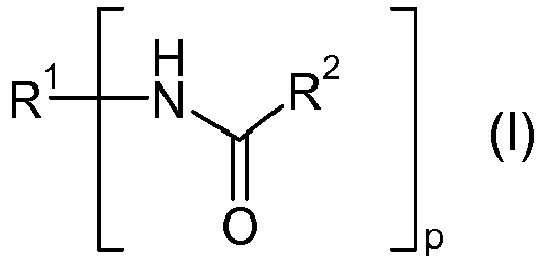 wobei R1 für einen p-wertigen Rest eines mit Isocyanatgruppen terminierten linearen oder verzweigten Polyurethanprepolymers nach dem Entfernen der endständigen Isocyanatgruppen steht;p für einen Wert von 2 bis 8 steht; undR2 unabhängig voneinander für einen Substituenten steht, welcher ausgewählt ist aus der Gruppe bestehend aus

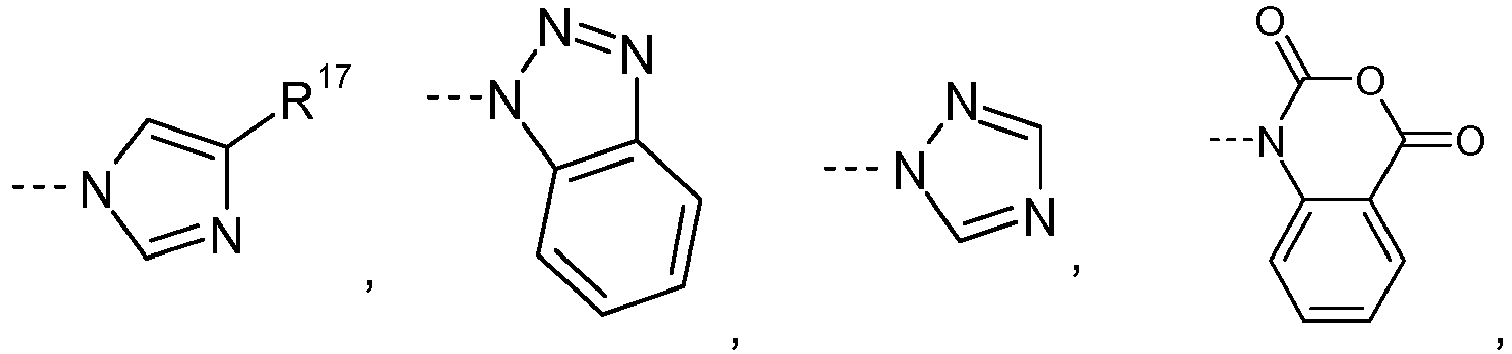
 R5, R6, R7 und R8 je unabhängig voneinander für eine Alkyl- oder Cycloalkyl- oder Aralkyl- oder Arylalkyl-Gruppe steht oder R5 zusammen mit R6, oder R7 zusammen mit R8, einen Teil eines 4- bis 7-gliedrigen Rings bilden, welcher gegebenenfalls substituiert ist; R9, R9' und R10 je unabhängig voneinander für eine Alkyl- oder Aralkyl- oder Arylalkyl-Gruppe oder für eine Alkyloxy- oder Aryloxy- oder Aralkyloxy-Gruppe steht;R11 für eine Alkylgruppe steht,R12, R13 und R14 je unabhängig voneinander für eine Alkylengruppe mit 2 bis 5 C-Atomen, welche gegebenenfalls Doppelbindungen aufweist oder substituiert ist, oder für eine Phenylengruppe oder für eine hydrierte Phenylengruppe stehen;R15, R16 und R17 je unabhängig voneinander für H oder für eine Alkylgruppe oder für eine Arylgruppe oder eine Aralkylgruppe stehen; und R18 für eine Aralkylgruppe oder für eine ein- oder mehrkernige substituierte oder unsubstituierte Aromatengruppe steht, welche gegebenenfalls aromatische Hydroxylgruppen aufweist;R4 für einen Rest eines eine primäre oder sekundäre Hydroxylgruppe enthaltenden aliphatischen, cycloaliphatischen, aromatischen oder araliphatischen Epoxids nach dem Entfernen der Hydroxy- und Epoxidgruppen steht;und m für einen Wert von 1, 2 oder 3 steht.
 - Einkomponentiger hitzehärtender Epoxidharzklebstoff nach irgendeinem der vorgehenden Ansprüche, wobei der Epoxidharzklebstoff eine Viskosität zwischen 1000 Pas und 3000 Pas bei 25°C, insbesondere zwischen 1100 Pas und 2800 Pas, bei 25°C aufweist.
- Einkomponentiger hitzehärtender Epoxidharzklebstoff nach irgendeinem der vorgehenden Ansprüche, wobei der latente Härter ausgewählt ist aus Dicyandiamid, Guanaminen, Guanidinen, Aminoguanidinen und deren Derivaten, substituierten Harnstoffen, Imidazolen und Amin-Komplexen, wobei Dicyandiamid bevorzugt ist.
- Verfahren zur Verklebung von Substraten, insbesondere Metallsubstraten, umfassend die Schrittea) Applikation eines einkomponentigen hitzehärtenden Epoxidharzklebstoffs nach irgendeinem der Ansprüche 1 bis 8 auf ein erstes Substrat, insbesondere ein erstes Metallsubstrat;b) Kontaktieren des applizierten Epoxidharzklebstoffs mit einem zweiten Substrat, insbesondere einem zweiten Metallsubstrat, unter Bildung eines Klebverbunds; undc) Aushärten des Epoxidharzklebstoffs im Klebverbund bei einer Temperatur im Bereich von 100 bis 220 °C.
- Verfahren nach Anspruch 9, wobei zwischen Schritt b) und Schritt c) ein Schritt b') ausgeführt wird, wobei Schritt b') umfasst: In Kontakt bringen der Substrate und des damit in Kontakt stehenden einkomponentigen hitzehärtenden Epoxidharzklebstoffs mit einer Waschflüssigkeit bei einer Temperatur zwischen 20 und 100°C, insbesondere zwischen 40 und 70°C; bevorzugt zwischen 50 und 70°C.
- Artikel, umfassend einen gehärteten Klebverbund, wobei der Klebverbund nach einem Verfahren nach irgendeinem der Ansprüche 9 oder 10 erhältlich ist.
- Verwendung eines einkomponentigen hitzehärtenden Epoxidharzklebstoffs nach irgendeinem der Ansprüche 1 bis 8 zur wärmebeständigen Verklebung von Substraten.
- Verwendung von Aerogelpartikeln, wie sie in dem einkomponentigen hitzehärtenden Epoxidharzklebstoff gemäss einem der Ansprüche 1 bis 8 beschrieben sind, zur Erhöhung der Auswaschbeständigkeit eines einkomponentigen hitzehärtenden Epoxidharzklebstoffs, insbesondere eines hitzehärtenden Epoxidharzklebstoffs im Fahrzeugbau.
- Verwendung von Aerogelpartikeln, wie sie in dem einkomponentigen hitzehärtenden Epoxidharzklebstoff gemäss einem der Ansprüche 1 bis 8 beschrieben sind, zur Erhöhung der Schlagschälfestigkeit/Impact peel (I-Peel) (gemäss ISO 11343), insbesondere zwischen 23 °C bis - 30°C, eines einkomponentigen hitzehärtenden Epoxidharzklebstoffs, insbesondere eines hitzehärtenden Epoxidharzklebstoffs im Fahrzeugbau.
Priority Applications (5)
| Application Number | Priority Date | Filing Date | Title |
|---|---|---|---|
| EP17181275.3A EP3428045A1 (de) | 2017-07-13 | 2017-07-13 | Einkomponentiger hitzehärtender epoxidklebstoff hoher auswaschbeständigkeit |
| PCT/EP2018/068527 WO2019011849A1 (de) | 2017-07-13 | 2018-07-09 | Einkomponentiger hitzehärtender epoxidklebstoff mit hoher auswaschbeständigkeit |
| CN201880046577.2A CN111032496A (zh) | 2017-07-13 | 2018-07-09 | 具有高洗出耐受性的单组分热固化环氧粘合剂 |
| EP18735339.6A EP3652047B1 (de) | 2017-07-13 | 2018-07-09 | Einkomponentiger hitzehärtender epoxidklebstoff mit hoher auswaschbeständigkeit |
| US16/630,780 US11208580B2 (en) | 2017-07-13 | 2018-07-09 | Single-component thermosetting epoxy resin having high scouring resistance |
Applications Claiming Priority (1)
| Application Number | Priority Date | Filing Date | Title |
|---|---|---|---|
| EP17181275.3A EP3428045A1 (de) | 2017-07-13 | 2017-07-13 | Einkomponentiger hitzehärtender epoxidklebstoff hoher auswaschbeständigkeit |
Publications (1)
| Publication Number | Publication Date |
|---|---|
| EP3428045A1 true EP3428045A1 (de) | 2019-01-16 |
Family
ID=59366241
Family Applications (2)
| Application Number | Title | Priority Date | Filing Date |
|---|---|---|---|
| EP17181275.3A Withdrawn EP3428045A1 (de) | 2017-07-13 | 2017-07-13 | Einkomponentiger hitzehärtender epoxidklebstoff hoher auswaschbeständigkeit |
| EP18735339.6A Active EP3652047B1 (de) | 2017-07-13 | 2018-07-09 | Einkomponentiger hitzehärtender epoxidklebstoff mit hoher auswaschbeständigkeit |
Family Applications After (1)
| Application Number | Title | Priority Date | Filing Date |
|---|---|---|---|
| EP18735339.6A Active EP3652047B1 (de) | 2017-07-13 | 2018-07-09 | Einkomponentiger hitzehärtender epoxidklebstoff mit hoher auswaschbeständigkeit |
Country Status (4)
| Country | Link |
|---|---|
| US (1) | US11208580B2 (de) |
| EP (2) | EP3428045A1 (de) |
| CN (1) | CN111032496A (de) |
| WO (1) | WO2019011849A1 (de) |
Families Citing this family (1)
| Publication number | Priority date | Publication date | Assignee | Title |
|---|---|---|---|---|
| CN110144187A (zh) * | 2019-05-20 | 2019-08-20 | 陈光辉 | 一种人造石用胶黏剂的制备方法 |
Citations (6)
| Publication number | Priority date | Publication date | Assignee | Title |
|---|---|---|---|---|
| GB1124251A (en) * | 1964-08-21 | 1968-08-21 | Tile Council Of America | Epoxy resin compositions |
| EP0699104B1 (de) | 1993-05-18 | 1997-08-06 | Hoechst Aktiengesellschaft | Verfahren zur unterkritischen trocknung von aerogelen |
| EP1174481A2 (de) * | 2000-07-18 | 2002-01-23 | Illinois Tool Works Inc. | Einkomponentiger hitzevernetzter Epoxidharzklebstoff |
| WO2008115812A2 (en) | 2007-03-16 | 2008-09-25 | Cabot Corporation | Aerogel particles and methods of making same |
| EP2134799A1 (de) * | 2006-12-21 | 2009-12-23 | Sika Technology AG | Bördelfalzverklebung |
| WO2016108958A1 (en) * | 2014-12-31 | 2016-07-07 | Dow Global Technologies Llc | Crash durable epoxy adhesive compositions having improved low-temperature impact resistance and wash off resistance |
Family Cites Families (5)
| Publication number | Priority date | Publication date | Assignee | Title |
|---|---|---|---|---|
| GB9827367D0 (en) * | 1998-12-11 | 1999-02-03 | Dow Deutschland Inc | Adhesive resin composition |
| EP1916269A1 (de) * | 2006-10-24 | 2008-04-30 | Sika Technology AG | Blockierte Polyurethanprepolymere und hitzehärtende Epoxidharzzusammensetzungen |
| GB201102672D0 (en) * | 2011-02-15 | 2011-03-30 | Zephyros Inc | Improved structural adhesives |
| DE102013218495A1 (de) * | 2013-09-16 | 2015-03-19 | Henkel Ag & Co. Kgaa | Fügeverfahren |
| CN106520077B (zh) * | 2016-09-10 | 2019-09-03 | 北京工业大学 | 相变储能纤维/SiO2气凝胶复合毡及其制备方法 |
-
2017
- 2017-07-13 EP EP17181275.3A patent/EP3428045A1/de not_active Withdrawn
-
2018
- 2018-07-09 WO PCT/EP2018/068527 patent/WO2019011849A1/de not_active Ceased
- 2018-07-09 CN CN201880046577.2A patent/CN111032496A/zh active Pending
- 2018-07-09 EP EP18735339.6A patent/EP3652047B1/de active Active
- 2018-07-09 US US16/630,780 patent/US11208580B2/en not_active Expired - Fee Related
Patent Citations (6)
| Publication number | Priority date | Publication date | Assignee | Title |
|---|---|---|---|---|
| GB1124251A (en) * | 1964-08-21 | 1968-08-21 | Tile Council Of America | Epoxy resin compositions |
| EP0699104B1 (de) | 1993-05-18 | 1997-08-06 | Hoechst Aktiengesellschaft | Verfahren zur unterkritischen trocknung von aerogelen |
| EP1174481A2 (de) * | 2000-07-18 | 2002-01-23 | Illinois Tool Works Inc. | Einkomponentiger hitzevernetzter Epoxidharzklebstoff |
| EP2134799A1 (de) * | 2006-12-21 | 2009-12-23 | Sika Technology AG | Bördelfalzverklebung |
| WO2008115812A2 (en) | 2007-03-16 | 2008-09-25 | Cabot Corporation | Aerogel particles and methods of making same |
| WO2016108958A1 (en) * | 2014-12-31 | 2016-07-07 | Dow Global Technologies Llc | Crash durable epoxy adhesive compositions having improved low-temperature impact resistance and wash off resistance |
Also Published As
| Publication number | Publication date |
|---|---|
| WO2019011849A1 (de) | 2019-01-17 |
| US20210147731A1 (en) | 2021-05-20 |
| EP3652047A1 (de) | 2020-05-20 |
| EP3652047B1 (de) | 2024-03-13 |
| US11208580B2 (en) | 2021-12-28 |
| CN111032496A (zh) | 2020-04-17 |
Similar Documents
| Publication | Publication Date | Title |
|---|---|---|
| EP2917255B1 (de) | Neue schlagzähigkeitsmodifikatoren für epoxy-basierte klebstoffe | |
| EP2084203B1 (de) | Hitzehärtende epoxidharzzusammensetzung mit blockiertem polyurethanprepolymer | |
| EP2085426B1 (de) | Auswaschbeständige hitzehärtende Epoxidharzklebstoffe | |
| EP2060592B1 (de) | Hitzehärtende Epoxidharzzusammensetzung enthaltend nichtaromatische Harnstoffe als Beschleuniger | |
| EP1957554B1 (de) | Tieftemperatur-schlagzähe hitze-härtbare epoxidharzzusammensetzung mit epoxidfestharzen | |
| EP2084199B1 (de) | Blockierte polyurethanprepolymere und hitzehärtende epoxidharzzusammensetzungen | |
| EP1648950B1 (de) | Hitzehärtende zusammensetzungen mit tieftemperatur-schlagzähigkeitsmodifikatoren | |
| EP2917260B1 (de) | Aminzusammensetzung für einen crashfesten 2k epoxyklebstoff | |
| EP1916272A1 (de) | Hitzehärtende Epoxidharzzusammensetzung enthaltend ein blockiertes und ein epoxidterminiertes Polyurethanprepolymer | |
| EP2917254B1 (de) | Reaktive flüssigkautschuke aus blockierten isocyanat-terminierten präpolymeren mit glycolfänger | |
| EP3402835B1 (de) | Einkomponentiger hitzehärtender epoxidklebstoff mit verbesserter haftung | |
| EP3476882A1 (de) | Hitzehärtende epoxidharzzusammensetzung mit hoher lagerstabilität | |
| WO2008000830A1 (de) | Hitzehärtende zusammensetzung geeignet zum verkleben von beschichteten substraten | |
| EP3652047B1 (de) | Einkomponentiger hitzehärtender epoxidklebstoff mit hoher auswaschbeständigkeit | |
| EP3898757A1 (de) | Überlackierbare hitzehärtende epoxidharzklebstoffe | |
| EP2274359B1 (de) | Aktivator für epoxidharzzusammensetzungen | |
| EP3559076B1 (de) | Hitzehärtende epoxidharzzusammensetzung enthaltend einen beschleuniger | |
| EP2113525A1 (de) | Aktivator für Epoxidharzzusammensetzungen | |
| WO2018234534A1 (de) | Verfahren zur verbindung von formkörpern durch injektion einer einkomponentigen hitzehärtenden epoxidharzzusammensetzung in hohlräume | |
| CH699848A2 (de) | Aktivator für epoxidharzzusammensetzungen. |
Legal Events
| Date | Code | Title | Description |
|---|---|---|---|
| PUAI | Public reference made under article 153(3) epc to a published international application that has entered the european phase |
Free format text: ORIGINAL CODE: 0009012 |
|
| STAA | Information on the status of an ep patent application or granted ep patent |
Free format text: STATUS: THE APPLICATION HAS BEEN PUBLISHED |
|
| AK | Designated contracting states |
Kind code of ref document: A1 Designated state(s): AL AT BE BG CH CY CZ DE DK EE ES FI FR GB GR HR HU IE IS IT LI LT LU LV MC MK MT NL NO PL PT RO RS SE SI SK SM TR |
|
| AX | Request for extension of the european patent |
Extension state: BA ME |
|
| STAA | Information on the status of an ep patent application or granted ep patent |
Free format text: STATUS: THE APPLICATION IS DEEMED TO BE WITHDRAWN |
|
| 18D | Application deemed to be withdrawn |
Effective date: 20190717 |