EP3425630A1 - Electronic device-awakening method and apparatus, device and computer-readable storage medium - Google Patents
Electronic device-awakening method and apparatus, device and computer-readable storage medium Download PDFInfo
- Publication number
- EP3425630A1 EP3425630A1 EP18163301.7A EP18163301A EP3425630A1 EP 3425630 A1 EP3425630 A1 EP 3425630A1 EP 18163301 A EP18163301 A EP 18163301A EP 3425630 A1 EP3425630 A1 EP 3425630A1
- Authority
- EP
- European Patent Office
- Prior art keywords
- audio data
- electronic device
- wakeup
- data files
- file
- Prior art date
- Legal status (The legal status is an assumption and is not a legal conclusion. Google has not performed a legal analysis and makes no representation as to the accuracy of the status listed.)
- Ceased
Links
Images

Classifications
-
- G—PHYSICS
- G10—MUSICAL INSTRUMENTS; ACOUSTICS
- G10L—SPEECH ANALYSIS TECHNIQUES OR SPEECH SYNTHESIS; SPEECH RECOGNITION; SPEECH OR VOICE PROCESSING TECHNIQUES; SPEECH OR AUDIO CODING OR DECODING
- G10L15/00—Speech recognition
- G10L15/22—Procedures used during a speech recognition process, e.g. man-machine dialogue
-
- G—PHYSICS
- G06—COMPUTING OR CALCULATING; COUNTING
- G06F—ELECTRIC DIGITAL DATA PROCESSING
- G06F1/00—Details not covered by groups G06F3/00 - G06F13/00 and G06F21/00
- G06F1/26—Power supply means, e.g. regulation thereof
- G06F1/32—Means for saving power
- G06F1/3203—Power management, i.e. event-based initiation of a power-saving mode
- G06F1/3206—Monitoring of events, devices or parameters that trigger a change in power modality
- G06F1/3231—Monitoring the presence, absence or movement of users
-
- G—PHYSICS
- G06—COMPUTING OR CALCULATING; COUNTING
- G06F—ELECTRIC DIGITAL DATA PROCESSING
- G06F3/00—Input arrangements for transferring data to be processed into a form capable of being handled by the computer; Output arrangements for transferring data from processing unit to output unit, e.g. interface arrangements
- G06F3/16—Sound input; Sound output
- G06F3/167—Audio in a user interface, e.g. using voice commands for navigating, audio feedback
-
- G—PHYSICS
- G10—MUSICAL INSTRUMENTS; ACOUSTICS
- G10L—SPEECH ANALYSIS TECHNIQUES OR SPEECH SYNTHESIS; SPEECH RECOGNITION; SPEECH OR VOICE PROCESSING TECHNIQUES; SPEECH OR AUDIO CODING OR DECODING
- G10L13/00—Speech synthesis; Text to speech systems
-
- G—PHYSICS
- G10—MUSICAL INSTRUMENTS; ACOUSTICS
- G10L—SPEECH ANALYSIS TECHNIQUES OR SPEECH SYNTHESIS; SPEECH RECOGNITION; SPEECH OR VOICE PROCESSING TECHNIQUES; SPEECH OR AUDIO CODING OR DECODING
- G10L13/00—Speech synthesis; Text to speech systems
- G10L13/08—Text analysis or generation of parameters for speech synthesis out of text, e.g. grapheme to phoneme translation, prosody generation or stress or intonation determination
-
- G—PHYSICS
- G11—INFORMATION STORAGE
- G11B—INFORMATION STORAGE BASED ON RELATIVE MOVEMENT BETWEEN RECORD CARRIER AND TRANSDUCER
- G11B20/00—Signal processing not specific to the method of recording or reproducing; Circuits therefor
- G11B20/10—Digital recording or reproducing
-
- G—PHYSICS
- G10—MUSICAL INSTRUMENTS; ACOUSTICS
- G10L—SPEECH ANALYSIS TECHNIQUES OR SPEECH SYNTHESIS; SPEECH RECOGNITION; SPEECH OR VOICE PROCESSING TECHNIQUES; SPEECH OR AUDIO CODING OR DECODING
- G10L15/00—Speech recognition
- G10L15/22—Procedures used during a speech recognition process, e.g. man-machine dialogue
- G10L2015/223—Execution procedure of a spoken command
-
- G—PHYSICS
- G10—MUSICAL INSTRUMENTS; ACOUSTICS
- G10L—SPEECH ANALYSIS TECHNIQUES OR SPEECH SYNTHESIS; SPEECH RECOGNITION; SPEECH OR VOICE PROCESSING TECHNIQUES; SPEECH OR AUDIO CODING OR DECODING
- G10L15/00—Speech recognition
- G10L15/22—Procedures used during a speech recognition process, e.g. man-machine dialogue
- G10L2015/225—Feedback of the input speech
Definitions
- the present disclosure relates to wakeup technologies, and particularly to an electronic device-awakening method and apparatus, a device and a computer-readable storage medium.
- Artificial intelligence is a new technological science which reaches and develops theories, methods, techniques and application systems for simulating, extending and expanding human intelligence.
- Artificial intelligence as a branch of computer science, is intended to learn about essence of intelligence and creates a new intelligent machine which is capable of responding in a manner similar to human intelligence. Research in the field includes robots, language recognition, image recognition, natural language processing, expert systems and the like.
- a known speech wakeup manner can only provide a single prompt tone as a wakeup prompt, and the wakeup form is singular.
- a plurality of aspects of the present disclosure provide an electronic device-awakening method and apparatus, a device and a computer-readable storage medium, to provide many types of wakeup prompts.
- an electronic device-awakening method comprising:
- the above aspect and any possible implementation mode further provide an implementation mode: before the selecting an audio data file from at least two audio data files according to the speech wakeup instruction, as the wakeup answer file of the electronic device, the method further comprises:
- the above aspect and any possible implementation mode further provide an implementation mode: after generating said at least two audio data files by using TTS technology according to said at least one prompt text and said at least one sound parameter, the method further comprises:
- the selecting the audio data file from at least two audio data files according to the speech wakeup instruction, as the wakeup answer file of the electronic device comprises:
- the selecting the audio data file from at least two audio data files according to the speech wakeup instruction, as the wakeup answer file of the electronic device comprises:
- an electronic device-awakening apparatus comprising:
- the electronic device-awakening apparatus further comprises a generating unit configured to obtain at least one prompt text and at least one sound parameter; generate said at least two audio data files by using TTS technology according to said at least one prompt text and said at least one sound parameter.
- the generating unit is further configured to provide said at least two audio data files to the electronic device so that the electronic device performs storage processing.
- the selecting unit is specifically configured to randomly select an audio data file from the at least two audio data files according to the speech wakeup instruction, as the wakeup answer file of the electronic device.
- the selecting unit is specifically configured to obtain a voice print feature according to the speech wakeup instruction; select one user-set audio data file from the at least two audio data files according to the voice print feature, as the wakeup answer file of the electronic device.
- an device comprising one or more processors; a storage device for storing one or more programs; the one or more programs, when being executed by the one or more processors, enable the one or more processors to implement the electronic device-awakening method as stated in the first aspect.
- a computer-readable storage medium on which a computer program is stored, the program, when executed by a processor, implementing the electronic device-awakening method as stated in the first aspect.
- the user's speech wakeup instruction which is used to awaken the electronic device is obtained, and then an audio data file is selected from at least two audio data files according to the speech wakeup instruction, as a wakeup answer file of the electronic device, so that the wakeup answer file of the electronic device can be played. Since there are more than one selectable audio data files, many types of prompt tones can be provided, thereby achieving the purpose of providing many types of wakeup prompts.
- the technical solutions according to the present disclosure can be employed to accurately recognize which user is awakening the electronic device by using the voice print feature, and thereby select one user-set audio data file as the wakeup answer file of the electronic device so that personalized prompt tones can be provided to the user, and the purpose of providing many types of wakeup prompts is further implemented.
- the terminals involved in the embodiments of the present disclosure comprise but are not limited to a mobile phone, a Personal Digital Assistant (PDA), a wireless handheld device, a tablet computer, a Personal Computer (PC), an MP3 player, an MP4 player, and a wearable device (e.g., a pair of smart glasses, a smart watch, or a smart bracelet).
- PDA Personal Digital Assistant
- PC Personal Computer
- MP3 player an MP4 player
- a wearable device e.g., a pair of smart glasses, a smart watch, or a smart bracelet.
- Fig. 1 is a flow chart of an electronic device-awakening method according to an embodiment of the present disclosure. As shown in Fig. 1 ,
- the electronic device may employ a technical solution in the prior art to perform a relevant wakeup operation according to the speech wakeup instruction to enter a working state. Reference may be made to relevant content in the prior art for details.
- subjects for executing 101-103 may partially or totally be an application located in the electronic device, or an application located in a local terminal, or a function unit such as a plug-in or Software Development Kit (SDK) arranged in an application of the local terminal, or a processing engine located in a network-side server, or a distributed type system located on the network side.
- SDK Software Development Kit
- the application may be a native application (nativeAPP) installed on the terminal, or a web program (webApp) of a browser on the terminal. This is not particularly limited in the present embodiment.
- the user's speech wakeup instruction which is used to awaken the electronic device is obtained, and then an audio data file is selected from at least two audio data files according to the speech wakeup instruction, as a wakeup answer file of the electronic device, so that the wakeup answer file of the electronic device can be played. Since there are more than one selectable audio data file, many types of prompt tones can be provided, thereby achieving the purpose of providing many types of wakeup prompts.
- the electronic device before 101, the electronic device has already been in a sleep state.
- speech wakeup instructions for example, "Hi, let's go ahead".
- a sound acquiring device to acquire the speech wakeup instruction provided by the user, wherein the sound acquiring device may be a microphone built in or out of the electronic device. This is not particularly limited in the present embodiment.
- the sound parameter may include but is not limited to at least one of pitch parameter, tone parameter, volume parameter, timbre parameter, sound speed parameter and sound effect parameter. This is not particularly limited in the present embodiment.
- the so-called sound parameter may refer to relevant parameters for determining sound roles, e.g., male speech, female speech, kid speech, cartoon character's speech. This is not particularly limited in the present embodiment.
- the electronic device After the electronic device generates said at least two audio data files, it is feasible to respectively store the generated at least two audio data files under corresponding catalogs of the electronic device according to the sound roles.
- the user may use an application on the terminal corresponding to the smart device to provide sound parameters according to his own inclinations to control to generate said at least two audio data files.
- the user uses application on the terminal corresponding to the smart device to send the sound parameters to the electronic device which generates said at least two audio data files.
- the user uses an application on the terminal corresponding to the smart device or a server corresponding to the application to generate said at least two audio data files. Then, the generated at least two audio data files may be respectively stored under corresponding catalogs of the electronic device according to the sound roles.
- 102 it is specifically possible to obtain a voice print feature according to the speech wakeup instruction, and then select one user-set audio data file from the at least two audio data files according to the voice print feature, as the wakeup answer file of the electronic device.
- voice print feature is an audio data-specific feature and refers to a content-based digital signature that may represent important acoustic features of a section of audio data, and its main purpose is to build an effective mechanism to compare perceptual hearing quality of two audio data. It is noted that comparison here is not directly comparing audio data themselves that are usually very large, but comparing their respective voice print features that are usually smaller.
- the voice print feature may include but is not limited to acoustic features related to anatomical structures of human pronunciation mechanisms, for example, spectrum, cepstrum, resonance peak, fundamental tones, reflection coefficient and the like.
- a preset time interval e.g. 20ms
- partial data overlapping between neighboring frames for example, 50% data overlapping
- storage processing may be performed for it. Specifically, it is feasible to store the user's standard voice print on a storage device of a terminal, or on a storage device of the electronic device. This is not particularly limited in the present embodiment.
- the storage device may be a low-speed storage device, and may specifically be a hard disk of a computer system, or a non-running memory of the terminal or electronic device, namely, a physical memory such as a Read-Only Memory (ROM) or memory card. This is not particularly limited in the present embodiment.
- ROM Read-Only Memory
- the storage device may be a highspeed storage device, and may specifically be a memory of a computer system, or a running memory of the terminal or electronic device, namely, a system memory such as a Random Access Memory (RAM).
- RAM Random Access Memory
- the user's speech wakeup instruction which is used to awaken the electronic device is obtained, and then an audio data file is selected from at least two audio data files according to the speech wakeup instruction, as a wakeup answer file of the electronic device, so that the wakeup answer file of the electronic device can be played. Since there are more than one selectable audio data files, many types of prompt tones can be provided, thereby achieving the purpose of providing many types of wakeup prompts.
- the technical solution according to the present disclosure can be employed to accurately recognize which user is awakening the electronic device by using the voice print feature, and thereby select one user-set audio data file as the wakeup answer file of the electronic device so that personalized prompt tones can be provided to the user, and the purpose of providing many types of wakeup prompts is further implemented.
- the technical solution according to the present disclosure can be employed to effectively improve the user's experience.
- Fig. 2 is a block diagram of an electronic device-awakening apparatus according to another embodiment of the present disclosure.
- the electronic device-awakening apparatus may include an obtaining unit 21, a selecting unit 22 and a playing unit 23, wherein the obtaining unit 21 is configured to obtain a user's speech wakeup instruction which is used to awaken the electronic device; the selecting unit 22 is configured to select an audio data file from at least two audio data files according to the speech wakeup instruction, as a wakeup answer file of the electronic device; the playing unit 23 is configured to play the wakeup answer file of the electronic device.
- electronic device-awakening device may partially or totally be an application located in a local terminal, namely, or a function unit such as a plug-in or Software Development Kit (SDK) located in an application of the local terminal, or a query engine located in a network-side server, or a distributed type system located on the network side.
- SDK Software Development Kit
- the application may be a native application (nativeAPP) installed on the terminal, or a web program (webApp) of a browser on the terminal. This is not particularly limited in the present embodiment.
- the electronic device-awakening apparatus may further comprise a generating unit 31 configured to obtain at least one prompt text and at least one sound parameter, and generate said at least two audio data files by using TTS technology according to said at least one prompt text and said at least one sound parameter.
- a generating unit 31 configured to obtain at least one prompt text and at least one sound parameter, and generate said at least two audio data files by using TTS technology according to said at least one prompt text and said at least one sound parameter.
- the generating unit 31 may further be configured to provide said at least two audio data files to the electronic device so that the electronic device performs storage processing.
- the selecting unit 22 is specifically configured to randomly select an audio data file from the at least two audio data files according to the speech wakeup instruction, as the wakeup answer file of the electronic device.
- the selecting unit 22 is specifically configured to obtain a voice print feature according to the speech wakeup instruction, and then select one user-set audio data file from the at least two audio data files according to the voice print feature, as the wakeup answer file of the electronic device.
- the obtaining unit obtains the user's speech wakeup instruction which is used to awaken the electronic device, and then the selecting unit selects an audio data file from at least two audio data files according to the speech wakeup instruction, as a wakeup answer file of the electronic device, so that the playing unit can play the wakeup answer file of the electronic device. Since there are more than one selectable audio data files, many types of prompt tones can be provided, thereby achieving the purpose of providing many types of wakeup prompts.
- the technical solution according to the present disclosure can be employed to accurately recognize which user is awakening the electronic device by using the voice print feature, and thereby select one user-set audio data file as the wakeup answer file of the electronic device so that personalized prompt tones can be provided to the user, and the purpose of providing many types of wakeup prompts is further implemented.
- the technical solution according to the present disclosure can be employed to effectively improve the user's experience.
- Fig. 4 illustrates a block diagram of an example computer system/server 12 adapted to implement an implementation mode of the present disclosure.
- the computer system/server 12 shown in Fig. 4 is only an example and should not bring about any limitation to the function and scope of use of the embodiments of the present disclosure.
- the computer system/server 12 is shown in the form of a general-purpose computing device.
- the components of computer system/server 12 may include, but are not limited to, one or more processors (processing units) 16, a memory 28, and a bus 18 that couples various system components including system memory 28 and the processor 16.
- Bus 18 represents one or more of several types of bus structures, including a memory bus or memory controller, a peripheral bus, an accelerated graphics port, and a processor or local bus using any of a variety of bus architectures.
- bus architectures include Industry Standard Architecture (ISA) bus, Micro Channel Architecture (MCA) bus, Enhanced ISA (EISA) bus, Video Electronics Standards Association (VESA) local bus, and Peripheral Component Interconnect (PCI) bus.
- Computer system/server 12 typically includes a variety of computer system readable media. Such media may be any available media that is accessible by computer system/server 12, and it includes both volatile and non-volatile media, removable and non-removable media.
- Memory 28 can include computer system readable media in the form of volatile memory, such as random access memory (RAM) 30 and/or cache memory 32.
- Computer system/server 12 may further include other removable/non-removable, volatile/non-volatile computer system storage media.
- storage system 34 can be provided for reading from and writing to a non-removable, non-volatile magnetic media (not shown in Fig. 4 and typically called a "hard drive").
- a magnetic disk drive for reading from and writing to a removable, non-volatile magnetic disk (e.g., a "floppy disk"), and an optical disk drive for reading from or writing to a removable, non-volatile optical disk such as a CD-ROM, DVD-ROM or other optical media
- each drive can be connected to bus 18 by one or more data media interfaces.
- the memory 28 may include at least one program product having a set (e.g., at least one) of program modules that are configured to carry out the functions of embodiments of the present disclosure.
- Program/utility 40 having a set (at least one) of program modules 42, may be stored in the system memory 28 by way of example, and not limitation, as well as an operating system, one or more disclosure programs, other program modules, and program data. Each of these examples or a certain combination thereof might include an implementation of a networking environment.
- Program modules 42 generally carry out the functions and/or methodologies of embodiments of the present disclosure.
- Computer system/server 12 may also communicate with one or more external devices 14 such as a keyboard, a pointing device, a display 24, etc.; with one or more devices that enable a user to interact with computer system/server 12; and/or with any devices (e.g., network card, modem, etc.) that enable computer system/server 12 to communicate with one or more other computing devices. Such communication can occur via Input/Output (I/O) interfaces 22. Still yet, computer system/server 12 can communicate with one or more networks such as a local area network (LAN), a general wide area network (WAN), and/or a public network (e.g., the Internet) via network adapter 20. As depicted in Fig.
- LAN local area network
- WAN wide area network
- public network e.g., the Internet
- network adapter 20 communicates with the other communication modules of computer system/server 12 via bus 18. It should be understood that although not shown, other hardware and/or software modules could be used in conjunction with computer system/server 12. Examples, include, but are not limited to: microcode, device drivers, redundant processing units, external disk drive arrays, RAID systems, tape drives, and data archival storage systems, etc.
- the processor 16 executes various function applications and data processing by running programs stored in the memory 28, for example, implement the electronic device-awakening method provided by the embodiment corresponding to Fig. 1 .
- Another embodiment of the present disclosure further provides a computer-readable storage medium on which a computer program is stored.
- the program when executed by a processor, can implement the electronic device-awakening method provided by the embodiment corresponding to Fig. 1 .
- the computer-readable medium of the present embodiment may employ any combinations of one or more computer-readable media.
- the machine readable medium may be a machine readable signal medium or a machine readable storage medium.
- a machine readable medium may include, but not limited to, an electronic, magnetic, optical, electromagnetic, infrared, or semiconductor system, apparatus, or device, or any suitable combination of the foregoing.
- the machine readable storage medium can be any tangible medium that include or store programs for use by an instruction execution system, apparatus or device or a combination thereof.
- the computer-readable signal medium may be included in a baseband or serve as a data signal propagated by part of a carrier, and it carries a computer-readable program code therein. Such propagated data signal may take many forms, including, but not limited to, electromagnetic signal, optical signal or any suitable combinations thereof.
- the computer-readable signal medium may further be any computer-readable medium besides the computer-readable storage medium, and the computer-readable medium may send, propagate or transmit a program for use by an instruction execution system, apparatus or device or a combination thereof.
- the program codes included by the computer-readable medium may be transmitted with any suitable medium, including, but not limited to radio, electric wire, optical cable, RF or the like, or any suitable combination thereof.
- Computer program code for carrying out operations disclosed herein may be written in one or more programming languages or any combination thereof. These programming languages include an object oriented programming language such as Java, Smalltalk, C++ or the like, and conventional procedural programming languages, such as the "C" programming language or similar programming languages.
- the program code may execute entirely on the user's computer, partly on the user's computer, as a stand-alone software package, partly on the user's computer and partly on a remote computer or entirely on the remote computer or server.
- the remote computer may be connected to the user's computer through any type of network, including a local area network (LAN) or a wide area network (WAN), or the connection may be made to an external computer (for example, through the Internet using an Internet Service Provider).
- LAN local area network
- WAN wide area network
- Internet Service Provider for example, AT&T, MCI, Sprint, EarthLink, MSN, GTE, etc.
- the revealed system, apparatus and method can be implemented in other ways.
- the above-described embodiments for the apparatus are only exemplary, e.g., the division of the units is merely logical one, and, in reality, they can be divided in other ways upon implementation.
- a plurality of units or components may be combined or integrated into another system, or some features may be neglected or not executed.
- mutual coupling or direct coupling or communicative connection as displayed or discussed may be indirect coupling or communicative connection performed via some interfaces, means or units and may be electrical, mechanical or in other forms.
- the units described as separate parts may be or may not be physically separated, the parts shown as units may be or may not be physical units, i.e., they can be located in one place, or distributed in a plurality of network units. One can select some or all the units to achieve the purpose of the embodiment according to the actual needs.
- functional units can be integrated in one processing unit, or they can be separate physical presences; or two or more units can be integrated in one unit.
- the integrated unit described above can be implemented in the form of hardware, or they can be implemented with hardware plus software functional units.
- the aforementioned integrated unit in the form of software function units may be stored in a computer readable storage medium.
- the aforementioned software function units are stored in a storage medium, including several instructions to instruct a computer device (a personal computer, server, or network equipment, etc.) or processor to perform some steps of the method described in the various embodiments of the present disclosure.
- the aforementioned storage medium includes various media that may store program codes, such as U disk, removable hard disk, read-only memory (ROM), a random access memory (RAM), magnetic disk, or an optical disk.
Landscapes
- Engineering & Computer Science (AREA)
- Physics & Mathematics (AREA)
- Health & Medical Sciences (AREA)
- Audiology, Speech & Language Pathology (AREA)
- Human Computer Interaction (AREA)
- Multimedia (AREA)
- Computational Linguistics (AREA)
- Acoustics & Sound (AREA)
- Theoretical Computer Science (AREA)
- General Engineering & Computer Science (AREA)
- General Physics & Mathematics (AREA)
- General Health & Medical Sciences (AREA)
- Signal Processing (AREA)
- Management, Administration, Business Operations System, And Electronic Commerce (AREA)
- User Interface Of Digital Computer (AREA)
- Stored Programmes (AREA)
Abstract
Description
- The present application claims the priority of Chinese Patent Application No.
2017105435164, filed on July 5, 2017 - The present disclosure relates to wakeup technologies, and particularly to an electronic device-awakening method and apparatus, a device and a computer-readable storage medium.
- Artificial intelligence, abbreviated as AI, is a new technological science which reaches and develops theories, methods, techniques and application systems for simulating, extending and expanding human intelligence. Artificial intelligence, as a branch of computer science, is intended to learn about essence of intelligence and creates a new intelligent machine which is capable of responding in a manner similar to human intelligence. Research in the field includes robots, language recognition, image recognition, natural language processing, expert systems and the like.
- In recent years, electronic devices having a speech interaction function, for example, smart acoustic enclosures spring up constantly, and they are usually awakened in a speech wakeup manner. A known speech wakeup manner can only provide a single prompt tone as a wakeup prompt, and the wakeup form is singular.
- A plurality of aspects of the present disclosure provide an electronic device-awakening method and apparatus, a device and a computer-readable storage medium, to provide many types of wakeup prompts.
- According to an aspect of the present disclosure, there is provided an electronic device-awakening method, comprising:
- obtaining a user's speech wakeup instruction which is used to awaken the electronic device;
- selecting an audio data file from at least two audio data files according to the speech wakeup instruction, as a wakeup answer file of the electronic device;
- playing the wakeup answer file of the electronic device.
- The above aspect and any possible implementation mode further provide an implementation mode: before the selecting an audio data file from at least two audio data files according to the speech wakeup instruction, as the wakeup answer file of the electronic device, the method further comprises:
- obtaining at least one prompt text and at least one sound parameter;
- generating said at least two audio data files by using TTS technology according to said at least one prompt text and said at least one sound parameter.
- The above aspect and any possible implementation mode further provide an implementation mode: after generating said at least two audio data files by using TTS technology according to said at least one prompt text and said at least one sound parameter, the method further comprises:
- providing said at least two audio data files to the electronic device so that the electronic device performs storage processing.
- The above aspect and any possible implementation mode further provide an implementation mode: the selecting the audio data file from at least two audio data files according to the speech wakeup instruction, as the wakeup answer file of the electronic device comprises:
- randomly selecting an audio data file from the at least two audio data files according to the speech wakeup instruction, as the wakeup answer file of the electronic device.
- The above aspect and any possible implementation mode further provide an implementation mode: the selecting the audio data file from at least two audio data files according to the speech wakeup instruction, as the wakeup answer file of the electronic device comprises:
- obtaining a voice print feature according to the speech wakeup instruction;
- selecting one user-set audio data file from the at least two audio data files according to the voice print feature, as the wakeup answer file of the electronic device.
- According to another aspect of the present disclosure, there is provided an electronic device-awakening apparatus, comprising:
- an obtaining unit configured to obtain a user's speech wakeup instruction which is used to awaken the electronic device;
- a selecting unit configured to select an audio data file from at least two audio data files according to the speech wakeup instruction, as a wakeup answer file of the electronic device;
- a playing unit configured to play the wakeup answer file of the electronic device.
- The above aspect and any possible implementation mode further provide an implementation mode: the electronic device-awakening apparatus further comprises a generating unit configured to
obtain at least one prompt text and at least one sound parameter;
generate said at least two audio data files by using TTS technology according to said at least one prompt text and said at least one sound parameter. - The above aspect and any possible implementation mode further provide an implementation mode: the generating unit is further configured to
provide said at least two audio data files to the electronic device so that the electronic device performs storage processing. - The above aspect and any possible implementation mode further provide an implementation mode: the selecting unit is specifically configured to
randomly select an audio data file from the at least two audio data files according to the speech wakeup instruction, as the wakeup answer file of the electronic device. - The above aspect and any possible implementation mode further provide an implementation mode: the selecting unit is specifically configured to
obtain a voice print feature according to the speech wakeup instruction;
select one user-set audio data file from the at least two audio data files according to the voice print feature, as the wakeup answer file of the electronic device. - According to a further aspect of the present disclosure, there is provided an device, comprising
one or more processors;
a storage device for storing one or more programs;
the one or more programs, when being executed by the one or more processors, enable the one or more processors to implement the electronic device-awakening method as stated in the first aspect. - According to a further aspect of the present disclosure, there is provided a computer-readable storage medium on which a computer program is stored, the program, when executed by a processor, implementing the electronic device-awakening method as stated in the first aspect.
- As known from the above technical solutions, in the embodiments of the present disclosure, the user's speech wakeup instruction which is used to awaken the electronic device is obtained, and then an audio data file is selected from at least two audio data files according to the speech wakeup instruction, as a wakeup answer file of the electronic device, so that the wakeup answer file of the electronic device can be played. Since there are more than one selectable audio data files, many types of prompt tones can be provided, thereby achieving the purpose of providing many types of wakeup prompts.
- In addition, the technical solutions according to the present disclosure can be employed to accurately recognize which user is awakening the electronic device by using the voice print feature, and thereby select one user-set audio data file as the wakeup answer file of the electronic device so that personalized prompt tones can be provided to the user, and the purpose of providing many types of wakeup prompts is further implemented.
- In addition, the technical solutions according to the present disclosure can be employed to effectively improve the user's experience.
- To describe technical solutions of embodiments of the present disclosure more clearly, figures to be used in the embodiments or in depictions regarding the prior art will be described briefly. Obviously, the figures described below are only some embodiments of the present disclosure. Those having ordinary skill in the art appreciate that other figures may be obtained from these figures without making inventive efforts.
-
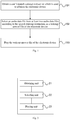
Fig. 1 is a flow chart of an electronic device-awakening method according to an embodiment of the present disclosure; -
Fig. 2 is a block diagram of an electronic device-awakening apparatus according to another embodiment of the present disclosure; -
Fig. 3 is a block diagram of an electronic device-awakening apparatus according to a further embodiment of the present disclosure; -
Fig. 4 is a block diagram of an exemplary computer system/server 12 adapted to implement the embodiment of the present disclosure. - To make objectives, technical solutions and advantages of embodiments of the present disclosure clearer, technical solutions of embodiment of the present disclosure will be described clearly and completely with reference to figures in embodiments of the present disclosure. Obviously, embodiments described here are partial embodiments of the present disclosure, not all embodiments. All other embodiments obtained by those having ordinary skill in the art based on the embodiments of the present disclosure, without making any inventive efforts, fall within the protection scope of the present disclosure.
- It needs to be appreciated that the terminals involved in the embodiments of the present disclosure comprise but are not limited to a mobile phone, a Personal Digital Assistant (PDA), a wireless handheld device, a tablet computer, a Personal Computer (PC), an MP3 player, an MP4 player, and a wearable device (e.g., a pair of smart glasses, a smart watch, or a smart bracelet).
- In addition, the term "and/or" used in the text is only an association relationship depicting associated objects and represents that three relations might exist, for example, A and/or B may represents three cases, namely, A exists individually, both A and B coexist, and B exists individually. In addition, the symbol "/" in the text generally indicates associated objects before and after the symbol are in an "or" relationship.
-
Fig. 1 is a flow chart of an electronic device-awakening method according to an embodiment of the present disclosure. As shown inFig. 1 , - 101: obtaining a user's speech wakeup instruction which is used to awaken the electronic device.
- 102: selecting an audio data file from at least two audio data files according to the speech wakeup instruction, as a wakeup answer file of the electronic device.
- 103: playing the wakeup answer file of the electronic device.
- It may be appreciated that after obtaining the user's speech wakeup instruction in 101, the electronic device may employ a technical solution in the prior art to perform a relevant wakeup operation according to the speech wakeup instruction to enter a working state. Reference may be made to relevant content in the prior art for details.
- It needs to be appreciated that subjects for executing 101-103 may partially or totally be an application located in the electronic device, or an application located in a local terminal, or a function unit such as a plug-in or Software Development Kit (SDK) arranged in an application of the local terminal, or a processing engine located in a network-side server, or a distributed type system located on the network side. This is not particularly limited in the present embodiment.
- It may be understood that the application may be a native application (nativeAPP) installed on the terminal, or a web program (webApp) of a browser on the terminal. This is not particularly limited in the present embodiment.
- As such, the user's speech wakeup instruction which is used to awaken the electronic device is obtained, and then an audio data file is selected from at least two audio data files according to the speech wakeup instruction, as a wakeup answer file of the electronic device, so that the wakeup answer file of the electronic device can be played. Since there are more than one selectable audio data file, many types of prompt tones can be provided, thereby achieving the purpose of providing many types of wakeup prompts.
- Currently, household electronic devices having operating systems, such as computers, smart household devices and TV set-top boxes, all have a system sleep function; when a certain condition is reached, the system will enter a sleep state, for example, the electronic device may close some functions of the electronic device and only retain partial functions such as wakeup function and power supply. As such, power consumption of the electronic device can be saved, and meanwhile loss of the electronic device can be reduced, and the service life of the electronic device can be prolonged.
- Optionally, in a possible implementation mode of the present embodiment, before 101, the electronic device has already been in a sleep state.
- Optionally, in a possible implementation mode of the present embodiment, before 101, it is possible to further set some specific speech instructions as speech wakeup instructions, for example, "Hi, let's go ahead".
- Optionally, in a possible implementation mode of the present embodiment, in 101, it is specifically possible to use a sound acquiring device to acquire the speech wakeup instruction provided by the user, wherein the sound acquiring device may be a microphone built in or out of the electronic device. This is not particularly limited in the present embodiment.
- Optionally, in a possible implementation mode of the present embodiment, before 102, it is feasible to further obtain at least one prompt text and at least one sound parameter, and thereby generate said at least two audio data files by using Text to Speech TTS technology according to said at least one prompt text and said at least one sound parameter.
- Wherein the sound parameter may include but is not limited to at least one of pitch parameter, tone parameter, volume parameter, timbre parameter, sound speed parameter and sound effect parameter. This is not particularly limited in the present embodiment.
- The so-called sound parameter may refer to relevant parameters for determining sound roles, e.g., male speech, female speech, kid speech, cartoon character's speech. This is not particularly limited in the present embodiment.
- Specifically, in the implementation mode, it is feasible to generate said at least two audio data files in a local manner, or generate said at least two audio data files in a cloud manner. This is not particularly limited in the present embodiment.
- Furthermore, it is further feasible to, after generating said at least two audio data files, further provide said at least two audio data files to the electronic device so that the electronic device performs storage processing.
- For example, after the electronic device generates said at least two audio data files, it is feasible to respectively store the generated at least two audio data files under corresponding catalogs of the electronic device according to the sound roles.
- Or, for another example, the user may use an application on the terminal corresponding to the smart device to provide sound parameters according to his own inclinations to control to generate said at least two audio data files. For example, the user uses application on the terminal corresponding to the smart device to send the sound parameters to the electronic device which generates said at least two audio data files. Or, again for example, the user uses an application on the terminal corresponding to the smart device or a server corresponding to the application to generate said at least two audio data files. Then, the generated at least two audio data files may be respectively stored under corresponding catalogs of the electronic device according to the sound roles.
- Optionally, in a possible implementation mode of the present embodiment, in 102, it is specifically feasible to randomly select an audio data file from the at least two audio data files according to the speech wakeup instruction, as the wakeup answer file of the electronic device.
- Optionally, in a possible implementation mode of the present embodiment, in 102, it is specifically possible to obtain a voice print feature according to the speech wakeup instruction, and then select one user-set audio data file from the at least two audio data files according to the voice print feature, as the wakeup answer file of the electronic device.
- The so-called voice print feature is an audio data-specific feature and refers to a content-based digital signature that may represent important acoustic features of a section of audio data, and its main purpose is to build an effective mechanism to compare perceptual hearing quality of two audio data. It is noted that comparison here is not directly comparing audio data themselves that are usually very large, but comparing their respective voice print features that are usually smaller.
- In a specific implementation procedure, the voice print feature may include but is not limited to acoustic features related to anatomical structures of human pronunciation mechanisms, for example, spectrum, cepstrum, resonance peak, fundamental tones, reflection coefficient and the like.
- Specifically, it is possible to sample, quantize and encode the user's speech wakeup instruction to obtain PCM data as the user's audio data. Then, it is feasible to perform framing processing for the user's audio data to obtain at least one frame of data, and then perform audio analysis processing for each frame of data in the at least one frame of data to obtain the voice print feature of each frame of data.
- For example, it is feasible to perform framing processing for the user's audio data according to a preset time interval, e.g., 20ms, with partial data overlapping between neighboring frames, for example, 50% data overlapping, so that at least one frame of data of the user's audio data can be obtained.
- In another specific implementation procedure, before 102, it is possible to obtain the user's standard voice print, for example, collect user-provided reference speech instruction and obtain the user's standard voice print according to the reference speech instruction.
- After the user's standard voice print is obtained, storage processing may be performed for it. Specifically, it is feasible to store the user's standard voice print on a storage device of a terminal, or on a storage device of the electronic device. This is not particularly limited in the present embodiment.
- In a specific implementation procedure, the storage device may be a low-speed storage device, and may specifically be a hard disk of a computer system, or a non-running memory of the terminal or electronic device, namely, a physical memory such as a Read-Only Memory (ROM) or memory card. This is not particularly limited in the present embodiment.
- In another specific implementation procedure, the storage device may be a highspeed storage device, and may specifically be a memory of a computer system, or a running memory of the terminal or electronic device, namely, a system memory such as a Random Access Memory (RAM). This is not particularly limited in the present embodiment.
- In this embodiment, the user's speech wakeup instruction which is used to awaken the electronic device is obtained, and then an audio data file is selected from at least two audio data files according to the speech wakeup instruction, as a wakeup answer file of the electronic device, so that the wakeup answer file of the electronic device can be played. Since there are more than one selectable audio data files, many types of prompt tones can be provided, thereby achieving the purpose of providing many types of wakeup prompts.
- In addition, the technical solution according to the present disclosure can be employed to accurately recognize which user is awakening the electronic device by using the voice print feature, and thereby select one user-set audio data file as the wakeup answer file of the electronic device so that personalized prompt tones can be provided to the user, and the purpose of providing many types of wakeup prompts is further implemented.
- In addition, the technical solution according to the present disclosure can be employed to effectively improve the user's experience.
- As appreciated, for ease of description, the aforesaid method embodiments are all described as a combination of a series of actions, but those skilled in the art should appreciated that the present disclosure is not limited to the described order of actions because some steps may be performed in other orders or simultaneously according to the present disclosure. Secondly, those skilled in the art should appreciate the embodiments described in the description all belong to preferred embodiments, and the involved actions and modules are not necessarily requisite for the present disclosure.
- In the above embodiments, different emphasis is placed on respective embodiments, and reference may be made to related depictions in other embodiments for portions not detailed in a certain embodiment.
-
Fig. 2 is a block diagram of an electronic device-awakening apparatus according to another embodiment of the present disclosure. As shown inFig. 2 , the electronic device-awakening apparatus according to the present embodiment may include an obtainingunit 21, a selectingunit 22 and aplaying unit 23, wherein the obtainingunit 21 is configured to obtain a user's speech wakeup instruction which is used to awaken the electronic device; the selectingunit 22 is configured to select an audio data file from at least two audio data files according to the speech wakeup instruction, as a wakeup answer file of the electronic device; the playingunit 23 is configured to play the wakeup answer file of the electronic device. - It needs to be appreciated that electronic device-awakening device according to the embodiment may partially or totally be an application located in a local terminal, namely, or a function unit such as a plug-in or Software Development Kit (SDK) located in an application of the local terminal, or a query engine located in a network-side server, or a distributed type system located on the network side. This is not particularly limited in the present embodiment.
- It may be understood that the application may be a native application (nativeAPP) installed on the terminal, or a web program (webApp) of a browser on the terminal. This is not particularly limited in the present embodiment.
- Optionally, in a possible implementation mode of the present embodiment, as shown in
Fig. 3 , the electronic device-awakening apparatus according to the present embodiment may further comprise a generatingunit 31 configured to obtain at least one prompt text and at least one sound parameter, and generate said at least two audio data files by using TTS technology according to said at least one prompt text and said at least one sound parameter. - Furthermore, in the implementation mode, the generating
unit 31 may further be configured to provide said at least two audio data files to the electronic device so that the electronic device performs storage processing. - Optionally, in a possible implementation mode of the present embodiment, the selecting
unit 22 is specifically configured to randomly select an audio data file from the at least two audio data files according to the speech wakeup instruction, as the wakeup answer file of the electronic device. - Optionally, in a possible implementation mode of the present embodiment, the selecting
unit 22 is specifically configured to obtain a voice print feature according to the speech wakeup instruction, and then select one user-set audio data file from the at least two audio data files according to the voice print feature, as the wakeup answer file of the electronic device. - It needs to be appreciated that the method in the embodiment corresponding to
Fig. 1 may be implemented by the electronic device-awakening apparatus according to the present embodiment. Reference may be made to relevant contents in the embodiment corresponding toFig. 1 for detailed description, which will not be detailed any longer here. - In the present embodiment, the obtaining unit obtains the user's speech wakeup instruction which is used to awaken the electronic device, and then the selecting unit selects an audio data file from at least two audio data files according to the speech wakeup instruction, as a wakeup answer file of the electronic device, so that the playing unit can play the wakeup answer file of the electronic device. Since there are more than one selectable audio data files, many types of prompt tones can be provided, thereby achieving the purpose of providing many types of wakeup prompts.
- In addition, the technical solution according to the present disclosure can be employed to accurately recognize which user is awakening the electronic device by using the voice print feature, and thereby select one user-set audio data file as the wakeup answer file of the electronic device so that personalized prompt tones can be provided to the user, and the purpose of providing many types of wakeup prompts is further implemented.
- In addition, the technical solution according to the present disclosure can be employed to effectively improve the user's experience.
-
Fig. 4 illustrates a block diagram of an example computer system/server 12 adapted to implement an implementation mode of the present disclosure. The computer system/server 12 shown inFig. 4 is only an example and should not bring about any limitation to the function and scope of use of the embodiments of the present disclosure. - As shown in
Fig. 4 , the computer system/server 12 is shown in the form of a general-purpose computing device. The components of computer system/server 12 may include, but are not limited to, one or more processors (processing units) 16, a memory 28, and a bus 18 that couples various system components including system memory 28 and theprocessor 16. - Bus 18 represents one or more of several types of bus structures, including a memory bus or memory controller, a peripheral bus, an accelerated graphics port, and a processor or local bus using any of a variety of bus architectures. By way of example, and not limitation, such architectures include Industry Standard Architecture (ISA) bus, Micro Channel Architecture (MCA) bus, Enhanced ISA (EISA) bus, Video Electronics Standards Association (VESA) local bus, and Peripheral Component Interconnect (PCI) bus.
- Computer system/server 12 typically includes a variety of computer system readable media. Such media may be any available media that is accessible by computer system/server 12, and it includes both volatile and non-volatile media, removable and non-removable media.
- Memory 28 can include computer system readable media in the form of volatile memory, such as random access memory (RAM) 30 and/or cache memory 32. Computer system/server 12 may further include other removable/non-removable, volatile/non-volatile computer system storage media. By way of example only, storage system 34 can be provided for reading from and writing to a non-removable, non-volatile magnetic media (not shown in
Fig. 4 and typically called a "hard drive"). Although not shown inFig. 4 , a magnetic disk drive for reading from and writing to a removable, non-volatile magnetic disk (e.g., a "floppy disk"), and an optical disk drive for reading from or writing to a removable, non-volatile optical disk such as a CD-ROM, DVD-ROM or other optical media can be provided. In such instances, each drive can be connected to bus 18 by one or more data media interfaces. The memory 28 may include at least one program product having a set (e.g., at least one) of program modules that are configured to carry out the functions of embodiments of the present disclosure. - Program/utility 40, having a set (at least one) of program modules 42, may be stored in the system memory 28 by way of example, and not limitation, as well as an operating system, one or more disclosure programs, other program modules, and program data. Each of these examples or a certain combination thereof might include an implementation of a networking environment. Program modules 42 generally carry out the functions and/or methodologies of embodiments of the present disclosure.
- Computer system/server 12 may also communicate with one or more external devices 14 such as a keyboard, a pointing device, a display 24, etc.; with one or more devices that enable a user to interact with computer system/server 12; and/or with any devices (e.g., network card, modem, etc.) that enable computer system/server 12 to communicate with one or more other computing devices. Such communication can occur via Input/Output (I/O) interfaces 22. Still yet, computer system/server 12 can communicate with one or more networks such as a local area network (LAN), a general wide area network (WAN), and/or a public network (e.g., the Internet) via network adapter 20. As depicted in
Fig. 4 , network adapter 20 communicates with the other communication modules of computer system/server 12 via bus 18. It should be understood that although not shown, other hardware and/or software modules could be used in conjunction with computer system/server 12. Examples, include, but are not limited to: microcode, device drivers, redundant processing units, external disk drive arrays, RAID systems, tape drives, and data archival storage systems, etc. - The
processor 16 executes various function applications and data processing by running programs stored in the memory 28, for example, implement the electronic device-awakening method provided by the embodiment corresponding toFig. 1 . - Another embodiment of the present disclosure further provides a computer-readable storage medium on which a computer program is stored. The program, when executed by a processor, can implement the electronic device-awakening method provided by the embodiment corresponding to
Fig. 1 . - Specifically, the computer-readable medium of the present embodiment may employ any combinations of one or more computer-readable media. The machine readable medium may be a machine readable signal medium or a machine readable storage medium. A machine readable medium may include, but not limited to, an electronic, magnetic, optical, electromagnetic, infrared, or semiconductor system, apparatus, or device, or any suitable combination of the foregoing. More specific examples of the machine readable storage medium would include an electrical connection having one or more wires, a portable computer diskette, a hard disk, a random access memory (RAM), a read-only memory (ROM), an erasable programmable read-only memory (EPROM or Flash memory), a portable compact disc read-only memory (CD-ROM), an optical storage device, a magnetic storage device, or any suitable combination of the foregoing. In the text herein, the computer readable storage medium can be any tangible medium that include or store programs for use by an instruction execution system, apparatus or device or a combination thereof.
- The computer-readable signal medium may be included in a baseband or serve as a data signal propagated by part of a carrier, and it carries a computer-readable program code therein. Such propagated data signal may take many forms, including, but not limited to, electromagnetic signal, optical signal or any suitable combinations thereof. The computer-readable signal medium may further be any computer-readable medium besides the computer-readable storage medium, and the computer-readable medium may send, propagate or transmit a program for use by an instruction execution system, apparatus or device or a combination thereof.
- The program codes included by the computer-readable medium may be transmitted with any suitable medium, including, but not limited to radio, electric wire, optical cable, RF or the like, or any suitable combination thereof.
- Computer program code for carrying out operations disclosed herein may be written in one or more programming languages or any combination thereof. These programming languages include an object oriented programming language such as Java, Smalltalk, C++ or the like, and conventional procedural programming languages, such as the "C" programming language or similar programming languages. The program code may execute entirely on the user's computer, partly on the user's computer, as a stand-alone software package, partly on the user's computer and partly on a remote computer or entirely on the remote computer or server. In the latter scenario, the remote computer may be connected to the user's computer through any type of network, including a local area network (LAN) or a wide area network (WAN), or the connection may be made to an external computer (for example, through the Internet using an Internet Service Provider).
- Those skilled in the art can clearly understand that for purpose of convenience and brevity of depictions, reference may be made to corresponding procedures in the aforesaid method embodiments for specific operation procedures of the apparatus and units described above, which will not be detailed any more.
- In the embodiments provided by the present disclosure, it should be understood that the revealed system, apparatus and method can be implemented in other ways. For example, the above-described embodiments for the apparatus are only exemplary, e.g., the division of the units is merely logical one, and, in reality, they can be divided in other ways upon implementation. For example, a plurality of units or components may be combined or integrated into another system, or some features may be neglected or not executed. In addition, mutual coupling or direct coupling or communicative connection as displayed or discussed may be indirect coupling or communicative connection performed via some interfaces, means or units and may be electrical, mechanical or in other forms.
- The units described as separate parts may be or may not be physically separated, the parts shown as units may be or may not be physical units, i.e., they can be located in one place, or distributed in a plurality of network units. One can select some or all the units to achieve the purpose of the embodiment according to the actual needs.
- Further, in the embodiments of the present disclosure, functional units can be integrated in one processing unit, or they can be separate physical presences; or two or more units can be integrated in one unit. The integrated unit described above can be implemented in the form of hardware, or they can be implemented with hardware plus software functional units.
- The aforementioned integrated unit in the form of software function units may be stored in a computer readable storage medium. The aforementioned software function units are stored in a storage medium, including several instructions to instruct a computer device (a personal computer, server, or network equipment, etc.) or processor to perform some steps of the method described in the various embodiments of the present disclosure. The aforementioned storage medium includes various media that may store program codes, such as U disk, removable hard disk, read-only memory (ROM), a random access memory (RAM), magnetic disk, or an optical disk.
- Finally, it is appreciated that the above embodiments are only used to illustrate the technical solutions of the present disclosure, not to limit the present disclosure; although the present disclosure is described in detail with reference to the above embodiments, those having ordinary skill in the art should understand that they still can modify technical solutions recited in the aforesaid embodiments or equivalently replace partial technical features therein; these modifications or substitutions do not make essence of corresponding technical solutions depart from the spirit and scope of technical solutions of embodiments of the present disclosure.
Claims (15)
- An electronic device-awakening method, wherein the method comprises:obtaining a user's speech wakeup instruction which is used to awaken the electronic device;selecting an audio data file from at least two audio data files according to the speech wakeup instruction, as a wakeup answer file of the electronic device;playing the wakeup answer file of the electronic device.
- The method according to claim 1, wherein before selecting an audio data file from at least two audio data files according to the speech wakeup instruction, as the wakeup answer file of the electronic device, the method further comprises:obtaining at least one prompt text and at least one sound parameter;generating said at least two audio data files by using TTS technology according to said at least one prompt text and said at least one sound parameter.
- The method according to claim 2, wherein after generating said at least two audio data files by using TTS technology according to said at least one prompt text and said at least one sound parameter, the method further comprises:providing said at least two audio data files to the electronic device so that the electronic device performs storage processing.
- The method according to any of claims 1-3, wherein the selecting the audio data file from at least two audio data files according to the speech wakeup instruction, as the wakeup answer file of the electronic device comprises:randomly selecting an audio data file from the at least two audio data files according to the speech wakeup instruction, as the wakeup answer file of the electronic device.
- The method according to any of claims 1-3, wherein the selecting the audio data file from at least two audio data files according to the speech wakeup instruction, as the wakeup answer file of the electronic device comprises:obtaining a voice print feature according to the speech wakeup instruction;selecting one user-set audio data file from the at least two audio data files according to the voice print feature, as the wakeup answer file of the electronic device.
- An electronic device-awakening apparatus, wherein the apparatus comprises:means for obtaining a user's speech wakeup instruction which is used to awaken the electronic device;means for selecting an audio data file from at least two audio data files according to the speech wakeup instruction, as a wakeup answer file of the electronic device;means for playing the wakeup answer file of the electronic device.
- The electronic device-awakening apparatus according to claim 6, wherein before the means for selecting an audio data file from at least two audio data files according to the speech wakeup instruction, as the wakeup answer file of the electronic device, the electronic device-awakening apparatus further comprises:means for obtaining at least one prompt text and at least one sound parameter;means for generating said at least two audio data files by using TTS technology according to said at least one prompt text and said at least one sound parameter.
- The electronic device-awakening apparatus according to claim 7, wherein after the means for generating said at least two audio data files by using TTS technology according to said at least one prompt text and said at least one sound parameter, the electronic device-awakening apparatus further comprises:means for providing said at least two audio data files to the electronic device so that the electronic device performs storage processing.
- The electronic device-awakening apparatus according to any of claims 6-8, wherein the means for selecting the audio data file from at least two audio data files according to the speech wakeup instruction, as the wakeup answer file of the electronic device comprises:means for randomly selecting an audio data file from the at least two audio data files according to the speech wakeup instruction, as the wakeup answer file of the electronic device.
- The electronic device-awakening apparatus according to any of claims 6-8, wherein the means for selecting the audio data file from at least two audio data files according to the speech wakeup instruction, as the wakeup answer file of the electronic device comprises:means for obtaining a voice print feature according to the speech wakeup instruction;means for selecting one user-set audio data file from the at least two audio data files according to the voice print feature, as the wakeup answer file of the electronic device.
- A computer-readable storage medium, wherein the computer storage medium is coded with a computer program, and when the program is executed by one or more computers, the one or more computers perform the following operation:obtaining a user's speech wakeup instruction which is used to awaken the electronic device;selecting an audio data file from at least two audio data files according to the speech wakeup instruction, as a wakeup answer file of the electronic device;playing the wakeup answer file of the electronic device.
- The computer-readable storage medium according to claim 11, wherein before selecting an audio data file from at least two audio data files according to the speech wakeup instruction, as the wakeup answer file of the electronic device, the operation further comprises:obtaining at least one prompt text and at least one sound parameter;generating said at least two audio data files by using TTS technology according to said at least one prompt text and said at least one sound parameter.
- The computer-readable storage medium according to claim 12, wherein after generating said at least two audio data files by using TTS technology according to said at least one prompt text and said at least one sound parameter, the operation further comprises:providing said at least two audio data files to the electronic device so that the electronic device performs storage processing.
- The computer-readable storage medium according to any of claims 11-13, wherein the operation of selecting the audio data file from at least two audio data files according to the speech wakeup instruction, as the wakeup answer file of the electronic device comprises:randomly selecting an audio data file from the at least two audio data files according to the speech wakeup instruction, as the wakeup answer file of the electronic device.
- The computer-readable storage medium according to any of claims 11-13, wherein the operation of selecting the audio data file from at least two audio data files according to the speech wakeup instruction, as the wakeup answer file of the electronic device comprises: obtaining a voice print feature according to the speech wakeup instruction;
selecting one user-set audio data file from the at least two audio data files according to the voice print feature, as the wakeup answer file of the electronic device.
Applications Claiming Priority (1)
| Application Number | Priority Date | Filing Date | Title |
|---|---|---|---|
| CN201710543516.4A CN107564532A (en) | 2017-07-05 | 2017-07-05 | Awakening method, device, equipment and the computer-readable recording medium of electronic equipment |
Publications (1)
| Publication Number | Publication Date |
|---|---|
| EP3425630A1 true EP3425630A1 (en) | 2019-01-09 |
Family
ID=60973450
Family Applications (1)
| Application Number | Title | Priority Date | Filing Date |
|---|---|---|---|
| EP18163301.7A Ceased EP3425630A1 (en) | 2017-07-05 | 2018-03-22 | Electronic device-awakening method and apparatus, device and computer-readable storage medium |
Country Status (5)
| Country | Link |
|---|---|
| US (1) | US10783884B2 (en) |
| EP (1) | EP3425630A1 (en) |
| JP (1) | JP2019015951A (en) |
| KR (1) | KR20190005103A (en) |
| CN (1) | CN107564532A (en) |
Cited By (2)
| Publication number | Priority date | Publication date | Assignee | Title |
|---|---|---|---|---|
| CN114627879A (en) * | 2022-03-16 | 2022-06-14 | 北京小米移动软件有限公司 | Awakening method and device of devices in group network, electronic device and readable storage medium |
| CN120148512A (en) * | 2025-05-14 | 2025-06-13 | 山西尊特智能科技有限公司 | A control system and method based on Bluetooth headset |
Families Citing this family (9)
| Publication number | Priority date | Publication date | Assignee | Title |
|---|---|---|---|---|
| CN108231079B (en) * | 2018-02-01 | 2021-12-07 | 北京百度网讯科技有限公司 | Method, apparatus, device and computer-readable storage medium for controlling electronic device |
| CN108495160A (en) * | 2018-02-08 | 2018-09-04 | 百度在线网络技术(北京)有限公司 | Intelligent control method, system, equipment and storage medium |
| CN109348068A (en) * | 2018-12-03 | 2019-02-15 | 咪咕数字传媒有限公司 | Information processing method, device and storage medium |
| CN109637560A (en) * | 2018-12-19 | 2019-04-16 | 广州势必可赢网络科技有限公司 | A kind of date storage method, device and computer readable storage medium |
| CN110534117B (en) * | 2019-09-10 | 2022-11-25 | 阿波罗智联(北京)科技有限公司 | Method, apparatus, device and computer medium for optimizing a speech generation model |
| CN113593541B (en) * | 2020-04-30 | 2024-03-12 | 阿里巴巴集团控股有限公司 | Data processing methods, devices, electronic equipment and computer storage media |
| CN111916079B (en) * | 2020-08-03 | 2025-01-28 | 深圳创维-Rgb电子有限公司 | A voice response method, system, device and storage medium for electronic equipment |
| CN115623390A (en) * | 2022-09-30 | 2023-01-17 | 联想(北京)有限公司 | Volume control method and device, electronic equipment and storage medium |
| CN119225678A (en) * | 2023-06-30 | 2024-12-31 | 合肥美的洗衣机有限公司 | Method, device and readable storage medium for playing prompt sound of household appliance knob |
Citations (4)
| Publication number | Priority date | Publication date | Assignee | Title |
|---|---|---|---|---|
| US8898568B2 (en) * | 2008-09-09 | 2014-11-25 | Apple Inc. | Audio user interface |
| WO2015060867A1 (en) * | 2013-10-25 | 2015-04-30 | Intel Corporation | Techniques for preventing voice replay attacks |
| US20150172463A1 (en) * | 2013-12-16 | 2015-06-18 | Nuance Communications, Inc. | Systems and methods for providing a virtual assistant |
| WO2016085776A1 (en) * | 2014-11-28 | 2016-06-02 | Microsoft Technology Licensing, Llc | Device arbitration for listening devices |
Family Cites Families (25)
| Publication number | Priority date | Publication date | Assignee | Title |
|---|---|---|---|---|
| JP3674990B2 (en) * | 1995-08-21 | 2005-07-27 | セイコーエプソン株式会社 | Speech recognition dialogue apparatus and speech recognition dialogue processing method |
| JPH10293709A (en) | 1997-04-18 | 1998-11-04 | Casio Comput Co Ltd | Information processing device and storage medium |
| US6240405B1 (en) * | 1997-04-17 | 2001-05-29 | Casio Computer Co., Ltd. | Information processors having an agent function and storage mediums which contain processing programs for use in the information processor |
| US6449496B1 (en) * | 1999-02-08 | 2002-09-10 | Qualcomm Incorporated | Voice recognition user interface for telephone handsets |
| JP2001273065A (en) * | 2000-03-23 | 2001-10-05 | Honda Motor Co Ltd | Agent device |
| JP2004096520A (en) * | 2002-09-02 | 2004-03-25 | Hosiden Corp | Sound recognition remote controller |
| US7418392B1 (en) * | 2003-09-25 | 2008-08-26 | Sensory, Inc. | System and method for controlling the operation of a device by voice commands |
| CA2483805C (en) * | 2004-10-05 | 2015-04-21 | Inago Corporation | System and methods for improving accuracy of speech recognition |
| CN202068466U (en) * | 2011-03-31 | 2011-12-07 | 吴瑞宗 | Voice response mobile phone |
| US9329832B2 (en) * | 2011-05-09 | 2016-05-03 | Robert Allen Blaisch | Voice internet system and method |
| CN103187051A (en) * | 2011-12-28 | 2013-07-03 | 上海博泰悦臻电子设备制造有限公司 | Vehicle-mounted interaction device |
| JP5902068B2 (en) * | 2012-08-22 | 2016-04-13 | シャープ株式会社 | Information processing apparatus and control method thereof |
| CN103236259B (en) * | 2013-03-22 | 2016-06-29 | 乐金电子研发中心(上海)有限公司 | Voice recognition processing and feedback system, voice replying method |
| WO2015026933A2 (en) * | 2013-08-21 | 2015-02-26 | Honeywell International Inc. | Devices and methods for interacting with an hvac controller |
| US9443522B2 (en) * | 2013-11-18 | 2016-09-13 | Beijing Lenovo Software Ltd. | Voice recognition method, voice controlling method, information processing method, and electronic apparatus |
| JP6446993B2 (en) * | 2014-10-20 | 2019-01-09 | ヤマハ株式会社 | Voice control device and program |
| US9691378B1 (en) * | 2015-11-05 | 2017-06-27 | Amazon Technologies, Inc. | Methods and devices for selectively ignoring captured audio data |
| WO2017184169A1 (en) * | 2016-04-22 | 2017-10-26 | Hewlett-Packard Development Company, L.P. | Communications with trigger phrases |
| JP2019518985A (en) * | 2016-05-13 | 2019-07-04 | ボーズ・コーポレーションBose Corporation | Processing audio from distributed microphones |
| US10152969B2 (en) * | 2016-07-15 | 2018-12-11 | Sonos, Inc. | Voice detection by multiple devices |
| US10297254B2 (en) * | 2016-10-03 | 2019-05-21 | Google Llc | Task initiation using long-tail voice commands by weighting strength of association of the tasks and their respective commands based on user feedback |
| KR102891567B1 (en) * | 2017-01-20 | 2025-11-26 | 삼성전자주식회사 | Voice input processing method and electronic device supporting the same |
| CN107146611B (en) * | 2017-04-10 | 2020-04-17 | 北京猎户星空科技有限公司 | Voice response method and device and intelligent equipment |
| US10748531B2 (en) * | 2017-04-13 | 2020-08-18 | Harman International Industries, Incorporated | Management layer for multiple intelligent personal assistant services |
| US10521512B2 (en) * | 2017-05-26 | 2019-12-31 | Bose Corporation | Dynamic text-to-speech response from a smart speaker |
-
2017
- 2017-07-05 CN CN201710543516.4A patent/CN107564532A/en active Pending
- 2017-12-28 US US15/857,569 patent/US10783884B2/en active Active
-
2018
- 2018-03-15 KR KR1020180030249A patent/KR20190005103A/en not_active Ceased
- 2018-03-15 JP JP2018047963A patent/JP2019015951A/en active Pending
- 2018-03-22 EP EP18163301.7A patent/EP3425630A1/en not_active Ceased
Patent Citations (4)
| Publication number | Priority date | Publication date | Assignee | Title |
|---|---|---|---|---|
| US8898568B2 (en) * | 2008-09-09 | 2014-11-25 | Apple Inc. | Audio user interface |
| WO2015060867A1 (en) * | 2013-10-25 | 2015-04-30 | Intel Corporation | Techniques for preventing voice replay attacks |
| US20150172463A1 (en) * | 2013-12-16 | 2015-06-18 | Nuance Communications, Inc. | Systems and methods for providing a virtual assistant |
| WO2016085776A1 (en) * | 2014-11-28 | 2016-06-02 | Microsoft Technology Licensing, Llc | Device arbitration for listening devices |
Cited By (2)
| Publication number | Priority date | Publication date | Assignee | Title |
|---|---|---|---|---|
| CN114627879A (en) * | 2022-03-16 | 2022-06-14 | 北京小米移动软件有限公司 | Awakening method and device of devices in group network, electronic device and readable storage medium |
| CN120148512A (en) * | 2025-05-14 | 2025-06-13 | 山西尊特智能科技有限公司 | A control system and method based on Bluetooth headset |
Also Published As
| Publication number | Publication date |
|---|---|
| KR20190005103A (en) | 2019-01-15 |
| US10783884B2 (en) | 2020-09-22 |
| US20190013020A1 (en) | 2019-01-10 |
| JP2019015951A (en) | 2019-01-31 |
| CN107564532A (en) | 2018-01-09 |
Similar Documents
| Publication | Publication Date | Title |
|---|---|---|
| US10783884B2 (en) | Electronic device-awakening method and apparatus, device and computer-readable storage medium | |
| CN112309365B (en) | Training method and device of speech synthesis model, storage medium and electronic equipment | |
| US10614803B2 (en) | Wake-on-voice method, terminal and storage medium | |
| CN108022586B (en) | Method and apparatus for controlling pages | |
| US10565983B2 (en) | Artificial intelligence-based acoustic model training method and apparatus, device and storage medium | |
| CN111106995B (en) | Message display method, device, terminal and computer readable storage medium | |
| JP2021103328A (en) | Voice conversion method, device, and electronic apparatus | |
| CN110808034A (en) | Voice conversion method, device, storage medium and electronic equipment | |
| US20190005013A1 (en) | Conversation system-building method and apparatus based on artificial intelligence, device and computer-readable storage medium | |
| WO2021022992A1 (en) | Dialog generation model training method and device, and dialog generation method and device, and medium | |
| US12145059B2 (en) | Game special effect generation method and apparatus, and storage medium and electronic device | |
| CN114866807A (en) | Avatar video generation method and device, electronic equipment and readable storage medium | |
| CN110992963B (en) | Internet calling methods, devices, computer equipment and storage media | |
| CN110598576A (en) | Sign language interaction method and device and computer medium | |
| CN114708849B (en) | Speech processing method, device, computer equipment and computer readable storage medium | |
| US20210392276A1 (en) | Method and apparatus for triggering special image effects and hardware device | |
| KR20200025532A (en) | An system for emotion recognition based voice data and method for applications thereof | |
| CN113012683A (en) | Speech recognition method and device, equipment and computer readable storage medium | |
| CN112289298A (en) | Method, device, storage medium and electronic device for processing synthesized speech | |
| CN118312044A (en) | Interactive teaching methods, devices, related equipment and computer program products | |
| CN118784942A (en) | Video generation method, electronic device, storage medium and product | |
| CN113422995B (en) | AI model-based video processing method, portable electronic device | |
| CN116631422A (en) | Speech conversion method, device, computer equipment and medium based on artificial intelligence | |
| CN113129925A (en) | Mouth action driving model training method and assembly based on VC model | |
| CN116092466B (en) | Speech model processing method, device, computer equipment and storage medium |
Legal Events
| Date | Code | Title | Description |
|---|---|---|---|
| PUAI | Public reference made under article 153(3) epc to a published international application that has entered the european phase |
Free format text: ORIGINAL CODE: 0009012 |
|
| STAA | Information on the status of an ep patent application or granted ep patent |
Free format text: STATUS: REQUEST FOR EXAMINATION WAS MADE |
|
| 17P | Request for examination filed |
Effective date: 20180322 |
|
| AK | Designated contracting states |
Kind code of ref document: A1 Designated state(s): AL AT BE BG CH CY CZ DE DK EE ES FI FR GB GR HR HU IE IS IT LI LT LU LV MC MK MT NL NO PL PT RO RS SE SI SK SM TR |
|
| AX | Request for extension of the european patent |
Extension state: BA ME |
|
| STAA | Information on the status of an ep patent application or granted ep patent |
Free format text: STATUS: EXAMINATION IS IN PROGRESS |
|
| 17Q | First examination report despatched |
Effective date: 20200218 |
|
| RAP1 | Party data changed (applicant data changed or rights of an application transferred) |
Owner name: SHANGHAI XIAODU TECHNOLOGY CO., LTD. Owner name: BAIDU ONLINE NETWORK TECHNOLOGY BEIJING CO., LTD. |
|
| STAA | Information on the status of an ep patent application or granted ep patent |
Free format text: STATUS: THE APPLICATION HAS BEEN REFUSED |
|
| 18R | Application refused |
Effective date: 20220613 |