EP3418442A1 - Washing machine and device for attachment to a washable garment - Google Patents
Washing machine and device for attachment to a washable garment Download PDFInfo
- Publication number
- EP3418442A1 EP3418442A1 EP17176720.5A EP17176720A EP3418442A1 EP 3418442 A1 EP3418442 A1 EP 3418442A1 EP 17176720 A EP17176720 A EP 17176720A EP 3418442 A1 EP3418442 A1 EP 3418442A1
- Authority
- EP
- European Patent Office
- Prior art keywords
- garment
- washing machine
- degradable
- identifier
- washing
- Prior art date
- Legal status (The legal status is an assumption and is not a legal conclusion. Google has not performed a legal analysis and makes no representation as to the accuracy of the status listed.)
- Granted
Links
Images




Classifications
-
- D—TEXTILES; PAPER
- D06—TREATMENT OF TEXTILES OR THE LIKE; LAUNDERING; FLEXIBLE MATERIALS NOT OTHERWISE PROVIDED FOR
- D06F—LAUNDERING, DRYING, IRONING, PRESSING OR FOLDING TEXTILE ARTICLES
- D06F93/00—Counting, sorting, or marking arrangements specially adapted for laundry purposes
- D06F93/005—Marking arrangements
-
- D—TEXTILES; PAPER
- D06—TREATMENT OF TEXTILES OR THE LIKE; LAUNDERING; FLEXIBLE MATERIALS NOT OTHERWISE PROVIDED FOR
- D06F—LAUNDERING, DRYING, IRONING, PRESSING OR FOLDING TEXTILE ARTICLES
- D06F34/00—Details of control systems for washing machines, washer-dryers or laundry dryers
- D06F34/14—Arrangements for detecting or measuring specific parameters
- D06F34/18—Condition of the laundry, e.g. nature or weight
-
- D—TEXTILES; PAPER
- D06—TREATMENT OF TEXTILES OR THE LIKE; LAUNDERING; FLEXIBLE MATERIALS NOT OTHERWISE PROVIDED FOR
- D06F—LAUNDERING, DRYING, IRONING, PRESSING OR FOLDING TEXTILE ARTICLES
- D06F34/00—Details of control systems for washing machines, washer-dryers or laundry dryers
- D06F34/28—Arrangements for programme selection, e.g. control panels therefor; Arrangements for indicating programme parameters, e.g. the selected programme or its progress
-
- D—TEXTILES; PAPER
- D06—TREATMENT OF TEXTILES OR THE LIKE; LAUNDERING; FLEXIBLE MATERIALS NOT OTHERWISE PROVIDED FOR
- D06F—LAUNDERING, DRYING, IRONING, PRESSING OR FOLDING TEXTILE ARTICLES
- D06F2101/00—User input for the control of domestic laundry washing machines, washer-dryers or laundry dryers
-
- D—TEXTILES; PAPER
- D06—TREATMENT OF TEXTILES OR THE LIKE; LAUNDERING; FLEXIBLE MATERIALS NOT OTHERWISE PROVIDED FOR
- D06F—LAUNDERING, DRYING, IRONING, PRESSING OR FOLDING TEXTILE ARTICLES
- D06F2103/00—Parameters monitored or detected for the control of domestic laundry washing machines, washer-dryers or laundry dryers
- D06F2103/02—Characteristics of laundry or load
-
- D—TEXTILES; PAPER
- D06—TREATMENT OF TEXTILES OR THE LIKE; LAUNDERING; FLEXIBLE MATERIALS NOT OTHERWISE PROVIDED FOR
- D06F—LAUNDERING, DRYING, IRONING, PRESSING OR FOLDING TEXTILE ARTICLES
- D06F2105/00—Systems or parameters controlled or affected by the control systems of washing machines, washer-dryers or laundry dryers
- D06F2105/52—Changing sequence of operational steps; Carrying out additional operational steps; Modifying operational steps, e.g. by extending duration of steps
-
- D—TEXTILES; PAPER
- D06—TREATMENT OF TEXTILES OR THE LIKE; LAUNDERING; FLEXIBLE MATERIALS NOT OTHERWISE PROVIDED FOR
- D06F—LAUNDERING, DRYING, IRONING, PRESSING OR FOLDING TEXTILE ARTICLES
- D06F2105/00—Systems or parameters controlled or affected by the control systems of washing machines, washer-dryers or laundry dryers
- D06F2105/56—Remaining operation time; Remaining operational cycles
-
- D—TEXTILES; PAPER
- D06—TREATMENT OF TEXTILES OR THE LIKE; LAUNDERING; FLEXIBLE MATERIALS NOT OTHERWISE PROVIDED FOR
- D06F—LAUNDERING, DRYING, IRONING, PRESSING OR FOLDING TEXTILE ARTICLES
- D06F2105/00—Systems or parameters controlled or affected by the control systems of washing machines, washer-dryers or laundry dryers
- D06F2105/58—Indications or alarms to the control system or to the user
Definitions
- the present disclosure relates to a washing machine, a device for attachment to a washable garment, and a garment comprising such a device.
- Washing machines are used for washing garments such as clothes. Typically a user can select a suitable washing cycle via an interface on a front face of the washing machine.
- the interface usually includes a number of control knobs and/or buttons.
- a washing machine comprising: a controller; a sensor constructed and arranged to obtain an indication of degradation of a degradable identifier of a garment during a washing cycle of the garment in the washing machine; the controller being configured to use the indication of degradation received from the sensor to generate an output to a user indicative of a washing status of the garment.
- the senor comprises a plurality of sensors arranged at different locations on the washing machine.
- the senor comprises an induction coil for magnetic interaction with a said degradable identifier to obtain the indication.
- the induction coil comprises a coil array.
- the washing machine comprises a memory configured to associate a said degradable identifier with a garment placed in the washing machine.
- the memory is configured to associate a said degradable identifier with a position of a said degradable identifier on the garment.
- the controller is configured such that the output comprises information of one or more of: a number of times the garment has been washed; whether an area of the garment has been insufficiently washed.
- the controller is configured such that the output comprises a visual output provided on a display of the washing machine.
- the controller is configured to control parameters of the washing cycle in dependence on the obtained indication of degradation.
- controlling parameters of the washing cycle comprises finishing the washing cycle when the degradation indication indicates that the garment has been sufficiently washed.
- a device for attachment to a washable garment comprising: a degradable magnetic identifier for generating an electrical current in a sensor of a washing machine, the degradable magnetic identifier constructed and arranged to degrade during a washing cycle in a manner indicative of a washing status of the garment.
- the degradable magnetic identifier comprises a magnet at least partially overlaid with a degradable membrane.
- the magnet comprises a coil or coil array.
- the magnet and degradable membrane are constructed and arranged to degrade during a washing cycle.
- the degradable membrane but not the magnet, are constructed and arranged to degrade during a washing cycle.
- the device comprises a water-permeable layer that at least partially overlies the degradable membrane.
- the device comprises a sticker attachable to a garment.
- the degradable magnetic identifier comprising a biodegradable magnetic identifier.
- a garment comprising a device as described above.
- the device comprises a plurality of the devices arranged at different locations on the garment.
- each of the plurality of devices has a different topology.
- the present disclosure has applicability to clothes washing machines.
- a washable item such as a garment or garments in a washing machine
- the user has to select a washing cycle from a variety of available washing cycles. For delicate clothes a user may select a hot washing cycle, possibly with additional rinse and soak stages.
- Each selectable washing cycle typically has one or more fixed parameters, such as duration and temperature.
- the user removes the garment or garments from the washing machine. It can be difficult for a user to ascertain whether the garment or garments have been adequately washed. If the user is in any doubt, then the user may place the garment or garments back in the washing machine to repeat the washing cycle. This can lead to wasted energy, and/or damaged garments due to over-washing.
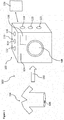
- FIG. 1 shows an example system 100.
- the system 100 comprises a washing machine 102 and a washable item in the form of a garment 104.
- the garment 104 may be placed in the washing machine 102 to be washed.
- the garment 104 also comprises at least one degradable magnetic identifier 106.
- the degradable magnetic identifier 106 may be a biodegradable magnetic identifier.
- the washing machine 102 comprises a drum 108 into which the garment 104 can be placed for washing thereof.
- the washing machine 102 also comprises an input 124 which may comprise one or more knobs or buttons. Via input 124 the user can select parameter(s) of a washing cycle, start and stop the washing cycle etc.
- a display 126 may also be provided. The display may visually output information, for example showing a user information regarding instructions input via input 124, and/or status information regarding the washing cycle.
- the washing machine 102 also includes at least one sensor shown generally at 110.
- the at least one sensor 110 comprises sensors 112, 114, 116, 118, 120 and 122.
- sensors 112, 114, 116, 118, 120 and 122 are sensors 112, 114, 116, 118, 120 and 122.
- the positioning of the sensors may also vary from that shown in the example of Figure 1 . Therefore where more than one sensor is provided, those sensors may be provided at a plurality of locations in or on the washing machine.
- the at least one sensor 110 is constructed and arranged to obtain an indication of the degradation of the degradable identifier 106 of the garment 104.
- the degradable identifier 106 is magnetic.
- the at least one sensor 110 is constructed such that proximity of or interaction with degradable magnetic identifier 106 causes an electric current to be generated in the sensor 110. That is the at least one sensor 110 may comprise an electromagnet.
- the sensor 110 may then generate or relay an electrical signal to a processor for processing, as is discussed in more detail with respect to Figure 5 .
- the at least one sensor 110 may comprise an induction coil.
- the induction coil may comprise a coil array.
- the washing machine 102 may also be configured to communicate with an external apparatus 128.
- the washing machine 102 and the external apparatus 128 may comprise suitable transmitters and receivers.
- the washing machine 102 may also be configured to be controllable by the external apparatus 128.
- a user may be able to enter parameters of and/or control a washing cycle via external apparatus 128.
- the external apparatus 128 may also comprise a display enabling a user to view information of the washing machine 102, for example status information of a wash. That is information displayable on display 126 of washing machine 102 may additionally or alternatively be displayed on external apparatus 128. Communication between the external apparatus 128 and washing machine 102 can take place in any way.
- the washing machine 102 and external apparatus 128 may communicate via a local area network, at least part of which may be wireless.
- the washing machine 102 and external apparatus 128 may communicate via the Internet, which may include one or more cloud servers. Additionally or alternatively the washing machine 102 and external apparatus 128 may communicate directly with each other, for example using Bluetooth or any other short-range radio frequency protocol.
- the external apparatus may be a user device such as a smart phone or tablet.
- the garment is shown as a T-shirt it will of course be understood that the garment may be any type of garment such as a shirt, jumper, trousers, underwear, skirt, shoes etc.
- the term garment may also include any other type of washable object such as sheets, pillowcases etc. That is the term “garment” may be interchangeable with the term “item” or "object”.
- FIG 2A shows in more detail an example of a degradable magnetic identifier 206 which may be affixed to a garment.
- the degradable magnetic identifier 206 may be equivalent to the degradable magnetic identifier 106 shown in Figure 1 .
- the degradable identifier device 206 may degrade in response to exposure to water and/or raised water temperature, particularly in the case of the washing machine using water.
- raised water temperature may be considered any temperature at or above about 25°C.
- the threshold water temperature at which the identifier degrades may be altered, based upon construction of the identifier.
- the threshold may be any value between 25°C and 100°C.
- the degradable identifier device 206 (or 106) may degrade in response to exposure to the solvent used, which may be for example tetrachloroethylene or other solvents used in dry cleaning.
- the degradable magnetic identifier 206 comprises a substrate (or backing layer or body portion) 208. Attached to the substrate is a magnet shown generally at 210.
- the magnet may be any type of magnetic metal.
- the magnet 210 is in the form of magnetic coils 212, 214 and 216. Of course more or fewer coils may be provided in other examples.
- the structure or arrangement of the magnet 210 may also be changed in other examples. For example one or more of thickness; shape; quantity; relative spatial arrangement of one or more magnets may be varied. That is the topology of the degradable magnetic identifier device 206 may be varied between examples. For example a first degradable magnetic identifier may have a first topology. A second degradable magnetic identifier may have a second topology that is different from the first topology. This may enable the first degradable identifier to be distinguished from the second degradable identifier, for example by an appropriately arranged washing machine.
- a membrane or layer 220 overlays or at least partially overlays the magnet 210 (in this example coils 212, 214 and 216).
- the membrane 220 is arranged to degrade or melt or dissolve when exposed to water and/or raised temperatures.
- the membrane 220 may be made of any material that melts at a typical washing temperature.
- the membrane material may have a melting temperature at or about 30°C, 40°C or 60°C. Of course these values are by way of example only.
- the meltable membrane may be made of solid meltable polymer derivatives such as PMMA (polymethyl methacrylate), PVA (polyvinyl alcohol), etc. Such membranes may slowly melt when subjected to warm water.
- a further layer 222 overlays or at least partially overlays the membrane layer 220.
- the further layer 222 is at least semi-permeable to water or water vapour, and therefore can act to filter an amount of water to which the membrane 220 (and consequently coils 212, 214 and 216) are subjected.
- the further layer 222 may be termed a water-permeable layer or a water filter cover.
- the further layer 222 and membrane 220 can be selected based upon application.
- the further layer 222 and membrane 220 can be selected so as to provide relatively fast or relatively slow degradation of the degradable magnetic identifier 206 during a washing cycle.
- human readable identifier 218 is shown in the example of Figure 2A.
- the human readable identifier may provide information regarding the degradable identifier 206. For example it may give information as to type. For example it may provide information as to whether it is a type of degradable identifier that degrades relatively quickly or relatively slowly. Additionally or alternatively the human readable identifier may be for identification purposes.
- the human readable identifier may be used to prompt the user to assign the degradable identifier 206 to a certain type of garment or to a certain part of a garment. For example the human readable identifier may read "T-shirt", “trousers”, “skirt”, “collar”, “cuff” etc.
- the human readable identifier 218 may be unique to a respective degradable magnetic identifier 206. This enables a first degradable magnetic identifier 206 to be distinguished, by a user, from another degradable magnetic identifier 206. As will be explained in further detail below the human readable identifier 218 also facilitates an association to be made between a degradable magnetic identifier 206 and a particular garment, and/or an association to be made between a degradable magnetic identifier 206 and its location on a respective garment.
- Figure 2B is a side view showing the arrangement of layers according to an example.
- the coils 212, 214 and 216 are sandwiched between substrate 208 and membrane 220.
- the membrane 220 is overlaid by water-permeable layer 222.
- the relative thicknesses of the layers shown in Figure 2B is by way of example only.
- the degradable magnetic identifier 206 is in the form of a sticker, which enables the identifier 206 to be stuck or adhered to an item or garment to be washed.
- a releasable backing layer 224 may be provided, which when removed exposes an adhesive layer on the underside of substrate 208.
- the degradable magnetic identifier 206 may be attached to an item or garment in any other suitable way.
- the degradable identifier may be sewn in to a corresponding garment.
- the structure shown in Figures 2A and 2B is by way of example only.
- the device 206 may omit one or other of the membrane 220 and water-permeable layer 222.
- the device 206 may omit both the membrane 220 and water-permeable layer 222.
- the degradable magnetic identifier 206 is constructed so as to induce a current in a corresponding one or more sensors of a washing machine.
- the washing machine can detect the level of degradation of the identifier 206 based on a determination of a value of the induced current. For example, a new or non-degraded identifier may induce a relatively large current in a corresponding sensor. A used or degraded identifier may induce a relatively small current.
- the term "degradation" of an identifier may be associated with a level of current that that identifier device can induce.
- the magnetic material itself of the degradable magnetic identifier 206 degrades in response to water and/or temperature. Therefore as the magnetic material itself (e.g. coils 212, 214, 216) degrades, then the current they can induce can relatively reduce.
- the magnetic material itself e.g. coils 212, 214, 2166 is constructed so as not to degrade, or to not significantly degrade, in response to exposure to water or temperature.
- the membrane 220 degrades upon exposure to water and/or raised temperature, and therefore will increasingly expose the magnetic material during a wash.
- the degradable magnetic identifier 206 may be capable of causing an increased induced current in a sensor of a corresponding washing machine, the more the membrane 220 degrades and the more the magnetic elements are exposed.
- both the magnet 210 and degradable membrane 220 are constructed to degrade upon exposure to water and/or raised temperatures.
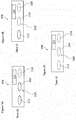
- Degradation of a degradable magnetic identifier 206 is shown schematically and by way of example in Figures 3A to 3C .
- the magnet 210 comprising coils 212, 214 and 216 degrades upon exposure to water and/or raised temperature during a washing cycle.
- Figure 3A is taken at time t1 of a washing cycle.
- the identifier 206 has degraded by a first amount, as schematically represented by the dashed lines of coil 216.
- Figure 3B is taken at time t2 of a washing cycle. Time t2 is after time t1.
- the identifier 206 has degraded by a second amount which is greater than the first amount, as represented by the dashed lines of coils 214 and 216.
- Figure 3C is taken at time t3 of a washing cycle. Time t3 is after time t2 and time t1.
- the identifier 206 has degraded by a third amount which is greater than the first amount and the second amount, as represented by the dashed lines of coils 214 and 216.
- Degradable identifiers can be placed at multiple locations on an item or garment, as shown in Figure 4 .
- This shows a garment 404 in the form of a T-shirt.
- a first degradable identifier 406 is placed at a waist region of the garment.
- Second and third degradable identifiers 408 and 410 are located at respective right and left armpit regions of the garment 404.
- a fourth degradable identifier 412 is positioned at a neck region of the garment. In this way the different degradable identifiers 406, 408, 410 and 412 can be used to determine a washing status of different locations of a garment. Similarly, a washing status of separate garments in a same washing cycle can also be determined.
- FIG. 5 schematically shows computing apparatus which may be incorporated in a washing machine such as the washing machine 102 of Figure 1 .
- the computing apparatus comprises a memory 502 and processor 504.
- the apparatus optionally comprises a scanner or reader 506.
- display 526 Also schematically shown is display 526.
- a sensor e.g. coil or coil array
- the processor 504 may be considered a controller, or comprised in a controller.
- the memory 502 may, in some examples, be configured to make and store one or more associations.
- the memory 502 can store an association between a degradable identifier 106 and a garment 104. Additionally or alternatively the memory 502 can store an association between a degradable identifier 106 and its location on a garment 104. Additionally or alternatively the memory 502 can store an association between a human readable identifier 218 of a degradable identifier 206 and an associated garment 104. Additionally or alternatively the memory 502 can store an association between a human readable identifier 218 of a degradable identifier 206 and topology of a magnet 210 of that degradable identifier.
- the scanner or reader 506 may assist with the making of such associations.
- the scanner 506 may scan and determine topology of a degradable identifier.
- a user can present the degradable identifier 206 to the scanner 506, and the scanner reads and stores the magnet topology of that degradable identifier.
- the human readable identifier 218 can optionally also be read by the scanner or input by a user, for example via input 124 on the washing machine or using an external device 128. However this is achieved the necessary association can be made between human readable identifier 218 and magnet topology of a particular degradable identifier 206.
- the associations can be stored in the form of a lookup table.
- the memory 502 may also store ongoing degradation states of one or more degradable identifiers 206. That is during a washing cycle the one or more sensors 510 may continuously or periodically provide signals to memory and processor 502 and 504, enabling a degradation status of an identifier to be monitored and stored during a washing cycle.
- the display 526 can then be caused to display useful information for a user.
- the display 526 may display a washing status of a degradable identifier 206. More particularly the display 526 may display the washing status and information of the corresponding human readable identifier 218.
- the washing machine may display a readout such as "T-shirt - finished", or "Collar - finished, cuff - unfinished".
- the user can therefore ascertain a washing status of a particular garment and/or a particular area or region of a garment. For example a user can ascertain information of whether a garment has been fully washed or whether a garment or a location on the garment has been insufficiently washed.
- the washing machine may, without any associations being made, monitor the degradation status of any degradable identifiers placed therein for a washing cycle.
- the washing machine may be pre-configured to control operations in a certain way.
- the washing machine may be pre-configured to finish or terminate a washing cycle when a status of a degradable identifier is sensed to have reached a certain state.
- the washing machine 102 operates in accordance with information received via sensors 110 (or 510), at least to some extent.
- the duration of a washing cycle may be automatically controlled based upon the information received.
- the washing machine may finish or terminate the washing cycle only when all garments are determined to have been fully washed, and/or all locations on a garment or all garments are determined to have been fully washed.
- processor or processing system or circuitry referred to herein may in practice be provided by a single chip or integrated circuit or plural chips or integrated circuits, optionally provided as a chipset, an application-specific integrated circuit (ASIC), field-programmable gate array (FPGA), digital signal processor (DSP), graphics processing units (GPUs), etc.
- the chip or chips may comprise circuitry (as well as possibly firmware) for embodying at least one or more of a data processor or processors and a digital signal processor or processors, which are configurable so as to operate in accordance with the exemplary embodiments.
- the exemplary embodiments may be implemented at least in part by computer software stored in (non-transitory) memory and executable by the processor, or by hardware, or by a combination of tangibly stored software and hardware (and tangibly stored firmware).
- memory for storing data. This may be provided by a single device or by plural devices. Suitable devices include for example a hard disk and non-volatile semiconductor memory.
Landscapes
- Engineering & Computer Science (AREA)
- Textile Engineering (AREA)
- Control Of Washing Machine And Dryer (AREA)
- Outerwear In General, And Traditional Japanese Garments (AREA)
Abstract
Description
- The present disclosure relates to a washing machine, a device for attachment to a washable garment, and a garment comprising such a device.
- Washing machines are used for washing garments such as clothes. Typically a user can select a suitable washing cycle via an interface on a front face of the washing machine. The interface usually includes a number of control knobs and/or buttons.
- According to a first aspect disclosed herein, there is provided a washing machine comprising: a controller; a sensor constructed and arranged to obtain an indication of degradation of a degradable identifier of a garment during a washing cycle of the garment in the washing machine; the controller being configured to use the indication of degradation received from the sensor to generate an output to a user indicative of a washing status of the garment.
- In an example, the sensor comprises a plurality of sensors arranged at different locations on the washing machine.
- In an example, the sensor comprises an induction coil for magnetic interaction with a said degradable identifier to obtain the indication.
- In an example the induction coil comprises a coil array.
- In an example, the washing machine comprises a memory configured to associate a said degradable identifier with a garment placed in the washing machine.
- In an example, the memory is configured to associate a said degradable identifier with a position of a said degradable identifier on the garment.
- In an example, the controller is configured such that the output comprises information of one or more of: a number of times the garment has been washed; whether an area of the garment has been insufficiently washed.
- In an example, the controller is configured such that the output comprises a visual output provided on a display of the washing machine.
- In an example, the controller is configured to control parameters of the washing cycle in dependence on the obtained indication of degradation.
- In an example the controlling parameters of the washing cycle comprises finishing the washing cycle when the degradation indication indicates that the garment has been sufficiently washed.
- In a second aspect there is provided a device for attachment to a washable garment, the device comprising: a degradable magnetic identifier for generating an electrical current in a sensor of a washing machine, the degradable magnetic identifier constructed and arranged to degrade during a washing cycle in a manner indicative of a washing status of the garment.
- In an example, the degradable magnetic identifier comprises a magnet at least partially overlaid with a degradable membrane.
- In an example, the magnet comprises a coil or coil array.
- In an example, the magnet and degradable membrane are constructed and arranged to degrade during a washing cycle.
- In an example the degradable membrane, but not the magnet, are constructed and arranged to degrade during a washing cycle.
- In an example, the device comprises a water-permeable layer that at least partially overlies the degradable membrane.
- In an example, the device comprises a sticker attachable to a garment.
- In an example, the degradable magnetic identifier comprising a biodegradable magnetic identifier.
- There may also be provided a garment comprising a device as described above.
- In an example, the device comprises a plurality of the devices arranged at different locations on the garment.
- In an example, each of the plurality of devices has a different topology.
- To assist understanding of the present disclosure and to show how embodiments may be put into effect, reference is made by way of example to the accompanying drawings in which:
-
Figure 1 shows schematically a system according to an example; -
Figure 2A shows schematically a degradable identifier in plan view according to an example; -
Figure 2B shows schematically a degradable identifier in a side cross-sectional view according to an example; -
Figures 3A to 3C show schematically degradation of a degradable identifier according to an example; -
Figure 4 shows schematically a garment comprising a plurality of degradable identifiers; -
Figure 5 shows schematically some computing hardware of a washing machine according to an example.; - The present disclosure has applicability to clothes washing machines.
- When a user places a washable item such as a garment or garments in a washing machine the user has to select a washing cycle from a variety of available washing cycles. For delicate clothes a user may select a hot washing cycle, possibly with additional rinse and soak stages. Each selectable washing cycle typically has one or more fixed parameters, such as duration and temperature. At the end of the washing cycle the user removes the garment or garments from the washing machine. It can be difficult for a user to ascertain whether the garment or garments have been adequately washed. If the user is in any doubt, then the user may place the garment or garments back in the washing machine to repeat the washing cycle. This can lead to wasted energy, and/or damaged garments due to over-washing.
-
Figure 1 shows anexample system 100. Thesystem 100 comprises awashing machine 102 and a washable item in the form of agarment 104. As represented byarrow 130 thegarment 104 may be placed in thewashing machine 102 to be washed. As will be explained in more detail below, thegarment 104 also comprises at least one degradablemagnetic identifier 106. The degradablemagnetic identifier 106 may be a biodegradable magnetic identifier. - The
washing machine 102 comprises adrum 108 into which thegarment 104 can be placed for washing thereof. Thewashing machine 102 also comprises aninput 124 which may comprise one or more knobs or buttons. Viainput 124 the user can select parameter(s) of a washing cycle, start and stop the washing cycle etc. Adisplay 126 may also be provided. The display may visually output information, for example showing a user information regarding instructions input viainput 124, and/or status information regarding the washing cycle. - The
washing machine 102 also includes at least one sensor shown generally at 110. In the example ofFigure 1 the at least onesensor 110 comprisessensors Figure 1 . Therefore where more than one sensor is provided, those sensors may be provided at a plurality of locations in or on the washing machine. - Wherever the at least one
sensor 110 is or are provided, the at least onesensor 110 is constructed and arranged to obtain an indication of the degradation of thedegradable identifier 106 of thegarment 104. As explained previously thedegradable identifier 106 is magnetic. The at least onesensor 110 is constructed such that proximity of or interaction with degradablemagnetic identifier 106 causes an electric current to be generated in thesensor 110. That is the at least onesensor 110 may comprise an electromagnet. Thesensor 110 may then generate or relay an electrical signal to a processor for processing, as is discussed in more detail with respect toFigure 5 . - As the
magnetic identifier 106 degrades, the strength of electrical signal it can induce in the at least onesensor 110 may change. For example the current that can be induced in the at least one sensor may reduce as thedegradable identifier 106 degrades. The at least onesensor 110 may comprise an induction coil. The induction coil may comprise a coil array. - The
washing machine 102 may also be configured to communicate with anexternal apparatus 128. To this end thewashing machine 102 and theexternal apparatus 128 may comprise suitable transmitters and receivers. In some examples thewashing machine 102 may also be configured to be controllable by theexternal apparatus 128. For example a user may be able to enter parameters of and/or control a washing cycle viaexternal apparatus 128. Theexternal apparatus 128 may also comprise a display enabling a user to view information of thewashing machine 102, for example status information of a wash. That is information displayable ondisplay 126 ofwashing machine 102 may additionally or alternatively be displayed onexternal apparatus 128. Communication between theexternal apparatus 128 andwashing machine 102 can take place in any way. For example thewashing machine 102 andexternal apparatus 128 may communicate via a local area network, at least part of which may be wireless. Thewashing machine 102 andexternal apparatus 128 may communicate via the Internet, which may include one or more cloud servers. Additionally or alternatively thewashing machine 102 andexternal apparatus 128 may communicate directly with each other, for example using Bluetooth or any other short-range radio frequency protocol. The external apparatus may be a user device such as a smart phone or tablet. - Although in
Figure 1 the garment is shown as a T-shirt it will of course be understood that the garment may be any type of garment such as a shirt, jumper, trousers, underwear, skirt, shoes etc. The term garment may also include any other type of washable object such as sheets, pillowcases etc. That is the term "garment" may be interchangeable with the term "item" or "object". -
Figure 2A shows in more detail an example of a degradablemagnetic identifier 206 which may be affixed to a garment. For example the degradablemagnetic identifier 206 may be equivalent to the degradablemagnetic identifier 106 shown inFigure 1 . - The degradable identifier device 206 (or 106) may degrade in response to exposure to water and/or raised water temperature, particularly in the case of the washing machine using water. In some examples raised water temperature may be considered any temperature at or above about 25°C. Of course the threshold water temperature at which the identifier degrades may be altered, based upon construction of the identifier. For example the threshold may be any value between 25°C and 100°C. In the case of dry cleaning, the degradable identifier device 206 (or 106) may degrade in response to exposure to the solvent used, which may be for example tetrachloroethylene or other solvents used in dry cleaning.
- The degradable
magnetic identifier 206 comprises a substrate (or backing layer or body portion) 208. Attached to the substrate is a magnet shown generally at 210. In some examples the magnet may be any type of magnetic metal. In this example themagnet 210 is in the form ofmagnetic coils magnet 210 may also be changed in other examples. For example one or more of thickness; shape; quantity; relative spatial arrangement of one or more magnets may be varied. That is the topology of the degradablemagnetic identifier device 206 may be varied between examples. For example a first degradable magnetic identifier may have a first topology. A second degradable magnetic identifier may have a second topology that is different from the first topology. This may enable the first degradable identifier to be distinguished from the second degradable identifier, for example by an appropriately arranged washing machine. - A membrane or
layer 220 overlays or at least partially overlays the magnet 210 (in this example coils 212, 214 and 216). Themembrane 220 is arranged to degrade or melt or dissolve when exposed to water and/or raised temperatures. For example themembrane 220 may be made of any material that melts at a typical washing temperature. For example the membrane material may have a melting temperature at or about 30°C, 40°C or 60°C. Of course these values are by way of example only. By way of non-limiting example, the meltable membrane may be made of solid meltable polymer derivatives such as PMMA (polymethyl methacrylate), PVA (polyvinyl alcohol), etc. Such membranes may slowly melt when subjected to warm water. - A
further layer 222 overlays or at least partially overlays themembrane layer 220. Thefurther layer 222 is at least semi-permeable to water or water vapour, and therefore can act to filter an amount of water to which the membrane 220 (and consequently coils 212, 214 and 216) are subjected. Thefurther layer 222 may be termed a water-permeable layer or a water filter cover. - The
further layer 222 andmembrane 220 can be selected based upon application. For example thefurther layer 222 andmembrane 220 can be selected so as to provide relatively fast or relatively slow degradation of the degradablemagnetic identifier 206 during a washing cycle. - Also shown in the example of
Figure 2A is humanreadable identifier 218. By way of example only this human readable identifier is in the form "123", although it will be understood it could take any human readable form. The human readable identifier may provide information regarding thedegradable identifier 206. For example it may give information as to type. For example it may provide information as to whether it is a type of degradable identifier that degrades relatively quickly or relatively slowly. Additionally or alternatively the human readable identifier may be for identification purposes. The human readable identifier may be used to prompt the user to assign thedegradable identifier 206 to a certain type of garment or to a certain part of a garment. For example the human readable identifier may read "T-shirt", "trousers", "skirt", "collar", "cuff" etc. - The human
readable identifier 218 may be unique to a respective degradablemagnetic identifier 206. This enables a first degradablemagnetic identifier 206 to be distinguished, by a user, from another degradablemagnetic identifier 206. As will be explained in further detail below the humanreadable identifier 218 also facilitates an association to be made between a degradablemagnetic identifier 206 and a particular garment, and/or an association to be made between a degradablemagnetic identifier 206 and its location on a respective garment. -
Figure 2B is a side view showing the arrangement of layers according to an example. Thecoils substrate 208 andmembrane 220. Themembrane 220 is overlaid by water-permeable layer 222. The relative thicknesses of the layers shown inFigure 2B is by way of example only. - In an example the degradable
magnetic identifier 206 is in the form of a sticker, which enables theidentifier 206 to be stuck or adhered to an item or garment to be washed. In such an example areleasable backing layer 224 may be provided, which when removed exposes an adhesive layer on the underside ofsubstrate 208. - Of course in other examples the degradable
magnetic identifier 206 may be attached to an item or garment in any other suitable way. For example the degradable identifier may be sewn in to a corresponding garment. - It will of course be understood that the structure shown in
Figures 2A and2B is by way of example only. In another example thedevice 206 may omit one or other of themembrane 220 and water-permeable layer 222. In another example thedevice 206 may omit both themembrane 220 and water-permeable layer 222. - As explained above, the degradable
magnetic identifier 206 is constructed so as to induce a current in a corresponding one or more sensors of a washing machine. The washing machine can detect the level of degradation of theidentifier 206 based on a determination of a value of the induced current. For example, a new or non-degraded identifier may induce a relatively large current in a corresponding sensor. A used or degraded identifier may induce a relatively small current. Thus the term "degradation" of an identifier may be associated with a level of current that that identifier device can induce. - In some examples the magnetic material itself of the degradable
magnetic identifier 206 degrades in response to water and/or temperature. Therefore as the magnetic material itself (e.g. coils 212, 214, 216) degrades, then the current they can induce can relatively reduce. - In another example the magnetic material itself (e.g. coils 212, 214, 216) is constructed so as not to degrade, or to not significantly degrade, in response to exposure to water or temperature. In such examples the
membrane 220 degrades upon exposure to water and/or raised temperature, and therefore will increasingly expose the magnetic material during a wash. In such an example the degradablemagnetic identifier 206 may be capable of causing an increased induced current in a sensor of a corresponding washing machine, the more themembrane 220 degrades and the more the magnetic elements are exposed. - In another example both the
magnet 210 anddegradable membrane 220 are constructed to degrade upon exposure to water and/or raised temperatures. - Degradation of a degradable
magnetic identifier 206 is shown schematically and by way of example inFigures 3A to 3C . In this example themagnet 210, comprisingcoils -
Figure 3A is taken at time t1 of a washing cycle. Theidentifier 206 has degraded by a first amount, as schematically represented by the dashed lines ofcoil 216. -
Figure 3B is taken at time t2 of a washing cycle. Time t2 is after time t1. Theidentifier 206 has degraded by a second amount which is greater than the first amount, as represented by the dashed lines ofcoils -
Figure 3C is taken at time t3 of a washing cycle. Time t3 is after time t2 and time t1. Theidentifier 206 has degraded by a third amount which is greater than the first amount and the second amount, as represented by the dashed lines ofcoils - Degradable identifiers can be placed at multiple locations on an item or garment, as shown in
Figure 4 . This shows agarment 404 in the form of a T-shirt. A firstdegradable identifier 406 is placed at a waist region of the garment. Second and thirddegradable identifiers garment 404. A fourthdegradable identifier 412 is positioned at a neck region of the garment. In this way the differentdegradable identifiers -
Figure 5 schematically shows computing apparatus which may be incorporated in a washing machine such as thewashing machine 102 ofFigure 1 . The computing apparatus comprises amemory 502 andprocessor 504. The apparatus optionally comprises a scanner orreader 506. Also schematically shown isdisplay 526. A sensor (e.g. coil or coil array) is schematically shown at 510. Theprocessor 504 may be considered a controller, or comprised in a controller. - The
memory 502 may, in some examples, be configured to make and store one or more associations. For example thememory 502 can store an association between adegradable identifier 106 and agarment 104. Additionally or alternatively thememory 502 can store an association between adegradable identifier 106 and its location on agarment 104. Additionally or alternatively thememory 502 can store an association between a humanreadable identifier 218 of adegradable identifier 206 and an associatedgarment 104. Additionally or alternatively thememory 502 can store an association between a humanreadable identifier 218 of adegradable identifier 206 and topology of amagnet 210 of that degradable identifier. - The scanner or
reader 506 may assist with the making of such associations. For example thescanner 506 may scan and determine topology of a degradable identifier. In such a case, for example, a user can present thedegradable identifier 206 to thescanner 506, and the scanner reads and stores the magnet topology of that degradable identifier. The humanreadable identifier 218 can optionally also be read by the scanner or input by a user, for example viainput 124 on the washing machine or using anexternal device 128. However this is achieved the necessary association can be made between humanreadable identifier 218 and magnet topology of a particulardegradable identifier 206. - The associations can be stored in the form of a lookup table.
- The
memory 502 may also store ongoing degradation states of one or moredegradable identifiers 206. That is during a washing cycle the one ormore sensors 510 may continuously or periodically provide signals to memory andprocessor - The
display 526 can then be caused to display useful information for a user. For example thedisplay 526 may display a washing status of adegradable identifier 206. More particularly thedisplay 526 may display the washing status and information of the corresponding humanreadable identifier 218. For example the washing machine may display a readout such as "T-shirt - finished", or "Collar - finished, cuff - unfinished". The user can therefore ascertain a washing status of a particular garment and/or a particular area or region of a garment. For example a user can ascertain information of whether a garment has been fully washed or whether a garment or a location on the garment has been insufficiently washed. - In some examples no such associations are made or required to be made, and accordingly in some embodiments the hardware and/or software necessary to make such associations is not required (or is present but not utilised). For example the washing machine may, without any associations being made, monitor the degradation status of any degradable identifiers placed therein for a washing cycle. In such an example the washing machine may be pre-configured to control operations in a certain way. For example the washing machine may be pre-configured to finish or terminate a washing cycle when a status of a degradable identifier is sensed to have reached a certain state.
- It may be considered in some examples that the
washing machine 102 operates in accordance with information received via sensors 110 (or 510), at least to some extent. For example the duration of a washing cycle may be automatically controlled based upon the information received. For example the washing machine may finish or terminate the washing cycle only when all garments are determined to have been fully washed, and/or all locations on a garment or all garments are determined to have been fully washed. - It will be understood that the processor or processing system or circuitry referred to herein may in practice be provided by a single chip or integrated circuit or plural chips or integrated circuits, optionally provided as a chipset, an application-specific integrated circuit (ASIC), field-programmable gate array (FPGA), digital signal processor (DSP), graphics processing units (GPUs), etc. The chip or chips may comprise circuitry (as well as possibly firmware) for embodying at least one or more of a data processor or processors and a digital signal processor or processors, which are configurable so as to operate in accordance with the exemplary embodiments. In this regard, the exemplary embodiments may be implemented at least in part by computer software stored in (non-transitory) memory and executable by the processor, or by hardware, or by a combination of tangibly stored software and hardware (and tangibly stored firmware).
- Reference is made herein to memory for storing data. This may be provided by a single device or by plural devices. Suitable devices include for example a hard disk and non-volatile semiconductor memory.
- The examples described herein are to be understood as illustrative examples of embodiments of the invention. Further embodiments and examples are envisaged. Any feature described in relation to any one example or embodiment may be used alone or in combination with other features. In addition, any feature described in relation to any one example or embodiment may also be used in combination with one or more features of any other of the examples or embodiments, or any combination of any other of the examples or embodiments. Furthermore, equivalents and modifications not described herein may also be employed within the scope of the invention, which is defined in the claims.
Claims (15)
- A washing machine comprising:a controller;a sensor constructed and arranged to obtain an indication of degradation of a degradable identifier of a garment during a washing cycle of the garment in the washing machine;the controller being configured to use the indication of degradation received from the sensor to generate an output to a user indicative of a washing status of the garment.
- A washing machine according to claim 1, the sensor comprising a plurality of sensors arranged at different locations on the washing machine.
- A washing machine according claim 1 or claim 2, the sensor comprising an induction coil for magnetic interaction with a said degradable identifier to obtain the indication.
- A washing machine according to any of claims 1 to 3, the washing machine comprising a memory configured to associate a said degradable identifier with a garment placed in the washing machine.
- A washing machine according to claim 4, the memory configured to associate a said degradable identifier with a position of a said degradable identifier on the garment.
- A washing machine according to any of claims 1 to 5, the controller being configured such that the output comprises information of one or more of: a number of times the garment has been washed; whether an area of the garment has been insufficiently washed.
- A washing machine according to any of claims 1 to 6, the controller being configured such that the output comprises a visual output provided on a display of the washing machine.
- A washing machine according to any of claims 1 to 7, the controller configured to control parameters of the washing cycle in dependence on the obtained indication of degradation.
- A device for attachment to a washable garment, the device comprising:a degradable magnetic identifier for generating an electrical current in a sensor of a washing machine, the degradable magnetic identifier constructed and arranged to degrade during a washing cycle in a manner indicative of a washing status of the garment.
- A device according to claim 9, the degradable magnetic identifier comprising a magnet at least partially overlaid with a degradable membrane.
- A device according to claim 10, the magnet comprising a coil or coil array.
- A device according to claim 10 or claim 11, the device comprising a water-permeable layer that at least partially overlies the degradable membrane.
- A garment comprising a device according to any of claims 9 to 12.
- A garment according to claim 13, comprising a plurality of the devices arranged at different locations on the garment.
- A garment according to claim 14, each of the plurality of devices having a different topology.
Priority Applications (2)
| Application Number | Priority Date | Filing Date | Title |
|---|---|---|---|
| EP17176720.5A EP3418442B1 (en) | 2017-06-19 | 2017-06-19 | Washing machine and device for attachment to a washable garment |
| TR2017/09559A TR201709559A2 (en) | 2017-06-19 | 2017-06-29 | A DEVICE FOR ATTACHING TO A WASHING MACHINE AND A WASHABLE CLOTHING ARTICLE |
Applications Claiming Priority (1)
| Application Number | Priority Date | Filing Date | Title |
|---|---|---|---|
| EP17176720.5A EP3418442B1 (en) | 2017-06-19 | 2017-06-19 | Washing machine and device for attachment to a washable garment |
Publications (2)
| Publication Number | Publication Date |
|---|---|
| EP3418442A1 true EP3418442A1 (en) | 2018-12-26 |
| EP3418442B1 EP3418442B1 (en) | 2023-11-08 |
Family
ID=59091396
Family Applications (1)
| Application Number | Title | Priority Date | Filing Date |
|---|---|---|---|
| EP17176720.5A Active EP3418442B1 (en) | 2017-06-19 | 2017-06-19 | Washing machine and device for attachment to a washable garment |
Country Status (2)
| Country | Link |
|---|---|
| EP (1) | EP3418442B1 (en) |
| TR (1) | TR201709559A2 (en) |
Citations (5)
| Publication number | Priority date | Publication date | Assignee | Title |
|---|---|---|---|---|
| US4886010A (en) * | 1988-09-22 | 1989-12-12 | Ralph Stutzman | Clothing wear monitoring device |
| FR2794550A1 (en) * | 1999-06-04 | 2000-12-08 | Gemplus Card Int | Automatic identification system for laundered garments on moving conveyor, has electronic label in each garment and moving antenna |
| EP1431444A1 (en) * | 2002-12-16 | 2004-06-23 | Unilever N.V. | Laundry sorting apparatus |
| US20080218310A1 (en) * | 2007-03-07 | 2008-09-11 | Apple Inc. | Smart garment |
| EP2990515A1 (en) * | 2014-08-28 | 2016-03-02 | Miele & Cie. KG | Device and method for controlling a household appliance and a household appliance |
-
2017
- 2017-06-19 EP EP17176720.5A patent/EP3418442B1/en active Active
- 2017-06-29 TR TR2017/09559A patent/TR201709559A2/en unknown
Patent Citations (5)
| Publication number | Priority date | Publication date | Assignee | Title |
|---|---|---|---|---|
| US4886010A (en) * | 1988-09-22 | 1989-12-12 | Ralph Stutzman | Clothing wear monitoring device |
| FR2794550A1 (en) * | 1999-06-04 | 2000-12-08 | Gemplus Card Int | Automatic identification system for laundered garments on moving conveyor, has electronic label in each garment and moving antenna |
| EP1431444A1 (en) * | 2002-12-16 | 2004-06-23 | Unilever N.V. | Laundry sorting apparatus |
| US20080218310A1 (en) * | 2007-03-07 | 2008-09-11 | Apple Inc. | Smart garment |
| EP2990515A1 (en) * | 2014-08-28 | 2016-03-02 | Miele & Cie. KG | Device and method for controlling a household appliance and a household appliance |
Also Published As
| Publication number | Publication date |
|---|---|
| EP3418442B1 (en) | 2023-11-08 |
| TR201709559A2 (en) | 2019-01-21 |
Similar Documents
| Publication | Publication Date | Title |
|---|---|---|
| US20220139196A1 (en) | Garment Tags For Intelligent Laundering Alerts | |
| EP2913430B1 (en) | Operating device | |
| JP2018514311A (en) | Washing machine control method and washing machine | |
| KR20180058203A (en) | System and method of clothes cleaning | |
| EP3327636B1 (en) | Rfid tags in wearbles | |
| WO2014090276A1 (en) | Connecting clothes and washing machine | |
| CN110093747A (en) | Put-on method, device and the device for clothing processing of detergent | |
| WO2015055239A1 (en) | Laundry washing machine with speech recognition and response capabilities and method for operating same | |
| US20180144164A1 (en) | RFID Tags in Wearables with Contact-Activiated Switch having Multiple Modes | |
| CN108301166A (en) | The household appliance of operability with improvement, the method for running the household appliance and the system including the household appliance | |
| KR102958793B1 (en) | Washing machine and controlling method thereof | |
| ITRN20110053A1 (en) | APPLIANCES AND METHOD OF SETTING IN A HOUSEHOLD APPLIANCE OF A WORKING PROGRAM | |
| EP3418442B1 (en) | Washing machine and device for attachment to a washable garment | |
| CN112239946A (en) | Clothes treatment method and apparatus | |
| EP3382085A1 (en) | Apparatus and method for a washing machine | |
| CN114232274A (en) | Control method and device of dirty clothes basket, electronic equipment and storage medium | |
| JP2009069942A5 (en) | ||
| CN114541081B (en) | Control method, device and equipment for washing equipment | |
| ITRN20090022A1 (en) | SYSTEM AND METHOD OF USE OF THIS SYSTEM. | |
| CN112239945B (en) | Clothes processing method and receiving device | |
| WO2015158311A1 (en) | Washing machine and color-protecting washing method thereof | |
| CN112962266B (en) | Washing nursing device and method and storage medium | |
| CN111850946A (en) | Control method and device of washing machine | |
| EP3456872A1 (en) | Washing and/or drying machine | |
| CN114693891A (en) | Virtual reloading method, device and storage medium |
Legal Events
| Date | Code | Title | Description |
|---|---|---|---|
| PUAI | Public reference made under article 153(3) epc to a published international application that has entered the european phase |
Free format text: ORIGINAL CODE: 0009012 |
|
| STAA | Information on the status of an ep patent application or granted ep patent |
Free format text: STATUS: THE APPLICATION HAS BEEN PUBLISHED |
|
| AK | Designated contracting states |
Kind code of ref document: A1 Designated state(s): AL AT BE BG CH CY CZ DE DK EE ES FI FR GB GR HR HU IE IS IT LI LT LU LV MC MK MT NL NO PL PT RO RS SE SI SK SM TR |
|
| AX | Request for extension of the european patent |
Extension state: BA ME |
|
| STAA | Information on the status of an ep patent application or granted ep patent |
Free format text: STATUS: REQUEST FOR EXAMINATION WAS MADE |
|
| 17P | Request for examination filed |
Effective date: 20190624 |
|
| RBV | Designated contracting states (corrected) |
Designated state(s): AL AT BE BG CH CY CZ DE DK EE ES FI FR GB GR HR HU IE IS IT LI LT LU LV MC MK MT NL NO PL PT RO RS SE SI SK SM TR |
|
| STAA | Information on the status of an ep patent application or granted ep patent |
Free format text: STATUS: EXAMINATION IS IN PROGRESS |
|
| 17Q | First examination report despatched |
Effective date: 20210705 |
|
| GRAP | Despatch of communication of intention to grant a patent |
Free format text: ORIGINAL CODE: EPIDOSNIGR1 |
|
| STAA | Information on the status of an ep patent application or granted ep patent |
Free format text: STATUS: GRANT OF PATENT IS INTENDED |
|
| RIC1 | Information provided on ipc code assigned before grant |
Ipc: D06F 105/58 20200101ALN20230428BHEP Ipc: D06F 105/56 20200101ALN20230428BHEP Ipc: D06F 105/52 20200101ALN20230428BHEP Ipc: D06F 103/02 20200101ALN20230428BHEP Ipc: D06F 101/00 20200101ALN20230428BHEP Ipc: D06F 39/00 20060101ALN20230428BHEP Ipc: D06F 34/28 20200101ALI20230428BHEP Ipc: D06F 34/18 20200101ALI20230428BHEP Ipc: D06F 93/00 20060101AFI20230428BHEP |
|
| INTG | Intention to grant announced |
Effective date: 20230606 |
|
| GRAS | Grant fee paid |
Free format text: ORIGINAL CODE: EPIDOSNIGR3 |
|
| GRAA | (expected) grant |
Free format text: ORIGINAL CODE: 0009210 |
|
| STAA | Information on the status of an ep patent application or granted ep patent |
Free format text: STATUS: THE PATENT HAS BEEN GRANTED |
|
| AK | Designated contracting states |
Kind code of ref document: B1 Designated state(s): AL AT BE BG CH CY CZ DE DK EE ES FI FR GB GR HR HU IE IS IT LI LT LU LV MC MK MT NL NO PL PT RO RS SE SI SK SM TR |
|
| REG | Reference to a national code |
Ref country code: GB Ref legal event code: FG4D |
|
| REG | Reference to a national code |
Ref country code: CH Ref legal event code: EP |
|
| REG | Reference to a national code |
Ref country code: DE Ref legal event code: R096 Ref document number: 602017076233 Country of ref document: DE |
|
| REG | Reference to a national code |
Ref country code: IE Ref legal event code: FG4D |
|
| REG | Reference to a national code |
Ref country code: LT Ref legal event code: MG9D |
|
| REG | Reference to a national code |
Ref country code: NL Ref legal event code: MP Effective date: 20231108 |
|
| PG25 | Lapsed in a contracting state [announced via postgrant information from national office to epo] |
Ref country code: GR Free format text: LAPSE BECAUSE OF FAILURE TO SUBMIT A TRANSLATION OF THE DESCRIPTION OR TO PAY THE FEE WITHIN THE PRESCRIBED TIME-LIMIT Effective date: 20240209 |
|
| PG25 | Lapsed in a contracting state [announced via postgrant information from national office to epo] |
Ref country code: IS Free format text: LAPSE BECAUSE OF FAILURE TO SUBMIT A TRANSLATION OF THE DESCRIPTION OR TO PAY THE FEE WITHIN THE PRESCRIBED TIME-LIMIT Effective date: 20240308 |
|
| PG25 | Lapsed in a contracting state [announced via postgrant information from national office to epo] |
Ref country code: LT Free format text: LAPSE BECAUSE OF FAILURE TO SUBMIT A TRANSLATION OF THE DESCRIPTION OR TO PAY THE FEE WITHIN THE PRESCRIBED TIME-LIMIT Effective date: 20231108 |
|
| REG | Reference to a national code |
Ref country code: AT Ref legal event code: MK05 Ref document number: 1629688 Country of ref document: AT Kind code of ref document: T Effective date: 20231108 |
|
| PG25 | Lapsed in a contracting state [announced via postgrant information from national office to epo] |
Ref country code: NL Free format text: LAPSE BECAUSE OF FAILURE TO SUBMIT A TRANSLATION OF THE DESCRIPTION OR TO PAY THE FEE WITHIN THE PRESCRIBED TIME-LIMIT Effective date: 20231108 |
|
| PG25 | Lapsed in a contracting state [announced via postgrant information from national office to epo] |
Ref country code: AT Free format text: LAPSE BECAUSE OF FAILURE TO SUBMIT A TRANSLATION OF THE DESCRIPTION OR TO PAY THE FEE WITHIN THE PRESCRIBED TIME-LIMIT Effective date: 20231108 |
|
| PG25 | Lapsed in a contracting state [announced via postgrant information from national office to epo] |
Ref country code: ES Free format text: LAPSE BECAUSE OF FAILURE TO SUBMIT A TRANSLATION OF THE DESCRIPTION OR TO PAY THE FEE WITHIN THE PRESCRIBED TIME-LIMIT Effective date: 20231108 |
|
| PG25 | Lapsed in a contracting state [announced via postgrant information from national office to epo] |
Ref country code: NL Free format text: LAPSE BECAUSE OF FAILURE TO SUBMIT A TRANSLATION OF THE DESCRIPTION OR TO PAY THE FEE WITHIN THE PRESCRIBED TIME-LIMIT Effective date: 20231108 Ref country code: LT Free format text: LAPSE BECAUSE OF FAILURE TO SUBMIT A TRANSLATION OF THE DESCRIPTION OR TO PAY THE FEE WITHIN THE PRESCRIBED TIME-LIMIT Effective date: 20231108 Ref country code: IS Free format text: LAPSE BECAUSE OF FAILURE TO SUBMIT A TRANSLATION OF THE DESCRIPTION OR TO PAY THE FEE WITHIN THE PRESCRIBED TIME-LIMIT Effective date: 20240308 Ref country code: GR Free format text: LAPSE BECAUSE OF FAILURE TO SUBMIT A TRANSLATION OF THE DESCRIPTION OR TO PAY THE FEE WITHIN THE PRESCRIBED TIME-LIMIT Effective date: 20240209 Ref country code: ES Free format text: LAPSE BECAUSE OF FAILURE TO SUBMIT A TRANSLATION OF THE DESCRIPTION OR TO PAY THE FEE WITHIN THE PRESCRIBED TIME-LIMIT Effective date: 20231108 Ref country code: BG Free format text: LAPSE BECAUSE OF FAILURE TO SUBMIT A TRANSLATION OF THE DESCRIPTION OR TO PAY THE FEE WITHIN THE PRESCRIBED TIME-LIMIT Effective date: 20240208 Ref country code: AT Free format text: LAPSE BECAUSE OF FAILURE TO SUBMIT A TRANSLATION OF THE DESCRIPTION OR TO PAY THE FEE WITHIN THE PRESCRIBED TIME-LIMIT Effective date: 20231108 Ref country code: PT Free format text: LAPSE BECAUSE OF FAILURE TO SUBMIT A TRANSLATION OF THE DESCRIPTION OR TO PAY THE FEE WITHIN THE PRESCRIBED TIME-LIMIT Effective date: 20240308 |
|
| PG25 | Lapsed in a contracting state [announced via postgrant information from national office to epo] |
Ref country code: SE Free format text: LAPSE BECAUSE OF FAILURE TO SUBMIT A TRANSLATION OF THE DESCRIPTION OR TO PAY THE FEE WITHIN THE PRESCRIBED TIME-LIMIT Effective date: 20231108 Ref country code: RS Free format text: LAPSE BECAUSE OF FAILURE TO SUBMIT A TRANSLATION OF THE DESCRIPTION OR TO PAY THE FEE WITHIN THE PRESCRIBED TIME-LIMIT Effective date: 20231108 Ref country code: PL Free format text: LAPSE BECAUSE OF FAILURE TO SUBMIT A TRANSLATION OF THE DESCRIPTION OR TO PAY THE FEE WITHIN THE PRESCRIBED TIME-LIMIT Effective date: 20231108 Ref country code: NO Free format text: LAPSE BECAUSE OF FAILURE TO SUBMIT A TRANSLATION OF THE DESCRIPTION OR TO PAY THE FEE WITHIN THE PRESCRIBED TIME-LIMIT Effective date: 20240208 Ref country code: LV Free format text: LAPSE BECAUSE OF FAILURE TO SUBMIT A TRANSLATION OF THE DESCRIPTION OR TO PAY THE FEE WITHIN THE PRESCRIBED TIME-LIMIT Effective date: 20231108 Ref country code: HR Free format text: LAPSE BECAUSE OF FAILURE TO SUBMIT A TRANSLATION OF THE DESCRIPTION OR TO PAY THE FEE WITHIN THE PRESCRIBED TIME-LIMIT Effective date: 20231108 |
|
| PG25 | Lapsed in a contracting state [announced via postgrant information from national office to epo] |
Ref country code: DK Free format text: LAPSE BECAUSE OF FAILURE TO SUBMIT A TRANSLATION OF THE DESCRIPTION OR TO PAY THE FEE WITHIN THE PRESCRIBED TIME-LIMIT Effective date: 20231108 |
|
| PG25 | Lapsed in a contracting state [announced via postgrant information from national office to epo] |
Ref country code: CZ Free format text: LAPSE BECAUSE OF FAILURE TO SUBMIT A TRANSLATION OF THE DESCRIPTION OR TO PAY THE FEE WITHIN THE PRESCRIBED TIME-LIMIT Effective date: 20231108 |
|
| PG25 | Lapsed in a contracting state [announced via postgrant information from national office to epo] |
Ref country code: SK Free format text: LAPSE BECAUSE OF FAILURE TO SUBMIT A TRANSLATION OF THE DESCRIPTION OR TO PAY THE FEE WITHIN THE PRESCRIBED TIME-LIMIT Effective date: 20231108 |
|
| PG25 | Lapsed in a contracting state [announced via postgrant information from national office to epo] |
Ref country code: SM Free format text: LAPSE BECAUSE OF FAILURE TO SUBMIT A TRANSLATION OF THE DESCRIPTION OR TO PAY THE FEE WITHIN THE PRESCRIBED TIME-LIMIT Effective date: 20231108 Ref country code: SK Free format text: LAPSE BECAUSE OF FAILURE TO SUBMIT A TRANSLATION OF THE DESCRIPTION OR TO PAY THE FEE WITHIN THE PRESCRIBED TIME-LIMIT Effective date: 20231108 Ref country code: RO Free format text: LAPSE BECAUSE OF FAILURE TO SUBMIT A TRANSLATION OF THE DESCRIPTION OR TO PAY THE FEE WITHIN THE PRESCRIBED TIME-LIMIT Effective date: 20231108 Ref country code: IT Free format text: LAPSE BECAUSE OF FAILURE TO SUBMIT A TRANSLATION OF THE DESCRIPTION OR TO PAY THE FEE WITHIN THE PRESCRIBED TIME-LIMIT Effective date: 20231108 Ref country code: EE Free format text: LAPSE BECAUSE OF FAILURE TO SUBMIT A TRANSLATION OF THE DESCRIPTION OR TO PAY THE FEE WITHIN THE PRESCRIBED TIME-LIMIT Effective date: 20231108 Ref country code: DK Free format text: LAPSE BECAUSE OF FAILURE TO SUBMIT A TRANSLATION OF THE DESCRIPTION OR TO PAY THE FEE WITHIN THE PRESCRIBED TIME-LIMIT Effective date: 20231108 Ref country code: CZ Free format text: LAPSE BECAUSE OF FAILURE TO SUBMIT A TRANSLATION OF THE DESCRIPTION OR TO PAY THE FEE WITHIN THE PRESCRIBED TIME-LIMIT Effective date: 20231108 |
|
| REG | Reference to a national code |
Ref country code: DE Ref legal event code: R097 Ref document number: 602017076233 Country of ref document: DE |
|
| PLBE | No opposition filed within time limit |
Free format text: ORIGINAL CODE: 0009261 |
|
| STAA | Information on the status of an ep patent application or granted ep patent |
Free format text: STATUS: NO OPPOSITION FILED WITHIN TIME LIMIT |
|
| 26N | No opposition filed |
Effective date: 20240809 |
|
| PG25 | Lapsed in a contracting state [announced via postgrant information from national office to epo] |
Ref country code: SI Free format text: LAPSE BECAUSE OF FAILURE TO SUBMIT A TRANSLATION OF THE DESCRIPTION OR TO PAY THE FEE WITHIN THE PRESCRIBED TIME-LIMIT Effective date: 20231108 |
|
| PG25 | Lapsed in a contracting state [announced via postgrant information from national office to epo] |
Ref country code: SI Free format text: LAPSE BECAUSE OF FAILURE TO SUBMIT A TRANSLATION OF THE DESCRIPTION OR TO PAY THE FEE WITHIN THE PRESCRIBED TIME-LIMIT Effective date: 20231108 |
|
| PG25 | Lapsed in a contracting state [announced via postgrant information from national office to epo] |
Ref country code: MC Free format text: LAPSE BECAUSE OF FAILURE TO SUBMIT A TRANSLATION OF THE DESCRIPTION OR TO PAY THE FEE WITHIN THE PRESCRIBED TIME-LIMIT Effective date: 20231108 |
|
| REG | Reference to a national code |
Ref country code: CH Ref legal event code: PL |
|
| PG25 | Lapsed in a contracting state [announced via postgrant information from national office to epo] |
Ref country code: LU Free format text: LAPSE BECAUSE OF NON-PAYMENT OF DUE FEES Effective date: 20240619 |
|
| PG25 | Lapsed in a contracting state [announced via postgrant information from national office to epo] |
Ref country code: IE Free format text: LAPSE BECAUSE OF NON-PAYMENT OF DUE FEES Effective date: 20240619 |
|
| PG25 | Lapsed in a contracting state [announced via postgrant information from national office to epo] |
Ref country code: CH Free format text: LAPSE BECAUSE OF NON-PAYMENT OF DUE FEES Effective date: 20240630 Ref country code: BE Free format text: LAPSE BECAUSE OF NON-PAYMENT OF DUE FEES Effective date: 20240630 |
|
| PG25 | Lapsed in a contracting state [announced via postgrant information from national office to epo] |
Ref country code: FR Free format text: LAPSE BECAUSE OF NON-PAYMENT OF DUE FEES Effective date: 20240630 |
|
| REG | Reference to a national code |
Ref country code: BE Ref legal event code: MM Effective date: 20240630 |
|
| PGFP | Annual fee paid to national office [announced via postgrant information from national office to epo] |
Ref country code: DE Payment date: 20250618 Year of fee payment: 9 |
|
| PGFP | Annual fee paid to national office [announced via postgrant information from national office to epo] |
Ref country code: GB Payment date: 20250618 Year of fee payment: 9 |
|
| PGFP | Annual fee paid to national office [announced via postgrant information from national office to epo] |
Ref country code: TR Payment date: 20250618 Year of fee payment: 9 |
|
| PG25 | Lapsed in a contracting state [announced via postgrant information from national office to epo] |
Ref country code: FI Free format text: LAPSE BECAUSE OF FAILURE TO SUBMIT A TRANSLATION OF THE DESCRIPTION OR TO PAY THE FEE WITHIN THE PRESCRIBED TIME-LIMIT Effective date: 20231108 |
|
| PG25 | Lapsed in a contracting state [announced via postgrant information from national office to epo] |
Ref country code: CY Free format text: LAPSE BECAUSE OF FAILURE TO SUBMIT A TRANSLATION OF THE DESCRIPTION OR TO PAY THE FEE WITHIN THE PRESCRIBED TIME-LIMIT; INVALID AB INITIO Effective date: 20170619 |
|
| REG | Reference to a national code |
Ref country code: DE Ref legal event code: R082 Ref document number: 602017076233 Country of ref document: DE Representative=s name: WESTPHAL, MUSSGNUG & PARTNER PATENTANWAELTE MI, DE |
|
| PG25 | Lapsed in a contracting state [announced via postgrant information from national office to epo] |
Ref country code: HU Free format text: LAPSE BECAUSE OF FAILURE TO SUBMIT A TRANSLATION OF THE DESCRIPTION OR TO PAY THE FEE WITHIN THE PRESCRIBED TIME-LIMIT; INVALID AB INITIO Effective date: 20170619 |