EP3410717A1 - Methods and apparatus for candidate list pruning - Google Patents
Methods and apparatus for candidate list pruning Download PDFInfo
- Publication number
- EP3410717A1 EP3410717A1 EP17305630.0A EP17305630A EP3410717A1 EP 3410717 A1 EP3410717 A1 EP 3410717A1 EP 17305630 A EP17305630 A EP 17305630A EP 3410717 A1 EP3410717 A1 EP 3410717A1
- Authority
- EP
- European Patent Office
- Prior art keywords
- candidate
- list
- modified
- video signal
- candidates
- Prior art date
- Legal status (The legal status is an assumption and is not a legal conclusion. Google has not performed a legal analysis and makes no representation as to the accuracy of the status listed.)
- Withdrawn
Links
Images



Classifications
-
- H—ELECTRICITY
- H04—ELECTRIC COMMUNICATION TECHNIQUE
- H04N—PICTORIAL COMMUNICATION, e.g. TELEVISION
- H04N19/00—Methods or arrangements for coding, decoding, compressing or decompressing digital video signals
- H04N19/50—Methods or arrangements for coding, decoding, compressing or decompressing digital video signals using predictive coding
- H04N19/503—Methods or arrangements for coding, decoding, compressing or decompressing digital video signals using predictive coding involving temporal prediction
- H04N19/51—Motion estimation or motion compensation
- H04N19/513—Processing of motion vectors
- H04N19/517—Processing of motion vectors by encoding
- H04N19/52—Processing of motion vectors by encoding by predictive encoding
-
- H—ELECTRICITY
- H04—ELECTRIC COMMUNICATION TECHNIQUE
- H04N—PICTORIAL COMMUNICATION, e.g. TELEVISION
- H04N19/00—Methods or arrangements for coding, decoding, compressing or decompressing digital video signals
- H04N19/10—Methods or arrangements for coding, decoding, compressing or decompressing digital video signals using adaptive coding
- H04N19/102—Methods or arrangements for coding, decoding, compressing or decompressing digital video signals using adaptive coding characterised by the element, parameter or selection affected or controlled by the adaptive coding
- H04N19/103—Selection of coding mode or of prediction mode
- H04N19/105—Selection of the reference unit for prediction within a chosen coding or prediction mode, e.g. adaptive choice of position and number of pixels used for prediction
-
- H—ELECTRICITY
- H04—ELECTRIC COMMUNICATION TECHNIQUE
- H04N—PICTORIAL COMMUNICATION, e.g. TELEVISION
- H04N19/00—Methods or arrangements for coding, decoding, compressing or decompressing digital video signals
- H04N19/10—Methods or arrangements for coding, decoding, compressing or decompressing digital video signals using adaptive coding
- H04N19/169—Methods or arrangements for coding, decoding, compressing or decompressing digital video signals using adaptive coding characterised by the coding unit, i.e. the structural portion or semantic portion of the video signal being the object or the subject of the adaptive coding
- H04N19/17—Methods or arrangements for coding, decoding, compressing or decompressing digital video signals using adaptive coding characterised by the coding unit, i.e. the structural portion or semantic portion of the video signal being the object or the subject of the adaptive coding the unit being an image region, e.g. an object
- H04N19/176—Methods or arrangements for coding, decoding, compressing or decompressing digital video signals using adaptive coding characterised by the coding unit, i.e. the structural portion or semantic portion of the video signal being the object or the subject of the adaptive coding the unit being an image region, e.g. an object the region being a block, e.g. a macroblock
-
- H—ELECTRICITY
- H04—ELECTRIC COMMUNICATION TECHNIQUE
- H04N—PICTORIAL COMMUNICATION, e.g. TELEVISION
- H04N19/00—Methods or arrangements for coding, decoding, compressing or decompressing digital video signals
- H04N19/46—Embedding additional information in the video signal during the compression process
-
- H—ELECTRICITY
- H04—ELECTRIC COMMUNICATION TECHNIQUE
- H04N—PICTORIAL COMMUNICATION, e.g. TELEVISION
- H04N19/00—Methods or arrangements for coding, decoding, compressing or decompressing digital video signals
- H04N19/50—Methods or arrangements for coding, decoding, compressing or decompressing digital video signals using predictive coding
- H04N19/503—Methods or arrangements for coding, decoding, compressing or decompressing digital video signals using predictive coding involving temporal prediction
- H04N19/51—Motion estimation or motion compensation
- H04N19/523—Motion estimation or motion compensation with sub-pixel accuracy
-
- H—ELECTRICITY
- H04—ELECTRIC COMMUNICATION TECHNIQUE
- H04N—PICTORIAL COMMUNICATION, e.g. TELEVISION
- H04N19/00—Methods or arrangements for coding, decoding, compressing or decompressing digital video signals
- H04N19/50—Methods or arrangements for coding, decoding, compressing or decompressing digital video signals using predictive coding
- H04N19/503—Methods or arrangements for coding, decoding, compressing or decompressing digital video signals using predictive coding involving temporal prediction
- H04N19/51—Motion estimation or motion compensation
- H04N19/577—Motion compensation with bidirectional frame interpolation, i.e. using B-pictures
Definitions
- the present principles relate to the field of video compression.
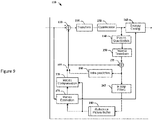
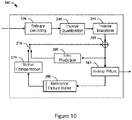
- Video coding organizations strive to develop more efficient coding standards and tools. Some of these standards are High Efficiency Video Coding ISO/IEC ITU-T H.265 (HEVC), MPEG-4 Part 10, Advanced Video Coding (MPEG-4 AVC) and Joint Exploration Test Model (JEM) or H.266. Many coding tools construct lists of possible candidates for such things as motion vector prediction and intra prediction. The aim is to find the best candidate in the RDO (Rate Distortion Optimization) sense.
- RDO Rate Distortion Optimization
- the candidate pruning could be generic, such that it is applied to all tools systematically, or it could also be specific to each set of tools.
- a method for encoding or decoding a video signal using candidate list pruning comprises performing at least one operation on a coding component candidate of a video signal to generate at least one modified candidate.
- the method further comprises determining whether the at least one modified candidate is already present in a candidate list, and adding the at least one modified candidate if the at least one modified candidate is not previously present in the candidate list.
- an apparatus for encoding or decoding a video signal using candidate list pruning comprises a memory, and a processor configured to encode or decode a video signal using the candidate list by performing at least one operation on a on a coding component candidate of a video signal to generate at least one modified candidate, by determining whether the at least one modified candidate is already present in a candidate list, and by adding the at least one modified candidate if the at least one modified candidate is not previously present in the candidate list.
- a non-transitory computer readable medium containing data content generated according to any of the encoding method embodiments, or by any of the encoder apparatus embodiments, for playback using a processor.
- a signal comprising video data generated according to any of the encoding method embodiments, or by any of the encoder apparatus embodiments, for playback using a processor.
- a computer program product comprising instructions which, when the program is executed by a computer, cause the computer to carry out the method of any one of the decoding method or decoding apparatus embodiments.
- candidates are video coding component candidates used in the coding or decoding of a video signal.
- the video components can be elements such as motion vectors, predictions, quantization parameters, for example.
- the candidates of these lists should be unique to ensure a full diversity with the minimal number of candidates.
- the candidate pruning can be generic in that it can be applied to all tools systematically, or it can also be specific to each set of tools. Some of such tools using lists are presented hereafter, but the general aspects described herein are not limited to these tools.
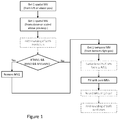
- the AMVP (Advanced Motion Vector Prediction) prediction consists in constructing a list of two predictors for each reference frame of each reference frame list (L0 and L1). These two AMVP predictors are composed of a motion vector.
- the predictors come from spatial and/or temporal neighboring blocks (Coding Units / Prediction Units). Further operations can then be performed on these predictors, such as FRUC (Frame Rate Up Conversion) derivation (i.e. motion vector refinement), clipping and/or rounding operations, etc.
- FRUC Full Rate Up Conversion
- clipping and/or rounding operations etc.
- the process for such predictor derivation is as in Figure 1 .
- the Merge prediction consists in constructing a set of seven motion vector predictors with their associated reference frame and reference frame list, and corresponding IC flag (i.e. the local Illumination Compensation flag).
- the predictors come from spatial and/or temporal neighbors from which the motion vector and associated reference frame and IC flag are picked. Further operations can then be performed on these predictors, such as clipping and/or rounding operations, for example.
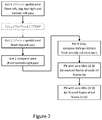
- the FRUC (Frame Rate Up Conversion) process uses the Merge predictors as described in the previous section, but do not use the IC flag information of those predictors.
- the FRUC Merge predictors coming from the Merge candidates are composed of:
- the predictors come from spatial and/or temporal neighbors from which the motion vector and associated reference frame are selected. Further operations can then be performed on these predictors, such as clipping and/or rounding operations, for example. The process for such predictor derivation is as shown in Figure 2 .
- the Affine AMVP prediction is quite similar to the one of classical AMVP, but Affine motion estimation and compensation are performed by using two motion vectors, called subsequently affine pair of motion vectors. Then, it consists in finding two affine pairs of motion vector predictors for each reference frame of each reference frame list (L0 and L1).
- the Affine AMVP predictors are composed of:
- the Intra prediction consists in testing several directional predictions (9 in AVC, up to 35 in HEVC and up to 67 in JEM) in order to find the best one.
- MPM Most Probable Mode
- RSAF Reference Sample Adaptive Filter
- PDPC Position Dependent intra Prediction Combination
- the diversity of the AMVP generated list of predictors can be improved in several ways.
- the AMVP scheme operations that can modify the candidates should be applied just before adding them into the list of predictors.
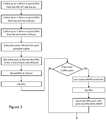
- the "compare/add” function consists in comparing the retrieved candidate to the already selected ones. As an AMVP predictor is composed of only a motion vector, this function compares motion vectors.
- the second spatial candidate does not use the information about the first selected one (if some).
- the "different" function stands for a comparison of the potential candidates to the already selected one to ensure a different predictor selection.
- the diversity of the Merge generated list of predictors can be improved by comparing each new candidate to previously selected ones before adding it in the list only if it is not already present.
- Figure 7 describes this embodiment compared to Figure 2 .
- the "compare/add" function consists in (i) comparing the just retrieved predictor to the already selected ones and (ii) adding it if not already present.
- a Merge predictor is composed of a motion vector, a reference frame index in a reference frame list and an IC flag, the comparison involves testing these four components.
- the diversity of the FRUC candidates coming from the Merge ones can be improved (i) by using the same improvements as for Merge, i.e. as presented in Figure 7 , and (ii) by removing the IC flag from the Merge process of Figure 7 .
- FRUC should use the process from the second embodiment, shown in Figure 7 , to inherit the candidate diversity from the Merge improvements.
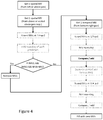
- the diversity of the Affine AMVP predictors can also be improved by ensuring a list of unique predictors.
- Figure 8 shows this process where all triplets of motion vector predictors are rounded and clipped before selecting the two best ones.
- the two best triplets can be the first two different ones with the lower costs, for example, although other criteria can be used for selecting which ones should be added as candidates.
- the added AMVP candidates should also be treated with a "compare/add" function that manages comparing the candidate affine pair to a previously selected one before adding it, if not already present.
- a "compare/add" function that manages comparing the candidate affine pair to a previously selected one before adding it, if not already present.
- the affine AMVP list can be not full, that is, not filled with two unique affine pairs of motion vectors. It can be useful to fill this list with a pair of zero motion vectors.
- the number of the Intra predictors can be reduced by removing the redundant ones.
- Some reference samples used for directional predictions can be equal because either they are the same in the prediction frame or they are not available and filled with the first available neighbor.
- a sixth embodiment several of the previous embodiments can be coupled together.
- AVC and HEVC only the first two sub-embodiments of the first embodiment, the second embodiment and the fifth embodiment can be applied.
- JEM all embodiments can be used. In both cases, any combination of usable embodiments can be observed.
- the described embodiments can be applied both at an encoder and a decoder.
- all candidates are collected and compared in some RDO loops to isolate the best one.
- candidates are collected in the same way until all possibilities are exhausted or until the searched one, the best encoded one, is found. For example,
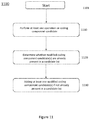
- Figure 11 shows one embodiment of a method 1100 for encoding or decoding a block of video data using candidate list pruning.
- the method commences at Start block 1101 and proceeds to block 1110 for performing at least one operation on a coding component candidate to generate modified coding component candidate(s). Control then proceeds from block 1110 to block 1120 for determining whether the modified coding component candidate(s) are already present in a candidate list. Control then proceeds from block 1120 to block 1130 for adding the at least one modified candidate if it is not previously present in the candidate list.
- Figure 12 shows one embodiment of an apparatus 1200 for coding or decoding a block of video data.
- the apparatus comprises Processor 1210 which has input and output ports and is in signal connectivity with Memory 1220, also having input and output ports.
- the apparatus can execute any of the aforementioned method embodiments, or variations for encoding or decoding video signal data using candidate list pruning.
- processor or “controller” should not be construed to refer exclusively to hardware capable of executing software, and may implicitly include, without limitation, digital signal processor (“DSP”) hardware, read-only memory (“ROM”) for storing software, random access memory (“RAM”), and non-volatile storage.
- DSP digital signal processor
- ROM read-only memory
- RAM random access memory
- any switches shown in the figures are conceptual only. Their function may be carried out through the operation of program logic, through dedicated logic, through the interaction of program control and dedicated logic, or even manually, the particular technique being selectable by the implementer as more specifically understood from the context.
- any element expressed as a means for performing a specified function is intended to encompass any way of performing that function including, for example, a) a combination of circuit elements that performs that function or b) software in any form, including, therefore, firmware, microcode or the like, combined with appropriate circuitry for executing that software to perform the function.
- the present principles as defined by such claims reside in the fact that the functionalities provided by the various recited means are combined and brought together in the manner which the claims call for. It is thus regarded that any means that can provide those functionalities are equivalent to those shown herein.
- candidate list pruning for video coding and decoding is provided by at least the described embodiments.
- the aim is to find the best candidate in the RDO sense among various candidates during video encoding and decoding.
Landscapes
- Engineering & Computer Science (AREA)
- Multimedia (AREA)
- Signal Processing (AREA)
- Compression Or Coding Systems Of Tv Signals (AREA)
Priority Applications (14)
| Application Number | Priority Date | Filing Date | Title |
|---|---|---|---|
| EP17305630.0A EP3410717A1 (en) | 2017-05-31 | 2017-05-31 | Methods and apparatus for candidate list pruning |
| JP2019565183A JP7816913B2 (ja) | 2017-05-31 | 2018-05-30 | 候補リスト枝刈りの方法及び装置 |
| PCT/EP2018/064180 WO2018220010A1 (en) | 2017-05-31 | 2018-05-30 | Method and apparatus for candidate list pruning |
| EP18727801.5A EP3632105A1 (en) | 2017-05-31 | 2018-05-30 | Method and apparatus for candidate list pruning |
| US16/617,170 US11089298B2 (en) | 2017-05-31 | 2018-05-30 | Method and apparatus for candidate list pruning |
| CN201880042767.7A CN110870313B (zh) | 2017-05-31 | 2018-05-30 | 用于候选列表修剪的方法和装置 |
| CN202411647553.6A CN119562077A (zh) | 2017-05-31 | 2018-05-30 | 用于候选列表修剪的方法和装置 |
| CN202411647526.9A CN119562076A (zh) | 2017-05-31 | 2018-05-30 | 用于候选列表修剪的方法和装置 |
| MX2023010073A MX2023010073A (es) | 2017-05-31 | 2019-11-28 | Metodo y aparato para el recorte de lista de candidatos. |
| US17/373,927 US11553175B2 (en) | 2017-05-31 | 2021-07-13 | Method and apparatus for candidate list pruning |
| US18/074,769 US12238277B2 (en) | 2017-05-31 | 2022-12-05 | Method and apparatus for candidate list pruning |
| JP2023173502A JP2024001175A (ja) | 2017-05-31 | 2023-10-05 | 候補リスト枝刈りの方法及び装置 |
| US19/026,941 US20250159141A1 (en) | 2017-05-31 | 2025-01-17 | Method and apparatus for candidate list pruning |
| JP2025134901A JP2025170298A (ja) | 2017-05-31 | 2025-08-13 | 候補リスト枝刈りの方法及び装置 |
Applications Claiming Priority (1)
| Application Number | Priority Date | Filing Date | Title |
|---|---|---|---|
| EP17305630.0A EP3410717A1 (en) | 2017-05-31 | 2017-05-31 | Methods and apparatus for candidate list pruning |
Publications (1)
| Publication Number | Publication Date |
|---|---|
| EP3410717A1 true EP3410717A1 (en) | 2018-12-05 |
Family
ID=59034681
Family Applications (2)
| Application Number | Title | Priority Date | Filing Date |
|---|---|---|---|
| EP17305630.0A Withdrawn EP3410717A1 (en) | 2017-05-31 | 2017-05-31 | Methods and apparatus for candidate list pruning |
| EP18727801.5A Pending EP3632105A1 (en) | 2017-05-31 | 2018-05-30 | Method and apparatus for candidate list pruning |
Family Applications After (1)
| Application Number | Title | Priority Date | Filing Date |
|---|---|---|---|
| EP18727801.5A Pending EP3632105A1 (en) | 2017-05-31 | 2018-05-30 | Method and apparatus for candidate list pruning |
Country Status (6)
| Country | Link |
|---|---|
| US (4) | US11089298B2 (enExample) |
| EP (2) | EP3410717A1 (enExample) |
| JP (3) | JP7816913B2 (enExample) |
| CN (3) | CN110870313B (enExample) |
| MX (1) | MX2023010073A (enExample) |
| WO (1) | WO2018220010A1 (enExample) |
Families Citing this family (17)
| Publication number | Priority date | Publication date | Assignee | Title |
|---|---|---|---|---|
| AU3109600A (en) | 1998-12-04 | 2000-06-26 | Johns Hopkins University, The | Telemetric in vivo bladder monitoring system |
| WO2020003279A1 (en) | 2018-06-29 | 2020-01-02 | Beijing Bytedance Network Technology Co., Ltd. | Concept of using one or multiple look up tables to store motion information of previously coded in order and use them to code following blocks |
| CA3105072A1 (en) | 2018-06-29 | 2020-01-02 | Vid Scale, Inc. | Adaptive control point selection for affine motion model based video coding |
| JP7460617B2 (ja) | 2018-06-29 | 2024-04-02 | 北京字節跳動網絡技術有限公司 | Lut更新条件 |
| CN110662070B (zh) | 2018-06-29 | 2022-03-18 | 北京字节跳动网络技术有限公司 | 用于查找表更新的编码的运动信息的选择 |
| EP4325862A3 (en) | 2018-06-29 | 2024-03-06 | Beijing Bytedance Network Technology Co., Ltd. | Checking order of motion candidates in lut |
| TWI723445B (zh) | 2018-06-29 | 2021-04-01 | 大陸商北京字節跳動網絡技術有限公司 | 查找表的更新:fifo、約束的fifo |
| WO2020003282A1 (en) * | 2018-06-29 | 2020-01-02 | Beijing Bytedance Network Technology Co., Ltd. | Managing motion vector predictors for video coding |
| CN110662054B (zh) | 2018-06-29 | 2023-01-06 | 北京字节跳动网络技术有限公司 | 用于视频处理的方法、装置、计算机可读存储介质 |
| KR102641872B1 (ko) | 2018-06-29 | 2024-02-29 | 베이징 바이트댄스 네트워크 테크놀로지 컴퍼니, 리미티드 | Lut와 amvp 사이의 상호작용 |
| WO2020008351A1 (en) | 2018-07-02 | 2020-01-09 | Beijing Bytedance Network Technology Co., Ltd. | Luts with lic |
| TWI820211B (zh) | 2018-09-12 | 2023-11-01 | 大陸商北京字節跳動網絡技術有限公司 | 取決於總數減去k的開始檢查hmvp候選的條件 |
| KR102648159B1 (ko) | 2019-01-10 | 2024-03-18 | 베이징 바이트댄스 네트워크 테크놀로지 컴퍼니, 리미티드 | Lut 업데이트의 호출 |
| CN113383554B (zh) | 2019-01-13 | 2022-12-16 | 北京字节跳动网络技术有限公司 | LUT和共享Merge列表之间的交互 |
| WO2020147773A1 (en) | 2019-01-16 | 2020-07-23 | Beijing Bytedance Network Technology Co., Ltd. | Inserting order of motion candidates in lut |
| CN113615193B (zh) | 2019-03-22 | 2024-06-25 | 北京字节跳动网络技术有限公司 | Merge列表构建和其他工具之间的交互 |
| CN113766244B (zh) * | 2020-06-05 | 2025-12-12 | Oppo广东移动通信有限公司 | 帧间预测方法、编码器、解码器以及计算机存储介质 |
Citations (1)
| Publication number | Priority date | Publication date | Assignee | Title |
|---|---|---|---|---|
| US20130272410A1 (en) * | 2012-04-11 | 2013-10-17 | Qualcomm Incorporated | Motion vector rounding |
Family Cites Families (33)
| Publication number | Priority date | Publication date | Assignee | Title |
|---|---|---|---|---|
| JPH1023427A (ja) * | 1996-07-04 | 1998-01-23 | Matsushita Electric Ind Co Ltd | 映像信号符号化及び復号化装置と映像信号伝送装置 |
| US20060098733A1 (en) * | 2004-11-08 | 2006-05-11 | Kabushiki Kaisha Toshiba | Variable-length coding device and method of the same |
| US8098732B2 (en) * | 2007-10-10 | 2012-01-17 | Sony Corporation | System for and method of transcoding video sequences from a first format to a second format |
| BR112012019560B1 (pt) | 2010-02-05 | 2021-08-24 | Telefonaktiebolaget Lm Ericsson | Método para gerenciar candidatos a vetor de movimento predito, e, aparelhos de codificação e de decodificação de vídeo |
| CN107181944B (zh) * | 2010-10-08 | 2020-06-02 | Ge视频压缩有限责任公司 | 编码器和编码方法与解码器和解码方法 |
| US9049455B2 (en) * | 2010-12-28 | 2015-06-02 | Panasonic Intellectual Property Corporation Of America | Image coding method of coding a current picture with prediction using one or both of a first reference picture list including a first current reference picture for a current block and a second reference picture list including a second current reference picture for the current block |
| US9319716B2 (en) * | 2011-01-27 | 2016-04-19 | Qualcomm Incorporated | Performing motion vector prediction for video coding |
| CN108174222B (zh) * | 2011-06-28 | 2022-04-05 | Lg电子株式会社 | 设置运动矢量列表的方法及使用其的装置 |
| US9699456B2 (en) * | 2011-07-20 | 2017-07-04 | Qualcomm Incorporated | Buffering prediction data in video coding |
| KR20130028315A (ko) | 2011-09-09 | 2013-03-19 | 주식회사 케이티 | MVP list와 Merge list pruning process |
| WO2013057877A1 (ja) * | 2011-10-19 | 2013-04-25 | パナソニック株式会社 | 画像符号化方法、画像符号化装置、画像復号方法、および、画像復号装置 |
| EP4472208A3 (en) * | 2011-10-21 | 2025-02-19 | Nokia Technologies Oy | Method for coding and an apparatus |
| JP2013098899A (ja) * | 2011-11-04 | 2013-05-20 | Sony Corp | 符号化装置および符号化方法、並びに、復号装置および復号方法 |
| US20130114717A1 (en) | 2011-11-07 | 2013-05-09 | Qualcomm Incorporated | Generating additional merge candidates |
| JP2013102280A (ja) | 2011-11-07 | 2013-05-23 | Sharp Corp | 画像復号装置、および画像符号化装置 |
| KR101934277B1 (ko) * | 2011-11-28 | 2019-01-04 | 에스케이텔레콤 주식회사 | 개선된 머지를 이용한 영상 부호화/복호화 방법 및 장치 |
| US9762904B2 (en) * | 2011-12-22 | 2017-09-12 | Qualcomm Incorporated | Performing motion vector prediction for video coding |
| US20130329007A1 (en) | 2012-06-06 | 2013-12-12 | Qualcomm Incorporated | Redundancy removal for advanced motion vector prediction (amvp) in three-dimensional (3d) video coding |
| US20130336406A1 (en) | 2012-06-14 | 2013-12-19 | Qualcomm Incorporated | Redundancy removal for merge/skip mode motion information candidate list construction |
| WO2014005503A1 (en) | 2012-07-02 | 2014-01-09 | Mediatek Inc. | Method and apparatus of inter-view candidate derivation in 3d video coding |
| US9325990B2 (en) * | 2012-07-09 | 2016-04-26 | Qualcomm Incorporated | Temporal motion vector prediction in video coding extensions |
| WO2014053086A1 (en) * | 2012-10-05 | 2014-04-10 | Mediatek Singapore Pte. Ltd. | Method and apparatus of motion vector derivation 3d video coding |
| US9615090B2 (en) * | 2012-12-28 | 2017-04-04 | Qualcomm Incorporated | Parsing syntax elements in three-dimensional video coding |
| US9800857B2 (en) * | 2013-03-08 | 2017-10-24 | Qualcomm Incorporated | Inter-view residual prediction in multi-view or 3-dimensional video coding |
| CA2896810C (en) * | 2013-04-10 | 2017-12-19 | Mediatek Inc. | Method and apparatus for bi-prediction of illumination compensation |
| US9860529B2 (en) * | 2013-07-16 | 2018-01-02 | Qualcomm Incorporated | Processing illumination compensation for video coding |
| CN104581181B (zh) | 2013-10-11 | 2017-12-05 | 中国科学院深圳先进技术研究院 | 一种基于备选模式列表优化的帧内编码方法 |
| US10531116B2 (en) * | 2014-01-09 | 2020-01-07 | Qualcomm Incorporated | Adaptive motion vector resolution signaling for video coding |
| EP2960854A1 (en) * | 2014-06-27 | 2015-12-30 | Thomson Licensing | Method and device for determining a set of modifiable elements in a group of pictures |
| KR102378459B1 (ko) | 2014-06-30 | 2022-03-24 | 한국전자통신연구원 | 움직임 병합 모드에서 시점 합성 예측 후보의 중복성 제거 장치 및 방법 |
| GB2539212A (en) * | 2015-06-08 | 2016-12-14 | Canon Kk | Handling of non-correct block vectors generated for intra block copy coding mode |
| US10375413B2 (en) * | 2015-09-28 | 2019-08-06 | Qualcomm Incorporated | Bi-directional optical flow for video coding |
| US10602180B2 (en) * | 2017-06-13 | 2020-03-24 | Qualcomm Incorporated | Motion vector prediction |
-
2017
- 2017-05-31 EP EP17305630.0A patent/EP3410717A1/en not_active Withdrawn
-
2018
- 2018-05-30 EP EP18727801.5A patent/EP3632105A1/en active Pending
- 2018-05-30 JP JP2019565183A patent/JP7816913B2/ja active Active
- 2018-05-30 CN CN201880042767.7A patent/CN110870313B/zh active Active
- 2018-05-30 CN CN202411647553.6A patent/CN119562077A/zh active Pending
- 2018-05-30 CN CN202411647526.9A patent/CN119562076A/zh active Pending
- 2018-05-30 US US16/617,170 patent/US11089298B2/en active Active
- 2018-05-30 WO PCT/EP2018/064180 patent/WO2018220010A1/en not_active Ceased
-
2019
- 2019-11-28 MX MX2023010073A patent/MX2023010073A/es unknown
-
2021
- 2021-07-13 US US17/373,927 patent/US11553175B2/en active Active
-
2022
- 2022-12-05 US US18/074,769 patent/US12238277B2/en active Active
-
2023
- 2023-10-05 JP JP2023173502A patent/JP2024001175A/ja active Pending
-
2025
- 2025-01-17 US US19/026,941 patent/US20250159141A1/en active Pending
- 2025-08-13 JP JP2025134901A patent/JP2025170298A/ja active Pending
Patent Citations (1)
| Publication number | Priority date | Publication date | Assignee | Title |
|---|---|---|---|---|
| US20130272410A1 (en) * | 2012-04-11 | 2013-10-17 | Qualcomm Incorporated | Motion vector rounding |
Non-Patent Citations (4)
| Title |
|---|
| CHEN J ET AL: "Algorithm Description of Joint Exploration Test Model 5", 5. JVET MEETING; 12-1-2017 - 20-1-2017; GENEVA; (THE JOINT VIDEO EXPLORATION TEAM OF ISO/IEC JTC1/SC29/WG11 AND ITU-T SG.16 ); URL: HTTP://PHENIX.INT-EVRY.FR/JVET/,, no. JVET-E1001-v2, 11 February 2017 (2017-02-11), XP030150648 * |
| GUILLAUME LAROCHE ET AL: "Robust solution for the AMVP parsing issue", 96. MPEG MEETING; 21-3-2011 - 25-3-2011; GENEVA; (MOTION PICTURE EXPERT GROUP OR ISO/IEC JTC1/SC29/WG11),, no. m19740, 18 March 2011 (2011-03-18), XP030048307 * |
| JEON Y ET AL: "On MVP list pruning process", 97. MPEG MEETING; 18-7-2011 - 22-7-2011; TORINO; (MOTION PICTURE EXPERT GROUP OR ISO/IEC JTC1/SC29/WG11),, no. m20519, 1 July 2011 (2011-07-01), XP030049083 * |
| ROSEWARNE C ET AL: "High Efficiency Video Coding (HEVC) Test Model 16 (HM 16) Encoder Description Update 7", 25. JCT-VC MEETING; 14-10-2016 - 21-10-2016; CHENGDU; (JOINT COLLABORATIVE TEAM ON VIDEO CODING OF ISO/IEC JTC1/SC29/WG11 AND ITU-T SG.16 ); URL: HTTP://WFTP3.ITU.INT/AV-ARCH/JCTVC-SITE/,, no. JCTVC-Y1002, 6 January 2017 (2017-01-06), XP030118100 * |
Also Published As
| Publication number | Publication date |
|---|---|
| US12238277B2 (en) | 2025-02-25 |
| US20200186793A1 (en) | 2020-06-11 |
| US20230131933A1 (en) | 2023-04-27 |
| CN110870313A (zh) | 2020-03-06 |
| JP2024001175A (ja) | 2024-01-09 |
| MX2023010073A (es) | 2023-09-06 |
| US11553175B2 (en) | 2023-01-10 |
| CN119562077A (zh) | 2025-03-04 |
| EP3632105A1 (en) | 2020-04-08 |
| JP7816913B2 (ja) | 2026-02-18 |
| WO2018220010A1 (en) | 2018-12-06 |
| US11089298B2 (en) | 2021-08-10 |
| US20210344905A1 (en) | 2021-11-04 |
| US20250159141A1 (en) | 2025-05-15 |
| JP2025170298A (ja) | 2025-11-18 |
| JP2020522169A (ja) | 2020-07-27 |
| CN110870313B (zh) | 2024-12-06 |
| CN119562076A (zh) | 2025-03-04 |
Similar Documents
| Publication | Publication Date | Title |
|---|---|---|
| US12238277B2 (en) | Method and apparatus for candidate list pruning | |
| JP7506220B2 (ja) | 動き補償のための複数の予測子候補 | |
| US9832462B2 (en) | Method and apparatus for setting reference picture index of temporal merging candidate | |
| US12284388B2 (en) | Encoding method and apparatus therefor, and decoding method and apparatus therefor | |
| RU2677577C1 (ru) | Устройство кодирования видео с предсказанием, способ кодирования видео с предсказанием, программа кодирования видео с предсказанием, устройство декодирования видео с предсказанием, способ декодирования видео с предсказанием и программа декодирования видео с предсказанием | |
| US20190238883A1 (en) | Hardware Friendly Constrained Motion Vector Refinement | |
| US11212532B2 (en) | Method and apparatus for encoding and decoding motion information | |
| WO2018127442A1 (en) | Method and apparatus for encoding and decoding motion information | |
| JP2019535202A (ja) | インター予測モードベースの画像処理方法及びそのための装置 | |
| JP2023139206A (ja) | 低減されたメモリアクセスを用いてfrucモードでビデオデータを符号化又は復号する方法及び装置 | |
| KR20130070648A (ko) | 저 복잡성 움직임 벡터 도출을 위한 시스템 및 방법 | |
| US20190335197A1 (en) | Image encoding/decoding method and device, and recording medium having bitstream stored thereon | |
| WO2024008063A1 (en) | On planar intra prediction mode | |
| KR20190071189A (ko) | 참조 프레임을 적응적으로 제한하는 영상 부호화 방법 및 장치 | |
| WO2020142468A1 (en) | Picture resolution dependent configurations for video coding | |
| US20170006296A1 (en) | Method and device for deriving motion information using depth information, and method and device for deriving motion merging candidate using depth information | |
| KR20210036822A (ko) | 영상 부호화/복호화 방법, 장치 및 비트스트림을 저장한 기록 매체 | |
| KR20160059511A (ko) | 비디오 부/복호화기에서 화면 내 블록 복사 기술의 블록 벡터 예측 방법 및 장치 | |
| KR20160059512A (ko) | 비디오 부호화기에서 화면 내 블록 복사 기술의 블록 벡터 탐색 시작 위치 결정과 탐색 범위 설정에 관한 방법 및 장치 |
Legal Events
| Date | Code | Title | Description |
|---|---|---|---|
| PUAI | Public reference made under article 153(3) epc to a published international application that has entered the european phase |
Free format text: ORIGINAL CODE: 0009012 |
|
| AK | Designated contracting states |
Kind code of ref document: A1 Designated state(s): AL AT BE BG CH CY CZ DE DK EE ES FI FR GB GR HR HU IE IS IT LI LT LU LV MC MK MT NL NO PL PT RO RS SE SI SK SM TR |
|
| AX | Request for extension of the european patent |
Extension state: BA ME |
|
| STAA | Information on the status of an ep patent application or granted ep patent |
Free format text: STATUS: THE APPLICATION IS DEEMED TO BE WITHDRAWN |
|
| 18D | Application deemed to be withdrawn |
Effective date: 20190606 |