EP3409191B1 - Kardiale elektrophysiologische maschine mit katheterstabilität bei abschätzung des impedanzabfalls - Google Patents
Kardiale elektrophysiologische maschine mit katheterstabilität bei abschätzung des impedanzabfalls Download PDFInfo
- Publication number
- EP3409191B1 EP3409191B1 EP18175250.2A EP18175250A EP3409191B1 EP 3409191 B1 EP3409191 B1 EP 3409191B1 EP 18175250 A EP18175250 A EP 18175250A EP 3409191 B1 EP3409191 B1 EP 3409191B1
- Authority
- EP
- European Patent Office
- Prior art keywords
- filter
- impedance
- filters
- catheter
- medical procedure
- Prior art date
- Legal status (The legal status is an assumption and is not a legal conclusion. Google has not performed a legal analysis and makes no representation as to the accuracy of the status listed.)
- Active
Links
Images



Classifications
-
- A—HUMAN NECESSITIES
- A61—MEDICAL OR VETERINARY SCIENCE; HYGIENE
- A61B—DIAGNOSIS; SURGERY; IDENTIFICATION
- A61B5/00—Measuring for diagnostic purposes; Identification of persons
- A61B5/24—Detecting, measuring or recording bioelectric or biomagnetic signals of the body or parts thereof
- A61B5/316—Modalities, i.e. specific diagnostic methods
- A61B5/318—Heart-related electrical modalities, e.g. electrocardiography [ECG]
-
- A—HUMAN NECESSITIES
- A61—MEDICAL OR VETERINARY SCIENCE; HYGIENE
- A61B—DIAGNOSIS; SURGERY; IDENTIFICATION
- A61B18/00—Surgical instruments, devices or methods for transferring non-mechanical forms of energy to or from the body
- A61B18/04—Surgical instruments, devices or methods for transferring non-mechanical forms of energy to or from the body by heating
- A61B18/12—Surgical instruments, devices or methods for transferring non-mechanical forms of energy to or from the body by heating by passing a current through the tissue to be heated, e.g. high-frequency current
-
- A—HUMAN NECESSITIES
- A61—MEDICAL OR VETERINARY SCIENCE; HYGIENE
- A61B—DIAGNOSIS; SURGERY; IDENTIFICATION
- A61B18/00—Surgical instruments, devices or methods for transferring non-mechanical forms of energy to or from the body
- A61B18/04—Surgical instruments, devices or methods for transferring non-mechanical forms of energy to or from the body by heating
- A61B18/12—Surgical instruments, devices or methods for transferring non-mechanical forms of energy to or from the body by heating by passing a current through the tissue to be heated, e.g. high-frequency current
- A61B18/14—Probes or electrodes therefor
- A61B18/1492—Probes or electrodes therefor having a flexible, catheter-like structure, e.g. for heart ablation
-
- A—HUMAN NECESSITIES
- A61—MEDICAL OR VETERINARY SCIENCE; HYGIENE
- A61B—DIAGNOSIS; SURGERY; IDENTIFICATION
- A61B5/00—Measuring for diagnostic purposes; Identification of persons
- A61B5/05—Detecting, measuring or recording for diagnosis by means of electric currents or magnetic fields; Measuring using microwaves or radio waves
- A61B5/053—Measuring electrical impedance or conductance of a portion of the body
- A61B5/0538—Measuring electrical impedance or conductance of a portion of the body invasively, e.g. using a catheter
-
- A—HUMAN NECESSITIES
- A61—MEDICAL OR VETERINARY SCIENCE; HYGIENE
- A61B—DIAGNOSIS; SURGERY; IDENTIFICATION
- A61B5/00—Measuring for diagnostic purposes; Identification of persons
- A61B5/24—Detecting, measuring or recording bioelectric or biomagnetic signals of the body or parts thereof
- A61B5/316—Modalities, i.e. specific diagnostic methods
- A61B5/318—Heart-related electrical modalities, e.g. electrocardiography [ECG]
- A61B5/333—Recording apparatus specially adapted therefor
-
- A—HUMAN NECESSITIES
- A61—MEDICAL OR VETERINARY SCIENCE; HYGIENE
- A61B—DIAGNOSIS; SURGERY; IDENTIFICATION
- A61B5/00—Measuring for diagnostic purposes; Identification of persons
- A61B5/48—Other medical applications
- A61B5/4836—Diagnosis combined with treatment in closed-loop systems or methods
-
- A—HUMAN NECESSITIES
- A61—MEDICAL OR VETERINARY SCIENCE; HYGIENE
- A61B—DIAGNOSIS; SURGERY; IDENTIFICATION
- A61B5/00—Measuring for diagnostic purposes; Identification of persons
- A61B5/72—Signal processing specially adapted for physiological signals or for diagnostic purposes
- A61B5/7203—Signal processing specially adapted for physiological signals or for diagnostic purposes for noise prevention, reduction or removal
-
- A—HUMAN NECESSITIES
- A61—MEDICAL OR VETERINARY SCIENCE; HYGIENE
- A61B—DIAGNOSIS; SURGERY; IDENTIFICATION
- A61B5/00—Measuring for diagnostic purposes; Identification of persons
- A61B5/72—Signal processing specially adapted for physiological signals or for diagnostic purposes
- A61B5/7235—Details of waveform analysis
- A61B5/725—Details of waveform analysis using specific filters therefor, e.g. Kalman or adaptive filters
-
- A—HUMAN NECESSITIES
- A61—MEDICAL OR VETERINARY SCIENCE; HYGIENE
- A61B—DIAGNOSIS; SURGERY; IDENTIFICATION
- A61B18/00—Surgical instruments, devices or methods for transferring non-mechanical forms of energy to or from the body
- A61B2018/00315—Surgical instruments, devices or methods for transferring non-mechanical forms of energy to or from the body for treatment of particular body parts
- A61B2018/00345—Vascular system
- A61B2018/00351—Heart
-
- A—HUMAN NECESSITIES
- A61—MEDICAL OR VETERINARY SCIENCE; HYGIENE
- A61B—DIAGNOSIS; SURGERY; IDENTIFICATION
- A61B18/00—Surgical instruments, devices or methods for transferring non-mechanical forms of energy to or from the body
- A61B2018/00571—Surgical instruments, devices or methods for transferring non-mechanical forms of energy to or from the body for achieving a particular surgical effect
- A61B2018/00577—Ablation
-
- A—HUMAN NECESSITIES
- A61—MEDICAL OR VETERINARY SCIENCE; HYGIENE
- A61B—DIAGNOSIS; SURGERY; IDENTIFICATION
- A61B18/00—Surgical instruments, devices or methods for transferring non-mechanical forms of energy to or from the body
- A61B2018/00571—Surgical instruments, devices or methods for transferring non-mechanical forms of energy to or from the body for achieving a particular surgical effect
- A61B2018/00589—Coagulation
-
- A—HUMAN NECESSITIES
- A61—MEDICAL OR VETERINARY SCIENCE; HYGIENE
- A61B—DIAGNOSIS; SURGERY; IDENTIFICATION
- A61B18/00—Surgical instruments, devices or methods for transferring non-mechanical forms of energy to or from the body
- A61B2018/00636—Sensing and controlling the application of energy
- A61B2018/00773—Sensed parameters
- A61B2018/00791—Temperature
-
- A—HUMAN NECESSITIES
- A61—MEDICAL OR VETERINARY SCIENCE; HYGIENE
- A61B—DIAGNOSIS; SURGERY; IDENTIFICATION
- A61B18/00—Surgical instruments, devices or methods for transferring non-mechanical forms of energy to or from the body
- A61B2018/00636—Sensing and controlling the application of energy
- A61B2018/00773—Sensed parameters
- A61B2018/00839—Bioelectrical parameters, e.g. ECG, EEG
-
- A—HUMAN NECESSITIES
- A61—MEDICAL OR VETERINARY SCIENCE; HYGIENE
- A61B—DIAGNOSIS; SURGERY; IDENTIFICATION
- A61B18/00—Surgical instruments, devices or methods for transferring non-mechanical forms of energy to or from the body
- A61B2018/00636—Sensing and controlling the application of energy
- A61B2018/00773—Sensed parameters
- A61B2018/00875—Resistance or impedance
-
- A—HUMAN NECESSITIES
- A61—MEDICAL OR VETERINARY SCIENCE; HYGIENE
- A61B—DIAGNOSIS; SURGERY; IDENTIFICATION
- A61B18/00—Surgical instruments, devices or methods for transferring non-mechanical forms of energy to or from the body
- A61B2018/00982—Surgical instruments, devices or methods for transferring non-mechanical forms of energy to or from the body combined with or comprising means for visual or photographic inspections inside the body, e.g. endoscopes
-
- A—HUMAN NECESSITIES
- A61—MEDICAL OR VETERINARY SCIENCE; HYGIENE
- A61B—DIAGNOSIS; SURGERY; IDENTIFICATION
- A61B18/00—Surgical instruments, devices or methods for transferring non-mechanical forms of energy to or from the body
- A61B2018/00988—Means for storing information, e.g. calibration constants, or for preventing excessive use, e.g. usage, service life counter
Definitions
- a cardiac electrophysiology machine including impedance drop estimation that is based on a weighted choice between a least squares filter and a median filter is disclosed.
- the relative weight when combining the results from each of the two filters is based on the catheter speed.
- the weighting is based on a logical sigmoid filter with the 50% threshold set to 1mm/sec of catheter speed. This is a more accurate way to compensate for apparent periodic impedance changes due to respiration and heartbeat. Other weightings and filters could also be used.
- the cardiac electrophysiology machine includes measuring the impedance during a medical procedure being performed on a patient.
- the machine includes an electrode capable of being used in the medical procedure, a plurality of patches operationally located on a body surface of the patient, and a sensor for measuring a signal between the electrode and at least one of the plurality of patches, the signal being processed using a processor applying a first filter and a second filter separately, and combining the result of the output of the first filter and the output of the second filter using a weighting to provide an output of the impedance, wherein the impedance indicates an end of the medical procedure.
- the machine may include the first filter biased to provide a more accurate assessment of the impedance once the medical procedure is underway.
- the machine may include the first filter as a least squares filter.
- the machine may include the second filter biased to provide a more accurate assessment of the impedance at the beginning of the medical procedure.
- the system and method may include the second filter as a median filter.
- the machine may include the weighting as a sigmoid filter applied to the first and second filters based on catheter speed.
- the present invention is related to electrocardiography, referred to herein as ECG, and may also be referred to as EKG. More particularly, the present invention is related to systems and methods for including catheter stability while estimating impedance drop during measurements and procedures.
- Cardiac electrophysiology is the science of elucidating, diagnosing, and treating the electrical activities of the heart.
- One medical system that is used in this area is the CARTO system.
- cardiac electrophysiology may be used to treat arrhythmias by ablating tissue surrounding the heart that is either the source of unwanted beats or conducts unwanted signals. After treatment, the ablation results in a denaturing of the tissue preventing the tissue from conducting the unwanted signals or beats.
- One of the physical characteristics of the ablation is that the electrical impedance between the ablating electrode contacting the tissue and the grounding patches on the body of the patient drops. During the procedure, this impedance is monitored to provide an indication of the effectiveness of the ablation procedure. The impedance provides an indication of when the ablation procedure is complete. Therefore, the measurement of impedance is an important and integral part of the ablation procedure and improvements in the ability to accurately measure the impedance are paramount.
- Patent application publication US 2010/0179538 A1 discloses an electrosurgical generator for supplying electrosurgical energy to tissue.
- the generator includes sensor circuitry configured to measure an imaginary impedance and/or a rate of change of imaginary impedance of tissue.
- the present machine for impedance drop estimation may be based on a weighted combination of a least squares filter and a median filter.
- the relative weight in combining the output of the two filters may be based on the catheter speed.
- the weighting between the output of two filters may be based on a logical sigmoid filter, and such filter may set the 50% threshold to 1mm/sec of catheter speed.
- the use of the two filters combined using the weighting provides improved accuracy in compensating for the periodic impedance changes due to respiration and heartbeat as well as spikes in impedance that may result at the beginning of an ablation procedure.
- other weightings and filters may also be used.
- a machine for measuring the impedance during a medical procedure being performed on a patient includes an electrode capable of being used in the medical procedure, a plurality of patches operationally located on the body surface of the patient, and a sensor for measuring a signal between the electrode and at least one of the plurality of patches, the signal being processed using a processor applying a first filter and a second filter separately, and combining the result of the output of the first filter and the output of the second filter using a weighting to provide an output of the impedance, wherein the impedance indicates an end of the medical procedure.
- the machine may include the first filter biased to provide a more accurate assessment of the impedance during the course of the medical procedure is underway.
- the machine may include the first filter as a least squares filter.
- the machine may include the second filter biased to provide a more accurate assessment of the impedance at the beginning of the medical procedure.
- the machine may include the second filter as a median filter.
- the machine may include the weighting as a sigmoid filter applied to the first and second filters based on catheter speed.
- Electrocardiography is the process of recording the electrical activity of the heart over a period of time using electrodes placed on the skin, or inside the heart using a specialized catheter (i.e. intracardiac ECG). These electrodes detect the small electrical changes that arise from the cardiac muscle's electro-physiologic pattern of depolarizing during each heartbeat. ECGs are commonly or routinely performed cardiology tests. The machine used in the test is an electrocardiograph and the initial output is an electrocardiogram. For the sake of brevity, electrocardiography, electrocardiograph, and electrocardiogram are all referred to herein as ECG, and may also be referred to as EKG.
- An intracardiac electrogram is an ECG with some added intracardiac leads (i.e., inside the heart).
- Such an ICEG may be utilized in combination with, or in the alternative to, a conventional 12-lead ECG.
- a conventional 12-lead ECG 10 electrodes are placed on the patient's limbs and on the surface of the chest.
- the overall magnitude of the electrical potential of the heart is then measured from 12 different angles ("leads") and is recorded over a period of time.
- the procedure duration may vary from tens of minutes to several hours. During each procedure, there are usually several dozens of ablation sessions, each of which may last several seconds up to approximately 1 minute, for example.
- a conventional 12-lead ECG may be performed over a period of time, such as 10 seconds, for example.
- a period of time such as 10 seconds
- the overall magnitude and direction of the electrical depolarization of the heart is captured at each moment throughout the cardiac cycle.
- a graph of voltage versus time produced by this medical procedure is referred to as an electrocardiogram.
- an ECG conveys a large amount of information about the structure of the heart and the function of its electrical conduction system.
- an ECG can be used to measure the rate and rhythm of heartbeats, the size and position of the heart chambers, the presence of any damage to the muscle cells or conduction system of the heart, the effects of cardiac drugs, and the function of implanted pacemakers.
- Interpretation of the ECG is fundamentally about understanding the electrical conduction system of the heart. Normal conduction starts and propagates in a predictable pattern, and deviation from this pattern can be a normal variation or be pathological.
- cardiac electrophysiology is the science of diagnosing, and treating the electrical activities of the heart using, among other techniques, the ECG.
- the term is usually used to describe studies of such phenomena by invasive (intracardiac) catheter recording of spontaneous activity as well as of cardiac responses to programmed electrical stimulation (PES). These studies are performed to assess complex arrhythmias, elucidate symptoms, evaluate abnormal electrocardiograms, assess risk of developing arrhythmias in the future, and design treatment.
- Therapeutic methods include ablations.
- Ablation generally refers to the removal, killing or scarring of biological tissue, such as to alter the contraction patterns, usually by surgery, and may include methods of ablating aberrant tissue from within the body via minimally invasive procedures.
- the dysfunctional tissue may be ablated using heat generated from alternating electric current at radio frequencies in the range of 350-500 kHz.
- the ablation electrode used in ablating the tissue, may be monitored for impedance as compared to patches on the body of the patient to determine how the procedure is progressing and when the procedure is complete.
- other effects on the impedance measurement may need to be accounted for. These other effects include respiration of the patient, catheter stability, temperature, catheter force, catheter positional stability, and system noise.
- Figure 1 illustrates a block diagram of a device 100 utilizing catheter stability and speed to estimate impedance drop.
- Device 100 may take the form of an ECG.
- Device 100 includes a series of leads 110 that taper into a single multiplexed input 115.
- the series of leads 110 may be placed on a human test subject 105.
- Additional leads 107 which may be included with series of leads 110, or separate therefrom (as shown) may be intracardiac leads 107.
- Intracardiac leads 107 may be used for diagnostic or therapeutic treatment, such as for mapping electrical potentials in a heart 126 of a patient 105. Alternatively, intracardiac leads 107 may be used, mutatis mutandis, for other therapeutic and/or diagnostic purposes in the heart or in other body organs.
- Intracardiac leads 107 may be inserted in the vascular system of the patient 105 so that a distal end 132 of the leads 107 enters a chamber of the patient's heart 126.
- Figure 1 shows a single lead 107 with a single location sensor, embodiments of the present invention may utilize probes with more than one location sensor.
- the signals on the series of leads 110 are input into an analog front-end 125 via an input multiplexor 120.
- the analog front-end 125 provides to and is controlled by a processor 130.
- Processor 130 may include, as shown, a video controller 135, digital signal processor 140, a microprocessor 145, and a micro controller 150.
- Processor 130 is coupled to a data storage 155.
- Data ports and printers 160 may be coupled to processor 130.
- Other input/output devices 165 may be coupled to processor 130.
- a display 170 may be used to provide output of the signals of the ECG.
- a power/battery management system 175 may be included to provide power for device 100 to operate.
- Series of leads 110 includes both the generally used forms of electrodes and leads.
- One or more of the series of leads 110 may include an ablation electrode.
- the series of leads 110 may include a conductive pad in contact with the body 105 that makes an electrical circuit with the electrocardiograph.
- Series of leads 110 may be grouped into three sets: limb, augmented limb, and precordial.
- the 12-lead ECG has a total of three limb leads and three augmented limb leads arranged like spokes of a wheel in the coronal plane (vertical) and six precordial leads that lie on the perpendicular transverse plane (horizontal).
- Analog front-end 125 receives the signals from the series of leads 110 and performs analog processing, such as filtering, of the signals.
- Data storage 155 is any device that records information. Data storage may provide a storage medium for the signals includes within device 100 and a place for calculations of processor 130 to be stored.
- Microprocessor 145 may be a computer processor which incorporates the functions of a computer's central processing unit (CPU) on a single integrated circuit (IC), or a few integrated circuits. Microprocessor 145 may be a multipurpose, clock driven, register based, programmable electronic device which accepts digital or binary data as input, processes it according to instructions stored in its memory or data storage 155, and provides results as output. Microprocessor 145 contains both combinational logic and sequential digital logic.
- Micro controller 150 may be one or more small computers on a single integrated circuit.
- Micro controller 160 may contain one or more CPUs along with memory and programmable input/output peripherals.
- Program memory in the form of Ferroelectric RAM, NOR flash or OTP ROM is also often included on chip, as well as a small amount of RAM.
- Microcontrollers are designed for embedded applications, in contrast to the microprocessors used in personal computers or other general purpose applications consisting of various discrete chips.
- Digital signal processor (DSP) 140 may perform digital signal processing to perform a wide variety of signal processing operations.
- the signals processed in this manner are a sequence of numbers that represent samples of a continuous variable in a domain such as time, space, or frequency.
- Digital signal processing can involve linear or nonlinear operations.
- Nonlinear signal processing is closely related to nonlinear system identification and can be implemented in the time, frequency, and spatio-temporal domains.
- the application of digital computation to signal processing allows for many advantages over analog processing in many applications, such as error detection and correction in transmission as well as data compression.
- DSP is applicable to both streaming data and static (stored) data.
- the system of Figure 1 may calculate or measure the impedance drop during an ablation procedure.
- the calculated impedance may serve as an input in determining whether the ablation is complete.
- the system for impedance drop estimation is based on a weighted choice between a least squares filter and a median filter.
- the relative weight when combining the results from each of the two filters is based on the catheter speed.
- the weighting is based on a logical sigmoid filter with the 50% threshold set to 1mm/sec of the catheter speed. This weighting may provide a more accurate way to compensate for apparent periodic impedance changes due to respiration and heartbeat. Other weightings and filters could also be used.
- a system and method for measuring the impedance during a medical procedure on a patient includes an electrode 110 capable of being used in the medical procedure, a plurality of patches (not shown in Figure 1 ) operationally located on the body surface of the patient, and a sensor for measuring a signal between the electrode 110 and at least one of the plurality of patches, the signal being processed using processor 130 applying a first filter and a second filter, and combining the result of the first filter and the second filter using a weighting of the filters to provide a measurement of the impedance, wherein the impedance indicates the end of the medical procedure.
- a first fitting method or filter may be used for combining with a second method or filter.
- the first filter may be designed to provide a more accurate assessment of the impedance once the test is underway.
- the first filter may use a least square filter. Generally, a least square filter minimizes the sum of squared residuals with a residual being the difference between an observed value, and the fitted value provided by a model.
- a minimum filter length may be set. According to an embodiment, the minimum filter length is 5 seconds.
- Variable b is the mean of the impedance values in a given time span.
- ⁇ y i y i - b, for a given sample i .
- y p a ⁇ ⁇ t p + b
- a second fitting method or filter may be used to overcome this complication.
- the second filter may be designed to provide a more accurate assessment of the impedance at the beginning of the test.
- the second filter may use a median filter.
- the median filter provides a non-linear technique that may be used to remove noise.
- the median filter may be applied to pre-process the data such that the results of ablation are improved.
- the main idea of the median filter is to run through the signal data point by data point, replacing each data point with the median of neighboring data points.
- the number of neighboring data points used in the calculation for a given median is determined by the window.
- This window may be defined to be several data points wide, i.e., 200, and may last seconds, i.e., 10, for example.
- the present system may also provide a method for indicating when each of the two filters is used. This is described herein as a weighting of the filters.
- the system may use one filter until a certain time period during the test, such as 5 seconds, for example, and then switch to the other filter.
- the first filter may be used until a certain time from the test initiation, at which time the outputs of the two filters are averaged until a later time, then at the later time, the second filter is used alone.
- the weighting the filters may provide a methodology for using the outputs of each filter to provide a single output.
- the first filter may be used for a period of time, and then phased out over a period of time while a second filter is phased in.
- the weighting of the filters may utilize a sigmoid filter to combine the outputs of each of the filters into a single output.
- a sigmoid filter may be provided by a mathematical function having an "S" shaped curve (sigmoid curve).
- the sigmoid filter may provide a methodology to combine the results of the first and second filters while enabling the impedance result to more heavily favor the second filter at the beginning of the medical procedure and then favor the first filter once the medical procedure is underway.
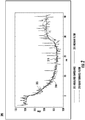
- the impedance drop may be a relatively smooth curve as shown in Figure 2.
- Figure 2 illustrates a graph 200 of the impedance in ohms versus time in seconds for a generally well-behaved ablation procedure.
- Line 205 represents the measured impedance
- line 210 is the least squares fit of the impedance drop
- line 215 is fit of the impedance drop using a median filter.
- Line 215 is a fit based on a median filter in order to determine the impedance drop. As may be seen in Figure 2 , line 215 displays fairly accurate tracking of the impedance from times before 0 seconds throughout the time frame of the plot.
- Line 205 illustrates the measured impedance.
- the oscillations in line 205 generally are attributable to the respiratory and cardiac cycles of the patient. These are artifacts largely due to changes in the contact of the catheter with the tissue. That is, the impedance does not readily include these jumps.
- Line 210 is the fit using a least square filter to determine the impedance drop. This fit for line 210 is based on least squares fitting that is characterized by a linear descent in the first five seconds. Use of a median filter with the data is shown as line 215. Both methods, shown by line 210 and line 215, track the data fairly well which is expected for well-behaved functions.
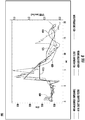
- Figure 3 illustrates a graph 300 of the impedance in ohms versus time in seconds for an overestimation of impedance drop because of correlated respiration fluctuations.
- Line 305 represents the measured impedance
- line 310 is the linear fit of the impedance drop using a least squares filter
- line 315 is a fit of the impedance drop using a median filter.
- Line 305 illustrates the measured impedance.
- the oscillations in line 305 are attributable to the respiratory cycle of the patient. As set forth above, the oscillations are artifacts that are due to tissue catheter pressure changes.
- Line 310 is a fit used to determine the impedance drop using the least squares filter. This fit for line 310 is based on least squares fitting that is characterized by a linear descent in the first five seconds. The start of the ablation corresponds to a peak in impedance artifact correlated with the respiratory cycle. As a result, the initial impedance and, therefore, the resulting impedance drop are overestimated.
- Line 315 is a fit based on a median filter in order to determine the impedance drop. As may be seen in Figure 3 , line 315 displays a better estimate of the impedance by comparing to line 305 as the measured impedance than does any other fit depicted in Figure 3 .
- the respiratory compensated catheter speed illustrated as line 320 is considered. Inspection of line 320 shows that the catheter speed is below 0.5 mm/sec for most of the session, especially during the first 10 seconds, indicating a stable catheter. For a stable catheter, the median filter may provide the best path. As is illustrated in Figure 3 , line 315 represents a better estimate of the impedance as compared to the least squares fit line 310. This may be demonstrated by doing a quality of fit check, such as by using a sum of squares of point by point differences between measurements and each filter, or by examining trends over the graph.
- Figure 4 illustrates a graph 400 of the impedance in ohms versus time in seconds that illustrates the large jump in impedance at the start of the ablation procedure.
- Line 405 represents the measured impedance
- line 410 is the least squares filter of the impedance drop
- line 415 is the median filter of the impedance drop.
- Line 420 depicts the respiratory compensated catheter speed in mm/sec plotted as a function of time in seconds. A sudden change in the catheter speed is an indication of catheter instability.
- Line 425 depicts a combination of the median filter and the least squares filter of the impedance drop. The median filter and the least squares filter may be combined using a weighting of the filters as described. For the line 425 of Figure 4 , the weighting uses the described sigmoid filter.
- the impedance jump is correlated with sudden catheter motion.
- the linear filter method shown in line 410 which fixes on the maximum point at the beginning of the ablation, matches the measured value better than the median filter, as the median filter is influenced by the low values before the ablation start.
- the weighted combination of the two methods shown in 425 successfully interpolates between the two filtering methods.
- the weighted factor is a sigmoid filter, described below with respect to Figures 5 and 6 , utilized to combine the two filtered results.
- the combined line 425 provides a better fit to the impedance than either the median or least squared filter alone. This may be illustrated with quality of fit as defined above using the sum of the squares of the residuals.
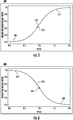
- Figure 5 illustrates a sigmoid filter to apply as the weighted factor applied to the result of the least square filter illustrated in a plot 500 of the weight for the least square filter against the speed of the catheter.
- the applied weight for the least square filter as a function of catheter speed is shown by curve 510.
- Curve 510 illustrates a sigmoid filter that starts with the applied weight for the least square filter small as compared to the catheter speed such as portion of the graph 505.
- the applied weight for the least square filter is 0.5 at point 525.
- Point 525 and curve 510 may be set based on any number of characteristics. As shown the half point on curve 510 at 0.5 is set to a catheter speed of 1 mm/sec.
- a speed of 1.0 mm/sec may represent a nominal or average speed used during the procedure.
- Curve 510 illustrates a sigmoid filter that ends with the applied weight for the least square filter large as compared to the higher catheter speeds such as portion of the graph 515.
- Figure 6 illustrates a sigmoid filter to apply as the weighted factor applied to the result of the median filter illustrated in a plot 600 of the weight for the median filter against the speed of the catheter.
- the applied weight for the median filter as a function of catheter speed is shown by curve 610.
- Curve 610 illustrates a sigmoid filter that starts with the applied weight for the median filter large as compared to the catheter speed such as portion of the graph 615. As the speed approaches 1.0 mm/sec, the applied weight for the median filter is 0.5 at point 625. Point 625 and curve 610 may be set based on any number of characteristics. As shown the half point on curve 610 at 0.5 is set to a catheter speed of 1 mm/sec. A speed of 1.0 mm/sec may represent a nominal or average speed used during the procedure. Curve 610 illustrates a sigmoid filter that ends with the applied weight for the median filter small as compared to the higher catheter speeds such as portion of the graph 605.
- Figure 7 illustrates a method 700 of measuring the impedance during a medical procedure being performed on a patient.
- Method 700 includes measuring the impedance associated with the at least one test or medical procedure at step 710.
- method 700 includes filtering the measured impedance using a first filter that is generally biased in providing improved results once testing or the medical procedure is underway.
- method 700 includes filtering the measured impedance using a second filter that is generally biased in providing improved results at the beginning of the test or medical procedure.
- an output impedance is provided by weighting the first and second filtered measured impedance results and combining.
- processors include, by way of example, a general purpose processor, a special purpose processor, a conventional processor, a digital signal processor (DSP), a plurality of microprocessors, one or more microprocessors in association with a DSP core, a controller, a microcontroller, Application Specific Integrated Circuits (ASICs), Field Programmable Gate Arrays (FPGAs) circuits, any other type of integrated circuit (IC), and/or a state machine.
- DSP digital signal processor
- ASICs Application Specific Integrated Circuits
- FPGAs Field Programmable Gate Arrays
- Such processors can be manufactured by configuring a manufacturing process using the results of processed hardware description language (HDL) instructions and other intermediary data including netlists (such instructions capable of being stored on a computer readable media). The results of such processing can be maskworks that are then used in a semiconductor manufacturing process to manufacture a processor which implements features of the disclosure.
- HDL hardware description language
- non-transitory computer-readable storage mediums include a read only memory (ROM), a random access memory (RAM), a register, cache memory, semiconductor memory devices, magnetic media such as internal hard disks and removable disks, magneto-optical media, and optical media such as CD-ROM disks, and digital versatile disks (DVDs).
- ROM read only memory
- RAM random access memory
- register cache memory
- semiconductor memory devices magnetic media such as internal hard disks and removable disks, magneto-optical media, and optical media such as CD-ROM disks, and digital versatile disks (DVDs).
Landscapes
- Health & Medical Sciences (AREA)
- Life Sciences & Earth Sciences (AREA)
- Engineering & Computer Science (AREA)
- Surgery (AREA)
- Molecular Biology (AREA)
- Physics & Mathematics (AREA)
- Biomedical Technology (AREA)
- Heart & Thoracic Surgery (AREA)
- Medical Informatics (AREA)
- Animal Behavior & Ethology (AREA)
- General Health & Medical Sciences (AREA)
- Public Health (AREA)
- Veterinary Medicine (AREA)
- Pathology (AREA)
- Biophysics (AREA)
- Nuclear Medicine, Radiotherapy & Molecular Imaging (AREA)
- Cardiology (AREA)
- Otolaryngology (AREA)
- Plasma & Fusion (AREA)
- Radiology & Medical Imaging (AREA)
- Signal Processing (AREA)
- Artificial Intelligence (AREA)
- Computer Vision & Pattern Recognition (AREA)
- Physiology (AREA)
- Psychiatry (AREA)
- Measurement And Recording Of Electrical Phenomena And Electrical Characteristics Of The Living Body (AREA)
- Surgical Instruments (AREA)
Claims (10)
- Vorrichtung zum Messen der Impedanz, während ein medizinisches Verfahren an einem Patienten durchgeführt wird, wobei die Vorrichtung umfasst:eine Elektrode, die in dem medizinischen Verfahren verwendet werden kann;eine Vielzahl von Patches, die wirksam auf einer Körperoberfläche des Patienten positioniert sind; undeinen Sensor zum Messen eines Signals zwischen der Elektrode und mindestens einem der Vielzahl von Patches,wobei das gemessene Signal unter Verwendung eines Prozessors mithilfe eines ersten Filters verarbeitet wird, der das gemessene Signal filtert, um ein erstes Impedanzergebnis zu erzeugen, und eines zweiten Filters, der das gemessene Signal filtert, um ein zweites Impedanzergebnis zu erzeugen, und das Ergebnis des ersten Filters und des zweiten Filters mithilfe einer Wichtung der Filter kombiniert wird, um eine Messung der Impedanz bereitzustellen, wobei die Impedanz das Ende des medizinischen Verfahrens anzeigt.
- Vorrichtung nach Anspruch 1, wobei der erste Filter ein Least-Squares-Filter ist.
- Vorrichtung nach Anspruch 1, wobei der zweite Filter ein Medianfilter ist.
- Vorrichtung nach Anspruch 1, wobei die Wichtung der Filter einen Sigmoidfilter umfasst.
- Vorrichtung nach Anspruch 1, wobei die Wichtung der Filter auf der Temperatur der Elektrode basiert.
- Vorrichtung nach Anspruch 1, wobei die Wichtung der Filter auf der Geschwindigkeit der Elektrode basiert.
- Vorrichtung nach Anspruch 1, wobei der erste Filter eine genauere Beurteilung der Impedanz liefert, wenn das medizinische Verfahren im Gange ist.
- Vorrichtung nach Anspruch 1, wobei der zweite Filter eine genauere Beurteilung der Impedanz am Beginn des medizinischen Verfahrens liefert.
- Vorrichtung nach Anspruch 1, wobei die Elektrode ein Katheter ist.
- Vorrichtung nach Anspruch 1, wobei das medizinische Verfahren eine Ablation ist.
Applications Claiming Priority (1)
| Application Number | Priority Date | Filing Date | Title |
|---|---|---|---|
| US15/610,253 US10610296B2 (en) | 2017-05-31 | 2017-05-31 | Cardiac electrophysiology machine including catheter stability while estimating impedance drop |
Publications (2)
| Publication Number | Publication Date |
|---|---|
| EP3409191A1 EP3409191A1 (de) | 2018-12-05 |
| EP3409191B1 true EP3409191B1 (de) | 2020-05-13 |
Family
ID=62495601
Family Applications (1)
| Application Number | Title | Priority Date | Filing Date |
|---|---|---|---|
| EP18175250.2A Active EP3409191B1 (de) | 2017-05-31 | 2018-05-30 | Kardiale elektrophysiologische maschine mit katheterstabilität bei abschätzung des impedanzabfalls |
Country Status (7)
| Country | Link |
|---|---|
| US (1) | US10610296B2 (de) |
| EP (1) | EP3409191B1 (de) |
| JP (1) | JP7150479B2 (de) |
| CN (1) | CN108968944B (de) |
| AU (1) | AU2018202916A1 (de) |
| CA (1) | CA3006452A1 (de) |
| IL (1) | IL258753B (de) |
Families Citing this family (5)
| Publication number | Priority date | Publication date | Assignee | Title |
|---|---|---|---|---|
| US11406307B2 (en) | 2018-12-21 | 2022-08-09 | Biosense Webster (Israel) Ltd. | Impedance measurements using burst pulses to prevent noise on ECG |
| US11794004B2 (en) * | 2020-06-10 | 2023-10-24 | Biosense Webster (Israel) Ltd. | Electroporation with cooling |
| US12446797B2 (en) * | 2020-12-16 | 2025-10-21 | Biosense Webster (Israel) Ltd. | Probe-cavity motion modeling |
| US12539146B2 (en) | 2021-07-22 | 2026-02-03 | Globus Medical, Inc. | Spinal fixation system and method |
| US12622598B2 (en) * | 2022-12-20 | 2026-05-12 | Biosense Webster (Israel) Ltd. | Decreasing IEGM hazards in time division multiplexed system |
Family Cites Families (29)
| Publication number | Priority date | Publication date | Assignee | Title |
|---|---|---|---|---|
| US5337261A (en) * | 1992-04-02 | 1994-08-09 | Electronic Development, Inc. | Designing and evaluating filters for suppressing undesired signals |
| KR0123408B1 (ko) * | 1994-09-15 | 1997-11-11 | 차기철 | 생체전기 임피던스법을 이용한 인체 성분 분석 장치 및 그 분석 방법 |
| US5643255A (en) * | 1994-12-12 | 1997-07-01 | Hicor, Inc. | Steerable catheter with rotatable tip electrode and method of use |
| US7016719B2 (en) | 1997-07-31 | 2006-03-21 | Case Western Reserve University | System and methods for noninvasive electrocardiographic imaging (ECGI) using generalized minimum residual (GMRes) |
| US7277758B2 (en) * | 1998-08-05 | 2007-10-02 | Neurovista Corporation | Methods and systems for predicting future symptomatology in a patient suffering from a neurological or psychiatric disorder |
| JP2004520865A (ja) * | 2000-07-25 | 2004-07-15 | リタ メディカル システムズ インコーポレイテッド | 局在化インピーダンス測定を使用する腫瘍の検出および処置のための装置 |
| AU2002327779B2 (en) | 2001-09-28 | 2008-06-26 | Angiodynamics, Inc. | Impedance controlled tissue ablation apparatus and method |
| US7885707B2 (en) * | 2005-09-15 | 2011-02-08 | St. Jude Medical, Atrial Fibrillation Division, Inc. | Method of scaling navigation signals to account for impedance drift in tissue |
| US9492226B2 (en) | 2005-12-06 | 2016-11-15 | St. Jude Medical, Atrial Fibrillation Division, Inc. | Graphical user interface for real-time RF lesion depth display |
| US7651492B2 (en) | 2006-04-24 | 2010-01-26 | Covidien Ag | Arc based adaptive control system for an electrosurgical unit |
| US8626266B1 (en) * | 2006-06-01 | 2014-01-07 | Perinatronics Medical Systems, Inc. | ECG triggered heart and arterial magnetic resonance imaging |
| ES2407329T3 (es) * | 2006-10-18 | 2013-06-12 | Vessix Vascular, Inc. | Sistema para inducir efectos de temperatura deseables sobre un tejido corporal |
| EP2180917B1 (de) * | 2007-07-24 | 2018-01-24 | Boston Scientific Scimed, Inc. | System zur leistungssteuerung auf der basis von impedanzerkennung, wie etwa leistungssteuerung bei gewebebehandlungsgeräten |
| ATE514375T1 (de) * | 2008-01-08 | 2011-07-15 | Cardiac Pacemakers Inc | Impedanzmessung und demodulation anhand einer implantierbaren vorrichtung |
| US20100168557A1 (en) * | 2008-12-30 | 2010-07-01 | Deno D Curtis | Multi-electrode ablation sensing catheter and system |
| US8262652B2 (en) * | 2009-01-12 | 2012-09-11 | Tyco Healthcare Group Lp | Imaginary impedance process monitoring and intelligent shut-off |
| KR101036053B1 (ko) * | 2009-03-30 | 2011-05-19 | 주식회사 바이오스페이스 | 생체 임피던스 측정 장치 및 그 측정 방법 |
| EP2445434B1 (de) * | 2009-12-11 | 2018-08-22 | St. Jude Medical Atrial Fibrillation Division, Inc. | System zur bestimmung der ähnlichkeit von endokardio-barotraumen in gewebe während der ablation |
| US9037259B2 (en) * | 2011-12-23 | 2015-05-19 | Vessix Vascular, Inc. | Methods and apparatuses for remodeling tissue of or adjacent to a body passage |
| US9095350B2 (en) * | 2012-05-01 | 2015-08-04 | Medtronic Ablation Frontiers Llc | Impedance detection of venous placement of multi-electrode catheters |
| US8900225B2 (en) * | 2012-05-07 | 2014-12-02 | Biosense Webster (Israel) Ltd. | Automatic ablation tracking |
| US9091603B2 (en) | 2012-09-26 | 2015-07-28 | Biosense Webster (Israel) Ltd. | Temperature simulator for thermocouple-based RF ablation system |
| US9498276B2 (en) * | 2013-03-15 | 2016-11-22 | Covidien Lp | Systems and methods for narrowband real impedance control in electrosurgery |
| US9247911B2 (en) * | 2013-07-10 | 2016-02-02 | Alivecor, Inc. | Devices and methods for real-time denoising of electrocardiograms |
| US9554854B2 (en) * | 2014-03-18 | 2017-01-31 | Ethicon Endo-Surgery, Llc | Detecting short circuits in electrosurgical medical devices |
| US10639098B2 (en) * | 2014-05-06 | 2020-05-05 | Cosman Instruments, Llc | Electrosurgical generator |
| WO2016036883A1 (en) * | 2014-09-02 | 2016-03-10 | Zoll Medical Corporation | Impedance spectroscopy for defibrillator applications |
| US20180249967A1 (en) * | 2015-09-25 | 2018-09-06 | Intel Corporation | Devices, systems, and associated methods for evaluating a potential stroke condition in a subject |
| WO2017172837A1 (en) * | 2016-03-28 | 2017-10-05 | Zoll Circulation, Inc. | A method and system to detect changes in a patient's endogenous temperature set-point during externally induced targeted temperature management |
-
2017
- 2017-05-31 US US15/610,253 patent/US10610296B2/en active Active
-
2018
- 2018-04-16 IL IL258753A patent/IL258753B/en active IP Right Grant
- 2018-04-27 AU AU2018202916A patent/AU2018202916A1/en not_active Abandoned
- 2018-05-29 CA CA3006452A patent/CA3006452A1/en not_active Abandoned
- 2018-05-30 JP JP2018103346A patent/JP7150479B2/ja active Active
- 2018-05-30 EP EP18175250.2A patent/EP3409191B1/de active Active
- 2018-05-31 CN CN201810549492.8A patent/CN108968944B/zh active Active
Non-Patent Citations (1)
| Title |
|---|
| None * |
Also Published As
| Publication number | Publication date |
|---|---|
| IL258753A (en) | 2018-06-28 |
| US10610296B2 (en) | 2020-04-07 |
| JP7150479B2 (ja) | 2022-10-11 |
| CA3006452A1 (en) | 2018-11-30 |
| CN108968944B (zh) | 2023-02-10 |
| IL258753B (en) | 2021-04-29 |
| AU2018202916A1 (en) | 2018-12-20 |
| EP3409191A1 (de) | 2018-12-05 |
| CN108968944A (zh) | 2018-12-11 |
| JP2019010505A (ja) | 2019-01-24 |
| US20180344392A1 (en) | 2018-12-06 |
Similar Documents
| Publication | Publication Date | Title |
|---|---|---|
| EP3188658B1 (de) | Verfahren und vorrichtung zur online- und echtzeiterfassung und -analyse von spannungsplethysmografie und elektrokardiogramm zur schätzung von schlagvolumen und herzleistung | |
| EP3409191A1 (de) | Kardiale elektrophysiologische maschine mit katheterstabilität bei abschätzung des impedanzabfalls | |
| EP3845127B1 (de) | Verfahren und systeme zur schätzung des residualen ekg-rauschpegels und der adaptiven rauschschwelle | |
| US12551127B2 (en) | Impedance measurements using burst pulses to prevent noise on ECG | |
| US20210401348A1 (en) | Signal color morphology | |
| EP4475779A1 (de) | Egm-frequenzanalyse zur läsionsbeurteilung | |
| EP3395244B1 (de) | Ekg-gerät und methode zur filterung durch merkmalserkennung | |
| CN118647328A (zh) | 用于损伤评估的egm频率分析 | |
| CN107106067A (zh) | 心脏导管检查装置、心脏导管检查系统以及心脏导管检查方法 | |
| WO2021070678A1 (ja) | 診断支援システムおよび診断支援方法 | |
| Alcaraz et al. | Validation of surface atrial fibrillation organization indicators through invasive recordings |
Legal Events
| Date | Code | Title | Description |
|---|---|---|---|
| PUAI | Public reference made under article 153(3) epc to a published international application that has entered the european phase |
Free format text: ORIGINAL CODE: 0009012 |
|
| STAA | Information on the status of an ep patent application or granted ep patent |
Free format text: STATUS: THE APPLICATION HAS BEEN PUBLISHED |
|
| AK | Designated contracting states |
Kind code of ref document: A1 Designated state(s): AL AT BE BG CH CY CZ DE DK EE ES FI FR GB GR HR HU IE IS IT LI LT LU LV MC MK MT NL NO PL PT RO RS SE SI SK SM TR |
|
| AX | Request for extension of the european patent |
Extension state: BA ME |
|
| STAA | Information on the status of an ep patent application or granted ep patent |
Free format text: STATUS: REQUEST FOR EXAMINATION WAS MADE |
|
| 17P | Request for examination filed |
Effective date: 20190523 |
|
| RBV | Designated contracting states (corrected) |
Designated state(s): AL AT BE BG CH CY CZ DE DK EE ES FI FR GB GR HR HU IE IS IT LI LT LU LV MC MK MT NL NO PL PT RO RS SE SI SK SM TR |
|
| GRAP | Despatch of communication of intention to grant a patent |
Free format text: ORIGINAL CODE: EPIDOSNIGR1 |
|
| STAA | Information on the status of an ep patent application or granted ep patent |
Free format text: STATUS: GRANT OF PATENT IS INTENDED |
|
| INTG | Intention to grant announced |
Effective date: 20191002 |
|
| GRAJ | Information related to disapproval of communication of intention to grant by the applicant or resumption of examination proceedings by the epo deleted |
Free format text: ORIGINAL CODE: EPIDOSDIGR1 |
|
| GRAP | Despatch of communication of intention to grant a patent |
Free format text: ORIGINAL CODE: EPIDOSNIGR1 |
|
| INTG | Intention to grant announced |
Effective date: 20200219 |
|
| GRAS | Grant fee paid |
Free format text: ORIGINAL CODE: EPIDOSNIGR3 |
|
| GRAL | Information related to payment of fee for publishing/printing deleted |
Free format text: ORIGINAL CODE: EPIDOSDIGR3 |
|
| GRAS | Grant fee paid |
Free format text: ORIGINAL CODE: EPIDOSNIGR3 |
|
| GRAA | (expected) grant |
Free format text: ORIGINAL CODE: 0009210 |
|
| STAA | Information on the status of an ep patent application or granted ep patent |
Free format text: STATUS: THE PATENT HAS BEEN GRANTED |
|
| AK | Designated contracting states |
Kind code of ref document: B1 Designated state(s): AL AT BE BG CH CY CZ DE DK EE ES FI FR GB GR HR HU IE IS IT LI LT LU LV MC MK MT NL NO PL PT RO RS SE SI SK SM TR |
|
| REG | Reference to a national code |
Ref country code: GB Ref legal event code: FG4D |
|
| REG | Reference to a national code |
Ref country code: CH Ref legal event code: EP |
|
| REG | Reference to a national code |
Ref country code: DE Ref legal event code: R096 Ref document number: 602018004409 Country of ref document: DE |
|
| REG | Reference to a national code |
Ref country code: AT Ref legal event code: REF Ref document number: 1269149 Country of ref document: AT Kind code of ref document: T Effective date: 20200615 |
|
| REG | Reference to a national code |
Ref country code: NL Ref legal event code: FP |
|
| REG | Reference to a national code |
Ref country code: LT Ref legal event code: MG4D |
|
| PG25 | Lapsed in a contracting state [announced via postgrant information from national office to epo] |
Ref country code: FI Free format text: LAPSE BECAUSE OF FAILURE TO SUBMIT A TRANSLATION OF THE DESCRIPTION OR TO PAY THE FEE WITHIN THE PRESCRIBED TIME-LIMIT Effective date: 20200513 Ref country code: GR Free format text: LAPSE BECAUSE OF FAILURE TO SUBMIT A TRANSLATION OF THE DESCRIPTION OR TO PAY THE FEE WITHIN THE PRESCRIBED TIME-LIMIT Effective date: 20200814 Ref country code: PT Free format text: LAPSE BECAUSE OF FAILURE TO SUBMIT A TRANSLATION OF THE DESCRIPTION OR TO PAY THE FEE WITHIN THE PRESCRIBED TIME-LIMIT Effective date: 20200914 Ref country code: LT Free format text: LAPSE BECAUSE OF FAILURE TO SUBMIT A TRANSLATION OF THE DESCRIPTION OR TO PAY THE FEE WITHIN THE PRESCRIBED TIME-LIMIT Effective date: 20200513 Ref country code: NO Free format text: LAPSE BECAUSE OF FAILURE TO SUBMIT A TRANSLATION OF THE DESCRIPTION OR TO PAY THE FEE WITHIN THE PRESCRIBED TIME-LIMIT Effective date: 20200813 Ref country code: IS Free format text: LAPSE BECAUSE OF FAILURE TO SUBMIT A TRANSLATION OF THE DESCRIPTION OR TO PAY THE FEE WITHIN THE PRESCRIBED TIME-LIMIT Effective date: 20200913 Ref country code: SE Free format text: LAPSE BECAUSE OF FAILURE TO SUBMIT A TRANSLATION OF THE DESCRIPTION OR TO PAY THE FEE WITHIN THE PRESCRIBED TIME-LIMIT Effective date: 20200513 |
|
| PG25 | Lapsed in a contracting state [announced via postgrant information from national office to epo] |
Ref country code: BG Free format text: LAPSE BECAUSE OF FAILURE TO SUBMIT A TRANSLATION OF THE DESCRIPTION OR TO PAY THE FEE WITHIN THE PRESCRIBED TIME-LIMIT Effective date: 20200813 Ref country code: RS Free format text: LAPSE BECAUSE OF FAILURE TO SUBMIT A TRANSLATION OF THE DESCRIPTION OR TO PAY THE FEE WITHIN THE PRESCRIBED TIME-LIMIT Effective date: 20200513 Ref country code: HR Free format text: LAPSE BECAUSE OF FAILURE TO SUBMIT A TRANSLATION OF THE DESCRIPTION OR TO PAY THE FEE WITHIN THE PRESCRIBED TIME-LIMIT Effective date: 20200513 Ref country code: LV Free format text: LAPSE BECAUSE OF FAILURE TO SUBMIT A TRANSLATION OF THE DESCRIPTION OR TO PAY THE FEE WITHIN THE PRESCRIBED TIME-LIMIT Effective date: 20200513 |
|
| REG | Reference to a national code |
Ref country code: AT Ref legal event code: MK05 Ref document number: 1269149 Country of ref document: AT Kind code of ref document: T Effective date: 20200513 |
|
| PG25 | Lapsed in a contracting state [announced via postgrant information from national office to epo] |
Ref country code: AL Free format text: LAPSE BECAUSE OF FAILURE TO SUBMIT A TRANSLATION OF THE DESCRIPTION OR TO PAY THE FEE WITHIN THE PRESCRIBED TIME-LIMIT Effective date: 20200513 |
|
| PG25 | Lapsed in a contracting state [announced via postgrant information from national office to epo] |
Ref country code: AT Free format text: LAPSE BECAUSE OF FAILURE TO SUBMIT A TRANSLATION OF THE DESCRIPTION OR TO PAY THE FEE WITHIN THE PRESCRIBED TIME-LIMIT Effective date: 20200513 Ref country code: CZ Free format text: LAPSE BECAUSE OF FAILURE TO SUBMIT A TRANSLATION OF THE DESCRIPTION OR TO PAY THE FEE WITHIN THE PRESCRIBED TIME-LIMIT Effective date: 20200513 Ref country code: ES Free format text: LAPSE BECAUSE OF FAILURE TO SUBMIT A TRANSLATION OF THE DESCRIPTION OR TO PAY THE FEE WITHIN THE PRESCRIBED TIME-LIMIT Effective date: 20200513 Ref country code: RO Free format text: LAPSE BECAUSE OF FAILURE TO SUBMIT A TRANSLATION OF THE DESCRIPTION OR TO PAY THE FEE WITHIN THE PRESCRIBED TIME-LIMIT Effective date: 20200513 Ref country code: SM Free format text: LAPSE BECAUSE OF FAILURE TO SUBMIT A TRANSLATION OF THE DESCRIPTION OR TO PAY THE FEE WITHIN THE PRESCRIBED TIME-LIMIT Effective date: 20200513 Ref country code: EE Free format text: LAPSE BECAUSE OF FAILURE TO SUBMIT A TRANSLATION OF THE DESCRIPTION OR TO PAY THE FEE WITHIN THE PRESCRIBED TIME-LIMIT Effective date: 20200513 Ref country code: DK Free format text: LAPSE BECAUSE OF FAILURE TO SUBMIT A TRANSLATION OF THE DESCRIPTION OR TO PAY THE FEE WITHIN THE PRESCRIBED TIME-LIMIT Effective date: 20200513 |
|
| REG | Reference to a national code |
Ref country code: DE Ref legal event code: R097 Ref document number: 602018004409 Country of ref document: DE |
|
| PG25 | Lapsed in a contracting state [announced via postgrant information from national office to epo] |
Ref country code: MC Free format text: LAPSE BECAUSE OF FAILURE TO SUBMIT A TRANSLATION OF THE DESCRIPTION OR TO PAY THE FEE WITHIN THE PRESCRIBED TIME-LIMIT Effective date: 20200513 Ref country code: SK Free format text: LAPSE BECAUSE OF FAILURE TO SUBMIT A TRANSLATION OF THE DESCRIPTION OR TO PAY THE FEE WITHIN THE PRESCRIBED TIME-LIMIT Effective date: 20200513 Ref country code: PL Free format text: LAPSE BECAUSE OF FAILURE TO SUBMIT A TRANSLATION OF THE DESCRIPTION OR TO PAY THE FEE WITHIN THE PRESCRIBED TIME-LIMIT Effective date: 20200513 |
|
| PLBE | No opposition filed within time limit |
Free format text: ORIGINAL CODE: 0009261 |
|
| REG | Reference to a national code |
Ref country code: BE Ref legal event code: MM Effective date: 20200531 |
|
| STAA | Information on the status of an ep patent application or granted ep patent |
Free format text: STATUS: NO OPPOSITION FILED WITHIN TIME LIMIT |
|
| PG25 | Lapsed in a contracting state [announced via postgrant information from national office to epo] |
Ref country code: LU Free format text: LAPSE BECAUSE OF NON-PAYMENT OF DUE FEES Effective date: 20200530 |
|
| 26N | No opposition filed |
Effective date: 20210216 |
|
| PG25 | Lapsed in a contracting state [announced via postgrant information from national office to epo] |
Ref country code: IE Free format text: LAPSE BECAUSE OF NON-PAYMENT OF DUE FEES Effective date: 20200530 |
|
| PG25 | Lapsed in a contracting state [announced via postgrant information from national office to epo] |
Ref country code: BE Free format text: LAPSE BECAUSE OF NON-PAYMENT OF DUE FEES Effective date: 20200531 Ref country code: SI Free format text: LAPSE BECAUSE OF FAILURE TO SUBMIT A TRANSLATION OF THE DESCRIPTION OR TO PAY THE FEE WITHIN THE PRESCRIBED TIME-LIMIT Effective date: 20200513 |
|
| REG | Reference to a national code |
Ref country code: CH Ref legal event code: PL |
|
| PG25 | Lapsed in a contracting state [announced via postgrant information from national office to epo] |
Ref country code: LI Free format text: LAPSE BECAUSE OF NON-PAYMENT OF DUE FEES Effective date: 20210531 Ref country code: CH Free format text: LAPSE BECAUSE OF NON-PAYMENT OF DUE FEES Effective date: 20210531 |
|
| PG25 | Lapsed in a contracting state [announced via postgrant information from national office to epo] |
Ref country code: TR Free format text: LAPSE BECAUSE OF FAILURE TO SUBMIT A TRANSLATION OF THE DESCRIPTION OR TO PAY THE FEE WITHIN THE PRESCRIBED TIME-LIMIT Effective date: 20200513 Ref country code: MT Free format text: LAPSE BECAUSE OF FAILURE TO SUBMIT A TRANSLATION OF THE DESCRIPTION OR TO PAY THE FEE WITHIN THE PRESCRIBED TIME-LIMIT Effective date: 20200513 Ref country code: CY Free format text: LAPSE BECAUSE OF FAILURE TO SUBMIT A TRANSLATION OF THE DESCRIPTION OR TO PAY THE FEE WITHIN THE PRESCRIBED TIME-LIMIT Effective date: 20200513 |
|
| PG25 | Lapsed in a contracting state [announced via postgrant information from national office to epo] |
Ref country code: MK Free format text: LAPSE BECAUSE OF FAILURE TO SUBMIT A TRANSLATION OF THE DESCRIPTION OR TO PAY THE FEE WITHIN THE PRESCRIBED TIME-LIMIT Effective date: 20200513 |
|
| PGFP | Annual fee paid to national office [announced via postgrant information from national office to epo] |
Ref country code: NL Payment date: 20230417 Year of fee payment: 6 |
|
| REG | Reference to a national code |
Ref country code: NL Ref legal event code: MM Effective date: 20240601 |
|
| PG25 | Lapsed in a contracting state [announced via postgrant information from national office to epo] |
Ref country code: NL Free format text: LAPSE BECAUSE OF NON-PAYMENT OF DUE FEES Effective date: 20240601 |
|
| PGFP | Annual fee paid to national office [announced via postgrant information from national office to epo] |
Ref country code: DE Payment date: 20250402 Year of fee payment: 8 |
|
| PGFP | Annual fee paid to national office [announced via postgrant information from national office to epo] |
Ref country code: IT Payment date: 20250422 Year of fee payment: 8 |
|
| PGFP | Annual fee paid to national office [announced via postgrant information from national office to epo] |
Ref country code: FR Payment date: 20250401 Year of fee payment: 8 |
|
| PGFP | Annual fee paid to national office [announced via postgrant information from national office to epo] |
Ref country code: GB Payment date: 20260325 Year of fee payment: 9 |