EP3406065B1 - Datenrelaisauthentifizierung - Google Patents
Datenrelaisauthentifizierung Download PDFInfo
- Publication number
- EP3406065B1 EP3406065B1 EP17700158.3A EP17700158A EP3406065B1 EP 3406065 B1 EP3406065 B1 EP 3406065B1 EP 17700158 A EP17700158 A EP 17700158A EP 3406065 B1 EP3406065 B1 EP 3406065B1
- Authority
- EP
- European Patent Office
- Prior art keywords
- data
- terminal
- key
- server
- remote
- Prior art date
- Legal status (The legal status is an assumption and is not a legal conclusion. Google has not performed a legal analysis and makes no representation as to the accuracy of the status listed.)
- Active
Links
Images




Classifications
-
- H—ELECTRICITY
- H04—ELECTRIC COMMUNICATION TECHNIQUE
- H04L—TRANSMISSION OF DIGITAL INFORMATION, e.g. TELEGRAPHIC COMMUNICATION
- H04L63/00—Network architectures or network communication protocols for network security
- H04L63/08—Network architectures or network communication protocols for network security for authentication of entities
- H04L63/0884—Network architectures or network communication protocols for network security for authentication of entities by delegation of authentication, e.g. a proxy authenticates an entity to be authenticated on behalf of this entity vis-à-vis an authentication entity
-
- H—ELECTRICITY
- H04—ELECTRIC COMMUNICATION TECHNIQUE
- H04L—TRANSMISSION OF DIGITAL INFORMATION, e.g. TELEGRAPHIC COMMUNICATION
- H04L9/00—Cryptographic mechanisms or cryptographic arrangements for secret or secure communications; Network security protocols
- H04L9/08—Key distribution or management, e.g. generation, sharing or updating, of cryptographic keys or passwords
- H04L9/0816—Key establishment, i.e. cryptographic processes or cryptographic protocols whereby a shared secret becomes available to two or more parties, for subsequent use
- H04L9/0819—Key transport or distribution, i.e. key establishment techniques where one party creates or otherwise obtains a secret value, and securely transfers it to the other(s)
-
- H—ELECTRICITY
- H04—ELECTRIC COMMUNICATION TECHNIQUE
- H04L—TRANSMISSION OF DIGITAL INFORMATION, e.g. TELEGRAPHIC COMMUNICATION
- H04L9/00—Cryptographic mechanisms or cryptographic arrangements for secret or secure communications; Network security protocols
- H04L9/32—Cryptographic mechanisms or cryptographic arrangements for secret or secure communications; Network security protocols including means for verifying the identity or authority of a user of the system or for message authentication, e.g. authorization, entity authentication, data integrity or data verification, non-repudiation, key authentication or verification of credentials
- H04L9/3226—Cryptographic mechanisms or cryptographic arrangements for secret or secure communications; Network security protocols including means for verifying the identity or authority of a user of the system or for message authentication, e.g. authorization, entity authentication, data integrity or data verification, non-repudiation, key authentication or verification of credentials using a predetermined code, e.g. password, passphrase or PIN
- H04L9/3228—One-time or temporary data, i.e. information which is sent for every authentication or authorization, e.g. one-time-password, one-time-token or one-time-key
-
- H—ELECTRICITY
- H04—ELECTRIC COMMUNICATION TECHNIQUE
- H04L—TRANSMISSION OF DIGITAL INFORMATION, e.g. TELEGRAPHIC COMMUNICATION
- H04L9/00—Cryptographic mechanisms or cryptographic arrangements for secret or secure communications; Network security protocols
- H04L9/32—Cryptographic mechanisms or cryptographic arrangements for secret or secure communications; Network security protocols including means for verifying the identity or authority of a user of the system or for message authentication, e.g. authorization, entity authentication, data integrity or data verification, non-repudiation, key authentication or verification of credentials
- H04L9/3271—Cryptographic mechanisms or cryptographic arrangements for secret or secure communications; Network security protocols including means for verifying the identity or authority of a user of the system or for message authentication, e.g. authorization, entity authentication, data integrity or data verification, non-repudiation, key authentication or verification of credentials using challenge-response
-
- H—ELECTRICITY
- H04—ELECTRIC COMMUNICATION TECHNIQUE
- H04L—TRANSMISSION OF DIGITAL INFORMATION, e.g. TELEGRAPHIC COMMUNICATION
- H04L9/00—Cryptographic mechanisms or cryptographic arrangements for secret or secure communications; Network security protocols
- H04L9/32—Cryptographic mechanisms or cryptographic arrangements for secret or secure communications; Network security protocols including means for verifying the identity or authority of a user of the system or for message authentication, e.g. authorization, entity authentication, data integrity or data verification, non-repudiation, key authentication or verification of credentials
- H04L9/3271—Cryptographic mechanisms or cryptographic arrangements for secret or secure communications; Network security protocols including means for verifying the identity or authority of a user of the system or for message authentication, e.g. authorization, entity authentication, data integrity or data verification, non-repudiation, key authentication or verification of credentials using challenge-response
- H04L9/3273—Cryptographic mechanisms or cryptographic arrangements for secret or secure communications; Network security protocols including means for verifying the identity or authority of a user of the system or for message authentication, e.g. authorization, entity authentication, data integrity or data verification, non-repudiation, key authentication or verification of credentials using challenge-response for mutual authentication
-
- H—ELECTRICITY
- H04—ELECTRIC COMMUNICATION TECHNIQUE
- H04W—WIRELESS COMMUNICATION NETWORKS
- H04W12/00—Security arrangements; Authentication; Protecting privacy or anonymity
- H04W12/06—Authentication
-
- H—ELECTRICITY
- H04—ELECTRIC COMMUNICATION TECHNIQUE
- H04W—WIRELESS COMMUNICATION NETWORKS
- H04W12/00—Security arrangements; Authentication; Protecting privacy or anonymity
- H04W12/06—Authentication
- H04W12/068—Authentication using credential vaults, e.g. password manager applications or one time password [OTP] applications
-
- H—ELECTRICITY
- H04—ELECTRIC COMMUNICATION TECHNIQUE
- H04W—WIRELESS COMMUNICATION NETWORKS
- H04W12/00—Security arrangements; Authentication; Protecting privacy or anonymity
- H04W12/06—Authentication
- H04W12/069—Authentication using certificates or pre-shared keys
-
- H—ELECTRICITY
- H04—ELECTRIC COMMUNICATION TECHNIQUE
- H04L—TRANSMISSION OF DIGITAL INFORMATION, e.g. TELEGRAPHIC COMMUNICATION
- H04L63/00—Network architectures or network communication protocols for network security
- H04L63/08—Network architectures or network communication protocols for network security for authentication of entities
- H04L63/083—Network architectures or network communication protocols for network security for authentication of entities using passwords
- H04L63/0838—Network architectures or network communication protocols for network security for authentication of entities using passwords using one-time-passwords
-
- H—ELECTRICITY
- H04—ELECTRIC COMMUNICATION TECHNIQUE
- H04W—WIRELESS COMMUNICATION NETWORKS
- H04W88/00—Devices specially adapted for wireless communication networks, e.g. terminals, base stations or access point devices
- H04W88/02—Terminal devices
- H04W88/04—Terminal devices adapted for relaying to or from another terminal or user
Definitions
- This invention relates to the authentication of communications connections between servers and remote terminals using intermediate "mule” devices. It is particularly suited to the use of programmable wireless devices such as smart phones to collect or relay data from isolated Wireless Sensor Networks (WSNs) in a secure manner.
- WSNs Wireless Sensor Networks
- Patent documents WO015/097223 A1 and US2009/310561 A1 are relevant prior art.
- MANets Mobile AdHoc-Networks or MANets have been developed and used for communication and instrumentation across battlefield, disaster area and agricultural situations where existing network capability is absent or at best intermittent.
- innovative approaches have been developed to store critical data collected by sensors and forward it during brief moments of network capacity.
- network connectivity is almost ubiquitous, there are network, power and financial budgetary constraints that mean it is not possible for each remote terminal to have its own 4G wireless card and suitable battery supply to "backhaul" the data to a central data hub.
- a mobile collector or distributor device that moves through a field of interest., establishing intermittent contact with individual remote terminals, and collecting data from them for onward transmission to a central server (or, conversely, as a distributor to the remote terminals of data that has previously been downloaded to the device from a central server).
- Deployments typically include attachment of data mules to vehicles such as buses that collect data from roadside sensors along the route.
- Another application is the collection of domestic utility meter readings (water, electricity, gas, etc) by providing each premises' meter with a low-range wireless transmitter which can be read by a "mule" in a vehicle operated by the utility company as it passes through the area.
- the term "sensor” used in this specification includes utility meters, and any other devices which record measurements or responses to external stimuli and store the data for subsequent download.
- the mules do not need to be in simultaneous communication with the transmitter of the data and the receiver of the destination of the data, but can store the data whilst moving out of the range of the source transmitter to the range of the receiver, through a zone out of range of both.
- the “mules” do not need to have access to the data they convey, but each of the three parties (server, remote terminal (sensor) and mobile device or “mule”) have to be able to authenticate to the other two that the connection between them is genuine.
- Existing data mule deployments are closed systems whereby the data mule and sensor network are owned and operated by the same legal entity. In such a situation, security credentials can be distributed across the closed system with a reduced risk that the information will be exposed.
- the data mule stores usernames, passwords or access keys that can be presented to WSN nodes during an authentication process. This approach requires very tight access to credential management.
- the devices to be used as mules have the access credentials of the WSN, and this requires that such devices are strictly controlled by the operator of the WSN.
- the devices to be used as mules could in principle use the same credentials, as those credentials will be transferred by the owner to each mule under strict secure conditions with very little chance of interception.
- mule devices require a dedicated fleet of mule devices and personnel to operate them. It is desirable to allow any suitably programmable communications device such as a "smartphone" to act as a data mule without a pre-established relationship with multiple WSNs. This expands the number of devices that can be used, and thus improves the data collection process.
- the necessary programming application (referred to herein as a DMA - data mule application), is relatively simple to install either on manufacture, or by downloading to the device subsequently, and could be installed in any Smartphone whose owner is willing to allow the device to be used in this way. Ideally the use as a "mule" would be transparent to the user and only make use of spare capacity, for example when the device is in idle mode.
- interaction with the sensor terminals may be limited to times when the mule and sensor are in close proximity, and upload of the data arranged to be at a later time when the device is in contact with the network, thus minimising the power required to operate the mule functions.
- the present invention addresses this problem, by providing a method for authentication of a communications connection between a server and a remote terminal using an intermediate device, in which:
- the application (DMA) operating on the device which is to operate as a "mule" (or relay) downloads limited authentication data from a Central Server for one or more local WSNs.
- the identity of the WSNs for which the device currently requires authentication data can be determined by the central server by reference to location positioning technology installed in the mobile device, such as GPS, or by the identity of the currently serving cellular network base station..
- the data may be arranged to be deleted from the device after a predetermined period of non-use, both for security and to avoid wasting data storage capacity in the mobile device.
- the DMA When the device subsequently comes into proximity of one of the WSN terminal nodes for which it has the authentication data the DMA challenges the terminal node and, if the node returns the required response, the DMA is then required to respond to a challenge issued by the node. If the expected authentication details match those expected by the terminal node, data will be uploaded to the DMA for forwarding to the central server.
- the DMA is arranged such that it can only issue the correct challenge and recognise the required response, and return the required response to the challenge issued by the terminal node, because it has been given that information by the central server.
- the challenge and response are generated using "shared secrets", shared between the central server and the respective terminal node but not the DMA.
- the server provides sufficient information to the DMA device to be able to issue and recognise the correct challenges and responses, but not to generate them independently of the server.
- the challenges and responses are dynamically generated according to an algorithm derived from the shared secret, so that any rogue device that intercepts the challenge and response data cannot use it subsequently to intercept transmissions from the terminals.
- the preferred embodiment also encodes the address data of the mule device in communication with the terminal device, to prevent interception of the data by other devices
- the data mule therefore presents authentication data to the terminal to prove that it is itself authenticated by the Central Server.
- the DMA uses a network address of the mobile device as part of the encrypted "key” it uses.
- the terminal node uses a local algorithm to determine whether the presented "key” and mule address are consistent with a device authorised by the central server to act as a data mule in this way.
- the use of the MAC address (or similar network address) of the mule as part of the encrypted key means that other devices cannot emulate the genuine "mule" device as any response would only be sent to the device with the correct MAC address.
- the authentication between the mule and the terminal device can be done without either of them being currently in direct contact with the central server. It is only necessary that the mule will have previously been given the necessary data to carry out the authentication when it subsequently detects a terminal device and the remote terminal will have previously been given the shared secret.
- the invention is defined by the appended independent claims.
- a number of local terminals 4, 41, 42, 43, 44 are distributed through a region 5.
- the functional elements of one such terminal 4 are depicted in Figure 8 .
- These terminals are provided to collect data relating to their environment through sensing apparatus 81, to be stored locally (store 82) and later delivered by a processing system 83 to a server 1 by way of an intermediate device 3 and a communications network 6.
- a flag function 800 may be used to provide labelling of the data to facilitate handling by the intermediate mobile device 3. Only elements relevant to the understanding of the operation of the embodiment are depicted, but it will be understood that functions such as power management would also be required.
- each terminal is provided with a low-powered radio transceiver 80 which allows it to communicate with devices nearby, but is not powerful enough to communicate directly with the nearest wireless network access point 2.
- Each terminal also has a beacon generation system 84 for generating a low-powered signal advertising its presence through the radio transceiver (communications interface) 80, either continuously or in response to a signal broadcast by another device such as the mobile device 3.
- the terminal device 4 also includes an authentication system 85, including an encryption system 86 including a key generation process 87 making use of a "shared secret" key stored in a memory 88.
- the "shared secret" key can be installed in the terminal when it is first deployed.
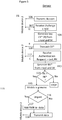
- the terminals are configured to operate in accordance with steps 106-109 and 112 - 118 of the process to be described later, with reference to Figure 5 .
- the central server 1 depicted in Figure 6 has a processor 66 configured to operate in accordance with steps 101-105 and 123-126 of the process to be described later, with reference in particular to Figure 4 , and in particular to collect data from the terminals (step 123) and process the data so collected (step 126). It also has a copy of the "shared secret" key 88 for each terminal 4, 40, 41 etc, to be used by a key generation system 62 to generate request keys and challenge keys to be stored (store 63) for use in a decryption function 65 of data received from the remote terminals, 4, 40, 41 etc through the interface 64 from the network 6. As will be explained, the key store also generates key codes for transmission through the communications interface 64 to the mobile devices 3. The central server also maintains a store 68 of location data for the terminals 4, 40, 41 etc.
- Figure 6 depicts an interface 69 with a billing system 67 for managing a user account associated with each mobile device 3, which is used in some embodiments.
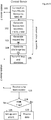
- a "Data Mule Application” (DMA) is installed on a mobile device 3 to allow it to act as a relay between the terminals 4, 41, 42 etc and the central server 1, when the mobile device is within range of one of the terminals, in accordance with steps 100, 101, 105-107, 109-112 and 118-123 of the process, to be described later with reference to Figure 3 .
- the mobile device may be a conventional "smartphone", with the typical components including a user interface 74, central processor 73, an app store 70 for programming data, and a communications interface 71.
- the communications interface 71 is capable of wireless communication with the network 2 and the terminal devices 4.
- the "data mule application” can be installed in the application store 70 on the device during manufacture, or downloaded subsequently by the central server 1 from an application store 60, (as shown in Figure 6 ), or from some other source.
- the "data mule application” stored in the application store 70 is then used to control the central processor 73 of the mobile device 3 according to the programme data in the application to retrieve data from, or send configuration data to, the terminals 4, 40, Vietnamese, either to forward directly to the server 1 or to store in a temporary data store 78 until it is possible to forward it to the server 1.
- the application includes a location-finding system 72 for identifying the general area in which the mobile device 3 is currently located.
- the location-finding system may use an input from, for example, a GPS system, or it may be associated with the communications interface 71, reporting its position to the server 1 with reference to its location relative to the fixed infrastructure of the network 2.
- the application also includes a beacon detection function 75 and an authentication processor 76, including a store 77 for downloaded authorisation data.
- Such a mobile device 3 is depicted in Figure 1 travelling on a trajectory 30, 31, 32, 33, 34 which passes through the region 5 in which the terminals are located.
- the device As the device approaches the region (position 31), it provides location data (72) to the server 1 which retrieves data 68 relating to any terminals 4, 41, 42........ in that area and the key generation system 62 generates authentication data relating to those terminals and transmits it via the interface 64, 2, 71 to the data store 77 associated with the authentication processor 76 running on the processor 73 of the mobile device 3.
- a flag detector 700 may be provided to process control information relating to the handling of the data, for example whether to forward it immediately or store it in local memory 78 until the device next connects to the network 2. The use of such a flag is particularly useful if the data itself is encrypted in such a way that the mobile device 3 cannot parse it.
- each terminal 4 has a beacon generation system 84 for generating a low-powered signal advertising its presence.
- a beacon generation system 84 for generating a low-powered signal advertising its presence.
- the mobile device 3 if the mobile device 3 comes within range of such a beacon signal (e.g. location 32) the mobile device 3 interrogates the terminal 4 to allow retrieval of data or the distribution of configuration data or software to the terminal. This process is repeated for any other terminal 41 whose beacon it detects (position 33).
- the data may then be uploaded by the mobile terminal 3 to the central server 1 using the access network 2, 6,
- the data may be stored in the mobile device 3 at a temporary store 78 ( Figure 7 ) for transmission to the server 1 at a subsequent time (location 34) if it is impossible or inconvenient to set up a special data session with the access network 2, 6 immediately the data has been collected.
- each of the three elements in the process - that is to say the central server 1, the mobile device 3 and the terminal 4 - to be able to authenticate the identities of the other two.
- This is achieved, in the present embodiment, by the following process. It will be described with reference to a single terminal device 4, but it will be understood that the process will be the same for all the other terminal devices 41, 42, etc.
- Each local terminal (LS) has a "shared secret” key (SK), identical copies of which are stored securely in memory in the central server 1 ( Figure 6 ) and in memory in the terminal 4 ( Figure 8 ) (both indexed “88" as the data in the memories are identical). It is desirable that each terminal 4, 41, 42 etc has a different "shared secret", each known only to central server 1 and the respective terminal.
- This secret key can be used to generate encryption key strings without compromising the secret, but the generated key strings can only be decrypted by a device that also has the shared secret.
- the secret is derived from an algorithm such as Time-based One-time Password Algorithm (TOTP), that computes a one-time password from the shared secret key and the current time and/or a counter, to generate a hash-based message authentication code (HMAC), such that it changes with each use in a quasi-random manner, to ensure that any user intercepting communications using the key cannot use the intercepted communication as a model for a rogue communication emulating the genuine originator of the original message.
- TOTP Time-based One-time Password Algorithm
- HMAC hash-based message authentication code
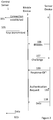
- the authentication process will be described with reference to Figures 1 to 5 .
- the first stage (Steps 100-105) takes place in response to a mobile device 3 moving to a location 31 within an area 5 where there are terminals 4, 41, etc to be detected.
- the mobile device is given information to allow it to identify the terminals and perform a mutual authentication with them
- the second stage (steps 106-123) takes place in response to the mobile device, having moved to a location 32, 33 in which it detects the beacon of one of the terminals 4, 41 etc), and can carry out the authentication process for which it was given the necessary data in the first stage.
- the process operates as follows.
- the mobile unit 3 is configured to report to the central server 1 when its location-finding system 72 detects that it has entered a region 5 where terminals 4, 41 etc under the indirect control of the server are located. This may be done by having the mobile device 3 periodically reporting its position to the server 1, and the server responding when the reported location meets predetermined criteria. Alternatively, the position-based criteria can be pre-loaded in the programming 70 of the mobile device, so that when the location system 72 detects that its location is within a region 5, it automatically reports to the central server 1.
- step 100 When the mobile unit 3 enters such a predetermined region 5 (step 100) its authentication processor 76 co-operates with the central server 1, and as a first step in the process it requests a "white list" of local terminals (step 101).
- This request includes the MAC address of the mobile device, and its current location.
- the use of the MAC address of the data mule when generating a one time or many-time challenge key effectively binds the data mule 3 with the server 1.
- the central server 1 retrieves the data relating to the relevant terminals 4, 40, 41 etc from a store 68 and generates a request transaction identity (r_txid) and a challenge transaction identity (c_txid) for each terminal 4, 41, 42 etc in the region 5 (step 102). (Apart from using different secret keys, the process is the same for each terminal and will be described only for terminal 4).
- the c_txid is a quasi-random string generated using the secret key SK of the terminal 4 and information specific to the device 3 such as such as MAC address, serial number and vendor.
- the r_txid is another quasi-random string, also generated using the secret key and the devicespecific data, and also includes the MAC address of the terminal 4.
- the key generation processor 62 then generates a request key (RK) for the terminal, incorporating the r_txid (step 103), and a challenge key (CK) for the terminal incorporating the c_txid (step 104).
- RK request key
- CK challenge key
- Each request key isunique and is generated using an encrypted form of the MAC address of the mobile device as one of the parameters, other parameters may include time validity (earliest and latest times), trust level (access control on what the mule can access), number of authentication attempts allowed, and unique transaction identifier. This prevents other devices eavesdropping on exchanges between the mobile device 3 and the terminals 4 and then replaying the exchange substituting their own MAC address.
- SK secret key
- the keys can be implemented using Keyed Hash Message Authentication Code (HMAC) algorithm such as HMAC-MD5 or HMAC-SHA1.
- HMAC Keyed Hash Message Authentication Code
- the smart phones Bluetooth MAC (comprising 6 bytes) address (and or serial number/vendor) and r_txid can be combined with a shared secret message SK (known only to terminal and central server) into a single plain-text message.
- the plain message can then be hashed using the SK (known only to terminal and central server) to produce a message digest.
- This message digest is effectively the RK.
- the CK can be generated in the same way using the c_txid.
- txid transaction identities
- RK request key
- CK challenge key
- the terminal 4 and central server 1 maintain previously used r_txids relating to each mobile device in memory 63, 89 for long enough for the threat of immediate "replay" attacks using the same r_txid to have subsided.
- the terminal 4 can store used c_txids for the mobile device 3 in memory 89, so that it can detect when a "spoofer" device is attempting to replay a previous challenge request.
- the central server 1 next transmits a message to the mobile device 3 with the request key RK, challenge key CK, and also incorporating the respective identities r_txid and c_txid (step 105) from which they were generated, for each terminal on the "white list" 68 for the locality identified.
- the mobile device 3 then stores this data 77 until required.
- terminal-specific configuration data or software could also be sent to the device 3 to allow updates to be made to the terminal.
- the central server 1 downloads to the terminal 4 a set of one-off RK, CK each with an associated txid, that can be used as a set of one-time "vouchers” to authenticate with the terminal.
- This allows the mobile device 3 to make multiple contacts with the same terminal 4 without the need to contact the server 1 between each such contact.
- the central server 1 has given the mobile device 3 instructions 77 on how to recognise, and be recognised by, the terminal 4, but without releasing the shared secret stored in the respective memories 88 of the terminal and server by which the recognition signals have been generated.
- the mobile device 3 (or "mule") only sees the public keys (RK, CK) and does not share the secret which allows such keys to be generated.
- each key can only be used once, and only by the device having the MAC address encrypted into the key.
- the instructions sent by the server 1 provide the data required to allow the mobile device 3 to set up a two-way authentication process between the mobile device 3 and the terminal 4.
- the set-up process enables the mobile device to issue an initial challenge (Q), recognise the correct response (R) from the terminal, and generate a counter-response (C).
- the response R is sufficient to prove to the mobile device that the terminal is genuine as only a terminal having the "shared secret" available in its memory 88 can derive response R from challenge Q.
- the counter-response C is sufficient to prove to the terminal that the device transmitting it is also genuine, as the correct counter-response can only have been generated by the server 1 with the shared secret 88, and thus provides confirmation that the mobile unit has been authorised by the server to receive data from the terminal.
- Each terminal 4, 41, etc transmits a beacon signal generated by the beacon generator 84 at low power so that when a mobile device is close to it, communication can be established between the terminal and the mobile device.
- the mobile unit 3 By using the mobile unit 3 as a relay, the power required for transmission can be much reduced compared with transmission direct to the central server 1 through a "wi fi" hotspot or a cellular base station 2.
- the mobile device 3 When the mobile device 3 approaches a terminal it detects the MAC address of the terminal in its beacon signal 84 (step 106) and pulls the appropriate terminal information from its white list 77.
- the authentication process 76 in the mobile device 3 generates a challenge request Q (step 107) using the c_txid authorisation data 77 and sends it to the terminal 4.
- the authentication processor 85 in the terminal 4 then generates a copy CK* (A1) of the challenge key (step 108), calculated by using the "shared secret" key SK to decrypt the information in the challenge request c_txid received from the mobile device 3.
- This copy CK* is returned to the mobile device (step 109).
- the authentication processor 76 in the mobile device 3 compares the challenge key CK* received from the terminal 4 (in step 109) with the challenge key CK previously received from the central server (in step 105) and stored in the memory 77. If CK and CK* correspond then this is proof that the terminal 4 is genuine (step 111), because it shares the secret code SK with the central server 1, as the key CK/CK* can only be derived if the secret code SK is known. It should be noted that the mobile device 3 does not itself have access to the secret code SK, but can determine that both the central server and the terminal can independently derive the code CK/CK*.
- the authentication processor 76 in the mobile device 3 sends an authentication request to the terminal 4 including the MAC address, and r_txid (step 112). It also sends the request key RK.
- the value of RK transmitted by the mobile device was generated from the r_txid by the central server 1 using the secret key SK.
- the mobile device not having access to the secret key SK, cannot generate the value of the r_txid independently of the server 1.
- the request key RK also includes the MAC address of the mobile device 3, encrypted using the secret key, other mobile devices cannot stage a "man in the middle" attack on the communications as it does not have access to the key by which the correct MAC address could be substituted by that of the attacking device.
- the authentication processor 85 in the terminal 4 determines a value for the request key RK* (step 113). This is compared (step 114) with the value of RK received from the mobile device 3 in the previous step. If the RK received in the authentication request 112 and the locally generated RK* (generated in step 113) match, the terminal can determine that the mobile device 3 is genuine, as the mobile device 3 can only provide the correct value for RK if that value has been generated by the secret code SK, and therefore must have been received from the server 1.
- the mobile device 3 and the terminal 4 having each determined that the other is a genuine part of the network under the control of the server 1, communication can be opened between the data store 82 in the terminal 4 and the data store 61 in the server 1, through the mobile device 3 (step 118). Further security for the data itself may be provided by providing an encrypted "tunnel" through the mobile device 3 between the data processing function 83 of the terminal 4 and the corresponding data processing function 66 of the server 1.
- the data processing encompasses retrieval of terminal data but also the distribution of configuration or update software or data to the terminal.
- the device acting as "mule” does not need to have access to the encryption system, but is merely the means by which the encrypted data is carried between the terminal and the central server, where it can be decrypted so that the central server 1 can process the data (step 126)
- the terminal 4 may apply a flag 800 to identify the data (flag RMK, steps 116, 117) as being of high priority, for example to report a failing power supply, loss of the terminal network or a critical value having been detected, requiring immediate upload to the central server 1.
- the flag RMK can be created using the same key-creation principles as discussed above. If a flag detection unit 700 in the mobile device 3 detects the priority flag RMK (step 119) it establishes a connection with the network immediately (step 120), whereas other data messages may be stored in memory 78 (step 121) until the mobile device 3 next connects to a network for the user's own purposes (step 122).
- the application running on the device 3 may face penalties such as connection or data volume charges when using 3G/4G networks.
- a remuneration system may be provided such that the owner-operator of the mobile device can be compensated for any additional connection charges incurred.
- the high priority flag RMK may thus be forwarded by the mobile device 3 to the central server 1 (step 124) with the data. Detection of this flag may be used by a billing interface 69 to cause the transmission of data to a billing system 67 (step 125) to compensate the user of the terminal 3 for the additional connection required by the data download, for example by crediting the user's account with the cost of the data session.
Landscapes
- Engineering & Computer Science (AREA)
- Computer Security & Cryptography (AREA)
- Computer Networks & Wireless Communication (AREA)
- Signal Processing (AREA)
- Computer Hardware Design (AREA)
- Computing Systems (AREA)
- General Engineering & Computer Science (AREA)
- Mobile Radio Communication Systems (AREA)
Claims (12)
- Verfahren zur Authentifizierung einer Kommunikationsverbindung zwischen einem Server und einem entfernten Endgerät unter Verwendung einer Zwischenvorrichtung, wobei- der Server einen ersten und einen zweiten Schlüssel-Code erzeugt, wobei die Schlüssel-Codes beide von einem gemeinsam verwendeten Geheimnis abgeleitet werden, das dem Server und dem entfernten Endgerät bekannt ist, der Zwischenvorrichtung jedoch nicht,- der Server den ersten und den zweiten Schlüssel-Code zur Zwischenvorrichtung sendet,- das entfernte Endgerät das gemeinsam verwendete Geheimnis verwendet, um ein Duplikat des ersten Schlüssel-Codes zu erzeugen,- die Zwischenvorrichtung sich aus dem Kontakt mit dem Server bewegt,- die Zwischenvorrichtung sich in die Nähe des entfernten Endgeräts bewegt,- das entfernte Endgerät den ersten Schlüssel-Code zur Zwischenvorrichtung sendet,- die Zwischenvorrichtung den ersten Schlüssel-Code und das Duplikat des ersten Schlüssel-Codes vergleicht, um die Echtheit des entfernten Endgeräts zu prüfen,- die Zwischenvorrichtung den zweiten Schlüssel-Code zum entfernten Endgerät sendet,- das entfernte Endgerät das gemeinsam verwendete Geheimnis verwendet, um ein Duplikat des zweiten Schlüssel-Codes zu erzeugen, und- das entfernte Endgerät den zweiten Schlüssel-Code und das Duplikat des zweiten Schlüssel-Codes vergleicht, um die Echtheit der Zwischenvorrichtung zu prüfen.
- Verfahren nach Anspruch 1, wobei der erste und der zweite Schlüssel-Code aus dem gemeinsam verwendeten Geheimnis erzeugt werden und nach jeder Verwendung geändert werden.
- Verfahren nach Anspruch 2, wobei der Server mehrere Einmalschlüssel-Code-Paare erzeugt und sie zur Zwischenvorrichtung sendet und die Zwischenvorrichtung wiederum jedes Schlüssel-Code-Paar für eine Reihe von Authentifizierungsinteraktionen mit dem entfernten Endgerät verwendet.
- Verfahren nach einem vorhergehenden Anspruch, wobei der erste und der zweite Schlüssel-Code mit codierten Adressdaten der Zwischenvorrichtung kombiniert werden und das entfernte Endgerät das gemeinsam verwendete Geheimnis verwendet, um die Adressdaten zu decodieren, um die Identität der Zwischenvorrichtung zu prüfen.
- Verfahren nach einem vorhergehenden Anspruch, wobei die Zwischenvorrichtung auf ein Merkersignal anspricht, das durch das entfernte Endgerät erzeugt wird, um die empfangenen Daten entweder in Reaktion auf eine erste Einstellung des Merkersignals zu einem Datenspeicher in der Zwischenvorrichtung zum späteren Senden zum Server zu leiten, oder in Reaktion auf eine zweite Einstellung des Merkersignals eine Verbindung zum Server zum Weiterleiten der Daten zum Server zu öffnen.
- Datenkommunikationsvorrichtung, die konfiguriert ist, als ein Zwischenrelais zwischen einem Server und einem oder mehreren entfernten Datenkommunikationsendgeräten zu arbeiten, und Folgendes enthält:- eine oder mehrere Kommunikationsschnittstellen zur Kommunikation mit dem Server und dem oder jedem entfernten Kommunikationsendgerät und- ein Authentifizierungssystem, das konfiguriert ist zum- Empfangen von Herausforderungs- und Antwortdaten vom Server in Bezug auf das oder jedes Kommunikationsendgerät, die für jede entfernte Kommunikationsvorrichtung eine erste Herausforderung, einen ersten Antwortschlüssel und einen zweiten Antwortschlüssel umfassen,- Senden der ersten Herausforderung dann, wenn die Datenkommunikationsvorrichtung sich aus dem Kontakt mit dem Server und in die Nähe des Datenkommunikationsendgeräts bewegt, zum entsprechenden Datenkommunikationsendgerät;- Empfangen einer Version des ersten Antwortschlüssels vom entfernten Datenkommunikationsendgerät;- Vergleichen der Version des ersten Antwortschlüssels, der vom entfernten Datenkommunikationsendgerät empfangen wurde, mit dem ersten Antwortschlüssel, der zuvor vom Server empfangen wurde; und- Senden des zweiten Schlüssels zum entfernten Datenkommunikationsendgerät.
- Datenkommunikationsvorrichtung nach Anspruch 6, die ausgelegt ist, ein Signal zu senden, das ihren Standort zum Server berichtet.
- Datenkommunikationsvorrichtung nach Anspruch 6 oder 7, die ein Detektionssystem zum Detektieren des oder jedes entfernten Datenkommunikationsendgeräts und Senden der entsprechenden Herausforderungs- und Antwortdaten in Reaktion auf eine derartige Detektion enthält.
- Datenkommunikationsvorrichtung nach Anspruch 6, Anspruch 7 oder Anspruch 8, die einen Speicher zum Speichern einer Folge eines ersten und eines zweiten Schlüssel-Codes für das oder jedes entfernte Endgerät enthält, wobei das Authentifizierungssystem ausgelegt ist, jeden Schlüssel-Code der Reihe nach für mehrere aufeinanderfolgende Verbindungen zum entfernten Kommunikationsendgerät abzurufen.
- Datenkommunikationsvorrichtung nach Anspruch 6, Anspruch 7, Anspruch 8 oder Anspruch 9, wobei das Authentifizierungssystem die Herausforderungsanforderung unter Verwendung des Schlüssel-Codes erzeugt, um einen Identitäts-Code, der der Vorrichtung zugeordnet ist, zu codieren.
- Datenkommunikationsvorrichtung nach Anspruch 6, Anspruch 7, Anspruch 8, Anspruch 9 oder Anspruch 10, wobei die Kommunikationsschnittstelle einen Datenspeicher für Daten, die vom entfernten Endgerät empfangen wurden, und eine Detektionsvorrichtung umfasst, um ansprechend auf ein Merkersignal, das in Daten geführt wird, die vom entfernten Endgerät empfangen werden, die empfangenen Daten in Reaktion auf eine erste Einstellung des Merkersignals zum Datenspeicher oder in Reaktion auf eine zweite Einstellung des Merkersignals zum Server zu lenken.
- Computerprogrammelement, das Computerprogrammcode enthält, um, wenn er in eine Kommunikationsvorrichtung geladen und darin ausgeführt wird, die Kommunikationsvorrichtung zu konfigurieren, gemäß einem der Ansprüche 6 bis 11 zu arbeiten.
Applications Claiming Priority (2)
| Application Number | Priority Date | Filing Date | Title |
|---|---|---|---|
| EP16151941 | 2016-01-19 | ||
| PCT/EP2017/050233 WO2017125265A1 (en) | 2016-01-19 | 2017-01-05 | Authentication of data transmission devices |
Publications (2)
| Publication Number | Publication Date |
|---|---|
| EP3406065A1 EP3406065A1 (de) | 2018-11-28 |
| EP3406065B1 true EP3406065B1 (de) | 2020-05-06 |
Family
ID=55182248
Family Applications (1)
| Application Number | Title | Priority Date | Filing Date |
|---|---|---|---|
| EP17700158.3A Active EP3406065B1 (de) | 2016-01-19 | 2017-01-05 | Datenrelaisauthentifizierung |
Country Status (4)
| Country | Link |
|---|---|
| US (1) | US11206260B2 (de) |
| EP (1) | EP3406065B1 (de) |
| CN (1) | CN108476224B (de) |
| WO (1) | WO2017125265A1 (de) |
Families Citing this family (6)
| Publication number | Priority date | Publication date | Assignee | Title |
|---|---|---|---|---|
| CN110719583B (zh) * | 2018-07-12 | 2022-12-16 | 中移(杭州)信息技术有限公司 | 一种通信方法及装置 |
| US11288665B2 (en) | 2019-08-23 | 2022-03-29 | Ford Global Technologies, Llc | TAAS for delay tolerant blockchain networks |
| FR3104871B1 (fr) * | 2019-12-13 | 2021-11-19 | Safran Electronics & Defense | Procede d’appairage securise entre un capteur et un concentrateur embarques et distants |
| US11665138B2 (en) * | 2019-12-30 | 2023-05-30 | Radware Ltd. | System and method for automatic WAF service configuration |
| JP7660431B2 (ja) * | 2021-05-12 | 2025-04-11 | キヤノン株式会社 | 被認証装置および認証システム |
| KR102828705B1 (ko) * | 2023-05-04 | 2025-10-01 | 엘지전자 주식회사 | 영상표시장치, 이동 단말기, 및 이를 구비하는 영상 표시 시스템 |
Family Cites Families (22)
| Publication number | Priority date | Publication date | Assignee | Title |
|---|---|---|---|---|
| US7506362B2 (en) * | 2001-06-27 | 2009-03-17 | Nokia Siemens Networks Oy | Method and system for bearer authorization in a wireless communication network |
| US7649884B1 (en) * | 2004-12-01 | 2010-01-19 | Hrl Laboratories, Llc | Collaborative multicast routing (CMR) for multicasting in unidirectional, hybrid, multi-tiered mobile wireless network |
| US20070180499A1 (en) * | 2006-01-31 | 2007-08-02 | Van Bemmel Jeroen | Authenticating clients to wireless access networks |
| US8413221B2 (en) * | 2007-03-23 | 2013-04-02 | Emc Corporation | Methods and apparatus for delegated authentication |
| US9037134B2 (en) | 2008-06-13 | 2015-05-19 | Qualcomm Incorporated | Mobile devices with femto cell functionality |
| US7911379B2 (en) * | 2008-08-18 | 2011-03-22 | Trimble Navigation Limited | Construction equipment component location tracking |
| US20100103851A1 (en) * | 2008-10-23 | 2010-04-29 | Motorola, Inc. | System for enabling communication over a wireless intermittently connected network |
| WO2011001211A1 (en) * | 2009-06-29 | 2011-01-06 | Nokia Corporation | Trail-based data gathering mechanism for wireless sensor networks with mobile sinks |
| US20150130630A1 (en) * | 2010-03-02 | 2015-05-14 | Christopher Scott Outwater | Method and apparatus for finding and accessing a vehicle fueling station and for reporting data from remote sensors |
| WO2011109460A2 (en) * | 2010-03-02 | 2011-09-09 | Liberty Plug-Ins, Inc. | Method and system for using a smart phone for electrical vehicle charging |
| EP2466791A1 (de) | 2010-12-17 | 2012-06-20 | France Telecom | Datenverarbeitung zur Verwaltung der Servicequalität in einem Maschine-zu-Maschine-Netzwerk |
| US9031413B2 (en) * | 2012-07-12 | 2015-05-12 | Massachusetts Institute Of Technology | Underwater optical communication system |
| US8984277B2 (en) * | 2012-09-28 | 2015-03-17 | Cisco Technology, Inc. | Reduced authentication times in constrained computer networks |
| US9154488B2 (en) * | 2013-05-03 | 2015-10-06 | Citrix Systems, Inc. | Secured access to resources using a proxy |
| CN105830476B (zh) * | 2013-12-23 | 2020-05-19 | 皇家Kpn公司 | 用于从无线电接入网络提供安全的方法和系统 |
| CN104811303B (zh) * | 2014-01-24 | 2018-12-18 | 北京中传数广技术有限公司 | 双向认证的方法、装置及系统 |
| EP2903204A1 (de) * | 2014-02-03 | 2015-08-05 | Tata Consultancy Services Limited | Computerimplementiertes System und Verfahren zur leichtgewichtigen Authentifizierung auf Datagrammtransport für Internet der Dinge |
| WO2015150854A1 (en) * | 2014-04-01 | 2015-10-08 | Anas Basalamah | Method and process for autonomous human data muling using electronic communication devices |
| KR101534792B1 (ko) * | 2014-04-08 | 2015-07-08 | 주식회사 오비고 | 인증키 전송 관련하여 보안성을 높이기 위한 방법, 서버 및 컴퓨터 판독 가능한 기록 매체 |
| JP6708626B2 (ja) * | 2014-05-02 | 2020-06-10 | コニンクリーケ・ケイピーエヌ・ナムローゼ・フェンノートシャップ | 無線アクセス・ネットワークからセキュリティを提供する方法およびシステム。 |
| US10073449B1 (en) * | 2014-11-18 | 2018-09-11 | Amazon Technologies, Inc. | Unmanned aerial vehicle data services |
| US9621547B2 (en) * | 2014-12-22 | 2017-04-11 | Mcafee, Inc. | Trust establishment between a trusted execution environment and peripheral devices |
-
2017
- 2017-01-05 EP EP17700158.3A patent/EP3406065B1/de active Active
- 2017-01-05 CN CN201780005370.6A patent/CN108476224B/zh active Active
- 2017-01-05 US US16/067,203 patent/US11206260B2/en active Active
- 2017-01-05 WO PCT/EP2017/050233 patent/WO2017125265A1/en not_active Ceased
Non-Patent Citations (1)
| Title |
|---|
| None * |
Also Published As
| Publication number | Publication date |
|---|---|
| WO2017125265A1 (en) | 2017-07-27 |
| US11206260B2 (en) | 2021-12-21 |
| US20190014114A1 (en) | 2019-01-10 |
| CN108476224A (zh) | 2018-08-31 |
| CN108476224B (zh) | 2020-12-04 |
| EP3406065A1 (de) | 2018-11-28 |
Similar Documents
| Publication | Publication Date | Title |
|---|---|---|
| EP3406065B1 (de) | Datenrelaisauthentifizierung | |
| US11039311B2 (en) | Profile download method and apparatus for use in wireless communication system | |
| US20200177393A1 (en) | Positioning Information Verification | |
| KR20240051103A (ko) | Ssp 단말과 서버가 디지털 인증서를 협의하는 방법 및 장치 | |
| CN108293223B (zh) | 一种数据传输方法、用户设备和网络侧设备 | |
| EP2487863B1 (de) | Schaffung eines sicheren Zugangs zu einer Sensornetzwerkinfrastruktur unter Verwendung mehrerer Schnittstellen und anwendungsbasierter Gruppenschlüsselauswahl | |
| US9282084B2 (en) | Method and apparatus for provisioning a temporary identity module using a key-sharing scheme | |
| KR102382851B1 (ko) | eSIM 단말과 서버가 디지털 인증서를 협의하는 방법 및 장치 | |
| US20050266798A1 (en) | Linking security association to entries in a contact directory of a wireless device | |
| GB2518257A (en) | Methods and systems for operating a secure mobile device | |
| US9325507B2 (en) | System and method for managing mobile device using device-to-device communication | |
| KR20160124648A (ko) | 프로파일 다운로드 및 설치 장치 | |
| CN103314605A (zh) | 用于认证通信设备的方法和装置 | |
| CN102238201B (zh) | 物联网应用模块及物联网应用与物联网终端的通信方法 | |
| US20230232220A1 (en) | Systems and methods for a quantum proxy server handover mechanism | |
| GB2568873A (en) | Distributed management system for internet of things devices and methods thereof | |
| KR20190138994A (ko) | 메시지 서비스를 이용하여 프로파일을 설치하고 관리하는 방법 및 장치 | |
| AU2013269845B2 (en) | Method for tracking a mobile device onto a remote displaying unit | |
| US10869195B2 (en) | Network assisted validation of secure connection to cellular infrastructure | |
| CN110073681A (zh) | Iot设备连接供应 | |
| CN115004638A (zh) | 用户设备、非公共网络认证授权计费服务器、认证服务器功能实体 | |
| US20220295281A1 (en) | System, module, circuitry and method | |
| JP2009075688A (ja) | 携帯装置の位置に関する情報とファイル用暗号鍵とを管理するためのプログラムおよび方法 | |
| CN104796891A (zh) | 一种利用运营商网络实现安全认证系统及相应的方法 | |
| JP5548952B2 (ja) | 無線装置、通信方法 |
Legal Events
| Date | Code | Title | Description |
|---|---|---|---|
| STAA | Information on the status of an ep patent application or granted ep patent |
Free format text: STATUS: UNKNOWN |
|
| STAA | Information on the status of an ep patent application or granted ep patent |
Free format text: STATUS: THE INTERNATIONAL PUBLICATION HAS BEEN MADE |
|
| PUAI | Public reference made under article 153(3) epc to a published international application that has entered the european phase |
Free format text: ORIGINAL CODE: 0009012 |
|
| STAA | Information on the status of an ep patent application or granted ep patent |
Free format text: STATUS: REQUEST FOR EXAMINATION WAS MADE |
|
| 17P | Request for examination filed |
Effective date: 20180504 |
|
| AK | Designated contracting states |
Kind code of ref document: A1 Designated state(s): AL AT BE BG CH CY CZ DE DK EE ES FI FR GB GR HR HU IE IS IT LI LT LU LV MC MK MT NL NO PL PT RO RS SE SI SK SM TR |
|
| AX | Request for extension of the european patent |
Extension state: BA ME |
|
| DAV | Request for validation of the european patent (deleted) | ||
| DAX | Request for extension of the european patent (deleted) | ||
| REG | Reference to a national code |
Ref country code: DE Ref legal event code: R079 Ref document number: 602017016185 Country of ref document: DE Free format text: PREVIOUS MAIN CLASS: H04L0029060000 Ipc: H04W0012060000 |
|
| GRAP | Despatch of communication of intention to grant a patent |
Free format text: ORIGINAL CODE: EPIDOSNIGR1 |
|
| STAA | Information on the status of an ep patent application or granted ep patent |
Free format text: STATUS: GRANT OF PATENT IS INTENDED |
|
| RIC1 | Information provided on ipc code assigned before grant |
Ipc: H04W 84/18 20090101ALI20191115BHEP Ipc: H04W 84/12 20090101ALI20191115BHEP Ipc: H04W 12/06 20090101AFI20191115BHEP Ipc: H04L 29/06 20060101ALI20191115BHEP Ipc: H04W 88/04 20090101ALI20191115BHEP |
|
| INTG | Intention to grant announced |
Effective date: 20191203 |
|
| GRAS | Grant fee paid |
Free format text: ORIGINAL CODE: EPIDOSNIGR3 |
|
| GRAA | (expected) grant |
Free format text: ORIGINAL CODE: 0009210 |
|
| STAA | Information on the status of an ep patent application or granted ep patent |
Free format text: STATUS: THE PATENT HAS BEEN GRANTED |
|
| AK | Designated contracting states |
Kind code of ref document: B1 Designated state(s): AL AT BE BG CH CY CZ DE DK EE ES FI FR GB GR HR HU IE IS IT LI LT LU LV MC MK MT NL NO PL PT RO RS SE SI SK SM TR |
|
| REG | Reference to a national code |
Ref country code: GB Ref legal event code: FG4D |
|
| REG | Reference to a national code |
Ref country code: AT Ref legal event code: REF Ref document number: 1268811 Country of ref document: AT Kind code of ref document: T Effective date: 20200515 Ref country code: CH Ref legal event code: EP |
|
| REG | Reference to a national code |
Ref country code: IE Ref legal event code: FG4D |
|
| REG | Reference to a national code |
Ref country code: DE Ref legal event code: R096 Ref document number: 602017016185 Country of ref document: DE |
|
| REG | Reference to a national code |
Ref country code: LT Ref legal event code: MG4D |
|
| REG | Reference to a national code |
Ref country code: NL Ref legal event code: MP Effective date: 20200506 |
|
| PG25 | Lapsed in a contracting state [announced via postgrant information from national office to epo] |
Ref country code: IS Free format text: LAPSE BECAUSE OF FAILURE TO SUBMIT A TRANSLATION OF THE DESCRIPTION OR TO PAY THE FEE WITHIN THE PRESCRIBED TIME-LIMIT Effective date: 20200906 Ref country code: PT Free format text: LAPSE BECAUSE OF FAILURE TO SUBMIT A TRANSLATION OF THE DESCRIPTION OR TO PAY THE FEE WITHIN THE PRESCRIBED TIME-LIMIT Effective date: 20200907 Ref country code: GR Free format text: LAPSE BECAUSE OF FAILURE TO SUBMIT A TRANSLATION OF THE DESCRIPTION OR TO PAY THE FEE WITHIN THE PRESCRIBED TIME-LIMIT Effective date: 20200807 Ref country code: SE Free format text: LAPSE BECAUSE OF FAILURE TO SUBMIT A TRANSLATION OF THE DESCRIPTION OR TO PAY THE FEE WITHIN THE PRESCRIBED TIME-LIMIT Effective date: 20200506 Ref country code: NO Free format text: LAPSE BECAUSE OF FAILURE TO SUBMIT A TRANSLATION OF THE DESCRIPTION OR TO PAY THE FEE WITHIN THE PRESCRIBED TIME-LIMIT Effective date: 20200806 Ref country code: FI Free format text: LAPSE BECAUSE OF FAILURE TO SUBMIT A TRANSLATION OF THE DESCRIPTION OR TO PAY THE FEE WITHIN THE PRESCRIBED TIME-LIMIT Effective date: 20200506 Ref country code: LT Free format text: LAPSE BECAUSE OF FAILURE TO SUBMIT A TRANSLATION OF THE DESCRIPTION OR TO PAY THE FEE WITHIN THE PRESCRIBED TIME-LIMIT Effective date: 20200506 |
|
| PG25 | Lapsed in a contracting state [announced via postgrant information from national office to epo] |
Ref country code: BG Free format text: LAPSE BECAUSE OF FAILURE TO SUBMIT A TRANSLATION OF THE DESCRIPTION OR TO PAY THE FEE WITHIN THE PRESCRIBED TIME-LIMIT Effective date: 20200806 Ref country code: HR Free format text: LAPSE BECAUSE OF FAILURE TO SUBMIT A TRANSLATION OF THE DESCRIPTION OR TO PAY THE FEE WITHIN THE PRESCRIBED TIME-LIMIT Effective date: 20200506 Ref country code: RS Free format text: LAPSE BECAUSE OF FAILURE TO SUBMIT A TRANSLATION OF THE DESCRIPTION OR TO PAY THE FEE WITHIN THE PRESCRIBED TIME-LIMIT Effective date: 20200506 Ref country code: LV Free format text: LAPSE BECAUSE OF FAILURE TO SUBMIT A TRANSLATION OF THE DESCRIPTION OR TO PAY THE FEE WITHIN THE PRESCRIBED TIME-LIMIT Effective date: 20200506 |
|
| REG | Reference to a national code |
Ref country code: AT Ref legal event code: MK05 Ref document number: 1268811 Country of ref document: AT Kind code of ref document: T Effective date: 20200506 |
|
| PG25 | Lapsed in a contracting state [announced via postgrant information from national office to epo] |
Ref country code: AL Free format text: LAPSE BECAUSE OF FAILURE TO SUBMIT A TRANSLATION OF THE DESCRIPTION OR TO PAY THE FEE WITHIN THE PRESCRIBED TIME-LIMIT Effective date: 20200506 Ref country code: NL Free format text: LAPSE BECAUSE OF FAILURE TO SUBMIT A TRANSLATION OF THE DESCRIPTION OR TO PAY THE FEE WITHIN THE PRESCRIBED TIME-LIMIT Effective date: 20200506 |
|
| PG25 | Lapsed in a contracting state [announced via postgrant information from national office to epo] |
Ref country code: RO Free format text: LAPSE BECAUSE OF FAILURE TO SUBMIT A TRANSLATION OF THE DESCRIPTION OR TO PAY THE FEE WITHIN THE PRESCRIBED TIME-LIMIT Effective date: 20200506 Ref country code: ES Free format text: LAPSE BECAUSE OF FAILURE TO SUBMIT A TRANSLATION OF THE DESCRIPTION OR TO PAY THE FEE WITHIN THE PRESCRIBED TIME-LIMIT Effective date: 20200506 Ref country code: DK Free format text: LAPSE BECAUSE OF FAILURE TO SUBMIT A TRANSLATION OF THE DESCRIPTION OR TO PAY THE FEE WITHIN THE PRESCRIBED TIME-LIMIT Effective date: 20200506 Ref country code: SM Free format text: LAPSE BECAUSE OF FAILURE TO SUBMIT A TRANSLATION OF THE DESCRIPTION OR TO PAY THE FEE WITHIN THE PRESCRIBED TIME-LIMIT Effective date: 20200506 Ref country code: AT Free format text: LAPSE BECAUSE OF FAILURE TO SUBMIT A TRANSLATION OF THE DESCRIPTION OR TO PAY THE FEE WITHIN THE PRESCRIBED TIME-LIMIT Effective date: 20200506 Ref country code: EE Free format text: LAPSE BECAUSE OF FAILURE TO SUBMIT A TRANSLATION OF THE DESCRIPTION OR TO PAY THE FEE WITHIN THE PRESCRIBED TIME-LIMIT Effective date: 20200506 Ref country code: IT Free format text: LAPSE BECAUSE OF FAILURE TO SUBMIT A TRANSLATION OF THE DESCRIPTION OR TO PAY THE FEE WITHIN THE PRESCRIBED TIME-LIMIT Effective date: 20200506 Ref country code: CZ Free format text: LAPSE BECAUSE OF FAILURE TO SUBMIT A TRANSLATION OF THE DESCRIPTION OR TO PAY THE FEE WITHIN THE PRESCRIBED TIME-LIMIT Effective date: 20200506 |
|
| REG | Reference to a national code |
Ref country code: DE Ref legal event code: R097 Ref document number: 602017016185 Country of ref document: DE |
|
| PG25 | Lapsed in a contracting state [announced via postgrant information from national office to epo] |
Ref country code: SK Free format text: LAPSE BECAUSE OF FAILURE TO SUBMIT A TRANSLATION OF THE DESCRIPTION OR TO PAY THE FEE WITHIN THE PRESCRIBED TIME-LIMIT Effective date: 20200506 Ref country code: PL Free format text: LAPSE BECAUSE OF FAILURE TO SUBMIT A TRANSLATION OF THE DESCRIPTION OR TO PAY THE FEE WITHIN THE PRESCRIBED TIME-LIMIT Effective date: 20200506 |
|
| PLBE | No opposition filed within time limit |
Free format text: ORIGINAL CODE: 0009261 |
|
| STAA | Information on the status of an ep patent application or granted ep patent |
Free format text: STATUS: NO OPPOSITION FILED WITHIN TIME LIMIT |
|
| 26N | No opposition filed |
Effective date: 20210209 |
|
| PG25 | Lapsed in a contracting state [announced via postgrant information from national office to epo] |
Ref country code: SI Free format text: LAPSE BECAUSE OF FAILURE TO SUBMIT A TRANSLATION OF THE DESCRIPTION OR TO PAY THE FEE WITHIN THE PRESCRIBED TIME-LIMIT Effective date: 20200506 |
|
| PG25 | Lapsed in a contracting state [announced via postgrant information from national office to epo] |
Ref country code: MC Free format text: LAPSE BECAUSE OF FAILURE TO SUBMIT A TRANSLATION OF THE DESCRIPTION OR TO PAY THE FEE WITHIN THE PRESCRIBED TIME-LIMIT Effective date: 20200506 |
|
| REG | Reference to a national code |
Ref country code: CH Ref legal event code: PL |
|
| PG25 | Lapsed in a contracting state [announced via postgrant information from national office to epo] |
Ref country code: LU Free format text: LAPSE BECAUSE OF NON-PAYMENT OF DUE FEES Effective date: 20210105 |
|
| REG | Reference to a national code |
Ref country code: BE Ref legal event code: MM Effective date: 20210131 |
|
| PG25 | Lapsed in a contracting state [announced via postgrant information from national office to epo] |
Ref country code: LI Free format text: LAPSE BECAUSE OF NON-PAYMENT OF DUE FEES Effective date: 20210131 Ref country code: CH Free format text: LAPSE BECAUSE OF NON-PAYMENT OF DUE FEES Effective date: 20210131 |
|
| PG25 | Lapsed in a contracting state [announced via postgrant information from national office to epo] |
Ref country code: IE Free format text: LAPSE BECAUSE OF NON-PAYMENT OF DUE FEES Effective date: 20210105 |
|
| PG25 | Lapsed in a contracting state [announced via postgrant information from national office to epo] |
Ref country code: BE Free format text: LAPSE BECAUSE OF NON-PAYMENT OF DUE FEES Effective date: 20210131 |
|
| PG25 | Lapsed in a contracting state [announced via postgrant information from national office to epo] |
Ref country code: CY Free format text: LAPSE BECAUSE OF FAILURE TO SUBMIT A TRANSLATION OF THE DESCRIPTION OR TO PAY THE FEE WITHIN THE PRESCRIBED TIME-LIMIT Effective date: 20200506 |
|
| PG25 | Lapsed in a contracting state [announced via postgrant information from national office to epo] |
Ref country code: HU Free format text: LAPSE BECAUSE OF FAILURE TO SUBMIT A TRANSLATION OF THE DESCRIPTION OR TO PAY THE FEE WITHIN THE PRESCRIBED TIME-LIMIT; INVALID AB INITIO Effective date: 20170105 |
|
| P01 | Opt-out of the competence of the unified patent court (upc) registered |
Effective date: 20230623 |
|
| PG25 | Lapsed in a contracting state [announced via postgrant information from national office to epo] |
Ref country code: MK Free format text: LAPSE BECAUSE OF FAILURE TO SUBMIT A TRANSLATION OF THE DESCRIPTION OR TO PAY THE FEE WITHIN THE PRESCRIBED TIME-LIMIT Effective date: 20200506 |
|
| PG25 | Lapsed in a contracting state [announced via postgrant information from national office to epo] |
Ref country code: MT Free format text: LAPSE BECAUSE OF FAILURE TO SUBMIT A TRANSLATION OF THE DESCRIPTION OR TO PAY THE FEE WITHIN THE PRESCRIBED TIME-LIMIT Effective date: 20200506 |
|
| PG25 | Lapsed in a contracting state [announced via postgrant information from national office to epo] |
Ref country code: TR Free format text: LAPSE BECAUSE OF FAILURE TO SUBMIT A TRANSLATION OF THE DESCRIPTION OR TO PAY THE FEE WITHIN THE PRESCRIBED TIME-LIMIT Effective date: 20200506 |
|
| PGFP | Annual fee paid to national office [announced via postgrant information from national office to epo] |
Ref country code: GB Payment date: 20251220 Year of fee payment: 10 |
|
| PGFP | Annual fee paid to national office [announced via postgrant information from national office to epo] |
Ref country code: FR Payment date: 20251218 Year of fee payment: 10 |
|
| PGFP | Annual fee paid to national office [announced via postgrant information from national office to epo] |
Ref country code: DE Payment date: 20251217 Year of fee payment: 10 |