EP3404752A1 - Positive electrode active material for lithium ion secondary battery, positive electrode for lithium ion secondary battery, lithium ion secondary battery, electronic device, and vehicle - Google Patents
Positive electrode active material for lithium ion secondary battery, positive electrode for lithium ion secondary battery, lithium ion secondary battery, electronic device, and vehicle Download PDFInfo
- Publication number
- EP3404752A1 EP3404752A1 EP17738417.9A EP17738417A EP3404752A1 EP 3404752 A1 EP3404752 A1 EP 3404752A1 EP 17738417 A EP17738417 A EP 17738417A EP 3404752 A1 EP3404752 A1 EP 3404752A1
- Authority
- EP
- European Patent Office
- Prior art keywords
- secondary battery
- ion secondary
- lithium ion
- positive electrode
- active material
- Prior art date
- Legal status (The legal status is an assumption and is not a legal conclusion. Google has not performed a legal analysis and makes no representation as to the accuracy of the status listed.)
- Granted
Links
Images


Classifications
-
- H—ELECTRICITY
- H01—ELECTRIC ELEMENTS
- H01M—PROCESSES OR MEANS, e.g. BATTERIES, FOR THE DIRECT CONVERSION OF CHEMICAL ENERGY INTO ELECTRICAL ENERGY
- H01M4/00—Electrodes
- H01M4/02—Electrodes composed of, or comprising, active material
- H01M4/36—Selection of substances as active materials, active masses, active liquids
- H01M4/48—Selection of substances as active materials, active masses, active liquids of inorganic oxides or hydroxides
- H01M4/50—Selection of substances as active materials, active masses, active liquids of inorganic oxides or hydroxides of manganese
- H01M4/505—Selection of substances as active materials, active masses, active liquids of inorganic oxides or hydroxides of manganese of mixed oxides or hydroxides containing manganese for inserting or intercalating light metals, e.g. LiMn2O4 or LiMn2OxFy
-
- C—CHEMISTRY; METALLURGY
- C01—INORGANIC CHEMISTRY
- C01G—COMPOUNDS CONTAINING METALS NOT COVERED BY SUBCLASSES C01D OR C01F
- C01G23/00—Compounds of titanium
- C01G23/003—Titanates
- C01G23/005—Alkali titanates
-
- C—CHEMISTRY; METALLURGY
- C01—INORGANIC CHEMISTRY
- C01G—COMPOUNDS CONTAINING METALS NOT COVERED BY SUBCLASSES C01D OR C01F
- C01G45/00—Compounds of manganese
- C01G45/12—Complex oxides containing manganese and at least one other metal element
- C01G45/1221—Manganates or manganites with trivalent manganese, tetravalent manganese or mixtures thereof
-
- C—CHEMISTRY; METALLURGY
- C01—INORGANIC CHEMISTRY
- C01G—COMPOUNDS CONTAINING METALS NOT COVERED BY SUBCLASSES C01D OR C01F
- C01G45/00—Compounds of manganese
- C01G45/12—Complex oxides containing manganese and at least one other metal element
- C01G45/1221—Manganates or manganites with trivalent manganese, tetravalent manganese or mixtures thereof
- C01G45/1228—Manganates or manganites with trivalent manganese, tetravalent manganese or mixtures thereof of the type (MnO2)-, e.g. LiMnO2 or Li(MxMn1-x)O2
-
- H—ELECTRICITY
- H01—ELECTRIC ELEMENTS
- H01M—PROCESSES OR MEANS, e.g. BATTERIES, FOR THE DIRECT CONVERSION OF CHEMICAL ENERGY INTO ELECTRICAL ENERGY
- H01M4/00—Electrodes
- H01M4/02—Electrodes composed of, or comprising, active material
- H01M4/13—Electrodes for accumulators with non-aqueous electrolyte, e.g. for lithium-accumulators; Processes of manufacture thereof
- H01M4/131—Electrodes based on mixed oxides or hydroxides, or on mixtures of oxides or hydroxides, e.g. LiCoOx
-
- H—ELECTRICITY
- H01—ELECTRIC ELEMENTS
- H01M—PROCESSES OR MEANS, e.g. BATTERIES, FOR THE DIRECT CONVERSION OF CHEMICAL ENERGY INTO ELECTRICAL ENERGY
- H01M4/00—Electrodes
- H01M4/02—Electrodes composed of, or comprising, active material
- H01M4/36—Selection of substances as active materials, active masses, active liquids
- H01M4/48—Selection of substances as active materials, active masses, active liquids of inorganic oxides or hydroxides
- H01M4/485—Selection of substances as active materials, active masses, active liquids of inorganic oxides or hydroxides of mixed oxides or hydroxides for inserting or intercalating light metals, e.g. LiTi2O4 or LiTi2OxFy
-
- C—CHEMISTRY; METALLURGY
- C01—INORGANIC CHEMISTRY
- C01P—INDEXING SCHEME RELATING TO STRUCTURAL AND PHYSICAL ASPECTS OF SOLID INORGANIC COMPOUNDS
- C01P2002/00—Crystal-structural characteristics
- C01P2002/50—Solid solutions
-
- C—CHEMISTRY; METALLURGY
- C01—INORGANIC CHEMISTRY
- C01P—INDEXING SCHEME RELATING TO STRUCTURAL AND PHYSICAL ASPECTS OF SOLID INORGANIC COMPOUNDS
- C01P2002/00—Crystal-structural characteristics
- C01P2002/70—Crystal-structural characteristics defined by measured X-ray, neutron or electron diffraction data
- C01P2002/72—Crystal-structural characteristics defined by measured X-ray, neutron or electron diffraction data by d-values or two theta-values, e.g. as X-ray diagram
-
- C—CHEMISTRY; METALLURGY
- C01—INORGANIC CHEMISTRY
- C01P—INDEXING SCHEME RELATING TO STRUCTURAL AND PHYSICAL ASPECTS OF SOLID INORGANIC COMPOUNDS
- C01P2004/00—Particle morphology
- C01P2004/60—Particles characterised by their size
- C01P2004/61—Micrometer sized, i.e. from 1-100 micrometer
-
- C—CHEMISTRY; METALLURGY
- C01—INORGANIC CHEMISTRY
- C01P—INDEXING SCHEME RELATING TO STRUCTURAL AND PHYSICAL ASPECTS OF SOLID INORGANIC COMPOUNDS
- C01P2004/00—Particle morphology
- C01P2004/60—Particles characterised by their size
- C01P2004/62—Submicrometer sized, i.e. from 0.1-1 micrometer
-
- H—ELECTRICITY
- H01—ELECTRIC ELEMENTS
- H01M—PROCESSES OR MEANS, e.g. BATTERIES, FOR THE DIRECT CONVERSION OF CHEMICAL ENERGY INTO ELECTRICAL ENERGY
- H01M10/00—Secondary cells; Manufacture thereof
- H01M10/05—Accumulators with non-aqueous electrolyte
- H01M10/052—Li-accumulators
- H01M10/0525—Rocking-chair batteries, i.e. batteries with lithium insertion or intercalation in both electrodes; Lithium-ion batteries
-
- H—ELECTRICITY
- H01—ELECTRIC ELEMENTS
- H01M—PROCESSES OR MEANS, e.g. BATTERIES, FOR THE DIRECT CONVERSION OF CHEMICAL ENERGY INTO ELECTRICAL ENERGY
- H01M4/00—Electrodes
- H01M4/02—Electrodes composed of, or comprising, active material
- H01M2004/021—Physical characteristics, e.g. porosity, surface area
-
- H—ELECTRICITY
- H01—ELECTRIC ELEMENTS
- H01M—PROCESSES OR MEANS, e.g. BATTERIES, FOR THE DIRECT CONVERSION OF CHEMICAL ENERGY INTO ELECTRICAL ENERGY
- H01M4/00—Electrodes
- H01M4/02—Electrodes composed of, or comprising, active material
- H01M2004/026—Electrodes composed of, or comprising, active material characterised by the polarity
- H01M2004/028—Positive electrodes
-
- H—ELECTRICITY
- H01—ELECTRIC ELEMENTS
- H01M—PROCESSES OR MEANS, e.g. BATTERIES, FOR THE DIRECT CONVERSION OF CHEMICAL ENERGY INTO ELECTRICAL ENERGY
- H01M2220/00—Batteries for particular applications
- H01M2220/20—Batteries in motive systems, e.g. vehicle, ship, plane
-
- H—ELECTRICITY
- H01—ELECTRIC ELEMENTS
- H01M—PROCESSES OR MEANS, e.g. BATTERIES, FOR THE DIRECT CONVERSION OF CHEMICAL ENERGY INTO ELECTRICAL ENERGY
- H01M2220/00—Batteries for particular applications
- H01M2220/30—Batteries in portable systems, e.g. mobile phone, laptop
-
- Y—GENERAL TAGGING OF NEW TECHNOLOGICAL DEVELOPMENTS; GENERAL TAGGING OF CROSS-SECTIONAL TECHNOLOGIES SPANNING OVER SEVERAL SECTIONS OF THE IPC; TECHNICAL SUBJECTS COVERED BY FORMER USPC CROSS-REFERENCE ART COLLECTIONS [XRACs] AND DIGESTS
- Y02—TECHNOLOGIES OR APPLICATIONS FOR MITIGATION OR ADAPTATION AGAINST CLIMATE CHANGE
- Y02E—REDUCTION OF GREENHOUSE GAS [GHG] EMISSIONS, RELATED TO ENERGY GENERATION, TRANSMISSION OR DISTRIBUTION
- Y02E60/00—Enabling technologies; Technologies with a potential or indirect contribution to GHG emissions mitigation
- Y02E60/10—Energy storage using batteries
-
- Y—GENERAL TAGGING OF NEW TECHNOLOGICAL DEVELOPMENTS; GENERAL TAGGING OF CROSS-SECTIONAL TECHNOLOGIES SPANNING OVER SEVERAL SECTIONS OF THE IPC; TECHNICAL SUBJECTS COVERED BY FORMER USPC CROSS-REFERENCE ART COLLECTIONS [XRACs] AND DIGESTS
- Y02—TECHNOLOGIES OR APPLICATIONS FOR MITIGATION OR ADAPTATION AGAINST CLIMATE CHANGE
- Y02T—CLIMATE CHANGE MITIGATION TECHNOLOGIES RELATED TO TRANSPORTATION
- Y02T10/00—Road transport of goods or passengers
- Y02T10/60—Other road transportation technologies with climate change mitigation effect
- Y02T10/70—Energy storage systems for electromobility, e.g. batteries
Definitions
- the present invention relates to a positive electrode active material for a lithium ion secondary battery, a positive electrode for a lithium ion secondary battery, a lithium ion secondary battery, an electronic device and a vehicle.
- Lithium ion secondary batteries are widely used as power sources for driving mobile devices such as mobile phones, smartphones and laptops.
- Lithium ion secondary batteries have a feature of high energy density, but even higher energy density is required for new applications such as electric vehicles and home power storage systems.
- a solid solution type material has been receiving attention as a positive electrode material capable of satisfying such requirements.
- Various materials have been studied as a solid solution type material.
- a Li 2 TiO 3 material is one material that is being studied as a positive electrode material having a large capacity.
- Patent Document 1 a substance in which some of Li 2 TiO 3 is substituted with one type of metal is described.
- Patent Document 2 a lithium ion secondary battery using a substance having a layered structure represented by xLiMO 2 ⁇ (1-x)Li 2 M'O 3 is described.
- Patent Document 3 a lithium manganese-based composite oxide represented by Li 1+x (Mn 1-y Ti y ) 1-x O 2 (here, -1/3 ⁇ x ⁇ 1/3, 0.4 ⁇ y ⁇ 0.6) is described.
- a Li 2 TiO 3 material is a lithium composite oxide capable of further increasing energy density of a lithium ion secondary battery.
- a positive electrode active material for a Li 2 TiO 3 lithium ion secondary battery exhibiting sufficient charging and discharging capacities has not been found.
- a substance in which some Ti is substituted with Mn in the substance described in Patent Document 1 has a small discharging capacity of 22 mAh/g (refer to paragraph 0038 in Patent Document 1).
- Example 3 of Patent Document 2 a substance having a layered structure represented by Li(Ti 0.14 Mn 0.79 Li 0.07 )O 2 is described.
- an initial charging capacity is 179 mAh/g
- a reversible capacity is 108 mAh/g
- the charging and discharging capacities cannot be said to be sufficient.
- the complex described in Patent Document 3 has a maximum initial charging and discharging capacity of 215 mAh/g (Example 1), and the charging and discharging capacities cannot be said to be sufficient. It is thought that the lithium manganese-based composite oxide of Patent Document 3 actually has a layered structure rather than a rock salt type structure according to a ratio of Mn and Ti, and thus sufficient charging and discharging characteristics are not obtained. It can also be confirmed from the fact that an oxidation number in Example 1 in Patent Document 3 is 3.75, which is a value close to an oxidation number (4.0) of Mn having a layered structure. Even if it has a rock salt type structure, since the lithium manganese-based composite oxide has a large particle size and its composition is not appropriate, sufficient charging and discharging capacities are not obtained.
- the present invention has been made in view of the above circumstances and the present invention provides a positive electrode active material for a lithium ion secondary battery made of a Li 2 TiO 3 -based lithium transition metal composite oxide having a rock salt structure through which large charging and discharging capacities can be exhibited, a positive electrode for a lithium ion secondary battery, a lithium ion secondary battery, an electronic device and a vehicle.
- the present invention adopts the following aspects.
- a positive electrode active material for a lithium secondary battery according to a first aspect has a rock salt type structure represented by General Formula: Li x Ti 2x-1 Mn 2-3x O (0.50 ⁇ x ⁇ 0.67) ⁇ (1) and a particle size of 0.5 ⁇ m or less.
- x may satisfy 0.55 ⁇ x ⁇ 0.63.
- the contribution of oxide ions to oxidation reduction may be equal to or greater than the contribution of transition metal ions contained in a solid solution to oxidation reduction.
- a positive electrode for a lithium secondary battery includes the above positive electrode active material for a lithium ion secondary battery, a conductive material, and a binder.
- a lithium ion secondary battery includes the above positive electrode for a lithium ion secondary battery, a negative electrode, and a nonaqueous electrolyte.
- an initial charging capacity is 260 mAh/g.
- An electronic device includes the above lithium ion secondary battery as a drive power source.
- a vehicle according to a fifth aspect includes the above lithium ion secondary battery as a drive power source.
- a positive electrode active material for a lithium ion secondary battery made of a novel Li 2 TiO 3 -based lithium transition metal composite oxide through which large charging and discharging capacities can be exhibited.
- a positive electrode active material for a lithium secondary battery according to one aspect of the present invention is composed of a solid solution of Li 2 TiO 3 and LiMnO 2 and has a rock salt type structure.
- a positive electrode active material for a lithium secondary battery may be composed of a solid solution of Li 2 TiO 3 , LiMnO 2 and Li 3 NbO 4 .
- the common point between these positive electrode active materials for a lithium secondary battery is that both solid solutions include Li 2 TiO 3 and LiMnO 2 .
- the positive electrode active material for a lithium ion secondary battery may contain other materials within a range in which effects of the present invention are obtained.
- the positive electrode active material for a lithium secondary battery is composed of a solid solution of Li 2 TiO 3 and LiMnO 2 , it is represented by General Formula Li x Ti 2x-1 Mn 2-3x O (0.50 ⁇ x ⁇ 0.67) ⁇ (1).
- the solid solution of Li 2 TiO 3 and LiMnO 2 can be represented by the following formula by adjusting a coefficient of oxygen. xLi 2/3 Ti 1/3 O ⁇ (1-x)Li 1/2 Mn 1/2 O (0.50 ⁇ x ⁇ 0.67)
- the positive electrode active material for a lithium secondary battery is composed of a solid solution of Li 2 TiO 3 , LiMnO 2 and Li 3 NbO 4 , it is represented by General Formula: Li x Ti y Mn (3-y-4x)/2 Nb (2x-y-1)/2 O (0 ⁇ x ⁇ 1, 0 ⁇ y ⁇ (1-x))...(2).
- the solid solution of Li 2 TiO 3 , LiMnO 2 and Li 3 NbO 4 can be represented by the following formula by adjusting a coefficient of oxygen. aLi 2/3 Ti i/3 O ⁇ bLi 1/2 Mn 1/2 O ⁇ (1-a-b)Li 3/4 Nb 1/4 O (0 ⁇ a ⁇ 1, 0 ⁇ b ⁇ 1)
- the contribution of oxide ions to oxidation reduction is equal to or greater than the contribution of transition metal ions contained in a solid solution to oxidation reduction.
- the positive electrode active material for a lithium ion secondary battery in charge compensation according to movement of lithium ions during charging and discharging, the contribution of oxide ions to oxidation reduction is great.
- the contribution of oxide ions to oxidation reduction or “the contribution of transition metal ions to oxidation reduction” refers to the contribution of oxide ions or transition metal ions to oxidation reduction in charge compensation according to movement of lithium ions during charging and discharging when oxidation reduction reactions reversibly and stably occur.
- oxide ions or transition metal ions refers to the contribution of oxide ions or transition metal ions to oxidation reduction in charging and discharging when oxidation reduction reactions reversibly occur over at least 30 cycles or more.
- the positive electrode active material for a lithium ion secondary battery is composed of a solid solution of Li 2 TiO 3 and LiMnO 2
- charge compensation according to movement of lithium ions during charging and discharging there are a contribution according to a change in the valence of Mn 3+ /Mn 4+ and a contribution according to a change in the valence of oxide ions of O 2 2- /2O 2- .
- the positive electrode active material for a lithium ion secondary battery is Li 0.6 Ti 0.2 Mn 0.2 O (formula weight: 81.453)
- a theoretical capacity is 131.6 mAh/g.
- the theoretical capacity is 394.9 mAh/g.
- the movement amount of lithium ions during charging and discharging is a sum of the contribution according to a change in the valence of Mn 3+ /Mn 4+ and the contribution according to a change in the valence of O 2 2- /2O 2- . That is, the charging and discharging capacities can be increased using not only the contribution according to a change in the valence of Mn 3+ /Mn 4+ but also the contribution according to a change in the valence of oxide ions of O 2 2- 2O 2- .
- the contribution of oxide ions to oxidation reduction" and “the contribution of transition metal ions to oxidation reduction” can be examined by measuring changes in the valence of transition metal ions and oxide ions during a charging and discharging cycle.
- the changes in the valence of transition metal ions and oxide ions can be examined through, for example, soft X-ray absorption spectroscopy (XAS), X-ray photoelectron spectroscopy (XPS), X-ray absorption fine structure analysis (XAFS), or electron energy loss spectroscopy (EELS).
- XAS soft X-ray absorption spectroscopy
- XPS X-ray photoelectron spectroscopy
- XAFS X-ray absorption fine structure analysis
- EELS electron energy loss spectroscopy
- the positive electrode active material for a lithium ion secondary battery is composed of a solid solution of Li 2 TiO 3 and LiMnO 2
- changes in the valence of manganese ions Mn 3+ /Mn 4+ and oxide ions of O 2 2- /2O 2- can be measured through soft X-ray absorption spectroscopy or the like.
- the contribution of manganese ions to oxidation reduction reactions can be examined according to a change of manganese ions from Mn 3+ to Mn 4+ (generation of Mn 4+ ), and the contribution of oxide ions to oxidation reduction reactions can be examined according to a change from 2O 2- to O 2 2- (generation of O 2 2- and analogues thereof).
- the contribution of manganese ions to oxidation reduction reactions can be confirmed according to a change of manganese ions from Mn 4+ to Mn 3+ (generation of Mn 3+ ) and the contribution of oxide ions to oxidation reduction reactions can be confirmed according to a change from O 2 2- to 2O 2- (generation of O 2- ).
- Li 2 TiO 3 is electrochemically inactive. Therefore, for example, when a compositional proportion of Mn in General Formula: Li x Ti 2x-1 Mn 2-3x O (0.50 ⁇ x ⁇ 0.67) ⁇ (1) is larger than a compositional proportion of Ti, "the contribution of transition metal ions to oxidation reduction” is predicted to be great, and when a compositional proportion of Mn and a compositional proportion of Ti are equal, "the contribution of oxide ions to oxidation reduction" is predicted to be great.
- x is 0.50 ⁇ x ⁇ 0.67.
- x is preferably 0.52 ⁇ x ⁇ 0.65.
- x is more preferably 0.55 ⁇ x ⁇ 0.63.
- the positive electrode active material for a lithium ion secondary battery according to the present embodiment also contains a slightly deviated composite oxide due to inevitable loss of Li, Ti, Mn, Nb or O.
- salts or oxides of lithium, titanium, manganese, and niobium are prepared and the positive electrode active material can be obtained by a solid-phase method according to compositional proportions.
- the method is not limited to the solid-phase method, but a coprecipitation method, an evaporation drying method, a spray dry method or the like can be used.
- the salts or oxides of lithium, titanium, manganese, and niobium may be separately prepared or may be prepared as a composite compound.
- a lithium titanium composite oxide containing a lithium compound and a titanium compound, a lithium manganese composite oxide containing a lithium compound and a manganese compound, a lithium niobium composite oxide containing a lithium compound and a niobium compound, or the like may be prepared in advance.
- lithium compound lithium hydroxide, lithium citrate, lithium oxalate, lithium phosphate, lithium carbonate, or the like can be used, and these may be used alone or two or more thereof may be used in a mixture.
- titanium compound metal titanium, titanium oxide, titanium hydroxide, titanium nitrate, titanium chloride, or the like can be used, and these may be used alone or two or more thereof may be used in a mixture.
- titanium oxide (TiO 2 ) or the like is preferably used.
- manganese compound metal manganese, manganese oxide, manganese hydroxide, manganese nitrate, manganese carbonate, manganese chloride, manganese iodide, or manganese sulfate can be used, and these may be used alone or two or more thereof may be used in a mixture.
- Manganese carbonate is preferable.
- niobium compound metal niobium, niobium oxide, niobium oxalate, niobium chloride, niobium carbide, or lithium niobate can be used, and these may be used alone or two or more thereof may be used in a mixture.
- niobium pentoxide Nb 2 O 5
- Nb 2 O 5 niobium pentoxide
- the salts or oxides of lithium, titanium, manganese, and niobium are adjusted so that a target active material has desired compositional proportions and the adjusted mixture is calcined, and thereby a positive electrode active material for a lithium ion secondary battery is obtained.
- a calcination temperature depends on a type of a lithium salt to be used, and is preferably 500 °C or higher, and more preferably 800 °C or higher in order to increase the crystallinity of a positive electrode active material for a lithium ion secondary battery to be generated.
- a positive electrode for a lithium ion secondary battery includes the positive electrode active material for a lithium ion secondary battery, a conductive material, and a binder.
- the positive electrode for a lithium ion secondary battery may include the positive electrode active material for a lithium ion secondary battery alone as a positive electrode active material or may additionally include one or more known positive electrode active materials for a lithium ion secondary battery.
- the positive electrode active material for a lithium ion secondary battery is preferably ground by ball milling or the like.
- the average particle size of the ground positive electrode active material for a lithium ion secondary battery is preferably 0.5 ⁇ m or less.
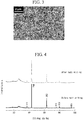
- FIG. 3 is a microscopic image of a substance after the positive electrode active material for a lithium ion secondary battery is ground by ball milling when the positive electrode for a lithium ion secondary battery is produced.
- the average particle size is an average value of particle sizes of 20 arbitrary particles in the optical microscope image.
- the particle size of the positive electrode active material for a lithium ion secondary battery before grinding is performed by ball milling is 2 to 4 ⁇ m, and the maximum particle size of the ground substance is about 1 ⁇ m.
- the average particle size of the positive electrode active material for a lithium ion secondary battery using oxidation reduction reactions of a transition metal such as a general layered oxide is 1 to 5 ⁇ m.
- the average particle size is a factor that greatly contributes to charging and discharging characteristics. It was newly found through study that, when the average particle size is set to 0.5 ⁇ m or less and uniform compositing with a carbon material is performed, charge compensation according to oxide ions becomes active and initial charging and discharging characteristics of the lithium ion secondary battery become 260 mAh/g or more. In addition, it was newly found that an actually measured value of initial charging and discharging characteristics with respect to a Li-based theoretical capacity can be 70% or more.
- a conductive material such as carbon is preferably mixed with the positive electrode active material for a lithium ion secondary battery.
- the conductive material uniformly adheres to a surface of the ground positive electrode active material for a lithium ion secondary battery.
- a complexing agent in which a conductive material such as carbon uniformly adheres to a surface of a positive electrode active material for a lithium ion secondary battery has excellent charging and discharging characteristics because charge compensation according to oxide ions occurs.
- the grinding process is preferably performed in an inert gas atmosphere.
- a lithium ion secondary battery includes the positive electrode, a negative electrode, and a nonaqueous electrolyte, and includes components essential for a general lithium ion secondary battery.
- the lithium ion secondary battery is not particularly limited as long as the battery can be used as a drive power source or a power storage source for a machine, an apparatus, an instrument, a device, or a combined system thereof.
- the lithium ion secondary battery As exemplary application examples of the lithium ion secondary battery, portable electronic devices such as a mobile phone, a smartphone, a laptop, and a personal digital assistant (PDA) which include the lithium ion secondary battery as a drive power source.
- portable electronic devices such as a mobile phone, a smartphone, a laptop, and a personal digital assistant (PDA) which include the lithium ion secondary battery as a drive power source.
- PDA personal digital assistant
- FIG. 1 shows a block diagram of main functions when a mobile phone is used as an exemplary example of an electronic device.
- a mobile phone 10 includes a battery 1 including at least one lithium ion secondary battery of the present invention, a control unit 2, a display unit 3, an operation unit 4, a communication unit 5, and an antenna 6.
- the control unit 2 includes a CPU and a memory, and controls various devices to be mounted.
- the display unit 3 displays various types of information such as operation menus, the operation unit 4 is an input interface for performing operations of the mobile phone, and an input from the operation unit 4 is processed by the control unit 2 and an operation of the mobile phone is performed.
- the communication unit 5 performs wireless communication with a mobile phone base station through the antenna 6.
- FIG. 2 shows a schematic plan view of a drive system in which an electric vehicle is exemplified as a vehicle as another application of the lithium ion secondary battery.
- An electric vehicle 20 includes a battery module 11 including at least one lithium ion secondary battery of the present invention, an inverter 12, a motor 13, and a control unit 14.
- the electric vehicle 20 is driven when power is supplied from the battery module 11 to the motor 13 through the inverter 12. Power regenerated by the motor 13 during deceleration is stored in the battery module 11.
- the control unit 14 controls the inverter 12 so that torque is output in the same direction as rotation of a wheel 15 when an accelerator pedal is operated, and controls the inverter 12 so that torque is output in a direction opposite to a direction of rotation of a wheel when a brake pedal is operated.
- FIG. 2 shows an exemplary case in which the battery is applied to the electric vehicle
- the battery can be applied as a storage battery for storing power for running in a hybrid vehicle including a motor for running and an engine or a storage battery for storing power for accessory driving.
- the battery can also be applied as a storage battery for storing power for accessory driving in an engine vehicle.
- a storage battery for storing power for accessory driving is charged by power generated by an alternator connected to the engine.
- Li 0.6 Ti 0.2 Mn 0.2 O Li 2 CO 3 (commercially available from Wako Pure Chemical Corporation), TiO 2 (commercially available from Kanto Chemical Co., Inc), and Mn 2 O 3 (obtained by calcining manganese carbonate (commercially available from Kishida Chemical Co., Ltd.) at 700 °C) were weighed out at a molar ratio of 1.5:1:0.5. Then, the weighed out powders were mixed so that they became sufficiently uniform, and were then pelletized, and calcined at 900 °C for 12 hours, and thereby Li 0.6 Ti 0.2 Mn 0.2 O was obtained. In this case, a calcination atmosphere was an inert gas atmosphere.
- the obtained powders were put into a pot made of zirconia into which a ball made of zirconia was added, set in a planetary ball mill (model number pluverisette 7 commercially available from FRITSCH), and mixed at 300 rpm for 12 hours.
- a planetary ball mill model number pluverisette 7 commercially available from FRITSCH
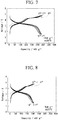
- FIG. 4 shows X-ray diffraction images before and after ball milling was performed on the powder of the composite oxide obtained in Example 1-1.
- the horizontal axis represents a diffraction angle (2 ⁇ ) and the vertical axis represents an intensity. It was confirmed that a crystal structure of the composite oxide obtained in Example 1 from the X-ray diffraction image was a rock salt type structure.
- a polyvinylidene fluoride (PVDF) binder that was dissolved in N-methyl pyrrolidone (NMP) was added to this mixture to prepare a slurry.
- NMP N-methyl pyrrolidone
- a weight ratio of positive electrode active material:AB:PVDF was 76.5:13.5:10. This slurry was applied to an aluminum foil as a current collector and dried, and pressing was then performed to produce a positive electrode.
- a bipolar electrochemical cell for evaluation in which a counter electrode was a lithium foil was produced using this positive electrode.
- the discharging capacity in the fourth cycle was 300 mAh/g showing a discharging capacity of 95% of the discharging capacity in the first cycle, and a high discharging capacity retention rate was shown.
- Example 1-2 was different from Example 1-1 only in that charging and discharging characteristics were measured at a current density increased to 10 mA/g and the other conditions were the same as those in Example 1-1.
- Example 1-3 was different from Example 1-1 only in that charging and discharging characteristics were measured at a measurement temperature that was room temperature (25 °C) and the other conditions were the same as those in Example 1-1.
- Example 1-3 Under conditions of Example 1-3, a charging capacity was 275 mAh/g and a discharging capacity was 215 mAh/g in the first cycle. While charging and discharging characteristics were lowered when the measurement temperature decreased, sufficiently high charging and discharging characteristics were shown. In addition, even after charging and discharging were repeated over 5 cycles, the discharging capacity did not largely decrease and a high discharging capacity retention rate of 93% was shown.
- Li 0.55 Ti 0.1 Mn 0.35 O corresponding to General Formula: Li x Ti 2x-1 Mn 2-3x O (x 0.55)
- Li 2 CO 3 , TiO 2 , and Mn 2 O 3 were weighed out at a molar ratio of 1.1:0.4:0.7. Then, the weighed out powders were mixed so that they became sufficiently uniform, and were then pelletized, and calcined at 900 °C for 12 hours, and thereby Li 0.55 Ti 0.1 Mn 0.35 O was obtained.
- the calcination atmosphere was an inert gas atmosphere.
- the weighed out sample was calcined at 900 °C for 12 hours, and the calcined sample was finely ground using a ball mill under the same conditions as in Example 1-1.
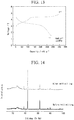
- FIG. 10 shows X-ray diffraction images before and after ball milling was performed on the powder of the composite oxide obtained in Example 2.
- the horizontal axis represents a diffraction angle (2 ⁇ ) and the vertical axis represents an intensity. It was confirmed that a crystal structure of the composite oxide obtained in Example 2 from the X-ray diffraction image was a rock salt type structure.
- ICP inductivity coupled plasma
- a curve upward to the right corresponds to a charging curve and a curve downward to the right corresponds to a discharging curve.
- Charging and discharging capacities measured under conditions of a current density of 10 mA/g, a voltage range of 1.5 to 4.8 V, and a measurement temperature of 50 °C are shown.
- the weighed out sample was calcined at 900 °C for 12 hours, and the calcined sample was finely ground using a ball mill under the same conditions as in Example 1-1.
- FIG. 12 shows X-ray diffraction images before and after ball milling was performed on the powder of the composite oxide obtained in Example 3.
- the horizontal axis represents a diffraction angle (2 ⁇ ) and the vertical axis represents an intensity. It was confirmed that a crystal structure of the composite oxide obtained in Example 2 from the X-ray diffraction image was a rock salt type structure.
- a curve upward to the right corresponds to a charging curve and a curve downward to the right corresponds to a discharging curve.
- Charging and discharging capacities measured under conditions of a current density of 10 mA/g, a voltage range of 1.5 to 4.8 V, and a measurement temperature of 50 °C are shown.
- Example 2 Based on results of Example 1-1, Example 2, and Example 3, even if a composite oxide in which a range of x in General Formula: Li x Ti 2x-1 Mn 2-3x O was changed was used as a positive electrode material, a rock salt type structure was maintain and high charging and discharging characteristics were exhibited. In addition, comparing Example 2 and Example 3, when a compositional proportion of Ti was higher, the contribution of oxide ions to oxidation reduction in charge compensation according to movement of lithium ions during charging and discharging was greater and it was possible to obtain high charging and discharging characteristics.
- FIG. 14 shows X-ray diffraction images before and after ball milling is performed on a powder of a composite oxide obtained in Reference Example 4.
- the horizontal axis represents a diffraction angle (2 ⁇ ) and the vertical axis represents an intensity. It was confirmed that a crystal structure of the composite oxide obtained in Reference Example 4 from the X-ray diffraction image was a rock salt type structure.
- a curve upward to the right corresponds to a charging curve and a curve downward to the right corresponds to a discharging curve.
- Charging and discharging capacities measured under conditions of a current density of 10 mA/g, a voltage range of 1.5 to 4.8 V, and a measurement temperature of 50 °C are shown.
- composition of General Formula (2) in which a part of the composition of General Formula (1) shown in Example 1-1 to Example 3 was substituted with Nb also exhibited high charging and discharging characteristics.
Landscapes
- Chemical & Material Sciences (AREA)
- Organic Chemistry (AREA)
- Inorganic Chemistry (AREA)
- Chemical Kinetics & Catalysis (AREA)
- Electrochemistry (AREA)
- General Chemical & Material Sciences (AREA)
- Engineering & Computer Science (AREA)
- Materials Engineering (AREA)
- Life Sciences & Earth Sciences (AREA)
- Environmental & Geological Engineering (AREA)
- General Life Sciences & Earth Sciences (AREA)
- Geology (AREA)
- Battery Electrode And Active Subsutance (AREA)
- Secondary Cells (AREA)
- Manufacturing & Machinery (AREA)
Abstract
Description
- The present invention relates to a positive electrode active material for a lithium ion secondary battery, a positive electrode for a lithium ion secondary battery, a lithium ion secondary battery, an electronic device and a vehicle.
- Lithium ion secondary batteries are widely used as power sources for driving mobile devices such as mobile phones, smartphones and laptops. Lithium ion secondary batteries have a feature of high energy density, but even higher energy density is required for new applications such as electric vehicles and home power storage systems.
- In order to further increase the energy density of lithium ion secondary batteries, it is necessary to improve the performance of a positive electrode material. A solid solution type material has been receiving attention as a positive electrode material capable of satisfying such requirements. Various materials have been studied as a solid solution type material. A Li2TiO3 material is one material that is being studied as a positive electrode material having a large capacity.
- For example, in
Patent Document 1, a substance in which some of Li2TiO3 is substituted with one type of metal is described. In addition, for example, inPatent Document 2, a lithium ion secondary battery using a substance having a layered structure represented by xLiMO2·(1-x)Li2M'O3 is described. - In addition, for example, in
Patent Document 3, a lithium manganese-based composite oxide represented by Li1+x(Mn1-yTiy)1-xO2 (here, -1/3<x<1/3, 0.4≤y≤0.6) is described. -
- [Patent Document 1] Japanese Patent No.
4307927 - [Patent Document 2] United States Patent No.
6680143 specification - [Patent Document 3] Japanese Unexamined Patent Application, First Publication No.
2012-96974 - A Li2TiO3 material is a lithium composite oxide capable of further increasing energy density of a lithium ion secondary battery. However, currently, a positive electrode active material for a Li2TiO3 lithium ion secondary battery exhibiting sufficient charging and discharging capacities has not been found.
- For example, a substance in which some Ti is substituted with Mn in the substance described in
Patent Document 1 has a small discharging capacity of 22 mAh/g (refer to paragraph 0038 in Patent Document 1). - In addition, for example, in Example 3 of
Patent Document 2, a substance having a layered structure represented by Li(Ti0.14Mn0.79Li0.07)O2 is described. However, an initial charging capacity is 179 mAh/g, a reversible capacity is 108 mAh/g, and the charging and discharging capacities cannot be said to be sufficient. - In addition, the complex described in
Patent Document 3 has a maximum initial charging and discharging capacity of 215 mAh/g (Example 1), and the charging and discharging capacities cannot be said to be sufficient. It is thought that the lithium manganese-based composite oxide ofPatent Document 3 actually has a layered structure rather than a rock salt type structure according to a ratio of Mn and Ti, and thus sufficient charging and discharging characteristics are not obtained. It can also be confirmed from the fact that an oxidation number in Example 1 inPatent Document 3 is 3.75, which is a value close to an oxidation number (4.0) of Mn having a layered structure. Even if it has a rock salt type structure, since the lithium manganese-based composite oxide has a large particle size and its composition is not appropriate, sufficient charging and discharging capacities are not obtained. - The present invention has been made in view of the above circumstances and the present invention provides a positive electrode active material for a lithium ion secondary battery made of a Li2TiO3-based lithium transition metal composite oxide having a rock salt structure through which large charging and discharging capacities can be exhibited, a positive electrode for a lithium ion secondary battery, a lithium ion secondary battery, an electronic device and a vehicle.
- In order to solve the above problems, the present invention adopts the following aspects.
- A positive electrode active material for a lithium secondary battery according to a first aspect has a rock salt type structure represented by General Formula: LixTi2x-1Mn2-3xO (0.50<x<0.67)···(1) and a particle size of 0.5 µm or less.
- In the positive electrode active material for a lithium ion secondary battery according to the above aspect, in General Formula (1), x may satisfy 0.55≤x<0.63.
- In the positive electrode active material for a lithium secondary battery according to the above aspect, in charge compensation according to movement of lithium ions during charging and discharging, the contribution of oxide ions to oxidation reduction may be equal to or greater than the contribution of transition metal ions contained in a solid solution to oxidation reduction.
- A positive electrode for a lithium secondary battery according to a second aspect includes the above positive electrode active material for a lithium ion secondary battery, a conductive material, and a binder.
- A lithium ion secondary battery according to a third aspect includes the above positive electrode for a lithium ion secondary battery, a negative electrode, and a nonaqueous electrolyte.
- In the lithium ion secondary battery according to the above aspect, an initial charging capacity is 260 mAh/g.
- An electronic device according to a fourth aspect includes the above lithium ion secondary battery as a drive power source.
- A vehicle according to a fifth aspect includes the above lithium ion secondary battery as a drive power source.
- According to the present invention, it is possible to provide a positive electrode active material for a lithium ion secondary battery made of a novel Li2TiO3-based lithium transition metal composite oxide through which large charging and discharging capacities can be exhibited.
-
-
FIG. 1 is a block diagram of main functions of a mobile phone including a lithium ion secondary battery according to the present embodiment as a drive power source. -
FIG. 2 is a block diagram of a drive system of an electric vehicle including the lithium ion secondary battery according to the present embodiment as a drive power source. -
FIG. 3 is a microscopic image of a substance after a positive electrode active material for a lithium ion secondary battery is ground by ball milling when a positive electrode for the lithium ion secondary battery is produced. -
FIG. 4 shows X-ray diffraction images before and after ball milling is performed on a powder of a composite oxide obtained in Example 1-1. -
FIG. 5 shows charging and discharging characteristics of an electrochemical cell obtained using a composite oxide Li0.6Ti0.2Mn0.2O (x=0.6) of Example 1-1 as a positive electrode active material. -
FIG. 6 shows evaluation results of a capacity retention characteristic of a discharging capacity of an electrochemical cell using a composite oxide Li0.6Ti0.2Mn0.2O (x=0.6) of Example 1-1 as a positive electrode active material. -
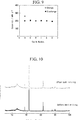
FIG. 7 shows charging and discharging characteristics of an electrochemical cell measured under conditions of Example 1-2 using a composite oxide Li0.6Ti0.2Mn0.2O (x=0.6) as a positive electrode active material. -
FIG. 8 shows charging and discharging characteristics of an electrochemical cell measured under conditions of Example 1-3 using a composite oxide Li0.6Ti0.2Mn0.2O (x=0.6) as a positive electrode active material. -
FIG. 9 shows evaluation results of a capacity retention characteristic of a discharging capacity of an electrochemical cell under conditions of Example 1-3 using a composite oxide Li0.6Ti0.2Mn0.2O (x=0.6) as a positive electrode active material. -
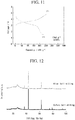
FIG. 10 shows X-ray diffraction images before and after ball milling is performed on a powder of a composite oxide obtained in Example 2. -
FIG. 11 shows charging and discharging characteristics of an electrochemical cell obtained using a composite oxide Li0.55Ti0.1Mn0.35O (x=0.55) of Example 2 as a positive electrode active material. -
FIG. 12 shows X-ray diffraction images before and after ball milling is performed on a powder of a composite oxide obtained in Example 3. -
FIG. 13 shows charging and discharging characteristics of an electrochemical cell obtained using a composite oxide Li0.62Ti0.245Mn0.135O (x=0.62) of Example 3 as a positive electrode active material. -
FIG. 14 shows X-ray diffraction images before and after ball milling is performed on a powder of a composite oxide obtained in Reference Example 1. -
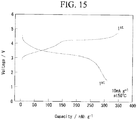
FIG. 15 shows charging and discharging characteristics of an electrochemical cell obtained using a composite oxide Li0.625Ti0.1Nb0.075Mn0.2O (x=0.625, y=0.1) in Reference Example 1 as a positive electrode active material. - Forms for implementing a positive electrode active material for a lithium ion secondary battery, a positive electrode for a lithium ion secondary battery, a lithium ion secondary battery, an electronic device and a vehicle according to the present embodiment will be described below.
- A positive electrode active material for a lithium secondary battery according to one aspect of the present invention is composed of a solid solution of Li2TiO3 and LiMnO2 and has a rock salt type structure. As another aspect, a positive electrode active material for a lithium secondary battery may be composed of a solid solution of Li2TiO3, LiMnO2 and Li3NbO4. The common point between these positive electrode active materials for a lithium secondary battery is that both solid solutions include Li2TiO3 and LiMnO2.
- The positive electrode active material for a lithium ion secondary battery may contain other materials within a range in which effects of the present invention are obtained.
- When the positive electrode active material for a lithium secondary battery is composed of a solid solution of Li2TiO3 and LiMnO2, it is represented by General Formula LixTi2x-1Mn2-3xO (0.50<x<0.67)···(1).
- The solid solution of Li2TiO3 and LiMnO2 can be represented by the following formula by adjusting a coefficient of oxygen.
xLi2/3Ti1/3O·(1-x)Li1/2Mn1/2O (0.50<x<0.67)
- When this is changed and represented by MeO (Me: metal) having a rock salt type structure, the above General Formula (1) is obtained.
- In addition, when the positive electrode active material for a lithium secondary battery is composed of a solid solution of Li2TiO3, LiMnO2 and Li3NbO4, it is represented by General Formula: LixTiyMn(3-y-4x)/2Nb(2x-y-1)/2O (0<x<1, 0<y<(1-x))...(2).
- The solid solution of Li2TiO3, LiMnO2 and Li3NbO4 can be represented by the following formula by adjusting a coefficient of oxygen.
aLi2/3Tii/3O·bLi1/2Mn1/2O·(1-a-b)Li3/4Nb1/4O (0<a<1, 0<b<1)
- When this is changed and represented by MeO (Me: metal) having a rock salt type structure, the above General Formula: Li(9-a-3b)/12Tia/3Mnb/2Nb(1-a-b)/4O is obtained.
- In addition, when x=(9-a-3b)/12, and y=a/3 are set in order for the obtained general formula to be combined with General Formula (1), General Formula (2) is obtained.
- In the positive electrode active material for a lithium secondary battery according to one aspect of the present invention, in charge compensation according to movement of lithium ions during charging and discharging, the contribution of oxide ions to oxidation reduction is equal to or greater than the contribution of transition metal ions contained in a solid solution to oxidation reduction.
- That is, in the positive electrode active material for a lithium ion secondary battery according to one aspect of the present invention, in charge compensation according to movement of lithium ions during charging and discharging, the contribution of oxide ions to oxidation reduction is great.
- Here, "the contribution of oxide ions to oxidation reduction" or "the contribution of transition metal ions to oxidation reduction" refers to the contribution of oxide ions or transition metal ions to oxidation reduction in charge compensation according to movement of lithium ions during charging and discharging when oxidation reduction reactions reversibly and stably occur.
- As an example, it refers to the contribution of oxide ions or transition metal ions to oxidation reduction in charging and discharging when oxidation reduction reactions reversibly occur over at least 30 cycles or more.
- For example, when the positive electrode active material for a lithium ion secondary battery is composed of a solid solution of Li2TiO3 and LiMnO2, in charge compensation according to movement of lithium ions during charging and discharging, there are a contribution according to a change in the valence of Mn3+/Mn4+ and a contribution according to a change in the valence of oxide ions of O2 2-/2O2-.
- For example, when the positive electrode active material for a lithium ion secondary battery is Li0.6Ti0.2Mn0.2O (formula weight: 81.453), if the contribution according to a change in the valence of Mn3+/Mn4+ is the main contribution, a theoretical capacity is 131.6 mAh/g. On the other hand, when a theoretical capacity is obtained from a movement amount of lithium ions during charging and discharging, the theoretical capacity is 394.9 mAh/g.
- The movement amount of lithium ions during charging and discharging is a sum of the contribution according to a change in the valence of Mn3+/Mn4+ and the contribution according to a change in the valence of O2 2-/2O2-. That is, the charging and discharging capacities can be increased using not only the contribution according to a change in the valence of Mn3+/Mn4+ but also the contribution according to a change in the valence of oxide ions of O2 2-2O2-.
- "The contribution of oxide ions to oxidation reduction" and "the contribution of transition metal ions to oxidation reduction" can be examined by measuring changes in the valence of transition metal ions and oxide ions during a charging and discharging cycle. The changes in the valence of transition metal ions and oxide ions can be examined through, for example, soft X-ray absorption spectroscopy (XAS), X-ray photoelectron spectroscopy (XPS), X-ray absorption fine structure analysis (XAFS), or electron energy loss spectroscopy (EELS).
- For example, when the positive electrode active material for a lithium ion secondary battery is composed of a solid solution of Li2TiO3 and LiMnO2, changes in the valence of manganese ions Mn3+/Mn4+ and oxide ions of O2 2-/2O2- can be measured through soft X-ray absorption spectroscopy or the like. During charging, the contribution of manganese ions to oxidation reduction reactions can be examined according to a change of manganese ions from Mn3+ to Mn4+ (generation of Mn4+), and the contribution of oxide ions to oxidation reduction reactions can be examined according to a change from 2O2- to O2 2- (generation of O2 2- and analogues thereof). On the other hand, during discharging also, the contribution of manganese ions to oxidation reduction reactions can be confirmed according to a change of manganese ions from Mn4+ to Mn3+ (generation of Mn3+) and the contribution of oxide ions to oxidation reduction reactions can be confirmed according to a change from O2 2- to 2O2- (generation of O2-).
- In addition, "the contribution of oxide ions to oxidation reduction" or "the contribution of transition metal ions to oxidation reduction" can be theoretically predicted from the composition.
- For example, it is known that Li2TiO3 is electrochemically inactive. Therefore, for example, when a compositional proportion of Mn in General Formula: LixTi2x-1Mn2-3xO (0.50<x<0.67)···(1) is larger than a compositional proportion of Ti, "the contribution of transition metal ions to oxidation reduction" is predicted to be great, and when a compositional proportion of Mn and a compositional proportion of Ti are equal, "the contribution of oxide ions to oxidation reduction" is predicted to be great.
- In General Formulae (1) and (2), x is 0.50<x<0.67. When x is a composition in this range, it is easy to maintain a rock salt type structure. In addition, x is preferably 0.52≤x<0.65. When x is a composition in this range, it is easier to maintain a rock salt type structure. In addition, x is more preferably 0.55≤x<0.63. When x is a composition in this range, large charging and discharging capacities are remarkably obtained.
- The positive electrode active material for a lithium ion secondary battery according to the present embodiment also contains a slightly deviated composite oxide due to inevitable loss of Li, Ti, Mn, Nb or O.
- In a method of producing a positive electrode active material for a lithium ion secondary battery according to one aspect of the present invention, salts or oxides of lithium, titanium, manganese, and niobium are prepared and the positive electrode active material can be obtained by a solid-phase method according to compositional proportions.
- In addition, the method is not limited to the solid-phase method, but a coprecipitation method, an evaporation drying method, a spray dry method or the like can be used.
- The salts or oxides of lithium, titanium, manganese, and niobium may be separately prepared or may be prepared as a composite compound. For example, a lithium titanium composite oxide containing a lithium compound and a titanium compound, a lithium manganese composite oxide containing a lithium compound and a manganese compound, a lithium niobium composite oxide containing a lithium compound and a niobium compound, or the like may be prepared in advance.
- As the lithium compound, lithium hydroxide, lithium citrate, lithium oxalate, lithium phosphate, lithium carbonate, or the like can be used, and these may be used alone or two or more thereof may be used in a mixture.
- As the titanium compound, metal titanium, titanium oxide, titanium hydroxide, titanium nitrate, titanium chloride, or the like can be used, and these may be used alone or two or more thereof may be used in a mixture. In consideration of stability, titanium oxide (TiO2) or the like is preferably used.
- As the manganese compound, metal manganese, manganese oxide, manganese hydroxide, manganese nitrate, manganese carbonate, manganese chloride, manganese iodide, or manganese sulfate can be used, and these may be used alone or two or more thereof may be used in a mixture. Manganese carbonate is preferable.
- As the niobium compound, metal niobium, niobium oxide, niobium oxalate, niobium chloride, niobium carbide, or lithium niobate can be used, and these may be used alone or two or more thereof may be used in a mixture. In consideration of stability and easy availability, niobium pentoxide (Nb2O5) is preferable.
- When synthesizing is performed by the solid-phase method, the salts or oxides of lithium, titanium, manganese, and niobium are adjusted so that a target active material has desired compositional proportions and the adjusted mixture is calcined, and thereby a positive electrode active material for a lithium ion secondary battery is obtained.
- Regarding the amount of a lithium raw material, since a part of the lithium raw material is eliminated during calcination, the lithium raw material is preferably contained in an excessive amount of about 1 to 5%. In addition, a calcination temperature depends on a type of a lithium salt to be used, and is preferably 500 °C or higher, and more preferably 800 °C or higher in order to increase the crystallinity of a positive electrode active material for a lithium ion secondary battery to be generated. When the crystallinity of a positive electrode active material for a lithium ion secondary battery to be generated is higher, charging and discharging characteristics are improved.
- A positive electrode for a lithium ion secondary battery according to one aspect of the present invention includes the positive electrode active material for a lithium ion secondary battery, a conductive material, and a binder.
- The positive electrode for a lithium ion secondary battery according to one aspect of the present invention may include the positive electrode active material for a lithium ion secondary battery alone as a positive electrode active material or may additionally include one or more known positive electrode active materials for a lithium ion secondary battery.
- In addition, when the positive electrode for a lithium ion secondary battery according to one aspect of the present invention is produced, the positive electrode active material for a lithium ion secondary battery is preferably ground by ball milling or the like.
- The average particle size of the ground positive electrode active material for a lithium ion secondary battery is preferably 0.5 µm or less.
FIG. 3 is a microscopic image of a substance after the positive electrode active material for a lithium ion secondary battery is ground by ball milling when the positive electrode for a lithium ion secondary battery is produced. Here, the average particle size is an average value of particle sizes of 20 arbitrary particles in the optical microscope image. The particle size of the positive electrode active material for a lithium ion secondary battery before grinding is performed by ball milling is 2 to 4 µm, and the maximum particle size of the ground substance is about 1 µm. - The average particle size of the positive electrode active material for a lithium ion secondary battery using oxidation reduction reactions of a transition metal such as a general layered oxide is 1 to 5 µm. The average particle size is a factor that greatly contributes to charging and discharging characteristics. It was newly found through study that, when the average particle size is set to 0.5 µm or less and uniform compositing with a carbon material is performed, charge compensation according to oxide ions becomes active and initial charging and discharging characteristics of the lithium ion secondary battery become 260 mAh/g or more. In addition, it was newly found that an actually measured value of initial charging and discharging characteristics with respect to a Li-based theoretical capacity can be 70% or more.
- In addition, when ball milling or the like is performed, for example, a conductive material such as carbon is preferably mixed with the positive electrode active material for a lithium ion secondary battery. When a grinding process is performed by ball milling or the like, the conductive material uniformly adheres to a surface of the ground positive electrode active material for a lithium ion secondary battery. A complexing agent in which a conductive material such as carbon uniformly adheres to a surface of a positive electrode active material for a lithium ion secondary battery has excellent charging and discharging characteristics because charge compensation according to oxide ions occurs. In addition, in order to avoid unnecessary reactions, the grinding process is preferably performed in an inert gas atmosphere.
- A lithium ion secondary battery according to one aspect of the present invention includes the positive electrode, a negative electrode, and a nonaqueous electrolyte, and includes components essential for a general lithium ion secondary battery.
- Applications of the lithium ion secondary battery are not particularly limited as long as the battery can be used as a drive power source or a power storage source for a machine, an apparatus, an instrument, a device, or a combined system thereof.
- As exemplary application examples of the lithium ion secondary battery, portable electronic devices such as a mobile phone, a smartphone, a laptop, and a personal digital assistant (PDA) which include the lithium ion secondary battery as a drive power source.
-
FIG. 1 shows a block diagram of main functions when a mobile phone is used as an exemplary example of an electronic device. - A
mobile phone 10 includes abattery 1 including at least one lithium ion secondary battery of the present invention, acontrol unit 2, adisplay unit 3, anoperation unit 4, acommunication unit 5, and anantenna 6. - The
control unit 2 includes a CPU and a memory, and controls various devices to be mounted. - The
display unit 3 displays various types of information such as operation menus, theoperation unit 4 is an input interface for performing operations of the mobile phone, and an input from theoperation unit 4 is processed by thecontrol unit 2 and an operation of the mobile phone is performed. Thecommunication unit 5 performs wireless communication with a mobile phone base station through theantenna 6. -
FIG. 2 shows a schematic plan view of a drive system in which an electric vehicle is exemplified as a vehicle as another application of the lithium ion secondary battery. - An
electric vehicle 20 includes abattery module 11 including at least one lithium ion secondary battery of the present invention, aninverter 12, amotor 13, and acontrol unit 14. - The
electric vehicle 20 is driven when power is supplied from thebattery module 11 to themotor 13 through theinverter 12. Power regenerated by themotor 13 during deceleration is stored in thebattery module 11. Thecontrol unit 14 controls theinverter 12 so that torque is output in the same direction as rotation of awheel 15 when an accelerator pedal is operated, and controls theinverter 12 so that torque is output in a direction opposite to a direction of rotation of a wheel when a brake pedal is operated. - While
FIG. 2 shows an exemplary case in which the battery is applied to the electric vehicle, the battery can be applied as a storage battery for storing power for running in a hybrid vehicle including a motor for running and an engine or a storage battery for storing power for accessory driving. The battery can also be applied as a storage battery for storing power for accessory driving in an engine vehicle. In this case, a storage battery for storing power for accessory driving is charged by power generated by an alternator connected to the engine. - While the present invention will be described below in detail with reference to examples, the present invention is not limited to such examples.
- In order to obtain Li0.6Ti0.2Mn0.2O, Li2CO3 (commercially available from Wako Pure Chemical Corporation), TiO2 (commercially available from Kanto Chemical Co., Inc), and Mn2O3 (obtained by calcining manganese carbonate (commercially available from Kishida Chemical Co., Ltd.) at 700 °C) were weighed out at a molar ratio of 1.5:1:0.5. Then, the weighed out powders were mixed so that they became sufficiently uniform, and were then pelletized, and calcined at 900 °C for 12 hours, and thereby Li0.6Ti0.2Mn0.2O was obtained. In this case, a calcination atmosphere was an inert gas atmosphere.
- Next, the obtained powders were put into a pot made of zirconia into which a ball made of zirconia was added, set in a planetary ball mill (
model number pluverisette 7 commercially available from FRITSCH), and mixed at 300 rpm for 12 hours. -
FIG. 4 shows X-ray diffraction images before and after ball milling was performed on the powder of the composite oxide obtained in Example 1-1. The horizontal axis represents a diffraction angle (2θ) and the vertical axis represents an intensity. It was confirmed that a crystal structure of the composite oxide obtained in Example 1 from the X-ray diffraction image was a rock salt type structure. In addition, the composition was analyzed by inductivity coupled plasma (ICP) analysis, and it was confirmed that the composition was Li0.6Ti0.2Mn0.2O (x=0.6). - A bipolar electrochemical cell for evaluation was produced as follows using the obtained composite oxide Li0.6Ti0.2Mn0.2O (x=0.6) as a positive electrode active material for a lithium ion secondary battery, and battery characteristics thereof were evaluated.
- First, the obtained positive electrode active material Li0.6Ti0.1Mn0.2O (x=0.6) and acetylene black (AB) as a conductive material were mixed at a weight ratio of 80:20. A polyvinylidene fluoride (PVDF) binder that was dissolved in N-methyl pyrrolidone (NMP) was added to this mixture to prepare a slurry. In this slurry, a weight ratio of positive electrode active material:AB:PVDF was 76.5:13.5:10. This slurry was applied to an aluminum foil as a current collector and dried, and pressing was then performed to produce a positive electrode.
- A bipolar electrochemical cell for evaluation in which a counter electrode was a lithium foil was produced using this positive electrode.
- In this electrochemical cell, a solution in which 1M-LiPF6 was dissolved in EC/DMC (volume ratio of 1:1) was used as an electrolytic solution, and a charging and discharging test was performed. The charging and discharging test was performed at 50 °C, a current density of 5 mA/g, and in a voltage range of 1.5 to 4.8 V.
-
FIG. 5 shows charging and discharging characteristics of an electrochemical cell obtained using the composite oxide Li0.6Ti0.2Mn0.2O (x=0.6) of Example 1-1 as a positive electrode active material. Curves upward to the right correspond to charging curves and curves downward to the right correspond to discharging curves. - Large charging and discharging capacities in which a charging capacity was 350 mAh/g and a discharging capacity was 315 mAh/g in the first cycle were obtained. The initial charging capacity of 350 mAh/g was a very large value corresponding to about 89% of the Li-based theoretical capacity of 394.9 mAh/g. These large charging and discharging capacities were caused by oxidation reduction reactions of oxide ions (O2-/O2 2-).
-
FIG. 6 shows evaluation results of a capacity retention characteristic of a discharging capacity of an electrochemical cell using the composite oxide Li0.6Ti0.2Mn0.2O (x=0.6) of Example 1-1 as a positive electrode active material. Charging and discharging capacities in cycles are shown when charging and discharging were repeated over 4 cycles at a current density of 5 mA/g and in a voltage range of 1.5 to 4.8 V. The discharging capacity in the fourth cycle was 300 mAh/g showing a discharging capacity of 95% of the discharging capacity in the first cycle, and a high discharging capacity retention rate was shown. - Example 1-2 was different from Example 1-1 only in that charging and discharging characteristics were measured at a current density increased to 10 mA/g and the other conditions were the same as those in Example 1-1.
FIG. 7 shows charging and discharging characteristics of an electrochemical cell measured under conditions of Example 1-2 using a composite oxide Li0.6Ti0.2Mn0.2O (x=0.6) as a positive electrode active material. Curves upward to the right correspond to charging curves and curves downward to the right correspond to discharging curves. - Under conditions of Example 1-2 also, similarly to Example 1-1, large charging and discharging capacities and a high discharging capacity retention rate were shown. A charging capacity was 350 mAh/g and a discharging capacity was 300 mAh/g in the first cycle. In addition, even after charging and discharging were repeated over 5 cycles, a high discharging capacity retention rate of 92% was shown. That is, even if the current density was high, an electrochemical cell using the composite oxide Li0.6Ti0.2Mn0.2O (x=0.6) as a positive electrode active material functioned normally.
- Example 1-3 was different from Example 1-1 only in that charging and discharging characteristics were measured at a measurement temperature that was room temperature (25 °C) and the other conditions were the same as those in Example 1-1.
FIG. 8 shows charging and discharging characteristics of an electrochemical cell measured under conditions of Example 1-3 using a composite oxide Li0.6Ti0.2Mn0.2O (x=0.6) as a positive electrode active material. Curves upward to the right correspond to charging curves and curves downward to the right correspond to discharging curves. - Under conditions of Example 1-3, a charging capacity was 275 mAh/g and a discharging capacity was 215 mAh/g in the first cycle. While charging and discharging characteristics were lowered when the measurement temperature decreased, sufficiently high charging and discharging characteristics were shown. In addition, even after charging and discharging were repeated over 5 cycles, the discharging capacity did not largely decrease and a high discharging capacity retention rate of 93% was shown.
-
FIG. 9 shows evaluation results of capacity retention characteristics of a discharging capacity of an electrochemical cell under conditions of Example 1-3 using a composite oxide Li0.6Ti0.2Mn0.2O (x=0.6) as a positive electrode active material. - Li0.55Ti0.1Mn0.35O was prepared in the same manner as in a composite oxide Li0.6Ti0.1Mn0.1O (x=0.6) prepared in Example 1-1. Li2CO3, TiO2, and Mn2O3 were weighed out at a molar ratio of 1.1:0.4:0.7. Then, the weighed out powders were mixed so that they became sufficiently uniform, and were then pelletized, and calcined at 900 °C for 12 hours, and thereby Li0.55Ti0.1Mn0.35O was obtained. In this case, the calcination atmosphere was an inert gas atmosphere.
- The weighed out sample was calcined at 900 °C for 12 hours, and the calcined sample was finely ground using a ball mill under the same conditions as in Example 1-1.
-
FIG. 10 shows X-ray diffraction images before and after ball milling was performed on the powder of the composite oxide obtained in Example 2. The horizontal axis represents a diffraction angle (2θ) and the vertical axis represents an intensity. It was confirmed that a crystal structure of the composite oxide obtained in Example 2 from the X-ray diffraction image was a rock salt type structure. In addition, the composition was analyzed by inductivity coupled plasma (ICP) analysis and it was confirmed that the composition was Li0.55Ti0.1Mn0.35O (x=0.55). -
FIG. 11 shows charging and discharging characteristics of an electrochemical cell obtained using a composite oxide Li0.55Ti0.1Mn0.35O (x=0.55) of Example 2 as a positive electrode active material. A curve upward to the right corresponds to a charging curve and a curve downward to the right corresponds to a discharging curve. Charging and discharging capacities measured under conditions of a current density of 10 mA/g, a voltage range of 1.5 to 4.8 V, and a measurement temperature of 50 °C are shown. - As shown in
FIG. 11 , large charging and discharging capacities in which a charging capacity was 260 mAh/g and a discharging capacity was 230 mAh/g in the first cycle were obtained. An initial charging capacity of 260 mAh/g corresponded to about 71% of a Li-based theoretical capacity of 394.9 mAh/g, which indicated a high value. The large charging and discharging capacities were caused by oxidation reduction reactions of oxide ions (O2-/O2 2-). - Li0.62Ti0.245Mn0.135O was prepared in the same manner as in Example 1-1 in which a composite oxide Li0.6Ti0.2Mn0.2O (x=0.6) was prepared. Li2CO3, TiO2, and Mn2O3 were weighed out at a molar ratio of 1.24:0.96:0.27. Then, the weighed out powders were mixed so that they became sufficiently uniform, and were then pelletized, and calcined at 900 °C for 12 hours, and thereby Li0.62Ti0.245Mn0.135O was obtained. In this case, a calcination atmosphere was an inert gas atmosphere.
- The weighed out sample was calcined at 900 °C for 12 hours, and the calcined sample was finely ground using a ball mill under the same conditions as in Example 1-1.
-
FIG. 12 shows X-ray diffraction images before and after ball milling was performed on the powder of the composite oxide obtained in Example 3. The horizontal axis represents a diffraction angle (2θ) and the vertical axis represents an intensity. It was confirmed that a crystal structure of the composite oxide obtained in Example 2 from the X-ray diffraction image was a rock salt type structure. In addition, the composition was analyzed by inductivity coupled plasma (ICP) analysis and it was confirmed that the composition was Li0.62Ti0.245Mn0.135O (x=0.62). -
FIG. 13 shows charging and discharging characteristics of an electrochemical cell obtained using a composite oxide Li0.62Ti0.245Mn0.135O (x=0.62) of Example 3 as a positive electrode active material. A curve upward to the right corresponds to a charging curve and a curve downward to the right corresponds to a discharging curve. Charging and discharging capacities measured under conditions of a current density of 10 mA/g, a voltage range of 1.5 to 4.8 V, and a measurement temperature of 50 °C are shown. - As shown in
FIG. 13 , large charging and discharging capacities in which a charging capacity was 350 mAh/g and a discharging capacity was 280 mAh/g in the first cycle were obtained. An initial charging capacity of 350 mAh/g corresponded to about 89% of a Li-based theoretical capacity of 394.9 mAh/g, which indicated a very high value. The large charging and discharging capacities were caused by oxidation reduction reactions of oxide ions (O2-/O2 2-). - Based on results of Example 1-1, Example 2, and Example 3, even if a composite oxide in which a range of x in General Formula: LixTi2x-1Mn2-3xO was changed was used as a positive electrode material, a rock salt type structure was maintain and high charging and discharging characteristics were exhibited. In addition, comparing Example 2 and Example 3, when a compositional proportion of Ti was higher, the contribution of oxide ions to oxidation reduction in charge compensation according to movement of lithium ions during charging and discharging was greater and it was possible to obtain high charging and discharging characteristics.
- Li0.625Ti0.1Nb0.075Mn0.2O was prepared in the same manner as in Example 1-1 in which a composite oxide Li0.6Ti0.2Mn0.2O (x=0.6) was prepared and by additionally adding Nb2O5 (commercially available from Wako Pure Chemical Corporation). Li2CO3, TiO2, Mn2O3, and Nb2O5 were weighed out at a molar ratio of 1.25:0.4:0.4:0.15. Then, the weighed out powders were mixed so that they became sufficiently uniform, and were then pelletized, and calcined at 900 °C for 12 hours, and thereby Li0.625Ti0.1Nb0.075Mn0.2O was obtained. In this case, a calcination atmosphere was an inert gas atmosphere.
-
FIG. 14 shows X-ray diffraction images before and after ball milling is performed on a powder of a composite oxide obtained in Reference Example 4. The horizontal axis represents a diffraction angle (2θ) and the vertical axis represents an intensity. It was confirmed that a crystal structure of the composite oxide obtained in Reference Example 4 from the X-ray diffraction image was a rock salt type structure. In addition, the composition was analyzed by inductivity coupled plasma (ICP) analysis, and it was confirmed that the composition was Li0.625Ti0.1Nb0.075Mn0.2O (x=0.625, y=0.1). -
FIG. 15 shows charging and discharging characteristics of an electrochemical cell obtained using a composite oxide Li0.625Ti0.1Nb0.075Mn0.2O (x=0.625, y=0.1) of Reference Example 4 as a positive electrode active material. A curve upward to the right corresponds to a charging curve and a curve downward to the right corresponds to a discharging curve. Charging and discharging capacities measured under conditions of a current density of 10 mA/g, a voltage range of 1.5 to 4.8 V, and a measurement temperature of 50 °C are shown. - As shown in
FIG. 15 , large charging and discharging capacities in which a charging capacity was 340 mAh/g and a discharging capacity was 310 mAh/g in the first cycle were obtained. The large charging and discharging capacities were caused by oxidation reduction reactions of oxide ions (O2-/O2 2-). - As shown in Reference Example 1, the composition of General Formula (2) in which a part of the composition of General Formula (1) shown in Example 1-1 to Example 3 was substituted with Nb also exhibited high charging and discharging characteristics.
-
- 1 Battery
- 2 Control unit
- 3 Display unit
- 4 Operation unit
- 5 Communication unit
- 6 Antenna
- 10 Mobile phone
- 11 Battery module
- 12 Inverter
- 13 Monitor
- 14 Control unit
- 15 Wheel
- 20 Electric vehicle
Claims (8)
- A positive electrode active material for a lithium ion secondary battery having a rock salt type structure represented by General Formula LixTi2x-1Mn2-3xO (0.50<x<0.67)···(1) and having an average particle size of 0.5 µm or less.
- The positive electrode active material for a lithium ion secondary battery according to claim 1,
wherein, in General Formula (1), x satisfies 0.55≤x<0.63. - The positive electrode active material for a lithium ion secondary battery according to claim 1 or 2,
wherein, in charge compensation according to movement of lithium ions during charging and discharging, the contribution of oxide ions to oxidation reduction is equal to or greater than the contribution of transition metal ions contained in a solid solution to oxidation reduction. - A positive electrode for a lithium ion secondary battery comprising the positive electrode active material for a lithium ion secondary battery according to any one of claims 1 to 3, a conductive material, and a binder.
- A lithium ion secondary battery comprising the positive electrode for a lithium ion secondary battery according to claim 4, a negative electrode, and a nonaqueous electrolyte.
- The lithium ion secondary battery according to claim 5,
wherein an initial charging capacity is 260 mAh/g. - An electronic device comprising the lithium ion secondary battery according to claim 6 as a drive power source.
- A vehicle comprising the lithium ion secondary battery according to claim 6 as a drive power source.
Applications Claiming Priority (2)
| Application Number | Priority Date | Filing Date | Title |
|---|---|---|---|
| JP2016004256 | 2016-01-13 | ||
| PCT/JP2017/000590 WO2017122663A1 (en) | 2016-01-13 | 2017-01-11 | Positive electrode active material for lithium ion secondary battery, positive electrode for lithium ion secondary battery, lithium ion secondary battery, electronic device, and vehicle |
Publications (3)
| Publication Number | Publication Date |
|---|---|
| EP3404752A1 true EP3404752A1 (en) | 2018-11-21 |
| EP3404752A4 EP3404752A4 (en) | 2019-06-26 |
| EP3404752B1 EP3404752B1 (en) | 2020-05-13 |
Family
ID=59311285
Family Applications (1)
| Application Number | Title | Priority Date | Filing Date |
|---|---|---|---|
| EP17738417.9A Active EP3404752B1 (en) | 2016-01-13 | 2017-01-11 | Positive electrode active material for lithium ion secondary battery, positive electrode for lithium ion secondary battery, lithium ion secondary battery, electronic device, and vehicle |
Country Status (5)
| Country | Link |
|---|---|
| US (1) | US10720641B2 (en) |
| EP (1) | EP3404752B1 (en) |
| JP (1) | JP6896283B2 (en) |
| CN (1) | CN108475783B (en) |
| WO (1) | WO2017122663A1 (en) |
Families Citing this family (3)
| Publication number | Priority date | Publication date | Assignee | Title |
|---|---|---|---|---|
| CN111725488A (en) * | 2019-03-21 | 2020-09-29 | 湘潭大学 | A kind of nano-cation disordered structure cathode material and preparation method thereof |
| CN109860584B (en) * | 2019-04-01 | 2021-11-30 | 安普瑞斯(无锡)有限公司 | High-energy density lithium ion secondary battery |
| CN112786857B (en) * | 2021-01-19 | 2021-12-17 | 华南师范大学 | A kind of fast ion conductor sodium secondary battery positive electrode material and its preparation method and application |
Family Cites Families (9)
| Publication number | Priority date | Publication date | Assignee | Title |
|---|---|---|---|---|
| US6680143B2 (en) | 2000-06-22 | 2004-01-20 | The University Of Chicago | Lithium metal oxide electrodes for lithium cells and batteries |
| JP4307927B2 (en) | 2003-08-08 | 2009-08-05 | 三洋電機株式会社 | Nonaqueous electrolyte secondary battery |
| JP5309421B2 (en) * | 2006-02-02 | 2013-10-09 | 日産自動車株式会社 | Lithium ion secondary battery |
| JP5724269B2 (en) | 2010-09-21 | 2015-05-27 | 株式会社豊田自動織機 | Method for producing composite oxide |
| JP5673932B2 (en) * | 2010-10-28 | 2015-02-18 | 独立行政法人産業技術総合研究所 | Lithium manganese composite oxide having cubic rock salt structure and method for producing the same |
| JP2012096974A (en) | 2010-11-05 | 2012-05-24 | National Institute Of Advanced Industrial Science & Technology | Lithium manganese compound oxide-carbon composite and method of manufacturing the same |
| JP5397528B2 (en) | 2012-04-13 | 2014-01-22 | 株式会社豊田自動織機 | Power storage device and secondary battery |
| JP6269158B2 (en) * | 2014-02-24 | 2018-01-31 | 日産自動車株式会社 | Cathode active material for non-aqueous electrolyte secondary battery and method for producing the same |
| JP5908650B2 (en) * | 2014-03-18 | 2016-04-26 | 株式会社東芝 | Battery active material, non-aqueous electrolyte battery and battery pack |
-
2017
- 2017-01-11 JP JP2017561128A patent/JP6896283B2/en active Active
- 2017-01-11 WO PCT/JP2017/000590 patent/WO2017122663A1/en not_active Ceased
- 2017-01-11 EP EP17738417.9A patent/EP3404752B1/en active Active
- 2017-01-11 US US16/068,697 patent/US10720641B2/en active Active
- 2017-01-11 CN CN201780006428.9A patent/CN108475783B/en active Active
Also Published As
| Publication number | Publication date |
|---|---|
| US20190020021A1 (en) | 2019-01-17 |
| JPWO2017122663A1 (en) | 2018-11-22 |
| CN108475783A (en) | 2018-08-31 |
| US10720641B2 (en) | 2020-07-21 |
| CN108475783B (en) | 2021-01-22 |
| WO2017122663A1 (en) | 2017-07-20 |
| EP3404752B1 (en) | 2020-05-13 |
| JP6896283B2 (en) | 2021-06-30 |
| EP3404752A4 (en) | 2019-06-26 |
Similar Documents
| Publication | Publication Date | Title |
|---|---|---|
| US12525610B2 (en) | Method of producing cathode active material, and method of producing lithium ion battery | |
| Demir-Cakan et al. | Rechargeable aqueous electrolyte batteries: from univalent to multivalent cation chemistry | |
| Kang et al. | Comparative study of Li (Ni0. 5− xMn0. 5− xM2x′) O2 (M′= Mg, Al, Co, Ni, Ti; x= 0, 0.025) cathode materials for rechargeable lithium batteries | |
| US20210119199A1 (en) | Method of producing cathode active material, and method of producing lithium ion battery | |
| JP2005251716A (en) | Positive electrode active material for non-aqueous electrolyte secondary battery, positive electrode mixture for non-aqueous electrolyte secondary battery, and non-aqueous electrolyte secondary battery | |
| Xiang et al. | Enhanced electrochemical performances of Li2MnO3 cathode materials by Al doping | |
| WO2012035648A1 (en) | Active material for non-aqueous electrolyte secondary battery and non-aqueous electrolyte secondary battery | |
| CN102812584B (en) | Active material for battery and battery | |
| Kee et al. | Investigation of Al-doping effects on the NaFe0. 5Mn0. 5O2 cathode for Na-ion batteries | |
| JP2018503937A (en) | Anode material for sodium ion battery and method for producing the same | |
| CN115335327A (en) | Solid electrolyte for energy storage applications | |
| JP7094570B2 (en) | Lithium-ion secondary batteries, electronic devices and vehicles | |
| EP3404752B1 (en) | Positive electrode active material for lithium ion secondary battery, positive electrode for lithium ion secondary battery, lithium ion secondary battery, electronic device, and vehicle | |
| CN1183615C (en) | Method of synthesizing LiCo1-xMxO2 as positive electrode material for lithium ion accmulator | |
| Luo et al. | Effects of doping Al on the structure and electrochemical performances of Li [Li0. 2Mn0. 54Ni0. 13Co0. 13] O2 cathode materials | |
| Kang et al. | A Comparison of High Capacity x Li2MnO3⋅(1− x) LiMO2 (M= Ni, Co, Mn) Cathodes in Lithium-Ion Cells with Li4Ti5O12-and Carbon-Encapsulated Anatase TiO2 Anodes | |
| TW201442960A (en) | Lithium manganate particle powder for non-aqueous electrolyte storage battery, method for producing same, and non-aqueous electrolyte battery | |
| Liu et al. | The electrochemical properties of Fe-and Ni-cosubstituted Li2MnO3 via combustion method | |
| JP2019091528A (en) | Electrode active material for sodium ion secondary battery and method of producing the same | |
| CN101714628A (en) | Non-aqueous electrolyte secondary battery, positive electrode active material used for the battery, and manufacturing method of the positive electrode active material | |
| CN100527479C (en) | Composite materials of nano-dispersed silicon and tin and methods of making the same | |
| JP2017041382A (en) | Positive electrode active material for lithium ion secondary battery, positive electrode for lithium ion secondary battery, lithium ion secondary battery, electronic apparatus, and vehicle | |
| Chang et al. | Modification on the structural stability of LiNi0. 8Co0. 1Mn0. 1O2 cathode materials via Pr-doping by the solid-state method | |
| Li et al. | Improving the electrochemical performance of Li2MnO3 cathode material by micro-substitution of nickel to manganese | |
| JP2014231445A (en) | Spinel type lithium manganese-based complex oxide and method for producing the same |
Legal Events
| Date | Code | Title | Description |
|---|---|---|---|
| STAA | Information on the status of an ep patent application or granted ep patent |
Free format text: STATUS: THE INTERNATIONAL PUBLICATION HAS BEEN MADE |
|
| PUAI | Public reference made under article 153(3) epc to a published international application that has entered the european phase |
Free format text: ORIGINAL CODE: 0009012 |
|
| STAA | Information on the status of an ep patent application or granted ep patent |
Free format text: STATUS: REQUEST FOR EXAMINATION WAS MADE |
|
| 17P | Request for examination filed |
Effective date: 20180706 |
|
| AK | Designated contracting states |
Kind code of ref document: A1 Designated state(s): AL AT BE BG CH CY CZ DE DK EE ES FI FR GB GR HR HU IE IS IT LI LT LU LV MC MK MT NL NO PL PT RO RS SE SI SK SM TR |
|
| AX | Request for extension of the european patent |
Extension state: BA ME |
|
| DAV | Request for validation of the european patent (deleted) | ||
| DAX | Request for extension of the european patent (deleted) | ||
| A4 | Supplementary search report drawn up and despatched |
Effective date: 20190528 |
|
| RIC1 | Information provided on ipc code assigned before grant |
Ipc: H01M 10/052 20100101ALI20190522BHEP Ipc: H01M 4/131 20100101ALI20190522BHEP Ipc: C01G 23/00 20060101ALI20190522BHEP Ipc: H01M 4/485 20100101ALI20190522BHEP Ipc: H01M 10/0525 20100101ALN20190522BHEP Ipc: C01G 45/00 20060101ALI20190522BHEP Ipc: H01M 4/505 20100101AFI20190522BHEP |
|
| GRAP | Despatch of communication of intention to grant a patent |
Free format text: ORIGINAL CODE: EPIDOSNIGR1 |
|
| STAA | Information on the status of an ep patent application or granted ep patent |
Free format text: STATUS: GRANT OF PATENT IS INTENDED |
|
| RIC1 | Information provided on ipc code assigned before grant |
Ipc: H01M 4/131 20100101ALI20200116BHEP Ipc: H01M 10/0525 20100101ALN20200116BHEP Ipc: H01M 4/485 20100101ALI20200116BHEP Ipc: H01M 10/052 20100101ALI20200116BHEP Ipc: H01M 4/505 20100101AFI20200116BHEP Ipc: C01G 23/00 20060101ALI20200116BHEP Ipc: C01G 45/00 20060101ALI20200116BHEP |
|
| INTG | Intention to grant announced |
Effective date: 20200205 |
|
| GRAS | Grant fee paid |
Free format text: ORIGINAL CODE: EPIDOSNIGR3 |
|
| GRAA | (expected) grant |
Free format text: ORIGINAL CODE: 0009210 |
|
| STAA | Information on the status of an ep patent application or granted ep patent |
Free format text: STATUS: THE PATENT HAS BEEN GRANTED |
|
| RIN1 | Information on inventor provided before grant (corrected) |
Inventor name: YABUUCHI NAOAKI |
|
| RAP1 | Party data changed (applicant data changed or rights of an application transferred) |
Owner name: NATIONAL UNIVERSITY CORPORATION YOKOHAMA NATIONAL UNIVERSITY |
|
| AK | Designated contracting states |
Kind code of ref document: B1 Designated state(s): AL AT BE BG CH CY CZ DE DK EE ES FI FR GB GR HR HU IE IS IT LI LT LU LV MC MK MT NL NO PL PT RO RS SE SI SK SM TR |
|
| REG | Reference to a national code |
Ref country code: GB Ref legal event code: FG4D |
|
| REG | Reference to a national code |
Ref country code: CH Ref legal event code: EP |
|
| REG | Reference to a national code |
Ref country code: DE Ref legal event code: R096 Ref document number: 602017016610 Country of ref document: DE |
|
| REG | Reference to a national code |
Ref country code: AT Ref legal event code: REF Ref document number: 1271427 Country of ref document: AT Kind code of ref document: T Effective date: 20200615 |
|
| REG | Reference to a national code |
Ref country code: LT Ref legal event code: MG4D |
|
| REG | Reference to a national code |
Ref country code: NL Ref legal event code: MP Effective date: 20200513 |
|
| PG25 | Lapsed in a contracting state [announced via postgrant information from national office to epo] |
Ref country code: FI Free format text: LAPSE BECAUSE OF FAILURE TO SUBMIT A TRANSLATION OF THE DESCRIPTION OR TO PAY THE FEE WITHIN THE PRESCRIBED TIME-LIMIT Effective date: 20200513 Ref country code: PT Free format text: LAPSE BECAUSE OF FAILURE TO SUBMIT A TRANSLATION OF THE DESCRIPTION OR TO PAY THE FEE WITHIN THE PRESCRIBED TIME-LIMIT Effective date: 20200914 Ref country code: SE Free format text: LAPSE BECAUSE OF FAILURE TO SUBMIT A TRANSLATION OF THE DESCRIPTION OR TO PAY THE FEE WITHIN THE PRESCRIBED TIME-LIMIT Effective date: 20200513 Ref country code: LT Free format text: LAPSE BECAUSE OF FAILURE TO SUBMIT A TRANSLATION OF THE DESCRIPTION OR TO PAY THE FEE WITHIN THE PRESCRIBED TIME-LIMIT Effective date: 20200513 Ref country code: NO Free format text: LAPSE BECAUSE OF FAILURE TO SUBMIT A TRANSLATION OF THE DESCRIPTION OR TO PAY THE FEE WITHIN THE PRESCRIBED TIME-LIMIT Effective date: 20200813 Ref country code: GR Free format text: LAPSE BECAUSE OF FAILURE TO SUBMIT A TRANSLATION OF THE DESCRIPTION OR TO PAY THE FEE WITHIN THE PRESCRIBED TIME-LIMIT Effective date: 20200814 Ref country code: IS Free format text: LAPSE BECAUSE OF FAILURE TO SUBMIT A TRANSLATION OF THE DESCRIPTION OR TO PAY THE FEE WITHIN THE PRESCRIBED TIME-LIMIT Effective date: 20200913 |
|
| PG25 | Lapsed in a contracting state [announced via postgrant information from national office to epo] |
Ref country code: RS Free format text: LAPSE BECAUSE OF FAILURE TO SUBMIT A TRANSLATION OF THE DESCRIPTION OR TO PAY THE FEE WITHIN THE PRESCRIBED TIME-LIMIT Effective date: 20200513 Ref country code: BG Free format text: LAPSE BECAUSE OF FAILURE TO SUBMIT A TRANSLATION OF THE DESCRIPTION OR TO PAY THE FEE WITHIN THE PRESCRIBED TIME-LIMIT Effective date: 20200813 Ref country code: LV Free format text: LAPSE BECAUSE OF FAILURE TO SUBMIT A TRANSLATION OF THE DESCRIPTION OR TO PAY THE FEE WITHIN THE PRESCRIBED TIME-LIMIT Effective date: 20200513 Ref country code: HR Free format text: LAPSE BECAUSE OF FAILURE TO SUBMIT A TRANSLATION OF THE DESCRIPTION OR TO PAY THE FEE WITHIN THE PRESCRIBED TIME-LIMIT Effective date: 20200513 |
|
| REG | Reference to a national code |
Ref country code: AT Ref legal event code: MK05 Ref document number: 1271427 Country of ref document: AT Kind code of ref document: T Effective date: 20200513 |
|
| PG25 | Lapsed in a contracting state [announced via postgrant information from national office to epo] |
Ref country code: NL Free format text: LAPSE BECAUSE OF FAILURE TO SUBMIT A TRANSLATION OF THE DESCRIPTION OR TO PAY THE FEE WITHIN THE PRESCRIBED TIME-LIMIT Effective date: 20200513 Ref country code: AL Free format text: LAPSE BECAUSE OF FAILURE TO SUBMIT A TRANSLATION OF THE DESCRIPTION OR TO PAY THE FEE WITHIN THE PRESCRIBED TIME-LIMIT Effective date: 20200513 |
|
| PG25 | Lapsed in a contracting state [announced via postgrant information from national office to epo] |
Ref country code: DK Free format text: LAPSE BECAUSE OF FAILURE TO SUBMIT A TRANSLATION OF THE DESCRIPTION OR TO PAY THE FEE WITHIN THE PRESCRIBED TIME-LIMIT Effective date: 20200513 Ref country code: IT Free format text: LAPSE BECAUSE OF FAILURE TO SUBMIT A TRANSLATION OF THE DESCRIPTION OR TO PAY THE FEE WITHIN THE PRESCRIBED TIME-LIMIT Effective date: 20200513 Ref country code: AT Free format text: LAPSE BECAUSE OF FAILURE TO SUBMIT A TRANSLATION OF THE DESCRIPTION OR TO PAY THE FEE WITHIN THE PRESCRIBED TIME-LIMIT Effective date: 20200513 Ref country code: EE Free format text: LAPSE BECAUSE OF FAILURE TO SUBMIT A TRANSLATION OF THE DESCRIPTION OR TO PAY THE FEE WITHIN THE PRESCRIBED TIME-LIMIT Effective date: 20200513 Ref country code: SM Free format text: LAPSE BECAUSE OF FAILURE TO SUBMIT A TRANSLATION OF THE DESCRIPTION OR TO PAY THE FEE WITHIN THE PRESCRIBED TIME-LIMIT Effective date: 20200513 Ref country code: RO Free format text: LAPSE BECAUSE OF FAILURE TO SUBMIT A TRANSLATION OF THE DESCRIPTION OR TO PAY THE FEE WITHIN THE PRESCRIBED TIME-LIMIT Effective date: 20200513 Ref country code: CZ Free format text: LAPSE BECAUSE OF FAILURE TO SUBMIT A TRANSLATION OF THE DESCRIPTION OR TO PAY THE FEE WITHIN THE PRESCRIBED TIME-LIMIT Effective date: 20200513 Ref country code: ES Free format text: LAPSE BECAUSE OF FAILURE TO SUBMIT A TRANSLATION OF THE DESCRIPTION OR TO PAY THE FEE WITHIN THE PRESCRIBED TIME-LIMIT Effective date: 20200513 |
|
| REG | Reference to a national code |
Ref country code: DE Ref legal event code: R097 Ref document number: 602017016610 Country of ref document: DE |
|
| PG25 | Lapsed in a contracting state [announced via postgrant information from national office to epo] |
Ref country code: PL Free format text: LAPSE BECAUSE OF FAILURE TO SUBMIT A TRANSLATION OF THE DESCRIPTION OR TO PAY THE FEE WITHIN THE PRESCRIBED TIME-LIMIT Effective date: 20200513 Ref country code: SK Free format text: LAPSE BECAUSE OF FAILURE TO SUBMIT A TRANSLATION OF THE DESCRIPTION OR TO PAY THE FEE WITHIN THE PRESCRIBED TIME-LIMIT Effective date: 20200513 |
|
| PLBE | No opposition filed within time limit |
Free format text: ORIGINAL CODE: 0009261 |
|
| STAA | Information on the status of an ep patent application or granted ep patent |
Free format text: STATUS: NO OPPOSITION FILED WITHIN TIME LIMIT |
|
| 26N | No opposition filed |
Effective date: 20210216 |
|
| PG25 | Lapsed in a contracting state [announced via postgrant information from national office to epo] |
Ref country code: SI Free format text: LAPSE BECAUSE OF FAILURE TO SUBMIT A TRANSLATION OF THE DESCRIPTION OR TO PAY THE FEE WITHIN THE PRESCRIBED TIME-LIMIT Effective date: 20200513 |
|
| PG25 | Lapsed in a contracting state [announced via postgrant information from national office to epo] |
Ref country code: MC Free format text: LAPSE BECAUSE OF FAILURE TO SUBMIT A TRANSLATION OF THE DESCRIPTION OR TO PAY THE FEE WITHIN THE PRESCRIBED TIME-LIMIT Effective date: 20200513 |
|
| REG | Reference to a national code |
Ref country code: CH Ref legal event code: PL |
|
| PG25 | Lapsed in a contracting state [announced via postgrant information from national office to epo] |
Ref country code: LU Free format text: LAPSE BECAUSE OF NON-PAYMENT OF DUE FEES Effective date: 20210111 |
|
| REG | Reference to a national code |
Ref country code: BE Ref legal event code: MM Effective date: 20210131 |
|
| PG25 | Lapsed in a contracting state [announced via postgrant information from national office to epo] |
Ref country code: LI Free format text: LAPSE BECAUSE OF NON-PAYMENT OF DUE FEES Effective date: 20210131 Ref country code: CH Free format text: LAPSE BECAUSE OF NON-PAYMENT OF DUE FEES Effective date: 20210131 |
|
| PG25 | Lapsed in a contracting state [announced via postgrant information from national office to epo] |
Ref country code: IE Free format text: LAPSE BECAUSE OF NON-PAYMENT OF DUE FEES Effective date: 20210111 |
|
| PG25 | Lapsed in a contracting state [announced via postgrant information from national office to epo] |
Ref country code: BE Free format text: LAPSE BECAUSE OF NON-PAYMENT OF DUE FEES Effective date: 20210131 |
|
| PG25 | Lapsed in a contracting state [announced via postgrant information from national office to epo] |
Ref country code: CY Free format text: LAPSE BECAUSE OF FAILURE TO SUBMIT A TRANSLATION OF THE DESCRIPTION OR TO PAY THE FEE WITHIN THE PRESCRIBED TIME-LIMIT Effective date: 20200513 |
|
| PG25 | Lapsed in a contracting state [announced via postgrant information from national office to epo] |
Ref country code: HU Free format text: LAPSE BECAUSE OF FAILURE TO SUBMIT A TRANSLATION OF THE DESCRIPTION OR TO PAY THE FEE WITHIN THE PRESCRIBED TIME-LIMIT; INVALID AB INITIO Effective date: 20170111 |
|
| PG25 | Lapsed in a contracting state [announced via postgrant information from national office to epo] |
Ref country code: MK Free format text: LAPSE BECAUSE OF FAILURE TO SUBMIT A TRANSLATION OF THE DESCRIPTION OR TO PAY THE FEE WITHIN THE PRESCRIBED TIME-LIMIT Effective date: 20200513 |
|
| PG25 | Lapsed in a contracting state [announced via postgrant information from national office to epo] |
Ref country code: TR Free format text: LAPSE BECAUSE OF FAILURE TO SUBMIT A TRANSLATION OF THE DESCRIPTION OR TO PAY THE FEE WITHIN THE PRESCRIBED TIME-LIMIT Effective date: 20200513 |
|
| PG25 | Lapsed in a contracting state [announced via postgrant information from national office to epo] |
Ref country code: MT Free format text: LAPSE BECAUSE OF FAILURE TO SUBMIT A TRANSLATION OF THE DESCRIPTION OR TO PAY THE FEE WITHIN THE PRESCRIBED TIME-LIMIT Effective date: 20200513 |
|
| PGFP | Annual fee paid to national office [announced via postgrant information from national office to epo] |
Ref country code: GB Payment date: 20251120 Year of fee payment: 10 |
|
| PGFP | Annual fee paid to national office [announced via postgrant information from national office to epo] |
Ref country code: FR Payment date: 20251124 Year of fee payment: 10 |
|
| PGFP | Annual fee paid to national office [announced via postgrant information from national office to epo] |
Ref country code: DE Payment date: 20251203 Year of fee payment: 10 |