EP3398113B1 - Optimierter schleifencodeprozessor - Google Patents
Optimierter schleifencodeprozessor Download PDFInfo
- Publication number
- EP3398113B1 EP3398113B1 EP16825976.0A EP16825976A EP3398113B1 EP 3398113 B1 EP3398113 B1 EP 3398113B1 EP 16825976 A EP16825976 A EP 16825976A EP 3398113 B1 EP3398113 B1 EP 3398113B1
- Authority
- EP
- European Patent Office
- Prior art keywords
- zero
- loop
- code
- cache
- optimized
- Prior art date
- Legal status (The legal status is an assumption and is not a legal conclusion. Google has not performed a legal analysis and makes no representation as to the accuracy of the status listed.)
- Active
Links
Images







Classifications
-
- G—PHYSICS
- G06—COMPUTING OR CALCULATING; COUNTING
- G06F—ELECTRIC DIGITAL DATA PROCESSING
- G06F9/00—Arrangements for program control, e.g. control units
- G06F9/06—Arrangements for program control, e.g. control units using stored programs, i.e. using an internal store of processing equipment to receive or retain programs
- G06F9/30—Arrangements for executing machine instructions, e.g. instruction decode
- G06F9/30181—Instruction operation extension or modification
-
- G—PHYSICS
- G06—COMPUTING OR CALCULATING; COUNTING
- G06F—ELECTRIC DIGITAL DATA PROCESSING
- G06F12/00—Accessing, addressing or allocating within memory systems or architectures
- G06F12/02—Addressing or allocation; Relocation
- G06F12/08—Addressing or allocation; Relocation in hierarchically structured memory systems, e.g. virtual memory systems
- G06F12/0802—Addressing of a memory level in which the access to the desired data or data block requires associative addressing means, e.g. caches
- G06F12/0875—Addressing of a memory level in which the access to the desired data or data block requires associative addressing means, e.g. caches with dedicated cache, e.g. instruction or stack
-
- G—PHYSICS
- G06—COMPUTING OR CALCULATING; COUNTING
- G06F—ELECTRIC DIGITAL DATA PROCESSING
- G06F9/00—Arrangements for program control, e.g. control units
- G06F9/06—Arrangements for program control, e.g. control units using stored programs, i.e. using an internal store of processing equipment to receive or retain programs
- G06F9/30—Arrangements for executing machine instructions, e.g. instruction decode
- G06F9/3017—Runtime instruction translation, e.g. macros
-
- G—PHYSICS
- G06—COMPUTING OR CALCULATING; COUNTING
- G06F—ELECTRIC DIGITAL DATA PROCESSING
- G06F9/00—Arrangements for program control, e.g. control units
- G06F9/06—Arrangements for program control, e.g. control units using stored programs, i.e. using an internal store of processing equipment to receive or retain programs
- G06F9/30—Arrangements for executing machine instructions, e.g. instruction decode
- G06F9/30181—Instruction operation extension or modification
- G06F9/30192—Instruction operation extension or modification according to data descriptor, e.g. dynamic data typing
-
- G—PHYSICS
- G06—COMPUTING OR CALCULATING; COUNTING
- G06F—ELECTRIC DIGITAL DATA PROCESSING
- G06F9/00—Arrangements for program control, e.g. control units
- G06F9/06—Arrangements for program control, e.g. control units using stored programs, i.e. using an internal store of processing equipment to receive or retain programs
- G06F9/30—Arrangements for executing machine instructions, e.g. instruction decode
- G06F9/30181—Instruction operation extension or modification
- G06F9/30196—Instruction operation extension or modification using decoder, e.g. decoder per instruction set, adaptable or programmable decoders
-
- G—PHYSICS
- G06—COMPUTING OR CALCULATING; COUNTING
- G06F—ELECTRIC DIGITAL DATA PROCESSING
- G06F9/00—Arrangements for program control, e.g. control units
- G06F9/06—Arrangements for program control, e.g. control units using stored programs, i.e. using an internal store of processing equipment to receive or retain programs
- G06F9/30—Arrangements for executing machine instructions, e.g. instruction decode
- G06F9/32—Address formation of the next instruction, e.g. by incrementing the instruction counter
- G06F9/322—Address formation of the next instruction, e.g. by incrementing the instruction counter for non-sequential address
- G06F9/325—Address formation of the next instruction, e.g. by incrementing the instruction counter for non-sequential address for loops, e.g. loop detection or loop counter
-
- G—PHYSICS
- G06—COMPUTING OR CALCULATING; COUNTING
- G06F—ELECTRIC DIGITAL DATA PROCESSING
- G06F9/00—Arrangements for program control, e.g. control units
- G06F9/06—Arrangements for program control, e.g. control units using stored programs, i.e. using an internal store of processing equipment to receive or retain programs
- G06F9/30—Arrangements for executing machine instructions, e.g. instruction decode
- G06F9/38—Concurrent instruction execution, e.g. pipeline or look ahead
- G06F9/3802—Instruction prefetching
-
- G—PHYSICS
- G06—COMPUTING OR CALCULATING; COUNTING
- G06F—ELECTRIC DIGITAL DATA PROCESSING
- G06F9/00—Arrangements for program control, e.g. control units
- G06F9/06—Arrangements for program control, e.g. control units using stored programs, i.e. using an internal store of processing equipment to receive or retain programs
- G06F9/30—Arrangements for executing machine instructions, e.g. instruction decode
- G06F9/38—Concurrent instruction execution, e.g. pipeline or look ahead
- G06F9/3802—Instruction prefetching
- G06F9/3808—Instruction prefetching for instruction reuse, e.g. trace cache, branch target cache
- G06F9/381—Loop buffering
-
- G—PHYSICS
- G06—COMPUTING OR CALCULATING; COUNTING
- G06F—ELECTRIC DIGITAL DATA PROCESSING
- G06F9/00—Arrangements for program control, e.g. control units
- G06F9/06—Arrangements for program control, e.g. control units using stored programs, i.e. using an internal store of processing equipment to receive or retain programs
- G06F9/30—Arrangements for executing machine instructions, e.g. instruction decode
- G06F9/38—Concurrent instruction execution, e.g. pipeline or look ahead
- G06F9/3802—Instruction prefetching
- G06F9/3812—Instruction prefetching with instruction modification, e.g. store into instruction stream
-
- G—PHYSICS
- G06—COMPUTING OR CALCULATING; COUNTING
- G06F—ELECTRIC DIGITAL DATA PROCESSING
- G06F9/00—Arrangements for program control, e.g. control units
- G06F9/06—Arrangements for program control, e.g. control units using stored programs, i.e. using an internal store of processing equipment to receive or retain programs
- G06F9/30—Arrangements for executing machine instructions, e.g. instruction decode
- G06F9/38—Concurrent instruction execution, e.g. pipeline or look ahead
- G06F9/3824—Operand accessing
- G06F9/3826—Bypassing or forwarding of data results, e.g. locally between pipeline stages or within a pipeline stage
-
- G—PHYSICS
- G06—COMPUTING OR CALCULATING; COUNTING
- G06F—ELECTRIC DIGITAL DATA PROCESSING
- G06F9/00—Arrangements for program control, e.g. control units
- G06F9/06—Arrangements for program control, e.g. control units using stored programs, i.e. using an internal store of processing equipment to receive or retain programs
- G06F9/30—Arrangements for executing machine instructions, e.g. instruction decode
- G06F9/38—Concurrent instruction execution, e.g. pipeline or look ahead
- G06F9/3867—Concurrent instruction execution, e.g. pipeline or look ahead using instruction pipelines
-
- G—PHYSICS
- G06—COMPUTING OR CALCULATING; COUNTING
- G06F—ELECTRIC DIGITAL DATA PROCESSING
- G06F9/00—Arrangements for program control, e.g. control units
- G06F9/06—Arrangements for program control, e.g. control units using stored programs, i.e. using an internal store of processing equipment to receive or retain programs
- G06F9/30—Arrangements for executing machine instructions, e.g. instruction decode
- G06F9/38—Concurrent instruction execution, e.g. pipeline or look ahead
- G06F9/3867—Concurrent instruction execution, e.g. pipeline or look ahead using instruction pipelines
- G06F9/3873—Variable length pipelines, e.g. elastic pipeline
-
- G—PHYSICS
- G06—COMPUTING OR CALCULATING; COUNTING
- G06N—COMPUTING ARRANGEMENTS BASED ON SPECIFIC COMPUTATIONAL MODELS
- G06N3/00—Computing arrangements based on biological models
- G06N3/02—Neural networks
- G06N3/04—Architecture, e.g. interconnection topology
- G06N3/0495—Quantised networks; Sparse networks; Compressed networks
-
- G—PHYSICS
- G06—COMPUTING OR CALCULATING; COUNTING
- G06N—COMPUTING ARRANGEMENTS BASED ON SPECIFIC COMPUTATIONAL MODELS
- G06N3/00—Computing arrangements based on biological models
- G06N3/02—Neural networks
- G06N3/08—Learning methods
-
- G—PHYSICS
- G06—COMPUTING OR CALCULATING; COUNTING
- G06F—ELECTRIC DIGITAL DATA PROCESSING
- G06F2212/00—Indexing scheme relating to accessing, addressing or allocation within memory systems or architectures
- G06F2212/45—Caching of specific data in cache memory
- G06F2212/452—Instruction code
-
- G—PHYSICS
- G06—COMPUTING OR CALCULATING; COUNTING
- G06N—COMPUTING ARRANGEMENTS BASED ON SPECIFIC COMPUTATIONAL MODELS
- G06N3/00—Computing arrangements based on biological models
- G06N3/02—Neural networks
Definitions
- Neural networks can be trained to perform various artificial intelligence tasks, such as image recognition, speech recognition, handwriting recognition, and so on. Neural networks are typically trained using a large set of known data. The computational and memory resources required to train deep neural networks to reasonable accuracy in a practical amount of time are significant, and typically surpass the capabilities of a single commodity server. Reducing the computational and cache resource requirements may result in improved performance and scalability.
- US 2014/0089636 A1 (Gschwind et al. ) relates to a computer system for storing an internal instruction loop in a loop buffer.
- the computer system is configured to fetch instructions from memory to generate an internal instruction to be executed, detect a beginning of a first instruction loop in the instructions, determine that a first internal instruction loop corresponding to the first instruction loop is not stored in the loop buffer, fetch the first instruction loop, optimize one or more instructions corresponding to the first instruction loop to generate a first optimized internal instruction loop, and store the first optimized internal instruction loop in the loop buffer based on the determination that the first internal instruction loop is not stored in the loop buffer.
- IEE PROCEEDINGS COMPUTERS AND DIGITAL TECHNIQUES, IEE, GB, vol. 153, no.
- Zero-optimizable instructions are instructions for which the result is either no longer necessary or can be generated more efficiently because an input data of the program is zero.
- Front-end extensions to a processor pipeline eliminate unnecessary processing of zero-optimizable instructions, bypassing the execute stage of the processing pipeline, and bypassing the writeback stage of the processing pipeline if possible.
- Back-end extensions to the processor pipeline generate alternative code corresponding to code loops that include one or more zero-optimizable instructions.
- Cache extensions include the addition of a zero cache to store cache tags associated with zero cache lines, while a corresponding data cache stores cache tags and data bytes associated with non-zero cache lines.
- the techniques for efficient processing and storage for sparse data include processor extensions and memory system extensions.
- the processor extensions are based on zero-optimizable instructions, which are instructions for which the result is either no longer necessary or can be generated more efficiently because an input data of the program is zero. For example, a result of arithmetic instructions (e.g., multiplication, division, addition, and subtraction) is generated more efficiently if at least one operand is zero. As another example, some zero-optimizable instructions can result in a silent store to a memory location, thereby making both the associated load and store operations to that location unnecessary.
- the processor extensions described herein reduce execution cycles.
- the memory system extensions efficiently track zero data at cache line granularity to reduce the storage and bandwidth costs of zero cache lines. Both the processor extensions and the memory system extensions described herein can be implemented to the benefit of existing software, without the need for changes to the existing software.
- FIG. 1 illustrates an example environment 100 in which examples of efficient processing and storage for sparse data can be implemented.
- the various devices and/or components of environment 100 include distributed computing resources 102 that can communicate with one another and with external devices via one or more networks 104.
- Network(s) 104 can include, for example, public networks such as the Internet, private networks such as an institutional and/or personal intranet, or some combination of private and public networks.
- Network(s) 104 can also include any type of wired and/or wireless network, including but not limited to local area networks (LANs), wide area networks (WANs), satellite networks, cable networks, Wi-Fi networks, WiMax networks, mobile communications networks (e.g., 3G, 4G, and so forth) or any combination thereof.
- Network(s) 104 can utilize communications protocols, including packet-based and/or datagram-based protocols such as internet protocol (IP), transmission control protocol (TCP), user datagram protocol (UDP), or other types of protocols.
- IP internet protocol
- TCP transmission control protocol
- UDP user datagram protocol
- network(s) 104 can also include a number of devices that facilitate network communications and/or form a hardware basis for the networks, such as switches, routers, gateways, access points, firewalls, base stations, repeaters, backbone devices, and the
- network(s) 104 can further include devices that enable connection to a wireless network, such as a wireless access point (WAP).
- WAP wireless access point
- Examples support connectivity through WAPs that send and receive data over various electromagnetic frequencies (e.g., radio frequencies), including WAPs that support Institute of Electrical and Electronics Engineers (IEEE) 802.11 standards (e.g., 802.11g, 802.11n, and so forth), and other standards.
- IEEE Institute of Electrical and Electronics Engineers
- distributed computing resources 102 include devices 106(1)-106(M). Examples support scenarios where device(s) 106 can include one or more computing devices that operate in a cluster or other grouped configuration to share resources, balance load, increase performance, provide fail-over support or redundancy, or for other purposes. Device(s) 106 can belong to a variety of categories or classes of devices such as traditional server-type devices, desktop computer-type devices, mobile-type devices, special purpose-type devices, embedded-type devices, and/or wearable-type devices. Thus, although illustrated as a single type of device, device(s) 106 can include a diverse variety of device types and are not limited to a particular type of device.
- Device(s) 106 can represent, but are not limited to, desktop computers, server computers, web-server computers, personal computers, mobile computers, laptop computers, tablet computers, wearable computers, implanted computing devices, telecommunication devices, automotive computers, network enabled televisions, thin clients, terminals, personal data assistants (PDAs), game consoles, gaming devices, work stations, media players, personal video recorders (PVRs), set-top boxes, cameras, integrated components for inclusion in a computing device, appliances, or any other sort of computing device.
- PDAs personal data assistants
- PVRs personal video recorders
- Device(s) 106 can include any computing device having one or more processors 108 operably connected to cache 110 and computer-readable media 112 such as via a bus 114, which in some instances can include one or more of a system bus, a data bus, an address bus, a PCI bus, a Mini-PCI bus, and any variety of local, peripheral, and/or independent buses.
- a bus 114 which in some instances can include one or more of a system bus, a data bus, an address bus, a PCI bus, a Mini-PCI bus, and any variety of local, peripheral, and/or independent buses.
- Processor 108 can represent, for example, a CPU-type processing unit, a GPUtype processing unit, a field-programmable gate array (FPGA), another class of digital signal processor (DSP), or other hardware logic components that may, in some instances, be driven by a CPU.
- FPGA field-programmable gate array
- DSP digital signal processor
- illustrative types of hardware logic components that can be used include Application-Specific Integrated Circuits (ASICs), Application-Specific Standard Products (ASSPs), System-on-a-chip systems (SOCs), Complex Programmable Logic Devices (CPLDs), etc.
- Example processor 108 includes front-end extensions 116 to detect zero-optimizable instructions and to bypass execute and writeback processing stages when possible.
- Example processor 108 also includes back-end extensions 118 to detect and optimize zero-detectable loops, and cache extension 120 to optimize storage of sparse data.
- Cache 110 includes instruction cache 122, zero optimized cache 124, zero optimized table 126, zero optimized annotation table 128, data cache 130, and zero cache 132.
- Instruction cache 122 stores instructions to be processed by the processor 108.
- Zero optimized cache 124 stores optimized loop code generated by back-end extensions 118.
- Zero optimized table 126 stores a mapping from a code loop address to a set of optimized versions of the code loop, as well as the conditions under which each optimized version can be executed.
- Zero optimized annotation table 128 stores code annotations for optimizing one or more instructions.
- Data cache 130 stores non-zero data and zero cache 132 stores representations of zero data.
- Computer-readable media 112 can store instructions executable by the processor 108.
- Computer-readable media 112 can also store instructions executable by external processing units such as by an external CPU, an external GPU, and/or executable by an external accelerator, such as an FPGA type accelerator, a DSP type accelerator, or any other internal or external accelerator.
- an external CPU such as an external CPU, an external GPU, and/or executable by an external accelerator, such as an FPGA type accelerator, a DSP type accelerator, or any other internal or external accelerator.
- an external accelerator such as an FPGA type accelerator, a DSP type accelerator, or any other internal or external accelerator.
- at least one CPU, GPU, and/or accelerator is incorporated in computing device 106, while in some examples one or more of a CPU, GPU, and/or accelerator is external to computing device 106.
- Computer-readable media 112 may include computer storage media and/or communication media.
- Computer storage media can include volatile memory, nonvolatile memory, and/or other persistent and/or auxiliary computer storage media, removable and non-removable computer storage media implemented in any method or technology for storage of information such as computer-readable instructions, data structures, program modules, or other data.
- Computer-readable media 112 can be examples of computer storage media.
- the computer-readable media 112 includes tangible and/or physical forms of media included in a device and/or hardware component that is part of a device or external to a device, including but not limited to random-access memory (RAM), static random-access memory (SRAM), dynamic random-access memory (DRAM), phase change memory (PRAM), read-only memory (ROM), erasable programmable read-only memory (EPROM), electrically erasable programmable read-only memory (EEPROM), flash memory, compact disc read-only memory (CD-ROM), digital versatile disks (DVDs), optical cards or other optical storage media, magnetic cassettes, magnetic tape, magnetic disk storage, magnetic cards or other magnetic storage devices or media, solid-state memory devices, storage arrays, network attached storage, storage area networks, hosted computer storage or any other storage memory, storage device, and/or storage medium that can be used to store and maintain information for access by a computing device.
- RAM random-access memory
- SRAM static random-access memory
- DRAM dynamic random-access memory
- PRAM phase change memory
- communication media may embody computer-readable instructions, data structures, program modules, or other data in a modulated data signal, such as a carrier wave, or other transmission mechanism.
- a modulated data signal such as a carrier wave, or other transmission mechanism.
- computer storage media does not include communication media. That is, computer storage media does not include communications media consisting solely of a modulated data signal, a carrier wave, or a propagated signal, per se.
- Executable instructions stored on computer-readable media 112 can include, for example, an operating system 134, neural network 136, neural network training tool 138, and other modules, programs, or applications that are loadable and executable by processor 108.
- Device(s) 106 can also include one or more network interfaces 140 to enable communications between computing device(s) 106 and other networked devices such as client computing device(s) 142.
- network interface(s) 140 can include one or more network interface controllers (NICs) or other types of transceiver devices to send and receive communications over a network.
- NICs network interface controllers
- other components are omitted from the illustrated device(s) 106.
- Client computing device(s) 142 can belong to a variety of categories or classes of devices, which can be the same as, or different from, device(s) 106, such as traditional client-type devices, desktop computer-type devices, mobile-type devices, special purpose-type devices, embedded-type devices, and/or wearable-type devices.
- Client computing device(s) 142 can include, but are not limited to, a laptop computer 142(1), a tablet computer 142(2), telecommunication devices such as a mobile phone 142(N), computer navigation type client computing devices such as satellite-based navigation systems including global positioning system (GPS) devices and other satellite-based navigation system devices, a mobile phone/tablet hybrid, a personal data assistant (PDA), a personal computer, other mobile computers, wearable computers, implanted computing devices, desktop computers, automotive computers, network-enabled televisions, thin clients, terminals, game consoles, gaming devices, work stations, media players, personal video recorders (PVRs), set-top boxes, cameras, integrated components for inclusion in a computing device, appliances, or any other sort of computing device configured to access neural network 136.
- PDA personal data assistant
- PDA personal computer, other mobile computers, wearable computers, implanted computing devices, desktop computers, automotive computers, network-enabled televisions, thin clients, terminals, game consoles, gaming devices, work stations, media players, personal
- Client computing device(s) 142 of the various categories or classes and device types can represent any type of computing device having one or more processing unit(s) 144 operably connected to computer-readable media 146 such as via a bus 148, which in some instances can include one or more of a system bus, a data bus, an address bus, a PCI bus, a Mini-PCI bus, and any variety of local, peripheral, and/or independent buses.
- a bus 148 which in some instances can include one or more of a system bus, a data bus, an address bus, a PCI bus, a Mini-PCI bus, and any variety of local, peripheral, and/or independent buses.
- Executable instructions stored on computer-readable media 146 can include, for example, an operating system 150, input 152, and other modules, programs, or applications that are loadable and executable by processing units(s) 144.
- Client computing device(s) 142 can also include one or more network interfaces 154 to enable communications between client computing device(s) 142 and other networked devices, such as other client computing device(s) 142 or device(s) 106 over network(s) 104.
- network interface(s) 154 can include one or more network interface controllers (NICs) or other types of transceiver devices to send and receive communications over a network.
- NICs network interface controllers
- device(s) 106 can use neural network training tool 138 to execute on processor 108 to train one or more neural networks, such as neural network 136, using training data 156.
- Training data 156 can include one or more inputs for training neural network 136. Inputs can include, but are not limited to, images, text, audio recordings, or video recordings.
- FIG. 1 illustrates an example in which training data 156 is stored separately from device(s) 106.
- device(s) 106 can receive training data 156 over a network, such as network(s) 104.
- training data 156 may be stored in computer-readable media 112 of device(s) 106.
- computer-readable media 146 of computing device(s) 142 may include input 152.
- Input 152 can represent, for example, a single input to be processed by neural network 136.
- input 152 can include an image, an audio clip, or a video clip to be processed by neural network 136.
- computing device(s) 142 send input 152 to device(s) 106 over network(s) 104.
- device(s) 106 use neural network 136 to process input 152 and send an output associated with processing input 152 to computing device(s) 142 over network(s) 104.
- computing device(s) 106 can receive inputs from other network devices and process the inputs using neural network 136.
- a zero-optimizable instruction is an instruction for which the result is either no longer necessary or can be generated more efficiently because an input data of the program is zero.
- Addition, subtraction, multiplication, and division are examples of zero-optimizable instructions.
- load and store operations may also be examples of zero-optimizable instructions.
- zero-optimizable instructions can frequently be issued or committed earlier than usual, or in some cases, even eliminated completely. Furthermore, other instructions that are dependent upon zero-optimizable instructions may also be committed early or eliminated.
- FIG. 2 illustrates an example processor pipeline 200, which includes front-end extensions 116 to improve processing performance of zero-optimizable instructions and back-end extensions 118 to optimize loops that contain zero-optimizable instructions.
- processor pipeline 200 represents a pipeline of processor 108.
- Typical processor pipelines include the illustrated fetch stage 202, decode stage 204, rename stage 206, execute stage 208, writeback stage 210, and commit stage 212.
- the illustrated front-end extensions 116 include detect-zero-optimizable-instructions stage 214, bypass-execute stage 216, and bypass-execute-and-writeback stage 218.
- the illustrated back-end extensions 118 include loop optimizer 220 and optimized code fetcher 222.
- an instruction cannot be issued to the execute stage 208 until both input operands are available.
- a multiplication instruction can be issued immediately if a first available input operand is zero, because the result (i.e., zero) is independent of the other input operand.
- Early issue and commit of zero-optimizable instructions can reduce pipeline resource pressure and the waiting times of data dependent instructions, since those dependencies are more quickly satisfied.
- a next instruction is fetched.
- the fetched instruction is decoded.
- the fetched instruction is evaluated to determine whether or not the instruction is a zero-optimizable instruction. If a fetched instruction is not a zero-optimizable instruction, then it is processed through the rename stage 206, execute stage 208, writeback stage 210, and commit stage 212 of the processor pipeline, as is currently well-known in the art.
- bypass-execute stage 216 or bypass-execute-and-writeback stage 218 are utilized to determine whether or not the execute stage 208, or the execute stage 208 and writeback stage 210, can be bypassed.
- the instruction is sent through the bypass-execute-and-writeback stage 218, directly to the commit stage 212, because there will be no change to the destination operand.
- the instruction is sent through the bypass-execute stage 216, directly to the writeback stage 210.
- the value of the other input operand is copied to the destination operand.
- the instruction is sent through the bypass-execute-and-writeback stage 218, directly to the commit stage 212, because there will be no change to the destination operand.
- the fetched instruction is a multiplication instruction, a first available input operand is a zero, but the destination operand is not the same as the other input operand, then the instruction is sent through the bypass-execute stage 216, directly to the writeback stage 210.
- the destination operand is assigned a zero value.
- Back-end extensions 118 include loop optimizer 220 and optimized code fetcher 222.
- loop optimizer 220 In the cache 110, zero optimized cache 124, zero optimized table 126, and zero optimized annotation table 128 provide support for the back-end extension 118.
- the back-end extensions 118 are implemented to improve performance by executing optimized versions of loops, without unnecessary instructions, when a zero-optimizable instruction input is zero.
- loop optimizer 220 identifies a loop that includes a zero-optimizable instruction.
- Loop optimizer 220 then generates optimized code corresponding to the loop based on the zero-optimizable instructions associated with the loop.
- the optimized code may also include instructions on which the identified zero-optimizable instructions depend and any instructions that depend on the identified zero-optimizable instructions.
- One or more optimized versions of the loop are maintained in the zero optimized cache 124, and a mapping between the loop instruction in the instruction cache 122 and the optimized versions of the loop in the zero optimized cache 124 is stored in the zero optimized table 126.
- loop optimizer instead of generating optimized loop code, loop optimizer generates annotations for particular instructions, which are stored in zero optimized annotation table 128.
- optimized code fetcher 222 examines zero optimized table 126 to determine whether or not optimized loop code should be fetched from the zero optimized cache 124.
- data values are represented in memory as 4-byte floats (or words), and each cache line contains up to 16 data values.
- a zero cache line is a cache line that contains only zero values.
- the cache extension 120 described herein is based on zero cache 132, which provides a compact representation of zero cache lines that would typically be stored in the data cache 130.
- the zero cache 132 provides a decoupled cache hierarchy for zero cache lines, which reduces bandwidth and storage costs associated with zero cache lines.
- Cache extension 120 uses an extra bit in the register file to track data values that are loaded from the zero cache 132. As an example, these optimizations enable efficient scaling of model size and training threads for training a deep neural network.
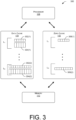
- FIG. 3 illustrates an example zero cache 132 implemented in conjunction with data cache 130.
- the data cache 130 includes multiple layers, L 1 , ..., L N .
- Each layer includes cache lines, each including cache tags 302 and corresponding data bytes 304. If each byte in the data bytes 304 of a particular cache line is zero, then the cache line is a zero cache line.
- Data bytes of a zero cache line are not required to represent the line in cache. That is, the cache tag is sufficient for this purpose. Also, it is not necessary to transfer the data bytes of a zero cache line across the caches since they can be determined in the processor (during a read command) or determined in main memory (during a writeback).
- zero cache 132 is implemented as a decoupled hierarchy of cache tags for zero cache lines.
- zero cache 132 is a multi-level structure containing tags 306, but no data bytes.
- Data cache 130 and zero cache 132 are mutually exclusive, meaning that a cache line resides in either data cache 130 or zero cache 132, but not in both.
- the zero cache 132 hierarchy and the data cache 130 hierarchy have the same number of levels, and can additionally share other properties, such as number of entries, ways, associativity, replacement policies, etc.
- the coherence of zero cache 132 is maintained across cores using the same protocol as the data cache 130. In an alternate example, rather than implementing a zero cache, an extra bit may be added to the cache tags to identify a zero cache line.
- FIG. 4 illustrates example loop code optimizations based on a loop invariant input having a zero value.
- back-end extensions 118 include loop optimizer 220, which is configured to generate more efficient versions of code loops that can boost performance when executed in place of original code loops.
- Loop optimizer 220 may generate multiple optimized code versions for a given loop, depending on different assumptions regarding data sparsity.
- loop optimizer 220 tags each optimized code version with a description of the conditions under which the optimized code can be safely executed. An example of such conditions is a requirement that a particular input data is zero.
- Code segment 402 is an example code segment for computing weight deltas while training a neural network.
- Code segment 402 includes an outer loop based on j and an inner loop based on i.
- Control flow graph 404 represents a simplified machine code sequence corresponding to example code segment 402.
- Control flow graph 404 includes a middle block 406 (labeled BB2), which corresponds to the inner loop of code segment 402, and top and bottom blocks 408 and 410, respectively, which correspond to the outer loop of code segment 402.
- the loop invariant input, errors[j] in example code segment 402 is represented by R1 in block 408.
- the loop-variant inputs, activations[i] and deltas[k] are represented by R3 and R5, respectively in block 406.
- the loop counters of the inner and outer loops are represented by R2 and R7, respectively, in blocks 406, 408, and 410.
- Loop optimizer 220 is configured to identify input data in the loop, such that if the data was zero it would be possible to safely skip one or more instructions or execute one or more instructions more efficiently.
- anchor input refers to input data that enables optimizations.
- Zero-optimizable instructions are then those instructions that can be optimized when the anchor input is zero. For example, referring to control flow graph 404, if R1 is zero, instruction I6 in BB2 could be executed more efficiently (i.e., set to zero), while I4, 15, 17, and 18 could all be skipped. This is because, when R1 is zero, R3 is set to zero by I6, irrespective of the value laded in I4, meaning the I4 can be skipped.
- loop optimizer 220 generates an optimized code loop depends on static and dynamic properties of the anchor input.
- the static property is whether or not the anchor input is loop-invariant
- the dynamic property is whether or not the input is clustered with other input values that are zero (e.g., in a zero cacheline).
- loop optimizer 220 based on the static and dynamic properties of anchor inputs, loop optimizer 220 generates two optimized loops for each anchor input. One for when the anchor input is a standalone zero value and a second for when the anchor input is clustered with other zero data values. Accordingly, anchor inputs, and their corresponding optimized code loops, can be classified as clustered loop-invariant anchor inputs, standalone loop-invariant anchor inputs, clustered loop-variant anchor inputs, and standalone loop-variant anchor inputs.
- Blocks 412 and 414 represent optimized code blocks corresponding to block 406 based on R1, being a loop-invariant anchor input, having a value of zero.
- Loop optimizer 220 generates optimized code block 412 to be executed after the first iteration of code block 406 based on R1 being a standalone zero value (i.e., not the first word in a cacheline of zero values).
- R1 is equal to zero
- instructions I4-I8 can be skipped or executed more efficiently in each iteration of the loop. Accordingly, code block 412 executes in place of the remaining iterations of code block 406 and ensures that the loop exit invariants are satisfied on entry into code block 410.
- Loop optimizer 220 also generates optimized code block 414 based on R1 being a clustered zero value (i.e., the first word in a cacheline of zero values). After a first iteration of code block 406, execution is steered to code block 414, which executes in place of the remaining 15 iterations of code block 406 (corresponding to the other R1 values in the zero cacheline), before returning control to code block 408.
- R1 being a clustered zero value
- FIG. 5 illustrates example loop code optimizations and example code annotations based on a loop variant input having a zero value.
- Blocks 402-410 illustrate the same code segments shown in FIG. 4 .
- optimizations and annotations are generated based on R3, a loop variant input, having a zero value.
- loop optimizer 220 when a loop variant input is a standalone zero value (e.g., it is retrieved from the data cache 130 rather than from the zero cache 132), rather than generating an optimized code segment, loop optimizer 220 generates code annotations to direct the processor pipeline how to optimize the code sequence when the anchor input is zero.
- any annotations associated with the current instruction are read from the zero optimized annotation table 128, and the appropriate processing is performed.
- Annotations may be read from the zero optimized annotation table 128 at any one or more stages of the processing pipeline. For example, if the zero optimized annotation table 128 indicates that the current instruction is to be skipped, the processor removes the instruction from the pipelines without executing it (e.g., by using the bypass-execute-and-writeback stage to commit the instruction without executing it).
- Loop optimizer 220 generates optimized loop code to be executed when R3 has a value of zero and is within a cluster of zero values (e.g., is retrieved from the zero cache 132). In the illustrated example, execution is directed into the optimized code block 504 to execute in place of the next N iterations of block 406, where N is the lesser of the loop counter, R7, and the size of the cluster of zero data values that includes R3.
- optimized loops are executed by redirecting the back edge of a loop into the most profitable optimized code that is safe to execute. Accordingly, at least one iteration of the original loop is executed before optimized loop code is executed.
- loop optimizer 220 generates optimized code loops and optimized instruction annotations, as described above with reference to FIG. 4 and FIG. 5 .
- Loop optimizer 220 stores any generated optimized loop code is stored in zero optimized cache 124.
- loop optimizer 220 stores any generated instruction annotations are stored in zero optimized annotation table 128.
- Loop optimizer 220 also maintains zero optimized table 126, which stores mappings between original instructions and corresponding optimized code that has been generated and between original instructions and corresponding annotations that have been generated.
- the zero optimized table 126 also includes data that indicates the conditions under which each optimized version of code can be executed or under which annotations can be applied.
- a first iteration is processed based on the original instructions.
- the processor pipeline steers execution into optimized code for better performance by checking the zero optimized table 126 to identify optimized versions of the loop or annotations associated with the loop.
- the processor pipeline also accesses register files to verify any indicated execution prerequisites.
- FIGs. 6 illustrates an example method performed by the front-end extensions 116 to the processor pipeline.
- FIGs. 7 and 8 illustrate example methods performed by the back-end extensions 118 to the processor pipeline.
- the example processes are illustrated as a collection of blocks in a logical flow graph, which represent a sequence of operations that can be implemented in hardware, software, or a combination thereof.
- the blocks are referenced by numbers.
- the blocks represent computer-executable instructions stored on one or more computer-readable media that, when executed by one or more processing units (such as hardware microprocessors), perform the recited operations.
- processing units such as hardware microprocessors
- computer-executable instructions include routines, programs, objects, components, data structures, and the like that perform particular functions or implement particular abstract data types.
- the order in which the operations are described is not intended to be construed as a limitation, and any number of the described blocks can be combined in any order and/or in parallel to implement the process.
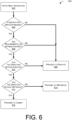
- FIG. 6 illustrates an example method for detecting and processing zero-optimizable instructions.
- a next instruction is fetched. For example, according to fetch stage 202, processor 108 fetches from instruction cache 122, a next instruction to be processed.
- processor 108 determines whether or not the instruction is a zero-optimizable instruction. For example, at detect zero optimizable instructions stage 214, processor 108 may compare an opcode of the fetched instruction to a set of zero-optimizable opcodes. For example, opcodes corresponding to addition, subtraction, multiplication, and division may be included in the set of zero-optimizable opcodes. As another example, processor 108 may examine zero optimized table 126 to determine whether or not zero optimized annotation table 128 includes an annotation corresponding to the current instruction.
- the processor determines whether or not requirements for optimization are met. For example, if the instruction was identified as being zero-optimizable based on matching a list of zero-optimizable opcodes, then processor 108 determines whether or not at least one input operand is zero. As another example, if the zero optimized annotation table includes an annotation for the instruction, the processor may access a register file to determine whether or not prerequisites associated with the annotation are met.
- the processor 108 determines whether or not the current operation can bypass the execute stage 208. For example, an annotation associated with the current instruction may indicate that the instruction can be skipped. As another example, if the current instruction is a mathematical instruction and at least one input operand is zero, then the processor 108 determines that the current operation can bypass the execute stage 208. Alternatively, an annotation may indicate that the current instruction is to be replaced with another instruction, which cannot bypass the execute stage 208.
- the instruction proceeds, as usual, to the execute stage.
- the current operation may not be allowed to bypass the execute stage 208 if the current operation is replaced, based on an annotation, with another operation.
- the processor 108 determines whether or not the current operation can bypass the writeback stage 210. For example, as discussed above, if the current operation is an addition operation, the first available input operand is a zero, and the other input operand is the same as the destination operand, no writeback is needed, and the processor 108 can determine that the operation can bypass the writeback stage 210. Similarly, as discussed above, if the current operation is a multiplication operation, the first available input operand is a zero, and the first input operand is also the destination operand, no writeback is needed, and the processor 108 can determine that the operation can bypass the writeback stage 210. As another example, if an annotation indicates that the current instruction can be skipped, then the processor 108 can determine that the operation can bypass the writeback stage 210.
- FIG. 7 illustrates an example method for optimizing code loops based on zero-optimizable instructions.
- the processor 108 scans a stream of committed instructions to detect an optimizable loop.
- loop optimizer 220 scans the instructions from commit stage 212 to identify zero-optimizable instructions that are part of a code loop.
- the loop optimizer 220 determines whether or not an optimizable loop has been detected. If no optimizable loop has been detected (the "No" branch from block 704), then processing continues as described above with reference to block 702.
- loop optimizer 220 optimizes the loop based on standalone loop-invariant anchor inputs.
- block 412 represents an example optimized code block based on a standalone loop-invariant anchor input, R1.
- loop optimizer 220 optimizes the loop based on clustered loop-invariant anchor inputs.
- block 414 represents an example optimized code block based on a clustered loop-invariant anchor input, R1.
- loop optimizer 220 optimizes the loop based on clustered loop-variant anchor inputs.
- block 504 represents an example optimized code block based on a clustered loop-variant anchor input, R3.
- loop optimizer 220 saves the optimized code segments generated according to blocks 706, 708 and 710 to the zero optimized cache 124.
- loop optimizer 220 generates instruction annotations based on standalone loop-variant anchor inputs.
- block 502 represents example annotations based on a standalone loop-variant anchor input, R3.
- loop optimizer 220 saves the annotations generated according to block 714 to the zero optimized annotation table 128.
- loop optimizer 220 updates the zero optimized table 126 to include mappings to the optimized loop code generated according to blocks 706, 708, and 710, and to the annotations generated according to block 714.
- FIG. 8 illustrates an example method for fetching optimized code loops.
- the processor fetches the next instruction. For example, according to fetch stage 202, processor 108 performs a fetch.
- optimized code fetcher 222 determines whether or not the instruction being fetched is mapped in the zero optimized table 126 to optimized code in the zero optimized cache 124. For example, as described above, when loop optimizer 220 generates optimized loop code or annotations, a mapping from the original instruction to the optimized code or annotation is stored in the zero optimized table 126.
- the instruction being fetched is not mapped to the zero optimized cache 124 in the zero optimized table 126 (the "No" branch from block 804), then at block 806, the instruction is fetched from instruction cache 122 and processed, for example, as described above with reference to FIG. 6 .
- optimized code fetcher 222 determines whether or not requirements for executing the optimized code are met. For example, as described above with reference to FIG. 4 and FIG. 5 , zero optimized table 126 includes data that indicates conditions under which each of the optimized code segments can be executed. Optimized code fetcher 222 may access register files to determine whether or not current conditions meet the requirements for a mapped optimized code segment.
- the instruction is fetched from instruction cache 122 and processed, for example, as described above with reference to FIG. 6 .
- the mapped instruction (as indicated in the zero optimized table 126) is fetched from the zero optimized cache 124.
- the instruction fetched from the zero optimized cache is processed.
- FIGs. 9 and 10 illustrate methods performed by the cache extension 120 and which are not in the scope of the independent claims.
- the processes are illustrated as a collection of blocks in a logical flow graph, which represent a sequence of operations that can be implemented in hardware, software, or a combination thereof.
- the blocks are referenced by numbers.
- the blocks represent computer-executable instructions stored on one or more computer-readable media that, when executed by one or more processing units (such as hardware microprocessors), perform the recited operations.
- processing units such as hardware microprocessors
- computer-executable instructions include routines, programs, objects, components, data structures, and the like that perform particular functions or implement particular abstract data types.
- the order in which the operations are described is not intended to be construed as a limitation, and any number of the described blocks can be combined in any order and/or in parallel to implement the process.
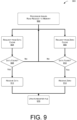
- FIG. 9 illustrates an example method for processing a read request.
- a processor issues a read request to memory.
- processor 108 executes a load instruction to load a data value from memory.
- the processor requests the data from the data cache.
- processor 108 requests data from data cache 130.
- the processor requests the data from the zero cache.
- processor 108 requests data from zero cache 132.
- both data cache 130 and zero cache 132 comprise a hierarchy.
- the read requests described above with reference to blocks 904 and 906 are issued to a particular layer of the hierarchies.
- At block 906 it is determined whether or not data is found in the data cache at the current hierarchy level. Simultaneously, at block 908, it is determined whether or not data is found in the zero cache at the current hierarchy level. If data is not found in data cache 130 or in zero cache 132 (the "No" branches from blocks 908 and 910), then at blocks 904 and 906, the read request is sent to a next level of data cache 130 and to a next level of the zero cache 132.
- the requested data is found in the data cache (the "Yes” branch from block 908), then at block 912, the requested data is returned from the data cache to the processor.
- the zero cache returns zero (or some other indication of a zero cache line hit) to the processor.
- the processor updates a register file. For example, if the read request is satisfied by the zero cache, processor 108 sets an extra bit for a destination register file to indicate that the read request was satisfied by the zero cache 132. On the other hand, if the read request is satisfied by the data cache, processor 108 clears the extra bit for the destination register file to indicate that the read request was not satisfied by the zero cache 132.
- FIG. 10 illustrates a method for processing a data write.
- the processor issues a write to the cache.
- processor 108 performs a write according to the writeback stage 210 of the processor pipeline.
- the cache system determines whether or not the write is a zero. For example, cache 110 determines whether or not the data to be written is a zero value.
- the cache system determines whether or not the zero data to be written is replacing non-zero data.
- data tags may move from the data cache 130 to the zero cache 132 if non-zero data is replaced with zero data.
- the corresponding non-zero data is deleted from the data cache.
- the cache system determines whether or not the non-zero data to be written is replacing zero data.
- the corresponding zero data is deleted from the zero cache.
- the operations of the example processes are illustrated in individual blocks and summarized with reference to those blocks.
- the processes are illustrated as logical flows of blocks, each block of which can represent one or more operations that can be implemented in hardware, software, or a combination thereof.
- the operations represent computer-executable instructions stored on one or more computer-readable media that, when executed by one or more processors, enable the one or more processors to perform the recited operations.
- computer-executable instructions include routines, programs, objects, modules, components, data structures, and the like that perform particular functions or implement particular abstract data types.
- the order in which the operations are described is not intended to be construed as a limitation, and any number of the described operations can be executed in any order, combined in any order, subdivided into multiple sub-operations, and/or executed in parallel to implement the described processes.
- the described processes can be performed by resources associated with one or more device(s) 106 and/or 142 such as one or more internal or external CPUs or GPUs, and/or one or more pieces of hardware logic such as FPGAs, DSPs, or other types of accelerators.
- All of the methods and processes described above may be embodied in, and fully automated via, specialized computer hardware. Some or all of the methods may alternatively be embodied in software code modules executed by one or more general purpose computers or processors.
- the code modules may be stored in any type of computer-readable storage medium or other computer storage device.
Landscapes
- Engineering & Computer Science (AREA)
- Theoretical Computer Science (AREA)
- Software Systems (AREA)
- Physics & Mathematics (AREA)
- General Engineering & Computer Science (AREA)
- General Physics & Mathematics (AREA)
- Biophysics (AREA)
- Evolutionary Computation (AREA)
- Artificial Intelligence (AREA)
- Biomedical Technology (AREA)
- Health & Medical Sciences (AREA)
- Computational Linguistics (AREA)
- Data Mining & Analysis (AREA)
- Life Sciences & Earth Sciences (AREA)
- General Health & Medical Sciences (AREA)
- Molecular Biology (AREA)
- Computing Systems (AREA)
- Mathematical Physics (AREA)
- Advance Control (AREA)
- Executing Machine-Instructions (AREA)
Claims (10)
- Verfahren, das von einem Schleifenoptimierer innerhalb eines Prozessors (108) durchgeführt wird, wobei das Verfahren umfasst:Erkennen (702) einer Codeschleife (406), die eine Vielzahl von Anweisungen beinhaltet, einschließlich einer oder mehrerer nulloptimierbarer Anweisungen, bei denen es sich um Anweisungen handelt, für die das Ergebnis entweder unnötig ist oder effizienter erzeugt werden kann, wenn mindestens ein Eingabeoperand der Anweisungen einen Nullwert aufweist;Erzeugen (706) einer ersten optimierten Version der Codeschleife (412) für eine erste Bedingung, die darin besteht, dass erste Eingabedaten für einen ersten Operanden einer nulloptimierbaren Anweisung der Vielzahl von Anweisungen einen Wert von Null aufweisen und ein eigenständiger Nullwert sind, der nicht das erste Wort ist, das in einer Cache-Zeile von Nullwerten gespeichert ist;Erzeugen (708) einer zweiten optimierten Version der Codeschleife (414) für eine zweite Bedingung, die darin besteht, dass die ersten Eingabedaten für den ersten Operanden der nulloptimierbaren Anweisung einen Wert von Null aufweisen und als erstes Wort in einer Cache-Zeile von nur Nullwerten gespeichert sind; undSpeichern, in einem Cache (110), der ersten und der zweiten optimierten Version der Codeschleife (412, 414) und von Angaben von Bedingungen, unter denen die erste optimierte Version der Codeschleife (412) oder die zweite optimierte Version der Codeschleife (414) anstelle mindestens einer Iteration der Codeschleife (406) sicher ausgeführt werden können.
- Verfahren nach Anspruch 1, wobei das Erzeugen der ersten und der zweiten optimierten Version der Codeschleife (412, 414, 504) weiter das Aufrechterhalten (718) einer Zuordnung zwischen der Codeschleife (406) und der ersten und der zweiten optimierten Version der Codeschleife (412, 414, 504) im Cache (110) beinhaltet.
- Verfahren nach einem der Ansprüche 1-2, wobei es sich bei einer eigenständigen schleifeninvarianten Ankereingabe um Eingabedaten für einen Eingabeoperanden handelt, der schleifeninvariant ist und nicht das erste Wort in einer Cache-Zeile von Nullwerten ist; und
wobei es sich bei einer geclusterten schleifeninvarianten Ankereingabe um Eingabedaten für einen Eingabeoperanden handelt, der schleifeninvariant ist und das erste Wort in einer Cache-Zeile von Nullwerten ist. - Verfahren nach einem der Ansprüche 1-3, weiter umfassend:
Erzeugen (714) von Codeanmerkungen (502) auf Basis einer eigenständigen schleifenvarianten Ankereingabe, die einen Wert von Null aufweist, wobei der Prozessor (108) konfiguriert ist, um Anweisungen innerhalb der Codeschleife gemäß den Codeanmerkungen (502) zu verarbeiten. - Verfahren nach Anspruch 4, wobei die Codeanmerkungen (502) den Prozessor (108) anweisen, die Ausführung mindestens einer Anweisung der Vielzahl von Anweisungen zu überspringen, wenn die schleifenvariante Ankereingabe einen Wert von Null aufweist.
- Verfahren nach Anspruch 4 oder Anspruch 5, wobei das Erzeugen (714) der Codeanmerkungen (502) das Speichern von Folgenden in einem Cache (110) beinhaltet:der Codeanmerkungen (502); undeiner weiteren Angabe von Bedingungen, unter denen die Anweisungen innerhalb der Codeschleife gemäß den Codeanmerkungen (502) sicher verarbeitet werden können.
- Verfahren nach Anspruch 6, wobei das Erzeugen (714) der Codeanmerkungen (502) weiter das Aufrechterhalten (718) einer Zuordnung zwischen der Codeschleife (406) und den Codeanmerkungen (502) im Cache (110) beinhaltet.
- Vorrichtung (106), umfassend:
einen Prozessor (108), wobei der Prozessor (108) einen Schleifenoptimierer (220) beinhaltet, wobei der Schleifenoptimierer (220) konfiguriert ist, um:eine Codeschleife (406) zu identifizieren, die von dem Prozessor (108) verarbeitet wird, wobei die Codeschleife (406) eine Vielzahl von Anweisungen umfasst;zu erkennen, dass die Vielzahl von Anweisungen eine oder mehrere nulloptimierbare Anweisungen beinhaltet, bei denen es sich um Anweisungen handelt, für die das Ergebnis entweder unnötig ist oder effizienter erzeugt werden kann, wenn mindestens ein Eingabeoperand der Anweisungen einen Nullwert aufweist; undeine erste optimierte Version der Codeschleife (412) für eine erste Bedingung zu erzeugen, die darin besteht, dass erste Eingabedaten für einen ersten Operanden einer nulloptimierbaren Anweisung der Vielzahl von Anweisungen einen Wert von Null aufweisen und ein eigenständiger Nullwert sind, der nicht das erste Wort ist, das in einer Cache-Zeile von Nullwerten gespeichert ist;eine zweite optimierte Version der Codeschleife (414) für eine zweite Bedingung zu erzeugen (708), die darin besteht, dass die ersten Eingabedaten für den ersten Operanden der nulloptimierbaren Anweisung einen Wert von Null aufweisen und als erstes Wort in einer Cache-Zeile von nur Nullwerten gespeichert sind; unddie erste und die zweite optimierte Version der Codeschleife (412, 414) und Angaben von Bedingungen, unter denen die erste optimierte Version der Codeschleife (412) oder die zweite optimierte Version der Codeschleife (414) anstelle mindestens einer Iteration der Codeschleife (406) sicher ausgeführt werden können, in einem Cache (110) zu speichern. - Vorrichtung (106) nach Anspruch 8, wobei der Cache (110) kommunikationsmäßig mit dem Prozessor (108) gekoppelt ist und beinhaltet:einen Anweisungs-Cache (122) zum Speichern der Codeschleife;einen nulloptimierten Cache (124) zum Speichern der ersten und der zweiten optimierten Version der Codeschleife (412, 414); undeine nulloptimierte Tabelle (126) zum Speichern:einer Zuordnung zwischen der Codeschleife (406) und der ersten und der zweiten optimierten Version der Codeschleife (412, 414); undder Angaben der Bedingungen, unter denen die erste optimierte Version der Codeschleife (412) oder die zweite optimierte Version der Codeschleife (414) anstelle der Codeschleife (406) auszuführen sind.
- Vorrichtung nach Anspruch 9, wobei der Prozessor (108) weiter konfiguriert ist, um:eine Anweisung aus dem Anweisungs-Cache (122) abzurufen;die nulloptimierte Tabelle (126) zu untersuchen, um zu bestimmen, dass die Anweisung auf die erste optimierte Version der Codeschleife (412, 414, 504) zugeordnet ist;die nulloptimierte Tabelle (126) zu untersuchen, um zu bestimmen, dass die erste Bedingung erfüllt ist; undin Reaktion auf das Bestimmen, dass die Anweisung auf die erste optimierte Version der Codeschleife (412, 414, 504) zugeordnet ist und die erste Bedingung erfüllt ist, die erste optimierte Version der Codeschleife (412, 414, 504) auszuführen.
Applications Claiming Priority (2)
| Application Number | Priority Date | Filing Date | Title |
|---|---|---|---|
| US14/986,465 US10459727B2 (en) | 2015-12-31 | 2015-12-31 | Loop code processor optimizations |
| PCT/US2016/068165 WO2017116926A1 (en) | 2015-12-31 | 2016-12-22 | Loop code processor optimizations |
Publications (2)
| Publication Number | Publication Date |
|---|---|
| EP3398113A1 EP3398113A1 (de) | 2018-11-07 |
| EP3398113B1 true EP3398113B1 (de) | 2023-06-28 |
Family
ID=57794381
Family Applications (1)
| Application Number | Title | Priority Date | Filing Date |
|---|---|---|---|
| EP16825976.0A Active EP3398113B1 (de) | 2015-12-31 | 2016-12-22 | Optimierter schleifencodeprozessor |
Country Status (4)
| Country | Link |
|---|---|
| US (1) | US10459727B2 (de) |
| EP (1) | EP3398113B1 (de) |
| CN (1) | CN108431831B (de) |
| WO (1) | WO2017116926A1 (de) |
Families Citing this family (10)
| Publication number | Priority date | Publication date | Assignee | Title |
|---|---|---|---|---|
| US10592252B2 (en) | 2015-12-31 | 2020-03-17 | Microsoft Technology Licensing, Llc | Efficient instruction processing for sparse data |
| US10095552B2 (en) * | 2016-02-05 | 2018-10-09 | Sas Institute Inc. | Automated transfer of objects among federated areas |
| US10650045B2 (en) | 2016-02-05 | 2020-05-12 | Sas Institute Inc. | Staged training of neural networks for improved time series prediction performance |
| US10650046B2 (en) | 2016-02-05 | 2020-05-12 | Sas Institute Inc. | Many task computing with distributed file system |
| US10642896B2 (en) | 2016-02-05 | 2020-05-05 | Sas Institute Inc. | Handling of data sets during execution of task routines of multiple languages |
| US10795935B2 (en) | 2016-02-05 | 2020-10-06 | Sas Institute Inc. | Automated generation of job flow definitions |
| US11531883B2 (en) | 2019-08-12 | 2022-12-20 | Bank Of America Corporation | System and methods for iterative synthetic data generation and refinement of machine learning models |
| US11537880B2 (en) | 2019-08-12 | 2022-12-27 | Bank Of America Corporation | System and methods for generation of synthetic data cluster vectors and refinement of machine learning models |
| US11714652B2 (en) * | 2021-07-23 | 2023-08-01 | Advanced Micro Devices, Inc. | Zero operand instruction conversion for accelerating sparse computations in a central processing unit pipeline |
| US20230205535A1 (en) * | 2021-12-23 | 2023-06-29 | Microsoft Technology Licensing, Llc | Optimization of captured loops in a processor for optimizing loop replay performance |
Family Cites Families (35)
| Publication number | Priority date | Publication date | Assignee | Title |
|---|---|---|---|---|
| US791647A (en) | 1904-07-02 | 1905-06-06 | Daniel M Pfautz | Filtering system. |
| US5748516A (en) | 1995-09-26 | 1998-05-05 | Advanced Micro Devices, Inc. | Floating point processing unit with forced arithmetic results |
| DE69628326D1 (de) | 1995-10-06 | 2003-06-26 | Patriot Scient Corp | Architektur für einen risc-mikroprozessor |
| US7353368B2 (en) | 2000-02-15 | 2008-04-01 | Intel Corporation | Method and apparatus for achieving architectural correctness in a multi-mode processor providing floating-point support |
| EP1606706A2 (de) | 2003-03-19 | 2005-12-21 | Koninklijke Philips Electronics N.V. | Verwendung der umgehung in einem pipeline-anweisungsprozessor |
| US7058830B2 (en) | 2003-03-19 | 2006-06-06 | International Business Machines Corporation | Power saving in a floating point unit using a multiplier and aligner bypass |
| US7694304B2 (en) | 2003-08-28 | 2010-04-06 | Mips Technologies, Inc. | Mechanisms for dynamic configuration of virtual processor resources |
| US8074056B1 (en) | 2005-02-02 | 2011-12-06 | Marvell International Ltd. | Variable length pipeline processor architecture |
| US7840914B1 (en) | 2005-05-13 | 2010-11-23 | Massachusetts Institute Of Technology | Distributing computations in a parallel processing environment |
| US9710269B2 (en) | 2006-01-20 | 2017-07-18 | Qualcomm Incorporated | Early conditional selection of an operand |
| GB2447428A (en) | 2007-03-15 | 2008-09-17 | Linear Algebra Technologies Lt | Processor having a trivial operand register |
| US8087012B2 (en) | 2007-08-21 | 2011-12-27 | International Business Machines Corporation | Eliminating maximum/minimum operations in loop bounds |
| US8631056B2 (en) | 2008-01-09 | 2014-01-14 | Qualcomm Incorporated | Processor and method of determining a normalization count |
| JP2009169767A (ja) | 2008-01-17 | 2009-07-30 | Toshiba Corp | パイプライン型プロセッサ |
| US7945765B2 (en) | 2008-01-31 | 2011-05-17 | International Business Machines Corporation | Method and structure for asynchronous skip-ahead in synchronous pipelines |
| US8234228B2 (en) | 2008-02-07 | 2012-07-31 | Nec Laboratories America, Inc. | Method for training a learning machine having a deep multi-layered network with labeled and unlabeled training data |
| US9250938B2 (en) * | 2008-10-15 | 2016-02-02 | Microsoft Technology Licensing, Llc | Caching runtime generated code |
| CN101763285B (zh) * | 2010-01-15 | 2013-03-20 | 西安电子科技大学 | 零开销切换多线程处理器及其线程切换方法 |
| US20120079245A1 (en) * | 2010-09-25 | 2012-03-29 | Cheng Wang | Dynamic optimization for conditional commit |
| US8700552B2 (en) | 2011-11-28 | 2014-04-15 | Microsoft Corporation | Exploiting sparseness in training deep neural networks |
| US20120185714A1 (en) * | 2011-12-15 | 2012-07-19 | Jaewoong Chung | Method, apparatus, and system for energy efficiency and energy conservation including code recirculation techniques |
| WO2013095619A1 (en) | 2011-12-23 | 2013-06-27 | Intel Corporation | Super multiply add (super madd) instruction with three scalar terms |
| US9323530B2 (en) * | 2012-03-28 | 2016-04-26 | International Business Machines Corporation | Caching optimized internal instructions in loop buffer |
| US9182992B2 (en) | 2012-06-08 | 2015-11-10 | Esencia Technologies Inc | Method for improving performance of a pipelined microprocessor by utilizing pipeline virtual registers |
| CN102789428B (zh) * | 2012-07-12 | 2014-12-31 | 中国科学院声学研究所 | 一种指令高速缓冲存储器装置及其控制方法 |
| CN103971690A (zh) | 2013-01-28 | 2014-08-06 | 腾讯科技(深圳)有限公司 | 一种声纹识别方法和装置 |
| JP5788920B2 (ja) * | 2013-03-04 | 2015-10-07 | Necプラットフォームズ株式会社 | ベクトル処理装置およびベクトル処理方法 |
| US9626184B2 (en) * | 2013-06-28 | 2017-04-18 | Intel Corporation | Processors, methods, systems, and instructions to transcode variable length code points of unicode characters |
| US9508347B2 (en) | 2013-07-10 | 2016-11-29 | Tencent Technology (Shenzhen) Company Limited | Method and device for parallel processing in model training |
| US20150067273A1 (en) | 2013-08-30 | 2015-03-05 | Microsoft Corporation | Computation hardware with high-bandwidth memory interface |
| CA2830605A1 (en) * | 2013-10-22 | 2015-04-22 | Ibm Canada Limited - Ibm Canada Limitee | Code versioning for enabling transactional memory region promotion |
| US9324022B2 (en) | 2014-03-04 | 2016-04-26 | Signal/Sense, Inc. | Classifying data with deep learning neural records incrementally refined through expert input |
| US9684603B2 (en) | 2015-01-22 | 2017-06-20 | Empire Technology Development Llc | Memory initialization using cache state |
| US20170192896A1 (en) | 2015-12-31 | 2017-07-06 | Microsoft Technology Licensing, Llc | Zero cache memory system extension |
| US10592252B2 (en) | 2015-12-31 | 2020-03-17 | Microsoft Technology Licensing, Llc | Efficient instruction processing for sparse data |
-
2015
- 2015-12-31 US US14/986,465 patent/US10459727B2/en active Active
-
2016
- 2016-12-22 CN CN201680077401.4A patent/CN108431831B/zh active Active
- 2016-12-22 WO PCT/US2016/068165 patent/WO2017116926A1/en not_active Ceased
- 2016-12-22 EP EP16825976.0A patent/EP3398113B1/de active Active
Also Published As
| Publication number | Publication date |
|---|---|
| US10459727B2 (en) | 2019-10-29 |
| CN108431831A (zh) | 2018-08-21 |
| WO2017116926A1 (en) | 2017-07-06 |
| CN108431831B (zh) | 2023-03-31 |
| US20170192787A1 (en) | 2017-07-06 |
| EP3398113A1 (de) | 2018-11-07 |
Similar Documents
| Publication | Publication Date | Title |
|---|---|---|
| US10459727B2 (en) | Loop code processor optimizations | |
| US11275561B2 (en) | Mixed precision floating-point multiply-add operation | |
| CN108369511B (zh) | 用于基于通道的跨步存储操作的指令和逻辑 | |
| US10261791B2 (en) | Bypassing memory access for a load instruction using instruction address mapping | |
| KR102478874B1 (ko) | 비순차적 하드웨어 소프트웨어 공동 설계된 프로세서에서 스택 동기화 명령어를 갖는 술어 값의 스택을 구현하고 유지하기 위한 방법 및 장치 | |
| US10592252B2 (en) | Efficient instruction processing for sparse data | |
| TWI659305B (zh) | 用於擴展私用快取中快取行之獨佔持有之設備 | |
| US20180173534A1 (en) | Branch Predictor with Branch Resolution Code Injection | |
| US20170177363A1 (en) | Instructions and Logic for Load-Indices-and-Gather Operations | |
| US10768931B2 (en) | Fine-grained management of exception enablement of floating point controls | |
| US10684852B2 (en) | Employing prefixes to control floating point operations | |
| US10481909B2 (en) | Predicted null updates | |
| US10324715B2 (en) | Compiler controls for program regions | |
| US20170185403A1 (en) | Hardware content-associative data structure for acceleration of set operations | |
| CN111279308B (zh) | 代码转换期间的屏障减少 | |
| JP5941488B2 (ja) | 条件付きショート前方分岐の計算的に等価な述語付き命令への変換 | |
| RU2644528C2 (ru) | Инструкция и логика для идентификации инструкций для удаления в многопоточном процессоре с изменением последовательности | |
| US20170192896A1 (en) | Zero cache memory system extension | |
| US10896040B2 (en) | Implementing a received add program counter immediate shift (ADDPCIS) instruction using a micro-coded or cracked sequence | |
| CN105204819A (zh) | 一种基于分组全局历史的分支预测方法及系统 | |
| US11836493B2 (en) | Memory access operations for large graph analytics | |
| US20190163492A1 (en) | Employing a stack accelerator for stack-type accesses |
Legal Events
| Date | Code | Title | Description |
|---|---|---|---|
| STAA | Information on the status of an ep patent application or granted ep patent |
Free format text: STATUS: UNKNOWN |
|
| STAA | Information on the status of an ep patent application or granted ep patent |
Free format text: STATUS: THE INTERNATIONAL PUBLICATION HAS BEEN MADE |
|
| PUAI | Public reference made under article 153(3) epc to a published international application that has entered the european phase |
Free format text: ORIGINAL CODE: 0009012 |
|
| STAA | Information on the status of an ep patent application or granted ep patent |
Free format text: STATUS: REQUEST FOR EXAMINATION WAS MADE |
|
| 17P | Request for examination filed |
Effective date: 20180515 |
|
| AK | Designated contracting states |
Kind code of ref document: A1 Designated state(s): AL AT BE BG CH CY CZ DE DK EE ES FI FR GB GR HR HU IE IS IT LI LT LU LV MC MK MT NL NO PL PT RO RS SE SI SK SM TR |
|
| AX | Request for extension of the european patent |
Extension state: BA ME |
|
| DAV | Request for validation of the european patent (deleted) | ||
| DAX | Request for extension of the european patent (deleted) | ||
| STAA | Information on the status of an ep patent application or granted ep patent |
Free format text: STATUS: EXAMINATION IS IN PROGRESS |
|
| 17Q | First examination report despatched |
Effective date: 20200217 |
|
| RAP3 | Party data changed (applicant data changed or rights of an application transferred) |
Owner name: MICROSOFT TECHNOLOGY LICENSING, LLC |
|
| REG | Reference to a national code |
Ref country code: DE Ref legal event code: R079 Free format text: PREVIOUS MAIN CLASS: G06N0003020000 Ipc: G06N0003080000 Ref country code: DE Ref legal event code: R079 Ref document number: 602016080674 Country of ref document: DE Free format text: PREVIOUS MAIN CLASS: G06N0003020000 Ipc: G06N0003080000 |
|
| RIC1 | Information provided on ipc code assigned before grant |
Ipc: G06F 9/38 20180101ALI20221125BHEP Ipc: G06F 9/30 20180101ALI20221125BHEP Ipc: G06F 9/32 20180101ALI20221125BHEP Ipc: G06N 3/08 20060101AFI20221125BHEP |
|
| GRAP | Despatch of communication of intention to grant a patent |
Free format text: ORIGINAL CODE: EPIDOSNIGR1 |
|
| STAA | Information on the status of an ep patent application or granted ep patent |
Free format text: STATUS: GRANT OF PATENT IS INTENDED |
|
| GRAJ | Information related to disapproval of communication of intention to grant by the applicant or resumption of examination proceedings by the epo deleted |
Free format text: ORIGINAL CODE: EPIDOSDIGR1 |
|
| STAA | Information on the status of an ep patent application or granted ep patent |
Free format text: STATUS: EXAMINATION IS IN PROGRESS |
|
| INTG | Intention to grant announced |
Effective date: 20230109 |
|
| GRAP | Despatch of communication of intention to grant a patent |
Free format text: ORIGINAL CODE: EPIDOSNIGR1 |
|
| STAA | Information on the status of an ep patent application or granted ep patent |
Free format text: STATUS: GRANT OF PATENT IS INTENDED |
|
| INTC | Intention to grant announced (deleted) | ||
| INTG | Intention to grant announced |
Effective date: 20230227 |
|
| GRAS | Grant fee paid |
Free format text: ORIGINAL CODE: EPIDOSNIGR3 |
|
| GRAA | (expected) grant |
Free format text: ORIGINAL CODE: 0009210 |
|
| STAA | Information on the status of an ep patent application or granted ep patent |
Free format text: STATUS: THE PATENT HAS BEEN GRANTED |
|
| P01 | Opt-out of the competence of the unified patent court (upc) registered |
Effective date: 20230502 |
|
| AK | Designated contracting states |
Kind code of ref document: B1 Designated state(s): AL AT BE BG CH CY CZ DE DK EE ES FI FR GB GR HR HU IE IS IT LI LT LU LV MC MK MT NL NO PL PT RO RS SE SI SK SM TR |
|
| REG | Reference to a national code |
Ref country code: CH Ref legal event code: EP |
|
| REG | Reference to a national code |
Ref country code: AT Ref legal event code: REF Ref document number: 1583372 Country of ref document: AT Kind code of ref document: T Effective date: 20230715 |
|
| REG | Reference to a national code |
Ref country code: IE Ref legal event code: FG4D |
|
| REG | Reference to a national code |
Ref country code: DE Ref legal event code: R096 Ref document number: 602016080674 Country of ref document: DE |
|
| REG | Reference to a national code |
Ref country code: LT Ref legal event code: MG9D |
|
| PG25 | Lapsed in a contracting state [announced via postgrant information from national office to epo] |
Ref country code: SE Free format text: LAPSE BECAUSE OF FAILURE TO SUBMIT A TRANSLATION OF THE DESCRIPTION OR TO PAY THE FEE WITHIN THE PRESCRIBED TIME-LIMIT Effective date: 20230628 Ref country code: NO Free format text: LAPSE BECAUSE OF FAILURE TO SUBMIT A TRANSLATION OF THE DESCRIPTION OR TO PAY THE FEE WITHIN THE PRESCRIBED TIME-LIMIT Effective date: 20230928 |
|
| REG | Reference to a national code |
Ref country code: NL Ref legal event code: MP Effective date: 20230628 |
|
| REG | Reference to a national code |
Ref country code: AT Ref legal event code: MK05 Ref document number: 1583372 Country of ref document: AT Kind code of ref document: T Effective date: 20230628 |
|
| PG25 | Lapsed in a contracting state [announced via postgrant information from national office to epo] |
Ref country code: RS Free format text: LAPSE BECAUSE OF FAILURE TO SUBMIT A TRANSLATION OF THE DESCRIPTION OR TO PAY THE FEE WITHIN THE PRESCRIBED TIME-LIMIT Effective date: 20230628 Ref country code: NL Free format text: LAPSE BECAUSE OF FAILURE TO SUBMIT A TRANSLATION OF THE DESCRIPTION OR TO PAY THE FEE WITHIN THE PRESCRIBED TIME-LIMIT Effective date: 20230628 Ref country code: LV Free format text: LAPSE BECAUSE OF FAILURE TO SUBMIT A TRANSLATION OF THE DESCRIPTION OR TO PAY THE FEE WITHIN THE PRESCRIBED TIME-LIMIT Effective date: 20230628 Ref country code: LT Free format text: LAPSE BECAUSE OF FAILURE TO SUBMIT A TRANSLATION OF THE DESCRIPTION OR TO PAY THE FEE WITHIN THE PRESCRIBED TIME-LIMIT Effective date: 20230628 Ref country code: HR Free format text: LAPSE BECAUSE OF FAILURE TO SUBMIT A TRANSLATION OF THE DESCRIPTION OR TO PAY THE FEE WITHIN THE PRESCRIBED TIME-LIMIT Effective date: 20230628 Ref country code: GR Free format text: LAPSE BECAUSE OF FAILURE TO SUBMIT A TRANSLATION OF THE DESCRIPTION OR TO PAY THE FEE WITHIN THE PRESCRIBED TIME-LIMIT Effective date: 20230929 |
|
| PG25 | Lapsed in a contracting state [announced via postgrant information from national office to epo] |
Ref country code: FI Free format text: LAPSE BECAUSE OF FAILURE TO SUBMIT A TRANSLATION OF THE DESCRIPTION OR TO PAY THE FEE WITHIN THE PRESCRIBED TIME-LIMIT Effective date: 20230628 |
|
| PG25 | Lapsed in a contracting state [announced via postgrant information from national office to epo] |
Ref country code: SK Free format text: LAPSE BECAUSE OF FAILURE TO SUBMIT A TRANSLATION OF THE DESCRIPTION OR TO PAY THE FEE WITHIN THE PRESCRIBED TIME-LIMIT Effective date: 20230628 |
|
| PG25 | Lapsed in a contracting state [announced via postgrant information from national office to epo] |
Ref country code: ES Free format text: LAPSE BECAUSE OF FAILURE TO SUBMIT A TRANSLATION OF THE DESCRIPTION OR TO PAY THE FEE WITHIN THE PRESCRIBED TIME-LIMIT Effective date: 20230628 |
|
| PG25 | Lapsed in a contracting state [announced via postgrant information from national office to epo] |
Ref country code: IS Free format text: LAPSE BECAUSE OF FAILURE TO SUBMIT A TRANSLATION OF THE DESCRIPTION OR TO PAY THE FEE WITHIN THE PRESCRIBED TIME-LIMIT Effective date: 20231028 |
|
| PG25 | Lapsed in a contracting state [announced via postgrant information from national office to epo] |
Ref country code: SM Free format text: LAPSE BECAUSE OF FAILURE TO SUBMIT A TRANSLATION OF THE DESCRIPTION OR TO PAY THE FEE WITHIN THE PRESCRIBED TIME-LIMIT Effective date: 20230628 Ref country code: SK Free format text: LAPSE BECAUSE OF FAILURE TO SUBMIT A TRANSLATION OF THE DESCRIPTION OR TO PAY THE FEE WITHIN THE PRESCRIBED TIME-LIMIT Effective date: 20230628 Ref country code: RO Free format text: LAPSE BECAUSE OF FAILURE TO SUBMIT A TRANSLATION OF THE DESCRIPTION OR TO PAY THE FEE WITHIN THE PRESCRIBED TIME-LIMIT Effective date: 20230628 Ref country code: PT Free format text: LAPSE BECAUSE OF FAILURE TO SUBMIT A TRANSLATION OF THE DESCRIPTION OR TO PAY THE FEE WITHIN THE PRESCRIBED TIME-LIMIT Effective date: 20231030 Ref country code: IS Free format text: LAPSE BECAUSE OF FAILURE TO SUBMIT A TRANSLATION OF THE DESCRIPTION OR TO PAY THE FEE WITHIN THE PRESCRIBED TIME-LIMIT Effective date: 20231028 Ref country code: ES Free format text: LAPSE BECAUSE OF FAILURE TO SUBMIT A TRANSLATION OF THE DESCRIPTION OR TO PAY THE FEE WITHIN THE PRESCRIBED TIME-LIMIT Effective date: 20230628 Ref country code: EE Free format text: LAPSE BECAUSE OF FAILURE TO SUBMIT A TRANSLATION OF THE DESCRIPTION OR TO PAY THE FEE WITHIN THE PRESCRIBED TIME-LIMIT Effective date: 20230628 Ref country code: CZ Free format text: LAPSE BECAUSE OF FAILURE TO SUBMIT A TRANSLATION OF THE DESCRIPTION OR TO PAY THE FEE WITHIN THE PRESCRIBED TIME-LIMIT Effective date: 20230628 Ref country code: AT Free format text: LAPSE BECAUSE OF FAILURE TO SUBMIT A TRANSLATION OF THE DESCRIPTION OR TO PAY THE FEE WITHIN THE PRESCRIBED TIME-LIMIT Effective date: 20230628 |
|
| PG25 | Lapsed in a contracting state [announced via postgrant information from national office to epo] |
Ref country code: PL Free format text: LAPSE BECAUSE OF FAILURE TO SUBMIT A TRANSLATION OF THE DESCRIPTION OR TO PAY THE FEE WITHIN THE PRESCRIBED TIME-LIMIT Effective date: 20230628 |
|
| REG | Reference to a national code |
Ref country code: DE Ref legal event code: R097 Ref document number: 602016080674 Country of ref document: DE |
|
| PG25 | Lapsed in a contracting state [announced via postgrant information from national office to epo] |
Ref country code: DK Free format text: LAPSE BECAUSE OF FAILURE TO SUBMIT A TRANSLATION OF THE DESCRIPTION OR TO PAY THE FEE WITHIN THE PRESCRIBED TIME-LIMIT Effective date: 20230628 |
|
| PLBE | No opposition filed within time limit |
Free format text: ORIGINAL CODE: 0009261 |
|
| STAA | Information on the status of an ep patent application or granted ep patent |
Free format text: STATUS: NO OPPOSITION FILED WITHIN TIME LIMIT |
|
| PG25 | Lapsed in a contracting state [announced via postgrant information from national office to epo] |
Ref country code: IT Free format text: LAPSE BECAUSE OF FAILURE TO SUBMIT A TRANSLATION OF THE DESCRIPTION OR TO PAY THE FEE WITHIN THE PRESCRIBED TIME-LIMIT Effective date: 20230628 |
|
| 26N | No opposition filed |
Effective date: 20240402 |
|
| PG25 | Lapsed in a contracting state [announced via postgrant information from national office to epo] |
Ref country code: SI Free format text: LAPSE BECAUSE OF FAILURE TO SUBMIT A TRANSLATION OF THE DESCRIPTION OR TO PAY THE FEE WITHIN THE PRESCRIBED TIME-LIMIT Effective date: 20230628 |
|
| REG | Reference to a national code |
Ref country code: CH Ref legal event code: PL |
|
| PG25 | Lapsed in a contracting state [announced via postgrant information from national office to epo] |
Ref country code: LU Free format text: LAPSE BECAUSE OF NON-PAYMENT OF DUE FEES Effective date: 20231222 |
|
| PG25 | Lapsed in a contracting state [announced via postgrant information from national office to epo] |
Ref country code: MC Free format text: LAPSE BECAUSE OF FAILURE TO SUBMIT A TRANSLATION OF THE DESCRIPTION OR TO PAY THE FEE WITHIN THE PRESCRIBED TIME-LIMIT Effective date: 20230628 |
|
| REG | Reference to a national code |
Ref country code: BE Ref legal event code: MM Effective date: 20231231 |
|
| PG25 | Lapsed in a contracting state [announced via postgrant information from national office to epo] |
Ref country code: MC Free format text: LAPSE BECAUSE OF FAILURE TO SUBMIT A TRANSLATION OF THE DESCRIPTION OR TO PAY THE FEE WITHIN THE PRESCRIBED TIME-LIMIT Effective date: 20230628 Ref country code: LU Free format text: LAPSE BECAUSE OF NON-PAYMENT OF DUE FEES Effective date: 20231222 |
|
| REG | Reference to a national code |
Ref country code: IE Ref legal event code: MM4A |
|
| PG25 | Lapsed in a contracting state [announced via postgrant information from national office to epo] |
Ref country code: IE Free format text: LAPSE BECAUSE OF NON-PAYMENT OF DUE FEES Effective date: 20231222 |
|
| PG25 | Lapsed in a contracting state [announced via postgrant information from national office to epo] |
Ref country code: BE Free format text: LAPSE BECAUSE OF NON-PAYMENT OF DUE FEES Effective date: 20231231 |
|
| PG25 | Lapsed in a contracting state [announced via postgrant information from national office to epo] |
Ref country code: CH Free format text: LAPSE BECAUSE OF NON-PAYMENT OF DUE FEES Effective date: 20231231 |
|
| PG25 | Lapsed in a contracting state [announced via postgrant information from national office to epo] |
Ref country code: IE Free format text: LAPSE BECAUSE OF NON-PAYMENT OF DUE FEES Effective date: 20231222 Ref country code: CH Free format text: LAPSE BECAUSE OF NON-PAYMENT OF DUE FEES Effective date: 20231231 Ref country code: BE Free format text: LAPSE BECAUSE OF NON-PAYMENT OF DUE FEES Effective date: 20231231 |
|
| PG25 | Lapsed in a contracting state [announced via postgrant information from national office to epo] |
Ref country code: BG Free format text: LAPSE BECAUSE OF FAILURE TO SUBMIT A TRANSLATION OF THE DESCRIPTION OR TO PAY THE FEE WITHIN THE PRESCRIBED TIME-LIMIT Effective date: 20230628 |
|
| PG25 | Lapsed in a contracting state [announced via postgrant information from national office to epo] |
Ref country code: BG Free format text: LAPSE BECAUSE OF FAILURE TO SUBMIT A TRANSLATION OF THE DESCRIPTION OR TO PAY THE FEE WITHIN THE PRESCRIBED TIME-LIMIT Effective date: 20230628 |
|
| PG25 | Lapsed in a contracting state [announced via postgrant information from national office to epo] |
Ref country code: CY Free format text: LAPSE BECAUSE OF FAILURE TO SUBMIT A TRANSLATION OF THE DESCRIPTION OR TO PAY THE FEE WITHIN THE PRESCRIBED TIME-LIMIT; INVALID AB INITIO Effective date: 20161222 |
|
| PG25 | Lapsed in a contracting state [announced via postgrant information from national office to epo] |
Ref country code: HU Free format text: LAPSE BECAUSE OF FAILURE TO SUBMIT A TRANSLATION OF THE DESCRIPTION OR TO PAY THE FEE WITHIN THE PRESCRIBED TIME-LIMIT; INVALID AB INITIO Effective date: 20161222 |
|
| PG25 | Lapsed in a contracting state [announced via postgrant information from national office to epo] |
Ref country code: TR Free format text: LAPSE BECAUSE OF FAILURE TO SUBMIT A TRANSLATION OF THE DESCRIPTION OR TO PAY THE FEE WITHIN THE PRESCRIBED TIME-LIMIT Effective date: 20230628 |
|
| PGFP | Annual fee paid to national office [announced via postgrant information from national office to epo] |
Ref country code: DE Payment date: 20251126 Year of fee payment: 10 |
|
| PGFP | Annual fee paid to national office [announced via postgrant information from national office to epo] |
Ref country code: GB Payment date: 20251119 Year of fee payment: 10 |
|
| PGFP | Annual fee paid to national office [announced via postgrant information from national office to epo] |
Ref country code: FR Payment date: 20251120 Year of fee payment: 10 |