EP3396876A1 - Broadcast receiver and station list generation method - Google Patents
Broadcast receiver and station list generation method Download PDFInfo
- Publication number
- EP3396876A1 EP3396876A1 EP18168290.7A EP18168290A EP3396876A1 EP 3396876 A1 EP3396876 A1 EP 3396876A1 EP 18168290 A EP18168290 A EP 18168290A EP 3396876 A1 EP3396876 A1 EP 3396876A1
- Authority
- EP
- European Patent Office
- Prior art keywords
- broadcast
- list
- station
- broadcast information
- pieces
- Prior art date
- Legal status (The legal status is an assumption and is not a legal conclusion. Google has not performed a legal analysis and makes no representation as to the accuracy of the status listed.)
- Granted
Links
Images



Classifications
-
- H—ELECTRICITY
- H04—ELECTRIC COMMUNICATION TECHNIQUE
- H04H—BROADCAST COMMUNICATION
- H04H60/00—Arrangements for broadcast applications with a direct linking to broadcast information or broadcast space-time; Broadcast-related systems
- H04H60/35—Arrangements for identifying or recognising characteristics with a direct linkage to broadcast information or to broadcast space-time, e.g. for identifying broadcast stations or for identifying users
- H04H60/38—Arrangements for identifying or recognising characteristics with a direct linkage to broadcast information or to broadcast space-time, e.g. for identifying broadcast stations or for identifying users for identifying broadcast time or space
- H04H60/41—Arrangements for identifying or recognising characteristics with a direct linkage to broadcast information or to broadcast space-time, e.g. for identifying broadcast stations or for identifying users for identifying broadcast time or space for identifying broadcast space, i.e. broadcast channels, broadcast stations or broadcast areas
- H04H60/44—Arrangements for identifying or recognising characteristics with a direct linkage to broadcast information or to broadcast space-time, e.g. for identifying broadcast stations or for identifying users for identifying broadcast time or space for identifying broadcast space, i.e. broadcast channels, broadcast stations or broadcast areas for identifying broadcast stations
-
- H—ELECTRICITY
- H04—ELECTRIC COMMUNICATION TECHNIQUE
- H04H—BROADCAST COMMUNICATION
- H04H20/00—Arrangements for broadcast or for distribution combined with broadcast
- H04H20/40—Arrangements for broadcast specially adapted for accumulation-type receivers
-
- H—ELECTRICITY
- H04—ELECTRIC COMMUNICATION TECHNIQUE
- H04H—BROADCAST COMMUNICATION
- H04H60/00—Arrangements for broadcast applications with a direct linking to broadcast information or broadcast space-time; Broadcast-related systems
- H04H60/35—Arrangements for identifying or recognising characteristics with a direct linkage to broadcast information or to broadcast space-time, e.g. for identifying broadcast stations or for identifying users
- H04H60/38—Arrangements for identifying or recognising characteristics with a direct linkage to broadcast information or to broadcast space-time, e.g. for identifying broadcast stations or for identifying users for identifying broadcast time or space
- H04H60/41—Arrangements for identifying or recognising characteristics with a direct linkage to broadcast information or to broadcast space-time, e.g. for identifying broadcast stations or for identifying users for identifying broadcast time or space for identifying broadcast space, i.e. broadcast channels, broadcast stations or broadcast areas
- H04H60/43—Arrangements for identifying or recognising characteristics with a direct linkage to broadcast information or to broadcast space-time, e.g. for identifying broadcast stations or for identifying users for identifying broadcast time or space for identifying broadcast space, i.e. broadcast channels, broadcast stations or broadcast areas for identifying broadcast channels
-
- H—ELECTRICITY
- H04—ELECTRIC COMMUNICATION TECHNIQUE
- H04H—BROADCAST COMMUNICATION
- H04H60/00—Arrangements for broadcast applications with a direct linking to broadcast information or broadcast space-time; Broadcast-related systems
- H04H60/61—Arrangements for services using the result of monitoring, identification or recognition covered by groups H04H60/29-H04H60/54
- H04H60/65—Arrangements for services using the result of monitoring, identification or recognition covered by groups H04H60/29-H04H60/54 for using the result on users' side
-
- H—ELECTRICITY
- H04—ELECTRIC COMMUNICATION TECHNIQUE
- H04H—BROADCAST COMMUNICATION
- H04H2201/00—Aspects of broadcast communication
- H04H2201/10—Aspects of broadcast communication characterised by the type of broadcast system
- H04H2201/13—Aspects of broadcast communication characterised by the type of broadcast system radio data system/radio broadcast data system [RDS/RBDS]
Definitions
- the present invention relates to a broadcast receiver and a list generating method.
- Radio broadcastings in which data related to broadcast programs are multiplexed on audio broadcast signals have been standardized and put into practice.
- RDS Radio Data System: IEC 62106 Edition 2.0, 2009-07
- digital data is multiplexed on analog FM broadcasting signals.
- the RDS multiplexed data (hereinafter referred to as "RDS data") includes a PI (Programme Identification) Code, a PS (Programme Service Name) and the like.
- the PI code is a code for identifying a broadcasting station.
- the PS is data for displaying a character string of a maximum of 8 characters. Information displayed based on the PS is typically a name of a broadcasting station.
- Japanese Patent Provisional Publication No. 2016-111700 discloses a specific configuration of a broadcast receiver configured to receive RDS data.
- the broadcast receiver disclosed in Patent Document 1 extracts, from the received RDS data, frequency information of receivable broadcasting stations, and displays a list of receivable broadcasting stations based on the extracted frequency information.
- broadcast receivers adapted to the RDS identify broadcasting station using the PI code. Therefore, the broadcast receivers handle the RDS data before the change of the PI code and the RDS data after the change of the PI code as pieces of data corresponding to different broadcasting stations.
- two pieces of information respectively corresponding to the RDS data before the change of the PI code and the RDS data after the change of the PI code are redundantly displayed on the list. If the number of such redundant display increases, it becomes difficult for a user to appropriately select a broadcasting station the user wants to listen to.
- the present invention is made in view of the foregoing circumstances, and the object of the present invention is to provide a broadcast receiver and a list generating method suitable for decreasing the redundantly displayed number of pieces of information corresponding to the same broadcasting station on the list.
- a broadcast receiver provided with a receiving means configured to receive a broadcast signal in which digital data is multiplexed, an extracting means configured to extract a code indicating a broadcasting station from the broadcast signal received by the receiving means, a storage means configured to accumulatively store the code extracted by the extracting means and a broadcast frequency of the broadcast signal in an associated manner as a piece of broadcast information, a list generating means configured to generate a station list based on the broadcast information stored in the storage means, and a displaying means configured to display the station list generated by the generating means.
- the list generating means has a determining means configured to determine that the plurality of pieces of broadcast information correspond to the same broadcasting station if their broadcast frequencies are the same, and a registering means configured to register only one of the plurality of pieces of broadcast information, which are determined to correspond to the same broadcasting station, to the station list.
- the storage means may store a plurality of predetermined parameters indicating priority orders of the plurality of pieces of broadcast information, and the list generating means may select the only one of the plurality of pieces of broadcast information based on the priority orders indicated by the plurality of predetermined parameters.
- the predetermined parameter may include a first parameter indicating preference of a user.
- the list generating means may determine that the piece of broadcast information to which the first parameter is assigned has a higher priority order.
- the first parameter may indicate that the corresponding piece of broadcast information is stored in the storage means as preset information.
- the predetermined parameter may include a second parameter indicating receivability of the corresponding broadcast frequency by the receiving means.
- the list generating means may determine that the piece of broadcast information that has a higher receivability has a higher priority order.
- the extracting means may extract display information, for displaying a name of the broadcasting station, from the broadcast signal received by the receiving means.
- the storage means may store the display information as the piece of broadcast information while associating with the broadcast frequency
- the list generating means may generate the station list including the display information
- the displaying means may display a list of the names of the broadcasting stations.
- the determining means may determine that the plurality of the pieces of broadcast information stored in the storage means correspond to different broadcasting stations if their country codes included in the codes are different.
- the registering means may register the plurality of pieces of broadcast information, determined to correspond to different broadcasting stations, in the station list.
- the broadcast signal may be transmitted using RDS (Radio Data System) signal format.
- RDS Radio Data System
- a list generating method executed by receiver provided with a computer.
- the list generating method includes a receiving step of receiving a broadcast signal of a predetermined format in which digital data is multiplexed, an extracting step of extracting a code, indicating a broadcasting station, from the broadcast signal received in the receiving step, a storing step of storing, in a predetermined storage medium, the code extracted in the extracting step and a broadcast frequency of the broadcast signal as a piece of broadcast information in an associated manner, a generating step of generating a list using a plurality of pieces of broadcast information stored in the predetermined storage medium, and a display control step of displaying the list generated in the generating step on a display device.
- the generating step it is determined that the plurality of pieces of broadcast information stored in the predetermined storage medium correspond to the same broadcasting station if their broadcast frequencies are the same and only one of the plurality of pieces of broadcast information determined to be of the same broadcasting station is registered in the list.
- a broadcast receiver and a list generating method suitable for decreasing the redundantly displayed number of pieces of information corresponding to the same broadcasting station on the list are provided.
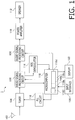
- Fig. 1 is a block diagram showing a configuration of a broadcast receiver 1 (i.e., a receiver provided with a computer) according to an embodiment of the present invention.
- the broadcast receiver 1 is, for example, an onboard device mounted on a vehicle travelling on a road.
- the broadcast receiver 1 has an antenna 10, a tuner 104, a radio signal processing circuit 106, an audio signal processing circuit 108, a power amplifier 110, a speaker 112, an RDS demodulator 114, a PLL (Phase Locked Loop) circuit 116, a microcomputer 118, an input interface 120 and a display 122.
- PLL Phase Locked Loop
- Fig. 1 only the main components necessary to describe the present embodiment are shown. Illustrations of generally known components such as a casing of the broadcast receiver 1 are omitted.
- the broadcast receiver 1 is not limited to onboard devices.
- the broadcast receiver 1 may be, for example, a portable terminal such as a smartphone, a feature phone, a PHS (Personal Handy phone System), a tablet terminal, a laptop PC, a PDA (Personal Digital Assistant, a PND (Portable Navigation Device), a portable game machine and the like.
- a portable terminal such as a smartphone, a feature phone, a PHS (Personal Handy phone System), a tablet terminal, a laptop PC, a PDA (Personal Digital Assistant, a PND (Portable Navigation Device), a portable game machine and the like.
- the broadcast receiver 1 is configured such that a broadcast radio wave received with use of the antenna 102 is input to the tuner 104.
- the microcomputer 118 controls the tuner 104 via the PLL circuit 116 to extract an RF (Radio Frequency) signal corresponding to a selected station from the received radio wave. Then the microcomputer 118 executes frequency conversion to convert the extracted RF signal to an IF (Intermediate Frequency) signal suitable for signal processing such as filtering.
- the tuner 104 outputs the IF signal obtained by the frequency conversion to the radio signal processing circuit 106.
- the antenna 102, the tuner 104, the PLL circuit 116 and the microcomputer 118 collectively function as a receiving means configured to receive a broadcast radio wave (broadcast signal) in which digital data is multiplexed.
- a broadcast radio wave broadcast signal
- the selected station is, for example, designated by a user operation on the input interface 120.
- Designation information of the selected station is memorized in a built-in memory of the microcomputer 118.
- the microcomputer 118 controls the tuner 104, via the PLL circuit 116, to execute a station selection operation in accordance with the information memorized in the built-in memory, for instance, immediately after the broadcast receiver 1 is powered on.
- the input interface 120 As the input interface 120 , a variety of UIs (User Interface) such as a hardware UI, a software UI, or a combination of the hardware UI and the software UI are possible.
- the input interface 120 includes mechanical switch keys, membrane keys, a GUI (Graphical User Interface) provided along with a touch panel, a remote controller on which operation keys are mounted and the like.
- the radio signal processing circuit 106 has an AD conversion circuit, an IF detection circuit, a noise canceller and a weak electric-field processing circuit.
- AD conversion is performed on the IF signal input to the radio signal processing circuit 106 at the AD conversion circuit and, after detecting an audio signal at the IF detection circuit, noise is removed at the noise canceller.
- Processing such as mute, high cut and separation control are performed on the audio signal according to reception state of the selected station by the weak electric-field processing circuit, and the processed audio signal is output to the audio signal processing circuit 108.
- the audio signal input to the audio signal processing circuit 108 goes through gain adjustment by the power amp 110 in accordance with a volume, and is output from the speaker 112 as sound.
- an S meter is built in the radio signal processing circuit 106.
- the S meter measures a detection voltage at the time of analog audio signal demodulation at a predetermined sampling period and output the detection voltage to the microcomputer 118.
- the above-mentioned detection voltage is a DC voltage proportional to a field strength of a received radio wave. That is, the detection voltage indicates the field strength of the received broadcast radio wave.
- the signal detected at the radio signal processing circuit 106 is also output to the RDS demodulator 114. After a demodulation process by the RDS demodulator 114, the detected signal is decoded to RDS data at an RDS decoder 1182 in the microcomputer 118.
- the microcomputer 118 has a data memory 118a.
- the microcomputer 118 stores the RDS data obtained by the decoding in the data memory 118a.
- the RDS data includes a PS (name of broadcasting station), an RT (Radio Text), an AF (Alternative Frequencies) list, a PI code, a PTY (Programme Type), a TP (Traffic Programme) and the like.
- the RDS decoder 1182 functions as an extracting means configured to extract RDS data such as the PI code (a code indicating a broadcasting station) and the PS (display information for displaying a name of the broadcasting station) from the broadcast signal.
- the broadcast signal is not limited to the RDS format, and extraction of data from the broadcast radio wave is not limited to decoding.
- the microcomputer 118 has a DB (Database) memory 118b.
- DB Database
- RDS station DB and non-RDS station DB are stored in the DB memory 118b.
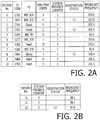
- Fig. 2A and Fig. 2B show an example of the RDS station DB and an example of the non-RDS station DB, respectively.
- the microcomputer 118 executes a seek process in accordance with the user operation on the input interface 120 or periodically (e.g., at intervals of five minutes).
- each frequency channel is sequentially selected, and acquisition of pieces of information necessary for the RDS station DB and the non-RDS station DB (hereinafter referred to as "broadcast information") is tried.
- the RDS station DB is a database concerning RDS stations that broadcast RDS data. As shown in Fig. 2A , the RDS station DB has records (i.e., records of pieces of broadcast information of RDS stations), each of which a part of the RDS data (i.e., the PI code and the PS), a seek time order, a station presence counter, a registration status, and a broadcast frequency (unit: MHz) with which the RDS data is broadcasted are associated with each other. In Fig. 2 , a record number is assigned to each record for convenience of explanation.
- the "seek time order" is a value determined in accordance with the order of time of last seeking of a broadcast frequency in the seeking process.
- the time is, for example, acquired using a clock provided to the microcomputer 118.
- a record of a newly sought broadcast frequency i.e., a record having a broadcast frequency of which time at which seeking has last been executed is closer to the current time
- a broadcast frequency of a record having a smaller "seek time order" value has a higher receivability. That is, the "seek time order" is a parameter indicating receivability of a broadcast frequency.
- the "station presence counter” is incremented by 1 when a corresponding broadcast frequency is detected in the seeking process, and is decremented by 1 when a corresponding broadcast frequency is not detected in the seeking process.
- the maximum value of the station presence counter is 3, and the minimum value is 0.
- a broadcast frequency having a higher counter value has a higher receivability.
- a broadcast frequency of which the station presence counter is 3 has been detected in all of the last three seeking processes. That is, "station presence counter" is also a parameter indicating receivability of a broadcast frequency.
- the microcomputer 118 has a preset memory 118c.
- the microcomputer 118 can register one or more broadcasting stations (specifically, one or more pieces of broadcast information corresponding to one or more RDS stations and/or one or more non-RDS stations) designated by the user operation on the input interface 120 to the preset memory 118c. It is noted that the registration of the broadcast information in the preset memory 118c means to write (i.e., memorize) the broadcast information or a link to the broadcast information (i.e., an address in the DB memory 118b) in the preset memory 118c.
- the "registration status" is a parameter that indicates whether corresponding broadcast information is registered to the preset memory 118c.
- the "registration status” is a parameter indicating preference of a user.
- Pieces of broadcast information corresponding to records of which the registration status fields are "O" in Fig. 2 are registered to the preset memory 118c.
- Pieces of broadcast information corresponding to records of which the registration status fields are blank are not registered to the preset memory 118c. That is, a record of which the parameter indicating preference of a user is assigned has a higher priority order.
- the non-RDS station DB is a database concerning FM stations which do not broadcast RDS data. Generally, digital data is not multiplexed on broadcastings from such FM stations. Therefore, as shown in Fig. 2B , the non-RDS station DB has records (records of pieces of broadcast information of non-RDS stations), each of which only the station presence counter, the registration status and the broadcast frequency of an FM station are associated with each other.
- the microcomputer 118 functions as a storage means configured to accumulatively store the code extracted by the extracting means and a broadcast frequency of the broadcast signal in an associated manner as a piece of broadcast information, and to memorize the broadcast information as preset information.
- the microcomputer 118 generates a station list using the RDS station DB and the non-RDS station DB.
- the microcomputer 118 stores the generated station list in a list memory 118d.
- the station list is data in which the PI code, the PS and the broadcast frequency for each broadcasting station are associated with each other and listed.
- the microcomputer 118 display the station list (more specifically, the PSs being pieces of display information) on the display screen of the display 122.
- the microcomputer 118 functions as a list generating means configured to generate a station list based on the RDS station DB and the non-RDS station DB (broadcast information stored in the storage means). Further, the microcomputer 118 and the display 122 collectively function as a displaying means configured to display the station list such as a list of PSs (a list of the names of the broadcasting stations).
- a user can select a desired PS (i.e., a desired station) from the station list displayed on the display screen of the display 122.
- a desired PS i.e., a desired station
- the microcomputer 118 selects a memorized broadcast frequency associated with the selected desired station and outputs audio service of the selected desired station from the speaker 112.
- a station list is generated by simply using the RDS station DB (i.e., a case where broadcasting stations of which the station presence counters are other than zero are listed) will be described.
- the records of which the record numbers are 2, 3 and 8 have the same broadcast frequency (i.e., 100.4 MHz), but since the PI codes are different, they are registered as different records. Therefore, if the PS of each record is simply used, the PSs of these three records will be redundantly displayed. It is noted that the registration of the record means to write (memorize) the broadcast information configuring the record in the DB memory 118b.
- a list generating (updating) process described below is executed to decrease the number of such redundant display.
- Fig. 3 is a flow chart of a list generating process executed by the microcomputer 118.
- the microcomputer 118 executes the list generating process in accordance with the user operation on the input interface 120 or periodically. It is noted that, to start execution of the list generating process, the microcomputer 118 delete the station list stored in the list memory 118d or temporarily hold it in another memory (e.g., as a temporal backup until the list generating process is completed).
- process step S11 station list registration candidates are searched in order of the "seek time order" in the RDS station DB.
- records of which the registration status fields in the RDS station DB are "O" i.e., pieces of broadcast information of RDS stations which are registered to the preset memory 118c
- the registration of the broadcast information to the station list means to write (memorize) all or parts of the broadcast information or a link to all or parts of the broadcast information (i.e., an address in the DB memory 118b) in the list memory 118d.
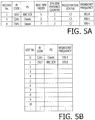
- Fig. 5A shows a table of records extracted as the registration candidates at process step S11.
- records of which record numbers are 1, 3 and 8 are extracted as the registration candidates.
- process step S12 the registration to the station list is executed using the records extracted as the registration candidates at the process step S11 (registration candidates extraction).
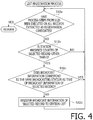
- Fig. 4 shows a subroutine of the list generating process.
- process step S 12a it is determined whether process steps from S 12b have been executed on all the records extracted as the registration candidates at the process step S11 (registration candidates extraction). If it is determined that there remains one or more records on which the process steps from S12b have not been executed (S12a: NO), a record is selected from among the unprocessed records in accordance with the order of the "seek time order," and the process steps from S12b are executed on the selected record.
- the subroutine ends and process steps from S13 shown in Fig. 3 are executed.
- step S12b it is determined whether the station presence counter of the record selected at the process step S12a is other than zero (i.e., 1 - 3). In short, it is determined whether receivability is high or not.
- step S12c it is determined whether broadcast information corresponding to the same broadcasting station as that of the broadcast information of the selected record is already registered to the station list. It is noted that, in the present embodiment, pieces of the broadcast information having the same broadcast frequency are determined to be pieces of the broadcast information corresponding to the same broadcasting station. That is, the microcomputer 118 functions as a determining means configured to determine that a plurality of pieces of broadcast information correspond to the same broadcasting station if their broadcast frequencies are the same.
- the broadcast information of the selected record which has been determined to be not registered to the station list is registered to the station list.
- parts of the broadcast information configuring the record that is, the PI code, the PS and the broadcast frequency, are memorized in the list memory 118d. That is, the microcomputer functions as a registering means configured to register only one of the plurality of pieces of broadcast information, which are determined to correspond to the same broadcasting station, in the station list).
- Fig. 5B illustrates a station list, in the middle of generation, obtained as a result of the execution of the process step S12.
- the station presence counter of record number 3 is 3 (S12b: YES). Also, at the time the process step S12 (list registration process) is executed on the record number 3, no broadcast information is registered to the station list (S12c: NO). Therefore, the broadcast information of the record number 3 is registered to the station list (See list number 0 in Fig. 5B .).
- the station presence counter of record number 1 is 2 (S12b: YES). Also, at the time the process step S12 (list registration process) is executed on the record number 1, broadcast information having the broadcast frequency of 103.8 MHz is not registered to the station list (S12c: NO). Therefore, the broadcast information of the record number 1 is registered to the station list (See list number 1 in Fig. 5B .).
- the station presence counter of record number 8 is 2 (S 12b: YES). However, at the time the process step S12 (list registration process) is executed on the record number 8, the broadcast information having the broadcast frequency of 100.4 MHz is already registered to the station list (See list number 0 of Fig. 5B .).
- the PI code for the record number 8 is "C8A1," and the PI code for the list number 0 (record number 3) is "C2A1.” Since these two records have different PI codes, they are both registered to the RDS station DB as different records. However, since pieces of broadcast information of the two records have the same broadcast frequency, they actually correspond to the same broadcasting station.
- pieces of broadcast information that have different PI codes but have the same broadcast frequency are regarded as pieces of broadcast information corresponding to the same broadcasting station. Accordingly, for the record number 8, it is determined that the broadcast information corresponding to the same broadcasting station is already registered to the station list (See list number 0 in Fig. 5B .) (S12c: YES), and thus the broadcast information of the record number 8 is not registered to the station list (See Fig. 5B .).
- broadcast information of a record of which the receivability is higher than that of the record number 8 is preferentially registered to the station list.
- the microcomputer 118 determines that, even if the PI codes are different, a plurality pieces of broadcast information stored in the DB memory 118b are determined to corresponding to the same broadcasting station if they have the same broadcast frequency, and registers only one of the plurality of pieces of broadcast information determined to correspond to the same broadcasting station to the station list (i.e., the other of the plurality pieces of broadcast information are excluded from the registration subjects).
- process step S12 station list registration candidates are searched in order of the "seek time order" in the non-RDS station DB.
- process step S13 records of which the registration status fields in the non-RDS station DB are "O" (i.e., pieces of the broadcast information of non-RDS stations which are registered to the preset memory 118c) are extracted as the registration candidates.
- Fig. 6A shows a table of records extracted as the registration candidates at process step S13.
- a record of which record number is 13 is extracted as the registration candidate.
- process step S14 broadcast information of the record extracted as the registration candidate at the process step S13 (registration candidates extraction) is registered to the station list. It is noted that, if the station presence counter is zero, the record is not registered to the station list.
- Fig. 6B illustrates a station list, in the middle of generation, obtained as a result of the execution of the process step S14.
- the station presence counter of record number 12 is 3. Therefore, as shown in Fig. 6B , the broadcast information of the record number 13 is registered in the list.
- process step S15 station list registration candidates are searched in order of the "seek time order" in the RDS station DB.
- process step S15 records of which the registration status fields in the RDS station DB are blank (i.e., RDS stations which are not registered to the preset memory 118c) are extracted as the registration candidates.
- Fig. 7A shows a table of records extracted as the registration candidates at process step S15.
- records of which record numbers are 0, 2, 4 - 7, 9 and 10 are extracted as the registration candidates.
- process step S16 the registration to the station list is executed using the records extracted as the registration candidates at the process step S15 (registration candidates extraction). It is noted that the registration process executed in the process step S16 is the same as that of the process step S12 (list registration process). Specific description of the process step S16 is omitted to avoid redundant description in the specification.
- Fig. 7B illustrates a station list, in the middle of generation, obtained as a result of the execution of the process step S16.
- description will be made while referring to the subroutine shown in Fig. 4 .
- the station presence counter of record number 0 is 3 (S12b: YES). Also, at the time the process step S16 (list registration process) is executed on the record number 0, no broadcast information having the broadcast frequency of 104.5 MHz is registered to the station list (S12c: NO). Therefore, the broadcast information of the record number 0 is registered to the station list (See list number 3 in Fig. 7B .).
- the station presence counter of record number 5 is 3 (S12b: YES).
- the process step S16 list registration process
- the broadcast information having the broadcast frequency of 103.8 MHz is already registered to the station list (See list number 1 in Fig. 7B .). Therefore, for the record number 5, it is determined that the broadcast information corresponding to the same broadcasting station is already registered to the station list (S12c: YES), and thus the broadcast information of the record number 5 is not registered to the station list (See Fig. 7B .).
- the value of the station presence counter of the record number 5 is greater than that of the list number 1 (record number 1) that has the same broadcast frequency of 103.8 MHz.
- broadcast information that is registered to the preset memory 118c is given priority over broadcast information that has greater station presence counter value. Therefore, the broadcast information of the record number 1 is registered to the station list (See list number 1 in Fig. 7B .), and the broadcast information of the record number 5 is not registered to the station list. It is noted that, in other embodiments, records having greater station presence counter values may be preferentially registered to the station list.
- the station presence counter of record number 7 is 3 (S12b: YES). Also, at the time the process step S16 (list registration process) is executed on the record number 7, no broadcast information having the broadcast frequency of 92.6 MHz is registered to the station list (S12c: NO). Therefore, the broadcast information of the record number 7 is registered to the station list (See list number 4 in Fig. 7B .).
- the station presence counter of record number 10 is 3 (S12b: YES). Also, at the time the process step S16 (list registration process) is executed on the record number 10, no broadcast information having the broadcast frequency of 103.3 MHz is registered to the station list (S12c: NO). Therefore, the broadcast information of the record number 10 is registered to the station list (See list number 5 in Fig. 7B .).
- the station presence counter of record number 9 is 2 (S12b: YES). Also, at the time the process step S16 (list registration process) is executed on the record number 9, no broadcast information having the broadcast frequency of 106.2 MHz is registered to the station list (S12c: NO). Therefore, the broadcast information of the record number 9 is registered to the station list (See list number 5 in Fig. 7B .).
- the station presence counter of record number 2 is 1 (S12b: YES).
- the process step S16 list registration process
- the broadcast information having the broadcast frequency of 100.4 MHz is already registered to the station list (See list number 0 in Fig. 7B .). Therefore, for the record number 2, it is determined that the broadcast information corresponding to the same broadcasting station is already registered to the station list (S12c: YES), and thus the broadcast information of the record number 2 is not registered to the station list (See Fig. 7B .).
- the station presence counter of record number 6 is 1 (S12b: YES).
- the process step S16 list registration process
- the broadcast information having the broadcast frequency of 103.3 MHz is already registered to the station list (See list number 5 in Fig. 7B .). Therefore, for the record number 6, it is determined that the broadcast information corresponding to the same broadcasting station is already registered to the station list (S12c: YES), and thus the broadcast information of the record number 6 is not registered to the station list (See Fig. 7B .).
- the station presence counter of record number 4 is 0 (S12b: NO), for the record number 4, since the receivability is low, the broadcast information is not registered to the station list (See Fig. 7B .).
- process step S17 station list registration candidates are searched in order of the "seek time order" in the non-RDS station DB.
- records of which the registration status fields in the non-RDS station DB are blank i.e., pieces of the broadcast information of non-RDS stations which are not registered to the preset memory 118c) are extracted as the registration candidates.
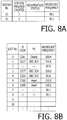
- Fig. 8A shows a table of records extracted as the registration candidates at the process step S17.
- records of which record numbers are 11 and 12 are extracted as the registration candidates.
- process step S18 broadcast information of the records extracted as the registration candidates at the process step S17 registration candidates extraction) are registered to the station list. It is noted that, if the station presence counter of a record is zero, the broadcast information of the record is not registered to the station list. Upon completion of execution of the process step S18, the generation of the station list completes.
- Fig. 8B illustrates a complete station list obtained as a result of the execution of the process step S18.
- the station presence counters of record numbers 11 and 12 are both 3. Therefore, as shown in Fig. 8B , the broadcast information of the record numbers 11 and 12 are registeredin the list. The generation of the station list is thereby completed.
- the PS typically a broadcasting station name
- the PS being the display information
- Fig. 8B there are three "BBC 3CR” and two "Heart.”
- branch numbers may be added to the same PS when displaying (e.g., "BBC 3CR-1" and "BBC 3CR-2").
- the PI code and/or the broadcast frequency may be displayed along with or in place of the PS.
- the first character of the PI code is a country code.
- a case where a station list is generated using pieces of data from RDS stations having the same country code "C" i.e., from RDS stations in the same country.
- C country code
- a case where a vehicle on which the broadcast receiver 1 travels near a national border will be considered.
- pieces of RDS station data having the same broadcast frequency but having different country codes are stored in the RDS station DB.
- pieces of broadcast information including the following data sets are stored in the RDS station DB.
- the determination result of the process step S12c shown in fig. 4 may exceptionally be NO.
Landscapes
- Engineering & Computer Science (AREA)
- Signal Processing (AREA)
- Circuits Of Receivers In General (AREA)
- Two-Way Televisions, Distribution Of Moving Picture Or The Like (AREA)
Abstract
Description
- The present invention relates to a broadcast receiver and a list generating method.
- Radio broadcastings in which data related to broadcast programs are multiplexed on audio broadcast signals have been standardized and put into practice. For example, as one of such radio broadcastings, RDS (Radio Data System: IEC 62106 Edition 2.0, 2009-07) which is standardized by the European Broadcasting Union is known. In the RDS, digital data is multiplexed on analog FM broadcasting signals.
- The RDS multiplexed data (hereinafter referred to as "RDS data") includes a PI (Programme Identification) Code, a PS (Programme Service Name) and the like. The PI code is a code for identifying a broadcasting station. The PS is data for displaying a character string of a maximum of 8 characters. Information displayed based on the PS is typically a name of a broadcasting station.
- For example, Japanese Patent Provisional Publication No.
2016-111700 Patent Document 1 extracts, from the received RDS data, frequency information of receivable broadcasting stations, and displays a list of receivable broadcasting stations based on the extracted frequency information. - In the RDS, even if broadcast frequency is the same, that is, even if the broadcasting station is the same, there is a case where broadcasting is performed with a temporarily changed PI code, for instance, to broadcast different services at a certain time slot. In this regard, broadcast receivers adapted to the RDS identify broadcasting station using the PI code. Therefore, the broadcast receivers handle the RDS data before the change of the PI code and the RDS data after the change of the PI code as pieces of data corresponding to different broadcasting stations. As a result, two pieces of information respectively corresponding to the RDS data before the change of the PI code and the RDS data after the change of the PI code (e.g., two identical broadcasting station names) are redundantly displayed on the list. If the number of such redundant display increases, it becomes difficult for a user to appropriately select a broadcasting station the user wants to listen to.
- The present invention is made in view of the foregoing circumstances, and the object of the present invention is to provide a broadcast receiver and a list generating method suitable for decreasing the redundantly displayed number of pieces of information corresponding to the same broadcasting station on the list.
- According to aspects of the present invention, there is provided a broadcast receiver provided with a receiving means configured to receive a broadcast signal in which digital data is multiplexed, an extracting means configured to extract a code indicating a broadcasting station from the broadcast signal received by the receiving means, a storage means configured to accumulatively store the code extracted by the extracting means and a broadcast frequency of the broadcast signal in an associated manner as a piece of broadcast information, a list generating means configured to generate a station list based on the broadcast information stored in the storage means, and a displaying means configured to display the station list generated by the generating means. the list generating means has a determining means configured to determine that the plurality of pieces of broadcast information correspond to the same broadcasting station if their broadcast frequencies are the same, and a registering means configured to register only one of the plurality of pieces of broadcast information, which are determined to correspond to the same broadcasting station, to the station list.
- According to further aspects of the present invention, the storage means may store a plurality of predetermined parameters indicating priority orders of the plurality of pieces of broadcast information, and the list generating means may select the only one of the plurality of pieces of broadcast information based on the priority orders indicated by the plurality of predetermined parameters.
- According to further aspects of the present invention, the predetermined parameter may include a first parameter indicating preference of a user. In this case, the list generating means may determine that the piece of broadcast information to which the first parameter is assigned has a higher priority order. The first parameter may indicate that the corresponding piece of broadcast information is stored in the storage means as preset information.
- According to further aspects of the present invention, the predetermined parameter may include a second parameter indicating receivability of the corresponding broadcast frequency by the receiving means. In this case, the list generating means may determine that the piece of broadcast information that has a higher receivability has a higher priority order.
- According to further aspects of the present invention, the extracting means may extract display information, for displaying a name of the broadcasting station, from the broadcast signal received by the receiving means. In this case, the storage means may store the display information as the piece of broadcast information while associating with the broadcast frequency, the list generating means may generate the station list including the display information, and the displaying means may display a list of the names of the broadcasting stations.
- According to further aspects of the present invention, the determining means may determine that the plurality of the pieces of broadcast information stored in the storage means correspond to different broadcasting stations if their country codes included in the codes are different. In this case, the registering means may register the plurality of pieces of broadcast information, determined to correspond to different broadcasting stations, in the station list.
- According to further aspects of the present invention, the broadcast signal may be transmitted using RDS (Radio Data System) signal format.
- According to aspects of the present invention, there is provided a list generating method executed by receiver provided with a computer. The list generating method includes a receiving step of receiving a broadcast signal of a predetermined format in which digital data is multiplexed, an extracting step of extracting a code, indicating a broadcasting station, from the broadcast signal received in the receiving step, a storing step of storing, in a predetermined storage medium, the code extracted in the extracting step and a broadcast frequency of the broadcast signal as a piece of broadcast information in an associated manner, a generating step of generating a list using a plurality of pieces of broadcast information stored in the predetermined storage medium, and a display control step of displaying the list generated in the generating step on a display device. In the generating step, it is determined that the plurality of pieces of broadcast information stored in the predetermined storage medium correspond to the same broadcasting station if their broadcast frequencies are the same and only one of the plurality of pieces of broadcast information determined to be of the same broadcasting station is registered in the list.
- According to aspects of the present invention, a broadcast receiver and a list generating method suitable for decreasing the redundantly displayed number of pieces of information corresponding to the same broadcasting station on the list are provided.
-
-
Fig. 1 is a block diagram showing a configuration of a broadcast receiver according to an embodiment of the present invention. -
Fig. 2A is a diagram showing an RDS station DB according to the embodiment of the present invention. -
Fig. 2B is a diagram showing a non-RDS station DB according to the embodiment of the present invention. -
Fig. 3 is a flow chart of a list generating process executed in the embodiment of the present invention. -
Fig. 4 shows a sub-routine of process step S12 shown inFig. 3 . -
Fig. 5A is a diagram showing a table of records extracted as registration candidates at process step S11 shown inFig. 3 . -
Fig. 5B is a diagram showing a station list, in the middle of generation, obtained as a result of the execution of process step S12 shown inFig. 3 . -
Fig. 6A is a diagram showing a table of records extracted as registration candidates at process step S13 shown inFig. 3 . -
Fig. 6B is a diagram showing a station list, in the middle of generation, obtained as a result of the execution of process step S14 shown inFig. 3 . -
Fig. 7A is a diagram showing a table of records extracted as registration candidates at process step S15 shown inFig. 3 . -
Fig. 7B is a diagram showing a station list, in the middle of generation, obtained as a result of the execution of process step S16 shown inFig. 3 . -
Fig. 8A is a diagram showing a table of records extracted as registration candidates at process step S13 shown inFig. 3 . -
Fig. 8B is a diagram showing a completed station list obtained as a result of the execution of process step S18 shown inFig. 3 . - Hereinafter, embodiments of the present invention will be described while referring to the drawings. In the following, as an embodiment of the present invention, a broadcast receiver suitable for receiving RDS data will be described. However, other broadcast receivers suitable for receiving other multiplexed broadcasts are also within the scope of the present invention.
-
Fig. 1 is a block diagram showing a configuration of a broadcast receiver 1 (i.e., a receiver provided with a computer) according to an embodiment of the present invention. Thebroadcast receiver 1 is, for example, an onboard device mounted on a vehicle travelling on a road. As shown inFig. 1 , thebroadcast receiver 1 has anantenna 10, atuner 104, a radiosignal processing circuit 106, an audiosignal processing circuit 108, apower amplifier 110, aspeaker 112, anRDS demodulator 114, a PLL (Phase Locked Loop)circuit 116, amicrocomputer 118, aninput interface 120 and adisplay 122. - It is noted that, in
Fig. 1 , only the main components necessary to describe the present embodiment are shown. Illustrations of generally known components such as a casing of thebroadcast receiver 1 are omitted. - The
broadcast receiver 1 is not limited to onboard devices. Thebroadcast receiver 1 may be, for example, a portable terminal such as a smartphone, a feature phone, a PHS (Personal Handy phone System), a tablet terminal, a laptop PC, a PDA (Personal Digital Assistant, a PND (Portable Navigation Device), a portable game machine and the like. - The
broadcast receiver 1 is configured such that a broadcast radio wave received with use of theantenna 102 is input to thetuner 104. Themicrocomputer 118 controls thetuner 104 via thePLL circuit 116 to extract an RF (Radio Frequency) signal corresponding to a selected station from the received radio wave. Then themicrocomputer 118 executes frequency conversion to convert the extracted RF signal to an IF (Intermediate Frequency) signal suitable for signal processing such as filtering. Thetuner 104 outputs the IF signal obtained by the frequency conversion to the radiosignal processing circuit 106. - As described above, the
antenna 102, thetuner 104, thePLL circuit 116 and themicrocomputer 118 collectively function as a receiving means configured to receive a broadcast radio wave (broadcast signal) in which digital data is multiplexed. - The selected station is, for example, designated by a user operation on the
input interface 120. Designation information of the selected station is memorized in a built-in memory of themicrocomputer 118. Themicrocomputer 118 controls thetuner 104, via thePLL circuit 116, to execute a station selection operation in accordance with the information memorized in the built-in memory, for instance, immediately after thebroadcast receiver 1 is powered on. - As the
input interface 120, a variety of UIs (User Interface) such as a hardware UI, a software UI, or a combination of the hardware UI and the software UI are possible. In the present embodiment, theinput interface 120 includes mechanical switch keys, membrane keys, a GUI (Graphical User Interface) provided along with a touch panel, a remote controller on which operation keys are mounted and the like. - The radio
signal processing circuit 106 has an AD conversion circuit, an IF detection circuit, a noise canceller and a weak electric-field processing circuit. AD conversion is performed on the IF signal input to the radiosignal processing circuit 106 at the AD conversion circuit and, after detecting an audio signal at the IF detection circuit, noise is removed at the noise canceller. Processing such as mute, high cut and separation control are performed on the audio signal according to reception state of the selected station by the weak electric-field processing circuit, and the processed audio signal is output to the audiosignal processing circuit 108. - After performing predetermined audio signal processing such as DA conversion, the audio signal input to the audio
signal processing circuit 108 goes through gain adjustment by thepower amp 110 in accordance with a volume, and is output from thespeaker 112 as sound. - For example, an S meter is built in the radio
signal processing circuit 106. The S meter measures a detection voltage at the time of analog audio signal demodulation at a predetermined sampling period and output the detection voltage to themicrocomputer 118. The above-mentioned detection voltage is a DC voltage proportional to a field strength of a received radio wave. That is, the detection voltage indicates the field strength of the received broadcast radio wave. - The signal detected at the radio
signal processing circuit 106 is also output to theRDS demodulator 114. After a demodulation process by theRDS demodulator 114, the detected signal is decoded to RDS data at anRDS decoder 1182 in themicrocomputer 118. - The
microcomputer 118 has adata memory 118a. Themicrocomputer 118 stores the RDS data obtained by the decoding in thedata memory 118a. The RDS data includes a PS (name of broadcasting station), an RT (Radio Text), an AF (Alternative Frequencies) list, a PI code, a PTY (Programme Type), a TP (Traffic Programme) and the like. That is, theRDS decoder 1182 functions as an extracting means configured to extract RDS data such as the PI code (a code indicating a broadcasting station) and the PS (display information for displaying a name of the broadcasting station) from the broadcast signal. It is noted that the broadcast signal is not limited to the RDS format, and extraction of data from the broadcast radio wave is not limited to decoding. - The
microcomputer 118 has a DB (Database)memory 118b. In theDB memory 118b, RDS station DB and non-RDS station DB are stored.Fig. 2A and Fig. 2B show an example of the RDS station DB and an example of the non-RDS station DB, respectively. - The
microcomputer 118 executes a seek process in accordance with the user operation on theinput interface 120 or periodically (e.g., at intervals of five minutes). In the seek process, each frequency channel is sequentially selected, and acquisition of pieces of information necessary for the RDS station DB and the non-RDS station DB (hereinafter referred to as "broadcast information") is tried. - The RDS station DB is a database concerning RDS stations that broadcast RDS data. As shown in
Fig. 2A , the RDS station DB has records (i.e., records of pieces of broadcast information of RDS stations), each of which a part of the RDS data (i.e., the PI code and the PS), a seek time order, a station presence counter, a registration status, and a broadcast frequency (unit: MHz) with which the RDS data is broadcasted are associated with each other. InFig. 2 , a record number is assigned to each record for convenience of explanation. - The "seek time order" is a value determined in accordance with the order of time of last seeking of a broadcast frequency in the seeking process. The time is, for example, acquired using a clock provided to the
microcomputer 118. A record of a newly sought broadcast frequency (i.e., a record having a broadcast frequency of which time at which seeking has last been executed is closer to the current time) is assigned a smaller value (e.g., "1"). In other words, a broadcast frequency of a record having a smaller "seek time order" value has a higher receivability. That is, the "seek time order" is a parameter indicating receivability of a broadcast frequency. - The "station presence counter" is incremented by 1 when a corresponding broadcast frequency is detected in the seeking process, and is decremented by 1 when a corresponding broadcast frequency is not detected in the seeking process. For example, the maximum value of the station presence counter is 3, and the minimum value is 0. A broadcast frequency having a higher counter value has a higher receivability. As an example, a broadcast frequency of which the station presence counter is 3 has been detected in all of the last three seeking processes. That is, "station presence counter" is also a parameter indicating receivability of a broadcast frequency.
- The
microcomputer 118 has apreset memory 118c. Themicrocomputer 118 can register one or more broadcasting stations (specifically, one or more pieces of broadcast information corresponding to one or more RDS stations and/or one or more non-RDS stations) designated by the user operation on theinput interface 120 to thepreset memory 118c. It is noted that the registration of the broadcast information in thepreset memory 118c means to write (i.e., memorize) the broadcast information or a link to the broadcast information (i.e., an address in theDB memory 118b) in thepreset memory 118c. - The "registration status" is a parameter that indicates whether corresponding broadcast information is registered to the
preset memory 118c. In other words, the "registration status" is a parameter indicating preference of a user. Pieces of broadcast information corresponding to records of which the registration status fields are "O" inFig. 2 are registered to thepreset memory 118c. Pieces of broadcast information corresponding to records of which the registration status fields are blank are not registered to thepreset memory 118c. That is, a record of which the parameter indicating preference of a user is assigned has a higher priority order. - The non-RDS station DB is a database concerning FM stations which do not broadcast RDS data. Generally, digital data is not multiplexed on broadcastings from such FM stations. Therefore, as shown in
Fig. 2B , the non-RDS station DB has records (records of pieces of broadcast information of non-RDS stations), each of which only the station presence counter, the registration status and the broadcast frequency of an FM station are associated with each other. - As described above, the
microcomputer 118 functions as a storage means configured to accumulatively store the code extracted by the extracting means and a broadcast frequency of the broadcast signal in an associated manner as a piece of broadcast information, and to memorize the broadcast information as preset information. - The
microcomputer 118 generates a station list using the RDS station DB and the non-RDS station DB. Themicrocomputer 118 stores the generated station list in alist memory 118d. - The station list is data in which the PI code, the PS and the broadcast frequency for each broadcasting station are associated with each other and listed. The
microcomputer 118 display the station list (more specifically, the PSs being pieces of display information) on the display screen of thedisplay 122. - As described above, the
microcomputer 118 functions as a list generating means configured to generate a station list based on the RDS station DB and the non-RDS station DB (broadcast information stored in the storage means). Further, themicrocomputer 118 and thedisplay 122 collectively function as a displaying means configured to display the station list such as a list of PSs (a list of the names of the broadcasting stations). - A user can select a desired PS (i.e., a desired station) from the station list displayed on the display screen of the
display 122. When the desired station is selected from the station list, themicrocomputer 118 selects a memorized broadcast frequency associated with the selected desired station and outputs audio service of the selected desired station from thespeaker 112. - A case where a station list is generated by simply using the RDS station DB (i.e., a case where broadcasting stations of which the station presence counters are other than zero are listed) will be described. As shown in
Fig. 2A , the records of which the record numbers are 2, 3 and 8 have the same broadcast frequency (i.e., 100.4 MHz), but since the PI codes are different, they are registered as different records. Therefore, if the PS of each record is simply used, the PSs of these three records will be redundantly displayed. It is noted that the registration of the record means to write (memorize) the broadcast information configuring the record in theDB memory 118b. - Accordingly, in the
broadcast receiver 1, a list generating (updating) process described below is executed to decrease the number of such redundant display. -
Fig. 3 is a flow chart of a list generating process executed by themicrocomputer 118. Themicrocomputer 118 executes the list generating process in accordance with the user operation on theinput interface 120 or periodically. It is noted that, to start execution of the list generating process, themicrocomputer 118 delete the station list stored in thelist memory 118d or temporarily hold it in another memory (e.g., as a temporal backup until the list generating process is completed). - In process step S11, station list registration candidates are searched in order of the "seek time order" in the RDS station DB. In the process step S11, records of which the registration status fields in the RDS station DB are "O" (i.e., pieces of broadcast information of RDS stations which are registered to the
preset memory 118c) are extracted as the registration candidates. It is noted that the registration of the broadcast information to the station list means to write (memorize) all or parts of the broadcast information or a link to all or parts of the broadcast information (i.e., an address in theDB memory 118b) in thelist memory 118d. -
Fig. 5A shows a table of records extracted as the registration candidates at process step S11. In the present embodiment, as shown inFig. 5A , records of which record numbers are 1, 3 and 8 are extracted as the registration candidates. - In process step S12, the registration to the station list is executed using the records extracted as the registration candidates at the process step S11 (registration candidates extraction).
Fig. 4 shows a subroutine of the list generating process. - In process step S 12a, it is determined whether process steps from S 12b have been executed on all the records extracted as the registration candidates at the process step S11 (registration candidates extraction). If it is determined that there remains one or more records on which the process steps from S12b have not been executed (S12a: NO), a record is selected from among the unprocessed records in accordance with the order of the "seek time order," and the process steps from S12b are executed on the selected record.
- In the present embodiment, the process steps from S12b are executed on record number 3 (seek time order = 2), record number 1 (seek time order = 6) and record number 8 (seek time order = 7) in this order. Upon completion of execution of the process steps from S12b on the three records (S12a: YES), the subroutine ends and process steps from S13 shown in
Fig. 3 are executed. - In the process step S12b, it is determined whether the station presence counter of the record selected at the process step S12a is other than zero (i.e., 1 - 3). In short, it is determined whether receivability is high or not.
- If it is determined that the station presence counter of the selected record is zero (S12b: NO), it is likely to be difficult to receive a broadcast frequency of the selected record. Therefore, the broadcast information of the selected record is not registered to the station list and the process returns to the process step S12a. If it is determined that the station presence counter of the selected record is one of 1 - 3 (S12b: YES), the process proceeds to process step S12c.
- In the process step S12c, it is determined whether broadcast information corresponding to the same broadcasting station as that of the broadcast information of the selected record is already registered to the station list. It is noted that, in the present embodiment, pieces of the broadcast information having the same broadcast frequency are determined to be pieces of the broadcast information corresponding to the same broadcasting station. That is, the
microcomputer 118 functions as a determining means configured to determine that a plurality of pieces of broadcast information correspond to the same broadcasting station if their broadcast frequencies are the same. - If it is determined that broadcast information corresponding to the same broadcasting station as that of the broadcast information of selected record is already registered to the station list (S12c: YES), the broadcast information of the selected record is not registered to the station list, and the process goes back to the process step S12a. If it is determined that broadcast information corresponding to the same broadcasting station as that of the broadcast information of the selected record is not registered to the station list (S12c: NO), the process proceeds to process step S12d.
- In the process step S12d, the broadcast information of the selected record which has been determined to be not registered to the station list is registered to the station list. Specifically, parts of the broadcast information configuring the record, that is, the PI code, the PS and the broadcast frequency, are memorized in the
list memory 118d. That is, the microcomputer functions as a registering means configured to register only one of the plurality of pieces of broadcast information, which are determined to correspond to the same broadcasting station, in the station list). Upon registering the broadcast information of the selected record to the station list, the process goes back to the process step S 12a. -
Fig. 5B illustrates a station list, in the middle of generation, obtained as a result of the execution of the process step S12. - The station presence counter of
record number 3 is 3 (S12b: YES). Also, at the time the process step S12 (list registration process) is executed on therecord number 3, no broadcast information is registered to the station list (S12c: NO). Therefore, the broadcast information of therecord number 3 is registered to the station list (Seelist number 0 inFig. 5B .). - The station presence counter of
record number 1 is 2 (S12b: YES). Also, at the time the process step S12 (list registration process) is executed on therecord number 1, broadcast information having the broadcast frequency of 103.8 MHz is not registered to the station list (S12c: NO). Therefore, the broadcast information of therecord number 1 is registered to the station list (Seelist number 1 inFig. 5B .). - The station presence counter of
record number 8 is 2 (S 12b: YES). However, at the time the process step S12 (list registration process) is executed on therecord number 8, the broadcast information having the broadcast frequency of 100.4 MHz is already registered to the station list (Seelist number 0 ofFig. 5B .). - Specifically, the PI code for the
record number 8 is "C8A1," and the PI code for the list number 0 (record number 3) is "C2A1." Since these two records have different PI codes, they are both registered to the RDS station DB as different records. However, since pieces of broadcast information of the two records have the same broadcast frequency, they actually correspond to the same broadcasting station. - Therefore, in the present embodiment, pieces of broadcast information that have different PI codes but have the same broadcast frequency are regarded as pieces of broadcast information corresponding to the same broadcasting station. Accordingly, for the
record number 8, it is determined that the broadcast information corresponding to the same broadcasting station is already registered to the station list (Seelist number 0 inFig. 5B .) (S12c: YES), and thus the broadcast information of therecord number 8 is not registered to the station list (SeeFig. 5B .). - As an additional remark, in the present embodiment, broadcast information of a record of which the receivability is higher than that of the record number 8 (i.e., the broadcast information of the record number 1) is preferentially registered to the station list.
- As described above, the
microcomputer 118 determines that, even if the PI codes are different, a plurality pieces of broadcast information stored in theDB memory 118b are determined to corresponding to the same broadcasting station if they have the same broadcast frequency, and registers only one of the plurality of pieces of broadcast information determined to correspond to the same broadcasting station to the station list (i.e., the other of the plurality pieces of broadcast information are excluded from the registration subjects). - In process step S12, station list registration candidates are searched in order of the "seek time order" in the non-RDS station DB. In the process step S13, records of which the registration status fields in the non-RDS station DB are "O" (i.e., pieces of the broadcast information of non-RDS stations which are registered to the
preset memory 118c) are extracted as the registration candidates. -
Fig. 6A shows a table of records extracted as the registration candidates at process step S13. In the present embodiment, as shown inFig. 6A , a record of which record number is 13 is extracted as the registration candidate. - In process step S14, broadcast information of the record extracted as the registration candidate at the process step S13 (registration candidates extraction) is registered to the station list. It is noted that, if the station presence counter is zero, the record is not registered to the station list.
-
Fig. 6B illustrates a station list, in the middle of generation, obtained as a result of the execution of the process step S14. The station presence counter ofrecord number 12 is 3. Therefore, as shown inFig. 6B , the broadcast information of therecord number 13 is registered in the list. - In process step S15, station list registration candidates are searched in order of the "seek time order" in the RDS station DB. In the process step S15, records of which the registration status fields in the RDS station DB are blank (i.e., RDS stations which are not registered to the
preset memory 118c) are extracted as the registration candidates. -
Fig. 7A shows a table of records extracted as the registration candidates at process step S15. In the present embodiment, as shown inFig. 7A , records of which record numbers are 0, 2, 4 - 7, 9 and 10 are extracted as the registration candidates. - In process step S16, the registration to the station list is executed using the records extracted as the registration candidates at the process step S15 (registration candidates extraction). It is noted that the registration process executed in the process step S16 is the same as that of the process step S12 (list registration process). Specific description of the process step S16 is omitted to avoid redundant description in the specification.
-
Fig. 7B illustrates a station list, in the middle of generation, obtained as a result of the execution of the process step S16. In the following, description will be made while referring to the subroutine shown inFig. 4 . - The station presence counter of
record number 0 is 3 (S12b: YES). Also, at the time the process step S16 (list registration process) is executed on therecord number 0, no broadcast information having the broadcast frequency of 104.5 MHz is registered to the station list (S12c: NO). Therefore, the broadcast information of therecord number 0 is registered to the station list (Seelist number 3 inFig. 7B .). - The station presence counter of
record number 5 is 3 (S12b: YES). However, at the time the process step S16 (list registration process) is executed on therecord number 5, the broadcast information having the broadcast frequency of 103.8 MHz is already registered to the station list (Seelist number 1 inFig. 7B .). Therefore, for therecord number 5, it is determined that the broadcast information corresponding to the same broadcasting station is already registered to the station list (S12c: YES), and thus the broadcast information of therecord number 5 is not registered to the station list (SeeFig. 7B .). - The value of the station presence counter of the
record number 5 is greater than that of the list number 1 (record number 1) that has the same broadcast frequency of 103.8 MHz. However, in the present embodiment, broadcast information that is registered to thepreset memory 118c is given priority over broadcast information that has greater station presence counter value. Therefore, the broadcast information of therecord number 1 is registered to the station list (Seelist number 1 inFig. 7B .), and the broadcast information of therecord number 5 is not registered to the station list. It is noted that, in other embodiments, records having greater station presence counter values may be preferentially registered to the station list. - The station presence counter of
record number 7 is 3 (S12b: YES). Also, at the time the process step S16 (list registration process) is executed on therecord number 7, no broadcast information having the broadcast frequency of 92.6 MHz is registered to the station list (S12c: NO). Therefore, the broadcast information of therecord number 7 is registered to the station list (Seelist number 4 inFig. 7B .). - The station presence counter of
record number 10 is 3 (S12b: YES). Also, at the time the process step S16 (list registration process) is executed on therecord number 10, no broadcast information having the broadcast frequency of 103.3 MHz is registered to the station list (S12c: NO). Therefore, the broadcast information of therecord number 10 is registered to the station list (Seelist number 5 inFig. 7B .). - The station presence counter of
record number 9 is 2 (S12b: YES). Also, at the time the process step S16 (list registration process) is executed on therecord number 9, no broadcast information having the broadcast frequency of 106.2 MHz is registered to the station list (S12c: NO). Therefore, the broadcast information of therecord number 9 is registered to the station list (Seelist number 5 inFig. 7B .). - The station presence counter of
record number 2 is 1 (S12b: YES). However, at the time the process step S16 (list registration process) is executed on therecord number 2, the broadcast information having the broadcast frequency of 100.4 MHz is already registered to the station list (Seelist number 0 inFig. 7B .). Therefore, for therecord number 2, it is determined that the broadcast information corresponding to the same broadcasting station is already registered to the station list (S12c: YES), and thus the broadcast information of therecord number 2 is not registered to the station list (SeeFig. 7B .). - The station presence counter of
record number 6 is 1 (S12b: YES). However, at the time the process step S16 (list registration process) is executed on therecord number 6, the broadcast information having the broadcast frequency of 103.3 MHz is already registered to the station list (Seelist number 5 inFig. 7B .). Therefore, for therecord number 6, it is determined that the broadcast information corresponding to the same broadcasting station is already registered to the station list (S12c: YES), and thus the broadcast information of therecord number 6 is not registered to the station list (SeeFig. 7B .). - The station presence counter of
record number 4 is 0 (S12b: NO), for therecord number 4, since the receivability is low, the broadcast information is not registered to the station list (SeeFig. 7B .). - In process step S17, station list registration candidates are searched in order of the "seek time order" in the non-RDS station DB. In the process step S17, records of which the registration status fields in the non-RDS station DB are blank (i.e., pieces of the broadcast information of non-RDS stations which are not registered to the
preset memory 118c) are extracted as the registration candidates. -
Fig. 8A shows a table of records extracted as the registration candidates at the process step S17. In the present embodiment, as shown inFig. 7A , records of which record numbers are 11 and 12 are extracted as the registration candidates. - In process step S18, broadcast information of the records extracted as the registration candidates at the process step S17 registration candidates extraction) are registered to the station list. It is noted that, if the station presence counter of a record is zero, the broadcast information of the record is not registered to the station list. Upon completion of execution of the process step S18, the generation of the station list completes.
-
Fig. 8B illustrates a complete station list obtained as a result of the execution of the process step S18. The station presence counters ofrecord numbers Fig. 8B , the broadcast information of therecord numbers - As shown in
Fig. 8B , in the station list, only one piece of broadcast information is registered for one broadcast frequency (i.e., for one broadcasting station). Therefore, redundant display of the same broadcasting station is reduced. As a result, it becomes easier for a user to appropriately select a broadcasting station the user wants to listen to from the station list. - On the display screen of the
display 122, the PS (typically a broadcasting station name) being the display information is displayed. In the example shown inFig. 8B , there are three "BBC 3CR" and two "Heart." For example, to improve convenience of a user in selecting a broadcasting station, branch numbers may be added to the same PS when displaying (e.g., "BBC 3CR-1" and "BBC 3CR-2"). - On the display screen of the
display 122, the PI code and/or the broadcast frequency may be displayed along with or in place of the PS. - The foregoing is the description of an exemplary embodiment of the present invention. Embodiments of the present invention are not limited to the above-described embodiment, and various modifications are possible within the scope of the technical concept of the present invention. For example, appropriate combinations of embodiments exemplarily specified in the specification and/or obvious embodiments are also included in the embodiments of the present invention.
- The first character of the PI code is a country code. In the above-described embodiment, a case where a station list is generated using pieces of data from RDS stations having the same country code "C" (i.e., from RDS stations in the same country). Hereinafter, a case where a vehicle on which the
broadcast receiver 1 travels near a national border will be considered. In this case, by executing the seeking process, it is possible that pieces of RDS station data having the same broadcast frequency but having different country codes are stored in the RDS station DB. As an example, pieces of broadcast information including the following data sets are stored in the RDS station DB. - (1)PI code: C2A1 PS: Classic Frequency: 100.4 MHz
- (2)PI code: D2A1 PS: Heart Frequency: 100.4 MHz
- If the country codes are different, even if the broadcast frequencies are the same, there is a case where different services are broadcasted. In this case, the determination result of the process step S12c shown in
fig. 4 may exceptionally be NO. - That is, even if a piece of broadcast information that have the same broadcast frequency as that of a piece of broadcast information of the selected record is included in pieces of broadcast information that are already registered to the station list, if those pieces of broadcast information have different country codes, as an exception handling, they are regarded as pieces of broadcast information corresponding to different broadcasting stations. Therefore, in the process step S12c shown in
Fig. 4 , it is determined that no broadcast information corresponding to the same broadcasting station as that of the broadcast information of the selected record is registered to the station list. As a result, for example, the broadcast information including the data set (1) and the broadcast information including the data set (2) indicated above are both registered to the station list. By executing this exception handling, it becomes possible to register two or more pieces of broadcast information having the same broadcast frequency but corresponding to different broadcasting stations to the station list.
Claims (15)
- A broadcast receiver, comprising:a receiving means configured to receive a broadcast signal in which digital data is multiplexed;an extracting means configured to extract a code indicating a broadcasting station from the broadcast signal received by the receiving means;a storage means configured to accumulatively store the code extracted by the extracting means and a broadcast frequency of the broadcast signal in an associated manner as a piece of broadcast information; anda list generating means configured to generate a station list based on the broadcast information stored in the storage means, the list generating means having:a determining means configured to determine that the plurality of pieces of broadcast information correspond to the same broadcasting station if their broadcast frequencies are the same; anda registering means configured to register only one of the plurality of pieces of broadcast information, which are determined to correspond to the same broadcasting station, to the station list; anda displaying means configured to display the station list generated by the generating means.
- The broadcast receiver according to claim 1, wherein:the storage means stores a plurality of predetermined parameters indicating priority orders of the plurality of pieces of broadcast information, andthe list generating means selects the only one of the plurality of pieces of broadcast information based on the priority orders indicated by the plurality of predetermined parameters.
- The broadcast receiver according to claim 2, wherein:the predetermined parameter includes a first parameter indicating preference of a user, andthe list generating means determines that the piece of broadcast information to which the first parameter is assigned has a higher priority order.
- The broadcast receiver according to claim 3, wherein the first parameter indicates that the corresponding piece of broadcast information is stored in the storage means as preset information.
- The broadcast receiver according to any one of claims 2 to 4, wherein:the predetermined parameter includes a second parameter indicating receivability of the corresponding broadcast frequency by the receiving means, andthe list generating means determines that the piece of broadcast information that has a higher receivability has a higher priority order.
- The broadcast receiver according to any one of claims 1 to 5, wherein:the extracting means extracts display information, for displaying a name of the broadcasting station, from the broadcast signal received by the receiving means,the storage means stores the display information as the piece of broadcast information while associating with the broadcast frequency,the list generating means generates the station list including the display information, andthe displaying means displays a list of the names of the broadcasting stations.
- The broadcast receiver according to any one of claims 1 to 6, wherein:the determining means determines that the plurality of the pieces of broadcast information stored in the storage means correspond to different broadcasting stations if their country codes included in the codes are different; andthe registering means registers the plurality of pieces of broadcast information, determined to correspond to different broadcasting stations, in the station list.
- The broadcast receiver according to any one of claims 1 to 7, wherein the broadcast signal is transmitted using RDS (Radio Data System) signal format.
- A list generating method executed by a receiver provided with a computer, comprising:a receiving step of receiving a broadcast signal of a predetermined format in which digital data is multiplexed;an extracting step of extracting a code, indicating a broadcasting station, from the broadcast signal received in the receiving step;a storing step of storing, in a predetermined storage medium, the code extracted in the extracting step and a broadcast frequency of the broadcast signal as a piece of broadcast information in an associated manner;a generating step of generating a list using a plurality of pieces of broadcast information stored in the predetermined storage medium; anda display control step of displaying the list generated in the generating step on a display device,wherein, in the generating step:it is determined that the plurality of pieces of broadcast information stored in the predetermined storage medium correspond to the same broadcasting station if their broadcast frequencies are the same; andonly one of the plurality of pieces of broadcast information determined to be of the same broadcasting station is registered in the list.
- The list generating method according to claim 9,
wherein, in the storing step, a plurality of predetermined parameters indicating priority orders of the plurality of pieces of broadcast information are stored in the predetermined storage medium, and
wherein, in the generating step, the only one of the plurality of pieces of broadcast information is selected based on the priority orders indicated by the plurality of predetermined parameters. - The list generating method according to claim 10, wherein:the predetermined parameter includes a first parameter indicating preference of a user, andin the generating step, the piece of broadcast information to which the first parameter is assigned is determined to have a higher priority order.
- The list generating method according to claim 11, wherein the first parameter indicates that the corresponding piece of broadcast information is stored in the predetermined storage medium as preset information.
- The list generating method according to any one of claim 10 to 12, wherein:the predetermined parameter includes a second parameter indicating receivability of the broadcast frequency by the receiver, andin the generating step, the piece of broadcast information that has the higher receivability is determined to have a higher priority order.
- The list generating method according to any one of claims 9 to 13, wherein:in the extracting step, display information for displaying a name of the broadcasting station is extracted from the broadcast signal received in the receiving step,in the storing step, the display information is stored in the predetermined storage medium as the piece of broadcast information while associating with the broadcast frequency,in the generating step, the list including the display information is generated, andin the display control step, a list of the names of the broadcasting stations is displayed on the display.
- The list generating method according to any one of claims 9 to 14, wherein, in the generating step:it is determined that the plurality of pieces of broadcast information stored in the storage medium are of different broadcasting stations if their country codes included in the codes are different; andthe plurality of pieces of broadcast information, determined to be of different broadcasting stations, are registered in the list.
Applications Claiming Priority (1)
| Application Number | Priority Date | Filing Date | Title |
|---|---|---|---|
| JP2017089117A JP6929120B2 (en) | 2017-04-28 | 2017-04-28 | Broadcast receiver and list creation method |
Publications (2)
| Publication Number | Publication Date |
|---|---|
| EP3396876A1 true EP3396876A1 (en) | 2018-10-31 |
| EP3396876B1 EP3396876B1 (en) | 2023-06-28 |
Family
ID=62027890
Family Applications (1)
| Application Number | Title | Priority Date | Filing Date |
|---|---|---|---|
| EP18168290.7A Active EP3396876B1 (en) | 2017-04-28 | 2018-04-19 | Broadcast receiver and station list generation method |
Country Status (2)
| Country | Link |
|---|---|
| EP (1) | EP3396876B1 (en) |
| JP (1) | JP6929120B2 (en) |
Families Citing this family (1)
| Publication number | Priority date | Publication date | Assignee | Title |
|---|---|---|---|---|
| KR20240172929A (en) * | 2023-06-02 | 2024-12-10 | 현대자동차주식회사 | Radio system, vehicle having the same and method for setting radio frequency |
Citations (3)
| Publication number | Priority date | Publication date | Assignee | Title |
|---|---|---|---|---|
| JP2001196954A (en) * | 2000-01-14 | 2001-07-19 | Kenwood Corp | Radio receiver |
| JP2013191961A (en) * | 2012-03-13 | 2013-09-26 | Panasonic Corp | Radio receiver and program for the same |
| JP2016111700A (en) | 2014-12-01 | 2016-06-20 | ハーマン ベッカー オートモーティブ システムズ ゲーエムベーハー | Fast pre-station list representation in single fm tuner system |
Family Cites Families (11)
| Publication number | Priority date | Publication date | Assignee | Title |
|---|---|---|---|---|
| JP3082797B2 (en) * | 1992-01-20 | 2000-08-28 | ソニー株式会社 | Receiving machine |
| JP2000101466A (en) * | 1998-09-24 | 2000-04-07 | Sony Corp | Digital audio broadcasting receiver |
| US7502589B2 (en) * | 2002-12-06 | 2009-03-10 | Bose Corporation | Supplemental broadcast data processing |
| JP2010011147A (en) * | 2008-06-27 | 2010-01-14 | Alpine Electronics Inc | Radio broadcast receiver |
| JP4962537B2 (en) * | 2009-07-08 | 2012-06-27 | トヨタ自動車株式会社 | Radio receiver and method |
| JP5399279B2 (en) * | 2010-01-21 | 2014-01-29 | アルパイン株式会社 | Digital broadcast receiving apparatus and digital broadcast receiving method |
| JP2011223417A (en) * | 2010-04-12 | 2011-11-04 | Jvc Kenwood Corp | Information distribution system, information receiving apparatus, information reception method, information distribution apparatus, and program |
| JP5678480B2 (en) * | 2010-05-31 | 2015-03-04 | ソニー株式会社 | Receiving device, receiving method, and program |
| JP5653793B2 (en) * | 2011-02-28 | 2015-01-14 | パイオニア株式会社 | Radio broadcast receiver |
| KR20130047980A (en) * | 2011-11-01 | 2013-05-09 | 현대모비스 주식회사 | Method for identifying the name of radio station in rds receiver |
| JP5999923B2 (en) * | 2012-02-27 | 2016-09-28 | アルパイン株式会社 | Reception device, broadcast station display method, and display program |
-
2017
- 2017-04-28 JP JP2017089117A patent/JP6929120B2/en not_active Expired - Fee Related
-
2018
- 2018-04-19 EP EP18168290.7A patent/EP3396876B1/en active Active
Patent Citations (3)
| Publication number | Priority date | Publication date | Assignee | Title |
|---|---|---|---|---|
| JP2001196954A (en) * | 2000-01-14 | 2001-07-19 | Kenwood Corp | Radio receiver |
| JP2013191961A (en) * | 2012-03-13 | 2013-09-26 | Panasonic Corp | Radio receiver and program for the same |
| JP2016111700A (en) | 2014-12-01 | 2016-06-20 | ハーマン ベッカー オートモーティブ システムズ ゲーエムベーハー | Fast pre-station list representation in single fm tuner system |
Also Published As
| Publication number | Publication date |
|---|---|
| JP2018191031A (en) | 2018-11-29 |
| EP3396876B1 (en) | 2023-06-28 |
| JP6929120B2 (en) | 2021-09-01 |
Similar Documents
| Publication | Publication Date | Title |
|---|---|---|
| EP3396876B1 (en) | Broadcast receiver and station list generation method | |
| EP2632065B1 (en) | Reception apparatus and method of displaying broadcasting station | |
| CN1059060C (en) | Transmitting and receiving system | |
| JP2000216694A (en) | Digital audio broadcasting receiver | |
| JP2016111700A (en) | Fast pre-station list representation in single fm tuner system | |
| JP5787788B2 (en) | Reception device, broadcast station display method, and display program | |
| JP2000101466A (en) | Digital audio broadcasting receiver | |
| CN113890661B (en) | Radio station switching method based on digital signal broadcasting | |
| US6980769B2 (en) | Method for determining the validity of a radio station lookup table | |
| JP4812899B2 (en) | Receiver | |
| JP4214332B2 (en) | Digital audio broadcast receiver | |
| JP5973264B2 (en) | Broadcast receiver and broadcast station list management method | |
| EP3373485A1 (en) | Broadcast receiving apparatus, control method therefor, and control program therefor | |
| JP2021103856A (en) | Broadcast receiving device and broadcasting receiving method | |
| EP2928094A1 (en) | Receiving apparatus and method of providing information associated with received broadcast signals | |
| EP0954130A2 (en) | Receiver for receiving Digital Audio Broadcast (DAB) programmes comprising language information | |
| US20100317304A1 (en) | Enhanced Radio | |
| JP5794935B2 (en) | Reception device, reception method, and reception program | |
| JP4578413B2 (en) | TMC channel selection method and RDS receiver in RDS broadcasting | |
| JP2023095549A (en) | Broadcast receiving device and broadcast receiving program | |
| JP6783615B2 (en) | Receiver and reception control method | |
| JP5125692B2 (en) | Broadcast receiver | |
| JP2013191961A (en) | Radio receiver and program for the same | |
| JP2023002916A (en) | Broadcast station list creation device, broadcast station list creation method and broadcast receiver | |
| JP5397515B2 (en) | Broadcast receiver |
Legal Events
| Date | Code | Title | Description |
|---|---|---|---|
| PUAI | Public reference made under article 153(3) epc to a published international application that has entered the european phase |
Free format text: ORIGINAL CODE: 0009012 |
|
| STAA | Information on the status of an ep patent application or granted ep patent |
Free format text: STATUS: THE APPLICATION HAS BEEN PUBLISHED |
|
| AK | Designated contracting states |
Kind code of ref document: A1 Designated state(s): AL AT BE BG CH CY CZ DE DK EE ES FI FR GB GR HR HU IE IS IT LI LT LU LV MC MK MT NL NO PL PT RO RS SE SI SK SM TR |
|
| AX | Request for extension of the european patent |
Extension state: BA ME |
|
| STAA | Information on the status of an ep patent application or granted ep patent |
Free format text: STATUS: REQUEST FOR EXAMINATION WAS MADE |
|
| 17P | Request for examination filed |
Effective date: 20190118 |
|
| RBV | Designated contracting states (corrected) |
Designated state(s): AL AT BE BG CH CY CZ DE DK EE ES FI FR GB GR HR HU IE IS IT LI LT LU LV MC MK MT NL NO PL PT RO RS SE SI SK SM TR |
|
| STAA | Information on the status of an ep patent application or granted ep patent |
Free format text: STATUS: EXAMINATION IS IN PROGRESS |
|
| 17Q | First examination report despatched |
Effective date: 20190321 |
|
| GRAP | Despatch of communication of intention to grant a patent |
Free format text: ORIGINAL CODE: EPIDOSNIGR1 |
|
| STAA | Information on the status of an ep patent application or granted ep patent |
Free format text: STATUS: GRANT OF PATENT IS INTENDED |
|
| INTG | Intention to grant announced |
Effective date: 20230208 |
|
| GRAS | Grant fee paid |
Free format text: ORIGINAL CODE: EPIDOSNIGR3 |
|
| GRAA | (expected) grant |
Free format text: ORIGINAL CODE: 0009210 |
|
| STAA | Information on the status of an ep patent application or granted ep patent |
Free format text: STATUS: THE PATENT HAS BEEN GRANTED |
|
| AK | Designated contracting states |
Kind code of ref document: B1 Designated state(s): AL AT BE BG CH CY CZ DE DK EE ES FI FR GB GR HR HU IE IS IT LI LT LU LV MC MK MT NL NO PL PT RO RS SE SI SK SM TR |
|
| REG | Reference to a national code |
Ref country code: CH Ref legal event code: EP |
|
| REG | Reference to a national code |
Ref country code: AT Ref legal event code: REF Ref document number: 1583662 Country of ref document: AT Kind code of ref document: T Effective date: 20230715 |
|
| REG | Reference to a national code |
Ref country code: IE Ref legal event code: FG4D |
|
| REG | Reference to a national code |
Ref country code: DE Ref legal event code: R096 Ref document number: 602018052323 Country of ref document: DE |
|
| REG | Reference to a national code |
Ref country code: LT Ref legal event code: MG9D |
|
| PG25 | Lapsed in a contracting state [announced via postgrant information from national office to epo] |
Ref country code: SE Free format text: LAPSE BECAUSE OF FAILURE TO SUBMIT A TRANSLATION OF THE DESCRIPTION OR TO PAY THE FEE WITHIN THE PRESCRIBED TIME-LIMIT Effective date: 20230628 Ref country code: NO Free format text: LAPSE BECAUSE OF FAILURE TO SUBMIT A TRANSLATION OF THE DESCRIPTION OR TO PAY THE FEE WITHIN THE PRESCRIBED TIME-LIMIT Effective date: 20230928 |
|
| REG | Reference to a national code |
Ref country code: NL Ref legal event code: MP Effective date: 20230628 |
|
| REG | Reference to a national code |
Ref country code: AT Ref legal event code: MK05 Ref document number: 1583662 Country of ref document: AT Kind code of ref document: T Effective date: 20230628 |
|
| PG25 | Lapsed in a contracting state [announced via postgrant information from national office to epo] |
Ref country code: RS Free format text: LAPSE BECAUSE OF FAILURE TO SUBMIT A TRANSLATION OF THE DESCRIPTION OR TO PAY THE FEE WITHIN THE PRESCRIBED TIME-LIMIT Effective date: 20230628 Ref country code: NL Free format text: LAPSE BECAUSE OF FAILURE TO SUBMIT A TRANSLATION OF THE DESCRIPTION OR TO PAY THE FEE WITHIN THE PRESCRIBED TIME-LIMIT Effective date: 20230628 Ref country code: LV Free format text: LAPSE BECAUSE OF FAILURE TO SUBMIT A TRANSLATION OF THE DESCRIPTION OR TO PAY THE FEE WITHIN THE PRESCRIBED TIME-LIMIT Effective date: 20230628 Ref country code: LT Free format text: LAPSE BECAUSE OF FAILURE TO SUBMIT A TRANSLATION OF THE DESCRIPTION OR TO PAY THE FEE WITHIN THE PRESCRIBED TIME-LIMIT Effective date: 20230628 Ref country code: HR Free format text: LAPSE BECAUSE OF FAILURE TO SUBMIT A TRANSLATION OF THE DESCRIPTION OR TO PAY THE FEE WITHIN THE PRESCRIBED TIME-LIMIT Effective date: 20230628 Ref country code: GR Free format text: LAPSE BECAUSE OF FAILURE TO SUBMIT A TRANSLATION OF THE DESCRIPTION OR TO PAY THE FEE WITHIN THE PRESCRIBED TIME-LIMIT Effective date: 20230929 |
|
| PG25 | Lapsed in a contracting state [announced via postgrant information from national office to epo] |
Ref country code: FI Free format text: LAPSE BECAUSE OF FAILURE TO SUBMIT A TRANSLATION OF THE DESCRIPTION OR TO PAY THE FEE WITHIN THE PRESCRIBED TIME-LIMIT Effective date: 20230628 |
|
| PG25 | Lapsed in a contracting state [announced via postgrant information from national office to epo] |
Ref country code: SK Free format text: LAPSE BECAUSE OF FAILURE TO SUBMIT A TRANSLATION OF THE DESCRIPTION OR TO PAY THE FEE WITHIN THE PRESCRIBED TIME-LIMIT Effective date: 20230628 |
|
| PG25 | Lapsed in a contracting state [announced via postgrant information from national office to epo] |
Ref country code: ES Free format text: LAPSE BECAUSE OF FAILURE TO SUBMIT A TRANSLATION OF THE DESCRIPTION OR TO PAY THE FEE WITHIN THE PRESCRIBED TIME-LIMIT Effective date: 20230628 |
|
| PG25 | Lapsed in a contracting state [announced via postgrant information from national office to epo] |
Ref country code: IS Free format text: LAPSE BECAUSE OF FAILURE TO SUBMIT A TRANSLATION OF THE DESCRIPTION OR TO PAY THE FEE WITHIN THE PRESCRIBED TIME-LIMIT Effective date: 20231028 |
|
| PG25 | Lapsed in a contracting state [announced via postgrant information from national office to epo] |
Ref country code: SM Free format text: LAPSE BECAUSE OF FAILURE TO SUBMIT A TRANSLATION OF THE DESCRIPTION OR TO PAY THE FEE WITHIN THE PRESCRIBED TIME-LIMIT Effective date: 20230628 Ref country code: SK Free format text: LAPSE BECAUSE OF FAILURE TO SUBMIT A TRANSLATION OF THE DESCRIPTION OR TO PAY THE FEE WITHIN THE PRESCRIBED TIME-LIMIT Effective date: 20230628 Ref country code: RO Free format text: LAPSE BECAUSE OF FAILURE TO SUBMIT A TRANSLATION OF THE DESCRIPTION OR TO PAY THE FEE WITHIN THE PRESCRIBED TIME-LIMIT Effective date: 20230628 Ref country code: PT Free format text: LAPSE BECAUSE OF FAILURE TO SUBMIT A TRANSLATION OF THE DESCRIPTION OR TO PAY THE FEE WITHIN THE PRESCRIBED TIME-LIMIT Effective date: 20231030 Ref country code: IS Free format text: LAPSE BECAUSE OF FAILURE TO SUBMIT A TRANSLATION OF THE DESCRIPTION OR TO PAY THE FEE WITHIN THE PRESCRIBED TIME-LIMIT Effective date: 20231028 Ref country code: ES Free format text: LAPSE BECAUSE OF FAILURE TO SUBMIT A TRANSLATION OF THE DESCRIPTION OR TO PAY THE FEE WITHIN THE PRESCRIBED TIME-LIMIT Effective date: 20230628 Ref country code: EE Free format text: LAPSE BECAUSE OF FAILURE TO SUBMIT A TRANSLATION OF THE DESCRIPTION OR TO PAY THE FEE WITHIN THE PRESCRIBED TIME-LIMIT Effective date: 20230628 Ref country code: CZ Free format text: LAPSE BECAUSE OF FAILURE TO SUBMIT A TRANSLATION OF THE DESCRIPTION OR TO PAY THE FEE WITHIN THE PRESCRIBED TIME-LIMIT Effective date: 20230628 Ref country code: AT Free format text: LAPSE BECAUSE OF FAILURE TO SUBMIT A TRANSLATION OF THE DESCRIPTION OR TO PAY THE FEE WITHIN THE PRESCRIBED TIME-LIMIT Effective date: 20230628 |
|
| PG25 | Lapsed in a contracting state [announced via postgrant information from national office to epo] |
Ref country code: PL Free format text: LAPSE BECAUSE OF FAILURE TO SUBMIT A TRANSLATION OF THE DESCRIPTION OR TO PAY THE FEE WITHIN THE PRESCRIBED TIME-LIMIT Effective date: 20230628 |
|
| REG | Reference to a national code |
Ref country code: DE Ref legal event code: R097 Ref document number: 602018052323 Country of ref document: DE |
|
| PG25 | Lapsed in a contracting state [announced via postgrant information from national office to epo] |
Ref country code: DK Free format text: LAPSE BECAUSE OF FAILURE TO SUBMIT A TRANSLATION OF THE DESCRIPTION OR TO PAY THE FEE WITHIN THE PRESCRIBED TIME-LIMIT Effective date: 20230628 |
|
| PLBE | No opposition filed within time limit |
Free format text: ORIGINAL CODE: 0009261 |
|
| STAA | Information on the status of an ep patent application or granted ep patent |
Free format text: STATUS: NO OPPOSITION FILED WITHIN TIME LIMIT |
|
| PG25 | Lapsed in a contracting state [announced via postgrant information from national office to epo] |
Ref country code: IT Free format text: LAPSE BECAUSE OF FAILURE TO SUBMIT A TRANSLATION OF THE DESCRIPTION OR TO PAY THE FEE WITHIN THE PRESCRIBED TIME-LIMIT Effective date: 20230628 |
|
| 26N | No opposition filed |
Effective date: 20240402 |
|
| PG25 | Lapsed in a contracting state [announced via postgrant information from national office to epo] |
Ref country code: SI Free format text: LAPSE BECAUSE OF FAILURE TO SUBMIT A TRANSLATION OF THE DESCRIPTION OR TO PAY THE FEE WITHIN THE PRESCRIBED TIME-LIMIT Effective date: 20230628 |
|
| PG25 | Lapsed in a contracting state [announced via postgrant information from national office to epo] |
Ref country code: BG Free format text: LAPSE BECAUSE OF FAILURE TO SUBMIT A TRANSLATION OF THE DESCRIPTION OR TO PAY THE FEE WITHIN THE PRESCRIBED TIME-LIMIT Effective date: 20230628 |
|
| PG25 | Lapsed in a contracting state [announced via postgrant information from national office to epo] |
Ref country code: MC Free format text: LAPSE BECAUSE OF FAILURE TO SUBMIT A TRANSLATION OF THE DESCRIPTION OR TO PAY THE FEE WITHIN THE PRESCRIBED TIME-LIMIT Effective date: 20230628 |
|
| PG25 | Lapsed in a contracting state [announced via postgrant information from national office to epo] |
Ref country code: MC Free format text: LAPSE BECAUSE OF FAILURE TO SUBMIT A TRANSLATION OF THE DESCRIPTION OR TO PAY THE FEE WITHIN THE PRESCRIBED TIME-LIMIT Effective date: 20230628 Ref country code: BG Free format text: LAPSE BECAUSE OF FAILURE TO SUBMIT A TRANSLATION OF THE DESCRIPTION OR TO PAY THE FEE WITHIN THE PRESCRIBED TIME-LIMIT Effective date: 20230628 |
|
| REG | Reference to a national code |
Ref country code: CH Ref legal event code: PL |
|
| PG25 | Lapsed in a contracting state [announced via postgrant information from national office to epo] |
Ref country code: LU Free format text: LAPSE BECAUSE OF NON-PAYMENT OF DUE FEES Effective date: 20240419 |
|
| REG | Reference to a national code |
Ref country code: BE Ref legal event code: MM Effective date: 20240430 |
|
| PG25 | Lapsed in a contracting state [announced via postgrant information from national office to epo] |
Ref country code: LU Free format text: LAPSE BECAUSE OF NON-PAYMENT OF DUE FEES Effective date: 20240419 |
|
| PG25 | Lapsed in a contracting state [announced via postgrant information from national office to epo] |
Ref country code: BE Free format text: LAPSE BECAUSE OF NON-PAYMENT OF DUE FEES Effective date: 20240430 |
|
| PG25 | Lapsed in a contracting state [announced via postgrant information from national office to epo] |
Ref country code: BE Free format text: LAPSE BECAUSE OF NON-PAYMENT OF DUE FEES Effective date: 20240430 Ref country code: CH Free format text: LAPSE BECAUSE OF NON-PAYMENT OF DUE FEES Effective date: 20240430 |
|
| PG25 | Lapsed in a contracting state [announced via postgrant information from national office to epo] |
Ref country code: IE Free format text: LAPSE BECAUSE OF NON-PAYMENT OF DUE FEES Effective date: 20240419 |
|
| PGFP | Annual fee paid to national office [announced via postgrant information from national office to epo] |
Ref country code: DE Payment date: 20250319 Year of fee payment: 8 |
|
| PG25 | Lapsed in a contracting state [announced via postgrant information from national office to epo] |
Ref country code: CY Free format text: LAPSE BECAUSE OF FAILURE TO SUBMIT A TRANSLATION OF THE DESCRIPTION OR TO PAY THE FEE WITHIN THE PRESCRIBED TIME-LIMIT; INVALID AB INITIO Effective date: 20180419 |
|
| PG25 | Lapsed in a contracting state [announced via postgrant information from national office to epo] |
Ref country code: HU Free format text: LAPSE BECAUSE OF FAILURE TO SUBMIT A TRANSLATION OF THE DESCRIPTION OR TO PAY THE FEE WITHIN THE PRESCRIBED TIME-LIMIT; INVALID AB INITIO Effective date: 20180419 |
|
| PGFP | Annual fee paid to national office [announced via postgrant information from national office to epo] |
Ref country code: GB Payment date: 20260319 Year of fee payment: 9 |
|
| PGFP | Annual fee paid to national office [announced via postgrant information from national office to epo] |
Ref country code: FR Payment date: 20260319 Year of fee payment: 9 |